

Submitted:
27 May 2025
Posted:
29 May 2025
You are already at the latest version
Abstract
Researchers have been studying alternative fuels to reduce the pollution from diesel engines burning fossil fuels. Among alternative fuels, isopropanol (IPA) belongs to ox-ygenated fuels and has a smaller heating value and more excellent latent heat. This study combines crucial factors such as the mass fraction of port-injected IPA, exhaust gas recirculation (EGR) ratio, and charge temperature to increase combustion charac-teristics and lower pollutants from a diesel engine. The outcomes displayed that the injection of isopropanol and the introduction of EGR at the inlet effectively reduced NOX, Smoke, and PM2.5. On the contrary, HC and CO have an upward trend. The pre-heating air at the inlet can suppress the concentrations of HC and CO. Under 1500 rpm and 60% load, compared to diesel at the same EGR ratio and inlet temperature, the maximum Smoke decrease rate (26%) and the maximum PM2.5 decrease rate (21%) both occur at 35% IPA, 45 oC, and 10% EGR, the maximum NOX decrease rate (24%) at 35% IPA, 60 oC, and 20% EGR. Conversely, it slightly increased the emission of CO and HC. However, port adding IPA enhanced the brake thermal efficiency by up to 24% at 60 oC under 1500 rpm and 60% load with EGR addition.
Keywords:
diesel engine
; smoke
; NOX
; and PM2.5 decrease
; port-injected isopropanol
; inlet pre-heating
; EGR
; combustion performance
1. Introduction
In recent years, the socio-economy has developed rapidly. Massive fossil fuels have caused environmental changes in consumption over the past century. However, the most serious circumstantial changes are the greenhouse effect, acid rain, air pollution, and others. If humans did not control the consumption of massive fossil fuels, the environmental modifications would worsen continually. Shortly, the humans living on Earth will face a serious resident problem. Taiwan cannot produce energy by itself, so it needs to rely on imports. Excessive dependence on imports may bring about an energy crisis. Therefore, the goal of improving environmental pollution and promoting energy independence is to develop alternative fuels. Diesel engines extensively provide power sources for off-road and on-road vehicles, agricultural equipment, marine propulsion, and so forth [1]. However, an overreliance on consuming fossil fuels caused dual crises of fuel and the environment. Diesel engines emit serious pollutants such as particulate matter (PM), HC, NOX, smoke, and others, affecting the atmosphere and the living environment. Regarding PM emissions emitted by diesel engines, PM2.5 can penetrate the bronchi in human lungs to impair human health [2].
Multiple-fuel mode, such as a blend of fuels with diesel oil or non-diesel fuels injected at the intake port, is a favorable method of alternative fuel in a diesel engine since this mode economizes energy and decreases pollutants. The non-diesel fuels widely used to blend are alcohol, higher alcohol, dimethyl ether, biodiesel, liquefied petroleum gas (LPG), and so forth [3,4]. In addition to alcohol, the non-diesel fuels injected at the intake port may be gasoline, biogas, liquefied petroleum gas, natural gas, and others. Mao et al. [5] inspected the effect of mixing fractions of blended diesel, biodiesel, and n-butanol on combustion. They discovered that adding n-butanol improved the indicated thermal efficiency. The mixed fuels declined CO and HC pollutants compared with diesel oil over different loads. Wu et al. [6] examined how energy share ratios of ethanol or gasoline injected in the intake port influenced chemical reactions and the pollutants of a compression ignition engine within a closed-cycle diesel engine (CCDE) assembly. The CCDE assembly competently decreased CO2, smoke, and NOX separately using the port injecting gasoline and ethanol. Redel-Macías [7] analyzed noise from a diesel engine employing ethanol, butanol, propanol, and diesel oil mixtures. The butanol depicted the least noise deviation from diesel oil among all the mixtures. Wu et al. [8] evaluated the optimum biodiesel blending ratio, LPG premixed ratio, and EGR percentage in a CI engine employing the Taguchi method. The optimum combined parameters reduced smoke by 52%, NOX by 31%, and BSFC by 23.3% compared with the neat diesel. Adding a diesel/biodiesel mixture, EGR, and LPG made the engine operate stably because of lower COV (IMEP). Yang et al. [9] examined how ethanol injection influenced the diesel engine performance. The CO, NOX, and soot levels fell with the rising pilot injection timing. The BSFC rose as the pilot injection amount and pilot injection timing rose. Wu et al. [10] estimated the optimum methanol injection timing, energy-share ratio, and charge temperature utilizing methanol injected at the suction port and heated intake charge in a diesel engine. They found that the optimally combined factors acquired a maximum decrease in CO by 32.4%, HC by 8.6%, NOX by 61.7%, and smoke by 41.5%. Caprioli et al. [11] inspected how a biogas and diesel oil blend impacted the chemical reactions and pollutants of the diesel engine, altering the injector tip position and the piston bowl radius. A deep cylindrical bowl, plus a smaller radius, obtained better thermodynamic efficiency and lower pollutants for a low load. A cylindrical bowl with a radius of 23 mm reduced NOX by 38% at the same BTE value.
Compared to gasoline and other energy sources, IPA has many advantages that do not contain sulfur components, is stable, non-corrosive, micro-toxic, and non-carcinogenic, and has a well-blending ability in the air, and can help CI engines completely burn due to containing oxygen [12]. For the above advantages of the IPA, scholars began to apply IPA to internal combustion engines. The goal is to develop better technologies for this promising alternative fuel to avoid the internal combustion engine consuming too much fossil fuel and emitting more pollution. Zhang et al. [13] explored PM and NOX pollutants from a diesel engine employing gasoline and isopropanol mixtures. Isopropanol could decrease PM pollution and increase NOX emissions more than gasoline. It uses a suitable EGR ratio to reduce NOX and Ultrafine simultaneously. The blend of 70% diesel, 20% gasoline, and 10% isopropanol applies to a diesel engine with EGR for low emissions. Rayapureddy et al. [14] inspected pollutants and chemical reactions in the diesel engine for various Isopropanol, Rapeseed Methyl Ester, diesel, and Rapeseed Oil blends. Chen et al. [15] explored the pollutants and performance within the diesel engine utilizing variant mixtures of diesel oil, isopropanol, and n-pentanol. Mixing isopropanol and diesel improved chemical reactions and declined emissions compared to n-pentanol. Solving the combined crisis of energy and the environment is highly expected.
Liu et al. [16] analyzed how the injection timing of IPA and diesel fuel blend influenced combustion efficiency with pollutants of a turbocharged diesel engine. The first maximum heat release rate, BSFC, and burning interval declined when the blending ratio of diesel oil and IPA rose, but the second maximum heat release rate increased. Inducting IPA reduced CO and soot pollutants. When delaying the injection timing, BSFC, THC, CO, and soot pollutants dropped. However, NOX pollutants rose. Talamala et al. [17] analyzed vibration, combustion efficiency, and pollutants of an indirect injection compression ignition engine employing 2% -5/95% isopropanol in rice bran methyl ester. Adding isopropanol of 2% increased by 4.3%, decreased smoke by 27.5%, NOX by 36.5%, and CO by 14%. Babu et al. [18] made 2%, 3%, 4%, and 5% of IPA injected into the indirect injection engine at the end of air intake and injected biodiesel hybrid diesel at the end of the compression process. Their results displayed that injecting IPA with 2% at the air intake made pre-combustion chamber pressure rise faster than diesel fuel. Moreover, it could also increase the main chamber and pre-combustion chamber combustion efficiency and heat release rate. Chen et al. [19] studied how n-pentanol or isopropanol blended with diesel influenced combustion efficiency with the pollutants of a diesel engine. D80IP20 (80% diesel and 20% isopropanol) had a longer ignition delay because of the smaller burning interval with the smaller cetane number due to higher oxygen content and a peak temperature greater than D80NP20 (20% diesel and 80% isopropanol). Compared with neat diesel, D80IP20 and D80NP20 decreased the particle volume and particle-number concentrations but raised NOX emissions. Isopropanol blended with diesel achieved combustion improvement, and the pollutants of a diesel engine were better than n-pentanol. Gong et al. [20] attempted to assess how gasoline / IPA blends with EGR in a diesel engine affected exhaust emissions. Their experimental results indicated that NOX increased at the mixing ratio of 0-20%; however, the NOX declined when the mixing ratio reached 40%. Li et al. [21] studied the isopropanol, butanol, ethanol, and diesel oil mixture soot formation characteristics employing the forward illumination light extinction technique. The surrounding temperature decreased the soot formation area. The blend could decrease soot pollutants.
Over the past decades, several articles have reported preheating the air at the inlet with a diesel engine. Uyumaz [22] explored how intake temperature affected an HCCI gasoline engine. Raising the blending ratio of IPA and n-heptane would cause delayed combustion. Increasing the inlet charge temperature could move combustion forward in the HCCI gasoline engine. Kim et al. [23] examined how inlet temperature and injection timing impacted operating characteristics and exhaust pollutants from the diesel engine when utilizing biodiesel. The net IMEP was high, and NOX and HC pollutants were small as the injection started with six and nine degrees BTC. NOX and the net IMEP rose, but CO, PM, and HC emissions fell as the intake temperature rose. Papagiannakis [24] studied how EGR, natural gas, and air suction heating affected engine pollutants and performance. Preheating the air suction without EGR significantly enhanced engine efficiency (about 20 % at high loads). Soot emissions, as well as CO emissions, were curtailed on dual-fuel engines by air inlet preheating. Among them, the extent of CO reduction was the most obvious, about 40% with high loading. Sarkar et al. [25] inspected the influence of equivalence ratio as well as inlet charge temperature on pollutants and operating characteristics of the diesel engine employing biogas and mixtures of diesel-biodiesel-butanol, biodiesel-diethyl ether, and diesel-biodiesel-ethanol. Kim et al. [26] pointed out that the inlet heating not only improved the premixed fuel and air but also promoted the reaction of premixed fuel at low temperatures. Feroskhan et al. [27] investigated how the intake charge temperature affected diesel engine performance operated with biogas and diesel blends. The volumetric efficiency declined as intake air temperature increased and the biogas mass rate rose. The air replacement by biogas raised the exhaust gas temperature and overall equivalence ratio. Biogas could account for ninety percent more energy release at a low-speed operation.
In the cited literature survey, the IPA is one of the clean energy sources that can simultaneously satisfy energy, environment, and sustainable development. Although using IPA in compression ignition engines as the auxiliary fuel was available in the past, most experimental papers frequently mixed IPA with diesel or other fuels. They studied how the blending ratio of IPA could improve the engine performance and inhibit the pollutants at various loads and speeds without inlet air heating. However, the reactivity-controlled compression ignition can establish a fuel reactivity gradient with a port injection of a low cetane number fuel for an engine operating range. The motivation of this paper is to integrate significant factors such as the mass fraction of port-injected IPA, inlet air temperature, and EGR ratio to raise operation characteristics and lower pollutants in a compression ignition engine. Rather than presenting previous information, this study's uniqueness rests in its novel research that delivers new scientific significance. As a result, the findings of this study may attract researchers' interest in improving combustion performance and reducing smoke, NOX, and PM2.5 emissions from a compression ignition engine.
2. Experimental Arrangement
Figure 1 indicates an illustration diagram showing the test devices employed in this research. Figure 2 depicts the picture view of the test arrangement. This study installed an IPA inducting system, an EGR, and the inlet heating device for a KUBOTA RK-125 CI engine, with the details displayed in Table 1. Installation of the IPA-inducing system includes an IPA storage tank, an IPA pump, and an IPA nozzle. The flow rate controller matching the corresponding pump pressure can set the required IPA flow rate for the experiment parameters. IPA was provided by a pump from the IPA tank through the flow rate controller and injected through a nozzle at the suction pipe where the isopropanol supply was 15%, 25%, and 35% mass fraction separately. The intake heating system would decrease the pollutants of CO and HC, and the EGR system would effectively reduce pollutants of NOX. The experiment added a resistive heater in the inlet section and a PID temperature control system. After the inlet reaches the target temperature (45 °C, 60 °C, and 75 °C), the controller will turn into keeping warm mode. In addition, if the study were to change the intake charge temperature, slightly adjusting the power supply output can stabilize the intake charge temperature. The EGR system contains EGR shut-off valves, carbon particle absorbers, exhaust coolers, steam traps, exhaust gas regulators, and EGR lines.
Employing the Kistler 6001 cylinder-pressure transducer, Kistler 5011B charge amplifier, and NI PCI-6259 acquisition system via a computer obtained within-cylinder pressure. Extracting pressure data within the engine cylinder would estimate combustion performance and heat release rate. Utilizing BOSCH EAM3.011 measured smoke pollutants, applying ACHO Physics CLD-60 took NOX pollutants, and using RI-803-type T detected CO/HC pollutants. Detecting PM2.5 extracts a sample of gas emitted from the discharge pipe at a predetermined constant flow rate. The study inserted a particulate trap and suction nozzle into the measuring hole of an exhaust pipe to measure the concentration of PM2.5. In addition, at a predetermined measurement point, sample particulate matter at the end of the suction nozzle using the constant flow method, called Isokinetic suction. After finishing the sampling procedure, put the filter (SKC Cat. No. 225-5-37, 37 mm, 5.0 μm) in an electric dryer for 24 hours with 40% relative humidity. Using differences in the mass of pre-capture and post-capture filters (SKC Cat. No. 225-5-37) can calculate the mass of particulate matter. After finishing the sampling procedure, put the filter (SKC Cat. No. 225-5-37, 37 mm, 5.0 μm) in an electric dryer for 24 hours with 40% relative humidity. Using differences in the mass of pre-capture and post-capture filters (SKC Cat. No. 225-5-37) can calculate the mass of particulate matter. The detailed regulation can refer to NIEA A101.75C [28]. Our earlier article [29] has mentioned the experimental procedure for measuring PM2.5. The authors used a surge tank to make the intake flow pass smoothly. Allow the engine to run steadily at varying speeds (1200-1800 rpm via a 300-rpm increment) and loads (40%, 60%, and 80%).
3. Methodology Descriptions
Brake power (BP) delivered by a crankshaft equals torque multiplied by engine speed employed to estimate the operation characteristics of the diesel engine. represents the engine's BP compared to the thermal energy released by the fuel in the combustion process. The experimental fuels used in the study are diesel fuel and IPA. Both consumed fuels must be separately measured to calculate the total thermal energy. Employ the dynamometer to measure actual BP power. Therefore, employ Eq. (1) to compute.
where BP represents the break power (kW), the diesel mass flow rate, the IPA mass flow rate, the lower heating value of diesel oil (J/g), and the lower heating value of IPA (J/g). The diesel mass flow rate is feasible with the fuel consumed rate and IPA mass flow rate. Utilize Eq. (2) to calculate BSFC [1] by the fuel consumed rate divided by the engine shaft power.
Where . Measuring the diesel fuel consumed volume rate yields the diesel fuel mass rate, and the IPA mass rate is derived using the IPA volume rate under typical conditions. Since BSFC is feasible at a fixed load, it can indicate the consumption rate of total fuel. Moreover, and BSFC are available to measure the energy use when adding the IPA.
The heat release rate allows the study to comprehend the combustion stages. Its specific form is complicated and adaptable. Eq. (3) expresses the heat release rate [31,32].
Eq. (3) converts mass and energy in closed systems, with dQ/dθ representing the heat release rate (J/deg), θ the crank angle in degree, p the cylinder pressure (Pa), and V the cylinder volume (m3). stands for the specific heat ratio computed from the temperature and components of in-cylinder gases [32]. Assuming is a variable, we compute d/dθ.
There are many reasons for affecting combustion. The engine operates under different operating conditions, and each combustion cycle is different. If the change in COV(IMEP) is too high, the engine combustion will be abnormal, and the operation will be unstable [33]. The cycle variation in IMEP for multiple cycles is available by the following formula.
Where represents standard deviation; denotes the average IMEP of multiple cycles; is the IMEP of the ith cycle; N is the number of sample cycles, equal to 50 in this study.
4. Results and Discussion
4.1. Combustion Performance
4.1.1. COV (IMEP), Within-Cylinder Pressure, and
This study continuously recorded the cylinder pressure at fifty engine cycles during the experiment. The purpose is to evaluate the stability of engine operation. Figure 3 shows COV(IMEP) versus load with different EGR ratios and IPA mass fractions at different intake temperatures. The lower the COV(IMEP) is, the higher the stability of the engine be- comes. When COV(IMEP) exceeds about 10%, the engine often suffers from unstable operation and combustion problems [33]. Since the COV (IMEP) values are much less than 10%, the engine operates stable throughout the experiment. In Figure 3, the engine, operating at 1500 rpm, has the smallest COV(IMEP) in all operating conditions (from 1.54% to 3.09%, 1.55% to 2.99%, and 1.31% to 2.57%). This study then examines and contrasts all the findings at 1500 rpm with a smaller COV(IMEP). In addition, the COV(IMEP) value rises as the proportion of EGR increases. This reason is that introducing EGR causes less complete combustion and decreases post-combustion oxidation. It can cause the engine to become unstable. However, the cyclic variation caused by these experimental parameters is still low. Therefore, adding IPA and EGR to the intake does not cause unstable engine operation. Figure 4 displays how the EGR ratio and the IPA mass fraction influence in-cylinder pressure. The peak in-cylinder pressure decreases as a result of the induced EGR. A rise in the EGR ratio lowers the oxygen mole fraction, and adding EGR also slows the mixing of O2 with the fuel to reduce the spread of the flame zone. The peak cylinder pressure rises due to adding IPA. For the 60% load, the maximum pressure is 63.33 bar with the diesel fuel, and the maximum pressure is 65.24 bar with the addition of IPA without EGR. On the contrary, when adding EGR, the peak pressure is 62.8 bar, and the peak pressure is 64.34 bar when adding IPA.
Figure 5 illustrates the influence of EGR ratios and mass fractions of IPA on heat release rate. IPA produces a long ignition delay because of a higher vaporization latent heat with a smaller cetane number. A long ignition delay accumulates more fuel to burn in premixed burning, and combining an IPA-air mixture with diesel fuel produces the highest heat release rate. Moreover, introducing EGR obtains a smaller peak pressure and a lower cylinder temperature generated by diluting oxygen. Therefore, for the above phenomenon, the heat release rate of injecting IPA at the inlet for the diesel engine increases. As indicated in Figure 5, the compression ignition engine adding 35% IPA mass fraction without EGR acquires the maximum peak heat release rate in each figure. The diesel fuel with 30% EGR gets the minimum peak heat release rate. Figure 6 shows the variation for load 40%, 60%, and 80% and intake temperature of 60 °C under various EGR ratios and mass fractions of IPA. The decreases obviously with the raising EGR ratio. For any load, adding EGR influences combustion inversely to result in a smaller. On the contrary, the induction of IPA as an auxiliary fuel can improve brake thermal efficiency. The maximum increase rate, 24% at 35% IPA addition compared to diesel, occurs with a 10% EGR ratio and 60% engine load. This trend can appear in reference [14] with blending IPA. The phenomenon is due to the IPA, which has a smaller heating value and contains oxygen.One reason is that the lower heating value and some IPA replacing diesel fuel lead to lowering the total input energy of fuel. The other is that the oxygenated feature improves the burning performance of the engine.
Figure 7 indicates the change of BSFC for load 40%, 60%, and 80% and intake temperature of 60 °C under various EGR ratios and mass fractions of IPA. Eq. (2) gets the BSFC using diesel oil and IPA as fuels. The BSFC rises obviously with a rise in the EGR ratio. For any load, adding EGR burns badly to a higher BSFC. The maximum BSFC increase rate, 10.7% at a 30% EGR ratio compared to diesel at a 10% EGR ratio, occurs with 15% IPA addition and 80% engine load. On the contrary, adding IPA as an auxiliary fuel can reduce BSFC. The maximum BSFC decrease rate, 10.5% at an IPA addition of 35% compared to diesel, occurs with a 10% EGR ratio and 60% engine load because the IPA replaces some diesel fuel, and the oxygenated feature improves the burning performance of the engine.
4.2. Effect on Emissions (NOX, Smoke, CO, PM2.5, and HC)
As illustrated in Figure 8, NOX declines with a rise in IPA injection quantity for the engine at 1500 rpm and 60% loads. The IPA has more vaporization latent heat and a smaller heating value than diesel oil. The above characteristics suppress the maximum combustion temperature, which is not conducive to NOX generation. Compared with diesel, the emitted NOX concentration has a decreasing trend. In addition, NOX decreases as the proportion of EGR increases under the same inlet charge temperature since introducing EGR declines the oxygen contents in the gas blend at the inlet and reduces the combustion temperature. The NOX decreases up to 24% existing at 60 oC intake temperature, 20% EGR, and 35% IPA compared with diesel. Figure 9 depicts that adding isopropanol to the inlet significantly decreases smoke concentration compared to diesel oil because the amount of diesel in the direct spray declines due to the increased IPA, and then the local rich zones decrease. In addition, the combustion process will be sufficient and more complete to suppress the smoke generation. Moreover, increasing the EGR will reduce the oxygen concentration and cause incomplete combustion. This phenomenon will increase the formation of Smoke. In addition, the high EGR causes more deficient oxygen to increase Smoke formation; it slightly increases Smoke formation with an increase in inlet charge temperature due to more combustion-generated carbonaceous material. Smoke decreases up to 26% at 45 oC intake temperature, 10% EGR, and 35% IPA compared with diesel. Therefore, the results illustrate that adding IPA can efficiently suppress the amount of Smoke. The findings of NOX and smoke reduction are similar to those of the reference with blending IPA [13].
As displayed in Figure 10, the study examines the effects of IPA mass fractions, EGR ratio, and intake charge temperature on CO at 1500 rpm and various loads (40%, 60%, and 80%).
Injecting the IPA causes the CO concentration of emission to increase since the IPA gets a more evaporation latent heat. This characteristic decreases the in-cylinder temperature. It will bring about incomplete combustion when the cylinder temperature drops. Increasing the EGR ratio raises CO at the same intake charge temperature. This reason is that inducting the EGR declines the oxygen contents in the cylinder, making combustion worse. Increasing intake temperature can inhibit CO formations because the higher intake charge temperature makes the air and IPA mixture uniform and raises the burned gas temperature. Both phenomena increase the combustion efficiency and let combustion become complete. Figure 11 depicts how inducting the EGR and isopropanol mass fraction affects PM2.5 at the different intake temperatures. This figure illustrates that adding IPA can suppress the PM2.5 formations because IPA has more oxygen and a smaller carbon content. Adding EGR decreases the oxygen contents and causes incomplete combustion to increase carbonaceous material. Rising intake temperature causes more combustion-generated carbonaceous material to absorb organic compounds under the same EGR ratio. The above two effects cause more PM2.5. As a result, adding IPA is a significant reduction in PM2.5 emissions. PM2.5 decreases to 21% to 45 oC intake temperature, 10% EGR, and 35% IPA compared with diesel. Therefore, the results illustrate that adding IPA can efficiently suppress the amount of PM2.5.
In Figure 12. The discharged HC tends to rise with an increased IPA injection amount at the same intake charge temperature because IPA gets a higher evaporation latent heat than diesel oil, which may cause incomplete combustion, and the thickness of the quenched layer increases. Therefore, the injection of IPA at the intake increases the concentration of HC emission relative to diesel fuel. The HC pollutants grow as the EGR ratio rises at the same intake charge temperature because increasing the EGR ratio lowers the flame temperature, making combustion less likely. Moreover, increasing the inlet charge temperature also causes the bulk gas temperature to rise, reducing the ignition delay and getting a leaner fuel-air mixture for the same IPA mass fraction and EGR ratio from Figures 8 to 12. It can contribute to HC, CO, and PM oxidation and NOX production. The declinations in HC and CO and the rise in PM and NOx with a rising inlet temperature were also observed in the reference [23].
5. Conclusions
The authors examine the combustion characteristics and pollution by integrating IPA addition, EGR induction, and intake air preheated in a diesel engine. The experiment parameters were various EGR ratios (10%, 20%, and 30%), intake temperatures (45 °C, 60 °C, 75 °C), loads (40%, 60%, 80%), and IPA mass fractions (15%, 25%, and 35%) at 1500 rpm. The purpose is to solve the problem of over-reliance on fossil fuels in internal combustion engines and reduce pollutant emissions from internal combustion engines to hope that internal combustion engines can operate under stable conditions. This study concludes the following. Adding IPA boosts in-cylinder pressure and the heat release rate. Furthermore, inducting IPA does not cause unstable combustion. Introducing IPA can reduce the NOX, Smoke, and PM2.5 pollutants from the diesel engine. At 1500 rpm and 60% load, compared to diesel at the same EGR ratio and inlet temperature, the highest Smoke decrease rate (26%) and the highest PM2.5 decrease rate (21%) both reach at 35% IPA, 45 oC, and 10% EGR, the maximum NOX decrease rate (24%) at 35% IPA, 60 oC, and 20% EGR. Conversely, it will increase the emissions of CO and HC, which are generally much lower than gasoline engines [33]. Compared with diesel fuel, port-adding IPA can enhance the brake thermal efficiency. At 1500 rpm and 60% load at 60 oC, the increase rate is up to 24%. No previous article's results were accessible on the combination of port-injected IPA, inlet air temperature, and EGR. However, the study's outcomes show that the integration of port-injected IPA, inlet air temperature, and EGR has an increased effect on brake thermal efficiency and a decreased influence on exhaust pollutants.
Author Contributions
Conceptualization, Horng-Wen Wu; experiment and software, Po-Hsien He; validation, Ting-Wei Yeh; formal analysis, Po-Hsien He; investigation, Ting-Wei Yeh.; writing—original draft preparation, Horng-Wen Wu and Po-Hsien He; writing—review and editing, Horng-Wen Wu; funding acquisition, Horng-Wen Wu. All authors have read and agreed to the published version of the manuscript.
Funding
This study would not have been possible without the financial assistance of the Ministry of Science and Technology of Taiwan, ROC, through MOST 106-2221-E-006-116-MY3.
Conflicts of Interest
The authors declare no conflict of interest. For research articles with several authors, a short paragraph specifying their individual contributions must be provided.
Abbreviations
The following abbreviations are used in this manuscript:
| BP | Brake power (kW) |
| BSFC | Brake specific fuel consumption (g/kW-h) |
| COV( IMEP) | Coefficient of variance for IMEP (%) |
| EGR ratio | Exhaust gas recirculation ratio (%) |
| IMEP | Indicated mean effective pressure (bar) |
| Averaged mean effective pressure (bar) | |
| LHV | Lower heating value (kJ/g) |
| Mass rate (g/h) | |
| N | Sampling cycles number |
| NOX | Nitric oxides concentrations (ppm) |
| p | In-cylinder pressure (bar) |
| ppm | Part per million |
| Q | Heat release (J) |
| rpm | Revolutions per minute |
| T | Gas temperature (K) |
| V | Volume (m3) |
| Specific heat ratio | |
| Brake thermal efficiency (%) | |
| θ | Crank angle (degrees) |
| Standard deviation |
Subscripts
| a | Actual |
| air | Air |
| D | Diesel oil |
| i | The ith cycle |
| IPA | Isopropanol |
| s | Stoichiometric |
References
- A.T. Kirkpatrick. Internal combustion engines: applied thermosciences, 4th ed., John Wiley & Sons, 2020.
- Y.F. Xing; Y.H. Xu; M.H. Shi; Y.X. Lian. The impact of PM2.5 on the human respiratory system. J Thorac Dis. 2016; 8, 69–74.
- R.K. Singh; A. Sarkar, J.P. Chakraborty. Influence of alternate fuels on the performance and emission from internal combustion engines and soot particle collection using thermophoretic sampler: a comprehensive review. Waste Biomass Valori. 2019; 10: 2801-2823. [CrossRef]
- B.R. Kumara, S. Saravananb. Use of higher alcohol biofuels in diesel engines: A review. Ren. Sustain. Energy Rev. 2016; 60: 84–115.
- C.F. Mao; J.W. Wei; X. Wu; A. Ukaew. Performance and exhaust emissions from diesel engines with different blending ratios of biofuels. Processes 2024; 12I, Article: 501. [CrossRef]
- H.W. Wu; R.H. Wang; Y.C. Chen; D.J. Ou.; T.Y. Chen. Influence of port-inducted ethanol or gasoline on combustion and emission of a closed cycle diesel engine. Energy 2014; 64: 259–267. [CrossRef]
- Redel-Macías; S. Pinzi; M. Babaie; A. Zare; A. Cubero-Atienza; M.P. Dorado. Bibliometric Studies on emissions from diesel engines running on alcohol/diesel fuel blends. a case study about noise emissions. Processes 2021; 9, Article: 623. [CrossRef]
- Z.Y. Wu; H.W. Wu; H.H. Hung. Applying Taguchi method to combustion characteristics and optimal factors determination in diesel/biodiesel engines with port-injecting LPG. Fuel 2014; 117, Part A, 30. 8–14. [CrossRef]
- T.T. Yang; D.D. Chen; L. Liu; L.Y. Zhang; T. Wang; G.X. Li ; H.W. Chen; Y. Chen. Effect of pilot injection strategy on performance of diesel engine under ethanol/F-T diesel dual-fuel combustion mode. Processes 2023;11, Article:1919. [CrossRef]
- H.W. Wu; C.M. Fan; J.Y. He; T.T. Hsu. Optimal factors estimation for diesel/methanol engines changing methanol injection timing and inlet air temperature, Energy 2017; 141:1819-1828. [CrossRef]
- S. Caprioli; A. Volza; F. Scrignoli; T. Savioli; E. Mattarelli; C.A. Rinaldini. Combustion chamber optimization for dual-fuel biogas-diesel co-combustion in compression jgnition engines. Processes 2023; Article: 1113. [CrossRef]
- Erdiwansyah; R. Mamat; M.S.M.Sani,; K. Sudhakar; A. Kadarohman; R.E. Sardjono. An over view of Higher alcohol and biodiesel as alternative fuels in engines. Energy Reports 2019; 5: 467-479. [CrossRef]
- P. Zhang; X. Su; H. Chen; L.M Geng; X. Zhao. Experimental investigation on NOx and PM pollutions of a common-rail diesel engine fueled with diesel/gasoline/isopropanol blends. Sustain. Energy & Fuels 2019; 3:2260-2274. [CrossRef]
- S.M. Rayapureddy; J. Matijosius; A. Rimkus. Comparison of research data of diesel-biodiesel-isopropanol and diesel-rapeseed oil-isopropanol fuel blends mixed at different proportions on a CI Engine. Sustainability 2021; 13, Article: 10059. [CrossRef]
- H. Chen; Z.G. Zhou; J.J. He; P. Zhang; X. Zhao. Effect of isopropanol and n-pentanol addition in diesel on the combustion and emission of a common rail diesel engine under pilot plus main injection strategy. Energy Rep. 2020, 6, 1734-1747. [CrossRef]
- Y.B. Liu; B. Xu; J.H. Jia; J.A. Wu; W.W. Shang; Z.H. Ma. Effect of injection timing on performance and emissions of DI-diesel engine fueled with isopropanol, International Conference on Electrical, Electronics and Mechatronics, ICEEM, 2015.
- V. Talamala; P.R. Kancherla; V.A.R. Basava.; A. Kolakoti. Experimental investigation on combustion, emissions, performance and cylinder vibration analysis of an IDI engine with RBME along with isopropanol as an additive. Biofuels-UK 2017; 8: 307-321. [CrossRef]
- T.V. Babu; B.V. AppaRao; A. Kolakoti Engine combustion analysis of an IDI-diesel engine with Rice Bran Methyl Ester and Isopropanol Injection at suction end, J. Multidisciplinary Engineering Science and Technology. 2014; 1: 254-261.
- H. Chen; Z.G. Zhou; J.J. He; P. Zhang; X. Zhao. Effect of isopropanol and n-pentanol addition in diesel on the combustion and emission of a common rail diesel engine under pilot plus main injection strategy. Energy Reports: 2020; 6: 1734-1747. [CrossRef]
- J. Gong; Y.J. Zhang; C.L. Tang; Z.H. Huang. Emission characteristics of isopropanol/gasoline blends in a spark-ignition engine combined with exhaust gas re-circulation. Thermal Science 2014; 18:269-277. [CrossRef]
- G. Li; J.Y. Dai; Y.Y. Li; T.H. Lee. Optical investigation on combustion and soot formation characteristics of isopropanol-butanol-ethanol (IBE)/diesel blends Energy Sci. & Eng. 2021; 9: 2311-2320.
- Uyumaz. An experimental investigation into combustion and performance characteristics of an HCCI gasoline engine fueled with n-heptane, isopropanol and n-butanol fuel blends at different inlet air temperatures, Energy Conver. Manag. 2015; 98: 199-207. [CrossRef]
- H.J. Kim; S. Jo; J.T. Lee; S. Park. Biodiesel fueled combustion performance and emission characteristics under various intake air temperature and injection timing conditions. Energy 2020; 206, Article: 118154. [CrossRef]
- R.G. Papagiannakis. Study of air inlet preheating and EGR impacts for improving the operation of compression ignition engine running under dual fuel mode. Energy Convers. Manag. 2013; 68: 40-53. [CrossRef]
- Sarkar; U.K. Saha. Experimental probe into a biogas run dual fuel diesel engine using oxygenated ternary blends at optimum Equivalence Ratio and under the effect of intake charge preheating. J Eng. for Gas Turbine Power-Trans. ASME 2022; 144 Article: 061010. [CrossRef]
- D.S. Kim; M.Y. Kim; C.S. Lee. Reduction of nitric oxides and soot by premixed fuel in partial HCCI engine. the American Society of Mechanical Engineers. Gas Turbines Power 2005; 128: 497-505. [CrossRef]
- M. Feroskhan; S. Ismail; M.G. Reddy; A.S. Teja. Effects of charge preheating on the performance of a biogas-diesel dual fuel CI engine Eng. Scie. Techno.-An Inter. J-Jestech 2018; 21: 330-337. [CrossRef]
- United States Environmental Protection Agency, U.S. EPA, http://www.epa.gov/pm/.
- H.W. Wu; T.T. Hsu; C.M. Fan; P.H. He. Reduction of smoke, PM2.5, and NOx of a diesel engine integrated with methanol steam reformer recovering waste heat and cooled EGR. Energy Convers. Manag. 2018; 172: 567-578. [CrossRef]
- J.B. Holman. Experimental methods for engineers, McGraw Hill Publications, New York, 2003.
- F.E. Obert, Internal combustion engines and air pollution, Index Education Publishers, New York, Chap 2, 1973.
- F. Cruz-Peragón, F.J. Jiménez-Espadafor, J.A. Palomar, M.P. Dorado, Influence of a combustion parametric model on the cyclic angular speed of internal combustion engines. Part I: setup for sensitivity analysis. Energy & Fuels 2009: 23: 2921-2929. [CrossRef]
- J.B. Heywood. Internal combustion engine fundamentals, 2nd ed., New York, U.S.A: McGraw-Hill Book Company, 2018.
Figure 1.
Illustration diagram of the test arrangement.
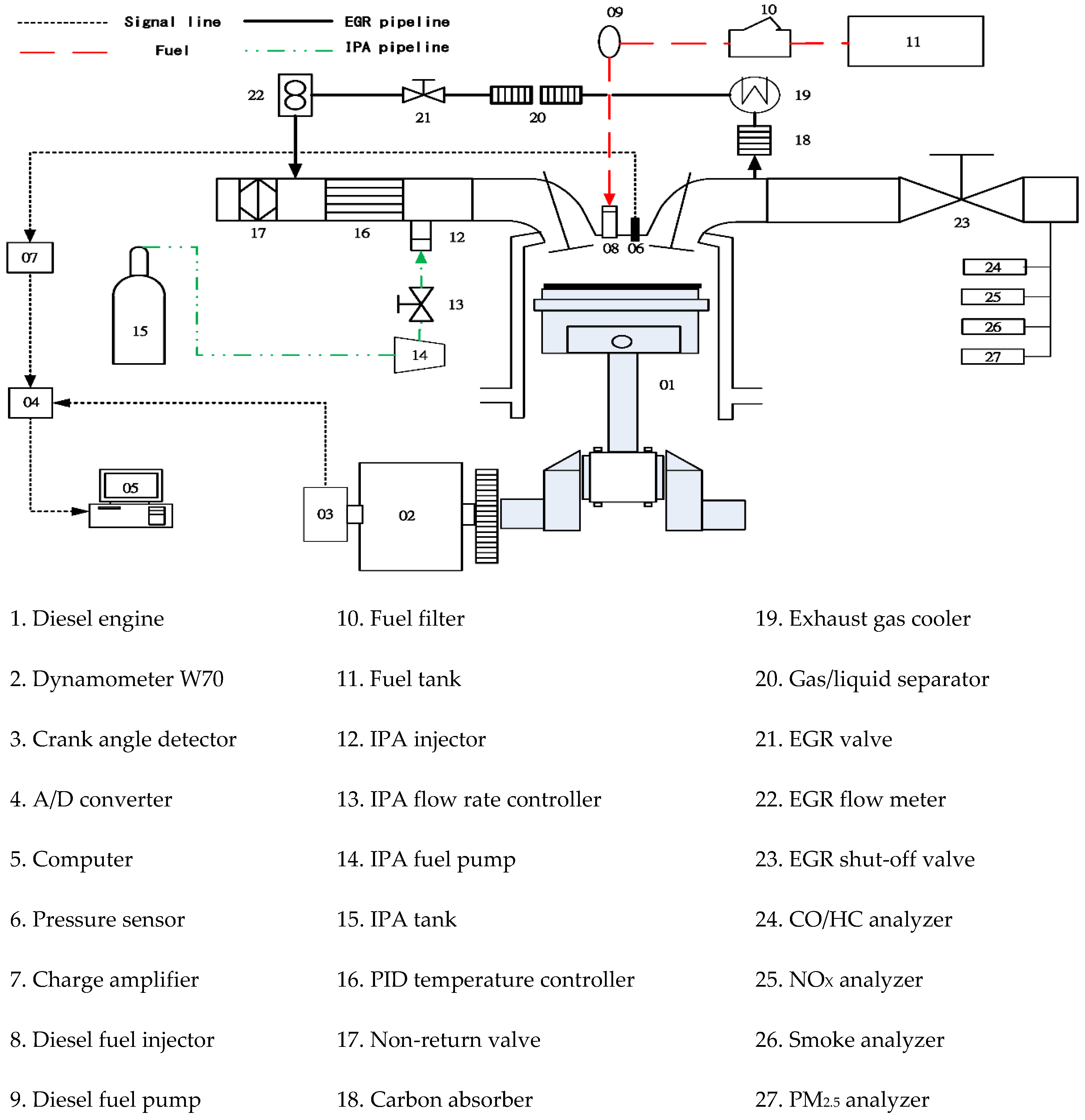
Figure 2.
Picture view of the test arrangement.
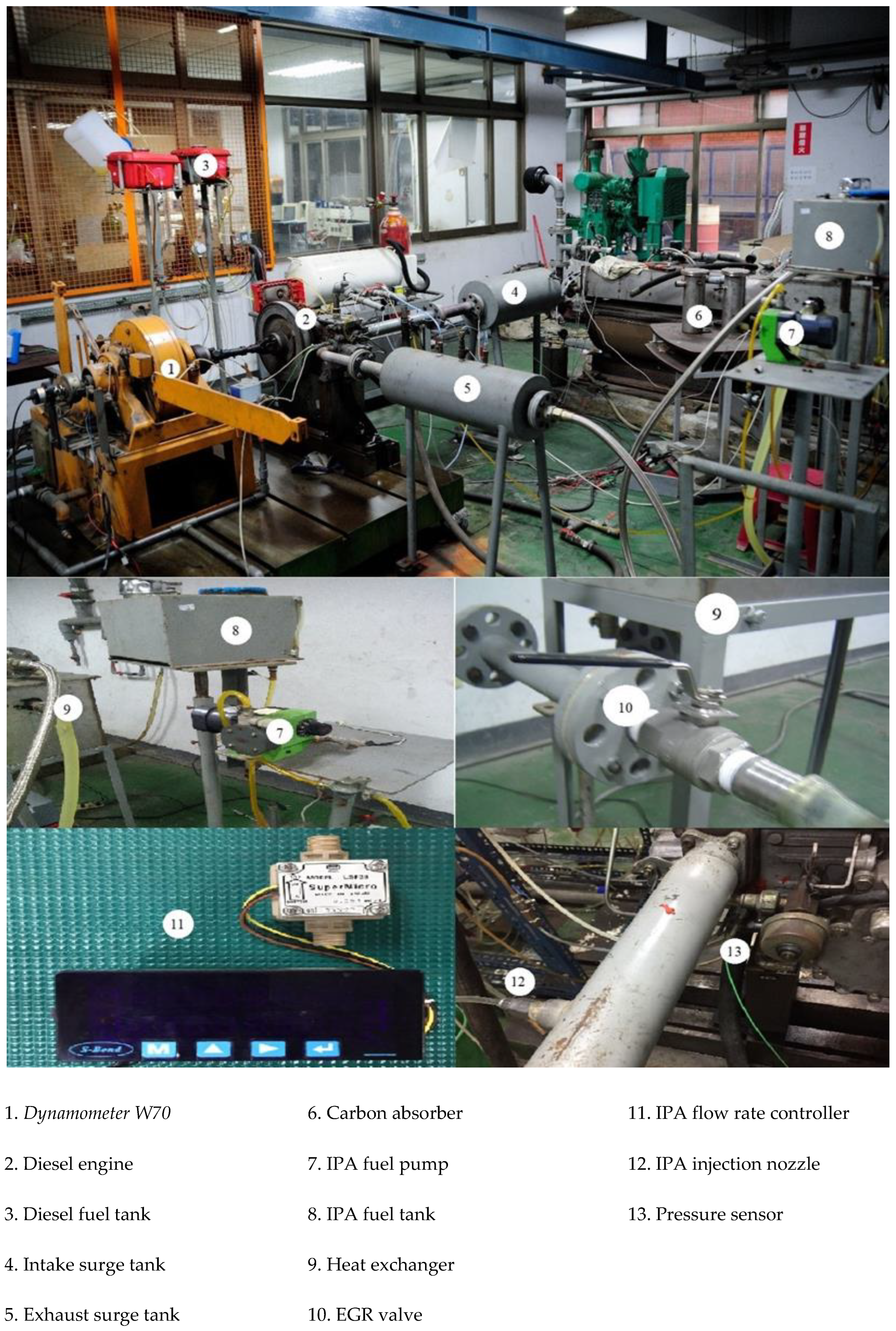
Figure 3.
Influence of EGR ratio and IPA mass fraction on COV (IMEP) for different loads at 1500 rpm and (a) Intake temperature 45 °C (b) Intake temperature 60 °C (c) Intake temperature 75 °C.
Figure 3.
Influence of EGR ratio and IPA mass fraction on COV (IMEP) for different loads at 1500 rpm and (a) Intake temperature 45 °C (b) Intake temperature 60 °C (c) Intake temperature 75 °C.
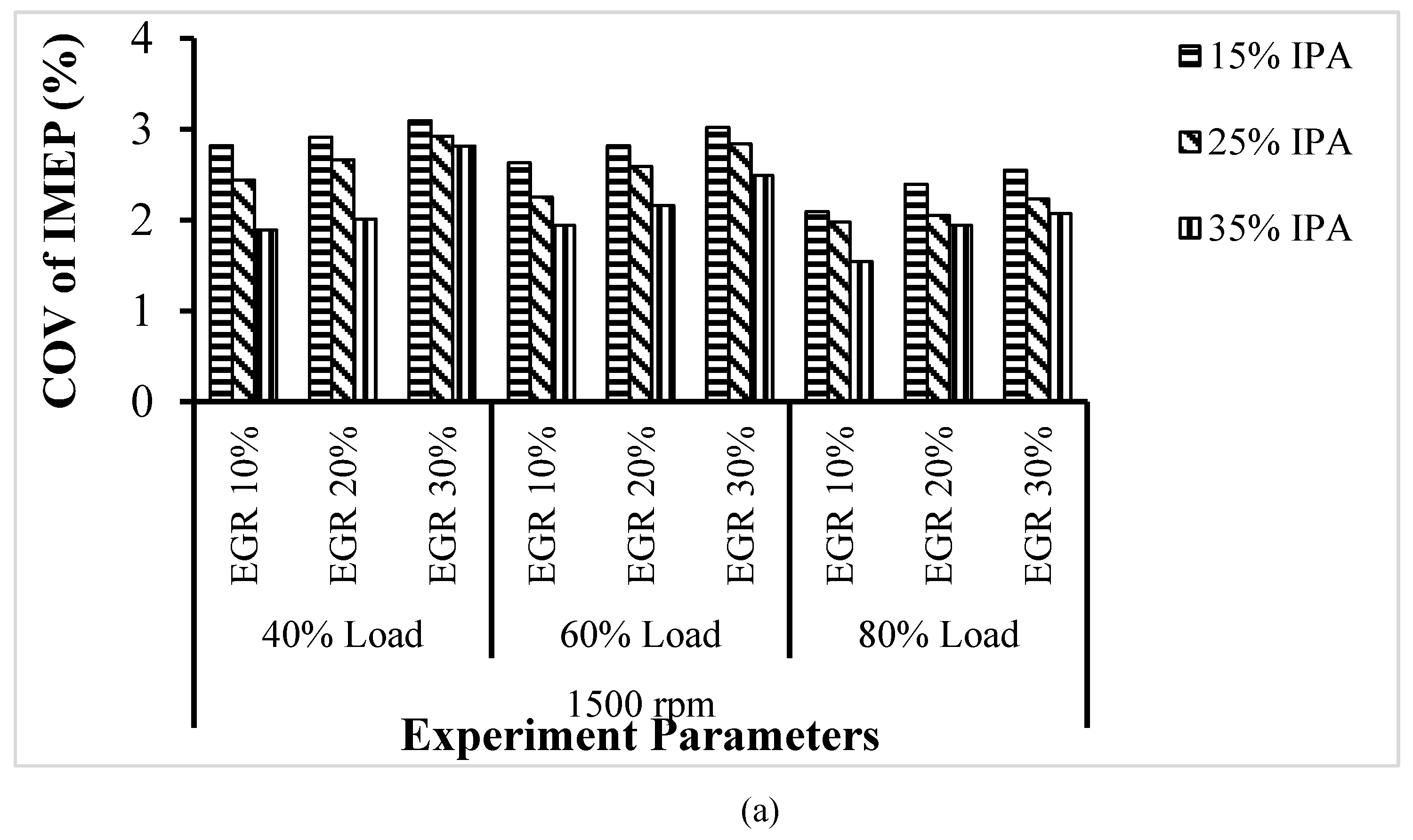
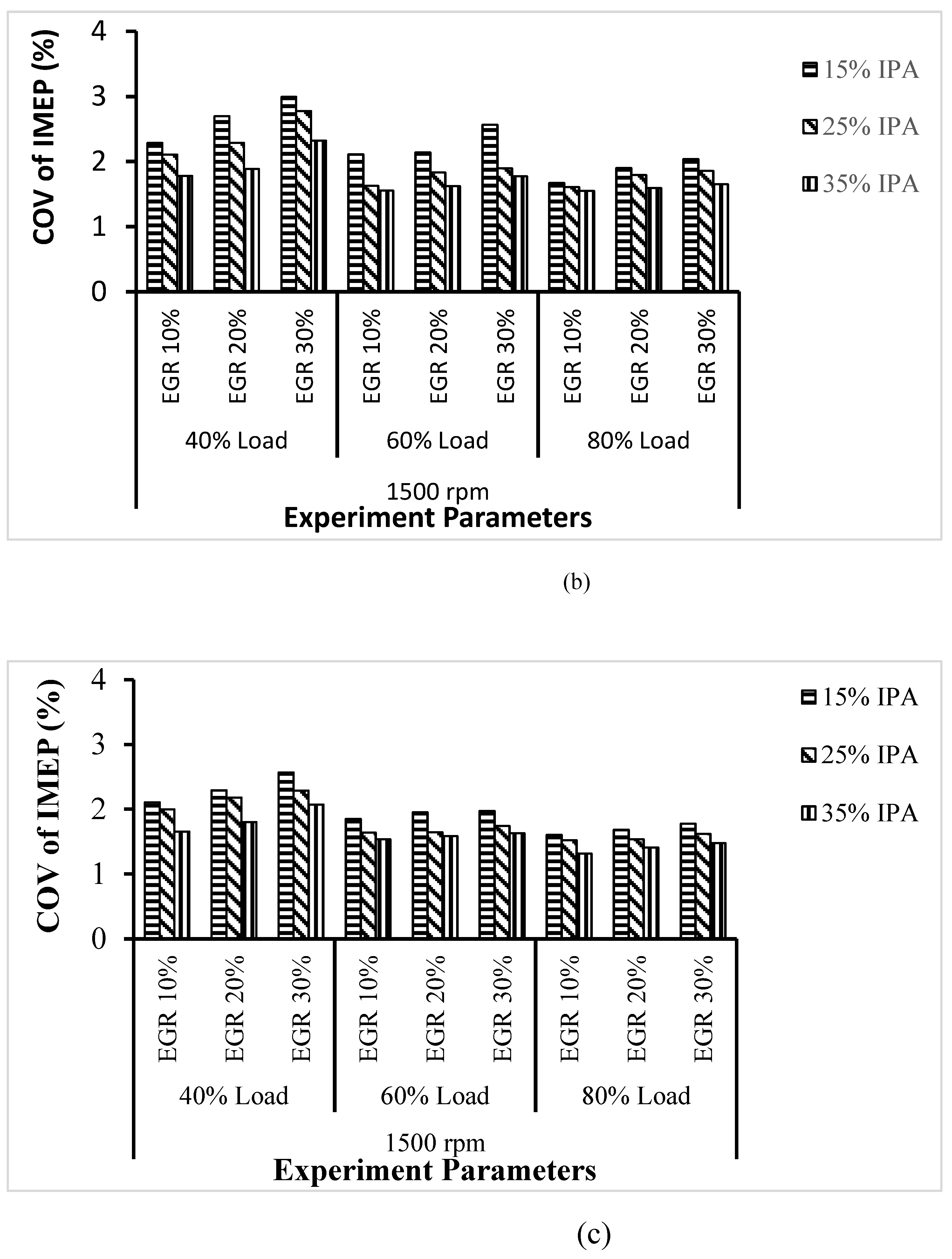
Figure 4.
Influence of EGR ratio and IPA mass fraction on in-cylinder pressure at intake temperature 60 °C and 1500 rpm and (a) 40% load (b) 60% load (c) 80% load.
Figure 4.
Influence of EGR ratio and IPA mass fraction on in-cylinder pressure at intake temperature 60 °C and 1500 rpm and (a) 40% load (b) 60% load (c) 80% load.
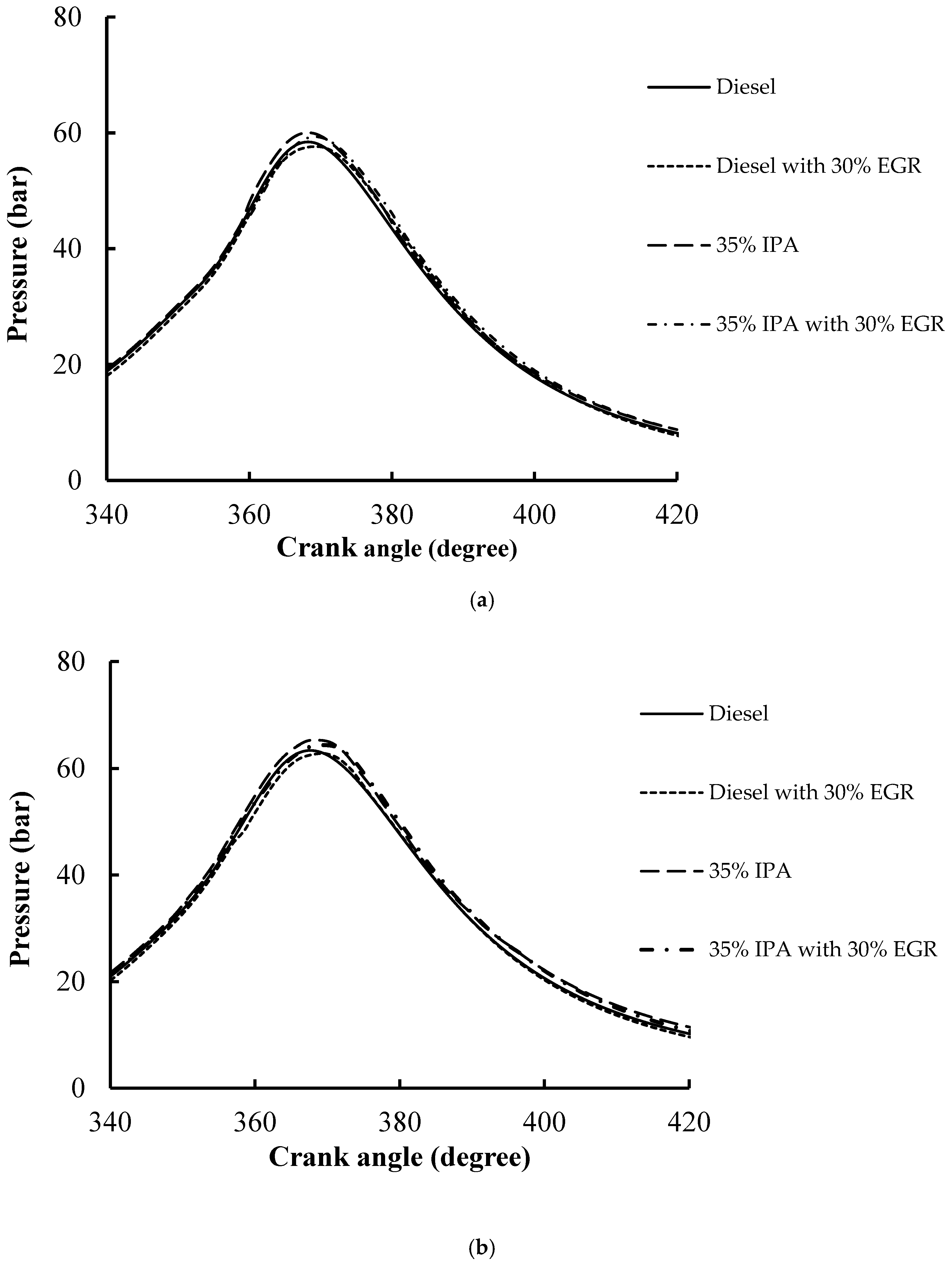
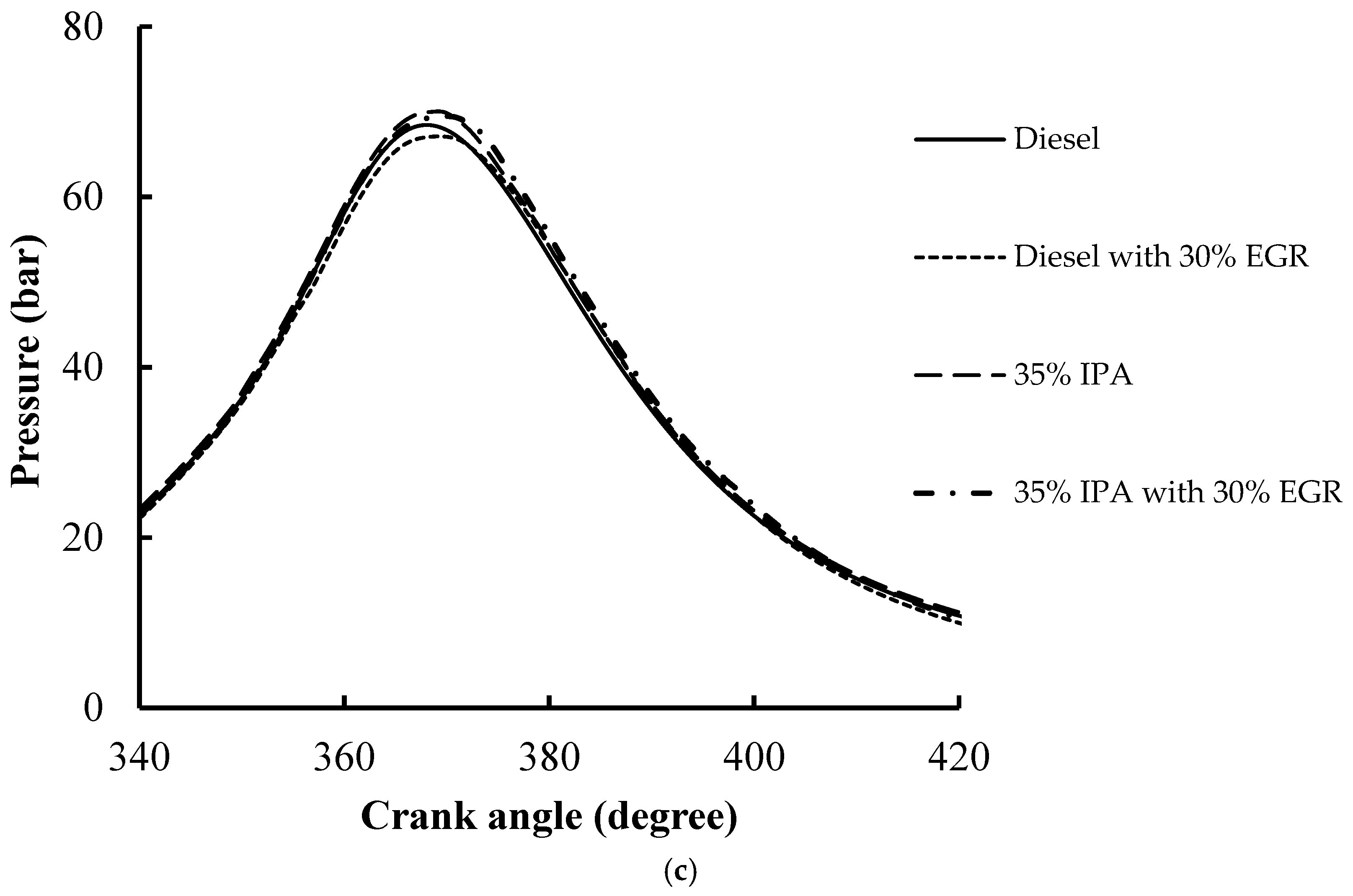
Figure 5.
Influence of EGR ratio and IPA mass fraction on heat release rate at intake temperature 60 °C and 1500 rpm and (a) 40% load (b) 60% load (c) 80% load.
Figure 5.
Influence of EGR ratio and IPA mass fraction on heat release rate at intake temperature 60 °C and 1500 rpm and (a) 40% load (b) 60% load (c) 80% load.
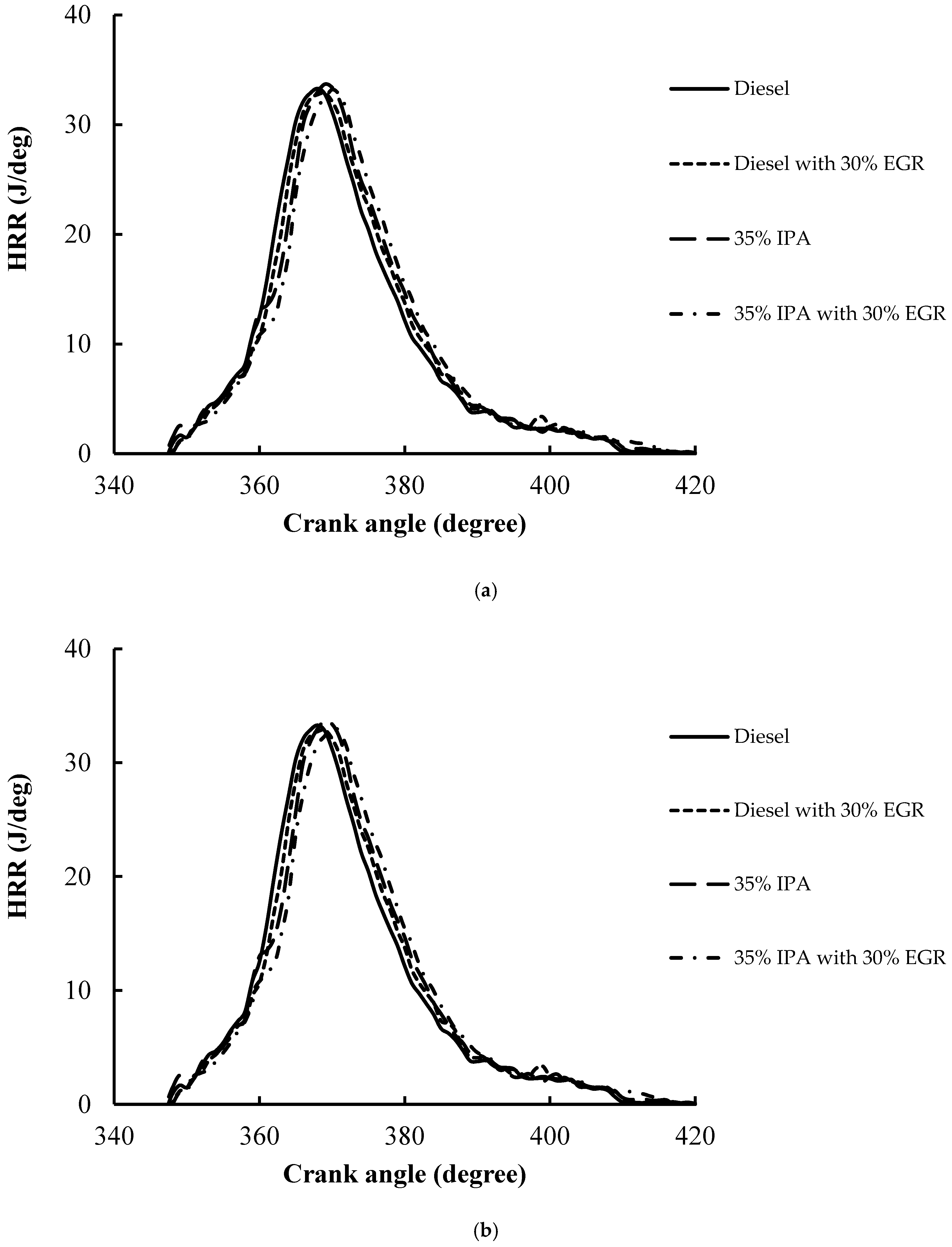
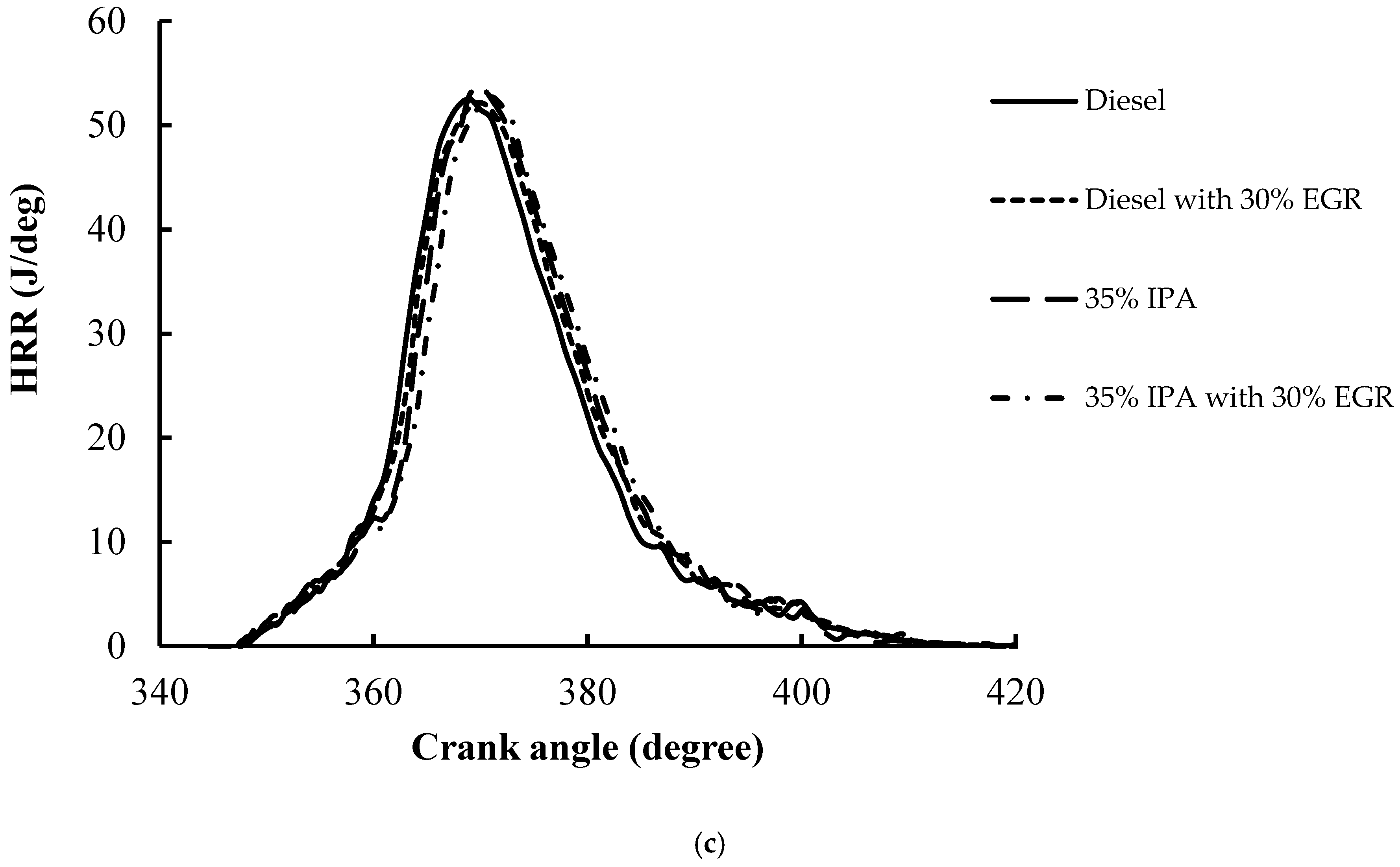
Figure 6.
Influence of EGR ratio and IPA mass fraction on at intake temperature 60 °C and 1500 rpm and (a) 40% load (b) 60% load (c) 80% load.
Figure 6.
Influence of EGR ratio and IPA mass fraction on at intake temperature 60 °C and 1500 rpm and (a) 40% load (b) 60% load (c) 80% load.
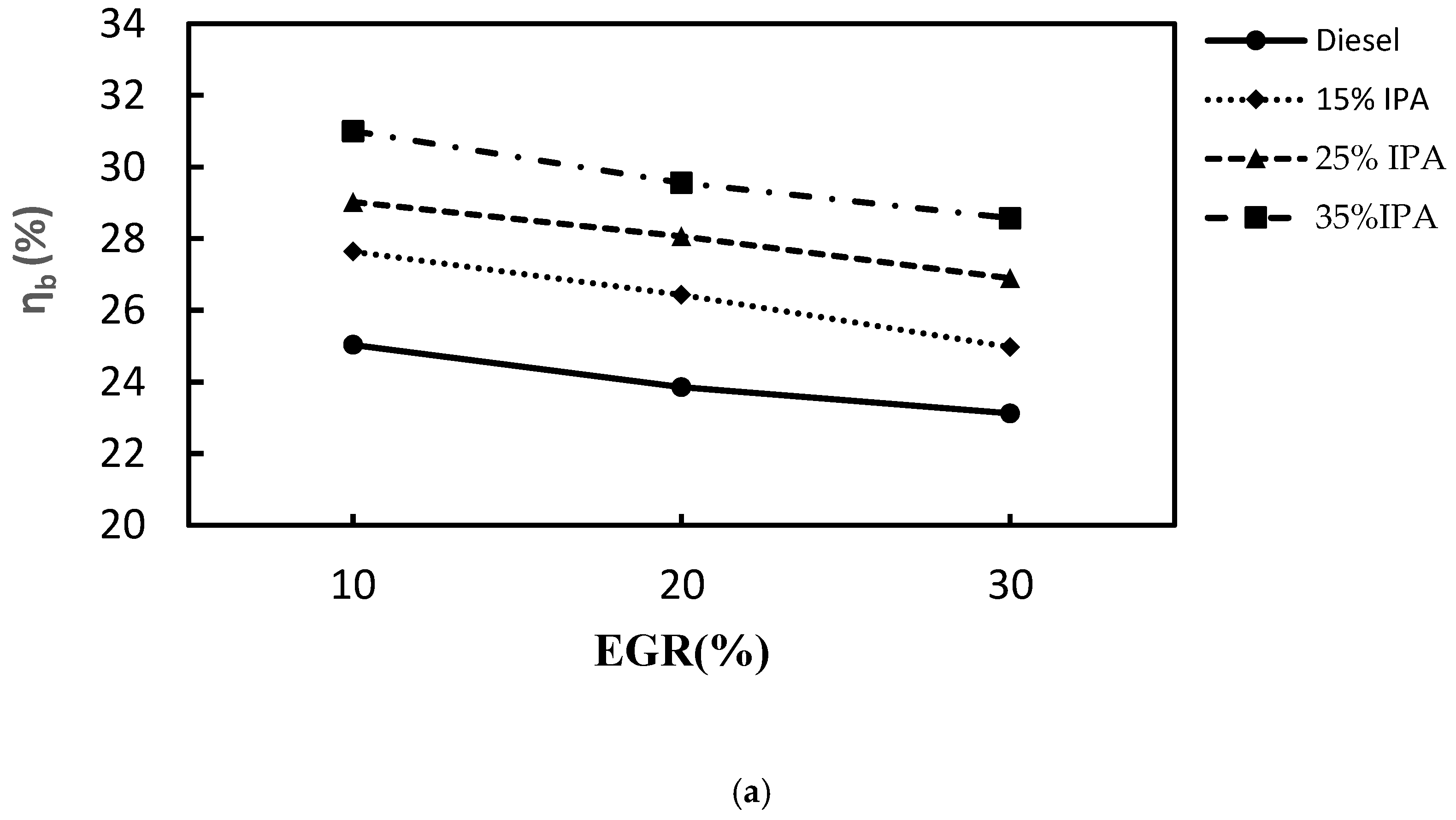
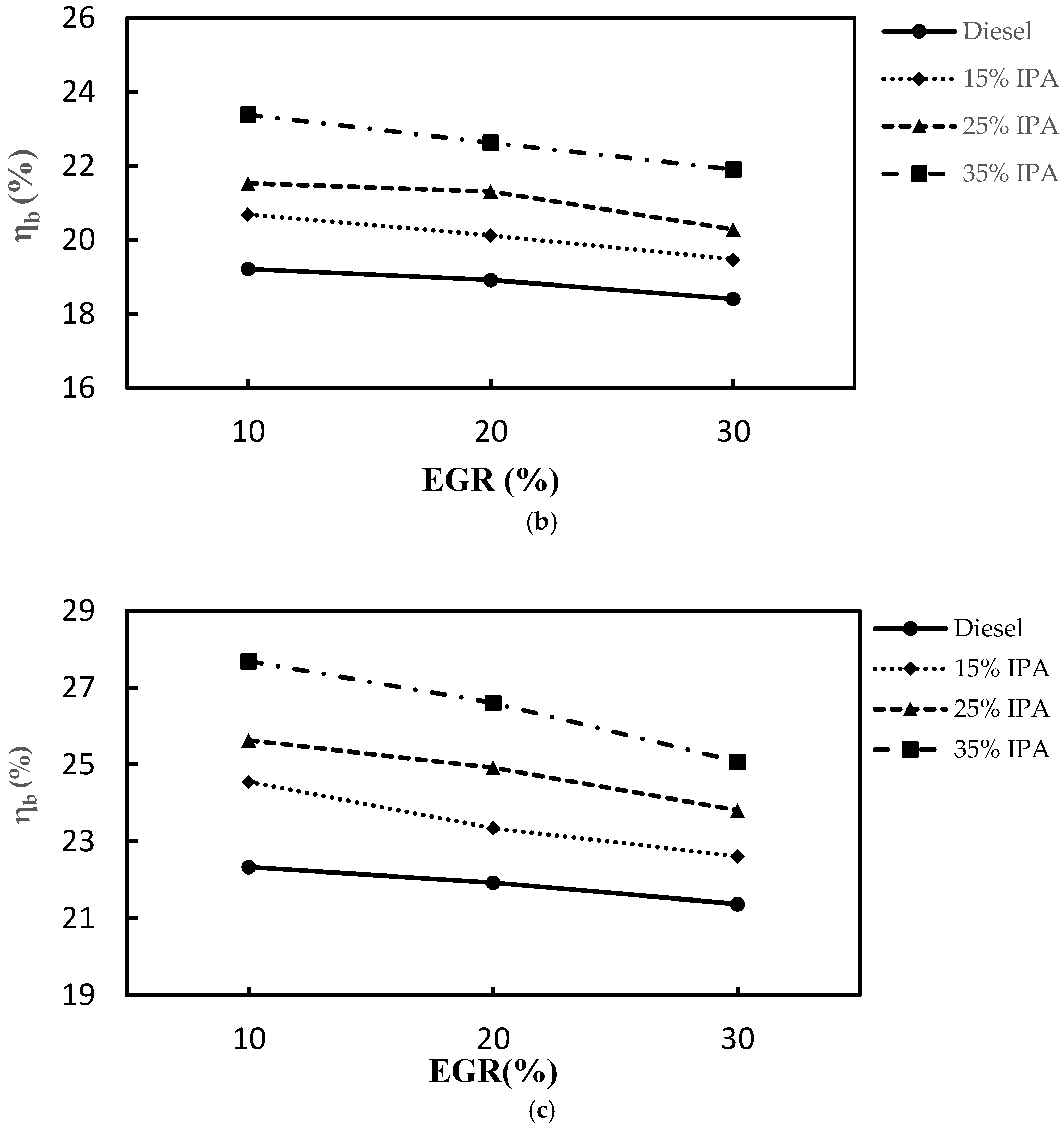
Figure 7.
Influence of EGR ratio and IPA mass fraction on BSFC at intake temperature 60 °C and 1500 rpm and (a) 40% load (b) 60% load (c) 80% load.
Figure 7.
Influence of EGR ratio and IPA mass fraction on BSFC at intake temperature 60 °C and 1500 rpm and (a) 40% load (b) 60% load (c) 80% load.
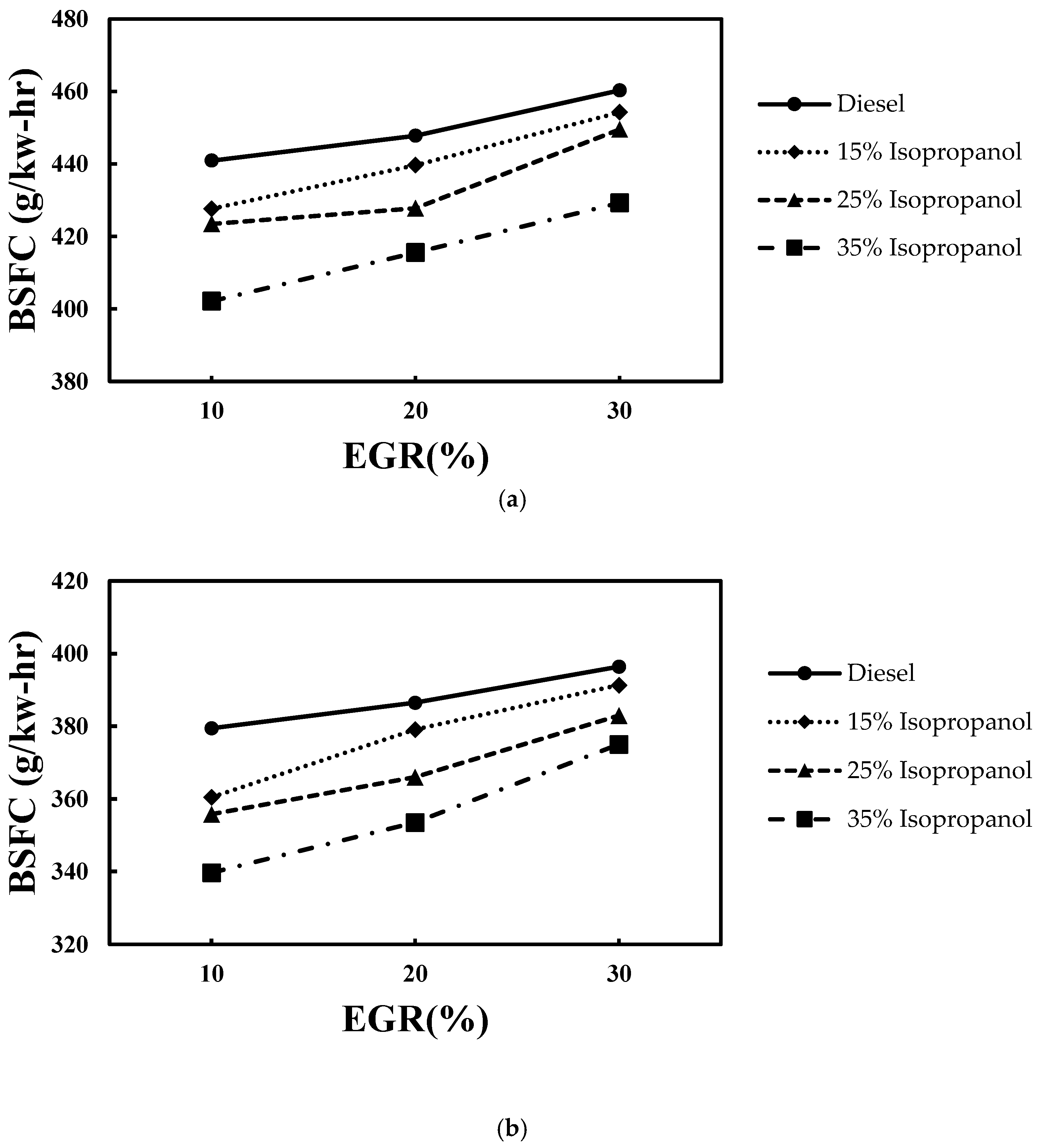
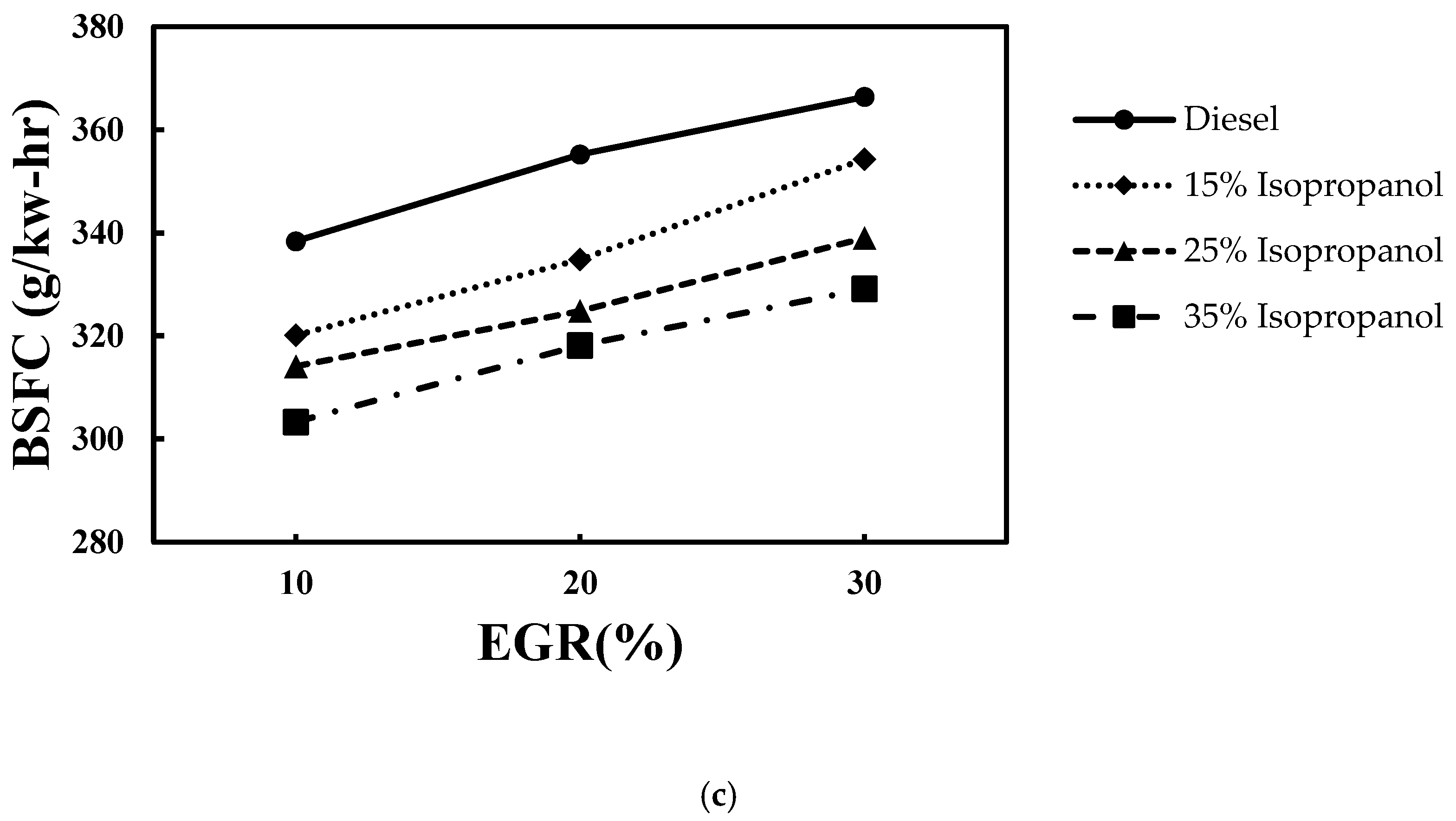
Figure 8.
Influence of EGR ratio and IPA mass fraction on NOX at 1500 rpm, 60% load and (a) 45 °C (b) 60 °C (c) 75 °C intake temperatures.
Figure 8.
Influence of EGR ratio and IPA mass fraction on NOX at 1500 rpm, 60% load and (a) 45 °C (b) 60 °C (c) 75 °C intake temperatures.
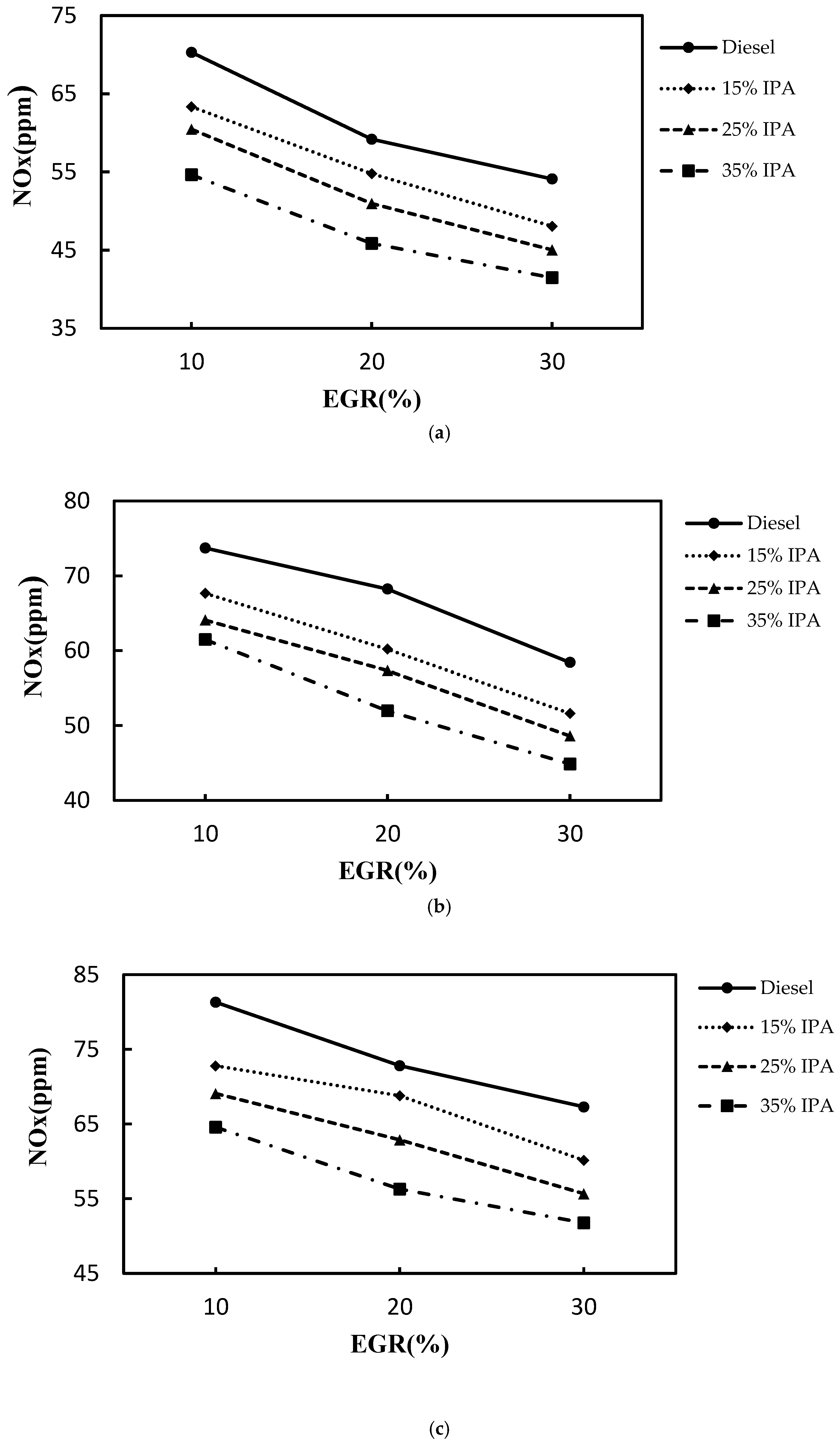
Figure 9.
Influence of EGR ratio and IPA mass fraction on Smoke at 1500 rpm, 60% load and (a)45 °C (b) 60 °C (c) 75 °C intake temperatures.
Figure 9.
Influence of EGR ratio and IPA mass fraction on Smoke at 1500 rpm, 60% load and (a)45 °C (b) 60 °C (c) 75 °C intake temperatures.
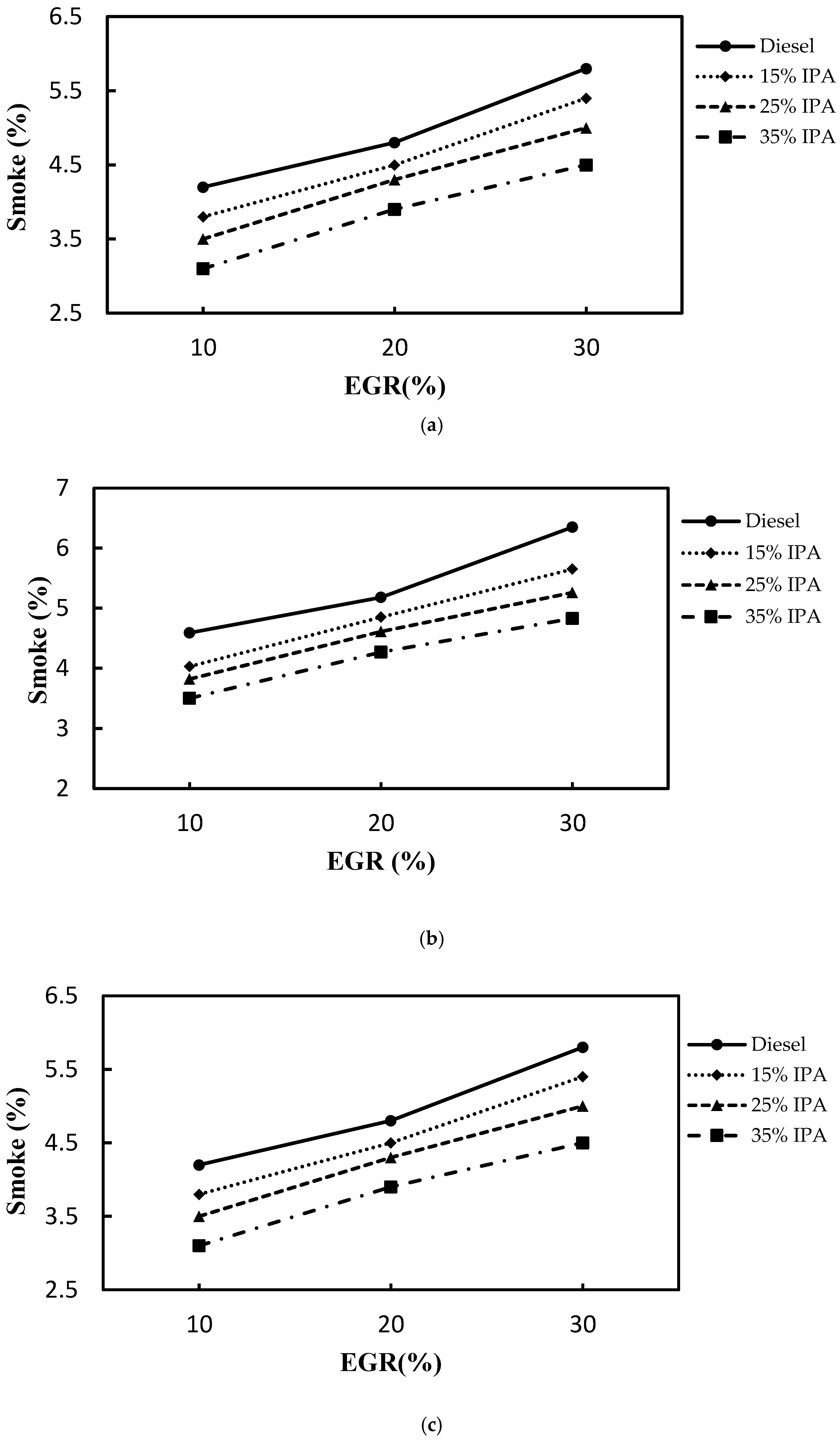
Figure 10.
Influence of EGR ratio and IPA mass fraction on CO at 1500 rpm, 60% load and (a) 45 °C (b) 60 °C (c) 75 °C intake temperatures.
Figure 10.
Influence of EGR ratio and IPA mass fraction on CO at 1500 rpm, 60% load and (a) 45 °C (b) 60 °C (c) 75 °C intake temperatures.
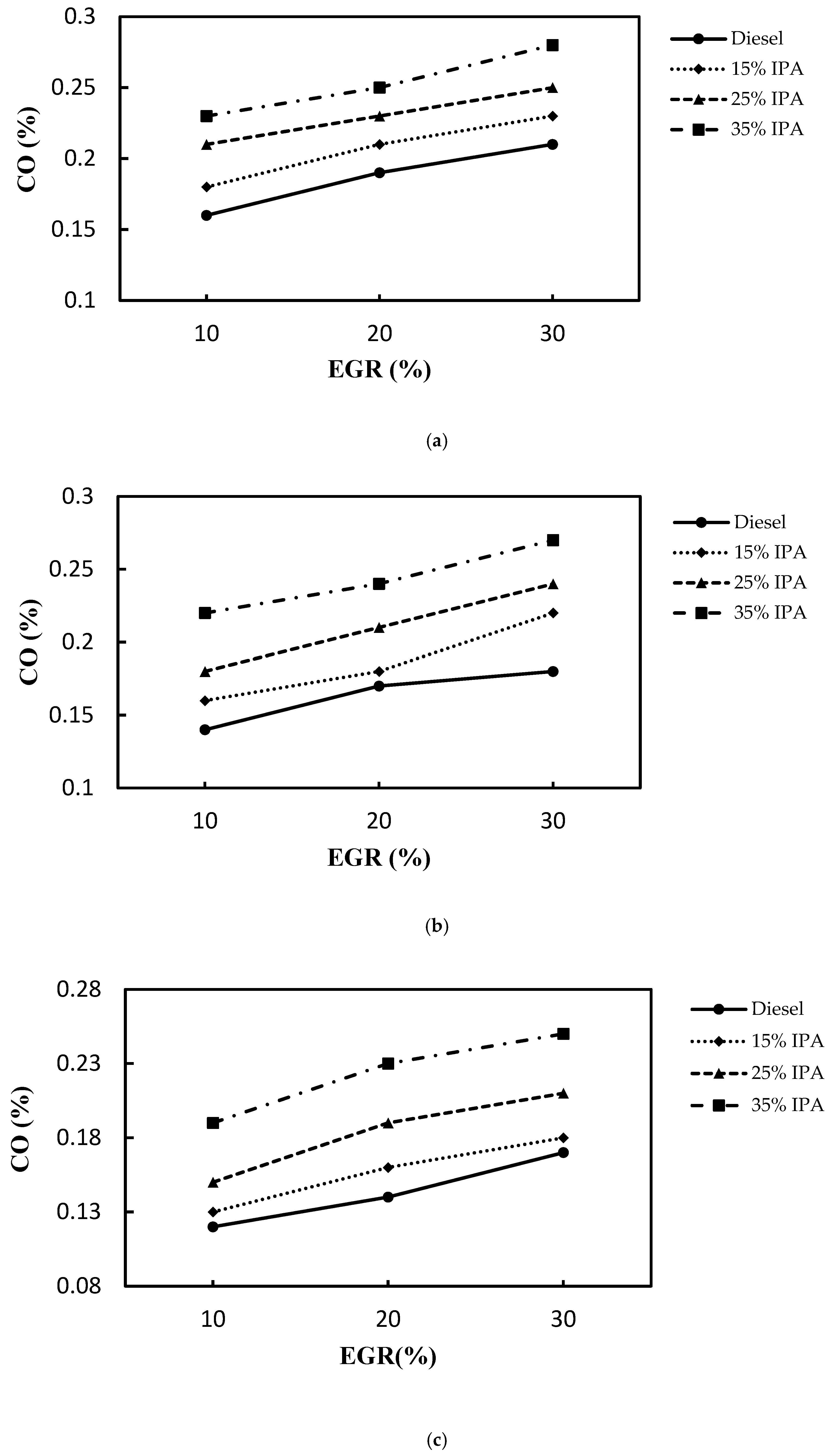
Figure 11.
Variations of PM2.5 with various EGR ratios and isopropanol mass fractions at 1500 rpm, 60% load, and (a) 45 °C (b) 60 °C (c) 75 °C intake temperatures.
Figure 11.
Variations of PM2.5 with various EGR ratios and isopropanol mass fractions at 1500 rpm, 60% load, and (a) 45 °C (b) 60 °C (c) 75 °C intake temperatures.
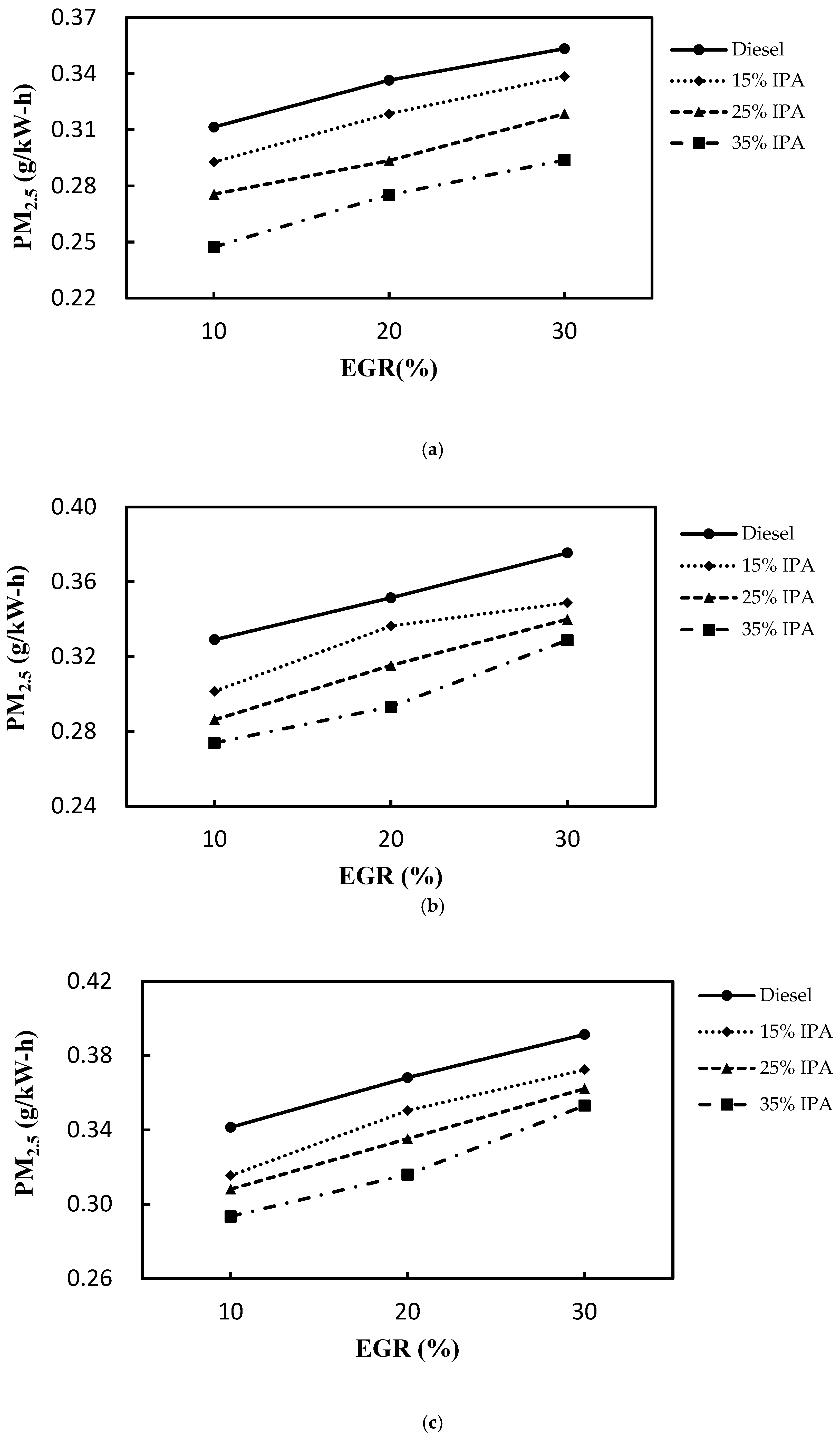
Figure 12.
Influence of EGR ratio and IPA mass fraction on HC w at 1500 rpm, 60% load and (a) 45 °C (b) 60 °C (c) 75 °C intake temperatures.1.
Figure 12.
Influence of EGR ratio and IPA mass fraction on HC w at 1500 rpm, 60% load and (a) 45 °C (b) 60 °C (c) 75 °C intake temperatures.1.
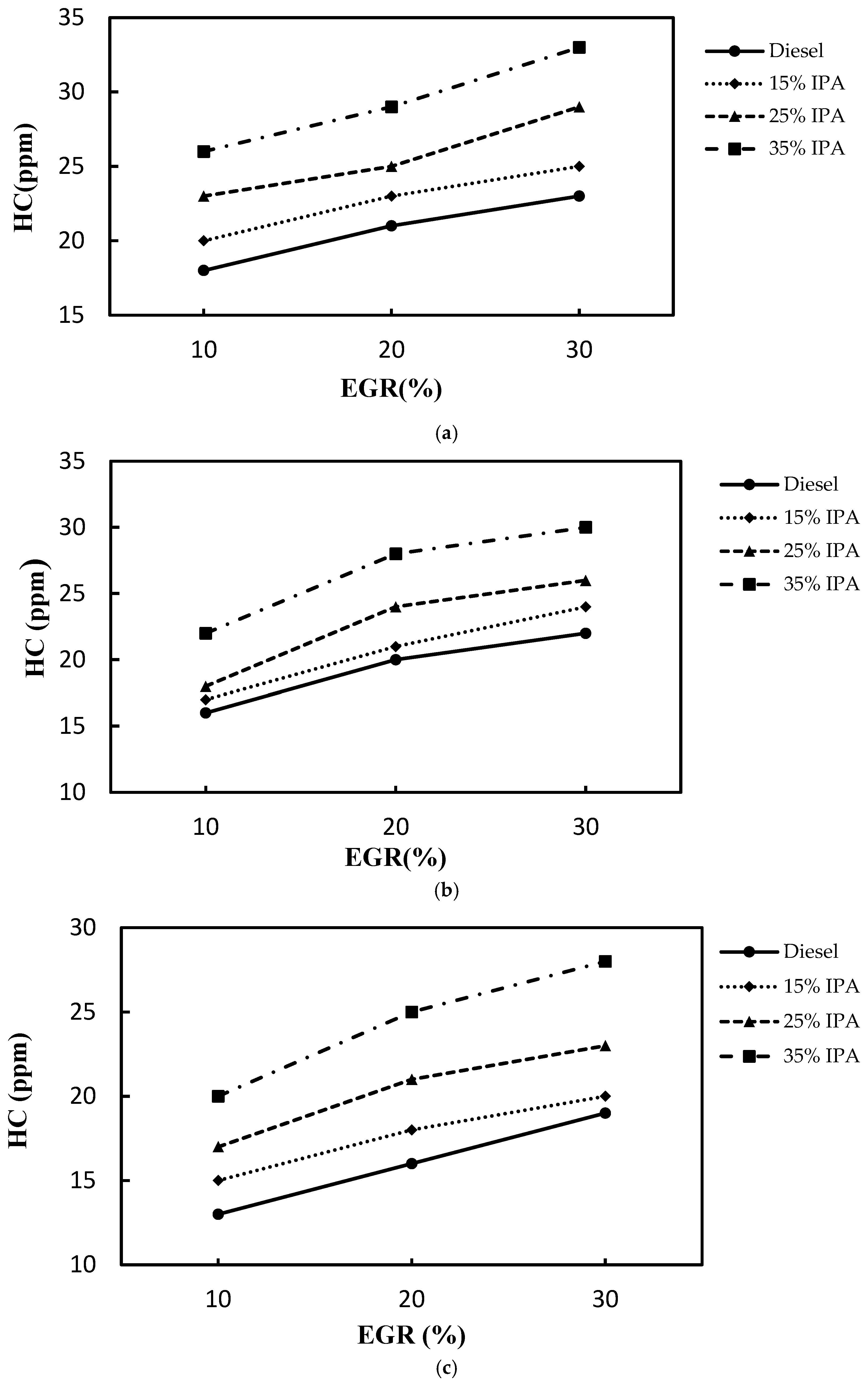

Table 1.
KUBOTA RK125 diesel engine details.
 |
Table 2.
Range and accuracy of gas analyzers.
| Measuring instruments | Measurement range | Accuracy |
| CO/HC/CO2 Gas detector |
CO: 0-10% (Vol.) | ± 0.01% |
| HC: 0-15000 (ppm) | ± 0.022% | |
| CO2: 0-20% (Vol.) | ± 0.17% | |
| NOX analyzer | 0-5000(ppm) | ± 0.02% |
| Smoke analyzer | 0%-100% | ± 0.1% |
Table 3.
Uncertainty of measurement.
| Item | Uncertainty |
| Pressure | ± 1.3% |
| Smoke | ± 2.7% |
| NOX | ± 1.4% |
| HC | ± 1.3% |
| PM2.5 | ± 1.8% |
| CO | ± 1.1% |
| Brake power | ± 2.5% |
| ± 3.1% | |
| Heat release rate | ± 3.3% |
Disclaimer/Publisher’s Note: The statements, opinions and data contained in all publications are solely those of the individual author(s) and contributor(s) and not of MDPI and/or the editor(s). MDPI and/or the editor(s) disclaim responsibility for any injury to people or property resulting from any ideas, methods, instructions or products referred to in the content. |
© 2025 by the authors. Licensee MDPI, Basel, Switzerland. This article is an open access article distributed under the terms and conditions of the Creative Commons Attribution (CC BY) license (http://creativecommons.org/licenses/by/4.0/).
Copyright: This open access article is published under a Creative Commons CC BY 4.0 license, which permit the free download, distribution, and reuse, provided that the author and preprint are cited in any reuse.


