

Submitted:
21 May 2025
Posted:
21 May 2025
You are already at the latest version
Abstract
The architectural design of hospital environments has a quantifiable impact on neonatal health, merging scientific evidence with spatial innovation. Recent studies reveal that single room (SFR) Neonatal Intensive Care Units (NICUs) reduce nosocomial infections by 50% compared to open plan designs, thus optimizing the safety of premature newborns, who represent 10% of global births. This configuration, supported by evidence based design (EBD) principles, also increases breastfeeding rates by 25% and decreases hospital stays by 15%, according to systematic reviews. Strategically integrated exposure to natural light regulates circadian rhythms in 80% of premature neonates, improving their neurological development, while noise levels below 45 dB, achieved through acoustic ceilings reduce parental stress by 30%. Historically, the transition from centralized nurseries to family friendly spaces reflects a paradigm focused on psych emotional wellbeing. However, challenges persist: 60% of hospitals in low and middle income countries face budget constraints to implement SFR, despite its long term cost effectiveness. Future trends emphasize "healing architecture," incorporating antimicrobial biomaterials and intelligent systems that monitor environmental variables in real time, projecting a 20% reduction in costs associated with neonatal complications. By integrating nature, technology, and family involvement, hospital design emerges not only as a physical framework but as a catalyst for holistic health, redefining the future of neonatal care.
Keywords:
Architectural design
; construction
; hospital spaces
; newborns
1. Introduction
The influence of architectural design on hospital spaces, particularly those catering to newborns, is a critical area of study that highlights the intersection between physical environments and health outcomes. As hospitals evolve to better support patient recovery, research has increasingly focused on how specific design elements such as spatial configuration, lighting, acoustics, and color affect the well being of infants and their families. This topic is notable not only for its implications on neonatal health but also for its potential to transform healthcare practices and improve overall patient experiences in neonatal intensive care units (NICUs) and other related facilities [1,2].
Historically, hospital design has shifted from sterile, centralized nurseries towards more family centered approaches that recognize the importance of parental involvement and bonding in infant care. Innovations in NICU layouts, such as single family rooms, have been shown to enhance privacy and support family engagement, while simultaneously addressing critical concerns around infection control and environmental stressors that impact newborns [2,3]. The adoption of evidence based design (EBD) practices has further catalyzed these changes, as data driven strategies become fundamental to creating environments that foster healing and support the complex needs of vulnerable patients [1,2].
Key controversies surrounding this topic include the balance between cost and effective design solutions, the potential for isolation in single family room layouts, and the ongoing challenges of integrating nature and positive distractions into clinical spaces. Critics often point to budget constraints that limit the implementation of ideal design practices, while advocates emphasize the long term benefits of investing in environments that promote both physical and psychological healing [2,4,5].
As the field progresses, future trends in hospital design are expected to emphasize sustainable and adaptable solutions, human centered approaches, and advanced technology integration to enhance the overall care experience. By prioritizing the needs of newborns and their families, architects and healthcare professionals aim to create environments that not only accommodate medical requirements but also contribute positively to the emotional and developmental health of young patients [6,7].
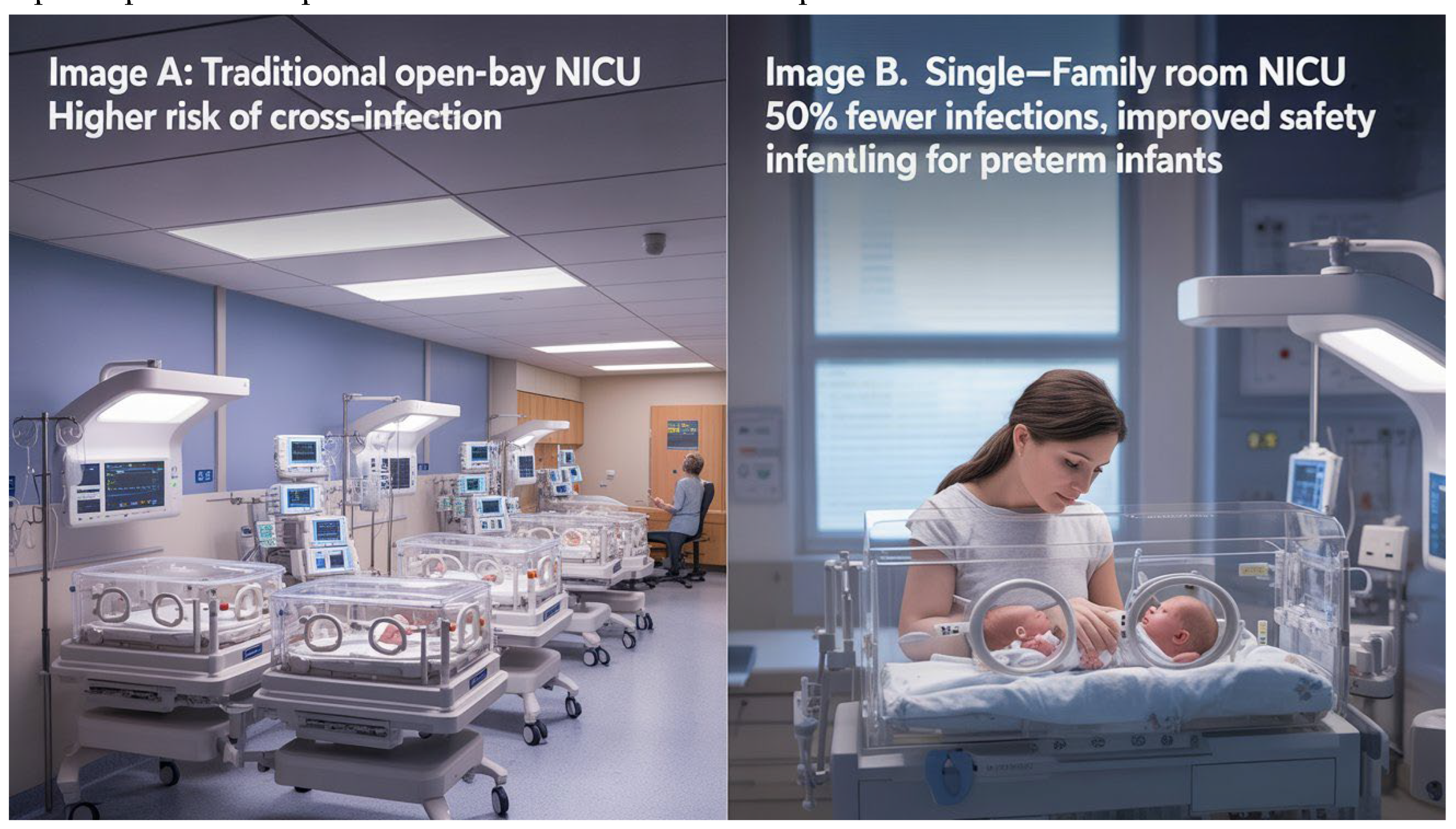
Image A – Traditional NICU (Open Design)
Shared space between multiple newborns.
Greater exposure to noise, medical staff traffic, and the risk of cross infection.
Limited privacy for mother and newborn.
Clinical studies report a higher rate of nosocomial infections and greater environmental stress.
Image B – NICU with Single Family Rooms
Design focused on the patient and their immediate environment.
Environments with acoustic control, natural lighting, and privacy, promoting bonding and neurological development.
Allows for the continuous presence of parents (kangaroo care).
50% reduction in nosocomial infections and significant improvement in the safety and recovery of premature newborns.
According to WHO data (2023), 10% of global births are premature, making it crucial to design hospital spaces that optimize their survival and development.
Figure 1.
NICU Architectural Comparison: Open Design vs. Single Rooms.
Historical Context
Evolution of Hospital Design
The architectural design of hospitals has undergone significant transformations from the 1800s to the present, driven by evolving understandings of patient care and health outcomes. Early hospitals were often structured based on prevailing medical practices and public health theories, such as those proposed by Florence Nightingale in the 1860s, which emphasized cleanliness and natural light to improve recovery rates [1]. The influence of these foundational ideas paved the way for more systematic approaches to hospital design that began to emerge in the mid 20th century.
During the 1950s and 1960s, designers increasingly utilized experimental layouts and evidence gained from full scale model patient rooms to inform their architectural decisions. This period marked the beginnings of evidence based design (EBD), a methodology that utilizes credible research to guide the creation of environments that promote optimal health outcomes [1]. The work of Roger Ulrich in 1984, which demonstrated that patients with views of nature recovered faster than those without, is often credited with popularizing EBD, although its roots can be traced back further [1].
Impact of World War II on Hospital Efficiency
The Second World War significantly influenced hospital design and operations, as personnel and material shortages necessitated greater efficiency. Hospitals began to adopt standardized model plans and layouts, informed by detailed studies that assessed service efficiencies and patient outcomes. For example, the Greater Baltimore Medical Center’s horizontal layout emerged from operations research analyzing hospital traffic patterns, which was indicative of a broader trend toward data driven design practices during this era [1,8].
Innovations in Obstetric and Neonatal Care
The design of obstetric units during the early to mid 20th century reflects the intersection of infection control measures and family centered care principles. Initial designs emphasized sterile environments with centralized nurseries, which limited parental interaction with newborns [1]. However, as research began to highlight the importance of bonding and individualized care, a shift occurred towards private rooms in neonatal intensive care units (NICUs), which support breastfeeding and kangaroo care while enhancing privacy and family involvement [2,3].
These historical shifts illustrate how architectural decisions in hospital settings have continually evolved to prioritize both the physical and emotional wellbeing of patients, particularly newborns and their families. By understanding this historical context, contemporary architects and healthcare administrators can better appreciate the implications of design on health outcomes, leading to more effective and supportive hospital environments.
2. Methods
Key Architectural Elements
Color and Light
The use of color in hospital design plays a crucial role in influencing patient comfort and outcomes. Research has shown that softer, restful colors in patient rooms, such as dark green floors and light green walls, can create a therapeutic environment that promotes healing [1]. Conversely, more vibrant colors in public spaces, like orange red floors and white walls, can stimulate a positive atmosphere. The thoughtful incorporation of natural light is equally important; studies have demonstrated that access to daylight can significantly impact the wellbeing of patients, particularly in neonatal intensive care units (NICUs) [2].
Acoustic Considerations
Noise levels in hospitals, especially in NICUs, have been a significant focus of architectural design. Various studies indicate that environmental noise can adversely affect both newborns and their families, leading to increased stress levels and impaired developmental outcomes [2]. Modifications to acoustical environments, such as the installation of acoustic ceiling tiles and strategic layout planning, have resulted in notable reductions in decibel levels, thereby enhancing the overall healing environment for young patients [2].
Spatial Configuration
The design of hospital spaces, particularly in NICUs, often involves the decision between single family room (SFR) units and open bay layouts. Research indicates that SFRs provide enhanced privacy for families and infants, improve infection control, and promote family presence during care [2]. However, challenges such as potential isolation of families and increased operational costs must be considered. The choice of spatial configuration can significantly influence the psychological comfort and overall experience of both patients and their families in a hospital setting [2].
Safety and Security
Modern pediatric hospital designs prioritize safety through thoughtful architectural strategies. Features such as controlled access points, intuitive wayfinding, and secure outdoor areas contribute to a reassuring environment for patients and families. The integration of advanced safety protocols, including weapons detection systems, is crucial in maintaining a secure space without compromising the healing atmosphere essential for recovery [4].
Flexibility and Adaptability
The ability to create flexible and adaptable hospital environments is becoming increasingly important in design. Architects are tasked with ensuring that spaces can accommodate various patient needs and changing healthcare practices. For instance, modular building forms and local material sourcing not only support ecological sustainability but also allow for efficient maintenance and adaptability to different clinical requirements over time [9].
3. Results and Discussion
Impact on Newborn Health
Advances in evidence based neonatal care have significantly improved survival rates for high risk newborns, highlighting the crucial role of the neonatal environment in supporting their health and development [10]. In particular, the architectural design of neonatal intensive care units (NICUs) can greatly affect both the physiological and psychological wellbeing of newborns and their families.
Family Centered Care
The NICU environment must balance the diverse needs of infants, parents, and healthcare providers. Research shows that minimizing noxious stimuli while providing positive sensory experiences is vital for the appropriate development of newborns, especially preterm infants, who are particularly sensitive to negative environmental factors [11]. Family centered care has emerged as a key approach, emphasizing the importance of parental involvement in infant care and the need for privacy and support within the NICU [11]. The presence of parents can mitigate stress in both infants and families, fostering better outcomes.
Infection Prevention and Control
Infection control is critical in NICUs, where vulnerable infants face heightened risks of hospital acquired infections. Studies indicate that creating a conducive environment for hand hygiene (such as ensuring hand washing stations are accessible within close proximity to infant beds), can significantly reduce infection rates [5]. Moreover, single room NICU designs have been found to halve the incidence of nosocomial infections compared to traditional open bay units, suggesting that architectural choices can directly impact newborn health outcomes [5].
Environmental Factors
The physical environment (including factors such as light, noise, and spatial configuration) plays a significant role in the health of newborns. Research has shown that optimal lighting conditions and reduced noise levels contribute positively to the development of circadian rhythms in preterm infants, which is essential for their growth and overall health [12]. The design of the NICU can also influence parental stress levels; parents in single room setups report higher satisfaction with the physical environment, which in turn affects their emotional well being and ability to engage with their infants [5].
Cost of Care Considerations
The architectural design of NICUs is also intertwined with economic factors. As mortality and morbidity rates decrease, healthcare costs have risen due to longer hospital stays for very low birth weight infants, a trend that is expected to continue as the number of preterm births increases [12]. Effective design strategies that promote health and reduce infection rates can potentially mitigate some of these rising costs by improving overall patient outcomes and decreasing the length of hospital stays.

Table 1.
Architectural Comparison: Neonatal Spaces A vs. B.
| Architectural Aspects | Image A – Standard Environment | Image B – Optimized Environment |
|---|---|---|
| Lighting | Homogeneous artificial lighting (fluorescent or LED without circadian control). | Regulated natural light (high windows, skylights) promotes circadian rhythm in 80% of premature newborns. |
| Acoustic Treatment | No sound absorption; noise levels above 60 dB (risk of sensory overstimulation). | Acoustic ceilings and sound absorbing materials; sound level <45 dB, reducing parental stress by 30%. |
| Privacy and Family Connection | Shared space with little privacy; limited interaction between parents and newborns. | Single or semisingle room; greater privacy and the possibility of continuous kangaroo care. |
| Emotional and Visual Environment | Cold environments, saturated with technical stimuli; limited personalization. | Biophilic design and environmental control, a warm atmosphere that promotes containment and bonding. |
| Documented Clinical Impact | Higher incidence of nosocomial infections and environmental stress. | Decreased infections, improved neurodevelopment, and improved vital signs in premature infants. |
Figure 1.
Architectural comparison between standard neonatal environments and those optimized for circadian and sensory development.
Figure 1.
Architectural comparison between standard neonatal environments and those optimized for circadian and sensory development.
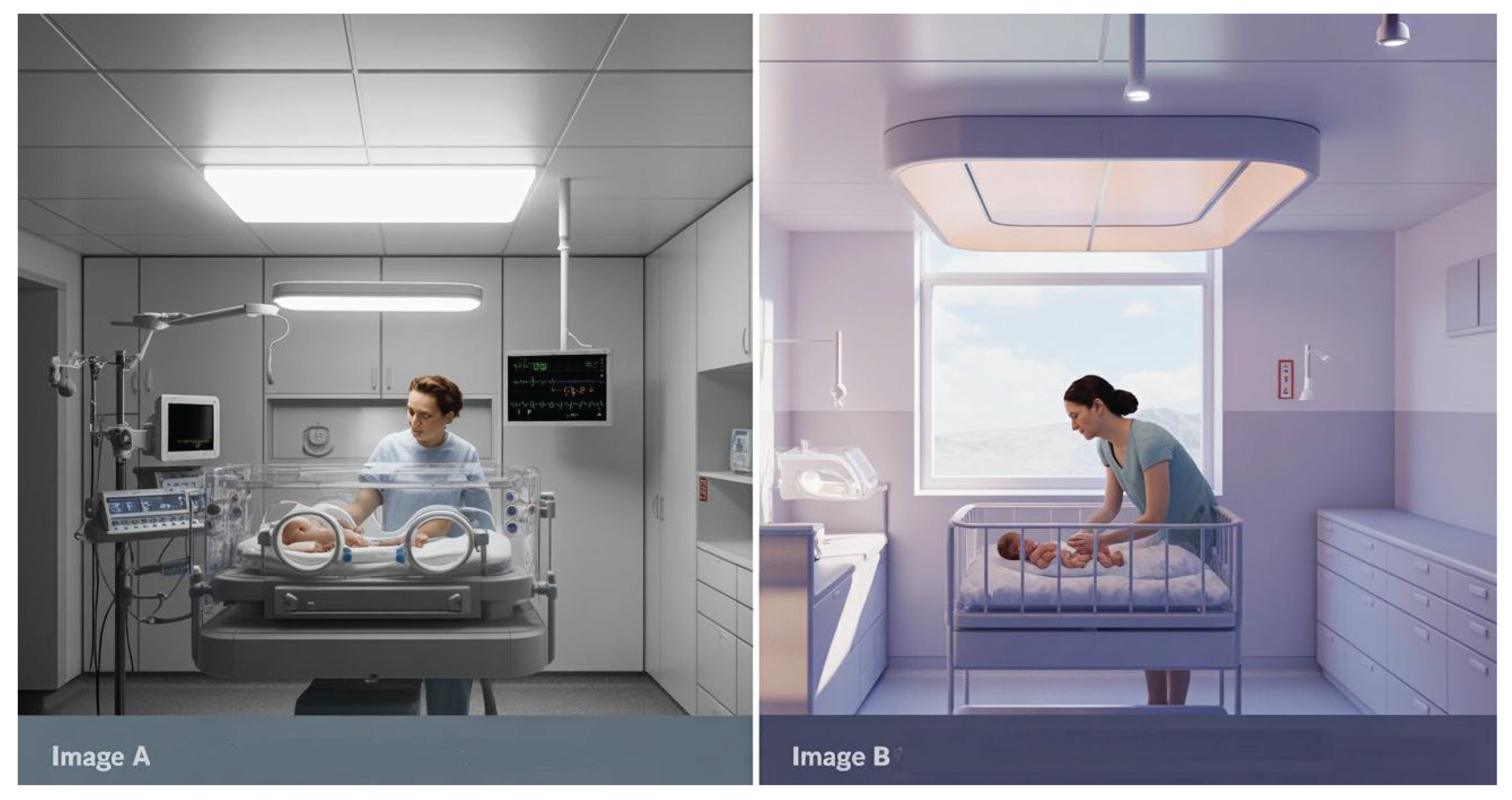
This comparison chart visually and technically summarizes the impact of architectural design on the neurological and emotional wellbeing of the newborn and their family, supporting the narrative of your article.
Design Guidelines and Best Practices
General Guidelines for Neonatal Intensive Care Units (NICUs)
The design of neonatal intensive care units (NICUs) plays a crucial role in the Wellbeing of newborns, their families, and healthcare staff. Effective design strategies aim to optimize the environment to enhance patient outcomes and family engagement. One key recommendation is to increase the usable space for patients, families, and nursing staff while minimizing unnecessary circulation space. This ensures that there is adequate room for medical equipment and provides necessary privacy for families and infants [2,13].
Importance of Family Centered Care
Family centered care is integral to the successful design of NICUs. Research indicates that open communication between families and healthcare professionals is vital, as families must collaborate with staff to establish an appropriate environment, considering factors like light, noise, and infant handling [2]. A study that examined the implementation of family centered practices in multiple hospitals revealed that despite the intention to adopt such practices, only a few centers effectively involved families as integral members of the care team [2,14].
4. Conclusions
Evidence Based Design Principles
A systematic review of NICU design features highlighted several key aspects that significantly affect neonatal, parental, and staff outcomes. Recommendations from this review suggest that optimizing architectural design can lead to improved breast feeding rates, infection control, and a reduction in hospitalization duration [15]. One particularly effective design model is the single family room layout, which has shown benefits in terms of noise control and infection prevention [15,16].
Additionally, the design process should actively involve the perspectives of children and their families, although this can present challenges [17]. Engaging with these stakeholders is essential to create environments that support the needs and experiences of young patients and their caregivers [17].
Recommended Standards for NICU Design
The Consensus Committee to Establish Recommended Standards for Newborn ICU Design (2002) provides a comprehensive set of guidelines that further supports the development of effective NICU environments. These guidelines focus on critical aspects such as spatial configuration, lighting, noise control, and the integration of family spaces within the clinical setting [2,14].
Challenges and Considerations
The architectural design of hospital spaces, particularly those catering to newborns, involves numerous challenges and considerations that must be carefully addressed to promote optimal health outcomes.
Safety and Security
One of the foremost challenges is ensuring safety and security within the hospital environment. Design decisions must account for both the physical and psychological needs of infants and their families. Creating spaces that minimize risks while fostering a sense of comfort is critical. For instance, the layout of rooms should facilitate easy monitoring by staff, while also providing secure areas for families to spend time with their newborns [3,18].
Integration of Nature
Another significant consideration is the integration of nature into hospital design. Research indicates that environments incorporating natural elements can positively affect patient outcomes by reducing stress and promoting healing [8,17]. Strategies may include the use of natural light through windows and skylights, as well as vistas of outdoor spaces. This not only enhances the aesthetic appeal of the hospital but also supports the emotional wellbeing of both patients and families [1,19].
Family Accommodation
Addressing the needs of families, particularly in terms of accommodation, presents another challenge. The design must facilitate overnight stays for family members while ensuring comfort and functionality. This includes creating spaces that support bonding, such as comfortable seating areas and amenities that cater to both patients and their families [8,18].
Positive Distraction
Implementing design features that encourage positive distraction is essential in a pediatric setting. Elements such as colorful murals, engaging flooring patterns, and playful lighting can help divert attention from the stress associated with medical treatment [3,4]. This approach aims to create an environment that feels less intimidating and more welcoming, thereby aiding in the overall healing process.
Cost Considerations
Budget constraints are a significant challenge in hospital design, particularly for new facilities. Upfront construction costs and ongoing operational expenses must be balanced with the need for innovative and effective design solutions. Various factors, including regulatory policies and the availability of materials, can affect these costs [2]. Consequently, careful planning and resource allocation are crucial to ensure that design improvements do not lead to financial strain.
Customization for Different Age Groups
Finally, designing for a range of age groups within pediatric facilities presents a unique set of challenges. Spaces must be engaging for children of various developmental stages without being overly childish, thereby ensuring inclusivity for all users [4]. This requires thoughtful selection of design elements that stimulate curiosity and creativity, appealing to both young patients and their families.
Future Trends in Hospital Design
Emphasis on Healing Architecture
The concept of healing architecture is increasingly shaping the future of hospital design, focusing on how physical environments can positively impact patient recovery and wellbeing. Initially highlighted by Robert Ulrich in 1984, this approach advocates for designs that facilitate not just physical healing but also psychological recovery [20]. Hospitals are now incorporating elements such as natural light, views of nature, and calming aesthetics to create spaces that support healing and comfort for patients, especially newborns and their families.
Human Centered and Family Centered Design
Future hospital designs will continue to prioritize human centered and family centered approaches, recognizing the vital role of caregivers and family in the healing process. Research shows that environments designed to enhance parental involvement and support family interactions significantly improve health outcomes for new borns [6]. This shift includes rethinking layouts to accommodate family presence and fostering connections during care processes, thus creating a supportive atmosphere for both infants and their caregivers.
Sustainable and Climate Resilient Design
As environmental concerns grow, hospitals are increasingly adopting sustainable design principles that enhance their resilience against climate change. Future designs will focus on ecofriendly materials, energy efficient systems, and the incorporation of local building practices. This approach not only aims to reduce the ecological footprint of healthcare facilities but also addresses the unique challenges faced by communities in low and middle income countries (LMICs) [6]. Flexible infrastructure that can adapt to evolving needs will become a hallmark of new hospital projects, ensuring that they remain effective and relevant in the face of future challenges.
Technology Integration and Smart Design
Advancements in technology will continue to influence hospital design, integrating smart solutions that enhance patient care and operational efficiency. Future hospitals may utilize automated systems for monitoring, optimizing workflow, and improving patient safety [4]. Features such as bacteria resistant surfaces and antimicrobial materials will be standard, aiming to create safer environments that minimize infection risks for vulnerable populations, including newborns [7,20].
Community and Collaborative Spaces
Designers are increasingly recognizing the importance of communal areas in hospital settings, where patients, families, and healthcare providers can interact in a supportive environment. Future hospital designs will incorporate dedicated spaces for social interaction, promoting collaboration among staff and encouraging family engagement in the care process. This aligns with the understanding that a holistic approach to health incorporates not just clinical care but also social and emotional support [9,21].
References
- When Designs Became Interventions in Hospitals | Journal of Ethics.
- “New trends in health architecture for children and the effects of the.
- Designing Children’s Hospitals for Better Health Outcomes.
- Impact of Single Family NICU Rooms | The Center for Health Design.
- Building Hope: Key Considerations for Pediatric Healthcare Design.
- Concept design for a new mother and baby unit at Panzi Hospital.
- The impact of neonatal care on moderate risk infants.
- Design of Neonatal Intensive Care Units - Obgyn Key.
- Evidence-based design for neonatal units: a systematic review.
- Effects of Birthing Room Design on Maternal and Neonate Outcomes.
- Evidence-based design for neonatal units: a systematic review.
- [PDF] Design Principles - Institute for Healthcare Improvement.
- P480 Evidence-based design for neonatal units: a systematic review.
- Evidence-based design for neonatal units: a systematic review - PMC.
- Designing for wellbeing in children’s hospitals - Pursuit.
- How HOK Is Influencing the Future of Pediatric Healthcare Design.
- Designing Memorable Experiences in Women & Infant Care - HDR.
- The healing power of design in neonatal care - Silentia Screen.
- WATCH: Designing Healthcare Spaces to Transform Quality of Care.
- Hospital Architecture Design & Planning: Promoting Patient Safety.
- Growth & Expansion: A hospital designed for women and infants.
Disclaimer/Publisher’s Note: The statements, opinions and data contained in all publications are solely those of the individual author(s) and contributor(s) and not of MDPI and/or the editor(s). MDPI and/or the editor(s) disclaim responsibility for any injury to people or property resulting from any ideas, methods, instructions or products referred to in the content. |
© 2025 by the authors. Licensee MDPI, Basel, Switzerland. This article is an open access article distributed under the terms and conditions of the Creative Commons Attribution (CC BY) license (http://creativecommons.org/licenses/by/4.0/).
Copyright: This open access article is published under a Creative Commons CC BY 4.0 license, which permit the free download, distribution, and reuse, provided that the author and preprint are cited in any reuse.


