

Submitted:
20 May 2025
Posted:
21 May 2025
You are already at the latest version
Abstract
The limited nutritional quality of conventional cereals has prompted the search for more complete alternatives from native Andean sources. In this context, a systematic review of recent studies was conducted to compare the characteristics of Lupinus mutabilis and Amaranthus spp., two crops with potential as functional ingredients in the food industry. Data reported in multiple studies were analyzed, considering the variability attributed to origin, processing, and genetic conditions, as well as the influence of different transformation techniques. The results show that Lupinus mutabilis has a protein content ranging from 41% to 53% in dry matter, along with up to 17% fat and fiber levels above 10%. Amaranthus spp., on the other hand, offers 13% to 17% protein, 6% to 8% fat, and up to 10% fiber, and is notable for providing up to 180 mg of polyphenols per 100 grams. Processing, such as debittering, may decrease the antioxidant capacity of Lupinus mutabilis by 52.9%, while germination enhances this indicator in Amaranthus spp. The inclusion of these flours in bakery and extrusion formulations allows for protein and fiber content enhancements ranging from 10% to 50%, achieving texture and acceptability improvements in up to 80% of reported sensory tests. This scenario supports the strategic use of these grains to optimize nutritional and functional profiles in innovative food developments.
Keywords:
Lupinus mutabilis
; Amaranthus spp.
; Andean flours
; technological functionality
; microbiological safety
; food innovation
; systematic review
1. Introduction
In the current context of food system transformation, the search for alternative protein and functional sources has become a central axis of global challenges in nutrition, sustainability, and food security (Hussain et al., 2025). Faced with the historical predominance of conventional cereals and legumes, Andean crops, particularly Lupinus mutabilis (tarwi) and Amaranthus spp. (amaranth), have emerged as alternatives to a new generation of ingredients that combine agronomic adaptability, high nutritional value and biofunctional potential (Chalampuente-Flores et al., 2023). This relevance is especially tangible in regions vulnerable to the effects of climate change, biodiversity erosion, and food insecurity, where innovative and resilient strategies are required to ensure a varied, healthy, and sustainable diet (Saleem et al., 2024).
However, the effective use of flour produced from Amaranthus spp. has been marked by unresolved epistemological and technological limitations. The available literature continues to place its emphasis fundamentally on the proximate composition of these grains, that is, their protein, fat, fiber or carbohydrate contents, or the reporting of some notable bioactive compounds such as flavonoids, polyphenols and functional peptides (Chaquilla-Quilca et al., 2024). Although these advances have strengthened our understanding of the nutritional value of both crops, there remains a significant lack of studies that comprehensively address the physicochemical properties, technological functionality and microbiological behavior of the final flours, essential aspects for their insertion into complex food matrices and industrial processing products (Ramos, 2024).
There are numerous calls from the scientific community to close this knowledge gap. Currently, there is no solid consensus regarding the influence of post-harvest processes, such as debittering, which is necessary to reduce toxic alkaloids in lupinus mutabilis, or germination and extrusion in Amaranthus spp., on the preservation and modulation of the functional and microbiological characteristics of the flours obtained (Parra-Gallardo et al., 2024). It is known, for example, that certain stages of debittering can reduce the antioxidant capacity of Lupinus mutabilis by half, implying a relevant functional cost (Konwar et al., 2024) and that the germination of Amaranthus spp. significantly increases phenolic compounds and antioxidant capacity, but the data are less conclusive regarding its impact on microstructure, digestibility and stability against microbiological contaminants (Dostalíková et al., 2024).
The functionality of Andean flours has not been strictly characterized from a comparative rheological and technological perspective either: studies frequently diverge in methodology, using different techniques to analyze water absorption, viscosity, gel formation or emulsifying capacity, making meta-analysis and extrapolation to pilot or industrial scale difficult (Coelho et al., 2022). This methodological deficiency is accentuated by genetic, ecological and processing variability, since factors such as ecotype, altitude, soil type and technical process profoundly impact the functional and physicochemical composition of flours and, by extension, the research results presented (Urquijo-Zamora et al., 2025).
Likewise, most of the literature focuses on laboratory analysis, ignoring the interaction of these ingredients with conventional or innovative food matrices, such as bread, gluten-free products, snacks, or nutritional supplements (Aguilera, 2025). The behavior of flours Lupinus mutabilis and Amaranthus spp. in baking, extrusion, fermentation and drying processes, as well as their impact on the texture, sensory acceptability and shelf-life of finished products, remains poorly documented and even less so compared to traditional inputs (Pismag et al., 2024).
Another key dimension highlighting the gap in literature is the lack of knowledge about microbiological risks and challenges, control of which is vital for the safety and industrial and regulatory acceptance of these flours. While some studies have addressed the safety of flour derived from Lupinus mutabilis and Amaranthus spp., especially when not properly processed, there is still a lack of systematized or comparative data on microbiological controls and their relationship with different technological stages (Jafarzadeh et al., 2024). This limits the safe and efficient adoption of these foods in innovative projects and local and global agro-industrial chains.
The integration of these Andean crops into functional food systems transcends the nutritional and technological perspective: it represents a real opportunity to respond to critical public health and sustainability challenges by contributing to the reduction of malnutrition, dietary diversification, and the promotion of resilient agricultural systems (Fanzo et al., 2022). However, the lack of a robust and comparative scientific characterization of Lupinus mutabilis and Amaranthus spp. flours perpetuates technological stagnation and the underutilization of their potential, sustaining dependence on imported and less resilient sources for the formulation of functional, enriched, and high-value-added foods (Durazzo, 2019).
The use of underutilized plant resources such as Lupinus mutabilis and Amaranthus spp. represents a strategic opportunity to respond to the current challenges of the food sector. Both species not only present outstanding nutritional profiles but also adapt to adverse agroecological conditions, positioning them as resilient crops in environments affected by climate change. In this context, this review article aims to systematize and critically analyze the existing scientific evidence on the physicochemical, functional, and microbiological characteristics of flours from these Andean crops, placing special emphasis on the effect of the most relevant technological processes on their quality and food applicability, thus contributing to laying the foundations for real and sustainable innovation in the development of functional products derived from these matrices.
2. Research Methods and Design
In this work, a systematic review of the published scientific literature related to the physicochemical, functional, and microbiological characteristics of Lupinus mutabilis and Amaranthus spp. flours has been carried out. For its preparation, the guidelines of the PRISMA declaration (Preferred Reporting Items for Systematic Reviews and Meta-Analyses) were followed to ensure the correct conduct of systematic reviews and transparency in the process of selection and analysis of the included studies (Figure 1).
2.1. Initial Search
Lupinus mutabilis and Amaranthus spp. flours were searched in the PubMed and Scopus databases. These terms were structured using Boolean operators (AND and OR) to encompass the physicochemical, functional, and microbiological characteristics of both flours. The search equations used were as follows:
Boolean equation for Lupinus mutabilis
("Lupinus mutabilis " OR "Andean lupine" OR " tarwi " OR "chocho") AND (flour OR "flour properties" OR "flour characterization") AND (physicochemical OR "physical properties" OR "chemical properties" OR "functional properties" OR microbiological)
Boolean equation for Amaranthus spp.
("Amaranthus" OR "amaranth") AND (flour OR "flour properties" OR "flour characterization") AND (physicochemical OR "physical properties" OR "chemical properties" OR "functional properties" OR microbiological)
These initial consultations generated a considerable volume of results, including relevant studies on the chemical composition, functional properties (such as water absorption capacity and emulsification) and microbiological analyses of Lupinus mutabilis and Amaranthus spp flours. However, several of the identified articles were duplicates or not useful for the review, but they provided a comprehensive view of the breadth of the topic.
2.2. Systematic Search
Systematic research was also carried out in March 2025, during which additional terms were incorporated to characterize the physicochemical, functional, and microbiological properties of Lupinus mutabilis and Amaranthus spp. flours in various processes. At this stage, specific terms such as Lupinus mutabilis flour, tarwi functional properties, Amaranthus microbiological safety, and chemical characterization of tarwi flour, among others, were used to increase the accuracy and depth of the results
In total, the searches yielded 150 potential articles: 62 from PubMed, 88 from Scopus, and one article identified in Google Scholar. Before proceeding to the selection of the final articles, clear inclusion and exclusion criteria were established to ensure that the studies were relevant to the objective of the systematic review. These criteria included elements such as the evaluation of specific properties, experimental studies, and their thematic relevance, which allowed us to refine the results obtained and ensure the quality of the selected bibliography.
Inclusion criteria
- ✓
- They should be empirical research studies and not reviews, single-case studies, books, or manuals.
- ✓
- They must have been published between 2019 and 2025, inclusive.
- ✓
- Articles published in English or Spanish.
- ✓
- Open Access (OA) journal articles.
- ✓
- Lupinus mutabilis and/or Amaranthus spp. flours.
- ✓
- Research that includes analysis of chemical composition, functional properties (such as water absorption capacity, emulsification, antioxidant capacity, etc.), and microbiological safety.
Exclusion criteria
- ✓
- Studies that present redundant information already covered by other selected articles.
- ✓
- Articles that do not provide detailed information on the physicochemical, functional or microbiological characteristics of flour
- ✓
- Review article
- ✓
- Opinions, editorials, conference abstracts, letters to the editor, or articles without experimental data.
- ✓
- Research focuses exclusively on other products derived from these species (such as oils, isolated proteins, etc.) without addressing flour.
According to the established criteria and after the initial review by reading the titles, 73 relevant articles were identified, after eliminating six duplicates detected among the databases consulted. Subsequently, the abstracts were reviewed, which led to the elimination of 10 articles: five of them for not addressing the physicochemical, functional, or microbiological properties of interest; another five for not being empirical studies or covering Andean cereals; and two additional articles for addressing topics outside the food context or using methodologies that were difficult to interpret. Ultimately, 51 articles met the inclusion criteria and were selected for the systematic review.
Overall, the articles analyzed mainly address the development and evaluation of gluten-free cookies made from Chenopodium pallidicaule flour, whey, and potato starch, focusing on the optimization of their physicochemical, nutritional, sensory, and technological properties. They also discuss the importance of offering food alternatives for people with celiac disease or gluten sensitivity, analyze the nutritional composition of Andean ingredients, and study the influence of different formulations on parameters such as moisture, texture, color, and sensory acceptability, using statistical methodologies to optimize recipes. Furthermore, they highlight the potential of native ingredients and agro-industrial by-products, such as whey, both to enrich the nutritional and functional profile of gluten-free baked goods and to promote food innovation and the valorization of local and sustainable resources.
3. Results
3.1. Nutritional Composition and Bioactive Compounds of Andean Grains
Table 1 presents a synthesis of the most relevant findings from recent studies on the nutritional composition and bioactive compounds of Lupinus mutabilis and Amaranthus spp., two Andean grains of growing interest for food security and human nutrition. This systematic review integrates quantitative data obtained from research published between 2019 and 2025, with a special emphasis on parameters such as protein, fat, fiber, and antioxidant content, as well as the impact of technological processes, such as bittering and germination, on the nutritional quality of these crops.
The studies compiled in Table 1 agree that both Lupinus mutabilis and Amaranthus spp. stand out for their high nutritional and functional density, although some variability is observed due to geographical, genetic, and technological factors (Salazar et al., 2021). Among the most notable findings is the ability of Amaranthus spp. to provide up to 180 mg of polyphenols per 100 grams (Paucar-Menacho et al., 2024), as well as the potential of Lupinus mutabilis to act as a plant-based protein substitute, with clear implications for food policies and the development of fortified products.
3.1.1. Superior Value of the Protein and Its Functional Justification
The Lupinus mutabilis is recognized by an unusually high protein content of around 41-53% of dry weight (Salazar et al., 2021) (Córdova-Ramos et al., 2020) far surpassing soybeans and five times that of corn and wheat, which confronts the dependence on imported legumes in contexts of food insecurity. To argue that this protein is valuable only for its quantity would be reductive; its quality is equally relevant. The lupin protein matrix is rich in essential amino acids, particularly lysine, which is often deficient in cereals (Salazar et al., 2021). Evidence suggests that, in food mixtures, Lupinus mutabilis can correct the deficient profile of vegetable proteins typical of the regional diet (Paucar-Menacho et al., 2024).
A critical question is whether this high protein level is maintained after processing. Herein lies the importance of evaluating not only the initial composition, but also how industrial processes, particularly debittering, affect nutritional quality. Debittering is essential to making the grain edible, but, according to Salazar et al. (Salazar et al., 2021), drastically reduces antioxidant capacity, an effect that is not necessarily negative if toxic components can be eliminated without excessively compromising the beneficial functional compounds.
The Lupinus mutabilis is positioned as one of the most outstanding protein sources in the plant kingdom, with a protein content ranging from 41% to 53% of dry weight, surpassing not only soybeans, but also five times the values observed in cereals such as corn and wheat (Gulisano et al., 2022). This characteristic not only challenges the dependence on imported legumes in contexts of food insecurity but also offers a concrete and local solution to the protein gap in the diet of many Andean populations and beyond. However, reducing the value of Lupinus mutabilis to a question of quantity would be simplistic: the quality of its protein is equally remarkable. The amino acid profile of Lupinus mutabilis is rich in essential nutrients such as lysine, a nutrient limited in cereals, which allows it, when combined in food mixtures, to correct the protein deficiencies typical of the regional diet and increase the overall biological value of the protein consumed (Szczepański et al., 2022).
The functionality of this protein remains relevant even after industrial processing. Debittering, an essential process for removing toxic alkaloids and making the grain suitable for consumption, can alter the nutritional composition, but studies show that protein levels are not only preserved but can also be concentrated due to the leaching of other soluble components (Náthia-Neves et al., 2025). Although this process reduces the grain’s antioxidant capacity, the balance between food safety and nutritional functionality is usually favorable, especially if toxic compounds can be eliminated without unduly compromising the beneficial bioactive components (Benkerroum, 2019).
The potential of Lupinus mutabilis as a food ingredient is not limited to its nutritional value. Its flour has outstanding techno-functional properties, such as water and oil retention capacity and foaming stability, which facilitates its incorporation into baked goods and pastries (Nagai et al., 2024). Breadmaking trials have shown that the partial replacement of wheat flour with Lupinus mutabilis flour, in proportions of up to 20%, 30% and 50% in breads, cookies and muffins, respectively, not only improves the protein and fiber profile of the final product but also maintains good sensory acceptance (Dahdah et al., 2024). This versatility, combined with its superior nutritional profile and its ability to correct dietary deficiencies, makes Lupinus mutabilis is a strategic ingredient for the development of functional foods and for dietary diversification in contexts of nutritional transition.
3.1.2. Fat, Fiber and Carbohydrates: Metabolic Advantages and Comparative Applications in Andean Grains
The Lupinus mutabilis offers an energetic and functional advantage due to its high fat content, which is around 17% (Salazar et al., 2021). Beyond their caloric contribution, lupin lipids exhibit an unsaturated profile that may promote cardiovascular health, according to dietary patterns recommended by the FAO/WHO. In addition, its low carbohydrate content (around 7%) and high fiber content (>10%) make it a candidate for foods targeted at diabetic or hyperglycemic populations, justified by its potential to induce a low glycemic rate (Salazar et al., 2021).
In Amaranthus spp., the richness in protein (13–17%) and fiber (7–10%) is combined with a moderate proportion of fat (6–8%), making it a superior alternative to wheat and rice (Kumar et al., 2024). This balance supports the argument that pseudocereals can address both protein deficiencies and problems of insufficient fiber in the modern diet.
3.1.3. Bioactive Compounds: Why Are They Relevant and How Are They Affected by Processes?
Talking about bioactive compounds such as polyphenols and flavonoids goes beyond the antioxidant hype; these phytochemicals modulate inflammatory processes, reduce cellular oxidative damage, and may contribute to the prevention of degenerative diseases (Paucar-Menacho et al., 2024). Therefore, their presence and preservation after industrial processing take on practical meaning, not just theoretical potential.
Evidence indicates that Lupinus mutabilis contains polyphenols and high antioxidant activity (Brandolini et al., 2022). However, the debittering process can reduce this activity by more than 50% (Salazar et al., 2021), posing a dilemma: the treatment that eliminates dangerous alkaloids also compromises the food’s functional value. Therefore, it is critical to investigate alternative methods or processing parameters that balance safety and functionality.
In contrast, germination in Amaranthus spp. has been shown to be a strategy that not only preserves but also increases the grain’s polyphenol concentration and antioxidant capacity (Carvalho et al., 2025). This fundamental difference between debittering and germination underscores how different processes can antagonistically transform the functional profile of pseudocereals. Sprouting activates hydrolytic enzymes that release phenolic compounds previously bound to the cellular matrix and reduces antinutritional factors, thereby increasing micronutrient bioavailability and protein digestibility (Baranzelli et al., 2023). Furthermore, recent research shows that foods made with sprouted Amaranthus spp., such as pasta, not only preserve but also enhance antioxidant activity, resulting in greater benefits for the end consumer (Paucar-Menacho et al., 2023).
3.1.4. Functional Persistence of Andean Grains in Processed Foods
The integration of Andean grains such as Lupinus mutabilis and Amaranthus spp. in modern food products has generated considerable interest due to its exceptional protein, fiber, and micronutrient profile. However, the critical question is whether these nutritional and functional benefits are maintained after industrial processing, such as baking or extrusion.
Recent evidence shows that the incorporation of Amaranthus spp. flour in baked or extruded products consistently increases protein and fiber content, surpassing conventional cereals. Amaranthus spp., for example, contains between 13% and 18% protein—more than wheat or rice—and offers a complete amino acid profile, particularly rich in lysine, a nutrient lacking in other grains. Its fiber content (up to 8% by dry weight) and high levels of bioactive compounds, such as phenols, squalene, and tocopherols, contribute to improved digestive health and a reduced risk of chronic diseases such as cardiovascular disease and type 2 diabetes (Singh et al., 2024). It is important to note that thermal processes (baking, extrusion) can partially degrade some antioxidants, but can also generate new bioactive compounds through Maillard reactions, which could provide similar or even greater benefits (Mironeasa et al., 2023).
In the case of Lupinus mutabilis, its high protein and oil content, coupled with a low carbohydrate fraction, makes it an attractive ingredient for functional foods, especially in populations at risk of protein malnutrition or metabolic disorders (Gulisano et al., 2019). However, the preservation of its nutritional quality after processing is not guaranteed. For example, the debittering process, essential for removing toxic alkaloids, can reduce antioxidant capacity, underscoring the need to optimize processing protocols to balance safety and functionality (Estivi et al., 2022). Similarly, in Amaranthus spp., techniques such as soaking, germination and fermentation have been shown to improve the bioavailability of minerals and reduce antinutritional factors, thus maximizing the healthy impact of the final product (Owolade et al., 2025).
Despite these promising findings, the translation of the benefits observed in vitro and in the composition into real-life effects on human health is still poorly documented. While community-based interventions in Africa have shown that the integration of Amaranthus spp. in the diet can significantly improve child growth and micronutrient status, well-designed clinical trials evaluating the bioavailability and physiological effects of these grains after processing in different populations are lacking (Kussmann et al., 2023).
Recent studies on Andean pseudocereals, such as kañihua (Chenopodium pallidicaule), reinforce the nutritional value of native species by showing protein contents of up to 19% and amino acid profiles with high concentrations of lysine, threonine, and isoleucine, even surpassing quinoa in some cases (Moscoso-Mujica et al., 2024). This evidence supports the strategic use of ingredients such as Amaranthus spp. and Lupinus mutabilis, whose proteins -particularly lupin 11S globulins- offer comparable functional profiles, with low prolamin content and high biological value. This functional and compositional convergence among Andean species highlights their potential for developing gluten-free food matrices, with applications in both public health and food technology innovation.
3.2. Functional and Technological Properties
Flours from Lupinus mutabilis and Amaranthus spp. go beyond a simple description of their attributes to become a multidimensional forum for debate, where food innovation, sustainability, and real functionality converge—and sometimes even conflict. Therefore, analyzing their rheological properties, digestibility, and the effects of technological processes requires a critical approach that questions both the reported benefits and the existing limitations (Table 2).
First, the water absorption capacity, gelling behavior and exceptional protein-fiber content of the Lupinus mutabilis offer promise that, in the ideal of food reformulation, could displace traditional components of low nutritional value (Piga et al., 2021). However, optimism is tempered when the consequences of processing are recognized: procedures such as debittering, essential for food safety, can reduce antioxidant capacity by more than 50%. This paradox, between technological necessity and functional loss, reveals the urgency of developing lower-impact processing technologies, because otherwise it leads to a central contradiction: "functional" foods lose precisely what makes them innovative if processing is not carefully optimized (Toydemir et al., 2022).
This dilemma is not exclusive to Lupinus mutabilis. In Amaranthus spp., germination and extrusion emerge as interventions that, far from being neutral, reshape the functional and technological profile of the food. The germination of Amaranthus spp., for example, can increase the concentration of polyphenols and improve the solubility and digestibility of proteins and starches, favoring the creation of more homogeneous and elastic food matrices (Ramírez-Bautista et al., 2023). This observation, however, does not inaugurate the "end of the story," but rather forces us to think of the process as a targeted manipulation: germination could reduce viscosity but increase elasticity, which is a dialectic between functional advantages and rheological changes that require formulation and reformulation strategies (Ramírez-Bautista et al., 2023).
It is not enough here to celebrate sensory improvements or nutritional superiority; rather, it is urgent to argue that the increased digestibility achieved through technological processes must be interpreted considering the goal of public health and well-being. Thus, while extrusion enhances digestibility and texture (Tolve & Simonato, 2024), does this procedure not also induce the loss of certain bioactive compounds or generate products with higher glycemic indices? Extrusion, as a high-temperature process, can denature proteins and gelatinize starches, improving their availability, but it can also trigger the generation of undesirable compounds or reduce biological functionality if left unchecked (Huang et al., 2022).
The use of structural characteristics such as viscosity, pseudoplasticity and cohesiveness provided by Amaranthus spp. in mixtures, opens a window for the development of baked goods and pastas adapted to "gluten-free" trends and healthier matrices (Codină, 2022). But the argument must go beyond technofunctionalism: while the formation of a homogeneous matrix favors texture and potentially digestibility, this value must be validated at the clinical and population level, measuring its real effect on the glycemic response and the bioavailability of micronutrients (Al Rasbi & Gadi, 2021).
Bringing the discussion towards mixtures between Andean pseudocereals such as Lupinus mutabilis, Chenopodium quinoa and Amaranthus spp., implies recognizing the power of synergy, which becomes a biotechnological and sociocultural argument. By combining legumes and pseudocereals, not only is the protein quality and texture of the final products increased, but a regenerative value chain is also built that challenges monotonous food models dependent on exogenous inputs (De Bock et al., 2021). But this argument, to be convincing, requires more than technical descriptions: it must be demonstrated that these synergies are stable on an industrial scale and that they can overcome both organoleptic and commercial barriers.
The debate on the functional and technological properties of Lupinus mutabilis and Amaranthus spp. cannot be reduced to the sum of its descriptors. It is essential to emphasize that true innovation lies in the ability to maximize its nutritional and technological benefits without sacrificing the integrity of its beneficial compounds, overcoming processing paradoxes and adopting a holistic approach that recognizes the interaction between composition, process, functionality, and public health. Only in this way will these resilient and bioculturally valuable crops fulfill their promise of revolutionizing food formulation and functionalization in Latin America and beyond (Pérez-Salinas et al., 2022).
3.3. Applications in Food Development
The shift in the use of Andean grains from traditional niches to contemporary food matrices, such as breads, gluten-free products, dairy alternatives, and supplements, represents one of the most important and innovative developments in 21st-century food science. Its relevance lies both in its compositional and technological transformation and in its potential implications for food security, public health, and industrial diversification (Table 3).
3.3.1. Baking: Innovation for Nutrition and Technological Functionality
Applications in baking, both in conventional and gluten-free products, reveal the disruptive potential of grains such as Chenopodium quinoa, Amaranthus spp, Chenopodium pallidicaule and lupinus mutabilis. The incorporation of these ingredients at levels even higher than 10-20% significantly increases the protein content (up to 13-16%), fiber and minerals, dimensions directly associated with the reduction of the glycemic index and the promotion of satiety and metabolic well-being (Rosell et al., 2009). These effects are not merely additive: they articulate a synergy, since the texture and structure of the crumb (cohesiveness, firmness) often surpass those of traditional gluten-free products based on refined starches, which represents a direct solution to the technological deficiency of conventional gluten-free products.
However, the evidence is critical and guided by sensory and acceptability criteria: it is observed that massive substitution (>20% in bread, >30% in biscuits) begins to negatively impact sensory acceptance, which reveals the technical-nutritional duality in the face of organoleptic barriers. At this point, food science must position itself, as multiple authors point out, at the forefront of biotechnology capable of modulating processes (pretreatments, blends, applied enzymology) aimed not only at maximizing functional benefits but also at preserving sensory attributes essential for market success (Castro Delgado et al., 2020).
Extruded snacks and alternative panettone also demonstrate the technological flexibility of these grains, validating the hypothesis that the potential for food expansion lies not only in nutritional capacity, but also in the ability to adapt to industrial extrusion, baking, and mixing processes, while maintaining or improving sensory acceptability and texture (Magalhães et al., 2019). This is particularly relevant for the functional foods sector, where crunchiness and cohesiveness determine parameters in quality perception.
In addition to the recognition of the nutritional and functional properties of Andean flours such as Lupinus mutabilis, studies such as that of (Lobanov et al., 2018)) highlight their economic potential in the development of functional baked goods. The incorporation of lupin flour, combined with amaranth and lactulose in roll-type bread rolls (“Magiya”), not only improved the nutritional profile—with a 36.7% increase in protein and a 22.8% increase in magnesium—but also achieved significant economic efficiency, yielding a profit margin of over 6,000 rubles per ton produced. This evidence suggests that the use of functional flours of plant origin can be simultaneously viable from technological, nutritional, and commercial perspectives.
3.3.2. Dairy Products and Beverages as a Challenge for Plant-Based Innovation
The addition of Andean cereals to dairy matrices, such as yogurt or alternative cheeses, demonstrates a dual effect: on the one hand, nutritional enrichment (increased protein, fiber, fat, and bioactive compounds); on the other, challenges associated with sensory acceptability, which significantly decreases when concentrations exceed 3–5%. Simply adding superfoods does not guarantee sensory success; research into selective fermentation, starter selection, and encapsulation technologies is needed to mitigate undesirable changes in flavor, texture, or color (Kusio et al., 2020).
The mixture of Amaranthus spp. and Lupinus mutabilis has made it possible to increase protein and antioxidant content, raising sensory acceptability to scores of 7–9 out of 10 (Parra-Gallardo et al., 2023). This result underscores the importance of strategic formulation and a thorough understanding of ingredient–process interactions, an aspect strongly emphasized in recent literature.
3.3.3. Other Functional Foods: Public Health Perspective
The substitution of animal fat with Andean pseudocereals in meat products and the creation of protein-functional supplements from Andean grain blends increase protein and fiber while decreasing total fat content, thus providing real and scientifically validated alternatives to address problems such as obesity, cardiovascular disease and malnutrition due to excess or deficiency (Paucar-Menacho et al., 2022). Fortification with Amaranthus spp. and Lupinus mutabilis shows a clear increase in iron and phenolic compounds, with direct implications in combating anemia and promoting the antioxidant health of the population (Karamać et al., 2019).
However, the fundamental challenge here, evidenced by the variability of sensory acceptability, is the same one that runs through the entire field: science must operate not only at the innovative frontier of nutrients and functional compounds, but also in recognition of consumer expectations and habits, the cultural context, and the regulatory framework.
3.4. Sensory Evaluation and Consumer Acceptance
Sensory evaluation constitutes the critical link that connects the technological and functional developments of innovative ingredients, such as Andean grains, with the reality of mass consumption and market viability. Its scientific basis lies in the ability of sensory methods to translate physicochemical and structural variations produced by the substitution or addition of Amaranthus spp. and Lupinus mutabilis and other Andean pseudocereals and legumes, in objective and validated judgments on preference, acceptance and purchasing potential.

Table 4.
Sensory evaluation and acceptance factors in products based on Andean flours.
| Product/food matrix | Sensory method used | Number of consumers/panelists | Acceptance and preference (scale, % acceptance, highlighted attributes) | Factors influencing sensory perception | Reference |
|---|---|---|---|---|---|
| Gluten-free bread (Chenopodium quinoa, Amaranthus spp., Chenopodium pallidicaule, Lupinus mutabilis) | Hedonic scale 9 points, CATA, GPA, ANOVA, MFA | 100-250 consumers (varies by study) | Optimal acceptability with ≤20% substitution; >30% decreases acceptance; key attributes: texture, color, flavor, fluffy crumb | Substitution level, texture, color, bitter taste of Chenopodium quinoa, type of preferment, presence of phenolic compounds | (Aguiar et al., 2022) |
| Panettone (Chenopodium quinoa, Amaranthus spp.) | CATA, 9-point hedonic scale, preference ranking, Friedman | 80 consumers | Acceptability like commercial with ≤15% substitution; preferred attributes: fluffy, sweet, moist, vanilla scent; preference for PE and PB samples | Type of preferment, proportion of Chenopodium quinoa/Amaranthus spp., sensory attributes (smell, texture, sweetness) | (Jamanca-Gonzales et al., 2022) |
| Gluten-free cookies (Chenopodium pallidicaule, Chenopodium quinoa, Amaranthus spp.) | Hedonic scale 9 points, Sorting, CA, ANOVA | 102 consumers | Greater acceptance with 20-30% Chenopodium Pallidicaule; attributes: crisp texture, darker color, pleasant flavor; acceptability >7/9 in better formulations | Chenopodium ratio pallidicaule, texture (hardness, crispness), color, starch and protein content | (Patel et al., 2019) |
| Vegetable burger (Chenopodium quinoa, Lupinus mutabilis, Amaranthus spp.) | CATA, 5-point hedonic scale, CA | 132 consumers | High acceptability (mostly “like it a lot” or “like it”); attributes: easy to cut, soft, legume flavor, healthy | Proportion of ingredients, texture, flavor, color, perception of healthiness | (Chavarri-Uriarte et al., 2025) |
| Vegetable yogurt (Chenopodium quinoa, Lupinus mutabilis ) | Hedonic scale 9 points, JAR, ANOVA | 50-100 consumers | Acceptability decreases >3% Chenopodium Quinoa; attributes: flavor, creamy texture, color; optimal acceptability with ≤3% addition | Level of addition, texture, aftertaste, sweetness | (Rosa & Masala, 2023) |
| Fortified biscuits (Amaranthus spp. and Chenopodium pallidicaule) | 9-point hedonic scale, Sorting, CA | 102 consumers | Optimal acceptability with ≤30% Amaranthus spp./Chenopodium pallidicaule; attributes: crunchy texture, pleasant flavor, dark color | Proportion of fortifier, texture, color, flavor | (Luque-Vilca et al., 2024) |
| Bars/supplements (Chenopodium quinoa, Amaranthus spp., Chenopodium pallidicaule) | Hedonic scale 7-9 points, ANOVA | 50 consumers | Good acceptability (>6/9); attributes: flavor, texture, color, healthy perception | Proportion of ingredients, texture, sweetness, aftertaste | (Rios et al., 2020) |
3.4.1. Methodological Rigor and Diversity of Sensory Tools
The recurrent use of the hedonic scale as a reference method for quantifying liking highlights the need for international comparability and reproducibility of results (Rios et al., 2020). This technique, when applied to a sufficient range of consumers (50 to 250, depending on the product and study), allows not only the identification of overall acceptability, but also the determination of technologically critical substitution thresholds, as revealed in the case of gluten-free bread and extruded snacks, where optimal acceptance is restricted to substitutions of ≤20%, and >30% implies significant drops in acceptance.
The CATA ( Check-All-That-Apply ) methodology and multivariate statistical analyses (MFA, GPA, ANOVA, Friedman) reinforce the robustness of designs, allowing to explore not only the degree of liking, but also the relative relevance and interaction of specific sensory attributes (color, texture, flavor, aroma), generating perceptual maps whose interpretation can guide reformulation (Rios et al., 2020). Complementarily, the JAR (Just -About - Right) and Pivot techniques Profiles address the ideality of individual attributes, a crucial dimension in fortified or functional matrices (Lee et al., 2021).
3.4.2. Necessary Balance Between Innovation and Acceptability
Modern food science must recognize that innovative advances in formulation are only meaningful if they pass the sensory test. In baked goods -such as biscuits, pastries, and snacks- evidence shows that there is a threshold range in which the substitution or addition of Andean grains maximizes nutritional and functional benefits (e.g., increased protein, fiber, minerals, and bioavailable compounds) without compromising sensory acceptability (Nogueira & Guiné, 2022). However, beyond certain levels (e.g., more than 30% in Chenopodium quinoa, or over 3% in plant-based yogurts), sensory limitations tend to appear, often due to bitterness, intense coloration, gritty textures, or undesirable changes in cohesion and elasticity (Chambers, 2019).
At the level of consumer preference, the fact that panettone made with Chenopodium quinoa and Amaranthus spp. (up to 15% substitution) maintains acceptability comparable to commercial products -or that vegetable burgers incorporating Andean ingredients achieve high sensory scores ("I like it a lot")- suggests that the challenge lies not in mere incorporation, but in the specific optimization of ingredient matrices, processes, and proportions (Jamanca-Gonzales et al., 2022).
3.4.3. Determining Factors in Sensory Perception
The analysis of results shows that sensory perception is the product of a multivariate and interdisciplinary interaction (de Oliveira et al., 2025):
- Level of substitution/addition and type of processing: a key factor that modulates the manifestation of desirable attributes. High substitutions can accentuate phenolic compounds or saponins, responsible for undesirable flavors and dark colors.
- Texture: characteristics such as crunchiness, fluffiness, cohesiveness or hardness are determining factors for preference and usually respond to both the ingredient matrix and the technological treatment (extrusion, baking, fermentation), directly influencing acceptance.
- Flavor and aroma: the "leguminous flavor", sweetness, nutty notes, or the bitterness typical of some Andean compounds, act as limiting parameters and are subject to adjustments through pretreatments or mixtures.
- Color and appearance: For a large proportion of consumers, the “dark color” of Chenopodium pallidicaule or Amaranthus spp. represents a negative factor if it deviates from the traditional visual expectation associated with the reference food
- Perception of healthiness: In functional products, the perception of “natural” ingredients and knowledge of the benefits can compensate for slight disadvantages in taste or texture.
The rigor of sensory analysis as a scientific discipline ensures that the transfer from the laboratory to the industry is carried out under empirical validation, and that advances based on Andean grains have real viability in the commercial, nutritional and public spheres (Mikulajová et al., 2024).
3.5. Impact on Health and Functional Potential
Recent scientific literature converges in pointing out that Andean grains constitute food matrices with an outstanding functional potential and a positive impact on human health, supported by three main axes: antioxidant activity, reduction of metabolic risk factors and contribution of fiber and high-quality proteins (García-Ramón et al., 2023).
3.5.1. Antioxidant Activity
Various studies have shown that Andean grains possess high antioxidant capacity, attributed to their content of phenolic compounds, flavonoids, betalains, and other phytochemicals (Yang et al., 2024). For example, Chenopodium quinoa contains between 30.3 and 59.7 mg FA/100 g of total phenolic acids, including caffeic, ferulic, and p-coumaric acids (Zhang et al., 2024). Amaranthus spp. and Chenopodium pallidicaule also stand out for their phenolic and antioxidant profiles (Enciso-Roca et al., 2025).
The antioxidant activity of these grains has been reported not only in crude extracts but is also maintained—or even enhanced—after technological processes such as germination, extrusion, or enzymatic hydrolysis (Chen et al., 2023). For example, the germination of Chenopodium quinoa and Amaranthus spp. increases the accumulation of bioactive compounds and boosts antioxidant capacity (Ramos-Pacheco et al., 2024), while extrusion can improve antioxidant bioavailability, although it may also cause losses depending on processing conditions (Hossain & Jayadeep, 2022).
In the case of Lupinus mutabilis and pajuro, the enzymatic hydrolysis of their proteins generates multifunctional peptides with potent antioxidant activity, capable of protecting cells from oxidative stress (Palma-Albino et al., 2021). These peptides have demonstrated, in vitro, the ability to scavenge free radicals and prevent cell damage induced by oxidative agents (Abbas et al., 2025).
3.5.2. Reduction of Metabolic Risk Factors
The consumption of Andean grains is associated with the reduction of metabolic risk factors such as hypertension, hyperglycemia, dyslipidemia, and obesity, due to the presence of bioactive peptides, dietary fiber, and phenolic compounds (Brito et al., 2022).
Protein hydrolysates from Chenopodium quinoa, Amaranthus spp., Lupinus mutabilis, and Erythrina edulis Triana have been shown to inhibit angiotensin-converting enzyme I (ACE), suggesting antihypertensive potential (López-Moreno et al., 2023). Furthermore, these hydrolysates exhibit inhibitory activity against α-amylase, α-glucosidase, and DPP-IV -key enzymes involved in glycemic regulation- indicating antidiabetic potential (López-Moreno et al., 2023).
The dietary fiber content in Chenopodium quinoa, Amaranthus spp., and Chenopodium pallidicaule ranges from 7% to 16% on average, with higher values reported in Chenopodium pallidicaule and Amaranthus spp. (López-Moreno et al., 2023). This fiber contributes to reducing the glycemic index, improving satiety, and modulating the gut microbiota-factors associated with the prevention of obesity and other metabolic disorders (Geng et al., 2022).
3.5.3. Fiber and Protein Intake
Andean grains stand out for their high-quality protein content, featuring complete amino acid profiles and high digestibility (Haros et al., 2022). For example, Chenopodium quinoa and Amaranthus spp. contain between 13% and 18% protein, while Lupinus mutabilis and pajuro can exceed 40%–50%. Furthermore, the in vitro digestibility of Chenopodium quinoa and Lupinus mutabilis proteins can reach values above 80% (Repo-Carrasco-Valencia et al., 2020) (Vidaurre-Ruiz et al., 2023).
Dietary fiber is another relevant component, with values ranging from 7% to 16% in Chenopodium quinoa, Amaranthus spp., and Chenopodium pallidicaule, and up to 18% in Lupinus mutabilis % (Repo-Carrasco-Valencia et al., 2020). This fiber, along with resistant starches and other polysaccharides, contributes to digestive health, cholesterol reduction, and postprandial glucose modulation (Alahmari, 2024).
It is worth noting that recent studies have begun to characterize the amino acid profile of products made with Lupinus mutabilis flour. For example, Paz-Yépez et al. (2025) developed a vegan dressing containing 9% lupin flour, which reached a protein content of 5.68%, highlighting essential amino acids such as threonine (0.93 g/100 g), leucine (0.63 g/100 g), and histidine (0.62 g/100 g), along with high levels of glutamic acid (2.21 g/100 g). This finding demonstrates that lupin not only provides a high quantitative protein fraction but also retains its nutritional quality after technological processes such as emulsification, reinforcing its functional value in plant-based food formulations.
4. Conclusions
The evidence collected shows that both Lupinus mutabilis like Amaranthus spp. are notable for their density of nutrients and functional compounds, with variations attributable to genetic, geographical, and technological factors. The use of Lupinus mutabilis allows to quintuple the protein intake compared to cereals such as wheat and corn, while Amaranthus spp. stands out for its antioxidant capacity, providing up to 180 mg of polyphenols per 100 grams. The use of these grains in modern food matrices increases the protein and fiber content of final products by 10% to 40%, although optimal sensory acceptance is maintained when the substitution does not exceed 20% to 30%. Technological processes, while they can reduce certain bioactive compounds, allow nutritional functionality to be preserved or even enhanced when properly optimized. These results support the strategic incorporation of Andean flours in the development of functional foods, with a direct impact on improving the nutritional quality and sustainability of food systems.
References
- Abbas, Z.; Zhang, J.; Tong, Y.; Ahmad, B.; Wang, J.; Zhang, H.; Li, Z.; Wei, X.; Zhang, R.; Si, D. Production and characterization of novel antioxidant peptides from mulberry leaf ferment using B. subtilis H4 and B. amyloliquefaciens LFB112. Food Chemistry 2025, 482, 144022. [Google Scholar] [CrossRef] [PubMed]
- Aguiar, E.V.; Santos, F.G.; Centeno, A.C.L.S.; Capriles, V.D. Defining Amaranth, Buckwheat and Quinoa Flour Levels in Gluten-Free Bread: A Simultaneous Improvement on Physical Properties, Acceptability and Nutrient Composition through Mixture Design. Foods 2022, 11, 848. [Google Scholar] [CrossRef] [PubMed]
- Aguilera, J.M. Food matrices as delivery units of nutrients in processed foods. Journal of Food Science 2025, 90, e70049. [Google Scholar] [CrossRef]
- Al Rasbi, H.; Gadi, M. Energy Modelling of Traditional and Contemporary Mosque Buildings in Oman. Buildings 2021, 11, 314. [Google Scholar] [CrossRef]
- Alahmari, L.A. Dietary fiber influence on overall health, with an emphasis on CVD, diabetes, obesity, colon cancer, and inflammation. Frontiers in Nutrition 2024, 11, 1510564. [Google Scholar] [CrossRef]
- Alarcón-García, M.A.; Perez-Alvarez, J.A.; López-Vargas, J.H.; Pagán-Moreno, M.J. Techno-Functional Properties of New Andean Ingredients: Maca (Lepidium meyenii) and Amaranth (Amaranthus caudatus). Proceedings 2021, 70, 74. [Google Scholar] [CrossRef]
- Baranzelli, J.; Somacal, S.; Monteiro, C.S.; Mello, R.d.O.; Rodrigues, E.; Prestes, O.D.; López-Ruiz, R.; Garrido Frenich, A.; Romero-González, R.; Miranda, M.Z.d.; et al. Grain Germination Changes the Profile of Phenolic Compounds and Benzoxazinoids in Wheat: A Study on Hard and Soft Cultivars. Molecules 2023, 28, 721. [Google Scholar] [CrossRef]
- Benkerroum, N. Retrospective and Prospective Look at Aflatoxin Research and Development from a Practical Standpoint. International Journal of Environmental Research and Public Health 2019, 16, 3633. [Google Scholar] [CrossRef]
- Brandolini, A.; Glorio-Paulet, P.; Estivi, L.; Locatelli, N.; Cordova-Ramos, J.S.; Hidalgo, A. Tocopherols, carotenoids and phenolics changes during Andean lupin (Lupinus mutabilis Sweet) seeds processing. Journal of Food Composition and Analysis 2022, 106, 104335. [Google Scholar] [CrossRef]
- Brito, I.D.; Chantelle, L.; Magnani, M.; Cordeiro, A.M. Nutritional, therapeutic, and technological perspectives of quinoa (Chenopodium quinoa Willd.): A review. Journal of Food Processing and Preservation 2022, 46, e16601. [Google Scholar] [CrossRef]
- Cannas, M.; Pulina, S.; Conte, P.; Del Caro, A.; Urgeghe, P.P.; Piga, A.; Fadda, C. Effect of Substitution of Rice Flour with Quinoa Flour on the Chemical-Physical, Nutritional, Volatile and Sensory Parameters of Gluten-Free Ladyfinger Biscuits. Foods 2020, 9, 808. [Google Scholar] [CrossRef]
- Carvalho, P.; Toimbayeva, D.; Saduakhasova, S.; Kamanova, S.; Kiykbay, A.; Tazhina, S.; Temirova, I.; Muratkhan, M.; Shaimenova, B.; Murat, L.; et al. Prospects for the Use of Amaranth Grain in the Production of Functional and Specialized Food Products. Foods 2025, 14, 1603. [Google Scholar] [CrossRef]
- Castro Delgado, M.; Chambers, E.; Carbonell-Barrachina, A.; Noguera Artiaga, L.; Vidal Quintanar, R.; Burgos Hernandez, A. Consumer acceptability in the USA, Mexico, and Spain of chocolate chip cookies made with partial insect powder replacement. Journal of Food Science 2020, 85, 1621–1628. [Google Scholar] [CrossRef]
- Chalampuente-Flores, D.; Mosquera-Losada, M.R.; Ron, A.M.D.; Tapia Bastidas, C.; Sørensen, M. Morphological and Ecogeographical Diversity of the Andean Lupine (Lupinus mutabilis Sweet) in the High Andean Region of Ecuador. Agronomy 2023, 13, 2064. [Google Scholar] [CrossRef]
- Chambers, E. Analysis of Sensory Properties in Foods: A Special Issue. Foods 2019, 8, 291. [Google Scholar] [CrossRef] [PubMed]
- Chaquilla-Quilca, G.; Islas-Rubio, A.R.; Vásquez-Lara, F.; Salcedo-Sucasaca, L.; Silva-Paz, R.J.; Luna-Valdez, J.G. Chemical, Physical, and Sensory Properties of Bread with Popped Amaranth Flour. Polish Journal of Food and Nutrition Sciences 2024, 74, 137–146. [Google Scholar] [CrossRef]
- Chavarri-Uriarte, B.J.; Santisteban-Murga, L.N.R.; Tito-Tito, A.B.; Saintila, J.; Calizaya-Milla, Y.E. Evaluation of sensory acceptability and iron content of vegan cheeses produced with protein legume isolates and Cushuro algae (Nostoc sphaericum). Food Chemistry Advances 2025, 6, 100924. [Google Scholar] [CrossRef]
- Chen, L.; Zhong, J.; Lin, Y.; Yuan, T.; Huang, J.; Gan, L.; Wang, L.; Lin, C.; Fan, H. Microwave and enzyme co-assisted extraction of anthocyanins from Purple-heart Radish: Process optimization, composition analysis and antioxidant activity. LWT 2023, 187, 115312. [Google Scholar] [CrossRef]
- Codină, G.G. Recent Advances in Cereals, Legumes and Oilseeds Grain Products Rheology and Quality. Applied Sciences 2022, 12, 1035. [Google Scholar] [CrossRef]
- Coelho, L.M.; Faria, C.; Madalena, D.; Genisheva, Z.; Martins, J.T.; Vicente, A.A.; Pinheiro, A.C. Valorization of Amaranth (Amaranthus cruentus) Grain Extracts for the Development of Alginate-Based Active Films. Molecules 2022, 27, 5798. [Google Scholar] [CrossRef]
- Córdova-Ramos, J.S.; Glorio-Paulet, P.; Hidalgo, A.; Camarena, F. Efecto del proceso tecnológico sobre la capacidad antioxidante y compuestos fenólicos totales del lupino (Lupinus mutabilis Sweet) andino. Scientia Agropecuaria 2020, 11, 157–165. [Google Scholar] [CrossRef]
- Dahdah, P.; Cabizza, R.; Farbo, M.G.; Fadda, C.; Del Caro, A.; Montanari, L.; Hassoun, G.; Piga, A. Effect of partial substitution of wheat flour with freeze-dried olive pomace on the technological, nutritional, and sensory properties of bread. Frontiers in Sustainable Food Systems 2024, 8. [Google Scholar] [CrossRef]
- De Bock, P.; Daelemans, L.; Selis, L.; Raes, K.; Vermeir, P.; Eeckhout, M.; Van Bockstaele, F. Comparison of the Chemical and Technological Characteristics of Wholemeal Flours Obtained from Amaranth (Amaranthus sp.), Quinoa (Chenopodium quinoa) and Buckwheat (Fagopyrum sp.) Seeds. Foods 2021, 10, 651. [Google Scholar] [CrossRef]
- de Oliveira, I.; Santos-Buelga, C.; Aquino, Y.; Barros, L.; Heleno, S.A. New frontiers in the exploration of phenolic compounds and other bioactives as natural preservatives. Food Bioscience 2025, 68, 106571. [Google Scholar] [CrossRef]
- Dostalíková, L.; Hlásná Čepková, P.; Janovská, D.; Jágr, M.; Svoboda, P.; Dvořáček, V.; Viehmannová, I. The impact of germination and thermal treatments on bioactive compounds of quinoa (Chenopodium quinoa Willd.) seeds. European Food Research and Technology 2024, 250, 1457–1471. [Google Scholar] [CrossRef]
- Durazzo, A. The Close Linkage between Nutrition and Environment through Biodiversity and Sustainability: Local Foods, Traditional Recipes, and Sustainable Diets. Sustainability 2019, 11, 2876. [Google Scholar] [CrossRef]
- Enciso-Roca, E.C.; Arroyo-Acevedo, J.L.; Común-Ventura, P.W.; Tinco-Jayo, J.A.; Aguilar-Felices, E.J.; Ramos-Meneses, M.B.; Carrera-Palao, R.E.; Herrera-Calderon, O. The Phytochemical Profile and Antioxidant and Gastroprotective Effects of Three Varieties of Chenopodium quinoa Willd. Sprouts Cultivated in Peru. Scientia Pharmaceutica 2025, 93, 10. [Google Scholar] [CrossRef]
- Estivi, L.; Fusi, D.; Brandolini, A.; Hidalgo, A. Effect of Debittering with Different Solvents and Ultrasound on Carotenoids, Tocopherols, and Phenolics of Lupinus albus Seeds. Antioxidants 2022, 11, 2481. [Google Scholar] [CrossRef]
- Fanzo, J.; Rudie, C.; Sigman, I.; Grinspoon, S.; Benton, T.G.; Brown, M.E.; Covic, N.; Fitch, K.; Golden, C.D.; Grace, D.; et al. Sustainable food systems and nutrition in the 21st century: A report from the 22nd annual Harvard Nutrition Obesity Symposium. The American Journal of Clinical Nutrition 2022, 115, 18–33. [Google Scholar] [CrossRef]
- García-Ramón, F.; Sotelo-Méndez, A.; Alvarez-Chancasanampa, H.; Norabuena, E.; Sumarriva, L.; Yachi, K.; Gonzales Huamán, T.; Naupay Vega, M.; Cornelio-Santiago, H.P. Influence of Peruvian Andean grain flours on the nutritional, rheological, physical, and sensory properties of sliced bread. Frontiers in Sustainable Food Systems 2023, 7, 1202322. [Google Scholar] [CrossRef]
- Geng, J.; Ni, Q.; Sun, W.; Li, L.; Feng, X. The links between gut microbiota and obesity and obesity related diseases. Biomedicine & Pharmacotherapy 2022, 147, 112678. [Google Scholar] [CrossRef]
- Gulisano, A.; Alves, S.; Martins, J.N.; Trindade, L.M. Genetics and Breeding of Lupinus mutabilis: An Emerging Protein Crop. Frontiers in Plant Science 2019, 10, 485490. [Google Scholar] [CrossRef]
- Gulisano, A.; Alves, S.; Rodriguez, D.; Murillo, A.; Van Dinter, B.J.; Torres, A.F.; Gordillo-Romero, M.; Torres, M.D.; Neves-Martins, J.; Paulo, M.J.; et al. Diversity and Agronomic Performance of Lupinus mutabilis Germplasm in European and Andean Environments. Frontiers in Plant Science 2022, 13, 903661. [Google Scholar] [CrossRef] [PubMed]
- Guo, S.; Zhao, C.; Zhou, J.; Zhang, Z.; Wang, W.; Zhu, Y.; Dong, C.; Ren, G. Influence of the Nutritional Composition of Quinoa (Chenopodium quinoa Willd.) on the Sensory Quality of Cooked Quinoa. Foods 2025, 14, 988. [Google Scholar] [CrossRef] [PubMed]
- Haros, C.M.; Repo-Carrasco-Valencia, R.; Basilio-Atencio, J.; Luna-Mercado, G.I.; Pilco-Quesada, S.; Vidaurre-Ruiz, J.; Molina, L. Andean Ancient Grains: Nutritional Value and Novel Uses. Biology and Life Sciences Forum 2022, 8, 15. [Google Scholar] [CrossRef]
- Hossain, A.; Jayadeep, A. Impact of extrusion on the content and bioaccessibility of fat soluble nutraceuticals, phenolics and antioxidants activity in whole maize. Food Research International 2022, 161, 111821. [Google Scholar] [CrossRef]
- Huang, X.; Liu, H.; Ma, Y.; Mai, S.; Li, C. Effects of Extrusion on Starch Molecular Degradation, Order–Disorder Structural Transition and Digestibility—A Review. Foods 2022, 11, 2538. [Google Scholar] [CrossRef]
- Hussain, M.A.; Li, L.; Kalu, A.; Wu, X.; Naumovski, N. Sustainable Food Security and Nutritional Challenges. Sustainability 2025, 17, 874. [Google Scholar] [CrossRef]
- Jafarzadeh, S.; Qazanfarzadeh, Z.; Majzoobi, M.; Sheiband, S.; Oladzadabbasabad, N.; Esmaeili, Y.; Barrow, C.J.; Timms, W. Alternative proteins; A path to sustainable diets and environment. Current Research in Food Science 2024, 9, 100882. [Google Scholar] [CrossRef]
- Jamanca-Gonzales, N.C.; Ocrospoma-Dueñas, R.W.; Eguilas-Caushi, Y.M.; Padilla-Fabian, R.A.; Silva-Paz, R.J. Technofunctional Properties and Rheological Behavior of Quinoa, Kiwicha, Wheat Flours and Their Mixtures. Molecules 2024, 29, 1374. [Google Scholar] [CrossRef]
- Jamanca-Gonzales, N.C.; Ocrospoma-Dueñas, R.W.; Quintana-Salazar, N.B.; Jimenez-Bustamante, J.N.; Huaman, E.E.H.; Silva-Paz, R.J. Physicochemical and Sensory Parameters of “Petipan” Enriched with Heme Iron and Andean Grain Flours. Molecules 2023, 28, 3073. [Google Scholar] [CrossRef]
- Jamanca-Gonzales, N.C.; Ocrospoma-Dueñas, R.W.; Quintana-Salazar, N.B.; Siche, R.; Silva-Paz, R.J. Influence of Preferments on the Physicochemical and Sensory Quality of Traditional Panettone. Foods 2022, 11, 2566. [Google Scholar] [CrossRef]
- Karamać, M.; Gai, F.; Longato, E.; Meineri, G.; Janiak, M.A.; Amarowicz, R.; Peiretti, P.G. Antioxidant Activity and Phenolic Composition of Amaranth (Amaranthus caudatus) during Plant Growth. Antioxidants 2019, 8, 173. [Google Scholar] [CrossRef]
- Katyal, M.; Thakur, S.; Singh, N.; Khatkar, B.S.; Shishodia, S.K. A review of wheat chapatti: Quality attributes and shelf stability parameters. Food Chemistry Advances 2024, 4, 100736. [Google Scholar] [CrossRef]
- Konwar, J.; Das, M.; Gogoi, M.; Kaman, P.K.; Goswami, S.; Sarma, J.; Pathak, P.; Das Purkayastha, M. Enemies of Citrus Fruit Juice: Formation Mechanism and State-of-the-Art Removal Techniques. Current Research in Nutrition and Food Science 2024, 12, 977–999. [Google Scholar] [CrossRef]
- Kumar, H.; Guleria, S.; Kimta, N.; Dhalaria, R.; Nepovimova, E.; Dhanjal, D.S.; Alomar, S.Y.; Kuca, K. Amaranth and buckwheat grains: Nutritional profile, development of functional foods, their pre-clinical cum clinical aspects and enrichment in feed. Current Research in Food Science 2024, 9, 100836. [Google Scholar] [CrossRef]
- Kusio, K.; Szafrańska, J.O.; Radzki, W.; Sołowiej, B.G. Effect of Whey Protein Concentrate on Physicochemical, Sensory and Antioxidative Properties of High-Protein Fat-Free Dairy Desserts. Applied Sciences 2020, 10, 7064. [Google Scholar] [CrossRef]
- Kussmann, M.; Abe Cunha, D.H.; Berciano, S. Bioactive compounds for human and planetary health. Frontiers in Nutrition 2023, 10, 1193848. [Google Scholar] [CrossRef] [PubMed]
- Lee, S.; Kwak, H.; Kim, S.; Lee, Y. Combination of the Check-All-That-Apply (CATA) Method and Just-About-Right (JAR) Scale to Evaluate Korean Traditional Rice Wine (Yakju). Foods 2021, 10, 1895. [Google Scholar] [CrossRef]
- Li, H.; Zhu, F.; Li, G. Beverages developed from pseudocereals (quinoa, buckwheat, and amaranth): Nutritional and functional properties. Comprehensive Reviews in Food Science and Food Safety 2025, 24, e70081. [Google Scholar] [CrossRef]
- Llontop-Bernabé, K.S.; Intiquilla, A.; Ramirez-Veliz, C.; Santos, M.; Jiménez-Aliaga, K.; Zavaleta, A.I.; Paterson, S.; Hernández-Ledesma, B. Production of Multifunctional Hydrolysates from the Lupinus mutabilis Protein Using a Micrococcus sp. PC7 Protease. BioTech 2025, 14, 32. [Google Scholar] [CrossRef] [PubMed]
- Lobanov, V.G.; Slepokurova, Y.I.; Zharkova, I.M.; Koleva, T.N.; Roslyakov, Y.F.; Krasteva, A.P. Economic effect of innovative flour-based functional foods production. Foods and Raw Materials 2018, 6, 474–482. [Google Scholar] [CrossRef]
- López-Moreno, M.; Jiménez-Moreno, E.; Márquez Gallego, A.; Vera Pasamontes, G.; Uranga Ocio, J.A.; Garcés-Rimón, M.; Miguel-Castro, M. Red Quinoa Hydrolysates with Antioxidant Properties Improve Cardiovascular Health in Spontaneously Hypertensive Rats. Antioxidants 2023, 12, 1291. [Google Scholar] [CrossRef]
- Luque-Vilca, O.M.; Paredes-Erquinigo, J.Y.; Quille-Quille, L.; Choque-Rivera, T.J.; Cabel-Moscoso, D.J.; Rivera-Ashqui, T.A.; Silva-Paz, R.J. Utilization of Sustainable Ingredients (Cañihua Flour, Whey, and Potato Starch) in Gluten-Free Cookie Development: Analysis of Technological and Sensorial Attributes. Foods 2024, 13, 1491. [Google Scholar] [CrossRef]
- Luque-Vilca, O.M.; Paredes-Erquinigo, J.Y.; Quille-Quille, L.; Choque-Rivera, T.J.; Cabel-Moscoso, D.J.; Rivera-Ashqui, T.A.; Silva-Paz, R.J. Utilization of Sustainable Ingredients (Cañihua Flour, Whey, and Potato Starch) in Gluten-Free Cookie Development: Analysis of Technological and Sensorial Attributes. Foods 2024, 13, 1491. [Google Scholar] [CrossRef] [PubMed]
- Magalhães, A.O.; Mársico, E.T.; Soares Júnior, M.S.; Monteiro, M.L.G. EVALUATION OF THE TECHNOLOGICAL QUALITY OF SNACKS EXTRUDED FROM BROKEN GRAINS OF RICE AND MECHANICALLY SEPARATED TILAPIA MEAT FLOUR. Boletim Do Instituto de Pesca 2019, 45. [Google Scholar] [CrossRef]
- Majhenič, A.Č.; Levart, A.; Salobir, J.; Prevc, T.; Pajk Žontar, T. Can Plant-Based Cheese Substitutes Nutritionally and Sensorially Replace Cheese in Our Diet? Foods 2025, 14, 771. [Google Scholar] [CrossRef]
- Mikulajová, A.; Matejčeková, Z.; Kohajdová, Z.; Mošovská, S.; Hybenová, E.; Valík, Ľ. Changes in phenolic composition, antioxidant, sensory and microbiological properties during fermentation and storage of maize products. Food Production, Processing and Nutrition 2024, 6, 1–13. [Google Scholar] [CrossRef]
- Miranda-Ramos, K.C.; Sanz-Ponce, N.; Haros, C.M. Evaluation of technological and nutritional quality of bread enriched with amaranth flour. LWT 2019, 114, 108418. [Google Scholar] [CrossRef]
- Mironeasa, S.; Coţovanu, I.; Mironeasa, C.; Ungureanu-Iuga, M. A Review of the Changes Produced by Extrusion Cooking on the Bioactive Compounds from Vegetal Sources. Antioxidants 2023, 12, 1453. [Google Scholar] [CrossRef]
- Moher, D.; Liberati, A.; Tetzlaff, J.; Altman, D.G.; Antes, G.; Atkins, D.; Barbour, V.; Barrowman, N.; Berlin, J.A.; Clark, J.; et al. Preferred Reporting Items for Systematic Reviews and Meta-Analyses: The PRISMA Statement. PLoS Medicine 2009, 6, e1000097. [Google Scholar] [CrossRef] [PubMed]
- Montserrat-De La Paz, S.; Martinez-Lopez, A.; Villanueva-Lazo, A.; Pedroche, J.; Millan, F.; Millan-Linares, M.C.; Martinez-Lopez, A.; Villanueva-Lazo, A.; Pedroche, J.; Millan, F.; et al. Identification and Characterization of Novel Antioxidant Protein Hydrolysates from Kiwicha (Amaranthus caudatus L.). Antioxidants 2021, 10, 645. [Google Scholar] [CrossRef] [PubMed]
- Moreno-Rojo, C.; Paucar-Menacho, L.M.; Chuqui-Diestra, S.R.; Castro-Zavaleta, V. Dietary fiber, polyphenols and sensory and technological acceptability in sliced bread made with mango peel flour. Brazilian Journal of Food Technology 2024, 27, e2023073. [Google Scholar] [CrossRef]
- Moscoso-Mujica, G.; Mujica, Á.; Chura, E.; Begazo, N.; Jayo-Silva, K.; Oliva, M. Kañihua (Chenopodium pallidicaule Aellen), an ancestral Inca seed and optimal functional food and nutraceutical for the industry: Review. Heliyon 2024, 10. [Google Scholar] [CrossRef]
- Muñoz-Pabon, K.S.; Parra-Polanco, A.S.; Roa-Acosta, D.F.; Hoyos-Concha, J.L.; Bravo-Gomez, J.E. Physical and Paste Properties Comparison of Four Snacks Produced by High Protein Quinoa Flour Extrusion Cooking. Frontiers in Sustainable Food Systems 2022, 6, 852224. [Google Scholar] [CrossRef]
- Muñoz-Pabon, K.S.; Roa-Acosta, D.F.; Hoyos-Concha, J.L.; Bravo-Gómez, J.E.; Ortiz-Gómez, V. Quinoa Snack Production at an Industrial Level: Effect of Extrusion and Baking on Digestibility, Bioactive, Rheological, and Physical Properties. Foods 2022, 11, 3383. [Google Scholar] [CrossRef]
- Nagai, N.F.; Marchetti, L.; Lorenzo, G.; Andrés, S.C. Comprehensive Study of Changes in Nutritional Quality, Techno-functional Properties, and Microstructure of Bean Flours Obtained from Pretreated Seeds. ACS Food Science and Technology 2024. [Google Scholar] [CrossRef]
- Náthia-Neves, G.; Getachew, A.T.; Santana, Á.L.; Jacobsen, C. Legume Proteins in Food Products: Extraction Techniques, Functional Properties, and Current Challenges. Foods 2025, 14, 1626. [Google Scholar] [CrossRef]
- Nogueira, J.M.; Guiné, R.P.F. Textural Properties of Bakery Products: A Review of Instrumental and Sensory Evaluation Studies. Applied Sciences 2022, 12, 8628. [Google Scholar] [CrossRef]
- Owolade, S.O.; Ezekiel, O.O.; Aderibigbe, O.R. Effects of Germination Periods on Proximate, Mineral, and Antinutrient Profiles of Pearl Millet (Pennisetum glacum) and Grain Amaranth (Amaranth cruentus) Flours. Biology and Life Sciences Forum 2025, 40, 9. [Google Scholar] [CrossRef]
- Palma-Albino, C.; Intiquilla, A.; Jiménez-Aliaga, K.; Rodríguez-Arana, N.; Solano, E.; Flores, E.; Zavaleta, A.I.; Izaguirre, V.; Hernández-Ledesma, B. Albumin from Erythrina edulis (Pajuro) as a Promising Source of Multifunctional Peptides. Antioxidants 2021, 10, 1722. [Google Scholar] [CrossRef] [PubMed]
- Parra-Gallardo, G.; Quimbiulco-Sánchez, K.; Salas-Sanjuán, M.D.; del Moral, F.; Valenzuela, J.L. Alternative Development and Processing of Fermented Beverage and Tempeh Using Green Beans from Four Genotypes of Lupinus mutabilis. Fermentation 2023, 9, 590. [Google Scholar] [CrossRef]
- Parra-Gallardo, G.; Salas-Sanjuán, M.D.; Moral Torres, F.D.; Valenzuela Manjón-Cabeza, J.L. Characterising the Nutritional and Alkaloid Profiles of Tarwi (Lupinus mutabilis Sweet) Pods and Seeds at Different Stages of Ripening. Agriculture 2024, 14, 1812. [Google Scholar] [CrossRef]
- Patel, S.; Suleria, H.A.R.; Rauf, A. Edible insects as innovative foods: Nutritional and functional assessments. Trends in Food Science & Technology 2019, 86, 352–359. [Google Scholar] [CrossRef]
- Paucar-Menacho, L.M.; Schmiele, M.; Lavado-Cruz, A.A.; Verona-Ruiz, A.L.; Mollá, C.; Peñas, E.; Frias, J.; Simpalo-Lopez, W.D.; Castillo-Martínez, W.E.; Martínez-Villaluenga, C. Andean Sprouted Pseudocereals to Produce Healthier Extrudates: Impact in Nutritional and Physicochemical Properties. Foods 2022, 11, 3259. [Google Scholar] [CrossRef]
- Paucar-Menacho, L.M.; Simpalo-Lopez, W.D.; Castillo-Martínez, W.E.; Esquivel-Paredes, L.J.; Martínez-Villaluenga, C.; Schmiele, M. Optimization of rheological properties of bread dough with substitution of wheat flour for whole grain flours from germinated Andean pseudocereals. Ciência Rural 2024, 54, e20220402. [Google Scholar] [CrossRef]
- Paucar-Menacho, L.M.; Vásquez Guzmán, J.C.; Simpalo-Lopez, W.D.; Castillo-Martínez, W.E.; Martínez-Villaluenga, C. Enhancing Nutritional Profile of Pasta: The Impact of Sprouted Pseudocereals and Cushuro on Digestibility and Health Potential. Foods 2023, 12, 4395. [Google Scholar] [CrossRef]
- Paucar-Menacho, L.M.; Vásquez Guzmán, J.C.; Simpalo-Lopez, W.D.; Castillo-Martínez, W.E.; Martínez-Villaluenga, C. Enhancing Nutritional Profile of Pasta: The Impact of Sprouted Pseudocereals and Cushuro on Digestibility and Health Potential. Foods 2023, 12, 4395. [Google Scholar] [CrossRef]
- Pérez-Ramírez, I.F.; Sotelo-González, A.M.; López-Echevarría, G.; Martínez-Maldonado, M.A. Amaranth Seeds and Sprouts as Functional Ingredients for the Development of Dietary Fiber, Betalains, and Polyphenol-Enriched Minced Tilapia Meat Gels. Molecules 2023, 28, 117. [Google Scholar] [CrossRef]
- Pérez-Salinas, M.; Curay, S.; Mangui, J.; Santana, R.; Vásquez, C. Efecto de la asociación con chocho (Lupinus mutabilis) y haba (Vicia faba) sobre los parámetros agronómicos del amaranto (Amaranthus quitensis). Alfa Revista de Investigación En Ciencias Agronómicas y Veterinaria 2022, 6, 158–165. [Google Scholar] [CrossRef]
- Piga, A.; Conte, P.; Fois, S.; Catzeddu, P.; Del Caro, A.; Sanguinetti, A.M.; Fadda, C. Technological, Nutritional and Sensory Properties of an Innovative Gluten-Free Double-Layered Flat Bread Enriched with Amaranth Flour. Foods 2021, 10, 920. [Google Scholar] [CrossRef] [PubMed]
- Pismag, R.Y.; Rivera, J.D.; Hoyos, J.L.; Bravo, J.E.; Roa, D.F. Effect of extrusion cooking on physical and thermal properties of instant flours: A review. Frontiers in Sustainable Food Systems 2024, 8, 1398908. [Google Scholar] [CrossRef]
- Ramírez-Bautista, M.A.; Chiquini-Medina, R.A.; Pech-May, N.J.; Castellot-Pedraza, V.; Lee-Borges, B.M.; Escalante-Poot, J.R.; Ganzo-Guerrero, W.I.; Gonzalez-Lazo, E.; Villarino-Valdivieso, A.M.; Marín-Quintero, M.; et al. Seed germination of four amaranth species (Amaranthus spp.). Agro Productividad 2023. [Google Scholar] [CrossRef]
- Ramos, P.R. Nutritional quality of bakery products enriched with alternative flours. International Journal of Family & Community Medicine 2024, 8, 49–54. [Google Scholar] [CrossRef]
- Ramos-Pacheco, B.S.; Choque-Quispe, D.; Ligarda-Samanez, C.A.; Solano-Reynoso, A.M.; Palomino-Rincón, H.; Choque-Quispe, Y.; Peralta-Guevara, D.E.; Moscoso-Moscoso, E.; Aiquipa-Pillaca, Á.S. Effect of Germination on the Physicochemical Properties, Functional Groups, Content of Bioactive Compounds, and Antioxidant Capacity of Different Varieties of Quinoa (Chenopodium quinoa Willd.) Grown in the High Andean Zone of Peru. Foods 2024, 13, 417. [Google Scholar] [CrossRef]
- Repo-Carrasco-Valencia, R.; Vidaurre-Ruiz, J.; Luna-Mercado, G.I. Development of Gluten-Free Breads Using Andean Native Grains Quinoa, Kañiwa, Kiwicha and Tarwi. Proceedings 2020, 53, 15. [Google Scholar] [CrossRef]
- Rios, F.T.; Amaya, A.A.; Lobo, M.O.; Samman, N.C. Design and Acceptability of a Multi-Ingredients Snack Bar Employing Regional PRODUCTS with High Nutritional Value. Proceedings 2020, 53, 14. [Google Scholar] [CrossRef]
- Rosa, A.; Masala, C. Labeled Hedonic Scale for the Evaluation of Sensory Perception and Acceptance of an Aromatic Myrtle Bitter Liqueur in Consumers with Chemosensory Deficits. Applied Sciences 2023, 13, 13083. [Google Scholar] [CrossRef]
- Rosell, C.M.; Cortez, G.; Repo-Carrasco, R. Breadmaking use of andean crops quinoa, Kañiwa, Kiwicha, and Tarwi. Cereal Chemistry 2009, 86, 386–392. [Google Scholar] [CrossRef]
- Salazar, D.; Arancibia, M.; Ocaña, I.; Rodríguez-Maecker, R.; Bedón, M.; López-Caballero, M.E.; Montero, M.P. Characterization and Technological Potential of Underutilized Ancestral Andean Crop Flours from Ecuador. Agronomy 2021, 11, 1693. [Google Scholar] [CrossRef]
- Saleem, A.; Anwar, S.; Nawaz, T.; Fahad, S.; Saud, S.; Ur Rahman, T.; Khan, M.N.R.; Nawaz, T. Securing a sustainable future: The climate change threat to agriculture, food security, and sustainable development goals. Journal of Umm Al-Qura University for Applied Sciences 2024, 1–17. [Google Scholar] [CrossRef]
- Sindhuja, A.; Sudha, M.L.; Rahim, A. Effect of incorporation of amaranth flour on the quality of cookies. European Food Research and Technology 2005, 221, 597–601. [Google Scholar] [CrossRef]
- Singh, N.; Samarth, R.M.; Vashishth, A.; Pareek, A. Amaranthus as a potential dietary supplement in sports nutrition. CyTA - Journal of Food 2024, 22. [Google Scholar] [CrossRef]
- Szczepański, A.; Adamek-Urbańska, D.; Kasprzak, R.; Szudrowicz, H.; Śliwiński, J.; Kamaszewski, M. Lupin: A promising alternative protein source for aquaculture feeds? Aquaculture Reports 2022, 26, 101281. [Google Scholar] [CrossRef]
- Tolve, R.; Simonato, B. Impact of Functional Ingredients on the Technological, Sensory, and Health Properties of Bakery Products. Foods 2024, 13, 3330. [Google Scholar] [CrossRef]
- Toydemir, G.; Gultekin Subasi, B.; Hall, R.D.; Beekwilder, J.; Boyacioglu, D.; Capanoglu, E. Effect of food processing on antioxidants, their bioavailability and potential relevance to human health. Food Chemistry: X 2022, 14, 100334. [Google Scholar] [CrossRef]
- Urquijo-Zamora, L.; Pereira-Lorenzo, S.; Romero-Rodríguez, Á.; Lombardero-Fernández, M.; Ramos-Cabrer, A.M.; Fernández-Otero, C.I. Genetic Diversity of Local Wheat (Triticum aestivum L.) and Traceability in the Production of Galician Bread (Protected Geographical Indication) by Microsatellites. Agriculture 2025, 15, 51. [Google Scholar] [CrossRef]
- Vento, M.; Della Croce, C.M.; Bellani, L.; Tassi, E.L.; Echeverria, M.C.; Giorgetti, L. Effect of Sprouting, Fermentation and Cooking on Antioxidant Content and Total Antioxidant Activity in Quinoa and Amaranth. International Journal of Molecular Sciences 2024, 25, 10972. [Google Scholar] [CrossRef]
- Vidaurre-Ruiz, J.; Bender, D.; Schönlechner, R. Exploiting pseudocereals as novel high protein grains. Journal of Cereal Science 2023, 114, 103795. [Google Scholar] [CrossRef]
- Yang, C.; Zhu, X.; Liu, W.; Huang, J.; Xie, Z.; Yang, F.; Shang, Q.; Yang, F.; Wei, Y. Quantitative analysis of the phenolic compounds and antioxidant activities of six quinoa seed grains with different colors. LWT 2024, 203, 116384. [Google Scholar] [CrossRef]
- Zhang, L.; Dang, B.; Lan, Y.; Zheng, W.; Kuang, J.; Zhang, J.; Zhang, W. Metabolomics Characterization of Phenolic Compounds in Colored Quinoa and Their Relationship with In Vitro Antioxidant and Hypoglycemic Activities. Molecules 2024, 29, 1509. [Google Scholar] [CrossRef] [PubMed]
Figure 1.
PRISMA flow diagram of the selection of literature for the systematic review (Moher et al., 2009).
Figure 1.
PRISMA flow diagram of the selection of literature for the systematic review (Moher et al., 2009).
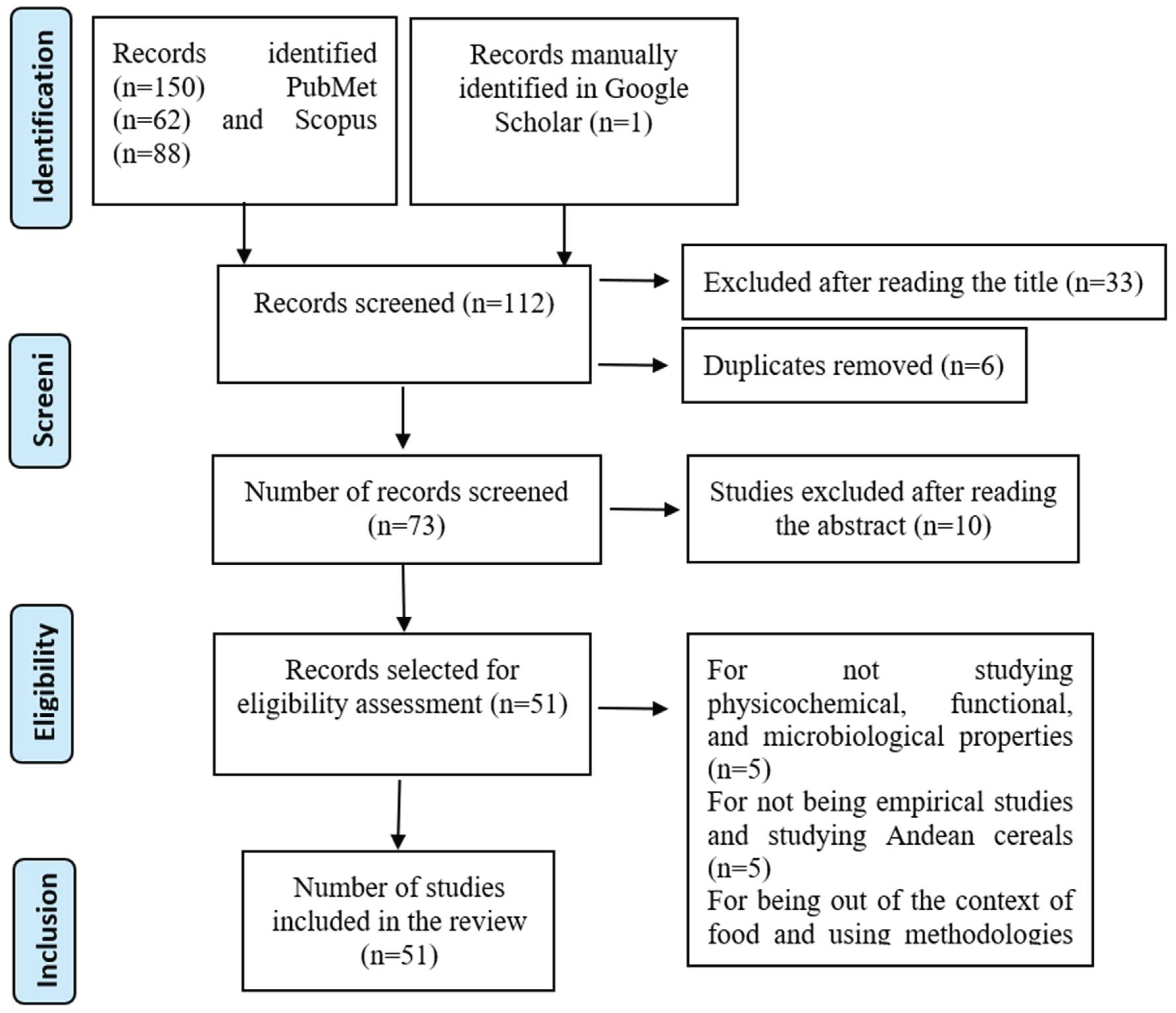
Table 1.
Utritional composition and bioactive compounds of Andean grains.
| Reference | Species | Proximal composition parameters | Bioactive Compounds | Relevant Observations |
|---|---|---|---|---|
| (Salazar et al., 2021) | Lupinus mutabilis | Protein: 52.8%, Fat: ~17%, Carbohydrates: 6.9%, Fiber: >10% and Moisture: 5.94–18.87% | Antioxidants: Bittering reduces antioxidant capacity by 52.9%, and spray-drying reduces antioxidant capacity by an additional 8%. Phenols and flavonoids are present. | Lupinus mutabilis is notable for its extremely high protein and fat content. The bitterness reduces its antioxidant capacity. It meets the requirements for "high fiber." Variability is attributed to geography and variety. |
| (Córdova-Ramos et al., 2020) | Lupinus mutabilis | Protein: 41–45%, Fat: 16–18%, Fiber: 9–13% | Polyphenols, antioxidant capacity. | Technological processes (bittering, drying) affect the antioxidant capacity and phenol content. |
| (Pérez-Ramírez et al., 2023) | Lupinus mutabilis (mixture with quinoa and sweet potato) | It does not report individual values, but the mix increases protein and fiber in extruded products. | Does not report individual values | The extruded with Lupinus mutabilis, quinoa and sweet potato improves the protein and fiber profile. |
| (Montserrat-De La Paz et al., 2021) | Amaranthus spp. | Protein: 13–17%, Fat: 6–8% and Fiber: 7–10% | Total polyphenols: 80–180 mg FA/100g | High genetic variability. Amaranthus spp. is a relevant source of antioxidants. |
| (Paucar -Menacho et al., 2024) | Amaranthus spp. | Protein: 13–16%, Fat: 6–8%, Dietary fiber, minerals | Polyphenols, flavonoids, saponins, antioxidants | Germination increases bioactive compounds and antioxidant capacity. |
| (Moreno-Rojo et al., 2024) | Amaranthus spp. (germinated) | It does not report individual numerical values, but germination improves digestibility and nutritional profile. | Increase in polyphenol and antioxidant capacity after germination. | The use of Amaranthus spp. germinated in paste improves nutritional and functional potential. |
| (Sindhuja et al., 2005) | Amaranthus spp. (in baking) | Increasing protein and fiber in baked goods with Amaranthus spp. | Does not report individual values. | Improves the nutritional profile of baked goods. |
Table 2.
Functional and technological properties and processing effects on Lupinus mutabilis flours and mixtures, and Amaranthus spp.
Table 2.
Functional and technological properties and processing effects on Lupinus mutabilis flours and mixtures, and Amaranthus spp.
| Reference | Species/Mixture | Functional and technological properties | Rheological and textural properties | Digestibility of starches and proteins | Effect of technological processes (germination, extrusion, drying, etc.) | Relevant observations |
|---|---|---|---|---|---|---|
| (Jamanca-Gonzales et al., 2023) | Lupinus mutabilis | High water and oil absorption capacity; gelling properties; high fiber (>10%), protein (>52%), and fat (~17%) content. | Viscoelastic gel-like behavior in doughs; high starch gelatinization temperature (68.4–81.5 °C) due to the presence of non-starch compounds; medium-sized particles. | Starch: low content (6.9%), but high proportion of amylose; high-quality proteins, rich in lysine. | Bittering reduces antioxidant capacity by 52.9%, and spray drying reduces antioxidant capacity by an additional 8%; it maintains the integrity of starch and proteins after milling. | Meets the requirements for "high fiber" status; variability attributed to geographic area and variety; suitable for gluten-free products. |
| (Llontop-Bernabé et al., 2025) | Lupinus mutabilis | Functional capacity affected by processes; significant reduction in polyphenols and antioxidants after debittering and drying. | It does not report numerical values, but it is mentioned that processing affects texture and functionality. | Direct digestibility is not reported, but it is inferred that the reduction in polyphenols may affect bioavailability. | Bittering and drying reduces the antioxidant capacity and phenol content. | Technological processes can compromise functional value if they are not optimized. |
| (Muñoz- Pabon, Roa-Acosta, et al., 2022) | Mix: Lupinus mutabilis + quinoa + sweet potato (extruded) | Increased protein and fiber content in extruded products; improved nutritional and functional profile; products with greater water absorption capacity. | Extrusion produces products with a crisp texture, good cohesiveness and expansion; it improves sensory acceptability. | Extrusion can increase the digestibility of proteins and starches by denaturation and gelatinization. | Extrusion improves texture, digestibility, and nutritional value; individual values are not reported. | Positive synergy between Andean ingredients; suitable for healthy snacks. |
| (Alarcón-García et al., 2020) | Amaranthus spp. | High water absorption capacity; significant source of polyphenols (80–180 mg FA/100 g); genetic variability in functional properties. | Flours with fine particles; good gel formation; suitable for baking and extruded products. | It does not report direct digestibility but highlights the presence of high-quality proteins and starch with good functionality. | Genetic and environmental variability affect functional properties; specific processes are not assessed. | Amaranthus spp. is a significant source of antioxidants and fiber; suitable for functional products. |
| (Vento et al., 2024) | Amaranthus spp. (germinated) | Sprouting increases polyphenols, flavonoids, and antioxidant capacity; it improves water absorption and protein solubility. | Germination reduces paste viscosity but improves the elasticity and cohesiveness of doughs; it facilitates the formation of more homogeneous matrices. | Sprouting increases protein digestibility and mineral bioavailability; it improves starch digestibility. | Germination: Increased bioactive compounds and antioxidant capacity; reduction of antinutritional factors; improved technological functionality. | Germination is an optimal process to enhance the functional and technological value of Amaranthus spp. |
| (Paucar -Menacho et al., 2023b) | Amaranthus spp. (germinated) | Use of Amaranthus spp. germinated in pasta improves the nutritional and functional profile; increases polyphenols and antioxidants in the final product. | Pasta with Amaranthus spp. germinated have better texture (greater firmness and elasticity) and sensory acceptability. | Germination improves the digestibility of proteins and starch in the produced pasta. | Germination prior to pasta production increases bioactive compounds and functionality; improves the texture and digestibility of the final product. | Germination is key to the development of functional foods from Amaranthus spp. |
| (Miranda-Ramos et al., 2019) | Amaranthus spp. (in baking) | Increased protein and fiber content in breads; improved nutritional profile; good water absorption capacity in doughs. | Breads with Amaranthus spp. They have a good crumb, greater volume, and acceptable texture; they improve the elasticity and cohesiveness of the dough. | It does not report direct digestibility, but baking can improve the bioavailability of nutrients. | Baking: possible partial loss of antioxidants but improves product texture and acceptability. | Amaranthus spp. It is useful for enriching baked goods and improving their functionality. |
| (Jamanca-Gonzales et al., 2024) | Mixtures: wheat, quinoa, Amaranthus spp. | Amaranthus spp. improves technofunctional properties (water absorption, swelling, apparent density); mixtures exhibit variability in color and microstructure. | Amaranthus spp. Pure: higher apparent viscosity and flow resistance; mixtures with wheat and quinoa: changes in pseudoplasticity and cohesiveness; microstructure: Amaranthus spp. provides a more homogeneous and finer matrix. | It does not report direct digestibility, but the fine and cohesive structure favors digestion in baked products. | Blending and fine grinding improve cohesiveness and texture; variations in color and microstructure depend on proportions. | Amaranthus spp. is key to improving functionality and texture in bread and pastry mixes. |
| ( Katyal et al., 2024) | Mixtures: quinoa, Amaranthus spp., Lupinus mutabilis (in paste) | Mixtures improve the functional and textural properties of pastes, increasing firmness, cohesiveness and viscosity. | Pastas with a higher proportion of Lupinus mutabilis and Amaranthus spp.: greater firmness and cohesiveness; final viscosity and retrogradation increase with Amaranthus spp. | It does not report direct digestibility, but the combination of flours improves the texture and potential digestibility. | Blends allow for fine-tuning the texture and functionality of pasta; cooking improves structure and acceptability. | Positive synergy between pseudocereals and Andean legumes in aqueous matrices. |
Table 3.
Applications of Andean grains in food development.
| Application/product | Andean grain/mixture | Level of substitution/addition | Nutritional composition | Reference |
|---|---|---|---|---|
| Baking: gluten-free bread | Chenopodium quinoa, Amaranthus spp., Chenopodium pallidicaule, Lupinus mutabilis | 10-50% addition to starch/potato/corn | Increased protein (up to 13-16%), fiber, minerals and bread volume (with 10-20% Chenopodium quinoa/Amaranthus spp.); improved texture (cohesiveness, firmness); optimal acceptability with ≤20%. | (Repo-Carrasco-Valencia et al., 2020) |
| Baking: cookies | Chenopodium pallidicaule, Chenopodium quinoa, Amaranthus spp. | 10-40% replacement | Increased protein (up to 12-15%), fiber, and minerals; optimal sensory acceptability with 20-30% Chenopodium pallidicaule; darker color. | (Luque-Vilca et al., 2024a) |
| Baking: extruded snacks | Chenopodium quinoa, Lupinus mutabilis, sweet potato | 20-40% mix | Improved protein (up to 14-18%), fiber, expansion, and crispness; high sensory acceptability. | (Muñoz- Pabon, Parra-Polanco, et al., 2022) |
| Baking: panettone | Chenopodium quinoa, Amaranthus spp. | 10-20% replacement | Increased protein, fiber, and minerals; sensory acceptability like a commercial product with ≤15% | (Cannas et al., 2020) |
| Dairy products: alternative cheese | Chenopodium quinoa, Amaranthus spp. | 10-20% replacement | Increased protein and fiber; acceptable texture; moderate sensory acceptability | (Majhenič et al., 2025) |
| Others: supplements/bars | Chenopodium quinoa, Amaranthus spp., Chenopodium pallidicaule | 10-40% mix | Increased protein (up to 15-18%), fiber, and minerals; good sensory acceptability | (Li et al., 2025) |
| Others: fortified foods | Chenopodium quinoa, lupinus mutabilis | 10-20% addition | Increased iron, protein, fiber, and phenolic compounds; variable sensory acceptability | (Guo et al., 2025) |
Disclaimer/Publisher’s Note: The statements, opinions and data contained in all publications are solely those of the individual author(s) and contributor(s) and not of MDPI and/or the editor(s). MDPI and/or the editor(s) disclaim responsibility for any injury to people or property resulting from any ideas, methods, instructions or products referred to in the content. |
© 2025 by the authors. Licensee MDPI, Basel, Switzerland. This article is an open access article distributed under the terms and conditions of the Creative Commons Attribution (CC BY) license (http://creativecommons.org/licenses/by/4.0/).
Copyright: This open access article is published under a Creative Commons CC BY 4.0 license, which permit the free download, distribution, and reuse, provided that the author and preprint are cited in any reuse.


