

Submitted:
19 May 2025
Posted:
19 May 2025
You are already at the latest version
Abstract
Background/Objective: This study aims to evaluate the predictive performance of three supervised machine learning algorithms—Decision Tree (DT), Support Vector Machine (SVM), and K-Nearest Neighbors (KNN) in forecasting key visual skills relevant to rhythmic gymnastics. Methods: A total of 383 rhythmic gymnasts aged 4 to 27 years were evaluated in various sports centers across Madrid, Spain. Visual assessments included clinical tests (near convergence point accommodative facility, reaction time, and hand–eye coordination) and eye-tracking tasks (fixation stability, saccades, smooth pursuits, and visual acuity) using the DIVE (Devices for an Integral Visual Examination) system. The dataset was split into training (70%) and testing (30%) subsets. Each algorithm was trained to classify visual performance, and predictive performance was assessed using accuracy and macro F1-score metrics. Results: The Decision Tree model demonstrated the highest performance, achieving an average accuracy of 92.79% and a macro F1-score of 0.9276. In comparison, the SVM and KNN models showed lower accuracies (71.17% and 78.38%, respectively) and greater difficulty in correctly classifying positive cases. Notably, the DT model outperformed the others in predicting fixation stability and accommodative facility, particularly in short-duration fixation tasks. Conclusion: The Decision Tree algorithm proves to be the most robust and accurate model for predicting visual skills in rhythmic gymnasts. These findings support the integration of machine learning in sports vision screening and suggest that predictive modeling can inform individualized training and performance optimization in visually demanding sports such as rhythmic gymnastics.
Keywords:
Eye Tracking
; Machine Learning
; Visual Performance
; Rhythmic Gymnastics
; Decision Tree Classification
; Biomedical Optics
1. Introduction
Vision and associated visual skills are fundamentally important in most sports [1, 2]. In gymnastics, visual abilities significantly contribute to athletes' capacity to execute highly complex skills on various apparatuses, each presenting distinct visual demands [3]. Key visual skills utilized in gymnastics include static and dynamic visual acuity, gaze control (fixations, saccades, smooth pursuit), depth perception, peripheral vision, accommodation (focus flexibility), reaction time, and hand-eye coordination [1].
Gymnasts must precisely control their gaze, fixating on specific locations while performing intricate movements. Rhythmic gymnastics, involving the manipulation of apparatuses like ribbons, hoops, and balls, places extreme demands on visual control for anticipating, tracking, and executing rapid, precise actions. Success hinges not only on physical prowess but also on the ability to accurately stabilize and direct one's gaze. Gaze behavior can vary based on task constraints and the performer's level of expertise [3].
Gaze control involves two main functions: stabilizing the gaze to maintain focus using reflexes triggered by inputs from the vestibular system, visual cues, or neck movements; and orienting the gaze towards objects of interest using a combination of quick eye movements (saccades) and smooth tracking movements (smooth pursuit). During this process, the visual and oculomotor systems collaborate to ensure that the object of interest remains centered on the retina [4].
Focus flexibility, or accommodation, refers to the skill that enables athletes to swiftly shift their focus from one point to another in space without excess effort. Difficulties in this area can hinder the ability to track incoming or outgoing objects quickly and accurately [5].
Reaction time refers to the duration between sensing a stimulus and initiating the appropriate response. Specifically, visual reaction time measures the time it takes to perceive and react to visual stimuli, which may also involve auditory cues. Response time is defined as the total time necessary to process visual information and complete the motor response sequence [1].
In our research, we employed the Devices for an Integral Visual Examination (DIVE) System, a comprehensive tool integrating eye-tracking technology with various utilities to assess visual function across different domains. The DIVE system features a high-resolution touchscreen display for presenting visual stimuli and facilitating patient interaction. Enhanced by an advanced eye tracker, the DIVE captures patient responses to these stimuli [4].
In this research study, we investigate the predictive capabilities of three distinct algorithms utilized to forecast visual skills among gymnasts. The algorithms employed are the K-Nearest Neighbors (KNN), Decision Tree (DT), and Support Vector Machine (SVM) using the Hold-Out method.
KNN is an intuitive supervised learning algorithm that employs a proximity-based method for pattern recognition [4].
DT is a supervised learning algorithm used for classification and prediction tasks [6].
SVM is a kernel-based machine learning algorithm that can categorize input data into specific classes or categories [4].
The Hold-Out method is a technique used in machine learning and statistics to evaluate the performance of a predictive model. It involves dividing the dataset into two parts: one used to train the model (training set, typically 70% of the data) and the other reserved for testing (test set, typically 30%). This approach helps in assessing the model's ability to generalize to unseen data.
Our objective is to discern the efficacy of these algorithms in forecasting visual abilities based on a battery of visual tests administered to 390 gymnasts aged between 4 and 27 years. To elucidate the visual skills contributing to gymnastics and enable greater predictive precision, we employed a variety of algorithms in this research. Through the utilization of these algorithms, we aim to determine their effectiveness in predicting visual skills crucial for performance in rhythmic gymnastics.
2. Materials and Methods
Permission was obtained from the Sports Department of the Madrid City Council to conduct visual assessments of rhythmic gymnasts. The study was conducted in accordance with the principles of the Declaration of Helsinki and was approved by the Institutional Review Board of Hospital Clínico San Carlos, Madrid, Spain (protocol no. 21/766-E; approval date: December 20, 2021). Participation was voluntary, and written informed consent was obtained from all participants or their legal guardians in the case of minors. All tests were administered by trained clinicians under standardized conditions.
Assessments were conducted in various sports centers across Madrid where rhythmic gymnastics is regularly practiced by affiliated clubs. In each center, two dedicated testing areas were set up: a darkened room for DIVE assessments and an adjacent space with tables and chairs for clinical procedures. The clinical tests included near convergence point, cover test, monocular accommodative facility, visual reaction time, and hand-eye coordination. The order of test administration was randomized, and the total duration of testing per participant was approximately 15 minutes.
Figure 1 provides a schematic overview of the visual evaluation process carried out with rhythmic gymnasts, including the sequence of procedures, the settings used for data collection, and the specific tests performed.
Equipment and Visual Assessment Protocol
The DIVE system, equipped with a 12-inch screen providing a visual angle of 22.11º horizontally and 14.81º vertically, was used to conduct the evaluations. Its eye-tracking technology operates with a maximum temporal resolution of 120 Hz, offering high precision in tracking eye movements, a key feature for assessing rapid and subtle visual responses in gymnasts.
During the visual assessment sessions, gymnasts sat in front of the DIVE system, which features a high-resolution 12-inch screen and integrated eye-tracking technology (Figure 2). Testing was conducted in a dimly lit environment to ensure optimal tracking accuracy and participant comfort. The system recorded eye movements and visual responses during a series of standardized tasks, providing objective data across multiple visual domains.
The selection of the DIVE system (Device for an Integral Visual Examination) for visual assessment in this study is supported by its prior validation in clinical and multicenter settings. Pérez Roche et al. [7] utilized DIVE to evaluate visual acuity and contrast sensitivity in a sample of 2,208 children aged between 6 months and 14 years, including both full-term and preterm births, across five countries. The findings indicated that both visual functions improved with age, particularly during the first five years of life. This study provided normative reference values and endorsed DIVE's utility as an objective and effective tool for measuring basic visual functions in pediatric populations.
Furthermore, Pueyo et al. [8] employed DIVE to characterize the development of oculomotor control in 802 healthy children aged between 5 months and 15 years, observing significant improvements in fixation stability and saccadic movements with age, especially during the first two years of life.
Lastly, Altemir et al. [9] assessed fixational behavior during long and short fixation tasks in 259 participants aged between 5 months and 77 years using DIVE. They found that gaze stability improved with age up to 30 years and then progressively declined from the fifth decade of life onwards.
The DIVE system facilitated various assessment protocols, each selected for its relevance to the visual demands of rhythmic gymnastics. These protocols include:
- Long Saccades DIVE: It assesses the gymnasts' ability to perform rapid and extended eye movements, which are crucial for tracking moving apparatus.
- Short Saccades DIVE: It measures the precision of shorter eye movements, which are necessary for detailed tasks such as hand-eye coordination with apparatus.
- Eye Tracker Fixation Test DIVE: It assesses the stability of the gymnasts' visual fixation, which is essential for maintaining focus during routines.
- Color Perception DIVE: Detects possible anomalies in color perception that could affect interaction with colored apparatus.
- Visual Acuity and Single Binocular Field (Av y FSC DIVE): Essential for spatial awareness and precision in positioning relative to the apparatus.
In addition to the DIVE protocols, two complementary clinical tests were conducted:
- Reaction time and hand-eye coordination were assessed using the Reaction Lights system to simulate dynamic visual-motor demands.
- Monocular accommodative facility was measured with ±2.00 D flippers to evaluate the gymnasts' focusing facility.
3. Results
A total of 383 rhythmic gymnasts aged 4-26 years participated in this study. The data set conformed to the assumption of normality, allowing the application of parametric statistical methods. Descriptive statistics, including means, standard deviations, minimum and maximum values, were calculated to characterize the global variables of the sample. To analyze differences and patterns in the variables of interest, the sample was divided into age groups. Statistical comparisons were made to identify significant trends and variations between these groups, providing insight into the developmental trajectory of visual variables within rhythmic gymnastics.
These global values were presented in Table 1, which provides an overview of the entire cohort’s performance across all assessed variables. A closer examination of the table reveals considerable variability in several visual function parameters within the sample of rhythmic gymnasts. Notably, accommodative facility (REAF and LEAF) and eye–hand coordination (EHC) display wide ranges and relatively high standard deviations, indicating heterogeneity in neurosensory performance across participants. Visual reaction time (VRT) also shows substantial dispersion (mean: 1066 ms; SD: 241 ms), likely reflecting developmental differences across the broad age spectrum. Notably, the near convergence point (NCP) ranged from 0 to 16 cm, suggesting that while many gymnasts demonstrate effective convergence, a subset exhibits marked limitations. The relatively symmetrical means and variability in fixation stability metrics (FLTBREFS/FLTBLEFS and FSTBREFS/FSTBLEFS) indicate balanced binocular control between eyes.
To analyze differences and patterns in the variables of interest, the sample was divided into nine age groups: 5–7, 7.01–7.99, 8–10, 10.01–11.97, 12–13, 13.01–13.99, 14–15, 15.01–17, and 17.01–27 years. Statistical comparisons were made to identify significant trends and variations between these groups, providing insight into the developmental trajectory of visual variables within rhythmic gymnastics.
Table 2 presents the age-stratified means and standard deviations for each assessed variable, highlighting how specific visual performance metrics evolve with age. Overall, an age-related improvement is evident in key parameters such as accommodative facility, visual reaction time, and eye–hand coordination, consistent with the progressive maturation of oculomotor and neurosensory pathways. Conversely, convergence point, and smooth pursuit performance show greater variability, potentially reflecting more complex or non-linear developmental profiles influenced by training history or individual visual demands.
3.1. Differences Between Groups
Figure 3, Figure 4 and Figure 5 provide a graphical representation of the age-related differences observed in three key visual variables: near convergence point (NCP), reaction time, and hand-eye coordination, respectively. The data reveal a general trend of improvement with increasing age, particularly noticeable between the younger and older participant groups.
In Figure 3, NCP values tend to decrease with age, indicating better convergence ability in older gymnasts. Figure 4 shows a gradual reduction in reaction time, reflecting faster visual-motor responses as age increases. Similarly, Figure 5 illustrates improvements in hand-eye coordination, with older groups achieving higher scores. These visual patterns support the statistical analyses and suggest a developmental maturation of visual and sensorimotor functions relevant to rhythmic gymnastics performance.
A series of significant differences are evident across age groups in relation to near convergence point, reaction time, and hand-eye coordination, as depicted in the preceding three figures.
3.2. Machine Learning Models Performance
In addition to the descriptive group comparisons, the predictive capabilities of three supervised machine learning models—Decision Tree, Support Vector Machine (SVM), and K-Nearest Neighbors (KNN)—were evaluated. These models were applied to classify performance on specific visual functions, such as fixation stability and accommodative facility, using eye-tracking and clinical data. The results for each model and task are presented below.
This study aims to evaluate the performance of three machine learning models, namely Decision Tree, Support Vector Machine (SVM), and K-Nearest Neighbors (KNN), in predicting fixation stability in short tasks. The results of this study will provide insights into the most suitable model for this task and highlight the strengths and weaknesses of each model.
Results for the right eye:
- Decision Tree: 98.20% accuracy and 0.9819 macro F1 score.
- Support Vector Machine (SVM): 79.28% accuracy and 0.7894 macro F1 score.
- K-Nearest Neighbors (KNN) with k=3: 66.67% accuracy and 0.6627 macro F1 score.
Results for the left eye:
- Decision Tree: 96.40% accuracy and 0.9635 macro F1 score.
- Support Vector Machine (SVM): 75.68% accuracy and 0.7567 macro F1 score.
- K-Nearest Neighbors (KNN) with k=3: 71.17% accuracy and 0.7115 macro F1 score.
In general, the Decision Tree consistently demonstrated excellent performance in both eyes, with high accuracy and a macro F1 score close to 1. The SVM and KNN showed lower performance, exhibiting a higher rate of misclassifications. Notably, the SVM struggled to correctly classify positive cases in both eyes, whereas the KNN showed a higher number of false positives and negatives in the left eye.
In summary, the Decision Tree is the most suitable model for predicting fixation stability in short tasks in both eyes, followed by the KNN and SVM. It is important to acknowledge the limitations of each model and consider appropriate adjustments to enhance their predictive performance.
Combined results for both eyes:
- Decision Tree: 97.20% average accuracy and 0.973 average macro F1 score.
- Support Vector Machine (SVM): 77.48% average accuracy and 0.773 average macro F1 score.
- K-Nearest Neighbors (KNN) with k=3: 68.92% average accuracy and 0.687 average macro F1 score.
The combined results show that the Decision Tree is still the best-performing model, with an average accuracy of 97.20% and an average macro F1 score of 0.973. The KNN and SVM have lower performance, with average accuracy and macro F1 scores of 68.92% and 77.48%, respectively.
Short-term fixation denotes to the ability to maintain visual attention on an object for a brief period, typically spanning seconds to minutes. This generally demands less sustained concentration and attention compared to long-term fixation.
The study found that the Decision Tree model also exhibits optimal predictive performance for short-term fixation, albeit with a slightly lower precision compared to long-term fixation. This indicates that the model can accurately predict an individual’s ability to sustain visual attention on an object for a brief period.
To evaluate the performance of three machine learning models, namely Decision Tree, Support Vector Machine (SVM), and K-Nearest Neighbors (KNN), in predicting accommodative facility. The results of this study will provide insights into the most suitable model for this task and highlight the strengths and weaknesses of each model.
In summary, three machine learning models (Support Vector Machine (SVM), K-Nearest Neighbors (KNN), and Decision Tree) were tested for two classification tasks: accommodative facility of the right eye (REAF) and accommodative facility of the left eye (LEAF), for both eyes.
In general, the models had difficulties in correctly classifying the positive class in both classification tasks.
The SVM had high accuracy in some tests, but its low F1 macro revealed a significant imbalance in the classification of the positive class.
The KNN had a better balance between classes in some tests, but its accuracy was lower compared to the SVM.
The Decision Tree performed worst in some tests, with both low accuracy and macro F1 score, indicating substantial misclassification in both classes.
For the accommodative facility of the right eye (REAF), the SVM had the highest accuracy (79.28%), but its F1 macro was low (0.4422) due to its inability to correctly classify the positive class. The KNN had a better F1 macro (0.5547) compared to the SVM, but its accuracy was lower (70.27%). The DT exhibited the lowest performance, both in accuracy (65.77%) and F1 macro (0.5229).
For the accommodative facility of the left eye (LEAF), the KNN seemed to be the most balanced model, while the SVM suffered from a severe imbalance and the DT had a low overall performance.
4. Discussion
The present study explored the application of supervised machine learning algorithms to predict key visual functions in rhythmic gymnasts, focusing specifically on fixation stability and accommodative facility. Among the three models evaluated—Decision Tree (DT), Support Vector Machine (SVM), and K-Nearest Neighbors (KNN), the DT algorithm exhibited the highest predictive performance, with an accuracy of 92.79% and a macro F1-score of 0.9276. These findings highlight the potential of decision trees as a robust and interpretable approach for modeling complex, non-linear relationships between visual variables and functional outcomes in high-performance sports.
The superior performance of the DT model may be attributed to its inherent ability to manage multidimensional data and capture subtle interactions between input features. In dynamic disciplines like rhythmic gymnastics, visual skills such as fixation and accommodation are essential for responding to rapidly changing stimuli with precision and stability. Our results support the notion that visual-motor abilities can be effectively predicted using AI-based models, offering practical implications for athlete monitoring and individualized training design.
Visual skills such as fixation stability and accommodative facility, both of which are essential for athletes to maintain visual focus and adjust rapidly to changing visual stimuli, were predicted with high accuracy. This is consistent with the findings of previous studies, which emphasize the importance of visual acuity, saccades, and reaction time in sports performance [10, 11].
Our results suggest that the DT algorithm is the most robust and reliable choice for classification problems. Its high accuracy and macro F1 score across most datasets make it an ideal choice for problems where maximizing accuracy and consistency is crucial.
While other algorithms such as the SVM and KNN may be useful in specific contexts, the superior performance of the DT in most cases highlights its value as the most effective tool for classification in this analysis.
The findings of our study align with the growing body of literature supporting the integration of artificial intelligence (AI) and machine learning (ML) techniques in sports science. Reis et al. [12] emphasizes the utility of decision tree (DT) algorithms and other supervised learning methods for injury risk prediction and performance optimization, especially in disciplines that require dynamic and multidimensional analysis. Our work adds to this evidence by showing that DT algorithms can also be highly effective in predicting key visual variables in rhythmic gymnasts, highlighting the potential of AI models to support tailored interventions and performance monitoring in youth sports.
A relevant comparison can be made with the study by Liu et al. [13], who applied various machine learning algorithms—including decision trees, KNN, and SVM—to predict physical activity behavior among university students, based on psychological constructs such as sports learning interest and autonomy support. Although their study focused on behavioral and motivational variables rather than visual or physiological abilities, both investigations share the common goal of using supervised learning models to forecast performance-related traits in sports populations. In their findings, logistic regression achieved the highest overall accuracy (72.88%), while decision trees and SVM yielded moderate results (F1 scores of 0.6672 and 0.6845, respectively). In contrast, our study found decision trees to be the most effective model for predicting visual function, particularly in tasks involving fixation and accommodative facility. These differences may be attributed to the nature of the target variables—subjective behavioral intentions versus objective visual performance—as well as the structure of the datasets. Nonetheless, both studies highlight the utility of machine learning as a powerful tool for modeling complex relationships in sports-related domains.
Additional support for the use of machine learning in predicting physical performance variables comes from Zhang et al. [14], who applied optimized algorithms such as decision trees and SVM to gain recognition and prediction. Their study demonstrated high precision in modeling human posture changes, with a root mean square error (RMSE) as low as 0.018 on flat terrain. Although focused on movement patterns rather than visual variables, their findings align with our results in highlighting the strength of decision trees in capturing complex, nonlinear relationships in human performance prediction.
Machine learning (ML) refers to the development of systems capable of learning from experience and adapting autonomously to generate predictive analytics, without requiring explicit instructions [10].
Machine learning has been applied in various areas of sports – for example, for sports monitoring data [11], for activity recognition [11], for making performance predictions [4,11,15,16,17], and to investigate whether sports skills, physical performance, or general cognitive functions differ between players of different competition levels [6].
Several studies have used machine learning algorithms to predict performance in sports contexts. for example, using KNN in the running discipline of marathon [18] or to make injury predictions [10, 16].
According to the authors, no previous study has been found that examines the visual skills of rhythmic gymnasts using machine learning to make predictions.
In this context, the objective of our study was to predict the visual variables utilized in gymnasts using three distinct algorithms: K-Nearest Neighbors (KNN). decision tree. and support vector machine SVM. The visual skills assessed in gymnasts included visual acuity, saccades, smooth pursuits, fixations, reaction time, contrast sensitivity, accommodative facility, and color vision. Among these, machine learning algorithms were applied to predict two key functions: fixation stability and accommodative facility.
The optometric assessments conducted on athletes add value to the study, as they evaluate aspects crucial for sports performance. Predicting specific optometric values further enriches the scope of the study.
Regarding the predictive modeling, notable percentages exceeding 85% were observed for all variables. indicating high reliability even with only 60% of the data.
In the context of visual tests conducted on rhythmic gymnasts, the K-Nearest Neighbors (KNN) model has been effectively trained and performs well on a representative test set; suggesting the model has learned useful patterns and can generalize to similar situations with new rhythmic gymnasts. However, additional regular evaluations are recommended to ensure relevance and accuracy in evolving problem conditions.
From a practical perspective, the predictive models developed in this study offer valuable tools for the early detection of visual performance deficits in rhythmic gymnasts. By integrating eye-tracking assessments and algorithmic classification, coaches and clinicians could identify athletes with suboptimal fixation stability or accommodative facility—both critical for spatial orientation and rapid motor response during performance. This approach enables personalized training interventions aimed at strengthening specific visual skills, optimizing sensorimotor coordination, and potentially reducing injury risk. Moreover, longitudinal implementation of these models could support visual monitoring throughout the athletic development cycle, offering objective data to inform selection processes, guide rehabilitation strategies, and adjust visual-cognitive load during training sessions.
5. Conclusions
This study demonstrates the potential of artificial intelligence, particularly supervised learning models, to predict visual performance variables in rhythmic gymnasts using combined clinical and eye-tracking data. Among the three models evaluated—Decision Tree (DT), Support Vector Machine (SVM), and K-Nearest Neighbors (KNN)—the Decision Tree consistently achieved the highest classification accuracy and macro F1 scores across all tasks, especially in predicting short-term fixation stability.
These findings highlight the ability of decision-tree-based approaches to model complex visual functions in young athletes, offering a reliable tool for performance profiling and individualized visual training. Despite its effectiveness, model generalizability remains limited due to the homogeneous sample and restricted age distribution. This research offers a novel application of supervised learning to sports vision, emphasizing the value of artificial intelligence in athlete assessment.
6. Limitations and Future Research
Despite the DT model’s high predictive accuracy, several limitations must be acknowledged. Since the dataset consisted exclusively of rhythmic gymnasts from Madrid, the generalizability of the findings to broader populations may be limited. Additionally, although the DIVE system provided high-quality visual data, further validation with larger and more diverse samples is needed to confirm the robustness of the predictions across different sports and skill levels (16).
Future research should explore the application of deep and reinforcement learning techniques, which have shown promise in other areas of sports performance analysis (17). These models could potentially enhance the accuracy of predictions and uncover deeper patterns in the data, particularly for modeling more complex visual-motor performance patterns. Furthermore, longitudinal studies could examine how visual skills develop over time in athletes, providing insights into the long-term impact of visual training on performance.
Author Contributions
Conceptualization, R.B.-V., J.R.T. and F.J.P-M .; methodology, R.B.-V and J.E.C.-S.; software, J.R.T.; validation, R.B.-V., A.R-P. and F.J.P-M.; formal analysis, J.R.T.; investigation, R.B.-V and G.M.-F; resources,J.R.T.; data curation, R.B.-V; writing—original draft preparation, F.J.P-M; writing—review and editing, F.J.P-M.; visualization, J.E.C.-S.; supervision F.J.P-M.; project administration, R.B.-V and F.J.P-M.; funding acquisition, R.B.-V and J.R.T Y.Y. All authors have read and agreed to the published version of the manuscript.
Funding
This research received no external funding.
Institutional Review Board Statement
The study was conducted in accordance with the Declaration of Helsinki and approved by the Research Ethics Committee for Medicinal Products of the San Carlos Clinical Hospital (protocol no. 21/766-E; approval date: December 20, 2021).
Informed Consent Statement
Informed consent was obtained from all subjects involved in the study.”
Data Availability Statement
Data supporting the conclusions of this study are available upon request from the corresponding author. Due to ethical and privacy restrictions, the data are not publicly available.
Conflicts of Interest
The authors declare no conflicts of interest.
Abbreviations
The following abbreviations are used in this manuscript:
| AI | Artificial Intelligence |
| DIVE | Devices for an Integral Visual Examination |
| DT | Decision Tree |
| EHC | Eye–Hand Coordination |
| FLTBLEFS | Fixation in Large Task Binocular Left Eye Fixation Stability |
| FLTBREFS | Fixation in Large Task Binocular Right Eye Fixation Stability |
| FSTBLEFS | Fixation in Short Task Binocular Left Eye Fixation Stability |
| FSTBREFS | Fixation in Short Task Binocular Right Eye Fixation Stability |
| GFLTP | Global Fixation in Long Tasks Performance |
| GFSTP | Global Fixation in Short Tasks Performance |
| GOCP | Global Oculomotor Control Performance |
| GSP | Global Saccadic Performance |
| GSPP | Global Smooth Pursuit Performance |
| KNN | K-Nearest Neighbors |
| LEAF | Left Eye Accommodative Facility |
| ML | Machine learning |
| NCP | Near Convergence Point |
| REAF | Right Eye Accommodative Facility |
| SVM | Support Vector Machine |
| VRT | Visual Reaction Time |
| bpm | Beats Per Minute |
| cpm | Cycles Per Minute |
| logdeg² | Logarithm of Degrees Squared |
| ms | Milliseconds |
References
- Potgieter K, Ferreira JT. The effects of visual skills on Rhythmic Gymnastics. Afr. Vis. Eye Health. 2009,68,3. [CrossRef]
- Sherman A. Overview of research information regarding vision and sports. J. Am. Optom. Assoc. 1980,51,7,661-5.
- Barreto J, Casanova F, Peixoto C, Fawver B, Williams AM. How task constraints influence the gaze and motor behaviours of elite-level gymnasts. Int. J. Environ. Res. Public Health. 2021,18,13. [CrossRef]
- Hussain A, Ali G, Akhtar F, Khand ZH, Ali A. Design and Analysis of News Category Predictor. Eng. Technol. Appl. Sci. Res. 2020,10,5,6380-5. [CrossRef]
- Millard L, Breukelman GJ, Burger T, Nortje J, Schulz J. Visual skills essential for rugby. Med Hypothesis Discov Innov Ophthalmol. 2023,12,1,46-54. https://doi.orgorg/10.51329/mehdiophthal1469.
- Formenti D, Trecroci A, Duca M, Vanoni M, Ciovati M, Rossi A, et al. Volleyball-Specific Skills and Cognitive Functions Can Discriminate Players of Different Competitive Levels. J Strength Cond Res. 2022,36,3,813-9. [CrossRef]
- Pérez Roche MT, Yam JC, Liu H, Gutierrez D, Pham C, Balasanyan V, et al. Visual Acuity and Contrast Sensitivity in Preterm and Full-Term Children Using a Novel Digital Test. Children. 2022,10,1. [CrossRef]
- Pueyo V, Yam JCS, Perez-Roche T, Balasanyan V, Ortin M, Garcia G, et al. Development of oculomotor control throughout childhood: A multicenter and multiethnic study. J Vis. 2022,22,13,4. [CrossRef]
- Altemir I, Alejandre A, Fanlo-Zarazaga A, Ortín M, Pérez T, Masiá B, et al. Evaluation of Fixational Behavior throughout Life. Brain Sci. 2021,12,1. [CrossRef]
- Amendolara A, Pfister D, Settelmayer M, Shah M, Wu V, Donnelly S, et al. An Overview of Machine Learning Applications in Sports Injury Prediction. Cureus. 2023,15,9. [CrossRef]
- Lei P. System Design and Simulation for Square Dance Movement Monitoring Based on Machine Learning. Comput Intell Neurosci. 2022,2022. [CrossRef]
- Reis FJJ, Alaiti RK, Vallio CS, Hespanhol L. Artificial intelligence and Machine Learning approaches in sports: Concepts, applications, challenges, and future perspectives. Braz J Phys Ther. 2024,28,3,101083. [CrossRef]
- Liu H, Hou W, Emolyn I, Liu Y. Building a prediction model of college students' sports behavior based on machine learning method: combining the characteristics of sports learning interest and sports autonomy. Sci Rep. 2023,13,1,15628. [CrossRef]
- Gao J, Ma C, Su H, Wang S, Xu X, Yao J. Research on gait recognition and prediction based on optimized machine learning algorithm. J. Biomed. Eng. 2022,39,103-11. [CrossRef]
- Balkhi P, Moallem M. A Multipurpose Wearable Sensor-Based System for Weight Training. Automation. 2022,3,1,132-52. [CrossRef]
- Calderon-Diaz M, Silvestre Aguirre R, Vasconez JP, Yanez R, Roby M, Querales M, et al. Explainable Machine Learning Techniques to Predict Muscle Injuries in Professional Soccer Players through Biomechanical Analysis. Sensors. 2024,24,1. [CrossRef]
- Mohandas A, Ahsan M, Haider J. Tactically Maximize Game Advantage by Predicting Football Substitutions Using Machine Learning. Big Data Cogn. Comput. 2023,7,2. [CrossRef]
- Lerebourg L, Saboul D, Clemencon M, Coquart JB. Prediction of Marathon Performance using Artificial Intelligence. Int J Sports Med. 2023,44,05,352-60. [CrossRef]
Figure 1.
Flowchart of the visual function assessment protocol in rhythmic gymnasts.
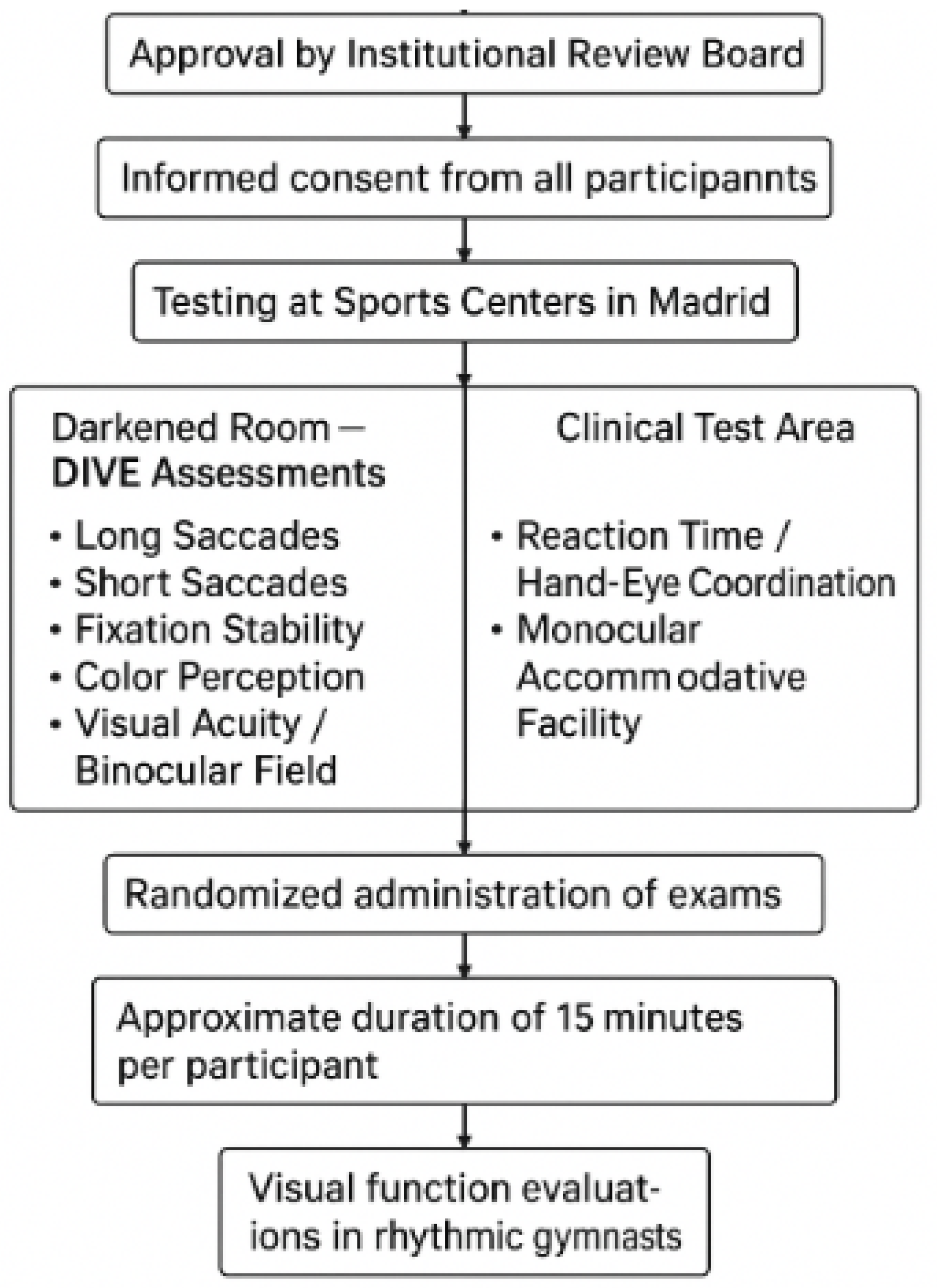
Figure 2.
Rhythmic gymnast performing visual assessment with the DIVE eye-tracking system.
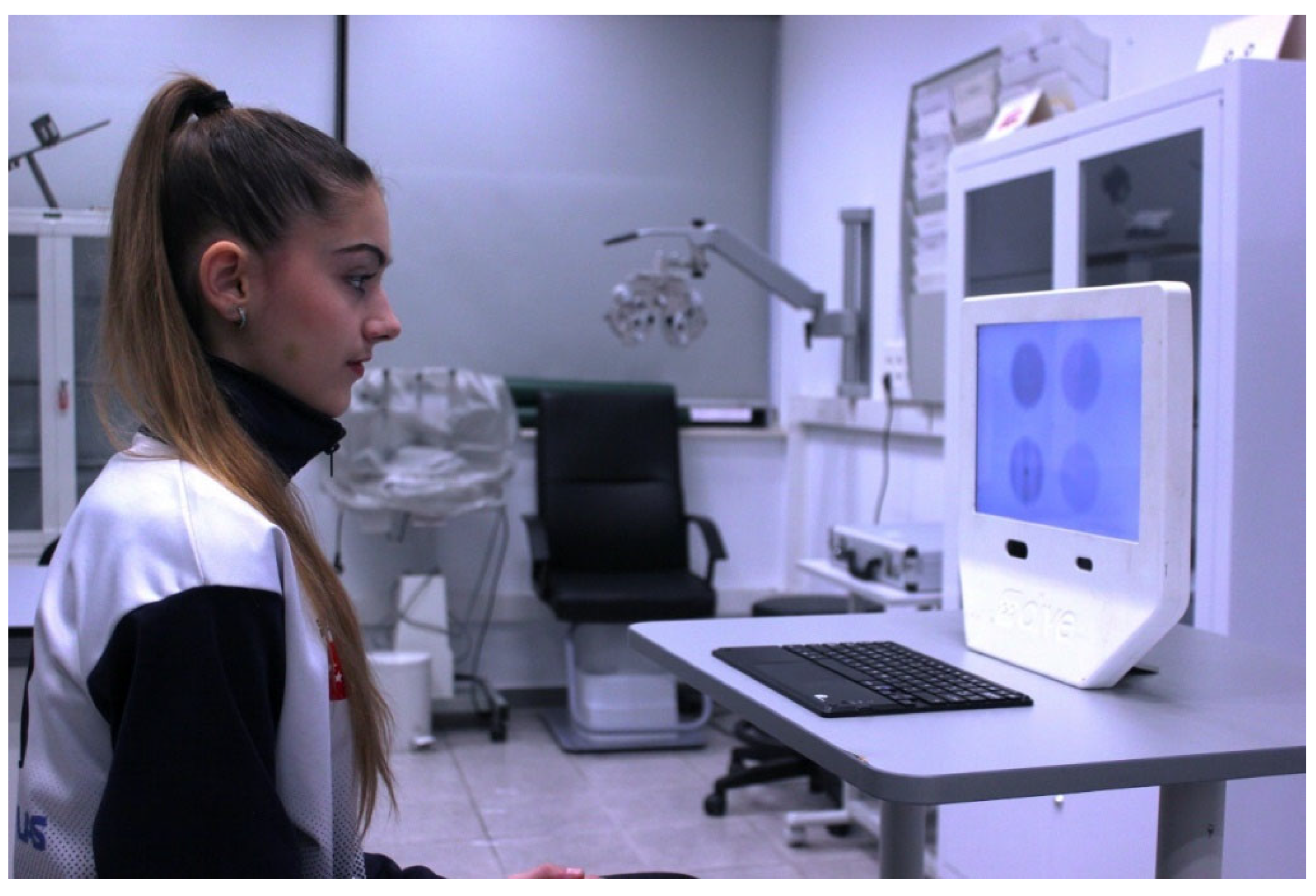
Figure 3.
Differences between groups by NCP
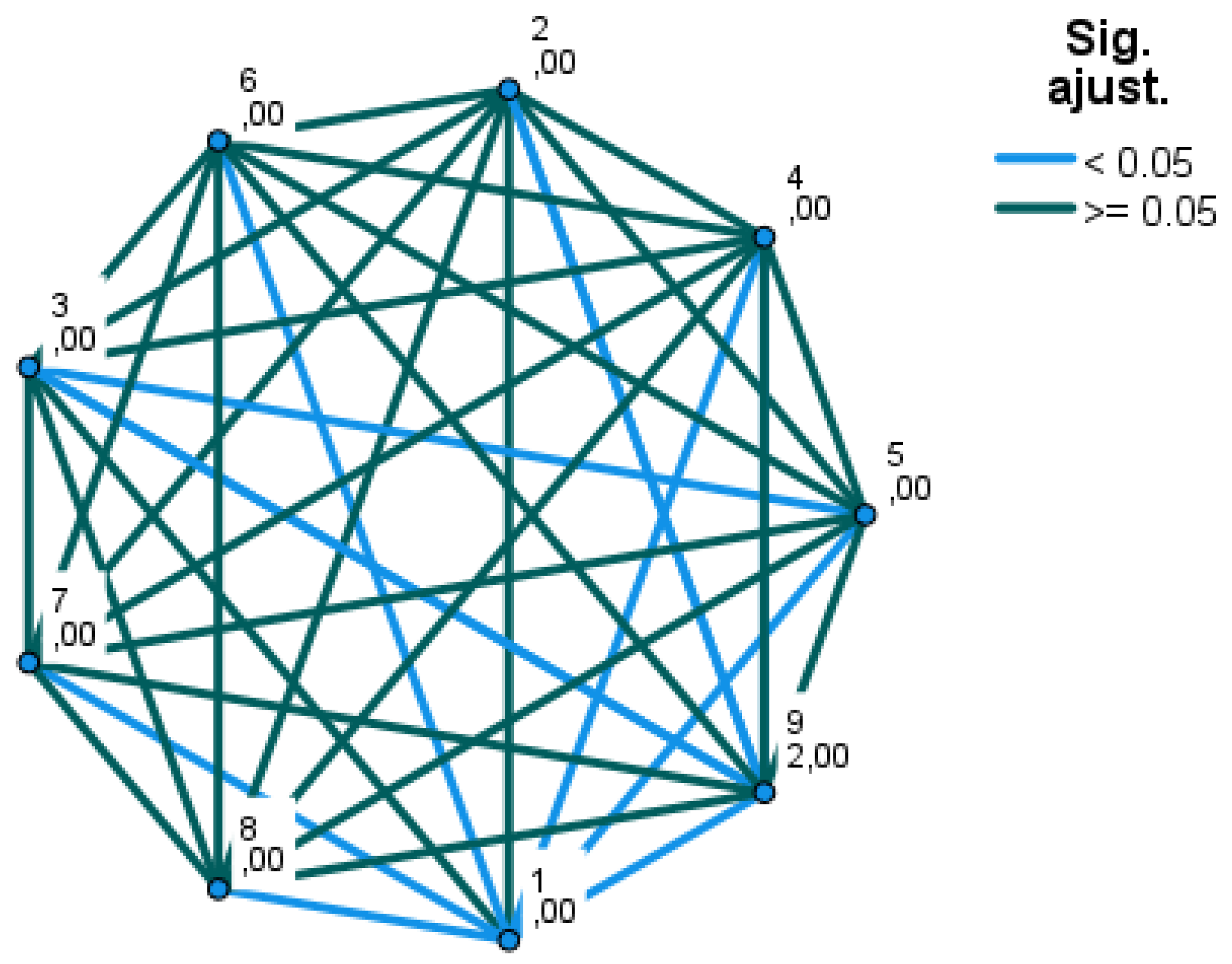
Figure 4.
Differences between groups by reaction time
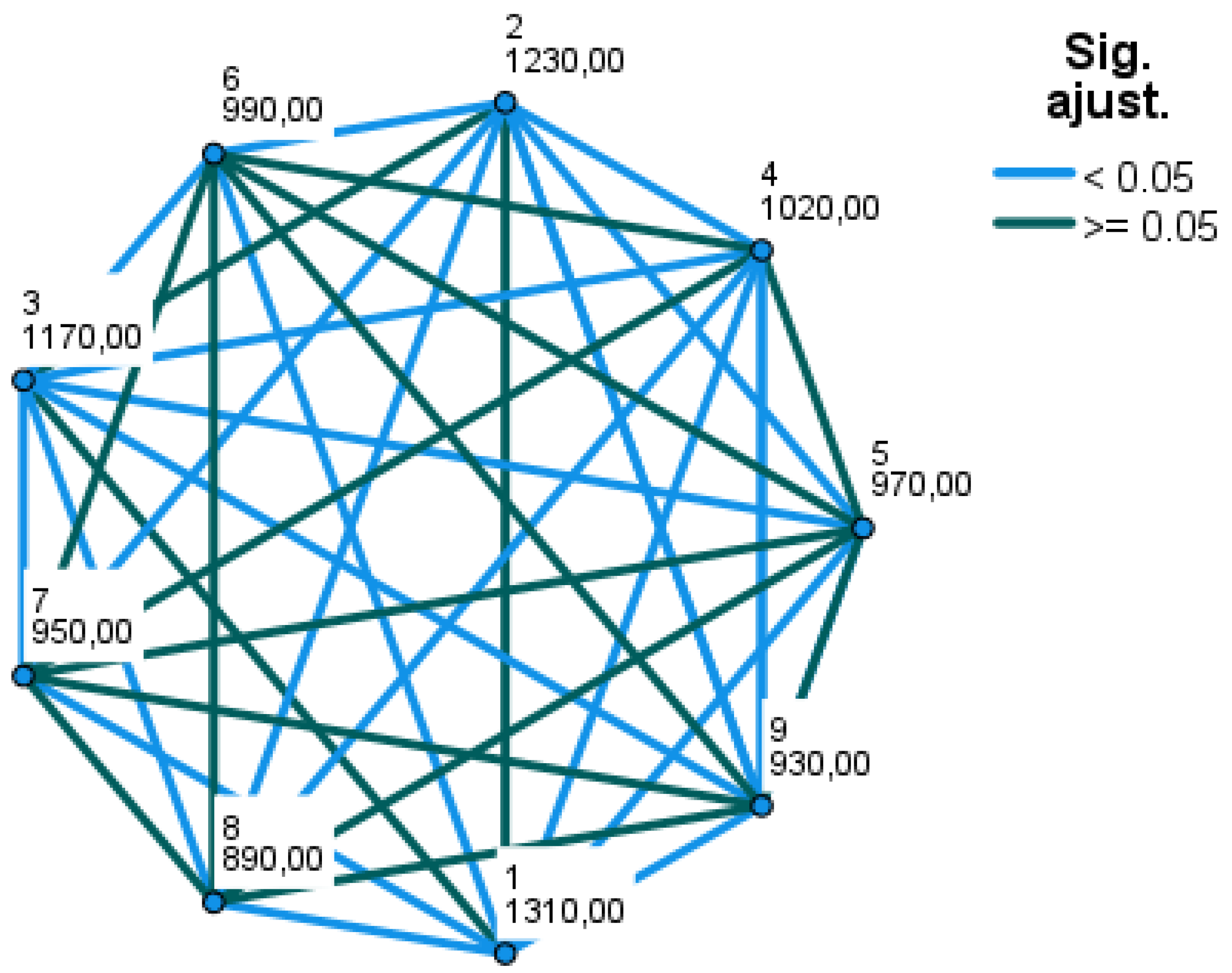
Figure 5.
Differences between groups by Hand-eye coordination.
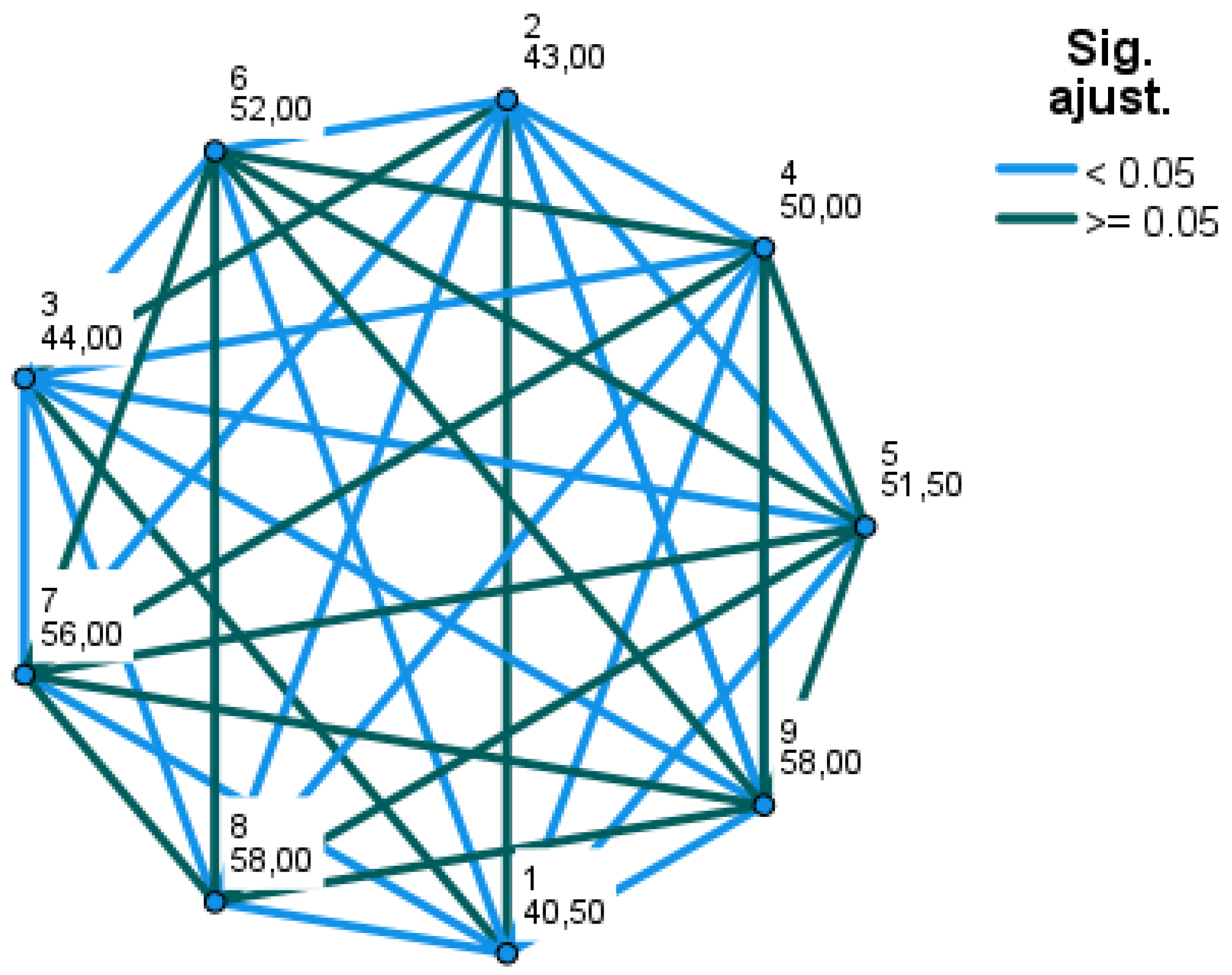

Table 1.
Descriptive values for the complete sample.
| Variable | Mean | Standard deviation | Min | Max |
| Age (years) | 11.77 | 3.89 | 4.43 | 26.97 |
| NCP (cm) | 1.81 | 3.42 | 0 | 16 |
| REAF (cpm) | 3.99 | 5.02 | 0 | 31 |
| LEAF (cpm) | 4.53 | 5.32 | 0 | 28 |
| VRT (ms) | 1066 | 241 | 518 | 2120 |
| EHC (bpm) | 50.92 | 11.80 | 22 | 88 |
| GOCP (unit) | 50.32 | 10.65 | 17 | 77 |
| GFSTP (unit) | 58.31 | 20.75 | 4 | 99 |
| GFLTP (unit) | 66.20 | 22.18 | 1 | 99 |
| GSP (unit) | 49.85 | 18.60 | 2 | 92 |
| GSPP (unit) | 42.43 | 13.09 | 6 | 72 |
| FLTBREFS (logdeg2) | 0.56 | 0.37 | -1.09 | 1.81 |
| FLTBLEFS (logdeg2) | 0.56 | 0.36 | -1.08 | 1.82 |
| FSTBREFS (logdeg2) | -0.36 | 0.36 | -1.15 | 1.22 |
| FSTBLEFS (logdeg2) | -0.36 | 0.34 | .1.10 | 1.39 |
n=383. NCP: near convergence point; cpm: cycles per minute; REAF: Right Eye Accomodative Facility; LEAF: Left Eye Accomodative Facility VRT: Visual Reaction Time; ms: milliseconds ;EHC: Eye-Hand Coordination; bpm: Beats per minute ;GOCP: Global Oculomotor Control Performance;GFSTP: Global Fixation In Short Tasks Performance; GFLTP: Global Fixation In Long Tasks Performance; GSP: Global Saccadic Performance; GSPP: Global Smooth Pursuit Performance; FLTBREFS: Fixation in Large Task Binocular Right Eye Fixation Stability; logdeg2: logarithm degree2; FLTBLEFS: Fixation in Large Task Binocular Left Eye Fixation Stability; FSTBREFS: Fixation in Short Task Binocular Right Eye Fixation Stability; FSTBLEFS: Fixation in Short Task Binocular Left Eye Fixation Stability.
Table 2.
Mean (±SD) of each visual variable stratified by age group. Units are indicated per variable (cpm = cycles per minute; ms = milliseconds; logdeg² = log degrees squared).
Table 2.
Mean (±SD) of each visual variable stratified by age group. Units are indicated per variable (cpm = cycles per minute; ms = milliseconds; logdeg² = log degrees squared).
| VARIABLE | AGE GROUP 1 (6-7 YEARS) | AGE GROUP 2 (8-9 YEARS) | AGE GROUP 3 (10-11 YEARS) | AGE GROUP 4 (12-13 YEARS) | AGE GROUP 5 (14-15 YEARS) | AGE GROUP 6 (15-16 YEARS) | AGE GROUP 7 (16-17 YEARS) | AGE GROUP 8 (17-18 YEARS) | AGE GROUP 9 (19-27 YEARS) |
| Age (years) | 6.04 (0.69) | 7.53 (0.29) | 8.83 (0.56) | 10.94 (0.57) | 12.45 (0.30) | 13.48 (0.26) | 14.42 (0.30) | 15.79 (0.57) | 19.14 (2.09) |
| NCP (cm) | 0 | 3.11 (0.53) | 0.78 (0.27) | 1.64 (0.41) | 2.71 (0.60) | 2.55 (0.70) | 2.66 (0.75) | 2.30 (0.70) | 3.35 (0.60) |
| REAF (cpm) | 4.24 (0.64) | 4.24 (0.64) | 3.08 (0.44) | 5.75 (0.78) | 4.58 (0.73) | 4.13 (1.22) | 4.17 (1.10) | 3.20 (0.85) | 3.44 (0.76) |
| LEAF (cpm) | 4.06 (0.68) | 2.91 (0.53) | 3.48 (0.46) | 6.16 (0.80) | 5.14 (0.89) | 5.45 (1.02) | 5.60 (1.20) | 4.33 (1.09) | 3.93 (0.82) |
| VRT (ms) | 1364 (53) | 1272 (32) | 1191 (22) | 1030 (25) | 955 (26.95) | 974 (28) | 935 (27) | 874 (23) | 926 (22) |
| EHC (bpm) | 40.97 (1.96) | 41.40 (1.19) | 44.35 (0.94) | 52.72 (1.31) | 55.28 (1.87) | 54.32 (1.96) | 57.14 (1.83) | 59.67 (1.95) | 57.59 (1.45) |
| GOCP (unit) | 48.38 (1.95) | 50.91 (1.99) | 50.78 (1.26) | 50.83 (1.26) | 51.06 (1.90) | 51.31 (1.84) | 48.74 (2.04) | 50.13 (1.58) | 50.87 (1.42) |
| GFSTP (unit) | 53.88 (3.98) | 67.03 (3.47) | 58.73 (2.41) | 59.38 (2.69) | 59.83 (3.22) | 61.15 (3.51) | 58.17 (3.88) | 53.57 (3.43) | 59.68 (2.86) |
| GFLTP (unit) | 67.15 (3.94) | 67.15 (3.94) | 66.24 (3.03) | 69.34 (2.61) | 63.18 (3.03) | 76.03 (3.37) | 63.30 (4.12) | 60.93 (3.82) | 63.30 (2.96) |
| GSP (unit) | 51.50 (3.25) | 51.14 (2.95) | 52.54 (2.34) | 48.19 (2.41) | 50.18 (3.12) | 49.19 (3.50) | 46.71 (3.52) | 49.30 (2.81) | 49.26 (2.61) |
| GSPP (unit) | 40.28 (2.49) | 41.49 (2.35) | 41.39 (1.45) | 43.75 (1.54) | 41.01 (2.45) | 44.48 (1.98) | 40.76 (2.47) | 46.52 (2.08) | 43.30 (2.12) |
| FLTBREFS (logdeg2) | 0.64 (0.65) | 0.59 (0.06) | 0.59 (0.05) | 0.57 (0.43) | 0.63 (0.05) | 0.38 (0.06) | 0.60 (0.06) | 0.56 (0.06) | 0.52 (0.05) |
| FLTBLEFS (logdeg2) | 0.56 (0.37) | 0.59 (0.05) | 0.63 (0.05) | 0.55 (0.05) | 0.62 (0.06) | 0.40 (0.06) | 0.58 (0.06) | 0.55 (0.05) | 0.51 (0.05) |
| FSTBREFS (logdeg2) | -0.30 (0.08) | -0.33 (0.05) | -0.35 (0.04) | -0.35 (0.04) | -0.45 (0.04) | -0.44 (0.05) | -0.34 (0.07) | -0.41 (0.06) | -0.38 (0.06) |
| FSTBLEFS (logdeg2) | -0.33 (0.07) | -0.32 (0.78) | -0.33 (0.04) | -0.38 (0.04) | -0.38 (0.77) | -0.46 (0.05) | -0.31 (0.06) | -0.37 (0.06) | -0.37 (0.06) |
| n | 34 | 35 | 71 | 65 | 38 | 32 | 35 | 30 | 41 |
Values in parentheses represent the standard deviation. NCP: near convergence point; ccpm: cycles per minute; REAF: Right Eye Accommodative Facility; LEAF: Left Eye Accommodative Facility VRT: Visual Reaction Time; ms: milliseconds; EHC : Eye-Hand Coordination; bpm: Bit per minute; GOCP: Global Oculomotor Control Performance; GFSTP: Global Fixation In Short Tasks Performance; GFLTP: Global Fixation In Long Tasks Performance; GSP: Global Saccadic Performance; GSPP: Global Smooth Pursuit Performance; FLTBREFS: Fixation in Large Task Binocular Right Eye Fixation Stability; logdeg2: logarithm degree2; FLTBLEFS: Fixation in Large Task Binocular Left Eye Fixation Stability; FSTBREFS: Fixation in Short Task Binocular Right Eye Fixation Stability; FSTBLEFS: Fixation in Short Task Binocular Left Eye Fixation Stability.
Disclaimer/Publisher’s Note: The statements, opinions and data contained in all publications are solely those of the individual author(s) and contributor(s) and not of MDPI and/or the editor(s). MDPI and/or the editor(s) disclaim responsibility for any injury to people or property resulting from any ideas, methods, instructions or products referred to in the content. |
© 2025 by the authors. Licensee MDPI, Basel, Switzerland. This article is an open access article distributed under the terms and conditions of the Creative Commons Attribution (CC BY) license (http://creativecommons.org/licenses/by/4.0/).
Copyright: This open access article is published under a Creative Commons CC BY 4.0 license, which permit the free download, distribution, and reuse, provided that the author and preprint are cited in any reuse.


