

Submitted:
15 May 2025
Posted:
19 May 2025
You are already at the latest version
Abstract
This study recognises hydroponics as a valuable commercial technique for enhancing vegetable plant traits and tackles the problem of decreasing tomato yields in conventional agriculture caused by factors like adverse climate change, soil contamination, and lack of nutrients, which ultimately decreases plant growth as well as development. In this research tomato plants cultivated in a hydroponic system using three different nutrient methods (F-1, F-2, and F-3). The results showed that the F-2 nutrient solution significantly improved growth such as shoot length, root length, leaf count, stem girth, and the number of flowers and fruits compared to the other treatments. From the perspective of growing tomatoes, the research indicates that the F-2 nutrient formulation is the most effective for achieving better agronomic outcomes in hydroponic settings. Additionally, the study noted that excessively concentrated nutrient solutions caused stunted growth and reduced flowering and fruiting. In contrast, a properly balanced nutrient solution enhanced these traits, emphasizing the significance of electrical conductivity (EC), which represents the concentration of dissolved solids, as changes in EC affected the plants' agronomic characteristics.
Keywords:
Hydroponics
; Nutrients
; Flowering
; Sustainable Agriculture
; Climate Change
Introduction
The rising demand for fresh, nutritious food coupled with increasing concerns over environmental degradation and resource scarcity has brought sustainable agriculture to the forefront of global priorities. Traditional farming methods, while essential, often rely heavily on land, water, and chemical inputs, posing significant challenges in regions facing urbanization, climate change, and declining soil fertility. Hydroponic is the technique to plant development using nutrient solutions which may or may not include the use of an inert medium to provide mechanical support, such as rock wool, gravel, vermiculite, peat moss, sawdust, coir dust, coconut fibre, etc. (Sharma et al., 2018) Maharana and Koul (2011). The name hydroponics literally means "water work" and is derived from the Greek term’s hydro, which means water and ponos, which means labour. Early in the 1930s, Professor William Gericke came up with the term "hydroponics" to refer to the practice of growing plants with their roots suspended in water that contains mineral nutrients. In 1940, Purdue University researchers established the Nutri culture system. Commercial hydroponic farms were established in several countries during the 1960s and 1970s, including the Russian Federation, Arizona, Abu Dhabi, Belgium, California, and Japan. According to needs of various plants, the majority of hydroponic systems automatically regulate the amount of water, nutrients and photoperiod (Resh,2013). Rapid industrialisation and urbanisation are reducing the amount of arable land as well as traditional farming methods, which have a variety of detrimental effects on the environment .Techniques for producing enough food must change in order to feed the world's expanding population in a sustainable manner (Sharma et al. 2018).While arable land decreases and conventional agriculture harms the environment, floriculture struggles globally with soil-borne diseases, limited land, weather constraints, and labour demands (Devi et al., 2011; Dinesh et al., 2014). An alternate strategy for sustainable production and the preservation of rapidly dwindling land and water resources is to modify the growing medium. In the current environment, soilless cultivation may be effectively started and taken into consideration as a substitute for growing crops, vegetables, or other healthful food plants (Butler and Oebker, 2006). Soilless agriculture encompasses hydroponics, aquaculture, and aerobic agriculture. According to Macwan et al. (2020), soilless hydroponic systems are suitable for cultivating a diverse group of plants, such as fruiting, flowering, medicinal, and ornamental varieties. It can be used to cultivate a wide range of special and commercial crops, such as leafy vegetables, tomatoes, cucumbers, peppers, strawberries, and many more. The United States of America and the Asia-Pacific region are the next two largest producers of hydroponics, with France, the Netherlands, and Spain leading the way in Europe (Prakash et al., 2020). Kamenetsky and Okivi (2012) noted the successful use of hydroponics for cut flower production in the Netherlands. Murumkar et al. (2012) define hydroponics as the art and science of soilless crop cultivation, a technique that mitigates soil-related challenges common in traditional agriculture. The benefits of hydroponics when there is no adequate soil for agricultural cultivation or when the soil is contaminated with certain illnesses, crops can still be cultivated. There is a significant reduction in labour for many intercultural tasks including watering, fumigating, cultivating, tilling, and other procedures. The technique is economically viable in high-density and costly land locations since the maximum yield can be achieved. Water and fertilizers can be used effectively with this strategy because there is less possibility of the beneficial chemicals being lost; it can therefore result in less pollution of the land and streams. By implementing this approach, soil-borne plant diseases can be effectively eliminated. Using the system (i.e., timely nutrient feeding, watering, and root environment) and various types of greenhouses allows for more thorough environmental control. By utilizing a water and nutrient solution, hydroponic systems facilitate soilless plant growth, providing superior control over factors such as plant nutrition, lighting, humidity, and temperature, which translates to efficient space utilization, reduced chemical inputs, water and fertilizer conservation, and accelerated, weather-independent yields, especially where traditional farming is challenging (Khater et al.,2021);(Masa et al.,2020);(Maucieri et al.,2019);(Sambo et al.,2019).Plants are cultivated on soil in traditional agriculture. However, plants do not require soil to flourish; rather, they require the nutrients found in the soil (Dubey & Nain, 2020). In traditional soil-based farming and planting, plants must expend a lot of energy developing their extensive root system because the roots must sift through the soil for minerals and water. In summary, whether they are growing in soil or not, plants require water and nutrients. These macronutrients and micronutrients are supplied directly to the plants in hydroponics, which is recommended by soilless farming. Meric et al., (2011) highlighted that soilless cultivation is commonly used to better regulate the growing environment, reducing uncertainties related to soil water and nutrient availability. It also addresses issues such as the build-up of salinity, pests, and diseases (Fan et al., 2012), and reduces environmental pollution caused by fertigation runoff (Savvas, 2002; Rouphael et al., 2006). Additionally, this approach helps conserve water and fertilizers, significantly improving crop water use efficiency (Schwarz et al., 1996; Zekki et al., 1996)., (Zhang et al.,2016). Vegetables are vital cash crops, significantly improving farmer income and nutrition. To meet the rising demand, vegetable cultivation must expand to all possible locations and methods (Dass et al., 2002, 2008). Hydroponic systems facilitate the growth of numerous plants and vegetables, particularly leafy greens, which thrive in soilless media due to their short lifespan and these leafy vegetables have a tender texture and are abundant in antioxidants, fibre, vitamins, and minerals offering protection against various diseases (Park et al., 2013). Hydroponic cultivation has recently gained global popularity due to its efficient resource management and high-quality produce (Sharma et al., 2018). Traditional soil-based agriculture faces challenges like urbanization, natural disasters, climate change, and indiscriminate chemical and pesticide use, posing environmental threats. The tomato is a globally significant vegetable crop. In 2013, global production was estimated at 163.96 million metric tons, with China and India leading production (FAOSTAT, 2015). Tomatoes are consumed in various forms, including fresh, cooked, and processed. Canning transforms them into products such as juice, pulp, paste, and sauces (Cuartero and Fernandez, 1999). Tomatoes are a key vegetable crop in South Africa, with hydroponic production increasing due to higher market returns and limited agricultural resources. As a vital source of vitamins A and C, and minerals, tomatoes are essential to the human diet. South African growers face the challenge of meeting local demand for high-yield, quality tomatoes. This is often hindered by poor cultivation, inadequate nutrition, adverse weather, and pests/diseases. To mitigate unfavourable conditions like hail and summer heat, farmers are increasingly using soilless systems under shade nets to optimize yield and quality (Jones, 2008). Applying optimal nutrient concentrations in greenhouse hydroponics improves spinach growth and enables continuous, year-round production (Acharya et al., 2021). A nutritious leafy vegetable, spinach (Spinacia oleracea) can be consumed fresh, frozen, canned, sliced, or cooked. Being a rich source of vitamins A, C, K, magnesium, manganese, iron, and folate, as well as riboflavin, pyridoxine, vitamin E, calcium, and potassium, it has a high nutritional value, especially when fresh, frozen, steamed, or quickly boiled. Compared to soil-based methods, it offers several advantages, such as faster and uniform plant development, higher average yields, balanced growth, freedom from soil-borne diseases, the elimination of harmful chemical use, and superior produce quality. While hydroponic techniques are not yet widely commercialized in India, they are gaining significant popularity globally, and within India, various institutions and private firms are actively conducting experiments and training programs to promote efficient hydroponic system management. The United States and the Asia-Pacific area are the next most significant producers of hydroponics, with France, the Netherlands, and Spain leading the European market. Soil-based cultivation faces challenges due to industrialization, urbanization, climate change, natural disasters, and excessive chemical use, leading to soil degradation (Jensen & Collins, 1985). To address these issues, scientists have developed hydroponics, a soil-less cultivation method where plants grow in a nutrient-rich water solution. This technique allows for large-scale cultivation of crops and vegetables with higher yield quality, better taste, and superior nutritional value compared to traditional soil-based farming. Hydroponics is cost-effective, disease-free, and eco-friendly, making it increasingly popular worldwide in both developed and developing countries. It also has potential applications in space research and regions with limited arable land. As a sustainable method, hydroponics could help meet global food demands and support future advancements in agriculture. The global hydroponic market is projected to grow by 18.8% from 2017 to 2023, reaching USD 490.50 million by 2023 (Jensen & Collins, 1985). According to growers, continuous crop production is possible only through hydroponic systems, as they allow year-round cultivation, require less space, and enable plant growth in small areas with controlled environments (Hughes, 2017). Hydroponics ensures higher productivity and yields without being affected by climate or weather conditions (Sarah, 2017). The quality of hydroponic produce is superior because controlled environments ensure uniform production while conserving water and nutrients (Okemwa, 2015). Moreover, hydroponics is not seasonal, leading to consistent productivity throughout the year (Okemwa, 2015). Hydroponic farming is also easier, as it eliminates the need for ploughing, weeding, soil fertilization, and crop rotation, making it a clean and efficient method (Nguyen et al., 2016). (Acharya et al.,2021). Different methods for water movement in hydroponic setups- The hydroponic system can be of 2 types; Open system- In open hydroponic systems, the nutrient solution flows through the plant roots and is then discarded. This “single pass” method eliminates recirculation. This practice minimizes the chance of infections spreading among plants due to the frequent replacement of fresh nutrient solution. (Jones, 2005) Closed-system hydroponics is a soil-free growing technique that uses a recirculating nutrient solution. In this system, the same nutrient mix is continuously recovered, replenished, and recycled until fully utilized by the plants. This method reduces water and fertilizer use by up to 80%, making it an efficient and sustainable approach to food production. Types of hydroponic system and their operation -In hydroponic farming, the water tank is the core component, providing the necessary nutrient rich water for plant growth. These tanks generally share a common design, focused on holding and distributing the nutrient solution. To ensure optimal plant health, many systems include a reverse osmosis (RO) unit to eliminate water hardness, which can negatively impact growth. However, tank designs can vary slightly depending on the specific hydroponic system, such as the ebb and flow method. Hydroponic systems are often modified for resource reuse, with common types including wick, ebb -flow, drip, deep water culture, and nutrient film technique described below. (Dubey, N., & Nain, V. 2020)., (Jan et al.,2020). Wick system -The simplest hydroponic systems operate without electricity, relying on a basic setup where plants are rooted in a growing medium such as coco coir, vermiculite, perlite with a nylon wick (Shresta and Dunn,2013). Ebb-flow is the early commercial hydroponic system utilized a flood and drain principle, where a pump delivered nutrient solution from a reservoir to the grow bed, flooding it to a predetermined level for nutrient and moisture delivery. However, despite its versatility in supporting various crops, this design was susceptible to root rot, algae, and Mold (Nielsen et al., 2006). Consequently, modified systems incorporating filtration were developed. Drip-Drip hydroponics offers a highly efficient method for delivering water and nutrients directly to plant roots, making it a popular choice for both home and commercial cultivation (Rouphael and Colla, 2005). By utilizing a pump and a moderately absorbent growing medium, this system ensures controlled, slow dripping, minimizing water waste and supporting the consistent growth of various crops. Deep water culture (DWC) hydroponics suspends plant roots directly in a nutrient-rich solution, with an air stone providing essential oxygenation. A common example is the hydroponic bucket system. Plants are housed in net pots, allowing their roots to immerse and rapidly develop a substantial mass within the solution. Rigorous monitoring of oxygen and nutrient concentrations, salinity, and pH is crucial (Domingues et al., 2012) to prevent the rapid proliferation of algae and Molds within the reservoir. DWC systems are particularly effective for larger, fruit-bearing plants such as cucumbers and tomatoes, which thrive in this environment. Nutrient film technique- Dr. Allen Cooper invented the Nutrient Film Technique (NFT) in England in the mid-1960s. It was made to fix problems with older water-based growing systems (Sharma et al.2018). In NFT, water with plant food constantly flows through channels where plant roots hang. The channels are tilted so the water flows over the roots and back to a tank. This lets plants get food and water all the time. While this can sometimes lead to root problems, NFT works well for growing leafy greens, especially lettuce (Domingues et al., 2012). While hydroponic systems offer numerous advantages, their expense often limits adoption by small farmers. However, cost-effective solutions exist. Gumisiriza et al. developed A basic, easy hydroponic system for leafy greens, designed for economic viability. Another example is the Kratky method (Kratky.,2005), which eliminates the need for pumps and electricity. Plants in mesh pots are grown with a nutrient solution, relying on capillary action for root moisture, making it ideal for intensive leafy vegetable cultivation. Plant growth directly corresponds to the reduction of the nutrient solution, creating more air space for the roots. Leafy vegetables are harvested before the solution is exhausted. This method is practical for small farmers because it requires minimal maintenance, no pumps, absence of climate monitoring systems and no extra labour (Kratky,2009). A key disadvantage is the requirement for regular nutrient solution monitoring, making this method best suited for small-scale, non-automated vegetable production. Hydroponics uses growing material without soil- The following qualities are necessary for the growing media to be used in a hydroponics system: It must serve as a source of nutrients for healthy plant development and growth. It should be able to contain a lot of water. must concurrently provide the plant with gas and water. It needs to give the plant support. Growing media that is organic-(Cocopeat) It is a coconut husk byproduct. Numerous soilless crops, including tomatoes, eggplants, cucumbers, capsicums, spinach, water spinach, and others, can be produced with coconut peat without having a negative effect on the environment (Hussain et al., 2014). Hull of rice-A byproduct of milling rice is rice hulls. offer excellent drainage due to their lightweight nature. While similar in particle size and decomposition resistance to sawdust, rice hulls minimize nitrogen depletion in growing media. Availability permitting, rice hulls can be a valuable hydroponic substrate due to their slow decomposition, akin to coco coir. However, fresh rice hulls should be avoided due to potential contamination from rice, bacteria, fungal spores, weed seeds and decaying insects, Parboiled rice hulls (PRH), produced by drying after milling, are a preferred sterile option as they eliminate these contaminants (Shilpa et al.,2024). Inorganic growing media -Sand is a common hydroponic growing medium. Its fine particle size, smaller than gravel, slows drainage and enhances moisture retention. Sand is often combined with vermiculite, perlite, or coco coir to improve aeration for root development (Asao, 2012; Sharma et al., 2018). Vermiculite-Vermiculite, a heated and expanded hydrated magnesium aluminium silicate, is ideal for container media. Its unique, plate-like particles retain high amounts of water while promoting excellent aeration and drainage. This mineral also offers valuable cation exchange and buffering capacities and readily releases potassium and magnesium. Despite being less durable than sand or perlite, vermiculite’s chemical and physical characteristics make it a superior choice for many containers gardening application (Gaikwad and Maitra.,2020). Rock wool-Rockwool is an effective medium for seed germination. This mineral Fiber, made from melted basalt rock and recycled slag, provides a lightweight and convenient growing environment, resulting in a high germination rate, low insect attack ratio, and excellent aeration and moisture retention (Putra and Yuliando, 2015). This study explores the potential of small-scale hydroponic systems enhanced with optimized nutrient management strategies as a sustainable model for local food production. It aims to assess plant growth performance, resource efficiency, and the broader implications for sustainable agricultural practices and community-based food systems. Additionally, check the impact of three distinct nutrient formulations on the agronomic performance and yield of vegetable growth in a nutrient solution. Parallel experiment using soil cultivation as a control was conducted to assess the relative effectiveness of the nutrient solution system and the tested formulations.
Material and Methods
Collection of Seed and Pretreatment
Some seeds were collected and treated with fungicide to prevent fungal infection as young seeds are very sensitive to fungus. The treated seeds were sown in a growing medium and ensuring adequate spacing for development. The sowing seeds were watered which facilitating seed imbibition and germination. The sowing seeds were placed under normal temperature. After some days, the seeds start to germinate. Then after 10-12 days, observation when the size of the plants when reach up to 1-2inch, with rapid growth with expansion of cotyledons selected for transplantation. These selected seedlings were placed in a water based growing medium.
Nutrient Composition for Hydroponic System
Hydroponic systems nourish plants by delivering a formulated water solution. The water containing essential elements for plant life. Plants require essential elements for growth and development. Since we grow plants in a hydroponic system, we must provide the nutrients they would normally get from soil. These include macronutrients like nitrogen (N) phosphorus (P), potassium (K), calcium (Ca), magnesium (Mg), and sulphur (S). Additionally, we must supply micronutrients such as iron (Fe), manganese (Mn), zinc (Zn), copper (Cu), boron (B), molybdenum (Mo), and chlorine (Cl). These macro and microelements are added to the water tank, allowing the plants to absorb them and grow. (Salisbury and Ross, 1992). The water medium consists of Calcium nitrate, Magnesium Nitrate, Potassium Nitrate, Magnesium Sulphate, Potassium Sulphate, Monopotassium Phosphate, Monoammonium Phosphate and micronutrients mixture. Standard hydroponic solution fertilizer and acids (Trejo-Téllez and Gómez-Merino, 2012 and Jain et al., 2019)

Table 1.
Sources of nutrient elements and their usable form.
| Fertilizers | Usable form |
| Calcium Nitrate Ca (NO3)2.5H2O) | Ca, N |
| Potassium Nitrate (KNO3) | N, K |
| Monopotassium Phosphate (KH2PO4) | K, P |
| Monoammonium Phosphate (NH4H2PO4) | P, N |
| Magnesium Sulphate (MgSO4.7H2O) | S, Mg |
Preparation of Nutrients for Hydroponic System
Hydroponic nutrient solution preparation for tomatoes, starts with high-quality water ideally reverse osmosis (RO) water or dechlorinated tap water. Otherwise, we can use tap water before using this water we can verify the pH and adjust it. The following nutrients are required at different growth stages.
To prepare a 500 mL stock solution, first measure the required amount of each fertilizer (as per the provided table) using a precise weighing scale. Each fertilizer should be dissolved separately in a small amount of distilled water to ensure complete dissolution. Stir each solution thoroughly until no solid particles remain. Once all fertilizers are fully dissolved, combine the individual solutions into a single container, except for calcium nitrate, which must be stored separately. After mixing, add more distilled water until the total volume reaches 500 ml since calcium nitrate reacts with certain other nutrients, it should be prepared and stored in a separate container to prevent precipitation or chemical imbalances. This results in two separate stock solutions: Stock A: Contains calcium nitrate (Ca (NO₃) ₂).
Stock B: Contains all other fertilizers, including potassium nitrate (KNO₃), magnesium sulphate (MgSO₄), mono potassium phosphate (KH₂PO₄) Micronutrient Mix (Iron, Zinc, Manganese, Boron, Copper, Molybdenum, etc.) it can be added in the nutrients a very small amount.
Working Solution Preparation
Measure the required amount of stock solution based on volume of water reservoir. Then pour the measuring stock solution into a container with RO water. Stir or mix well to ensure proper mixing. Then after mixing measure the pH and EC of nutrient solution. And then adjust if it is necessary by adding more water (to low EC level) or more (to increase EC). The pH should be always maintained between 5.5-6.5.
Table 2.
Macronutrients for hydroponics setup.
| Nutrients | Formula | F- 1 (g/500mL) | F- 2 (g/500mL) | F- 3 (g/500mL) |
| Nitrogen | (Ca (NO₃)2) | 66.67 | 100 | 105 |
| Phosphorous | KH₂PO₄ | 21.67 | 25 | 25.83 |
| Potassium | KNO₃ | 75 | 100 | 110 |
| Magnesium | MgSO4 | 30 | 35 | 40 |
Table 3.
Micronutrients for hydroponics setup.
| Nutrients | Formula | F- 1(g/500mL) | F- 2 (g/500mL) | F- 3 (g/500mL) |
| Zinc | ZnSO₄ | 0.33 | 0.33 | 0.33 |
| Molybdenum | Na₂MoO₄ | 0.06 | 0.06 | 0.06 |
| Manganese | MnSO₄ | 0.81 | 0.81 | 0.81 |
| Copper | CuSO₄ | 0.23 | 0.23 | 0.23 |
| Boron | B₈H₈NO₂O₁₇ | 0.5 | 0.5 | 0.5 |
| Iron | Fe EDTA | 3.33 | 3.33 | 3.33 |
Experimental Design for Hydroponic Technique
After transplantation, the seedlings were placed in three distinct nutrient compositions (Named F-1, F-2, and F-3) under room temperature. Approximately later seedlings of same size were placed in net pots and secured with deep water channels of a nutrient film system for each treatment. Aerators were used to maintain sufficient dissolved oxygen in the nutrient media, as aerator was not available we use an alternate Kratky method where, coco peat or foam sponge provided mechanical support for the growing seedlings in the nutrient system. Triplicate plants were grown in each three different nutrient solutions, each refreshed weekly soil grown triplicate plants served as the control. The pH and EC of the nutrient solution were maintained at specific levels during the early vegetative growth phase.
Application of Nutrient Formulation
The experiment followed a pre-established methodology outlined by Sahoo et al. (2024), ensuring consistency in nutrient formulation. Three distinct nutrient solutions (F-1, F-2, F-3) were used, each with progressively higher EC values. The EC was systematically increased from initial levels of 350,400and 450 µS/cm during seedling establishment, to 1500,2000,2500 µS/cm during vegetative growth stage, and finally 3000,3500and 4000 µS/cm during flowering and fruiting stage. The pH was consistently maintained at 6.5, a slightly acidic level optimal for nutrient uptake in many plants.
Analysis of Agronomic Traits
To assess the agronomic performance of plants under various treatments, a thorough analysis of essential growth characteristics was performed. Replicate plants from each treatment group selected for measurement. The following key parameters were evaluated: shoot length, providing a measure of above-ground growth; root length, indicative of root system expansion; leaf number, reflecting the rate of vegetative development; and leaf size, representing the photosynthetic area of the plant. The progression of plant development was continuously monitored and documented over a specified time frame. Precise numerical data for each measured parameter was recorded.
Statistical Analysis
In this experiment three replicates of each formulation were used to statistically assess and display the plant growth data (such as shoot length, root length, stem girth and leaf number) in the hydroponic system experiment as mean ± standard error of the mean (SEM), This data represented in graph format. In addition, to assess the variability of samples across every treatment group, the standard deviation (SD) was determined. To show the uniformity and dependability of plant responses in various nutritional or environmental circumstances, the mean provides a measure of central tendency, SEM illustrates the mean's reliability, and SD displays the variance in the data.
Results
Agronomic Character Analysis
Table 4.
Shoot length observed (in cm).
| CONTROL | F-1 | F-2 | F-3 | |
| Initial | 5.4±0.1 | 5.33±0.11 | 5.33±0.57 | 5.3±0.1 |
| Day 15 | 7.5±0.5 | 8.36±0.55 | 9.16±1.25 | 6.03±0.85 |
| Day 30 | 11.33±2.08 | 12±1 | 15.4±1.63 | 7.73±1.10 |
| Day 45 | 23.33±1.52 | 24±1 | 29±4.35 | 11.5±3.04 |
| Day 60 | 32.33±4.93 | 28.66±1.15 | 38.33±10.40 | 18.83±7.07 |
| Day 75 | 45.33±4.16 | 41.33±8.14 | 49.33±12.74 | 23.5±9.98 |
Table 5.
Leaf number observed.
| CONTROL | F-1 | F-2 | F-3 | |
| Initial | 2.66±0.57 | 3.66±0.57 | 2.66±0.57 | 2.66±0.57 |
| Day 15 | 9.66±2.08 | 11±2 | 13.12±2.64 | 6.66±2.08 |
| Day 30 | 14.66±2.51 | 18±1 | 21.33±2.08 | 10±3.60 |
| Day 45 | 22.33±2.51 | 23.33±1.52 | 27±7 | 14.33±3.21 |
| Day 60 | 35.66±4.04 | 35±5 | 49±17.34 | 24±5.29 |
| Day 75 | 45.33±3.51 | 49.33±9.50 | 72±21.93 | 29±6.55 |
Table 6.
Root length observed (in cm).
| CONTROL | F-1 | F-2 | F-3 | |
| Initial | 1.5±0.2 | 1.4±0.1 | 1.36±0.20 | 1.36±0.15 |
| Day 15 | 3.23±0.25 | 3±0.5 | 4.4±0.65 | 2±0.2 |
| Day 30 | 4.46±0.47 | 4.7±0.43 | 6.5±1.80 | 2.76±0.41 |
| Day 45 | 9±0.8 | 8.33±1.52 | 14.06±0.90 | 5.7±1.58 |
| Day 60 | 12.1±1.1 | 13.58±1.41 | 19.83±2.36 | 8.9±1.38 |
| Day 75 | 16.93±2.45 | 17.6±1.83 | 26.33±3.21 | 12.5±2.343 |
Table 7.
Stem girth (in cm).
| CONTROL | F-1 | F-2 | F-3 | |
| Initial | 1.23±0.20 | 1.2±0.1 | 1.13±0.05 | 1.16±0.20 |
| Day 15 | 1.43±0.15 | 1.6±0.1 | 1.63±0.20 | 1.46±0.11 |
| Day 30 | 1.8±0.1 | 1.83±0.05 | 2.1±0.2 | 1.66±0.15 |
| Day 45 | 2.2±0.1 | 2.3±0.1 | 2.7±0.2 | 1.9±0.2 |
| Day 60 | 2.6±0.1 | 2.7±0.2 | 3±0.26 | 2.13±0.25 |
Table 8.
Final Changes in morphological features of different nutrient treated vegetable plants grown under hydroponic system.
Table 8.
Final Changes in morphological features of different nutrient treated vegetable plants grown under hydroponic system.
| Agronomic traits | Control | F-1 | F-2 | F-3 |
| Shoot length(cm) | 45.33±4.16 | 41.33±8.14 | 49.33±12.74 | 23.5±9.98 |
| Leaf number | 45.33±3.51 | 49.33±9.50 | 72±29.93 | 29±6.55 |
| Root length(cm) | 16.93±2.45 | 17.6±1.83 | 26.33±3.21 | 12.5±2.343 |
| Flower number per plant | 7±0.57 | 5.34±0.33 | 9±0.57 | 4.66±0.65 |
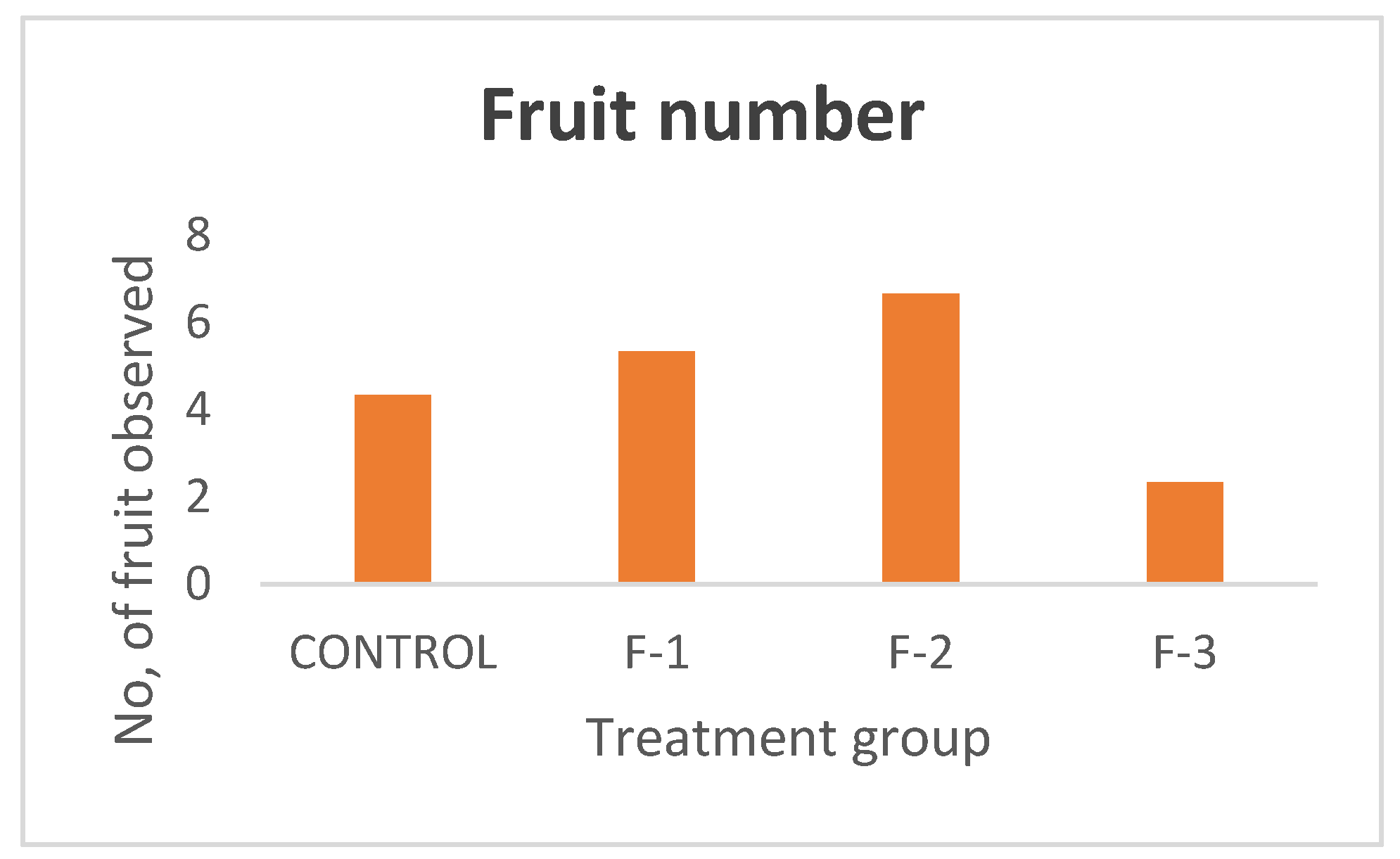
| Fruit number per plant | 4.33±2.08 | 5.33±1.52 | 6.66±1.52 | 2.33±0.57 |
Figure 1.
The graph illustrates the observed shoot lengths of different treated plants. Such as F-1, F-2, F-3 and control group over different time intervals. Each treatment shows how the shoot length changes with time compared to control.
Figure 1.
The graph illustrates the observed shoot lengths of different treated plants. Such as F-1, F-2, F-3 and control group over different time intervals. Each treatment shows how the shoot length changes with time compared to control.
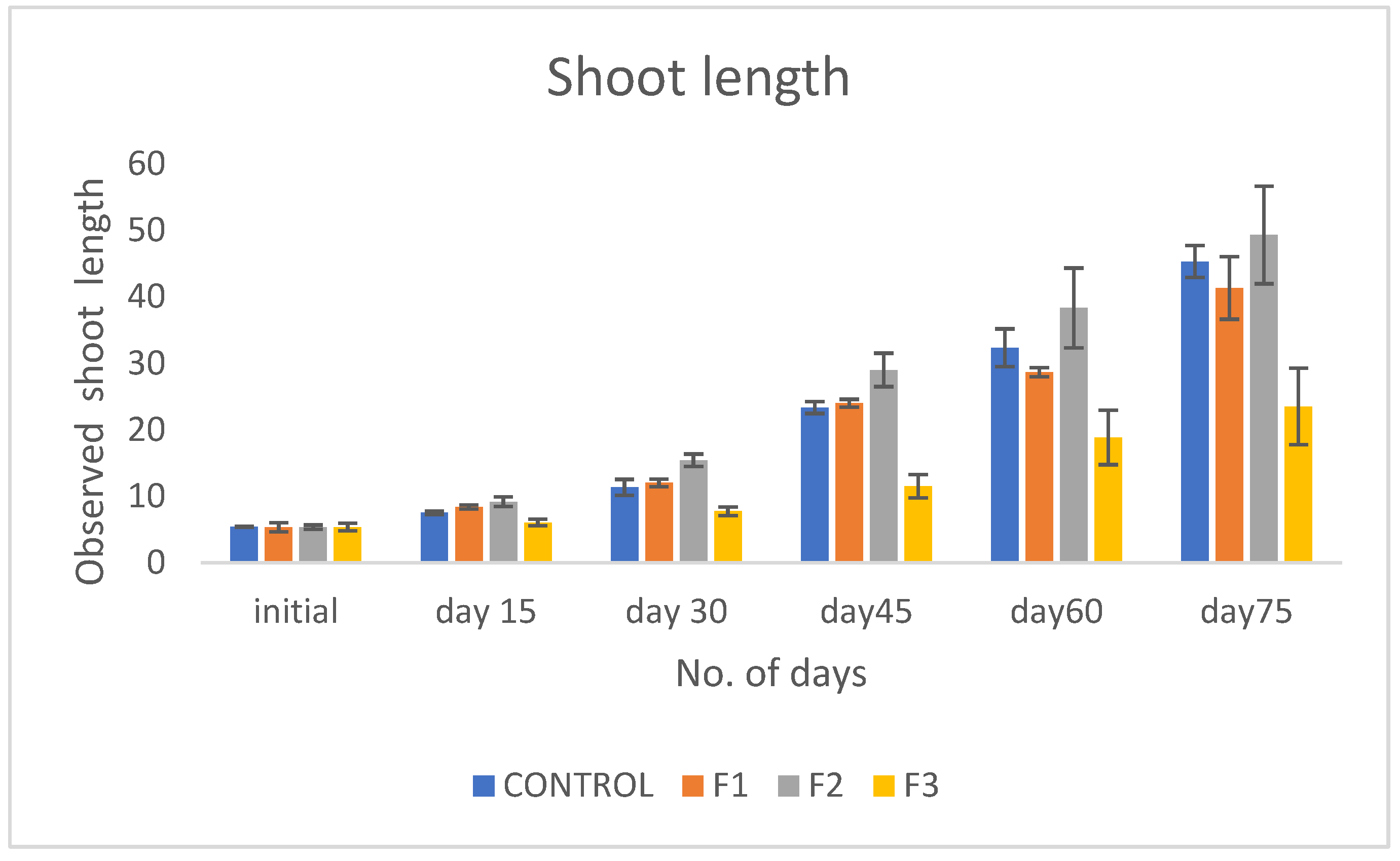
Figure 2.
The graph shows the observed leaf number of different treated plants F-1, F-2, F-3 and control group over different days.
Figure 2.
The graph shows the observed leaf number of different treated plants F-1, F-2, F-3 and control group over different days.
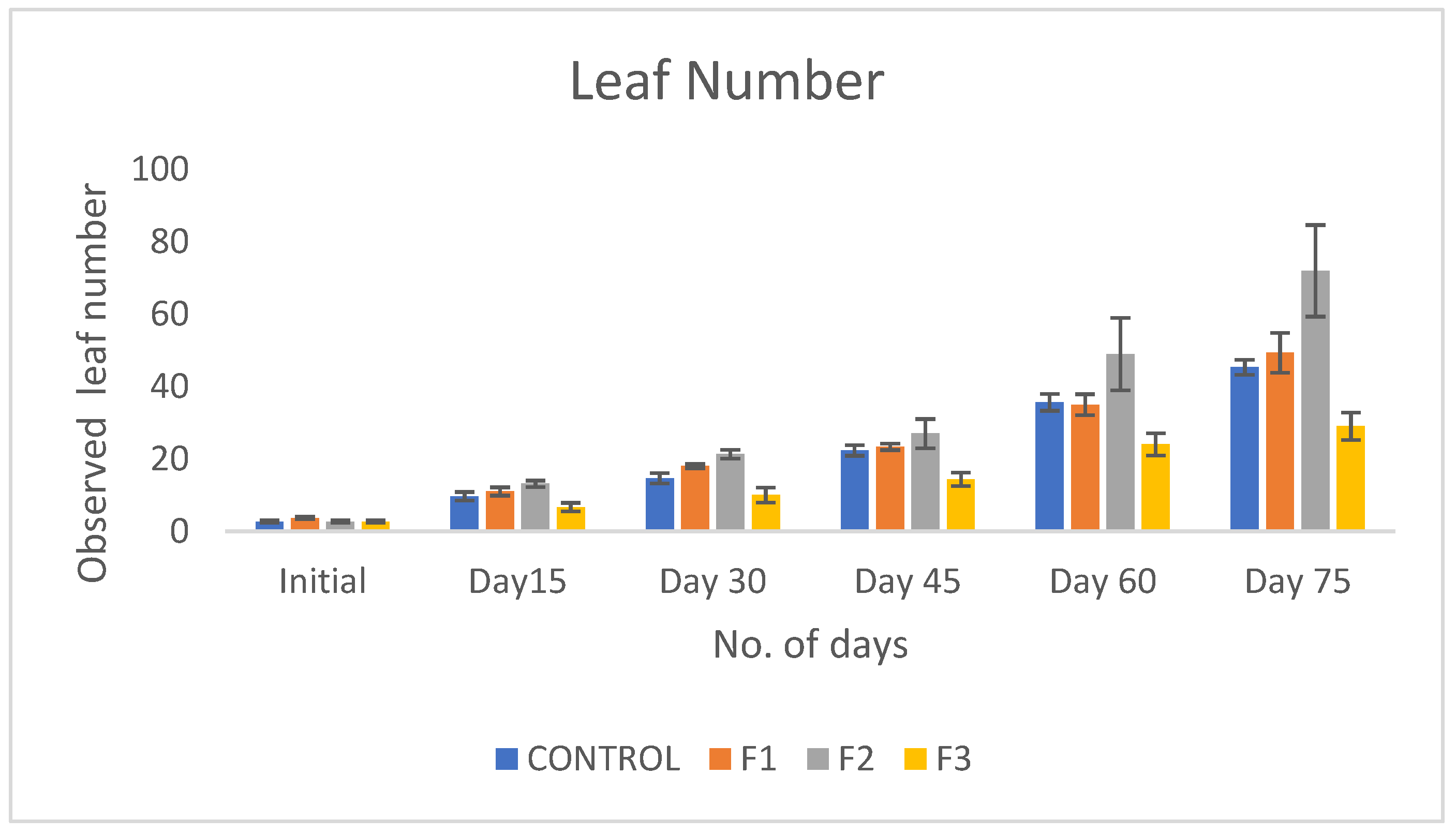
Figure 3.
The graph represents the observed root length of different treated (F-1, F-2, F-3) plants with compared to control group over different days. .
Figure 3.
The graph represents the observed root length of different treated (F-1, F-2, F-3) plants with compared to control group over different days. .
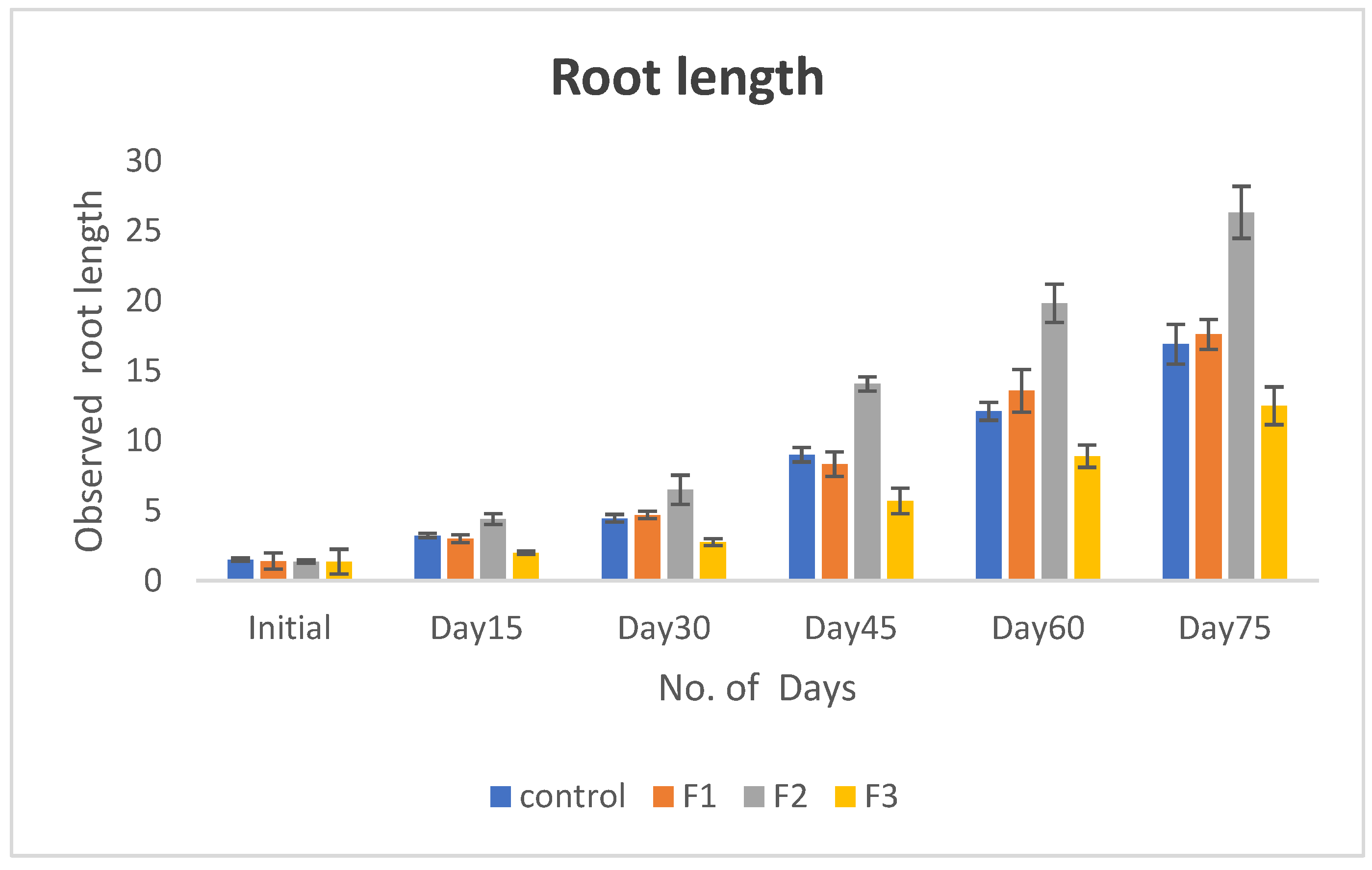
Figure 4.
The graph shows the observed stem girth of different treated (F1, F-2, F-3) plants with compared to control over different time interval.
Figure 4.
The graph shows the observed stem girth of different treated (F1, F-2, F-3) plants with compared to control over different time interval.
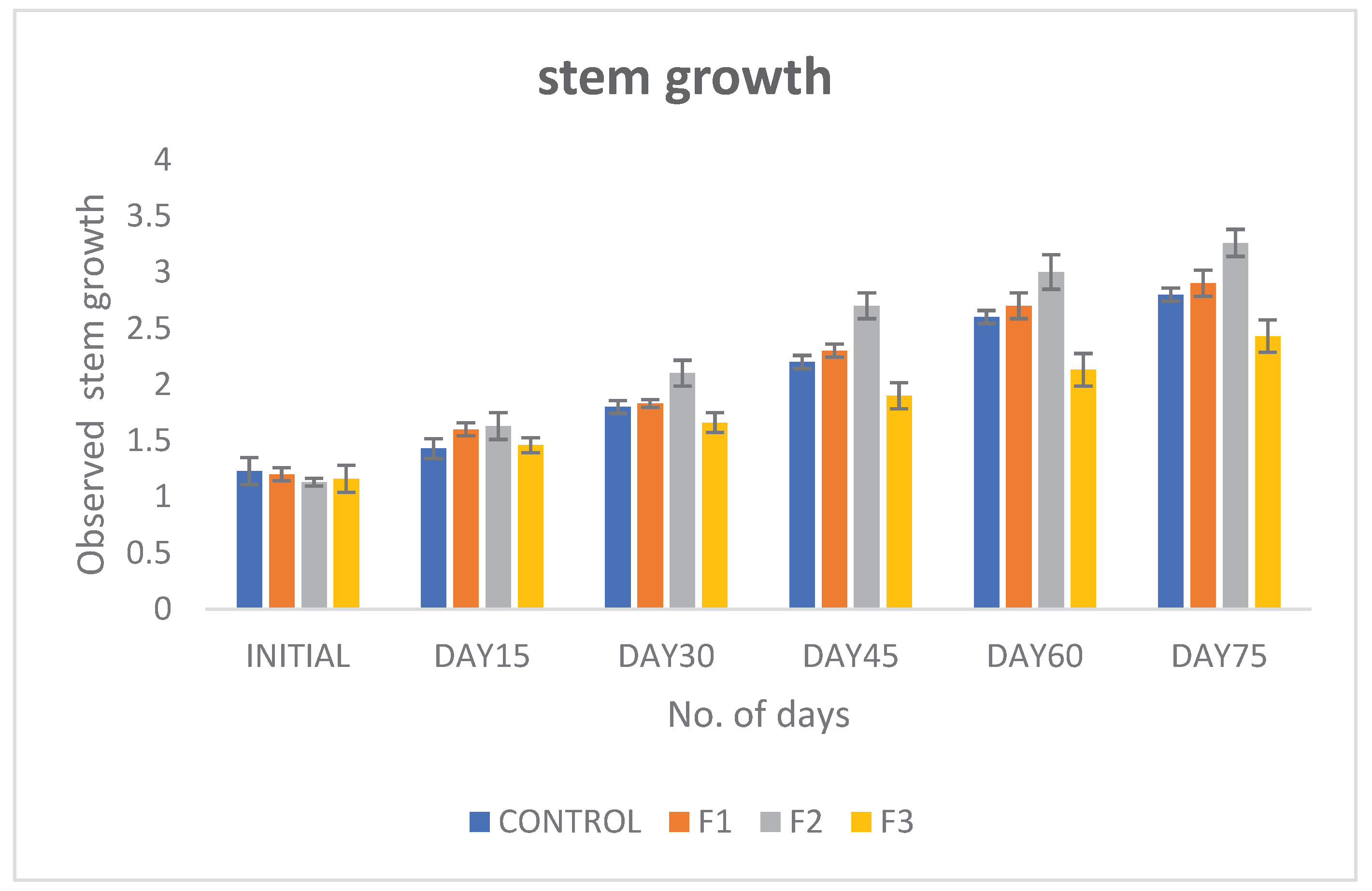
Figure 5.
Showing the no. of flower per plant of each treatment group i.e. Control, F-1, F-2, and F-3.
Figure 5.
Showing the no. of flower per plant of each treatment group i.e. Control, F-1, F-2, and F-3.
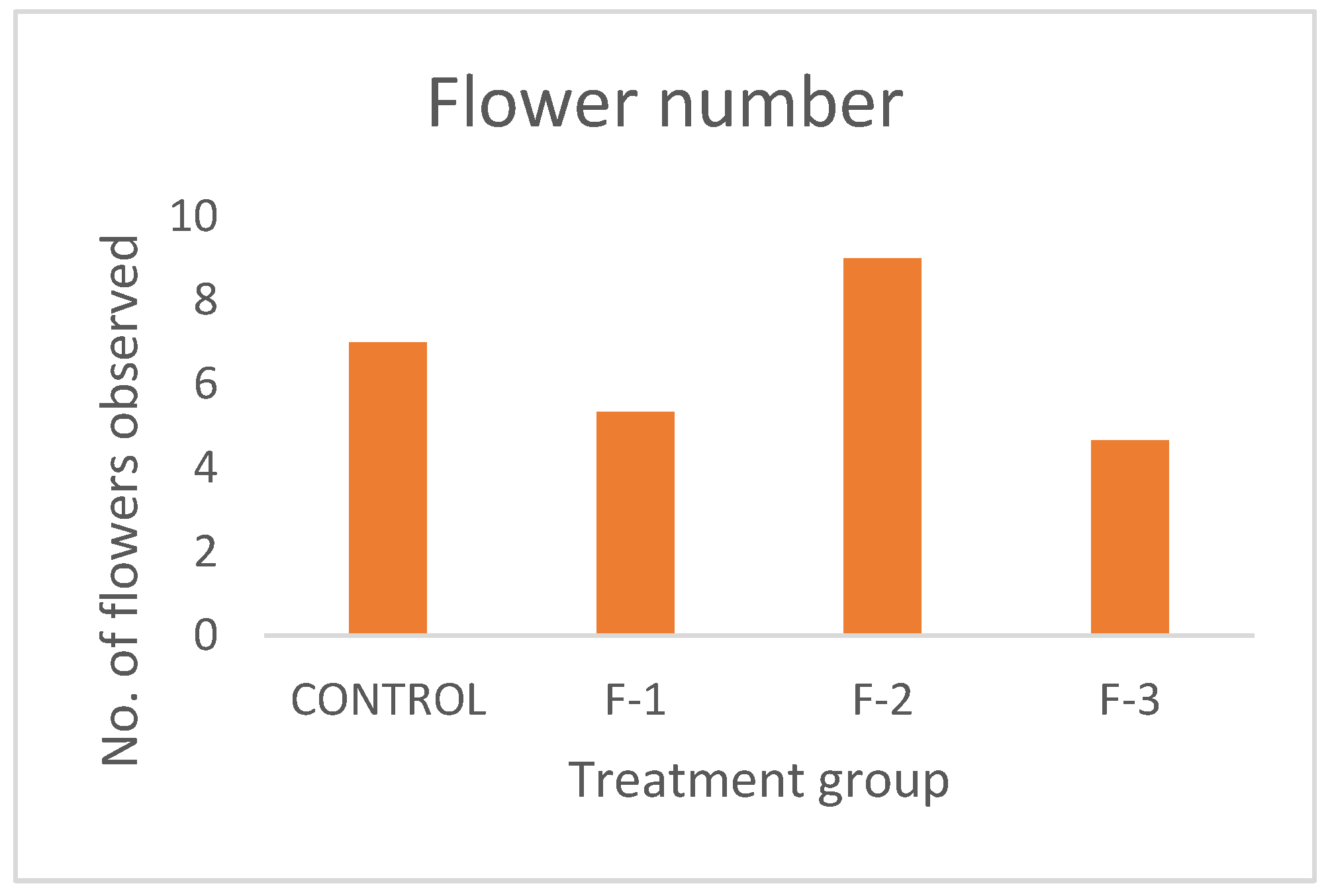
Figure 6.
Showing the no. of fruits per plant of each treatment group i.e. Control, F-1, F-2, and F-3.
Figure 6.
Showing the no. of fruits per plant of each treatment group i.e. Control, F-1, F-2, and F-3.
Three different fertilizer formulations (F-1, F-2, and F-3) were applied to experimental plants grown in nutrient systems, while soil-grown plants were used as a control. Over the course of 60 days, vegetative growth indicators were tracked. The F-2 formulation had the greatest vegetative growth response at 30 days after treatment, as evidenced by increased shoot length, leaf number, stem girth and root length. F-1, the control, and F-3 came next. Bud initiation in tomato plants started after 60 days and continued through 75 days. At the 75-day observation point, tomato plants treated with F-2 within the nutrient system exhibited superior performance in key agronomic traits. The F-2 supplemented plant having shoot length (49.33±12.74), root length (26.33±3.21), leaf number (72±21.93) as compared to others. For parameter study triplicate plant were taken.
Nutrient optimization – pH and Electrical conductivity (EC)are critical factors for plant growth and development. Supplementation with the F-2 nutrient formulation during fruit formation resulted in a higher growth, fruit yield compared to the control and other nutrient treatments. The highest flower and fruit yield was observed in F-2 supplemented plants at pH 6.5 and EC 3500 µS/cm. Conversely, high EC levels at pH 6.5 decreased flower and fruit yield in F-3 supplemented plants.
Tomato Flower and Fruit Yield Assessment
The 60-day cultivation period, as depicted in figure [figure 1],highlighted a significant trend :hydroponic plants treated with F-2 produced a notably higher number of flowers .This pattern persisted through the 90-day observation period ,where increased flower development culminated in robust fruit formation .By 90th day ,F-2 supplemented by hydroponic plants demonstrated significantly elevated flower and fruit counts per plant, far surpassing those of soil-grown plants. Conversely, both F-1 and F-3 supplemented plants exhibited a decline in flower and fruit production per plant when compared to control.
Figure 7.
Figure showing various developmental stages of tomato plant grown in different under hydroponic condition .A1,B1,C1,D1;The initial stage of the plants grown in control and 3 different nutrient treatment.A2,B2,C2,D2 is the vegetative stage of the plant after 15 day,A3,B3,C3,D3 is showing the growth of the plant near 30 day,A4,B4,C4,D4 showing the development of the plant on 45 day and finally A5,B5,C5,D5 showing the growth and development of the plant on day 60.
Figure 7.
Figure showing various developmental stages of tomato plant grown in different under hydroponic condition .A1,B1,C1,D1;The initial stage of the plants grown in control and 3 different nutrient treatment.A2,B2,C2,D2 is the vegetative stage of the plant after 15 day,A3,B3,C3,D3 is showing the growth of the plant near 30 day,A4,B4,C4,D4 showing the development of the plant on 45 day and finally A5,B5,C5,D5 showing the growth and development of the plant on day 60.
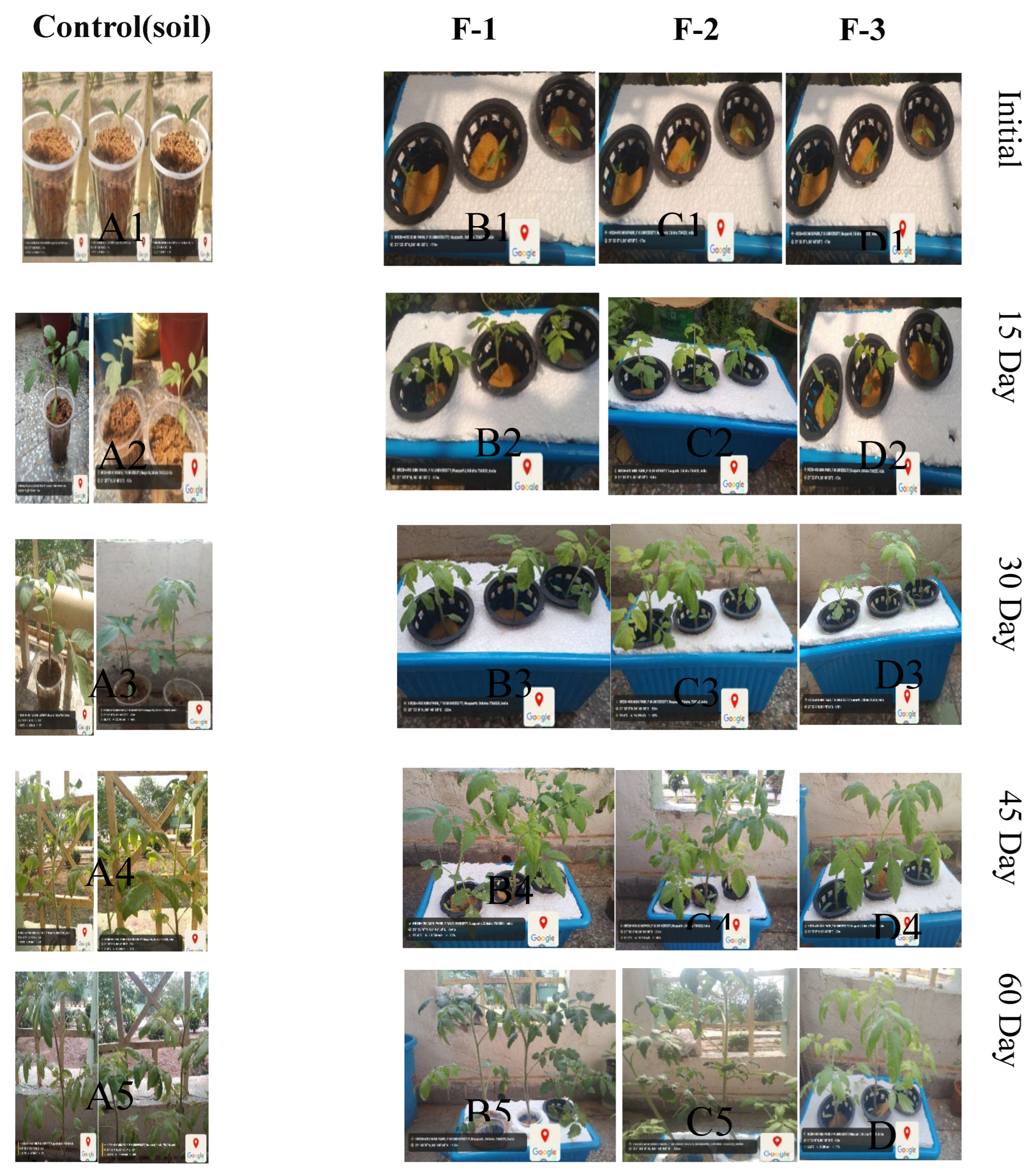
Figure 8.
A6, B6, C6, D6 showing the growth of the single plants after 60 days that is nearly 75 day, and the A7, B7, C7, D7 shows the flowering stage of the plant. Finally, A8, B8, C8 shows the fruiting stage of this plant.
Figure 8.
A6, B6, C6, D6 showing the growth of the single plants after 60 days that is nearly 75 day, and the A7, B7, C7, D7 shows the flowering stage of the plant. Finally, A8, B8, C8 shows the fruiting stage of this plant.
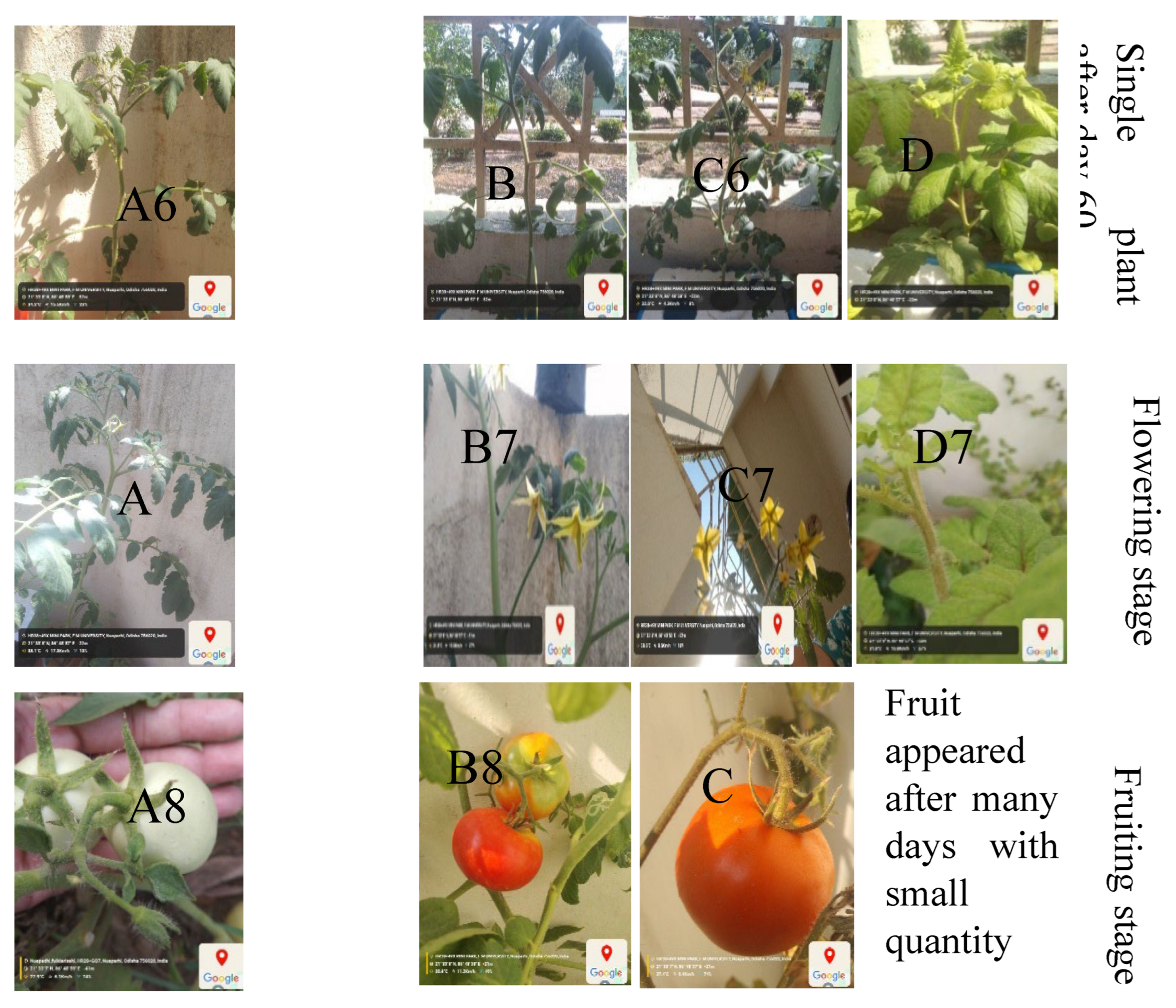
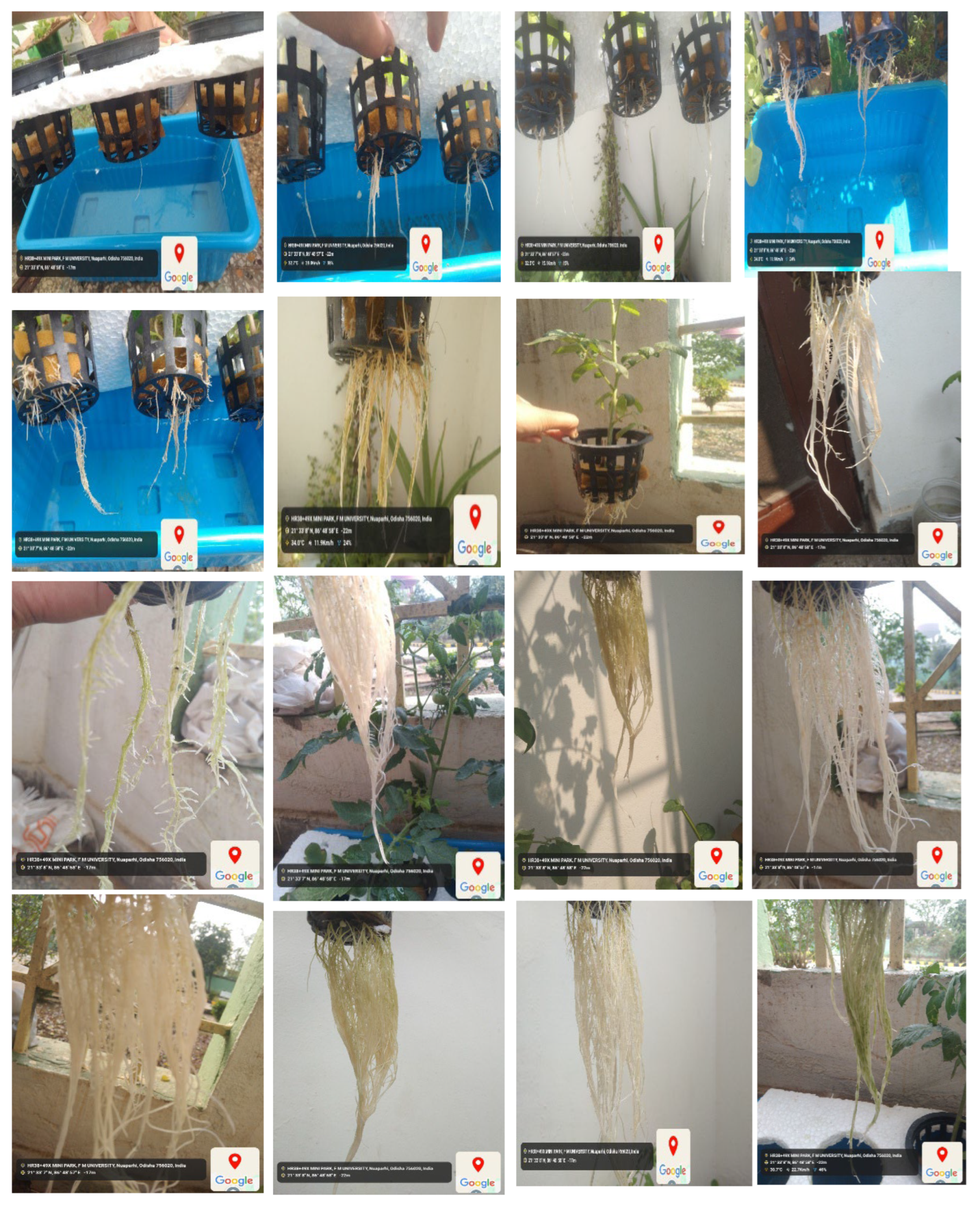
Figure 9.
Root growth of samples.
Discussion
According to the research's findings, hydroponic crop yields may be significantly impacted by nutrient optimization. The results of the research demonstrate that plant growth, yield, and overall system efficiency are all affected directly by regulating the nutrient solution, including the optimal ratio of macro and micronutrients. The findings will be compared to previous studies, analysed in the context of hydroponic farming, and their broader implications for future agricultural methods will be explored. The need to adjust nutrient concentrations to the requirements of the crop is further supported by the fact that plants that receive the optimal nutrient solution grow more. Plants in F-2 group exhibited increase in height, increase in root length, increase in stem girth and increase in leaf number as compared to the F-1, F-3 and control group. Vegetable plants treated with F-2 formulation in hydroponic system shows better agronomic character as compared to soil grown plant due to continuous water solution recycling and availability of nutrients at actual time. According to Chen et al. (2021) balanced nutrient application in plants helps the productivity. The result of this experiment aligned with earlier report by Sahoo et al. (2024), Nardi et al. (2022), Razan et al. (2023) the plants under hydroponic condition with balanced nutrients formulation shows better result compared to control group. Here the EC plays vital role in plant growth and development. The nutrient with higher EC shows higher concentration of salts and fertilizers present in nutrient solution. At the time of seedling stage EC was lower, in vegetative stage its increased, but in reproductive or flowering stage it was higher. The experiment shows that the nutrient solution of F-1, F-2 and F-3 shows variation in EC value that means the amount of concentration varies among them. The F-3 solution having higher EC so that the growth of the plant was decreased (stunted)as compared to other. The F-2 treated plants shows better growth, whereas the F-1and F-2 plants shows slightly difference among them. This experiment also clarifies that the growth of the plant depends on the concentration of solids dissolve in the water, the higher the amount of solid is directly related to higher EC but the lower the number of solids show lower EC this plays vital role in plant growth and development. The yielding of fruits also depends on the concentration of nutrients, as seen in category F-1, F-2, and F-3 compared to control group.
Conclusions
Three nutrient formulas were used to assess tomato plant growth, develop yield, and fruit production in hydroponic settings, and the results were compared to those of traditional soil-grown plants. The results show that a modified nutrient formulation, F-2 (EC 400,2000 and 3500 µS/cm), significantly enhanced fruit yield, flower production, vegetative growth, and seedling development. The results of the study show that the F-2 nutrient formulation attains a healthy morphological status, which is required to increase flower and fruit yield. According to Kane et al. (2006), these results indicate that the ideal EC level for tomato plant flower and fruit development is 3500 µS/cm. According to Santos Junior et al. (2013), the EC of the F-2 nutrient formulation was progressively increased to this optimal level throughout the growth cycle, from seedling to fruiting. According to Sahoo et al. (2024), strawberry plants exposed to high nutrient concentrations similarly exhibit decreased growth and productivity when their EC level is exceeded. When compared to plants cultivated in soil or treated with conventional nutrient formulations, the agronomic characteristics of plants supplemented with the F-2 nutrient formulation were much greater. According to this, the improved F-2 This implies that the enhanced F-2 formulation led to a superior growth and production status. To further improve commercial tomato growing, future research should focus on developing automated nutrient delivery and hydroponic systems, based on the established optimal EC level of 3500 µS/cm.
References
- Acharya, S. O. M. E. N. , Kumar, K. A. U. S. H. A. L., Sharma, N., Tiwari, V. K., & Chaurasia, O. P. Yield and quality attributes of lettuce and spinach grown in different hydroponic systems. Journal of Soil and Water Conservation, 2021, 20, 342–349. [Google Scholar]
- Al Meselmani, M. A. (2022). Nutrient solution for hydroponics. In Recent research and advances in soilless culture. IntechOpen.
- Asao, T. (Ed.). (2012). Hydroponics: A standard methodology for plant biological researches. BoD–Books on Demand.
- Ashok, A. , & Sujitha, E. Hydroponic vegetable cultivation. Int. J. Chem. Stud, 2020, 8, 1207–1213. [Google Scholar]
- Barman, N. C. , Hasan, M. M., Islam, M. R., & Banu, N. A. A review on present status and future prospective of hydroponics technique. Plant Environment Development, 2016, 5, 1–7. [Google Scholar]
- Butler, J. D. , & Oebker, N. F. (1962). Hydroponics as a hobby: growing plants without soil. Circular; 844.
- Chhetri, S. , Dulal, S., Subba, S., & Gurung, K. Effect of different growing media on growth and yield of leafy vegetables in nutrient film technique hydroponics system. Archives of Agriculture and Environmental Science, 2022, 7, 12–19. [Google Scholar]
- Cuartero, J. , Bolarin, M. C., Asins, M. J., & Moreno, V. Increasing salt tolerance in the tomato. Journal of experimental botany, 2006, 57, 1045–1058. [Google Scholar] [PubMed]
- Deep SK, Patra B, Baral A, Nayak Y, Pradhan SN Impact of global climate change on extremophilic diversity. Journal of east china university of science and technology. 2022, 65, 842–853. [CrossRef]
- Deep SK, Patra B, Mohanta AK, Ekka RK, Sethi BK, Behera PK, Pradhan SN. Role of Critical contaminants in ground water of Kalahandi district of Odisha and their health risk assessment. Ann. For. Res. 2023, 66, 3963–3981. [Google Scholar]
- Devi, K. , Sharma, M., Singh, M., & Singh Ahuja, P. In vitro cormlet production and growth evaluation under greenhouse conditions in saffron (Crocus sativus L.)–a commercially important crop. Engineering in Life Sciences, 2011, 11, 189–194. [Google Scholar]
- Dinesh, B. M. , Ravichandra, N. G., Somasekhara, Y. M., Reddy, B. M. R., & Kumar, K. H. (2014). Interaction between Radopholus similis and Fusarium oxysporum f. sp. cubense causing wilt complex on banana.
- Domingues, D. S. , Takahashi, H. W., Camara, C. A., & Nixdorf, S. L. Automated system developed to control pH and concentration of nutrient solution evaluated in hydroponic lettuce production. Computers and electronics in agriculture, 2012, 84, 53–61. [Google Scholar]
- Dubey, N. , & Nain, V. (2020). Hydroponic—the future of farming. International Journal of Environment, Agriculture and Biotechnology, 5(4).
- Dutta, D. , Sharma, V., Guria, S., Chakraborty, S., Sarveswaran, S., Harshavardhan, D.,... & Shah, M. N. Optimizing plant growth and crop productivity through hydroponics technique for sustainable agriculture: a review. Int. J Environ. and Climate Change, 2023, 13, 933–940. [Google Scholar]
- Ekka, A. A Comparative Study of Growth Parameters for Leafy Vegetables Cultivated in Soil and Hydroponic Systems. International Journal of Agriculture and Environmental Research, 2024, 10, 709–721. [Google Scholar]
- Fan, R. , Yang, X., Xie, H., & Reeb, M. A. Determination of nutrients in hydroponic solutions using mid-infrared spectroscopy. Scientia horticulture, 2012, 144, 48–54. [Google Scholar]
- Gaikwad, D. J. , & Maitra, S. Hydroponics cultivation of crops. Protected cultivation and smart agriculture, 2020, 1, 279–287. [Google Scholar]
- Gochhi SK, Patra B, Dey SK. comparative study of bioactive components of betel leaf essential oil using GCMS analysis. Gradiva review journal. 2023, 9, 08–20. [Google Scholar]
- Gumisiriza, M. S. , Ndakidemi, P. A., & Mbega, E. R. A simplified non-greenhouse hydroponic system for small-scale soilless urban vegetable farming. MethodsX, 2022, 9, 101882. [Google Scholar] [PubMed]
- Guo, J., Yan, Y., Dong, L., Jiao, Y., Xiong, H., Shi, L., ... & Shi, A. Quality control techniques and related factors for hydroponic leafy vegetables. Hort Science, 2019, 54, 1330–1337.
- Hasan, M. , Sabir, N., Singh, A. K., Singh, M. C., Patel, N., Khanna, M., & Pragnya, P. Hydroponics technology for horticultural crops. Tech. Bull. TB-ICN, 2018, 188, 30. [Google Scholar]
- Hughes, A. J. (2017). Hydroponic growing offers advantages but won’t replace the soil. Hydroponic vegetable cultivation development for extension at LukPhraDabos Agricultural Training and Development Center, SamutPrakan province.
- Hussain, A. , Iqbal, K., Aziem, S., Mahato, P., & Negi, A. K. A review on the science of growing crops without soil (soilless culture)-a novel alternative for growing crops. International Journal of Agriculture and Crop Sciences, 2014, 7, 833. [Google Scholar]
- Jain, Ankita, Nidhi Kumari, Vikash Kumar Jha. A review on hydroponic system: hope and hype. Recent Advances in Chemical Sciences Biotechnology 2019, 143.
- Jones Jr, J. B. (2007). Tomato plant culture: in the field, greenhouse, and home garden. CRC press.
- Kamenetsky, R. & Okubo, H. (Eds.). (2012). Ornamental geophytes: from basic science to sustainable production. CRC press.
- Kane, C. D. , Jasoni, R. L., Peffley, E. P., Thompson, L. D., Green, C. J., Pare, P., & Tissue, D. Nutrient solution and solution pH influences on onion growth and mineral content. Journal of Plant nutrition, 2006, 29, 375–390. [Google Scholar]
- Khater, E. S., Bahnasawy, A., Abass, W., Morsy, O., El-Ghobashy, H., Shaban, Y., & Egela, M. (2021). Production of basil (Ocimum basilicum L.) under different soilless cultures. Scientific Reports, 11(1), 12754.Massa, D., Magán, J. J., Montesano, F. F., & Tzortzakis, N. (2020). Minimizing water and nutrient losses from soilless cropping in southern Europe. Agricultural water management, 241, 106395.
- Khemka A, Patra B, Pradhan SN (2020) Revisiting the migrants health and prosperity in Odisha: A sustainable perspective. Covid 19, Migration and sustainable development. Kunal book publishers and distributors.
- Kratky, B. A. Growing lettuce in non-aerated, non-circulated hydroponic systems. Journal of vegetable science, 2005, 11, 35–42. [Google Scholar] [CrossRef]
- Kratky, B. A. (2008, August). Three non-circulating hydroponic methods for growing lettuce. In International Symposium on Soilless Culture and Hydroponics 843 (pp. 65-72).
- Macwan, J. , Pandya, D., Pandya, H., & Mankad, A. Review on soilless method of cultivation: hydroponics. Int. J. Recent Sci. Res, 2020, 11, 37122–37127. [Google Scholar]
- Mahanto R, Behera D, Patra B, Das S, Lakra K, Pradhan SN, Abbas A, Ali SK.2024. Plant based natural products in cancer therapeutics. Journal of drug Targeting. [CrossRef]
- Maharana, L., & Koul, D. N. (2011). The emergence of Hydroponics. Yojana (June), 55, 39-40.
- Meric, M. K. , Tuzel, I. H., Tuzel, Y., & Oztekin, G. B. Effects of nutrition systems and irrigation programs on tomato in soilless culture. Agricultural water management, 2011, 99, 19–25. [Google Scholar]
- Mohanta AK, Patra B, Sahoo C (2022) Practice and Challenges for municipal solid waste management in Balasore district, Odisha. Chinese Journal of geotechnical Engineering. 44(11): 1-9.
- Mohanta AK, Sahoo C, Jena R, Sahoo S, Bishoyi SK, Patra B, Dash SR, Pradhan B. 2024. Effect of inappropriate solid waste on microplastic contamination in Balasore district and its aquatic environment. Bulletin of the National Research Centre. 120 (48), 1-13.
- Mohanta YK, Biswas K, Mishra AK, Patra B, Mishra B, Panda J, Avula SK, Varma RS, Panda BP, Nayak D. Amelioration of gold nanoparticles mediated through Ocimum oil extracts induces reactive oxygen species and mitochondrial instability against MCF-7 breast carcinoma. Royal society of Chemistry. 2024, 14, 27816–27830. [Google Scholar]
- Mohanta YK, Mishra AK, Nayak D, Patra B, Bratovcic A, Avula SK, Mohanta TK, Murugan K, Saravanan M (2022) Exploring dose dependent cytotoxicity profile of Gracilaria edulis mediated green synthesized silver nanoparticles against MDA-MB-231 breast carcinoma. Oxidative Medicine and Cellular Longevity. 3863138. [CrossRef]
- Mohanta, AK, Patra B, Deep SK, Ali AKI, Pradhan SN, Sahoo C. (2022) Recent advancements in utilization of municipal solid waste for the invention of bioproducts: the framework for low income countries. Journal of east china university of science and technology. [CrossRef]
- Nguyen, N.T. , Mcinturf, S.A., Mendoza cózatl, D.G. Hydroponics: A versatile system to study nutrient allocation and plant responses to nutrient availability and exposure to toxic elements. Journal of Visualized Experiments, 2016, 10, 3791–54317. [Google Scholar]
- Nielsen, C. J. , Ferrin, D. M., & Stanghellini, M. E. Efficacy of biosurfactants in the management of Phytophthora capsici on pepper in recirculating hydroponic systems. Canadian Journal of Plant Pathology, 2006, 28, 450–460. [Google Scholar]
- Nikolov, N. V. , Atanasov, A. Z., Evstatiev, B. I., Vladut, V. N., & Biris, S. S. Design of a small-scale hydroponic system for indoor farming of leafy vegetables. Agriculture, 2023, 13, 1191. [Google Scholar]
- Niu, G. , & Masabni, J. (2022). Hydroponics. In Plant factory basics, applications and advances (pp. 153-166). Academic Press.
- Okemwa, E. Effectiveness of aquaponic and hydroponic gardening to traditional gardening. International Journal of Scientific Research and Innovative Technology, 2015, 2, 21–52. [Google Scholar]
- Park, Y. , & Williams, K. A. Organic hydroponics: A review. Scientia Horticulturae, 2024, 324, 112604. [Google Scholar]
- Patra B, Gautam R, Priyadarsini E, Paulraj R, Pradhan SN, Muthupandian S, Meena R Piper betle: Augmented synthesis of gold nanoparticles and its invitro cytotoxicity assessment on HeLa and HEK293 cells. Journal of Cluster Science. 2019, 31, 133–145.
- Patra B & Dey SK (2016). A Review on Piper betle L. Journal of Medicinal plants Studies. 4(6): 185-192 [ISSN: 2320-3862] (IF:0.4).
- Patra B Labanyagada: The Protected red sandal forest of Gajapati district, Odisha, India. International Journal of Herbal Medicine. 2015, 3, 35–40. [CrossRef]
- Patra B, Das N, Shamim MZ, Mohanta TK, Mishra B, Mohanta YK. (2023) Dietary natural polyphenols against bacterial and fungal infections: An emerging gravity in health care and food industry. Bioprospecting of tropical medicinal plants. [CrossRef]
- Patra B, Deep S, Pradhan SN. (2021) Different Bioremediation Techniques for Management of Waste Water: An overview. Recent Advancements in Bioremediation of Metal Contaminants. IGI Global publishing house.
- Patra B, Deep SK, Rosalin R, Pradhan SN (2022). Flavored food additives on leaves of piper betle L.: A human health perspective. Applied biochemistry and biotechnology. [CrossRef]
- Patra B, Dey SK & Das MT Forest management practices for conservation of Biodiversity: An Indian Perspective. International Journal of Environmental Biology. 2015, 5, 93–98.
- Patra B, Gautam R, Das MT, Pradhan SN, Dash SR, Mohanta AK. 2024. Microplastics associated contaminants from disposable paper cups and their consequence on human health. Labmed Discovery. 1(2), 100029.
- Patra B, Meena R, Rosalin R, Singh M, Paulraj R, Ekka RK, Pradhan SN (2022). Untargeted metabolomics in piper betle leaf extracts to discriminate the cultivars of coastal odisha, India. Applied biochemistry and biotechnology. [CrossRef]
- Patra B, Pal R, Paulraj R, Pradhan SN, Meena R. (2020) Minerological composition and carbon content of soil and water amongst Betel vineyards of coastal Odisha, India. SN Applied Sciences.
- Patra B, PP Mohanty, Biswal AK . 2025. Improved Seed Germination Technique for Prosopis Cineraria (L.) Druce: A Rare Sacred Plant of Hindus. Qeios, 2632-3834.
- Patra B, Pradhan SN (2018). A Study on Socio-economic aspects of Betel Vine Cultivation of Bhogarai area of Balasore District, Odisha. Journal of Experimental Science. 9: 13-17.
- Patra B, Pradhan SN (2023) Contamination of Honey: A Human Health Perspective. Health Risks of food additives – Recent developments and Trends in Food Sector (ISBN 978-1-83768-189-1) Intechopen Publishers.
- Patra B, Pradhan SN, Das MT & Dey SK Eco-physiological Evaluation of the Betel Vine Varieties Cultivated in Bhogarai area of Balasore District, Odisha, India for disease management and increasing crop yield. International Journal of Recent Scientific Research. 2018, 9, 25822–25828.
- Patra B, Pradhan SN, Paulraj R. (2024) Strategic Urban Air Quality Improvement: Perspectives on public health. Air quality and human health. Springer nature. [CrossRef]
- Patra B, Sahu A, Meena R, Pradhan SN (2021) Estimation of genetic diversity in piper betle L. Based on the analysis of morphological and molecular markers. Letters in Applied NonoBioScience. 10(2): 2240-2250.
- Patra B, Sahu D & Misra MK (2014). Ethno-medicobotanical studies of Mohana area of Gajapati district, Odisha. India. International Journal of Herbal Medicine.2(4): 40-45.
- Patra, B., Paulraj, R., Muthupandian, S., Meena, R., Pradhan, S.N. (2021). Modern Nanomaterials Extraction and Characterisation Techniques in plant samples and their biomedical potential. Handbook of Research on Nano-Strategies for Combatting Antimicrobial Resistance and Cancer. 400.
- Putra, P. A., & Yuliando, H. (2015). Soilless culture system to support water use efficiency and product quality: A review. Agriculture and Agricultural Science Procedia, 3, 283-288.
- Rouphael, Y. , & Colla, G. Growth, yield, fruit quality and nutrient uptake of hydroponically cultivated zucchini squash as affected by irrigation systems and growing seasons. Scientia Horticulturae, 2005, 105, 177–195. [Google Scholar]
- Rouphael, Y. , Cardarelli, M., Rea, E., Battistelli, A., & Colla, G. Comparison of the subirrigation and drip-irrigation systems for greenhouse zucchini squash production using saline and non-saline nutrient solutions. Agricultural water management, 2006, 82, 99–117. [Google Scholar]
- Sahoo, S. , Sahoo, D., & Sahoo, K. K. Optimization of an efficient hydroponic cultivation method for high yield of strawberry plant. South African Journal of Botany, 2024, 167, 429–440. [Google Scholar]
- Salisbury, F. B., & Ross, C. W. (1992). Plant physiology. Ancestry Publishing.
- Sambo, P. , Nicoletto, C., Giro, A., Pii, Y., Valentinuzzi, F., Mimmo, T.,... & Cesco, S. (2019). Hydroponic solutions for soilless production systems: issues and opportunities in a smart agriculture perspective. Frontiers in plant science, 10, 923.
- Santos Júnior, J. A. , Gheyi, H. R., G Filho, D. H., Soares, F. A., & Dias, N. D. S. (2013). Efficiency of water use in sunflower grown in hydroponic system under saline stress. Engenharia Agrícola, 33, 718-729.
- Sarah, W. S. (2017). Hydroponics-vs-soil reasons why hydroponics is better than soil.
- Savvas, D. (2002). Nutrient solution recycling. Hydroponic production of vegetables and ornamentals, 299-343.
- Schmautz, Z., Loeu, F., Liebisch, F., Graber, A., Mathis, A., 38. Jones JB. Hydroponic cropping. CRC Press 2005.
- Schwarz, D. , Schröder, F. G., & Kuchenbuch, R. (1996). Balance sheets for water, potassium, and nitrogen for tomatoes grown in two closed circulated hydroponic systems.
- Sharma, N. , Acharya, S., Kumar, K., Singh, N., & Chaurasia, O. P. Hydroponics as an advanced technique for vegetable production: An overview. Journal of Soil and Water Conservation, 2018, 17, 364–371. [Google Scholar]
- Shilpa, Sharma, P., & Bansuli. (2024). Hydroponics in vegetable crops: A review. Hydroponics: The Future of Sustainable Farming, 15-41.
- Shrestha, A. , & Dunn, B. (2013). Hydroponics. Oklahoma Cooperative Extension Service, Oklahoma State University, Division of Agricultural Sciences and Natural Resources.
- Solis-Toapanta, E., Fisher, P., & Gómez, C. (2020). Growth rate and nutrient uptake of basil in small-scale hydroponics. HortScience, 55(4), 507-514.
- Sonneveld, C., Voogt, W., Sonneveld, C., & Voogt, W. (2009). Plant nutrition in future greenhouse production. Plant nutrition of greenhouse crops, 393-403.
- Swain SK, Barik SK, Das MT, Pradhan SN, Deep SK, Dash SR, Jena R, Patra B. Multi scale structure and nutritional properties of different millet varieties and their potential health effects. Gradiva review journal. 2023, 9, 588–607. [Google Scholar]
- Trejo-Téllez, L. I., & Gómez-Merino, F. C. (2012). Nutrient solutions for hydroponic systems. Hydroponics-a standard methodology for plant biological research, 1, 1-22.
- Verma A, Maurya A, Patra B, Gaharwar US, Paulraj R Extraction of polyaromatic hydrocarbons from the leachate of major landfill sites of Delhi. Journal of Advances and Scholarly Researches in Allied Education. 2019, 16, 1080–1083.
- Vikanksha, A. K. , & Singh, J. Trends in hydroponics practice/technology in horticultural crops: A review. Int. J. Plant Soil Sci, 2023, 35, 57–65. [Google Scholar]
- Zekki, H. , Gauthier, L., & Gosselin, A. (1996). Growth, productivity, and mineral composition of hydroponically cultivated greenhouse tomatoes, with or without nutrient solution recycling.
- Zhang, P. , Senge, M., & Dai, Y. Effects of salinity stress on growth, yield, fruit quality and water use efficiency of tomato under hydroponics system. Reviews in Agricultural Science, 2016, 4, 46–55. [Google Scholar]
Disclaimer/Publisher’s Note: The statements, opinions and data contained in all publications are solely those of the individual author(s) and contributor(s) and not of MDPI and/or the editor(s). MDPI and/or the editor(s) disclaim responsibility for any injury to people or property resulting from any ideas, methods, instructions or products referred to in the content. |
© 2025 by the authors. Licensee MDPI, Basel, Switzerland. This article is an open access article distributed under the terms and conditions of the Creative Commons Attribution (CC BY) license (http://creativecommons.org/licenses/by/4.0/).
Copyright: This open access article is published under a Creative Commons CC BY 4.0 license, which permit the free download, distribution, and reuse, provided that the author and preprint are cited in any reuse.