

Submitted:
14 May 2025
Posted:
14 May 2025
You are already at the latest version
Abstract
Antibiotic resistance in pathogenic bacteria has become an issue of major global importance, which has hurt human and veterinary medicine, causing real public health problems. This study aimed to characterize Escherichia coli strains isolated from foods of animal origin sold in schools and the hands of school kitchen operators in the Mono department of Benin. Escherichia coli strains were isolated using Tryptone Bile X-Glucuronide (TBX BAC ISO-16649-2,3) and identified by using 16S rRNA sequencing. Antibiotic resistance was performed using a list of 10 antibiotics selected on 55 Escherichia coli strains. The disk diffusion method was used to perform the antibiogram. The virulence genes stx1 stx2 and eae were then searched using their specific primers on 55 isolates by PCR. This study showed that Escherichia coli isolates were resistant to ampicillin, tetracycline, and amoxicillin-clavulanic acid (64 82 %). Thus, the phenotype AMP-AMC-CEP was present in most of the predominant multidrug resistance (MDR). Molecular characterization of virulence genes showed the presence of stx1 in 16.4% (n = 9) of the isolates tested. Given that, problems of antibiotic resistance are increasingly being observed in most pathogenic bacteria, including Escherichia coli, it is essential to study the reservoir of germs in the commensal flora with potential transport and to prospect for alternative solutions to prevent the growth of pathogens after contamination of foodstuffs, for effective control of food-borne outbreaks caused by this pathogenic micro-organism.
Keywords:
antibacterial resistance
; Escherichia coli
; foods of animal origin
; virulence genes
1. Introduction
Foodborne outbreaks caused by Escherichia coli are increasingly common throughout the world today, with diarrhoeal forms representing the main cause of hospitalization in Africa [1]. In public health, food safety is an area of major importance and concern, especially when food of animal origin is handled in a highly contaminated environment [2,3]. In developing countries, food establishments such as collective restaurants or school canteens are characterized by a lack of hygiene and financial resources to invest in safer equipment, a lack of education for kitchen operators, and poor food handling practices that can contribute to a significant increase in the incidence of foodborne [4,5,6]. Escherichia coli is a bacterium found in the digestive tract of humans and animals, especially in the intestinal flora, which can survive for 4 to 12 weeks in water. It is therefore used as an indicator to determine fecal contamination in food and drinking water [7,8,9]. In foodborne infections caused by Escherichia coli, the most common pathogenic forms are enteropathogenic E. coli (EPEC), toxigenic E. coli Shiga (STEC), enterotoxigenic E. coli (ETEC), and diffuse adherence E. coli [10,11,12]. At the zoonotic level, one of the most important agents in terms of public health is E. coli EHEC, which can be transmitted to humans through the consumption of contaminated food, leading to bloody diarrhea and high mortality [13,14,15]. This bacteria is capable of producing a biofilm and is particularly resistant to antimicrobial agents [9]. Furthermore, the inappropriate and abusive use of antibiotics has increased bacterial resistance to antimicrobial agents [16,17]. Studies have shown the resistance and multi-resistance to antibiotics of E. coli EHEC isolated from food of animal origin in several collective restaurants in some African countries [18,19]. Food-borne diseases are often associated with antibiotic resistance in bacteria in developing countries [20,21]. This study aimed to characterize Escherichia coli strains isolated from food of animal origin sold in schools and palmar face of school kitchen operators in the Mono department of Benin. This will supplement the data already available, which is needed to raise awareness among livestock farmers, veterinary surgeons, and those involved in human medicine about the responsible use of antibiotics.
1.1. Food’s Sample Collection
Samples of ready-to-eat food of animal origin presenting a risk of contamination by pathogenic bacteria and commonly consumed by schoolchildren were identified through a survey. They were aseptically collected in Stomacher bags and placed in a cooler containing ice packs. A total of 100 food samples, including 40 fried fish, 30 boullis eggs, and 30 fried sausages, were collected from 20 schools in the Mono department and transported over a two hours drive to the laboratory for analysis. A characteristic colony of each strain (Escherichia coli) from each sample was taken and cultured in an Eppendorf tube containing Brain Heart Infusion Broth (BHI OXOID CM1135), 10% glycerol and stored at -80o C for later analysis.
1.2. Hand’s Sample Collection
Forty samples of the palmar surface of the hand before and after washing were collected from kitchen operators in the schools. Swabs were taken before and after cleaning and disinfecting the hands using two sterile cotton swabs, one wet with Maximum Recovery Diluent (MRD, Oxoid CM0733, Belgium) and the other dry, all inserted into a Stomacher bag containing 25 mL of MRD medium. Gloves were worn and changed between samples. The moistened cotton was placed in the Stomacher bag beforehand and taken out with sterile forceps for swabbing. Swabbing was carried out using the method described by [22]. Once swabbing was complete, the wet cotton was reintroduced into the Stomacher bag. The same surface was then swabbed again, this time with dry cotton, still using sterile forceps, and placed in the same Stomacher bag as the moistened cotton, and so on. After being transported to the laboratory, the samples were homogenized for 2 minutes to recover as much liquid as possible in a Falcon for analysis.
1.3. Escherichia coli Isolation
Of the tested food sample, 25 g was added to 225 mL buffered peptone water. Bacterial culture was performed with1 mL of initial suspension and successive decimal dilutions in-depth for food sample, and 1 mL of 25 mL initial suspension for hand swabs in depth using Tryptone Bile X-Glucuronide (TBX) BAC ISO-16649-2,3 agar. Petri dishes were incubated at 37 °C for 24h. Typical blue E. coli colonies with characteristic morphology were transferred in the Eppendorf tube containing Brain Heart Infusion Broth (BHI OXOID CM1135), glycerol at 10 %, and conserved at – 80 °C for future analysis.
1.4. DNA Extraction and 16S PCR
DNA extraction of Escherichia coli strains was using the NucleoSpinR extraction kit obtained from Macherey Nagel. The manufacturer's protocol was followed. DNA samples were stored at -80 °C until use.
16. PCR was performed under the conditions described below 20 μL reaction medium consisting of 2 μL of 10 x PCR buffer; 2 μL of dNTP (2 mM); 1.6 μL of MgCl2 (25 mM) ; 0.2 μL of Taq polymerase (5 U/µL) and 0.8 μL of each of the two (02) primers (forward primer 5'GAGTTTGATCMTGGCTCAG3' and reverse primer 5'TACGGTTACCTTGTTACGAC3'); 10.6 μl of molecular water and 2μl of DNA sample. Amplification was carried out using a thermal cycler under the following conditions: 94°C for 5 minutes for initial denaturation followed by 35 cycles of denaturation at 94°C for 30 seconds, then hybridization at 56°C for 30 seconds and elongation at 72°C for one minute with a final extension at 72°C for 5 minutes followed by a storage phase at 4°C. Migration was performed on a 0.6% agarose gel using a fluorescent intercalating agent with a non-specific affinity for DNA of 5 μg/ml and a molecular weight marker (DNA ladder small fragments - Eurogentec) at 100 Volts for 30 minutes, and the fragments obtained after migration were visualized using the Gel Doc EZ Imager BIO-RAD. The PCR products were subjected to sequencing after a purification step (Chong et al., 2017) using the Wizard Kit (genomic DNA purification Kit Wizard ®). An equimolar mixture of each product and the forward primer was used for sequencing using 16S rRNA sequencing.
1.5. Determination of stx1, stx2, and Eae Virulence Genes in Escherichia coli Strains
The virulence genes stx1 stx2 and eae were determined in 55 Escherichia coli strains using specific primers (Table 1). A conventional PCR was performed under the conditions described below. The reaction mixture consisted of 2 μL of 10 x PCR buffer; 2 μL of dNTP (2 mM); 1.6 μL of MgCl2 (25 mM); 0.25 μL of Taq polymerase (5 U/µL) and 0.75 μL of each of the two specific primer pairs. Amplification of the stx1 stx2 and eae genes was achieved by initial denaturation at 94°C for 1 minute, followed by 30 cycles at 94°C for 30 seconds of denaturation, at 58°C for 30 seconds of hybridization, at 68°C of elongation for 30 seconds. The final extension was performed at 68°C for 5 min and maintained at 4°C. Amplification products were separated by 0.6% agarose gel electrophoresis using a fluorescent intercalating agent with a non-specific affinity for DNA of 5 μg/ml and a molecular weight marker (DNA ladder small fragments - eurogentec). Migration was performed at 100 V/cm for 30 minutes. The amplification bands were visualized using Gel Doc EZ Imager BIO-RAD.
1.6. Antibiogram
Antibiotic susceptibility testing of Escherichia coli strains was performed to determine their resistance profile using the disk diffusion method (CLSI, 2022). A bacterial suspension of 108 cfu/g at 0.5 McFarland was prepared and incubated for 18 to 24 hours using fresh strains grown for 24 hours on blood agar the previous day. Next, 0.1 mL of the inoculum was taken and spread on the surface of MHA (Mueller Hinton agar) medium previously poured into Petri dishes. The antibiotic discs were applied to the surface of the Petri dishes using sterile forceps. The dishes were incubated for 18 to 24 hours at 37o C. Antibiotic discs included ampicillin (10µg), amoxicillin-clavulamic acid (20/10µg), aztreonam (30µg), cephalotin (30µg), cefoxitin (30µg), cefotaxime (30µg), chloramphenicol (30 µg), ciprofloxacin (5 µg), gentamicin (10 µg) and tetracycline (30 µg) were purchased from Becton, Dickinson and Company (USA) (Table 1). Inhibition diameters were measured using digital calipers. The results obtained were used to classify isolates as 'resistant', 'intermediate' or 'susceptible' to a particular antibiotic using the EUCAST reference values (Table 2) [24].

Table 2.
Antibiotics tested and their classes.
| Antibiotics | Classes |
|---|---|
| Ampicillin (AMP) 10 µg | Beta lactamine Penicillin group A |
| Amoxicillin-clavulamic acid (AMC) 20/10 µg | Beta lactamine + Clavulamic acid, Penicillin group A |
| Aztreonam (ATM) 30 µg | Beta lactamine, Monobactam |
| Cephalotin (CF) 30 µg | Beta lactamine, Cephalosporin 1ère generation |
| Cefoxitin (FOX) 30 µg | Beta lactamine, Cephalosporin 2ème generation |
| Cefotaxime (CTX) 30 µg | Beta lactamine, Cephalosporin 3ème generation |
| Chloramphenicol (CHL) 30 µg | Phenocolate |
| Ciprofloxacin (CIP) 5 µg | Quinolone |
| Gentamicin (GMN) 10 µg | Aminoside |
| Tetracycline (TET) 30 µg | Tetracycline |
Source : [24].
Table 3.
Reference inhibition diameters.
| Antibiotics | Reference inhibition diameters in mm | |
|---|---|---|
| S ≥ | R ˂ | |
| Aztreonam | 26 | 21 |
| Ciprofloxacin | 25 | 22 |
| Gentamicin | 17 | 17 |
| Tetracycline | - | - |
| Chloramphenicol | 17 | 17 |
| Cefotaxime | 20 | 17 |
| Cefoxitin | 19 | 19 |
| Amoxicillin | 19 | 19 |
| Amplicillin | 19 | 19 |
Source : [24].
1.7. Statistical Analysis
The inhibition diameters obtained after the antibiogram were recorded and encoded in Excel (Microsoft Corporation). Statistical analyses were performed using SAS software (SAS Institute Inc, Cary, NC, USA). In this software, descriptive statistical analyses such as the calculation of frequencies, percentages or proportions were carried out to evaluate the resistance of the strains of Escherichia coli isolated from foods of animal origin and from the palmar surfaces of the operators to the antibiotics tested.
2. Results
2.1. Antibiotic Resistance and Virulence of Escherichia coli Strains Isolated from Food of Animal Origin and Hands
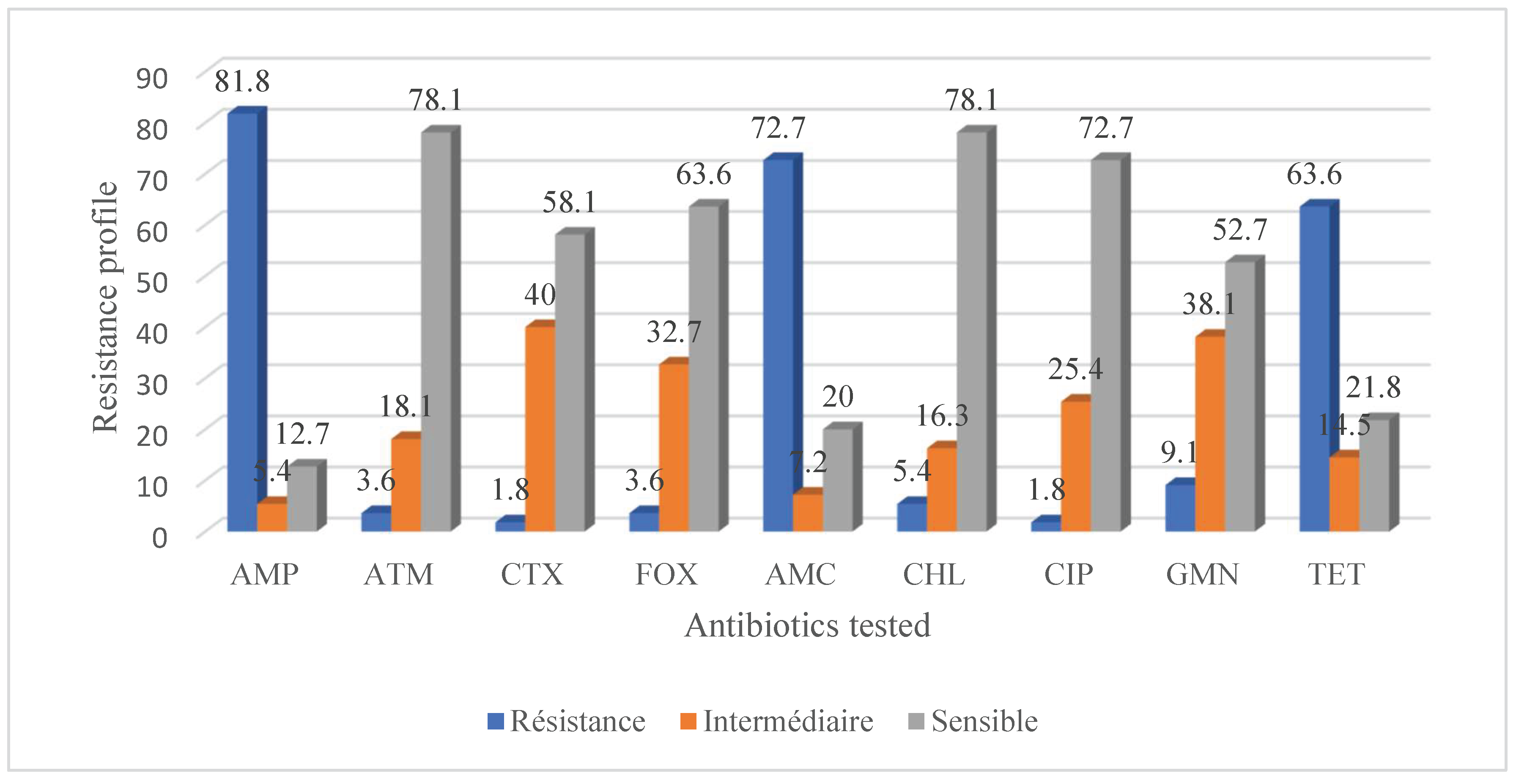
The results obtained for all the antibiotics tested on the microorganism strains are shown in Figure 2. It can be seen that three antibiotics were ineffective on the Escherichia coli strains isolated from food of animal origin and hands. These were ampicillin, amoxicillin-clavulanic acid, and tetracycline, with resistance rates of 81.82% (n = 45), 72,73 % (n = 40), and 63,64 % (n = 35). In contrast to these antibacterial agents, E. coli strains were sensitive to aztreonam, cefotaxime, cefoxitin, chloramphenicol, ciprofloxacin and gentamicin respectively in the following proportions: 78.18% (n = 43), 58,18 % (n = 32), 63,64 % (n = 35), 78,18 % (n = 43), 72,73 % (n = 40), 52,73 % (n = 29).
2.2. Multidrug Resistance Profile of Escherichia coli Strains Isolated from Food of Animal Origin and Surfaces to Antibiotics
The multi-drug resistance of each isolate to antibiotics is described in Table 4. Of the 55 isolates tested, 35 were isolated from food and 20 from hands. It should be noted that several strains were multi-resistant to at least two antibiotics. It was found that approximately 11.43% (n = 4) of strains isolated from food were multi-resistant to 5 antibiotics compared with 10% (n = 2) of those isolated from hands. In addition, 35.14% (n = 13) of Escherichia coli strains isolated from foodstuffs were multi-resistant to 4 antibiotics, compared with 60% (of those isolated from hands. (n = 12) of those isolated from hands. Multi-resistance to 3 antibiotics was also observed in 20% of the strains isolated from foodstuffs and 20% of those isolated from hands. (n = 7) of strains isolated from food and 5% of those (n = 1) of those isolated from hands. Only 22.90% of (n = 8) of food isolates and 5% of hand isolates (n = 1) of those isolated from hands were multi-resistant to two antibiotics.
2.3. Virulence Gene Profile of Escherichia coli Strains Isolated from Foods of Animal Origin and Hands
The virulence genes detected in Escherichia coli strains were as follows. The search for virulence genes in a total of 55 Escherichia coli strains analyzed revealed that stx1 was present in 16.40% (n = 9) of the isolates, including 20% (n = 7) of food isolates and 10% (n = 2) of those isolated from surfaces. The virulence genes stx2 and eae were not present in all the isolates analyzed.
Figure 1.
Antibiotic resistance of Escherichia coli strains isolated from food of animal origin and surfaces. AMP: Ampicillin; ATM: Aztreonam; CTX: Cefotaxime; FOX: Cefoxitin; AMC: Amoxicillin clavulamic acid; CHL: Chloramphenicol; CIP: Ciprofloxacin; GMN: Gentamicin; TET: Tetracycline.
Figure 1.
Antibiotic resistance of Escherichia coli strains isolated from food of animal origin and surfaces. AMP: Ampicillin; ATM: Aztreonam; CTX: Cefotaxime; FOX: Cefoxitin; AMC: Amoxicillin clavulamic acid; CHL: Chloramphenicol; CIP: Ciprofloxacin; GMN: Gentamicin; TET: Tetracycline.
4. Discussion
Foodborne outbreaks are of major importance in terms of food safety and public health. Most studies on the prevalence of food-borne illnesses have focused much more on the enumeration, research, and identification of the pathogenic microorganisms responsible for these illnesses in foods [25,26]. In Africa, several studies have been reported on the antibiotic resistance of Escherichia coli isolated from food, water, animal, and human samples [1,27,28,29]. In Benin, information on the antibiotic resistance of this bacterium isolated from food of animal origin and the hands is practically non-existent, and the few research studies that have been carried out are clinical studies [30].
This study on the antibiotic resistance of Escherichia coli strains isolated from food of animal origin and surfaces showed high frequencies of resistance of the bacteria to the three main antimicrobial agents tested, i.e. ampicillin, amoxicillin clavulanic acid and tetracycline, with frequencies of between 60 and 90%. These results are similar to those of [14] who, in their study of Escherichia coli O157:H7 strains isolated from foods of animal origin sold in institutional catering in Ethiopia, observed resistance of this bacterium to these three antibiotics in proportions ranging from 50 to 100%. However, our results are contrary to those of [31], who found resistance frequencies of between 16 and 40% in Escherichia coli strains isolated from foodstuffs on the campuses of the University of Abomey-Calavi in Benin, and those of [32], who found resistance frequencies of between 25 and 50% in strains isolated from drinking water and street foods in Maputo, Mozambique. [23] obtained an estimated frequency of resistance to amoxicillin-clavulanic acid of 57.14% for the same bacterium in their study of strains isolated from environmental samples and food products in Benin. This result differs from that obtained in this study for the same antibiotic, which was 72.73%. These different frequencies of resistance observed may be due either to spontaneous genetic mutation or to repeated exposure to antibiotics in animals and humans through their diet or during the treatment of bacterial diseases. However, among the Escherichia coli strains isolated from food and surfaces in the present study, others were sensitive to aztreonam, cefotaxime, cefoxitin, chloramphenicol, ciprofloxacin, and gentamicin in proportions ranging from 50 to 80%. These results are similar to those of [33], who observed frequency sensitivities of 100% for ciprofloxacin and cefoxitin for strains isolated from retail meat products in Ethiopia; and [14], for whom the bacterium's sensitivities to tetracycline and chloramphenicol were also 100% for strains isolated from poultry and beef collected in abattoirs and restaurants. In contrast to these results, other studies have shown that Escherichia coli is resistant to cefotaxime, aztreonam, gentamicin, ciprofloxacin, chloramphenicol, and other antibiotics [34,35,36,37,38].
Furthermore, high rates of multidrug resistance in Escherichia coli isolated from food and hands were observed in this study involving up to five antibiotics at a time. The frequencies of multidrug resistance varied between 17 and 26% for strains isolated from food of animal origin and between 20 and 50% for those isolated from hands. These results are in line with several studies carried out in Africa and Benin, in which the frequencies of multidrug resistance in this bacterium involved at least four antibiotics in roughly the same proportions [38,39]. The variation in the frequencies of multidrug resistance of the bacteria in the different studies may be linked to the uncontrolled use of antibiotics to treat foodborne diseases, the dose, and route of administration of the antibiotic, the presence of antibiotics in food additives, the geographical location of the studies, the immune response of the patient treated and the difference between the antibiotics tested [40,41,42]. All these forms of Escherichia coli resistance observed are the real causes of the therapeutic failures encountered when treating food-borne illnesses caused by this bacterium. It is therefore essential to accurately identify the pathogens involved in food-borne illnesses before prescribing antibiotics for their treatment. Any haphazard use of antibiotics should be avoided.
In addition to this bacterium's resistance to antibiotics, studies to determine virulence factors have shown the presence of stx1 in 16.40% of isolates. Isolates possessing this virulence factor may therefore contribute to the production of the verocytotoxin characteristic of the bacterium's pathogenicity. This toxin is the basis of the hemolytic uraemic syndrome (HUS) caused by VTEC. These results are not consistent with those of [43], who, in their work on Escherichia coli isolates from foods sold in community and environmental restaurants in southern Benin, did not find the virulence factor stx1 in their isolates. However, the results obtained for the search for this virulence factor in this study are similar to those of several authors who have also worked on Escherichia coli strains isolated from foods of animal origin, animal and human samples [44,45]. However, virulence factors such as stx2 and eae were not found in the isolates tested in the present study. These results are similar to those of several authors who have worked on the same bacterium isolated from foods of animal origin [46,47,48,49].
Therapeutic failures in the treatment of food-borne outbreaks and food-borne illnesses caused by bacteria with virulence factors that are resistant to antibiotics in general, and Escherichia coli in particular, are becoming more and more frequent [50,51,52]. The epidemiological profile of each foodborne outbreak depends on several factors, including the infection rate and the mortality rate. The mortality rate depends essentially on the conditions in which patients are treated and, above all, on the virulence of the pathogenic microorganism in question [53,54]. The virulence of pathogens is therefore a very important parameter to take into consideration for the effective and efficient management of cases of foodborne outbreaks or food-borne illnesses [55]. It should also be remembered that compliance with good hygiene and manufacturing practices in mass catering is one of the measures to be taken upstream to prevent outbreaks of food-borne illnesses. In addition, alternative solutions to antibiotic treatment should be encouraged to further refine strategies for combating food-borne illnesses.
5. Conclusion
Antibiotic resistance and virulence in pathogenic bacteria are among the factors contributing to the high mortality rates observed in food-borne outbreaks worldwide and Africa in particular. In sub Saharan Africa, and especially in Benin, several upstream factors are at the root of food-borne outbreaks, including non-compliance with good hygiene and manufacturing practices, failure to regulate the food sector, including mass catering (in places such as nursing homes, prisons, public services, and schools), and a lack of quality control of the food sold. In addition, antibiotic resistance in bacteria means that treatments are no longer effective. The present study on antibiotic resistance in bacteria showed that Escherichia coli strains isolated from food of animal origin and hands in primary schools had developed multi-drug resistance involving at least two antibiotics. The study on the determination of virulence genes in the same isolates revealed the presence of the virulence factor stx1 in 16.40% of the isolates tested. It can be concluded that the consumption of foods of animal origin sold in schools presents potential risks of food-borne outbreaks that could cause harm to public health.
Author Contributions
The conceptualization of this study, ECH; methodology, ECH, CH, GD and NK; formal analysis, ECH; original draft preparation writing ECH; review and editing CH, PS, SF, GD, NK, VD and PA. All authors approved the content of the manuscript.
Funding
Through the outstanding doctoral scholarship, this study was supported by a scholarship from the Research Academy for Higher Education - Committee on Development Cooperation (ARES-CCD). My thanks also to all those who participated in the study and the writing of this article.
Institutional Review Board Statement
Not applicable.
Informed Consent Statement
This study received approval from the ethics committee of the University of Abomey-Calavi of the Republic of Benin before the research was conducted. During the study, food operators voluntarily gave their informed consent before beginning the collection of samples. Participants were assured that the data would be collected anonymously and would only be used for the purposes of the study. They were under no obligation to participate in the study. Participation in the study was voluntary and free.
Data Availability Statement
Data will be made available by the authors upon request.
Conflicts of Interest
The authors declare no conflicts of interest.
References
- Salamandane, A.; Alves, S.; Chambel, L.; Malfeito-Ferreira, M.; Brito, L. Characterization of Escherichia Coli from Water and Food Sold on the Streets of Maputo: Molecular Typing, Virulence Genes, and Antibiotic Resistance. Applied Microbiology 2022, 2 (1), 133–147.
- Soriyi, I.; Agbogli, H. K.; Dongdem, J. T. A Pilot Microbial Assessment of Beef Sold in the Ashaiman Market, a Suburb of Accra, Ghana. African Journal of Food, Agriculture, Nutrition and Development 2008, 8 (1), 91–103. [CrossRef]
- Bahir, M. A.; Errachidi, I.; Hemlali, M.; Sarhane, B.; Tantane, A.; Mohammed, A.; Belkadi, B.; Filali-Maltouf, A. Knowledge, Attitude, and Practices (KAP) Regarding Meat Safety and Sanitation among Carcass Handlers Operating and Assessment of Bacteriological Quality of Meat Contact Surfaces at the Marrakech Slaughterhouse, Morocco. International Journal of Food Science 2022, 2022. [CrossRef]
- Gurmu, E. B.; Gebretinsae, H. Assessment of Bacteriological Quality of Meat Contact Surfaces in Selected Butcher Shops of Mekelle City, Ethiopia. Journal of Environmental and Occupational Health 2013, 2 (2), 61–66. [CrossRef]
- Olasoju, M. I.; Olasoju, T. I.; Adebowale, O. O.; Adetunji, V. O. Knowledge and Practice of Cattle Handlers on Antibiotic Residues in Meat and Milk in Kwara State, Northcentral Nigeria. Plos one 2021, 16 (10), e0257249. [CrossRef]
- Tuglo, L. S.; Agordoh, P. D.; Tekpor, D.; Pan, Z.; Agbanyo, G.; Chu, M. Food Safety Knowledge, Attitude, and Hygiene Practices of Street-Cooked Food Handlers in North Dayi District, Ghana. Environmental health and preventive medicine 2021, 26 (1), 1–13. [CrossRef]
- Kaper, J. B.; Nataro, J. P.; Mobley, H. L. Pathogenic Escherichia Coli. Nature reviews microbiology 2004, 2 (2), 123–140.
- K Bhardwaj, A.; Vinothkumar, K.; Rajpara, N. Bacterial Quorum Sensing Inhibitors: Attractive Alternatives for Control of Infectious Pathogens Showing Multiple Drug Resistance. Recent patents on anti-infective drug discovery 2013, 8 (1), 68–83.
- Asadi, S.; Nayeri-Fasaei, B.; Zahraei-Salehi, T.; Yahya-Rayat, R.; Shams, N.; Sharifi, A. Antibacterial and Anti-Biofilm Properties of Carvacrol Alone and in Combination with Cefixime against Escherichia Coli. BMC microbiology 2023, 23 (1), 55. [CrossRef]
- Komagbe, G. S.; Sessou, P.; Dossa, F.; Sossa-Minou, P.; Taminiau, B.; Azokpota, P.; Korsak, N.; Daube, G.; Farougou, S. Assessment of the Microbiological Quality of Beverages Sold in Collective Cafes on the Campuses of the University of Abomey-Calavi, Benin Republic. Journal of Food Safety and Hygiene 2019, 5 (2), 99–111. [CrossRef]
- Karama, M.; Mainga, A. O.; Cenci-Goga, B. T.; Malahlela, M.; El-Ashram, S.; Kalake, A. Molecular Profiling and Antimicrobial Resistance of Shiga Toxin-Producing Escherichia Coli O26, O45, O103, O121, O145 and O157 Isolates from Cattle on Cow-Calf Operations in South Africa. Scientific reports 2019, 9 (1), 1–15. [CrossRef]
- Richter, L.; Plessis, E. D.; Duvenage, S.; Korsten, L. High Prevalence of Multidrug Resistant Escherichia Coli Isolated from Fresh Vegetables Sold by Selected Formal and Informal Traders in the Most Densely Populated Province of South Africa. Journal of Food Science 2021, 86 (1), 161–168. [CrossRef]
- Jaja, I. F.; Jaja, C.-J. I.; Chigor, N. V.; Anyanwu, M. U.; Maduabuchi, E. K.; Oguttu, J. W.; Green, E. Antimicrobial Resistance Phenotype of Staphylococcus Aureus and Escherichia Coli Isolates Obtained from Meat in the Formal and Informal Sectors in South Africa. BioMed Research International 2020, 2020. [CrossRef]
- Minda Asfaw, G.; Shimelis, R. Escherichia Coli O15: H7 from Food of Animal Origin in Arsi: Occurrence at Catering Establishments and Antimicrobial Susceptibility Profile. The Scientific World Journal 2021, 2021.
- Ajuwon, B. I.; Babatunde, S. K.; Kolawole, O. M.; Ajiboye, A. E.; Lawal, A. H. Prevalence and Antibiotic Resistance of Escherichia Coli O157: H7 in Beef at a Commercial Slaughterhouse in Moro, Kwara State, Nigeria. Access Microbiology 2021, 3 (11). [CrossRef]
- Ochoa, T. J.; Chen, J.; Walker, C. M.; Gonzales, E.; Cleary, T. G. Rifaximin Does Not Induce Toxin Production or Phage-Mediated Lysis of Shiga Toxin-Producing Escherichia Coli. Antimicrobial Agents and Chemotherapy 2007, 51 (8), 2837–2841. [CrossRef]
- Beyi, A. F.; Fite, A. T.; Tora, E.; Tafese, A.; Genu, T.; Kaba, T.; Beyene, T. J.; Beyene, T.; Korsa, M. G.; Tadesse, F. Prevalence and Antimicrobial Susceptibility of Escherichia Coli O157 in Beef at Butcher Shops and Restaurants in Central Ethiopia. BMC microbiology 2017, 17, 1–6. [CrossRef]
- Abdissa, R.; Haile, W.; Fite, A. T.; Beyi, A. F.; Agga, G. E.; Edao, B. M.; Tadesse, F.; Korsa, M. G.; Beyene, T.; Beyene, T. J. Prevalence of Escherichia Coli O157: H7 in Beef Cattle at Slaughter and Beef Carcasses at Retail Shops in Ethiopia. BMC infectious diseases 2017, 17 (1), 1–6. [CrossRef]
- El-Baz, A. H.; El-Sherbini, M.; Abdelkhalek, A.; Al-Ashmawy, M. A. Prevalence and Molecular Characterization of Salmonella Serovars in Milk and Cheese in Mansoura City, Egypt. Journal of Advanced Veterinary & Animal Research 2017, 4 (1).
- Sallam, K. I.; Mohammed, M. A.; Hassan, M. A.; Tamura, T. Prevalence, Molecular Identification and Antimicrobial Resistance Profile of Salmonella Serovars Isolated from Retail Beef Products in Mansoura, Egypt. Food control 2014, 38, 209–214. [CrossRef]
- Iwu, C. D.; du Plessis, E.; Korsten, L.; Okoh, A. I. Prevalence of E. Coli O157: H7 Strains in Irrigation Water and Agricultural Soil in Two District Municipalities in South Africa. International Journal of Environmental Studies 2021, 78 (3), 474–483.
- Lahou, E.; Uyttendaele, M. Evaluation of Three Swabbing Devices for Detection of Listeria Monocytogenes on Different Types of Food Contact Surfaces. International journal of environmental research and public health 2014, 11 (1), 804–814. [CrossRef]
- Dougnon, V.; Houssou, V. M. C.; Anago, E.; Nanoukon, C.; Mohammed, J.; Agbankpe, J.; Koudokpon, H.; Bouraima, B.; Deguenon, E.; Fabiyi, K. Assessment of the Presence of Resistance Genes Detected from the Environment and Selected Food Products in Benin. Journal of Environmental and Public Health 2021, 2021. [CrossRef]
- Turnidge, J.; Abbott, I. J. EUCAST Breakpoint Categories and the Revised “I”: A Stewardship Opportunity for “I” Mproving Outcomes. Clinical Microbiology and Infection 2022, 28 (4), 475–476.
- Sessou, P.; Klotoe, J. R.; Dougnon, V.; Osseni, S. D.; Hounkpe, E.; Azokpota, P.; Issaka, Y.; Loko, F.; Sohounhloue, D.; Farougou, S. Safety Evaluation of Traditional Cheese Wagashi Treated with Essential Oils in Wistar Rats: A Subchronic Toxicity Study. Food and Public Health 2015, 5 (4), 138–143.
- Amente, D. T.; Shimelis Mangistu Hailu, D. D. B.; Kitila, A. H. W.; Musa, S. A. Assessment of Meat Handling Practices and Occurrence of Escherichia Coli O157: H7 in Beef Meat and Meat Associated Contact Surfaces along the Meat Supply Chain in Haramaya District, Eastern Ethiopia. IJBB 2022, 4 (1), 06–21.
- Onyeka, L. O.; Adesiyun, A. A.; Keddy, K. H.; Madoroba, E.; Manqele, A.; Thompson, P. N. Shiga Toxin-Producing Escherichia Coli Contamination of Raw Beef and Beef-Based Ready-to-Eat Products at Retail Outlets in Pretoria, South Africa. J Food Prot 2020, 83 (3), 476–484. [CrossRef]
- Estaleva, C. E. L.; Zimba, T. F.; Sekyere, J. O.; Govinden, U.; Chenia, H. Y.; Simonsen, G. S.; Haldorsen, B.; Essack, S. Y.; Sundsfjord, A. High Prevalence of Multidrug Resistant ESBL- and Plasmid Mediated AmpC-Producing Clinical Isolates of Escherichia Coli at Maputo Central Hospital, Mozambique. BMC Infect Dis 2021, 21 (1), 16. [CrossRef]
- Abebe, E.; Gugsa, G.; Ahmed, M.; Awol, N.; Tefera, Y.; Abegaz, S.; Sisay, T. Occurrence and Antimicrobial Resistance Pattern of E. Coli O157: H7 Isolated from Foods of Bovine Origin in Dessie and Kombolcha Towns, Ethiopia. PLOS Neglected Tropical Diseases 2023, 17 (1), e0010706.
- Ahoyo, A. T.; Baba-Moussa, L.; Anago, A. E.; Avogbe, P.; Missihoun, T. D.; Loko, F.; Prevost, G.; Sanni, A.; Dramane, K. Incidence of Infections Dues to Escherichia Coli Strains Producing Extended Spectrum Betalactamase, in the Zou/Collines Hospital Centre (CHDZ/C) in Benin. Medecine et maladies infectieuses 2007, 37 (11), 746–752.
- Beneduce, L.; Spano, G.; Nabi, A. Q.; Lamacchia, F.; Massa, S.; Aouni, R.; Hamama, A. Occurrence and Characterization of Escherichia Coli O157 and Other Serotypes in Raw Meat Products in Morocco. Journal of food protection 2008, 71 (10), 2082–2086. [CrossRef]
- Oje, O. J.; Adelabu, O. A.; Adebayo, A. A.; Adeosun, O. M.; David, O. M.; Moro, D. D.; Famurewa, O. Antibiotic Resistance Profile of β-Lactamase-Producing Escherichia Coli O157: H7 Isolated from Ready-to-Eat Foods in Ekiti State, Nigeria.
- Shecho, M.; Thomas, N.; Kemal, J.; Muktar, Y. Cloacael Carriage and Multidrug Resistance Escherichia Coli O157: H7 from Poultry Farms, Eastern Ethiopia. Journal of veterinary medicine 2017, 2017.
- Adefisoye, M. A.; Okoh, A. I. Identification and Antimicrobial Resistance Prevalence of Pathogenic Escherichia Coli Strains from Treated Wastewater Effluents in Eastern Cape, South Africa. Microbiologyopen 2016, 5 (1), 143–151. [CrossRef]
- Pillay, L.; Olaniran, A. O. Assessment of Physicochemical Parameters and Prevalence of Virulent and Multiple-Antibiotic-Resistant Escherichia Coli in Treated Effluent of Two Wastewater Treatment Plants and Receiving Aquatic Milieu in Durban, South Africa. Environmental monitoring and assessment 2016, 188 (5), 1–20. [CrossRef]
- Malema, M. S.; Abia, A. L. K.; Tandlich, R.; Zuma, B.; Mwenge Kahinda, J.-M.; Ubomba-Jaswa, E. Antibiotic-Resistant Pathogenic Escherichia Coli Isolated from Rooftop Rainwater-Harvesting Tanks in the Eastern Cape, South Africa. International Journal of Environmental Research and Public Health 2018, 15 (5), 892. [CrossRef]
- Diab, M. S.; Tarabees, R.; Elnaker, Y. F.; Hadad, G. A.; Saad, M. A.; Galbat, S. A.; Albogami, S.; Hassan, A. M.; Dawood, M. A.; Shaaban, S. I. Molecular Detection, Serotyping, and Antibiotic Resistance of Shiga Toxigenic Escherichia Coli Isolated from She-Camels and In-Contact Humans in Egypt. Antibiotics 2021, 10 (8), 1021.
- Agbagwa, O. E.; Chinwi, C. M.; Horsfall, S. J. Antibiogram and Multidrug Resistant Pattern of Escherichia Coli from Environmental Sources in Port Harcourt. African Journal of Microbiology Research 2022, 16 (6), 217–222. [CrossRef]
- Chigor, V. N.; Umoh, V. J.; Smith, S. I.; Igbinosa, E. O.; Okoh, A. I. Multidrug Resistance and Plasmid Patterns of Escherichia Coli O157 and Other E. Coli Isolated from Diarrhoeal Stools and Surface Waters from Some Selected Sources in Zaria, Nigeria. International Journal of Environmental Research and Public Health 2010, 7 (10), 3831–3841.
- Chissaque, A.; De Deus, N.; Vubil, D.; Mandomando, I. The Epidemiology of Diarrhea in Children Under 5 Years of Age in Mozambique. Curr Trop Med Rep 2018, 5 (3), 115–124. [CrossRef]
- Berendes, D.; Knee, J.; Sumner, T.; Capone, D.; Lai, A.; Wood, A.; Patel, S.; Nalá, R.; Cumming, O.; Brown, J. Gut Carriage of Antimicrobial Resistance Genes among Young Children in Urban Maputo, Mozambique: Associations with Enteric Pathogen Carriage and Environmental Risk Factors. PLoS One 2019, 14 (11), e0225464. [CrossRef]
- Hounkpe, E. C.; Sessou, P.; Farougou, S.; Daube, G.; Delcenserie, V.; Azokpota, P.; Korsak, N. Prevalence, Antibiotic Resistance, and Virulence Gene Profile of Escherichia Coli Strains Shared between Food and Other Sources in Africa: A Systematic Review. Veterinary World 2023, 16 (10), 2016. [CrossRef]
- Madoroba, E.; Malokotsa, K. P.; Ngwane, C.; Lebelo, S.; Magwedere, K. Presence and Virulence Characteristics of Shiga Toxin Escherichia Coli and Non-Shiga Toxin–Producing Escherichia Coli O157 in Products from Animal Protein Supply Chain Enterprises in South Africa. Foodborne Pathogens and Disease 2022. [CrossRef]
- Ombarak, R. A.; Hinenoya, A.; Awasthi, S. P.; Iguchi, A.; Shima, A.; Elbagory, A.-R. M.; Yamasaki, S. Prevalence and Pathogenic Potential of Escherichia Coli Isolates from Raw Milk and Raw Milk Cheese in Egypt. International Journal of Food Microbiology 2016, 221, 69–76. [CrossRef]
- Fayemi, O. E.; Akanni, G. B.; Elegbeleye, J. A.; Aboaba, O. O.; Njage, P. M. Prevalence, Characterization and Antibiotic Resistance of Shiga Toxigenic Escherichia Coli Serogroups Isolated from Fresh Beef and Locally Processed Ready-to-Eat Meat Products in Lagos, Nigeria. International Journal of Food Microbiology 2021, 347, 109191. [CrossRef]
- Abong’o, B. O.; Momba, M. N. Prevalence and Characterization of Escherichia Coli O157: H7 Isolates from Meat and Meat Products Sold in Amathole District, Eastern Cape Province of South Africa. Food microbiology 2009, 26 (2), 173–176.
- Thonda, O. A.; Oluduro, A. O.; Oriade, K. D. Prevalence of Multiple Antibiotic Resistant Escherichia Coli Serotypes in Cow Raw Milk Samples and Traditional Dairy Products in Osun State, Nigeria. British Microbiology Research Journal 2015, 5 (2), 117.
- Omoruyi, I. M.; Uwadiae, E.; Mulade, G.; Omoruku, E. Shiga Toxin Producing Strains of Escherichia Coli (STEC) Associated with Beef Products and Its Potential Pathogenic Effect. Microbiology Research Journal International 2018, 23 (1), 1–7. [CrossRef]
- Okechukwu, E. C.; Amuta, E. U.; Gberikon, G. M.; Chima, N.; Yakubu, B.; Igwe, J. C.; Njoku, M. Genetic Characterization of Multiple Antibiotics Resistance Genes of Escherichia Coli Strain from Cow Milk and Its Products Sold in Abuja, Nigeria. Journal of Advances in Biology & Biotechnology 2020, 23 (7), 40–50. [CrossRef]
- Vaillant, V.; De Valk, H.; Saura, C. Systèmes de Surveillance Des Maladies d’origine Alimentaire: Sources, Méthodes, Apports, Limites. Santé animale-alimentation 2012, 3.
- Smith, B. A.; Fazil, A. Quelles Seront Les Répercussions Des Changements Climatiques Sur Les Maladies Microbiennes d’origine Alimentaire Au Canada. Relevé des maladies transmissibles au Canada 2019, 45 (4), 119–125. [CrossRef]
- Racloz, V.; Waltner-Toews, D.; Stärk, K. D. Évaluation Intégrée Des Risques Maladies d’origine Alimentaire. ONE HEALTH, UNE SEULE SANTÉ 2020, 129.
- Moore, D. L.; pédiatrie (SCP), S. canadienne de; d’immunisation, C. des maladies infectieuses et. Les Infections d’origine Alimentaire. Paediatrics & Child Health 2008, 13 (9), 785–788.
- Dubois-Brissonnet, F.; Guillier, L. Les Intoxications Alimentaires Microbiologiques.
- John-Onwe, B. N.; Iroha, I. R.; Moses, I. B.; Onuora, A. L.; Nwigwe, J. O.; Adimora, E. E.; Okolo, I. O.; Uzoeto, H. O.; Ngwu, J. N.; Mohammed, I. D. Prevalence and Multidrug-Resistant ESBL-Producing E. Coli in Urinary Tract Infection Cases of HIV Patients Attending Federal Teaching Hospital, Abakaliki, Nigeria. African Journal of Microbiology Research 2022, 16 (5), 196–201. [CrossRef]
Table 1.
Primers for virulence genes searched for.
| Virulence genes | Primer | Sequence (5' - 3') | Amplicon size (bp) | Sources |
|---|---|---|---|---|
| stx1 | F R |
CGCTGAATGTCATTCGCTCTGC CGTGGTATAGCTACTGTCACC |
302 | 23 |
| stx2 | F R |
CCTCGGTATCCTATTCCCGG CTGCTGTGACAGTGACAAAACGC |
516 | 23 |
| eae | F R |
ACCAGATCGTAACGGCTGCCT AGTTTGGGTTATAACGTCTTCATTG |
499 | 1 |
Table 4.
Multi-resistance profile of Escherichia coli strains isolated from food and hands .
| Type of resistance | Phenotypes | Isolates | |
|---|---|---|---|
| Food | Hands | ||
|
Multidrug resistance |
AMP, AMC, CEP, GNM, TET | 2 (5,7 %) | - |
| AMP, AMC, CEP, CTX, TET | 1 (2,9 %) | 1 (5 %) | |
| AMP, AMC, CEP, FOX, TET | - | 1 (5 %) | |
| AMP, AMC, CEP, CIP, TET | 1 (2,9 %) | - | |
| AMP, AMC, CEP, TET | 9 (25,7 %) | 10 (50 %) | |
| AMP, AMC, FOX, TET | 1 (2,9 %) | - | |
| AMP, CEP, GNM, TET | 1 (2,9 %) | - | |
| AMP, AMC, CEP, CIP | - | 1 (5 %) | |
| AMP, CEP, FOX, TET | 1 (2,9 %) | 1 (5 %) | |
| AMP, AMC, CEP, GNM | 1 (2,9 %) | - | |
| AMP, AMC, CEP | 3 (8,6 %) | 4 (20 %) | |
| AMC, CEP, TET | 6 (17,1 %) | 1 (5 %) | |
| AMP, CEP, GNM | 1 (2,9 %) | - | |
| AMC, CEP | 8 (22,9 %) | 1 (5 %) | |
With AMP: Ampicillin; ATM: Aztreonam; CTX: Cefotaxime; FOX: Cefoxitin; AMC: Amoxicillinclavulamic acid; CHL: Chloramphenicol; CIP: Ciprofloxacin; GMN: Gentamicin; TET: Tetracycline.
Disclaimer/Publisher’s Note: The statements, opinions and data contained in all publications are solely those of the individual author(s) and contributor(s) and not of MDPI and/or the editor(s). MDPI and/or the editor(s) disclaim responsibility for any injury to people or property resulting from any ideas, methods, instructions or products referred to in the content. |
© 2025 by the authors. Licensee MDPI, Basel, Switzerland. This article is an open access article distributed under the terms and conditions of the Creative Commons Attribution (CC BY) license (http://creativecommons.org/licenses/by/4.0/).
Copyright: This open access article is published under a Creative Commons CC BY 4.0 license, which permit the free download, distribution, and reuse, provided that the author and preprint are cited in any reuse.


