

Submitted:
12 May 2025
Posted:
13 May 2025
You are already at the latest version
Abstract
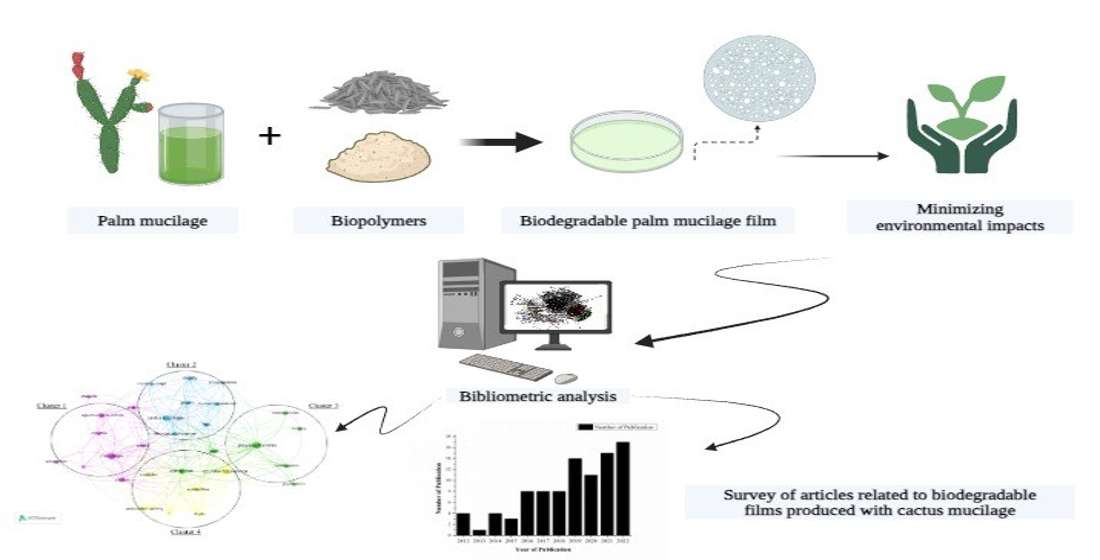
This review provides a bibliometric survey on the evolution and current state of research on palm mucilage and its application in the development of biodegradable films, in order to reveal critical research points and predict future trends. Original scientific and review articles were searched in the Web of Science data platform by VOSviewer (2012–2022). Tunisia, the United States, Germany and Luxembourg, as well as institutions related to these countries, were the most scientifically productive in terms of research on biodegradable palm mucilage films. It was also found that many researchers and journals focused exclusively on this area. These results highlight the importance of research into the extraction of palm mucilage and its application in the development of biodegradable food packaging.
Keywords:
bibliometrics
; biopolymer
; cactus
; biodegradable packaging
; Opuntia ficus-indica
1. Introduction
In recent years, synthetic polymers based on conventional plastics have created a major challenge for the world’s population, due to their excessive use in the industrial and domestic sectors and issues related to environmental pollution. Synthetic materials have an extensive degradation cycle, which can take several years to decompose, so food packaging developed with these polymers is considered highly harmful to the environment. [1]
An alternative to minimizing these environmental impacts is the use of natural biopolymers in the development of biodegradable films. Biopolymers are obtained from renewable sources of animal and vegetable origin, including proteins such as collagen, chitosan, gelatin, and polysaccharides such as starch, pectin, cellulose, among others. [2,3,4] These natural polymers have been gaining ground in scientific circles, mainly in the biodegradable and flexible packaging segment, presenting potential for application in food. Another important factor is that the life cycle of renewable sources is shorter, contributing positively to environmental sustainability. [5,6]
A renewable source for obtaining natural polymers is the palm (Opuntia ficus-indica), belonging to the Cactaceae family, originally from the American continent, more precisely from Mexico, and was introduced in the Northeast of Brazil around 1880 in the state of Pernambuco. It is considered an exotic plant with a high number of species, which reflects its high genetic variation due to the different agroclimatic conditions of the regions where it is native. Furthermore, the palm is made up of cladodes that can be used to obtain mucilage. [7]
Palm mucilage is composed of heteropolysaccharide hydrocolloids with a wide range of physicochemical properties, considered a non-toxic, viscous and colorless substance, in addition to presenting properties such as impermeability, plasticity and good capacity for forming biodegradable films. Furthermore, it is a low-cost, safe and biodegradable source. [8,9]
The combination of mucilage with other biopolymers, such as starch, gelatin, chitosan, and plasticizers, appears with the purpose of optimizing the hydrophilic/hydrophobic and mechanical characteristics of polymeric films. Biodegradable films are thin polymeric layers formed by a dry (e.g. extrusion) or wet (casting) process. They are generally independent materials used as primary packaging in foods, with the purpose of preserving and extending the shelf life of the packaged product. [10,11,12]
Over the last few years, there have been major advances in the extraction of cactus mucilage and its use as a biopolymer in the development of biodegradable films and coatings, and these perspectives are accompanied by an increasing number of technical documents and scientific studies on the subject. [12,13,14] Depending on the large amount of information available, the use of data extraction and synthesis tools becomes extremely relevant. The bibliometric method is based on the quantitative analysis of structures, characteristics and potential relationships between publications in the same area. VOSviewer is visual analysis software widely applied in this bibliometric field, as it has the ability to display results in the form of timeline maps, as well as the cooperation network between these data. [15]
Bibliometric analysis, for example, has been applied in different areas of knowledge [16,17,18] to measure and quantify scientific production on a given field or subject in one or more databases, providing a quick and easy view of related studies through interaction graphs. Given the need to collect data and analyze research trends in recent years regarding the application of palm mucilage as a natural polymer in the development of biodegradable films, this review aimed to carry out a bibliometric analysis, in order to promote a survey of related articles to biodegradable films produced with mucilage from this cactus, verifying the potential, extraction techniques and applications in food.
2. Database and methods
The review was carried out using a mixed research methodology, based on bibliometric analysis and literature review. The literature review consisted of the following topics: “Main natural polymers combined with palm mucilage to form biodegradable films” and “Trends and future perspectives on the application of palm mucilage films (Opuntia ficus-indica) in foods”.
The bibliometric analysis began with a search on the Web of Science (WoS) data platform (www.webofknowledge.com) to analyze global scientific production regarding biodegradable palm mucilage films in the last 10 years (2012-2022). In this study, we used the search terms “cactus mucilage*” or “cactus mucilage film*” or “palm mucilage*” or “mucilage of Opuntia ficus indica*” or “mucilage extraction from Opuntia ficus indica*” or “cladode mucilage*” or “opuntia mucilage*” or “based films of cactus mucilage*” or “cactus mucilage extraction*” or “mucilage polymer*” to filter the search in the database (WoS). For the search, the topic criterion was used, thus ensuring the broadest return of works that presented the search expressions in the title, abstract, Keywords and Keywords Plus. Subsequently, the results were refined into “articles” and “reviews”, obtaining a total of 90 scientific articles and 3 reviews.
Then, the data obtained from WoS were analyzed using the program VOSviewer version 1.6.15 (www.vosviewer.com) [19,20] to create bibliometric graphic mapping and network visualization, in which “citation” was used. ” as a type of analysis to obtain the most cited authors, publications, periodicals, institutions and countries, and “occourrence” to obtain the keywords with the highest occurrence in the analyzed period, both without taking into account the weight and strength of the link for the ranking of results in the program. After obtaining the graphs, the weight “citation” was used for the results obtained from this type of analysis and “occurrences” for the keywords. Furthermore, the OriginPro version 8 program (www.originlab.com) was used to visualize the analyzed data and draw a global graph showing the distribution of articles by year.
3. Results and Discussions of Bibliometric Analysis
The search method in the database selected for the research (WoS) allowed us to obtain a total of 93 works in the last 10 years (2012-2022), including 90 scientific articles and 3 review articles (Figure 1). Annual articles on the development of biodegradable films using palm mucilage as a natural polymer have increased over the years, with more comprehensive growth in 2021 and 2022, with 15 and 17 articles respectively. Palm mucilage as a biopolymer in the production of packaging is a topic that is still little explored, which justifies the low number of articles published, however, recent research shows a greater interest among researchers in explaining this area, promoting new future perspectives for changing this scenario.
In 2012, the first article published was on the extraction of plant biopolymers, highlighting guar gum, locust bean gum and palm mucilage, in which they were combined and used in the treatment of wastewater in the cosmetics industry. [21] In 2016, there was a concentration of studies related to ways of extracting mucilage from cladodes of Opuntia ficus-indica. Felkai-Haddache et al [22] used the microwave-assisted extraction technique combined with the response surface methodology, with the purpose of extracting palm mucilage, and observed a significant increase in the process yield, indicating the viability of techniques under study.
As of 2017, there has been an increasing focus on the application of palm mucilage in the development of biodegradable films, emphasizing the combination of mucilage with other biopolymers, such as chitosan, polyvinyl alcohol, and plasticizing agents, aiming to improve the mechanical, hydrophobic and hydrophilic characteristics. of the films developed. [7,23] In 2022, studies became more consistent in the development of biodegradable packaging with active properties. Makhloufi et al [6] developed active packaging using polysaccharides from cactus mucilage and seaweed agar, and observed that the films produced exhibited good mechanical properties, good protection against UV light, good thermal stability and moderate antioxidant activity. Therefore, the authors consider it a low-cost and environmentally friendly option for the development of active materials for food packaging.
In order to determine the results for the 20 most cited countries in the last 10 years, with an emphasis on research on the extraction of palm mucilage and its application in biodegradable films, the cooperation networks between the countries were analyzed (Figure 2). 4 different clusters were observed, with clusters 1 and 2 being the two with the largest number of countries, both with 6, respectively. Furthermore, these clusters include Tunisia (165 citations) and the United States of America (144 citations), considered the countries with the highest citation rates. The high rate of research citations observed for the country of Tunisia was already expected, given that in this country there is a very high genetic diversity for Opuntia ficus-indica cacti, [24,25] favoring the expansion of research that involves the extraction of mucilage using different extraction techniques, in addition to its use as a biopolymer in the development of biodegradable packaging.
Brazil was one of the countries that occupied Cluster 2, ranking in the seventh position with the highest citation rate (74), in addition, there was greater interaction for this country with 12 countries, highlighting the United States, Algeria, Germany (Cluster 1), Tunisia, Luxembourg, Thailand, Palestine (Cluster 2), Mexico, Colombia, South Africa (Cluster 3), Malaysia and Saudi Arabia (Cluster 4), indicating that researchers from Brazil carry out scientific research together, promoting an expansion of information sharing with international researchers. Some studies involving these connections are based on the extraction of cactus cladode mucilage, as a new natural structuring material for nanoencapsulation; [26] Development of biodegradable films containing palm mucilage, chitosan and polyvinyl alcohol (PVA) in different concentrations. [23]
In clusters 3 and 4, there are countries with lower citation rates, highlighting Palestine, Egypt and Portugal, with 8, 4 and 3 citations, respectively. The countries described present low scientific production, with the development of a maximum of two articles in the last 10 years, indicating that the area of research on palm mucilage and its inclusion in biodegradable films is quite limited in these countries. The citation index is related to the number of articles produced, so the greater the scientific production, the greater the percentage of citations, in addition, it allows us to refine the discrimination of the impact of publications by experienced researchers on the existing knowledge in their areas. [27]
Figure 3 illustrates the results obtained from the 20 most cited institutions in the last 10 years. The institutions that demonstrated the greatest relevance for the article citation index were the University of South Florida (124), National Institute of Research and Physico-chemical Analysis (108), Luxembourg Institute of Science Technology (108) and Polytechnical Institute National Mexico (102). Therefore, it was analyzed that the institutions with the highest citation rate belonged to countries such as the United States, Tunisia, Luxembourg and Mexico, where they were characterized as the main research centers in the area of mucilage extraction and its application in film development. Furthermore, the University of Béjaïa organization showed greater interaction with the second cluster, indicating a strong influence on the relationship within the cooperation networks, which revealed that the scholarship holders of this institution were more independent.
Institutions such as the Federal University of Paraiba and Aveiro University were classified as some of the organizations with the least notoriety in relation to the number of citations, a fact justified by the development of recent scientific research, highlighting the publication of articles on the development of active packaging with Opuntia ficus-indica mucilage, and its applications in food in the year 2022. Generally, to increase the citation rate of articles recently published by institutions, a longer period of time is needed for them to be cited, and thus gain credibility by researchers from other countries. countries, favoring the expansion of the collaborative network between countries that carry out similar research. [28]
According to an analysis of the WoS database, Table 1 shows the 18 journals with the highest number of citations on palm mucilage and its application as a natural polymer in biodegradable films in the last 10 years (2012-2022). Of the 18 main journals, 28% were from the Netherlands, 22.20% from the United Kingdom, 22.20% from Switzerland, 11.10% from the United States of America, 11.10% from Saudi Arabia and 5.40% from Taiwan. Therefore, 50% were European journals, 33% Asian and 17% North American. The magazine Carbohydrate Polymers, published by Elsevier, topped the ranking in first place, with 2 articles and 148 citations, receiving an average of 74 citations per published article.
The high leadership rating of Carbohydrate Polymers was already expected, given that it is a journal that mainly covers studies on the exploration of polysaccharides that have current or potential application in areas such as bioplastics, biomaterials, and biodegradable packaging for food, the latter area being, the focus of this review.
Publications using palm mucilage as a polysaccharide in the preparation of films as parts of food packaging were reported by Gheribi et al [7] who developed edible films combining Opuntia ficus-indica mucilage with different plasticizers, and found that the type of Plasticizer significantly influenced the physical, thermal, mechanical and barrier properties of the films. Manhivi et al [29] investigated the aqueous extraction of palm cladode mucilage in order to characterize it in terms of composition, thermal and viscosity properties for potential applications in the food sector.
The Journal Environmental Science & Technology was the second most relevant journal in the area, with its works totaling 93 citations, with an impact factor of 11.40 and CiteScore 16.70. The scope of this journal consists of rigorous studies of complex environmental phenomena, particularly with regard to fate, transport, and transformation in natural and engineered systems, while facilitating the solution of critical environmental problems. Fox et al [30] developed a flocculation coagulation system using a combination of cactus mucilage and ferric salt to remove toxic compounds from water. Other studies were reported in order to minimize environmental impacts, consumer health concerns and economic limitations associated with synthetic plastics, in which researchers applied natural biopolymers classified as renewable, biodegradable and edible resources to the development of food packaging. [31]
LWT- Food Science and Technology and Separation and Purification Technology ranked third and fourth among the most cited journals, demonstrating an impact factor of 6.00 and 8.60 and 3 and 2 publications on the topic, respectively. His main areas of publication were: biochemistry, food science and technology, chemical engineering, environmental engineering, microbiology and nutrition. Among these scientific areas, the study by Carmona et al [32] stands out, who carried out the encapsulation of mucilage from the palm Opuntia ficus-indica using maltodextrin as an encapsulating agent (EA), and evaluated the performance of the microparticles as a colorant in yogurt. Otálora et al [33] extracted mucilage from cladodes of Opuntia ficus-indica and created a coacervate combining mucilage and gelatin, and observed that this system had bioactive properties with application in the food industry.
Polymers is a journal that publishes articles and reviews on innovative and significant advances in Physics, Chemistry and Polymer Technology with an emphasis on packaging application and development. In this bibliometric analysis, the journal with the lowest citation rate was considered, in which this result is justified due to the publication of recent articles (2022), limiting citation by other researchers. One of the focuses of their publications was reported by Todhanakasem et al [34] who evaluated formulations of active films composed of cactus mucilage, added with probiotic extract (E. faecium FM11-2 from fermented chicken isolates), and applied to slices of minimally processed apples. The results demonstrated that the active film resulted in a greater shelf life extension, preserving the original characteristics of the packaged product.
The most influential researchers on the production of research involving the extraction of palm mucilage and its use in biodegradable packaging are presented in Figure 4. Dr. Rim Gheribi was considered the most cited and influential author in the last 10 years, with 3 articles published, receiving 165 citations. The author is a researcher at the National School of Agronomy and Food Industries at the University of Lorraine, where she has been carrying out research with polysaccharides, highlighting palm mucilage, and its use as a material for food packaging, considered an ecologically correct alternative. Furthermore, the researcher has a collaborative network with multidisciplinary research, developed with international researchers from countries such as France, Italy, Luxembourg and Tunisia.
Researcher Dr. Khaoula Khwaldia is Tunisian, from the Institut National de Recherche et d’Analyse Physico-Chimique, ranked as the second most cited author (164 citations). She has experience in the area of biotechnological and food processes, working on investigating the valorization of biopolymers for inclusion in food packaging, as well as studying the interaction mechanisms between biodegradable packaging and food. Furthermore, she co-authored with researcher Dr. Rim Gheribi on experimental studies on the optimization of the physical, mechanical and thermal properties of cactus mucilage films combined with other natural polymers. Dr. Pierre Verge, based at the Luxembourg Institute of Science and Technology (LIST), presents a collaborative partnership with the two previous authors, being considered the third most influential researcher on the subject, with 108 citations. All the researchers mentioned above make up the second Cluster.
In relation to the first cluster, it was made up of ten researchers, among the most influential, Dr. Norman Alcantar, Dr. Dawn Fox and Dr. Daniel Yeh, three researchers from the University of South Florida, who together produced 5 publications and 253 quotes. In addition to Dr. Khodir Madani, professor and researcher at the University of Bejaia, considered the tenth most cited author (59 citations), where the focus of the research carried out was based on the extraction of mucilage from cladodes of Opuntia ficus-indica, using green technologies, such as microwave-assisted extraction. It appears that the composition of this cluster consisted mainly of researchers from the United States and Algeria, corroborating data from the countries most cited in research on palm mucilage (Figure 2).
Regarding the most cited articles (Table 2), a research article produced by Otalora et al. stands out in first place with 133 citations. [35] The researchers explained the importance of microencapsulation of bioactive pigments, using Opuntia ficus-indica mucilage and maltodextrin as coating materials, in order to obtain natural microcapsules for application in food. Gheribi et al. [7] developed the second article with the highest citation index (108 citations), in this research they reported the potential of cactus mucilage to form edible films and coatings, in which they created biodegradable films using palm mucilage with the inclusion of different plasticizers, the in order to investigate the effects of different plasticizers on film properties, as well as to design new applications of this sustainable biomaterial.
The third most cited article (54 citations), written by Di Lorenzo et al. [36] this is a characterization of the cladode mucilage of Opuntia ficus-indica (L.), and they observed the presence of high molecular weight components such as a linear galactan polymer and a highly branched xyloarabinan, compounds that perform antioxidant activity and healing. The article entitled “Extraction and Characterization of Mucilage From Wild Species of Opuntia” [37] is in fourth position, with 51 citations. The objective of this article was to characterize the mucilage extracted from six species of Opuntia, and determine the best extraction conditions to obtain an unchanged chemical structure of the mucilage. The authors reported that the optimal extraction condition that promoted the highest yield was the option that used a 50% ethanol solution in a 1:1 (m/v) ratio, a temperature of 22 °C and precipitation of the mucilage with an ethanol solution. to 96%, in a ratio of 1:4 (v/v). Furthermore, the mucilage obtained has the potential to be used for commercial purposes as biopolymers and additives in the food industry.
The cited articles produced by Delia et al. [38] and Gheribi and Khwaldia [39], presented 43 and 41 citations, respectively. In the first article, the researchers focused on green technologies, in which they tested the capacity of palm mucilage as a walling agent in the microencapsulation of pigments from the pulp and skin of Escontria chiotilla and Stenocereus queretaroensis through a spray dry process. The second is a review article that highlights the application of mucilage in the food packaging industry, through the development of films and coatings. The authors report the importance of these cactus-based biomaterials due to their functional properties and their potential in preserving food quality and extending shelf life.
The other themes were based on extraction and characterization techniques of Opuntia ficus-indica mucilage. [26,40,41] Felkai-Haddache et al. [22], explained about microwave-assisted extraction, which is a technology for obtaining natural biopolymers, with emphasis on palm mucilage, and observed that this method has advantages in saving extraction time, amount of solvent and consumption of energy. Messina et al. [42] evaluated the technological, nutritional and bioactive properties of palm mucilage (Opuntia ficus-indica), and found good nutritional properties, highlighting the presence of polyunsaturated acids (EPA and DHA), in addition, high antioxidant power was observed, being considered as an option for potential application at industrial level in the food or nutraceutical sector.
The other experimental articles classified among the 20 most cited articles were focused on the development of bioactive films for application in food, containing cactus mucilage (Opuntia ficus-indica) and other biopolymers, highlighting starch, chitosan and polyvinyl alcohol. [10,23,34,46] While Ligório et al. [44] developed an edible coating using palm mucilage combined with ascorbic acid, and applied it to strawberry fruits in order to increase shelf life during refrigerated storage. Morais et al. [43] produced coatings with palm mucilage, and applied it to minimally processed yam, and the results indicated that the biocoating reduced dehydration and maintained the visual and sensorial quality of the yam slices.
Figure 5 shows the occurrence analysis carried out over the last 10 years (2012-2022) using keywords with at least 3 occurrences. Figure 5A represents an overlaid visualization map, demonstrating the keywords with a minimum number of occurrences of 3 in the 93 publications on palm mucilage and its application in biodegradable films. The bibliometric analysis showed that most of the keywords appeared in the period from 2016 to 2022, which probably revealed that films developed with palm mucilage was an emerging area, indicating greater interest among researchers in the extraction of polysaccharide biopolymers and their application in the packaging sector, as an alternative to synthetic materials.
The key words were divided into 4 clusters (Figure 5B), with the words with the highest occurrences being found in cluster 1 and 3, highlighting “Polysaccharides” with a total of 13 occurrences, “mucilage” with 12 occurrences and “Opuntia ficus-indica” with 9 occurrences. Furthermore, the trend of these keywords with greater occurrence has been emerging since 2016, indicating once again that research with palm mucilage for the development of biodegradable films in the last decade (2012-2022) is few, making it If necessary, an expansion of this research, as it remains directly linked to studies of extraction, characterization and microencapsulation technologies. [26,38]
In cluster 4, the focus of the keywords was mainly on obtaining mucilage from Opuntia ficus-indica cladodes, formation of biodegradable films and their application in food. It was found that in recent years, some researchers have focused on incorporating probiotics and other active plant extracts to create edible biodegradable films, promoting the emergence of new ecologically sustainable technologies. Todhanakasem et al. [34] developed palm mucilage-based films with inclusion of probiotic strain of Enterococcus faecium FM11-2 as active component, and the results indicated that the film played a significant active role in extending food stability, minimizing weight loss. and maintaining the freshness of freshly cut apple slices. According to Makhloufi et al. [6], the production of films derived from renewable resources for food packaging applications is an important area of research within the scope of sustainable development, aiming to replace conventional plastics, as well as minimize environmental impacts.
4. Main Natural Polymers Combined with Palm Mucilage to Form Biodegradable Films
In the literature there is a diversity of natural polymers that are used in the production of biodegradable packaging, highlighting starch, agar, alginate, gelatin, chitosan and pectin. [47] Figure 6 shows the main biopolymers used in the production of biodegradable films. Starch is a biodegradable polymer obtained from some plants such as rice, wheat, potatoes, taro, yam, corn, etc. It is considered a naturally abundant material in nature, in addition to being classified as a good candidate for film production as it has several physicochemical, morphological, hydration, gluing, gelatinization, retrogradation and rheological properties. [48,49]
Gelatin is one of the most conventional biopolymers, derived from proteins, with high abundance, relatively low cost and is widely used in film formation. Film production by applying pure gelatin solution has several advantages (including high transparency, high rigidity, favorable biocompatibility and no characteristic odor), while the disadvantages are low water resistance, low ductility and easy dissolution in water. [50,51] However, due to its interesting properties, gelatin has been considered a promising biopolymer for the development of biodegradable food packaging, and a possible alternative to synthetic materials. [52]
Chitosan is another natural polymer produced by the deacetylation of chitin and can be found in several renewable sources, mainly from by-products of aquatic organisms, specifically crustaceans. [53] It is a biodegradable, non-toxic, biocompatible material and has antibacterial, antifungal and metal chelating characteristics. Furthermore, researchers have developed some studies related to the area of packaging, because chitosan presents exceptional properties for film formation, highlighting its morphological, physical (especially surface characteristics, appearance and barrier properties), thermal, antimicrobial and mechanical characteristics. (i.e. flexibility and tensile strength). [54,55]
Another biopolymer with application in biodegradable films is pectin, a component found mainly in the cell walls of plant tissues. Pectin is a vegetable polysaccharide characterized as a hydrocolloid with good thickening and gelling properties, ability to retain greater amounts of water, non-toxic, and easily accessible in nature. [56,57] According to Gupta et al. [58], the polymer film composed only of pure pectin presents poor physical properties, including low values of tensile strength, greater hydrophilicity and brittleness. Thus, one of the alternatives to improve mechanical properties and substantially reduce flexibility, consists of combining pectin with other biopolymers, in order to obtain a more resistant packaging for application in foods.
Agar is a hydrophilic colloid extracted from red seaweed family (Rhodophyta). This biopolymer consists of agaropectin, a non-gelling component, and agarose, a gelling component, where the agarose double helix structure develops in the agar gel as a result of the hydrogen bond between the agarose and is nourished by water molecules, and this is how the polymeric material is formed. [59] However, pure agar film is relatively fragile when compared to packaging materials made from plastic. Furthermore, it has limited mechanical strength, low heat resistance, significant responsiveness to water and chemicals, along with substantial water vapor permeation, so due to all these limitations, film development containing only agar is not recommended. [60]
Alginate is a water-soluble anionic linear polysaccharide, mainly obtained from the cell walls of seaweed, and synthesized by microorganisms. It is a non-toxic, biodegradable, biocompatible and low-cost hydrocolloid, in addition to presenting desirable characteristics that include a low solubility polymer, with good mechanical and barrier properties, as well as the ability to form polymeric gels. [61] Due to these properties, alginate is classified as a biopolymer with numerous applications in different fields of research, with emphasis on the production of packaging to reduce dehydration of meat, a gelling and stabilizing agent in the beverage industry and in the pharmaceutical area as polymeric matrices for encapsulate medicines, proteins, cells and DNA. [62,63]
Polymer blending has been well documented as a versatile and cost-effective strategy to develop a polymeric material with excellent overall performance, compensating or eliminating the weakness of a single-component polymer, and thus promoting the formation of stronger biodegradable films. improving barrier, solubility, mechanical and thermal properties. [64] Some researchers have reported that palm mucilage (Opuntia ficus-indica) is an ideal candidate in combination with other natural polymers in order to obtain a more efficient packaging to protect the packaged food. [10,65]
Todhanakasem et al. [34] developed six biodegradable film formulations, in which they used a combination of palm mucilage, gelatin and two types of plasticizers, sorbitol and glycerol, in addition to an antioxidant agent (Enterococcus faecium FM11-2). The authors concluded that the film formulation containing palm mucilage, gelatin, glycerol and probiotic was considered the most ideal option due to presenting the best physicochemical and physical properties, and consequently played a significant active role in prolonging stability. of food, minimizing weight loss and maintaining the freshness of freshly cut apple slices.
Lira-Vargas et al. [66] studied the combination of cactus mucilage, gelatin and beeswax to prepare biodegradable films, and were characterized by microscopy, morphology, thickness, transparency, tensile strength and permeability to water vapor, O2 and CO2. The results indicated that this packaging system has great potential for application in the area of post-harvest conservation of horticultural products, as it demonstrates good mechanical resistance and gas barrier properties.
Sandoval et al. [67] used Mexican Opuntia ficus-indica mucilage combined with pectin and glycerol in order to determine the best formulation for application in food products with the aim of preserving their quality and increasing shelf life. The authors demonstrated in their research that the combination of these polymers resulted in low permeability to water vapor (1.63 × 10⁻¹¹ g· m −1·s −1·Pa −1), which may prevent the exchange of humidity and reduce product deterioration, and consequently, extend the shelf life of packaged products. Olicón-Hernández et al [68] developed an edible film with palm mucilage and chitosan, as an alternative defense for tomato crops against fungal infections, and observed that the film demonstrated a strong antifungal effect against Rhizopus stolonifer under in vitro conditions, prolonging the shelf life of tomatoes. Therefore, the combination of mucilage with other biopolymers has great potential in the production of biodegradable films, providing an attractive polymeric packaging option for application in food products.
5. Trends and Future Perspectives on the Application of Palm Mucilage Films (Opuntia Ficus-Indica) in Foods
Obtaining palm mucilage (Opuntia ficus-indica) constitutes an alternative that, in addition to the cultural, economic and socio-environmental benefits, has great potential for use as a biopolymer in the development of biodegradable packaging, making it possible to replace the amount of synthetic polymers used by industries of packaging. Recently, one of the main focus areas in the research of biodegradable films with palm mucilage consists of its application in perishable vegetables and fruits, aiming to increase the shelf life and maintain the original characteristics of the products. [34,43]
Biodegradable films improve the shelf life of food by protecting it against internal and external factors, such as microorganisms, humidity, gases and temperature. Furthermore, films can also be used as carriers of ingredients and components such as vitamins, minerals, antioxidants, antimicrobials, and nutraceuticals, in addition to acting as a barrier. [69] Makhloufi et al. [6] developed a film containing palm mucilage and agar, using the casting technique, and observed good antioxidant activity, characterizing itself as an active packaging for food, being recommended for food products with low moisture content.
The packaging industry is a growing area, where there are several opportunities for new research involving the production of active or smart films. The development of these packaging systems using palm mucilage (Opuntia-Ficus-indica) as a polymeric material is a promising alternative to favor innovation possibilities, encourage the cultivation and use of previously undervalued plants, and minimize environmental problems. [14,70]
One of the future perspectives is to direct the field of application of biodegradable palm mucilage films to dairy products, specifically aged cheeses, as there is still no research in the literature, being an alternative to diversify this area, as well as promoting conservation and quality. of products packaged with this system. The beneficial properties of palm mucilage discussed in this review can play important roles in the packaging field. Therefore, its extraction must be better explored by relevant industries in the sector, as well as maintaining partnerships between researchers, research institutions and industries, in order to explore these trends in detail and promote innovative alternatives for consumers.
6. Conclusion
Bibliometric analysis presented itself as an important tool to identify the main scientific productions of palm mucilage and its application in the development of biodegradable films. This review pointed out that palm (Opuntia ficus-indica) is a species considered a source of mucilage, present mainly in cladodes, being characterized as a promising biopolymer in the production of biodegradable films. Strong collaborative relationships were observed between researchers, countries and organizations that investigated the use of mucilage in film formulation, which has contributed to the dissemination of knowledge.
In this context, the number of publications on biodegradable films has increased significantly since 2019, due to the great interest in mucilage derived from cactus, in order to use it as a biopolymer in the formation of biodegradable packaging, as well as the growing awareness of the environmental impacts generated by synthetic polymers used in the traditional packaging system. This review is expected to encourage the use of biodegradable palm mucilage films in new research, promoting their application in all food groups.
Funding
The author(s) received no financial support for the research, authorship, and/or publication of this article.
Acknowledgments
We thank the Federal University of Campina Grande for their support.
Declaration of Conflicting Interests
The author(s) declared no potential conflicts of interest with respect to the research, authorship, and/or publication of this article.
References
- Saratale, R.G.; Cho, S.-K.; Saratale, G.D.; Kadam, A.A.; Ghodake, G.S.; Kumar, M.; Bharagava, R.N.; Kumar, G.; Kim, D.S.; Mulla, S.I.; Shin, H.S. A comprehensive overview and recent advances on polyhydroxyalkanoates (PHA) production using various organic waste streams. Biores Technol. 2021, 325, 1–13. [Google Scholar]
- Chen, L.; Qing, T.; Chen, X.; Ren, W.; Zhang, H. Fabrication and evaluation of biodegradable multi-cross-linked mulch film based on waste gelatina. Chem Engineering J. 2021, 419, 1–10. [Google Scholar] [CrossRef]
- Menossi, M.; Mario, C.; Vera, A.; Claudia, C. Current and emerging biodegradable mulch films based on polysaccharide bio-composites. A review. Agron for Sustain Develop. 2021, 41, 41–53. [Google Scholar] [CrossRef]
- Xu, Y.; Li, Q.; Man, L. Bamboo-derived carboxymethyl cellulose for liquid film as renewable and biodegradable agriculture mulching. International J of Biolog Macromol. 2021, 192, 611–617. [Google Scholar] [CrossRef] [PubMed]
- Sid, S.; Mor, R.S.; Kishore, A.; Sharanagat, V.S. Bio-sourced polymers as alternatives to conventional food packaging materials: A review. Trends is Food Scien & Technol 2021, 111, 87–104. [Google Scholar]
- Makhloufi, N.; Chougui, N.; Rezgui, F.; Benramdane, E.; Silvestre, A.J.D.; Freire, C.S.R.; Vilela, C. Polysaccharide-based films of cactus mucilage and agar with antioxidant properties for active food packaging. Polymer Bullet. 2022, 79, 11369–11388. [Google Scholar] [CrossRef]
- Gheribi, R.; Puchot, L.; Verge, P.; Jaoued-Grayaa, N.; Mohamed, M.; Habibi, Y.; Khaoula, K. Development of plasticized edible flms from Opuntia fícus indica mucilage: A comparative study of various. Carbohyd Polymer. 2018, 190, 204–211. [Google Scholar] [CrossRef]
- Contreras-Padilha, M.; Rodríguez-García, M.E.; Gutiérrezcortez, E.; Valderrama-Bravo, M.C.; Rojas-Molina, J.I.; Riveramunoz, E.M. Physicochemical and rheological characterization of Opuntia fícus mucilage at three diferente maturity stages of cladode. Europ Polymer J. 2016, 78, 226–234. [Google Scholar] [CrossRef]
- Taheri, A.; Jafari, S.M. Gum-based nanocarriers for the protection and delivery of food bioactive compounds. Advanc Colloid Interf Scien. 2019, 269, 277–295. [Google Scholar] [CrossRef]
- Gheribi, R.; Gharbi, M.A.; Ouni, M.E.; Khwakdia, K. Enhancement of the physical, mechanical and thermal properties of cactus mucilage films by blending with polyvinyl alcohol. Food Packaging and Shelf Life. 2019, 22, 1–10. [Google Scholar] [CrossRef]
- Kumar, L.; Deshmukh, R.K.; Gaikwad, K.K. Antimicrobial packaging film from cactus (Cylindropuntia fulgida) mucilage and gelatine. Internat J Biolog Macromol. 2022, 251, 596–605. [Google Scholar] [CrossRef] [PubMed]
- Mannai, F.; Mechi, L.; Alimi, F.; Alsukaibi, A.K.D.; Belgacem, M.N.; Moussaoui, Y. Biodegradable composite films based on mucilage from Opuntia ficus-indica (Cactaceae): Microstructural, functional and thermal properties. Internat J Biolog Macromol. 2023, 252, 1–12. [Google Scholar] [CrossRef] [PubMed]
- Zegbe, J.A.; Mena-Covarrubias, J.; Domínguez-Canales, V.S.I. Cactus mucilage as a coating film to enhance shelf life of unprocessed guavas (psidium guajava l.). Acta Horticul. 2015, 1067, 423–427. [Google Scholar] [CrossRef]
- Vieira, E.A.; Cordeiro, A.M.T.M. Bioprospecting and potential of cactus mucilages: A bibliometric review. Food Chemist. 2023, 401, 1–18. [Google Scholar]
- Zhang, X.; Zhang, Y.; Wang, Y.; Brian, D. Research progress and hotspot analysis for reactive nitrogen flows in macroscopic systems based on a CiteSpace analysis. Ecolog Model. 2021, 443, 1–15. [Google Scholar] [CrossRef]
- Liu, L.; Zou, G.; Zou, Q.; Shunjiang, L.; Zhe, B.; Tuo, J.; Dongsheng, L.; Lianfeng, D. It is still too early to promote biodegradable mulch film on a large scale: A bibliometric analysis. Environm Techno Innov. 2022, 27, 1–12. [Google Scholar] [CrossRef]
- Ribeiro, N.G.; Xavier-Santos, D.; Campelo, P.H.; Guimarães, J.T.; Pimentel, T.C.; Duarte, M.C.K.H.; Freitas, M.Q.; Esmerino, E.A.; Silva, M.C.; Cruz, A.G. Dairy foods and novel thermal and non-thermal processing: A bibliometric analysis. Innovative Food Scien Emerg Technol. 2022, 76, 1–11. [Google Scholar] [CrossRef]
- Prabakusuma, A.S.; Wardono, B.; Fahlevi, M.; Zulham, A.; Sunarno, M.T.D.; Syukur, M.; Aljuaid, M.; Saniuk, S.; Apriliani, T.; Pramoda, R. A bibliometric approach to understanding the recent development of self-sufficient fish feed production utilizing agri-food wastes and by-products towards sustainable aquaculture. Heliyon 2023, 9, 1–10. [Google Scholar] [CrossRef]
- Eck, N.J.V.; Waltman, L. Visualizing Bibliometric Networks. Measu Scholar Impact. 2014, 3, 285–320. [Google Scholar]
- Dirpan, A.; Ainani, A.F.; Djalal, M. A bibliometrics visualization analysis of active packaging system for food packaging. Heliyon 2023, 9, 1–17. [Google Scholar] [CrossRef]
- Carpinteyro-Urban, S.; Vaca, M.; Torres, L.G. Can Vegetal Biopolymers Work as Coagulant–Flocculant Aids in the Treatment of High-Load Cosmetic Industrial Wastewaters? Water, Air, Soil Pollut. 2012, 223, 4925–4936. [Google Scholar] [CrossRef]
- Felkai-Haddache, L.; Dahmoune, F.; Remini, H.; Lefsih, K.; Mouni, L.; Madani, K. Microwave optimization of mucilage extraction from Opuntia ficus indica Cladodes. Internat J of Biolog Macromol. 2016, 84, 24–30. [Google Scholar] [CrossRef] [PubMed]
- Dominguez-Martinez, B.M.; Martínez-Flores, H.E.; Berrios, J.D.J.; Otoni, C.G.; Wood, D.F.; Velazquez, G. Physical Characterization of Biodegradable Films Based on Chitosan, Polyvinyl Alcohol and Opuntia Mucilage. J Polym Environm. 2017, 25, 683–691. [Google Scholar] [CrossRef]
- Zoghlami, N.; Chrita, I.; Bouamama, B.; Gargouri, M.; Zemni, H.; Ghorbel, A.; Mliki, A. Molecular based assessment of genetic diversity within Barbary fig (Opuntia ficus indica (L.) Mill.) in Tunisia. Scien Horticult. 2007, 13, 134–141. [Google Scholar] [CrossRef]
- Amani, E.; Marwa, L.; Hichem, B.S.; Amel, S.-H.; Ghada, B. Morphological variability of prickly pear cultivars (Opuntia spp.) established in ex-situ collection in Tunisia. Scien Horticult. 2019, 248, 163–175. [Google Scholar] [CrossRef]
- Campo, C.; Dick, M.; Santos, P.P.; Costa, T.M.H.; Paese, K.; Guterres, S.S.; Rios, A.O.; Flôres, S.H. Zeaxanthin nanoencapsulation with Opuntia monacantha mucilage as structuring material: characterization and stability evaluation under different temperatures. Colloids Surfaces A: Physico and Engine Aspec. 2018, 558, 410–421. [Google Scholar] [CrossRef]
- Araújo, C.G.S.; Sardinha, A. H-index of cited articles: a contribution to the evaluation of the scientific production of researchers. Brazilian Journal of Sports Medicine. 2011, 17, 358–362. [Google Scholar]
- Barbosa Júnior, L.G.; Almeida, F.L.C.; Luna, L.C.; Castro, M.P.J.; Almeida, E.C. Cotton oil and flour: A bibliometric study. Holos. 2021, 2, 1–17. [Google Scholar]
- Manhivi, V.E.; Venter, S.; Amonsou, E.O.; Kudanga, T. Composition, thermal and rheological properties of polysaccharides from amadumbe (Colocasia esculenta) and cactus (Opuntia spp.). Carbohyd Polym. 2018, 195, 163–169. [Google Scholar] [CrossRef]
- Fox, D.I.; Stebbins, D.M.; Alcantar, N.A. Combining Ferric Salt and Cactus Mucilage for Arsenic Removal from Water. Environm Scien Technol. 2016, 50, 2507–2513. [Google Scholar] [CrossRef]
- Beikzadeh, S.; Khezerlou, A.; Jafari, S.M.; Pilevar, Z.; Mortazavian, A.M. Seed mucilages as the functional ingredients for biodegradable films and edible coatings in the food industry. Advances Colloid Interf Scien. 2020, 280, 1–10. [Google Scholar] [CrossRef]
- Carmona, J.C.; Robert, P.; Vergara, C.; Sáenz, C. Microparticles of yellow-orange cactus pear pulp (Opuntia ficus-indica) with cladode mucilage and maltodextrin as a food coloring in yogurt. LWT 2020, 138, 1–9. [Google Scholar] [CrossRef]
- Otálora, M.C.; Gómez-Castaño, J.A.; Wilches-Torres, A. Preparation, study and characterization of complex coacervates formed between gelatin and cactus mucilage extracted from cladodes of Opuntia ficus-indica. LWT 2019, 112, 1–9. [Google Scholar] [CrossRef]
- Todhanakasem, T.; Boonchuai, P.; Ayutthaya, P.I.; Suwapanich, R.; Hararak, B.; Wu, B.; Young, B.M. Development of Bioactive Opuntia ficus-indica Edible Films Containing Probiotics as a Coating for Fresh-Cut Fruit. Polymers. 2022, 14, 1–12. [Google Scholar] [CrossRef] [PubMed]
- Otálora, M.C.; Carriazo, J.G.; Iturriaga, L.; Nazareno, M.A.; Osorio, C. Microencapsulation of betalains obtained from cactus fruit (Opuntia ficus-indica) by spray drying using cactus cladode mucilage and maltodextrin as encapsulating agents. Food Chemistry. 2015, 187, 174–181. [Google Scholar] [CrossRef] [PubMed]
- Di Lorenzo, F.; Silipo, A.; Molinaro, A.; Parrilli, M.; Schiraldi, C.; D’AGOSTINO, A.; Izzo, E.; Rizza, L.; Bonina, A.; Bonina, F.; Lanzetta, R. The polysaccharide and low molecular weight components of Opuntia ficus indica cladodes: Structure and skin repairing properties. Carbohyd Polym. 2017, 157, 128–136. [Google Scholar] [CrossRef]
- Rodríguez-González, S.; Martínez-Flores, H.E.; Chávez-Moreno, C.K.; Macías-Rodríguez, L.I.; Zavala-Mendoza, E.; Garnica-Romo, M.G.; Chacón-García, L. Extraction and Characterization of Mucilage From Wild Species of Opuntia. J Food Process Engine. 2014, 37, 285–292. [Google Scholar] [CrossRef]
- Delia, S.-C.; Chávez, G.M.; León-Martínez, F.M.; Araceli, S.-G.P.; Irais, A.-L.; Franco, A.-A. Spray drying microencapsulation of betalain rich extracts from Escontria chiotilla and Stenocereus queretaroensis fruits using cactus mucilage. Food Chemistry. 2019, 272, 715–722. [Google Scholar] [CrossRef]
- Gheribi, R.; Khwaldia, K. Cactus Mucilage for Food Packaging Applications. Coatings. 2019, 9, 1–19. [Google Scholar] [CrossRef]
- DICK, M.; DAL MAGRO, L.; RODRIGUES, R.C.; RIOS, A.; DE, O.; FLÔRES, S.H. Valorization of Opuntia monacantha (Willd.) Haw. cladodes to obtain a mucilage with hydrocolloid features: Physicochemical and functional performance. Internat J Biolog Macromol. 2019, 123, 900–909. [Google Scholar] [CrossRef]
- Madera-Santana, T.J.; Vargas-Rodríguez, L.; Núñez-Colín, C.A.; González-García, G.; Peña-CaballerO, V.; Núñez-Gastélum, J.A.; Gallegos-Vázquez, C.; Rodríguez-Núñez, J.R. Mucilage from cladodes of Opuntia spinulifera Salm-Dyck: Chemical, morphological, structural and thermal characterization. CyTA - J Food. 2018, 16, 650–657. [Google Scholar] [CrossRef]
- Messina, C.M.; Arena, R.; Morghese, M.; Santulli, A.; Liguori, G.; Inglese, P. Seasonal characterization of nutritional and antioxidant properties of Opuntia ficus-indica [(L.) Mill.] mucilage. Food Hydrocol. 2021, 111, 1–10. [Google Scholar] [CrossRef]
- Morais, M.A.S.; Fonseca, K.S.; Viégas, E.K.D.; Almeida, S.L.; Maia, R.K.M.; Silva, V.N.S.; Simões, A.N. Mucilage of spineless cactus in the composition of an edible coating for minimally processed yam (Dioscorea spp.). J Food Measurem Characteriz. 2019, 3, 1–9. [Google Scholar] [CrossRef]
- Liguori, G.; Gaglio, R.; Settanni, L.; Inglese, P.; D’anna, F.; Miceli, A. Effect of Opuntia ficus-indica Mucilage Edible Coating in Combination with Ascorbic Acid, on Strawberry Fruit Quality during Cold Storage. J of Food Quality. 2021, 1, 1–8. [Google Scholar] [CrossRef]
- Caballero, L.R.C.; Wilches-Torres, A.; Cárdenas-Chaparro, A.; Gómez castaño, J.A.; Otálora, M.C. Preparation and Physicochemical Characterization of Softgels Cross-Linked with Cactus Mucilage Extracted from Cladodes of Opuntia ficus-indica. Molecules 2019, 24, 1–13. [Google Scholar] [CrossRef]
- Scognamiglio, F.; Gattia, D.M.; Roselli, G.; Persia, F.; Angelis, U.; Santulli, C. Thermoplastic Starch (TPS) Films Added with Mucilage from Opuntia Ficus Indica: Mechanical, Microstructural and Thermal Characterization. Materials 2020, 13, 1–14. [Google Scholar] [CrossRef]
- Liu, F.; Chen, Q.; Liu, C.; Ao, Q.; Tian, X.; Fan, J.; Tong, H.; Wang, X. Natural polymers for organ 3D bioprinting. Polymers 2018, 10, 1–26. [Google Scholar] [CrossRef]
- Cheng, W.; Sun, Y.; Xia, X.; Yang, L.; Fan, M.; LI, Y.; Wang, LI.; Qian, H. Effects of β-amylase treatment conditions on the gelatinization and retrogradation characteristics of wheat starch. Food Hydrocol. 2022, 124, 1–10. [Google Scholar] [CrossRef]
- Torres, F.G.; De- La- Torre, G.E. Synthesis, characteristics, and applications of modified starch nanoparticles: A review. Internat J of Biolog Macromol. 2022, 194, 289–305. [Google Scholar] [CrossRef]
- Li, X.; Sha, X.-M.; Yang, H.-S.; Ren, Z.-Y.; Tu, Z.-C. Ultrasonic treatment regulates the properties of gelatin emulsion to obtain high-quality gelatin film. Food Chemistry. 2023, 18, 1–10. [Google Scholar] [CrossRef]
- Tavares, W.S.; Barreto, G.A.V.; Pinto, E.P.; Silva, P.G.B.; Sousa, F.O. Influence of gelatin on the functional characteristics and wound healing potential of chitosan/zein films loaded with ellagic acid nanoparticles. J Drug Deliv Scien Technol. 2023, 88, 1–10. [Google Scholar] [CrossRef]
- Hosseini, S.F.; Gómez-Guillén, M.C. A state-of-the-art review on the elaboration of fish gelatin as bioactive packaging: Special emphasis on nanotechnology-based approaches. Trends Food Scien & Technol. 2018, 79, 125–135. [Google Scholar]
- Bakshi, P.S.; Selvakumar, D.; Kadirvelu, K.; Kumar, N.S. Chitosan as an environment friendly biomaterial – a review on recent modifications and applications. Internat J of Biolog Macromol. 2020, 150, 1072–1083. [Google Scholar] [CrossRef]
- Cazón, P.; Várquez, M. Mechanical and barrier properties of chitosan combined with other components as food packaging film. Environm Chemist Letters. 2020, 18, 257–267. [Google Scholar] [CrossRef]
- Flórez, E.; Guerra-Rodríguez, P.; Cazón, M.; Vázquez. Chitosan for food packaging: Recent advances in active and intelligent films. Food Hydrocoll. 2022, 124, 1–11. [Google Scholar] [CrossRef]
- HOSSEINI, S.; PARASTOUEI, K.; KHODAIYAN, F. Simultaneous extraction optimization and characterization of pectin and phenolics from sour cherry pomace. Internat J of Biolog Macromol. 2020, 158, 911–921. [Google Scholar] [CrossRef]
- Rahmani, Z.; Khodaiyan, F.; Kazemi, M.; Sharifan, A. Optimization of microwave-assisted extraction and structural characterization of pectin from sweet lemon peel. Internat J of Biolog Macromol. 2020, 147, 1107–1115. [Google Scholar] [CrossRef]
- Gupta, R.K.; Guha, P.; Srivastav, P.P. Natural polymers in bio-degradable/edible film: A review on environmental concerns, cold plasma technology and nanotechnology application on food packaging- A recent trends. Food Chemist Advanc. 2022, 1, 1–17. [Google Scholar] [CrossRef]
- Mostafavi, F.S.; Zaeim, D. Agar-based edible films for food packaging applications - A review. Internat J of Biolog Macromol. 2020, 59, 1165–1176. [Google Scholar] [CrossRef]
- Xiao, Q.; Weng, H.; Ni, H.; Hong, Q.; Lin, K.; Xiao, A. Physicochemical and gel properties of agar extracted by enzyme and enzyme-assisted methods. Food Hydrocolloids. 2019, 87, 530–540. [Google Scholar] [CrossRef]
- Ranjbar, M.; Tabrizzad, M.H.A.; Asadi, G.; Ahari, H. Investigating the microbial properties of sodium alginate/chitosan edible film containing red beetroot anthocyanin extract for smart packaging in chicken fillet as a pH indicator. Heliyon. 2023, 9, 1–12. [Google Scholar] [CrossRef] [PubMed]
- Gheorghita, R.; Gutt, G.; Amariei, S. The use of edible films based on sodium alginate in meat product packaging: an eco-friendly alternative to conventional plastic materials. Coatings. 2020, 10, 1–12. [Google Scholar]
- Mahcene, Z.; Khelil, A.; Hasni, S.; Akman, P.K.; Bozkurt, F.; Birech, K.; Goudjil, M.B.; Tornuk, F. Development and characterization of sodium alginate based active edible films incorporated with essential oils of some medicinal plants. Internat J of Biolog Macromol. 2020, 15, 124–132. [Google Scholar] [CrossRef]
- Huang, H.-D.; Ren, P.-G.; Zhong, G.-J.; Olah, A.; Li, Z.-M.; Baer, E.; Zhu, L. Promising strategies and new opportunities for high barrier polymer packaging films. Progres Polymer Scien. 2023, 144, 1–10. [Google Scholar] [CrossRef]
- Kamel, S.M. Utilization of Cactus Dear Peels Mucilage as an Edible Coating of Chicken Meat to Prolong its Shelf Life. Food Scien Quality Managem 2014, 18, 1–8. [Google Scholar]
- Lira-Vargas, A.A.; Corrales-Garcia, J.J.E.; Valle-Guadarrama, S.; Pena-Valdivia, C.B.; Trejo-Marquez, M.A. Biopolymeric films based on cactus (Opuntia ficus-indica) mucilage incorporated with gelatin and beeswax. J Profes Associat for Cactus Develop. 2014, 16, 51–70. [Google Scholar]
- Sandoval, D.C.G.; Sosa, B.L.; Martínez-Ávila, G.C.G.; Fuentes, H.R.; Abarca, V.H.A.; Rojas, R. Formulation and Characterization of Edible Films Based on Organic Mucilage from Mexican Opuntia ficus-indica. Coatings 2019, 9, 1–11. [Google Scholar] [CrossRef]
- Olicón-Hernández, D.R.; Acosta-Sánchez, A.; Monterrubio-López, R.; Guerra-Sánchez, G. Chitosan and Opuntia ficus-indica mucilage as the base of a polymeric edible film for the protection of tomatoes against Rhizopus stolonifera. Special Journal on Ciên Quím-Bióg. 2019, 22, 1–9. [Google Scholar]
- Dhall, R.K. Advances in Edible Coatings for Fresh Fruits and Vegetables: A Review. Critic Reviews Food Scien Nutrit. 2013, 53, 435–450. [Google Scholar] [CrossRef]
- Cakmak, H.; Ilyasoglu-Buyukkestelli, H.; Sogut, E.; Ozyurt, V.H.; Gumus-Bonacina, C.E.; Simsek, S. A review on recent advances of plant mucilages and their applications in food industry: Extraction, functional properties and health benefits. Food Hydrocol Health. 2023, 3, 1–10. [Google Scholar] [CrossRef]
Figure 1.
Annual distribution of publications related to the use of palm mucilage as a biopolymer in the production of biodegradable films, according to the Web of Science (WoS) database.
Figure 1.
Annual distribution of publications related to the use of palm mucilage as a biopolymer in the production of biodegradable films, according to the Web of Science (WoS) database.
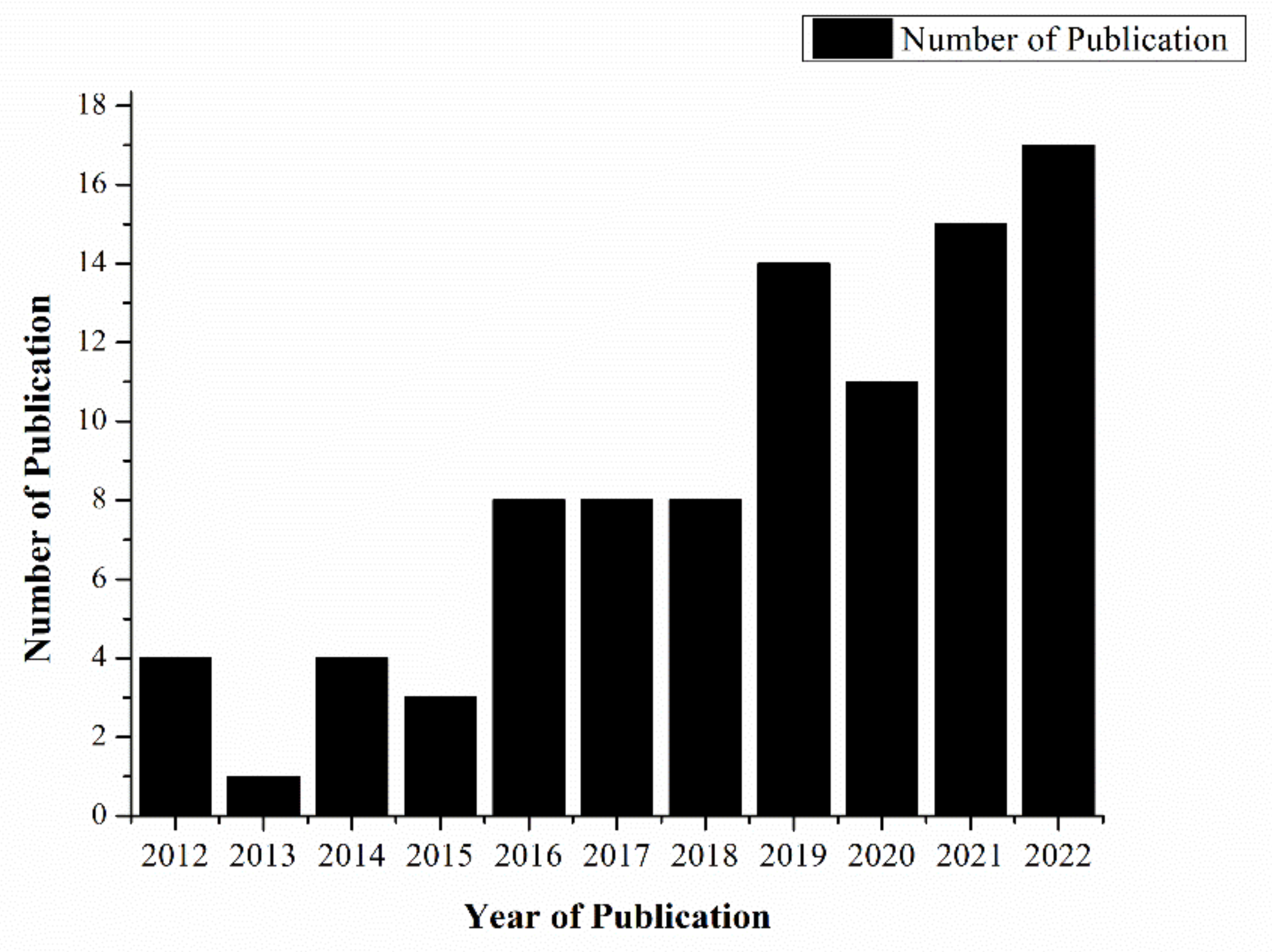
Figure 2.
Visualization map for the 20 most cited countries in palm mucilage research and its application in biodegradable films, according to a bibliometric analysis in the Web of Science database (2012-2022).
Figure 2.
Visualization map for the 20 most cited countries in palm mucilage research and its application in biodegradable films, according to a bibliometric analysis in the Web of Science database (2012-2022).
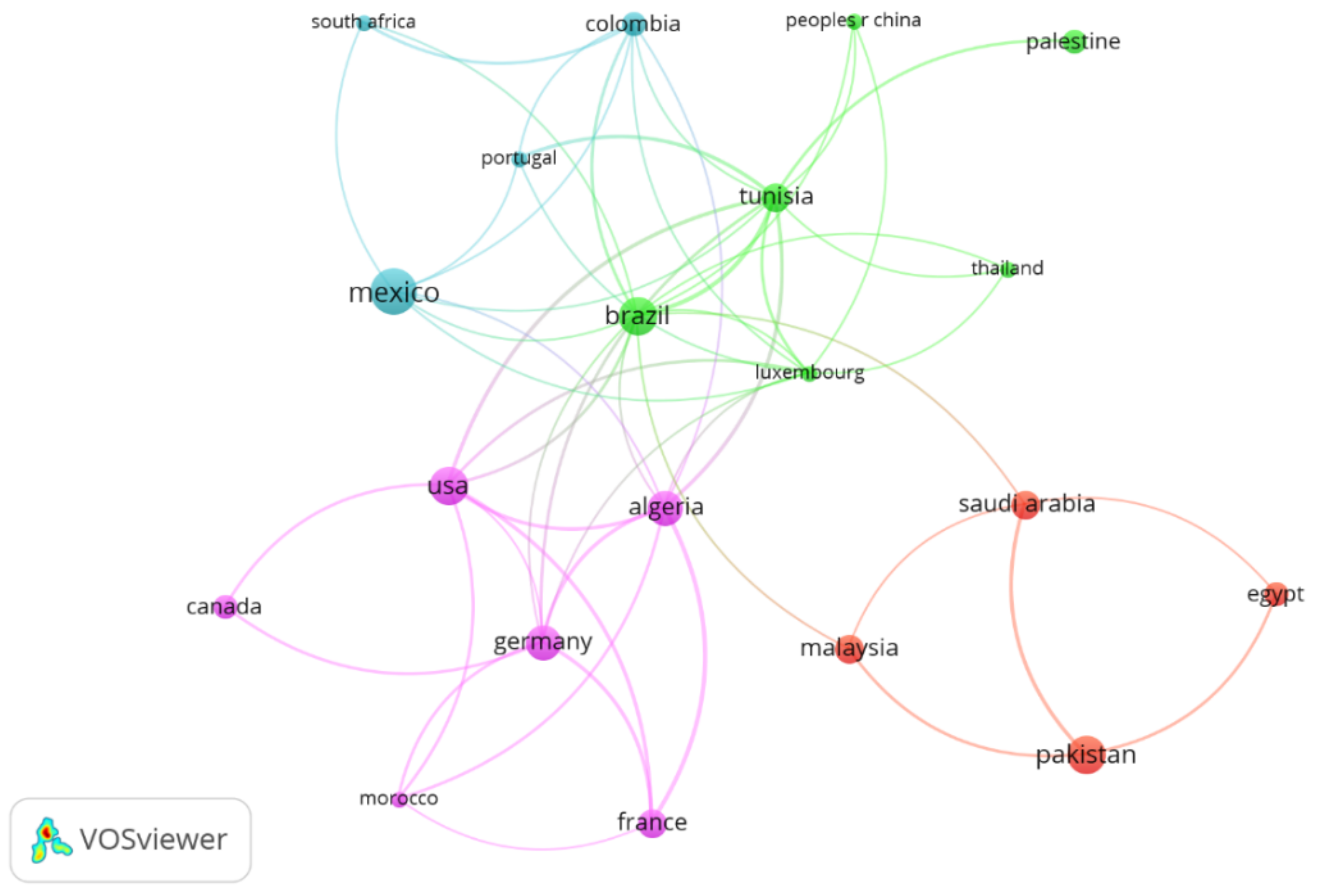
Figure 3.
Collaborative network of the 20 most cited institutions in palm mucilage research and its application in biodegradable films, according to a bibliometric analysis in the Web of Science database (2012-2022). Note: VOSviewer. Federal University of Paraiba (Brazil); National Institute of Research and Physico-chemical Analysis (Tunisia); University of South Florida (United States); Luxembourg Institute of Science Technology (Luxembourg); Aveiro University (Portugal); INRAP- National Institute for Preventive Archaeological Research (France); National Institute of Research and Safety for the Prevention of Work Accidents (France); Polytechnical Institute National Mexico (Mexico); University of Boyacá (Colombia); University of Béjaïa (Algeria); University of Bremen (Germany); University of Lorraine (France); Carthage University (Tunisia); Pedagogical and Technological University of Colombia (Colombia); University of Bouira (Algeria); University of M’sila (Algeria); Université Akli Mohand Oulhadj (Algeria); Cadi Ayyad University (Morocco); Centre de Recherche en Technologies Agro-Alimentaires (Algeria); University Mohamed Boudiaf (Algeria).
Figure 3.
Collaborative network of the 20 most cited institutions in palm mucilage research and its application in biodegradable films, according to a bibliometric analysis in the Web of Science database (2012-2022). Note: VOSviewer. Federal University of Paraiba (Brazil); National Institute of Research and Physico-chemical Analysis (Tunisia); University of South Florida (United States); Luxembourg Institute of Science Technology (Luxembourg); Aveiro University (Portugal); INRAP- National Institute for Preventive Archaeological Research (France); National Institute of Research and Safety for the Prevention of Work Accidents (France); Polytechnical Institute National Mexico (Mexico); University of Boyacá (Colombia); University of Béjaïa (Algeria); University of Bremen (Germany); University of Lorraine (France); Carthage University (Tunisia); Pedagogical and Technological University of Colombia (Colombia); University of Bouira (Algeria); University of M’sila (Algeria); Université Akli Mohand Oulhadj (Algeria); Cadi Ayyad University (Morocco); Centre de Recherche en Technologies Agro-Alimentaires (Algeria); University Mohamed Boudiaf (Algeria).
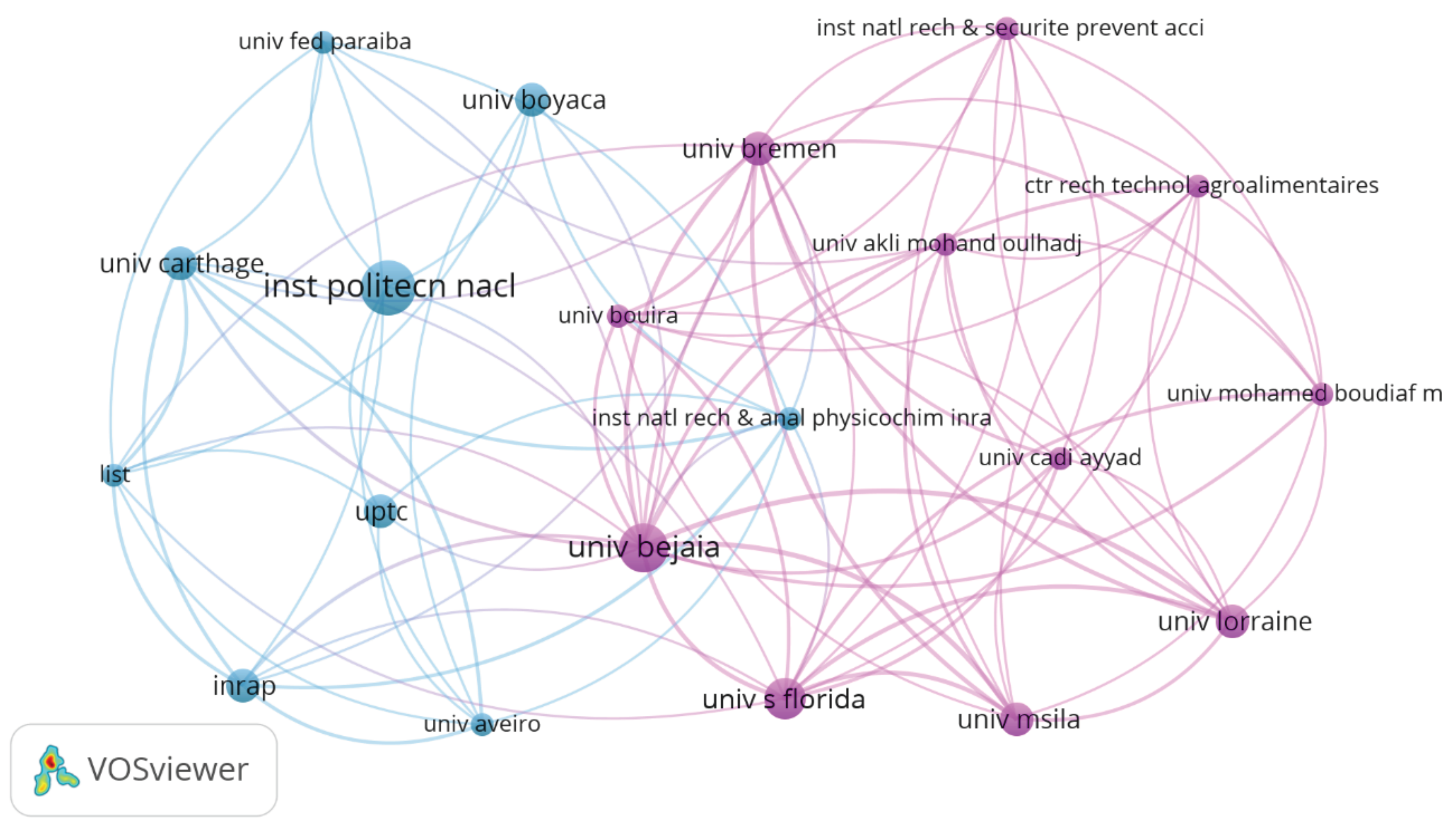
Figure 4.
Collaborative network between the 20 most cited authors in palm mucilage research and its application in biodegradable films, according to a bibliometric analysis in the Web of Science database (2012-2022).
Figure 4.
Collaborative network between the 20 most cited authors in palm mucilage research and its application in biodegradable films, according to a bibliometric analysis in the Web of Science database (2012-2022).
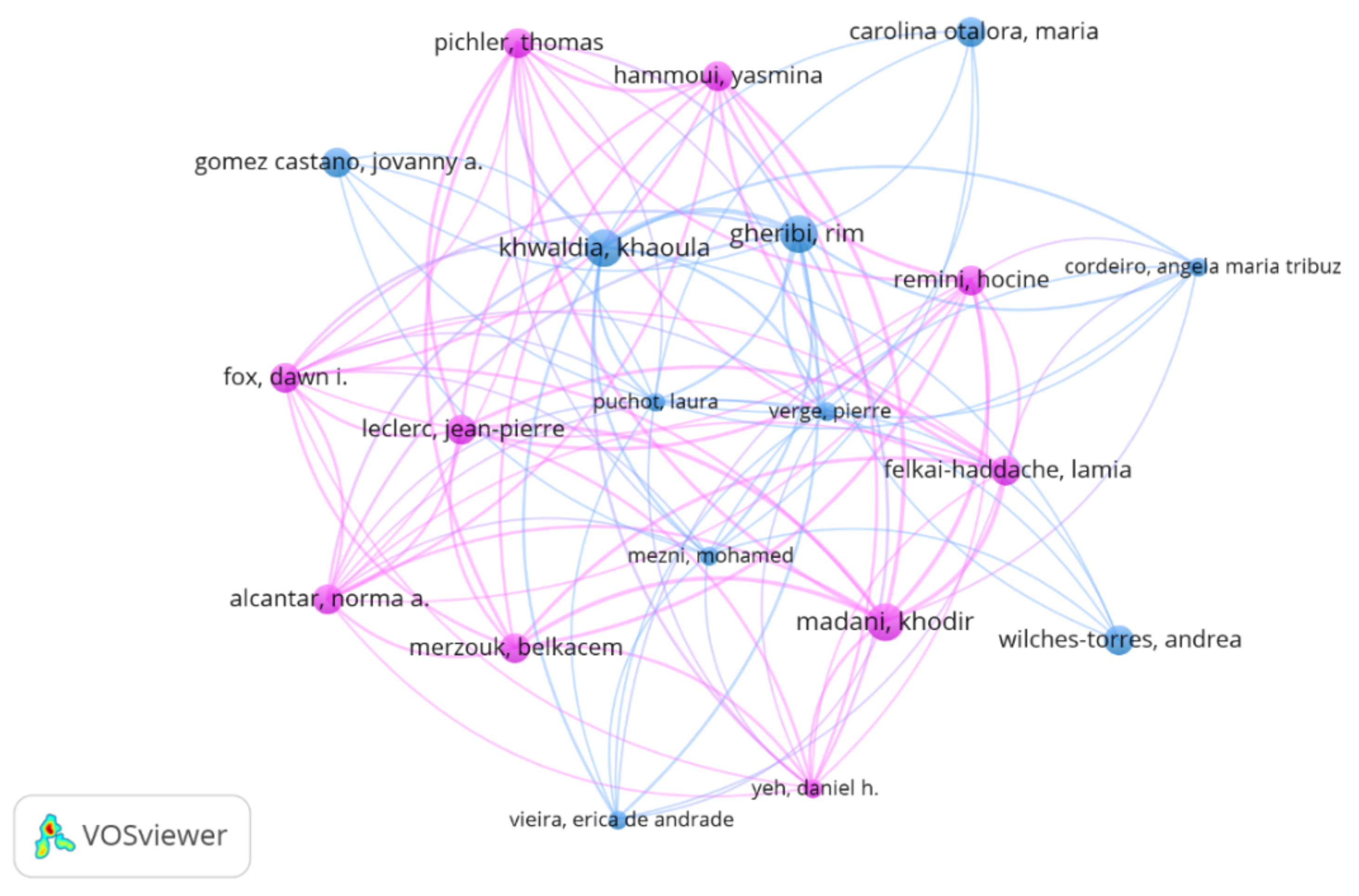
Figure 5.
The 30 most frequently occurring keywords in palm mucilage research and their application in the development of biodegradable films by (A) Overlay visualization and (B) Network visualization, according to the bibliometric analysis of the Web of database Science (2012–2022).
Figure 5.
The 30 most frequently occurring keywords in palm mucilage research and their application in the development of biodegradable films by (A) Overlay visualization and (B) Network visualization, according to the bibliometric analysis of the Web of database Science (2012–2022).
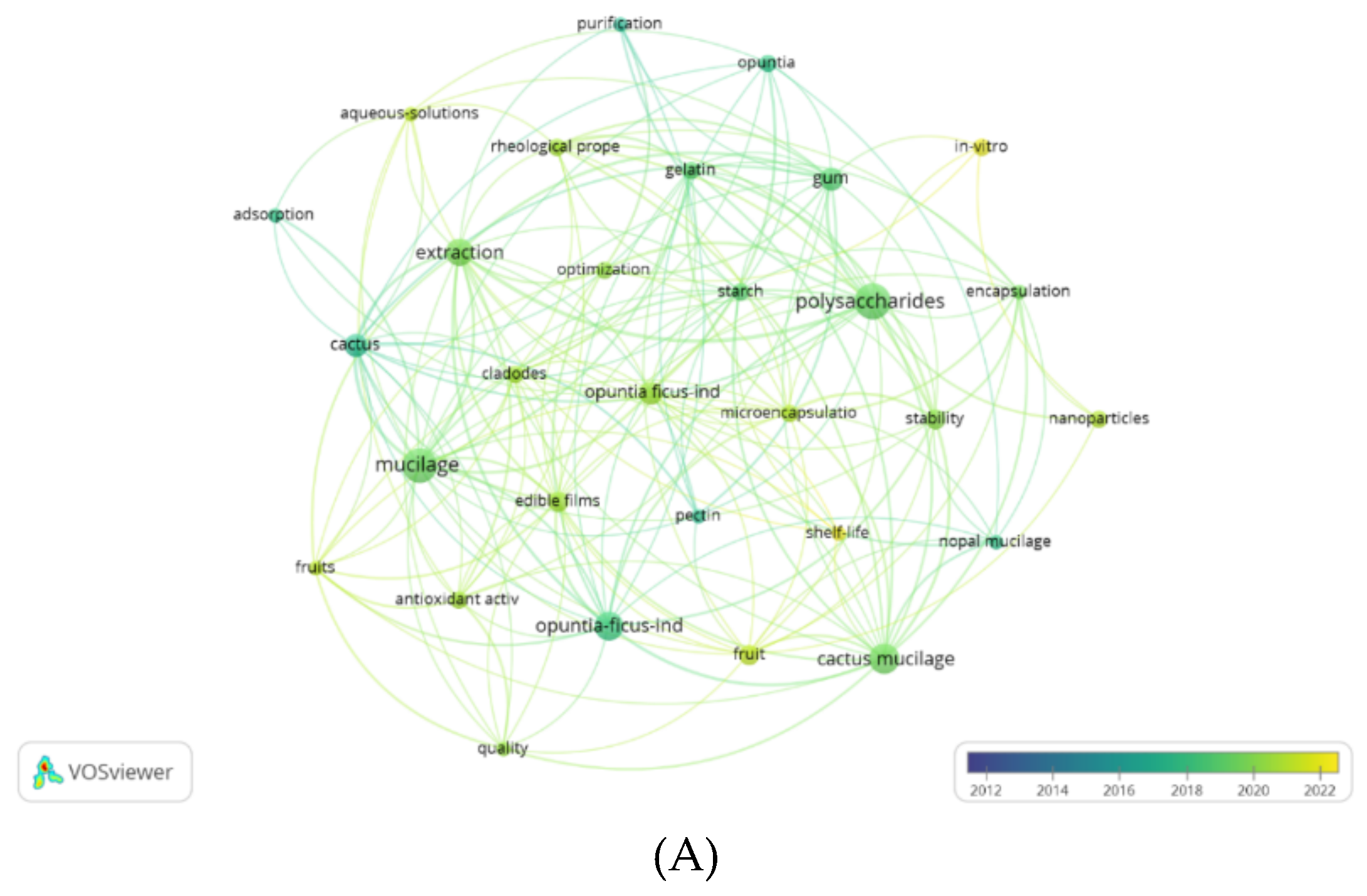
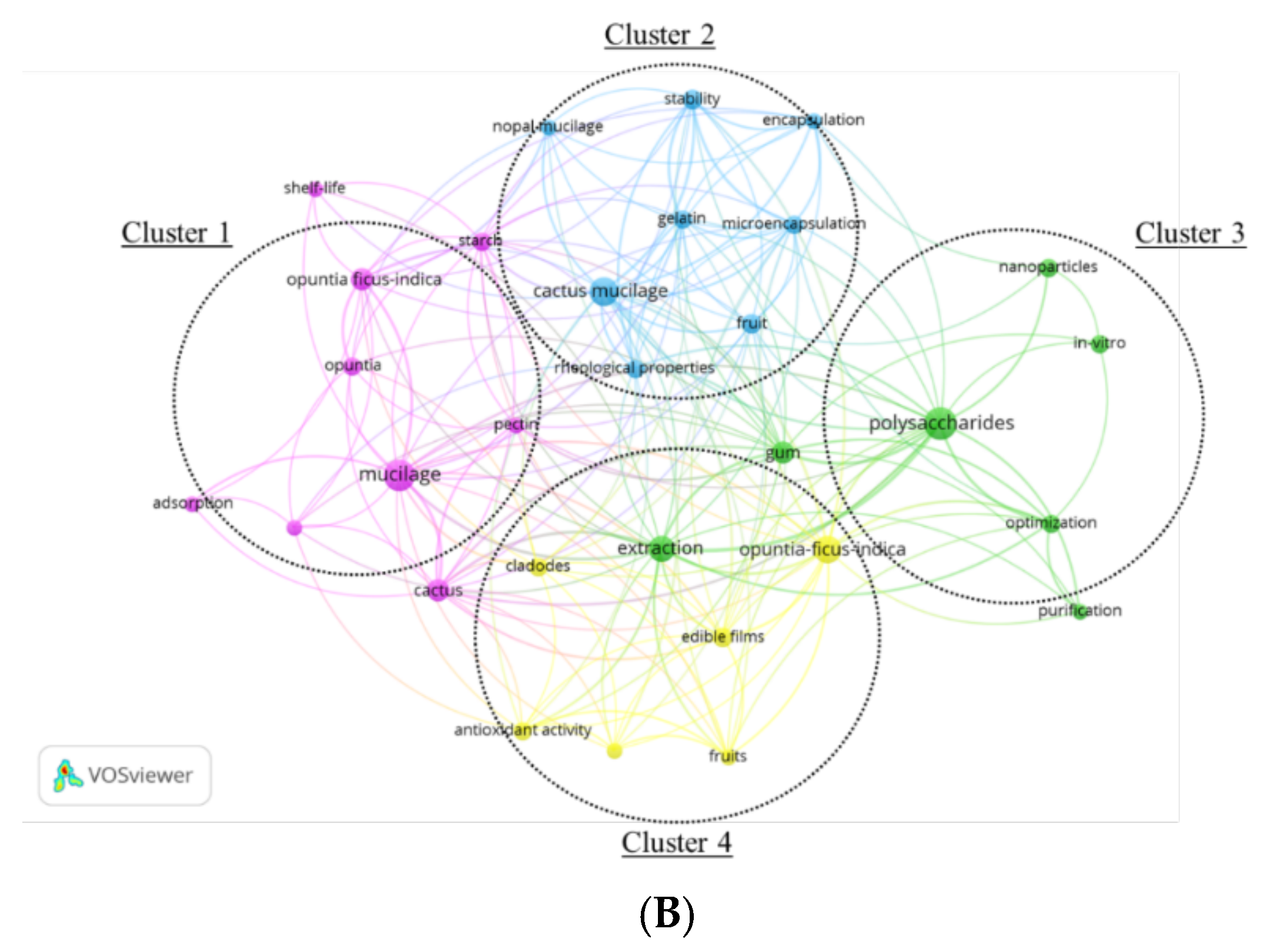
Figure 6.
Record of biopolymers used in the development of biodegradable films for application in food.
Figure 6.
Record of biopolymers used in the development of biodegradable films for application in food.
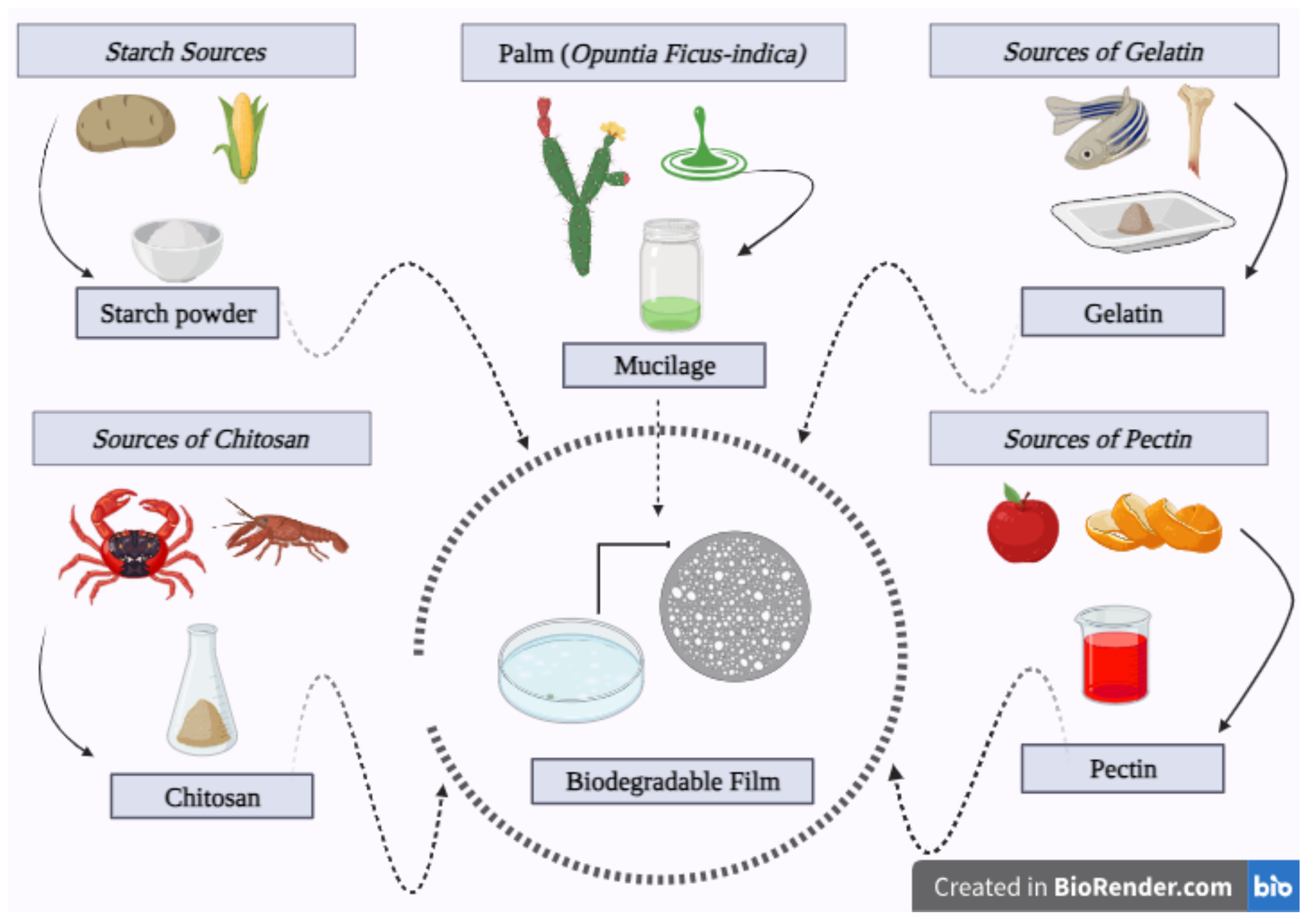

Table 1.
The top 18 most cited journals in palm mucilage research and its application in biodegradable films, according to a bibliometric analysis in the Web of Science database (2012-2022).
Table 1.
The top 18 most cited journals in palm mucilage research and its application in biodegradable films, according to a bibliometric analysis in the Web of Science database (2012-2022).
| Journal | Country | Citations | Publications | Impact factor* | CiteScore |
|---|---|---|---|---|---|
| Carbohydrate Polymers | United Kingdom | 148 | 2 | 11,20 | 18,90 |
| Environmental Science & Technology | United States | 93 | 2 | 11,40 | 16,70 |
| LWT- Food Science and Technology | Switzerland | 73 | 3 | 6,00 | 6,70 |
| Separation and Purification Technology | Netherlands | 70 | 2 | 8,60 | 12,70 |
| Food Chemistry | United Kingdom | 58 | 3 | 8,80 | 14,90 |
| Coatings | Switzerland | 40 | 1 | 3,40 | 4,70 |
| Journal of Electroanalytical Chemistry | Netherlands | 31 | 1 | 4,50 | 7,50 |
| Colloids and Surfaces B: Biointerfaces | Netherlands | 31 | 1 | 5,80 | 11,00 |
| Water Science and Technology | United Kingdom | 31 | 1 | 2,70 | 3,40 |
| Saudi Pharmaceutical Journal | Saudi Arabia | 31 | 1 | 4,56 | 5,70 |
| International Journal of Biological Macromolecules | Netherlands | 28 | 2 | 8,20 | 14,50 |
| Journal of the Taiwan Institute of Chemical Engineers | Taiwan | 24 | 1 | 5,70 | 9,60 |
| Food Packaging and Shelf Life | Netherlands | 17 | 1 | 8,00 | 12,90 |
| Journal of Food Measurement and Characterization | United States | 13 | 2 | 3,06 | 3,00 |
| Molecules | Switzerland | 11 | 1 | 4,60 | 6,70 |
| International J. of Environmental Analytical Chemistry | United Kingdom | 8 | 1 | 2,73 | 5,45 |
| Saudi Journal of Biological Sciences | Saudi Arabia | 5 | 1 | 4,05 | 5,30 |
| Polymers | Switzerland | 4 | 1 | 5,00 | 6,60 |
* 2022 Impact Factor.
Table 2.
The 20 most cited articles in palm mucilage research and its application in biodegradable films, according to bibliometric analysis in the Web of Science database (2012-2022) presented in descending order of citations.
Table 2.
The 20 most cited articles in palm mucilage research and its application in biodegradable films, according to bibliometric analysis in the Web of Science database (2012-2022) presented in descending order of citations.
| Publication | Year | NC | Journal | Reference |
|---|---|---|---|---|
| Microencapsulation of betalains obtained from cactus fruit (Opuntia ficus-indica) by spray drying using cactus cladode mucilage and maltodextrin as encapsulating agents | 2015 | 133 | Food Chemistry | Otalora et al. [35] |
| Development of plasticized edible films from Opuntia ficus-indica mucilage: A comparative study of various polyol plasticizers | 2018 | 108 | Carbohydrate Polymers | Gheribi et al. [7] |
| The polysaccharide and low molecular weight components of Opuntia ficus indica cladodes: Structure and skin repairing properties | 2017 | 54 | Carbohydrate Polymers | Di Lorenzo et al. [36] |
| Extraction and characterization of mucilage from wild species of Opuntia | 2014 | 51 | Journal of Food Process Engineering | Rodríguez-González et al. [37] |
| Spray drying microencapsulation of betalain rich extracts from Escontria chiotilla and Stenocereus queretaroensis fruits using cactus mucilage | 2019 | 43 | Food Chemistry | Delia et al. [38] |
| Cactus Mucilage for Food Packaging Applications | 2019 | 41 | Coatings | Gheribi; Khwaldia, [39] |
| Valorization of Opuntia monacantha (Willd.) Haw. cladodes to obtain a mucilage with hydrocolloid features: Physicochemical and functional performance | 2019 | 37 | International Journal of Biological Macromolecules | Dick et al. [40] |
| Zeaxanthin nanoencapsulation with Opuntia monacantha mucilage as structuring material: Characterization and stability evaluation under different temperatures | 2018 | 32 | Colloids and Surfaces A-Physicochemical and Engineering Aspects | Campo et al. [26] |
| Physical Characterization of Biodegradable Films Based on Chitosan, Polyvinyl Alcohol and Opuntia Mucilage | 2017 | 29 | Journal of Polymers and the Environment | Dominguez-Martinez et al. [23] |
| Mucilage from cladodes of Opuntia spinulifera Salm-Dyck: chemical, morphological, structural and thermal characterization | 2018 | 22 | Cyta-Journal of Food | Madera-Santana et al. [41] |
| Microwave optimization of mucilage extraction from Opuntia ficus indica Cladodes | 2016 | 20 | International Journal of Biological Macromolecules | Felkai-Haddache et al. [22] |
| Enhancement of the physical, mechanical and thermal properties of cactus mucilage films by blending with polyvinyl alcohol | 2019 | 17 | Food Packaging and Shelf Life | Gheribi et al. [10] |
| Preparation, study and characterization of complex coacervates formed between gelatin and cactus mucilage extracted from cladodes of Opuntia ficus-indica | 2019 | 17 | LWT- Food Science and Technology | Otalora et al. [33] |
| Seasonal characterization of nutritional and antioxidant properties of Opuntia ficus-indica [(L.) Mill.] mucilage | 2021 | 14 | Food Hydrocolloids | Messina et al. [42] |
| Mucilage of spineless cactus in the composition of an edible coating for minimally processed yam (Dioscorea spp.) | 2019 | 13 | Journal of Food Measurement and Characterization | Morais et al. [43] |
| Effect of Opuntia ficus-indica Mucilage Edible Coating in Combination with Ascorbic Acid, on Strawberry Fruit Quality during Cold Storage | 2021 | 11 | Journal of Food Quality | Liguori et al. [44] |
| Preparation and physicochemical characterization of softgels Cross-Linked with cactus mucilage extracted from cladodes of Opuntia ficus-indica | 2019 | 11 | Molecules | Caballero et al. [45] |
| Cactus Mucilage as a Coating Film to Enhance Shelf Life of Unprocessed Guavas (Psidium guajava L.) | 2015 | 10 | Acta Horticulturae | Zegbe et al. [13] |
| Development of Bioactive Opuntia ficus-indica Edible Films Containing Probiotics as a Coating for Fresh-Cut Fruit | 2022 | 4 | Polymers | Todhanakasem et al. [34] |
| Thermoplastic Starch (TPS) Films Added with Mucilage from Opuntia Ficus Indica: Mechanical, Microstructural and Thermal Characterization | 2020 | 4 | Materials | Scognamiglio et al. [46] |
NC: Número de citações.
Disclaimer/Publisher’s Note: The statements, opinions and data contained in all publications are solely those of the individual author(s) and contributor(s) and not of MDPI and/or the editor(s). MDPI and/or the editor(s) disclaim responsibility for any injury to people or property resulting from any ideas, methods, instructions or products referred to in the content. |
© 2025 by the authors. Licensee MDPI, Basel, Switzerland. This article is an open access article distributed under the terms and conditions of the Creative Commons Attribution (CC BY) license (http://creativecommons.org/licenses/by/4.0/).
Copyright: This open access article is published under a Creative Commons CC BY 4.0 license, which permit the free download, distribution, and reuse, provided that the author and preprint are cited in any reuse.


