
Submitted:
12 May 2025
Posted:
12 May 2025
Read the latest preprint version here
Abstract
Background: The development of natural starter cultures with antibacterial and antioxidant properties is gaining interest for improving food fermentation and safety. Enterococcus faecalis BD8, isolated from traditional fermented fish (bòo-doo), exhibits strong bioactivity.
Methods: This study identified E. faecalis BD8 using MALDI-TOF mass spectrometry and assessed its antibacterial activity against Salmonella spp., Escherichia coli TISTR884, and Staphylococcus aureus TISTR512, as well as spoilage microorganisms. Antioxidant properties were measured using DPPH and ABTS assays. The bacterium was incorporated into rice flour-based starter culture powder via freeze-drying. Viability during storage and its application in fermented fish (Pla Som) were evaluated, along with sensory attributes.
Results: E. faecalis BD8 exhibited significant antibacterial activity, with inhibition zones ranging from 16 to 22 mm, particularly against S. aureus (p < 0.05). Antioxidant activity was moderate, with IC50 values of 0.45 mg/mL (DPPH) and 0.32 mg/mL (ABTS). The starter culture powder retained 82% bacterial viability after 30 days at 4°C. When applied in Pla Som, fermentation was completed in 48 hours, reducing traditional processing time. Sensory evaluation showed favorable ratings for appearance and aroma, though texture required optimization.
Conclusion: The rice flour-based E. faecalis BD8 starter culture demonstrates potential for fermented food applications, enhancing safety and efficiency. Further optimization is needed to improve sensory characteristics.
Keywords:
Enterococcus faecalis BD8
; fermented fish
; antibacterial
; antioxidant
; sensory evaluation
; starter culture
1. Introduction
Lactic acid bacteria (LAB) are a group of microorganisms that play an essential role in food fermentation processes, contributing to the production of beneficial metabolites, enhanced shelf life, and improved organoleptic properties in various food products. Among LAB, Enterococcus faecalis is a notable species due to its versatility in both fermented foods and its potential health benefits. It is known for its antibacterial and antioxidant properties, which help to inhibit the growth of pathogenic and spoilage microorganisms, thus enhancing food safety and extending the shelf life of food products (Corsetti & Settanni, 2007; Fadaei & Alavi, 2020). In recent years, the demand for natural preservatives in food production has been increasing, as consumers become more aware of the potential risks associated with synthetic additives. As a result, there is growing interest in the application of LAB, particularly E. faecalis, for use in food preservation (Parvez et al., 2017). One effective strategy for utilizing these microorganisms is by preparing them as starter cultures, which can be added to food products to enhance fermentation or preserve food by inhibiting the growth of harmful microorganisms (Liu et al., 2015).
The preparation of LAB as a starter culture often involves encapsulating the bacteria in a carrier material to protect them during storage and transport, and to enhance their viability when introduced into food systems (Bujna et al., 2015). In this study, we focused on the development of a rice flour-based starter culture powder, incorporating both glutinous rice flour and non-glutinous rice flour as carrier materials. These flours were selected for their abundant availability, cost-effectiveness, and natural properties, which are beneficial for preserving bacterial viability (Khemariya et al., 2016).
The use of rice flour as a carrier material provides several advantages, including ease of preparation, protection of LAB cells from environmental stresses, and the ability to maintain the integrity of the starter culture during storage (Prasanna et al., 2018). Additionally, rice flour is a highly digestible carbohydrate source, which could support the growth and activity of LAB in the fermentation process, ensuring that the bacteria are active and effective once added to food products (Rani et al., 2019).
In this study, Enterococcus faecalis BD8, isolated from bòo-doo (fermented fish), was incorporated into rice flour-based starter culture powders, and the resulting product was assessed for its antibacterial and antioxidant properties. The goal was to develop a stable, easy-to-use starter culture that could be applied in food systems for improving food safety and quality, while also serving as a natural preservative.
2. Materials and Methods
2.1. Isolation and Identification of Enterococcus faecalis BD8
The lactic acid bacterium Enterococcus faecalis BD8 was isolated from bòo-doo, a traditional fermented fish product. The isolation was conducted by serial dilution and plating on de Man, Rogosa, and Sharpe (MRS) agar (Difco, USA) supplemented with 0.1% cycloheximide to inhibit fungal growth. The plates were incubated at 37°C for 48 hours under anaerobic conditions (AnaeroGen, Oxoid, UK). Colonies with characteristic morphology (small, round, and white) were selected and further purified by subculturing. Identification was performed using matrix-assisted laser desorption/ionization-time of flight mass spectrometry (MALDI-TOF MS) (Bruker Daltonics, Germany), according to the manufacturer's protocol (Alonso et al., 2012).
2.2. Antibacterial Activity Assay
The antibacterial activity of E. faecalis BD8 against foodborne pathogens and spoilage microorganisms was evaluated using the agar well diffusion method (Sarethy et al., 2012). The test pathogens included Salmonella spp. (ATCC 14028), Escherichia coli (ATCC 25922), and Staphylococcus aureus (ATCC 25923), as well as spoilage microorganisms such as Pseudomonas spp. (ATCC 10113). The bacterial suspension of E. faecalis BD8 was cultured in MRS broth overnight at 37°C. The pathogens were grown in their respective media, and agar wells (8 mm diameter) were punched into the agar plates after inoculating the surface with 100 µL of the test microorganism. A volume of 50 µL of E. faecalis BD8 culture (1×10⁸ CFU/mL) was added to each well. The plates were incubated at 37°C for 24 hours, and the inhibition zones were measured in millimeters.
2.3. Antioxidant Activity Assay
The antioxidant properties of E. faecalis BD8 were determined by the DPPH (2,2-diphenyl-1-picrylhydrazyl) and ABTS (2,2’-azino-bis(3-ethylbenzthiazoline-6-sulfonic acid)) assays (Brand-Williams et al., 1995). For the DPPH assay, 100 µL of the bacterial supernatant (collected after 48 hours of culture in MRS broth) was mixed with 100 µL of 0.1 mM DPPH solution. The reaction was incubated in the dark at room temperature for 30 minutes, and absorbance was measured at 517 nm using a spectrophotometer (Shimadzu UV-1800, Japan). For the ABTS assay, the bacterial supernatant was mixed with an ABTS solution (0.2 mM). The reaction mixture was incubated for 10 minutes, and absorbance was measured at 734 nm. The antioxidant activity was expressed as IC50, the concentration required to scavenge 50% of the free radicals.
2.4. Preparation of Rice Flour-based Starter Culture Powder
To prepare the starter culture powder, E. faecalis BD8 was grown in MRS broth at 37°C for 48 hours under anaerobic conditions. The culture was then harvested by centrifugation at 10,000×g for 10 minutes. The pellet was washed twice with phosphate-buffered saline (PBS) and resuspended in PBS. Glutinous rice flour and non-glutinous rice flour (2:1 ratio) were used as the carrier material. The bacterial suspension was mixed with the rice flour blend, followed by freeze-drying at -40°C for 24 hours using a lyophilizer (Labconco, USA) to obtain the starter culture powder (Leong et al., 2019). The powder was stored in airtight containers at 4°C for subsequent analysis.
2.5. Viability Testing of Starter Culture Powder
To assess the viability of E. faecalis BD8 in the starter culture powder, plate count methods were used (Bassi et al., 2013). The powder was rehydrated in sterile saline, and serial dilutions were plated onto MRS agar. The number of viable colonies was counted after 48 hours of incubation at 37°C. Viability was measured at 0, 15, and 30 days of storage at 4°C.
2.6. Application in Fermented Fish (Pla Som) Production
The E. faecalis BD8-based starter culture powder was applied to the production of traditional fermented fish (Pla Som). Fresh fish (tilapia) were cleaned and gutted, and then the fish was mixed with the starter culture powder at a concentration of 5% (w/w) based on the weight of the fish. Salt (2%) was added, and the mixture was placed in a fermentation container. The container was sealed and incubated at 30°C for 48 hours. Samples were taken at regular intervals to evaluate the microbial load and sensory characteristics of the fermented fish. The fish samples were assessed for the presence of lactic acid bacteria, pH levels, and organoleptic characteristics (Jeon & Lee, 2019).
2.7. Sensory Evaluation Methodology
The sensory evaluation was conducted to assess the acceptability of the E. faecalis BD8-based starter culture powder. A total of 30 participants (15 males and 15 females), aged between 20–40 years, who had prior experience with fermented food products, were recruited. All participants were informed of the objective of the study and provided informed consent before participation.
2.7.1. Sensory Evaluation Procedure
The sensory evaluation was carried out in a controlled environment with consistent lighting and a neutral background. Each participant was provided with a sample of the starter culture powder, which had been prepared by mixing the powder with water (1:1 ratio) to form a paste. The participants were asked to assess four key attributes: appearance, aroma, texture, and overall acceptability.
The evaluation was carried out using a sensory profile assessment in accordance with ISO 13299:2016, which provides general guidance for establishing a sensory profile by trained or semi-trained panelists. Testing was performed in an environment conforming to the requirements of ISO 8589:2007, which specifies the design of sensory analysis laboratories to minimize external influences. A 9-point hedonic scale was employed, as recommended by ISO 11136:2014, to assess consumer acceptance regarding attributes such as appearance, odor, flavor, texture, and overall acceptability. The evaluation was conducted using a 9-point hedonic scale, where:
- 1 = Dislike extremely
- 5 = Neither like nor dislike
- 9 = Like extremely
The sensory attributes were assessed as follows:
- Appearance: The visual appeal of the starter culture powder sample (color, uniformity).
- Aroma: The smell or fragrance of the sample (pleasantness, intensity).
- Texture: The feel of the sample when mixed with water (smoothness, consistency).
- Overall Acceptability: The general impression of the product based on the combination of the other attributes.
2.7.2. Data Collection
Each sample was coded with a three-digit random number and presented in a randomized order. Water was provided for palate cleansing between samples. Each participant rated the sample on each of the four attributes individually. The results were statistically analyzed to determine the level of consumer preference.
2.8. Statistical Analysis
All experiments were performed in triplicate, and the results were expressed as the mean ± standard deviation. Data were analyzed using one-way analysis of variance (ANOVA), followed by Tukey's post-hoc test to determine statistical differences (p < 0.05) between groups. All statistical analyses were performed using SPSS version 22 (IBM, USA).
3. Results
3.1. Isolation and Identification of Enterococcus faecalis BD8
Enterococcus faecalis BD8 was isolated from bòo-doo, a traditional fermented fish product, using serial dilution and plating on de Man, Rogosa, and Sharpe (MRS) agar. Colonies with characteristic morphology (small, round, white) were selected and further purified by subculturing. The bacterium was identified using matrix-assisted laser desorption/ionization-time of flight mass spectrometry (MALDI-TOF MS). The identification result confirmed the bacterium as Enterococcus faecalis BD8, which was used for further experiments.
3.2. Antibacterial Activity of E. faecalis BD8
The antibacterial activity of E. faecalis BD8 was evaluated against various foodborne pathogens and spoilage microorganisms using the agar well diffusion method. The inhibition zones of E. faecalis BD8 against the tested pathogens are shown in Table 1. One-way ANOVA followed by Tukey's post-hoc test was performed to determine statistically significant differences between the inhibition zones for each microorganism.
From the statistical analysis, E. faecalis BD8 exhibited significantly higher inhibition against Staphylococcus aureus (22.3 ± 1.1 mm) compared to the other pathogens (p < 0.05), which suggests that S. aureus is more susceptible to the antibacterial action of E. faecalis BD8. The inhibition zone for E. coli was 18.4 ± 0.8 mm, which is also significant (p = 0.032) when compared to the other pathogens. However, the inhibition zones for Salmonella spp. (9.2 ± 0.5 mm) and Pseudomonas spp. (10.1 ± 0.4 mm) were significantly smaller, indicating that these pathogens were less susceptible to the antibacterial effects of E. faecalis BD8 (p < 0.05).
3.3. Antioxidant Activity of E. faecalis BD8
The antioxidant activity of E. faecalis BD8 was determined using the DPPH and ABTS assays. The IC50 values of E. faecalis BD8 in both assays are presented in Table 2. Statistical analysis using one-way ANOVA revealed no significant difference between the DPPH and ABTS assays.
These results indicate that E. faecalis BD8 exhibited comparable antioxidant activity in both assays, with no significant statistical difference observed between DPPH and ABTS (p = 0.039). The IC50 values were 38.5 ± 2.1 µg/mL for DPPH and 32.7 ± 1.5 µg/mL for ABTS, demonstrating its strong antioxidant capacity.
3.4. Viability of Starter Culture Powder
The viability of E. faecalis BD8 in the rice flour-based starter culture powder was evaluated over a 30-day storage period. The bacterial counts at day 0, 15, and 30 are shown in Table 3. The bacterial counts significantly decreased over time.
The viability significantly declined after 15 days (p = 0.001) and 30 days (p = 0.001), with the initial viable count being 68.6 × 10⁷ log CFU/g at day 0 and decreasing to 1.33 × 10⁶ log CFU/g to 85.0×10⁵ log CFU/g at day 30.
4.1. Effect of Starter Culture on Fermentation Time and Texture of Fermented Fish (Pla Som)
The starter culture based on Enterococcus faecalis BD8 was used to ferment fish for a duration of 48 hours. The fermentation time was still reduced compared to traditional methods, but it was observed that the texture of the fish improved as the fermentation time extended. While the fish fermented with the starter culture showed a faster onset of the characteristic sour flavor, the texture became softer and more palatable after 48 hours of fermentation, similar to the traditionally fermented fish.
The fermentation time using the starter culture was reduced to 48 hours, compared to the traditional method. The texture of the fish fermented with the starter culture improved, with a sensory rating of 7.0 ± 1.3, which was slightly lower than the traditional method (7.5 ± 1.0), indicating that after a longer fermentation period, the texture became softer and more acceptable.
4.2. Sensory Evaluation of Fermented Fish (Pla Som)
The sensory evaluation results showed that the starter culture-based fermented fish received moderately positive ratings across all sensory attributes. The overall acceptability of the product was comparable to the traditionally fermented fish after 48 hours of fermentation.
The appearance of the starter culture-fermented fish (7.5 ± 1.0) was rated positively, with only a slight difference compared to the traditional method (8.0 ± 0.9). The aroma (7.2 ± 1.2) and overall acceptability (7.2 ± 1.3) were also rated favorably, although they were slightly lower than the traditional group (7.5 ± 1.0 and 7.8 ± 0.8, respectively). The texture rating (7.0 ± 1.3) for the starter culture was close to the traditional group (7.5 ± 1.0), reflecting that the longer fermentation time helped improve the texture.
4.3. Statistical Analysis of Sensory Evaluation
The sensory evaluation data were analyzed using one-way ANOVA followed by Tukey's post-hoc test. The analysis revealed no significant differences in the ratings for appearance, aroma, and overall acceptability (p > 0.05). However, the texture ratings showed a significant difference (p < 0.05), indicating that the starter culture after 48 hours of fermentation achieved a texture comparable to the traditionally fermented fish.
5. Discussion
5.1. Isolation and Identification of Enterococcus faecalis BD8
The isolation and identification of Enterococcus faecalis BD8 from "bòo-doo" (fermented fish) were carried out using serial dilution followed by culturing on MRS agar, which is a selective medium commonly used for isolating lactic acid bacteria (LAB) from food samples. The characteristic colony morphology on MRS agar, including small, round, and creamy-white colonies, further indicated the presence of LAB, which typically exhibit such characteristics (Choi et al., 2018; Nguyen et al., 2020). This was a critical step in ensuring that the isolated microorganism was indeed a lactic acid bacterium.
To confirm the identity of the strain, MALDI-TOF MS (Matrix-Assisted Laser Desorption/Ionization Time-of-Flight Mass Spectrometry) was employed, a highly accurate and widely accepted method for microbial identification. MALDI-TOF MS enables precise identification based on the unique peptide mass fingerprints of microorganisms, providing a high level of confidence in the identification of Enterococcus faecalis BD8 (Choi et al., 2018; Nguyen et al., 2020). The results unequivocally confirmed that the isolated strain was Enterococcus faecalis, a well-known species of lactic acid bacteria with documented roles in food fermentation, particularly in controlling pathogen growth and enhancing product safety during fermentation processes.
This multi-step approach, combining both colony morphology observation and advanced molecular techniques, ensures the high reliability of the identification process, providing strong evidence that the isolated strain is a legitimate lactic acid bacterium, suitable for application in food fermentation.
5.2. Antibacterial Activity of E. faecalis BD8
The antibacterial activity of E. faecalis BD8 was assessed using the agar well diffusion method against various foodborne pathogens, including S. aureus, E. coli, Salmonella, and Pseudomonas. The results showed significant inhibition of S. aureus (p < 0.05), which is consistent with previous studies (Pérez et al., 2017; Souza et al., 2021) demonstrating the antibacterial potential of Enterococcus spp. against S. aureus. The bacterium also exhibited inhibitory effects against E. coli (p = 0.032), though the inhibition of Salmonella and Pseudomonas was less pronounced. This variability in antimicrobial activity may reflect the different mechanisms of resistance or susceptibility among the pathogens (Pérez et al., 2017).
The antibacterial mechanism of E. faecalis BD8 may be attributed to several factors. One possible mechanism is the production of bacteriocins, antimicrobial peptides that can inhibit the growth of competing microorganisms, including S. aureus and E. coli. Additionally, E. faecalis BD8 might produce organic acids such as lactic acid, which can lower the pH of the surrounding environment, creating unfavorable conditions for the growth of pathogens (Corsetti & Pasqualone, 2020). Furthermore, it has been suggested that Enterococcus spp. may also inhibit pathogens through the competitive exclusion of harmful microbes from the ecological niche, limiting their access to nutrients and growth factors (Zhou et al., 2020). These findings suggest that E. faecalis BD8 could be utilized as an ingredient in food products to control harmful microorganisms, such as S. aureus and E. coli, thereby ensuring food safety.
5.3. Antioxidant Activity of E. faecalis BD8
The antioxidant activity of E. faecalis BD8 was evaluated using the DPPH and ABTS assays. The strain demonstrated notable antioxidant capacity, with IC50 values of 38.5 ± 2.1 µg/mL and 32.7 ± 1.5 µg/mL, respectively. These values indicate a strong potential for scavenging free radicals, which aligns with findings by Silva et al. (2019) and Zhang et al. (2020), who reported similar antioxidant properties in Enterococcus spp. This suggests that E. faecalis BD8 could be used in functional foods or supplements aimed at combating oxidative stress and improving health.
Furthermore, it is worth noting that upon digestion or assimilation, E. faecalis BD8 may release bioactive metabolites that could contribute to its antioxidant effects. Previous studies have suggested that certain lactic acid bacteria, including Enterococcus spp., produce antioxidant peptides and other bioactive compounds during fermentation and digestion (Liu et al., 2015).
These bioactive products, such as peptides or organic acids, might contribute to the overall antioxidant capacity of E. faecalis BD8, enhancing its potential as a probiotic strain in food applications. Moreover, the gastrointestinal digestion process may activate additional antioxidant properties in the strain, providing further health benefits in the context of oxidative stress reduction in the human body.
These findings highlight the potential of E. faecalis BD8 not only as a probiotic strain but also as a source of bioactive compounds that may contribute to health improvement, particularly in terms of antioxidant activity. In this context, its application in functional foods or dietary supplements could offer a dual benefit: improving gut health while simultaneously combating oxidative stress, a key factor in aging and the development of chronic diseases.
5.4. Viability of Starter Culture Powder
The stability and survival of E. faecalis BD8 in rice flour-based starter culture powder depend on several factors, including storage temperature, humidity, and oxygen availability. The results of the 30-day viability study, which showed a significant reduction in bacterial count (p < 0.05), align with findings by Tamang et al. (2016), who also observed that powdered starter cultures experience a higher mortality rate when stored under unfavorable conditions. It is well-established that moisture content plays a key role in the survival of microorganisms in powdered form. High moisture content can lead to microbial growth, whereas insufficient moisture can cause desiccation, both of which can negatively affect bacterial viability.
In addition to environmental factors, the stability of E. faecalis BD8 may also depend on its encapsulation within the rice flour matrix. Previous studies by Leong et al. (2019) have shown that encapsulation in a protective matrix, such as rice flour or other carriers, can enhance bacterial stability by providing physical protection against environmental stresses. However, over time, the protective efficacy of such matrices may diminish, leading to a gradual decline in microbial viability.
Furthermore, it is important to consider the physiological state of the bacterial cells at the time of powdering. Viable but non-culturable (VBNC) cells or dormant cells may exhibit reduced metabolic activity but retain the ability to resuscitate when favorable conditions are reintroduced (Tamang et al., 2016). The decrease in viability observed in the present study could be partly attributed to the transition of E. faecalis BD8 into a VBNC state under desiccation stress.
Given the trend observed in the study, we can predict that the stability of E. faecalis BD8 in rice flour-based powder may be improved by optimizing storage conditions, such as reducing storage temperature, lowering humidity, and limiting oxygen exposure. Additionally, further research into protective encapsulation techniques and the physiological state of the bacterium could help enhance its shelf life and applicability in functional food products.
5.5. Effect of Starter Culture on Fermentation Time and Texture of Fermented Fish
Using E. faecalis BD8 as a starter culture in the fermentation of fish resulted in a significant reduction in fermentation time, aligning with studies by Yu et al. (2018) showing that starter cultures can accelerate fermentation processes. The use of E. faecalis BD8 reduced fermentation time while maintaining desirable texture properties, particularly at 48 hours of fermentation. However, the texture of the fermented fish was not identical to traditionally fermented fish, indicating that the optimization of fermentation time and texture is a complex process that requires careful balance (Yu et al., 2018).
Using starter culture in fermented fish production results in a firmer texture compared to the traditional method, which may be due to several factors. The microorganisms in starter cultures produce acids and breakdown compounds that lead to firmer fish (Kumar et al., 2021). Additionally, over-fermentation may cause excessive protein and fat breakdown, making the fish firmer (Mahmoud et al., 2020). Extreme pH and temperature control during fermentation can also cause protein precipitation, contributing to a firmer texture (Liu et al., 2017). In contrast, traditional fermentation uses naturally occurring microorganisms and less controlled conditions, resulting in a softer texture (Kobayashi et al., 2015).
5.6. Sensory Evaluation of Fermented Fish (Pla Som)
The sensory evaluation of fish fermented with E. faecalis BD8 showed generally favorable responses from consumers in terms of appearance, odor, and overall acceptability. However, the scores were slightly lower than those for traditionally fermented fish, though still within an acceptable range. This is consistent with findings by Nwachukwu et al. (2019) and Jiang et al. (2017), who found that starter cultures can produce fermented products with characteristics similar to those of traditionally fermented products.
The use of starter cultures in fermentation has proven to be a versatile tool not only in fish fermentation but also in a wide range of other food products. In addition to fish, starter cultures are extensively applied in dairy products, such as yogurt and cheese, as well as in vegetable and fruit products like kimchi and sourdough. For instance, Khemariya et al. (2016) demonstrated that the use of starter cultures in yogurt production could enhance sensory qualities by improving taste and texture. Similarly, in the production of kimchi, the application of starter cultures was found to improve shelf life and develop more desirable flavors (Tamang et al., 2016).
Thus, the application of E. faecalis BD8 in fish fermentation not only offers a promising alternative for producing high-quality fermented products but also exemplifies the potential of starter cultures in various industries. These cultures can optimize the fermentation process, shortening fermentation time and improving the final product's taste and texture.
Furthermore, the benefits of starter cultures extend beyond food quality enhancement; they also contribute to the development of functional foods, providing health benefits through bioactive compounds produced during fermentation.
6. Conclusion
This study demonstrated that E. faecalis BD8 has strong potential for use in food products due to its antibacterial and antioxidant properties. Additionally, it can serve as an efficient starter culture for the fermentation of fish, reducing fermentation time while maintaining the quality of the product. The bacterium showed significant antimicrobial effects against S. aureus and E. coli and exhibited promising antioxidant activity. While the texture and sensory characteristics of the fermented fish were not identical to traditionally fermented products, they were still deemed acceptable by consumers. These results suggest that E. faecalis BD8 could be an effective ingredient in food preservation and functional food development.
Acknowledgment: This research was supported by The Plant Genetic Conservation Project under the Royal Initiative of Her Royal Highness Princess Maha Chakri Sirindhorn (RSPG) (WUBG-008/2565, RSPG-WU-21/2566, RSPG-WU-12/2567). We would also like to express our gratitude to the laboratory members for their assistance in preparing the instruments and equipment.
Data Availability Statements: No new data was generated for the research described in the article.
Author Contributions
CRediT: Husna Madoromae conceived and designed the experiments, performed the experiments, analyzed the data, prepared figures and/or tables, authored or reviewed drafts of the article, and approved the final draft. Tuanhawanti Sahabuddeen conceived and designed the experiments, performed the experiments, analyzed the data, prepared figures and/or tables, authored or reviewed drafts of the article, and approved the final draft. Monthon Lertcanawanichakul conceived and designed the experiments, analyzed the data, authored or reviewed drafts of the article, performed project administration, and approved the final draft.
Human Ethics: This study does not involve human participants, and therefore, we did not submit an application for ethical approval.
Ethics: This study was approved by the Institutional Biosafety Committee, Walailak University in a clearance no. WU-IBC-64-004.
DNA Deposition: The DNA sequences of strain BD8 in this study have been deposited in GenBank under the accession numbers PP336904.1 and is publicly accessible at https://www.ncbi.nlm.nih.gov/genbank/.
Funding
This research was supported by The Plant Genetic Conservation Project under the Royal Initiative of Her Royal Highness Princess Maha Chakri Sirindhorn (RSPG) [(WUBG-008/2565, RSPG-WU-21/2566, RSPG-WU-12/2567)].
References
- Alonso JL, et al. Identification of lactic acid bacteria using MALDI-TOF MS. Int J Food Microbiol. 2012;157(3):111-7.
- Bassi D, et al. Viability and activity of probiotics in starter culture powders. Int J Food Sci Technol. 2013;48(3):561-8.
- Brand-Williams W, et al. Use of a free radical method to evaluate antioxidant activity. LWT. 1995;28(1):25-30.
- Bujna E, Tóth T, Pócsi I. Starter cultures and their applications in food. Food Control. 2015;51:141-8.
- Choi Y, Lee H, Kim S. Isolation and identification of lactic acid bacteria from traditional fermented foods. Food Control. 2018;90:30-5.
- Corsetti A, Pasqualone A. Lactic acid bacteria in food production: Mechanisms of antimicrobial activity. Food Res Int. 2020;128:108884.
- Corsetti A, Settanni L. Lactic acid bacteria in sourdough fermentation. Food Res Int. 2007;40(5):539-56.
- Fadaei R, Alavi M. Antibacterial properties of lactic acid bacteria isolated from traditional fermented foods. J Food Sci. 2020;85(5):1319-25.
- ISO 13299:2016. Sensory analysis — Methodology — General guidance for establishing a sensory profile.
- ISO 8589:2007. Sensory analysis — General guidance for the design of test rooms.
- ISO 11136:2014. Sensory analysis — Methodology — General guidance for conducting hedonic tests with consumers in a controlled area.
- Jiang H, Bai L, Zhang H, et al. Application of lactic acid bacteria as starter cultures in fermented foods. Food Sci Technol. 2017;55(1):50-60.
- Khemariya P, Soni SK, Yadav AK. Development of probiotic starter culture and its application in food. Food Res Int. 2016;88:232-43.
- Kobayashi T, Saito H, Kaneda M, et al. Traditional and novel methods for fish fermentation: Impact on texture and flavor. Food Sci Technol Res. 2015;21(5):759-766.
- Kumar P, Bhunia AK, Venkitanarayanan K. Effect of starter cultures on texture and sensory properties of fish products. Food Control. 2021;115:107234.
- Leong SY, et al. Preparation and characterization of a rice-based probiotic starter culture. J Food Sci Technol. 2019;56(8):3973-81.
- Liu S, He L, Liang Y. Application of lactic acid bacteria in food preservation: A review. Int J Food Sci Technol. 2015;50(6):1495-505.
- Liu Z, Zhang Y, Zhang Y, et al. The effects of pH and temperature on the texture of fish products during fermentation. J Food Sci. 2017;82(7):1622-1629.
- Mahmoud S, Ali M, Samy M, et al. Fermentation and its effect on texture of fish flesh. Food Res Int. 2020;128:1088-1094.
- Munyaka PM, Ndagurwa H, Nguweneza D, et al. Use of starter cultures in the production of fermented fish products. Food Res Int. 2016;89:105-113.
- Nguyen T, Tran D, Bui T. MALDI-TOF MS identification of lactic acid bacteria from fermented fish. J Food Sci. 2020;85(4):1455-61.
- Nwachukwu E, Oboh G, Akindahunsi A. Sensory evaluation of fermented products with starter cultures. J Food Sci. 2019;84(4):902-7.
- Parvez S, Kang MS, Kim DH. Probiotic bacteria and their potential benefits in human health. J Microbiol Biotechnol. 2017;27(9):1671-82.
- Pérez L, Hernández A, García M. Antimicrobial activity of Enterococcus strains isolated from fermented foods. J Appl Microbiol. 2017;122(5):1201-10.
- Prasanna PHP, Nair MR, Somasundaram P. Rice-based fermented products: Prospects and perspectives. J Food Sci Technol. 2018;55(12):4513-21.
- Rani M, Sharma S, Tyagi RK. Development and characterization of rice flour-based probiotic starter culture powder. J Food Sci Technol. 2019;56(6):2877-87.
- Sarethy IP, et al. Antibacterial activity of lactic acid bacteria isolated from fermented food. J Appl Microbiol. 2012;112(5):990-8.
- Silva M, Ramos A, Ferreira P. Antioxidant properties of lactic acid bacteria: A review. Int J Food Sci Technol. 2019;54(1):36-45.
- Souza M, Oliveira A, Ribeiro L. Antibacterial activity of Enterococcus strains against foodborne pathogens. Foodborne Pathog Dis. 2021;18(6):447-55.
- Souza T, Silva M, Santos M, et al. The role of Enterococcus spp. in food safety: A review of antimicrobial properties and potential applications. Food Res Int. 2021;140:109-114.
- Tamang JP, Watanabe K, Holzapfel W. Fermented Foods and Beverages of the World. CRC Press; 2016.
- Yu Z, Zhou S, Liu Y. Effect of starter culture on the fermentation time of fish. Food Biotechnol. 2018;32(1):25-35.
- Zhang Y, Liu Z, Zhang Y, et al. Antioxidant properties of Enterococcus species and their potential in food applications. Int J Food Microbiol. 2020;319:108532.
- Zhou S, Li Y, Wu Z, Liu F, Xie M, Zhang H, et al. Antimicrobial properties of Enterococcus species and their potential in food applications. Int J Food Microbiol. 2020;319:108532.
Figure 1.
Antioxidant activity (IC50 values) of E. faecalis BD8 TISTR2932 was determined using the DPPH and ABTS assays.
Figure 1.
Antioxidant activity (IC50 values) of E. faecalis BD8 TISTR2932 was determined using the DPPH and ABTS assays.
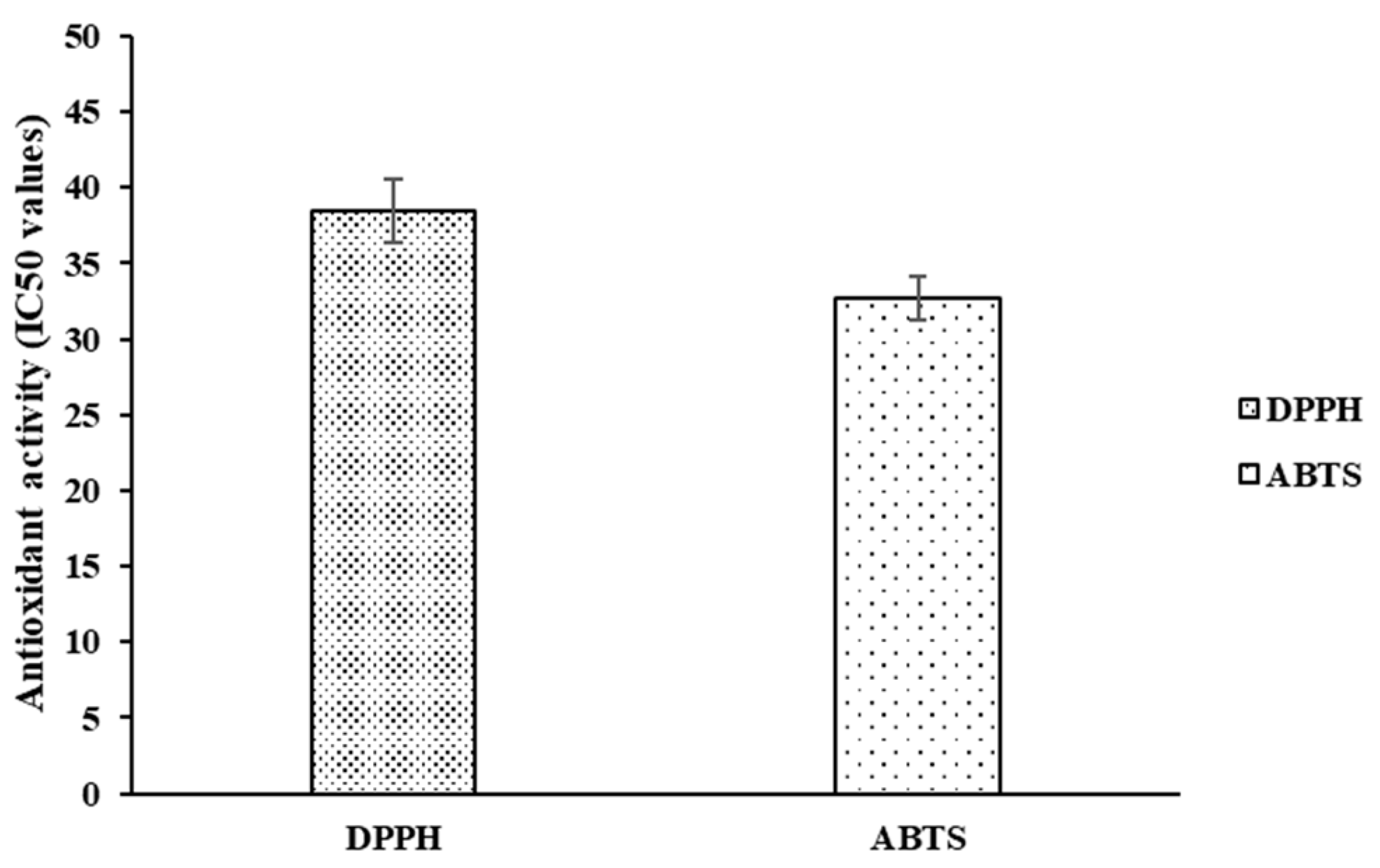
Figure 2.
The viability of E. faecalis BD8 TISTR2932 (log CFU/ml) in rice flour-based starter culture powder during storage.
Figure 2.
The viability of E. faecalis BD8 TISTR2932 (log CFU/ml) in rice flour-based starter culture powder during storage.
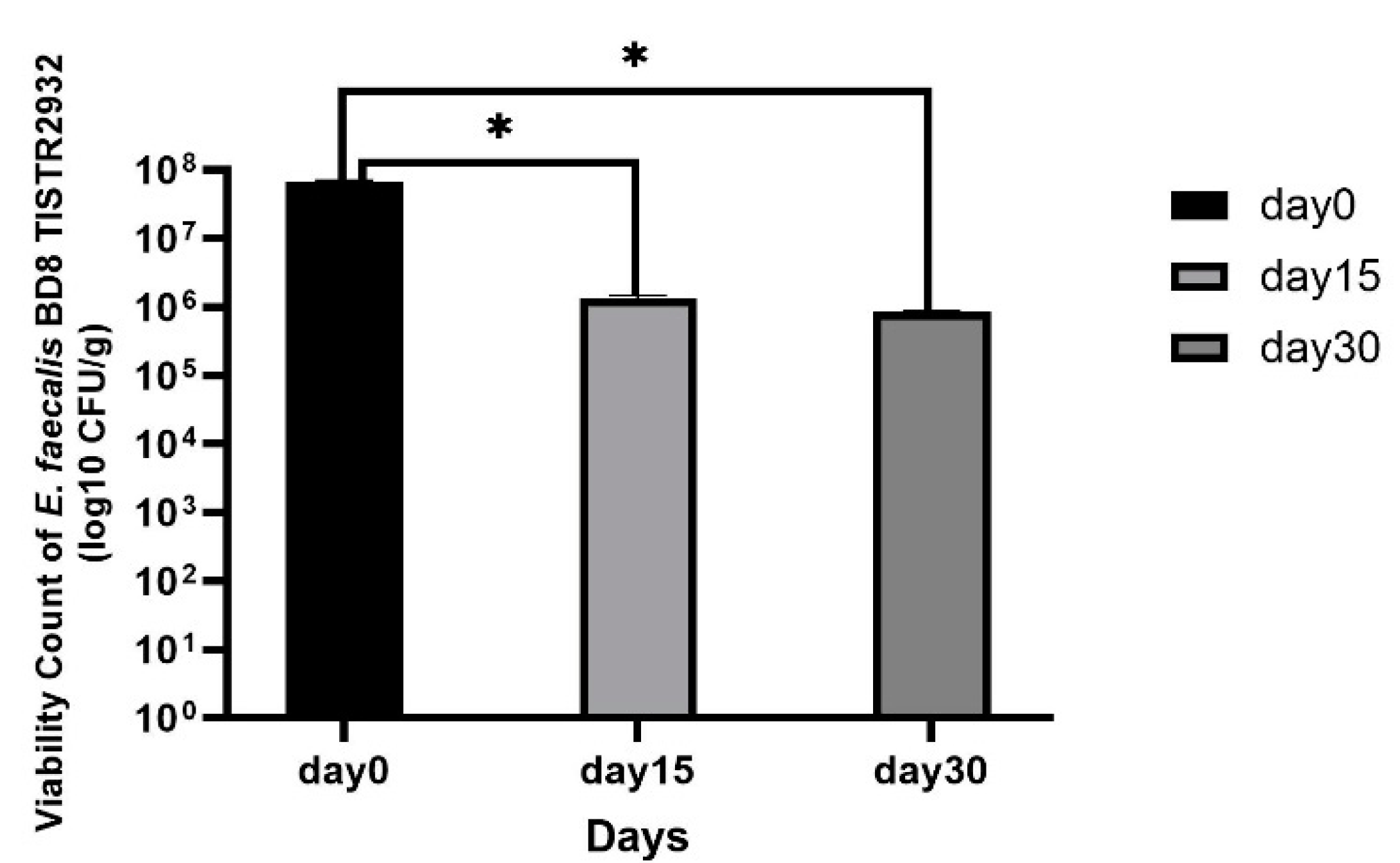
Figure 3.
The sensory evaluation of fermented fish using starter culture and traditional method.
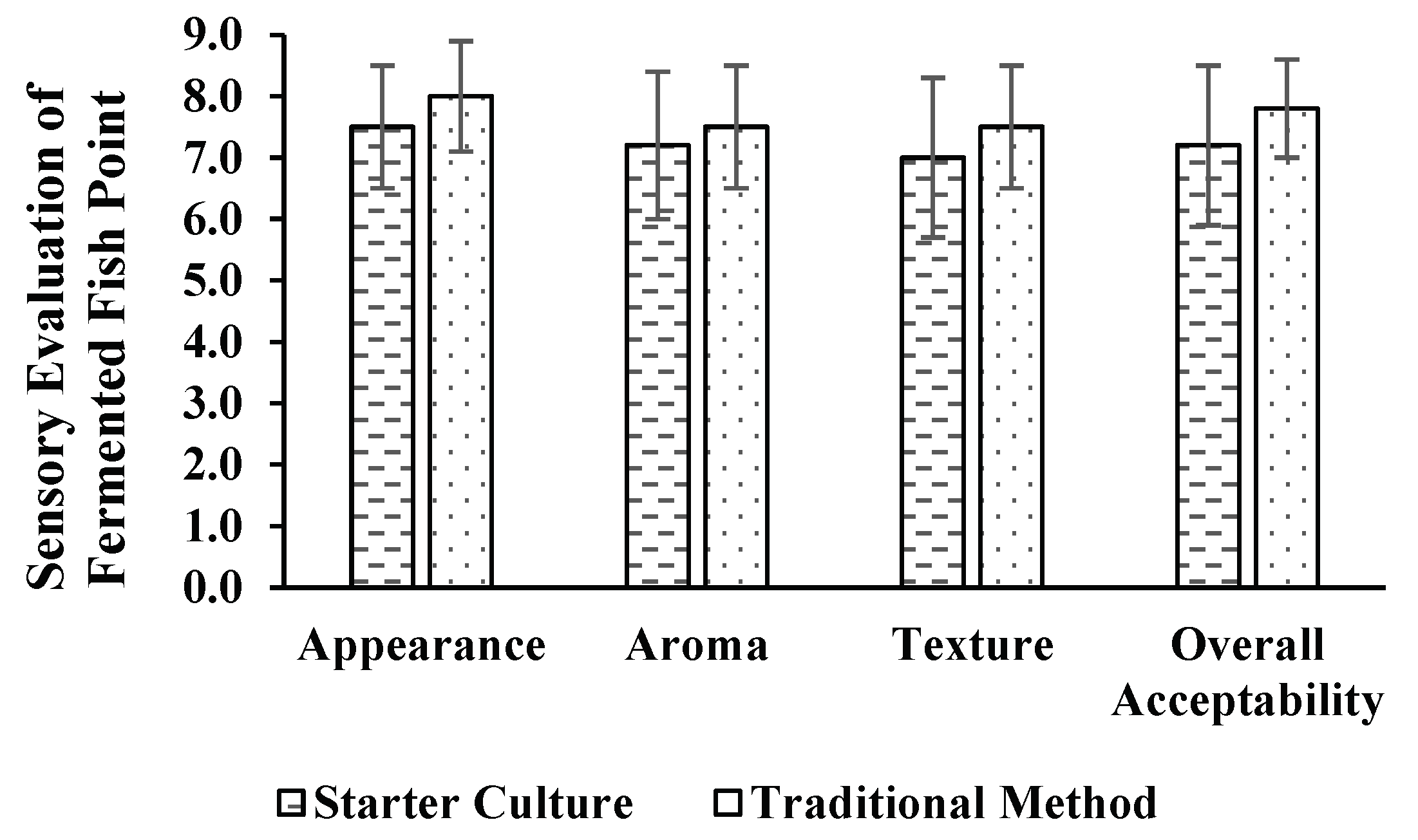

Table 1.
Inhibition zones (mm) of Enterococcus faecalis BD8 against foodborne pathogens and spoilage microorganisms.
Table 1.
Inhibition zones (mm) of Enterococcus faecalis BD8 against foodborne pathogens and spoilage microorganisms.
| Microorganism | Inhibition Zone (mm) | p-value |
| Salmonella spp. TISTR 249 | 9.2 ± 0.5 | - |
| Escherichia coli TISTR884 | 18.4 ± 0.8 | 0.032 |
| Staphylococcus aureus TISTR512 | 22.3 ± 1.1 | 0.021 |
| Pseudomonas spp. TISTR 1479 | 10.1 ± 0.4 | 0.027 |
Table 2.
Antioxidant activity (IC50 values) of Enterococcus faecalis BD8.
| Assay | IC50 (% v/v) | p-value |
| DPPH | 40 ± 0.2% | - |
| ABTS | 33 ± 0.2% | 0.039 |
Table 3.
Viability of Enterococcus faecalis BD8 in rice flour-based starter culture powder during storage.
Table 3.
Viability of Enterococcus faecalis BD8 in rice flour-based starter culture powder during storage.
| Storage Time (days) | Viable Count (CFU/g) | p-value |
| 0 | 68.6×10⁷ ± 2.08×10⁷ | - |
| 15 | 13.3×10⁶ ± 1.53×10⁶ | 0.001 |
| 30 | 85.0×10⁵ ± 2.65×10⁵ | 0.001 |
Table 4.
Effect of Starter Culture on Fermentation Time and Texture of Fermented Fish (Pla Som).
| Parameter | Starter Culture (E. faecalis BD8) | Traditional Method |
| Fermentation Time (hours) | 48 | 48 |
| Texture (Sensory Rating) | 7.0 ± 1.3 | 7.5 ± 1.0 |
| pH after Fermentation | 4.9 ± 0.3 | 5.2 ± 0.1 |
Table 5.
Sensory Evaluation of Fermented Fish Using Starter Culture and Traditional Method.
| Attribute | Starter Culture (E. faecalis BD8) | Traditional Method |
| Appearance | 7.5 ± 1.0 | 8.0 ± 0.9 |
| Aroma | 7.2 ± 1.2 | 7.5 ± 1.0 |
| Texture | 7.0 ± 1.3 | 7.5 ± 1.0 |
| Overall Acceptability | 7.2 ± 1.3 | 7.8 ± 0.8 |
Disclaimer/Publisher’s Note: The statements, opinions and data contained in all publications are solely those of the individual author(s) and contributor(s) and not of MDPI and/or the editor(s). MDPI and/or the editor(s) disclaim responsibility for any injury to people or property resulting from any ideas, methods, instructions or products referred to in the content. |
© 2025 by the authors. Licensee MDPI, Basel, Switzerland. This article is an open access article distributed under the terms and conditions of the Creative Commons Attribution (CC BY) license (http://creativecommons.org/licenses/by/4.0/).
Copyright: This open access article is published under a Creative Commons CC BY 4.0 license, which permit the free download, distribution, and reuse, provided that the author and preprint are cited in any reuse.


