

Submitted:
07 May 2025
Posted:
07 May 2025
You are already at the latest version
Abstract
The textile industry, characterized by high labor intensity and competitive pressures, faces persistent challenges in retaining skilled employees. This study explores the relationship between employee engagement strategies and workforce retention within the textile sector. Using a structured questionnaire administered to 109 employees across various departments. The research evaluates six dimensions of engagement such as communication and leadership, recognition and reward, training and development, work environment and culture, job satisfaction and empowerment, and retention intentions. Data analysis reveals that strategic engagement practices significantly influence employees' intentions to remain with the organization. In particular, transparent communication, opportunities for professional development, and a supportive work environment emerged as strong predictors of retention. The findings underscore the need for textile firms to adopt a holistic and sustained approach to employee engagement in order to mitigate turnover and foster a committed, productive workforce. This study contributes to the understanding of human resource practices in labor-intensive industries and provides actionable insights for management in enhancing employee loyalty.
Keywords:
Communication & leadership
; Recognition & reward
; Training & development
; work environment & culture
; job satisfaction & empowerment and retention intentions
1. Introduction
In the contemporary business landscape, employee engagement has emerged as a critical determinant of organizational success, influencing productivity, job satisfaction, and retention. Particularly in labor-intensive sectors like the textile industry, where high employee turnover is a recurring issue, the need for effective engagement strategies is paramount (Anitha, 2014). The textile sector often experiences challenges such as monotonous work, low wages, limited career growth, and demanding working conditions, all of which can reduce employee motivation and increase attrition (Khan & Aleem, 2016).
Employee engagement refers to the emotional commitment an employee has toward their organization and its goals (Kahn, 1990). Engaged employees are more likely to be productive, show initiative, and remain loyal to the company. In contrast, disengaged workers tend to demonstrate low morale and higher turnover rates. Organizations that implement strategic engagement practices—such as transparent communication, employee recognition, skills development, and supportive leadership—tend to see improvements in workforce stability and performance (Saks, 2006).
Retention of skilled workers is particularly crucial in the textile industry due to the cost of hiring and training new employees and the loss of institutional knowledge when experienced workers leave. Studies show that companies with high engagement scores have significantly lower turnover and absenteeism (Gallup, 2017). Therefore, understanding the link between engagement strategies and employee retention can provide valuable insights for textile companies aiming to build a sustainable and committed workforce.
The textile industry, one of the most labor-intensive and globally competitive sectors, faces persistent challenges related to employee engagement and workforce retention. High attrition rates, demanding working conditions, and skill shortages make it imperative for textile organizations to adopt effective strategies that enhance employee motivation and commitment. Employee engagement, defined as the emotional and intellectual involvement of employees in their work (Kahn, 1990), has emerged as a critical factor in improving organizational productivity and reducing turnover. Several key strategies—communication and leadership, recognition and reward, training and development, work environment and culture, job satisfaction and empowerment, and retention intentions—play a pivotal role in fostering engagement and ensuring long-term workforce stability in the textile industry.
Effective communication and leadership are fundamental to building trust and engagement among textile workers. Transparent and open communication channels ensure that employees feel heard and valued, reducing ambiguity and improving morale (Northouse, 2021). Strong leadership, particularly transformational leadership, helps in creating a vision that inspires and motivates employees (Bass & Avolio, 1994). In textile firms, where hierarchical structures often dominate, leadership that prioritizes two-way communication and participative decision-making significantly enhances employee retention.
Recognition and reward programs serve as powerful motivators in driving engagement. Employees who feel appreciated for their contributions exhibit higher job satisfaction and are less likely to seek opportunities elsewhere (Armstrong, 2012). In textile factories, where repetitive tasks can lead to disengagement, both monetary (bonuses, incentives) and non-monetary (public recognition, career growth) rewards can reinforce positive behavior and increase organizational commitment (Brun & Dugas, 2008).
Investing in training and development is crucial for enhancing workforce skills and engagement. Employees who receive regular training feel more competent and valued, leading to increased job satisfaction and lower turnover rates (Anitha, 2014). In the textile industry, skill development programs not only improve operational efficiency but also provide workers with career progression opportunities, which are essential for long-term retention (Ahmad & Schroeder, 2003).
A positive work environment and organizational culture contribute significantly to employee engagement. Safe, well-ventilated workplaces with fair labor practices foster a sense of well-being and belonging (Ghosh et al., 2013). A culture that promotes collaboration, inclusivity, and respect enhances motivation and reduces absenteeism, key challenges in textile factories where harsh working conditions often lead to high attrition rates (Schein, 2010).
Job satisfaction and empowerment are directly linked to employee engagement and retention. When employees perceive fairness in promotions, work-life balance, and opportunities for self-growth, they develop a stronger commitment to their organization (Spreitzer, 1995). Empowering textile workers by involving them in decision-making and giving them autonomy over their work increases motivation and reduces job stress, improving retention rates (Ghosh et al., 2013).
A combination of these engagement strategies shapes retention intentions, which refer to an employee’s decision to stay with or leave an organization. Research indicates that engaged employees are more likely to remain committed, reducing recruitment and training costs for textile firms (Tessema & Soeters, 2006). Companies that implement holistic engagement strategies—addressing leadership, rewards, development, workplace culture, and empowerment—tend to have higher employee loyalty and lower turnover rates.
This study aims to explore various employee engagement strategies used in the textile sector and examine their impact on workforce retention. By identifying which engagement dimensions are most effective, the research seeks to provide actionable recommendations for improving employee satisfaction and reducing turnover in the industry. Employee engagement is a critical determinant of workforce retention in the textile industry. By focusing on strategic areas such as communication and leadership, recognition and reward, training and development, work environment and culture, job satisfaction and empowerment, and retention intentions, textile organizations can create an engaged, productive, and committed workforce. Future research should explore industry-specific engagement models tailored to address the unique challenges of the textile sector.
2. Review of Literature
2.1. Employee Engagement: Concepts and Importance
Employee engagement has been widely recognized as a cornerstone of organizational effectiveness. According to Kahn (1990), engagement is the harnessing of organizational members’ selves to their work roles, marked by physical, cognitive, and emotional involvement. Saks (2006) further differentiated between job engagement and organizational engagement, asserting that both are influenced by antecedents such as perceived organizational support, job characteristics, and supervisor support.
Engaged employees are more productive, deliver higher quality work, and are less likely to leave their organizations (Bakker & Demerouti, 2008). The Gallup (2017) report demonstrated that companies with higher engagement scores experience 21% higher profitability and 59% lower turnover in high-turnover organizations.
2.2. Engagement Strategies in the Workplace
Effective engagement strategies include open communication, recognition and rewards, employee development, and empowerment (Anitha, 2014). Research shows that supportive leadership and feedback mechanisms are essential in building a culture of engagement (Macey & Schneider, 2008). In the manufacturing and textile sectors, where work is often repetitive and physically demanding, strategies such as job enrichment, training programs, and participatory decision-making have been shown to enhance engagement (Saks & Gruman, 2014).
According to Sharma and Kaur (2019), employee empowerment in textile firms significantly boosts morale and commitment, especially when coupled with performance-based recognition.
2.3. Impact on Workforce Retention
High employee engagement is consistently linked to greater employee retention. Engaged employees are more likely to exhibit organizational citizenship behavior and less likely to search for alternative employment (Harter, Schmidt, & Hayes, 2002). In the textile industry, where turnover is a critical issue due to low job satisfaction and limited career progression, engagement strategies have been found to mitigate attrition rates (Khan & Aleem, 2016).
Moreover, training and development opportunities have a dual impact: improving employee performance and enhancing their intention to stay (Jehanzeb & Bashir, 2013). Organizations that invest in employee growth and recognition tend to foster a stronger sense of loyalty among their workforce.
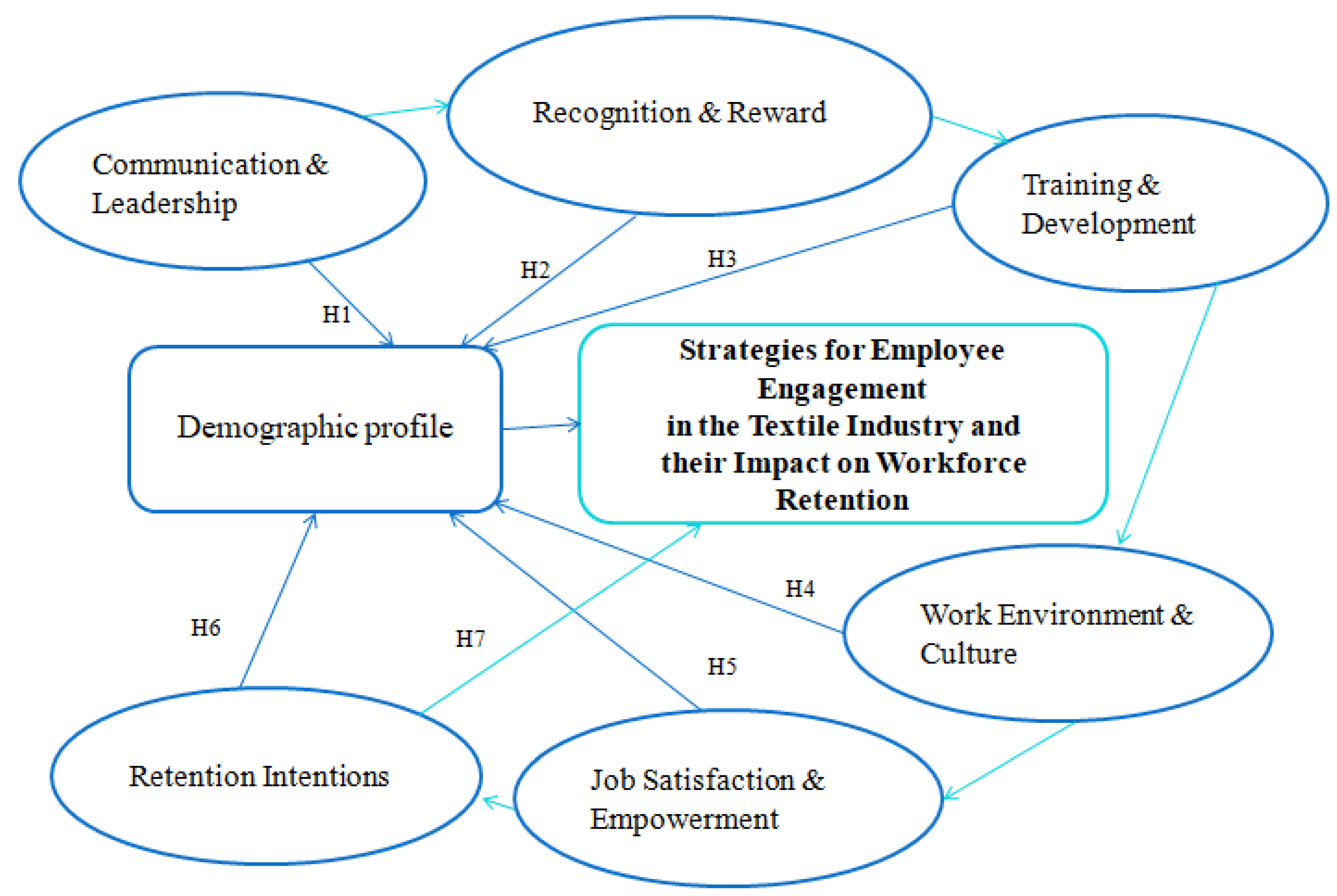
H1:
Employee engagement and workforce retention has a significant positive effect on communication and leadership strategies.
2.4. Communication and Leadership Strategies for Employee Engagement and Workforce Retention in the Textile Industry
Employee engagement has emerged as a strategic priority in the textile industry, where high turnover rates and labor-intensive operations make workforce retention a persistent challenge. Research underscores the critical role that leadership and communication play in shaping engagement strategies and ensuring a committed workforce (Kahn, 1990; Saks, 2006).
In the context of the textile industry, effective leadership practices are essential to build a motivated workforce. Transformational leadership, which involves inspiring, motivating, and engaging employees through vision and communication, has been positively associated with higher employee engagement and retention (Bass & Riggio, 2006). Leaders in textile manufacturing often influence engagement through daily interactions, feedback, and support—especially in environments characterized by hierarchical structures and repetitive tasks.
Communication is a key mediator between leadership and engagement. Open, transparent, and frequent communication has been shown to improve trust and job satisfaction among textile workers (Rai, 2012). Studies indicate that when employees feel heard and informed, they exhibit higher organizational commitment and are less likely to leave (Men, 2014). This is particularly relevant in the textile sector, where workforce demographics often include low-skilled laborers who value clear instructions, consistent feedback, and emotional support from management.
Furthermore, internal communication channels—both formal (staff meetings, noticeboards, internal newsletters) and informal (supervisor-employee chats)—play a significant role in reducing ambiguity, aligning individual goals with organizational vision, and reinforcing a sense of belonging. Ahmad and Schroeder (2003) observed that effective communication in manufacturing settings, such as textile units, directly contributes to quality management and employee satisfaction.
Leadership development programs that train supervisors in communication, empathy, and team-building have shown success in boosting engagement levels in textile firms (Anitha, 2014). Leaders who demonstrate fairness, recognize performance, and show concern for employee welfare foster environments where workers are more engaged and less prone to turnover.
Another important strategy is participative leadership, where employees are included in decision-making processes. This leadership style enhances engagement by giving workers a sense of ownership and involvement (Bhattacharya & Chatterjee, 2017), which is particularly effective in textile firms with production teams that rely on coordination and collaboration.
However, lack of communication and autocratic leadership styles have been cited as major barriers to engagement in the textile sector. Workers in poorly managed facilities often report feelings of neglect, disempowerment, and alienation, which directly impact retention (Singh & Mohanty, 2012).
H2:
Employee engagement and workforce retention has a significant positive effect on recognition and reward.
2.5. Recognition and Reward
In the labor-intensive and competitive textile industry, employee engagement is critical for sustaining productivity and reducing attrition. One of the most widely researched and practically effective strategies for driving engagement and retaining employees is the implementation of robust recognition and reward systems. These systems reinforce desired behaviors, motivate employees, and foster loyalty to the organization (Armstrong, 2012).
Recognition, both formal and informal, serves as a psychological incentive, affirming that an employee's efforts are valued. According to Brun and Dugas (2008), recognition contributes to an employee’s sense of worth and encourages discretionary effort—key components of engagement. In the context of the textile industry, where repetitive tasks can lead to disengagement, consistent acknowledgment of performance can uplift morale and productivity (Ghosh et al., 2013).
Monetary rewards, such as bonuses, performance-based pay, and incentives, have been widely adopted in textile firms to improve retention. However, research also suggests that non-monetary rewards—such as praise, career development opportunities, and awards—often have a more sustained impact on intrinsic motivation (Deci & Ryan, 2000). For instance, factory workers who receive regular appreciation and opportunities for skill development tend to show greater organizational commitment and lower turnover intentions.
A study by Ahmed and Shaikh (2015) in the South Asian textile sector found that a combination of tangible (salary increments, incentives) and intangible (recognition, respect) rewards significantly improves employee engagement and reduces attrition. Workers who felt appreciated were more likely to stay with the company, even in the face of demanding work conditions.
Moreover, fairness and transparency in reward systems are crucial. Employees are more engaged when they perceive reward practices to be equitable and linked to clear performance metrics (Tessema & Soeters, 2006). This is especially important in textile environments where hierarchical and gender-based disparities often exist. Inconsistent or biased reward distribution can lead to dissatisfaction, disengagement, and high turnover.
Organizational culture also influences the effectiveness of recognition. In family-owned or traditional textile firms, cultural norms sometimes downplay public praise or formal rewards, which may hinder employee engagement efforts (Bhattacharya & Chatterjee, 2017). Therefore, customizing recognition and reward strategies to align with organizational and cultural contexts enhances their effectiveness.
The integration of recognition programs into HR practices has been shown to yield positive outcomes. Textile companies that institutionalize employee-of-the-month schemes, long-service awards, and peer-recognition platforms report improved job satisfaction and retention (Anitha, 2014).
H3:
Employee engagement and workforce retention has a significant positive effect on training & development.
2.6. Training & Development Strategies for Employee Engagement and Workforce Retention in the Textile Industry
Training and development (T&D) have long been recognized as essential components of human resource strategies aimed at enhancing employee engagement and reducing turnover—especially in labor-intensive sectors such as the textile industry. As organizations in this sector face global competition, changing technology, and skill shortages, investment in T&D has become not just a productivity enhancer but also a critical retention tool (Noe, 2013).
Employee engagement is significantly influenced by the extent to which employees perceive opportunities for personal and professional growth. Saks (2006) noted that development opportunities signal organizational support and value for the employee, leading to higher levels of emotional and cognitive engagement. In the textile industry, where repetitive and physically demanding work is common, upskilling programs and career progression pathways can break the monotony and enhance job satisfaction (Anitha, 2014).
Empirical studies indicate that structured training programs improve not only technical competencies but also organizational commitment. According to Karia and Ahmad (2000), in manufacturing sectors like textiles, training enhances job clarity and task efficiency, which reduces frustration and boosts morale. This has a direct correlation with reduced turnover intentions.
A study by Ghosh et al. (2013) in Indian textile firms found that employees who participated in frequent training initiatives reported higher engagement levels and demonstrated increased loyalty to their organizations. These programs included skill enhancement, safety training, and leadership development for supervisors.
Moreover, on-the-job training, coaching, and mentorship have proven particularly effective in textile settings due to the practical, hands-on nature of the work. Employees tend to value interactive, real-time learning experiences over theoretical instruction, and these methods also facilitate stronger relationships between employees and supervisors (Tannenbaum et al., 2010).
Career development is another critical component of engagement in T&D strategies. When employees—especially entry-level or low-skilled workers—are offered pathways for advancement, they are more likely to invest themselves in their roles. Textile firms that promote internal mobility and provide cross-training opportunities often report higher retention rates (Jehanzeb & Bashir, 2013).
However, challenges such as limited investment in training, lack of structured development plans, and low awareness among employees can hinder the effectiveness of T&D strategies in many traditional textile operations, especially in developing countries (Shah & Irani, 2010). Overcoming these barriers requires a cultural shift and leadership commitment to learning as a core organizational value.
H4:
Employee engagement and workforce retention has a significant positive effect on work environment & culture.
2.7. Work Environment & Culture
A conducive work environment encompasses physical conditions (safety, ventilation, ergonomics), psychological factors (respect, inclusivity), and interpersonal relationships. According to Chandrasekar (2011), a well-maintained work environment significantly influences employee performance and motivation. In textile industries, especially in developing countries, poor lighting, noise, long hours, and unsafe machinery are major concerns that can reduce employee morale and increase attrition.
Ghosh et al. (2013), studying Indian textile factories, found that improving physical workspaces, sanitation facilities, and safety protocols led to noticeable improvements in employee satisfaction and attendance. Employees who feel physically safe and comfortable are more likely to remain loyal and productive.
Organizational culture refers to shared values, beliefs, and norms that guide behavior within a company. A positive culture encourages open communication, teamwork, inclusivity, and employee recognition. According to Schein (2010), culture is a powerful force that shapes organizational identity and affects employees’ psychological attachment to their workplace.
In the textile sector, where management-worker relationships have traditionally been hierarchical, fostering a culture of respect, fairness, and involvement can greatly improve engagement and retention. Bhattacharya and Chatterjee (2017) emphasized that when textile employees are treated with dignity, given autonomy, and involved in decision-making, they exhibit stronger organizational commitment.
Several studies confirm that a positive work environment and inclusive culture lead to lower turnover intentions. Tessema and Soeters (2006) found that HR practices related to safety, inclusion, and cultural cohesion significantly improved employee retention in labor-intensive industries. Employees who align with organizational values are less likely to leave, even when alternative opportunities arise.
In a study focused on Bangladesh’s textile sector, Islam and Siengthai (2009) observed that culture-driven leadership and an ethical workplace environment reduced labor unrest and increased employee loyalty. Organizational transparency and worker welfare programs also emerged as critical cultural factors enhancing retention.
H5:
Employee engagement and workforce retention has a significant positive effect on job satisfaction & empowerment.
2.8. Job Satisfaction and Engagement
Job satisfaction, often defined as the extent to which employees feel content with their roles, compensation, work environment, and growth opportunities, has a direct correlation with engagement and retention (Locke, 1976). In the textile industry, where workers often face repetitive tasks, long hours, and limited career advancement, job satisfaction can serve as a stabilizing factor that motivates continued employment (Ghosh et al., 2013).
Anitha (2014) found that satisfied employees show higher levels of engagement, which leads to improved performance and lower turnover. In textile manufacturing units, job satisfaction is particularly influenced by factors such as fair wages, supervisor support, working conditions, and recognition. A study by Ahmed and Shaikh (2015) in Pakistan's textile sector showed that job dissatisfaction was one of the primary reasons for labor attrition, especially among skilled workers.
Furthermore, emotional satisfaction, including feeling valued, safe, and respected, plays a significant role in the textile industry's retention dynamics. Employees who are emotionally connected to their workplace tend to exert discretionary effort and are less likely to leave, even in the face of physically demanding work.
H6:
Employee engagement and workforce retention has a significant positive effect on retention intentions.
2.9. Empowerment and Retention Intentions
Employee empowerment refers to granting employees autonomy, participation in decision-making, and access to the information and resources needed to perform effectively. Empowered employees feel a greater sense of ownership and responsibility, which enhances both engagement and organizational loyalty (Spreitzer, 1995).
In the textile industry, empowerment strategies such as team-based production, open-door policies, and decentralized decision-making have been found to foster higher job involvement and reduce absenteeism and attrition (Bhattacharya & Chatterjee, 2017). Empowerment not only boosts morale but also encourages innovation and accountability on the factory floor.
A study by Ghosh and colleagues (2013) in Indian textile units found that when employees were empowered through skills training, involvement in problem-solving, and goal-setting, their intention to stay with the organization significantly increased. Empowerment also helps combat the hierarchical and rigid culture that often dominates textile production environments, thereby fostering trust and collaboration.
Moreover, psychological empowerment, comprising feelings of competence, meaning, impact, and self-determination, has been shown to act as a buffer against job stress and dissatisfaction—key drivers of turnover in textile firms (Seibert et al., 2004).
2.10. Integration of Satisfaction and Empowerment
When combined, job satisfaction and empowerment form a powerful foundation for employee engagement. Tessema and Soeters (2006) emphasized that textile organizations that address both intrinsic (empowerment, purpose) and extrinsic (wages, job conditions) satisfaction factors are more successful at retaining skilled and semi-skilled labor.
3. Conceptual Model
Figure 3.1.
Conceptual model.
4. Research Methodology
4.1. Statement of the Problem
Karur District in Tamil Nadu is a prominent hub for the textile industry in India, contributing significantly to the nation's textile exports and employment generation. Despite its economic importance, the industry in this region faces a pressing issue: high employee turnover and low workforce stability. Many textile units in Karur struggle to retain skilled and semi-skilled labor, resulting in increased recruitment and training costs, disruptions in production, and reduced overall efficiency. Several factors contribute to this challenge, including limited job satisfaction, lack of recognition, inadequate communication, and minimal opportunities for personal and professional growth. While employee engagement strategies have proven effective in improving retention and performance in other industrial settings, there is a lack of localized research that examines the relevance, implementation, and effectiveness of such strategies in the context of Karur's textile industry. This paper seeks to address this gap by exploring the types of employee engagement practices currently employed in textile firms in Karur District and analyzing their impact on workforce retention. By identifying the key drivers of engagement and their correlation with employee loyalty, the study aims to provide evidence-based suggestions for improving retention and building a more committed workforce in this vital industrial cluster.
4.2. Research Design
A quantitative, descriptive design was adopted to assess the Strategies for employee engagement in the textile industry and their impact on workforce retention in Karur district in Tamil Nadu.
4.3. Study Area
In this research, Strategies for employee engagement in the textile industry and their impact on workforce retention in Karur district in Tamil Nadu in India
4.4. Objectives of the study
- To identify the employee engagement strategies currently implemented in textile industries in Karur District, Tamil Nadu.
- To examine the level of employee engagement among workers in selected textile firms in the region.
- To assess the relationship between employee engagement strategies and workforce retention in the textile industry.
- To analyze the impact of different dimensions of employee engagement (e.g., communication, recognition, training, work environment) on employee retention.
- To identify key factors influencing employee turnover intentions in the textile sector of Karur District.
- To provide suitable suggestions for improving employee engagement and reducing turnover in the local textile industry.
4.5. Sampling technique
The sampling method adopted disproportionate sampling techniques. The data was collected from employees who are working in textile industry in Karur District in Tamil Nadu in India for the study. Sampling size: 109.
4.6. Period of study
The Strategies for employee engagement in the textile industry and their impact on workforce retention in Karur district in Tamil Nadu was carried out during the period of April 3rd to May 2nd 2025.
5. Analysis and interpretation of data

Table 5.1.
Table showing demographic variable.
| S.No | Demographic variable | No of Respondents (n:109) | Percentage |
| 1. | Age | ||
| Up to 25 years | 16 | 14.7 | |
| 26 to 35 years | 28 | 25.7 | |
| 36 to 45 years | 27 | 24.8 | |
| 46 to 55 years | 26 | 23.9 | |
| Above 55 years | 12 | 11.0 | |
| 2. | Gender | ||
| Male | 63 | 57.8 | |
| Female | 46 | 42.2 | |
| 3. | Department | ||
| HR | 16 | 14.7 | |
| Marketing | 50 | 45.9 | |
| Quality | 12 | 11.0 | |
| Production | 31 | 28.4 | |
| 4. | Experience | ||
| Up to 2 years | 7 | 6.4 | |
| 3 to 7 years | 31 | 28.4 | |
| 8 to 12 years | 29 | 26.6 | |
| 13 to 17 years | 29 | 26.6 | |
| More than 17 years | 13 | 11.9 | |
| 5. | Designation | ||
| Sales person | 29 | 26.6 | |
| Manager | 26 | 23.9 | |
| Supervisor | 33 | 30.3 | |
| Technician | 21 | 19.3 |
Figure 5.1.
Age.
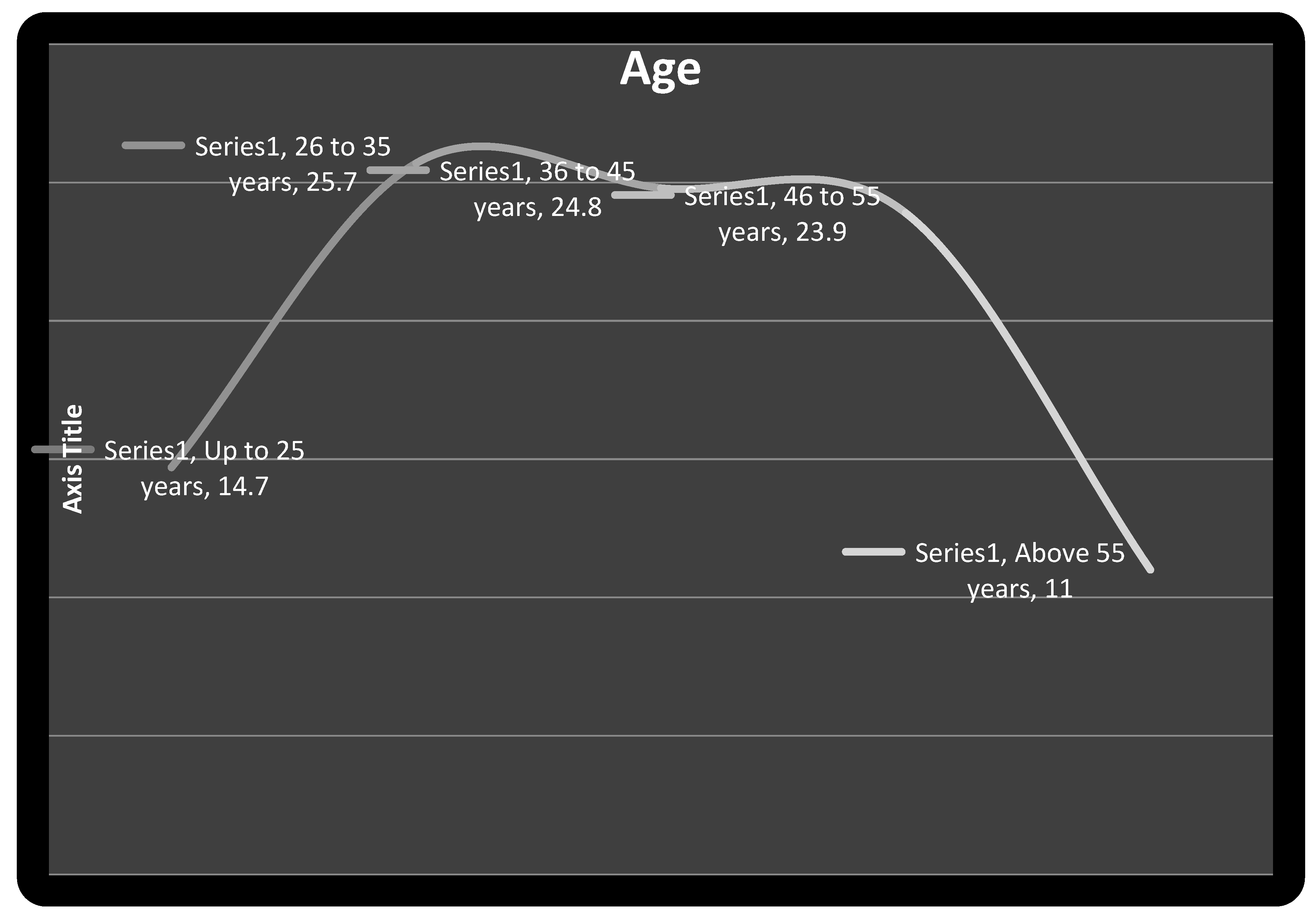
Figure 5.2.
Experience.
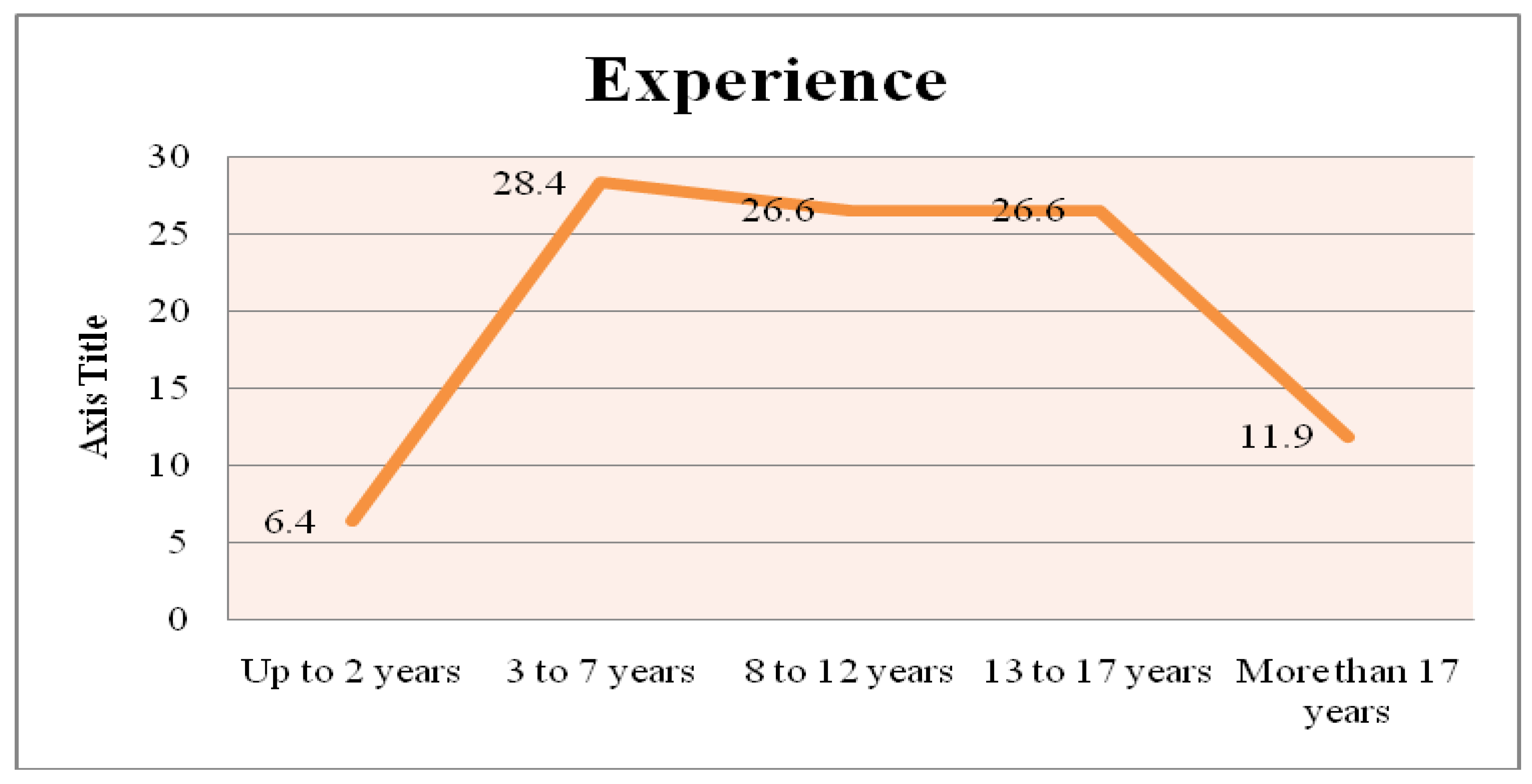
Table 5.1: From the above table, it is found that more than one-fourth (i.e.) 25.7 per cent of the respondents were in the age group of 26 to 35 years. More than half (i.e.) 57.8 per cent of the respondents were male. Nearly half (i.e.) 45.9 per cent of the respondents were working in marketing department. More than one-fourth (i.e.) 28.4 per cent of the respondents attained experience of 3 to 7 years. One-third (i.e.) 30.3 per cent of the respondents were supervisors.
Table 5.2.
Karl Pearson’s Co-Efficient of correlation between the respondents’ Age and various dimensions of Strategies for employee engagement in the textile industry and their impact on workforce retention.
Table 5.2.
Karl Pearson’s Co-Efficient of correlation between the respondents’ Age and various dimensions of Strategies for employee engagement in the textile industry and their impact on workforce retention.
| S.No |
Strategies for employee engagement in the textile industry and their impact on workforce retention |
Correlation value | Statistical Interface |
| 1. | Age and Communication & Leadership | 0.822** |
P < 0.01 Significant |
| 2. | Age and Recognition & Reward | 0.799** |
P < 0.01 Significant |
| 3. | Age and Training & Development | 0.913** |
P < 0.01 Significant |
| 4. | Age and Work Environment & Culture | 0.862** |
P < 0.01 Significant |
| 5. | Age and Job Satisfaction & Empowerment | 0.836** |
P < 0.01 Significant |
| 6. | Age and Retention Intentions | 0.833** |
P < 0.01 Significant |
| 7. | Age and Strategies for employee engagement in the textile industry and their impact on workforce retention |
0.841** |
P < 0.01 Significant |
** Correlation is significant at the 0.01 level. * Correlation is significant at the 0.05 level.
Table 5.2: There is a highly statistically significant relationship between age of the respondents and Communication & Leadership, Older employees perceive leadership and communication more positively or value them more. There is a highly statistically significant relationship between age of the respondents and Recognition & Reward, Older employees are more receptive to recognition or may be more frequently rewarded. There is a highly statistically significant relationship between age of the respondents and Training & Development, Very strong correlation; older employees may perceive or value training opportunities more — possibly due to up-skilling needs. There is a highly statistically significant relationship between age of the respondents and Work Environment & Culture, There is a highly statistically significant relationship between age of the respondents and Job Satisfaction & Empowerment, Strong association; age contributes positively to feelings of satisfaction and empowerment. There is a highly statistically significant relationship between age of the respondents and Retention Intentions Older employees tend to have stronger intentions to stay — possibly due to stability or loyalty. There is a highly statistically significant relationship between age of the respondents and Overall Strategies for employee engagement in the textile industry and their impact on workforce retention, Age is positively linked to how effective overall engagement strategies are perceived to be. Customize engagement strategies by age group. Since older employees respond more positively, strategies might need to be adjusted for younger employees.Invest in lifelong learning. The strong link with training suggests development opportunities could be a high-impact retention tool, especially for older staff. Leverage experienced employees. Older workers may be more committed, and efforts to retain them can boost organizational stability.
Table 5.3.
Karl Pearson’s Co-Efficient of correlation between the respondents’ experience and various dimensions of Strategies for employee engagement in the textile industry and their impact on workforce retention.
Table 5.3.
Karl Pearson’s Co-Efficient of correlation between the respondents’ experience and various dimensions of Strategies for employee engagement in the textile industry and their impact on workforce retention.
| S.No |
Strategies for employee engagement in the textile industry and their impact on workforce retention |
Correlation value | Statistical Interface |
| 1. | Experience and Communication & Leadership | 0.826** |
P < 0.01 Significant |
| 2. | Experience and Recognition & Reward | 0.810** |
P < 0.01 Significant |
| 3. | Experience and Training & Development | 0.910** |
P < 0.01 Significant |
| 4. | Experience and Work Environment & Culture | 0.874** |
P < 0.01 Significant |
| 5. | Experience and Job Satisfaction & Empowerment | 0.841** |
P < 0.01 Significant |
| 6. | Experience and Retention Intentions | 0.838** |
P < 0.01 Significant |
| 7. | Experience and Strategies for employee engagement in the textile industry and their impact on workforce retention |
0.845** |
P < 0.01 Significant |
** Correlation is significant at the 0.01 level.* Correlation is significant at the 0.05 level.
Table 5.3: There is a highly statistically significant relationship between experience of the respondents and Communication & Leadership, Experienced employees may feel more comfortable with or appreciative of established communication and leadership structures. There is a highly statistically significant relationship between experience of the respondents and Recognition & Reward, recognition may hold more meaning for experienced employees, or they may receive it more consistently. There is a highly statistically significant relationship between experience of the respondents and Training & Development, Very strong correlation — experienced employees might value continuous development or play a role in mentoring and training. Work Environment & Culture, Experienced staff likely adapt well to the organizational culture or influence it positively. There is a highly statistically significant relationship between experience of the respondents and Job Satisfaction & Empowerment, Satisfaction and empowerment grow with experience, possibly due to trust and increased responsibilities. There is a highly statistically significant relationship between experience of the respondents and Retention Intentions, More experienced employees are more inclined to stay, reflecting loyalty or investment in the organization. There is a highly statistically significant relationship between experience of the respondents Overall Strategies for employee engagement in the textile industry and their impact on workforce retention, Experience is strongly associated with positive perceptions of all engagement strategies combined. Tailor retention strategies for less experienced staff who may be less engaged or more prone to leave. Utilize experienced employees as mentors or leaders in communication, culture building, and training programs. Continue to invest in development programs across all levels of experience, as they appear to be a high-value engagement lever.
Table 5.4.
‘t’ test between the respondents’ Gender and various dimensions of Strategies for employee engagement in the textile industry and their impact on workforce retention.
Table 5.4.
‘t’ test between the respondents’ Gender and various dimensions of Strategies for employee engagement in the textile industry and their impact on workforce retention.
| S.No |
Strategies for employee engagement in the textile industry and their impact on workforce retention |
S.D | Statistical Inference | |
| 1. | Communication & Leadership | |||
| Male (N:63) | 7.2381 | 1.52097 |
t = 10.765 p < 0.001 Significant |
|
| Female (N:46) | 10.8261 | 1.95851 | ||
| 2. | Recognition & Reward | |||
| Male (N:63) | 8.0159 | 1.75510 |
t = 9.305 p < 0.001 Significant |
|
| Female (N:46) | 11.2391 | 1.82799 | ||
| 3. | Training & Development | |||
| Male (N:63) | 7.2540 | 1.43649 |
t = 13.352 p < 0.001 Significant |
|
| Female (N:46) | 11.0000 | 1.46059 | ||
| 4. | Work Environment & Culture | |||
| Male (N:63) | 7.2381 | 1.53154 |
t = 11.316 p < 0.001 Significant |
|
| Female (N:46) | 10.7391 | 1.67908 | ||
| 5. | Job Satisfaction & Empowerment | |||
| Male (N:63) | 7.6190 | 1.59058 |
t = 10.033 p < 0.001 Significant |
|
| Female (N:46) | 11.0652 | 1.99335 | ||
| 6. | Retention Intentions | |||
| Male (N:63) | 7.6349 | 1.73486 |
t = 10.859 p < 0.001 Significant |
|
| Female (N:46) | 11.3261 | 1.77707 | ||
| 7. |
Strategies for employee engagement in the textile industry and their impact on workforce retention |
|||
| Male (N:63) | 49.7619 | 4.29822 |
t = 10.699 p < 0.001 Significant |
|
| Female (N:46) | 59.6739 | 5.36679 |
Table 5.4: There is a significant difference between respondents’ Gender and Communication & Leadership (t = 10.765, p < 0.001), mean score indicates that female got higher level (mean = 10.83) when compared to male (mean = 7.24) with respect to Communication & Leadership, Females perceive communication and leadership far more positively than males. There is a significant difference between respondents’ Gender and Recognition & Reward (t = 9.305, p < 0.001), mean score indicates that female got higher level (mean = 11.24) when compared to male (mean = 8.02) with respect to Recognition & Reward, Female employees feel more recognized and rewarded than males. There is a significant difference between respondents’ Gender and Training & Development (t = 13.352, p < 0.001), mean score indicates that female got higher level (mean = 11.00) when compared to male (mean = 7.25) with respect to Training & Development, Training is rated much higher by females; a significant perception gap exists. There is a significant difference between respondents’ Gender and Work Environment & Culture (t = 11.316, p < 0.001), mean score indicates that female got higher level (mean = 10.74) when compared to male (mean = 7.24) with respect to Work Environment & Culture, Women perceive a more supportive culture/environment. There is a significant difference between respondents’ Gender and Job Satisfaction & Empowerment (t = 10.033, p < 0.001), mean score indicates that female got higher level (mean = 11.07) when compared to male (mean = 7.62) with respect to Job Satisfaction & Empowerment, Women report higher levels of job satisfaction and empowerment. There is a significant difference between respondents’ Gender and Retention Intentions (t = 10.859, p < 0.001), mean score indicates that female got higher level (mean = 11.33) when compared to male (mean = 7.63) with respect to Retention Intentions, Women have stronger intentions to remain in their jobs. There is a significant difference between respondents’ Gender and Overall Engagement Strategy Impact (t = 10.699, p < 0.001), mean score indicates that female got higher level (mean = 59.67) when compared to male (mean = 49.76) with respect to Overall Engagement Strategy Impact, Female employees rate the entire engagement and retention framework significantly higher.
-
Gender Disparity in Experience: Female employees perceive engagement strategies more positively and are more likely to stay, suggesting:
- 🖎
- They may be better integrated into engagement programs.
- 🖎
- Or possibly more responsive to existing strategies than male employees.
-
Need to Reassess Male Engagement: Male employees report significantly lower satisfaction and engagement across all domains, suggesting:
- 🖎
- Current strategies may not resonate with male staff.
- 🖎
- Further targeted interventions may be needed to increase male engagement levels.
-
Leverage Female Satisfaction: Since female employees show higher engagement and retention, they could:
- 🖎
- Serve as ambassadors in internal training or mentoring.
- 🖎
- Provide feedback on what’s working well in current programs.
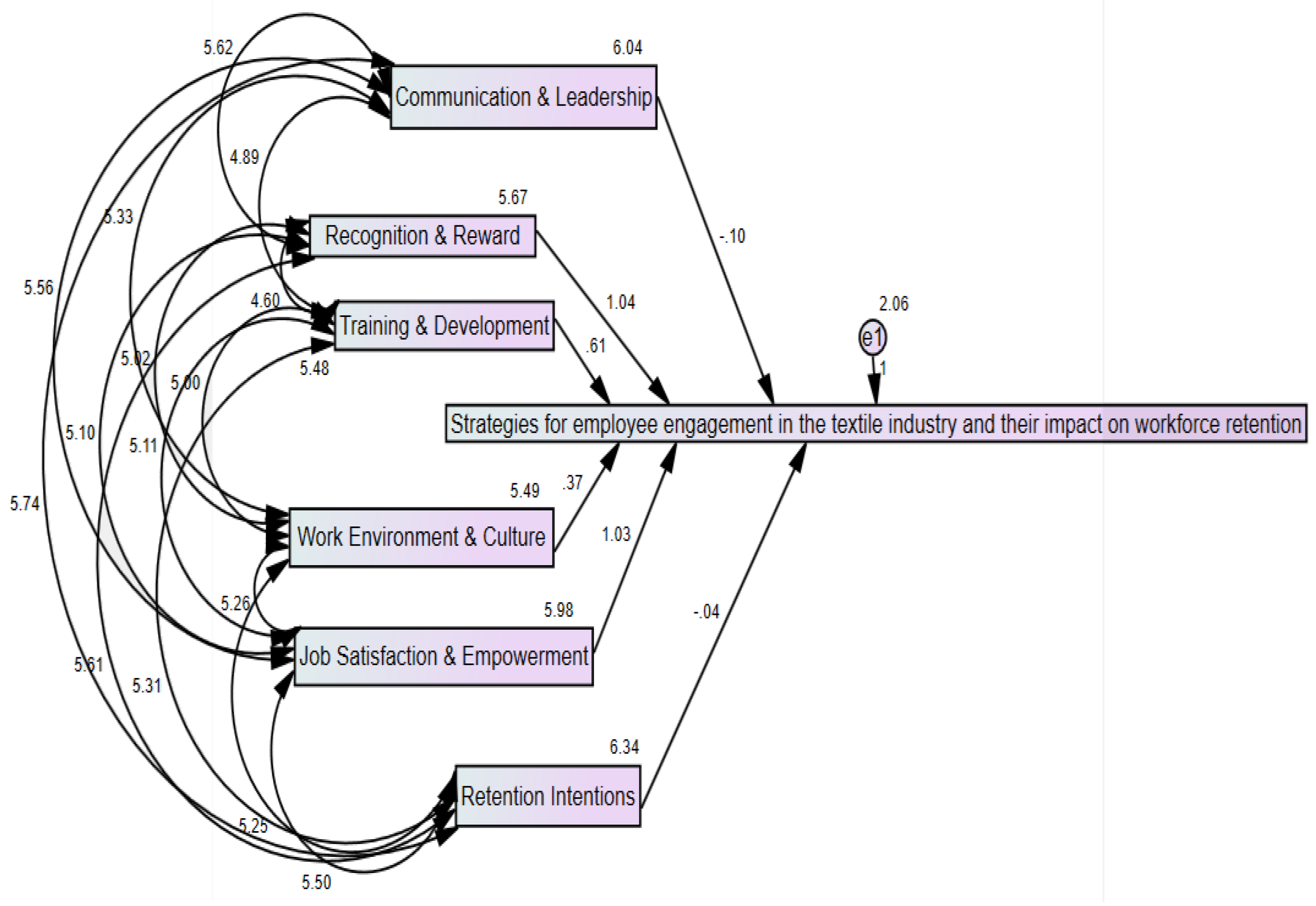
Table 5.5: SEM for various dimensions of Strategies for employee engagement in the textile industry and their impact on workforce retention
Figure 5.1.
SEM Model.
Interpretation:
The six predictors are allowed to covary; predictors’ covariances as shown in the diagram. The covariance between Retention intentions and communication & leadership relationship is 5.74 and it is a positive relationship. The covariance between Retention intentions and recognition & reward relationship is 5.61 and it is a positive relationship. The covariance between Retention intentions and training & development relationship is 5.31 and it is a Positive relationship. The covariance between Retention intentions and work environment & culture relationship is 5.25 and it is a positive relationship. The covariance between Retention intentions and job satisfaction & empowerment relationship is 5.50 and it is positive relationship. The covariance between job satisfaction & empowerment and communication & leadership relationship is 5.56 and it is positive relationship. The covariance between job satisfaction & empowerment and recognition & reward relationship is 5.10 and it is positive relationship. The covariance between job satisfaction & empowerment and training & development relationship is 5.11 and it is positive relationship. The covariance between job satisfaction & empowerment and work environment & culture relationship is 5.26 and it is positive relationship. The covariance between work environment & culture and communication & leadership relationship is 5.33 and it is positive relationship. The covariance between work environment & culture and recognition & reward relationship is 5.02 and it is positive relationship. The covariance between work environment & culture and training & development relationship is 5.00 and it is positive relationship. The covariance between Training & development and communication & leadership relationship is 4.89 and it is positive relationship. The covariance between Training & development and recognition & reward relationship is 4.60 and it is positive relationship. The covariance between recognition & reward and communication & leadership relationship is 5.62 and it is positive relationship.
The variables used in the structural equation model are,
- i)
-
Observed, endogenous variableStrategies for Employee Engagement in the Textile Industry and their Impact on Workforce Retention
- ii)
-
Observed, exogenous variables
- Communication & leadership
- Recognition & reward
- Training & development
- Work environment & culture
- Job satisfaction & empowerment
- Retention intentions
- iii)
-
Unobserved, exogenous variable
- e1:
- Strategies for Employee Engagement in the Textile Industry and their Impact on Workforce Retention
Table 5.5.
Variables in the Structural Equation Model Analysis.
| Estimate | S.E. | C.R. | p-value | |||
| Retention intentions | <--> | Communication & leadership | 5.745 | 0.812 | 7.071 | 0.000** |
| Retention intentions | <--> | Recognition & reward | 5.606 | 0.790 | 7.100 | 0.000** |
| Retention intentions | <--> | Training & development | 5.307 | 0.763 | 6.955 | 0.000** |
| Retention intentions | <--> | Work environment & culture | 5.247 | 0.760 | 6.908 | 0.000** |
| Retention intentions | <--> | Job satisfaction & empowerment | 5.500 | 0.794 | 6.924 | 0.000** |
| Job satisfaction & empowerment | <--> | Communication & leadership | 5.559 | 0.788 | 7.058 | 0.000** |
| Job satisfaction & empowerment | <--> | Recognition & reward | 5.101 | 0.745 | 6.850 | 0.000** |
| Job satisfaction & empowerment | <--> | Training & development | 5.113 | 0.738 | 6.925 | 0.000** |
| Job satisfaction & empowerment | <--> | Work environment & culture | 5.259 | 0.748 | 7.029 | 0.000** |
| Work environment & culture | <--> | Communication & leadership | 5.333 | 0.755 | 7.062 | 0.000** |
| Work environment & culture | <--> | Recognition & reward | 5.024 | 0.722 | 6.957 | 0.000** |
| Training & development | <--> | Recognition & reward | 4.603 | 0.695 | 6.620 | 0.000** |
| Training & development | <--> | Communication & leadership | 4.886 | 0.726 | 6.728 | 0.000** |
| Recognition & reward | <--> | Communication & leadership | 5.616 | 0.780 | 7.197 | 0.000** |
| Work environment & culture | <--> | Training & development | 4.999 | 0.714 | 7.002 | 0.000** |
Retention intentions ⟷ Communication & leadership (Estimate = 5.745, p = 0.000), Recognition & reward (Estimate = 5.606, p = 0.000 ), Training & development (Estimate = 5.307, p = 0.000 ), Work environment & culture (Estimate = 5.247, p = 0.000 ), Job satisfaction & empowerment (Estimate = 5.500, p = 0.000 ). Employees are more likely to stay in an organization when they perceive strong leadership, fair recognition, development opportunities, a positive culture, and personal empowerment.
Job satisfaction & empowerment is strongly linked with all other variables ⟷ Communication & leadership (Estimate = 5.559, p = 0.000), Recognition & reward (Estimate = 5.101, p = 0.000). Job satisfaction may mediate the relationship between other workplace factors (e.g., leadership, recognition) and retention intentions.
Training & development ↔ Communication & leadership (Estimate = 4.886, p = 0.000)
Recognition & reward ↔ Communication & leadership (Estimate = 5.616, p = 0.000)
Work environment & culture ↔ Training (Estimate = 4.999, p = 0.000)
A systemic approach is necessary. Addressing issues in isolation may be less effective than coordinated improvements.
The model supports a holistic organizational framework where retention intentions are driven by several interrelated factors: leadership, recognition, development, culture, and satisfaction. All relationships are strong and statistically significant, indicating that any strategic effort to enhance employee retention should be multi-dimensional.
This evidence suggests that organizations should:
- 🖎
- Strengthen leadership and communication channels.
- 🖎
- Provide regular recognition and equitable rewards.
- 🖎
- Invest in continuous employee development.
- 🖎
- Foster a healthy, inclusive, and empowering workplace culture.
- 🖎
- Monitor and support job satisfaction as a linchpin in retention strategies.
6. Recommendations
- Enhancing Communication Channels: It is recommended that textile companies in Karur should implement more open and transparent communication channels between management and employees. Regular meetings, feedback sessions, and town halls can foster a sense of belonging and reduce misunderstandings, contributing to greater engagement and retention.
- Recognition and Reward Programs: Firms should establish or strengthen employee recognition programs, ensuring that achievements—whether individual or team-based—are acknowledged and rewarded. This can be in the form of bonuses, certificates, or public recognition, all of which can help improve morale and loyalty to the company.
- Investing in Training and Development: Providing continuous training and skill development opportunities can increase employee satisfaction and enhance their professional growth. By aligning training with employees' career aspirations, companies can foster a sense of long-term commitment and reduce the desire to seek opportunities elsewhere.
- Improving Work Environment and Culture: Companies should focus on improving the physical and emotional work environment. Creating a culture of mutual respect, safety, inclusivity, and teamwork can help engage employees, making them feel valued and reducing stressors that contribute to high turnover.
- Empowering Employees Through Decision-Making: Managers should empower employees by involving them in decision-making processes, especially when it pertains to their job roles or improvements in the work process. This practice can increase feelings of ownership and responsibility, contributing to higher engagement and retention rates.
- Better Compensation and Benefits: Competitive salaries and benefits that reflect the hard work and contribution of employees should be considered as part of retention strategies. Textile firms in Karur should review their compensation structures to ensure they are at par with industry standards, especially for skilled workers.
- Monitoring and Evaluating Engagement Programs: Regular monitoring of engagement strategies through surveys, feedback sessions, and performance appraisals will help determine their effectiveness. Textile companies should adapt their engagement practices based on real-time data to address any emerging issues and maintain a motivated workforce.
- Support for Work-Life Balance: Encouraging employees to maintain a healthy work-life balance can improve job satisfaction and reduce burnout. Offering flexible work hours, ensuring adequate time off, and providing support for personal matters can enhance the overall well-being of employees.
6.1. Conclusions
This study has examined the various employee engagement strategies implemented in the textile industry of Karur, Tamil Nadu, and assessed their impact on workforce retention. The textile industry in Karur District, Tamil Nadu, plays a vital role in the region's economy. The present study has highlighted the crucial role of employee engagement strategies in addressing workforce retention challenges in the textile industry of Karur District, Tamil Nadu—a region known for its strong presence in home textiles and exports. The findings reveal that while the industry provides employment to a large number of skilled and semi-skilled workers, high attrition continues to hinder operational efficiency and long-term growth. The study concludes that effective engagement strategies—such as regular communication, recognition programs, employee development initiatives, fair compensation, and a positive work environment—significantly enhance employee satisfaction and commitment. These strategies, when implemented consistently, lead to reduced turnover and greater workforce stability. In Karur’s textile sector, where repetitive tasks, job insecurity, and limited advancement are common concerns, engagement initiatives tailored to local workforce needs can foster a more motivated and loyal workforce. Companies that invest in human capital not only improve retention but also see gains in productivity and competitiveness. Thus, it is evident that employee engagement is not merely an HR initiative but a strategic imperative. Textile firms in Karur should prioritize structured engagement frameworks that align with employee expectations and organizational goals to ensure sustainable growth and employee retention.
References
- Ahmad, S., & Schroeder, R. G. (2003). The impact of human resource management practices on operational performance: Recognizing country and industry differences. Journal of Operations Management, 21(1), 19–43. [CrossRef]
- Ahmed, S., & Shaikh, N. (2015). Impact of reward and recognition on employee job satisfaction and motivation in textile industry of Pakistan. International Journal of Business and Management Invention, 4(10), 36–41.
- Anitha, J. (2014). Determinants of employee engagement and their impact on employee performance. International Journal of Productivity and Performance Management, 63(3), 308–323. [CrossRef]
- Armstrong, M. (2012). Armstrong's handbook of reward management practice: Improving performance through reward (4th ed.). Kogan Page.
- Bakker, A. B., & Demerouti, E. (2008). Towards a model of work engagement. Career Development International, 13(3), 209–223. [CrossRef]
- Bass, B. M., & Avolio, B. J. (1994). Improving organizational effectiveness through transformational leadership. Sage Publications.
- Bass, B. M., & Riggio, R. E. (2006). Transformational leadership (2nd ed.). Psychology Press. [CrossRef]
- Bhattacharya, M., & Chatterjee, S. (2017). Employee engagement in Indian textile and apparel sector: A study on leadership and communication strategies. International Journal of Human Resource Studies, 7(4), 123–140.
- Brun, J. P., & Dugas, N. (2008). An analysis of employee recognition: Perspectives on human resources practices. The International Journal of Human Resource Management, 19(4), 716–730. [CrossRef]
- Chandrasekar, K. (2011). Workplace environment and its impact on organisational performance in public sector organisations. International Journal of Enterprise Computing and Business Systems, 1(1), 1–16.
- Deci, E. L., & Ryan, R. M. (2000). The "what" and "why" of goal pursuits: Human needs and the self-determination of behavior. Psychological Inquiry, 11(4), 227–268. [CrossRef]
- Gallup. (2017). State of the Global Workplace. Gallup Press.
- Ghosh, K., Rai, A., & Sinha, A. (2013). Organizational culture and employee engagement in Indian textile industry. Journal of Business Studies Quarterly, 5(2), 104–115.
- Ghosh, K., Rai, A., & Sinha, A. (2013). Organizational culture and employee engagement in Indian textile industry. Journal of Business Studies Quarterly, 5(2), 104–115.
- Harter, J. K., Schmidt, F. L., & Hayes, T. L. (2002). Business-unit-level relationship between employee satisfaction, employee engagement, and business outcomes: A meta-analysis. Journal of Applied Psychology, 87(2), 268–279. [CrossRef]
- Islam, Z. M., & Siengthai, S. (2009). Quality of work life and organizational performance: Empirical evidence from Dhaka Export Processing Zone. Thai Journal of Business Administration, 2(2), 1–12.
- Jehanzeb, K., & Bashir, N. A. (2013). Training and development program and its benefits to employee and organization: A conceptual study. European Journal of Business and Management, 5(2), 243–252.
- Kahn, W. A. (1990). Psychological conditions of personal engagement and disengagement at work. Academy of Management Journal, 33(4), 692–724. [CrossRef]
- Karia, N., & Ahmad, N. (2000). Quality practices that pay: Empowerment and teamwork. Malaysian Management Review, 35(2), 66–76.
- Khan, M. A., & Aleem, M. (2016). Impact of employee engagement on employee retention in the textile sector of Pakistan. International Journal of Academic Research in Business and Social Sciences, 6(2), 214–225.
- Locke, E. A. (1976). The nature and causes of job satisfaction. In M. D. Dunnette (Ed.), Handbook of Industrial and Organizational Psychology, 1297–1349.
- Macey, W. H., & Schneider, B. (2008). The meaning of employee engagement. Industrial and Organizational Psychology, 1(1), 3–30. [CrossRef]
- Men, L. R. (2014). Strategic internal communication: Transformational leadership, communication channels, and employee satisfaction. Management Communication Quarterly, 28(2), 264–284. [CrossRef]
- Noe, R. A. (2013). Employee training and development (6th ed.). McGraw-Hill Education.
- Northouse, P. G. (2021). Leadership: Theory and Practice (9th ed.). Sage Publications.
- Rai, A. (2012). Employee engagement: The key to improving performance. IUP Journal of Organizational Behavior, 11(4), 27–36. [CrossRef]
- Saks, A. M. (2006). Antecedents and consequences of employee engagement. Journal of Managerial Psychology, 21(7), 600–619. [CrossRef]
- Saks, A. M., & Gruman, J. A. (2014). What do we really know about employee engagement? Human Resource Development Quarterly, 25(2), 155–182. [CrossRef]
- Schein, E. H. (2010). Organizational Culture and Leadership (4th ed.). Jossey-Bass.
- Seibert, S. E., Wang, G., & Courtright, S. H. (2004). Psychological empowerment: Review and meta-analytic extension. Journal of Applied Psychology, 96(5), 981–1003.
- Shah, H., & Irani, Z. (2010). Integrating BPR with IT and change management: The case of textile and garment manufacturing industry in Pakistan. Business Process Management Journal, 16(5), 742–765.
- Sharma, R., & Kaur, G. (2019). Employee empowerment and organizational commitment: A study of textile sector. International Journal of Management Studies, 6(2), 52–61.
- Singh, R., & Mohanty, M. (2012). Impact of organizational culture on employee engagement: An empirical study in Indian textile industry. Journal of Management Research, 12(3), 50–61.
- Spreitzer, G. M. (1995). Psychological empowerment in the workplace: Dimensions, measurement, and validation. Academy of Management Journal, 38(5), 1442–1465. [CrossRef]
- Tannenbaum, S. I., Beard, R. L., McNall, L. A., & Salas, E. (2010). Training and development in organizations: An evidence-based approach. In S. Zedeck (Ed.), APA Handbook of Industrial and Organizational Psychology (Vol. 2, pp. 487–525). American Psychological Association.
- Tessema, M. T., & Soeters, J. L. (2006). Challenges and prospects of HRM in developing countries: Testing the HRM–performance link in the Eritrean civil service. The International Journal of Human Resource Management, 17(1), 86–105. [CrossRef]
Disclaimer/Publisher’s Note: The statements, opinions and data contained in all publications are solely those of the individual author(s) and contributor(s) and not of MDPI and/or the editor(s). MDPI and/or the editor(s) disclaim responsibility for any injury to people or property resulting from any ideas, methods, instructions or products referred to in the content. |
© 2025 by the authors. Licensee MDPI, Basel, Switzerland. This article is an open access article distributed under the terms and conditions of the Creative Commons Attribution (CC BY) license (http://creativecommons.org/licenses/by/4.0/).
Copyright: This open access article is published under a Creative Commons CC BY 4.0 license, which permit the free download, distribution, and reuse, provided that the author and preprint are cited in any reuse.


