

Submitted:
06 May 2025
Posted:
07 May 2025
You are already at the latest version
Abstract
Access to urban parks is widely recognized for its role in enhancing community well-being and fostering inclusive neighborhoods. While previous studies have examined various dimensions of park accessibility, few have systematically integrated both physical (geographic) and psychological (perceived) factors into a unified framework particularly through qualitative synthesis. This study addresses this gap by exploring how physical and psychological elements intersect to shape urban park accessibility, especially across diverse socio-economic groups. The research adopts a qualitative content analysis approach grounded in an extensive literature review. A total of 53 academic books, peer-reviewed journal articles, and conference papers published between 2000 and 2024 were systematically analyzed. The selected works focus on physical design features, user perceptions, socio-economic influences, and access-related behaviors within the context of urban parks. Findings reveal that user perceptions such as feelings of safety, cleanliness, inclusivity, and crowding strongly influence psychological accessibility. Simultaneously, physical characteristics like proximity, walkability, infrastructure quality, and transportation connectivity shape both actual and perceived access. The study also finds that access barriers vary across socio-economic lines, with vulnerable groups including women, the elderly, and low-income residents encountering greater challenges. Crucially, negative perceptions such as fear of crime, poor maintenance, or overcrowding can discourage park use even when physical access is available. Conversely, positive perceptions promote frequent visitation and foster social cohesion. In conclusion, urban park design and planning should go beyond spatial accessibility to include strategies that enhance user perception and emotional comfort. Designing parks that reflect the diverse needs and experiences of users can significantly improve accessibility, encourage regular use, and support more inclusive and livable urban environments.
Keywords:
Urban park accessibility
; physical access
; psychological access
; perception of accessibility
1. Introduction
Rapid urbanization has shifted nearly half of the global population into urban areas over recent decades. This trend is expected to continue, with projections estimating that 70% of the world’s population will reside in urban regions by 2050 [1]. As cities expand, concerns have intensified regarding the effectiveness and equity of urban service provision to meet the needs of rapidly growing populations [2]. Urban parks and green spaces are increasingly recognized as essential elements of urban life, offering a wide array of benefits for individuals and communities. These include improvements in physical and mental health, as well as social and economic gains [3,4]. Moreover, access to urban parks contributes to the development of social capital and promotes sustainable urban living [3]. However, these benefits can only be realized when parks are truly accessible and utilized by the urban population.
Urban parks are acknowledged as critical components of cities that significantly enhance public health and quality of life [5,6]. Historically, public health concerns were a major driver of the urban park movement in the UK and the US during the mid-to-late 19th century [7], a legacy that continues to shape contemporary urban planning [8]. Because the health and well-being benefits of parks depend largely on usage, researchers have investigated usage patterns and the factors that influence individuals’ decisions to visit parks. Traditionally, park accessibility has been understood in terms of proximity, how close parks are to residents. This view holds that reducing the distance between people and green spaces increases access and usage [9]. In line with this view, public agencies have set benchmarks such as 10 acres of parkland per 1,000 residents [9] or ensuring that parks are within a 15-minute walk [10].
However, the proximity-based model faces challenges. Cities often lack the space and financial resources to develop new parks in underserved areas. More importantly, proximity alone does not reliably predict park usage. Other factors including the urban park size, location, available amenities, and the surrounding environment significantly influence whether and how parks are used [11,12]. In some cases, these factors may outweigh proximity [13,14].
While these insights do not render proximity-based accessibility studies obsolete, they do point to the need for a broader understanding of accessibility. Transportation theory defines accessibility as "the potential for opportunities for interaction" [15] or as "a measure of an individual’s ability to participate in activities within a given environment" [16]. This suggests that urban park accessibility should include both physical (geographic) and perceptual (psychological) dimensions. Psychological accessibility refers to how people perceive and evaluate their surroundings [17]. It encompasses subjective experiences such as perceived safety, cleanliness, crowding, inclusivity, and the general emotional atmosphere of the park. Numerous studies provide evidence that these non-physical factors significantly influence park usage [14,18,19,20].
Despite the growing recognition of these factors, few studies have systematically integrated both physical and psychological dimensions of accessibility into a cohesive framework. Based on the insights above, this study aims to introduce a comprehensive understanding of urban park accessibility by combining geographic and perceived dimensions. The remainder of this paper is organized as follows: Section 2 reviews the relevant literature on urban park accessibility. Section 3 outlines the methodology used for data collection and analysis. Section 4 presents the main findings. Finally, Section 5 offers practical recommendations and identifies directions for future research to enhance urban parks accessibility.
2. Literature Review
This section explores key scholarly works related to the concept and benefits of urban parks, with a focus on their planning context and accessibility. It also introduces foundational knowledge and tools used to measure urban park accessibility. The review is organized into three primary subsections: (1) the concept and benefits of urban parks, (2) the planning context of urban park accessibility, urban park accessibility and (4) the measurement tools used to evaluate park access.
2.1. Urban Parks Concept and Benefits
Urban green spaces contribute significantly to urban sustainability by providing essential ecosystem services such as carbon sequestration, air pollution reduction, biodiversity preservation, aquifer recharge, and microclimate regulation [21]. Despite these advantages, the connection between the urban environment and human well-being is often overlooked, particularly in cities where economic development is prioritized over social and environmental considerations. A lack of interaction with nature has been associated with rising incidences of mental and physical health issues [22].
Exposure to green spaces also ensures sunlight access, which plays a vital role in health by aiding in vitamin D synthesis and calcium absorption [23]. This, in turn, influences emotional regulation, circadian rhythms, and neurological well-being [24]. Furthermore, studies suggest that proximity to and availability of parks may contribute to longer life expectancy among urban residents, regardless of their age, gender, marital status, or socioeconomic status [25]. The physical benefits are largely attributed to parks acting as facilitators of physical activity [26].
The psychological benefits of using green spaces are well documented. These include intangible yet powerful effects such as stress relief, emotional balance, reduced anxiety and depression, alleviated fatigue, and improved vitality [27]. Additionally, public green spaces enhance social cohesion by fostering neighborhood attachment, improving residential satisfaction, and encouraging social interaction [28,29,30,31,32]. In this way, urban parks serve as communal arenas for relaxation and meaningful social engagement.
2.2. Planning Context of Urban Parks
Urban parks are characterized by significant human interaction with natural elements and are typically situated within or adjacent to densely developed urban settings [33]. They provide substantial environmental, economic, and social benefits [3] and play a pivotal role in urban design and planning [34]. In spatial planning, proximity to parks is a critical factor in modeling urban land use and landscape change. Techniques such as spatially explicit cellular automata (CA) and agent-based models incorporate park location as a key input. The broader urban form also influences health outcomes; for instance, urban sprawl has been linked to a higher prevalence of lifestyle-related diseases like hypertension, diabetes, and cardiovascular conditions [35,36,37]. In this context, parks are recognized as essential public health assets that promote active urban lifestyles [38].
To meet the recreational needs of diverse urban populations, park design must reflect demographic characteristics, population density, cultural values, and user preferences [5,39]. An important planning question is whether existing park systems adequately meet the needs of all population segments. Urban planners rely on specific planning models to guide park development, with each model addressing distinct planning goals [33].
Accessibility is defined as the ease with which individuals can reach desired locations or engage in activities [40] is widely used as a key criterion for evaluating the success of park design in meeting community expectations. In modern urban planning, quantitative methods are predominantly employed to measure accessibility, emphasizing metrics such as travel distance and park availability. However, truly inclusive urban park development must also consider multiple factors that influence user experience and satisfaction [33].
2.3. Urban Parks Accessibility
The accessibility and frequent use of urban parks are commonly examined within the disciplines of leisure studies and geography [3,41]. Accessibility is widely acknowledged as a critical factor influencing how parks are used. As identified in previous sections, urban park accessibility can be classified into two main types: physical accessibility and psychological (or perceived) accessibility. The following review explores key literature addressing both dimensions. Giles-Corti et al. (2005) [42] identified two primary determinants of public park usage: distance to the park and park size. Accessibility, in its most comprehensive definition, denotes the ease with which people can reach a particular location and is often used to gauge their opportunities for engaging in social activities or utilizing a given space [43]. Initial studies on accessibility were rooted in location theory, which focused on reducing service distribution costs by prioritizing physical proximity or distance as the primary consideration [9,43,44]. Nevertheless, such distance-oriented models frequently fail to account for the complex and multidimensional aspects of accessibility.
Modern interpretations of accessibility acknowledge that it encompasses both tangible and intangible dimensions [40,45,46]. Aday and Andersen (1974) [47] differentiated between geographic and social components of accessibility, stressing those social variables such as cultural norms, economic status, and awareness—can substantially influence an individual's ability to access and utilize green spaces. Similarly, Gregory et al. (2009) [40] emphasized the influence of socio-personal barriers, including language differences, cultural expectations, gender norms, skill disparities, and broader socio-economic conditions, in determining accessibility outcomes.
Research has consistently highlighted a disconnect between objectively assessed (geographic) accessibility and individuals’ subjective perceptions of accessibility [48,51]. Perceived accessibility often diverges from actual proximity or availability of parks [51,52]. For example, a study conducted in Melbourne, Australia, revealed that residents with lower incomes frequently felt they had limited access to parks, even when parks were physically nearby [48]. Likewise, in the UK, residents in socioeconomically disadvantaged areas who lived near parks still reported low levels of perceived accessibility and rarely visited these spaces [49]. These observations suggest that the presence of the urban parks park infrastructure does not automatically translate to perceived accessibility. Such discrepancies likely stem from differing conceptual and methodological approaches to defining and measuring accessibility, highlighting a critical shortfall in understanding accessibility from the perspective of individual perception [45,53].
Empirical studies have shown that self-reported park usage is more closely linked to physical activity levels than objective environmental factors, such as the number of facilities available [54]. Byrne and Wolch (2009) [3] introduced a conceptual framework emphasizing that individuals’ perceptions of park environments, especially their perceived accessibility, play a key role in determining park utilization. This perspective is consistent with other research that underscores the significance of perceived accessibility in explaining and forecasting human behavior [53,55].
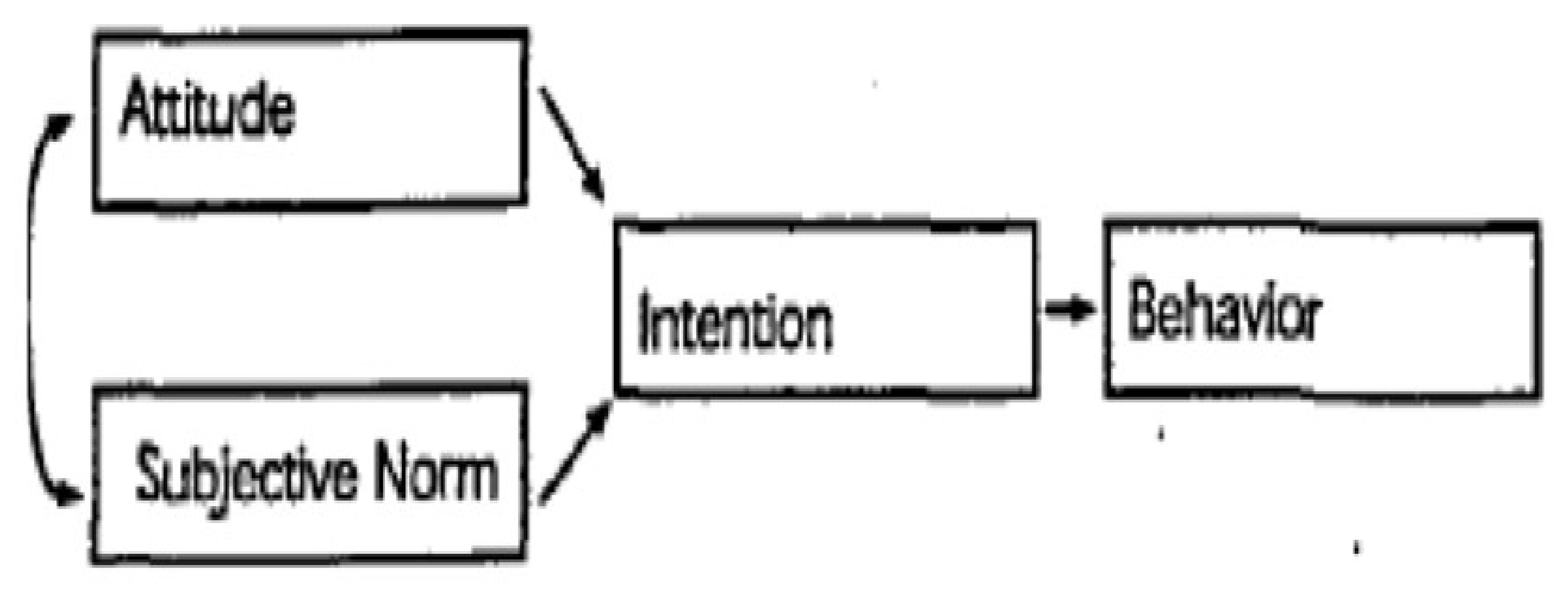
Ajzen’s Theory of Planned Behavior (TPB) [56], posits that behavioral intentions are the most immediate predictors of actual behavior, shaped by attitudes, perceived social expectations, and an individual’s sense of behavioral control. These theoretical approaches contribute to a deeper understanding of behavioral patterns by placing attitudes at the core of decision-making processes [57]. Despite this, there remains a shortage of research that thoroughly incorporates psychological factors into holistic assessments of park accessibility.
Psychological accessibility pertains to how people interpret and mentally process their surroundings [17]. Similar in spirit to the TPB, the Theory of Reasoned Action (TRA) by Fishbein and Ajzen as cited by Elliott et al. (2003) [58] suggests that attitudes and perceived social norms shape behavioral intentions, which in turn drive intentional actions. In this context, psychological accessibility and behavioral intention function as intrinsic motivators, acting as psychological variables that generate the impulse and preparedness to engage in specific behaviors [59]. Furthermore, psychological factors such as attitudes and social norms can significantly shape the quality of recreational engagement. For example, individuals' perceptions regarding running behaviors may influence their decision to engage in such activities and affect the overall quality of their experiences [60].
Figure 1.
The theory of reasoned action (TRA) model [61].
Figure 1.
The theory of reasoned action (TRA) model [61].
Psychological accessibility has been examined in the context of quality enhancement, functioning as a key benchmark for assessing the effectiveness of conservation and restoration initiatives [62,63]. Within transportation systems—an essential component of tourism and leisure activities—psychological accessibility is now recognized as a valuable analytical tool for planning and evaluating system quality [64]. Affective values have been shown to exert a stronger influence on visitor satisfaction and behavioral intentions than other forms of value, offering managers new insights for improving destination quality [65]. Alongside conventional transportation-related accessibility indicators such as distance, travel time, and cost, psychological accessibility has emerged as a critical measure for evaluating citizens’ access to urban park services [66]
Wang et al. (2015) [18] found that both perceived (psychological) and geographic (objective) accessibility are significant predictors of park visitation intent; however, perceived accessibility demonstrated markedly stronger predictive power than geographic proximity alone. A substantial body of evidence supports the positive correlation between proximity to parks and increased usage [42,67,68], suggesting that the strategic addition of neighborhood parks within walking distance could enhance park utilization.
Nevertheless, physical proximity is not the sole determinant of park use. Park characteristics—including size, facilities, and maintenance also serve as strong predictors. Larger parks have been associated with higher usage rates [42,69]. Additionally, the presence of attractive amenities and well-maintained spaces has been found to encourage park visitation [69,70]. While research clearly highlights the importance of physical elements such as location, size, and surrounding urban form, perceptual factors also play a crucial role. However, generalizing these findings can be difficult due to variations in how psychological factors are conceptualized and measured across studies.
Despite this, psychological variables influencing park usage generally fall into three categories: perceptions of distance, perceptions of park quality, and perceptions of the surrounding environment. Numerous studies have established a strong relationship between perceived proximity or availability of parks and actual use [14,71,72]. Positive perceptions of park quality encompassing safety [19,41,73], availability of various facilities [74,75], and opportunities for social interaction [14,19,76], also promote usage. Moreover, several studies indicate that perceptions of street connectivity, neighborhood amenities, and safety from crime and traffic significantly influence the frequency of park visits [19,77,78]. Figure 2 illustrates the conceptual framework of park accessibility.
Factors related to both park characteristics and individual user traits can influence perceptions of park accessibility and subsequent usage [3]. The perceived accessibility of parks is shaped by internal park features such as lighting, signage, facility placement, organized programs and activities, landscape design, and maintenance frequency [80]. Gobster (1998) [81] emphasized that the strategic placement of amenities like trails and playgrounds, along with proactive park management, plays a crucial role in attracting a diverse range of users. This underscores how thoughtful design and management practices can address the varied needs of local communities.
Furthermore, individuals from racially and culturally diverse backgrounds may find parks less appealing when the design is driven solely by aesthetic concerns [82]. These findings highlight the importance of culturally responsive and inclusive design in enhancing park appeal across diverse populations. In summary, the preceding discussion establishes that perceived accessibility holds greater significance than mere physical accessibility. Physical access alone does not guarantee increased urban park usage. For urban park management to optimize park performance, it is essential to account for the varied preferences of individuals and their psychological perceptions of the park environment [18].
2.4. Measurement Tools of Urban Parks Accessibility
To evaluate perceptual attributes influencing park use, all quantitative studies employed questionnaire-based surveys. These surveys were administered through various formats, including in-person, postal, telephone, and online methods. Mowen and Confer (2003) [72], for instance, utilized a hybrid approach involving both in-person and mail-back surveys, targeting park visitors with a pre-packaged questionnaire kit. Seven studies [18,20,76,83,85] conducted pilot surveys with small sample sizes to refine survey instruments.
Two studies grounded in the Theory of Planned Behavior [18,86] developed conceptual models and evaluated their validity using structural equation modeling. Wendel et al. (2012) [41] pre-tested interview questions, whereas Tucker et al. (2007) [87] emphasized that interviews may evolve over time to ensure participant understanding. Tucker and colleagues also proposed criteria such as trustworthiness, dependability, conformability, and transferability as essential for validating qualitative research in park accessibility. Additionally, they advocated for on-site data collection, arguing it yields more accurate responses than off-site surveys.
The qualitative studies reviewed employed comprehensive interview instruments. Most investigated general perceptions of park characteristics or perceived barriers to usage. A significant number of questions focused on suggested park improvements, while others explored specific elements such as user opinions, anticipated benefits, or personal motivations for using park amenities. Some studies examined perceived proximity by asking whether parks were located near respondents’ residences, while others assessed subjective park accessibility.
The second major category of investigation involved perceptions of park quality, including safety, aesthetics, upkeep, available facilities, activity options, and social ambiance. Among these, safety perceptions were most frequently assessed, followed by aesthetics, maintenance, and facilities. Surveys also considered the park as a social space, assessing whether users felt encouraged to visit with friends or family, or felt a general freedom to be present in the space. Two studies addressed perceptions of available information about parks. Additionally, seven studies explored neighborhood perceptions. Three focused specifically on neighborhood safety, while the remainder examined a broader set of neighborhood characteristics such as pedestrian access, protection from traffic and crime, visual appeal or cleanliness, and the presence of amenities like shops, restaurants, grocery stores, and public services.
In conclusion, the psychological accessibility of urban parks could be assessed through scientific methods such as surveys and interviews. Beyond these, a variety of methodological approaches have been documented. Gehl and Svarre (2013) [88] advocated direct observation as a primary tool in public space research, employing techniques like behavioral mapping, shadowing, and photographic analysis. Wendel et al. (2012) [41] suggested that pairing interviews with systematic behavioral observation offers a more nuanced understanding of park usage and user demographics. Furthermore, McCormack et al. (2010) [12] recommended a mixed-methods approach that combines quantitative surveys with qualitative techniques, such as interviews or observations. This integrative strategy can yield more comprehensive insights into both the physical and social dimensions of park use.
3. Materials and Methods
3.1. Data Collection and Analysis
This study used a desktop research technique to identify, gather, and examine relevant data from secondary sources and current literature accessible online. This strategy is increasingly preferred for its rapidity, cost-efficiency, enhancement of cooperation, and the wealth of online data [89]. The process consists of three iterative phases: (a) scoping, (b) collecting relevant documents, and (c) data analysis (Figure 3). During the scoping phase, the main emphasis was on comprehending the research issue and defining the study's objectives and parameters. This research aimed to investigate the manner in which physical and psychological factors interact to influence the accessibility of urban parks, with a particular across diverse socio-economic groups.
The second step included the discovery and acquisition of relevant documents from internet sources. To achieve this, pertinent keywords related to urban parks accessibility, including "perceived access to urban parks," "physical access to urban parks," "urban parks accessibility measures," and "urban park planning” were used throughout the literature study. These keywords were utilized to search for peer-reviewed academic publications (including journal articles, books, and conference proceedings) as well as gray literature (comprising newspapers, articles, datasets, statistics, technical reports, and website content from local government entities and international development organizations). Google Scholar and Scopus were selected as the principal databases for this inquiry because of their comprehensive coverage of scholarly literature. The criteria for document selection mandated that they: (a) correspond with the study objective of investigating urban parks accessibility, (b) be in English, and (c) have been published within the past two decades, although some older documents that addressed well-established concepts and approaches were also considered.
4. Results and Discussion
Accessibility encompasses both physical and non-physical dimensions [45,46]. This literature review reveals that promoting urban park usage requires designers and managers to consider not only geographic proximity but also the perceptual aspects of park accessibility.
The psychological dimension of accessibility has been categorized into several key perceptions: evaluations of park quality [62,63], perceived distance to the park [14,71,72], perceptions of aesthetics and cleanliness [69,70], perceptions of maintenance [69,70,80], perceptions of safety [19,41,73], and the perceived availability of diverse facilities [74,75].
While psychological accessibility plays a pivotal role, physical (or geographic) accessibility remains a fundamental metric in assessing citizens’ access to parks. Numerous studies have underscored its importance [3,9,41,43,44]. Taken together, the findings indicate that perceived (psychological) accessibility is a more consistent predictor of an individual’s intention to use urban parks than geographic proximity alone. This suggests that park accessibility is a complex issue shaped by both spatial and socio-personal elements, including safety concerns, social exclusion, and ethno-racial background. These findings align with Byrne and Wolch (2009) [3], who argue that public perceptions of parks are shaped by a variety of influences, such as historical patterns of park development and racialized experiences of access.
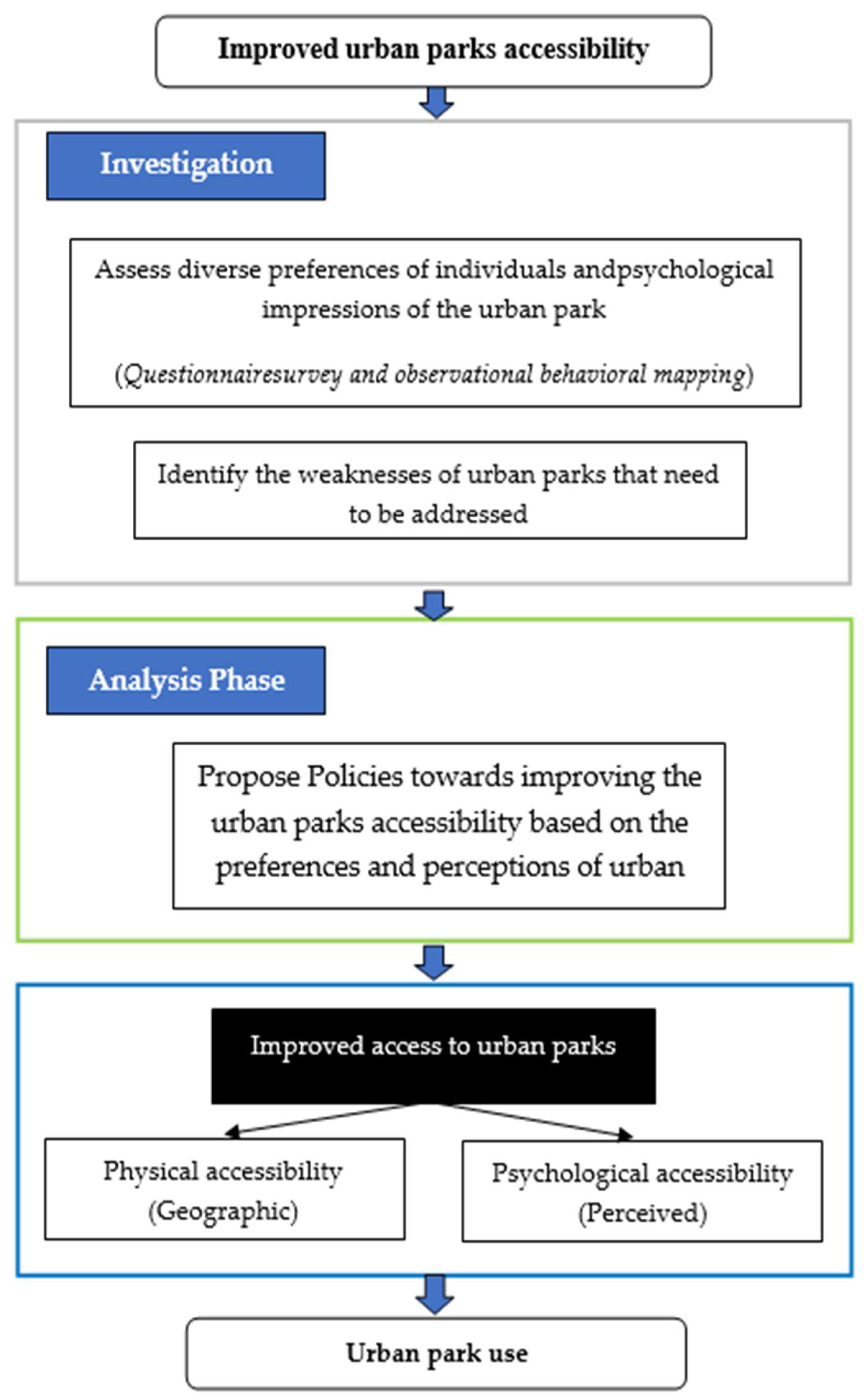
Figure 4 presents the study’s conceptual framework, which illustrates the interplay of psychological and physical accessibility in shaping park use. Recognizing perceived accessibility as a critical driver of park utilization supported by empirical evidence highlighting the multidimensional nature of accessibility [18] signals a need to expand or reorient urban accessibility research. To enhance urban quality of life through increased park engagement, planners and managers must address the diverse preferences and perceptions of park users, especially those from varied socio-economic backgrounds. The proposed framework aligns with the study conducted by Alnaim (2025) [31].
5. Conclusion
This study emphasizes the intertwined roles of physical and psychological accessibility in influencing urban park use. While spatial features such as proximity, walkability, and infrastructure provide the foundational framework for access, it is the subjective experience shaped by perceptions of safety, inclusivity, cleanliness, and crowding that ultimately determines whether parks are utilized. These psychological dimensions are not uniformly distributed; rather, they differ across socio-economic groups, with vulnerable populations often encountering greater perceived barriers even when physical proximity to parks exists. Positive perceptions can encourage frequent visitation and foster social interaction, whereas negative impressions may inhibit use, even when parks are conveniently located and well-equipped. This highlights the need to move beyond purely geographic notions of accessibility and to consider how individuals interpret and emotionally respond to urban spaces. However, the study is limited by its reliance on secondary sources and the absence of empirical validation. Additionally, it does not comprehensively address how cultural or regional contexts may influence perceptions of accessibility.
Future research should employ mixed-method and field-based approaches to capture the nuanced, lived experiences of diverse user groups. Longitudinal studies can also help trace how psychological accessibility evolves over time and varies across different urban settings. For urban planners and policymakers, the findings underscore the importance of designing parks that are not only physically reachable but also psychologically inviting. Integrating participatory planning processes and inclusive design principles can improve public perceptions, promote more frequent park use, and contribute to the development of healthier, more equitable, and livable urban environments.
Author Contributions
Conceptualization, A.A., U.L.D. and A.M.A.; methodology, A.A. and U.L.D.; software, A.A.; validation, A.A., U.L.D. and A.M.A.; formal analysis, A.A. and U.L.D.; investigation, A.A.; resources, A.A. and A.M.A.; data curation, A.A.; writing—original draft preparation, A.A. and U.L.D.; writing—review and editing, A.A. and A.M.A.; visualization, A.A.; supervision, U.L.D. and A.M.A.; project administration, A.A.; funding acquisition, A.A. All authors have read and agreed to the published version of the manuscript.
Funding
This research received no external funding.
Institutional Review Board Statement
The study was conducted in accordance with the Declaration of Helsinki, and the protocol was approved by the Ethics Committee of Imam Abdulrahman Bin Faisal University (Approval Code IRB-PGS-2025-06-0178) on March03, 2025.
Informed Consent Statement
Informed consent was obtained from all subjects involved in the study.
Data Availability Statement
The datasets generated and analyzed during the research are available with the corresponding author and can be furnished upon request.
Conflicts of Interest
The authors declare no conflicts of interest.
References
- UNFPA. (2007). State of world population 2007: Unleashing the potential of urban growth NY. United Nations Population Fund.
- Talen, E. (1997). The social equity of urban service distribution: An exploration of park access in Pueblo, Colorado, and Macon, Georgia. Urban Geography, 18(6), 521–541.
- Byrne, J., &Wolch, J. (2009). Nature, race, and parks: Past research and future direc- tions for geographic research. Progress in Human Geography, 33(6), 743–765.
- Brown, G., Schebella, M. F., & Weber, D. (2014). Using Participatory GIS to measure physical activity and urban park benefits. Landscape and Urban Planning, 121, 34–44. [CrossRef]
- Chiesura, A. (2004). The role of urban parks for the sustainable city. Landscape and Urban Planning, 68(1), 129–138. [CrossRef]
- Kim, D., Jin, J., 2018. Does happiness data say urban parks are worth it? Landsc. Urban Plan. 178, 1–11. [CrossRef]
- Ward Thompson, C., 2011. Linking landscape and health: the recurring theme. Landsc.Urban Plan. 99 (3), 187–195. [CrossRef]
- Campbell, L.K., Svendsen, E.S., Sonti, N.F., Johnson, M.L., 2016. A social assessment of urban parkland: analyzing park use and meaning to inform management and resi- lience planning. Environ. Sci. Policy 62, 34–44. [CrossRef]
- Nicholls, S. (2001). Measuring the accessibility and equity of public parks: A case study using GIS. Managing Leisure, 6,201–219. [CrossRef]
- Barbosa, O., Tratalos, J. A., Armsworth, P. R., Davies, R. G., Fuller, R. A., Johnson, P., & Gaston, K. J. (2007). Who benefits from access to green space? A case study from Sheffeld, UK. Landscape and Urban Planning, 83, 187–195. [CrossRef]
- Parra, D. C., Gomez, L. F., Fleischer, N. L., & Pinzon, J. D. (2010). Built environment characteristics and perceived active park use among older adults: Results from a multilevel study in Bogotá. Health & Place, 16, 1174–1181. [CrossRef]
- McCormack, G. R., Rock, M., Toohey, A. M., &Hignell, D. (2010). Characteristics of urban parks associated with park use and physical activity: A review of qualitative research. Health & Place, 16, 712–726. [CrossRef]
- Kaczynski, A. T., Potwarka, L. R., & Saelens, B. E. (2008). Association of park size, distance, and features with physical activity in neighborhood parks. American Journal of Public Health, 98, 1451–1456. [CrossRef]
- Ries, A. V., Voorhees, C. C., Roche, K. M., Gittelsohn, J., Yan, A. F., & Astone, N. M. (2009). A quantitative examination of park characteristics related to park use and physical activity among urban youth. The Journal of Adolescent Health, 45(Suppl. 3), 64–70. [CrossRef]
- Hansen, W. G. (1959). How accessibility shapes land use. Journal of the American Institute of Planners, 25, 73–76. [CrossRef]
- Weibull, J. W. (1976). An axiomatic approach to the measurement of accessibility. Regional Science and Urban Economics, 6, 357–379. [CrossRef]
- van der Vlugt, A.-L.; Curl, A.; Wittowsky, D. What about the People? Developing Measures of Perceived Accessibility from Case Studies in Germany and the UK. Appl. Mobilities 2019, 4, 142–162. [CrossRef].
- Wang, D., Brown, G., Liu, Y., & Mateo-Babiano, I. (2015). A comparison of perceived and geographic access to predict urban park use. Cities, 42, 85–96.
- Leslie, E., Cerin, E., & Kremer, P. (2010). Perceived neighborhood environment and park use as mediators of the effect of area socio-economic status on waiking behaviors. Journal of Physical Activity and Health, 7, 802–810.
- Stanis, S. A. W., Schneider, I. E., Shinew, K. J., Chavez, D. J., & Vogel, M. C. (2009). Physical activity and the recreation opportunity spectrum: Differences in important site attributes and perceived constraints. Journal of Park and Recreation Administration, 27, 73–91.
- Jenerette, D. G., Harlan, S. L., Stefanov, W. L., & Martin, C. A. (2011). Ecosystem services and urban heat riskscape moderation: Water, green spaces, and social inequality in Phoenix, USA. Ecological Applications, 21(7), 2637–2651. [CrossRef]
- Van Den Berg, M., Wendel-Vos, W., Van Poppel, M., Kemper, H., Van Mechelen, W., & Maas, J. (2015). Health benefits of green spaces in the living environment: A sys- tematic review of epidemiological studies. Urban Forestry & Urban Greening, 14(4), 806–816. [CrossRef]
- Walch, J. M., Rabin, B. S., Day, R., Williams, J. N., Choi, K., & Kang, J. D. (2005). The effect of sunlight on postoperative analgesic medication use: A prospective study of patients undergoing spinal surgery. Psychosomatic Medicine, 67(1), 156–163. [CrossRef]
- Heerwagen, J. (2009). Biophilia, Health and Well-being. In: Restorative Commons: Creating Health and Well-being through Urban Landscapes (pp. 39–57).
- Takano, T., Nakamura, K., & Watanabe, M. (2002). Urban residential environments and senior citizens’ longevity in megacity areas: The importance of walkable green spaces. Journal of Epidemiology and Community Health, 56(12), 913–918. [CrossRef]
- Richardson, E. A., Pearce, J., Mitchell, R., & Kingham, S. (2013). Role of physical activity in the relationship between urban green space and health. Public Health, 127(4), 318–324.
- Lafortezza, R., Carrus, G., Sanesi, G., & Davies, C. (2009). Benefits and well-being per- ceived by people visiting green spaces in periods of heat stress. Urban Forestry and Urban Greening, 8(2), 97–108.
- de Haan, L., & Zoomers, A. (2005). Exploring the frontier of livelihood research. Development and Change (January 2005).
- Maniruzzaman, K. M., Alqahtany, A., Abou-Korin, A., & Al-Shihri, F. S. (2021). An analysis of residents’ satisfaction with attributes of urban parks in Dammam city, Saudi Arabia. Ain Shams Engineering Journal, 12(3), 3365-3374.
- Alshehri, R. M., Alzenifeer, B. M., Alqahtany, A. M., Alrawaf, T., Alsayed, A. H., Afify, H. M. N., ... & Alshammari, M. S. (2025). Impact of Urban Green Spaces on Social Interaction Among People in Neighborhoods: Case Study for Jubail, Saudi Arabia.
- Alnaim, A., Dano, U. L., & Alqahtany, A. M. (2025). Framework for Enhancing Social Interaction Through Improved Access to Recreational Parks in Residential Neighborhoods in the Saudi Context: Case Study of Dammam Metropolitan Area.
- Alnaim, A., Dano, U. L., & Alqahtany, A. M. (2025). Factors Influencing Social Interaction in Recreational Parks in Residential Neighborhoods: A Case Study of the Dammam Metropolitan Area, Saudi Arabia. Sustainability, 17(9), 3810.
- MARUANI, T. & AMIT-COHEN, I. 2007. Open space planning models: A review of approaches and methods. Landscape and Urban Planning, 81, 1-13.
- DAVIES, R. G., BARBOSA, O., FULLER, R. A., TRATALOS, J., BURKE, N., LEWIS, D., WARREN, P. H. & GASTON, K. J. 2008. City-wide relationships between green spaces, urban land use and topography. Urban Ecosystems, 11, 269-287.
- MCCANN, B. A. & EWING, R. 2003. Measuring the health effects of sprawl: A national analysis of physical activity, obesity and chronic disease.
- ALFONZO, M., GUO, Z., LIN, L. & DAY, K. 2014. Walking, obesity and urban design in Chinese neighborhoods. Preventive medicine, 69, S79-S85.
- BADLAND, H., WHITZMAN, C., LOWE, M., DAVERN, M., AYE, L., BUTTERWORTH, I.,HES, D. & GILES-CORTI, B. 2014. Urban liveability: emerging lessons from Australia for exploring the potential for indicators to measure the social determinants of health. Social Science & Medicine, 111, 64-73.
- REYES, M., PÁEZ, A. & MORENCY, C. 2014. Walking accessibility to urban parks by children: A case study of Montreal. Landscape and Urban Planning, 125, 38-47.
- GOLD, S. M. 1973. Urban recreation planning. Journal of Health, Physical Education, Recreation, 44, 79-79.
- Gregory, D., Johnston, R., Pratt, G., Watts, M., & Whatmore, S. (2009). The dictionary of human geography (5th ed.). UK: Wiley-Blackwell.
- Wendel, H. E. W., Zarger, R. K., & Mihelcic, J. R. (2012). Accessibility and usability: Green space preferences, perceptions, and barriers in a rapidly urbaniz- ing city in Latin America. Landscape and Urban Planning, 107(3), 272–282. [CrossRef]
- Giles-Corti, B., Broomhall, M. H., Knuiman, M., Collins, C., Douglas, K., Ng, K., … Donovan, R. J. (2005). Increasing walking: How important is distance to, attractiveness, and size of public open space? American Journal of Preventive Medicine, 28(2 Suppl. 2), 169–176. [CrossRef]
- Gregory, D., Johnston, R. J., & Smith, D. M. (1986). The dictionary of human geography. Oxford: Blackwell Reference.
- Hass, K. (2009). Measuring accessibility of regional parks: A comparison of three GIS techniques. (Dissertation/thesis).
- Wang, D., Brown, G., & Mateo-Babiano, D. (2013). Beyond proximity: An integrated model of accessibility for public parks. Asian Journal of Social Sciences & Human- ities, 2(3), 486–498.
- Ferreira, A., & Batey, P. (2007). Re-thinking accessibility planning: A multi-layer conceptual framework and its policy implications. Town Planning Review, 78(4), 429–458.
- Aday, L. A., & Andersen, R. (1974). A framework for the study of access to medical care. Health Services Research, 9(3), 208–220.
- Ball, K., Jeffery, R. W., Crawford, D. A., Roberts, R. J., Salmon, J., & Tim- perio, A. F. (2008). Mismatch between perceived and objective measures of physical activity environments. Preventive Medicine, 47(3), 294–298. [CrossRef]
- Jones, A., Hillsdon, M., & Coombes, E. (2009). Greenspace access, use, and physi- cal activity: Understanding the effects of area deprivation. Preventive Medicine, 49(6), 500–505.
- McCormack, G., Cerin, E., Leslie, E., DuToit, L., & Owen, N. (2008). Objective versus perceived walking distances to destinations: Correspondence and predictive validity. Environment and Behavior, 40(3), 401–425.79–96.
- Scott, M., Evenson, K., Cohen, D., & Cox, C. (2007). Comparing perceived and objectively measured access to recreational facilities as predictors of phys- ical activity in adolescent girls. Journal of Urban Health, 84(3), 346–359. [CrossRef]
- Boehmer, T., Hoehner, C., Wyrwich, K., Brennan Ramirez, L., & Brownson, R. (2006). Correspondence between perceived and observed measures of neighborhood environmental supports for physical activity. Journal of Physical Activity and Health, 3, 22–36.
- Kruger, J., Carlson, S. A., & Kohl, H. W., III. (2007). Fitness facilities for adults: Dif- ferences in perceived access and usage. American Journal of Preventive Medicine, 32(6), 500–505. [CrossRef]
- Hoehner, C. M., Brennan Ramirez, L. K., Elliott, M. B., Handy, S. L., & Brownson, R. C. (2005). Perceived and objective environmental measures and physical activity among urban adults. American Journal of Preventive Medicine, 28(2), 105–116.
- Zondag, B., & Pieters, M. (2005). Influence of accessibility on residential location choice. Transportation Research Record, 1902(1), 63–70.
- Ajzen, I. The Theory of Planned Behavior. Organ. Behav. Hum. Decis. Process 1991, 50, 179–211. [CrossRef].
- Zhang, H.; Wang, E. Attitude and Behavior Relationship. Adv. Psychol. Sci. 2007, 1, 163–168.
- Elliott, M.A.; Armitage, C.J.; Baughan, C.J. Drivers’ Compliance with Speed Limits: An Application of the Theory of Planned Behavior. J. Appl. Psychol. 2003, 88, 964–972. [CrossRef].
- Malle, B.F.; Moses, L.J.; Baldwin, D.A. Intentions and Intentionality: Foundations of Social Cognition; MIT Press: Cambridge, MA, USA, 2001.
- Pereira, H.V.; Palmeira, A.L.; Encantado, J.; Marques, M.M.; Santos, I.; Carraça, E.V.; Teixeira, P.J. Systematic Review of Psychological and Behavioral Correlates of Recreational Running. Front. Psychol. 2021, 12, 624783. [CrossRef].
- FISHBEIN, M. & AJZEN, I. 1975. Belief, attitude, intention and behavior: An introduction to theory and research. Reading, MA: Addison-Wesley.
- Pan, Y.; Zhang, Z.; Tian, X. Research on the Changnanjing Historical Trail Protection Effect and Its Priority Improvement Strategy Based on Psychological Accessibility/Pan Yujuan, Zhang Zhengtao, Tian Xiangyang. Planners 2020, 36, 72–77+86.
- Li, L.; Gao, T.; Wang, Y.; Jin, Y. Evaluation of Public Transportation Station Area Accessibility Based on Walking Perception. Int. J. Transp. Sci. Technol. 2023, in press. [CrossRef].
- Lättman, K.; Olsson, L.E.; Friman, M. A New Approach to Accessibility—Examining Perceived Accessibility in Contrast to Objectively Measured Accessibility in Daily Travel. Res. Transp. Econ. 2018, 69, 501–511. [CrossRef].
- Oriade, A.; Schofield, P. An Examination of the Role of Service Quality and Perceived Value in Visitor Attraction Experience. J. Destin. Mark. Manag. 2019, 11, 1–9. [CrossRef].
- Lu, Y.; Deng, J.; Han, G.; Lei, J. A study on multidimensional accessibility dynamics assessment ofurban parks. Chin. Landsc. Archit. 2022, 38, 92–97.
- Grow, H. M., Saelens, B. E., Kerr, J., Durant, N. H., Norman, G. J., & Sallis, J. F. (2008). Where are youth active? Roles of proximity,active transport, and built environment. Medicine and Science in Sports and Exercise, 40, 2071–2079. [CrossRef]
- Kaczynski, A. T., & Henderson, K. A. (2007). Environmental correlates of physical activity: A review of evidence about parks and recreation. Leisure Sciences, 29, 315–354. [CrossRef]
- Cohen, D. A., Marsh, T., Williamson, S., Derose, K. P., Martinez, H., Setodji, C., & McKenzie, T. L. (2010). Parks and physical activity:.
- Floyd, M. F., Spengler, J. O., Maddock, J. E., Gobster, P. H., &Suau, L. J. (2008). Park-based physical activity in diverse communities of two U.S. cities: An observational study. American Journal of Preventive Medicine, 34, 299–305. [CrossRef]
- Akpinar, A. (2016). How is quality of urban green spaces associated with physical activity and health? Urban Forestry & Urban Greening, 16, 76–83. [CrossRef]
- Mowen, A. J., & Confer, J. J. (2003). The relationship between perceptions, distance, and socio-demographic characteristics upon public use of an urban park “In-Fill”. Journal of Park and Recreation Administration, 21, 58–74.
- Borumand, M., & Rezaee, S. (2014). Evaluating the performance of the parks of women in promoting the gender equality in cities case study: Madar Park of Women in Tehran 15th municipal district. Indian Journal of Scientific Research, 4, 280–290.
- Brorsson, A., Ohman, A., Lundberg, S., & Nygard, L. (2011). Accessibility in public space as perceived by people with Alzheimer’s disease. Dementia, 10, 587–602. [CrossRef]
- Kemperman, A. D. A. M., & Timmermans, H. J. P. (2006). Preferences, benefits, and park visits: A latent class segmentation analysis. Tourism Analysis, 11, 221–230. [CrossRef]
- Özgüner, H. (2011). Cultural differences in attitudes towards urban parks and green spaces. Landscape Research, 36, 599–620. [CrossRef]
- Koohsari, M. (2013). Public open space and walking: The role of proximity, perceptual qualities of the surrounding builtenvironment, and street configuration. Environment and Behavior, 45, 706–736. [CrossRef]
- Westley, T., Kaczynski, A. T., Stanis, S. A. W., & Besenyi, G. M. (2013). Parental neighborhood safety perceptions and their children’s health behaviors: Associations by child age, gender and household income. Children, Youth and Environment, 23, 118–147. [CrossRef]
- Park, K. (2017). Psychological park accessibility: a systematic literature review of perceptual components affecting park use. Landscape research, 42(5), 508-520.
- Reynolds, K. D., Wolch, J., Byrne, J., Chou, C.-P., Feng, G., Weaver, S., et al. (2007). Trail characteristics as correlates of urban trail use. American Journal of Health Promotion, 21(4s), 335L 345.
- Gobster, P. H. (1998). Urban parks as green walls or green magnets? Interracial rela- tions in neighborhood boundary parks. Landscape and Urban Planning, 41(1), 43–55.
- Loukaitou-Sideris, A., & Stieglitz, O. (2002). Children in Los Angeles parks: A study of equity, quality and children’s satisfaction with neighbourhood parks. The Town Planning Review, 73(4), 467–488. [CrossRef]
- Jim, C. Y., & Chen, W. Y. (2006). Recreation–amenity use and contingent valuation of urban greenspaces in Guangzhou, China. Landscape and urban planning, 75(1-2), 81-96.
- Fermino, R. C., Reis, R. S., Hallal, P. C., & de Farias Júnior, J. C. (2013). Perceived environment and public open space use: a study with adults from Curitiba, Brazil. International Journal of Behavioral Nutrition and Physical Activity, 10(35), 1–10. [CrossRef]
- Cohen, D., & Han, B. (2016). The paradox of parks in low-income areas park use and perceived threats. Environment and Behavior, 48, 230–245. [CrossRef]
- Wan, C., & Shen, G. (2015). Encouraging the use of urban green space: The mediating role of attitude, perceived usefulness and perceived behavioural control. Habitat International, 50, 130–139. [CrossRef]
- Tucker, P., Gilliland, J., & Irwin, J. D. (2007). Splashpads, swings, and shade: Parents’ preferences for neighbourhood parks. Canadian Journal of Public Health, 98, 198–202.
- Gehl, J., & Svarre, B. (2013). How to study public life. Washington, DC: Island Press.
- Balogun, A. L., Adebisi, N., Abubakar, I. R., Dano, U. L., andTella, A. (2022). Digitalization for transformative urbanization, climate change adaptation, and sustainable farming in Africa: trend, opportunities, and challenges. Journal of Integrative Environmental Sciences, 19(1), 17-37.
Figure 2.
Park accessibility conceptual framework [79].
Figure 2.
Park accessibility conceptual framework [79].
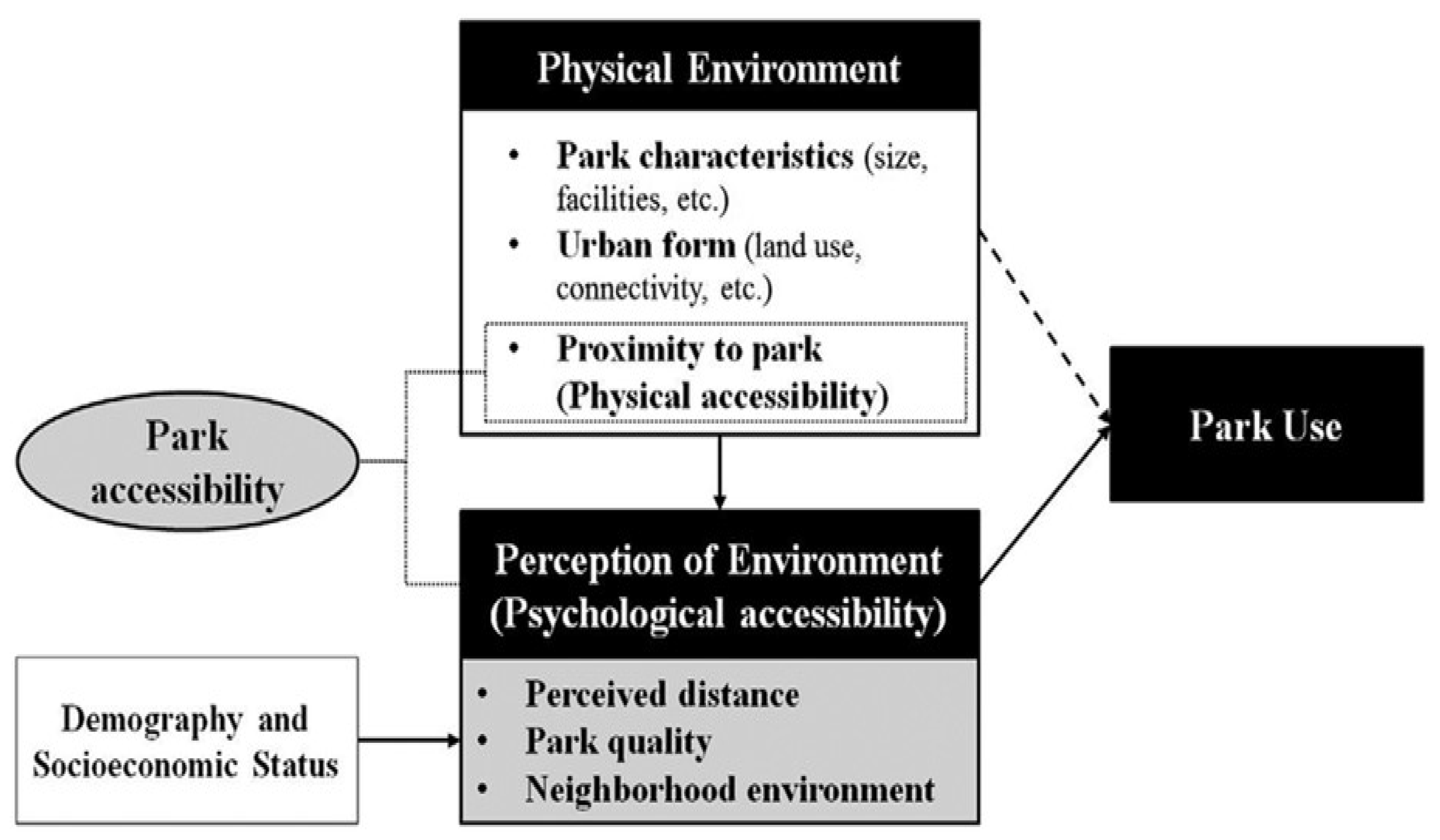
Figure 3.
The study flowchart illustrating the research methodology - modified from [89].
Figure 3.
The study flowchart illustrating the research methodology - modified from [89].
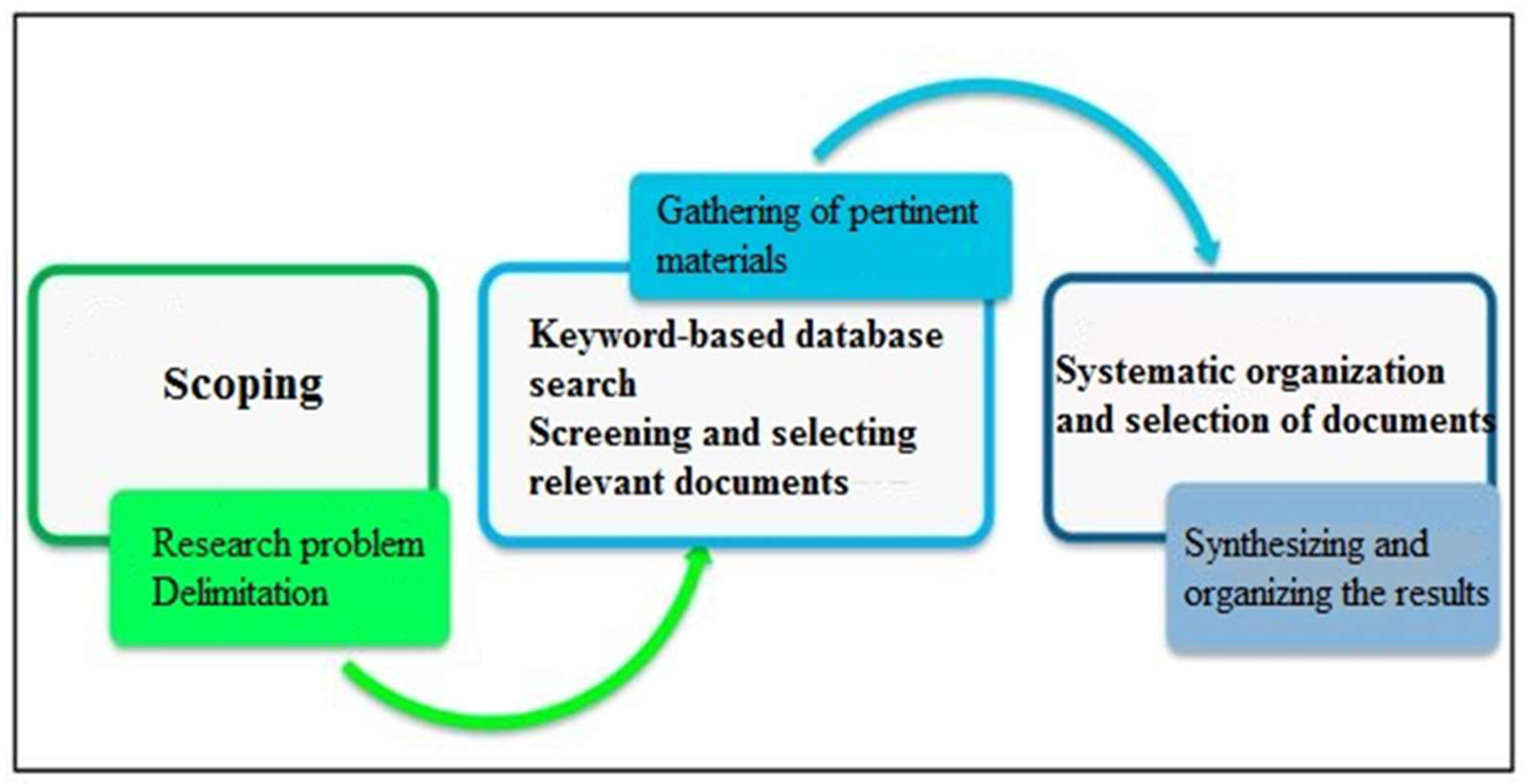
Figure 4.
Conceptual framework for improved urban park accessibility (Source: authors).
Disclaimer/Publisher’s Note: The statements, opinions and data contained in all publications are solely those of the individual author(s) and contributor(s) and not of MDPI and/or the editor(s). MDPI and/or the editor(s) disclaim responsibility for any injury to people or property resulting from any ideas, methods, instructions or products referred to in the content. |
© 2025 by the authors. Licensee MDPI, Basel, Switzerland. This article is an open access article distributed under the terms and conditions of the Creative Commons Attribution (CC BY) license (http://creativecommons.org/licenses/by/4.0/).
Copyright: This open access article is published under a Creative Commons CC BY 4.0 license, which permit the free download, distribution, and reuse, provided that the author and preprint are cited in any reuse.


