
Submitted:
03 May 2025
Posted:
05 May 2025
You are already at the latest version
Abstract
The Palma Cathedral, a landmark of Mediterranean Gothic architecture, features some of the most structurally daring slender piers in European ecclesiastical design. This study examines the role of marés stone—a local marine calcarenite—in enabling such architectural feats, despite its inherent fragility. A multi-technique, non-invasive diagnostic campaign was conducted, including visual inspection, portable microscopy, and infrared thermography, to evaluate the physical condition and behavior of the stone under structural and environmental stress. Results reveal widespread deterioration processes—granular disintegration, alveolization, biological colonization, and structural cracking—exacerbated by the stone’s high porosity and exposure to marine aerosols and thermal fluctuations. Thermographic analysis highlighted moisture retention zones and hidden material discontinuities, while crack monitoring confirmed long-standing, localized structural strain. These findings demonstrate that the Cathedral’s formal audacity was grounded in a refined empirical understanding of marés properties. The study underscores the importance of material-based diagnostics for the sustainable conservation of Gothic heritage architecture.
Keywords:
marés stone
; Gothic architecture
; Palma Cathedral
; calcarenite
; structural diagnosis
; infrared thermography
; stone deterioration
; slender piers
; heritage conservation
1. Introduction
The Palma Cathedral, known as La Seu, stands as one of the crowning achievements of Mediterranean Gothic architecture and a key reference within Europe’s built heritage. Construction began in 1229, following the Christian conquest of Madina Mayurqa by James I of Aragon —James I the Conqueror— [1], and continued for several centuries, well into the 17th century [2]. From its inception, the building served not only a liturgical and symbolic role, but also emerged as a territorial emblem of power [3], dominating the Palma coastline with its monumental silhouette and orientation toward the bay (Figure 1).
Architecturally, La Seu follows a basilican layout comprising three naves, with side chapels nestled between buttresses, a wide transept that is not articulated in plan, and a deep polygonal apse. The central nave rises to a height of 44 meters at the apex of the vault—placing it among the tallest in European Gothic architecture [4]. The generous window openings, slender masonry walls, and predominance of vertical supports create a spatial experience that is open, luminous, and uplifting—embodying the spiritual ideals of the Gothic tradition [5]. Elements such as the main rose window—one of the largest in Gothic architecture, with a diameter exceeding 11 meters—the Baroque pulpit, ornamental sculpture, and contemporary interventions by Antoni Gaudí and Miquel Barceló, together compose a visually rich and stratified architectural narrative [6].
Yet beyond its symbolic and artistic value, the Cathedral of Mallorca presents a unique structural achievement: the construction of the slenderest Gothic piers documented in the Christian world [4]. The eight main piers of the central nave, octagonal in section and lacking attached colonettes (Figure 2), reach 21 meters in height with a diameter of only 1.5 meters—yielding a slenderness ratio (height/diameter) of 14. This surpasses the ratios recorded in other major Gothic cathedrals such as Beauvais, Cologne, or Chartres [7] (Table 1). Such extreme proportions demanded rigorous control of vertical loads, lateral thrusts, and the mechanical behavior of the construction material—pushing the limits of what was technically feasible at the time [8]. As such, these piers, and the cathedral's structural system as a whole, represent not only a technical feat, but a statement: that Gothic architecture in the Mediterranean region was capable of reinterpreting the ideals of verticality using vernacular materials and regionally adapted formal solutions [9].
The material that made this structural feat possible was mares stone, a marine-origin calcarenite abundant in Mallorca [10], known for its workability, relatively low density, and high porosity [11]. Marés sandstone is neither compact nor homogeneous; it is a living material—irregular and sensitive to environmental agents [12]. Nonetheless, in expert hands and under a refined constructive logic, it supported one of the most daring structural ensembles in Gothic Christendom [13]. The slenderness of La Seu’s piers depends not only on their geometric design [14], but on a profound understanding of the physical and mechanical behavior of mares sandstone, combined with precise technical execution [4].
Figure 3 presents a detail of structural elements characteristic of Gothic architecture [15], all carved from marés stone. The image highlights the visual continuity of the material across structural and decorative components, as well as the chromatic variations associated [12] with differential aging processes.
The present study offers a diagnostic reinterpretation of the building through analysis of the very material that made it possible. An in situ research campaign employed visual inspection techniques, portable microscopic observation, systematic photographic documentation, and thermographic analysis to assess the conservation state of mares sandstone, identify active or incipient deterioration processes, and understand its behavior under load, moisture, and thermal variability.
Far from being a mere pathology survey, this work approaches marés sandstone as an architectural agent [16]—its intrinsic nature having both constrained and enabled the form, balance, and structural logic of Palma Cathedral [8] (Figure 3). At a time when material sustainability and environmental adaptation are once again central to architectural discourse, understanding how a fragile yet optimized regional material could sustain one of Gothic architecture’s most ambitious undertakings also offers a valuable contemporary lesson.
2. Materials and Methods
This research is based on an in situ material characterization and diagnostic campaign conducted on the stone masonry of Palma Cathedral, with particular attention to areas subject to heightened environmental and structural stress. The adopted methodology is grounded in a multi-technique, non-invasive approach, applied according to topological suitability criteria—that is, considering the degree of exposure, accessibility, and structural function of each element.
The objective was not merely to describe pathologies, but to assess the current performance of marés sandstone as a load-bearing stone in a building that pushes the physical limits of its materials, particularly in the slender piers of the central nave. The study integrates techniques of varying scale and nature, from direct inspection to infrared thermography, with an emphasis on correlating empirical observation with technical data.
2.1. Visual Inspection and Photographic Documentation
A comprehensive technical survey was carried out on the cathedral’s exterior masonry, including perimeter walls, buttresses, flying buttresses, pinnacles, and base courses. The analytical approach followed a logic focused on identifying deterioration patterns linked to atmospheric agents, gravity, moisture, and salts, all of which have particularly aggressive effects on marés sandstone in coastal urban environments [17]. The inspection aimed to detect both active and stabilized degradation processes, including: surface disintegration, alveolization, material loss, cracking, crust formation (calcareous or biogenic), biodeterioration, and damage resulting from incompatible restoration interventions [11].
Photographic documentation was structured using a direct photogrammetric methodology, incorporating physical scales, contextual references, and consistent angles to enable longitudinal comparisons and subsequent thermographic analysis. Inside the building, only structural elements showing evidence of active or historical damage were documented—such as vertical longitudinal fissures in the central nave piers—excluding surfaces with aesthetic interventions or those considered structurally and visually stable.
2.2. Portable Microscopic Observation of the Stone Substrate
In representative sectors of the exterior masonry, portable digital optical microscopy was applied for in situ observation of the marés sandstone texture. This technique enabled close examination of granular morphology, distribution and aperture of intergranular pores, condition of carbonate cementation, presence of microfractures, differential dissolution, and early signs of biological colonization. Observation points were selected to include both original material in acceptable condition and zones exhibiting active alteration.
This technique was not applied to the interior surfaces, as it was deemed unnecessary from a pathological standpoint and methodologically inappropriate given the general state of conservation, the stable indoor thermal conditions, and the low incidence of active erosive processes in these areas.
2.3. Infrared Thermography
Infrared thermography was applied exclusively to the cathedral’s exterior masonry, as its physical principles—based on detecting minimal variations in surface thermal emission—require fluctuating environmental conditions to yield interpretable results. A mid-range FLIR thermal imaging camera was used, calibrated for daytime captures at different times of day, with priority given to periods of thermal transition (sunrise, midday, sunset).
The resulting thermograms enabled the identification of zones exhibiting differential cooling (associated with internal moisture accumulation or material disaggregation), areas with heterogeneous thermal behavior (potential material replacement or structural variation), and thermal loss lines compatible with active cracking or internal microfracturing. Particular attention was paid to the bases of vertical walls—ashlars in contact with the ground or adjacent to structural joints—and singular architectural elements such as pinnacles, which have reduced thermal mass and higher exposure.
Thermography was not conducted indoors for obvious reasons: the interior lacks the thermal conditions required for reliable and comparable data—namely, environmental uniformity, minimal direct solar radiation, and limited thermal amplitude.
2.4. Monitoring of Crack Markers and Structural Fissures
Several longitudinal cracks were observed in the structural piers of the central nave, some of which bore gypsum crack monitors from previous monitoring campaigns. Each monitor was documented in terms of quantity, position, state of preservation, aperture width, and—where legible—the installation date. These monitors represent a traditional passive control system, and their inclusion in this study allows for an evolutionary reading of certain structural pathologies.
No new markers were installed, nor were fissure gauges employed; however, the collected data provide a basis for assessing the relative stability of some lesions and support recommendations for more systematic future monitoring efforts.
2.5. Construction Context and Documentary Review
Finally, the study includes a critical review of bibliographic, technical, and graphic documentation concerning the historical construction of the Cathedral and the traditional use of marés stone in the Balearic architectural context. This contextual foundation enables the interpretation of marés sandstone not as a limited material choice, but as an optimized technological response capable of meeting the most demanding structural requirements of Mediterranean Gothic architecture. Particularly relevant is the understanding of marés sandstone as a structural stone in the design of extremely slender piers—an achievement that would not have been possible without an empirical, in-depth knowledge of its physical properties and behavior under load.
3. Results
3.1. Characterization of the Stone Material
Marés stone is a detrital sedimentary rock classified as a calcarenite—that is, a calcareous sandstone composed primarily of bioclastic grains (fragments of marine organisms such as mollusks, red calcareous algae, corals, and foraminifera) bound together by calcium carbonate cement [12]. It forms through the lithification of sediments deposited in shallow marine or coastal environments, mainly during the Miocene epoch [10], and is widely distributed throughout the Balearic Islands, particularly in Mallorca and Menorca [18].
Structurally, marés sandstone is characterized by a soft and highly porous matrix, with total porosity exceeding 35%, which makes it a lightweight and easily workable material. Its bulk density typically ranges between 1.5 and 1.8 g/cm³, depending on its stratigraphic origin and the quarry of extraction [12]. The constituent particles measure between 0.1 and 2 mm in diameter and are arranged heterogeneously, resulting in an open, granular, and anisotropic texture [19].
The color of marés stone ranges from ochre to beige, light golden, or pinkish hues, influenced by the presence of iron oxides, residual organic matter, or secondary cementation [20]. Over time, the surface may darken due to aging processes or prolonged exposure to atmospheric pollutants in urban or coastal environments [21].
Mechanically, marés sandstone exhibits low to medium compressive strength (ranging from 2 to 12 MPa) and anisotropic behavior, with planes of weakness typically aligned with bedding layers or grain orientation [11]. Its response to wetting and drying cycles is particularly critical: it readily absorbs water but is prone to swelling, localized dissolution, and salt crystallization—factors that render it highly susceptible to deterioration by hydric and saline weathering [22].
This set of characteristics explains why marés sandstone was historically valued as a construction material in Mallorca—for its availability, lightness, and ease of carving—while also underscoring the need for careful conservation when used in exposed architectural contexts [13]. The porous structure of marés stone is visible to the naked eye and is marked by substantial variability in pore size, shape, and distribution [10]. Its workability has long been one of its greatest advantages in construction [20], yet this same porosity makes it highly vulnerable to moisture absorption [23], acid rain dissolution, salt crystallization, and biodeterioration [17].
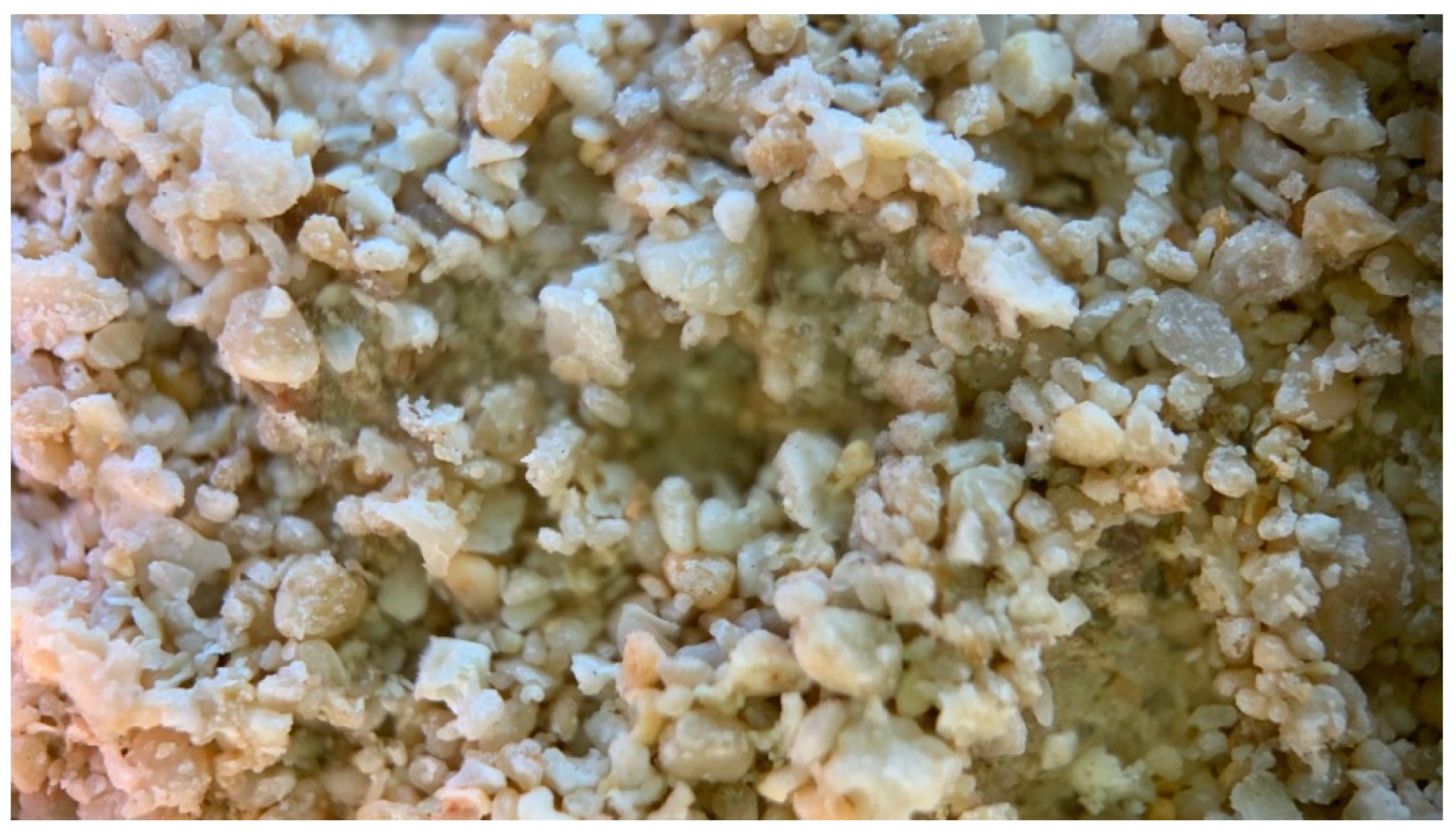
In situ observations identified several distinct textural types, both in original ashlars and in pieces that had been repaired or restored. Images obtained using a portable magnifying lens revealed wide intergranular voids, uncemented grain boundaries, and areas showing early signs of dissolution. In some cases, fine particle accumulation or incipient biological colonization was observed in the most open pores.
Figure 4.
Detail of a marés sandstone sample showing its porous texture and granulometric variability. The key provides an approximate scale. The open structure is characteristic of marés sandstone from coastal quarries (photograph by the author).
Figure 4.
Detail of a marés sandstone sample showing its porous texture and granulometric variability. The key provides an approximate scale. The open structure is characteristic of marés sandstone from coastal quarries (photograph by the author).
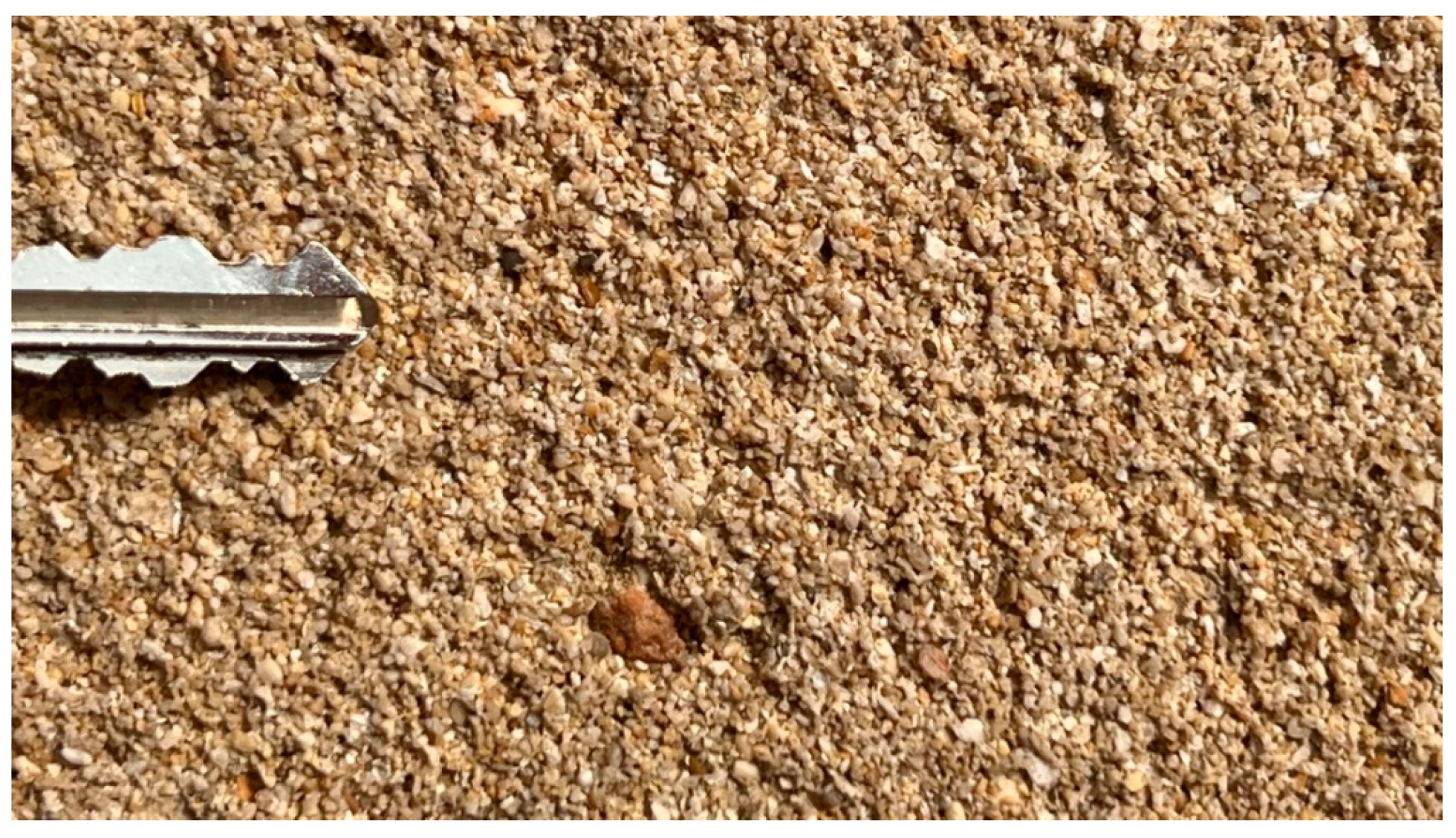
Figure 5.
Enlarged image of an ashlar captured with a digital loupe. Rounded bioclastic grains, poor cementation, and interconnected channels are visible, all of which promote capillary action and moisture retention (photograph by the author).
Figure 5.
Enlarged image of an ashlar captured with a digital loupe. Rounded bioclastic grains, poor cementation, and interconnected channels are visible, all of which promote capillary action and moisture retention (photograph by the author).
Below is a comparative table of the typical physical and mechanical properties of marés sandstone, supplemented with a comparison to other calcareous stones commonly used in historical architecture, such as compact limestone and travertine.

Table 2.
Physical–mechanical properties of marés sandstone compared with other calcareous stones.
| Property | Marés sandstone (calcarenite) | Compact Limestone (e.g., Villamayor) | Travertine |
|---|---|---|---|
| Bulk density (g/cm³) | 1.5 – 1.8 | 2.3 – 2.7 | 2.3 – 2.5 |
| Open porosity (%) | 25 – 40 | 5 – 15 | 10 – 20 |
| Compressive strength (MPa) | 2 – 12 | 30 – 100 | 20 – 60 |
| Capillarity (g/m²·s½) | High | Low | Medium |
| Frost resistance | Very low | High | Medium |
| Workability | High | Medium | Medium |
| Durability in exterior exposure | Low (humid/saline) | High | High |
| Predominant color | Light ochre, beige, pinkish | Cream, white, greyish | Pale beige, yellowish |
| Geological formation | Miocene, marine | Mesozoic, continental/marine | Quaternary, chemical precipitation |
Source: Author’s compilation based on accessible bibliographic data.
The values listed for mares stone are approximate and can vary significantly depending on the quarry, degree of cementation, grain type, and age of extraction. Despite its intrinsically low strength, it was historically used for vertical structural elements thanks to its relative lightness and the precise geometric design of architectural components—such as the slender piers of the Cathedral—carefully dimensioned to optimize load distribution.
The high porosity of mares sandstone, combined with its absorbent capacity, helps to explain many of the pathologies observed in the building, such as granular disintegration, salt crust formation, alveolization, and biological colonization [11], which will be examined in the following section.
3.2. Alteration Processes in Marés Stone
Visual analysis of the stone masonry of Mallorca Cathedral has revealed a wide range of alteration processes affecting the ashlar blocks in different ways (Figure 6).
As a porous and bioclastic lithological material, marés sandstone is particularly vulnerable to deterioration under aggressive environmental conditions such as those found in Palma de Mallorca: a humid to sub-humid climate, constant exposure to marine aerosols, sharp thermal contrasts across façades, and limited ventilation in certain areas of the structure [24]. These factors, combined with the intrinsic physical properties of the material, give rise to a series of recurring pathological mechanisms observed in the stonework of the Cathedral [25]. The main types of deterioration identified are detailed below [11]:
3.2.1. Surface or Granular Disintegration
This is one of the most characteristic decay processes in mares sandstone, easily recognized by the powdering or flaking of the material at the surface [20]. At the Cathedral, it is found on both exterior and interior surfaces, especially in shaded and humid areas. The origins of this disintegration include:
- Dissolution of the calcitic cement between grains due to mildly acidic rainfall or internal condensation [26];
- Rapid drying cycles that generate internal pore tensions;
- Repeated episodes of capillary absorption followed by evaporation, which mobilize soluble salts from the interior to the surface [27].
The result is a progressive thinning of the stone’s outer layer, aesthetic degradation, and, in the medium term, a weakening of its mechanical resistance.
3.2.2. Alveolization and Localized Erosion
Alveolization is an advanced form of disintegration characterized by concave, irregular cavities with softened edges, most visible on surfaces exposed to marine winds. This erosive process results from a combination of [11]:
These cavities (Figure 7) not only diminish the building’s visual integrity but also reduce the structural cross-section of affected elements, especially in sculpted or molded components.
3.2.3. Structural Cracking and Thermal Microcracking
Vertical cracks—either continuous or segmented—were identified in certain piers and load-bearing zones. These fissures may have two origins:
- Structural, caused by differential movement or accumulated deformation over the centuries;
- Thermo-hygroscopic, resulting from irregular expansions of the marés sandstone in areas with sharp humidity or temperature gradients.
The Cathedral shows evidence of gypsum crack monitors installed during previous monitoring campaigns (some of them dated), confirming that these fissures have been under technical surveillance. Cracking may lead to water infiltration, biological colonization, and progressive loss of cohesion between stone blocks.
3.2.4. Formation of Surface Crusts (Calcareous and Biogenic)
In areas protected from rain—particularly moldings, cornices, and the upper sections of interior walls—surface crusts have been observed [4]. These may be classified as:
- Calcareous crusts, formed by the surface precipitation of calcium carbonate following dissolution and recrystallization. These harden the surface but obstruct the stone’s breathability;
- Black crusts, of atmospheric or biogenic origin, resulting from the accumulation of urban pollutants or the activity of fungi, algae, and bacteria—especially in humid or poorly ventilated environments [30].
These crusts alter the stone’s permeability and create a barrier effect that traps moisture beneath the surface [8], thereby accelerating internal decay.
3.2.5. Incompatible Interventions and Restoration Materials
In some areas of the building, repairs have been carried out using materials incompatible with the original mares stone [11]:
- Cement or hydraulic lime mortars that are denser and less permeable;
- Replacement blocks of stone with differing nature or texture;
- Partial renders that do not respect the substrate’s porosity.
Rather than halting deterioration, these interventions have introduced points of thermal and hygroscopic stress, causing detachment, peripheral microcracking [31], and accelerated decay of adjacent marés sandstone.
Many of these alterations, while visible on the surface, also exhibit thermal signatures that can be detected through infrared imaging [31]. The thermographic analysis—presented in the following section—allows for the identification of thermal behavior anomalies that corroborate the interpretation of active or developing degradation processes [32].
Analysis reveals that many of these deterioration mechanisms act simultaneously and synergistically—in other words, the presence of one pathology often facilitates or accelerates the emergence of others [21]. For example, disintegration promotes moisture accumulation; moisture, in turn, creates favorable conditions for biological activity; and this feedback loop results in a gradual loss of the stone’s effective volume. Accurate identification and classification of these phenomena are essential for planning appropriate and sustainable conservation strategies.
These forms of decay compromise not only the local stability of individual elements but also the material and aesthetic continuity of the monument. The combined use of visual inspection, thermographic analysis, and crack monitoring enables the establishment of degradation patterns that must be systematically monitored to inform durable intervention designs.
3.3. Thermographic Analysis
Infrared thermography does not replace visual inspection or material analysis [33], but it serves as a highly valuable complementary diagnostic tool—especially effective in detecting incipient deterioration processes, moisture retention zones, or internal discontinuities not visible to the naked eye [34].
Applied to the masonry of Palma Cathedral, infrared thermography enabled the detection and characterization of pathologically relevant areas not always apparent through visual observation [31]. In a stone like marés sandstone —highly porous and thermally anisotropic—thermal response variations can indicate changes in density, moisture content, internal cohesion, and the presence of fissures.
3.3.1. Thermal Behavior of Marés Sandstone: Principles and Interpretation
Marés sandstone exhibits low thermal inertia and high open porosity, making it particularly sensitive to heat flow and moisture presence. Its heat capacity is low when dry but changes significantly when saturated. This leads to:
- Moist areas retaining heat during the day and cooling more rapidly at night due to evaporation;
- Cracks or disaggregations that generate thermal discontinuities, visible as cold lines or distinct contrasts;
- Restored areas with mortars or stones of differing thermal density displaying divergent behavior despite chromatic similarity.
Such thermal patterns enable inference of internal alterations, even in the absence of visible surface damage.
3.3.2. Capture Conditions and Instrument Calibration
The thermographic campaign focused exclusively on exterior walls, where direct solar exposure and natural ventilation create differentiated thermal conditions. A calibrated FLIR thermal camera was used with the following constant parameters:
- Emissivity: 0.95
- Measurement distance: 1 m
- Reflected temperature: 22 °C
- Atmospheric temperature: 20 °C
- Relative humidity: 50%
- Atmospheric transmission: 0.99
- External optical temperature: 25 °C
- External optical transmission: 0.8
Image acquisition prioritized the cooling periods (late afternoon/shaded conditions), where thermal contrasts between wet and dry zones are more pronounced. Constant calibration ensured homogeneity across the image set.
3.3.3. Thermal Results and Observed Patterns
Thermograms obtained from walls and structural elements (especially buttresses) revealed a set of distinct thermal behaviors [35], interpreted as indicators of potential material deterioration:
- Vertical thermal gradients in exterior buttresses and piers, with pronounced cooling at the base. Figure 8 shows a thermal difference of over 6 °C between the base (7.8 °C) and the upper section (14.0 °C), indicative of rising damp or moisture accumulation in the lower wall sections. This temperature contrast, recorded without direct solar radiation, suggests retained capillary moisture likely due to the marés’ active porosity and lack of a horizontal damp-proof course.
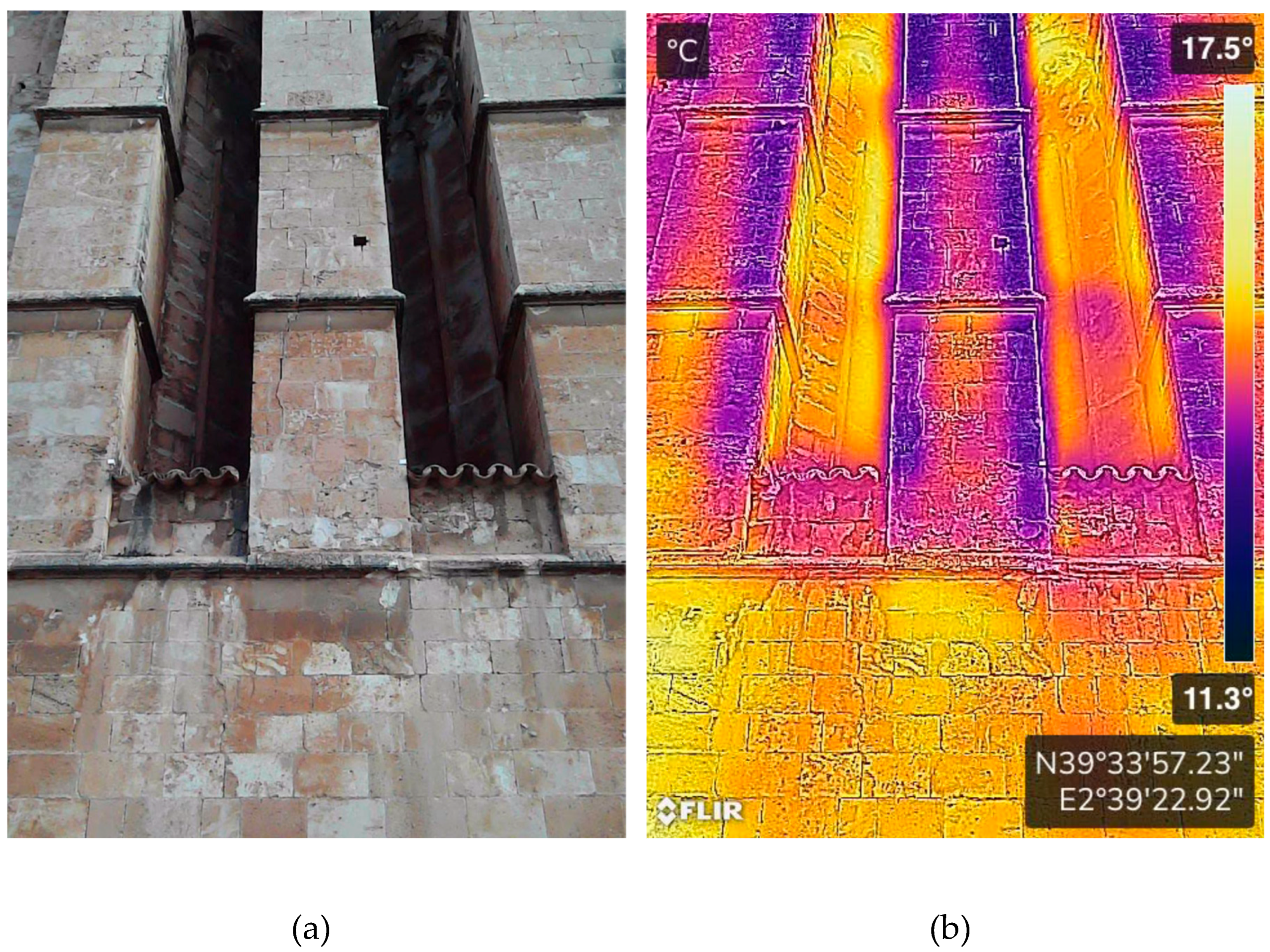
- Localized cold spots with no relation to joints or construction geometry. As shown in Figure 9, some areas display temperatures over 5 °C lower than their immediate surroundings—interpreted as retained moisture or internal stone disaggregation.
Figure 9.
Photograph (a) and thermogram (b) showing a isolated cold thermal spots on exterior buttresses. Several zones show significantly lower temperatures (11.3 °C) than adjacent elements (up to 17.5 °C), indicating retained moisture or internal disintegration (FLIR image by the author).
Figure 9.
Photograph (a) and thermogram (b) showing a isolated cold thermal spots on exterior buttresses. Several zones show significantly lower temperatures (11.3 °C) than adjacent elements (up to 17.5 °C), indicating retained moisture or internal disintegration (FLIR image by the author).
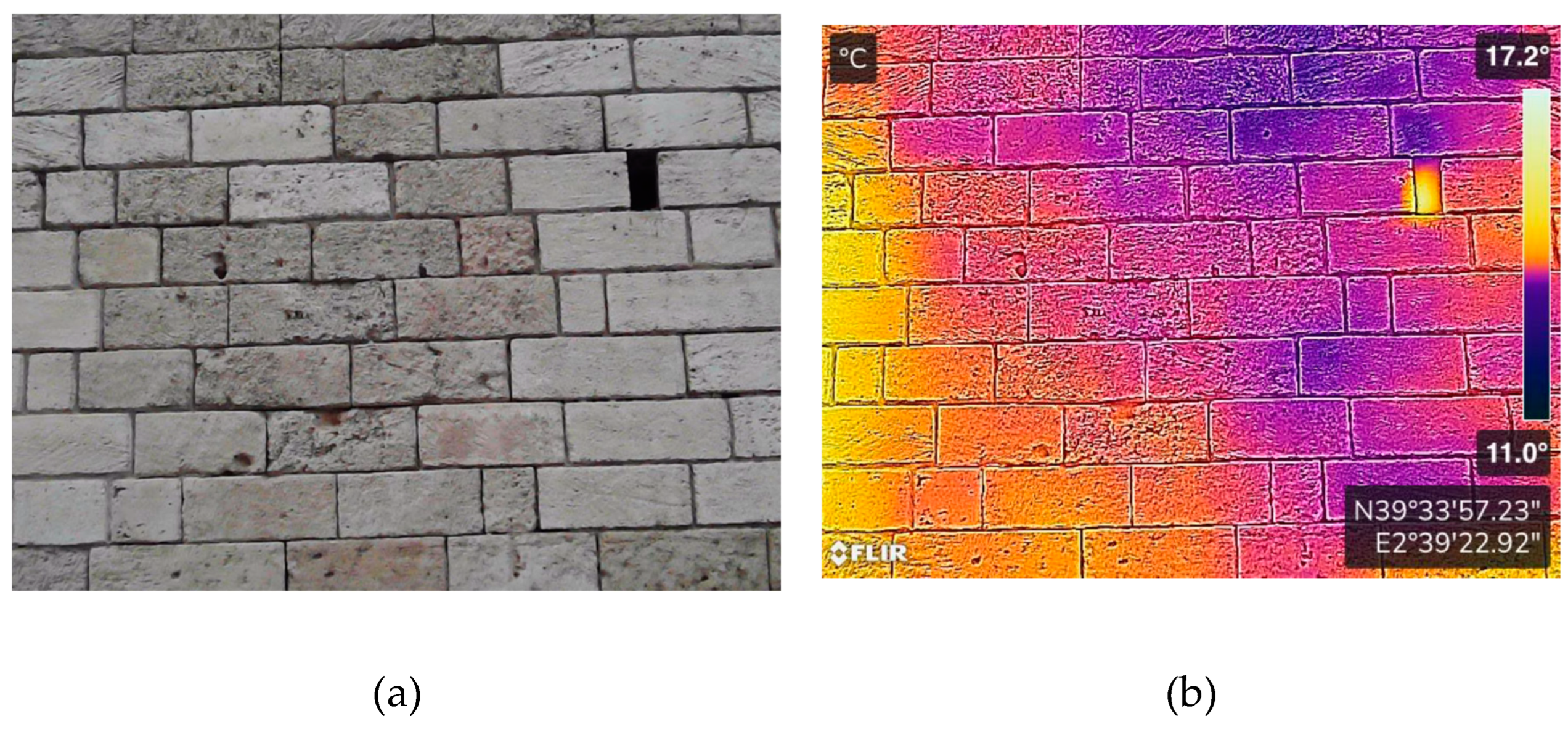
- Thermal contrasts between adjacent ashlar blocks, revealing incompatible repairs or stone replacements. Figure 10 shows blocks with a thermal response of 20.3 °C—deviating from the dominant wall pattern (15–17 °C)—suggesting differences in density, porosity, or surface treatment.
Figure 10.
Photograph (a) and thermogram (b) showing a thermal contrast between adjacent ashlars. Despite visual homogeneity, certain blocks show significantly higher temperatures (20.3 °C) than their surroundings (15–17 °C), suggesting incompatible repairs or materials with distinct thermal properties (FLIR image by the author).
Figure 10.
Photograph (a) and thermogram (b) showing a thermal contrast between adjacent ashlars. Despite visual homogeneity, certain blocks show significantly higher temperatures (20.3 °C) than their surroundings (15–17 °C), suggesting incompatible repairs or materials with distinct thermal properties (FLIR image by the author).
- Generalized thermal heterogeneity, attributable to accumulated microstructural differences due to differential disaggregation. Figure 11 displays an irregular thermal pattern unrelated to geometry, suggesting progressive, uneven loss of cohesion among stone units.
3.3.4. Diagnostic Interpretation and Visual Correlation
In all analyzed cases, thermal anomalies correlate with visual observations, known pathologies, or previously hypothesized issues. Thermography’s ability to detect:
- Invisible active moisture,
- Incipient structural damage,
- Hidden incompatible materials,
makes it a valuable tool for preventive diagnosis—especially in situations where surface signs of deterioration have not yet manifested.
The correlation between thermographic data and in situ observations is strong: in most instances, thermal anomalies spatially coincide with visible damage (disintegration, cracking, material substitutions), and in others, they help anticipate areas at risk.
3.3.5. Future Applications in Preventive Conservation
Thermography should be integrated into routine monitoring campaigns—particularly for materials like marés stone, whose thermal behavior is closely tied to their degradation [36]. As demonstrated above, thermography is well-suited to [36]:
- Generate vulnerability maps of heterogeneous masonry,
- Confirm visually formulated diagnostic hypotheses,
- Identify incompatible restoration materials.
Due to its sensitivity to internal moisture, thermography can also serve as an indirect indicator of progressive disaggregation—particularly useful for porous stones exposed to intense thermal cycles, as is common in Palma’s climate. Its systematic use can help to:
- Establish seasonal thermal baselines,
- Assess the effectiveness of interventions,
- Prioritize critical areas for structural studies or laboratory testing.
In the case of Palma Cathedral, the results justify incorporating thermography as a diagnostic tool in future monitoring campaigns, particularly for plinths, buttresses, material replacements, and visually inaccessible zones.
3.4. Observation of Cracks and Monitoring Markers
During interior visual inspection, several linear lesions were identified affecting vertical structural elements—primarily the octagonal piers of the central nave [14]. These cracks exhibit a predominantly vertical or slightly inclined orientation, with a continuous path crossing multiple ashlar blocks and no signs of recent infill or repair [4]. In some cases, they extend longitudinally over three meters, from the base to the upper sections of at least one face of the pier.
A notable feature in several of these instances is the presence of gypsum monitoring markers from earlier interventions, used to passively track fissure activity. One such marker, located on the west face of a pier (Figure 12), shows partial fracturing, while two others arranged vertically remain intact. The oldest bears a date inscription from 1999, indicating that structural movement has been monitored for at least a quarter century.
The morphology and continuity of these fissures—crossing stone blocks rather than following mortar joints—suggest they result from structural mechanisms rather than simple material degradation. Possible causes include:
- Historical differential settlement;
- Accumulated horizontal thrusts;
- Stress from thermal fluctuations;
- Structural deformation related to the piers’ extreme slenderness.
Despite their rudimentary nature, the gypsum markers provide valuable information: the fact that not all are fractured suggests potential stabilization, though it does not eliminate the need for more rigorous monitoring using modern tools (fissure gauges, laser scanning, or deformation sensors). Their presence also reflects a localized, historical awareness of structural risk.
From a thermal perspective, some of these cracks correlate with exterior thermograms, where vertical cold lines may suggest internal fissures or material discontinuities. However, given the absence of interior thermographic imaging, such interpretations remain preliminary.
In summary, these fissures represent a critical indicator of the building’s structural condition—especially in light of the exceptional slenderness of the piers and the inherent fragility of mares sandstone. While no recent activity has been confirmed, their geometry, location, and dimensions justify their classification as priority control points for future structural conservation programs.
4. Discussion
The findings of this study allow for a nuanced and multidimensional interpretation of the current condition of the marés stone used in the Palma Cathedral, as well as of the structural behavior of the elements built with it. This interpretation goes beyond a mere catalog of material damage; it seeks to understand the interplay between the intrinsic characteristics of the stone, external environmental conditions, historical construction choices, and the cumulative effects of degradation processes.
First, the porous, bioclastic, and weakly cemented nature of marés sandstone explains both its ease of carving and its suitability for slender structural elements. However, these same qualities render it highly vulnerable to atmospheric agents: ambient humidity, marine salinity, thermal contrasts, and direct solar exposure all act cumulatively on a stone with low mechanical strength and high capillary absorption capacity. The combination of internal anisotropy, connected porosity, and lithological variability accounts for the heterogeneous responses observed even among adjacent ashlars.
Visual inspection, complemented by in situ microscopic observation, has revealed decay processes typical of exposed calcarenitic materials: surface disintegration, alveolization, volume loss, secondary cementation crusts, and biological colonization. These alterations are not randomly distributed; rather, they follow patterns dictated by orientation, exposure, natural ventilation, wetting regimes, and original architectural design. The most critical areas are south- and southeast-facing walls, where maximum solar exposure, marine aerosol deposition, and steep hygrothermal gradients coincide.
In this context, infrared thermography has made it possible to identify areas exhibiting thermal anomalies compatible with moisture accumulation or internal density loss. Exterior piers display pronounced vertical thermal gradients, with cooling at the base—indicative of capillary rise or moisture retention—and lateral variations attributable to textural differences or incompatible repairs. In several cases, thermally active zones coincide with visually altered areas or with typological changes in the masonry, reinforcing the value of thermography as a predictive diagnostic tool.
The fissures observed in interior piers present a complementary issue: they do not stem from surface disintegration but from deep structural mechanisms. Their vertical alignment, continuity across ashlars, and the presence of long-standing gypsum markers indicate that they are known and monitored lesions, likely related to historical settlement, structural deformation, or slight eccentricities in vault thrust distribution. Although no recent activity has been detected, their location—in highly slender, load-bearing elements—makes them a top priority in any future conservation strategy.
In sum, the Palma Cathedral is not only undergoing a process of material aging, but also subject to an ongoing tension between its ambitious structural design—based on extremely slender marés sandstone piers—and the limited long-term durability of the material under adverse environmental conditions. The slenderness of the piers, while emblematic of Mediterranean Gothic formal expression, is also a critical condition that depends fundamentally on the continued material integrity of mares sandstone.
Consequently, conservation strategies must aim not only to mitigate surface decay, but also to ensure the structural continuity of the most vulnerable elements by means of:
- Periodic thermal monitoring across contrasting seasons (winter/summer);
- Review and update of crack monitoring markers using more precise technologies;
- Minimally invasive interventions compatible with the stone’s nature;
- Detailed study of pillar kinematics through modeling or passive instrumentation.
A material reading of the monument reveals that its monumentality lies not only in its scale, but in the technical precision with which structural limits were resolved using a fragile, local material. Understanding this relationship between matter, form, and decay enables more effective conservation and offers insight into historical construction knowledge as a valuable reference for contemporary sustainable practices.
5. Conclusions
The analysis of marés stone in the Palma Cathedral provides a comprehensive understanding of its structural, material, and symbolic role within one of the most exceptional works of European Gothic architecture. Far from being a mere vernacular choice, the use of marés sandstone represented a deliberate technical solution, capable of meeting the structural demands of a building whose scale and slenderness push the Gothic system to its very limits.
This research has shown that marés—a marine calcarenite with high porosity and moderate strength—was used with a profound understanding of both its potential and its limitations. Its relative lightness and ease of carving enabled medieval builders to design piers of minimal section and exceptional height (21 meters with only 1.5 meters in diameter), achieving a slenderness ratio of 14:1, unprecedented among its Gothic contemporaries. Such a structural feat would not have been possible without empirical mastery of the material’s behavior and highly precise execution.
From a diagnostic standpoint, the study has identified a range of alteration processes typical of porous calcareous materials under severe environmental conditions: surface disintegration, alveolization, secondary cementation crusts, biodeterioration, and structural cracking. Visual inspection revealed morphological patterns varying by orientation, geometry, and structural function. Microscopic analysis highlighted the stone’s heterogeneous internal structure and the presence of incipient dissolution and salt accumulation in intergranular pores. Thermographic imaging proved valuable in detecting thermal anomalies consistent with moisture accumulation, density loss, or hidden cracking.
The identification of structural fissures in certain interior piers—some with gypsum markers installed decades ago—indicates that there are significant, though apparently stabilized, lesions that must be monitored using current technologies to rule out ongoing displacement or deformation. Given their location in key load-bearing components, these cracks must be addressed not only as pathologies, but as integral elements of the building’s structural equilibrium.
Taken together, these findings suggest that the Palma Cathedral exemplifies a model of materially bold and structurally sophisticated architecture. The choice of marés sandstone was not a concession to local availability, but a strategic commitment to an architecture that maximized the performance of a regional material through geometric design, functional adaptation, and accumulated construction expertise.
From a heritage perspective, this work underscores the necessity of multi-technique diagnostic approaches capable of correlating surface and structural processes, thermal behavior, and construction logic. Only through such a comprehensive understanding can conservation strategies be developed that respect the material rationale of the building and extend its integrity without compromising its identity.
Finally, interpreting marés sandstone as an active agent in architectural form invites a rethinking of the role of traditional materials in contemporary construction. In an era defined by the need for sustainability, circularity, and climate adaptation, in-depth knowledge of local materials—their vulnerabilities and structural capabilities—can offer valuable guidance for a future architecture that is more grounded, more intelligent, and above all, more aware of its limits.
Conflicts of Interest
The author declare no conflicts of interest.
References
- B. A. Catlos, “James I, Medieval Catalonia, and the Mediterranean Perspective,” Catalan Rev., vol. 37, no. 1, pp. 105–113, 2023. [CrossRef]
- M. de Castro, C. Ortiz, and A. Rotger, Catedral de Mallorca. 2024.
- J. Domenge i Mesquida, “La arquitectura en el reino de Mallorca, 1450-1550. Impresiones desde un mirador privilegiado,” Artigrama, no. 23, pp. 185–239, 2008. [CrossRef]
- A. Elyamani and P. Roca, “One Century of Studies for the Preservation of One of the Largest Cathedrals Worldwide: a Review,” Sci. Cult., vol. 4, no. 2, pp. 1–24, 2018. [CrossRef]
- R. Bork and M. Schurr, “Gothic Architecture,” Art Hist., 2018. [CrossRef]
- R. A. Cram and J. Quingles, La Catedral de Mallorca : un estudio arquitectónico. 2018. [Online]. Available: https://discovery.upc.edu/iii/encore/record/C__Rb1519915__SLA catedral de Mallorca__Orightresult__U__X7?lang=cat.
- L. T. Courtenay, “The Engineering of Medieval Cathedrals,” Eng. Mediev. Cathedrals, pp. 1–360, 2016. [CrossRef]
- P. Roca, “Studies on the structure of Gothic Cathedrals,” in Historical constructions., 2001, pp. 71–90. [Online]. Available: http://www.civil.uminho.pt/masonry/Publications/Historical constructions/page 71-90 _Roca_.pdf.
- C. W. Condit and R. Mark, “Experiments in Gothic Structure,” Technol. Cult., vol. 24, no. 2, p. 261, 1983. [CrossRef]
- V. Galváñ-Llopis and M.-J. Ferrer-Graciá, “La piedra del Marés: un material humano,” Re. Rev. Edif., vol. 26, pp. 54–57, 2019. [CrossRef]
- J. M. García de Miguel, Tratamiento y conservación de la piedra, el ladrillo y los morteros en monumentos y construcciones. 2009.
- G. Mas Gornals, “Hacia una tipología de la piedra de marés de Mallorca. Concepto, caracterización y estratigrafía,” Bol. Geol. y Min., vol. 128, no. 2, pp. 301–328, 2017. [CrossRef]
- G. Mas Gornals, “Towards a typology of the mares sandstone of Mallorca. Concept, characterization and stratigraphy,” Boletín Geológico y Min., vol. 128, no. 2, pp. 301–328, 2017. [CrossRef]
- S. Huerta Fernández, “The Cathedral of Palma de Mallorca, a Wonder of Equilibrium Rubió i Bellver’s Equilibrium Analysis of 1912,” Art Vaulting, pp. 165–202, 2019. [CrossRef]
- D. T. Lavinia, “Flying Buttresses and the Artistic Expression of Vertical Ambition in Gothic Church Architecture,” Art Soc., vol. 3, no. 4, pp. 1–12, 2024. [CrossRef]
- C. Salvà Matas, “La memòria d’un paisatge gravat: les pedreres de marès, empremta territorial del paisatge identitari de Mallorca,” Identidades Territ. Cult. Patrim., no. 4, pp. 15–44, 2013. [CrossRef]
- R. Fort González, “La contaminación atmosférica en el deterioro del patrimonio monumental: medidas de prevención,” in Ciencia, Tecnología y Sociedad para una conservación sostenible del patrimonio pétreo, no. March, 2007, pp. 57–71. [Online]. Available: http://hdl.handle.net/10261/8322.
- C. Jaume and J. J. Fornos, “Composició i textura dels sediments de platja del litoral mallorqui,” Bolleti la Soc. d’Historia Nat. les Balear., vol. 35, pp. 93–110, 1992, [Online]. Available: https://ibdigital.uib.cat/greenstone/collect/bolletiHistoriaNatural/index/assoc/Bolleti_/1992v035/p093.dir/Bolleti_1992v035p093.pdf.
- R. Fort, M. J. Varas, M. Alvarez de Buergo, and D. Martin-Freire, “Determination of anisotropy to enhance the durability of natural stone,” J. Geophys. Eng., vol. 8, no. 3, pp. S132–S144, 2011. [CrossRef]
- D. Benavente et al., “Influence of Surface Roughness on Color Changes in Building Stones,” Color Res. Appl., vol. 28, no. 5, pp. 343–351, 2003. [CrossRef]
- R. Rodríguez Elizalde, “Stone Materials in Facades: Most Important Deterioration and Treatment,” in Facade Engineering - Concepts, Materials, Techniques and Principles of Construction, 2025. [CrossRef]
- S. Graus, G. Vasconcelos, and C. Palha, “Experimental Characterization of the Deterioration of Masonry Materials Due to Wet and Dry and Salt Crystallization Cycles,” RILEM Bookseries, vol. 18, pp. 687–695, 2019. [CrossRef]
- D. Benavente, “Why Pore Size Is Important in the Deterioration of Porous Stones Used in the Built Heritage,” Rev. la Soc. Esp. Mineral., vol. 15, no. 15, pp. 41–42, 2011.
- H. Morillas, M. Maguregui, E. Gallego-Cartagena, I. Marcaida, N. Carral, and J. M. Madariaga, “The influence of marine environment on the conservation state of Built Heritage: An overview study,” Sci. Total Environ., vol. 745, 2020. [CrossRef]
- T. C. Dakal and S. S. Cameotra, “Microbially induced deterioration of architectural heritages: Routes and mechanisms involved,” Environ. Sci. Eur., vol. 24, no. 1, 2012. [CrossRef]
- E. Gil, Á. Mas, C. Lerma, and J. Vercher, “Exposure Factors Influence Stone Deterioration by Crystallization of Soluble Salts,” Adv. Mater. Sci. Eng., vol. 2015, 2015. [CrossRef]
- S. Onofri, L. Zucconi, D. Isola, and L. Selbmann, “Rock-inhabiting fungi and their role in deterioration of stone monuments in the Mediterranean area,” Plant Biosyst., vol. 148, no. 2, pp. 384–391, 2014. [CrossRef]
- P. M. Amaral, J. C. Fernandes, V. Pires, and L. G. Rosa, “Ornamental stones,” Mater. Constr. Civ. Eng. Sci. Process. Des., pp. 397–445, 2015. [CrossRef]
- R. M. Espinosa-Marzal and G. W. Scherer, “Advances in understanding damage by salt crystallization,” Acc. Chem. Res., vol. 43, no. 6, pp. 897–905, 2010. [CrossRef]
- A. Elyamani, O. Caselles, P. Roca, and J. Clapes, “Dynamic investigation of a large historical cathedral,” Struct. Control Heal. Monit., vol. 24, no. 3, 2017. [CrossRef]
- A. Elyamani, O. Caselles, P. Roca, and J. Clapes, “Integrated dynamic and thermography investigation of Mallorca cathedral,” Mediterr. Archaeol. Archaeom., vol. 18, no. 1, pp. 221–236, 2018. [CrossRef]
- C. Lerm, A. Mas, E. Gil, J. Vercher, and M. J. Peñalver, “Pathology of building materials in historic buildings. Relationship between laboratory testing and infrared thermography,” Mater. Constr., vol. 64, no. 313, 2014. [CrossRef]
- R. Rodríguez Elizalde, “Comprehensive Technical Inspection of a Medieval Bridge (Ponte de Vilanova, in Allariz) Using Microtechnological Tools,” Eng, vol. 5, no. 4, pp. 3259–3283, 2024. [CrossRef]
- R. Rodríguez Elizalde, “Auscultation Techniques of Constituent Materials of Monuments and Ancient Constructions: Immediate Techniques and Instrumental Techniques,” J. Mater. Polym. Sci., vol. 2, no. 4, Dec. 2022. [CrossRef]
- R. Rodríguez Elizalde, “Assessment of Architectural Heritage and Historic Structures Through Aerial Thermography,” Rev. Gestão Soc. E Ambient., vol. 18, no. 10, 2024. [CrossRef]
- R. Rodríguez Elizalde, “Thermography Applied to Damage Diagnosis over Monuments and Ancient Constructions,” J. Mater. Sci. Eng. Technol., vol. 1, no. 1, pp. 1–6, 2023. [CrossRef]
Figure 1.
General view of Palma Cathedral, located on the Bay of Palma de Mallorca (photograph by the author).
Figure 1.
General view of Palma Cathedral, located on the Bay of Palma de Mallorca (photograph by the author).
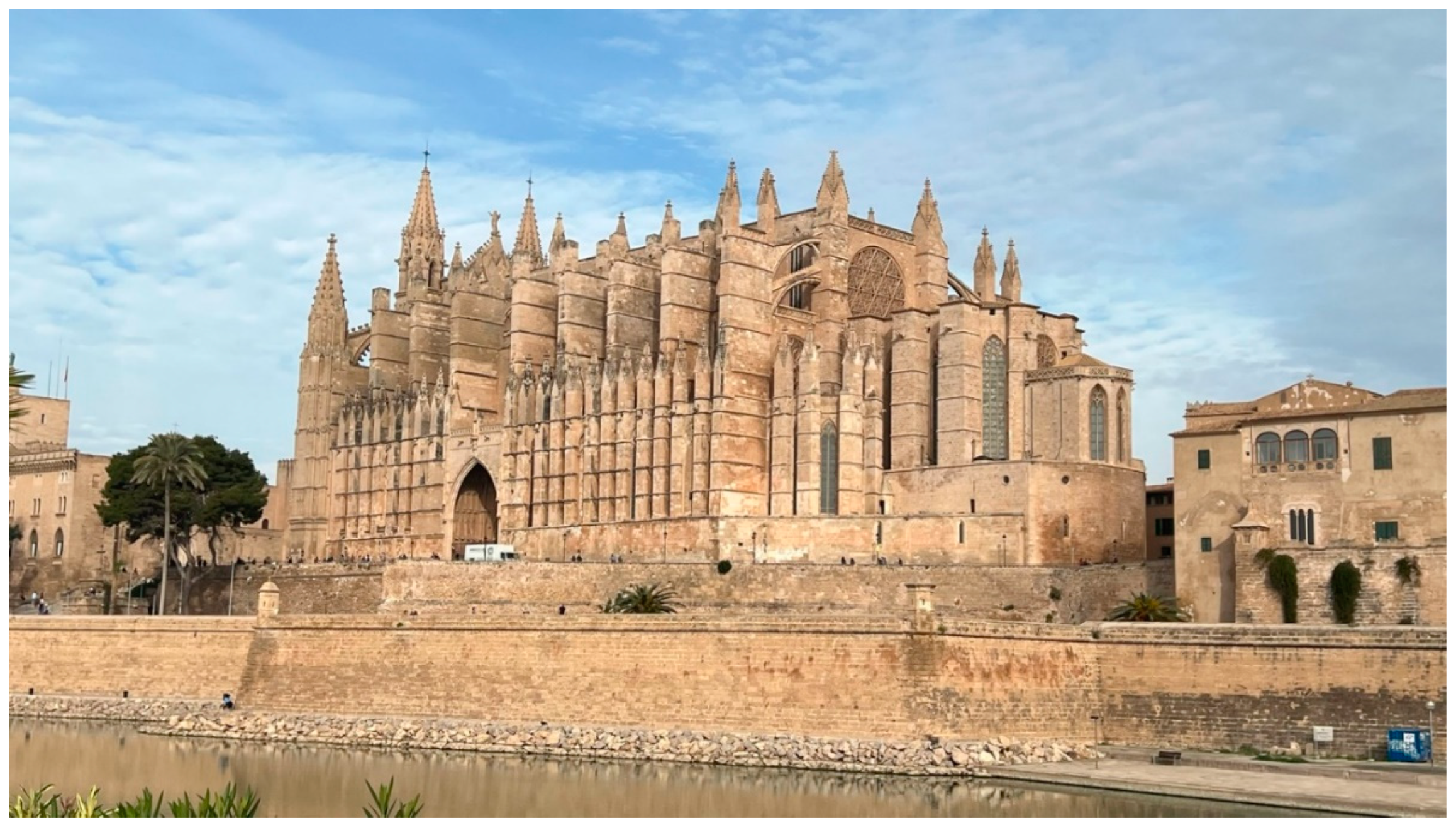
Figure 2.
General interior view of Palma Cathedral, taken from one of the side aisles, showing the slender octagonal piers supporting the structure (photograph by the author).
Figure 2.
General interior view of Palma Cathedral, taken from one of the side aisles, showing the slender octagonal piers supporting the structure (photograph by the author).
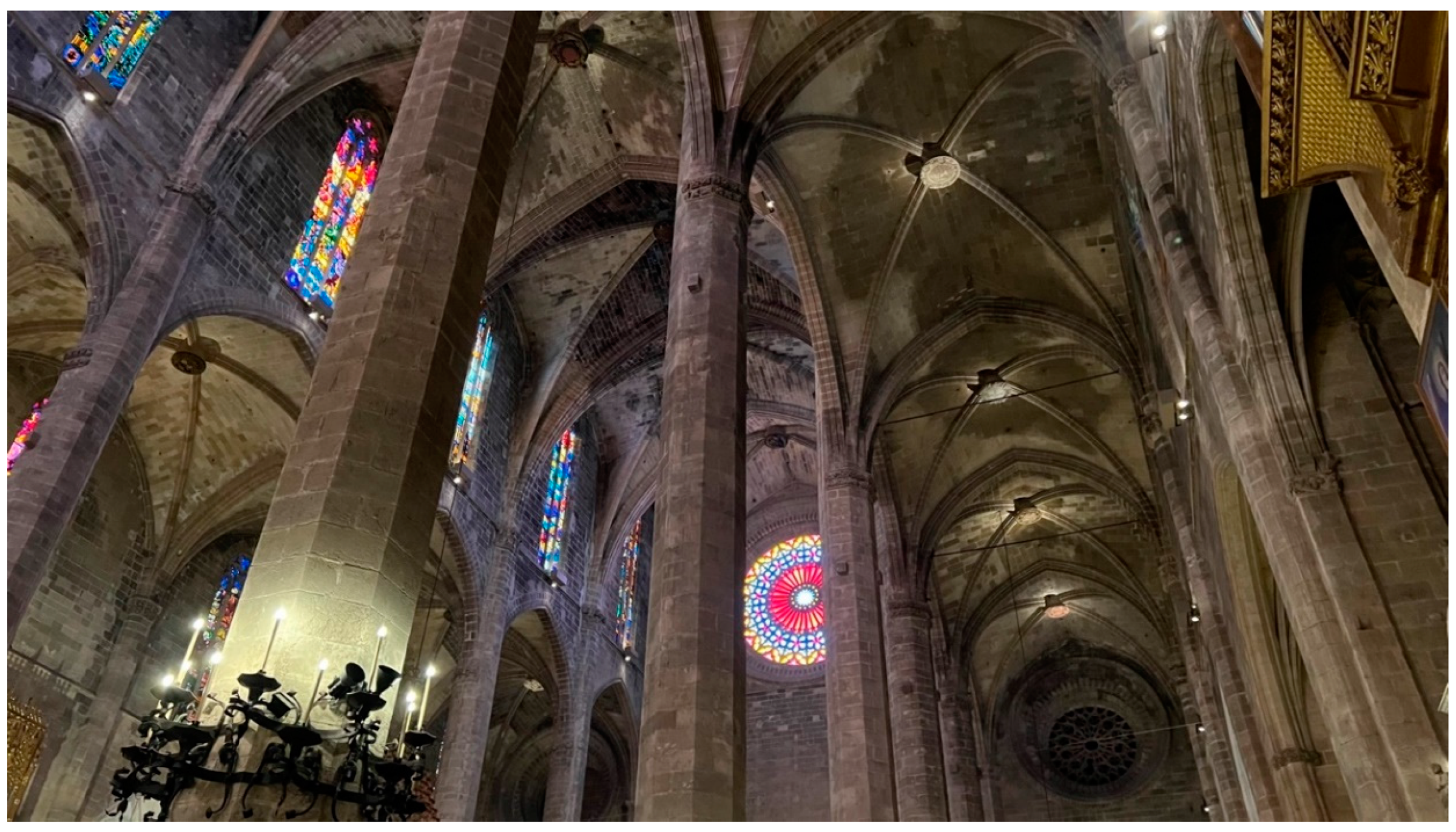
Figure 3.
Exterior detail view of Palma Cathedral showing buttresses, flying buttresses, and pinnacles constructed from marés stone (photograph by the author).
Figure 3.
Exterior detail view of Palma Cathedral showing buttresses, flying buttresses, and pinnacles constructed from marés stone (photograph by the author).
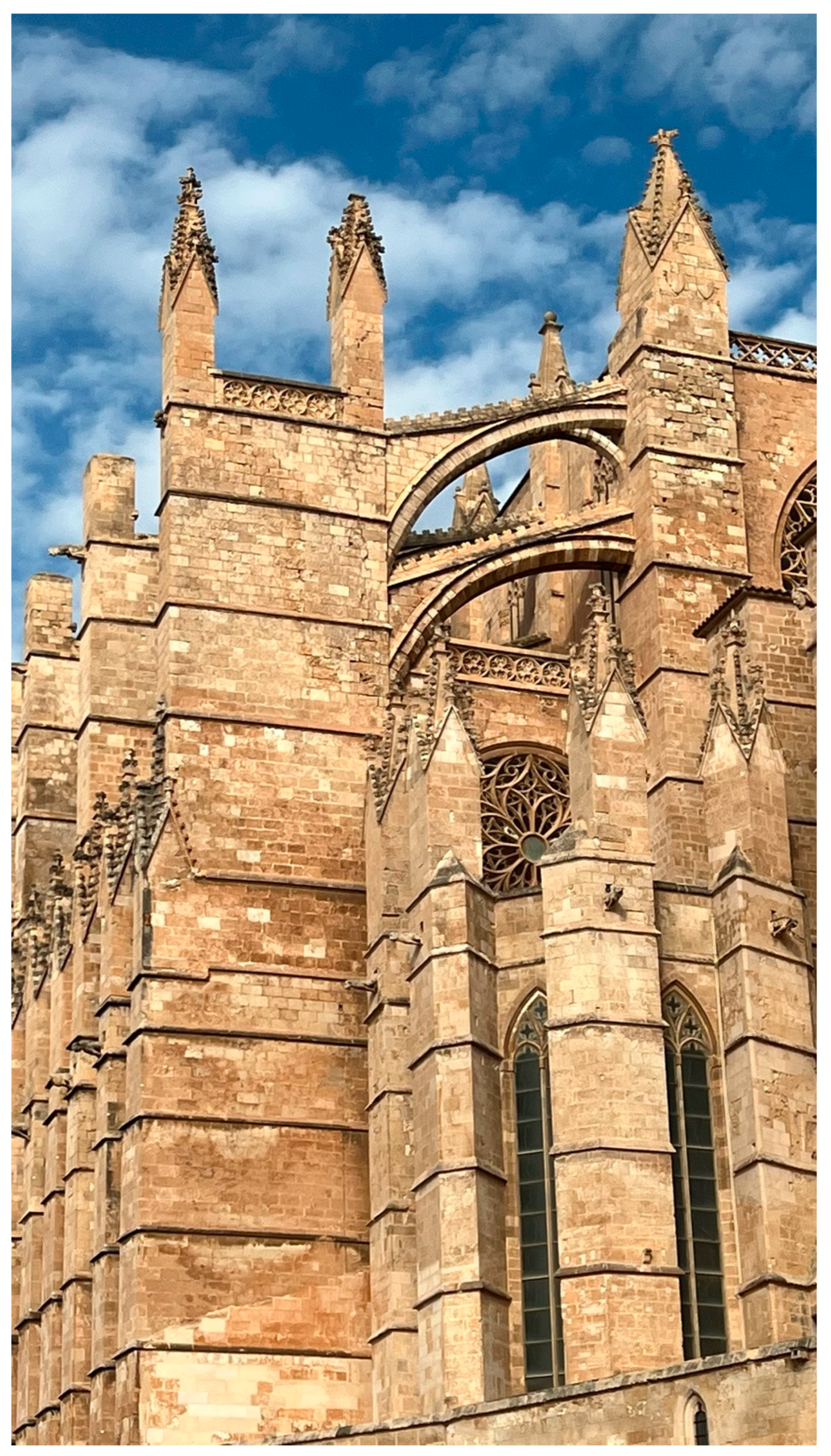
Figure 6.
Wall section showing a combination of pathologies: granular disintegration, alveolization, and black crusts on the surface of mares sandstone. A restored area using a different material is also visible (photograph by the author).
Figure 6.
Wall section showing a combination of pathologies: granular disintegration, alveolization, and black crusts on the surface of mares sandstone. A restored area using a different material is also visible (photograph by the author).
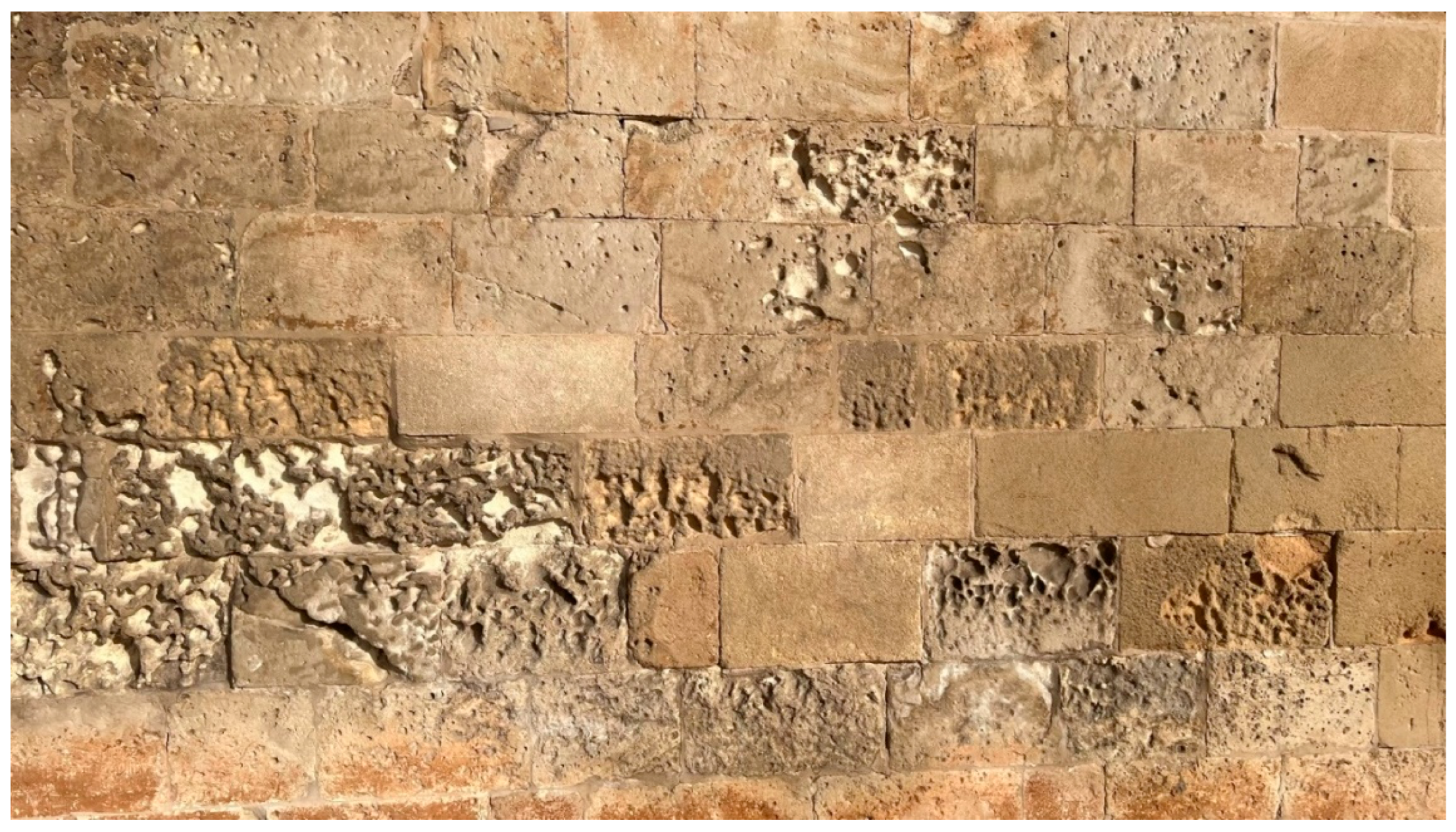
Figure 7.
Advanced-stage alveolization. The loss of material volume compromises the geometry of the ashlar block (photograph by the author).
Figure 7.
Advanced-stage alveolization. The loss of material volume compromises the geometry of the ashlar block (photograph by the author).
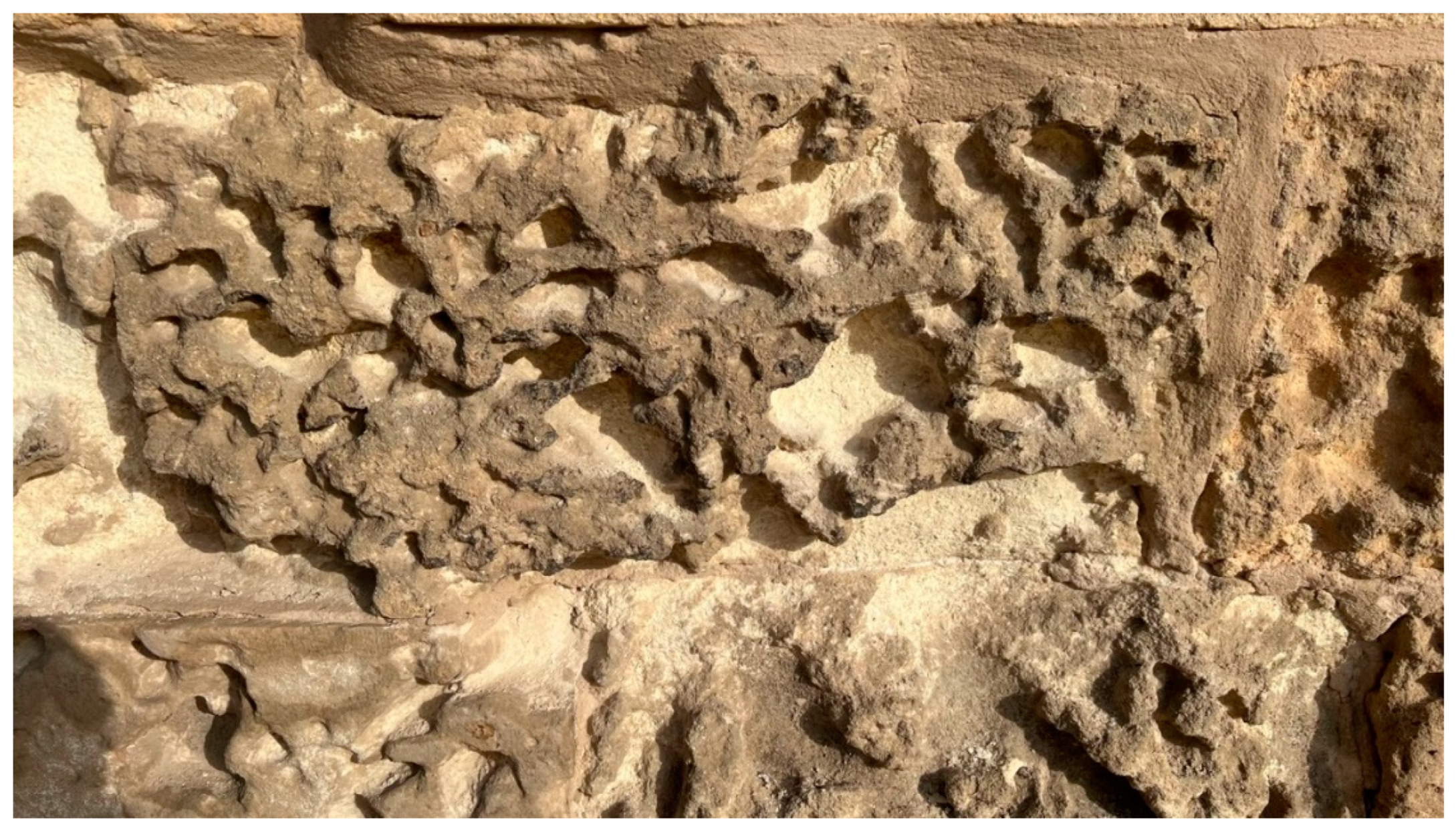
Figure 8.
Photograph (a) and thermogram (b) showing a vertical thermal gradient in an exterior buttress. The base shows significant cooling compared to the upper third (7.8–14.0 °C), indicating ascending moisture in lower ashlar blocks (FLIR image by the author).
Figure 8.
Photograph (a) and thermogram (b) showing a vertical thermal gradient in an exterior buttress. The base shows significant cooling compared to the upper third (7.8–14.0 °C), indicating ascending moisture in lower ashlar blocks (FLIR image by the author).
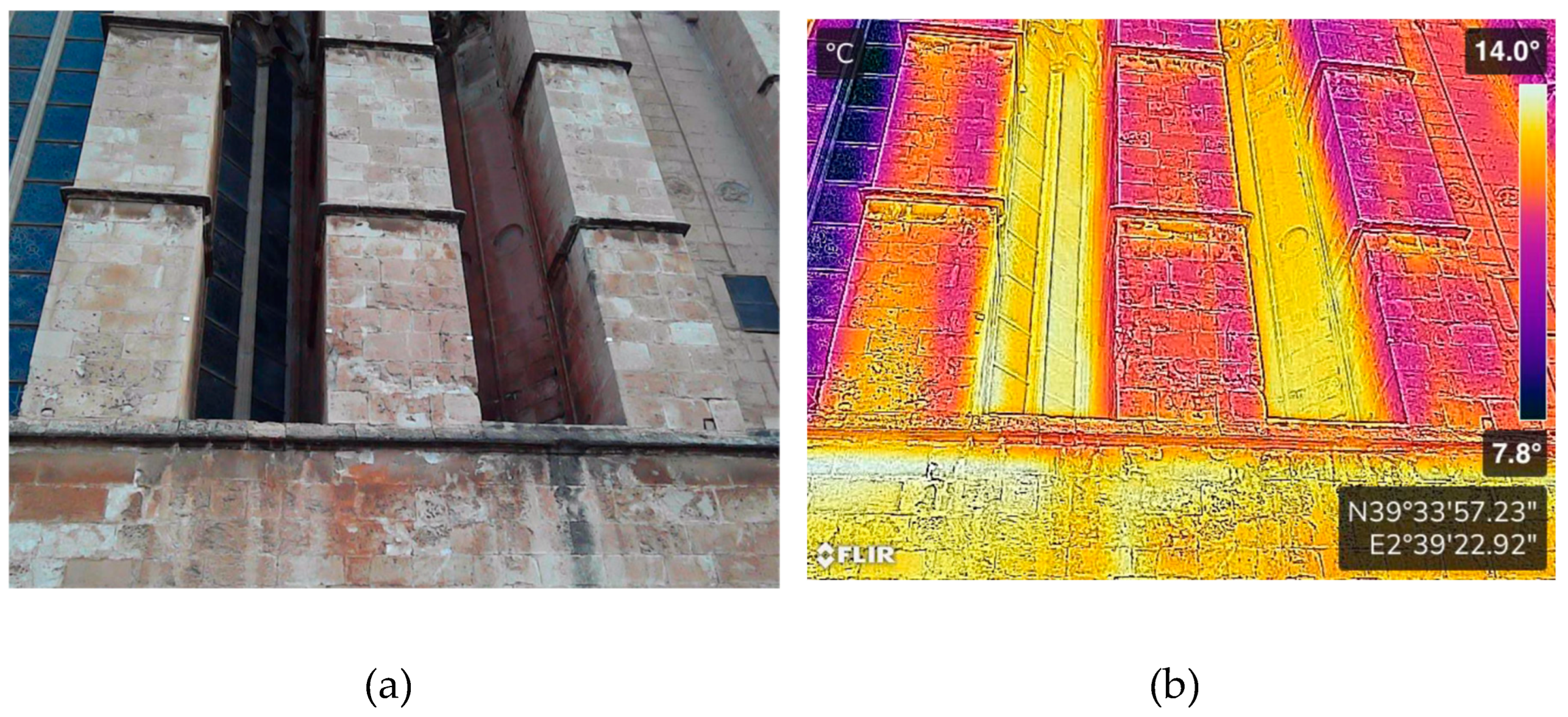
Figure 11.
Photograph (a) and thermogram (b) showing a thermal heterogeneity in marés masonry. Alternating cold (7.3 °C) and warm zones (13.5 °C) reflect variations in moisture content, density, or surface texture—typical of differential disintegration or heterogeneous weathering (FLIR image by the author).
Figure 11.
Photograph (a) and thermogram (b) showing a thermal heterogeneity in marés masonry. Alternating cold (7.3 °C) and warm zones (13.5 °C) reflect variations in moisture content, density, or surface texture—typical of differential disintegration or heterogeneous weathering (FLIR image by the author).
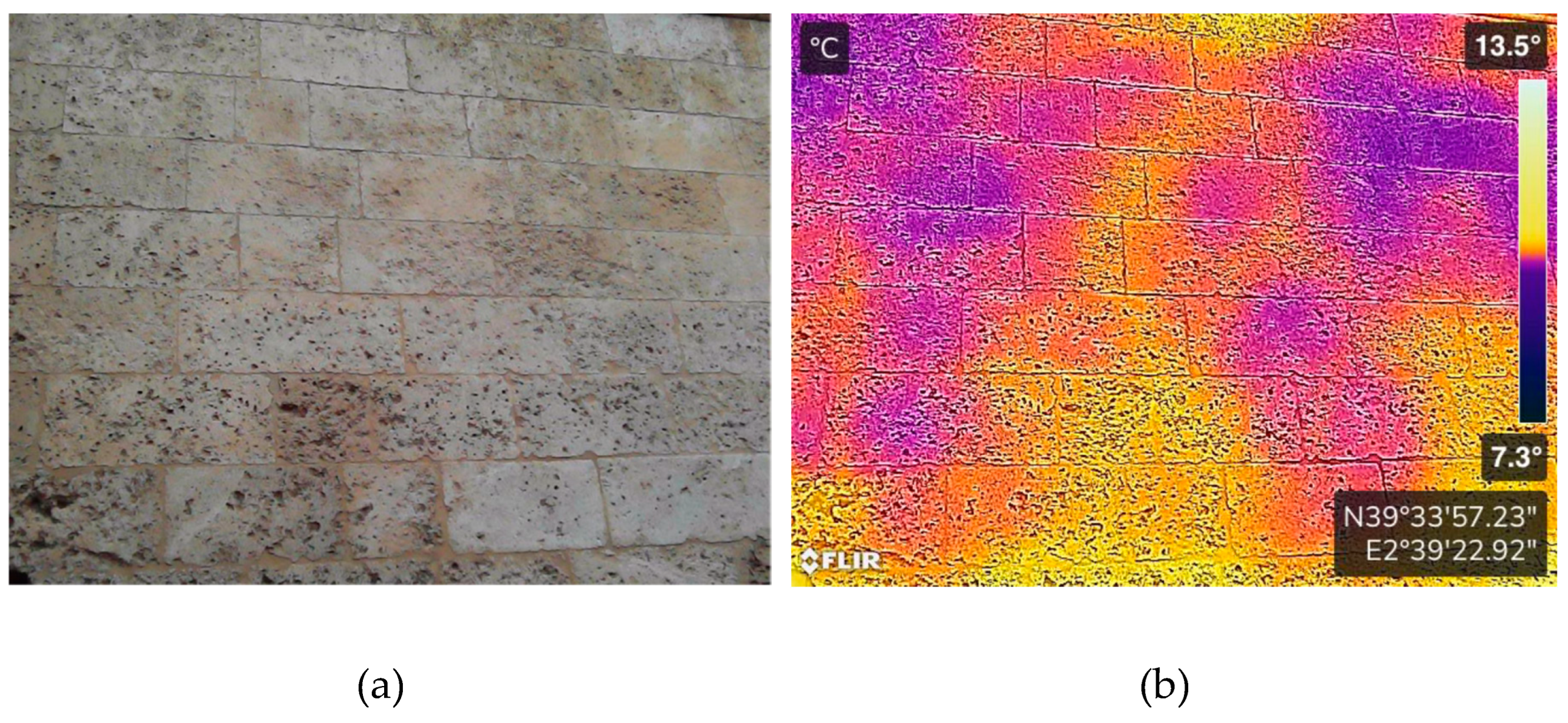
Figure 12.
Cracked pier with gypsum monitoring markers (photograph by the author).
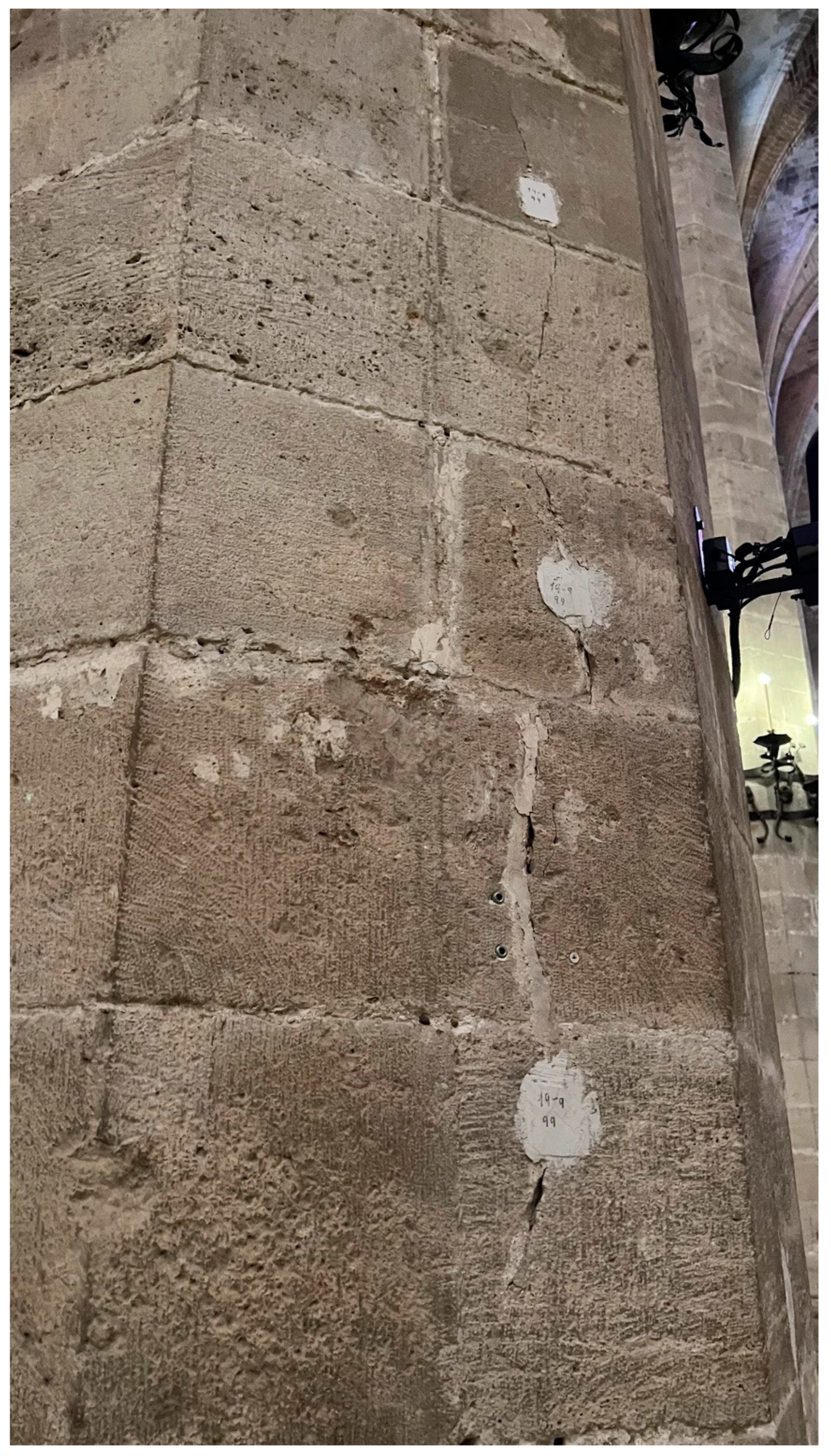
Table 1.
Comparative slenderness of Gothic cathedral piers.
| Cathedral | Pier Height (m) | Pier Diameter (m) | Slenderness Ratio (H/D) |
|---|---|---|---|
| Palma de Mallorca | 21 | 1.5 | 14.0 |
| Beauvais | 20 | 1.6 | 12.5 |
| Chartres | 18 | 1.8 | 10.0 |
| Cologne | 20 | 2.0 | 10.0 |
| Milan | 24 | 2.4 | 10.0 |
| Notre-Dame de Paris | 18 | 2.0 | 9.0 |
Source: Author’s compilation based on accessible bibliographic data.
Disclaimer/Publisher’s Note: The statements, opinions and data contained in all publications are solely those of the individual author(s) and contributor(s) and not of MDPI and/or the editor(s). MDPI and/or the editor(s) disclaim responsibility for any injury to people or property resulting from any ideas, methods, instructions or products referred to in the content. |
© 2025 by the authors. Licensee MDPI, Basel, Switzerland. This article is an open access article distributed under the terms and conditions of the Creative Commons Attribution (CC BY) license (http://creativecommons.org/licenses/by/4.0/).
Copyright: This open access article is published under a Creative Commons CC BY 4.0 license, which permit the free download, distribution, and reuse, provided that the author and preprint are cited in any reuse.


