

Submitted:
29 April 2025
Posted:
30 April 2025
You are already at the latest version
Abstract
Women-led indigenous farming and ethnobotanical systems across Asia, Africa, and South America are vital yet often overlooked foundations for reproductive health, food security, and ecological resilience. This paper draws on diverse case studies—including jamu in Indonesia, ayurveda in India and helawedakama in Sri Lanka, milpa systems in Mexico, Andean potato terraces, and sub-Saharan African agroforestry—to illustrate how women cultivate biodiversity-rich agricultural and medicinal traditions that support menstruation, fertility, childbirth, and postpartum care.As farmers, healers, seed custodians, and knowledge holders, women advance nutritional, therapeutic, and psychosocial outcomes while preserving intergenerational resilience. Yet these systems face mounting threats from land dispossession, extractive industries, commercial seed regimes, and exclusionary policies. Regional examples—from Kenya’s seed banks and Brazil’s feminist agroecology to Venezuela’s survival-based herbal practices—demonstrate both the strength of these traditions and the gendered barriers to their sustainability.Climate change further underscores the urgency of safeguarding these low-input, locally adapted practices. As women increasingly navigate civil society and state frameworks, their knowledge must be formally recognized and resourced. We argue that inclusive health, agricultural, and environmental policies that centre gender equity, biocultural heritage, and climate resilience in low- and middle-income countries. International collaboration is essential to protecting and scaling women-led indigenous systems as pathways toward transformative global health and sustainability.
Keywords:
Indigenous farming
; women’s health
; low- and middle-income countries
; sustainability
; agroecology
; traditional medicine
1. Background
Indigenous farming refers to traditional agricultural practices developed by local communities over generations, closely tied to their cultural, spiritual, and ecological knowledge (Guo et al., 2021). The traditional agricultural practices often rely on biodiversity, natural input, and local seed varieties, emphasising sustainability and harmony with the environment. Unlike industrial agriculture, indigenous farming typically involves intercropping, crop rotation, agroforestry, and organic compost or manure (Adefila et al., 2024). It is often adapted to local climates and landscapes, making it more resilient to environmental changes (Huynh et al., 2020).
Women are central in many indigenous farming systems, especially in seed selection, seed saving, food processing, pest control, soil management and medicinal plant cultivation. These practices not only support food sovereignty but also help preserve cultural heritage and ecological diversity. Indigenous farming systems in low- and middle-income countries (LMICs) are vital for ecological sustainability, cultural identity, and food sovereignty (Matsa and Mukoni, 2013) Women’s active engagement and labour contributions are fundamental to the success of these. agroecological practices, developed and maintained over generations, are especially significant for women’s health, given the gendered division of labour and care-giving roles in many communities.
Indigenous farming across Asia, Africa, and South America faces several interlinked challenges (Erni, 2015, Jat et al., 2016). Land insecurity and limited access to resources disproportionately affect women and marginalised communities, key custodians of traditional agricultural knowledge (Garutsa and Nekhwevha, 2016). Government policies and development programs often prioritise industrial or commercial farming, leading to the erosion of indigenous seed systems, biodiversity loss, and reduced support for agroecological methods. Climate change, deforestation, and extractive industries further threaten the viability of traditional farming by disrupting ecosystems and water sources. Additionally, the undervaluing of indigenous knowledge in formal research, education, and extension services limits the visibility and scalability of these practices. Together, these challenges undermine indigenous farming systems.
When viewed through the lens of the United Nations (UN)-aligned Sustainable Development Goals (SDGs), the marginalisation of indigenous farming in Asia, Africa, and South America poses significant barriers to achieving equitable health and development outcomes. SDG 2 (Zero Hunger) and SDG 3 (Good Health and Well-being) are directly threatened by the displacement of biodiverse, nutrient-rich indigenous crops in favour of monocultures promoted by commercial agriculture. The lack of land rights and institutional support for indigenous farmers, especially women—also hinders SDG 5 (Gender Equality) and SDG 10 (Reduced Inequalities), as these groups are excluded from decision-making and access to resources. Furthermore, SDG 13 (Sustainable cities and communities) are closely linked to Indigenous farming and women's roles, as it emphasises inclusivity, resilience, and ecological balance, yet the invaluable contributions of Indigenous practices and women’s leadership often remain under recognised and undervalued. The loss of agroecological practices and traditional medicinal knowledge undermines SDG 13 (Climate Action) and SDG 15 (Life on Land), emphasising the need for locally driven environmental stewardship. A critical gap exists in recognising and integrating the indigenous systems within formal health and agricultural policies, reflecting broader failures to uphold SDG 17 (Partnerships for the Goals) (United Nations, 2015). Without structural reforms that centre indigenous knowledge, promote gender equity, and safeguard ecological resilience, the health and sustainability benefits of indigenous farming will remain underutilised in global development efforts. are closely linked to Indigenous farming and women's roles, as they emphasise inclusivity, resilience, and ecological balance..
This commentary critically explores the transformative potential of indigenous farming practices in enhancing women’s health outcomes LMICs in Asia, Africa, and South America, highlighting how these traditional, eco-cantered approaches can improve nutrition, autonomy, and community well-being, while also acknowledging the persistent structural barriers—such as gender inequality, land insecurity, and limited policy support—that hinder their widespread impact (Figure 1).
1.1. Nutritional Security and Dietary Diversification in LMICs
Indigenous farming systems promote biodiversity, seasonal planting, and sustainable land use. Women farmers often cultivate and manage nutrient-rich crops such as millets, leafy greens, legumes, and medicinal plants. These directly alleviate malnutrition and micronutrient deficiencies prevalent in LMICs, particularly iron, vitamin A, and folate nutrients essential to maternal and reproductive health (Boliko, 2019).
In Iran, women are integral to Iran's agricultural sector, engaging in activities such as planting, weeding, pest control, harvesting, and marketing. Their involvement is essential for household and community food security (FAO, 1994) Women in northern Iran's rice fields contribute over 70% of the manual labour during the transplanting and harvesting phases (Chizari et al., 1997). Rice is a central staple in many Iranian households, particularly in urban areas, and is often consumed daily as the main carbohydrate source. However, there are many challenges facing women in Iran in this area, including limited land ownership and inheritance rights, exclusion from agricultural extension and education programs, and lack of access to agricultural inputs and resources ( Fact Sheet: Iran - Women, Agriculture and Rural Development, n.d.; Rural Women’s Role in Sustainable Development, 2023 ) (Table 1)
1.2. Asia
In India and Nepal, the revival of indigenous millet and pulse cultivation through women-led farming collectives has shown promise in improving dietary diversity and reducing anaemia among women of reproductive age (Kinyoki et al., 2021, Keya, 2023). These crops are naturally rich in iron, calcium, and folate and are well-suited to the dryland and hilly agroecological zones where conventional high-input crops often fail. However, despite these documented nutritional benefits, such interventions remain localised and poorly integrated into national food and health policies. Moreover, the challenges of land tenure insecurity and limited access to markets continue to constrain the scalability of these women-led initiatives. In Pakistan, the prevalence of anaemia among women of reproductive age is alarmingly high. A study analysing data from the Pakistan Demographic and Health Survey reported that 51.0% of women of reproductive age were anaemic. Factors such as higher parity and lower body mass index (BMI) were significantly associated with increased anaemia prevalence among these women. In Bangladesh, anaemia remains a significant public health concern (Harding et al., 2018). Also, a comparative study in West Bengal (India) and Bangladesh highlighted that women from poorer households, those with higher parity, and those practising open defecation were more likely to be anaemic (Jana et al., 2022). In Sri Lanka, data from 2019 indicated that the southern part of the country had 36.9 % (Galle) and the northern part of the country had 42.5% (Jaffna) of anaemic pregnant women (Amarasinghe et al., 2022). . In Vietnam, even though the effort of government to reduce the anaemia among women of reproductive age however still 20.6% of them were affected (Global Nutrition Report | Country Nutrition Profiles - Global Nutrition Report, n.d). This suggests a considerable burden of anaemia among women, though specific data on women of reproductive age is limited. In the Philippines, the situation appears comparatively better. A study reported that the prevalence of anaemia among women of reproductive age was 13.3%, the lowest among the South and Southeast Asian countries analysed (Sunuwar et al., 2020). Addressing anaemia in these countries requires multifaceted approaches, including improving dietary diversity, enhancing access to healthcare, and implementing targeted nutritional interventions. Empowering women through education and supporting their roles in agriculture can also contribute to better nutritional outcomes. For instance, the Food and Agriculture Organisation (FAO) emphasises the importance of gender-responsive policies and programs to combat food insecurity and malnutrition. Integrating indigenous farming practices, particularly those led by women, can be crucial in enhancing dietary diversity and reducing anaemia prevalence among women of reproductive age in these regions.
1.3. Africa
In sub-Saharan Africa, indigenous vegetables such as amaranth, spider plants, and cowpea leaves are major sources of micronutrients but are often underutilised due to the dominance of imported or hybrid seeds (Karmakar and Roy, 2024). Indigenous vegetables such as amaranth, spider plant, and cowpea leaves are nutritionally dense crops rich in essential micronutrients like iron, calcium, and vitamin A. These vegetables have been central to traditional diets across sub-Saharan Africa, especially in rural and peri-urban communities. They are also climate-resilient, requiring fewer external inputs and adapting well to local growing conditions. Despite these advantages, their cultivation and consumption have declined over recent decades due to the dominance of imported or hybrid seed varieties, changes in dietary preferences, and limited commercialisation efforts (Bosman et al., 2012).
In Rwanda, 52% of the population is women and they constitute about two-thirds of the labour in household farms (National Institute of Statistics of Rwanda, 2022). They cultivate stable crops like beans, maize, potatoes, cassava and also indigenous vegetables such as Amaranth species (dodo, imbwija and inyabutongo), African nightshade (black nightshade, intagarasoryo), and spider plant (isogi) amongst other grains and cash crops remain important in rural food systems and are widely consumed, particularly in subsistence farming households (CASA, 2023). In Nigeria, while amaranth and cowpea leaves remain widely consumed in rural areas, urban diets increasingly favour exotic vegetables such as cabbage and lettuce. This dietary shift has been accompanied by reduced support for indigenous vegetable production in agricultural extension services (Adeloye, 2021). Similarly, in the Democratic Republic of Congo (DRC), while amaranth and spider plant hold cultural significance, their cultivation is hindered by weak seed systems and competition from imported produce plants. In Ghana, there is growing recognition of the role of African Indigenous Vegetables (AIVs) in food security, with some initiatives underway to document and revive traditional farming knowledge. However, these remain fragmented and underfunded. In Ethiopia, many indigenous vegetables are grown and consumed locally, yet awareness of their nutritional benefits is low, especially in urban centres (Belew, 2015). This is compounded by the absence of supportive markets and infrastructure, which makes it difficult for smallholder farmers, particularly women, to commercialize these crops. In Mozambique, indigenous vegetables are valued in rural diets but are displaced by more marketable crops as urbanization advances and agricultural priorities shift toward export-oriented production (Chagomoka et al., 2013). Reviving local vegetable production here will require coordinated policy support and investment in urban food systems. Kenya presents a more positive example where AIVs such as African nightshade, cowpea leaves, and amaranth have been successfully integrated into formal markets. Women-led cooperatives have played a central role in this transformation, enhancing household nutrition and income security (Kuo et al., 2022). However, challenges remain in scaling up these efforts beyond pilot projects and ensuring they are embedded in national agricultural strategies.
Across the region, the underutilisation of indigenous vegetable stems is driven by a combination of sociocultural biases (often considered “poor people’s food”), inadequate or lack of policy support, and weak value chains. To overcome these barriers, a multi-pronged approach is needed—one that includes investment in research and development, better access to markets, and public awareness campaigns that highlight the health and environmental benefits of AIVS. Policy integration and gender-responsive agricultural programming are also essential to ensure that women, often the primary cultivators and custodians of these crops, are adequately supported. Harnessing the full potential of Indigenous vegetables could contribute significantly to reducing micronutrient deficiencies, promoting dietary diversity, and strengthening food sovereignty across sub-Saharan Africa
1.4. South-America
In the Andean highlands of South America, women play a central role in cultivating and conserving native crops such as quinoa, amaranth, and diverse potato varieties, which are vital for food sovereignty and climate resilience. These crops are adapted to challenging high-altitude environments as they are nutrient-dense, rich in protein, iron, and complex carbohydrates. Women in rural communities often act as custodians of these seeds, selecting, exchanging, and planting varieties according to local ecological conditions and traditional knowledge systems. This preservation of agrobiodiversity is essential in areas where environmental stress, such as drought and soil degradation, increasingly threatens food security (Zimmerer and De Haan, 2017).
However, the commercialisation of native crops especially quinoa has brought both opportunities and challenges. In Bolivia and Peru, for example, global demand for quinoa has led to increased income for some producers, but also to monocropping, land pressure, and rising local prices that threaten household-level food access (Andrango et al., 2020). While integral to traditional agricultural systems, women are often excluded from decision-making and control over profits in larger commercial operations. Furthermore, intellectual property rights and benefit-sharing remain unresolved, as indigenous communities rarely receive recognition or compensation for their genetic resources and farming knowledge.
In Brazil, especially in the Amazon and Cerrado regions, indigenous women contribute to agricultural diversity by cultivating cassava, beans, maize, and medicinal plants (Bomfim et al., 2024). While Brazil has progressive constitutional recognition of indigenous rights, including land and traditional knowledge, deforestation and agribusiness expansion—particularly soybean farming—have led to the displacement of communities and the erosion of indigenous food systems. Nonetheless, feminist agroecology movements, such as the Movimento das Mulheres Camponesas (Women Peasants Movement), have worked to reclaim land and promote food sovereignty through native seed networks and solidarity markets (Motta and Teixeira, 2022).
Chile presents a contrasting picture. In Mapuche territories of southern Chile, women continue to grow traditional crops like wheat, quinoa, and beans, often in home gardens or small plots (Van Der Grinten). However, neoliberal land reforms and monoculture forestry (especially pine and eucalyptus plantations) have greatly reduced access to arable land. Indigenous farming persists more as a form of cultural resistance than a supported livelihood, with little integration into national food or health programs.
In Mexico, indigenous communities, particularly in Oaxaca, and Chiapas maintain milpa systems, a form of intercropping involving maize, beans, squash, and amaranth (Vazeux-Blumental et al., 2024). These systems provide dietary diversity and ecological balance, and women play a key role in seed selection and food preparation. However, NAFTA-era trade liberalization and the influx of subsidised U.S. corn have weakened traditional markets and displaced smallholder farmers, including many women (Nisivaco, 2017). The rise of diabetes and obesity in indigenous populations has also been linked to the nutritional decline caused by reduced consumption of native foods (Milburn, 2004).
Argentina and Venezuela have seen growing challenges in sustaining indigenous farming practices (Parraguez-Vergara et al., 2018). In Argentina, land concentration and the expansion of genetically modified soybean farming have marginalised indigenous communities, such as the Qom and Wichí, pushing them to the peripheries of economic life. Efforts to reclaim native crops like maize and sweet potatoes are ongoing but receive little institutional support. Economic collapse and political instability in Venezuela have disrupted agricultural production across the country (Bull and Rosales, 2020). However, in some indigenous regions such as the Sierra de Perijá, women have preserved the traditional cultivation of plantains, cassava, and beans as a survival strategy in the face of food scarcity and government food rationing failures (Pearsall, 2008).
Across these countries, women’s traditional farming practices remain crucial to sustaining nutritional resilience, cultural identity, and climate-adapted food systems. However, shared challenges continue to undermine these contributions: limited access to land and credit, erosion of seed sovereignty, weak protection of intellectual property rights for indigenous knowledge, and the persistent absence of women’s voices in agricultural governance. These barriers, compounded by gender inequality in agricultural support systems, restrict women’s ability to scale sustainable practices (Meinzen-Dick et al., 2019). To fully harness the benefits of indigenous farming for public health and sustainability, Latin American governments must prioritise inclusive policies that secure land rights, fund agroecological training for women, and formally recognise the role of indigenous crops in national nutrition strategies.
1.5. Empowerment and Psychosocial Well-Being Among Women in LMICs
Indigenous farming is often practised through community-based, women-led cooperatives and networks. These settings can foster psychosocial well-being by reinforcing social cohesion, identity, and autonomy factors closely linked to improved mental health outcomes for women (Liang, 2022). Participation in agricultural decision-making and income-generating activities can reduce women’s vulnerability to poverty, gender-based violence, and intergenerational cycles of poor health. Entrenched gender norms and systemic undervaluing of indigenous knowledge shape the potential for empowerment of indigenous farming. Recognition and protection of women’s contributions in these systems remain limited in policy and academic discourse (Table 1)
1.6. Africa
In Kenya and Tanzania, women’s collectives have actively engaged in indigenous seed banking and agroecology, not only to conserve biodiversity but also as a means of economic empowerment and mental well-being. According to Mendum and colleagues (2018), these initiatives have helped women build a sense of autonomy, improve self-esteem, and reduce stress through shared learning and collective action (Mendum and Njenga, 2018). Seed banks allow women to reclaim control over food production cycles and reduce reliance on commercial hybrid seeds that are often costly and ill-suited to local conditions. Moreover, agroecological practices such as intercropping, composting, and water conservation align with traditional knowledge systems that women have historically preserved and transmitted. These practices also strengthen community resilience to climate shocks, disproportionately impacting women.
In Nigeria, women's participation in traditional farming has long been central to rural livelihoods, yet their access to land and agricultural inputs remains severely constrained (Effiong, 2013). While indigenous vegetables like amaranth and fluted pumpkin are cultivated by women for consumption and sale, formal seed systems often exclude these crops. Seed-saving is practised informally, but the lack of institutional support means that such efforts remain vulnerable to climate and economic disruptions. Introducing structured seed banking and agroecological training could amplify women’s roles in ensuring household nutrition and ecosystem restoration.
In the Democratic Republic of Congo (DRC), women in rural communities play a key role in cultivating traditional crops and managing biodiversity. However, conflict, displacement, and lack of access to agricultural extension services (Inogwabini, 2014) have undermined their capacity to maintain local seed systems. There is potential for indigenous seed banking to not only improve food sovereignty but also offer psychosocial healing in post-conflict contexts. Women-led agroecological initiatives could address widespread food insecurity while restoring degraded land in regions affected by extractive industries.
Ghana has made strides in recognising the nutritional value of indigenous vegetables like cocoyam leaves, garden eggs, and roselle (Ayim et al., 2024). Women often lead their cultivation and marketing yet face marginalization in decision-making forums and agricultural research. If supported through policy and infrastructure, community seed banks could enhance women’s agency and enable greater local control over crop diversity, especially in regions vulnerable to erratic rainfall and soil erosion.
In Rwanda, women play important role as both cultivators and custodians of these crops. There is this practice of cultivating kitchen gardens that are filled with various fruits and vegetables known as “Akarima k’Igikoni,” which have become an important tool for women in the Southern Province who often rely on them to ensure household food security and to treat minor ailments using traditional knowledge (Forefront Magazine 2023).
In Ethiopia, where indigenous farming practices remain widespread, women are deeply involved in preserving landraces of barley, teff, and sorghum (Asfaw, 2000). Yet, their knowledge is rarely documented or protected through formal channels. Agroecology has gained traction in some highland areas through participatory seed exchange networks and farmer field schools, but gender equity in leadership and benefit-sharing remains limited. Elevating women’s leadership in agroecological cooperatives could enhance both nutrition and adaptive capacity to climate change.
Mozambique presents a dual narrative: while women remain key to food production in rural areas, their practices are threatened by land-grabbing, monoculture expansion, and displacement due to natural disasters. Community seed systems are underdeveloped, and reliance on external food aid has weakened local food sovereignty. Supporting women-led seed banks and indigenous crop revival initiatives could counteract these trends and restore locally adapted food systems (Ervilha, 2022, Bruna, 2019).
Across sub-Saharan Africa, the intersection of women’s empowerment, indigenous knowledge, and agroecological resilience is increasingly recognised as a critical lever for health and development. However, structural inequalities—from land rights and financing to the devaluation of traditional knowledge—continue hindering progress. Evidence from Kenya and Tanzania demonstrates that when women are given the tools to lead agroecological transformation, the benefits extend beyond food security to mental well-being, environmental sustainability, and intergenerational knowledge transfer. Scaling these models across other African countries requires supportive policy frameworks, secure land tenure for women, investment in grassroots organising, and integration of seed sovereignty into national food and climate strategies (Sibanda, 2025).
1.7. South-America
In Brazil, the Movimento das Mulheres Camponesas (MMC) has emerged as a powerful feminist movement using agroecological farming as both a political and practical strategy to reclaim autonomy, health rights, and cultural knowledge (Do Amaral Valèrio, 2019). Women within MMC advocate for food sovereignty through the revival of native seeds, organic farming, and the intergenerational transfer of traditional medicinal knowledge especially crucial in rural communities with limited access to formal healthcare. Agroecology is reframed not merely as an agricultural method, but as a form of resistance against capitalist agribusiness and patriarchal structures that marginalise rural women. This intersectional approach enables women to reassert control over their bodies, land, and labour, positioning health and food justice as core feminist concerns. However, these grassroots gains are continually challenged by national policy shifts favouring industrial agriculture, deforestation, and extractive economic models.
In Chile, particularly in Mapuche communities, women have sustained agroecological practices such as seed-saving and cultivating traditional crops like quinoa, beans, and native wheat (Van Der Grinten). Yet, their struggle is deeply shaped by the legacy of land dispossession and monoculture forestry (pine and eucalyptus plantations) encouraged by neoliberal policies. While feminist environmental justice movements have gained momentum, there is less state-level recognition or support for women’s agroecological leadership compared to Brazil. The persistence of the Mapuche women's farming systems is thus a form of cultural and political resistance but often remains informal and unsupported within national development frameworks.
Mexico offers a rich context for agroecology through indigenous systems like the milpa, an intercropping method involving maize, beans, squash, and amaranth (Vazeux-Blumental et al., 2024). Women are central to these systems, responsible for planting and seed selection and preserving culinary and medicinal traditions. However, neoliberal trade policies, especially under NAFTA, have undercut smallholder farming by flooding markets with subsidised industrial corn, leading to the erosion of local food systems. Despite this, a growing agroecological and feminist movement, often linked to food sovereignty campaigns, is working to revitalize traditional agriculture, resist genetically modified seeds, and challenge gender inequalities in rural extension services. Nevertheless, women farmers still face barriers to land ownership, credit, and participation in cooperative governance structures.
In Argentina, the landscape is dominated by large-scale industrial agriculture, particularly genetically modified soy production for export (Leguizamón, 2014). This model has displaced smallholders, degraded soil, and increased pesticide use, with disproportionate health and economic effects on rural women. Feminist agroecological groups have begun to emerge in response, advocating for land redistribution, seed sovereignty, and ecologically sound farming. However, these remain small in scale and often unsupported by public institutions. The lack of an enabling policy environment, alongside entrenched land concentration, limits the visibility and influence of women’s agroecological work.
Venezuela presents a different scenario, where economic collapse and food insecurity have pushed communities to revive local food production, often out of necessity rather than ideology (Tsakok, 2021). In rural and indigenous regions such as the Sierra de Perijá, women have continued cultivating traditional crops like cassava, plantains, and beans. Although not always organised under explicit feminist frameworks, these practices function as critical survival strategies, helping families navigate the collapse of food supply chains and state rationing systems. However, the absence of reliable agricultural inputs, political instability, and limited mobility greatly constrain the scale and consistency of these efforts (Anderson, 2022).
Across these five countries, agroecology as a feminist strategy varies in visibility, institutional support, and grassroots strength. In Brazil, the MMC demonstrates how women’s organizing can successfully link agroecological practice with political demands for health, bodily autonomy, and recognition of traditional knowledge. Similar efforts exist elsewhere, such as in Argentina or Venezuela but are hindered by structural, economic, and political barriers. What unites these movements is a shared emphasis on reclaiming land, seeds, and health from systems of exploitation, and centring women, especially those from indigenous and peasant backgrounds, as agents of ecological and social transformation. To scale and sustain these approaches, governments must shift away from extractive agricultural models and create space for inclusive, feminist food and health systems grounded in agroecological principles. In addition, Afro-descendant, Indigenous, and peasant women in Brazil and Venezuela experience land loss through distinct struggles: peasant women use agroecology to reclaim autonomy, Indigenous women resist dispossession with traditional practices, and rural women in Venezuela engage in subsistence farming out of necessity, all facing systemic marginalization and loss of land.
1.8. Asia
In India, the Deccan Development Society (DDS) is a widely recognised example of how indigenous farming practices, particularly millet cultivation, can be leveraged to promote food sovereignty, women’s empowerment, and psychosocial well-being (Diversi, Saxena, 2020). The DDS primarily works with Dalit women in the semi-arid regions of Telangana, supporting them in reclaiming degraded land, preserving indigenous seeds, and practising agroecological farming. This initiative does more than increase food access—it restores women's agency over land and nutrition, reduces dependence on commercial food systems, and revitalises cultural and ecological knowledge. Critically, participants report increased self-confidence, reduced anxiety linked to food insecurity, and stronger community solidarity. However, despite its success, such models are often isolated, and state agricultural policies continue to favour high-input, commercially viable crops like wheat and rice under schemes like the Public Distribution System (PDS), marginalising traditional cereals and smallholder women farmers.
Pakistan has limited institutional support for women’s agroecological initiatives or the revival of indigenous crops (Fatima, 2024). Although women, particularly in Sindh and Baluchistan, engage in home gardening and small-scale farming of lentils, millet, and sorghum, their roles are often undervalued and undocumented. Cultural restrictions and low female land ownership further limit women’s participation in decision-making around agriculture. While some NGOs have initiated kitchen gardens and nutrition programs, these are rarely framed as rights-based or empowerment-focused strategies. As a result, the potential for indigenous agriculture to support women’s mental well-being and autonomy remains largely untapped.
In Bangladesh, women play a significant role in homestead food production systems, especially in coastal and flood-prone areas where traditional crops like local rice varieties, leafy greens, and pulses are cultivated. However, the dominant agricultural narrative is one of high-yield varieties and hybrid seeds, often promoted without considering local dietary diversity or women’s knowledge. Climate-smart agriculture programs have recently begun to integrate women’s roles more intentionally, but the emphasis remains on productivity rather than empowerment or well-being. Without robust support for seed sovereignty and indigenous food systems, these initiatives risk reinforcing existing inequalities and erasing valuable traditional knowledge (Ria, 2025, Hoque, 2023).
Sri Lanka has a rich history of indigenous agriculture, including chena cultivation (shifting agriculture) and community-based seed systems. Women have traditionally been the knowledge bearers in food preparation, herbal medicine, and seed selection. Yet post-conflict land redistribution, agricultural modernisation, and urbanisation have eroded these practices. There is emerging interest in sustainable farming and ayurvedic food systems, but few national-scale programs explicitly centre women or link indigenous farming to mental health or food sovereignty. Additionally, patriarchal norms in rural governance structures often limit women’s visibility and leadership in agricultural planning (De Silva, 2024). However, Indigenous women in Sri Lanka actively participate in farming activities, contributing significantly to sustainable agriculture and rural livelihoods. Their roles encompass a wide range of tasks, including planting, weeding, harvesting, and processing crops.
In the Philippines, especially in upland and indigenous communities, women engage in diversified farming systems involving root crops, bananas, legumes, and medicinal plants. The indigenous kaingin system (a type of shifting cultivation) remains a vital part of food production in areas like the Cordilleras. Some NGOs, such as MASIPAG and Grow Her Program, and academic institutions have supported participatory seed conservation and agroecology, with women as key actors. However, extractive industries, mining, and militarisation in indigenous areas pose severe threats to land access and women’s security. Despite women’s strong presence in grassroots movements and cooperatives, government agricultural programs remain skewed towards export-oriented crops like bananas and pineapples, with limited integration of traditional systems (Parreño-De Guzman et al., 2015).
Across these South and Southeast Asian contexts, the potential of indigenous agriculture as a vehicle for women’s empowerment and mental well-being is clear but unevenly supported. India’s DDS exemplifies how centring marginalised women in agroecological practices can foster autonomy, nutritional resilience, and psychosocial health. In contrast, Pakistan, Bangladesh, Sri Lanka, and the Philippines show varying levels of engagement, ranging from informal, under-recognised roles to formal but male-dominated development programs. The missing links often lie in land rights, policy recognition, and culturally embedded support systems. To replicate the success of models like DDS, governments and development actors must shift from productivity-focused paradigms to rights-based (these center on ensuring that policies and programs recognize and protect the rights of marginalized communities, especially women), community-led (driven by the priorities and knowledge of the communities) approaches that affirm women’s knowledge, leadership, and well-being in food systems. However, women’s unpaid labour in agriculture remains largely unacknowledged in national health and development statistics, weakening the argument for structural investments in these systems.
1.9. Mitigating Environmental and Climate-Related Health Risks in LMICs
Many LMICs face escalating climate change impacts that disproportionately affect women, particularly those responsible for securing food, water, and fuel. Indigenous farming practices, which often emphasise soil conservation, water harvesting, and agroforestry, can help buffer against environmental shocks. By promoting ecological resilience, these systems contribute indirectly to health resilience, preventing displacement, malnutrition, and waterborne diseases. Indigenous farming techniques such as agroforestry, terracing, intercropping, and organic fertilisation enhance soil health and biodiversity, helping communities adapt to climate stressors such as droughts and floods, factors that disproportionately impact women (Change, 2001). An extensive discussion has been described in Supplementary file 1.
1.10. Preserving Medicinal Knowledge and Women's Reproductive Health in LMICs
Indigenous farming is also a repository for traditional medicine, preserving access to medicinal plants and herbal treatments. Women often use and transmit knowledge of medicinal plants for treating common reproductive health conditions, such as menstrual cramps, infertility, and postpartum infections. In areas with limited access to formal healthcare, these resources offer a critical supplement to biomedical care. However, the commodification of traditional medicine without equitable benefit-sharing or intellectual property protection risks undermining the health sovereignty of women in indigenous communities, as described in Supplementary file 1 and Table 2.
Despite their resilience, both systems face challenges. In India, the commercialisation of ayurvedic products has led to concerns about overharvesting, monoculture plantations, and corporate control of traditional formulations—often without benefit-sharing or recognition of women’s contributions (Sahai, 2000, Sahai, 2004). In Indonesia, jamu has undergone commodification and urban market repackaging, frequently leaving behind the rural women who maintain the foundational knowledge and plant sources (Krier, 2011). In both countries, the knowledge of women as healers and growers is often informal and unprotected, making it vulnerable to exploitation or erasure.
However, the rising commodification of traditional medicine, often without benefit-sharing or recognition of women’s contributions, threatens biodiversity and local health sovereignty. Figure 2 showed the global farming methods briefly.
2. Strengths and Limitations
A key strength is that this critical summary offers comparisons of indigenous farming practices and its’ impact on women’s health across Asia, Africa, and South America (Figure 2).
The availability and quality of data varied significantly across regions and countries. While some contexts offered robust epidemiological and ethnographic evidence, others relied heavily on qualitative or anecdotal sources due to limited documentation of indigenous practices and health outcomes. This disparity may affect the comparative balance and generalizability of findings.
The focus on women as custodians of traditional knowledge though central to the paper require further prospective research to understand the complex intra-community dynamics shaped by class, age, ethnicity, and land tenure. Future studies should disaggregate women’s experiences to better reflect intersectional realities.
2.1. Policy Implications
Policy Brief: Protecting Women-Led Herbal Knowledge Systems in Asia, Africa, and South America
Across Asia, Africa, and South America, women play a critical but often overlooked role in sustaining traditional herbal knowledge systems for reproductive health. From the potato terraces of the Andes to the medicinal gardens of rural Africa and the jamu traditions of Southeast Asia, women cultivate, preserve, and pass down plant-based health practices vital for managing menstruation, fertility, childbirth, and postpartum care (Köhler et al., 2018, Nuraini et al., 2024). These systems are deeply tied to biodiversity, cultural identity, and community resilience but are increasingly threatened by land dispossession, environmental degradation, and policy neglect.
2.2. Policy Recommendations
- Legal Recognition: Acknowledge women's roles as traditional health practitioners and protect their rights under national law.
- Community-Based Conservation: Support women’s herbal gardens and seed banks through agroecological funding.
- Intellectual Property Protections: Enact fair benefit-sharing mechanisms for traditional remedies.
- Gender-Inclusive Health Systems: Integrate traditional healing into formal health care with training and certification for women healers.
- Research & Documentation: Fund participatory ethnobotanical research led by women to preserve and validate their knowledge.
3. Conclusions
Indigenous farming holds substantial promise for improving women’s health outcomes in LMICs by enhancing food and nutrition security, psychosocial well-being, climate resilience, and access to medicinal resources. However, for these benefits to be realised and scaled, structural barriers, including gender inequity, land insecurity, policy marginalisation, and epistemic injustice, must be confronted. Integrating indigenous farming into the broader health and development agenda demands a rights-based, gender-sensitive approach that elevates women as custodians of knowledge and agents of change. However, realising this potential requires dismantling systemic barriers: Efforts should focus on securing land rights and ensuring inclusive agricultural extension services for women, alongside integrating indigenous knowledge into public health and climate policies. Additionally, investing in women-led cooperatives and local agroecological markets, as well as protecting biodiversity and intellectual property to preserve medicinal knowledge, is essential for sustainable and equitable development. Adopting these strategies not only promotes greater health equity for women but also reinforces community resilience and long-term sustainability. Ensuring secure land rights and equitable access to agricultural extension services for women. Future research should explore longitudinal outcomes of women-led agroecological and medicinal systems, especially their roles in building climate and health resilience over time. Moreover, comparative policy analyses could identify best practices for integrating traditional knowledge into national health, food, and environmental strategies. A global mapping of women-led indigenous knowledge networks, combined with digital ethnobotanical archiving, would further support preservation, advocacy, and empowerment efforts.
Availability of data and material
The data shared within this manuscript is publicly available.
Consent to participate
No participants were involved in this paper.
Consent for publication
All authors consented to publish this manuscript.
Author Contributions
GD developed the ELEMI program and conceptualised this paper as part of WP1. GD wrote the first draft and was furthered by all other authors. All authors critically appraised, reviewed and commented on all versions of the manuscript. All authors read and approved the final manuscript.
Funding
NIHR Research Capability Fund.
Conflicts of interest
All authors report no conflict of interest. The views expressed are those of the authors and not necessarily those of the NHS, the National Institute for Health Research, the Department of Health and Social Care or the Academic institutions.
References
- Acevedo-Ortiz, M. A. , Lugo-Espinosa, G., Ortiz-Hernández, Y. D., Pérez-Pacheco, R., Ortiz-Hernández, F. E. & Granados-Echegoyen, C. A. 2024. Women's Leadership in Sustainable Agriculture: Preserving Traditional Knowledge Through Home Gardens in Santa Maria Jacatepec, Oaxaca. Sustainability (2071-1050),.
- Adefila, A. O. , Ajayi, O. O., Toromade, A. S. & Sam-Bulya, N. J. 2024. Integrating traditional knowledge with modern agricultural practices: A sociocultural framework for sustainable development. Journal of Sustainable Agriculture and Development.
- Adeloye, F. F. 2021. Influence of food preferences on rural and urban households’food security in Southwestern Nigeria.
- Amarasinghe, G. S. , Agampodi, T. C., Mendis, V., Malawanage, K., Kappagoda, C. & Agampodi, S. B. 2022. Prevalence and aetiologies of anaemia among first trimester pregnant women in Sri Lanka; the need for revisiting the current control strategies. BMC pregnancy and childbirth,.
- Amenu, E. 2007. Use and management of medicinal plants by indigenous people of Ejaji area (Chelya Woreda) West Shoa, Ethiopia: An ethnobotanical approach. In M. Sc. Thesis.
- Amjad, R. , Malik, S., Noreen, S., Ali, S., Zahra, S., Farooq, J., Shareef, M. & Ali, K. 2024. Traditional Pakistani Medicines in Modern World. Complementary and Alternative Medicine: Chinese.
- Anyamaobi, O.P. , Wokem, G.N., Enweani Bessie, I., Okosa, N.J.A., Opara, C.E. and Nwokeji, M.C., 2020. Antimicrobial effect of garlic and ginger on Staphylococcus aureus from clinical specimens in Madonna University Teaching Hospital, Nigeria. International Journal of Recent Scientific Research, 11(3), pp.37840-37845.
- Anderson, K. 2022. Maya women, non-traditional agriculture and “care”: Rethinking feminist geographies of “care” from the Guatemalan Highlands. University of Toronto (Canada).
- Andrango, G. , Johnson, A. & Bellemare, M. F. 2020. Quinoa Production and Growth Potential in Bolivia, Ecuador, and Peru. Choices,.
- Asfaw, Z. 2000. Barleys of Ethiopia. Genes in the field: On-farm conservation of crop diversity.
- Ayim, I. , Ambenne, M., Commey, V. & Alenyorege, E. A. 2024. Health and nutritional perspectives of foods in the middle belt of Ghana. Nutritional and Health Aspects of Food in Western Africa.
- Balamurugan, S. , Vijayakumar, S., Prabhu, S., & Morvin Yabesh, J. E. (2017). Traditional plants used for the treatment of gynaecological disorders in Vedaranyam taluk, South India - An ethnomedicinal survey. Journal of traditional and complementary medicine, 8(2), 308–323. [CrossRef]
- <monospace>Belew, T. F. D. 2015. A review on production status and consumption pattern of vegetable in Ethiopia. Journal of Biology, Agriculture and Healthcare, 5.
- Benefitting from a tribal community’s symbiotic relationship with nature: The healing system practiced by Irula women – Tamil Nadu – Tribal Cultural Heritage in India. (n.d.). Retrieved , from https://indiantribalheritage.org/? 22 April 1517.
- Boliko, M. C. 2019. FAO and the situation of food security and nutrition in the world. Journal of nutritional science and vitaminology,.
- Bomfim, B. L. S. , Da Fonseca Filho, I. C., Lopes, C. G. R. & De Barros, R. F. M. 2024. Indigenous agriculture in Brazil: review (2011-2021). Caderno Pedagógico, 3372. [Google Scholar]
- Bosman, M. J. C. , Kruger, A., Matenge, S. T. P., Van Der Merwe, M. & De Beer, H. 2012. Consumers' beliefs on indigenous and traditional foods and acceptance of products made with cow pea leaves.
- Botaro, A. & Mulugeta, G. 2020. Role of Women in Agro forestry Management in Tembaro District, Southern Ethiopia. International Journal of Forestry and Horticulture,.
- Bruna, N. 2019. Land of plenty, land of misery: Synergetic resource grabbing in Mozambique. Land,.
- Bull, B. & Rosales, A. 2020. The crisis in Venezuela. European Review of Latin American and Caribbean Studies/Revista Europea de Estudios Latinoamericanos y del Caribe, 1-20.
- Cagayan, M. S. F. S. , Sia, I. C., Manzo, A. B., Hafalia, D. J. M., Dando, L. R. A. & Nava, L. M. H. 2017. Herbal Therapies for Women's Health in Indigenous Atis of Brgy. Sta. Barbara, Iba, Zambales. Philippine Journal of Health Research and Development,.
- Casagrande, A. , Ritter, M. R. & Kubo, R. R. 2023. Traditional knowledge in medicinal plants and intermedicality in urban environments: a case study in a popular community in southern Brazil. Ethnobotany Research and Applications,.
- Castañeda, X. , García, C. & Langer, A. 1996. Ethnography of fertility and menstruation in rural Mexico. Social Science & Medicine,.
- Chagomoka, T. , Afari-Sefa, V. & Pitoro, R. 2013. Value chain analysis of indigenous vegetables from Malawi and Mozambique.
- Change, I. P. O. C. 2001. Climate change 2007: Impacts, adaptation and vulnerability. Genebra, Suíça.
- Chebii, W. K. 2023. Governance of the Practice of Traditional Medicine in Selected Markets of Western Kenya. University of Nairobi.
- Chizari, M. , Lindner, J., & Bashardoost, R. (1997). PARTICIPATION OF RURAL WOMEN IN RICE PRODUCTION ACTIVITIES AND EXTENSION EDUCATION PROGRAMS IN THE GILAN PROVINCE, IRAN. Journal of International Agricultural and Extension Education, 4(3). https://www.academia. 1180. [Google Scholar]
- <monospace>De Meyer, E. , Ceuterick, M., Vanhove, W., Heytens, J., Mimbu, J. E., Van Damme, P. & De La Peña, E. 2025. Medicinal Plant Use and Diversity in the Urban Area of Idiofa, Democratic Republic of Congo. Journal of Ethnobiology, 45, 38-50.
- De Silva, N. 2016. Sri Lanka’s Traditional Knowledge about Health and Wellbeing: History, Present Status and the Need for Safeguarding. Traditional Knowledge and Traditional Cultural Expressions of South Asia.
- De Silva, N. 2024. Indigenous Knowledge in Agricultural Production: The Sri Lankan Experience. Environmental and Ecological Sustainability Through Indigenous Traditions: Perspectives from the Global South. Springer.
- Diame, G. 2010. Ethnobotany and ecological studies of plants used for reproductive health: a case study at Bia biosphere reserve in the western region of Ghana. Department of Environmental Science, University of Cape Coast, Ghana,.
- Diversi, Y. Affirming Life and Diversity. Rural images and voices on Food Sovereignty in south India.
- Do Amaral Valèrio, E. 2019. Women's empowerment in Agriculture: a case of Northeast Brazil. Newcastle University.
- Drucza, K. & Peveri, V. Literature on gendered agriculture in Pakistan: Neglect of women's contributions. Women's Studies International Forum, 2018. Elsevier, 180-189.
- Effiong, J. 2013. Challenges and prospects of rural women in Agricultural production in Nigeria. Lwati: A Journal of Contemporary Research,.
- Emencheta, S.C. , Enweani, I.B., Oli, A.N., Okezie, U.M. and Attama, A.A., 2019. Evaluation of antimicrobial activities of fractions of plant parts of Pterocarpus santalinoides. 1: Biotechnology Journal International 23(3).
- Enweani, I.B. , Obroku, J., Enahoro, T. and Omoifo, C., 2004. The biochemical analysis of soursop (Annona muricata L.) and sweetsop (A. squamosa L.) and their potential use as oral rehydration therapy. Journal of Food Agriculture and Environment, 2, pp.39-43.
- Enweani-Nwokelo, I. B. , Urama, E. U., and Achukwu, N. O, 2025. Evaluation of the antimicrobial activities of Napoleona imperialis leaf extracts against multi-drug resistant bacterial isolates from diabetic foot ulcer. 7: African Journal of Clinical and Experimental Microbiology 26 (1).
- Erni, C. 2015. Shifting cultivation, livelihood and food security: New and old challenges for indigenous peoples in Asia. Shifting cultivation, livelihood and food security,.
- Ervilha, N. O. 2022. Climate-Smart Agriculture and Mozambique’s rural constellations. Ghent University.
- Ethnobotany, U. 2010. Herbal and Food Medicines amongst the Bangladeshi Community in West Yorkshire, UK. Ethnobotany in the New Europe: People, Health, and Wild Plant Resources,.
- Fact sheet: Iran—Women, agriculture and rural development. (n.d.). Retrieved , from https://www.fao.org/4/v9103e/v9103e07. 22 April.
- Fatima, B. 2024. Social-ecological resurgence through farmers’ traditional knowledge and agroecology in Pakistan.
- Faye, J. B. 2020. Indigenous farming transitions, sociocultural hybridity and sustainability in rural Senegal. NJAS-Wageningen Journal of Life Sciences,.
- Ferdous, T. & Hossain, M. N. 2020. A review on traditional medicinal plants used to treat gynaecological disorder in Bangladesh. Bioresearch Communications-(BRC),.
- Garutsa, T. C. & Nekhwevha, F. H. 2016. Labour-burdened women utilising their marginalised indigenous knowledge in food production processes: The case of Khambashe rural households, Eastern Cape, South Africa. South African Review of Sociology,.
- Gauchan, D. & Shrestha, R. B. 2020. Community based seed systems for agrobiodiversity and resilient farming of smallholder agriculture in South Asia. Strengthening Seed Systems-Promoting Community Based Seed Systems for Biodiversity Conservation and Food & Nutrition Security in South Asia.
- Global Nutrition Report | Country Nutrition Profiles—Global Nutrition Report. (n.d.). Retrieved , from https://globalnutritionreport. 22 April.
- Gómez-Baggethun, E. , Gren, Å., Barton, D. N., Langemeyer, J., Mcphearson, T., O’farrell, P., Andersson, E., Hamstead, Z. & Kremer, P. 2013. Urban ecosystem services. Urbanization, biodiversity and ecosystem services: Challenges and opportunities: A global assessment.
- Gonçalves, M. & Hanazaki, N. 2023. Afro-diasporic ethnobotany: Food plants and food sovereignty of Quilombos in Brazil. Ethnobotany Research and Applications,.
- Guo, T. , García-Martín, M. & Plieninger, T. 2021. Recognizing indigenous farming practices for sustainability: a narrative analysis of key elements and drivers in a Chinese dryland terrace system. Ecosystems and People,.
- Haikera, H. K. 2021. Investigating the influence of cultural practices on pregnancy, childbirth and postpartum care in kavango regions, namibia in southern africa. Namibia University of Science and Technology.
- Harding, K. L. , Aguayo, V. M., Namirembe, G. & Webb, P. 2018. Determinants of anemia among women and children in Nepal and Pakistan: An analysis of recent national survey data. Maternal & child nutrition,.
- Hardon, A. & Lim Tan, M. 2024. Packaged Plants: Seductive supplements and metabolic precarity in the Philippines, UCL Press.
- Hoque, M. 2023. The impact of floods on the livelihood of rural women farmers and their adaptation strategies: insights from Bangladesh. Natural Hazards, 2009. [Google Scholar]
- Huambachano, M. 2019. Traditional ecological knowledge and indigenous foodways in the Andes of Peru. Review of International American Studies,.
- Hull, T. H. & Hull, V. J. 2001. Means, motives, and menses: use of herbal emmenagogues in Indonesia. Regulating menstruation: Beliefs, practices, interpretations.
- Hussain, S. , Malik, F., Khalid, N., Qayyum, M. A. & Riaz, H. 2012. Alternative and traditional medicines systems in Pakistan: history, regulation, trends, usefulness, challenges, prospects and limitations. A compendium of essays on alternative therapy.
- Hussain, S. G. 2017. Identification and Modeling of Suitable Cropping Systems and Patterns for Saline, Drought and Flood Prone Areas of Bangladesh, Climate Change Unit, Christian Commission for Development in Bangladesh.
- Huynh, C. V. , Pham, T. G., Nguyen, T. Q., Nguyen, L. H. K., Tran, P. T., Le, Q. N. P. & Nguyen, M. T. H. 2020. Understanding indigenous farming systems in response to climate change: An investigation into soil erosion in the mountainous regions of Central Vietnam. Applied Sciences,.
- Inogwabini, B.-I. 2014. Conserving biodiversity in the Democratic Republic of Congo: a brief history, current trends and insights for the future. Parks,.
- Iyiola, A. O. & Adegoke Wahab, M. K. 2024. Herbal medicine methods and practices in Nigeria. Herbal medicine phytochemistry: applications and trends.
- Jahan, S. , Mozumder, Z. M. & Shill, D. K. 2022. Use of herbal medicines during pregnancy in a group of Bangladeshi women. Heliyon,.
- Jana, A. , Chattopadhyay, A. & Saha, U. R. 2022. Identifying risk factors in explaining women’s anaemia in limited resource areas: evidence from West Bengal of India and Bangladesh. BMC Public Health,.
- Jat, M. L. , Dagar, J. C., Sapkota, T. B., Govaerts, B., Ridaura, S., Saharawat, Y. S., Sharma, R. K., Tetarwal, J., Jat, R. K. & Hobbs, H. 2016. Climate change and agriculture: adaptation strategies and mitigation opportunities for food security in South Asia and Latin America. Advances in agronomy,.
- Kankanamalage, T. , Dharmadasa, R., Abeysinghe, D. & Wijesekara, R. 2014. A survey on medicinal materials used in traditional systems of medicine in Sri Lanka. Journal of Ethnopharmacology,.
- Karmakar, B. & Roy, S. 2024. Traditional and Unconventional Food Crops with the Potential to Boost Health and Nutrition with Special Reference to Asian and African Countries. Traditional Foods: The Reinvented Superfoods.
- Kay, M. A. 1996. Healing with plants in the American and Mexican West, University of Arizona Press.
- Keya, T. A. 2023. Prevalence and predictors of anaemia among women of reproductive age in South and Southeast Asia. Cureus,.
- Khalid, K. a. T. & Mohamed, N. 2020. MIDWIVES AND HERBAL REMEDIES: THE SUSTAINABLE ETHNOSCIENCE0. Kajian Malaysia: Journal of Malaysian Studies,.
- Kinyoki, D. , Osgood-Zimmerman, A. E., Bhattacharjee, N. V., Kassebaum, N. J. & Hay, S. I. 2021. Anemia prevalence in women of reproductive age in low-and middle-income countries between 2000 and 2018. Nature medicine,.
- Köhler, R. , Sae-Tan, S., Lambert, C. & Biesalski, H. K. 2018. Plant-based food taboos in pregnancy and the postpartum period in Southeast Asia–a systematic review of literature. Nutrition & Food Science,.
- Kozak, V. 2022. Food systems of the Andean Quechua: Countering industrial agriculture through harmonious living, food sovereignty, and traditional knowledge.
- Krier, S. E. 2011. Our roots, our strength: The jamu industry, women's health and Islam in contemporary Indonesia, University of Pittsburgh.
- Kropi, K. , Jastone, K., Kharumnuid, S. A., Das, H. K. & Naga, M. M. 2024. Cross-cultural study on the uses of traditional herbal medicine to treat various women's health issues in Northeast India. Journal of Ayurveda and Integrative Medicine,.
- Kuo, G. , N’danikou, S., Dinssa, F., Roothaert, R., Rugalema, R., Simon, J., Wopereis, M. & Van Zonneveld, M. 2022. All-Africa Summit on Diversifying Food Systems with African Traditional Vegetables to Increase Health, Nutrition, and Wealth. Journal of Medicinally Active Plants,.
- Kumar, A. , A C, J. 2019. Medicinal Herbs for Home Gardens and their Uses. MEDICINAL AND AROMATIC PLANTS.
- Leguizamón, A. 2014. Modifying Argentina: GM soy and socio-environmental change. Geoforum,.
- Liang, Y. , Janssen, B., Casteel, C., Nonnenmann, M., & Rohlman, D. S. (2022). Agricultural Cooperatives in Mental Health: Farmers' Perspectives on Potential Influence. Journal of agromedicine, 27(2), 143–153. [CrossRef]
- Liyanagunawardena, S. 2022. Therapeutic practices in everyday life: illness and health seeking in a rural community in Sri Lanka. Open Access Te Herenga Waka-Victoria University of Wellington.
- Luján, M. C. & Martínez, G. J. 2019. Etnobotánica médica urbana y periurbana de la ciudad de Córdoba (Argentina).
- M, M. S. , G, S., & M, S. (2021). Gynaecological Management in Siddha System of Medicine. Biomedical Journal of Scientific & Technical Research, 39(4), 31494–31496. [CrossRef]
- <monospace>Manikyam, H. K. 2024. Medicinal plants and alternative therapies for reproductive system health. Nutraceuticals: A Holistic Approach to Disease Prevention, 237.
- Martín, J. G. 2016. Reproductive health care and indigenous peoples in Venezuela. Handbook on Gender and Health.
- Matsa, W. & Mukoni, M. 2013. Traditional science of seed and crop yield preservation: exploring the contributions of women to indigenous knowledge systems in Zimbabwe.
- Meinzen-Dick, R. , Quisumbing, A., Doss, C. & Theis, S. 2019. Women's land rights as a pathway to poverty reduction: Framework and review of available evidence. Agricultural systems,.
- Mendum, R. & Njenga, M. 2018. Integrating wood fuels into agriculture and food security agendas and research in sub-Saharan Africa. Facets,.
- Milburn, M. P. 2004. Indigenous nutrition: Using traditional food knowledge to solve contemporary health problems. American Indian Quarterly.
- Motta, R. & Teixeira, M. A. 2022. Food sovereignty and popular feminism in Brazil. Anthropology of food.
- Nabatanzi, A. , Walusansa, A., Nangobi, J. & Natasha, D. A. 2024. Understanding maternal Ethnomedical Folklore in Central Uganda: a cross-sectional study of herbal remedies for managing Postpartum hemorrhage, inducing uterine contractions and abortion in Najjembe sub-county, Buikwe district. BMC Women's Health,.
- Napagoda, M. T. , Sundarapperuma, T., Fonseka, D., Amarasiri, S. & Gunaratna, P. 2019. Traditional uses of medicinal plants in Polonnaruwa district in North Central Province of Sri Lanka. Scientifica,.
- Nisivaco, T. 2017. NAFTA and its effect on corn, migration and human rights in Mexico. DePaul University.
- Nuraini, A. , Rabbani, A. H., Jagatru, A. S., Azzahra, A. N., Azizia, M. S., Yasa, A., Saensouk, S. & Setyawan, A. D. 2024. Diversity and use medicinal plants for traditional women’s health care in Kalibawang, Wonosobo District, Indonesia. Asian Journal of Ethnobiology,.
- Obaji, M. , Enweani, I.B. and Oli, A.N., 2020. A unique combination of Alchornea cordifolia and Pterocarpus santalinoides in the management of multi-drug resistant diarrhoegenic bacterial infection. 1: Asian Journal of Biomedical and Pharmaceutical Sciences 10 (69).
- Odeyemi, O. , and Enweani-Nwokelo, I. B., 2025. Anti-dermatophytic activities and time-kill kinetics of the methanol extracts of Napoleona imperialis. African Journal of Clinical and Experimental Microbiology 2025; 26 (1): 81 – 93.
- Oli, A.N. , Obaji, M. and Enweani, I.B. 2019. Combinations of Alchornea cordifolia, Cassytha filiformis and Pterocarpus santalinoides in diarrhoeagenic bacterial infections. BMC Res Notes. [CrossRef]
- <monospace>Onah, G.T. , Ajaegbu, E.E. and Enweani, I.B., 2022. Proximate, phytochemical and micronutrient compositions of Dialium guineense and Napoleona imperialis plant parts. GSC Biological and Pharmaceutical Sciences, 18(3), pp.193-205.
- <monospace>Onuoha, V.C. , Enweani, I.B. and Okereke, O.E., 2020. Susceptibility Pattern of Different Parts of Moringa oleifera against Some Pathogenic Fungi, Isolated from Sputum Samples of HIV Positive Individuals Co-Infected with Pulmonary Tuberculosis. J. Adv. Microbiol, 20, pp.56-82.
- <monospace>Ong, H. G. & Kim, Y.-D. 2015. Herbal Therapies and Social-Health Policies: Indigenous Ati Negrito Women’s Dilemma and Reproductive Healthcare Transitions in the Philippines. Evidence-Based Complementary and Alternative Medicine, 2015, 491209.
- Panjaitan, R. G. P. , Khairunnisa, K., Titin, T. & Akbarini, D. 2024. Medicinal plants used for menstrual regulators and pain relievers in Tumiang Village, West Kalimantan, Indonesia. Biodiversitas Journal of Biological Diversity,.
- Parkinson, V. 2013. Climate learning for African agriculture: the case of Mozambique. University of Greenwich: London, UK.
- Parraguez-Vergara, E. , Contreras, B., Clavijo, N., Villegas, V., Paucar, N. & Ther, F. 2018. Does indigenous and campesino traditional agriculture have anything to contribute to food sovereignty in Latin America? Evidence from Chile, Peru, Ecuador, Colombia, Guatemala and Mexico. International Journal of Agricultural Sustainability,.
- Parreño-De Guzman, L. E. , Zamora, O. B. & Bernardo, D. F. H. 2015. Diversified and integrated farming systems (DIFS): Philippine experiences for improved livelihood and nutrition. Journal of Developments in Sustainable Agriculture,.
- Patwardhan, B. & Partwardhan, A. 2005. Traditional Medicine: Modern Approach for affordable global health.
- Pearsall, D. M. 2008. Plant domestication and the shift to agriculture in the Andes. The handbook of South American archaeology.
- Ratnayake, S. , Reid, M., Hunter, D., Larder, N., Silva, R., Kadupitiya, H., Pushpakumara, G., Borelli, T., Mendonce, S. & Liyanage, A. 2023. Exploring social-ecological systems for mainstreaming neglected and underutilised plant foods: local solutions to food security challenges in Sri Lanka. Neglected Plant Foods of South Asia: Exploring and Valorizing Nature to Feed Hunger.
- Ria, A. 2025. A feminist perspective of the differentiated impacts of climate change, adaptation and women’s roles in coastal agriculture in Bangladesh.
- Rola, M. F. M. 1995. The role of women in upland farming systems: a case study of a Philippine village. Women in Upland Agriculture in Asia.
- Rural women’s role in sustainable development. (2023, ). Tehran Times. https://www.tehrantimes. 14 October 4900.
- Sabar, N. 2023. Empowering Women's Health: Ayurveda's Holistic Approach to Menstrual Harmony, Fertility and Menopause. Partners Universal International Innovation Journal,.
- Sahai, S. Commercialisation of indigenous knowledge and benefit sharing. UNCTAD expert meeting on systems and national experiences for protecting traditional knowledge, innovations and practices. Geneva, 2000.
- Sahai, S. 2004. Commercialisation of traditional knowledge and benefit sharing. Protecting and promoting traditional knowledge: systems, national experiences and international dimensions. United Nations, Geneva, Switzerland, 279-292.
- Sarapura, S. L. 2013. Gender and agricultural innovation in peasant production of native potatoes in the Central Andes of Peru. University of Guelph.
- Saxena, L. P. 2020. Community self-organisation from a social-ecological perspective:‘Burlang Yatra’and revival of millets in Odisha (India). Sustainability,.
- Schuster, W. T. 2023. O movimento de mulheres camponesas e a agroecologia como formas de emancipação e reconhecimento.
- Severi, C. 2016. Social sustainability and resilience of the rural communities: the case of soy producers in Argentina and the expansion of the production from Latin America to Africa. Université d'Avignon.
- Shahidullah, A. 2007. Master of Natural Resources Management (MNRM).
- Sher, H. , Aldosari, A., Ali, A. & De Boer, H. J. 2014. Economic benefits of high value medicinal plants to Pakistani communities: an analysis of current practice and potential. Journal of Ethnobiology and Ethnomedicine,.
- Sibanda, M. 2025. Feminist Agroecology: Towards Gender-Equal and Sustainable Food Systems in Sub-Saharan Africa. Agricultural & Rural Studies,.
- Sitoe, E. 2020. Medicinal ethnobotany of Mozambique: A review and analysis.
- Sunuwar, D. R. , Singh, D. R., Chaudhary, N. K., Pradhan, P. M. S., Rai, P. & Tiwari, K. 2020. Prevalence and factors associated with anemia among women of reproductive age in seven South and Southeast Asian countries: Evidence from nationally representative surveys. PloS one,.
- Torri, M. C. 2010. Medicinal plants used in Mapuche traditional medicine in Araucanía, Chile: linking sociocultural and religious values with local heath practices. Complementary health practice review,.
- Tsakok, I. 2021. Venezuela Agriculture and Food: Resilience or Total Collapse of Food Security Under Repeated Crises? : Policy Center for the New South.
- Tsegaye, B. 1997. The significance of biodiversity for sustaining agricultural production and role of women in the traditional sector: the Ethiopian experience. Agriculture, ecosystems & environment,.
- United Nations. 2015. Sustainable Development Goals, /: Available: http, 2025.
- Urama, E. U. , Enweani-Nwokelo, I. B., and Achukwu, N. O.,2025. Evaluation of invitro antimicrobial activity of Nauclea latifolia root extracts against multi-drug resistant bacterial isolates from diabetic foot ulcers. African Journal of Clinical and Experimental Microbiology, 9: 26 (1).
- <monospace>Uwaga, A. , Nzegbule, E. & Egu, E. 2021. Agroforestry practices and gender relationships in traditional farming systems in Southeastern Nigeria. International Journal of Agriculture and Rural Development, 24, 5587-99.
- Van Der Grinten, L. Mapuche Sustainable Farming: what we can learn from the biggest indigenous group of Chile.
- Vazeux-Blumental, N. , Manicacci, D. & Tenaillon, M. 2024. The milpa, from Mesoamerica to present days, a multicropping traditional agricultural system serving agroecology. Comptes Rendus. Biologies,.
- Wanjira, E. O. & Muriuki, J. 2020. Review of the status of agroforestry practices in Kenya. Background Study for Preparation of Kenya National Agroforestry Strategy (2021-2030). DOI,.
- Westengen, O. T. , Haug, R., Guthiga, P. & Macharia, E. 2019. Governing seeds in East Africa in the face of climate change: assessing political and social outcomes. Frontiers in Sustainable Food Systems,.
- Yakubu, S. A. 2024. Perceived Impact Of The Sun Shaded Agro-Forestry Project On The Livelihoods Of Cocoa Farmers In The Western North Region Of Ghana. University of Cape Coast.
- Zimmerer, K. S. & De Haan, S. 2017. Agrobiodiversity and a sustainable food future. Nature Plants,.
Figure 1.
Interconnected Themes of Indigenous Knowledge and Well-being.
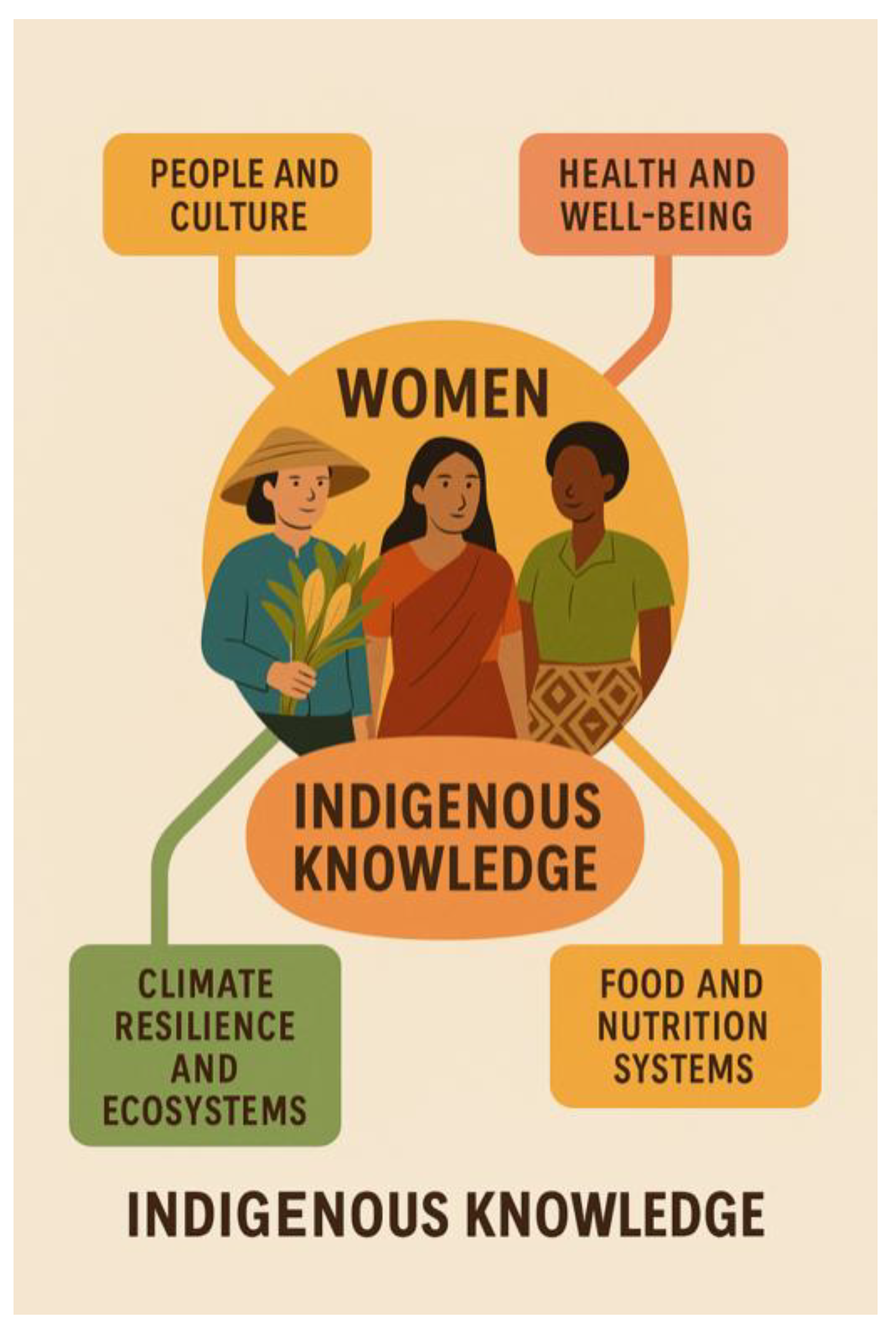
Figure 2.
The Global Indigenous Farming Methods among different regions.
Figure 3.
Regional themes and shared practices in women-led indigenous knowledge systems across Asia, Africa, and South America.
Figure 3.
Regional themes and shared practices in women-led indigenous knowledge systems across Asia, Africa, and South America.
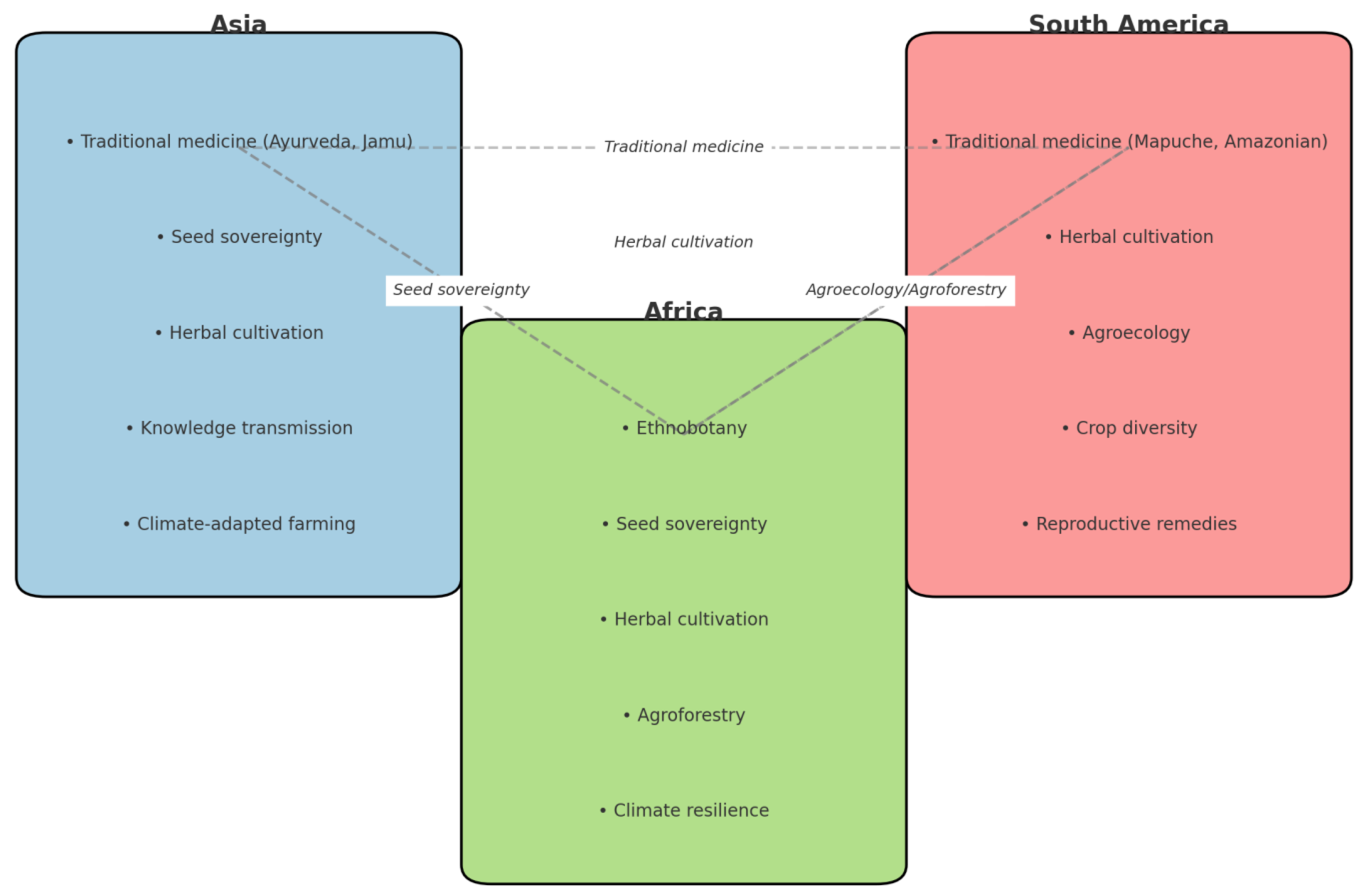

Table 1.
A summary table of indigenous crops and practices as well as challenges and women’s roles across the Asian, African, and South American context.
Table 1.
A summary table of indigenous crops and practices as well as challenges and women’s roles across the Asian, African, and South American context.
| Country | Indigenous Crops/Practices | Women’s Role | Key Challenges |
|---|---|---|---|
| Iran | Rice, wheat and barley, pulses, saffron, and date palms | Planting, weeding, pest control, harvesting, and marketing | Lack of access to resources, limited land ownership, and exclusion from ag extension and education |
| India | Millet, pulses; women-led farming collectives / Millet cultivation, seed saving (Deccan Development Society) | Primary cultivators and decision-makers / Leaders in land reclamation, agroecology, seed saving | Land access, poor integration in national policy / Neglect of traditional grains in public policy |
| Nepal | Millet, legumes, community seed saving | Seed saving, knowledge transmission | Policy neglect, lack of extension services |
| Pakistan | Home gardening, underused indigenous crops / Traditional lentils, millet, sorghum | Informal food providers, limited support / Food producers, limited land rights, informal roles | Exclusion from formal ag programs / Limited access to land, ag extension, and credit |
| Bangladesh | Home gardens, pulses, local leafy greens / Homestead food production, local rice | Primary in-home gardening, food prep / Homestead cultivators, low policy engagement | High anaemia, weak local food systems / Hybrid seed dominance, weak support for women |
| Sri Lanka | Chena cultivation, traditional vegetables, crop rotation / Chena cultivation, ayurvedic systems, herbal medicine | Knowledge holders, labour contribution, food saving and preparation / Healers, food processors | Land use change, undervalued knowledge, urbanization, erosion of traditional systems |
| Philippines | Upland farming, tubers, banana varieties / Kaingin system, root crops, legumes, medicinal plants | Crop managers, food processors / Seed custodians, informal leaders | Deforestation, limited market access / Mining, militarization, policy neglect of indigenous areas |
| Nigeria | Amaranth, cowpea leaves, indigenous vegetables / Fluted pumpkin | Producers, marketers / Key cultivators | Stigma, poor market infrastructure / Low institutional support, limited land ownership |
| DR Congo | Spider plant, amaranth; traditional diets / Cassava, traditional leafy greens | Custodians of seeds, dietary managers / Caretakers of traditional diets and crops | Seed availability, import competition / Conflict, displacement, weak extension services |
| Ghana | Leafy greens, legumes, traditional home gardens / Cocoyam leaves, local leafy greens | Farmers, transmitters of indigenous knowledge / Market participants, custodians of nutrition | Fragmented policy support, funding gaps / Fragmented support, low visibility in policy |
| Ethiopia | Indigenous vegetables, low urban awareness / Teff, barley, sorghum landraces | Undervalued, low visibility in urban settings / Landrace preservationists, informal knowledge | Awareness, market development issues / Documentation gaps, limited female leadership |
| Mozambique | Root crops, traditional vegetables in rural areas / Informal seed systems | Central to rural food production / Central to household food systems, under-resourced | Urbanization, cash crop pressure / Urban migration, poor rural infrastructure |
| Kenya | Nightshade, amaranth; commercialised AIVs / Amaranth, cowpea leaves, AIVs | Leaders in cooperatives and markets / Leaders in cooperatives, agroecology, food markets | Scaling efforts, policy integration / Scaling agroecology, unequal gender participation |
| Rwanda | Pulses, root crops, and indigenous vegetables like Amaranth, African nightshade | Main cultivators | Limited access to quality seeds, land fragmentation, and declining indigenous knowledge transfer |
| Bolivia/Peru | Quinoa, potatoes, amaranth; seed preservation / High-altitude farming | Seed custodians, nutritional gatekeepers / Agrobiodiversity stewards, seed knowledge holders | Commercialisation pressure, gender exclusion / Commercial pressures on biodiversity |
| Brazil | Cassava, maize, beans; women-led agroecology / Medicinal plants (MMC agroecology) | Agroecology activists, land defenders / Feminist movement leaders, food and health activists | Deforestation, agribusiness threats / Agribusiness threats, deforestation, land violence |
| Chile | Quinoa, beans; home gardens, Mapuche traditions / Mapuche traditional farming | Cultural preservation through farming / Cultural preservationists | Monoculture forestry, land loss / Land dispossession |
| Mexico | Milpa system (maize, beans, squash, amaranth) | Seed selectors, food preparers / Milpa stewards, nutrition caregivers | Trade liberalisation, nutritional decline / Health-nutrition transitions |
| Argentina | Maize, sweet potatoes; land pressure / Community-based seed recovery | Marginalised in agri systems / Displaced food providers, landless farming efforts | GM crops, land concentration / Land inequality, GM crop dominance |
| Venezuela | Plantains, cassava; traditional survival farming / Informal indigenous farming | Keepers of traditional food systems / Survival farming leaders, caretakers of traditional food | Economic collapse, food scarcity / Input scarcity, insecurity |
| Tanzania | Indigenous vegetables, local grains, seed banking | Women’s groups improve mental health, seed resilience | Climate impacts, funding gaps for seed systems |
Table 2.
The Siddha Medicine approach.
| Approach | Country of Origin | Time period | Brief description | References |
|---|---|---|---|---|
| Siddha Gynecology (Magalir Maruthuvam) | India (Tamil Nadu) | Ancient (2000+ years ago) | A Siddha branch focused on women’s reproductive health including menstruation, fertility, pregnancy, and menopause. Emphasizes natural remedies, dietary regimens, and lifestyle management based on humoral theory (vali, azhal, iyam). | (M, 2021. ) |
| Home-based Herbal Remedies by Women | India (South India) | Ongoing/Traditional | Women in rural areas traditionally prepare herbal decoctions and oils for issues like PCOS, leucorrhoea, infertility, and postpartum recovery, using knowledge passed down generations. | (Balamurugan, 2017) |
| Medicinal Plant Cultivation by Women | India (Tamil Nadu, Kerala, NE states) | Traditional to Present | Women cultivate, preserve, and harvest medicinal plants in home gardens and temple groves. Their knowledge is vital for sustainable use of Siddha herbs and biodiversity conservation. | (Kumar, 2019) |
| Community Health through Women Healers | India (Tribal regions, Tamil Nadu) | Historical & Contemporary | Elderly women and midwives serve as primary care providers in rural Siddha communities, offering gynecological treatments and childbirth support with herbal knowledge in absence of modern facilities. | (Benefitting from a Tribal Community’s Symbiotic Relationship with Nature: The Healing System Practiced by Irula Women – Tamil Nadu – Tribal Cultural Heritage in India, n.d.) |
Disclaimer/Publisher’s Note: The statements, opinions and data contained in all publications are solely those of the individual author(s) and contributor(s) and not of MDPI and/or the editor(s). MDPI and/or the editor(s) disclaim responsibility for any injury to people or property resulting from any ideas, methods, instructions or products referred to in the content. |
© 2025 by the authors. Licensee MDPI, Basel, Switzerland. This article is an open access article distributed under the terms and conditions of the Creative Commons Attribution (CC BY) license (http://creativecommons.org/licenses/by/4.0/).
Copyright: This open access article is published under a Creative Commons CC BY 4.0 license, which permit the free download, distribution, and reuse, provided that the author and preprint are cited in any reuse.


