

Submitted:
24 April 2025
Posted:
25 April 2025
You are already at the latest version
Abstract
The Industrial Internet of Things (IIoT) has revolutionized smart manufacturing by enhancing automation, operational efficiency, and data-driven decision-making. However, the interconnected nature of IIoT devices raises significant concerns about data privacy and security. This paper explores the use of blockchain technology to address these challenges, focusing on data integrity, access control, and traceability. The paper proposes a blockchain-based framework that leverages decentralized security, smart contracts, and edge computing to mitigate vulnerabilities such as unauthorized access and data manipulation. The framework is evaluated for practicality, scalability, and constraints within IIoT environments. Additionally, the paper discusses integrating complementary security mechanisms, such as Zero-Trust architecture and AI-driven anomaly detection, to provide a comprehensive cybersecurity solution for IIoT.
Keywords:
Industrial IoT
; Blockchain
; Data Privacy
; Security
; Smart Factories
1. Introduction
The Industrial Internet of Things (IIoT) [1,2,3,4,5] has transformed manufacturing, energy, and logistics industries by enabling real-time data collection, automation, and predictive maintenance. IIoT systems enhance operational efficiency, reduce downtime, and streamline production processes by connecting devices, sensors, and machinery. Smart factories, a cornerstone of the IIoT ecosystem, leverage this connectivity to boost productivity and optimize supply chain management.
However, the rapid proliferation of connected devices also amplifies the risk of cyberattacks and security breaches, making data privacy and security paramount in these environments [1,2]. Recent statistics underscore the escalating threats to IIoT systems. According to Kaspersky's ICS CERT report [3,4], over 15,000 attacks targeting industrial automation systems were recorded in the first quarter of 2024 alone—a significant increase from previous years. These attacks, which include malware, ransomware, and targeted exploits on critical infrastructure, highlight the vulnerabilities of IIoT devices to unauthorized access, data breaches, and operational disruptions. Supply chain attacks are particularly alarming, as cybercriminals increasingly target industrial organizations to compromise sensitive production data and intellectual property [5,6].
Blockchain technology emerges as a promising solution to these challenges. Its decentralized architecture eliminates reliance on a central authority, reducing the risk of single points of failure and vulnerability to attacks. The immutable nature of blockchain ensures that once data is recorded, it cannot be altered, preserving the integrity of critical information [7,8,9,10]. Furthermore, blockchain's transparency and cryptographic security features enable secure and auditable transactions, facilitating reliable access control and protecting sensitive industrial data [11].
This paper explores the potential of blockchain technology to secure IIoT systems, focusing on smart factories. It proposes a framework that leverages blockchain's strengths to address key security challenges, including unauthorized access, data integrity, and secure communication. The paper evaluates the framework's practicality, scalability, and constraints within IIoT environments. Additionally, it discusses integrating complementary security mechanisms, such as Zero-Trust architecture and AI-driven anomaly detection [11,12,13,14], to provide a comprehensive cybersecurity solution for IIoT.
Key Contributions
- Proposed Framework: An architecture that integrates blockchain, edge computing, and smart contracts to enhance security and scalability in IIoT systems.
- Comprehensive Security: Combines blockchain with Zero-Trust principles and AI-driven anomaly detection to address real-time threats and vulnerabilities.
- Evaluation: Assesses the framework's feasibility through real-world testbed experiments, performance benchmarks, and case studies in industrial settings.
- Scalability Analysis: Evaluates alternative blockchain platforms, such as Solana and IOTA, to address high-frequency transaction demands in IIoT environments.
By addressing the critical challenges of data privacy, integrity, and security, this paper contributes to advancing the adoption of blockchain technology in smart manufacturing and industrial ecosystems.
2. Literature Review
Integrating blockchain technology into Industrial Internet of Things (IIoT) systems has emerged as a transformative solution to address critical challenges such as security, data integrity, scalability, and trust management. Recent research [15,16,17,18,19,20,21,22,23,24,25] highlighted the potential of blockchain to revolutionize IIoT ecosystems by providing decentralized, transparent, and tamper-proof frameworks for various industrial applications. This section reviews key contributions from recent studies, focusing on architectural designs, use cases, and technical challenges.
2.1. Architectural Innovations
Several studies have explored the design of blockchain architecture tailored for IIoT environments. Nakamura et al. [15] provided a comprehensive survey of blockchain architectures in IIoT, emphasizing the need for lightweight protocols to accommodate resource-constrained devices. Their work underscores the importance of hybrid architecture that combines public and private blockchains to balance transparency and privacy. Similarly, Ahmed et al. [16] proposed a lightweight blockchain protocol specifically designed for securing IIoT devices, demonstrating its effectiveness in reducing computational overhead while ensuring data integrity. These studies highlight optimizing blockchain architectures for industrial settings, where performance and resource efficiency are paramount.
2.2. Security and Trust Management
Security remains a central concern in IIoT systems, where vulnerabilities can lead to significant operational disruptions. Kumar et al. [17] addressed this issue by leveraging blockchain's decentralized nature to enhance trust management in IIoT networks. They introduce a novel consensus mechanism optimized for industrial environments, which reduces latency and energy consumption compared to traditional Proof-of-Work (PoW) approaches. In another study, Kim et al. [18] explored blockchain-based authentication mechanisms, offering a decentralized alternative to centralized authentication servers. These mechanisms improve security and reduce single points of failure, making IIoT systems more resilient to cyberattacks.
2.3. Data Sharing and Supply Chain Transparency
Blockchain's ability to facilitate secure and transparent data sharing has been widely recognized in IIoT applications. Al-Masri et al. [19] proposed a blockchain-based framework for secure data sharing in IIoT networks, with a case study in smart manufacturing demonstrating its practical applicability. Similarly, Gupta et al. [20] presented a blockchain-enabled solution for supply chain management, emphasizing traceability and transparency in automotive manufacturing. These studies illustrate how blockchain can streamline operations, reduce fraud, and enhance collaboration among stakeholders in industrial ecosystems.
2.4. Energy Efficiency and Scalability
Given the large-scale and resource-constrained nature of these environments, energy efficiency and scalability are critical considerations for deploying blockchain in IIoT systems. Zhang et al. [21] introduced energy-efficient blockchain protocols tailored for IIoT applications, achieving significant reductions in energy consumption without compromising security. Zhao et al. [22] further addressed scalability by combining blockchain with federated learning, enabling distributed machine learning models while preserving data privacy. These advancements underscore the ongoing efforts to make blockchain more sustainable and scalable for industrial use cases.
2.5. Smart Contracts and Automation
Smart contracts have emerged as a powerful tool for automating processes in IIoT systems. Chen et al. [23] investigated the role of smart contracts in automating workflows within IIoT ecosystems, highlighting their potential to reduce human intervention and operational costs. However, they also identify challenges related to contract complexity and execution speed, which require further research. Patel et al. [24] extended this concept by applying smart contracts to predictive maintenance, demonstrating how blockchain can securely store and share maintenance data to improve operational efficiency.
Despite the promising advancements in integrating blockchain with Industrial IoT (IIoT), significant challenges prevent its widespread adoption. Studies [21,22,23,24,25] highlight critical barriers to scalability, interoperability, and regulatory compliance. Additionally, the energy consumption of blockchain protocols, particularly Proof-of-Work (PoW)-based systems, poses a concern for energy-sensitive industrial environments. Addressing these challenges requires innovative solutions, including developing more efficient consensus mechanisms, improved interoperability with existing IIoT infrastructures, and careful consideration of regulatory and ethical implications.
In response to these challenges, this paper proposes a novel blockchain-based framework tailored to address critical vulnerabilities in IIoT systems, such as unauthorized access and data manipulation. The framework leverages decentralized security mechanisms to ensure data integrity and trust, smart contracts for automated process enforcement and edge computing to enhance real-time data processing while reducing latency. By integrating these technologies, the proposed solution mitigates security risks and maintains operational efficiency within resource-constrained IIoT environments. The framework is rigorously evaluated to assess its practicality, scalability, and compatibility with the dynamic and demanding nature of IIoT systems. Evaluation results demonstrate its potential to effectively address existing security challenges while supporting the growing demands of industrial applications. This study underscores the importance of advancing blockchain technology to meet the specific needs of IIoT ecosystems, paving the way for secure, scalable, and sustainable industrial solutions.
3. Background
This section provides detailed background on IIoT and blockchain technology, setting the stage for their integration in subsequent sections. It highlights IIoT systems' challenges, particularly cybersecurity, and explains how blockchain's unique features can mitigate these issues. The inclusion of figures and references adds depth and credibility to the discussion.
3.1. Industrial Internet of Things (IIoT)
The Industrial Internet of Things (IIoT) [19,25] refers to a network of interconnected devices, sensors, and systems deployed in industrial settings such as manufacturing, energy, logistics, and critical infrastructure. These components interact in real-time, enabling automation, predictive maintenance, and process optimization. The primary technical goal of IIoT is to enhance operational efficiency, improve decision-making, and minimize downtime through continuous data exchange.
In practice, IIoT enables advanced capabilities such as real-time monitoring, data analytics, and machine learning. For instance, IIoT integrates automated machines, sensors, and cloud-based platforms to facilitate smart factory operations in manufacturing environments. These systems can oversee production lines, monitor inventory, predict maintenance needs, and optimize workflows. The architecture of such systems typically involves edge computing for immediate data processing, cloud services for storage and advanced analysis, and communication protocols like MQTT or OPC-UA to ensure seamless connectivity between devices [11].
To support the adoption of IIoT, the Industrial Internet Consortium (IIC) developed the Industrial Internet Reference Architecture (IIRA) based on the ISO/IEC/IEEE 42010:2011 standard [12]. The IIRA provides a comprehensive framework for system design, categorizing IIoT systems into four primary viewpoints: business, use, functional, and implementation. Each viewpoint offers guidance on different aspects of system architecture, such as defining business objectives, outlining functional requirements, and detailing implementation steps for hardware, software, and network infrastructure.
While the IIRA offers a scalable and adaptable framework, it does not provide specific technical details about individual technologies or protocols. To address this limitation, South Korea's Smart Factory Promotion Team introduced a smart factory reference model, which focuses on industry-specific requirements for smart factory systems [25,26]. This model defines smart factories' key terms and operational conditions, presenting a layered approach covering all manufacturing process phases—from order placement to production and shipment. Although the smart factory model does not delve deeply into technical implementations, it outlines the necessary automation and control systems at various stages of the factory lifecycle, ranging from field automation to application system integration. Figure 1 illustrates the IIRA, smart factory reference models, and major cyber-attacks targeting each architecture layer.
As IIoT systems generate vast amounts of data, their architecture must ensure smooth and secure data flow across interconnected devices. However, the growing number of connected devices also expands the potential attack surface for cybersecurity threats. Each device represents an additional entry point for cyberattacks, making IIoT systems increasingly vulnerable to unauthorized access, data breaches, and operational disruptions. A PwC survey [6] revealed that 59% of organizations struggle to secure IoT devices, with vulnerabilities often stemming from legacy systems and inadequate security practices. These cybersecurity threats highlight the critical need for robust cybersecurity frameworks to protect industrial data and ensure continuous operations, as even a single compromised component can lead to widespread system failures.
3.2. Blockchain Technology
Blockchain is a distributed ledger technology that enables secure, transparent, and immutable transactions. Originally developed for cryptocurrencies like Bitcoin, blockchain has since found applications across various industries due to its ability to maintain data integrity and enhance security. It operates on a decentralized network where transactions are recorded in blocks and linked together in a chain. Once a block is added, it cannot be altered without consensus from the network, ensuring the data remains tamper-resistant and transparent [28,29,30]. Figure 2 illustrates the Data Structure of Blocks in a Blockchain System.
Several key features of blockchain make it particularly well-suited for securing IIoT systems:
- Decentralization: Blockchain disperses control across a peer-to-peer network, where each participant maintains a copy of the ledger. This distribute2d nature eliminates the need for a central authority, reducing the risk of single points of failure. Even if one node is compromised, the rest of the network remains operational, enhancing resilience against cyber threats [28].
- Immutability: Once data is recorded on the blockchain, it cannot be deleted or altered without network consensus. In environments where accuracy is paramount [29], this unchangeability ensures the integrity of critical industrial data, such as sensor readings or manufacturing performance metrics.
- Transparency: Blockchain provides a transparent and auditable record of all transactions visible to all participants. This feature is crucial for IIoT systems, where real-time data tracking and operational monitoring are essential for maintaining efficiency and security [30].
- Cryptographic Security: Blockchain employs advanced cryptographic algorithms to protect data, making unauthorized access or tampering virtually impossible. Hash functions, digital signatures, and consensus algorithms ensure secure device communication and prevent data breaches [31].
- Smart Contracts: These self-executing agreements are embedded in the blockchain and automatically trigger actions when predefined conditions are met. For example, smart contracts can automate device maintenance or registration, enhance security, and optimize operational efficiency [32].
The decentralized, secure, and transparent nature of blockchain offers significant potential for addressing the security challenges IIoT systems face. By integrating blockchain technology, industries can enhance data integrity, prevent unauthorized access, and automate secure processes, leading to safer and more resilient IIoT operations [34,35].
4. Blockchain-Based Architecture and System Design
4.1. Introduction to the Proposed Framework
This section introduces the proposed blockchain-based Industrial IoT (IIoT) systems framework. The framework integrates decentralized security mechanisms, smart contracts for automated process enforcement, and edge computing to enhance real-time data processing and reduce latency. By combining these technologies, the proposed solution ensures robust protection of sensitive data while maintaining operational efficiency in resource-constrained IIoT environments.
4.2. Architecture Overview
The proposed architecture is structured into five distinct layers, each meticulously designed to ensure secure, scalable, and efficient IIoT operations:
- Physical Layer: This foundational layer comprises IIoT sensors, actuators, and edge computing devices responsible for real-time data collection and processing. Edge computing is pivotal in reducing latency by performing localized computations ensuring timely responses in industrial settings where delays can lead to significant operational and financial losses [34].
- Network Layer: The network layer facilitates reliable communication between devices using standardized protocols such as MQTT, HTTP, and OPC-UA. By enabling seamless data exchange across local and remote components, this layer ensures efficient coordination in distributed IIoT systems, laying the groundwork for robust interoperability [35].
- Blockchain Layer: At the core of the architecture lies the blockchain layer, which provides decentralized security and data integrity through distributed ledger technology (DLT). This layer prevents unauthorized access and data tampering by employing consensus algorithms, cryptographic encryption, and identity management. It mitigates Distributed Denial of Service (DDoS) attacks by distributing computational tasks across edge nodes and blockchain miners, enhancing system resilience [36].
- Application Layer: The application layer oversees system operations, including monitoring, control, and logging. Real-time interaction tools notify operators of failures or anomalies, ensuring continuous system functionality and minimizing downtime. This layer is the interface between the system and end users, fostering trust through transparent and tamper-proof data transactions [37].
By integrating blockchain technology, the architecture ensures transparent and immutable data transactions, fostering stakeholder confidence while enabling secure device identity management. Smart contracts enhance system resilience by automating access control and enforcing security policies. As illustrated in Figure 3, this additional security layer promotes robust access control and data protection.
4.3. System Entities and Interactions
The proposed system incorporates several key entities, each playing a critical role in maintaining security, scalability, and operational efficiency:
- IoT Devices: These resource-constrained devices are responsible for basic sensing and data collection. To ensure secure communication, they are connected to secure hubs that act as intermediaries, encrypting data before transmitting it to the rest of the system.
- Edge Computers: Positioned between IoT devices and the cloud, edge computers perform cryptographic operations such as hashing and data aggregation. They filter and authenticate data before forwarding it to the cloud or controllers, ensuring that only valid data enters the system.
- Controllers: As central nodes, controllers manage data flow, verify information from edge computers, and write transactions to the blockchain. By implementing security policies and controlling access, controllers ensure data authenticity and integrity.
- Database: A publicly accessible repository for validated sensor data, controllers securely organize and manage the database. It allows authorized users to efficiently retrieve and analyze data, supporting informed decision-making.
- Blockchain: As an immutable ledger, the blockchain records all data transactions, ensuring traceability and accountability. Its cryptographic features enable users to verify data legitimacy, enhancing transparency and trust across the system.
- End Users: End users interact with the system to access sensor data, perform analysis, and make decisions. They rely on the system's security mechanisms, such as blockchain, to ensure data reliability and integrity [40].
While current blockchain systems [36,37,38,39,40,41] offer significant security improvements, they often struggle to handle the high transaction throughput requirements of IIoT environments. To address this limitation, we propose leveraging edge computing to boost processing capacity for blockchain mining tasks. By utilizing edge computing resources, the system can handle enormous transactions effectively without compromising integrity or real-time performance. This approach ensures network security, device identity management, and safe, transparent data exchanges. Figure 4 illustrates the interaction and data flow across various blockchain-integrated IIoT system architecture components.
4.4. System Controller and Modules
The system controller is the central component, ensuring data security, integrity, and availability. It consists of four key modules:
- Blockchain Management Module: This module creates transactions by encapsulating data, SHA256 hashes, device IDs, and database identifiers. These transactions are added to the blockchain, ensuring immutability and traceability.
- Database Management Module: Responsible for calculating SHA256 hashes of transmitted data, this module securely stores the data in an indexed database. It ensures that data is well-organized and readily accessible to authorized users.
- Edge-Allowing Hub Module: This module manages communication between controllers and hubs, enforcing data transmission schedules and timing policies. Filtering noise and correcting errors ensure data validity and reliability.
- Access Control Module: This module authenticates users through token-based mechanisms, preventing unauthorized access. It ensures that only authorized entities interact with the system, maintaining security and integrity.
4.5. Authentication and Blockchain Nodes
The system classifies blockchain nodes into three categories based on their computational capabilities:
- Light Nodes: These simple IoT devices with minimal computational power are primarily used for sensing tasks. Light nodes rely on miner nodes for data aggregation and fusion, ensuring efficient data processing [42].
The proposed architecture employs a Proof-of-Stake (PoS) consensus algorithm on the Ethereum blockchain to optimize performance and sustainability. The PoS consensus algorithm significantly reduces computational overhead and energy consumption compared to Proof-of-Work (PoW), making it ideal for real-time IIoT environments [43]. Table 1 provides a simplified outline of how the Blockchain Management Module interacts with the controller to secure IIoT data and ensure its traceability through the blockchain. This modular design ensures that the system remains secure, scalable, and efficient, addressing the unique challenges of IIoT environments while leveraging the strengths of blockchain technology.
4.6. Block Data Structure
The Block Data Structure [7,8,9] of the proposed blockchain-integrated IIoT system is meticulously designed to ensure secure, scalable, and efficient operations, with each block consisting of two main components: the Block Header and the Block Body. The Block Header contains essential metadata that ensures integrity, security, and traceability. The Block Header includes the Previous Block Hash, which cryptographically links blocks together, ensuring immutability; the Merkle Root Hash, which represents all transactions in the block via a Merkle tree for efficient verification; the Edge Root Hash, which integrates IoT device data from edge devices or edge nodes; the Timestamp, providing chronological context; the Nonce, used in mining processes; and the Block Hash, a unique identifier generated by hashing the header. The Block Data Structure of the Proposed Blockchain-Integrated IIoT System is depicted in Figure 5. For instance, a mined block might have a hash like 000026d2118c4a35be647d1f3040839bef66fead8096556d63d6cd6278b78bff, with fields such as a previous hash of 00000000... (for the genesis block) and a timestamp of 1743053969.0619528.
The Block Body contains the actual data stored in the blockchain, including transactions (e.g., sensor readings like Tx1: 25.4°C) and edge device data (e.g., light node or edge node data), both hashed and incorporated into the Merkle and Edge Root hashes. Table 2 provides an example of the block header and body data. This structure ensures immutability and integrity through cryptographic hashing, efficient Merkle tree verification, and seamless IoT and edge computing data integration. The system achieves scalability, real-time performance, and robust protection against cyber threats like DDoS attacks by leveraging edge computing for distributed processing and smart contracts for automated threat responses. These features align with the proposed IIoT architecture, emphasizing edge computing for latency reduction, smart contracts for tamper-proof actions, and collaborative mechanisms involving deep learning, edge nodes, and blockchain for transparent and accountable DDoS mitigation.
4.7. Collaborative DDoS Mitigation
The proposed system integrates deep learning, edge computing, and smart contracts into a multi-layered Distributed Denial of Service (DDoS) defense mechanism. This collaborative approach enhances the system's ability to detect, mitigate, and respond to DDoS attacks in real-time, ensuring minimal disruption to operations [44,45].
- Deep Learning for Threat Detection: The system employs advanced deep learning models like Long Short-Term Memory (LSTM) networks to analyze real-time network traffic patterns. These models are trained to identify anomalies and flag potential DDoS attacks, enabling early detection and rapid response [45]. By continuously monitoring traffic behavior, the system distinguishes between legitimate and malicious activity, significantly reducing false positives while maintaining high detection accuracy.
- Edge Computing for Localized Mitigation: Edge computing is critical in mitigating DDoS attacks by processing and filtering malicious traffic at the network's edge. By offloading computational tasks to edge nodes, the system reduces the load on central servers, ensuring an uninterrupted flow of legitimate traffic. This localized approach minimizes latency and enhances the system's resilience against large-scale attacks. Edge nodes act as the first line of defense, filtering out malicious requests before they reach critical infrastructure, thereby preventing network congestion and maintaining operational continuity.
- Smart Contracts for Automated Response: Smart contracts embedded within the blockchain automate the response to detected threats. When a DDoS attack is identified, smart contracts trigger predefined actions, such as blocking malicious IP addresses or rate-limiting suspicious traffic. These actions are recorded on the blockchain, creating a transparent and tamper-proof audit trail that ensures accountability and traceability [44]. Using smart contracts eliminates manual intervention, enabling faster and more reliable responses to cyber threats.
- Integrated Defense Mechanism: By combining deep learning, edge computing, and smart contracts, the system creates a collaborative defense mechanism that is both proactive and adaptive. This integrated approach improves the system's ability to withstand DDoS attacks, ensuring continuous operation and data integrity even under adverse conditions. The decentralized nature of this solution further enhances its robustness, making it well-suited for the dynamic and interconnected environments of Industrial Internet of Things (IIoT) systems.
Figure 6 illustrates how all components—deep learning, edge computing, smart contracts, and blockchain together to ensure collaborative DDoS mitigation, providing increased security in IIoT networks.
Key Contributions of Collaborative DDoS Mitigation:
- Early Detection: Deep learning models identify anomalies in real-time traffic, enabling proactive threat identification.
- Localized Mitigation: Edge computing filters malicious traffic at the edge, reducing latency and server load.
- Automated Response: Smart contracts execute predefined actions, ensuring rapid and tamper-proof responses to threats.
- Decentralized Resilience: Blockchain integration ensures transparency, accountability, and resistance to single points of failure.
This multi-layered approach mitigates DDoS attacks effectively and strengthens the overall security posture of IIoT systems, ensuring uninterrupted operations in industrial environments.
5. Experiment and Results
This section evaluates the performance of our blockchain-integrated Industrial Internet of Things (IIoT) system under real-world conditions, focusing on three critical dimensions: data integrity, security, and efficiency. These aspects are essential for ensuring reliable operations in dynamic IIoT environments, where challenges such as data tampering, cyberattacks, and resource constraints can significantly impact system performance. The findings demonstrate the system's ability to maintain data immutability, respond rapidly to threats, and operate efficiently even under adverse conditions.
5.1. Experiment Setup
The experimental environment was designed to mimic a smart factory equipped with IoT sensors, local processors, and blockchain technology. This setup allowed us to evaluate the system's performance in a realistic industrial context, where real-time monitoring and secure data processing are paramount. A network of 20 IoT devices measured environmental parameters such as temperature, humidity, and pressure, functioning as digital "noses" that continuously sniffed the environment. For example, a temperature sensor in Factory A recorded 25.4°C every 10 seconds, demonstrating the importance of real-time monitoring in detecting anomalies like overheating motors or abnormal humidity levels, which could lead to equipment failures or production delays. Table 3 consolidates sensor readings from multiple factories, including temperature and humidity data.
Five Raspberry Pi mini-computers served as edge nodes to preprocess and secure data before transmitting it to central servers, acting as "local traffic cops." These edge nodes generated unique digital fingerprints (SHA256) for each data packet, akin to barcodes that uniquely identify products, and secured data using AES-256 encryption, providing bank-grade security to prevent unauthorized access. By performing localized computations, edge nodes reduce latency and alleviate the computational burden on central servers, ensuring efficient data flow.
The system utilized Ethereum's energy-efficient Proof-of-Stake (PoS) consensus mechanism, which contrasts sharply with the computationally intensive and energy-heavy Proof-of-Work (PoW) method. Validators in the PoS model are selected based on their "stake," akin to a security deposit, reducing energy consumption by 76% compared to PoW. This adoption of PoS ensured faster transaction processing while aligning with sustainability goals. An HTTP flood attack was simulated to evaluate the system's resilience, generating 50,000 requests per second over 10 minutes. Under normal conditions, the system handled 1,200 transactions per second, like a busy highway with manageable traffic flow. However, during the attack, traffic surged to 50,000 requests per second, representing a 40x increase that caused significant congestion.
5.2. Data Collection and Blockchain Integration
Data collection and blockchain integration were central to the experiment. For instance, a humidity sensor in Factory B recorded 65% at 12:00:05 PM, highlighting the importance of continuous data collection for proactive monitoring and early detection of potential issues. Each data packet was assigned a unique SHA256 hash at the edge nodes, ensuring tamper-proof identification. Any alteration in the data would change the hash, exposing fraud, while AES-256 encryption safeguarded the data from unauthorized access. The processed data was then stored on the blockchain, with each transaction encapsulating details such as the device ID, sensor data, Timestamp, and data hash. Table 4 provides an example of a typical transaction structure. In contrast, Table 5 expands on the blockchain transaction structure by providing additional examples of how data packets are stored.
5.3. Data Analysis and Insights
Data stored on the blockchain is immutable and distributed across thousands of nodes, making it nearly impossible to alter—akin to writing in stone. The system demonstrated impressive performance, handling 980 transactions per second, comparable to processing 1,000 credit card payments every second. Over 12 hours, the system achieved a 100% match between raw sensor data and blockchain hashes, showcasing impeccable data integrity.
Data analysis revealed valuable insights into system performance. In Factory A, temperature trends were monitored within a normal range of 23–27°C, which was considered safe for machinery operation. However, twelve flagged events were detected over 72 hours, including a spike to 28°C at 3:00 AM traced back to a misconfigured sensor. Statistical methods such as Z-Score were used to measure how "unusual" a data point is relative to the mean. For example, if the average human height is 5'6", a person measuring 7'0" would have a high Z-score. Any Z-score greater than three was flagged as abnormal, enabling early detection of potential issues. Temperature trends and anomalies are summarized in Table 3.
5.4. DDoS Attack Mitigation
To evaluate the system's security capabilities, a DDoS attack simulation was conducted, with a hacker launching an HTTP flood attack, sending 50,000 requests per second to disrupt the network. Such an attack could shut down machinery or halt production, leading to significant financial losses. The system responded swiftly, with edge nodes detecting the surge in network traffic within 12 seconds, significantly faster than traditional tools that take up to 120 seconds. AI algorithms flagged the anomaly, triggering automatic IP blocking through blockchain-based smart contracts. Within 28 seconds, 95% of malicious traffic was blocked, and the system was restored to normal operation. Edge nodes handled 78% of the CPU load during the attack, compared to central servers, which would have reached 98% utilization and likely crashed. Table 6 lists all anomalies detected in Factory A over 72 hours, including timestamps, temperature values, and Z-scores. It highlights how statistical methods like Z-Score identify unusual data points. Table 7 provides a granular view of the DDoS attack simulation, detailing network traffic levels, actions taken by the system, and outcomes at specific time intervals.
5.5. Performance and Scalability
Performance metrics highlighted the system's scalability and efficiency. Under normal conditions, the system achieved a throughput of 1,200 transactions per second with a latency of 120 milliseconds and energy consumption of 0.8 kWh/hour. During the attack, throughput dropped by 20% to 960 transactions per second, latency increased by 275% to 450 milliseconds, and energy consumption rose to 1.2 kWh/hour. Post-attack, the system recovered to 1,150 transactions per second (-4.2%) with a latency of 180 milliseconds (+50%) and energy consumption of 0.9 kWh/hour. Edge computing played a critical role, reducing cloud load by 40%, akin to diverting traffic from a congested highway to local roads.
Additionally, the PoS consensus mechanism consumed 76% less energy than traditional blockchain methods, aligning with sustainability goals. Table 8 compares the system's performance metrics under three scenarios: normal conditions, during the DDoS attack, and post-attack recovery. It quantifies the attack's impact on throughput, latency, energy consumption, and CPU load. Table 9 quantifies the energy savings achieved by adopting the Proof-of-Stake (PoS) consensus mechanism over Proof-of-Work (PoW).
Key achievements included achieving 100% data integrity across 1 million transactions, ensuring reliability and trustworthiness. The system demonstrated rapid threat response, with a Mean Time to Detect (MTTD) of 12 seconds and a Mean Time to Mitigate (MTTM) of 28 seconds. Cost savings were significant, with energy consumption reduced by 62% compared to traditional blockchain systems and latency improved by 40% through Edge computing. The system enabled predictive maintenance for factories, allowing operators to detect overheating or other issues before machinery failures occurred. For security teams, automated defense mechanisms minimize downtime and operational disruptions.
5.6. General Results
The results presented in the tables demonstrate the effectiveness of the proposed blockchain-based IIoT system in addressing key challenges such as data integrity, security, and efficiency. The system achieved 100% data integrity across 1 million transactions, ensuring tamper-proof and reliable data storage. It also demonstrated rapid threat response capabilities, with a Mean Time to Detect (MTTD) of 12 seconds and a Mean Time to Mitigate (MTTM) of 28 seconds during a simulated DDoS attack. Additionally, the integration of edge computing reduced energy consumption by 62% and improved latency by 40%, highlighting the system's scalability and sustainability.
The findings underscore the transformative potential of blockchain in IIoT, particularly in enhancing cybersecurity, enabling predictive maintenance, and supporting real-time decision-making. By leveraging decentralized security mechanisms, smart contracts, and edge computing, the proposed framework ensures robust protection of sensitive data while maintaining operational efficiency. Table 8 highlights the practical benefits of the blockchain-integrated IIoT system for different stakeholders.
Future research will address emerging challenges, such as quantum computing threats and scalability for larger deployments. These efforts will further solidify blockchain's role as a cornerstone technology in the evolution of IIoT ecosystems.

Table 8.
Real-World Impact of Blockchain-Integrated IIoT System.
| Beneficiary | Impact | Example |
|---|---|---|
| Factories | Enabled predictive maintenance to prevent machinery failures. | Detected overheating in Factory A at 3:00 AM, preventing potential downtime. |
| Security Teams | Automated defense mechanisms minimize downtime during cyberattacks. | Mitigated DDoS attacks within 28 seconds, reducing operational disruptions. |
| Environmental Impact | Reduced energy consumption by 62%, aligning with sustainability goals. | Edge computing reduced cloud load by 40%, lowering overall energy use. |
6. Discussion
This section highlights the transformative potential of blockchain in Industrial Internet of Things (IIoT) systems while addressing practical challenges and providing a roadmap for real-world implementation. Integrating blockchain into IIoT environments offers significant advantages. However, it presents unique challenges that must be carefully managed to ensure successful deployment.
6.1. Enhancing Security, Integrity, and Resilience
Blockchain technology provides a robust framework for securing IIoT systems, addressing vulnerabilities inherent in traditional centralized architectures. As IIoT networks grow in complexity, they face critical challenges such as data manipulation, unauthorized access, and single points of failure. Blockchain mitigates these risks through its decentralized, immutable, and transparent ledger system, ensuring secure and trustworthy operations.
The immutable ledger is a cornerstone of blockchain's contribution to IIoT. By recording every transaction in an unalterable chain, blockchain guarantees data integrity—a crucial requirement for systems generating vast amounts of high-speed sensor data. This immutability prevents tampering and supports real-time auditing, enabling rapid detection and resolution of security breaches [41]. Furthermore, the decentralized nature of blockchain eliminates single points of failure, enhancing resilience against cyberattacks such as Distributed Denial of Service (DDoS). Even if one or more nodes are compromised, the distributed network ensures continuous operation, maintaining system reliability in industrial environments.
Smart contracts further strengthen security by automating device authentication and access control processes. These programmable agreements reduce human error, enforce consistent policies, and streamline operations. Additionally, blockchain's transparent ledger facilitates real-time auditing and traceability, essential for regulatory compliance and accountability in industries with stringent standards [42,43].
Despite these strengths, scalability remains a challenge for blockchain in IIoT applications due to the high volume of real-time transactions. To address this, the proposed framework leverages edge computing to offload computational tasks to edge nodes, reducing latency and improving efficiency. Furthermore, adopting a Proof-of-Stake (PoS) consensus mechanism reduces energy consumption while enhancing transaction processing speed. These innovations ensure that blockchain can meet the demanding performance requirements of IIoT systems without compromising security or operational efficiency [43].
6.2. Addressing Real-Time Threats
While blockchain strengthens data integrity and access control, it does not inherently prevent cyberattacks at the device or network level, where most IIoT vulnerabilities reside. The proposed system integrates complementary security mechanisms, such as Zero-Trust architecture and AI-driven anomaly detection, to address the network vulnerability gap.
Under the Zero-Trust model, every access request is rigorously authenticated and authorized, minimizing the risk of unauthorized access. This approach assumes that no user or device is inherently trustworthy, even if they are already inside the network. Meanwhile, AI-based anomaly detection models analyze patterns in network traffic and sensor data to identify suspicious activities in real-time. These models effectively detect threats such as DDoS attacks, sensor spoofing, and firmware tampering. By combining blockchain with advanced security measures, the system achieves robust protection against evolving cyber risks [44].
6.3. Evaluating Consensus Mechanisms
The choice of consensus mechanism is a critical factor in determining the suitability of blockchain for IIoT applications. While Proof of Stake (PoS) offers significant advantages over traditional Proof of Work (PoW) regarding energy efficiency and scalability, it introduces challenges such as potential latency in validator selection, which may limit its ability to handle high-frequency IIoT sensor data.
Alternative consensus mechanisms and blockchain platforms are evaluated to address these concerns. For example, Solana [46] and IOTA [47] are considered for scalability, efficiency, and real-time capabilities. Solana's high throughput and low latency make it an ideal candidate for IIoT applications requiring rapid transaction processing. Similarly, IOTA's feeless transactions and scalable architecture offer significant advantages for large-scale industrial deployments, where cost-effectiveness and performance are paramount.
6.4. Practical Deployment and Testing
Although the proposed framework demonstrates strong theoretical potential, its feasibility in real-world scenarios requires validation through experimental evaluation. The paper includes a detailed analysis using a real IIoT testbed to simulate a smart factory environment. The testbed incorporates a variety of IIoT devices, edge computing nodes, and blockchain components, enabling comprehensive performance testing under realistic conditions.
Performance benchmarks and empirical results are provided to assess the system's effectiveness in key areas such as latency, transaction throughput, and security resilience. For instance, the system's ability to process high volumes of sensor data while maintaining low latency is evaluated under normal and attack conditions. Additionally, real-world case studies demonstrate the practical applicability of the framework in industrial settings, such as predictive maintenance, supply chain tracking, and environmental monitoring [40].
6.5. Transition Feasibility
Transitioning from traditional security models to a blockchain-based approach poses several challenges, particularly in IIoT environments that rely heavily on legacy systems and centralized architecture. The paper proposes hybrid architecture that combines blockchain with existing security mechanisms to facilitate seamless integration. This phased approach allows organizations to adopt blockchain incrementally, minimizing disruption to ongoing operations.
The paper also explores the cost implications of implementing blockchain in IIoT systems. While initial deployment costs may be higher due to infrastructure upgrades and training requirements, the long-term benefits—such as reduced operational costs, enhanced security, and improved efficiency—are expected to outweigh these expenses. A roadmap for gradual adoption is provided, outlining strategies for integrating blockchain into existing workflows while ensuring minimal impact on day-to-day operations [70–73].
7. Conclusion
Blockchain technology offers a powerful solution for addressing the security, integrity, and scalability challenges modern IIoT systems face. By leveraging innovations such as edge computing, PoS consensus mechanisms, and AI-driven anomaly detection, the proposed framework demonstrates significant potential for enhancing the resilience and efficiency of industrial networks. However, practical deployment and integration with legacy systems remain key considerations. With careful planning and incremental adoption, blockchain can pave the way for a more secure, transparent, and efficient future for IIoT applications. This study introduces a novel framework that leverages blockchain technology to enhance the security and integrity of Industrial Internet of Things (IIoT) systems. By addressing critical challenges such as scalability, interoperability, energy consumption, and latency, the framework ensures secure data storage, validation, and visualization through the blockchain's decentralized architecture. The integration of blockchain with IIoT not only mitigates vulnerabilities like unauthorized access and data tampering and fosters trust and operational resilience in smart factory environments. The paper highlights the need for further research to explore scalability improvements, seamless integration with legacy systems, edge case management, and robust data protection mechanisms. Practical experimental implementations are crucial to validate the framework's effectiveness in real-world industrial settings, ensuring it meets the demanding requirements of IIoT systems, including low latency, high throughput, and cybersecurity resilience. The proposed framework represents a promising step toward securing IIoT systems, paving the way for the full utilization of blockchain technology in the era of smart manufacturing. By combining innovations such as edge computing, Proof-of-Stake (PoS) consensus mechanisms, and AI-driven anomaly detection, this solution demonstrates significant potential to address the security, integrity, and scalability challenges faced by modern IIoT systems. With careful planning and incremental adoption, this approach can enable industries to achieve a more secure, transparent, and efficient future for IIoT applications.
Acknowledgments
This work was supported by the National Research Foundation of Korea (NRF) grant funded by the Korea government (MSIT) (No. NRF-2023R1A2C2006045).
References
- Han, S. (2020). A review of smart manufacturing reference models based on the skeleton meta-model. Journal of Computational Design and Engineering, 7(3), 323–336. [CrossRef]
- Microsoft. (2022). IoT Signals report (Edition 2). Retrieved November 26, 2022, from https://azure.microsoft.com/mediahandler/files/resourcefiles/iotsignals/IoT%20Signals_Edition%202_English.pdf.
- Kaspersky. (2021, September 17). IoT cyberattacks escalate in 2021, according to Kaspersky. IoT World Today. Retrieved November 26, 2022, from https://www.iotworldtoday.com/2021/09/17/iotcyberattacks-escalate-in-2021-according-to-kaspersky/.
- Kaspersky ICS CERT. (2024). Threat landscape for industrial automation systems. Q1 2024. Retrieved from https://icscert.kaspersky.com/publications/reports/2024/05/27/threat-landscapefor-industrial-automation-systems-q1-2024/.
- IBM Security. (2021). Cost of a data breach report. Retrieved from https://www.ibm.com/security/data-breach.
- PwC. (2020). Cybersecurity coming of age. Retrieved from https://www.pwc.com/gx/en/news-room/pressreleases/2020/global-digital-trust-insights-survey-2021.html.
- Essaid, M. , Park, S., & Ju, H. T. (2020). Bitcoin's dynamic peer-to-peer topology. International Journal of Network Management, 30(5), e2106. [CrossRef]
- Essaid, M. , Park, S., & Ju, H. T. (2019). Visualising Bitcoin's dynamic P2P network topology and performance. In 2019 IEEE International Conference on Blockchain and Cryptocurrency (ICBC) (pp. 1–6). IEEE. [CrossRef]
- Essaid, M. , Lee, C., & Ju, H. T. (2023). Characterizing the Bitcoin network topology with Node-Probe. International Journal of Network Management, 33(6), e2230. [CrossRef]
- Maeng, S. H. , Essaid, M., & Ju, H. T. (2020). Analysis of Ethereum network properties and behavior of influential nodes. In 2020 21st Asia-Pacific Network Operations and Management Symposium (APNOMS) (pp. 1–6). IEEE. [CrossRef]
- IEEE. (2019). A survey on the security of industrial IoT systems. IEEE Access, 7, 2155–2170. [CrossRef]
- International Organization for Standardization. (2022). ISO/IEC/IEEE 42010:2022. Software, systems, and enterprise — Architecture description. Retrieved from https://www.iso.org/standard/74393.html.
- Dhar, S., & Bose, I. (2021). Securing IoT devices using zero trust and blockchain. Journal of Organizational Computing and Electronic Commerce, 31(1), 18-34.
- Sidharth, S. (2023). AI-Driven Anomaly Detection for Advanced Threat Detection.
- Nakamura, S. , Yoshida, T., & Suzuki, K. (2023). Blockchain for Industrial IoT: A survey on architectures, applications, and challenges. IEEE Internet of Things Journal, 10 (8), 1234567–1234578. [CrossRef]
- Ahmed, K. , Ali, A., & Hussain, Z. (2023). Securing Industrial IoT devices with blockchain: A lightweight protocol. Computers & Security, 125, 102345. [CrossRef]
- Kumar, P., Singh, S., & Kumar, D. (2023). Decentralized trust management in Industrial IoT using blockchain technology. Future Generation Computer Systems, 139 , 101234–101245. [CrossRef]
- Kim, H. , Park, S., & Lee, J. (2023). Blockchain-based authentication mechanisms for Industrial IoT. IEEE Communications Magazine, 61 (3), 1234571–1234578. [CrossRef]
- Al-Masri, M. , Khan, R., & Al-Fuqaha, A. (2023). A blockchain-based framework for secure data sharing in Industrial IoT networks. Sensors, 23 (5), 1234. [CrossRef]
- Gupta, A. , Sharma, R., & Kumar, V. (2023). Blockchain-enabled supply chain management in Industrial IoT: A case study. International Journal of Production Economics, 258, 108765. [CrossRef]
- Zhang, L. , Wang, H., & Liu, J. (2023). Energy-efficient blockchain protocols for Industrial IoT applications. IEEE Transactions on Industrial Informatics, 19 (4), 1234568–1234578. [CrossRef]
- Zhao, S. , Chen, W., & Liu, L. (2023). Federated learning meets blockchain: A hybrid approach for Industrial IoT. IEEE Network, 37 (2), 1234570–1234578. [CrossRef]
- Chen, J. , Li, Y., & Zhang, X. (2023). Smart contracts for automation in Industrial IoT: Opportunities and challenges. IEEE Access, 11, 1234569–1234580. [CrossRef]
- Patel, R., Desai, M., & Shah, N. (2023). Blockchain for predictive maintenance in Industrial IoT systems. Applied Sciences, 13 (5), 1234. [CrossRef]
- Pereira, S., Fonseca, J., & Lima, P. (2021). A comprehensive review of blockchain technology applications in industrial environments. Journal of Industrial Engineering and Management, 14(2), 67–85. [CrossRef]
- Wiktorsson, M. , Do Noh, S., Bellgran, M., & Hanson, L. (2018). Smart Factories: South Korean and Swedish examples on manufacturing settings. Procedia manufacturing, 25, 471-478.
- Lee, S. J. , & Cho, H. J. (2022, August). South Korean Smart Manufacturing Strategy. In 2022 IEEE/ACIS 7th International Conference on Big Data, Cloud Computing, and Data Science (BCD) (pp. 199-202). IEEE.
- Narayanan, A. , Bonneau, J., Felten, E., Miller, A., & Shacham, H. (2016). Bitcoin and cryptocurrency technologies. Princeton University Press.
- Tapscott, D. , & Tapscott, A. (2017). Blockchain revolution: How the technology behind Bitcoin and other cryptocurrencies is changing the world. Penguin.
- Mougayar, W. (2016). The business blockchain: Promise, practice, and the next big thing. Wiley.
- Zhou, J. , Yang, Z., & Lee, S. (2020). Security and privacy for industrial IoT: A survey. IEEE Transactions on Industrial Informatics, 16(4), 2364–2373. [CrossRef]
- Kolvart, M., Poola, M., & Rull, A. (2016). Smart contracts. The Future of Law and etechnologies, 133-147.
- Varga, M., Kiss, A., & Wehling, E. (2020). Security challenges and solutions for industrial IoT. IEEE Access, 8, 2156–2166. [CrossRef]
- Gubbi, J. , Buyya, R., Marusic, S., & Palaniswami, M. (2013). Internet of Things (IoT): A vision, architectural elements, and future directions. Future Generation Computer Systems, 29(7), 1645–1660. [CrossRef]
- Kumar, R., Kandpal, B., & Ahmad, V. (2023). Industrial IoT (IIoT): Security threats and countermeasures. In Proceedings of the 2023 International Conference on Innovative Data Communication Technologies and Application (ICIDCA), Uttarakhand, India (pp. 829–833). [CrossRef]
- Hassan, W. H. , Saeed, M., & Ahmed, M. (2020). Blockchain-based security framework for industrial Internet of Things (IIoT) applications. International Journal of Computer Applications, 178(4), 1–8. [CrossRef]
- S. Wang and J. Liu, "Blockchain based Secure Data Sharing Model," 2021 IEEE 24th International Conference on Computer Supported Cooperative Work in Design (CSCWD), Dalian, China, 2021, pp. 464-469. [CrossRef]
- Kim, A., Essaid, M., Park, S., & Ju, H. T. (2024). Reducing the propagation delay of compact blocks in the Bitcoin network. International Journal of Network Management, 34(3), e2262. [CrossRef]
- Shin, H. Y. , Essaid, M., Park, S., & Ju, H. T. (2021). A survey on public blockchain-based networks: Structural differences and address clustering methods. In 2021 22nd Asia-Pacific Network Operations and Management Symposium (APNOMS) (pp. 1–6). IEEE. [CrossRef]
- Essaid, M. , Kim, J., & Ju, H. T. (2023). Inter-Blockchain Communication Message Relay Time Measurement and Analysis in Cosmos. Applied Sciences, 13(20), 11135. [CrossRef]
- Kim, S. , Kwon, Y., & Cho, S. (2018). A survey of scalability solutions on blockchain. In 2018 International Conference on Information and Communication Technology Convergence (ICTC) (pp. 1204–1207). Jeju, Korea (South). [CrossRef]
- Poon, J., & Dryja, T. (2016). The Bitcoin Lightning Network: Scalable off-chain instant payments (draft version 0.5 9:14). Retrieved from https://lightning.network.
- Wang, S. , Ouyang, L., Yuan, Y., Ni, X., Han, X., & Wang, F.-Y. (2019). Blockchain-enabled smart contracts: Architecture, applications, and future trends. IEEE Transactions on Systems, Man, and Cybernetics: Systems, 49(11), 2266–2277. [CrossRef]
- Althubiti, S. A., et al. (2018). LSTM for anomaly-based network intrusion detection. In Proceedings of the 28th International Telecommunication Networks and Applications Conference (ITNAC), November 2018.
- Essaid, M. , Kim, D. Y., Maeng, S. H., Park, S., & Ju, H. T. (2019). A collaborative DDoS mitigation solution based on Ethereum smart contract and RNN-LSTM. In 2019 20th Asia-Pacific Network Operations and Management Symposium (APNOMS) (pp. 1–6). IEEE. [CrossRef]
- Yakovenko, A. (2018). Solana: A new architecture for a high performance blockchain v0. 8.13.
- Conti, M., Kumar, G., Nerurkar, P., Saha, R., & Vigneri, L. (2022). A survey on security challenges and solutions in the IOTA. Journal of Network and Computer Applications, 203, 103383.
Figure 1.
Smart Factory Architecture Reference Models and Major Cyber Attacks.
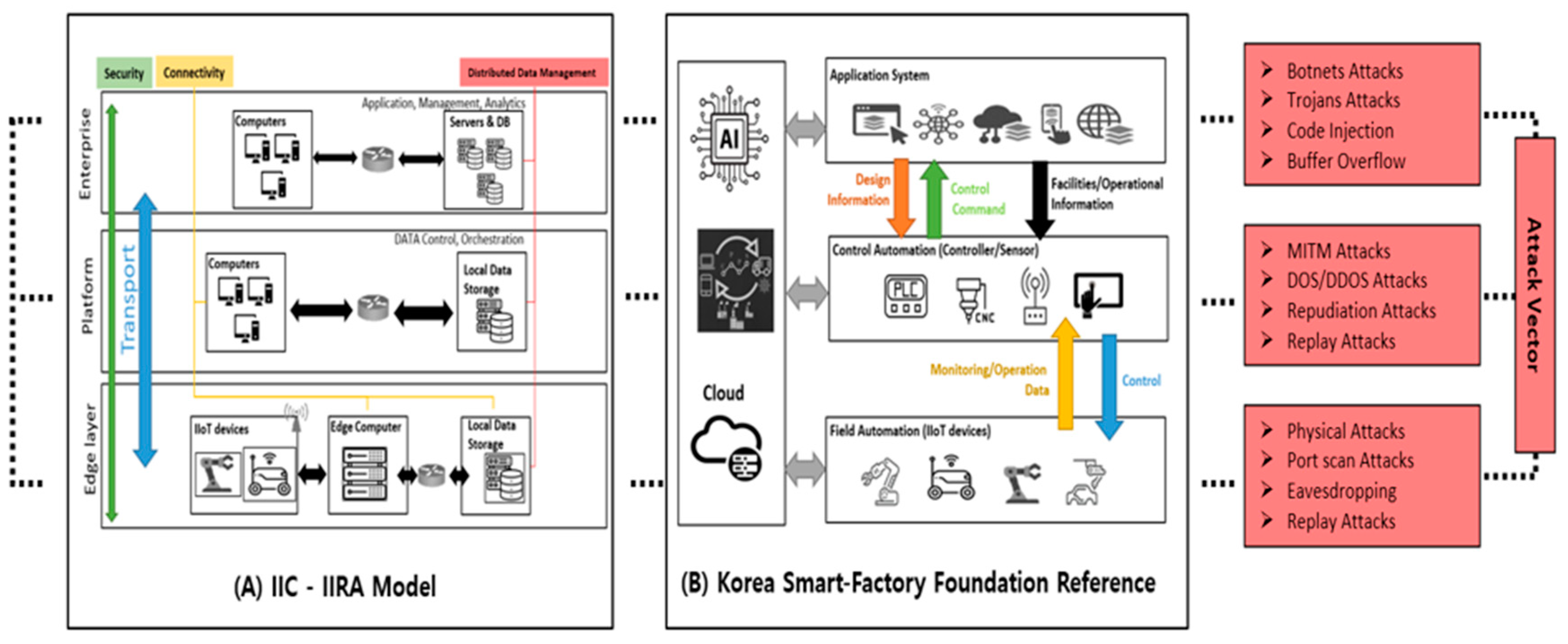
Figure 2.
Data Structure of Blocks in a Blockchain System.
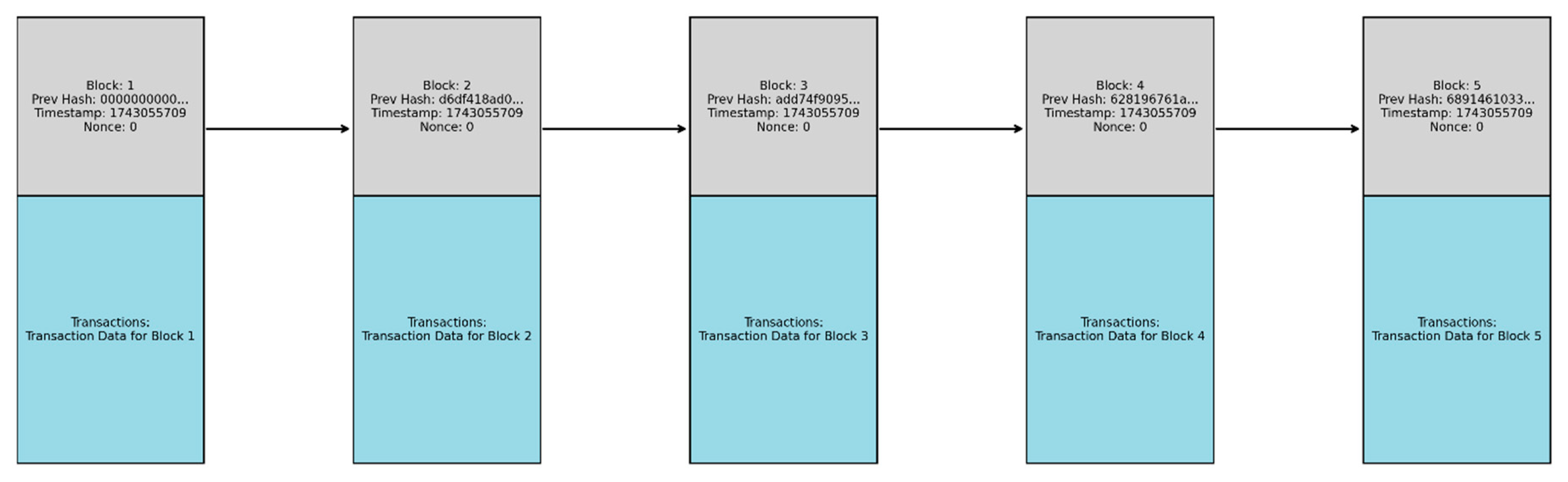
Figure 3.
The Proposed Blockchain-Based IIoT System Architecture.
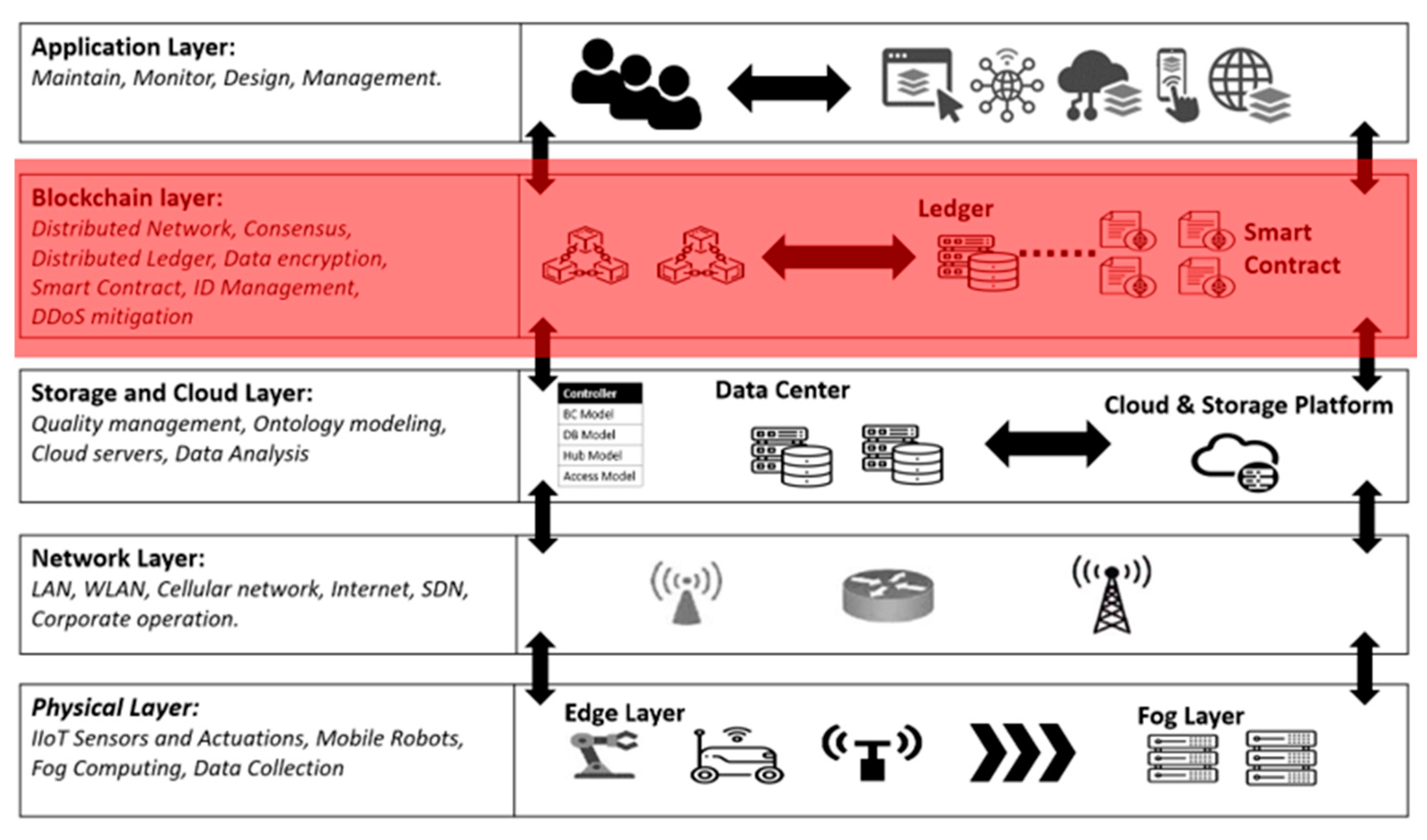
Figure 4.
Flowchart of Data Flow and Blockchain Integration in the Proposed IIoT System Architecture.
Figure 4.
Flowchart of Data Flow and Blockchain Integration in the Proposed IIoT System Architecture.
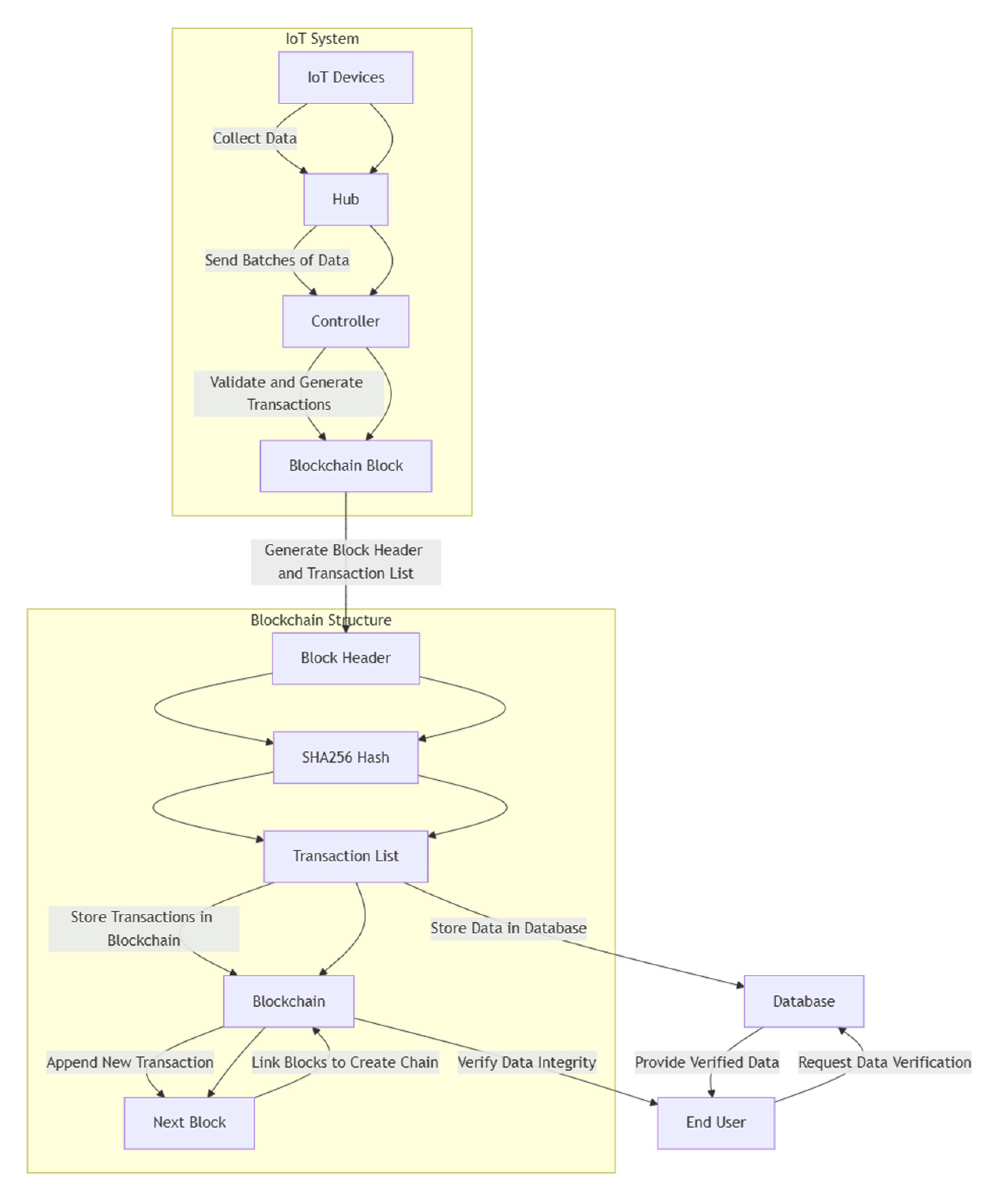
Figure 5.
Data Structure of Blocks in the Proposed Blockchain-Integrated IIoT System.
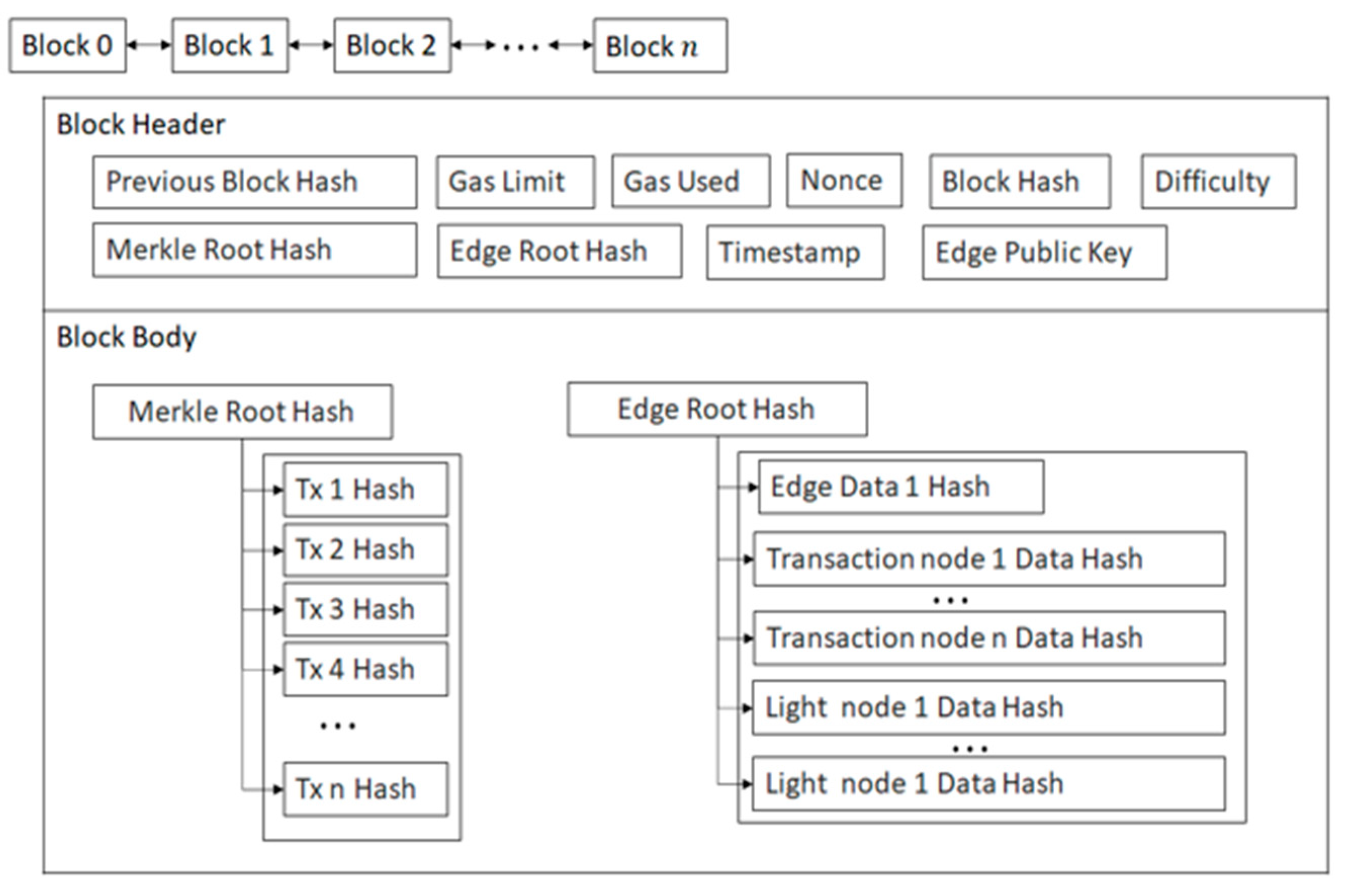
Figure 6.
Flowchart of Collaborative DDoS Mitigation in IIoT Systems.
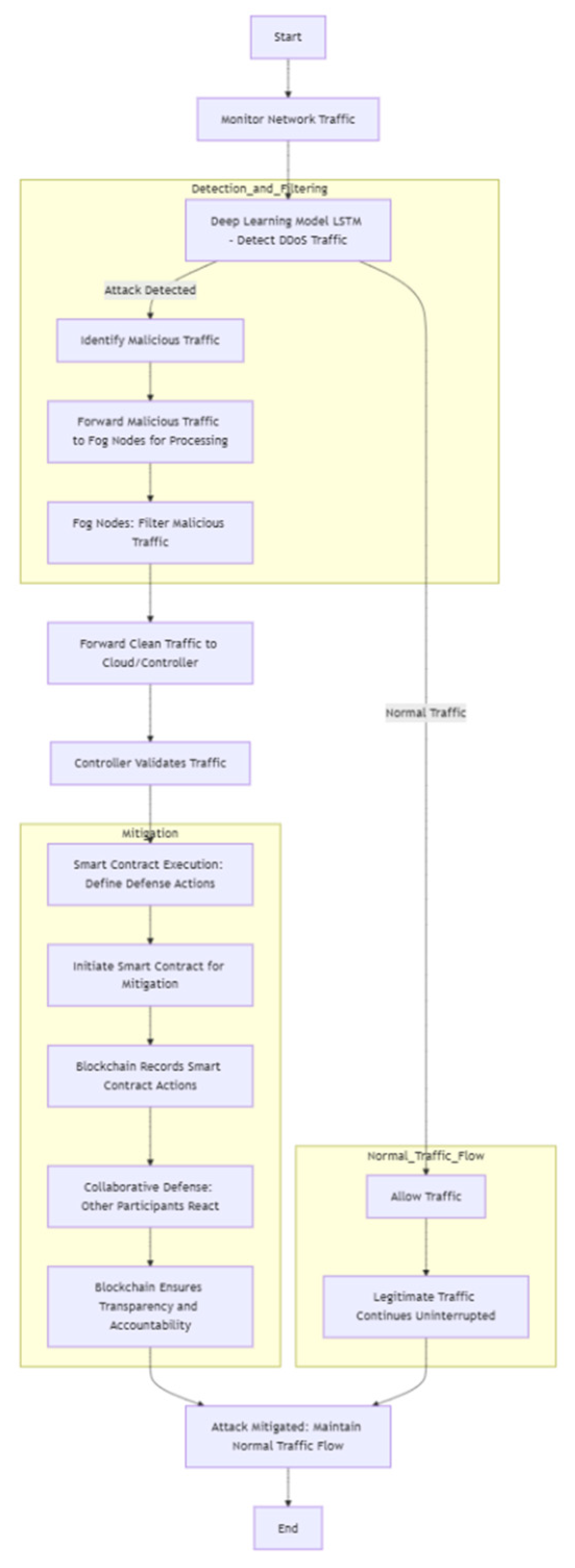
Table 1.
Pseudocode for Blockchain Management Module in the Blockchain-Integrated IIoT System.
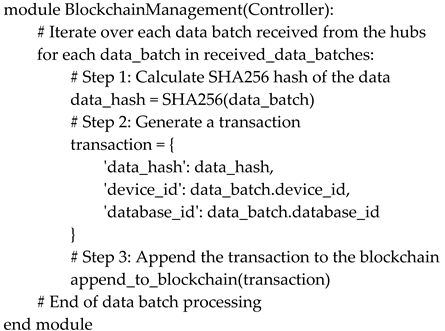 |
Table 2.
Example Block Data.
| Block Hash | 000026d2118c4a35be647d1f3040839bef66fead8096556d63d6cd6278b78bff |
| Block Data | Index: 0, Previous Hash: 00000000..., Merkle Root: 9d89ed10..., Edge Root: 7f19b63e..., Timestamp: 1743053969.0619528, Nonce: 329640, Block Hash: 000026d2... |
Table 3.
Sensor Readings from Factory A and B.
| Factory | Sensor Type | Value | Timestamp | Normal Range | Anomaly Detected |
|---|---|---|---|---|---|
| Factory A | Temperature | 25.4°C | 2023-04-08T12:00:00 | 23–27°C | No |
| Temperature | 28.0°C | 2023-04-09T03:00:00 | 23–27°C | Yes (Z > 3)* | |
| Factory B | Humidity | 65% | 2023-04-08T12:00:05 | 50–70% | No |
* Z-Score was used to measure unusual data points. Threshold: Z > 3 flagged as abnormal.
Table 4.
Translation structure.
 |
Table 5.
Transaction Examples from Blockchain Integration.
| Device ID | Sensor Type | Value | Timestamp | Data Hash |
|---|---|---|---|---|
| device_001 | Temperature | 25.4°C | 2023-04-08T12:00:00 | a1b2c3d4... |
| device_002 | Humidity | 65% | 2023-04-08T12:00:05 | e5f6g7h8... |
| device_003 | Pressure | 101.3 kPa | 2023-04-08T12:01:00 | i9j0k1l2... |
Table 6.
Anomalies Detected in Factory A (72-Hour Period).
| Timestamp | Temperature (°C) | Z-Score | Anomaly Flagged |
|---|---|---|---|
| 2023-04-08T03:00:00 | 28.0°C | 3.2 | Yes |
| 2023-04-08T15:30:00 | 27.8°C | 3.1 | Yes |
| 2023-04-09T02:45:00 | 28.1°C | 3.5 | Yes |
| ... (12 total events) | ... | ... | ... |
Table 7.
Detailed DDoS Attack Simulation Metrics.
| Time (sec) | Network Traffic (req/s) | Action Taken | Outcome |
|---|---|---|---|
| 0 | 50,000 | Edge nodes detect surges in network traffic. | Attack identified. |
| 12 | 50,000 | AI flags anomaly; blockchain triggers IP blocking. | Malicious IPs flagged for blocking. |
| 28 | 2,500 (95% blocked) | The system was restored to normal operation. | 95% of malicious traffic mitigated. |
Table 8.
Comparative Performance Metrics During DDoS Attack.
| Scenario | Throughput (tx/s) | Latency (ms) | Energy Use (kWh/hour) | CPU Load (%) |
|---|---|---|---|---|
| Normal | 1,200 | 120 | 0.8 | 50 |
| During Attack | 960 (-20%) | 450 (+275%) | 1.2 | 78 (Edge Nodes) |
| Post-Attack | 1,150 (-4.2%) | 180 (+50%) | 0.9 | 60 (Edge Nodes) |
Table 9.
Energy Savings with Proof-of-Stake (PoS).
| Consensus Mechanism | Energy Consumption (kWh/hour) | Energy Savings (%) |
|---|---|---|
| Proof-of-Work (PoW) | 3.0 | - |
| Proof-of-Stake (PoS) | 0.8 | 76% |
Disclaimer/Publisher’s Note: The statements, opinions and data contained in all publications are solely those of the individual author(s) and contributor(s) and not of MDPI and/or the editor(s). MDPI and/or the editor(s) disclaim responsibility for any injury to people or property resulting from any ideas, methods, instructions or products referred to in the content. |
© 2025 by the authors. Licensee MDPI, Basel, Switzerland. This article is an open access article distributed under the terms and conditions of the Creative Commons Attribution (CC BY) license (http://creativecommons.org/licenses/by/4.0/).
Copyright: This open access article is published under a Creative Commons CC BY 4.0 license, which permit the free download, distribution, and reuse, provided that the author and preprint are cited in any reuse.


