

Submitted:
23 April 2025
Posted:
24 April 2025
You are already at the latest version
Abstract
Landslides in Ecuador are one of the most common fatalities in natural hazards, such as the one on March 26, 2023. A large-scale landslide occurred in Alausí, Chimborazo province, causing 65 fatalities and ten disappear people, significant infrastructural damage, and the destruction of six neighborhoods. The study presents a detailed case analysis of the anthropogenic factors that could contribute to the instability of the affected area. Field investigations and a review of historical, geological, and social information were the basis for analyzing the complex interactions between natural and human-induced conditions. Key anthropogenic contributors identified include unplanned urban expansion, improper drainage systems, deforestation, road construction without adequate geotechnical support, and changes in land use, particularly agricultural irrigation and wastewater disposal. These factors increased the area’s susceptibility to slope failure combined with intense rainfall and seismic activity, which could be the cause of the rupture process. The study also emphasizes integrating geological, hydrological, and urban planning assessments to mitigate landslide risks in geologically sensitive regions such as Alausí canton. The findings conclude that human activity could be an acceleration factor in natural processes, and the pressure of urbanization amplifies the consequences. This research underscores the importance of sustainable land management, improved drainage infrastructure, and land-use planning in hazard-prone areas. The lessons learned from Alausí can inform risk reduction strategies across other mountainous and densely populated regions globally.
Keywords:
anthropogenic factors
; landslide
; Alausí
; hazards mitigation
; urban planning
1. Introduction
Disaster events are related to the hazard risk, i.e., the exposure of goods and people, so they cannot be considered natural at all. Moreover, human activity tries to modify and adapt the environment to their needs (roads, buildings, cut and fill, and land use). These activities can significantly affect the geomorphological landscape, which, after time, tries through the natural stabilization from the cumulated energy changes. Landslides are the movement of geological materials (soil, rocks, and/or other debris) down a slope or incline by the action of the gravity force [1,2].
Ecuador is located in an internal geodynamic area crossed from North to South by the Andes Cordillera. That gives it a steep topography, strong climate contrasts, and complex ecosystems where human activity (occupation, intervention and actuation) slowly increases every year [3,4,5].
The Alausí landslide (Chimborazo province, Ecuador) was triggered on March 26, 2023 (21:13 local time, Sunday), after a slow precursor process that was initiated in December 2022 (Figure 1A) [6,7]. It can be considered a major catastrophic event that devastated over 24 hectares (cut and fill) and caused significant loss of life and infrastructure damage. It had a big size [8] with ~236 m wide, ~300 m length, and 18 m deep in average, which mobilized more than 1.3 million m3 (volume obtained from the difference in digital elevation models shown in Figure 1B and Figure 2C). The interplay between natural and anthropogenic factors is the article's aim as a previous interpretation of the process. Also, it can be said that this landslide (as a big disaster event) highlights the need to understand human responsibilities in the triggering of landslides and to find which ones have been the probable causes of the initiation of the mass movement. Alausí canton (located in the Chimborazo province and near the same name famous volcano) has a long history of landslides and seismic events, so that kind of hazard is well-known by the population, for example, in the nearest village of Chunchi [5].
Anthropogenic factors such as deforestation, unsustainable agricultural practices, inadequate urban planning, change of natural drainage streams (which affects infiltration and runoff), and poorly designed infrastructure have been identified as key contributors to increased landslide susceptibility in Ecuador [3,4,5,10]. Studies show deforestation and road construction significantly destabilize slopes by altering hydrological regimes and soil structure [3]. In the Alausí landslide event, some issues were compounded by heavy rainfall and improper drainage systems, which saturated the geological material that formed the slopes and potentially triggered mass movements. Despite prior warnings and visible signs of instability, including road cracks and subsidence observed months before the event, mitigation measures were insufficient to prevent the disaster [7].
Human activities can affect, trigger, and/or amplify potential landslide events documented worldwide [11]. However, an important gap exists in understanding how these factors can interact with Ecuador's local conditions, such as geological and climatic. Previous studies have mapped landslide susceptibility near highways or roads in Southern Ecuador and from other perspectives [3,12,13]; however, less attention has been given to the relation and integration of the socio-environmental variables compounding predictive models. This deficiency limits the development of effective risk management strategies in the Alausí area.
Moreover, anthropic activities caused by inadequate urbanization processes, high poverty levels, inequality, and environmental degradation put the Andean sub-region at high risk for landslides and other hazards [10,14].
This study addresses and analyzes the anthropogenic factors that could contribute to the destabilization of the Alausí landslide. By combining field observations (from different trips before and after the event where geological and geomorphological data were acquired) with a review of existing data on land use changes, infrastructure development, and rainfall patterns, including a review and database of social and news media with the analysis of videos and pictures (a useful material as it could be demonstrated as a complementary tool in the Troncoso et al. investigation [15]), the research provides a comprehensive understanding of how human actions can exacerbate natural hazards (including the increasing in recurrence) and increase the vulnerabilities (increasing in area). Also, the results can help policymakers decide to implement a sustainable land management approach and improve disaster preparedness in high-risk areas, and it can be translated to other geologically active regions.
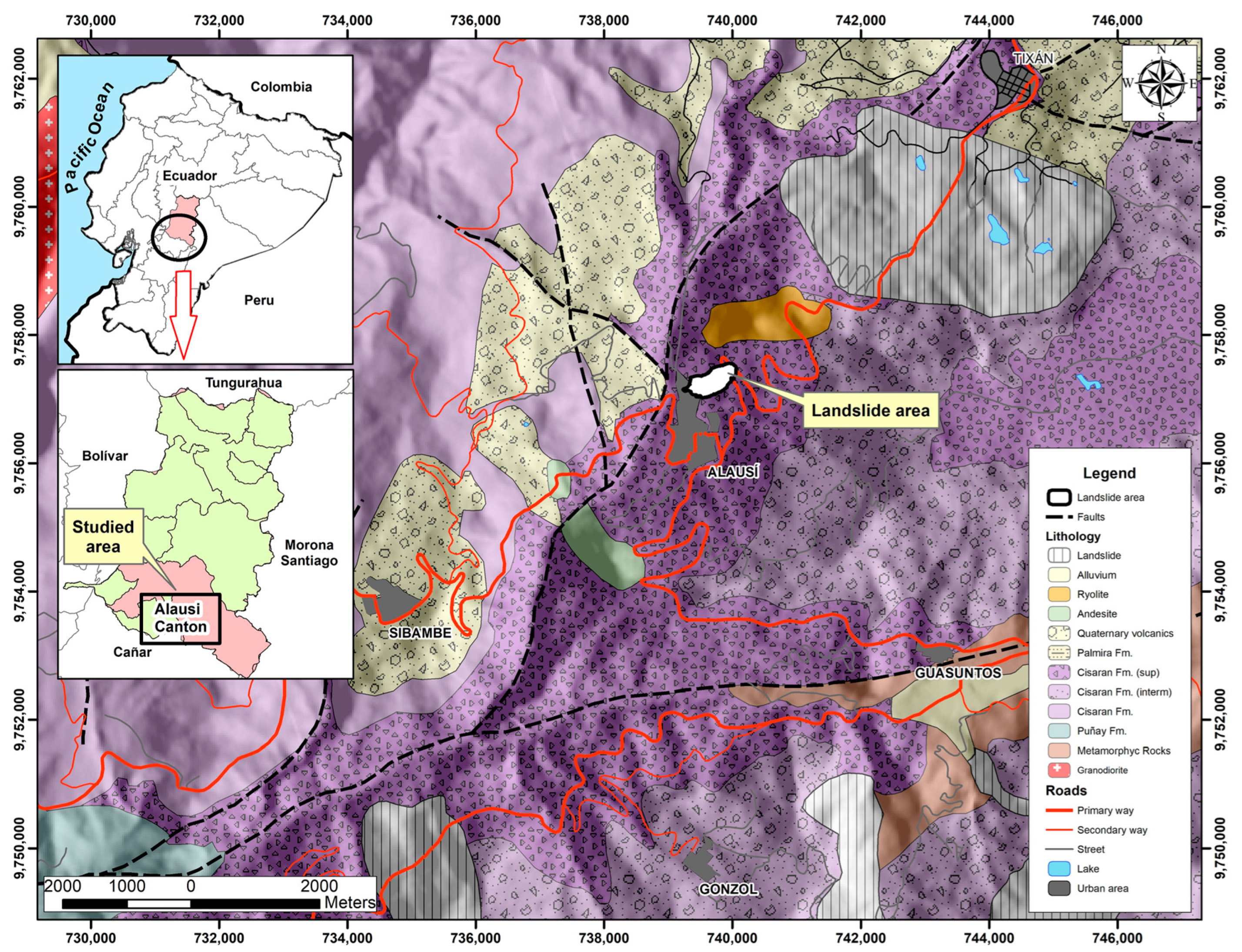
Figure 2.
Location of the studied area (Ecuador map and Chimborazo province in the rectangles, up to the left) and geological map of the area and its surroundings. (Modified from Dunkley and Gaibor [16]).
Figure 2.
Location of the studied area (Ecuador map and Chimborazo province in the rectangles, up to the left) and geological map of the area and its surroundings. (Modified from Dunkley and Gaibor [16]).
2. Geographical and Geological Approach of the Alausí landslide Area
2.1. Geographical and General Geology Description
The Casual-Nuevo Alausí landslide is located in central Ecuador, part of the Andean Mountain Range, specifically between the Western and Central or Real Cordilleras, within a region where the geomorphological and geological expression, such as the known as the Inter-Andean Depression or Valley is gradually fading (see Figure 2) [7].
The study area is part of a narrow V-shaped valley drained by the Alausí River (which underlines the Nordeast-Southwest fault located West of Alausí village in Figure 2), whose right bank is part of a system of hills related to the western edge of the Inter-Andean Valley. Meanwhile, the left bank, where the Casual-Nuevo Alausí landslide is located, is part of the western foothills of the Pachamama Plateau, which constitutes the uplifted basement of the eastern part of the Inter-Andean Valley [7].
The landslide and its surroundings (direct and indirect influenced) are positioned west of the Pachamama plateau, between it and the Alausí River. This area forms a general slope with variable gradients, featuring horseshoe-shaped escarpments in the upper part (Figure 3).
The origin of this geomorphic configuration remains uncertain and generates a complex interpretation of the Casual-Nuevo Alausí landslide area. However, it is estimated to be linked to ancient mass movements [7].
The region is over a metamorphic basement covered by volcanic rocks and surface deposits of diverse origins and geological ages. The metamorphic rocks outcrop on E-35 Roadway (La Moya-Guasuntos and Guasuntos-Tolatus sectors) and include schists, phyllites, and quartzites, which form part of the Guasuntos Unit [18]. The volcanic rocks correspond to lavas and volcanoclastic rocks included in the Cisarán Formation [16]. The volcanoclastic sequences include clast breccias and tuffs. Among the surface deposits, the most notable is the Pueblo Viejo landslide due to its size, origin, type, and degree of activity. It is located northeast of Alausí village and is classified as a collapsed zone [16]. The Casual-Nuevo Alausí landslide is between two regional structures: towards the south is the fault whose path runs along the Guasuntos River, and to the west is the inferred fault whose path runs along the Alausí River (Figure 2).
Traces of geological faults with indicators of neotectonic activity or active faults occur north of the city of Alausí, on the García Moreno Road (~0.47 km SE of San Juan) and the Guamote-Laime Totorillas Road (~1.15 km SE of Laime Totorillas). Both structures are possibly segments of the Guamote fault defined by Egüez et al. [19].
2.2. Geological Description of the Nuevo Alausí area
Geological sequences and stratigraphy of the landslide area and its surroundings include subvolcanic and volcanic origin rocks, overlaying by various shallow deposits (overburden), such as volcanic avalanches, volcanic ash, colluvial sediments, and mud and debris flows (last ones from recent sedimentary processes).
The subvolcanic rocks comprise rhyolites, exposed on the main scarp and over the E-35 Road, South of the Casual-Nuevo Alausí landslide crown. These rocks exhibit intense hydrothermal alteration, including silicification, kaolinization, and pyritization. X-ray diffraction analysis performed at FIGEMPA Faculty [7] determined that the rock contains mostly kaolinite and, to a lesser extent, cristobalite. These rocks possibly constitute the Southern extension of the rhyolitic body reported by Dunkley and Gaibor [16] further North of Alausí. Altered and weathered rocks of whitish and reddish yellow color are exposed in a small outcrop Northwest of the coliseum (UTM, WGS 84: 739,410N, 9,757,428E), which are highly jointed and whose main families have a N70E/20NW and N20E/40SE orientation (Figure 4A).
The volcanic rocks include lavas and tuffs. The lava outcrop can be seen on E-35 Road, close to the landslide crown, towards the South, and on the left margin of the Casual-Nuevo Alausí landslide. They contain plagioclase and hornblende crystals up to 1 mm in diameter in a glassy matrix and tend to be andesitic in composition. The tuffs that outcrop next to the railway are reddish, massive, and contain subrounded to angular clasts with a diameter of 40 cm or less in a tuffaceous matrix [7].
Intercalated within the volcanic sequence are highly weathered layers. Part of this sequence is exposed on E-35 Road to the North of the sector known as North Control, where it consists of a tuff of clasts with a reddish-brown base, yellowish cream, and whitish-gray hue, having light brown patches due to oxidation (Figure 4B). Due to intense weathering and high humidity, the rocks tend to be very plastic. X-ray diffraction analysis conducted at FIGEMPA Faculty [7] determined that the yellowish and gray rocks contain amorphous components and minerals such as quartz, cristobalite, jarosite, and lime (CaO). The brown rock at the base contains mostly andesine and, to a lesser extent, cristobalite and magnetite.
2.3. Hydrgeological, Hydrological, and Climatic Settings
The hydrogeological characteristics of the Alausí area are related to the geological materials composition and distribution and the pluviometry rate. Figure 5 shows the distribution and size of the micro basins (differentiated by blue tones) related to the analyzed area from a detailed digital elevation model (DEM) of the studied area before the event. The stream beds and rivers draining the micro basin are also shown (dark blue lines).
The courses of water and the surficial runoff water show evidence of human activities, such as the E-35 Road construction element and the local roads, which interfered with the natural downward water flux trace (just to the Northeast of the landslide area, the trace of the rivers have a clear-drawing-way which delineate the ways of the roads). Another observed evidence is the main direction of the water flux, which all micro basin drains towards the landslide zone.
The pluviometry values are conditionate by the two seasons of climatology, which are modified by the El Niño and La Niña effects. The rainy season starts in October and is extended through April or even May, while the dry season is between May and September. The peak in precipitation values is March, with an average value of 268 mm in the last 30 years (1991-2021) and only February and April reached an average of over 200 mm in that period. Considering the annual precipitation, the Alausí urban area and its surroundings (including the landslide zone and the micro basin defined before) have less accumulation (400 to 600 mm), and an annual hydrological deficit between 150 to 200 mm. Those values classify the above-mentioned area as a mesothermic warm to cold climate with a stage of dry climate without water excess [20].
Table 1 shows an analysis of the monthly precipitation values three years before the landslide (2020 to 2022) and the values for the 2023 year until the 20th of March. It can be seen that the previous years have a low precipitation rate, which increases dramatically in the same months of 2023 (the values of the increment in percentage from the average of the three years before are up to 450% are shown in the sixth column). That is a consequence of the La Niña episode, which started mid-2021, and was present through the first months of 2022 [21].
The accumulated values in the three years are multiplicated by 50 to 100 times in the first months of 2023, which is an impressive value. That amount of water (up to 2200 mm) is an excess abnormally received in the area, and most of the published papers reviewed indicate that it is the triggering factor that affected the landslide area. However, some infiltration tests performed by the investigation team over surface soils in 2023 have shown an infimum rate (made over the Cangahua formation, the volcanic hard soil covering the whole area in the eastern sectors from Alausí urban center). Moreover, Lefranc permeability tests performed between 0 m and 10 m depth (soil materials) in boreholes show values up to 10-8 cm/s (a value close to the impermeability of materials) and a high permeability in the basement fractured rocks (as secondary permeability) which reaches 10-1 cm/s values [22].
2.4. Historical Overview of Landslides in the Region
As mentioned above, Ecuador and Chimborazo province have historically recorded in landslides [5]. For example, the area from Tixan to Guasuntos villages and further South has been affected by several landslides, most of which are recorded and even some evaluated, such as those that occurred in Pueblo Viejo, Cerro Llulluna, Cerro Gampala, Guasuntos and La Elegancia [23].
The Pueblo Viejo landslide is a large-scale compound, with areas exhibiting varying degrees of activity, whose behavior varies during the winter [23]. This area has been affected by landslides at least once a year, adversely affecting the development of communities within the area of influence. It is known that a few years ago, part of a community was relocated after being affected by a debris avalanche, which caused concern among its residents. Additionally, the reviewed bibliography of maps and technical reports produced by the National Institute of Geological, Mining, and Metallurgical Research (INIGEMM) mentions that the area was affected by a large-scale landslide, possibly triggered by an earthquake that occurred at the end of the 17th century (1797) due to the reactivation of the Pallatanga fault [24]. However, the role of conditioning factors related to the physical environment is still uncertain [24]. The close area where the Cerro Llulluna mass movement was developed constitutes an unstable zone between Cerro Llulluna hill and the Alausí River, which affected the rock massif made up of rhyolites [16].
The Gampala Hill landslide, located immediately east of the city of Alausí, constitutes a complex and active mega slide involving surface deposits and rock mass basement. The main escarpment and smaller active slides within the large relict landslide can be clearly seen on an aerial view (see Figure 2) and potentially affecting the city of Alausí [23].
The Guasuntos landslide (also through the South of Alausí village), which occurred on February 3, 2000, constitutes a rotational landslide involving rock mass and surface deposits. It affected part of the populated area of the Guasuntos community which is currently in a dormant state. The triggering factor that could generate a new event would be the water intervention resulting from the high episodes of rain (in rainy seasons), the infiltration of wastewater from a reservoir tanks over the hill, and surface water runoff from the crest of the landslide. Currently, there is no evidence of displacement or areas affected by movements in the surface materials within the zone; thus, the main escarpment, despite its nearly vertical slope (> 70°) and considerable height (up to 7 m), has remained firm [23].
The landslide in the La Elegancia neighborhood was caused by a debris flow along a ditch draining runoff water from E-35 Road near the gas station in the Southwest of Alausí. According to the residents, this event occurs periodically during the winter (when heavy rains can be produced), affecting homes and infrastructure in the aforementioned neighborhood [23].
2.5. A Review of the Alausí Landslide Process Prior to the Event
The Alausí canton was categorized in 2010 as a medium susceptibility grade to landslide process [25,26]. The Aypud, Casual, and Nuevo Alausí neighborhoods show a percentage of occurrence of these events from 12% to 44%. In 2013, the INIGEMM reevaluated the area and upgraded the categorization to high susceptibility. However, in the territorial planning of Alausí canton, dated 2020, the surroundings of the urban area of Alausí (including the abovementioned neighborhoods), evaluation was medium again [20]. That was supported by the National Secretariat in Hazards and Emergency (SNGR in Spanish abbreviation), which indicates that those values are related to high slope areas (30% to 50%) and massive materials or with low fracturation. Two years later, the municipality analyzed the categorization again and declared the indicated area as having high susceptibility to landslides and very high to flooding processes (here, they had an error because no rivers are close and the slopes are over 40%; so, they probably refer to mudflows or water flows) [27].
In 2023, the area surrounding the actual landslide was known as having a high susceptibility to natural hazards, but it had no changes in the land use and management plan, being an area of potential urban expansion [27].
Some facts are known about the Alausí landslide process, which are keys to the knowledge of the rupture event. They were described chronologically.
- November 2th and 3th, 2022. After a technical inspection of the Shushilcón-La Elegancia area (Southeast of Alausí village), the authors did not identify any abnormal behavior on the E-35 Roadway in the area where it will be the head of the landslide (the Don Fausto Restaurant area). Moreover, the presence of a material deposit of anthropic origin was identified in front of the mentioned restaurant and close to the E-35 Road (Figure 7A and C). Regarding this fill, it was found that it was for the project construction of the Land Transportation Terminal [28]. The project, located in front of the Don Fausto restaurant, was proposed as a bus stop and tourist viewpoint. It was determined that the structure did not exist in February 2020 (Figure 7B, analyzing Google Earth Pro images), and it appears that the construction started before August 29, 2020 (Figure 7 C). The structure had an area of approximately 3,250 m2 and 4,800 m2 at its base with a 6 to 10 m heigh. The aforementioned anthropic body had an approximate volume between 47000 and 79000 m3 (78000 to 130,000 tons in weight considering about 1.65 g/cm3 material density). Additionally, the presence of another older fill as a flat platform can be identified at the head of the area (East of the restaurant), which can be related to cut-and-fill material from the construction of the E-35 Road (see yellow arrow in Figure 7C).
- December 9, 2022. A small collapse was reported on the E-35 Roadway. However, on December 23 and 30, no report indicated an increase in hazard or the unstable landslide condition [30].
- January 17, 2023. The pavement of the E-35 Road showed the presence of cracks, with a size of 3 to 5 cm in width and 7 to 11 m in length. Also, the Casual community people informed the municipality of cracks 2 to 24 cm wide, 20 and 13 cm long, and 0.77 to 1.00 m depth being identified by the IIGE [31] with a 280° direction. The neighbors included land settlement reports for the area.
- February 2023. On the 8th, a local online news report [32] showed the effects of the increase of cracks and settlement in the E-35 Road (Figure 8B), and on the 19th, the Yellow Alert was established by the Government over 247 Ha zone [33]. That includes the Aypud and Casual communities (no urban areas) and La Esperanza, Control Norte, Nueva Alausí, Pircapamba, and Bua (urban neighborhoods). The exceptional pluviometry over the area was that some minor landslides affected the steep slope of the E-35 Road, 100 m down the abovementioned restaurant, and up to 10 m high slope runs through the road (Figure 9A).
- Mars 10 to 16, 2023. The Risk Management Secretariat (SGR, in Spanish abbreviation) reports 24 cracks distributed around the potential landslide head (open from 5 to 31 cm and depths up to 2.7 meters). Some geophysical surveys were performed crossing the area where the cracks had appeared (properties, homes, and the E-35 Road). It was concluded that a landslide could happen, affecting the nearby stadium neighborhoods and reaching the Ayapán ravine and the Alausí River. A potentially dangerous polygon was indicated, and the yellow alert declaration to the population was ratified [33]. On the 16th, the main road E-35 was closed due to the big settlement, cracks, and the possibility of an incipient landslide. [30].
- Mars 18, 2023. Centered on Puná island and near Balao village (Guayas province, Ecuador), a 6.6 Mw earthquake with a depth of 63.1 km happened. The epicenter was 120 km away from Alausí to the Southwest, and an IV intensity value in the EMS macroseismic scale was reported for the Chimborazo province. The neighbors reported it as strong to weak and referenced a small landslide as a possibility of affectation from this event [6].
- Mars 23 to 26 (in the morning) 2023. The local news and neighbors report apertures up to 60 cm, depths over 1.8 m, and 2.0 m high to the cracks (Figure 9B). Some people heard bass sounds and cracking noises ([34] and Mss. Berrones geologist personal communication). At 21:13 h, Mars 26th, the landslide happened.
3. Anthropogenic Factors in Landslides Occurrence
Landslides as natural events are driven from multiple causes (tectonic, climatic and/or human activities) as compositional factors and they can be triggered or accelerated also by several human activities [35], including:
- Deforestation. Uncontrolled agricultural practices, such as the remotion of trees and the loss of vegetal covers, are one of the causes of destabilization of the soil. The steeped hillslopes with an important presence of vegetation contribute to the mechanical stability of the soil mantle [36], so reducing the vegetal cover increases the instability of slopes through the alteration of hydrological and geotechnical conditions [37]. That gives the surface the ability to increase erosion by root reinforcement losses and reduce the wetness conditions (evaporation and rainfall interception), which decreases slope stability [37]. Also, the loss of soil cohesion and the decrease in shear strength can be consequences of deforestation and increased landslide susceptibility [38]. The deforestation processes enhance landslide risk by 16%, increasing the probability of landslide occurrences after 5 to 7 years [39] or as Depiker et al. [40] indicate, it can produce a landslide peak in the next 15 years (approximately) and that increases the landslide erosion by a factor 2 to 8. In that context, the increase in the probability of landslide processes can be developed, suggesting that land uses and their changes control them, especially in prone areas or mountain regions where those changes can lead to a disaster event, including human fatalities. So, deforestation can bring fatal consequences to the sustainable economic development of an indicated area [39].
- In Ecuador Between 1990 and 2014, the native forests experienced a 40% reduction, with the lowest probability of persistence in the elevation band of 2800–3300 m, where agricultural land and planted forest are continually replacing [41].
- Construction and building expansion. The need for new areas to build and expand the urban or industrial zones can alter the stability of natural slopes when cut-and-fill is applied to a landslide-prone area or a steep slope [42,43]. When homes and buildings are constructed, the terrain is altered to create flat areas, so the original balance and equilibrium of the ground surface are affected. Human activities can weaken internal and external slope conditions by altering natural water drainage, increasing loads, or increasing the likelihood of slope failure. The land use type and the cutting or filling at the base or top of a slope can destabilize natural support by adding additional weight or eliminating weight, creating an imbalance between the driving forces and the resisting forces. Furthermore, water management (surficial or underground) lacks deep studies that can contribute to a saturation or erosion when drainages are modified. [42,44].
- Mining Activities. Mining activities involve massive excavations, including the alteration of natural drainages and the vegetation removal of slopes, which can reduce soil cohesion and increase water infiltration, creating favorable conditions for landslides [45,46]. Mining can also contribute to landslides by induced vibrations (explosives or deep excavations without lower conditions in structural support). Similarly, mine waste dumps are prone to failure when the geotechnical parameters of the ground are not considered [45,46].
- Water Management Practices. In landslides, the influence of water plays an important role, either as a conditioning or triggering factor, due to the presence of a water table, rainfall infiltration, or groundwater. That is on both natural slopes and artificial slopes generated by natural terrain cuts or the construction of embankments. Therefore, hydrostatic analysis is important for studying slope stability since the presence of water reduces soil strength and increases the forces that generate instability. The influence of water on the occurrence of landslides can manifest itself through rainfall, which alters humidity and pore pressure, generating erosion; anthropogenic activities such as irrigation, blockage of natural drains due to urban expansion, water leaks from utility networks, inadequate maintenance of drainage and sub-drainage systems, deforestation, which causes hydrological changes, among others. Rainfall is generally the most common triggering factor since the most significant problems associated with slope instability occur in areas with the highest rainfall. Therefore, it is important to emphasize that the intensity or duration of rainfall and the occurrence of a landslide depend on the soil type. The soil's surface moisture content and water movement from the ground surface to the soil and subsoil determine the slope's runoff and infiltration factors. Suppose reliable rainfall information is available for an area. In that case, the relationship between intensity and duration can be quantitatively estimated, as well as the volume of water that has fallen in a given period that coincides with a landslide. In conclusion, water constitutes one of the main factors that interact with the occurrence of mass movement processes.
- Therefore, its analysis is important for slope stability modeling since the increase in pore water pressure decreases the effective stress and, consequently, the shear strength. Since water is one of the most important elements of nature, it is necessary to consider proper management in areas susceptible to mass movements by implementing the necessary drainage and sub-drainage works to ensure the harmonious coexistence of this element with nature [47].
- Urbanization. Mohanty et al. [48] point out that urbanization contributes to the increase in frequency and severity of landslides due to the creation of scenarios where natural and anthropogenic factors combine to destabilize slopes. Urbanization processes involve changes in land use, deforestation, and alteration of drainage patterns [48,49]. The construction of urban areas and all their infrastructure generates significant disturbances in the geological and topographic environment, mainly due to decreased vegetation cover and slope cuts [48,50]. Accelerated urbanization, coupled with poor and haphazard urban planning, increases hazard and vulnerability [49], as it alters slope stability by allowing housing construction in areas with delicate topographic balances and modifying drainage patterns [48].
- Precipitation is the main triggering factor for landslides, and urbanized areas are more sensitive to changes in precipitation patterns. Key factors explaining this behavior include the expansion of impermeable cover (roofs and roads), changes in runoff and infiltration, modification of the water balance of the basin, and the loss of vegetation, which affects evapotranspiration processes [51]. In the case of soil waterproofing, it is related to surfaces covered with asphalt and concrete, the purpose of which is to prevent water infiltration, which increases surface runoff. This process is exacerbated during intense precipitation events [48]. Furthermore, many construction activities are carried out without adequate geological assessments, significantly increasing landslide risk [48].
- Road Construction. Human activities such as road construction and agricultural irrigation development on steep slopes are not considered in Ecuador's landslide assessments. Wieczorek [52] indicates that human activities such as road excavations and irrigation processes also trigger landslides. Meusburger and Alewell [53], in a study conducted in the Alps, indicate that land use poses a risk to soil stability in that region. Brenning et al. [3] indicate that mountain roads in developing countries increase the incidence of landslides due to often inadequate drainage systems. Highland and Bobrowsky [54] point out that drainage alterations and modifications are other common human-induced factors that can initiate landslides.
- Agricultural Practices: Improper agricultural practices like overgrazing or plowing on steep slopes can lead to soil erosion and increased landslide risk [55].
- Heavy Machinery Use. The use of heavy machinery in human activities such as construction is increasing landslides. By 2016, 52% of these were recorded in China due to urban construction works, while in other countries such as India (30%) and Nepal (43%), all of their data were due to road construction works [35]. In this sense, excessive equipment weight and constant vibrations can negatively affect soil stability. The weight of agricultural machinery has increased stress levels in the soil, leading to more excellent compaction and decreased hydraulic conductivity [56]. On the other hand, transport, in general, can also be considered heavy machinery due to its high traffic, as in the case of Romania, leading to the emergence and reactivation of mass movement processes, affecting the population and the environment [57].
4. Results
Prior to analyze the anthropogenic factors it can be noticed that the whole area has a high level of seismicity. That is related to the Pallatanga fault and it has a cortical activity (up to 35 km depth) where the local moment magnitudes for the earthquakes are between 3.9 in 2022 to 4.49 in 2020. There is a seismic nest located to 120 km northwest of Alausí (452 events in 2020, 342 in 2021, and 471 in 2022). Even of that seismic activity are not reported of intensities in the study area that can affect to the global stability of slopes moment [6,31].
In March 18, 2023 (eight days before the landslide event) an earthquake 6.64 Mw (63.1 km depth) was happened in the Puná Island (Guayas province, 130 km faraway from Alausí) and was reported a macro seismic intensity of IV (which corresponds to 0.014g to 0.039g acceleration on the ground). This earthquake, named as Balao event, have activated minor displacements and a small landslide close to the E-35 Road with a Southwest direction and the ruptures in the landslide increasing in size (see Figure 9 B), but it was not triggered the landslide at that moment [31].
4.1. Identification of Anthropogenic Factors Contributing to the Landslide
In the Casual-Nuevo Alausí landslide investigation, five of the eight points analyzed in the previous paragraph were found. The main anthropogenic factors identified that contributing to the mass movement in Alausí were:
The natural slopes were altered by road construction. The road construction of the old Panamericana Highway involved the removal of soil and rocks (cut and fill) in the early 1930s in the middle of the landslide area (see the roads affected in Figure 1 A). The scares made over the ground surface increase the infiltration of runoff water and generate new loads on the ground (different from natural soil) and a vibration or dynamic stress due to the circulation of vehicles and heavy trucks. The pathway of that road was changed to the actual E-35 Road (new Panamericana Highway) due to several landslides North of the study area. That has generated a new modification of the natural relief and topography at the upper area of the investigated landslide (that road was cut at two elevations and still broken). On both sides of that road were identified fills of the materials cut in the construction (see Figure 7C, yellow arrow), increasing the load in an area of very steep slopes (> 35º). The cut naked slopes have an unstable equilibrium, which produces surficial landslides in rainy seasons with small sizes (less than 1000 m3 [8]) and creates a new angle in the slope (as a natural process of reaching the equilibrium on materials). One of the standard practices in Ecuador, when fall material from a landslide invades a road, is the removal of those fallen materials without carrying out stabilization studies or improvements to the slope, hoping that this action will stabilize or, at least temporarily, resolve the problem (see Figure 9 A). Those construction processes also contribute to the changing of natural vegetation cover, which can be a factor to be considered in the erosion/infiltration of the water and later destabilizing processes of the materials that form the slopes. The remotion of vegetation cover reduces the soil's ability to retain water, and it is a way to increase the erosion processes, especially on steeply sloping terrain [10,12].
The inadequate design and maintenance of the roads increase the sliding potential. In that case, as a result of the previous point, the high-cutting slope designs need control and maintenance periodically overall after rainy periods or small landslides. Landslides can appear where the soil or rock has limited stabilization, or the weight increment (saturated materials) can potentially trigger the movement. Properly maintaining surficial water control runoff (through ditches, tubes, and trenches) in the crown and the toe or rebuilding or redesigning the slope inclination is needed as constant work. The investigation discovered several anthropic streams whose drainage was directed towards the crown of the landslide (see Figure 10A). In Figure 5, the natural traces of streams have an anthropogenic shape with forced curves that correspond to the E-35 Roadway and cut the natural flow of streams. Those deviations are present in the Aypud area (Northeast of the crown of the landslide), but it is more evident just at the upper area of the affected area where it was observed that the old stream filled between the two branches of that road (there is a narrow descending curve and the drainage runs at the side ditches of the road). Those actions must consider factors such as local geology and climatic conditions, which can result in instability (especially when climatic conditions are so changing, such as in Ecuador or when considering climate change) [41,59].
Water drainage and runoff direction alteration. During heavy rainy periods similar to the previous days of the landslide event in Alausí, the water can erode constructed and bare-naked slopes, weakening their internal structure (Figure 9A). That is especially important in areas where rainfall periods are recurrent or they are common (including climate change variations) [60,61]. In addition, the lack of adequate drainage (internally of the slope) exacerbates the problem by allowing water to accumulate on slopes, increasing pressure on the soil [12]. It was observed that not only do the road ditches direct the water towards the upper part of the landslide but the owners and inhabitants themselves drain this water to points located at the top of the landslide (see Figure 10B).
The impact of human settlements. The need for access to the occupation of new areas, which can be considered a product of road construction and better ways, is often accompanied by urban development in the nearest areas of those ways (for example, the new trace of E-35 Road). In the late 1990s, the urban area of Alausí increased over by 40% in surface the buildings toward the landslide event occurred [58]. That signifies the increase in human activities over the Northeast, including the excavation of slopes to get new areas (for example, the Don Fausto restaurant area on the top of the landslide area). Also, an important factor when increasing the net of roads and communication ways is that they are covered by asphalt or concrete, which redirects the streams or even fills the waterways (as was evidenced by the investigation at the same area of the restaurant). Of course, the new buildings add extra weight to the slope materials. Human settlements can also increase the contribution to water content in the soil by throwing grey water and waste products that infiltrate the ground (in the Aypud and Casual neighborhoods, no sewerage was developed and used water runoff surficial). Additionally, the lack of garbage management or inappropriate disposal (always illegal or “pirate” throwing) accumulates it in waterways so that the water carries it away from houses and inhabited areas (see Figure 10B). That was evidenced in several places in rural Ecuadorian territory, as indicated in Troncoso et al. [15]. Also, inappropriate agricultural practices where the remobilization of surficial soil and irrigation water (in high volumes) can also increase the risk [60]. In the Aypud area, it was observed that more than 5 l/s could be unused and sent to the streams or over the fields and growing areas.
- New urbanization pressure and potentially developed areas. The last anthropic factor analyzed, which can be considered a compilation of the previous, was the pressure of urbanization building without the rules of the established municipality planning. Some examples were the bus terminal construction (see Figure 7A–C), the football field and coliseum (Figure 7A), or the urbanization close to the last items. The buildings and the increasing alteration of topography or some of the previous points analyzed have affected the stability of the landslide area.
4.2. Correlation Between Human Activities and Geomorphic Changes
The studied area has a complex geology in the basement and soil. Fractured rocks with high permeability [22] where hydrothermal alteration was evidenced in that investigation (see Figure 4), which weakens the rock strength and makes it easy to mobilize and develop excavation processes by people [23,24]. Additionally, the low permeability of the Cangahua formation soils joint to the high-grade slopes forces the constructors to fill or deviate the stream channels.
It is also interesting to note that those streams have seasonal behavior, and the water flow volume is low or nonexistent most of the year. That gives the population a false sense of security, which tends to underestimate their importance, causing them to overflow in times of heavy rain. Consequently, the overflow water generates new changes in the way, new infiltration areas, and new alteration of the slope materials (erosion, weathering, and alteration processes).
Deforestation and the changes in agricultural plantations also contribute to the geomorphological changes. The bare soil to plant productive crops for consumption is more prone to erosion than others with covering in vegetation. Also, it is important to remark that some agricultural properties plowed the soil for cultivation in the direction of the slope and did not follow the contour lines, which increased the water erosion process. Moreover, autochthonous trees were eliminated or significantly decreased, having been planted with eucalyptus as a production crop. That type of tree has strong and thick roots that can reach deep into the soil and the rocks. It can initially be a good soil consolidation, but not in the future because it can open the cracks, increase the fracturing in rocks, and make new ways of water infiltration.
New neighborhoods and the expansion of the urban area bring new opportunities to the population, but they are joined by topographical and geomorphological changes (cut and fill). The territorial development plans are often “forgotten”, thus, susceptibility levels rise, generating an increase in vulnerability.
5. Discussion
According to IAEG [8], the landslide is of small magnitude considering the area and volume displaced [7], in contrast to other studies such as those of the PNUD [58], which indicate a macro-slide type size. However, the impact has been huge due to the high population exposure and the existing infrastructure in the area. The latter would result of the lack of territorial planning and a correct analysis of the threats (including the lack of detailed geological studies). It should be noted that the Development plans for the urban area in the Alausí PDOT [20] included the neighborhoods that were affected by the landslide.
The triggering factor has been noted as the oversaturation of the ground, according to the PNUD report [58], and indicated in others [6,31], which was a product of the high rainfall recorded in the area for several months before (see Table 1). However, both in the field visits of this research group, as well as in the verbal communications of the inhabitants of the area (it has been indicated that the affected people came out dusty, and the presence of dust on the roofs of nearby houses has been determined) the fallen material presents low to medium humidity percentage, but its saturation has not been observed. That agrees with the permeability values obtained in the tests carried out in the area [7,22]. In consequence, the water accumulation in soils and rocks is not a determining factor when considering the trigger of the rupture. Also, it is necessary to consider that the rupture process lasted about 4 months (it began to become evident in December 2022) and the Balao earthquake accelerated the process (see Figure 9 B) [6].
It has been shown that the expansion actions of the Alausí urban center occupied areas previously classified as highly susceptible [20]. The rocky substrate is highly altered and fractured, which favors rupture in areas like this one, with steep slopes, including the E-35 Road construction works (excavation and fill) and changes in natural drainage. All of that generated an increase in susceptibility that was not assessed at the time.
As a line of future research, this interaction between natural events and human actions and activities should be analyzed deeply. These studies should have a chronology of several decades to understand the process, for example, the influence on changes in stream directions and the water use for irrigation and agricultural activities. Any land use must be based on solid knowledge of the environment: geology, hydrology, hydrogeology, and natural hazards. In this way, urban planning and, thus, vulnerability can be managed. The PDOT in Ecuador has a greater focus on the social aspect and its relations than on this point [20,58].
6. Conclusions
Anthropogenic factors have a high impact on landslides in urbanized areas, as has been the case in Alausí and others in Ecuador.
Precipitation is always considered a critical factor in triggering landslides; however, the evidence collected indicates that the surface layers (cangahua soils formed from Cangahua Formation alteration) were not identified as saturated (although they did contain moisture) and that the rock (basement) has high permeability. That indicates no potential for water accumulation that would increase the specific weight of the materials involved in the Alausí landslide.
Although the vulnerability has not been analyzed or quantified, having been classified as a small landslide, the consequences were enormous (20 deaths, injuries, damage to the E-35 road, and homes). That resulted from high exposure related to the lack or inadequacy of land use and planning.
Landslides must be analyzed when they begin to exert anthropogenic influence on the territory. Understanding the geological processes (internal and external) and the consequences that human alterations can enhance is imperative. All factors must be assessed from a long-term sustainability perspective, for example, waterproofing processes resulting from the construction of roads and streets, which increase the magnitude, recurrence, and potential of the conditioning and/or triggering factors (geological materials and hydrogeology) to achieve this. Finally, in the future, a holistic approach to actors (anthropogenic part) and conditioning and triggering factors (geological part) of medium- and long-term interactions must be incorporated.
Author Contributions
Conceptualization, L.P., O.A.-P., L.T., A.M. and E.I.; methodology, F.J.T.E., L.P., F.V. and S.S.; investigation, O.A.-P., R.A., L.P., S.S., F.V. and L.T.; data curation, F.J.T.E., L.P. and A.M.; writing—original draft preparation, O.A.-P., L.P., E.I., L.T. and S.S.; writing—review and editing, F.J.T.E., F.V. and R.A.; visualization, A.M. and S.S.; supervision, L.P. and F.J.T.E. All authors have read and agreed to the published version of the manuscript.
Funding
This research received no external funding.
Data Availability Statement
The supporting information and managed data can be available under request using the corresponding e-mail.
Acknowledgments
Thanks to the support provided by the Central University of Ecuador (UCE) authorities to the students and professors of the Faculty of Geology, Mining, Petroleum, and Environmental Engineering and the Geology Department for collecting and managing the information in the affected area is appreciated. We also want to thank the Decentralized Autonomous Government of Alausí canton (G.A.D. del cantón Alausí) and its authorities, who support us with his comments and support about information from the Secretaría de Gestión de Riesgos from the Ecuadorian Governmental Administration. Special thanks to Soledad Berrones, a geologist on our faculty, and his brother, who granted us some pictures.
Conflicts of Interest
The authors declare no conflicts of interest. Google Maps (www.maps.google.com) and Google Earth (https://www.google.es/intl/es/earth) are trademarks and they images are free of charges for investigation purposes.
References
- Cruden, D.M. A Simple Definition of a Landslide. Bulletin of the International Association of Engineering Geology 1991, 43, 27–29. [Google Scholar] [CrossRef]
- Cruden, D.M.; Varnes, D.J. Landslide Types and Processes. In Landslides: Investigation and Mitigation; Transportation Research Board; Turner, A.K., Shuster, R.L., Eds, Eds.; 1996; Volume 247, pp. 36–75. [Google Scholar]
- Brenning, A.; Schwinn, M.; Ruiz-Páez, A.P.; Muenchow, J. Landslide Susceptibility near Highways Is Increased by 1 Order of Magnitude in the Andes of Southern Ecuador, Loja Province. Nat. Hazards Earth Syst. Sci. 2015, 15, 45–57. [Google Scholar] [CrossRef]
- Bravo-López, E.; Fernández Del Castillo, T.; Sellers, C.; Delgado-García, J. Analysis of Conditioning Factors in Cuenca, Ecuador, for Landslide Susceptibility Maps Generation Employing Machine Learning Methods. Land 2023, 12, 1135. [Google Scholar] [CrossRef]
- Alonso-Pandavenes, O.; Torrijo Echarri, F.J.; Garzón-Roca, J. Sustainable Management of Landslides in Ecuador: Leveraging Geophysical Surveys for Effective Risk Reduction. Sustainability 2024, 16, 10797. [Google Scholar] [CrossRef]
- Instituto Geofísico-Escuela Politécnica Nacional Observaciones sobre el deslizamiento del 26 de marzo de 2023 en Alausí (provincial de Chimborazo). Informe. Quito 2023, 22. Available online: https://www.igepn.edu.ec/portal/informes/otros/deslizamiento_alausi.pdf (accessed on 23 June 2023).
- FIGEMPA Evaluación Del Deslizamiento Casual-Nuevo Alausí y Su Zona de Influencia. Informe Final de Inspección de La Comisión de Geología; FIGEMPA - Universidad Central del Ecuador: Quito, Ecuador, 2023; p. 25. Available online: https://www.facebook.com/figempa.geologia/photos/pb.100063704644867.-2207520000/2255106044697460/?type=3 (accessed on 23 June 2023).
- IAEG Commission on Landslides Suggested Nomenclature for Landslides. Bulletin of the International Association of Engineering Geology 1990, 41, 13–16. [CrossRef]
- Instituto Geográfico Militar Emergencia por deslizamiento en Alausí 2023. Quito. 2023. Available online: https://www.geoportaligm.gob.ec/mapstore/#/geostory/shared/6957/section/8390e347-bf24-4490-a4ed-fc39ceff6010 (accessed on 20 August 2024).
- Cobos-Mora, S.L.; Rodriguez-Galiano, V.; Lima, A. Analysis of Landslide Explicative Factors and Susceptibility Mapping in an Andean Context: The Case of Azuay Province (Ecuador). Heliyon 2023, 9, e20170. [Google Scholar] [CrossRef]
- Dai, F.C.; Lee, C.F.; Ngai, Y.Y. Landslide Risk Assessment and Management: An Overview. Engineering Geology 2002, 64, 65–87. [Google Scholar] [CrossRef]
- Palenzuela Baena, J.A.; Soto Luzuriaga, J.; Irigaray Fernández, C. Characteristics of Rainfall Events Triggering Landslides in Two Climatologically Different Areas: Southern Ecuador and Southern Spain. Hydrology 2020, 7, 45. [Google Scholar] [CrossRef]
- Soto, J.; Galve, J.P.; Palenzuela, J.A.; Azañón, J.M.; Tamay, J.; Irigaray, C. A Multi-Method Approach for the Characterization of Landslides in an Intramontane Basin in the Andes (Loja, Ecuador). Landslides 2017, 14, 1929–1947. [Google Scholar] [CrossRef]
- Puente-Sotomayor, F.; Egas, A.; Teller, J. Land Policies for Landslide Risk Reduction in Andean Cities. Habitat International 2021, 107, 102298. [Google Scholar] [CrossRef]
- Troncoso, L.; Torrijo, F.J.; Ibadango, E.; Pilatasig, L.; Alonso-Pandavenes, O.; Mateus, A.; Solano, S.; Cañar, R.; Rondal, N.; Viteri, F. Analysis of the Impact Area of the 2022 El Tejado Ravine Mudflow (Quito, Ecuador) from the Sedimentological and the Published Multimedia Documents Approach. GeoHazards 2024, 5, 596–620. [Google Scholar] [CrossRef]
- Dunkley, P.; Gaibor, A. Geología de La Cordillera Occidental Del Ecuador Entre 2°-3°S; Programa de Información y Cartografía geológica; CIDIGEM-British Geological Survey: Quito, Ecuador, 1997. [Google Scholar]
- Google Earth. Available online: https://www.google.es/intl/es/earth/index.html (accessed on 15 June 2024).
- Litherland, M.; Aspden, J.A.; Jemielita, R. Los Cinturones Metamorficos Del Ecuador; Overseas Memoir of the British Geological Survey Nº 11, Keyworth, Nottingham U.K. 1994. Available online: https://archive.org/details/1994-litherland-los-cinturones-metamorficos-del-ecuador-sp/page/n9/mode/2up (accessed on 22 November 2023).
- Eguez, A.; ALvarado, A.; Yepes, H.; Machette, M.N.; Costa, C.; Dart, R.L. Database and Map of Quaternary Faults and Folds in Ecuador and Its Offshore Region. International Lithosphere Program 2003, 289, 77. [Google Scholar] [CrossRef]
- GAD Alausí. In Plan de Desarrollo y Ordenamiento Territorial. PDOT Alausí 2020; Diagnóstico estratégico territorial; Gobierno Autónomo Descentralizado del cantón Alausí: Alausí, Ecuador, 2020.
- NASA. The POWER Project. Available online: https://power.larc.nasa.gov/data-access-viewer/ (accessed on 25 March 2023).
- DAVIMEN Consulting Consultoría Para El Estudio de Prospección Geofísica y Geotécnica En El Cantón Alausí de La Provincia de Chimborazo; Secretaría General de Riesgos. Gobierno de Ecuador: Quito, Ecuador, 2024; p. 74.
- Ibadango, E.; Oleas, C.; Cordovillo, B. Procesos de Movimientos en Masa en la provincia de Chimborazo Pyroclastic Flow. Journal of Geology. 2014, Chile. [Google Scholar]
- 24. INIGEMM Mapa de Susceptibilidad Por Movimientos En Masa. Alausí 2013 (Printed edition) 2013, Quito, Ecuador.
- Pilatasig, L.; Ibadango, E.; Oleas, M. Geología, Recursos Minerales y Amenazas Por Procesos de Movimientos En Masa, Cantón Alausí; Ministerio de Recursos Naturales No Renovables. Instituto Nacional de Investigación Geológico Minero Metalúrgico: Quito, Ecuador, 2010; p. 56. [Google Scholar]
- Ibadango, E. Mapa de Zonificación de Susceptibilidades Por Procesos de Movimientos En Masa Cantón Alausí, Escala 1:100.000; Ministerio de Recursos Naturales No Renovables. Instituto Nacional de Investigación Geológico Minero Metalúrgico: Quito, Ecuador, 2010; p. 42. [Google Scholar]
- GAD Alausí Ordenanza de Actualización Del Plan de Uso y Gestión Del Suelo, Regulación de Los Procesos Administrativos de Habilitación de La Edificación, Control Del Suelo; de Las Normas de Arquitectura y Construcción; Gestión de Riesgos; Manejo y Gestión Del Uso Público y Régimen Sancionatorio. Edición Especial No 651 2022.
- GAD Alausí Acta de Sesiones. No 019-2019 2019.
- Zumba, C. (video director) Carrera Coches Alausí 2022 - Categoría Llanta Inflada; Alausí, Ecuador. 2022. Available online: https://www.youtube.com/watch?v=AT3RX02f3Is&t=7s (accessed on 2 May 2023).
- Ministerio de Transportes y Obras Públicas. Gobierno del Ecuador. Reports section. Available online: https://www.obraspublicas.gob.ec/ (accessed on 16 July 2023).
- Instituto de Investigación Geológico y E energético – Secretaría de Gestión de Riesgos Estudio Geológico-Geofísico para generación de datos para estabilidad del deslizamiento de Alausí 26.03.2023. Geological Report, Comité Técnico Científico, Gobierno de Ecuador, Quito. 2023.
- Alausí News Urgente Casual, AlausíLAUSÍ. [Facebook Publication]. Available online: https://www.facebook.com/story.php?story_fbid=229843549486414&id=102355268901910ews (accessed on 18 de March 2023).
- Secretaría de Gestión de Riesgos Informes de Situación Nacional. Site Reports, Deslizamiento Casual, Vía Alausí. Gobierno de Ecuador, Quito 2023. Available online: https://www.gestionderiesgos.gob.ec/wp-content/uploads/2023/ (accessed on 27 July 2023)2023.
- La Prensa Chimborazo [@LaPrensaInforma] Vía Alausí - Chunchi continúa en mal estado. [X Post]. Available online: https://x.com/LaPrensaInforma/status/1638945566359994369prensa (accessed on 25 June 2023).
- Froude, M.J.; Petley, D.N. Global Fatal Landslide Occurrence from 2004 to 2016. Nat. Hazards Earth Syst. Sci. 2018, 18, 2161–2181. [Google Scholar] [CrossRef]
- Sidle, R.C. Influence of Forest Harvesting Activities on Debris Avalanches and Flows. In Debris-flow Hazards and Related Phenomena; Springer Praxis Books; Springer Berlin Heidelberg: Berlin, Heidelberg, 2005; pp. 387–409. ISBN 978-3-540-20726-9. [Google Scholar]
- Lehmann, P.; Von Ruette, J.; Or, D. Deforestation Effects on Rainfall-Induced Shallow Landslides: Remote Sensing and Physically-Based Modelling. Water Resources Research 2019, 55, 9962–9976. [Google Scholar] [CrossRef]
- Runyan, C.W.; D’Odorico, P. Bistable Dynamics between Forest Removal and Landslide Occurrence: LANDSLIDE VEGETATION DYNAMICS. Water Resour. Res. 2014, 50, 1112–1130. [Google Scholar] [CrossRef]
- Muñoz-Torrero Manchado, A.; Antonio Ballesteros-Cánovas, J.; Allen, S.; Stoffel, M. Deforestation Controls Landslide Susceptibility in Far-Western Nepal. CATENA 2022, 219, 106627. [Google Scholar] [CrossRef]
- Depicker, A.; Govers, G.; Jacobs, L.; Campforts, B.; Uwihirwe, J.; Dewitte, O. Interactions between Deforestation, Landscape Rejuvenation, and Shallow Landslides in the North Tanganyika–Kivu Rift Region, Africa. Earth Surf. Dynam. 2021, 9, 445–462. [Google Scholar] [CrossRef]
- Guarderas, P.; Smith, F.; Dufrene, M. Land Use and Land Cover Change in a Tropical Mountain Landscape of Northern Ecuador: Altitudinal Patterns and Driving Forces. PLoS ONE 2022, 17, e0260191. [Google Scholar] [CrossRef]
- Ho, K.; Cheung, R.; Kwan, J. Advances in Urban Landslide Risk Management.; SIMSG-ISSMGE: Colombo, 2015; p. 29. [Google Scholar]
- Falasca, F.; Sette, C.; Montaldi, C. Addressing Land Use Planning: A Methodology for Assessing Pre- and Post-Landslide Event Urban Configurations. Science of The Total Environment 2024, 921, 171152. [Google Scholar] [CrossRef] [PubMed]
- Holcombe, E.A.; Beesley, M.E.W.; Vardanega, P.J.; Sorbie, R. Urbanisation and Landslides: Hazard Drivers and Better Practices. Proceedings of the Institution of Civil Engineers - Civil Engineering 2016, 169, 137–144. [Google Scholar] [CrossRef]
- Zevgolis, I.E.; Deliveris, A.V.; Koukouzas, N.C. Slope Failure Incidents and Other Stability Concerns in Surface Lignite Mines in Greece. Journal of Sustainable Mining 2019, 18, 182–197. [Google Scholar] [CrossRef]
- Lu, Y.; Jin, C.; Wang, Q.; Li, G.; Han, T. Deformation and Failure Characteristic of Open-Pit Slope Subjected to Combined Effects of Mining Blasting and Rainfall Infiltration. Engineering Geology 2024, 331, 107437. [Google Scholar] [CrossRef]
- Camacho Angarita, L.; Granados Muñoz, C.X. B: Agua Como Agente Principal de La Inestabilidad de Taludes; Ediciones Universidad Cooperativa de Colombia: Bogota, colombia, 2023.
- Mohanty, S. Impact of Urbanization on Landslide Incidences in the Indian Himalayan Region. J. Geosci. Insight 2024. [Google Scholar] [CrossRef]
- Cui, Y.; Cheng, D.; Choi, C.E.; Jin, W.; Lei, Y.; Kargel, J.S. The Cost of Rapid and Haphazard Urbanization: Lessons Learned from the Freetown Landslide Disaster. Landslides 2019, 16, 1167–1176. [Google Scholar] [CrossRef]
- Li, G.; Lei, Y.; Yao, H.; Wu, S.; Ge, J. The Influence of Land Urbanization on Landslides: An Empirical Estimation Based on Chinese Provincial Panel Data. Science of The Total Environment 2017, 595, 681–690. [Google Scholar] [CrossRef] [PubMed]
- Johnston, E.C.; Davenport, F.V.; Wang, L.; Caers, J.K.; Muthukrishnan, S.; Burke, M.; Diffenbaugh, N.S. Quantifying the Effect of Precipitation on Landslide Hazard in Urbanized and Non-Urbanized Areas. Geophysical Research Letters 2021, 48, e2021GL094038. [Google Scholar] [CrossRef]
- Wieczorek, G.F. Landslide Triggering Mechanisms. In Landslides: Investigation and Mitigation; Transportation Research Board; National Research Council: Washington DC, USA, 1996; pp. 76–90. [Google Scholar]
- Meusburger, K.; Alewell, C. Impacts of Anthropogenic and Environmental Factors on the Occurrence of Shallow Landslides in an Alpine Catchment (Urseren Valley, Switzerland). Nat. Hazards Earth Syst. Sci. 2008, 8, 509–520. [Google Scholar] [CrossRef]
- Highland, L.M.; Bobrowsky, P. The Landslide Handbook—A Guide to Understanding Landslides; U.S. Geological Survey Circular; U.S. R: Geological Survey, 2008. [Google Scholar]
- Gurung et al.
- Keller, T.; Sandin, M.; Colombi, T.; Horn, R.; Or, D. Historical Increase in Agricultural Machinery Weights Enhanced Soil Stress Levels and Adversely Affected Soil Functioning. Soil and Tillage Research 2019, 194, 104293. [Google Scholar] [CrossRef]
- Sestraș, P.; Bilașco, Ștefan; Roșca, S. ; Naș, S.; Bondrea, M.V.; Gâlgău, R.; Vereș, I.; Sălăgean, T.; Spalević, V.; Cîmpeanu, S.M. Landslides Susceptibility Assessment Based on GIS Statistical Bivariate Analysis in the Hills Surrounding a Metropolitan Area. Sustainability 2019, 11, 1362. [Google Scholar] [CrossRef]
- 58. PNUD – UNPD Análisis Forense del movimiento en masa ocurrido en Alausí el 26 de marzo de 2023, utilizando la metodología FORIN. Nury Bermúdez Coordination, Quito, 2025. Available online: https://www.undp.org/es.
- Chiarle, M.; Geertsema, M.; Mortara, G.; Clague, J.J. Relations between Climate Change and Mass Movement: Perspectives from the Canadian Cordillera and the European Alps. Global and Planetary Change 2021, 202, 103499. [Google Scholar] [CrossRef]
- Torrijo, F.J.; Álvarez, S.; Garzón-Roca, J. A Case Study of a Macro-Landslide in the High Mountain Areas of the Ecuadorian Andes: “La Cría” at the Azuay Province (Ecuador). Land 2024, 13, 2047. [Google Scholar] [CrossRef]
- Delgado, F.; Zerathe, S.; Schwartz, S.; Mathieux, B.; Benavente, C. Inventory of Large Landslides along the Central Western Andes (ca. 15°–20° S): Landslide Distribution Patterns and Insights on Controlling Factors. Journal of South American Earth Sciences 2022, 116, 103824. [Google Scholar] [CrossRef]
Figure 1.
(A) A panoramic view from the West of the 2023 Alausí landslide, one of Ecuador’s largest and mortiferous landslides in the last years (yellow dashed line marks the landslide crown). (B) Digital elevation model (DEM) of the area before the landslide event (2019). (C) DEM showing the changes in elevation at the affected area in 2023 (modified DEM from free data at the Ecuadorian Militar Geographic Institute geoportal [9]).
Figure 1.
(A) A panoramic view from the West of the 2023 Alausí landslide, one of Ecuador’s largest and mortiferous landslides in the last years (yellow dashed line marks the landslide crown). (B) Digital elevation model (DEM) of the area before the landslide event (2019). (C) DEM showing the changes in elevation at the affected area in 2023 (modified DEM from free data at the Ecuadorian Militar Geographic Institute geoportal [9]).
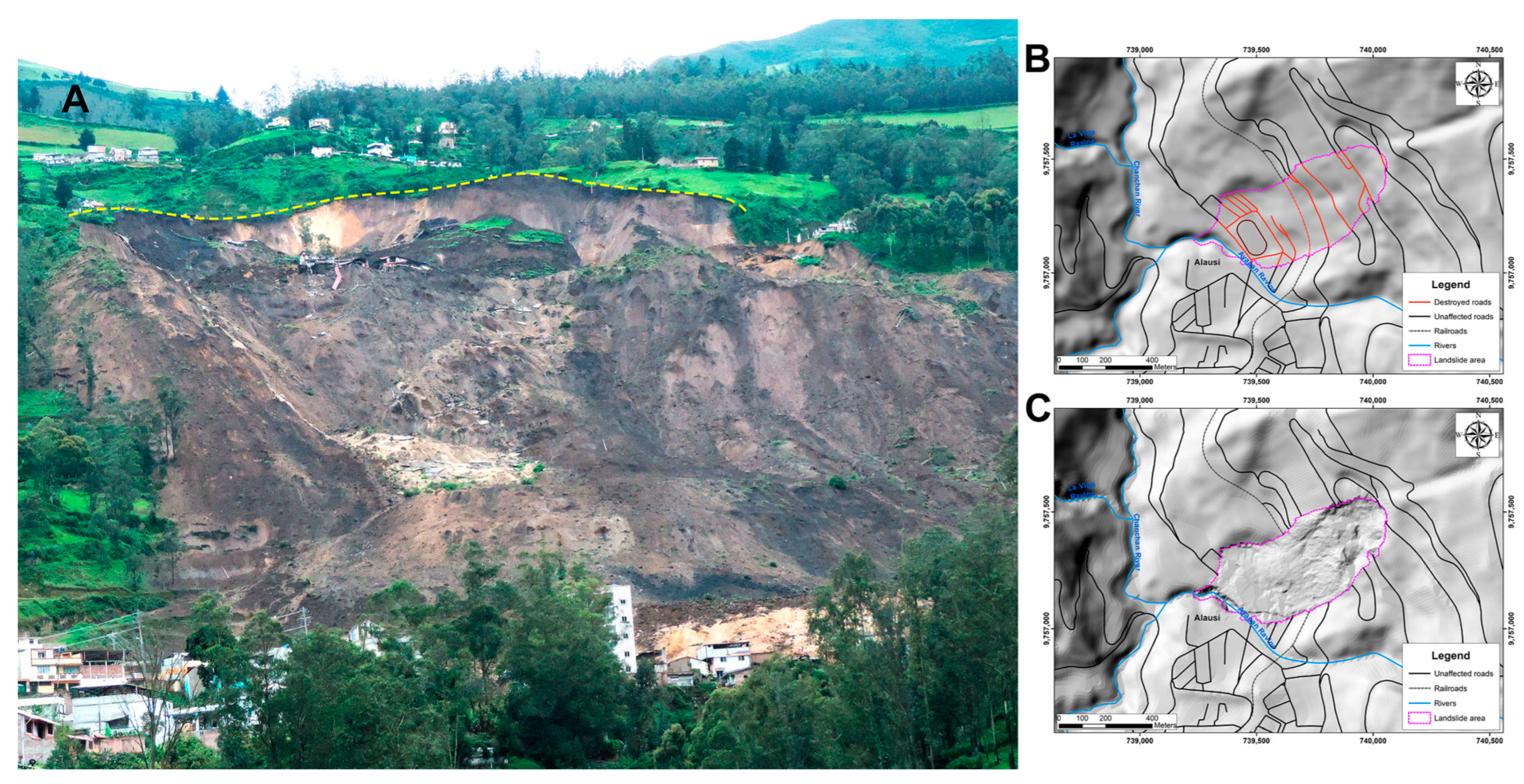
Figure 3.
Aerial view of the Alausí landslide area (village at the center of the picture and the crown in dashed yellow line) showing several scarps (white lines) related to possible ancient mass movements, including the Cerro Gampala landslide scarp (in red line). Modified from Google Earth [17].
Figure 3.
Aerial view of the Alausí landslide area (village at the center of the picture and the crown in dashed yellow line) showing several scarps (white lines) related to possible ancient mass movements, including the Cerro Gampala landslide scarp (in red line). Modified from Google Earth [17].
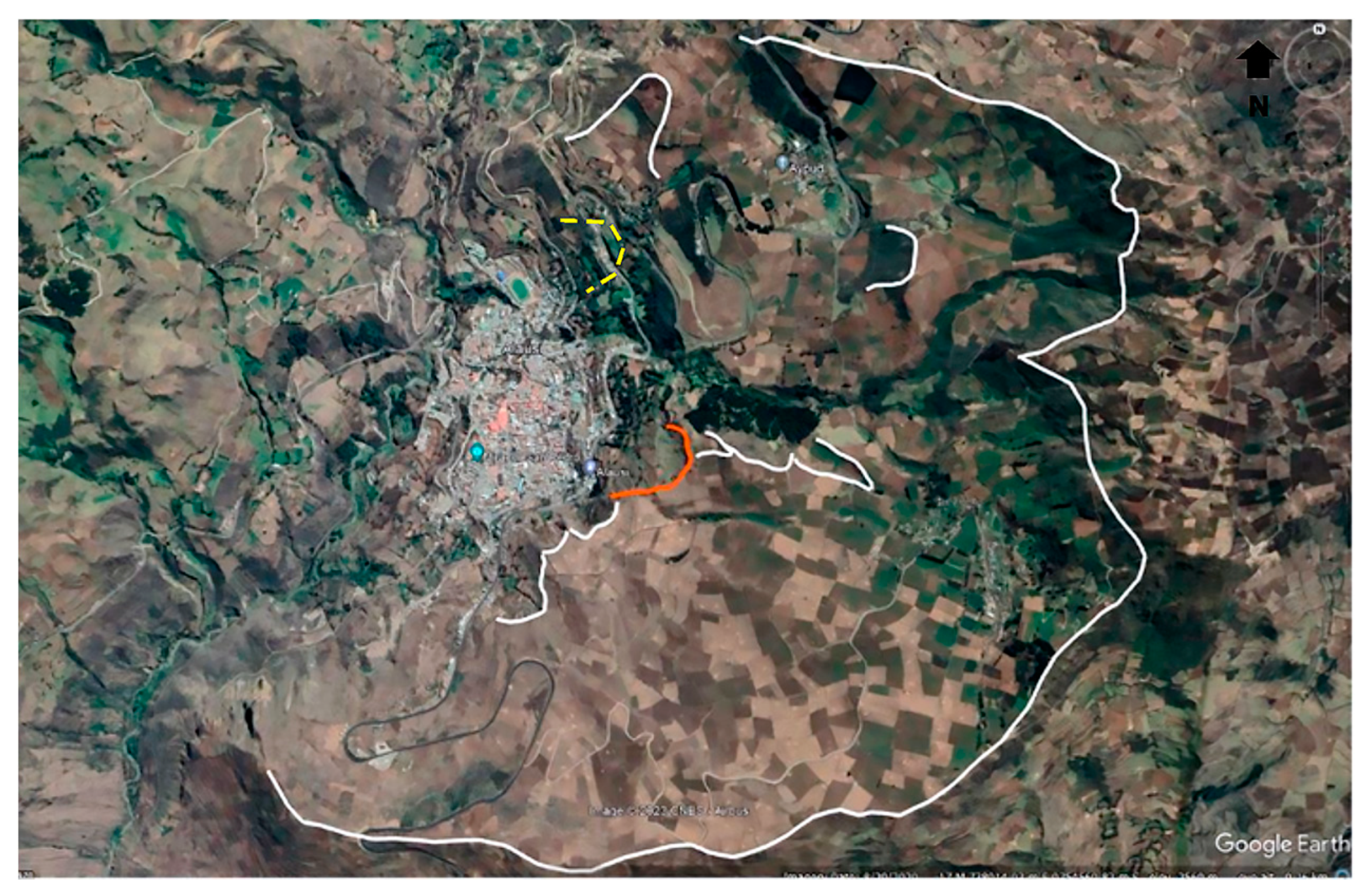
Figure 4.
Altered and weathered rock outcrop located to the Northwest of the Alausí Coliseum. A predominant white coloration in the rocks (possibly hydrothermal alteration) and a high grade of fractures and discontinuities can be observed (A). Outcrop of four extremely weathered rocks of reddish-brown color (lower layer), creamy-yellowish layer (layer coinciding with blue hammer handle), light gray layer, and yellowish layer, overlain by consolidated superficial clastic deposit (B).
Figure 4.
Altered and weathered rock outcrop located to the Northwest of the Alausí Coliseum. A predominant white coloration in the rocks (possibly hydrothermal alteration) and a high grade of fractures and discontinuities can be observed (A). Outcrop of four extremely weathered rocks of reddish-brown color (lower layer), creamy-yellowish layer (layer coinciding with blue hammer handle), light gray layer, and yellowish layer, overlain by consolidated superficial clastic deposit (B).
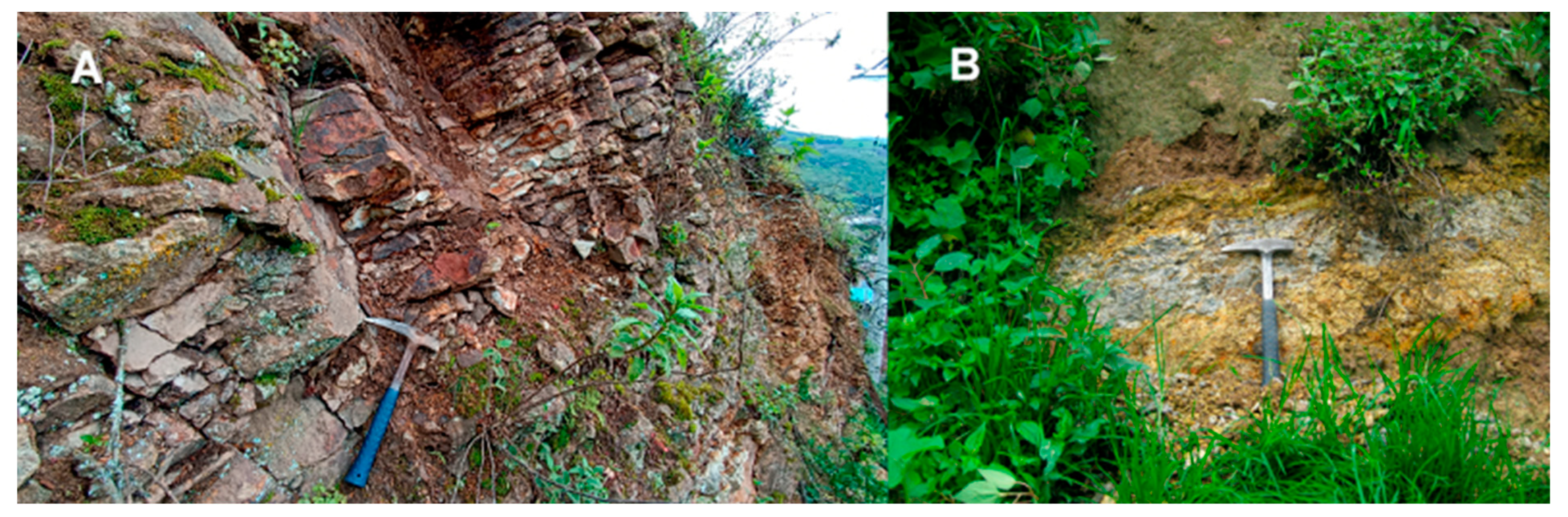
Figure 5.
Hydrogeological map of the landslide area. The micro basins are delimitated from digital elevation model (DEM) analysis in different blue tones. The stream beds are drawn in dark blue lines, and the landslide-affected area is shown as a dotted yellow line (modified base map from Google Earth [17].
Figure 5.
Hydrogeological map of the landslide area. The micro basins are delimitated from digital elevation model (DEM) analysis in different blue tones. The stream beds are drawn in dark blue lines, and the landslide-affected area is shown as a dotted yellow line (modified base map from Google Earth [17].
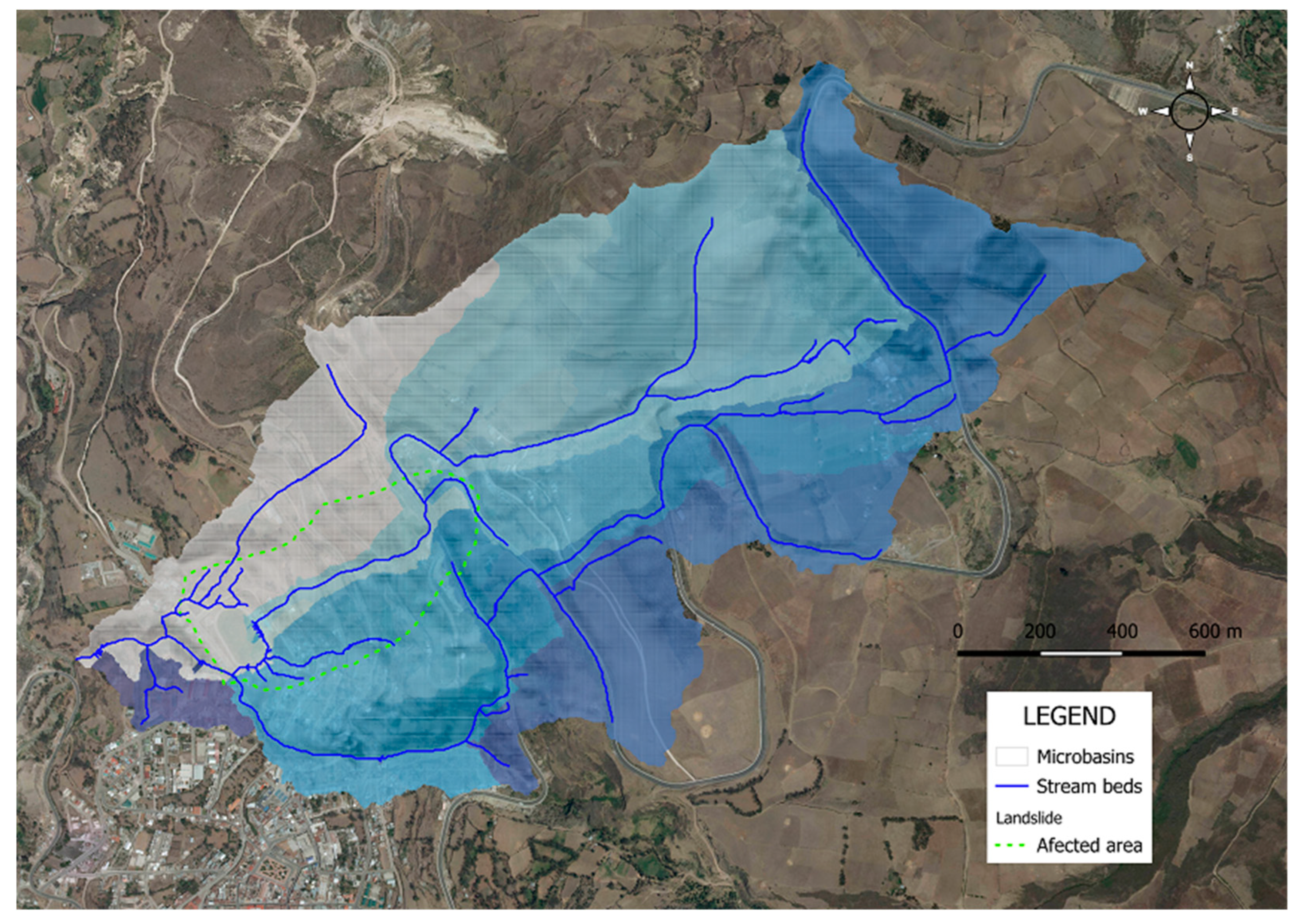
Figure 7.
(A) A view of the location of the anthropic landfill between the Casual and Nuevo Alausí neighborhoods (black circle). That anthropogenic deposit was located in the head of the area of the landslide (the Don Fausto Restaurant is to the right of the circle). (B) On February 4th 2020, it can be noticed that no anthropic landfill was there, as shown in the picture [17]. (C) On August 29th, 2020, it can be seen in the image that a black landfill was deposited in the area (red arrow) where some earth machinery was working [17]. The yellow arrow shows where cut-and-fill material was deposited from the E-35 Road construction and the double arrow line shows a 55 m length size.
Figure 7.
(A) A view of the location of the anthropic landfill between the Casual and Nuevo Alausí neighborhoods (black circle). That anthropogenic deposit was located in the head of the area of the landslide (the Don Fausto Restaurant is to the right of the circle). (B) On February 4th 2020, it can be noticed that no anthropic landfill was there, as shown in the picture [17]. (C) On August 29th, 2020, it can be seen in the image that a black landfill was deposited in the area (red arrow) where some earth machinery was working [17]. The yellow arrow shows where cut-and-fill material was deposited from the E-35 Road construction and the double arrow line shows a 55 m length size.
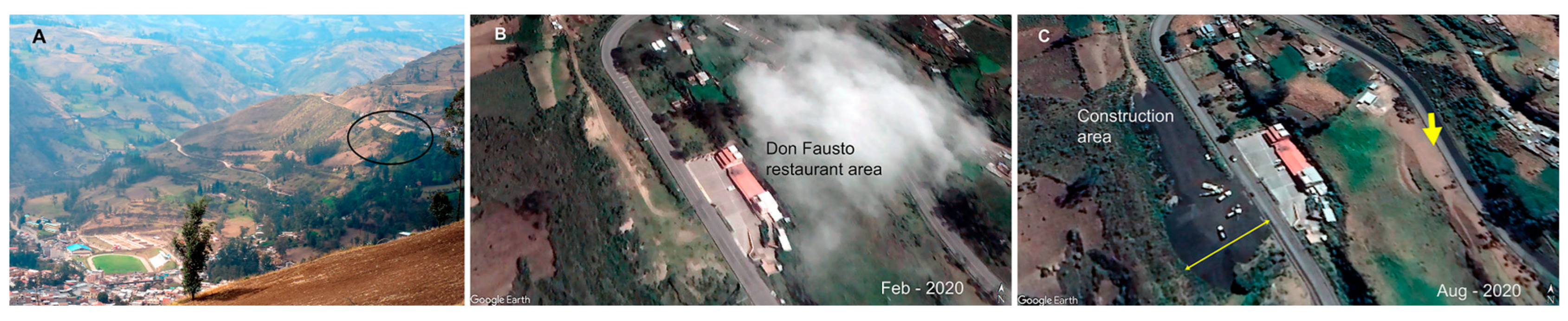
Figure 8.
(A) A picture obtained from video footage shows the condition of the pavement on E-35 Road. The race cannot be performed if the road were cracked (4:25 minute frame from a camera over a no-motor car in front of the Don Fausto restaurant, modified from a video posted by César Zumba [29]. (B) Some cracks were developed at the same location as the A-picture on February 8, 2023 (modified from [32]).
Figure 8.
(A) A picture obtained from video footage shows the condition of the pavement on E-35 Road. The race cannot be performed if the road were cracked (4:25 minute frame from a camera over a no-motor car in front of the Don Fausto restaurant, modified from a video posted by César Zumba [29]. (B) Some cracks were developed at the same location as the A-picture on February 8, 2023 (modified from [32]).
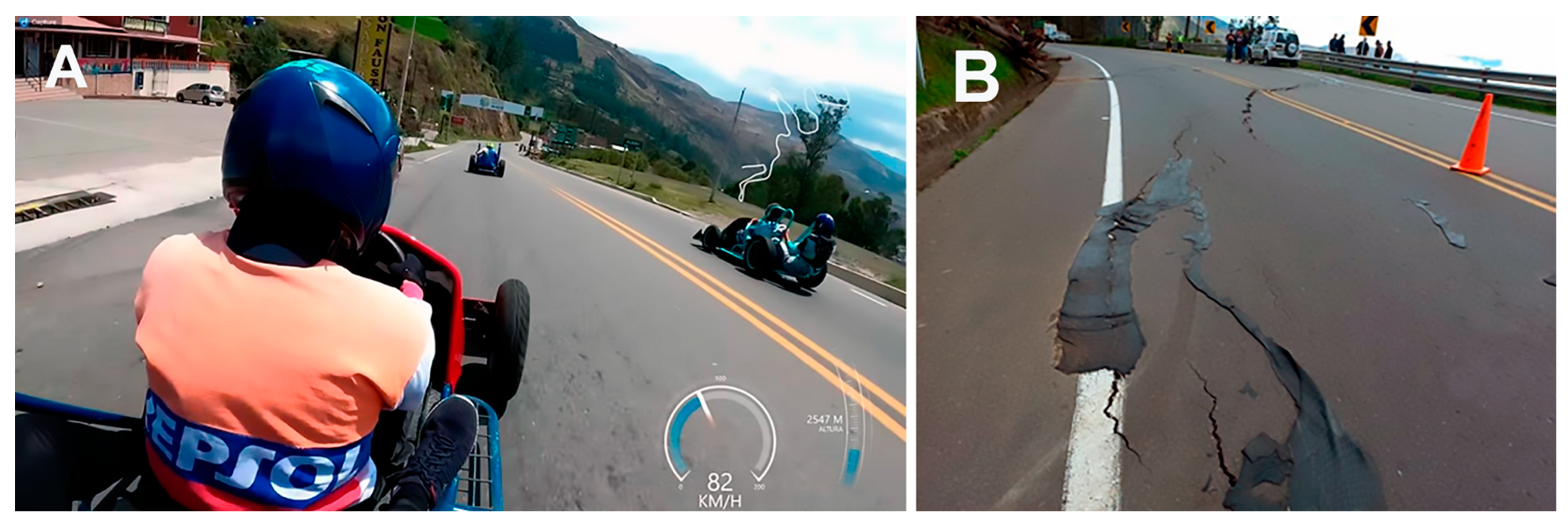
Figure 9.
(A) Government machinery works to clean and open the E-35 Road, south of the Don Fausto restaurant, in the casual sector, February 19, 2023 [30]. (B) Impressive open cracks and vertical displacement (over four meters) 50 m North of the Don Fausto restaurant. The picture was granted by S. Berrones, a geologist, who took it on 26th Mars 2023 in the morning, a few hours before the event happened.
Figure 9.
(A) Government machinery works to clean and open the E-35 Road, south of the Don Fausto restaurant, in the casual sector, February 19, 2023 [30]. (B) Impressive open cracks and vertical displacement (over four meters) 50 m North of the Don Fausto restaurant. The picture was granted by S. Berrones, a geologist, who took it on 26th Mars 2023 in the morning, a few hours before the event happened.
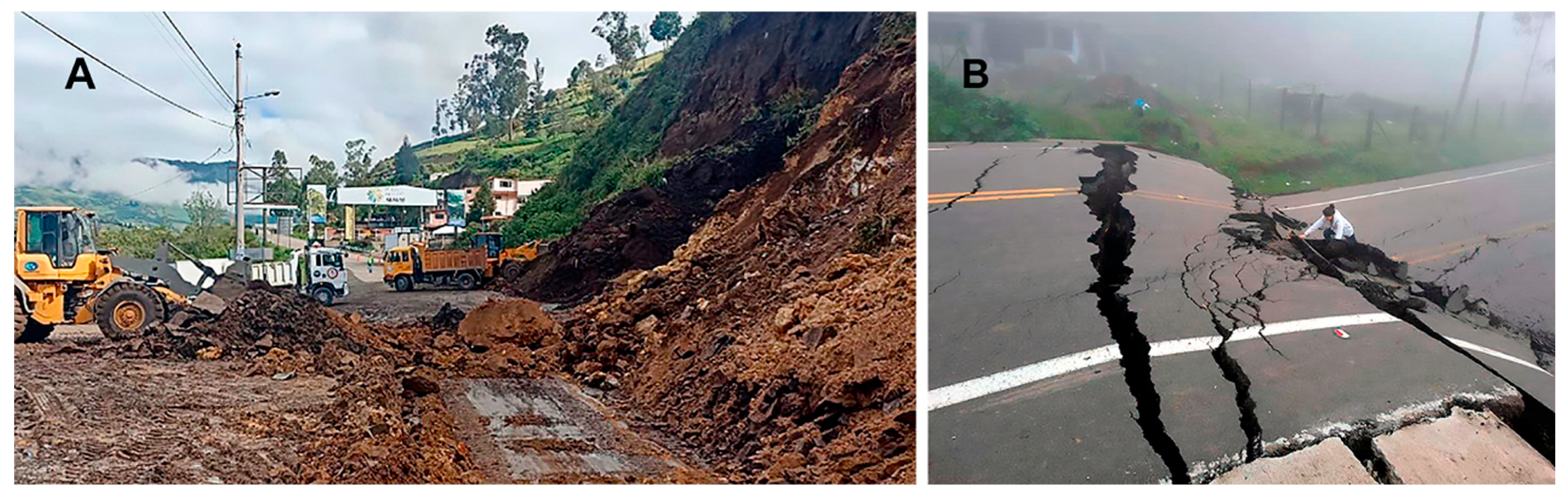
Figure 10.
(A) E-35 Road in the Aypud neighborhood area. It can be seen the road drainages collecting water and redirecting to the crown of the landslide area. (B) Anthropic alteration of the runoff water through a property down the area of A picture. Garbage and human waste accumulate in the waterways and clog the flow of water.
Figure 10.
(A) E-35 Road in the Aypud neighborhood area. It can be seen the road drainages collecting water and redirecting to the crown of the landslide area. (B) Anthropic alteration of the runoff water through a property down the area of A picture. Garbage and human waste accumulate in the waterways and clog the flow of water.
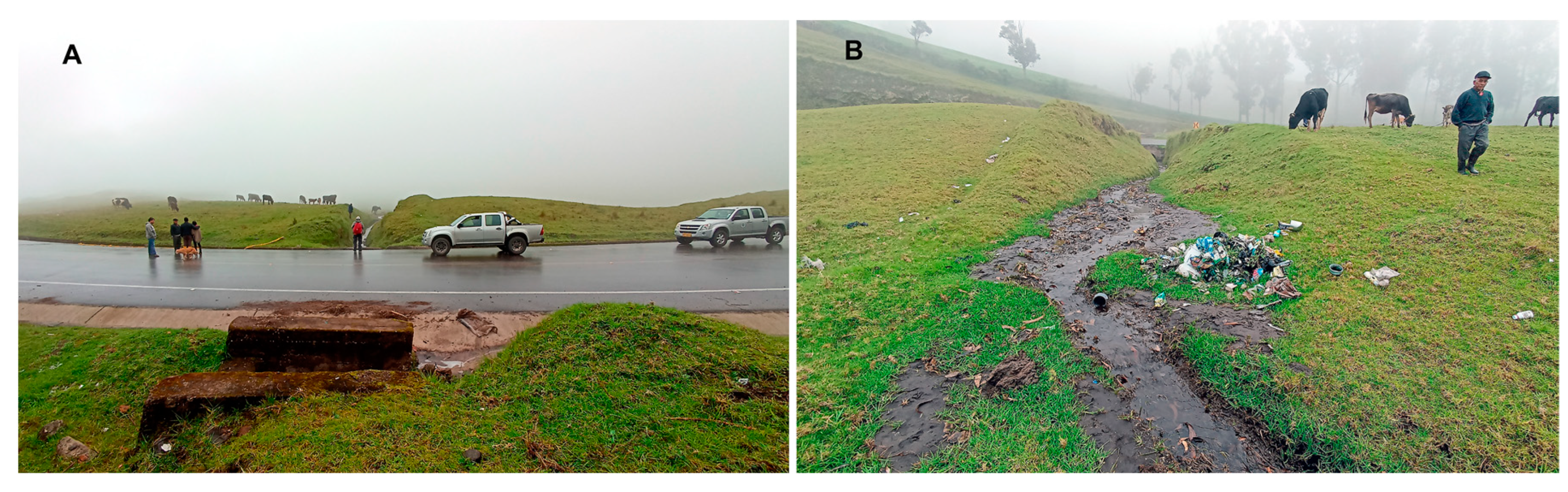

Table 1.
Pluviometry compared data. First three months analyses from three years before the event (1).
Table 1.
Pluviometry compared data. First three months analyses from three years before the event (1).
| Monthly Precipitation Values in Alausí Area (in mm) | |||||
|---|---|---|---|---|---|
| Month | 2020 | 2021 | 2022 | 2023 | Difference (Percentage) |
| January | 115.6 | 233.9 | 95.2 | 699.1 | 471% |
| February | 108.5 | 148.0 | 117.9 | 751.1 | 602% |
| March | 75.5 | 169.1 | 215.6 | 799.2 | 521% |
| Accumulated values | 299.6 | 551.0 | 428.7 | 2249.4 | 527.4% |
1 Obtained from [21] in the location point geographycal coordinates: -2.1314 Long., -78.8467 Lat.
Disclaimer/Publisher’s Note: The statements, opinions and data contained in all publications are solely those of the individual author(s) and contributor(s) and not of MDPI and/or the editor(s). MDPI and/or the editor(s) disclaim responsibility for any injury to people or property resulting from any ideas, methods, instructions or products referred to in the content. |
© 2025 by the authors. Licensee MDPI, Basel, Switzerland. This article is an open access article distributed under the terms and conditions of the Creative Commons Attribution (CC BY) license (http://creativecommons.org/licenses/by/4.0/).
Copyright: This open access article is published under a Creative Commons CC BY 4.0 license, which permit the free download, distribution, and reuse, provided that the author and preprint are cited in any reuse.


