

Submitted:
22 April 2025
Posted:
23 April 2025
You are already at the latest version
Abstract
The objective of our study is to monitor the stability of olive oil flavored with cloves. Two flavoring processes were tested, namely the maceration of cloves in oil and the grinding of cloves with olives. The analysis of the obtained oils showed that the process by simulta-neous grinding of the cloves with the olives produced a better oil quality than maceration process. Fluorescence spectroscopy analysis of the oils, supplied useful and complemen-tary results. The developed aromatized olive oils by simultaneous grinding was subjected to accelerate the ageing at 60°C in the dark condition for 165 days. Results indicated that the acidity and the value of the specific extinction coefficient K232 of the control and fla-vored oils complied with the standards of the International Olive Oil Council. During ac-celerated storage, the degradation of total phenols is less marked for the flavored oils than for the control. PCA analysis revealed a clear dichotomy between polyphenols, chloro-phylls, carotenoids, L*, a*, b* and free fatty acids. On the other hand, consumers’ survey, including 224 persons, showed that only the half of consumers were familiar with cloves, they were not at all familiar with flavored oils and were ready at 84% to buy clove-flavored oil once this product was available in the market. Flavored oils offer a good alternative to multiple olive oil-based products and thus offer additional opportunities for the marketing of olive oils, particularly for producing countries.
Keywords:
Tunisian olive oil
; cloves
; quality
; stability
; consumer survey
1. Introduction
Olive oil is certainly one of the pillars of the Mediterranean diet combining pleasure of consumption and benefits for human health [1]. The richness of olive oil in polyunsaturated fatty acids, in polyphenols and in antioxidants makes it an ally preventing several diseases. The effects of olive oil on cardiovascular disease, prevention of cancers and many other diseases have been well studied and validated due to the existence in oil of many beneficial elements (hydrotyrosol, tyrosol and oleuropein, etc..) [2,3]. Recent studies report that the consumption of olive oil by the elderly has benefits on cognitive performance, promoting the increase in cognitive functions and the reduction of their decline [4,5,6]. Olive oils differ in their composition, their taste and the richness of their aromas according to the ripening, the variety, the environmental conditions, the soil compositions, the technological process for oil extraction and many other parameters [7,8,9]. According to International Olive Council, three classes of olive oil, fit for consumption, exist: ordinary olive oil, virgin olive oil and extra virgin olive oil [10]. Flavored olive oil called also « gourmet oils » can increase demand for olive oil from consumers who are looking for new tastes and aromas while enjoying the advantages of olive oil, to which are added the properties of flavoring agents.
The flavoring of olive oil can have different goals. In fact, a flavoring agent can cover a defect (undesirable odor or taste), reduce the intensity of an attribute naturally present in the oil (bitterness, astringency, spiciness or other), give flavor to a flat oil lacking fruitiness for example or adding a new aromatic bouquet to an extra virgin olive oil having no fault. For aromatization process, medicinal and aromatic plants, fruits and vegetables are used in fresh or dried form or in extracts like essential oils [11,12]. Different procedures of incorporation of aromatic agent exist, like maceration, incorporation of essential oils and co-extraction [13]. In this line, the choice of the appropriate technique is crucial, since the aromatization process could affect both the acceptability and the oxidative stability of the oil [14,15].
Maceration or infusion is a traditional method that involves bringing finely ground-flavoring materials into contact with extracted olive oil. The mix is habitually held at room temperature, and regularly stirred to enable the diffusion of the flavoring compounds [14]. Combined mixing of the olive paste with the aromatic plants technique is consisted on the direct supplementation of crushed and/or whole plant elements to olives or olive puree during the crushing and mixing stages [11,16], this technique allow the better migration of aromas and bioactive antioxidant compounds that en general are hydrophobic from the flavoring agent to olive oil [17]. For instance, Habibi et al. [18] have reported the improvement of the quality of olive oil obtained from fallen and ripe olives by crushing the olives with rosemary. Compared to virgin olive oil, the flavored oil acquired a good flavor, in addition, it is enriched in polyphenols and an increase in antioxidant activity was observed. Aromatization improves the stability of oil toward oxidation, which can be assessed through quality standards like peroxide value, free fatty acids and specific extinction values.
Clove (Syzygium aromaticum), belonging to a Myrtaceae family plant, is used in pharmaceutical applications, in cosmetics, culinary preparations, active packaging due to its properties as antibacterial, antiseptic, anticarcinogenic and antioxidant [19,20]. Clove is used as a spice in traditional dishes for aromatization, as preservative against foodborne pathogens and as a natural colorant in food preparations [21,22]. Recently, clove extracts were successfully added to a chocolate beverage [23], in meat preservation [24], in wheat to control wheat common bunt [25], in baked food for preservation [26], in dairy products [27] and many other uses. According the World Health Organization (WHO), the permitted daily amount of clove in human’s consumption is 2.5 mg/kg body weight [27].
According to our knowledge, the only authors that have flavored olive oil with clove were Trabelsi et al. [28], they have macerated the cloves in olive oil at a concentration of 50g/kg at ambient temperature during 30 min. The aim of the study was to compare different flavored oil for their potential as anisakicidal factor in the industrial process of marinating anchovy. The USDA [29] estimates that one-third of Tunisia’s total arable land are dedicated to olive tree plantation, where there will likely be 100 million trees. Worldwide, Tunisia is the fourth-largest producer of olive oil [30]. The purchasing and consumption habits of Tunisians for olive oil and aromatic oils are not yet documented; in fact, we have not found any study dealing with this subject. In their review about preference for olive oil attributes and consumer acceptance, Latino et al. [31] reported no study about Tunisian consumers, hence the interest in trying to understand and explore consumer habits, their way of purchasing olive oil and their apprehension face oil exposed in supermarket.
The objective of this study were to 1) compare the aromatization techniques: maceration vs. Co- crushing at two concentrations of cloves in oil 2) study the ageing of the flavored oil during 165 days at 60°C 3) evaluate the knowledge of consumer concerning the flavored olive oil with cloves and their intention of purchase.
2. Materials and Methods
2.1. Oil Flavoring
For the present study we used the Chemlali Sfax variety of olive tree, and the extraction of the oil is done in several stages. First olives were sorted to remove leaves, twigs, small stones and soil. Then, they were immediately transported to the laboratory for oil extraction, where the sorted olives were washed under running water and then crushed, this operation is intended to crush the cells of the olive and liberate the droplets of oil localized in the vacuole. During the mixing stage, which is an important operation to increase extraction yield, it promotes the aggregation of oil droplets so as to form larger ones. After a centrifugation step, the obtained olive oil undergoes decantation for 24 hours in the dark. Finally, the oil is stored in opaque bottles, at a controlled temperature, away from air and light to preserve its freshness, taste and fruity scent, and to avoid oxidation.
The effect of adding cloves on the olive oil stability was studied. Two concentrations of cloves were tested: C1 corresponds to 2% (w/w cloves/oil) and C2 corresponds to 4% (w/w cloves/oil) and were compared to C0, which is the control oil (unflavored oil).
The way of flavoring the oil was one of our concerns. We tested two different flavoring processes, for the maceration method, cloves powder was added to olive oil at two concentrations 2% (AOMC1) and 4% (AOMC2), the mixture was agitated for 2h at ambient temperature, the mixture was then kept in opaque glass bottles during 20 days and after that filtered to remove plant material. For co-crushing method, the clove powder was added directly in the crusher (C1 and C2).
2.2. Oil Ageing Test
Seventy grams of oil samples were kept in flasks (30 mL capacity) at 60 °C in an oven (Binder, No: 970465, Tuttlinger, Germany). At specified intervals, one sample was removed from the oven for examination. The goal of the 60°C heating is to hasten the storage at room temperature. By measuring the acidity, the specific extinction coefficients (K232 and K270), the amounts of carotenoids, chlorophylls, and total phenols, the stability to oxidation was assessed during 165 days.
2.3. Determination of Oil Parameters
2.3.1. Density
Density of the oil which is an indicator of the purity of the oil was measured according to Wolf procedure [32].
2.3.2. Quality Indices
2.3.3. Pigments Quantification
Carotenoids and chlorophylls contents (mg /kg oil) were measured spectrophotometrically in cyclohexane at 470 nm and 670 nm, respectively [36].
2.3.4. Color Determination
Olive oil color was assessed with a spectrophoto-colourimeter (Trintometre, Lovibond PFX 195 V 3.2, Amesbury, UK) and represented by chromatic ordinates L, a* and b* respectively for lightness, redness and yellowness [37].
2.3.5. Total Phenols Determination
Total phenolic contents were determined like described by Ammar et al. [37] and expressed as milligrams of gallic acid equivalent (GAE) per kg of oil.
2.3.6. Fatty Acids Determination
The fatty acid composition of oils was analyzed via gas chromatography (GC) (Shimadzu 17A gas chromatograph equipped with a flame ionization detector (FID) and a capillary column) as fatty acid methyl esters [38].
2.3.7. Fluorescence Spectroscopy
A Fluoromax-4 spectrofluorimeter (Jobin Yvon, Horiba, NJ, USA) was used to record the Fluorescence spectra at 20 ◦C. The incidence angle of the excitation radiation was set at 60◦ to ensure that reflected light, scattered radiation, and depolarisation phenomena were minimized. For each oil sample, 3 mL were poured in a quartz cuvette and fluorescence spectra were recorded. The emission spectra of polyphenols (290–450 nm), and chlorophylls (450–800 nm) were acquired with the excitation wavelength set at 270 and 430 nm, respectively. Three spectra were acquired for each sample
2.4. Consumer Survey
In order to study the interest of consumers for flavored olive oil, a consumer survey was conducted on a sample of 224 Tunisian consumers of different categories and ages. It is divided into 4 themes: social situation, mode of consumption of olive oil, interest in flavored oil and purchase intentions. The survey was planned on Google form and shared through social networks.
2.5. Statistical Analysis
The physico-chemical analyses were conducted in triplicate. The results were presented as mean value ± standard deviation (SD). SPSS statistical software (Chicago, IL, USA) version 16.0 was employed to analyze the data. Duncan’s multiple range post hoc test was applied in a one-way analysis of variance (ANOVA) with SPSS at a 95% confidence level (p<0.05) to find variations among samples.
3. Results and Discussion
3.1. Effect of the Method of Aromatization on the Physicochemical Characterization of Flavored Oils
The two extraction methods, namely co-extraction and maceration, were performed with two concentrations of cloves at 2% and 4% and the physicochemical parameters of the oils were presented in the Table 1. The density of the oil was affected by the aromatization, since the density increase with aromatization. The color attributes L (light–dark), b* (yellow–blue) and a* (red–green) were determined (Table 1). The incorporation of cloves in olive oil decreased (p<0.05) the luminance (L), the decrease is more accentuated (p<0.05) with maceration (AOMC1 and AOMC2) than with co-crushing (C1 and C2). Flavoring also decreased significantly (p<0.05) the b* especially with maceration, while a* increase expressively (p<0.05) when the concentration of clove in the olive oil increase. The same observation was reported by Aljobair [39] when adding cloves powder (at 2%) in the formulation of cookies, he reported a decrease of L and a* in supplemented cookies compared to control. Flavoring changed significantly (p<0.05) the color of the olive oil, this change is more noticeable when the flavoring process is by maceration than with co-crushing, this is probably due to the diffusion of the color pigment which is done for longer period in maceration (20 days) than for co-crushing which is done only for a few hours. Flavoring with cloves enriches significantly the olive oil with pigments making the oil darker and less green, more reddish.
The free fatty acid contents and peroxide value increase significantly (p<0.05) when the oil is flavored by maceration method, leading to less stable oil. The control olive oil presents specific extinctions (K232 and K270) in agreement with IOC standard of extra virgin olive oil (K232 ≤ 2.5 and K270 ≤ 0.22), for flavored olive oil there are no standards. K232 and K270 are associated respectively to the presence of primary and secondary oxidative products.
A variation in these parameters with flavoring was noticed. The increase of K270 in flavored samples is not in accordance with the effect expected by the addition of the flavoring agent (p<0.05) which is to enhance the oxidative stability of the oil and it is supposed that we observe a significantly (p<0.05) decrease in K270. Gambacorta et al. [40] reported also an increase of K270 of olive oil flavored with rosemary, garlic, pepper and oregano. Likewise Sacchi et al. [41] observe the same tendency for olive oil flavored with lemons and explain the increase of K270 by the presence in flavoring agent of terpenes absorbing in the (232-270) wavelength region, these substances pass from the flavoring agent to the oil and interfere with the signal.
Chlorophylls increased (p<0.05) with co-crushing and decreased (p<0.05) with maceration, it is probably due to the degradation of chlorophylls during the process of maceration. Carotenoids changed with aromatization; it increased with co-crushing and decreased with maceration. The increase of carotenoids with flavoring is in according to the variations observed previously in color attribute a*. Total phenolic contents of the control sample (CO) was 385.7 mg GAE/kg), while it was 517.88 and 451.62 mg GAE/kg for the oil with 2% cloves (C1), respectively for co-crushing and maceration techniques. The highest (p<0.05) total phenolic content was in oil with 4% of cloves flavored with co-crushing process, followed by the oil containing the same concentration of clove with maceration method. The co-crushing method increases the total phenolics in the olive oil by 34.24% and 73.37% respectively for 2 and 4% of supplementation.
3.2. Fatty Acid Analysis
The fatty acid analysis of control and flavored olive oil were displayed in the Table 2. The principal fatty acids were oleic acid (60.4%) followed by palmitic acid (18%) and linoleic acid (15.8%). These percentages are in agreement with those cited in the reports for the variety Chemlali Sfax [42]. A slight increase was observed for linoleic acid in flavored oils (15.94%) compared to the control (15.82%). The aromatization of olive oil with cloves did not affect the composition of fatty acids of the olive oil. The same observations were reported for oil aromatization with rosemary [18]. The aromatization with cloves improves the oil with bioactive compounds but not with fatty acids.
3.3. Emission Fluorescence Spectra of Polyphenols and Chlorophylls for Aromatized Oils
Control and aromatized oils were submitted to fluorescence analysis; the results were presented in Figure 1 for polyphenols and Figure 2 for chlorophylls. For the two spectra, the highest fluorescence intensity was noted for C2, indicating a very high antioxidant capacity and chlorophylls content followed by C1. The control oil Co showed the lowest fluorescence intensity, due to the absence of supplementation with cloves, which were rich in antioxidants polyphenols and chlorophylls. These findings are in agreement with those of Singh et al. [43] for linseed oil supplemented with extracts from Avicennia marina and Rhizophora mucronata in the aim to enhance the oxidative stability of the oil.
3.4. Effect of Ageing on the Quality of Olive Oils
Table 3 showed the evolution of the free fatty acids (FFA) for flavored and control oil during the heating. The three oils followed the same tendency (p>0.05) during their storage, so the flavoring did not have an effect on this parameter. The values of FFA vaied from 0.22 % at initial time to 3.29 % after 165 days of heating.
Concerning the coefficients of extinction, for K270 the flavored oils showed increased values (p<0.05) during the first 100 days of heating. Following that, the stabilization of the coefficients was observed at a value of 0.54 (Table 3). On the contrary, for the unflavored oil (control), the value of K270 continued to increase (p<0.05) till the end of heating and reached 0.702. For K232, the values were stable (p>0.05) up to 130 days of heating, with a slight increase noted for the control and the oil flavored with 4% of cloves. The control oil after 165 days of heating at 60°C reached a value of K232 of 2.48, which is lower than the limit of the IOC standard of extra virgin olive oil (K232 ≤ 2.5).
Regarding the content of chlorophyll pigments (Table 3), although the control olive oil showed a higher (p<0.05) content at the beginning of heating (6.05 mg/kg) these pigments were rapidly decreased to reach (0.92 mg/kg) at 165 days of heating. For flavored olive oils, although the content is lower (p<0.05) than control at the beginning of treatment, after 165 days of heating the content is 1.86 et 1.54 mg/kg respectively for C2 and C1. The same tendency was observed for carotenoids content (Table 3), the values for control oil was lower (p<0.05) than those of flavored oils at 165 days of heating. We can conclude that the flavoring of olive oil with cloves help to delay the degradation of chlorophyll and carotenoid pigments.
The flavoring of olive oil with cloves significantly (p<0.05) increased the total phenolic contents (Table 3). Cloves are universally recognized, as a rich source of phenolic compounds [44] and olive oil, also is rich in polyphenols at a minor degree. The flavoring of olive oil with clove has a synergistic effect leading to the enrichment of olive oil with phenolic compounds. Heating led to a decrease of total phenolics in all the oils, the values varied from 668.7 to 382.7 mg/kg for C2, and from 517.8 to 215 mg/kg for C1, and from 385.7 to 215 mg/kg for C0, after 165 days of heat treatment at 60°C. The oil containing the higher concentration of clove (4%) was more stable than the oil containing 2% of clove and control oil.
The color parameters reported in Table 4 indicated that the color of all the olive oil samples was modified (p<0.05) and that this change was the more market in unflavored oil with a 46% of decrease for L and b* vs. 22.4% and 39% for C1, respectively for b* and L. After 165 days of heating, all the oil samples were more dark (p<0.05) and red to minor degrees for flavored oils than unflavored oil.
3.5. Principal Component Analysis
In the aim to study the correlation between the physicochemical parameters of each oil, a principal component analysis was realized and presented in Figure 3.
For control olive oil non-aromatized with cloves (Figure 3a), the two principal components account for 90.4% of the variance which means that the biplot is a good representation of the data’s structure. The component 1 (78%) is the dominant axis, capturing most of the variation, the variables strongly aligned with this axis contribute most to explaining the differences among samples. Polyphenols, carotenoids, chlorophylls and color parameters are positively correlated, whereas free fatty acids (FFA) and storage duration are negatively correlated. Polyphenols and chlorophylls are negatively correlated with free fatty acids since they are situated in two opposite directions. Component 1 seems to represent the oil quality, with in the right side the parameters of the good quality and in the left the parameters of deterioration and oxidation of the oil (free fatty acids, K270). The component 2 may reflect early oxidation (K232) versus later or secondary effects (K270).
For aromatized oils (Figure 3b and 3c) the same trend was observed than for control oil apart for the K232 and the K270.
3.6. Consumer Survey
The survey was established to study the consumer’s behavior and their interests in flavored oils in general and clove flavored oil in particular. The results showed that most of the participants are young people under 25 years old, with a high school diploma level of education (51.8%). little variation is observed at consumers sex level since we have 122 females against 102 males (Table 5).
The majority of consumers buy olive oil directly from the producer (86.5%) and only 4% buy olive oil from supermarket. It is important to note that Tunisia has 1672 listed olive mills [45]. The Olive mills are distributed throughout the territory and are accessible to buyers, the volumes sold can vary from ½ L to several liters, so consumers prefer buy olive oil directly from olive mill. When buying oil from the producer, consumers are offered to choose the oil by tasting different samples and they choose according to their taste (sweet oil or intense aroma with pronounced bitterness).
There is a great lack of awareness of flavored olive oils since 70% of participants do not have information about these oils (Table 6). The same trend was observed when we ask about reservation to buy flavored oil, 22.3% respond that there is a lack of advice, so we can suppose that flavored olive oils are a niche market. Sixty five percent of participants consume 2L or more per month, olive oil consumption is part of Tunisian traditions and is the flagship product of the Mediterranean diet [46]. Concerning the reservation of respondents to buy flavored oil in supermarket, 46.6% of consumers have doubts about the quality of the product. Consumers prefer oil that have clear origin information, such as those that are locally sourced.
4. Conclusions
Olive oil aromatization is an innovative technique to open other commercial alternatives, enhance its quality, and prolong its shelf life. We have tested the aromatization with two concentrations (at 2 and 4 %) of cloves in extra virgin olive oil and two methods of aromatization co-crushing and maceration. According to our results, the best technique for aromatization in terms of polyphenols contents increase and quality parameters (PV, FFA, K232 and K270) is co-crushing. In addition, this technique did not affect the fatty acid composition of the oil. The aromatized olive oil by co-crushing was studied for stability against ageing (heating at 60°C during 165 days). The quality of flavored and control oil was degraded after heating to different degrees and the more stable oil was that flavored with 4% of clove. The nature and concentrations of bioactive substances present in the flavoring agent may be crucial for assessing the scope and the rate of the olive oil deterioration due to heating. The PCA analysis explained more than 90% of total variance for the studied oils and revealed a clear dichotomy between freshness-associated parameters (polyphenols, chlorophylls, carotenoids, L*, a*, b*) and degradation-related (free fatty acid). The consumer study revealed that there is a need for more research on consumer behavior, expectations and better popularization of flavored olive oils and their benefits on health. Flavored olive oils can gain even more interest when they are presented as a high-end product attracting tourists and being the subject of discovery tours in the different Tunisian regions, each characterized by a spice, herb or fruit that would be added to the olive oil and thus design an oleo-tourism tour.
Author Contributions
Conceptualization, M.E. and S.S.; methodology, M.E., S.S. and T.V..; software, M.E.; validation, M.E., S.S. and T.V.; formal analysis, S.S.; investigation, M.E.; resources, T.V.; data curation, S.S.; writing—original draft preparation, M.E., S.S. and T.V; writing—review and editing, M.E., S.S. and T.V; visualization, M.E.; supervision, S.S. and T.V; project administration, S.S.; funding acquisition, T.V. All authors have read and agreed to the published version of the manuscript.
Funding
This research received no external funding
Ethical approval/consent form
The experimental scheme involving the consumer survey does not need ethical approval. In the course of the implementation of this study, no human body, animal violation, or morality was involved. Additionally, participants were not harmed or affected in any way by being included in this study, nor were any personal or confidential data disclosed.
Data Availability Statement
no new data were created
Conflicts of Interest
The authors declare no conflicts of interest.
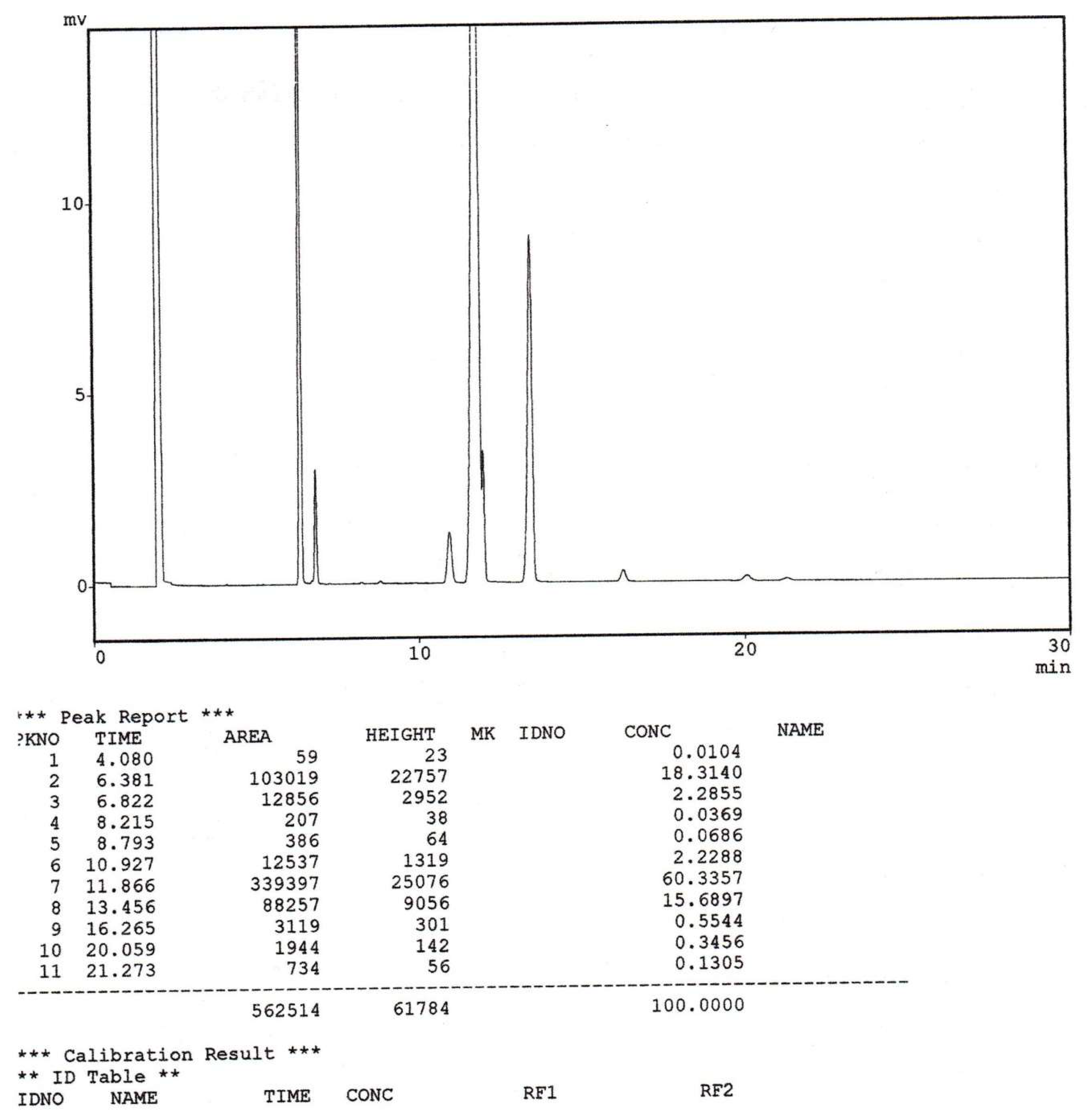
Appendix A. Sample Chromatogram
Figure A1.
Chromatogram of contol sample.
References
- Dinu, M.; Pagliai, G.; Casini, A.; Sofi, F. Mediterranean diet and multiple health outcomes: An umbrella review of meta-analyses of observational studies and randomized trials. Eur. J. Clin. Nutr. 2018, 72(1), 30–43. [Google Scholar] [CrossRef]
- Frumuzachi, O.; Kieserling, H.; Rohn, S.; Mocan, A. The impact of oleuropein, hydroxytyrosol, and tyrosol on cardiometabolic risk factors: a meta-analysis of randomized controlled trials. Crit. Rev. Food Sci. Nutr. 2025, 1–21. [Google Scholar] [CrossRef] [PubMed]
- Memmola, R.; Petrillo, A.; Di Lorenzo, S.; Altuna, S.C.; Habeeb, B.S.; Soggiu, A. Correlation between olive oil intake and gut microbiota in colorectal cancer prevention. Nutrients 2022, 14(18), 3749. [Google Scholar] [CrossRef] [PubMed]
- Fazlollahi, A.; Motlagh Asghari, K., Aslan, C.; Noori, M.; Nejadghaderi, S.A.; Araj-Khodaei, M.; Sullman, M.J.M.; Karamzad, N.; Kolahi, A.A. and Safiri, S. The effects of olive oil consumption on cognitive performance: a systematic review. 2023, 10, 1218538. [CrossRef]
- Tzekaki, E.E.; Tsolaki, M.; Pantazaki, A.A.; Geromichalos, G.; Lazarou, E.; Kozori, M.; et al. The pleiotropic beneficial intervention of olive oil intake on the Alzheimer’s disease onset via fibrinolytic system. Exp. Gerontol. 2021, 150, 111344. [Google Scholar] [CrossRef] [PubMed]
- Kaddoumi, A.; Denney, T.S.Jr.; Deshpande, G.; Robinson, J.L.; Beyers, R.J.; Redden, D.T.; Praticò, D.; Kyriakides, T.C.; Lu, B.; Kirby, A.N.; Beck, D.T.; & Merner, N.D. Extra-virgin olive oil enhances the blood–brain barrier function in mild cognitive impairment: a randomized controlled trial. Nutrients, 2022, 14(23), 5102. [CrossRef]
- Rey-Giménez, R.; Sánchez-Gimeno, A.C. Effect of cultivar and environment on chemical composition and geographical traceability of Spanish olive oils. J. Am. Oil Chem. Soc. 2024, 101(4), 371–382. [Google Scholar] [CrossRef]
- Ellis, A.C.; Vieitez, I.; Gámbaro, A. Sensory and physicochemical characteristics of Uruguayan picual olive oil obtained from olives with different ripening indexes. Food Sci. Technol. 2024, 44. [Google Scholar] [CrossRef]
- Genovese, A.; Caporaso, N.; Sacchi, R. Flavor chemistry of virgin olive oil: an overview. Appl. Sci. 2021, 11(4), 1639. [Google Scholar] [CrossRef]
- Trade standard applying to olive oils and olive pomace oils COI/T.15/NC No 3/Rev. 16 June 2021.
- Karacabey, E.; Özkan, G.; Dalgıç, L.; Sermet, S.O. Rosemary aromatization of extra virgin olive oil and process optimization including antioxidant potential and yield. TURJAF, 2016, 4(8), 628-635.
- Barreca, S.; La Bella, S.; Maggio, A.; Licata, M.; Buscemi, S.; Leto, C.; Pace, A.; Tuttolomondo, T. Flavouring extra-virgin olive oil with aromatic and medicinal plants essential oils stabilizes oleic acid composition during photo-oxidative stress. Agriculture 2021, 11, 266. [Google Scholar] [CrossRef]
- Lamas, S.; Rodrigues, N.; Peres, A.M.; Pereira, J.A. Flavoured and fortified olive oils-pros and cons. Trends Food Sci. Technol. 2022, 124, 108–127. [Google Scholar] [CrossRef]
- Baiano, A.; Terracone, C.; Gambacorta, G.; La Notte, E. Changes in quality indices, phenolic content and antioxidant activity of flavored olive oils during storage. J. Am. Oil Chem. Soc. 2010, 86(11), 1083. [Google Scholar] [CrossRef]
- Issaoui, M.; Flamini, G.; Souid, S.; Bendini, A.; Barbieri, S.; Gharbi, I. How the addition of spices and herbs to virgin olive oil to produce flavored oils affects consumer acceptance. Nat. Prod. Commun. 2016, 11(6), 1934578X1601100619. [Google Scholar] [CrossRef]
- Arslan, D.; Acar, A. Aromatization of olive oil with ginger and turmeric powder or extracts by the co-processing and maceration methods. Eur. J. Lipid Sci. Technol. 2024, 126, ex2300074. [Google Scholar] [CrossRef]
- Caponio, F.; Durante, V.; Varva, G.; Silletti, R.; Previtali, M.A.; Viggiani, I.; Squeo, G.; Summo, C.; Pasqualone, A.; Gomes, T.; Baiano, A. , Effect of infusion of spices into the oil vs combined malaxation of olive paste and spices on quality of naturally flavoured virgin olive oils, Food Chem. 2016, 202, 221-228. [CrossRef]
- Habibi, M.; Abdallah, M.; Taamali, W.; Genovese, A.; Balivo, A.; Lorenzo, J.M.; Trabelsi, N. Enhancing olive oil quality through an advanced enrichment process utilizing ripe and fallen fruits. Eur. Food Res. Technol. 2024, 1–13. [Google Scholar] [CrossRef]
- Hadidi, M.; Pouramin, S.; Adinepour, F.; Haghani, S.; Jafari, S.M. Chitosan nanoparticles loaded with clove essential oil: Characterization, antioxidant and antibacterial activities. Carbohydr. Polym. 2020, 236, 116075. [Google Scholar] [CrossRef] [PubMed]
- Silva, M.V.; De Lima, A.D.C. A.; Silva, M.G.; Caetano, V.F.; De Andrade, M.F.; Da Silva, R.G.C.; De Moraes Filho, L.E.P.T.; Lima Silva, I.D.D.; Vinhas, G.M. Clove essential oil and eugenol: A review of their significance and uses. Food Biosci. 2024, 105112. [Google Scholar] [CrossRef]
- Bai, J.; Li, J.; Chen, Z.; Bai, X.; Yang, Z.; Wang, Z.; Yang, Y. Antibacterial activity and mechanism of clove essential oil against foodborne pathogens. LWT - Food Sci. Technol. 2023, 173, 114249. [Google Scholar] [CrossRef]
- Kumar Pandey, V.; Shams, R.; Singh, R.; Dar, A. H.; Pandiselvam, R.; Rusu, A. V.; et al. A comprehensive review on clove (Caryophyllus aromaticus L.) essential oil and its significance in the formulation of edible coatings for potential food applications. Front. Nutr. 2022, 9, 987674. [Google Scholar] [CrossRef]
- Indiarto, R.; Herwanto, J.A.; Filianty, F.; Lembong, E.; Subroto, E.; Muhammad, D.R.A. Total phenolic and flavonoid content, antioxidant activity and characteristics of a chocolate beverage incorporated with encapsulated clove bud extract. CyTA – J. Food, 2024, 22 (1). [CrossRef]
- Ricardo-Rodrigues, S.; Rouxinol, M.I.; Agulheiro-Santos, A.C.; Potes, M. E.; Laranjo, M.; Elias, M. The Antioxidant and Antibacterial Potential of Thyme and Clove Essential Oils for Meat Preservation—An Overview. Appl. Biosci. 2024, 3(1), 87–101. [Google Scholar] [CrossRef]
- Valente, M.T.; Orzali, L.; Manetti, G.; Magnanimi, F.; Matere, A.; Bergamaschi, V.; Grottoli, A.; Bechini, S.; Riccioni, L.; Aragona, M. Rapid molecular assay for the evaluation of clove essential oil antifungal activity against wheat common bunt. Front. Plant Sci. 2023, 14, 1130793. [Google Scholar] [CrossRef]
- Wu, H.; Zhao, F.; Li, Q.; Huang, J.; Ju, J. Antifungal mechanism of essential oil against foodborne fungi and its application in the preservation of baked food. Crit. Rev. Food Sci. Nutr., 2024, 64(9), 2695–2707. [CrossRef]
- Idowu, S.; Adekoya, A.E.; Igiehon, O.O.; Idowu, A.T. Clove (Syzygium aromaticum) spices: A review on their bioactivities, current use, and potential application in dairy products. J. Food Meas. Charact. 2021, 15, 3419–3435. [Google Scholar] [CrossRef]
- Trabelsi, N.; Marotta, S.M.; Giarratana, F.; Taamali, A.; Zarrouk, M.; Ziino, G.; Giuffrida, A. Use of Tunisian flavored olive oil as anisakicidal agent in industrial anchovy marinating process. J. Sci. Food Agric. 2018, 98(9), 3446–3451. [Google Scholar] [CrossRef] [PubMed]
- USDA (2023) Tunisia: Oilseeds and products annual. https://www.fas.usda.gov/data/tunisia-oilseeds-and-products-annual-7. Accessed 30 June 2023.
- Debbabi, O.S.; Ben Amar, F.; Rahmani, S.M.; Taranto, F.; Montemurro, C.; Miazzi, M.M. The status of genetic resources and olive breeding in Tunisia. Plants 2022, 11(13), 1759. [Google Scholar] [CrossRef]
- Latino, M.E.; De Devitiis, B.; Corallo, A.; Viscecchia, R.; Bimbo, F. Consumer Acceptance andPreference for Olive Oil Attributes—A Review. Foods 2022, 11, 3805. [Google Scholar] [CrossRef] [PubMed]
- Wolff, J.P. Manuel d’analyse des Corps Gras; Tokyo University of Fisheries: Tokyo, Japan, 1968. [Google Scholar]
- Determination of free fatty acids, cold method, code COI/T.20/Doc. No 34/Rev. 1 2017. International Olive Council (IOC).Available online: https://www.internationaloliveoil.org/(accessed the 1/01/2025).
- Determination of peroxide value. Code COI/T.20/Doc. No 35/Rev.1 2017 International Olive Council (IOC). Available online: https://www.internationaloliveoil.org/(accessed the 1/01/2025).
- Spectrophotometric investigation in the ultraviolet. Code COI/T.20/Doc. No 19/Rev. 5 2019. International Olive Council (IOC). Available online: https://www.internationaloliveoil.org/(accessed the 1/01/2025).
- Martakos, I.; Kostakis, M.; Dasenaki, M.; Pentogennis, M.; Thomaidis, N. Simultaneous determination of pigments, tocopherols, and squalene in Greek olive oils: A study of the influence of cultivation and oil-production parameters. Foods 2020, 9(1), 31–48. [Google Scholar] [CrossRef]
- Ammar, I.; BenAmira, A.; Khemakem, I.; Attia, H.; Ennouri, M. Effect of Opuntia ficus-indica flowers maceration on quality and on heat stability of olive oil. J. Food Sci. Technol. 2017, 54, 1502–1510. [Google Scholar] [CrossRef]
- Ameur, R.B.; Hadjkacem, B.; Ayadi, M.; Ikram, B.A.; Feki, A.; Gargouri, J. ;...& Allouche, N. Phytochemical profile of Tunisian Pistacia lentiscus fruits oil: Antioxidant, antiplatelet, and cytotoxic activities assessment. Eur. J. Lipid Sci. Technol. 2024, 2300274.
- Aljobair, M.O. Physicochemical, nutritional, and sensory quality and storage stability of cookies: effect of clove powder. Int. J. Food Prop. 2022, 25(1), 1009–1020. [Google Scholar] [CrossRef]
- Gambacorta, G.; Faccia, M.; Pati, S.; Lamacchia, C.; Baiano, A.; La Notte, E. Changes in the chemical and sensorial profile of extra virgin olive oils flavored with herbs and spices during storage. J. Food Lipids 2006, 14, 202–215. [Google Scholar] [CrossRef]
- Sacchi, R.; Della, M.D.; Paduano, A.; Caporaso, N.; Genovese, A. Characterisation of lemon- flavoured olive oils. LWT - Food Sci. Technol. 2017, 79, 326–332. [Google Scholar] [CrossRef]
- Ben Amar, F.; Guellaoui, I.; Ayadi, M.; Elloumi, O.; Triki, M. A.; Boubaker, M. “‘Zeitoun Ennour’: A new olive (Olea europaea L.) cultivar in Tunisia with high oil quality”, Genetic Resources, 2021, 2(4), 1–6. [CrossRef]
- Singh,M.;Botosoa,E.; Karoui, R. MonitoringofAntioxidant Efficacy ofMangrove-Derived PolyphenolsinLinseedOilby Physicochemical andFluorescence Methods. Antioxidants 2025, 14, 192. [CrossRef]
- Pandey, V. K.; Srivastava, S.; Dash, K. K.; Singh, R.; Dar, A. H.; Singh, T. ;... & Kovacs, B. Bioactive properties of clove (Syzygium aromaticum) essential oil nanoemulsion: A comprehensive review. Heliyon 2024, 10(1), e22437. [CrossRef]
- DGPA. (2021). Data of the General Directorate of Agricultural Production. Republic of Tunisia: Ministry of Agriculture, Water Resources and Fisheries http://www.agridata.tn/organization/direction-generale-de-la-production-agricole?organization=direction-generale-de-la-production-agricole&page=2.
- Chahdoura, H., Mzoughi, Z., Ziani, B. E., Chakroun, Y., Boujbiha, M. A., Bok, S. E., ... & Mosbah, H. (2023). Effect of Flavoring with Rosemary, Lemon and Orange on the Quality, Composition and Biological Properties of Olive Oil: Comparative Study of Extraction Processes. Foods 2023, 12(6), 1301. [CrossRef]
Figure 1.
Excitation fluorescence spectra of control (C0) and aromatized oils (C1 and C2) acquired after excitation set at 270 nm.
Figure 1.
Excitation fluorescence spectra of control (C0) and aromatized oils (C1 and C2) acquired after excitation set at 270 nm.
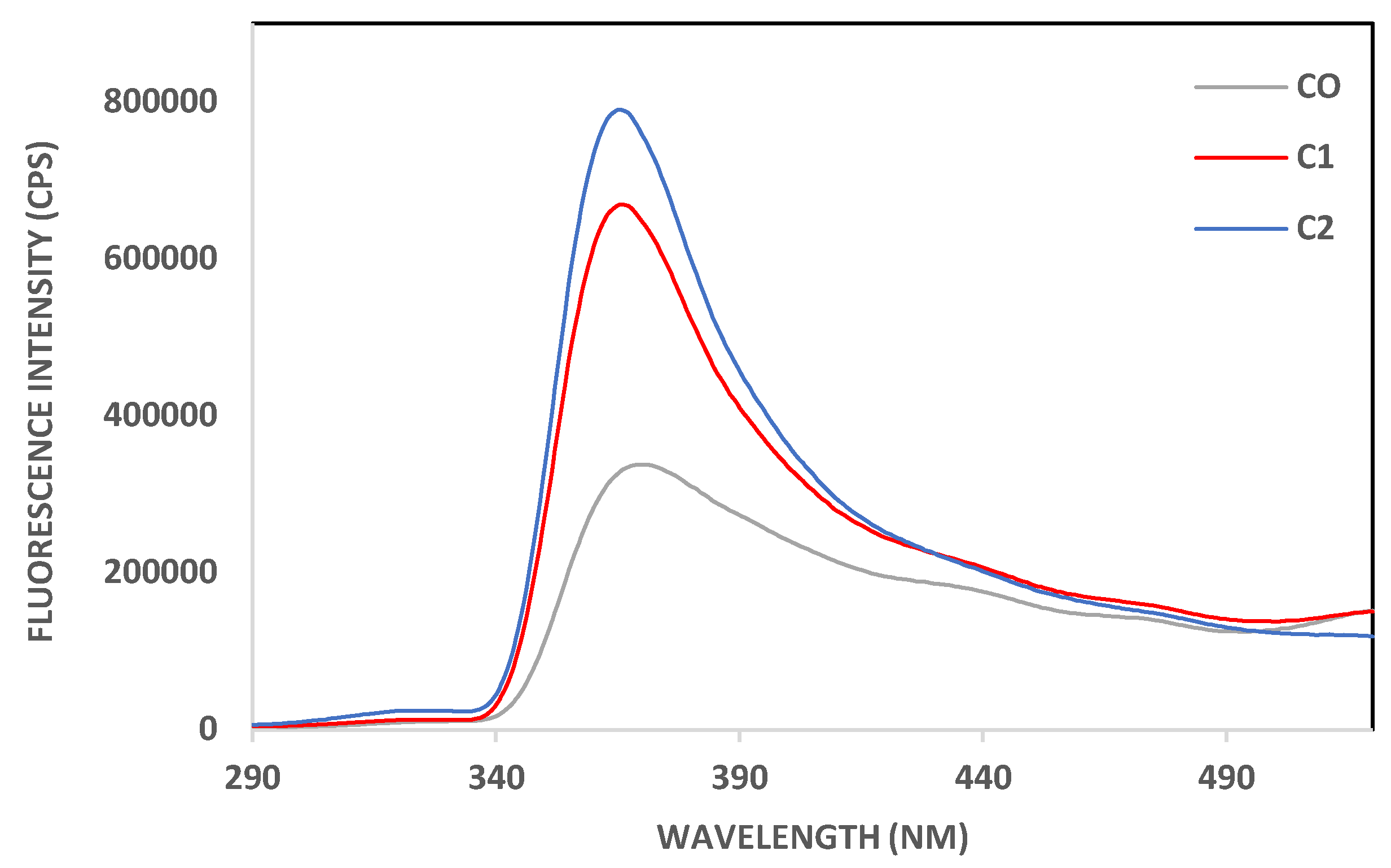
Figure 2.
Excitation fluorescence spectra of control (C0) and aromatized oils (C1 and C2) acquired after excitation set at 430 nm.
Figure 2.
Excitation fluorescence spectra of control (C0) and aromatized oils (C1 and C2) acquired after excitation set at 430 nm.
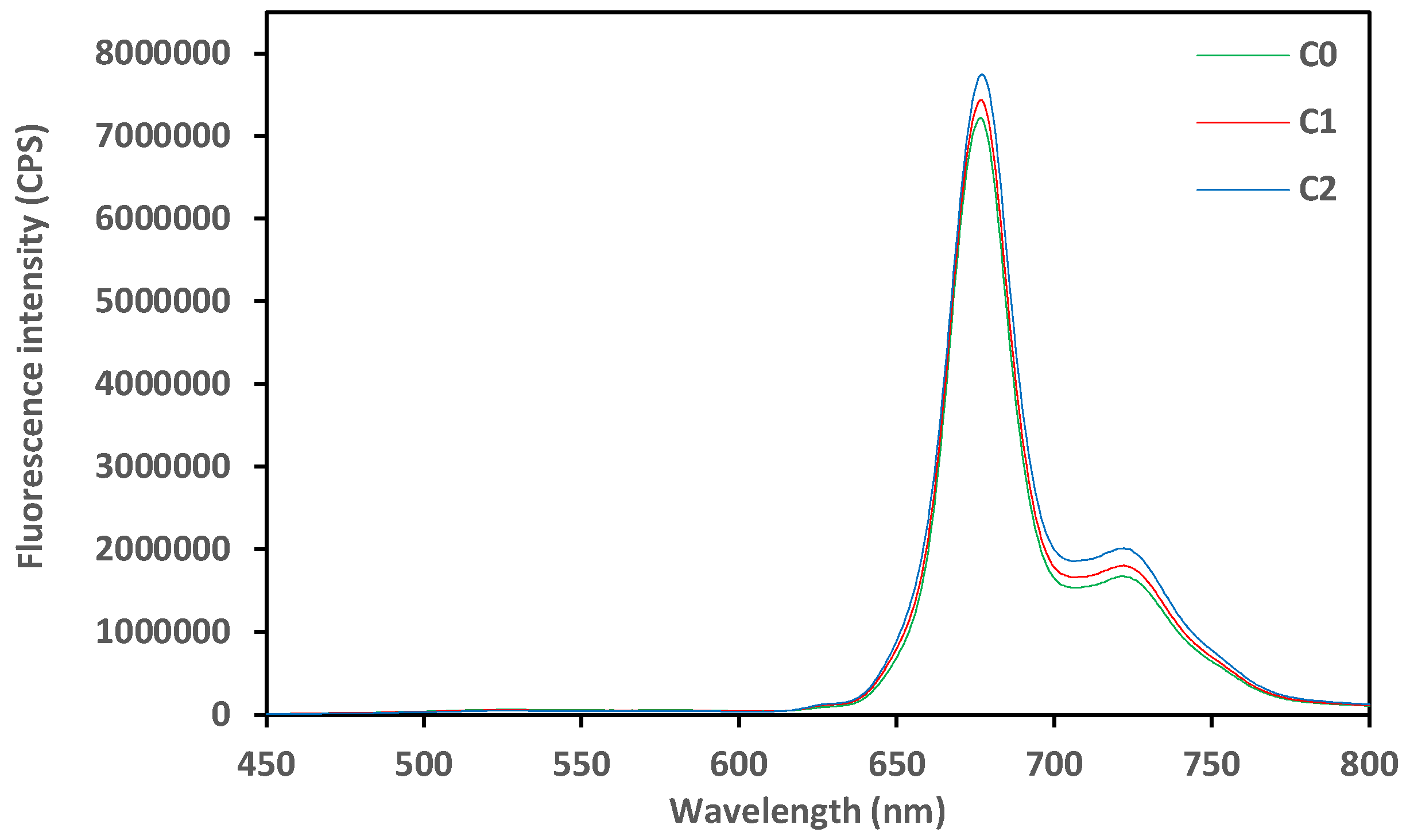
Figure 3.
Principal component analysis for (a): C0 non-aromatized olive oil, (b): C1 aromatized olive oil with 2% cloves and (c): aromatized olive oil with 4% cloves.
Figure 3.
Principal component analysis for (a): C0 non-aromatized olive oil, (b): C1 aromatized olive oil with 2% cloves and (c): aromatized olive oil with 4% cloves.
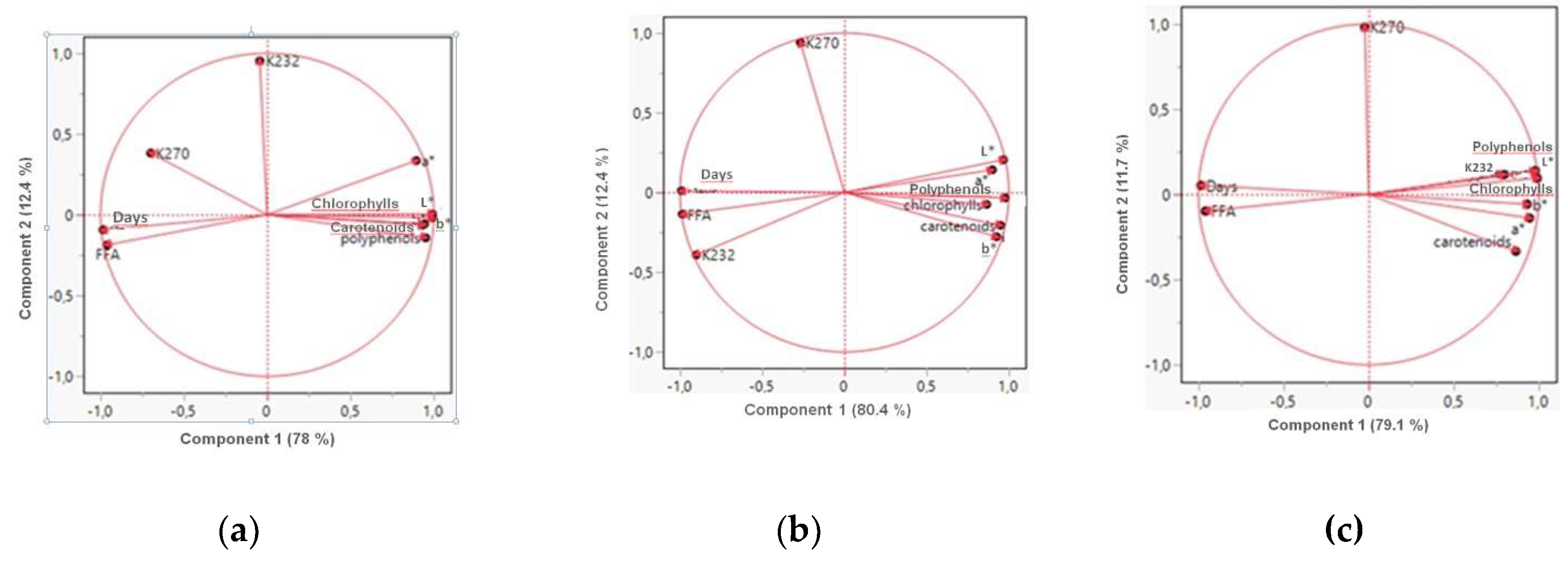

Table 1.
Physicochemical characteristics of the olive oils.
| Parameters | CO | C1 | C2 | AOMC1 | AOMC2 | |
|---|---|---|---|---|---|---|
| Density | 0.908±0.005a | 0.915±0.002a | 0.917±0.002a | 0.914±0.005a | 0.916±0.002a | |
| Color | L | 21.81±0.043a | 18.37±0.036b | 20.223±0.02c | 10.826±0.005d | 10.245±0.034e |
| a* | -0.843±0.015a | -0.843±0.661a | -0.378±0.021b | 0.226±0.01c | 0.54±0.122d | |
| b* | 13.503±0.047a | 11.393±0.072b | 12.756±0.083c | 2.483±0.156d | 2.606±0.176d | |
| FFA (%) | 0.175±0.007a | 0.185±0.005a | 0.225±0.001b | 0.38±0.012c | 0.41±0.014d | |
| PV (meq/kg) | 11.208±0.325a | 11.542±0.477a | 12.458±0.409a | 15.645±0.161b | 17.865±0.163c | |
| K232 | 1.651±0.001a | 1.928±0.008b | 2.245±0.001c | 2.135±0.010d | 2.889±0.014e | |
| K270 | 0.136±0.006a | 0.210±0.003b | 0.249±0.014c | 0.256±0.002c | 0.262±0.007c | |
| Chlorophylls (mg/kg) | 6.056±0.01a | 4.124±0.04b | 4.371±0.013c | 2.712±0.029d | 1.984±0.019e | |
| Carotenoïds (mg/kg) | 1.786±0.028a | 1.874±0.010a | 1.960±0.002b | 1.284±0.04c | 1.048±0.029d | |
| Total phenols (mg GAE/kg) | 385.703±0.02a | 517.88±0.03b | 668.72±0.04c | 451.62±0.01d | 587.64±0.01e | |
Different letters at the same line indicate significantly differences at (p<0.05).
Table 2.
Fatty acids profile of control and flavored olive oil.
| Fatty acids | C0 | C1 | C2 |
|---|---|---|---|
| Palmitic acid (C16 :0) | 18.048±0.314a | 17.871±0.055a | 17.809±0.037a |
| Palmitoleic acid (C16 :1) | 2.291±0.040a | 2.270±0.064a | 2.237±0.019a |
| Heptadecanoic acid (C17 :0) | 0.0349±0.001a | 0.035±0.001a | 0.035±0.0007a |
| Heptadecenoic acid (C17 :1) | 0.274±0.353a | 0.066±0.001a | 0.066±0.000a |
| Stearic acid (C18 :0) | 2.217±0.028a | 2.211±0.045a | 2.23±0.005a |
| Oleic acid (C18 :1) | 60.434±0.278a | 60.512±0.201a | 60.576±0.045a |
| Linoleic acid (C18 :2) | 15.821±0.015a | 15.939±0.054b | 15.946±0.020b |
| Linolenic acid (C18 :3) | 0.564±0.006a | 0.553±0.015ac | 0.546±0.002bc |
| Arachidic acid (C20 :0) | 0.360±0.022a | 0.377±0.006ac | 0.39±0.006bc |
| Eicosenoic acid (C20 :1) | 0.147±0.015a | 0.151±0.010ab | 0.154±0.010ac |
| Saturated fatty acid (SFA) | 20.670±0.266a | 20.505±0.082a | 20.473±0.046a |
| Monounsaturated fatty acid | 63.148±0.507a | 63.002±0.125a | 63.034±0.029a |
| Polyunsaturated fatty acid | 16.386±0.019a | 16.493±0.069ab | 16.493±0.022b |
Different letters at the same line indicate significant differences at (p<0.05).
Table 3.
:Changes in free fatty acidity (FFA), K232, K270, chlorophylls, carotenoids and total phenols during storage at 60°C.
Table 3.
:Changes in free fatty acidity (FFA), K232, K270, chlorophylls, carotenoids and total phenols during storage at 60°C.
| Storage (days) | Olive oil samples | FFA (%) | K232 | K270 | Chlorophylls (mg/kg) | Carotenoids (mg/kg) | Total phenolics (mg GAE/kg) |
| 0 | C0 | 0.175±0.01a | 1.652±0.10a | 0.136±0.02a | 6.056±0.07a | 1.786±0.03a | 385.703±5.601a |
| C1 | 0.185±0.01b | 1.928±0.05b | 0.211±0.03b | 4.123±0.06b | 1.874±0.01a | 517.88±13b | |
| C2 | 0.225±0.01c | 2.245±0.06c | 0.281±0.03c | 4.371±0.06b | 1.960±0.02a | 668.72±14c | |
| 21 | C0 | 0.44±0.01a | 1.789±0.09a | 0.175±0.02a | 4.193±0.07a | 1.435±0.09a | 322.349±13.383a |
| C1 | 0.485±0.01b | 1.909±0.07a | 0.243±0.01b | 3.707±0.04a | 1.316±0.02a | 511.995±16.619b | |
| C2 | 0.57±0.03c | 2.127±0.04b | 0.330±0.03c | 3.970±0.09a | 1.102±0.03b | 650.317±15.155c | |
| 35 | C0 | 0.61±0.02a | 1.719±0.03a | 0.207±0.01a | 3.646±0.16a | 1.198±0.02a | 283.270±13.083a |
| C1 | 0.60±0.02a | 1.862±0.06b | 0.282±0.02b | 3.490±0.01a | 1.216±0.01a | 498.948±17.380b | |
| C2 | 0.66±0.01b | 2.088±0.07c | 0.363±0.01c | 3.456±0.07a | 1.021±0.02b | 605.933±19.244c | |
| 56 | C0 | 0.92±0.01a | 1.728±0.05a | 0.296±0.01a | 3.040±0.17a | 0.970±0.02a | 265.425±12.99a |
| C1 | 0.935±0.02a | 1.962±0.08a | 0.341±0.05a | 3.260±0.05a | 1.010±0.08a | 470.295±17.44b | |
| C2 | 0.89±0.02a | 2.243±0.10b | 0.381±0.02b | 3.283±0.07a | 0.891±0.03a | 593.146±25.92c | |
| 83 | C0 | 1.31±0.02a | 1.770±0.02a | 0.360±0.01a | 2.714±0.18a | 0.944±0.03a | 234.006±14.42a |
| C1 | 1.29±0.02a | 1.916±0.02a | 0.436±0.03b | 3.124±0.21a | 0.798±0.02a | 352.406±15.41b | |
| C2 | 1.185±0.03b | 2.219±0.05b | 0.489±0.04b | 3.252±0.06a | 0.889±0.01a | 573.513±24.69c | |
| 98 | C0 | 1.63±0.01a | 1.775±0.1a | 0.442±0.01a | 2.239±0.06a | 0.782±0.02a | 223.420±12.003a |
| C1 | 1.615±0.01a | 1.982±0.06a | 0.501±0.03b | 2.479±0.1a | 0.798±0.07a | 321.057±15.506b | |
| C2 | 1.67±0.02b | 2.150±0.01a | 0.504±0.03b | 3.155±0.04b | 0.873±0.03a | 552.183±17.806c | |
| 130 | C0 | 2.215±0.06a | 2.025±0.03a | 0.605±0.01a | 1.413±0.16a | 0.470±0.05a | 213.833±13.875a |
| C1 | 2.425±0.02b | 2.154±0.04a | 0.545±0.03b | 2.114±0.14b | 0.669±0.06b | 258.995±15.194b | |
| C2 | 2.210±0.03a | 2.246±0.05a | 0.532±0.01b | 2.481±0.07b | 0.687±0.01b | 401.93±25.010c | |
| 165 | C0 | 3.110±0.01a | 2.483±0.04a | 0.702±0.01a | 0.923±0.06a | 0.354±0.04a | 207.446±10.054a |
| C1 | 3.290±0.01b | 2.221±0.03b | 0.557±0.01b | 1.542±0.04b | 0.500±0.01a | 215.203±9.338a | |
| C2 | 3.235±0.03b | 2.963±0.09c | 0.542±0.01b | 1.861±0.06b | 0.481±0.03a | 382.753±24.002b |
Different letters at the same column for the same storage duration indicate significant differences at (p<0.05).
Table 4.
Color parameters L, a* and b* of oils during storage.
| Storage (days) | Olive oil samples | L | a* | b* |
| 0 | C0 | 21.81±0.043c | -0.843±0.015b | 13.503±0.047c |
| C1 | 18.37±0.036a | -0.842±0.018b | 11.393±0.072a | |
| C2 | 20.223±0.02b | -0.378±0.021a | 12.756±0.083b | |
| 21 | C0 | 20.247±0.05c | -0.833±0.015c | 12.71±0.026b |
| C1 | 18.310±0.017a | -0.743±0.05b | 10.176±0.1a | |
| C2 | 19.793±0.032b | -0.443±0.02a | 12.703±0.05b | |
| 35 | C0 | 18.417±0.308b | -0.89±0.026c | 11.66±0.049b |
| C1 | 18.330±0.01b | -0.74±0.04b | 10.436±0.04a | |
| C2 | 17.146±0.09a | -0.483±0.037a | 10.243±0.096a | |
| 56 | C0 | 17.42±0.073a | -0.96±0.01a | 10.81±0.04b |
| C1 | 17.646±0.065a | -0.746±0.030b | 9.726±0.032a | |
| C2 | 17.873±0.047a | -0.66±0.036c | 10.256±0.023b | |
| 83 | C0 | 16.556±0.037a | -0.996±0.077c | 9.870±0.098a |
| C1 | 16.113±0.156a | -0.849±0.031b | 9.700±0.01a | |
| C2 | 17.723±0.085b | -0.76±0.026a | 9.870±0.05a | |
| 98 | C0 | 14.286±0.031a | -1.253±0.049a | 8.543±0.04a |
| C1 | 15.653±0.23b | -1.063±0.015b | 9.2130.025b | |
| C2 | 15.986±0.058b | -0.85±0.045c | 9.193±0.051b | |
| 130 | C0 | 12.903±0.04a | -1.153±0.02a | 7.826±0.056a |
| C1 | 12.276±0.066a | -1.09±0.065a | 8.903±0.055b | |
| C2 | 12.166±0.065a | -0.93±0.016b | 8.866±0.071b | |
| 165 | C0 | 11.800±0.05a | -1.568±0.015c | 7.238±0.034a |
| C1 | 11.230±0.012a | -1.219±0.011b | 8.842±0.021b | |
| C2 | 11.010±0.013a | -1.02±0.026a | 8.012±0.011a |
Different letters at the same column for the same duration of heating indicate significant differences at (p<0.05).
Table 5.
Main characteristics of study participants (224 people).
| Variables | Levels | N | % |
|---|---|---|---|
| Age | <25 | 102 | 45.5 |
| 25-40 | 76 | 33.9 | |
| 40-60 | 44 | 19.6 | |
| >60 | 2 | 1 | |
| Gender | F | 122 | 54.5 |
| M | 102 | 45.5 | |
| Educational level | Bachelor’sdegree | 38 | 17 |
| High schooldiploma | 116 | 51.8 | |
| Lowersecondaryschoolcertificate | 18 | 8 | |
| Master’sdegree | 43 | 19.2 | |
| PhD or other | 9 | 4 |
Table 6.
Habit of consumption of olive oil, knowledge of aromatised oils and cloves and purchase intention.
Table 6.
Habit of consumption of olive oil, knowledge of aromatised oils and cloves and purchase intention.
| Question | Levels | % |
|---|---|---|
| How do you buy your olive oil? | Directly from the producer | 86.5 |
| From supermarket | 4 | |
| at the grocer’s | 3.6 | |
| on the market | 5.9 | |
| On average, how often do you use olive oil in your personal diet? | 3 time/week | 70.2 |
| 1 to 2 time/week | 15.4 | |
| 1 time/15 days | 8.7 | |
| little | 5.7 | |
| On average, what is your household’s monthly consumption of olive oil? | < ½ L/month | 7.8 |
| 1 L/month | 27.2 | |
| 2L/month | 23.3 | |
| >2L/month | 41.7 | |
| Use of olive oil | Salad dressing | 51.5 |
| Cooking | 45.6 | |
| Frying | 2.9 | |
| Do you know about flavoured oils for food uses? | Yes | 30 |
| No | 70 | |
| What would be your reservations about buying ready-to-use flavoured oils in supermarkets? | Lack of advice. | 22.3 |
| No specialized point of sale. | 15.5 | |
| Doubts about the quality of the product. | 46.6 | |
| The price higher than for an unflavored oil | 15.5 | |
| Do you know the health benefits of cloves? | yes | 52.7 |
| No | 47.3 | |
| If you find a clove flavored oil, would you be willing to buy it? | Yes | 83.9 |
| No | 14.3 | |
| Probably | 1.8 |
Disclaimer/Publisher’s Note: The statements, opinions and data contained in all publications are solely those of the individual author(s) and contributor(s) and not of MDPI and/or the editor(s). MDPI and/or the editor(s) disclaim responsibility for any injury to people or property resulting from any ideas, methods, instructions or products referred to in the content. |
© 2025 by the authors. Licensee MDPI, Basel, Switzerland. This article is an open access article distributed under the terms and conditions of the Creative Commons Attribution (CC BY) license (http://creativecommons.org/licenses/by/4.0/).
Copyright: This open access article is published under a Creative Commons CC BY 4.0 license, which permit the free download, distribution, and reuse, provided that the author and preprint are cited in any reuse.


