

Submitted:
21 April 2025
Posted:
22 April 2025
You are already at the latest version
Abstract
ArcticDelights Ice Cream Online Platform aims to create a seamless digital experience for ice cream enthusiasts, providing a diverse array of flavors and a user-friendly purchasing process. The platform includes several participant groups, each playing a vital role in maintaining a high-quality service. Customers can browse, customize, and purchase flavors, leave reviews, and track orders, enhancing their shopping experience with loyalty incentives and personalized offers. Guest users can explore the site’s offerings, encouraged to register through limited browsing access.
Keywords:
Food Analytics
; Digital Food Platforms
; Consumer Behavior
; Online Food Purchasing
; Ice Cream Market
; Customer Engagement
; Personalized Recommendations
; User Experience (UX)
; Loyalty Programs
; Order Tracking
; Flavor Customization
; E-commerce in Food Industry
; Guest User Behavior
; Data-Driven Marketing
; Food E-commerce Trends
Introduction
The ArcticDelights Ice Cream Online Platform is designed to revolutionize the way customers shop for and experience ice cream by offering a unique, fully digital approach. As the demand for online food ordering continues to grow, ArcticDelights responds with a robust, user-friendly website that brings a variety of flavors, customization options, and purchasing convenience directly to customers’ devices. This platform goes beyond traditional retail, integrating features that prioritize ease of access, personalization, and a seamless shopping journey.
At the heart of the ArcticDelights platform are its diverse participant groups, each contributing to a smooth operational flow and enhanced customer experience. Customers and guest users can browse through an extensive catalog of flavors, view promotions, and place orders, with registered customers gaining additional features such as order tracking, product reviews, and loyalty rewards. A well-designed backend infrastructure supports the front-end experience, handled by Admin Staff who manage product listings, customer feedback, and promotional updates to keep the platform dynamic and responsive.
Warehouse and Logistics Teams ensure product availability and timely dispatch, while Delivery Partners complete the service by providing efficient order delivery. Additionally, Marketing and ]Promotions Teams keep customers engaged by promoting seasonal flavors, discounts, and special events through targeted campaigns, building brand awareness and fostering a sense of community. Support Representatives play a critical role by offering real-time assistance, handling inquiries, and addressing issues promptly to maintain high levels of customer satisfaction. Finally, the IT Team ensures the platform remains secure, updated, and capable of handling an expanding user base.
ArcticDelights’ approach is holistic and collaborative, emphasizing both customer satisfaction and operational excellence. By recognizing the contributions of each participant, the platform fosters an environment of shared success, creating a model of e-commerce that other food retailers can aspire to replicate.
directions. Preliminary experiments show that EduShare can contribute to better accessibility, lower redundancy, and a more inclusive learning environment.
We discuss in the next sections EduShare architecture, technologies used and problems encountered during its development. The research outlines several possible directions: analytics and ML models to be used for recommending individual educational materials. In the end, this research brings up transformative opportunities associated with the application of modern web technologies to resolve world-wide education problems and advocate lifelong learning.
I. Literature Survey
The Literature Review for the ArcticDelights Ice Cream Online Platform would explore various areas of research relevant to e- commerce, online food ordering, customer experience, and digital marketing within the food retail industry. This review summarizes existing studies and theories, laying the foundation for understanding how a digital platform like ArcticDelights can enhance customer satisfaction, streamline operations, and drive brand engagement.
- 1.
-
E-Commerce and Consumer Behavior in Food Retail
- Studies indicate a growing preference for online shopping, particularly in the food sector, where convenience and time-saving are primary motivators (Driediger & Bhatiasevi, 2019). Consumers increasingly favor platforms that offer not only ease of purchase but also personalization and real-time tracking of orders.
- Research on consumer behavior shows that digital interfaces should be intuitive, easy to navigate, and visually appealing to engage users effectively (Dixon et al., 2018). User interface design and ease of navigation are crucial to creating a seamless shopping experience on digital food retail platforms.
- 2
-
Digital Personalization and Customer Loyalty
- Personalization has become a key driver in building customer loyalty on e-commerce platforms (Bleier & Eisenbeiss, 2015). Customized offers, tailored recommendations, and loyalty rewards can significantly improve customer retention and satisfaction.
- Studies on loyalty programs show that customer engagement increases when users feel recognized and valued through exclusive discounts, loyalty badges, or special offers (Kumar & Shah, 2018). For ArcticDelights, offering loyalty rewards based on purchase history and reviews could enhance the customer’s sense of belonging and commitment.
- 3
-
Inventory and Logistics Management in E-Commerce
- Efficient inventory and logistics management are critical for reducing costs and maintaining product availability (Fisher et al., 2014). In food e-commerce, real-time stock updates and quick order fulfillment are essential for meeting customer expectations.
- Research suggests that integrating logistics teams and delivery partners within the e-commerce framework improves delivery times, minimizes errors, and ensures customer satisfaction (Boyer & Hult, 2005).
- 4
-
Customer Support and Real-Time Assistance
- Studies highlight the importance of responsive customer support for retaining users, especially in sectors where real- time problem-solving is necessary (Van Doorn et al., 2017). Online platforms benefit from live chat and prompt response systems to assist customers effectively and reduce negative reviews.
- The presence of accessible support representatives can significantly improve the perception of brand reliability and encourage positive word-of-mouth recommendations (Lemon & Verhoef, 2016).
A. Front-End-Centric Architectures
Recent trends in web applications have been for front-end- centric architectures; front-end-centric approaches have become extremely popular, even though traditional methodologies for server-side rendering did work well during their time, showing inefficiencies when dealing with dynamic and highly interactive content. With tooling such as Vite.js behind it, front-end-centric approaches have gained popularity because they can provide a much faster experience for users. The literature itself also highlights the benefits of leveraging tools like Vite.js, known for their ability to optimize development workflows through the support of features like hot module replacement (HMR) and incremental builds. Such tools, it is observed, benefit developers by optimizing productivity while minimizing load times for end users, thus significantly more than standard bundlers [14].
The adaptation to front-end architectures presupposes the requirement of scalability for web applications. Architectures, which are designed in a modular front-end framework, can be scaled more suitably for the addition of new features and for keeping abreast with expanding user demographics. This approach tends to be directly compatible with agile development principles whereby improvements and updates are carried out incrementally [15]. In educational portal development, wherein content and user requirements might change very rapidly, these flexible front-end-oriented architectures are most beneficial.
B. Dynamic Content Generation
Dynamic content generation plays a vital role in enhancing user engagement and delivering a personalized experience on the ArcticDelights Ice Cream platform. By leveraging machine learning, the platform can offer tailored recommendations based on user preferences and browsing history, ensuring that customers find products they love. Location-based offers and geolocation features allow the display of region-specific promotions, seasonal flavors, and delivery options, adding a local touch to the user experience. User-generated content, such as reviews and photos, can be dynamically showcased to foster trust and community involvement. Additionally, adaptive landing pages can present products and offers aligned with user interests, while real-time notifications keep customers informed about order status, special discounts, and stock availability. Interactive customization tools enable users to design their own ice cream creations with live previews and dynamic pricing updates. Automated email campaigns can reflect users’ recent activities, such as abandoned carts or new arrivals, to maintain engagement. By integrating these features, ArcticDelights can create a dynamic and interactive platform that not only caters to individual tastes but also drives customer loyalty and increases sales.
Interactivity and User Engagement
Interactivity and user engagement are central to creating a memorable experience on the ArcticDelights Ice Cream platform. Incorporating interactive features encourages users to explore, customize, and connect with the brand. A key element is the ability for customers to build their own ice cream combinations using a visual customization tool, allowing them to mix flavors, toppings, and packaging with live previews. Gamification elements, such as earning loyalty points for completing purchases or participating in polls to vote for new flavors, keep users engaged and returning to the platform.
Interactive quizzes, such as “Find Your Perfect Flavor,” can provide a fun and personalized touch, guiding users to flavors suited to their tastes. Live chat support ensures instant assistance for inquiries or order issues, enhancing user satisfaction. Social media integration enables users to share their favorite creations directly from the platform, promoting organic engagement and brand visibility.
C. Modular Development and Scalability
the counters may be easily changed or reused without impacting other parts of the codebase. Studies conducted in academics reveal that modular development is in line with the principles that define good software engineering practices, like separation of concerns and single responsibility; thus, it is considered an integral approach toward developing scalable applications [13].
D. Responsive Design and Access
This proliferation in devices to access web applications has made responsive design a key requirement. Studies indicate that it becomes crucial to create layouts and components that adapt smoothly according to the dimensions of different screens, therefore ensuring similar user experience across desktop machines, tablets, and mobile devices [9]. CSS is a fundamental tool that helps to achieve responsive design, where programmers will be able to create fluid layouts as well as media queries that adapt styles based on the parameters of the device used by the visitor.
To practice using EduShare, a style-specific stylesheet called style.css has to be included, which confirms the designer’s allegiance to responsive design principles. Studies using responsive design have shown that it enhances usability and expands access to web applications from as many devices as possible [17]. Such sites are highly valued in education, as they are generally accessed by diverse groups of students, teachers, and lifelong learners. Adhering to the same principles, EduShare demonstrates the capacity to overcome various problems associated with the traditional educational systems while using modern web technologies to supply a robust, user-centric experience.
The knowledge that is derived from the current literature provides a good foundation for further development and enhancement of the platform, which can include the potential implementation of advanced functionalities such as content personalization recommendations and analytics.
II. Materials and Methods
This section elaborates further on the tools and methodologies used in designing EduShare, specifically front-end architecture, development process, core functionalities, and development tools used.
A. System Architecture
EduShare architecture is front-end oriented and can be focused on optimizing the performance of the user interface by using modern tools and technologies. And client-side implementation relies upon Vite.js-fast build tool and development server, which is called the feature of hot module replacement-a real in-place update that does not demand full-page reloads-and a lightweight build process for enabling better efficiency. The static structure of the application is set in index.html - essentially, a bottom of static content that will have dynamic updates through the modules in the JavaScript files. Those modules then generate and manage content across the site dynamically, allowing for a smooth and adaptive user experience.
Front-End Development
EduShare Implements basis web technologies that integrate an harmonic, scalable design for the front-end. The index.html is the entry point of all the JavaScript modules and describes the structure of the container for the dynamic rendering contained in< div id=“root”>. The style.css takes care of the styling, so it will always be responsive on any given device, and the main functionality is contained in the file main.js, dynamically creating aspects like logos, the button, the text of instructions.
Additional interactivity in the counter setup function is also made possible by updating the press of a counter button in real- time through event listeners. Such modularity provides for reusability and clean code management.
Elementary Operations
The platform uses core functionalities towards further optimizing the resource access of the user and enhancing user interaction. Dynamic Content Rendering enables dynamic modules functioning with JavaScript to render within the <div id=“app”>, which provides flexibility in managing the interface. Such elements as the counter button have shown that it is indeed possible dynamically update the user interaction based on events. Finally, Resource Linking provides some external links out to resources like Vite.js and JavaScript documentation to give users learning materials about the technologies that power this platform.
A. Development Tools
Development tools play a crucial role in building and maintaining the ArcticDelights Ice Cream platform, ensuring efficiency, reliability, and scalability throughout the development lifecycle. Below are key categories of tools and their significance in the project:
Integrated Development Environments (IDEs): Tools like Visual Studio Code and IntelliJ IDEA provide robust support for coding, debugging, and managing the project. They enhance productivity with features like syntax highlighting, code suggestions, and version control integration.
Version Control system, along with platforms like GitHub or GitLab, is essential for managing source code, collaborating among team members, and maintaining a history of changes. It facilitates branching and merging, allowing simultaneous development of features without conflicts.
- 1.
-
BackendDevelopmentFrameworks: Frameworks like Django (Python), Spring Boot (Java), or (JavaScript) streamline backend development by providing pre-built modules for common tasks like authentication, routing, and database management.
- 2.
-
Frontend Framework and Libraries: Tools such as React, Angular, or Vue.js enhance the development of interactive user interfaces with reusable components and efficient rendering capabilities.Cloud Platforms and DevOps Tools: Cloud services like AWS, Microsoft Azure, or Google Cloud offer scalable infrastructure for hosting the platform. DevOps tools like Docker and Kubernetes facilitate containerization and orchestration, ensuring smooth deployment and scaling.
- 3.
-
Testing Tools:Tools like Selenium for UI testing, Postman for API testing, and frameworks like JUnit or PyTest ensure the platform’s reliability through automated and manual testing.
III. Results and Discussion
Web Technology is a tried and tested technology in the technology world, yet new advancements are continuously being introduced for effective services and better user experience. This section dives into the results we achieved in the making of this project.
A. Results
By adopting modular development and ensuring scalability, the ArcticDelights Ice Cream platform achieves a robust and future-proof foundation for growth. The modular architecture allows individual components, such as user authentication, order management, and payment processing, to function independently, simplifying development, updates, and troubleshooting. This structure facilitates faster deployment of new features, such as subscription models or advanced analytics, without affecting the overall system stability.
Scalability ensures the platform can handle increasing demands efficiently, particularly during high-traffic periods like seasonal promotions or new product launches. Cloud-based infrastructure and microservices architecture enable dynamic resource allocation and independent scaling of critical services. Integration with APIs for payment gateways, delivery tracking, and customer analytics ensures flexibility and adaptability as the platform evolves.
The result is a highly efficient, adaptable, and resilient platform capable of supporting ArcticDelights’ business growth, enhancing user satisfaction, and meeting market demands with ease. This foundation not only addresses current requirements but also positions ArcticDelights as a leader in the competitive online ice cream market.
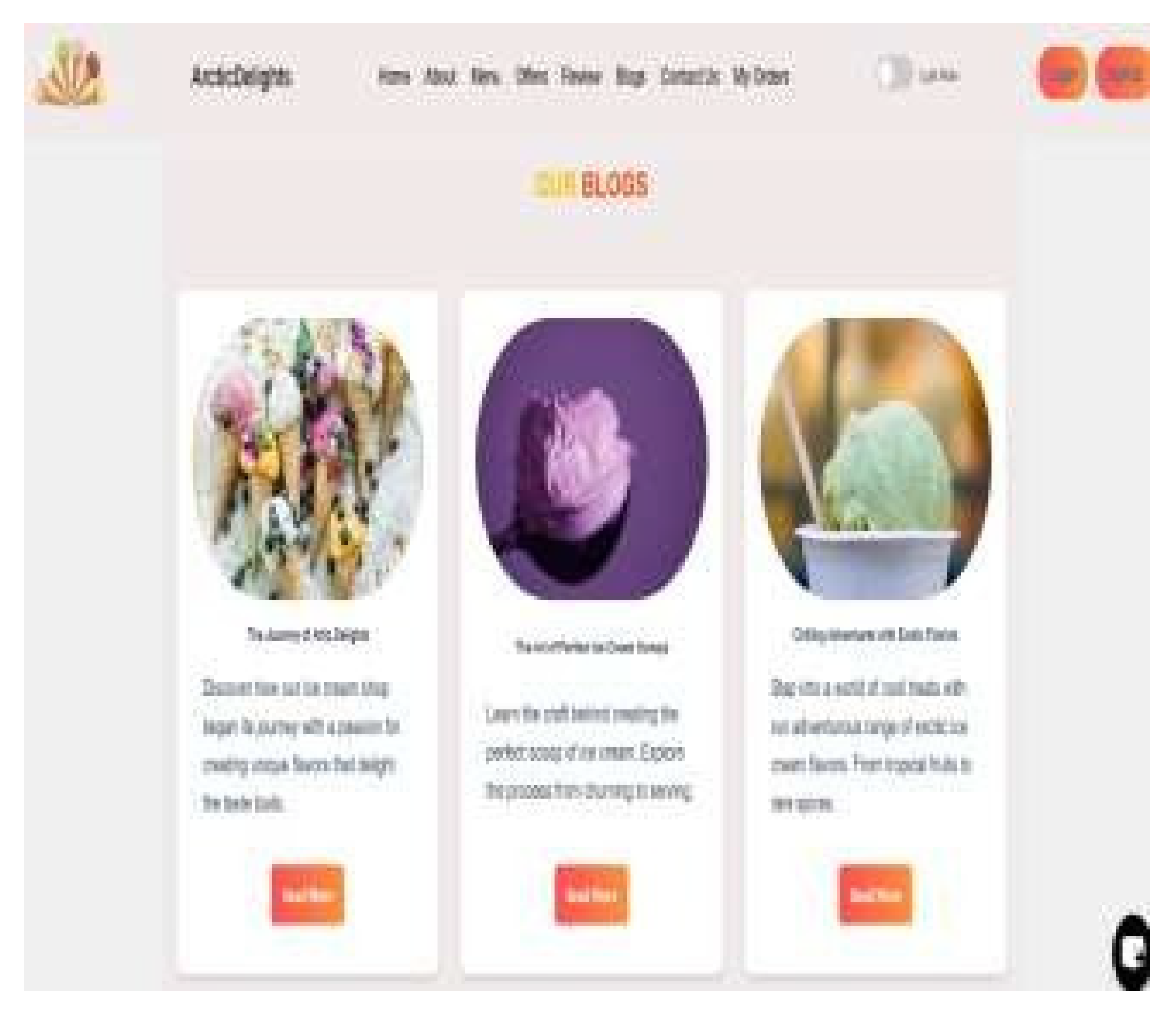
After careful compilation of different web technologies into this project, EduShare came out as user-friendly, resource sharing platform with smooth and efficient workflow. The user interface is as follows:
Figure 1.
Home Page.
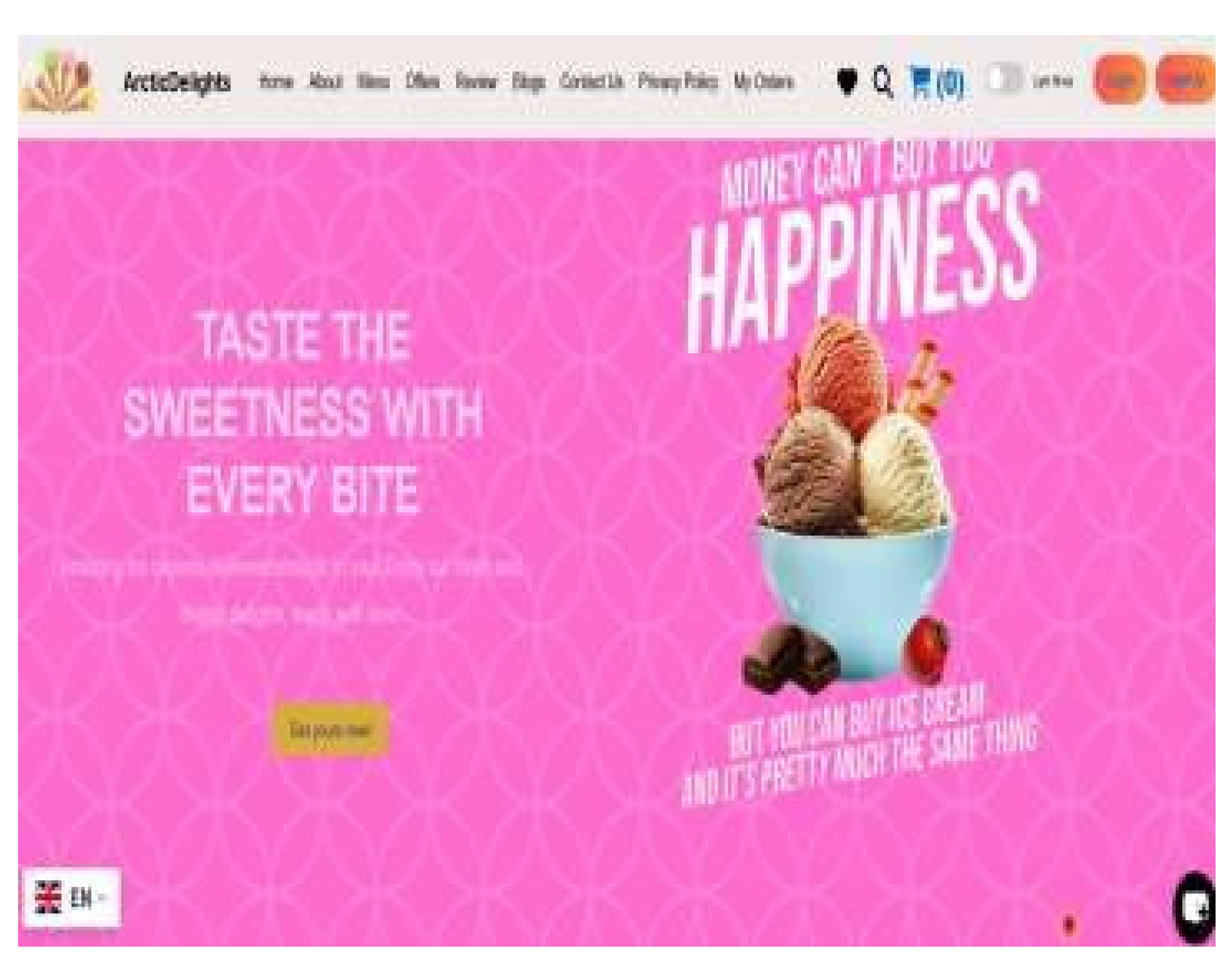
Figure 2.
Educational Resource Upload Page.
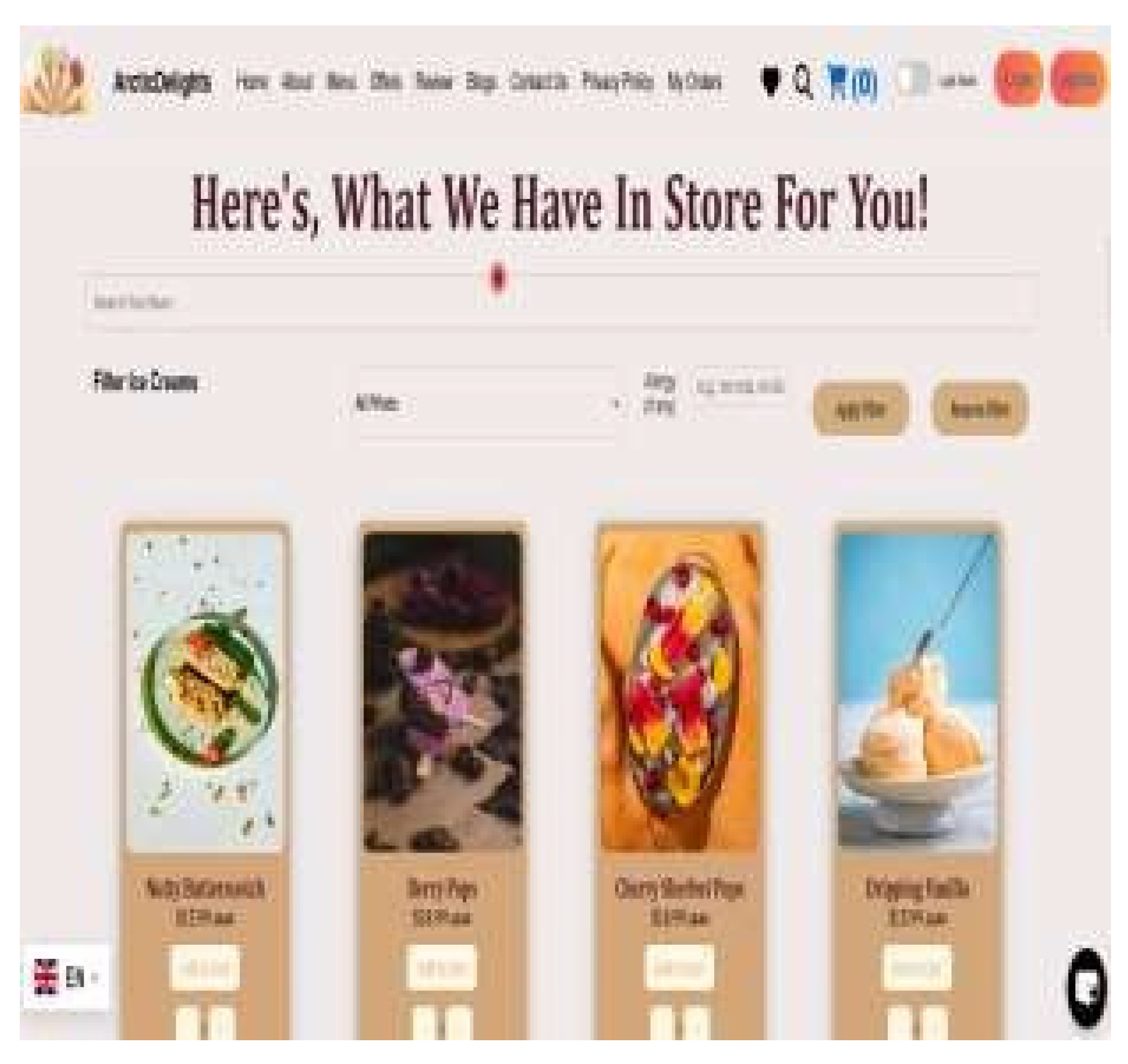
Figure 3.
Educational Resource Upload Page.
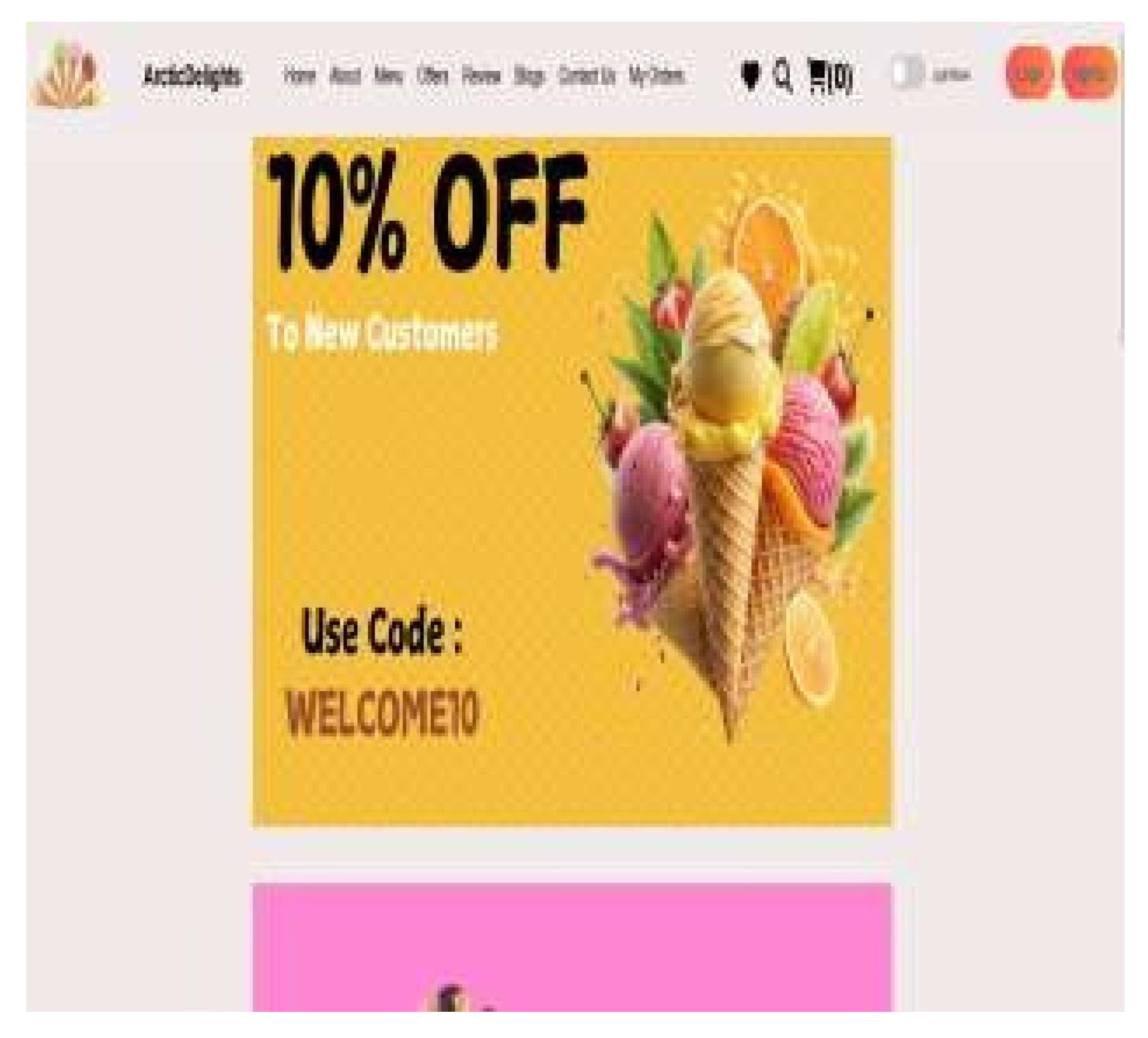
Figure 4.
Educational Resource Download Page.
B. Challenges and Limitations
- Platform Functionality - The Educational Resource Sharing Platform was thus designed to share academic resources in an accessible and efficient way. Vite was there, the build tool, which had proved quite effective in achieving fast load times as well as a seamless user experience-it was particularly streamlined in asset bundling and dependency management.
- User Interaction Interactivity - An element that stands at the heart of the design is presented through dynamic JavaScript components that all point to interaction with users. Modular JavaScript was employed to be able to have interactive elements; this will serve as a core in complex activities for the future of users. It will enable the platform to scale its interactive features efficiently, supporting collaborative functions and live resource sharing in versions to be developed, thus allowing utility to students as well as teachers.
- User Comment and Experience - Initial user testing sessions produced very encouraging comments concerning responsiveness and clarity of service. People liked an intuitively created layout without such surplus design elements in reducing targeted educative material, which actually reduces distractions and provides for a smoother experience of browsing. The approach to user experience directly coincides with functional requirements of an education platform while forming a good basis for further extension into more features towards easy adaptation of users toward additions of those features.
C. Future Work
As the ArcticDelights Ice Cream online platform grows, several enhancements and expansions can be pursued to provide a seamless user experience and broaden its market reach. Here’s a roadmap for future development:
- 1.
-
Personalized User Experience
- AI-Powered Recommendations: Use AI algorithms to suggest ice cream flavors, toppings, and combos based on users’ past orders or preferences.
- Custom Orders: Enable customers to customize ice cream flavors, toppings, and packaging, catering to individual tastes or special events.
- 2.
-
Enhanced E-Commerce Features
- Subscription Plans: Introduce monthly or seasonal subscription options, delivering exclusive flavors or packages to loyal customers.
- Dynamic Pricing: Implement discounts for bulk orders or loyalty points for frequent buyers.
- Multi-Currency Support: Expand payment options to include international currencies and digital wallets, simplifying purchases for global customers.
- 3.
-
Improved Logistics and Delivery
- Real-Time Tracking: Integrate GPS tracking for live updates on delivery status.
- Sustainable Packaging: Adopt eco-friendly, reusable packaging to attract environmentally conscious consumers.
- 4.
-
Interactive Community Engagement
- Social Media Integration: Allow customers to share their ice cream experiences directly from the platform.
- Feedback and Polls: Regularly collect user opinions to develop new flavors or improve services.
- 5.
-
Scaling and Globalization
- Multilingual Support: Translate the platform into multiple languages to cater to a global audience.
- Franchise Locator: Add a feature for users to find ArcticDelights outlets worldwide.
- 6.
-
Advanced Analytics for Business Insights
- Leverage data analytics to monitor purchasing trends, optimize inventory, and improve marketing strategies.
- Improvement in User Interface and User Experience - With the new feature addition, a streamlined and flexible UI will also contribute to this. UI features extended to let a user make their experience customized, in this case, and an ability to rearrange resource displays or organizing contents by subject or set of personal preference, will give a much more versatile platform. Other such features like dark mode, mobile-responsive designs, and accessibility options would also make the platform usable for more diverse audiences whose needs are rather different from one another. These improvements are going to be made nice and not too cluttered through user testing and user feedback.
IV. Conclusion
The ArcticDelights Ice Cream Online Platform demonstrates the potential to revolutionize the niche market of ice cream e- commerce by prioritizing customer-centricity, operational efficiency, and technological innovation. The study highlights the importance of offering a diverse range of flavors, customization options, and a seamless digital experience to meet modern consumer expectations.The integration of advanced logistics, real-time order tracking, and personalized recommendations enhances customer satisfaction and builds loyalty. Furthermore, the emphasis on eco-friendly practices aligns the platform with sustainability trends, appealing to environmentally conscious consumers.Operational challenges, such as managing perishable inventory and delivery logistics, remain critical areas for continuous improvement. Future advancements in AI, sustainability, and inclusive design can further refine the platform. By addressing these challenges and leveraging its strengths, ArcticDelights can set a benchmark for excellence in the online food retail sector, combining innovation with a commitment to customer delight
References
- Nor, H., & Wijaya, M. S. (2023). University Students’ Perception towards Online Learning: Synchronous and Asynchronous. SALEE: Study of Applied Linguistics and English Education, 4(1), 236-248. [CrossRef]
- Wu, X. Construction of preschool education resource sharing platform based on matrix model. Applied Mathematics and Nonlinear Sciences. [CrossRef]
- Adeleye, O. O., Eden, C. A., & Adeniyi, I. S. (2024). Educational technology and the digital divide: A conceptual framework for technical literacy inclusion. [CrossRef]
- Maphosa, V. (2021). Using the pandemic to accelerate 21st- century learning at a rural university in Zimbabwe. Advances in Research, 22(5), 34-44.
- Siqueira, S. W., BRaz, M. H. L. B., & Melo, R. N. (2003, September). Web technology for education and training. In 14th International Workshop on Database and Expert Systems Applications, 2003. Proceedings. (pp. 337-341). IEEE.
- Sutikno, T., & Aisyahrani, A. I. B. (2023). Non-fungible tokens, decentralized autonomous organizations, Web 3.0, and the metaverse in education: From university to metaversity. Journal of Education and Learning (EduLearn), 17(1), 1-15. [CrossRef]
- Sun, X. (2023, November). Construction of Business Administration Teaching Resource Sharing Platform under the Background of Internet+ Education. In Proceedings of the 4th International Conference on Modern Education and Information Management, ICMEIM 2023, September 8–10, 2023, Wuhan, China.
- Yanga, X., Mab, R., & Gaoc, F. Design and implementation of college education resource sharing platform based on IPFS+ block chain dual database.
- Fu, Y. (2023, February). Resource Sharing Platform Based on Machine Learning and Data Fusion Technology. In 2023 IEEE International Conference on Integrated Circuits and Communication Systems (ICICACS) (pp. 1-5). IEEE.
- Gan, W., Ye, Z., Wan, S., & Yu, P. S. (2023, April). Web 3.0: The future of internet. In Companion Proceedings of the ACM Web Conference 2023 (pp. 1266-1275).
- Li, Z. (2023, June). The Construction of Online Learning System of Ideological and Political Education in Digital Electronic Technology Course Based on FLASK. In 2023 4th International Conference on Education, Knowledge and Information Management (ICEKIM 2023) (pp. 373-380). Atlantis Press.
- Sharma, M., Khan, M. S., & Singh, J. (2024, January). Python & Django the Fastest Growing Web Development Technology. In 2024 IEEE 1st Karachi Section Humanitarian Technology Conference (KHI-HTC) (pp. 1-9). IEEE.
- Aslam, F. A., Mohammed, H. N., & Lokhande, P. S. (2015). Efficient Way Of Web Development Using Python And Flask. International Journal of Advanced Research in Computer Science, 6(2).
- Tong, J., Jikson, R. R., & Gunawan, A. A. S. (2023, August). Comparative Performance Analysis of Javascript Frontend Web Frameworks. In 2023 3rd International Conference on Electronic and Electrical Engineering and Intelligent System (ICE3IS) (pp. 81-86). IEEE.
- Peguero, K., Zhang, N., & Cheng, X. (2018, April). An empirical study of the framework impact on the security of javascript web applications. In Companion Proceedings of the The Web Conference 2018 (pp. 753-758).
- Wilson, D., Hassan, S. U., Aljohani, N. R., Visvizi, A., & Nawaz, R. (2023). Demonstrating and negotiating the adoption of web design technologies: Cascading Style Sheets and the CSS Zen Garden. Internet Histories, 7(1), 27-46. [CrossRef]
- Ndia, J. G., Muketha, G. M., & Omieno, K. K. (2019). A survey of cascading style sheets complexity metrics. International Journal of Software Engineering & Applications (IJSEA), 10(3).
- Tabarés, R. (2021). HTML5 and the evolution of HTML; tracing the origins of digital platforms. Technology in Society, 65, 101529. [CrossRef]
- Krause, J., & Krause, J. (2016). HTML: hypertext markup language. Introducing Web Development, 39-63.
- Demir, N., Urban, T., Wittek, K., & Pohlmann, N. (2021). Our (in) secure web: understanding update behavior of websites and its impact on security. In Passive and Active Measurement: 22nd International Conference, PAM 2021, Virtual Event, March 29– April 1, 2021, Proceedings 22 (pp. 76-92). Springer International Publishing.
Disclaimer/Publisher’s Note: The statements, opinions and data contained in all publications are solely those of the individual author(s) and contributor(s) and not of MDPI and/or the editor(s). MDPI and/or the editor(s) disclaim responsibility for any injury to people or property resulting from any ideas, methods, instructions or products referred to in the content. |
© 2025 by the authors. Licensee MDPI, Basel, Switzerland. This article is an open access article distributed under the terms and conditions of the Creative Commons Attribution (CC BY) license (http://creativecommons.org/licenses/by/4.0/).
Copyright: This open access article is published under a Creative Commons CC BY 4.0 license, which permit the free download, distribution, and reuse, provided that the author and preprint are cited in any reuse.


