
Submitted:
06 April 2025
Posted:
07 April 2025
You are already at the latest version
Abstract
This study examines the determinants of user experience on online food platforms, focusing on the critical roles of e-service quality, visual design elements (control and color vividness), and consumer electronic word-of-mouth (e-WOM). The research seeks to advance our understanding of how these factors collectively contribute to user engagement, retention, and participation in e-WOM, especially in the rapidly growing online food delivery industry. The study also highlights practical applications for improving user interaction and enhancing customer experience on digital platforms.
Keywords:
user experience
; e-service quality
; online platform
; visual design
; E-WOM
1. Introduction
The rapid evolution of e-commerce has significantly transformed global business models, with many companies shifting from traditional operations to online platforms. This shift has made it essential for businesses to understand how to attract and retain customers in a highly competitive digital environment. A key challenge for service firms transitioning to online platforms is the development of a superior user experience (UX) that not only meets but exceeds the expectations of digital users. This challenge is particularly pronounced in industries like online food delivery, where user engagement plays a crucial role in driving loyalty and repeat business. For these industries, improving user interaction through optimized e-service quality and visually engaging design can directly impact service adoption and customer retention. To meet these challenges, platforms must integrate hardware, software, and services in ways that deliver seamless and satisfying user experiences. One of the most effective ways to achieve this is by focusing on the role of visual design in shaping user perceptions and behaviors. Visual elements such as control, color vividness, and layout are no longer just aesthetic choices but integral components that influence how users interact with platforms. In this context, understanding how visual design influences e-service quality—such as ease of use, engagement, and trust—is crucial for enhancing overall user satisfaction and driving positive electronic word-of-mouth (e-WOM).
The findings of this study have important practical implications for industries like online food delivery, where rapid growth and intense competition demand constant innovation in user experience design. By understanding the impact of visual design on e-service quality, platform developers can create more engaging interfaces that not only meet functional needs but also drive higher levels of user interaction and e-WOM participation. This paper thus contributes to both theoretical and practical advancements in the field of e-commerce, offering a comprehensive framework for improving UX on online platforms and setting the stage for future research on the intersection of design, technology, and user engagement.
In addition, the novelty and contributions of this study extends the Technology Acceptance Model (TAM) by incorporating visual design elements into the framework, a significant gap in current research on platform-based user experiences. While TAM traditionally focuses on functional aspects of technology acceptance, this paper argues that visual design elements, particularly those related to control and color vividness, are essential for shaping user experience. This novel contribution provides deeper insights into how design affects user intentions and interactions with online services. Additionally, the study connects these visual design factors with emerging technologies such as AI-driven personalization and augmented reality. By linking visual design to these cutting-edge technologies, the study bridges current trends with future possibilities, offering a vision of how online platforms can leverage these tools to create even more engaging and personalized user experiences.
2. Theories and definitions
User Experience
User Experience (UX) has evolved from a simple focus on usability in Human-Computer Interaction (HCI) to a more holistic concept that includes sensory, emotional, and temporal dimensions. Traditional definitions of UX emphasized instrumental usability (Bate and Robert, 2023), but the current understanding extends beyond usability to incorporate users’ emotions, satisfaction, and engagement throughout their interaction with a platform (Kim et al., 2020). In the context of rapidly expanding industries like online food delivery, UX has become a key determinant of success, directly influencing customer retention, service adoption, and e-WOM (electronic word-of-mouth). Understanding and optimizing UX can thus provide companies with a competitive edge by ensuring that users not only find a platform easy to use but also engaging and enjoyable.
Visual Design
Visual design is a critical component of UX, especially in online platforms where visual cues significantly impact users’ first impressions and ongoing interactions. The concept of visual design in this study encompasses elements such as color vividness, layout, and control, all of which contribute to the overall aesthetic and functional appeal of a platform. Visual design influences users’ emotional and cognitive responses (Zhang and Hao, 2021), which in turn affect their perceptions of service quality. In the case of online food delivery platforms, engaging visual elements such as intuitive layouts and vibrant color schemes can attract users’ attention, create positive emotional experiences, and ultimately improve user engagement (Kokil and Campus, 2018).
Technology Acceptance Model (TAM) and Its Extension
The Technology Acceptance Model (TAM) has long been a foundational framework for understanding user acceptance of technology. TAM posits that perceived ease of use and perceived usefulness are key determinants of users’ intentions to adopt and use a system(Hu et al., 1999). However, while TAM has been instrumental in studying the acceptance of technology, it has often overlooked the role of visual design in influencing user perceptions and behaviors. This study extends TAM by integrating visual design elements into the framework, recognizing that aspects like control and color vividness are not only aesthetic choices but integral to how users perceive service quality and interact with platforms.
Emerging Technologies: AI-Driven Personalization and Augmented Reality
Emerging technologies, such as AI-driven personalization and augmented reality (AR), are reshaping the landscape of UX in digital services. AI allows for highly personalized user experiences by analyzing user behavior and preferences to adapt content and recommendations in real-time. Visual design elements, such as dynamic color schemes and adaptive interfaces, can be tailored based on user preferences, enhancing engagement and satisfaction. Similarly, AR offers a futuristic way to blend digital content with the real world, creating immersive experiences that can further enhance UX (Scholz and Smith, 2016), especially in interactive environments like online food delivery platforms. By incorporating these technologies, platforms can offer highly engaging, personalized experiences that go beyond traditional interactions, providing users with more meaningful and interactive touchpoints (Nwaimo et al., 2024).
E-Service Quality
E-service quality refers to the overall quality of service provided in the digital environment, including factors such as usability, reliability, responsiveness, and visual appeal (Ladhari, 2010). In online food platforms, e-service quality is crucial for user retention and satisfaction(Suhartanto et al., 2019). This study highlights how visual design and service quality are intertwined, showing that well-designed platforms with intuitive, aesthetically pleasing interfaces not only enhance usability but also contribute to a sense of trust and psychological connectedness, which are essential for fostering positive e-WOM(Akbari et al., 2022).
3. Materials and Methods
Control, Color Vividness, empathy, and E-service quality
Telepresence, which refers to the experience produced by a computer-mediated environment, such as when trying products in a store produced by virtual modeling technology(Xi and Hamari, 2021), depends on how closely this experience simulates the consumer’s real-world interaction with a product(Meißner et al., 2020). Huang et al., (2023) proposed two key determinants of telepresence: “The ability to modify the stimulus” in order to provide a more vivid and stimulating experience (color and graphics vividness), and “the extent to which online sensory information approximates the real-world stimulus,” which refers to the extent to which the online environment can resemble the real environment for products and services. When it comes to vividness, this can provide hedonic pleasure to users, increasing the time they spend online and potential repeat visits(Wang et al., 2022). In addition to the factors discussed above, user experience may also be influenced by both utilitarian and hedonic values (C.-H. Lee and Wu, 2017). Utilitarian values can help users make a better, more informed and rational decision when evaluating a product, or more generally could also be considered more widely in terms of the overall shopping experience—for example, in the form of saving time and effort and minimizing risk(Lavuri et al., 2022). On the contrary, hedonic values may include color, graphics, animation, and other design elements that cause an affective state of pleasure(C.-H. Lee and Wu, 2017). Hedonic values stem from fun, enjoyment, entertainment, and excitement when interacting with the products, while the overall virtual experiences engage consumers further and entice them to purchase relevant products(Farah et al., 2019). In the sectorial context in which our study takes place, (Nayak et al., 2022) studied the role of hedonic dimensions when using product virtualization technologies in online apparel shopping. They found that consumer attitudes rely on the utilitarian or hedonic nature of the technology involved, showing that when consumers use a technology that is designed to provide hedonic benefits. Murray et al., (2019) demonstrated that empathy is more important in a high service delivery context such as pharmacy retailing instead of responsiveness. Rita et al., (2019) revealed that website design, security/privacy, and fulfillment significantly influence overall e-service quality, while customer service does not. Moreover, overall e-service quality significantly impacts customer behavior such as customer satisfaction and loyalty, indicating a critical link between service quality dimensions and customer actions. They also need to attend patiently to customers whenever they call for a query or complaint. B. Y. Lee and Park, (2019) suggested that this will improve customers’ experiences and help to acquire good will for the company because of the pleasant behavior of the employees. Yeong et al., (2022) indicate that among the dimensions of service quality, empathy, tangibles, and reliability play significant roles in affecting overall customer satisfaction in the Malaysian resort hotel sector, whereas responsiveness and assurance are not significantly influential. Notably, empathy emerged as the most significant predictor of customer satisfaction among all service quality dimensions. Furthermore, customer satisfaction is positively related to customer loyalty in this context, this study proposes the following hypotheses:
H1.
Control can positively affect e-service quality.
H2.
Color vividness can positively affect e-service quality.
H3.
Empathy can positively affect e-service quality.
E-service Quality and User Experience
Shankar and Datta, (2020) explores various methodological issues associated with the development of the e-SQ scale and suggests the most suitable method for scale construction. The uniqueness of this study lies in determining e-SQ scale measures across different contexts through constructing a conceptual framework. Privacy and security, website design, responsiveness, efficiency, reliability, ease of use, and system availability were consistently identified as determinants of e-SQ measurement scales. Satisfaction, purchase intention, loyalty, and perceived value were found to be the major outcome variables of e-SQ. Among these, customer satisfaction emerged as a crucial outcome variable, with several studies identifying satisfaction as a key result of e-SQ. In addition, the relevant e-service quality dimensions influencing overall e-service quality are reliability, security, fulfilment, ease of use and responsiveness(Ighomereho et al., 2022)
Zhou et al.,(2021) identified the key determinants such as interface design, system quality, service quality, and security assurance and find interface design influences user perceptions through ease of use, aesthetic appeal, and navigation efficiency. The study believed that security assurance, a critical concern for users, builds trust through robust safety measures. It shows that service quality, encompassing comprehensive and accessible banking features, shapes user satisfaction and loyalty. The research also emphasizes that a well-design interface, robust system, and high security significantly enhance service quality and user loyalty, directly connecting these factors to an improved user experience in the mobile banking domain. In fact, mobile banking can be seen as an online platform that could be designed more ease use, interactive interface for excellent user experience. Certainly, dimensions of e-service quality also include efficiency, system availability, fulfillment, and privacy as significant factors influencing user’s purchasing decisions and perceived risks. The study emphasizes that efficient and uncomplicated processes enhance user experience and trust, which are critical to user satisfaction. In addition, the elements related to user experience, like ease of use and alignment with user needs, to perceived risk reduction and purchase confidence. Particularly, it substantiates the role of e-service quality in shaping user experience on online platforms, making this analysis directly relevant to studies on user experience determinants in digital environments (Prayoga et al., 2023). According to these theoretical studies, we propose the following hypothesis:
H4.
A customer’s perception of e-service quality will positively affect user experience.
User experience and E-WOM Participation
Electronic Word-of -Mouth (e-WOM) refers to any positive of negative statement made by consumers about a product or company, which is made available to a multitude of people and institutions via the Internet (Ismagilova et al., 2020). Additionally, e-WOM involves informal communication about a brand, product, service, or organization, where the receiver perceives the sender to have a non-commercial intention (Babić Rosario et al., 2020). Ramadhan et al., (2022) identified that in the context of online library resources, positive customer experiences enhance students’ intentions to engage in e-WOM. Satisfied users are more likely to share their favorable experiences with peers, promoting the library's resources. This relationship emphasizes the importance of user satisfaction in driving positive word-of-mouth among university students. Syamsu et al., (2024) suggested that customer experience drives positive e-WOM by fostering satisfaction and loyalty. When customers perceive personalized interactions and engage with relevant online advertising, they are more likely to share positive recommendations. This can effectively become brand advocates and reinforce the impact of personalized experiences on e-WOM. Pang and Wang, (2023) believed businesses tailor interactive and emotionally engaging experiences to stimulate e-WOM activity by using a theoretical model. This paper finds functional, hedonic, and social motivations as critical factors in fostering active user participation on WeChat platform, and active participation strongly drives e-WOM intentions. According to these researchers’ studies, we propose the following hypothesis:
H5.
User experience can positively affect E-WOM participation.
Moderating Role of the Trust of comments in the Relationships among E-service Quality, User Experience, and E-WOM Participation
Trust can be defined as a belief in another party's competency and an unconditional perception that they will meet expectations, and the perceived trustworthiness of a website or online retailer is vital for creating the basis for any transactions. E-WOM is considered a catalyst in the building of trust, positive online commentary significantly increases the trust a user has on the website. E-WOM also plays a crucial role in reducing misrepresentations of products or services that a consumer might find online. Finally, higher trust leads to a more favorable attitude toward online shopping and an increased likelihood to purchase (Eneizan et al., 2005). Jain et al., (2023) examined the relationship between e-service quality, customer satisfaction, and positive electronic word-of-mouth (e-WOM) intention and found that order accuracy and timeliness are key predictors of customer satisfaction, and e-WOM trust is positively related to positive e-WOM intention. The study suggests that trust plays a crucial role in shaping positive e-WOM, and e-service quality dimensions such as order accuracy and timeliness are essential in building customer satisfaction and trust. Particularly, trust in comments, service quality, and the overall user experience influence e-WOM participation in the context of online shopping, in addition, positive reviews and credible information enhance consumer trust, while a strong brand commitment can moderate the impact of negative e-WOM (Pradana et al., 2022). Online destination image (ODI) can mediate the relationships among e-service quality, e-trust and e-WOM. E-WOM positively influences ODI, which then impacts e-service quality and e-trust. E-WOM does not significantly affect e-trust directly but enhances e-service quality and satisfaction indirectly through ODI (al-Bourini et al., 2021). Qatawneh et al., (2024) believe that e-service quality significantly influences e-trust, user satisfaction, and loyalty, while e-trust mediates the impact of service quality on loyalty. E-WOM enhances trust and loyalty, e-service quality and trust to promote e-loyalty. Miran and Suhermin, (2023) suggested that e-service quality positively influences both customer trust and repurchase intention in e-commerce, with customer trust mediating the relationship between e-service quality and repurchase intention. While e-WOM enhances customer trust, it does not moderate the effect of e-service quality on trust. The study also aligns with the Theory of Planned Behavior, highlighting the role of attitudes and subjective norms in shaping behavioral intentions, particularly among Generation Z customers in the Indonesian e-commerce context. Based on the above research findings, the following hypotheses can be proposed:
H6.
Trust in comments on online platforms will positively moderate the relationship between e-service quality and user experience.
H7.
Trust in comments on online platforms will positively moderate the relationship between user experience and E-WOM participation.
3. Design of Enhancing User Experiences
Sample Characteristics
A random sample of 400 undergraduate students from Yantai University, China, who had experience using Meituan, a popular online food platform, was invited to participate in this study. Meituan is the largest online food delivery platform in China. Participants were asked to complete an online questionnaire about their experiences with using the platform for food search and restaurant reservations. Of the 400 questionnaires distributed, 325 were completed and returned, yielding a response rate of 81.2%. All participants were assured of anonymity and confidentiality. The demographic characteristics of the sample are presented in Table 1.
Measurement
In this study, the measures we used were adopted from previous research and were related to the characteristics of online platforms. These variables were established according to the information systems and literature. Prior to analysis of the research data, we conducted a pilot test to determine the validity and reliability of the questionnaire with a five-point Likert-type scale (ranging from strongly disagree to strongly agree) through reviewing and modifying the wording of items by experts during the quantitative research.
Research Model
This study extends the Technology Acceptance Model (TAM) by incorporating new variables, such as control, color vividness, and trust in comments, to examine their influence on e-service quality and perceived service value in shaping user experience. The research also investigates the moderating effect of trust in comments on the relationships between e-service quality, user experience, and electronic word-of-mouth (e-WOM). An empirical survey hosted on an online platform facilitated the data collection. The conceptual framework is illustrated in Figure 1.
4. Results
Data Analysis
Data analysis was conducted using structural equation modeling (SEM) with AMOS 19.0. Psychometric properties of the scales were evaluated using internal consistency, convergent and discriminant validity, and item loadings. The measurement model assessed model fit and convergent validity of each construct, allowing all variables to correlate freely without imposing causal relationships. Fit indices met recommended thresholds: χ²/df = 2.064, IFI = 0.910, NFI = 0.839, CFI = 0.908, and RMSEA = 0.057, indicating a satisfactory fit. Instrument reliability was confirmed with Cronbach’s alpha values above 0.7 across all constructs (Table 2). Factor loadings were above 0.7 for most items, establishing convergent validity. Discriminant validity was verified by demonstrating that the square root of the average variance extracted exceeded inter-construct correlations and fit indices for both the measurement and structural models indicated good fit (Table 3)
The convergent validity of each construct was tested by confirmatory factor analysis, showing that most values of the factor loadings were higher than 0.7. As for the discriminate validity, the reciprocal relationship among them was performed by a test of correlation among the factors. However, there were no significant multi-collinearity problems among the variables related to modest inter-correlations. In this model, the square root of the average variance extracted from the constructs was much larger than the correlation shared between the constructs. The structural model was tested using the SEM approach for the model representing the data, and the results are shown in Table 3, including the χ2 (df), p-value, comparative fit index, normed fit index, root mean square error of approximation, relative fit index, and incremental fit index. These values indicated that the measurement model fit and the structural model are satisfactory.
Structural Paths and Hypotheses Tests
A hypothesized path diagram was specified to represent the proposed relationships among the variables, and the data was analyzed using AMOS 19.0 software. In the context of this study, the measurement model was first assessed for fit, followed by an evaluation of the structural model, which includes testing the causal paths proposed between the constructs. The model fit indices indicated that the structural model provided a reasonable fit to the data, as demonstrated by the comparative fit index (CFI) of 0.908 and the χ²/df ratio of 2.06. According to widely accepted thresholds, the CFI value exceeds the recommended cutoff of 0.90, and the χ²/df ratio falls within the optimal range of 1 to 3, suggesting a satisfactory fit of the model to the data. These indices confirm the robustness of the structural model and provide confidence in the validity of the subsequent hypothesis testing.
Table 4 presents the results of the hypothesis tests, including the estimates, standard errors, critical ratios (C.R.), and p-values for each hypothesized path. The results indicate significant support for most of the hypotheses. Specifically, the relationship between control and e-service quality was found to be statistically significant (b = 0.170, p = 0.003), supporting the hypothesis that control can positively influence e-service quality. Similarly, color vividness was found to have a significant positive effect on e-service quality (b = 0.494, p < 0.001), confirming that enhanced visual elements such as vibrant colors and engaging graphics significantly contribute to the perception of e-service quality in online food platforms. However, the hypothesis concerning the impact of empathy on e-service quality was not fully supported. While the estimate (b = 0.189) suggested a positive relationship, the p-value (0.054) fell slightly above the conventional threshold of 0.05, indicating that the effect of empathy on e-service quality was not statistically significant at the 5% level. This result suggests that while empathy may influence customer perceptions in service contexts, its direct impact on e-service quality in the online food platform setting may be weaker than expected.
Additionally, e-service quality had a strong positive effect on user experience (b = 0.877, p < 0.001), supporting the hypothesis that higher service quality enhances users’ overall experiences with the platform. Finally, user experience was found to have a significant positive effect on E-WOM participation (b = 0.728, p = 0.046), indicating that users who report a better experience are more likely to engage in sharing positive word-of-mouth online.
Overall, these findings demonstrate that the majority of the hypothesized relationships were supported by the data, highlighting the critical roles of control, color vividness, e-service quality, and user experience in shaping the outcomes of electronic word-of-mouth (E-WOM) in the context of online food platforms. The results provide valuable insights for practitioners seeking to enhance user engagement and satisfaction on digital platforms.
Results of the Moderating Effects
In this study, the potential moderating role of trust in comments was examined to determine whether it influences the relationships between e-service quality and user experience, as well as between user experience and electronic word-of-mouth (E-WOM) participation. To assess this moderating effect, the data were analyzed using AMOS 19.0 through the construction of two distinct models. These models were designed to test the extent to which trust in comments could alter the strength or direction of the hypothesized relationships. The moderating effect of trust was evaluated by testing its influence on the path from e-service quality to user experience (Model 1) and from user experience to E-WOM participation (Model 2). The results of these models are presented in Table 5, which includes key fit statistics such as CMIN, p-values, and the incremental fit indices NFI, IFI, RFI, and TLI. In both models, the CMIN values were well below the critical threshold of 3.84, indicating that the models were not showing substantial misfit. Specifically, Model 1 had a CMIN of 0.024, and Model 2 had a CMIN of 0.099, both of which are considerably lower than the critical value of 3.84, suggesting no major concerns with the overall model fit. Additionally, both models exhibited p-values greater than 0.05, further supporting that the models do not indicate a significant effect.
Despite the satisfactory model fit, the results did not provide support for the hypothesized moderating effects of trust in comments. The p-values for both models were above the conventional significance threshold of 0.05, indicating that trust in comments did not significantly moderate the relationship between e-service quality and user experience (hypothesis 6), nor between user experience and E-WOM participation (hypothesis 7). This lack of moderation suggests that, in the context of this study, trust in comments does not play a pivotal role in enhancing or altering the strength of the relationships between the core variables.
These findings contrast with previous research that often highlights the importance of trust in shaping online consumer behavior, particularly in e-commerce environments. However, the absence of a significant moderating effect in this study could be attributed to various factors, such as the specific characteristics of the online food platform examined, the nature of user comments, or the contextual dynamics of the platform. It is possible that trust in comments, while important in other contexts, may not exert a strong moderating influence in the case of user experience and E-WOM participation for food platforms. This result also highlights the complexity of moderating variables in consumer behavior models and calls for further research to explore the conditions under which trust might influence these relationships. Additionally, it suggests that while trust is an important factor in shaping user behavior, other variables or contextual factors may be more critical in influencing user experience and E-WOM on digital platforms.
4. Discussion
Theoretical implications
The primary aim of this study was to explore the key attributes that influence user experience (UX) on online food platforms, employing a modified version of the Technology Acceptance Model (TAM). The model has been widely applied to study user acceptance and behavior in various online contexts. However, in its original form, the TAM was not designed to account for the nuances of user experience (UX) in online food platforms, particularly considering elements such as e-service quality, visual design, and user interaction. This study extended the original TAM framework by incorporating additional variables: control, color vividness, and empathy into the model as exogenous factors affecting e-service quality, which in turn influenced user experience and electronic word-of-mouth (E-WOM).
Our results indicate that both control and color vividness significantly influence e-service quality, with color vividness having a stronger effect (b = 0.505) compared to control (b = 0.170). This finding is particularly novel, as it suggests that in the context of online food platforms, the visual aspects of the platform (such as color schemes and product imagery) are more critical in shaping user perceptions of service quality than the level of control users feel they have over the interface. This insight adds a new layer to the understanding of how e-service quality affects user experience. Furthermore, this study highlights the critical role that e-service quality plays in shaping user experience. The results reveal that e-service quality has a considerably stronger effect on user experience (b = 0.877) than the reverse relationship (user experience on E-WOM, b = 0.728), underscoring that the perceived quality of the online food platform directly influences how users engage with the platform. The findings align with the previous research that e-service quality is a pivotal factor in driving customer satisfaction and service value. However, our study contributes to this body of literature by providing a more comprehensive framework that integrates the user’s individual experience and perception of visual elements, such as color vividness, into the broader TAM model.
This study’s novel contribution lies in its ability to integrate these multiple variables into a unified model. It offers a more holistic understanding of the relationships between e-service quality, user experience, and E-WOM. Additionally, the findings challenge previous research that emphasized control and utilitarian aspects of platforms (Papagiannidis et al., 2013). While control over the platform was found to be important, our results suggest that the visual appeal and specifically color vividness plays a larger role in shaping the user’s experience for online food platforms. Moreover, this research addresses a gap in the literature by including the moderating variable of trust in comments. Despite the expectation that trust in user-generated comments might influence the relationships between e-service quality, user experience, and E-WOM, our results revealed that trust did not significantly affect these relationships. This finding conducts further investigation into the role of trust, particularly in the context of online food platforms, where visual and experiential elements may overshadow textual reviews. This understanding of the role of trust could offer valuable insights for future research and provide a foundation for understanding the dynamic interplay of user-generated content and service quality in online platforms.
Comparison with Existing Research
This study’s findings contribute to the existing body of knowledge on the TAM and e-service quality by refining and expanding its conceptualization. Previous studies have often explored the role of service quality and user experience separately, with less focus on how visual design and other platform-specific elements shape these experiences. By integrating elements such as control, color vividness, and empathy, this research provides a more nuanced understanding of user experience on online food platforms. The finding that color vividness is a stronger predictor of e-service quality than control challenges traditional views that emphasize user control and functionality as primary drivers of user engagement. This result is consistent with the idea that online food platforms require more than functional utility—they must engage users visually and emotionally to enhance their experience. This insight contrasts with earlier studies that stressed the importance of utilitarian values such as convenience, control, and ease of navigation(Bridges and Florsheim, 2008). By focusing on visual elements, this study offers a novel perspective on the role of aesthetics in online food platforms, suggesting that vibrant visuals are more likely to capture the user’s attention and foster a sense of connection.
In a broader context, this study underscores the cultural and contextual nuances that shape user behavior on online platforms. Given that this research was conducted in China using a popular online food platform (Meituan), the findings may not be fully generalizable to other regions or platforms. It would be useful for future research to examine how cultural factors influence the relative importance of visual design, service quality, and user control in shaping user experience across different geographical contexts. For instance, cultural preferences for aesthetics, user interaction styles, and trust in online reviews could vary significantly between regions, which could impact the generalizability of these findings.
Management Implications
The findings of this study offer several actionable insights for practitioners and decision-makers involved in managing and enhancing user experience of online food platforms. By focusing on user-centric design elements and leveraging empirical results, this research provides a roadmap for improving service quality, user experience, and electronic word-of-mouth (E-WOM) generation, which are critical for manager to maintain a competitive edge in the digital marketplace.
E-service quality emerged as a critical determinant of user experience and subsequent E-WOM behaviors. Managers of online food platforms should invest in improving functional service aspects such as reliability, responsiveness, and ease of navigation. Ensuring seamless order processing, timely delivery, and effective problem resolution can create a positive perception of service quality. Furthermore, integrating advanced customer support features, such as AI chatbots and multilingual support, can enhance accessibility and user satisfaction. While control had a less significant impact compared to color vividness, it remains an essential aspect of user experience. Providing intuitive interfaces that allow users to filter, search, and personalize their experience can foster a sense of autonomy. Features like customizable menus, personalized recommendations, and interactive reviews can help users feel more in control and satisfied with their platform experience. These elements not only enhance engagement but also increase the likelihood of repeat usage and positive reviews. E-WOM serves as a powerful tool for user engagement and brand promotion. To capitalize on this, platforms should encourage customers to share their experiences through reviews, ratings, and social media. Managers can create incentives for E-WOM participation by offering rewards such as loyalty points, discounts, or exclusive deals. Moreover, emphasizing the social and altruistic aspects of sharing positive experiences such as helping other users make informed choices can enhance user motivation for E-WOM contributions. Although trust in comments did not significantly moderate key relationships in this study, customer comments remain an influential factor in shaping purchasing decisions. Managers should focus on maintaining the credibility and quality of user-generated content. Implementing comment verification systems, highlighting detailed and helpful reviews, and moderating inappropriate or irrelevant content can improve trust in the platform. Encouraging detailed feedback through structured review formats can also provide valuable insights for both users and the platform.
In addition to the above research results are important for management practice, visual design and particularly color vividness play a central role in shaping user experience (UX) and e-service quality perceptions in online food platforms. This study indicates that vibrant visual elements significantly influence e-quality, user experience and E-WOM. For management, integrating insights from this research into practice can enhance platform competitiveness and user retention.
Color vividness, as demonstrated in this study, has a stronger impact on e-service quality than control, highlighting its importance in user interface (UI) design. For online food platforms, vivid and engaging colors evoke sensory appeal, creating a connection between users and the service. Managers can capitalize on this by strategic use of color psychology, consistency in branding and dynamism through seasonal updates. Colors influence emotions and behaviors. For example, warm tones such as red and orange stimulate appetite and enthusiasm, while cool tones like green or blue evoke trust and freshness. Leveraging these associations in platform design can subtly guide user perceptions. Ensuring that color schemes align with brand identity helps build recognition and trust. For instance, using consistent colors across the platform and marketing materials reinforces the brand’s visual presence. Incorporating seasonal or thematic color schemes keeps the platform visually refreshing and engaging, maintaining user interest over time.
Beyond color vividness, the broader aspects of visual design are integral to user engagement. These elements, including imagery, layout, and font, collectively enhance UX. Management practices should emphasize high-quality imagery, intuitive layouts and interactive elements. Clear, realistic images of food and restaurants offer users a vivid sense of what to expect, building anticipation and satisfaction. Managers should prioritize professional-grade photography and ensure consistency in lighting, angles, and presentation. Visual design should balance aesthetic appeal with functionality. Simplified navigation, strategically placed images, and clear categorization improve usability and reduce cognitive load for users. Features like zoom-in options for images, dynamic menus, and 360-degree restaurant tours enrich the user experience, fostering a sense of immersion and engagement.
The findings indicate that users perceive platforms with vivid visuals as offering higher service quality. Managers should adopt practices that emphasize visual storytelling, where every design choice communicates a message, such as Eliciting Emotional Responses, creating a Sense of Trust and Driving Engagement through Aesthetic Differentiation. Vibrant visuals can evoke emotions such as happiness, nostalgia, or excitement. For example, incorporating culturally relevant color palettes and imagery can resonate more deeply with local audiences. Clear and detailed visuals help users feel informed, reducing uncertainties about their purchase decisions. This is especially important for platforms offering a wide range of dining options. By using unique and appealing design elements, platforms can differentiate themselves in a competitive market. This could include experimenting with minimalist designs, themed interfaces, or bold visual contrasts. While color vividness and visual design are influential, their application requires a nuanced approach, as overly bright or inconsistent visuals may overwhelm users or detract from the platform’s usability; therefore, managers should conduct A/B testing to determine optimal color schemes and layouts that appeal to the target audience, ensure the visual design complies with accessibility standards such as color contrast for users with visual impairments, and localize visual elements to align with regional preferences, acknowledging that different cultures interpret colors and designs differently.
As digital platforms continue to evolve, the integration of emerging technologies like AI and AR offers more possibilities for enhancing user experience. AI-driven personalization allows for the customization of visual elements, such as the adaptive display of color schemes and product imagery, based on users’ previous interactions, preferences, and behaviors. This personalization can make the user experience feel more intuitive and relevant, further improving user satisfaction and engagement. Furthermore, AR technology provides an opportunity to take visual design a step further by creating immersive, interactive experiences for users. In the context of online food platforms, AR could allow users to virtually explore food items or see a live preview of how a dish would appear on their table, thereby enhancing the overall decision-making process and emotional engagement with the platform. These technologies, when integrated with the visual design strategies discussed in this study, can create a more dynamic, engaging, and personalized user experience that resonates with users and fosters long-term loyalty. Therefore, managers invest in color vividness and visual design not only enhances immediate UX but also fosters long-term loyalty and advocacy.
5. Limitations and Future Research Directions
While this study provides significant insights into the role of visual design and e-service quality in shaping user experiences on online food platforms, it has several limitations that highlight opportunities for future research.
Firstly, the reliance on self-reported data introduces biases such as social desirability and recall inaccuracies. Participants might have overreported satisfaction due to external incentives, such as rewards or discounts provided by platforms. Future research could mitigate these biases by incorporating objective behavioral data, such as interaction logs or purchase patterns, alongside self-reported metrics. Such mixed-method approaches would provide a more holistic view of user behaviors and experiences. Secondly, the study's scope is limited by the exclusion of potential moderating factors, such as user demographics (e.g., age, gender, cultural background) and platform usage patterns (e.g., frequency and duration of use). Future studies should investigate how these factors influence the interplay between e-service quality, user experience, and electronic word-of-mouth (e-WOM). For instance, the preferences and behaviors of younger, digitally native users might differ significantly from those of older cohorts, offering tailored insights for platform developers. Another limitation is the non-significant moderating role of trust in comments. This finding warrants deeper exploration, especially in understanding whether certain types of comments such as highly detailed or professionally curated reviews hold more influence in specific contexts. Given the evolving nature of user trust in online environments, future research could also examine how emerging technologies, like blockchain or AI-verified reviews, impact trust dynamics on digital platforms.
Particularly, the study's focus on color vividness as a visual design element, while groundbreaking, overlooks other critical aspects such as layout coherence, typography, and branding. Future research should adopt a more comprehensive approach by examining how these elements interact with color vividness to create an engaging and cohesive user experience. For example, exploring the synergy between dynamic layouts and AI-driven personalization could yield actionable strategies for platform enhancements. In terms of practical applications, the study highlights the critical role of visual design and e-service quality in enhancing user engagement. However, future research could delve into how emerging technologies such as augmented reality (AR) and AI-driven personalization could further transform the user experience. For instance, AR features that allow users to visualize menu items in a real-world setting or AI algorithms that adapt platform interfaces based on individual preferences could bridge the gap between current trends and future possibilities. In conclusion, addressing these limitations and exploring the proposed directions would not only refine our understanding of user experience on digital platforms but also offer actionable insights for practitioners. By emphasizing the practical impact, linking visual design to futuristic trends, and clarifying the study's novel contributions, future research can build on this foundation to drive innovation in e-service quality and user engagement.
References
- Akbari, M., Foroudi, P., Zaman Fashami, R., Mahavarpour, N., & Khodayari, M. (2022). Let us talk about something: The evolution of e-WOM from the past to the future. Journal of Business Research, 149, 663–689. [CrossRef]
- al-Bourini, F. A., Aljawarneh, N. M., Almaaitah, M. F., Altahat, S., Alomari, Z. S., & Sokiyna, M. (2021). The Role of E-Word of Mouth in the Relationship between Online Destination Image, E-satisfaction, E-Trust & E-Service Quality for International Tourists Perception. Journal of Information Technology Management, 13.
- Babić Rosario, A., De Valck, K., & Sotgiu, F. (2020). Conceptualizing the electronic word-of-mouth process: What we know and need to know about eWOM creation, exposure, and evaluation. Journal of the Academy of Marketing Science, 48(3), 422–448. [CrossRef]
- Bate, P., & Robert, G. (2023). Bringing User Experience to Healthcare Improvement: The Concepts, Methods and Practices of Experience-Based Design. CRC Press.
- Bridges, E., & Florsheim, R. (2008). Hedonic and utilitarian shopping goals: The online experience. Journal of Business Research, 61(4), 309–314. [CrossRef]
- Cheung, C. M. K., & Lee, M. K. O. (2012). What drives consumers to spread electronic word of mouth in online consumer-opinion platforms. Decision Support Systems, 53(1), 218–225. [CrossRef]
- Eneizan, B., Alsaad, A., Alkhawaldeh, A., & Enaizan, O. (2005). E-WOM, TRUST, USEFULNESS, EASE OF USE, AND ONLINE SHOPPING VIA WEBSITES: THE MODERATING ROLE OF ONLINE SHOPPING EXPERIENCE. . . Vol., 13.
- Farah, M. F., Ramadan, Z. B., & Harb, D. H. (2019). The examination of virtual reality at the intersection of consumer experience, shopping journey and physical retailing. Journal of Retailing and Consumer Services, 48, 136–143. [CrossRef]
- Hu, P. J., Chau, P. Y. K., Sheng, O. R. L., & Tam, K. Y. (1999). Examining the Technology Acceptance Model Using Physician Acceptance of Telemedicine Technology. Journal of Management Information Systems, 16(2), 91–112. [CrossRef]
- Huang, T.-L., Chung, H. F. L., & Chen, X. (2023). Digital modality richness drives vivid memory experience. Journal of Research in Interactive Marketing, 17(6), 921–939. [CrossRef]
- Ighomereho, S. O., Ojo, A. A., Omoyele, S. O., & Olabode, S. O. (2022). From Service Quality to E-Service Quality: Measurement, Dimensions and Model (No. arXiv:2205.00055). arXiv.
- Ismagilova, E., Slade, E. L., Rana, N. P., & Dwivedi, Y. K. (2020). The Effect of Electronic Word of Mouth Communications on Intention to Buy: A Meta-Analysis. Information Systems Frontiers, 22(5), 1203–1226. [CrossRef]
- Jain, M., Dixit, S., & Shukla, A. (2023). Role of e-service quality, brand commitment and e-WOM trust on e-WOM intentions of millennials. The International Review of Retail, Distribution and Consumer Research, 33(1), 23–43.
- Kim, Y. M., Rhiu, I., & Yun, M. H. (2020). A Systematic Review of a Virtual Reality System from the Perspective of User Experience. International Journal of Human–Computer Interaction, 36(10), 893–910. [CrossRef]
- Kokil, U., & Campus, M. (2018). The Impact of Visual Aesthetic Quality on User Engagement during Gameplay.
- Ladhari, R. (2010). Developing e-service quality scales: A literature review. Journal of Retailing and Consumer Services, 17(6), 464–477. [CrossRef]
- Lavuri, R., Jindal, A., & Akram, U. (2022). How perceived utilitarian and hedonic value influence online impulse shopping in India? Moderating role of perceived trust and perceived risk. International Journal of Quality and Service Sciences, 14(4), 615–634. [CrossRef]
- Lee, B. Y., & Park, S. Y. (2019). The role of customer delight and customer equity for loyalty in upscale hotels. Journal of Hospitality and Tourism Management, 39, 175–184. [CrossRef]
- Lee, C.-H., & Wu, J. J. (2017). Consumer online flow experience: The relationship between utilitarian and hedonic value, satisfaction and unplanned purchase. Industrial Management & Data Systems, 117(10), 2452–2467.
- Meißner, M., Pfeiffer, J., Peukert, C., Dietrich, H., & Pfeiffer, T. (2020). How virtual reality affects consumer choice. Journal of Business Research, 117, 219–231.
- Miran, I., & Suhermin, S. (2023). GENERATION Z REPURCHASE INTENTION IN INDONESIA E-COMMERCE: E-WOM MODERATION AND CUSTOMER TRUST MEDIATION. International Conference of Business and Social Sciences, 77–90. [CrossRef]
- Murray, J., Elms, J., & Curran, M. (2019). Examining empathy and responsiveness in a high-service context. International Journal of Retail & Distribution Management, 47(12), 1364–1378.
- Nayak, S., Suhan, M., Nayak, R., Spulbar, C., Birau, R., & Gull, S. M. (2022). Antecedents to purchase intention in virtual market space in India: An empirical investigation. Cogent Business & Management, 9(1), 2003502. [CrossRef]
- Nwaimo, C. S., Adegbola, A. E., & Adegbola, M. D. (2024). Data-driven strategies for enhancing user engagement in digital platforms. International Journal of Management & Entrepreneurship Research, 6(6), Article 6. [CrossRef]
- Pang, H., & Wang, J. (2023). Determining multi-dimensional motivations driving e-WOM intention and purchase intention on WeChat: The significant role of active participation. Aslib Journal of Information Management. https://www.emerald.com/insight/content/doi/10.1108/AJIM-02-2023-0052/full/html. [CrossRef]
- Papagiannidis, S., Pantano, E., See-To, E. W. K., & Bourlakis, M. (2013). Modelling the determinants of a simulated experience in a virtual retail store and users’ product purchasing intentions. Journal of Marketing Management, 29(13–14), 1462–1492. [CrossRef]
- Pradana, A. F. P., Hasan, S., Putra, A. H. P. K., & Kalla, R. (2022). Moderating of SERVQUAL on E-WOM, Product Quality, and Brand Image on and E-commerce Purchase Intention. Golden Ratio of Mapping Idea and Literature Format, 2(1), Article 1.
- Prayoga, A. K., Achmad, G. N., & Zulkifli, Z. (2023). Influence of UI, UX and E-Service Quality on Tokopedia Purchase Via Perceived Risk. Journal of Social Research, 2(5), 1606–1625.
- Qatawneh, N., Al-Okaily, M., Alkhasawneh, R., Althonayan, A., & Tarawneh, A. (2024). The mediating role of e-trust and e-satisfaction in the relationship between e-service quality and e-loyalty toward e-government services. Global Knowledge, Memory and Communication.
- Ramadhan, A., Hidayanto, A. N., Evik, C. S., Rizkiandini, N., Rahimullah, N. A., Muthiah, R. H., Anggreainy, M. S., & Phusavat, K. (2022). Factors affecting the continuation to use and e-WOM intention of online library resources by university students: A study in Indonesia. The Journal of Academic Librarianship, 48(6), 102592. [CrossRef]
- Rita, P., Oliveira, T., & Farisa, A. (2019). The impact of e-service quality and customer satisfaction on customer behavior in online shopping. Heliyon, 5(10). [CrossRef]
- Scholz, J., & Smith, A. N. (2016). Augmented reality: Designing immersive experiences that maximize consumer engagement. Business Horizons, 59(2), 149–161.
- Shankar, A., & Datta, B. (2020). Measuring e-service quality: A review of literature. International Journal of Services Technology and Management, 26(1), 77.
- Suhartanto, D., Helmi Ali, M., Tan, K. H., Sjahroeddin, F., & Kusdibyo, L. (2019). Loyalty toward online food delivery service: The role of e-service quality and food quality. Journal of Foodservice Business Research, 22(1), 81–97. [CrossRef]
- Syamsu, L. N., Bagus, C. I., & Mujanah, S. (2024). The influence of Social Media Branding and e-WOM on Customer Loyalty through Customer Experience. International Conference On Economics Business Management And Accounting (ICOEMA), 3, 637–650.
- Tussyadiah, I. P., & Park, S. (2018). Consumer Evaluation of Hotel Service Robots. In B. Stangl & J. Pesonen (Eds.), Information and Communication Technologies in Tourism 2018 (pp. 308–320).
- Wang, B., Xie, F., Kandampully, J., & Wang, J. (2022). Increase hedonic products purchase intention through livestreaming: The mediating effects of mental imagery quality and customer trust. Journal of Retailing and Consumer Services, 69, 103109. [CrossRef]
- Xi, N., & Hamari, J. (2021). Shopping in virtual reality: A literature review and future agenda. Journal of Business Research, 134, 37–58.
- Yeong, S. N., Knox, D., & Prabhakar, G. (2022). Customer satisfaction and loyalty in Malaysian resort hotels: The role of empathy, reliability and tangible dimensions of service quality. International Journal of Services and Operations Management, 41(4), 444–462. [CrossRef]
- Zhang, Z., & Hao, Y. (2021). Research on Emotional Design of Visual Interaction Based on Cognitive Psychology. In M. Kurosu (Ed.), Human-Computer Interaction. Theory, Methods and Tools (Vol. 12762, pp. 472–481). Springer International Publishing.
- Zhou, Q., Lim, F. J., Yu, H., Xu, G., Ren, X., Liu, D., Wang, X., Mai, X., & Xu, H. (2021). A study on factors affecting service quality and loyalty intention in mobile banking. Journal of Retailing and Consumer Services, 60, 102424. [CrossRef]
Figure 1.
Conceptual Research Model.
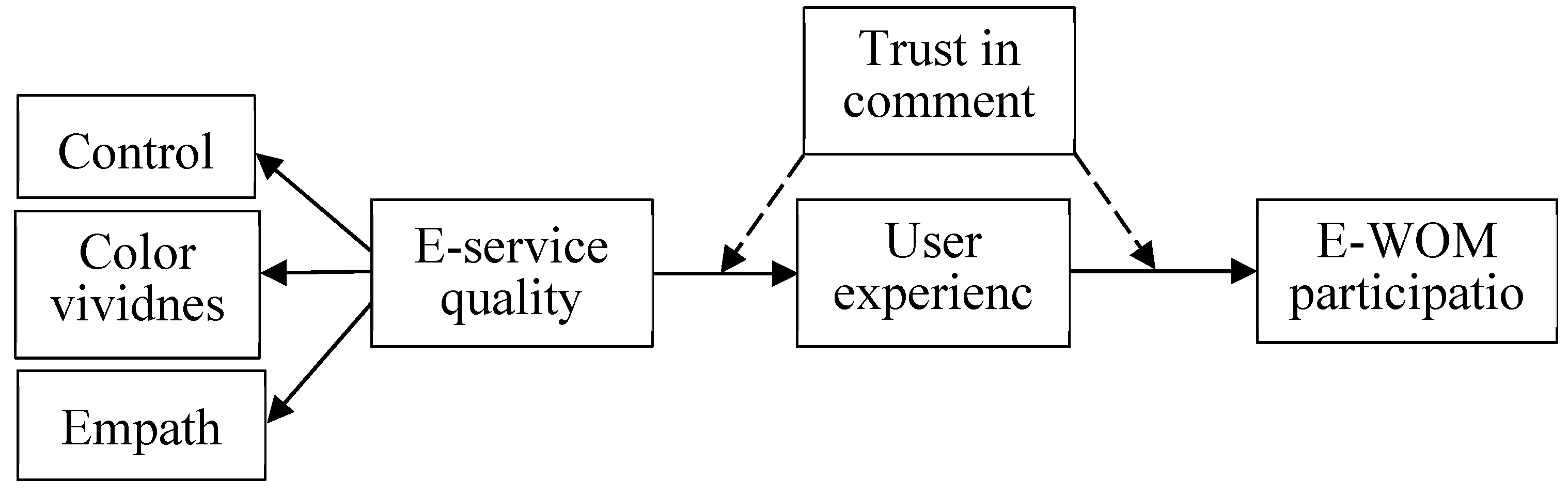

Table 1.
Respondents’ characteristics for descriptive statistics.
| Measure | Value | Frequency | Percentage |
| Age (years) | 16–25 | 295 | 90.8 |
| 26–35 | 16 | 4.9 | |
| 36–45 | 10 | 3.1 | |
| Over 46 | 4 | 1.2 | |
| Total: 325 | |||
| Gender | Male | 131 | 40.3 |
| Female | 194 | 59.7 | |
| Total: 325 | |||
| Membership | Yes | 123 | 37.8 |
| No | 202 | 62.2 | |
| Total: 325 | |||
| User experience | Less than 1 year | 191 | 58.8 |
| 1–2 years | 112 | 34.5 | |
| 3–4 years | 16 | 4.9 | |
| More than 5 years | 6 | 1.8 | |
| Total: 325 |
Table 2.
Convergent validity and internal consistency reliability.
| Variable | Item | Factor Loading | Cronbach’s Alpha |
| Control | C1 | 0.847 | 0.833 |
| C2 | 0.860 | ||
| C3 | 0.813 | ||
| C4 | 0.742 | ||
| Empathy | E1 | 0.816 | 0.762 |
| E2 | 0.851 | ||
| E3 | 0.801 | ||
| Color Vividness | CV1 | 0.738 | 0.685 |
| CV2 | 0.812 | ||
| CV3 | 0.800 | ||
| E-Service Quality | ESQ1 | 0.677 | 0.677 |
| ESQ2 | 0.797 | ||
| ESQ3 | 0.750 | ||
| ESQ4 | 0.631 | ||
| User Experience | UE1 | 0.828 | 0.754 |
| UE2 | 0.827 | ||
| UE3 | 0.803 | ||
| E-WOM | EMP1 | 0.836 | 0.786 |
| EMP2 | 0.859 | ||
| EMP3 | 0.817 |
Table 3.
Fit indices for the measurement and structural models.
| Fit Statistics | Measurement Model | Structural Model |
| χ2(df) | 1.867 | 2.064 |
| p | 0.00 | 0.00 |
| CFI | 0.913 | 0.908 |
| NFI | 0.834 | 0.839 |
| RFI | 0.788 | 0.801 |
| IFI | 0.915 | 0.910 |
| TLI | 0.889 | 0.886 |
| RMSEA | 0.051 | 0.057 |
Table 4.
Summary of hypothesis tests.
| Hypothesis | Estimate | S.E. | C.R. | p | Support | ||||
| E-service Quality | <--- | Control | 0.170 | 0.058 | 2.947 | 0.003 | Yes | ||
| E-service Quality | <--- | Color Vividness | 0.494 | 0.103 | 4.804 | *** | Yes | ||
| E-service Quality | <--- | Empathy | 0.189 | 0.098 | 1.924 | 0.054 | No | ||
| EWOM | <--- | User Experience | 0.728 | 0.099 | 7.356 | *** | Yes | ||
| UE | <--- | E-Service Quality | 0.877 | 0.099 | 8.867 | *** | Yes | ||
Table 5.
Results of the model comparison.
| Model | DF | CMIN | p |
NFI Delta-1 |
IFI Delta-2 |
RFI rho-1 |
TLI rho2 |
| Model 1 | 1 | 0.024 | 0.877 | 0.000 | 0.000 | –0.001 | –0.001 |
| Model 2 | 1 | 0.099 | 0.753 | 0.000 | 0.000 | –0.001 | –0.001 |
Disclaimer/Publisher’s Note: The statements, opinions and data contained in all publications are solely those of the individual author(s) and contributor(s) and not of MDPI and/or the editor(s). MDPI and/or the editor(s) disclaim responsibility for any injury to people or property resulting from any ideas, methods, instructions or products referred to in the content. |
© 2025 by the authors. Licensee MDPI, Basel, Switzerland. This article is an open access article distributed under the terms and conditions of the Creative Commons Attribution (CC BY) license (http://creativecommons.org/licenses/by/4.0/).
Copyright: This open access article is published under a Creative Commons CC BY 4.0 license, which permit the free download, distribution, and reuse, provided that the author and preprint are cited in any reuse.


