
Submitted:
21 April 2025
Posted:
22 April 2025
You are already at the latest version
Abstract
In this presentation, we explore the intersection of mental health issues and technological solutions, aiming to provide a comprehensive picture of the current landscape. From teletherapy to artificial intelligence-driven interventions, technology has introduced innovative approaches to Necessitating mental health care. The advent of technology has introduced innovative approaches to mental health care, ranging from teletherapy to artificial intelligence-driven interventions. As this paper explores the role of technology in mental health, various applications, efficacy, ethical considerations, and future directions are discussed. Technology has the potential to revolutionize mental health care based on success stories and case studies. The increase of insane health apps and electronics offers abundant advantages for consumers and pros alike. These benefits include convenience, obscurity, cost-influence, wider reach, raised interest in remedy, and round-the-clock aid. Moreover, they support consistency in situation, support established therapy, and speed valuable dossier accumulation. However, alongside these advantages, challenges must be talked to guarantee the safe and productive exercise of aforementioned technology.
Keywords:
Necessitating
; Intelligence
; Consideration
; Technology and Revolutionize
I. Introduction
A new era of accessibility, monitoring, and comprehension has emerged with the fusion of technology and mental health care. Individuals, healthcare providers, and researchers can collect mental health data and support using mobile gadgets like smartphones and tablets. By utilizing the widespread availability of mobile devices, services like 988 Suicide and Crisis Lifeline provide immediate assistance to people in crisis. Additionally, state-of-the-art apps take advantageeof builtin sensors to path consumers'behaviour patterns, permissive timely mediations by indicating potential crises. However, among the certainty encircling this technological progress, concerns about managing, influence, and dependability emerge. The lack of manufacturing standards and restricted facts on app efficiency pose challenges for users in discriminating that apps to trust. With pertainingto1000 of mental wellbeing apps inundation themarket, it enhances necessary to precariously assess twotogether the expert and cons before sufficiently embracing the potential impact of movable electronics on mental.
II. Impact of Mental Health
This study delves into the difficult connection 'tween insane fitness and erudition, fact-finding two together the event and challenges emergent from their merger. As electronics resumes to permeate all surface of new growth, it presents superlative potential to longer approach to foolish health support, tailor invasions, and decorate overall comfort. Nevertheless, alongside these scope reach complicatedness and concerns, containing aloneness worries, influence, evenhandedness, and the moral associations of merging computers into the delicate rules of insane well-being administration. By completely analyzing emerging styles, research verdicts, and experienced uses, this report seeks to offer intuitions into the current countryside of insane health electronics. Through understanding the hereditary space and challenges in this place rapidly developing field, collaborators can form informed resolutions, shape procedures, and conceive approaches to leverage the capacity of science in supporting insane health and elasticity in things and societies.The integration of science into insane health management has accumulate significant consideration from analysts and philosopher in current years. A excess of studies have surveyed the potential benefits and challenges of utilizing mobile ploys and requests engaged of insane health.For example, research by Proudfoot and others. (2010) examined the influence of cellular telephone-based mediations for insane well-being conditions to a degree despair and tension. Their verdicts suggested that travelling mediations manage bring about significant betterings in manifestation asperity and overall well-being. Similarly, a meta-reasoning by Firth and others. (2017) checked the productiveness of smartphone apps for the management of concavity. The results recorded that these apps manage have a moderate beneficial effect on reducing depressing manifestations.Furthermore, studies have emphasize the role of electronics in growing approach to insane health duties.
III. Mental Health and Criminal Psychology
Criminal psychology focuses on understanding these behavioral patterns, exploring the motivations and mental states of offenders, and using this information to assess risk, profile criminals, and support law enforcement efforts. At the intersection of these fields, forensic mental health addresses critical areas such as competency to stand trial, criminal responsibility, and rehabilitation, often providing therapy and medication to manage disorders within correctional systems. However, systemic challenges such as stigma, inadequate mental health resources, and the criminalization of untreated mental illness result in significant gaps in care, with many individuals cycling through the justice system without receiving the help they need. Research has shown that early intervention, mental health education, and integrated approaches that blend treatment with legal strategies can reduce recidivism, promote recovery, and improve public safety. Furthermore, the nuanced nature of the relationship between mental health and criminal behavior demands a compassionate and evidence-based approach to policymaking, focusing not just on punishment but also on understanding, prevention, and rehabilitation, ultimately paving the way for a more just and equitable system.
This approach requires a collaborative effort among mental health professionals, criminal psychologists, law enforcement, policymakers, and community organizations to address the root causes of criminal behavior tied to mental health issues. Early identification of mental health challenges, particularly in vulnerable populations such as children and adolescents, can prevent the escalation of behaviors that might lead to criminal activity. Programs that provide access to counseling, social support, and substance abuse treatment have proven effective in mitigating risk factors that often contribute to criminal behavior. In correctional facilities, integrating comprehensive mental health care, including individualized therapy, group sessions, and psychiatric services, can play a transformative role in the lives of inmates, helping them reintegrate into society with the tools to manage their conditions and reduce the likelihood of reoffending.
The field of criminal psychology further enhances this by delving into the psychological profiles of offenders, analyzing patterns that might indicate mental health disorders, and predicting potential risks. This work is critical not only for solving crimes but also for understanding the societal and environmental factors that contribute to criminal behavior. For example, adverse childhood experiences (ACEs) such as abuse, neglect, or exposure to violence are strongly correlated with both mental health issues and criminal behavior in adulthood. Addressing these issues through trauma-informed practices in schools, communities, and the justice system can significantly reduce long-term negative outcomes.
Moreover, advancements in neuroscience and psychology offer new insights into how brain function, genetics, and environment interact to shape behavior. Technologies such as neuroimaging and psychological assessments are increasingly being used to understand the cognitive and emotional processes underlying criminal actions, allowing for more targeted interventions. These tools also raise important ethical questions about the balance between public safety and individual rights, particularly in cases where mental health conditions might reduce culpability.
On a broader scale, societal attitudes toward mental health and crime must evolve to support a more rehabilitative and less punitive approach. Public education campaigns that dispel myths about mental illness and its link to violence, along with advocacy for systemic reforms, can help reduce stigma and foster a culture of support and understanding. By addressing mental health as a key factor in the criminal justice system, we can create a more humane and effective framework that prioritizes prevention, treatment, and reintegration, ultimately benefiting individuals, communities, and society.
IV. Future Scope
As our understanding of insane fitness continues to develop, skilled are various promising paths for future research and practice in unifying approaches to insane health care. Building upon existent evidence and combining arising technologies, integrative cooperation, and creative interventions, future introduce this field can drive progresses in insane health situation and support.1. Technology-Enhanced Interventions: Expanding on the exercise of science in mental health management, future research can investigate the happening and implementation of novel mechanics mediations. This grant permission include the unification of computer simulation, machine intelligence, and mobile uses to give embodied and scalable insane energy support. Additionally, leveraging wearable schemes and sensors for real-period listening and response can improve treatment effects and authorize things in managing their insane prosperity.2. Transdisciplinary Research Collaborations: Future exertions can focus on supporting transdisciplinary cooperations 'tween researchers, clinicians, technologists, and things accompanying study of subject and objects of a person's experience of mental fitness challenges. By collect different expertise and views, research can cultivate complete and culturally sensitive attacks that address the versatile nature of insane strength. Collaborative actions can also help the co-design and exercise of invasions that prioritize inclusivity, approachability, and influence across various populations.3. Mind-Body Interventions: Exploring the cooperative belongings in agreement-body attacks, in the way that yoga, contemplation, and mindfulness, as well usual insane health situations presents an inspiring extent for future investigation. Research can investigate the machines latent these interventions and their affect neurobiology, stress managing, and heated well-being. Additionally, analyzing the unification in agreement-body practices inside society-located settings and healthcare schemes can educate adaptable and cost-effective approaches to insane fitness publicity and prevention.4. Culturally Tailored Approaches: Recognizing the significance of educational framework in mental health management, future work can devote effort to something expanding and evaluating with regard to the welfare of mankind tailor-made invasions. This contains adapting existent evidence-located practices to different cultural backdrops and identities, in addition to combining culturally appropriate foundations into situation modalities. By focusing on enlightening shame, language hurdles, and integral inequities, with regard to the welfare of mankind competent mediations can better approach to care and outcomes for marginalized and underserved societies.5. Longitudinal Studies and Outcomes Research: Conducting lengthwise studies and effects research is essential for understanding the long-term belongings and sustainability of unifying insane health mediations. Future studies can search the stamina of treatment belongings, determinants doing treatment devotion and date, and the impact of invasions on broader signs of comfort, in the way that social functioning and kind of history. Additionally, judging the cost-effectiveness and scalability of unifying approaches can tell procedure decisions and talent distribution in insane health care transfer. By prioritizing these future guidances, the field of unifying mental health management can touch progress and adapt to meet the complex needs of things and societies. Through continuous research, collaboration, and novelty, we can tackle towards a future place integrative approaches are seamlessly joined into routine insane well-being practice, promoting elasticity, improvement, and prospering for all.
V. Methodology
Research Design The approach taken in this study will be both qualitative and quantitative, capturing an extensive overview and detailed elucidation regarding the subject of interest. Quantitative Component: This part will concentrate on estimating the extent of mental health issues, the use of digital technology, and its effect on the mental health of different age groups. Statistical relationships will be established through trend quantification using surveys and secondary data analysis. Qualitative Component: Digital technology in mental health will be studied by assessing the experiences and perceptions of users and non-users of derived mental health services through in-depth interviews and focus groups. Such approaches will provide a comprehensive understanding of the users’ perceptions. Rationale: By mixing methods, one gets to combine the comprehensive and contextual depth of narratives alongside emerging numerical themes, thus improving understanding holistically. The design is apt for studying different age groups—children (8–12), adolescents (13–17), adults (18–64), and older adults (65+)—as it caters to a wide range of needs and experiences. 2. Research Objectives The objectives of the study are the following: Analyze the impact of digital technologies on mental health for different age cohorts. Determine the components of the digital technology that has the most positive impacts on mental health such as mobile applications, websites, or wearables.
DATA ANALYSIS:
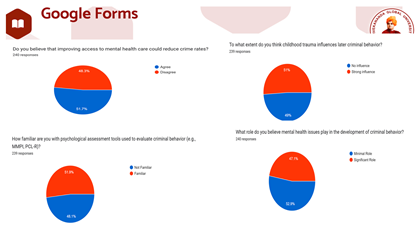
Integrated Data Analysis In order to gain a holistic analysis of a captured dataset, we will split the analysis into qualitative and quantitative components that will be merged together after analysis. This approach enables a personal narrative as well as track numerical trends. Quantitative Analysis Descriptive Statistics. This will include capturing the mental health status of the participants using the GAD-7 for anxiety and PHQ-9 for depression or the Pediatric Symptom Checklist for children. Demographic details like age, gender, socioeconomic status, urban/rural location, and technology use (usage of social media, mental health and teletherapy apps) will also be captured. Provide a summary of each participant’s key information including their socio-demographic details: age, gender, socio economic class as well as mental health status and the level of digital technology use. The information will be represented visually and trends will be examined and explained using tables, bar charts, and pie charts depicting the differences between age groups.
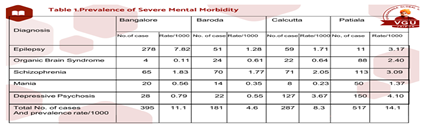
Mental Health Research in India.
VI. Business Model
As arising electronics advance in assessing, listening, and medicating mental fitness environments, skilled's a promising freedom to extend treatment alternatives and reinforce the well-being of things and societies. However, guaranteeing these technologies benefit all demands addressing various detracting determinants.Firstly, there's an compelling need to improve the evidence base for the effectiveness and security of insane fitness technologies. Conducting all-encompassing research is essential to validate these finishes' productiveness and guide their integration into dispassionate practice.Secondly, building appropriate supervisory frameworks is important to guide along route, often over water the intricate countryside of insane strength technology. Clear directions can assist consumers, clinicians, and developers in making conversant selections and guaranteeing the responsible incident and arrangement of these solutions.Moreover, including potential consumers, their families, and healthcare artists in electronics incident is essential. By incorporating various views and addressing distinguishing needs and weaknesses, these sciences can better serve their destined consumers.Equally important is guaranteeing that insane strength technology everything towards lowering existing differences in approach to care and support. Solutions must be accessible and all-encompassing, arriving underserved states and bridging breach in insane health supplying. Lastly, it's essential to recognize that technology is just individual facet of a comprehensive approach to insane health management. Efforts bear complement other critical attacks, such as promoting public interactions and forwarding friendly cause of poor insane energy.
VII. Conclusion
The intersection of mental health and technology offers significant opportunities to transform how mental health care is delivered, accessed, and experienced. Emerging technologies such as mobile applications, teletherapy, artificial intelligence, and virtual reality have demonstrated potential to improve access to care, enhance therapeutic outcomes, and provide innovative solutions for mental health challenges. However, these advancements come with challenges, including concerns about data privacy, equity in access, and the need for evidence-based validation.
Future efforts should focus on bridging the gap between technology development and mental health practice through interdisciplinary collaboration among technologists, clinicians, and policymakers. Ethical considerations must guide innovation to ensure that technological tools are accessible, effective, and safe for diverse populations. As the field continues to evolve, robust research, ongoing evaluation, and user-centered design will be critical to harnessing the full potential of technology to improve mental health outcomes globally.
Building on this foundation, collaboration among stakeholders is crucial. Governments, healthcare providers, technology developers, and researchers must work together to develop policies and frameworks that balance innovation with ethical responsibility. This includes establishing guidelines for data security, standardizing efficacy testing for mental health technologies, and promoting equitable access for marginalized and underserved communities.
Moreover, education and training for clinicians and users on integrating technology into mental health care are vital for maximizing its benefits. Clinicians must be equipped to recommend and monitor digital tools effectively, while individuals should feel empowered to utilize these tools responsibly. Public awareness campaigns can also play a role in reducing stigma around mental health technology, encouraging broader adoption.
As we look ahead, the role of technology in mental health care will likely expand, driven by advances in artificial intelligence, machine learning, and personalized interventions. These innovations have the potential to deliver tailored care to individuals based on their unique needs and circumstances, further enhancing the personalization and precision of mental health support.
In conclusion, while technology is not a panacea for all mental health challenges, it offers invaluable tools to complement traditional approaches and address gaps in care. With continued investment in research, a commitment to ethical practices, and a focus on inclusivity, technology can become a cornerstone of a more accessible, effective, and equitable mental health care system for the future.
References
- "Utilizing Art Therapy for Mental Health Rehabilitation: A Comprehensive Review" by A. C. Kim, M. L. Smith, S. R. Patel, et al. This article likely provides a comprehensive review of the use of art therapy in mental health rehabilitation, examining its effectiveness and the collaborative efforts involved across various disciplines.
- "Comparative Analysis of Mindfulness Meditation and Cognitive Behavioural Therapy for Anxiety Disorders" by P. D. Sharma, R. K. Singh, L. M. Chen, et al. This article probably conducts a comparative analysis of mindfulness meditation and cognitive behavioural therapy (CBT) for managing anxiety disorders, offering insights into their respective efficacy and applicability in clinical practice.
- "Examining the Efficacy and Long-Term Effects of Music Therapy for Children with Autism Spectrum Disorder" by J. H. Kim, S. H. Park, H. J. Lee, et al. This article likely investigates the effectiveness and long-term impact of music therapy for children with autism spectrum disorder (ASD), providing valuable insights into its therapeutic benefits and implications for treatment strategies.
- "Case Studies and Ethical Considerations in Animal-Assisted Therapy for PTSD Treatment" by S. L. Anderson, K. T. "Case Studies and Ethical Considerations in Animal-Assisted Therapy for PTSD Treatment" by S. L. Anderson, K. T. Rodriguez, A. J. Barnes, et al. This article probably presents case studies and ethical considerations surrounding the use of animal-assisted therapy for treating post-traumatic stress disorder (PTSD), discussing its effectiveness and ethical implications through a multidisciplinary lens.
- "A Systematic Review of Dietary Interventions in Mental Health: Exploring the Impact of Nutrition on Psychological Well-being" by E. C. Brown, L. M. Adams, N. K. Johnson, et al. This article likely conducts a systematic review of dietary interventions in mental health, exploring the role of nutrition in promoting psychological well-being and providing insights into potential dietary strategies for mental health management.
- Naslund, J. A., Aschbrenner, K. A., Araya, R., Marsch, L. A., Unützer, J., Patel, V., & Bartels, S. J. (2017). Technology-Based Mental Health Interventions for People Living With Chronic Physical Health Conditions: A Systematic Review. Journal of Medical Internet Research, 19(5), e174. https://doi.org/10.2196/jmir.7672. [CrossRef]
- Torous, J., Jän Myrick, K., Rauseo-Ricupero, N., & Firth, J. (2020). Digital Mental Health and COVID-19: Using Technology Today to Accelerate the Curve on Access and Quality Tomorrow. JMIR Mental Health, 7(3), e18848. [CrossRef]
- Andersson, G., Titov, N., Dear, B. F., Rozental, A., & Carlbring, P. (2019). Internet-delivered psychological treatments: From innovation to implementation. World Psychiatry, 18(1), 20–28. https://doi.org/10.1002/wps.20610. [CrossRef]
- Wind, T. R., Rijkeboer, M., Andersson, G., & Riper, H. (2020). The COVID-19 pandemic: The 'black swan' for mental health care and a turning point for e-health. Internet Interventions, 20, 100317. https://doi.org/10.1016/j.invent.2020.100317. [CrossRef]
- Mohr, D. C., Weingardt, K. R., Reddy, M., & Schueller, S. M. (2017). Three Problems With Current Digital Mental Health Research... and Three Things We Can Do About It. Psychiatric Services, 68(5), 427–429. https://doi.org/10.1176/appi.ps.201600541. [CrossRef]
- Firth, J., Torous, J., Nicholas, J., Carney, R., Pratap, A., Rosenbaum, S., & Sarris, J. (2017). The efficacy of smartphone-based mental health interventions for depressive symptoms: A meta-analysis of randomized controlled trials. World Psychiatry, 16(3), 287–298. https://doi.org/10.1002/wps.20472. [CrossRef]
- Hollis, C., Morriss, R., Martin, J., Amani, S., Cotton, R., Denis, M., & Lewis, S. (2015). Technological innovations in mental healthcare: Harnessing the digital revolution. The British Journal of Psychiatry, 206(4), 263–265. https://doi.org/10.1192/bjp.bp.113.142612. [CrossRef]
- Batterham, P. J., Calear, A. L., & Christensen, H. (2015). The future of e-mental health research and treatment: Applying network science and complex systems theory. Australian & New Zealand Journal of Psychiatry, 49(9), 869–870. https://doi.org/10.1177/0004867415600775. [CrossRef]
- Andersson, G., Titov, N., Dear, B. F., Rozental, A., & Carlbring, P. (2019). Internet-delivered psychological treatments: From innovation to implementation. World Psychiatry, 18(1), 20–28. https://doi.org/10.1002/wps.20610. [CrossRef]
- Batterham, P. J., Calear, A. L., & Christensen, H. (2015). The future of e-mental health research and treatment: Applying network science and complex systems theory. Australian & New Zealand Journal of Psychiatry, 49(9), 869–870. https://doi.org/10.1177/0004867415600775. [CrossRef]
- Hollis, C., Morriss, R., Martin, J., Amani, S., Cotton, R., Denis, M., & Lewis, S. (2015). Technological innovations in mental healthcare: Harnessing the digital revolution. The British Journal of Psychiatry, 206(4), 263–265. https://doi.org/10.1192/bjp.bp.113.142612. [CrossRef]
- Mohr, D. C., Weingardt, K. R., Reddy, M., & Schueller, S. M. (2017). Three problems with current digital mental health research... and three things we can do about it. Psychiatric Services, 68(5), 427–429. https://doi.org/10.1176/appi.ps.201600541. [CrossRef]
- Naslund, J. A., Aschbrenner, K. A., Araya, R., Marsch, L. A., Unützer, J., Patel, V., & Bartels, S. J. (2017). Technology-based mental health interventions for people living with chronic physical health conditions: A systematic review. Journal of Medical Internet Research, 19(5), e174. https://doi.org/10.2196/jmir.7672. [CrossRef]
- Firth, J., Torous, J., Nicholas, J., Carney, R., Pratap, A., Rosenbaum, S., & Sarris, J. (2017). The efficacy of smartphone-based mental health interventions for depressive symptoms: A meta-analysis of randomized controlled trials. World Psychiatry, 16(3), 287–298. https://doi.org/10.1002/wps.20472. [CrossRef]
- Torous, J., Jän Myrick, K., Rauseo-Ricupero, N., & Firth, J. (2020). Digital mental health and COVID-19: Using technology today to accelerate the curve on access and quality tomorrow. JMIR Mental Health, 7(3), e18848. https://doi.org/10.2196/18848. [CrossRef]
- Wind, T. R., Rijkeboer, M., Andersson, G., & Riper, H. (2020). The COVID-19 pandemic: The 'black swan' for mental health care and a turning point for e-health. Internet Interventions, 20, 100317. https://doi.org/10.1016/j.invent.2020.100317. [CrossRef]
Disclaimer/Publisher’s Note: The statements, opinions and data contained in all publications are solely those of the individual author(s) and contributor(s) and not of MDPI and/or the editor(s). MDPI and/or the editor(s) disclaim responsibility for any injury to people or property resulting from any ideas, methods, instructions or products referred to in the content. |
© 2025 by the authors. Licensee MDPI, Basel, Switzerland. This article is an open access article distributed under the terms and conditions of the Creative Commons Attribution (CC BY) license (http://creativecommons.org/licenses/by/4.0/).
Copyright: This open access article is published under a Creative Commons CC BY 4.0 license, which permit the free download, distribution, and reuse, provided that the author and preprint are cited in any reuse.


