
Submitted:
21 April 2025
Posted:
21 April 2025
You are already at the latest version
Abstract
The increasing adoption of Point-of-Sale (POS) systems in retail and food & beverage (F&B) establishments necessitates user-friendly, secure, and platform-compatible offerings. StoreHub, a prominent POS system among Southeast Asian retail establishments, is examined in this research, and key problems are identified through real-world interaction with SateHut, an avid long-time user. Non-standard export format, non-interactive user experience, limited Android compatibility, outmoded training resources, ineffectiveness regarding manual verification, and inadequate multi-factor authentication are key problems identified. To address these, we recommend prioritized enhancements such as standardised data exports, facial recognition presence, Android optimization, configurable interfaces, in-app guides, and improved security policies. Utilising user comments and agile design practice, solutions were assessed on the basis of technical feasibility, financial viability, and broader industry applicability. The findings demonstrate that such advancements can significantly boost user experience, operational efficiency, and business scalability, making StoreHub a viable, affordable POS solution for SMEs operating in multicultural markets.
Keywords:
Point of Sale
; Customization
; Use Experience
; SME
1.0. Introduction
With the advent of an era where technology cannot be avoided in companies, Point-of-Sale (POS) systems are fundamental hardware for conducting transactions, inventory, customers data, and the performance of employees in the retail and food and beverage (F&B) industry. StoreHub, an Internet Point of Sale, is one of the most powerful platforms that have been utilized by small and medium-sized enterprises throughout Southeast Asia. Its monolithic architecture has a universe of tools across sales analysis, staff management, and even integrated PoS interface. But with the system stretching to cover yet another wider range of enterprises, certain shortcomings in user interface, cross-platform capability, data handling, and data protection have come into being.
The research discusses the application of StoreHub in the field via case study using Malaysian restaurant chain SateHut. The evaluation focuses on user pain areas regarding data export formatting, interface, platform compatibility, availability of training, manual tracking of attendance, and system security. It is our aim to address these shortcomings by proposing changes that are harmonious with the latest technological trends and end-user needs. The study is not just intended to improve the existing StoreHub system but also provide guidance for future development of POS technologies in similar business landscapes. The following sections describe the problems encountered, solution design and testing methodologies employed, and the anticipated impact of the improvements on customers, employees, and business owners.
Figure 1 shows the StoreHub is a well-known point-of-sale (POS) platform that hosts more than 15,000 companies on their site. The software has an all-in-one platform that enables restaurants and retailers in Southeast Asia to grow their businesses using automation. This company believes that bringing the best tech matters to everybody. (StoreHub | All-In-One POS System for Restaurants and Retail, n.d.)
Figure 1.
(StoreHub Logo) (StoreHub | All-In-One POS System for Restaurants and Retail, n.d.).

2.0. Problem Statement
Point-of-Sale (POS) systems are at the heart of enabling the day-to-day operations of retail and food and beverage companies. StoreHub, one of Southeast Asia's most popular POS systems, is also widely utilized due to its in-built capabilities for transaction management, customer support, and employee management. But extensive use and user feedback from real-world implementations, such as that at Sate Hut, have revealed several limitations that restrict operational efficiency and user satisfaction. Some of the most important problems uncovered are: (1) the export report capability employs a non-standard date format, and so is unfriendly to external data analysis; (2) the graphical user interface is non-interactive and non-customizable, reducing user participation; (3) StoreHub's undue reliance on iOS devices causes compatibility issues and restricted accessibility for Android users; (4) outdated tutorials and training documents lead to high learning curves following an upgrade; (5) the manual attendance verification process for workers is cumbersome and prone to tampering; and (6) the absence of multi-factor authentication leaves the system open to cybersecurity threats. These loopholes not only affect operational procedures but also erode the scalability and inclusivity of the system to small businesses on different platforms and limited resources. An answer that enhances user experience, cross-platform compatibility, data interoperability, and system security is urgently required to guarantee StoreHub's competitiveness and dependability in the modern POS market.
Figure 1.
StoreHub Reports Feature - Screenshot From SateHut.

3.0. Literature Review
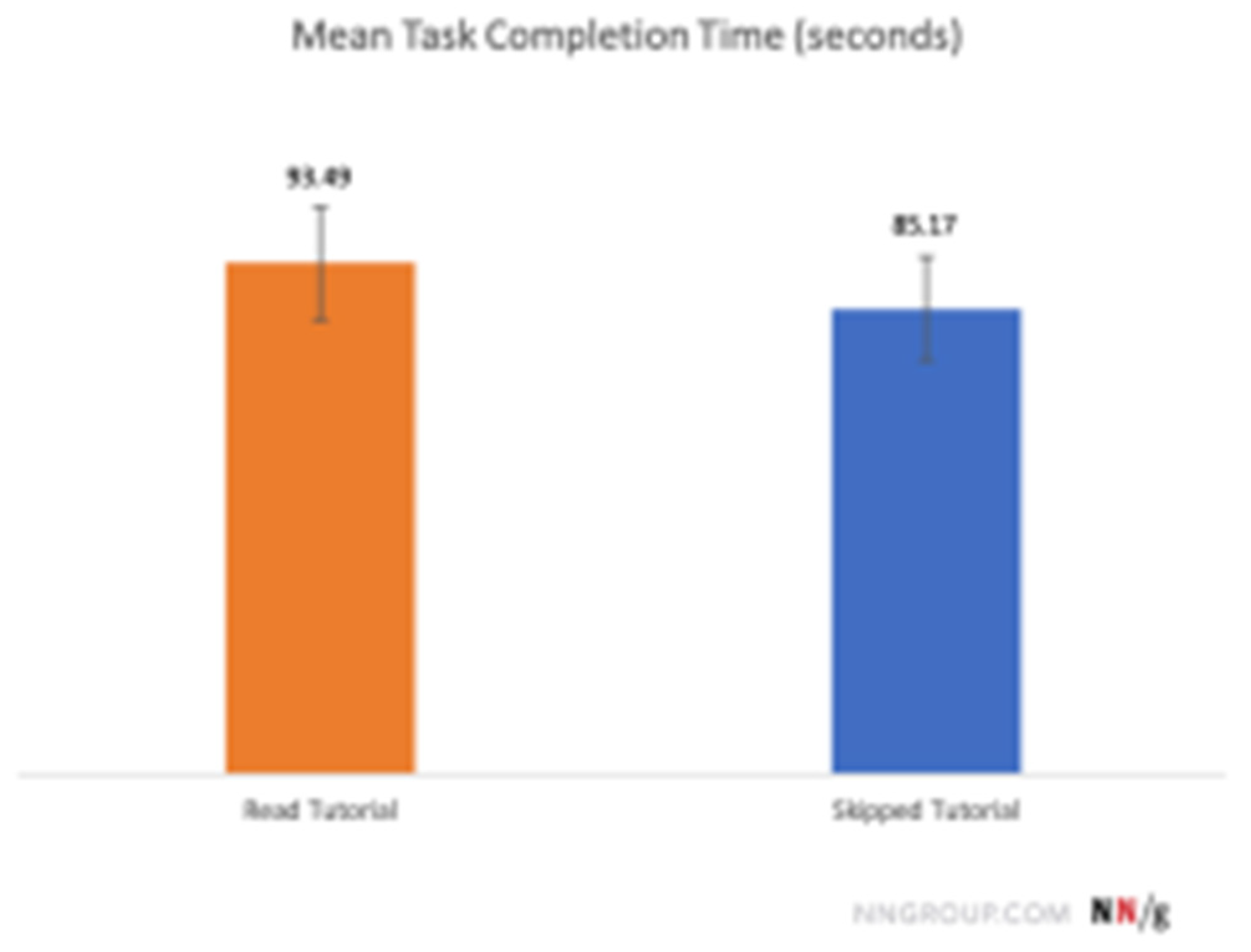
Existing business and research findings emphasize evolving demands on POS systems, especially among small and medium-sized enterprises (SMEs). [1] find that customer experience is significantly affected by optimization and automation in business systems, such that POS solutions must move beyond mere transaction processing to offer efficiency and personalization. Usability is a strong adoption driver of systems. [2] highlight the importance of user-friendly interfaces and context-sensitive help facilities to increase the effectiveness of computer systems. StoreHub's lack of updated tutorials and non-configurable interface stand in opposition to these usability principles, leading to longer task completion times and lower satisfaction levels [3].
From a platform inclusive standpoint, [4] point out the fragmentation of the Android ecosystem as a major hindrance in mobile application performance. Unlike iOS, Android's heterogeneity in hardware and operating system versions makes it challenging to ensure POS software compatibility. Despite these challenges, optimizing for Android is important for inclusivity, especially in price-sensitive markets. Security is also paramount. As businesses shift more towards digital systems, vulnerabilities in authentication systems can be used to exploit sensitive data. Cisco Duo (2021) and the National Cybersecurity Alliance (2022) suggest multi-factor authentication (MFA) as a standard to avoid unauthorized access and data breaches. StoreHub's single-factor login system is not in line with today's security standards, and user data is vulnerable. Biometric attendance systems, including facial recognition, have been utilized as efficient substitutes for manual supervision. Gnanasundaram (2023) writes that these systems not only reduce fraud such as buddy punching but also automate attendance tracking and ease administrative tasks. Utilizing such a system in StoreHub would be capable of enhancing workforce accountability and productivity[5,6,7].
Overall, literature is in agreement with the direction of proposed enhancement for this study and believes in the need for POS systems being user-friendly, secure, and platform flexible. The vision is to transform StoreHub from a passive transactional tool into an active business enabler that addresses real-world business operational pain points.
3. Methodology
To address the issues identified in the existing StoreHub Point-of-Sale (POS) system, an end-to-end and modular approach will be followed. Each of the solutions will be coded using proper software engineering practices so that the end product will be efficient, easy to use, secure, and cross-platform. The provided methodology is divided into six primary implementation areas:
3.1. Standardizing CSV Date Format Using Waterfall Model
To address the issue of irregular date formatting when reports are exported, the traditional Waterfall Model will be applied since it follows a linear and organized process of development. The methodology begins with requirements analysis whereby the exact standard format (DD/MM/YYYY) is designated for standard data exports. While in the design stage, the backend logic will be structured to reformat dates automatically before the files are downloaded. In implementation, coding changes are made to implement the standardized format and incorporate a drop-down box for user-specific date formats. Testing is carried out to ensure uniformity and compatibility of exported files with various external data analysis programs. Deployment upon successful testing involves updating the system across user accounts. Finally, the maintenance stage will involve fixing bugs or inconsistencies that happen with time. It assists in minimizing human errors via a methodical process, increases overall analytical precision for companies that use the system, and minimizes data integration with other platforms[8,9,10].
Figure 7.
(Waterfall Model for Export Feature Update).
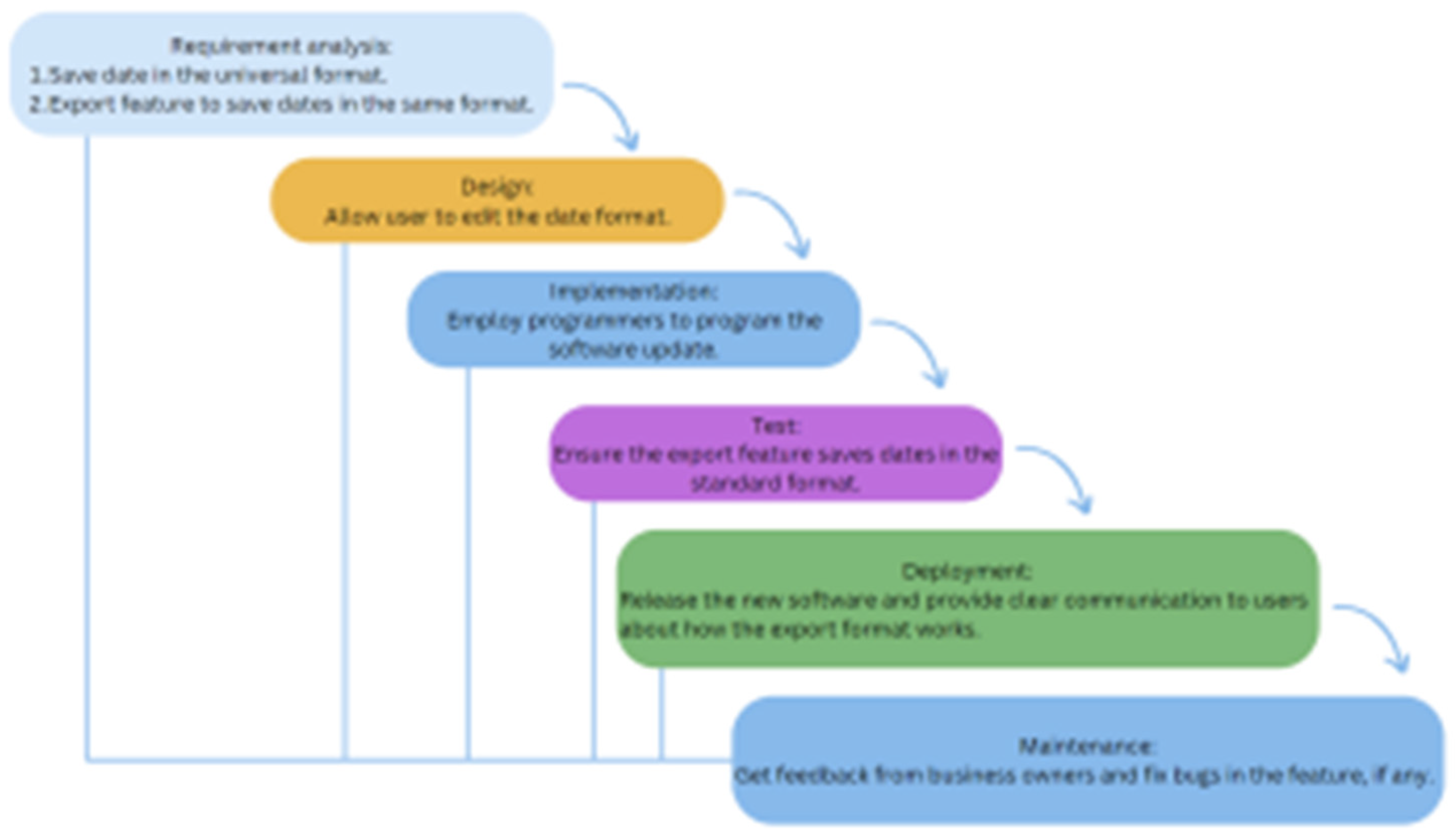
Figure 8.
(Select Date Format Drop Down Menu).

3.2. Enhancing the Graphical User Interface (GUI)
For more user engagement and interface personalization, an Agile and User-Centered Design (UCD) process will be followed. The process begins with in-depth user research and usability testing to identify existing design issues. Based on these findings, the UX/UI team will redesign the interface with enhanced drag-and-drop functionality, hover effects, animations, and theme and layout customization features. The development team will then implement these design improvements with a focus on scalability and performance. Pilot testing with selected users will be conducted to obtain feedback and determine areas for additional refinement. Training documentation will also be developed to make the transition process easier for users. Periodic updates with user feedback and engagement data will guarantee that the interface remains intuitive, responsive, and tailored to diverse user needs[11,12,13].
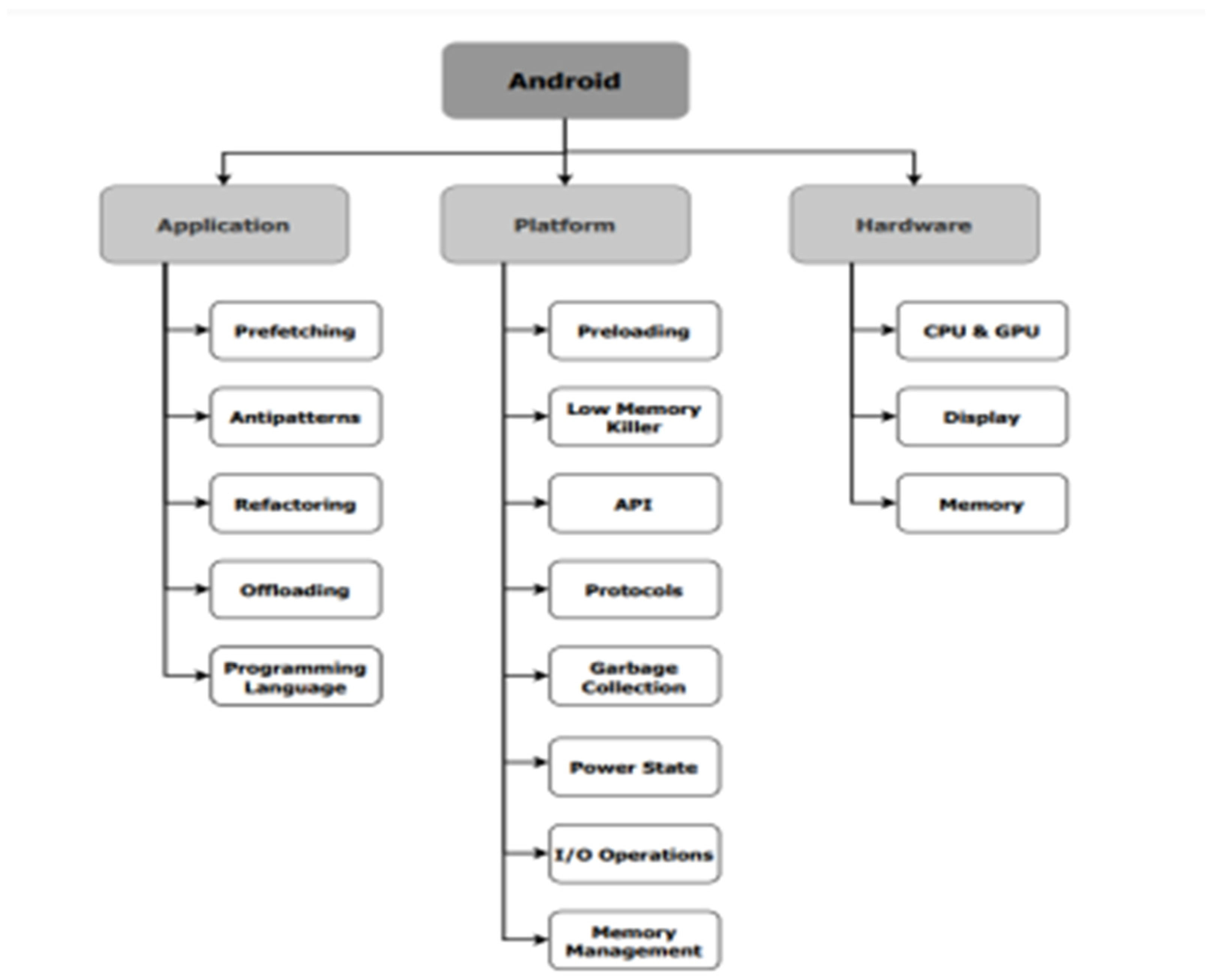
Figure 9.
(Categorization of existing optimization approaches for nonfunctional characteristics of mobile applications) Hort, M., Kechagia, M., Sarro, F. and Harman, M. (2022).
Figure 9.
(Categorization of existing optimization approaches for nonfunctional characteristics of mobile applications) Hort, M., Kechagia, M., Sarro, F. and Harman, M. (2022).
3.4. Android Compatibility Optimization
Due to the heterogeneous Android ecosystem, code refactoring and platform optimization strategies will be employed, drawing from the experiences of Hort et al. (2022). The process begins with an audit of the existing codebase to determine bottlenecks in performance, memory inefficiencies, and inconsistencies in the user interface[14]. Optimization will be achieved through code reorganization, improvement in resource management, and adjusting the user interface for varying screen sizes and resolutions. Extensive testing on a range of Android devices and OS versions will be conducted to ensure stable functionality. Once finalized, optimized builds will be pushed to users[15]. Continuous monitoring will identify and resolve any compatibility or performance issues that will surface in the future. This effort will give Android users smooth and responsive experience, expanding StoreHub's market reach and platform coverage[16,17,18].
Figure 10.
(Average Tasks Completion Time for Users who Read Tutorial and Users who Skilled Tutorial) (Alita Joyce, 2020).
Figure 10.
(Average Tasks Completion Time for Users who Read Tutorial and Users who Skilled Tutorial) (Alita Joyce, 2020).
3.5. In-App Tutorial Integration Using Spiral Model
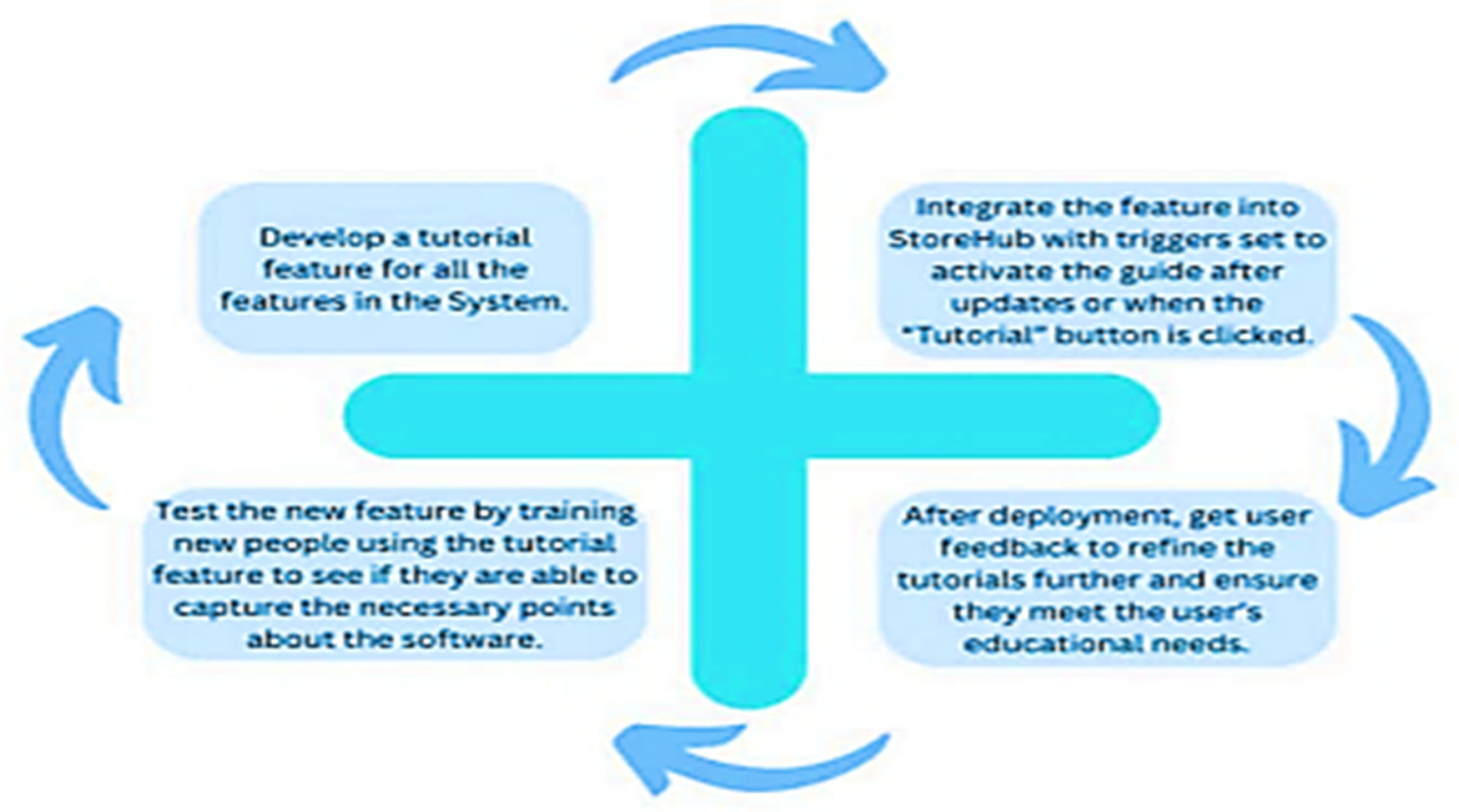
To combat training problems and facilitate user adaptation to system updates, a Spiral Model will be employed in the addition of an in-app tutorial feature. The iterative model begins with initial planning to decide on precise tutorial needs based on system updates and user feedback. Tutorial prototypes will be developed, automatically launched after updates or callable via a "Tutorial" button. These prototypes will be tested with users for effectiveness and usability, and feedback will be used to refine tutorial content and presentation for clarity and applicability. The finished tutorial system will be integrated into the application and evaluated on an ongoing basis using user feedback[19,20]. This approach offers users, particularly new employees, timely, available information that enhances productivity and confidence in the utilization of system functionality.
Figure 11.
(Spiral Model forTutorial Feature Update).
Facial Recognition-Based Attendance Verification
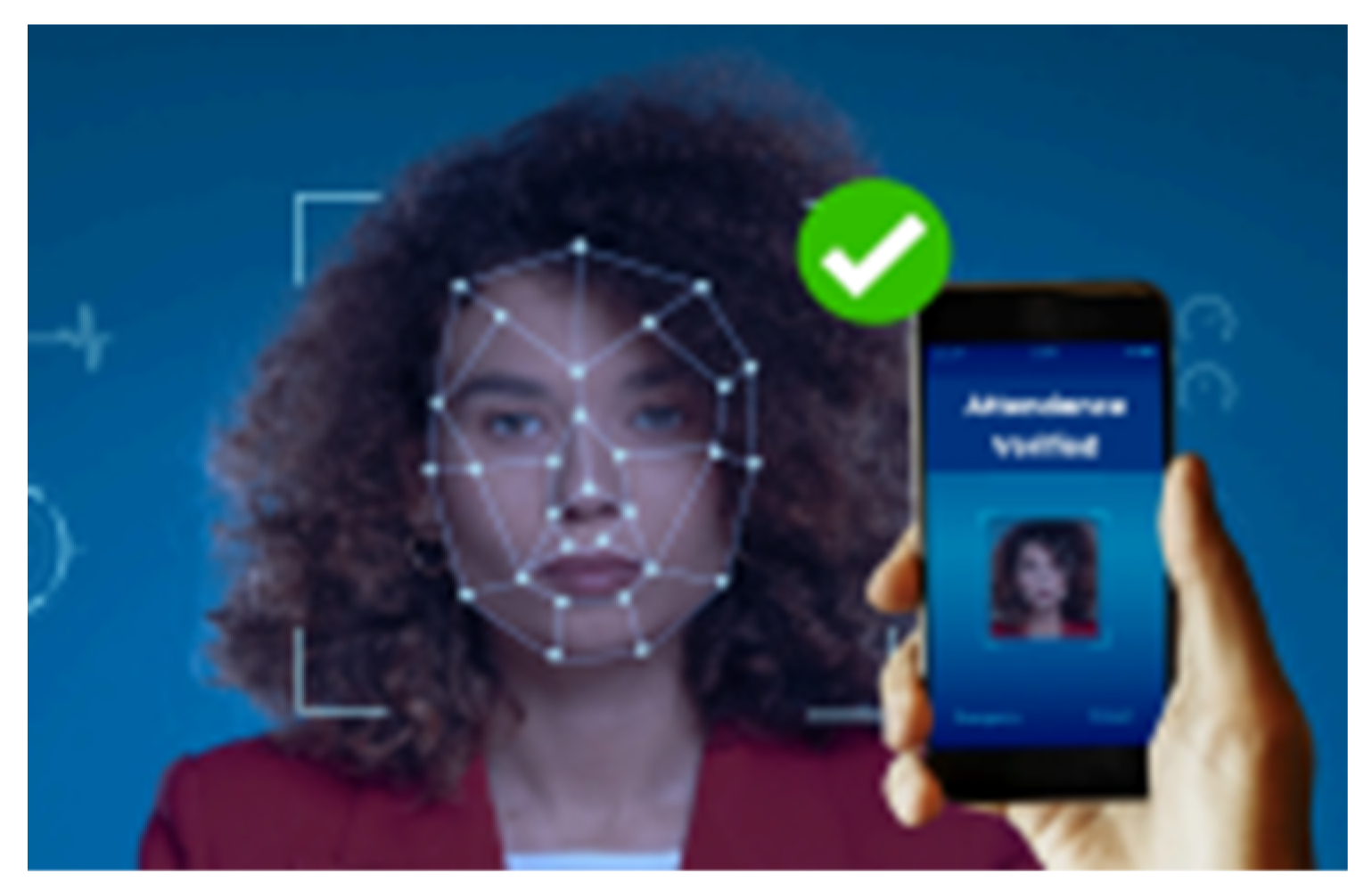
For the improvement of the manual selfie-based attendance process, a facial recognition system will be implemented via a biometric authentication system. The process will include a four-step process: face detection by the camera of the device, facial feature analysis via unique geometry, conversion of facial features into digital faceprint, and matching against a pre-database of known employee images. All successful matches will then be automatically marked as attendance. Development will include adding a facial recognition API, making it suitable for real-time verification, and testing in various lighting and environmental scenarios to ensure functionality. The solution aims at eliminating fake attendance routines, conserving administrative time, and enhancing security and accuracy on the whole for workforce management.
Figure 12.
(Facial Recognition System).
Multi-Factor Authentication (MFA) for System Security
To enhance system security and protect sensitive data, Multi-Factor Authentication (MFA) will be enforced using the layered approach. The process begins with a review of user preference and system requirements to determine the right MFA mechanisms, such as one-time passwords (OTP), biometric verification, or authenticator apps. In the development process, MFA will be used employing secure mechanisms such as OAuth2 or SAML to manage user identity authentication. Users will be presented with customization options in which they can choose their preferred means of authentication. Backup or fallback mechanisms will also be planned to serve users who have problems with primary authentication mechanisms. The system will be constantly monitored and updated to remain ahead of developing security threats. Such a robust process will significantly reduce unauthorized access risks and increase users' trust in the system's capability to secure data.
Impact of Solution
The proposed solutions are expected to bring about transformative impacts on four significant stakeholder groups: customers, employees, business owners, and the broader business community. The four groups will experience increased usability, efficiency, and outcomes through the implementation of enhanced Point-of-Sale (POS) capabilities.
4.1. Impact on Customers
The implementation of the enhanced POS system will drastically enhance customer interaction through increased speed, accuracy, and personalization of services. Customers will experience shorter waiting times and quicker delivery of services through streamlined transaction processes. Standardized data formats and performance optimization will ensure accurate processing of consumer information, enabling tailored offerings and promotions. These enhancements will contribute to greater customer satisfaction and loyalty, which are important drivers of repeat business and revenue growth. As highlighted by Gavrila et al. (2023), greater customer experience is increasingly being recognized as a central strategy for attaining optimal business performance.
4.2. Impact on Employees
Staff will benefit from a more intuitive and interactive system that simplifies their daily work and reduces the tedium of manual workflows. The enhanced interface, underpinned by step-by-step in-app tutorials, will provide staff with the skills and confidence to find their way around new features and system upgrades. This increased capacity underpins an organizational culture founded on innovation, continuous learning, and operational effectiveness. Enhanced face recognition-based attendance monitoring and streamlined workflows will translate into higher productivity, job satisfaction, and overall quality of work. Technological innovation, as stated by Tinofirei (2011), has a direct correlation with the efficiency and performance of workers in the workplace.
4.3. Impact on Business Owners
The integration of these solutions will be very advantageous to business owners. With standardized report layouts, better quality data, and real-time analysis, they will have a better capability to make strategic decisions. Improved system compatibility and reduced training requirements translate to reduced costs of operations and improved resource utilization. Moreover, with greater security through multi-factor authentication, data integrity and stakeholder trust are assured. Together, these benefits enable entrepreneurs to optimize operations, react to market pressures, and put their companies on a trajectory to long-term growth and competitiveness.
4.4. Impact on Business Sector
At the macro level, their implementation contributes to broader innovation and a new benchmark for the levels of technology across the retail and F&B sectors. Reliable, secure, and scalable POS systems allow organizations to transition more smoothly to shifting consumer requirements and economic conditions. Enhanced cybersecurity measures mitigate data breach risks, providing a safer online environment for all parties. As these enhancements gain greater usage, they will drive overall industry growth, promote competitiveness, and facilitate economic development and societal progress.
5.0. System Viability
5.1. System Viability - Technically Viable
The emerging system possesses outstanding technical feasibility on a number of important aspects. Its design allows hardware, software, and network elements to integrate fully for reliable and efficient operation. Integrated design works very far in guaranteeing reliability and performance throughout the overall system. The system possesses high scalability as well, capable of supporting increasing volumes of transactions, additional users, and expansion across several business locations without any diminution in performance. Periodic rejuvenations using fresh technologies minimize disruptions to nil and provide premier-class functionality. The system is also equipped with robust fault tolerance capabilities and high uptime reliability, which are imperative for seamless day-to-day performance. Robust security measures like multi-factor authentication and data encryption also make the system more robust to potential cyber-attacks, ensuring data integrity and upholding user trust.
5.2. System Viability - Economically Viable
Economically, the system is cost-effective and sustainable for both users and developers. Operating costs—attracting maintenance, customer support, and periodic upgrades—are within reasonable limits, offering affordability without any sacrifice in performance. High return on investment for the system is realized through its adoption on a large scale by food & beverage (F&B) and retail outlets. The system features in streamlining operating efficiency find direct translation into increased profitability[21,22,23]. Furthermore, the comprehensive set of features addresses the core needs of F&B and retail companies, making the system highly attractive for prospective new users. As such, the system is not just financially viable but also set to achieve long-term success and expansion in various business environments[24,25].
6.0. System Requirements
- Interview Candidate - Sate Hut
To obtain thorough insight into the real operational performance and problems of the StoreHub POS system, a significant research approach was employed via an online interview with SateHut's co-owner, Mr. Sharul Mizan. SateHut is a famous local Malaysian restaurant chain, owns six franchises, and is well recognized for its authentic satay offerings. Since its inauguration in 2020—seven years after the entry of StoreHub into Malaysia—the restaurant always relied on the POS system of StoreHub to manage its business.
SateHut has been selected for the case study because of multiple reasons such as direct correlation of the case to StoreHub's target customers who are small and medium-sized enterprises (SMEs), extensive use of the system over several years, and diversified usage of the features offered by StoreHub. Three years of consistent use have provided the company sufficient hands-on experience, enabling significant considerations regarding the strengths and weaknesses of the platform. Furthermore, SateHut takes advantage of a wide variety of StoreHub functionalities, including monitoring of sales, customer relationship management, and personnel management. This wide usage of features gives an even perspective of the capabilities of the software in use. Intriguingly, the restaurant also has other systems integrated with StoreHub, further showcasing the platform's adaptability and integration challenges that can be faced.
- Ethical Considerations
The interview was conducted via Google Meet with both video and audio recording capabilities. This mode facilitated the research team to view directly StoreHub's manager’s dashboard, ordering module, and system reports. Such visual access improved the contextual understanding of Mr. Mizan's remarks, facilitating an in-depth investigation of the POS system's actual use in day-to-day business procedures. The purpose of the interview was to gain qualitative data about the user experience, including the effectiveness of the system, operation difficulties, perceived benefits since implementation, and specific suggestions for future improvement. With Mr. Mizan's full knowledge, the interview was tape-recorded to guarantee the veracity of the responses. Other notes and screen shots were taken, pointing out areas relevant to the study objectives.
To maintain research integrity and safeguard the privacy of the interviewee and his company, all sensitive or identifiable information was handled with strict confidentiality. Screenshots were properly redacted, and SateHut's confidential operating information was not made public without specific permission.

Table 1.
Functional Requirements of StoreHub.
| Functional Requirement | Description |
|---|---|
| Sales Management | Handles transactions, print receipts, and applies discounts, promotions, and coupons during checkout. |
| Integration and Compatibility | Connects with other business tools like accounting software and e-commerce platforms and supports various hardware devices such as receipt printers and barcode scanners. |
| Security and Compliance | Secures user access through authentication and authorization, encrypts sensitive data (e.g., payment information), and enables tracking of system activities for compliance. |
| User Interface (UI) | Provides an easy-to-use interface for cashiers and managers, with fast product search during checkout and customizable layouts to meet specific business needs. |
| Multi-Language Support | Allows users to select their preferred language, ensuring that menus and prompts appear in the chosen language, facilitating communication in multilingual settings. |
7.0. Architectural overview
7.1. Platform
To ensure scalability, flexibility, and high availability, the system will be hosted on a robust cloud infrastructure. The main cloud platform will be Amazon Web Services (AWS) because of its rich set of services, global reach, and robust security features. AWS offers a broad range of mature tools in storage, computing, databases, networking, and machine learning that will enable the development, deployment, and management of the system efficiently. The system will also benefit from using AWS to grow quickly to meet diverse business needs.
7.2. System Architecture
The system architecture is module-based and scalable, divided into logical modules that support key functionalities such as inventory, user logon, sales processing, reporting, and system integration. The modules interact through well-defined interfaces to allow seamless interactions between modules and allow seamless adding or modification of features. This modularity encourages maintainability and futureproofing for long-term business development.
7.3. Modular vs Monolithic Approach
To speed development and ease deployment initially, the system will follow a monolithic architectural style. This is complemented by the utilization of software development kits (SDKs) and application programming interfaces (APIs) to provide extensibility and integration with other services. Over time, as the system matures and expands, pieces can be refactored into microservices or serverless functions to provide greater agility and better scalability. This hybrid approach balances the simplicity of monolithic architecture with the long-term value of modular flexibility.
7.4. Technologies / Resources Used:
Programming Languages: The system in question will make use of multiple programming languages for the different specific parts: Python for data processing, TypeScript for frontend development, and JavaScript (Node.js) for backend services.
Databases: The combination of relational database management systems (e.g. MySQL) and NoSQL databases (e.g. MongoDB, DynamoDB) will be used for structured and unstructured data management.
Development Tools- Common development tools will be used for development: Git (Version Control), Docker (Containerization), and Jenkins (Continuous Integration and Deployment).
Cloud Services: AWS services such as Amazon EC2 for computation, Amazon S3 for storage, Amazon RDS for relational databases, AWS Lambda for serverless computing, and Amazon API Gateway for API management would be used for good performance of the system.
Future work
Although the envisioned system includes the most important features retail and food & beverage businesses would require, there is much scope for expansion. Future development efforts could include integrating artificial intelligence (AI) to help in managing finances, making forecasts, and customer support. AI-driven reports can minimize error and improve accuracy in business decision-making. Additionally, AI-powered chatbots and intelligent support systems could further elevate customer interaction in the shape of personalized, timely assistance. Another function to innovate is the completely digitalized process of ordering and transactions, where a cashless payment mechanism is used. These processes are automated, less labor is needed, efficiency increases, and profits for the company rise. Technology will continue to evolve, and its uptake will drive an even more agile, intelligent, and scalable POS environment.
Conclusion
In conclusion, the study has emphasized the great importance of a sophisticated and intelligent point-of-sale (POS) system for small and medium-sized businesses (SMBs) that wish to improve their operations and customer service. The new design involves a modern cloud infrastructure, modularity, and the latest technology to address the limitations of the usability, compatibility, and security of the traditional POS systems. This allows these advancements to serve as an economical, scalable, and flexible platform for the business to extend its presence amidst increasing demands.
Such innovations allow cloud-based integration for enhanced data availability and flexibility with real-time updates and management from anywhere. Modularity gives businesses the option to customize the system based on their needs while avoiding avoidable complications and costs. Also, designed with advanced security, the system acts as an assurance against ever-increasing cyber threats, thereby assuring business owners and customers alike that their transactions are secure.
In conclusion, therefore, this project is a substantial step toward upgrading the point-of-sale systems for SMBs, enhancing working processes and customer experience. By bringing great technologies on board, the new system creates a conducive and friendly business environment for retail and food and beverage (F&B) sectors to go digital. The innovations discussed in this study not only satisfy the current market demand but also prepare businesses for growth and sustainability in the competitive environment that has started gaining ground.
References
- Gavrila Gavrila, S., Blanco González-Tejero, C., Gómez Gandía, J. A., & de Lucas Ancillo, A. (2023). The impact of automation and optimization on customer experience: a consumer perspective. Humanities and Social Sciences Communications, 10(1), 1-10. [CrossRef]
- Sauro, J., & Lewis, J. R. (2016). Quantifying the user experience: Practical statistics for user research. Morgan Kaufmann.
- Joyce, A. (2020). Mobile tutorials: Wasted effort or efficiency boost?. Retrieved on, 1.
- Hort, M., Kechagia, M., Sarro, F., & Harman, M. (2021). A survey of performance optimization for mobile applications. IEEE Transactions on Software Engineering, 48(8), 2879-2904. [CrossRef]
- Fanti, M. (2023). Implementing Multifactor Authentication: Protect your applications from cyberattacks with the help of MFA. Packt Publishing Ltd.
- Alferidah, D. K., & Jhanjhi, N. Z. (2020, October). Cybersecurity impact over big data and IoT growth. In 2020 International Conference on Computational Intelligence (ICCI) (pp. 103–108). IEEE (Add DOI if available). [CrossRef]
- Jena, K. K., Bhoi, S. K., Malik, T. K., Sahoo, K. S., Jhanjhi, N. Z., Bhatia, S., & Amsaad, F. (2022). E-learning course recommender system using collaborative filtering models. Electronics, 12(1), 157. [CrossRef]
- Aherwadi, N., Mittal, U., Singla, J., Jhanjhi, N. Z., Yassine, A., & Hossain, M. S. (2022). Prediction of fruit maturity, quality, and its life using deep learning algorithms. Electronics, 11(24), 4100. [CrossRef]
- Kumar, M. S., Vimal, S., Jhanjhi, N. Z., Dhanabalan, S. S., & Alhumyani, H. A. (2021). Blockchain-based peer-to-peer communication in autonomous drone operation. Energy Reports, 7, 7925–7939. [CrossRef]
- Jhanjhi, N. Z., Humayun, M., & Almuayqil, S. N. (2021). Cybersecurity and privacy issues in industrial Internet of Things. Computer Systems Science & Engineering, 37(3), 357–368. [CrossRef]
- Lee, S., Abdullah, A., & Jhanjhi, N. Z. (2020). A review on honeypot-based botnet detection models for smart factory. International Journal of Advanced Computer Science and Applications, 11(6), 319–326. [CrossRef]
- Alappat, M. R. (2023). Multifactor authentication using zero trust. Rochester Institute of Technology.
- Narm, T. S., Hamidinezhad, H., Sabouri, Z., & Darroudi, M. (2024). Green synthesis of silver doped zinc oxide/magnesium oxide nanocomposite for waste water treatment and examination of their cytotoxicity properties. Heliyon, 10(9). [CrossRef]
- Osman, S., Shariff, S. H., & Lajin, M. N. A. (2016). Does innovation contribute to employee performance? Procedia - Social and Behavioral Sciences, 219, 571–577.
- Ashfaq, F., Jhanjhi, N. Z., & Khan, N. A. (2023, April). Badminton player’s shot prediction using deep learning. In Innovation and Technology in Sports: Proceedings of the International Conference on Innovation and Technology in Sports,(ICITS) 2022, Malaysia (pp. 233-243). Singapore: Springer Nature Singapore.
- Ashfaq, F., Jhanjhi, N. Z., Khan, N. A., & Das, S. R. (2023, February). Synthetic crime scene generation using deep generative networks. In International Conference on Mathematical Modeling and Computational Science (pp. 513-523). Singapore: Springer Nature Singapore.
- Alourani, A., Ashfaq, F., Jhanjhi, N. Z., & Ali Khan, N. (2023). BiLSTM-and GNN-Based Spatiotemporal Traffic Flow Forecasting with Correlated Weather Data. Journal of Advanced Transportation, 2023(1), 8962283. [CrossRef]
- Saeed, S., Abdullah, A., Jhanjhi, N. Z., Naqvi, M., & Humayun, M. (2020). Statistical analysis of the pre-and post-surgery in the healthcare sector using high dimension segmentation. In Machine Learning for Healthcare (pp. 159-174). Chapman and Hall/CRC.
- Saleh, M., Jhanjhi, N., & Abdullah, A. (2020, February). Fatima-tuz-Zahra,‘‘Proposing a privacy protection model in case of civilian drone,’’. In Proc. 22nd Int. Conf. Adv. Commun. Technol.(ICACT) (pp. 596-602).
- Kaur, N., Verma, S., Jhanjhi, N. Z., Singh, S., Ghoniem, R. M., & Ray, S. K. (2023). Enhanced QoS-aware routing protocol for delay sensitive data in Wireless Body Area Networks. IEEE Access, 11, 106000-106012. [CrossRef]
- Singh, T., Solanki, A., Sharma, S. K., Jhanjhi, N. Z., & Ghoniem, R. M. (2023). Grey Wolf Optimization-Based CNN-LSTM Network for the Prediction of Energy Consumption in Smart Home Environment. IEEE Access, 11, 114917-114935. [CrossRef]
- Saeed, S., Jhanjhi, N. Z., Naqvi, S. M. R., & Khan, A. (2022). Analytical Approach for Security of Sensitive Business Cloud. Deep Learning in Data Analytics: Recent Techniques, Practices and Applications, 257-266.
- Srinivasan, K., Garg, L., Chen, B. Y., Alaboudi, A. A., Jhanjhi, N. Z., Chang, C. T., ... & Deepa, N. (2021). Expert System for Stable Power Generation Prediction in Microbial Fuel Cell. Intelligent Automation & Soft Computing, 30(1). [CrossRef]
- Javed, D., Jhanjhi, N. Z., Khan, N. A., Ray, S. K., Al Mazroa, A., Ashfaq, F., & Das, S. R. (2024). Towards the future of bot detection: A comprehensive taxonomical review and challenges on Twitter/X. Computer Networks, 254, 110808. [CrossRef]
- Aldughayfiq, B., Ashfaq, F., Jhanjhi, N. Z., & Humayun, M. (2023, April). Yolo-based deep learning model for pressure ulcer detection and classification. In Healthcare (Vol. 11, No. 9, p. 1222). MDPI. [CrossRef]
Disclaimer/Publisher’s Note: The statements, opinions and data contained in all publications are solely those of the individual author(s) and contributor(s) and not of MDPI and/or the editor(s). MDPI and/or the editor(s) disclaim responsibility for any injury to people or property resulting from any ideas, methods, instructions or products referred to in the content. |
© 2025 by the authors. Licensee MDPI, Basel, Switzerland. This article is an open access article distributed under the terms and conditions of the Creative Commons Attribution (CC BY) license (https://creativecommons.org/licenses/by/4.0/).
Copyright: This open access article is published under a Creative Commons CC BY 4.0 license, which permit the free download, distribution, and reuse, provided that the author and preprint are cited in any reuse.


