
Submitted:
17 April 2025
Posted:
18 April 2025
You are already at the latest version
Abstract
Understanding consumer behavior in various energy applications such as transactive energy systems requires modeling user archetypes. Previous efforts to identify these archetypes have been based on gamification. This paper evaluates potential new consumer archetypes specifically designed for energy applications. We identify an archetype that is different from conventional gamification models and validate it using online survey tools in anticipation of its implementation on a distributed energy resource agreement platform. The methodology for validating the archetypes is described and the results of surveys in the USA are presented.
Keywords:
gamification
; transactive energy
; consumer archetypes
I. Introduction
UNDERSTANDING user motivations are crucial for creating tools that encourage sustainable behaviors as the energy sector becomes more interactive. Gamification, which applies game design elements to non-game contexts, supports this goal by addressing user challenges, goals, rewards, and interactions [1]. Since the early 2000s, gamification has been widely adopted across industries, including energy; companies like OhmConnect use it to incentivize users, reporting annual savings of 300 to 500 dollars despite challenges such as a 50% rate of consumer reluctance to grant aggregators full control [2]. Refining regulations and policies are equally important, as current frameworks often emphasize technology over long- term sustainability; policymakers are exploring gamification strategies to enhance policy effectiveness [3]. However, a behavioral study that included a common gamification ap- proach in retail electricity markets found that peer comparisons had mixed results, with participant engagement and support declining over time, suggesting that poorly implemented gam- ification can undermine new policies [4]. Our study introduces and validates a new consumer archetype identification model that is tailored for more general applications to improve user engagement and satisfaction.
II. Literature Review
Bartle’s study on Multi-User Dungeons categorized players into four types: Achiever, Explorer, Socializer, and Killer, each defined by distinct goals—Achievers focus on achievements, Explorers enjoy discovery, Socializers value interaction, and SLAC National Accelerator Laboratory is operated by Stanford University for the US Department of Energy under Contract DE-AC02-76SF00515.
This work was funded by the US Department of Energy Office of Electric- ity’s Advanced Grid Modeling Program.
Killers target others [5]. Yee later critiqued Bartle’s frame- work for its binary choices and lack of empirical support, noting the overlap between types and introducing a survey with additional motivations like Escapism and Customization, combining Achiever and Killer types under “Achievement” [6]. Expanding on Yee’s work, Hamari et al. linked psycho- graphic and behavioral factors, asserting these motivations reflect actual player behavior [7]. Bateman et al. also noted that Bartle and Yee’s models are suited mainly for multi- player games and introduced BrainHex, which included seven archetypes but showed low reliability upon testing [8]. The Hexad model further segments users by intrinsic and extrinsic motivations—Achievers, Free Spirits, Socializers (intrinsic) and Philanthropists, Players, and Disruptors (extrinsic) — based on self-determination theory [9]. Given the universal nature of energy consumption, our study designs and validates a tool applicable to the general population, moving beyond traditional gamer-focused archetypes.
III. Methodology
The literature review suggests that grouping individuals into archetypes can be refined by aligning with specific interest domains, expanding questionnaires to cover a wider range of topics rather than relying on binary choices. While existing archetype models are widely used, it is crucial to base clas- sifications on robust data rather than solely on prior models. More research is needed to validate archetypes, especially in non-game domains like energy consumption, where archetypes can enhance user engagement and inform strategies for poli- cymakers and product designers in improving business models [9]. See our proposed approach for archetype identification in (see Figure 1 and Figure 2).
IV. Design and Procedures
A questionnaire on Prolific was designed for U.S. par- ticipants aged 18+ to create a broad archetype model for energy consumers. Unlike Bartle’s gaming-based model, this model uses “participant” to fit a general context. It includes two validation dimensions: internal (checking if participants’ archetypes match choices) and external (100 Prolific val- idators assessed answers’ association to Achiever, Explorer, Socializer, and Influencer - a close approximation of Bartle’s “Killer” - types). Validators used definitions—Achievers focus on earning points and rewards; Explorers value knowledge and dislike time restrictions; Socializers enjoy connecting with others; Influencers (close leverage platforms to impact others’ opinions. With an 81.25% agreement (exceeding a 75% thresh- old [10], eight behavioral questions and one activity question were finalized, plus 12 additional demographic questions on factors commonly affecting energy user behavior [11,12].
Behavioral questions covered various scenarios, like fitness and dining, to identify archetypes, while the preferred activity question served as an internal validation tool. The survey’s personal questions on risk aversion, tech-savviness, location, age, and homeownership used Likert scales for risk and tech- savviness [13]. The Pew Digital Savviness Classifier measured Internet use confidence [14], while susceptibility was gauged through belief elicitation [15]. Age groups were categorized across generational cohorts, with additional questions to verify participants and detect bots for quality control.
V. Data Collection
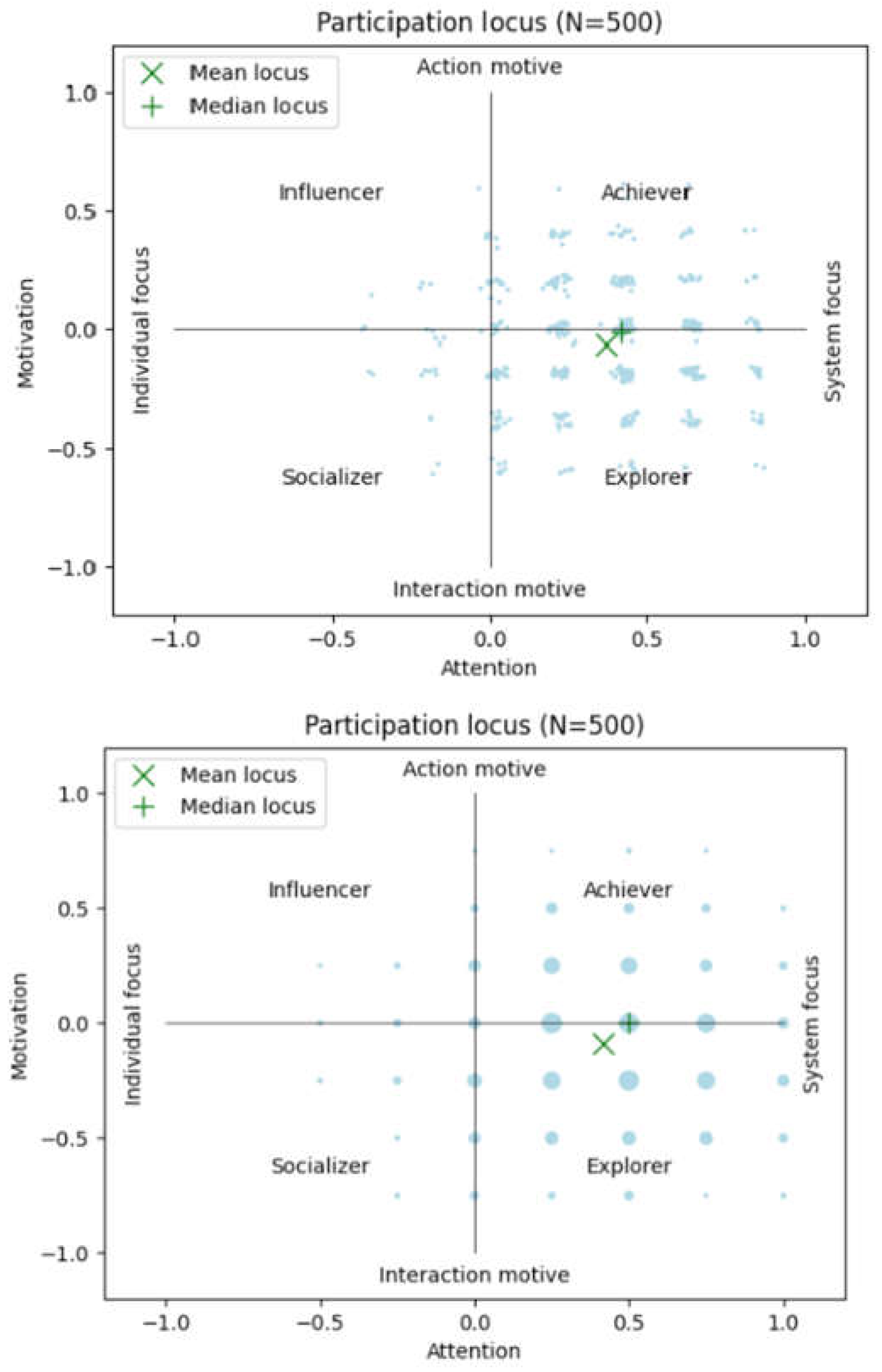
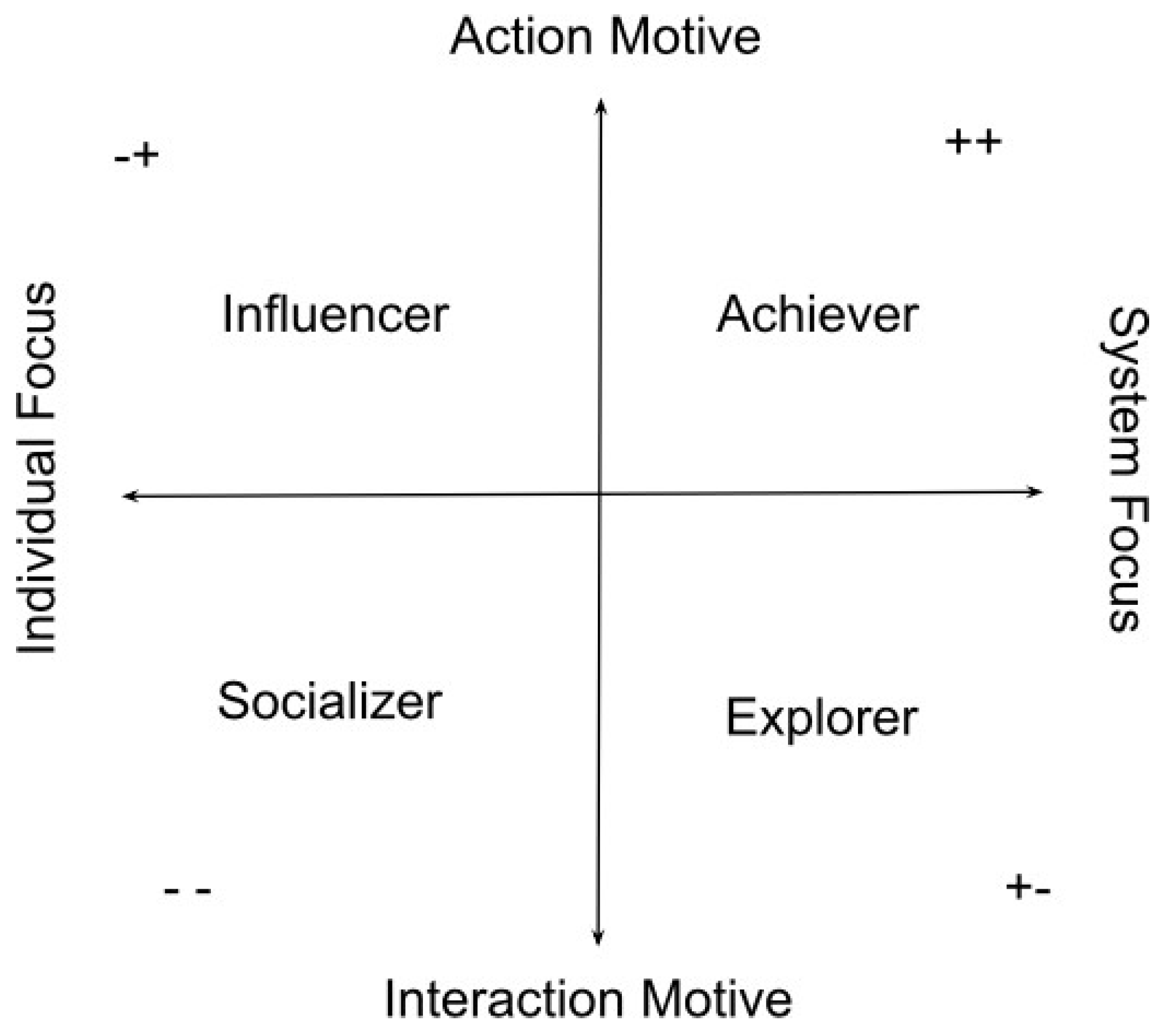
QuestionPro was used for the survey, which was distributed via Prolific across the U.S. with an equal male-female split. Due to estimated completion times, payment differed for participants and validators. Participants provided their Prolific ID and a designated code for payment. The 500 participants completed the survey over two days, with sessions at 8 AM, 12 PM, and 4 PM PST on Wednesday and 12 PM PST on Sat- urday. In Figure 3, the x-axis represents a shift from individual to system focus, with positive values indicating system focus and negative values indicating individual focus. The y-axis represents motivation, with positive values for action-oriented and negative for interaction-oriented motives. These axes form quadrants, categorizing participants as Achievers (++), Influencers (-+), Socializers (–), or Explorers (+-). Based on validator-assigned weights, both simple and weighted averages are used to determine each participant’s locus point from their eight behavioral responses, each scoring +1 or -1 across two dimensions (see Figure 3).
VI. Data Re-evaluation
To assess the consistency of the collected data, we resent the same questionnaire to the participants who originally completed the survey. The resending process followed the same timing as before. This process was aimed at observing any changes in participants’ responses to the same behavioral questions after two months by comparing their answer selec- tions between the two surveys.
Figure 4.
Participant locus with (top) and without (bottom) validators’ weight.
VII. Hypotheses
The research is testing the following hypotheses:
- (1)
- An individual’s personality type can be determined from self-reported data about themselves;
- (2)
- An individual’s personality type can predict their choices; and
- (3)
- An individual’s personality type corresponds to an archetype that is stable over time.
VIII. Results - Primary Survey
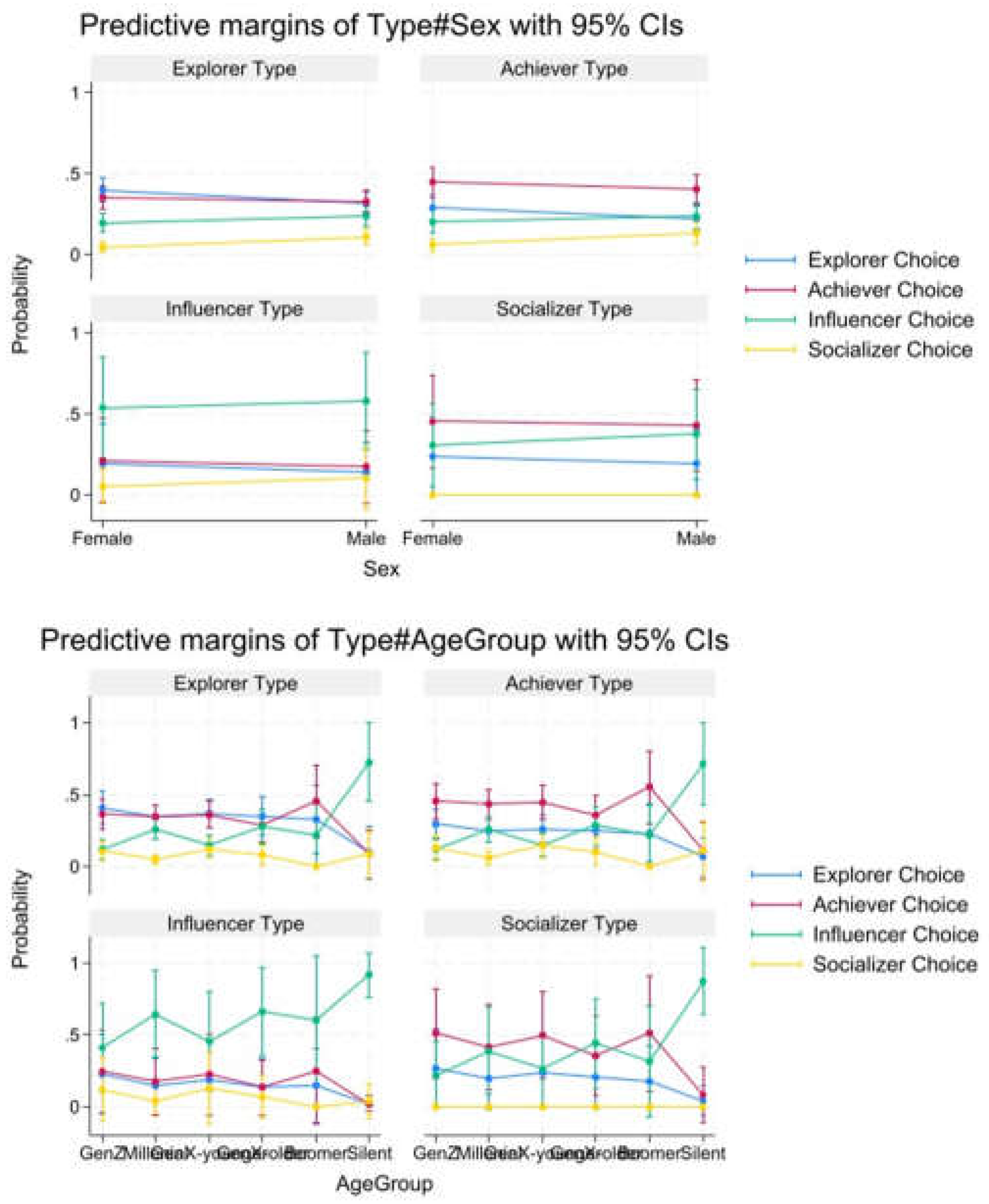
The data grouping graphs in (see Figure 1) show that most of our primary survey respondents align with achiever and explorer types, with a system focus and slight interaction motive, contrasting with Bartle’s finding that most players are socializers. Previous studies on transactive energy have considered factors like demographics, tech savviness, sus- ceptibility, and risk aversion [11]. For instance, the Pacific Northwest GridWise Testbed required broadband access to engage with the survey, and the Olympic Peninsula Project demonstrated the value of technologies for reducing appliance costs [12]. Our study also collected data on tech savviness, age, susceptibility, location, home ownership, and risk aversion to control for their effects and explore their relationship with personality archetypes, finding only age to be relevant (see Figure 6).
IX. Results - Re-Evluation Survey
Schmidt notes that data replication is crucial for validating research findings, as it shows that any researcher can reproduce results, supporting their independence from specific conditions [16]. Replication is key to establishing stable knowledge [17] and eliminating artifacts and chance results. Radder further emphasizes replication’s role as a scientific standard, where non-replicable claims lack scientific validity. Similarly, Popper argued that repeatable experiments confirm that findings are not mere coincidences but intersubjectively testable events [18]. In this study, data collection was repeated by conducting the same survey twice, with a 56.8% follow-up participation rate two months later. While individual responses varied, the overall archetype distribution remained stable, indicating the potential for sustained engagement strategies aimed at dominant personality archetypes (see Figure 5).
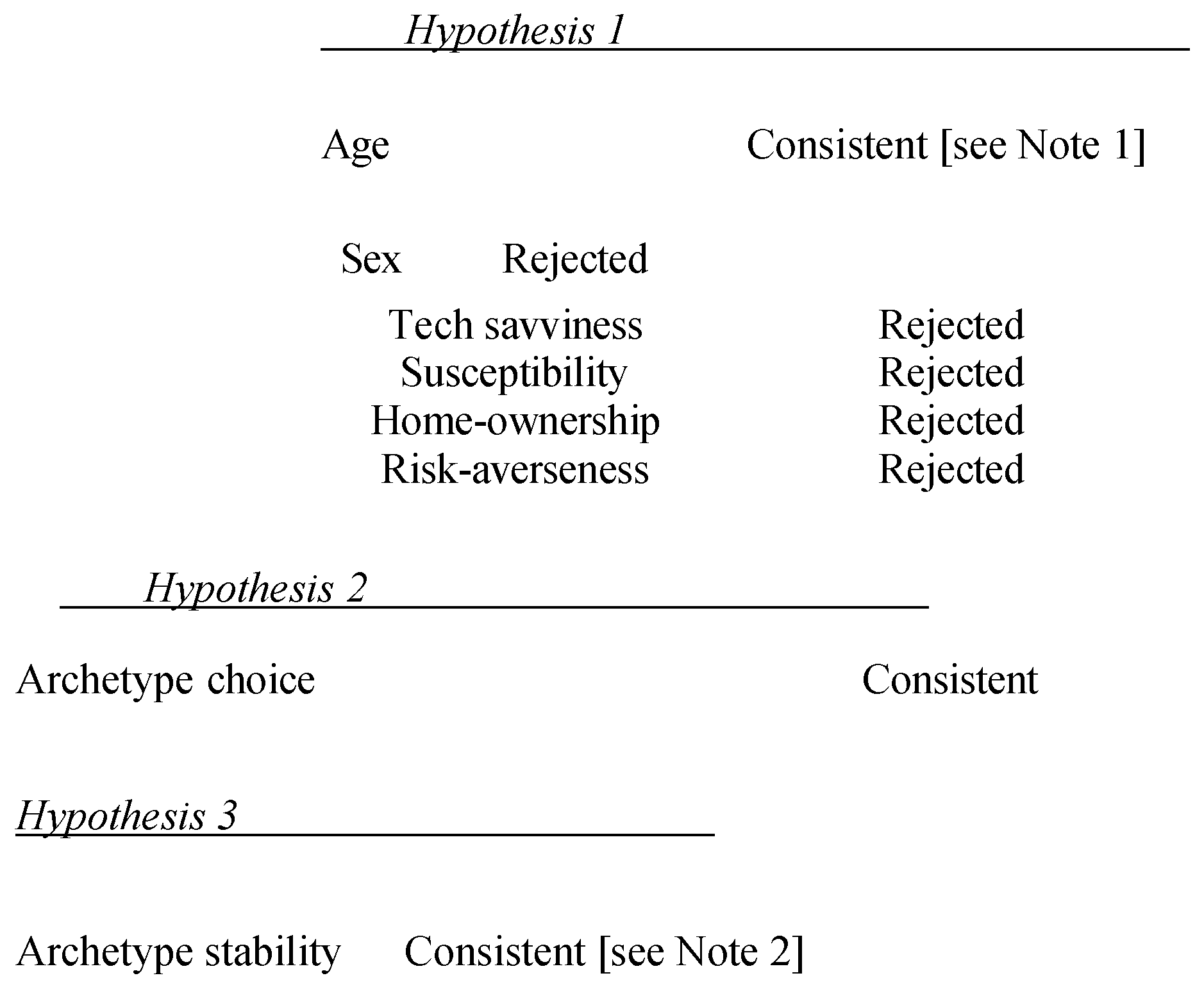

Table 1.
Hypothesis Testing Results.
| Personality Type | ||||
| Action Type | Explorer | Achiever | Influencer | Socializer |
| Explorer |
0.36 (0.00) |
0.25 (0.00) |
0.16 (0.12) |
0.22 (0.05) |
| Achiever | 0.34 (0.00) |
0.42 (0.00) |
0.19 (0.11) |
0.44 (0.00) |
| Influencer | 0.21 (0.00) |
0.21 (0.00) |
0.56 (0.00) |
0.34 (0.10) |
| Socializer | 0.08 (0.00) |
0.09 (0.00) |
0.07 (0.30) |
0.00 (0.99) |
Figure 5.
Participant re-evaluation data with (top) and without (bottom) validators’ weight.
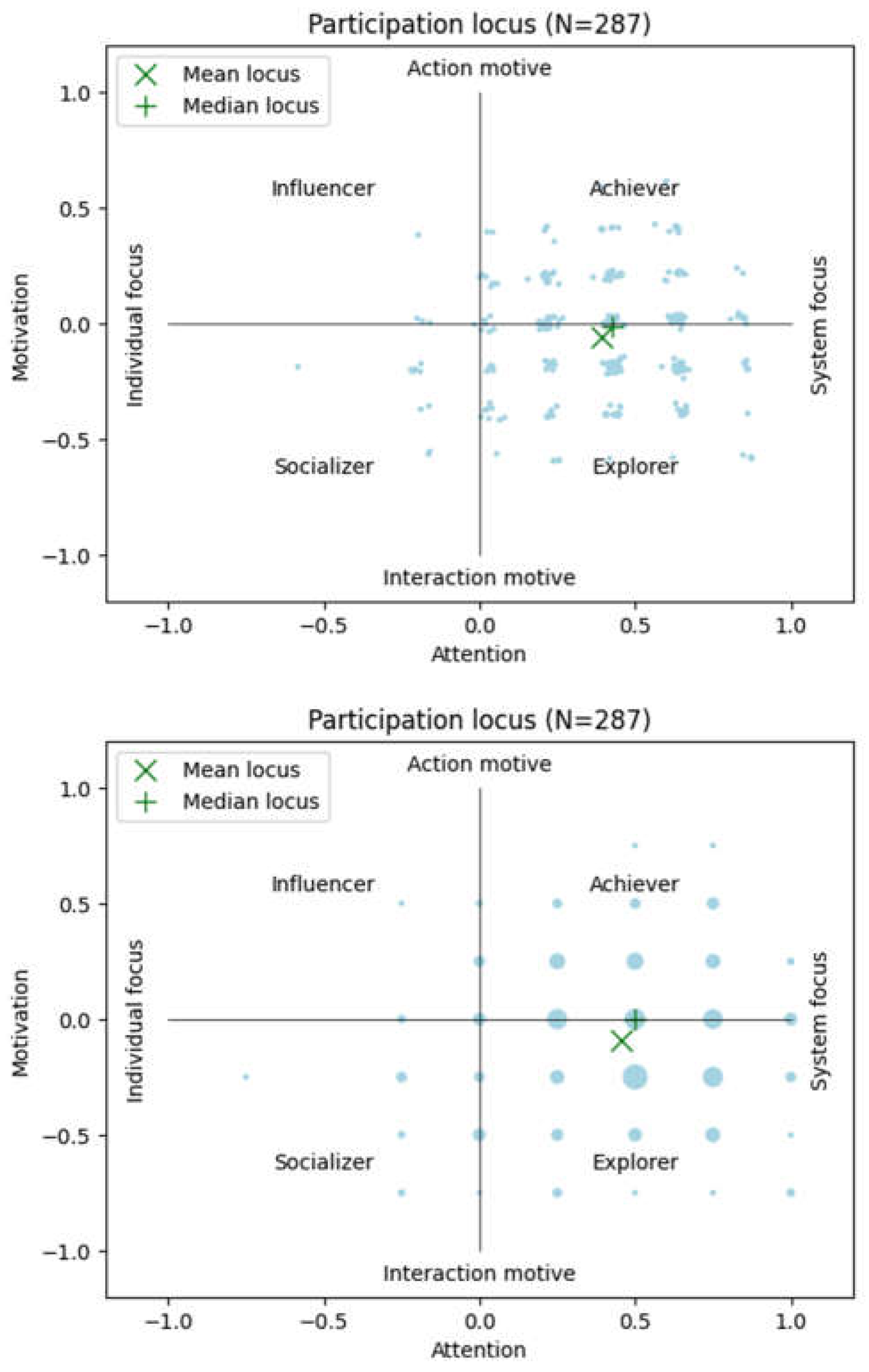
Figure 6.
Regression results capturing tendencies of the personality types to predict the choices given specific sex and age group categories. Age Groups: 1-GenZ, 2-Millennial, 3-GenX-Young, 4-GenX-Old, 5-Baby Boomer, 6-Silent.
Figure 6.
Regression results capturing tendencies of the personality types to predict the choices given specific sex and age group categories. Age Groups: 1-GenZ, 2-Millennial, 3-GenX-Young, 4-GenX-Old, 5-Baby Boomer, 6-Silent.
X. Regression Analysis
The data was analyzed using multinomial logistic regres- sion, with the outcome variable being participants’ choices and explanatory variables including personality type, demograph- ics, and other personal characteristics listed in Figure 4 (chi- square goodness of fit p-value = 0.0119). The results support the hypothesis that personality type can predict corresponding actions, with the highest likelihood of match for archetype- aligned choices (see Table 2). Note, the results for socializers were insignificant, likely due to their low numbers and the survey’s limited ability to simulate social engagement. An overlap in action choices was observed between explorers and achievers, while the influencer archetype showed consistent alignment with related actions. By contrast, socializers often chose non-archetype actions, possibly because the survey’s op- tions didn’t strongly resonate with them. Aside from age, other factors like susceptibility, risk aversion, home ownership, tech savviness, and sex did not significantly influence archetype- specific choices.
Table 2. Regression results that capture the predictive margin of the action choices given the personality type (dominant is bold and statistically insignificant is in red with p-values provided under each estimate).
XI. Conclusions
The principal results of testing our hypotheses are summa- rized as below:
- (1)
- Age is a significant explanatory variable for some archetyped choices with the older age groups standing out the most.
- (2)
- Archetype stability is not fully consistent at the individ- ual level but it is remarkably consistent in the aggregate.
Appendix
Hello, We are interested in distinguishing between participant types based on survey questions. You are required to answer all questions. Thank you for your time! Note: There are no correct or incorrect answers
Behavioral Questions
You’re one step away from reaching the next level in an online game. What do you believe would accelerate your progress towards that goal?
- (1)
- Pursuing higher rankings for better rewards
- (2)
- Venturing into a new map in the game
- (3)
- Collaborating with fellow players in a team
- (4)
- Broadcasting my narrated gameplay
What approach would you consider to earn a free smartwatch from the fitness program organized by your community?
- (1)
- To join a fitness group to meet new people
- (2)
- To try a bootcamp with different fitness classes
- (3)
- To engage in daily workouts to advance in the fitness program
- (4)
- To recruit more members to join the fitness program
Your favorite restaurant is offering a giveaway , which of the following activities would you be willing to do in order to receive the giveaway?
- (1)
- To rate and review the food online
- (2)
- To beat the food eating challenge
- (3)
- To try different dishes on the seasonal menu
- (4)
- To bring a friend to dine in together
When playing board games with your friends, which of the following options best describes your strategy?
- (1)
- I learn the game rules as you go
- (2)
- I cooperate with other players as much as possible
- (3)
- I dominate the board
- (4)
- I convince other players to adopt new rules for the game
You participate in a lottery to win a pair of concert tickets featuring a popular band. What are you willing to do to win the tickets?
- (1)
- I would share organizer’s post on your social media
- (2)
- I would listen to the band’s music from different time periods
- (3)
- I would join the fanbase group online
- (4)
- I would pass the band’s loyalty quiz
When engaging in a new game for the very first time, which of the following options best reflects your approach to playing?
- (1)
- I navigate the game by trial and error
- (2)
- I share suggestions how to play the game
- (3)
- I aim to advance to the next level first
- (4)
- I befriend other players to learn and make connections
When looking for a credit card, which of the following factors holds the highest importance to you?
- (1)
- An option to encourage businesses to adopt the card
- (2)
- New and unique features of the card
- (3)
- Highest cashback on purchases
- (4)
- Ability to easily split bills with others
When coordinating an event, what matters most to you?
- (1)
- That it is a sold-out event
- (2)
- That it connects people
- (3)
- That it attracts new participants
- (4)
- That it is a new experience
More About Yourself
Overall, how often do you use the internet?
- (1)
- Never
- (2)
- Less than once a week
- (3)
- Once a week
- (4)
- Several times a week
- (5)
- At least once a day
- (6)
- Multiple times a day
- (7)
- Most of the day
Overall, how confident do you feel using computers, smartphones, or other electronic devices to do the things you need to do online?
- (1)
- Not at all confident
- (2)
- Only a little confident
- (3)
- Somewhat confident
- (4)
- Very confident
How do you see yourself: are you generally a person who is fully prepared to take risks or do you try to avoid taking risks?
How would you rate yourself from scale 0 (not willing to take risks) – 10 (very willing to take risks)
Do you think you will enroll in an electricity saving program soon?
- (1)
- Definitely yes
- (2)
- Probably yes
- (3)
- Probably not
- (4)
- Definitely not
Do you think that you will enroll in an electricity saving program next year?
- (1)
- Definitely yes
- (2)
- Probably yes
- (3)
- Probably not
- (4)
- Definitely not
Do you think that in the future you might enroll in an electricity saving program?
- (1)
- Definitely yes
- (2)
- Probably yes
- (3)
- Probably not
- (4)
- Definitely not
If one of your best friends were to convince you to enroll in an electricity saving program, would you give it a try?
- (1)
- Definitely yes
- (2)
- Probably yes
- (3)
- Probably not
- (4)
- Definitely not
People consider me to be tech savvy
How would you rate yourself from scale 0 (strongly disagree) – 5 (strongly agree)
I consider myself to be tech savvy
How would you rate yourself from scale 0 (strongly disagree) – 5 (strongly agree)
Do you rent or own your home?
- (1)
- I am a homeowner
- (2)
- I am a renter
- (3)
- Other:
What is your age group?
- (1)
- 18 to 24
- (2)
- 25 to 34
- (3)
- 35 to 44
- (4)
- 45 to 54
- (5)
- 55 to 64
- (6)
- 65 or over
What state do you live in?
Choose one from the 51 states in the United States including the District of Columbia
Preferred Activity
Choose your preferred activity from the list below
- (1)
- I choose to read the press release to learn about the largest camera in the world
- (2)
- I choose to compare your completion time of the survey with others
- (3)
- I choose to provide rating and feedback regarding the survey
- (4)
- I choose to connect with us on social media
Please copy & enter code - C1G28VZ5 to your Prolific portal to prove that you have completed your survey.
Please enter your Prolific ID below:
Select Captcha and Verify
References
- K. Salen and E. Zimmerman, “Rules of play: Game design fundamental,” 2004.
- Y. Weng, J. Yu, and R. Rajagopal, “Electrical power and energy system,” 2017.
- Sheth, K., Patel, D., & Swami, G. (2024). Strategic insights into vehicles fuel consumption patterns: Innovative approaches for predictive modeling and efficiency forecasting. International Journal of Engineering Research & Technology (IJERT), 13(6).
- Sheth, K., & Patel, D. (2024). Strategic placement of charging stations for enhanced electric vehicle adoption in San Diego, California. Journal of Transportation Technologies, 14(1), Article 5. [CrossRef]
- R. Bartle, “Hearts, clubs, diamonds, spades: Players who suits muds,” 1996.
- N. Yee, “Motivations for play in online games,” 2006. [CrossRef]
- J. Hamari and J. Tuunanen, “Player types: A meta-synthesis,” 2014. [CrossRef]
- M. Busch, E. Mattheiss, R. Orji, M. A, W. Hochleitner, M. Lankes, L. E. Nacke, and M. Tscheligi, “Personalization in serious and persuasive games and gamified interactions,” 2015. [CrossRef]
- G. F. Tondello, R. R. Wehbe, P. O. T. Dugas, L. E. Nacke, and N. K. Crenshaw, “Understanding player attitudes towards digital game objects,” 2016. [CrossRef]
- Swami, G., Sheth, K., & Patel, D. (2025). From ground to grid: The environmental footprint of minerals in renewable energy supply chains. Computational Water, Energy, and Environmental Engineering, 14(1), Article 2. [CrossRef]
- Swami, G., Sheth, K., & Patel, D. (2024). PV capacity evaluation using ASTM E2848: Techniques for accuracy and reliability in bifacial systems. Smart Grid and Renewable Energy, 15(9), Article 12. [CrossRef]
- Sheth, K., Patel, D., & Swami, G. (2024). Reducing electrical consumption in stationary long-haul trucks. Open Journal of Energy Efficiency, 13(3), Article 6. [CrossRef]
- T. Dohmen, A. Falk, D. Huffman, U. Sunde, J. Schupp, and G. Wagner, “Individual risk attitudes: Measurement, determinants, and behavioral consequences,” 2011. [CrossRef]
- O. Cecilia, K. Katrin, and F. Sudzina, “Gender and personality traits’ effect on self-perceived tech savviness,” 2017.
- L. Phan, C. Seyl, J. Chen-Sankey, J. Niederdeppe, M. Guy, K. Sterling, and K. Choi, “Exploring young adults’ beliefs about cigar smoking by susceptibility: A belief elicitation study,” 2023. [CrossRef]
- S. Schmidt, “Shall we really do it again? the powerful concept of replication is neglected in the social sciences,” 2009. [CrossRef]
- H. Radder, “In and about the world: Philosophical studies of science and technology,” 1996.
- Sheth, K., & Patel, D. (2024). Comprehensive examination of solar panel design: A focus on thermal dynamics. Smart Grid and Renewable Energy, 15(1), Article 2. [CrossRef]
Figure 1.
Survey Plan.

Figure 2.
Verify the identified archetypes resulting from behavioral questions with the activities selected (where each activity relates to a specific archetype).
Figure 2.
Verify the identified archetypes resulting from behavioral questions with the activities selected (where each activity relates to a specific archetype).
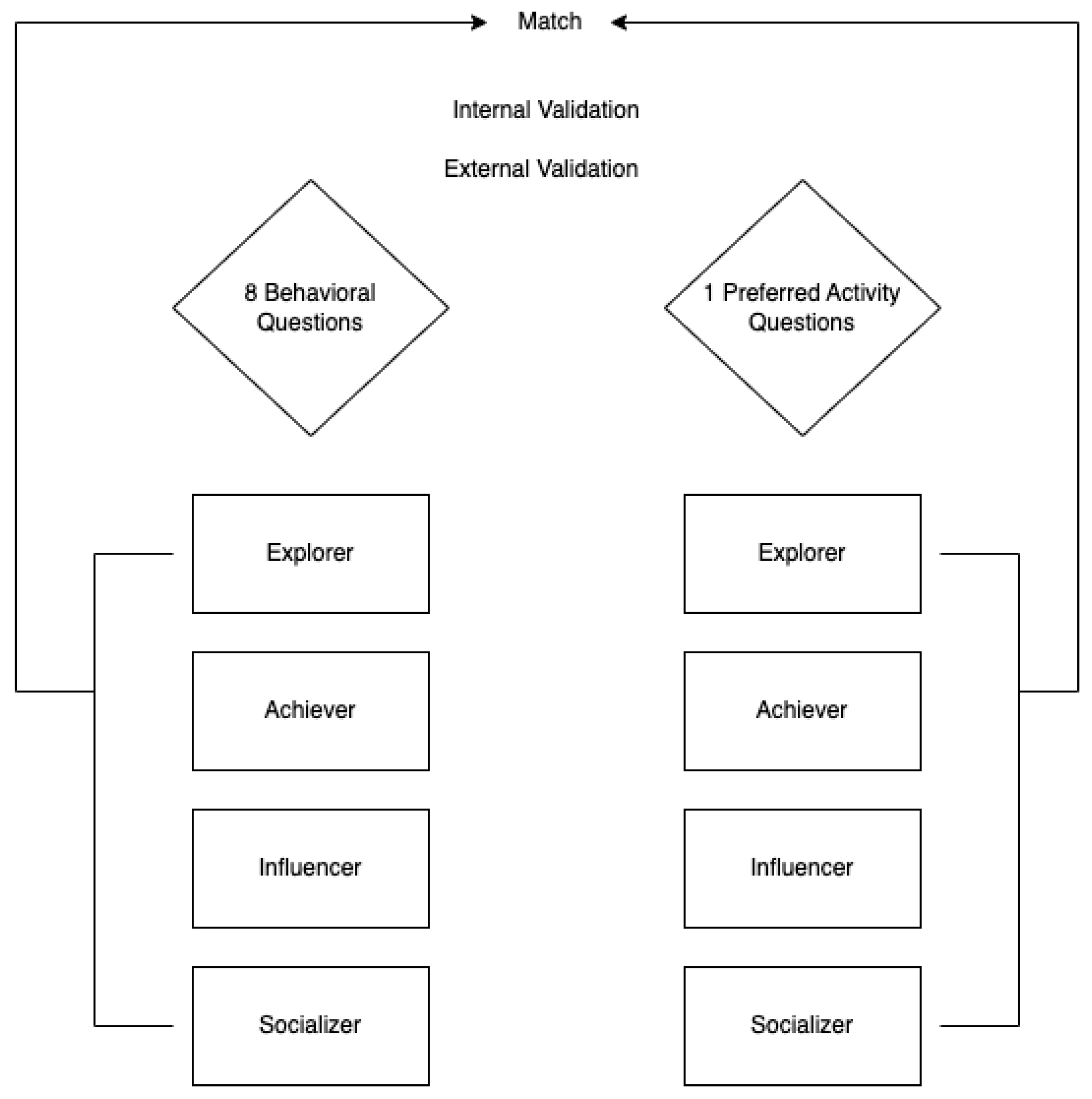
Figure 3.
The data allocation graph inspired by Bartle’s interest graph.
Disclaimer/Publisher’s Note: The statements, opinions and data contained in all publications are solely those of the individual author(s) and contributor(s) and not of MDPI and/or the editor(s). MDPI and/or the editor(s) disclaim responsibility for any injury to people or property resulting from any ideas, methods, instructions or products referred to in the content. |
© 2025 by the authors. Licensee MDPI, Basel, Switzerland. This article is an open access article distributed under the terms and conditions of the Creative Commons Attribution (CC BY) license (http://creativecommons.org/licenses/by/4.0/).
Copyright: This open access article is published under a Creative Commons CC BY 4.0 license, which permit the free download, distribution, and reuse, provided that the author and preprint are cited in any reuse.


