

Submitted:
16 April 2025
Posted:
17 April 2025
You are already at the latest version
Abstract
Due to extensive types of etiologies and risks causing over 600 types of mental health issues, to convene adequate recommendations in primary care is a difficult assignment. The starting point for preventive interventions on mental disorders involves scrutinizing the risk factors while targeting multiple hazards in order to increase the success of an early precautionary mediation plan of action. The primary risk factor for most neurodegenerative diseases is the increasing worldwide median age, although one in seven youngsters also experience a mental disability, namely depression, representing a decline in well-being and conferring a considerable global public health challenge. The brain operates optimally when supported by a holistic approach engaging several aspects and diet is becoming an integral part of care strategies. Treatment is presently dominated by pharmacotherapy, but additional strategies are needed to prevent and treat mental disorders. Dietary modification can prove to be a cost-effective strategy for the prevention and, in certain conditions, treatment of neurological disorders. Molecules of dietary ingredients, micronutrients, phytonutrients, and additives may modulate depression associated biomarkers. Nutritional exposure during early developmental stages and maternal impact, lifestyles, and the modulation of the gut microbiota as novel therapies for the treatment of various neuropsychiatric conditions, is gaining interest for maintaining brain health. Bioactive substances present in different mushroom species have been ascribed to both direct and indirect mechanisms of influence on neurobehaviour and here we support the recognition of mushroom nutrition, as influential dietary element in prevention and management of some mental disorders. The scientific evidence demonstrating the unequivocal link between nutrition/mushroom and mental health is only beginning to emerge and nutritional medicine should be considered as an integral part of mental care.
Keywords:
mental health
; depression
; neurological disorders
; nutrition
; mushrooms
1. Introduction
The motive and rate of global population ageing differ considerably in diverse settings, presently being much prominent in high- and middle-income countries, due to the longer average lifespan, falling birth-rates, and other biological changes, as well as physical and social environments.
Age advancing is linked with the rapidly raised incidence of neurodegenerative diseases, and around 14% of the world's population experience mental disorders. But globally even some 15% of children and adolescents, due to physical, emotional and social changes, including exposure to poverty, abuse, or violence, suffer from mental health problems, [1,2].
These illnesses represent a considerable reduction on health promotion and protection of people and communities, as they critically compromise cognitive and motor tasks, eventually causing a significant decline in well-being and quality of life, causing stigma and discrimination, while placing a substantial strain on healthcare systems worldwide [3,4,5].
As a response to integrate psychiatry with the mainstream of medicine, the WHO’s Mental Health Action Plan 2013-2020 was adopted at the 66th World Health Assembly, later extended until 2030 by the 72nd World Health Assembly in May 2019, to ensure its alignment with the 2030 Agenda for Sustainable Development [6].
There are more than 600 different types of nervous system disorders [7] including more than 200 classified types of mental illness. The definition of a mental disorder is an ongoing process and has been addressed in successive revisions over time and is illustrated by a significant clinical impact in an individual’s emotional control, cognition, ideas, frame of mind, conduct and attitude, linked with distress in important areas of physical performance. It can last for a short time or for the whole life [8].
Mental health disorders or harmful dysfunctions include emotional instability (e.g. loss of mind or maniac depression), uneasiness, fear, and disarray on character, anorexia, bulimia and binge-eating disorder, schizophrenia, post-traumatic stress disorder, and substance abuse disorders [9,10]. Several words related to mental disorder, but not really direct synonyms, are associated with similar group of symptoms including emotional disorder, depression, nervous breakdown, insanity, loss of mind, paranoia, psychopathy, neurosis, among many others.
The new International Classification of Diseases (ICD-11) was released by WHO in 2022 and is now officially in effect for the multilingual and international digital recording and reporting of causes of illness and more, containing around 17,000 unique codes, more than 120,000 codable terms, even traditional medicine, and presently interpreting more than 1.6 million terms [11].
Mental health disorders continue to rise globally and in 2024, 1 in every 8 people (970 million people), 84 million people (1 in 6) in the European Union, were living with a cerebral disability [12]. The widespread of these issues included significant disturbances in thinking, emotional regulation, or behaviour, with anxiety and depressive disorders being the most common. Indeed, depression strikes worldwide some 280 million people, and anxiety disorders impacts in excess of 300 million individuals.[13,14].
Huge number and types of risk factors may cause mental illness, including genetic factors, alcohol and drug abuse (e.g. marijuana, cocaine, amphetamines) causing paranoia, certain medical conditions or hormonal changes, negative childhood environment (e.g. abuse or neglect), deterioration in oral health, trauma and stress (e.g. seclusion, domestic abuse, divorce, economic distress, job struggles), and even personality factors (e.g. perfectionism or low self-esteem) [15,16].
Therefore, each mental disorder is likely to have multiple risk factors and, for effective opportunities for intervention, it is necessary to identify as many risk and protective factors that influence on individuals at different stages of development as early as possible [17,18].
Prevention is an old concept as medical practice itself, however, only recently has it become generally reinforced in mental health [19]. The starting point for preventive interventions on mental disorders involves scrutinizing sharply and ethically the risk factor research since not all evidence from hazard assessment is conclusive enough to validate the design of a preventive intervention. Presently, it is essential the search for potential markers and causal risk factors because targeting multiple risks may increase the success of a preventive intervention programme [20,21].
Mental disorders, including depression, anxiety and bipolar disorder, accounts for a significant proportion of global disability and poses a substantial social, economic and health burden [22]. Treatment is currently prevailed by drug therapy, such as antidepressants, psychoanalysis, and cognitive processing therapy; however, such treatments obviate around half of the disease burden, indicating that further schemes are needed to prevent and treat mental disorders [23,24].
Here we support the recognition of foods and diet, namely of mushroom nutrition, as crucial elements in prevention and management of mental disorders [25]. Nutraceutical approaches, as an adjuvant strategy of a personalized nutritional procedure, based on dietary bioactive compounds, are emerging as primary strong match for their neural recovery, regeneration, and therapeutic roles, addressed to improve cognitive dysfunction associated to brain disease states, such as Parkinson’s disease, Alzheimer’s disease, Multiple Sclerosis, as well as anxiety and depression [26,27,28,29].
2. Mental Health
Mental health is more than the absence of mental disorders, enabling people to cope with the hardships of life, achieving their talent, being a basic human right, and varying differently from each person [30]. Main determinants of mental health include earnings, occupation, socioeconomic situation, and level of schooling, food security, dwellings, social integration, discrimination, childhood misfortunes, as well as the physical, environmental, and societal conditions in which people live, and the ability to access fair and reasonable health care [31,32].
Mental health of people with psychiatric disabilities and illnesses, emotional disorders, or intellectual impairments, comprises various frames of mind and well-being that enables people to cope with stress of varying degrees. The intricate interplay of biological, social, and psychological factors determine the level of mental health of a person at any point of time [33,34,35].
Mental health is an elemental benefit, that is, the psychological requirements of trailing any conception of prosperousness, associated with comprehensive well-being, a key concept in the field of positive psychology [36]. Mental health issues are extremely diverse. These include anger, anxiety, fear and panic attacks, bipolar disorder, body dysmorphic disorder (BDD), borderline personality disorder (BPD), depression, dissociation and dissociative disorders, eating problems, hearing voices, hoarding, hypomania and mania, loneliness, obsessive-compulsive disorder (OCD), panic attacks, paranoia, personality disorders, phobias, postnatal depression and perinatal mental health, autism spectrum disorder (ASD), post-traumatic stress disorder (PTSD), premenstrual dysphoric disorder (PMDD), psychosis, recreational drugs, alcohol and addiction, schizoaffective disorder, schizophrenia, seasonal affective disorder (SAD), self-esteem, self-harm, sleep problems, stress, suicidal feelings, suicide attempt, tardive dyskinesia, and trauma [37].
Regardless of the specific mechanism of action and causal pathway, alternative remedy represent another option for treating mental conditions and developing data suggests that bioactive compounds from several natural organic products conceal properties of preservation of neuronal structure and/or function that act in the brain targeting oxidative stress, neuroinflammation, and neurodegeneration. [38]. (Figure 1).
3. Gut Microbiota Involvement in Neurological Diseases
The gut microbiota comprises some 40 trillion microorganisms with over 3000 species, including bacteria, fungi, and viruses [41], and it is estimated that 400-500 different genera of gut microbiota make up the human intestinal dynamic environment ecosystem, 90% of which are predominantly anaerobic [42,43]. Most of them belong to two key phyla, Bacteroidota (synonym Bacteroidetes) Bacteroidetes and Bacillota (synonym Firmicutes), while other less common groups of microorganisms include Pseudomonadota, Actinomycetota, Fusobacteria and Verrucomicrobia [44].
The microbiota profile is negatively influenced by the intake of ultra-processed foods which greatly reduce the benign versus adverse gut bacteria that can encourage increased intestinal mucosal permeability, which likewise prompts a cytokine storm, an amplified immune response activated longer than it should, and spawned chronic neuroinflammation, a major cause of mental health condition and psychiatric disability [45,46].
The bidirectional communication between the gut microbiome and the brain, takes place via diverse pathways including through chronic inflammation that lead to β-amyloid plaque formation in the intestinal tract spreading to the brain via the vagus nerve [47,48].
This axis has been shown to influence neurotransmission and the behaviour that are often associated with neuropsychiatric conditions, the immune system, neuroendocrine pathways, and bacteria-derived metabolites [49,50].
Therefore, research targeting the modulation of this gut microbiota, as a novel therapy for the treatment of various neuropsychiatric conditions, is gaining interest and the microbiota is prepared to have a role in nutritional interventions for supporting brain health [51,52]. Indeed, the manipulation of lifestyle factors such as dietary interventions may represent a successful therapeutic approach to maintain and preserve brain health along lifespan [53]. Lifestyles have dramatically transformed over the last decades with increased urbanization and technological improvements, ultimately evolving in a discrepancy with the human genetic heritage, largely unchanged from our ancestors [54].
Nutritional exposure during early developmental stages may induce susceptibility to the later development of human diseases via interactions with the microbiome, including alterations in brain function and behaviour of offspring, as explained by the gut–brain axis theory [55]. There are also implications of maternal nutrition on neurodevelopmental disorders and the establishment and maturation of gut microbiota in the offspring [56].
In the gastrointestinal tract there are nerve cells as a mass nearly half as much as in the central nervous system [57]. Bioactivity in the intestinal flora is also directly related to normal neuropsychiatric development [58]. It has become gradually clear that gastrointestinal microbiota affects gut pathophysiology and the central nervous system function by modulating the signalling pathways of the microbiota-gut-brain axis [59,60].
Several investigations on the dynamic microbial system and genetic-environmental interactions with the gut microbiota have shown that changes in the composition, diversity and/or functions of gut microbes (e.g. gut dysbiosis) affect neuropsychiatric health by inducing alterations in the signalling pathways of the axis [61,62,63].
Progressive neurodegeneration has a complex aetiology and multifactorial pathogenesis is age-related and may derive from disruptions of cellular proteostasis, the accumulation of several dysfunctional proteins, and multiple interactions between circulation and the brain [64,65,66].
The communication microbiota-gut-brain axis may suffer dysregulation, and there is evidence that the lack of balance of various intermediate or end products of microbial digestion and the broad range of natural neuroactive compounds may initiate various neurodevelopmental and neurodegenerative diseases [67].
The axis communication primarily acts through neuroendocrine, neuroimmune, metabolic, and autonomic nervous systems mechanisms [68]. Gut microbiota interacts with the host brain and its modulation play a critical role in the pathology of neuropsychiatric disorders [69]. Dysregulation of this axis modulates host homeostasis by disrupting the integrity of the intestinal and blood-brain barrier, which protects the central nervous system from pathogens and toxins in the blood, the two layer mucus barrier, and the regulation of brain function and host immunity [70].
Evidence gathered on preclinical and clinical shows a positive correlation between gut dysbiosis and the pathogenesis and progression of neuropsychiatric disorders. Long-term dysbiosis leads to overstimulation of neuroimmune system and the hypothalamic-pituitary-adrenocortical axis, along with neurotransmitter imbalance. The aforementioned leads to dysregulated cell signalling necessary for maintaining proper bodily functions, contributing for inflammation, escalated oxidative stress, mitochondrial cytopathy, and irreversible neuronal apoptosis [61,71].
5. Improvement of Brain Function
The brain is the most critical organ in the body and controls our thoughts, emotions, memories, vision, several processes, and behaviours. Prime performance of the brain is crucial to individual health and well-being but still a topic of considerable debate [75]. The brain operates optimally when supported by a holistic approach engaging several aspects such as healthy diet, physical activity, enough sleep, mental stimulation, reduce stress, good mood and social activity [76].
Psychological stress can induce both oxidative stress and cellular stress together with inflammation, which can accelerate the ageing process, while the mitochondria, the cellular powerhouses, play a critical role in both acute and chronic stress [77].
Brain development is a complex process, whose rate can evolve through the life cycle and, in addition, endogenous gut hormones, neuropeptides, neurotransmitters, and the gut microbiota, are affected directly by the composition of the diet [23,51,78,79].
Microglia, virtually resident in all body tissues, are major long-lived and self-renewing perivascular macrophages within the brain parenchyma, which, together with astrocytes, constitute the main innate immune cell of the central nervous system, with a specific role in the preservation of homeostasis and immune scrutiny [80,81]. They may phagocytise neurons, synapses and dendrites, while chronic activation of microglia (producing toxic factors such as cytokines and reactive oxygen species), and can injury or impair neurons being associated in several neuropathologies, inclusive neurodegenerative diseases, such as Alzheimer’s and Parkinson’s diseases [82,83,84].
Lipids are the most abundant but poorly explored components of the human brain. The role of poly unsaturated fatty acids (PUFAs) in the regulation of neuroinflammatory processes is crucial since the brain uses more energy than any other human organ and lipids represent 78% of the dry weight of axon myelin sheath and 35-40% of the neuron-rich grey matter [85,86].
As a consequence, adequate dietary intake and nutritional balance, through several gut hormones or peptides, have a recognized impact in shaping synaptic resilience, cognitive capacity and brain evolution, affecting a range of mental activities such as learning, memory, problem-solving, decision-making, feelings, attitude, the communication between the nervous and the endocrine systems, with consequences on health [87,88].
Diets rich in saturated fats and sugar may impair brain performance [89], while anxiety and depression are diseases increasingly present today, considered the diseases of the century, drastically affecting the quality of life of the population, and elevating the risk of developing chronic diseases [90].
The human brain is metabolically expensive, using a substantial portion (20-25%) of the body's total energy and nutrient intake, related to glucose metabolism for synaptogenesis, neuronal communication, and knowledge organization [91]. Nutrients strongly influence both brain structure and function, neurodevelopment and neurotrophic function [92] and it has been recognized that diet and nutrition may be an important factor contributing to psychiatric morbidity, and that prevention or treatment of psychiatric disorders could be conducted by addressing diet and nutrition [93,94].
An interesting novel concept of cellular bioenergetics in the mitochondria provides a deeper understanding of metabolic processes in the cellular respiration, while still not fully understood, where the pentose phosphate pathway (PPP, a metabolic pathway parallel to glycolysis) converts glucose-6-phosphate into pentoses and generates ribose-5-phosphate and NADPH oxidase, which is necessary for the balance neuronal death and neurogenesis after acute neurological disorders, and source of cellular reactive oxygen species (ROS) which alleviate oxidative stress [95].
Brain lipids (e.g. cholesterol and glycosphingolipids) constitute 50 - 75% of the brain dry weight and a growing body of evidence is substantiating the pivotal involvement of mitochondria in white adipocytes, despite the presence of fewer mitochondria in these cells [85]. The brain lipids include also PUFAs (particularly arachidonic acid), phospholipids, cerebrosides, sulfatides, and gangliosides, and mainly utilize acylated lipids to generate phospholipids for brain cell membranes [96,97].
Although the brain gets plenty of exercise every day and is always active, even during sleep, certain activities may help boost brain function, memory, cognitive function, creativity, and connectivity [98]. This in turn may help protect the brain from age-related degeneration since mental health is the product of two intertwined sequence: psychological distress and mental wellbeing [99].
The surface of all mammalian cells is coated by oligosaccharides structures covalently attached to glycoproteins and glycolipids, and activated microglia releases β-galactosidase that promotes inflammatory neurodegeneration [100]. This enzyme has been extensively studied in the context of gene regulation, and by its inhibition, inflammatory neuronal loss can be prevented, being a potential target on the prevention of neurodegeneration [101].
Galactosialidosis is a human neurodegenerative disease caused by a rare genetic mutation, also known as neuraminidase deficiency with β-galactosidase deficiency, a genetic lysosomal storage disease. The sialidase enzyme, neuraminidase 1, normally located in lysosomes, cleaves terminal sialic acid residues, which coat neurons, from the terminal sugar residues glycoproteins and glycolipids, being a potential treatment target to prevent neuroinflammation and neurodegeneration [102].
Activated microglia can release active neuraminidase 1, increasing microglial phagocytosis and sensitization neurons to glutamate, thus potentiating neuronal death, suggesting that neuraminidase 1 might be a possible therapeutic objective to safeguard neuroinflammatory harm to neurons [103,104,105]. Neuraminidase inhibitors from medicinal fungi have been identified promoting neurogenesis and nerve health [106].
6. Diet and Nutrition Impact on Mental Health
The diversity of drugs provided to treat neurodegenerative diseases is limited. More recent, research expanded on the effects of nutrition on mental condition, representing an easy and affordable cornerstone for the prevention and reduction in the incidence of many mental disorders [107,108].
It is becoming evident that several bioactive compounds and secondary metabolites from foods and natural products contain neuroprotective properties with antioxidant and anti-inflammatory effects. Neurotrophic factors are naturally occurring proteins which are essential for neuronal survival and differentiation during development.
Some food bioactive components can modulate key pathways such as the intracellular phosphatidylinositol 3-kinase/protein kinase B (PI3K/AKT) and brain-derived neurotrophic factor-tropomyosin receptor kinase B-cAMP response element-binding protein (BDNF-TrkB-CREB), which are key for neuronal viability [109,110,111,112] (Figure 2).
Indeed, recent data [113] reveals a strong link between the BDNF/TrkB system and the intellectual disability in stress-associated disorders, and that neurotrophins, in particular BDNF, are key molecules which are essential for neuroprotection, cell specialisation, and up-regulation of synaptic plasticity [114,115].
Modern scientific research is clarifying the food-mind bidirectional connection and the profound link between dietary choices and brain Health [116]. As it happens, there are general clinician guidelines to globally inform psychiatric/medical, and health professional practitioners on the use of nutraceuticals and phytoceuticals, on their safety and tolerability, aimed at providing an evidence-informed approach to assist clinicians, service users, and stakeholders, in determining rules on the use of such natural agents, across major psychiatric disorders [117,118].
This new rapidly emerging field of nutrition and mental health, coined by leaders in the field as “nutritional psychiatry”, as a crucial factor in the high prevalence and incidence of mental disorders, suggests that food and diet are as essential to psychotherapy as they are in gastroenterology, cardiology, and endocrinology. [119,120].
There are prevailing opinions about the health effects of certain foods that can significantly influence mental health and wellbeing, but the evidence for many diets is comparatively weak and not supported by solid evidence and clinical scientific verification. Therefore, the unequivocal link between nutrition and mental health is only beginning to emerge [121,122].
Although there are some disorders where this connection between diet and mood disorders, anxiety and depression is firmly established [123], current epidemiological data on nutrition and mental health do not provide full information about causality or underlying mechanisms [124].
Dietary type (e.g. Mediterranean diet) can reduce the risk and prove to be a cost-effective strategy for the prevention and treatment of depression among adolescents [125]. Indeed, diet and nutrition need to be recognized as key modifiable targets for the prevention of mental disorders and nutritional medicine should be considered as an integral part of psychiatric treatment [126,127,128].
Diet and nutrition offer key modifiable targets for the prevention of mental disorders. Molecules of dietary ingredients, micronutrients, phytonutrients, and additives may modulate depression associated biomarkers [129]. In this context, several healthy foods such as berries, nuts, cruciferous vegetables, non-processed oatmeal, leafy greens, beans, mushrooms, olive oil, fish, legumes, dairy products, fruits, and some spices have been inversely associated with the risk of depression and may also improve symptoms [130].
As an example, research shows that increasing essential fatty acids have an effect on the prevention and treatment of anxiety and depression. Additionally, omega-3 (e.g. in fish, chia seeds, walnuts, seeds, seaweed, olive oil) can optimize mood stability and cognitive function even in young people [131].
Conversely, western dietary patterns, including the consumption of highly processed foods, pre-packaged foods, refined grains, processed and red meats, sugary and syrupy beverages, fried foods, baked products, have been shown to be associated with an increased risk of depression in longitudinal studies [132].
Dietary patterns and all-cause mortality have been reviewed [133,134] and it is increasingly clear the link between diet quality and deficiencies with mental health, and for the requirement for the use of occasional nutritional supplements to address determined nutrient deficits [135,136].
Indeed, when for an undefined period the diet lacks the necessary micronutrients and bioactive compounds that contribute to the normal, non-pathological functioning of the organism, this can lead to the development of inappropriate mental health, especially anxiety or mood disorders, such as depression and/or increased levels of stress [137,138,139].
Magnesium, a vital ion in the body, plays an inhibitory key role in the control and neurotransmission under a stressful situation, and low levels of magnesium, together with high levels of calcium, provoke anxious states, while supplementation with some types of foods (e.g. mushroom products) may attenuate them and improve health [137,140,141,142].
Natural bioactive ingredients from microalgae, mushrooms, plants, and cyanobacteria have been deeply investigated for their preventive or therapeutic potential [38,143]. Another main question has been whether and to what extent lifestyle, physical activity and related nutrition, psychoprotective food ingredients, and prevailing gut microbiota, may affect mental status and enhance the present scientific evidence providing a link between dietary regime and mental health [108,144].
Certain foods contain anti-inflammatory substances and protective compounds that reduce inflammatory markers and help the body reduce inflammation, but, in contrast, other foods contain pro-inflammatory substances that can worsen inflammation and increase chronic disease risk [145,146]. Indeed, some foods that can promote inflammation include refined carbohydrates, fried foods, high glycaemic index foods, commercial baked foods, red meat, processed meats, trans- fats, partially hydrogenated oils, sodas, and sugary beverages [147,148].
Furthermore, novel disease relationships have been studied [149], and non-communicable diseases such as diabetes, high blood pressure, arthritis, cancer, cardiovascular disease, depression, Alzheimer's disease, rheumatoid arthritis, lupus, inflammatory bowel disease, psoriasis, and many more have been linked to chronic or body-wide inflammation [150].
Foods that help decrease systemic inflammation in the body, such as curcuma, ginger root, beans, nuts, seeds, fatty fish, tomatoes, green tea, fruits (e.g. strawberries, blueberries, cherries, and oranges), mushrooms, dark chocolate, coffee, green leafy vegetables, herbs, spices, and olive oil, through its antioxidant scavengers, can help clear away inflammation and ameliorate physically and mentally an individual [151,152].
Anti-inflammatory foods contain natural antioxidants, polyphenols, omega-3 fatty acids, magnesium, phenolic secondary plant metabolites flavonoids, organic pigments carotenoids, and other immune-boosting substances that help the body combat inflammation [153,154,155,156].
Diet is an important modifiable risk factor for Alzheimer’s disease and dementia as it is able to modulate structural brain connectivity, cause positive changes in brain function and behaviour, as well as help regulate cognition and emotion [157,158].
However, there appears to be a general belief that dietary advice for mental health is framed around a still unsound scientific evidence base in shaping brain metabolism and impacting the trajectory of various neurodegenerative diseases [23,159]. In reality, for many such claims, it has been very difficult to prove that particular foods and beverages or specific dietary components does contribute to mental health either by causing, preventing or treating disease [117,124,160].
7. The Role of Mushrooms on Neurologic Health
This concise review focus on the latest scientific evidence supporting the link between diet and mental health, with specific interest to neuroprotective aptitude of mushroom nutrition and therapies that have psycho-protective ability, significant from the point of view of public health.
Mushrooms display an extensive variety of pharmacological resources considering the existence of diverse protective and/or preventive effects of bioactive compounds, exhibiting multiple target biological activities with high safety standard, low or non-toxicity, easily available, and affordable.
There are more than 50 different kinds of main nutrients in foods while plant foods contain over 25,000 phytonutrients with bioactive compounds [161,162]. Mushrooms as macro fungi constitute a dynamic source of unique micronutrients missing in food from plant or animal origin, considered as vital functional foods and utilized for prevention of numerous diseases [141].
Bioactive phytochemical constituents of mushroom vary profoundly with the species in question and their bioactivity depends on cultivation conditions, processing methods, and processing techniques [163,164,165,166].
In developed countries anxiety with disturbing feelings of distress, agitation, fear, and depression with persisting unhappiness, melancholy, or desperate mood are among the most common primary care service challenges in medical healthcare [167]. Treatment with psilocybin, the psychedelic compound found in “magic mushrooms” which is converted into psilocin to produce psychoactive effects, has shown some promise in treating a selection of mental health dependences and disorders [168].
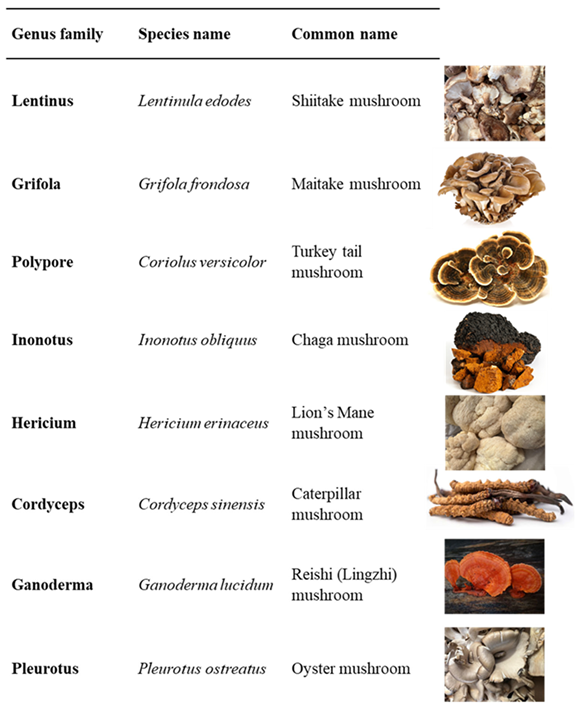
Unlike the common mushrooms found in grocery stores (e.g. button, shiitake, cremini, Portobello, oyster, enoki, porcini), medicinal functional mushrooms like Lion’s Mane (Hericium erinaceus), Reishi (Ganoderma lucidum), Cordyceps (Ophiocordyceps sinensis), Trametes (Coriolus versicolor), Shiitake (Lentinula edodes), Chaga (Inonotus obliquus), oyster mushroom (Pleurotus ostreatus), among others, contain bioactive compounds that can influence brain health, immunity, and overall well-being [163,169,170]. (Table 1).

Table 1.
Summary table of the genus, species and common names of medicinal functional mushrooms
mentioned in this section. (Authors’ images).
Table 1.
Summary table of the genus, species and common names of medicinal functional mushrooms
mentioned in this section. (Authors’ images).
 |
Neuroinflammation initiated in reaction to a variety of origins, interferes with homeostasis, activating glial cells, and the brain's innate immune system is triggered boosting the host immunity, with various physiological, metabolic, and demeanour outcomes. It may induce neuronal disorder and progressive neurodegeneration with permanent deprivation of axons and neurons [171,172,173].
While chronic neurodegenerative diseases are complex, and their pathogenesis is still uncertain, it has been inferred that brain insults (e.g. by virus infections, HIV, herpes) may also activate retro-transposons and silent human endogenous retroviruses sequences (ERVs), which constitute up to 8% of the human genome, contributing for neurodegenerative mechanisms [174]. Chronic ERV activation may cause progressive neurodegeneration in genetically susceptible people thereafter consolidating cognitive impairment and Alzheimer's disease/dementia [175,176,177,178].
7.1. Lentinula edodes (“Shiitake”)
Substantial research has been conducted on polysaccharides from Lentinula edodes (Shiitake), one of the most cultured and consumed mushrooms, and was shown to prevent cognitive impairments associated with obesity mainly by modulating the gut microbiota community [179].
7.2. Grifola frondosa (“Maitake”)
Grifola frondosa (“Maitake”), is an edible wood-decay mushroom, and the intervention effects of their dietary polysaccharides on Alzheimer's disease (AD), Parkinson's disease (PD), depression, anxiety disorders, autism spectrum disorder, epilepsy, and stroke, has been investigated among several mushroom sources [180,181].
7.3. Coriolus versicolor (“Turkey Tail”)
The immunodulation activity of mushroom biomass of Coriolus vesicular (Turkey Tail) in neuroinflammatory pathogenesis with the consequent endogenous cellular defence mechanism modulation and neurohormesis, reflects the activation of LXA4 signaling and modulation of stress responsive vitagenes encoding for heat shock proteins. This could serve as a potential innovative treatment for AD-related inflammasome and progressive neurodegeneration. [182].
The mushroom Coriolus versicolor (Turkey Tail) chronic administration as a dietary supplement approach showed neuroprotective potential by helping in the response to oxidative stress and acting on α-synuclein neuronal protein, on transcription factor NF-kB-mediated inflammatory, and the immune system in Parkinson’s Disease [183,184,185].
7.4. Mixture Hericium erinaceus and Coriolus versicolor
The mixture Hericium erinaceus and Coriolus versicolor biomasses have been the topic of investigation on the regulation of a hormetic-dependent activation of vitagenes, some major antioxidant enzymes, namely, thioredoxin systems, glutathione peroxidase (GPx), superoxide dismutase (SOD), catalase, lipoxin A4, and sirtuins, as potential target G protein-coupled receptors (GPCRs) to treat neurological diseases. [186]. The action of this mushroom blend also represent a promising nutraceutical choice for preventing Parkinson’s disease by acting on neuroinflammation thus preventing dopaminergic neurons from undergoing apoptosis [187].
A wide range of edible mushrooms have been reported to produce different antioxidant biocompounds such as phenolics, flavonoids, terpenoids, lectins, lentinan, galactomannan, polysaccharides, glycoproteins, vitamins, carotenoids, ergothioneine, and many others [188], which might be used for dietary supplementation to enhance antioxidant defences and, consequently, the prevention of age-related neurological diseases [189,190,191].
These compounds have demonstrated several mechanisms revealing reduction of the pathology of amyloid-beta peptide and microtubule-binding protein tau, neuroinflammation, neuronal apoptosis, oxidative stress, all responsible for Alzheimer’s disease [192], as well as they may act by intensifying the synthesis and the release of acetylcholine (ACh) by inhibiting acetyl cholinesterase activity inducing an increase in acetylcholine in the synapse [191,193,194].
All nutrients in mushrooms help to maintain a healthy immune system and, in addition, edible mushrooms contains a naturally occurring amino acid, 5-hydroxy-L-tryptophan (5-HTP), which is a primary forerunner of serotonin-a neurotransmitter selected in pharmacotherapy of clinical depression [163,195].
Mushrooms also contain organic germanium [196] which is known to have the potential to protect nerve cells and promote their survival and repair [197,198].
More than 8,000 phenolic compounds, 3000 of these are flavonoids, have been isolated, identified and described [199]. Mushrooms are rich in polyphenols (e.g. phenolic acids, flavonoids, tannins), recognized as natural antioxidants [200] that can disrupt the nuclear transcription factor kappa B (NF-κB) pathway, that modulates various features of innate and adaptive immune functions, and function as a critical buffer of inflammatory damages, modulating neuronal survival, further preventing the degradation of IκB, a kinase enzyme complex that is involved in propagating the cellular response to inflammation [201,202,203].
Certain mushrooms have a long history of offering a natural and holistic approach to mental well-being by enhancing cognitive function and resilience by promoting emotional stability that performs the reciprocity of mind, body, and spirit [204,205].
Ménière’s disease (MD) is a cochlear neurodegenerative disease but despite considerable research, the aetiology and pathogenesis of MD remains controversial and undefined. Although usually associated with allergic, genetic, or trauma sources, and with viral infections and/or immune system-mediated mechanisms, it has been found that chronic supplementation with Coriolus versicolor mushroom biomass may have a significant impact on the neurotoxic insult and prolonged pro-inflammatory and oxidative status operating in MD pathogenesis [25,206].
Autism spectrum disorder (ASD), a condition related to neurodevelopmental occurring in the first 3 years of life, is a heterogeneous group of complex neurological disorders associated with disturbed redox homeostasis [207]. The intestinal dysfunction, present in approximately 50% of cases, may be characterized by an increase in inflammation and its treatment has been tested with the presence of natural polyphenols from functional mushrooms in preclinical and clinical trials [208,209].
7.5. Inonotus obliquus (“Chaga”)
Chaga mushroom (Inonotus obliquus), often known as “the king of medicinal mushrooms”, it is not a true mushroom but a hard compact mass of mycelia (sclerotia), ready to survive hostile environmental circumstances [210]. This wild edible mushroom being rich in various antioxidants, boosts immunity, improves brain and liver health, increases life span, and may counteract Alzheimer’s disease [211,212,213].
7.6. Hericium erinaceus (“Lion´s Mane”)
In Australia, pre-clinical testing found Hericium erinaceus (Lion´s mane) mushroom to have a substantial effect on the growth of brain cells and improving memory [214]. Studies revealed that that this mushroom, contain approximately 150 small molecules, the two most well-known categories being hericenones and erinacines which can stimulate the growth of brain neurons and glia cells [215]. These active compounds plus polysaccharides, steroids, alkaloids, and lactones can help promote neurogenesis and enhance memory [216], having potential beneficial effects in ameliorating cognitive functioning, and behavioural deficits in AD and PD [217,218].
The traditional medicinal mushroom Hericium erinaceus is also known for enhancing peripheral nerve regeneration through targeting nerve growth factor (NGF) neurotrophic activity [214,218,219] and it was demonstrated that this mushroom is effective in improving mild cognitive impairment in older people [220,221] while preclinical studies have shown that there can be improvements in ischemic stroke, PD, AD, and depression, if Hericium erinaceus mycelia, enriched with diterpenoid erinacines, are included in daily meals [222,223,224].
The main question has been the dosage to be taken, and universal guidelines have not yet been set for lion's mane intake. Taking up to 1 g orally every day for up to 16 weeks may be safe and well-tolerated. The observations cautiously indicate that Hericium erinaceus may improve performance celerity and minimize experience of distress in healthy, young adults. However, limited and void gloomy findings were also recorded [225]. Due to reduced sampling size, these encouraging results should be treated with prudence [221,226]. Medicinal mushroom incorporation in diets, at least twice a week, was shown to reduce the risk of the early stage of memory loss, usually anticipating neurological diseases [227,228].
Hericium erinaceus also revealed an inhibitory activity against some bacterial responsible for triggering multiple sclerosis, a chronic neurological disorder, and other selected autoimmune diseases [229].
7.7. Cordyceps (“Caterpillar”)
Cordyceps, a fungus that lives on certain caterpillars, produce promising bioactive metabolites, like β-glucans, adenosine, cordycepin, and ergosterol. Although a significant number of bioactive elements is known from Cordyceps, only a handful have been assessed for their neuroprotective ability but still lacking this information from clinical trials [230].
In Asia, Cordyceps militaris is a medicinal mushroom traditionally used in tonics for treating several neurological disorders, including epilepsy and anxiety. Reports have shown that this mushroom has anti-inflammatory and anti-oxidative effects and may be beneficial for depression management [231]. However, the pharmacodynamics of Cordyceps admit a brief lifetime and reduced digestibility, which restricts the treating or mitigating capacity and outcome [230].
7.8. Ganoderma lucidum (“Reishi”)
Reishi mushroom (Ganoderma lucidum) has long been known for its benefits on the mind and emotions, and recent research reveals its ability, by modulating neurotransmission, neuroplasticity and maintaining redox homeostasis, to heal and restore the structure of axons and dendrites, improving the electrical and chemical signals of neurons within the nervous systems [232,233].
The Ganoderma genus has over 300 different species and in Ganoderma lucidum ganoderic acid A is one of the major triterpenoids. Accumulating evidence has indicated that G. lucidum and its several hundreds of secondary metabolites (especially triterpenes and aromatic meroterpenoids) demonstrate quite several biological target impacts and displays healing power for diverse neurological disorders [234,235,236,237].
7.9. Pleurotus (“King Oyster”)
Some antioxidant peptides and protein hydrolysates derived from gastrointestinal digestion of King Oyster mushroom Pleurotus geesteranus, have been the source of bioactive molecules in the prevention, relief and even treatment of neurodegenerative disorders [238,239].
Secondary metabolites from natural compounds such as mushrooms (e.g. flavonoids, terpenes, phenols, alkaloids, and polysaccharides) show neuroprotective properties, and may be grouped according to their bioactivity as for: a) preservation of cognitive functions; b) AChE (anti-cholinesterases) inhibition; c) anti-neuroinflammation; d) anti-apoptotic; e) anti-amyloidogenic; f) and autophagic stimulation [38].
Emerging nutraceuticals are showing promise as modulators of mitochondrial redox metabolism capable of eliciting beneficial outcomes. Mushrooms, known for their potent antioxidant property, have attracted interest due to their potential in neuroprotection, antioxidant, and anti-inflammatory effects, in mitochondrial dysfunctions associated disorders [240,241]. Therefore, mushrooms can be considered as useful therapeutic agents in the management and/or treatment of neurodegeneration diseases [242,243,244].
The mode of action of mushroom biomass and extracts on the immune system and health has been described but research is still required with probing studies in humans to understand the implications of the observed effects on immune function, gut microbiota, cognition, periodontitis, cancer mechanisms, body weight and composition. Usually, mushroom extracts lack many of the functional enzymes and compounds found in the biomass of same mushrooms [206,245].
8. Summary on the Mode of Actions of Mushrooms on Neuroprotection
The administration of mushroom supplements showed a reduction and prevention on the degree of damage in various brain/nerve tissue conditions and injuries [215]. (Figure 3).
Overall, different and possible cumulative mechanisms of action of several mushroom products may be involved in the preservation of neuronal structure and function, and improvement of cognitive functions, namely: a) improvement of immune function through β-glucans and enzymes (e.g. laccase; SOD-super oxide dismutase, GSH-gluthatione reductase, peroxides, cytochrome P-450 reductase; b) reduction of inflammation by modulating inflammasome and increasing lipoxin A4 expression; c) improvement of the microbiota balance; d) stimulation of neurogenesis through production of nerve growth factor (NGF) and increase of neurogenic reserve; e) reduction of oxidative stress and cellular stress response by increasing the expression of proteins: thioredoxin and heme oxygenase; f) preventing mitochondria dysfunction and apoptosis in nerve cells.
9. Concluding Remarks
Despite centuries of mushroom use in Asia, their vast therapeutic properties are still not fully understood and admissible in the West and detailed mechanisms of the effects of these functional foods on the human organism still require further long-term clinical studies to confirm their safety of use, tolerability, indications, interactions, dosage, and, in particular, their specific impact on mental health.
Based on the current pre- and clinical data, a great variety of functional foods, nutraceuticals and phytoceuticals, given either as provisional or supportive recommendation in a wide array of mental issues, have demonstrated substantial benefits on neurologic situations. However, only a few had a frail support for possible immediate application, since in general it was not possible to achieve a clear recommendation instruction, largely due to limited case numbers or mixed study findings.
Human clinical studies require strict ethic approvals and are time consuming, expensive, and often burdensome, while the right participants are necessary from representative sample groups, collecting acute and chronic data, using suitable sensitive neurocognitive functioning assessment, and investigating a range of edible functional mushrooms, or its dietary supplements, to confirm the effects on cognitive function and mood.
Mushroom dietary supplements do not replace current pharmacological treatments for mental health disorders, and they should be used in a complementary way. Present data suggests that adhering to a balanced diet combining healthy personalized dietary strategies, including mushroom biomass intake, may reduce the risk of developing neurologic disorders such as depression.
Author Contributions
conceptualization; supervision: TF; writing, original draft preparation: TF, PD, VB; investigation: TF, PD; VB, images: VB; review and editing, and validation: TF. All authors have read and agreed to the published version of the manuscript.
Funding
This research received no external funding
Institutional Review Board Statement
Not applicable
Informed Consent Statement
Not applicable
Data Availability Statement
Not applicable.
Acknowledgments
Not applicable
Conflicts of Interest
The authors declare no conflicts of interest.
References
- Reynolds, C.F.; Jeste, D. V.; Sachdev, P.S.; Blazer, D.G. Mental Health Care for Older Adults: Recent Advances and New Directions in Clinical Practice and Research. World psychiatry Off. J. World Psychiatr. Assoc. 2022, 21, 336–363. [CrossRef]
- WHO Mental Health of Adolescents Available online: https://www.who.int/news-room/fact-sheets/detail/adolescent-mental-health (accessed on 13 March 2025).
- Guo, J.; Huang, X.; Dou, L.; Yan, M.; Shen, T.; Tang, W.; Li, J. Aging and Aging-Related Diseases: From Molecular Mechanisms to Interventions and Treatments. Signal Transduct. Target. Ther. 2022 71 2022, 7, 1–40. [CrossRef]
- Lim, D.W.; Lee, J.E.; Lee, C.; Kim, Y.T. Natural Products and Their Neuroprotective Effects in Degenerative Brain Diseases: A Comprehensive Review. Int. J. Mol. Sci. 2024, 25, 11223. [CrossRef]
- 2024 Alzheimer’s Disease Facts and Figures. Alzheimer’s Dement. 2024, 20, 3708–3821. [CrossRef]
- Singh, O. Comprehensive Mental Health Action Plan 2013-2030: We Must Rise to the Challenge. Indian J. Psychiatry 2021, 63, 415–417. [CrossRef]
- Dumurgier, J.; Tzourio, C. Epidemiology of Neurological Diseases in Older Adults. Rev. Neurol. (Paris). 2020, 176, 642–648. [CrossRef]
- Stein, D.J.; Palk, A.C.; Kendler, K.S. What Is a Mental Disorder? An Exemplar-Focused Approach. Psychol. Med. 2021, 51, 894–901. [CrossRef]
- Healthdirect Australia Mental Illness - Types, Causes and Diagnosis of Mental Health Issues Available online: https://www.healthdirect.gov.au/mental-illness (accessed on 1 March 2025).
- Burback, L.; Brémault-Phillips, S.; Nijdam, M.J.; McFarlane, A.; Vermetten, E. Treatment of Posttraumatic Stress Disorder: A State-of-the-Art Review. Curr. Neuropharmacol. 2023, 22, 557–635. [CrossRef]
- WHO ICD-11 2022 Release Available online: https://www.who.int/news/item/11-02-2022-icd-11-2022-release (accessed on 1 March 2025).
- Amand-Eeckhout, L. World Mental Health Day 2024: 10 October; 2024;
- Institute of Health Metrics and Evaluation Global Health Data Exchange Available online: https://ghdx.healthdata.org/ (accessed on 1 March 2025).
- Moitra, M.; Santomauro, D.; Collins, P.Y.; Vos, T.; Whiteford, H.; Saxena, S.; Ferrari, A.J. The Global Gap in Treatment Coverage for Major Depressive Disorder in 84 Countries from 2000–2019: A Systematic Review and Bayesian Meta-Regression Analysis. PLOS Med. 2022, 19, e1003901. [CrossRef]
- Common Comorbidities with Substance Use Disorders Research Report; National Institutes on Drug Abuse (US), 2020;
- Lopes, A.G.; Laís, ; Cezário, R.A.; Fábio, ;; Mialhe, L. The Influence of Socioeconomic and Behavioural Factors on the Caries Experience of Adults with Mental Disorders in a Large Brazilian Metropolis. Can. J. Dent. Hyg. 2024, 58, 149.
- Colizzi, M.; Lasalvia, A.; Ruggeri, M. Prevention and Early Intervention in Youth Mental Health: Is It Time for a Multidisciplinary and Trans-Diagnostic Model for Care? Int. J. Ment. Health Syst. 2020, 14. [CrossRef]
- Carbone, S. Evidence Review: The Primary Prevention of Mental Health Conditions; Melboune, Australia, 2020;
- Fusar-Poli, P.; Correll, C.U.; Arango, C.; Berk, M.; Patel, V.; Ioannidis, J.P.A. Preventive Psychiatry: A Blueprint for Improving the Mental Health of Young People. World Psychiatry 2021, 20, 200–221. [CrossRef]
- Institute of Medicine (US) Committee on Prevention of Mental Disorders Reducing Risks for Mental Disorders: Frontiers for Preventive Intervention Research; Mrazek, P.J., Haggerty, R.J., Eds.; National Academies Press (US): Washington (DC), 1994;
- Galderisi, S.; Appelbaum, P.S.; Gill, N.; Gooding, P.; Herrman, H.; Melillo, A.; Myrick, K.; Pathare, S.; Savage, M.; Szmukler, G.; et al. Ethical Challenges in Contemporary Psychiatry: An Overview and an Appraisal of Possible Strategies and Research Needs. World Psychiatry 2024, 23, 364–386. [CrossRef]
- Wu, Y.; Wang, L.; Tao, M.; Cao, H.; Yuan, H.; Ye, M.; Chen, X.; Wang, K.; Zhu, C. Changing Trends in the Global Burden of Mental Disorders from 1990 to 2019 and Predicted Levels in 25 Years. Epidemiol. Psychiatr. Sci. 2023, 32, e63. [CrossRef]
- Marx, W.; Moseley, G.; Berk, M.; Jacka, F. Nutritional Psychiatry: The Present State of the Evidence. Proc. Nutr. Soc. 2017, 76, 427–436. [CrossRef]
- Sugden, S.G.; Merlo, G. What Do Climate Change, Nutrition, and the Environment Have to Do With Mental Health? Am. J. Lifestyle Med. 2024. [CrossRef]
- Bell, V.; Fernandes, T.H. Mushrooms as Functional Foods for Ménière’s Disease. Appl. Sci. 2023, 13. [CrossRef]
- Grabska-Kobyłecka, I.; Szpakowski, P.; Król, A.; Książek-Winiarek, D.; Kobyłecki, A.; Głąbiński, A.; Nowak, D. Polyphenols and Their Impact on the Prevention of Neurodegenerative Diseases and Development. Nutrients 2023, 15. [CrossRef]
- Osakabe, N.; Anfuso, C.D.; Jacob, U.M.; Sidenkova, A.; Fritsch, T.; Abdelhameed, A.S.; Rashan, L.; Wenzel, U.; Calabrese, E.J.; Calabrese, V. Phytochemicals and Vitagenes for a Healthy Brain. In Brain and Mental Health in Ageing; Kaur, G., Rattan, S.I.S., Eds.; Springer, Cham, 2024; pp. 215–253 ISBN 978-3-031-68513-2.
- Ciancarelli, I.; Morone, G.; Iosa, M.; Cerasa, A.; Calabrò, R.S.; Tozzi Ciancarelli, M.G. Neuronutrition and Its Impact on Post-Stroke Neurorehabilitation: Modulating Plasticity Through Diet. Nutrients 2024, 16, 3705. [CrossRef]
- Dominguez, L.J.; Veronese, N.; Parisi, A.; Seminara, F.; Vernuccio, L.; Catanese, G.; Barbagallo, M. Mediterranean Diet and Lifestyle in Persons with Mild to Moderate Alzheimer’s Disease. Nutrients 2024, 16. [CrossRef]
- Wren-Lewis, S.; Alexandrova, A. Mental Health Without Well-Being. J. Med. Philos. 2021, 46, 684–703. [CrossRef]
- Kirkbride, J.B.; Anglin, D.M.; Colman, I.; Dykxhoorn, J.; Jones, P.B.; Patalay, P.; Pitman, A.; Soneson, E.; Steare, T.; Wright, T.; et al. The Social Determinants of Mental Health and Disorder: Evidence, Prevention and Recommendations. World psychiatry Off. J. World Psychiatr. Assoc. 2024, 23, 58–90. [CrossRef]
- Selloni, A. Social Determinants of Psychosis: An Examination of Loneliness, Stress, Discrimination, and Neighborhood Cohesion in Psychotic Disorders, City University of New York (CUNY), 2024.
- WHO Mental Health Available online: https://dev-cms.who.int/news-room/fact-sheets/detail/mental-health-strengthening-our-response (accessed on 27 February 2025).
- Belfiore, C.I.; Galofaro, V.; Cotroneo, D.; Lopis, A.; Tringali, I.; Denaro, V.; Casu, M. A Multi-Level Analysis of Biological, Social, and Psychological Determinants of Substance Use Disorder and Co-Occurring Mental Health Outcomes. Psychoactives 2024, 3, 194–214. [CrossRef]
- Reed, G.M. What’s in a Name? Mental Disorders, Mental Health Conditions and Psychosocial Disability. World psychiatry Off. J. World Psychiatr. Assoc. 2024, 23, 209–210. [CrossRef]
- Ploke, V.; Batinic, B.; Stieger, S. Evaluating Flourishing: A Comparative Analysis of Four Measures Using Item Pool Visualization. Front. Psychol. 2024, 15, 1458946. [CrossRef]
- National Academies of Sciences, Engineering, and M.H. and M.D.B. on H.C.S.C. on I.D.M.C.L. to I. with T. Selected Health Conditions and Likelihood of Improvement with Treatment; National Academies Press, 2020;
- Moukham, H.; Lambiase, A.; Barone, G.D.; Tripodi, F.; Coccetti, P. Exploiting Natural Niches with Neuroprotective Properties: A Comprehensive Review. Nutrients 2024, 16. [CrossRef]
- Muscaritoli, M. The Impact of Nutrients on Mental Health and Well-Being: Insights From the Literature. Front. Nutr. 2021, 8. [CrossRef]
- Gautam, S.; Jain, A.; Chaudhary, J.; Gautam, M.; Gaur, M.; Grover, S. Concept of Mental Health and Mental Well-Being, It’s Determinants and Coping Strategies. Indian J. Psychiatry 2024, 66, S231. [CrossRef]
- Zhao, L.Y.; Mei, J.X.; Yu, G.; Lei, L.; Zhang, W.H.; Liu, K.; Chen, X.L.; Kołat, D.; Yang, K.; Hu, J.K. Role of the Gut Microbiota in Anticancer Therapy: From Molecular Mechanisms to Clinical Applications. Signal Transduct. Target. Ther. 2023, 8, 1–27. [CrossRef]
- Colella, M.; Charitos, I.A.; Ballini, A.; Cafiero, C.; Topi, S.; Palmirotta, R.; Santacroce, L. Microbiota Revolution: How Gut Microbes Regulate Our Lives. World J. Gastroenterol. 2023, 29, 4368. [CrossRef]
- Młynarska, E.; Jakubowska, P.; Frąk, W.; Gajewska, A.; Sornowska, J.; Skwira, S.; Wasiak, J.; Rysz, J.; Franczyk, B. Associations of Microbiota and Nutrition with Cognitive Impairment in Diseases. Nutrients 2024, 16. [CrossRef]
- Ghaffar, T.; Ubaldi, F.; Volpini, V.; Valeriani, F.; Romano Spica, V. The Role of Gut Microbiota in Different Types of Physical Activity and Their Intensity: Systematic Review and Meta-Analysis. Sports 2024, 12. [CrossRef]
- Vitale, M.; Costabile, G.; Testa, R.; D’Abbronzo, G.; Nettore, I.C.; Macchia, P.E.; Giacco, R. Ultra-Processed Foods and Human Health: A Systematic Review and Meta-Analysis of Prospective Cohort Studies. Adv. Nutr. 2024, 15. [CrossRef]
- Bevilacqua, A.; Speranza, B.; Racioppo, A.; Santillo, A.; Albenzio, M.; Derossi, A.; Caporizzi, R.; Francavilla, M.; Racca, D.; Flagella, Z.; et al. Ultra-Processed Food and Gut Microbiota: Do Additives Affect Eubiosis? A Narrative Review. Nutrients 2024, 17. [CrossRef]
- Ratan, Y.; Rajput, A.; Pareek, A.; Pareek, A.; Jain, V.; Sonia, S.; Farooqui, Z.; Kaur, R.; Singh, G. Advancements in Genetic and Biochemical Insights: Unraveling the Etiopathogenesis of Neurodegeneration in Parkinson’s Disease. Biomolecules 2024, 14. [CrossRef]
- Junyi, L.; Yueyang, W.; Bin, L.; Xiaohong, D.; Wenhui, C.; Ning, Z.; Hong, Z. Gut Microbiota Mediates Neuroinflammation in Alzheimer’s Disease: Unraveling Key Factors and Mechanistic Insights. Mol. Neurobiol. 2025, 62. [CrossRef]
- Kasarello, K.; Cudnoch-Jedrzejewska, A.; Czarzasta, K. Communication of Gut Microbiota and Brain via Immune and Neuroendocrine Signaling. Front. Microbiol. 2023, 14. [CrossRef]
- Loh, J.S.; Mak, W.Q.; Tan, L.K.S.; Ng, C.X.; Chan, H.H.; Yeow, S.H.; Foo, J.B.; Ong, Y.S.; How, C.W.; Khaw, K.Y. Microbiota–Gut–Brain Axis and Its Therapeutic Applications in Neurodegenerative Diseases. Signal Transduct. Target. Ther. 2024, 9, 37. [CrossRef]
- Sandhu, K. V.; Sherwin, E.; Schellekens, H.; Stanton, C.; Dinan, T.G.; Cryan, J.F. Feeding the Microbiota-Gut-Brain Axis: Diet, Microbiome, and Neuropsychiatry. Transl. Res. 2017, 179, 223–244. [CrossRef]
- Fekete, M.; Lehoczki, A.; Major, D.; Fazekas-Pongor, V.; Csípő, T.; Tarantini, S.; Csizmadia, Z.; Varga, J.T. Exploring the Influence of Gut-Brain Axis Modulation on Cognitive Health: A Comprehensive Review of Prebiotics, Probiotics, and Symbiotics. Nutrients 2024, 16. [CrossRef]
- Chianese, R.; Coccurello, R.; Viggiano, A.; Scafuro, M.; Fiore, M.; Coppola, G.; Operto, F.F.; Fasano, S.; Laye, S.; Pierantoni, R.; et al. Impact of Dietary Fats on Brain Functions. Curr. Neuropharmacol. 2017, 16, 1059–1085. [CrossRef]
- Grosso, G. Nutritional Psychiatry: How Diet Affects Brain through Gut Microbiota. Nutrients 2021, 13. [CrossRef]
- Damiani, F.; Cornuti, S.; Tognini, P. The Gut-Brain Connection: Exploring the Influence of the Gut Microbiota on Neuroplasticity and Neurodevelopmental Disorders. Neuropharmacology 2023, 231. [CrossRef]
- Daliry, A.; Pereira, E.N.G. da S. Role of Maternal Microbiota and Nutrition in Early-Life Neurodevelopmental Disorders. Nutrients 2021, 13. [CrossRef]
- Lyu, Y.; Xie, F.; Chen, B.; Shin, W.S.; Chen, W.; He, Y.; Leung, K.T.; Tse, G.M.K.; Yu, J.; To, K.F.; et al. The Nerve Cells in Gastrointestinal Cancers: From Molecular Mechanisms to Clinical Intervention. Oncogene 2024, 43, 77–91. [CrossRef]
- Nakhal, M.M.; Yassin, L.K.; Alyaqoubi, R.; Saeed, S.; Alderei, A.; Alhammadi, A.; Alshehhi, M.; Almehairbi, A.; Al Houqani, S.; BaniYas, S.; et al. The Microbiota-Gut-Brain Axis and Neurological Disorders: A Comprehensive Review. Life 2024, 14. [CrossRef]
- Tiwari, P.; Dwivedi, R.; Bansal, M.; Tripathi, M.; Dada, R. Role of Gut Microbiota in Neurological Disorders and Its Therapeutic Significance. J. Clin. Med. 2023, 12. [CrossRef]
- Mihailovich, M.; Soković Bajić, S.; Dinić, M.; Đokić, J.; Živković, M.; Radojević, D.; Golić, N. Cutting-Edge IPSC-Based Approaches in Studying Host-Microbe Interactions in Neuropsychiatric Disorders. Int. J. Mol. Sci. 2024, 25. [CrossRef]
- Anand, N.; Gorantla, V.R.; Chidambaram, S.B. The Role of Gut Dysbiosis in the Pathophysiology of Neuropsychiatric Disorders. Cells 2023, 12. [CrossRef]
- Kuźniar, J.; Kozubek, P.; Czaja, M.; Leszek, J. Correlation between Alzheimer’s Disease and Gastrointestinal Tract Disorders. Nutrients 2024, 16. [CrossRef]
- Gan, Y.; Chen, Y.; Zhong, H.; Liu, Z.; Geng, J.; Wang, H.; Wang, W. Gut Microbes in Central Nervous System Development and Related Disorders. Front. Immunol. 2024, 14. [CrossRef]
- Barmaki, H.; Nourazarian, A.; Khaki-Khatibi, F. Proteostasis and Neurodegeneration: A Closer Look at Autophagy in Alzheimer’s Disease. Front. Aging Neurosci. 2023, 15, 1281338. [CrossRef]
- Amartumur, S.; Nguyen, H.; Huynh, T.; Kim, T.S.; Woo, R.S.; Oh, E.; Kim, K.K.; Lee, L.P.; Heo, C. Neuropathogenesis-on-Chips for Neurodegenerative Diseases. Nat. Commun. 2024, 15. [CrossRef]
- Pashaei, K.H.A.; Irankhah, K.; Namkhah, Z.; Sobhani, S.R. Edible Mushrooms as an Alternative to Animal Proteins for Having a More Sustainable Diet: A Review. J. Heal. Popul. Nutr. 2024, 43. [CrossRef]
- Liu, L.; Huh, J.R.; Shah, K. Microbiota and the Gut-Brain-Axis: Implications for New Therapeutic Design in the CNS. eBioMedicine 2022, 77. [CrossRef]
- Chaudhry, T.S.; Senapati, S.G.; Gadam, S.; Mannam, H.P.S.S.; Voruganti, H.V.; Abbasi, Z.; Abhinav, T.; Challa, A.B.; Pallipamu, N.; Bheemisetty, N.; et al. The Impact of Microbiota on the Gut-Brain Axis: Examining the Complex Interplay and Implications. J. Clin. Med. 2023, 12. [CrossRef]
- Naveed, M.; Zhou, Q.G.; Xu, C.; Taleb, A.; Meng, F.; Ahmed, B.; Zhang, Y.; Fukunaga, K.; Han, F. Gut-Brain Axis: A Matter of Concern in Neuropsychiatric Disorders…! Prog. Neuropsychopharmacol. Biol. Psychiatry 2021, 104. [CrossRef]
- Settanni, C.R.; Ianiro, G.; Bibbò, S.; Cammarota, G.; Gasbarrini, A. Gut Microbiota Alteration and Modulation in Psychiatric Disorders: Current Evidence on Fecal Microbiota Transplantation. Prog. Neuropsychopharmacol. Biol. Psychiatry 2021, 109. [CrossRef]
- Ahmed, G.K.; Ramadan, H.K.A.; Elbeh, K.; Haridy, N.A. Bridging the Gap: Associations between Gut Microbiota and Psychiatric Disorders. Middle East Curr. Psychiatry 2024 311 2024, 31, 1–14. [CrossRef]
- Zhang, Q.; Bi, Y.; Zhang, B.; Jiang, Q.; Mou, C.K.; Lei, L.; Deng, Y.; Li, Y.; Yu, J.; Liu, W.; et al. Current Landscape of Fecal Microbiota Transplantation in Treating Depression. Front. Immunol. 2024, 15. [CrossRef]
- Chang, M.; Chang, K.T.; Chang, F. Just a Gut Feeling: Faecal Microbiota Transplant for Treatment of Depression – A Mini-Review. J. Psychopharmacol. 2024, 38, 353–361. [CrossRef]
- Lin, J.; Chen, Y.; Li, T.; Zhu, C.; Qiu, Y.; Yu, E. Research Progress on Mechanisms of Modulating Gut Microbiota to Improve Symptoms of Major Depressive Disorder. Discov. Med. 2024, 36, 1354. [CrossRef]
- Gorelick, P.B.; Sorond, F.A. What Is Brain Health? Cereb. Circ. - Cogn. Behav. 2024, 6. [CrossRef]
- Gómez-Pinilla, F. Brain Foods: The Effects of Nutrients on Brain Function. Nat. Rev. Neurosci. 2008, 9, 568–578. [CrossRef]
- Liu, X.; Zhang, X.; Zhao, L.; Long, J.; Feng, Z.; Su, J.; Gao, F.; Liu, J. Mitochondria as a Sensor, a Central Hub and a Biological Clock in Psychological Stress-Accelerated Aging. Ageing Res. Rev. 2024, 93. [CrossRef]
- Mitra, S.; Dash, R.; Nishan, A. Al; Habiba, S.U.; Moon, I.S. Brain Modulation by the Gut Microbiota: From Disease to Therapy. J. Adv. Res. 2023, 53, 153–173. [CrossRef]
- Rusch, J.A.; Layden, B.T.; Dugas, L.R. Signalling Cognition: The Gut Microbiota and Hypothalamic-Pituitary-Adrenal Axis. Front. Endocrinol. (Lausanne). 2023, 14. [CrossRef]
- Prinz, M.; Masuda, T.; Wheeler, M.A.; Quintana, F.J. Microglia and Central Nervous System-Associated Macrophages Mdash from Origin to Disease Modulation. Annu. Rev. Immunol. 2021, 39, 251–277. [CrossRef]
- Lee, E.; Eo, J.C.; Lee, C.; Yu, J.W. Distinct Features of Brain-Resident Macrophages: Microglia and Non-Parenchymal Brain Macrophages. Mol. Cells 2021, 44, 281–291. [CrossRef]
- Thameem Dheen, S.; Kaur, C.; Ling, E.-A. Microglial Activation and Its Implications in the Brain Diseases. Curr. Med. Chem. 2007, 14, 1189–1197. [CrossRef]
- Gao, C.; Jiang, J.; Tan, Y.; Chen, S. Microglia in Neurodegenerative Diseases: Mechanism and Potential Therapeutic Targets. Signal Transduct. Target. Ther. 2023, 8. [CrossRef]
- Sun, R.; Jiang, H. Border-Associated Macrophages in the Central Nervous System. J. Neuroinflammation 2024, 21, 67. [CrossRef]
- Osetrova, M.; Tkachev, A.; Mair, W.; Guijarro Larraz, P.; Efimova, O.; Kurochkin, I.; Stekolshchikova, E.; Anikanov, N.; Foo, J.C.; Cazenave-Gassiot, A.; et al. Lipidome Atlas of the Adult Human Brain. Nat. Commun. 2024, 15. [CrossRef]
- Smolińska, K.; Szopa, A.; Sobczyński, J.; Serefko, A.; Dobrowolski, P. Nutritional Quality Implications: Exploring the Impact of a Fatty Acid-Rich Diet on Central Nervous System Development. Nutrients 2024, 16. [CrossRef]
- McNamara, R.K.; Asch, R.H.; Lindquist, D.M.; Krikorian, R. Role of Polyunsaturated Fatty Acids in Human Brain Structure and Function across the Lifespan: An Update on Neuroimaging Findings. Prostaglandins Leukot. Essent. Fat. Acids 2018, 136, 23–34. [CrossRef]
- Raine, A.; Brodrick, L. Omega-3 Supplementation Reduces Aggressive Behavior: A Meta-Analytic Review of Randomized Controlled Trials. Aggress. Violent Behav. 2024, 78. [CrossRef]
- Araújo, P.H.G. de; Duarte, A.O.; Silva, M.C. da Influência Da Dieta Na Saúde Mental e Desempenho Cognitivo – Uma Revisão Da Literatura. Res. Soc. Dev. 2024, 13, e11013646103. [CrossRef]
- Swathi, M.; Manjusha, S.; Vadakkiniath, I.J.; Gururaj, A. Prevalence and Correlates of Stress, Anxiety, and Depression in Patients with Chronic Diseases: A Cross-Sectional Study. Middle East Curr. Psychiatry 2023, 30. [CrossRef]
- Padamsey, Z.; Rochefort, N.L. Paying the Brain’s Energy Bill. Curr. Opin. Neurobiol. 2023, 78. [CrossRef]
- Komar-Fletcher, M.; Wojas, J.; Rutkowska, M.; Raczyńska, G.; Nowacka, A.; Jurek, J.M. Negative Environmental Influences on the Developing Brain Mediated by Epigenetic Modifications. Explor. Neurosci. 2023, 2, 193–211. [CrossRef]
- Matsuoka, Y.; Hamazaki, K. [Considering Mental Health from the Viewpoint of Diet: The Role and Possibilities of Nutritional Psychiatry]. Seishin Shinkeigaku Zasshi 2016.
- Warren, M.; O’Connor, C.; Lee, J.E.; Burton, J.; Walton, D.; Keathley, J.; Wammes, M.; Osuch, E. Predispose, Precipitate, Perpetuate, and Protect: How Diet and the Gut Influence Mental Health in Emerging Adulthood. Front. Nutr. 2024, 11, 1339269. [CrossRef]
- Morelli, A.M.; Scholkmann, F. Should the Standard Model of Cellular Energy Metabolism Be Reconsidered? Possible Coupling between the Pentose Phosphate Pathway, Glycolysis and Extra-Mitochondrial Oxidative Phosphorylation. Biochimie 2024, 221, 99–109. [CrossRef]
- Bruce, K.D.; Zsombok, A.; Eckel, R.H. Lipid Processing in the Brain: A Key Regulator of Systemic Metabolism. Front. Endocrinol. (Lausanne). 2017, 8. [CrossRef]
- Zhu, Q.; An, Y.A.; Scherer, P.E. Mitochondrial Regulation and White Adipose Tissue Homeostasis. Trends Cell Biol. 2022, 32, 351–364. [CrossRef]
- Ferrer-Uris, B.; Ramos, M.A.; Busquets, A.; Angulo-Barroso, R. Can Exercise Shape Your Brain? A Review of Aerobic Exercise Effects on Cognitive Function and Neuro-Physiological Underpinning Mechanisms. AIMS Neurosci. 2022, 9, 150–174. [CrossRef]
- Kanougiya, S.; Daruwalla, N.; Osrin, D. Mental Health on Two Continua: Mental Wellbeing and Common Mental Disorders in a Community-Based Cross-Sectional Study with Women in Urban Informal Settlements in India. BMC Womens. Health 2024, 24. [CrossRef]
- Leslie, K.G.; Berry, S.S.; Miller, G.J.; Mahon, C.S. Sugar-Coated: Can Multivalent Glycoconjugates Improve upon Nature’s Design? J. Am. Chem. Soc. 2024, 146. [CrossRef]
- Kitchener, E.J.A.; Dundee, J.M.; Brown, G.C. Activated Microglia Release β-Galactosidase That Promotes Inflammatory Neurodegeneration. Front. Aging Neurosci. 2024, 15. [CrossRef]
- Itoh, K.; Tsukimoto, J. Lysosomal Sialidase NEU1, Its Intracellular Properties, Deficiency, and Use as a Therapeutic Agent. Glycoconj. J. 2023, 40, 611–619. [CrossRef]
- Allendorf, D.H.; Brown, G.C. Neu1 Is Released From Activated Microglia, Stimulating Microglial Phagocytosis and Sensitizing Neurons to Glutamate. Front. Cell. Neurosci. 2022, 16. [CrossRef]
- Du, J.; Shui, H.; Chen, R.; Dong, Y.; Xiao, C.; Hu, Y.; Wong, N.K. Neuraminidase-1 (NEU1): Biological Roles and Therapeutic Relevance in Human Disease. Curr. Issues Mol. Biol. 2024, 46, 8031–8052. [CrossRef]
- Jiang, X.; Song, Y.; Lv, C.; Li, Y.; Feng, X.; Zhang, H.; Chen, Y.; Wang, Q. Mushroom-Derived Bioactive Components with Definite Structures in Alleviating the Pathogenesis of Alzheimer’s Disease. Front. Pharmacol. 2024, 15. [CrossRef]
- Kim, J.Y.; Kim, D.W.; Hwang, B.S.; Woo, E.E.; Lee, Y.J.; Jeong, K.W.; Lee, I.K.; Yun, B.S. Neuraminidase Inhibitors from the Fruiting Body of Phellinus Igniarius. Mycobiology 2016, 44, 117. [CrossRef]
- van Zonneveld, S.M.; van den Oever, E.J.; Haarman, B.C.M.; Grandjean, E.L.; Nuninga, J.O.; van de Rest, O.; Sommer, I.E.C. An Anti-Inflammatory Diet and Its Potential Benefit for Individuals with Mental Disorders and Neurodegenerative Diseases—A Narrative Review. Nutr. 2024, 16. [CrossRef]
- Grajek, M.; Krupa-Kotara, K.; Białek-Dratwa, A.; Sobczyk, K.; Grot, M.; Kowalski, O.; Staśkiewicz, W. Nutrition and Mental Health: A Review of Current Knowledge about the Impact of Diet on Mental Health. Front. Nutr. 2022, 9. [CrossRef]
- Palasz, E.; Wysocka, A.; Gasiorowska, A.; Chalimoniuk, M.; Niewiadomski, W.; Niewiadomska, G. BDNF as a Promising Therapeutic Agent in Parkinson’s Disease. Int. J. Mol. Sci. 2020, 21. [CrossRef]
- Schirò, G.; Iacono, S.; Ragonese, P.; Aridon, P.; Salemi, G.; Balistreri, C.R. A Brief Overview on BDNF-Trk Pathway in the Nervous System: A Potential Biomarker or Possible Target in Treatment of Multiple Sclerosis? Front. Neurol. 2022, 13. [CrossRef]
- Vacaras, V.; Paraschiv, A.C.; Iluț, S.; Vacaras, C.; Nistor, C.; Marin, G.E.; Schiopu, A.M.; Nistor, D.T.; Vesa, Ștefan C.; Mureșanu, D.F. Brain-Derived Neurotrophic Factor in Multiple Sclerosis Disability: A Prospective Study. Brain Sci. 2024, 14. [CrossRef]
- Lim, D.W.; Lee, J.E.; Lee, C.; Kim, Y.T. Natural Products and Their Neuroprotective Effects in Degenerative Brain Diseases: A Comprehensive Review. Int. J. Mol. Sci. 2024, 25. [CrossRef]
- von Bohlen und Halbach, O.; Klausch, M. The Neurotrophin System in the Postnatal Brain-An Introduction. Biology (Basel). 2024, 13. [CrossRef]
- Pisani, A.; Paciello, F.; Del Vecchio, V.; Malesci, R.; De Corso, E.; Cantone, E.; Fetoni, A.R. The Role of BDNF as a Biomarker in Cognitive and Sensory Neurodegeneration. J. Pers. Med. 2023, 13. [CrossRef]
- Numakawa, T.; Kajihara, R. An Interaction between Brain-Derived Neurotrophic Factor and Stress-Related Glucocorticoids in the Pathophysiology of Alzheimer’s Disease. Int. J. Mol. Sci. 2024, 25. [CrossRef]
- Alway, E.; Reicher, N.; Bohórquez, D. V. Deciphering Visceral Instincts: A Scientific Quest to Unravel Food Choices from Molecules to Mind. Genes Dev. 2024, 38, 798–801. [CrossRef]
- Sarris, J.; Ravindran, A.; Yatham, L.N.; Marx, W.; Rucklidge, J.J.; McIntyre, R.S.; Akhondzadeh, S.; Benedetti, F.; Caneo, C.; Cramer, H.; et al. Clinician Guidelines for the Treatment of Psychiatric Disorders with Nutraceuticals and Phytoceuticals: The World Federation of Societies of Biological Psychiatry (WFSBP) and Canadian Network for Mood and Anxiety Treatments (CANMAT) Taskforce. World J. Biol. Psychiatry 2022, 23, 424–455. [CrossRef]
- Mulè, S.; Ferrari, S.; Rosso, G.; Galla, R.; Battaglia, S.; Curti, V.; Molinari, C.; Uberti, F. The Combined Effect of Green Tea, Saffron, Resveratrol, and Citicoline against Neurodegeneration Induced by Oxidative Stress in an In Vitro Model of Cognitive Decline. Oxid. Med. Cell. Longev. 2024, 2024, 7465045. [CrossRef]
- Horovitz, O. Nutritional Psychology: Review the Interplay Between Nutrition and Mental Health. Nutr. Rev. 2025, 83, 562–576. [CrossRef]
- Hiltensperger, R.; Neher, J.; Böhm, L.; Mueller-Stierlin, A.S. Mapping the Scientific Research on Nutrition and Mental Health: A Bibliometric Analysis. Nutr. 2025, 17. [CrossRef]
- Firth, J.; Gangwisch, J.E.; Gangwisch, J.E.; Borisini, A.; Wootton, R.E.; Wootton, R.E.; Wootton, R.E.; Mayer, E.A.; Mayer, E.A. Food and Mood: How Do Diet and Nutrition Affect Mental Wellbeing? BMJ 2020, 369. [CrossRef]
- Global Nutrition Target Collaborators Global, Regional, and National Progress towards the 2030 Global Nutrition Targets and Forecasts to 2050: A Systematic Analysis for the Global Burden of Disease Study 2021. Lancet (London, England) 2024. [CrossRef]
- Selvaraj, R.; Selvamani, T.Y.; Zahra, A.; Malla, J.; Dhanoa, R.K.; Venugopal, S.; Shoukrie, S.I.; Hamouda, R.K.; Hamid, P. Association Between Dietary Habits and Depression: A Systematic Review. Cureus 2022. [CrossRef]
- Adan, R.A.H.; van der Beek, E.M.; Buitelaar, J.K.; Cryan, J.F.; Hebebrand, J.; Higgs, S.; Schellekens, H.; Dickson, S.L. Nutritional Psychiatry: Towards Improving Mental Health by What You Eat. Eur. Neuropsychopharmacol. 2019, 29, 1321–1332. [CrossRef]
- Zielińska, M.; Łuszczki, E.; Michońska, I.; Dereń, K. The Mediterranean Diet and the Western Diet in Adolescent Depression-Current Reports. Nutrients 2022, 14. [CrossRef]
- Chopra, C.; Mandalika, S.; Kinger, N. Does Diet Play a Role in the Prevention and Management of Depression among Adolescents? A Narrative Review. Nutr. Health 2021, 27, 243–263. [CrossRef]
- Baklizi, G.S.; Bruce, B.C.; Santos, A.C. de C.P. Neuronutrição Na Depressão e Transtorno de Ansiedade. Res. Soc. Dev. 2021, 10, e52101724454. [CrossRef]
- Caroni, D.; Rodrigues, J.S.; Santos, A.L. Influence of Diet on the Prevention and Treatment of Alzheimer: An Integrative Review. Res. Soc. Dev. 2023, 12, e14812541677–e14812541677. [CrossRef]
- Offor, S.J.; Orish, C.N.; Frazzoli, C.; Orisakwe, O.E. Augmenting Clinical Interventions in Psychiatric Disorders: Systematic Review and Update on Nutrition. Front. psychiatry 2021, 12. [CrossRef]
- Rebouças, F. da C.; Barbosa, L.L.; Nascimento, L.F. do; Ferreira, J.C. de S.; Freitas, F.M.N. de O. A Influência Da Nutrição No Tratamento e Prevenção Dos Transtornos Mentais: Ansiedade e Depressão. Res. Soc. Dev. 2022, 11, e57111537078. [CrossRef]
- Reily, N.M.; Tang, S.; Negrone, A.; Gan, D.Z.Q.; Sheanoda, V.; Christensen, H. Omega-3 Supplements in the Prevention and Treatment of Youth Depression and Anxiety Symptoms: A Scoping Review. PLoS One 2023, 18. [CrossRef]
- Zhang, H.; Li, M.; Mo, L.; Luo, J.; Shen, Q.; Quan, W. Association between Western Dietary Patterns, Typical Food Groups, and Behavioral Health Disorders: An Updated Systematic Review and Meta-Analysis of Observational Studies. Nutrients 2024, 16. [CrossRef]
- Boushey, C.; Ard, J.; Bazzano, L.; Heymsfield, S.; Mayer-Davis, E.; Sabaté, J.; Snetselaar, L.; Horn, L. Van; Schneeman, B.; English, L.K.; et al. Dietary Patterns and All-Cause Mortality: A Systematic Review; USDA Nutrition Evidence Systematic Review: Alexandria, 2020;
- English, L.K.; Ard, J.D.; Bailey, R.L.; Bates, M.; Bazzano, L.A.; Boushey, C.J.; Brown, C.; Butera, G.; Callahan, E.H.; de Jesus, J.; et al. Evaluation of Dietary Patterns and All-Cause Mortality: A Systematic Review. JAMA Netw. open 2021, 4, e2122277. [CrossRef]
- Khanna, P.; Chattu, V.K.; Aeri, B.T. Nutritional Aspects of Depression in Adolescents - A Systematic Review. Int. J. Prev. Med. 2019, 10, 1–9. [CrossRef]
- Dean, E.; Xu, J.; Jones, A.Y.M.; Vongsirinavarat, M.; Lomi, C.; Kumar, P.; Ngeh, E.; Storz, M.A. An Unbiased, Sustainable, Evidence-Informed Universal Food Guide: A Timely Template for National Food Guides. Nutr. J. 2024, 23, 126. [CrossRef]
- Suárez-López, L.M.; Bru-Luna, L.M.; Martí-Vilar, M. Influence of Nutrition on Mental Health: Scoping Review. Healthc. 2023, 11. [CrossRef]
- Zielińska, M.; Łuszczki, E.; Dereń, K. Dietary Nutrient Deficiencies and Risk of Depression (Review Article 2018-2023). Nutrients 2023, 15. [CrossRef]
- Wiss, D.A.; LaFata, E.M. Ultra-Processed Foods and Mental Health: Where Do Eating Disorders Fit into the Puzzle? Nutrients 2024, 16. [CrossRef]
- Pickering, G.; Mazur, A.; Trousselard, M.; Bienkowski, P.; Yaltsewa, N.; Amessou, M.; Noah, L.; Pouteau, E. Magnesium Status and Stress: The Vicious Circle Concept Revisited. Nutrients 2020, 12, 1–21. [CrossRef]
- Bell, V.; Silva, C.R.P.G.; Guina, J.; Fernandes, T.H. Mushrooms as Future Generation Healthy Foods. Front. Nutr. 2022, 9. [CrossRef]
- Pethő, Á.G.; Fülöp, T.; Orosz, P.; Tapolyai, M. Magnesium Is a Vital Ion in the Body-It Is Time to Consider Its Supplementation on a Routine Basis. Clin. Pract. 2024, 14, 521–535. [CrossRef]
- Tounsi, L.; Ben Hlima, H.; Hentati, F.; Hentati, O.; Derbel, H.; Michaud, P.; Abdelkafi, S. Microalgae: A Promising Source of Bioactive Phycobiliproteins. Mar. Drugs 2023, 21. [CrossRef]
- Merlo, G.; Bachtel, G.; Sugden, S.G. Gut Microbiota, Nutrition, and Mental Health. Front. Nutr. 2024, 11. [CrossRef]
- Scheiber, A.; Mank, V. Anti-Inflammatory Diets. StatPearls 2023.
- Pourmontaseri, H.; Khanmohammadi, S. Demographic Risk Factors of Pro-Inflammatory Diet: A Narrative Review. Front. Nutr. 2024, 11. [CrossRef]
- Clemente-Suárez, V.J.; Beltrán-Velasco, A.I.; Redondo-Flórez, L.; Martín-Rodríguez, A.; Tornero-Aguilera, J.F. Global Impacts of Western Diet and Its Effects on Metabolism and Health: A Narrative Review. Nutrients 2023, 15. [CrossRef]
- Xiao, Y.L.; Gong, Y.; Qi, Y.J.; Shao, Z.M.; Jiang, Y.Z. Effects of Dietary Intervention on Human Diseases: Molecular Mechanisms and Therapeutic Potential. Signal Transduct. Target. Ther. 2024, 9. [CrossRef]
- Ferolito, B.; do Valle, I.F.; Gerlovin, H.; Costa, L.; Casas, J.P.; Gaziano, J.M.; Gagnon, D.R.; Begoli, E.; Barabási, A.L.; Cho, K. Visualizing Novel Connections and Genetic Similarities across Diseases Using a Network-Medicine Based Approach. Sci. Rep. 2022, 12. [CrossRef]
- Zhao, S.S.; Bellou, E.; Verstappen, S.M.M.; Cook, M.J.; Sergeant, J.C.; Warren, R.B.; Barton, A.; Bowes, J. Association between Psoriatic Disease and Lifestyle Factors and Comorbidities: Cross-Sectional Analysis and Mendelian Randomization. Rheumatol. (United Kingdom) 2023, 62, 1272–1285. [CrossRef]
- Galland, L. Diet and Inflammation. Nutr. Clin. Pract. 2010, 25, 634–640. [CrossRef]
- Rashid, M.; Rashid, R.; Saroya, S.; Deverapalli, M.; Brim, H.; Ashktorab, H. Saffron as a Promising Therapy for Inflammatory Bowel Disease. Nutrients 2024, 16. [CrossRef]
- Griffiths, K.; Aggarwal, B.; Singh, R.; Buttar, H.; Wilson, D.; De Meester, F. Food Antioxidants and Their Anti-Inflammatory Properties: A Potential Role in Cardiovascular Diseases and Cancer Prevention. Diseases 2016, 4, 28. [CrossRef]
- Stromsnes, K.; Correas, A.G.; Lehmann, J.; Gambini, J.; Olaso-gonzalez, G. Anti-inflammatory Properties of Diet: Role in Healthy Aging. Biomedicines 2021, 9. [CrossRef]
- Bernier, V.; Alsaleh, G.; Point, C.; Wacquier, B.; Lanquart, J.-P.; Loas, G.; Hein, M. Low-Grade Inflammation Associated with Major Depression Subtypes: A Cross-Sectional Study. Brain Sci. 2024, 14, 850. [CrossRef]
- Rodríguez-Negrete, E.V.; Morales-González, Á.; Madrigal-Santillán, E.O.; Sánchez-Reyes, K.; Álvarez-González, I.; Madrigal-Bujaidar, E.; Valadez-Vega, C.; Chamorro-Cevallos, G.; Garcia-Melo, L.F.; Morales-González, J.A. Phytochemicals and Their Usefulness in the Maintenance of Health. Plants 2024, 13. [CrossRef]
- Key, M.N.; Szabo-Reed, A.N. Impact of Diet and Exercise Interventions on Cognition and Brain Health in Older Adults: A Narrative Review. Nutrients 2023, 15. [CrossRef]
- Roszczenko, P.; Szewczyk-Roszczenko, O.K.; Gornowicz, A.; Iwańska, I.A.; Bielawski, K.; Wujec, M.; Bielawska, A. The Anticancer Potential of Edible Mushrooms: A Review of Selected Species from Roztocze, Poland. Nutr. 2024, 16. [CrossRef]
- Rathor, P.; Ch, R. The Impacts of Dietary Intervention on Brain Metabolism and Neurological Disorders: A Narrative Review. Dietetics 2024, 3, 289–307. [CrossRef]
- Hassan, A.; Khan, M.K.I.; Hasan, A.; Fordos, S.; Naeem, M.Z.; Usman, A. Investigating the Relationship between Food Quality and Mental Health. 2023, 104. [CrossRef]
- Marcus, J.B. Vitamin and Mineral Basics: The ABCs of Healthy Foods and Beverages, Including Phytonutrients and Functional Foods. Culin. Nutr. 2013, 279–331. [CrossRef]
- ‘Aqilah, N.M.N.; Rovina, K.; Felicia, W.X.L.; Vonnie, J.M. A Review on the Potential Bioactive Components in Fruits and Vegetable Wastes as Value-Added Products in the Food Industry. Molecules 2023, 28. [CrossRef]
- Łysakowska, P.; Sobota, A.; Wirkijowska, A. Medicinal Mushrooms: Their Bioactive Components, Nutritional Value and Application in Functional Food Production—A Review. Molecules 2023, 28. [CrossRef]
- Al Qutaibi, M.; Kagne, S.R. Exploring the Phytochemical Compositions, Antioxidant Activity, and Nutritional Potentials of Edible and Medicinal Mushrooms. Int. J. Microbiol. 2024, 2024, 1–23. [CrossRef]
- Hamza, A.; Mylarapu, A.; Krishna, K.V.; Kumar, D.S. An Insight into the Nutritional and Medicinal Value of Edible Mushrooms: A Natural Treasury for Human Health. J. Biotechnol. 2024, 381, 86–99. [CrossRef]
- Yimam, M.A.; Andreini, M.; Carnevale, S.; Muscaritoli, M. The Role of Algae, Fungi, and Insect-Derived Proteins and Bioactive Peptides in Preventive and Clinical Nutrition. Front. Nutr. 2024, 11. [CrossRef]
- Bandelow, B.; Michaelis, S. Epidemiology of Anxiety Disorders in the 21st Century. Dialogues Clin. Neurosci. 2015, 17, 327–335. [CrossRef]
- Bogadi, M.; Kaštelan, S. A Potential Effect of Psilocybin on Anxiety in Neurotic Personality Structures in Adolescents. Croat. Med. J. 2021, 62, 528–530. [CrossRef]
- Fogarasi, M.; Nemeș, S.A.; Fărcaș, A.; Socaciu, C.; Semeniuc, C.A.; Socaciu, M.I.; Socaci, S. Bioactive Secondary Metabolites in Mushrooms: A Focus on Polyphenols, Their Health Benefits and Applications. Food Biosci. 2024, 62. [CrossRef]
- Paterska, M.; Czerny, B.; Cielecka-Piontek, J. Macrofungal Extracts as a Source of Bioactive Compounds for Cosmetical Anti-Aging Therapy: A Comprehensive Review. Nutrients 2024, 16. [CrossRef]
- Adamu, A.; Li, S.; Gao, F.; Xue, G. The Role of Neuroinflammation in Neurodegenerative Diseases: Current Understanding and Future Therapeutic Targets. Front. Aging Neurosci. 2024, 16, 1347987. [CrossRef]
- Bhat, A.A.; Moglad, E.; Afzal, M.; Thapa, R.; Almalki, W.H.; Kazmi, I.; Alzarea, S.I.; Ali, H.; Pant, K.; Singh, T.G.; et al. Therapeutic Approaches Targeting Aging and Cellular Senescence in Huntington’s Disease. CNS Neurosci. Ther. 2024, 30, e70053. [CrossRef]
- Al-Khayri, J.M.; Ravindran, M.; Banadka, A.; Vandana, C.D.; Priya, K.; Nagella, P.; Kukkemane, K. Amyotrophic Lateral Sclerosis: Insights and New Prospects in Disease Pathophysiology, Biomarkers and Therapies. Pharmaceuticals (Basel). 2024, 17. [CrossRef]
- Licastro, F.; Porcellini, E. Activation of Endogenous Retrovirus, Brain Infections and Environmental Insults in Neurodegeneration and Alzheimer’s Disease. Int. J. Mol. Sci. 2021, 22. [CrossRef]
- Jarosz, A.S.; Halo, J. V. Transcription of Endogenous Retroviruses: Broad and Precise Mechanisms of Control. Viruses 2024, 16. [CrossRef]
- Fan, J.; Qin, Z. Roles of Human Endogenous Retrovirus-K-Encoded Np9 in Human Diseases: A Small Protein with Big Functions. Viruses 2024, 16. [CrossRef]
- Kozubek, P.; Kuźniar, J.; Czaja, M.; Sitka, H.; Kochman, U.; Leszek, J. Human Endogenous Retroviruses and Their Putative Role in Pathogenesis of Alzheimer’s Disease, Inflammation, and Senescence. Biomedicines 2025, 13. [CrossRef]
- Adler, G.L.; Le, K.; Fu, Y.H.; Kim, W.S. Human Endogenous Retroviruses in Neurodegenerative Diseases. Genes (Basel). 2024, 15. [CrossRef]
- Barcan, A.S.; Barcan, R.A.; Vamanu, E. Therapeutic Potential of Fungal Polysaccharides in Gut Microbiota Regulation: Implications for Diabetes, Neurodegeneration, and Oncology. J. Fungi 2024, 10. [CrossRef]
- Guo, R.; Pang, J.; Zhao, J.; Xiao, X.; Li, J.; Li, J.; Wang, W.; Zhou, S.; Zhao, Y.; Zhang, Z.; et al. Unveiling the Neuroprotective Potential of Dietary Polysaccharides: A Systematic Review. Front. Nutr. 2023, 10. [CrossRef]
- Behrad, S.; Pourranjbar, S.; Pourranjbar, M.; Abbasi-Maleki, S.; Mehr, S.R.; Salmani, R.H.G.; Moradikor, N. Grifola Frondosa Polysaccharides Alleviate Alzheimer’s Disease in Rats. Asian Pac. J. Trop. Biomed. 2024, 14, 500–506. [CrossRef]
- Scuto, M.; Rampulla, F.; Reali, G.M.; Spanò, S.M.; Trovato Salinaro, A.; Calabrese, V. Hormetic Nutrition and Redox Regulation in Gut-Brain Axis Disorders. Antioxidants (Basel, Switzerland) 2024, 13. [CrossRef]
- Paola, R. Di; Siracusa, R.; Fusco, R.; Ontario, M.; Cammilleri, G.; Pantano, L.; Scuto, M.; Tomasello, M.; Spanò, S.; Salinaro, A.T.; et al. Redox Modulation of Meniere Disease by Coriolus Versicolor Treatment, a Nutritional Mushroom Approach with Neuroprotective Potential. Curr. Neuropharmacol. 2023, 22, 2079. [CrossRef]
- Sharika, R.; Mongkolpobsin, K.; Rangsinth, P.; Prasanth, M.I.; Nilkhet, S.; Pradniwat, P.; Tencomnao, T.; Chuchawankul, S. Experimental Models in Unraveling the Biological Mechanisms of Mushroom-Derived Bioactives against Aging- and Lifestyle-Related Diseases: A Review. Nutrients 2024, 16, 2682. [CrossRef]
- Roodveldt, C.; Bernardino, L.; Oztop-Cakmak, O.; Dragic, M.; Fladmark, K.E.; Ertan, S.; Busra, A.; Pita, C.; Ciglar, L.; Garraux, G.; et al. The Immune System in Parkinson’s Disease: What We Know so Far. Brain 2024, 147. [CrossRef]
- Trovato Salinaro, A.; Pennisi, M.; Di Paola, R.; Scuto, M.; Crupi, R.; Cambria, M.T.; Ontario, M.L.; Tomasello, M.; Uva, M.; Maiolino, L.; et al. Neuroinflammation and Neurohormesis in the Pathogenesis of Alzheimer’s Disease and Alzheimer-Linked Pathologies: Modulation by Nutritional Mushrooms. Immun. Ageing 2018, 15. [CrossRef]
- Cordaro, M.; Modafferi, S.; D’Amico, R.; Fusco, R.; Genovese, T.; Peritore, A.F.; Gugliandolo, E.; Crupi, R.; Interdonato, L.; Di Paola, D.; et al. Natural Compounds Such as Hericium Erinaceus and Coriolus Versicolor Modulate Neuroinflammation, Oxidative Stress and Lipoxin A4 Expression in Rotenone-Induced Parkinson’s Disease in Mice. Biomedicines 2022, 10, 2505. [CrossRef]
- Naim, M.J. A Review on Mushrooms as a Versatile Therapeutic Agent with Emphasis on Its Bioactive Constituents for Anticancer and Antioxidant Potential. Explor. Med. 2024, 5, 312–330. [CrossRef]
- Podkowa, A.; Kryczyk-Poprawa, A.; Opoka, W.; Muszyńska, B. Culinary–Medicinal Mushrooms: A Review of Organic Compounds and Bioelements with Antioxidant Activity. Eur. Food Res. Technol. 2021, 247, 513–533. [CrossRef]
- Hassan, M.; Shahzadi, S.; Ransom, R.F.; Kloczkowski, A. Nature’s Own Pharmacy: Mushroom-Based Chemical Scaffolds and Their Therapeutic Implications. Int. J. Mol. Sci. 2023, 24. [CrossRef]
- Liuzzi, G.M.; Petraglia, T.; Latronico, T.; Crescenzi, A.; Rossano, R. Antioxidant Compounds from Edible Mushrooms as Potential Candidates for Treating Age-Related Neurodegenerative Diseases. Nutrients 2023, 15. [CrossRef]
- Zhang, J.; Zhang, Y.; Wang, J.; Xia, Y.; Zhang, J.; Chen, L. Recent Advances in Alzheimer’s Disease: Mechanisms, Clinical Trials and New Drug Development Strategies. Signal Transduct. Target. Ther. 2024, 9. [CrossRef]
- Sharma, E.; Bairwa, R.; Lal, P.; Pattanayak, S.; Chakrapani, K.; Poorvasandhya, R.; Kumar, A.; Altaf, M.A.; Tiwari, R.K.; Lal, M.K.; et al. Edible Mushrooms Trending in Food: Nutrigenomics, Bibliometric, from Bench to Valuable Applications. Heliyon 2024, 10. [CrossRef]
- Gajendra, K.; Pratap, G.K.; Poornima, D. V.; Shantaram, M.; Ranjita, G. Natural Acetylcholinesterase Inhibitors: A Multi-Targeted Therapeutic Potential in Alzheimer’s Disease. Eur. J. Med. Chem. Reports 2024, 11. [CrossRef]
- Fijałkowska, A.; Jędrejko, K.; Sułkowska-Ziaja, K.; Ziaja, M.; Kała, K.; Muszyńska, B. Edible Mushrooms as a Potential Component of Dietary Interventions for Major Depressive Disorder. Foods 2022, 11. [CrossRef]
- Chenghom, O.; Suksringar, J.; Morakot, N. Mineral Composition and Germanium Contents in Some Phellinus Mushrooms in the Northeast of Thailand. Curr. Res. Chem. 2010, 2, 24–34. [CrossRef]
- Ferrão, J.; Bell, V.; Chaquisse, E.; Garrine, C.; Fernandes, T. The Synbiotic Role of Mushrooms: Is Germanium a Bioactive Prebiotic Player? A Review Article. Am. J. Food Nutr. 2019, 7, 26–35. [CrossRef]
- Luo, X.; Sun, J.; Kong, D.; Lei, Y.; Gong, F.; Zhang, T.; Shen, Z.; Wang, K.; Luo, H.; Xu, Y. The Role of Germanium in Diseases: Exploring Its Important Biological Effects. J. Transl. Med. 2023, 21. [CrossRef]
- Bravo, L. Polyphenols: Chemistry, Dietary Sources, Metabolism, and Nutritional Significance. Nutr. Rev. 1998, 56, 317–333. [CrossRef]
- Jawhara, S. How Do Polyphenol-Rich Foods Prevent Oxidative Stress and Maintain Gut Health? Microorganisms 2024, 12. [CrossRef]
- Shih, R.H.; Wang, C.Y.; Yang, C.M. NF-KappaB Signaling Pathways in Neurological Inflammation: A Mini Review. Front. Mol. Neurosci. 2015, 8. [CrossRef]
- Nasiry, D.; Khalatbary, A.R. Natural Polyphenols for the Management of Autism Spectrum Disorder: A Review of Efficacy and Molecular Mechanisms. Nutr. Neurosci. 2024, 27, 241–251. [CrossRef]
- Al Mamun, A.; Shao, C.; Geng, P.; Wang, S.; Xiao, J. Polyphenols Targeting NF-ΚB Pathway in Neurological Disorders: What We Know So Far? Int. J. Biol. Sci. 2024, 20, 1332–1355. [CrossRef]
- Wachtel-Galor, S.; Yuen, J.; Buswell, J.A.; Benzie, I.F.F. Ganoderma Lucidum (Lingzhi or Reishi). In Herbal Medicine: Biomolecular and Clinical Aspects; CRC Press/Taylor & Francis: Boca Raton; Florida, 2011; pp. 175–199 ISBN 9781439807163.
- Uffelman, C.N.; Harold, R.; Hodson, E.S.; Chan, N.I.; Foti, D.; Campbell, W.W. Effects of Consuming White Button and Oyster Mushrooms within a Healthy Mediterranean-Style Dietary Pattern on Changes in Subjective Indexes of Brain Health or Cognitive Function in Healthy Middle-Aged and Older Adults. Foods 2024, 13. [CrossRef]
- Ferreiro, E.; Pita, I.R.; Mota, S.I.; Valero, J.; Ferreira, N.R.; Fernandes, T.; Calabrese, V.; Fontes-Ribeiro, C.A.; Pereira, F.C.; Rego, A.C. Coriolus Versicolor Biomass Increases Dendritic Arborization of Newly-Generated Neurons in Mouse Hippocampal Dentate Gyrus. Oncotarget 2018, 9, 32929–32942. [CrossRef]
- Robinson-Agramonte, M. de los A.; García, E.N.; Guerra, J.F.; Hurtado, Y.V.; Antonucci, N.; Semprún-Hernández, N.; Schultz, S.; Siniscalco, D. Immune Dysregulation in Autism Spectrum Disorder: What Do We Know about It? Int. J. Mol. Sci. 2022, 23. [CrossRef]
- Modafferi, S.; Lupo, G.; Tomasello, M.; Rampulla, F.; Ontario, M.; Scuto, M.; Salinaro, A.T.; Arcidiacono, A.; Anfuso, C.D.; Legmouz, M.; et al. Antioxidants, Hormetic Nutrition, and Autism. Curr. Neuropharmacol. 2023, 22, 1156–1168. [CrossRef]
- Mihailovich, M.; Tolinački, M.; Soković Bajić, S.; Lestarevic, S.; Pejovic-Milovancevic, M.; Golić, N. The Microbiome-Genetics Axis in Autism Spectrum Disorders: A Probiotic Perspective. Int. J. Mol. Sci. 2024, 25. [CrossRef]
- Lau, B.F.; Abdullah, N. Sclerotium-Forming Mushrooms as an Emerging Source of Medicinals: Current Perspectives. In Mushroom Biotechnology: Developments and Applications; Petre, M., Ed.; Academic Press, 2016; pp. 111–136 ISBN 9780128027943.
- Li, I.C.; Chang, H.H.; Lin, C.H.; Chen, W.P.; Lu, T.H.; Lee, L.Y.; Chen, Y.W.; Chen, Y.P.; Chen, C.C.; Lin, D.P.C. Prevention of Early Alzheimer’s Disease by Erinacine A-Enriched Hericium Erinaceus Mycelia Pilot Double-Blind Placebo-Controlled Study. Front. Aging Neurosci. 2020, 12. [CrossRef]
- Wang, S.; Dong, K.; Zhang, J.; Chen, C.; Shuai, H.; Yu, X. Raw Inonotus Obliquus Polysaccharide Counteracts Alzheimer’s Disease in a Transgenic Mouse Model by Activating the Ubiquitin-Proteosome System. Nutr. Res. Pract. 2023, 17, 1128–1142. [CrossRef]
- Jiang, X.; Li, S.; Feng, X.; Li, L.; Hao, J.; Wang, D.; Wang, Q. Mushroom Polysaccharides as Potential Candidates for Alleviating Neurodegenerative Diseases. Nutrients 2022, 14. [CrossRef]
- Martínez-Mármol, R.; Chai, Y.J.; Conroy, J.N.; Khan, Z.; Hong, S.M.; Kim, S.B.; Gormal, R.S.; Lee, D.H.; Lee, J.K.; Coulson, E.J.; et al. Hericerin Derivatives Activates a Pan-Neurotrophic Pathway in Central Hippocampal Neurons Converging to ERK1/2 Signaling Enhancing Spatial Memory. J. Neurochem. 2023, 165, 791–808. [CrossRef]
- Qiu, Y.; Lin, G.; Liu, W.; Zhang, F.; Linhardt, R.J.; Wang, X.; Zhang, A. Bioactive Substances in Hericium Erinaceus and Their Biological Properties: A Review. Food Sci. Hum. Wellness 2024, 13, 1825–1844. [CrossRef]
- Roda, E.; Priori, E.C.; Ratto, D.; De Luca, F.; Di Iorio, C.; Angelone, P.; Locatelli, C.A.; Desiderio, A.; Goppa, L.; Savino, E.; et al. Neuroprotective Metabolites of Hericium Erinaceus Promote Neuro-Healthy Aging. Int. J. Mol. Sci. 2021, 22. [CrossRef]
- Amara, I.; Scuto, M.; Zappalà, A.; Ontario, M.L.; Petralia, A.; Abid-Essefi, S.; Maiolino, L.; Signorile, A.; Salinaro, A.T.; Calabrese, V. Hericium Erinaceus Prevents Dehp-Induced Mitochondrial Dysfunction and Apoptosis in PC12 Cells. Int. J. Mol. Sci. 2020, 21. [CrossRef]
- Yanshree; Yu, W.S.; Fung, M.L.; Lee, C.W.; Lim, L.W.; Wong, K.H. The Monkey Head Mushroom and Memory Enhancement in Alzheimer’s Disease. Cells 2022, 11. [CrossRef]
- Trovato, A.; Siracusa, R.; Di Paola, R.; Scuto, M.; Ontario, M.L.; Bua, O.; Di Mauro, P.; Toscano, M.A.; Petralia, C.C.T.; Maiolino, L.; et al. Redox Modulation of Cellular Stress Response and Lipoxin A4 Expression by Hericium Erinaceus in Rat Brain: Relevance to Alzheimer’s Disease Pathogenesis. Immun. Ageing 2016, 13. [CrossRef]
- Mori, K.; Inatomi, S.; Ouchi, K.; Azumi, Y.; Tuchida, T. Improving Effects of the Mushroom Yamabushitake (Hericium Erinaceus) on Mild Cognitive Impairment: A Double-Blind Placebo-Controlled Clinical Trial. Phyther. Res. 2009, 23, 367–372. [CrossRef]
- Cha, S.; Bell, L.; Shukitt-Hale, B.; Williams, C.M. A Review of the Effects of Mushrooms on Mood and Neurocognitive Health across the Lifespan. Neurosci. Biobehav. Rev. 2024, 158. [CrossRef]
- Brandalise, F.; Roda, E.; Ratto, D.; Goppa, L.; Gargano, M.L.; Cirlincione, F.; Priori, E.C.; Venuti, M.T.; Pastorelli, E.; Savino, E.; et al. Hericium Erinaceus in Neurodegenerative Diseases: From Bench to Bedside and Beyond, How Far from the Shoreline? J. Fungi 2023, 9. [CrossRef]
- Li, I.C.; Lee, L.Y.; Tzeng, T.T.; Chen, W.P.; Chen, Y.P.; Shiao, Y.J.; Chen, C.C. Neurohealth Properties of Hericium Erinaceus Mycelia Enriched with Erinacines. Behav. Neurol. 2018, 2018. [CrossRef]
- Shirvani, M.; Nouri, F.; Sarihi, A.; Habibi, P.; Mohammadi, M. Neuroprotective Effects of Dehydroepiandrosterone and Hericium Erinaceus in Scopolamine-Induced Alzheimer’s Diseases-like Symptoms in Male Rats. Cell Biochem. Biophys. 2024. [CrossRef]
- CD, G.; VA, A.; LG, K.; JD, S.; EK, O.; HS, W. Four Weeks of Hericium Erinaceus Supplementation Does Not Impact Markers of Metabolic Flexibility or Cognition. Int. J. Exerc. Sci. 2022, 15. [CrossRef]
- Docherty, S.; Doughty, F.L.; Smith, E.F. The Acute and Chronic Effects of Lion’s Mane Mushroom Supplementation on Cognitive Function, Stress and Mood in Young Adults: A Double-Blind, Parallel Groups, Pilot Study. Nutrients 2023, 15. [CrossRef]
- Feng, L.; Cheah, I.K.M.; Ng, M.M.X.; Li, J.; Chan, S.M.; Lim, S.L.; Mahendran, R.; Kua, E.H.; Halliwell, B. The Association between Mushroom Consumption and Mild Cognitive Impairment: A Community-Based Cross-Sectional Study in Singapore. J. Alzheimer’s Dis. 2019, 68, 197–203. [CrossRef]
- Cha, S.; Bell, L.; Williams, C.M. The Relationship between Mushroom Intake and Cognitive Performance: An Epidemiological Study in the European Investigation of Cancer—Norfolk Cohort (EPIC-Norfolk). Nutrients 2024, 16. [CrossRef]
- Rosenzweig, J.; Cock, I.; Fourie, P.; Gulati, V.; Rosenzweig, J.; Cock, I.; Fourie, P.; Gulati, V. Inhibitory Activity of Hericium Erinaceus Extracts against Some Bacterial Triggers of Multiple Sclerosis and Selected Autoimmune Diseases. In Proceedings of the Abstracts of the 4th International Electronic Conference on Nutrients (IECN 2024), 16–18 October 2024; MDPI, October 11 2024.
- Sharma, H.; Sharma, N.; An, S.S.A. Unique Bioactives from Zombie Fungus (Cordyceps) as Promising Multitargeted Neuroprotective Agents. Nutrients 2024, 16. [CrossRef]
- Ashraf, S.A.; Elkhalifa, A.E.O.; Siddiqui, A.J.; Patel, M.; Awadelkareem, A.M.; Snoussi, M.; Ashraf, M.S.; Adnan, M.; Hadi, S. Cordycepin for Health and Wellbeing: A Potent Bioactive Metabolite of an Entomopathogenic Medicinal Fungus Cordyceps with Its Nutraceutical and Therapeutic Potential. Molecules 2020, 25, 2735. [CrossRef]
- Ekiz, E.; Oz, E.; Abd El-Aty, A.M.; Proestos, C.; Brennan, C.; Zeng, M.; Tomasevic, I.; Elobeid, T.; Çadırcı, K.; Bayrak, M.; et al. Exploring the Potential Medicinal Benefits of Ganoderma Lucidum: From Metabolic Disorders to Coronavirus Infections. Foods 2023, Vol. 12, Page 1512 2023, 12, 1512. [CrossRef]
- Lian, W.; Yang, X.; Duan, Q.; Li, J.; Zhao, Y.; Yu, C.; He, T.; Sun, T.; Zhao, Y.; Wang, W. The Biological Activity of Ganoderma Lucidum on Neurodegenerative Diseases: The Interplay between Different Active Compounds and the Pathological Hallmarks. Molecules 2024, 29. [CrossRef]
- Wang, C.; Liu, X.; Lian, C.; Ke, J.; Liu, J. Triterpenes and Aromatic Meroterpenoids with Antioxidant Activity and Neuroprotective Effects from Ganoderma Lucidum. Molecules 2019, 24. [CrossRef]
- Ma, F.; Wang, J.; Jiang, W.; Luo, J.; Yang, R.; Zhang, L.; Han, C. Ganoderic Acid A: A Potential Natural Neuroprotective Agent for Neurological Disorders: A Review. Int. J. Med. Mushrooms 2024, 26, 11–23. [CrossRef]
- Liu, X.; Yang, L.; Li, G.; Jiang, Y.; Zhang, G.; Ling, J. A Novel Promising Neuroprotective Agent: Ganoderma Lucidum Polysaccharide. Int. J. Biol. Macromol. 2023, 229, 168–180. [CrossRef]
- Ahmad, M.F.; A. Alsayegh, A.; Ahmad, F.A.; Akhtar, M.S.; Alavudeen, S.S.; Bantun, F.; Wahab, S.; Ahmed, A.; Ali, M.; Elbendary, E.Y.; et al. Ganoderma Lucidum: Insight into Antimicrobial and Antioxidant Properties with Development of Secondary Metabolites. Heliyon 2024, 10. [CrossRef]
- Liao, X.; Zhu, Z.; Wu, S.; Chen, M.; Huang, R.; Wang, J.; Wu, Q.; Ding, Y. Preparation of Antioxidant Protein Hydrolysates from Pleurotus Geesteranus and Their Protective Effects on H2O2 Oxidative Damaged PC12 Cells. Molecules 2020, 25. [CrossRef]
- Wu, S.; Chen, M.; Liao, X.; Huang, R.; Wang, J.; Xie, Y.; Hu, H.; Zhang, J.; Wu, Q.; Ding, Y. Protein Hydrolysates from Pleurotus Geesteranus Obtained by Simulated Gastrointestinal Digestion Exhibit Neuroprotective Effects in H2 O2 -Injured PC12 Cells. J. Food Biochem. 2022, 46. [CrossRef]
- Paola, D.R.; Rosa, D.G.; J, C. V; Trovato, A.; Pennisi, M.; Crupi, R.; Di Paola, R.; Alario, A.; Modafferi, S.; Di Rosa, G.; et al. Neuroinflammation and Mitochondrial Dysfunction in the Pathogenesis of Alzheimer’s Disease: Modulation by Coriolus Versicolor (Yun-Zhi) Nutritional Mushroom. J. Neurol. Neuromedicine 2017, 2, 19–28.
- Li, N.; Li, H.; Liu, Z.; Feng, G.; Shi, C.; Wu, Y. Unveiling the Therapeutic Potentials of Mushroom Bioactive Compounds in Alzheimer’s Disease. Foods 2023, 12. [CrossRef]
- Rai, S.N.; Mishra, D.; Singh, P.; Vamanu, E.; Singh, M.P. Therapeutic Applications of Mushrooms and Their Biomolecules along with a Glimpse of in Silico Approach in Neurodegenerative Diseases. Biomed. Pharmacother. 2021, 137. [CrossRef]
- Kou, R.W.; Xia, B.; Han, R.; Li, Z.Q.; Yang, J.R.; Yin, X.; Gao, Y.Q.; Gao, J.M. Neuroprotective Effects of a New Triterpenoid from Edible Mushroom on Oxidative Stress and Apoptosis through the BDNF/TrkB/ERK/CREB and Nrf2 Signaling Pathway in Vitro and in Vivo. Food Funct. 2022, 13, 12121–12134. [CrossRef]
- Lee, O.Y.A.; Wong, A.N.N.; Ho, C.Y.; Tse, K.W.; Chan, A.Z.; Leung, G.P.H.; Kwan, Y.W.; Yeung, M.H.Y. Potentials of Natural Antioxidants in Reducing Inflammation and Oxidative Stress in Chronic Kidney Disease. Antioxidants 2024, 13. [CrossRef]
- Ferrão, J.; Bell; Calabrese, V.; Pimentel, L.; Pintado, M.; Fernandes, T. Impact of Mushroom Nutrition on Microbiota and Potential for Preventative Health. J. Food Nutr. Res. 2017, 5, 226–233. [CrossRef]
Figure 1.
Mushrooms, plants, microalgae, and cyanobacteria, contain several classes of natural compounds (i.e. polysaccharides, flavonoids, terpenes, phenols, alkaloids), with neuroprotective properties, that can be grouped according to their capacity of interacting with or affecting biological systems (i.e. preservation of cognitive functions, acetylcholinesterase (AChE) inhibitor, anti-neuroinflammation, anti-apoptotic, anti-amyloidogenic, and autophagy stimulation).
Figure 1.
Mushrooms, plants, microalgae, and cyanobacteria, contain several classes of natural compounds (i.e. polysaccharides, flavonoids, terpenes, phenols, alkaloids), with neuroprotective properties, that can be grouped according to their capacity of interacting with or affecting biological systems (i.e. preservation of cognitive functions, acetylcholinesterase (AChE) inhibitor, anti-neuroinflammation, anti-apoptotic, anti-amyloidogenic, and autophagy stimulation).
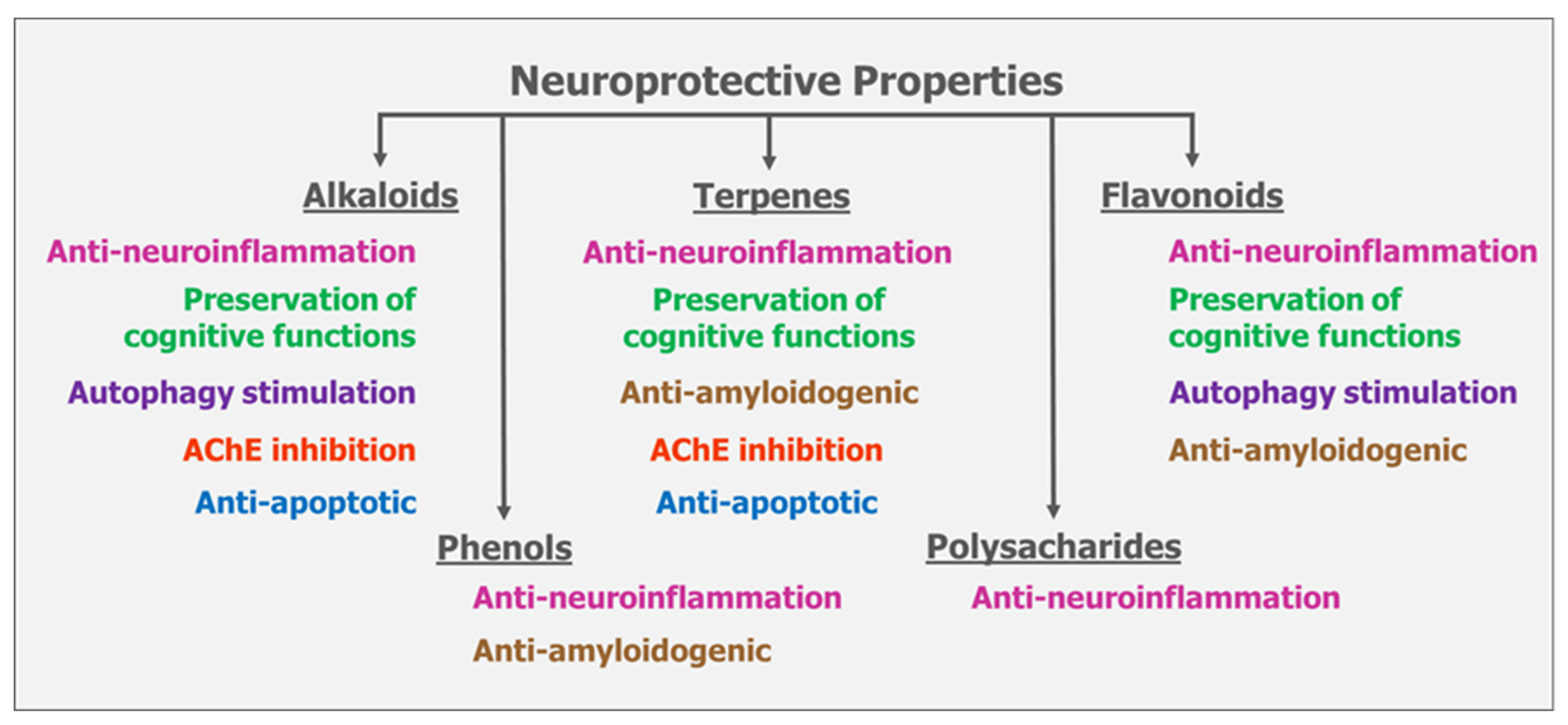
Figure 2.
Matrix metallopeptidases (matrixins) are a large family of proteolytic enzymes, calcium-dependent zinc-containing endopeptidases, involved in the inflammatory response. Signaling cascades activated by interaction of brain-derived neurotrophic factor (BDNF) isoforms with two types of cell surface receptors, through the tropomycin receptor kinase B (TrkB)(right) and the low affinity p75 neurotrophin receptor (p75NTR) (left). The ProBDNF serve a crucial function in the mitochondria-mediated release of cytochrome C (cyt C) to modulate cell apoptosis and has a greater affinity for the p75 receptor. The pro-BDNF/p75/sortilin complex leads to promotion processes such as apoptosis, neuronal growth cone development, and neuronal survival. The mBDNF/TrkB receptor complex triggers activation of three signaling pathways that, in turn, activate the transcription factor cAMP Response Element-Binding Protein (CREB) and the genes responsible for development and survival of neurons.
Figure 2.
Matrix metallopeptidases (matrixins) are a large family of proteolytic enzymes, calcium-dependent zinc-containing endopeptidases, involved in the inflammatory response. Signaling cascades activated by interaction of brain-derived neurotrophic factor (BDNF) isoforms with two types of cell surface receptors, through the tropomycin receptor kinase B (TrkB)(right) and the low affinity p75 neurotrophin receptor (p75NTR) (left). The ProBDNF serve a crucial function in the mitochondria-mediated release of cytochrome C (cyt C) to modulate cell apoptosis and has a greater affinity for the p75 receptor. The pro-BDNF/p75/sortilin complex leads to promotion processes such as apoptosis, neuronal growth cone development, and neuronal survival. The mBDNF/TrkB receptor complex triggers activation of three signaling pathways that, in turn, activate the transcription factor cAMP Response Element-Binding Protein (CREB) and the genes responsible for development and survival of neurons.
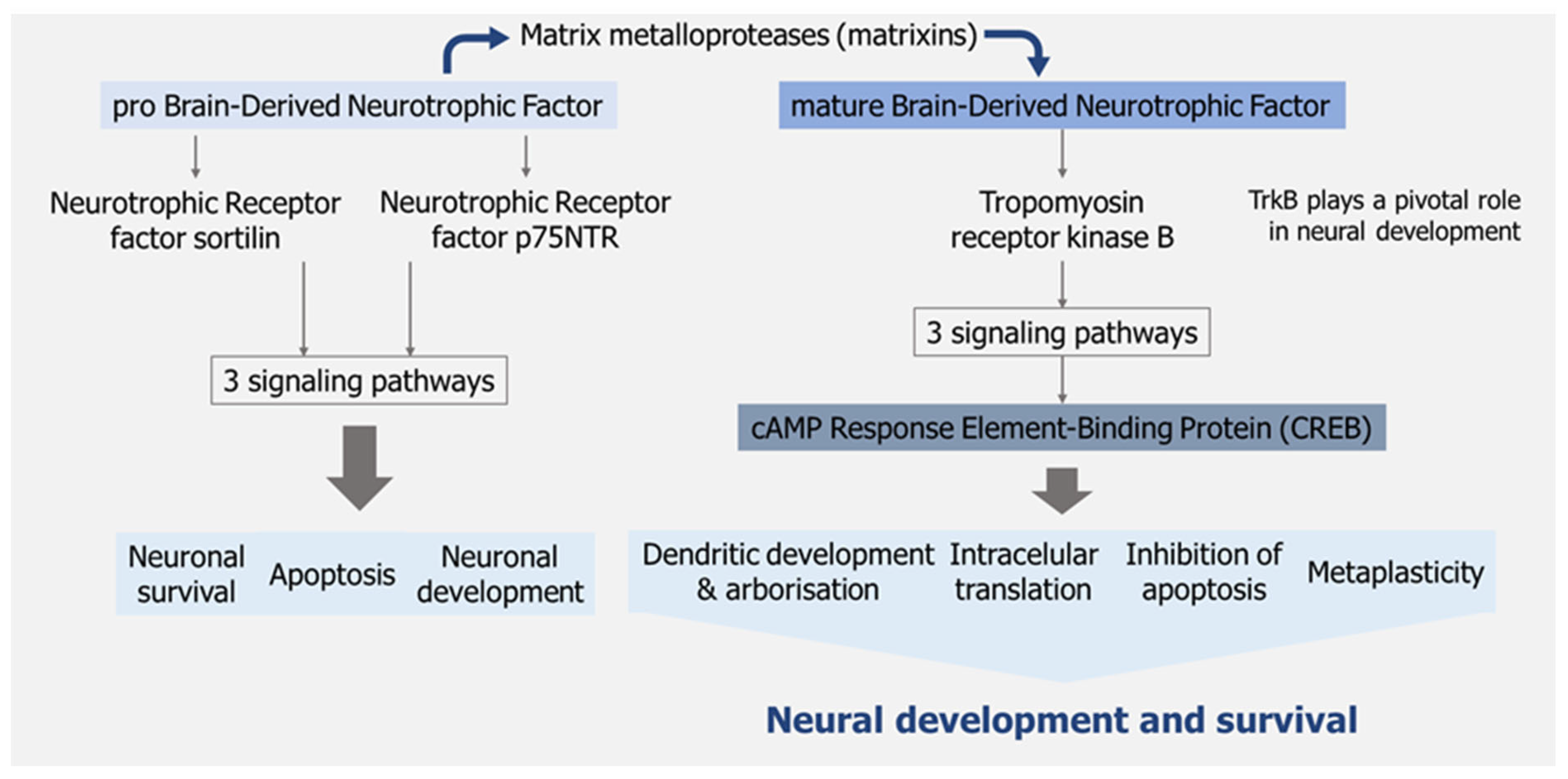
Figure 3.
A summary of active substances of medicinal mushrooms and their neuroprotective biological activities. PD-Parkinson’s disease; AD-Alzheimer’s disease. ADHD, Attention deficit hyperactivity disorder. Neuronal NLRP3 gene is an inflammasome multiprotein complex that drives neurodegeneration in PD.
Figure 3.
A summary of active substances of medicinal mushrooms and their neuroprotective biological activities. PD-Parkinson’s disease; AD-Alzheimer’s disease. ADHD, Attention deficit hyperactivity disorder. Neuronal NLRP3 gene is an inflammasome multiprotein complex that drives neurodegeneration in PD.
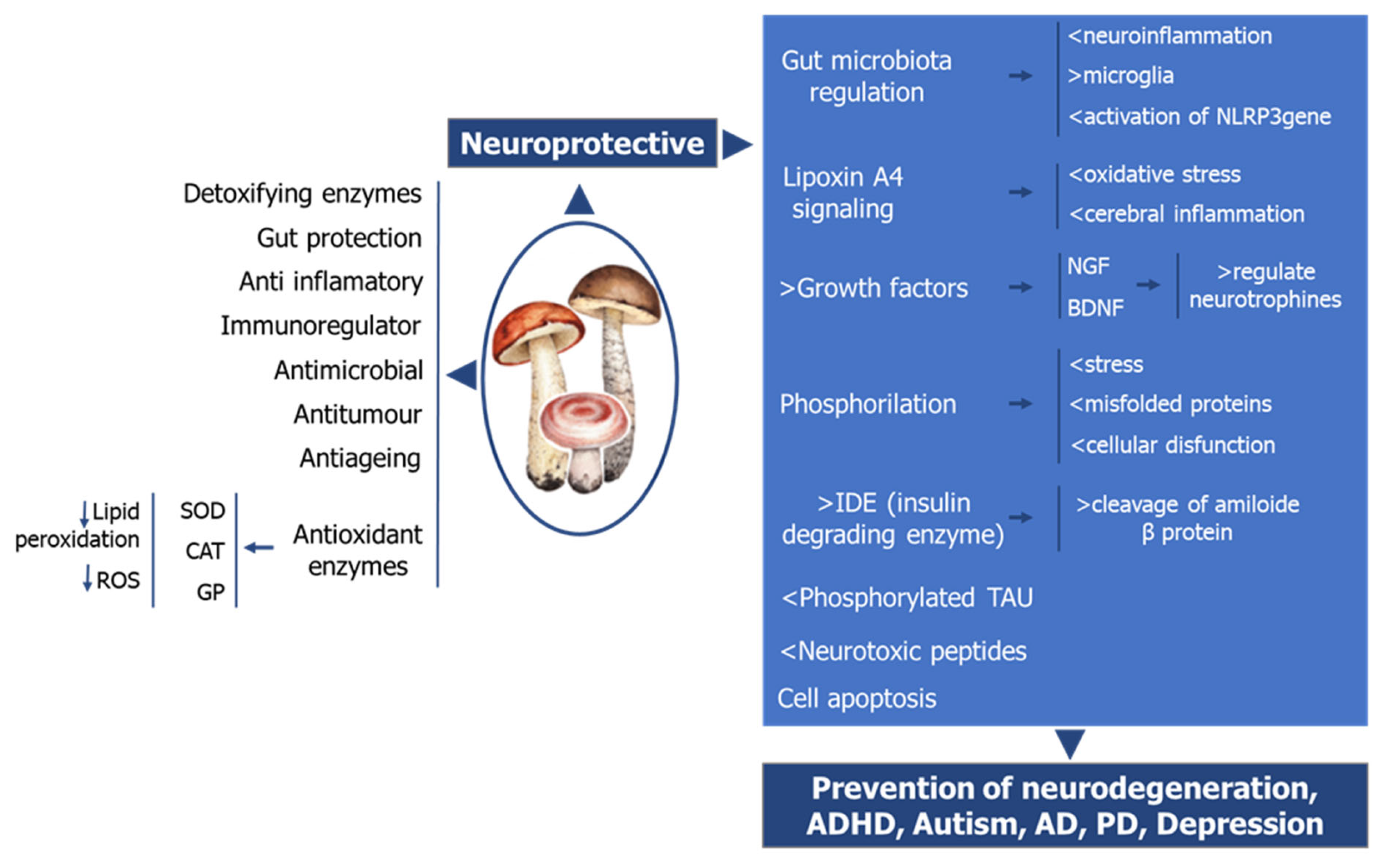
Disclaimer/Publisher’s Note: The statements, opinions and data contained in all publications are solely those of the individual author(s) and contributor(s) and not of MDPI and/or the editor(s). MDPI and/or the editor(s) disclaim responsibility for any injury to people or property resulting from any ideas, methods, instructions or products referred to in the content. |
© 2025 by the authors. Licensee MDPI, Basel, Switzerland. This article is an open access article distributed under the terms and conditions of the Creative Commons Attribution (CC BY) license (http://creativecommons.org/licenses/by/4.0/).
Copyright: This open access article is published under a Creative Commons CC BY 4.0 license, which permit the free download, distribution, and reuse, provided that the author and preprint are cited in any reuse.


