

Submitted:
15 April 2025
Posted:
16 April 2025
You are already at the latest version
Abstract
The slowdown in global progress toward the Sustainable Development Goals (SDGs) highlights the need to develop systems thinking, sustainability literacy, and ethical responsibility among higher education students. The article presents an innovative educational approach, applicable in any university context, which involves the analysis of interdependencies between SDG 2: Zero Hunger and the other SDGs. The methodology included teamwork, brainstorming, bidirectional analysis of the links between SDG 2: Zero Hunger and the other SDGs, the production of visual materials and public presentations, followed by interactive debates and collective feedback. The results showed that this method significantly contributed to the development of critical thinking, the capacity for systemic analysis, and a deep awareness of global issues related to food security. The perception of the students was predominantly positive, they appreciated the practical usefulness and personal impact of the educational activity. The conclusions support the transferability of this educational method in various academic contexts, demonstrating that the analysis of interdependencies between SDGs represents a valuable tool for developing transversal skills and forming a sustainable ethic necessary for future professionals involved in addressing the complexity of global challenges.
Keywords:
SDG 2: Zero Hunger
; food safety
; SDGs interdependencies
; higher education
; food ethics
; systemic thinking
; sustainability literacy
; Education for Sustainable Development (ESD)
; active learning
; university pedagogy
1. Introduction
Education for Sustainable Development (ESD) is today, more than ever, a strategic priority at a global level. The integration of the Sustainable Development Goals (SDGs) into the educational process is no longer just an option or a recommendation, but an essential condition for training generations capable of understanding and managing the complexity of the contemporary world.
UNESCO official documents emphasize that "sustainability education is essential for individuals to acquire knowledge, skills, values and attitudes that enable them to contribute to a more sustainable world" [1].
Especially in the current context, marked by the slowdown in global progress towards achieving the SDGs, education has the mission to produce not only the transfer of information, but also the formation of systemic awareness, critical thinking, and skills to analyze the interdependencies between seemingly different fields.
The Sustainable Development Report 2024 [2] highlights that less than 20% of the global targets of the 2030 Agenda are on track to be achieved, while many of the most important goals — including SDG 2: Zero Hunger — are stagnating or even regressing. This reality requires a profound rethinking of how we educate future professionals, leaders and citizens.
Education for the SDGs must go beyond presenting them as simple lists of goals and become a deep process of action-oriented learning, in which students are challenged to understand the invisible connections between social, economic and ecological phenomena [3].
Universities are thus called to play an essential role in this transformation, becoming educational spaces that not only prepare for the labor market, but also train critical thinking, food ethics, global responsibility, and skills for sustainability [4,5].
According to SDSN, educational approaches that develop systemic thinking and understanding of the interdependencies between the SDGs are considered the most effective methods of training future change agents of sustainable development [5].
Without this type of education, there is a real risk that future policies and solutions will remain fragmented, isolated, and unable to produce real change at a global level.
Of all 17 Sustainable Development Goals (SDGs), SDG 2: Zero Hunger occupies a very special place, not only because of its social and humanitarian importance, but also because it represents a true "central node" in the complex network of sustainable development.
Ensuring food security and promoting healthy and equitable diets for all are fundamental to human well-being, economic stability, social peace, and environmental protection [6]. Virtually no SDG can be achieved in the absence of adequate and sustainable nutrition.
Furthermore, recent reports in the Sustainable Development Report 2024 [2] place SDG 2: Zero Hunger among the most affected and vulnerable goals. Global hunger is on the rise for the third consecutive year, and forecasts show that without radical measures, over 600 million people will suffer from hunger by 2030.
This reality transforms SDG 2: Zero Hunger from a sectoral objective (strictly food) into an objective with systemic, cross-cutting impact, with multiple and deep links to all other SDGs [8,9]. Global hunger is not only a problem of food production, but also of poverty (SDG 1), health (SDG 3), education (SDG 4), gender equality (SDG 5), natural resources (SDG 6, SDG 14, SDG 15), climate (SDG 13), peace (SDG 16) and international partnerships (SDG 17) [10,11].
In this context, it states explicitly that food security is a prerequisite for achieving sustainable development as a whole. Moreover, recent literature proposes conceptualizing SDG 2: Zero Hunger as a true “hub” of the entire SDGs system [6,12].
This special positioning of SDG 2: Zero Hunger also generates a special responsibility for food security education. The teaching of SDG 2: Zero Hunger cannot be done in a fragmented, isolated way, but must clearly highlight its multiple connections, mutual impacts and interdependencies with all other dimensions of sustainable development [13,14].
Especially in Romania, where challenges related to food security are aggravated by phenomena such as food waste, social inequalities, climate change or rural migration, systemic education in the field of SDG 2: Zero Hunger becomes a priority necessity [15,16,17].
Thus, SDG 2: Zero Hunger today represents not just a study topic, but an ideal teaching framework for developing complex thinking, empathy, food ethics, and responsibility towards the future of food and the planet [18,19]. Universities today are at a historical turning point, where their traditional role — that of transmitting knowledge — is no longer sufficient for the global challenges of the 21st century [20,21]. The complexity of the SDGs and the multiple connections between them force academia to profoundly rethink its educational processes.
Sustainability cannot be understood and promoted without systemic, integrative thinking that transcends the boundaries of classical disciplines [10,22]. This is precisely what is often missing from conventional university education: an approach to the SDGs not as separate lists of goals, but as a living, interdependent system, where every action or inaction generates multiple, direct and indirect effects [23,24].
The Guide to Accelerating SDG Education in Universities [5] highlights that one of the greatest educational needs today is to develop students’ capacity to analyze the relationships of influence and dependency between the SDGs. This is what the authors call Education for the SDGs (ESDGs) – an educational concept that combines critical thinking, systemic understanding, problem-solving and the development of a solution-oriented mindset [5].
Furthermore, learning based on interdependencies [1]:
- encourages empathy and global responsibility;
- develops strategic analysis skills;
- prepares students for professional reality, where decisions rarely affect a single area;
- stimulates creativity, interdisciplinarity, and thinking "out of the box";
- meets international requirements for transformative learning.
FAO [6] clearly shows that food systems are interconnected with all other social, economic, and ecological systems. Therefore, food security (SDG 2) cannot be adequately taught without an approach that explores its interactions with the other SDGs.
In addition, the Sustainable Development Report 2024 [2] highlights that many of the current bottlenecks in achieving the SDGs stem precisely from the lack of collaboration between sectors, policies, actors, and levels of governance.
Therefore, education based on SDG interdependencies is not just a pedagogical recommendation, but a strategic urgency [11].
Universities have a moral, social, and professional responsibility to prepare graduates who:
- think systemically;
- understand complex causal relationships;
- can build integrative and sustainable solutions;
- are able to anticipate risks, conflicts, or side effects.
Such an educational model perfectly responds to the current global challenge: building a generation of SDG implementers, capable of bringing positive change in any field or community [5].
The originality of the educational approach proposed and applied within the Food Security disciplines at the Romanian University of Life Sciences ,,King Mihai I’’ from Timisoara, University of Agronomic Sciences and Veterinary Medicine of Bucharest and ‘’Aurel Vlaicu’’ University of Arad, consists in building an educational model focused on analyzing the interdependencies between the SDGs, with particular emphasis on SDG 2: Zero Hunger. Figure 1 shows example of our seminar room, structured and equipped with visual educational materials dedicated to each of the SDGs, supporting students’ systemic understanding of food security and sustainability.
Unlike classical approaches, which treat the SDGs in isolation or as independent themes, this pedagogical strategy emphasizes the analysis of the complex and reciprocal relationships between SDG 2: Zero Hunger and all other SDGs.
This educational approach is innovative not only in its content, but also in its learning philosophy: students are not only invited to learn about SDG 2: Zero Hunger, but are challenged to understand how food security is directly and bidirectionally linked to global issues such as poverty, health, education, gender equality, natural resources, climate change or global partnerships.
Moreover, this approach brings the idea of systemic thinking and food ethics to the center of education, preparing students to become not only specialists in their field, but future responsible citizens, capable of understanding the global impact of local elections.
The proposed approach thus responds to the requirements formulated in recent international literature [1,5,6], which emphasizes the need to transform university education from a fragmented process into an integrative process, oriented towards the formation of transversal skills for sustainability.
This educational vision transforms the discipline of Food Security into an innovative learning space, in which food security is no longer just a knowledge objective, but becomes a framework for global thinking and a laboratory of sustainable consciousness [25].
The originality of the educational approach presented in this article lies not only in its innovative content, but especially in its educational philosophy focused on the formation of systemic thinking, global responsibility, and food ethics.
The food security teacher can no longer have, in the current context of global food crises, an exclusively informative role. Teaching must become a process of building sustainable consciousness, in which students are challenged to understand the complexity of food systems and the impact of multiple individual and collective decisions on food security [17,22].
Analyzing the interdependencies between SDG 2: Zero Hunger and the other SDGs provides an ideal educational framework for developing these cross-cutting skills. Through this approach, the learning process goes beyond the theoretical level and becomes a practical exercise in critical thinking, applied creativity and the formation of attitudes and values essential for sustainable development [26,27].
Creativity used in teaching is not an goal, but an essential pedagogical tool for developing responsible freedom and students’ capacity to build sustainable solutions in real contexts.
In this sense, food security becomes not just a study topic, but a powerful educational platform for training future specialists, capable of understanding global interconnections, anticipating risks, building systemic solutions and promoting authentic food ethics, based on respect, equity and responsibility.
2. Materials and Methods
2.1. Background - Literature and Global Context
2.1.1. Key Data and Conclusions from the Sustainable Development Report 2024 on SDG 2
According to Sustainable Development Report 2024 SDG 2: Zero Hunger is one of the global goals most affected by stagnation or regression worldwide. Virtually none of the 193 United Nations Member States has fully achieved the targets associated with SDG 2: Zero Hunger, nor is it on track to achieve them by 2030. The main conclusions regarding the status of SDG 2: Zero Hunger in 2024 are as follows [2]:
- An estimated 600 million people will suffer from hunger in 2030 if current trends are not reversed.
- The prevalence of undernutrition has increased again, reaching 10% of the global population in 2021, after years of decline.
- In parallel, the prevalence of obesity at a global level has increased alarmingly, from 9% in 2005 to 16% in 2022, generating a double challenge: undernutrition and overnutrition in the same communities or regions.
- Agriculture uses over 50% of the planet’s land area and approximately 70% of freshwater resources.
- Food systems are responsible for a third of global greenhouse gas emissions and are the main cause of biodiversity loss.
- Despite some local progress (for example, increasing cereal production from 3.4 tons/ha in 2000 to 4.4 tons/ha in 2021), the phenomenon of hunger at a global is increasing, fueled by conflicts, climate crises, economic inequalities, and price volatility.
2.1.2. SDG 2: Zero Hunger - A Central Node in the SDGs Architecture
The positioning of SDG 2: Zero Hunger at the center of the sustainable development architecture is supported by a growing scientific literature that highlights the many bidirectional links between food security and the other SDGs.
FAO emphasizes that the success of SDG 2: Zero Hunger leads to progress across the 2030 Agenda, while its failure can amplify inequalities, social conflicts or environmental degradation [6].
Guang-Wen et al. conducted one of the most recent and important analyses of the interdependencies between SDG 2: Zero Hunger and the other SDGs, showing that nutrition and food security are directly involved in 12 of the 17 SDGs, and indirectly in all others [7].
The book series Transitioning to Sustainability contributes substantially to the understanding of these interdependencies, presenting a detailed analysis of how each SDG influences and is influenced by SDG 2: Zero Hunger, with a focus on specific challenges and solutions in diverse regional contexts [28].
Furthermore, the analysis conducted by Dörgő et al. demonstrates that SDG 2: Zero Hunger has one of the highest centrality values in the conceptual networks of the SDGs, which confirms its positioning as an essential strategic node for sustainable development [9].
SDSN and UNESCO also highlight that food systems are a critical area for the transition to sustainability, affecting most of the other SDGs [1,5].
In Sustainable Development Report 2024, SDG 2: Zero Hunger is an integral part of one of the six major systemic transformations considered essential for achieving the 2030 Agenda: Transforming Food, Land and Water Systems [2].
2.1.3. The Need for Systemic Education About Food Security
In this context, it becomes clear that university education on food security cannot remain anchored in a fragmented approach. FAO emphasizes that future professionals need an integrated understanding of food systems, their interactions with health, the environment, the economy, and social equity [11].
SDSN recommends introducing systemic thinking and analysis of interdependencies between SDGs in all relevant university programs, and UNESCO promotes the concept of transformative education as a key solution to global challenges [1,5].
Teaching the relationships between SDG 2: Zero Hunger and the other SDGs thus becomes not just a didactic innovation, but an urgent need to build transversal skills among students, the future agents of sustainable change.
2.2. Case Study Context
The case study presented in this article was conducted at the University of Life Sciences "King Mihai I" from Timisoara, Romania, within the Food Safety discipline, taught to undergraduate students.
The Food Security discipline has a distinct status in the curriculum, being one of the few disciplines that explicitly addresses the SDGs and their relationship with food systems. Through its content, this discipline directly contributes to the formation of transversal skills, essential for future specialists in the food and agricultural field.
The general objectives of the discipline include:
- understanding the concept of food security in all its dimensions (availability, accessibility, quality and stability);
- familiarizing students with the current challenges of food systems at global, European and national levels;
- developing systemic thinking and the ability to analyze the interdependencies between food security and other areas of sustainable development;
- forming an ethical awareness regarding responsible consumption, reducing food waste, and respecting natural resources.
What differentiates the pedagogical approach proposed in this discipline is the integration of Education for Sustainable Development and, above all, the challenge to students to explicitly analyze the relationships between SDG 2: Zero Hunger and the other SDGs [29].
The practical activities carried out throughout the course are designed to stimulate critical thinking, teamwork, creativity and logical reasoning. Students are organized into working groups, each responsible for analyzing and presenting how SDG 2: Zero Hunger influences and is influenced by another SDG, selected from the list of SDGs.
This innovative methodology allows students to explore not only the obvious connections, but also the less visible ones, thus stimulating systemic thinking and a deeper understanding of the role of food security in the global context.
2.3. Methodology of Teaching Activity
The teaching activity analyzed in this case study was carried out within the Food Security discipline, part of the undergraduate study program.
The applied methodology was designed to integrate the principles of Education for Sustainable Development (ESD) and stimulate the development of students’ systemic thinking, through the concrete analysis of the interdependencies between SDG 2:Zero Hunger and the other SDGs.
The organization of the activity was as follows:
- Students were divided into working groups of three students each.
- Each group was assigned a pair or two of goals: SDG 2: Zero Hunger and another SDG (from SDG 1 to SDG 17, excluding SDG 2).
-
The task was twofold:
- -
- to analyze how SDG 2: Zero Hunger influences that SDG;
- -
- identify how that SDG in turn influences SDG 2.
The task of each group of students consisted of:
- making an oral presentation (PowerPoint, flipchart, poster or creative board);
- oral supporting the ideas within a dedicated seminar;
- arguing the identified connections through examples, data or case studies;
- actively participating in discussions and feedback between groups.
The pedagogical objectives of the exercise aimed to:
- stimulating critical thinking;
- developing the capacity for systemic analysis;
- promoting creativity and teamwork;
- developing an ethical awareness in relation to food security;
- raising awareness regarding the role of SDG 2: Zero Hunger within the 2030 Agenda.
The tools used were:
- theoretical and practical analysis;
- documentation based on FAO, UN, SDSN, Sustainable Development Report resources;
- visual activities: posters, charts, diagrams;
- presentations and debates in seminars.
The final assessment of the students integrated both testing of theoretical knowledge and assessment of involvement in practical activities, with a focus on the ability to analyze the interdependencies between SDG 2: Zero Hunger and the other SDGs.
This innovative methodology proved to be extremely effective in building a deep understanding of the complex relationships between SDG 2: Zero Hunger and the other SDGs, stimulating active involvement of students and the development of transversal skills essential in sustainability education.
2.4. Methodology of the Survey Applied to Students
In order to assess the students’ perception of the usefulness and impact of the educational activity carried out within the Food Security discipline, a structured questionnaire was developed and applied, with exclusively didactic and scientific purposes.
The questionnaire was administered on paper, within the seminar activities, after completing the practical exercise of analyzis, elaboration, and presentation of the results regarding the interdependencies between SDG 2: Zero Hunger and the other SDGs.
The educational activity consisted of organizing students into teams of three, each team being responsible for carrying out 2 or even 3 different analyses on how SDG 2: Zero Hunger influences and is influenced by other SDGs. Subsequently, the results of these analyses were presented publicly, within the seminars, in different forms: PowerPoint presentations, posters, flipcharts or interactive debates.
This methodology aimed to stimulate students’ critical thinking, systemic analysis capacity, teamwork and argumentation skills, while strengthening their deep understanding of food security in the context of the 2030 Agenda.
The questionnaire design included four sections:
- Section 1 - General data (academic year, group, completion date)
-
Section 2 - Perception of the usefulness and efficiency of the activity (5 items, Likert scale 1-5) [30]:
- The practical activity helping to better understand the SDGs.
- The analysis of the links between SDG 2: Zero Hunger and the other SDGs was interesting and useful.
- The working method (groups, presentations, boards, debates) was effective for learning.
- Better understood the role of food security in sustainable development.
- Enjoyning working as a team on this topic.
-
Section 3 - Perceived personal impact (5 items, Likert scale 1-5):
- 6.
- A result of this activity is to pay more attention to the diet.
- 7.
- Have become more mindful to food waste.
- 8.
- Believing that systemic thinking is important in solving global problems.
- 9.
- Feeling better prepared to analyze complex issues, such as food security.
- 10.
- Would recommend this activity to other students.
- Section 4 - Open Feedback (2 questions).
Students were invited to rate their level of agreement with each statement using a scale from 1 (strongly disagree) to 5 (strongly agree).
The total number of respondents was 46 students, distributed as follows:
- 25 students in the 2023/2024 academic year;
- 21 students in the 2024/2025 academic year.
For the last section of the questionnaire, which aimed to obtain open feedback, students did not complete written responses. Instead, a free and interactive discussion was organized, facilitated by the teacher, with the aim of stimulating the free expression of ideas, mutual complementation and exchange of opinions.
The collected data were subsequently centralized and processed in Microsoft Excel, being used for descriptive and graphical analysis of students’ perception.
2.5. Organization of Teaching Activity: Time Allocation, Work Stages, and Applied Method
The educational activity analyzed in this case study was carried out within the Food Safety discipline, during 16 teaching hours (the equivalent of 8 seminar meetings), distributed over several consecutive weeks, during the first semester.
The main objective of this practical activity was to develop students’ systemic thinking, critical analysis skills, and argumentative formulation of ideas regarding the relationships between SDG 2: Zero Hunger and the other SDGs.
The work stages and time allocation were as follows:
Stage 1 - Theoretical presentation of the SDGs and explanation of the working methodology - 2 hours
Stage 2 - Organizing of working teams (preferably 3 students each), assignement of SDGs and initial brainstorming within each team - 1 hour
Stage 3 - Documentation of the team based on recommended resources (FAO, UN, SDSN, Sustainable Development Report, scientific articles) - 4 hours
Stage 4 - Analysis of interdependencies SDG 2: Zero Hunger ↔ SDG X, selection of relevant ideas and preparation of visual materials (presentations, posters, charts) - 5 hours
Stage 5 - Public presentation of the results of each team, followed by collective brainstorming, debates, and interactive feedback - 4 hours
Total: 16 teaching hours.
The activity was carried out entirely in student teams and flexibly organized depending on the total number of participants. Ideally, teams were formed by 3 students, but there were teams of 4 members.
In addition, teams that expressed interest and desire to get involved had the opportunity to analyze the second pair SDG 2: Zero Hunger ↔ SDG X, as a form of appreciation and valorization of additional involvement.
The main working method was brainstorming, applied in two ways:
- internal brainstorming, within each team, to identify ideas;
- collective brainstorming, during seminars assigned to presentations, after each group’s presentation, when the entire group of students was actively involved in completing, commenting on and discussing the ideas presented.
The selection of ideas and the formulation of conclusions were carried out in a free but guided manner, encouraging the use of concrete examples, data, case studies or own observations.
Therefore, the brainstorming activity carried out within each team followed a guided and staged teaching process, so that students could understand and apply the principles of systemic thinking.
In the first phase, team members individually formulated ideas regarding possible links between SDG 2: Zero Hunger and the assigned SDG. Subsequently, the ideas were freely discussed within the group, and through consensus or argumentation, the teams selected the most relevant 2-3 ideas, considered essential for the analysis of interdependencies.
After this internal stage, each team organized their ideas in a visual form (diagram, poster, board, presentation), and then, during the public presentation, they would benefit from feedback, additions, and additional ideas from their colleagues and teachers.
Thus, brainstorming took place both internally (within each team) and externally (in plenary, after each presentation), constituting a continuous process of refining, completing and validating the ideas formulated by the students.
The activity was carried out over two academic years (2023/2024 and 2024/2025), with two different generations of students, but pursuing the same educational goal and applying the same methodology. In this context, the resulting visual schemes and presented in this article in section 4. Results, reflect a synthesis of the ideas generated by students in both academic years, in a cumulative and evolutionary process of analysis, completion and refinement of ideas. Thus, the schemes included in the article do not exclusively represent the result of a single year of study, but reflect a collective educational construction, resulting from a pedagogical approach of collaborative and creative learning.
2.6. Sources Used for Documentation and Development of Teaching Activities
The scientific documentation and development of the teaching activity analyzed in this case study were carried out based on consulting a wide range of relevant and credible sources, recognized internationally.
The selection of sources specifically aimed to ensure a balance between specialized academic literature and institutional resources published by international organizations with expertise in the field of sustainable development and food security.
These categories of sources were used not only by the teaching staff to develop the methodology and content of the practical activities but were also explicitly recommended to students as basic bibliographic support for conducting their own analyses on the interdependencies between SDG 2: Zero Hunger and the other Sustainable Development Goals (SDGs).
The main categories of sources used and recommended were:
- Reports, guides, official documents and educational materials developed by authoritative international organizations, such as the Food and Agriculture Organization of the United Nations (FAO), United Nations (UN), Sustainable Development Solutions Network (SDSN), UNESCO, World Bank, and Sustainable Development Report.
- Recent scientific articles, published in journals indexed in recognized international databases (Web of Science, Scopus), available through international publishers such as Elsevier, Springer, Taylor & Francis, Wiley, MDPI etc.
- Relevant academic literature, identified through Google Scholar, ResearchGate, and Publons, with a focus on recent works (last 5-10 years) that address topics related to food security, education for sustainable development, analysis of interdependencies between SDGs and the formation of transversal skills in higher education.
- Grey literature, including case studies, technical reports, public policy documents, practical guides and educational resources available online.
The process of identifying and selecting literature was carried out using a series of relevant keywords, in English, which guided the bibliographic searches and documentation, such as: SDG 2: Zero Hunger, food safety, sustainability education, SDGs interlinkages, systems thinking in education, education for sustainable development, higher education and SDGs, food ethics, green competences, transformative education, food systems.
The main criteria for selecting sources were the timeliness of the publications, direct relevance to the topic of the study, the degree of scientific recognition of the publication or issuing institution, and the informative or applicative value for developing the analyzed teaching activity.
3. Results
3.1. Visual Diagrams for the Main Connections Between SDG 2: Zero Hunger and the Other SDGs
One of the most valuable results of the teaching activity carried out within the discipline Food Security was represented by the students’ detailed analyses of the interdependence between SDG 2: Zero Hunger and the other SDGs.
These exercises were designed to stimulate students’ systemic thinking, their capacity for critical analysis and argumentation, as well as their deep understanding of how food security connects with all dimensions of sustainable development promoted by the 2030 Agenda.
For each analysis, students were encouraged to identify and present at least two major directions of influence:
- how SDG 2: Zero Hunger contributes to achieving the other SDG analyzed;
- how that SDG in turn influences food security.
The results of these analyses were synthesized in the form of visual diagrams, created both by students (as part of their teaching activities) and by the authors of this paper, with the aim of clearly and accessible highlighting the main identified connections.
Each of these schemes is accompanied by a brief presentation and discussion, in which the essential ideas and interdependence mechanisms between SDG 2: Zero Hunger and the other SDGs are explained.
The resulting 16 schemes reflect an integrated view of the complexity of food security and provide a useful tool for both teaching and understanding the systemic relationships between the SDGs.
3.1.1. Analysis of the Major Directions of Influence Between SDG 2: Zero Hunger and SDG1: No Poverty
Following the teaching activity, the students identified several major directions of mutual influence between SDG 2: Zero Hunger and SDG 1: No Poverty, highlighting the deeply interdependent nature of these two goals.
On the one hand, food security contributes to poverty reduction through multiple mechanisms [10,15,31,32]. Students highlighted that when food expenditures decrease due to increased food accessibility and availability, low-income households can redirect financial resources to other essential needs, such as education, health or housing. At the same time, the development of sustainable agriculture and increased food productivity were considered by students to be essential for job creation, especially in rural areas, where the incidence of poverty is highest.
On the other hand, the students highlighted that poverty reduction facilitates access to safe, sufficient and nutritious food for the vulnerable population. Increasing household incomes determines not only the satisfaction of basic caloric needs, but also the diversification of food and the orientation towards a balanced diet, favorable to individual health and well-being (Figure 2).
Thus, the analysis carried out by the students reflects a deep understanding of the bidirectional mechanisms through which food security and poverty reduction mutually reinforce each other, in accordance with the specialized literature [2,6], but also with the logic of integrated interventions promoted by the 2030 Agenda.
3.1.2. Analysis of the Major Directions of Influence Between SDG 2: Zero Hunger and SDG 3: Good Health and Well-Being
In their analysis, students identified several important links between SDG 2: Zero Hunger and SDG 3: Good Health and Well-being, highlighting how nutrition and health are closely connected.
Thus, the students considered that an adequate, safe and balanced diet contributes to maintaining and improving the health of the population. The risks generated by the lack of access to nutritious food, such as malnutrition, undernutrition, growth deficiencies or the occurrence of diseases caused by inadequate nutrition, were mentioned.
At the same time, students noted that a healthy diet can also prevent other conditions associated with modern lifestyles, such as obesity, diabetes or cardiovascular diseases, problems also highlighted in the specialized literature [2,6].
Conversely, students emphasized that population health plays an essential role in ensuring food security, as a healthy population is active, able to work and able to contribute to food production and the proper functioning of food systems. In addition, good health reduces pressure on family budgets and allows resources to be allocated to other needs, including a more diverse diet (Figure 3).
This analysis demonstrated students’ understanding of the essential connection between nutrition and health, as an integral part of the vision promoted by the 2030 Agenda.
3.1.3. Analysis of Major Directions of Influence Between SDG 2: Zero Hunger and SDG 4: Quality Education
Students identified, in their analysis, several essential links between SDG 2: Zero Hunger and SDG 4: Quality Education, demonstrating a solid understanding of how nutrition and education mutually reinforce each other within sustainable development (Figure 4).
On the one hand, students emphasized that adequate, safe and nutritious food supports educational performance. Meeting basic nutritional needs is essential for children and young people’s ability to concentrate, learn and develop cognitively [33]. Malnutrition, undernutrition or lack of consistent access to quality food negatively affects the educational process, especially among students from vulnerable backgrounds [11].
At the same time, students noted that the existence of school feeding programs (is an effective strategy for reducing absenteeism, increasing school participation, and supporting low-income families [34].
Conversely, students highlighted that access to quality education contributes, in the long term, to improved food security. An educated population is better informed about nutrition, health, sustainable agricultural practices and reducing food waste. In addition, education increases economic opportunities, incomes and the ability to access safe and diverse food (Figure 4) [31,35].
Figure 4.
Main interconnections between SDG 2: Zero Hunger and SDG 4: Quality Education identified by students. Source: Original by authors.
Figure 4.
Main interconnections between SDG 2: Zero Hunger and SDG 4: Quality Education identified by students. Source: Original by authors.
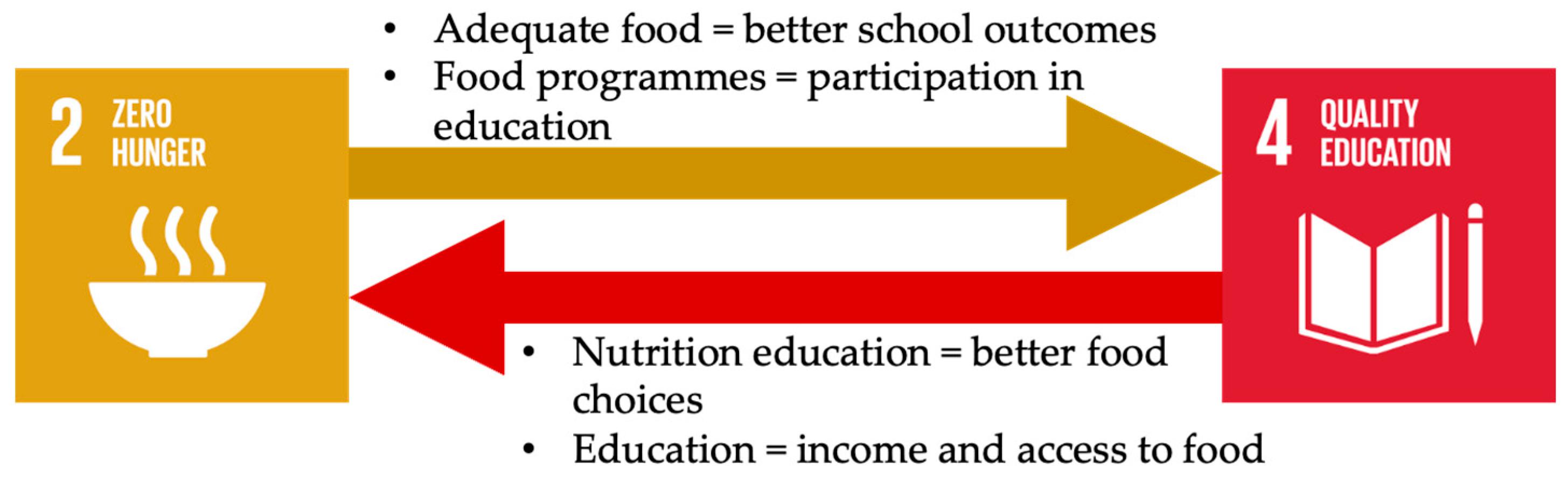
The analysis carried out by the students thus confirms that SDG 2: Zero Hunger and SDG 4: Quality Education are deeply connected, with education and nutrition being key elements for reducing inequalities and promoting social well-being, in the spirit of the 2030 Agenda.
3.1.4. Analysis of Major Directions of Influence Between SDG 2: Zero Hunger and SDG 5: Gender Equality
Students highlighted, in their analysis, significant connections between SDG 2: Zero Hunger and SDG 5: Gender Equality, underlining how food security and gender equality influence each other.
On the one hand, students noted that improving food security helps reduce the vulnerability of women and girls, especially in rural areas or disadvantaged communities. When access to food is guaranteed, women are less exposed to extreme poverty, malnutrition and disproportionate responsibilities related to procuring food for the family [11,36].
Also, the development of sustainable agriculture and supporting women in active economic roles (agricultural producers, entrepreneurs in the food sector) were considered by students to be important factors in increasing women’s economic independence and promoting equal opportunities [37,38].
Conversely, students observed that promoting gender equality contributes to improving food security, as educated women involved in family decision-making are more attentive to nutrition, children’s health, and sustainable management of food resources.
In addition, women’s equal access to land, resources, education, and financial support in agriculture increases food production and contributes to reducing hunger, an aspect also supported by the specialized literature (Figure 5) [2,6].
This analysis by students highlights the huge potential of gender equality as an accelerating factor in achieving SDG 2: Zero Hunger.
3.1.5. Analysis of Major Directions of Influence Between SDG 2: Zero Hunger and SDG 6: Clean Water and Sanitation
During the analysis activity, students identified essential links between SDG 2: Zero Hunger and SDG 6: Clean Water and Sanitation, emphasizing that food security and access to clean water are fundamental components of sustainable development.
On the one hand, students noted that sustainable agriculture, oriented towards water efficiency, contributes to the protection of drinking water resources. Given that agriculture is the main consumer of freshwater globally (approximately 70% of total consumption), responsible use of water in agricultural processes becomes essential for maintaining the availability of water resources and for the health of ecosystems [39,40].
The students also emphasized that the use of efficient irrigation technologies, soil protection, and agroecological practices contribute not only to increasing food production, but also to protecting water quality, avoiding pollution with fertilizers or pesticides.
On the other hand, they highlighted that access to clean water and adequate hygiene and sanitation systems is essential for food security. Lack of drinking water affects agricultural production, household hygiene, animal health and food safety, endangering the food available to communities (Figure 6) [34].
Students understood that SDG 2: Zero Hunger and SDG 6: Clean Water and Sanitation are deeply linked, and sustainable solutions must consider both goals, as the 2030 Agenda emphasizes.
3.1.6. Analysis of Major Directions of Influence Between SDG 2: Zero Hunger and SDG 7: Affordable and Clean Energy
In their analysis, students identified several important connections between SDG 2: Zero Hunger and SDG 7: Affordable and Clean Energy, showing how affordable and clean energy contributes to food security and, conversely, how agricultural practices influence the energy transition.
On the one hand, the students emphasized that access to affordable and clean energy sources directly supports agriculture and food production. Electrical and thermal energy is essential for modern agricultural processes — from irrigation, storage, and processing to food transportation and preservation [41,42].
Especially in rural areas, lack of energy or high fuel costs can significantly limit agricultural productivity and farmers’ ability to prevent food losses and waste.
Students also noted that the transition to clean energy sources (solar energy, biogas, wind) can support agricultural activities in a sustainable and economically efficient way, thus also contributing to the reduction of greenhouse gas emissions.
Conversely, students identified that sustainable agricultural practices could become sources of renewable energy, such as using agricultural waste to produce biogas or bioenergy. Thus, agriculture can contribute to expanding green energy sources, supporting the achievement of SDG 7: Affordable and Clean Energy (Figure 7).
The students’ analysis confirms a strong link between energy and food, highlighting the need for integrated solutions that ensure both food security and sustainable energy transition, in the spirit of the 2030 Agenda.
3.1.7. Analysis of the Major Directions of Influence Between SDG 2: Zero Hunger and SDG 8: Decent Work and Economic Growth
In their analysis, students highlighted clear and consistent links between SDG 2: Zero Hunger and SDG 8: Decent Work and Economic Growth, underlining the essential role of agriculture and food systems in economic development and in ensuring decent jobs.
On the one hand, the students considered that the development of sustainable agriculture directly contributes to job creation, especially in rural areas, where agriculture is the main economic activity. A high-performance and modernized agriculture can ensure more stable, better-paid jobs and better working conditions for the vulnerable population [43,44].
In addition, food security supports the health and productivity of the workforce, allowing individuals to be economically active and participate in the economic growth of communities [11,45].
On the other hand, students observed that economic growth, supporting agricultural entrepreneurship, and rural development contribute to improving food security. Higher incomes, decent jobs, and increased economic opportunities allow access to adequate food and reduce vulnerability to hunger and malnutrition (Figure 8) [46,47].
This analysis demonstrated students’ understanding of the deep link between food security and sustainable economic development, both of which are major priorities of the 2030 Agenda.
3.1.8. Analysis of Major Directions of Influence Between SDG 2: Zero Hunger and SDG 9: Industry, Innovation and Infrastructure
The students identified, in their analysis, important connections between SDG 2: Zero Hunger and SDG 9: Industry, Innovation, and Infrastructure, highlighting the essential role of infrastructure and innovation in supporting food security.
On the one hand, the students emphasized that the development of agricultural infrastructure — roads, irrigation systems, cold storage, modern markets — contributes to improving access to food and reducing food losses. Adequate infrastructure allows farmers to transport their products faster, in safe conditions, and to better value them, which leads to increased food availability on the market [10,48].
In addition, technological innovations in agriculture — digitalization, precision agriculture, new production techniques — are considered by students to be essential for increasing the efficiency of food systems and ensuring food security in the context of climate change [11,17].
On the other hand, students noted that food security can stimulate innovation and infrastructure development, by increasing demand for technological solutions, adapted transportation, smart storage systems, or new food distribution models (Figure 9).
The link between SDG 2: Zero Hunger and SDG 9: Industry, Innovation and Infrastructure reflects a modern vision on the role of technology and infrastructure in supporting sustainable development, in line with the principles of the 2030 Agenda.
3.1.9. Analysis of Major Directions of Influence Between SDG 2: Zero Hunger and SDG 10: Reduced Inequalities
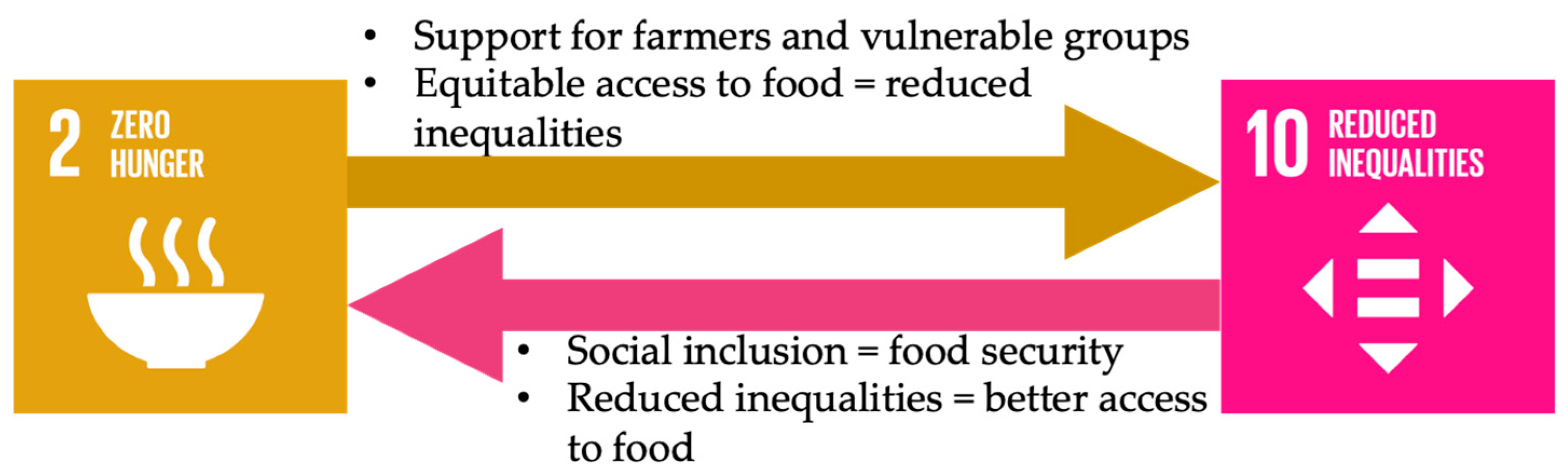
In their analysis, students highlighted relevant links between SDG 2: Zero Hunger and SDG 10: Reduced Inequalities, highlighting how food security is both a factor in reducing inequalities and a consequence of reducing them.
On the one hand, students noted that equitable access to safe and nutritious food is essential for reducing social and economic inequalities. Especially in rural or marginalized communities, lack of access to quality food accentuates differences between different population groups, affecting the health and development opportunities of the most vulnerable [11,49].
Also, implementing support policies for small farmers, poor households or vulnerable groups (children, women, the elderly) can contribute to increasing social equity and inclusion.
On the other hand, students identified that reducing economic and social inequalities facilitates access to food, by increasing incomes, increasing access to education, public services and food infrastructure. Reducing the differences between rural and urban areas or between social categories helps ensure food security for all (Figure 10).
Thus, the analysis carried out by the students demonstrates that SDG 2: Zero Hunger and SDG 10: Reduced Inequalities are deeply interconnected and must be addressed together in sustainable development strategies, as stipulated in the 2030 Agenda.
Figure 10.
Main interconnections between SDG 2: Zero Hunger and SDG 10: Reduced Inequalities identified by students. Source: Original by authors.
Figure 10.
Main interconnections between SDG 2: Zero Hunger and SDG 10: Reduced Inequalities identified by students. Source: Original by authors.
3.1.10. Analysis of Major Directions of Influence Between SDG 2: Zero Hunger and SDG 11: Sustainable Cities and Communities
During the teaching activity, students identified multiple connections between SDG 2: Zero Hunger and SDG 11: Sustainable Cities and Communities, highlighting the fact that food security is a challenge not only in rural areas, but also in urban areas, in the context of accelerated population growth in cities.
On the one hand, students emphasized that developing sustainable cities requires ensuring access to safe, nutritious and affordable food for all residents, including the vulnerable. In this regard, the expansion of urban gardens, peri-urban agriculture or local markets was considered a practical solution to increase the food resilience of urban communities [50,51].
In addition, students noted the importance of urban planning that includes adequate food infrastructure — spaces for agri-food markets, warehouses, short supply chains — in order to reduce inequalities and hunger in cities.
On the other hand, students highlighted that the sustainable cities, with adequate infrastructure and efficient transportation systems, contribute to facilitating the population’s access to food. At the same time, well-organized urban communities can reduce food waste by implementing food recovery and redistribution programs (Figure 11).
The link between SDG 2: Zero Hunger and SDG 11: Sustainable Cities and Communities reflects the need to integrate food policies into urban planning, in line with the principles of the 2030 Agenda.
3.1.11. Analysis of the Major Directions of Influence Between SDG 2: Zero Hunger and SDG 12: Responsible Consumption and Production
During the teaching activity, students highlighted extremely important links between SDG 2: Zero Hunger and SDG 12: Responsible Consumption and Production, emphasizing that a sustainable food system cannot exist without changing consumption behaviors and optimizing production practices.
On the one hand, students considered that responsible consumption contributes to reducing food waste, both at household level and along the supply chain [9,10]. They emphasized that reducing food losses has a direct impact on increasing food security, as saved food can be redirected to vulnerable areas or groups.
Students also noted that responsible consumption practices involve educating consumers about balanced diets, shopping planning, reducing food waste, and reusing food safely.
On the other hand, students highlighted that a responsible production system, based on sustainable practices — such as reducing pesticide use, reducing emissions, and using resources efficiently — contributes to protecting the environment and, implicitly, to creating favorable conditions for long-term food security (Figure 12) [2,11].
The link between SDG 2: Zero Hunger and SDG 12: Responsible Consumption and Production is essential for the implementation of the 2030 Agenda, promoting the transition to sustainable, efficient and equitable food systems.
3.1.12. Analysis of Major Directions of Influence Between SDG 2: Zero Hunger and SDG 13: Climate Action
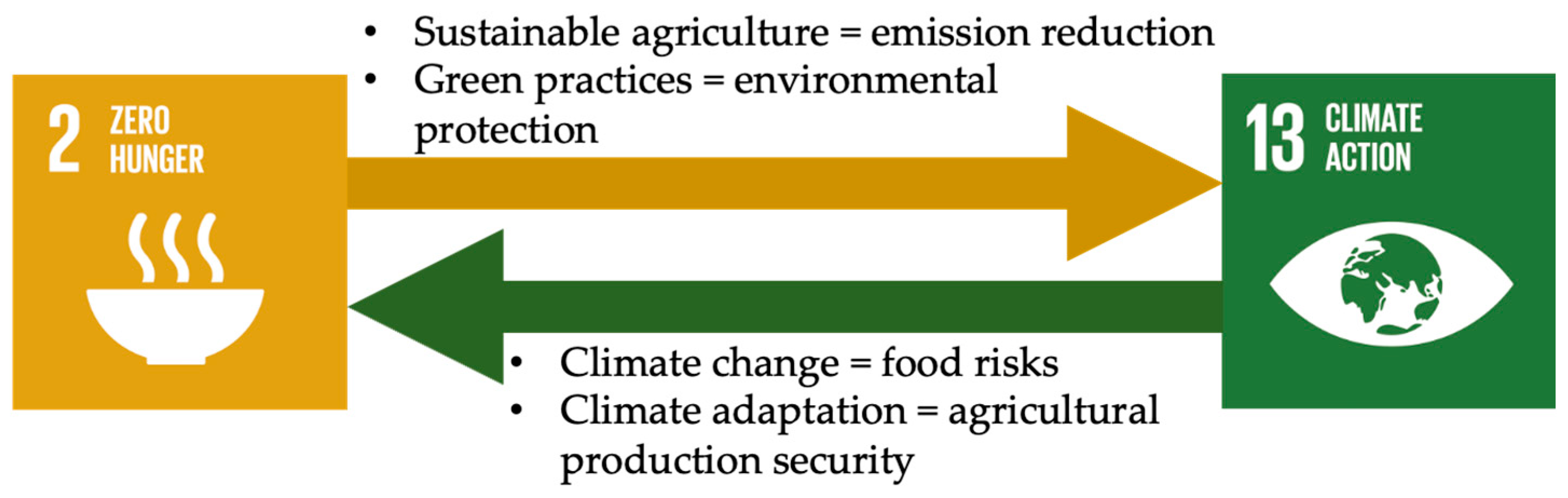
The analysis carried out by the students highlighted an extremely close link between SDG 2: Zero Hunger and SDG 13: Climate Action, given the major impact of climate change on food security and, conversely, the role of agriculture in amplifying or reducing climate effects.
On the one hand, students emphasized that climate change is seriously affecting agricultural production, food availability, and the stability of food systems. Extreme climate events—droughts, floods, rising temperatures, loss of biodiversity—threaten crop yields, and can lead to higher food prices and increased food insecurity, especially in vulnerable regions [11,39].
Conversely, students noted that sustainable agricultural practices can contribute to mitigating the effects of climate change. Climate-smart agriculture, reducing greenhouse gas emissions, sequestering carbon in the soil, efficiently using natural resources, and protecting ecosystems are measures that can transform the agri-food sector into an ally of climate action (Figure 13).
In addition, students noted that adapting food systems to new climate conditions is essential for ensuring long-term food security, in line with the goals of the 2030 Agenda.
Figure 13.
Main interconnections between SDG 2: Zero Hunger and SDG 13: Climate Action identified by students Sources: Original by authors.
Figure 13.
Main interconnections between SDG 2: Zero Hunger and SDG 13: Climate Action identified by students Sources: Original by authors.
3.1.13. Analysis of Major Directions of Influence Between SDG 2: Zero Hunger and SDG 14: Life Below Water
The students identified, in their analysis, essential connections between SDG 2: Zero Hunger and SDG 14: Life Below Water, highlighting the importance of aquatic resources for food security, but also the impact of food practices on marine and freshwater ecosystems.
On the one hand, the students highlighted that sustainable fisheries and responsible aquaculture are important sources of food for the global population, providing essential proteins and nutrients for millions of people, especially in coastal communities or poor regions [11,37]. The conservation of marine resources is therefore essential for maintaining food security.
Also, protecting aquatic biodiversity and avoiding water pollution (with plastic, pesticides, waste or microplastics) were considered by students to be essential measures for ensuring the availability of food resources in the long term.
Conversely, students noted that unsustainable agricultural practices can seriously affect underwater life, by polluting waters with excess nutrients, which promotes eutrophication and the death of marine areas (dead zones). Reducing these negative impacts and promoting sustainable management of food resources contributes to both the protection of underwater life and the food security of future generations (Figure 14).
Students revealed that the connection between SDG 2: Zero Hunger and SDG 14: Life Below Water reflects the need for balance between food production and natural resource conservation, in line with the goals of the 2030 Agenda.
3.1.14. Analysis of Major Directions of Influence Between SDG 2: Zero Hunger and SDG 15: Life on Land
In their analysis, students identified extremely important links between SDG 2: Zero Hunger and SDG 15: Life on Land, emphasizing that food security directly depends on the health of terrestrial ecosystems, and, at the same time, agricultural practices can influence the state of the environment.
On the one hand, students highlighted that sustainable agriculture, by protecting the soil, rational use of natural resources, and conserving biodiversity, contributes to maintaining the balance of terrestrial ecosystems. Agroecological practices, crop rotation, reducing deforestation, or responsible management of pastures were considered essential for ensuring long-term food security [11].
The students also emphasized that protecting forests and natural habitats is important not only for biodiversity but also for maintaining ecosystem services — pollination, soil fertility, water protection — on which agriculture fundamentally depends.
On the other hand, the deterioration of terrestrial ecosystems, loss of biodiversity, soil degradation or excessive deforestation were considered by students as major threats to food security. A degraded or nutrient-poor soil will have reduced production capacity, affecting the availability and quality of food (Figure 15).
The link between SDG 2: Zero Hunger and SDG 15: Life on Land reflects a crucial interdependence relationship, observed by students, in which agricultural development must be harmonized with environmental protection, in line with the vision of the 2030 Agenda.
3.1.15. Analysis of the Major Directions of Influence Between SDG 2: Zero Hunger and SDG 16: Peace, Justice and Strong Institutions
In the analysis carried out by the students, very interesting and deep connections were identified between SDG 2: Zero Hunger and SDG 16: Peace, Justice and Strong Institutions, demonstrating an understanding of the complexity of the relationships between food security, social stability and good governance.
On the one hand, students emphasized that achieving food security contributes to preventing conflicts and strengthening social peace. Food shortages, hunger, malnutrition or inequalities in access to resources have been identified as potential factors of tension and instability in society. In many regions of the world, food insecurity can lead to forced migration, local conflicts or even political instability [11,37].
Students also noted that food security increases the population’s trust in institutions and authorities, especially when public policies are oriented towards supporting vulnerable groups and ensuring equitable access to food.
On the other hand, the existence of efficient, fair and transparent institutions, as well as a well-established legislative framework, were considered by students as fundamental to achieving food security. Governments that invest in agriculture, support small farmers, manage food crises and implement equitable policies contribute directly to reducing hunger and strengthening sustainable food systems (Figure 16).
The students showed that the connection between SDG 2: Zero Hunger and SDG 16: Peace, Justice and Strong Institutions highlights the fact that food security is not only an economic or agricultural challenge, but also a political and social one, in full accordance with the objectives of the 2030 Agenda.
3.1.16. Analysis of Major Directions of Influence Between SDG 2: Zero Hunger and SDG 17: Partnerships for the Goals
Students identified, in their analysis, essential links between SDG 2: Zero Hunger and SDG 17: Partnerships for the Goals, understanding the importance of international, national and local collaboration and partnerships in achieving food security.
On the one hand, the students emphasized that SDG 2: Zero Hunger cannot be achieved in isolation, but requires the mobilization of resources, expertise and cooperation between multiple types of actors: governments, international organizations, the private sector, civil society, universities and local communities (FAO, 2023). Collaborations to increase food production, transfer technology, support farmers or implement food programs are essential to combat hunger.
Students noted that international partnerships can facilitate access to financing, the exchange of good practices, and the coordination of humanitarian or rural development interventions in vulnerable regions.
On the other hand, students highlighted that achieving food security, in turn, stimulates the creation of new partnerships, as a functional, equitable and sustainable food system becomes a platform for collaboration between different actors interested in sustainable development (Figure 17).
The students emphasized that the connection between SDG 2: Zero Hunger and SDG 17: Partnerships for the Goals reflects the vision of the 2030 Agenda, according to which no sustainable development goal can be achieved without strong partnerships and coordinated actions at all levels.
3.2. Evaluation of Students’ Perception of the Usefulness and Impact of Educational Activity
3.2.1. Student Perception Assessment – Academic Year 2023/2024
The results of the questionnaire applied to students (n=25) from the 2023/2024 academic year highlight a high level of appreciation of the educational activity, confirming both the efficiency of the teaching method and the impact on the formation of systemic thinking and awareness of the links between the SDGs.
The most important conclusions are the following:
- Understanding the SDGs and their interdependencies — Most students gave scores of 4 and 5 points to the items related to understanding the Sustainable Development Goals (Item 1) and the links between SDG 2: Zero Hunger and the other SDGs (Item 2), which shows the effectiveness of the practical approach.
- Efficiency of the working method — Presentations, teamwork, flipcharts, and debates were considered effective by students (Item 3), and teamwork was appreciated (Item 5), although there is a slight variation in perceptions — which is natural for group activities.
- Impact on food awareness — The results are remarkable for the items regarding the impact on their own eating habits: 84% of students stated that they pay more attention to their personal diet (Item 6), and 100% of them stated that they are more attentive to food waste (Item 7), giving a maximum score of 4 or 5.
- Developing systemic thinking — Items related to systemic thinking (Item 8) and the ability to analyze complex issues such as food security (Item 9) were predominantly evaluated with high scores.
- Recommendation of the activity — Item 10 shows that most students would recommend this activity to other colleagues, which confirms the perceived didactic value of the approach (Figure 18).
The analysis of the responses shows that the methodology used had a positive impact on students, both cognitively (understanding the SDGs), and attitudinal and behaviorally (attention to nutrition and waste reduction). In addition, the results confirm the potential of this method to develop systemic thinking, essential for addressing the complexity of global problems.
3.2.2. Student Perception Assessment – Academic Year 2024/2025
The results obtained following the application of the questionnaire in the 2024/2025 academic year (n=21) confirm, once again, the high appreciation of the educational method used and its efficiency in developing essential skills for education for sustainable development.
Key conclusions drawn from the analysis:
- Increased understanding of the SDGs and interdependencies — Students considered that the practical activity helped them better understand the Sustainable Development Goals (Item 1) and the links between SDG 2: Zero Hunger and the other SDGs (Item 2), with scores of 4 and 5 points being the most common.
- Efficient and attractive working method — Presentations, teamwork and making charts were very well appreciated (Item 3), and teamwork was an extremely valuable element for students (Item 5), with 18 of them giving it maximum points.
- Concrete impact on eating behavior — It is impressive that 19 students stated that, following the activity, they pay more attention to their personal diet (Item 6), and 20 students are more attentive to food waste (Item 7).
- Formation of systemic thinking — Items related to systemic thinking (Item 8) and the ability to analyze complex problems (Item 9) were evaluated almost exclusively with 4 or 5 points.
- High degree of recommendation — Regarding Item 10, most students stated that they would recommend this activity to other colleagues, which confirms the positive impact felt (Figure 19).
The results obtained confirm that the educational method applied within the discipline Food Security is effective and appreciated by students, not only for its innovative character but also for its ability to produce a real change in their perception, behaviors and attitudes.
The practical dimension of the activity, the analysis of interdependencies between SDGs, and the promotion of systemic thinking are key elements that contribute to the formation of essential skills for future sustainable development professionals.
3.2.3. Comparative Analysis of Student Perception in the Two University Years
Repeating the analysis in two different series of students — academic year 2023/2024 (n=25) and academic year 2024/2025 (n=21) — allowed testing and validating the consistency of the results obtained.
Comparing the two sets of responses highlights a consistent pattern of high appreciation of the educational activity carried out. In both situations, students predominantly gave scores of 4 and 5 points for all the analyzed items, which confirms the usefulness and relevance of the teaching method.
The key elements that were repeatedly found in students’ perceptions are:
- -
- increasing understanding of the SDGs;
- -
- developing systemic thinking and the ability to analyze the interdependencies between SDGs;
- -
- positive impact on one’s own eating behaviors (increased attention to diet and food waste);
- -
- appreciation of the working method based on practical analysis, debates and team collaboration.
Repeating the educational activity for two consecutive academic years and obtaining similar results validates the efficiency and applicability of this teaching method in higher education, especially in the field of education for food security and sustainable development.
The consistency of the results demonstrates not only the success of the method, but also its potential for transferability to other educational or institutional contexts.
3.3. General Model of Educational Method
Based on the experience of carrying out teaching activities within the Food Security discipline, in two consecutive academic years (2023/2024 and 2024/2025), an innovative educational model can be proposed, intended for higher education, for teaching and practicing systemic thinking, by analyzing the interdependencies between the Sustainable Development Goals (SDGs).
This model responds to the urgent need to train students capable of understanding the complexity of food systems and identifying the connections between the various dimensions of sustainable development, in the spirit of the 2030 Agenda.
The fundamental principles of the proposed educational model:
- Active and participatory learning.
- Systemic and multidimensional analysis of global problems.
- Collaborative work and reasoned debates.
- Creativity and freedom of expression.
- Connecting theory with practical examples and case studies.
- Stimulating social and food responsibility.
A defining element of the method is the organization of students into working teams, preferably consisting of 3 people, each team having the task of analyzing the bidirectional relationship between SDG 2: Zero Hunger and another SDG. In situations where the total number of students does not allow the formation of exclusive teams of 3, the teacher can adapt the organization, either by forming smaller (2 people) or larger (4 people) teams, or by assigning two (or even three) interdependence analyses to the same team. This last option is especially recommended for teams that show availability, enthusiasm and desire for additional involvement, the teacher thus stimulating performance and active involvement, through appreciation and positive feedback.
The proposed educational model includes a clear sequence of stages:
- Theoretical introduction to the issue of SDG 2: Zero Hunger and the 17 SDGs;
- Formation of work teams and allocation of specific tasks;
- Documenting, analyzing, and arguing the identified interdependencies;
- Creating visual products (presentations, posters, charts);
- Oral presentation and support of ideas during the seminar;
- Debates, collective reflection, and feedback provided by peers and the teacher;
- Final assessment, integrating both theoretical testing and practical performance assessment.
An innovative aspect of this model is that the central educational process (analysis SDG 2: Zero Hunger ↔ SDG X) generates, simultaneously, two categories of results:
- -
- Output – visible, immediate results: development of skills, creation of visual products, changes in attitude manifested during the activity.
- -
- Impact – profound and lasting results: developing systemic thinking, food and social responsibility, increasing the capacity to analyze and solve global problems.
This logic of the educational process was schematically represented in Figure 19, to highlight the relationships between input, process, output, and impact, within the proposed method (Figure 20).
The skills developed by applying the method are the following:
- In-depth understanding of the SDGs and the interdependencies between them.
- Critical and systemic thinking.
- Ability to analyze complex problems.
- Awareness of the impact of one’s diet.
- Increasing attention to food waste.
- Communication and teamwork skills.
- Creativity in visual and conceptual expression.
4. Discussion
4.1. Originality of the Teaching Method
The educational method analyzed and proposed in this study is distinguished by a high degree of originality, resulting from both its structure and the didactic philosophy that supports it. The central element of innovation consists in the integrated approach to food security (SDG 2: Zero Hunger) from the perspective of its multiple interdependencies with the other SDGs).
While, in the specialized literature, teaching SDGs in higher education often focuses on the theoretical presentation of each separate goal [52,53]. The method proposed here shifts the emphasis towards systemic, connectional thinking, and towards stimulating students’ ability to understand the complexity of the relationships between SDGs.
The originality of the method also derives from the concrete way of organization: each team of students analyzes and argues how SDG 2: Zero Hunger influences and is influenced by another SDG. Organizational flexibility is also a valuable component, allowing the adaptation of the number of students in teams (3-4 people), but also the allocation of multiple analyses to the same team, depending on the enthusiasm and desire for involvement shown by the students.
This pedagogical structure generates a double educational effect, namely, on the one hand, the formation of complex and relevant knowledge about the SDGs, and on the other hand, the development of essential transversal skills: critical thinking, teamwork, creativity, argumentation, social and food responsibility.
4.2. Transferability of the Method
One of the main advantages of the proposed educational method lies in its high degree of transferability and adaptability in diverse educational contexts, beyond the discipline Food Security or the specifics of Romanian universities.
The flexible structure of the method allows its implementation:
- -
- in other universities,
- -
- within other study programs,
- -
- in non-formal educational or continuing education contexts.
Practically, any discipline that addresses topics related to sustainability, rural development, agriculture, resource management, public health, circular economy, civic education or the environment can successfully integrate this method of analyzing the interdependencies between SDG 2: Zero Hunger and the other SDGs.
Moreover, the methodology is adaptable in the opposite direction: a teacher could propose as a starting point any other SDG relevant to the taught field (for example, SDG 3: Good Health and Well-being or SDG 12: Responsible Consumption and Production) and could stimulate students to explore its interdependencies with the rest of the SDGs.
This capacity for replication and adaptation represents one of the most important qualities of the method, in line with the recommendations of UNESCO and SDSN, which support the integration of systemic thinking and the interconnected approach to the SDGs in all levels and forms of education [1,5].
At the same time, the experience of applying the method for two consecutive academic years has demonstrated that it works effectively even in relatively small groups of students, which gives it versatility and the possibility of being used in educational contexts with limited resources.
The transferability of the method is thus a strong argument for its inclusion in good educational practice guides dedicated to the training of skills for sustainability and the implementation of the 2030 Agenda in higher education.
4.3. How it Supports Education for Food Ethics and Sustainability Literacy
The proposed educational method contributes directly and essentially to the formation of fundamental dimensions of education for sustainability, namely food ethics and sustainability literacy.
The concept of food ethics goes far beyond concerns strictly related to nutrition or food production, including critical reflection on how we produce, distribute, consume, and waste food (FAO, 2023). Analyzing the interdependencies between SDG 2: Zero Hunger and the other SDGs allowed students not only to understand the complexity of food security, but also to ask questions related to equity, social justice, respect for resources, and individual responsibility.
On the other hand, sustainability literacy it involves the ability to understand complex global issues, make connections between phenomena, analyze multiple impacts, and propose sustainable solutions [1,54]. These are precisely the skills that were stimulated and practiced in the practical activities carried out.
An extremely valuable element of the method is that it transforms SDG 2: Zero Hunger from a simple theoretical objective, into a starting point for a broader reflection on how food is at the intersection of economy, ecology, health, social justice, peace, education or good institutional practices.
Furthermore, the results of the student perception assessment clearly show that this approach also had an impact on individual eating behaviors:
- -
- increased attention to diet,
- -
- reducing food waste,
- -
- understanding one’s own role in the global food chain.
These results are in line with the literature, which argues that the formation of food ethics and sustainable awareness cannot be achieved through the transmission of information alone, but requires active involvement, analysis, reflection and practical exercises [5,6].
The proposed method thus demonstrates an extremely valuable educational potential for training future professionals and citizens capable of thinking and acting in the spirit of sustainability and food responsibility.
4.4. The Connection of the Method with the Educational Needs of the Future
The educational method analyzed in this study directly responds to the challenges and needs of future education, as defined in international strategic documents [1,55].
The current world is facing a double educational challenge, namely the need to develop skills specific to sustainable development (green competences), capable of responding to ecological, food and social transitions, as well as the development of essential transversal skills in the context of global complexity: critical thinking, systemic thinking, problem-solving capacity, collaboration and creativity [56,57].
In this context, the proposed teaching method aligns perfectly with the vision of future education, contributing to the development of the following: future skills identified as priorities:
- Systems thinking and the ability to understand global interdependencies;
- Literacy for Sustainability (sustainability literacy);
- Food ethics and responsibility towards resources;
- Communication, argumentation and collaboration skills;
- Creativity and visual expression;
- Understanding the complexity of food systems.
Moreover, the proposed method corresponds excellently to what UNESCO defines as transformative education— that is, education capable of not just transmitting information, but of transforming the way students understand the world, their own roles and responsibilities [11].
The European Commission also highlights that green competences should not be limited to environmental disciplines or specialized programs but should be integrated cross-curricular into all forms of education, including food education, rural development and resource management [56].
The teaching model proposed in this case study demonstrates that food security education can become an extremely effective tool for training these skills of the future, building solid bridges between knowledge, attitude and responsible action.
4.5. Limits and Future Development Prospects
Like any educational approach, the method proposed in this study presents both obvious strengths and certain limitations, which must be recognized, and which open up valuable perspectives for future developments [58,59,60,61,62,63].
One of the main limitations of the research is the relatively small size of the group of students involved. The activity was applied for two consecutive academic years, but the total number of participants was 46 students, which restricts, to a certain extent, the generalizability of the results.
Also, the application of the method was carried out in a specific educational context — within a single university, within a discipline dedicated to food security. Therefore, it is necessary to extend the testing of the method in other educational contexts, in other universities or fields of study, to further validate its efficiency and general applicability.
Another possible limitation concerns the inherent subjectivity of student responses to the questionnaire, especially in the case of items relating to changes in eating attitudes and behavior. However, the fact that response trends were repeated in two consecutive academic years gives an additional degree of validity to the observations made [64,65,66].
The future development prospects of the method are multiple and valuable:
- expanding its application in international contexts, with students from other cultures and educational backgrounds;
- using the method starting from other SDGs, depending on the specifics of the discipline
- integrating digital methods, interactive platforms or multimedia resources to facilitate analyses;
- conducting longitudinal research to investigate the long-term effects on students’ dietary and environmental behaviors;
- developing a guide to good educational practices, including detailed methodology and examples of results from student work.
Therefore, the proposed method demonstrates an extremely valuable educational potential, but equally opens up a generous space for future adaptations, improvements and expansions, in the spirit of transformative education for sustainability.
5. Conclusions
The present study demonstrated the efficiency and relevance of an innovative educational method, based on the analysis of the interdependencies between SDG 2: Zero Hunger and the other SDGs, within the teaching activities carried out with students of the University of Life Sciences “King Mihai I” from Timisoara, Romania.
The results obtained in two consecutive academic years confirmed not only an in-depth understanding of the SDGs issue and systemic thinking but also a concrete impact on students attitudes and behaviors.
The proposed method deserves to be expanded and adapted within other universities, study programs, or disciplines, due to its flexibility, potential for customization and its formative value in developing transversal skills essential for the future.
Recommendations for teachers and higher education institutions aim to integrate this method into existing curricula, diversify application methods, stimulate critical and systemic thinking, as well as encourage social and food responsibility among students.
In a world marked by increasingly complex global challenges, education for sustainable development, based on the analysis of the interdependencies between the SDGs, becomes not only a valuable didactic option, but a strategic necessity for training future generations of professionals and responsible citizens.
In the context of the multiple global crises that the contemporary world is facing — food, ecological, social, economic — university education takes on an essential responsibility: that of overcoming the limits of information transmission and actively contributing to the formation of an ethical and sustainable conscience among the younger generations.
In-depth and systemic knowledge of the Sustainable Development Goals (SDGs), the interdependencies between them and the institutions that coordinate the implementation of the 2030 Agenda, is becoming a fundamental competence for any future professional. Understanding how the world functions as an interconnected global system, in which individual decisions influence entire communities, living environments and future generations, is an essential condition for building an equitable and sustainable future.
Moreover, education for sustainability cannot exist without an education for ethics — not just food ethics, but ethics in a broader sense:
- -
- environmental ethics;
- -
- ethics towards natural resources;
- -
- ethics towards other people, regardless of space, culture, or generation;
- -
- ethics towards the human condition itself, in its fragility and dignity;
- -
- ethics towards those who will come after us—future generations.
This is, in fact, the deepest mission of university education in the 21st century: to train not just competent specialists, but good, responsible people, aware of their place in the world and of the role they have in building a common, safer, fairer and more harmonious future, both for people and for nature.
Such education, anchored in systemic knowledge, critical thinking, and solid ethical values, represents the safest investment for a sustainable future.
Author Contributions
Conceptualization, I.M.B. and T.I.T.; methodology, M.O., N.M-S.; software, C.S.; validation, A.H., N.M-S, J.V.T., B.P.R. and R.A.L.; formal analysis, R.A.L.; investigation, G.A.F.N.; resources, M.O., N.M-S.; data curation, A.H., C.S.; writing—original draft preparation, I.M.B. and T.I.T.; writing—review and editing, C.S., B.P.R. and G.A.F.N.; visualization, M.O. and J.V.T.; supervision, T.I.T..; project administration, I.M.B. and T.I.T.; funding acquisition, I.M.B. All authors have read and agreed to the published version of the manuscript.
Funding
Please add: This research received no external funding.
Institutional Review Board Statement
Not applicable.
Informed Consent Statement
Not applicable.
Data Availability Statement
Most of the data supporting the findings of this study are included within the article. Additional data or details of the data processing are available from the corresponding author request.
Acknowledgments
This research was developed within the educational activities of the University of Life Sciences “King Mihai I” from Timisoara, University of Agronomic Sciences and Veterinary Medicine of Bucharest, and ‘’Aurel Vlaicu’’ University from Arad, Romania.
Conflicts of Interest
The authors declare no conflicts of interest.
References
- UNESCO. Education for Sustainable Development: a roadmap. UNESDOC, 2020. [CrossRef]
- Sachs, J.D.; Lafortune, G.; Fuller, G. (2024). The SDGs and the UN Summit of the Future. Sustainable Development Report 2024; Paris: SDSN, Dublin: Dublin University Press. [CrossRef]
- Sachs, J.D.; Lafortune, G.; Fuller, G.; Drumm, E. (2023). Implementing the SDG Stimulus. Sustainable Development Report 2023; Dublin: Dublin University Press. [CrossRef]
- United Nations. Transforming Education Summit: Final Report; 2022; https://www.un.org/en/transforming-education-summit.
- SDSN; Accelerating Education for the SDGs in Universities: A guide for universities, colleges, and tertiary and higher education institutions; New York: Sustainable Development Solutions Network (SDSN), 2020.
- FAO, IFAD, UNICEF, WFP and WHO. The State of Food Security and Nutrition in the World 2021. Transforming food systems for food security, improved nutrition and affordable healthy diets for all. Rome, FAO, 2021. [CrossRef]
- Guang-Wen, Z.; Murshed, M.; Siddik, A.B.; Alam, M.S.; Balsalobre-Lorente, D.; Mahmood, H. Achieving the objectives of the 2030 sustainable development goals agenda: Causalities between economic growth, environmental sustainability, financial development, and renewable energy consumption. Sustainable Development 2023, 31(2), 680-697. [CrossRef]
- Lile, R.; Ocnean, M.; Balan, I.M.; KIBA, D. Challenges for Zero Hunger (SDG 2): Links with Other SDGs. In Transitioning to Zero Hunger, MDPI 2023, pp.9-66. [CrossRef]
- Dörgő, G.; Sebestyén, V.; Abonyi. J. Evaluating the Interconnectedness of the Sustainable Development Goals Based on the Causality Analysis of Sustainability Indicators. Sustainability 2018, 10(10): 3766. [CrossRef]
- Balan, I.M.; Trasca, T.I. Reducing Agricultural Land Use Through Plant-Based Diets: A Case Study of Romania. Nutrients 2025, 17(1):175. [CrossRef]
- FAO, IFAD, UNICEF, WFP and WHO. The State of Food Security and Nutrition in the World 2023. Urbanization, agrifood systems transformation and healthy diets across the rural–urban continuum. Rome, FAO, 2023. [CrossRef]
- United Nations (2023). Global Sustainable Development Report 2023, Times of crisis, times of change: Science for accelerating transformations to sustainable development; (United Nations, New York; https://sdgs.un.org/gsdr/gsdr2023.
- Dube, K.; Booysen, R.; Chili, M. Redefining Education and Development: Innovative Approaches in the Era of Sustainable Goals. In Innovative Approaches to Education and Development; Springer: Cham, Switzerland, 2024; pp. 1–15. [CrossRef]
- Väänänen, N.; Kettunen, H.; Posti, A.; Turunen, V. Sustainable Development Agenda 2030 Goals and Early Childhood Education—A Case Study of Project-Based Learning in Higher Education. In Higher Education for Sustainability: Strategies and Cases; Springer: Cham, Switzerland, 2024; pp. 33–45. [CrossRef]
- Petroman, I.; Caliopi Untaru, R.; Petroman, C.; Orboi, M.D.; Banes, A.; Marin, D.; Balan, I.; Negrut, V. The influence of differentiated feeding during the early gestation status on sows prolificacy and stillborns. J. Food Agric. Environ. 2011; 9, pp. 223–224. [CrossRef]
- Dudek, H.; Myszkowska-Ryciak. J. Food Insecurity in Central-Eastern Europe: Does Gender Matter? Sustainability 2022; 14(9):5435. [CrossRef]
- Trasca, T.I.; Balan I.M.; Fintineru, G.; Tiu, J.V., Mateoc-Sirb, N.; Rujescu, C.I. Sustainable Food Security in Romania and Neighboring Countries—Trends, Challenges, and Solutions. Foods 2025, 14(8):1309. [CrossRef]
- Filho, W.; Shiel, C.; Paço, A.; Mifsud, M.; Ávila, L.; Brandli, L.; Molthan-Hill, P.; Pace, P.; Azeiteiro, U.; Ruiz Vargas, V.; et al. Sustainable Development Goals and Sustainability Teaching at Universities: Falling Behind or Getting Ahead of the Pack? J. Clean. Prod. 2019, 232, 285–294. [CrossRef]
- Bespalyy, S.; Alnazarova, G.; Scalcione, V.N.; Vitliemov, P.; Sichinava, A.; Petrenko, A.; Kaptsov, A. Sustainable Development Awareness and Integration in Higher Education: A Comparative Analysis of Universities in Central Asia, South Caucasus, and the EU. Discov. Sustain. 2024, 5, 346. [CrossRef]
- Wrobel, A.; Beasy, K.; Fiedler, T.; Mann, A.; Morrison, B.; Towle, N.; Wood, G.; Doyle, R.; Peterson, C.; Bettiol, S. Common Experiences and Critical Reflections: Embedding Education for Sustainability in Higher Education Curricula Across Disciplines. Int. J. Sustain. High. Educ. 2024, ahead-of-print. [CrossRef]
- Kopnina, H. Education for the Future? Critical Evaluation of Education for Sustainable Development Goals. J. Environ. Educ. 2020, 51, 280–291. [CrossRef]
- Gencia, A.D.; Balan, I.M. Reevaluating Economic Drivers of Household Food Waste: Insights, Tools, and Implications Based on European GDP Correlations. Sustainability 2024, 16(16):7181. [CrossRef]
- Leal Filho, W.; Tripathi, S.K.; Andrade Guerra, J.B.S.O.D.; Giné-Garriga, R.; Orlovic Lovren, V.; Willats, J. Using the Sustainable Development Goals Towards a Better Understanding of Sustainability Challenges. Int. J. Sustain. Dev. World Ecol. 2018, 26, 179–190. [CrossRef]
- Shulla, K.; Filho, W.L.; Lardjane, S.; Sommer, J.H.; Borgemeister, C. Sustainable Development Education in the Context of the 2030 Agenda for Sustainable Development. Int. J. Sustain. Dev. World Ecol. 2020, 27, 458–468. [CrossRef]
- Zugravu, C.A.; Pogurschi, E.N.; Patrascu, E.; Iacob, P.D.; Nicolae, C. Attitudes toward food additives. A pilot Study. Annals of the University Dunarea de Jos of Galati Fasc. VI-Food Technology 2017, 4(1), 50-61.
- Mateoc Sirb, N.; Otiman, P.I.; Mateoc, T.; Salasan, C.; Balan, I.M. Balance of Red Meat in Romania—Achievements and Perspectives. In From Management of Crisis to Management in a Time of Crisis. In Proceedings of the 5th Review of Management and Economic Engineering International Management Conference, Cluj Napoca, Romania, 2016, pp. 388–394. https://www.webofscience.com/wos/woscc/full-record/WOS:000385997200048.
- Bali Swain, R.; Yang-Wallentin, F. Achieving Sustainable Development Goals: Predicaments and Strategies. Int. J. Sustain. Dev. World Ecol. 2019, 27, 96–106. [CrossRef]
- MDPI Books. N.d. Book Series Transitioning to Sustainability ISSN2624-9324 (Print) ISSN2624-9332 (Online). https://www.mdpi.com/books/book-series/1152-transitioning-to-sustainability (accessed on 25 March 2025).
- UNESCO. n.d. Education for sustainable development Learning to act for people and planet. https://www.unesco.org/en/sustainable-development/education (accessed on 25 March 2025).
- Koo, M.; Yang, S.-W. Likert-Type Scale. Encyclopedia 2025, 5, 18. [CrossRef]
- Salasan, C.; Balan, I.M. The environmentally acceptable damage and the future of the EU’s rural development policy. In Economics and Engineering of Unpredictable Events 2022, pp. 49-56. Routledge. [CrossRef]
- Pogurschi, E.N.; Munteanu, M.; Nicolae, C.G.; Marin, M.; Zugravu, C.A. Rural-urban meat consumption in Romania. Sc Papers Series D. Animal Sc. 2018, 61(2), pp. 111-115.
- Trasca, T.I.; Groza, I .; Rinovetz, A.; Rivis, A.; Radoi, B.P. The study of the behaviour of polyetetrafluorethylene dies for pasta extrusion comparative with bronze dies, Rev Mat Plast 2007; 44(4), pp. 307-309.
- Cripps, K.; Thondre, P.S. An Introduction to SDG2 Zero Hunger, In Higher Education and SDG2: Zero Hunger (Higher Education and the Sustainable Development Goals), Eds. Cripps, K. and Thondre, P.S.; Emerald Publishing Limited, Leeds, 2024, pp. 1-16. [CrossRef]
- United Nations. 2016. Final List of Proposed Sustainable Development Goal Indicators. Available online: https://sustainabledevelopment.un.org/content/documents/11803Official-List-of-Proposed-SDG-Indicators.pdf (accessed on 5 February 2025).
- Rinovetz, A.; Rinovetz, Z.A.; Mateescu, C.; Trasca, T.I.; Jianu, C.; Jianu, I. Rheological characterisation of the fractions separated from pork lards through dry fractionation. Journ Food Agr Env 2011; 9(1); pp. 47-52.
- FAO, IFAD, UNICEF, WFP, WHO. The State of Food Security and Nutrition in the World 2024. Financing to end hunger, food insecurity and malnutrition in all its forms. FAO, IFAD, UNICEF, WFP, WHO: Rome, Italy, 2024. https://openknowledge.fao.org/handle/20.500.14283/cd1254en. [CrossRef]
- Trasca, T.I.; Ocnean, M.; Gherman, R.; Lile, R.A.; Balan, I.M.; Brad, I.; Tulcan, C.; Firu Negoescu, G.A. Synergy between the Waste of Natural Resources and Food Waste Related to Meat Consumption in Romania. Agriculture 2024, 14(4):644. [CrossRef]
- European Institute of Romania. 2023. Food Security in Romania and the European Union. Challenges and Perspectives. Study carried out within the SPOS 2022 project. Bucharest: European Institute of Romania. https://ier.gov.ro/wp-content/uploads/2023/01/Studiul-1_SPOS-2022_Securitatea-alimentara_Final.pdf (accessed on 24 March 2025).
- Romanian Academy, Presidential Commission for Public Policies for the Development of Agriculture. National Strategic Framework for the Sustainable Development of the Agri-Food Sector and Rural Space in the Period 2014–2020–2030 2013. https://acad.ro/forumuri/doc2013/d0701-02StrategieCadrulNationalRural.pdf (accessed on 24 March 2025).
- Larson, P.D.; Larson, N.M. The Hunger of Nations: An empirical study of inter-relationships among the Sustainable Development Goals (SDGs). Journal of Sustainable Development 2019, 12(6), pp. 39-47. [CrossRef]
- García-Juanatey, A.; De Vita, I. Challenges to SDG 2 on Zero Hunger: Becoming aware of the vulnerabilities of the global food system. In Geoeconomics of the Sustainable Development Goals; 2025; pp. 294-309. Routledge.
- Allahyari, M.; Poursaeed, A; (2020). Sustainable Agriculture: Implication for SDG2 (Zero Hunger). In Eds.: Leal Filho, W., Azul, A.M., Brandli, L., Özuyar, P.G., Wall, T. Zero Hunger. Encyclopedia of the UN Sustainable Development Goals. Springer, Cham. 2020. [CrossRef]
- Saxena, D.R.; Saxena, A.D.; Tupkar, N.J.; Karim, F.A.; Irving, A.L. 2025. Understanding Sustainable Development Goal 2: Zero Hunger. In Smart Technologies for Sustainable Development Goals, 2025, pp. 20-41, CRC Press.
- Otekunrin, O.A. Countdown to the 2030 global Goals: a bibliometric analysis of research trends on SDG 2–zero hunger. Current Research in Nutrition and Food Science Journal 2023, 11(3), pp. 1338-1362. [CrossRef]
- Herrmann, B.; Rundshagen, V. Paradigm shift to implement SDG 2 (end hunger): A humanistic management lens on the education of future leaders. The international journal of management education 2020, 18(1), p. 100368. [CrossRef]
- Fonseca, L.M.; Domingues, J.P.; Dima, A.M. Mapping the Sustainable Development Goals Relationships; Sustainability 2020, 12, 3359. [CrossRef]
- Greenland, S.J.; Saleem, M.; Misra, R.; Nguyen, N.; Mason, J. Reducing SDG complexity and informing environmental management education via an empirical six-dimensional model of sustainable development, Journal of Environmental Management 2023; 344, 118328. [CrossRef]
- Farquharson, C.; McNally, S.; Tahir, I. Education Inequalities. Oxf. Open Econ. 2024, 3 (Suppl. 1), i760–i820. [CrossRef]
- Allahyari, M.S.; Sadeghzadeh, M. Agricultural Extension Systems Toward SDGs 2030: Zero Hunger. In: Eds.: Leal Filho, W., Azul, A.M., Brandli, L., Özuyar, P.G., Wall, T. Zero Hunger. Encyclopedia of the UN Sustainable Development Goals. Springer 2020, Cham. [CrossRef]
- European Commission. 2024. Evaluation of Cohesion Policy in the Member States. Available online: https://cohesiondata.ec.europa.eu/stories/s/suip-d9qs (accessed on 1 April 2025). (accessed on 20 April 2025).
- Grigoroiu, M.C.; Țurcanu, C.; Constantin, C.P.; Tecău, A.S.; Tescașiu, B. The Impact of EU-Funded Educational Programs on the Socio-Economic Development of Romanian Students: A Multidimensional Analysis. Sustainability 2025, 17(5):2057. [CrossRef]
- Villanueva-Paredes, G.X.; Juarez-Alvarez, C.R.; Cuya-Zevallos, C.; Mamani-Machaca, E.S.; Esquicha-Tejada, J.D. Enhancing Social Innovation Through Design Thinking, Challenge-Based Learning, and Collaboration in University Students. Sustainability 2024, 16, 10471. [CrossRef]
- Zheng, R.; Guo, L. Constructing the Early-Stage Framework of Cultural Identity Enlightenment in Kindergarten Heritage Education. Sustainability 2024, 16, 9402. [CrossRef]
- European Commission. 2022. Sustainable development in the European Union. Monitoring report on progress towards the SDGs in an EU context. 2022 Edition. https://ec.europa.eu/eurostat/documents/15234730/15242025/KS-09-22-019-EN-N.pdf/a2be16e4-b925-f109-563c-f94ae09f5436?t=1667397761499 (accessed on 5 April 2025).
- European Commission. EU actions to enhance global food security. N.d. Available online: https://commission.europa.eu/strategy-and-policy/priorities-2019-2024/stronger-europe-world/eu-actions-enhance-global-food-security_en (accessed on 5 March 2025).
- Greben, S.; Parashchenko, L.; Salii, B. Comparative Analysis of Funding of University Education in EU Countries. Public Adm. Law Rev. 2024, 1, pp. 28–42. [CrossRef]
- Ahn, S.; Ames, A.J.; Myers, N.D. A review of meta-analyses in education: Methodological strengths and weaknesses. Review of Educational Research 2012, 82(4), pp. 436-476. [CrossRef]
- Rahman, M. S. The advantages and disadvantages of using qualitative and quantitative approaches and methods in language “testing and assessment” research: A literature review. Journal of education and learning 2016, 6(1). [CrossRef]
- Salasan, C.; Balan, I. Suitability of a quality management approach within the public agricultural advisory services. Quality-Access to Success 2014; 15(140); pp. 81-84. https://scholar.googleusercontent.com/scholar?q=cache:ne3Z9W6DjrkJ:scholar.google.com/&hl=en&as_sdt=0,5.
- Petroman, I.; Untaru, R.C.; Petroman, C.; Orboi, M.D.; Băneș, A.; Marin, D.; Bălan, I.; Negruț, V. 2011. The influence of differentiated feeding during the early gestation status on sows prolificacy and stillborns.
- Schmidt, A.; Smedescu, D.; Mack, G.; Fintineru, G. Is there a nitrogen deficit in Romanian agriculture? AgroLife Sc J 2017, 6(1).
- Vlad, I.M.; Butcaru, A.C.; Fintineru, G.; Badulescu, L.; Stanica, F.; Toma, E. Mapping the Preferences of Apple Consumption in Romania; Horticulturae 2023, 9(1), 35. [CrossRef]
- Food and Agricultural Organization (FAO). 2025. Hunger and Food Insecurity. https://www.fao.org/hunger/en.
- Cripps, K. and Thondre, P.S. (Eds.) Higher Education and SDG2: Zero Hunger (Higher Education and the Sustainable Development Goals), Emerald Publishing Limited 2024, Leeds, pp. 191-202. [CrossRef]
- Kniepert, M.; Fintineru, G.; Blockchain technology in food-chain management – an institutional economic perspectivfe; Sc. Papers. Series Management, Economic Engineering in Agriculture and rural devlopment 2018, 18(3), pp. 183-202.
Figure 1.
Seminar room equipped with visual educational materials dedicated to each of the SDGs, supporting students’ systemic understanding of food security and sustainability.
Figure 1.
Seminar room equipped with visual educational materials dedicated to each of the SDGs, supporting students’ systemic understanding of food security and sustainability.
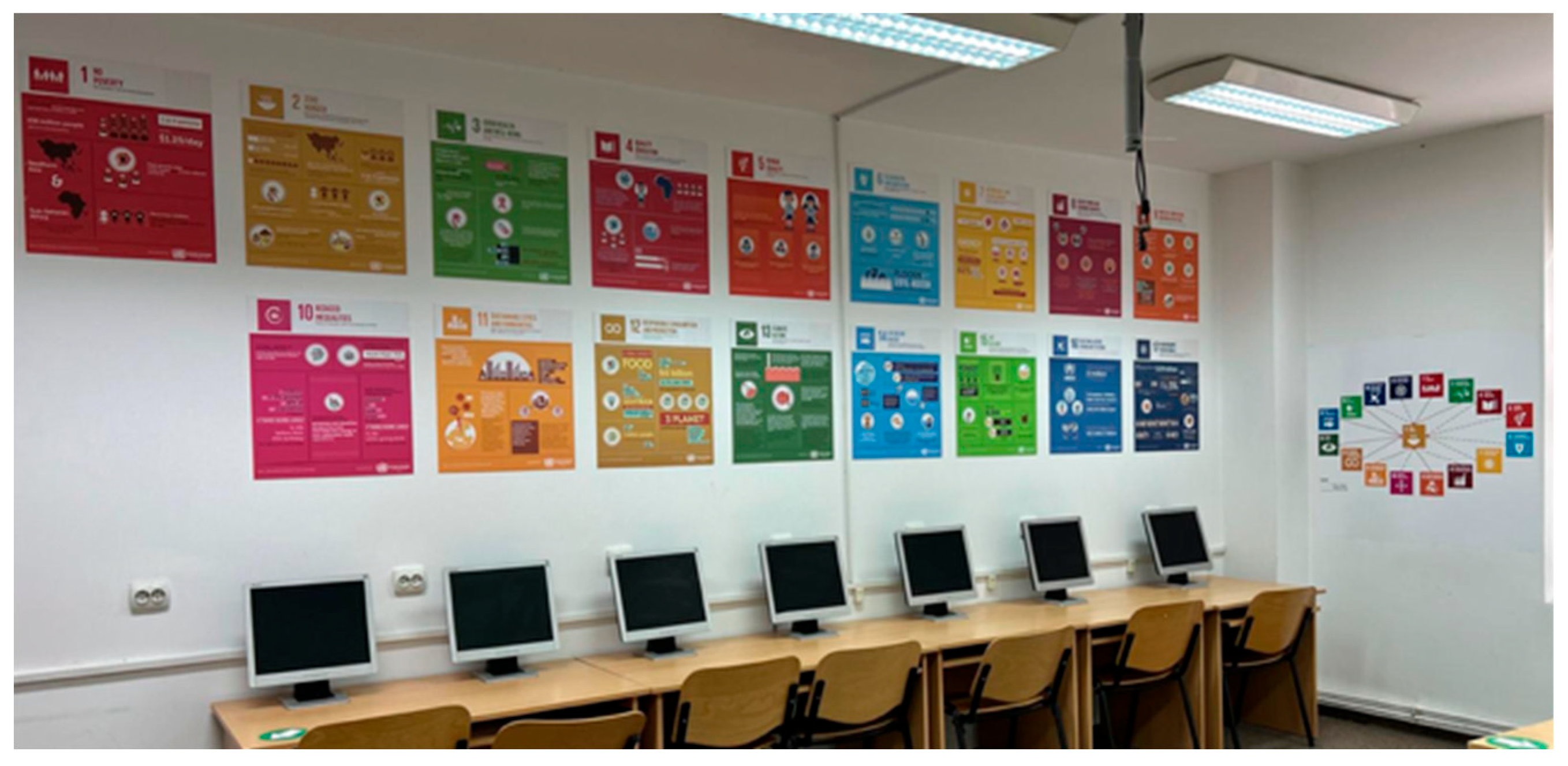
Figure 2.
Main interconnections between SDG 2: Zero Hunger and SDG 1: No Poverty identified by students. Source: Original by authors.
Figure 2.
Main interconnections between SDG 2: Zero Hunger and SDG 1: No Poverty identified by students. Source: Original by authors.
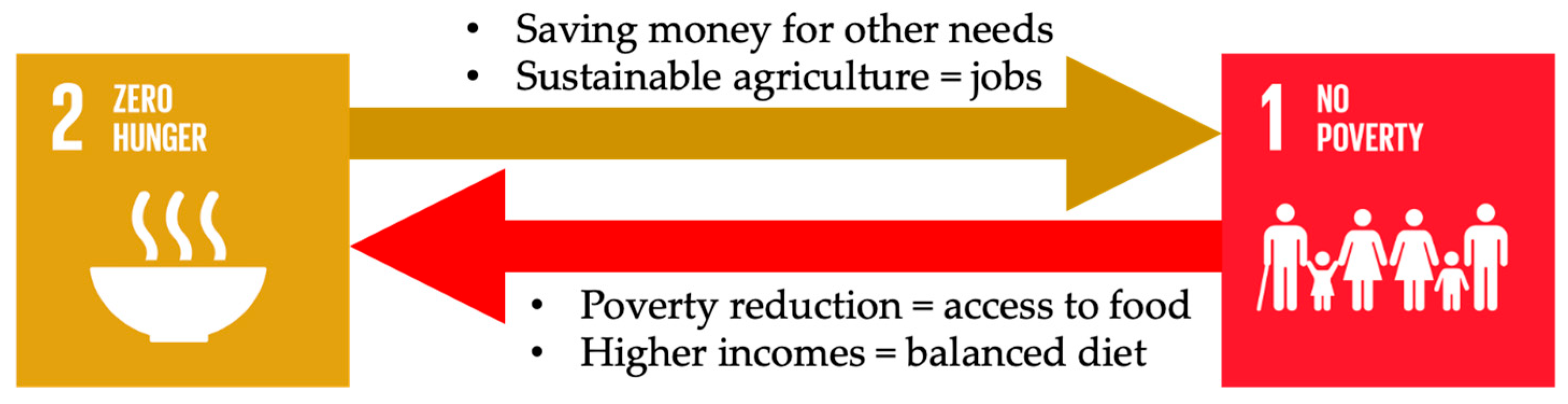
Figure 3.
Main interconnections between SDG 2: Zero Hunger and SDG 3: Good Health and Well-being identified by students Source: Original by authors.
Figure 3.
Main interconnections between SDG 2: Zero Hunger and SDG 3: Good Health and Well-being identified by students Source: Original by authors.
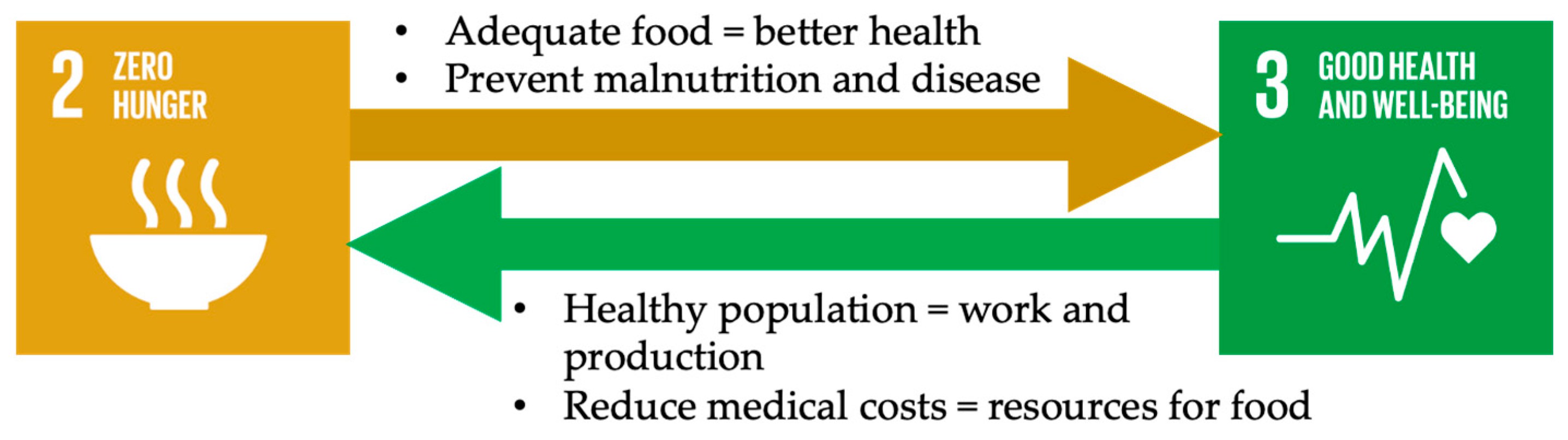
Figure 5.
Main interconnections between SDG 2: Zero Hunger and SDG 5: Gender Equality identified by students. Source: Original by authors.
Figure 5.
Main interconnections between SDG 2: Zero Hunger and SDG 5: Gender Equality identified by students. Source: Original by authors.
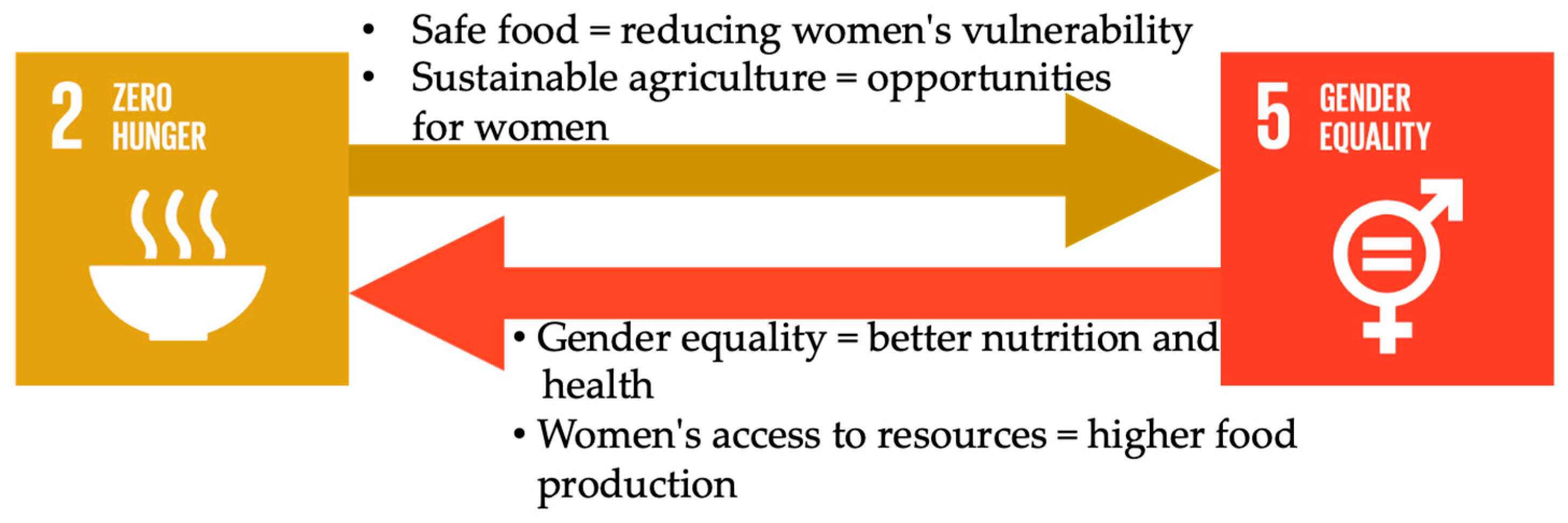
Figure 6.
Main interconnections between SDG 2: Zero Hunger and SDG 6: Clean Water and Sanitation identified by students. Source: Original by authors.
Figure 6.
Main interconnections between SDG 2: Zero Hunger and SDG 6: Clean Water and Sanitation identified by students. Source: Original by authors.
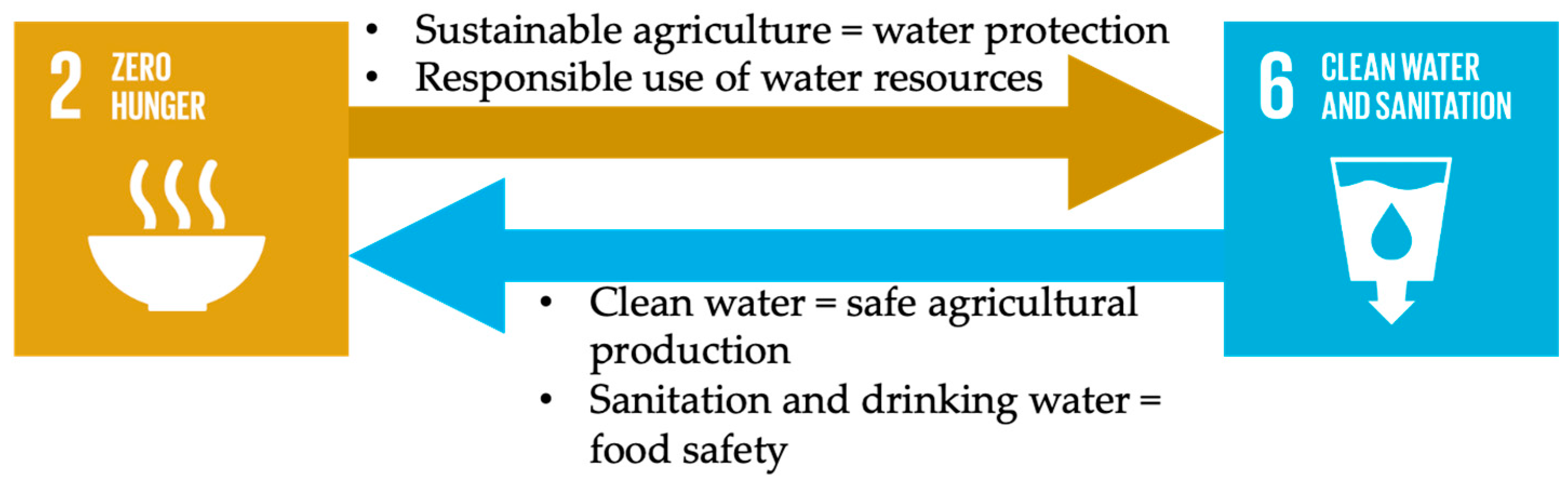
Figure 7.
Main interconnections between SDG 2: Zero Hunger and SDG 7: Affordable and Clean Energy identified by students. Source: Original by authors.
Figure 7.
Main interconnections between SDG 2: Zero Hunger and SDG 7: Affordable and Clean Energy identified by students. Source: Original by authors.
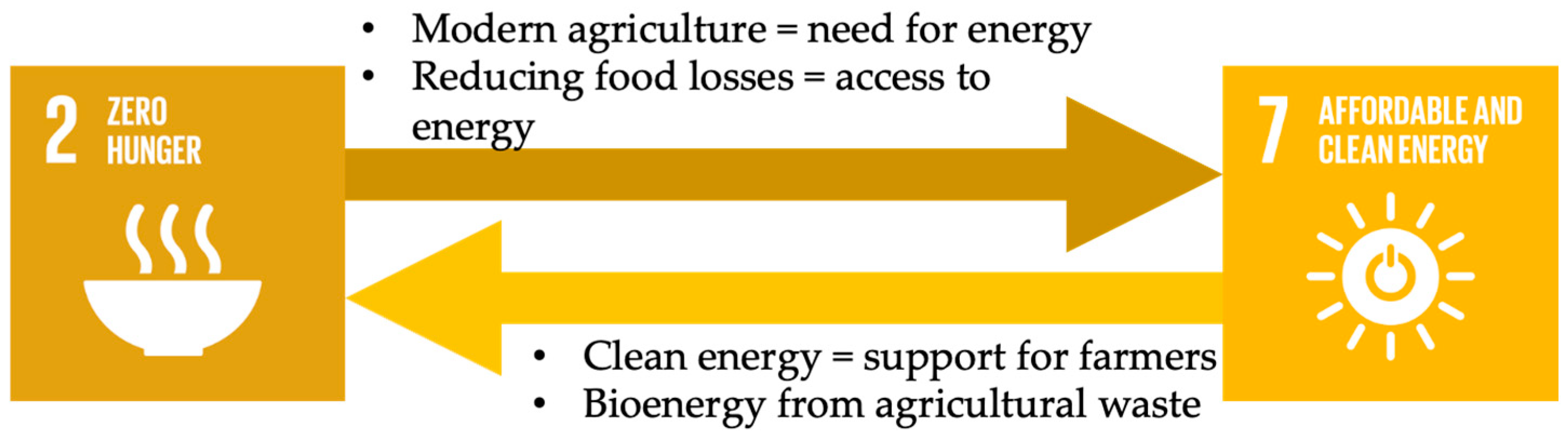
Figure 8.
Main interconnections between SDG 2: Zero Hunger and SDG 8: Decent Work and Economic Growth identified by students. Source: Original by authors.
Figure 8.
Main interconnections between SDG 2: Zero Hunger and SDG 8: Decent Work and Economic Growth identified by students. Source: Original by authors.
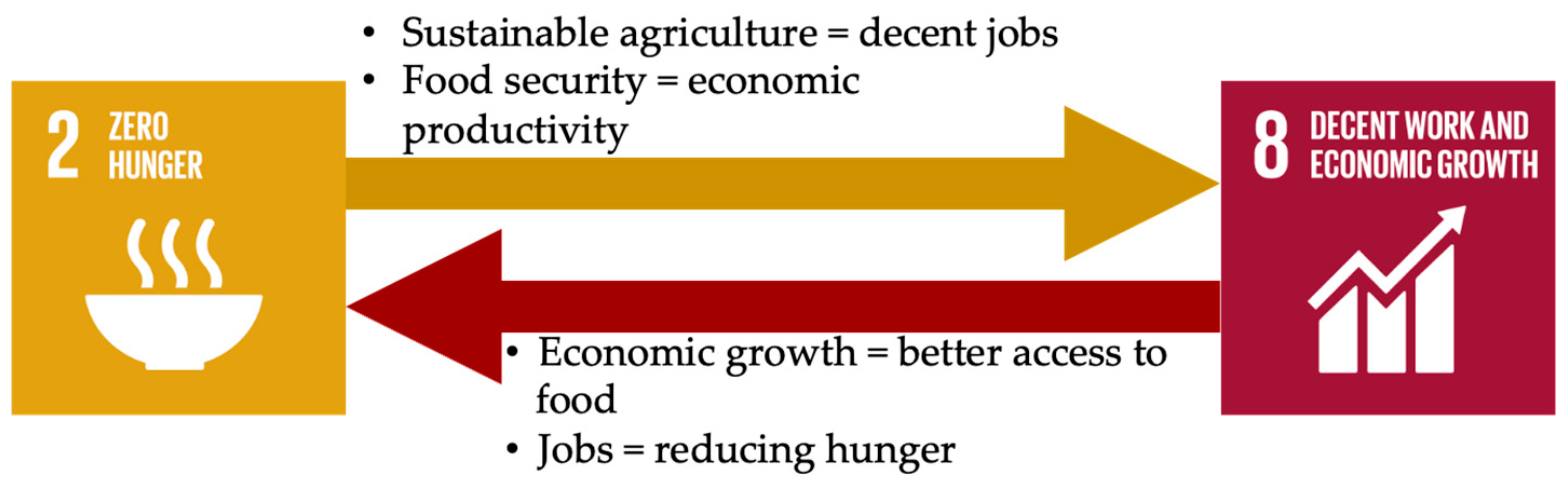
Figure 9.
Main interconnections between SDG 2: Zero Hunger and SDG 9: Industry, Innovation and Infrastructure identified by students. Source: Original by authors.
Figure 9.
Main interconnections between SDG 2: Zero Hunger and SDG 9: Industry, Innovation and Infrastructure identified by students. Source: Original by authors.
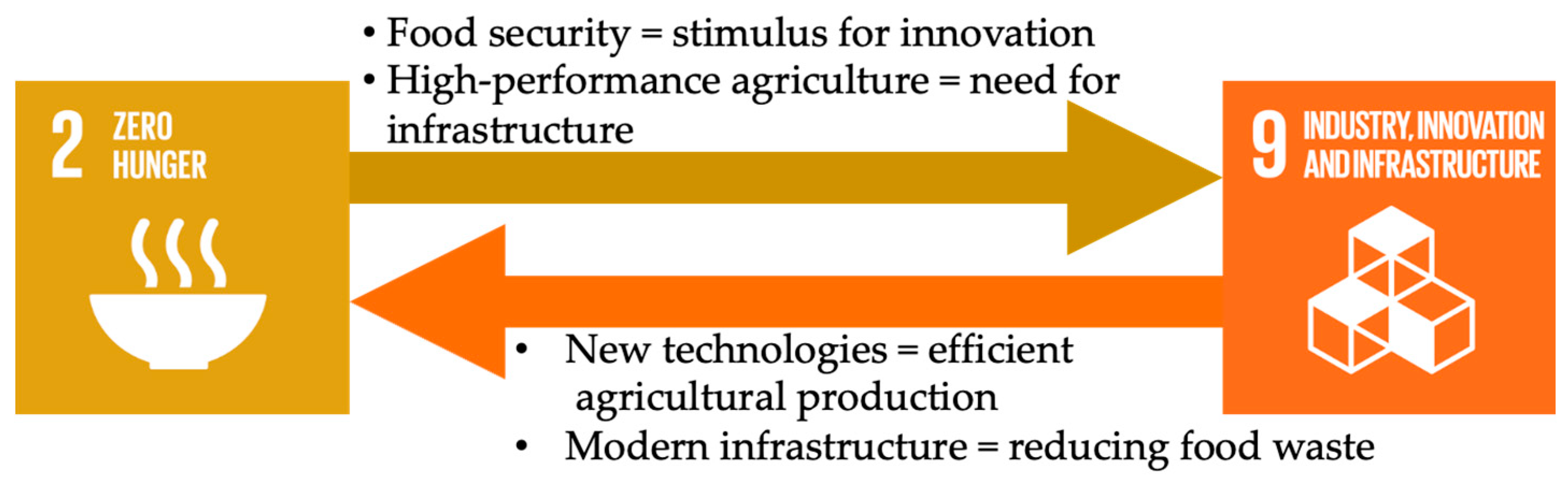
Figure 11.
Main interconnections between SDG 2: Zero Hunger and SDG 11: Sustainable Cities and Communities identified by students. Source: Original by authors.
Figure 11.
Main interconnections between SDG 2: Zero Hunger and SDG 11: Sustainable Cities and Communities identified by students. Source: Original by authors.
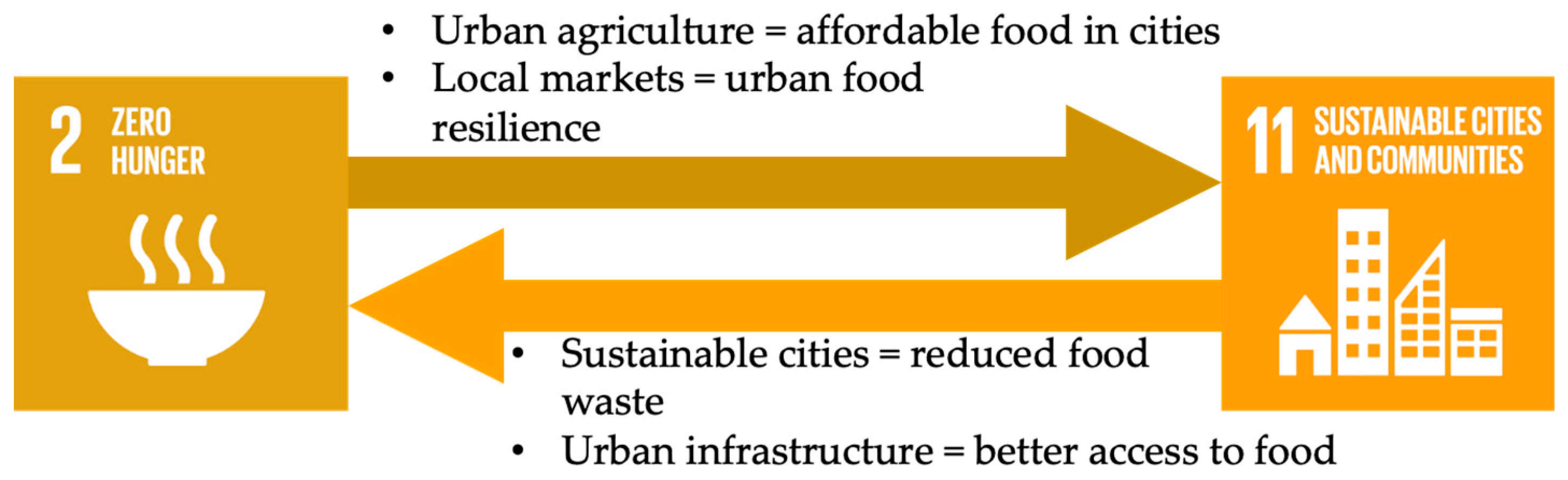
Figure 12.
Main interconnections between SDG 2: Zero Hunger and SDG 12: Responsible Consumption and Production identified by students. Source: Original by authors.
Figure 12.
Main interconnections between SDG 2: Zero Hunger and SDG 12: Responsible Consumption and Production identified by students. Source: Original by authors.
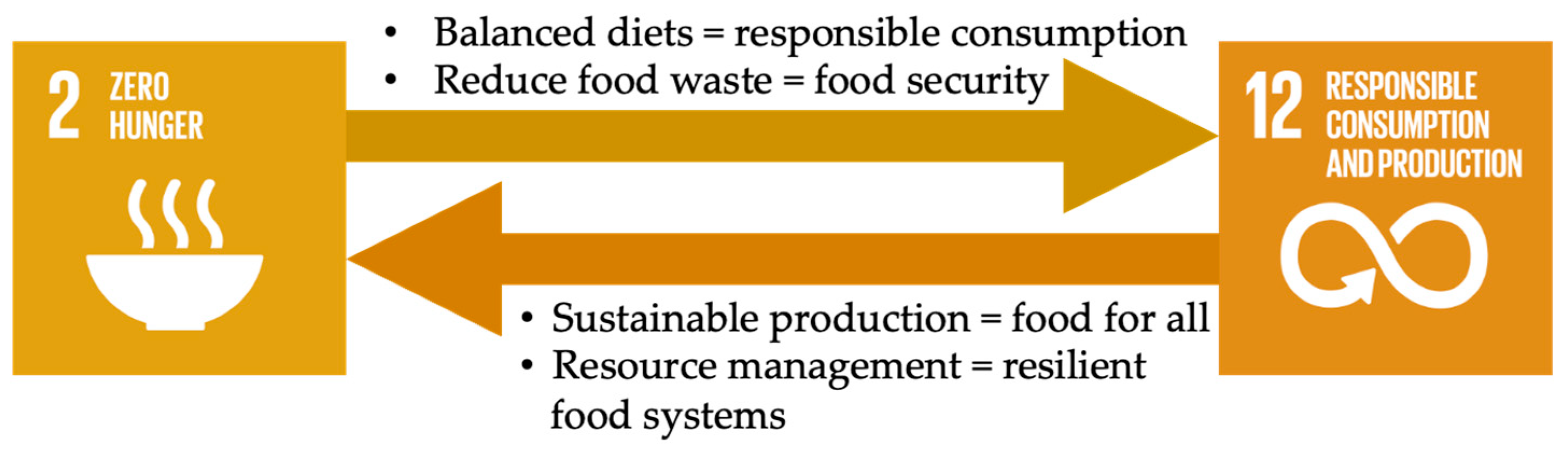
Figure 14.
Main interconnections between SDG 2: Zero Hunger and SDG 14: Life Below Water identified by students. Source: Original by authors.
Figure 14.
Main interconnections between SDG 2: Zero Hunger and SDG 14: Life Below Water identified by students. Source: Original by authors.
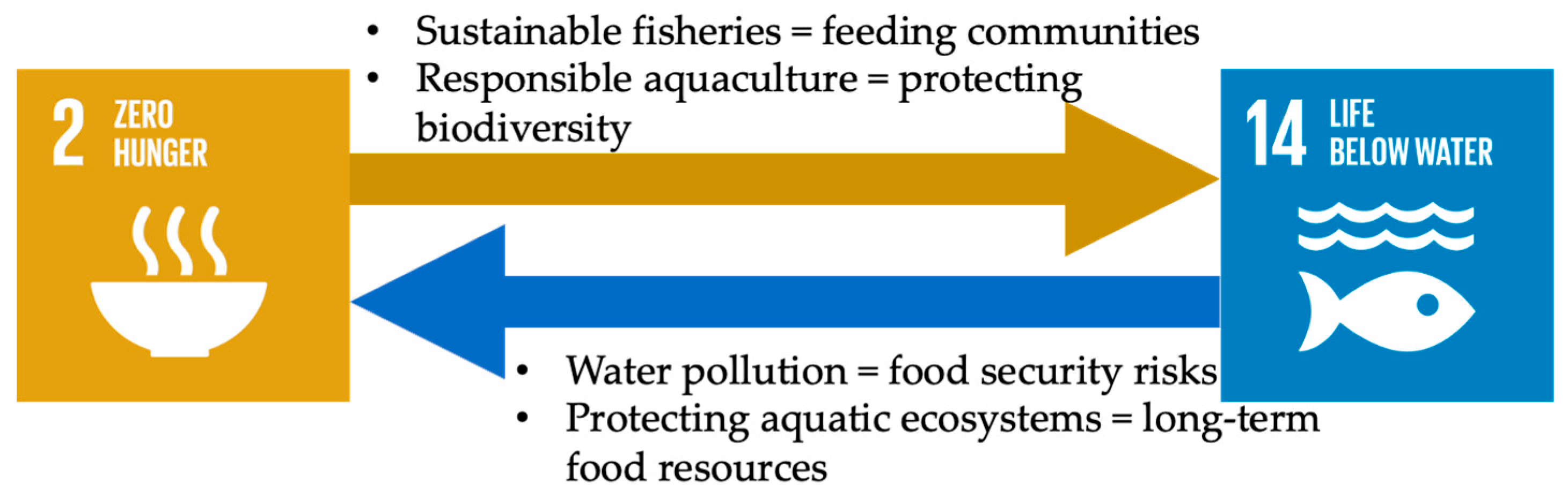
Figure 15.
Main interconnections between SDG 2: Zero Hunger and SDG 15: Life on Land identified by students. Source: Original by authors.
Figure 15.
Main interconnections between SDG 2: Zero Hunger and SDG 15: Life on Land identified by students. Source: Original by authors.
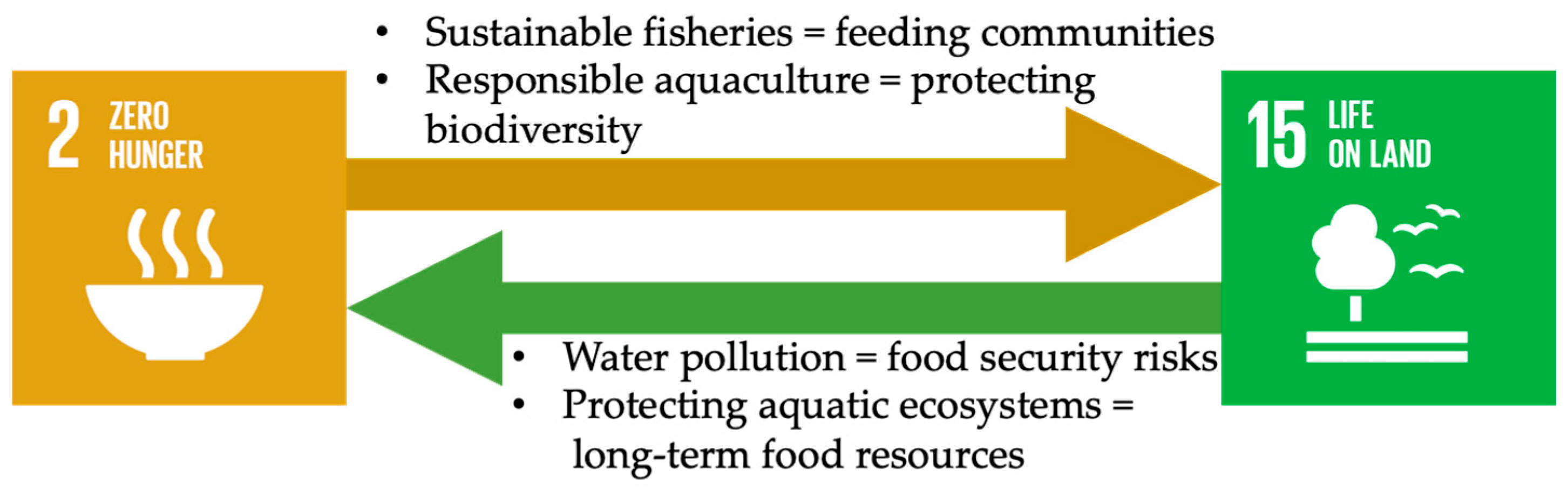
Figure 16.
Main interconnections between SDG 2: Zero Hunger and SDG 16: Peace, Justice and Strong Institutions identified by students Sources: Original by authors.
Figure 16.
Main interconnections between SDG 2: Zero Hunger and SDG 16: Peace, Justice and Strong Institutions identified by students Sources: Original by authors.
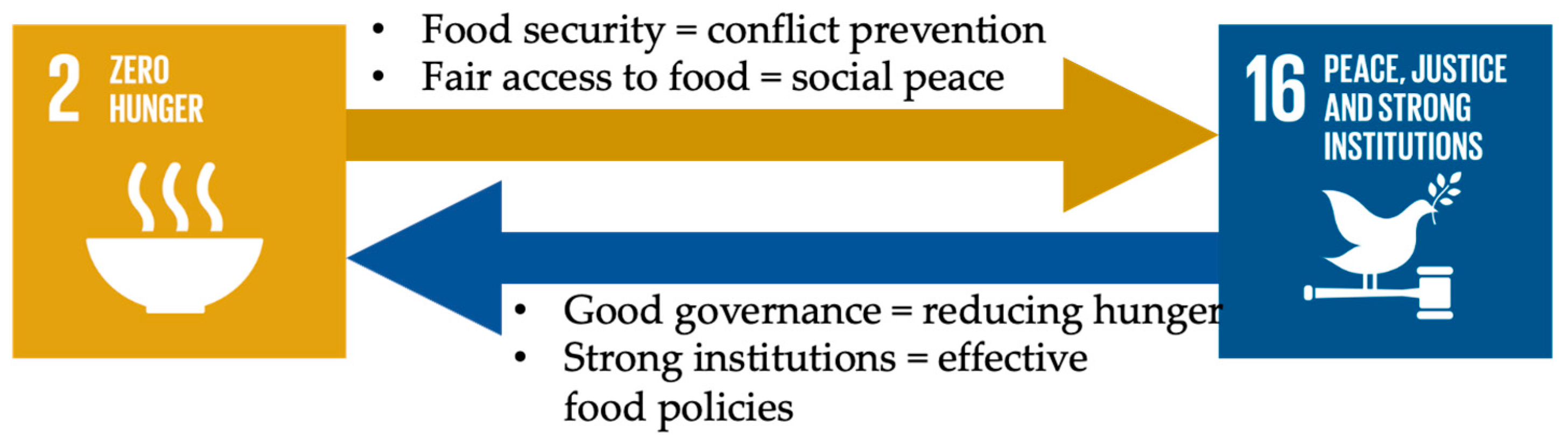
Figure 17.
Main interconnections between SDG 2: Zero Hunger and SDG 17: Partnerships for the Goals identified by students. Source: Original by authors.
Figure 17.
Main interconnections between SDG 2: Zero Hunger and SDG 17: Partnerships for the Goals identified by students. Source: Original by authors.
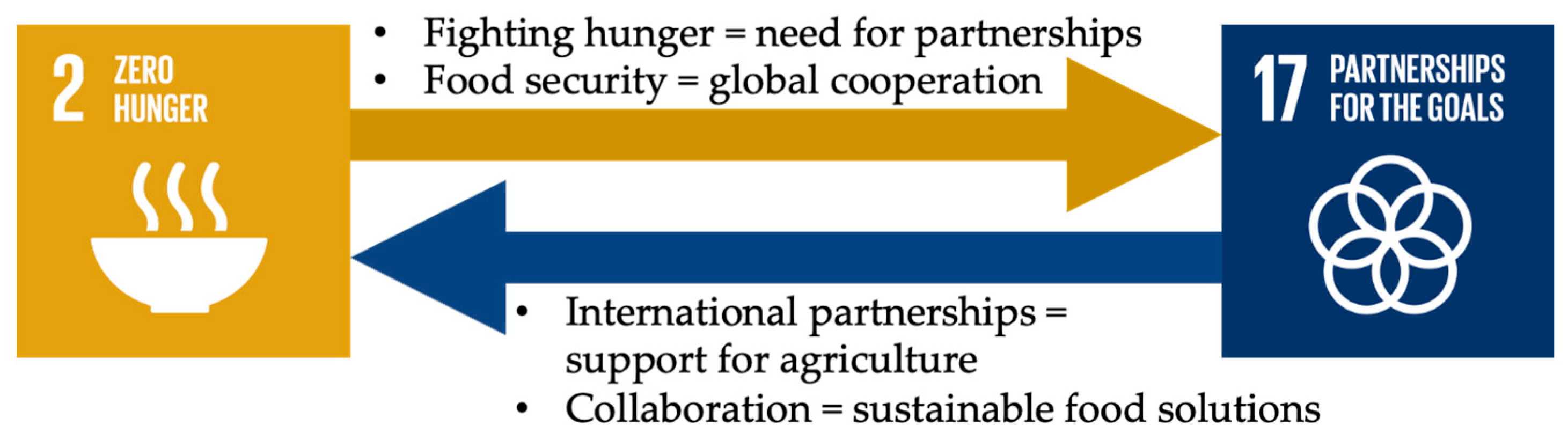
Figure 18.
Students’ perception of the relevance and impact of the SDG 2: Zero Hunger interlinkages learning activity during the academic year 2023/2024. Source: Original by authors.
Figure 18.
Students’ perception of the relevance and impact of the SDG 2: Zero Hunger interlinkages learning activity during the academic year 2023/2024. Source: Original by authors.
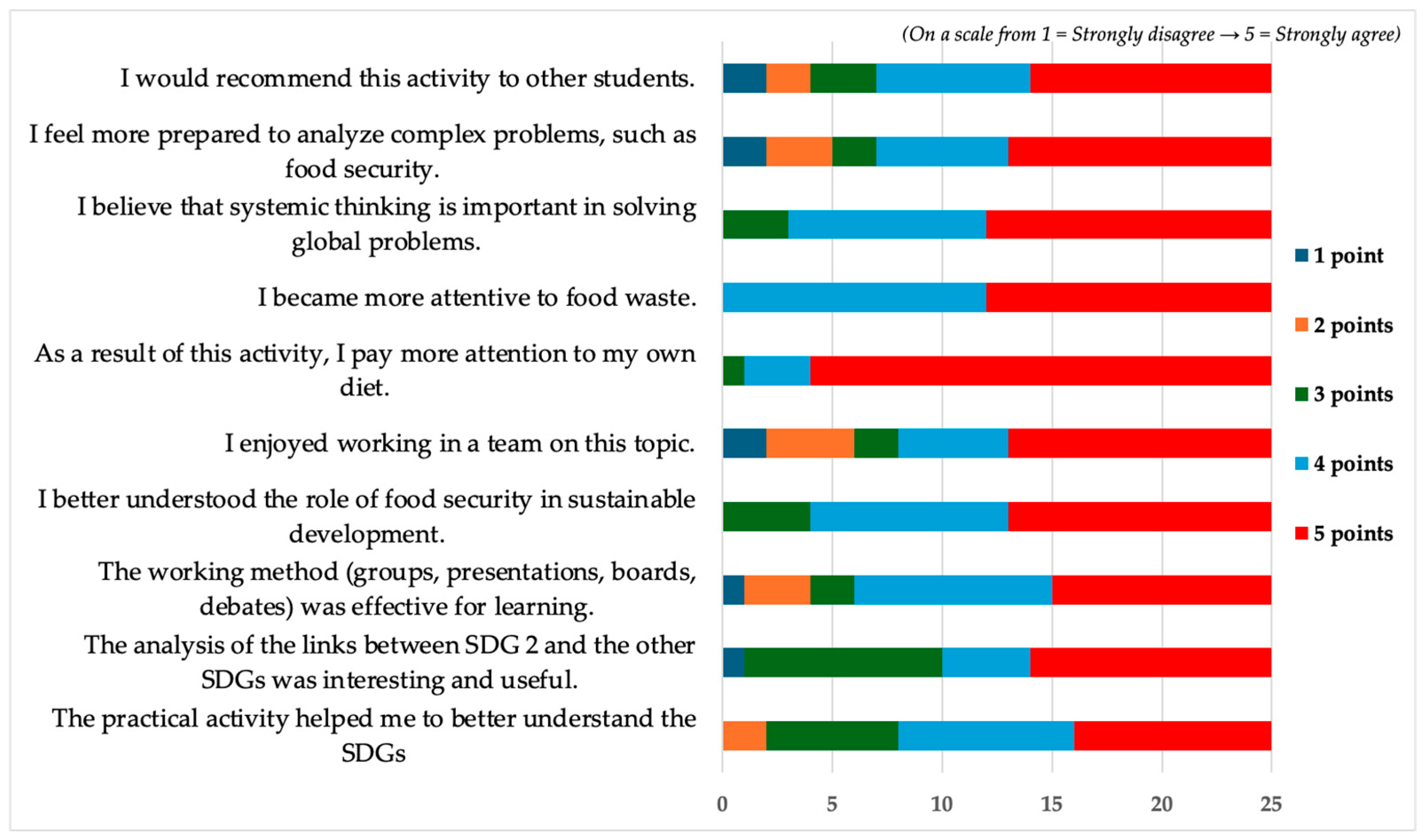
Figure 19.
Students’ perception of the relevance and impact of the SDG 2: Zero Hunger interlinkages learning activity during the academic year 2024/2025. Source: Original by authors.
Figure 19.
Students’ perception of the relevance and impact of the SDG 2: Zero Hunger interlinkages learning activity during the academic year 2024/2025. Source: Original by authors.
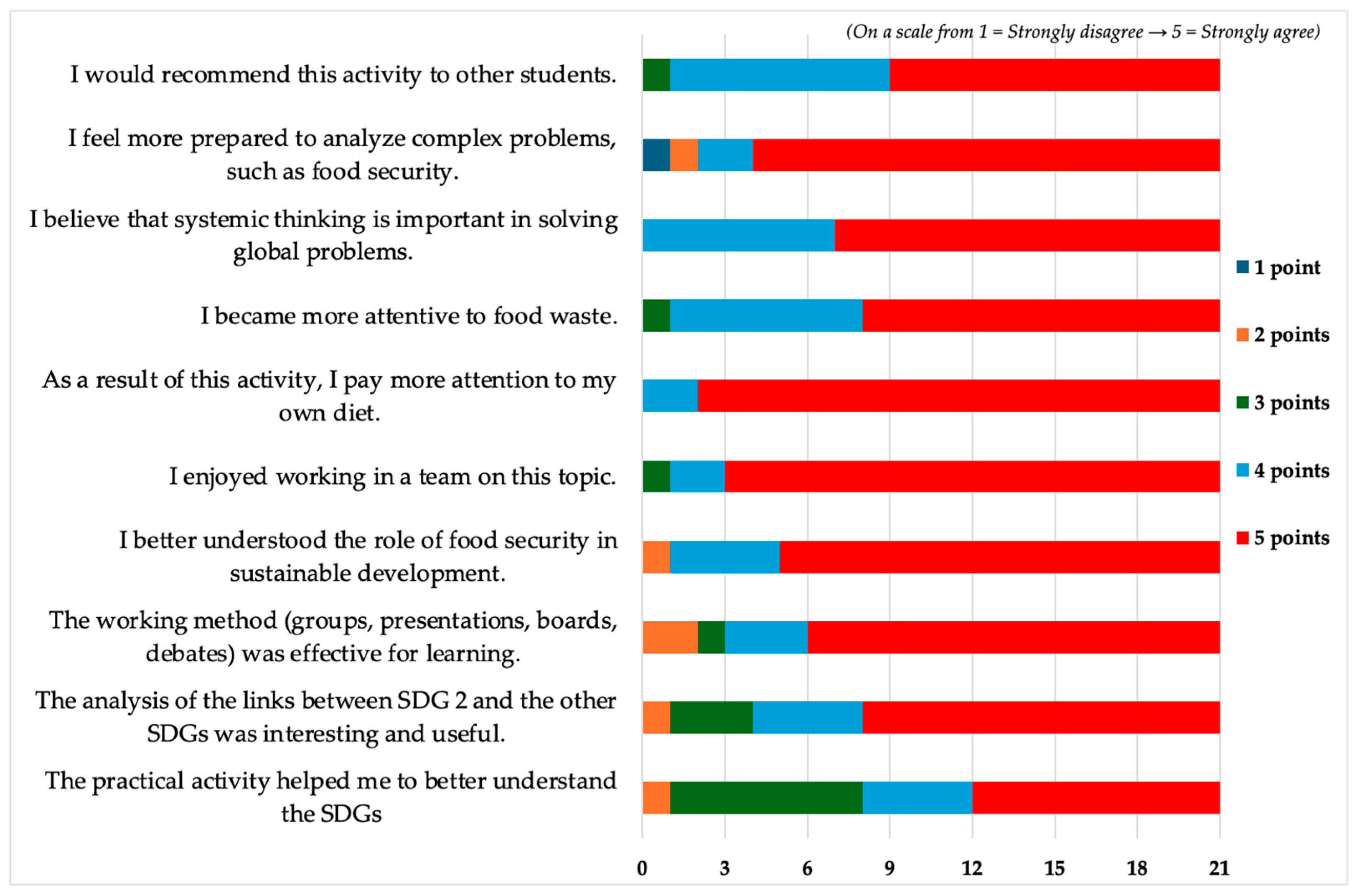
Figure 20.
Conceptual model of the educational approach focused on the analysis of interlinkages between SDG 2: Zero Hunger and other SDGs. Source: Original by authors.
Figure 20.
Conceptual model of the educational approach focused on the analysis of interlinkages between SDG 2: Zero Hunger and other SDGs. Source: Original by authors.
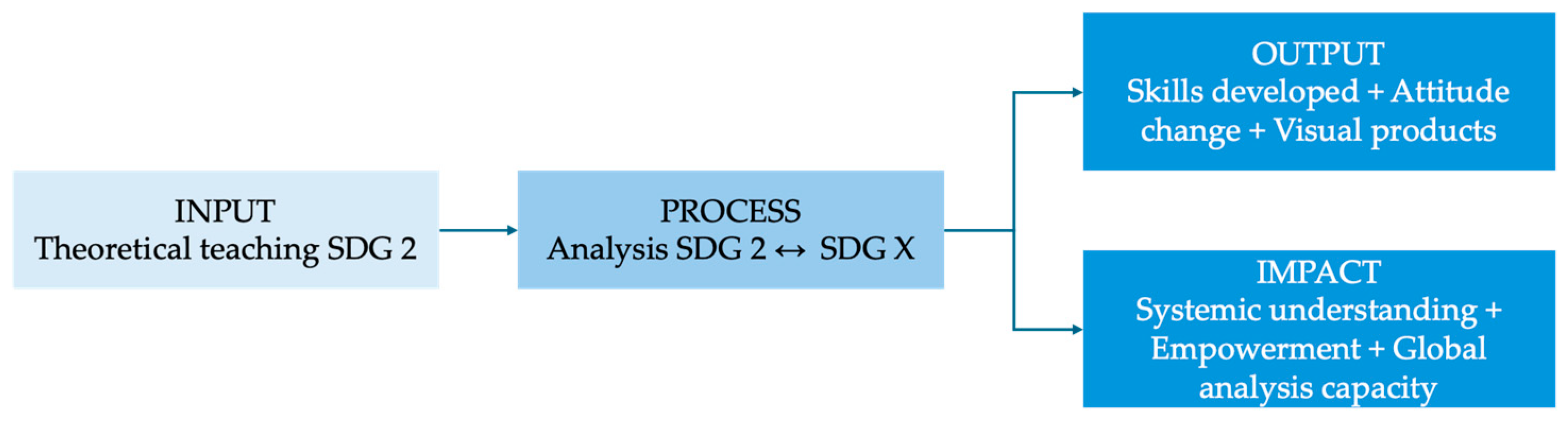
Disclaimer/Publisher’s Note: The statements, opinions and data contained in all publications are solely those of the individual author(s) and contributor(s) and not of MDPI and/or the editor(s). MDPI and/or the editor(s) disclaim responsibility for any injury to people or property resulting from any ideas, methods, instructions or products referred to in the content. |
© 2025 by the authors. Licensee MDPI, Basel, Switzerland. This article is an open access article distributed under the terms and conditions of the Creative Commons Attribution (CC BY) license (http://creativecommons.org/licenses/by/4.0/).
Copyright: This open access article is published under a Creative Commons CC BY 4.0 license, which permit the free download, distribution, and reuse, provided that the author and preprint are cited in any reuse.