

Submitted:
14 April 2025
Posted:
16 April 2025
You are already at the latest version
Abstract
Infectious diseases in children pose a significant public health concern and present considerable challenges for healthcare systems worldwide. This article examines the most common infectious diseases affecting children, the essential role of nurses in their management, preventive strategies, and the importance of family education in improving health outcomes. By examining diseases such as influenza, gastroenteritis, and bacterial infections, we highlight the complexity and nature of pediatric infectious diseases. Effective management requires thorough assessments, patient and family education regarding vaccination, and the crucial role of nurses in monitoring symptoms and providing supportive care for preventive measures, contributing significantly to improving health outcomes in pediatric populations.
Keywords:
infectious diseases
; pediatric nursing
; prevention
; vaccination
; public health
; child health
Introduction
Infectious diseases are among the leading causes of morbidity and mortality in children worldwide. According to the World Health Organization (2021), millions of children under the age of 5 die each year from preventable infectious diseases. Factors such as close contact in educational settings, lack of vaccinations, and reduced immunity in children contribute to the spread of infections (Koplan et al., 2018). In this context, vaccination and early symptom identification emerge as crucial mechanisms in the effective management of diseases, while nurses play a central role in implementing these strategies in pediatric care.
Results
- 1.
- Most Common Infectious Diseases in Children
- Respiratory Infections: Respiratory tract infections are among the most widespread diseases in childhood, including viral fevers, bronchiolitis, pneumonia, and seasonal flu. Influenza, in particular, can lead to severe complications in children with chronic conditions such as asthma or congenital heart disease. Symptoms include fever, cough, muscle aches, and fatigue. Studies have shown that flu vaccination reduces hospital admissions by over 60% in vaccinated children compared to those who are unvaccinated (Uyeki & Bamford, 2022). This result emphasizes the essential role of vaccination as a preventive measure. Nurses must be trained to promote and safely administer vaccines. Moreover, educating parents on warning signs is necessary, as they should seek medical help. Educational interventions can be carried out through counseling during routine visits or informational leaflets in healthcare centers.
- Gastrointestinal Infections: Gastrointestinal infections, especially viral gastroenteritis, are a common cause of urgent visits and hospitalizations. Viruses such as rotavirus, adenovirus, and norovirus are the main culprits. Common effects include dehydration and loss of electrolytes, which can be life-threatening without proper treatment.The introduction of the rotavirus vaccine into national immunization programs has significantly reduced severe cases (CDC, 2021). Good hygiene practices are essential in preventing the spread of these infections in the community and educational institutions. Nurses play an important role in implementing rehydration protocols and clinically assessing signs of dehydration, such as decreased skin turgor or anuria. Children must be closely monitored to prevent complications related to electrolyte imbalances.
- Viral Diseases: Viral diseases like measles, rubella, and chickenpox spread easily in communities with low vaccination coverage. Clinical manifestations include skin rashes, fever, and fatigue. Measles, in particular, can lead to serious complications such as encephalitis and pneumonia. Despite the availability of effective vaccines, vaccine mistrust and misinformation campaigns have contributed to an increase in these infections. This highlights the importance of educational interventions aimed at increasing community trust in vaccination programs (McMahon et al., 2018; Moss & Griffin, 2020). To combat this phenomenon, healthcare professionals must be trusted sources of information for parents and the community. Communication strategies include using simple language, active listening, and explaining the benefits of vaccination through practical examples. Nurses can organize informational sessions in schools or community centers to strengthen awareness.
- Bacterial Infections: Bacterial infections such as streptococcal pharyngitis, otitis media, and bacterial meningitis require immediate medical attention. Without proper treatment, these diseases can lead to complications like rheumatic fever, hearing loss, and neurological damage. Nurses play an essential role in collecting samples for cultures, administering antibiotics correctly, and monitoring the effectiveness of treatment (Shulman et al., 2019; Peltola, 2016). Monitoring the rational use of antibiotics is crucial to combat bacterial resistance. Nurses must follow protocols for sterile sample collection and ensure that antibiotics are administered on time and in the correct manner. Additionally, advising parents to complete the full course of treatment even when symptoms improve is a vital aspect of care.
- 2.
- The Role of Pediatric Nurses in Preventing Infectious Diseases
Nurses working in pediatrics are at the forefront of care for children with infectious diseases. Beyond their traditional clinical role, they represent a crucial link in preventive interventions. They are educators, advocates for child health, and active partners in community efforts to reduce the spread of infections.
- In Early Identification: Nurses are often the first to notice symptoms, enabling immediate treatment and the prevention of further transmission. Through daily contact with children and ongoing clinical assessments, nurses can recognize early signs of infection such as fever, rash, behavioral changes, or gastrointestinal symptoms. For example, in a setting such as a daycare or school, the nurse may help isolate a child with early signs of flu or chickenpox, preventing the spread to other children. Using documentation and reporting forms for suspected cases is an important practice in epidemiological infection control.
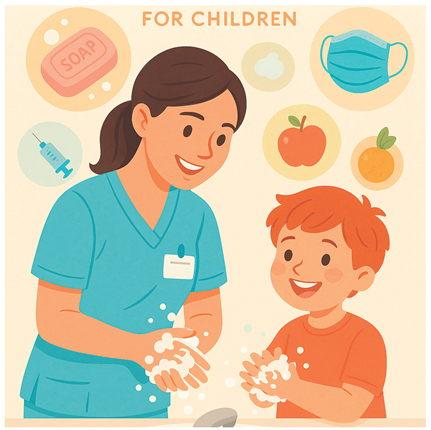
- In Health Education: Nurses are essential in spreading accurate information about vaccines, hygiene practices, and quarantine or isolation protocols. They organize meetings with parents, distribute educational materials, and develop awareness sessions in schools and communities. They use simple, understandable language to address misconceptions about vaccines or fears of side effects. They also demonstrate simple hygiene techniques such as handwashing and mask usage in specific situations, especially during pandemics or outbreaks. Education is not only for children but also for teachers and caregivers.
- In Partnership with Families: Nurses build trust and improve adherence to medical treatments, particularly in communities where lack of information is a barrier to proper care. In many cases, families may feel uncertain about treating their children, especially when faced with contradictory information. Nurses provide emotional support and clear guidance on managing symptoms at home, following therapy, proper medication use, and attending follow-up visits. The ability to listen, communicate with empathy, and respect each family's cultural context further strengthens this partnership. This is especially important in marginalized communities where access to healthcare services may be limited.
- In Collaboration with Healthcare and Educational Structures: Nurses participate in designing and implementing policies for infection prevention, including infection control protocols in educational institutions. They also play a role in organizing mass vaccinations, training teaching staff, and ensuring basic protective materials. Through collaboration with doctors, pharmacists, and social workers, nurses ensure that strategies are implemented in a coordinated and effective manner. Their contribution is also vital in collecting data for statistical purposes and assessing the healthcare needs of the community.
Discussion
Managing pediatric infectious diseases requires a multidimensional approach involving prevention, education, treatment, and active community engagement. Pediatric nurses are a key link in this chain, integrating clinical and educational aspects. Their role is proactive and constantly evolving, in line with new healthcare needs and social dynamics.
- Early Interventions and Secondary Prevention
One of the biggest challenges in controlling infectious diseases is early identification of cases and breaking the transmission chain. Nurses, through daily interactions with children and parents, are ideally positioned to spot early symptoms such as fever, cough, diarrhea, or rash. For example, a nurse in a healthcare center or school who notices a group of children with similar symptoms can initiate the screening, reporting, and isolation process, warning authorities of a possible outbreak through case reporting. This is a form of secondary prevention that prevents widespread transmission and reduces the need for severe interventions at a later stage.
- Education as a Weapon Against Misinformation
In the digital age, misinformation is a major threat to public health, particularly regarding vaccines. Nurses have the opportunity to intervene by providing education through continuous efforts. They can organize educational sessions for parents in healthcare settings, distribute materials based on scientific evidence, and use social media platforms to spread clear and reliable messages. Furthermore, building trusting relationships with families helps improve the impact of educational messages and increases adherence to health recommendations.
- Addressing Healthcare Inequities
Children from marginalized communities, including those from lower socio-economic backgrounds, ethnic minorities, or rural areas, often face barriers in accessing basic healthcare and immunization services. Nurses working in the field, in home care programs or outpatient settings, can identify gaps in services and mediate the connection of families with social care programs and government assistance. Studies show that an inclusive and culturally competent approach is key to reducing these inequities (Azzopardi et al., 2019). The role of the nurse is not only clinical but also social, serving as a bridge between the healthcare system and communities in need.
- Multidisciplinary Approach and Partnership with Parents
Collaboration between nurses, doctors, psychologists, social workers, and parents is essential for the success of any preventive strategy. When information is provided in a coordinated and comprehensive manner, parents feel more empowered to make informed decisions about their children's health. Nurses play a unique role in this partnership as they are the closest, most present, and often the most accessible figures for families. They help parents understand symptoms to watch for, the importance of completing treatment cycles, and managing illness at home. This ongoing interaction, built on empathy and honest communication, creates a strong support network that significantly improves health outcomes for children.
Conclusions
Infectious diseases in children are a serious public health concern, but with appropriate preventive strategies, early interventions, and the active involvement of pediatric nurses, many of these diseases can be effectively managed and their impact minimized. Pediatric nurses play an essential role not only in providing care and treatment but also in educating families and communities, advocating for vaccination, and addressing healthcare disparities. As the landscape of pediatric healthcare evolves, so too must the role of nurses in managing infectious diseases. Their proactive involvement in early identification, health education, and community partnership remains indispensable for improving pediatric health outcomes worldwide.
References
- Azzopardi, P., Williams, H., & O'Flaherty, M. (2019). Addressing social inequalities in child health: A public health perspective. Lancet, 393(10176), 1613-1623. [CrossRef]
- CDC. (2021). Rotavirus vaccination: Information for healthcare professionals. Centers for Disease Control and Prevention.
- Koplan, J. P., Liverman, C. T., & Kasiske, B. L. (2018). Global health and disease prevention: A future perspective. The Lancet, 391(10128), 211-213.
- McMahon, S. H., Smith, J. L., & Green, C. D. (2018). Enhancing vaccination rates in communities. American Journal of Public Health, 108(9), 1161-1167.
- Moss, W. J., & Griffin, D. E. (2020). Measles elimination in the United States: Current challenges. Pediatric Infectious Disease Journal, 39(5), 383-385.
- Peltola, H. (2016). Prevention of bacterial infections in children. The Lancet Infectious Diseases, 16(2), 118-128.
- Shulman, S. T., Bisno, A. L., & Cockerill, F. R. (2019). Pediatric bacterial infections. The Pediatric Infectious Disease Journal, 38(10), 1-10.
- Uyeki, T. M., & Bamford, C. G. (2022). Influenza: Current challenges and future opportunities. Journal of Infectious Diseases, 226(3), 507-514. [CrossRef]
- WHO. (2021). Child mortality and morbidity rates. World Health Organization.
Disclaimer/Publisher’s Note: The statements, opinions and data contained in all publications are solely those of the individual author(s) and contributor(s) and not of MDPI and/or the editor(s). MDPI and/or the editor(s) disclaim responsibility for any injury to people or property resulting from any ideas, methods, instructions or products referred to in the content. |
© 2025 by the authors. Licensee MDPI, Basel, Switzerland. This article is an open access article distributed under the terms and conditions of the Creative Commons Attribution (CC BY) license (http://creativecommons.org/licenses/by/4.0/).
Copyright: This open access article is published under a Creative Commons CC BY 4.0 license, which permit the free download, distribution, and reuse, provided that the author and preprint are cited in any reuse.


