

Submitted:
14 April 2025
Posted:
15 April 2025
You are already at the latest version
Abstract
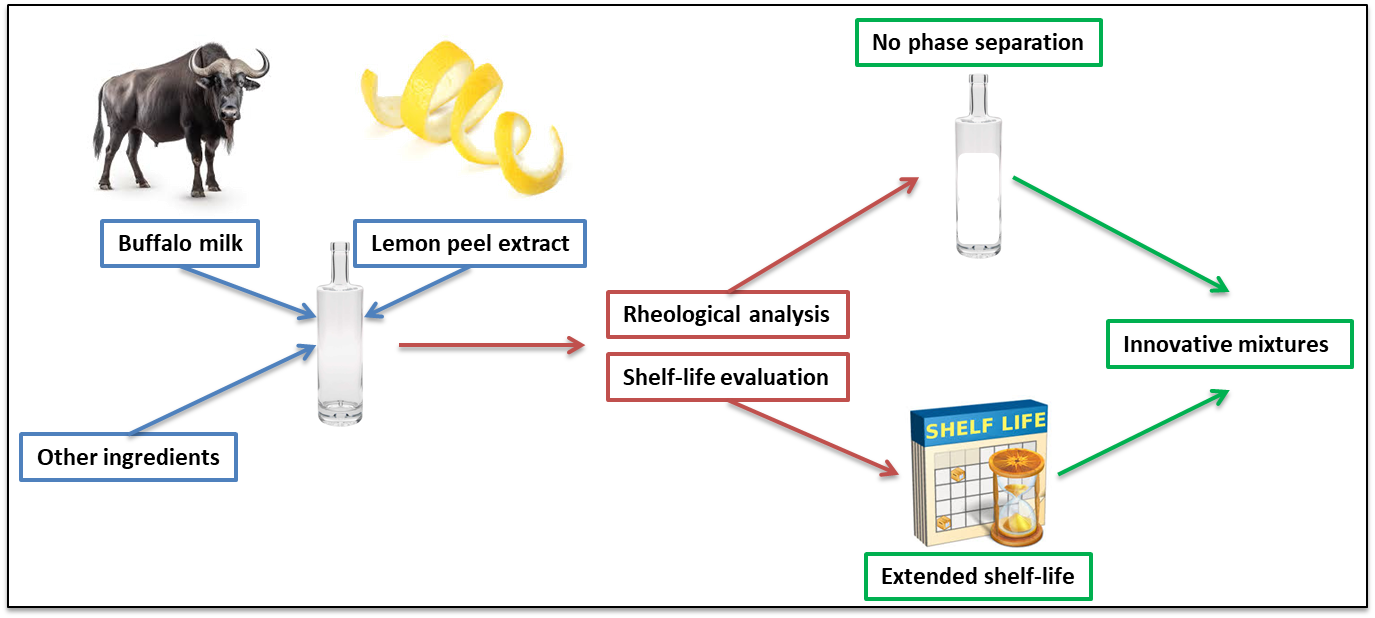
Authors aimed to explore new process technologies for the production of liqueur creams with innovative and balanced mixtures. It is well known that cream liqueur presents considerable technological problems regarding phase separation, with consequent product instability and short shelf-life. The interactions between milk proteins, alcohol, carbohydrates and factors such as temperature and ionic strength are well known in cream liqueurs. The stabilizing effect of pectin reduces the risk of phase separation, improving shelf-life and lying the sensory qualities of the product. The aim of this research was to develop stable liqueur formulations based on fresh buffalo milk cream by adding pectin extracted from lemon peels. Rheological properties, such as viscosity, were evaluated in formulations with different pectin percentages. The formulation that was found to be most stable was the one with 0.10% pectin added. Accelerated shelf-life tests were performed on it. The application of the Arrhenius model, which was used to predict shelf-life, showed a shelf-life of 15 months, keeping the liqueur at a temperature of 25°C and under standard lighting conditions. Results showed that pectin, extracted from lemon peel waste, improves product stability in a sustainable way. However, further studies will follow to define the structure of pectin and optimize pectin extraction methods for industrial-scale applications.
Keywords:
Lemon peel
; Buffalo milk
; Liqueur cream
; Pectin
; Rheological analysis
; Sensory analysis
; Shelf-life
1. Introduction
The development of stable liqueur creams represents a significant challenge in food production, mainly due to phase separation that compromises product stability and reduces shelf-life [1]. This problem is particularly critical when using cream bases and alcohol ingredients, as differences in density and solubility between phases can lead to rapid destabilization of the mixture [2]. The project aimed to resolve these difficulties through the innovative use of balanced blends of buffalo milk cream and various flavored liqueurs, such as limoncello, coffee and chocolate. In this work, we focused on liqueurs based on buffalo milk cream, characterized by a high fat and protein content, which gives a particularly rich and creamy base. Buffalo Cream Milk Liqueur is a creamy and distinctive spirit crafted with Campanian buffalo milk sourced from the same region as the renowned Mozzarella di Bufala Campana DOP. Enriched with 3-year-aged brandy, this liqueur offers a smooth texture and a bold character, making it a unique indulgence. The aging process of 3-year-aged brandy, facilitates the development of complex volatile compounds, including esters, aldehydes, and lactones, which interact harmoniously with the rich dairy base [3]. This synergy results in a final product that exhibits a sophisticated aromatic profile, with nuanced notes of vanilla, caramel, and dried fruits complementing the inherent sweetness of the milk. A distinctive feature of the project was the incorporation of agri-food waste, in particular lemon peels, as raw material for the extraction of pectin. This approach also has positive implications in terms of sustainability, contributing to the valorization of food waste and waste reduction. The use of such waste materials as a resource is part of current circular economy strategies, promoting innovative solutions for more sustainable production [4].
Pectin, a natural polysaccharide found in the cell wall of plants, is increasingly popular as a functional additive in the food industry due to its thickening, gelling and emulsifying properties [5,6]. It is mainly extracted from fruit sources such as citrus fruits and apples and used in a wide range of products such as desserts, sauces, jams and creams, where it plays a crucial role in improving texture, structural stability and extend shelf-life [7,8,9]. One of the distinguishing features of pectin is its ability to form gel-like structures through interactions with water and calcium ions [10,11,12]. This gelling process is particularly important in food emulsions, where pectin acts as a stabilizer, reducing the risk of phase separation and improving the overall texture of the product [6,13]. The ability of pectin, to bind and keep water within the matrix, increases the viscosity of formulations, ensures uniform consistency and maintenance of sensory characteristics for the entire shelf-life [14,15]. The stabilizing effect of pectin represents a significant added value in dairy systems, where it interacts with milk proteins, particularly caseins, and calcium ions to form a stable and cohesive network, preventing coalescence of lipid droplets and reducing the risk of syneresis. This synergistic interaction enhances the viscosity, creaminess and mouthfeel of the product [6,12,13,14,15,16,17].
A further advantage of pectin is its being a plant-based ingredient, which makes it particularly attractive for vegetarian and vegan applications. Furthermore, the increasing focus on natural and sustainable ingredients has further promoted the use of pectin as an alternative to synthetic gelling agents. In particular, its extraction from agro-industrial waste, such as citrus peels or apple residues, represents an environmentally sustainable and cost-effective solution that contributes to reducing food waste and improving production efficiency [18,19].
The cream liqueurs are particularly sensitive to variable temperature conditions and complex interactions between alcohols, lipids and proteins, which can lead to destabilization or phase separation [20]. The addition of pectin stabilizes the oil/water interfaces, reducing aggregation phenomena and improving product shelf-life [2,21,22]. Pectin contributes to the optimization of sensory properties, such as velvety texture and visual homogeneity [23], as well as to the improvement of the resistance of emulsions to freezing and de-freezing cycles [24].
Proteins also play a crucial role as emulsifying agents in numerous sectors, including food, pharmaceuticals and beverages [25,26]. Their effectiveness depends on their ability to rapidly adsorb at the oil/water interface, reducing surface tension and stabilizing the dispersion of lipid droplets. This behavior is regulated by a delicate balance of interactions with other ingredients, such as lipids, carbohydrates, minerals and environmental factors such as pH, temperature and ionic strength [2]. In recent years, advances in emulsion technology have highlighted the value of natural protein emulsifiers, such as whey protein and soy protein. Whey proteins, in particular, are valued for their functional properties, including high emulsifying capacity, stable foam formation and the creation of protective films [27,28]. These proteins represent a sustainable and safe alternative to synthetic surfactants, contributing to the formulation of more natural food products and in line with growing consumer demands for clean-label ingredients. However, despite technological advances, significant challenges remain. A common problem is competitive adsorption negatively affecting emulsion stability. In addition, environmental stress factors, such as temperature variations or ionic strength, can compromise the emulsifying properties of proteins.
In the context of cream liqueurs, a popular emulsion-based alcoholic beverage and milk proteins, play a crucial role in stabilizing the oil/water interface. Caseins, mainly introduced through dairy cream, represent a highly functional natural system for stabilizing emulsions [29]. The cream is itself a complex emulsion, stabilized by proteins and fats, the composition of which varies according to milk characteristics and processing conditions [30,31]. One of the main destabilizing factors in cream liqueurs is the interaction between casein micelles and alcohol. In ethanol-rich environments, calcium in the system can induce aggregation of casein micelles, leading to destabilization phenomena such as flocculation and coalescence of lipid droplets [32,33,34]. These effects are amplified by changes in pH, ionic concentrations and temperatures, which negatively affect the emulsion structure [35]. To mitigate these problems, stabilizing additives, such as trisodium citrate, are commonly used. This compound acts by sequestering free calcium and thus preventing the aggregation of casein micelles. In addition, trisodium citrate helps maintain an optimal pH, promoting protein solubility and improving emulsion stability [36,37,38].
The crystallization of lipid phases is a crucial aspect of the stability of complex emulsions, such as cream liqueurs. This process can have opposing effects: on the one hand, fat crystals can strengthen the structure of the emulsion by providing mechanical support; on the other hand, they can destabilize the emulsion, favoring phenomena such as coalescence or phase separation. In particular, destabilization occurs when fat crystals perforate the interfaces of near droplets [39,40]. In the case of cream liqueurs, these issues are further exacerbated by the presence of ethanol, which can alter the emulsifying properties of proteins compromising interfacial stability [29]. Studies showed that with increasing alcohol content of the liqueur cream, the emulsion becomes more sensitive to the interaction between ingredients and production conditions. In particular, alcohol content determines that the aqueous phase becomes a poorer solvent for proteins [20]. An alcohol content above 5% (v/v) is harmful for alcoholic beverages that require hydrophobic dispersion of the aroma [41].
Addressing such complexities through protein-based stabilizers and optimized formulations is essential for developing robust and consistent emulsions.
The project consisted of two major goals:
1. Improving product stability by creating an innovative mixtures using fresh buffalo milk cream, alcohol, and lemon peel waste-derived pectin.
2. The study of the rheological properties of the liquor creams to ensure the proper balance of ingredients and stability.
Experimental work included industrial trials, laboratory research, and formulation optimization.
2. Materials and Methods
The reagents utilized in this study were of analytical grade or higher. High-performance liquid chromatography (HPLC) solvents were supplied by Merck (Whitehouse Station, NJ, USA). Trypsin, dithiothreitol (DTT), iodoacetamide (IAA), guanidine chloride, ammonium bicarbonate (AMBIC), and trifluoroacetic acid (TFA) were obtained from Sigma-Aldrich (St. Louis, MO, USA). Electrophoresis reagents were sourced from Bio-Rad (Milan, Italy).
2.1. Materials and Pectin Extraction
Lemon peel waste from limoncello production was used as the primary raw material for pectin extraction. The Citrus limon Femminello cultivar was provided by market in Sicily. Samples were collected at yellow stage of ripeness in the November period. All lemons were grown under equal agronomic and environmental conditions. After the collection of the samples, they were stored at +4°C for one night. The peels waste was lyophilized, ground into powder at 200 mesh, and then subjected to a pectin extraction process using an aqueous ethanol solution (2:1 ratio) in an ultrasonic bath at 60°C for 2 hours. The resulting pectin was filtered, cooled to 4°C, and precipitated for further use. Approximately 20 kg of lemons were processed during the project (October 2021 - March 2023), in lab scale conditions, yielding 1 kg of pectin.
The water-binding capacity (WBC) of lemon peel powders was assessed on 1 g of powdered sample. To each sample, 250 mL of distilled water were added. The mixture was incubated overnight at 4°C, centrifuged for 20 minutes at 11°C (600 g), and then left at room temperature for 2 hours. The dry sample was weighed, and the WBC was calculated as the difference in weight between the initial and final product.
2.2. Formulation Development
The initial formulation used for the cream liqueurs included the following ingredients: buffalo milk, water, sugar, brandy, glucose syrup, maltodextrins, caseinate and sodium citrate collected in the local market (Table 1). Various quantities of pectin (0.05%, 0.10%, 0.15%, and 0.20%) were tested by replacing corresponding amounts of maltodextrins maintaining the company formulation. For each formulation, showed in Table 1, 5 samples were prepared, for a total of 75 samples. Each sample was analyzed in triplicate.
2.3. Rheological and Shelf-life Testing
The rheological analysis used was viscosity measurement, performed with a rotational viscometer (VISCO STAR R 1000-983 JP Selecta, Barcelona, Spain) equipped with spindle no. 5. The spindle was submerged in 50 ml of liqueur cream, and the viscosity was assessed by measuring the resistance of the sample at a pre-set speed ranging from 10 to 50 rpm. The test conditions included maintaining the sample in a water bath at a constant temperature of 8.0 ± 0.1 °C after an equilibrium time of 10 minutes. The viscosity was expressed in centipoise (cP). The sampling times for analysis were conduct after 24 hours of the production. Shelf-life tests were conducted both in the laboratory and at the Antica Distilleria Petrone (Mondragone, Caserta, Italy) production site.
To assess the stability of the hydroalcoholic mixture obtained a straightforward and reproducible analytical method was developed. Specifically, the quantity of the lipophilic phase emerging from the hydroalcoholic mixture was determined using a graduated cylinder and leveraging the unitary operations of flocculation and creaming. This quantity was expressed as a percentage relative to the fat content in the mixture.
Given that the fat content in the mixture is exclusively derived from the milk component, it was determined that the fat content amounts to approximately 3.7 g per 100 mL of the final liqueur. This value was taken as a reference, accounting for the seasonal variability of fat content in buffalo milk, which averages 8.2 g per 100 g over a full lactation year.
The sample, prepared following the company formulation, was subjected to shelf-life testing in the laboratories of the University of Palermo.
Accelerated shelf-life tests were performed at varying temperatures (35°C, 45°C, 55°C) with different illumination conditions (12h or 24h of light exposure), observing the phase separation (lipid phase separation) over time. The separation of the fat phase was measured using graduated cylinders, and the shelf-life was modelled using the Arrhenius equation to predict the stability of the formulations under normal conditions for this liqueur (at ambient temperature of 25°C).
Reaction kinetics were evaluated, and a predictive shelf-life model was developed using the Arrhenius equation (Equation 1):
ln(k)=ln(A)−Ea/R⋅T
A total of 72 liqueur samples were divided into six experimental groups, with each group consisting of 12 bottles. These groups were subjected to the specified temperature and illumination conditions.
2.4. Analytical Methods
Total polyphenol analysis was carried out according to the method of Todaro et al 2010 [42]. Aliquots of lemon peel (5 g) were homogenised using a Ultra-Turrax T25 homogeniser set at maximum speed and extracted with 50 mL of methanol, under continuous stirring for 1 h at room temperature. Samples were then centrifuged at 4000 g for 20 min at 4 °C and filtered through Whatman No. 42 paper under vacuum on Buchner funnel. Total phenolics content was determined according to the Folin–Ciocalteau method [43], using catechin as a standard. Results were expressed as l g catechin equivalents per gram of dry weight.
Sugars (sucrose, fructose and glucose) were determined in according to Hundie and Abdissa 2021 [44] by High Performance Liquid Chromatography (HPLC). Samples (10 mL) of centrifuged juices (15,000 g for 20 min at 4 °C) were purified through a Sep-Pak C18 cartridge (Waters Corporation, Milford, MA), diluted in water, filtered through a 0.45-μm filter, and injected directly into the column. Separation and identification of sugars were performed using a Waters 600-E HPLC system (Waters Corporation, Milford, MA) equipped with a Waters 410 refractive index (RI) detector and a Luna-NH2 column (250 × 4.6 mm i.d., 5 μm; Phenomenex, Torrance, CA). The elution was performed with an acetonitrile: water (80:20 v/v) solution at a flow rate of 1.8 mL min−1. Sugars were identified by comparing their retention times with those of pure standards and confirmed by co-injection. Quantification of each compound was performed using an external standard calibration curve.
The water binding capacity (WBC) of the lemon peel powder was also measured to assess its potential as a stabilizing agent in cream formulations.
2.5. Sensory Analysis
Sensory analysis was conducted on liqueur samples with and without the addition of pectin. The sensory analyses were conducted according to the guidelines defined by the ISO standards for the definition of panels and training methods for judges [44,45].
The sensory panel consisted of 16 trained persons (10 males and 6 females) with ages between 35 and 60 years. Participants were asked to refrain from smoking, eating or drinking (with the exception of water) during the three hours prior to the test sessions.
The participants gave their written consent after receiving full information about the sensory test. The subjects did not experience any risk as a result of the sensory test.
The sensory analysis was conducted by examining 3 visual descriptors (color intensity; creamy; presence of suspensions), 3 aroma descriptors (milk aroma; alcohol aroma; intensity of aroma), 6 taste descriptors (sweet; sour, bitter, milk taste, pungent/alcoholic; taste persistence) and 1 overall judgement. The intensity of the descriptors was defined using a scale from 1 to 9, where “1” indicated no perception and “9” a very intense perception. During each evaluation session, the judges analyzed two samples, restoring the palate with water between each tasting. All samples were evaluated in three replicates.
2.6. Statistical Analysis
The XLStat software, version 2014.5.03 (Addinsoft Incorporated, New York, NY, USA), was used to statistically elaborate the data. The report of the data was given as mean ± SD.
The one-way ANOVA test was performed to check for significance between the mean values of the formulations analysed. A significance level of p < 0.05 were considered statistically significant.
3. Results
3.1. Pectin Extraction Yield
The pectin extraction from lemon peel waste yielded approximately 20% of the dry weight of the peels, which is consistent with literature values [46,47]. Based on the annual production of 30000 kg of lemon peel waste in a medium, it was estimated that 4000 kg of pectin could be extracted per year, which could be used to stabilize the cream liqueurs.
3.2. Rheological Properties and Formulation Optimization
As mentioned above, the fat component was only due to the milk in the formulations. The percentage of fat separation determined during shelf-life are illustrated in Figure 1.
Viscosity measurements were used to evaluate the impact of pectin addition on the texture and stability of the cream liqueur formulations. The optimal viscosity was observed in the formulation with 0.10% pectin (P0.10), which showed similar viscosity to the control sample (Table 2). This formulation was selected for further shelf-life testing and sensory analysis.
3.3. Shelf-Life Predictions
To evaluate and predict the shelf-life of the newly developed formulations, two distinct sets of tests were conducted by subjecting the samples to light and temperature conditions designed to accelerate the potential separation of the lipophilic phase. Specifically, three temperatures (35°C, 45°C, 55°C) and two illumination durations (12 h, 24 h) were employed.
Phase separation between the aqueous and fat phases was monitored visually across the different mixtures analyzed.
Samples were collected every 24 hours to measure phase separation. The results are presented in Figure 2, which shows the percentage of fat separation relative to the total mixture.
In Figure 2a, the kinetics of fat phase separation are shown under the most extreme illumination conditions (24 h of continuous light), while Figure 2b illustrates the separation kinetics under standard illumination conditions (12 h of light).
Accelerated shelf-life testing showed that formulations with 0.10% pectin (P0.10) demonstrated significantly reduced phase separation compared to the control formulation. As observed, the fat phase begins to visibly separate starting from the 60th day after production.
To enhance the stability of the formulation, varying percentages of pectin were added, as detailed in Table 1, with a corresponding reduction in maltodextrin content. Viscosity tests were conducted using a rotational viscometer to evaluate the characteristics of the modified formulations compared to the original. The optimal viscosity was observed in sample P0.10, as shown in Table 2. Since sample P0.10 exhibited viscosity behavior closely resembling that of the control sample, it was selected for further accelerated shelf-life testing alongside the best-performing samples, specifically samples C and P0.10.
The separation of the fat phase in the control formulation began to be visible after 60 days, while the P0.10 formulation remained stable for a longer period.
The Arrhenius model was applied to predict the shelf-life of the cream liqueurs at ambient temperature (25°C), with results indicating an approximate shelf-life of 15 months (Figure 3). This was based on the threshold of 5% fat separation as the acceptable limit for product quality.
Based on the reaction kinetics, the following graph was constructed to illustrate the behavior of the Arrhenius equation. This analysis enabled the prediction of the product's shelf-life under ambient temperature and standard light conditions (12 h illumination).
From the study of the degradation kinetics, particularly focusing on texture, it can be concluded, based on the graph in Figure 4, that the product's shelf-life is approximately 15 months. This estimation uses the fat separation index as the quality parameter, with a maximum acceptable limit of 5% fat separation relative to the total mixture.
The results obtained from the addition of 0.10% pectin derived from lemon by-products demonstrate a significant reduction in phase separation. This finding is particularly important as it shows that the study successfully achieved a substantial extension of the product's shelf-life. The original formulation, lacking pectin balancing, exhibited a shelf-life of only a few months, whereas the improved formulation offers markedly enhanced stability.
3.4. Sensory Analysis
Sensory analysis was performed on the Control sample and the sample with 0.10% pectin, selected previously. Figure 5 shows the spider plot representation of sensory analysis of the Buffalo Cream Milk Liqueur samples.
In detail, the visual descriptors have a higher intensity of colour and creamy in the P0.10 sample, while the Control had a high number of suspensions due to the aggregation of fats that condition its stability.
Both samples showed a low alcohol aroma and a similar milk aroma intensity. However, the sample with added pectin had a higher overall intensity. The taste descriptors showed statistically significant differences for pungent/alcoholic taste and taste persistence, respectively lower and higher in the sample with 0.10% pectin. Finally, the panel expressed an overall judgement on the analysed products, with the sample with pectin being rated higher.
Thus, the results showed that the addition of 0.10% pectin to the formulation improved the Buffalo Cream Milk Liqueur by enhancing its stability and visual characteristics, which influence purchasing decisions, as well as its aroma and taste, which make it pleasant to consume.
4. Discussion
4.1. Current Formulation
The increased the percentage of fat separation determines a reduction of the shelf-life of the liqueur cream [48]. The aggregation of fats can cause an increased reactivity of fatty acids with alcohol, leading to the formation of high amounts of ethyl esters. These compounds determine the development of fruity notes in the cream liqueur, limiting the sensory quality of the liqueurs [49].
During conservation, the main problem with cream liqueur is the physical instability of the emulsion, which leads to the formation of two distinct phases. The gelling of the cream liqueur causes syneresis and thus the separation of the whey layer from the product. The stability of these products is determined by several production and compositional factors. One of the important factors determining the acceptability of cream products is viscosity, which is associated with the visual assessment of ‘body’ [48]. Viscosity is influenced by various factors including alcohol content [29], caseinate content [50], storage temperature [51], as well as, the use of carbohydrates and polysaccharides [52]. In this work, the variables considered are the use of pectin, a polysaccharide extracted from lemon peels, and storage temperature.
Studies showed that the addition of pectin to milk-based drinks resulted in changes in viscosity until a threshold concentration was reached. Further increasing the amount of pectin causes an unpleasant decrease in viscosity. This change is influenced by the presence of calcium ions and caseinate [53].
Different Authors suggested that viscosity evaluation can be used as a valid method for the evaluation of the gelling level during accelerated shelf-life tests of cream liqueurs [54,55]. The viscosity data of the samples obtained 15 days after production allowed the P0.10 sample (with 0.10% pectin added) to be defined as the sample most similar to the Control. Thus, the addition of pectin derived from lemon peel waste proved to be a successful method for stabilizing the liquor cream formulations.
It has proven that pectins form complex coacervates with milk proteins (e.g., caseins and whey proteins) through electrostatic and hydrophobic interactions. Specifically, these associations modulate the stability of oil-in-water (O/W) emulsions by preventing flocculation and coalescence phenomena, resulting in a stabilizing effect that is particularly relevant in dairy systems and protein-enriched beverages [56,57,58]. The decreased viscosity observed can be attributed to chemical reactions occurring during conservation. These results are in agreement with those of Heffernan et al. (2019) [59].
Viscosity data confirm that higher viscosity can reduce the absorption rate of pectin molecules [60], with consequent negative effects on the product under investigation.
This data allowed the selection of sample P0.10 for the successive accelerated shelf-life evaluations.
Accelerated shelf-life tests showed that the sample with 0.10% pectin remained stable up to 60 days after production. Thus, a moderate addition of pectin, and corresponding reduction of maltodextrin, has significantly extended the shelf-life of the product compared to the control formulation.
Owing to their hydrophilic and polyanionic nature, pectins decelerate the kinetics of destabilization through steric and rheological effects. The increase in viscosity reduces droplet collision frequency, thereby lowering the rates of aggregation, flocculation, and coalescence. This effect is particularly pronounced in emulsions within dairy systems, contributing to the regulation of the physical stability of the dispersed ph[56–58ase [61,62,63].
During the shelf-life tests, the presence of cream rings or collars on the top of the bottles or an extensive aqueous serum at the bottom of the bottles are signs of creaming and indicative of phase separation [64]. The speed of phase separation was most evident with increasing temperature under continuous 24-hour illumination. In contrast, under intermittent illumination for 12 hours, phase separation occurred almost similarly for samples subjected to temperatures of 35°C and 45°C.
The stability of the Buffalo Cream Milk Liqueur may be associated with the interaction between pectin and the globular proteins called β-lactoglobulin from buffalo milk. The interaction between these substances leads to the formation of polymeric particles that are stable to oxidative phenomena [16,65]. Furthermore, as suggested by Ekene et al. (2022), conformation and concentration of proteins influence the gelling of the product [64]. Ibanoglu [66] reported that the addition of a polysaccharide, such as pectin, acts against heat-induced whey protein aggregation by interacting with the hydrophobic patches deployed during heat treatment.
In agreement with other authors [67,68], the Arrhenius equation has been used to predict the shelf-life of products. Oil-water phase separation and protein precipitation are normal phenomena during the storage of milk- or cream-based emulsions [69]. The analyzed P0.10 samples, with a pectin content of 0.10%, showed no evident phenomena of oil-water separation and flocculent precipitation. The data obtained thus enabled a shelf-life of 15 months to be indicated, keeping the liqueur at a temperature of 25°C and under standard lighting conditions. This result was significantly better than the Control, commercial samples, where the shelf-life was defined as a few months.
The results show that the addition of pectin improves product stability by reducing phase separation. This positive effect is also associated with the interaction that pectin establishes with the proteins and fat globules of buffalo milk [64,65,66].
There are several theories on the mechanistic interpretation of fluid flow in relation to temperature [70,71]. According to these theories, transitions in chemical interactions between sections of the pectin polymer chain can be explained by the viscous flow. In particular, with increasing temperature, hydrophobic interactions between the atoms of the polymer chain are favoured over hydrogen bonding and van der Waals forces, reducing the viscosity of the product [72]. Studies have also shown that the viscosity of solutions containing pectin decreased with increasing temperature [73]. Kar and Arslan (1999) reported that both pectin concentration and temperature have an effect on viscosity. [74].
The results of the sensory analysis carried out on the samples showed that the addition of 0.10% pectin to the control formulation improved the buffalo milk cream liqueur, increasing its stability and visual characteristics, influencing purchase decisions, as well as its aroma and taste, making it pleasant to consume. The stability of casein micelles in dairy systems is influenced by ethanol and acid concentration [75]. However, the analysed formulations are stable in terms of alcohol and acidity. This showed that the addition of pectin improves the stability of the micelles. The differences in colour observed in the samples could be attributed to an increase in turbidity due to the formation of aggregates in suspension, also affecting the creaminess of the product [76].
The aggregation of fat, visible as suspensions in the Control sample, has a significant effect on the distribution of volatile compounds, with lipophilic compounds being more involved as they remain bound to the fat aggregates. This distribution also influences the volatilization of compounds and thus the aroma profile of the liqueur, with the more polar compounds first perceived and the more non-polar ones last perceived [55].
Studies have shown that the addition of pectin to milk products positively affects syneresis, improving the visual characteristics and not reducing the products' aroma and taste [77].
4.2. Future Perspective
Several studies report that the structure of pectin can influence the stability of the emulsion [78,79,80]. This suggests that we should determine the structure of pectin extracted from lemon peels in the future, paying attention to possible differences due to the variety of lemon used.
Studies report that the rheological, sensory and shelf-life characteristics of dairy products, including cream liqueurs, can be influenced by intrinsic factors, the ingredients, and extrinsic factors, the production process [29,49,50,59,76]. On the basis of these studies, the Authors intend to develop further investigations to optimize a new cream liqueur formulation that can be launched onto the market.
The results demonstrated that pectin not only improves product stability but also offers a sustainable use of lemon peel waste, reducing environmental impact.
Moreover, the potential for commercializing lemon peel-derived pectin opens up new avenues for the valorization of waste by-products in the food and beverage industry. Further research could explore the use of other fruit waste materials and the optimization of pectin extraction methods for larger-scale industrial applications.
5. Conclusions
The study successfully developed an innovative cream liqueur formulation incorporating pectin extracted from lemon peel waste, providing both functional and environmental benefits. The inclusion of pectin effectively addressed the critical issue of phase separation, a major factor limiting product stability and shelf-life. Accelerated shelf-life testing, modeled using the Arrhenius equation, predicted a significantly extended shelf-life of 15 months for the optimized formulation, compared to the shorter shelf-life of the original product. This improvement demonstrates the ability of pectin to stabilize the emulsion by preventing fat separation, as confirmed by the quantification of separated fat over time.
Furthermore, the study highlights the dual benefit of this approach: improving product performance while promoting sustainability by valorising food industry by-products, such as lemon peel waste, as functional ingredients. Future validation under ambient storage conditions will further confirm the robustness of the model predictions and ensure applicability to real-world scenarios. These findings not only advance the formulation of cream liqueurs but also open avenues for commercial scalability and the broader integration of sustainable practices in the food and beverage industry.
Author Contributions
Conceptualization, S.V. and A.T.; methodology, B.F. and R.P.; validation, B.F., A.T., G.T.; formal analysis, A.D.R., E.A., L.P., V.A., L.C., and M.L.B.; investigation, S.V. and G.T.; resources, I.M.G. and I.P.; data curation, E.A., L.P., A.D.R. and V.A.; writing—original draft preparation, A.T., G.T., A.D.R.; writing—review and editing, B.F. and A.T.; visualization, S.V. and R.P.; supervision, B.F.. ll authors have read and agreed to the published version of the manuscript.
Funding
Project funded by the Ministry of Business and Made in Italy. FCS Call - “AGRIFOOD” Desk PON I&C 2014-2020, pursuant to Ministerial Decree 5 March 2018 Chapter III. Prog. no. F/2000104/01-02/X45 - ANTICA DISTILLERIA PETRONE S.r.l. Grant decree no. 0002847 of 28 July 2020.
Data Availability Statement
The data are contained within the article.
Acknowledgments
This research was conducted in collaboration with the Newton Consulting Srl, and Antica Distilleria Petrone Srl.
Conflicts of Interest
The authors declare that they have no known competing financial interests or personal relationships that could have appeared to influence the work reported in this paper.
References
- Banks, W.; Muir, D.D. Effect of alcohol content on emulsion stability of cream liqueurs. Food Chem. 1985, 18(2), 139-152. [CrossRef]
- Mc Clements, D.J. Food Emulsions: Principles, Practices, and Techniques, Second Edition (2nd ed.). CRC Press. 2004. [CrossRef]
- Rai, D.; Popovic, T.; Jancic, D., Šukovic, D.; Pajovic-Šcepanovic, R. The Impact of Type of Brandy on the Volatile Aroma Compounds and Sensory Properties of Grape Brandy in Montenegro. Mol. 2022, 27, 2974. [CrossRef]
- FAO. The State of Food and Agriculture 2019: Moving forward on food loss and waste reduction. Rome: Food and Agriculture Organization of the United Nations. 2019. ISBN 978-92-5-131789-1.
- Laurent, M.A.; Boulenguer, P. Stabilization mechanism of acid dairy drinks (ADD) induced by pectin. Food Hydrocoll. 2003, 17(4), 445-454. [CrossRef]
- Chandel, V.; Biswas, D.; Roy, S.; Vaidya, D.; Verma, A.; Gupta, A. Current advancements in pectin: extraction, properties and multifunctional applications. Foods, 2022, 11(17), 2683. [CrossRef]
- Voragen, A. G. J.; Coenen, G.J.; Verhoef, R. P.; Schols, H. A. Pectin, a versatile polysaccharide present in plant cell walls. Structural Chemistry, 2009, 20, 263-275. [CrossRef]
- Chen, J.; Liu, W.; Liu, C.M.; Li, T.; Liang, R.H.; Luo, S.J. Pectin modifications: a review. Crit. Rev. Food Sci. Nutr. 2015, 55(12), 1684-1698. [CrossRef]
- Ropartz, D.; Ralet, M.C. Pectin structure. Pectin: Technological and physiological properties 2020, 17-36. [CrossRef]
- Kuang, Y.; Yang, Y.; Wang, X.; Liu, M.; Wang, T.; Zhang, Z.; Wu, K.; Chen, K.; Deng, P.; Zhao, X.; Jiang, F.; Li, C. Improved stability and mechanical properties of citrus pectin-zein emulsion gels by double crosslinking with calcium and transglutaminase. Ind. Crops Prod. 2024, 211, 118305. [CrossRef]
- Said, N.S.; Olawuyi, I.F.; Lee, W.Y. Pectin hydrogels: Gel-forming behaviors, mechanisms, and food applications. Gel 2023, 9(9), 732. [CrossRef]
- Liang, L.I.; Luo, Y. Casein and pectin: Structures, interactions, and applications. Trends Food Sci. Technol. 2020, 97, 391-403. [CrossRef]
- Thakur, B. R.; Singh, R. K.; Handa, A. K.; Rao, M. A. Chemistry and uses of pectin-a review. Critical Reviews in Food Science & Nutrition, 1997, 37(1), 47-73. [CrossRef]
- Einhorn-Stoll, U.; Benthin, A.; Zimathies, A.; Görke, O.; Drusch, S. Pectin-water interactions: Comparison of different analytical methods and influence of storage. Food Hydrocoll. 2015, 43, 577-583. [CrossRef]
- Einhorn-Stoll, U. Pectin-water interactions in foods from powder to gel. Food Hydrocoll. 2018, 78, 109-119. [CrossRef]
- Lara-Espinoza, C.; Carvajal-Millán, E.; Balandrán-Quintana, R.; López-Franco, Y.; Rascón-Chu, A. Pectin and pectin-based composite materials: Beyond food texture. Mol. 2018, 23(4), 942. [CrossRef]
- Naseri, A.T.; Thibault, J.F.; Ralet-Renard, M.C. Citrus pectin: Structure and application in acid dairy drinks. Tree and Forestry Science and Biotechnology 2008, 2 https://hal.science/hal-01602038v1.
- Canteri-Schemin, M.H.; Fertonani, H.C.R.; Waszczynskyj, N.; Wosiacki, G. Extraction of pectin from apple pomace. Braz. Arch. Biol. Technol. 2005, 48(2), 259-266. [CrossRef]
- Maqbool, Z.; Khalid, W.; Atiq, H.T.; Koraqi, H.; Javaid. Z.; Alhag, S.K.; Al-Shuraym, L.A.; Bader, D.M.D.; Almarzuq, M.; Afifi, M.; AL-Farga, A. Citrus waste as source of bioactive compounds: extraction and utilization in health and food industry. Mol. 2023, 28(4), 1636. [CrossRef]
- Vilela, A.; Cosme, F.; Pinto, T. Emulsions, foams, and suspensions: The microscience of the beverage industry. Bev., 2018, 4(2), 25. [CrossRef]
- Freitas, C.M.P.; Coimbra, J.S.R.: Souza, V.G.L.; Sousa, R.C.S. Structure and applications of pectin in food, biomedical, and pharmaceutical industry: A review. Coatings. 2021, 11(8), 922. [CrossRef]
- Vanitha, T.; Khan, M. Role of pectin in food processing and food packaging. Pectins-extraction, purification, characterization and applications. 2019, 10. [CrossRef]
- Singhal, S.; Hulle, N.R.S. Citrus pectins: Structural properties, extraction methods, modifications and applications in food systems–A review. Appl. Food Res. 2022, 2(2), 100215. [CrossRef]
- Tárrega, A.; Durán, L.; Costell, E. Rheological characterization of semisolid dairy desserts. Effect of temperature. Food Hydrocoll. 2005, 19(1), 133-139. [CrossRef]
- Kumar, R.; Chauhan, S.K.; Shinde, G.; Subramanian, V.; Nadanasabapathi, S. Whey Proteins: A potential ingredient for food industry-A review. Asian J. Dairy Res. 2018, 37(4), 283-290. [CrossRef]
- Yan, X.; Ma, C.; Cui, F.; McClements, D.J.; Liu, X.; Liu, F. Protein-stabilized Pickering emulsions: Formation, stability, properties, and applications in foods. Trends Food Sci. Technol. 2020, 103, 293-303. [CrossRef]
- Mc Clements, D.J.; Bai, L.; Chung, C. Recent advances in the utilization of natural emulsifiers to form and stabilize emulsions. Annu. Rev. Food Sci. Technol. 2017, 8(1), 205-236. [CrossRef]
- Kim, W.; Wang, Y.; Selomulya, C. Dairy and plant proteins as natural food emulsifiers. Trends Food Sci. Technol. 2020, 105, 261-272. [CrossRef]
- Erxleben, S.W.; Pelan, E.; Wolf, B. Effect of the interplay between lipid phase properties and ethanol concentration on the stability of model cream liqueurs. Colloids Surf. A: Physicochem. Eng. Asp. 2024, 685, 133233. [CrossRef]
- Dalgleish, D.G. Food Emulsions: Their Structures and Properties 2004. ISBN 0-8247-4696-1.
- Walstra, P. Dairy technology: principles of milk properties and processes. CRC Press, 1999. [CrossRef]
- Horne, D.S. A balanced view of casein interactions. Curr. Opin. Colloid Interface Sci. 2017, 28, 74-86. [CrossRef]
- Smialowska, A.; Matia-Merino, L.; Ingham, B.; Carr, A. J. Effect of calcium on the aggregation behaviour of caseinates. Colloids Surf. A: Physicochem. Eng. Asp. 2017, 522, 113-123. [CrossRef]
- Sadiq, U.; Gill, H.; Chandrapala, J. Casein micelles as an emerging delivery system for bioactive food components. Foods 2021, 10(8), 1965. [CrossRef]
- Dalgleish, D.G.; Corredig, M. The structure of the casein micelle of milk and its changes during processing. Annu. Rev. Food Sci. Technol. 2012, 3(1), 449-467. [CrossRef]
- Ozcan-Yilsay, T.Ü.L.A.Y.; Lee, W.J.; Horne, D.; Lucey, J.A. Effect of trisodium citrate on rheological and physical properties and microstructure of yogurt. J. Dairy Sci. 2007, 90(4), 1644-1652. [CrossRef]
- Buňka, F.; Salek, R.N.; Kůrová, V.; Buňková, L.; Lorencová, E. The impact of phosphate-and citrate-based emulsifying salts on processed cheese techno-functional properties: A review. Int. Dairy J. 2024, 106031. [CrossRef]
- Murray, B.S.; Ettelaie, R.; Sarkar, A.; Mackie, A.R.; Dickinson, E. The perfect hydrocolloid stabilizer: Imagination versus reality. Food Hydrocoll. 2021, 117, 106696. [CrossRef]
- Bayés-García, L.; Patel, A.R.; Dewettinck, K.; Rousseau, D.; Sato, K.; Ueno, S. Lipid crystallization kinetics-roles of external factors influencing functionality of end products. Curr. Opin. Food Sci. 2015, 4, 32-38. [CrossRef]
- Hondoh, H.; Ueno, S., Sato, K. Fundamental aspects of crystallization of lipids. Crystallization of lipids: Fundamentals and applications in food, cosmetics, and pharmaceuticals 2018, 105-141. [CrossRef]
- Given, P.S. Encapsulation of flavors in emulsions for beverages. Curr. Opin. Colloid Interface Sci. 2009, 14, 43–47. [CrossRef]
- Todaro, A.; Peluso, O.; Catalano, A.E.; Mauromicale, G.; Spagna, G. Polyphenol Oxidase activity from three sicilian artichoke (Cynara cardunculus L. var. scolymus L. (Fiori)) cultivars: studies and technological application on minimally processed production. J. Agric. Food Chem. 2010, 58, 1714-1718. [CrossRef]
- Singleton, V.L.; Rossi, J.A. Colorimetry of total phenolics with phosphomolybdic-phosphotungstic acid reagents. Am. J. Enol. Vitic. 1965, 16, 144–158. [CrossRef]
- ISO 13299:2016; Sensory Analysis – Methodology - General Guidance for establishing a sensory profile. ISO: Geneva, Switzerland, 2016. Available online: https://www.iso.org/standard/58042.html.
- ISO 3972:2011; Sensory analysis – Methodology– Method of investigating sensitivity of taste. ISO: Geneva, Switzerland, 2016. Available online: https://www.iso.org/standard/50110.html.
- Hundie, K.B.; Abdissa, D. Extraction and characterization of pectin from lemon waste for commercial applications. J. Turk. Chem. Soc. A: Chem. 2021, 8(4), 1111-1120. [CrossRef]
- Twinomuhwezi, H.; Godswill, A.C.; Kahunde, D. Extraction and characterization of pectin from orange (Citrus sinensis), lemon (Citrus limon) and tangerine (Citrus tangerina). Am. J. Phys. 2023, 1(1), 17-30. [CrossRef]
- Smiddy, M.A.; Kelly, A.L.; Huppertz, T. Cream and related products. Dairy fats and related products, 2009. pp.61-85. [CrossRef]
- Heffernan, S.P.; Kelly, A.L.; Mulvihill, D.M. High-pressure-homogenised cream liqueurs: Emulsification and stabilization efficiency. Journal of Food Engineering, 2009, 95(3), 525-531. [CrossRef]
- Medina-Torres, L.; Calderas, F.; Gallegos-Infante, J.A.; González-Laredo, R.F.; Rocha-Guzmán, N. Stability of alcoholic emulsions containing different caseinates as a function of temperature and storage time. Colloids Surf. A: Physicochem. Eng. Asp. 2009, 352(1-3), 38-46. [CrossRef]
- Masuelli, M.A. Viscometric study of pectin. Effect of temperature on the hydrodynamic properties. Int. J. Biol. Macromol. 2011, 48(2), 286-291. [CrossRef]
- Banks, W.; Muir, D.D.; Wilson, A.G. Formulation of cream-based liqueurs: a comparison of sucrose and sorbitol as the carbohydrate component. J. Dairy Technol. 1982, 35, 41–43. [CrossRef]
- Naseri, A.T.; Thibault, J.F.; Ralet-Renard, M.C. Citrus pectin: Structure and application in acid dairy drinks. Tree and Forestry Science and Biotechnology 2008, 2(1), 60-70. https://hal.science/hal-01602038v1.
- Power, P.C. The formulation, testing and stability of 16% fat cream liqueurs. 1996. https://hdl.handle.net/10468/1628.
- O’Sullivan, M.G. Principles of sensory shelf-life evaluation and its application to alcoholic beverages. In Alcoholic Beverages 2012, 42-65. [CrossRef]
- Weinbreck, F.; De Vries, R.; Schrooyen, P.; De Kruif, C.G. Complex coacervation of whey proteins and gum arabic. Biomacromolecules, 2003, 4(2), 293-303. [CrossRef]
- Dickinson, E. Hydrocolloids at interfaces and the influence on the properties of dispersed systems. Food Hydrocoll. 2003, 17(1), 25-39. [CrossRef]
- Celus, M.; Kyomugasho, C.; Van Loey, A.M.; Grauwet, T.; Hendrickx, M.E. Influence of pectin structural properties on interactions with divalent cations and its associated functionalities. Compr. Rev. Food Sci. Food Saf. 2018, 17(6), 1576-1594. [CrossRef]
- Heffernan, S.P.; Kelly, A.L.; Mulvihill, D.M.; Uwe, L.; Schuchmann, H.P. Efficiency of a range of homogenization technologies in the emulsification and stabilization of cream liqueurs. Innov. Food Sci. Emerg. Technol. 2019, 12, 628-634. [CrossRef]
- Fabroni, S.; Amenta, M.; Timpanaro, N.; Todaro, A.; Rapisarda, P.; Change in Taste-altering Non-volatile Components of Blood and Common Orange Fruit during Cold Storage. Food Res. Int. 2020, 131, 108916. [CrossRef]
- Schultz, S.; Wagner, G.; Urban, K.; Ulrich, J. High-pressure homogenization as a process for emulsion formation. Chem. Eng. Technol. 2004, 27(4), 361-368. [CrossRef]
- Vaucher, A.C.D.S.; Dias, P.C.; Coimbra, P.T.; Costa, I.D.S.M.; Marreto, R.N.; Dellamora-Ortiz, G.M.; De Freitas, O.; Ramos, M.F. Microencapsulation of fish oil by casein-pectin complexes and gum arabic microparticles: oxidative stabilisation. J. Microencapsul. 2019, 36(5), 459-473. [CrossRef]
- Zhao, S.; Gao, W.; Tian, G.; Zhao, C.; Di Marco-Crook, C.; Fan, B.; Li, C.; Xiao, H.; Lian, Y.; Zheng, J. Citrus oil emulsions stabilized by citrus pectin: The influence mechanism of citrus variety and acid treatment. J. Agric. Food Chem. 2018, 66(49), 12978-12988. [CrossRef]
- Ekene, U.S.; Okey, O.E. Studies on the Production of Cream Liqueur Using Whiskey and Milk Cream. SAR J. Pathol. Microbiol. 2022, 3(5), 73-80. [CrossRef]
- Jones, O.G.; Decker, E.A.; Mc Clements, D.J. Formation of biopolymer particles by thermal treatment of lactoglobulin–pectin complexes. Food Hydrocoll. 2009, 23, 1312–1321. [CrossRef]
- Ibanoglu, E. Effect of hydrocolloids on the thermal denaturation of proteins. Food Chem. 2005, 90(4), 621-626. [CrossRef]
- Jafari, S.M.; Ganje, M.; Dehnad, D.; Ghanbari, V.; Hajitabar, J. Arrhenius equation modeling for the shelf life prediction of tomato paste containing a natural preservative. J. Sci. Food Agric. 2017, 97(15), 5216-5222. [CrossRef]
- Nurhayati, R.; NH, E.R.; Susanto, A.; Khasanah, Y. Shelf-life prediction for canned gudeg using accelerated shelf life testing (ASLT) based on Arrhenius method. In IOP Conference Series: Materials Science and Engineering 2017, 193(1), 012025). IOP Publishing.
- Jiang, Y.; Yang, X.; Jin, H.; Feng, X.; Tian, F.; Song, Y.; Ren, Y.; Man, C.; Zhang, W. Shelf-life prediction and chemical characteristics analysis of milk formula during storage. LWT, 2021, 144, 111268. [CrossRef]
- Aniya, M.; Shinkawa, T. A model for the fragility of metallic glass forming liquids. Material Transactions. 2007, 48(7), 1793-1796. [CrossRef]
- Ikeda, M.; Aniya, M. Bond Strength-Coordination Number Fluctuation Model of Viscosity: An Alternative Model for the Vogel-Fulcher-Tammann Equationand an Application to Bulk Metallic Glass Forming Liquids. Materials 2010, 3(12), 5246-5262. [CrossRef]
- Baldwin, R.L. Temperature-dependence of the hydrophobic interaction in protein folding. Proceedings of the National Academy of Science. (1986) 8069. [CrossRef]
- Masuelli, M.A. Mark-Houwink parameters for aqueous soluble polymers and biopolymers at various temperatures. J. Polym. Sci. 2014, 6, 13-25. http://www.sciepub.com/reference/256766.
- Kar, F.; Arslan, N. Effect of temperature and concentration on viscosity of orange peel pectin solutions and intrinsic viscosity–molecular weight relationship. Carbohydrate Polymers. 1999, 40, 277-284. [CrossRef]
- Horne, D.S. Ethanol stability and milk composition. In McSweeney PLH and O’Mahony JA (eds), Advanced Dairy Chemistry. Vol 1B: Proteins: Applied Aspects. New York, USA: Springer, 2016, pp. 225–246.
- Ibáñez, R.A.; Vyhmeister, S.; Muñoz, M.F.; Brossard, N.; Osorio, F.; Salazar, F.N., Fellenberg, M.A.; Vargas-Bello-Pérez, E. Influence of milk pH on the chemical, physical and sensory properties of a milk-based alcoholic beverage. J. Dairy Res. 2019, 86(2), 248-251. [CrossRef]
- Ivanova, M.; Petkova, N.; Todorova, M.; Dobreva, V.; Vlaseva, R.; Denev, P.; Hadjikinov, D.; Bouvard, V. Influence of citrus and celery pectins on physicochemical and sensory characteristics of fermented dairy products. Scientific Study & Research. Chemistry & Chemical Engineering, Biotechnology, Food Industry 2020, 21(4), 533-545..
- Shuai, X.; Chen, J.; Liu, Q.; Dong, H.; Dai, T.; Li, Z.; Liu, C.; Wang, R. The effects of pectin structure on emulsifying, rheological, and in vitro digestion properties of emulsion. Foods 2022, 11, 3444. [CrossRef]
- Wiacek, A.; Chibowski, E. Stability of oil/water (ethanol, lysozyme or lysine) emulsions. Colloids Surf. B-Bioiinterfaces 2000, 17, 175–190. [CrossRef]
- Wiacek, A.E.; Chibowski, E.; Wilk, K. Studies of oil-in-water emulsion stability in the presence of new dicephalic saccharidederived surfactants. Colloids Surf. B-Biointerfaces 2002, 25, 243–256. [CrossRef]
Figure 1.
Percentage of fat separation over time using the starting formula.
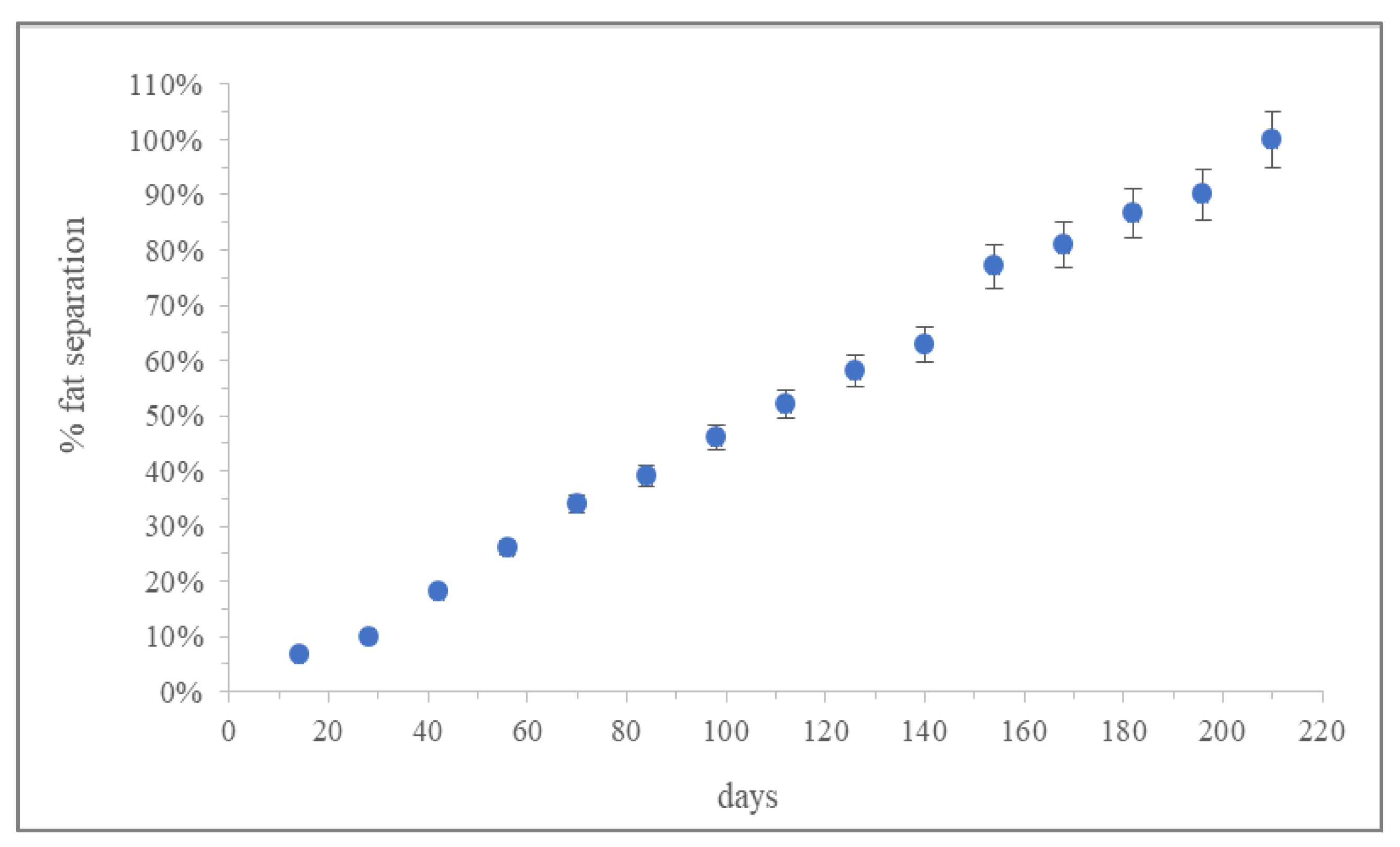
Figure 2.
a. Reaction kinetics of fat separation from mixtures with 0.1 % pectin placed at different temperatures (35, 45, 55°C) with constant illumination (24h).
Figure 2.
a. Reaction kinetics of fat separation from mixtures with 0.1 % pectin placed at different temperatures (35, 45, 55°C) with constant illumination (24h).
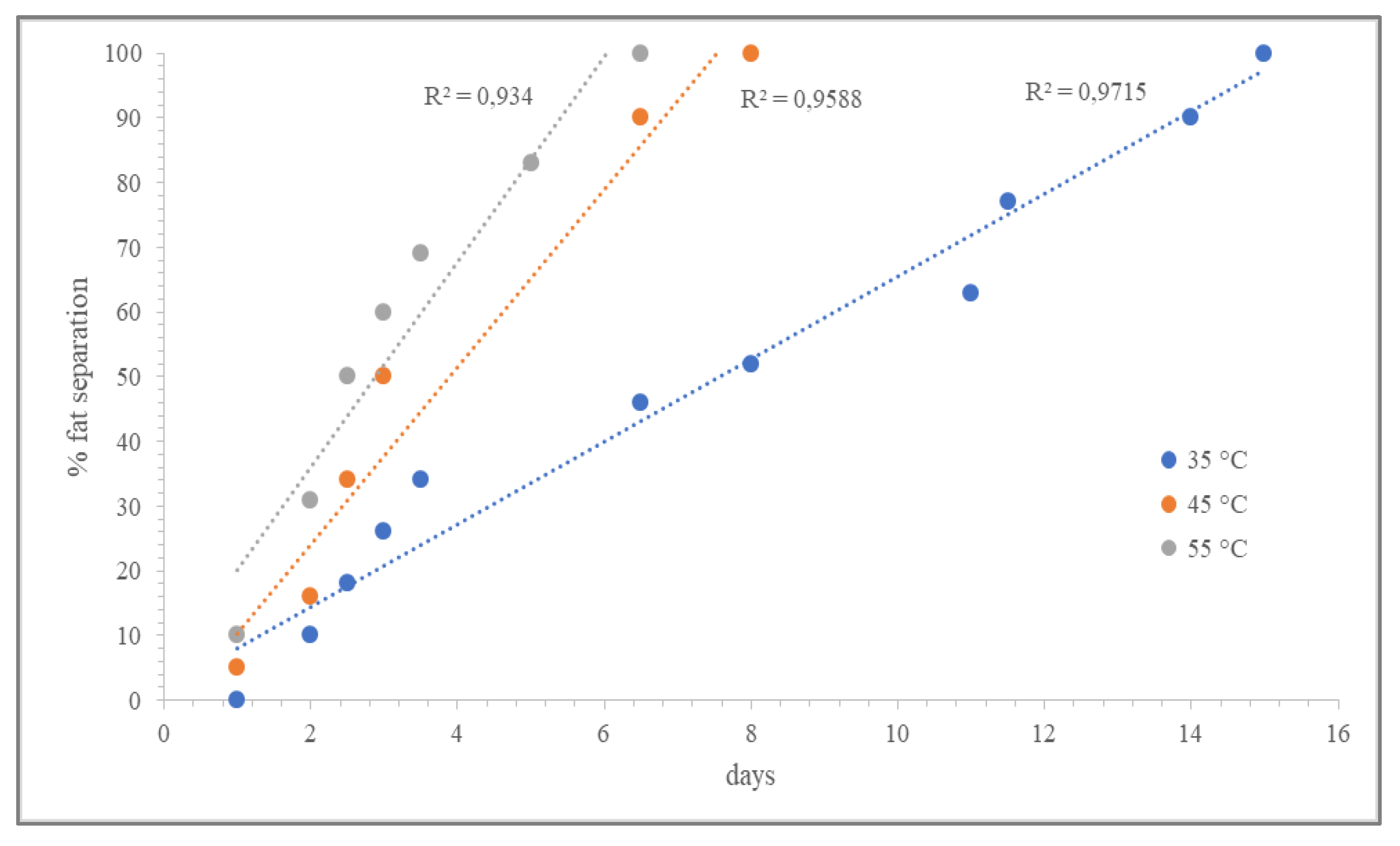
Figure 2.
b. Reaction kinetics of fat separation from mixtures with 0.1 % pectin placed at different temperatures (35, 45, 55°C) with intermittent illumination (12h).
Figure 2.
b. Reaction kinetics of fat separation from mixtures with 0.1 % pectin placed at different temperatures (35, 45, 55°C) with intermittent illumination (12h).
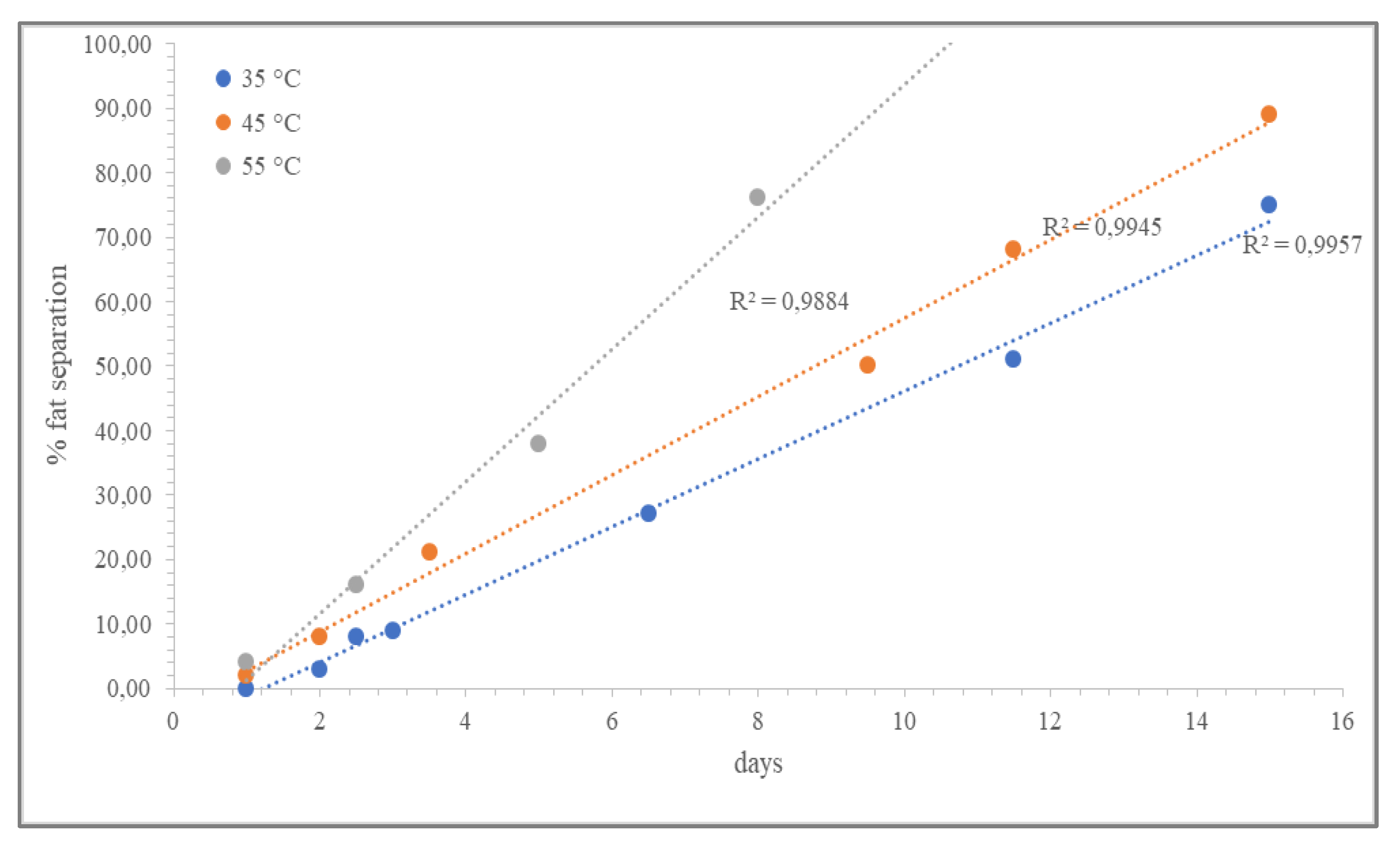
Figure 3.
Arrhenius model for shelf-life prediction.
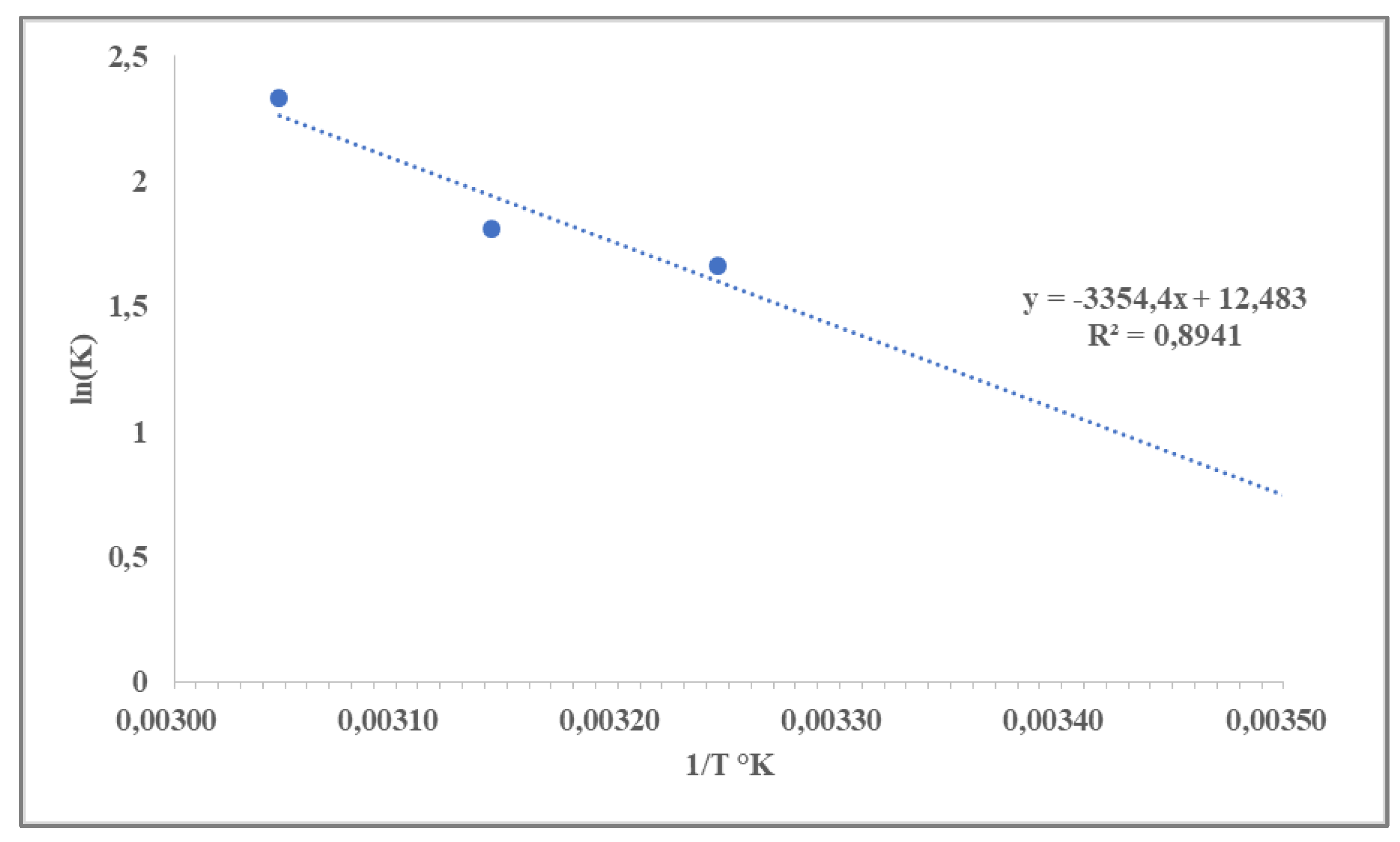
Figure 4.
Shelf-life behaviour of different samples.
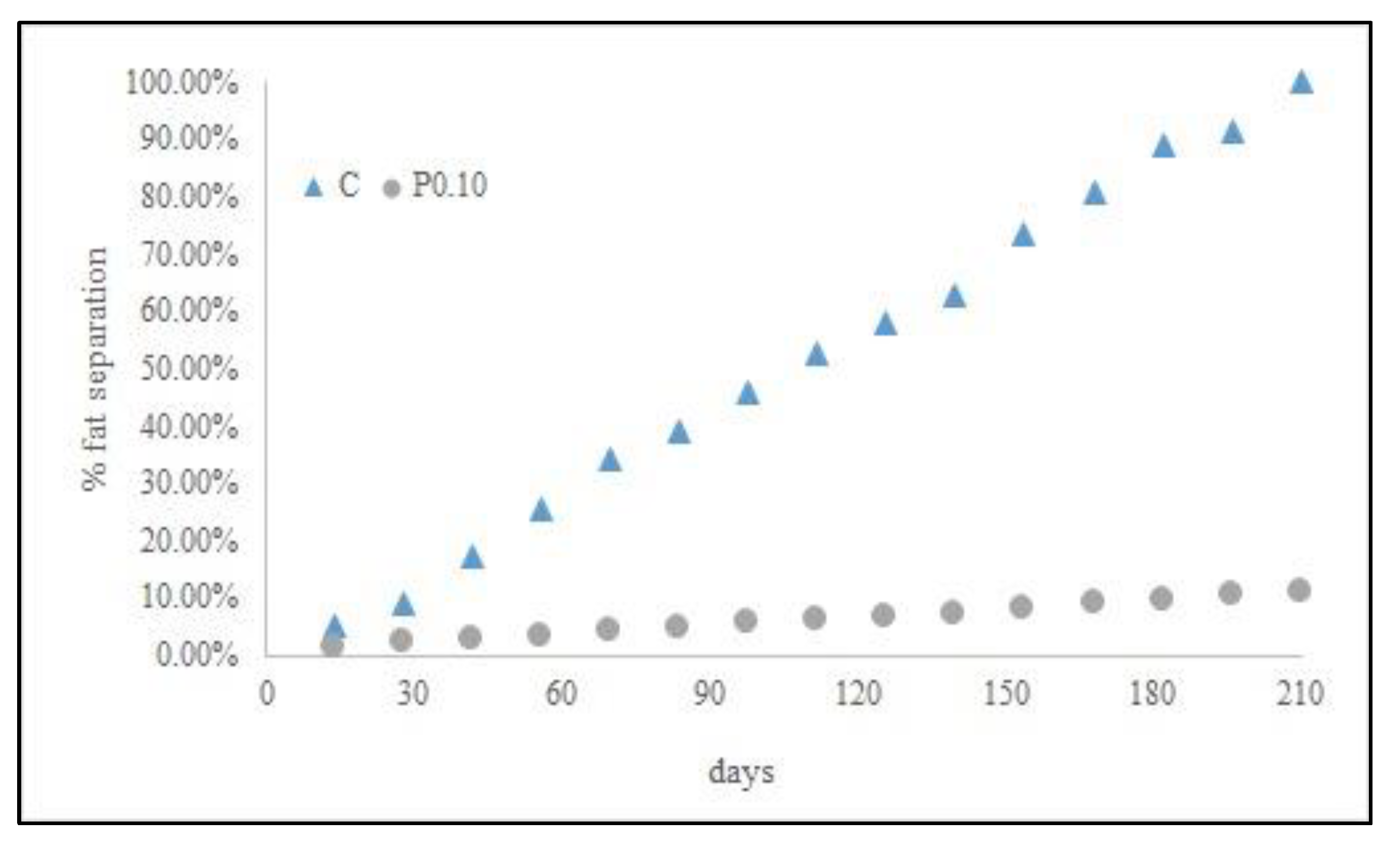
Figure 5.
Spider plot representation of sensory analysis.
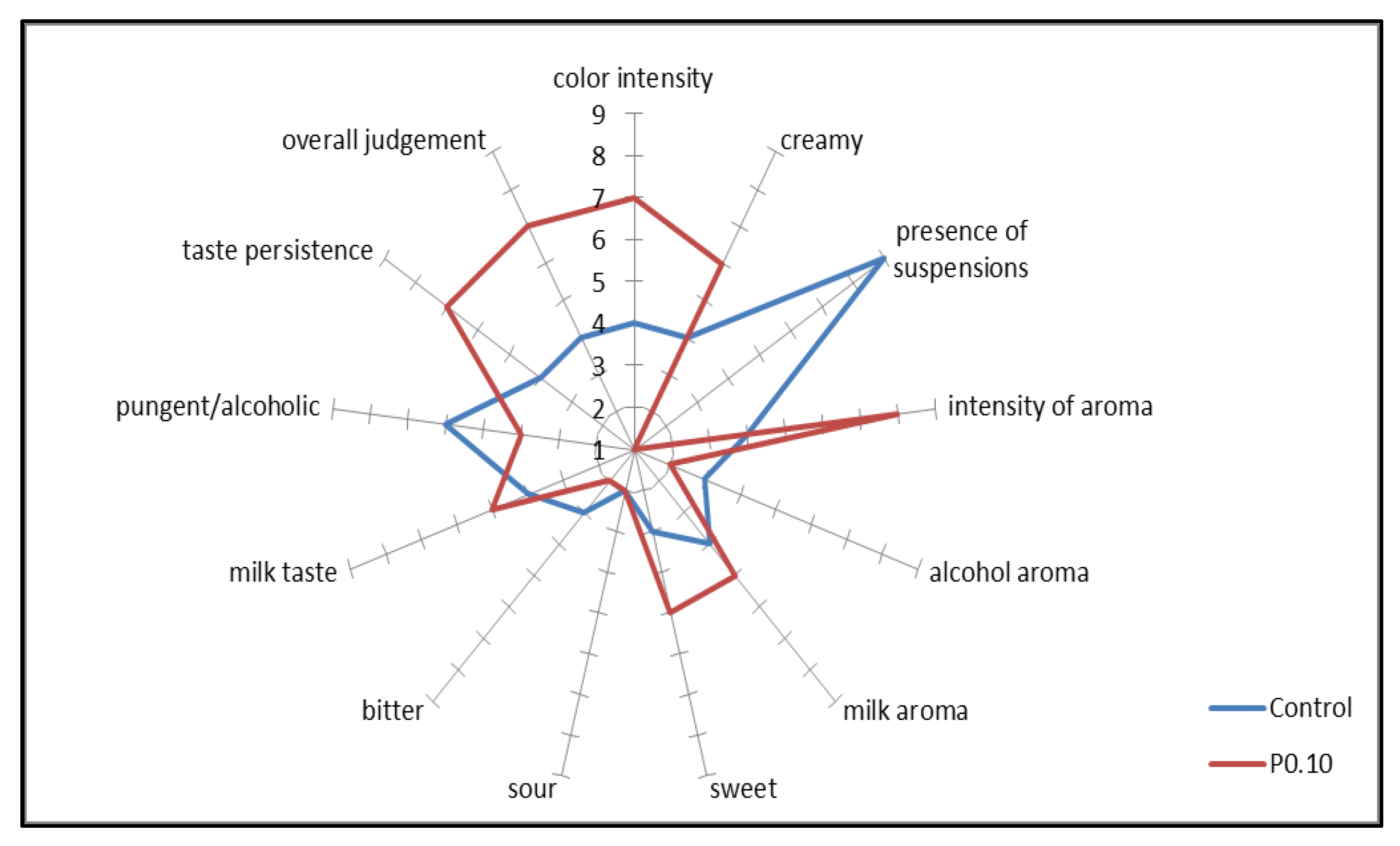

Table 1.
Formulation tests with pectin, C control; P0.05 pectin 0.05%; P0.10 pectin 0.10%; P0.15 pectin 0.15%; P0.20 pectin 0.20%.
Table 1.
Formulation tests with pectin, C control; P0.05 pectin 0.05%; P0.10 pectin 0.10%; P0.15 pectin 0.15%; P0.20 pectin 0.20%.
| Ingredients 1 | C | P0.05 | P0.10 | P0.15 | P0.20 |
|---|---|---|---|---|---|
| Buffalo milk | 45.00 | 45.00 | 45.00 | 45.00 | 45.00 |
| Water | 17.40 | 17.40 | 17.40 | 17.40 | 17.40 |
| Sugar | 17.00 | 17.00 | 17.00 | 17.00 | 17.00 |
| Brandy | 16.00 | 16.00 | 16.00 | 16.00 | 16.00 |
| Glucose sirup | 2.00 | 2.00 | 2.00 | 2.00 | 2.00 |
| Maltodextrins | 1.66 | 1.61 | 1.56 | 1.51 | 1.46 |
| Pectin | 0.00 | 0.05 | 0.10 | 0.15 | 0.20 |
| Caseinate | 0.83 | 0.83 | 0.83 | 0.83 | 0.83 |
| Sodium citrate | 0.11 | 0.11 | 0.11 | 0.11 | 0.11 |
| Total | 100 | 100 | 100 | 100 | 100 |
1 Ingredients are reported as percentage.
Table 2.
Viscosity of different samples after 15 days from production; C control; P0.05 pectin 0.05%; P0.10 pectin 0.10%; P0.15 pectin 0.15%; P0.20 pectin 0.20%.
Table 2.
Viscosity of different samples after 15 days from production; C control; P0.05 pectin 0.05%; P0.10 pectin 0.10%; P0.15 pectin 0.15%; P0.20 pectin 0.20%.
| Sample | Viscosity (mPA*s) ± SD |
|---|---|
| C | 79.3±3.2b1 |
| P0.05 | 68.5±2.7c |
| P0.10 | 81.1±3.6b |
| P0.15 | 92.9±5.1a |
| P0.20 | 94.7±5.5a |
1 Different letters indicate significant differences at p < 0.05 among the samples.
Disclaimer/Publisher’s Note: The statements, opinions and data contained in all publications are solely those of the individual author(s) and contributor(s) and not of MDPI and/or the editor(s). MDPI and/or the editor(s) disclaim responsibility for any injury to people or property resulting from any ideas, methods, instructions or products referred to in the content. |
© 2025 by the authors. Licensee MDPI, Basel, Switzerland. This article is an open access article distributed under the terms and conditions of the Creative Commons Attribution (CC BY) license (http://creativecommons.org/licenses/by/4.0/).
Copyright: This open access article is published under a Creative Commons CC BY 4.0 license, which permit the free download, distribution, and reuse, provided that the author and preprint are cited in any reuse.


