
Submitted:
09 April 2025
Posted:
10 April 2025
You are already at the latest version
Abstract
The preservation of truffles is one of the major problems facing this quality product of the Moroccan terroir. The aim of the present work is to contribute to the development of certain conservations techniques for white terfess (Tirmania nivea and Tirmania pinoya) from the eastern region. Various preservation methods are used : air drying, steaming at different temperatures in whole and sliced form, autoclaving at varying temperatures and pH levels, as well as in a sodium chloride solution with citric acid, freezing, powdering, jamming, to give an idea of their advantages. The major drawback is shelf life. The processes for preserving carpophores in the form of oven slices, freezing, powder or jam show very satisfactory results. Organoleptic assessment by tasting has also produced acceptable results for oven-dried tench and freezing methods.
Keywords:
White truffles
; Tirmania nivea
; Tirmania pinoya
; Eastern Morocco
; conservation
Introduction
The truffle industry is one of Morocco's top products. Terfess are edible ascomycete mushrooms native to the desert, with a symbiotic mycorrhizal association that looks like tubers and thrives in favorable climatic conditions.
The terfess provides a very special biological association, playing a very important role in fragile ecosystems. Mainly herbaceous or shrubby plants (annual or perennial) of the Cistaceae family, belonging to the Helianthemum and Cistus genera [1,2,3,4,5,6,7,8,9,10,11,12]. But also with some forest plant species [13,14,15].
They show an astonishing adaptation to desert conditions, mitigating desertification thanks to their xerophytic host plants. Its geographical distribution is mainly in arid and semi-arid regions around the Mediterranean basin (North Africa and southern Europe) and in the Middle East [4,5,9,13,16,17,18,19,20,21,22,23,24,25,26,27].
Host plants play an important role in preserving vegetation cover, thus preventing erosion and desertification [28].
High productivity is present in Mediterranean countries, particularly in North Africa and most Middle Eastern countries. It is also highly appreciated by the local population, as well as worldwide. Whatever the Terfez species, it reflects the edible and highly sought-after hypogeous mushroom; considered a luxury foodstuff [29].
Their popularity is due to their taste and nutritional value. Their chemical composition has been the subject of numerous studies showing their richness in proteins, amino acids, fibers, fatty acids, minerals and carbohydrates etc. [30,31,32,33,34,35,36,37,38].
Among the special features of the terfez are its strange isolation in a littleknown environment, its rarity, the very low quantity harvested, the difficulty of accessing truffle-growing areas and its high price both nationally and internationally. Their gastronomic value is reflected in their richness in proteins, lipids, carbohydrates, minerals, amino acids, fatty acids and vitamins, etc. Their nutritional and medicinal values have been known since antiquity and appreciated by the Greco-Roman populations who imported them from Tunisia and Libya, where they were widely traded and consumed.
Their therapeutic properties and extracts have been used for centuries in traditional Arab medicine to treat certain eye ailments and hair loss [40]. They are also an untapped source of therapeutic compounds with anti-inflammatory, immunosuppressive, antimutagenic and anti-carcinogenic properties [41], antioxidant properties [38,42,43], enzymes of medical and industrial interest [44], antimicrobial activities [45,46,47,48,49,50,51,52], antiviral, hepatoprotective and immunostimulant activities, their use in traditional biotherapy has been known since antiquity.
The major constraints encountered with these edible fruiting bodies are conservation, but also preserving as much as possible of their gustatory and culinary qualities.
Terfess is of great socio-ecological interest in arid and semi-arid regions, promoting good prospects for social and economic development in a region characterized by a difficult environment and scarcity of natural resources.
Methods and Results
This part was based on biochemical and/or chemical analyses applied by [39]. to white terfez (genus Tirmania), red terfez (genus terfezia boudieri) and black terfez (genus Picoa Junniperi Viittadini) in the eastern region.

Table 1.
Nutritional characterization of harvested terfez - values are expressed in (%) of fresh matter.
Table 1.
Nutritional characterization of harvested terfez - values are expressed in (%) of fresh matter.
| Dosages | Types of terfez | ||
|---|---|---|---|
| White | Red | Black | |
| (%) | |||
| Water | 68 | 75 | 77 |
| Dry matter | 38 | 25 | 23 |
| Protein | 1,9 | 1,7 | 1,2 |
| Lipids | 1 | 1 | 0,35 |
| Sugars | 8,5 | 5,1 | 2,1 |
| Ash | 1,4 | 1,8 | 2,1 |
| (µg. g-1) | |||
| N** | 640 | 125 | 391 |
| P* | 3,46 | 1,58 | 2,54 |
| K*** | 28,9 | 28,1 | 32,8 |
| Ca*** | 25,4 | 14,9 | 146,8 |
| Mg*** | 24,4 | 20,3 | 25,6 |
| Na*** | 13,7 | 8,4 | 10,7 |
| NO3-* | 00 | 00 | 00 |
| NH4+* | 1280 | 425 | 78 |
Truffe Size Measurement
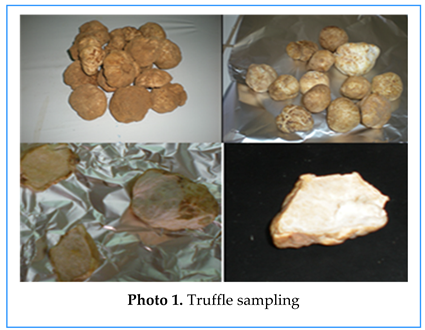
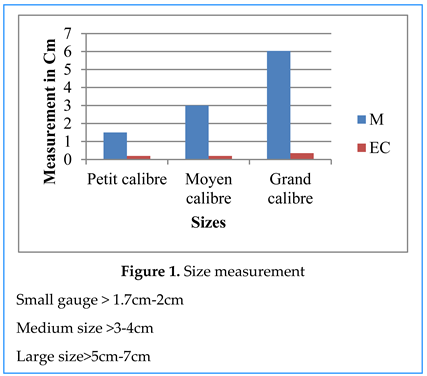
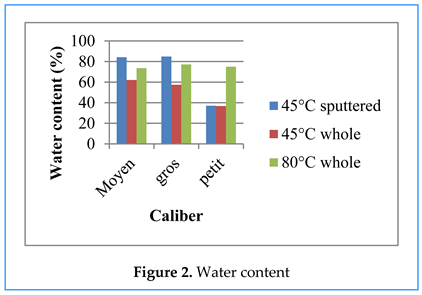
Water Content
For the most part, our results are in line with literature averages, with 60% water content. According to Alais and Linden, 1987, hydrated foods have a water content approaching 95%, e.g. lettuce: 94%; tomato: 93%; milk: 87% and mutton is around 60%. For the most dehydrated foods, this content can drop to less than 10%. For example, wheat seeds: 14%, bean seeds: 12% and soybeans: 8%.
The Different Types of Preservation
- 1.
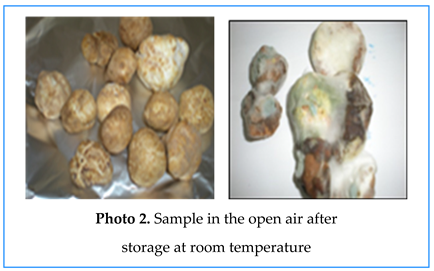
- In the open air
After 3 days in ambient air, the crop is completely infested. So it's this method of storage that is easily infected and ends up rotting after a few days. (Photo 2)
- 2.
- Oven at 45°C
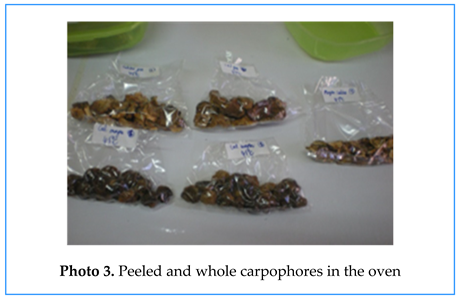
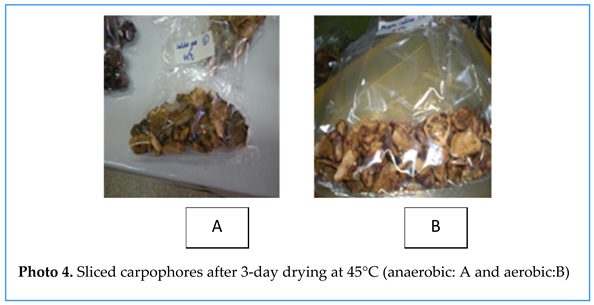
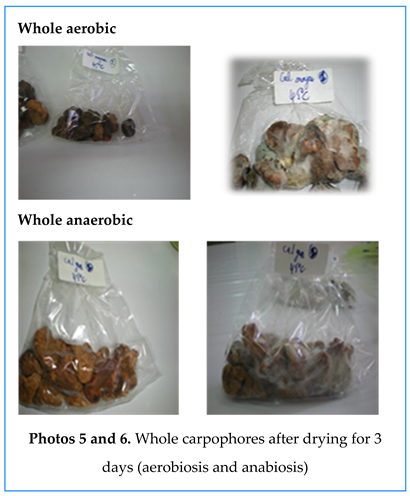
Samples of large and medium-sized whole and sliced products are steamed for 3 days at 45°C. Peeled and whole products are then placed in plastic bags under anaerobic (vacuum) and aerobic conditions.
Peeled carpophores are placed in hermetically sealed bags (anaerobic conditions), and under aerobic conditions are highly resistant to decay. Even after 4 years, they remain visually intact and free from rot. Whereas whole carpophores susceptible to rot are attacked by fungi after 1 month for hermetically sealed bags (anaerobiosis) and 2 weeks for aerobic bags (simple sealing).
- 3.
- Oven at 80°C
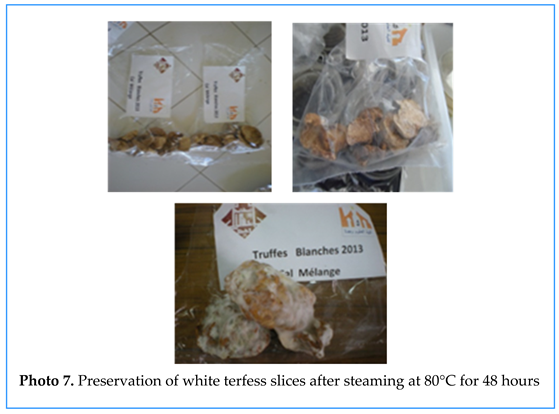
The sliced truffles are stored in plastic bags under aerobic conditions. Those in anaerobic conditions are so far intact to the naked eye.
- 4.
- Autoclave in aqueous media
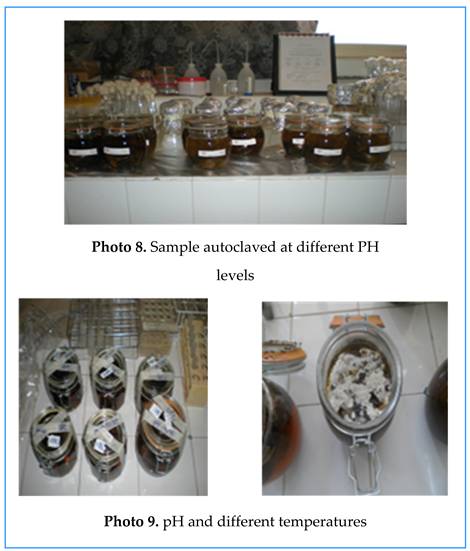
Preservation at an acidic pH but at different temperatures shows that truffles can be preserved over a long period of time, with different efficacy. In fact, samples can be kept for up to 15 months.
We can therefore conclude that samples at any pH level and at 100°C are best preserved for up to 15 months. Followed by samples at temperatures of 80°C, which have a shelf life of 1 year.
Those at 60°C are the last with 9 months. The lower the temperature, the more carpophores stored under these conditions are susceptible to attack, whatever the acid pH used.
- 5.
- NaCl + citric acid solutions
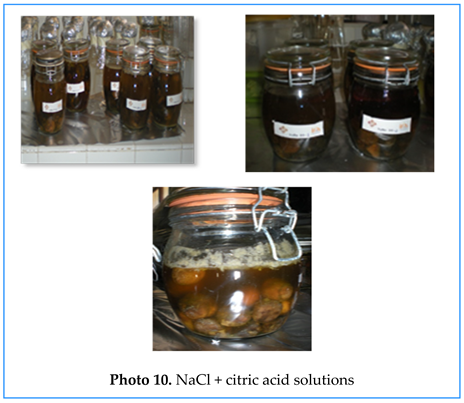
In this experiment, we can see that shelf-life is 17 months at a temperature of 100°C, while those at 80°C and 60°C are around 1 year. It can also be seen that preservation with a NaCl/citric acid solution lasts up to 17 months at a temperature of 100°C, compared with other temperatures. Contamination is rare, unless errors are made in applying the process.
- 6.
- Freezing
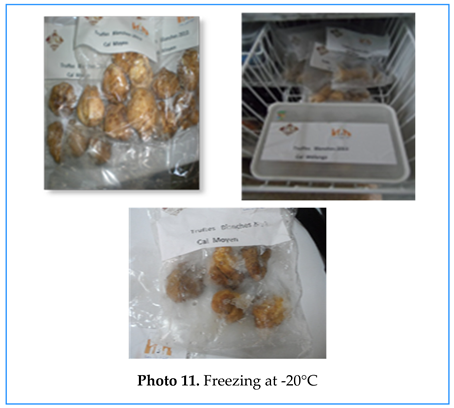
Samples stored in boxes and sachets have a long shelf-life of over 3 years, keeping their original appearance intact and avoiding endogenous and exogenous contamination.
- 7.
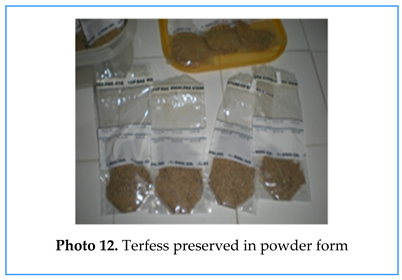
- Powder
Oven dried at 80°C for 3 days, then ground into small pieces using a pestle and mortar, and finally electrically ground. The powder is still preserved even after several years. (Photo 12)
- 8.
- Processing into jam
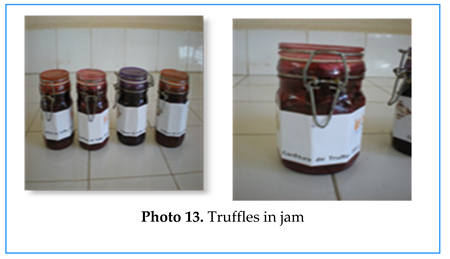
The jam jars have a caramelized, sweet taste and keep for over a year.
- 9.
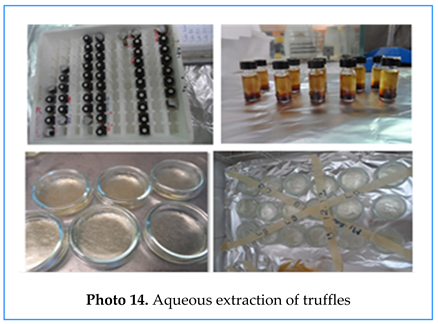
- Aqueous extraction
Discussion
The results show that the three terfez varieties have a water content ranging from 68 to 77%. In the literature, the water content of the carpophores of different terfess species has been found to range from 78 to 81% of their fresh matter [30,31,53,54,55].
In all three terfess species, dry matter is between 23 and 32% and protein content between 1.2 and 1.9%. Compared with other foods: beef: 17%; chicken meat: 21%; chicken eggs: 13%; cow's milk: 3.5%; lettuce: 1.2%; soya beans: 35%; soft wheat grains: 11.5%; oranges: 1%; lentils: 26%; sunflower seeds: 30% and potatoes: 9% [56]. According to Ashour et al. 1981, Terfezia boudieri has 9 essential amino acids, while Terfezia claveryi has 10 [57].
The lipids obtained by [39] are 0.35 and 1%. Fatty acids are present in terfess at relatively low levels of 2 to 2.5% of dry matter [33,54,55,58].
According to [56] ; of certain foods beef meat: 20; chicken meat: 8; chicken eggs: 12; cow's milk: 3.9; lettuce: 0.2; soya beans: 18; soft wheat grains: 1.5; oranges: 0.2; lentils: 1; sunflower seeds: 45 and potatoes: 0.4.
Comparison with the values found for white terfess sugars: 8.5%; red: 5.1% and black: 2.1%. Certain foods beef: 0.5; chicken eggs: 0.6; cow's milk: 4.8; lettuce: 3; soya beans: 30; soft wheat grains: 68; oranges: 9; lentils: 56; sunflower seeds: 22 and potatoes: 82 [56].
Carbohydrate levels generally vary between 16 and 28% of dry matter: 16.66 in Terfezia claveryi; 21.53 in Tirmania nivea; 24.87 in Tirmania pinoyi [59] and 28% in Terfezia claveryi [33].
Visual observations show that anaerobic and aerobic storage in the open air by steaming whole products does not prevent the development of carpophore rot. As a result, the high water content of terfess facilitates the manifestation of spoilage, whether endogenous (browning, rancidity, putrefaction, etc....) or exogenous (rotting due to fungal, mould and bacterial attack).
However, terfess dried in slices or sterilized by autoclaving (different pH and NaCl/citric acid solution), powdering, jamming and freezing appeared to be free from infection. These results are confirmed by those found by [39]. Finally, it can be seen from the results that freezing is the best preservation method, and from a phenotypic point of view, it gives good texture and taste.
Desiccation seems to preserve protein and sugar content, due to its efficiency and speed. The decrease in mineral content may be linked to the difficulty of extracting certain mineral elements from very firm material.
Preservation in powder form and desiccation does not bring any real improvement in the state of preservation, but it does have certain advantages over preservation in the whole state, leading among other things to the presentation of goods that are more manageable forconsumption when preparing certain specific dishes.
Conclusion
The white terfess harvested in the eastern region has two species belonging to the Tirmania genus: Tirmania pinoyi and Tirmania nives. Harvesting takes place from mid-January to the end of April. The high content of carpophores makes them difficult to preserve. The preservation methods we have used show both advantages and disadvantages in preserving the nutritional quality of terfez.
Our contribution aims to exploit harvests and enhance the value of this local product against rot and damage, by making the product available over a longer period of the year. Tests have shown that postharvest conservation is very delicate due to the fragility of terfez in the open air.
The choice of preservation methods depends on the process used : sterilization by autoclave, freezing, drying by steaming of sliced or powdered samples, and jam appear to be suitable preservation methods. The product's destiny is decisive in the choice of preservation methods.
This local product deserves further study for each technique's effect on preserving nutritional quality, duration and handling. As for the different preservation processes used, tasting tests clearly show that freezing appears to be the best preservation process, preserving at least taste and color.
What's different about powdered truffles is the drying process : the naked eye will notice a change in color due to the temperature. In the case of jam, the sweet taste predominates.
References
- Awameh and Alsheish (1978) Laboratory and field study of for kinds of truffle (Kameh) ; Terfezia and Tirmania species, for cultivation.Mushroom science (Part II).Proceedings of the Trent International Congress on the Science and Cultivation Of Edible Fungi ; France ; 507-517.
- Alsheish, (1984) Myccorhizae of annual Helianthenum speciesformed with desert.Proceedings of the sixth N.Am.Comf.On Mycorrhizae. (R. Molina ; Ed) Bend.Or ; 25-29 June.
- Dexheimer et al. (1985) Comparaison ultrastructural study of symbiotic mycorrhizal associations between Helianthemum salicifolium Terfezia Claveryi and Helianthemum salicifolium Terfezia leptoderma. Canadian Journal of botany 63.582-591.
- Fortas, Z (1990) Etude de trois espèces de terfez, caractères culturaux et cytologie du mycélium isolé et associé à Helianthemum gutattum." PhD thesis, University of Oran (Es-sénia) and INRA Clermont-Ferrand.
- Roth-Bejerano N., Livne D.,Kagan-Zur V (1990) Helianthemum-Terfezia relations in different growth media. New Phytol. 1990 ;114 :235-238.
- Fortas Z and Chevalier (1992) a Characteristics of ascospore germination of Terfezia arenaria (Moris) Trappe, collected in Algeria." Cryptogamie, Mycol. 13 : 21-9.
- Fortas Z and Chevalier (1992) b Characteristics of ascospore germination of Terfezia arenaria (Moris) Trappe, collected in Algeria." Cryptogamie, Mycol. 13 : 21-9.
- Morte A., and Honrubia, M (1994) Patent no. P9402430. Madrid.
- Khabar L (2002) Etude pluridisciplinaires des truffes du maroc et perspectives pour l'amélioration de production des (terfessde la foret de la Mamora. PhD thesis, Mohamed V-Agdal University, Rabat, Morocco.
- Zitouni (2010) Etude des associations mycorhiziennes entre quatre espèces de terfez et diverses plantes cistacées et ligneuses en conditions controlées. Magister's thesis, University of Oran Es-sénia.
- Slama et al. (2010) Biochemical composition of desert truffle Terfezia boudieri Chatin. Acta Horticulturae 853 :285-289, Proceedings of the International Symposium on Medicinal and Aromatic Plants, 2009.
- Slama A., Gorai, M., Fortas, Z., Boudabous, A., & Neffati, M (2012) Growth, root colonization and nutrient status of Helianthemum sessiliflorum Desf. inoculated with a desert truffles, Terfezia boudieri Chatin. Saudi Journal of Biological Sciences, 19, 25-29. [CrossRef]
- Diez J., Manjon, J. L., & Martin, F. (2002) Molecular phylogeny of the mycorrhizal desert truffles (Terfezia and Tirmania), host specificity and edaphic tolerance, 94 pages 247-259.
- Chafi M.E.H, Fortas Z et Bensoltane A (2004) Bioclimatic survey of the terfez zones of the South West of Algeria and an essay of the inoculation of Pinus halepensis Mill. with Tirmania pinoyi.Egypt.JAppl.Sc ;19 (3) : 88-100.
- Morte A., Honrubia, M., & Gutiérrrez, A. (2008) Biotechnology and cultivation of desert truffles. In : Varma A (ed) Mycorrhiza, 467-483.
- Awameh and Alsheish (1979) Mycorrhizal synthesis between Heilanthemum ledifolium, H. salicifolium, and four species of the genera Terfezia and Tirmania using ascospores and mycelia! Cultures obtained from ascospore germination. Abstracts of 4th N. Am. Conf. on Mycorrhizae, No. 23, June 24-28, 1979. Colorado State University, Fort Collins, Colorado.
- Awameh (1981) The response of Helianthemum salicifolium and H.ledifolium to infection by the desert truffle Terfezia boudieri. Mushroom Sci. 11 :843-853.
- Alsheish and Trappe (1983) a Desert truffles : The genus Tirmania. Trans. Br. Mycol. Soc. 81 :83-90.
- Alsheish and Trappe (1983) b Taxonomy of Phaeangium lefebvrei, a desert truffle eaten by birds. Can. J. Bot. 61 :1919-1925.
- Chevalier G., Riousset, L., Dexheimer, J., & Dupre, C. (1984) Synthese mycorrhizae between Terfezia leptoderma Tul. And various Cistac6es. Agronomie 4 :210-211.
- Fortas Z and Chevalier (1988) Effect of growing conditions on mycorrhization of Helianthemum guttatum by three species of the genus Terfezia and Tirmania (desert truffles). 2ème congresso Internazionale Sul tartufo Spoleto, (pp. 197-203).
- Fortas (2009) Diversity of terfez (sand truffle) species from Algerian arid zones. Oran : Researchgate.
- Bratek Z, E. Jakucs, G. Szedlay (1996) Mycorrhizae between black locust (Robinia pseudoacacia) and Terfezia terfezioides Mycorrhiza volume 6, pages271-274.
- Morte A., LovisoloC, and Schubert, A (2000) Effect of drought stress on growth and water relation of the mycorrhizal association Helianthemum almeriense- Terfezia claveryi. Mycorrhiza, 10, 115-119. [CrossRef]
- Slama et al. (2006) Etude taxinomique de quelques Ascomycota hypogés (Terfeziaceae) de la Tunisie méridionale. Bull. Soc. Mycol. Fr, 122 (2-3), pp. 187-195.
- Mandeel Q.A and AL-Laith, A.A (2007) Ethnomycological aspects of the desert truffle among native Bahraini and non Bahraini peoples of the Kingdom of Bahrain. Journal of Ethnopharmacology, 110, 118-129. [CrossRef]
- Trappe and al. (2008) Desert Truffles of the African Kalahari : Ecology, Ethnomycology, and Taxonomy. Econ Bot (62), pp521-529.
- Honrubia M, Cano A, MolinaNiñirola C. (1992) Hypogeous fungi from Southern Spanish semiarid lands. Persoonia 14 :647-653.
- Bradai M.N., Saïdi B., Enajjar S. & Bouaïn A. (2006) The Gulf of Gabès : a spot for the Mediterranean elasmobranchs. In N. Başusta, Ç. Keskin, F. Serena, B. Seret, eds. The Proceedings of the International Workshop on Mediterranean Cartilaginous Fish with Emphasis on Southern and Eastern Mediterranean, Istanbul, 2005, Turkish Marine Research Foundation, Turkey. pp. 107–117.
- Al-Delaimy (1977) Protein and amino acid composition of truffle, Journal of the Canadian Institute of Food Science and Technology 10 ; 221-222.
- Bokhary H.A, and Bokhary M.A (1987) Chemical composition of desert truffles from Saudi Arabia. Calif Inst Sci Tech 20 :336-341.
- Ahmed AA, Mohamed MA, Hami MA (1981) Libyan truffles "Terfezia boudieri Chatin» : chemical composition and toxicity. J Food Sci 11 :927-929. [CrossRef]
- Bokhary and Parvez (1993) Chemical composition of desert truffles Terfezia claveryi. J Food Compos Anal 6 :285-293.
- Omer et al. (1994) The volatiles of desert truffle : Tirmania nivea. Plant foods for human nutrition, , 45:247- 249.
- Hussain G and Al-Ruqaie I.M (1999) Occurrence in chemical composition, and nutritional value of truffles : overview. Pakistan J Biol Sci 2 :510-514.
- Dabbour and Takuri (2002) a Protein quality of four types of edibles moushroom found in Jordan. Plant Foods Human Nutr 57 :1-11.
- Dabbour and Takuri (2002) b Protein digestibility using corrected amino acid score method (PDCAAS) of four types of mushrooms grown in Jordan. Plant Foods Hum Nutr 57 :13-24.
- Murcia et al. (2002) Antioxidant activity of edible fungi (truffles and mushrooms) : losses during industrial processing. J Food Pro 65 :1614-1622.
- Bouziani (2009) Contribution à l'étude et à la mise en valeur du potentiel truffier de la region orientale du Maroc. Thesis.Doc.Sc.Agro.Univ.Mohame 1er d’Oujda.
- Haloubi A (1988) Les plantes des terrains sales et désertiques, vues par les anciens arabes ; confrontation des données historiques avec la classificatiodes végétaux, leur état et leur répartition actuel en Proche-Orient. Doctoral thesis, Univ. Scien. Tech. Languedoc, Montpelier,p 86, p 311.
- Hannan MA, Al-Dakan AA, Aboul-Enein HY, Al-Othaimeen AA. (1989) Mutagenic and antimutagenic factor(s) extracted from a desert mushroom using different solvents. Mutagen, 4 : 111-114. [CrossRef]
- Pervez-Gilabert M, Sanchez- Felipe I, Garcia- Carmona F (2005) b Purification and partial characterization of lipoxygenase from desert truffle (Terfezia clavery i Chatin) ascocarps. J. Agric. Food Chem. 53 : 3666-3671.
- Al-Laith A.A (2010) Antioxidant components and antioxidant/antiradical activities of desert truffle (Tirmania nivea) from various Middle Eastern origins. J Food Compos Anal 23 :15-22. [CrossRef]
- Pervez Gilabert Gilabert M, SanchezFelipe I, Garcia- Carmona F. (2005) a and b Purification and partial characterization of lipoxygenase from desert truffle (Terfezia clavery i Chatin) ascocarps. J. Agric. Food Chem. 53 : 3666-3671. [CrossRef]
- Rougieux R (1963) Antibiotic and stimulant actions of the Desert truffle (Terfezia boudieri Chatin). An. Insti. Past. 105 : 315-318.
- Chellal and Lukasova (1995) Evidence for antibiotics in the two Algerien truffles Terfezia and Tirmania, 50(3) :228-9.
- Dennouni (1996) Mise en évidence des activités antibactériennes et Antifongiques chez deux espèces de Terfez d'Algérie (Tirmania nivea et Tirmania pinoyi). Magister's thesis, University of Tlemcen, 97 p.
- Mohamed Benkada M (1999) Extraction et essai d'isolement des principes antimicrobiens de Terfezia Claveryi Chat.Thèse de Magister.Univ.D'Es-Sénia Oran 81p.
- Janakat S., Al-Fakhiri S. and Sallal A.K. A (2004) A promising peptide antibiotic from Terfezia claveryi aqueous extract against Staphylococcus aureus in vitro. Physiother Res 18 :810-813. [CrossRef]
- Janakat S., Al-Fakhiri S. and Sallal A.K (2005) Evaluation of antibacterial activity of aqueous and methanolic extracts of the truffle Terfezia claveryi against Pseudomonas aeruginosa. Saudi Med J 26 :952-955.
- Fortas Z and Bellahouel-Dib (2007) Extraction of bioactive substances from Algerian terfez and demonstration of their antimicrobial activity. Revue des régions arides, 1 : 280-282.
- Neggaz (2010) Tests of antibiotic properties from Tirmania pinoyi against bacteria and fungi 2eme Colloque International en Biotechnologie Bio Tech World 2010, 29-29 Avril 2010 Oran ; Algerie.
- Abdalla et al. (1979) Studies on the nutritive value of Saudi truffles and the possibility of their preservation by canning.Proc 2 nd Arab Conf.Food Sci.Technol , 2 :369-376.
- Al-Shabibi M.M.A., Toma, S.J.and Haddad, B.A (1982) Studies on Iraqi Truffles. I. Proximate Analysis and Characterization of Lipids. Canadian Institute of Food Science and Technology Journal Volume 15, Issue 3, 1982, Pages 200-202.
- Sawaya WN, Al-Shalhat A, AlSogair A, Mohammad M (1985) Chemical composition and nutritive value of truffles of Saudi Arabia. J Food Sci 50 :450-453. [CrossRef]
- Alais and Linden (1987) Biochimie Alimentaire Ed. Masson.
- Ashour R, A., M. A. Mohamed, and M. A. Hami. (1981) Mushroom science.XI.PART II.In : Proceedings of the 11th International Congress on the Cultivation of Edible Fungi. Sydney ; Australia ; pp.833-42.
- Ackerman LGJ, Vanwyk PJ, Du Plassis LM (1975) Some aspects of the composition of the Kalahari truffle or N'abba. S Afr Food Rev 2 :145-147.
- Al-Naama N.M., Ewaze J.O.,Nema J.H (1988) Chemical constituents of Iraqi truffles, Iraqi Journal of Agricultural Sciences, 6, 51-56.
Disclaimer/Publisher’s Note: The statements, opinions and data contained in all publications are solely those of the individual author(s) and contributor(s) and not of MDPI and/or the editor(s). MDPI and/or the editor(s) disclaim responsibility for any injury to people or property resulting from any ideas, methods, instructions or products referred to in the content. |
© 2025 by the authors. Licensee MDPI, Basel, Switzerland. This article is an open access article distributed under the terms and conditions of the Creative Commons Attribution (CC BY) license (http://creativecommons.org/licenses/by/4.0/).
Copyright: This open access article is published under a Creative Commons CC BY 4.0 license, which permit the free download, distribution, and reuse, provided that the author and preprint are cited in any reuse.


