

Submitted:
03 April 2025
Posted:
07 April 2025
You are already at the latest version
Abstract
This study investigated non-antibiotic therapeutic strategies for controlling lactococcosis in Nile tilapia (Oreochromis niloticus). The efficacy of Aloe vera extract, Vitamin E/Selenium supplementation, and multi-strain probiotics was evaluated against Lactococcus garvieae infection in an experimental setting. Two hundred Nile tilapia were divided into four groups: control, Aloe vera, Vitamin E/Selenium, and probiotic. After a 42-day treatment period, fish were challenged with L. garvieae and monitored for 28 days. Clinical signs, mortality rates, and survival were assessed. The control group exhibited severe disease progression with 100% mortality by day 21 post-infection. Aloe vera treatment reduced mortality to 20%, showing moderate efficacy. Vitamin E/Selenium supplementation provided greater protection with only 5% mortality. The probiotic-treated group demonstrated the most remarkable results, with no clinical signs or mortalities throughout the study. Statistical analysis revealed significant differences between treatment groups and the control, with probiotics showing the largest effect size (Cohen's d = 0.98, p < 0.001), followed by Vitamin E/Selenium (Cohen's d = 0.9, p = 0.001) and Aloe vera (Cohen's d = 0.74, p = 0.003). These findings highlight the potential of non-antibiotic interventions in managing L. garvieae infections, with probiotics emerging as the most effective treatment. The study contributes to the development of sustainable aquaculture practices and reduced reliance on antibiotics, aligning with global efforts to mitigate antimicrobial resistance in aquaculture.
Keywords:
Lactococcus garvieae
; immunostimulants
; non-antibiotic therapeutics
1. Introduction
Lactococcosis, caused by Lactococcus garvieae, is an emerging bacterial disease of significant concern in aquaculture, affecting both freshwater and marine fish species (Eraclio et al., 2018; Abu-Elala, Abd-Elsalam and Younis, 2020). L. garvieae is an opportunistic pathogen that poses severe threats to fish health and aquaculture productivity (Aron, 2017; Meyburgh, Bragg and Boucher, 2017; Abu-Elala, Abd-Elsalam and Younis, 2020). Infections often manifest as hemorrhagic septicemia, characterized by skin lesions, exophthalmia, and systemic infection, leading to high mortality rates and significant economic losses (Egger et al., 2023).
In recent years, the increasing prevalence of L. garvieae in Nile tilapia (Oreochromis niloticus), a key species in global aquaculture, has amplified the urgency to develop effective control strategies (Haenen et al., 2023; Nair et al., 2024). Traditionally, antibiotics such as oxytetracycline have been the primary tools for managing lactococcosis (Meyburgh, Bragg and Boucher, 2017). While these antibiotics are effective under laboratory conditions, their efficacy diminishes in field applications due to factors such as anorexia in infected fish and incomplete metabolism of the drugs (Chen et al., 2020). Moreover, the indiscriminate use of antibiotics in aquaculture has exacerbated the global issue of antimicrobial resistance (AMR), leading to the emergence of resistant bacterial strains and posing significant challenges to disease management (Schar et al., 2020).
The limitations and risks associated with antibiotic use have driven the search for alternative therapeutic strategies (Bondad-Reantaso et al., 2023). Non-antibiotic interventions, including herbal extracts, vitamins, and probiotics, have garnered attention for their potential to enhance fish health and immunity while reducing reliance on antibiotics (Soltani et al., 2021; Bondad-Reantaso et al., 2023). Herbal extracts, such as those derived from Aloe vera (Aloe barbadensis miller), possess a wide range of bioactive properties, including antibacterial, antifungal, anti-inflammatory, and immunomodulatory effects (Kaur and Bains, 2024). Studies have demonstrated that Aloe vera can improve fish growth, immune responses, and resistance to bacterial infections, making it a promising candidate for aquaculture applications (Elumalai et al., 2021; Linayati et al., 2022; Nwanna and Ikuesan, 2024).
Similarly, probiotics have emerged as a cornerstone of sustainable aquaculture (Fachri et al., 2024). Defined as live microorganisms that confer health benefits to the host, probiotics enhance gut microbiota balance, promote nutrient absorption, and modulate immune responses (El-Saadony et al., 2021). Probiotics such as Lactobacillus spp., Bacillus spp., and Enterococcus spp. have been shown to inhibit pathogenic bacteria through competitive exclusion, production of antimicrobial compounds, and modulation of host immune defenses (Khaneghah et al., 2020). These properties make probiotics an attractive alternative for managing bacterial diseases like lactococcosis.
Vitamins and mineral supplements, particularly vitamin E and selenium, also play a crucial role in enhancing fish immunity and resistance to infections (Dawood et al., 2020). These nutrients act as antioxidants, protecting cells from oxidative damage and supporting the immune system’s ability to combat pathogens (Dawood et al., 2020; El-Sayed and Izquierdo, 2022). Studies have shown that dietary supplementation with vitamins and selenium improves fish health, enhances stress tolerance, and reduces susceptibility to diseases.
Despite the promising potential of these alternatives, their application in aquaculture remains underexplored, particularly in the context of controlling lactococcosis in Nile tilapia. This study aimed to address this gap by evaluating the efficacy of herbal extracts (aloe vera), vitamins and mineral supplement (Vitamin E and Selenium), and probiotics in managing L. garvieae infections through controlled experimental infections. By identifying effective non-antibiotic therapeutic strategies, this research sought to contribute to sustainable aquaculture practices, reduce the risk of antimicrobial resistance, and improve fish health and productivity in the aquaculture industry.
2. Material and Method
This study was conducted in compliance with the guidelines outlined in the Guide for the Care and Use of Laboratory Animals as mandated by the National Health Research Ethics Committee of Zambia. Ethical approval for the study was obtained from University of Zambia Health Sciences Research Ethics Committee (UNZAHSREC) (Protocol Number: 2023270253). Every effort was made to minimize stress and suffering in the fish during handling and sampling procedures.
2.1. Fish
A total of 200 healthy Nile tilapia (Oreochromis niloticus) with mean weight of 24.2 ± 5.5g were purchased from a commercial fish farm located in Chirundu district, South-East of Zambia. The fish farm had no previous history of disease outbreaks and the subjects were transported by road in oxygenated bags to the University of Zambia, School of Veterinary Medicine wet-lab. The fish were kept in 500 L tank supplied with flow-through dechlorinated water and aerated using stone bubblers. They were allowed to acclimatize for 10 days prior to commencement of the experiment. The fish were fed daily on commercial pellets at a rate of 3% body weight. Daily water temperature averaged 20 ±2 ̊C, mean daily dissolved oxygen was 5.9 ± 2 mg/L and pH was 7 ± 0.2.
2.2. Feeding of Fish with Vitamin E/Selenium, Probiotic and Aloe vera
Prior to the start of the study, 5 fish were sacrificed, sampled and tested for the presence or absence of bacterial infections by bacteria re-isolation.
The fish (n = 80) were divided into in 4 groups (Control [A], vitamin E and Selenjum [B], multi-strain probiotic [C] and aloe vera [D]) by dipnetting and sequential allocation. Each treatment group of 20 fish were placed in 40 Liters aquarium.
The commercial multi-strain probiotic used in this study was a multi-species formulation containing Saccharomyces cerevisiae, Bacillus subtilis, protease, amylase, beta-glucanase, xylanase, and cellulase. It was incorporated into commercial fish feed at a rate of 1 gram per kilogram of feed. Vitamin E and selenium supplements were also mixed into the feed at a concentration of 0.2 grams per kilogram.
For the preparation of Aloe vera, 2 kilograms of fresh Aloe vera leaves were chopped into small pieces and blended into a paste and then stored at 4ºC. This paste was then incorporated into the feed at a rate of 5 grams per kilogram. The feed for each treatment group was prepared fresh daily and calculated based on 3% of the total biomass of the fish in each group to ensure accurate dosing and consistency.
2.3. Challenge Experiment
Following feeding the period of about 42 days, all fish in the four tanks (A, B, C and D) were allowed a period of 6weeks for immune response (Figure 1). On day 43 post post treatment (dpt), the fish were challenged by intraperitoneal injection of 0.1 ml of L. garvieae suspension (9.6 x10⁵ cfu bacteria/fish). Monitoring was done for 21 dpi during which clinical signs were recorded and sampling for bacterial re-isolation was done.
2.4. Clinical Signs of Disease Post-Challenge
Fish in each treatment group were monitored twice daily for clinical signs indicative of disease or distress. Observations included behavioral abnormalities such as lethargy, disorientation, or erratic swimming, as well as physical symptoms like skin lesions, fin erosion, or exophthalmia. Surveillance for clinical signs and mortalities was conducted across all tanks to ensure comprehensive monitoring of the experimental populations.
Upon detection of mortalities, immediate postmortem examinations were performed to evaluate pathological changes associated with infection. Tissue samples, including brain, kidney, spleen, and liver, were aseptically collected to prevent contamination and preserve sample integrity. Bacteriological analysis was conducted to isolate and identify Lactococcus garvieae using standard microbiological techniques, including culture on selective media, Gram staining, and biochemical characterization. This approach ensured accurate detection and diagnosis, contributing to the understanding of disease progression and the efficacy of the treatment strategies.
2.5. Statistical Analysis
To assess the effectiveness of the treatments, t-tests were performed to evaluate the association between treatment groups. Mortality was utilized as the primary outcome measure, serving as a key indicator of treatment efficacy. Statistical analyses were conducted using the Datatab platform, ensuring rigorous and precise interpretation of the data.
3. Results
3.1. Clinical Findings
The progression of clinical signs and mortality was assessed across four treatment groups following Lactococcus garvieae infection. The Control group exhibited severe disease progression, with clinical signs such as fin erosion (DPI 5), loss of scales (DPI 7), and skin hemorrhages (DPI 9), culminating in six affected fish by DPI 19 and eventual mortality. The Vitamin E/Selenium group showed minimal signs, with only one fish exhibiting scale loss (DPI 7) and no mortalities, indicating strong protection. The Aloe vera group displayed moderate efficacy, with erratic swimming observed in two fish (DPI 3) but no further signs or mortalities [Table 1].
The external lesions observed on the infected fish exhibited characteristic signs consistent with bacterial infection. In the control group, lesions were first apparent by day 5 post-infection and progressively worsened. Common findings included hemorrhages, identified as red discoloration due to subcutaneous bleeding, and areas of skin erosion marked by the loss of scales and tissue damage (Figure 2A). Ulcerative lesions were also prominent, presenting as open wounds, and caudal fin erosion indicative of advanced bacterial involvement (Figure 2B).
3.2. Assessment of Mortality Trends in the Treatment Groups
The untreated control group experienced 100% mortality by day 21 post-infection (DPI), with a steady decline in survival beginning on DPI 3, underscoring the pathogen’s severity. In the aloe vera-treated group, mortality was significantly reduced to 20%, with most deaths occurring within the first week (DPI 1–7), after which survival stabilized, indicating partial protection. The Vitamin E/Selenium-treated group exhibited only 5% mortality over the study period, suggesting effective enhancement of immune defenses. Probiotics provided the highest level of protection, with 100% survival recorded across all 21 days [Figure 3].
The paired samples t-tests revealed significant differences between the treatment groups (Aloe vera, Vitamin E/Selenium, and Probiotics) and the Control group. Aloe vera showed a t-value of -3.39 (p = .003) with a medium effect size (Cohen’s d = 0.74). Vitamin E/Selenium demonstrated a t-value of -4.12 (p = .001) with a large effect size (Cohen’s d = 0.9), while the Probiotic group exhibited the most substantial improvement, with a t-value of -4.49 (p < .001) and a large effect size (Cohen’s d = 0.98) [Table 2].
4. Discussion
The findings of this study underscore the potential of non-antibiotic therapeutic strategies, including Aloe vera, Vitamin E/Selenium, and Probiotics, in managing L.garvieae infections in Nile tilapia. The experimental results demonstrated significant variations in clinical outcomes, and mortality rates across treatment groups, highlighting the effectiveness of these interventions.
The untreated control group exhibited severe disease progression, with 100% mortality by DPI 21. Clinical signs, including fin erosion (DPI 5), scale loss (DPI 7), and skin hemorrhages (DPI 9), reflected the pathogenicity of L. garvieae and the absence of mitigating treatments. This underscores the need for effective interventions to prevent and manage such infections. The clinical findings observed in the presented were also reported previously by Bwalya et al. (2020) were they endevoured to control lacotococcosis with an autogenous vaccine in an infection experiment (Bwalya et al., 2020).
The Aloe vera-treated group showed moderate efficacy, with mortality reduced to 20%. While erratic swimming was observed in two fish on DPI 3, no further mortalities occurred beyond the first week, suggesting that Aloe vera provides partial protection. Its bioactive components, including polysaccharides and antioxidants, likely contributed to enhanced immune responses, as supported by prior studies indicating its role in improving fish immunity and resilience against bacterial infections. Andayani et al. (2020) demonstrated that aloe vera extract enlarged the cellular and humoral non-specific immune system in carp(Cyprinus carpio) and could be used as immunostimulant (Andayani et al., 2020). Another study further demonstrated that in rohu, the dietary administration of aloe vera of up to 50% fishmeal replacement in commercial feed diet can elicit earlier antioxidant activity, innate immune response and improve survival rate against Aeromonas hydrophila infection (Palaniyappan et al., 2023).
The Vitamin E/Selenium-treated group exhibited greater protection, with only 5% mortality observed. Clinical signs were minimal, limited to a single case of scale loss on DPI 7. Vitamin E and Selenium are known antioxidants that mitigate oxidative stress and enhance immune function. The results align with existing literature, where these supplements have demonstrated efficacy in reducing mortality and boosting immunity in fish exposed to bacterial pathogens. Let el al (2014) demonstrated that Se and vitamin E increased serum bactericidal activity, and there was a positive interaction effect between the two micronutrients with respect to the bactericidal activity in yellowtail kingfish (Seriola lalandi) (Le et al., 2014). Furthermore, Naderi et al. (2019) reported that supplementation of selenium and vitamin E provides a synergistic interaction in preventing the immunosuppressive action of oxidative stress caused by high density and significantly improved antioxidant and immune systems, health status and growth of fish under intensive culture (Naderi et al., 2019).
The Probiotic-treated group showed the most remarkable results, with no clinical signs or mortalities recorded throughout the study. The multi-strain probiotics, containing beneficial microorganisms such as Bacillus subtilis and Saccharomyces cerevisiae, likely enhanced gut microbiota balance, competitive exclusion of pathogens, and immune modulation (Raheem et al., 2021). Studies have shown that probiotics mainly upregulate the fish innate immune parameters through antigen presenting dendritic cells (DCs) to maintain the linkage between innate and adaptive immunity (Ashraf and Shah, 2014; Zhou et al., 2019; Sumon et al., 2022). Furthermore, mucus on body surface, scale, skin, and gills serve as physical or epithelial barriers as a first line of defence in fish innate immune system (Ashraf and Shah, 2014).
The comparative effectiveness of treatments against lactococcosis in fish can be attributed to their distinct biological mechanisms. Multi-strain probiotics (Cohen’s d = 0.98, p < 0.001) demonstrated the highest efficacy due to their ability to competitively exclude pathogens, produce antimicrobial compounds, and modulate immune responses (Sumon et al., 2022). Vitamin E and Selenium (Cohen’s d = 0.9, p = 0.001) ranked second, primarily through their potent antioxidant properties and immune system enhancement (Naderi et al., 2019). Aloe vera (Cohen’s d = 0.74, p = 0.003), while showing the least effectiveness, still contributed beneficial prebiotic and mild antimicrobial properties (Linayati et al., 2022). The significant statistical differences (Cohen’s d values ranging from 0.74 to 0.98, with p-values < 0.005) underscore the nuanced yet meaningful impact of each treatment, with probiotics emerging as the most robust intervention for managing lactococcosis in Nile tilapia.
The results of the present study contribute to the growing body of evidence advocating for sustainable aquaculture practices. The reduced reliance on antibiotics aligns with global efforts to mitigate antimicrobial resistance (AMR) and promote environmentally friendly disease control strategies (Farías et al., 2024). Future research should explore the synergistic effects of combining these treatments (probiotic, aloe vera, and vitamin E and selenium) and evaluate their long-term impacts on fish health, productivity, and resistance to other pathogens. Additionally, field-based studies are needed to validate these findings under commercial aquaculture conditions.
5. Conclusion
This study demonstrates the effectiveness of non-antibiotic treatments against L. garvieae infections in Nile tilapia. Multi-strain probiotics proved most effective, followed by Vitamin E/Selenium, and Aloe vera. These interventions significantly reduced mortality rates and clinical signs compared to untreated controls. Statistically significant differences (Cohen’s d: 0.74-0.98, p < 0.005) highlight the practical importance of these treatments in aquaculture disease management. These findings support sustainable practices and reduced antibiotic use, aligning with efforts to combat antimicrobial resistance. Future research should explore combination therapies and field-based validation.
References
- Abu-Elala, N.M., Abd-Elsalam, R.M. and Younis, N.A. (2020) ‘Streptococcosis, Lactococcosis and Enterococcosis are potential threats facing cultured Nile tilapia (Oreochomis niloticus) production’, Aquaculture Research, 51(10), pp. 4183–4195. [CrossRef]
- Andayani, S.R.I., Dadiono, M.S., Elwira, W.T. and Setyawan, F.H., 2020. Potency of aloe extract as immunostimulant for carp (Cyprinus carpio) against Aeromonas salmonicida. Biodiversitas Journal of Biological Diversity, 21(3). [CrossRef]
- Aron, Y. (2017) Pond management practices, occurrence and antimicrobial resistance of streptococcus and Lactococcus species in cultured Tilapia in Morogoro, Tanzania. PhD Thesis. Sokoine University of Agriculture. Available at: http://41.73.194.142/handle/123456789/2065 (Accessed: 2nd December 2024).
- Ashraf, R. and Shah, N.P. (2014) ‘Immune System Stimulation by Probiotic Microorganisms’, Critical Reviews in Food Science and Nutrition, 54(7), pp. 938–956. [CrossRef]
- Bondad-Reantaso, M.G., MacKinnon, B., Karunasagar, I., Fridman, S., Alday-Sanz, V., Brun, E., Le Groumellec, M., Li, A., Surachetpong, W., Karunasagar, I. and Hao, B., 2023. Review of alternatives to antibiotic use in aquaculture. Reviews in Aquaculture, 15(4), pp.1421-1451. [CrossRef]
- Bwalya, P., Hang’ombe, B.M., Gamil, A.A., Munang’andu, H.M., Evensen, Ø. and Mutoloki, S., 2020. A whole-cell Lactococcus garvieae autovaccine protects Nile tilapia against infection. Plos one, 15(3), p.e0230739. [CrossRef]
- Chen, J., Sun, R., Pan, C., Sun, Y., Mai, B. and Li, Q.X., 2020. Antibiotics and food safety in aquaculture. Journal of Agricultural and Food Chemistry, 68(43), pp.11908-11919. [CrossRef]
- Dawood, M.A., Zommara, M., Eweedah, N.M. and Helal, A.I., 2020. Synergistic effects of selenium nanoparticles and vitamin E on growth, immune-related gene expression, and regulation of antioxidant status of Nile tilapia (Oreochromis niloticus). Biological trace element research, 195, pp.624-635. [CrossRef]
- Egger, R.C., Rosa, J.C.C., Resende, L.F.L., de Pádua, S.B., de Oliveira Barbosa, F., Zerbini, M.T., Tavares, G.C. and Figueiredo, H.C.P., 2023. Emerging fish pathogens Lactococcus petauri and L. garvieae in Nile tilapia (Oreochromis niloticus) farmed in Brazil. Aquaculture, 565, p.739093.
- El-Saadony, M.T., Alagawany, M., Patra, A.K., Kar, I., Tiwari, R., Dawood, M.A., Dhama, K. and Abdel-Latif, H.M., 2021. The functionality of probiotics in aquaculture: An overview. Fish & shellfish immunology, 117, pp.36-52.
- El-Sayed, A.M. and Izquierdo, M. (2022) ‘The importance of vitamin E for farmed fish—A review’, Reviews in Aquaculture, 14(2), pp. 688–703. [CrossRef]
- Elumalai, P., Kurian, A., Lakshmi, S., Faggio, C., Esteban, M.A. and Ringø, E., 2020. Herbal immunomodulators in aquaculture. Reviews in Fisheries Science & Aquaculture, 29(1), pp.33-57. [CrossRef]
- Eraclio, G., Ricci, G., Quattrini, M., Moroni, P. and Fortina, M.G., 2018. Detection of virulence-related genes in Lactococcus garvieae and their expression in response to different conditions. Folia microbiologica, 63, pp.291-298. [CrossRef]
- Fachri, M., Amoah, K., Huang, Y., Cai, J., Alfatat, A., Ndandala, C.B., Shija, V.M., Jin, X., Bissih, F. and Chen, H., 2024. Probiotics and paraprobiotics in aquaculture: a sustainable strategy for enhancing fish growth, health and disease prevention-a review. Frontiers in Marine Science, 11, p.1499228.
- Farías, D.R., Ibarra, R., Estévez, R.A., Tlusty, M.F., Nyberg, O., Troell, M., Avendaño-Herrera, R. and Norden, W., 2024. Towards Sustainable Antibiotic Use in Aquaculture and Antimicrobial Resistance: Participatory Experts’ Overview and Recommendations. Antibiotics, 13(9), p.887.
- Haenen, O.L., Dong, H.T., Hoai, T.D., Crumlish, M., Karunasagar, I., Barkham, T., Chen, S.L., Zadoks, R., Kiermeier, A., Wang, B. and Gamarro, E.G., 2023. Bacterial diseases of tilapia, their zoonotic potential and risk of antimicrobial resistance. Reviews in Aquaculture, 15, pp.154-185. [CrossRef]
- Kaur, S. and Bains, K. (2024) ‘Aloe Barbadensis Miller (Aloe Vera): Pharmacological activities and clinical evidence for disease prevention’, International Journal for Vitamin and Nutrition Research, 94(3–4), pp. 308–321. [CrossRef]
- Khaneghah, A.M., Abhari, K., Eş, I., Soares, M.B., Oliveira, R.B., Hosseini, H., Rezaei, M., Balthazar, C.F., Silva, R., Cruz, A.G. and Ranadheera, C.S., 2020. Interactions between probiotics and pathogenic microorganisms in hosts and foods: A review. Trends in Food Science & Technology, 95, pp.205-218.
- Le, K.T., Dao, T.T., Fotedar, R. and Partrigde, G.J., 2014. Effects of variation in dietary contents of selenium and vitamin E on growth and physiological and haematological responses of yellowtail kingfish, Seriola lalandi. Aquaculture international, 22, pp.435-446. [CrossRef]
- Linayati, L., Yahya, M.Z., Mardiana, T.Y. and Soeprapto, H., 2022. The effect of Aloe vera powder on phagocytosis activity and growth of Litopenaeus vannamei. Aquaculture, Aquarium, Conservation & Legislation, 15(2), pp.1021-1029.
- Meyburgh, C.M., Bragg, R.R. and Boucher, C.E. (2017) ‘Lactococcus garvieae: an emerging bacterial pathogen of fish’, Diseases of Aquatic Organisms, 123(1), pp. 67–79.
- Naderi, M., Keyvanshokooh, S., Ghaedi, A. and Salati, A.P., 2019. Interactive effects of dietary Nano selenium and vitamin E on growth, haematology, innate immune responses, antioxidant status and muscle composition of rainbow trout under high rearing density. Aquaculture Nutrition, 25(5), pp.1156-1168. [CrossRef]
- Nair, R.R., John, K.R., Rajan, P., Krishnan, R. and Safeena, M.P., 2024. Co-infection of Lactococcus garvieae and Aeromonas hydrophila in cultured Nile Tilapia in Kerala, India. Brazilian Journal of Microbiology, pp.1-13. [CrossRef]
- Nwanna, L.C. and Ikuesan, B.B. (2024) ‘Aloe vera leaf (Aloe barbadensis) iron-oxide nanoparticles improved growth performance, immune response and survival of African sharptooth catfish (Clarias gariepinus) challenged with Aeromonas hydrophilia’, Journal of Applied Aquaculture, pp. 1–18. [CrossRef]
- Palaniyappan, S., Sridhar, A., Kari, Z.A., Téllez-Isaías, G. and Ramasamy, T., 2023. Potentials of aloe barbadensis inclusion in fish feeds on resilience to aeromonas hydrophila infection in freshwater fish labeo rohita. Fish Physiology and Biochemistry, 49(6), pp.1435-1459. [CrossRef]
- Raheem, A., Liang, L., Zhang, G. and Cui, S., 2021. Modulatory effects of probiotics during pathogenic infections with emphasis on immune regulation. Frontiers in immunology, 12, p.616713.
- Schar, D., Klein, E.Y., Laxminarayan, R., Gilbert, M. and Van Boeckel, T.P., 2020. Global trends in antimicrobial use in aquaculture. Scientific reports, 10(1), p.21878. [CrossRef]
- Soltani, M., Baldisserotto, B., Hosseini Shekarabi, S.P., Shafiei, S. and Bashiri, M., 2021. Lactococcosis a re-emerging disease in aquaculture: Disease significant and phytotherapy. Veterinary Sciences, 8(9), p.181.
- Sumon, M.A.A. et al. (2022) ‘Single and multi-strain probiotics supplementation in commercially prominent finfish aquaculture: Review of the current knowledge’, Journal of microbiology and biotechnology, 32(6), p. 681.
- Zhou, C., Wang, H., Li, X., Luo, Y., Xie, M., Wu, Z. and Chen, X., 2019. Regulatory effect of Bacillus subtilis on cytokines of dendritic cells in grass carp (Ctenopharyngodon idella). International Journal of Molecular Sciences, 20(2), p.389.
Figure 1.
Schematic diagram showing the experimental design of the present study. Different groups of fish were injected intraperitoneally with the indicated preparations and allowed a period of 42 days to boost immune response. Thereafter, the fish were challenged with 9 × 10⁵ cfu of bacteria per fish.
Figure 1.
Schematic diagram showing the experimental design of the present study. Different groups of fish were injected intraperitoneally with the indicated preparations and allowed a period of 42 days to boost immune response. Thereafter, the fish were challenged with 9 × 10⁵ cfu of bacteria per fish.
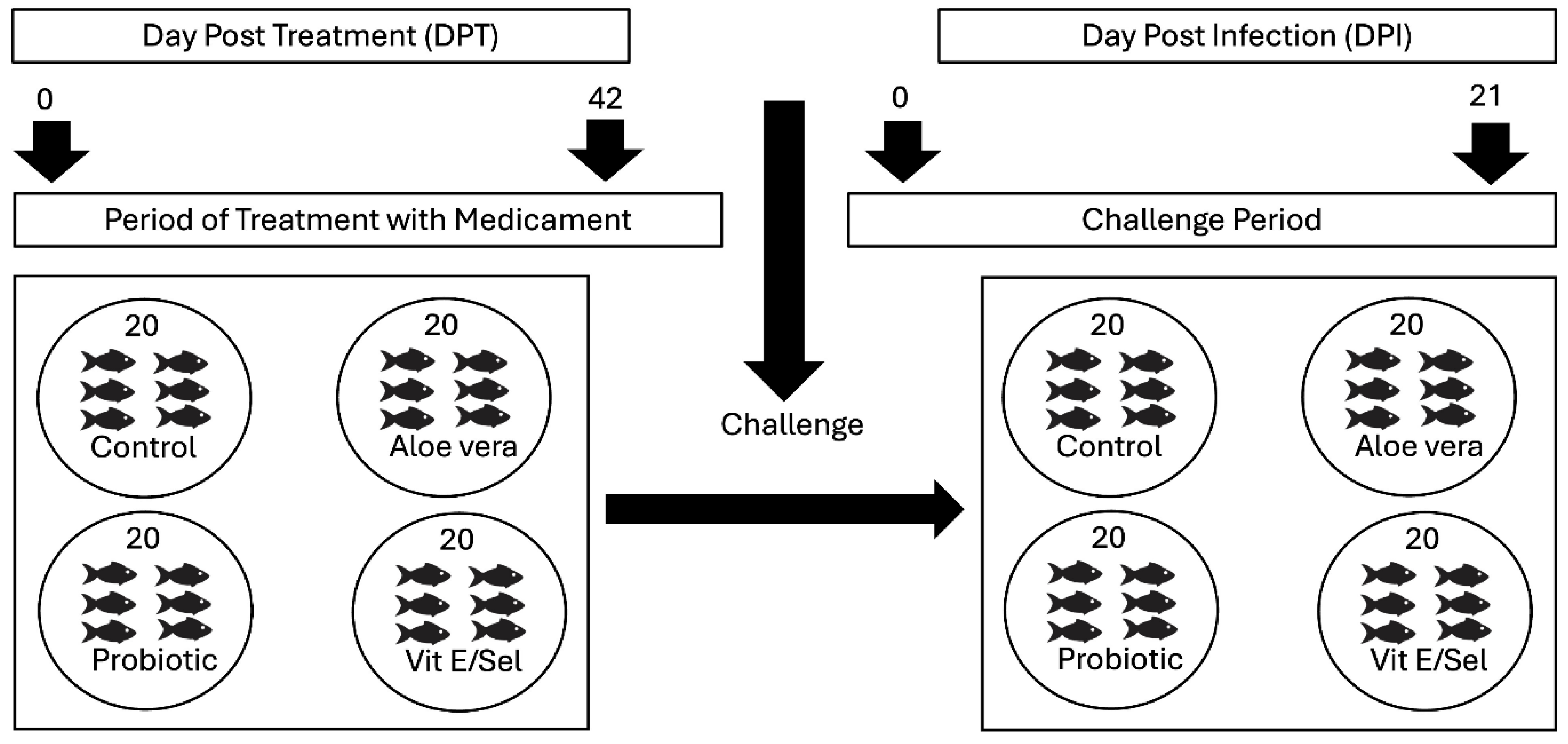
Figure 2.
External Lesions Observed in Nile Tilapia (Oreochromis niloticus) Following Lactococcus garvieae Infection; (A) Severe hemorrhages, skin erosion, and ulcerative lesions (white arrows) in a control group fish, indicative of advanced bacterial infection; (B) Scale loss, excessive mucus production, and mild skin discoloration (black arrows) observed in an infected fish, reflecting progression of the infection.
Figure 2.
External Lesions Observed in Nile Tilapia (Oreochromis niloticus) Following Lactococcus garvieae Infection; (A) Severe hemorrhages, skin erosion, and ulcerative lesions (white arrows) in a control group fish, indicative of advanced bacterial infection; (B) Scale loss, excessive mucus production, and mild skin discoloration (black arrows) observed in an infected fish, reflecting progression of the infection.
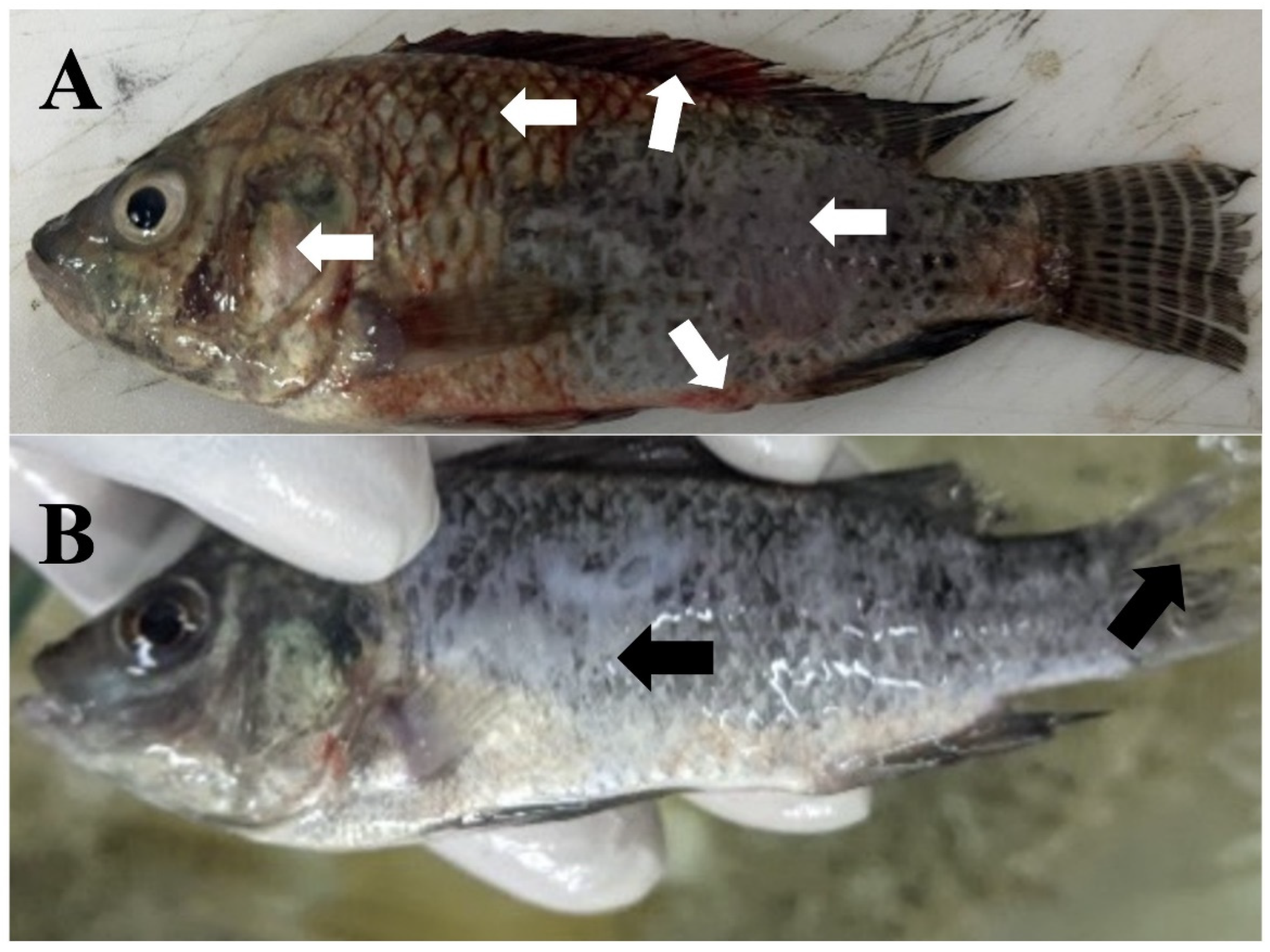
Figure 3.
Fish Survival Rates Across Treatment Groups Over 21 Days Post-Infection with Lactococcus garviea.
Figure 3.
Fish Survival Rates Across Treatment Groups Over 21 Days Post-Infection with Lactococcus garviea.
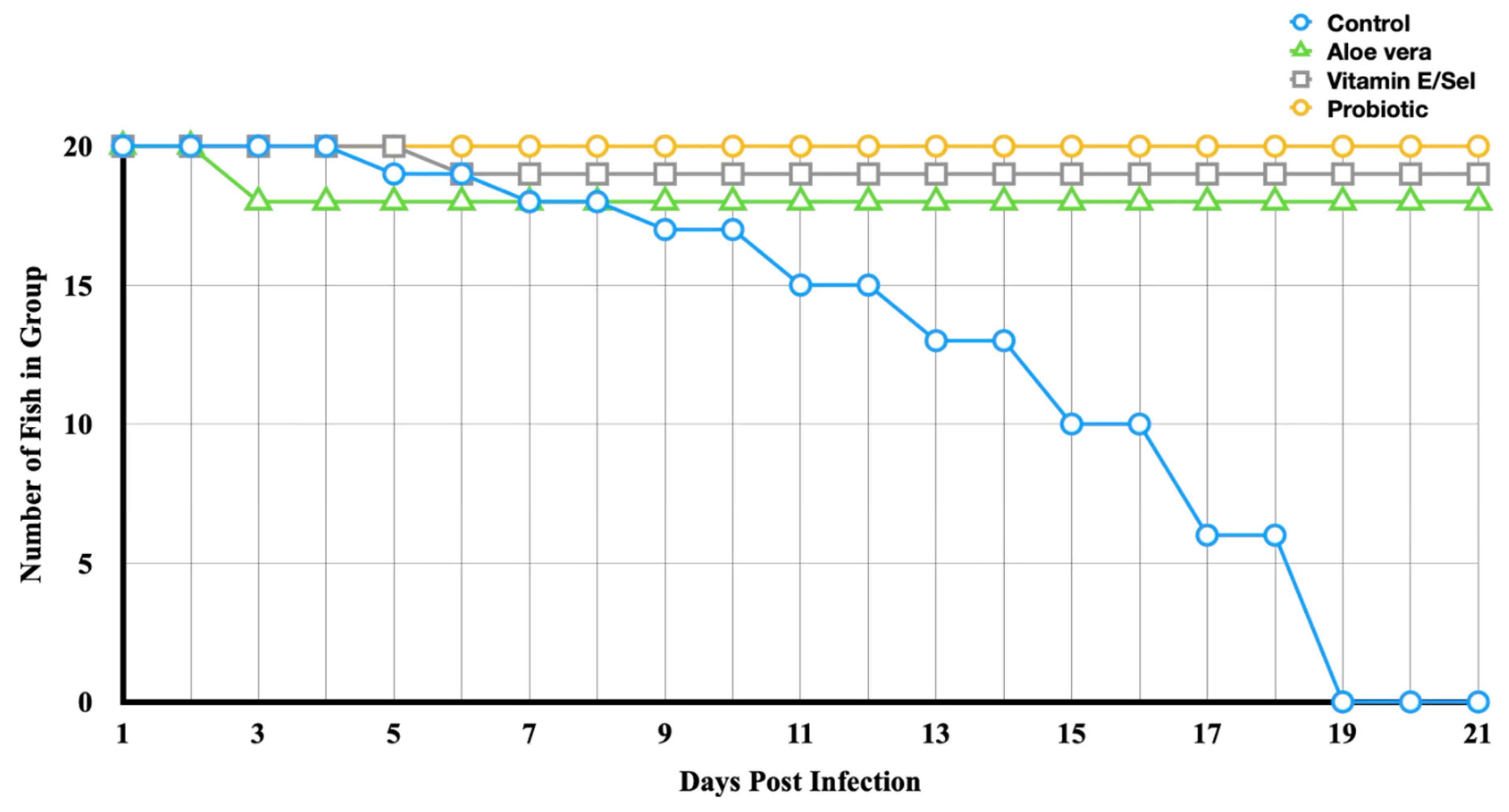

Table 1.
Progression of Clinical Signs and Mortality Across Treatment Groups Following Lactococcus garvieae Infection.
Table 1.
Progression of Clinical Signs and Mortality Across Treatment Groups Following Lactococcus garvieae Infection.
| DPI | Clinical Finding | Treatment Group | |||
|---|---|---|---|---|---|
| Control | Vitamin E and Selenium | Aloe vera | Probiotic | ||
| 3 | Erratic swimming Fin erosion Loss of scales Skin haemorrhages |
0 | 0 | 2 | 0 |
| 5 | 1 | 0 | 0 | 0 | |
| 7 | 1 | 1 | 0 | 0 | |
| 9 | 1 | 0 | 0 | 0 | |
| 11 | 2 | 0 | 0 | 0 | |
| 13 | 2 | 0 | 0 | 0 | |
| 15 | 3 | 0 | 0 | 0 | |
| 17 | 4 | 0 | 0 | 0 | |
| 19 | 6 | 0 | 0 | 0 | |
Table 2.
Mortality Observed Across Treatment Groups Following Lactococcus garvieae Infection.
| Treatment Groups | t | df | p | Cohen’s d |
|---|---|---|---|---|
| Aloe vera | -3.39 | 20 | 0.003 | 0.74 |
| Vitamin E/Sel | -4.12 | 20 | 0.001 | 0.9 |
| Probiotic | -4.49 | 20 | <.001 | 0.98 |
Disclaimer/Publisher’s Note: The statements, opinions and data contained in all publications are solely those of the individual author(s) and contributor(s) and not of MDPI and/or the editor(s). MDPI and/or the editor(s) disclaim responsibility for any injury to people or property resulting from any ideas, methods, instructions or products referred to in the content. |
© 2025 by the authors. Licensee MDPI, Basel, Switzerland. This article is an open access article distributed under the terms and conditions of the Creative Commons Attribution (CC BY) license (http://creativecommons.org/licenses/by/4.0/).
Copyright: This open access article is published under a Creative Commons CC BY 4.0 license, which permit the free download, distribution, and reuse, provided that the author and preprint are cited in any reuse.


