

Submitted:
03 April 2025
Posted:
04 April 2025
You are already at the latest version
Abstract
Endocytosis is a specialized transport mechanism in which the cell membrane folds inward to enclose large molecules, fluids, or particles, forming vesicles that are transported within the cell. It plays a crucial role in nutrient uptake, immune responses, and cellular communication. However, many pathogens exploit the endocytic pathway to invade and survive within host cells, allowing them to evade the immune system and establish infection. Endocytosis can be classified as clathrin-dependent (CDE) or clathrin-independent (CIE), based on the mechanism of vesicle formation. Unlike CDE, which involves the formation of clathrin-coated vesicles that bud from the plasma membrane, CIE does not rely on clathrin-coated vesicles. Instead, other mechanisms facilitate membrane invagination and vesicle formation. CIE encompasses a variety of pathways, including caveolin-mediated, Arf6-dependent, and flotillin-dependent pathways. In this review, we discuss key features of CIE pathways, including cargo selection, vesicle formation, routes taken by internalized cargo, and the regulatory mechanisms governing CIE. Many viruses and bacteria hijack host cell CIE mechanisms to facilitate intracellular trafficking and persistence. We also revisit the exploitation of CIE by bacterial and viral pathogens, highlighting recent discoveries in entry mechanisms, intracellular fate, and host-pathogen interactions. Understanding how pathogens manipulate CIE in host cells can inform the development of novel antimicrobial and immunomodulatory interventions, offering new avenues for disease prevention and treatment.
Keywords:
clathrin-independent endocytosis
; caveolae
; bacteria
; viruses
; dynamin
; Cdc42
; Arf6
; CLIC/GEEC
; flotillin
1. Introduction
Endocytosis is a highly complex process by which eukaryotic cells internalize material from the extracellular environment via engulfment in membrane-bound vesicles [1]. This mechanism is essential for nutrient uptake, signaling regulation, and the maintenance of membrane homeostasis. However, many pathogens frequently exploit endocytic pathways to enter host cells [2]. In general, endocytosis begins with the recognition of a specific cargo at the cell surface. The plasma membrane then bends and detaches to form a vesicle that encapsulates the cargo. Finally, systems must be in place to direct these vesicles to their destination and facilitate their fusion with the target membrane. Endocytic processes involving the uptake of large solid particles (> 500 nm) are known as phagocytosis [1,3]. This process is primarily carried out primarily by immune cells like macrophages, dendritic cells, and neutrophils. Conversely, smaller particles or fluids are typically engulfed through other endocytic pathways [1,3]. These pathways have traditionally been classified as either clathrin-mediated or clathrin-independent. Clathrin-mediated endocytosis (CME) is characterized by the formation of a clathrin triskelion lattice, which provides structural support for vesicle formation at the plasma membrane [4,5,6]. In addition to clathrin, the CME machinery relies on the coordinated recruitment of over 50 adaptor and scaffolding proteins to form the coated pit [4,5]. Cargo selection and clathrin recruitment during CME are facilitated by adaptor proteins, including the heterotetrameric AP-2 complex, which consists of α, β, µ and σ subunits [7]. Clathrin-independent endocytosis (CIE), on the other hand, does not rely on clathrin structures but instead utilizes alternative mechanisms such as lipid rafts, caveolae, or flotillin [8,9,10,11,12]. CIE generally occurs in lipid rafts at the plasma membrane [13,14]. Lipid rafts are specialized microdomains within the plasma membrane that are enriched in cholesterol, sphingolipids, and proteins [15,16]. These membrane microdomains play a crucial role in organizing and regulating cellular processes, such as signal transduction, membrane trafficking, and protein sorting [15,16]. Lipid rafts are more ordered and tightly packed than the surrounding phospholipid bilayer, making them functionally distinct regions [17].
Several studies have proposed a broad classification of CIE pathways, dividing them into those that rely on a dynamin-mediated scission mechanism (dynamin-dependent) and those that use alternative processes (dynamin-independent) [12,18]. Dynamin is a GTPase enzyme that plays a crucial role in membrane scission during endocytosis. It is primarily involved in the cleavage of vesicles from the plasma membrane, allowing their internalization into the cell. Dynamin assembles around the neck of budding vesicles and, through GTP hydrolysis, constricts and cleaves the membrane, facilitating vesicle release [19]. Dynamin-dependent pathways include caveolae-mediated endocytosis, fast endophilin-mediated endocytosis (FEME), and endocytosis regulated by small GTPases like RhoA and Rac1 (Figure 1), whereas dynamin-independent pathways include CLIC/GEEC, flotillin-mediated endocytosis (FME), Arf6-mediated endocytosis, and macropinocytosis [19] (Figure 2). Each of these pathways, along with how bacterial and viral pathogens exploit them to invade host cells, is described in more detail in the following sections.
2. Dynamin-Dependent CIE Pathways
2.1. Caveolae-Mediated Endocytosis
Caveolae are omega-shaped invaginations of the plasma membrane, measuring 50-100 nm in diameter, and are found in many cell types [20,21,22,23]. They are involved in several functions, including cell signaling, lipid regulation, and vesicular trafficking [24,25,26,27]. The structure of caveolae is organized by several components. The caveolar coat consists primarily of transmembrane caveolins (caveolin-1 and caveolin-2), which form a complex that interacts with cytosolic cavins (cavin-1, cavin-2, cavin-3, and cavin-4) [28,29,30,31,32] (Figure 3). These proteins work together to form and stabilize the distinctive bulb-shaped caveolae structures on the plasma membrane. Experiments with knockout mice have demonstrated that caveolin-1 is essential for caveolae formation, whereas caveolin-2 is not required [33]. Cavin proteins are also critical structural components of caveolae [29]. Cavin-1 is essential for proper caveolae formation [34,35,36], while cavin-2, cavin-3, and cavin-4 play regulatory roles that help stabilize caveolae and maintain their functional integrity [37,38,39]. In addition to caveolins and cavins, other supporting proteins localize to the caveolar neck, including Pacsin2 [40,41] and EHD2 [42]. These proteins contribute to stabilizing caveolae at the plasma membrane [31,42,43,44]. Caveolae also contain lipids such as cholesterol, sphingomyelin, and ceramides [45,46]. Cholesterol plays a crucial role in caveolae formation and stability, as their structure is significantly affected by cholesterol depletion or exposure to cholesterol-binding drugs [47,48].
Binding to specific ligands triggers the internalization of caveolae. The process of caveolar budding is regulated by kinases and phosphatases, including the Src-family tyrosine kinases [49,50,51]. Phosphorylation of caveolin-1 plays a key role in initiating caveolae fission and internalization [50]. Caveolae internalization begins with their detachment from the plasma membrane. Functional studies have shown that caveolae scission is mediated by dynamin-2, with the energy provided by GTP hydrolysis [52,53]. For this reason, caveolae-mediated endocytosis has traditionally been classified as a dynamin-dependent pathway. However, this classification has been challenged by recent studies indicating that dynamin-2 is not required for caveolae formation or fission in HeLa cells but instead functions as an accessory protein that reduces caveolae internalization [54]. Furthermore, cells deficient in all three dynamin isoforms (dynamin-1, -2, and -3 knockout cells) show no significant increase in caveolae abundance and only minor changes in caveolae structure compared to wild-type cells [55]. The discrepancy between studies using functional inhibitors and those employing knockout cells may arise from the limited specificity of dynamin inhibitors. In fact, several inhibitors once thought to specifically target dynamin have been found to affect the actin cytoskeleton instead [56]. Therefore, the role of dynamin in caveolae-mediated endocytosis remains controversial.
Once detached from the plasma membrane, caveolae can be internalized and transported within the cell, most likely through interactions with the cytoskeleton [57,58]. After internalization, caveolae can either fuse with endosomes and subsequently accumulate in lysosomes or follow a non-endosomal pathway to reach intracellular organelles [59]. The interplay between the cargo and caveolae components, whether caveolin itself or one of the associated regulatory kinases and phosphatases, likely plays a significant role in determining the final fate or destination of the cargo. If fusion with early endosomes occurs, it is followed by maturation into late endosomes, also referred to as “caveosomes” [60]. Cav-1 has been shown to co-localize with early and late endosomal markers, including Rab5 and Rab7 [60,61].
Recent technical developments have uncovered new pathways for caveolae trafficking beyond the traditional endocytic route. First, studies demonstrating caveolae-mediated accumulation of cholera toxin in the endoplasmic reticulum (ER) and Golgi have led to the hypothesis that caveolae can traffic directly from the plasma membrane to the ER [62,63]. Additionally, caveolae have been shown to function as specialized platforms that facilitate the transmission of cardioprotective signals to the mitochondria, helping to maintain their optimal function [64,65].
2.2. Small GTPases-Regulated Endocytosis
Several GTPases, including RhoA, Rac1, Cdc42, and RhoG, have also been shown to regulate CIE [66,67,68,69]. The internalization of the β-chain of the interleukin-2 receptor (IL-2R-β) involves dynamin and relies on the small GTPase RhoA [70,71]. Upon ligand binding, IL-2R-β localizes to detergent-resistant membranes, a characteristic typically associated with CIE mechanisms [70,71].
Cdc42 regulates the endocytosis of GPI-anchored proteins (GPI-APs), a process independent of clathrin and caveolin [66]. The endocytosis of GPI-APs and IL-2R-β is distinctly regulated by Rho family proteins. While IL-2R-β endocytosis depends on RhoA and Rac1 but not Cdc42, the endocytosis of GPI-APs is governed by different regulatory mechanisms [70].
2.3. Fast Endophilin-Mediated Endocytosis (FEME)
Fast endophilin-mediated endocytosis (FEME) is a dynamin-dependent CIE pathway regulated by endophilin [72,73]. Endophilin proteins contain both an SH3 (Src homology 3) domain and a BAR (Bin-Amphiphysin-Rvs) domain [74,75]. Endophilin induces plasma membrane curvature via the BAR domain, positions cargo via the SH3 domain, and facilitates membrane scission by recruiting dynamin and actin [72,73,76,77]. FEME is a rapid process capable of transporting a wide range of cargo, including receptors such as β1- and α2A-adrenergic receptors, dopamine receptors, tetrameric IL-2R, PlexinA1, and cholera and Shiga toxins [72,73].
FEME is inactive by default and is activated only when specific cell surface receptors are stimulated by their corresponding ligands [73]. The rapid activation of FEME upon receptor stimulation is triggered by a cascade of molecular events initiated by Cdc42 [72]. GTP-loaded Cdc42 recruits Cdc42-interacting protein 4 (CIP4) and formin-binding protein 17 (FBP17), which interact with SH2-containing inositol phosphatase 2 (SHP2) and lamellipodin [78]. Endophilin binds to the proline-rich region of lamellipodin, leading to the accumulation of endophilin in clusters at specific sites on the plasma membrane [78]. Upon activation, the receptors are rapidly targeted to pre-existing endophilin clusters, which then bud to form FEME carriers in the cytosol. Membrane scission of the carriers requires the coordinated action of dynamin, actin, and the BAR domain of endophilin [76,77]. FEME carriers move quickly to fuse with early endosomes and efficiently deliver their cargo. The entire process takes place within 5-10 seconds [78]. FEME is negatively regulated by Cdk5 and GSK3β [79]. These kinases antagonize the binding of endophilin to dynamin, thereby inhibiting membrane scission and the transport of FEME carrier onto microtubules [79]. Cdk5 and GSK3β may also exert additional regulatory effects, either by controlling other critical steps in the FEME pathway or, more indirectly, by influencing the activity of other kinases [79]. A schematic representation of the FEME pathway is shown in Figure 4.
3. Dynamin-Independent CIE Pathways
It is now widely recognized that several CIE pathways exist that do not rely on dynamin for membrane scission [80,81]. A common feature of dynamin-independent CIE pathways is the involvement of small GTPases, particularly the Rho family member CDC42 or the Arf family member ARF6 [80]. These pathways are described in more detail in the following sections.
3.1. CLIC/GEEC Pathway
The CLIC/GEEC pathway is a CIE mechanism that involves the formation of uncoated tubulovesicular structures known as clathrin-independent carriers (CLICs) [66]. These carriers originate directly from the plasma membrane and subsequently mature into early endocytic compartments called GPI-AP-enriched compartments (GEECs), which are rich in glycosylphosphatidylinositol-anchored proteins (GPI-APs) [66,82]. The GEECs then fuse with sorting endosomes in a process dependent on the small GTPase Rab5 and phosphoinositide 3-kinase (PI3K) activity [82]. The CLIC and GEEC pathways occur sequentially, and thus the process is referred to as the CLIC/GEEC pathway [83]. This endocytic route facilitates the uptake of specific types of cargo, including GPI-APs and fluid phase markers.
Cdc42, a member of the Rho family of GTPases, is a key regulator of the CLIC/GEEC pathway and influences the formation, trafficking, and maturation of endocytic vesicles through its interactions with the actin cytoskeleton and endocytic machinery [66,67]. GPI-APs at the plasma membrane are arranged into cholesterol-dependent nanoscale clusters, a process driven by cortical actin activity [84]. Indeed, recruitment of the actin polymerization machinery by cholesterol-sensitive Cdc42 activation is essential for the GEEC pathway [67]. The cycling of Cdc42 between its active (GTP-bound) and inactive (GDP-bound) states at the plasma membrane is essential for the recruitment of the actin polymerization machinery in the CLIC/GEEC pathway. This process is regulated by GBF1, a guanine nucleotide exchange factor (GEF) that activates ARF1 [68]. The activated ARF1 protein recruits the Rho GTPase-activating protein ARHGAP10, which inactivates Cdc42 and returns it to its cycling state. Another key regulator of Cdc42 and the CLIC/GEEC pathway is GTPase Regulator Associated with Focal Adhesion Kinase 1 (GRAF1). GRAF1 contains a RhoGAP domain that inactivates Cdc42, as well as a BAR domain and an SH3 domain that contribute to its function in membrane remodeling and endocytosis [85]. Figure 5 illustrates a schematic representation of the CLIC/GEEC pathway.
3.2. Arf6-Dependent Endocytosis
Another CIE pathway that does not rely on dynamin for vesicle scission is associated with the small GTPase ADP-ribosylation factor 6 (Arf6) [86,87,88]. Arf6 regulates a CIE pathway, in which cargo is initially internalized into Arf6-enriched vesicles and later has the potential to be recycled back to the plasma membrane [86,89]. Arf6 plays a key role in the endocytosis of several integral membrane proteins that lack adaptor protein recognition sequences [88]. It is also involved in the internalization and recycling of plasma membrane proteins involved in cell adhesion, such as cadherins and integrins, as well as proteins involved in the immune response, including major histocompatibility complex class I (MHC-I), and certain GPI-anchored proteins such as CD55 and CD59 [90]. Arf6-mediated endocytosis is increasingly recognized as a key trafficking pathway that plays a crucial role in regulating cell adhesion, migration, tumor invasion, and cytokinesis through the modulation of actin cytoskeleton reorganization [86,87,91].
Like other GTPases, ARF6 switches between an active state when bound to GTP and an inactive state when bound to GDP. Its activation is regulated by two distinct classes of proteins: guanine nucleotide exchange factors (GEFs), which facilitate the exchange of GDP for GTP to activate ARF6, and GTPase-activating proteins (GAPs), which promote the hydrolysis of GTP, returning ARF6 to its inactive GDP-bound form [88,92]. Inactivation of Arf6 shortly after internalization is necessary to ensure proper sorting of the endosomal cargo. Overexpression of the constitutively active form of Arf6 disrupts this process, causing cargo to become trapped in internal vacuolar structures. These structures are coated with phosphatidylinositol 4,5-bisphosphate (PIP2), highlighting the critical role of Arf6 inactivation in normal endosomal trafficking [93]. As mentioned above, in the Arf6-regulated CIE pathway, cargo is initially internalized and transported within Arf6-enriched vesicles before being recycled back to the plasma membrane. The hydrolysis of Arf6-GTP to Arf6-GDP, along with the depletion of PIP₂, is essential for these vesicles to fuse with sorting endosomes [94,95]. During the initial phase of this endocytic pathway, Rab35 associates with newly endocytosed vesicles and recruits OCRL (Oculocerebrorenal Syndrome of Lowe) protein, an enzyme that degrades PIP₂ [96]. Rab35 also plays a role in the regulation CIE vesicles, potentially facilitating the inactivation of Arf6 and the hydrolysis of PIP₂ [97]. Consequently, Arf6 and Rab35 function sequentially to ensure the proper internalization and early sorting of cargo.
3.3. Flotillin-Mediated Endocytosis (FME)
Flotillin-mediated endocytosis (FME) is a CIE pathway involving flotillin proteins associated with endocytic vesicles [98,99,100,101]. The flotillin family includes flotillin-1 (or reggie-2) and flotillin-2 (or reggie-1), which belongs to the SPFH (stomatin/prohibitin/flotillin/HflK/C) domain-containing proteins group [102]. Like other SPFH domain-containing proteins, flotillins tend to form both hetero- and homo-oligomers [103,104]. The assembly of flotillins into microdomains induces membrane curvature, promotes the formation of plasma membrane invaginations, and facilitates the development of intracellular vesicles [105]. Flotillins are ubiquitously expressed in mammalian cells [106] and play a role in the endocytosis of molecules such as glycosylphosphatidylinositol (GPI)-linked proteins, the cholera toxin B subunit, and glycosphingolipids [107,108]. Flotillins do not span the cytoplasmic membrane but are instead anchored to the cytosolic leaflet of the plasma membrane via fatty acid modifications [109]. FME is regulated by the Src family tyrosine kinase Fyn and probably by other Src kinases [100,110].
3.4. Macropinocytosis
Macropinocytosis is a cellular process in which cells engulf large amounts of extracellular material, including nutrients, antigens, and pathogens, through the formation of large vesicles called macropinosomes [111,112,113]. This pathway plays a crucial role in various physiological processes, including nutrient uptake, signaling, antigen presentation, and cell migration [111,112]. The cups and ruffles involved in macropinocytosis are formed and extended through actin polymerization, a dynamic process driven by the cytoskeleton [113]. Actin filaments assemble and push the plasma membrane outward, creating protrusions such as ruffles or cups [113]. As these actin-driven ruffles fold back onto the plasma membrane, they engulf extracellular material, forming large vesicles known as macropinosomes [113]. This process heavily depends on the reorganization of the actin cytoskeleton, which is regulated by signaling pathways involving proteins such as Arp2/3, SCAR/WAVE, Rac1, PI3K, and Ras [112,114]. PI3-kinase are generally essential for micropinocytosis, primarily through their role in generating PIP3 and coordinating actin-driven membrane remodeling [115,116]. PI3K activity is essential for priming ruffle membranes to seal into macropinosomes [117].
Once formed, the macropinosome matures and interacts with other cellular compartments to process its contents [114]. Actin polymerization is, therefore, a crucial mechanism that enables the initiation and progression of macropinocytosis. In addition to the Rac1, PI3K, and Ras proteins, several RAB proteins, including RAB5, RAB20, RAB21, and RAB34, as well as ARF proteins such as ARF6 and ARF1, are involved in this process [114].
Macropinocytosis can also be exploited by pathogens such as bacteria, viruses, protozoa, and prions to invade host cells and evade the host immune system [118,119]. Examples includeSalmonella[120], Shigella [121], Chlamydia [122] Brucella [123], Mycobacterium spp.[124,125], Legionella [126], E. coli [127], Vaccinia virus [128] and HIV-1 [129].
4. Exploitation of CIE Pathways by Pathogens for Host Cell Entry and Infection
Many pathogens, including bacteria and viruses, have developed sophisticated strategies to exploit CIE for entry and survival within host cells. Pathogens often favor CIE over CME for several reasons. For instance, CIE pathways are less likely to be targeted to phago-lysosomes compared to CME, allowing pathogens to evade intracellular killing mechanisms. Additionally, many CIE pathways depend on specific lipid environments or receptors that pathogens can exploit for targeted entry. The diversity of CIE mechanisms provides pathogens with multiple entry routes, increasing their chances of successful infection. Understanding how pathogens exploit CIE is, therefore, critical for the development of targeted therapies. For example, inhibiting specific CIE pathways could prevent pathogen entry without disrupting essential clathrin-dependent processes. Targeting pathogen receptors or lipid raft components could block their ability to hijack CIE. Additionally, modulation of host cell signaling pathways involved in CIE could enhance immune responses against invading pathogens. In summary, CIE serves as a key entry portal for many pathogens. By elucidating the molecular mechanisms underlying pathogen exploitation of CIE, researchers can develop novel strategies to combat infectious diseases.
4.1. Exploitation of CIE by Bacterial Pathogens
Several bacterial pathogens co-opt CIE pathways to invade, persist and alter host cell functions to their advantage [2,130,131,132]. Not only do intracellular bacterial pathogens use CIE to invade their host cells to avoid degradative pathways, but there is also increasing evidence that extracellular bacteria can exploit CIE to internalize into host cells [2,130,131,132]. Entry into cells via CIE is thought to protect extracellular bacteria from the immune response and the bactericidal effects of antibiotics. The following sections discuss some of the most notable examples of extracellular and intracellular bacteria that use CIE to invade host cells.
4.1.1. Listeria Monocytogenes
Listeria monocytogenes is a pathogenic foodborne bacterium that causes listeriosis, a serious infection that mainly affects pregnant women, newborn babies, the elderly, and people with weakened immune systems [133]. The primary route of infection for L. monocytogenes is through the intestinal tract. Overcoming this barrier is a critical first step for the bacterium to invade and spread to deeper tissues in the body [134,135]. L. monocytogenes is a facultative intracellular pathogen with the ability to actively invade and replicate in mammalian cells, including macrophages and epithelial cells [136,137]. To enter host epithelial cells, bacterial surface proteins such as internalin A (InlA) and internalin B (InlB) bind to specific cellular receptors such as E-cadherin and the Met receptor tyrosine kinase (also called hepatocyte growth factor receptor, HGFR) [138,139,140] (Figure 6a). This interaction triggers signaling pathways that result in the pathogen being engulfed and enclosed in a tight membrane-bound vesicle [136,137]. Once inside the cell, L. monocytogenes uses the pore-forming toxin listeriolysin O and the phospholipases PlcA and PlcB encoded by LIPI-1 to escape from the endocytic vesicle into the cytoplasm [141,142]. There, L. monocytogenes replicates and uses F-actin-based motility to spread from one cell to another [143]. Although L. monocytogenes internalization via internalins has been shown to require the recruitment of clathrin [144,145], caveolin-1-mediated endocytosis and a specific group of caveolar proteins, including caveolin-1, cavin-2, and EHD2, have been shown to be critical for efficient bacterial cell-to-cell spreading [146]. Thus, that L. monocytogenes appears to exploit a caveolin-1-mediated endocytic pathway to facilitate its movement between epithelial cells [146].
Another route of L. monocytogenes internalization, independent of internalins, has been identified and appears to play a crucial role in the bacterium translocation across the intestinal barrier. This pathway is mediated by the Listeria adhesion protein (LAP) [147] (Figure 6b). In this process, L. monocytogenes uses caveolin-1-mediated endocytosis to internalize integral apical junctional proteins and target them to early and recycling endosomes, facilitating bacterial translocation across epithelial cells. Additionally, the interaction of LAP with its cognate receptor, Hsp60, has been shown to induce the endocytosis of junctional proteins that are essential for InlA to access basolateral E-cadherin [147]. LAP interacts directly with Hsp60 to trigger canonical NF-κB signaling, which promotes the activation of myosin light chain kinase (MLCK). This process leads to the opening of the intestinal cell-cell barrier by redistributing key junctional proteins, including claudin-1, occludin, and E-cadherin, within the cells, ultimately facilitating bacterial translocation [148]. Therefore, the cooperation between LAP and InlA facilitates the translocation of L. monocytogenes across the intestinal epithelial barrier.
4.1.2. Mycobacterium Tuberculosis
Mycobacterium tuberculosis is the etiological agent of tuberculosis, an infection that affects a quarter of the human population and is associated with high mortality rates [149]. M. tuberculosis is an obligate human pathogen with no known environmental reservoir [150]. Following phagocytosis by macrophages, the pathogen resists intracellular killing mechanisms, allowing it to survive and replicate within these cells [151,152]. To ensure its survival, M. tuberculosis has developed strategies to evade, manipulate, and exploit the host immune defenses, turning these mechanisms to its advantage [153,154]. Normally, when bacteria are phagocytosed by macrophages, they are rapidly eliminated in phago-lysosomes. However, mycobacteria persist in specialized compartments known as mycobacterial phagosomes, which do not acquire lysosomal hydrolases or an acidic environment, which are essential for pathogen degradation [155].
M. tuberculosis can bind to specific receptor molecules, including complement receptor type 3 (CR3), to enter the host cells [152,156,157] (Figure 7). CR3 facilitates the entry of mycobacteria into macrophages without triggering their activation [158]. Cholesterol plays a crucial role in recruiting the tryptophan-aspartate-containing coat (TACO) to the phagosome [158,159]. This interaction helps protect mycobacteria from degradation, allowing them to survive in host cells.
In addition to interacting with cell surface receptors, M. tuberculosis can also directly interact with cholesterol in plasma membrane lipid rafts [158] (Figure 7). Depletion of cholesterol has been shown to reduce the ability of M. tuberculosis to enter host cells [158]. Furthermore, the requirement for cholesterol to facilitate stable binding suggests that M. tuberculosis possesses a high-affinity cholesterol binding site on its surface. In this context, it has been reported that M. tuberculosis expresses a cholesterol-specific receptor, known as Ck, which mediates mycobacterial entry into macrophages [160]. Additionally, Ck has been shown to regulate the expression of the gene encoding TACO, thereby influencing the survival of M. tuberculosis within macrophages [160].
Using caveolin-1-deficient mice, Wu et al. [161] reported that caveolin-1 plays a role in the early clearance of Mycobacterium bovis Bacillus Calmette-Guérin (BCG), an attenuated mycobacteria often used as a model to study the pathogenicity of M. tuberculosis. Although caveolin-1 does not affect phagocytosis of BCG, it influences intracellular bacterial killing, most likely by regulating acid sphingomyelinase-dependent ceramide production [161]. Supporting this, sphingomyelinase/ceramide has been implicated in the internalization and killing of a variety of pathogens [162].
Although macrophages are the primary host cells for M. tuberculosis, other cell types, including mast cells [163], have also been shown to internalize M. tuberculosis. Mast cells are traditionally known for their role in allergic reactions and defense against parasites, but emerging evidence suggests they may also play a role in the immune response to bacterial infections, including mycobacteria [164]. Internalization of M. tuberculosis into mast cells is mediated by a lipid rafts and is cholesterol-dependent [165]. Once internalized, M. tuberculosis can survive within mast cells, similar to its ability to persist in macrophages [165]. This may provide a niche for mycobacteria to evade immune detection [165].
4.1.3. Streptococcus Pyogenes
Streptococcus pyogenes, also known as Group A Streptococcus, is an important human pathogen responsible for infections that can range from mild, such as pharyngitis and impetigo, to very severe, such as necrotizing fasciitis [166]. Although classified as an extracellular pathogen, numerous studies have demonstrated the ability of S. pyogenes to internalize and survive within host cells [167,168,169,170]. By surviving intracellularly, S. pyogenes evades immune defense mechanisms such as antibodies or complement-mediated killing, as well as the effects of antibiotics with limited ability to penetrate host cells [171,172]. This allows the bacteria to persist in a latent state and potentially contribute to recurrent infections [173,174].
S. pyogenes uses various pathways to internalize into host epithelial cells [172,175]. Based on the observation that S. pyogenes co-localizes with caveolin-1 and that disruption of lipid rafts or cholesterol depletion inhibits its invasion into human epithelial HEp-2 cells, Rohde et al. [175] proposed that S. pyogenes utilizes the caveolae pathway to enter host cells. They demonstrated that the streptococcal fibronectin-binding protein I (SfbI), expressed on the surface of S. pyogenes, plays a key role in bacterial invasion through the caveolae-dependent pathway [175]. The mechanism involves SfbI interacting with fibronectin, which serves as a bridge to the α5β1 integrin on the host cell membrane [176]. This interaction triggers integrin clustering and activates signaling cascades, resulting in the formation of caveolae that facilitate bacterial internalization [175]. By exploiting the caveolae-mediated internalization pathway, S. pyogenes bypasses the conventional endosomal-lysosomal route that typically leads to pathogen destruction, thereby ensuring its survival. In contrast to these observations, other studies using genetic knockdown or silencing of caveolin-1 in host cells have shown that caveolae are not involved in the internalization of S. pyogenes into epithelial cells, irrespective of SfbI expression [177]. The authors of that study also reported that caveolin-1 is not required for bacterial internalization but instead inhibits S. pyogenes internalization into host cells through a process independent of caveolae formation [177]. The exact mechanism was not identified. The reason for the discrepancy between these studies remains unclear and has not yet been determined.
4.1.4. Staphylococcus aureus
Staphylococcus aureus is a major human pathogen responsible for significant global morbidity and mortality, a situation worsened by the propensity of the bacterium to develop drug resistance [178,179]. S. aureus can cause a wide range of infections, from minor skin infections to serious invasive diseases, including pneumonia, osteomyelitis, bacteremia, and endocarditis [178]. S. aureus has evolved multiple mechanisms to evade the host immune response, including the ability to internalize and survive within host cells [180,181,182]. The capacity of S. aureus to survive within host cells is a key factor contributing to its antibiotic tolerance and treatment failure [183]. S. aureus can invade and survive inside various types of host cells, including phagocytic cells, epithelial cells, keratinocytes, and endothelial cells [183]. The interplay between S. aureus and host cells is remarkably complex and may differ depending on the type of host cell involved.
Our group recently demonstrated that S. aureus utilizes caveolin-1 and lipid raft-mediated endocytosis to internalize into human respiratory epithelial cells, which are likely to be the first host cells to encounter S. aureus in the respiratory tract [184]. Pharmacological disruption of lipid rafts or inhibition of caveolin-1 function in lung epithelial cells significantly reduces S. aureus internalization [184]. α-hemolysin, one of the major virulence factors involved in the pathogenesis of S. aureus infections [185], appears to be critical for bacterial internalization, as evidenced by the failure to of a mutant S. aureus strain deficient in α-hemolysin expression to internalize [184]. As the ability of α-hemolysin to interact with caveolin-1 has been extensively documented [186,187,188,189,190], the interaction between α-hemolysin, released by S. aureus, and caveolin-1 on the lipid rafts may trigger S. aureus endocytosis [184]. In this regard, Hoffmann et al. [191] found that in fibroblasts, caveolin-1 acts as a stabilizing factor, maintaining the structure of the plasma membrane within lipid rafts. S. aureus attachment to α5β1 integrins on the surface of the respiratory epithelial cells is a prerequisite for bacterial internalization [184]. Thus, S. aureus attached to the surface of epithelial cells releases α-hemolysin, which directly interacts with caveolin-1, resulting in destabilization of the cell membrane and the initiation of S. aureus endocytosis (Figure 8).
4.1.5. Escherichia coli
Although Escherichia coli is normally a harmless commensal bacterium, certain isolates have been implicated in a wide range of serious infections. These include enteropathogenic E. coli (EPEC), enterohaemorrhagic E. coli (EHEC) and uropathogenic E. coli (UPEC) [192]. UPEC is a leading cause of urinary tract infections (UTIs) [193], which are among the most common bacterial infections worldwide [194]. A characteristic of UTIs is their tendency to recur [195]. The ability of E. coli to invade and replicate within host cells has been proposed as an important factor in recurrent and chronic UTIs [196]. UPEC expresses a variety of virulence factors, including type 1 fimbriae, P fimbriae, S fimbriae, F1C fimbriae, Dr fimbriae, curli fibers, and PapC, which are required for colonizing the bladder and invading host cells [192,193]. Fimbriae allow UPEC to attach to bladder cells in the urinary tract and resist mechanical expulsion from the urinary system during urination.
The fimbrial adhesin FimH, a type I fimbriae located at the tip of phase-variable type 1 pili, is one of the best characterized adhesins of UPEC [197,198]. UPEC can not only adhere to bladder cells but also invade them [197,198,199]. The intracellular environment may help UPEC evade the forceful flow of urine in the bladder and potentially protect them from the effects of antibiotics and immune defenses. UPEC can also replicate intracellularly, forming a bacterial reservoir within the bladder that may act as a source of recurrent acute infections [200]. Several mechanisms have been identified by which UPEC enter host cells. These include the exploitation of host Rho GTPases via the secreted toxin CNF1 [201], and manipulation of host complement receptors [202]. Additionally, Martinez et al. [197] demonstrated that FimH also acts as an invasin, facilitating UPEC invasion by inducing rearrangement of the host cell cytoskeleton. FimH has been shown to mediate the invasion and translocation of extraintestinal pathogenic E. coli across the intestinal epithelium [203]. Several host cell receptors have been identified that interact with FimH, including glycosylated uroplakin Ia (UP1a) [204], members of the carcinoembryonic antigen-related cell adhesion molecule (CEACAM) family [205], the glycosylphosphatidylinositol (GPI)-anchored protein CD48 [206], and β1 and α3 integrins [207]. Rho GTPases, lipid rafts, and caveolin-1 also contribute to the invasion process [208,209]. Once internalized into terminally differentiated superficial bladder epithelial cells, UPEC rapidly replicates and assemble into biofilm-like structures known as intracellular bacterial communities (IBCs) or pods, which provide temporary protective niches [210].
Afa/Dr diffusely adhering E. coli (DAEC) is a pathotype associated with UTIs and diarrhea in children [211]. This pathotype expresses Afa/Dr adhesins, which mediate invasion of polarized epithelial cells through interaction with the α5β1 integrin and a pathway involving caveolae and microtubules [212].
E. coli can also internalize into bone marrow-derived mast cells [213]. As mentioned above, mast cells are tissue-resident immune cells located at the interfaces between the body and the environment, contributing to the first line of immune defense against invading pathogens [164]. The internalization of E. coli into mast cells appears to be mediated by CD48, a receptor for FimH, which is present on caveolae [213]. Since caveolae do not fuse with endosomes, E. coli exploits the caveolar compartments to evade the bactericidal activity of mast cells and remain viable within these long-live cells [213].
E. coli can also cause meningitis, particularly in neonates [214]. While most cases result from hematogenous spread, the exact mechanism by which circulating E. coli crosses the blood-brain barrier remains unclear [215]. In this context, Sukumaran et al. [216] reported that E. coli internalization into human brain microvascular endothelial cells occurs via caveolae. The interaction of caveolin-1 with phosphorylated protein kinase C alpha (PKCα) at the E. coli attachment site, along with the integrity of cholesterol-enriched microdomains, appears to be critical for the invasion process [216].
4.1.6. Salmonella typhimurium
Salmonella enterica serovar Typhimurium (S. typhimurium) is a leading cause of food- and waterborne infections worldwide [217]. Infection begins when contaminated food or water is consumed, allowing Salmonella to reach the intestinal lumen and cause gastrointestinal disease [217]. In some individuals, the infection progresses as the bacteria penetrate the intestinal lining and then spread throughout the body [217]. Salmonella is a facultative intracellular pathogen capable of invading non-phagocytic host cells [218]. The ability to invade these cells is considered to be a crucial step in the development of Salmonella infections.
One of the best studied routes for Salmonella spread from the intestinal lumen is through the microfold (M) cells on Peyer’s patches [219]. Salmonella uses a type III secretion system (T3SS), encoded by the pathogenicity island 1 (SPI-1), to inject effector proteins directly into the host cell [220]. These effector proteins, such as SipA, SipC, SopB, SopE, and SopE2, manipulate the host cells cytoskeleton, leading to membrane ruffling and bacterial uptake via a process similar to phagocytosis [131,221,222]. Once inside host cells, Salmonella persists within permissive vacuoles by utilizing components encoded on pathogenicity island 2 (SPI-2) [223].
Other studies have implicated caveolin-1 in Salmonella internalization [224,225,226]. However, Salmonella does not use caveolae for entry host cells but instead induces actin reorganization and membrane ruffling by delivering SopE effector proteins into the host cells via a T3SS [224]. SopE then interacts with the Rho GTPase Rac1 and caveolin-1, leading to membrane ruffling and subsequent bacterial internalization [224].
4.1.7. Chlamydia
The genus Chlamydia comprises several species, of with C. trachomatis is the most common sexually transmitted bacterium and C. pneumoniae a major cause of respiratory infections, also been implicated in atherosclerosis [227]. Chlamydia are intracellular pathogens that have evolved effective mechanisms to enter and survive within host cells [228]. Since Chlamydia can replicate only inside eukaryotic cells, successful attachment, entry, and evasion of lysosomal degradation are essential stages in their infection cycle [229].
Chlamydia infection begins with its attachment to and entry into host cells [230]. The primary targets are the epithelial cells that line the mucosa of the respiratory tract, genital tract, conjunctiva, and gut [231,232,233]. As these cells are non-phagocytic, Chlamydia must actively induce its own uptake by modifying the cortical actin cytoskeleton and manipulating the endocytic machinery [234]. This process facilitates the phagocytosis of infectious elementary bodies (EBs) [234]. Uptake begins with the stable attachment of EBs to the epithelial cell surface, involving several bacterial virulence factors and host receptors [228,230,234]. Once adhesion is established, signaling pathways are activated to initiate various host cell processes, including cortical actin reorganization to enable bacterial uptake [230,234]. Several cytoskeleton-related factors are required for Chlamydia invasion, including Rac1 and/or Cdc42, phosphatidylinositol 3-kinase (PI3K) and the WAVE regulatory complex [228]. Actin reorganization is associated with extensive membrane remodeling, facilitated by several host factors such as cholesterol-rich lipid rafts, clathrin, and caveolin [235]. Boleti et al. [236] reported a clathrin-independent, dynamin-dependent entry of Chlamydia in epithelial cells. C. trachomatis has been shown to enter epithelial cells and mouse macrophages via caveolin-containing sphingolipid and cholesterol-enriched raft microdomains [237,238,239]. This pathway is believed to play a crucial role in preventing chlamydial phagosomes from fusing with lysosomes by directing them to the Golgi region [237,238]. Caveolin is then thought to facilitate the interception of exocytic vesicles from the Golgi by chlamydial inclusions [237,238].
4.1.8. Other Bacterial Pathogens
4.2. Exploitation of CIE by Viral Pathogens
As obligate intracellular parasites, viruses depend entirely on host cells to complete their life cycle. A critical stage in this process is the initial phase of infection, known as entry, during which viruses deliver their genetic material to the appropriate site for replication. Viruses have evolved various strategies to enter host cells, often bypassing the well-characterized CME pathway. Thus, many viruses use CIE pathways to evade immune detection, enhance infectivity, and target specific intracellular compartments. These alternative pathways include caveolin-mediated endocytosis and lipid raft-mediated uptake [245,246]. By exploiting these pathways, viruses provide valuable insights into the molecular and cellular mechanisms governing these specialized forms of endocytosis [246]. The following sections highlight some of the most prominent examples of viral pathogens that utilize CIE to invade host cells.
4.2.1. Simian Virus 40 (SV40)
Simian virus 40 (SV40) is a DNA virus that has been extensively used to study the caveolae-mediated entry pathway. The first step in SV40 life cycle involves adhesion to host cells. The virus is thought to recognize its target cells primarily by binding to the ganglioside GM1 via the VP1 protein of the viral capsid [247,248]. The entry of the virion into the cell is mediated by caveolin-mediated endocytosis [58,249] (Figure 9a). The endosome containing SV40 targets the virion to the endoplasmic reticulum (ER), where it undergoes structural changes before penetrating into the cell cytosol [250]. The virion is then transported into the nucleus, where early transcription is initiated [251]. Major histocompatibility class I molecules serve also as specific cell surface receptors for SV40 [252].
4.2.2. Echoviruses
Enteric cytopathic human orphan virus (Echovirus) is a type of small RNA virus that can cause a range of mild diseases in humans, primarily in the intestinal tract. In some cases, however, it can cause serious diseases, such as aseptic meningitis, particularly in young children, people with weakened immune systems, or those with underlying medical conditions [253]. The different steps of echovirus infection involve attachment to the host cell via a surface receptor, followed by internalization into the host cell and uncoating, which releases the RNA from the capsid into the cell cytoplasm. Several echoviruses use CIE to enter host cells [254,255]. For example, it has been shown that after binding to the α2β1 integrin, echovirus 1 is rapidly internalized via caveolae into CV-1 cells [256]. The internalization process is dependent on cholesterol, dynamin-2, and phosphorylation events, and does not require cytoskeletal reorganization [256].
4.2.3. Coronavirus
Coronaviruses are a large class of RNA viruses with an envelope that can cause infections ranging from the common cold to more severe diseases, such as severe acute respiratory syndrome (SARS) [257]. The best-known coronavirus in recent years is SARS-CoV-2, which causes coronavirus disease 2019 (COVID-19) [258]. SARS-CoV enters the host cells via a CIE pathway that involves lipid rafts [259,260]. The virus enters host cells through its transmembrane spike glycoprotein (S protein), which extends from the viral surface [261]. SARS-CoV-2 primarily uses angiotensin-converting enzyme 2 (ACE2) as its main receptor to enter host cells [262,263,264] (Figure 9b). ACE2 is embedded in lipid rafts and plays a crucial role in the initial stage of infection [265].
Human coronavirus 229E (HCoV-229E) is one of the coronaviruses that cause the common cold in humans [266]. CD13 (Aminopeptidase N) has been identified as the receptor for HCoV-229E [267]. Once attached to CD13, HCoV-229E can enter the cell through caveolae-dependent endocytosis, facilitated by caveolin-1 [268].
Human coronavirus OC43 (HCoV-OC43) is a strain of coronavirus that typically causes mild upper respiratory tract infections. However, it has also been shown to have neuroinvasive properties and can lead to severe disease and fatal pneumonia, particularly in children, the elderly, and immunocompromised individuals [269,270]. HCoV-OC43 has been reported to use HLA class I molecule or sialic acids as receptors [271], and caveolin-1 dependent endocytosis to enter the host cell [272]. The scission of virus-containing vesicles from the cell surface has been shown to be dynamin-dependent [272].
4.2.4. Human Immunodeficiency Virus 1 (HIV-1)
The human immunodeficiency virus 1 (HIV-1) is an enveloped retrovirus that primarily buds from the plasma membrane of infected T cells. It has been reported that viral assembly and budding occur at lipid rafts on infected cells [273,274]. In particular, the viral Gag protein has been shown to specifically associate with lipid rafts at the plasma membrane [275].
4.2.5. Japanese Encephalitis Virus (JEV)
Japanese Encephalitis Virus (JEV) is a mosquito-borne virus that causes Japanese encephalitis, a severe infection of the brain [276]. The entry of JEV into B104 rat neuroblastoma cells has been reported to be dynamin-dependent and caveolae-mediated, but independent of clathrin [277]. Binding of JEV to the host cell triggers the EGFR-PI3K signaling pathway, leading to activation of RhoA, which in turn induces phosphorylation of caveolin-1 [278]. Subsequent activation of Rac1 promotes caveolin-associated viral internalization [278].
5. Conclusions
CIE is used by many different pathogens to enter the host cells. Internalization via CIE generally bypasses the classical endosome-lysosome pathway and avoids intracellular degradation, thereby enabling pathogen survival. For extracellular pathogens, internalization into non-phagocytic host cells via CIE may provide a means to evade elimination by phagocytic cells and avoid the killing effect of antibiotics that have restricted access to the intracellular compartment. Intracellular pathogens can use CIE to gain access to an intracellular niche that is permissive for bacterial survival and replication. By using CIE, viruses can evade immune detection, manipulate host signaling pathways, and create a more favorable environment for replication. Despite the diversity of their structures and life cycles, mechanisms of pathogenesis, and clinical presentations, both bacteria and viruses have evolved to use CIE as a common pathway to enter host cells. This convergence highlights the importance of understanding CIE for the development of broad-spectrum therapeutic strategies that can target multiple pathogens by disrupting their entry mechanisms.
Cutting-edge technologies are improving our ability to study how pathogens use CIE to invade host cells. State-of-the-art imaging techniques, including super-resolution microscopy and live-cell tracking, allow scientists to observe the process of pathogen entry in real time with remarkable clarity. Techniques such as high-throughput screening and CRISPR-mediated gene editing are helping to discover critical host components involved in CIE. Meanwhile, artificial intelligence and computational modelling are providing advanced insights into the complex interactions between pathogens and their hosts. These breakthroughs are deepening our understanding of the mechanisms of CIE and opening the door to innovative treatments for infectious diseases. By targeting the molecular machinery of CIE, it may be possible to develop interventions that prevent or reverse pathogen entry into host cells. Such approaches could provide a powerful tool to combat infections caused by a wide range of microbes, particularly those that have developed resistance to conventional treatments.
Author Contributions
Conceptualization, O.G. and E.M.; writing, O.G. and E.M. Both authors have read and agreed to the published version of the manuscript.
Funding
This research received no external funding.
Conflicts of Interest
The authors declare no conflicts of interest.
Abbreviations
The following abbreviations are used in this manuscript:
| CME | Clathrin-dependent endocytosis |
| CIE | Clathrin-independent endocytosis |
| Arf6 | ADP-ribosylation factor 6 |
| ER | Endoplasmic reticulum |
| RhoA | Ras homolog family member A |
| Rac1 | Rac Family Small GTPase 1 |
| Cdc42 | Cell division control protein 42 |
| RhoG | Ras homolog family member G |
| IL-2R-β | Interleukin-2 receptor subunit beta |
| GPI-Aps | Glycosylphosphatidylinositol-anchored proteins |
| FEME | Fast endophilin-mediated endocytosis |
| SH3 | Src homology 3 |
| BAR | Bin-Amphiphysin-Rvs domain |
| CIP4 | Cdc42-interacting protein 4 |
| FBP17 | formin-binding protein 17 GTPase-activating proteins |
| SHP2 | SH2-containing inositol phosphatase 2 |
| Cdk5 | Cyclin-dependent kinase 5 |
| GSK3β | Glycogen synthase kinase-3 beta |
| CLIC/GEEC | Clathrin-independent carrier (CLIC)/GPI-anchored protein-enriched early endocytic compartments (GEEC) |
| GPI-Aps | GPI-anchored proteins |
| PI3K | Phosphoinositide 3-kinases |
| GTP | Guanosine triphosphate |
| GDP | Guanosine diphosphate |
| GBF1 | Golgi Brefeldin A Resistant Guanine Nucleotide Exchange Factor 1 |
| GEF | Guanine nucleotide exchange factors |
| Arf1 | ADP-ribosylation factor 1 |
| ARHGAP10 | Rho GTPase Activating Protein 10 |
| GRAF1 | GTPase Regulator Associated with Focal Adhesion Kinase 1 |
| GAPs | GTPase-activating proteins |
| PIP2 | phosphatidylinositol 4,5-bisphosphate |
| FME | Flotillin-mediated endocytosis |
| SPFH | stomatin/prohibitin/flotillin/HflK/C |
| InlA | Internalin A |
| InlB | Internalin B |
| PlcA | Phosphatidylinositol-Specific Phospholipase C |
| PlcB | Broad-Range Phospholipase C |
| LIPI-1 | Listeria pathogenicity island 1 |
| EHD2 | EH Domain Containing 2 |
| LAP | Listeria adhesion protein |
| Hsp60 | Heat shock protein 60 |
| CR3 | Complement receptor 3 |
| TACO | Tryptophan-aspartate-containing coat |
| BCG | Mycobacterium bovis Bacillus Calmette-Guérin |
| SfbI | Streptococcal fibronectin-binding protein I |
| OCRL | Oculocerebrorenal Syndrome of Lowe |
| EPEC | Enteropathogenic E. coli |
| EHEC | Enterohaemorrhagic E. coli |
| UPEC | Uropathogenic E. coli |
| UTIs | Urinary tract infections |
| CNF1 | Cyroroxic necrotizing factor 1 |
| UP1a | Glycosylated uroplakin Ia |
| CEACAM | Carcinoembryonic antigen-related cell adhesion molecule |
| IBCs | Intracellular bacterial communities |
| DAEC | Afa/Dr diffusely adhering E. coli |
| PKCa | Protein kinase C alpha |
| T3SS | Type III secretion system |
| SPI-1 | Salmonella Pathogenicity Island 1 |
| SCVs | Salmonella-containing vacuoles |
| SPI-2 | Salmonella Pathogenicity Island 2 |
| Ebs | Elementary bodies |
| SV40 | Simian virus 40 |
| SARS | Severe acute respiratory syndrome |
| ACE2 | Angiotensin-converting enzyme 2 |
| HIV-1 | Human immunodeficiency virus 1 |
| JEV | Japanese Encephalitis Virus |
| CRISPR | Clustered regularly interspaced short palindromic repeats |
References
- Doherty GJ, McMahon HT. Mechanisms of endocytosis. Annu Rev Biochem. 2009;78:857-902. [CrossRef] [PubMed]
- Cossart P, Helenius A. Endocytosis of viruses and bacteria. Cold Spring Harb Perspect Biol. 2014;6(8). Epub 20140801. [CrossRef] [PubMed]
- Kumari S, Mg S, Mayor S. Endocytosis unplugged: multiple ways to enter the cell. Cell Res. 2010;20(3):256-75. Epub 20100202. [CrossRef] [PubMed]
- McMahon HT, Boucrot E. Molecular mechanism and physiological functions of clathrin-mediated endocytosis. Nat Rev Mol Cell Biol. 2011;12(8):517-33. Epub 20110722. [CrossRef] [PubMed]
- Kaksonen M, Roux A. Mechanisms of clathrin-mediated endocytosis. Nat Rev Mol Cell Biol. 2018;19(5):313-26. Epub 20180207. [CrossRef] [PubMed]
- Mettlen M, Chen PH, Srinivasan S, Danuser G, Schmid SL. Regulation of Clathrin-Mediated Endocytosis. Annu Rev Biochem. 2018;87:871-96. Epub 20180416. [CrossRef] [PubMed]
- Reider A, Wendland B. Endocytic adaptors--social networking at the plasma membrane. J Cell Sci. 2011;124(Pt 10):1613-22. [CrossRef] [PubMed]
- Hansen CG, Nichols BJ. Molecular mechanisms of clathrin-independent endocytosis. J Cell Sci. 2009;122(Pt 11):1713-21. [CrossRef] [PubMed]
- Sandvig K, Kavaliauskiene S, Skotland T. Clathrin-independent endocytosis: an increasing degree of complexity. Histochem Cell Biol. 2018;150(2):107-18. Epub 20180517. [CrossRef] [PubMed]
- Sandvig K, Pust S, Skotland T, van Deurs B. Clathrin-independent endocytosis: mechanisms and function. Curr Opin Cell Biol. 2011;23(4):413-20. Epub 20110403. [CrossRef] [PubMed]
- Howes MT, Mayor S, Parton RG. Molecules, mechanisms, and cellular roles of clathrin-independent endocytosis. Curr Opin Cell Biol. 2010;22(4):519-27. Epub 20100501. [CrossRef] [PubMed]
- Mayor S, Pagano RE. Pathways of clathrin-independent endocytosis. Nat Rev Mol Cell Biol. 2007;8(8):603-12. [CrossRef] [PubMed]
- Lajoie P, Nabi IR. Lipid rafts, caveolae, and their endocytosis. Int Rev Cell Mol Biol. 2010;282:135-63. Epub 20100618. [CrossRef] [PubMed]
- Nabi IR, Le PU. Caveolae/raft-dependent endocytosis. J Cell Biol. 2003;161(4):673-7. [CrossRef] [PubMed]
- Simons K, Ikonen E. Functional rafts in cell membranes. Nature. 1997;387(6633):569-72. [CrossRef] [PubMed]
- Pike, LJ. Lipid rafts: bringing order to chaos. J Lipid Res. 2003;44(4):655-67. Epub 20030201. [CrossRef] [PubMed]
- Sezgin E, Levental I, Mayor S, Eggeling C. The mystery of membrane organization: composition, regulation and roles of lipid rafts. Nat Rev Mol Cell Biol. 2017;18(6):361-74. Epub 20170330. [CrossRef] [PubMed]
- Rennick JJ, Johnston APR, Parton RG. Key principles and methods for studying the endocytosis of biological and nanoparticle therapeutics. Nat Nanotechnol. 2021;16(3):266-76. Epub 20210312. [CrossRef] [PubMed]
- Hinshaw, JE. Dynamin and its role in membrane fission. Annu Rev Cell Dev Biol. 2000;16:483-519. [CrossRef] [PubMed]
- Pelkmans L, Helenius A. Endocytosis via caveolae. Traffic. 2002;3(5):311-20. [CrossRef] [PubMed]
- Thomas CM, Smart EJ. Caveolae structure and function. J Cell Mol Med. 2008;12(3):796-809. Epub 20080227. [CrossRef] [PubMed]
- Parton, RG. Caveolae--from ultrastructure to molecular mechanisms. Nat Rev Mol Cell Biol. 2003;4(2):162-7. [CrossRef] [PubMed]
- Parton RG, McMahon KA, Wu Y. Caveolae: Formation, dynamics, and function. Curr Opin Cell Biol. 2020;65:8-16. Epub 20200306. [CrossRef] [PubMed]
- Pilch PF, Liu L. Fat caves: caveolae, lipid trafficking and lipid metabolism in adipocytes. Trends Endocrinol Metab. 2011;22(8):318-24. Epub 20110517. [CrossRef] [PubMed]
- Chow BW, Nunez V, Kaplan L, Granger AJ, Bistrong K, Zucker HL, et al. Caveolae in CNS arterioles mediate neurovascular coupling. Nature. 2020;579(7797):106-10. Epub 20200219. [CrossRef] [PubMed]
- Frank PG, Pavlides S, Lisanti MP. Caveolae and transcytosis in endothelial cells: role in atherosclerosis. Cell Tissue Res. 2009;335(1):41-7. Epub 20080808. [CrossRef] [PubMed]
- Parton RG, del Pozo MA. Caveolae as plasma membrane sensors, protectors and organizers. Nat Rev Mol Cell Biol. 2013;14(2):98-112. [CrossRef] [PubMed]
- Lamaze C, Tardif N, Dewulf M, Vassilopoulos S, Blouin CM. The caveolae dress code: structure and signaling. Curr Opin Cell Biol. 2017;47:117-25. Epub 20170620. [CrossRef] [PubMed]
- Kovtun O, Tillu VA, Ariotti N, Parton RG, Collins BM. Cavin family proteins and the assembly of caveolae. J Cell Sci. 2015;128(7):1269-78. [CrossRef] [PubMed]
- Ludwig A, Nichols BJ, Sandin S. Architecture of the caveolar coat complex. J Cell Sci. 2016;129(16):3077-83. Epub 20160701. [CrossRef] [PubMed]
- Stoeber M, Stoeck IK, Hanni C, Bleck CK, Balistreri G, Helenius A. Oligomers of the ATPase EHD2 confine caveolae to the plasma membrane through association with actin. EMBO J. 2012;31(10):2350-64. Epub 20120413. [CrossRef] [PubMed]
- Stoeber M, Schellenberger P, Siebert CA, Leyrat C, Helenius A, Grunewald K. Model for the architecture of caveolae based on a flexible, net-like assembly of Cavin1 and Caveolin discs. Proc Natl Acad Sci U S A. 2016;113(50):E8069-E78. Epub 20161110. [CrossRef] [PubMed]
- Drab M, Verkade P, Elger M, Kasper M, Lohn M, Lauterbach B, et al. Loss of caveolae, vascular dysfunction, and pulmonary defects in caveolin-1 gene-disrupted mice. Science. 2001;293(5539):2449-52. Epub 20010809. [CrossRef] [PubMed]
- Hill MM, Bastiani M, Luetterforst R, Kirkham M, Kirkham A, Nixon SJ, et al. PTRF-Cavin, a conserved cytoplasmic protein required for caveola formation and function. Cell. 2008;132(1):113-24. [CrossRef] [PubMed]
- Tillu VA, Lim YW, Kovtun O, Mureev S, Ferguson C, Bastiani M, et al. A variable undecad repeat domain in cavin1 regulates caveola formation and stability. EMBO Rep. 2018;19(9). Epub 20180718. [CrossRef] [PubMed]
- Tillu VA, Rae J, Gao Y, Ariotti N, Floetenmeyer M, Kovtun O, et al. Cavin1 intrinsically disordered domains are essential for fuzzy electrostatic interactions and caveola formation. Nat Commun. 2021;12(1):931. Epub 20210210. [CrossRef] [PubMed]
- Hansen CG, Bright NA, Howard G, Nichols BJ. SDPR induces membrane curvature and functions in the formation of caveolae. Nat Cell Biol. 2009;11(7):807-14. Epub 20090614. [CrossRef] [PubMed]
- McMahon KA, Zajicek H, Li WP, Peyton MJ, Minna JD, Hernandez VJ, et al. SRBC/cavin-3 is a caveolin adapter protein that regulates caveolae function. EMBO J. 2009;28(8):1001-15. Epub 20090305. [CrossRef] [PubMed]
- Bastiani M, Liu L, Hill MM, Jedrychowski MP, Nixon SJ, Lo HP, et al. MURC/Cavin-4 and cavin family members form tissue-specific caveolar complexes. J Cell Biol. 2009;185(7):1259-73. Epub 20090622. [CrossRef] [PubMed]
- Hansen CG, Howard G, Nichols BJ. Pacsin 2 is recruited to caveolae and functions in caveolar biogenesis. J Cell Sci. 2011;124(Pt 16):2777-85. [CrossRef] [PubMed]
- Senju Y, Itoh Y, Takano K, Hamada S, Suetsugu S. Essential role of PACSIN2/syndapin-II in caveolae membrane sculpting. J Cell Sci. 2011;124(Pt 12):2032-40. Epub 20110524. [CrossRef] [PubMed]
- Moren B, Shah C, Howes MT, Schieber NL, McMahon HT, Parton RG, et al. EHD2 regulates caveolar dynamics via ATP-driven targeting and oligomerization. Mol Biol Cell. 2012;23(7):1316-29. Epub 20120209. [CrossRef] [PubMed]
- Hoernke M, Mohan J, Larsson E, Blomberg J, Kahra D, Westenhoff S, et al. EHD2 restrains dynamics of caveolae by an ATP-dependent, membrane-bound, open conformation. Proc Natl Acad Sci U S A. 2017;114(22):E4360-E9. Epub 20170221. [CrossRef] [PubMed]
- Matthaeus C, Lahmann I, Kunz S, Jonas W, Melo AA, Lehmann M, et al. EHD2-mediated restriction of caveolar dynamics regulates cellular fatty acid uptake. Proc Natl Acad Sci U S A. 2020;117(13):7471-81. Epub 20200313. [CrossRef] [PubMed]
- Sonnino S, Prinetti A. Sphingolipids and membrane environments for caveolin. FEBS Lett. 2009;583(4):597-606. Epub 20090122. [CrossRef] [PubMed]
- Stan, RV. Structure of caveolae. Biochim Biophys Acta. 2005;1746(3):334-48. Epub 20050916. [CrossRef] [PubMed]
- Fielding CJ, Fielding PE. Cholesterol and caveolae: structural and functional relationships. Biochim Biophys Acta. 2000;1529(1-3):210-22. [CrossRef] [PubMed]
- Ikonen E, Heino S, Lusa S. Caveolins and membrane cholesterol. Biochem Soc Trans. 2004;32(Pt 1):121-3. [CrossRef] [PubMed]
- Zimnicka AM, Husain YS, Shajahan AN, Sverdlov M, Chaga O, Chen Z, et al. Src-dependent phosphorylation of caveolin-1 Tyr-14 promotes swelling and release of caveolae. Mol Biol Cell. 2016;27(13):2090-106. Epub 20160511. [CrossRef] [PubMed]
- Sverdlov M, Shajahan AN, Minshall RD. Tyrosine phosphorylation-dependence of caveolae-mediated endocytosis. J Cell Mol Med. 2007;11(6):1239-50. [CrossRef] [PubMed]
- Cao H, Courchesne WE, Mastick CC. A phosphotyrosine-dependent protein interaction screen reveals a role for phosphorylation of caveolin-1 on tyrosine 14: recruitment of C-terminal Src kinase. J Biol Chem. 2002;277(11):8771-4. Epub 20020122. [CrossRef] [PubMed]
- Oh P, McIntosh DP, Schnitzer JE. Dynamin at the neck of caveolae mediates their budding to form transport vesicles by GTP-driven fission from the plasma membrane of endothelium. J Cell Biol. 1998;141(1):101-14. [CrossRef] [PubMed]
- Henley JR, Krueger EW, Oswald BJ, McNiven MA. Dynamin-mediated internalization of caveolae. J Cell Biol. 1998;141(1):85-99. [CrossRef] [PubMed]
- Larsson E, Moren B, McMahon KA, Parton RG, Lundmark R. Dynamin2 functions as an accessory protein to reduce the rate of caveola internalization. J Cell Biol. 2023;222(4). Epub 20230202. [CrossRef] [PubMed]
- Matthaeus C, Sochacki KA, Dickey AM, Puchkov D, Haucke V, Lehmann M, et al. The molecular organization of differentially curved caveolae indicates bendable structural units at the plasma membrane. Nat Commun. 2022;13(1):7234. Epub 20221124. [CrossRef] [PubMed]
- Preta G, Cronin JG, Sheldon IM. Dynasore - not just a dynamin inhibitor. Cell Commun Signal. 2015;13:24. Epub 20150410. [CrossRef] [PubMed]
- Mundy DI, Machleidt T, Ying YS, Anderson RG, Bloom GS. Dual control of caveolar membrane traffic by microtubules and the actin cytoskeleton. J Cell Sci. 2002;115(Pt 22):4327-39. [CrossRef] [PubMed]
- Pelkmans L, Puntener D, Helenius A. Local actin polymerization and dynamin recruitment in SV40-induced internalization of caveolae. Science. 2002;296(5567):535-9. [CrossRef] [PubMed]
- Matthaeus C, Taraska JW. Energy and Dynamics of Caveolae Trafficking. Front Cell Dev Biol. 2020;8:614472. Epub 20210121. [CrossRef] [PubMed]
- Hayer A, Stoeber M, Ritz D, Engel S, Meyer HH, Helenius A. Caveolin-1 is ubiquitinated and targeted to intralumenal vesicles in endolysosomes for degradation. J Cell Biol. 2010;191(3):615-29. [CrossRef] [PubMed]
- Pelkmans L, Burli T, Zerial M, Helenius A. Caveolin-stabilized membrane domains as multifunctional transport and sorting devices in endocytic membrane traffic. Cell. 2004;118(6):767-80. [CrossRef] [PubMed]
- Pelkmans L, Kartenbeck J, Helenius A. Caveolar endocytosis of simian virus 40 reveals a new two-step vesicular-transport pathway to the ER. Nat Cell Biol. 2001;3(5):473-83. [CrossRef] [PubMed]
- Le PU, Nabi IR. Distinct caveolae-mediated endocytic pathways target the Golgi apparatus and the endoplasmic reticulum. J Cell Sci. 2003;116(Pt 6):1059-71. [CrossRef] [PubMed]
- Garcia-Nino WR, Correa F, Rodriguez-Barrena JI, Leon-Contreras JC, Buelna-Chontal M, Soria-Castro E, et al. Cardioprotective kinase signaling to subsarcolemmal and interfibrillar mitochondria is mediated by caveolar structures. Basic Res Cardiol. 2017;112(2):15. Epub 20170203. [CrossRef] [PubMed]
- Correa F, Enriquez-Cortina C, Silva-Palacios A, Roman-Anguiano N, Gil-Hernandez A, Ostolga-Chavarria M, et al. Actin-Cytoskeleton Drives Caveolae Signaling to Mitochondria during Postconditioning. Cells. 2023;12(3). Epub 20230202. [CrossRef] [PubMed]
- Sabharanjak S, Sharma P, Parton RG, Mayor S. GPI-anchored proteins are delivered to recycling endosomes via a distinct cdc42-regulated, clathrin-independent pinocytic pathway. Dev Cell. 2002;2(4):411-23. [CrossRef] [PubMed]
- Chadda R, Howes MT, Plowman SJ, Hancock JF, Parton RG, Mayor S. Cholesterol-sensitive Cdc42 activation regulates actin polymerization for endocytosis via the GEEC pathway. Traffic. 2007;8(6):702-17. Epub 20070425. [CrossRef] [PubMed]
- Kumari S, Mayor S. ARF1 is directly involved in dynamin-independent endocytosis. Nat Cell Biol. 2008;10(1):30-41. Epub 20071216. [CrossRef] [PubMed]
- Prieto-Sanchez RM, Berenjeno IM, Bustelo XR. Involvement of the Rho/Rac family member RhoG in caveolar endocytosis. Oncogene. 2006;25(21):2961-73. [CrossRef] [PubMed]
- Lamaze C, Dujeancourt A, Baba T, Lo CG, Benmerah A, Dautry-Varsat A. Interleukin 2 receptors and detergent-resistant membrane domains define a clathrin-independent endocytic pathway. Mol Cell. 2001;7(3):661-71. [CrossRef] [PubMed]
- Grassart A, Dujeancourt A, Lazarow PB, Dautry-Varsat A, Sauvonnet N. Clathrin-independent endocytosis used by the IL-2 receptor is regulated by Rac1, Pak1 and Pak2. EMBO Rep. 2008;9(4):356-62. Epub 20080314. [CrossRef] [PubMed]
- Casamento A, Boucrot E. Molecular mechanism of Fast Endophilin-Mediated Endocytosis. Biochem J. 2020;477(12):2327-45. [CrossRef] [PubMed]
- Boucrot E, Ferreira AP, Almeida-Souza L, Debard S, Vallis Y, Howard G, et al. Endophilin marks and controls a clathrin-independent endocytic pathway. Nature. 2015;517(7535):460-5. Epub 20141217. [CrossRef] [PubMed]
- Yang LQ, Huang AF, Xu WD. Biology of endophilin and it’s role in disease. Front Immunol. 2023;14:1297506. Epub 20231205. [CrossRef] [PubMed]
- Kjaerulff O, Brodin L, Jung A. The structure and function of endophilin proteins. Cell Biochem Biophys. 2011;60(3):137-54. [CrossRef] [PubMed]
- Renard HF, Simunovic M, Lemiere J, Boucrot E, Garcia-Castillo MD, Arumugam S, et al. Endophilin-A2 functions in membrane scission in clathrin-independent endocytosis. Nature. 2015;517(7535):493-6. Epub 20141217. [CrossRef] [PubMed]
- Simunovic M, Manneville JB, Renard HF, Evergren E, Raghunathan K, Bhatia D, et al. Friction Mediates Scission of Tubular Membranes Scaffolded by BAR Proteins. Cell. 2017;170(1):172-84 e11. Epub 20170622. [CrossRef] [PubMed]
- Chan Wah Hak L, Khan S, Di Meglio I, Law AL, Lucken-Ardjomande Hasler S, Quintaneiro LM, et al. FBP17 and CIP4 recruit SHIP2 and lamellipodin to prime the plasma membrane for fast endophilin-mediated endocytosis. Nat Cell Biol. 2018;20(9):1023-31. Epub 20180730. [CrossRef] [PubMed]
- Ferreira APA, Casamento A, Carrillo Roas S, Halff EF, Panambalana J, Subramaniam S, et al. Cdk5 and GSK3beta inhibit fast endophilin-mediated endocytosis. Nat Commun. 2021;12(1):2424. Epub 20210423. [CrossRef] [PubMed]
- Gundu C, Arruri VK, Yadav P, Navik U, Kumar A, Amalkar VS, et al. Dynamin-Independent Mechanisms of Endocytosis and Receptor Trafficking. Cells. 2022;11(16). Epub 20220817. [CrossRef] [PubMed]
- Ojha R, Jiang A, Mantyla E, Quirin T, Modhira N, Witte R, et al. Dynamin independent endocytosis is an alternative cell entry mechanism for multiple animal viruses. PLoS Pathog. 2024;20(11):e1012690. Epub 20241114. [CrossRef] [PubMed]
- Kalia M, Kumari S, Chadda R, Hill MM, Parton RG, Mayor S. Arf6-independent GPI-anchored protein-enriched early endosomal compartments fuse with sorting endosomes via a Rab5/phosphatidylinositol-3’-kinase-dependent machinery. Mol Biol Cell. 2006;17(8):3689-704. Epub 20060607. [CrossRef] [PubMed]
- Howes MT, Kirkham M, Riches J, Cortese K, Walser PJ, Simpson F, et al. Clathrin-independent carriers form a high capacity endocytic sorting system at the leading edge of migrating cells. J Cell Biol. 2010;190(4):675-91. Epub 20100816. [CrossRef] [PubMed]
- Goswami D, Gowrishankar K, Bilgrami S, Ghosh S, Raghupathy R, Chadda R, et al. Nanoclusters of GPI-anchored proteins are formed by cortical actin-driven activity. Cell. 2008;135(6):1085-97. [CrossRef] [PubMed]
- Lundmark R, Doherty GJ, Howes MT, Cortese K, Vallis Y, Parton RG, et al. The GTPase-activating protein GRAF1 regulates the CLIC/GEEC endocytic pathway. Curr Biol. 2008;18(22):1802-8. [CrossRef] [PubMed]
- D’Souza-Schorey C, Chavrier P. ARF proteins: roles in membrane traffic and beyond. Nat Rev Mol Cell Biol. 2006;7(5):347-58. [CrossRef] [PubMed]
- Schweitzer JK, Sedgwick AE, D’Souza-Schorey C. ARF6-mediated endocytic recycling impacts cell movement, cell division and lipid homeostasis. Semin Cell Dev Biol. 2011;22(1):39-47. Epub 20100915. [CrossRef] [PubMed]
- Van Acker T, Tavernier J, Peelman F. The Small GTPase Arf6: An Overview of Its Mechanisms of Action and of Its Role in Host(-)Pathogen Interactions and Innate Immunity. Int J Mol Sci. 2019;20(9). Epub 20190505. [CrossRef] [PubMed]
- Grant BD, Donaldson JG. Pathways and mechanisms of endocytic recycling. Nat Rev Mol Cell Biol. 2009;10(9):597-608. [CrossRef] [PubMed]
- Naslavsky N, Weigert R, Donaldson JG. Characterization of a nonclathrin endocytic pathway: membrane cargo and lipid requirements. Mol Biol Cell. 2004;15(8):3542-52. Epub 20040514. [CrossRef] [PubMed]
- Schafer DA, D’Souza-Schorey C, Cooper JA. Actin assembly at membranes controlled by ARF6. Traffic. 2000;1(11):892-903. [CrossRef] [PubMed]
- Hongu T, Kanaho Y. Activation machinery of the small GTPase Arf6. Adv Biol Regul. 2014;54:59-66. Epub 20131008. [CrossRef] [PubMed]
- Naslavsky N, Weigert R, Donaldson JG. Convergence of non-clathrin- and clathrin-derived endosomes involves Arf6 inactivation and changes in phosphoinositides. Mol Biol Cell. 2003;14(2):417-31. [CrossRef] [PubMed]
- Chesneau L, Dambournet D, Machicoane M, Kouranti I, Fukuda M, Goud B, et al. An ARF6/Rab35 GTPase cascade for endocytic recycling and successful cytokinesis. Curr Biol. 2012;22(2):147-53. Epub 20120105. [CrossRef] [PubMed]
- Brown FD, Rozelle AL, Yin HL, Balla T, Donaldson JG. Phosphatidylinositol 4,5-bisphosphate and Arf6-regulated membrane traffic. J Cell Biol. 2001;154(5):1007-17. [CrossRef] [PubMed]
- Cauvin C, Rosendale M, Gupta-Rossi N, Rocancourt M, Larraufie P, Salomon R, et al. Rab35 GTPase Triggers Switch-like Recruitment of the Lowe Syndrome Lipid Phosphatase OCRL on Newborn Endosomes. Curr Biol. 2016;26(1):120-8. Epub 20151224. [CrossRef] [PubMed]
- Dutta D, Donaldson JG. Sorting of Clathrin-Independent Cargo Proteins Depends on Rab35 Delivered by Clathrin-Mediated Endocytosis. Traffic. 2015;16(9):994-1009. Epub 20150604. [CrossRef] [PubMed]
- Glebov OO, Bright NA, Nichols BJ. Flotillin-1 defines a clathrin-independent endocytic pathway in mammalian cells. Nat Cell Biol. 2006;8(1):46-54. Epub 20051211. [CrossRef] [PubMed]
- Otto GP, Nichols BJ. The roles of flotillin microdomains--endocytosis and beyond. J Cell Sci. 2011;124(Pt 23):3933-40. [CrossRef] [PubMed]
- Riento K, Frick M, Schafer I, Nichols BJ. Endocytosis of flotillin-1 and flotillin-2 is regulated by Fyn kinase. J Cell Sci. 2009;122(Pt 7):912-8. Epub 20090303. [CrossRef] [PubMed]
- Langhorst MF, Reuter A, Stuermer CA. Scaffolding microdomains and beyond: the function of reggie/flotillin proteins. Cell Mol Life Sci. 2005;62(19-20):2228-40. [CrossRef] [PubMed]
- Rivera-Milla E, Stuermer CA, Malaga-Trillo E. Ancient origin of reggie (flotillin), reggie-like, and other lipid-raft proteins: convergent evolution of the SPFH domain. Cell Mol Life Sci. 2006;63(3):343-57. [CrossRef] [PubMed]
- Babuke T, Ruonala M, Meister M, Amaddii M, Genzler C, Esposito A, et al. Hetero-oligomerization of reggie-1/flotillin-2 and reggie-2/flotillin-1 is required for their endocytosis. Cell Signal. 2009;21(8):1287-97. Epub 20090324. [CrossRef] [PubMed]
- Solis GP, Hoegg M, Munderloh C, Schrock Y, Malaga-Trillo E, Rivera-Milla E, et al. Reggie/flotillin proteins are organized into stable tetramers in membrane microdomains. Biochem J. 2007;403(2):313-22. [CrossRef] [PubMed]
- Frick M, Bright NA, Riento K, Bray A, Merrified C, Nichols BJ. Coassembly of flotillins induces formation of membrane microdomains, membrane curvature, and vesicle budding. Curr Biol. 2007;17(13):1151-6. [CrossRef] [PubMed]
- Babuke T, Tikkanen R. Dissecting the molecular function of reggie/flotillin proteins. Eur J Cell Biol. 2007;86(9):525-32. Epub 20070504. [CrossRef] [PubMed]
- Ait-Slimane T, Galmes R, Trugnan G, Maurice M. Basolateral internalization of GPI-anchored proteins occurs via a clathrin-independent flotillin-dependent pathway in polarized hepatic cells. Mol Biol Cell. 2009;20(17):3792-800. Epub 20090715. [CrossRef] [PubMed]
- Schneider A, Rajendran L, Honsho M, Gralle M, Donnert G, Wouters F, et al. Flotillin-dependent clustering of the amyloid precursor protein regulates its endocytosis and amyloidogenic processing in neurons. J Neurosci. 2008;28(11):2874-82. [CrossRef] [PubMed]
- Liu J, Deyoung SM, Zhang M, Dold LH, Saltiel AR. The stomatin/prohibitin/flotillin/HflK/C domain of flotillin-1 contains distinct sequences that direct plasma membrane localization and protein interactions in 3T3-L1 adipocytes. J Biol Chem. 2005;280(16):16125-34. Epub 20050214. [CrossRef] [PubMed]
- Neumann-Giesen C, Fernow I, Amaddii M, Tikkanen R. Role of EGF-induced tyrosine phosphorylation of reggie-1/flotillin-2 in cell spreading and signaling to the actin cytoskeleton. J Cell Sci. 2007;120(Pt 3):395-406. Epub 20070109. [CrossRef] [PubMed]
- Stow JL, Hung Y, Wall AA. Macropinocytosis: Insights from immunology and cancer. Curr Opin Cell Biol. 2020;65:131-40. Epub 20200731. [CrossRef] [PubMed]
- Kay, RR. Macropinocytosis: Biology and mechanisms. Cells Dev. 2021;168:203713. Epub 20210624. [CrossRef] [PubMed]
- Salloum G, Bresnick AR, Backer JM. Macropinocytosis: mechanisms and regulation. Biochem J. 2023;480(5):335-62. [CrossRef] [PubMed]
- Wu Y, Hu X, Wei Z, Lin Q. Cellular Regulation of Macropinocytosis. Int J Mol Sci. 2024;25(13). Epub 20240626. [CrossRef] [PubMed]
- Araki N, Johnson MT, Swanson JA. A role for phosphoinositide 3-kinase in the completion of macropinocytosis and phagocytosis by macrophages. J Cell Biol. 1996;135(5):1249-60. [CrossRef] [PubMed]
- Amyere M, Payrastre B, Krause U, Van Der Smissen P, Veithen A, Courtoy PJ. Constitutive macropinocytosis in oncogene-transformed fibroblasts depends on sequential permanent activation of phosphoinositide 3-kinase and phospholipase C. Mol Biol Cell. 2000;11(10):3453-67. [CrossRef] [PubMed]
- Quinn SE, Huang L, Kerkvliet JG, Swanson JA, Smith S, Hoppe AD, et al. The structural dynamics of macropinosome formation and PI3-kinase-mediated sealing revealed by lattice light sheet microscopy. Nat Commun. 2021;12(1):4838. Epub 20210810. [CrossRef] [PubMed]
- Lim JP, Gleeson PA. Macropinocytosis: an endocytic pathway for internalising large gulps. Immunol Cell Biol. 2011;89(8):836-43. Epub 20110322. [CrossRef] [PubMed]
- Buckley CM, King JS. Drinking problems: mechanisms of macropinosome formation and maturation. FEBS J. 2017;284(22):3778-90. Epub 20170605. [CrossRef] [PubMed]
- Garcia-del Portillo F, Finlay BB. Salmonella invasion of nonphagocytic cells induces formation of macropinosomes in the host cell. Infect Immun. 1994;62(10):4641-5. [CrossRef] [PubMed]
- Weiner A, Mellouk N, Lopez-Montero N, Chang YY, Souque C, Schmitt C, et al. Macropinosomes are Key Players in Early Shigella Invasion and Vacuolar Escape in Epithelial Cells. PLoS Pathog. 2016;12(5):e1005602. Epub 20160516. [CrossRef] [PubMed]
- Ford C, Nans A, Boucrot E, Hayward RD. Chlamydia exploits filopodial capture and a macropinocytosis-like pathway for host cell entry. PLoS Pathog. 2018;14(5):e1007051. Epub 20180504. [CrossRef] [PubMed]
- Watarai M, Makino S, Fujii Y, Okamoto K, Shirahata T. Modulation of Brucella-induced macropinocytosis by lipid rafts mediates intracellular replication. Cell Microbiol. 2002;4(6):341-55. [CrossRef] [PubMed]
- Garcia-Perez BE, Mondragon-Flores R, Luna-Herrera J. Internalization of Mycobacterium tuberculosis by macropinocytosis in non-phagocytic cells. Microb Pathog. 2003;35(2):49-55. [CrossRef] [PubMed]
- Garcia-Perez BE, Hernandez-Gonzalez JC, Garcia-Nieto S, Luna-Herrera J. Internalization of a non-pathogenic mycobacteria by macropinocytosis in human alveolar epithelial A549 cells. Microb Pathog. 2008;45(1):1-6. Epub 20080403. [CrossRef] [PubMed]
- Watarai M, Derre I, Kirby J, Growney JD, Dietrich WF, Isberg RR. Legionella pneumophila is internalized by a macropinocytotic uptake pathway controlled by the Dot/Icm system and the mouse Lgn1 locus. J Exp Med. 2001;194(8):1081-96. [CrossRef] [PubMed]
- Loh LN, McCarthy EMC, Narang P, Khan NA, Ward TH. Escherichia coli K1 utilizes host macropinocytic pathways for invasion of brain microvascular endothelial cells. Traffic. 2017;18(11):733-46. Epub 20170920. [CrossRef] [PubMed]
- Mercer J, Helenius A. Vaccinia virus uses macropinocytosis and apoptotic mimicry to enter host cells. Science. 2008;320(5875):531-5. [CrossRef] [PubMed]
- Marechal V, Prevost MC, Petit C, Perret E, Heard JM, Schwartz O. Human immunodeficiency virus type 1 entry into macrophages mediated by macropinocytosis. J Virol. 2001;75(22):11166-77. [CrossRef] [PubMed]
- Barman D, Drolia R. Caveolin-Mediated Endocytosis: Bacterial Pathogen Exploitation and Host-Pathogen Interaction. Cells. 2024;14(1). Epub 20241224. [CrossRef] [PubMed]
- Cossart P, Sansonetti PJ. Bacterial invasion: the paradigms of enteroinvasive pathogens. Science. 2004;304(5668):242-8. [CrossRef] [PubMed]
- Kiss AL, Botos E. Endocytosis via caveolae: alternative pathway with distinct cellular compartments to avoid lysosomal degradation? J Cell Mol Med. 2009;13(7):1228-37. Epub 20090327. [CrossRef] [PubMed]
- Farber JM, Peterkin PI. Listeria monocytogenes, a food-borne pathogen. Microbiol Rev. 1991;55(3):476-511. [CrossRef] [PubMed]
- Melton-Witt JA, McKay SL, Portnoy DA. Development of a single-gene, signature-tag-based approach in combination with alanine mutagenesis to identify listeriolysin O residues critical for the in vivo survival of Listeria monocytogenes. Infect Immun. 2012;80(6):2221-30. Epub 20120326. [CrossRef] [PubMed]
- Zhang T, Abel S, Abel Zur Wiesch P, Sasabe J, Davis BM, Higgins DE, et al. Deciphering the landscape of host barriers to Listeria monocytogenes infection. Proc Natl Acad Sci U S A. 2017;114(24):6334-9. Epub 20170530. [CrossRef] [PubMed]
- Pizarro-Cerda J, Cossart P. Listeria monocytogenes: cell biology of invasion and intracellular growth. Microbiol Spectr. 2018;6(6). [CrossRef] [PubMed]
- Radoshevich L, Cossart P. Listeria monocytogenes: towards a complete picture of its physiology and pathogenesis. Nat Rev Microbiol. 2018;16(1):32-46. Epub 20171127. [CrossRef] [PubMed]
- Gaillard JL, Berche P, Frehel C, Gouin E, Cossart P. Entry of L. monocytogenes into cells is mediated by internalin, a repeat protein reminiscent of surface antigens from gram-positive cocci. Cell. 1991;65(7):1127-41. [CrossRef] [PubMed]
- Lecuit M, Dramsi S, Gottardi C, Fedor-Chaiken M, Gumbiner B, Cossart P. A single amino acid in E-cadherin responsible for host specificity towards the human pathogen Listeria monocytogenes. EMBO J. 1999;18(14):3956-63. [CrossRef] [PubMed]
- Shen Y, Naujokas M, Park M, Ireton K. InIB-dependent internalization of Listeria is mediated by the Met receptor tyrosine kinase. Cell. 2000;103(3):501-10. [CrossRef] [PubMed]
- Ruan Y, Rezelj S, Bedina Zavec A, Anderluh G, Scheuring S. Listeriolysin O Membrane Damaging Activity Involves Arc Formation and Lineaction -- Implication for Listeria monocytogenes Escape from Phagocytic Vacuole. PLoS Pathog. 2016;12(4):e1005597. Epub 20160422. [CrossRef] [PubMed]
- Petrisic N, Adamek M, Kezar A, Hocevar SB, Zagar E, Anderluh G, et al. Structural basis for the unique molecular properties of broad-range phospholipase C from Listeria monocytogenes. Nat Commun. 2023;14(1):6474. Epub 20231014. [CrossRef] [PubMed]
- Lambrechts A, Gevaert K, Cossart P, Vandekerckhove J, Van Troys M. Listeria comet tails: the actin-based motility machinery at work. Trends Cell Biol. 2008;18(5):220-7. Epub 20080407. [CrossRef] [PubMed]
- Bonazzi M, Vasudevan L, Mallet A, Sachse M, Sartori A, Prevost MC, et al. Clathrin phosphorylation is required for actin recruitment at sites of bacterial adhesion and internalization. J Cell Biol. 2011;195(3):525-36. [CrossRef] [PubMed]
- Veiga E, Cossart P. Listeria hijacks the clathrin-dependent endocytic machinery to invade mammalian cells. Nat Cell Biol. 2005;7(9):894-900. Epub 20050821. [CrossRef] [PubMed]
- Dhanda AS, Yu C, Lulic KT, Vogl AW, Rausch V, Yang D, et al. Listeria monocytogenes Exploits Host Caveolin for Cell-to-Cell Spreading. mBio. 2020;11(1). Epub 20200121. [CrossRef] [PubMed]
- Drolia R, Bryant DB, Tenguria S, Jules-Culver ZA, Thind J, Amelunke B, et al. Listeria adhesion protein orchestrates caveolae-mediated apical junctional remodeling of epithelial barrier for Listeria monocytogenes translocation. mBio. 2024;15(3):e0282123. Epub 20240220. [CrossRef] [PubMed]
- Drolia R, Tenguria S, Durkes AC, Turner JR, Bhunia AK. Listeria Adhesion Protein Induces Intestinal Epithelial Barrier Dysfunction for Bacterial Translocation. Cell Host Microbe. 2018;23(4):470-84 e7. Epub 20180405. [CrossRef] [PubMed]
- Houben RM, Dodd PJ. The Global Burden of Latent Tuberculosis Infection: A Re-estimation Using Mathematical Modelling. PLoS Med. 2016;13(10):e1002152. Epub 20161025. [CrossRef] [PubMed]
- Gagneux, S. Ecology and evolution of Mycobacterium tuberculosis. Nat Rev Microbiol. 2018;16(4):202-13. Epub 20180219. [CrossRef] [PubMed]
- Guirado E, Schlesinger LS, Kaplan G. Macrophages in tuberculosis: friend or foe. Semin Immunopathol. 2013;35(5):563-83. Epub 20130718. [CrossRef] [PubMed]
- Pieters J, Gatfield J. Hijacking the host: survival of pathogenic mycobacteria inside macrophages. Trends Microbiol. 2002;10(3):142-6. [CrossRef] [PubMed]
- Hmama Z, Pena-Diaz S, Joseph S, Av-Gay Y. Immunoevasion and immunosuppression of the macrophage by Mycobacterium tuberculosis. Immunol Rev. 2015;264(1):220-32. [CrossRef] [PubMed]
- Chai Q, Wang L, Liu CH, Ge B. New insights into the evasion of host innate immunity by Mycobacterium tuberculosis. Cell Mol Immunol. 2020;17(9):901-13. Epub 20200729. [CrossRef] [PubMed]
- Hasan Z, Schlax C, Kuhn L, Lefkovits I, Young D, Thole J, et al. Isolation and characterization of the mycobacterial phagosome: segregation from the endosomal/lysosomal pathway. Mol Microbiol. 1997;24(3):545-53. [CrossRef] [PubMed]
- Houben EN, Nguyen L, Pieters J. Interaction of pathogenic mycobacteria with the host immune system. Curr Opin Microbiol. 2006;9(1):76-85. Epub 20060109. [CrossRef] [PubMed]
- Schorey JS, Carroll MC, Brown EJ. A macrophage invasion mechanism of pathogenic mycobacteria. Science. 1997;277(5329):1091-3. [CrossRef] [PubMed]
- Gatfield J, Pieters J. Essential role for cholesterol in entry of mycobacteria into macrophages. Science. 2000;288(5471):1647-50. [CrossRef] [PubMed]
- Ferrari G, Langen H, Naito M, Pieters J. A coat protein on phagosomes involved in the intracellular survival of mycobacteria. Cell. 1999;97(4):435-47. [CrossRef] [PubMed]
- Kaul D, Anand PK, Verma I. Cholesterol-sensor initiates M. tuberculosis entry into human macrophages. Mol Cell Biochem. 2004;258(1-2):219-22. [CrossRef] [PubMed]
- Wu Y, Riehle A, Pollmeier B, Kadow S, Schumacher F, Drab M, et al. Caveolin-1 affects early mycobacterial infection and apoptosis in macrophages and mice. Tuberculosis (Edinb). 2024;147:102493. Epub 20240212. [CrossRef] [PubMed]
- Chung HY, Claus RA. Keep Your Friends Close, but Your Enemies Closer: Role of Acid Sphingomyelinase During Infection and Host Response. Front Med (Lausanne). 2020;7:616500. Epub 20210121. [CrossRef] [PubMed]
- Munoz S, Hernandez-Pando R, Abraham SN, Enciso JA. Mast cell activation by Mycobacterium tuberculosis: mediator release and role of CD48. J Immunol. 2003;170(11):5590-6. [CrossRef] [PubMed]
- Dudeck A, Koberle M, Goldmann O, Meyer N, Dudeck J, Lemmens S, et al. Mast cells as protectors of health. J Allergy Clin Immunol. 2019;144(4S):S4-S18. Epub 20181120. [CrossRef] [PubMed]
- Munoz S, Rivas-Santiago B, Enciso JA. Mycobacterium tuberculosis entry into mast cells through cholesterol-rich membrane microdomains. Scand J Immunol. 2009;70(3):256-63. [CrossRef] [PubMed]
- Walker MJ, Barnett TC, McArthur JD, Cole JN, Gillen CM, Henningham A, et al. Disease manifestations and pathogenic mechanisms of Group A Streptococcus. Clin Microbiol Rev. 2014;27(2):264-301. [CrossRef] [PubMed]
- Amelung S, Nerlich A, Rohde M, Spellerberg B, Cole JN, Nizet V, et al. The FbaB-type fibronectin-binding protein of Streptococcus pyogenes promotes specific invasion into endothelial cells. Cell Microbiol. 2011;13(8):1200-11. Epub 20110525. [CrossRef] [PubMed]
- Molinari G, Rohde M, Guzman CA, Chhatwal GS. Two distinct pathways for the invasion of Streptococcus pyogenes in non-phagocytic cells. Cell Microbiol. 2000;2(2):145-54. [CrossRef] [PubMed]
- Siemens N, Patenge N, Otto J, Fiedler T, Kreikemeyer B. Streptococcus pyogenes M49 plasminogen/plasmin binding facilitates keratinocyte invasion via integrin-integrin-linked kinase (ILK) pathways and protects from macrophage killing. J Biol Chem. 2011;286(24):21612-22. Epub 20110426. [CrossRef] [PubMed]
- LaPenta D, Rubens C, Chi E, Cleary PP. Group A streptococci efficiently invade human respiratory epithelial cells. Proc Natl Acad Sci U S A. 1994;91(25):12115-9. [CrossRef] [PubMed]
- Kaplan EL, Chhatwal GS, Rohde M. Reduced ability of penicillin to eradicate ingested group A streptococci from epithelial cells: clinical and pathogenetic implications. Clin Infect Dis. 2006;43(11):1398-406. Epub 20061030. [CrossRef] [PubMed]
- Wang B, Cleary PP. Intracellular Invasion by Streptococcus pyogenes: Invasins, Host Receptors, and Relevance to Human Disease. Microbiol Spectr. 2019;7(4). [CrossRef] [PubMed]
- Medina E, Goldmann O, Toppel AW, Chhatwal GS. Survival of Streptococcus pyogenes within host phagocytic cells: a pathogenic mechanism for persistence and systemic invasion. J Infect Dis. 2003;187(4):597-603. Epub 20030207. [CrossRef] [PubMed]
- Medina E, Rohde M, Chhatwal GS. Intracellular survival of Streptococcus pyogenes in polymorphonuclear cells results in increased bacterial virulence. Infect Immun. 2003;71(9):5376-80. [CrossRef] [PubMed]
- Rohde M, Muller E, Chhatwal GS, Talay SR. Host cell caveolae act as an entry-port for group A streptococci. Cell Microbiol. 2003;5(5):323-42. [CrossRef] [PubMed]
- Talay SR, Zock A, Rohde M, Molinari G, Oggioni M, Pozzi G, et al. Co-operative binding of human fibronectin to Sfbl protein triggers streptococcal invasion into respiratory epithelial cells. Cell Microbiol. 2000;2(6):521-35. [CrossRef] [PubMed]
- Lim JY, Barnett TC, Bastiani M, McMahon KA, Ferguson C, Webb RI, et al. Caveolin 1 restricts Group A Streptococcus invasion of nonphagocytic host cells. Cell Microbiol. 2017;19(12). Epub 20170906. [CrossRef] [PubMed]
- Tong SY, Davis JS, Eichenberger E, Holland TL, Fowler VG, Jr. Staphylococcus aureus infections: epidemiology, pathophysiology, clinical manifestations, and management. Clin Microbiol Rev. 2015;28(3):603-61. [CrossRef] [PubMed]
- Chambers HF, Deleo FR. Waves of resistance: Staphylococcus aureus in the antibiotic era. Nat Rev Microbiol. 2009;7(9):629-41. [CrossRef] [PubMed]
- Thammavongsa V, Kim HK, Missiakas D, Schneewind O. Staphylococcal manipulation of host immune responses. Nat Rev Microbiol. 2015;13(9):529-43. [CrossRef] [PubMed]
- Gresham HD, Lowrance JH, Caver TE, Wilson BS, Cheung AL, Lindberg FP. Survival of Staphylococcus aureus inside neutrophils contributes to infection. J Immunol. 2000;164(7):3713-22. [CrossRef] [PubMed]
- Horn J, Stelzner K, Rudel T, Fraunholz M. Inside job: Staphylococcus aureus host-pathogen interactions. Int J Med Microbiol. 2018;308(6):607-24. Epub 20171126. [CrossRef] [PubMed]
- Hommes JW, Surewaard BGJ. Intracellular Habitation of Staphylococcus aureus: Molecular Mechanisms and Prospects for Antimicrobial Therapy. Biomedicines. 2022;10(8). Epub 20220727. [CrossRef] [PubMed]
- Goldmann O, Lang JC, Rohde M, May T, Molinari G, Medina E. Alpha-hemolysin promotes internalization of Staphylococcus aureus into human lung epithelial cells via caveolin-1- and cholesterol-rich lipid rafts. Cell Mol Life Sci. 2024;81(1):435. Epub 20241016. [CrossRef] [PubMed]
- Berube BJ, Bubeck Wardenburg J. Staphylococcus aureus alpha-toxin: nearly a century of intrigue. Toxins (Basel). 2013;5(6):1140-66. [CrossRef] [PubMed]
- Vijayvargia R, Kaur S, Krishnasastry MV. alpha-Hemolysin-induced dephosphorylation of EGF receptor of A431 cells is carried out by rPTPsigma. Biochem Biophys Res Commun. 2004;325(1):344-52. [CrossRef] [PubMed]
- Vijayvargia R, Suresh CG, Krishnasastry MV. Functional form of Caveolin-1 is necessary for the assembly of alpha-hemolysin. Biochem Biophys Res Commun. 2004;324(3):1130-6. [CrossRef] [PubMed]
- Vijayvargia R, Kaur S, Sangha N, Sahasrabuddhe AA, Surolia I, Shouche Y, et al. Assembly of alpha-hemolysin on A431 cells leads to clustering of Caveolin-1. Biochem Biophys Res Commun. 2004;324(3):1124-9. [CrossRef] [PubMed]
- Pany S, Vijayvargia R, Krishnasastry MV. Caveolin-1 binding motif of alpha-hemolysin: its role in stability and pore formation. Biochem Biophys Res Commun. 2004;322(1):29-36. [CrossRef] [PubMed]
- Pany S, Krishnasastry MV. Aromatic residues of Caveolin-1 binding motif of alpha-hemolysin are essential for membrane penetration. Biochem Biophys Res Commun. 2007;363(1):197-202. Epub 20070830. [CrossRef] [PubMed]
- Hoffmann C, Berking A, Agerer F, Buntru A, Neske F, Chhatwal GS, et al. Caveolin limits membrane microdomain mobility and integrin-mediated uptake of fibronectin-binding pathogens. J Cell Sci. 2010;123(Pt 24):4280-91. Epub 20101123. [CrossRef] [PubMed]
- Croxen MA, Finlay BB. Molecular mechanisms of Escherichia coli pathogenicity. Nat Rev Microbiol. 2010;8(1):26-38. [CrossRef] [PubMed]
- Whelan S, Lucey B, Finn K. Uropathogenic Escherichia coli (UPEC)-Associated Urinary Tract Infections: The Molecular Basis for Challenges to Effective Treatment. Microorganisms. 2023;11(9). Epub 20230828. [CrossRef] [PubMed]
- Yang X, Chen H, Zheng Y, Qu S, Wang H, Yi F. Disease burden and long-term trends of urinary tract infections: A worldwide report. Front Public Health. 2022;10:888205. Epub 20220727. [CrossRef] [PubMed]
- Sihra N, Goodman A, Zakri R, Sahai A, Malde S. Nonantibiotic prevention and management of recurrent urinary tract infection. Nat Rev Urol. 2018;15(12):750-76. [CrossRef] [PubMed]
- Servin, AL. Pathogenesis of Afa/Dr diffusely adhering Escherichia coli. Clin Microbiol Rev. 2005;18(2):264-92. [CrossRef] [PubMed]
- Martinez JJ, Mulvey MA, Schilling JD, Pinkner JS, Hultgren SJ. Type 1 pilus-mediated bacterial invasion of bladder epithelial cells. EMBO J. 2000;19(12):2803-12. [CrossRef] [PubMed]
- Mulvey MA, Lopez-Boado YS, Wilson CL, Roth R, Parks WC, Heuser J, et al. Induction and evasion of host defenses by type 1-piliated uropathogenic Escherichia coli. Science. 1998;282(5393):1494-7. [CrossRef] [PubMed]
- Mulvey, MA. Adhesion and entry of uropathogenic Escherichia coli. Cell Microbiol. 2002;4(5):257-71. [CrossRef] [PubMed]
- Mulvey MA, Schilling JD, Hultgren SJ. Establishment of a persistent Escherichia coli reservoir during the acute phase of a bladder infection. Infect Immun. 2001;69(7):4572-9. [CrossRef] [PubMed]
- Doye A, Mettouchi A, Bossis G, Clement R, Buisson-Touati C, Flatau G, et al. CNF1 exploits the ubiquitin-proteasome machinery to restrict Rho GTPase activation for bacterial host cell invasion. Cell. 2002;111(4):553-64. [CrossRef] [PubMed]
- Springall T, Sheerin NS, Abe K, Holers VM, Wan H, Sacks SH. Epithelial secretion of C3 promotes colonization of the upper urinary tract by Escherichia coli. Nat Med. 2001;7(7):801-6. [CrossRef] [PubMed]
- Poole NM, Green SI, Rajan A, Vela LE, Zeng XL, Estes MK, et al. Role for FimH in Extraintestinal Pathogenic Escherichia coli Invasion and Translocation through the Intestinal Epithelium. Infect Immun. 2017;85(11). Epub 20171018. [CrossRef] [PubMed]
- Zhou G, Mo WJ, Sebbel P, Min G, Neubert TA, Glockshuber R, et al. Uroplakin Ia is the urothelial receptor for uropathogenic Escherichia coli: evidence from in vitro FimH binding. J Cell Sci. 2001;114(Pt 22):4095-103. [CrossRef] [PubMed]
- Sheikh A, Fleckenstein JM. Interactions of pathogenic Escherichia coli with CEACAMs. Front Immunol. 2023;14:1120331. Epub 20230214. [CrossRef] [PubMed]
- Baorto DM, Gao Z, Malaviya R, Dustin ML, van der Merwe A, Lublin DM, et al. Survival of FimH-expressing enterobacteria in macrophages relies on glycolipid traffic. Nature. 1997;389(6651):636-9. [CrossRef] [PubMed]
- Eto DS, Jones TA, Sundsbak JL, Mulvey MA. Integrin-mediated host cell invasion by type 1-piliated uropathogenic Escherichia coli. PLoS Pathog. 2007;3(7):e100. [CrossRef] [PubMed]
- Martinez JJ, Hultgren SJ. Requirement of Rho-family GTPases in the invasion of Type 1-piliated uropathogenic Escherichia coli. Cell Microbiol. 2002;4(1):19-28. [CrossRef] [PubMed]
- Duncan MJ, Li G, Shin JS, Carson JL, Abraham SN. Bacterial penetration of bladder epithelium through lipid rafts. J Biol Chem. 2004;279(18):18944-51. Epub 20040219. [CrossRef] [PubMed]
- Anderson GG, Palermo JJ, Schilling JD, Roth R, Heuser J, Hultgren SJ. Intracellular bacterial biofilm-like pods in urinary tract infections. Science. 2003;301(5629):105-7. [CrossRef] [PubMed]
- Servin, AL. Pathogenesis of human diffusely adhering Escherichia coli expressing Afa/Dr adhesins (Afa/Dr DAEC): current insights and future challenges. Clin Microbiol Rev. 2014;27(4):823-69. [CrossRef] [PubMed]
- Guignot J, Bernet-Camard MF, Pous C, Plancon L, Le Bouguenec C, Servin AL. Polarized entry of uropathogenic Afa/Dr diffusely adhering Escherichia coli strain IH11128 into human epithelial cells: evidence for alpha5beta1 integrin recognition and subsequent internalization through a pathway involving caveolae and dynamic unstable microtubules. Infect Immun. 2001;69(3):1856-68. [CrossRef] [PubMed]
- Shin JS, Gao Z, Abraham SN. Involvement of cellular caveolae in bacterial entry into mast cells. Science. 2000;289(5480):785-8. [CrossRef] [PubMed]
- Ouchenir L, Renaud C, Khan S, Bitnun A, Boisvert AA, McDonald J, et al. The Epidemiology, Management, and Outcomes of Bacterial Meningitis in Infants. Pediatrics. 2017;140(1). Epub 20170609. [CrossRef] [PubMed]
- Kim, KS. Pathogenesis of bacterial meningitis: from bacteraemia to neuronal injury. Nat Rev Neurosci. 2003;4(5):376-85. [CrossRef] [PubMed]
- Sukumaran SK, Quon MJ, Prasadarao NV. Escherichia coli K1 internalization via caveolae requires caveolin-1 and protein kinase Calpha interaction in human brain microvascular endothelial cells. J Biol Chem. 2002;277(52):50716-24. Epub 20021016. [CrossRef] [PubMed]
- Fabrega A, Vila J. Salmonella enterica serovar Typhimurium skills to succeed in the host: virulence and regulation. Clin Microbiol Rev. 2013;26(2):308-41. [CrossRef] [PubMed]
- de Jong HK, Parry CM, van der Poll T, Wiersinga WJ. Host-pathogen interaction in invasive Salmonellosis. PLoS Pathog. 2012;8(10):e1002933. Epub 20121004. [CrossRef] [PubMed]
- Jones BD, Ghori N, Falkow S. Salmonella typhimurium initiates murine infection by penetrating and destroying the specialized epithelial M cells of the Peyer’s patches. J Exp Med. 1994;180(1):15-23. [CrossRef] [PubMed]
- Lou L, Zhang P, Piao R, Wang Y. Salmonella Pathogenicity Island 1 (SPI-1) and Its Complex Regulatory Network. Front Cell Infect Microbiol. 2019;9:270. Epub 20190731. [CrossRef] [PubMed]
- Ly KT, Casanova JE. Mechanisms of Salmonella entry into host cells. Cell Microbiol. 2007;9(9):2103-11. Epub 20070625. [CrossRef] [PubMed]
- Francis CL, Ryan TA, Jones BD, Smith SJ, Falkow S. Ruffles induced by Salmonella and other stimuli direct macropinocytosis of bacteria. Nature. 1993;364(6438):639-42. [CrossRef] [PubMed]
- Bakowski MA, Braun V, Brumell JH. Salmonella-containing vacuoles: directing traffic and nesting to grow. Traffic. 2008;9(12):2022-31. Epub 20081008. [CrossRef] [PubMed]
- Lim JS, Shin M, Kim HJ, Kim KS, Choy HE, Cho KA. Caveolin-1 mediates Salmonella invasion via the regulation of SopE-dependent Rac1 activation and actin reorganization. J Infect Dis. 2014;210(5):793-802. Epub 20140312. [CrossRef] [PubMed]
- Lim JS, Choy HE, Park SC, Han JM, Jang IS, Cho KA. Caveolae-mediated entry of Salmonella typhimurium into senescent nonphagocytotic host cells. Aging Cell. 2010;9(2):243-51. Epub 20100120. [CrossRef] [PubMed]
- Lim JS, Na HS, Lee HC, Choy HE, Park SC, Han JM, et al. Caveolae-mediated entry of Salmonella typhimurium in a human M-cell model. Biochem Biophys Res Commun. 2009;390(4):1322-7. Epub 20091029. [CrossRef] [PubMed]
- Cheong HC, Lee CYQ, Cheok YY, Tan GMY, Looi CY, Wong WF. Chlamydiaceae: Diseases in Primary Hosts and Zoonosis. Microorganisms. 2019;7(5). Epub 20190524. [CrossRef] [PubMed]
- Elwell C, Mirrashidi K, Engel J. Chlamydia cell biology and pathogenesis. Nat Rev Microbiol. 2016;14(6):385-400. Epub 20160425. [CrossRef] [PubMed]
- Cocchiaro JL, Valdivia RH. New insights into Chlamydia intracellular survival mechanisms. Cell Microbiol. 2009;11(11):1571-8. Epub 20090805. [CrossRef] [PubMed]
- Caven L, Carabeo RA. Pathogenic Puppetry: Manipulation of the Host Actin Cytoskeleton by Chlamydia trachomatis. Int J Mol Sci. 2019;21(1). Epub 20191221. [CrossRef] [PubMed]
- Zhong, G. Chlamydia Spreading from the Genital Tract to the Gastrointestinal Tract - A Two-Hit Hypothesis. Trends Microbiol. 2018;26(7):611-23. Epub 20171227. [CrossRef] [PubMed]
- Bebear C, de Barbeyrac B. Genital Chlamydia trachomatis infections. Clin Microbiol Infect. 2009;15(1):4-10. [CrossRef] [PubMed]
- Taylor HR, Burton MJ, Haddad D, West S, Wright H. Trachoma. Lancet. 2014;384(9960):2142-52. Epub 20140717. [CrossRef] [PubMed]
- Carabeo RA, Grieshaber SS, Fischer E, Hackstadt T. Chlamydia trachomatis induces remodeling of the actin cytoskeleton during attachment and entry into HeLa cells. Infect Immun. 2002;70(7):3793-803. [CrossRef] [PubMed]
- Korhonen JT, Puolakkainen M, Haveri A, Tammiruusu A, Sarvas M, Lahesmaa R. Chlamydia pneumoniae entry into epithelial cells by clathrin-independent endocytosis. Microb Pathog. 2012;52(3):157-64. Epub 20111221. [CrossRef] [PubMed]
- Boleti H, Benmerah A, Ojcius DM, Cerf-Bensussan N, Dautry-Varsat A. Chlamydia infection of epithelial cells expressing dynamin and Eps15 mutants: clathrin-independent entry into cells and dynamin-dependent productive growth. J Cell Sci. 1999;112 ( Pt 10):1487-96. [CrossRef] [PubMed]
- Norkin LC, Wolfrom SA, Stuart ES. Association of caveolin with Chlamydia trachomatis inclusions at early and late stages of infection. Exp Cell Res. 2001;266(2):229-38. [CrossRef] [PubMed]
- Stuart ES, Webley WC, Norkin LC. Lipid rafts, caveolae, caveolin-1, and entry by Chlamydiae into host cells. Exp Cell Res. 2003;287(1):67-78. [CrossRef] [PubMed]
- Jutras I, Abrami L, Dautry-Varsat A. Entry of the lymphogranuloma venereum strain of Chlamydia trachomatis into host cells involves cholesterol-rich membrane domains. Infect Immun. 2003;71(1):260-6. [CrossRef] [PubMed]
- Olofsson A, Nygard Skalman L, Obi I, Lundmark R, Arnqvist A. Uptake of Helicobacter pylori vesicles is facilitated by clathrin-dependent and clathrin-independent endocytic pathways. mBio. 2014;5(3):e00979-14. Epub 20140520. [CrossRef] [PubMed]
- Naroeni A, Porte F. Role of cholesterol and the ganglioside GM(1) in entry and short-term survival of Brucella suis in murine macrophages. Infect Immun. 2002;70(3):1640-4. [CrossRef] [PubMed]
- Watarai M, Makino S, Michikawa M, Yanagisawa K, Murakami S, Shirahata T. Macrophage plasma membrane cholesterol contributes to Brucella abortus infection of mice. Infect Immun. 2002;70(9):4818-25. [CrossRef] [PubMed]
- Watson RO, Galan JE. Campylobacter jejuni survives within epithelial cells by avoiding delivery to lysosomes. PLoS Pathog. 2008;4(1):e14. [CrossRef] [PubMed]
- Tamilselvam B, Daefler S. Francisella targets cholesterol-rich host cell membrane domains for entry into macrophages. J Immunol. 2008;180(12):8262-71. [CrossRef] [PubMed]
- Pietiainen VM, Marjomaki V, Heino J, Hyypia T. Viral entry, lipid rafts and caveosomes. Ann Med. 2005;37(6):394-403. [CrossRef] [PubMed]
- Pelkmans, L. Secrets of caveolae- and lipid raft-mediated endocytosis revealed by mammalian viruses. Biochim Biophys Acta. 2005;1746(3):295-304. Epub 20050705. [CrossRef] [PubMed]
- Campanero-Rhodes MA, Smith A, Chai W, Sonnino S, Mauri L, Childs RA, et al. N-glycolyl GM1 ganglioside as a receptor for simian virus 40. J Virol. 2007;81(23):12846-58. Epub 20070912. [CrossRef] [PubMed]
- Tsai B, Gilbert JM, Stehle T, Lencer W, Benjamin TL, Rapoport TA. Gangliosides are receptors for murine polyoma virus and SV40. EMBO J. 2003;22(17):4346-55. [CrossRef] [PubMed]
- Anderson HA, Chen Y, Norkin LC. Bound simian virus 40 translocates to caveolin-enriched membrane domains, and its entry is inhibited by drugs that selectively disrupt caveolae. Mol Biol Cell. 1996;7(11):1825-34. [CrossRef] [PubMed]
- Schelhaas M, Malmstrom J, Pelkmans L, Haugstetter J, Ellgaard L, Grunewald K, et al. Simian Virus 40 depends on ER protein folding and quality control factors for entry into host cells. Cell. 2007;131(3):516-29. [CrossRef] [PubMed]
- Milavetz BI, Balakrishnan L. Simian virus 40 (SV40) - Fresh perspectives on a historic virus. Virology. 2025;604:110427. Epub 20250201. [CrossRef] [PubMed]
- Breau WC, Atwood WJ, Norkin LC. Class I major histocompatibility proteins are an essential component of the simian virus 40 receptor. J Virol. 1992;66(4):2037-45. [CrossRef] [PubMed]
- Peters AH, O’Grady JE, Milanovich RA. Aseptic meningitis associated with Echovirus type 3 in very young children. Am J Dis Child. 1972;123(5):452-6. [CrossRef] [PubMed]
- Mercer J, Schelhaas M, Helenius A. Virus entry by endocytosis. Annu Rev Biochem. 2010;79:803-33. [CrossRef] [PubMed]
- Marjomaki V, Pietiainen V, Matilainen H, Upla P, Ivaska J, Nissinen L, et al. Internalization of echovirus 1 in caveolae. J Virol. 2002;76(4):1856-65. [CrossRef] [PubMed]
- Pietiainen V, Marjomaki V, Upla P, Pelkmans L, Helenius A, Hyypia T. Echovirus 1 endocytosis into caveosomes requires lipid rafts, dynamin II, and signaling events. Mol Biol Cell. 2004;15(11):4911-25. Epub 20040908. [CrossRef] [PubMed]
- Tang G, Liu Z, Chen D. Human coronaviruses: Origin, host and receptor. J Clin Virol. 2022;155:105246. Epub 20220721. [CrossRef] [PubMed]
- V’Kovski P, Kratzel A, Steiner S, Stalder H, Thiel V. Coronavirus biology and replication: implications for SARS-CoV-2. Nat Rev Microbiol. 2021;19(3):155-70. Epub 20201028. [CrossRef] [PubMed]
- Wang H, Yang P, Liu K, Guo F, Zhang Y, Zhang G, et al. SARS coronavirus entry into host cells through a novel clathrin- and caveolae-independent endocytic pathway. Cell Res. 2008;18(2):290-301. [CrossRef] [PubMed]
- Li GM, Li YG, Yamate M, Li SM, Ikuta K. Lipid rafts play an important role in the early stage of severe acute respiratory syndrome-coronavirus life cycle. Microbes Infect. 2007;9(1):96-102. Epub 20061208. [CrossRef] [PubMed]
- Yan R, Zhang Y, Li Y, Xia L, Guo Y, Zhou Q. Structural basis for the recognition of SARS-CoV-2 by full-length human ACE2. Science. 2020;367(6485):1444-8. Epub 20200304. [CrossRef] [PubMed]
- Tortorici MA, Walls AC, Lang Y, Wang C, Li Z, Koerhuis D, et al. Structural basis for human coronavirus attachment to sialic acid receptors. Nat Struct Mol Biol. 2019;26(6):481-9. Epub 20190603. [CrossRef] [PubMed]
- Hoffmann M, Kleine-Weber H, Schroeder S, Kruger N, Herrler T, Erichsen S, et al. SARS-CoV-2 Cell Entry Depends on ACE2 and TMPRSS2 and Is Blocked by a Clinically Proven Protease Inhibitor. Cell. 2020;181(2):271-80 e8. Epub 20200305. [CrossRef] [PubMed]
- Li W, Moore MJ, Vasilieva N, Sui J, Wong SK, Berne MA, et al. Angiotensin-converting enzyme 2 is a functional receptor for the SARS coronavirus. Nature. 2003;426(6965):450-4. [CrossRef] [PubMed]
- Lu Y, Liu DX, Tam JP. Lipid rafts are involved in SARS-CoV entry into Vero E6 cells. Biochem Biophys Res Commun. 2008;369(2):344-9. Epub 20080213. [CrossRef] [PubMed]
- Harrison CM, Doster JM, Landwehr EH, Kumar NP, White EJ, Beachboard DC, et al. Evaluating the Virology and Evolution of Seasonal Human Coronaviruses Associated with the Common Cold in the COVID-19 Era. Microorganisms. 2023;11(2). Epub 20230210. [CrossRef] [PubMed]
- Yeager CL, Ashmun RA, Williams RK, Cardellichio CB, Shapiro LH, Look AT, et al. Human aminopeptidase N is a receptor for human coronavirus 229E. Nature. 1992;357(6377):420-2. [CrossRef] [PubMed]
- Nomura R, Kiyota A, Suzaki E, Kataoka K, Ohe Y, Miyamoto K, et al. Human coronavirus 229E binds to CD13 in rafts and enters the cell through caveolae. J Virol. 2004;78(16):8701-8. [CrossRef] [PubMed]
- Murray RS, Brown B, Brian D, Cabirac GF. Detection of coronavirus RNA and antigen in multiple sclerosis brain. Ann Neurol. 1992;31(5):525-33. [CrossRef] [PubMed]
- Lau SKP, Li KSM, Li X, Tsang KY, Sridhar S, Woo PCY. Fatal Pneumonia Associated With a Novel Genotype of Human Coronavirus OC43. Front Microbiol. 2021;12:795449. Epub 20220114. [CrossRef] [PubMed]
- Collins, AR. HLA class I antigen serves as a receptor for human coronavirus OC43. Immunol Invest. 1993;22(2):95-103. [CrossRef] [PubMed]
- Owczarek K, Szczepanski A, Milewska A, Baster Z, Rajfur Z, Sarna M, et al. Early events during human coronavirus OC43 entry to the cell. Sci Rep. 2018;8(1):7124. Epub 20180508. [CrossRef] [PubMed]
- Manes S, del Real G, Lacalle RA, Lucas P, Gomez-Mouton C, Sanchez-Palomino S, et al. Membrane raft microdomains mediate lateral assemblies required for HIV-1 infection. EMBO Rep. 2000;1(2):190-6. [CrossRef] [PubMed]
- Nguyen DH, Hildreth JE. Evidence for budding of human immunodeficiency virus type 1 selectively from glycolipid-enriched membrane lipid rafts. J Virol. 2000;74(7):3264-72. [CrossRef] [PubMed]
- Ono A, Freed EO. Plasma membrane rafts play a critical role in HIV-1 assembly and release. Proc Natl Acad Sci U S A. 2001;98(24):13925-30. [CrossRef] [PubMed]
- Turtle L, Solomon T. Japanese encephalitis - the prospects for new treatments. Nat Rev Neurol. 2018;14(5):298-313. [CrossRef] [PubMed]
- Zhu YZ, Xu QQ, Wu DG, Ren H, Zhao P, Lao WG, et al. Japanese encephalitis virus enters rat neuroblastoma cells via a pH-dependent, dynamin and caveola-mediated endocytosis pathway. J Virol. 2012;86(24):13407-22. Epub 20120926. [CrossRef] [PubMed]
- Xu Q, Cao M, Song H, Chen S, Qian X, Zhao P, et al. Caveolin-1-mediated Japanese encephalitis virus entry requires a two-step regulation of actin reorganization. Future Microbiol. 2016;11:1227-48. Epub 20160317. [CrossRef] [PubMed]
Figure 1.
Dynamin-dependent CIE pathways. FEME, fast endophilin-mediated endocytosis; RhoA, Ras homolog family member A; Rac1, Rac Family Small GTPase 1. Created with BioRender.com.
Figure 1.
Dynamin-dependent CIE pathways. FEME, fast endophilin-mediated endocytosis; RhoA, Ras homolog family member A; Rac1, Rac Family Small GTPase 1. Created with BioRender.com.
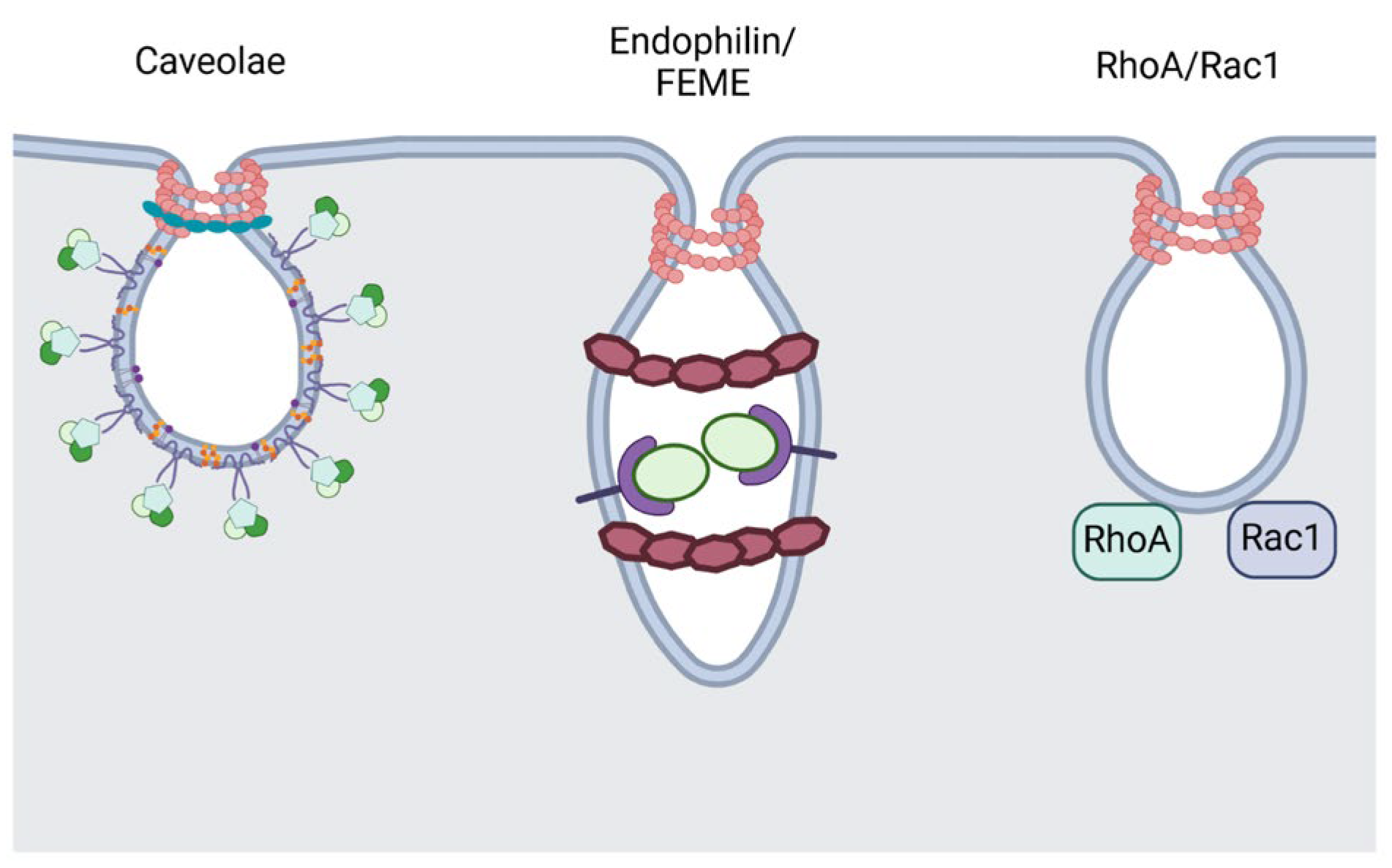
Figure 2.
Dynamin-independent CIE pathways. CLIC/GEEC, clathrin-independent carrier/GPI-anchored protein-enriched early endosomal compartment; Cdc42, cell division control protein 42; FME, flotillin-mediated endocytosis; Arf6, ADP-ribosylation factor 6; GDP, guanosine diphosphate; GTP, guanosine triphosphate. Created with BioRender.com.
Figure 2.
Dynamin-independent CIE pathways. CLIC/GEEC, clathrin-independent carrier/GPI-anchored protein-enriched early endosomal compartment; Cdc42, cell division control protein 42; FME, flotillin-mediated endocytosis; Arf6, ADP-ribosylation factor 6; GDP, guanosine diphosphate; GTP, guanosine triphosphate. Created with BioRender.com.
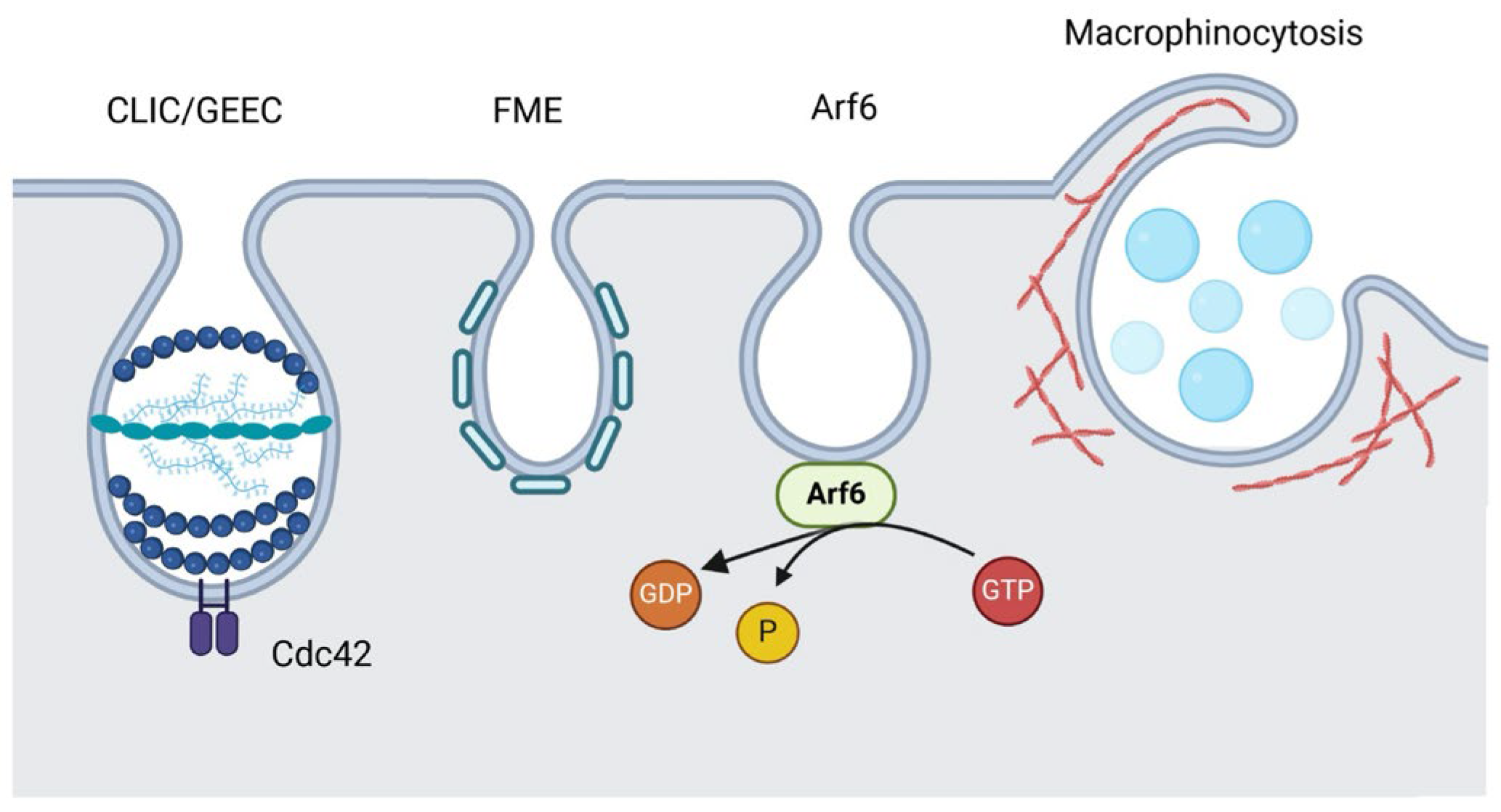
Figure 3.
Schematic representation of caveolae-mediated endocytosis. EHD2, EH domain containing 2. Created with BioRender.com.
Figure 3.
Schematic representation of caveolae-mediated endocytosis. EHD2, EH domain containing 2. Created with BioRender.com.
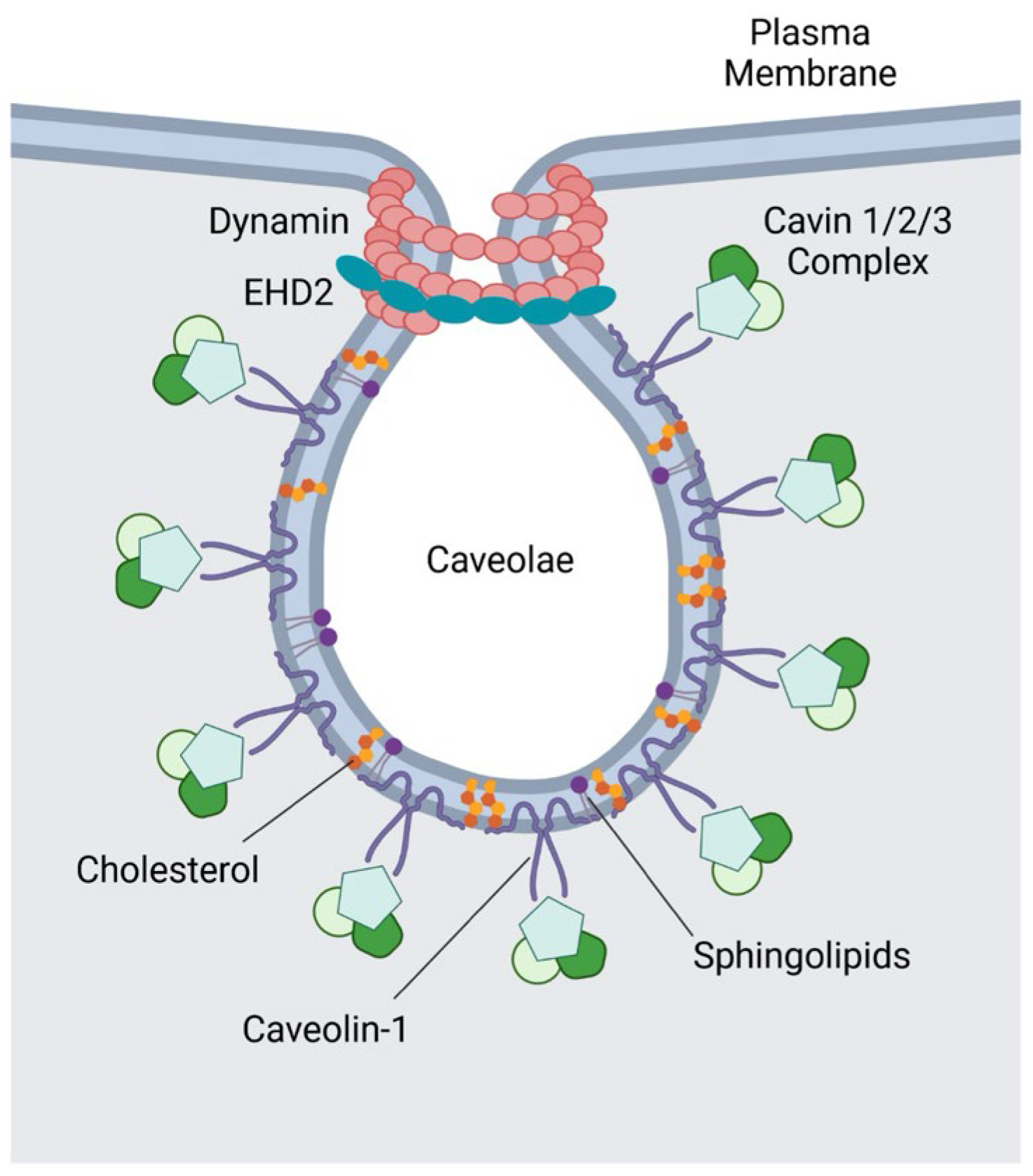
Figure 4.
Schematic representation of fast endophilin-mediated endocytosis (FEME). Dsk5, cyclin-dependent kinase 5; GSK3β, glycogen synthase kinase-3 beta. Created with BioRender.com.
Figure 4.
Schematic representation of fast endophilin-mediated endocytosis (FEME). Dsk5, cyclin-dependent kinase 5; GSK3β, glycogen synthase kinase-3 beta. Created with BioRender.com.
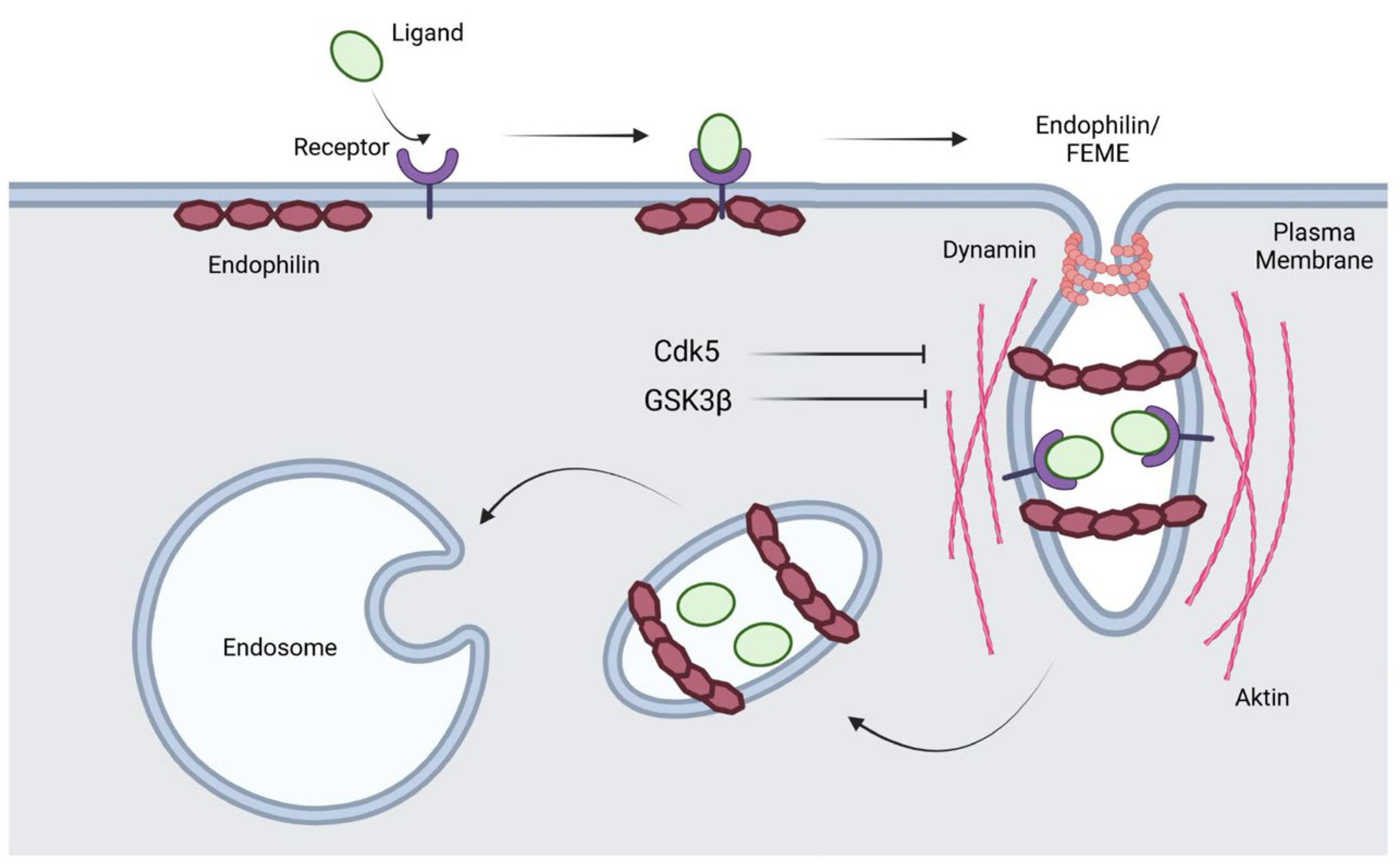
Figure 5.
Schematic representation of clathrin-independent carrier/GPI-anchored protein-enriched early endosomal compartment endocytic pathway (CLIC/GEEC). BAR-Domain, Bin-Amphiphysin-Rvs domain; ARF1, ADP-ribosylation factor 1. Created with BioRender.com.
Figure 5.
Schematic representation of clathrin-independent carrier/GPI-anchored protein-enriched early endosomal compartment endocytic pathway (CLIC/GEEC). BAR-Domain, Bin-Amphiphysin-Rvs domain; ARF1, ADP-ribosylation factor 1. Created with BioRender.com.
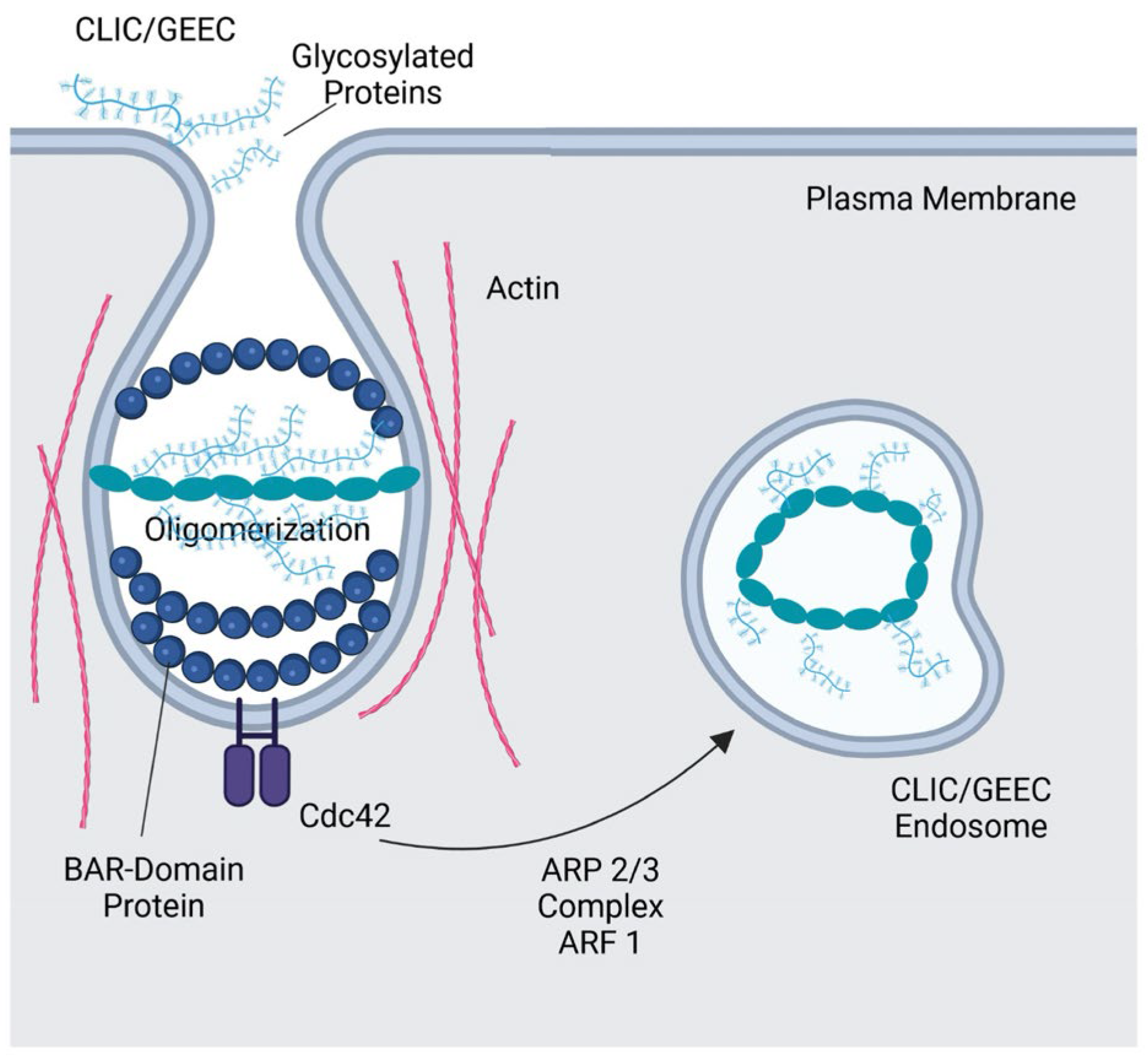
Figure 6.
Mechanisms of adhesion, invasion, and translocation of epithelial cells by L. monocytogenes. (a) L. monocytogenes binds to epithelial cell receptors E-cadherin and the Met via InlA and InlB. This interaction triggers receptor-mediated endocytosis of L. monocytogenes. Once inside the cell, L. monocytogenes uses LLO, PlcA, and PlcB to escape from the endocytic vesicle into the cytoplasm. (b) The Listeria adhesion protein (LAP) interacts with the epithelial cell surface receptor Hsp60, facilitating access of InlA to basolateral E-cadherin. This interaction triggers caveolin-1-mediated endocytosis, activates MLCK, and disrupts the intestinal cell-cell barrier by redistributing junctional proteins such as claudin-1, occludin, and E-cadherin, ultimately enabling bacterial translocation across the epithelium. InlA, internalin A; InlB, internalin B; E-cadherin, epithelial cadherin; LLO, listeriolysin O; LAP, Listeria adhesion protein; Hsp60, heat shock protein 60; Met, MET receptor tyrosine kinase; PlcA, phosphatidylinositol-specific phospholipase; PlcB, broad-range phospholipase C, MLCK, myosin light chain kinase. Created with BioRender.com.
Figure 6.
Mechanisms of adhesion, invasion, and translocation of epithelial cells by L. monocytogenes. (a) L. monocytogenes binds to epithelial cell receptors E-cadherin and the Met via InlA and InlB. This interaction triggers receptor-mediated endocytosis of L. monocytogenes. Once inside the cell, L. monocytogenes uses LLO, PlcA, and PlcB to escape from the endocytic vesicle into the cytoplasm. (b) The Listeria adhesion protein (LAP) interacts with the epithelial cell surface receptor Hsp60, facilitating access of InlA to basolateral E-cadherin. This interaction triggers caveolin-1-mediated endocytosis, activates MLCK, and disrupts the intestinal cell-cell barrier by redistributing junctional proteins such as claudin-1, occludin, and E-cadherin, ultimately enabling bacterial translocation across the epithelium. InlA, internalin A; InlB, internalin B; E-cadherin, epithelial cadherin; LLO, listeriolysin O; LAP, Listeria adhesion protein; Hsp60, heat shock protein 60; Met, MET receptor tyrosine kinase; PlcA, phosphatidylinositol-specific phospholipase; PlcB, broad-range phospholipase C, MLCK, myosin light chain kinase. Created with BioRender.com.
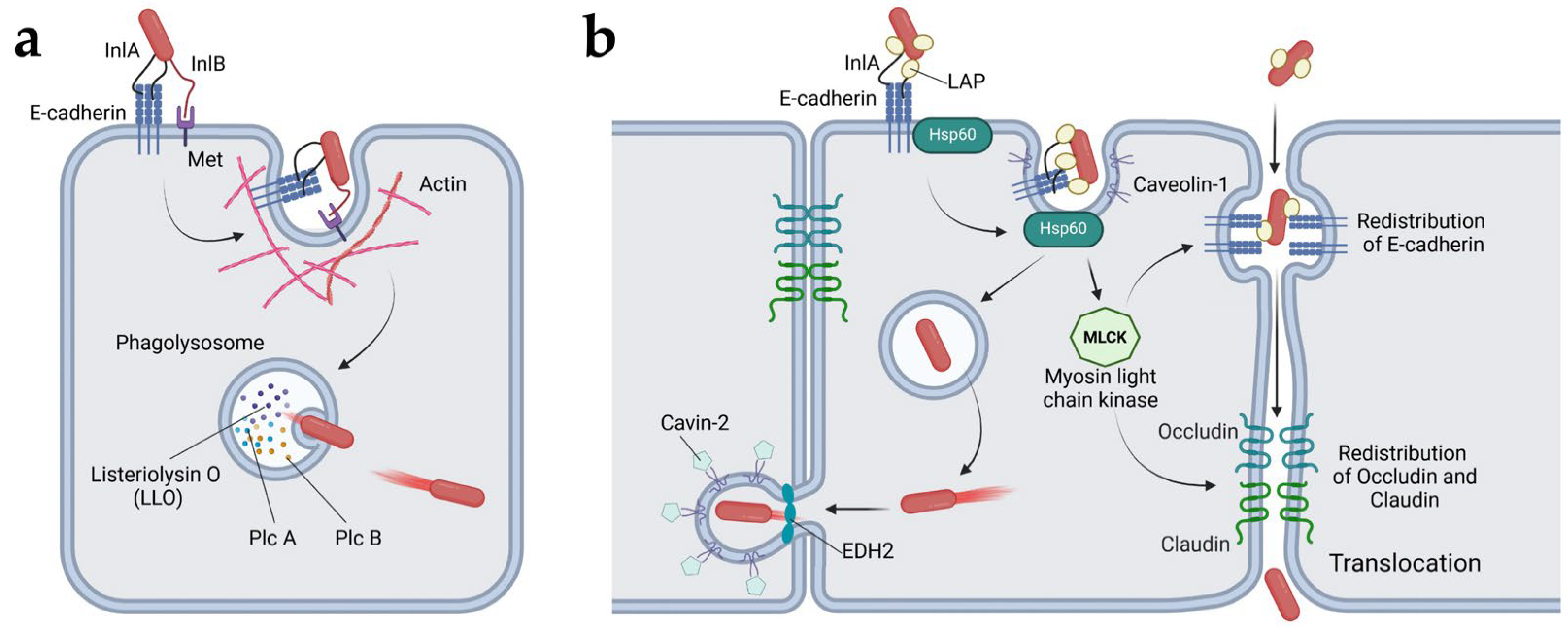
Figure 7.
Schematic representation of M. tuberculosis invasion of macrophages. M. tuberculosis binds to specific receptors, such as CR3, to enter the macrophage. TACO is recruited via cholesterol to the phagosome, stabilizing it and preventing fusion with lysosomes. This interaction protects mycobacteria from degradation. M. tuberculosis also expresses a cholesterol-specific receptor, Ck, which facilitates its entry into macrophages. CR3, complement receptor 3; TACO, tryptophan-aspartate-containing coat: Ck, cholesterol specific receptor. Created with BioRender.com.
Figure 7.
Schematic representation of M. tuberculosis invasion of macrophages. M. tuberculosis binds to specific receptors, such as CR3, to enter the macrophage. TACO is recruited via cholesterol to the phagosome, stabilizing it and preventing fusion with lysosomes. This interaction protects mycobacteria from degradation. M. tuberculosis also expresses a cholesterol-specific receptor, Ck, which facilitates its entry into macrophages. CR3, complement receptor 3; TACO, tryptophan-aspartate-containing coat: Ck, cholesterol specific receptor. Created with BioRender.com.
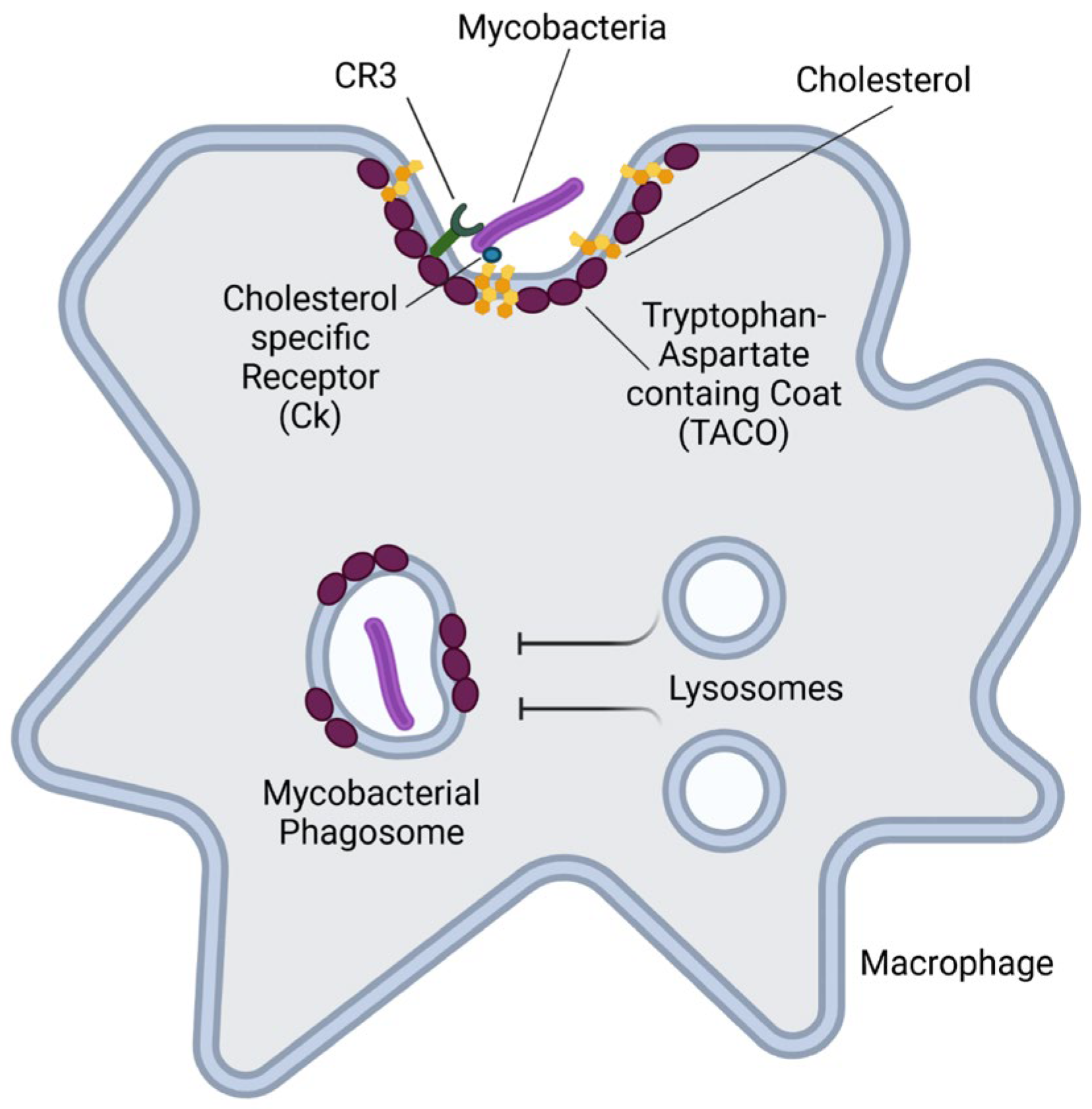
Figure 8.
Schematic representation of the mechanism used by S. aureus to internalize into human respiratory epithelial cells. S. aureus attaches to α5β1 integrins on the surface of respiratory epithelial cells releases α-hemolysin, which directly interacts with caveolin-1. This interaction destabilizes the cell membrane, facilitating S. aureus endocytosis. Created with BioRender.com.
Figure 8.
Schematic representation of the mechanism used by S. aureus to internalize into human respiratory epithelial cells. S. aureus attaches to α5β1 integrins on the surface of respiratory epithelial cells releases α-hemolysin, which directly interacts with caveolin-1. This interaction destabilizes the cell membrane, facilitating S. aureus endocytosis. Created with BioRender.com.
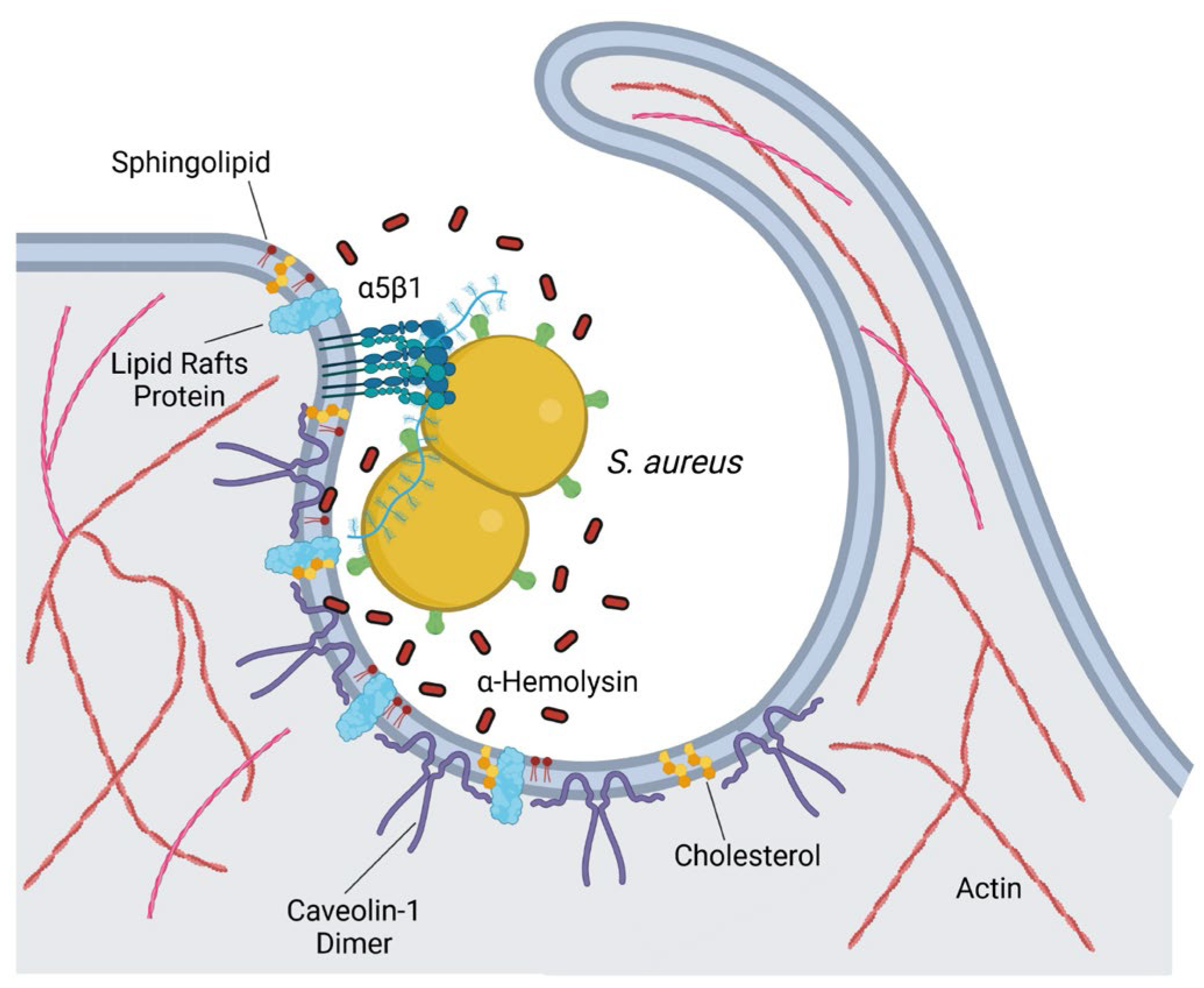
Figure 9.
CIE pathways used by SV40 and SARS-CoV-2 to invade host cells. (a) SV40 binds to ganglioside GM1 receptors on the host cell surface. The virus is internalized via caveolae-mediated endocytosis, transported to the ER, and subsequently penetrates the cell cytosol before moving to the nucleus. (b) SARS-CoV-2 primarily uses ACE2, embedded in lipid rafts, as its main receptor to enter host cells. SV40, simian virus 40; ER, endoplasmic reticulum; SARS-CoV-2, severe acute respiratory syndrome virus 2; ACE2, angiotensin-converting enzyme 2. Created with BioRender.com.
Figure 9.
CIE pathways used by SV40 and SARS-CoV-2 to invade host cells. (a) SV40 binds to ganglioside GM1 receptors on the host cell surface. The virus is internalized via caveolae-mediated endocytosis, transported to the ER, and subsequently penetrates the cell cytosol before moving to the nucleus. (b) SARS-CoV-2 primarily uses ACE2, embedded in lipid rafts, as its main receptor to enter host cells. SV40, simian virus 40; ER, endoplasmic reticulum; SARS-CoV-2, severe acute respiratory syndrome virus 2; ACE2, angiotensin-converting enzyme 2. Created with BioRender.com.
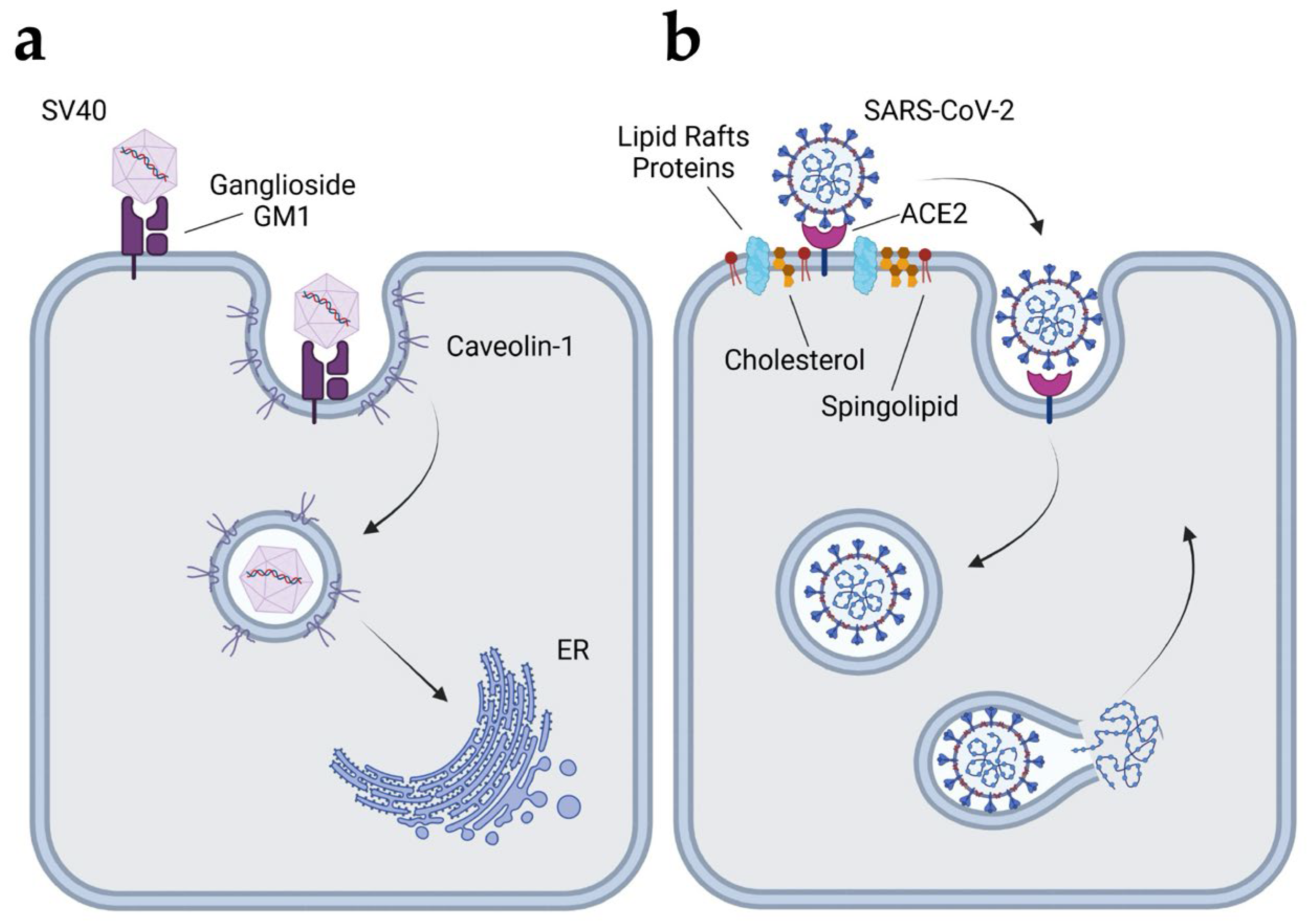
Disclaimer/Publisher’s Note: The statements, opinions and data contained in all publications are solely those of the individual author(s) and contributor(s) and not of MDPI and/or the editor(s). MDPI and/or the editor(s) disclaim responsibility for any injury to people or property resulting from any ideas, methods, instructions or products referred to in the content. |
© 2025 by the authors. Licensee MDPI, Basel, Switzerland. This article is an open access article distributed under the terms and conditions of the Creative Commons Attribution (CC BY) license (http://creativecommons.org/licenses/by/4.0/).
Copyright: This open access article is published under a Creative Commons CC BY 4.0 license, which permit the free download, distribution, and reuse, provided that the author and preprint are cited in any reuse.