

Submitted:
01 April 2025
Posted:
01 April 2025
You are already at the latest version
Abstract
To achieve this, the research employs rigorous analytical methods, including Cronbach’s Alpha reliability test, Principal Component Analysis, and multivariate regression analysis, to identify the primary determinants of consumer behavior and purchasing preferences for fresh mud crabs. The multiple regression analysis reveals two key factors that significantly influence consumer choices: nutritional knowledge and convenience awareness. Most of consumers perceive fresh mud crabs as superior in quality, expecting them to offer greater freshness, higher levels of protein, amino acids, and minerals, as well as excellent flesh texture and enhanced palatability. Based on these findings, two strategic directions are proposed for the sustainable development of Vietnam’s crab industry: (1) improving the nutritional quality of crab products to align with consumer expectations for health benefits and (2) enhancing the distribution network and diversifying product offerings to improve accessibility and convenience for consumers.
Keywords:
fresh mud crab
; consumer behavior
; purchasing preference
; factors influencing
; consumer decision
; largest cities of Vietnam
1. Introduction
The global demand for seafood products is increasing and plays a significant role in household menus worldwide [1,2]. Currently, seafood supply consists of 62% from wild capture and 38% from aquaculture [3]. The ability to expand seafood production depends on various factors, including natural conditions, available water surface area, and fishing and aquaculture practices [4,5]. More than 80% of global seafood products originate from Asian countries, including Vietnam, which has favorable conditions for aquaculture development [6,7]. In 2022, Vietnam's total aquatic product output reached 9.02 million tons, consisting of 5.2 million tons from aquaculture and 3.8 million tons from wild capture [8]. The aquaculture industry has experienced significant growth over the past five years, with Pangasius catfish and brackish shrimp (White leg shrimp and Giant tiger prawn species) being the primary farmed species in the Mekong Delta of Vietnam [9,10,11]. However, since 2015, Vietnam has been increasingly affected by climate change, including saline intrusion, rising temperatures, irregular rainfall, and the construction of high dikes for rice cultivation protection. These environmental changes have contributed to widespread shrimp diseases [12,13]. In addition to environmental pressures, the shrimp farming sector faces challenges such as disease outbreaks and economic difficulties, underscoring its vulnerability. Consequently, The report on the needs of aquaculture farmers in the Mekong River Delta, Vietnam in 2024, conducted by Ingrid [14], found that Vietnamese shrimp farmers have experienced a 20% to 60% decline in net earnings since the onset of the COVID-19 pandemic.
The mud crab (Scylla paramamosain) is an economically significant species inhabiting the mangroves and estuaries of tropical regions. It is a highly valued seafood product in Vietnam’s coastal areas and Southeast Asian markets. This species thrives in challenging conditions, demonstrating rapid growth, high tolerance to environmental fluctuations, strong disease resistance, a diverse diet, and substantial size [15,16]. Additionally, mud crabs possess reliable reproductive potential, significant economic value, and excellent post-harvest preservation qualities. Consequently, they are considered an ideal species for aquaculture alongside shrimp [17,18,19,20]. Moreover, mud crab farming operates as a large-scale agricultural system that minimizes the use of pesticides and commercial feed. Extensive farming practices allow crab fry to develop naturally with minimal human intervention [18,21,22]. This approach is expected to support the sustainable development of the aquaculture industry by reducing environmental harm and minimizing health risks associated with excessive antibiotic and growth stimulant use [21].
According to the statistics of Directorate of Fisheries [23], total farmed mud crab production in the Mekong Delta, Vietnam, reached 66,000 tons in 2022, representing an approximate 19% increase compared to 2017. This production is expected to continue growing through 2025. The previous studies are reported that the transition from specialized shrimp farming to extensive mud crab farming initially generated substantial revenue. On average, farmers in the Mekong Delta earned aprroximate 30–50 million VND per hectare per crop [15,18,22,24,25]. However, mud crab farming in the region currently faces several challenges. There is no designated farming area plan established by local governments, breed quarantine measures are not implemented, and collaboration among stakeholders remains limited [15,26,27]. Additionally, the industry lacks a recognized brand for mud crab products, and farming practices remain unstandardized, with no established quality control measures for inputs. Most importantly, the absence of comprehensive government macro policies to regulate annual development in response to market fluctuations has made mud crab prices unpredictable, directly affecting farmers' incomes [15,19,22,24,26]. Furthermore, mud crabs are primarily consumed domestically and are not widely exported [24,26].
Since the COVID-19 pandemic, consumers have become increasingly concerned about their health and quality of life, with a particular focus on improving their diets by selecting nutritious foods, including seafood and other aquatic animal sources [28,29,30]. However, the quality and origin of seafood and aquatic products vary significantly, leading to inconsistencies in consumer trust [31,32,33].
Mud crabs, shrimp, and other crustaceans play a crucial role in human nutrition, and consumer purchasing decisions are influenced by factors such as brand recognition, perceived health benefits, and food safety concerns[34,35,36,37,38,39,40]. However, mud crab products are highly perishable and undergo significant quality deterioration during transportation and storage, posing additional challenges to their marketability [39,41,42]. Carlucci, Nocella [43] conducted a study reviewing seafood purchasing behavior and identified key factors influencing consumer decisions, including fish availability, price perception, and self-efficacy in preparation, convenience, eating habits, health beliefs, and sensory perception. Additional attributes affecting purchasing choices include production methods, country of origin, preservation techniques, product innovation, packaging, and eco-labeling. In recent years, consumer concerns about seafood quality have increased, particularly regarding live and frozen products. A study conducted by a data journalist in the United States examined consumer preferences for different crab sexes and found that American consumers prefer male crabs over female crabs due to their larger size and higher demand. Consequently, female crabs are sold at lower prices. Additionally, consumers tend to avoid female crabs due to the presence of roe, further influencing market trends [43,44]. In contrast, consumers in Vietnam primarily purchase fresh whole mud crabs for home preparation [4,16,24].
The objective of this study is to investigate and develop a comprehensive understanding of buyer behavior, purchasing preferences, and the key factors influencing consumer decisions regarding mud crabs (Scylla paramamosain) in Vietnam’s largest cities. The findings will provide valuable insights for mud crab producers, local governments, and policymakers, enabling them to better understand consumer preferences and optimize production to align with market demands for product type, quality, safety, and affordability more effectively.
2. Theoretical Approach and Perspective Review
Consumer behavior refers to the actions individuals take in acquiring and using goods or services, including searching, selecting, purchasing, and consuming products to meet personal needs. It not only involves the specific behaviors related to buying and using products but also the psychological and social processes that occur before, during, and after these actions [45,46,47,48,49].
The analysis of consumer behavior regarding perishable mud crab products aims to enhance profitability and reduce risks associated with unmet consumer demands while also considering decision-making processes influenced by product attributes [42]. Research on the Theory of Planned Behavior (TPB) explores the factors that influence consumer decision-making and purchase intentions [50]. Consumer behavior is a widely studied concept in economics, particularly in marketing. According to Blackwell, Miniard [48], “Consumer behavior encompasses all activities directly associated with the processes of searching, collecting, purchasing, owning, utilizing, and disposing of products and services”. It includes the decision-making processes that occur before, during, and after these actions. Consumer behavior examines the actions of individuals, groups, or organizations and the processes through which they select, acquire, use, and dispose of products, services, experiences, or ideas to satisfy personal and societal needs [45,51,52,53].
Many researchers use market analysis methods to study seafood consumers, aiming to identify the key factors influencing their purchasing decisions. This topic has been widely explored on a global scale [30,45,50,51,54]. Similar to Vietnam, scholars have concentrated on consumer behavior about safe seafood goods [35,55,56,57,58]. Studies on customers' preferences for fresh mud crabs have been undertaken in many crab-producing nations [39,40,41,59] (Binpeng et al., 2016; Riniwati et al., 2017; Khasanah et al., 2019; Lorenzo et al., 2021). In Vietnam, most research on mud crabs has focused on the economic aspects of mud crab production [17,18,21,22,24] (Hien et al., 2015; Nghi et al., 2015b; Pho, 2015). However, no studies have yet explored the purchasing decisions of urban consumers regarding fresh mud crabs.
This research integrates the Theory of Reasoned Action (TRA) with the Theory of Planned Behavior (TPB) to achieve research objectives. In the TRA model, an individual's beliefs about a product shape their attitude toward purchasing fresh mud crab, which in turn influences their purchase intention, but not their actual purchase behavior directly. Therefore, attitudes help explain the factors affecting consumer purchase intentions, while these intentions serve as the strongest predictors of actual purchasing behavior [45]. In the TPB model, behavioral intentions are influenced by three key factors. First, attitudes refer to an individual's favorable or unfavorable evaluation of a behavior. Second, social influence represents the perceived societal pressure to perform or avoid a specific action. Lastly, the Theory of Planned Behavior expands on the TRA model by incorporating perceived behavioral control, which reflects the ease or difficulty of performing a behavior based on the availability of resources and opportunities [51,60].
The proposed research model identifies key factors influencing the purchase of fresh mud crab as follows: Consumer attitude factors (N1) include the 'Perception of Nutritional Needs,' which encompasses health maintenance, adequate nutrition, absence of contamination, and the establishment of clear quality assessment standards [41,61,62]. Another key factor (N2), 'Perception of Food Hygiene and Safety,' includes concerns about clear product origin, absence of preservatives, absence of parasites, and absence of allergens [37,63,64]. The factor group (N3), 'Price Awareness' includes market price comparisons, assessments of fair pricing relative to income, and evaluations of fresh product pricing [34,47,61]. Additionally, personal consumer variables such as age, gender, income, and distance influence the decision to purchase crabs [34,47,61]. The factor group (N4) related to the ease or difficulty of acquiring a product includes the 'Perception of Ease of Access,' which encompasses convenient storage, a variety of options, easy purchasing when needed, and efficient processing [34,35,63]. The proposed research models are presented in Figure 1
3. Matterials and Methods
3.1. Study Area
The selection of Can Tho city, Ho Chi Minh City city, and Hanoi capital as study areas is based on their economic significance, regional diversity, and distinct consumer behaviors regarding seafood consumption. These cities represent Vietnam’s three key regions: the Mekong Delta (Southwest), Southern Vietnam, and Northern Vietnam, providing a comprehensive perspective on consumer purchasing decisions for mud crabs (Scylla paramamosain). Can Tho, the economic hub of the Mekong Delta, plays a crucial role in Vietnam’s aquaculture and seafood supply chain. Local consumers have direct access to fresh mud crabs, which influences their price sensitivity and purchasing preferences. Ho Chi Minh City (HCMC), the country’s largest and most economically developed metropolis, has a high demand for seafood across various consumer segments, including restaurants, supermarkets, and online markets. In contrast, Hanoi, the capital of northern Vietnam, relies on mud crab shipments from the south, which may impact availability, pricing, and consumer perceptions compared to the other two cities.
3.2. Data Collection and Development of Research Scales
3.2.1. Data Collection
This study examined the current state of the research topic in three major cities: Can Tho, Ho Chi Minh cities, and Hanoi capital as they represent Vietnam’s key regions. Additionally, Danh and Truc [25] identified these cities as the primary consumers of mud crabs in the Mekong Delta through their application of the chain linkage approach to analyze the mud crab supply chain. The study employed qualitative analysis by synthesizing expert opinions and developing a pilot survey questionnaire, which was refined based on preliminary results before the official survey. A literature review determined that the research model included 21 variables for analysis, requiring a minimum sample size of five samples per variable [65,66], calculated as follows: N × 5 + (N × 5 × 0.1) = 21 × 5 + (21 × 5 × 0.1) = 116. To ensure reliability, the study conducted face-to-face interviews with 200 consumers who purchased mud crabs. The household selection process involved estimating the total number of households on each street (N), calculating the required sample size (n), determining the interval between selected households (k = N/n), and conducting interviews accordingly.
3.2.2. Scale Development of Research
This study establishes research scales based on the cognitive model, incorporating key factors such as nutritional awareness, food safety awareness, convenience awareness, and price awareness, along with the dependent variable—mud crab purchase decisions. Consumer purchasing decisions are measured using a 5-point Likert scale: (1) Strongly Disagree, (2) Disagree, (3) Neutral, (4) Agree, and (5) Strongly Agree (Likert, 1932). Additionally, the study accounts for demographic factors, including gender (1 = male, 0 = female), age (years), educational attainment (years of schooling), and income (million VND per person per month) [64].
3.3. Data Analysis
3.3.1. Verify the Reliability Coefficient
The Cronbach's Alpha coefficient is used to identify and exclude inadequate observed variables or scales. The reliability of the scale is assessed using the Corrected Item-Total Correlation coefficient, which helps eliminate irrelevant factors from the measurement scale. This coefficient measures the correlation between a specific variable and the average score of other variables within the same scale—a higher coefficient indicates a stronger association with the group. According to Nunnally and Bernstein [67], factors with an item-total correlation coefficient below 0.3 are considered insignificant. To meet reliability requirements, a scale must have a Cronbach’s Alpha value greater than 0.6 [66].
3.3.2. Exploratory Factor Analysis
According to Trong and Ngoc [66], “Factor analysis is the overarching term for a collection of procedures primarily employed to condense and summarize data.” After scale testing, the remaining observed variables undergo factor analysis to consolidate them into one or more representative factors. The criteria for accepting factor analysis include:
- Eigenvalues (representing the variance explained by each factor) must be greater than 1, with a cumulative variance exceeding 50%.
- The Kaiser-Meyer-Olkin (KMO) test coefficient assesses the suitability of factor analysis. The KMO value should range between 0.5 and 1; a value below 0.5 indicates that factor analysis may not be appropriate for the data.
- Factor loading coefficients, which measure the correlation between variables and factors, should be greater than 0.3 to be considered acceptable.
3.3.3. Multiple Regression Analysis
Regression analysis is a statistical technique used to examine the relationship between a dependent variable and multiple independent variables. The regression model is formulated as follows:
Yi = B0 + B1 X1i + B2 X2i + B3 X3i +…+ BP XPi +ei
In there:
Xpi: denotes the value of the pi independent variable at the ith observation.
Bp: partial regression coefficient.
ei: is a stochastic independent variable characterized by a normal distribution with a mean of 0 and constant variance.
Adjusted R² (Coefficient of Determination): This coefficient measures the proportion of variance in the dependent variable that is explained by the independent variables in the regression model, indicating how well the regression line fits the data. An R² value closer to 1 suggests a strong model fit, while a value near 0 indicates a poor fit. However, R² may provide an overly optimistic assessment, especially when multiple explanatory variables are included. To address this, the adjusted R² is preferred, as it accounts for the number of variables in the model and provides a more accurate measure of model suitability. In this study, the adjusted R² is used to ensure a reliable evaluation of the multivariate linear model, as it mitigates the inflation bias associated with R². Additionally, the F-test in analysis of variance assesses the overall fit of the model. If the null hypothesis (H₀) is rejected, it confirms that the multivariate linear regression model is appropriate for the dataset and can be effectively used for analysis.
4. Results and Discussions
4.1. Attributes of Mud Crab Consumers in Vietnam
A survey of 200 customers across three major cities in Vietnam revealed that 69% of respondents were female (Table 1). The average household size was 3.7 individuals, with the largest household consisting of nine members. The mean monthly income per person was 11 million VND, though income levels varied significantly, ranging from 1 million VND to 104 million VND per month. On average, households allocated approximately 11 million VND per month to food expenses (Table 1). In urban Vietnam, office workers accounted for the majority of consumers (60.4%), and 70% of respondents held a university degree. These findings align with broader economic and demographic trends in Vietnam, where urbanization and rising incomes shape household consumption and spending patterns [68,69]. Moreover, variations in household income and expenditure reflect disparities in economic status and urban-rural differences, as noted in studies on household financial behavior [22,25,43,70].
4.2. Domestic Consumer Demand for Fresh Mud Crab in Vietnam
The result showed that among the 200 households that consume fresh mud crabs, the average purchase frequency is 2.1 times per year, with some households buying up to 12 times annually. Of these, 70 households spend an average of 1.4 million VND per year on mud crabs, purchasing approximately 3.5 kg annually. For the 160 households that purchase meat crabs (Y crabs), the average annual consumption is 5.1 kg, with an expenditure of 1.6 million VND. Additionally, 60 households buy crabs with broken claws, purchasing an average of 6 kg per year and spending approximately 976,000 VND annually (Table 2). In terms of preparation methods, consumers most commonly boil fresh crabs (37%), followed by preparing crab hotpot (33%), tamarind crab (16%), salted crab (9%), and crab soup or other dishes (5%) (Figure 2).
Dietary preferences strongly influence fresh crab consumption, with recipes requiring a significant amount of cooked crab being favored for their simplicity, ease of consumption, suitability for all age groups, and ability to retain nutritional value [55,71,72]. Consumers primarily purchase fresh crabs from traditional markets (63.51%), followed by supermarkets (17.57%), farmers (13.51%), warehouses (3.08%), and online platforms (2.03%) (Figure 3). Traditional markets remain the preferred choice for buying fresh products. However, since the outbreak of the epidemic in 2019, consumer purchasing behavior has gradually shifted from traditional markets to modern retail channels, including supermarkets and online shopping [35].
4.3. Factors Affecting the Decision to Buy Fresh Mud Crab in Vietnam
4.3.1. Testing the Reliability of Observed Variables
Cronbach's Alpha reliability coefficient measures the internal consistency and correlation among observed variables, helping to exclude irrelevant ones and reduce extraneous variables in the model (Table 3). Variables with a total correlation coefficient below 0.3 are discarded, while the scale selection criterion requires a Cronbach's Alpha of 0.6 or higher [67]. After assessing the reliability of the observed variables, one independent variable (PR3) and one dependent variable (PD2) were removed (Table 3).
4.3.2. Exploratory Factor Analysis (EFA) - Independent Variable
The results of the Exploratory Factor Analysis (EFA) indicated that out of the original four groups of factors comprising 17 variables (measured on a 5-point Likert scale) influencing the decision to purchase processed crab, one variable (PR3) was removed, leaving 16 variables that met the required criteria (Table 4). Using Principal Component Analysis with Varimax rotation, four factor groupings were identified. The analysis demonstrated strong validity, with a Kaiser-Meyer-Olkin (KMO) value of 0.76, exceeding the minimum threshold of 0.5. Additionally, the eigenvalue was 1.069, surpassing the required minimum of 1, and the total variance explained was 70.5%, well above the 50% benchmark (Table 4). The significance level (p-value) of 0.000, which is below 0.05, confirms a significant relationship among the observed variables [66].
- - Four New Factor Groupings Have Been Established.
Factor 1: Nutritional Awareness – this factor includes four observed variables: NU1 (Fresh mud crab ensures freshness), NU2 (Fresh mud crab is rich in minerals), NU3 (Fresh crab has a naturally sweet taste), and NU4 (Fresh mud crab is superior in flavor to canned products). With an average rating of 3.6, this factor significantly influences the decision to purchase fresh crab. Factor 2: Food Safety and Cleanliness Awareness – this factor consists of five observed variables: FHS1 (Fresh mud crabs are free from harmful substances), FHS2 (Fresh mud crabs have a clear and traceable origin), FHS3 (Fresh mud crabs contain no preservatives), and FHS4 (Fresh mud crabs are free from parasites) (Table 5). This category has an average rating of 3.8, indicating a moderate influence on the decision to purchase fresh mud crabs. Factor 3: Convenience Perception – this factor includes four observed variables: CO1 (Fresh mud crabs offer a variety of choices), CO2 (Fresh mud crabs are widely available and easy to purchase), CO3 (Fresh mud crabs are convenient to prepare), and CO4 (Fresh mud crabs are easy to use after processing). With an average rating of 3.3, this factor has a moderate influence on the decision to purchase fresh mud crabs. Factor 4: Price Perception – this factor consists of three observed variables: PR1 (The price of fresh crab is important to me), PR2 (The price of fresh crab reflects its quality), and PR3 (The price of fresh crab aligns with my household income). This category has an average rating of 3.6, indicating a significant impact on purchasing decisions (Table 5). Overall, the four factors exert varying levels of influence on the decision to purchase fresh crab, with nutritional awareness having the strongest impact. This suggests that consumers prioritize the nutritional value of fresh crab above other considerations, followed by convenience and price.
- -
- Dependent Variable
To evaluate the suitability of factor analysis for the original dataset, the Kaiser-Meyer-Olkin (KMO) index and Bartlett’s test were applied. The results indicate a significance level (sig) of 0.000, leading to the rejection of the null hypothesis (H0). The KMO coefficient of 0.77 falls within the acceptable range of 0.5 to 1 (Table 6), suggesting that the observed variables are sufficiently correlated to justify the use of Exploratory Factor Analysis (EFA). Factor extraction and rotation methods were then performed. The EFA results show that the Principal Axis Factoring extraction method, combined with Promax (Oblique) rotation, successfully identified a factor comprising three observed variables.
The cumulative variance explained is 0.85, exceeding the minimum threshold of 0.5, while the eigenvalue is 4.2, meeting the requirement of being greater than 1 (Table 7). Additionally, all factor loadings exceed 0.5, confirming that the scale meets the necessary criteria. These findings validate the use of the identified variables in assessing the factors influencing consumers' decisions to purchase fresh mud crab in Vietnam. For subsequent analyses, the dependent variable will be represented by the mean value of its corresponding observed variables.
- - Multiple Regression Analysis
The residual normality test results indicate that the residuals have a mean of -1 and a standard deviation of 1, which is close to 0. Therefore, the assumption of a normal residual distribution is not violated. Multicollinearity is not a concern, as the multicollinearity test results show that the highest Variance Inflation Factor (VIF) value is 1, well below the threshold of 10. This confirms that the independent variables are not highly correlated with each other, meaning their interrelationship has minimal impact on the regression model's explanatory power. A multivariate regression model is employed to analyze the factors influencing the decision to purchase crab. The dependent variable is measured using a Likert scale, while the independent variables are categorized into two groups: cognitive variables and control variables, the latter encompassing personal characteristics and income.
The research hypothesis and model reliability test yielded an adjusted R² of 0.90, indicating that the four independent variables (nutrition awareness, food safety awareness, convenience awareness, and price awareness) and the four control variables (gender, age, food spending, and education level) together explain 90% of the variation in QD (the decision to buy crab). Moreover, all variables are statistically significant at the 5% level, and the F-test result shows a significance level of Sig = 0.000 (< 0.05), as indicated by the analysis of variance (Table 8). This confirms that the proposed linear regression model aligns well with the observed data. The independent variables include consumer characteristics (gender, age, income, education level) and 4 groups of factors from the regression analysis results (Table 8). The values of the four groups of factors represent the factor value scores corresponding to the primary components. The analysis indicates that gender, age, food expenditure, and education level do not influence the decision to select fresh crab products.
Among the component factors (nutritional awareness) has a significant influence on consumers' decisions to purchase fresh crab, with a significance level of 1%. The estimated beta coefficient of 0.914 suggests that a one-unit increase in nutritional awareness corresponds to a 91.4% increase in the likelihood of purchasing crab. This finding aligns with previous research on seafood products in general and crab products specifically. The results of this analysis are consistent with those of previous studies [55,58,73]. Descriptive statistics for the 'nutritional awareness' group indicate that most crab consumers rate this factor favorably. However, the average score, ranging from 3.6 to 3.64, remains relatively low (Table 8), suggesting that while consumers purchase fresh crab, their understanding of its nutritional value is still limited.
Among the component factors (awareness of convenience) has a measurable influence on consumers' decisions to purchase fresh crab. The estimated Beta coefficient is 0.256, with a significance level of 1%, indicating that a one-unit increase in awareness of convenience correlates with a 25.6% increase in the likelihood of purchasing processed crab (Table 8). The analysis results align closely with previous research on factors influencing consumers' decisions to buy Vietnamese food products studied by various researchers [74,75,76,77,78,79]. Statistical analysis shows that most crab consumers rate the 'awareness of convenience' factor positively. However, the average scores, ranging from 3.55 to 3.60, remain relatively low (Table 8), suggesting that while consumers purchase fresh crab, their awareness of its convenience is still limited. Additionally, several other factors such as gender, education level, income, price awareness, and knowledge of food safety and hygiene also influence consumers' decisions to buy fresh crab. However, their impact lacks statistical significance.
5. Solutions and Recommendations
5.1. Basis for Proposing Solutions
This study has developed a new purchase decision scale consisting of four cognitive variables and four control variables. Analysis of the multivariate regression model reveals that two independent variables, namely nutrition awareness and convenience perception, significantly influence the decision to purchase fresh crab. These findings provide a foundation for proposing practical solutions based on the research.
5.2. Solutions and Recommendations to Enhance the Value of Vietnam's Mud Crab
Improving the nutritional quality of seawater during aquaculture and raising consumer awareness of the nutritional benefits of crab products are essential. Firstly, Crab farmers must strengthen quality control by closely monitoring cultivation, harvesting, transportation, and preservation processes to ensure high nutritional value. This includes assessing the aquaculture environment, testing water quality, optimizing the crabs' diet, and maintaining their integrity during transport to market. It is also crucial to promote and enforce food hygiene and safety standards in crab product preparation. Researchers should develop scientific frameworks to better understand the nutritional value of crabs and refine aquaculture techniques to enhance their quality. Additionally, production methods should be improved to preserve essential nutrients in crab products. Organizations must collaborate to independently verify that crab products meet food quality and safety standards. The use of certification markers can further enhance consumer trust in the nutritional quality of crab products.
Develop promotional and training strategies to increase consumer awareness of the nutritional benefits of crab products. Include detailed nutritional information on product packaging to inform consumers about their health advantages. The Vietnamese government should implement regulations to strengthen the crab industry and protect renewable marine resources. Public education initiatives should be enhanced to highlight the nutritional value and importance of crab-based meals. To expand international markets and trade, export strategies should be developed to enhance global market penetration and increase the value of crab products worldwide. Additionally, fostering international collaboration on the coastal zone and maritime resource management as well as trade policies will further support the industry's mud crab growth.
Secondly, enhancing the distribution system and diversifying crab products is crucial to increasing accessibility and expanding consumer reach. This can be achieved through the following strategies:
- Develop a variety of products: Create a diverse range of crab offerings, including packaged options such as steamed and pre-cooked crab. Introduce health-conscious alternatives, such as low-sodium or low-fat varieties, for nutrition-focused consumers.
- Expand distribution partnerships: Collaborate with restaurants, hotels, supermarkets, and food distributors to ensure a wide selection of crab products. Establish long-term agreements with partners to maintain a stable and consistent supply.
- Broaden distribution channels: Improve direct-to-consumer access by leveraging online platforms, mobile applications, and home delivery services. Partner with local food retailers to make crab products more readily available.
- Invest in technology: Enhance manufacturing, preservation, and shipping processes using advanced cleaning, packaging, and storage technologies to improve convenience and extend shelf life.
- Boost marketing efforts: Develop targeted advertising campaigns to raise awareness and attract consumers to crab products. Utilize social media and digital marketing strategies to generate interest and drive sales.
- Create consumer-friendly options: Offer ready-to-eat crab products, pre-processed selections, and items with simple cooking instructions. Ensure practical packaging with clear nutritional information for added consumer convenience.
- Introduce value-added promotions: Develop combo packages and special incentives to encourage the purchase of multiple crab products. Implement rewards, promotions, and loyalty programs to enhance consumer engagement and satisfaction.
By implementing these solutions, the mud crab industry can diversify its product offerings, improve consumer convenience, and expand its market reach. This, in turn, will drive industry growth and create new trade, and business opportunities.
6. Conclusion
This study developed a 16-item scale to assess factors influencing consumer purchasing decisions for crabs in three biggest cities of Vietnam. The multiple regression analysis identified two key determinants. First, consumers strongly associate fresh crabs with superior quality, expecting them to provide optimal freshness, high mineral content, excellent flesh texture, and enhanced flavor compared to canned alternatives. To expand the market for fresh crab products, it is crucial to preserve their nutritional value and establish a well-defined nutritional profile for each crab variety at different market stages. Second, convenience plays a significant role in purchasing decisions. Consumers prefer mud crab products that offer a diverse selection, widespread availability, ease of preparation, and simplicity of use after processing.
Based on the regression analysis, two key strategies are recommended for developing new crab products: (1) Enhancing nutritional quality to meet consumer expectations for health benefits, and (2) Strengthening distribution networks and diversifying product offerings to improve accessibility and convenience. To expand the fresh crab market in Vietnam, businesses should focus on maintaining and effectively communicating the high nutritional value of crab products while optimizing distribution and product variety. Implementing these strategies will increase consumer interest and drive market growth both domestically and internationally.
Author Contributions
Conceptualization, design of the experiment and acquisition of funding: Le Ngoc Danh and Chau Thi Da. Conduct of the survey and data collection: Le Ngoc Danh and Chau Thi Da. Formal analysis and writing—original draft preparation: Le Ngoc Danh, Chau Thi Da and Duong The Duy. Writing—review and editing: Le Ngoc Danh, Chau Thi Da, Duong The Duy and Ngo Anh Tuan. All authors have read and agreed to the published version of the manuscript.
Funding
This study was funded by Southeast Asian Regional Center for Graduate Study and Research in Agriculture (SEARCA)
Institutional Review Board Statement
Not applicable.
Informed Consent Statement
Not applicable.
Data Availability Statement
Data are available from the corresponding author on request.
Acknowledgments
All authors sincerely thank the Southeast Asian Regional Center for Graduate Study and Research in Agriculture (SEARCA) for providing a valuable training and learning opportunity in the Philippines. We also extend our deep gratitude to the consumers and customers from selected markets in Can Tho City, Ho Chi Minh City, and Hanoi for their participation and valuable data contributions. Additionally, we appreciate the support and assistance of students and staff members who played a crucial role in the field survey, data collection, and analysis for this study.
Conflicts of Interest
The authors declare no conflict of interest.
References
- Salladarré, F., et al., The demand for seafood eco-labels in france. Journal of Agricultural & Food Industrial Organization, 2011. 8: p. 10-10.
- Roheim, C.A., et al., Evolution and future of the sustainable seafood market. Nature Sustainability, 2018. 1(8): p. 392-398. [CrossRef]
- FAO, The state of world fisheries and aquaculture 2020. Food and Agriculture Organization of the United Nations 4. Rome, Italy, 2020: p. 244 . [CrossRef]
- Naylor, R.L., et al., Effect of aquaculture on world fish supplies. Nature, 2000. 405(6790): p. 1017-1024. [CrossRef]
- Delgado, C.L., et al., Outlook for fish to 2020: meeting global demand. The International Food Policy Research Institute (IFPRI). © World Bank/Anonymous and © WorldFish Center/Modadugu V. Gupta., 2003.
- Tacon, A.G.J. and M. Metian, Fish matters: Importance of aquatic foods in human nutrition and global food supply. Reviews in Fisheries Science, 2013. 21(1): p. 22-38. [CrossRef]
- Watson, R.A., et al., Provenance of global seafood. Fish and Fisheries, 2016. 17(3): p. 585-595. [CrossRef]
- .
- Zweig, R.D., et al., Vietnam: Research on the seafood industry. Japan and World Bank Group Trust Funds Program Report, 2005: p. 49pp.
- Viet, T.V., The role and potential of the seafood industry in the economic development of the Mekong Delta, Vietnam. Can Tho University Journal of Science, 2013. 27: p. 136-144.
- Duy, D.T., et al., Assessment of technical, economic, and allocative efficiencies of shrimp farming in the Mekong Delta, Vietnam. Journal of the World Aquaculture Society. 2023. 54(4): p. 915-930. [CrossRef]
- Ali, M., et al., Exploring the effect of climate transformation on biodiversity in coastal ecosystems. Global Journal of Engineering and Technology Advances. 2024. 21: p. 168-177. [CrossRef]
- Da, C.T., et al., Farmers’ perceived impact of high-dikes on rice and wild fish yields, water quality, and use of fertilizers in the Mekong Delta, Vietnam. ACS ES&T Water. 2024. [CrossRef]
- Ingrid, K., Aquaculture farmer’s needs in Mekong River Delta, Viet Nam. Agricultural department, Netherlands Embassy in Hanoi and the Netherlands Enterprise Agency, 2024: p. 1-62. https://www.agroberichtenbuitenland.nl/documenten/rapporten/2024/01/22/report-aquaculture-farmers-needs-in-mekong-delta-vietnam.
- Petersen, E., et al., Mud crab farming in Vietnam–bioeconomics and perceived constraints to development. 2009.
- Sayeed, Z., et al. Consumer preferences and willingness to pay for mud crabs in Southeast Asian countries: A discrete choice experiment. Foods, 2021. 10. [CrossRef]
- Johnston, D. and C.P. Keenan, Mud crab culture in the Minh Hai province, South Vietnam. Aciar proceedings, 1999: p. 95-98.
- Nghi, N.Q., T.T.D. Can, and P. Huy, Analysis of economic efficiency of prawn-mud crab farming model in Minh Hoa Commune, Chau Thanh District, Tra Vinh Province. Journal of Vietnam Argicultural Science and Technology, 03/2015, 2015.
- Long, N.T., Analysis of finance and technique aspects of mud crab farming in Bac Lieu Province. Can Tho University Journal of Science, 2019: p. 61-68.
- Mangubhai, S., et al., Value chain analysis of a women-dominated wild-caught mud crab fishery. Fish and Fisheries. 2024. 25(5): p. 781-792. [CrossRef]
- Hien, H.V., P.M. Đuc, and Đ.N. Thao, An analysis of mub crab (scylla paramamosain) distribution channels in Nam Can, Ca Mau province. Internaltional Sympopsium Aquatic Products processing Cleaner production chain for healthier food, In Cantho University 09-09 December 2015, 2015: p. 62.
- Pho, T.H., Farming of mud crab (Scylla spp) in Ca Mau: Current status of technique, social economy and solutions of sustainable development (Master's dissertation of aquaculture). Nha Trang University, Vietnam, 2015.
- Directorate of Fisheries, Summary report of the year 2022. Vietnam: Directorate of Fisheries, 2022.
- Danh, L.N., et al., An empirical study of financial efficiency and stability of crab–shrimp farming model n Mekong Delta, Vietnam. International Journal of Business and Society, 2024. 25(2): p. 754-772. [CrossRef]
- Danh, L.N. and N.T.T. Truc, Supply chain management for the mud crab industry in the Mekong Delta. Journal of Commercial Sciences, 2022. 116(11): p. 11-22.
- Nhung, T.N., Analysis of factors affecting the production efficiency of crab farming models in the Mekong Delta. . Can Tho University, Can Tho, 2013.
- Naylor, R., S. Fang, and J. Fanzo, A global view of aquaculture policy. Food Policy, 2023. 116: p. 102422.
- Eftimov, T., et al., COVID-19 pandemic changes the food consumption patterns. Trends in Food Science & Technology, 2020. 104: p. 268-272. [CrossRef]
- Sheth, J., Impact of Covid-19 on consumer behavior: Will the old habits return or die? Journal of Business Research. , 2020. 117: p. 280-283. [CrossRef]
- Zwanka, R.J. and C. Buff, COVID-19 generation: A conceptual framework of the consumer behavioral shifts to be caused by the COVID-19 pandemic. Journal of International Consumer Marketing, 2021. 33(1): p. 58-67. [CrossRef]
- Robertson, A., Quality control and reliability. 1971, London: Thomas Nelson And Sons.
- Malcorps, W., et al. Global seafood trade: Insights in sustainability messaging and claims of the major producing and consuming regions. Sustainability, 2021. 13, 11720. [CrossRef]
- Li, S., et al. Building towards one health: A transdisciplinary autoethnographic approach to understanding perceptions of sustainable aquatic foods in Vietnam. Sustainability, 2024. 16, 1-23. [CrossRef]
- Tuu, H.H., et al., The role of norms in explaining attitudes, intention and consumption of a common food (fish) in Vietnam. Appetite, 2008. 51(3): p. 546-551. [CrossRef]
- Ngoc, C.N.M. and P.T. Nhat, Analysis of factors affecting choice decision of supermarket channels when buying fresh foods of consumers in Ho Chi Minh City. Journal of Development and Integration, 2013. 10(20): p. 47-51.
- Duy, D.T., et al., Assessing the effects of social capital on trade credit in shrimp farming in the Mekong Delta, Vietnam. Aquaculture Economics & Management. 2024: p. 1-14. [CrossRef]
- McManus, A., et al., Perceptions and preference for fresh seafood in an Australian context. International Journal of Consumer Studies, 2014. 38(2): p. 146-152. [CrossRef]
- Zaeema, A. and Z. Hassan, Factors affecting purchase decision of canned tuna brands in Maldives. International Journal of Accounting, Business, 2016. 4: p. 124-149. [CrossRef]
- Riniwati, H., N. Harahab, and T.Y. Carla, Analysis of Indonesian crab export competitiveness in international market. International Review of Management and Marketing, 2017. 7: p. 23-27. https://econjournals.com/index.php/irmm/article/view/5576.
- Lorenzo, R.A., et al., Biochemical and quality parameters of southern king crab meat after transport simulation and re-immersion. Food Control, 2021. 119: p. 107480. [CrossRef]
- Khasanah, U., W.-C. Huang, and R. Asmara, Indonesian frozen and processed crab export performance and competitiveness analysis. Agricultural Social Economic Journal, 2019. 19: p. 165-171. [CrossRef]
- Yan, B., et al., Supply chain coordination of fresh agricultural products based on consumer behavior. Computers & Operations Research, 2020. 123: p. 105038. [CrossRef]
- Carlucci, D., et al., Consumer purchasing behaviour towards fish and seafood products. Patterns and insights from a sample of international studies. Appetite, 2015. 84: p. 212-227. [CrossRef]
- Zhang, C., The gender gap is real for crabs. Baltimore Sun. 13 September 2018. Available online: https://www.baltimoresuncom/opinion/op-ed/bs-md-female-crab-20180829-story.html (accessed on 17 August 2021), 2018.
- Fishbein, M. and I. Ajzen, Belief, attitude, intention, and behavior: An introduction to theory and research. Philosophy and Rhetoric, 1977. 10(2): p. 130-132.
- Fishbein, M. and I. Ajzen, Belief, attitude, intention and behaviour: An introduction to theory and research, ed. C.A.-W.P.C.I. Menlo Park. Vol. 27. 1975.
- Olsen, S.O., Antecedents of seafood consumption behavior. Journal of Aquatic Food Product Technology, 2004. 13(3): p. 79-91. [CrossRef]
- Blackwell, R.D., P.W. Miniard, and J.F. Engel, Consumer behavior, 10th Edn, Thomson South-Western, Boston. Cochran, WG (1977). Sampling techniques. New York: John Wiley Sons. 60, 252-269. 2006: Thomson South-Western.
- Mario, D.A., et al., Short food supply chain and locally produced wines: Factors affecting consumer behavior. Italian Journal of Food Science, 2014. XXVI: p. 329-334.
- Giampietri, E., et al., A theory of planned behaviour perspective for investigating the role of trust in consumer purchasing decision related to short food supply chains. Food Quality and Preference, 2018. 64: p. 160-166. [CrossRef]
- Ajzen, I., The theory of planned behavior: Frequently asked questions. Human Behavior and Emerging Technologies, 2020. 2(4): p. 314-324. [CrossRef]
- Kotler, P. and V.C. Olguín, Marketing internacional de lugares y destinos: estrategias para la atracción de clientes y negocios en Latinoamérica. 2006: Pearson Educación. ISBN: 9789702608523.
- Annunziata, A. and P. Pascale, Consumers' behaviours and attitudes toward healthy food products: The case of Organic and Functional foods. Agricultural and Food Policy Consumer/Household Economics. 2009. [CrossRef]
- Rohm, H., et al. Consumers in a sustainable food supply chain (COSUS): Understanding consumer behavior to encourage food waste reduction. Foods, 2017. 6, 104. [CrossRef]
- Tuu, H.H., Applying the theory of planned behavior (TPB) to explain the motivations of consumers of fish in Nha Trang city. JMST Journal, 3., 2007.
- Thuan, N.V. and V.T. Danh, Analysis of factors affecting safe vegetable consumption behavior in Can Tho City. Can Tho University Journal of Science, 2011. 17: p. 113-119.
- Nhat, P.T., Factors affecting decision of choosing of supermarket channels when purchasing fresh foods of consumers in Ho Chi Minh City. 2013.
- Xe, D.V. and C.T. Bao, Catfish market in the Mekong Delta: Analyzing domestic catfish consumer behavior. Journal of Economic Development, 2021: p. 37-41.
- Xu, B., et al., Molecular characterization of calreticulin gene in mud crab Scylla paramamosain (Estampador): implications for the regulation of calcium homeostasis during moult cycle. Aquaculture Research, 2016. 47(10): p. 3276-3286. [CrossRef]
- Ajzen, I., The theory of planned behavior. Organizational Behavior and Human Decision Processes., 1991. 50(2): p. 179-211. [CrossRef]
- Honkanen, P. and J. Young, What determines British consumers’ motivation to buy sustainable seafood? British Food Journal, 2015. 117: p. 1289-1302. [CrossRef]
- Riniwati, H., N. Harahab, and T.Y. Carla, Analysis of Indonesian crab export competitiveness in international market. International Review of Management and Marketing, 2017. 7(5): p. 23-27. http://orcid.org/0000-0002-2188-2407.
- Hung, N.T., Factors affecting consumers' purchase choice of Vietnamese food products. AGU International Journal of Sciences, 2013. 01(2013).
- Higuchi, A., J. Dávalds, and M. Hernani-Merind, Theory of planned behavior applied to fish consumption in modern Metropolitan Lima. Food Sci Technol Campinas, 2017. 37(2): p. 202-208. [CrossRef]
- Nam, M.V., Econometrics. Hanoi: Culture and Information Publishing House, 2008.
- Trong, H. and C.N.M. Ngoc, Analysis of research data with SPSS (1 & 2). Hanoi: Hong Duc Publisher, 2008.
- Nunnally, J.C. and I.H. Bernstein, Psychometric theory (3rd ed.). New York: McGraw-Hill. https://www.scirp.org/reference/ReferencesPapers?ReferenceID=1017362, 1994.
- Sanghvi, T., et al., Incremental financial costs of strengthening large-scale programs to improve young child nutrition in Bangladesh, Ethiopia, and Vietnam: Retrospective expenditure analysis. Research Square. 2024. [CrossRef]
- Duy, D.T., et al., Assessment of the impacts of social capital on the profit of shrimp farming production in the Mekong Delta, Vietnam. Aquaculture Economics & Management. 2022. 26(2): p. 152-170. [CrossRef]
- Li, D. and X. Wang, Income shocks and Household Consumption: Evidence from a Quasi-Natural Experiment.. 2024. [CrossRef]
- Al-Mazrooei, N., G. Chomo, and A. Omezzine, Purchase behavior of consumers for seafood products. Agricultural and Marine Sciences. 2011. 8. [CrossRef]
- Islam, T., et al., Nutritional properties of wild and fattening mud crab (Scylla serrata) in the south-eastern district of Bangladesh. Heliyon, 2022. 8(6): p. e09696. [CrossRef]
- Tri, H.M., Factors affecting students' purchase decisions green products in Ho Chi Minh City. Journal of Science - Economics and Business Administration, Ho Chi Minh City Open University, 2022. 17(2): p. 19-35.
- Fishbein, M. and J.N. Cappella, The role of theory in developing effective health communications. Journal of Communication. 2006. 56(s1): p. S1-S17. [CrossRef]
- Bose, S. and N. Brown, A preliminary investigation of factors affecting seafood consumption behaviour in the inland and coastal regions of Victoria, Australia. Journal of Consumer Studies & Home Economics., 2000. 24(4): p. 257-262. [CrossRef]
- Thang, D.Q., et al., Factors affecting the consumers's purchase decision safe food: Case study in Vietnam. Journal of Management and Economic Studies, 2019. 1(2): p. 43-52. [CrossRef]
- Nguyen-Viet, H., et al., Decades of emerging infectious disease, food safety, and antimicrobial resistance response in Vietnam: The role of One Health. One Health. 2022. 14: p. 100361. [CrossRef]
- Bamberg, S., I. Ajzen, and P. Schmidt, Choice of travel mode in the theory of planned behavior: The roles of past behavior, habit, and reasoned action. Basic and Applied Social Psychology, 2003. 25(3): p. 175-187. [CrossRef]
- Berg, H., et al., Enhanced food-production efficiencies through integrated farming systems in the Hau Giang province in the Mekong Delta, Vietnam. Agriculture. 2024. 14(8): p. 1234. [CrossRef]
Figure 1.
Proposed research model of the key factors influencing the purchase of fresh mud crab.
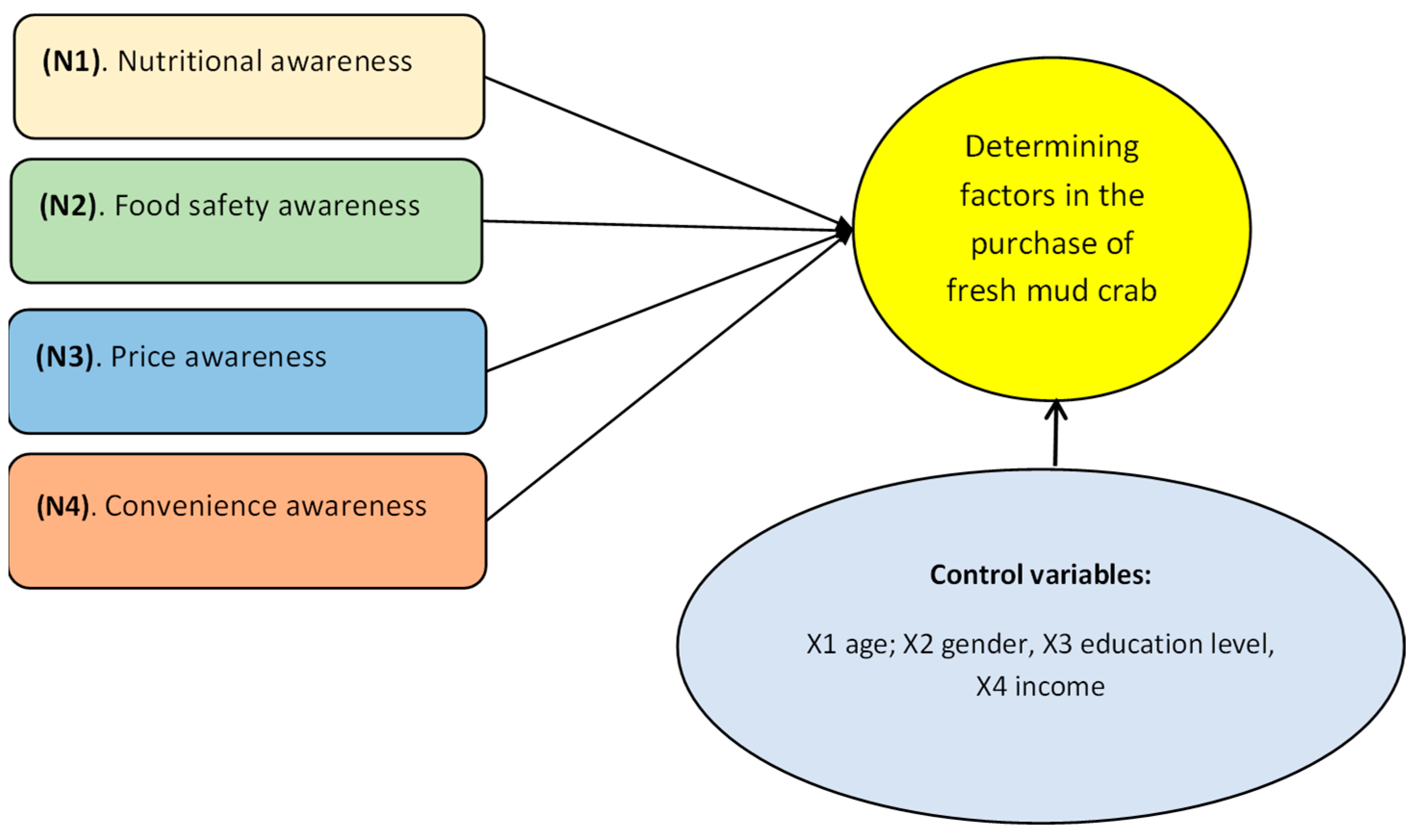
Figure 2.
Consumer preferences in three largest cities (Can Tho, Ho Chi Minh and Hanoi) of Vietnam for different fresh mud crab dishes.
Figure 2.
Consumer preferences in three largest cities (Can Tho, Ho Chi Minh and Hanoi) of Vietnam for different fresh mud crab dishes.
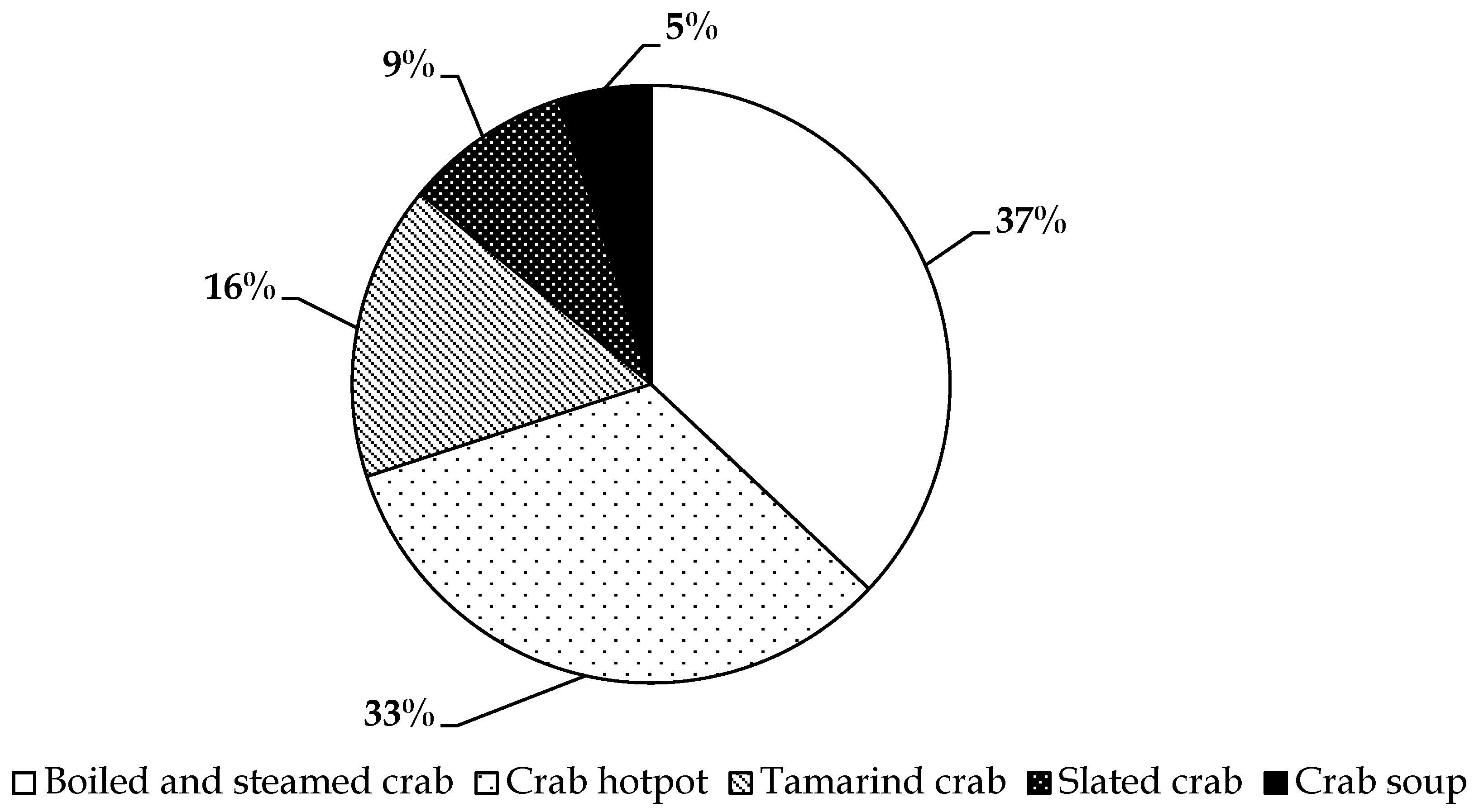
Figure 3.
percentage distribution of consumer preferences for different crab dishes.
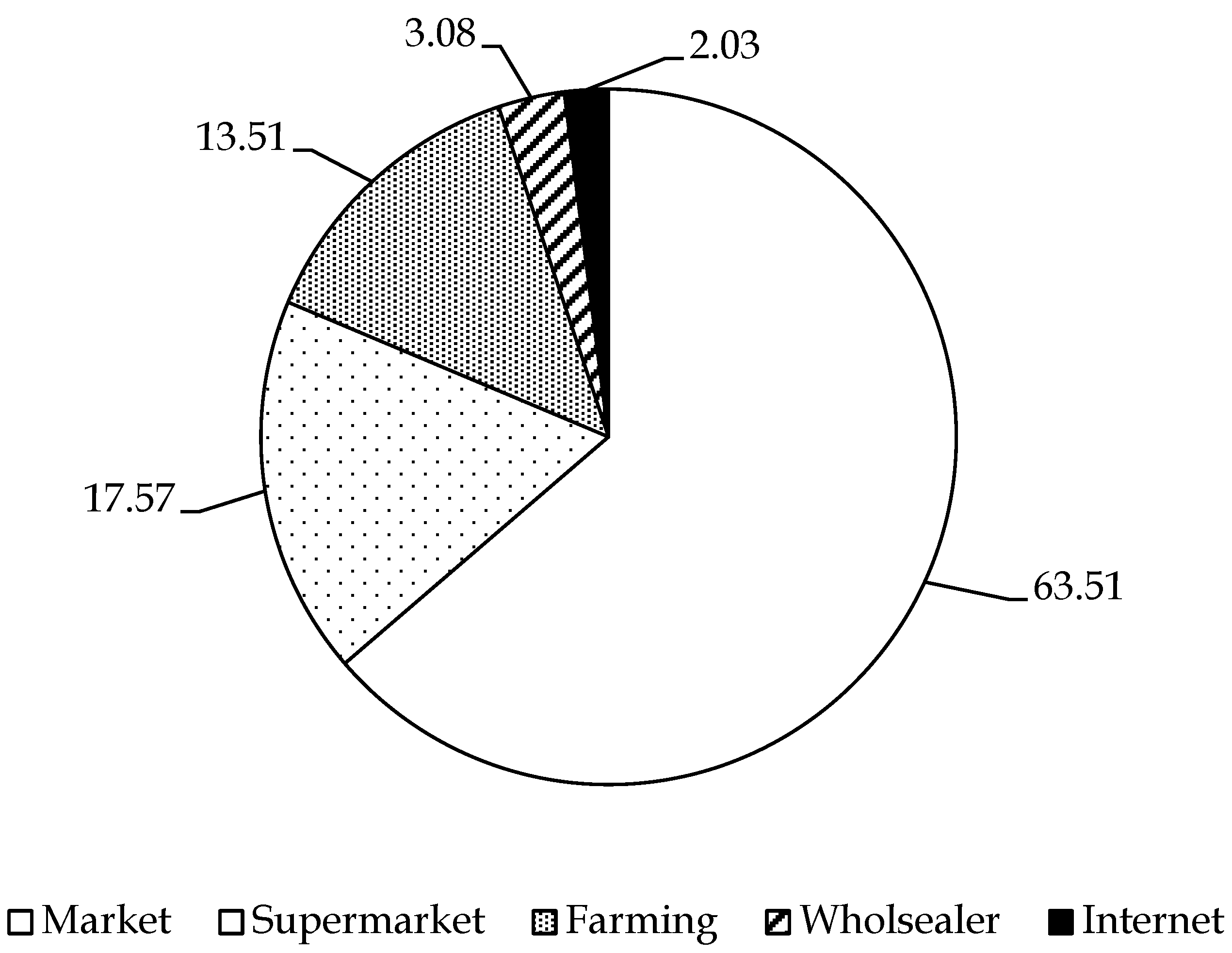

Table 1.
Characteristics of fresh mud crab consumers in three major cities (Can Tho, Ho Chi Minh, and Hanoi), Vietnam.
Table 1.
Characteristics of fresh mud crab consumers in three major cities (Can Tho, Ho Chi Minh, and Hanoi), Vietnam.
| Respondent characteristics | Medium | Standard deviation | Min | Max |
|---|---|---|---|---|
| Age (years) | 32 | 8.4 | 20 | 62 |
| Number of family members (people) | 3.7 | 1.4 | 1 | 9 |
| Female ratio (%) | 69 | |||
| Male ratio (%) | 31 | |||
| Education level | ||||
| PhD | 0.75 | |||
| Master | 7.46 | |||
| Bachelor | 70 | |||
| College | 8.95 | |||
| Intermediate | 5.9 | |||
| High School | 6.94 | |||
| Career (%) | ||||
| Unemployed | 3.7 | |||
| Housewife | 12 | |||
| General labour | 9 | |||
| Office staff | 60.4 | |||
| Teacher | 2,9 | |||
| Online sales | 12 | |||
| Income (million VND/person/month) | 11 | 15 | 1 | 104 |
| Household food expenses (million VND/month) | 11.2 | 9 | 2 | 70 |
Table 2.
Characteristics of fresh mud crab consumption in three major cities (Can Tho, Ho Chi Minh, Hanoi), Vietnam.
Table 2.
Characteristics of fresh mud crab consumption in three major cities (Can Tho, Ho Chi Minh, Hanoi), Vietnam.
| Respondent characteristics | Medium | Standard deviation | Min | Max |
|---|---|---|---|---|
| Number of crab purchases (times/household/year) | ||||
| Times | 2.1 | 1.3 | 1.1 | 12 |
| Purchase rate of each type of crab (%) | ||||
| Crab with roe | 53.7 | |||
| Crab meat | 56.0 | |||
| Crab bucket | 6.0 | |||
| Purchase volume of each type of crab (kg/household/year) | ||||
| Crab with roe | 3.5 | 2.8 | 1.0 | 20 |
| Crab meat (Y crab) | 5.1 | 2.9 | 0.5 | 13 |
| Crab bucket | 6.0 | 2.9 | 2.0 | 10 |
| Amount spent on each type of crab (1000 VND/household/year) | ||||
| Crab with roe | 1,454 | 1,040 | 280 | 6,420 |
| Crab meat (Y crab) | 1,656 | 1,042 | 175 | 5,030 |
| Crab bucket | 976.0 | 386.0 | 420 | 1,560 |
Table 3.
Cronbach's Alpha test.
| Numerical order | Observation variable name | Total variable correlation coefficient | Cronbach's Alpha coefficient | Eliminated variable |
|---|---|---|---|---|
| NU1 | Fresh crab ensures freshness | 0.87 | 0.92 | |
| NU2 | Fresh crab ensures high minerals | 0.86 | 0.93 | |
| NU3 | Fresh crab has sweet meat | 0.87 | 0.92 | |
| NU4 | Fresh crab tastes better than canned products | 0.87 | 0.92 | |
| FHS1 | Fresh crab does not contain toxic substances | 0.74 | 0.83 | |
| FHS2 | Fresh crab ensures clear origin | 0.76 | 0.82 | |
| FHS3 | Fresh crab does not contain preservatives | 0.67 | 0.84 | |
| FHS4 | Fresh crab does not contain parasites | 0.63 | 0.85 | |
| FHS5 | Fresh crab does not cause allergies | 0.66 | 0.85 | |
| PR1 | The price of fresh crab is an important issue for me | 0.88 | 0.89 | |
| PR2 | The price of fresh crab is commensurate with the quality | 0.87 | 0.82 | |
| PR3 | The price of fresh crab is higher than that of shrimp | 0.74 | 0.84 | X |
| PR4 | The price of fresh crab is suitable for my family's income | 0.87 | 0.89 | |
| CO1 | Fresh crab has a variety of types to choose from | 0.81 | 0.94 | |
| CO2 | Fresh crab is easy to find everywhere | 0.82 | 0.93 | |
| CO3 | Fresh crab is convenient for processing | 0.83 | 0.96 | |
| CO4 | Fresh crab is easy to use after processing | 0.83 | 0.90 | |
| PD1 | I decided to buy crab because of its high nutrition | 0.91 | 0.91 | |
| PD2 | I decided to buy crab because of food safety | 0.77 | 0.96 | X |
| PD3 | I decided to buy crab sea because the price is suitable for family | 0.90 | 0.90 | |
| PD4 | I decided to buy sea crab because of the high convenience | 0.91 | 0.90 |
Table 4.
Matrix of factors influencing people's decision to consume fresh crab in largest cities (Can Tho City, Ho Chi Minh City, and Hanoi), Vietnam.
Table 4.
Matrix of factors influencing people's decision to consume fresh crab in largest cities (Can Tho City, Ho Chi Minh City, and Hanoi), Vietnam.
| Observation variable | Factors | |||
|---|---|---|---|---|
| 1 | 2 | 3 | 4 | |
| 1. Fresh mud crab ensures freshness | 0.90 | |||
| 2. Fresh mud crab ensures high minerals | 0.89 | |||
| 3. Fresh mud crab has sweet meat | 0.91 | |||
| 4. Fresh mud crab tastes better than canned products | 0.89 | |||
| 5. Fresh mud crab does not contain toxic substances | 0.84 | |||
| 6. Fresh mud crab ensures clear origin | 0.85 | |||
| 7. Fresh mud crab does not contain preservatives | 0.79 | |||
| 8. Fresh mud crab does not contain parasites | 0.77 | |||
| 9. Fresh mud crab does not cause allergies | 0.78 | |||
| 10. Fresh mud crab has a variety of types to choose from | 0.87 | |||
| 11. Fresh mud crab is easy to find everywhere | 0.86 | |||
| 12. Fresh mud crab is convenient for processing | 0.89 | |||
| 13. Fresh mud crab is easy to use after processing | 0.88 | |||
| 14. The price of fresh mud crab is an important issue for me | 0.94 | |||
| 15. The price of fresh mud crab is commensurate with the quality | 0.96 | |||
| 16. The price of fresh mud crab is suitable for my family's income | 0.93 | |||
| KMO coefficients | 0.706 | |||
Table 5.
Groups of factors influencing people's decision to purchase fresh crab in three largest cities (Can Tho City, Ho Chi Minh City, and Hanoi), Vietnam.
Table 5.
Groups of factors influencing people's decision to purchase fresh crab in three largest cities (Can Tho City, Ho Chi Minh City, and Hanoi), Vietnam.
| Group of factors | Factor name | Medium | Evaluate ** |
|---|---|---|---|
| N1 | Nutritional awareness | 3.6 | affect |
| N2 | Food safety awareness | 3.8 | affect |
| N3 | Perception of convenience | 3.6 | affect |
| N4 | Price awareness | 3.3 | neutral |
Note: ** Evaluation based on 5-level Likert scale: 1 - 1.8: very unaffected/very disagree; 1.81 - 2.6: no affect/disagree; 2.61 - 3.4: neutral; 3.41 - 4.2: affect/agree; and 4.21 - 5: very affect/very agree.
Table 6.
KMO and Bartlett's test – tourist satisfaction scale in three largest citities (Can Tho City, Ho Chi Minh City, and Hanoi), Vietnam.
Table 6.
KMO and Bartlett's test – tourist satisfaction scale in three largest citities (Can Tho City, Ho Chi Minh City, and Hanoi), Vietnam.
| “KMO coefficient” | 0.77 | |
|---|---|---|
| Bartlett's test | Chi-square value | 732 |
| df | 3.0 | |
| Sig – Observational significance level | 0.000 | |
Table 7.
Factor analysis results – tourist satisfaction scale in the three largest cities (Can Tho City, Ho Chi Minh City, and Hanoi), Vietnam.
Table 7.
Factor analysis results – tourist satisfaction scale in the three largest cities (Can Tho City, Ho Chi Minh City, and Hanoi), Vietnam.
| “Load factor | |
|---|---|
| Purchase decision 1 | 0.97 |
| Purchase decision 3 | 0.97 |
| Purchase decision 4 | 0.95 |
| Eigenvalue | 2.80 |
| “Cumulative variance | 0.93 |
Table 8.
Factors influencing consumers' intention to purchase processed crab in three largest cities (Can Tho City, Ho Chi Minh City, and Hanoi), Vietnam.
Table 8.
Factors influencing consumers' intention to purchase processed crab in three largest cities (Can Tho City, Ho Chi Minh City, and Hanoi), Vietnam.
| Symbol | Variable name | Estimated coefficient β | Standard error | P value | ||
|---|---|---|---|---|---|---|
| X1 | Age (years) | 0.001ns | 0.003 | 0.659 | ||
| X2 | Gender (1-Male; 0-Female) | -0.02ns | 0.049 | 0.650 | ||
| X3 | Education (years of schooling) | -0.08ns | 0.014 | 0.589 | ||
| X4 | Income (million VND/month) | -0.04ns | 0.031 | 0.235 | ||
| N1 | Nutritional awareness | 0.914*** | 0.022 | 0.000 | ||
| N2 | Food safety awareness | 0.036ns | 0.023 | 0.119 | ||
| N3 | Perception of convenience | 0.256*** | 0.022 | 0.000 | ||
| N4 | Price awareness | -0.014ns | 0.022 | 0.547 | ||
| Constant | 0.193 ns | 0.247 | 0.435 | |||
| Y | Decision to buy fresh crab | |||||
| Number of observations | 200 | |||||
| P value | 0.000 | |||||
| Coefficient of determination R2 (%) | 90 | |||||
Note: n=200: Number of interviewed mud crab consumers; (***, **, * and ns are at the 1%, 5%, 10% and not significant levels, respectively).
Disclaimer/Publisher’s Note: The statements, opinions and data contained in all publications are solely those of the individual author(s) and contributor(s) and not of MDPI and/or the editor(s). MDPI and/or the editor(s) disclaim responsibility for any injury to people or property resulting from any ideas, methods, instructions or products referred to in the content. |
© 2025 by the authors. Licensee MDPI, Basel, Switzerland. This article is an open access article distributed under the terms and conditions of the Creative Commons Attribution (CC BY) license (http://creativecommons.org/licenses/by/4.0/).
Copyright: This open access article is published under a Creative Commons CC BY 4.0 license, which permit the free download, distribution, and reuse, provided that the author and preprint are cited in any reuse.


