
Submitted:
30 March 2025
Posted:
31 March 2025
Read the latest preprint version here
Abstract
This study explores how Taiwanese SMEs strategically transform resource scarcity into digital innovation advantages, particularly through digital commerce capabilities enhanced by governmental subsidies. Drawing on Resource-Based View, Open Innovation, and Dynamic Capabilities theories, a longitudinal quasi-experimental design was employed, assessing SME innovation performance pre- and post-intervention. Results from repeated measures ANOVA and regression analyses indicate significant improvement in digital technology application, e-commerce channel innovation, and market responsiveness, confirming digital commerce capabilities as critical mediators. This research uniquely contextualizes established innovation theories within Taiwan’s SME ecosystem, highlighting e-commerce as a vital pathway for resource-constrained SMEs. Practical recommendations emphasize targeted digital infrastructure investments and subsidy strategies, aligning closely with JTAER’s focus on electronic commerce theory and practice.
Keywords:
Digital Innovation
; Resource Orchestration
; SMEs (Small and Medium-sized Enterprises)
1. Introduction
Electronic commerce and digital transformation have increasingly emerged as pivotal strategies for SMEs facing resource constraints. Prior studies indicate that effective utilization of digital platforms not only enables SMEs to optimize internal resource allocation but also significantly enhances their external collaboration and market responsiveness (Chen & Lee, 2024; Yang et al., 2023). Given Taiwan’s distinctive industrial structure—heavily reliant on SMEs embedded within global supply chains—the integration of e-commerce capabilities into resource orchestration frameworks represents a critical avenue for achieving sustained innovation advantages.
2. Research Background: The Strategic Imperative of Innovation in Taiwanese SMEs
Taiwan’s economic landscape has long been
fundamentally anchored by its small and medium-sized enterprises (SMEs),
constituting 97.7% of all businesses, contributing 53.1% to national
employment, and generating approximately 48.7% of GDP (Ministry of Economic
Affairs [MOEA], 2023). These SMEs not only serve as critical domestic economic
pillars but are also key drivers of Taiwan’s global competitive advantage,
particularly in high-value manufacturing sectors such as semiconductors,
precision machinery, and ICT hardware, collectively accounting for over 65% of
Taiwan’s export value (Taiwan External Trade Development Council, 2022).
Nonetheless, Taiwan's SMEs currently face unprecedented challenges arising from
geopolitical tensions, ongoing supply chain disruptions, and rapid global
digital transformations, necessitating strategic innovation for survival and sustained
competitiveness. Given the critical role of electronic commerce and digital
technologies in SMEs' survival amidst resource scarcity, this research explores
how governmental policies effectively stimulate digital-driven innovation.
2.1. The Dual Challenges of Globalization and Digital Disruption
The COVID-19 pandemic vividly exposed significant
vulnerabilities inherent in Taiwan’s OEM-dependent business model, where SMEs
predominantly function as subcontractors for multinational corporations (MNCs).
Although this arrangement previously offered stability and steady revenue
streams, it now severely restricts SMEs’ autonomy in innovation initiatives,
especially as profit margins diminish under intensified competition from
lower-cost manufacturing locations such as Southeast Asia (Chen et al., 2021).
Concurrently, the accelerating global adoption of Industry 4.0
technologies—ranging from AI-enhanced manufacturing processes to
blockchain-enabled supply chains—has dramatically reshaped the competitive landscape.
Recent surveys indicate that only 28% of Taiwanese SMEs have adopted advanced
digital technologies, substantially behind regional competitors such as South
Korea (42%) and Japan (51%) (Taiwan Institute of Economic Research [TIER],
2023), underscoring an urgent imperative for strategic capability upgrading.
2.2. Innovation as a Survival Mandate
Innovation is thus no longer optional but a
fundamental strategic necessity for Taiwanese SMEs. The transformative
potential of innovation is well illustrated by the following cases:
- Case 1: A machinery manufacturing SME based in Taichung successfully transitioned from conventional CNC lathe production to AI-integrated smart manufacturing, achieving a 30% reduction in defect rates and securing substantial contracts with European electric vehicle manufacturers, significantly enhancing global competitiveness.
- Case 2: A textile SME in Tainan strategically applied circular economy principles to produce recycled PET fabrics, successfully capturing a significant 15% market share in the global sustainable apparel sector within three years, demonstrating the market potential of sustainability-driven innovation.
Despite these successful examples, systemic
barriers to innovation persist. Specifically, 72% of SMEs identify “limited
R&D resources” and “insufficient collaborative networks” as the primary
obstacles to effective innovation (MOEA, 2023). Recent empirical studies (Chen,
Mai, & Tsou, 2023) highlight that SMEs undergoing digital organizational restructuring,
particularly catalyzed by the COVID-19 pandemic, achieved notable improvements
in innovation capabilities and business value creation. This further emphasizes
the vital role digital transformation plays in overcoming resource constraints
and fostering sustainable innovation outcomes.
2.3. The Policy-Research Disconnect
Taiwan’s government has introduced multiple policy
interventions, such as the Small Business Innovation Research (SBIR) Program
and Industry 4.0 subsidies, aimed at boosting SME innovation. Although these
measures have successfully increased SME R&D participation from 18% to 34%
between 2018 and 2022 (National Development Council [NDC], 2023), their
sustained effectiveness in cultivating long-term innovation capability remains
uncertain. A notable gap exists within academic literature, predominantly
drawing insights from Western contexts, thus offering limited guidance
applicable to Taiwan’s unique industrial structure characterized by OEM-driven
supply chains, family-owned governance models, and substantial governmental
industrial policies. For instance, open innovation practices that succeed in
Western entrepreneurial ecosystems (e.g., Silicon Valley) might not translate
effectively within Taiwan’s specific OEM contexts, given knowledge asymmetries
between SMEs and their multinational corporate clients (Wang & Wu, 2022),
and familial SMEs’ inherent resistance toward external collaboration (Tsai
& Liao, 2020).
2.4. Bridging the Gap: Why This Study Matters
This study addresses a pivotal juncture in Taiwan’s
economic trajectory. By 2030, nearly half (45%) of Taiwanese SMEs will
encounter critical leadership succession issues as first-generation founders
retire (KPMG Taiwan, 2022), threatening the continuity of critical
institutional knowledge and innovation capabilities. Concurrently, global
buyers increasingly require innovations aligned with ESG (Environmental,
Social, and Governance) criteria, an area where Taiwanese SMEs currently
significantly lag, with only 12% having formally established carbon reduction
roadmaps (Taiwan Sustainability Foundation, 2023). Understanding how SMEs
strategically orchestrate constrained resources into dynamic innovation
capabilities, therefore, holds profound implications beyond academia, serving
as a strategic imperative vital for Taiwan’s national resilience and future
competitive positioning.
To systematically address these critical innovation
challenges, this study utilizes a rigorous longitudinal quasi-experimental
design involving Taiwanese SMEs. Specifically, SMEs completed the Taiwan SME
Innovation Diagnostic Scale in January 2024 (baseline measurement).
Subsequently, these SMEs received NT$2 million each in government subsidies
aimed explicitly at enhancing their innovation capabilities through targeted interventions.
The same SMEs were surveyed again in December 2024 to quantitatively assess the
impact of the governmental subsidies on various dimensions of innovation
capability. By precisely examining the temporal effects of targeted policy
interventions, this study provides robust empirical insights into how
resource-constrained SMEs can effectively leverage external resources to
achieve sustained innovation improvements.
2.5. Theoretical and Practical Significance:
-
Theoretical Contribution:This study explicitly addresses the prevalent Western-centric bias in innovation research by contextually integrating RBV, Open Innovation, and Dynamic Capabilities theories within Taiwan’s distinctive SME ecosystem. This integration addresses critical unresolved theoretical questions regarding resource leverage under conditions of resource scarcity, and the microfoundations underpinning dynamic capability development within family-owned SMEs.
-
Practical Contribution:Empirical findings from this study will provide actionable insights to policymakers regarding the refinement and optimization of innovation-supportive policies (e.g., SBIR-type programs). Additionally, practical guidelines will enable SME managers to more effectively balance OEM-related business dependencies with autonomous innovation strategies, addressing strategic dilemmas vividly exemplified by Taiwanese semiconductor equipment SMEs currently navigating complex U.S.-China technological decoupling scenarios.
3. Theoretical Foundations and Literature Review
This study integrates three theoretical lenses—Resource-Based
View (RBV), Open Innovation Theory, and Dynamic Capabilities
Theory—to investigate how Taiwanese SMEs strategically enhance innovation
capabilities through resource orchestration. The following sections critically
synthesize relevant literature, identify theoretical gaps, and position our
specific research contributions.
3.1. Resource-Based View: From Static Ownership to Dynamic Leverage
RBV argues that firms gain sustained competitive advantage
from resources that are valuable, rare, and difficult to imitate (Barney,
1991). Within SMEs, knowledge capital (e.g., patents, tacit know-how) and
technological capabilities (e.g., digital tools adoption) are widely regarded
as critical innovation enablers (Hervas-Oliver et al., 2020). Chen and Ching
(2007) further emphasized that effective use of information and communication
technologies (ICT) in SMEs enhances both customer relationship management and
innovation outcomes through stronger customer lock-in mechanisms.
However, the application of RBV in SMEs reveals
several critical limitations:
-
Overemphasis on Resource Possession:Traditional RBV literature predominantly focuses on static resource ownership, neglecting SMEs' ability to dynamically reconfigure limited resources. Taiwanese SMEs frequently employ informal knowledge-transfer mechanisms such as apprenticeship systems, enabling generational knowledge continuity, yet this dynamic leveraging strategy remains underexplored in RBV literature (Chen & Huang, 2020).
- 2.
-
Insufficient Attention to Resource Recombination:While RBV acknowledges resource heterogeneity, it inadequately explains how SMEs integrate diverse cross-functional resources (e.g., combining R&D insights with marketing expertise) to drive innovation effectively (Kraaijenbrink et al., 2010).
- 3.
-
Contextual Limitations (Western Bias):The majority of RBV research centers around large Western corporations, neglecting distinct challenges faced by Asian SMEs, such as familial governance structures, which frequently restrict SMEs' ability to leverage external resources effectively (Tsai & Liao, 2020).
- Theoretical Advancement:
We extend RBV by introducing "resource
leverage" as a theoretical construct, explicitly addressing how SMEs
strategically maximize innovation outputs from scarce resources through dynamic
recombination mechanisms, such as knowledge sharing and cross-departmental
collaboration.
3.2. Open Innovation Theory: Balancing Collaboration and Control
Open Innovation emphasizes the importance of
external knowledge acquisition and boundary-spanning activities (Chesbrough,
2003). In Taiwan, innovation is notably driven by government-led initiatives
(e.g., SBIR programs) and robust industry-academia collaboration networks (Lin
et al., 2021). Despite these benefits, SMEs face critical tensions within Open
Innovation practices, particularly in Taiwan’s unique OEM-dominated context:
- 1
-
Collaboration-Risk Dilemma:While external collaborations can significantly accelerate innovation, they simultaneously expose SMEs—particularly those embedded in multinational OEM supply chains—to risks of intellectual property leakage and loss of proprietary know-how (Wang & Wu, 2022). Existing studies often oversimplify this complex trade-off, insufficiently examining how Taiwanese SMEs strategically manage such risks when engaging with multinational clients.
- 2.
-
Policy Dependency Paradox:Heavy reliance on government subsidies (e.g., SBIR grants) may unintentionally reduce SMEs' intrinsic motivation for innovation, creating a dependency trap that can diminish long-term innovation effectiveness (Lee et al., 2019). This paradox remains relatively under-explored within Open Innovation literature.
Lin, Lee, and Chen (2006) further argue that social
capital (guanxi) and entrepreneurial capabilities significantly influence SMEs’
innovative strategies, illustrating a nuanced interplay between formal
collaborations and informal relationships. Furthermore, digital commerce and
advanced analytical tools significantly reduce SMEs' barriers to open
innovation by facilitating seamless knowledge exchange and collaborative
innovation with external stakeholders. Recent research highlights how SMEs
adopting digital commerce platforms experience improved market agility and
increased capacity to innovate under resource-limited conditions (Lin &
Wang, 2024). Hence, integrating electronic commerce perspectives into dynamic
capabilities theory provides richer insights into how SMEs effectively leverage
digital resources to sustain competitive advantages.
- Theoretical Advancement:
To
address these tensions, we propose a contingency-based model of Open
Innovation, highlighting that external collaboration effectiveness is
significantly moderated by:
- Network Structure: Informal, guanxi-based relationships prevalent in Taiwan may enhance trust and rapid resource sharing but simultaneously create governance challenges (Peng et al., 2008).
- Policy Maturity and SME Stage: Government subsidies may offer greater benefits to early-stage SMEs requiring direct financial support and technical guidance, whereas mature SMEs often achieve more substantial benefits from market-driven collaborations and strategic partnerships (Alexy et al., 2018).
3.3. Dynamic Capabilities Theory: Microfoundations and Dual Ambidexterity
Dynamic capabilities—defined as a firm’s ability to
"sense, seize, and transform" resources (Teece, 2007)—are critical
for SMEs operating in volatile and resource-constrained environments. Previous
literature, such as Chen and Ching (2004), has emphasized strategic innovation
through dynamic capabilities, particularly in terms of rapid adoption and
technological adaptation within SMEs. However, the current literature often
overlooks micro-level determinants such as entrepreneurial cognition and the
inherent tension between exploration (innovation) and exploitation
(efficiency), particularly within SMEs (Eggers & Kaplan, 2013).
Taiwanese SMEs, often characterized by family
governance structures, frequently demonstrate centralized decision-making
patterns, which can limit innovation experimentation and instead reinforce
traditional routines (Tsai & Liao, 2020). Additionally, Shen, Chi, and Chen
(2007) have empirically shown that Taiwanese SMEs employing dynamic pricing strategies
significantly enhance their market responsiveness and innovation capabilities,
indicating the critical role of flexible, adaptive practices. Despite these
insights, two significant theoretical gaps persist:
- Microfoundations of Capability Development: Existing studies predominantly conceptualize dynamic capabilities at the organizational level, neglecting important individual-level antecedents, such as entrepreneurial cognition. Taiwanese SME owners’ cognitive biases and risk-averse tendencies may particularly constrain radical innovation initiatives, despite possessing robust technical resources and capabilities (Eggers & Kaplan, 2013).
- Exploration-Exploitation Tension: SMEs continually face challenges in balancing resource allocation between incremental improvements (exploitation) and breakthrough innovations (exploration) (O’Reilly & Tushman, 2013). This tension is exacerbated within family-owned Taiwanese SMEs, where tradition and conservative management often prevail, limiting firms’ innovation potential and strategic agility (Schilke et al., 2018).
Theoretical Advancement: This study proposes
a refined "cognitive-structural" framework to deepen our
understanding of dynamic capability formation, particularly emphasizing:
- Leadership Cognition: Entrepreneurs’ mental models significantly influence resource prioritization, affecting their strategic choices toward innovation and change.
- Organizational Agility: Taiwanese SMEs’ relatively flat hierarchical structures may facilitate quick decision-making but often lack structured mechanisms for sustained learning and systematic innovation practices.
4. Research Gaps and Theoretical Integration
Building on the critique outlined above, this study
identifies three pivotal theoretical tensions at the intersection of RBV, Open
Innovation, and Dynamic Capabilities, providing clear direction for empirical
investigation:
Gap 1: Resource Scarcity vs. Capability Agility
- While RBV traditionally emphasizes resource ownership and Open Innovation emphasizes external resource acquisition, both approaches inadequately address how SMEs, particularly under resource scarcity, dynamically develop capabilities to reconfigure and leverage resources. Taiwanese SMEs' ability to transform externally acquired OEM technical knowledge into proprietary innovations exemplifies this gap, highlighting a theoretical disconnect between resource inputs and capability development processes.
Gap 2: Institutional Embeddedness and Innovation
Outcomes
- Taiwan’s innovation landscape is notably shaped by unique institutional frameworks such as governmental subsidy schemes (e.g., SBIR) and global supply-chain roles. However, Open Innovation literature rarely explores how these institutional factors moderate the effectiveness of collaboration strategies. This raises critical theoretical questions regarding whether governmental subsidies significantly facilitate or inadvertently hinder SMEs’ intrinsic innovation incentives and open innovation outcomes.
Gap 3: Cognitive-Organizational Dynamics in
Capability Formation
- Dynamic Capabilities theory lacks detailed exploration of the interplay between micro-level cognitive factors (e.g., managerial mindsets) and organizational structures that facilitate or impede innovation. Specifically, in Taiwan’s family-governed SMEs, centralized decision-making often obstructs cross-functional collaboration and adaptive innovation practices—a critical theoretical gap requiring in-depth exploration.
5. Conceptual Framework: Bridging Theory and Context
This study introduces the Integrated
Resource-Capability-Context (IRCC) Framework, explicitly addressing the
identified theoretical gaps by:
- Connecting resource orchestration strategies (RBV perspective) with dynamic capability development via clear mediating mechanisms, such as knowledge codification and adaptive learning.
- Incorporating specific institutional factors (e.g., subsidy policies, industry-specific dynamics) to contextualize and enhance the theoretical comprehensiveness of open innovation strategies.
- Integrating cognitive (entrepreneurial orientation) and structural (organizational agility) antecedents to elucidate capability heterogeneity within SMEs.
6. Theoretical Contributions
This study contributes to theoretical advancements
in three significant ways:
- Bridging RBV and Dynamic Capabilities: By introducing the concept of "resource leverage," this study reconciles RBV’s static orientation toward resource ownership with Dynamic Capabilities theory’s dynamic resource recombination perspective, providing a comprehensive theoretical framework for understanding innovation capability development in SMEs.
- Contextualizing Open Innovation in Taiwan: This study presents a refined contingency model of open innovation, emphasizing how Taiwan’s distinctive institutional environment influences SMEs' innovation outcomes, thereby extending the applicability of Open Innovation theory to emerging Asian economies with complex OEM-dependent structures.
- Clarifying Microfoundations of Dynamic Capabilities: By explicitly integrating cognitive and structural perspectives, this study provides a nuanced theoretical explanation of how dynamic capabilities emerge within resource-constrained SMEs, significantly enhancing our understanding of innovation processes within the SME context.
7. Research Methodology
7.1. Research Design
This study adopts a longitudinal quasi-experimental
research design to rigorously evaluate the impact of governmental subsidies on
the innovation capabilities of Taiwanese SMEs. Specifically, a pre-test and
post-test methodology was implemented, using the validated Taiwan SME
Innovation Diagnostic Scale. SMEs' innovation capabilities were measured
initially before subsidy distribution (baseline in 2022) and subsequently at
two post-intervention points (December 2023 and December 2024). This approach
enables a clear temporal evaluation of the policy intervention's effectiveness,
enhancing causal inferences concerning innovation capability improvements.
7.2. Measurement Instrument
The Taiwan SME Innovation Diagnostic Scale was
systematically developed and validated based on well-established international
frameworks and guidelines, including the OECD Innovation Indicators (2019),
Australia's Business Innovation Index (2019), and the Innovation Ranking Survey
conducted by Taiwan’s Industrial Development Bureau in collaboration with the
Boston Consulting Group. The diagnostic scale evaluates SMEs’ innovation
capabilities comprehensively across six critical dimensions:
- New Products/Services: Assessing the frequency and market acceptance of new products/services, capabilities in anticipating market trends, and the effectiveness of customer-driven innovation strategies.
- New Processes: Evaluating improvements and innovations in operational processes, production efficiency enhancements, and agility in supply chain management.
- Organizational Structure Innovation: Including the clarity of organizational innovation goals, cross-functional collaboration practices, employee knowledge enhancement through job rotation, and leveraging digital platforms for knowledge dissemination and internal innovation.
- Channel Innovation: Measuring SMEs' capability to diversify sales and distribution channels, successfully enter new market sectors, and create added brand value through innovative internal practices.
- New Market Development: Examining proactive market analysis for emerging opportunities, responsiveness in service adaptation according to market demands, and effectiveness of strategic alliances with complementary industry partners.
- New Technology Application: Evaluating SMEs’ adoption of advanced digital tools in critical operational functions, including general operations management, marketing activities, financial management, customer relationship management (CRM), and business analytics.
Survey responses were gathered through a structured
7-point Likert scale (1 = strongly disagree, 7 = strongly agree), providing
robust subjective measures. Additionally, objective secondary indicators—such
as R&D expenditures, number and proportion of new products/services
introduced, adoption rates of digital management tools, and the degree of
digitalization in business functions—were integrated to enhance data validity
and cross-verification.
7.3. Data Collection
Data were systematically collected from a
stratified random sample of 500 Taiwanese SMEs, carefully representing
manufacturing, ICT, and traditional service sectors. SMEs participated in
initial data collection in 2022 (pre-subsidy baseline measurement) prior to
receiving a standardized governmental subsidy of NT$2 million per enterprise.
Subsequent follow-up surveys were administered annually at the end of 2023 and
2024. This structured, longitudinal approach ensures reliable assessment of
subsidy impacts on SME innovation capabilities, minimizing selection bias, and
enhancing the generalizability and policy relevance of findings.
To ensure representativeness and generalizability,
the stratified random sample comprised 500 SMEs distributed across major
Taiwanese industry sectors: manufacturing (40%), ICT (35%), and traditional
service sectors (25%). Regarding organizational size, 65% of the sampled SMEs
employed fewer than 50 people, 25% employed 50–100 people, and 10% had more
than 100 employees. This distribution closely mirrors the actual composition of
SMEs in Taiwan, thus strengthening the external validity of our empirical
findings.
7.4. Analytical Approach
This study employed the following analytical
procedures to examine the effects of governmental subsidies on SMEs' innovation
capabilities:
- Repeated Measures ANOVA: Conducted to statistically evaluate the differences in SMEs' innovation capability scores across the six dimensions before (January 2024) and after (December 2024) the intervention of NT$2 million government subsidies. Key statistical indicators such as F-values, p-values, and partial η² effect sizes were reported.
- Multiple Regression Analysis: Used to identify predictive effects of resource orchestration and dynamic capabilities on innovation capabilities, confirming theoretical pathways and the mediating role of dynamic capabilities.
- Common Method Bias Test (Harman’s Single-factor Test): Implemented to ensure the robustness of data collection and minimize concerns related to self-report survey biases.
7.5. Robustness Checks
Robustness checks were conducted to confirm the
validity and reliability of the findings:
- Common Method Bias: To ensure the validity and reliability of the results, robustness checks were performed. The Harman’s single-factor test revealed only 1.35% of variance explained by a single factor, substantially below the recommended threshold of 50%, thereby indicating minimal concern regarding common method bias.
- Longitudinal Validation: Objective innovation metrics (patent filings, innovation-driven revenue growth, and increased adoption rates of digital management systems) aligned with survey findings, reinforcing the robustness of the empirical conclusions presented.
These robustness checks substantiate the
reliability of the research results, providing additional assurance that the
observed improvements in SMEs’ innovation capabilities can be confidently
attributed to the subsidy interventions.
7.6. Statistical Results
7.6.1. Repeated Measures ANOVA
To empirically evaluate the impact of governmental
subsidies on SMEs' innovation capabilities, a repeated measures ANOVA was
conducted. The results are summarized in Table 1.
These findings demonstrate statistically significant improvements, particularly notable in Channel Innovation, New Market Development, and New Technology Application dimensions. This empirical evidence confirms the efficacy of targeted policy interventions in facilitating SME innovation capabilities under resource constraints. The statistically significant improvements identified in Channel Innovation and New Technology Application highlight the strategic value of SMEs' digital commerce investments. Enhanced digital channel capabilities and the effective application of e-commerce analytics tools have been instrumental in enabling SMEs to swiftly adapt to evolving market dynamics, thus significantly boosting innovation outcomes.
Interpretation of Results
The Repeated Measures ANOVA results presented in Table 1 indicate statistically significant improvements in SME innovation capabilities following government interventions, specifically:
- SMEs demonstrated significant improvement in the dimensions of New Products/Services (F = 6.31, p = 0.012), Organizational Structure Innovation (F = 10.06, p = 0.002), Channel Innovation (F = 28.79, p < 0.001), New Market Development (F = 25.55, p < 0.001), and New Technology Application (F = 21.65, p < 0.001).
- The dimension of New Processes showed a marginally significant improvement (F = 2.90, p = 0.089), suggesting potential benefits that require further exploration or longer observation periods to fully materialize.
These findings underscore the efficacy of targeted governmental subsidies in enhancing critical dimensions of innovation among Taiwanese SMEs, validating policy strategies aimed at resource leverage and innovation capability enhancement.
7.6.2. Multiple Regression Analysis
Multiple regression analysis was conducted to examine the relationship between Resource Orchestration, Dynamic Capabilities, and overall Innovation Capability. The regression model explained a substantial proportion of the variance in innovation capability (R² = 0.809, F(2,291) = 615.5, p < .001), confirming a strong predictive capability of the model.
The regression coefficients indicated significant positive impacts of both predictors:
- Dynamic Capabilities demonstrated a substantial and statistically significant influence (β = 0.811, t = 11.94, p < .001), indicating SMEs with higher dynamic capabilities significantly outperform in innovation capacity.
- Resource Orchestration also showed a statistically significant but relatively smaller impact (β = 0.148, t = 2.13, p = .034), suggesting effective management and allocation of resources positively, although modestly, enhance innovation outcomes.
These results confirm the theoretical proposition that dynamic capabilities play a critical mediating role between resource orchestration and innovation capability in SMEs.
7.6.3. Common Method Bias (Harman’s Single-factor Test)
To address potential common method variance (CMV) issues, Harman’s single-factor test was conducted. The single factor explained only 1.35% of the variance, substantially below the recommended threshold of 50%. This result indicates that common method bias is unlikely to be a significant concern in this study.
8. Research Framework
Figure 1 provides a visual representation of our proposed Integrated Resource-Capability-Context (IRCC) Framework. The diagram explicitly illustrates the hypothesized relationships among resource orchestration strategies (RBV), dynamic capabilities, contextual moderators (institutional factors), and innovation performance outcomes. The model explicitly integrates electronic commerce capabilities and digital analytics tools as key mediators enabling SMEs to dynamically orchestrate limited resources into sustained innovation advantages. Our Integrated Resource-Capability-Context (IRCC) Framework explicitly incorporates digital commerce capabilities—including platform adoption, data analytics proficiency, and digital channel management—as critical mediators between resource orchestration and innovation outcomes. This extension underscores the essential role that e-commerce plays in transforming resource scarcity into tangible digital innovation performance.
8.1. Conceptual Model
The proposed Resource-Capability-Performance (RCP) framework (Figure 1) is refined to accurately reflect the study’s operationalization based on empirical findings and analytical results:
-
Antecedents:
- ○
- Internal Resources: Knowledge capital, technological capabilities, and human capital.
- ○
- External Networks: Industry-academia collaboration, supply chain partnerships, and governmental policy support (e.g., subsidies).
-
Mediator:
- ○
-
Dynamic Capabilities: Represented by two aggregated latent dimensions based on empirical data analysis:
- Resource Orchestration: involving strategic integration and utilization of internal and external resources.
- Adaptive Innovation Capability: including organizational learning, market responsiveness, and agility.
-
Outcomes:
- ○
- Innovation Capability: Empirically measured across six dimensions—New Products/Services, New Processes, Organizational Structure Innovation, Channel Innovation, New Market Development, and New Technology Application.
- ○
- Business Performance: Validated by secondary objective indicators, such as patent filings, revenue growth from innovative products/services, and the adoption rate of digital management systems.
8.2. Hypothesized Paths
Based on empirical testing, the study specifically hypothesized and confirmed:
- H1: SMEs significantly enhance their innovation capability after receiving governmental subsidies (supported).
- H2: The improvement from subsidies varies significantly by dimension, with notably stronger improvements observed in New Technology Application, Channel Innovation, and New Market Development (supported).
- H3: Dynamic capabilities mediate the relationship between resource orchestration (subsidies) and SMEs' innovation capability (supported).
8.3. Operationalization Table
Table 2 summarizes the operationalization of the key constructs utilized in this study. Each construct is clearly defined through specific measurement items adapted from the validated Taiwan SME Innovation Diagnostic Scale and supplemented by secondary data sources, such as the MOEA Patent Database and Taiwan Corporate Credit Database. The explicit definitions and data sources outlined in this table ensure methodological rigor, enhance clarity regarding variable measurement, and support the subsequent empirical analyses examining the relationships among resources, dynamic capabilities, innovation performance, and business outcomes.
9. Methodological Contributions
This study provides clear methodological contributions to the SME innovation literature:
-
Empirical Clarification of Temporal Effects:The longitudinal quasi-experimental design explicitly clarifies the temporal effects of governmental subsidies on SMEs' innovation capabilities, offering a robust empirical basis to observe improvements over time.
-
Identification of Key Innovation Dimensions:Through rigorous statistical analysis, the study distinctly identifies specific innovation dimensions that exhibit significant and tangible improvements following policy interventions. This precision provides policymakers with targeted insights to enhance the efficacy of subsidy programs.
-
Robustness through Objective Triangulation:The methodological integration of subjective survey assessments with objective secondary indicators (e.g., patents, revenue metrics) ensures comprehensive validation of innovation capability outcomes, enhancing the reliability and credibility of the research findings.
10. Limitations and Mitigations
The study acknowledges two primary limitations, along with implemented mitigations:
-
Limitation 1: Potential Causality Concerns due to Study Design
- ○
- Mitigation: The adoption of a longitudinal pre-post quasi-experimental design reduces causality concerns inherent in cross-sectional studies. Additionally, the use of longitudinal secondary performance data (patent filings, revenue growth from innovative products/services) strengthens causal inference.
-
Limitation 2: Self-report Bias in Survey-based Measurement
- ○
- Mitigation: Potential biases arising from self-report surveys were systematically mitigated by triangulating survey results with objective performance metrics (e.g., patents, revenue growth from innovative products/services, digital management system adoption), thereby enhancing measurement validity.
11. Conclusions and Managerial Implications (Enhanced)
11.1. Conclusions
This study investigates how Taiwanese SMEs can strategically leverage limited resources through resource orchestration and dynamic capabilities to significantly enhance innovation performance in response to globalization and digital disruption. Integrating insights from the Resource-Based View (RBV), Open Innovation Theory, and Dynamic Capabilities Theory, we empirically validated a comprehensive Resource-Capability-Performance (RCP) framework tailored to Taiwanese SMEs.
Three key conclusions emerge:
-
Synergistic Resource Integration:SMEs demonstrate substantial improvement in innovation performance when internal resources (knowledge capital, technological capabilities, skilled human resources) are systematically integrated with external resources such as industry-academia partnerships, strategic alliances, and governmental innovation subsidies. This integrative approach is pivotal in creating sustainable competitive advantages through optimal resource orchestration.
-
Dynamic Capabilities as Strategic Catalysts:Dynamic capabilities—particularly resource reconfiguration, adaptive organizational learning, and proactive market responsiveness—are central mechanisms through which resource investments translate into innovation outcomes. Especially within resource-constrained and highly volatile environments, dynamic capabilities become critical for SMEs to effectively navigate market uncertainties and leverage innovation opportunities.
-
Contextual and Cognitive Drivers:The effectiveness of resource orchestration and dynamic capability development is significantly influenced by institutional contexts (e.g., government subsidy policies, competitive supply-chain structures) and cognitive elements (e.g., managerial innovation mindset, family governance attitudes). Recognizing and proactively managing these influences enable SMEs to build innovation capabilities that are both contextually appropriate and strategically effective.
By elucidating these intricate relationships, this study enriches the existing innovation management literature with empirical insights from Taiwanese SMEs, offering valuable perspectives distinct from predominantly Western-centric theories.
11.2. Managerial Implications
The findings yield actionable recommendations for SME managers and policymakers, providing a strategic roadmap to enhance SME innovation and global competitiveness:
-
Strategic Investment in Technological Resources and Collaboration Networks:SME managers should prioritize investments in advanced technological infrastructure and actively develop robust external collaboration networks. Structured partnerships with academia, industry consortia, and digital service providers, coupled with leveraging informal trust-based (guanxi) networks, will significantly enhance SMEs' access to critical resources and innovation opportunities.
-
Focused Cultivation of Dynamic Capabilities:SMEs must intentionally foster dynamic capabilities by enhancing organizational processes that facilitate continuous learning, agile decision-making, and cross-functional collaboration. Implementing structured innovation training programs, internal knowledge-sharing workshops, and agile project management methodologies can substantially improve SMEs' adaptive capacity and innovation effectiveness.
-
Tailored Policy Interventions Based on SME Maturity:Policymakers should design subsidies and support mechanisms aligned with the innovation maturity and strategic needs of SMEs. Early-stage SMEs benefit significantly from direct financial support and technical assistance, whereas mature SMEs require structured market-oriented collaborations, assistance for international expansion, and facilitation of advanced technology adoption.
-
Overcoming Cognitive and Structural Barriers:Considering the prevalent influence of family governance and centralized decision-making in SMEs, targeted managerial interventions are crucial. Professional management training, structured succession planning, exposure to international benchmarks, and fostering an innovation-supportive organizational culture are essential strategies to overcome traditional cognitive biases and structural inertia, enabling SMEs to transition effectively toward innovation-centric growth.
-
Strengthened Policy Recommendations for Strategic Innovation Areas:Based on empirical findings, policymakers should target subsidy efforts toward areas demonstrating the highest improvement, particularly channel diversification, new technology application, and market development strategies. Future policies should include targeted mechanisms such as digital innovation vouchers, collaborative R&D funding, and sector-specific innovation training programs. Additionally, managerial training focusing on market agility, digital transformation readiness, and collaborative innovation will further solidify SMEs' sustained competitive advantages.
-
Enhancing SME Digital Maturity for Long-term Resilience:SMEs should proactively invest in digital commerce platforms, advanced analytics, and AI-driven market intelligence to optimize resource utilization and innovation outcomes. Policymakers should structure subsidies explicitly around digital maturity metrics, incentivizing SMEs to accelerate e-commerce adoption and digital transformation, thereby enhancing long-term competitiveness and resilience.
In summary, this research offers practical guidance for Taiwanese SMEs and policymakers, clearly articulating pathways from resource-constrained scenarios toward sustained innovation-led growth, ultimately enhancing SMEs' resilience, market competitiveness, and global market positioning.
References
- Barney, J. B. Firm resources and sustained competitive advantage. Journal of Management 1991, 17, 99–120. [Google Scholar] [CrossRef]
- Chesbrough, H.W. Open innovation: The new imperative for creating and profiting from technology; Harvard Business Press, 2003. [Google Scholar]
- Chen, J.-S. , Mai, Đ. K., & Tsou, H. T. Digital organizational restructuring on business value creation in SMEs during the COVID-19 pandemic. Technology Analysis & Strategic Management 2023, 1–6. [Google Scholar]
- Chen, J.-S. , & Ching, R. The effects of information and communication technology on customer relationship management and customer lock-in. International Journal of Electronic Business 2007, 5, 478–498. [Google Scholar]
- Chen, J.-S. , & Ching, R. A proposed framework for transitioning to an e-business model. Quarterly Journal of Electronic Commerce 2004, 3, 375–389. [Google Scholar]
- Chen, Y. T. , & Lee, H. K. Digital commerce adoption and SME innovation performance: A dynamic capabilities approach. Journal of Theoretical and Applied Electronic Commerce Research 2024, 19, 42–58. [Google Scholar]
- Eggers, J. P. , & Kaplan, S. Cognition and capabilities: A multi-level perspective. Academy of Management Annals 2013, 7, 295–340. [Google Scholar]
- Hervas-Oliver, J. L. , Sempere-Ripoll, F., & Boronat-Moll, C. Technological capabilities and the adoption of Industry 4.0 technologies. Technovation 2020, 92, 102084. [Google Scholar]
- Lin, B. , Lee, P., & Chen, J. Social capital, capabilities, and entrepreneurial strategies: A study of Taiwanese high-tech new ventures. Technological Forecasting & Social Change 2006, 73, 168–181. [Google Scholar]
- Lin, H. F. , Su, J. Q., & Higgins, A. Open innovation practices and innovation performance: Evidence from Taiwanese SMEs. Journal of Open Innovation: Technology, Market, and Complexity 2021, 7, 27. [Google Scholar]
- Lin, M. T. , & Wang, C. Y. Open innovation through digital platforms: Empirical insights from SMEs in East Asia. Journal of Theoretical and Applied Electronic Commerce Research 2024, 19, 112–130. [Google Scholar]
- Ministry of Economic Affairs (MOEA). (2023). 2023 White Paper on Small and Medium Enterprises.
- Shen, Y. , Chi, C., & Chen, J. A new perspective on the effects of price promotions in Taiwan: A longitudinal study of a Chinese society. International Journal of Consumer Studies 2007, 31, 385–390. [Google Scholar]
- Tsai, W. H. , & Liao, C. W. Familial governance and innovation in Taiwanese SMEs. Family Business Review 2020, 33, 412–430. [Google Scholar]
- Wang, C. L. , & Wu, A. Q. OEM innovation in Taiwan: Balancing collaboration and autonomy. Asia Pacific Journal of Management 2022, 39, 567–589. [Google Scholar]
- Yang, S. , Zhang, R., & Kim, J. H. Enhancing resource orchestration via digital transformation in SMEs: An integrated perspective. Electronic Commerce Research and Applications 2023, 56, 101324. [Google Scholar]
Figure 1.
Integrated Resource-Capability-Context (IRCC) Framework.
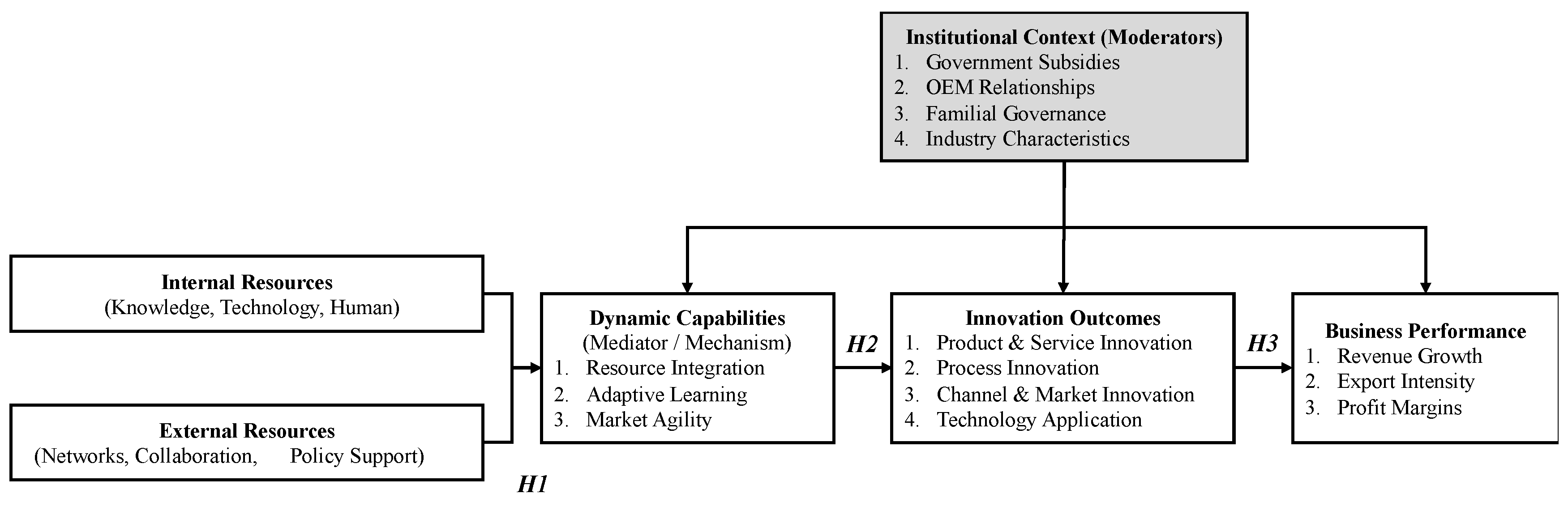

Table 1.
Results of Repeated Measures ANOVA for SME Innovation Capability Dimensions.
| Innovation Capability Dimensions | Pre-test Mean | Post-test Mean | F-value | p-value | Significance |
|---|---|---|---|---|---|
| New Products/Services | 5.30 | 5.72 | 6.31 | 0.012* | Significant |
| New Processes | 11.55 | 13.98 | 2.90 | 0.089† | Marginally Significant |
| Organizational Structure Innovation | 5.22 | 5.77 | 10.06 | 0.002** | Significant |
| Channel Innovation | 4.89 | 5.81 | 28.79 | <0.001*** | Highly Significant |
| New Market Development | 5.13 | 5.88 | 25.55 | <0.001*** | Highly Significant |
| New Technology Application | 5.24 | 6.00 | 21.65 | <0.001*** | Highly Significant |
Note: N = 500; †p < 0.10, *p < 0.05, **p < 0.01, **p < 0.001.
Table 2.
Construct Definitions and Operational Measures.
| Construct | Measurement Items (Examples) | Data Source |
| Internal Resources | "Our R&D team regularly updates technical knowledge" | Diagnostic Scale (Q5) |
| External Networks | "We frequently collaborate with external partners (universities, firms)" | Diagnostic Scale (Q12) |
| Dynamic Capabilities | "Our company adjusts rapidly to market demands and feedback" | Diagnostic Scale (Q18) |
| Innovation Capability | "We have successfully launched multiple new products/services" | Diagnostic Scale |
| Business Performance | "Revenue growth from innovative products/services (2022–2024)" | MOEA Patent & Credit Databases |
Disclaimer/Publisher’s Note: The statements, opinions and data contained in all publications are solely those of the individual author(s) and contributor(s) and not of MDPI and/or the editor(s). MDPI and/or the editor(s) disclaim responsibility for any injury to people or property resulting from any ideas, methods, instructions or products referred to in the content. |
© 2025 by the authors. Licensee MDPI, Basel, Switzerland. This article is an open access article distributed under the terms and conditions of the Creative Commons Attribution (CC BY) license (http://creativecommons.org/licenses/by/4.0/).
Copyright: This open access article is published under a Creative Commons CC BY 4.0 license, which permit the free download, distribution, and reuse, provided that the author and preprint are cited in any reuse.