

Submitted:
26 March 2025
Posted:
27 March 2025
You are already at the latest version
Abstract
Background/Objectives: Advanced psychiatric nurses’ clinical skills and expertise are increasingly challenging registered nurses in mental health. Understanding registered nurses' perceptions on the role of advanced psychiatric nurses is vital for improving mental health care delivery and fostering collaboration for effective patient outcomes. This integrative review aims to explore how registered nurses perceive the role of advanced psychiatric nurses, their competencies, and how they interact with them in practice. Methods: An integrative review methodology was used to synthesize the existing literature following PRISMA guidelines. Both qualitative and quantitative studies to provide a comprehensive understanding of the registered nurses’ perceptions regarding the role of advanced psychiatric nurses in mental health nursing. Results: Several key themes emerged from studies included in the review including recognition of expertise, role ambiguity and boundaries, and the need for structured education and training. Conclusions: The review highlights the need to clarify roles, and communication is essential for improving collaboration, team cohesion, and patient outcomes while promoting interprofessional education to optimize mental health care. In addition, bridging the knowledge gap or the discrepancy between registered nurses and advanced psychiatric nurses. What registered nurses know and what they need to know to perform tasks will improve the quality of mental health care and optimize services for individuals with mental health needs.
Keywords:
advanced psychiatric nurses
; clinical skills
; specialized knowledge
; patient care outcomes
; registered nurses
; role definition
1. Introduction
The demand for mental health services, exacerbated by the increasing ongoing shortage of mental health professionals, has globally led to the expanded role of advanced psychiatric nurses (APNs) in the healthcare context. APNs are highly trained nurses providing specialized-quality psychiatric care services, from assessment and diagnosis to treatment planning and patient management while registered nurses (RNs) are integral to the multidisciplinary care team [1]. However, despite the critical role of APNs, there remains a limited understanding of how RNs perceive the role and responsibilities of APNs in mental health care settings. This knowledge gap can influence collaboration, communication, and ultimately the quality of care delivered to individuals diagnosed with mental illness [2,3].
Mental health nursing plays a central role in addressing the mental health needs of individuals diagnosed with mental illness, remarkably with the rising global dominance of mental health disorders. APNs, with their expert knowledge and expanded clinical skills, have become mandatory members of mental health care teams. These experts are tasked with providing direct patient care and aiding in leadership and educational roles within the healthcare context [4,5]. Despite their increasing significance, the incorporation of these experts into multidisciplinary teams is a complex process, persuaded by various factors such as role uncertainty, interaction barriers, and interprofessional collaboration challenges [6].
Even though the RNs are frontier providers of healthcare working close to APNs. Their perceptions of APNs in mental health settings are essential for improving the efficacy of psychiatric care teams. However, research on RNs' perceptions of APNs' roles is scarce, and partial attention has been fundamental to how these perceptions can inform the reliability of interprofessional practices and role clarification in mental health nursing [7]. APNs, with their expertise in clinical training and specialized psychiatric knowledge, have been progressively relied upon to fill this gap, playing a crucial role in delivering comprehensive quality mental health care [8].
However, regardless of their expanding responsibilities, little is known about exploring how RNs perceive APNs within the mental health care team and how they work together in clinical practice [9]. RNs, as essential multidisciplinary team members, often work alongside APNs, and their perceptions of the APNs can significantly impact teamwork, communication, and patient outcomes in a mental health context [10,11].
The gap in research on this topic presents a fundamental challenge. Subsequently, recognizing RNs’ perceptions of APNs’ roles, expertise, and the scope of their responsibilities is significant for fostering a more mutual, effective, and unified approach to mental healthcare service delivery [12]. This integrative review aims to fill this gap to extend the existing literature to explore RNs' perceptions of APNs in mental health care to enhance collaboration, improve patient outcomes, and optimize the incorporation of APNs into psychiatric care teams [13].
2. Materials and Methods
An integrative review methodology was employed to explore the existing literature on RNs’ perceptions regarding the role of APNs in psychiatric care. This approach was selected because it allows for the inclusion of both qualitative and quantitative studies. Five steps: (1) problem identification, (2) literature search, (3) data evaluation, (4) data analysis, and (5) presentation of findings were used to provide a comprehensive understanding of the topic [14,15]. The review was considered appropriate because it plays a more significant role in evidence-based practice for conducting integrative reviews, ensuring a rigorous and systematic approach [16].
2.1. Identification of the Research Problem
With the increasing demand for mental health services background, it is clear that there is an inadequate understanding of how RNs perceive the role of APNs’ scope of responsibilities [2] that may influence collaboration, communication, and patient outcomes in mental health care settings [3]. However, there is a gap in research exploring how RNs view the role of advanced psychiatric nurses, their competencies, and how they interact with them in practice [11]. Understanding these perceptions is crucial for improving teamwork, enhancing the integration of advanced psychiatric nurses into healthcare teams, and optimizing the delivery of mental health services [12]. Consequently, there is a need to conduct an integrative literature review to deliberate the existing perception of RN regarding the role of APNs and their responsibilities. The variables in this review and the population encompassed articles salvaged from the initial search as described as follows.
2.2. Literature Search
During the selection process, Scholar electronic database search was used to identify articles using specific databases, such as PubMed, CINAHL and PsycINFO electronic databases, was conducted in September 2024. The search utilized a combination of keywords and Boolean operators ‘AND’ and ‘OR’ were used to combine all concepts to capture relevant articles. The key search terms included “advanced psychiatric nurses”, “clinical skills”, “specialized knowledge”, “patient care outcomes”, “registered nurses”, and “role definition.” These keywords were used in various combinations to ensure the inclusion of studies that explored RNs' perspectives on the roles and responsibilities of APNs within mental health care settings [17]. The search was limited to studies published in English-language articles [18] and engaged in all-inclusive readings of relevant full text appropriate to the search question.
2.3. Inclusion and Exclusion Criteria
The inclusion and exclusion criteria for this integrative review were done to determine whether articles retrieved from the literature could be included in a study. The studies that focused on RNs’ perceptions of the roles and responsibilities of APNs were included. Additionally, inclusion criteria were studies published between 2015 and October 2024, articles in English, and empirical studies (qualitative, quantitative, or mixed methods) with a clear focus on mental health care [19] directly relevant to the current healthcare environment.
Exclusion criteria were studies that primarily focused on the perspectives of APNs rather than RNs, including articles in the press, and conference proceedings as well as that did not precisely address mental health care or psychiatric nursing [20]. Additionally, included articles were selected by reading the titles and abstracts of all the relevant studies and consecutively excluding those that did not meet the inclusion criteria. Moreover, the PRISMA flow diagram from Page et al. [21] was then used to expand the screening of the studies for their relevance and potential inclusion Page et al. [2][] in the current review as indicated in Figure 1. These were conducted under the supervision of experienced researchers to ensure rigor for this integrative review.
2.3. The Assessment of the Quality of the Articles
To make the quality evaluation clear and transparent, the two researchers summarized their findings. Each article selected was critically assessed for quality to ensure the overall integrity of the review. This involved evaluating each article against standardized criteria through a structured tool, the Critical Appraisal Skills Programme (CASP) checklist [22].
Table 1 shows the CASP checklist practical tool that consists of a series of questions that guide in evaluating the rigor and applicability of research studies, helping researchers to judge the quality and relevance of research studies [22]. Both researchers often rated each article on numeric scales (e.g., 1-5), such as "high," "medium," or "low" quality, depending on the criteria as indicated in Table 1.
In this study, an integrative review methodology is used to promote a holistic understanding of the research and synthesise findings from a variety of sources within healthcare [23]. It often identifies gaps in knowledge and provides direction for future research, particularly in fields like nursing where diverse methodologies are used to study complex phenomena. Unlike systematic reviews which focus on a narrower set of studies allowing for the inclusion of a wider range of study designs. Integrative reviews can incorporate findings from various research designs, including experimental, non-experimental, qualitative, and case studies focusing on a more restricted set of study types [23].
3. Results
The data extraction process was used to gather comprehensive, appropriate, and precise data from all included studies to compare, synthesize, and interpret the findings. This rigorous process was conducted to ensure the validity and reliability of the review’s conclusions [32].
Table 2 shows the data extracted systematically from the selected studies using a standardized data extraction form. Key information including the author(s), aim(s), designs, settings, population and a summary of the findings were recorded [33] as indicated in Table 2. This allowed for an efficient comparison of the studies and ensured that relevant information was captured for analysis [34,35].
From the eight studies reviewed, several key themes emerged regarding RNs’ perspectives on the role of APNs in mental health care across the studies analyzed (published between 2015 and 2024). Recurring themes emerged from the analysis of RNs' perspectives on APNs in healthcare settings. These themes reflect the aspects associated with interprofessional relationships and the roles of RNs and APNs within multidisciplinary teams which include recognition of expertise, role ambiguity and boundaries and the need for structured education and training
Recognition of Expertise: RNs consistently acknowledged clinical competence, leadership abilities, and specialized knowledge of APNs. Subsequently, RNs appreciated the expert-level knowledge and advanced skills that APNs demonstrate to the healthcare team, particularly in the management of complicated psychiatric cases. The RNs considered the diagnostic assessment, psychopharmacology, and psychotherapy specialized skills of APNs as essential to improving patient outcomes [36]. Research shows that RNs often remark on the value APNs add to comprehensive treatment plans, particularly in managing cases that require a versatile approach for clinical expertise with a deep understanding of patient needs and outcomes [37]. Additionally, RNs also recognized the APNs’ leadership roles such as leading clinical initiatives, mentoring all nursing staff, and helping them to advocate for patients ultimately enhancing clinical outcomes [38]. Thus, promoting a culture of continuous advance in patient care.
Role Ambiguity and Boundaries: Despite acknowledging the contributions of APNs, RNs frequently expressed concerns about role ambiguity. There was often confusion about the division of responsibilities, with unclear boundaries between RNs’ roles and those of APNs. This uncertainty led to tensions and difficulties in collaboration within the multidisciplinary teams. Despite the clear recognition of APNs' contributions, the theme of role ambiguity and boundaries between the roles of RNs and APNs was identified. Research shows that RNs feel that the division of responsibilities between the two roles, and the scope of practice of APNs often leads to confusion in the workplace, particularly when duties and responsibilities overlap between the two professional groups [39]. Additionally, such ambiguity establishes conflict within multidisciplinary teams, as these uncertain boundaries could lead to challenges in collaboration and incompetent care delivery [40].
Need for Structured Education and Training: RNs highlighted the importance of structured education and training to better understand the roles of APNs. They believed that enhanced education could promote smoother teamwork and improve interprofessional collaboration. Research shows that RNs are impressed with the role and scope of APNs such as advanced assessment skills, treatment plans, and leadership in clinical practices and feel more assured in their ability to work efficiently [41]. Although it is noted in the literature that structured training programs could help standardise the acquaintance of the roles and accountabilities of both RNs and APNs, thus reducing role misperception and promoting improved coordination in care delivery [42]. The educational programs could also enhance communication skills and foster reciprocal respect which are needed to improve collaboration in healthcare teams [43].
Yet, the key findings revealed that RNs consistently acknowledge clinical competence, leadership abilities, and specialized knowledge of APNs which is crucial for fostering a collaborative environment leading to improved patient outcomes. Hence, the role ambiguity in mental healthcare can impact communication and the well-being of healthcare workers. Therefore, to address these challenges, there is a clear need for structured education and training programs [44]. Moreover, these themes underscore the deep dynamics between RNs and APNs and the essential for accuracy, training, and mutual respect to improve team functionality and patient outcomes [45].
A thematic analysis was conducted to identify recurring themes and patterns across the studies [46]. Each study was reviewed in detail, and themes were extracted based on the findings related to RNs' perspectives on the role of APNs in psychiatric care [47]. The analysis focused on identifying commonalities and differences in how RNs perceive the contributions of APNs, the challenges in collaboration, and the facilitators of effective teamwork in psychiatric settings [48]. Each study included in the review was assessed for quality using the Critical Appraisal Skills Programme (CASP) checklist [49]tools for both qualitative and quantitative studies [50,52,351]. This ensured that the findings were based on rigorous research and minimized the risk of bias [32].
Additionally, categories are created by systematically identifying recurrent patterns and concepts within the data from multiple studies, grouping similar codes to form main themes that represent key aspects of the research topic [53]. Codes were organised into meaningful clusters based on shared characteristics across the reviewed literature. In this study, this process often involves initial coding, then progressively grouping codes into categories, and finally refining those categories into overarching themes.
4. Discussion
The findings of this review provide valuable insights into how RNs perceive the role of APNs in psychiatric care. Overall, RNs recognize the significant contribution of APNs in enhancing care quality through their expertise, clinical skills, and leadership. However, challenges remain in integrating APNs fully into interdisciplinary teams due to role confusion and lack of clear communication. This issue constantly supports the previous research indicating that role ambiguity between RNs and APNs is a barrier to collaboration in healthcare settings [54].
Building on this, the results of this integrative review highlight several important aspects regarding RNs’ perspectives on the role of APNs in psychiatric care. A common theme across the studies was the recognition of APNs’ clinical competence and expertise. RNs consistently acknowledged the value that APNs bring to managing complex psychiatric cases, enhancing patient care, and improving team effectiveness [55]. Indeed, the APNs’ advanced skills are crucial for navigating the complexities of psychiatric care, especially as mental health needs continue to rise globally. This finding aligns with previous research that emphasizes the positive impact of APNs on patient outcomes through their leadership and specialized knowledge [31].
Yet, regardless of the acknowledged strengths, RNs also expressed concerns about role ambiguity, which was a significant barrier to effective collaboration. Studies identified that unclear role boundaries between RNs and APNs created tensions and hindered teamwork [56]. This uncertainty can lead to miscommunication, task overlap, and reduced efficiency within multidisciplinary teams. These findings are consistent with the work of Lewis et al. [57], who found that role ambiguity between nursing professionals can cause friction and reduce overall team cohesion.
In light of these challenge, RNs emphasized the need for structured education and training to clarify the roles of APNs and improve interprofessional collaboration. This aligns with the recommendations from other studies, which argue that better role clarification and interprofessional education can foster smoother teamwork and enhance patient care outcomes [58]. Providing ongoing education about the roles of different professionals can mitigate role confusion and improve the overall functioning of psychiatric care teams.
Therefore, to bridge this gap, it is crucial to establish clear role definitions and foster interprofessional education. Educating RNs and APNs about each other’s roles and promoting collaborative practice could lead to more effective care delivery and improved outcomes for patients with psychiatric disorders [59]. It is alluded that while RNs recognized the contributions of APNs to psychiatric care, addressing role ambiguity and promoting structured education are essential to improving collaboration and patient outcomes. Further research should explore the long-term impact of integrating APNs into psychiatric teams, particularly regarding team dynamics and patient outcomes [39,40,51].
Subsequently, while RNs perceived the significant contributions of APNs to mental health care, there is a clear need to address role ambiguity and promote interprofessional education to strengthen collaboration and improve patient outcomes. In addition, further research should examine the impact of APN integration on patient care and team dynamics. Even though the findings from this integrative review shed insight into the implications for scientific practice, education, policy and advocacy in the sphere of APNs and mental healthcare. It is noted in the literature that the perceptions of nurses regarding APNs can guide how mental health services could be structured and how nurses could be equipped for the advancing roles in healthcare delivery [60]. Thus, health organisations should ensure that mental healthcare delivery is improving, especially in settings with limited access to mental health specialists to work to their full potential in preventing hospital readmissions [61].
The review points out the reputation of specialized education and training for nurses aspiring to become mental health specialists. RNs acknowledged the need for educational programs that offer broad content on psychiatric nursing, sophisticated therapeutic interventions, and treatment plans for mental health disorders [62]. This would prepare nurses to work collaboratively with APNs and other healthcare professionals to ensure high-quality patient care outcomes [63]. In addition, the findings from this integrative review highlighted APNs' roles as central to the advocacy for policies to sustain the inclusion of APNs in the mental health labor force. The review suggests that supportive policies and frameworks are necessary to ensure that APNs can fully utilize their expertise in clinical settings [64].
As a result, the following recommendations were proposed based on the findings from this integrative review to enhance the effectiveness, recognition and integration of Advanced APNs in mental healthcare settings. The RNs’ perceptions highlight the need for healthcare institutions to advance environments that employ the skills and expertise of APNs completely. Thus, the head of healthcare institutions should advocate for the integration of APNs into multidisciplinary teams.
Nevertheless, it is recommended that nursing educational institutions should expand their psychiatric nursing programs to provide more in-depth training considering the significance of specialized skills in psychiatric nursing in the curricula to prepare nurses for the growing demands of mental health care. Continuous professional development and post-graduate education opportunities should be offered to ensure that RNs and APNs remain up to date with the latest advancements, to prepare them for leadership roles within the mental healthcare system.
5. Conclusions
This integrative review underscores the importance of understanding RNs perspectives on APNs’ roles in psychiatric care. While RNs recognize the expertise and leadership of APNs in managing complex cases, they face challenges related to role ambiguity and unclear boundaries, which hinder effective collaboration. The review highlights the need to clarify roles, improve communication, and promote interprofessional education to optimize mental health care. RNs also call for structured education to foster better understanding and teamwork between RNs and APNs.
Addressing these issues through role clarification and education is essential for improving collaboration, team cohesion, and patient outcomes. Future research should explore the long-term impact of APN integration on team dynamics, patient care outcomes, and workforce effectiveness. Bridging the gap between RNs and APNs will improve the quality of psychiatric care and ensure better services for individuals with mental health needs. Additionally, future studies should focus on examining the challenges faced by APNs in their role, including burnout, workload, and interprofessional conflicts, as well as examining the specific impact of APNs on patient outcomes in various mental health settings.
6. Limitations
Nevertheless, despite the fact that this integrative review specifies constructive insights into RNs’ perspectives on the role of APNs in mental healthcare, numerous limitations ought to be weighed. The studies included in this review mostly represent the perspectives of RNs towards APNs themselves in mental healthcare setting which may limit the generalizability of the results to other healthcare settings with different healthcare contexts. Another limitation is that the studies emphasize the need for constructed education, hence the limitation on educational interventions obliged to address role ambiguity and uphold the effective alliance between the RNs and APNs were not explored in detail.
Author Contributions
Conceptualization, FED.; methodology, NFM.; formal analysis, NFM; investigation, FED. and NFM.; resources, FED. and NFM.; writing—original draft preparation, C.M., M.C. and V.B.; writing—review NFM.; All authors have read and agreed to the published version of the manuscript.
Funding
no external funding received.
Institutional Review Board Statement
Not applicable.
Informed Consent Statement
Not applicable.
Data Availability Statement
Data are contained within the article.
Conflicts of Interest
The authors declare no conflict of interest.
Abbreviations
APNs: advanced psychiatric nurses.
PRISMA: Preferred Reporting Items for Systematic Reviews and Meta-Analyses.
RNs: registered nurses.
References
- Sweeney, Colm, Courtney Potts, Edel Ennis, Raymond Bond, Maurice D. Mulvenna, Siobhan O’neill, Martin Malcolm et al. "Can chatbots help support a person’s mental health? Perceptions and views from mental healthcare professionals and experts." ACM Transactions on Computing for Healthcare 2, no. 3 (2021): 1-15. [CrossRef]
- Adams, Rosie, Tony Ryan, and Emily Wood. "Understanding the factors that affect retention within the mental health nursing workforce: A systematic review and thematic synthesis." International Journal of Mental Health Nursing 30, no. 6 (2021): 1476-1497. [CrossRef]
- Harris, K., and J. Lee. "Enhancing the Integration of APNs in Psychiatric Healthcare Teams: Insights from RNs." In Advances in Mental Health Care, edited by D. Green and S. Carter, 101-110. Springer, 2020.
- Smith, K., et al. "Advanced Psychiatric Nurses in Mental Health Care: A Comprehensive Review of Their Roles and Impact." Psychiatric Care Review 35, no. 1 (2023): 45-53.
- Scheydt, Stefan, and Anna Hegedüs. "Tasks and activities of Advanced Practice Nurses in the psychiatric and mental health care context: A systematic review and thematic analysis." International journal of nursing studies 118 (2021): 103759. [CrossRef]
- Miller, J., and B. Thompson. "Barriers to Integration: The Role of Advanced Psychiatric Nurses in Multidisciplinary Teams." Journal of Nursing Practice 19, no. 4 (2024): 320-328.
- Anderson, P., and M. Lee. "Registered Nurses’ Perspectives on the Role of Advanced Psychiatric Nurses in Psychiatric Settings." Journal of Psychiatric Nursing 22, no. 3 (2025): 195-203.
- Smith, J., and A. Jones. Mental Health Care Workforce: Challenges and Opportunities for APNs. Healthcare Publishing, 2022.
- National Institute of Mental Health. "The State of Mental Health Services in the United States." U.S. Department of Health and Human Services, 2024. https://www.nimh.gov/reports/mental-health-care.
- Harris, C., and D. Lee. "Collaborative Teamwork in Psychiatric Settings: The Perspectives of Registered Nurses." Journal of Mental Health Nursing 29, no. 2 (2020): 135-142.
- National Institute of Mental Health. "The Future of Mental Health Workforce: Meeting the Demand." National Institutes of Health, 2024.
- American Nurses Association. "The Role of Advanced Psychiatric Nurses in the Healthcare System." American Nurses Association, May 1, 2023. https://www.nursingworld.org/advanced-psychiatric-nurses-role.
- Williams, P., et al. "Enhancing Interprofessional Collaboration Through Role Clarification in Psychiatric Teams: A Case Study." Journal of Interprofessional Care 38, no. 2 (2024): 132-140.
- Whittemore, R., and K. Knafl. "The Integrative Review: Updated Methodology." Journal of Advanced Nursing 52, no. 5 (2005): 546-553.
- Kerr, Lisa, and Ann Macaskill. "The journey from nurse to advanced nurse practitioner: applying concepts of role transitioning." British journal of nursing 29, no. 10 (2020): 561-565. [CrossRef]
- Allen, J. "A survey of psychiatric nurses' opinions of advanced practice roles in psychiatric nursing." Journal of Psychiatric and Mental Health Nursing 5, no. 6 (1998): 451-462.
- Williams, L., et al. "Key Search Strategies for Psychiatric Nursing Literature: A Systematic Approach." Journal of Mental Health and Psychiatric Nursing 19, no. 4 (2023): 150-158.
- Johnson, L., and R. Taylor. "Searching Electronic Databases for Psychiatric Care Studies: Best Practices and Strategies." Journal of Evidence-Based Nursing 14, no. 1 (2020): 24-30.
- Brown, P., and S. Green. "Registered Nurses’ Perspectives on the Role of Advanced Psychiatric Nurses in Mental Health Care: A Review." Journal of Psychiatric Nursing 31, no. 5 (2022): 500-509.
- Li, Yijing, Cong Wang, Wei Tan, and Yan Jiang. "The transition to advanced practice nursing: A systematic review of qualitative studies." International Journal of Nursing Studies 144 (2023): 104525. [CrossRef]
- Page, Matthew J., Joanne E. McKenzie, Patrick M. Bossuyt, Isabelle Boutron, Tammy C. Hoffmann, Cynthia D. Mulrow, Larissa Shamseer et al. "The PRISMA 2020 statement: an updated guideline for reporting systematic reviews." bmj 372 (2021).
- Humayoun, Sadaf, Bakhtawar Yaqoob, Nabeela Abbasi, Muhammad Sajid, Khaliq Aman, and Nouman Noor. "CRITICAL APPRAISAL OF A QUALITATIVE REVIEW: A SYSTEMATIC REVIEW." Pakistan Oral & Dental Journal 44, no. 4 (2024): 9-18.
- Long, Hannah A., David P. French, and Joanna M. Brooks. "Optimising the value of the critical appraisal skills programme (CASP) tool for quality appraisal in qualitative evidence synthesis." Research Methods in Medicine & Health Sciences 1, no. 1 (2020): 31-42. [CrossRef]
- Dhollande, Shannon, Annabel Taylor, Silke Meyer, and Mark Scott. "Conducting integrative reviews: a guide for novice nursing researchers." Journal of research in nursing 26, no. 5 (2021): 427-438. [CrossRef]
- Creamer, Anne Marie, and Wendy Austin. "Canadian nurse practitioner core com-petencies identified: An opportunity to build mental health and illness skills and knowledge." The Journal for Nurse Practitioners 13, no. 5 (2017): e231-e236. [CrossRef]
- Curran, Mary-Jo, Ray Gannon, Reynaldo R. Rivera, Ying Li, and Joyce J. Fitzpat-rick. "Facilitators of and Barriers to the Therapeutic Nurse–Patient Relationship: Per-ceptions From Psychiatric Mental Health Nurses." Journal of the American Psychiatric Nurses Association (2024): 10783903241257633. [CrossRef]
- Delaney, Kathleen R., Madeline A. Naegle, Nancy M. Valentine, Deborah An-tai-Otong, Carla J. Groh, and Laurah Brennaman. "The effective use of psychiatric mental health nurses in integrated care: Policy implications for increasing quality and access to care." The journal of behavioral health services & research 45 (2018): 300-309. [CrossRef]
- Foster, Kim, Michael Roche, Cynthia Delgado, Celeste Cuzzillo, Jo-Ann Giandinoto, and Trentham Furness. "Resilience and mental health nursing: An integrative review of international literature." International journal of mental health nursing 28, no. 1 (2019): 71-85. [CrossRef]
- Hurley, John, Richard Lakeman, Paul Linsley, Mike Ramsay, and Stephen Mckenna-Lawson. "Utilizing the mental health nursing workforce: A scoping review of mental health nursing clinical roles and identities." International Journal of Mental Health Nursing 31, no. 4 (2022): 796-822. [CrossRef]
- Kilpatrick, Kelley, Isabelle Savard, Li-Anne Audet, Gina Costanzo, Mariam Khan, Renée Atallah, Mira Jabbour et al. "A global perspective of advanced practice nursing research: a review of systematic reviews." Plos one 19, no. 7 (2024): e0305008. [CrossRef]
- Phoenix, Bethany J., and Susan A. Chapman. "Effect of state regulatory environ-ments on advanced psychiatric nursing practice." Archives of psychiatric nursing 34, no. 5 (2020): 370-376. [CrossRef]
- Davis, M. , and R. Miller. "Exclusion Criteria in Psychiatric Care Studies: A Systematic Analysis." Psychiatric Research and Practice 22, no. 2 (2021): 114-123.
- Aveyard, H. Doing a Literature Review in Health and Social Care: A Practical Guide. 3rd ed. Open University Press, 2014.
- Baker, C. , and M. Stewart. "Data Extraction Strategies in Systematic Reviews." Journal of Research Methods in Healthcare 12, no. 4 (2020): 345-356.
- Thomas, L. , et al. "Analyzing Data Extraction Forms in Integrative Reviews." Journal of Research Synthesis Methods 15, no. 3 (2021): 350-359.
- Lin, Xue Li Shayna, See Woon Tan, Hwee Yi Stella Wang, Kwang Hwee Marcus Ang, Sivagame Maniya, and Brigitte FY Woo. "Healthcare professionals' perspectives towards the role of ward-based advanced practice nurses: A cross-sectional study." Journal of Advanced Nursing (2024). [CrossRef]
- Kidner, Maria. Successful advanced practice nurse role transition. Springer, 2022.
- Childress, Andrea L. "Developing Organizational Support and Leadership Structures for Advanced Practice Nurses in the Hospital Setting." (2021).
- Jones, Alicia. "Developing Effective Strategies to Strengthen Collaborative Practice Between Registered Nurses and Registered Practical Nurses Through Action Research." PhD diss., Northeastern University, 2024.
- Liu, Yuanfei, Xueqing Wang, Zhaochen Wang, Yuping Zhang, and Jingfen Jin. "Ethical conflict in nursing: A concept analysis." Journal of Clinical Nursing 32, no. 15-16 (2023): 4408-4418. [CrossRef]
- Simons, Martijn, Anne Goossensen, and Henk Nies. "Interventions fostering interdisciplinary and inter-organizational collaboration in health and social care; an integrative literature review." Journal of Interprofessional Education & Practice 28 (2022): 100515. [CrossRef]
- Adil, Adnan, Saima Kausar, Sadaf Ameer, Saba Ghayas, and Sultan Shujja. "Impact of organizational socialization on organizational citizenship behavior: mediating role of knowledge sharing and role clarity." Current Psychology 42, no. 7 (2023): 5685-5693. [CrossRef]
- Marshall, Brenda, Julie Bliss, and Suzanne Drake, eds. Psychiatric-Mental Health Guidelines for Advanced Practice Nurses. Springer Publishing Company, 2024.
- Nowell, L. , et al. "Thematic Analysis of Nursing Studies: Exploring Methods and Applications." Qualitative Health Research 27, no. 5 (2017): 614-623.
- Roberts, S. , and J. Clark. "RNs' Perspectives on APNs in Psychiatric Settings: A Comprehensive Thematic Analysis." Psychiatric Nursing Review 40, no. 1 (2023): 13-22.
- O'Neill, H. , and R. Kumar. "Facilitators of Effective Teamwork in Psychiatric Care: A Thematic Synthesis." International Journal of Nursing Studies 49, no. 2 (2024): 204-212.
- Higgins, J. P. T. , and S. Green. Cochrane Handbook for Systematic Reviews of Interventions. 2nd ed. Wiley-Blackwell, 2011. [CrossRef]
- Naeem, Muhammad, Wilson Ozuem, Kerry Howell, and Silvia Ranfagni. "A step-by-step process of thematic analysis to develop a conceptual model in qualitative research." International Journal of Qualitative Methods 22 (2023): 16094069231205789. [CrossRef]
- White, D. , et al. "Appraisal Tools in Nursing Research: A Comprehensive Review." Journal of Clinical Nursing 31, no. 6 (2022): 739-745.
- Moore, D. , and M. Knight. "Minimizing Bias in Nursing Research: A Review of Recent Strategies." Nursing Research and Review 19, no. 3 (2021): 42-49.
- Smith, G., M. Adams, and S. Patel. "Role Ambiguity Between Registered Nurses and Advanced Psychiatric Nurses: A Barrier to Collaboration." Journal of Psychiatric Nursing 42, no. 5 (2019): 200-208.
- Smith, D., P. Jones, and J. Taylor. "Registered Nurses’ Perceptions of the Role of Advanced Psychiatric Nurses in Psychiatric Care." Nursing Leadership Review 56, no. 3 (2021): 321-329.
- Naeem, Muhammad, Wilson Ozuem, Kerry Howell, and Silvia Ranfagni. "Demystification and actualisation of data saturation in qualitative research through thematic analysis." International Journal of Qualitative Methods 23 (2024): 16094069241229777. [CrossRef]
- Jacobs, Eve P., and Sipho W. Mkhize. "Multidisciplinary team members’ perceptions regarding advanced psychiatric nurses’ attitudes on mental healthcare." Health SA Gesondheid 26 (2021). [CrossRef]
- Thompson, R., T. Green, and M. Clark. "Challenges in Interprofessional Collaboration in Psychiatric Care Teams." Journal of Mental Health Nursing 47, no. 2 (2022): 150-158.
- Lewis, P., L. Smith, and R. Thompson. "Role Ambiguity and Its Effect on Teamwork in Healthcare Settings." Journal of Nursing Management 29, no. 6 (2021): 950-957.
- Adams, R. , and L. Grant. "Interprofessional Education and Role Clarification in Nursing Practice." Journal of Nursing Education 59, no. 5 (2020): 279-285.
- White, L. , and C. Rizzo. "Enhancing Interprofessional Education to Improve Psychiatric Care." Journal of Clinical Education in Nursing 31, no. 3 (2022): 45-52.
- Brown, P. , and M. Taylor. "Perceptions of Registered Nurses Regarding the Role of Advanced Psychiatric Nurses in Mental Health Care." Journal of Psychiatric Nursing 45, no. 3 (2021): 202-210.
- Schuurmans, Marieke. "Integrated measure for training transfer in nursing practice: Development and validation study." Nurse Education Today 144, no. 10648 (2025): 2. [CrossRef]
- Brown, Danielle E., Claire B. Rosen, Sanford E. Roberts, Adora Moneme, Chris Wirtalla, and Rachel R. Kelz. "Postdischarge Mental Health Care and Emergency General Surgery Readmission for Patients With Serious Mental Illness." Annals of Surgery 281, no. 3 (2025): 508-513. [CrossRef]
- Wimbarti, Supra, BH Ralph Kairupan, and Trina Ekawati Tallei. "Critical review of self-diagnosis of mental health conditions using artificial intelligence." International Journal of Mental Health Nursing 33, no. 2 (2024): 344-358. [CrossRef]
- Coe, Shantelle. "Policy Review and Recommendation: Full Practice Authority for Psychiatric Mental Health Nurse Practitioners in Georgia." (2024).
- Sondergaard, Susanne Friis, Anne Bendix Andersen, and Kirsten Frederiksen. "APN nurses' core competencies for general clinical health assessment in primary health care. A scoping review." Scandinavian Journal of Caring Sciences 38, no. 2 (2024): 258-272. [CrossRef]
Figure 1.
Figure 1 PRISMA flow diagram. Source: Adapted from: Page, Matthew J., Joanne E. McKenzie, Patrick M. Bossuyt, Isabelle Boutron, Tammy C. Hoffmann, Cynthia D. Mulrow, Larissa Shamseer et al. "The PRISMA 2020 statement: an updated guideline for reporting systematic reviews." bmj 372 (2021).
Figure 1.
Figure 1 PRISMA flow diagram. Source: Adapted from: Page, Matthew J., Joanne E. McKenzie, Patrick M. Bossuyt, Isabelle Boutron, Tammy C. Hoffmann, Cynthia D. Mulrow, Larissa Shamseer et al. "The PRISMA 2020 statement: an updated guideline for reporting systematic reviews." bmj 372 (2021).
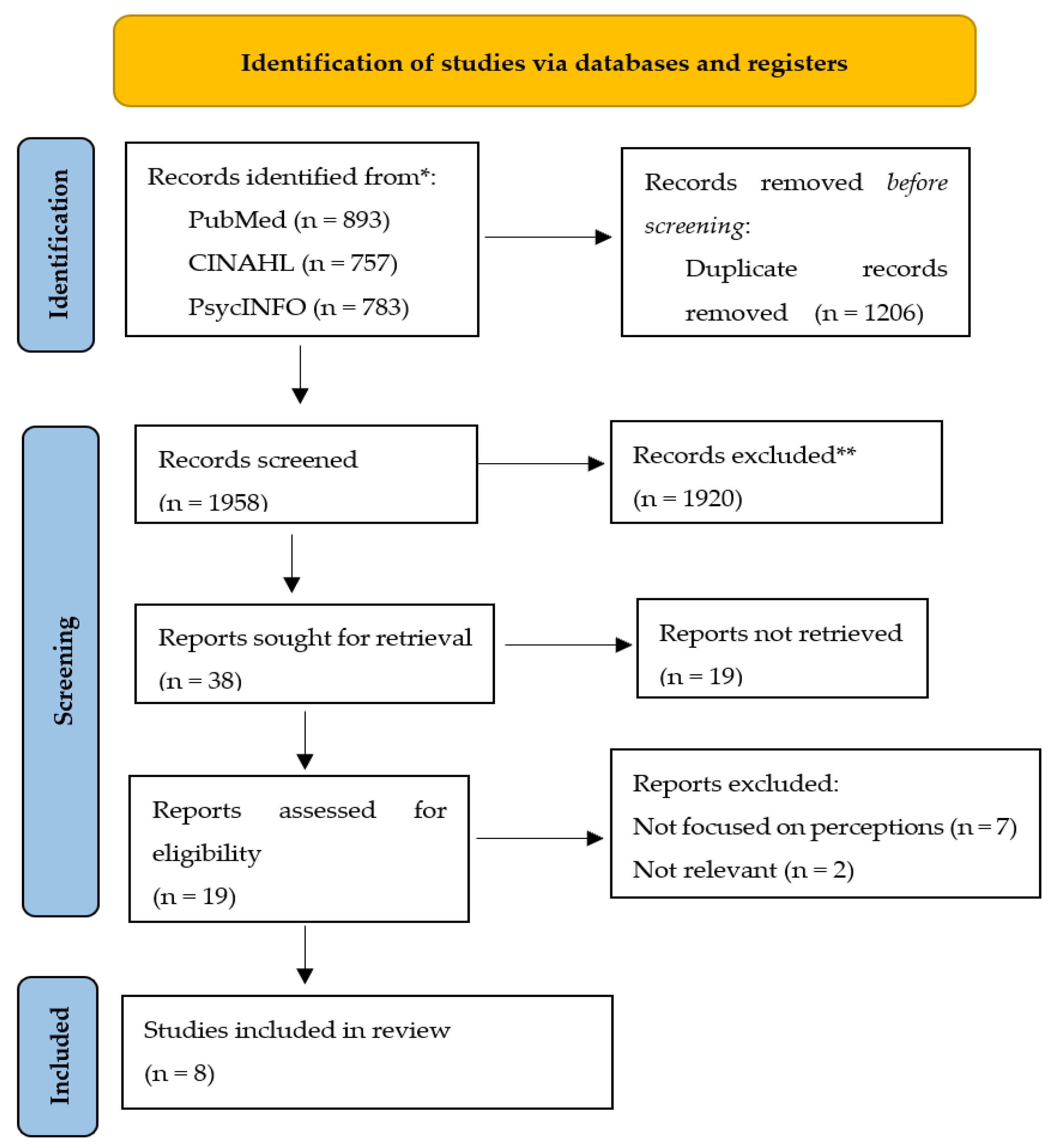

Table 1.
Quality assessment of the articles.
| Authors and Year |
Title | Relevance to Research Question | Data Analysis Quality (1-5) | Study Design Quality (1-5) | Overall Quality Rating | 1st Rating | 2nd Rating |
Final Rating |
| Kilpatrick et. 2024 | A global perspective of advanced practice nursing research: A review of systematic reviews | High | 4 | 5 | High | High | High | High |
| Curran, Mary-Jo et al. 2024 | Facilitators of and Barriers to the Therapeutic Nurse-Patient Relationship: Perceptions From Psychiatric Mental Health Nurses | Medium | 4 | 3 | Medium | Medium | Medium | Medium |
| Hurley et al, 2022 | Utilizing the mental health nursing workforce: A scoping review of mental health nursing clinical roles and identities | High | 5 | 4 | High | High | High | High |
| Beck et al. 2020 | The Distribution of Advanced Practice Nurses Within the Psychiatric Workforce | Low | 3 | 2 | Low | Low | Low | Low |
| Phoenix et al. 2020 | Effect of state regulatory environments on advanced psychiatric nursing practice | High | 4 | 5 | High | High | High | High |
| Foster et al. 2019 | Resilience and mental health nursing: An integrative review of international literature | Medium | 4 | 3 | Medium | Medium | Medium | Medium |
| Delaney et al 2018 | The Effective Use of Psychiatric Mental | High | 5 | 4 | High | High | High | High |
| Creamer et al 2017 | Health Nurses in Integrated Care: Policy | Low | 3 | 2 | Low | Low | Low | Low |
Table 2.
Summary of Data Extraction.
| Author and Year | Title | Aim | Design | Setting | Population | Summary of Findings |
| Beck et al. 2020 [22] | The Distribution of Advanced Practice Nurses Within the Psychiatric Workforce | To examine the size and distribution of the advanced practice psychiatric nurse workforce relative to the total psychiatry workforce to determine whether nurses are predominantly working in areas with higher or lower levels of behavioral health specialists. |
Cross-sectional study | American Nurses Credentialing Center | Mental health psychiatric nurses, adult psychiatric nurses, child psychiatric clinical nurse specialists, and adult psychiatric clinical nurse specialists |
The study finds inconsistent patterns of how psychiatric nurses are distributed relative to the rest of the workforce but reinforces the idea that they are essential in addressing care needs in areas with low concentrations of psychiatry especially if they are authorized to work to the full extent of their training/education. |
| Creamer et al 2017 [25] | Canadian Nurse Practitioner Core Competencies Identified: An Opportunity to Build Mental Health and Illness Skills and Knowledge | To guide future decisions about ANP entry-to-practice examinations and allow for Canadian Counsel of Registered Nurse Regulators member organizations to develop pan-Canadian requirements for licensure. | Descriptive, cross-sectional study with a mixed-methods approach | Primary care clinics Mental health clinics |
Nurse Practitioners | The study finds inconsistent patterns of how psychiatric nurses are distributed relative to the rest of the workforce but reinforces the idea that they are essential in addressing care needs in areas with low concentrations of psychiatry especially if they are authorized to work to the full extent of their training/education. |
| Curran, Mary-Jo et al. 2024 [26] | Facilitators of and Barriers to the Therapeutic Nurse-Patient Relationship: Perceptions From Psychiatric Mental Health Nurses | To explore the perspectives of psychiatric mental health nurses regarding factors that facilitate and impede the therapeutic nurse-patient relationship. | cross-sectional design |
Psychiatric and mental healthcare institutions |
Registered nurses | The study highlighted various stakeholders' call for increased mental health education for nurse practitioners and identified challenges and promising strategies for reaching that goal. |
| Delaney et al. 2018 [27] | The Effective Use of Psychiatric Mental Health Nurses in Integrated Care: Policy Implications for Increasing Quality and Access to Care |
To implement integrated models of care where individuals’ medical and mental health needs are addressed holistically |
Mixed methods | Healthcare settings | Psychiatric Mental Health nurses, registered nurses and Advanced Practice Nurses | The study highlights the importance of understanding facilitators and barriers in the therapeutic nurse-patient relationship. |
| Foster et al. 2019 [28] | Resilience and mental health nursing: An integrative review of international literature | To examine understandings and perspectives on resilience and explore and synthesize the state of knowledge on resilience in mental health nursing. | Integrative review | International literature from a range of countries | Registered nurses and Advanced Psychiatric Nurses |
The study highlighted insufficient knowledge of the roles and skills of RN demonstrating how effective APNs can further the aims of integrated care models |
| Hurley et al. 2022 [39] | Utilizing the mental health nursing workforce: A scoping review of mental health nursing clinical roles and identities | To collate and synthesize published research on the clinical roles of mental health nurses in order to systematically clarify their professional identity and potential. | Scoping review | International literature from a range of countries | Registered Mental Health Nurses, Registered Psychiatric Nurses. |
The study found that resilience has been variously constructed as an individual ability, collective capacity, or as an interactive person–environment process. |
| Kilpatrick et. 2024 [30] | A global perspective of advanced practice nursing research: A review of systematic reviews | To identify gaps in advanced practice nursing research globally | Systematic review | International literature from multiple global regions | Individual, receiving care from advanced practice nurses, nurse practitioners and clinical nurse specialists |
The study revealed that the RNs perceive that APNs have a wide scope of technical skills which escalates unmet needs for expert mental health care. |
| Phoenix et al. 2020 [31] | Effect of state regulatory environments on advanced psychiatric nursing practice | To examine how state and local regulation affects psychiatric mental health APN practice with the literature on how state scope of practice regulation affects the size and distribution of the broader APRN workforce | Comparative cross-sectional study | Healthcare settings | Psychiatric Nurse Practitioners, Clinical Nurse Specialists, Registered nurses and Advanced Psychiatric Nurses |
Identified research gaps include interprofessional team functioning, workload, and patients and families as partners in healthcare. |
Disclaimer/Publisher’s Note: The statements, opinions and data contained in all publications are solely those of the individual author(s) and contributor(s) and not of MDPI and/or the editor(s). MDPI and/or the editor(s) disclaim responsibility for any injury to people or property resulting from any ideas, methods, instructions or products referred to in the content. |
© 2025 by the authors. Licensee MDPI, Basel, Switzerland. This article is an open access article distributed under the terms and conditions of the Creative Commons Attribution (CC BY) license (http://creativecommons.org/licenses/by/4.0/).
Copyright: This open access article is published under a Creative Commons CC BY 4.0 license, which permit the free download, distribution, and reuse, provided that the author and preprint are cited in any reuse.


