

Submitted:
25 March 2025
Posted:
25 March 2025
You are already at the latest version
Abstract
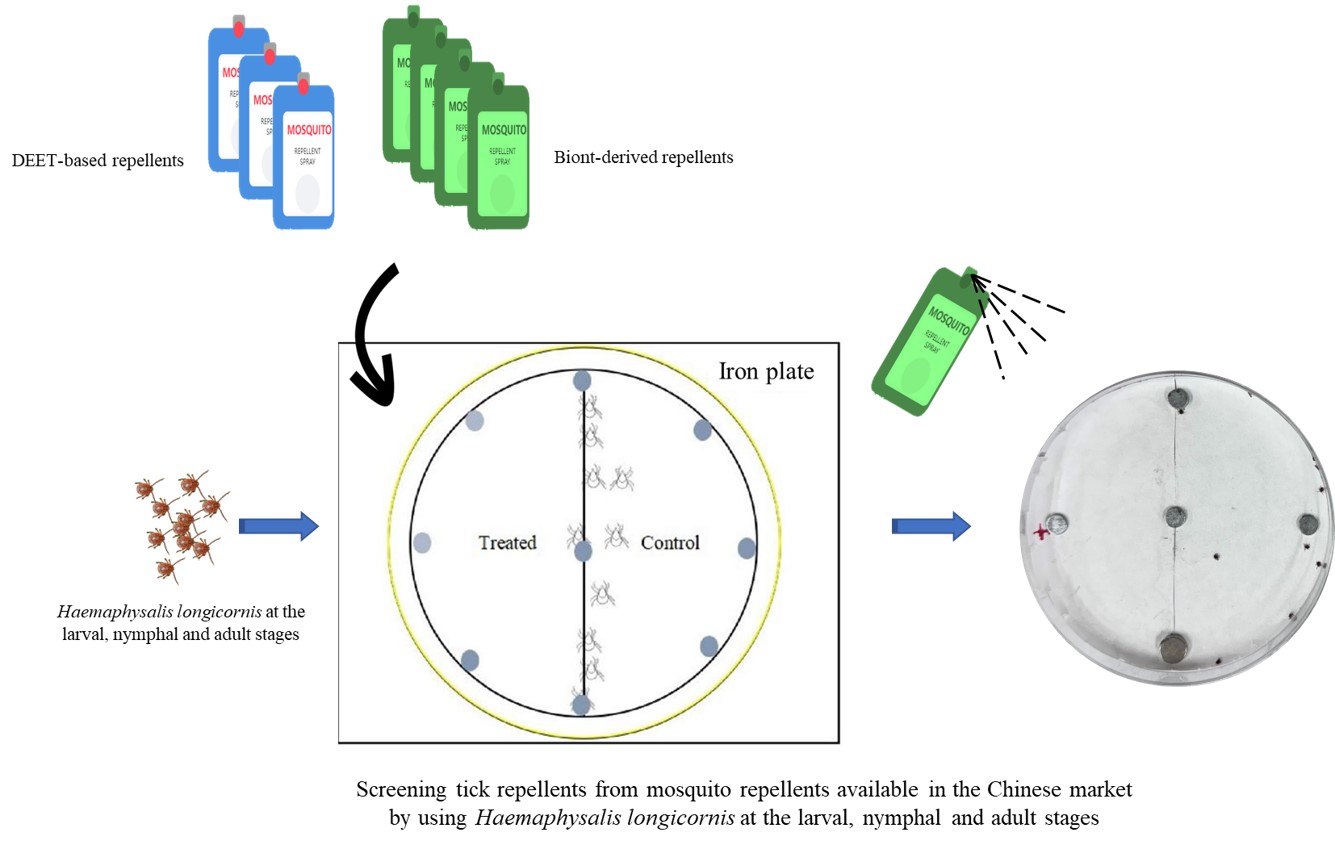
To investigate the repellent efficacy of commercially available mosquito repellents in China against H. longicornis, four representative DEET-based repellents and biont-derived repellents were selected. The study utilized a modified circular filter paper method repellent testing device to establish an evaluation system for assessing the repellent effects of each product against three developmental stages of H. longicornis: larvae, nymphs, and adults. In our study, for DEET-based repellents, Johnson demonstrated the highest repellency against larvae within 1 hour, with an average repellency rate exceeding 80.14%. Yamei and Johnson exhibited repellency rates more than 91.11% for nymphs within 1 hour, surpassing the other two DEET products. Repellency rates of Longliqi and Xiaohuanxiong fluctuated between 80.95% and 100% at different time points. Yamei, Longliqi, and Johnson achieved 100% repellency to adults within 1 hour, while Xiaohuanxiong showed slightly lower efficacy. The four biont-derived repellents showed significant variations in efficacy: larval-stage repellency ranged from 14.29% to 88.89%, nymphal-stage repellency from 57.89% to 100%, and adult-stage repellency from 50% to 79.49%. CaliforniaBaby exhibited the highest efficacy, comparable or superior to DEET-based products, whereas Longhu demonstrated the weakest repellency and poor persistence. We further conducted persistence test for CaliforniaBaby, and found that it maintained >75% repellency against H. longicornis for 6 h. This study provides scientific evidence for selecting tick repellents in practice, offers guidance for purchasing commercial biont-derived tick repellents, and serves as a reference for developing safer, more effective tick repellents.
Keywords:
Mosquito repellent
; DEET
; Biont-based repellent
; Tick
; developmental stages
1. Introduction
In recent years, China has faced escalating public health risks posed by tick-borne diseases, particularly those linked to Haemaphysalis longicornis (Asian longhorned tick). This species serves as a vector for severe fever with thrombocytopenia syndrome (SFTS), a life-threatening viral disease with a 12–50% fatality rate [1]. Since its first identification in 2009, SFTS cases have surged, with over 1,500 infections reported annually across Henan, Hubei, Shandong, Anhui, Liaoning, Jiangsu, and Zhejiang provinces [2]. The expanding geographic range of H. longicornis—now documented in 441 counties—has been exacerbated by climate warming and increased human encroachment into tick habitats through recreational activities such as hiking and camping [3,4]. Concurrently, livestock infestation rates have risen and the distributions have expanded in rural areas, threatening agricultural productivity and amplifying zoonotic transmission risks [5].
Current tick control strategies heavily rely on chemical acaricides (e.g., cypermethrin) and vegetation management. However, these methods are increasingly challenged by widespread pesticide resistance and environmental contamination [6,7]. For instance, resistance ratios to pyrethroids have reached more than 7× in H. longicornis populations in South Korea, drastically reducing efficacy [6]. Integrated pest management (IPM) approaches, though promising, remain underutilized in China due to logistical complexities and limited public awareness [8,9]. Moreover, personal protective measures, such as protective clothing, are impractical for communities in endemic regions, where socioeconomic factors limit access to preventative tools.
Tick repellents represent a critical yet underexplored solution to mitigate human-tick contact. DEET (N,N-diethyl-meta-toluamide), the "gold standard" repellent, has demonstrated >90% efficacy against Amblyomma americanum and Ixodes scapularis ticks in controlled studies [10]. However, the performance of commercial DEET formulations against H. longicornis—especially across its larval, nymphal, and adult stages—remains poorly characterized in China. This study evaluates four DEET-based (5–10% DEET concentrations) and four biont-based repellents available on the Chinese market to determine their hourly repellency rates against H. longicornis under controlled laboratory conditions. Our goal is to identify accessible, cost-effective products that balance efficacy with user safety, addressing gaps in practical tick bite prevention strategies for at-risk populations.
2. Materials and Methods
2.1. Tick Maintenance
Unfed H. longicornis (15–60 days old) were obtained from a laboratory colony maintained under controlled conditions (27 ± 1°C, >80% relative humidity, 12:12 light-dark cycle). Ticks were reared on Kunming mice using a feeding apparatus glued to the shaved dorsum. Ethical approval for animal use was obtained from the Institutional Animal Care and Use Committee.
2.2. Test Compounds
In September 2024, we purchased several products for mosquito repellents. Four widely available DEET-based repellents and four commonly used biont-derived repellents were included in the study (Table 1). The concentrations of DEET varied from 5 to 10 percent that represented the range of commonly purchased repellents in China. The biological repellents were made up of plant and animal-based extracts, including geranium extract, clove leaf oil, snake bile extract, citronella grass oil, East Indian lemongrass oil, and lemongrass oil (Table 1).
2.3. Testing Methods
The repellent activity was determined using a choice assay. In the experimental group, a 9 cm diameter filter paper was bisected into two halves. One half was soaked with 250 μL of the commercial repellent being tested, while the other half was treated with 250 μL of 100% ethanol. A pipette was used to measure and transfer the respective liquids to soak each half of the filter paper, with three replicates per group. Simultaneously, a negative control group and a positive control group were established: the negative control used 250 μL of 100% ethanol in place of the commercial repellent, and the positive control used 250 μL of 10% DEET instead of the commercial repellent. After air-drying the filter papers, they were placed in the lid of a Petri dish. The dish lid was aligned with an iron plate, and the filter papers were secured to the paper using magnets. Finally, a ring of medical-grade Vaseline was applied to the edge of the Petri dish lid to prevent ticks from escaping. Ticks (20 larvae, 10 nymphs, or 5 adults) were placed in the central position between the treated and control filter papers to initiate the repellency test. The experiment lasted for 1 hour, with data recorded every 10 minutes. For CaliforniaBaby repellent testing, the experiment was conducted over a 6-hour period. Observations were performed not only during the first hour (as per the standard protocol for the commercial repellents) but also at the 2nd, 4th, and 6th hours. After each observation, the ticks were carefully returned to the central position to reset the timer.
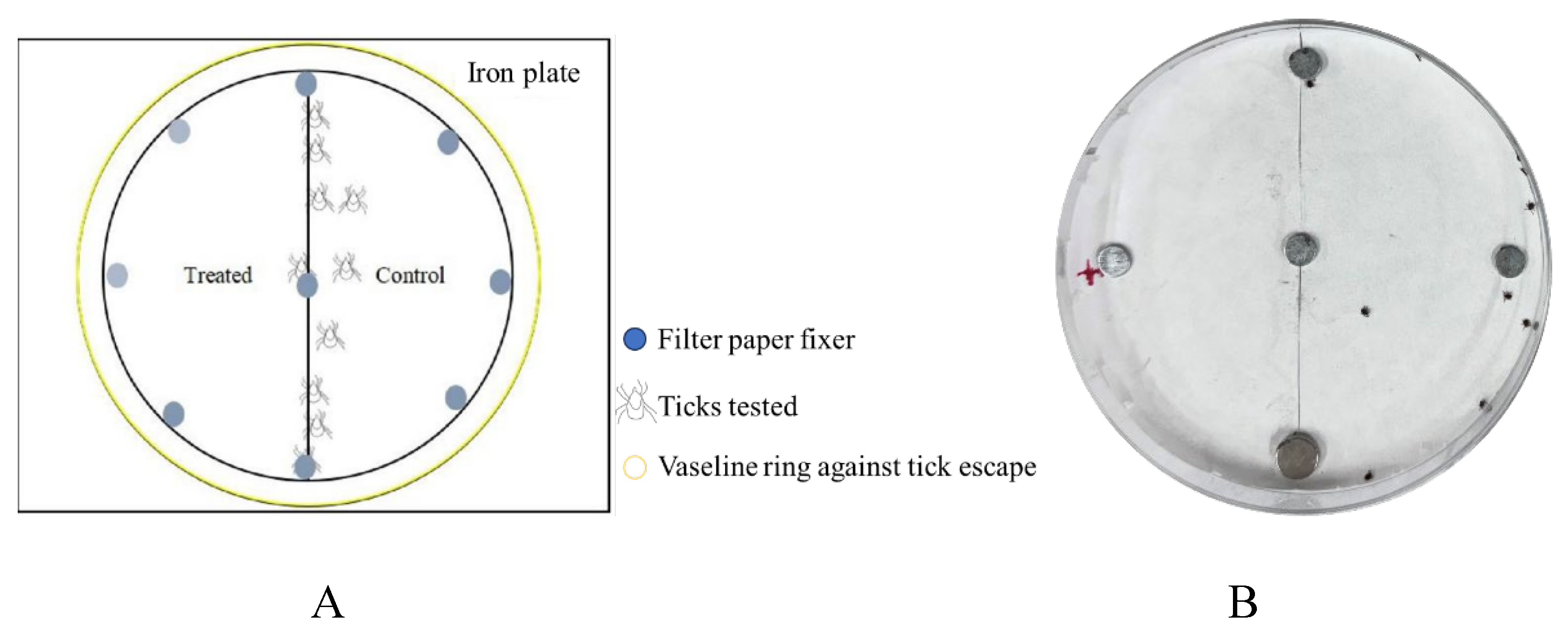
H. longicornis evaluated in filter papers impregnated with the repellent commodities. A, Schematic diagram for the evaluation of tick repellent; B, ticks were introduced in filter papers. The right side represented filter paper treated with the repellent, the left side with absolute alcohol. Obviously, ticks aggregated on the right side. Photo by Weiqing Zheng.
2.4. Data Treatment and Statistical Analysis
Percent repellency was calculated using the given formula: repellency (%) =(C-T)/C*100%.
where C represents the number of mosquitoes landing on the negative control and T represents the number of mosquitoes landing on the tested repellent.
The adjusted repellency was calculated with the below formula: Ra=(Rn-Rc)/(1-Rc).
Where Ra is the adjusted repellency of a product, Rn represents the repellency of the product, and Rc is the repellency of the negative control set.
Unless indicated, all experiments in this study were performed with three biological replicates. The results are presented as mean values ± standard deviation. The statistical analysis was carried out with Chi square test.
3. Results
3.1. The Repellency of the Four Commercial DEET-Solved Mosquito Repellents to H. longicornis Ticks
Johnson emerges as a standout contender, demonstrating near-identical or superior repellency (80.14%-100%) against the tick larvae to DEET across multiple intervals. At 10 minutes, it achieved 100% repellency, statistically surpassing DEET’s 86.04% (p = 0.0198), and this superiority maintained all the test process except at 20 min. Xiaohuanxiong, also showed strong repellent, and its repellency for the tick larvae remained about 80% for 60 minutes, except for 69.89% at 50 min. This contrasts with Yamei and Longliqi, which suffered rapid efficacy decay. Yamei’s repellency dropped from 71.17% at 10 min to a dismal 8.05% by 60 min (p < 0.0001). Longliqi’s decline was equally stark, collapsing from 75.44% at 20 min to 24.56% by 60 min (P < 0.0001), aligning its performance closer to ineffective formulations. We also found environmental factors (e.g., temperature, humidity) affecting baseline tick behavior and then modified the repellency of mosquito repellents by subtraction of that of the negative control (Figure 1 and Figure 2).
Regarding H. longicornis nymph repellency, all the mosquito repellents had a comparable efficacy with DEET over time. Of them, Johnson exhibited near-perfect immediate and sustained repellency. At 10 minutes, 94.83% ticks repelled with borderline significance (p = 0.437). By 20 minutes, it matched DEET with 100% repellency, maintaining this efficacy through 60 minutes. Yamei was near-perfect with minor declines. It has 100% repellency at most intervals except for 91.11%, a slight drop at 40 minutes. Xiaohuanxiong and Longliqi showed subtle variability in repellency, ranging from 80.95% to 100% (Figure 3 and Figure 4).
The repellency of the female submitted to four commercial DEET-solved mosquito repellents was similar with DEET and therefore presented the better efficacy. Johnson, Longliqi, and Yamei were top performers, and demonstrated the complete repellency at all intervals (10–60 minutes). Xiaohuanxiong was also strong but slightly less stable, and had minor dip at 60 minutes with the repellency of 87.88% (Figure 5 and Figure 6).
3.2. The Repellency of the Four Commercial Biont-Derived Mosquito Repellents to H. longicornis Ticks
Among the four biont-derived repellents tested, the repellent efficacy against tick larvae varied greatly (14.29%–88.89%). CaliforniaBaby demonstrated the highest repellent activity, ranging from 42.86% to 88.89%, characterized by both strong initial efficacy and long-lasting durability. Over a 1-hour observation period (evaluated at 10-minute intervals), its repellency rate showed no statistically significant difference compared to DEET. Longliqi, Longhu, and Bendingding, however, exhibited unstable repellent activity. All three showed declining efficacy after 20 minutes. Bendingding and Longliqi displayed gradual reductions in repellency, but no significant differences were observed across time points. In contrast, Longhu experienced a significant decline in repellent efficacy, changing from 14.29% to 74.07% with statistically significant differences (p < 0.05) compared to DEET at 40, 50, and 60 minutes (Figure 7 and Figure 8).
During repellency testing against nymphal and adult ticks, CaliforniaBaby, and Bendingding demonstrated complete efficacy and sustained prolonged activity, except for 89.74% repellency of Bendingding against adult ticks at 60 min. Longliqi-P also showed robust repellency to nymphs and adults with repellent rates ranging from 73.33% to 100%, however, its efficacies of nymphs (77.78%-100%) were better than those of adults (73.33.89%-100%). Longhu had the worst repellency (57.89%-100%) for nymphs and the worst repellency (50%-79.49%) against adults among four commercial biont-based mosquito repellents. It exhibited a statistically significant decrease in repellency against adult ticks at 50 minutes compared to DEET (p < 0.05). Among the four biont-derived repellents, Bendingding and CaliforniaBaby consistently displayed the highest efficacy and temporal stability, maintaining strong repellent performance with minimal decline over the evaluation period (Figure 9, Figure 10, Figure 11 and Figure 12).
3.3. Repellent Performance of CaliforniaBaby at Intervals
CaliforniaBaby, a biont-derived insect repellent, now has gained significant market acceptance and showed good tick-repellent efficacy and sustained residual activity. To further evaluate its potential as a viable tick repellent, we extended testing durations to assess its repellent performance at 2-, 4-, and 6-hour intervals. Repellency assays demonstrated that CaliforniaBaby achieved comparable efficacy to DEET, maintaining equivalent repellency rates over the 6-hour period, namely 76.92%, 76.13% and 84.62%. These findings position CaliforniaBaby as a promising DEET-free alternative for long-lasting tick protection (Table 2).
4. Discussion and Conclusions
The experimental results across larval, nymphal, and adult developmental stages clearly demonstrate varying sensitivities to repellents within the same tick species. Notably, nymphs exhibited the highest sensitivity to repellents. Similar conclusions were reported by Kulma et al., who observed that Ixodes ricinus nymphs showed significantly greater sensitivity to DEET than adult females in in vitro assays [11].
In larval experiments, partial “swaying” gait patterns were observed in the DEET-positive control group after larvae entered DEET-treated zones. This aligns with findings by Koloski et al., who documented uncoordinated movement and convulsive behaviors in Dermacentor variabilis exposed to DEET [12]. Further evidence from Koloski et al. indicated a rapid, marked reduction in acetylcholinesterase gene transcription levels in DEET-exposed Dermacentor variabilis, suggesting a potential mechanism underlying the observed gait abnormalities [13].
This study evaluated the repellent efficacy of four commercial DEET-based mosquito repellents and four biont-derived formulations against ticks. All products demonstrated strong repellent activity, particularly against nymphs and adults, with performance comparable to DEET. These findings suggest that mosquito repellents may also serve as effective tick repellents for nymphs and adults, though their efficacy against larvae remains suboptimal. Therefore, assessing larval repellency is critical for achieving robust field protection. Interestingly, DEET efficacy did not strictly correlate with concentration; for example, Johnson’s 7% DEET formulation outperformed Yamei’s 10% DEET product. This discrepancy may stem from differences in manufacturing processes or auxiliary ingredients, emphasizing the importance of optimizing production techniques and formulations to enhance active ingredient performance.
Biont-derived repellents, valued for their environmental compatibility and low human toxicity, are a vital complement to synthetic alternatives. Market analysis of purported biont-based products revealed that certain formulations (e.g., CaliforniaBaby) exhibited nymphal and adult tick repellency equivalent to DEET over 6 hours. However, some products labeled as “biont-derived” were found to contain DEET as the primary active ingredient, lacking detectable bioactive phytochemicals. Others, free of synthetic additives, contained repellent-active biont metabolites such as lemongrass essential oil (Cymbopogon citratus). Thorsell et al. identified lemongrass oil as the most effective botanical repellent against Ixodes ricinus, maintaining strong activity for 8 hours [14]. Agwunobi et al. further reported that immersion of H. longicornis in 40 mg/mL lemongrass oil induced cuticular fissures, Haller’s organ damage, secretory obstruction of spiracles, and midgut contraction within 5 minutes, indicating intense irritancy [15]. This irritant effect may contribute to repellency, though mechanistic details require further investigation.
This study demonstrates that commercially available DEET-based and select biont-derived mosquito repellents exhibit significant repellent activity against H. longicornis, supporting their repurposing for tick bite prevention. The key findings reveal that ticks showed the high repellent sensitivity to DEET-based repellents, with Johnson’s 7% DEET achieving near-complete repellency. Some of biont-derived mosquito repellents also demonstrated good repellency to ticks and CaliforniaBaby matched DEET’s 6-hour repellency, indicating its utility in prolonged protection against ticks.
Author Contributions
Conceptualization, W.Z. and Q.X.; Methodology, W.Z.; Software, W.Z., Y.Z., Q.W., J.H., and X.Y.; Validation, W.Z. and Q.X.; Formal Analysis, W.Z., Y.Z. and Q.W.; Investigation, Y.Z., Q.W., J.F., Y.W., S.F., J.H., and X.Y.; Resources, W.Z.; Data Curation, Y.Z., Q.W., J.H., and X.Y.; Writing – Original Draft Preparation, W.Z.; Writing – Review & Editing, Q.X.; Visualization, W.Z.; Supervision, Q.X.; Project Administration, Q.X.; Funding Acquisition, W.Z.
Funding
This study was financially supported by the Talent Research Program of Hainan Medical University (Grant Numbers RZ2400001673).
Acknowledgments
We appreciate the work of lab technician Siping Li and students Yaqi Wang and Xiuxuan Zhang from Hainan Medical University for tick rearing and handling lab animals during tick infestations.
Conflicts of Interest
The authors declare no conflicts of interest. .
References
- Miao, D.; Dai, K.; Zhao, G.P.; Li, X.L.; Shi, W.Q.; Zhang, J.S.; Yang, Y.; Liu, W.; Fang, L.Q. Mapping the global potential transmission hotspots for severe fever with thrombocytopenia syndrome by machine learning methods. Emerg. Microbes Infect. 2020, 9, 817–826. [Google Scholar] [CrossRef] [PubMed]
- Huang, X.; Li, J.; Li, A.; Wang, S.; Li, D. Epidemiological characteristics of severe fever with thrombocytopenia syndrome from 2010 to 2019 in mainland China. Int. J. Environ. Res. Public Health 2021, 18. [Google Scholar] [CrossRef] [PubMed]
- Zhao, L.; Li, J.; Cui, X.; Jia, N.; Wei, J.; Xia, L.; Wang, H.; Zhou, Y.; Wang, Q.; Liu, X.; Yin, C.; Pan, Y.; Wen, H.; Wang, Q.; Xue, F.; Sun, Y.; Jiang, J.; Li, S.; Cao, W. Distribution of Haemaphysalis longicornis and associated pathogens: analysis of pooled data from a China field survey and global published data. Lancet Planet Health 2020, 4, e320–e329. [Google Scholar] [CrossRef] [PubMed]
- Gonzalez, J.; Fonseca, D.M.; Toledo, A. Seasonal dynamics of tick species in the ecotone of parks and recreational areas in Middlesex county (New Jersey, USA). Insects 2023, 14, 258. [Google Scholar] [CrossRef] [PubMed]
- Yabsley, M.J.; Thompson, A.T. Haemaphysalis longicornis (Asian longhorned tick). Trends Parasitol 2023, 39, 305–306. [Google Scholar] [CrossRef] [PubMed]
- You, M.J. Resistance and control of cypermethrin and chlorpyrifos as acaricide for control of hard tick Haemaphysalis longicornis (acari: ixodidae). Korean J. Vet. Res. 2014, 54, 117–120. [Google Scholar] [CrossRef]
- Schappach, B.L.; Krell, R.K.; Hornbostel, V.L.; Connally, N.P. Exotic Haemaphysalis longicornis (Acari: Ixodidae) in the United States: biology, ecology, and strategies for management. J. Integr. Pest Manag. 2020, 11, 21. [Google Scholar] [CrossRef]
- Nwanade, C.F.; Wang, M.; Li, S.; Yu, Z.; Liu, J. The current strategies and underlying mechanisms in the control of the vector tick, Haemaphysalis longicornis: Implications for future integrated management. Ticks Tick Borne Dis. 2022, 13, 101905. [Google Scholar] [CrossRef] [PubMed]
- Yu, H.; Chen, Y.; Yang, Y.; Zhao, H.; Xie, Y.; Maria, U. Narrowing the gaps between perception and adoption behavior of integrated pest management by farmers: incentive and challenge. J. Clean. Prod. 2024, 480, 144117. [Google Scholar] [CrossRef]
- Carroll, J.; Klun, J.; Debboun, M. Repellency of DEET and SS220 applied to skin involves olfactory sensing by two species of ticks. Med. Vet. Entomol. 2005, 19, 101–106. [Google Scholar] [CrossRef] [PubMed]
- Kulma, M.; Kopecký, O.; Bubová, T. Nymphs of Ixodes ricinus are more sensitive to deet than adult females. J. Am. Mosq. Control Assoc. 2019, 35, 279–284. [Google Scholar] [CrossRef] [PubMed]
- Koloski, C.W.; Duncan, C.A.; Rutherford, P.L.; Cassone, B.J. Natural insensitivity and the effects of concentration on the repellency and survival of American dog ticks (Dermacentor variabilis) by DEET. Exp. Appl. Acarol. 2020, 82, 379–395. [Google Scholar] [CrossRef] [PubMed]
- Koloski, C.W.; LeMoine, C.M.; Klonowski, A.R.; Smith, C.M.; Cassone, B.J. Molecular evidence for the inhibition of cytochrome p450s and cholinesterases in ticks by the repellent DEET. Ticks Tick Borne Dis. 2019, 10, 515–522. [Google Scholar] [CrossRef] [PubMed]
- Thorsell, W.; Mikiver, A.; Tunon, H. Repelling properties of some plant materials on the tick Ixodes ricinus L. Phytomedicine 2006, 13, 132–134. [Google Scholar] [CrossRef] [PubMed]
- Agwunobi, D.O.; Pei, T.; Wang, K.; Yu, Z.; Liu, J. Effects of the essential oil from Cymbopogon citratus on mortality and morphology of the tick Haemaphysalis longicornis (Acari: Ixodidae). Exp. Appl. Acarol. 2020, 81, 37–50. [Google Scholar] [CrossRef] [PubMed]
Figure 1.
The effect of four commercial DEET-solved mosquito repellents against H. longicornis larvae. Note: A, Repellency at 10 min post treatment; B, repellency at 20 min post treatment; C, repellency at 30 min post treatment; D, repellency at 40 min post treatment; E, repellency at 50 min post treatment; F, repellency at 60 min post treatment. ns, not significant; *p < 0.05; **p < 0.01; ***p < 0.001; ****p < 0.0001; the same applied to the following.
Figure 1.
The effect of four commercial DEET-solved mosquito repellents against H. longicornis larvae. Note: A, Repellency at 10 min post treatment; B, repellency at 20 min post treatment; C, repellency at 30 min post treatment; D, repellency at 40 min post treatment; E, repellency at 50 min post treatment; F, repellency at 60 min post treatment. ns, not significant; *p < 0.05; **p < 0.01; ***p < 0.001; ****p < 0.0001; the same applied to the following.
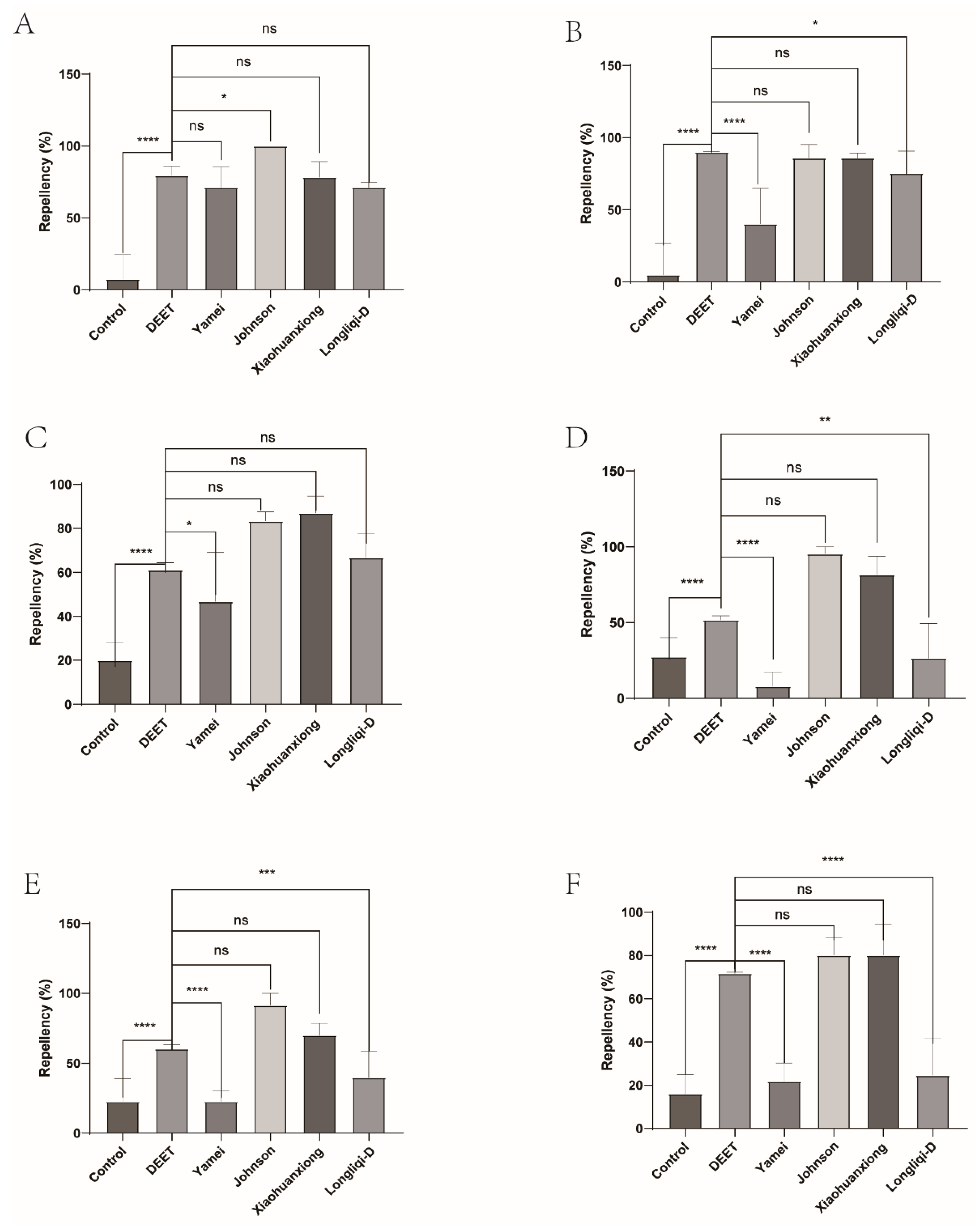
Figure 2.
Repellency of H. longicornis larvae over time after exposure to four commercial DEET-solved mosquito repellents. Note: A, Longliqi-D; B, Xiaohuanxiong; C, Johnson; D, Yamei. Different letters above the bars in the histogram indicate statistically significant differences, and hereinafter the same.
Figure 2.
Repellency of H. longicornis larvae over time after exposure to four commercial DEET-solved mosquito repellents. Note: A, Longliqi-D; B, Xiaohuanxiong; C, Johnson; D, Yamei. Different letters above the bars in the histogram indicate statistically significant differences, and hereinafter the same.
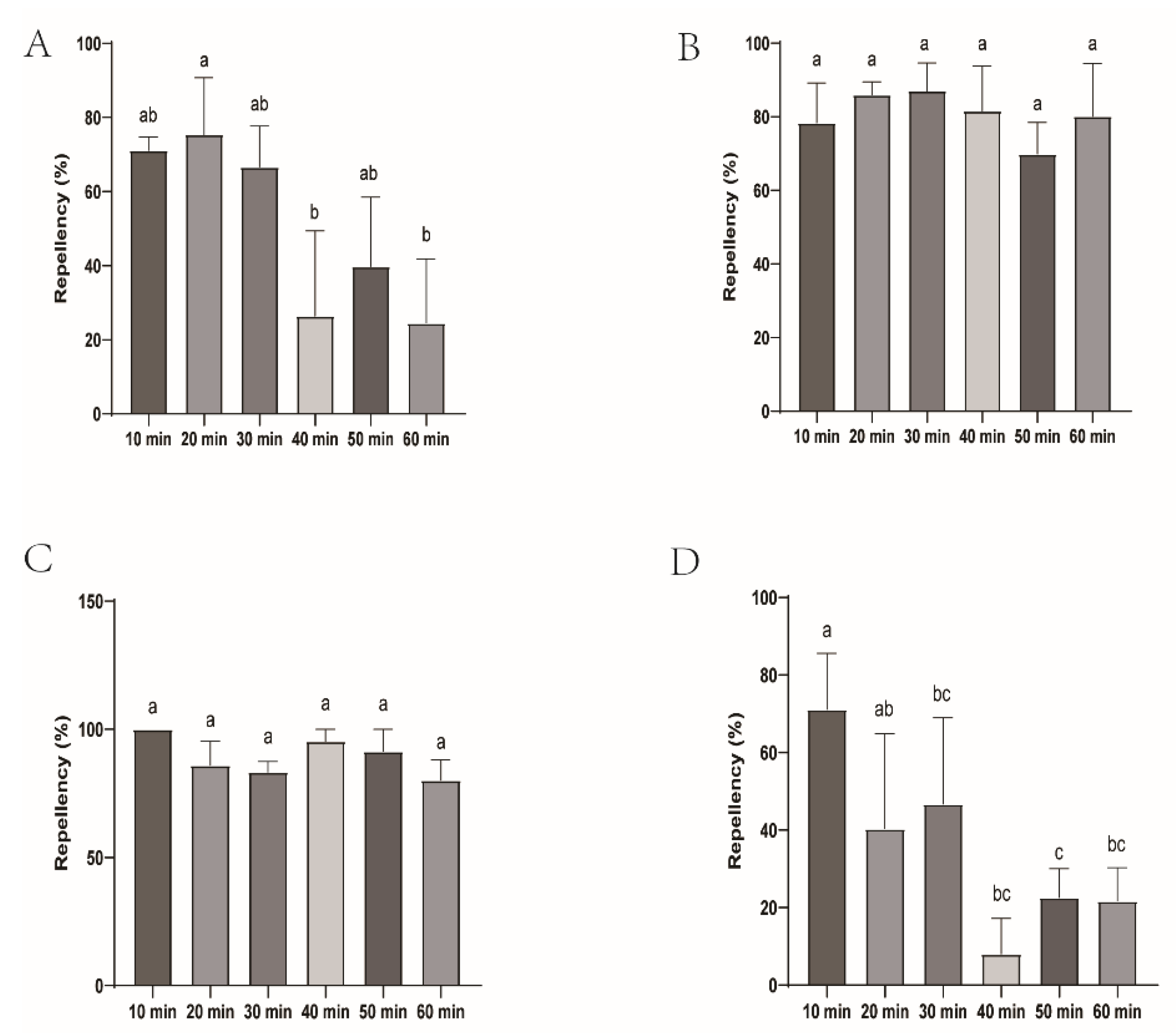
Figure 3.
The effect of four commercial DEET-solved mosquito repellents against H. longicornis nymphs. A, Repellency at 10 min post treatment; B, repellency at 20 min post treatment; C, repellency at 30 min post treatment; D, repellency at 40 min post treatment; E, repellency at 50 min post treatment; F, repellency at 60 min post treatment.
Figure 3.
The effect of four commercial DEET-solved mosquito repellents against H. longicornis nymphs. A, Repellency at 10 min post treatment; B, repellency at 20 min post treatment; C, repellency at 30 min post treatment; D, repellency at 40 min post treatment; E, repellency at 50 min post treatment; F, repellency at 60 min post treatment.
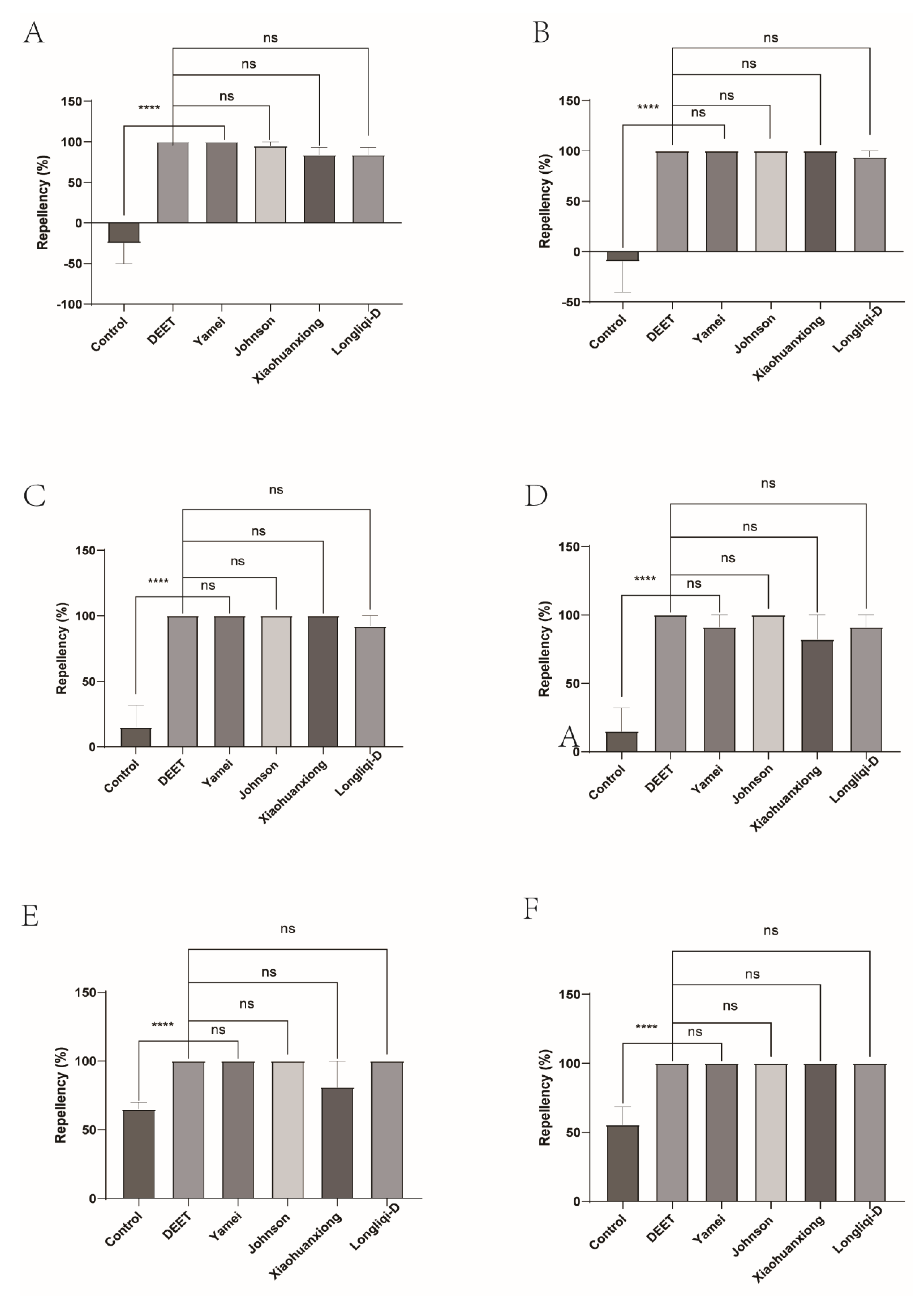
Figure 4.
Repellency of H. longicornis nymphs over time after exposure to four commercial DEET-solved mosquito repellents. A, Longliqi-D; B, Xiaohuanxiong; C, Johnson; D, Yamei.
Figure 4.
Repellency of H. longicornis nymphs over time after exposure to four commercial DEET-solved mosquito repellents. A, Longliqi-D; B, Xiaohuanxiong; C, Johnson; D, Yamei.
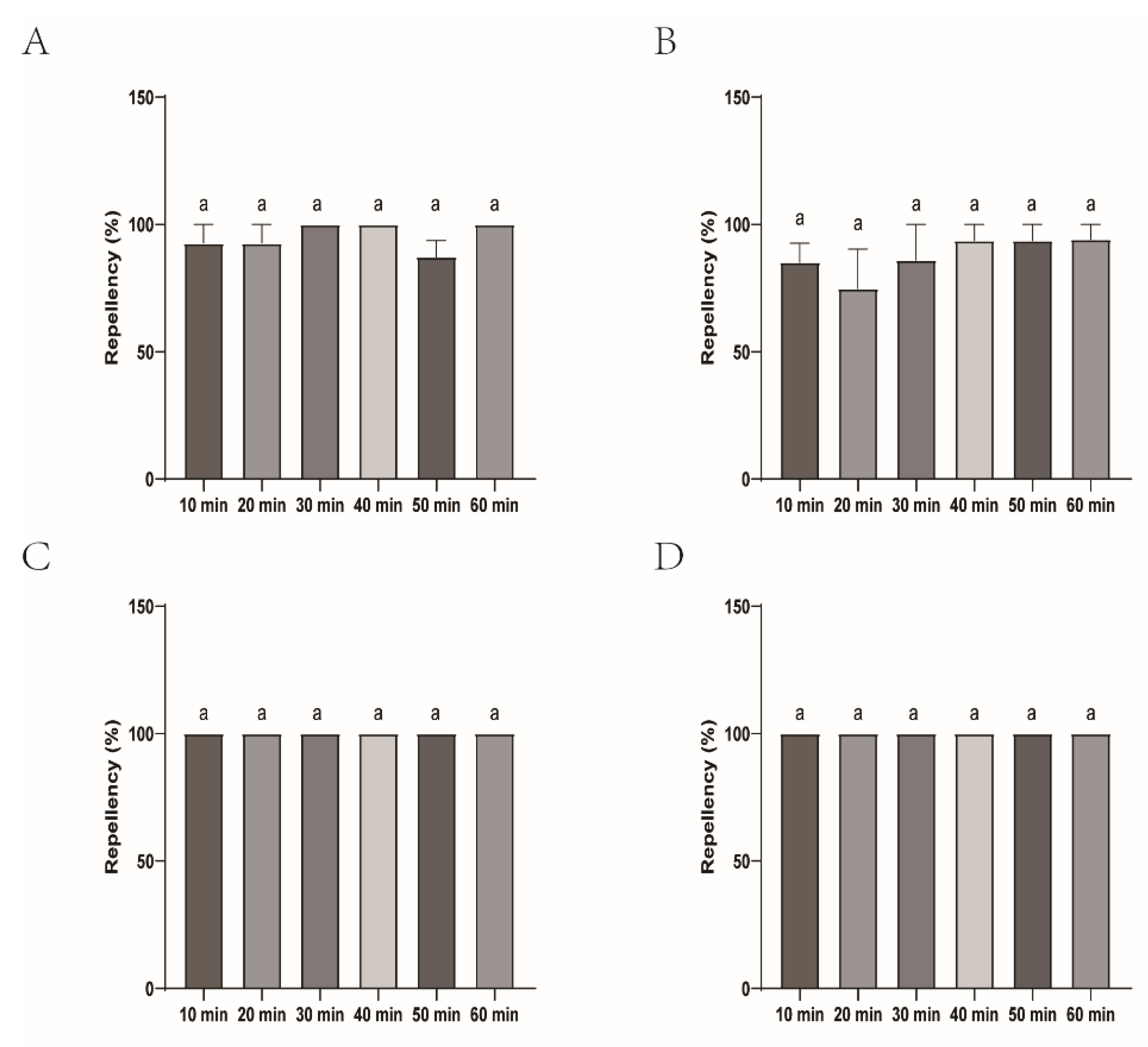
Figure 5.
The effect of four commercial DEET-solved mosquito repellents against H. longicornis females. A, Repellency at 10 min post treatment; B, repellency at 20 min post treatment; C, repellency at 30 min post treatment; D, repellency at 40 min post treatment; E, repellency at 50 min post treatment; F, repellency at 60 min post treatment.
Figure 5.
The effect of four commercial DEET-solved mosquito repellents against H. longicornis females. A, Repellency at 10 min post treatment; B, repellency at 20 min post treatment; C, repellency at 30 min post treatment; D, repellency at 40 min post treatment; E, repellency at 50 min post treatment; F, repellency at 60 min post treatment.
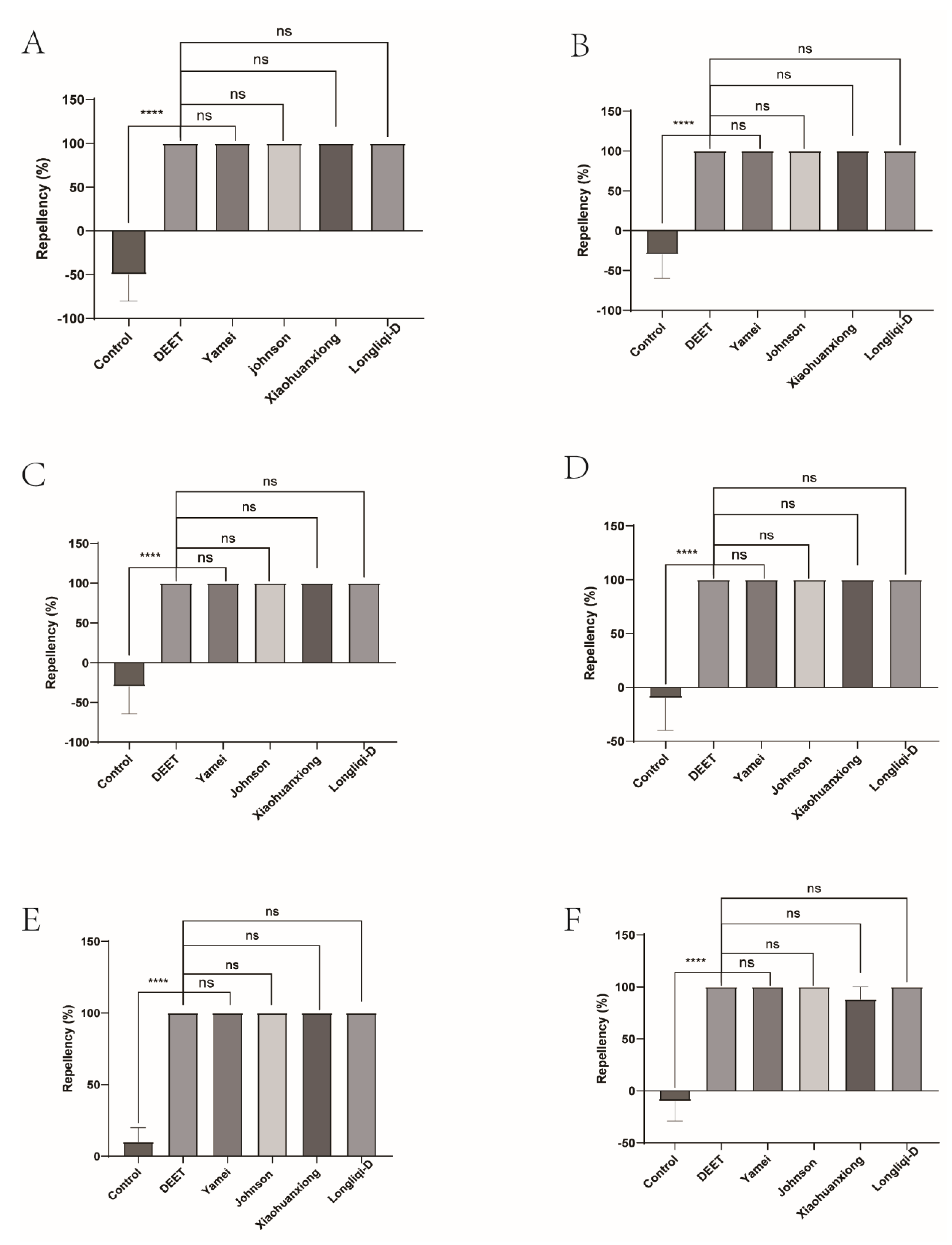
Figure 6.
Repellency of H. longicornis females over time after exposure to four commercial DEET-solved mosquito repellents. A, Longliqi-D; B, Xiaohuanxiong; C, Johnson; D, Yamei.
Figure 6.
Repellency of H. longicornis females over time after exposure to four commercial DEET-solved mosquito repellents. A, Longliqi-D; B, Xiaohuanxiong; C, Johnson; D, Yamei.
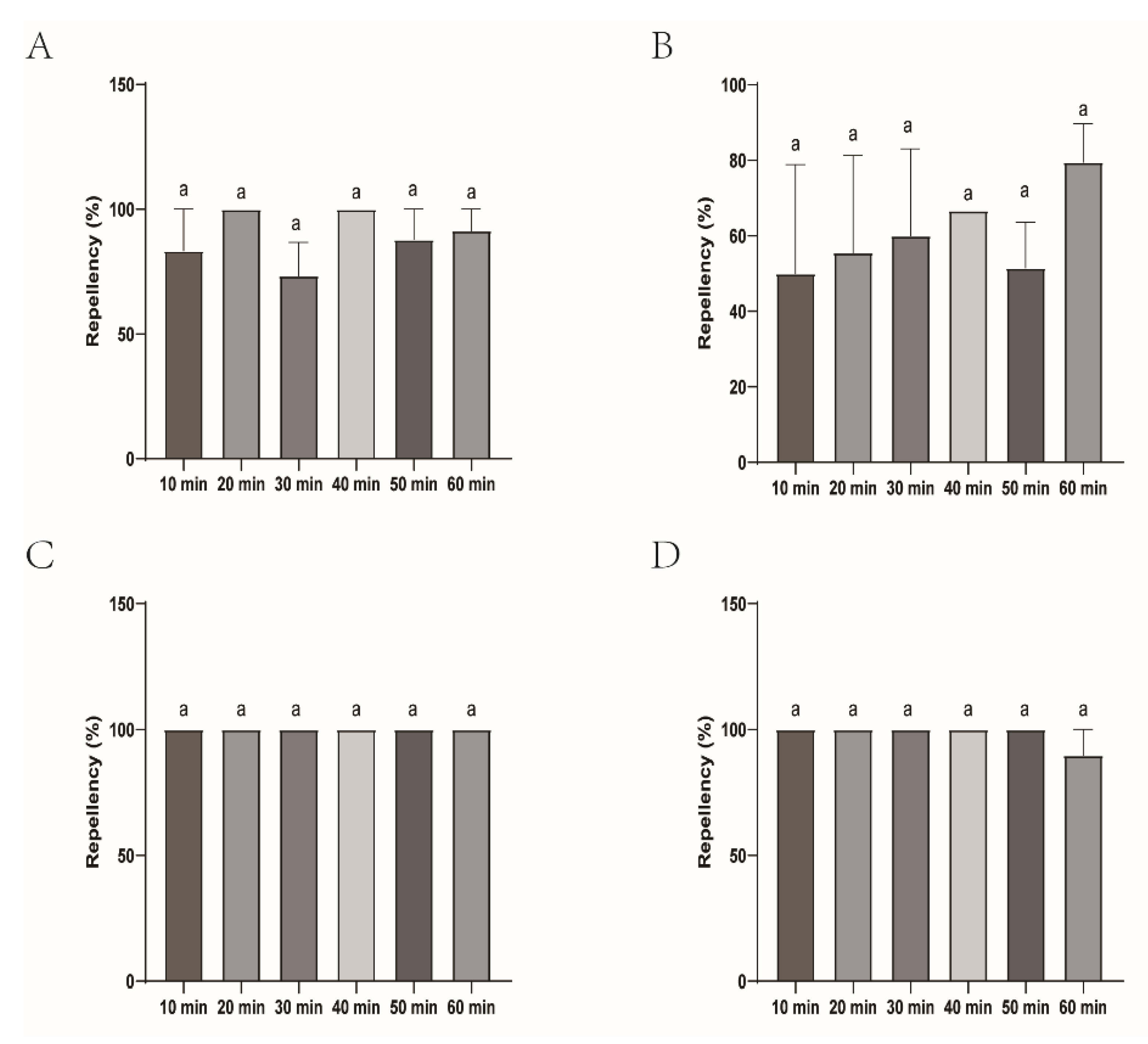
Figure 7.
The effect of the four commercial biont-based mosquito repellents against H. longicornis larvae. A, Repellency at 10 min post treatment; B, repellency at 20 min post treatment; C, repellency at 30 min post treatment; D, repellency at 40 min post treatment; E, repellency at 50 min post treatment; F, repellency at 60 min post treatment.
Figure 7.
The effect of the four commercial biont-based mosquito repellents against H. longicornis larvae. A, Repellency at 10 min post treatment; B, repellency at 20 min post treatment; C, repellency at 30 min post treatment; D, repellency at 40 min post treatment; E, repellency at 50 min post treatment; F, repellency at 60 min post treatment.
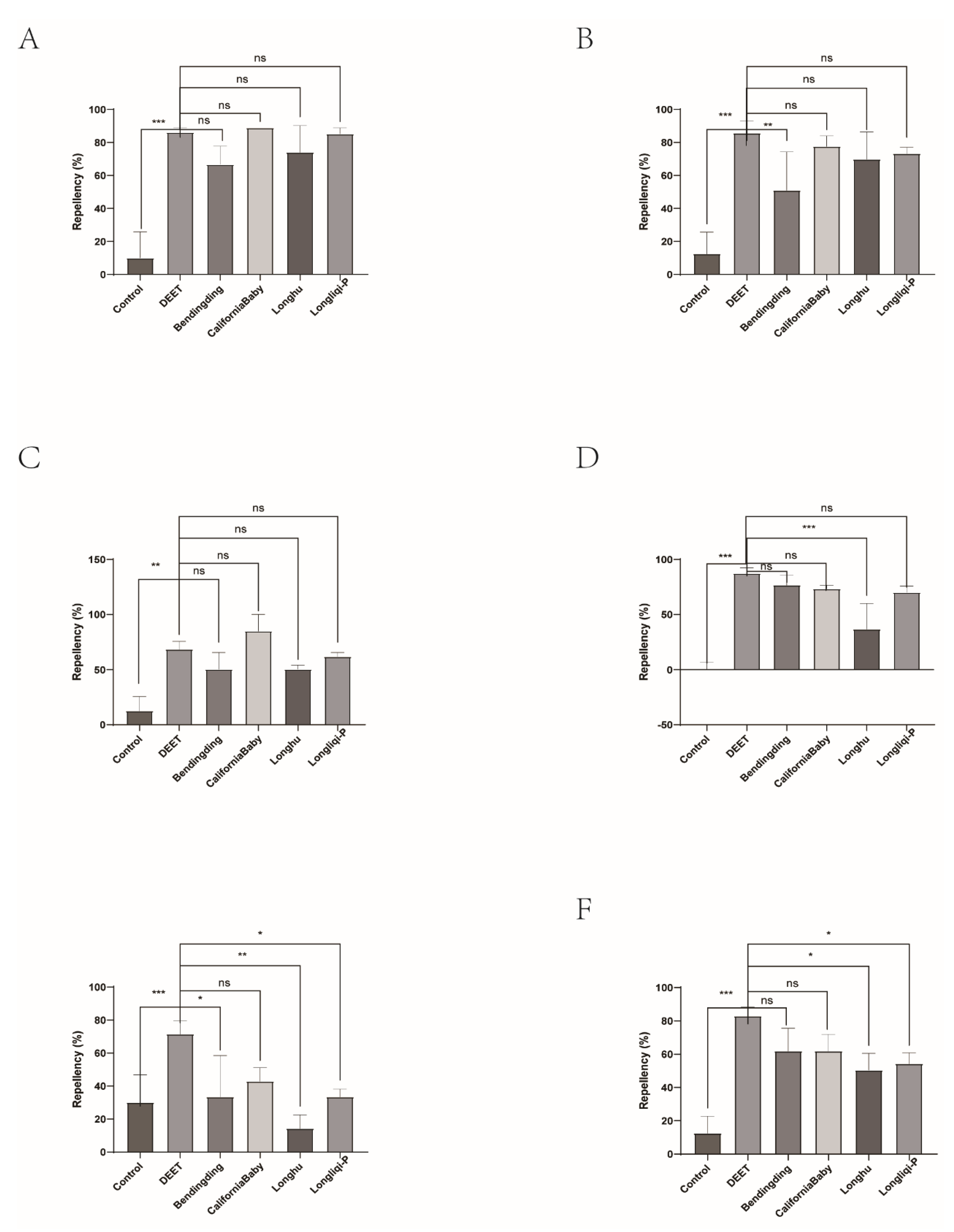
Figure 8.
Repellency of H. longicornis larvae over time after exposure to the four commercial biont-based mosquito repellents. A, Longliqi-P; B, Longhu; C, CaliforniaBaby; D, Bendingding.
Figure 8.
Repellency of H. longicornis larvae over time after exposure to the four commercial biont-based mosquito repellents. A, Longliqi-P; B, Longhu; C, CaliforniaBaby; D, Bendingding.
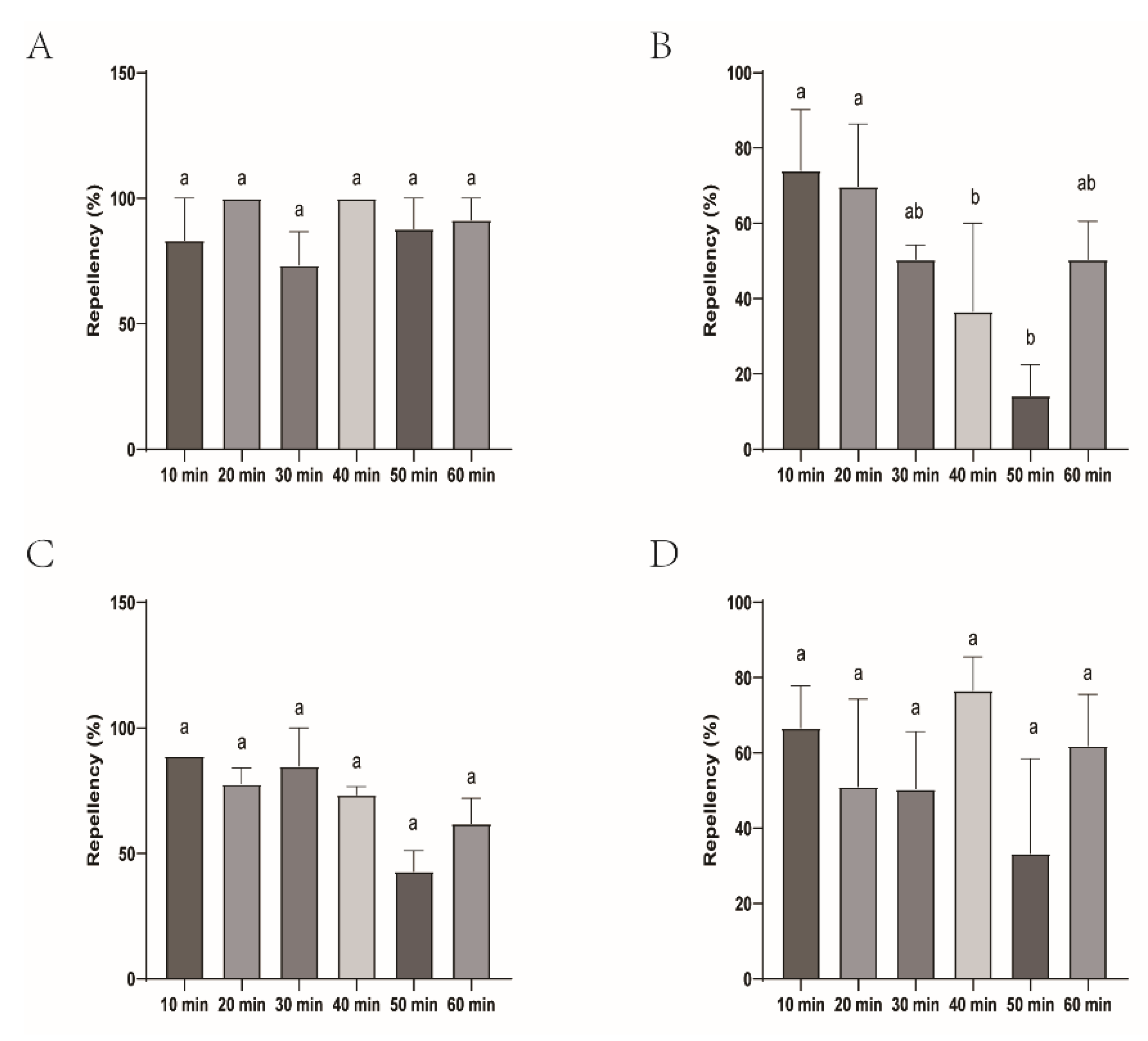
Figure 9.
The effect of the four commercial biont-based mosquito repellents against H. longicornis nymphs. A, Repellency at 10 min post treatment; B, repellency at 20 min post treatment; C, repellency at 30 min post treatment; D, repellency at 40 min post treatment; E, repellency at 50 min post treatment; F, repellency at 60 min post treatment.
Figure 9.
The effect of the four commercial biont-based mosquito repellents against H. longicornis nymphs. A, Repellency at 10 min post treatment; B, repellency at 20 min post treatment; C, repellency at 30 min post treatment; D, repellency at 40 min post treatment; E, repellency at 50 min post treatment; F, repellency at 60 min post treatment.
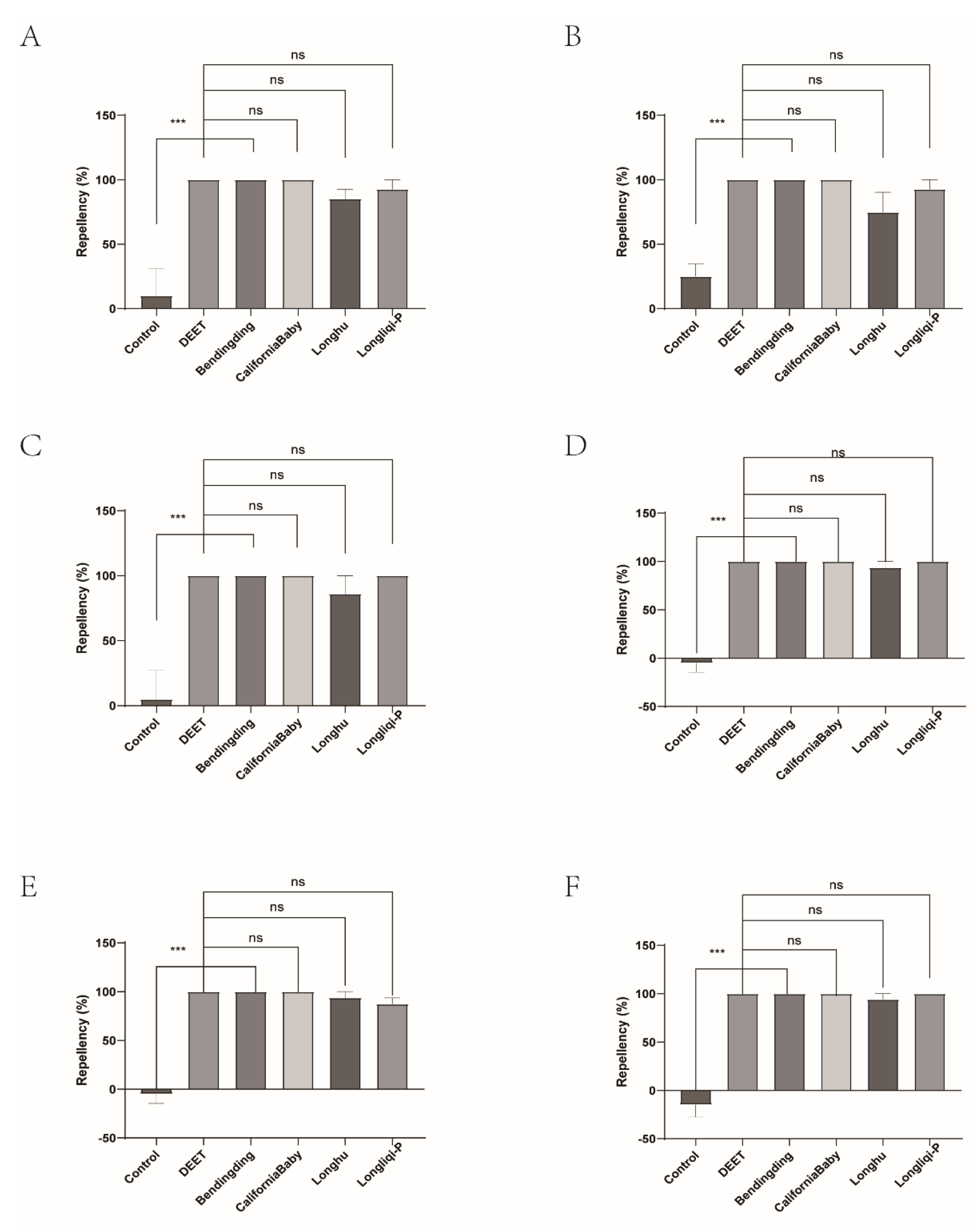
Figure 10.
Repellency of H. longicornis nymphs over time after exposure to the four commercial biont-based mosquito repellents. A, Longliqi-P; B, Longhu; C, CaliforniaBaby; D, Bendingding.
Figure 10.
Repellency of H. longicornis nymphs over time after exposure to the four commercial biont-based mosquito repellents. A, Longliqi-P; B, Longhu; C, CaliforniaBaby; D, Bendingding.
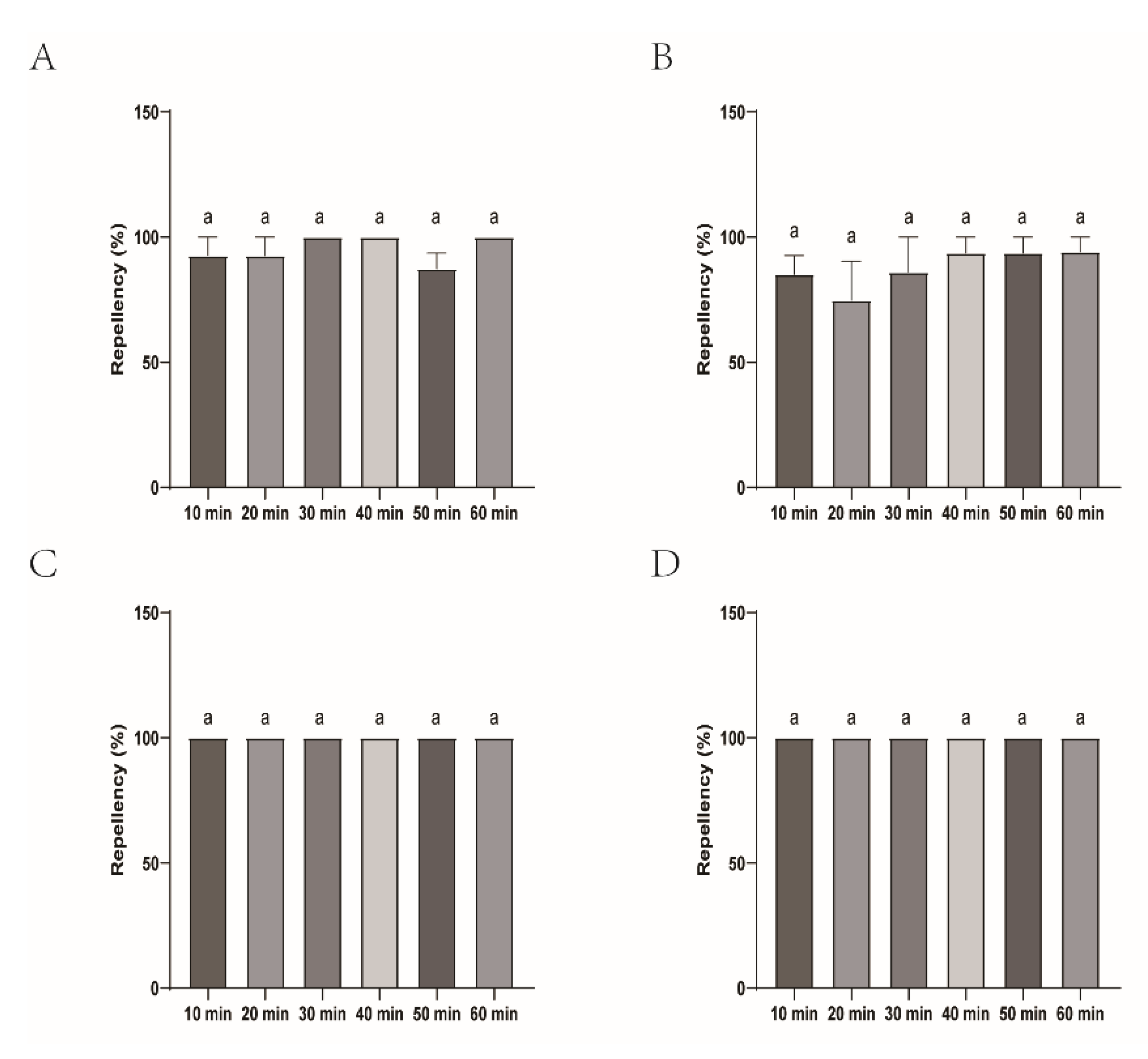
Figure 11.
The effect of the four commercial biont-based mosquito repellents against H. longicornis females. A, Repellency at 10 min post treatment; B, repellency at 20 min post treatment; C, repellency at 30 min post treatment; D, repellency at 40 min post treatment; E, repellency at 50 min post treatment; F, repellency at 60 min post treatment.
Figure 11.
The effect of the four commercial biont-based mosquito repellents against H. longicornis females. A, Repellency at 10 min post treatment; B, repellency at 20 min post treatment; C, repellency at 30 min post treatment; D, repellency at 40 min post treatment; E, repellency at 50 min post treatment; F, repellency at 60 min post treatment.
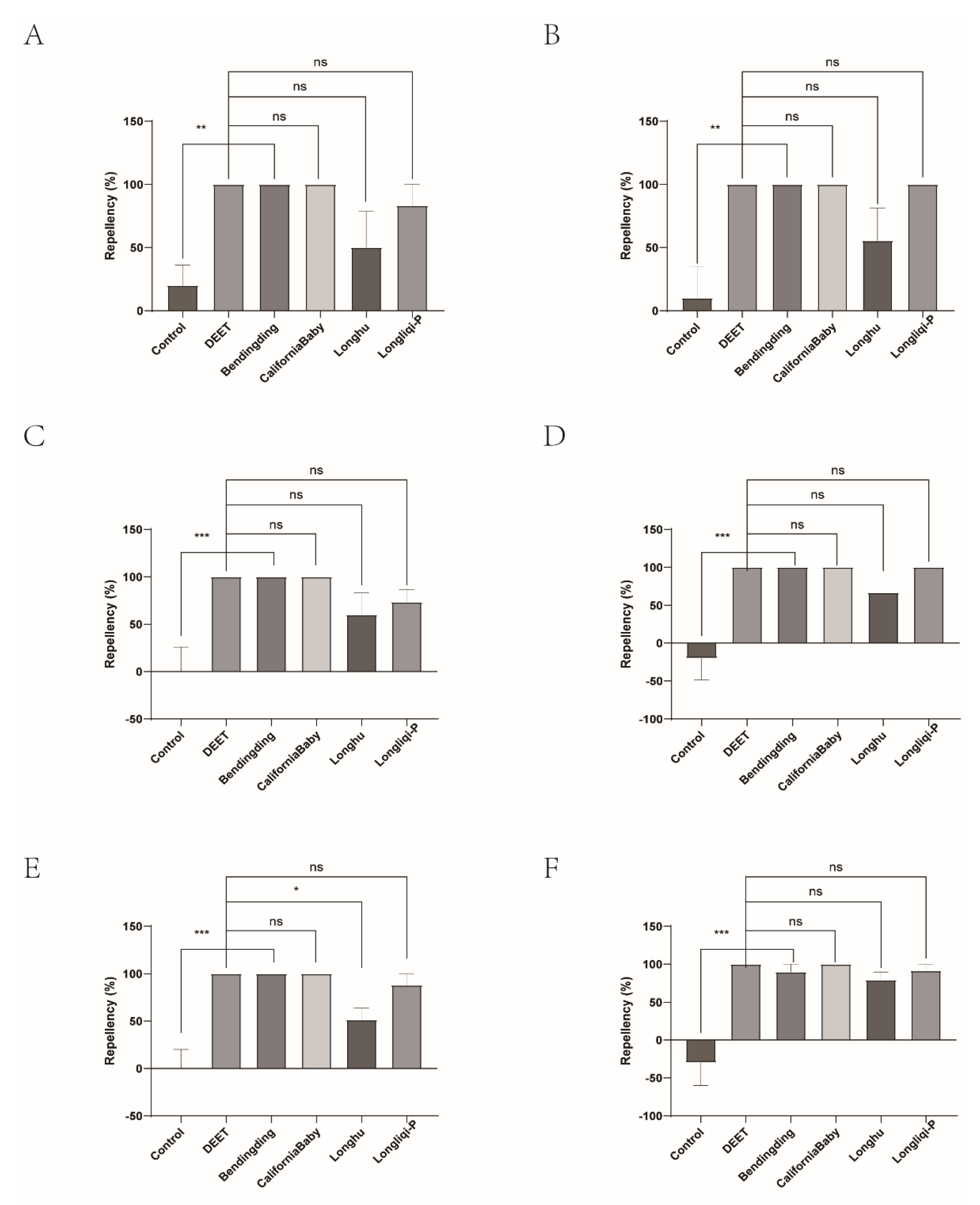
Figure 12.
Repellency of H. longicornis females over time after exposure to the four commercial biont-based mosquito repellents. A, Longliqi-P; B, Longhu; C, CaliforniaBaby; D, Bendingding.
Figure 12.
Repellency of H. longicornis females over time after exposure to the four commercial biont-based mosquito repellents. A, Longliqi-P; B, Longhu; C, CaliforniaBaby; D, Bendingding.
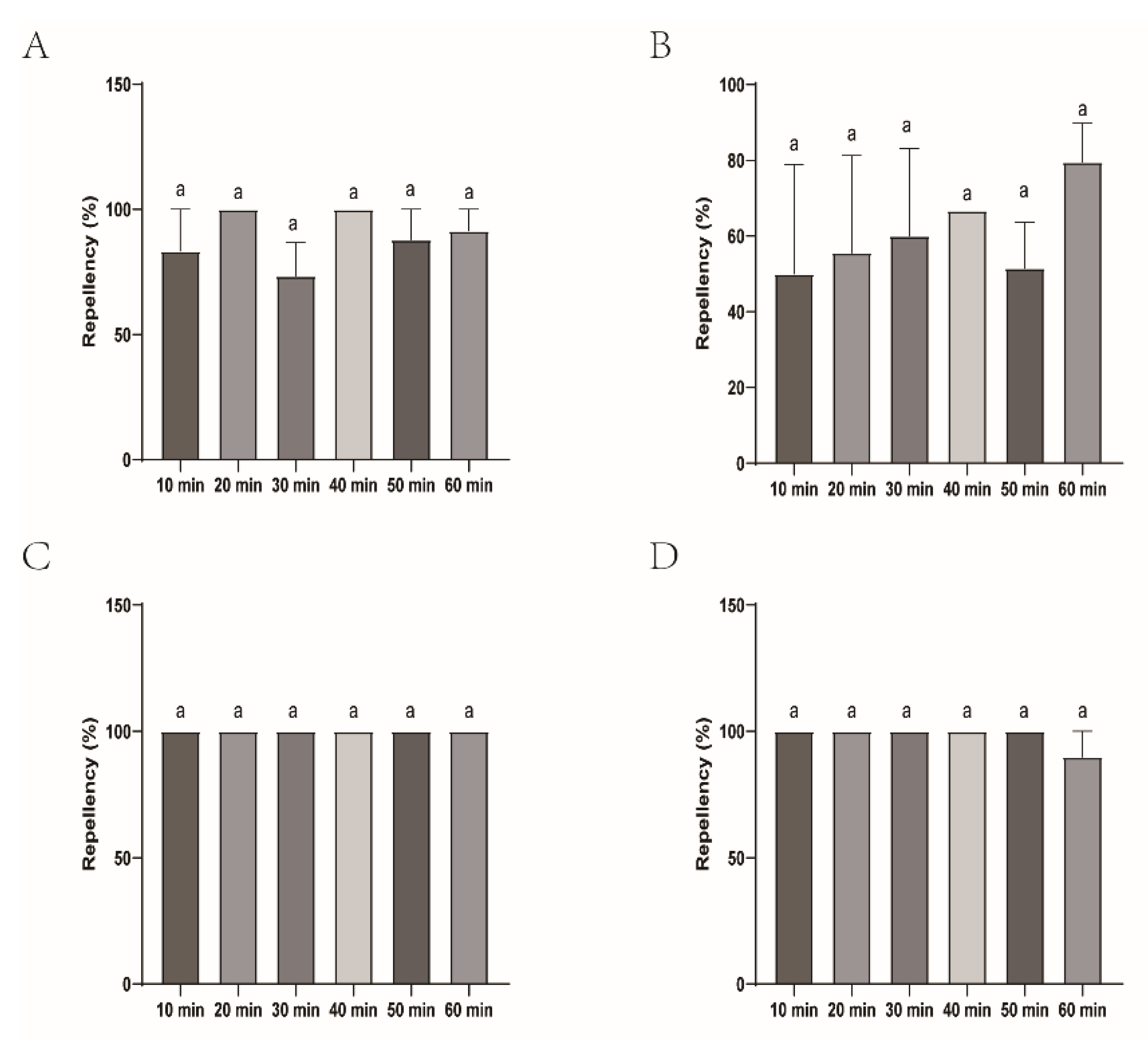

Table 1.
Widely available mosquito repellents tested in this study.
| No. | Product | Component | No. | Product | Component |
| 1 | Yamei | 10%DEET | 5 | Longhu | Geranium extract and clove leaf oil |
| 2 | Longliqi-D | 5%DEET | 6 | Longliqi-P | Snake bile extract |
| 3 | Johnson | 7%DEET | 7 | CaliforniaBaby | Extracts of citronella grass and East Indian lemongrass |
| 4 | Xiaohuanxiong | 5%DEET | 8 | Bendingding | Lemongrass essential oil |
Table 2.
Repellency index (±SE) of CaliforniaBaby after different drying times in hours in unfed H. longicornis nymphs.
Table 2.
Repellency index (±SE) of CaliforniaBaby after different drying times in hours in unfed H. longicornis nymphs.
| Product | Time (hours) | Repellency (%) | Classification |
| Control | 2 | 13.33±13.33 | Neutral |
| 4 | 3.70±9.94 | Neutral | |
| 6 | 12±5.95 | Neutral | |
| DEET | 2 | 76.92±13.32 | Repellent |
| 4 | 84.62±6.92 | Repellent | |
| 6 | 92.31±7.58 | Repellent | |
| CaliforniaBaby | 2 | 76.92±13.32 | Repellent |
| 4 | 76.13±11.99 | Repellent | |
| 6 | 84.62±7.58 | Repellent |
Disclaimer/Publisher’s Note: The statements, opinions and data contained in all publications are solely those of the individual author(s) and contributor(s) and not of MDPI and/or the editor(s). MDPI and/or the editor(s) disclaim responsibility for any injury to people or property resulting from any ideas, methods, instructions or products referred to in the content. |
© 2025 by the authors. Licensee MDPI, Basel, Switzerland. This article is an open access article distributed under the terms and conditions of the Creative Commons Attribution (CC BY) license (https://creativecommons.org/licenses/by/4.0/).
Copyright: This open access article is published under a Creative Commons CC BY 4.0 license, which permit the free download, distribution, and reuse, provided that the author and preprint are cited in any reuse.