
Submitted:
22 March 2025
Posted:
25 March 2025
You are already at the latest version
Abstract
This paper presents a case study using an exploratory method for investigating the integrated curriculum of Piet Mondrian’s artwork in Louvre-Abu Dhabi and the geometry precisely circles and circumference. Twenty-five students selected based on their advanced level in mathematics in grade 10 from a Cycle 3 girl public school in Abu Dhabi. The school has implemented the Louvre Ambassadors Program for 2 years from 2019 to 2021; to enhance the use of place-based learning (PBE) through museum education for promoting students’ academic achievement and students’ wellbeing. The result of this study demonstrated the 3 lessons of geometry integrated with Piet Mondrian conducted in Louvre Abu Dhabi; showed effective pace on students’ attainment and progress in mathematics while applying their learning in real-life activity.
Keywords:
attainment and progress
; integrated curriculum
; Louvre Abu Dhabi
; museum literacy
; Piet Mondrian
1. Introduction
Museums in Abu Dhabi are starting to shape a new era for the city of educational resources through developing the concept of museum literacy that encompasses a range of skills and knowledge, enabling learners to understand and appreciate the content and context of museum displays. The Louvre Abu Dhabi is the space where the phenomenon of integrated educational curriculum evolves. It is the space where a bundle of skills enhances both teachers’ and learners’ experience by making their visit more meaningful, educational, and achievable. However, empowering learners to engage deeply with museum content and to foster a lifelong appreciation for learning and cultural enrichment require a proper educational program and effective teaching and learning approach that present a shift towards more dynamic, engaging, and relevant form of education, preparing students for complexities and challenges of the modern world.
In the case of mathematics educational curriculum, teachers of mathematics usually have beliefs regarding the roles of explanations in the classroom. In their chapter book, Levenson, E., & Barkai, R. (2017) indicate that more emphasis is put on building content knowledge than on developing a mathematical disposition, which reflects on teachers’ beliefs regarding teaching and learning of mathematics in the classroom. Other teaching practices show that some teachers recognize the importance of integration and interdisciplinary approaches in implementing mathematics educational curriculum, so they attempted to develop the skills of their students in problem-solving in mathematics by involving them in reading literature and conducting problem-solving lessons in their classes (Palmér, H., & Karlsson, L. 2017).
In 2019, the A Girls’ School in Abu Dhabi for Cycle 2 and Cycle 3 (Cycle 2 is the intermediate while Cycle 3 is the high school) created educational accelerators for the school action plan, aiming to develop the teaching and learning at the school learning community throughout an integrated approach of work based on innovating better educational solutions and dynamic teaching and learning models out of using pioneer developed e-learning tools and modern pedagogies. There were five accelerators to promote students’ academic achievement and students’ personal development. One of the educational accelerators of the school in the domain of students’ academic achievement was the Louvre Ambassadors. This accelerator was an academic strategy designed by the school’s principal and the lead teachers for every subject with the focus on mathematics and languages, in order to bridge the gap and meet the requirements of students’ academic achievement in mathematics and literacy in general.
2. Problem
The A school went through inspections, and it was preparing for the 3rd round of the inspection. The school’s self-evaluation form 2018 showed the key areas for improvement based on its 2nd round final inspection report. The key areas for improvement on students’ academic achievement (attainment and progress) specified increasing students’ participation in their learning - with more student reflections and surveys to assist teachers/administrators in giving students quality instruction that fits all needs. This includes Cycle 3 in the integrated subject project which promotes innovation and depth of learning (project-based) and focusing on teacher’s pedagogy and creativity and the use of school wide strategies that are designed in educational accelerators for the school. These key areas are related to the review and analysis of the evidence of the students’ academic performance in every subject. Highlighting the evidence of CA (continuous assessment) of mathematics and considering the analysis results of Grade 10 Advanced students, the results indicated that 96% of them achieved the acceptable range. The final inspection report according to the evidence and the analysis of the results for the whole school grade level including Grade 10 Advanced students, recommended prioritizing the focus on Integrated Mathematics to improve every grade level’s attainment and progress in mathematics.
3. Literature Review
3.1. Museum Education
Research on the intersection of museums and education has been ongoing for several decades (Larrabee, 1968; Koren & Koren, 1986; Maarschalk, 1988; Bloom & Mintz,1990). Scholars have consistently recognized the significance of museal collections in enhancing learning outcomes (Bonner, 1985; Watkins, 1994; Rennie & McClarfferty, 1995). A significant point of contention has been the role of instructors, with debate centering on whether classroom teachers or museum staff should take the lead. Notable discussion regarding the educational roles of museum staff emerged around the turn of the twenty-first century (Hooper-Greenhill, 1999a, 1999b, 2007; Hein, 2004, 2006), echoing similar dialogues in library education led by figures like Killcullen and Julien.
Museum education encompasses both formal and informal interpretation (Hooper-Greenhill, 1999a, 1999b). Informal education typically involves scheduled discussions with curators, staff, or docents in exhibit halls. These discussions are characterized by a conversational style and less structured format, requiring skills like effective instructional techniques. In contrast, formal museum education, increasingly common in recent years, occurs within classroom settings and parallels information literacy instruction in academic libraries (Marcus, 2008; Kratz & Merritt, 2011; Clark et al. 2016). This formal instruction may cover artifact analysis, historical contexts, or museum literacy skills such as interpretation techniques and archival methods.
Museums, akin to libraries, have been identified as a conducive environment and potential employment opportunity for individuals with disabilities, including autism, due to their supportive culture. (Hill, 2013; Greenberg & Levinsky-Raskin, 2017; Ng et al., 2017; Lund, 2018; Theriault & Jones, 2018). Furthermore, museums, like libraries, offer non-traditional learning experiences, a topic of growing research interest (Burnham & Kai-Kee, 2005, 2011; Foutz & Emmons, 2017; Nevins, 2018; Murphy & Rose, 2019).
While museums have historically possessed educational facts (Falk, 2004; Hein, 2005), it’s only in recent decades that the field has witnessed an increasing interest in museums as educational institutions. Although the origin of museums can be traced back to antiquity (Arnold, 2006; Impey & MacGregor, 2001), the modern museum finds its roots in the cabinets of curiosity that emerged in the 16th century. Historians such as Impey and Macgregor have linked the inception of museums to these eclectic collections. Typically, affluent members of society maintained extensive collections of items that intrigued them, laying the foundation for the diverse collections found in modern museums. Initially, these collections were showcased in private venues and occasionally opened to the public for special events, with most becoming public only upon being bequeathed to universities or governments. Various structures, including buildings, warehouses, and separate rooms, were repurposed to house these collections, serving as precursors to modern museums. Formal museums gradually emerged during the 18th and 19th centuries, adopting administrative structures focused on the collection and preservation of the objects (Arnold; Impey & MacGregor).
The concept of museums as warehouses for objects persisted into the 19th century. Despite their primary function being storage and conversation, scholars recognized the value of education. Scholars emphasized the significance of object-centered learning (Paris, 2002; Rice & Yenawine, 2003) and the advantages of studying authentic objects over relying solely on books and other sources (Paris). Scholarly engagement with museums continued to evolve as more universities acquired collections and public collections expanded.
During the industrial revolution, the burgeoning middle class and the popularization of leisure time prompted museums to broaden their accessibility to the public. While scholars continued to utilize museums for research and learning, the public had different expectations. Rather than seeking education, the public sought entertainment and enjoyment. Museums retained their character as cabinets of wonder and places of curiosity rather than centers of formal learning (Impey & MacGregor, 2001).
The contemporary landscape of museum education is marked by a growing emphasis on addressing current societal issues such as multiculturalism and globalization. As society evolves, museums find themselves in need of adaptation. The newfound focus on the visitors, as highlighted by scholars like Cohen (1998), Doering (1999), and Hooper-Greenhill (1999), has presented a challenge for museums. While the object has traditionally been central to museums, there is now a recognition that the needs of the visitor are equally, if not more, important. This poses a dilemma as museums are still structured according to a nineteenth-century model of object-centered administration, as noted by Martin (2004) and Warlick (2005). There is an increasing call for community outreach and inclusivity to cater to a broader audience, partly driven by the necessity for public funding. In the past, private funding sustained elite museums, but now there is a responsibility for museums to serve and benefit the community, given the support they receive from public funds and contributions (Cohen, 1998; Sheppard, 2000; Weil, 1997; Williamson, 2007). Consequently, museums offer diverse educational programming to fulfill their commitments to the community and meet expectations.
Wetterlund and Sayre (2003) conducted a comprehensive survey of art museums, identifying seven key areas in museum education programming:
- Tour programs
- Informal Gallery Learning Programs
- Community, Adult, and Family Programs
- Classes and other Public Programs
- Partnerships with Organizations
- School Programs
- Online Educational Programming
These areas represent significant developments in museum education, and while there is potential for museums to engage actively in each area, the distribution of programming varies. Factors such as administrative philosophy, collection, community needs, and resources influence the focus of museum education programming, impacting research and assessment activities. The reforms in museum education have necessitated changes in evaluation and assessment methods, with museums now required to demonstrate the qualitative value and impact of their institutions more comprehensively (Hicks, 1996; Martin, 2004).
3.2. Museum Literacy
A sociocultural approach to literacy suggests that literacy activities occur within a dynamic interplay between individual cognition and textual materials (Barton and Hamilton, 1998). Instead of adhering strictly to the author’s directives, individuals construct meanings based on their prior knowledge, experiences, and social practices, as described by Rosenblatt’s transactional model (1978). This model aligns with literacy studies perspectives, including Gee (1999) and Luke (1995), which argue that literacy unfolds within specific contexts and is shaped by the creation of situated meanings (Gee, 2002). Readers interpret texts through the lens of their own political, economic, religious, or ideological perspectives. Literacy, therefore, encompasses a range of social practices embedded within power dynamics (Lankshear and Lawler, 1987).
The nature of literacy practices evolves over time, particularly in the context of a globalized society where economic forces and technological advancements are reshaping communication. Emerging media forms such as computers, internet, e-books, and smartphones necessitate new knowledge, skills, and literacies (Knobel, 2006). Literacy now encompasses the intersection of language, knowledge, power, worldviews, and global/local issues, leading to emergence of critical literacy. Critical literacy involves navigating diverse languages and cultural meanings while critically engaging with both text and context (Freire, 2000; Macedo, 2006).
In contemporary discourse, museums are increasingly recognized as valuable sites for lifelong learning, prompting discussions on museum literacy. Stapp (1992) defines museum literacy as the ability to interpret text within its contextual framework. This requires individuals to develop competencies to critically engage with museums, including understanding the historical, social, and cultural discourses embedded within them (Schlereth, 1992; Bain and Ellenbogen, 2002; Stapp, 1992). Katrial (2001) likens museums to forms of cultural communication, suggesting that they shape meanings and serve as legitimizing institutions. Consequently, literacy studies in museums must consider the process of meaning-making when encountering various texts, such as labs, pictures, and objects (Robert, 1997).
At the core of critical literacy is the belief that literacy empowers individuals to derive meaning from texts and understand their societal impacts (Gee, 1999; The New London Group, 1996). Critical literacy entails questioning underlying attitudes, values, and beliefs embedded within written, visual, and spoken texts. In the context of museums, critical literacy involves analyzing textual meanings with an inquiry stance, integrating multiple perspectives, and taking social action to address inequalities and injustices. Literacy practices in museums are intertwined with political relations; ideological practices, and symbolic meanings, contributing to the construction of dominant narrative and voices (Barton, 1991; Street, 2001; Luke, 2002). Therefore, it is crucial to interrogate whose knowledge is presented, what is explicitly stated or left unspoken, and whether multiple voices are represented within museum exhibits (Lindauer, 2006).
Critical literacy studies within museum contexts have diversified significantly (Dubinsky, 1997). There is a growing recognition of museum literacy as an essential component of broader language studies, focusing on meaning-making processes, knowledge production, dissemination, and power dynamics. For instance, Coxall (1991) employed linguistic analysis to scrutinize museum texts, revealing how curators’ language choices reflect the museums’ ideological perspective. Similarly, Van Kraayenoord and Paris (2002) suggest parallels between interpreting textual and object-based exhibits, underscoring the influence of social and institutional relationships on knowledge production and distribution within museums. Roberts (1997) notes that encountering museum texts prompts viewers to construct narratives based on personal experiences, indicating a conscious or unconscious interpretation of the world through these texts.
Instruction in museum literacy should emphasize critical reading and writing skills. Hooper-Greenhill (1991) proposes educating museum audiences, particularly educators and researchers, about museums’ communicative systems, urging museums to facilitate rapid comprehension of their systems. It’s essential to recognize museums not as mere repositories of the past or venues for entertainment but as sites of power and knowledge shaping (Macdonald, 1998). The intersection of power, authority, and knowledge in museums warrants examination through critical literacy studies.
To move beyond surface-level interpretations of museum exhibits, readers must develop a critical understanding of both exhibited content and the broader societal context (Macedo, 2006). Critical museum literacy necessitates an inquiry-based approach to understand the social practices embedded in exhibits and museums. By doing so, individuals acknowledge the limitations of their own knowledge and position themselves as learners, open to diverse perspectives and cultural values (Lankshear & Lawler, 1987). When museum visitors embrace critical museum literacy, their perceptions and reactions to texts, objects, and symbols can undergo significant transformation, facilitating the transition of museum exhibits from mere knowledge transmission to narrative construction. In this process, literacy events and practices within museums can be shaped collaboratively by both museum staff and visitors, rather than being solely determined by the former (Roberts, 1997).
Kratz, S., & Merritt, E. (2011) provide a succinct overview of US educational innovation within museums and explore prevailing trends to discern which innovations may become mainstream in the future. Indicators flagging the destabilization of the current educational framework include growing discontent with conventional educational systems and the emergence of alternative modes of primary education. The widespread financial challenges at the local levels resulting from recent economic downturns may act as a catalyst for transformative change, potentially marking the end of the old educational paradigm. Simultaneously, advancements in technology pertaining to communication and content sharing, alongside shifting cultural norms regarding access, authority, and individualized learning experiences, may set the stage for innovative practices that will define the forthcoming educational era.
The declining era, sometimes referred to as the ‘institutional/teacher era’, was characterized by public schooling, professionally trained educators, and a standardized curriculum. Throughout this period, pedagogical methods predominantly involved teachers imparting knowledge in a unilateral manner, from instructor to student. It is anticipated that the next era will be driven by lifelong learners who draw upon a diverse array of resources, both conventional and unconventional, and engage in various forms of collaboration, sharing and utilization of educational materials. Over the coming decades, peripheral innovation is poised to reshape the organizational structure of learning, redefine the collective resources constituting the broader ‘school community’, and transform the learning experiences of individuals. Given their capacity to offer vital, experiential, multimodal, and interdisciplinary educational opportunities, museums are anticipated to assume a central role in this new era, surpassing their traditional role as mere supplementary destinations of educational outings. The ongoing proliferation of innovative educational practices beyond traditional schooling settings serves as an early indication of this impending transformation.
There is a growing consensus that irrespective of the specific contours of the new educational era, it will prioritize the cultivation of a core set of skills transcending subject-specific knowledge. This skill set, outlined in the ‘Framework for 21st century learning’ developed by the partnership for 21st century skills, encompasses critical thinking, information synthesis, real-world application, innovation, creativity, and teamwork. As children entering first grade today will soon enter the workforce, it is imperative for educators to imbue them with the requisite skills for success in a globalized economy. Employers are increasingly vocal about their preferences for candidates capable of more than mere rote memorization.
A survey commissioned by the Association of American Colleges and Universities in 2009, revealed that contemporary business seeks individuals adept at critical thinking, analytical reasoning, data synthesis, real-world application of abstract concepts, problem-solving, effective communication, and collaboration while on diverse teams. These are precisely the skills cultivated by museum educators through interactive engagement with visitors and students alike. Leveraging their expertise in delivering experiential, hands-on activities, role-playing scenarios, dynamic programming, and community outreach initiatives, museums serve as exemplars for reimagining traditional classroom environments to better foster these essential skills.
3.2.1. Louvre Abu Dhabi
Ajana, B. (2015) refers to the background of the Louvre Museum in Abu Dhabi that was conceived to be the inaugural ‘universal museum’ in the Arab region. The inception of Louvre Abu Dhabi stemmed from an intergovernmental accord between the United Arab Emirates and France, commencing in March 2007. It forms a part of the expansive Saadiyat Island project, spanning 27 square kilometers and located 500 m off the coast of Abu Dhabi’s urban hub. The overall development of this island, as outlined on Saadiyat’s webpage (saadiyat.ae), surpasses $27 billion. Alongside Louvre Abu Dhabi Saadiyat Cultural District will host prominent establishments like Zayed National Museum, Guggenheim Abu Dhabi, the Maritime Museum, and a Performing Arts Centre. These monumental ‘signature’ edifices were crafted by renowned architects such as Norman Foster, Frank Gehry, Tadao Ando, Zaha Hadid, and Jean Nouvel, the architect behind Louvre Abu Dhabi. The Department of Culture and Tourism (DCT) in Abu Dhabi portrays the island as “the only place in the world to house architecture designed by five individual Pritzker Prize winners […], an irresistible magnet attracting the world to Abu Dhabi, and taking Abu Dhabi to the world”.
3.2.2. Mathematics Curriculum Implementation in Out-of-School Learning Environment
Kayhan Altay, M., & Yetkin Özdemir, E. (2023), discuss how the learning environments outside of traditional school settings, such as parks, science centers, and museums, offer valuable opportunities for students to engage with diverse objects and artifacts, fostering interpretation and idea exchange based on their own perspectives, beliefs, and values (Anderson et al., 2002). Research suggests that these out-of-school learning experiences can effectively support the teaching of various subjects when integrated with educational programs and implemented thoughtfully (de Freitas & Bentley, 2012; Holmes, 2011; Johnson and Chandler, 2009).
While out-of-school learning environments provide rich resources for disciplines like science, history, and arts, opportunities for mathematics education are notably limited (Caniglia, 2003; Guberman et al., 1999; Nicol, 2002; Sędzielarz and Robinson, 2007; Seligmann, 2014). Consequently, teachers often rely on their own materials and experiences to teach mathematics outside the classroom (Johnson and Chandler, 2209). Limited research has explored ways to support teachers in utilizing out-of-school experiences to design instructional activities, with some studies investigating how prospective and in-service teachers can integrate mathematics in informal learning settings.
For example, Nicol (2002) examined how prospective teachers incorporated actual workplace visits into high school mathematics instruction, revealing the challenges they encountered in connecting mathematical concepts to real-world applications.. Similarly, preservice teachers in Johnson and Chandler’s (2009) study visited the North Carolina Battleship and reported positive experiences, though they struggled to apply these experiences in future teaching. Other studies involved teachers visiting historical sites and museums to explore mathematics concepts (Caniglia, 2003; Munakata, 2005), but participants often found it challenging to integrate informal learning experiences into their mathematics teaching plans.
Despite recognizing the value of out-of-school learning experiences, participants in these studies struggled to identify mathematical concepts relevant to those contexts and faced difficulties in effectively incorporating them into their teaching practices (Nicol, 2002; Popovic, 2011). Many teachers require additional support and guidance to make meaningful connections and design instructional activities (Johnson and Chandler, 2009; Nicol, 2002; Popovic, 2011). Overall, these findings underscore the need for further research to explore how both in-service and preservice teachers engage with out-of-school learning environments and leverage their experiences to develop teaching strategies and projects.
3.2.3. Integrated Curriculum-Math and Visual Arts
According to Mohtashami, M., & Scher, J.M. (2000) Bloom’s Taxonomy serves as a framework of terminology to delineate the various levels of intellectual engagement observed during the process of learning. Primarily focused on the cognitive domain, which pertains to the cultivation of intellectual capabilities and problem-solving acumen, it stands in contrast to the effective domain, which underscores emotions, interests, values, and physical skills. They refer to the endeavor to construct a taxonomy of learning initiated in 1948 by a consortium educational psychologist, resulting in Benjamin Bloom’s groundbreaking work in 1956. Within the cognitive domain, distinct categories are outlined, with the highest tier reflecting the pinnacle of critical thinking skills:
VI Evaluation: assessing the merit of information for a specific purpose.
V Synthesis: Integrating disparate elements in varied ways to create something new.
IV Analysis: Breaking down acquired knowledge into its constituent parts to enhance comprehension of its structure.
III Application: Utilizing learned materials in novel or unfamiliar contexts.
II Comprehension: Basic understanding surpassing mere recall, involving the ability to grasp the significance of information.
3.2.4. Knowledge: Recollection of Previously Acquired Material
As Mohtashami, M., & Scher, J.M. (2000) state that evaluation, synthesis, and analysis ae commonly denoted as higher-order thinking skills, whereas application, comprehension, and knowledge constitute foundational skills. It is widely acknowledged that a hierarchical structure exists, suggesting that higher-order thinking skills cannot be effectively addressed without first covering the level beneath them. They added that Bloom’s taxonomy finds extensive application in K-12 educational settings and, to a lesser extent, in university environments. Teacher training programs often emphasize the incorporation of Bloom’s taxonomy into daily lesson planning, with the help of resources such as sets of keywords, model questions, and verbs (e.g., John Maynard’s contributions at the University of Texas) available to aid educators in crafting examinations and assignments that address each level of the taxonomy.
In his paper on Piet Mondrian, Robin Ward advocates the integration of visual arts, literature and mathematics arguing that the visual arts offer an exceptional and distinctive platform for students to articulate their thoughts, concepts, and emotions. Specifically, encompassing a spectrum from drawing, painting, sculpture, and design to architecture, film, video and folk arts, the visual arts embody mathematical concepts, enabling students to explore interconnected ideas such as patterns, lines, shapes, and forms. With an increasing body of evidence indicating that arts education shares fundamental principles with other academic disciplines, the integration of arts across various content areas is becoming more prevalent. Moreover, by comprehending the characteristics of visual arts and mathematics inherent with them, students can collaboratively engage in communication, reasoning, and investigation- activities strongly promoted by both NCTM (1989, 2000) and MENC (1994). MENC (1994) has set forth the goal in its National Standards for Arts Education to “help students make connections between concepts and across subjects” (p.13), as the learning tasks delineated in these standards act as “bridges among the arts disciplines, and finally as gateways from the arts to other areas of study” (p. 13). Similarly, NCTM (2000) echoes these sentiments, emphasizing the necessity for students’ mathematical experiences to include opportunities for connections to other subject areas and disciplines, particularly acknowledging mathematics’ integration into music, art, science, and social studies. Furthermore, the integration of children’s literature into mathematics education is gaining momentum. An expanding body of research and anecdotal evidence underscores the potential and efficacy of utilizing children’s literature in mathematics classrooms. As many mathematical concepts are abstract or symbolic in nature, children’s literature provides teachers with an avenue to introduce and discuss these concepts within the context of a narrative, employing illustrations, prose, and colloquial language. Consequently, this approach can render the learning of mathematics less daunting and more captivating, especially for students whose primary language is not English. In addition, employing children’s literature to teach mathematics furnishes students with additional opportunities, encouragement, and support for oral communication, writing, reading, and listening in mathematics classes, while various literary genres, such as biographies and poetry, can animate the learning of mathematics, alongside other content areas and visual arts.
In his chapter book: Geometry - Daughter of Art, Mother of Mathematics, Weiss, G. (2015) identified the relationship between mathematics, and more specifically geometry, and art. He asserts that mathematics draws foundational concepts from art and architecture through geometric abstraction. Initially, adorned temples or practical objects provided a canvas of 3D forms embellished with 2D patterns, revealing symmetries and symmetry groups that later became pivotal in mathematical discourse. Even today, geometry and mathematics continue to draw inspiration from realms of art and architecture. Figures such as Hans van der Laan and Lambert Rosenbusch present 3D extensions of the Golden Mean, sparking exploration among geometers and mathematics for further generalization while architectural challenges, like embellishing freeform structures, prompt differential geometers and mathematicians to delve into the intricacies of geodesic networks on diverse surfaces. Moreover, the architectural exploration of origami’s applications has recently gained significant attention. Additionally, architects’ demand for advanced computer-aided design tools propels the ongoing revolution of relevant software. In summary, architecture, alongside the often-overlooked fields of mechanical engineering and natural sciences, has historically and continuously served as a catalyst for advancements in geometry and mathematics throughout human history.
3.2.5. Piet Mondrian
Johnson, M. G., Muday, J. A., & Schirillo, J. A. (2010) review the characteristics of Piet Mondrian’s integrated approach. They noted that Mondrian initially produced naturalistic landscape characterized by darker hues and subdued tones. However, his artistic trajectory shifted significantly upon his immersion into the theosophical movement spearheaded by Helena Petrovna Blavatsky in the late 19th century, leading him to join the Dutch Theosophic Society in 1909. Blavatsky posited the attainment of a deeper understanding of nature beyond empirical or scientific means, inspiring Mondrian’s lifelong quest for spiritual enlightenment. By 1913, he began integrating his art with his theosophical inquiries, marking his departure from representational painting, and by late 1919, he embarked on creating his iconic grid-based artworks. They clarify that Mondrian’s doctrine, termed Neoplasticism, emerged during this period. Together with fellow artists, notably Theo Van Doesburg, he formed De Stijl (The Style) movement around the time of World War I. Advocates of De Stijl aimed to convey a utopian vision of spiritual harmony and order through pure abstraction and universality, achieved by simplifying form and color choices to primary colors or noncolors, achieving aesthetic balance through oppositions, utilizing straight lines or rectangular shapes, avoiding symmetry, and enhancing balance and rhythm through proportion and placement relationships. Mondrian emphasized the importance of strict vertical and horizontal lines to maintain balance and harmony in his compositions. He argued that deviations from this orientation would disrupt the viewers’ perception and appreciation of the artwork. His insistence on using solely horizontal and vertical lines led to a rift with Theo van Doesburg, resulting in Mondrian’s departure from the De Stijl Movement. They assert that Mondrian meticulously crafted his compositions, focusing on the specific proportion of colored regions and their interplay with bold horizontal and vertical lines. Studies by Locher et al. (2005) demonstrated that altering the colors in Mondrian’s compositions influenced observers’ perceptions and evaluations by changing the perceived weight and balance centers of the artworks. This underscores Mondrian’s aim to achieve balance and harmony in his works, suggesting that variations in composition could impact aesthetic preferences. Hence, deviations from Mondrian’s prescribed visual elements may disrupt the perceived balance and aesthetic appeal of his artworks, potentially influencing observer preferences and responses.
According to Enns, E. (2014), various artists incorporate geometric shapes into their artistic creations. Piet Mondrian favored rectangles in his designs, while Robert Delaunay preferred circles, and Wassily Kandinsky employed a blend of geometric shapes. In stained-glass artistry, practitioners employ captivating arrangements of geometric shapes to craft intricate and visually striking designs.
Chang, C. L. (2003) argues that Piet Mondrian was dissatisfied with his outcomes, which prompted him to experiment with a straightforward mathematical framework, culminating in his grid-based artworks. Throughout this phase, Mondrian delved into various approaches to employing the grid, evident in his compositions featuring lozenges, checkboards patterns, and eventually, his innovative plastic works, which have become widely recognized today.
Kingsbury, C. J., & Senge, M. O. (2024) experienced Mondrian’s art in their chemistry study. They found that symmetry and shape play a pivotal role in understanding molecular structure and its properties. As chemists, they commonly rely on visual representations of molecular structure, albeit losing some subtleties in the process. Exploring molecular shape through numerical analysis, such as assessing its alignment with a reference plan or set of coordinates, yields valuable insights but lacks engagement. Frequently, the connection between chemical structure and resulting properties remains obscured. They discuss that drawing inspiration from Piet Mondrian’s compositions, they have utilized blocks of color to illustrate the symmetry inherent in 3D data, elucidating the influence of chemical arguments on molecular symmetry and distortion. Just as great art offers fresh perspectives on the world, this artistic approach enables them to reexamine familiar molecules, like porphyrins, shedding new light on their shape-property relationship.
4. Attainment and Progress
Duckworth, K., & Schoon, I. (2010) state that numerous studies show that children’s test scores are strongly related to their previous cognitive functioning and their basic skills in mathematics and literacy. They note that many studies also emphasize the predictive power of achievement at the end of primary school, around age 11, for a wide range of successful outcomes in adulthood. However, while academic achievement tends to remain stable throughout childhood, children do exhibit both shifts and fluctuations in the development of these skills, especially during the early and middle school year. Furthermore, developments in both academic and non-academic abilities are closely linked with efforts to enhance children’s early social and emotional learning, yielding positive outcomes for both current and future achievements. However, in the current era of assessment practices and standards-based accountability, schools may feel compelled to downplay the development of these broader capabilities, thereby limiting each child’s opportunity to develop the best pace and ensuring that no child is left behind.
According to the United Arab Emirates School Inspection Framework, 2017 (pages 24–30), the quality of students’ attainment is evaluated from outstanding to acceptable as following:
Outstanding students’ attainment
- Most students’ work, as measured against the school’s curriculum standards, is consistently above the age-related levels.
- Using external and other appropriate benchmarks, most students’ results are above international standards.
- Most students demonstrate high levels of knowledge and understanding shown in the consistently very high quality of their work, which is above international standards. For their age, they have excellent skills in literacy, numeracy and technology.
Good students’ attainment
- The majority of students’ work, as measured against the school’s curriculum levels, is above the age-related standards.
- In relation to benchmarks used by the school, the majority of students’ test and external examination results are above international standards.
- The majority of students demonstrate knowledge, skills and understanding that are above curriculum and international.
Acceptable students’ attainment:
- Most students’ work, as measured against the school’s curriculum level, is broadly in line with age-related standards.
- In relation to benchmarks used by the school, most students’ test and external examination results are at least in line with international standards.
- Most students demonstrate knowledge, skills, and understanding in line with curriculum and international standards. For their age, they demonstrate basic competency in literacy, numeracy, and technology.
- There may be variation from year to year in external test results but, overall, students’ attainment is broadly in line with curriculum and international standards.
- While progress of students is evaluated as following:
Outstanding students’ progress:
- Internal and external assessment information shows that, in relation to their assessed starting points, most students reach a higher level of attainment than predicted.
- Most students make significant gains in their knowledge, skills and understanding, as measured against the learning objectives in lessons. They make links between subject areas demonstrating high levels of competence and applying their skills successfully in everyday and unfamiliar contexts.
- All groups of students, including those with special educational needs and low attainers, make similarly strong progress.
Good students’ progress:
- Internal and external assessment information indicates that, in relation to their starting points, the majority of students reach higher levels of attainment than predicted.
- The majority of students make notable gains in knowledge, skills and understanding, as measured against the learning objectives in lessons. They make links to prior knowledge and are confident in applying their skills in everyday contexts.
- The majority of groups of students, including those with special educational needs and low attainers, make similarly strong progress.
Acceptable students’ progress:
- Internal and external assessment information indicates that, in relation to their starting points, most students reach the predicted levels of attainment.
- Most students make gains in knowledge, skills, and understanding, as measured against the learning objectives in lessons. A few students make links to prior knowledge, but a majority may lack confidence in applying their skills in everyday contexts.
- Most groups of students, including those with special needs and low attainers, make the expected progress.
4.1. The Framework of the Louvre Ambassadors at A Girl School in Abu Dhabi
In its improvement plan, the A Girl School designed its framework for every educational accelerator to work on in the trajectory of improving the school performance. According to the A Girl School Improvement Plan 2019, the framework for the Louvre Ambassadors was as followed:
- The Big Question/s:
Engage Curiosity → begin with the big question or a compelling question, problem, or scenario to trigger students’ attention and interest.
Formulate Questions → encourage students to ask open-ended questions that cannot be answered with a simple Yes or No. These questions should drive the investigation and learning process.
Types of Questions → include both teacher-generated and student-generated questions. Aim for questions that require analysis, synthesis, and evaluation.
- 2.
- Research and Investigation:
Information Gathering → guide students in identifying sources of information, such as books, academic journals, interviews, experiments, online resources, and visits’ observations.
Data Collection → teach students how to collect, organize, and analyze data relevant to their questions.
Skills Development → Focus on developing skills such as note-taking, critical reading, visual literacy, and evaluating the credibility of sources.
- 3.
- Exploration and Experimentation:
Hands-On-Activities → design experiments, simulations, or other hands-on-activities that allow students to explore their questions.
Problem Solving → encourage students to design and conduct their own experiments or projects to find answers to their questions.
Collaborative Work → promote collaboration by having students work in different situations such as working in pairs, or group work to explore different aspects of a question or a problem.
- 4.
- Synthesis and Reflection:
Analysis → help students analyze their findings and synthesize information from various sources to draw conclusions.
Reflection → encourage students to reflect on their learning process, what they discovered, and how their understanding has changed and shaped.
Documentation → have students document their inquiry process, findings, and reflections through reports, journals, or portfolios.
- 5.
- Presentation and Sharing:
Communication → teach students how to effectively communicate their findings and insights. This could include written reports, presentations, posters, and digital media.
Feedback → create opportunities for students to share their work with peers, teachers, and other audiences to receive feedback and further refine their understanding.
Peer Review → incorporate peer review sessions where students critique each other’s work, fostering a collaborative learning environment.
- 6.
- Application and Extension:
Real-World Application → encourage students to apply their new knowledge to real-world situations or problems, making learning more relevant and meaningful.
Extension Activities → provide opportunities for students to extend their learning by exploring related topics or pursuing further inquiry based on their interests.
School Project → engage students in projects that have a community or societal impact (particularly school projects), reinforcing the relevance of their learning.
4.2. Participants
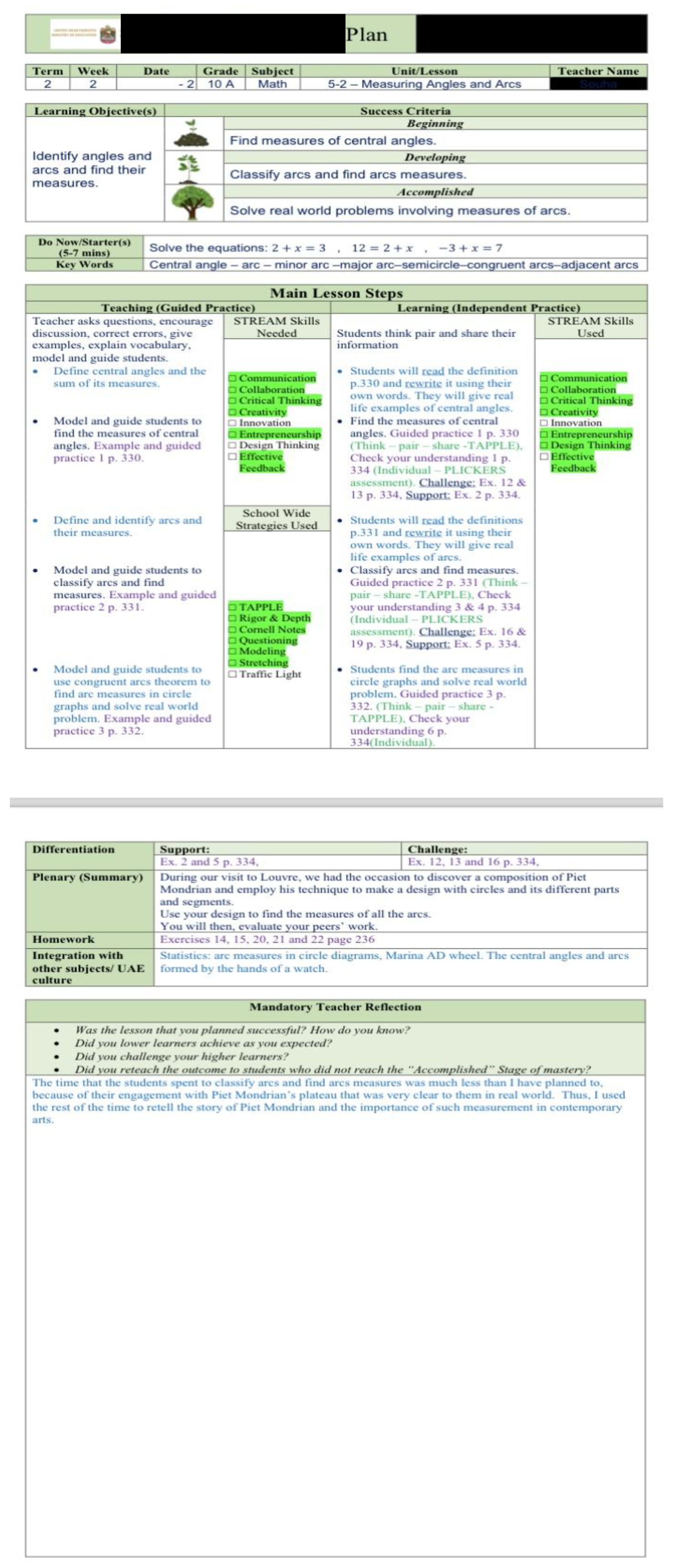
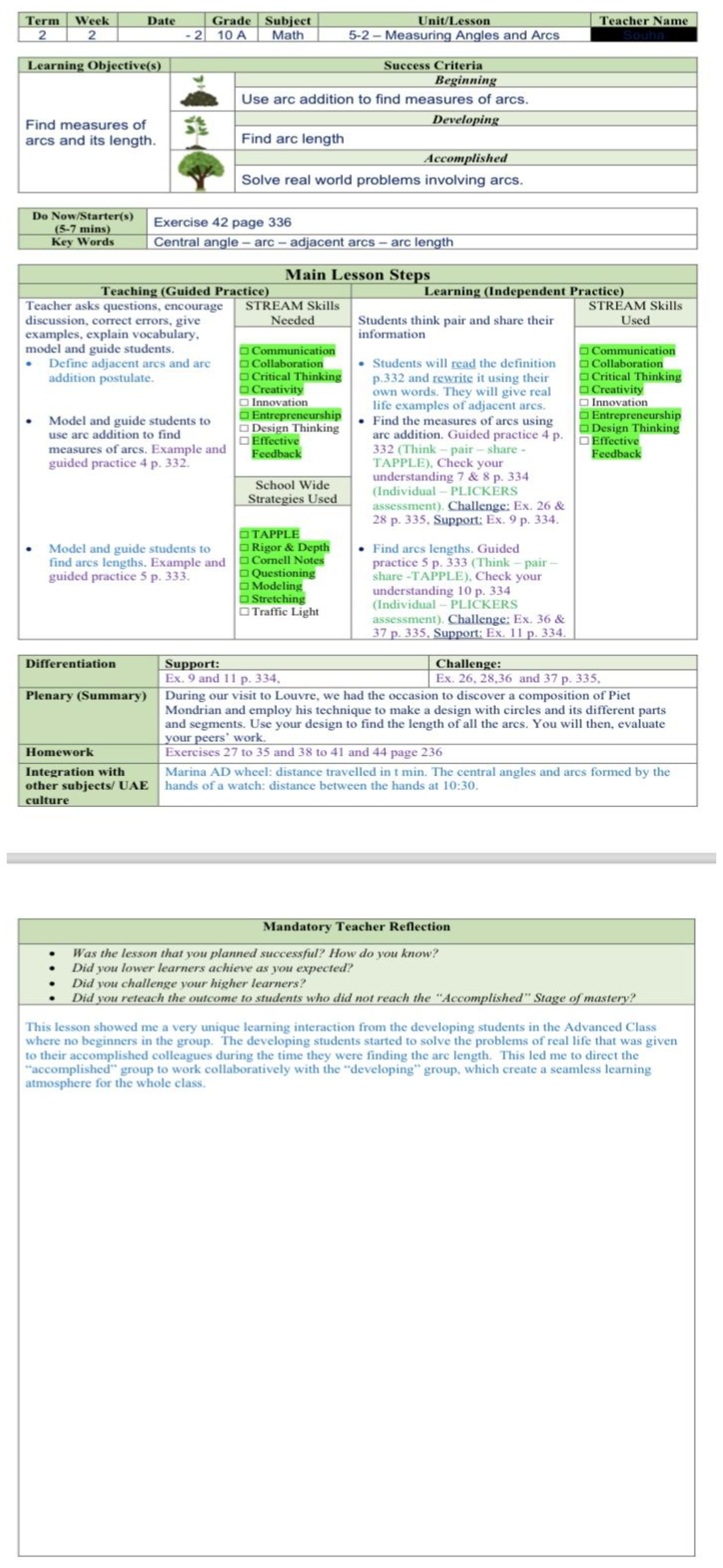
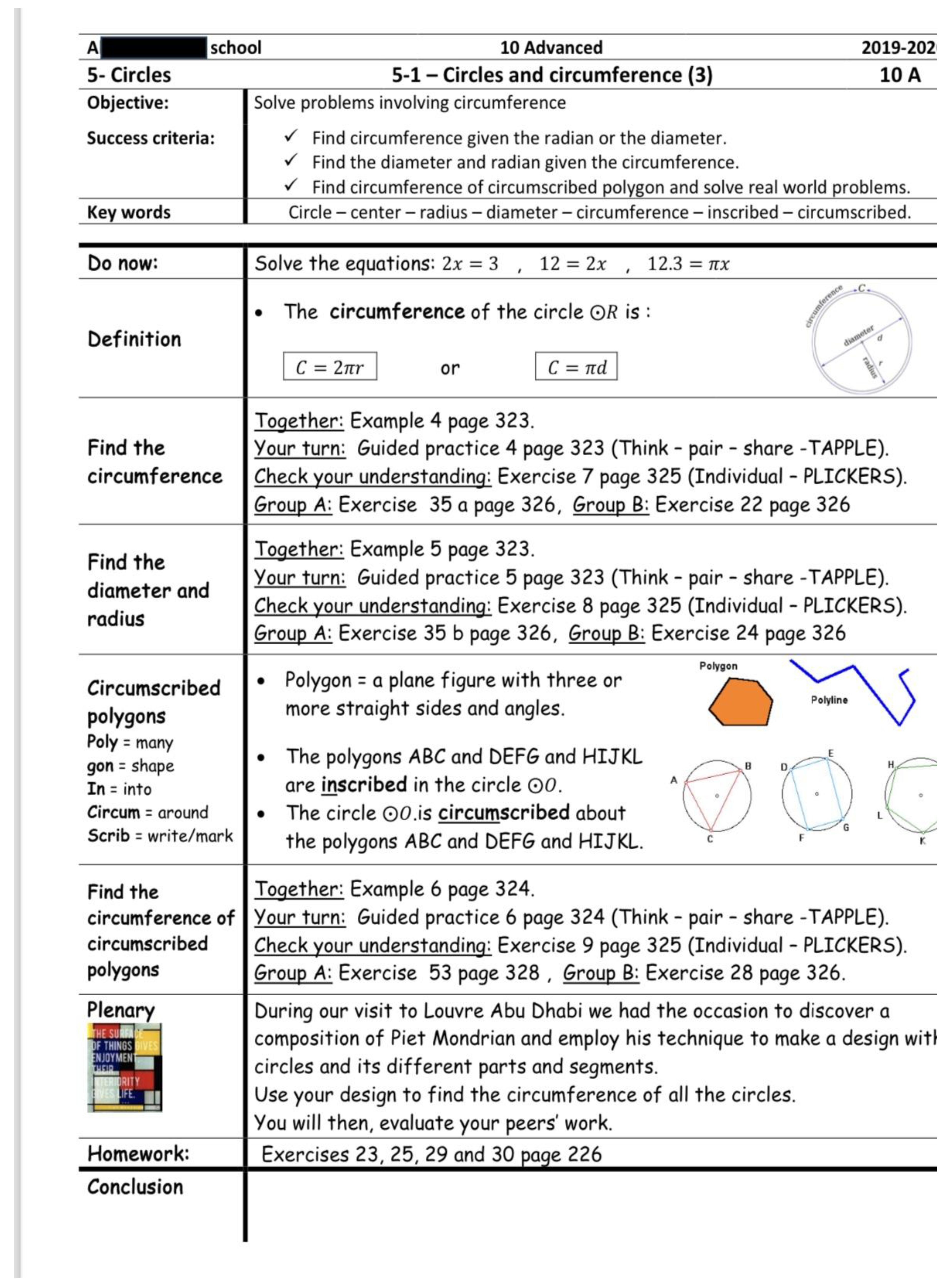
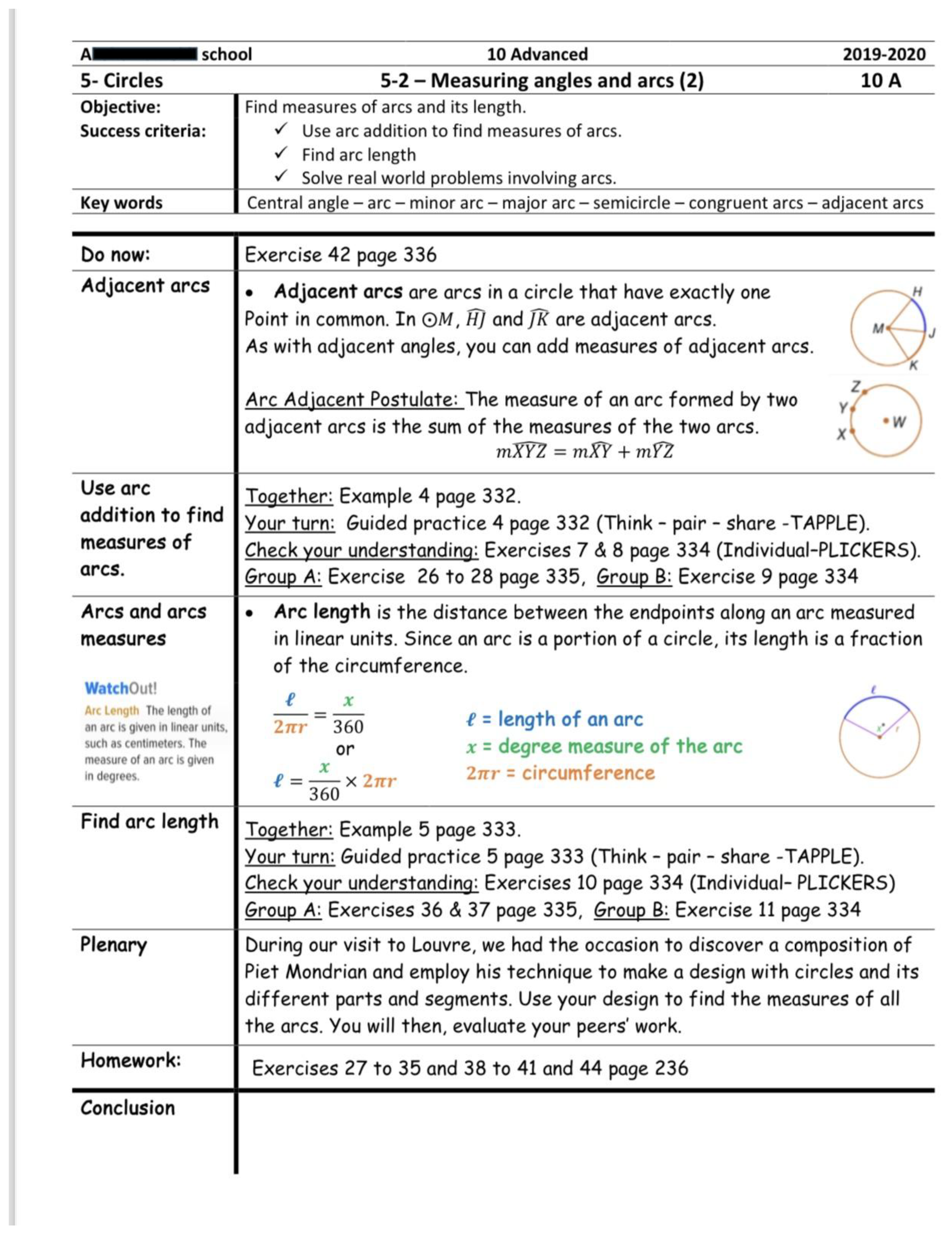
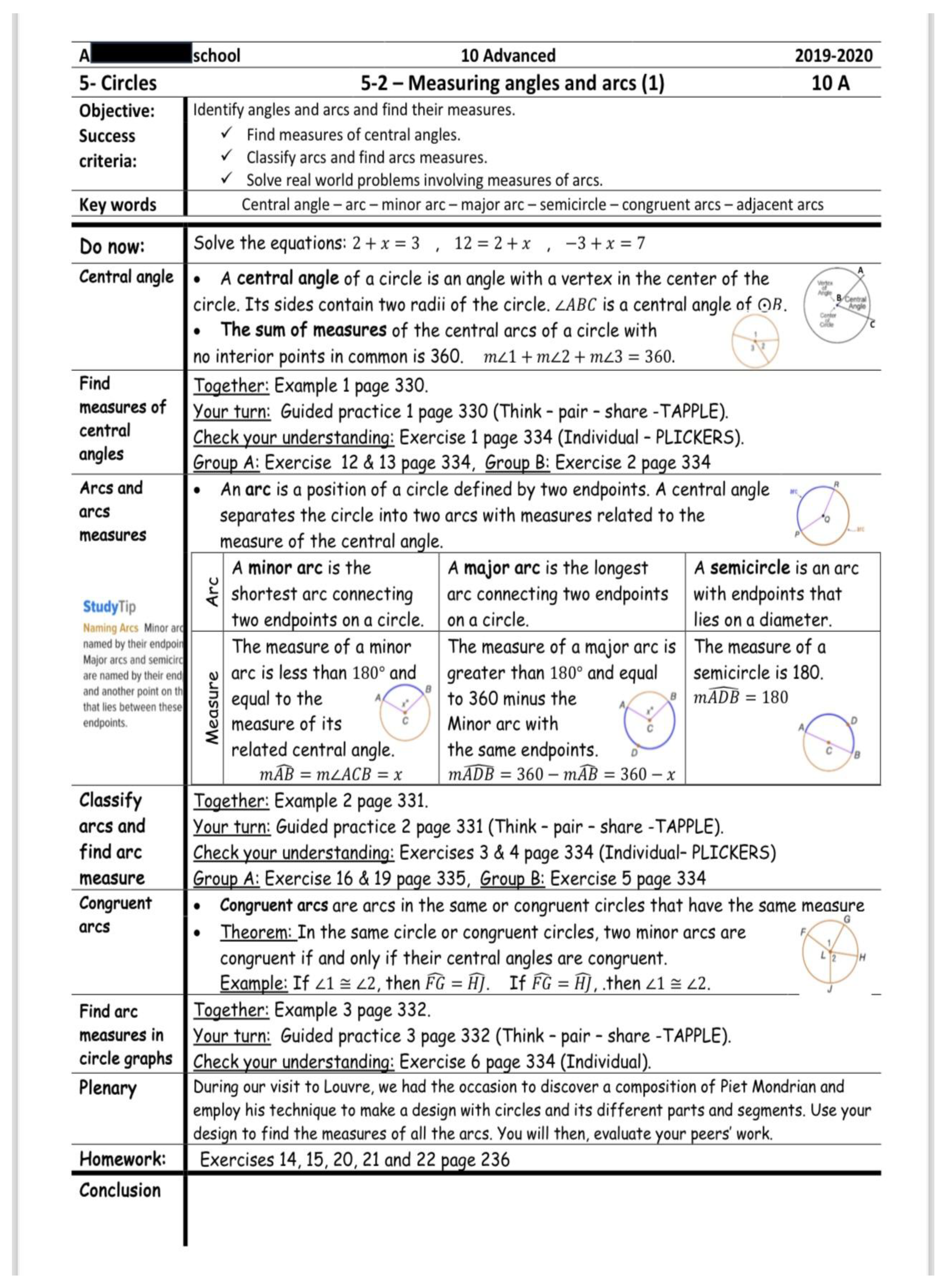
Coordination Team: The Louvre Ambassadors Framework was designed by the A Girl School’s principal and the lead teachers who formed the school’s academic team, consisting of eleven teachers from different curriculum areas (Arabic Language, English Language, Social Studies, Islamic Studies, Mathematics, Science, Physics, Biology, Arts, Physical Education-PE, Computing Creativity Design and Technology-CCDI). The mathematics lead teacher initiated the first lesson in the study implementation after the training was conducted by the school principal, and she planned a total of 3 lessons (see Appendix A). Both the Mathematics Lead Teacher and the Social Studies Lead Teacher were assigned the continuation of teachers’ training, coordinating the program and its implementation, however the main participant in this study was the Mathematics Lead Teacher.
Students: A focus group total of 25 students from Grade 10 Advanced for the academic year 2019–2020 participated in this study.
4.3. Data Collection
Grade 10 Advanced (Section A) students were selected as a focus group. The focus group was important for this study because it helped collate more precise data about personal and group feelings, perceptions, and point of views with a wider range of information (Holland, C., Westwood, C., & Hanif, N. 2020).
The data was collected from: Grade 10 Advanced Continuous Assessment, Grade 10 Advanced Section A, End-of-Year External Exam, Grade 10 Advanced End-of-Term Project-based Learning.
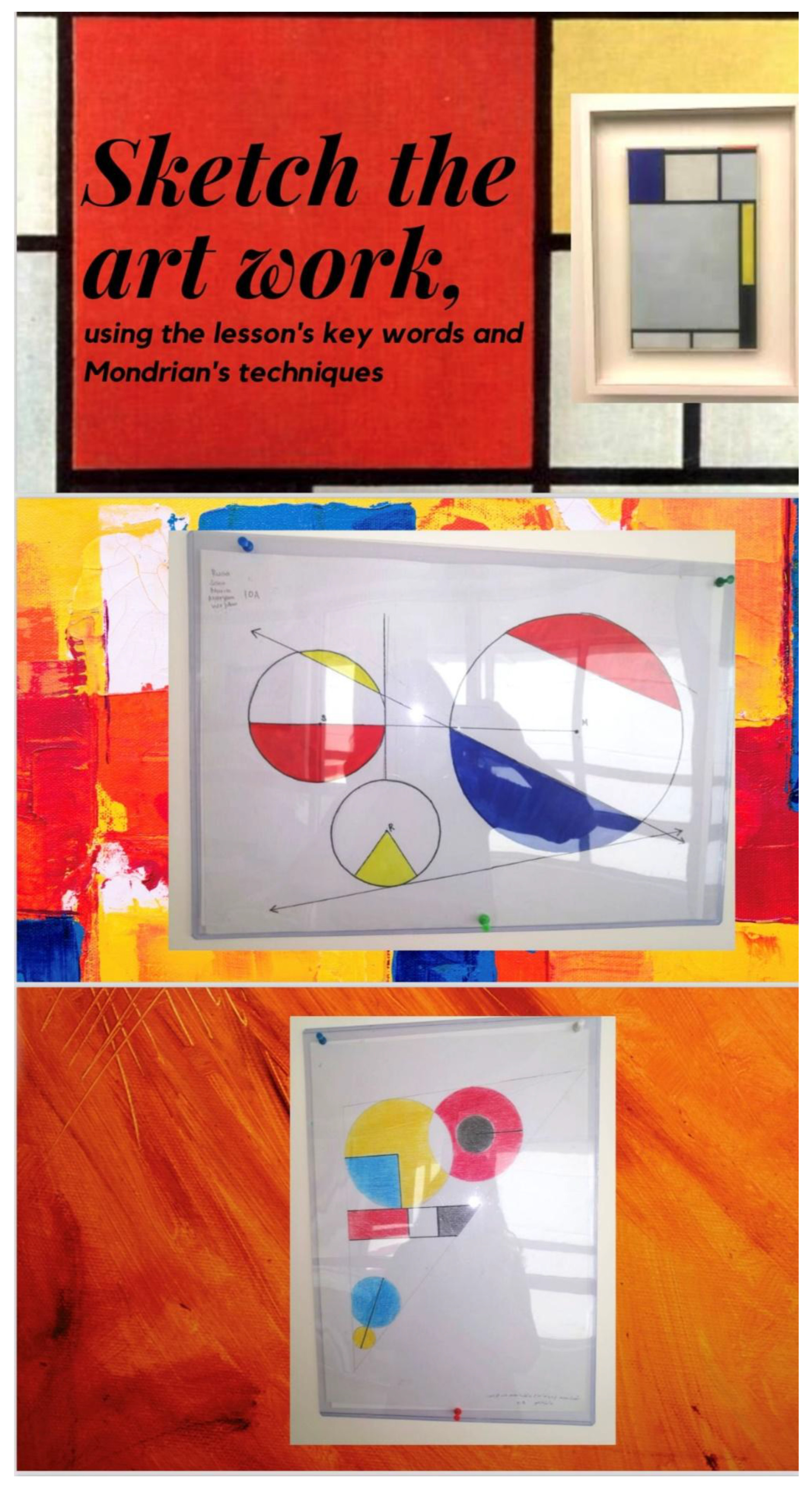
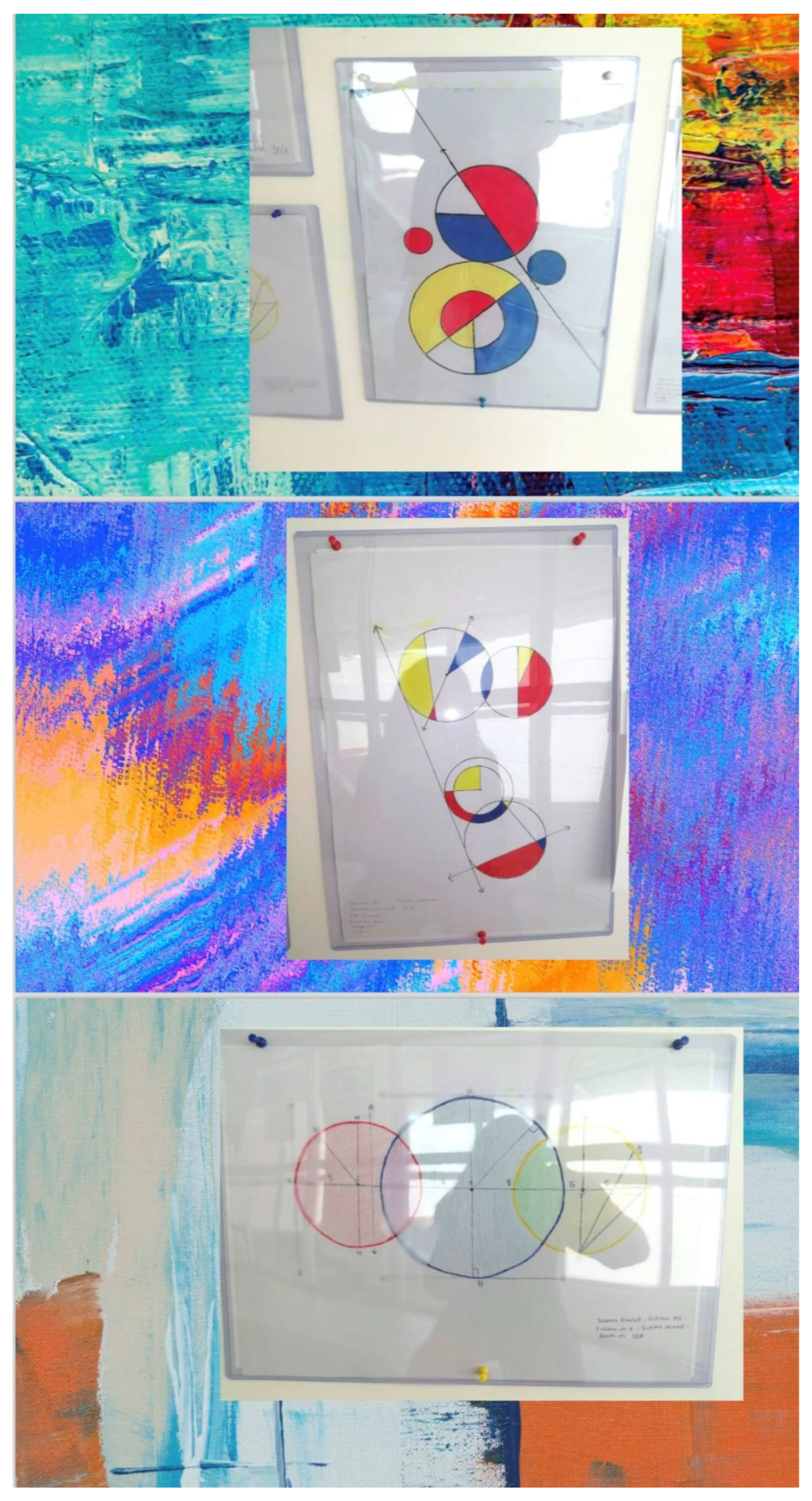
End-of-Term Project-based Learning: The Integrated Project-based Learning of Grade 10A (Appendix A) was selected by the School’s Academic Committee (Lead Teachers and School’s Principal) for the school’s permanent exhibition’s display.
5. Analysis
5.1. Data 1
Figure 1. of Data 1 shows the data on the continuous assessment (CA) score for two Advanced sections of Grade 10 labeled as Grade 10A and Grade 10B, in mathematics.
Grade 10A scored 93%, while Grade 10B scored 85% of CA in general.
The data presents that Grade 10A has a higher CA score (93%) compared to Grade 10B (85%). This means that the difference in scores between the two sections is 8 percentage points. This illustrates the performance implications which indicate that Grade 10A students performed better in their continuous assessment than those in Grade 10B. The significant difference in scores might suggest variations in teaching methods, students’ engagement, or other factors affecting performance.
5.2. Data 2
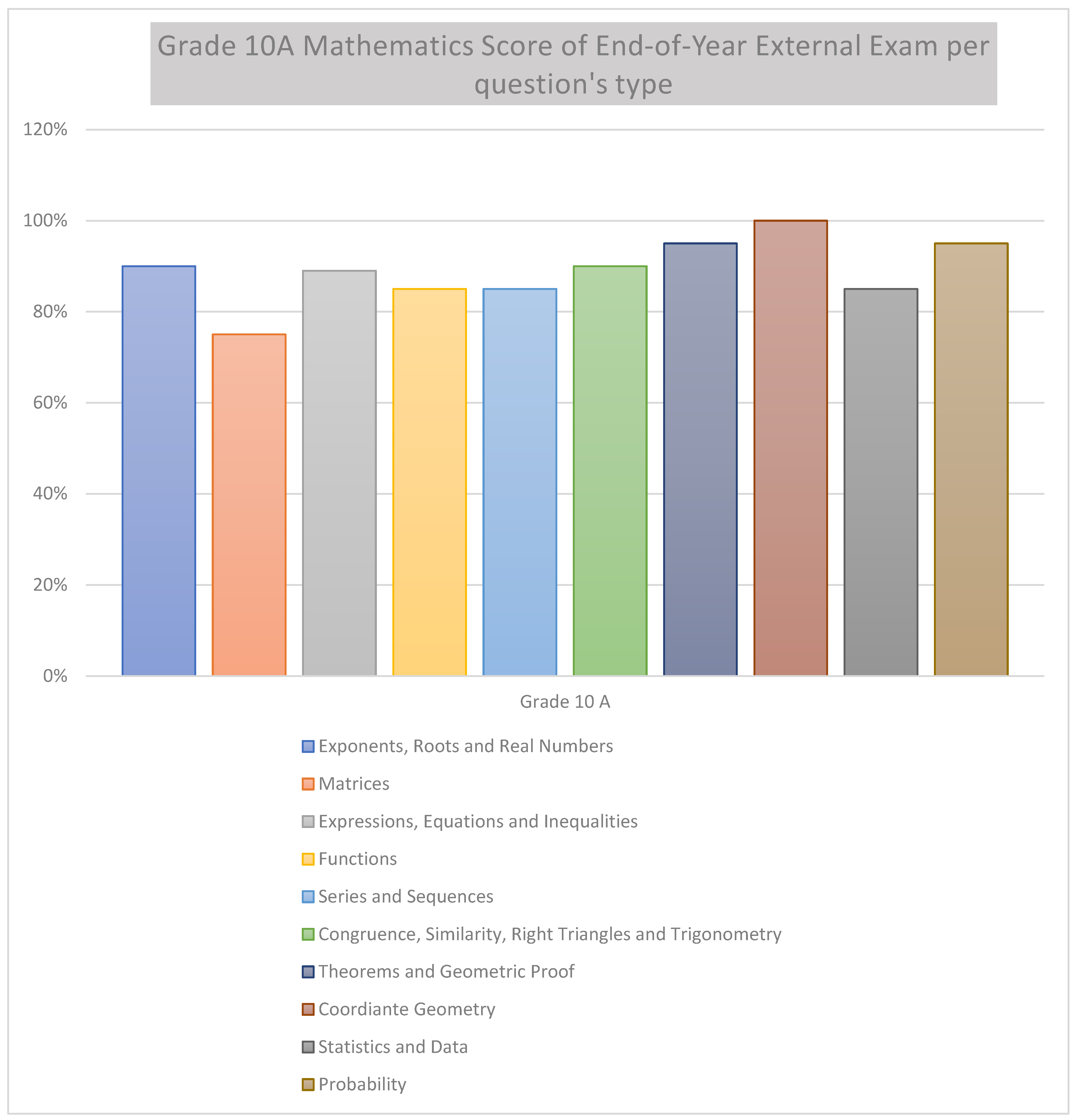
Figure 2. shows the results of Grade 10A students of mathematics scores in an end-year external
examination. The scores are given per question type (topics) as percentages. The summary of the
scores is shown in Table 1 below.:
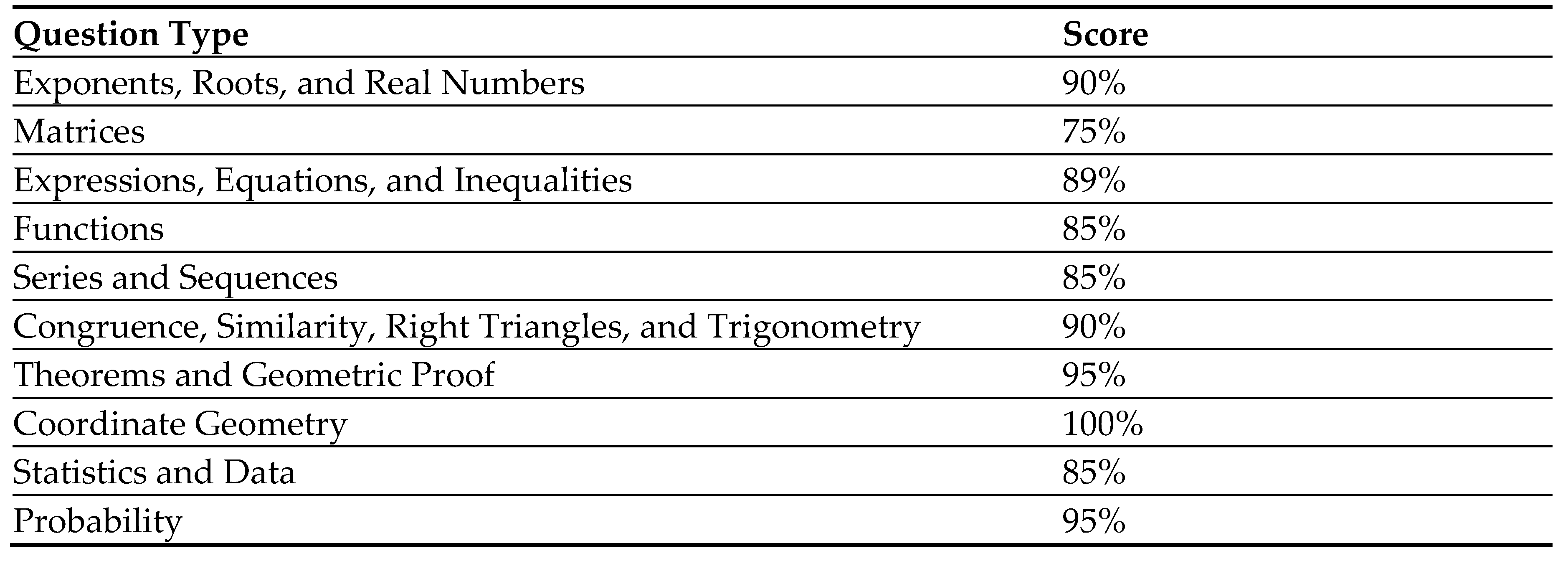
The data shows the following:
Highest Performance:
- The highest score was in Coordinate Geometry with 100%.
- Theorems and Geometric Proof, and Probability also have high scores of 95%.
Lowest Performance:
The lowest score was in Matrices with 75%.
Consistent Performance:
Scores in Exponents, Roots, and Real Numbers; Congruence, Similarity, Right Triangles, and
Trigonometry; and Theorems and Geometrics Proof indicate a strong understanding in these areas.
5.3. Data 3
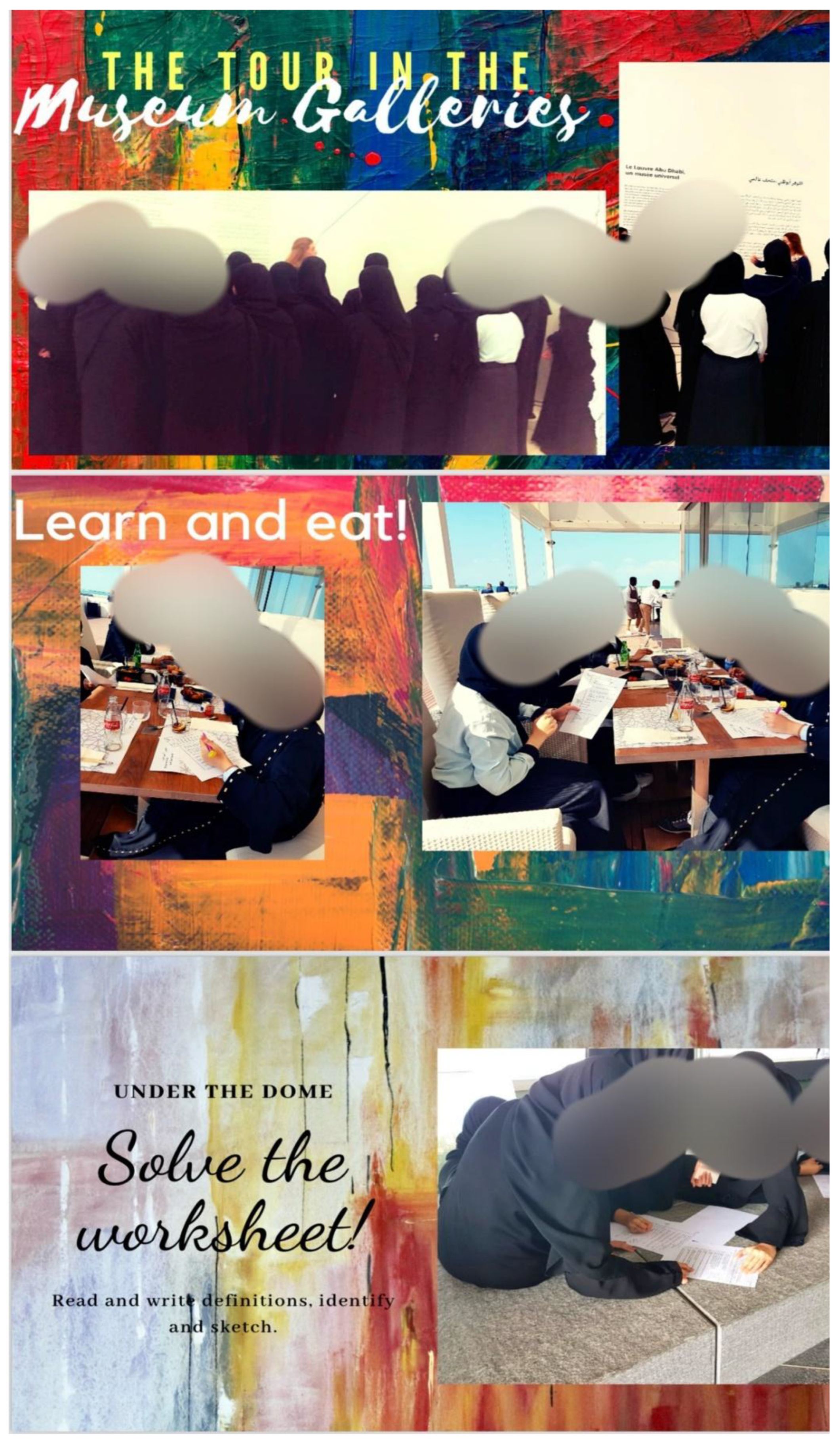
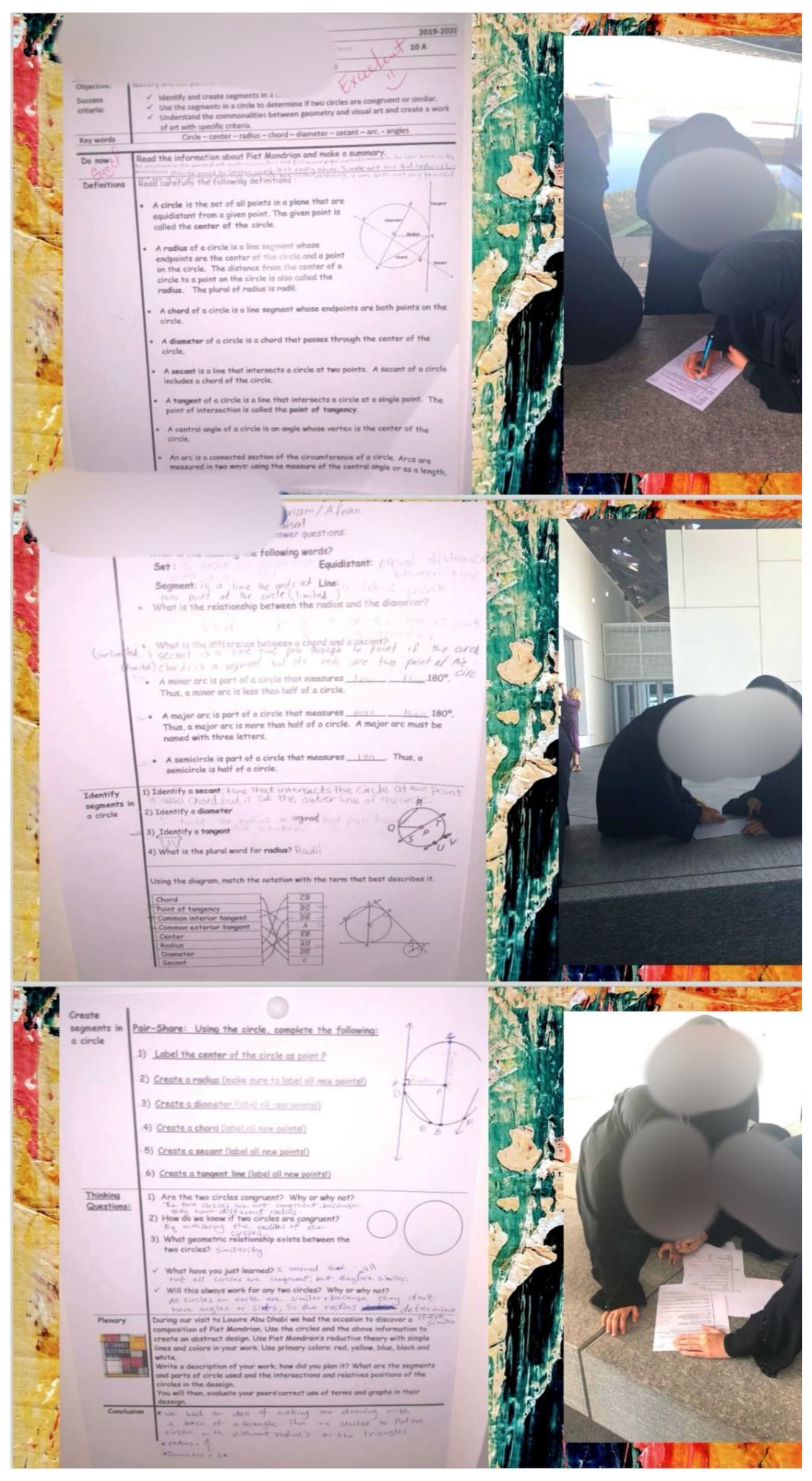
The final presentation of the school's Mathematics project-based learning (PBL) initiative consisted of the end-of-year showcase (illustrated by photos in Appendix A) that featured the integration of Mathematics and Visual Arts through the Louvre Ambassadors Accelerator program. The Grade 10 Advanced students applied the key words and concepts from three lessons on Piet Mondrian's techniques, which they had learned during their mathematics lessons at the Louvre Abu Dhabi. There are five pieces of artwork explaining the circles and circumferences. The artwork illustrates that students used their designs to determine the measurements of all the arcs and angles, and that they employed Mondrian’s techniques to make the design with circles and its different component parts. The coordinate geometry of Piet Mondrian’s techniques is used over all of the artworks as shown in the photos (Appendix A).
6. Results
Integrating Piet Mondrian’s art techniques with mathematics lessons on circles and circumference appears to have had a positive impact on student engagement and performance in Grade 10A. The integration of art, particularly Piet Mondrian’s technique, likely made the lessons more engaging and helped students understand abstract mathematical concepts through visual and creative means.
This case indicates that the interdisciplinary learning approach encourages students to see connections between different subjects, fostering a more holistic understanding and appreciation of knowledge. It also shows that using art to teach mathematical concepts can stimulate creativity and make learning more enjoyable, which may enhance students’ motivation and participation as demonstrated in Data 3.
Moreover, many students tend to be visual learners according to the visual knowledge that capture visual concepts with deep connections to cognitive psychology (Wang, W., Yang, Y., & Pan, Y., 2024). Consequently, integrating art can help them better grasp geometric concepts by visualizing shapes, patterns, and relationships.
The success of Grade 10A proves that integrating Piet Mondrian’s art techniques with mathematics lessons can be an effective strategy for enhancing students’ engagement and their academic attainment and progress. This positive outcome supports the idea of incorporating creative and interdisciplinary learning approach in education to improve students’ academic achievement.
Funding
No funding was received.
Conflicts of Interest
The authors declare no conflict of interest.
Appendix A: Lesson Plans, Textbook Activities and Final Presentation Photos

References
- Ajana, B. Branding, legitimation and the power of museums: The case of the Louvre Abu Dhabi. Mus. Soc. 2015, 13, 316–335. [Google Scholar] [CrossRef]
- Chang, C.L. Unveil the Veiled: An Interdisciplinary Study of Aesthetic Ideas in the Works of Piet Mondrian and Samuel Beckett.; Ohio University: Athens, OH, USA, 2003. [Google Scholar]
- Duckworth, K.; Schoon, I. Progress and attainment during primary school: The roles of literacy, numeracy and self-regulation. Longitud. Life Course Stud. 2010, 1, 223–240. [Google Scholar]
- Enns, E. Problem: Math is Beautiful. Teach. Child. Math. 2014, 21, 73–76. [Google Scholar] [CrossRef]
- Gorman, A. Museum Education Assessment: A Survey of Practitioners in Florida Art Museums; The Florida State University: Tallahassee, FL, USA, 2008. [Google Scholar]
- Holland, C.; Westwood, C.; Hanif, N. Underestimating the Relationship Between Academic Advising and Attainment: A case study in practice. In Frontiers in Education; Frontiers Media SA: Lausanne, Switzerland, 2020; Volume 5, p. 145. [Google Scholar]
- Altay, M.K.; Özdemir, E.Y. The use of museum resources in mathematics education: A study with preservice middle-school mathematics teachers. J. Educ. Teach. 2023, 49, 616–629. [Google Scholar] [CrossRef]
- Kingsbury, C.J.; Senge, M.O. Molecular Symmetry and Art: Visualizing the Near-Symmetry of Molecules in Piet Mondrian’s De Stijl. Angew. Chem. Int. Ed. 2024, e202403754. [Google Scholar]
- Johnson, M.G.; Muday, J.A.; Schirillo, J.A. When viewing variations in paintings by Mondrian, aesthetic preferences correlate with pupil size. Psychol. Aesthet. Creat. Arts 2010, 4, 161. [Google Scholar] [CrossRef]
- Kratz, S.; Merritt, E. Museums and the future of education. Horizon 2011, 19, 188–195. [Google Scholar] [CrossRef]
- Levenson, E.; Barkai, R. Prospective Primary Teachers’ Beliefs Regarding the Roles of Explanations in the Classroom. In Teaching and Learning in Maths Classroom. In Teaching and Learning in Maths Classrooms: Emerging Themes in Affect-Related Research: Teachers’ Beliefs, Students’ Engagement and Social Interaction; Springer International: Cham, Switzerlanfd, 2017; pp. 7–16. [Google Scholar]
- Liang, S.Y. Interpreting Critical Literacy in a Natural History Museum; Arizona State University: Tempe, AZ, USA, 2013. [Google Scholar]
- Lund, B.; Wang, T. A comparative analysis of instructional course themes in LIS and museum studies programs in the USA. Inf. Learn. Sci. 2019, 120, 426–450. [Google Scholar] [CrossRef]
- Mohtashami, M.; Scher, J.M. Application of Bloom’s cognitive domain taxonomy to database design. Proceedings of ISECON (information systems educators conference), Philadelphia, PA, USA, 9–12 November 2000. [Google Scholar]
- Mondrian, P. Integrating Mathematics and the Visual Arts; Rice University: Houston, TX, USA.
- Palmér, H.; Karlsson, L. Primary School Students’ Images of Problem Solving in Mathematics. In Teaching and Learning in Maths Classrooms: Emerging Themes in Affect-related Research: Teachers’ Beliefs, Students’ Engagement and Social Interaction; Springer International: Cham, Switzerland, 2017; pp. 27–35. [Google Scholar]
- Wang, W.; Yang, Y.; Pan, Y. Visual Knowledge in the Big Model Era: Retrospect and Prospect. arXiv 2024, arXiv:2404.04308. [Google Scholar] [CrossRef]
- Weiss, G. Geometry—Daughter of Art, Mother of Mathematics. In The Visual Language of Technique; Springer International: Cham, Switzerland, 2015; Volume 1, pp. 41–57. [Google Scholar]
Figure 1.
Grade 10 Advanced Mathematics Continuous Assessment Score.
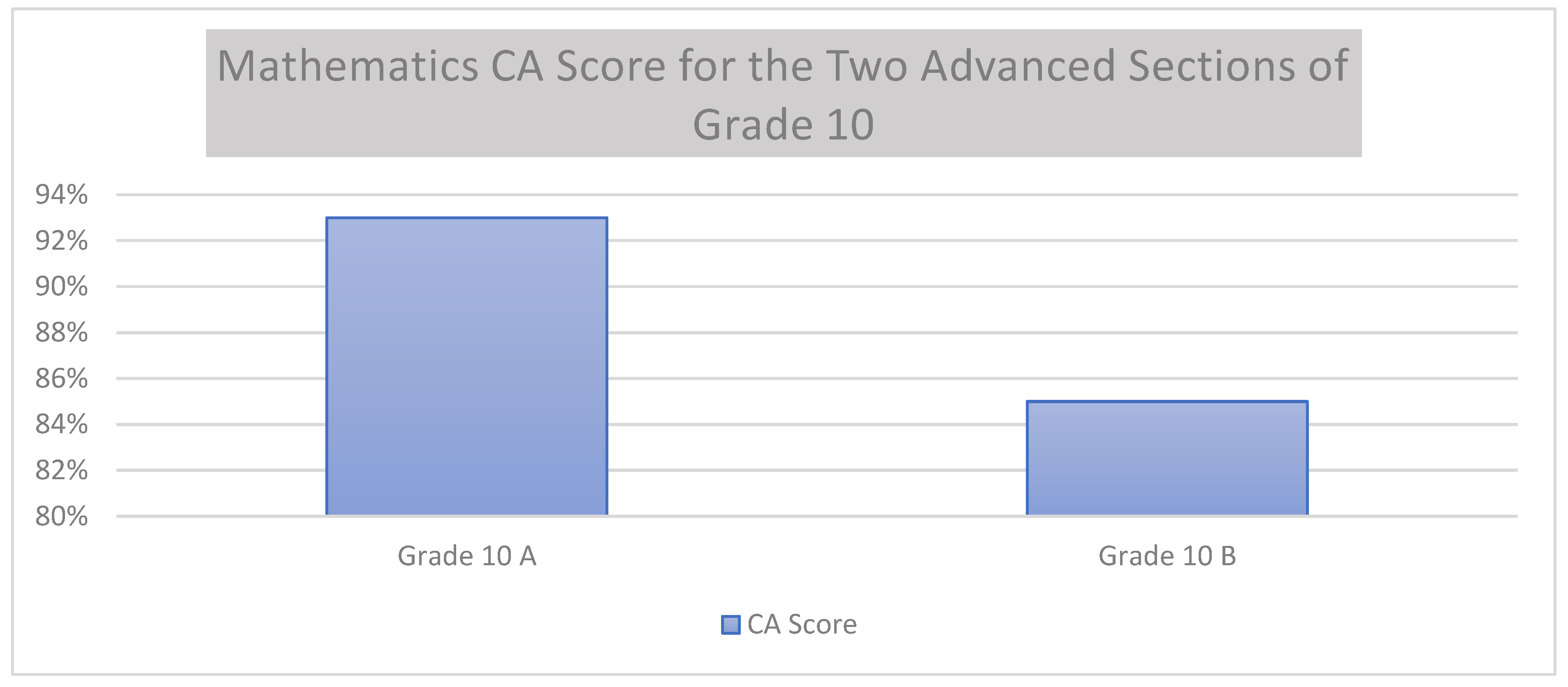
Figure 2.
Grade 10 Advanced Mathematics End-of-Year External Exam:.
Disclaimer/Publisher’s Note: The statements, opinions and data contained in all publications are solely those of the individual author(s) and contributor(s) and not of MDPI and/or the editor(s). MDPI and/or the editor(s) disclaim responsibility for any injury to people or property resulting from any ideas, methods, instructions or products referred to in the content. |
© 2025 by the authors. Licensee MDPI, Basel, Switzerland. This article is an open access article distributed under the terms and conditions of the Creative Commons Attribution (CC BY) license (http://creativecommons.org/licenses/by/4.0/).
Copyright: This open access article is published under a Creative Commons CC BY 4.0 license, which permit the free download, distribution, and reuse, provided that the author and preprint are cited in any reuse.


