

Submitted:
23 March 2025
Posted:
24 March 2025
You are already at the latest version
Abstract
Blood analogs are widely employed in in-vitro experiments such as particle image velocity (PIV) to study hemodynamics, assisting pathophysiological diagnosis of neurovascular and cardiovascular diseases, as well as pre-surgical planning and intraoperative orientation. To obtain accurate physical parameters critical for diagnosis and treatment, blood analogs should exhibit realistic non-Newtonian shear-thinning features. In this study, two types of blood analogs were created to mimic the shear-thinning behavior of blood over a temperature range of 295 to 312 K. Type-I is a general-purpose analog composed of deionized (DI) water and Xanthan gum (XG) powder, while Type-II is specially designed for PIV tests, incorporating DI water, XG and fluorescent microspheres (450 ppm). By minimizing the root mean square deviation between the generated blood analog and an established viscosity model, formulas for both blood analogs were successfully derived for the designated temperature range. Results show both blood analogs can replicate the shear-thinning properties of real blood, with the averaged relative discrepancy < 5%. Additionally, a strong linear correlation was observed between body temperature and XG concentration in both blood analogs (coefficient of determination > 0.96): for Type-I, 295-312 K correlates with 140-520 ppm and for Type-II, 295-315 K correlates with 200-560 ppm. This work bridges the gap between idealized blood viscosity models and the complexities of real-world physiological conditions, offering a versatile platform for advancing hemodynamic research, optimizing therapeutic interventions, and enhancing biomedical technologies in temperature-sensitive environments.
Keywords:
Blood analog
; Shear-thinning
; Non-Newtonian
; Temperature
; Hemodynamics
1. Introduction
Blood is a complex biofluid with non-Newtonian properties, exhibiting both viscoelastic characteristics and shear-thinning behaviors, meaning its viscosity decreases as the shear rate increases [1,2]. These rheological properties significantly influence hemodynamics in both neurovascular and cardiovascular systems, affecting physiological and pathological behaviors [3,4]. Additionally, blood viscosity is temperature-dependent, with variations in temperature having a substantial impact on blood viscosity and hemodynamics within vessels [4].
To replicate realistic blood rheological behaviors, blood analogs are often used in in-vitro experiments, particularly in 3D-printed vascular models. Traditional Newtonian fluids (e.g., water or glycerol solutions), which assume a constant blood viscosity of approximately 3.0~4.0 mPa⋅s, fail to capture some critical hemodynamic characteristics such as instantaneous wall shear stress, oscillatory shear index, and relative residence time, thus limiting their effectiveness in realistic simulations of blood flow [4,5,6,7,8]. Therefore, the development of non-Newtonian blood analogs that accurately replicate the rheological behavior of human blood under variable temperature conditions is crucial for advancing biomedical research, medical device development, educational demonstrations, and hemodynamic modeling.
Realistic blood analogs must not only exhibit non-Newtonian behavior but also account for the effects of temperature variations. The analog must behave similarly to real blood across a broad range of thermal conditions. For instance, hypothermia (body temperature < 310.15 K) increases blood viscosity and alters its shear-thinning behavior, potentially exacerbating circulatory complications [9], while hyperthermia (body temperature > 310.15 K) decreases viscosity and changes its viscoelastic features [10,11]. These temperature-induced changes have important implications for applications such as cardiopulmonary bypass systems [12], cryopreservation protocols [13], and thermal ablation therapies [14]. Despite this, most existing blood analogs do not consider temperature as a variable, leading to oversimplified experimental or computational models [5,15,16,17,18,19].
To address knowledge gaps in non-Newtonian blood analogs suitable for in-vitro experiments under various thermal conditions, this work presented the design and synthesis of two types (Type-I and Type-II) of temperature-tunable non-Newtonian blood analogs that mimic human blood’s rheological properties across a clinically relevant temperature range of 295-312 K [20]. Type I was intended for general use where velocity field visualizations/measurements are not required, while Type-II was specifically designed for particle image velocimetry (PIV) measurements to investigate hemodynamics in vascular models. Both analogs were based on a solution of 800 ppm xanthan gum (XG), composed of XG power deionized (DI) water, which holds the capability to produce non-Newtonian shear-thinning properties similar to those of real blood [21,22]. To create Type-I blood analogs, the 800 ppm XG solution was diluted with DI water to obtain concentrations ranging from 120 ppm to 600 ppm, in 20 ppm increments. Type-II blood analogs were created similarly, but with the addition of 450 ppm fluorescent red polyethylene microspheres (FRPM). The fluorescent light from the particles due to the laser excitation enables the velocity profile capture in PIV tests. Progress in this research could assist scientists and engineers in the blood research community to (1) test medical devices (e.g., stents, catheters, pumps) under physiologically realistic temperature scenarios, (2) study disease mechanisms (e.g., thrombosis, atherosclerosis, cerebral aneurysms) influenced by temperature gradients, and (3) validate computational models that incorporate thermal effects on blood flows.
2. Materials and Methods
2.1. Developing a Shear-Rate and Temperatur-Dependent non-Newtonian Blood Viscosity Model
The generated Type-I and Type-II blood analogs were compared with our previously developed shear-rate and temperature-dependent non-Newtonian blood viscosity model [4,23], which has been employed by many other research groups. To ensure the paper is self-contained, we presented the deduction process to assist the blood analog research community in better understanding the intrinsic coupling mechanisms between shear-thinning behavior and thermal effects on blood viscosity [4], that is,
In Equation (1), is blood viscosity, is the consistency index with , b is the power-law index registered as 0.685, and is the blood temperature in . In addition, , , , and are temperature index constants assigned by 4945.4 , -0.083 , 1.53 and -162.22 , respectively. The rest of this section shows the details of the developing process. The process of original data collection can be accessed from our previous publication [4].
In general, the non-Newtonian blood viscosity model can be expressed by a power-law [24]:
The real blood viscosity was measured using an IKA ROTAVISC lo-vi viscometer (Staufen, Germany) under four designated temperatures [4], in which the measured viscosities under corresponding temperatures are shown in Figure 1. Integrating the generalized power-law viscosity model (i.e., Equation (2)) with the collected experimental data, four non-Newtonian power-law viscosity models can be regressed under the corresponding four temperatures, respectively. Specifically, the equations are, i.e.,
The correlation coefficients for the regressed Equations (3)-(6) are 0.975, 0.995, 0.990, 0.995 under the temperatures of 295.5 300.2, 305.8, and 310.3 , respectively (see Figure 1).
.
Considering thermal influences on blood viscosity, it was assumed that the blood viscosity model consisted of two variables, i.e., the shear rate term and the temperature index , in which is based on the Arrhenius law [25,26,27,28]. The equation was expressed as
In Equation (7b), was calculated by averaging the consistency indexes in Equations (3)-(6), i.e.,
To find the consistency index in Equation (7b), an interim consistency index was introduced in this study to present its relationship with temperature (see Figure 2). Using the exponential regressed strategy, was regressed as a power-law form, that is,
In Figure 2, the correlation coefficient of Equation (8) for the interim consistency index is 0.987 under measured temperatures from 295
to 310.
Then, taking the natural logarithm in both sides of Equation (7a) yields:
Since is a shear rate dependent variable solely, a plot of vs. can be obtained using two different temperatures ( and , with m and n represent two different thermal data points, m=1, 2, 3, and n=2, 3, 4) under the same shear rate listed as follows:
Based on Arrhenius law and integrating (i.e., ) in Equation (8), we can define as:
In Equation (11), is a temperature index constant related to the activation energy, and is another temperature index constant registered as -0.083 (see Equation (8)). Additionally, is an introduced reference temperature. Integrating Equation (11), Equations (10) can be rewritten as follows:
Temporarily, is assumed as a constant value which will be further corrected after the temperature index is decided. Thus, Equation (12) can be simplified as:
Further, can be decided by Equation (14), that is,
To facilitate the calculations and expressions, we define:
Integrating the experimental data shown in Figure 1 and Equation (8), can be decided with the corresponding shear rate , shown in Table 1
Averaging the values in Table 1, the temperature index of can be obtained, i.e.,
The next step was to regress in Equation (11). Integrating Equations (7a), (7b), (8), and (11), we can obtain:
Using the viscosities and shear rates under corresponding temperatures, the calculated results of based on Equation (16) were exhibited in Table 2. Averaging values under the corresponding four thermal conditions, we can obtain
Averaging the calculated in Table 2 and employing linear regression method, the relationship between the reference temperature and (see Figure 3) can be expressed by
where and are temperature constants registered as 1.53 and -162.22 , respectively.
Finally, we can obtain the non-Newtonian blood model under various thermal conditions, shown in Equation (1). Figure 4 shows the correlation coefficients between Equation (1) [4] and experimental measurements, which are 0.99, 0.99, 1.00, and 0.98 at T = 310. 3, 305.8, 300.2, and 295.5 , respectively. The results indicate that the developed non-Newtonian model successfully presents blood non-Newtonian shear-thinning properties under various thermal conditions. In this study, the developed Equation (1) was employed as the baseline equation to estimate the accuracy of generated Type-I and Type-II blood analogs by minimizing the root mean square deviation (RMSD).
2.2. Blood Analog Generation
2.2.1. Materials
As shown in Figure 5, two synthetic blood analogues, i.e., Type-I and Type-II were generated to replicate the shear-thinning properties of blood under the designated thermal conditions from 295 to 312 . Type-I was intended for general use and consisted of DI water (supplied by the Chemistry Department at the Wright State University, Dayton, OH, USA) and xanthan gum (XG) powder (Kate Naturals, Harrisonburg, VA, USA). Type-II was designed for the use of PIV experiments to study hemodynamics in vessels or heart models, which require transparent blood analog with seeded particles. Type-II analog was a mixture of DI water, XG power, and FRPM particles (Cospheric LLC, Somis, CA, USA), with particle size from 10 to 45 .
To prepare blood analogs, the process began by mixing boiling DI water with XG powder to create the original base XG solution, with a concentration of 800 ppm. This solution was then diluted by DI water to generate desired concentrations for Type-I blood analogs at specified thermal conditions. For Type-II blood analogs, DI water and FRPM solution were added to the XG solution to achieve designated concentrations and ensure 450 ppm seeded FRPM particles for PIV experiments.
It is worth mentioning that the mixing of DI water and XG powder was a delicate and technically challenging process, as it requires complete dissolution of XG powders without the formation of clumps, particles, or bubbles. To ensure the consistency and accuracy of the blood analogs, three batches of original blood analogs were created. The viscosities of these batches were measured under shear rates ranging from 1 to 250 s-1, and the discrepancy was controlled under 3%. In the preparation of Type-II blood analogs, a raw FRPM particle solution at 4500 ppm was prepared. Similar to the XG solution, three batches of the FRPM particle solution were made, with differences among them controlled within 3%.
To create Type-I blood analogs, the 800 ppm XG solution was diluted by DI water to form a 16 ml solution with the XG concentration ranging from 120 to 600 ppm, in increments of 20 ppm. For Type-II blood analogs, the 800 ppm XG solution was diluted in the same manner to form a 18 ml solution, to which 2 ml of 4500 ppm FRPM solution was added, resulting in a total volume of 20 ml. Such a step was to ensure all Type-II blood analogs were uniformly seeded with the same number (450 ppm) of FRPM particles, satisfying the requirements for PIV tests to secure accurate flow characteristics in the tested vessel or heart models.
2.2.2. Experimental Setups and Measurements
The prepared solutions were thoroughly mixed by stirring in the beaker (see Figure 5) and then allowed to stand for sufficient time to ensure the complete dissipation of any visible bubbles. Once the solution was bubble-free, it was transferred to the fluid container and placed in a custom-design water bath. The water bath maintained the blood analog at a stable environmental temperature of 293.15 K. Viscosity measurements were conducted using an IKA Rotavisc lo-vi viscometer (IKA-Werke GmbH & Co. KG, Staufen im Breisgau, Germany). Prior to testing, the stability of IKA Rotavisc lo-vi device was verified by rotating the bottom standers to ensure proper functionality.
During the viscosity measurement process, two independent operators performed the tests. Each operator recorded viscosity readings twice, and the average of these measurements was taken. To minimize random errors, the results from both operators were compared systematically. Discrepancies, if any, were addressed by additional experiments to ensure the accuracy and reliability of the data. For each blood analog of a given concentration, the measured viscosity data were compared with viscosity values calculated using Equation (1). This comparison was used to match the analog’s viscosity with that of human blood at a specific body temperature. For the matching process, temperatures from 292 to 320 K were searched in increments of 0.01 K for the best match by minimizing the root mean square deviation (RMSD) which was calculated by
where is the experimental measured values, is the calculated viscosity using Equation (1) under certain temperatures, N is the number of data points. The averaged relative discrepancy in the viscosity comparison between the developed blood analog and Equation (1) was calculated by
3. Results
3.1. Type-I Blood Analog
The results presented in Figure 6 (a) to 6(y) illustrate the relationship between shear rates and viscosity of Type-I blood analogs, with XG concentrations varying in increments of 20 ppm. These measurements were taken at a constant room temperature of 293.15 K, with the original base solution of 800 ppm XG serving as a reference. The data demonstrate that all generated Type-I blood analogs exhibit shear-thinning rheological properties similar to those of real blood, where viscosity decreases as the shear rate increases. By minimizing between experimental measurements and the developed Equation (1), we derived the relationship between temperature and XG concentration for Type-I blood analogs, as shown in Figure 7. The results revealed a strong linear correlation between temperature and XG concentration , with a registered coefficient of determination and < 5%. Specifically, this relationship can be expressed by the following equation
Equation (20) provides a formula to generate blood analogs for in-vitro experiments that require a realistic shear-thinning rheological environment, simulating blood flow behaviors at various “human body” temperatures from 295 to 312 K.
3.2. Type-II Blood Analog
Similarly, Figure 8 (a) - (y) present the experimental results of measuring viscosities of generated Type-II blood analogs across various shear rates, with XG concentrations varying in increments of 20 ppm. These measurements were conducted at a controlled room temperature of 293.15 K, and the raw solution used for Type-II blood analogs had the same XG concentration of 800 ppm as Type-I blood analogs. The FRPM particle concentration in Type-II blood analogs was controlled at 450 ppm, ensuring consistency in PIV tests by maintaining a uniform particle concentration to avoid errors due to varied particle density in captured images. As shown in Figure 8 (a) - (y), the results demonstrate that all generated Type-II blood analogs exhibit shear-thinning rheological properties of real blood, where the viscosity decreases as shear rate increases. By minimizing between experimental measurements and the developed Equation (1), it was found that XG concentration is linearly related to human-body temperature. This relationship was highlighted by an orange line in Figure 7, with and < 5%. Specifically, the relationship can be expressed by the following equation
Equation (21) provides a formula to generate Type-II blood analogs which replicate the shear-thinning properties of real blood and ensure accurate hemodynamic patterns in in-vitro neurovascular and cardiovascular models specifically for PIV tests.
4. Discussion
The results presented above demonstrate that both Type-I and Type-II blood analogs exhibit a linear relationship between XG concentration and body temperature. As temperature decreases, the internal resistance of the blood increases due to the rise in viscosity [4]. Additionally, as shown in Figure 7, at the same temperature, the XG concentration of the Type-II blood analog is higher than that of Type-I blood analog. This difference is attributed to the addition of 450 ppm of FRPM particle solution, which further dilutes the XG solution, requiring a higher XG concentration to ensure that the viscosity of Type-II blood analogs matches the viscosity of the corresponding Type-I blood analogs.
Despite our team’s best efforts to minimize the errors and uncertainties during the measurements, discrepancies were still observed in the formulas in the two types of blood analog under varying thermal conditions, as depicted in Figure 7. These discrepancies were primarily attributed to systematic uncertainties in the viscometer, especially for low shear rates, as illustrated in Figure 9. It was found that although the uncertainty decreases with the increasing shear rate, it remains significant with the shear rates from 1.22 to 12.22 s-1. In this range, the possible uncertainties in viscosity measurements range from 1.19 to 11.99 mPa⋅s. For instance, for one blood analog with 120 ppm XG and 450 ppm particle, we measured an average viscosity of 25.5 mPa⋅s at a shear rate of 1.22 s-1. At this shear rate, the systematic uncertainty is 11.99 mPa⋅s, which can substantially impact the accuracy of the formulas used to generate blood analogs at the designated temperatures.
To reduce uncertainties for the regression models, we made efforts to improve the agreement by omitting the first few data points, ranging from 1 to 10 specifically. Figure 10 (a) to 10(j) display the relationship between temperature and XG concentration for both Type-I and Type-II blood analogs, with designated initial data points skipped. The linearly regressed models for each situation were given in Equations (22-31) and Equations (32-41) for Type-I and Type-II blood analogs, respectively.
For Type-I blood analogs, the of the regressed Equations (22)-(31), were registered as 0.9888, 0.9941, 0.9955, 0.9959, 0.9963, 0.9963, 0.9967, 0.9970, 0.9972, and 0.9974, respectively, for datasets where the number of 1 to 10 initial data points were skipped correspondingly. For Type-II blood analog, the for the corresponding Equations (32)-(41) were registered as 0.9926, 0.9940, 0.9939, 0.9946, 0.9957, 0.9974, 0.9976, 0.9976, 0.9978, and 0.9980, respectively, when the number of 1 to 10 initial data points are excluded correspondingly. The best fit was achieved by excluding the first 10 data points at lower low shear rates. These initial data often exhibited steep changes and large uncertainties, which could otherwise impact the accuracy of the regression models.
However, it is important to note that while skipping more data points results in better regressed equations, as indicated by the values, over-fittings can introduce new challenges. Figure 11 (a) to 11(d) illustrate the comparisons between regression equations and the baseline Equation (1) for both blood analog types at two representative temperatures (i.e., T = 295 K and 312 K), with the first 10 data points excluded. The results show that for shear rate greater than 30 s-1, there is a good match between the regression equations and the baseline Equation (1). However, noticeable discrepancies appear in the viscosity values for shear rates ranging from 0 to 30 s-1. As more initial points skipped, the discrepancies in viscosity values at low shear rates become more pronounced. These differences can be attributed to the intrinsic physical properties of the XG solution. By skipping fewer initial data points, a better match can be achieved in the viscosity comparison at shear rates of 0 -30 s-1. However, the difference becomes more significant at higher shear rate such as greater than 30 s-1. Therefore, we recommend that researchers need to first identify the shear rate range relevant to their experiments and then select the appropriate regression formulas (i.e., Equations (20)- (41)) to generate desired blood analogs for their specific applications.
Additionally, this study did not simulate blood cells explicitly. Although FRMP particles in Type-II blood analog partially represent blood cells, their concentration of 450 ppm is much lower than the red blood cell (RCB) concentrations in humans ranging 4.7 to 6.1 million ppm for males, 4.2 to 5.4 million ppm for females, and 4.0 to 5.5 million ppm for children [30]. Future studies could incorporate alternative materials, such as polysaccharide particles, to more accurately mimic blood cells. This would allow for more realistic blood analog generation and enable further investigations of hemodynamic behaviors associated with the pathophysiology of neurovascular and cardiovascular diseases.
5. Conclusions
In this study, we presented a synthetic method for developing a non-Newtonian human blood model (Equation (1)) that explicitly captures shear-thinning properties as a function of temperature, based on real blood viscosities. Using Equation (1) as the baseline, we successfully generated two types of blood analogs, i.e., Type-I and Type-II, for different purposes across a temperature range of 295-312 K, both exhibiting the same shear-thinning rheological properties. Type-I blood analog, composed solely of XG solution, was designed for general use; while Type-II blood analog, a mixture of XG solution and FRMP particles, was developed for PIV measurements to capture hemodynamic characteristics in in-vitro cardiovascular and neurovascular models. Both blood analogs demonstrated a linear relationship between XG concentration and body temperature. Although omitting the initial few data points improved the matching performance of the regression models at high shear rate (> 30 s-1), this approach introduced potential errors in predicting viscosities at lower shear rate (< 30 s-1). Therefore, it is crucial for researchers to select appropriate formulas based on their experimental shear rate range to ensure accurate blood analog generation.
Author Contributions
Conceptualization, H.Y. and Z.Y.; methodology, H.Y. and Z. Y.; validation, H.Y., A.W., C.W.; formal analysis, H.Y., Z.Y., L.B., and B.L.; investigation, H.Y., A.W., C.W., C.M., J.C.; resources, Z.Y. and B.L.; data curation, H.Y., A.W., C.W., C.M., J.C.; writing—original draft preparation, H.Y.; writing—review and editing, Z. F., A.W., C.W., J.C., L.B., and B. L.; visualization, H.Y., A.W., and C.W.; supervision, Z. F. and B. L.; project administration, Z. F. and B. L.; funding acquisition, Z. F. and B. L. All authors have read and agreed to the published version of the manuscript.
Funding
This research was funded by Premier Health and Boonshoft School of Medicine Endowment Funding at Wright State University and Boonshoft School of Medicine Seed Fund.
Data Availability Statement
Data available on request due to restrictions, e.g., privacy or ethics.
Acknowledgments
We acknowledged Mr. Justin Myers and Dr. Audrey McGowin in the Department of Chemistry at Wright State University for providing DI water in all experiments, as well as Mr. Doug Yost in the Department of Mechanical and Materials Engineering at Wright State University for providing experimental gears to facilitate this research.
Conflicts of Interest
The authors declare no conflicts of interest.
Abbreviations
The following abbreviations are used in this manuscript:
| DI | Deionized |
| FRPM | Fluorescent red polyethylene microspheres |
| PIV | Particle image velocimetry |
| RCB | Red blood cell |
| RMSD | Root mean square deviation |
| XG | Xanthan gum |
References
- Merrill, E.W.; Cokelet, G.C.; Britten, A.; Wells, R.E. Non-Newtonian Rheology of Human Blood - Effect of Fibrinogen Deduced by "Subtraction". Circulation Research 1963, 13, 48–55. [Google Scholar] [CrossRef] [PubMed]
- Nader, E.; Skinner, S.; Romana, M.; Fort, R.; Lemonne, N.; Guillot, N.; Gauthier, A.; Antoine-Jonville, S.; Renoux, C.; Hardy-Dessources, M.-D.; et al. Blood Rheology: Key Parameters, Impact on Blood Flow, Role in Sickle Cell Disease and Effects of Exercise. Frontiers in Physiology 2019, 10. [Google Scholar] [CrossRef]
- Lynch, S.; Nama, N.; Figueroa, C.A. Effects of non-Newtonian viscosity on arterial and venous flow and transport. Sci Rep 2022, 12, 20568. [Google Scholar] [CrossRef]
- Yi, H.; Yang, Z.; Johnson, M.; Bramlage, L.; Ludwig, B. Hemodynamic characteristics in a cerebral aneurysm model using non-Newtonian blood analogues. Physics of Fluids 2022, 34, 103101. [Google Scholar] [CrossRef] [PubMed]
- Walker, A.; Johnston, C.; Rival, D. On the Characterization of a Non-Newtonian Blood Analog and Its Response to Pulsatile Flow Downstream of a Simplified Stenosis. Ann Biomed Eng 2013, 42. [Google Scholar] [CrossRef] [PubMed]
- Kalke, B.R.; Mantini, E.L.; Kaster, R.L.; Carlson, R.G.; Lillehei, C.W. Hemodynamic features of a double-leaflet prosthetic heart valve of new design. ASAIO Journal 1967, 13, 105–110. [Google Scholar]
- Ling, S.C.; Atabek, H.B.; Fry, D.L.; Patel, D.J.; Janicki, J.S. Application of Heated-Film Velocity and Shear Probes to Hemodynamic Studies. Circulation Research 1968, 23, 789–801. [Google Scholar] [CrossRef]
- Baldwin, J.T.; Deutsch, S.; Geselowitz, D.B.; Tarbell, J.M. LDA Measurements of Mean Velocity and Reynolds Stress Fields Within an Artificial Heart Ventricle. Journal of Biomechanical Engineering 1994, 116, 190–200. [Google Scholar] [CrossRef]
- Kempainen, R.R.; Brunette, D.D. The evaluation and management of accidental hypothermia. Respir Care 2004, 49, 192–205. [Google Scholar]
- Lell, B.; Brandts, C.H.; Graninger, W.; Kremsner, P.G. The circadian rhythm of body temperature is preserved during malarial fever. Wien Klin Wochenschr 2000, 112, 1014–1015. [Google Scholar]
- Bouchama, A.; Knochel, J.P. Heat Stroke. New England Journal of Medicine 2002, 346, 1978–1988. [Google Scholar] [CrossRef] [PubMed]
- Sarkar, M.; Prabhu, V. Basics of cardiopulmonary bypass. Indian J Anaesth 2017, 61, 760–767. [Google Scholar] [CrossRef]
- Jaiswal, A.N.; Vagga, A. Cryopreservation: A Review Article. Cureus 2022, 14, e31564. [Google Scholar] [CrossRef]
- Choi, Y.; Jung, S.L. Efficacy and Safety of Thermal Ablation Techniques for the Treatment of Primary Papillary Thyroid Microcarcinoma: A Systematic Review and Meta-Analysis. Thyroid 2020, 30, 720–731. [Google Scholar] [CrossRef]
- Walker, A.M.; Johnston, C.R.; Rival, D.E. On the Characterization of a Non-Newtonian Blood Analog and Its Response to Pulsatile Flow Downstream of a Simplified Stenosis. Ann Biomed Eng 2014, 42, 97–109. [Google Scholar] [CrossRef] [PubMed]
- Najjari, M.R.; Hinke, J.A.; Bulusu, K.V.; Plesniak, M.W. On the rheology of refractive-index-matched, non-Newtonian blood-analog fluids for PIV experiments. Experiments in Fluids 2016, 57, 96. [Google Scholar] [CrossRef]
- Yousif, M.Y.; Holdsworth, D.W.; Poepping, T.L. A blood-mimicking fluid for particle image velocimetry with silicone vascular models. Experiments in Fluids 2011, 50, 769–774. [Google Scholar] [CrossRef]
- Bai, K.; Katz, J. On the refractive index of sodium iodide solutions for index matching in PIV. Experiments in Fluids 2014, 55, 1704. [Google Scholar] [CrossRef]
- Brookshier, K.A.; Tarbell, J.M. Evaluation of a transparent blood analog fluid: Aqueous Xanthan gum/glycerin. Biorheology 1993, 30, 107–116. [Google Scholar] [CrossRef]
- Stephanova, D.I.; Kossev, A. Theoretical predication of temperature effects at 20 C-42 o C on adaptive processes in simulated amyotrophic lateral sclerosis. JIN 2018, 17, 355–363. [Google Scholar] [CrossRef]
- Mann, D.E.; Tarbell, J.M. Flow of non-Newtonian blood analog fluids in rigid curved and straight artery models. Biorheology 1990, 27, 711–733. [Google Scholar] [CrossRef] [PubMed]
- Naiki, T. Evaluation of High Polymer Solutions as Blood Analog Fluid-For the Model Study of Hemodynamics. J. Jpn. Soc. Biorheol. 1995, 9, 84–89. [Google Scholar]
- Yi, H.; Yang, Z.; Johnson, M.; Bramlage, L.; Ludwig, B. Erratum: “Hemodynamic characteristics in a cerebral aneurysm model using non-Newtonian blood analogues” [Phys. Fluids 34, 103101 (2022)]. Physics of Fluids 2023, 35. [Google Scholar] [CrossRef]
- Kannojiya, V.; Das, A.K.; Das, P.K. Simulation of Blood as Fluid: A Review From Rheological Aspects. IEEE Rev Biomed Eng 2021, 14, 327–341. [Google Scholar] [CrossRef]
- Gutmann, F.; Simmons, L.M. The Temperature Dependence of the Viscosity of Liquids. Journal of Applied Physics 1952, 23, 977–978. [Google Scholar] [CrossRef]
- Tajima, Y.A.; Crozier, D.G. Chemorheology of an amine-cured epoxy resin. Polymer Engineering & Science 1986, 26, 427–431. [Google Scholar] [CrossRef]
- Roller, M.B. Rheology of curing thermosets: A review. Polymer Engineering & Science 1986, 26, 432–440. [Google Scholar] [CrossRef]
- Tanner, R.I. Engineering rheology; OUP Oxford: 2000; Volume 52.
- Szabo, F.E. M. The Linear Algebra Survival Guide, Szabo, F.E., Ed.; Academic Press: Boston, 2015; pp. 219–233. [Google Scholar]
- Kibble, J.D. The big picture physiology : medical course & step 1 review, 2nd ed.; McGraw-Hill: New York, N.Y, 2020. [Google Scholar]
Figure 1.
Relationships between experiments and regressed Equations (2)-(6) in predicting blood viscosity under temperatures of 295.5, 300.2, 305.8, and 310.3
Figure 1.
Relationships between experiments and regressed Equations (2)-(6) in predicting blood viscosity under temperatures of 295.5, 300.2, 305.8, and 310.3
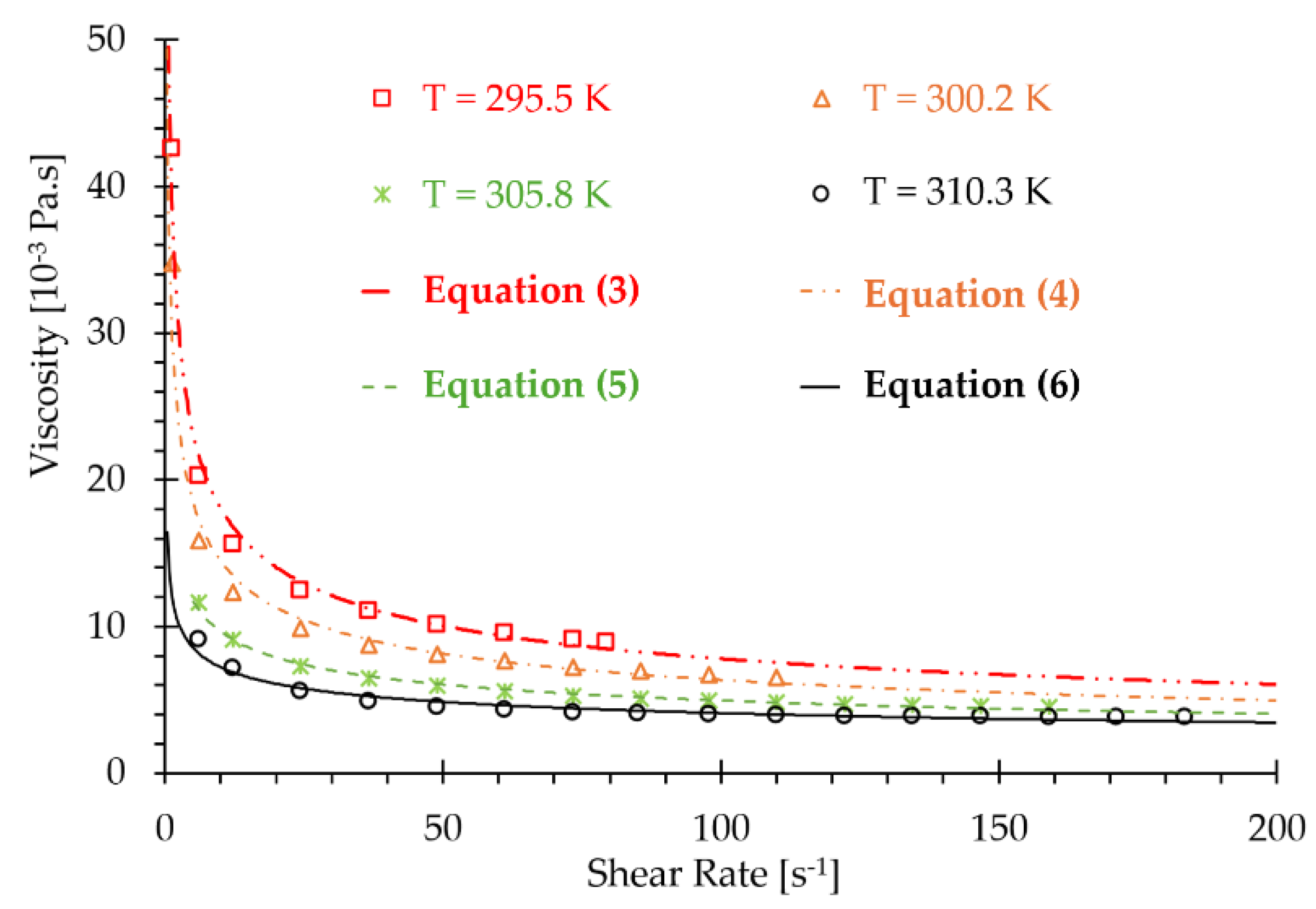
Figure 2.
Comparisons in the interim consistency index between Equations (3)-(6) and regressed Equation (8) under designated temperatures.
Figure 2.
Comparisons in the interim consistency index between Equations (3)-(6) and regressed Equation (8) under designated temperatures.
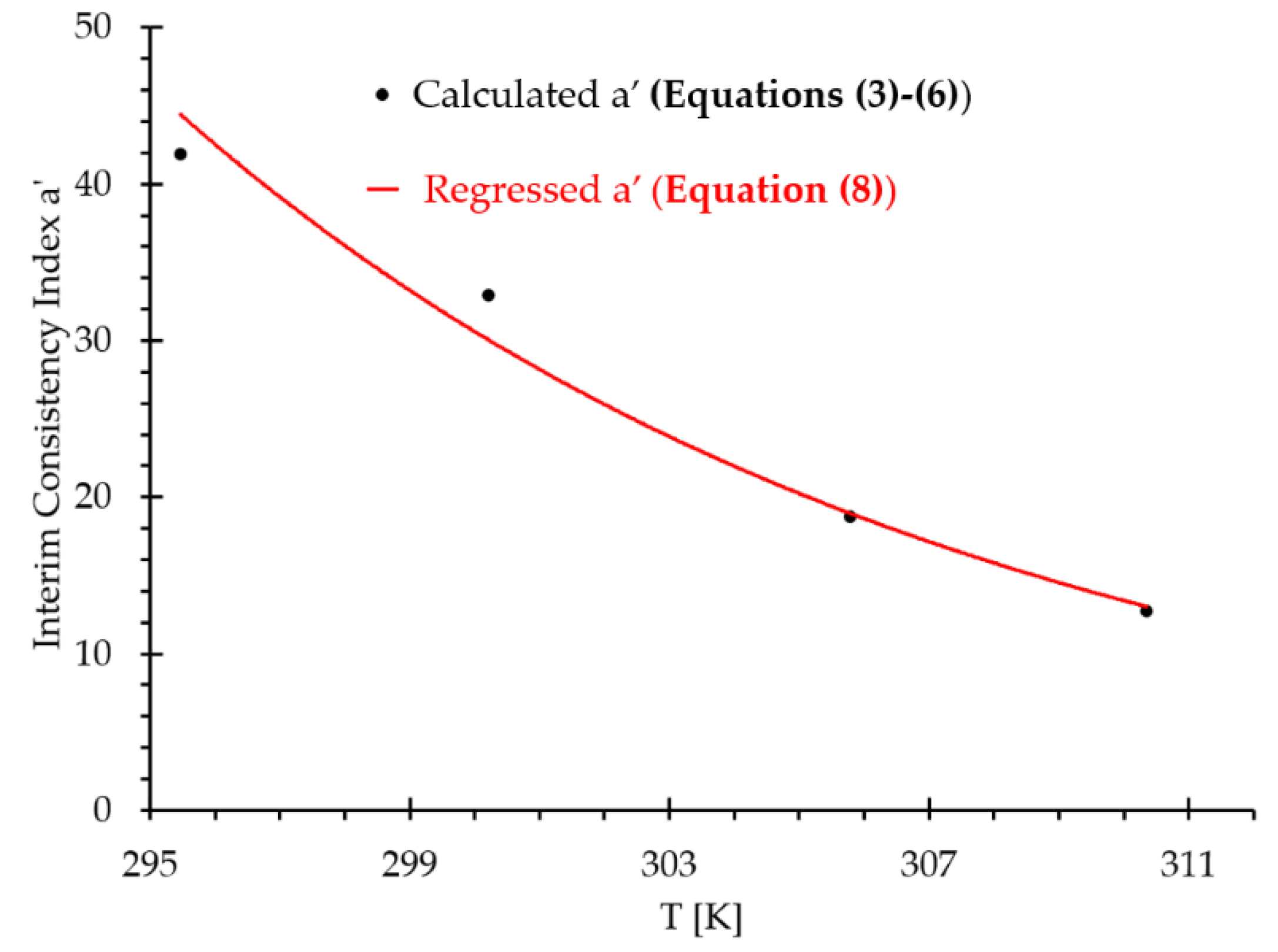
Figure 3.
Comparisons in introduced reference temperature based on the averaged values based on Table 2 and the calculated values using Equation (17) under and four thermal conditions, where the correlation coefficient .
Figure 3.
Comparisons in introduced reference temperature based on the averaged values based on Table 2 and the calculated values using Equation (17) under and four thermal conditions, where the correlation coefficient .
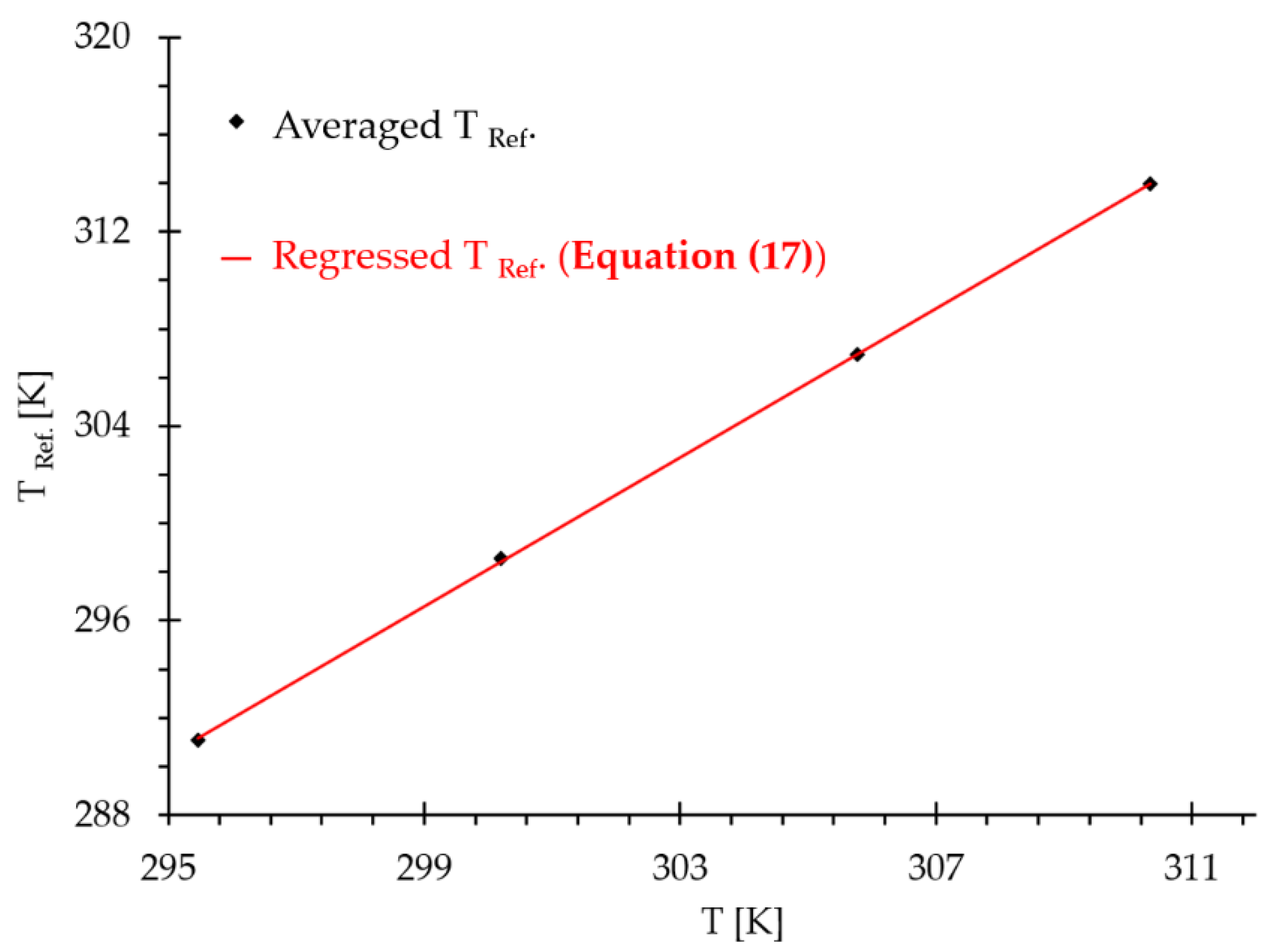
Figure 4.
Comparisons between the experimental data and the developed non-Newtonian blood viscosity model (Equation (1)) [4].
Figure 4.
Comparisons between the experimental data and the developed non-Newtonian blood viscosity model (Equation (1)) [4].
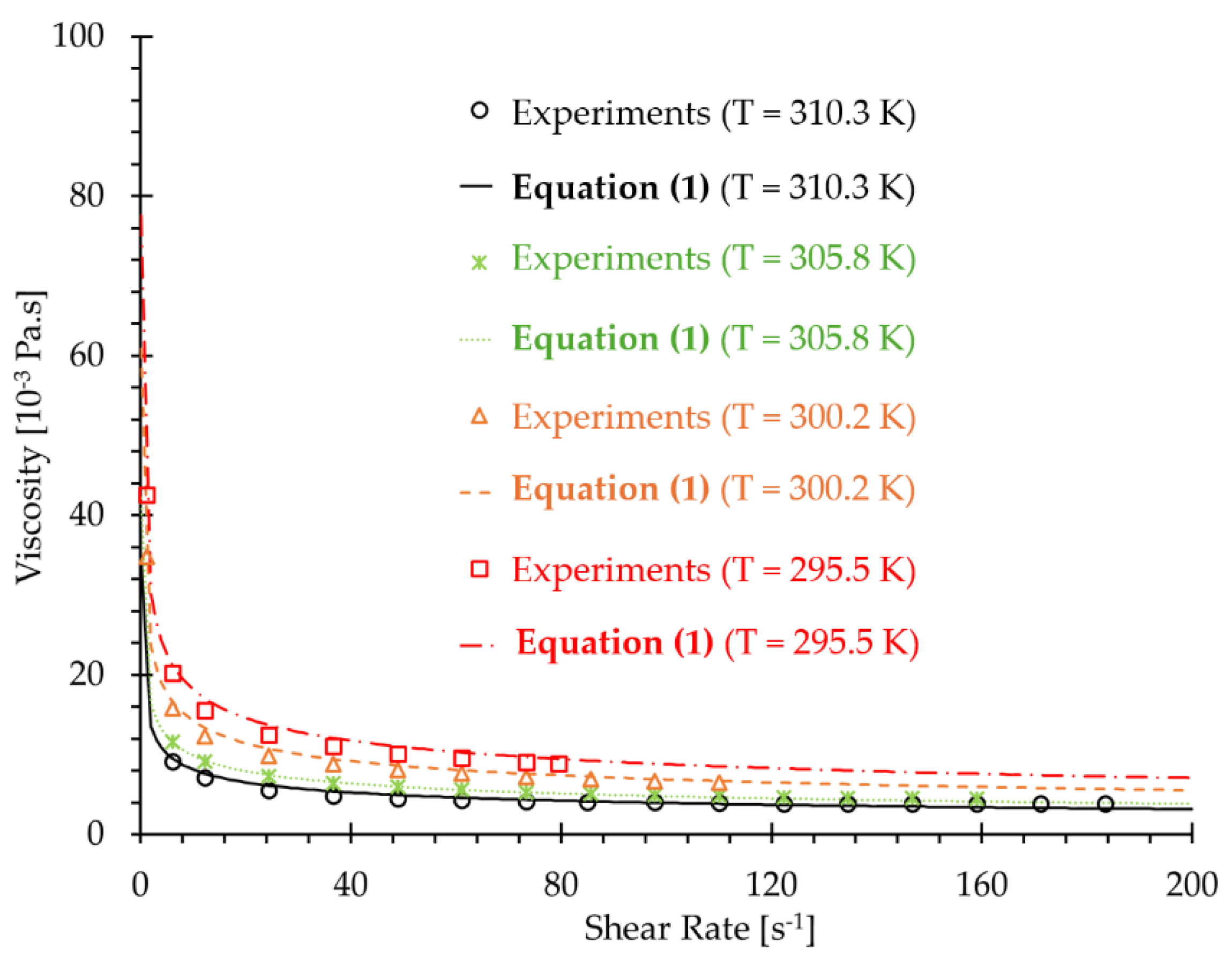
Figure 5.
Blood analog creating workflows and viscosity measurements.
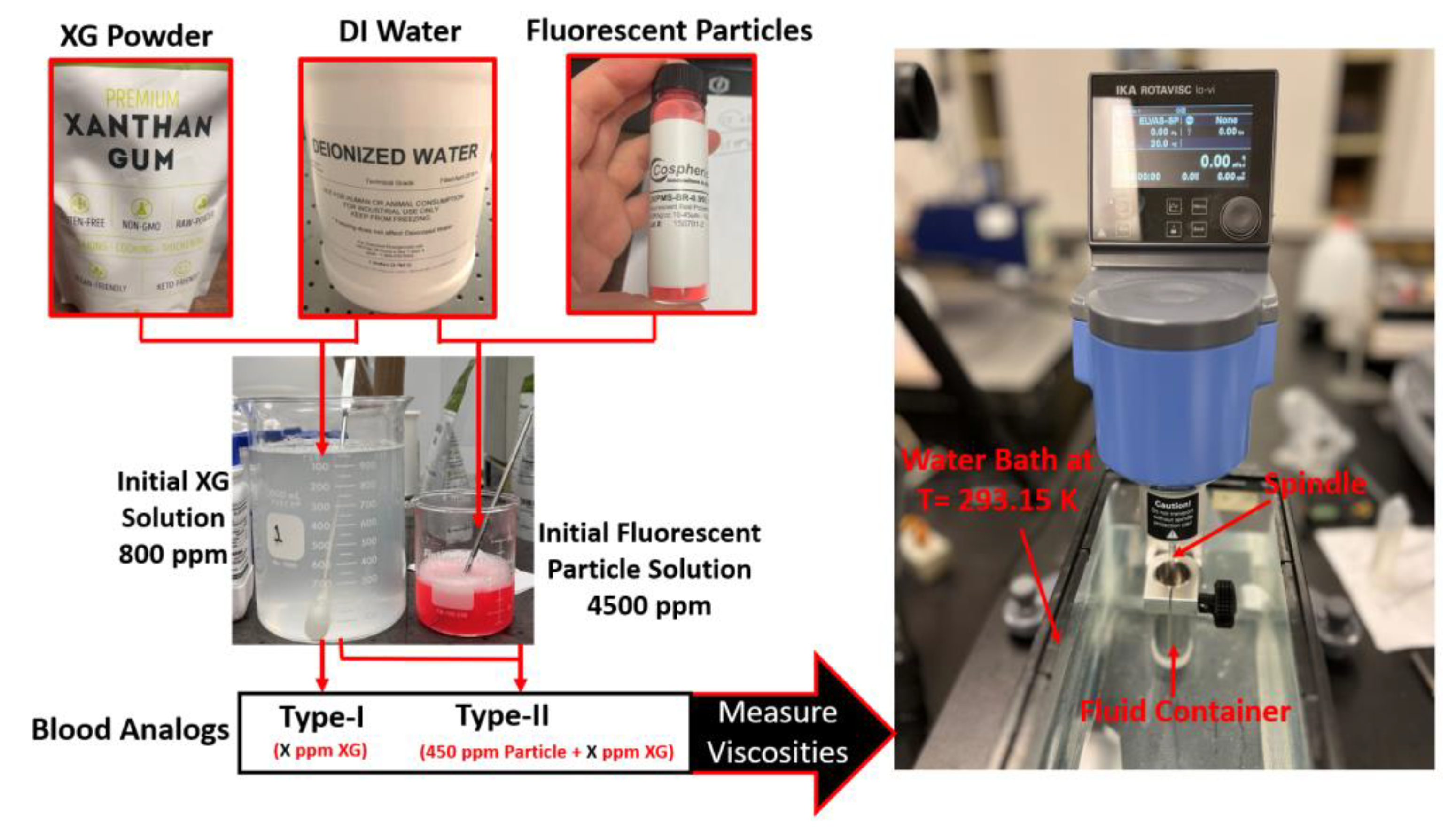
Figure 6.
The relationship between shear rate and viscosity of Type-I blood analogs under various XG concentrations. (a) 120 ppm; (b) 140 ppm; (c) 160 ppm; (d) 180 ppm; (e) 200 ppm; (f) 220 ppm; (g) 240 ppm; (h) 260 ppm; (i) 280 ppm; (j) 300 ppm; (k) 320 ppm; (l) 340 ppm; (m) 360 ppm; (n) 380 ppm; (o) 400 ppm; (p) 420 ppm; (q) 440 ppm; (r) 460 ppm; (s) 480 ppm; (t) 500 ppm, (u) 520 ppm; (v) 540 ppm; (w) 560 ppm; (x) 580 ppm; and (y) 600 ppm.
Figure 6.
The relationship between shear rate and viscosity of Type-I blood analogs under various XG concentrations. (a) 120 ppm; (b) 140 ppm; (c) 160 ppm; (d) 180 ppm; (e) 200 ppm; (f) 220 ppm; (g) 240 ppm; (h) 260 ppm; (i) 280 ppm; (j) 300 ppm; (k) 320 ppm; (l) 340 ppm; (m) 360 ppm; (n) 380 ppm; (o) 400 ppm; (p) 420 ppm; (q) 440 ppm; (r) 460 ppm; (s) 480 ppm; (t) 500 ppm, (u) 520 ppm; (v) 540 ppm; (w) 560 ppm; (x) 580 ppm; and (y) 600 ppm.
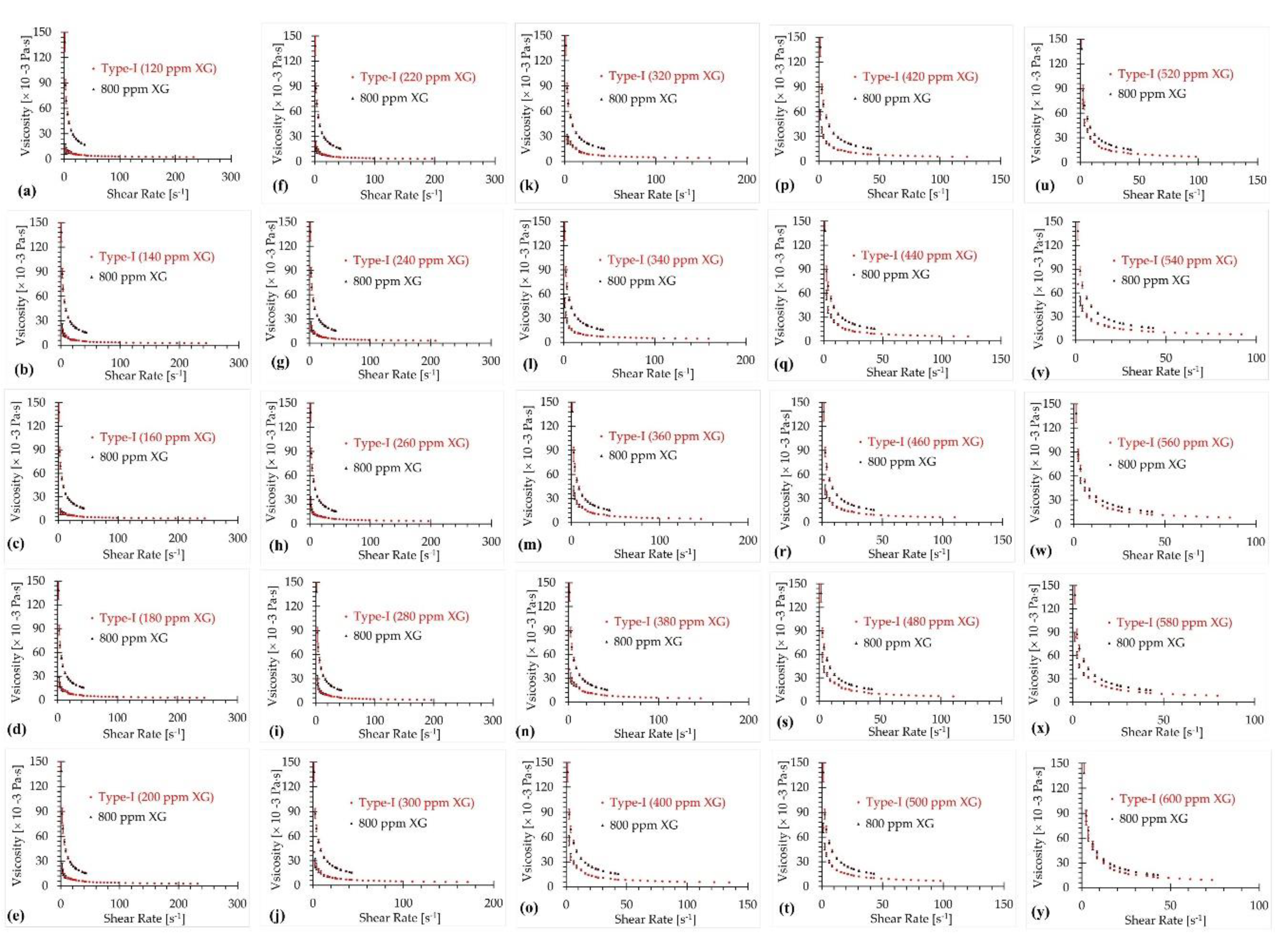
Figure 7.
The relationship between temperature and XG concentration in the blood analog.
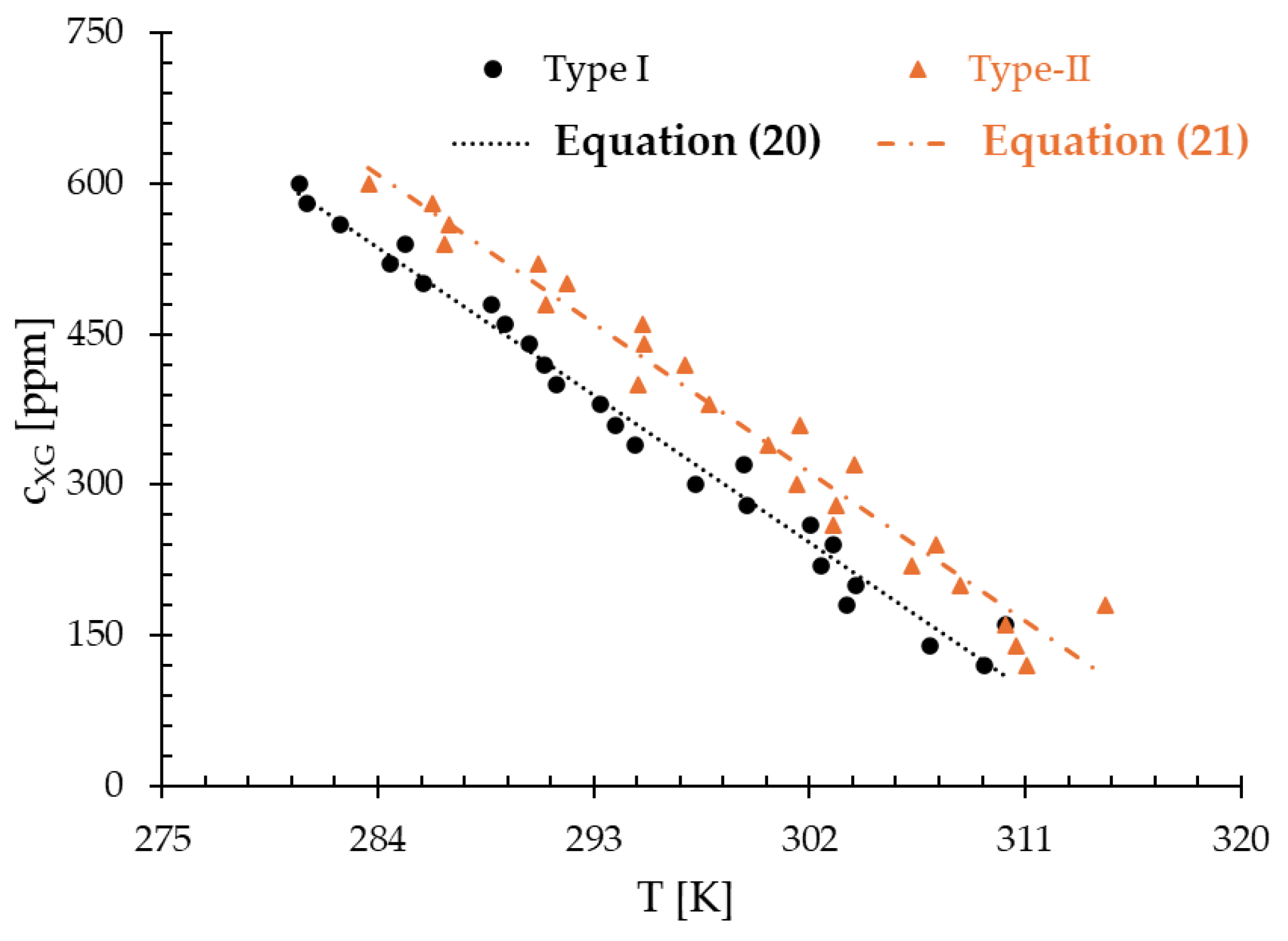
Figure 8.
The relationship between shear rate and viscosity of Type-II blood analogs under various concentrations. (a) 120 ppm XG and 450 ppm particle; (b) 140 ppm XG and 450 ppm particle; (c) 160 ppm XG and 450 ppm particle; (d) 180 ppm XG and 450 ppm particle; (e) 200 ppm XG and 450 ppm particle; (f) 220 ppm XG and 450 ppm particle; (g) 240 ppm XG and 450 ppm particle; (h) 260 ppm XG and 450 ppm particle; (i) 280 ppm XG and 450 ppm particle; (j) 300 ppm XG and 450 ppm particle; (k) 320 ppm XG and 450 ppm particle; (l) 340 ppm XG and 450 ppm particle; (m) 360 ppm XG and 450 ppm particle; (n) 380 ppm XG and 450 ppm particle; (o) 400 ppm XG and 450 ppm particle; (p) 420 ppm XG and 450 ppm particle; (q) 440 ppm XG and 450 ppm particle; (r) 460 ppm XG and 450 ppm particle; (s) 480 ppm XG and 450 ppm particle; (t) 500 ppm XG and 450 ppm particle, (u) 520 ppm XG and 450 ppm particle; (v) 540 ppm XG and 450 ppm particle; (w) 560 ppm XG and 450 ppm particle; (x) 580 ppm XG and 450 ppm particle; and (y) 600 ppm XG and 450 ppm particle.
Figure 8.
The relationship between shear rate and viscosity of Type-II blood analogs under various concentrations. (a) 120 ppm XG and 450 ppm particle; (b) 140 ppm XG and 450 ppm particle; (c) 160 ppm XG and 450 ppm particle; (d) 180 ppm XG and 450 ppm particle; (e) 200 ppm XG and 450 ppm particle; (f) 220 ppm XG and 450 ppm particle; (g) 240 ppm XG and 450 ppm particle; (h) 260 ppm XG and 450 ppm particle; (i) 280 ppm XG and 450 ppm particle; (j) 300 ppm XG and 450 ppm particle; (k) 320 ppm XG and 450 ppm particle; (l) 340 ppm XG and 450 ppm particle; (m) 360 ppm XG and 450 ppm particle; (n) 380 ppm XG and 450 ppm particle; (o) 400 ppm XG and 450 ppm particle; (p) 420 ppm XG and 450 ppm particle; (q) 440 ppm XG and 450 ppm particle; (r) 460 ppm XG and 450 ppm particle; (s) 480 ppm XG and 450 ppm particle; (t) 500 ppm XG and 450 ppm particle, (u) 520 ppm XG and 450 ppm particle; (v) 540 ppm XG and 450 ppm particle; (w) 560 ppm XG and 450 ppm particle; (x) 580 ppm XG and 450 ppm particle; and (y) 600 ppm XG and 450 ppm particle.
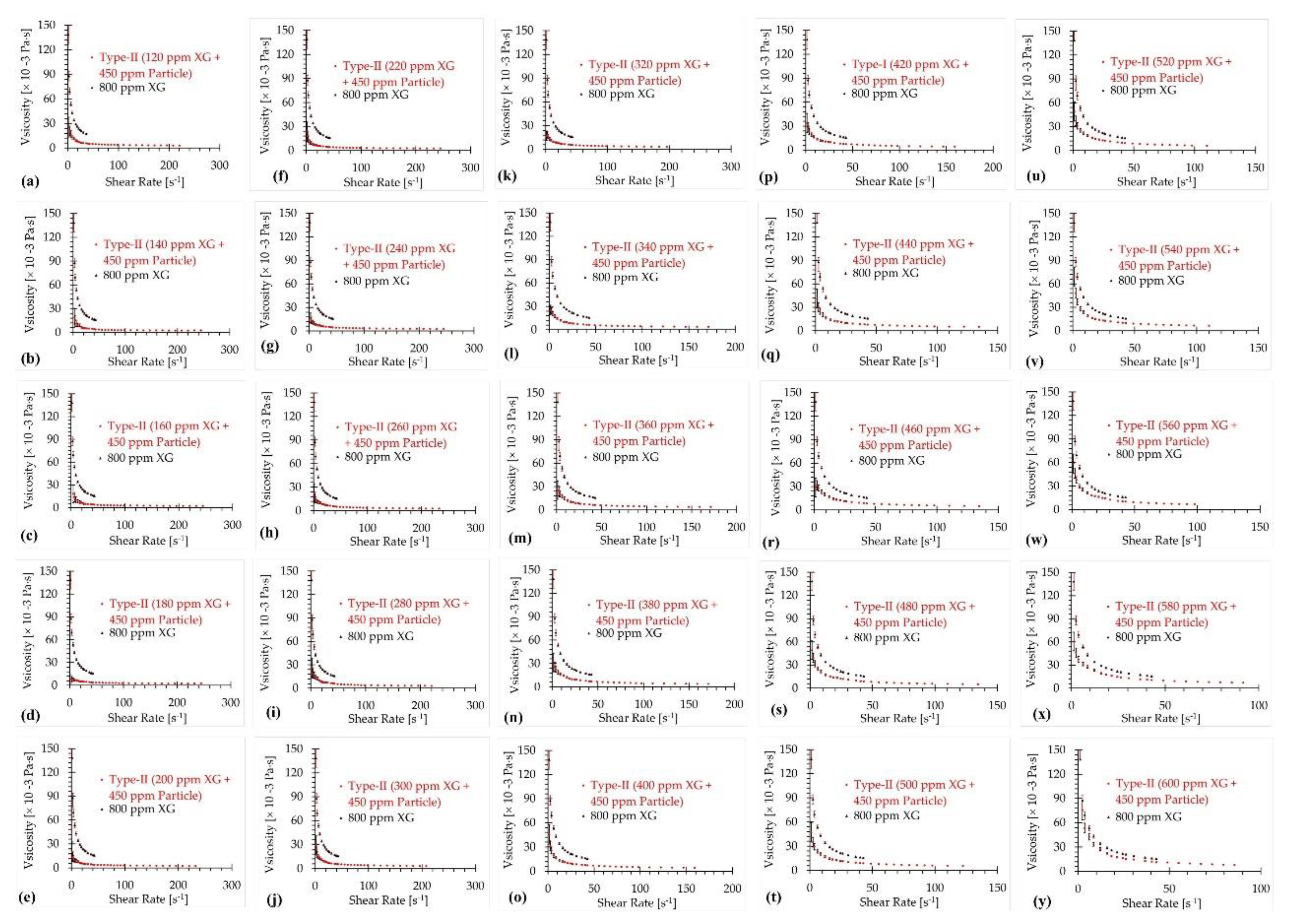
Figure 9.
Uncertainty in the viscosity measurement of blood analogs.
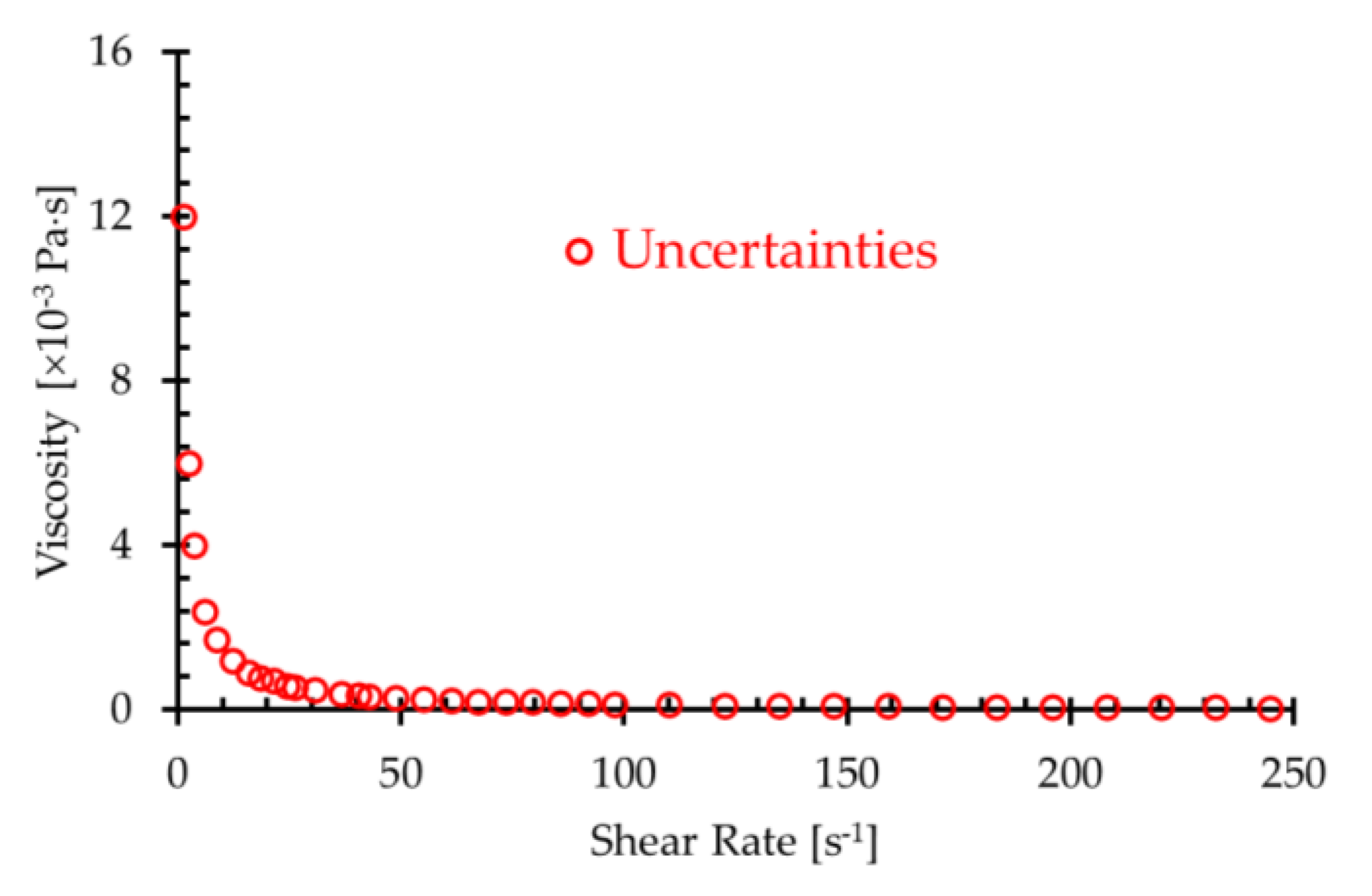
Figure 10.
The relationship of XG concentration and temperature in the generated blood analogs under various number of skipped initial data points. (a) 1 data point; (b) 2 data points; (c) 3 data points; (d) 4 data points; (e) 5 data points; (f) 6 data points; (g) 7 data points; (h) 8 data points; (i) 9 data points; and (j) 10 data points.
Figure 10.
The relationship of XG concentration and temperature in the generated blood analogs under various number of skipped initial data points. (a) 1 data point; (b) 2 data points; (c) 3 data points; (d) 4 data points; (e) 5 data points; (f) 6 data points; (g) 7 data points; (h) 8 data points; (i) 9 data points; and (j) 10 data points.
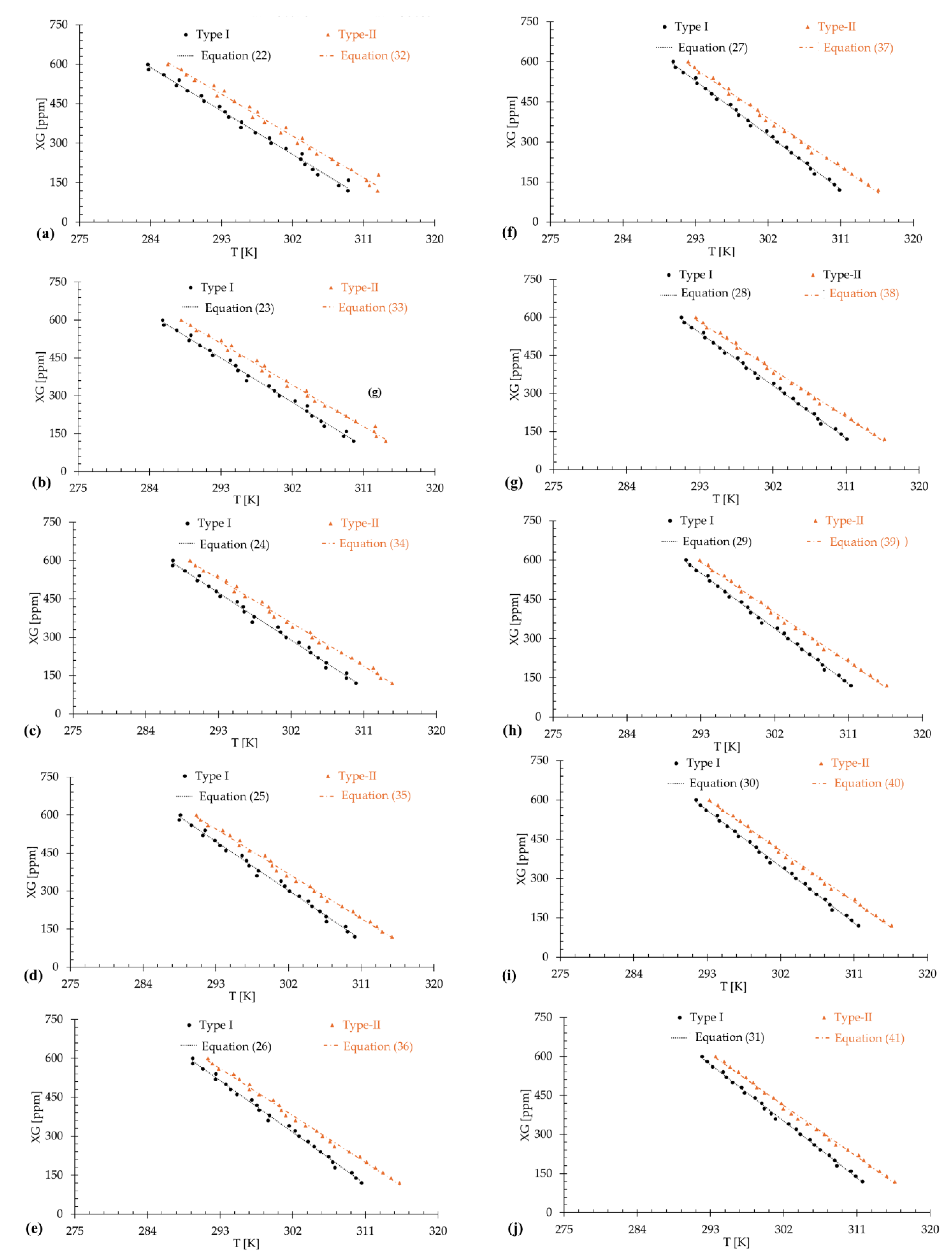
Figure 11.
Comparisons in viscosity between the regression equations and Equation (1) at two representative temperatures for the two types of blood analogs. (a) Type-I at T = 295 K, (b) Type-I at T = 312 K, (c) Type-II at T = 295 K, and (d) Type-II at T = 312 K.
Figure 11.
Comparisons in viscosity between the regression equations and Equation (1) at two representative temperatures for the two types of blood analogs. (a) Type-I at T = 295 K, (b) Type-I at T = 312 K, (c) Type-II at T = 295 K, and (d) Type-II at T = 312 K.
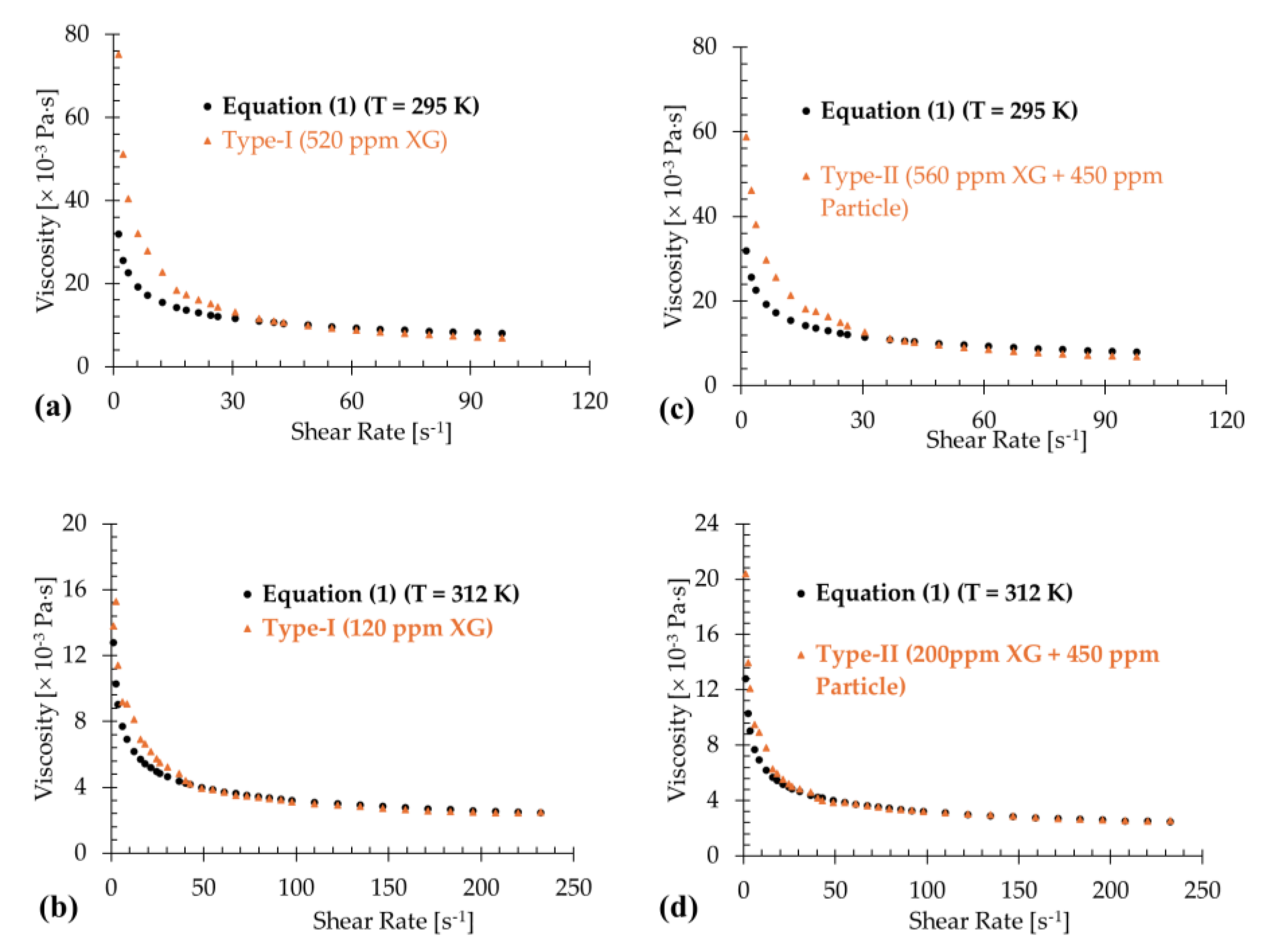

Table 1.
Using shear rate and temperature increments to decide the temperature index constant .
| 6.11 | 12.22 | 24.45 | 36.68 | 48.91 | 61.15 | 73.37 | |
| 5078.0695 | 5076.4238 | 5642.7484 | 5753.1148 | 5735.2348 | 5484.2840 | 4880.5709 | |
| 5075.0346 | 5001.5716 | 5275.4079 | 5372.0900 | 5392.6819 | 5288.4887 | 5083.2582 | |
| 4914.6750 | 4815.3147 | 4961.1219 | 5035.4353 | 5004.6332 | 4936.2186 | 4811.9285 | |
| 5072.6236 | 4942.1073 | 4983.5841 | 5069.3949 | 5120.5499 | 5132.9445 | 5244.2778 | |
| 4845.6259 | 4704.9722 | 4673.0723 | 4732.1500 | 4695.8871 | 4704.6106 | 4782.9208 | |
| 4587.6398 | 4435.4649 | 4320.1714 | 4348.8666 | 4213.2520 | 4217.8034 | 4258.5822 | |
Table 2.
Calculated under four designated temperatures.
| [] | |||||||
| 6.11 | 12.22 | 24.45 | 36.68 | 48.91 | 61.15 | 73.37 | |
| [] | |||||||
| 295 .5 | 295.70.1 | 295 .5 | 295.70.1 | 295 .5 | 295.70.1 | 295 .5 | 295.70.1 |
| 300.2 | 298.847 | 300.2 | 298.847 | 300.2 | 298.847 | 300.2 | 298.847 |
| 305.8 | 307.289 | 305.8 | 307.289 | 305.8 | 307.289 | 305.8 | 307.289 |
| 310.3 | 314.587 | 310.3 | 314.587 | 310.3 | 314.587 | 310.3 | 314.587 |
Disclaimer/Publisher’s Note: The statements, opinions and data contained in all publications are solely those of the individual author(s) and contributor(s) and not of MDPI and/or the editor(s). MDPI and/or the editor(s) disclaim responsibility for any injury to people or property resulting from any ideas, methods, instructions or products referred to in the content. |
© 2025 by the authors. Licensee MDPI, Basel, Switzerland. This article is an open access article distributed under the terms and conditions of the Creative Commons Attribution (CC BY) license (http://creativecommons.org/licenses/by/4.0/).
Copyright: This open access article is published under a Creative Commons CC BY 4.0 license, which permit the free download, distribution, and reuse, provided that the author and preprint are cited in any reuse.


