

Submitted:
18 March 2025
Posted:
19 March 2025
You are already at the latest version
Abstract
This article presents a landscape enhancement proposal for the UNESCO site of Pineta Park in Montecatini Terme, Italy. This experience is framed within the Research-through-Design (RTD) methodology, serving as an opportunity to explore the broader issue of rethinking traditional spa towns in crisis. In particular, the paper defines two research questions, focusing on the role of landscape design in the protection of cultural sites and in the creation of new scenarios and values for highly protected contexts. Referring to the Historic Urban Landscape (HUL) approach, the article examines the need to mediate between conservation requirements and the dynamic evolution of heritage. As a result of this design and research experience, it is argued that landscape design plays a crucial role in establishing an integrated system capable of supporting development strategies for UNESCO cultural sites while ensuring their sustainability.
Keywords:
spa town
; wellbeing landscape
; wellbeing park
; Montecatini Terme
; Research-trough-Design
; Historic Urban Landscape.
1. Introduction
1.1. Spa Towns and Wellbeing Landscapes
The relationship between cities, landscape, and well-being has deep historical roots and is closely intertwined with the element of water [1]. Indeed, water, due to its symbolic meanings and practical uses, has always supported functions related to hygiene, self-care, and health at both individual and societal scales [2,3]. Traces of the use of water for therapeutic purposes can be found as early as prehistoric times and across various civilizations, giving rise to diverse practices such as the hammam tradition of the Orient, the Japanese onsen, and the sauna/banya in Scandinavia and Russia. In Europe, this tradition evolved into the spa phenomenon [4].
To summarise the historical development of the spa culture in Europe, it is relevant to point out that the origin of thermalism as a social and economic phenomenon can be traced back to the Roman Imperial era, when the attendance of thermal baths became a widespread social practice [5]. Following the fall of the Roman Empire, thermal culture declined during the Middle Ages, due to political and religious factors. However, thermal traditions persisted in the Byzantine Empire, developing unique characteristics that were later reintroduced to Europe through Arab influence. The Renaissance marked a gradual rediscovery of thermal practices, and by the 18th century, the spa culture began to consolidate its scientific foundations, leading to an increasing number of studies on the biological and therapeutic effects of mineral waters [6]. Prompted by a growing awareness of public health issues, thermal centres were gradually transformed into holiday destinations and hubs of social life, acquiring a distinct touristic identity[7].
Thus, the spa phenomenon is closely connected to architecture, with the construction of monumental thermal complexes, to urban planning, shaping spa towns with specific features, and to landscape design, integrating the benefits of thermal treatments with the immersive and contemplative experience of natural settings [8]. Consequently, numerous spa towns emerged across Europe, structured around thermal practices and tourism as their core identity and economic foundation.
In tracing the development of modern thermal tourism, Urošević highlights the role of a coordinated transport network, which initially concentrated this phenomenon in the highly industrialized and urbanized areas of Western Europe [9]. For instance, the railway connection between Paris and Nice, established in 1864, significantly contributed to the subsequent development of the Côte d’Azur. Similarly, the city of Montecatini Terme in Italy, which is the case study of this research, was reached by the railway in 1857 and since then has developed as a spa centre connected with the other main cities in Tuscany.
The development of thermalism in Europe led to a widespread cultural phenomenon, manifesting in similar and recognizable characteristics across different European countries, despite local specificities. Peter Borsay emphasizes the high degree of similarity among spa towns: while reference models evolved over time and new trends emerged, a resort culture developed, sharing many common elements such as the search for health and the pursuit of nature, sociability, status acquisition and class assertion [10].
This layered and complex cultural phenomenon has produced recognizable and valuable heritage expressions in spa towns, spanning from the landscape scale to urban planning and the architectural features of thermal buildings[11]. The architectural historian Francois Loyer defined spa towns as ‘authentic laboratories for experimental architecture, whose integrity should be protected’. To understand spa towns it is useful to refer to the concept of ‘therapeutic landscapes’, developed by Gesler in 1992 to investigate the healing dimensions of specific sites [12]. Recognising that the ‘healing process works itself out in places (or situations, locales, settings and milieus)’, Gesler highlighted the connection between place and well- being is expressed through a multitude of elements, including natural components, such as plants, parks, and water, and underlined the role of natural environment when it intersects with the social environment [13,14]. The concept ‘therapeutic landscape’ thus refers to a broaden notion of wellbeing, which is not just biomedical health [15,16]. Spa towns across Europe perfectly embraced this concept by developing urban settings with the primary vocation of thermal care, but also enhancing the aesthetic, recreational and social value of natural environments and leisure activities.
The recognition of this homogeneous cultural system led UNESCO to approve the nomination of 11 European spa towns across seven countries for inscription on the World Heritage List as the “Great Spa Towns of Europe” in 2021 [17]. However, several spa towns today face significant challenges, including the decline of thermalism as it was understood in the 20th century, the impacts of economic crises and the effects of COVID-19, the limitations of being single-industry cities, and other structural issues. These challenges have contributed to a widespread perception of stagnation or decline. This study aims to investigate the role of landscape design in addressing the current challenges of spa towns, supporting sustainable development strategies, and balancing necessary urban evolution with the preservation of cultural heritage. The research is based on the experience developed by the authors for the re-design of the park of Montecatini Terme, developed for the City of Montecatini Terme and Fodazione Caript.
The article is structured into five sections. This first section provided an introduction to European spa phenomenon and its cultural significance. It is followed by an overview of the key challenges faced by spa towns today. The second section outlines the research objectives, research questions, and methodology applied in this study. The third section introduces the case study, describing both the European framework of UNESCO-listed spa towns and the specific case of Montecatini Terme. The fourth section presents the design and planning work carried out in the case study. The final section critically discusses the knowledge generated through this design experience and its relevance to the broader discourse on the enhancement and revitalization of spa towns.
1.2. Evolution and Current Challenges of Spa Towns
Thermal practices have experienced alternating fortunes since the antiquity, with periods of splendor followed by centuries of neglect. In order to understand the present moment, it is relevant to examine the development of modern thermalism over the the last century and a half. In fact, it was from the 18th century onwards that the renewed attention to public health, and advances in medical sciences began to systematically study, understand, and promote the benefits associated with thermal practices [7]. However, it was not until the late 19th century that thermalism emerged as a tourism phenomenon .
Referring to the periodization proposed by Becheri for thermalism in Italy, different phases can be identified in the development of thermal culture, which can—with some adjustments—be extended to a similar evolution in Europe [18]. The first phase can be defined as ‘Ludic Thermalism’ and developed between 1890 and 1930. In this phase, thermalism was approached by an aristocratic elite. The second phase is that of ‘Social Thermalism’, spanning from the post-war period to the mid-1970s. In this phase, thermal baths became a mass social phenomenon accessible to a wide public. The third phase described by Becheri is specifically related to the Italian context, where in the 1970s and 1980s, ‘Assisted Thermalism’ developed: during this period, public health policies supported widely accessible mass treatments, and as a result, the revenues of the thermal system depended almost exclusively on the national health system, placing thermal economy out of the market [19]. The medicalization of thermal treatments and state intervention in the thermal economy were observed approximately in the same years not only in Italy but also in other European countries, such as France, where the Sécurité Sociale was reimbursing three-week of standard thermal treatment periods [7,20], and England, where the funding for free spa treatment promoted by the National Health Service in 1948 was later withdrawn due to the impact of new drug regimes and financial pressures [21]. From the 1980s, in response to the changing political and economic climate, state subsidies for thermal treatments began to be limited, leading to a gradual crisis in the sector. Across Europe, by the late 21st century, thermal tourism had reached a point of maturity . This resulted in either stagnation or a decline in visitor numbers, creating a widespread sense of crisis and a nostalgic perception of a lost golden age.
In the new millennium, the concept of thermalism has shifted its focus from health treatment to a wider concept of well-being, introducing a set of functional services aimed at creating conditions for holistic physical and mental wellness, as well as spiritual well-being [22,23]. To describe this process, Becheri refers to a fourth phase of thermal activity, integrating thermalism and wellness. However, the full realization of this new approach to thermalism requires a rethinking of traditional spa destinations, integrating them into a modern tourism system. This shift aligns with new wellness trends that combine healthy nutrition, physical exercise, relaxation, and cultural activities [24].
Looking at the European landscape, some cases of successful renewal can be identified. For example, the French city of Vichy established itself under Napoleon III in the second half of the 19th century and during the Belle Époque as a preferred thermal destination of excellence [25]. Its geographical location facilitated the influx of aristocratic tourists from Paris, as well as French military and civilian personnel from the colonies. However, the city’s reputation suffered a collapse when Vichy became the seat of the collaborationist government after the German occupation in 1940 [26]. Additionally, the thermal economy was severely damaged by the end of the French colonial empire, which had a significant impact on visitor numbers. After the war, the revival of Vichy included, on one hand, a drastic attempt to erase that problematic historical period [27], and on the other, a continuous process of diversifying its tourism offerings . To attract a more mixed clientele throughout the year, Vichy developed itself as a venue for conventions and congresses, hosted at the Palais des Congrès, which opened in 1995 within the Grand Casino, and launched extensive promotional campaigns to position itself as a sports tourism destination. Furthermore, the city strengthened the industrial production and export of bottled mineral water, which, while linked to Vichy’s thermal tradition, became a separate core business, distinct from traditional spa and bathing tourism. However, the urban renewal initiated in the 1970s and 1980s also led to large-scale demolitions and reconstructions. This triggered the need for serious heritage protection policies. The implementation of the ZPPAUP (Zone for the Protection of Urban and Landscape Architectural Heritage) made it possible to identify exceptional buildings for the first time and to establish initial regulations for safeguarding, conserving, and enhancing heritage [28,29]. This legislative tool later evolved into the AVAP, a more detailed classification that included greater environmental considerations, launched in 2014 and implemented in March 2019.
Another interesting case is that of Bath, in the UK. The city’s reputation as a healing place consolidated through centuries taking advandage of the natural setting and leveraging the symbolic power of water and architecture[30]. However, 20th-century developments threatened the urban heritage of the spa town. The city suffered significant damage from bombings during World War II, and, in the 1960s and 1970s, uncontrolled industrial and residential development took place. A period of severe economic crisis followed the closure of the major thermal baths at the end of the 1970s. In defence of its heritage, the city began to implement a systematic strategy to protect and enhance its architectural assets and cultural identity [25]. The city’s cultural value was recognized twice by UNESCO—first in 1987, when Bath was inscribed on the World Heritage List, and again in 2021, when it was included in the transnational listing of the Great Spa Towns of Europe [31]. The historian Peter Borsay observes that the city has successfully consolidated a strong historical identity and has been able to reinterpret its past and “recycle the image of the earlier period”[5]. Recently, the city has regained momentum with significant investments and a coordinated program of urban regeneration that allowed the reopening of the historic thermal baths: in 2005, an extensive restoration and modernization project was launched, including the creation of the Thermae Bath Spa, designed by Nicholas Grimshaw, and in 2009, a major urban mobility project was initiated, integrating electric public transport. These projects were framed within the a city-wide vision Future for Bath (2006), which laid the foundations for an economic redevelopment aligned with the city cultural identity [32,33].
In Italy as well, some thermal destinations have attempted to relaunch themselves through large investments and ambitious architectural projects, with more uncertain results. This is the case of San Pellegrino Terme. This spa town declined after World War II, and most of its thermal facilities were progressively abandoned: the Grand Hotel closed in 1979 due to high management costs, the funicular built in 1909 to connect to the panoramic viewpoint was shut down in 1989, and the historic thermal establishment ceased operations in 2006 [24]. In 2007, Lombardy Region, Bergamo Province, and Grupo Percassi launched a €150 million rehabilitation project. Two years later, an international architectural competition was held in 2009, awarding Dominique Perrault the winning project, which aimed to create a new luxury thermal center inspired by the Dolomites’ rocky landscape[34,35]. Despite its interesting approach to modernizing the town while respecting its historic fabric, the project proved to be excessively ambitious and disproportionate to the actual capabilities of the municipality. In fact, construction never began, and the project was ultimately abandoned. In 2014, thermal activity returned to San Pellegrino thanks to new investments and the QC Group, but not in its original location; instead, it was moved to a renovated and expanded former thermal hotel. In 2016, a new competition was awarded to BIG for the renovation of the San Pellegrino bottling plant and surrounding urban spaces. The project is currently underway and is expected to be completed by 2029.
The analyzed cases highlight the importance of a comprehensive vision, effectively articulated through a landscape-based approach. The territorial protection measures and systemic heritage conservation strategies implemented in Bath and Vichy have successfully and coherently supported their revitalization processes, reinforced by appropriate commercial and promotional policies. In contrast, where investments have been concentrated but lacked an overarching strategic framework, as in the case of San Pellegrino, the outcomes remain highly uncertain. This latter case further underscores the necessity of aligning investments, commitments, and objectives with the actual capacities of spa towns facing a critical phase in their tourism economy.
2. Objective and Methodology
Acknowledging the complex and rich background of thermal culture in Europe, as well as the ongoing decline and common challenges faced by many spa towns, this article investigates the role of landscape design in redefining and supporting a sustainable path for thermal cities.
In particular, the paper seeks to answer two research questions. The first concerns the protection of the landscape of thermal cities, understood as urban and territorial systems whose value stems from the integration of natural and human-made elements. In this regard, the authors explore the role of landscape design in the conservation framework of thermal heritage.
The second research question addresses the creation of new values, opportunities, and experiences within historically vulnerable contexts subject to multiple protection measures. The inquiry focuses on how landscape design can support a sustainable, compatible, and context-sensitive transformation of thermal cities.
The study presented in this paper centers on the case of Montecatini Terme and introduces the design experience developed by the authors, offering insights relevant to similar cases. Referring to the methodology of Research-through-Design (RTD), in which the designing activity is employed as a research method [36], we used the practical experience developed in Montecatini Terme as a chance to investigate a broader topic and produce knowledge that serves to answer the starting research questions and that can be extended to similar cases.
RTD can be placed among the three main modes of interactions between landscape architecture and research identified by the European Council of Landscape Architecture Schools (ECLAS), namely: research on design; research for design; research by design ( or Research Throug Design as it is referred in this paper). It involves “the analysis of complex spatial strategies by producing and evaluating scenarios, making and evaluating new typologies that are based on new needs (of the public), finding solutions for a social or spatial problem”[37]. RTD refers to a particular research strategy in landscape architecture, in which the design process is conducted in a well-considered manner to achieve a particular goal or to address a research question [38,39]. In this framework, the design activity can be considered as a research strategy and a powerful method for generating practical-productive knowledge. As noted by Nijhuis and de Vries, in order to be considered a reliable and consistent research method, the design process should be carried out in a methodic way [38]. In particular, the process should start with a design problem and the clear statement of research questions; then, the search associated with a design process is in articulated into the three phases of analysis, synthesis, and evaluation; last, the design solution should be discussed and referred to the research questions stated at the beginning. The interactioction of reseacrh and design results in an iterative process, in which the objective and the alternative solutions can be further refined. This approach has been applied to the case study of Montecatini Terme as shown in Figure 1.
In addition, it should be mentioned that as a theoretical foundation for the design process, we referred to The Historic Urban Landscape (HUL) approach. This is a method of conservation in the urban development process that integrates urban conservation principles and practices into the urban development process [40]. This research adopts the definition and method of HUL proposed by UNESCO, with the intention of prioritising the objectives of preservation and protection of material and immaterial cultural heritage, but within a dynamic vision of the urban environment responding to present and future needs [41,42]. The starting point is the recognition that the city is not a static monument or group of buildings, but is subject to dynamic forces in the economic, social and cultural spheres that keep shaping it. The HUL is “the urban area understood as the result of a historic layering of cultural and natural values and attributes, extending beyond the notion of ‘historic centre’ or ‘ensemble’ to include the broader urban context and its geographical setting”. The innovative aspect of this approach is to coherently merge the notions of heritage and landscape, as the HUL refers also to “the site’s topography, geomorphology, hydrology and natural features, its built environment, both historic and contemporary, its infrastructures above and below ground, its open spaces and gardens, its land use patterns and spatial organization, perceptions and visual relationships (…) and also social and cultural practices and values, economic processes and the intangible dimensions of heritage as related to diversity and identity”[43]. The HUL advocates that a historic context and new development can interact and mutually reinforce their role and meaning and this supports the attempt to integrate a ’new’ approach such as GI also in historical contexts. In this perspective, historical specificities are not only a constraint but also a great opportunity [44,45,46]. Consistency with this approach is a key aspect to be included in the evaluation phase of the design process, as will be discussed at the end of this paper.
3. The Case Study
3.1. The Great Spa Towns of Europe
The general framework for this research is provided by the international network of spa towns listed by UNESCO, in which Montecatini Terme represents the only Italian city. ‘The Great Spas of Europe’ is a serial transnational property comprising eleven towns and cities across Europe, shown in Figure 2. This group of cities has been identified by UNESCO for the relevance of the tangible and intangible heritage connected with thermal culture and spas. The decision to pursue a group nomination for the World Heritage List is also significant, as it highlights the recognition of a shared and transnational thermal culture across Europe. The serial nomination captured “the geography of this network of water cure towns, its historical geopolitical scale, and the diversity of spa history and style”[47]. Indeed, UNESCO highlighted that “Spa towns share many attributes in common, but the ways in which these attributes are expressed in each of the eleven components varies according to a wide range of factors, for example the particular relationship of the urban form to topography and landscape” [48].
The nomination process for the Great Spa Towns of Europe began in 2011, involving a substantial mobilization of resources in each participating site to prepare the nomination dossiers and discuss the framework for this collective candidacy. On July 1, 2014, sixteen Great Spa Towns were added to the Tentative List. Then, in May 2016, following a decision by the International Steering Group, the nomination was narrowed down to eleven towns from the original sixteen. In 2021, during the 44th session of the World Heritage Committee [49], the Great Spa Towns of Europe were officially inscribed on the World Heritage List, under criterion II, which recognizes an important interchange of human values over time or within a cultural area, particularly in relation to architecture, technology, monumental arts, urban planning, or landscape design; and criterion III, which requires sites to bear a unique or exceptional testimony to a cultural tradition or civilization, either living or extinct [50].
The justification for inscription produced by the committee emphasized the role of spa towns as centers of experimentation that adapted to evolving tastes and tourism demands. Additionally, the committee recognized the synergistic work of architects, designers, and landscape architects, who shaped both the built and natural environments that framed spa life. Additionally, the committee acknowledged the European spa phenomenon as a cultural testimony, reflected in the urban and landscape configuration of spa towns. As places dedicated to thermal treatments, these towns evolved over the centuries to provide a balanced combination of medical practices and leisure activities, including entertainment, social interaction, and physical exercise within an outdoor therapeutic landscape [47,51].
The ten-year period between the initiation and approval of the nomination was particularly significant for each participating city. During this time, an international network was established to promote the shared heritage of these sites and facilitate the exchange of best practices. For Montecatini Terme and other spa towns currently facing economic and tourism-related challenges, UNESCO recognition—alongside participation in this network—represents an important incentive for revitalization. The nomination process itself served as an opportunity for each town to engage in a critical reassessment of its heritage, conducting an objective analysis of both its potential and its vulnerabilities. At the administrative level, UNESCO listing required these towns to implement monitoring and reporting systems in compliance with World Heritage Committee requirements. In Montecatini Terme, a municipal office was established in 2018 to manage UNESCO-related procedures and oversee the site’s administration [52].
3.2. The Site of Montecatini Terme, Italy
Montecatini’s thermal vocation has been known since Roman times, but it was toward the late 18th century that the city began to take shape as a spa town. This transformation was initiated through land reclamation projects promoted by Pietro Leopoldo, Grand Duke of Tuscany, which improved the areas of the Marsh of Fucecchio. During this period, the first nucleus of thermal baths was established. Throughout the 19th century, new water springs were progressively discovered, leading to the construction of new thermal establishments and the renovation or expansion of existing ones. Montecatini’s reputation grew rapidly, supported by the publication of scientific studies on the benefits of its mineral waters and an effective promotional campaign for its spa services [53,54,55].
To accommodate the growth of elite tourism, the city was gradually equipped with various auxiliary services, such as a theater and a casino, as well as urban infrastructure, including tree-lined avenues and expansive green spaces. The construction of key infrastructure, such as the railway (1857), the funicular railway to the old town of Montecatini Alto (1898), and the tramway connecting Montecatini to Monsummano, Lucca, and Pistoia (1907), consolidated the city’s position as a prominent tourist destination extending well beyond the regional borders (Figure 3).
At the turn of the 19th and 20th centuries, the idea of the Pineta park emerged—an extensive green space designed for leisure and promenades, serving as a connecting element between the various thermal buildings. The park was developed at the initiative of the Società Terme, based on a design by architect Giulio Bernardini, who served as the director of the society from 1896 to 1913. Bernardini incorporated stylistic influences and inspirations acquired during his travels to major European spa destinations, bringing them to Montecatini [58].
The green system formed by the Pineta park and the individual parks of the thermal establishments merges with the urban fabric and extends through the terraced olive groves on the mountainside up to Montecatini Alta [59,60]. The landscape continuity of this system has been recognized by UNESCO, and within the collective nomination of the Great Spa Towns of Europe, Montecatini has been designated as the “Garden Spa of Europe”. This recognition highlights not only the value of the individual thermal buildings but also the importance of the broader landscape system, in which green spaces and the Pineta park play a fundamental role, as represented in Figure 4.
Turning to more critical aspects, it is important to note that Montecatini’s thermal activity is primarily centered around hydropinic treatments (which consists in the oral assumption of thermal water of determine temperature, according to the determine schedule, rhythm and time), a practice that has declined in popularity. The specificity of its thermal offering has exacerbated and intensified the broader crisis of thermal tourism, which is also affecting other spa towns [61]. The tourist flows that still bring visitors to Montecatini are largely due to its proximity to major cultural destinations such as Florence, whereas the number of visitors coming specifically for thermal treatments has significantly decreased. As a result, the average length of stay has been considerably reduced, dropping from approximately a week to just 3–3.5 days over the last two decades [18].
Attempts to revitalize the city have faced numerous setbacks. As part of the new Strategic Plan, the municipal administration introduced the concept of a “thermal village”, where “not the company, but the city itself becomes the product, whose originality and uniqueness go beyond the quality and level of individual services offered” [62]. To implement this vision, the city commissioned renowned architect Massimiliano Fuksas to redesign Montecatini’s thermal services, with an urban intervention aimed at reviving the historic spa town identity. Fuksas’ project envisioned a new Montecatini as a “water village”, focusing entirely on the redevelopment of the monumental Terme Leopoldine complex. However, much like what occurred in San Pellegrino, the project quickly proved disproportionate in both ambition and cost relative to the city’s actual economic and administrative capacity [63]. The most significant consequence of this failure has been the suspension of construction site at Terme Leopoldine, leaving it completely abandoned up to present day. Meanwhile, the broader deterioration and abandonment of Montecatini’s thermal system has continued. The Terme Torretta was temporarily converted into a nightclub before permanently closing in 2008; the Terme Tamerici is occasionally used for events, though large sections remain inaccessible due to structural damage to the roof; the Terme Excelsior is closed and unused; and the progressive decline of the city’s thermal heritage persists.
As a consequence of the bankrupt of Società Terme, which owns almost all of the city’s thermal buildings, a judicial procedure was initiated in 2023, and an auction is currently underway to redefine the ownership of the spa facilities. At present, the acquisition of the entire thermal system by a single investor appears unlikely, and it is more probable that individual components will be sold separately. This scenario poses a significant risk to the city’s heritage, as its value, as previously discussed, lies in the interconnected system of architectural and landscape elements.
3.3. Heritage Preservation Constrains
Before discussing the proposed design intervention, it is necessary to briefly outline the multiple heritage protection constraints affecting Montecatini’s thermal district, which define the regulatory framework within which any project must operate. The area under study is subject to numerous protection measures, both in relation to its architectural components and its landscape system. Heritage protection operates at multiple institutional levels, ranging from international safeguards under UNESCO to national regulations and local planning policies.
Regarding the UNESCO-listed area, all eleven spa towns were required to define a core zone and a buffer zone. In Montecatini’s case, the core zone includes the spa town developed at the end of the 18th century, the old town of Montecatini Alto, and the linear connection formed by the funicular railway and its associated park. The buffer zone encompasses a wider protection area, ensuring strong connections between the nominated property and its broader urban and landscape context. UNESCO inscription also imposes additional governance requirements to ensure effective transnational coordination among the participating States Parties, as well as between regional authorities and other stakeholders. Montecatini has adopted a Property Management Plan in accordance with the governance framework for transboundary and serial nominations, as outlined in the Operational Guidelines for the Implementation of the World Heritage Convention. This management plan must align with several international policy frameworks, including Policy Document on the Impacts of Climate Change on World Heritage Properties (2007), the Strategy for Reducing Risks from Disasters at World Heritage Properties (2007), the World Heritage Strategy for Capacity Building (2011) and the Policy for the Integration of a Sustainable Development Perspective into the Processes of the World Heritage Convention (2015). Additionally, the World Heritage Committee advocates for the application of the 2011 UNESCO Recommendation on Historic Urban Landscapes (HUL). Beyond administrative constraints, an important aspect of UNESCO’s heritage framework is that the Pineta park is designated as part of the “therapeutic and recreational thermal landscape of parks and gardens.” It forms part of the core zone, alongside areas classified as “urban ensembles” and “accommodation zones”.
At the regional and provincial levels, the main regulatory references include the Territorial Strategic Plan (PIT-PPR) of Tuscany Region[64] and the Territorial Coordination Plan (PTC) of Pistoia Province [65,66]. The PIT-PPR, approved 2015, establishes landscape protection guidelines and provides a comprehensive interpretation of regional heritage identifying different landscape units (Montecatini falls under Landscape Unit 5: “Val di Nievole and Lower Val d’Arno”[67]). The PTC further refines and regulates the landscape units within the province. Based on these guidelines, the Municipality of Montecatini has developed its urban planning instruments, including: the Structural Plan (PS), approved in 2004, revised in 2012, and updated in 2024 with the inclusion of an Operational Plan ; and the Urban Regulation (RU), approved in 2004 and amended in 2016 and 2022.
In summary, the thermal park area is subject to landscape protection regulations under Law No. 1497/1939 - T.U. 490/1999. The active protection constraints affecting the thermal park are listed hereafter and graphically reported in Figure 5:
- Protection areas within the UNESCO-listed site (core and buffer zones) (Legislative Decree 42/2004 – Art. 143, c.1).
- Landscape assets designated under the Cultural Heritage and Landscape Code (Legislative Decree 42/2004 – Art. 136) and legally protected areas such as waterways (Legislative Decree 42/2004 – Art. 142).
- Architectural assets under formal heritage protection orders (Legislative Decree 42/2004).
The PS is particularly significant, as it also articulates the strategic vision for Montecatini’s development. Among its objectives, it emphasizes the strategic importance of rehabilitating the thermal system and the Pineta Park, particularly regarding the preservation of its ecosystem structure and landscape values (Objective 2). Additionally, the PS highlights the need for heritage protection strategies to be based on a holistic understanding of Montecatini’s historic thermal heritage as an integrated system, inclusive of the thermal park (Objective 3). Furthermore, as part of its strategic actions for revitalizing the spa town, the PS underscores the necessity of redeveloping public spaces and enhancing slow mobility networks to strengthen territorial connectivity (Objective 6) and the importance of promoting Montecatini’s identity as a health-focused destination, based on a broader and more integrated vision of well-being (Objective 7).
4. Design Strategy
4.1. Analysis
Given the complex and delicate scenario outlined thus far, our design team has initiated a dialogue with the Municipality of Montecatini and Fondazione Caript to support the city during this critical transitional phase. Due to the ongoing sale process of the thermal establishments, the city is currently paralyzed, awaiting the identification of the future buye(s). For this reason, we agreed to focus on the Pineta Park, which remains under public ownership, and to develop a landscape project independent of the individual architectural components. However, this intervention is intended to serve as a guiding framework for the future repurpose of the various buildings. In other words, given the current impossibility of intervening in the architectural heritage, landscape design represents the only effective tool available to the administration to shape future strategies for the thermal buildings and to preserve the idea of an interconnected heritage system. In dialogue with the Municipality of Montecatini, the proposed intervention area includes the public park, covering approximately 10 hectares, and two private areas, namely the parks of Terme Torretta and Terme Tamerici, which the Municipality and Fondazione Caript are interested in acquiring in the near future. Our design proposal responded to the request to develop a strategic masterplan for Pineta Park as the core connecting element of the thermal system, viewing it as a valuable opportunity for reflection on the role of landscape design in the safeguarding of Historic Urban Landscapes.
The design approach is aimed at respecting and enhancing the city heritage, with the goal of strengthening its cultural identity. The landscape design proposal is based on an in-depth understanding of the system through historical and territorial analysis, as well as an assessment of the current state. To effectively summarize the observations made, a SWOT analysis was developed, as outlined in the following paragraphs.
4.1.1. Strengths
The Pineta Park presents a number of valuable features, both tangible and intangible, which make it a key component of the spa town heritage. Among the main features we identified as strengths:
- Central location in the heart of the city. The park’s central position enhances accessibility for both residents and visitors, contributing to its attractiveness and ease of access.
- Strategic placement of viewpoints. Carefully positioned viewpoints and scenic frames highlight the park’s iconic landmarks and panoramic vistas, increasing its visual appeal and stimulating visitors’ imagination.
- Diverse architectural palimpsest. The park features a variety of architectural styles and structures that narrate layers of history and culture. This multifaced heritage enriches its character, offering visitors a fascinating journey through time and a deeper appreciation of its cultural fabric.
- Water features and thermal springs. Beyond their aesthetic beauty, these natural elements provide therapeutic benefits, creating a serene and invigorating environment that enhances the overall visitor experience, making the park an ideal destination for relaxation and well-being.
4.1.2. Weaknesses
Despite its landscape and architectural value, the park generally suffers from a lack of maintenance and care in its management. Additionally, there is a shortage of attractive focal points and support facilities to enhance visitor experience. Another critical issue is the legacy of a recent past in which automobiles were allowed to circulate through most of the park’s pathways, leading to extensive paving with concrete and asphalt—an intervention that is now inappropriate. Considering these aspects, the main weaknesses of the site can be summarized as follows:
- Lack of designated spaces for events: The absence of dedicated areas for cultural and musical performances limits the park’s ability to attract new visitors and may redirect such activities to alternative locations.
- Insufficient focal points: It is essential for users to have a clear sense of destination or well-defined pathways leading to points of interest.
- Lack of regular maintenance: Insufficient upkeep can lead to the deterioration of structures and the gradual loss of natural features over time.
- Absence of an intermediate vegetation layer: This deficiency reduces ecosystem diversity, affecting habitat complexity and biodiversity. It also diminishes the park’s aesthetic appeal and ecological resilience.
- Extensive use of asphalt: Even pedestrian-only pathways, including secondary routes, are paved with asphalt, which is visually unappealing, prone to degradation due to roots and frost, and not well-integrated from a landscape perspective.
4.1.3. Opportunities
Being the core zone of the UNESCO protected area and taking advantage of its layered history and lush vegetation, the park shows a valuable potential for hosting the cultural hub of the city of Montecatini and also for offering citizens a livable place for relaxing. The main opportunities recognized in the area include:
- Creation of contemplative and therapeutic spaces: Designated areas could offer visitors tranquil environments immersed in the park’s natural beauty, ideal for relaxation, reflection, and rejuvenation. By leveraging the park’s scenic charm to promote mental and emotional well-being, this initiative could attract wellness seekers and nature enthusiasts, reinforcing the park’s reputation as a destination for holistic health and recovery.
- Development of cultural entertainment spaces: This initiative could position the city advantageously in attracting high-quality tourism while serving as a key asset for enhancing other local offerings.
4.1.4. Threats
Despite the numerous heritage protection constraints, some unsuccessful reuse projects have been started in the past to transform historical thermal structures into modern wellness resorts. This attempt resulted in abandoned construction sites that are particularly detrimental to the park’s appearance and functionality. Beyond being an unresolved issue, this situation highlights the necessity of carefully assessing the feasibility of proposed interventions, particularly in relation to the municipality’s actual resources, with financial constraints being a primary consideration. The threats to be considered are:
- Loss of identity: The integration of modern elements that do not respect the park’s heritage poses a significant risk. The introduction of contemporary features or structures misaligned with the park’s historical and cultural significance could compromise its authenticity and erode its sense of identity.
- Abandoned construction sites: The presence of unfinished or abandoned construction projects can negatively impact the park’s integrity and visitor experience. Such sites not only detract from the park’s aesthetic appeal but also pose safety and environmental hazards. These areas can become hotspots for pests, illegal activities, or vandalism, further deteriorating the park’s condition and reputation.
- Multiple ownerships: Fragmented management and the absence of a unified maintenance approach present major challenges. When different parts of the park are owned or managed by separate entities, conflicting priorities, independent decision-making processes, and varying maintenance standards may arise. This lack of coordination can lead to inconsistencies in visitor experiences, uneven resource distribution, and inefficiencies in overall park management. Moreover, the absence of a cohesive governance model can exacerbate issues such as environmental degradation, habitat fragmentation, and infrastructure decay.
The observations made so far have been graphically represented in Figure 6.
4.2. Landscape Strategic Proposal
The strategic proposal for the Pineta park is based on the Wellbeing Park concept, an innovative approach that redefines the urban park as a space dedicated to holistic well-being. Designed to address emerging physical, mental, and emotional health needs, the park offers an immersive experience that integrates nature, physical activity, and relaxation. In a post-pandemic world, where self-care has become a priority, the Wellbeing Park incorporates sensory pathways, meditation areas, sports facilities, and social spaces, creating a harmonious environment that promotes a healthy and mindful lifestyle. The concept aims to enhance psycho-physical wellbeing by integrating green spaces, relaxation areas, and regenerative activities. The park is envisioned as an oasis of tranquility, where contact with nature, physical movement, and meditation become tools for improving quality of life.
In Montecatini Terme, this concept naturally aligns with both the therapeutic vocation of the landscape and the municipality’s intention to broaden the definition of well-being. The park reinforces the historic role of the city as a health-related destination, expanding the range of wellbeing offerings in line with contemporary trends. Here, the Wellbeing Park serves as a modern extension of traditional healing practices, providing visitors an experience that reflects Montecatini’s identity, blending history, innovation, and nature to promote holistic well-being.
4.2.1. Design Principles
The guiding principles of our proposal aim to create an environment that is not only aesthetically pleasing but also functional and welcoming for its users, promoting well-being and tranquility through direct contact with nature. Additionally, the pragmatic constraints of the project have been carefully considered, including the heritage protection regulations and the limited financial resources available to the municipality.
The key principles that serve as guidelines for the proposal are as follows:
- Attractiveness – Ensuring that the park remains engaging and appealing year-round by incorporating functions that cater to diverse user groups.
- Variety – Designing both open areas with unobstructed views and enclosed spaces suitable for group gatherings or solitude; introducing varied linear pathways to offer diverse spatial experiences.
- Landmark Definition – Establishing strong focal points that allow clear visibility of destinations and the ability to follow well-defined routes guiding users through the landscape.
- Natural Integration – Maintaining a balance between natural elements, such as vegetation, and artificial structures, emphasizing the presence of nature while limiting the introduction of new built elements.
- Accessibility – Designing barrier-free pathways that ensure universal accessibility and encourage seamless exploration of the park.
- Feasibility – Scaling the program in proportion to the technical and financial capacity of the involved stakeholders while considering the impact of the implementation phase on the temporary usability of the park.
These principles were defined based on the design team’s understanding of the broader challenges of spa towns and the specific characteristics of the Montecatini Terme context, developed through the preliminary study and in-situ analysis presented in this paper. They have informed the design process and serve as a reference for the final evaluation phase, as exposed in the Discussion section.
4.2.2. Operational Program
The design principles were then translated into an operational strategic program through the identification of various functional areas and a list of activities, as shown in Figure 7. This critical approach aims to enhance the intrinsic qualities of each part of the park while simultaneously reinforcing its overall identity.
Seven functional areas have been identified: the Social Park, the Biodiversity Park, the Pinewood, the Sports Park, the Children’s Park, the Botanical garden and the Water Museum garden. The first five areas pertain to the municipal Pineta park, while the last two correspond to the private parks belonging to the Tamerici and Torretta thermal buildings. These have been included as auxiliary spaces within the regeneration program to preserve and reinforce the unified and systemic structure of the thermal landscape. The strategic proposal for the reuse of the Torretta and Tamerici thermal establishments envisions the creation of a botanical research center in the former, with the development of a botanical garden within its extensive park, while the latter would be repurposed as a museum of water. The functional areas can be considered as a framework for phased park redevelopment over time. The activities planned for the private areas of Torretta and Tamerici are designed to complement the proposed transformation of the public park, expanding the network of stakeholders involved and strengthening the economic sustainability of the project by incorporating activities that generate economic returns for public administrations.
Within each area, specific activities have been integrated to enhance the park’s potential and key features, while also promoting new and diverse opportunities for use. The proposed design aligns with the objective of strengthening the park’s identity as a space dedicated to well-being and biodiversity, offering various opportunities for physical and mental self-care and fostering the benefits of direct interaction with nature.
4.2.3. Landscape Program
In addition to the operational program, a landscape program has been defined, focusing on two complementary aspects: hardscape and softscape.
For the hardscape, an analysis of the existing pathway hierarchy was conducted to strategically guide intervention priorities. In particular, two main nodes and two primary axes were identified as key elements for improving circulation within the park and supporting the development of activities in the functional areas. The decision to limit the most invasive interventions within defined and limited areas responds to the need to keep the park accessible and functional during the redevelopment process while also ensuring the optimization of investments in strategically significant locations. The selection of intervention areas aims to maximize the aesthetic, perceptual, and experiential impact through targeted, localized actions.
The softscape analysis, on the other hand, focuses primarily on the water system. In the redevelopment proposal, water is conceived as a key element that connects the historical and contemporary identity of both the park and the city. Water is enhanced as a recreational, sensory, and biodiversity-supporting feature, in synergy with the activities proposed in the operational plan. The main intervention in this regard is the restoration of the Rinfresco stream, aligning with the expansion of the protection perimeter adopted in the 2022 revision of the Structural Plan.
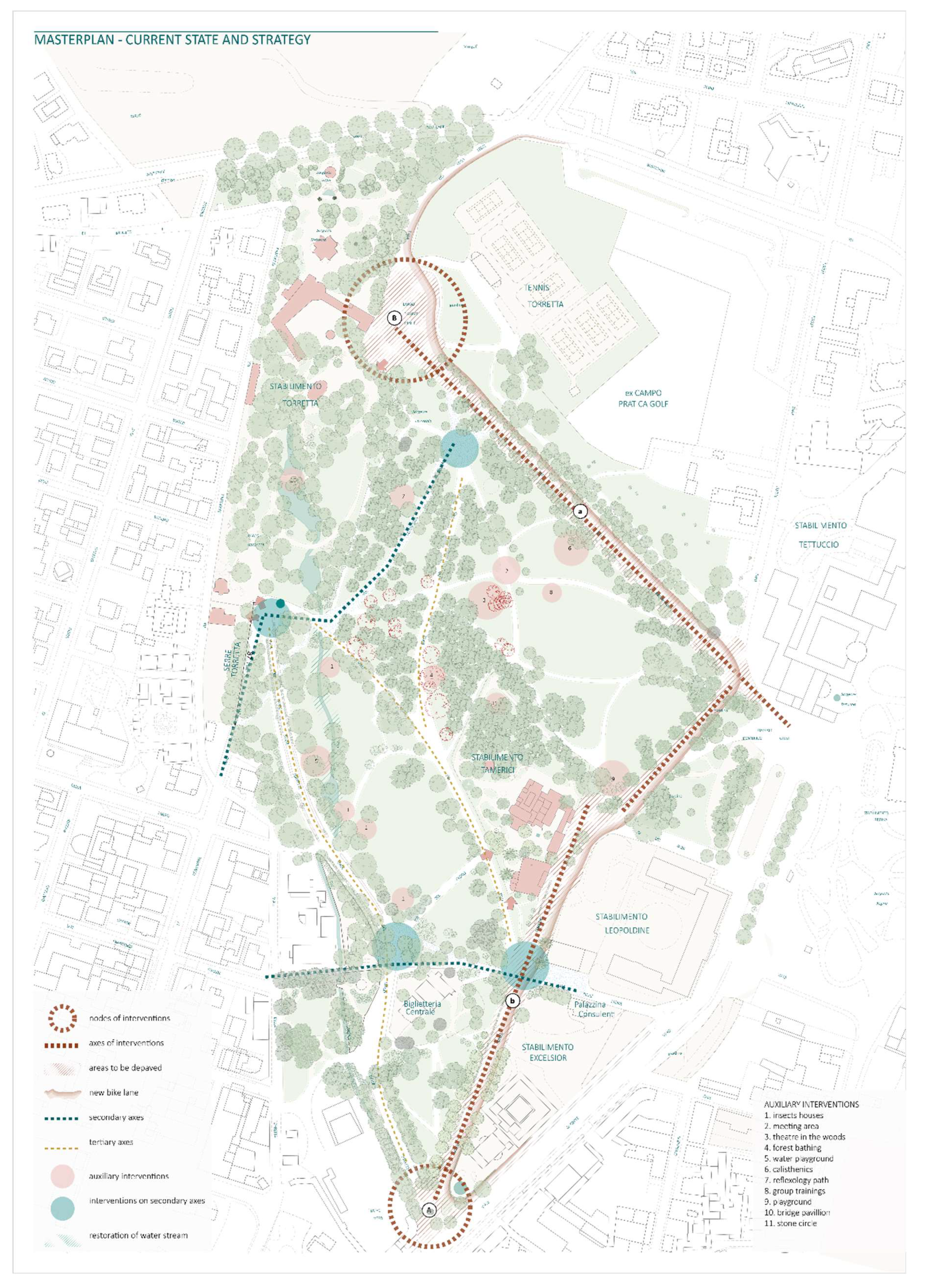
Figure 8 provides a graphical representation of the proposed Landscape program. Additionally, Appendix A provides the masterplan summarizing the analysis of the current state and strategy for the area.
5. Landscape Design Proposal
Based on the outlined strategy, the proposed intervention includes two categories of actions: structural interventions and auxiliary interventions.
The structural interventions focus on the nodes and axes and constitute the core framework of the landscape project, serving as a driving force for any potential future development. These interventions require the greatest economic and technical effort from the municipality, as they aim to establish a strong framework capable of affirming the identity of the thermal district as an interconnected system.
In contrast, auxiliary interventions are distributed across the various functional areas and are designed to support the proposed activities and define the character of each area. These interventions do not need to be implemented all at once but can be phased over time based on the municipality’s operational capacity.
Together, the structural and auxiliary interventions contribute to a unified and integrated vision of the Wellbeing Park.
5.1. Structural Interventions
The structural interventions focus on the two nodes and two axes identified in the strategic framework. At a conceptual level, their objective is to create key attractions that reinforce the role of the park within the thermal district and to redefine connections to enhance user experience, making it more engaging and dynamic. At a practical level, the main intervention involves modifying the ground surfaces by removing asphalt and introducing pedestrian-friendly paving and vegetation to visually reinforce the pedestrian-oriented and public character of the space.
5.1.1. Nodes
The two identified nodes are the entrance area in the southern part of the park and the square in the northwestern part.
For the entrance (node A), the primary objective is to increase its visibility and recognizability, as shown in Figure 9.
For the square (node B), the goal is to enhance its usability by reducing the parking area and designing an open-air theatre to host civic events (Figure 10). This new multipurpose space can serve as a gathering place for residents and tourists, or function as a performance stage for musical, theatrical, and cultural events. The diverse range of functions and uses proposed for this area also contributes to the financial sustainability of the project, as the space can be rented out for private events.
5.1.2. Axes
The interventions on the axes aim to eliminate the current perception of the avenues as vehicular roads. Indeed, in addition to asphalt paving, the rigid division created by lateral flower beds further reinforces a linear and constrained perception of space. The proposed intervention integrates the redevelopment of these axes into a broader territorial vision for sustainable mobility, incorporating dedicated cycling lanes.
Along Viale delle Tamerici (axis a), the bicycle lane has been positioned along the eastern edge of the avenue. The side adjacent to the park has been redesigned to include multifunctional platforms beneath the Tilia cordata trees, encouraging rest and social interaction.
Along Via del Rinfresco (axis b), the redesign enhances connectivity between the linear pathway and adjacent park areas, particularly by reshaping the boundary with a curvilinear layout (Figure 11). To accommodate different mobility needs, the cycling lane has been positioned along the northern edge, while pedestrian circulation is oriented toward the park side, where the curved pathway promotes a more dynamic and flexible use of space, creating intermediate resting areas along the route.
The junction between the two axes is further emphasized through the installation of shade umbrellas, providing solar protection for the cycling lane in a section where large trees are absent. Additionally, these urban furniture elements act as a barrier to vehicular access, restricting entry to emergency vehicles only. Figure 12 summarises the main interventions along the axes.
5.2. Auxiliary Interventions
While structural interventions consist of a limited number of targeted actions aimed at redefining the park’s landscape framework—respecting its historical identity while making the Wellbeing Park concept explicit—auxiliary interventions comprise a broad set of smaller interventions distributed throughout the park. The complementarity and differentiation between structural and auxiliary interventions is a key aspect of the project. The strategy has been carefully designed with full awareness of the municipality’s operational and financial constraints, prioritizing the avoidance of prolonged inaccessibility to large sections of the park. This phased and pragmatic approach is essential to ensure the project’s feasibility, to prevent failures like those experienced in the past, and to preserve the relationship between the citizens and the park.
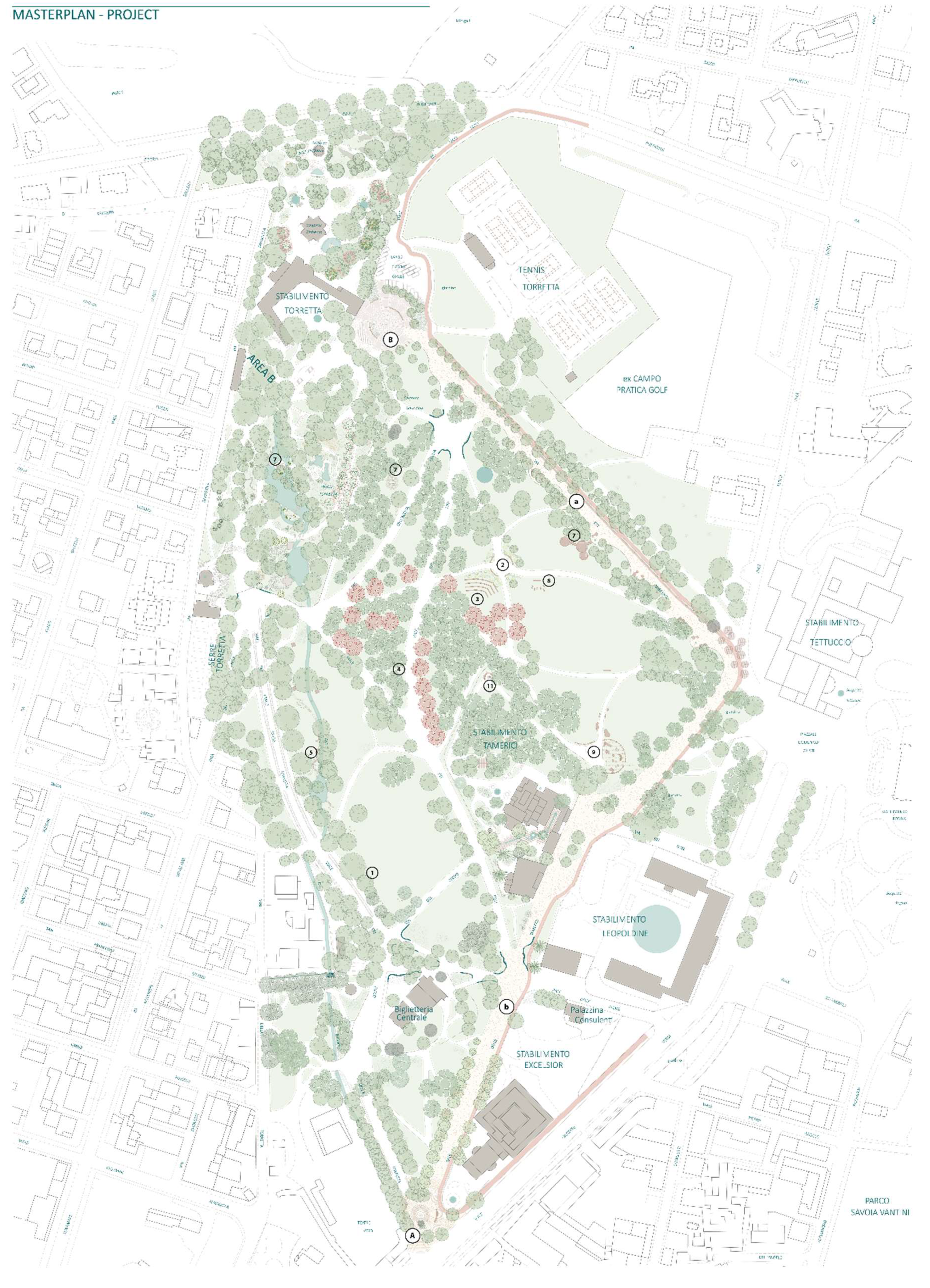
These interventions enhance existing valuable features of the park, such as the watercourse, biodiversity, and opportunities for outdoor sports. Figure 13 shows the set of auxiliary interventions proposed and Appendix B provides the comprehensive design masterplan and the location of each intervention.
6. Discussion
The design process developed for the Montecatini Terme case study has led to a practical design outcome for the landscape enhancement of the Pineta Park. As established in the methodology, the final phase of the design process consists of evaluating the outcome in relation to the initially defined design principles and within the theoretical framework of the HUL approach. Although intermediate and partial evaluation phases were integrated throughout the design process—allowing for continuous refinement and improvement of the proposal—this paper presents only the final proposal and discusses the assessment of the final outcome.
The strategic and design proposal for Montecatini unfolds across multiple levels: i) the operational program, which emphasizes strengthening key assets and enhancing intrinsic values; ii) the landscape program, which integrates the valorization of the natural components with heritage protection and conservation guidelines; and iii) the design proposal, which translates these strategies into practical interventions, supporting the development of a Wellbeing Park and placing it at the core of the landscape system of the thermal city.
The proposed interventions address the needs of different user groups and accommodate diverse requirements. For instance, the inclusion of a playground near the Museum of Water and a water play area along the stream is intended to engage children in nature-based activities, making the park more accessible to families. At the same time, the redesign of the main pathways—incorporating rest areas, seating, and multifunctional platforms—considers the needs of older visitors and individuals with reduced mobility, while also promoting group activities, social interaction, and community cohesion. In addition to gathering spaces and collective activity areas, such as sports facilities, the project includes zones dedicated to tranquillity and introspection, such as the area for forest bathing, a reflexology path, and biodiversity areas with insect houses. In these spaces, the relationship with nature shifts to an individual scale, offering visitors an immersive and personal experience. From the outset, the natural character of the site was identified as its primary asset and key strength. Accordingly, interventions were limited to the main nodes and axes to preserve and expand natural and vegetated areas, while better integrating anthropogenic infrastructure, such as pathways. Finally, feasibility considerations have been a guiding factor throughout the design process, leading to a strategic limitation of the most invasive and costly interventions to a few key areas. The resulting program is designed for phased implementation, allowing for step-by-step realization over different time periods. In this way, the design principles established in the initial phase of the design process are respected and fulfilled, as also confirmed by the primary stakeholders involved in the project consultation process, namely the Municipality of Montecatini Terme and Fondazione Caript. Furthermore, particular emphasis has been placed on the elements most aligned with the Wellbeing Park concept, such as the diverse interactions with nature and its therapeutic function on both a physical and psychological level [16,68].
Regarding the correspondence with the HUL approach, the project proposal supports a dynamic transformation of the Pineta park as the core part of Montecatini thermal district, while respecting its historical identity and also the constraints of heritage protection. Over the past centuries, the topic of heritage conservation has been largely discussed and seen as a necessary action to preserve collective memory and values, even if frequently conflicting with the practical processes and needs of modernity. The design proposal acknowledges the heritage complexity, which “is steeped in legend, rooted in the public’s fascination for past built environments, the representation of history, personal and collective memory values, spirit of place” [69], but also recognizes the urgent issue of the gradual erosion of the physical and social structures that support these values. For these reasons, landscape design and creative approaches are needed to revitalize neglected heritage and to keep alive tangible and intangible heritage of spa towns as well as of other Historic Urban Landscapes. Additionally, new challenges related with climate change, social transformations, economic and political changes, require that heritage also adapt if it is to be preserved and passed on to future generations [70]. In the case of Montecatini, the severe state of neglect and degradation of the thermal facilities, resulting from the crisis of the tourism model centered on hydropinic treatments, necessitates a fundamental rethinking of the thermal city as a system. In this context, landscape architecture, as an interdisciplinary and multi-scalar discipline, offers design solutions capable of addressing the complexity of these challenges. The redesign of the Pineta park as a wellbeing park serves as a strategy for revitalizing the city, a tool for reconnecting citizens with their heritage, and a framework for the future reuse of the thermal establishments once their ownership is redefined
7. Conclusions
As highlighted in the introduction and in the framing of Montecatini within the Great Spa Towns of Europe, this case study is representative of a broader phenomenon —the crisis of thermal tourism and the decline of traditional spa towns. The complexity of this issue encompasses cultural, political, and economic factors, making it resistant to simplistic solutions. The experience of research through design presented in this paper allowed to provide a possible answer to the initial research questions.
Regarding the contribution of landscape design to the protection of the heritage of thermal cities, the comparative case study analysis had already highlighted how the successful revitalization strategies in Bath and Vichy depended on a holistic vision and an understanding of heritage as a landscape system. The design experience in Montecatini has confirmed and reinforced this thesis, demonstrating that despite the current state of degradation and the uncertainty surrounding the architectural heritage—due to prolonged abandonment and the impending auction—landscape design remains capable of capturing and effectively expressing the site’s cultural values. Moreover, the project aims to guide the future reuse of architectural heritage, preventing speculative developments through the strong affirmation of the value of high-quality, accessible public space.
As for the second research question, concerning the creation of new values within historical landscapes, the RTD experience has yielded significant insights. The reinterpretation of the thermal park as a wellbeing park illustrates the potential of creative, visionary, and dynamic design approaches. This reinforces the argument that introducing new concepts can generate value when integrated within a coherent landscape project that remains respectful of the historical and cultural identity of the site.
The reflections derived from this RTD experience can be extended to other traditional spa towns facing the consequences of the crisis and decline of their tourism model, as well as the detachment of the city from its identity values. More broadly, the results are relevant to historic urban landscapes in general, particularly where strict conservation constraints have led to heritage crystallization, preventing a dynamic transformation aligned with contemporary needs.
Author Contributions
Conceptualization, M.S.L.; methodology, M.S.L and J.N.T.; formal analysis, M.S.L.; investigation, M.S.L.; writing—original draft preparation, M.S.L.; writing—review and editing, M.S.L.; visualization, M.S.L.; supervision, J.N.T.; funding acquisition, J.N.T. All authors have read and agreed to the published version of the manuscript.
Funding
The APC was funded by the Horizon Europe ’MI-TRAP’ project, Grant Agreement No 101138449.
Data Availability Statement
The original contributions presented in this study are included in the article/supplementary material. Further inquiries can be directed to the corresponding author(s).
Acknowledgments
The authors wish to thank the other members of the design team who contributed to the development of the proposal for Montecatini Terme: Cristina Musacchio, Ishita Saxena, and Josselyn Maritza Ibarra Arias. Sincere gratitude is also extended to the Municipality of Montecatini Terme and Fondazione Caript for supporting the research and design activities for the landscape redevelopment of the Pineta Park.
Conflicts of Interest
The authors declare no conflicts of interest.
Appendix A
Figure A1.
Appendix B
Figure A2.
References
- Adams, J.M. Water, Health and Leisure. In Healing with water: English spas and the water cure, 1840-1960; Adams, J.M., Ed.; Manchester University Press, 2015; pp. 184–222. [Google Scholar]
- Yuill, C.; Mueller-Hirth, N.; Tung, N.S.; Dung, N.T.K.; Tram, P.T.; Mabon, L. Landscape and well-being: A conceptual framework and an example. Heal. Interdiscip. J. Soc. Study Heal. Illn. Med. 2019, 23, 122–138. [Google Scholar] [CrossRef]
- Abraham, A.; Sommerhalder, K.; Abel, T. Landscape and well-being: A scoping study on the health-promoting impact of outdoor environments. Int. J. Public Heal. 2009, 55, 59–69. [Google Scholar] [CrossRef]
- UNESCO European Spa Culture, and the History and Development of The Great Spas of Europe. In Nomination of GREAT SPAS of Europe for inclusion on the World Heritage List - Volume I: History and Development; 2021; Vol. I, pp. 302–358.
- Borsay, P. Towns, Heritage, and History. In The Image of Georgian Bath, 1700–2000; Oxford University Press: Oxford, 2000; pp. 347–391. [Google Scholar]
- Cinti, M.G. Turismo Termale in Italia: Evoluzione, Impatti e Prospettive Di Rilancio. DOCUMENTI GEOGRAFICI 2024, 1, 65–88. [Google Scholar] [CrossRef]
- Scheid, J.; Nicoud, M.; Boisseuil, D.; Coste, J. Le Thermalisme : Histoire d’un Phénomène Culturel et Médical; CNRS Éditions;, 2015; ISBN 978-2-271-08651-8.
- Bossaglia, R. Stile e Struttura Delle Città Termali; Banca provinciale lombarda: Bergamo, Italy;
- Urošević, N. The Spa and Seaside Resort in the Development of Euro- Mediterranean Travel and Tourism -the Case of Brijuni Islands. International Journal of Euro-Mediterranean Studies 2020, 13, 53–75. [Google Scholar]
- Borsay, P.; Hein Furnée, J. Leisure Cultures In Urban Europe, C.1700-1870: A Transnational Perspective; Manchester University Press: Manchester, 2016; ISBN 9781526104304. [Google Scholar]
- Laroche, C.; Toulier, B.; Cron, É.; Delorme, F. Architecture et urbanisme de villégiature: Un état de la recherche. Situ 2014, 24. [Google Scholar] [CrossRef]
- Gesler, W.M. Therapeutic landscapes: Medical issues in light of the new cultural geography. Soc. Sci. Med. 1992, 34, 735–746. [Google Scholar] [CrossRef]
- Gesler, W.M. Healing Places; Rowman & Littlefield: Lanham, MD, 2003; ISBN 0742519562. [Google Scholar]
- Baer, L.D.; Gesler, W.M. Reconsidering the concept of therapeutic landscapes in J D Salinger's The Catcher in the Rye. Area 2004, 36, 404–413. [Google Scholar] [CrossRef]
- Winchester, M.; McGrath, J. Therapeutic Landscapes: Anthropological Perspectives on Health and Place. Med Anthropol Theory 2017, 4. [Google Scholar] [CrossRef]
- Kearns, R.A.; Gesler, W.M. Putting Health into Place: Landscape, Identity, and Well-Being; Syracuse University Press: Syracuse, NY, 1998. [Google Scholar]
- The Great Spa Towns of Europe Available online:. Available online: https://whc.unesco.org/en/list/1613 (accessed on 22 February 2025).
- Becheri, E. Il Sistema Termale Della Toscana: Tendenze e Prospettive; Firenze, 2006;
- Adams, J.M. The Theory and Practice of the Water Cure. In Healing with water: English spas and the water cure, 1840-1960; Adams, J.M., Ed.; Manchester University Press, 2015; pp. 23–58. [Google Scholar]
- Weisz, G. Le thermalisme en France au XXesiècle. M S-Medecine Sci. 2002, 18, 101–108. [Google Scholar] [CrossRef]
- Adams, J.M. National Assets and National Interests: Spas and the State. In Healing with water: English spas and the water cure, 1840-1960; Adams, J.M., Ed.; Manchester University Press, 2015; pp. 223–256. [Google Scholar]
- Ellis, S. Trends in the Global Spa Industry. In Understanding the Global Spa Industry; Cohen, M., Bodeker, G., Eds.; Routledge, 2008; pp. 66–84. ISBN 9781136351259. [Google Scholar]
- Papadopoulou, G. Spa Tourism in Europe: An Economic Approach. Athens J. Tour. 2020, 7, 133–144. [Google Scholar] [CrossRef]
- Delcea, I.M. The Need to Reconsider the European Balneological Heritage - Two Case Studies: Development by Continuity, Bath, United Kingdom/ San Pellegrino, Italy -. Argument 2011, 3. [Google Scholar] [CrossRef]
- UNESCO History and Development of the Component Parts. In Nomination of GREAT SPAS of Europe for inclusion on the World Heritage List - Volume I: History of the Component Parts; 2021; Vol. I, pp. 360–442.
- Gordon, B.M. Reinventions of a spa town: The unique case of Vichy. J. Tour. Hist. 2012, 4, 35–55. [Google Scholar] [CrossRef]
- Freeman, K. The Town of Vichy and the Politics of Identity; Springer Nature: Cham, Switzerland, 2022; ISBN 9783030931971. [Google Scholar]
- Urbanisme à Vichy - Protection Du Patrimoine. Available online: https://www.ville-vichy.fr/urbanisme/protection-patrimoine (accessed on 23 February 2025).
- Gigot, M. Les zones de protection du patrimoine architectural, urbain et paysager (ZPPAUP): Une forme de gouvernance patrimoniale? Cult. Local Gov. 2008, 1, 47–63. [Google Scholar] [CrossRef]
- Gesler, W.M. Bath’s Reputation as a Healing Place. In Putting Health into Place: Landscape, Identity, and Well-being; Kearns, R.A., Gesler, W.M., Eds.; Syracuse University Press: Syracuse, NY; pp. 17–35.
- Crouch, T. The City of Bath—World Spa and World Heritage. In Europäische Kurstädte und Modebäder des Jahrhunderts; Ediloth, V., Fördererer, A., Ziesemer, J., Eds.; Konrad Theiss Verlag: Stuttgart, Germany, 2012. [Google Scholar]
- Fabi, V.; Vettori, M.P.; Faroldi, E. Adaptive Reuse Practices and Sustainable Urban Development: Perspectives of Innovation for European Historic Spa Towns. Sustainability 2021, 13, 5531. [Google Scholar] [CrossRef]
- BARRIOS MANZANO, P.; GÓMEZ PÉREZ, J. GOVERNANCE MODELS FOR SPA AND HEALTH TOURISM: BATH AND ALANGE. In Cultural Management and Tourism in European Cultural Routes: From theory to practice; Ochoa Siguencia, L., Gomez-Ullate, M., Kamara, A., Eds.; Research and Innovation in Education Institute: Czestochowa, Poland, 2016. [Google Scholar]
- Dominique Perrault Architecte San Pellegrino Thermal Bath. Area 2009, Leisure.
- Perrault, D. Baños Termales, San Pellegrino, Lombardía (Italia). AV proyectos 1697, 29, 28–29. [Google Scholar]
- Lenzholzer, S.; Duchhart, I.; Koh, J. ‘Research through designing’ in landscape architecture. Landsc. Urban Plan. 2013, 113, 120–127. [Google Scholar] [CrossRef]
- Picchi, P. Research in Landscape Architecture: System Innovation and Design Approach as Research Challenges for the Future Agenda. R.E.D.S. 4 Biennale Session 2016 “Reporting from the Italian Front” - Designing knowledgeAt: Biennale of Architecture - Venice 2016.
- Nijhuis, S.; de Vries, J. Design as Research in Landscape Architecture. Landsc. J. 2019, 38, 87–103. [Google Scholar] [CrossRef]
- Steenbergen, C.; Mihl, H.; Reh, W. Introduction: Design Research, Research by Design 2002, 12–25.
- Ginzarly, M.; Houbart, C.; Teller, J. The Historic Urban Landscape approach to urban management: A systematic review. Int. J. Heritage Stud. 2018, 25, 999–1019. [Google Scholar] [CrossRef]
- UNESCO New Life for Historic Cities: The Historic Urban Landscape Approach Explained; 2013.
- Bandarin, F.; van Oers, R. Reconnecting the City: The Historic Urban Landscape Approach and the Future of Urban Heritage; Bandarin, F., van Oers, R., Eds.; Wiley-Blackwell, 2012; ISBN 978-1-118-38398-8.
- UNESCO Recommendation on the Historic Urban Landscape, Including a Glossary of Definitions; Paris, 2011.
- Nocca, F. The Role of Cultural Heritage in Sustainable Development: Multidimensional Indicators as Decision-Making Tool. Sustainability 2017, 9, 1882. [Google Scholar] [CrossRef]
- Della Spina, L. Multidimensional Assessment for “Culture-Led” and “Community-Driven” Urban Regeneration as Driver for Trigger Economic Vitality in Urban Historic Centers. Sustainability 2019, 11, 7237. [Google Scholar] [CrossRef]
- Hølleland, H.; Skrede, J.; Holmgaard, S.B. Cultural Heritage and Ecosystem Services: A Literature Review. Conservation and Management of Archaeological Sites 2017, 19, 210–237. [Google Scholar] [CrossRef]
- UNESCO Justification for Inscription and Comparative Analysis. In Nomination of GREAT SPAS of Europe for inclusion on the World Heritage List; 2021; Vol. I.
- UNESCO Executive Summary. In Nomination of GREAT SPAS of Europe for inclusion on the World Heritage List; 2021; Vol. I.
- UNESCO Extended 44th Session of the World Heritage Committee (2021) - Nominations to the World Heritage List; 2021.
- UNESCO Operational Guidelines for the Implementation of the World Heritage Convention; Paris, France, 2008.
- Mackaman, D. Peter. Leisure Settings : Bourgeois Culture, Medicine, and the Spa in Modern France; University of Chicago Press: Chicago, 1998; ISBN 0226500756. [Google Scholar]
- Bocchio, C.; Massi, C. Montecatini Terme Nella Candidatura Seriale Transnazionale “The Great Spas of Europe” La Convenzione UNESCO Sulla Protezione Del Patrimonio Mondiale. Bollettino dell’Accademia degli Euteleti della città di San Miniato 2019. [Google Scholar]
- Massi, C. Montecatini Terme: L’invenzione Della Moderna Città Termale. Montecatini Città d'Acque 2008. [Google Scholar]
- Santoianni, V. Montecatini Terme; Octavo: Firenze, 2000; ISBN 9788880302049. [Google Scholar]
- Massi, C. Montecatini Terme: L’identità Della Ville d’eau. Bollettino della Accademia degli Euteleti della città di San Miniato 2013.
- De’Fiori, M. Un’estate Ai Bagni Di Montecatini; Melani, N., Ed.; Tipo-Lit Grotta Giusti: Pistoia, 1902. [Google Scholar]
- Michelotti, A. Montecatini Terme; Edizioni del Palazzo: Prato, 1982. [Google Scholar]
- Massi, C. Alla Scoperta Delle Città Termali Mitteleuropee Agli Esordi Del Novecento. Il Viaggio Di Giulio Bernardini per La Nuova Montecatini. Bollettino dell’Accademia degli Euteleti della città di San Miniato 2017.
- Massi, C. Il Parco Termale Nella Montecatini Del Primo Novecento Dopo l’esperienza Mitteleuropea Di Giulio Bernardini. Rivista di Storia dell’Agricoltura 2007.
- Giusti, M.Adriana.; Giovannelli, Roberto. Montecatini: Città Giardino Delle Terme; Skira: Milano, 2001. ISBN 9788881189458.
- Romei, Patrizia. Territorio e Turismo: Un Lungo Dialogo. Il Modello Di Specializzazione Turistica Di Montecatini Terme. 2021, 1–240.
- Becheri, E. Turismo Termale e Del Benessere in Toscana: Fra Tradizione Ed Innovazione; Mercury S.r.l: San Giovanni in Persiceto, 2007. [Google Scholar]
- Gonfiantini, G. Montecatini, Addio Sogni Da Archistar. Corriere Fiorentini 2016, 9. [Google Scholar]
- Regione Tosccana PIT-Piano Di Indirizzo Territoriale Con Valenza Di Piano Paesaggistico; Mibact: Firenze, 2015.
- Provincia di Pistoia PIANO TERRITORIALE DI COORDINAMENTO. Available online: https://www.provincia.pistoia.it/ptc (accessed on 7 March 2025).
- Comune di Montecatini Terme PIANO STRUTTURALE. Available online: https://archivio.comune.montecatini-terme.pt.it/servizi/Menu/dinamica.aspx?idSezione=616&idArea=16293&idCat=16316&ID=25348&TipoElemento=pagina (accessed on 7 March 2025).
- Regione Toscana Val Di Nievole e Val d’arno Inferiore. In PIT-Piano di Indirizzo Territoriale con valenza di Piano Paesaggistico; SETTORE TUTELA, R.E.V.D.P., Ed.; Mibact: Firenze, 2015.
- Sztubecka, M.; Maciejko, A.; Skiba, M. The Landscape of the Spa Parks Creation through Components Influencing Environmental Perception Using Multi-Criteria Analysis. Sustainability 2022, 14, 5657. [Google Scholar] [CrossRef]
- Bandarin, F.; van Oers, R. The Historic Urban Landscape: Managing Heritage in an Urban Century; Wiley-Blackwell, 2012; ISBN 9780470655740.
- Nadin, V.; van der Toorn Vrijthoff, W.; Mashayekhi, A.; Arjomand Kermani, A.; Zhou, J.; Pendlebury, J.; Miciukiewicz, K.; Cowie, P.; Scott, M.; Redmond, D.; et al. A Sustainable Future for the Historic Urban Core; Nadin, V., van der Toorn Vrijthoff, W., Mashayekhi, A., Eds.; Urbanism, TU Delft, 2015.
Figure 1.
methodology.
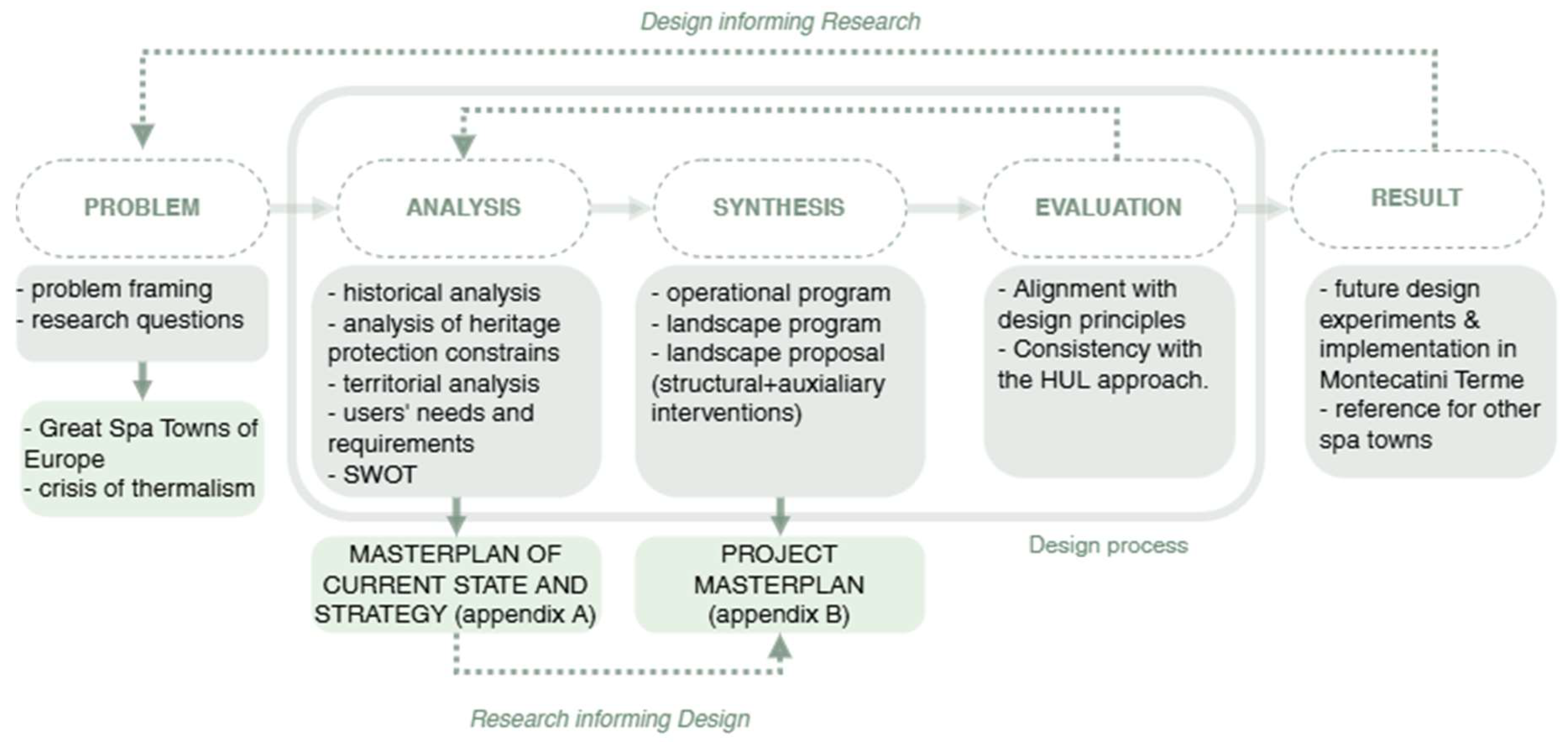
Figure 2.
Location of the 11 Great Spa Towns of Europe inscribed in the UNESCO World Heritage List.
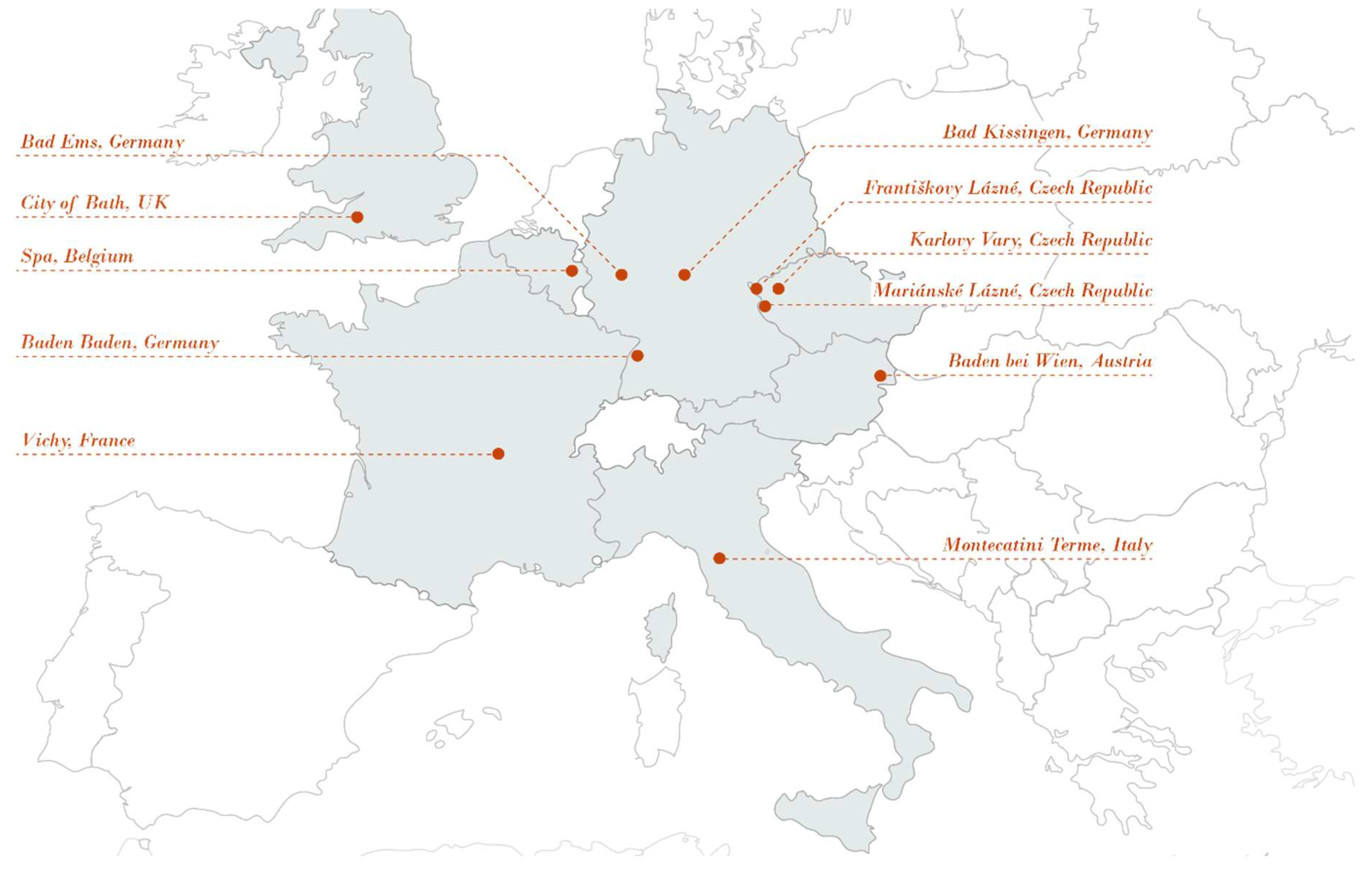
Figure 3.
These two illustrations from the early and late XX century highlight the city’s strategic position within a territorial network. Author’s elaboration based on: a) drawing by Filiberto Scarpelli published in 1902 [56]; b) drawing by Alfredo Michelotti published in 1982 [57].
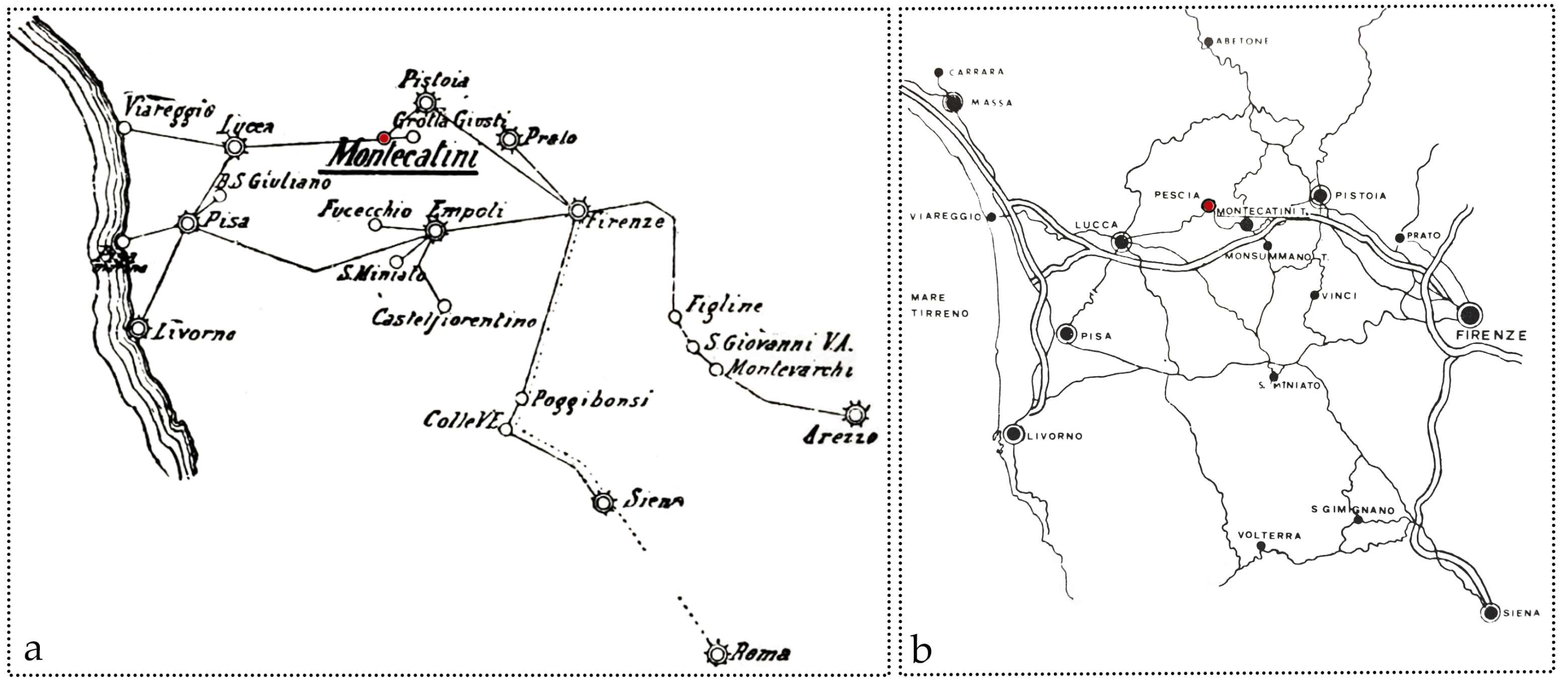
Figure 4.
Schematic representation of the main components of Montecatini Terme urban system and the role of the Pineta Park as connector.
Figure 4.
Schematic representation of the main components of Montecatini Terme urban system and the role of the Pineta Park as connector.
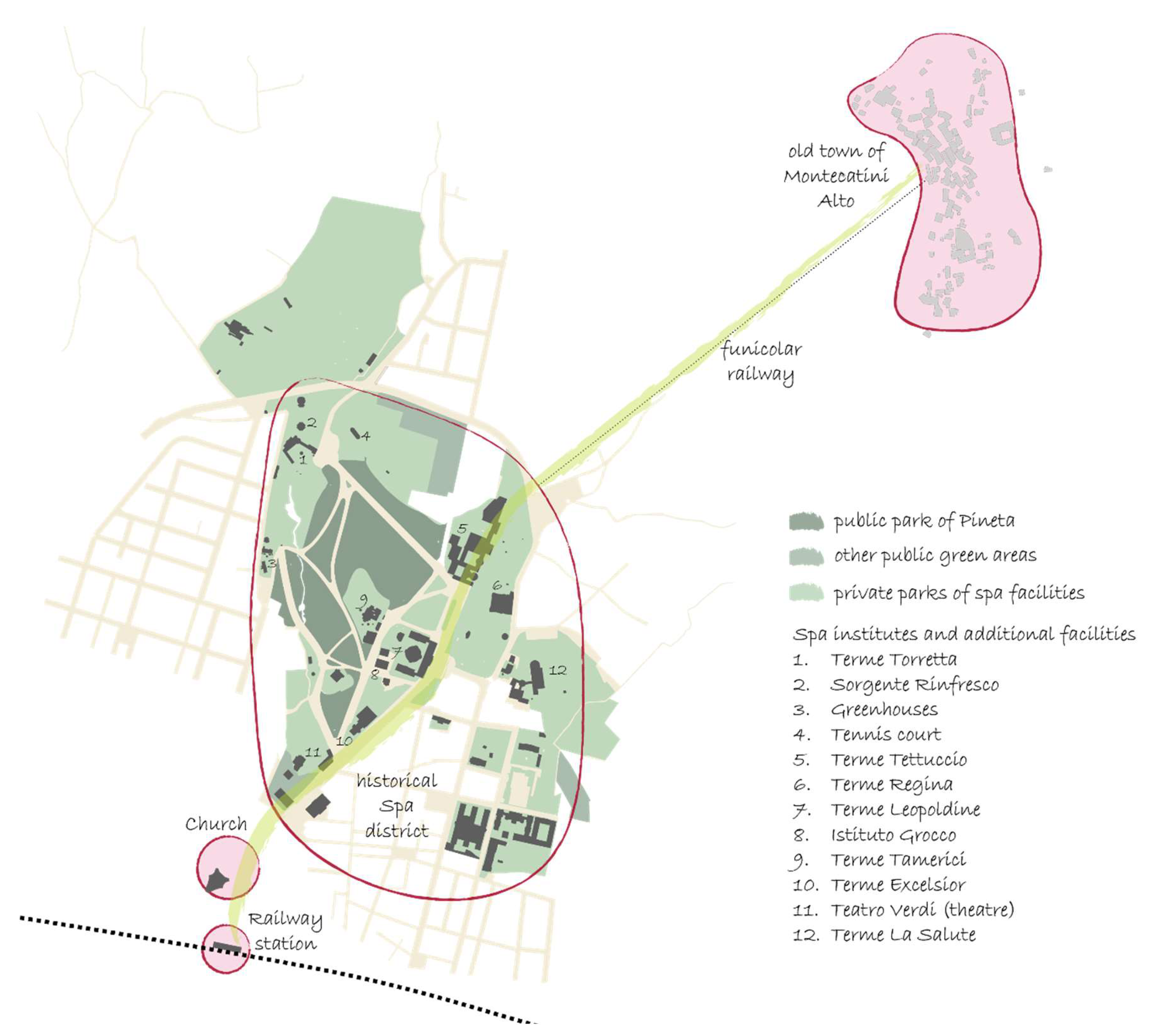
Figure 5.
Heritage protection regulations in the thermal district of Montecatini Terme.
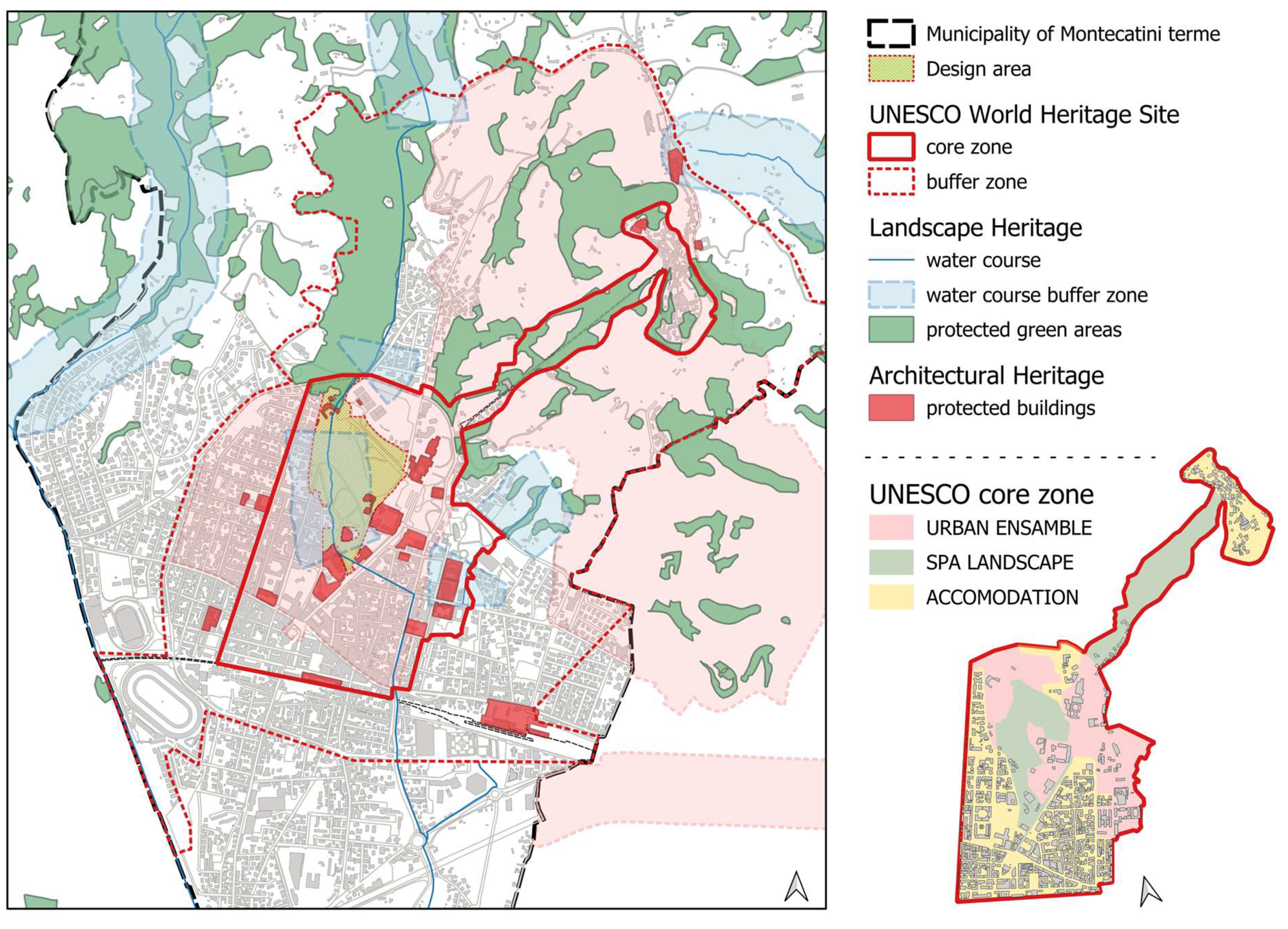
Figure 6.
Visual SWOT analysis.
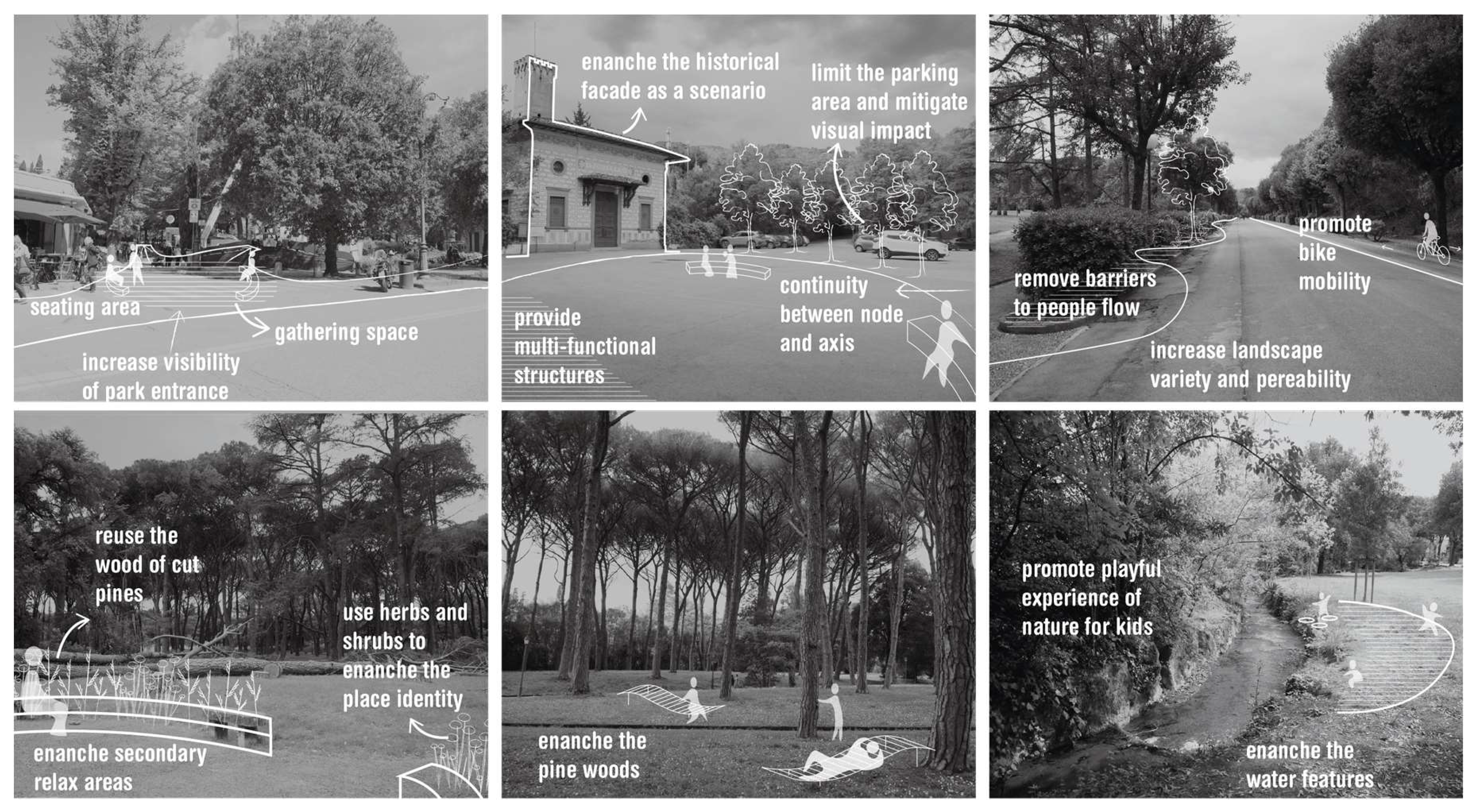
Figure 7.
Operational program based on functional areas and activities.
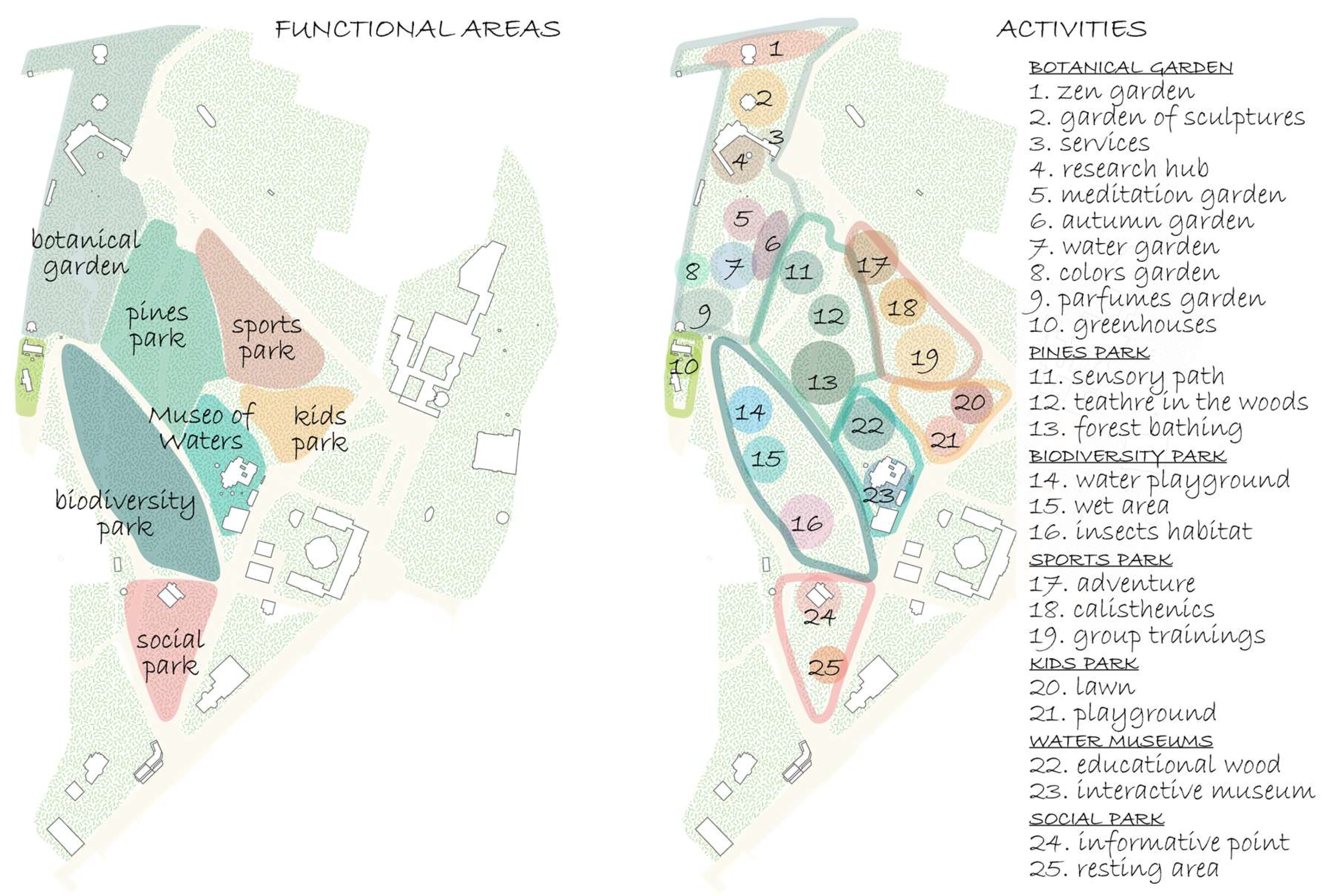
Figure 8.
Landscape program based on hardscape (nodes and axes) and softscape (water system).
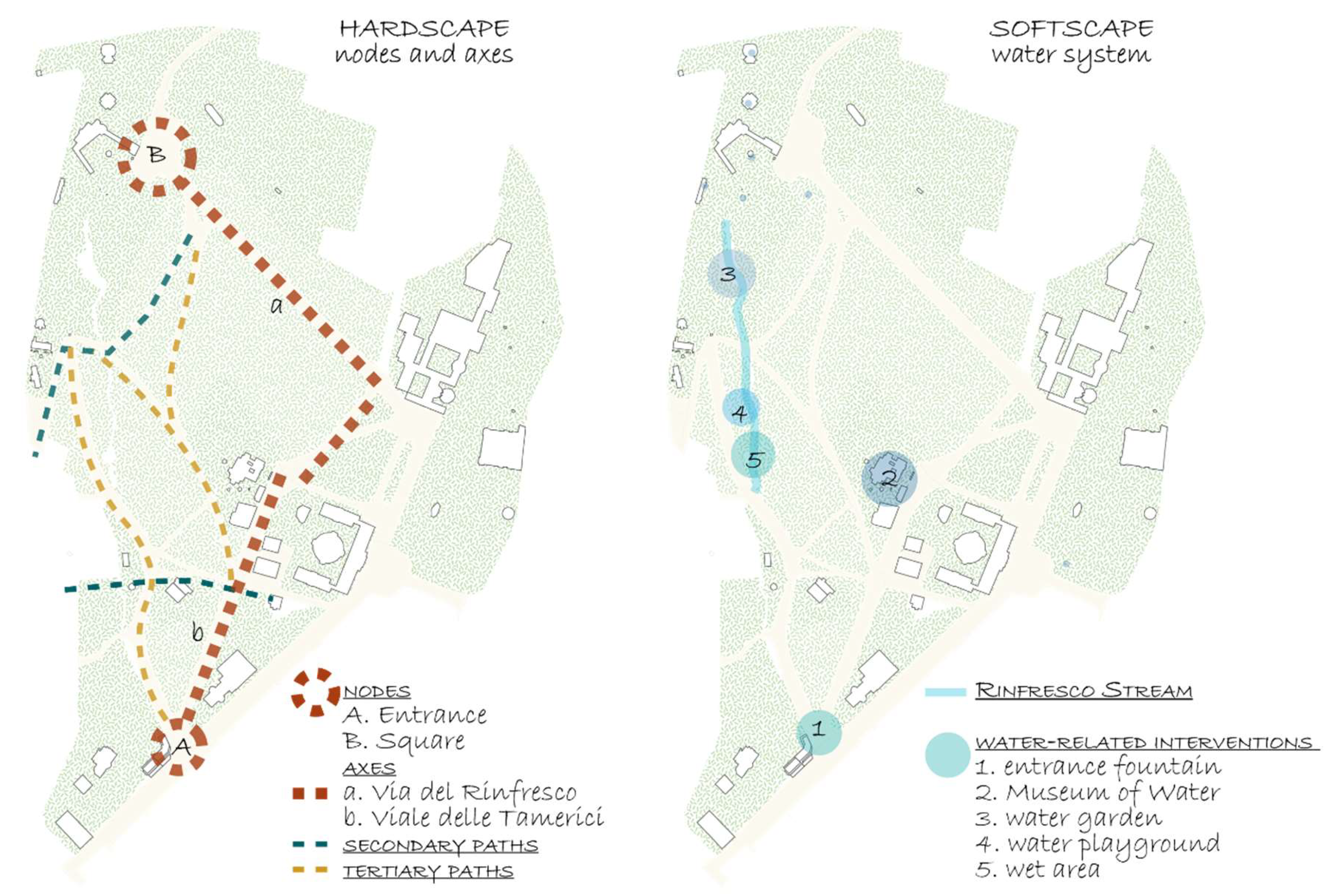
Figure 9.
Intervention in node A “Entrance” to the Pineta Park.
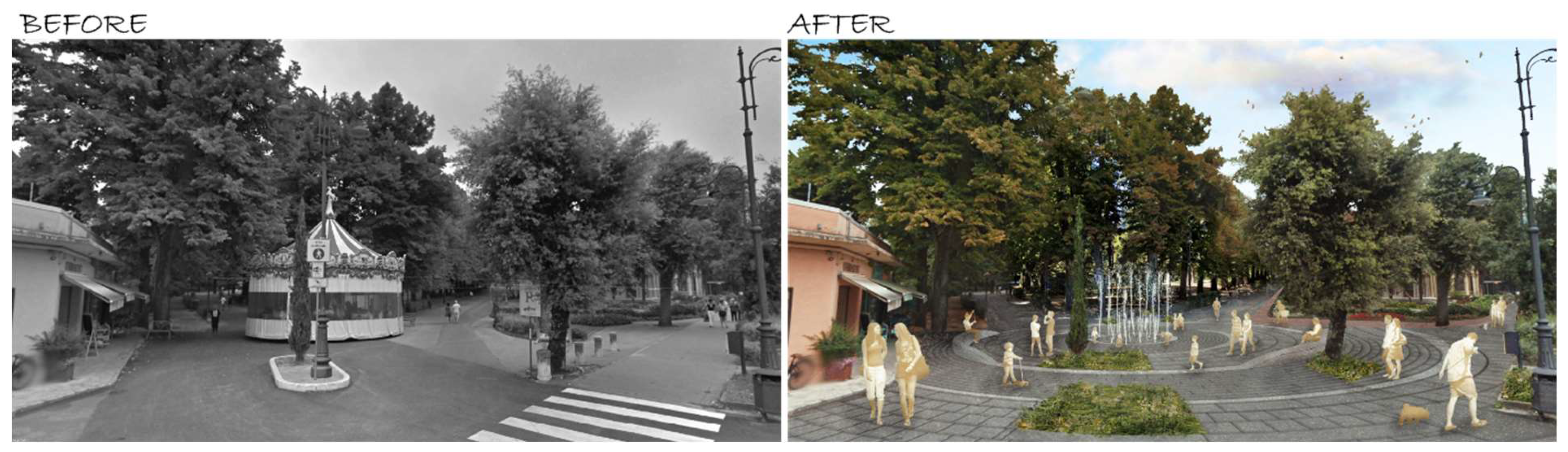
Figure 10.
Intervention in node B “Square”.
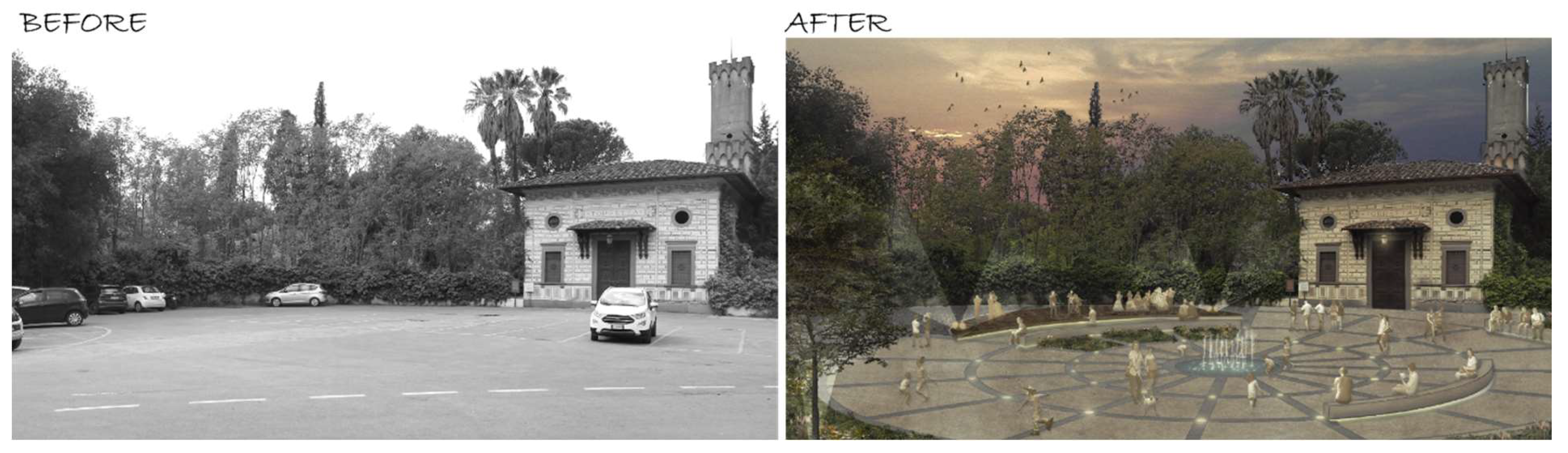
Figure 11.
Intervention in axis b “Via del Rinfresco”.
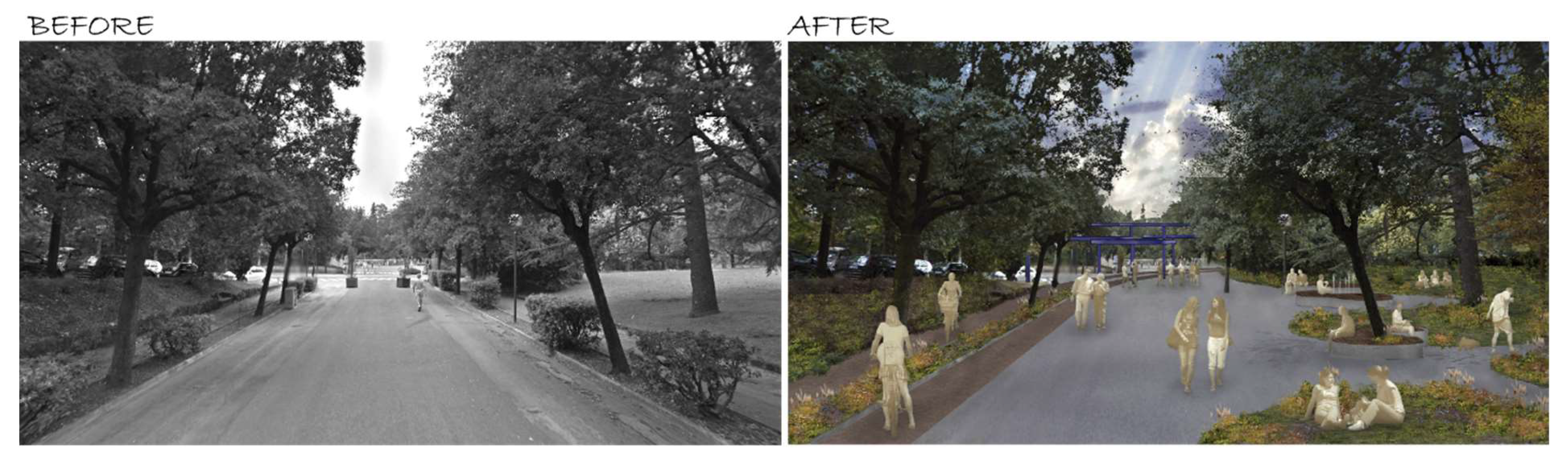
Figure 12.
Structural interventions along axes: 1) axis a “Viale delle Tamerici”; 2) axis b “Via del Rinfresco”; 3) junction.
Figure 12.
Structural interventions along axes: 1) axis a “Viale delle Tamerici”; 2) axis b “Via del Rinfresco”; 3) junction.
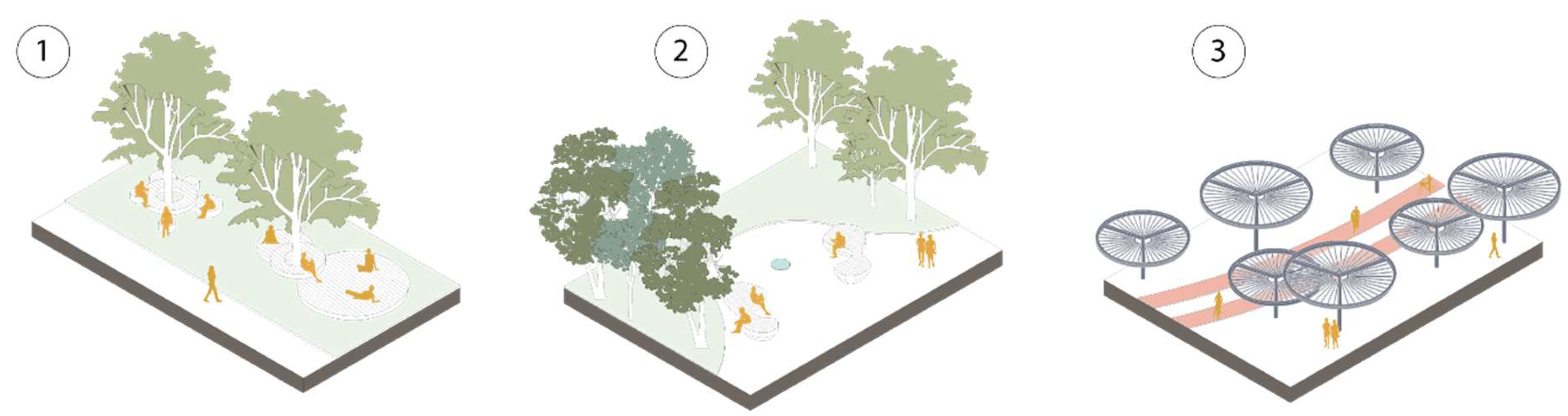
Figure 13.
Set of auxiliary interventions: 1) insects houses; 2) meeting area; 3) theatre in the woods; 4) forest bathing; 5) water playground; 6) calisthenics; 7) reflexology path; 8) group trainings; 9) playground; 10) bridge pagoda in Torretta park; 11) stone circle in Tamerici park.
Figure 13.
Set of auxiliary interventions: 1) insects houses; 2) meeting area; 3) theatre in the woods; 4) forest bathing; 5) water playground; 6) calisthenics; 7) reflexology path; 8) group trainings; 9) playground; 10) bridge pagoda in Torretta park; 11) stone circle in Tamerici park.
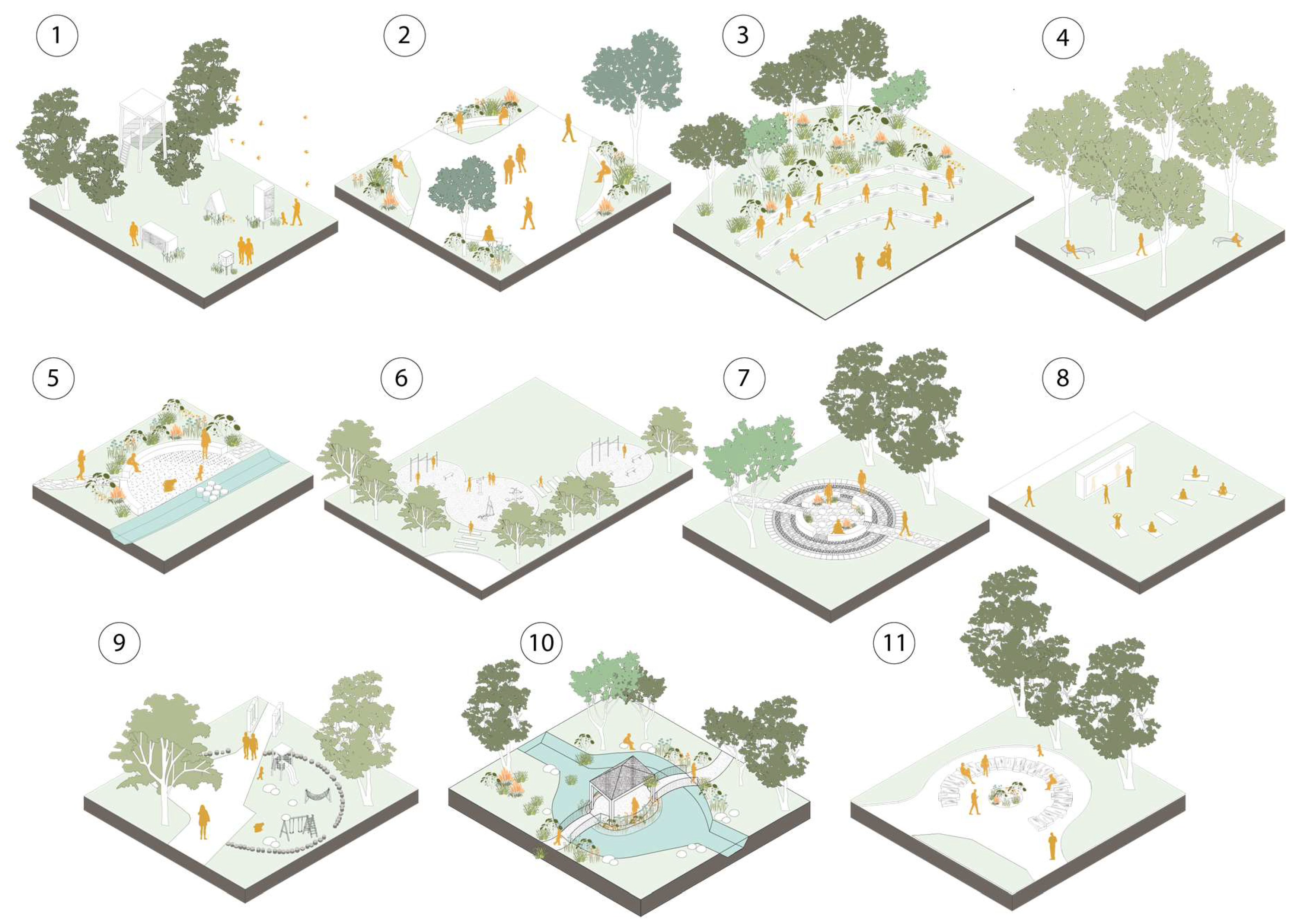
Disclaimer/Publisher’s Note: The statements, opinions and data contained in all publications are solely those of the individual author(s) and contributor(s) and not of MDPI and/or the editor(s). MDPI and/or the editor(s) disclaim responsibility for any injury to people or property resulting from any ideas, methods, instructions or products referred to in the content. |
© 2025 by the authors. Licensee MDPI, Basel, Switzerland. This article is an open access article distributed under the terms and conditions of the Creative Commons Attribution (CC BY) license (http://creativecommons.org/licenses/by/4.0/).
Copyright: This open access article is published under a Creative Commons CC BY 4.0 license, which permit the free download, distribution, and reuse, provided that the author and preprint are cited in any reuse.


