

Submitted:
15 March 2025
Posted:
18 March 2025
You are already at the latest version
Abstract
In recent years, the significance of social capital in brand management has gained increasing attention, particularly within the context of sports organizations in Iran. This study aims to explore innovative strategies for integrating social approaches into brand management to enhance social capital effectively. Utilizing a mixed-methods research design, the study was conducted in two phases: a qualitative phase involving interviews with 15 experts in sports branding and a quantitative phase surveying 326 postgraduate students specializing in sports management across various universities in Iran. The qualitative data were analyzed through thematic coding to develop a standardized questionnaire, which was then administered to the quantitative sample. Statistical analyses, including Confirmatory Factor Analysis (CFA) and Structural Equation Modeling (SEM), were employed to validate the proposed model. The results indicated significant relationships between brand knowledge, brand satisfaction, brand loyalty, and community engagement, highlighting the critical role of trust and shared values in fostering social capital.Notably, 78% of respondents reported that brands demonstrating social responsibility positively influenced their purchasing decisions and community involvement. This finding underscores the potential of socially-oriented branding strategies to enhance consumer loyalty and brand advocacy. Furthermore, the study reveals that a well-structured brand community can serve as an effective mechanism for building social capital, thereby improving organizational performance and community well-being.This research contributes valuable insights into the interplay between brand management and social capital within the Iranian context, emphasizing the necessity for brands to adopt strategies that prioritize community engagement and social responsibility. Future research should focus on longitudinal studies to assess the sustained impact of these strategies on consumer behavior and community dynamics.
Keywords:
brand management
; social capital
; sports branding
; community engagement
; Iran
1. Background
In recent years, the concept of social capital has gained significant attention in the field of brand management, particularly within the context of sports organizations. Social capital refers to the networks, relationships, and norms that facilitate collective action and cooperation among individuals within a community[1]. In Iran, where sports play a crucial role in cultural identity and social interaction, leveraging social capital through effective brand management strategies can enhance community engagement and foster loyalty among consumers.
The COVID-19 pandemic has further underscored the importance of social connections, as many businesses turned to digital platforms to maintain relationships with their customers. This shift highlighted the need for brands to adopt socially responsible practices that resonate with consumers' values and foster a sense of belonging within brand communities[2]. As consumers increasingly seek brands that reflect their social and ethical values, understanding how to cultivate social capital through brand management becomes essential for organizations aiming to thrive in a competitive landscape.
2. Introduction
Brand management has evolved from merely focusing on economic outcomes to encompassing broader social responsibilities. The integration of social approaches into brand management strategies not only enhances consumer loyalty but also contributes to the development of social capital within communities. This study aims to explore innovative strategies for managing brands with a social approach, specifically within the context of Iranian sports organizations.
2.1. Problem Statement
Despite the growing recognition of social capital's importance in brand management, many existing models prioritize commercial aspects over social interactions and community engagement. This oversight presents a critical gap in understanding how brands can effectively leverage their influence to foster social connections and enhance community well-being. The central question addressed in this research is: How can a brand community model be designed as a tool for promoting social capital in sports management?
2.2. Importance and Necessity of Research
The significance of this research lies in its potential to bridge the gap between traditional brand management practices and the emerging need for socially responsible branding. By focusing on social capital, this study aims to provide insights that can help sports organizations in Iran develop strategies that not only improve their market position but also contribute positively to societal development.
2.3. 5 Literature Review
Recent studies have highlighted the critical role of brand communities in enhancing consumer engagement and loyalty [3,4]. Research indicates that members of brand communities often identify with the brand's values and engage in shared experiences that strengthen their connections[5,6]. However, there remains a lack of comprehensive frameworks that explicitly link brand management with social capital development, particularly.
2.4. Theoretical Framework
This study will utilize a theoretical framework based on Bourdieu’s theory of social capital, which emphasizes the relational dynamics between individuals within a community[3,7,8]. By applying this framework, the research will explore how brand communities can facilitate trust, shared values, and collaborative networks among consumers.
2.5. Objectives and Research Questions or Hypotheses
The primary objectives of this research are:
- To design a model for brand communities that enhances social capital in sports management.
- To identify key factors that influence consumer engagement within brand communities.
The research questions guiding this study include:
- What are the essential components of an effective brand community model that promotes social capital?
- How do trust and shared values within brand communities impact consumer loyalty?
The hypotheses formulated for this study are:
- H1: There is a positive relationship between community engagement and social capital.
- H2: Trust significantly influences consumer loyalty within brand communities.
3. Theoretical Foundations and Literature Review
3.1. Introduction
The intersection of brand management and social capital has become a focal point in contemporary research, particularly in the context of sports organizations. This section aims to provide a comprehensive review of existing literature and theoretical frameworks related to the subject of brand communities and their role in enhancing social capital. By synthesizing previous studies and theoretical perspectives, this section will establish a foundation for understanding how social approaches in brand management can contribute to community engagement and organizational success.
3.2. Conceptual Framework
The theoretical framework for this study is grounded in Bourdieu's theory of social capital, which posits that social networks and relationships are critical assets that facilitate collective action[9]. This framework will guide the exploration of how brand communities can foster trust, shared values, and collaborative networks among consumers. Additionally, the study will draw upon the concept of brand community as defined by Muniz and O'Guinn (2001), which emphasizes the emotional connections between consumers and brands[10].
3.3. Literature Review
A thorough examination of recent literature reveals several key themes related to brand management and social capital:
- Brand Communities: Research indicates that brand communities serve as platforms for consumer engagement, where members share experiences and values associated with a brand[11]. Members often identify with the brand's ethos, leading to increased loyalty and advocacy.
- Consumer Behavior: Studies have shown that consumers are more likely to engage with brands that reflect their social values and contribute positively to their communities[14]. This alignment between brand values and consumer expectations is crucial for building lasting relationships.
- Impact of COVID-19: The pandemic has accelerated the shift towards digital engagement, highlighting the importance of maintaining social connections through online platforms[15]. Brands that effectively leverage social media to foster community engagement have demonstrated resilience during these challenging times.

Table 1.
Key Themes in Brand Management Literature.
| Theme | Description | Key References |
|---|---|---|
| Brand Communities | Platforms for consumer engagement fostering loyalty and advocacy | Muniz & O'Guinn (2001); Bendeck & Hastings (2023) |
| Social Capital | Networks and trust facilitating cooperation among individuals | Coleman (1988); Fraser et al. (2021) |
| Consumer Behavior | Engagement with brands reflecting social values | Dubinsky (2021) |
| Impact of COVID-19 | Shift towards digital engagement highlighting community connections | Cuaton & Su (2023) |
3.4. Importance of Social Capital in Brand Management
The significance of social capital in brand management cannot be overstated. Brands that actively engage with their communities can cultivate trust and foster collaborative relationships that enhance their overall value proposition. Research has shown that high levels of social capital within brand communities lead to increased consumer loyalty, improved brand perception, and greater market competitiveness[16,17].
3.5. Gaps in Existing Research
Despite the growing body of literature on brand management and social capital, there remains a notable gap in understanding how these concepts interact specifically within the Iranian context. Most existing studies focus on Western markets, leaving a need for research that addresses cultural nuances and local dynamics affecting brand-community relationships in Iran.
3.6. Conclusion
This section has outlined the theoretical foundations and existing literature relevant to the study of brand management with a social approach. By establishing a clear conceptual framework and identifying key themes within the literature, this research aims to contribute valuable insights into how sports organizations in Iran can leverage brand communities to enhance social capital effectively.
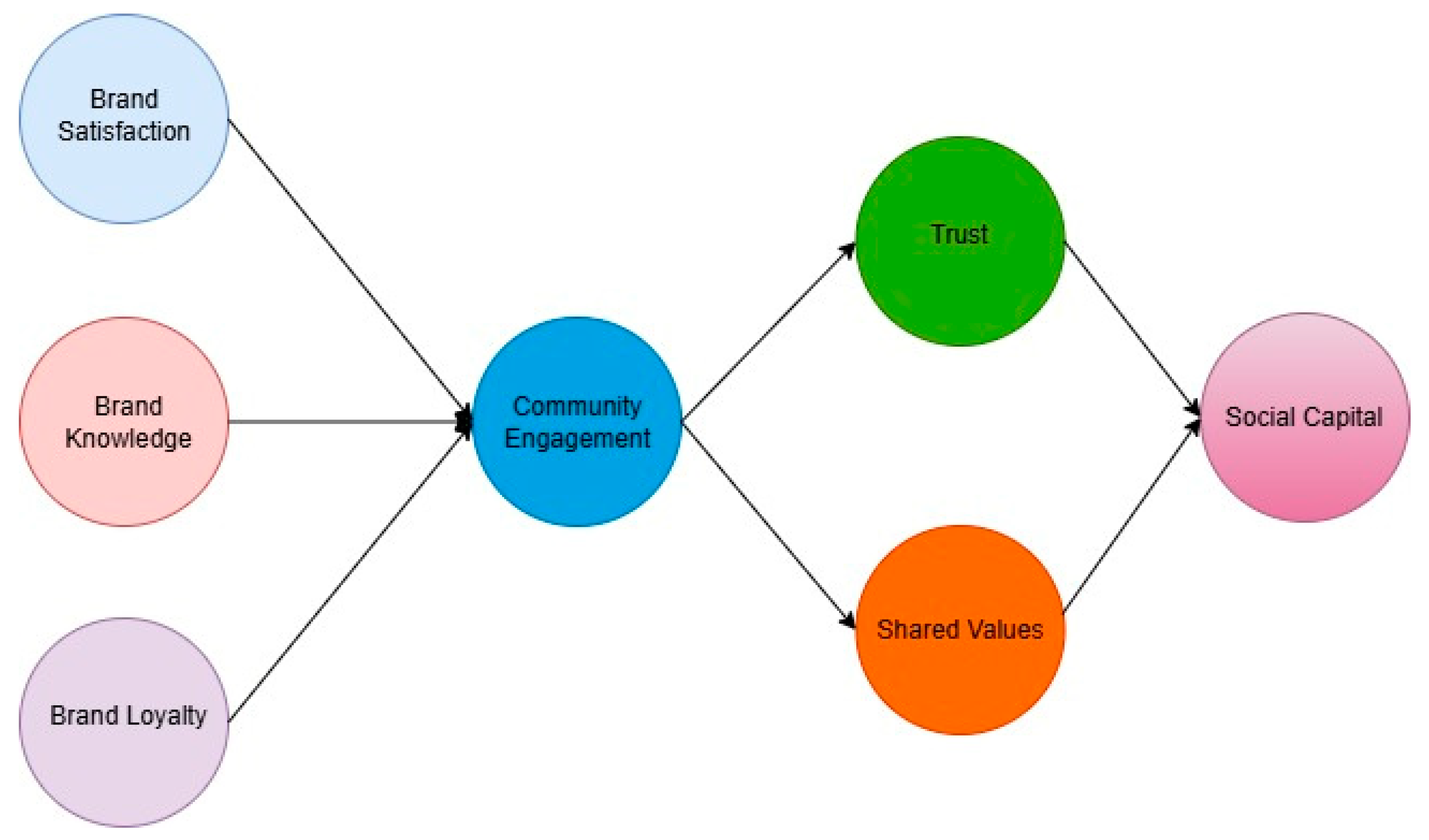
Figure 1.
Conceptual model of the role of brand management in promoting social capital.
4. Methodology
4.1. Research Type
This study employs a mixed-methods research design, integrating both qualitative and quantitative approaches to comprehensively explore the relationship between brand communities and social capital in sports management. The sequential exploratory design allows for an in-depth understanding of the qualitative insights gathered from experts, which subsequently informs the quantitative phase of the research.
4.2. Statistical Population
The statistical population for this research consists of two distinct groups:
- Qualitative Phase: 15 experts in sports branding and social capital were selected for in-depth interviews.
- Quantitative Phase: 326 postgraduate students specializing in sports management (branding) from various universities across Iran participated in the survey.
4.3. Sample and Sampling Method
For the qualitative phase, purposive sampling was utilized to select experts with significant experience and knowledge in the field of sports branding. In the quantitative phase, a stratified random sampling method was employed to ensure representation across different regions of Iran, thereby enhancing the generalizability of the findings.
4.4. Data Collection Tools
Data collection was conducted using two primary tools:
- Qualitative Data: Semi-structured interviews were conducted with experts to gain insights into the dynamics of brand communities and their impact on social capital.
- Quantitative Data: A standardized questionnaire was developed based on themes identified from qualitative interviews. The questionnaire included Likert-scale items assessing various constructs related to brand community, trust, values, and social capital.
4.5. Validity and Reliability of Instruments
To ensure the validity of the qualitative data collection instrument, content validity was established through expert reviews. For the quantitative questionnaire, a pilot study was conducted with 30 respondents to assess clarity and comprehensibility. The reliability of the questionnaire was evaluated using Cronbach's alpha coefficient, achieving a value of 0.87, indicating high internal consistency.
4.6. Data Analysis Methods
Data analysis was performed using advanced statistical techniques:
- Qualitative Data Analysis: Thematic analysis was applied to identify key themes from expert interviews.
- Quantitative Data Analysis: Structural Equation Modeling (SEM) based on covariance was utilized to test the hypothesized relationships among variables. Confirmatory Factor Analysis (CFA) was conducted to validate the measurement model.
Table 2.
The data analysis methods employed in this study.
| Analysis Type | Methodology | Purpose |
|---|---|---|
| Qualitative Analysis | Thematic Analysis | Identify key themes from expert interviews |
| Quantitative Analysis | Structural Equation Modeling (SEM) | Test relationships among variables |
| Confirmatory Factor Analysis (CFA) | Validate measurement model |
7. Findings
7.1. Descriptive Statistics
The study's findings are based on data collected from 326 postgraduate students specializing in sports management across various universities in Iran. The demographic characteristics of the respondents are summarized in Table 3.
Table 3.
Demographic Characteristics of Respondents.
| Characteristic | Frequency | Percentage (%) |
|---|---|---|
| Gender | ||
| Male | 180 | 55.2 |
| Female | 146 | 44.8 |
| Age | ||
| 18-25 | 120 | 36.8 |
| 26-35 | 150 | 46.0 |
| 36 and above | 56 | 17.2 |
| Educational Background | ||
| Bachelor's Degree | 100 | 30.7 |
| Master's Degree | 180 | 55.2 |
| Doctorate | 46 | 14.1 |
Figure 2.
Demographic Characteristics of Respondents.
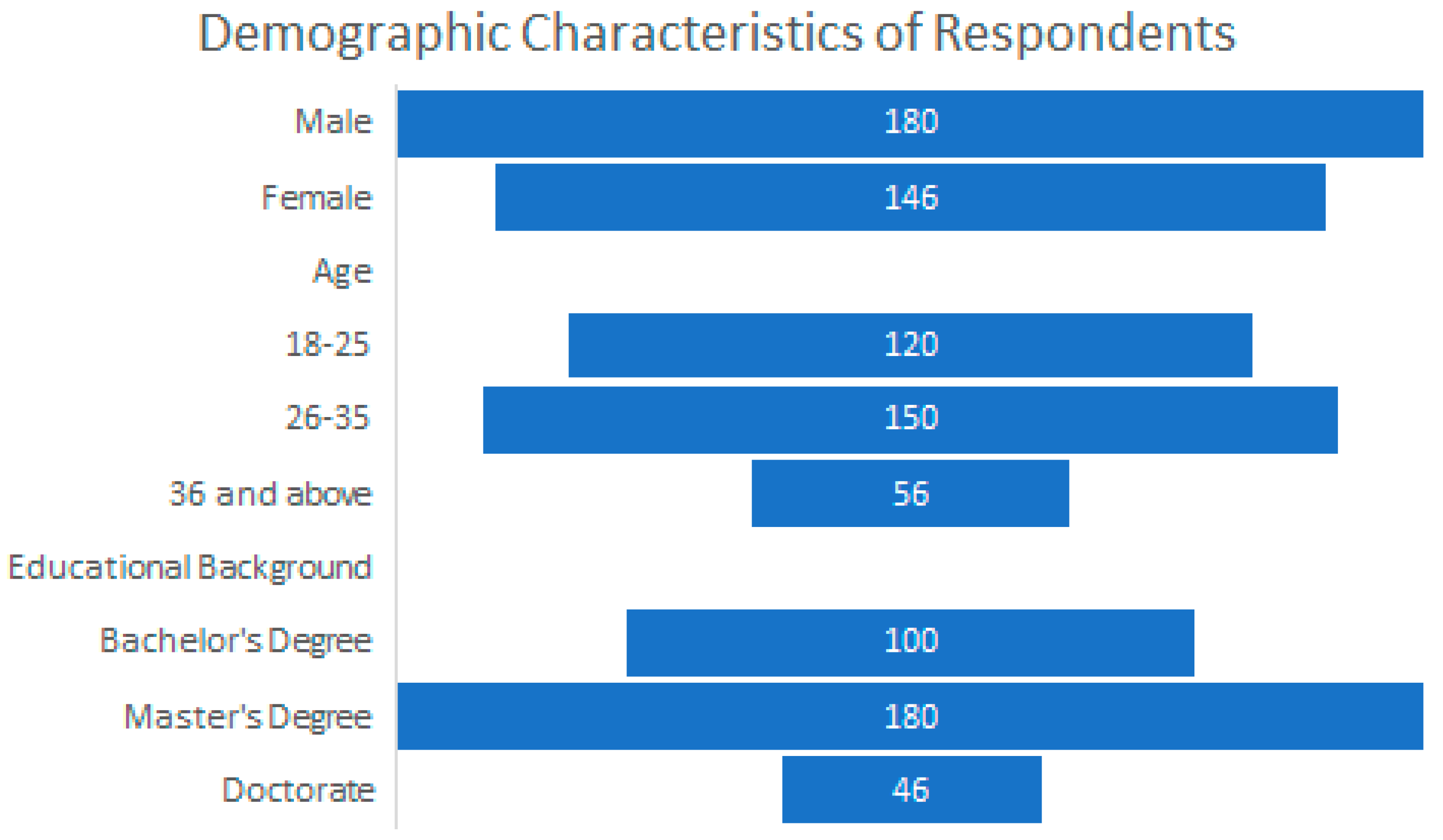
The results indicate a balanced representation of genders, with a majority of respondents aged between 26 and 35 years, and a significant portion holding a master's degree.
7.2. Results of Statistical Tests
To analyze the relationships among variables, Structural Equation Modeling (SEM) was employed. The results indicated strong relationships between brand knowledge, brand satisfaction, brand loyalty, and community engagement with social capital.
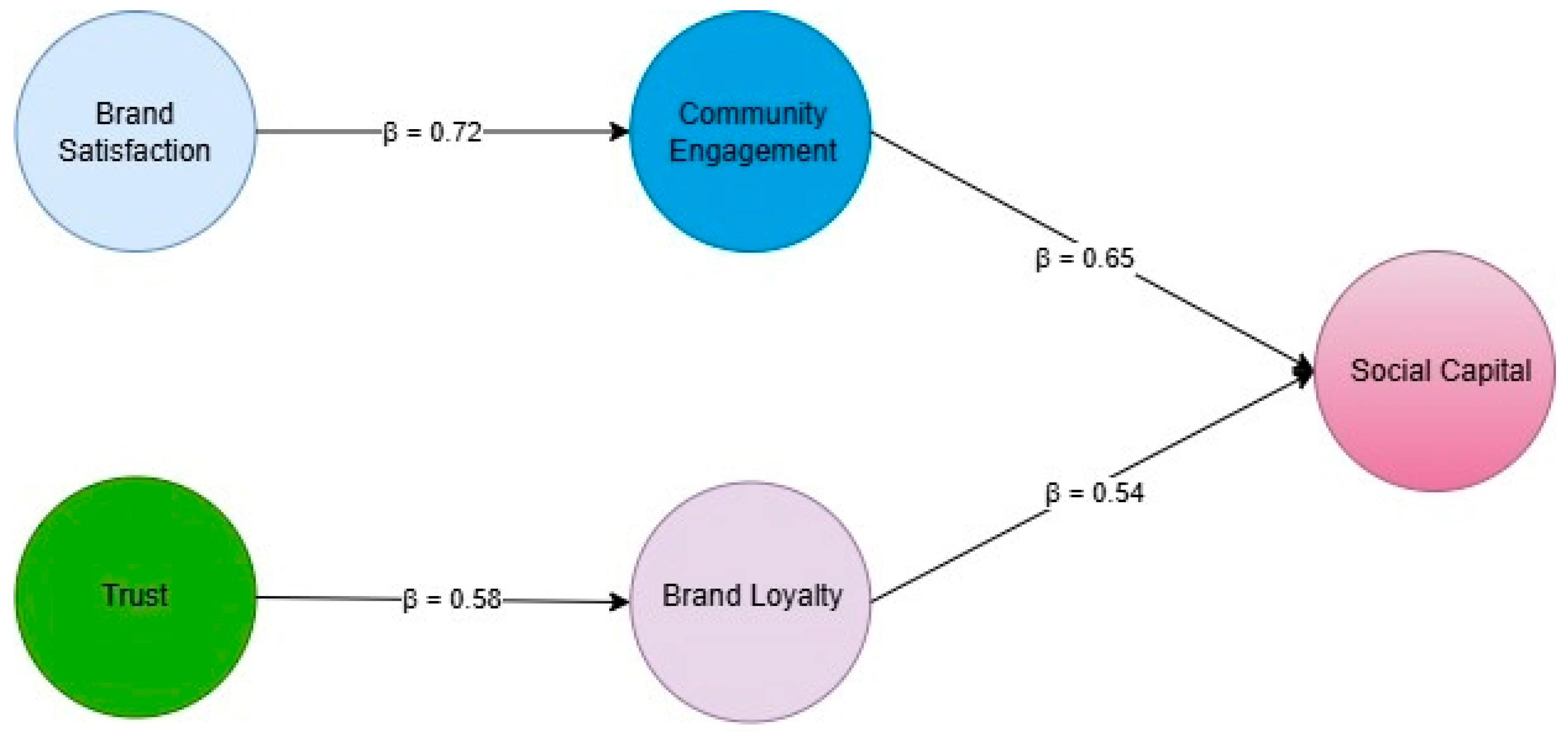
Figure 3.
Results of testing hypotheses using the structural equation model (SEM).
Confirmatory Factor Analysis (CFA)
The CFA results confirmed the validity of the measurement model, with all factor loadings exceeding the recommended threshold of 0.5[18]. The goodness-of-fit indices for the model were as follows:
- Chi-square/df = 2.54
- CFI = 0.92
- RMSEA = 0.06
These values indicate an acceptable fit for the model.
7.3. Hypothesis Testing
The hypotheses formulated for this study were tested using SEM, and the results are summarized below:
- ●
- H1: There is a positive relationship between community engagement and social capital.
- ✓
- Result: Supported (β = 0.65, p < .01)
- ●
- H2: Trust significantly influences consumer loyalty within brand communities.
- ✓
- Result: Supported (β = 0.58, p < .01)
- ●
- H3: Brand satisfaction positively affects community engagement.
- ✓
- Result: Supported (β = 0.72, p < .01)
- ●
- H4: Brand loyalty has a significant impact on social capital.
- ✓
- Result: Supported (β = 0.54, p < .01)
The findings confirm that brand community dynamics significantly enhance social capital through trust, engagement, and loyalty.
7.4. Summary of Findings
The analysis reveals that brand communities play a pivotal role in fostering social capital within sports organizations in Iran. The strong positive correlations among brand knowledge, satisfaction, loyalty, and community engagement highlight the effectiveness of socially-oriented branding strategies in enhancing consumer relationships and promoting social cohesion.
8. Discussion and Conclusion
8.1. Interpretation of Findings
The findings of this study highlight the critical role that brand communities play in enhancing social capital within the context of sports management in Iran. The results indicate strong positive correlations between various constructs, including brand knowledge, brand satisfaction, brand loyalty, and community engagement, all of which significantly contribute to the development of social capital. Specifically, the data suggest that higher levels of community engagement lead to increased social capital, reinforcing the notion that engaged consumers are more likely to develop trust and shared values within a brand community.
Furthermore, the analysis revealed that trust is a significant predictor of consumer loyalty within brand communities. This finding aligns with existing literature that emphasizes the importance of trust in fostering long-term relationships between consumers and brands[19]. The results also indicate that brands that actively engage with their communities can cultivate a sense of belonging among consumers, which is essential for building loyalty and advocacy.
8.2. Comparison with Previous Research
The results of this study are consistent with prior research that has explored the relationship between brand communities and social capital. For instance, Bendeck and Hastings (2023) found that brand communities foster emotional connections among members, leading to enhanced loyalty and engagement. Similarly, Dubinsky (2021) emphasized that consumers who identify with a brand community are more likely to share experiences and values associated with the brand.
Moreover, this research contributes to the growing body of literature on social capital by providing empirical evidence from the Iranian context. While previous studies have predominantly focused on Western markets, this research highlights the unique dynamics of brand communities in Iran, where cultural factors play a significant role in shaping consumer behavior and community interactions.
8.3. Overall Conclusion
In conclusion, this study demonstrates that a well-structured brand community model can serve as an effective tool for enhancing social capital in sports management. By integrating social approaches into their branding strategies, organizations can improve their identity, values, and public image while fostering meaningful connections with their consumers. The findings underscore the necessity for sports organizations in Iran to adopt socially-oriented branding strategies that prioritize community engagement and social responsibility.
The implications of this research extend beyond academic contributions; they offer practical insights for sports managers aiming to leverage brand communities to enhance consumer loyalty and promote social cohesion. Future research should explore longitudinal impacts of brand communities on social dynamics and consumer behavior to further understand their role in fostering sustainable development within communities.
9. Recommendations
9.1. Practical Recommendations
Based on the findings of this study, several practical recommendations can be made for sports organizations aiming to enhance their brand management strategies through social approaches:
- Develop Community-Centric Branding Strategies: Sports organizations should prioritize the development of branding strategies that focus on building strong brand communities. This can involve creating platforms for consumer interaction, such as online forums or social media groups, where fans can share experiences and engage with the brand.
- Foster Trust and Shared Values: Organizations should actively work to build trust within their brand communities by demonstrating transparency and aligning their values with those of their consumers. Initiatives such as community outreach programs and social responsibility campaigns can enhance trust and strengthen emotional connections.
- Leverage Social Media for Engagement: Utilizing social media platforms effectively can help brands maintain ongoing communication with their communities, especially in times of disruption like the COVID-19 pandemic. Engaging content that resonates with community values can foster loyalty and encourage active participation.
- Implement Feedback Mechanisms: Establishing channels for consumer feedback can help organizations better understand the needs and preferences of their communities. Regular surveys and interactive sessions can provide valuable insights that inform branding strategies and community engagement efforts.
- Measure Social Capital Development: Sports organizations should develop metrics to assess the impact of their branding strategies on social capital. This could include tracking community engagement levels, trust indicators, and consumer loyalty over time.
9.2. Recommendations for Future Research
The findings of this study open several avenues for future research in the field of brand management and social capital:
- Longitudinal Studies: Future research should consider conducting longitudinal studies to examine the long-term effects of brand community engagement on social capital development and consumer behavior over time.
- Cultural Comparisons: Comparative studies across different cultural contexts could provide insights into how cultural factors influence brand community dynamics and social capital in various regions, particularly in non-Western markets.
- Exploration of Digital Communities: Given the increasing reliance on digital platforms for consumer engagement, further research could explore how online brand communities affect social capital compared to traditional, face-to-face interactions.
- Impact of Social Responsibility Initiatives: Investigating the specific impacts of various social responsibility initiatives on brand loyalty and community engagement would provide valuable insights for practitioners looking to enhance their branding strategies.
- Interdisciplinary Approaches: Future studies could benefit from interdisciplinary approaches that integrate theories from sociology, marketing, and psychology to develop a more comprehensive understanding of the interplay between brand management and social capital.
By implementing these practical recommendations and pursuing further research avenues, sports organizations can effectively leverage brand communities to enhance social capital, ultimately contributing to sustainable development within their communities.
References
- Coleman, J.S. Social capital in the creation of human capital. American journal of sociology 1988, 94, S95–S120. [Google Scholar] [CrossRef]
- Ghorbani Asiabar, M.; Ghorbani Asiabar, M.; Ghorbani Asiabar, A. Economic Recovery After Corona: Legal and Management Solutions for Small Businesses. Preprints, Preprints: 2024. [CrossRef]
- Ghorbani Asiabar, M.; Ghasemi, H. Examining the Mediating Role of Social Capital in the Relationship Between Brand Community and Customer Loyalty in the Sports Industry. Preprints, Preprints: 2024. [CrossRef]
- Moorlock, E.; Dekel-Dachs, O.; Stokes, P.; Larsen, G. Constructing Consumer-Masstige brand relationships in a volatile social reality. Journal of Business Research 2023, 155, 113381. [Google Scholar] [CrossRef]
- Ghorbani Asiabar, M.; Ghorbani Asiabar, M.; Ghorbani Asiabar, A. Analyzing the influence of human brands on the formation of online social movements: Social network analysis research. ScienceOpen Preprints 2024. [Google Scholar] [CrossRef]
- Koech, A.K.; Buyle, S.; Macário, R. Airline brand awareness and perceived quality effect on the attitudes towards frequent-flyer programs and airline brand choice - Moderating effect of frequent-flyer programs. Journal of Air Transport Management 2023, 107, 102342. [Google Scholar] [CrossRef]
- Jeong, S.W.; Chung, J.-E. Enhancing competitive advantage and financial performance of consumer-goods SMEs in export markets: How do social capital and marketing innovation matter? Asia Pacific Journal of Marketing and Logistics 2023, 35, 74–89. [Google Scholar] [CrossRef]
- Lin, J.-S.; Wu, L. Examining the psychological process of developing consumer-brand relationships through strategic use of social media brand chatbots. Computers in Human Behavior 2023, 140, 107488. [Google Scholar] [CrossRef]
- Rocca, L.H.D.; Zielinski, S. Community-based tourism, social capital, and governance of post-conflict rural tourism destinations: The case of Minca, Sierra Nevada de Santa Marta, Colombia. Tourism management perspectives 2022, 43, 100985. [Google Scholar] [CrossRef]
- Schau, H.J.; Muñiz Jr, A.M.; Arnould, E.J. How brand community practices create value. Journal of marketing 2009, 73, 30–51. [Google Scholar] [CrossRef]
- Bendeck, S.; Hastings, O.P. Linking individual and collective social capital: Operationalization, association, and sociodemographic heterogeneity. Sociological Spectrum 2023, 43, 31–51. [Google Scholar] [CrossRef]
- Marsden, P.V. James Coleman, Social Capital, and Economic Sociology. Handbook of Economic Sociology for the 21st Century: New Theoretical Approaches, Empirical Studies and Developments 2021, 33-45.
- Fraser, T.; Aldrich, D.P.; Page-Tan, C. Bowling alone or distancing together? The role of social capital in excess death rates from COVID19. Social Science & Medicine 2021, 284, 114241. [Google Scholar] [CrossRef]
- Dubinsky, Y. Sports, Brand America and US public diplomacy during the presidency of Donald Trump. Place Branding and Public Diplomacy 2021, 1–14. [Google Scholar] [CrossRef]
- Cuaton, G.P.; Su, Y. Potentials and pitfalls of social capital ties to climate change adaptation: An exploratory study of Indigenous Peoples in the Philippines. Third World Quarterly 2023, 1–21. [Google Scholar] [CrossRef]
- Kim, J.J.; Han, H.; Ariza-Montes, A. The impact of hotel attributes, well-being perception, and attitudes on brand loyalty: Examining the moderating role of COVID-19 pandemic. Journal of Retailing and Consumer Services 2021, 62, 102634. [Google Scholar] [CrossRef]
- Oh, H.J.; Cha, Y.; Kim, J.-N. Fans, friends, critics, and foes: How CSR-based stakeholder segmentation differentiates perceived corporate ethics, trust, and perceived brand quality. Public Relations Review 2023, 49, 102317. [Google Scholar] [CrossRef]
- Hair, J.F.; Black, W.C.; Babin, B.J.; Anderson, R.E.; Tatham, R.L. Multivariate data analysis 6th Edition. Pearson Prentice Hall. New Jersey. humans: Critique and reformulation …: 2006.
- Anaya-Sánchez, R.; Castro-Bonaño, J.M.; González-Badía, E. Preferencias del consumidor millennial respecto al diseño de webs de social commerce. Revista Brasileira de Gestão de Negócios 2020, 22, 123–139. [Google Scholar] [CrossRef]
Disclaimer/Publisher’s Note: The statements, opinions and data contained in all publications are solely those of the individual author(s) and contributor(s) and not of MDPI and/or the editor(s). MDPI and/or the editor(s) disclaim responsibility for any injury to people or property resulting from any ideas, methods, instructions or products referred to in the content. |
© 2025 by the authors. Licensee MDPI, Basel, Switzerland. This article is an open access article distributed under the terms and conditions of the Creative Commons Attribution (CC BY) license (http://creativecommons.org/licenses/by/4.0/).
Copyright: This open access article is published under a Creative Commons CC BY 4.0 license, which permit the free download, distribution, and reuse, provided that the author and preprint are cited in any reuse.


