

Submitted:
11 March 2025
Posted:
12 March 2025
You are already at the latest version
Abstract
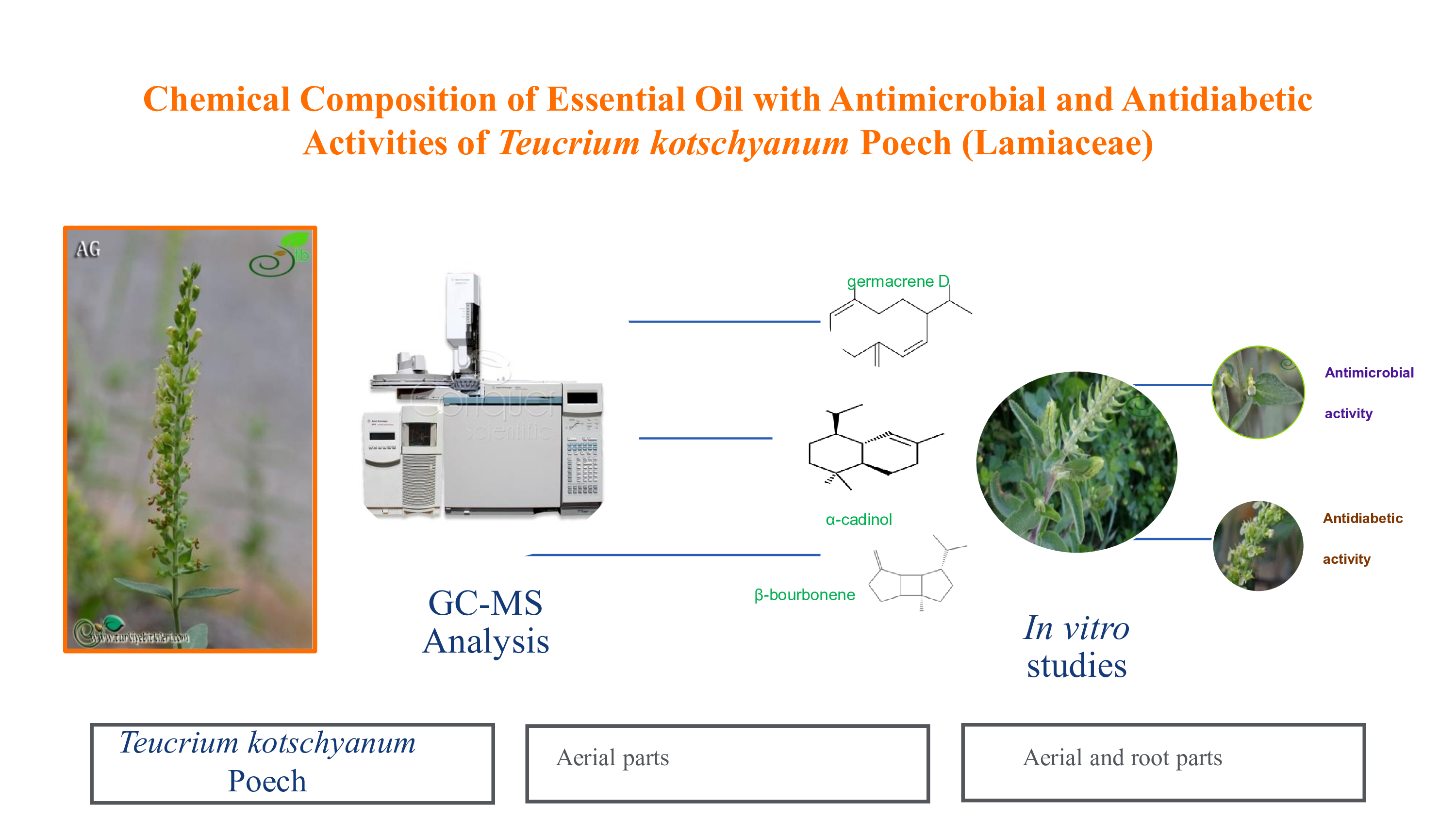
The genus Teucrium L., member of Lamiaceae, is represented by approximately 36 species in Türkiye. In this study, the essential oil composition of the aerial parts of Teucrium kotschyanum Poech collected from İzmir (Ödemiş) was investigated by gas chromatography (GC) and gas chromatography-mass spectrometry (GC-MS). The major compounds were identified as germacrene D (20.0 %), α-cadinol (6.9 %), β-bourbonene (6.6 %), hexadecanoic acid (6.6 %), δ-cadinene (5.9 %) and manool (4.1 %). The antibacterial and antifungal activities of the essential oil were studied against six bacteria and six fungi using the microdilution broth method. The essential oil showed moderate to weak inhibitory effects. The minimum inhibitory concentration (MIC) ranged from 125 to 2000 μg/mL for all tested microorganisms. The present study was also designed to evaluate the antidiabetic effects of the essential oil and extracts of the root and aerial parts of Teucrium kotschyanum via their potential inhibition of the related key enzymes. Essential oil showed significantly higher activity with an IC50 value of 100.25 mg/mL, than the positive control, with an IC50 value of 122.03 mg/mL. Among the extracts, the best activity was observed in the petroleum ether and ethyl acetate extracts of root parts, with the inhibition value of 94.79%, 55.49%, respectively.
Keywords:
Teucrium kotschyanum
; Lamiaceae
; essential oil
; GC-MS
; antimicrobial activity
; antidiabetic activity
1. Introduction
Türkiye is an important gene center in the Lamiaceae family. Lamiaceae plants are rich in secondary metabolites and can be extensively used in traditional medicine to treat various disorders [1]. In Türkiye, the genus Teucrium L., member of Lamiaceae, is represented by 36 species (48 taxa), 17 of which are endemic [2,3,4,5,6,7,8,9,10,11]. Teucrium species have been used as medicinal herbs for over 2000 years. They have antioxidant, antimicrobial and anti-inflammatory properties [12,13] and are commonly used in folk medicine as a treatment for diabetes, gastric ulcer, and intestinal inflammation, as well as a diuretic, antiseptic, and anti-helminthic [13,14]. In Greek folk medicine, infusion of the aerial parts of Teucrium flavum L. has been used orally as an antidiabetic and externally as an astringent to heal skin eruptions and wounds [15]. Teucrium chamaedrys L. and T. polium L. are widely distributed in Türkiye and have many medicinal uses in traditional medicine. Infusions prepared from the aerial parts of T. chamaedrys subsp. chamaedrys are consumed as tea for ulcers in the mouth and for kidney infections in the Bilecik region of Türkiye, whereas the aerial parts of T. polium are used as appetizers and karminatives for pain in the stomach and for wound healing [16]. T. polium infusions are also used for stomachache and as an analgesic in the Aydıncık district of Mersin [17].
Phytochemical studies have reported that Teucrium L. species are rich sources of diterpenoids and contain monoterpenes, sesquiterpenes, triterpenes, iridoids, flavonoids, and essential oils [18]. As well as the genus Teucrium is one of the richest sources of neoclerodane diterpenes the aerial parts of Teucrium species were well-known to produce essential oils and essential oils of Teucrium species have been the subject of many studies. Many species of this genus are used in the food industry and show antimicrobial, antioxidant, and antifungal activities, rendering them useful as natural preservatives [19].
Teucrium species in Türkiye are classified into eight sections in the Flora of Turkey [20] and T. kotschyanum Poech is a member of sect. Scorodonia (Hill.) Schreber. It is a perennial herb that is rhizomatous and up to 80 cm in height. The flowers are yellow-green and the flowering season is between May and July. This species is rarely used in traditional medicine as an antipyretic or antidiabetic agent [21]. From the aerial parts of T. kotschyanum three neo-clerodane diterpenoids (12-epiteucvidin, 12-epiteuflin, and teukotschyn) were isolated, and ursolic acid, flavones cirsimaritin and cirsiliol, and six previously known neo-clerodane diterpenoids were also found [22]. A comparative study has been carried out on the essential oils of T. cyprium ssp. cyprium, T. micropodioides, T. divaricatum ssp. canescens and T. kotschyanum which are growing in Cyprus, and caryophyllene, humulene, cubebene, and burbonene were found to be present in high percentages mounting to 60% of the total T. kotschyanum essential oil [23].
Teucrium species are known for their medicinal properties and exhibit various biological activities, including broad-spectrum antimicrobial activity [24]. The studied species have been found to be more active against gram-positive bacteria than gram-negative bacteria and fungi. The essential oils were more potent than the extracts. The essential oils from T. orientale, T. africanum, T. ramosissimum, T. mascatence, T. yemense, T. massiliense, T. scordonia have been investigated for their antimicrobial activity, and Teucrium polium is one of the most tested Teucrium species, which exhibits pronounced activity [24].
Teucrium species also exhibit antihyperglycemic activity and reduce blood glucose levels [24,25,26,27,28].
In this study, the essential oil composition of the aerial parts of Teucrium kotschyanum Poech collected from Türkiye (Ödemiş-İzmir) at the flowering stage was investigated using gas chromatography (GC) and gas chromatography-mass spectrometry (GC-MS). The antibacterial and antifungal activities of the essential oils were examined against six bacteria and six fungi using microdilution broth method. Additionally, the antidiabetic activity of the essential oil and various extracts (petroleum ether, ethyl acetate, and methanol) of the species were evaluated.
2. Results
2.1. Chemical Composition of Essential Oil
In this study, we aimed to investigate the composition of essential oil obtained from the aerial parts of Teucrium kotschyanum Poech collected in İzmir (Ödemiş)-Türkiye at the flowering stage using GC and GC-MS. The yield of essential oil from the aerial parts of the plant was found to be 0.4%.
According to the Teucrium species studied and their plant origin, essential oil yields ranged from 0.05% to 1.5%, and the amounts of main constituents (mono- and sesquiterpene hydrocarbons and oxygenated sesquiterpenes) differed notably [29,30]. The essential oil composition of the aerial parts of the Teucrium kotschyanum was examined in our study, and 53 constituents represented 96.2% of the total components in the oil have been identified. The retention indices and percentage compositions are listed in Table 1. The major compounds were identified as germacrene D (20.0%), α-cadinol (6.9%), β-bourbonene (6.6%), hexadecanoic acid (6.6%), δ-cadinene (5.9%), manool (4.1%), other significant compounds were found as alloaromadendrene (3.0%), linalool (2.8%), T-muurolol (2.8%), viridiflorol (2.7%), T-cadinol (2.5%), and β-caryophyllene (2.0%).
2.2. Antimicrobial Activity
The antimicrobial activity of the essential oil against Gram-positive and Gram-negative bacteria, as well as six fungal strains, was tested by broth microdilution methods. The essential oil from the aerial parts of T. kotschyanum showed moderate to weak inhibitory effects compared to standard antimicrobials. The minimum inhibitory concentration (MIC) ranged from 5 to 2000 μg/mL for all tested microorganisms. The results of the antimicrobial activities of the essential oil are given in Table 2.
2.3. α-Glucosidase Inhibition Activity
The present study was also conducted to evaluate the antidiabetic effect of essential oil and extracts of the root and aerial parts of Teucrium kotschyanum via their inhibitory potential on the related key enzymes. Essential oil showed significantly higher activity with an IC50 value of 100.25 mg/mL, than the positive control, with an IC50 value of 122.03 mg/mL. Among the extracts, the best activity was observed in the petroleum ether and ethyl acetate extracts of root parts, with the inhibition value of 94.79%, 55.49%, respectively.
2.3.1. % Inhibition of Teucrium Kotschyanum Extracts
The inhibition (%) of T. kotschyanum extracts is presented in Table 3 and Figure 1. Among tested six plant extracts, petroleum ether extract of roots (RO-PE) were the most active, followed by ethyl acetate extract of roots (RO-EA) at 125 µg/mL concentration. These extracts exhibited a higher α-glucosidase inhibitory activity than acarbose at the same concentration (125 µg/mL). Aerial parts extracts of petroleum ether (AP-PE) and ethyl acetate (AP-EA) showed lower activity while methanol extracts of aerial parts (AP-MeOH) and roots (RO-MeOH) showed no significant difference with acarbose in the point of α-glucosidase inhibition at 125 µg/mL.
2.3.2. IC50 Value of Teucrium Kotschyanum Essential Oil
Essential oil obtained via 3 h hydrodistillation from T. kotschyanum aerial parts (yield 0.11%, v/w) also tested for α-glucosidase inhibitory activity. A logarithmic curve was acquired (Figure 2), and the IC50 value was calculated according to the curve. T. kotschyanum EO (IC50 = 100.25 ± 8.38 µg/mL), possess significantly (p<0.05) higher activity than acarbose (122.03 ± 5.79 µg/mL).
3. Discussion
The essential oil from the aerial parts of Teucrium kotschyanum Poech was obtained by hydrodistillation, and the composition of this oil was analyzed by GC-MS. The yield of essential oils from the aerial parts of the plant was found to be 0.4%. The relative percentages and retention indices of the compounds in the essential oil are listed in Table 1.
53 constituents, representing 96.2% of the total components, were identified in the essential oil. The major compounds were identified as germacrene D (20.0%), α-cadinol (6.9%), β-bourbonene (6.6%), hexadecanoic acid (6.6%), δ-cadinene (5.9%), and manool (4.1%), other significant compounds were found as alloaromadendrene (3.0%), linalool (2.8%), T-muurolol (2.8%), viridiflorol (2.7%), T-cadinol (2.5%), and β-caryophyllene (2.0%).
Teucrium species are rich in essential oils, and the presence of various biologically active monoterpenoids and sesquiterpenoids with several biological activities has been reported. Teucrium polium, T. chamaedrys, T. flavum and T. capitatum are the most studied taxa in terms of volatile oil composition [31]. Phytochemical studies on the essential oils of Teucrium species showed that the major components of these oils are sesquiterpene hydrocarbons, such as germacrene D and β-caryophyllene, or monoterpene hydrocarbons, such as α- and β-pinene, and the taxa can be grouped into two different classes: sesquiterpene and monoterpene chemotypes [32].
Many Teucrium species growing in Türkiye have been investigated for their essential oil composition and the species T. chamaedrys [33], T. chamaedrys ssp. chamaedrys [34], T. chamaedrys ssp. lydium [34], T. chamaedrys ssp. trapezunticum [35], T. cavernarum [36], T. paederotoides [36], T. antitauricum [37], T. montanum [38], T. polium [39], T. lamiifolium ssp. lamiifolium [40], T. multicaule [41], T. orientale ssp. orientale [42], T. orientale ssp. puberulens [42]), T. parviflorum [43], T. pestalozzae [38] and T. sandrasicum [38] have been shown to contain germacrene D in their EOs as a major compound. The essential oils of T. chamaedrys subsp. chamaedrys and subsp. lydium growing northeast of Türkiye were found to contain germacrene D, α-pinene, β-caryophyllene, and β-pinene [34]. T. cavernarum and T. paederotoides which are endemic to Türkiye were reported to contain β-caryophyllene, germacrene D and caryophyllene oxide as major constituents in their essential oils [36]. In a previous study by Bezic et al. [44], it was reported that essential oils from Croation Teucrium species (T. polium, T. flavum, T. montanum and T. chamaedrys) were characterized by a high proportion of β-caryophyllene and germacrene D. The essential oil obtained from the flowering aerial parts of T. scordium collected from North Iran was found to contain β-caryophyllene as the major constituent [45]. The Corsican and Sardinian oils of T. chamaedrys were qualitatively similar, but differed according to the amount of their major components, β-caryophyllene and germacrene D [46]. The composition of the essential oil of T. polium subsp. capitatum from Corsica was investigated and the main components of the oil were found as α-pinene (28.8%), β-pinene (7.2%) and p-cymene (7.0%) [47]. In Greece, carvacrol (10.1%), caryophyllene (9.8%), torreyol (7.6%) and caryophyllene oxide (5.0%) were found to be the major constituents of T. polium ssp. capitatum essential oil [14].
The essential oils of Teucrium species were characterized by a higher content of sesquiterpenes, in accordance with the results reported in previous studies [30,34,48,49]. In this study, it has been shown that essential oil from the aerial parts of T. kotschyanum in İzmir-Türkiye contained germacrene D (20.0%), α-cadinol (6.9%), β-bourbonene (6.6%), hexadecanoic acid (6.6%), δ-cadinene (5.9%), and manool (4.1%) as the major constituents. Previously, the essential oil from the leaves of T. kotschyanum in Cyprus had a different profile, and its chemical composition was rich in β-cubebene, β-burbonene, and β-caryophyllene [23]. In this study, we have also detected β-burbonene (6.6%) in the essential oil of T. kotschyanum. Consequently, T. kotschyanum which is growing in İzmir- Türkiye could be classified among Teucrium species producing germacrene D as the main constituent such as other Turkish Teucrium species; T. chamaedrys [33], T. chamaedrys ssp. chamaedrys [34], T. chamaedrys ssp. lydium [34], T. chamaedrys ssp. trapezunticum [35], T. cavernarum [36], T. paederotoides [36], T. antitauricum [37], T. montanum [38], T. polium [39], T. lamiifolium ssp. lamiifolium [40], T. multicaule [41]; [50], T. orientale ssp. orientale [42], T. orientale ssp. puberulens [42], T. parviflorum [43], T. pestalozzae [38] and T. sandrasicum [38].
Extracts and essential oils from the Teucrium genus contain a wide range of secondary metabolites that exhibit biological activity. The antimicrobial activity of the essential oil obtained from the aerial parts of Teucrium kotschyanum from Türkiye (İzmir-Ödemiş) has not been previously reported. In this study, the antimicrobial activities of the essential oil were tested using the broth microdilution method on four strains of gram-positive bacteria (S. aureus, S. epidermidis, B. cereus, B. subtilis), two strains of gram-negative bacteria (P. aeruginosa, S. thyphimurium) and six strains of fungi (C. albicans, C. glabrata, C. krusei, C. parapsilosis, C. tropicalis, C. utilis). The essential oil showed moderate to weak inhibitory effects. The antimicrobial activities of the essential oils are shown in Table 2. MIC values of the essential oil against the selected human pathogenic bacteria and fungus were determined to be 125–2000 μg/mL.
The essential oil from the aerial parts of T. kotshyanum exhibited the highest antibacterial potency against B. cereus at 250 μg/mL. The least sensitive microorganisms to the essential oil from the aerial parts of T. kotshyanum were S. epidermidis and S. thyphimurium with 2000 μg/mL MIC values, respectively. The essential oil from the aerial parts of T. kotshyanum showed the strongest antifungal activity against C. utilis with an MIC value of 125 μg/mL.
In vitro antimicrobial activity of the crude extracts of T. chamaedrys, T. montanum, T. arduini, T. polium, T. scordium subsp. scordium, T. scordium subsp. scordioides and T. botrys from Serbia showed greater antibacterial potential than antifungal activity [51].
The antimicrobial activities of the essential oils from T. chamaedrys subsp. chamaedrys, T. orientale var. puberulens, and T. chamaedrys subsp. lydium growing in Türkiye were tested in vitro using agar-well diffusion and the essential oils showed better antimicrobial activity against the gram-positive bacteria than against gram-negative bacteria [34].
The antimicrobial activity of Teucrium essential oils varies significantly within species and strains. Teucrium africanum essential oil showed noteworthy activity against S. pyogenes with an MIC value of 0.16 mg/mL while T. trifidum oil showed activity against S. aureus with an MIC value of 2 mg/mL [52]. The essential oil of T. arduini from Croatia which was characterized by β-caryophyllene (32.9%) and germacrene D (16.4%) showed antimicrobial activity against bacterial species with MIC values ranging from 6.25 mg/ml to 37.50 mg/mL and antifungal activities with MIC values from 7.81 mg/mL and 25.00 mg/mL [53]. The essential oil of aerial parts of T. arduini from Montenegro-Greben, which was characterized by sesquiterpene hydrocarbons (48.76%), germacrene D (16.98%), β-caryophyllene (14.98 %), β-burbonene (5.59%), and α-amorphene (4.68%), displayed a maximum activity against K. pneumonia with an MIC value of 6.25 µg/mL [54]. T. divaricatum which is a medicinal plant used in Lebanon, has been shown to contain abundant (E)- caryophyllene (30.1%) and caryophyllene oxide (6.1%) in its essential oil, the oil was found to have a good activity against gram-positive bacteria [55].
Teucrium montanum essential oil was analyzed and the occurrence of δ-cadinene (17.19%) and β- selinene (8.16%) were the major constituents was shown. According to the antimicrobial activity results, the highest inhibition zone was observed against K. pneumoniae (29 mm) [56]. The essential oil of T. polium from western Algeria was tested for antibacterial activity, and the highest activity was determined against S. aureus with an MIC value of 31.25 µL/mL [57]. The chemical composition of essential oil from Algerian T. polium was analyzed, and germacrene D (25.81%), bicyclogermacrene (13%), β-pinene (11.69%), and carvacrol (8.93%) were found as the major components, and antimicrobial activity test results of this species showed that the oil exhibited moderate inhibitory activity against Bacillus cereus, Enterococcus faecalis, E. coli and S. aureus with an MIC value of 3-5 µL/mL [58]. The essential oil of T. polium from Iran was analyzed, and β-caryophyllene (29%), farnesene (13%), β-pinene (11%), and germacrene D (6.5%) were detected as major components, in addition T. polium essential oil has shown to have a potential for use against multidrug resistant organisms such as clinical isolates of K. pneumoniae [59].
In a study from Morocco the essential oils of T. polium L. subsp. polium and T. polium L. subsp. aureum were tested against six bacteria strains responsible for nosocomial infections and oils from the species exhibited significant antimicrobial activity against S. aureus (MIC 0.17 mg/mL) and K. pneumoniae (MIC 1.4 and 0.7 mg/mL) but showed a low activity against Gram-negative P. aeruginosa [60]. The essential oil of T. polium L. from Tunisia was found to be rich in α- pinene (13.32%), β-pinene (35.97%), α-thujene (8.46%), p-cymene (5.25%), and verbenone (5.03%), and the essential oil exhibited high antimicrobial activity against Proteus mirabilis, Staphylococcus aureus, and Citrobacter freundei with MIC values of 0.078-0.156 mg/mL [61]. The main components of the essential oil of Algerian T. polium L. subsp. geyrii were identified as dl-limonene (11.18%), δ-cadinene (10.02%), and trans β-caryophyllene (9.15%), and the data obtained from the antimicrobial tests indicated that C. albicans was the most sensitive microorganism tested, followed by S. aureus and E. coli [62].
An endemic plant in Tunisia, Teucrium sauvagei was shown to have β-eudesmol, T-cadinol, α-thujone, γ-cadinene, and sabinene as the prevalent constituents in its essential oil, with the results indicating that the oil showed average inhibition against only three dermatophytes [63].
According to the literature, plants belonging Teucrium genus show antidiabetic activity according to in vivo and in vitro assays [64]. In one of these studies, different extracts of three Teucrium species were tested for α-amylase inhibition. The strongest activity was observed for the hydroalcoholic extracts of T. polium and T. oliverianum, with % inhibitions of 97.77% and 95.03%, respectively. The ethyl acetate extracts from T. polium and T. oliverianum have also high inhibitory activity with values of 83.41 %, 89.47% [65]. The blood glucose and serum insulin levels of the aqueous extract of T. leucocladum were investigated using a glucometer and Rat ELISA Kit. The extract reduces glucose levels in diabetic rats [66]. Sabet et al. [67] determined the antidiabetic activity of T. polium aqueous extracts in a streptozotocin-induced rat model of type 1 diabetes. T. polium extract caused a significant decrease in serum glucose levels. In another study, a new sesquiterpenoid compound isolated from Teucrium mascatense demonstrated significant inhibition in an α-glucosidase enzyme assay [68].
In the current study, essential oil obtained from the aerial parts and extracts derived from the aerial and root parts of T. kotschyanum were investigated for the first time for their antidiabetic activity using the α-glucosidase inhibition method. EO exerts a valuable enzyme inhibitory potential. The findings showed that T. kotschyanum EO had a significant activity with an IC50 value of 100.25 µg/mL, compared to acarbose as a positive control (IC50 value of 122.03 µg/mL (p<0.05).
In previous studies, it has been determined that terpenic compounds have antidiabetic activity [69,70,71]. We suggest that enzyme inhibition activity is related to the presence of terpenic substances in the essential oil of this plant. Further studies are needed to define the exact mechanisms underlying the antidiabetic activities of the major compounds.
Additionally, our results revealed that RO-PE and RO-EA showed the best enzyme inhibitory effects with the inhibitions of 94.79% and 55.49%, respectively. AP-MeOH and RO-MeOH extracts exhibited potent effects with percent inhibition values (40.54% and 38.97%, respectively). Alamgeer et al. [72] evaluated the effect of ethyl acetate extract of T. stocksianum on blood glucose levels in alloxan-induced diabetic rabbits. Similar to our findings, the ethyl acetate extract showed the best antidiabetic effect. The extract produced a significant (P<0.001) decrease in the blood glucose levels. In another study, it was observed that, treatment of sucrose-induced insulin resistance in rats with ethyl acetate extract prepared from T. polium caused a significant decrease in blood glucose and insulin levels [73]. Results showed that the further studies are needed to identify the active compounds of both petroleum ether and ethyl acetate extracts that are responsible for this activity.
4. Materials and Methods
Plant Material
Teucrium kotschyanum Poech was collected from Ödemiş- İzmir in June 2014. The aerial parts of the plants were dried at room temperature. Voucher specimens were deposited at the Herbarium of the Faculty of the Pharmacy, Istanbul University, Istanbul (ISTE 109573).
Isolation of Essential Oil (EO)
The aerial parts (100 g) of T. kotschyanum Poech were chopped into small pieces and soaked in water (distilled, 500 mL). The essential oil from the air-dried plant materials was isolated by hydrodistillation for 3h, using a Clevenger-type apparatus. The obtained oil was dried over anhydrous sodium sulfate and stored at +4°C in the dark until analysis and testing.
Preparation of Extracts
Air-dried and powdered roots and aerial parts were exhaustively extracted using a Soxhlet apparatus with petroleum ether, ethyl acetate, and methanol. The resulting extracts were filtered and concentrated using a rotary evaporator under reduced pressure at 40°C. The filtered plant extracts were combined and stored at -20°C until the α-glucosidase inhibition assay.
Analysis of Essential Oil
The oils were analyzed by capillary Gas Chromatography (GC) and gas chromatography / mass chromatography (GC/MS) using an Agilent GC-MSD system.
Gas Chromatography/Mass Spectrometry Analysis
GC-MS analysis was performed using an Agilent 5975 GC-MSD system. Innowax FSC column (60 m × 0.25 mm, 0.25 mm film thickness) was used with helium as carrier gas (0.8 mL/min). GC oven temperature was maintained at 60°C for 10 min, programmed to 220°C at a rate of 4°C/min, and kept constant at 220°C for 10 min, and then increased to 240°C at a rate of 1°C/min. The split ratio was adjusted to 40:1. The injector temperature was set to 250°C. Mass spectra were recorded at 70 eV. The mass range was m/z 35 to 450.
Gas Chromatography Analysis
Gas chromatography (GC) analysis was performed using an Agilent 6890N GC system. The FID detector temperature was 300°C. To obtain the same elution order as GC-MS, simultaneous auto-injection was performed in duplicate on the same column under the same operational conditions. The relative percentage of the separated compounds were calculated from the FID chromatograms. Table 1 presents the results of the analysis.
The essential oil components were identified by comparing of their relative retention times with those of authentic samples or by comparison their relative retention index (RRI) to a series of n-alkanes. Computer matching against commercial (Wiley GC/MS Library, MassFinder 4.0 Library) [74,75] and in-house “Başer Library of Essential Oil Constituents” built up by genuine compounds and components of known oils.
Antimicrobial Activity
The antimicrobial activity against Staphylococcus aureus ATCC 43300, Staphylococcus epidermidis ATCC 14990, Bacillus cereus NRRL B-3711, Bacillus subtilis NRRL B-4378, Pseudomonas aeruginosa ATCC 10145, Salmonella typhimurium ATCC 14028, Candida albicans ATCC 10231, Candida glabrata ATCC 2001, Candida krusei ATCC 6258, Candida parapsilosis ATCC 22019, Candida tropicalis ATCC 1369, and Candida utilis NRRL Y-900 was evaluated using partly modified CLSI microdilution broth methods M7-A7 and M27-A2, respectively (Methods for Dilution Antimicrobial Susceptibility Tests for Bacteria Grow Aerobically, Reference Method for Broth Dilution Antifungal Susceptibility Testing of Yeasts) [76,77]. Chloramphenicol (Merck), ampicillin-Na (Merck), amphotericin-B (Sigma-Aldrich), and ketoconazole (Sigma-Aldrich) were used as the standard antimicrobial agents.
α-Glucosidase inhibition Activity
The α-glucosidase inhibitory activities of the samples were evaluated using the procedure described by Bothon et al. [78] with slight modifications. Samples (25 μL) were dissolved in DMSO and mixed with 50 μL α-glucosidase (1.0 U/mL) (from Saccharomyces cerevisiae) enzyme solution and 75 μL sodium phosphate buffer (0.1 M, pH 6.8) in a 96-well microplate. After incubation at 37°C for 10 min, 50 μL of substrate (p-nitrophenyl α-D-glucopyranoside) solution (1 mM) was added to the reaction mixture. Absorbance change was measured with Thermoscientific Multiscan® plate reader (Multiscan Go) at 405 nm wavelength and 37 °C for 10 min at 30 s intervals. Acarbose and DMSO were used as positive and negative controls respectively. % Inhibition values were calculated according to Eq. 1. The IC50 (concentration required to decrease the reaction rate to 50%) values were determined from the concentration-dependent curve.
Eq. 1: Inhibition (%) = [1 − (Absorbance sample/Absorbance control)] × 100
Statistical Analysis
The results are expressed as mean ± SEM values of at least three replicates for each sample. Inhibition (%) data of extracts were analyzed by one-way ANOVA followed by Dunnett-Tukey’s multiple comparison tests, and IC50 values of essential oils were evaluated by unpaired t-test using GraphPad Prism (version 9.3.1 for Windows, GraphPad Software, San Diego, California, USA). Differences in group means (p<0.05) were considered significant.
5. Conclusions
The current study was undertaken to characterize and identify the chemical constituents of the essential oil from T. kotschyanum Poech and to evaluate its antimicrobial and antidiabetic activities. GC analysis of T. kotshyanum essential oil showed a chemical profile rich in germacrene D. The essential oil exhibited a moderate to weak antimicrobial activity. Alternatively, this species can be evaluated as a candidate for further examination to contribute to the treatment of diabetes mellitus.
Author Contributions
Conceptualization, participated in the investigation, writing, editing, Ç.Ü.G.; methodology, analysis, investigation, S.Y.T.; analysis, investigation, G.G.T.; methodology, analysis, investigation, G.İ.; methodology, analysis, investigation, B.D.; conceptualization, participated in the investigation, N.T. All authors have read and agreed to the published version of the manuscript
Funding
This research received no external funding
Data Availability Statement
Data supporting this study are included within the article and / or supporting materials.
Acknowledgments
The authors thank Hulusi Kütük for collecting the plant material.
Conflicts of Interest
The authors declare no conflicts of interest.
References
- Guiche, R. E.; Tahrouch, S.; Amri, O.; El Mehrach, K.; Hatimie, A. Antioxidant Activity and Total Phenolic and Flavonoid Contents of 30 Medicinal and Aromatic Plants Located in the South of Morocco. Int. J. New Technol. Res. 2015, 1, 7–11. [Google Scholar]
- Govaerts, R. World Checklist Seed Plants 3; Continental Publishing: Deurne, 1999. [Google Scholar]
- Duman, H. Teucrium L. In Flora of Turkey and the East Aegean Islands; Güner, A., Özhatay, N., Ekim, T., Başer, K. H. C., Eds.; Edinburgh University Press: Edinburgh, 2000. [Google Scholar]
- Dönmez, A. A. Teucrium chasmophyticum Rech. f. (Lamiaceae): A New Record for the Flora of Turkey. Turk. J. Bot. 2006, 30, 317–320. [Google Scholar]
- Parolly, G.; Eren, Ö. Contributions to the Flora of Turkey, 2. Wildenowia 2007, 37, 243–271. [Google Scholar] [CrossRef]
- Dönmez, A. A.; Mutlu, B.; Özçelik, A. D. Teucrium melissoides Boiss. & Hausskn. ex Boiss. (Lamiaceae): A New Record for Flora of Turkey. Hacettepe J. Biol. Chem. 2010, 38, 291–294. [Google Scholar]
- Dinç, M.; Doğu, S.; Bağcı, Y. Taxonomic Reinstatement of Teucrium andrusi from T. paederotoides Based on Morphological and Anatomical Evidences. Nord. J. Bot. 2011, 29, 148–158. [Google Scholar] [CrossRef]
- Dinç, M.; Doğu, S.; Doğru Koca, A.; Kaya, B. Anatomical and Nutlet Differentiation Between Teucrium montanum and T. polium from Turkey. Biologia 2011, 66, 448–453. [Google Scholar] [CrossRef]
- Dirmenci, T. Teucrium L. In Türkiye Bitkileri Listesi (Damarlı Bitkiler); Güner, A., Aslan, S., Ekim, T., Vural, M., Babaç, M. T., Eds.; Nezahat Gökyiğit Botanik Bahçesi ve Flora Araştırmaları Derneği Yayını: Istanbul, 2012. [Google Scholar]
- Özcan, T.; Dirmenci, T.; Coşkun, F.; Akçiçek, E.; Güner, A. A New Species of Teucrium sect. Scordium (Lamiaceae) from SE of Turkey. Turk. J. Bot. 2015, 39, 310–317. [Google Scholar]
- Vural, M.; Duman, H.; Dirmenci, T.; Özcan, T. A New Species of Teucrium sect. Stachyobotrys (Lamiaceae) from the South of Turkey. Turk. J. Bot. 2015, 39, 318–324. [Google Scholar]
- Vukovic, N.; Sukdolak, S.; Solujic, S.; Mihailovic, V.; Mladenovic, M.; Stojanovic, J.; Stankovic, M. S. Chemical Composition and Antimicrobial Activity of Teucrium arduini Essential Oil and Cirsimarin from Montenegro. J. Med. Plant Res. 2011, 5, 1244–1250. [Google Scholar]
- Rehman, N. U.; Al-Sahai, J. M. S.; Hussain, H.; Khan, A. L.; Gilani, S. A.; Abbas, G.; Hussain, J.; Sabahi, J. N.; Al-Harrasi, A. Phytochemical and Pharmacological Investigation of Teucrium muscatense. Int. J. Phytomed. 2016, 8, 567–579. [Google Scholar]
- Menichini, F.; Conforti, F.; Rigano, D.; Formisano, C.; Piozzi, F.; Senatore, F. Phytochemical Composition, Anti-inflammatory and Antitumour Activities of Four Teucrium Essential Oils from Greece. Food Chem. 2009, 115, 679–686. [Google Scholar] [CrossRef]
- Bellomaria, B.; Arnold, N.; Valentini, G. Essential Oil of Teucrium flavum subsp. hellenicum from Greece. J. Essent. Oil Res. 1998, 10, 131–133. [Google Scholar] [CrossRef]
- Ünsal, Ç.; Vural, H.; Sariyar, G.; Özbek, B.; Ötük, G. Traditional Medicine in Bilecik Province (Turkey) and Antimicrobial Activities of Selected Species. Turk. J. Pharm. Sci. 2010, 7, 139–150. [Google Scholar]
- Sargın, S. A. Ethnobotanical Survey of Medicinal Plants in Bozyazı District of Mersin, Turkey. J. Ethnopharmacol. 2015, 173, 105–126. [Google Scholar] [CrossRef]
- Piozzi, F.; Riello, A.; Mazzini, F.; Senatore, F. Essential Oils of Teucrium Species from the Mediterranean Area. Flavour Fragr. J. 2003, 18, 136–141. [Google Scholar]
- Ulubelen, A.; Topçu, G.; Sönmez, U. Chemical and Biological Evaluation of Genus Teucrium. Stud. Nat. Prod. Chem. 2000, 23, 591–648. [Google Scholar]
- Ekim, T. Teucrium L. In Flora of Turkey and the East Aegean Islands; Davis, P. H., Ed.; Edinburgh University Press: Edinburgh, 1982. [Google Scholar]
- Arnold, N. Contribution à la Connaissance Ethnobotanique et Médicinale de la Flore de Chypre. Université René Descartes: Paris, 1985; pp 1203–1210.
- Simoes, F.; Rodríguez, B.; Bruno, M.; Piozzi, F.; Savona, G.; Arnold, N. A. Neo-clerodane Diterpenoids from Teucrium kotschyanum. Phytochemistry 1989, 28, 2763–2768. [Google Scholar] [CrossRef]
- Arnold, N.; Bellomaria, B.; Valentini, G.; Rafaiani, S. M. Comparative Study on Essential Oil of Some Teucrium Species from Cyprus. J. Ethnopharmacol. 1991, 35, 105–113. [Google Scholar] [CrossRef]
- Jakovljević, D.; Stanković, M. Application of Teucrium Species: Current Challenges and Further Perspectives. In Teucrium Species: Biology and Applications; 2020; pp 413–432.
- Esmaeili, M. A.; Yazdanparast, R. Hypoglycaemic Effect of Teucrium polium: Studies with Rat Pancreatic Islets. J. Ethnopharmacol. 2004, 95, 27–30. [Google Scholar] [CrossRef]
- Vahidi, A. R.; Dashti, R. M.; Bagheri, S. M. The Effect of Teucrium polium Boiled Extract in Diabetic Rats. Iranian J. Diabetes Obesity 2010, 2, 27–32. [Google Scholar]
- Dastjerdi, Z. M.; Namjoyan, F.; Azemi, M. E. Alpha Amylase Inhibition Activity of Some Plant Extracts of Teucrium Species. Eur. J. Biol. Sci. 2015, 7, 26–31. [Google Scholar]
- Asghari, A. A.; Mokhtari-Zaer, A.; Niazmand, S.; McEntee, K.; Mahmoudabady, M. Anti-diabetic Properties and Bioactive Compounds of Teucrium polium L. Asian Pac. J. Trop. Biomed. 2020, 10, 433. [Google Scholar]
- Ali, N. A. A.; Wurster, M.; Arnold, N.; Lindequist, U.; Wessjohan, L. Chemical Composition of the Essential Oil of Teucrium yemense Deflers. Records Nat. Prod. 2008, 2, 25. [Google Scholar]
- Saracoglu, V.; Arfan, M.; Shabir, A.; Hadjipavlou-Litina, D.; Skaltsa, H. Composition and Antioxidant Activity of the Essential Oil of Teucrium royleanum Wall. ex Benth Growing in Pakistan. Flavour Fragr. J. 2007, 22, 154–157. [Google Scholar] [CrossRef]
- De Martino, L.; Coppola, R.; De Feo, V.; Caputo, L.; Fratianni, F.; Nazzaro, F. Essential Oils Diversity of Teucrium Species. In Teucrium Species: Biology and Applications; Stanković, M., Ed.; Springer: Cham, 2020. [Google Scholar]
- Candela, R. G.; Roselli, S.; Bruno, M.; Fontana, G. A Review of the Phytochemistry, Traditional Uses and Biological Activities of the Essential Oils of Genus Teucrium. Planta Med. 2020, 87, 432–479. [Google Scholar] [CrossRef] [PubMed]
- Bağcı, E.; Yazgın, A.; Hayta, S.; Çakılcıoğlu, U. Composition of the Essential Oil of Teucrium chamaedrys L. (Lamiaceae) from Turkey. J. Med. Plants Res. 2010, 4, 2588–2590. [Google Scholar]
- Küçük, M.; Güleç, C.; Yaşar, A.; Üçüncü, O.; Yaylı, N.; Coşkunçelebi, K.; Yaylı, N. Chemical Composition and Antimicrobial Activities of the Essential Oils of Teucrium chamaedrys subsp. chamaedrys, T. orientale var. puberulens, and T. chamaedrys subsp. lydium. Pharm. Biol. 2006, 44, 592–599. [Google Scholar]
- Kaya, A.; Demirci, B.; Başer, K. H. C. Compositions of Essential Oils and Trichomes of Teucrium chamaedrys L. subsp. trapezunticum Rech. fil. and subsp. syspirense (C. Koch) Rech. fil. Chem. Biodivers. 2009, 6, 96–104. [Google Scholar]
- Kaya, A.; Demirci, B.; Dinç, M.; Doğu, S.; Başer, K. H. C. Compositions of the Essential Oils of Teucrium cavernarum and Teucrium paederotoides. J. Essent. Oil-Bear. Plants 2013, 16, 588–594. [Google Scholar] [CrossRef]
- Başer, K. H. C.; Demirci, B.; Duman, H.; Aytaç, Z. Composition of the Essential Oil of Teucrium antitauricum T. Ekim. J. Essent. Oil Res. 1999, 11, 61–62. [Google Scholar] [CrossRef]
- Başer, K. H. C.; Demirçakmak, B.; Duman, H. Composition of the Essential Oils of Three Teucrium Species from Turkey. J. Essent. Oil Res. 1997, 9, 545–549. [Google Scholar] [CrossRef]
- Hayta, S.; Yazgın, A.; Bağcı, E. Constituents of the Volatile Oils of Two Teucrium Species from Turkey. Bitlis Eren Univ. J. Sci. Technol. 2017, 7, 140–144. [Google Scholar] [CrossRef]
- Doğu, S.; Dinç, M.; Kaya, A.; Demirci, B. Taxonomic Status of the Subspecies of Teucrium lamiifolium in Turkey: Reevaluation Based on Macro- and Micro-Morphology, Anatomy and Chemistry. Nord. J. Bot. 2013, 31, 198–207. [Google Scholar] [CrossRef]
- Polat, T.; Özer, H.; Öztürk, E.; Çakır, A.; Kandemir, A.; Demir, Y. Chemical Composition of the Essential Oil of Teucrium multicaule Montbret et Aucher ex Bentham from Turkey. J. Essent. Oil Res. 2010, 22, 443–445. [Google Scholar] [CrossRef]
- Kucukbay, F. Z.; Yildiz, B.; Kuyumcu, E.; Gunal, S. Chemical Composition and Antimicrobial Activities of the Essential Oils of Teucrium orientale var. orientale and Teucrium orientale var. puberulens. Chem. Nat. Compd. 2011, 47, 833–836. [Google Scholar]
- Bağcı, E.; Hayta, S.; Yazgın, A.; Doğan, G. Composition of the Essential Oil of Teucrium parviflorum L. (Lamiaceae) from Turkey. J. Med. Plant Res. 2011, 5, 3457–3460. [Google Scholar]
- Bezic, N.; Vuko, E.; Dunkic, V.; Ruscic, M.; Blazevic, I.; Burcul, F. Antiphytoviral Activity of Sesquiterpene-Rich Essential Oils from Four Croatian Teucrium Species. Molecules 2011, 16, 8119–8129. [Google Scholar] [CrossRef] [PubMed]
- Morteza-Semnani, K.; Saeedi, M.; Akbarzadeh, M. Essential Oil Composition of Teucrium scordium L. Acta Pharm. 2007, 57, 499–504. [Google Scholar] [CrossRef]
- Muselli, A.; Desjobert, J. M.; Paolini, J.; Bernardini, A. F.; Costa, J.; Rosa, A.; Dessi, M. A. Chemical Composition of the Essential Oils of Teucrium chamaedrys L. from Corsica and Sardinia. J. Essent. Oil Res. 2009, 21, 138–143. [Google Scholar] [CrossRef]
- Cozzani, S.; Muselli, A.; Desjobert, J. M.; Bernardini, A. F.; Tomi, F.; Casanova, J. Chemical Composition of Essential Oil of Teucrium polium subsp. capitatum (L.) from Corsica. Flavour Fragr. J. 2005, 20, 436–441. [Google Scholar] [CrossRef]
- Cavaleiro, C.; Salgueiro, L. R.; Antunes, T.; Sevinate-Pinto, I.; Barroso, J. G. Composition of the Essential Oil and Micromorphology of Trichomes of Teucrium salviastrum, an Endemic Species from Portugal. Flavour Fragr. J. 2002, 17, 287–291. [Google Scholar] [CrossRef]
- Hachicha, S. F.; Skanji, T.; Barrek, S.; Zarrouk, H.; Ghrabi, Z. G. Chemical Composition of Teucrium alopecurus Essential Oil from Tunisia. J. Essent. Oil Res. 2007, 19, 413–415. [Google Scholar] [CrossRef]
- Ersoy, E.; Ozkan, E. E.; Karahan, S.; Şahin, H.; Cinar, E.; Canturk, Y. Y.; Boga, M. Phytochemical Analysis of Essential Oils and the Extracts of an Ethnomedicinal Plant, Teucrium multicaule Collected from Two Different Locations with Focus on Their Important Biological Activities. S. Afr. J. Bot. 2023, 153, 124–135. [Google Scholar] [CrossRef]
- Stanković, M. S.; Stefanović, O.; Čomić, L.; Topuzović, M.; Radojević, I.; Solujić, S. Antimicrobial Activity, Total Phenolic Content and Flavonoid Concentrations of Teucrium Species. Cent. Eur. J. Biol. 2012, 7, 664–671. [Google Scholar] [CrossRef]
- Ruiters, A. K.; Tilney, P. M.; Van Vuuren, S. F.; Viljoen, A. M.; Kamatou, G. P.; Van Wyk, B. E. The Anatomy, Ethnobotany, Antimicrobial Activity and Essential Oil Composition of Southern African Species of Teucrium (Lamiaceae). S. Afr. J. Bot. 2016, 102, 175–185. [Google Scholar] [CrossRef]
- Kremer, D.; Müller, I.; Dunkić, V.; Vitali, D.; Stabentheiner, E.; Oberländer, A.; Kosalec, I. Chemical Traits and Antimicrobial Activity of Endemic Teucrium arduini L. from Mt Biokovo (Croatia). Open Life Sci. 2012, 7, 941–947. [Google Scholar] [CrossRef]
- Vukovic, N.; Sukdolak, S.; Solujić, S.; Mihailovic, V.; Mladenović, M.; Stojanovic, J.; Stankovic, M. Chemical Composition and Antimicrobial Activity of Teucrium arduini Essential Oil and Cirsimarin from Montenegro. J. Med. Plants Res. 2011. [Google Scholar]
- Formisano, C.; Napolitano, F.; Rigano, D.; Arnold, N. A.; Piozzi, F.; Senatore, F. Essential Oil Composition of Teucrium divaricatum Sieb. ssp. villosum (Celak.) Rech. fil. Growing Wild in Lebanon. J. Med. Food. 2010, 13, 1281–1285. [Google Scholar]
- Vukovic, N.; Milosevic, T.; Sukdolak, S.; Solujic, S. Antimicrobial Activities of Essential Oil and Methanol Extract of Teucrium montanum. Evid-Based Complementary Altern Med. 2007, 4, 368170–368173. [Google Scholar] [CrossRef]
- Fertout-Mouri, N.; Latrèche, A.; Mehdadi, Z.; Toumi-Benali, F.; Khaled, M. B. Chemical Composition and Antibacterial Activity of the Essential Oil of Teucrium polium of Tessala Mount (Western Algeria). Phytothérapie 2017, 15, 346–353. [Google Scholar] [CrossRef]
- Belmekki, N.; Bendimerad, N.; Bekhechi, C.; Fernandez, X. Chemical Analysis and Antimicrobial Activity of Teucrium polium L. Essential Oil from Western Algeria. J. Med. Plants Res. 2013, 7, 897–902. [Google Scholar]
- Raei, F.; Ashoori, N.; Eftekhar, F.; Yousefzadi, M. Chemical Composition and Antibacterial Activity of Teucrium polium Essential Oil Against Urinary Isolates of Klebsiella pneumoniae. J. Essent. Oil Res. 2014, 26, 65–69. [Google Scholar] [CrossRef]
- El Atki, Y.; Aouam, I.; El Kamari, F.; Taroq, A.; Lyoussi, B.; Oumokhtar, B.; Abdellaoui, A. Phytochemistry, Antioxidant and Antibacterial Activities of Two Moroccan Teucrium polium L. Subspecies: Preventive Approach Against Nosocomial Infections. Arab. J. Chem. 2020, 13, 3866–3874. [Google Scholar] [CrossRef]
- Ben Othman, M.; Bel Hadj Salah-Fatnassi, K.; Ncibi, S.; Elaissi, A.; Zourgui, L. Antimicrobial Activity of Essential Oil and Aqueous and Ethanol Extracts of Teucrium polium L. subsp. gabesianum (L.H.) from Tunisia. Physiol. Mol. Biol. Plants 2017, 23, 723–729. [Google Scholar] [CrossRef]
- Roukia, H.; Mahfoud, H. M.; Didi, O. E. H. M. Chemical Composition and Antioxidant and Antimicrobial Activities of the Essential Oil from Teucrium polium geyrii (Labiatae). J. Med. Plants Res. 2013, 7, 1506–1510. [Google Scholar]
- Bel Hadj Salah, K.; Mahjoub, M. A.; Chaumont, J. P.; Michel, L.; Millet-Clerc, J.; Chraeif, I.; Aouni, M. Chemical Composition and in vitro Antifungal and Antioxidant Activity of the Essential Oil and Methanolic Extract of Teucrium sauvagei Le Houerou. Nat. Prod. Res. 2006, 20, 1089–1097. [Google Scholar] [CrossRef]
- Asghari, A. A.; Mokhtari-Zaer, A.; Niazmand, S.; McEntee, K.; Mahmoudabady, M. Anti-Diabetic Properties and Bioactive Compounds of Teucrium polium L. Asian Pac. J. Trop. Biomed. 2020, 10, 433. [Google Scholar]
- Dastjerdi, Z. M.; Namjoyan, F.; Azemi, M. E. Alpha Amylase Inhibition Activity of Some Plant Extracts of Teucrium Species. Eur. J. Biol. Sci. 2015, 7, 26–31. [Google Scholar]
- Bassalat, N.; Tas, S.; Jaradat, N. Teucrium leucocladum: An Effective Tool for the Treatment of Hyperglycemia, Hyperlipidemia, and Oxidative Stress in Streptozotocin-Induced Diabetic Rats. Evid.-Based Complement. Altern. Med. 2020, 1, 1–8. [Google Scholar] [CrossRef]
- Sabet, Z.; Roghani, M.; Najafi, M.; Maghsoudi, Z. Antidiabetic Effect of Teucrium polium Aqueous Extract in Multiple Low-Dose Streptozotocin-Induced Model of Type 1 Diabetes in Rat. J. Basic Clin. Pathophysiol. 2013, 1, 32–36. [Google Scholar]
- Rizvi, T. S.; Hussain, I.; Ali, L.; Mabood, F.; Khan, A. L.; Shujah, S.; Halim, S. A. New Gorgonane Sesquiterpenoid from Teucrium mascatense Boiss, as α-Glucosidase Inhibitor. S. Afr. J. Bot. 2019, 124, 218–222. [Google Scholar] [CrossRef]
- Majouli, K.; Hlila, M. B.; Hamdi, A.; Flamini, G.; Jannet, H. B.; Kenani, A. Antioxidant Activity and α-Glucosidase Inhibition by Essential Oils from Hertia cheirifolia (L.). Ind. Crops Prod. 2016, 82, 23–28. [Google Scholar] [CrossRef]
- Aba, P. E.; Asuzu, I. U. Mechanisms of Actions of Some Bioactive Anti-Diabetic Principles from Phytochemicals of Medicinal Plants: A Review. Indian J. Nat. Prod. Resour. 2018, 9, 85–96. [Google Scholar]
- Adefegha, S. A.; Olasehinde, T. A.; Oboh, G. Essential Oil Composition, Antioxidant, Antidiabetic and Antihypertensive Properties of Two Afromomum Species. J. Oleo Sci. 2017, 66, 51–63. [Google Scholar] [CrossRef]
- Alamgeer, M.; Rashid, M. N.; Mushtaq, M. N. H.; Malik, S. A.; Ghumman, M.; Numan, A. Q.; Khan, M. O.; Omer; Tahir, H. M. Pharmacological Evaluation of Antidiabetic Effect of Ethyl Acetate Extract of Teucrium stocksianum Boiss in Alloxan-Induced Diabetic Rabbits. J. Anim. Plant Sci. 2013, 23, 436–439. [Google Scholar]
- Mousavi, S. E.; Shahriari, A.; Ahangarpour, A.; Vatanpour, H.; Jolodar, A. Effects of Teucrium polium Ethyl Acetate Extract on Serum, Liver and Muscle Triglyceride Content of Sucrose-Induced Insulin Resistance in Rat. Iran. J. Pharm. Res. 2012, 11, 347. [Google Scholar]
- McLafferty, F. W.; Stauffer, D. B.; Stenhagen, E.; Heller, S. R. The Wiley/NBS Registry of Mass Spectral Data; 1989.
- Hochmuth, D. H. MassFinder 4.0; Hochmuth Scientific Consulting, Hamburg, Germany, 2008.
- CLSI (NCCLS) M7-A7. Methods for Dilution Antimicrobial Susceptibility Tests for Bacteria That Grow Aerobically; Approved Standard, Seventh Edition, 2006.
- CLSI (NCCLS) M27-A2. Reference Method for Broth Dilution Antifungal Susceptibility Testing of Yeasts; Approved Standard, Second Edition, 2002.
- Bothon, F. T. D.; Debiton, E.; Avlessi, F.; Forestier, C.; Teulade, J. C.; Sohounhloue, D. K. In Vitro Biological Effects of Two Anti-Diabetic Medicinal Plants Used in Benin as Folk Medicine. BMC Complement. Altern. Med. 2013, 13, 51. [Google Scholar] [CrossRef]
Figure 1.
Comparison of α-glucosidase inhibitory activity (%) of T. kotschyanum extracts and acarbose at 125 µg/mL. **** p < 0.0001; *** p = 0.0004; ns = not significant.
Figure 1.
Comparison of α-glucosidase inhibitory activity (%) of T. kotschyanum extracts and acarbose at 125 µg/mL. **** p < 0.0001; *** p = 0.0004; ns = not significant.
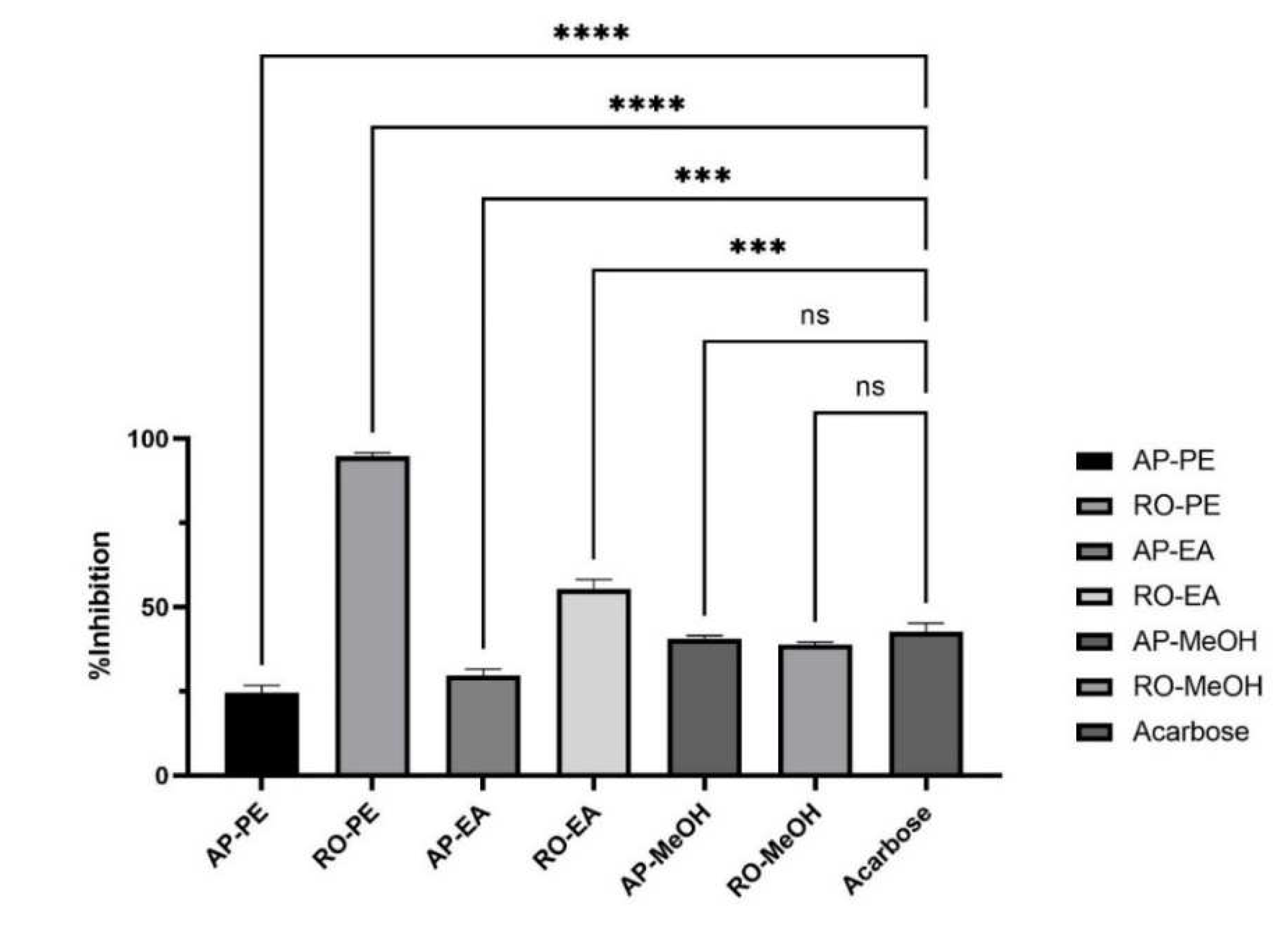
Figure 2.
IC50 plot for α-glucosidase inhibition of T. kotschyanum EO.
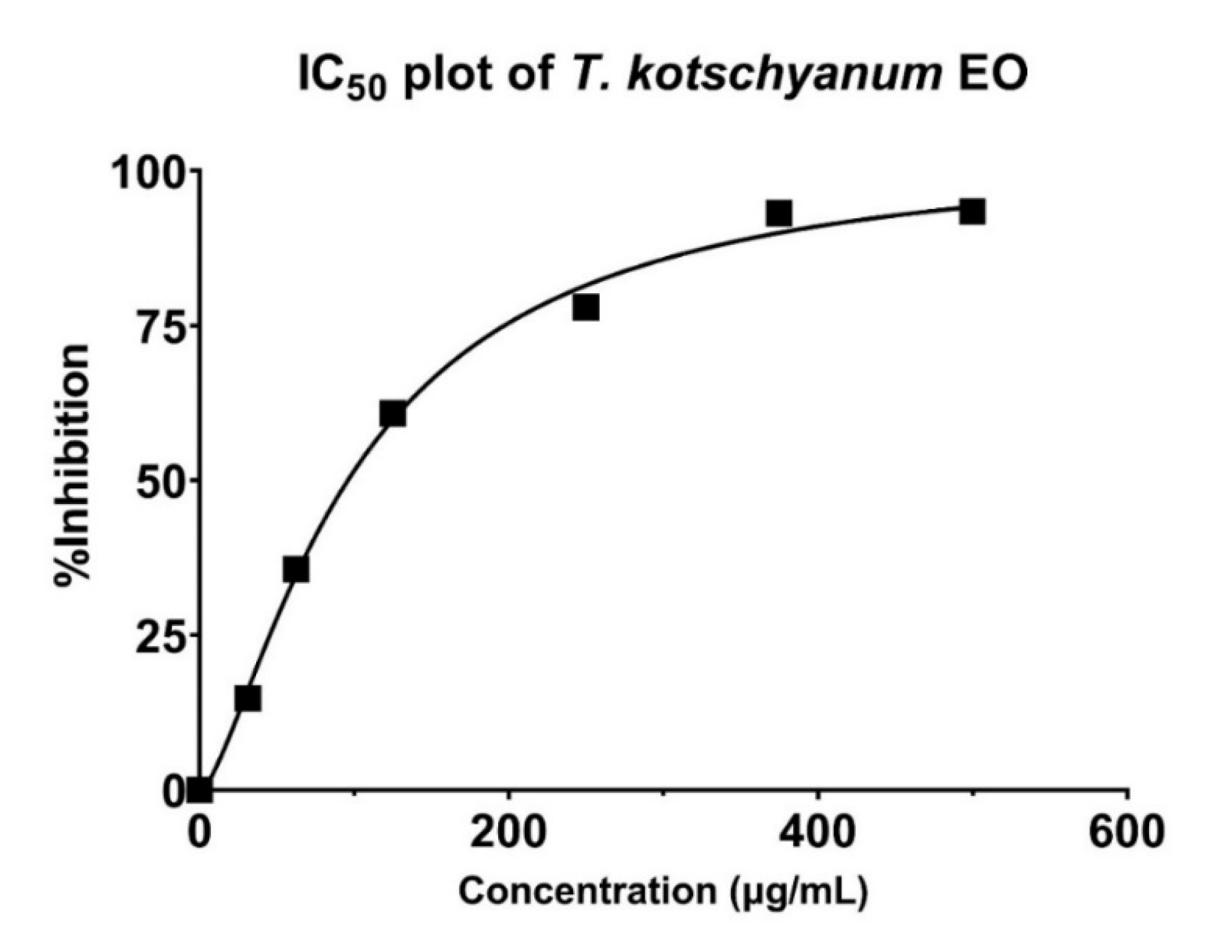

Table 1.
The composition of the essential oil of Teucrium kotschyanum Poech.
| Compound | RRI | % | IM |
| β-Pinene | 1118 | 0.4 | tR, MS |
| Sabinene | 1132 | 0.5 | tR, MS |
| Myrcene | 1174 | 0.1 | tR, MS |
| Limonene | 1203 | 1.2 | tR, MS |
| γ-Terpinene | 1255 | 0.2 | tR, MS |
| p-Cymene | 1280 | 0.3 | tR, MS |
| Terpinolene | 1290 | 0.2 | tR, MS |
| 1-Octen-3-ol | 1452 | 1.0 | MS |
| α-Cubebene | 1466 | 0.1 | MS |
| α-Copaene | 1497 | 1.2 | MS |
| α-Bourbonene | 1528 | 0.5 | MS |
| β-Bourbonene | 1535 | 6.6 | MS |
| Linalool | 1553 | 2.8 | tR, MS |
| β-Ylangene | 1589 | 0.1 | MS |
| β-Copaene | 1597 | 0.2 | MS |
| Terpinen-4-ol | 1611 | 0.9 | tR, MS |
| β-Caryophyllene | 1612 | 2.0 | tR, MS |
| Alloaromadendrene | 1661 | 3.0 | MS |
| epi-Zonarene | 1677 | 0.1 | MS |
| α-Humulene | 1687 | 2.2 | tR, MS |
| γ-Muurolene | 1704 | 1.2 | MS |
| α-Terpineol | 1706 | 1.1 | tR, MS |
| Bicyclosesquiphellandrene | 1722 | 1.3 | MS |
| Germacrene D | 1726 | 20.0 | MS |
| α-Muurolene | 1740 | 2.3 | MS |
| δ-Cadinene | 1773 | 5.9 | MS |
| γ-Cadinene | 1776 | 3.7 | MS |
| Methyl salicylate | 1798 | 0.3 | tR, MS |
| α-Cadinene | 1807 | 0.4 | MS |
| (E)-β-Damascenone | 1838 | 0.6 | MS |
| Calamenene | 1849 | 0.7 | MS |
| epi-Cubebol | 1900 | 0.4 | MS |
| α-Calacorene | 1941 | 0.1 | MS |
| Cubebol | 1957 | 0.7 | MS |
| 1-endo-Bourbonanol | 1968 | 0.1 | MS |
| γ-Calacorene | 1984 | 0.1 | MS |
| Caryophyllene oxide | 2008 | 0.8 | tR, MS |
| Salvial-4(14)-en-1-one | 2037 | 0.8 | MS |
| (E)-Nerolidol | 2050 | 0.2 | MS |
| Humulene epoxide-II | 2071 | 0.9 | MS |
| Cubenol | 2080 | 0.6 | MS |
| 1-epi-Cubenol | 2088 | 0.7 | MS |
| Viridiflorol | 2104 | 2.7 | MS |
| Salviadienol | 2130 | 0.7 | MS |
| Hexahydrofarnesyl acetone | 2131 | 0.9 | MS |
| Spathulenol | 2144 | 0.2 | MS |
| T-Cadinol | 2187 | 2.5 | MS |
| T-Muurolol | 2209 | 2.8 | MS |
| δ-Cadinol (=Torreyol) | 2219 | 1.0 | MS |
| α-Cadinol | 2255 | 6.9 | MS |
| Dodecanoic acid | 2503 | 1.3 | tR, MS |
| Manool | 2679 | 4.1 | MS |
| Hexadecanoic acid | 2931 | 6.6 | tR, MS |
| Total | 96.2 |
RRI: Relative retention indices calculated against n-alkanes; %: calculated from FID data; tr : Trace (< 0.1 %); IM: Identification method; tR: identification based on the retention times of genuine compounds on the HP Innowax column; MS: identified on the basis of computer matching of the mass spectra with those of the Wiley and MassFinder libraries and comparison with literature data.
Table 2.
Minimum inhibitory concentrations (µg/mL) of essential oil of Teucrium kotschyanum.
| Microorganisms | ||||||||||||
| Gram (+) bacteria |
Gram (-) bacteria | Fungi | ||||||||||
| EO / Reference standard | Sa | Se | Bc | Bs | Pa | St | Ca | Cg | Ck | Cp | Ct | Cu |
| Essential oil | 500 | 2000 | 250 | 500 | 1000 | 2000 | 1000 | 1000 | 1000 | 500 | 1000 | 125 |
| Ampicillin-Na | 16 | 0.5 | 1 | 1 | 32 | 0.5 | - | - | - | - | - | - |
| Chloramphenicol | 1 | 2 | 4 | 1 | 64 | 2 | - | - | - | - | - | - |
| Amphotericin | - | - | - | - | - | - | 1 | 1 | 1 | 0.5 | 1 | 1 |
| Ketoconazole | - | - | - | - | - | - | 0.06 | 0.06 | 1 | 0.06 | 0.06 | 0.12 |
Sa: Staphylococcus aureus, Se: Staphylococcus epidermidis, Bc: Bacillus cereus, Bs: Bacillus subtilis, Pa: Pseudomonas aeruginosa, St: Salmonella typhimurium, Ca: Candida albicans, Cg: Candida glabrata, Ck: Candida krusei, Cp: Candida parapsilosis, Ct: Candida tropicalis, Cu: Candida utilis,-: not tested.
Table 3.
α-glucosidase inhibitory activity of T. kotschyanum extracts and acarbose (positive control) at 125 µg/mL.
Table 3.
α-glucosidase inhibitory activity of T. kotschyanum extracts and acarbose (positive control) at 125 µg/mL.
| Sample | Inhibition% of α-glucosidase |
|---|---|
| AP-PE | 24.63 ± 2.12a |
| RO-PE | 94.79 ± 1.10b |
| AP-EA | 29.74 ± 1.90a |
| RO-EA | 55.49 ± 2.83c |
| AP-MeOH | 40.54 ± 0.96d |
| RO-MeOH | 38.97 ± 0.67d |
| Acarbose | 42.8 ± 2.50d |
Values are expressed as mean ± SEM (n=4). The values with different superscripts (a-d) shows significant difference (p < 0.05).
Disclaimer/Publisher’s Note: The statements, opinions and data contained in all publications are solely those of the individual author(s) and contributor(s) and not of MDPI and/or the editor(s). MDPI and/or the editor(s) disclaim responsibility for any injury to people or property resulting from any ideas, methods, instructions or products referred to in the content. |
© 2025 by the authors. Licensee MDPI, Basel, Switzerland. This article is an open access article distributed under the terms and conditions of the Creative Commons Attribution (CC BY) license (http://creativecommons.org/licenses/by/4.0/).
Copyright: This open access article is published under a Creative Commons CC BY 4.0 license, which permit the free download, distribution, and reuse, provided that the author and preprint are cited in any reuse.


