Preprint
Article

This version is not peer-reviewed.

Neuro Fuzzy System to Predict Timely Harvest in Stevia Crops

A peer-reviewed article of this preprint also exists.

Submitted:

07 March 2025

Posted:

10 March 2025

You are already at the latest version

Abstract

Agriculture is essential for food production and raw materials. A key aspect of this sector is harvest, the stage at which the commercial part of the plant is separated. Timely harvesting minimizes post-harvest losses, preserves product quality and optimizes production processes. Globally, a substantial amount of food is wasted, impacting food security and natural resources. To address this problem, an Adaptive Neuro-Fuzzy Inference System was developed to predict timely harvesting in crops. Stevia, a native plant from Brazil and Paraguay, with an annual production 100,000 to 200,000 tons and a market of 400 million dollars, is the focus of this study. The system considers soil pH, Brix Degrees and leaf colorimetry as inputs. The output is binary: 1 indicates timely harvest and 0 indicates no timely harvest. To assess its performance, Leave One Out Cross Validation was used, obtaining an r² of 0.99965 and a Residual Absolute Error of 0.00064305, demonstrating its accuracy and robustness. In addition, an interactive application that allows farmers to evaluate crop status and optimize decision making was developed.

Keywords: 
;  ;  ;  ;  ;  ;  

1. Introduction

Agriculture plays a crucial role in food production [1], it is an essential activity for the economy of many developing countries and is the core of export revenues and rural development. According to estimates from the Food and Agriculture Organization (FAO), agriculture continues to be the main source of income for approximately 70% of the rural population [2]. Besides, agriculture is essential for economic growth, contributing 4% to the world’s Gross Domestic Product (GDP), and in some developing nations it can account for more than 25% of GDP [3].
In Mexico, the agricultural sector plays a more significant role in the economy compared to the fishing, livestock and aquaculture sectors. In 2022, 5.8 million people were employed in preparing and harvesting land for cultivation [4]. Harvesting is the phase in which the useful parts of the plant are collected. This process consists of dividing the commercially valuable plant portion from the parent plant. This intervention is performed at the moment when the nutrients have reached their full development and the edible fractions of the crops have acquired the appropriate degree of maturity for subsequent treatments [5,6].
Timely Harvest (TH) is imperative to avoid losses, obtain superior crop quality, and ensure timeliness in the production process [7,8,9,10,11]. This is particularly salient given that approximately one third of the food produced worldwide is wasted. Timely harvesting is crucial to enhance food and nutritional security. Even economic deficits resulting from inadequate harvesting generate significant losses [3,12]. Harvesting directly influences the productive capacity of crops. The implementation of optimized and timely harvesting procedures ensures that crops are harvested at their optimum maturity and nutritional value, maximizing both the quantity and quality of the product, while preserving its freshness and long-term storage capacity [13,14]. Failure to harvest at the right time, either prematurely or late, has several disadvantages. In the case of early harvest, crops may not reach their optimal size, shape, or weight due to incomplete development. On the other hand, late harvesting exposes crops to a higher risk of fungal spoilage, especially when they are overripe. The flavor of the product may also deteriorate with a significant reduction in acidity and taste quality. In addition, late harvest increases the premature drop in fruit, resulting in a decrease of the final production [13]. Knowledge of the harvest method and timing are crucial parameters for selecting optimal harvesting and crop management practices. These factors guarantee and preserve the internal and external quality of agricultural products [15].
The appropriate time to harvest crops depends on the type of crop and its degree of maturity. Usually, this is determined by monitoring factors such as crop appearance, seed color, moisture content, and time since sowing [16,17]. The most common practices for evaluating the optimum stage of maturity and the right harvest time are based on different parameters. Among the different approaches used for this purpose are observation, texture, aroma, biochemical and morphological changes of crops [13], as well as the expert judgment of producers and farmers.
Given that some agricultural procedures, such as determining the right harvest time, are still carried out using rudimentary methods, technology provides tools to increase productivity, diversify production, reduce environmental impact, and meet the demandsof national and international markets [4]. A specific focus of technology is Precision Agriculture (PA). PA uses specialized tools to collect, process, and analyze different sources of information to improve agricultural production management. Its objective is to optimize farming operations, increase crop quality, and minimize the use of supplies. At the same time, it reduces environmental damage and promotes sustainability in agriculture, thereby increasing the overall profitability of the sector [18,19]. Technological advances in PA, particularly in areas such as Artificial Intelligence (AI), have facilitated the development and implementation of technologies for the management of plants, pests, and diseases [20].
In recent years, AI has been widely used in agriculture to harvest healthiest crops, monitor soil conditions and development, analyze data for farmers, and improve food supply chain management. AI-based solutions facilitate farmers to maximize production with fewer resources, enhance crop quality, and reduce the time and cost needed of getting products to market [21,22].
AI has made significant progress with the development of systems and applications in various fields. An emerging approach within AI is Hybrid AI (HAI), which integrates the strengths of different AI techniques to more efficiently solve complex real-world problems [23,24]. Furthermore, HAI has led to a new computing technology known as "Soft Computing", which includes a set of techniques that are characterized by their ability to handle imprecise or uncertain information, such as that commonly encountered in real-world. An example of these techniques is Neuro-Fuzzy Systems (NFS) [25].
NFS combine the learning capabilities of Artificial Neural Networks (ANNs) with the reasoning capabilties of Fuzzy Inference Systems (FIS) [25,26]. Systems that use both approaches have been developed, for example: FALCON (Fuzzy Adaptive Logic Control Network), NEFCON (Neufo Fuzzy Control), NEFCLASS (Neuro Fuzzy Classification) yANFIS (Adaptive Neuro Fuzzy Inference System).
ANFIS is a system that adapts the rule base of a Takagi Sugeno Kang (TSK) type FIS. It uses two optimization methods for its training: back-propagation and least mean squares. These two methods adjust the parameters [27], such as types and number of Membership Functions (MF).
The choice of this architecture in combination with the grid partitioning algorithm is based on its remarkable performance in systems with a number of independent variables equal to or less than five [28], which is a feature of this study. ANFIS has been widelyused in research in various fields, providing reliable results. Its application has been extended to various sectors, for example, the medical area [29], engineering and industry [30,31,32,33,34,35,36], environment [37,38], among others, and has contributed significantly to the advancement and improvement of these fields. In addition, it has driven technological progress, optimizing and facilitating key processes in each area of application. Various NFS architectures, including ANFIS, have been used to optimize the agricultural field and address different problems, such as predicting levels of critical variables in crops [39,40,41,42,43], monitoring the health and quality of agricultural soils [44,45,46,47,48,49], predicting drought [50], and assessing crop yields [51,52,53]. These approaches have provided important benefits in agriculture by minimizing material, economic, time, resource, and labor losses. They also promote sustainability by creating tools that allow responsible use of resources, avoiding the environmental impacts of waste, pesticide use, fertilizers, and most importantly, the loss of crops. Clearly, NFS is an advanced tool capable of generating multiple benefits in crop optimization and management.
A crop of great importance today and a member of the Asteraceae family is Stevia Rebaudiana; a plant native to Brazil and Paraguay and known since ancient times. Harvesting of this crop occurs between 75 and 90 days after sowing [54]; it is recognized as a rich source of protein, fiber, minerals, vitamins, and phenolic acids [55]. Stevia leaves contain essential elements for the human body; in addition, its sweetening capacity exceeds 300 to 450 times that of common sugar. A 2.62 ft tall plant can produce approximately 70 grams of dehydrated Stevia [56].
Global production of Stevia is estimated between 100,000 and 200,000 tons per year, representing a 400 million dollars market, making it the second most consumed sweetener in the world. China is the market leader, producing about 75% of the total. Paraguay contributes 8% of production. Other major Stevia producing countries include Brazil, Colombia and Kenya. In recent years, its cultivation has expanded to other countries, such as Vietnam and Mexico [56].
The introduction of Stevia in Mexico was carried out by the Instituto Nacional de Investigaciones Forestales, Agrícolas y Pecuarias (INIFAP), with the purpose of evaluating the viability of its adaptation to local conditions. Stevia production began in 2010, and due to the growing interest in increasing its volume, the Servicio de Información Agroalimentaria y Pesquera (SIAP) reported that significant production figures started to be recorded at the national level in 2. In Mexico, Colima is one of the states where Stevia was first cultivated, a region of the country with favorable agroclimatic conditions for its development [56,57,58].
To ensure the quality of the crop and the continuity of production, it is important to understand the factors involved in Stevia conservation. Two key parameters that significantly influence the health of a plant are pH and Brix Degrees (BD) [59]; in addition, the appearance of the plant plays a critical role in identifying physical changes such as alterations in leaf texture, changes in tonality and the presence of lesions, which are important indicators for the detection of disease. All three indicators are used to assess the maturity of the crop and whether or not it is time to harvest.
On the one hand, soil pH is an indicator of acidity or alkalinity levels, and it also reflects the activity of hydrogen ions in the soil solution. Most plants thrive when the pH is slightly acidic to neutral, that is, between 6 and 7, because this is where most nutrients are available. Soil pH is a key element in soil properties and a critical variable that affects both crop yield, nutrient release and microbial activity. Excessively acidic (<5) or alkaline (>7) pH can significantly limit the productivity of agricultural land [60,61,62]. Figure 1 shows the scale used to measure soil pH and the appropiate levels for some crops.
BD are also a key indicator of crop quality because they measure soluble solids, which reflect the potential sweetness level of the product. This factor is relevant throughout the value chain because it directly influences the assessment of the quality of agricultural products. Soluble solids levels are related to the maturity of the crop, with the sugar content being one of the main indicators of development. To measure BD, the most used instrument is the refractometer, which uses physical properties such as specific gravity and density of the product to provide a measurement [63,64].
Finally, the detection of physical changes such as color in a crop is a fundamental aspect to evaluate the optimal state and detect anomalies including nutrient deficiencies. Deficiency of nutrients such as iron, magnesium, nitrogen (N), phosphorus (P) and potassium (K), (the last three, known as NPK), causes imbalances in the crop, which is reflected in changes in leaf color, indicating plant health problems [65,66,67,68].
To address the challenges faced by the agricultural sector, due to TH deficiency, particularly in Stevia crops, a predictive system based on an NFS with ANFIS architecture is proposed. In this approach, soil pH, plant BD and leaf colorimetry are considered as independent variables, since they have a significant influence on nutrient availability and, therefore, on crop quality. On the other hand, the dependent variable is TH. The central hypothesis is that an ANFIS system trained with pH, BD and crop leaf colorimetry data, and evaluating its efficiency using the Absolute Residual (AR) metric and the Leave One Out Cross-Validation (LOOCV) technique, can accurately determine whether a crop is ready for harvesting or not, thus contributing to improve the efficiency and quality of Stevia production.
The objective of predicting TH in Stevia crops is to reduce economic losses due to lack of accuracy in determining the optimal time to harvest, minimize the waste of agricultural resources and improve crop quality. Harvesting at optimal maturity guarantees a higher concentration of desirable compounds and preserves the organoleptic and commercial properties of the product.
In addition, by optimizing harvesting times more sustainable agriculture is promoted by reducing unnecessary use of supplies such as fertilizer and water, as well as the generation of waste. This approach not only improves production efficiency, but also contributes to soil conservation and the responsible use of natural resources, ensuring crops of higher quality and commercial value.

2. Materials and Methods

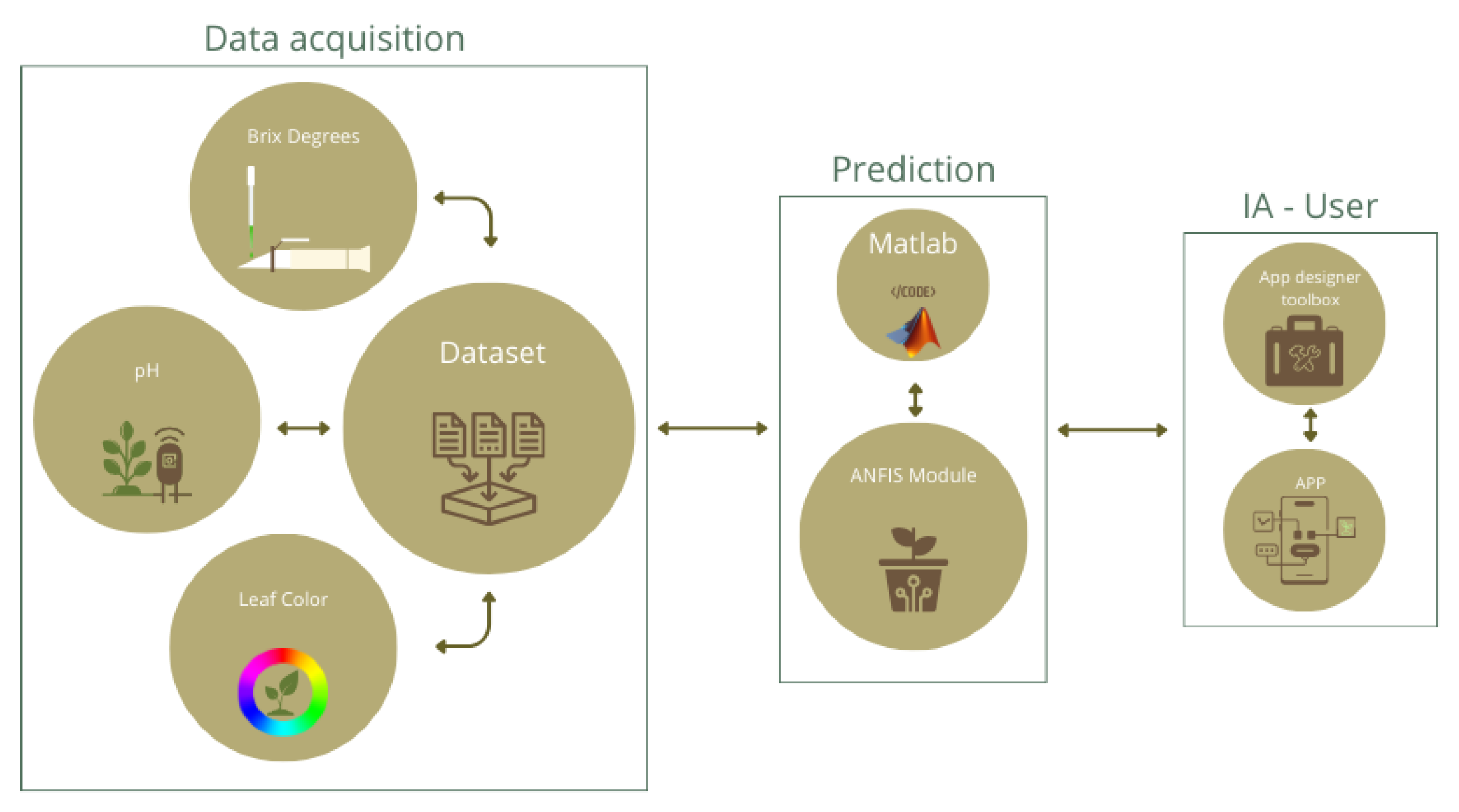
The proposed solution (Figure 2) considers the implementation of an NFS using the ANFIS architecture in combination with the grid partition method. As indicated in Section 1, ANFIS is particularly effective in environments where the number of independent variables is equal to or less than 5. In this study, three independent variables are considered: soil pH, plant BD, and plant leaf colorimetry. The NFS receives the values corresponding to these three variables and, by processing them through the fuzzy rules and the adaptive inference of ANFIS, evaluates the current crop conditions and generates a binary-valued prediction about the dependent variable, namely, whether it is TH (1) or not TH (0).

2.1. Study Area

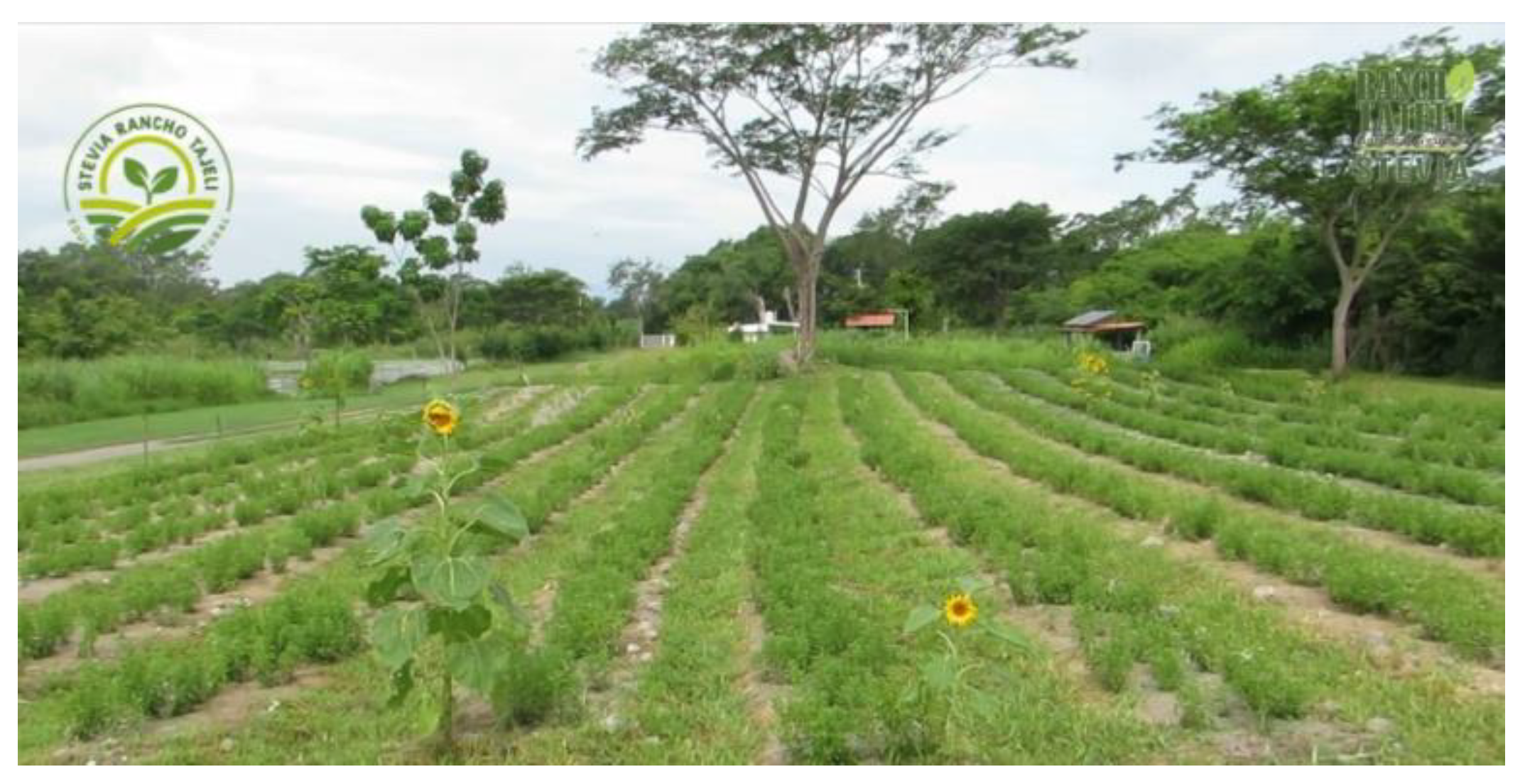
Rancho Tajeli (Figure 3) is a Mexican family farm located in the town of ’El Trapiche’ in the south of the municipality of Cuauhtémoc in the state of Colima, Mexico. This family farm is dedicated to the production of various organic products, but primarily to the cultivation of Stevia.
This research involves the study and recording of data from a sample of four rows of the crop, representing to approximately 150 plants, selected from the total population of the crop. This approach allows obtaining representative information for TH analysis and modeling. Field data were collected periodically, focusing more on days close to the cutting dates to know the parameters of the candidate crops to be harvested, approximately 80-90 days after planting.

2.2. Dataset

The data set used consists of 150 pieces of data, which are:
  • Values obtained after subjecting crop images to processing using Binary Masks (BM) to obtain color percentages in Hue, Saturation, Value (HSV) format and then performing cluster classification using k-means algorithm as a grouping method.
  • pH values collected from soil in the study area.
  • BD values obtained from leaf samples taken from each Stevia plant.

2.2.1. Image Processing for Leaf Colorimetry

The appearance of a crop’s leaves is an indicator of plant health. NPK deficiencies are directly associated with a reduction in chlorophyll content, which affects both coloration and overall leaf condition [70].
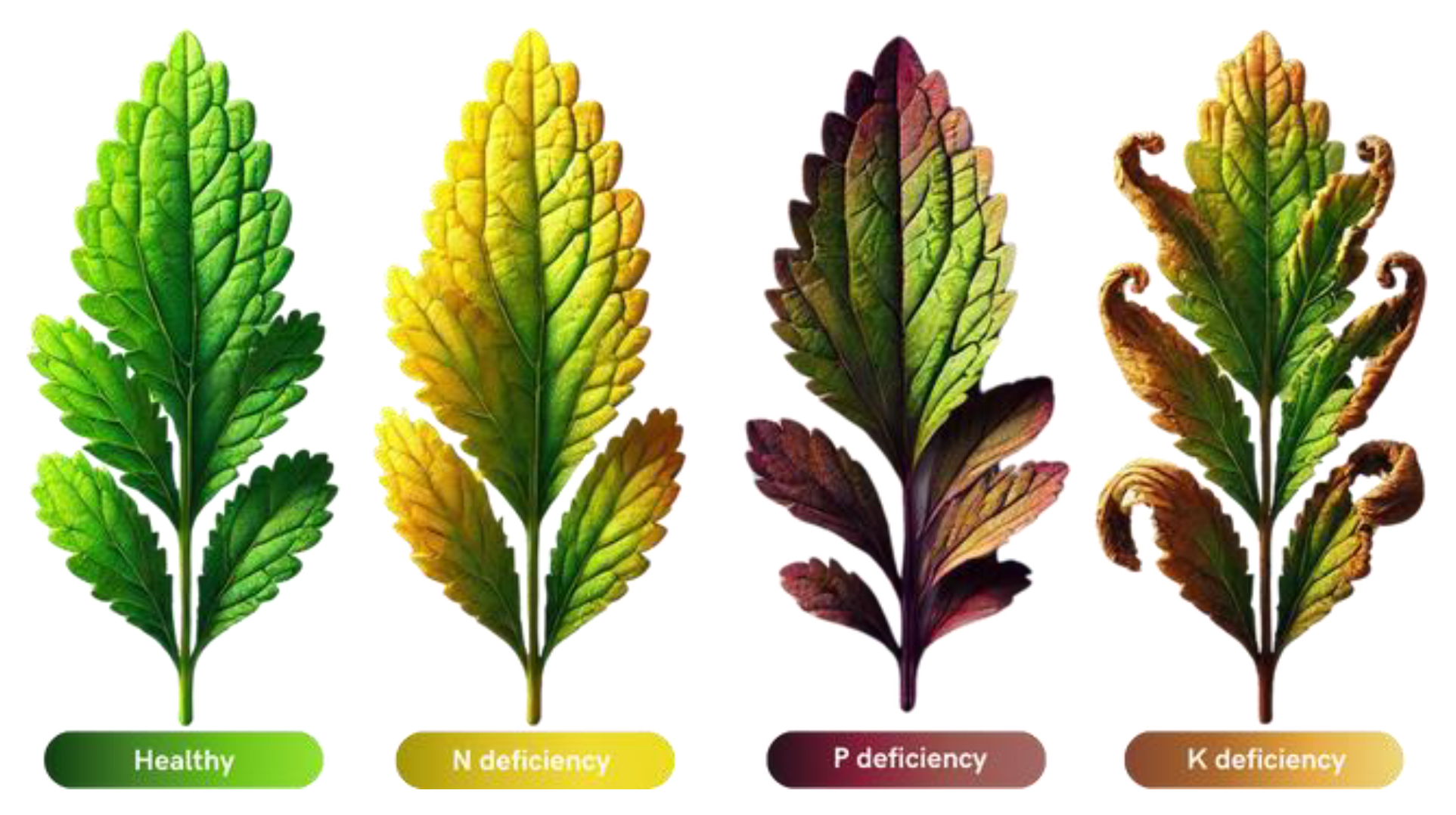
Figure 4 shows that specific nutrient deficiencies can be identified by leaf color: a yellow shade indicates N deficiency, purple or red shades indicate P deficiency, while a brown shade reflects K deficiency. In contrast, a completely green leaf in the early and late stages of growth indicates an adequate balance of the three macronutrients [70].
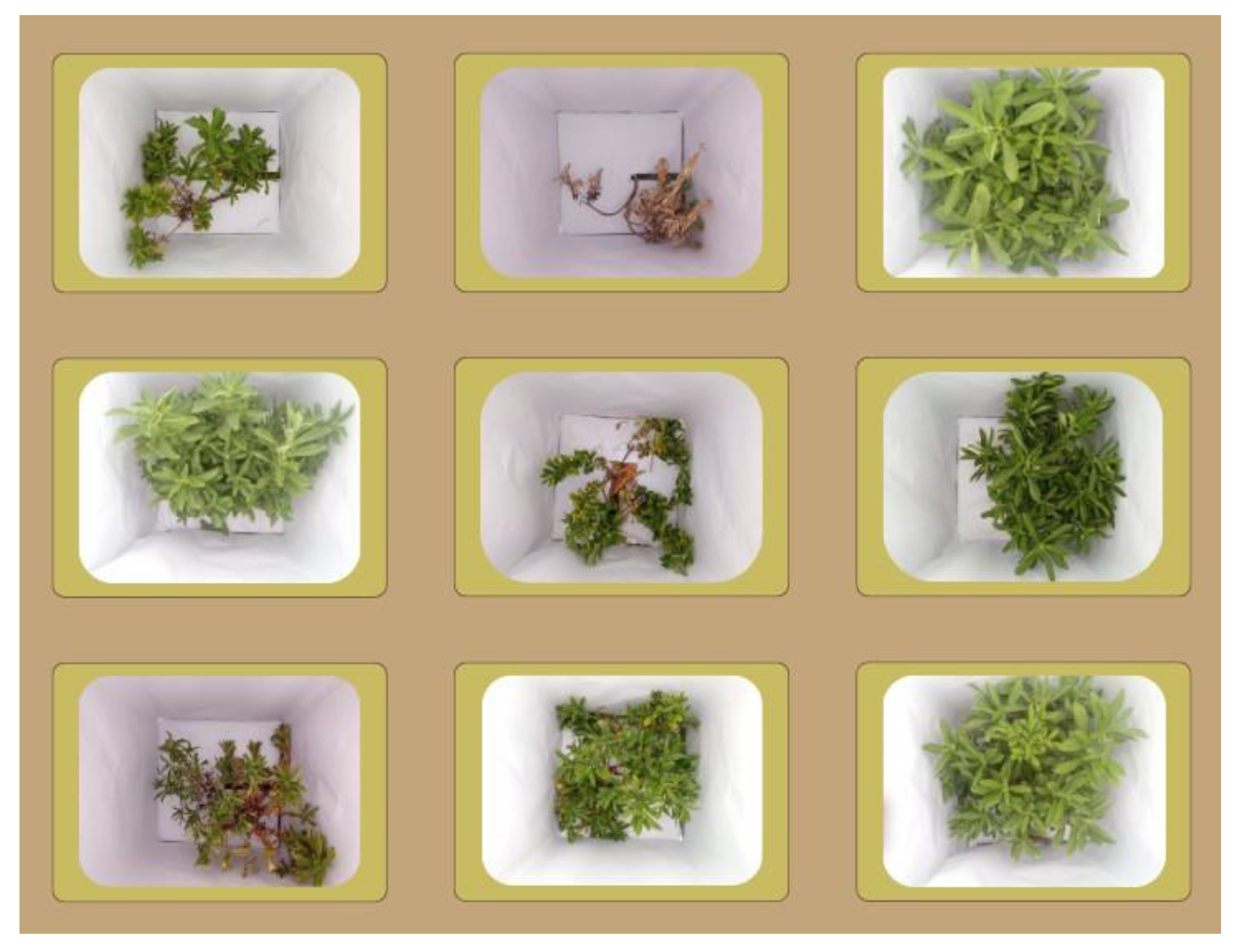
The images were processed as a way to obtain a numerical value that could be processed by the NFS. Photos of Stevia plants were taken in a controlled environment, which was based on an enclosed space with a white background and the same lighting in each of the photographs. The images show that the plants are predominantly green, but there are also shades of brown and yellow, so in this case the plants are not affected by P deficiency. Figure 5 shows a section of the images from the dataset used.
The HSV color model was used to analyze the color distribution in each image:
  • H (Hue): Specifies the hue of the color (0° to 360° mapped from [0,1] in MATLAB).
  • S (Saturation): Indicates color purity [0 to 1].
  • V (Value): Indicates the brightness or intensity [0 to 1].
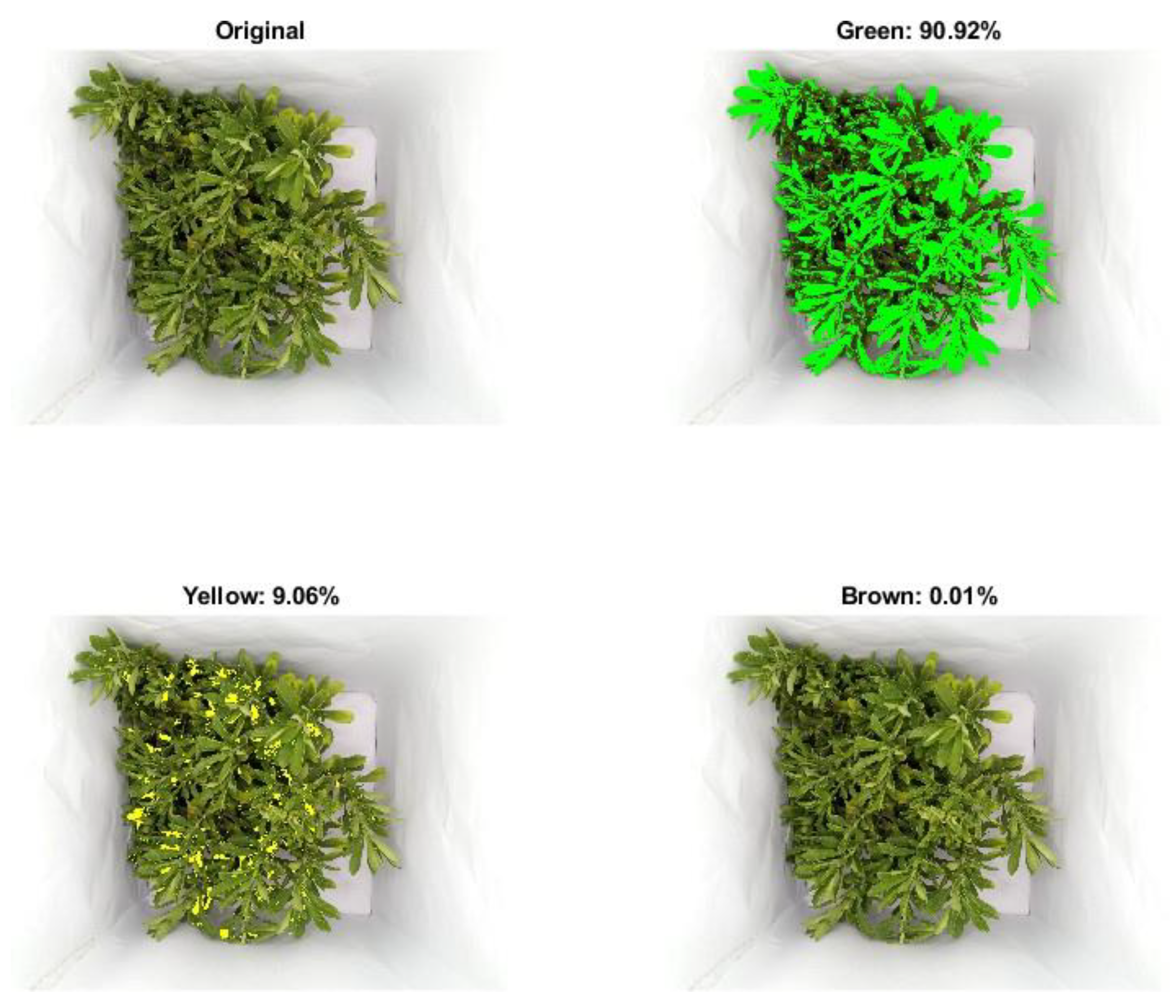
Each image is converted from the Red, Green, Blue (RGB) model to HSV, which classifies image pixels into three main categories: green, yellow, and brown, which are the predominant colors of crop leaves; moreover, in HSV, hue is independent of brightness and saturation, which facilitates segmentation based solely on color. For each color range, BMs are generated, a BM is a matrix of the same size as the image, different works have used the BM [71,72] and the HSV color model [73,74] for processing, obtaining satisfactory and accurate results.
The BM identifies the pixels that meet the criteria defined for each color, also, the percentage of pixels corresponding to each hue is calculated to normalize the values according to the total number of classified pixels, thus the total sum of the percentage of colors used is 100%. Figure 6 shows the BM applied to one of the images of the dataset.
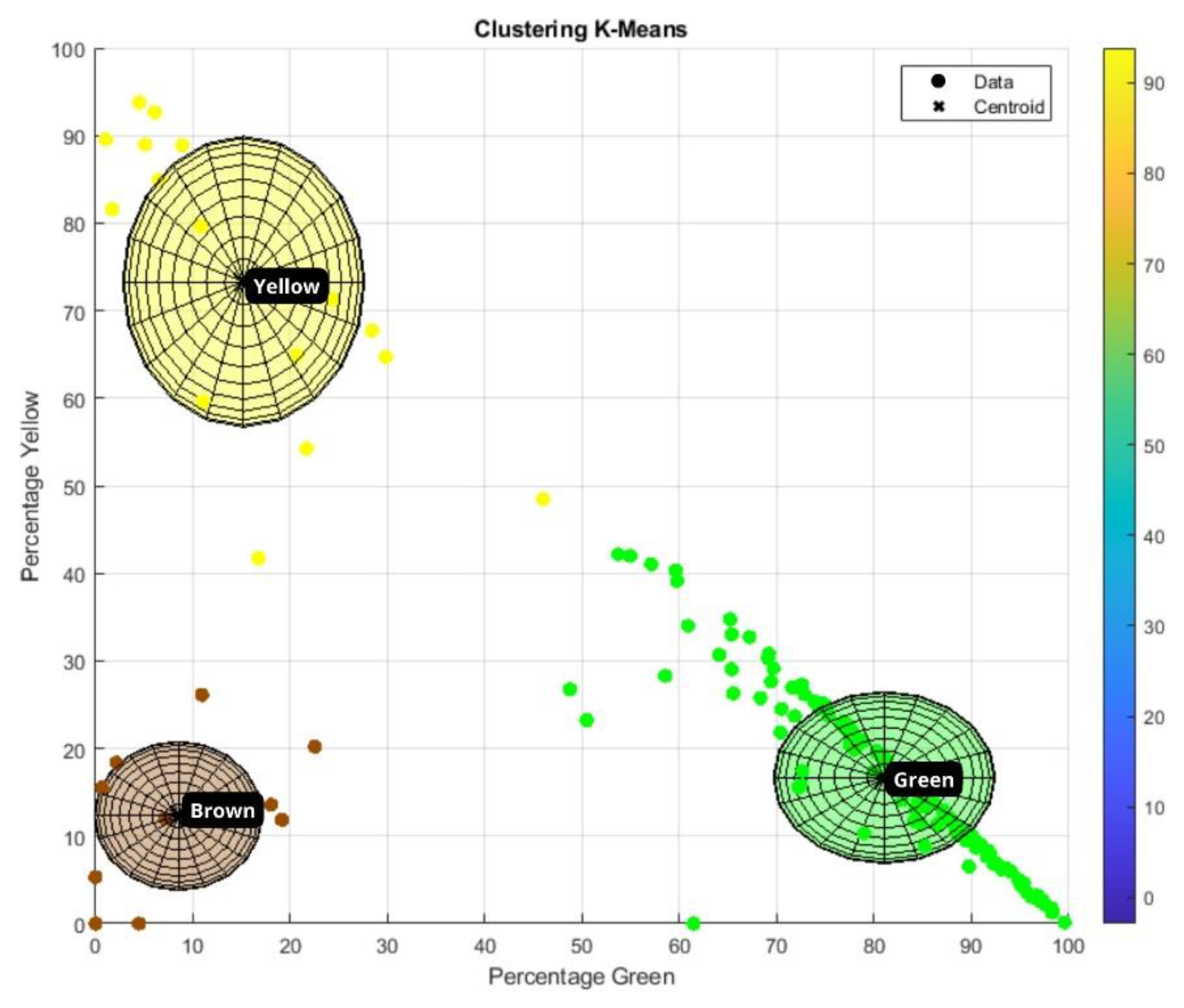
After processing the images with BMs and knowing the percentage of each color, the k-means algorithm was applied, which is an unsupervised learning method used to solve grouping or clustering problems. The main objective of this algorithm is to divide a data set into ’k’ groups or clusters based on the similarity of the data. The first step performed in k-means is to choose ’k’ initial centroids, then, for each point in the dataset, the Euclidean distance with respect to each of the centroids is calculated, and the point (data) is assigned to the cluster whose centroid is closest. Figure 7 shows a graphical representation of how the algorithm works. K-means has advantages such as simplicity, speed, and scalability, and has been used in several works such as [75,76,77,78,79]. K-means works on the dataset with percentages of each color (green, yellow, and brown) per image and, depending on the values, assigns each image to the cluster of the predominant color. Three clusters were established, one corresponding to each color, defined as follows (Table 1):
Table 2 presents an example of how images were grouped after processing, reflecting the overall structure of the complete data set.
Figure 7 shows the classification of each of the images after processing and assignment to the corresponding cluster.

2.2.2. pH

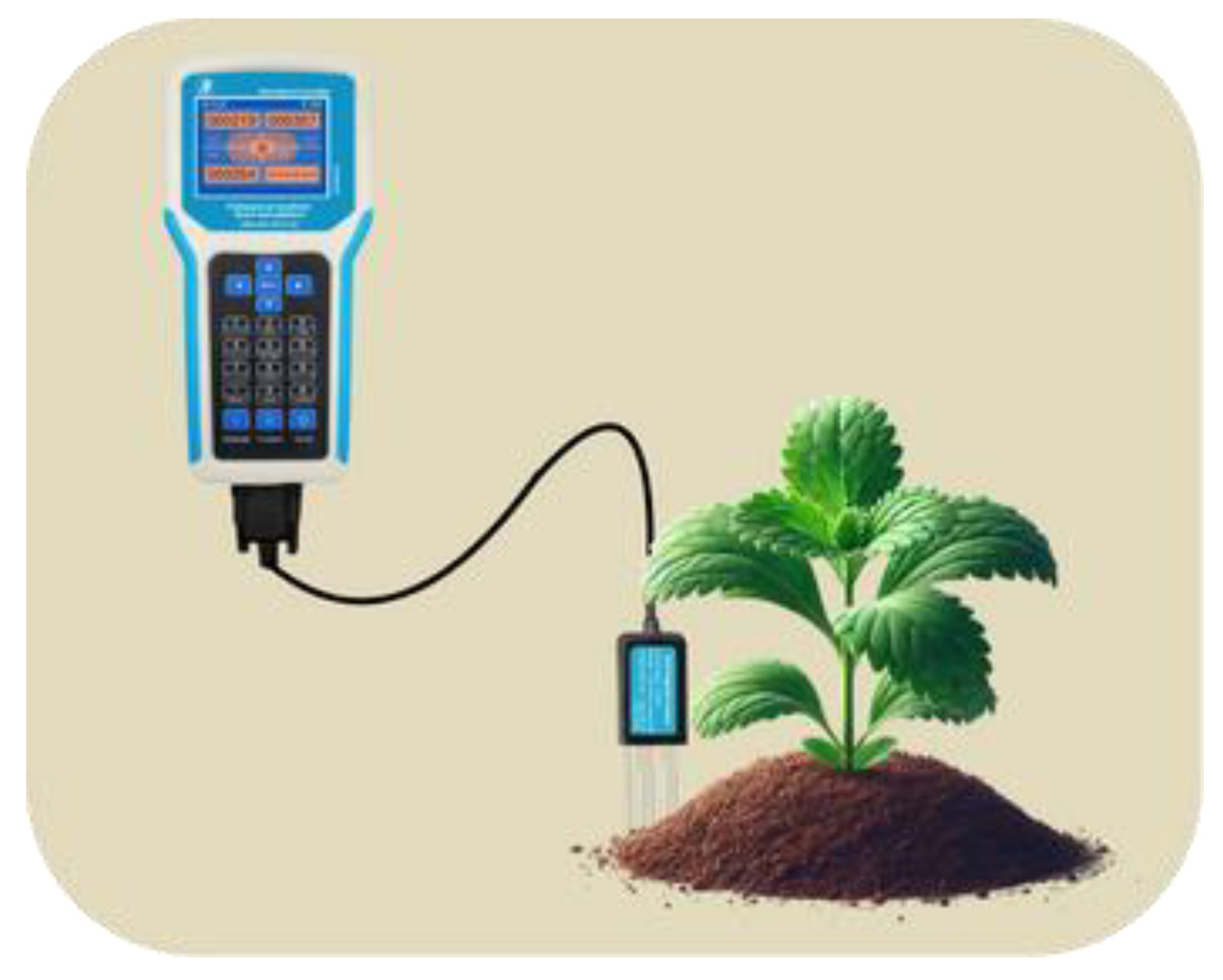
The JXBS-3001-SCY-PT portable soil detector (Figure 8), which is designed to measure multiple soil parameters, was used to collect pH data for each of the plants. The instrument is powered by a 3.7 V power supply consumed from a lithium battery and uses the Modbus Communication Protocol over RS [80]. For data acquisition, the sensor was placed in the plant area for approximately 3 seconds.

2.2.3. Brix Degrees

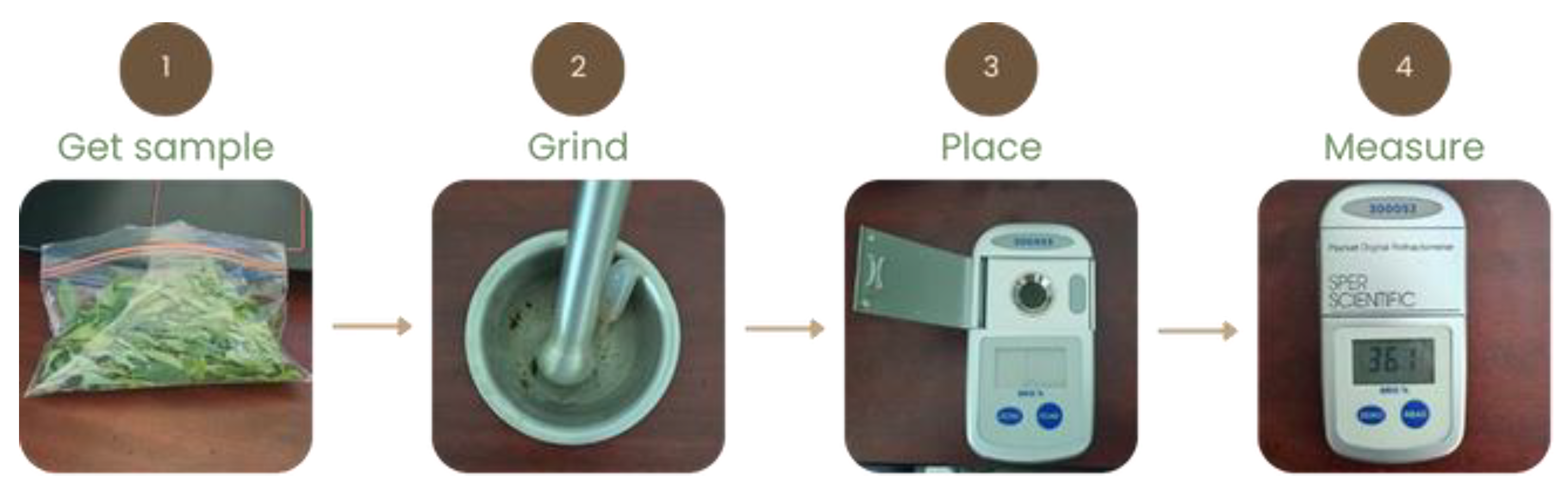
A digital refractometer model 300053 Sper Scientific ATC 0-95%, was used to obtain the BD data. This digital refractometer is a compact and lightweight instrument designed to accurately measure the concentration of solutions in BD, indicating the sugar content in liquids. In addition, it implements an Automatic Temperature Compensation (ATC), which automatically adjusts the readings according to the sample temperature, ensuring accurate results; its measurement range is 0 to 95% Brix, resolution of 0.1% Brix and accuracy of ±0.2% Brix; the minimum sample volume required is 1 ml [81,82].
The procedure for the extraction of the BD is shown in Figure:
Figure 9. BD process.
Preprints 151684 g009

2.3. ANFIS Modeling

As mentioned in Section 1, the NFS ANFIS is a hybrid model that combines the capabilities of ANNs and FIS. This approach allows the modeling of complex non-linear relationships between inputs and outputs, providing an interpretation based on linguistic rules. This section describes the modeling performed to predict TH, obtaining as a result a binary output, where the interpretation is 1 for TH and 0 for Not TH. The proposed model integrates the flexibility of FIS to handle uncertainty and the learning ability of ANNs to optimize parameters, resulting in an accurate and adaptive model.

2.3.1. Artificial Neuronal Network (ANN)
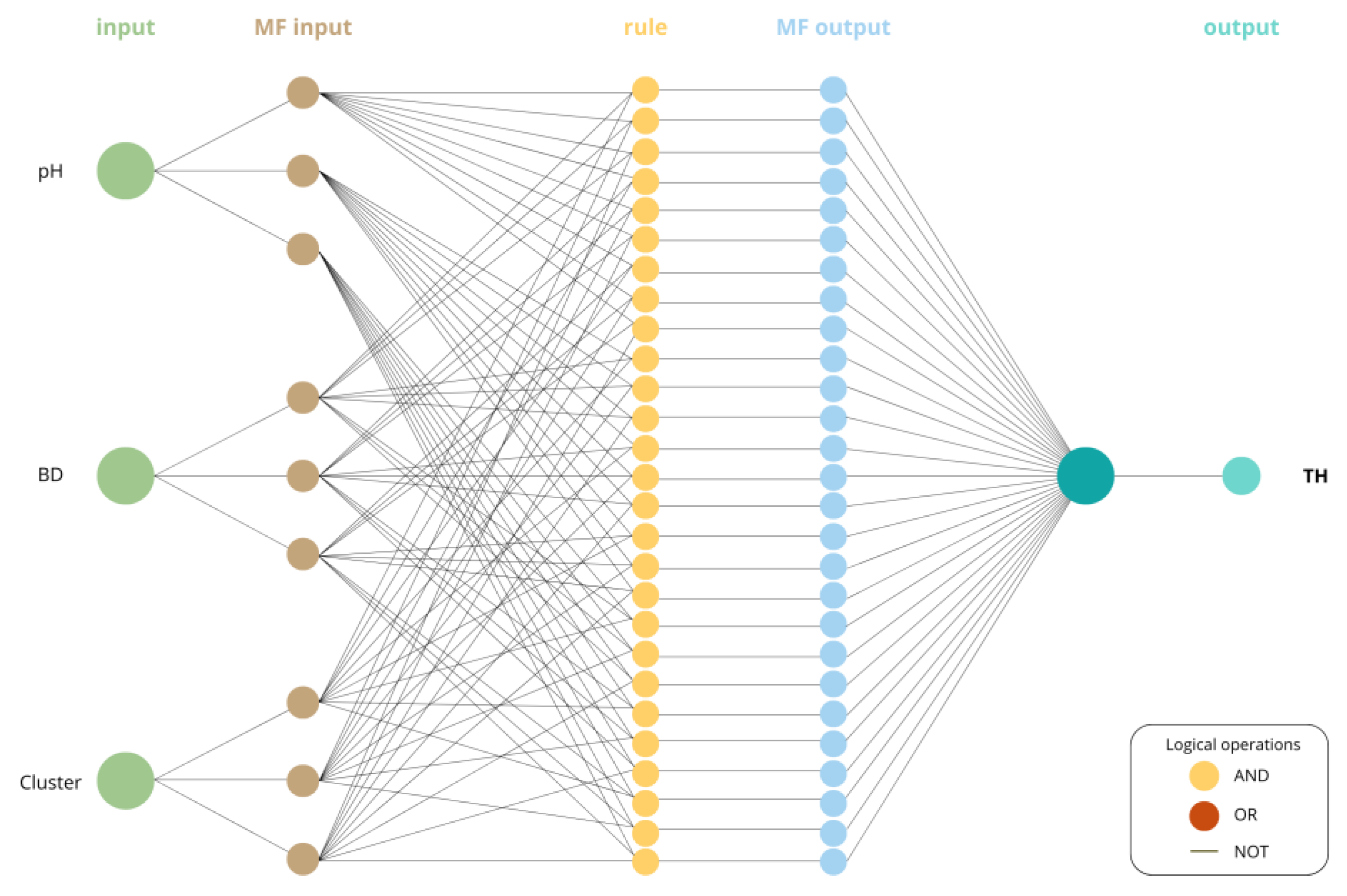
In an NFS with an ANFIS architecture, the input data first passes through an ANN, which acts as an optimizer responsible for adjusting the parameters of the TSK-type FIS. At this stage, the model undergoes ’Adaptive Learning’ where the ANN adjusts the weights and parameters of the MFs and the FIS rules. Although ANN is very efficient in finding optimal configurations, its behavior resembles a ’black box’ because its internal parameter settings are not easily interpretable or modifiable. The ANFIS used in this study has the following ANN structure:
Figure 10. Artificial Neuronal Network used.
Preprints 151684 g010

2.3.2. Fuzzy Inference System (FIS)

Once the ANN has adjusted the parameters, the FIS uses them to make inferencebased on linguistic rules. Unlike ANN, FIS provides direct and manageable control over the model. The FIS uses the following parameters:
  • Inputs:
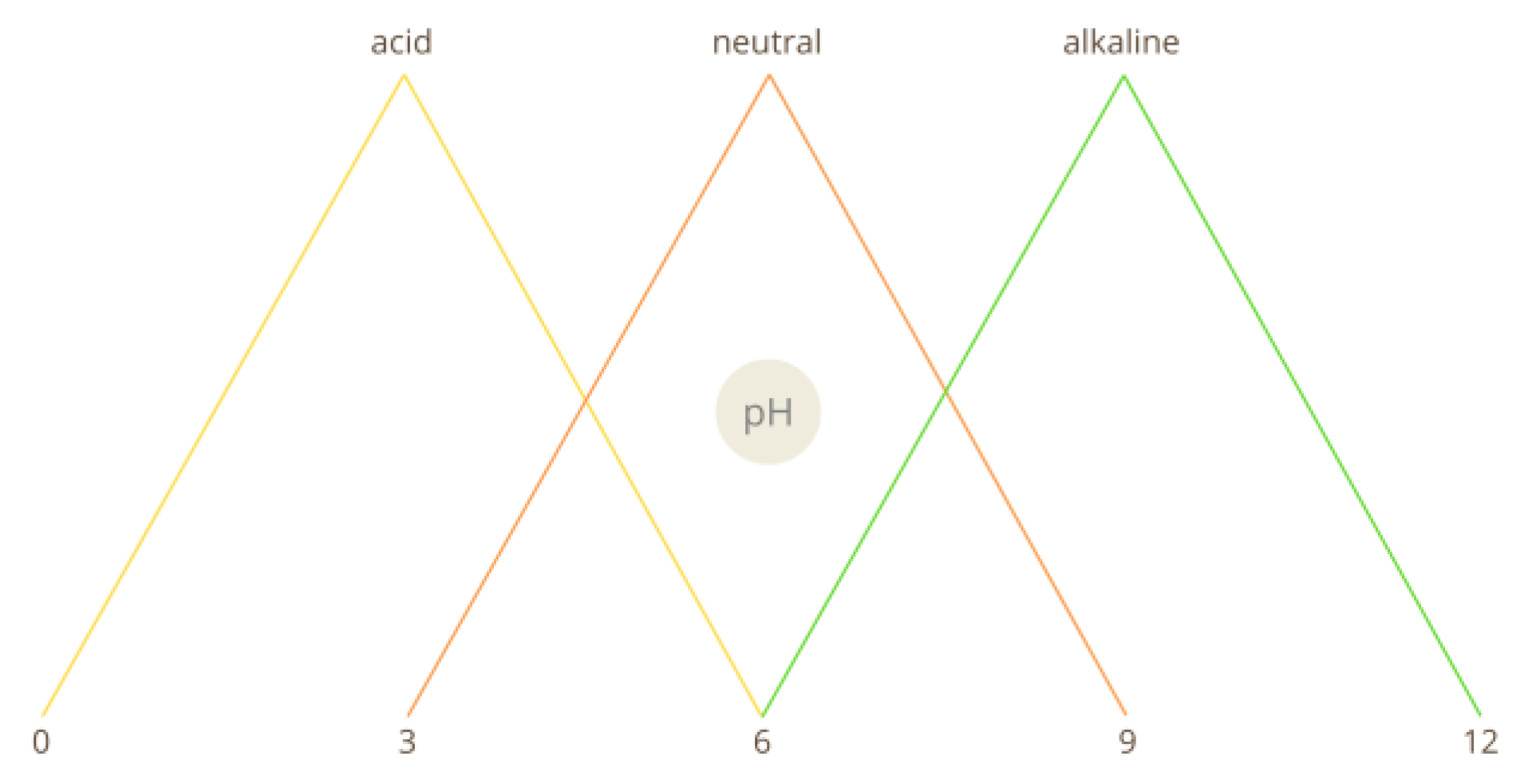
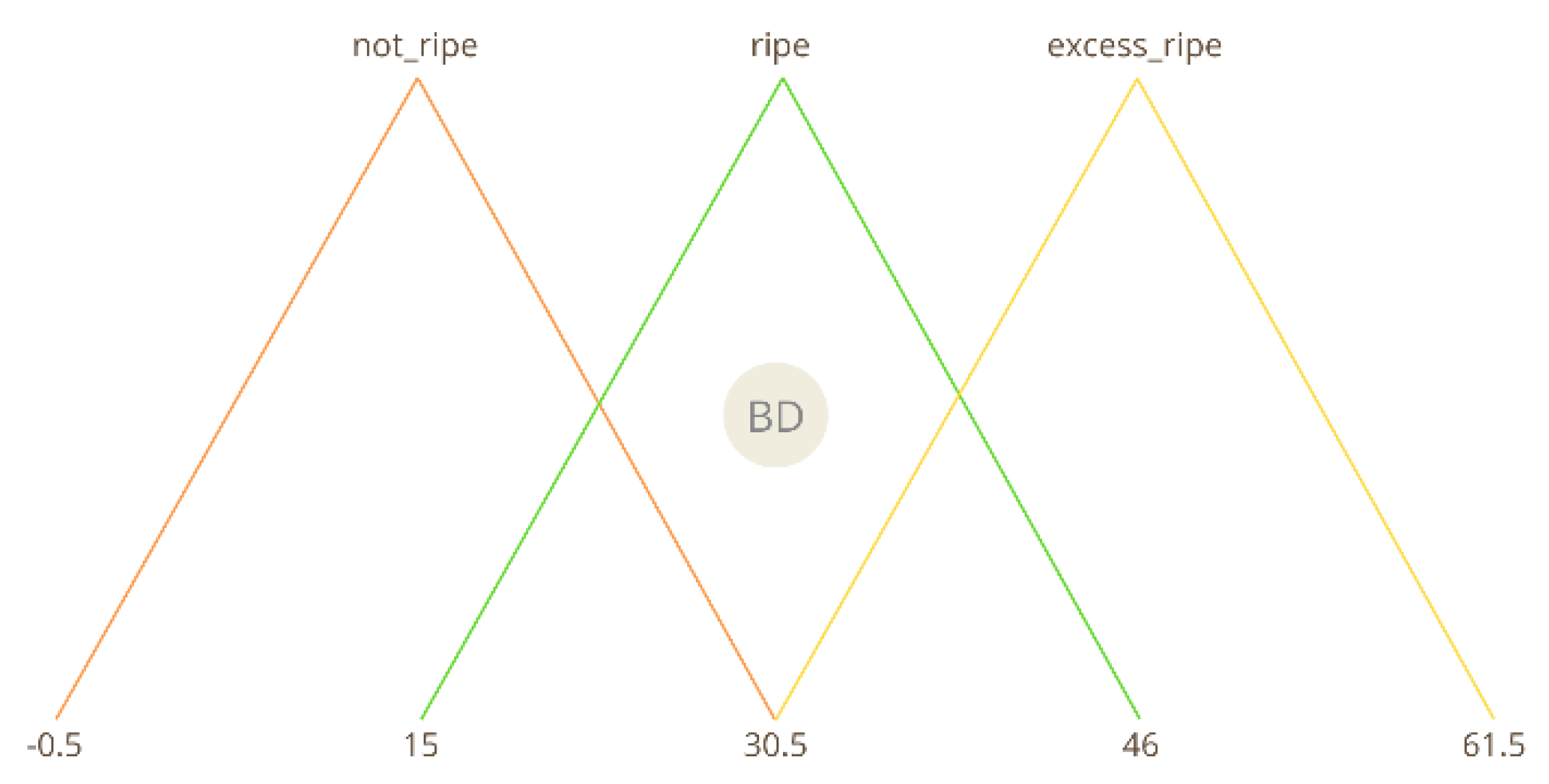
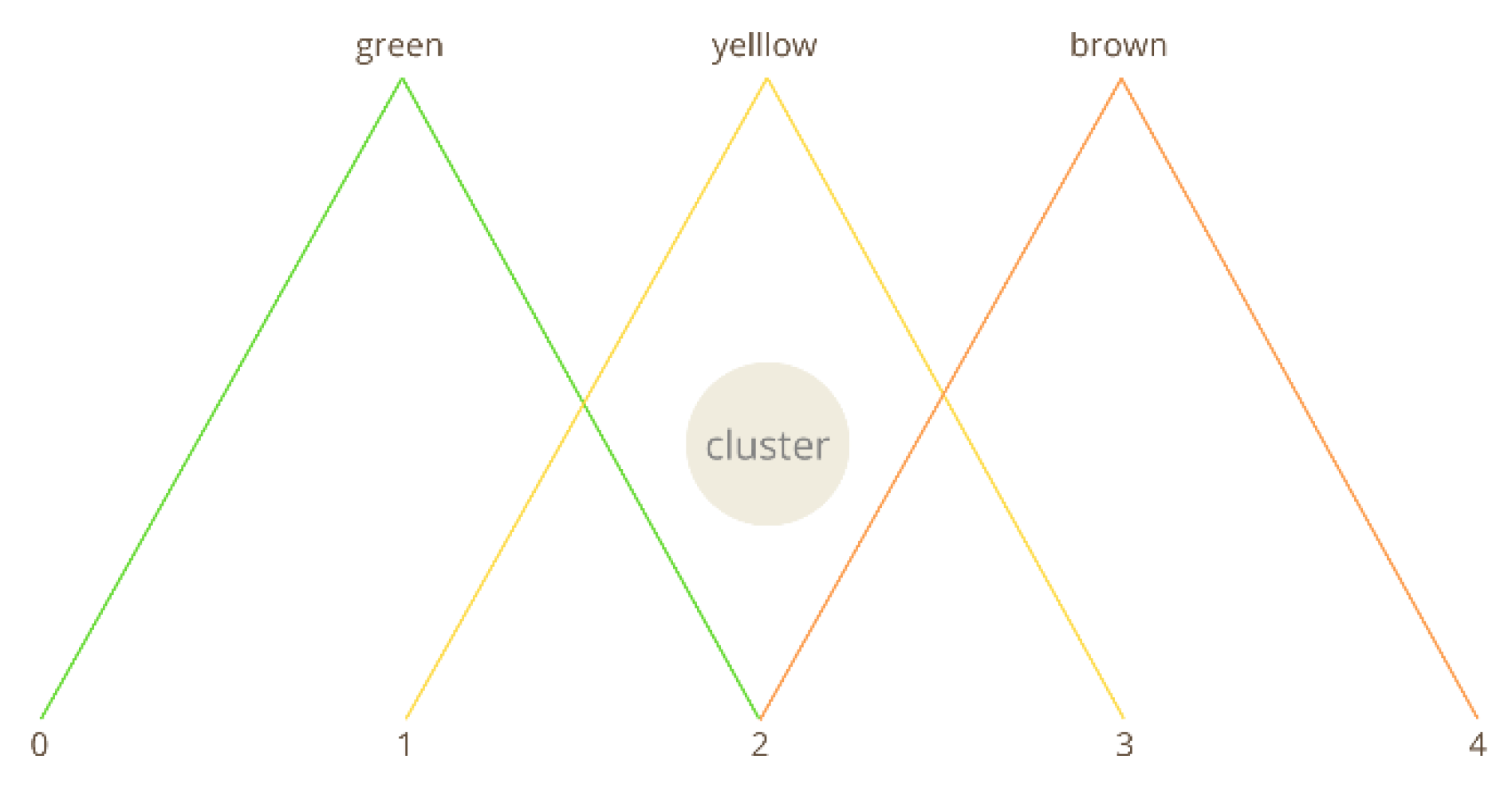
The ranges assigned to the FM of the inputs were defined based on the study data, considering the following parameters: for the BD variable, a 2-year history was taken as a reference based on the harvest records of Rancho Tajeli farmers. In this context, the minimum BD recorded for a harvest was 22 (Harvest 1: April 19, 2023) and the maximum value was 36 (Harvest 6: September 26, 2024). The pH ranges were determined using the scale shown in Figure 1 as a reference. Finally, for the colorimetry of the leaves, the variable ’Cluster’ was defined, due to the grouping made after the processing of the images. For this variable, ranges from 1 to 3 were used, according to the clusters previously established for each color. Each of the independent variables has a total of 3 triangular MFs. The MFs parameters are described in Table 3, and shown in Figure 11, Figure 12 and Figure 13.
2.
Output:
The output of the TSK type FIS is of constant type, so each rule has a default constant value as output. In this case, the model generates 27 constant functions to cover each Fuzzy Rule (FR). Each constant function is applied to a specific FM combination of the inputs. The model has 27 FMs for the output because ANFIS generates the rules in a TSK system based on the number of FMs assigned to each input, which is 3 FMs for each independent variable. This model uses a range of 0 - 1 to set the output variable, where 0 indicates ’Not Harvest’ and 1 ’Harvest’, as shown in Table 4.
3.
Fuzzy Rules (FR):
In a FIS, FR facilitate qualitative reasoning by establishing connections between fuzzy sets of input and output. The rules consists of two components: the “antecedent” which describes the condition, and the “consequent,” which defines the result or effect. When the antecedent includes more than one condition, Fuzzy Operators (FO) are used to connect the involved fuzzy sets. The most commonly used operators are AND (representing intersection), OR (representing union) and NOT (representing complement) [83]. A total of 27 FR were generated; an extract of these rules is presented in Table 5.
The remaining FRs are listed in Appendix A, Table A1.

2.3.3. ANFIS Model Summary

A summary of the ANFIS model operating parameters is presented in Table 6:

2.4. Timely Harvest Prediction Algorithm

Algorithm 1 shows the pseudocode of the proposal to predict the TH in Stevia crops.
Algorithm 1 Timely Harvest prediction
Read
Assign inputs
Assign output
Initialize:
  n ← number of samples.
  absolute_residuals vector of size n.
  epoch_number 10.
  mf_type ’trimf’.
For: i = 1 to n
  Split data: train_inputs, train_outputs, test_input, test_output.
  Create initial model: fismat genfis1(training_data, 3, mf_type).
    Train ANFIS model:     fismat_trained
    anfis(training_data, fismat, epoch_number).
  Predict: predicted_output evalfis(test_input, fismat_trained).
EndFor

3. Results

3.1. Evaluation Metrics

3.1.1. Model Performance

The decision to employ LOOCV in conjunction with the AR metric stems from the recognition that this combination offers a robust and accurate assessment of the ANFIS model within the context of binary outputs. At each iteration of LOOCV, the AR between the predicted and actual output for the test sample is calculated, thereby providing a direct and consistent error metric. Furthermore, by calculating the mean of the AR from all iterations, an overall model error indicator is obtained, enabling the evaluation of the model’s accuracy across the entire data set.
1.
Absolute Residuals (AR)
The selection of the AR metric is based on the binary nature of the model output [0,1], which implies that the discrepancy between predicted and actual values is discrete. Additionally, this metric provides a straightforward interpretation of the results. The AR metric has been used extensively in several studies, including works such as [84,85,86]. The AR metric is defined by Equation 1.
AR = |THActualiTHPredictedi|
For each observation i, in which the suitability of the harvest is evaluated, an AR value is calculated. Equation 2 shows the calculation of the mean AR value (MAR) for a set of N observations. This value is obtained by summing the individual AR values and dividing the result by the total number of observations.
M A R = 1 n i = 1 n | T H i |
A MAR value approaching zero indicates a heightened degree of accuracy in the prediction technique. This suggests that a low MAR signifies that the model predictions are more aligned with actual values [87].
2.
Leave One Out Cross Validation (LOOCV)
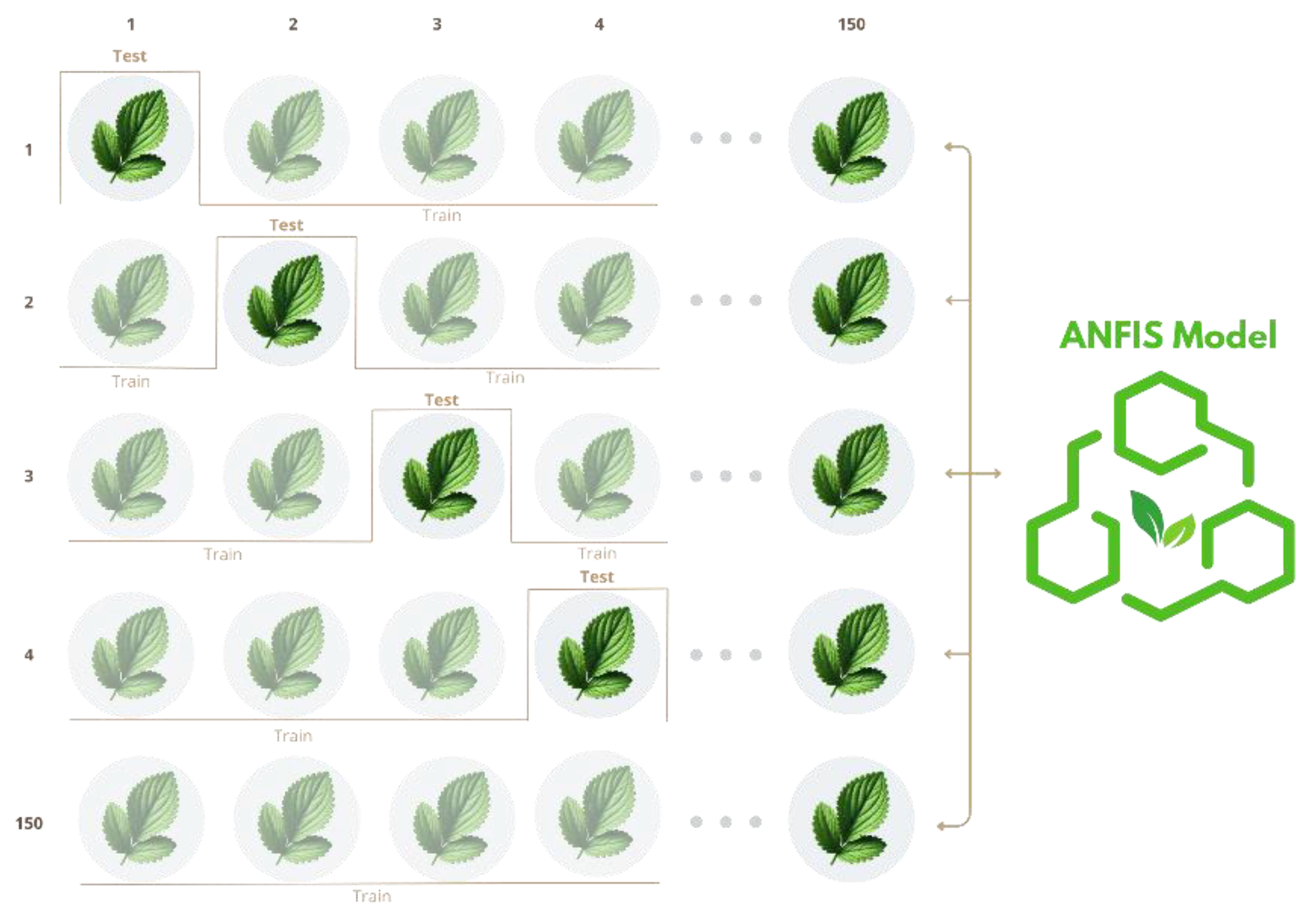
The LOOCV method was employ to assess the performance of the model, as it provides a comprehensive evaluation. This approach ensures that each sample in the dataset is used as a test once, while the remaining samples are used for model training. Consequently all samples contribute to both the training and validation processes. Studies such as [88,89,90,91] have implemented the LOOCV technique to partition the data in their models, obtaining accurate results. The operational process of LOOCV is illustrated in Figure 14.

3.2. Performance Evaluations

The evaluation of the ANFIS model was developed through the aforementioned metrics. The evaluation process involves the partitioning of the dataset, whereby in each iteration of LOOCV, a simple sample (i-th sample) is designated as a test sample, while the remaining samples (n-1) are utilized for training. Subsequent to the training of the model, a prediction is made for the sample that was excluded, and this is then compared all data have been processed. In this study, the process is repeated 150 times.
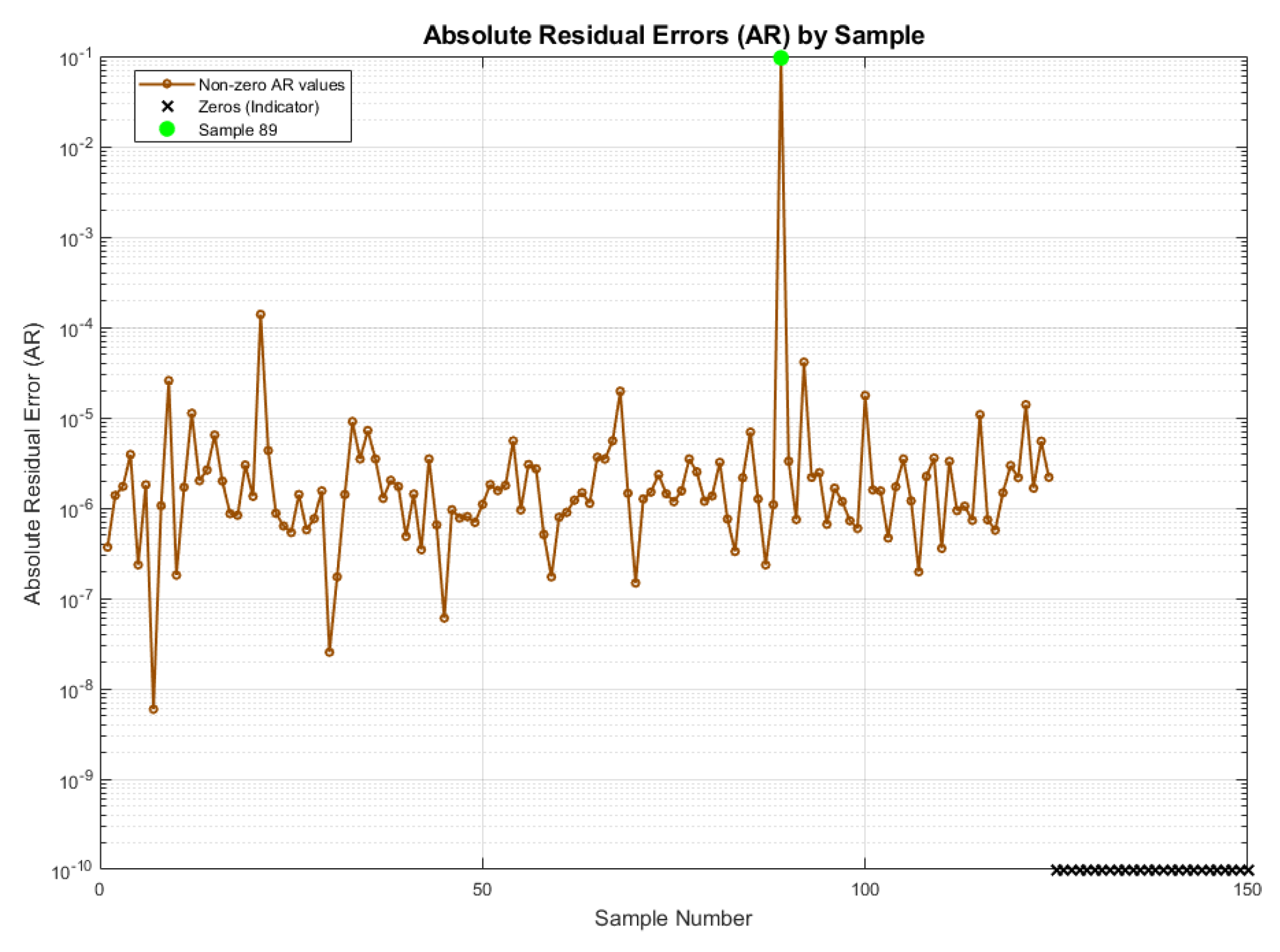
The errors obtained after submitting the model to evaluation can be visualized in Figure 15. This graph shows that sample 89 exhibits the highest error, with a value of 0.09597, while samples 125 to 150 demonstrate the lowest errors.
Following the execution of the evaluation, a total error value of 0.00064305 was obtained. This finding indicates that the prediction accuracy of the ANFIS model is optimal.

3.3. Determination Coefficient (r2)

In a simple linear regression analysis, the coefficient of determination, denoted as r2, quantifies the proportion of the dependent variable’s total variance that is accounted for by the independent variable. Specifically, r2 represents the ratio of the model’s explained variance (SSM) to the total variance of the dependent variable (SST) [92], as expressed by the equation 3:
r 2 = S S M S S T =   ( y i ^ y ¯ ) 2 ( y i y ¯ ) 3
A predictive model is considered acceptable when the r2 0.5 [93]. The r2 metric has been extensively utilized for the evaluation of studies as evidenced by the literature [94,95,96,97]. In the evaluation of the model with the r2 metric, the LOOCV technique was also used, obtaining a value of 0.99965. This outcome signifies a highly precise fit, thereby classifying the model as both acceptable and robust in terms of predictive capacity.

3.4. App

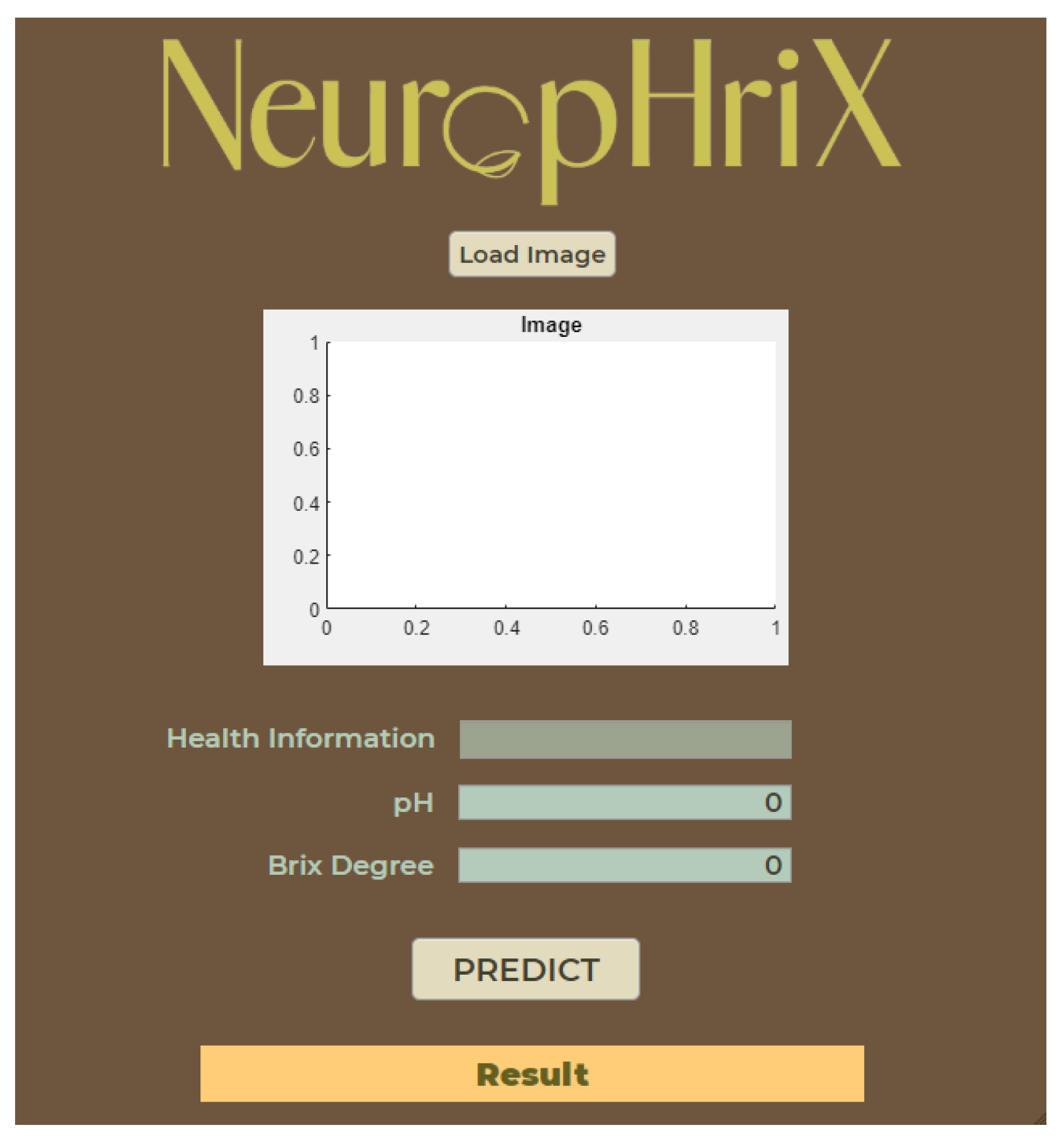
An application was designed using the App Designer Toolbox within the MATLAB environment. The objective of the design was to provide the end user with an intuitive and accessible tool to determine if the crop can be harvested. Figure 16 shows the application home screen.
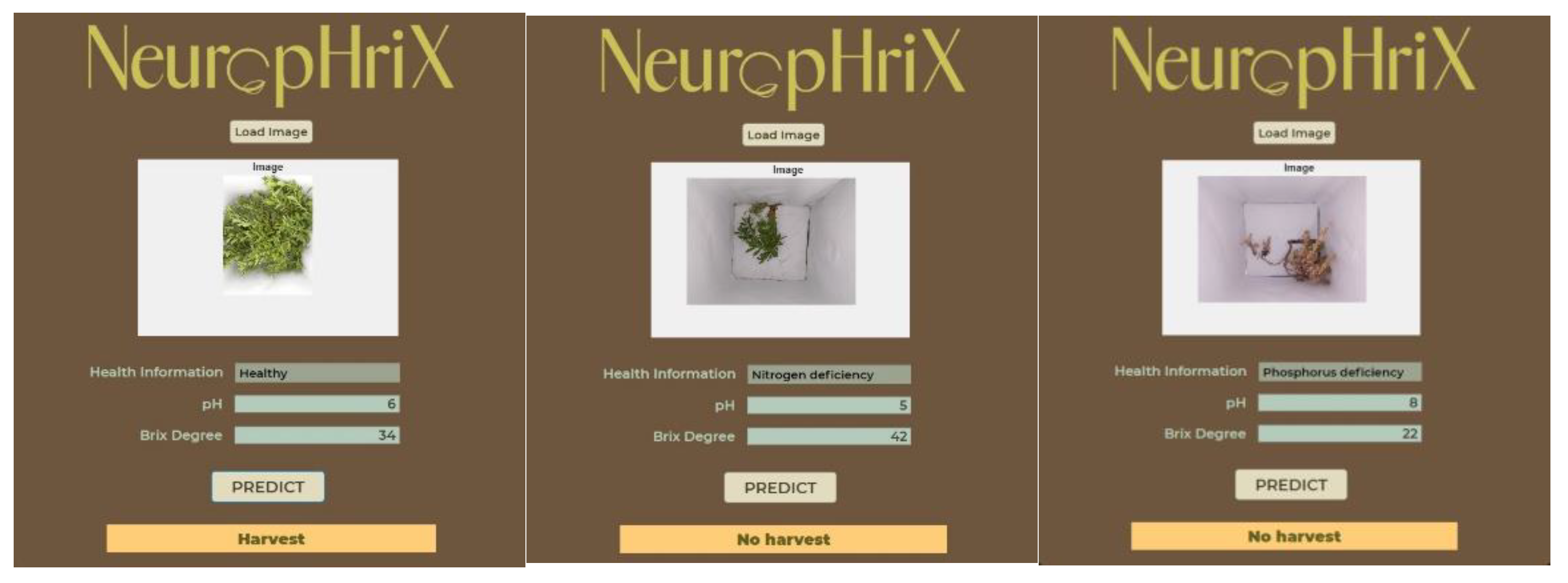
In this interface, the user can load an image of the Stevia crop using the "Load Image" button. The image is automatically processed and, depending on the cluster assigned during this processing, a brief description of the plant status is displayed. Subsequently the user is prompted to enter the pH and BD values. Finally, by tapping the "Predict" button, the application shows the result, indicating whether or not the plant is suitable for harvesting. The performance of the application is illustrated in Figure 17, through a series of tests.

4. Discussion

The findings of this study demonstrate the efficacy of the developed ANFIS-based NFS in measuring and analyzing key parameters to determine the harvest status of the Stevia crop. This determination is made using pH, BD, and leaf colorimetry as independent variables. Through image processing, the percentages of green, yellow and brown in the leaves were obtained, and the data were grouped into clusters according to the predominant color. This approach facilitates the acquisition of pertinent visual information regarding the physiological state of the crop.
The results obtained support the initial hypothesis, indicating that the model can determine with high accuracy if a Stevia crop is suitable for harvesting. The evaluation of the system using r2 showed satisfactory results, demonstrating a consistent correlation between model predictions and observed data. A value of 0.99965 was obtained, which exceeds the value of 0.5 to be considered acceptable, reflecting a statistically significant impact. In addition, the AR evaluation showed that the differences between predicted and actual values were minimal. This reinforces the reliability of the model, in this case the error using this metric was 0.00064305, a value extremely close to zero.
No research works were found that evaluated TH in Stevia using a NFS. However, studies using NFS for pest forecasting and localization, greenhouse control, fruit and vegetable quality grading, and irrigation optimization are reported in the literature. In this context, other studies have employed AI techniques, such as ANNs and Mamdani-type FIS, to evaluate different aspects of agricultural production. The present study focuses on the analysis of both internal and external crop parameters. This approach enhances the reliability of decision-making by facilitating a comprehensive assessment of the crop’s status. It also provides a more accurate and reliable prediction. This optimizes the use of agricultural resources and reduce the waste of supplies such as fertilizer and water.
This study provides important information for Stevia producers. The system developed will allow harvest optimization and improved efficiency in decision making. The implementation of this system on the farm will make it possible to monitor the evolution of the relevant parameters on a continuous basis. Also, this provides precise recommendations on the optimal time for harvesting. Accessibility of the system interface and ease of interpretation of results are important factors in the adoption of this technology in PA.
Based on these results, several lines of future research are suggested. Extending the model to include new variables, such as soil electrical conductivity or microbial activity, could improve the accuracy of the system. Furthermore, the comparison of ANFIS with other models, such as TSK or hybrid approaches based on deep neural networks, would evaluate their relative performance and optimize their predictive capacity. Also, the exploration of different clustering algorithms, with the aim of improving data segmentation and crop status classification. Finally, the integration of this system in web platforms with access to cloud databases would facilitate its implementation on a larger scale. This would allow farmers to access information to optimize crop management and increase production profitability.

5. Conclusions

This study demonstrates how the ANFIS-based NFS allows effective evaluation of Stevia crops from the combination of endogenous and exogenous parameters. Through data analysis and validation with LOOCV, the model was shown to be able to accurately predict the optimal harvesting stage, achieving an r2 of 0.99965 and an AR of 0.00064305. The innovative aspect of this work is the integration of image processing to obtain colorimetric data with pH and DB parameters. Besides, implementation of this system in the field will generate a data history that will facilitate long-term analysis and allow farmers to plan their cropping strategies.
The impact of this model extends beyond crop optimization, as it contributes to the development of AI-based agricultural monitoring strategies. This provides a scalable and adaptable solution for other crops, taking into account certain modifications and adaptations that may be required.

Author Contributions

Conceptualization, S.-M.G.-M. and N.G.-D.; methodology, S.-M.G.-M.; software, S.-M.G.-M.; validation, S.-M.G.-M., N.G.-D. and L.S.-E.; formal analysis, N.G.-D. and L.S.-E.; investigation, W.-A.M.-L. and J.-G.V.; resources, N.G.-D.; data curation, S.-M.G.-M. and J.-E.B-R.; writing—original draft preparation, S.-M.G.-M., N.G.-D. and L.S.-E.; writing—review and editing, S.-M.G.-M., N.G.-D., L.S.-E., W.-A.M.-L, J.-G.V. and J.-E.B-R.; supervision, N.G.-D. and L.S.-E.; project administration, N.G.-D. All authors have read and agreed to the published version of the manuscript.

Funding

This research received no external funding.

Institutional Review Board Statement

Not applicable.

Informed Consent Statement

Not applicable.

Data Availability Statement

Requests to access the datasets should be directed to the corresponding author.

Acknowledgments

The authors of this paper would like to express their gratitude to SECIHTI and PRODEP for their financial support, as well as TecNM for administrative and technical support. Special thanks also go to Rancho Tajeli for allowing to collect data on their Stevia crops and also to apply the system.

Conflicts of Interest

The authors declare no conflict of interest.

Appendix A

Table A1 shows the complete set of FR.
Table A1. System Fuzzy Rules.
FR i f Antecedent FO Antecedent FO Antecedent t h e n Consequent
1 not_harvest
pH is acid A N D BD is not_ripe A N D cluster is 1
2 pH is acid BD is not_ripe cluster is 2 not_harvest
3 pH is acid BD is not_ripe cluster is 3 not_harvest
4 pH is acid BD is ripe cluster is 1 not_harvest
5 pH is acid BD is ripe cluster is 2 not_harvest
6 pH is acid BD is ripe cluster is 3 not_harvest
7 pH is acid BD is excess_ripe cluster is 1 not_harvest
8 pH is acid BD is excess_ripe cluster is 2 not_harvest
9 pH is acid BD is excess_ripe cluster is 3 not_harvest
pH is neutral BD is not_ripe cluster is 1 not_harvest
pH is neutral BD is not_ripe cluster is 2 not_harvest
pH is neutral BD is not_ripe cluster is 3 not_harvest
pH is neutral BD is ripe cluster is 1 harvest
pH is neutral BD is ripe cluster is 2 not_harvest
pH is neutral BD is ripe cluster is 3 not_harvest
pH is neutral BD is excess_ripe cluster is 1 not_harvest
pH is neutral BD is excess_ripe cluster is 2 not_harvest
pH is neutral BD is excess_ripe cluster is 3 not_harvest
pH is alkaline BD is not_ripe cluster is 1 not_harvest
pH is alkaline BD is not_ripe cluster is 2 not_harvest
pH is alkaline BD is not_ripe cluster is 3 not_harvest
pH is alkaline BD is ripe cluster is 1 not_harvest
pH is alkaline BD is ripe cluster is 2 not_harvest
pH is alkaline BD is ripe cluster is 3 not_harvest
pH is alkaline BD is excess_ripe cluster is 1 not_harvest
pH is alkaline BD is excess_ripe cluster is 2 not_harvest
pH is alkaline BD is excess_ripe cluster is 3 not_harvest

References

  1. INEGI. 2024. Actividades Agrícolas. Available online: https://cuentame.inegi.org.mx/economia/primarias/agri/default.aspx?tema=E#sp (accessed on 20 January 2025).
  2. FAO. El estado mundial de la agricultura y la alimentación. Available online: https://www.fao.org/4/a0493s/a0493s02.htm (accessed on 20 January 2025).
  3. World Bank. 2024. Agriculture Overview. Available online: https://www.worldbank.org/en/topic/agriculture/overview (accessed on 20 January 2025).
  4. Secretaría de Agricultura y Desarrollo Rural. 2024. Hablemos de la agricultura en México. Parte 1. Available online: https://www.gob.mx/agricultura/articulos/hablemos-de-la-agricultura-en-mexico-parte-1 (accessed on 20 January 2025).
  5. FAO. Harvesting and Threshing. Available online: https://www.fao.org/4/t0522e/T0522E05.htm(accessed on 20 January 2025).
  6. FAO. Capítulo 1. Cosecha. Available online: https://www.fao.org/4/Y4893S/y4893s04.htm (accessed on 20 January 2025).
  7. FAO. 2020. Family Farming Knowledge Platform: Climate-Smart Agriculture and Family Farming. Available online: https://www.fao.org/family-farming/detail/en/c/1309554/ (accessed on 20 January 2025).
  8. Colwick, R.F. 1984. Harvesting. In Soybeans: Improvement, Production, and Uses, 2nd ed. Edited by J.R. Wilcox. Madison, WI: American Society of Agronomy, Agronomy Monograph 24, pp. 625–636. https://acsess.onlinelibrary.wiley.com/doi/abs/10.2134/agronmonogr24.c10.
  9. FAO. Harvesting. Available online: https://www.fao.org/4/t0522e/T0522E04.htm (accessed on 20 January 2025).
  10. SPRING. 2017. Farmer Nutrition School Agronomic Curriculum. Available online: https://spring-nutrition.org/sites/default/files/publications/trainingmaterials/spring_farmer_ agronomic_curriculum.pdf (accessed on 20 January 2025).
  11. Oklahoma State University.Swathing vs. Direct Combining. Available online: http://canola. okstate.edu/cropproduction/harvesting/swathingvsdirectcombiningv6.pdf (accessed on 20 January 2025).
  12. Mishra, D.; Satapathy, S. Technology adoption to reduce the harvesting losses and wastes in agriculture. Clean Technol. Environ. Policy 2021, 23, 1947–1963. [Springer] . [CrossRef]
  13. Erkan, M.; Dog˘ an, A. 2019. Chapter 5: Harvesting of Horticultural Commodities. In Postharvest Technology of Perishable Horticultural Commodities, edited by E.M. Yahia. Sawston, Cambridge: Woodhead Publishing, pp. 129–159. [CrossRef]
  14. Kaur, B.; Mansi.; Dimri, S.; Singh, J.; Mishra, S.; Chauhan, N.; Kukreti, T.; Sharma, B.; Singh, S, P.; Arora, S.; Uniyal, D.; Agrawal, Y.; Akhtar, S.; Rather, M, A.; Naik, B.; Kumar, V.; Gupta, A, K.; Rustagi, S.; Preet, M, S. Insights into the harvesting tools and equipment’s for horticultural crops: From then to now. Curr. Res. Food Sci. 2023, 6, 100430. [ScienceDirect] https://www. sciencedirect.com/science/article/pii/S2666154323003216.
  15. Prasad, K.; Jacob, S.; Siddiqui, M.W. 2018. Chapter 2: Fruit Maturity, Harvesting, and Quality Standards. In Preharvest Modulation of Postharvest Fruit and Vegetable Quality, edited by M.W. Siddiqui. San Diego: Academic Press, pp. 41–64. [CrossRef]
  16. Department of Primary Industries and Regional Development. 2024. Harvesting. Available online: https://www.agric.wa.gov.au/crops/production-postharvest/harvesting (accessed on 20 January 2025).
  17. Estación Experimental Agrícola de Puerto Rico. 2001 Melón: Cosecha y Manejo Poscosecha. Available online: https://www.upr.edu/eea/wp-content/uploads/sites/17/2016/03/MELON- COSECHA-Y-MANEJO-POSTCOSECHA.pdf (accessed on 20 January 2025).
  18. International Fertilizer Association. 2024. Precision Agriculture. Available online: https://www.fertilizer.org/science/innovation/precision-agriculture/ (accessed on 20 January 2025).
  19. European Commission. Precision Farming: Developing Digital Technologies for Agriculture. Available online: https://ec.europa.eu/eip/agriculture/en/digitising-agriculture/developing- digital-technologies/precision-farming-0.html (accessed on 20 January 2025).
  20. University of Florida.; Ampatzidis, Y. 2024. Precision Agriculture: Technology and Field Applications. Available online: https://edis.ifas.ufl.edu/publication/AE529 (accessed on 20 January 2025).
  21. Javaid, M.; Haleem, A.; Khan, I, H.; Suman, R. Understanding the potential applications of ArtificialIntelligence in Agriculture Sector. Advanced Agrochem 2023, 2, 70–90. [ScienceDirect] https: //www.sciencedirect.com/science/article/pii/S277323712200020X. [CrossRef]
  22. NASA. 2024. What Is Artificial Intelligence?. Available online: https://www.nasa.gov/what-is-artificial-intelligence (accessed on 20 January 2025).
  23. MDPI. 2024. Special Issue: Artificial Intelligence and Digital Agriculture. Available online: https://www.mdpi.com/journal/digital/special_issues/5F87T2J64G (accessed on 20 January 2025).
  24. Chakraborty, A.; Serneels, S.; Claussen, H.; Venkatasubramanian, V.; Hybrid AI Models in Chemical Engineering – A Purpose-driven Perspective; Computer Aided Chemical Engineering, 2022; pp. 925–948. [ScienceDirect] . [CrossRef]
  25. Chahuara Quispe, José Carlos. 2005. Neuro-fuzzy Control Applied to a Tower Crane. Bachelor’sThesis, Universidad Nacional Mayor de San Marcos, Faculty of Electronic Engineering, Lima, Peru. Available at: https://sisbib.unmsm.edu.pe/.
  26. García Díaz, Noel. 2014. A Multi-Layer Adaptive Neuro-Fuzzy Inference System for Estimating the Development Effort of Software Projects. Doctoral Thesis, Universidad de Guadalajara, Centro Universitario de Ciencias Económico Administrativas, Zapopan, Jalisco, Mexico.
  27. Abraham, A. Neuro fuzzy systems: State-of-the-art modeling techniques. [arXiv] https://arxiv.org/pdf/cs/0405011.
  28. Jang, J.-S.R. ANFIS: Adaptive-Network-Based Fuzzy Inference System. IEEE Transactions on Systems, Man, and Cybernetics 1993, 23, 665–685. [IEEE] . [CrossRef]
  29. Jithendra, T.; Basha, S.S. A Hybridized Machine Learning Approach for Predicting COVID-19 Using Adaptive Neuro-Fuzzy Inference System and Reptile Search Algorithm. Diagnostics 2023, 13, 1641. [MDPI] https://www.mdpi.com/2075-4418/13/9/1641. [CrossRef]
  30. Rahman, M, S.; Ali, M, H. Adaptive Neuro Fuzzy Inference System (ANFIS)-Based Control for Solving the Misalignment Problem in Vehicle-to-Vehicle Dynamic Wireless Charging Systems. Electronics 2025, 14, 507. [MDPI] https://www.mdpi.com/2079-9292/14/3/507.
  31. Kudelina, K.; Raja, H.A. Neuro-Fuzzy Framework for Fault Prediction in Electrical Machines via Vibration Analysis. Energies 2024, 17, 2818. [MDPI] https://www.mdpi.com/1996-1073/17/12/2818. [CrossRef]
  32. Wang, Y.; Zhang, N.; Chen, C.; Jiang, Y.; Liu, T. Nonlinear Adaptive Generalized Predictive Control for PH Model of Nutrient Solution in Plant Factory Based on ANFIS. Processes 2023, 11, 2317. [MDPI] https://www.mdpi.com/2227-9717/11/8/2317. [CrossRef]
  33. Morozov, S.; Kupriyanov, M. A Neuro-Fuzzy System for Power Supply Control. Engineering Proceedings 2023. [MDPI] https://www.mdpi.com/2673-4591/33/1/49.
  34. Kheioon, I, A.; Al-Sabur, R.; Sharkawy, A-N. Design and Modeling of an Intelligent Robotic Gripper Using a Cam Mechanism with Position and Force Control Using an Adaptive Neuro-Fuzzy ComputingTechnique. Automation 2025, 6, 4. [MDPI] https://www.mdpi.com/2673-4052/6/1/4.
  35. Mustafa, R.; Samui, P.; Kumari, S. Reliability Analysis of Gravity Retaining Wall Using Hybrid ANFIS. Infrastructures 2022, 7, 121. [MDPI] https://www.mdpi.com/2412-3811/7/9/121. [CrossRef]
  36. Kumar, M, S.; Rajamani, D.; Nasr, E, A.; Balasubramanian, E.; Mohamed, H.; Astarita, A. A Hybrid Approach of ANFIS—Artificial Bee Colony Algorithm for Intelligent Modeling and Optimization of Plasma Arc Cutting on Monel™ 400 Alloy. Materials 2021, 14, 6373. [MDPI] https://www.mdpi.com/1996-1944/14/21/6373.
  37. Luo, Y.; Wang, X.; Wang, Q.; Chen, Y. Illuminant Estimation Using Adaptive Neuro-Fuzzy Inference System. Applied Sciences 2021, 11, 9936. [MDPI] https://www.mdpi.com/2076-3417/11/21/9936. [CrossRef]
  38. Taylan, O.; Alkabaa, A.S.; Alamoudi, M.; Basahel, A.; Balubaid, M.; Andejany, M.; Alidrisi, H. Air Quality Modeling for Sustainable Clean Environment Using ANFIS and Machine Learning Approaches. Atmosphere 2021, 12, 713. [MDPI] https://www.mdpi.com/2073-4433/12/6/713. [CrossRef]
  39. Bulus, H, N. Adaptive Neuro-Fuzzy Inference System and Artificial Neural Network Models for Predicting Time-Dependent Moisture Levels in Hazelnut Shells (Corylus avellana L.) and Prina (Oleae europaeae L.). Processes 2024, 12, 1703. [MDPI] https://www.mdpi.com/2227-9717/12/8/1703.
  40. Nezhad, H, L.; Sharabiani, V, R.; Tarighi, J.; Tahmasebi, M.; Taghinezhad, E.; Szumny, A. textitEn- ergy Flow Analysis in Oilseed Sunflower Farms and Modeling with Artificial Neural Networks as Compared to Adaptive Neuro-Fuzzy Inference Systems (Case Study: Khoy County). Energies 2024, 17, 2795. [MDPI] https://www.mdpi.com/1996-1073/17/11/2795. [CrossRef]
  41. Sunori, S, K.; Pant, J.; Maurya, S.; Mittal, A.; Arora, S.; Juneja, P. Neuro-Fuzzy based Prediction of pH Value of Soil of Uttarakhand. IEEE Xplore 2021. [IEEE] https://ieeexplore.ieee.org/document/9452814/.
  42. Sulistyaningrum, D.R.; Setiyono, B.; Tsaqif, M.; Hakam, A. Adaptive Neuro-Fuzzy Inference System for Identification of Rice Plant Diseases. AIP Conference Proceedings 2024, 3029, 060003. [AIP] https://pubs.aip.org/aip/acp/article/3029/1/060003/3306412.
  43. García-Rodríguez, L, C.; Morales-Viscaya, J, A.; Prado-Olivarez, J.; Barranco-Gutiérrez, A, I.; Padilla-Medina, J, A.; Espinosa-Calderón, A. Fuzzy Mathematical Model of Photosynthesis in Jalapeño Pepper. Agriculture 2024, 14, 909. [MDPI] https://www.mdpi.com/2077-0472/14/6/909.
  44. Remya, S. An adaptive neuro-fuzzy inference system to monitor and manage the soil quality to improve sustainable farming in agriculture. Soft Computing 2022, 26, 13119–13132. [Springer] https://link.springer.com/article/10.1007/s00500-022-06832-3. [CrossRef]
  45. Vincentdo, V.; Surantha, N. Nutrient Film Technique-Based Hydroponic Monitoring and Controlling System Using ANFIS. Electronics 2023, 12, 1446. [MDPI] https://www.mdpi.com/2079-9292/12/6/1446. [CrossRef]
  46. Tian, X.; Meng, X.; Wu, Q.; Chen, Y.; Pan, J. Identification of Tomato Leaf Diseases based on a Deep Neuro-fuzzy Network. Journal of The Institution of Engineers (India): Series A 2022, 103, 695–706.[Springer] https://link.springer.com/article/10.1007/s40030-022-00642-4. [CrossRef]
  47. Boonyopakorn, P.; Bualeard, P. Applying Neuro Fuzzy System to Analyze Durian Minerals within Soil for Precision Agriculture. IEEE Access 2020. [IEEE] https://ieeexplore.ieee.org/abstract/document/9158093.
  48. Abbaspour-Gilandeh, M.; Abbaspour-Gilandeh, Y.Modelling soil compaction of agricultural soils using fuzzy logic approach and adaptive neuro-fuzzy inference system (ANFIS) approaches. Modeling Earth Systems and Environment 2018, 5, 13-20. [Springer] https://link.springer.com/article/10.1007/s40808-018-0514-1. [CrossRef]
  49. Rezaei, M.; Rohani, A.; Lawson, S, S. Using an Adaptive Neuro-fuzzy Interface System (ANFIS) to Estimate Walnut Kernel Quality and Percentage from the Morphological Features of Leaves and Nuts.Erwerbs-Obstbau 2022, 64, 611-620. [Springer] . [CrossRef]
  50. Adeyi, O.; Adeyi, A.J.; Oke, E.O.; Ajayi, O.K.; Oyelami, S.; Otolorin, J.A.; Areghan, S.E.; Isola, B.F. Adaptive neuro fuzzy inference system modeling of Synsepalum dulcificum L. drying characteristics and sensitivity analysis of the drying factors. Scientific Reports 2022, 12, 13261. [Nature] https://www.nature.com/articles/s41598-022-17705-y. [CrossRef]
  51. Abraham, E, R.; Mendes-dos-Reis, J, G.; de-Souza, A, E.; Paulieli, A. Neuro-Fuzzy System for the Evaluation of Soya Production and Demand in Brazilian Ports. In Advances in Production Management Systems. Production Management for the Factory of the Future, 2019; pp. 87–94. [Springer] https://link.springer.com/chapter/10.1007/978-3-030-30000-5_11.
  52. Phaiboon, S.; Phokharatkul, P. Applying an Adaptive Neuro-Fuzzy Inference System to Path Loss Prediction in a Ruby Mango Plantation. Journal of Sensor and Actuator Networks 2023, 12, 71. [MDPI] https://www.mdpi.com/2224-2708/12/5/71. [CrossRef]
  53. Hobart, M.; Schirrmann, M.; Abubakari, A-H.; Badu-Marfo, G.; Kraatz, S.; Zare, M. Drought Monitoring and Prediction in Agriculture: Employing Earth Observation Data, Climate Scenarios and Data Driven Methods; a Case Study: Mango Orchard in Tamale, Ghana. Remote Sensing 2024, 16, 1942. [MDPI] https://www.mdpi.com/2072-4292/16/11/1942. [CrossRef]
  54. Chughtai, M.F.J.; Pasha, I.; Zahoor, T.; Khaliq, A.; Ahsan, S.; Wu, Z.; Nadeem, M.; Mehmood, T.; Amir, R, M.; Yasmin, I.; Liaqat, A.; Tanweer, S.Nutritional and therapeutic perspectives of Stevia rebaudiana as emerging sweetener; a way forward for sweetener industry. CyTA-Jounal of Food 2020, textit18, 1. [Taylor Francis] . [CrossRef]
  55. S´niegowska, J.; Biesiada, A.Effect of Spacing on Growth, Yield and Chemical Composition of Stevia Plants (Stevia rebaudiana Bert.). Applied Sciences 2024, 14, 5153. [MDPI] https://www.mdpi.com/2076-3417/14/12/5153.
  56. Cámara de Diputados. 2018. La Producción de Stevia en México: Una Alternativa Saludable y Sustentable. Available online: https://portalhcd.diputados.gob.mx/PortalWeb/Micrositios/69 e0b07c-5ceb-430c-8737-fa9d2e651750/92Estevia.pdf (accessed on 20 January 2025).
  57. Secretaría de Agricultura y Desarrollo Rural. En México, la Stevia Conquista el Mercado de los Edulcorantes. Available online: https://www.gob.mx/agricultura/es/articulos/en-mexico-la- stevia-conquista-el-mercado-de-los-edulcorantes (accessed on 20 January 2025).
  58. Vejar-Cortés, A-P.; García-Díaz, N.; Soriano-Equigua L.; Ruiz-Tadeo, A-C.; Álvarez-Flores, J-L. Determination of Crop Soil Quality for Stevia rebaudiana Bertoni Morita II Using a Fuzzy Logic Model and a Wireless Sensor Network. Applied Sciences 2023, 13, 9507. [MDPI] https://www.mdpi.com/2076-3417/13/17/9507. [CrossRef]
  59. Aptus Holland. 2022. Quality Factor: Brix. Available online: https://aptus-holland.com/quality-factor-brix/ (accessed on 20 January 2025).
  60. Zhang, Y.-Y.; Wu, W.; Liu, H. Factors affecting variations of soil pH in different horizons in hilly regions. PLoS ONE 2019, 14, e0218563. [Public Library of Science] . [CrossRef]
  61. University of Connecticut. 2018. Soil pH: The Master Variable. Available online: https: //publications.extension.uconn.edu/2018/12/07/soil-ph-the-master-variable/#:~:text=Mineral%20soil%20pH%20values%20generally,content%20also%20influence%20soil%20pH. (accessed on 20 January 2025).
  62. FAO. 2021. ¿Qué es el pH del suelo?. Available online: https://openknowledge.fao.org/server/api/core/bitstreams/e434293f-c9d1-4585-a799-b7c9107ea64e/content (accessed on 20 January 2025).
  63. The Ohio State University. 2013. Soil pH and Lime Recommendations. Available online: https://ohioline.osu.edu/factsheet/HYG-1651 (accessed on 20 January 2025).
  64. Jaywant, S.A.; Singh, H.; Arif, K.M. Sensors and Instruments for Brix Measurement: A Review. Sensors 2022, 22, 2290. [MDPI] https://www.mdpi.com/1424-8220/22/6/2290. [CrossRef]
  65. Miyakawa, M.; Hoshina, S. A self-supporting gel phantom used for visualization and/or measurement of the three-dimensional distribution of SAR. 2002. [IEEE] https://ieeexplore.ieee.org/document/1032672.
  66. Siregar, R, R, A.; Seminar, K, B.; Wahjuni, S.; Santosa, E.; Sikumbang, H. Backpropagation Algorithm to Detect The Color of The Leaf to Determine The Need for Nutrients 2023. [IEEE] https: //ieeexplore.ieee.org/document/10326726.
  67. Begum, S, S.; Yannam, A.; Chowdary, M.C, C.; Devi, T, R.; Nallamothu, V, P.; Jahnavi, Y. Deep Learning-based Nutrient Deficiency symptoms in plant leaves using Digital Images. 2024. [IEEE] https://ieeexplore.ieee.org/document/10435129.
  68. Veazie, P.; Cockson P.; Henry, J.; Perkins-Veazie, P.; Whipker, B. Characterization of Nutrient Disorders and Impacts on Chlorophyll and Anthocyanin Concentration of Brassica rapa var. Chinensis. Agriculture 2020, 10, 461. [MDPI] https://www.mdpi.com/2077-0472/10/10/461. [CrossRef]
  69. Rancho Tajeli. 2023. Rancho Tajeli . Available online: https://www.ranchotajeli.com (accessed on 20 January 2025).
  70. Hiremath, S.B.; Shet, R.; Patil, N.; Iyer, N. Sensor Based On-the-Go Detection of Macro Nutrients for Agricultural Crops. Advances in Science, Technology and Engineering Systems Journal 2020, 5, 128–134. [ASTESJ] http://dx.doi.org/10.25046/aj050117.
  71. Hu, S.; Bian, Y.; Chen, B.; Song, H.; Zhang, K. Language-Guided Semantic Clustering for Remote Sensing Change Detection. Sensors 2024, 24, 7887. [MDPI] https://www.mdpi.com/1424-8220/24/24/7887. [CrossRef]
  72. Jaszcz A.; Włodarczyk-Sielicka, M.; Stateczny, A.; Połap, D.; Garczyn´ska, I. Automated Shoreline Segmentation in Satellite Imagery Using USV Measurements. Remote Sensing 2024, 16, 4457. [MDPI] https://www.mdpi.com/2072-4292/16/23/4457.
  73. Li, X.; Qin, J.; Long, Y. Urban Architectural Color Evaluation: A Cognitive Framework Combining Machine Learning and Human Perception. Buildings 2024, 14, 3901. [MDPI] https://www.mdpi.com/2075-5309/14/12/3901. [CrossRef]
  74. Zhi, J.; Li, L.; Zhu, H.; Li, Z.; Wu, M.; Dong, R.; Cao, X.; Liu, W.; Qu, L.; Song, X.; Shi, L. Comparison of Deep Learning Models and Feature Schemes for Detecting Pine Wilt Diseased Trees. Forests 2024, 15, 1706. [MDPI] https://www.mdpi.com/1999-4907/15/10/1706. [CrossRef]
  75. Zbiljic´, M.; Lakušic´, D.; Šatovic´, Z.; Liber, Z.; Kuzmanovic´, N. Patterns of Genetic and Morphological Variability of Teucrium montanum sensu lato (Lamiaceae) on the Balkan Peninsula. Plants 2024, 13, 3596. [MDPI] https://www.mdpi.com/2223-7747/13/24/3596.
  76. Raddad, Y.; Hasasneh, A.; Abdallah, O.; Rishmawi, C.; Qutob, N. Integrating Statistical Methods and Machine Learning Techniques to Analyze and Classify COVID-19 Symptom Severity. Big Data and Cognitive Computing 2024, 8, 192. [MDPI] https://www.mdpi.com/2504-2289/8/12/192. [CrossRef]
  77. Yoon, C.; Cho, S.; Lee, Y. Extending WSN Lifetime with Enhanced LEACH Protocol in Autonomous Vehicle Using Improved K-Means and Advanced Cluster Configuration Algorithms. Applied Sciences 2024, 14, 11720. [MDPI] https://www.mdpi.com/2076-3417/14/24/11720. [CrossRef]
  78. Zhang, S.; Liu, H.; Meng, Z. Agricultural Machinery Movement Trajectory Recognition Method Based on Two-Stage Joint Clustering. Agriculture 2024, 14, 2294. [MDPI] https://www.mdpi.com/2077-0472/14/12/2294. [CrossRef]
  79. Huang, L.; Qiu, M.; Xu, A.; Zhu, J. UAV Imagery for Automatic Multi-Element Recognition and Detection of Road Traffic Elements. Aerospace 2022, 9, 198. [MDPI] https://www.mdpi.com/2226-4310/9/4/198. [CrossRef]
  80. JXCT. 2025. Portable Soil Moisture Detector. Available online: https://jxctsmart.com/product/ portable-soil-moisture-detector (accessed on 20 January 2025).
  81. Sper Scientific. 2025. Official Website. Available online: https://www.sperdirect.com (accessed on 20 January 2025).
  82. Sper Scientific. Pocket Digital Refractometers. 300050-300055. Instruction Manual. Available online: https://www.instrumentchoice.com.au/attachment/download/79122/5f62c3eaebab9194748554.pdf?srsltid=AfmBOoo-8l2AcbwNiQDOVtrCfX5ZIxR3-V8-OdBC8muwqYVP74Tk_Jbv (accessed on 20 January 2025).
  83. Xu, B.; Su, J.; Dale, D.S.; Watson, M.D. Cotton Color Grading with a Neural Network. Textile Research Journal 2000, 70. [SAGE] . [CrossRef]
  84. Alotaibi, M.A. Machine Learning Approach for Short-Term Load Forecasting Using Deep Neural Network. Energies 2022, 15, 6261. [MDPI] https://www.mdpi.com/1996-1073/15/17/6261. [CrossRef]
  85. Silhavy, R.; Silhavy, P.; Prokopova, Z. Using Actors and Use Cases for Software Size Estimation. Electronics 2021, 10, 592. [MDPI] https://www.mdpi.com/2079-9292/10/5/592. [CrossRef]
  86. Lopez-Martin, C.; Villuendas-Rey, Y.; Azzeh, M.; Nassif, A, B.; Banitaan, S. Transformed k-nearest neighborhood output distance minimization for predicting the defect density of software projects. Journal of Systems and Software 2020, 167, 110592. [Elsevier] . [CrossRef]
  87. Garcia-Diaz, N.; Verduzco-Ramírez, A.; García-Virgen Juan.; Muñoz, L. Applying Absolute Residuals as Evaluation Criterion for Estimating the Development Time of Software Projects by Means of a Neuro-Fuzzy Approach. Journal of Information Systems Engineering Management 2016. [Lectito] . [CrossRef]
  88. Liu, H.; Zhu, Q.; Xia, X.; Li, M.; Huang, D. Multi-Feature Optimization Study of Soil Total Nitrogen Content Detection Based on Thermal Cracking and Artificial Olfactory System. Agriculture 2021, 12, 37. [MDPI] https://www.mdpi.com/2077-0472/12/1/37. [CrossRef]
  89. Liu, W.; Wang, J.; Hu, Y.; Ma, T.; Otgonbayar, M.; Li, C.; Li, Y.; Yang J. Mapping Shrub Biomass 716 at 10 m Resolution by Integrating Field Measurements, Unmanned Aerial Vehicles, and Multi-Source Satellite Observations. Remote Sensing 2024, 16, 3095. [MDPI] https://www.mdpi.com/2072-4292/16/16/3095.
  90. Khatri, U.; Kwon, G-R. Classification of Alzheimer’s Disease and Mild-Cognitive Impairment Based on High-Order Dynamic Functional Connectivity at Different Frequency Bands. Mathematics 2022, 10, 805. [MDPI] https://www.mdpi.com/2227-7390/10/5/805. [CrossRef]
  91. Gomez, D.; Salvador, P.; Rodrigo, J, F.; Gil, J. Detecting Sensitive Spectral Bands and VegetationIndices for Potato Yield Using Handheld Spectroradiometer Data. Plants 2024, 13, 3436. [MDPI] https://www.mdpi.com/2223-7747/13/23/3436. [CrossRef]
  92. Moore D.S.; McCabe G.P.; Craig, B.A. 2009. Introduction to the Practice of Statistics. 6ª ed. ISBN-13: 978-1-4292-1623-4.
  93. Humphrey, W.S. 1995. A Discipline for Software Engineering. 1ª ed. Reading, MA: Addison-Wesley Professional. ISBN: 978- 0201546101.
  94. Wang, Y.; Li, T.; Chen, T.; Zhang, X.; Taha, M.F.; Yang, N.; Mao, H.; Shi, Q. Cucumber Downy Mildew Disease Prediction Using a CNN-LSTM Approach. Agriculture 2024, 14, 1155. [MDPI]https://www.mdpi.com/2077-0472/14/7/1155. [CrossRef]
  95. Dai, J.; Pan, L.; Deng, Y.; Wan, Z.; Xia, R. Modified SWAT Model for Agricultural Watershed in Karst Area of Southwest China. Agriculture 2025, 15, 192. [MDPI] https://www.mdpi.com/2077-0472/15/2/192. [CrossRef]
  96. Shao, T.; Xu, X.; Su, Y. Evaluation and Prediction of Agricultural Water Use Efficiency in the Jianghan Plain Based on the Tent-SSA-BPNN Model. Agriculture 2025, 15, 140. [MDPI] https://www.mdpi.com/2077-0472/15/2/140. [CrossRef]
  97. Du, L.; Luo, S. Spectral-Frequency Conversion Derived from Hyperspectral Data Combined with Deep Learning for Estimating Chlorophyll Content in Rice. Agriculture 2024, 14, 1186. [MDPI] https://www.mdpi.com/2077-0472/14/7/1186. [CrossRef]
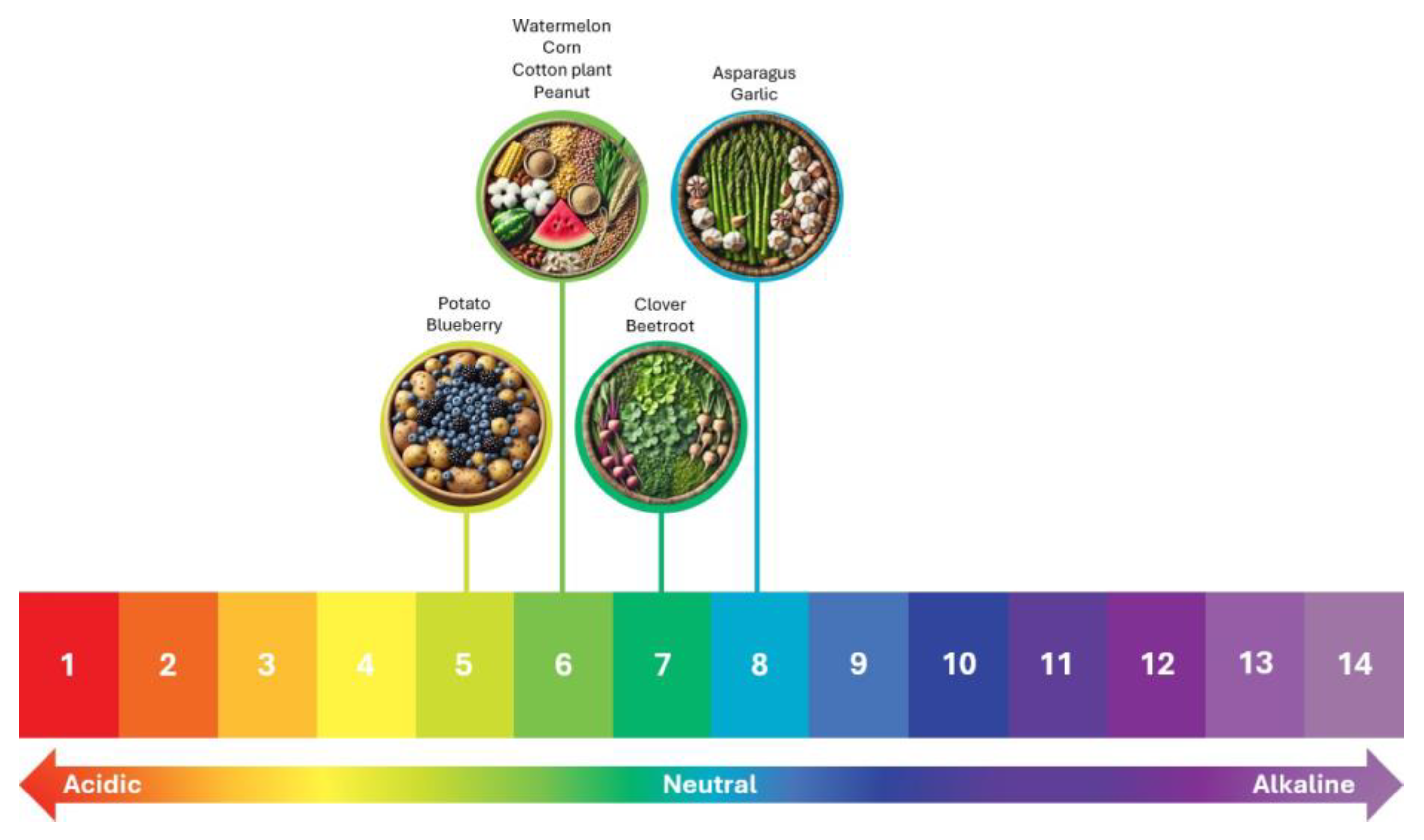
Figure 1. pH scale with optimum values for some crops.
Preprints 151684 g001
Figure 2. General system schematic.
Preprints 151684 g002
Figure 3. Rancho Tajeli (www.ranchotajeli.com) [69].
Preprints 151684 g003
Figure 4. Nutritional deficiency in plants by color.
Preprints 151684 g004
Figure 5. Stevia images.
Preprints 151684 g005
Figure 6. Binary Masks.
Preprints 151684 g006
Figure 7. K-Means clustering.
Preprints 151684 g007
Figure 8. Portable JXBS-3001-SCY-PT soil detector.
Preprints 151684 g008
Figure 11. pH MFs.
Figure 11. pH MFs.
Preprints 151684 g011
Figure 12. BD MFs.
Figure 12. BD MFs.
Preprints 151684 g012
Figure 13. Cluster MFs.
Preprints 151684 g013
Figure 14. Leave One Out Cross Validation Process.
Preprints 151684 g014
Figure 15. Plot of Errors Obtained with AR.
Preprints 151684 g015
Figure 16. App Home.
Preprints 151684 g016
Figure 17. App Performance Tests.
Preprints 151684 g017
Table 1. Clusters defined.
Cluster: Color
1: Green 2: Yellow 3: Brown
Table 2. Clustering sample.
Image %Green %Yellow %Brown Cluster
120.jpg 99.5584 0.14344 0.29818 1
75.jpg 10.8477 79.6597 9.94261 2
76.jpg 4.44868 0 95.5513 3
Table 3. Input features.
Variable Range Indicator
pH   3–9    acid neutral alkaline
[0 3 6] [3 6 9] [6 9 12]
BD   15–46   not_ripe ripe excess_ripe
[-0.5 15 30.5] [15 30.5 46] [30.5 46 61.5]
Cluster   1–3   green yellow brown
[0 1 2] [1 2 3] [2 3 4]
Table 4. Output features.
Variable Range Indicator
Harvest 0–1 not_harvest
[0]
harvest
[1]
Table 5. FR extract.
FR i f Antecedent FO Antecedent FO Antecedent t h e n Consequent
1 not_harvest
pH is acid A N D BD is not_ripe A N D cluster is 1
2 pH is acid BD is ripe cluster is 2 not_harvest
3 pH is acid BD is excess_ripe cluster is 3 not_harvest
4 pH is neutral BD is not_ripe cluster is 1 not_harvest
5 pH is neutral BD is ripe cluster is 2 not_harvest
6 pH is neutral BD is excess_ripe cluster is 3 not_harvest
7 pH is alkaline BD is not_ripe cluster is 1 not_harvest
8 pH is alkaline BD is ripe cluster is 2 not_harvest
9 pH is alkaline BD is excess_ripe cluster is 3 not_harvest
Table 6. ANFIS summary.
Training Features
Number of inputs 3
Number of outputs 1
Number of training epochs
MFs input 3 per input variable
Number of FR
Input FM Parameters
Input 1 MF 1 (acid): trimf - Range: [0 3 6]
MF 2 (neutral): trimf - Range: [3 6 9]
MF 3 (alkaline): trimf - Range: [6 9 ]
Input 2 MF 1 (not_ripe): trimf - Range: [-3.5 13 29.5]
MF 2 (ripe): trimf - Range: [13 29.5 46]
MF 3 (excess ripe): trimf - Range: [29.5 46 62.5]
Input 3 MF 1 (1): trimf - Range: [0 1 2]
MF 2 (2): trimf - Range: [1 2 3]
MF 3 (3): trimf - Range: [2 3 4]
Output Parameters
Output: Constant type harvest: [1]
not_harvest: [0]
Neuronal Network Structure
Number of layers 5
Number of neurons in layer 1 (input MF) 9
Number of neurons in layer 2 (RF) 27
Layer 3 Standardization
Layer 4 Linear functions
Layer 5 Weighted sum
Disclaimer/Publisher’s Note: The statements, opinions and data contained in all publications are solely those of the individual author(s) and contributor(s) and not of MDPI and/or the editor(s). MDPI and/or the editor(s) disclaim responsibility for any injury to people or property resulting from any ideas, methods, instructions or products referred to in the content.
Copyright: This open access article is published under a Creative Commons CC BY 4.0 license, which permit the free download, distribution, and reuse, provided that the author and preprint are cited in any reuse.
Prerpints.org logo

Preprints.org is a free preprint server supported by MDPI in Basel, Switzerland.

Subscribe

Disclaimer

Terms of Use

Privacy Policy

Privacy Settings

© 2025 MDPI (Basel, Switzerland) unless otherwise stated