Preprint
Article

This version is not peer-reviewed.

Targeting the TLK1-MK5 Axis Suppresses Prostate Cancer Metastasis

A peer-reviewed article of this preprint also exists.

Submitted:

03 March 2025

Posted:

04 March 2025

You are already at the latest version

Abstract

The spread of metastatic prostate cancer (PCa) is responsible for the majority of PCa-related deaths, yet the precise mechanisms driving this process remain unclear. We have identified a novel interaction between two distinct promotility factors, tousled-like kinase 1 (TLK1) and MAPK-activated protein kinase 5 (MK5), which triggers a signaling cascade that promotes metastasis. In PCa, the TLK1-MK5 pathway may play a critical role, as androgen deprivation therapy (ADT) has been linked to increased expression of both TLK1 and MK5 in metastatic patients linked with poor survival. In this study, we directly examined the effects of disrupting the TLK1>MK5 axis on the motility, invasiveness, and metastatic potential of PCa cells. To establish this, we used both pharmacologic and systemic approaches with genetically engineered mouse models and the use of IVIS. The results of targeting the TLK1>MK5 axis support the notion that this axis is essential for the spread of metastatic cells and the development of age-related metastases.

Keywords: 
;  ;  ;  

1. Introduction

Prostate cancer (PCa) progresses slowly, particularly when managed effectively with androgen deprivation therapy (ADT), but metastases still account for ~30,000 deaths each year in the US. While organ-confined PCa is clinically manageable with a nearly 100% 5-year survival rate, metastatic PCa drastically reduces survival. Patients with metastases to liver, lung, bone, and lymph nodes have life expectancies of ~14, 19, 21, and 32 months, respectively[1]. ADT is the standard of care for PCa, but after 1-2 years of treatment, the cancer relapses as metastatic Castration Resistant PCa (mCRPC) for which no cure is available. Cancer cells use two essential cellular processes, motility and invasion, to detach from the primary tumor site and disseminate throughout the body [2,3] These processes are regulated by the concerted action of several factors, coordination of multiple signal transduction pathways, gene expression, cytoskeletal changes, and remodeling of extracellular matrices, all of which allow the cells to invade and migrate into new tissues [4].
Tousled Like Kinases (TLK) are serine/threonine protein kinases with well-established roles in DNA replication, transcription, chromosomal segregation, and DNA damage response and repair [5,6,7,8,9,10,11,12,13,14,15,16,17,18]. However, TLK involvement in cellular motility is an under-studied area. The mammalian genome encodes two TLKs, Tlk1 and Tlk2, which share 89% homology in their entire amino acid sequence and 94% similarity in their C-terminal kinase domains. TLK1 and TLK2 have partially redundant functions in the maintenance of genome stability[19]. Recently, two research groups independently reported that TLK2 enhances the migration rate and invasiveness of breast cancer and glioblastoma cell lines [20,21]. Another study revealed that TLK in Drosophila (only one TLK gene) is required for the collective migration of border cells by activation of the JAK/STAT signaling pathway in the ovary, a phenomenon reminiscent of cancer migration and metastasis[22]. Our previous studies demonstrated that treatment with ADT/ARSI leads to higher translation of TLK1B mRNA in PCa via activation of the compensatory mTOR pathway[16]. Moreover, we observed genomic amplification and higher expression of TLK1 and one of its key downstream effector kinases – MK5- in metastatic PCa through our interrogation of TCGA, SU2C, and other public PCa patients databases[23]. This upregulation of TLK1/1B may mediate initial resistance to ADT and promote the migration of PCa cells from the primary tumor site and colonization of secondary locations.
In TRAMP mice (one of the best studied genetic models of PCa development), expression of the PB-Tag is restricted to lobes of the prostate and the temporal pattern of transgene expression correlates with sexual maturity [24,25,26]. TRAMP mice display high grade PIN and/or well-differentiated PRAD by 10-12 weeks of age. Ultimately, TRAMP mice spontaneously develop invasive primary adenocarcinomas that routinely metastasize to the lymph nodes and lungs [26]. Early castration (12 weeks) results in a decrease in tumor volume burden, but ultimately has no effect on time and progression to mCRPC and even the more aggressive form, NEPC [25], thus creating an opportunity to identify molecular targets and therapies relevant to delay or prevent progression to metastases and/or NEPC. While in vivo it has been difficult to monitor directly the progression of TRAMP tumors from localized lesions and all the way to distal metastases and progression to castration resistance (or ARSI tolerance), a careful study aimed at comparing progression in the TRAMP model with that of TRAMP-derived TC2 cells xenografted subQ in syngeneic C57BL/6, showed that development of CRPC and resistance to Enzalutamide (ENZ) was rapid and wholesome in two weeks [27].
We reported in several models that the expression of the TLK1B splice variant is increased via a mTOR-driven translational derepression following ADT/ARSI and consistent with results obtained with cell lines and many experiments [16,17,28,29]. One of the key interactors/substrates of TLK1/1B was identified as MK5/PRAK [15,30,31] in an important kinase relay (mTOR>TLK1B>MK5) that we have shown to impact motility, invasion, and metastatic spread of several PCa cell models.[31].
The protein kinase MK5 (also known as PRAK, MAPKAPK5) shows significant sequence similarities to the stress activated kinases MK2 and MK3, but the mechanism of its activation is completely different [32]. Most importantly, MK5 is found to interact with the atypical MAPKs ERK3 and ERK4 and it seems that resulting from this interaction the partners mutually phosphorylate in trans and/or in cis [33,34,35,36]. Since the roles of ERK3 and ERK4 in cancer are not clearly defined until now (e.g. see [37,38], the role of MK5 in cancer is also far from being understood. The original findings that MK5/PRAK could act as a tumor suppressor [39], tumor promoter [40] or modulator of tumor metastasis [41] are obtained with a PRAK mouse “knock out” strain, which still expresses exon-deleted truncated MK5/PRAK mRNA and protein interfering with its functions [32,42]. Therefore, no clear evidence for these functions was given by these studies. However, a role for MK5 in the oncogenic Hippo-YAP pathway has been described recently where MK5 stabilizes YAP and promotes cancer [43], although we were not able to find any specific MK5 phosphorylation sites on YAP via an in vitro kinase using the recombinant proteins [44]. As mentioned above, an activating interaction between tousled-like kinase 1 (TLK1) and MK5 has been identified which increases cell mobility and cancer metastasis [31,45]. Interestingly, in another report, MK5 was implicated in an inactivating phosphorylation of Rheb [46] ) and thus priming the multifaceted action of mTOR that could also play a role in cell motility [47], although this report states p38β as a non-canonical activator of PRAK and uses MEFs from the PRAK mouse “knock out” strain, which still expresses exon-deleted truncated MK5/PRAK mRNA and active protein. In summary, the role for MK5 in cancer progression or suppression has remained controversial. Hence, our current report sheds new light on the role of MK5 in metastasis. Here, we specifically decided to study the potential for a real-situation impact of this TLK1B>MK5 axis both via a pharmacologic approach and in a genetic model of spontaneous PCa development and metastatic progression by combining the TRAMP model with MK5-deficient mice (MK5-KO).

2. Materials and Methods

An RPMI-1640 medium was purchased from thermofisher. CPT was purchased from Millipore-Sigma (P4394). The J54 was synthesized by our group as described in the STAR Methods of [29]. However, we are aware that it is now sold by Probechem (TLK1 inhibitor J54|TLK1 inhibitor|Probechem Biochemicals). Hek293 cells expressing GFP-MK5 and TLK1 were previously described [31,49].

2.1. Cell Viability Assay and Treatments

Cell viability was evaluated using the MTT assay, which measures the reduction of 3-(4, 5-dimethylthiazol-2-yl)-2, 5-diphenyl tetrazolium bromide (MTT) by mitochondrial enzymes in live cells. We seeded 20,000 PC-3 and C4-2B cells into 100 μL of the medium in 96-well plates and allowed them to adhere for 24 h. Then, we replaced the medium with a fresh medium containing various cisplatin and/or J54 concentrations, and incubated them for an additional 24 h. Finally, we added the MTT reagent to each well and incubated it for 35 min before measuring the absorbance intensity at 490 nm using a spectrophotometer. PC3 cells were treated with 10 µM of GLPG 0259 or J54 (Medkoo Biosciences, Inc., Morrisville, NC, USA, cat# 561481; CAT#: 556219) for 48 hours in T-75 flasks until confluency. DMSO-treated cells were considered as vehicle control (VC). After the treatment, cells were harvested for injection after resuspension in a minimal volume of their conditioned medium.

2.2. Animal Studies

All animals used in this study received humane care based on the recommendations set by the American Veterinary Medical Association, and the Institutional Animal Care and Use Committee of the LSU Health Sciences Center at Shreveport approved all the test protocols. Immune-deficient NOD SCID mice (Charles River, Skokie IL, USA) were used in this research to host human PCa PC-3 tumors; 0.5-1 × 10⁶ human PCa PC-3-Luc cells suspended in condition medium (with drug where indicated) and injected in either the tail vein or grafted in the tibia. For trreatment, J54 or GLPG dissolved in 200 sterile saline with 10% Polysorbate-80—PS-80) were given bi-weekly IP. In vivo Imaging was with a IVIS-Spectrum/CT machine (Perkin Elmer).

2.3. Immunohistochemistry and Fluorescence Imaging

Immunohistochemistry and Fluorescence Imaging were standard and as previously described [31,49]. The anti-pMK5-S354 is from Thermofisher CAT:A5-105676.

3. Results

3.1. Interrogation of Expression Reports

It is noteworthy, that the TLK1 gene was identified by co-expression analysis using WGCNA as a key driver of PCa with poor prognosis [48] but not followed systematically in mouse models of PCa; this is particularly evident for patients with low Gleason scores that would otherwise be expected to fare better based on their classification (e.g, GS=6: UALCAN (uab.edu) (Figure 1). With over 100 identified proteins that are direct interactors of TLK1 [15] attempting to pinpoint those that may directly impact poor survival was a challenge.
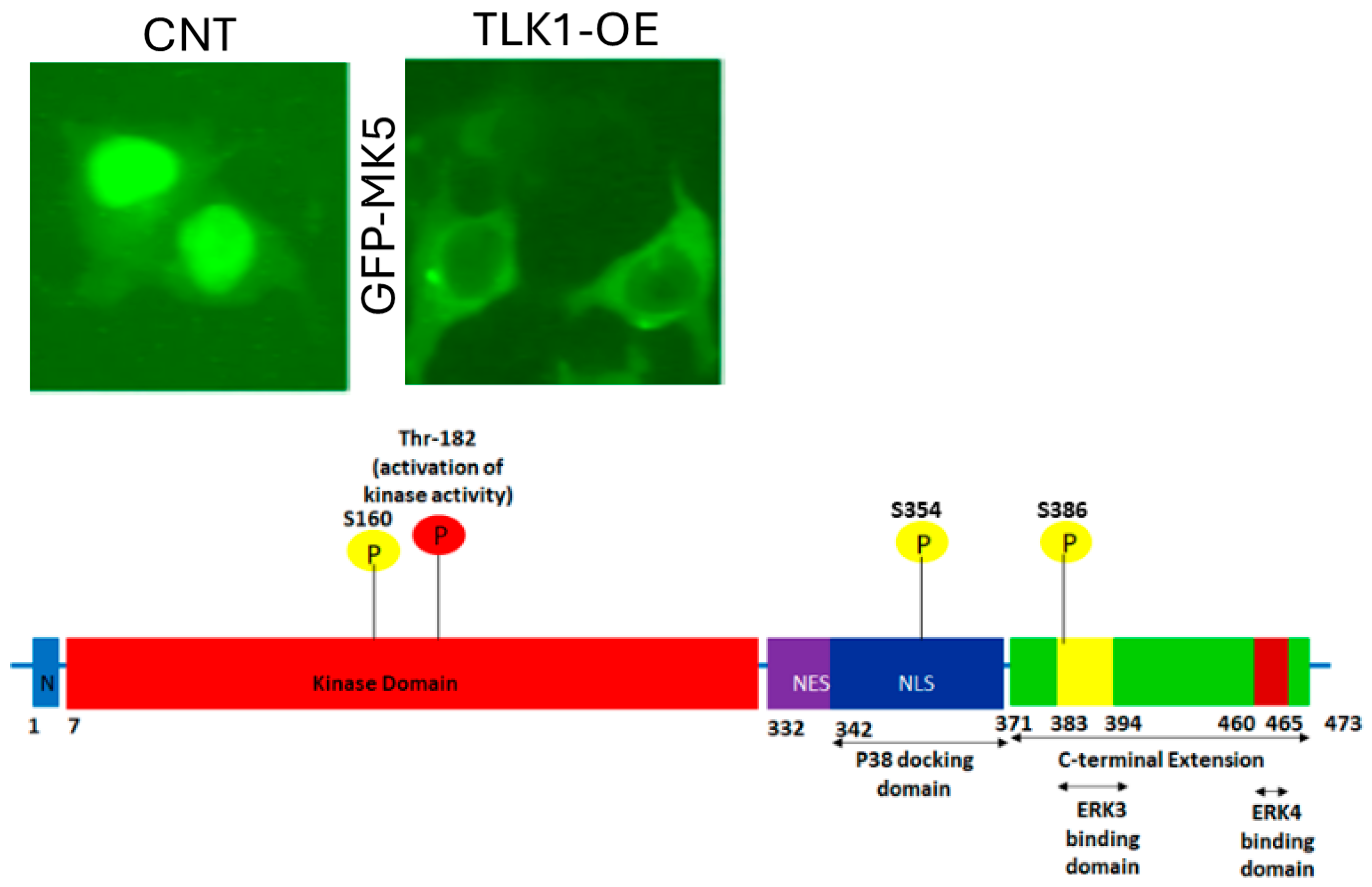
Due to its potential signaling function, we investigated the role of a kinase relay mechanism involving MK5, and we obtained considerable evidence that the TLK1>MK5 axis is an important node/regulator of cell motility, cytoskeletal rearrangements, invasion through ECM, and ultimately metastatic spread [23, 31]. Indeed, one of the most convincing aspects of this is the ability of overexpressed TLK1 (OE, a mechanism commonly exploited by PCa cells upon ADT [16]) to induce the relocalization of GFP-MK5 from nuclei to the actin cytoskeleton orchestrating pro-motility lamellopodial rearrangements [31]. This, being attributable to its phosphorylation at 3 sites: S160, S354, S386 – alterations in the subcellular distribution of MK5 were implicated previously [36]. We had mechanistically studied in details these plasticity EMT and motility/invasion changes[31, 49], as we proposed they may relate to metastatic behavior but had not addressed sufficiently therapeutic and diagnostic implications which we do in this work.

3.2. Reduction of Metastatic Spread with Inhibitors of TLK or MK5

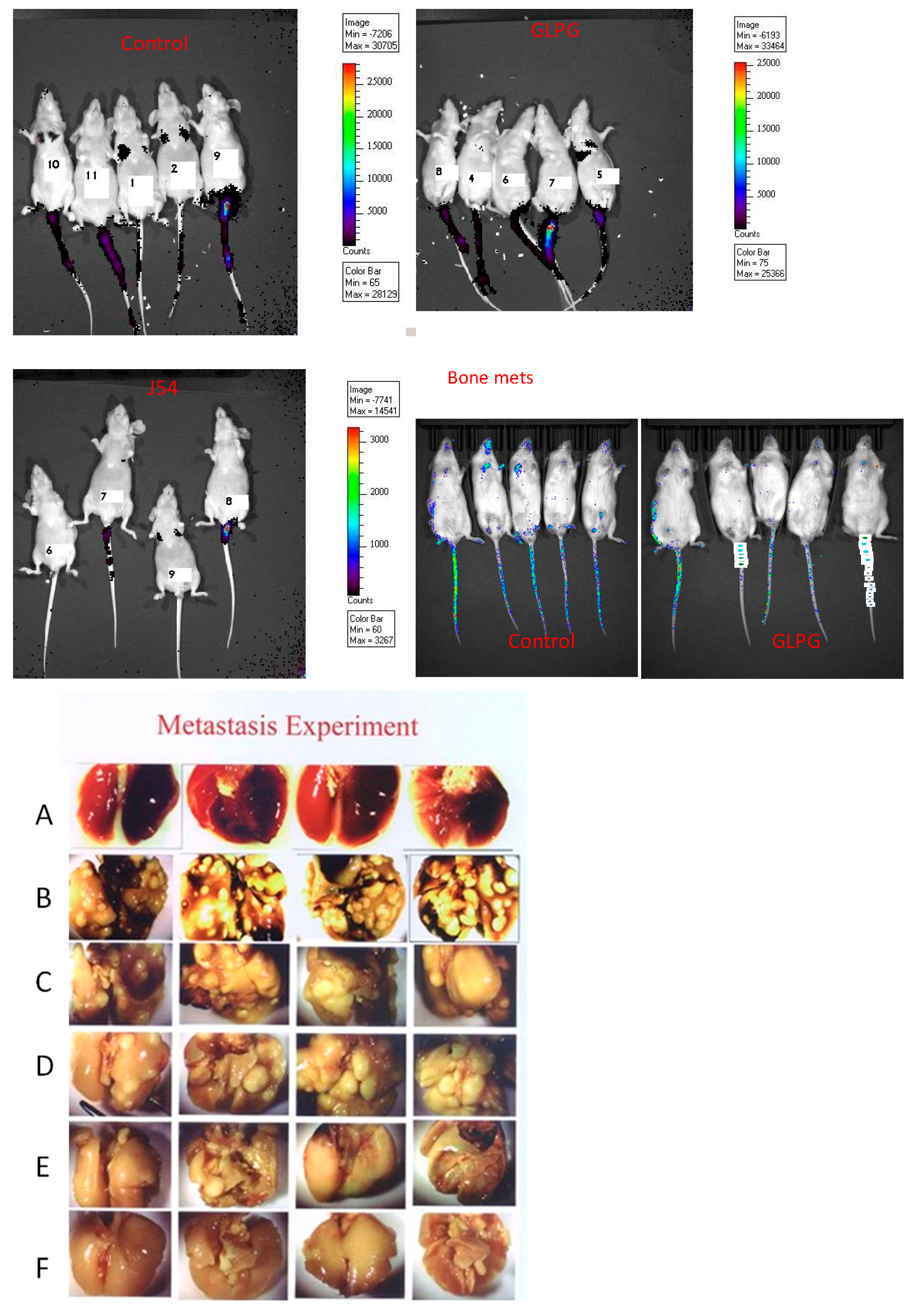
Experimental Metastasis was studied using an established model[50] using AR- PC3-Luc cells. 5x10⁵ PC3-Luc cells, which express both TLK and MK5, were injected into the lateral veins of the mice. In our initial work [31] and repeated here, we have found consistently that after 5 weeks, this results in 10-40 clearly visible lung nodules (Figure 3). Evidence of metastases was found primarily in the lungs, with a few tumors found at the base of the tail (probably at the site of IV injection) and few in the liver. Bone metastases (poorly visible in some limbs and occasional mandibula as in examples at bottom right) were better studied in the following tibia inoculation model. We have administered J54 (TLK inhibitor) or GLPG (MK5 inhibitor) IP every third day from the day after inoculation of cells. Mice were first imaged with the IVIS after 1 week under isoflurane sedation and sacrificed 1 month later. The χ-squared test in GraphPad Prism was used for statistical analyses of differences in tumor nodules burden. These experiments support the hypothesis that the TLK1>MK5 dependent invasion/motility is a key to metastatic spread and can be targeted to hinder metastasis with low toxicity using a repurposed ‘MK5 inhibitor’ that has already passed FDA/Phase I-II approval although found to be ineffective as a treatment for arthritis [51,52] or J54. Note that in this experiment shown in Figure 3, GLPG did not reduce the tumor growth (see size in 4th lung set in C) but reduced the number of lung (and bones) metastases in a dose-dependent fashion. In contrast, J54 (TLK1i) also reduced the size of tumor nodules (Figure 3 E,F) and cell proliferation which was previously reported by IHC by the number of Ki67-positive cells [29,31]. It is likely that inhibition of TLK1 with J54 also affects the Nek1>YAP tumor promotion pathway [44,53].

3.3. Role of TLK1>MK5 in Cancer Dissemination in a Mouse Model of Spontaneous PCa Progression

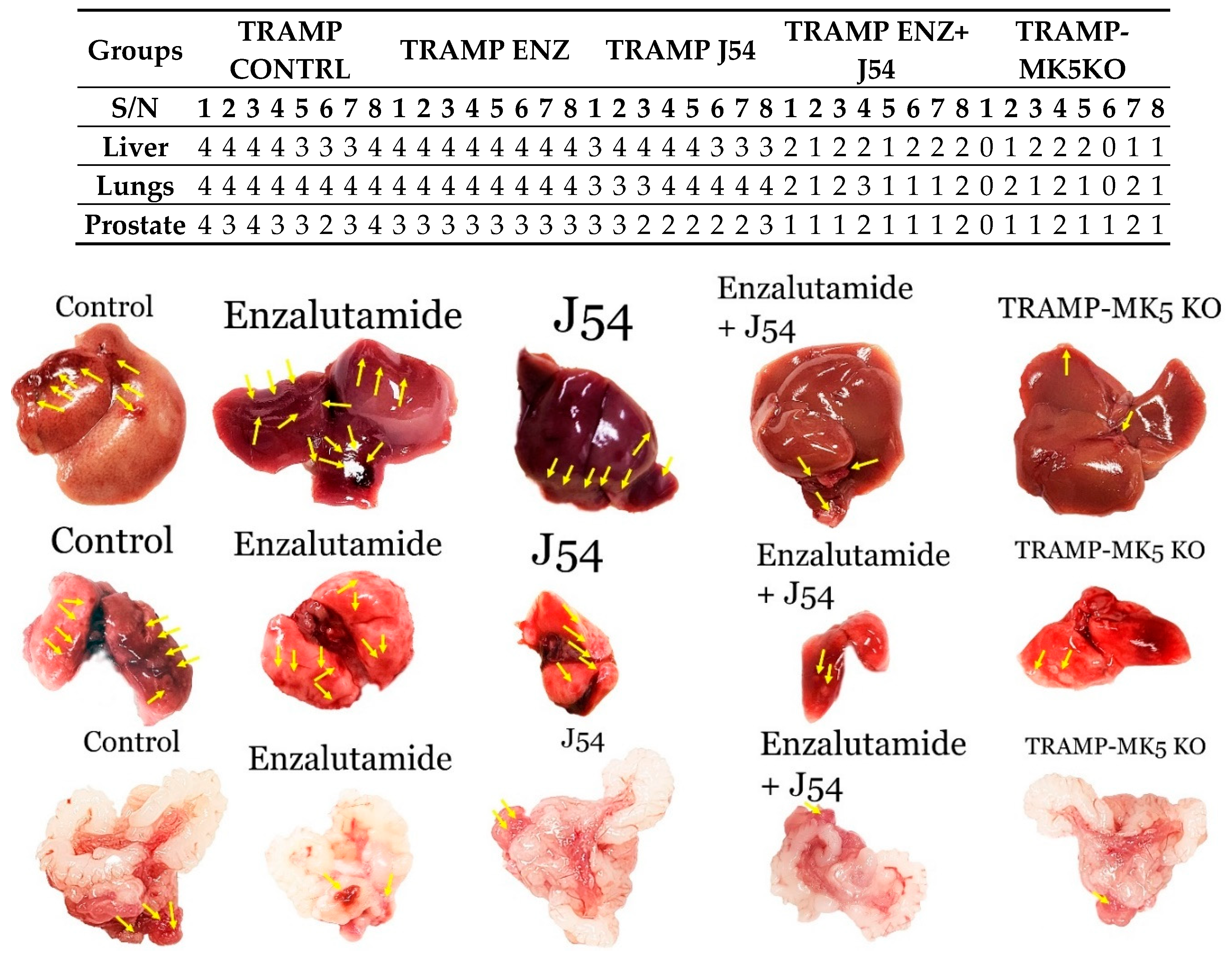
As stated above, the TRAMP mouse presents a useful and well-established model of age-related PCa progression, all the way to metastases of the liver and lungs. Two sets of experiments were implemented in order to study the involvement of these two sequentially acting kinases during late-stage cancer progression in the TRAMP model: 1) We tested the effect of inducing the expression of TLK1B with an ARSI (ENZ) to see if there was an increase in livers and lungs metasteses, and conversely, if inhibiting directly the activity of TLK1/1B resulted in reduced distal organs metasteses. 2) A genetic model where we crossed the TRAMP mice with MK5-KO strain. The results, shown in Figure 4 displayed as a qualitative chart on a 0-4 scale for presence of tumors burden (averaged between number and size of nodules) showed that, whereas cancer of the prostate occurred in all study groups, the distal metastases were significantly different. In particular, treatment with ENZ or J54 generally increased to an extent the tumors burden, while the combination ENZ+J54 significantly reduced it – what we have described as anti-ARSI addiction on the TLK1>MK5 pathway. In fact, genetically, the TRAMP.MK5-KO mice, for the most part, presented rarely with distal tumors.

3.4. Evaluation of PCa Progression in TRAMP via IHC for pMK5 Ab.

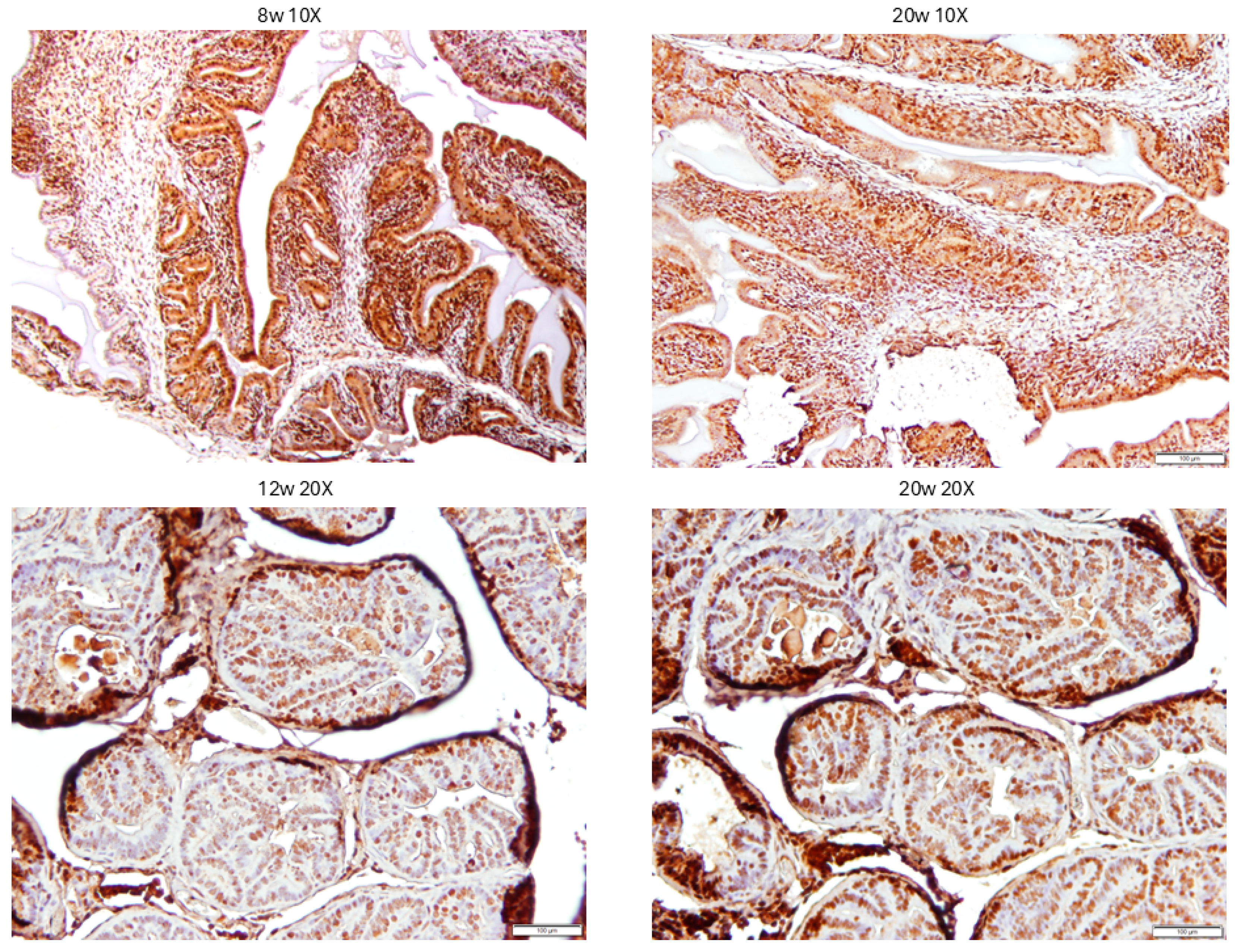
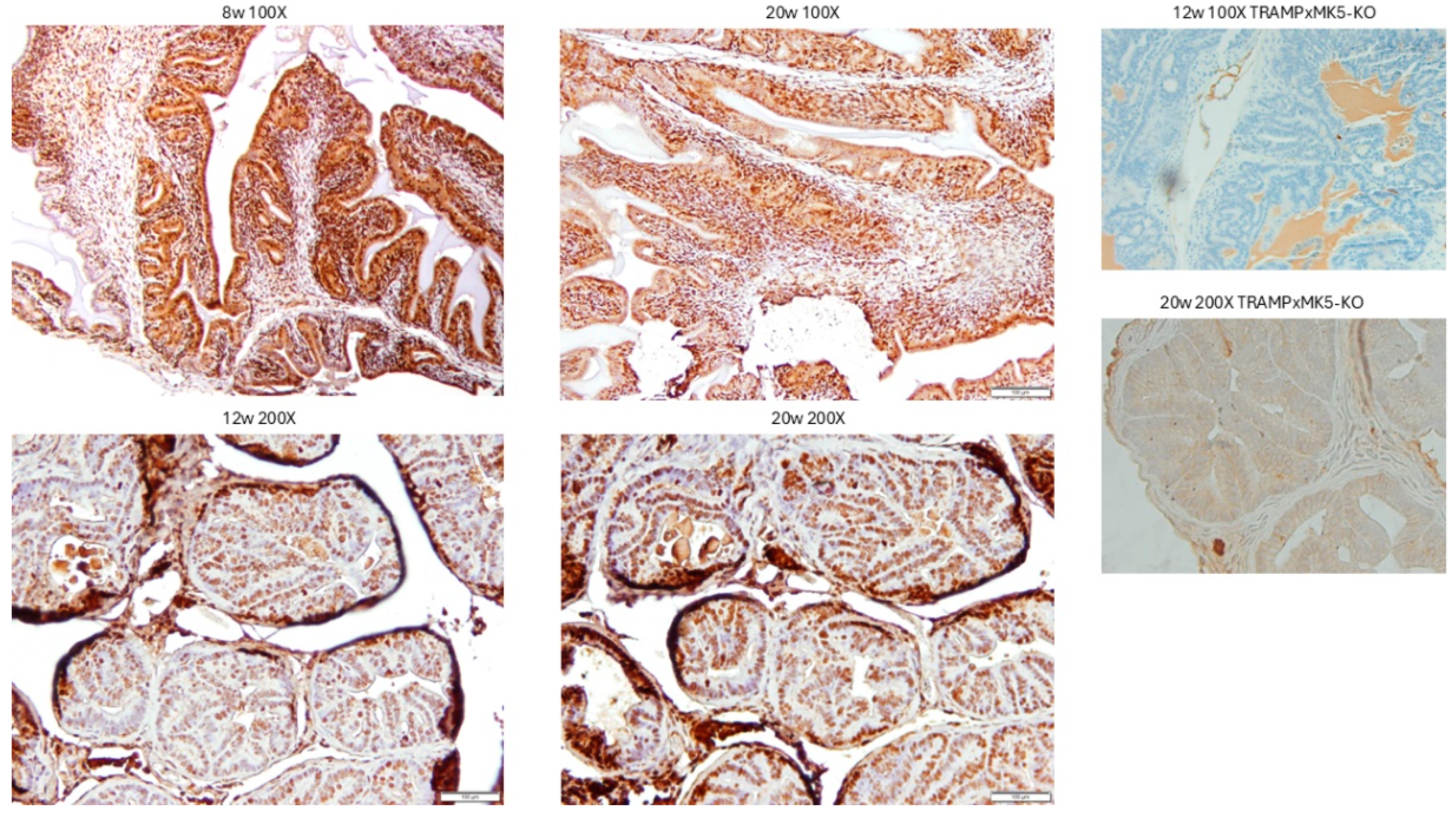
One of the identified phosphorylation sites of TLK at MK5 is the serine residue 354 in the nuclear localization signal of MK5 (cf. Figure 2). The pattern of pMK5 staining was monitored in TRAMP mice at different ages, from 8w (benign hyperplasia and PIN); to 12w (PIN and well differentiated PRAD); to 20w (invasive and disorganized PRAD). While cytoplasmic/nuclear compartments ratios are small in cancer cells and the stain intensity does not change much from benign to malignant cells, it would appear nonetheless that the cytoplasmic staining intensity of p354-MK5 increases in these age-related lesions.

3.5. Evaluation of PCa TMA with pMK5 Ab.

If the TLK-MK5 pathway is a key driver of invasion and metastatic spread, increased levels of pMK5 should be seen in samples with higher GS and/or presence of N, M, as we reported on initial evaluation[30]. Also, there should be a decrease in nuclear-to-cytoplasm ratio in the N+ patients (compare Figure 2 and IHC in Figure 5) akin to the observed GFP-MK5 relocalization upon TLK1 overexpression [30]. In this case, pMK5 may yield valuable prognostic information, especially in post-treatment cases (e.g., neoadjuvant ADT before prostatectomy or XRT) where the GS can be misrepresentative of actual pathology due to treatment-induced morphologic changes[54].

3.6. Direct Bone Engraftment

The tibia inoculation system to study the efficiency of engraftment. Metastasis is a complex process that is subdivided in minimally 3 key phases: 1) detachment/shedding from the primary site requires local invasion and intravasation into the blood stream. 2) survival in the bloodstream shear force, adhesion to a capillary wall and commencing extravasation at distal site. 3) colonization and proliferation at new metastatic site. If any of these 3 processes fail, cancer cells cannot survive resulting in the eventual elimination from the circulation, regardless of their entity in liquid biopsies [55,56]. Our work so far, and particularly the results from the lungs dissemination after tail-vein injection (where step 1 is bypassed), suggest that the TLK1>MK5 pathway and its inhibition by GLPG or J54 more likely affect one or more processes either inhibiting survival, preventing extravasation, or affecting engrafting and proliferation in the alveolar tissue. The tibia engrafting model is a more direct test for the ability of the injected cancer cells to reshape the local ECM and colonize the metastatic niche.
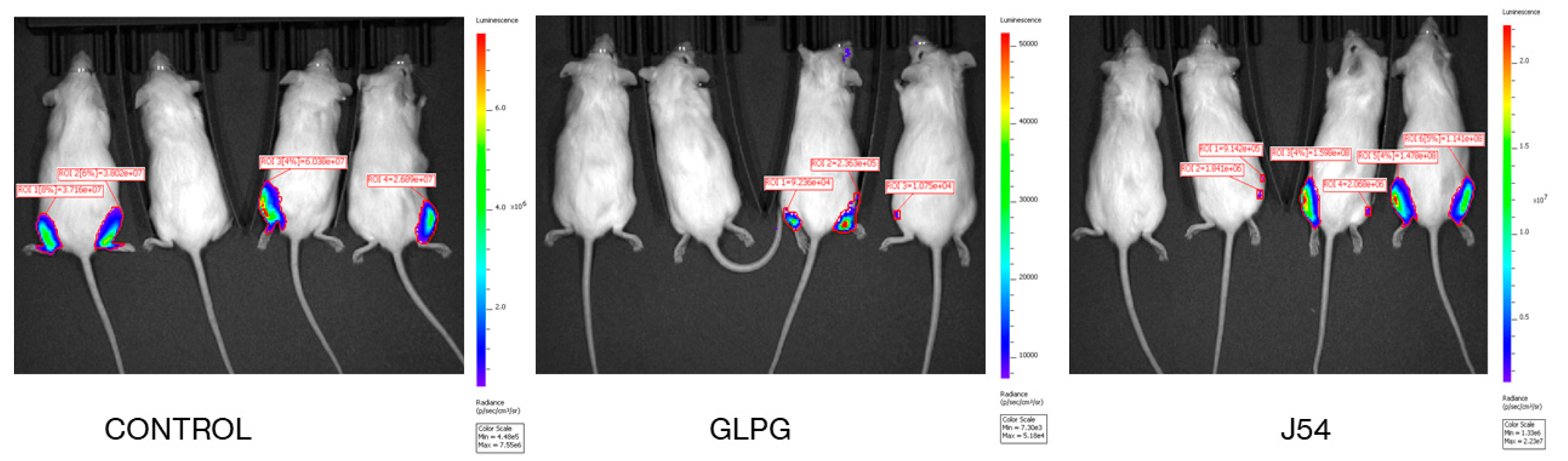
For the tibia engraftment experiment, four mice per group were inoculated with 106 PC3-Luc cells that were pre-treated overnight with 10 µM GLPG or J54 before injection in both legs, and just four days later imaging with the IVIS was carried out. We had previously determined that neither treatment affects viability of the cells and most of their metabolic features, although GLPG was found to reduce their motility and invasion through Matrigel plugs [30] The result was that clearly both treatments were effective at strongly reducing active engraftment, as >50% of the mice showed no signal in either bone side. This clearly indicated that the TLK1>MK5 ais is very important for establishing engraftment at the distal site, at least in the case of bone (a primary metastasis target for PCa). However, there was another subtle difference. It appeared that, where engraftment did occur in the mice inoculated with cells pre-treated with J54, the luminescence from the tumors indicated that growth of the cells was unimpeded. Whereas in the cells pre-treated with GLPG, in the single mouse where engrafting was evident, the growth of the tumor was also impaired and therefore the signal was weaker (see ROI signals in Figure 6). This feature, while admittedly 8 tibias per group is insufficient for solid statistics, was actually the opposite of what we had concluded for the lung metasteses experiments determined via the tail vein injection, where the mice treated with J54 showed reduced tumor sizes compared to those treated with GLPG. While we are clearly dealing with different models/methods of tumors engagements, our interpretation for the most likely difference of these two conditions is attributable to the respective TME, where the alveolar (lung tissue) vs trabecular (bone) space clearly have different properties. Also, the stiffness of the TME might be differently affected by treatment, as it is well known that cancer cells can reshape their own TME during seeding. An alternative explanation could be that the number of cells arriving at the distal site and extravasating (a motility/invasion feature), in either inoculation conditions, is very different at the onset and thus affecting early seeding/colonization.

4. Disscussion

4.1. Choice of GLPG vs J54 in Clinical Translation

Regarding the experimental metastases results, it was noticeable that GLPG did not reduce the size of the tumor nodules in the lungs (hematogenous route) compared to untreated animals, but clearly reduced the number of lung metastases. This would argue against the direct involvement of the mTORC1>TLK1B pathway [16], as this would likely also affect proliferation. In contrast the TLK1 inhibitor J54 also reduced the size of the tumors (visibly so at lung dissection) and also histologically for micro metastases that were generally negative for Ki-67 staining[31]. This suggests that, in vivo, J54 may modulate also the proliferation of cancer cells, a property that we attributed earlier to the TLK1>NEK1>YAP1 axis[44] that affects largely the contact inhibition features (mechano-transduction) of the cells[57], and in fact, J54 alone strongly inhibited the growth rate of VCaP-Luc subcutaneous tumors[53]; and while the processes orchestrating tumor growth and metastasis are distinct, they are also inextricably linked. Target validation via monitoring the pNek1-T141>pYAP-Y407 axis was also shown via WB analysis of the excised tumors[53], and interestingly, expression of PD-L1 (a target of YAP [58]) was likewise suppressed with J54, with important implications for tumor suppression when using immunocompetent mice or men in a future clinical trial. In addition, as TLK1 plays important functions in the DDR and DNA repair [18,59]. Its inhibition in replication-stressed cancer cells could promote genomic instability and the generation of neoantigens upon which a more effective immune response may ensue to curtail rapid growth of tumors[60]. However, GLPG is further along in clinical testing (completed PhaseI-II for arthritis indication[61]).

4.2. Specificity vs. General Toxicity Considerations

TLK1 has ~150 protein targets[15], while the list for MK5 is more limited and possibly incomplete[62]. Despite such expected biomic complexity, both TLK1-KO and MK5-KO mice are viable and fertile. This lack of ‘essentiality’ makes them an excellent target for intervention upon their metastatic function with a lesser concern of affecting other important issues for viability and well-being, although we expect that we acknowledge their potential existence during future clinical development

Author Contributions

DO: Experimental execution, data analysis, manuscript writing; OCF: data analysis, manuscript writing; MG: provision of strain and information, data analysis, manuscript writing; ADB data analysis, manuscript writing; funding and materials procurement.

Funding

This work was supported by a DoD-PCRP grant W81XWH-17-1-0417 and a Chancellor grant to ADB. Special thanks to Lucia Solitro of the LSUHS Small Animal Imaging Facility (RRID:SCR_024777) for her expert use of the PE-IVIS.

Institutional Review Board Statement

Animal Maintenance and Procedures. TRAMP-MK51+/+ or MK5+/− or -/- mice were maintained at LSU Health Science Center-Shreveport’s animal facility and treated as indicated for up to 26weeks of. All the animal experiments were approved by the Institutional Animal Care and Use Committee (P24-026) and by the DoD-ACURO review board. Humans Ethics Approval and Consent to Participate The human patient samples were collected after the written consent of each subject. The identity of each donor was anonymous, and only minimal clinical information was available to the investigators. The study methodologies (STUDY00002179) conformed to the standards set by the Declaration of Helsinki and the entire study was approved by our IRB.

Data Availability Statement

Description of all data and materials can be found in the referenced article. No additional data has been withheld from the public.

Conflicts of Interest

The authors declare they have no conflicts of interest with this publication.

References

  1. Halabi, S.; Kelly, W. K, Ma, H.; Zhou, H.; Solomon NC, Fizazi, K.; Tangen CM, Rosenthal, M.; Petrylak DP, Hussain M et al. Meta.-Analysis Evaluating the Impact of Site of Metastasis on Overall Survival in Men With Castration-Resistant Prostate Cancer. J. Clin. Oncol. 2016, 34, 1652–1659. [Google Scholar] [PubMed]
  2. Welch DR, Hurst DR: Defining the Hallmarks of Metastasis. Cancer Res. 2019, 79, 3011–3027. [CrossRef] [PubMed]
  3. Fares, J.; Fares, M.Y.; Khachfe, H.H.; Salhab, H.A.; Fares, Y. Molecular principles of metastasis: A hallmark of cancer revisited. Signal Transduction and Targeted Therapy 2020, 5, 28. [Google Scholar] [PubMed]
  4. Hood JD, Cheresh DA: Role of integrins in cell invasion and migration. Nat Rev Cancer 2002, 2, 91–100. [CrossRef]
  5. Sillje HH, Takahashi, K. ; Tanaka, K.; Van Houwe, G.; Nigg EA: Mammalian homologues of the plant Tousled gene code for cell-cycle-regulated kinases with maximal activities linked to ongoing DNA replication. Embo J 1999, 18, 5691–5702. [Google Scholar] [CrossRef]
  6. Sunavala-Dossabhoy, G.; Li, Y.; Williams, B.; De Benedetti A: A dominant negative mutant of TLK1 causes chromosome missegregation and aneuploidy in normal breast epithelial cells. BMC Cell Biol 2003, 4:16.
  7. Sunavala-Dossabhoy, G.; Fowler, M.; De Benedetti A: Translation of the radioresistance kinase TLK1B is induced by gamma-irradiation through activation of mTOR and phosphorylation of 4E-BP1. BMC Mol Biol 2004, 5:1.
  8. Sunavala-Dossabhoy, G.; Balakrishnan, S.; Sen, S.; Nuthalapaty, S.; De Benedetti A: The radioresistance kinase TLK1B protects the cells by promoting repair of double strand breaks. BMC Mol Biol 2005, 6:19.
  9. Sen, S.; De Benedetti A: TLK1B promotes repair of UV-damaged DNA through chromatin remodeling by Asf1. BMC Mol Biol 2006, 7:37.
  10. Canfield, C.; Rains, J.; De Benedetti, A. TLK1B promotes repair of DSBs via its interaction with Rad9 and Asf1. BMC Mol Biol 2009, 10:110.
  11. Li, Y.; DeFatta, R.; Anthony, C.; Sunavala, G.; De Benedetti, A. A translationally regulated Tousled kinase phosphorylates histone H3 and confers radioresistance when overexpressed. Oncogene 2001, 20, 726–738. [Google Scholar]
  12. Sunavala-Dossabhoy, G.; De Benedetti, A. Tousled homolog, TLK1, binds and phosphorylates Rad9; tlk1 acts as a molecular chaperone in DNA repair. DNA Repair 2009, 8:87-102.
  13. Lee, J. ; Kim MS, Park SH, Jang YK: Tousled-like kinase 1 is a negative regulator of core transcription factors in murine embryonic stem cells. Sci Rep 2018, 8, 334. [Google Scholar] [CrossRef]
  14. Lee S-B, Segura-Bayona, S. ; Villamor-Payà, M.; Saredi, G.; Todd MAM, Attolini CS-O, Chang T-Y, Stracker TH, Groth A: Tousled-like kinases stabilize replication forks and show synthetic lethality with checkpoint and PARP inhibitors. Science Advances 2018, 4, eaat4985. [Google Scholar] [CrossRef]
  15. Singh, V.; Connelly ZM, Shen, X. ; De Benedetti A: Identification of the proteome complement of humanTLK1 reveals it binds and phosphorylates NEK1 regulating its activity. Cell Cycle 2017, 16, 915–926. [Google Scholar] [CrossRef]
  16. Singh, V.; Jaiswal PK, Ghosh, I. ; Koul HK, Yu, X.; De Benedetti A: Targeting the TLK1/NEK1 DDR axis with Thioridazine suppresses outgrowth of androgen independent prostate tumors. International journal of cancer 2019, 145, 1055–1067. [Google Scholar] [CrossRef]
  17. Singh V, Jaiswal PK, Ghosh I, Koul HK, Yu X, De Benedetti A: The TLK1-Nek1 axis promotes prostate cancer progression. Cancer Lett 2019, 453:131-141. [CrossRef]
  18. Ghosh I, De Benedetti A: Untousling the Role of Tousled-like Kinase 1 in DNA Damage Repair. International Journal of Molecular Sciences 2023, 24, 13369. [CrossRef] [PubMed]
  19. Segura-Bayona S, Stracker TH: The Tousled-like kinases regulate genome and epigenome stability: Implications in development and disease. Cell Mol Life Sci 2019, 76, 3827–3841. [CrossRef] [PubMed]
  20. Kim JA, Tan Y, Wang X, Cao X, Veeraraghavan J, Liang Y, Edwards DP, Huang, S.; Pan, X.; Li K et al. Comprehensive functional analysis of the tousled-like kinase 2 frequently amplified in aggressive luminal breast cancers. Nat Commun 2016, 7:12991. [CrossRef]
  21. Lin M, Yao Z, Zhao N, Zhang C: TLK2 enhances aggressive phenotypes of glioblastoma cells through the activation of SRC signaling pathway. Cancer Biol Ther 2019, 20, 101–108. [CrossRef] [PubMed]
  22. Xiang W, Zhang D, Montell DJ: Tousled-like kinase regulates cytokine-mediated communication between cooperating cell types during collective border cell migration. Mol Biol Cell 2016, 27, 12–19. [CrossRef]
  23. Khalil MI, Singh V, King J, De Benedetti A: TLK1-mediated MK5-S354 phosphorylation drives prostate cancer cell motility and may signify distinct pathologies. Molecular Oncology 2022, 16, 2537–2557. [CrossRef]
  24. Gelman IH: How the TRAMP Model Revolutionized the Study of Prostate Cancer Progression. Cancer Res 2016, 76, 6137–6139. [CrossRef]
  25. Gingrich JR, Barrios RJ, Kattan MW, Nahm HS, Finegold MJ, Greenberg NM: Androgen-independent prostate cancer progression in the TRAMP model. Cancer Res 1997, 57, 4687–4691.
  26. Gingrich JR, Barrios RJ, Morton RA, Boyce BF, DeMayo FJ, Finegold MJ, Angelopoulou R, Rosen JM, Greenberg NM: Metastatic prostate cancer in a transgenic mouse. Cancer Res 1996, 56, 4096–4102.
  27. Cerasuolo M, Maccarinelli F, Coltrini D, Mahmoud AM, Marolda V, Ghedini GC, Rezzola S, Giacomini A, Triggiani, L. ; Kostrzewa M et al. Modeling Acquired Resistance to the Second-Generation Androgen Receptor Antagonist Enzalutamide in the TRAMP Model of Prostate Cancer. Cancer Res 2020, 80, 1564–1577. [Google Scholar] [CrossRef]
  28. Singh V, Jaiswal PK, Ghosh I, Koul HK, Yu X, De Benedetti A: The TLK1-Nek1 axis promotes prostate cancer progression. Cancer letters 2019, 453:131-141.
  29. Singh V, Bhoir S, Chikhale RV, Hussain J, Dwyer D, Bryce RA, Kirubakaran S, De Benedetti A: Generation of Phenothiazine with Potent Anti-TLK1 Activity for Prostate Cancer Therapy. iScience 2020, 23, 101474. [CrossRef]
  30. Singh V, Khalil MI, De Benedetti A: The TLK1/Nek1 axis contributes to mitochondrial integrity and apoptosis prevention via phosphorylation of VDAC1. Cell Cycle 2020, 19, 363–375.
  31. Khalil MI, De Benedetti A: The TLK1–MK5 Axis Regulates Motility, Invasion, and Metastasis of Prostate Cancer Cells. Cancers 2022, 14, 5728.
  32. Ronkina N, Gaestel M: MAPK-Activated Protein Kinases: Servant or Partner? Annu Rev Biochem 2022, 91:505-540.
  33. Schumacher S, Laass K, Kant S, Shi Y, Visel A, Gruber AD, Kotlyarov A, Gaestel M: Scaffolding by ERK3 regulates MK5 in development. Embo J 2004, 23, 4770–4779.
  34. Kant S, Schumacher S, Singh MK, Kispert A, Kotlyarov A, Gaestel M: Characterization of the atypical MAPK ERK4 and its activation of the MAPK-activated protein kinase MK5. J Biol Chem 2006, 281, 35511–35519.
  35. Seternes OM, Mikalsen T, Johansen B, Michaelsen E, Armstrong CG, Morrice NA, Turgeon B, Meloche S, Moens U, Keyse SM: Activation of MK5/PRAK by the atypical MAP kinase ERK3 defines a novel signal transduction pathway. Embo J 2004, 23, 4780–4791.
  36. Åberg E, Perander M, Johansen B, Julien C, Meloche S, Keyse SM, Seternes O-M: Regulation of MAPK-activated Protein Kinase 5 Activity and Subcellular Localization by the Atypical MAPK ERK4/MAPK4*. Journal of Biological Chemistry 2006, 281, 35499–35510.
  37. Boudghene-Stambouli F, Soulez M, Ronkina N, Dörrie A, Kotlyarov A, Seternes OM, Gaestel M, Meloche S: On the Therapeutic Potential of ERK4 in Triple-Negative Breast Cancer. Cancers (Basel) 2022, 15.
  38. Coulombe P, Meloche S: Atypical mitogen-activated protein kinases: Structure, regulation and functions. Biochim Biophys Acta 2007, 1773, 1376–1387.
  39. Sun P, Yoshizuka N, New L, Moser BA, Li Y, Liao R, Xie C, Chen J, Deng Q, Yamout M et al. PRAK is essential for ras-induced senescence and tumor suppression. Cell 2007, 128, 295–308. [Google Scholar]
  40. Yoshizuka N, Chen RM, Xu Z, Liao R, Hong L, Hu WY, Yu G, Han J, Chen L, Sun P: A novel function of p38-regulated/activated kinase in endothelial cell migration and tumor angiogenesis. Mol Cell Biol 2012, 32, 606–618.
  41. Wang Y, Wang W, Wu H, Zhou Y, Qin X, Wang Y, Wu J, Sun XY, Yang, Y. ; Xu H et al. The essential role of PRAK in tumor metastasis and its therapeutic potential. Nat Commun 2021, 12, 1736. [Google Scholar] [CrossRef] [PubMed]
  42. Ronkina N, Johansen C, Bohlmann L, Lafera J, Menon MB, Tiedje C, Laaß K, Turk BE, Iversen, L. ; Kotlyarov A et al. Comparative Analysis of Two Gene-Targeting Approaches Challenges the Tumor-Suppressive Role of the Protein Kinase MK5/PRAK. PLoS ONE 2015, 10, e0136138. [Google Scholar]
  43. Seo J, Kim MH, Hong H, Cho H, Park S, Kim SK, Kim J: MK5 Regulates YAP Stability and Is a Molecular Target in YAP-Driven Cancers. Cancer Res 2019, 79, 6139–6152. [CrossRef] [PubMed]
  44. Khalil MI, Ghosh I, Singh V, Chen J, Zhu H, De Benedetti A: NEK1 Phosphorylation of YAP Promotes Its Stabilization and Transcriptional Output. Cancers 2020, 12, 3666.
  45. Khalil MI, De Benedetti A: Tousled-like kinase 1: A novel factor with multifaceted role in mCRPC progression and development of therapy resistance. Cancer Drug Resistance 2022, 5, 93–101.
  46. Zheng M, Wang YH, Wu XN, Wu SQ, Lu BJ, Dong MQ, Zhang H, Sun P, Lin SC, Guan KL et al. Inactivation of Rheb by PRAK-mediated phosphorylation is essential for energy-depletion-induced suppression of mTORC1. Nat Cell Biol 2011, 13, 263–272. [Google Scholar]
  47. Zhou H, Huang S: Role of mTOR signaling in tumor cell motility, invasion and metastasis. Curr Protein Pept Sci 2011, 12, 30–42.
  48. Jiang J, Jia P, Zhao Z, Shen B: Key regulators in prostate cancer identified by co-expression module analysis. BMC Genomics 2014, 15:1015.
  49. Khalil MI, Singh V, King J, De Benedetti A: TLK1-mediated MK5-S354 phosphorylation drives prostate cancer cell motility and may signify distinct pathologies. Molecular Oncology, n/a(n/a).
  50. Elkin M, Vlodavsky I: Tail vein assay of cancer metastasis. Current protocols in cell biology 2001, 12, 19.12–11.
  51. Namour F, Vanhoutte FP, Beetens J, Blockhuys S, De Weer M, Wigerinck P: Pharmacokinetics, safety, and tolerability of GLPG0259, a mitogen-activated protein kinase-activated protein kinase 5 (MAPKAPK5) inhibitor, given as single and multiple doses to healthy male subjects. Drugs in R&D 2012, 12, 141–163.
  52. Westhovens R, Keyser FD, Rekalov D, Nasonov EL, Beetens J, Van der Aa A, Wigerinck P, Namour F, Vanhoutte F, Durez P: Oral administration of GLPG0259, an inhibitor of MAPKAPK5, a new target for the treatment of rheumatoid arthritis: A phase II, randomised, double-blind, placebo-controlled, multicentre trial. Ann Rheum Dis 2013, 72, 741–744. [CrossRef]
  53. Olatunde D, De Benedetti A: TLK1>Nek1 Axis Promotes Nuclear Retention and Activation of YAP with Implications for Castration-Resistant Prostate Cancer. Cancers 2024, 16, 2918. [CrossRef] [PubMed]
  54. Stewart SB, Cheville JC, Sebo TJ, Frank I, Boorjian SA, Thompson RH, Gettman MT, Tollefson MK, Umbriet EC, Psutka SP et al. Gleason grading after neoadjuvant hormonal therapy retains prognostic value for systemic progression following radical prostatectomy. Prostate Cancer Prostatic Dis 2014, 17, 332–337. [Google Scholar] [CrossRef] [PubMed]
  55. Snow A, Chen D, Lang JE: The current status of the clinical utility of liquid biopsies in cancer. Expert Rev Mol Diagn 2019, 19, 1031–1041. [CrossRef] [PubMed]
  56. Zeng Z, Yi Z, Xu B: The biological and technical challenges facing utilizing circulating tumor DNA in non-metastatic breast cancer patients. Cancer Letters 2025, 616:217574.
  57. Yu FX, Zhao B, Guan KL: Hippo Pathway in Organ Size Control, Tissue Homeostasis, and Cancer. Cell 2015, 163, 811–828. [CrossRef]
  58. Kim MH, Kim CG, Kim SK, Shin SJ, Choe EA, Park SH, Shin EC, Kim J: YAP-Induced PD-L1 Expression Drives Immune Evasion in BRAFi-Resistant Melanoma. Cancer Immunol Res 2018, 6, 255–266. [CrossRef]
  59. Ghosh I, Kwon Y, Shabestari AB, Chikhale R, Chen J, Wiese C, Sung P, De Benedetti A: TLK1-mediated RAD54 phosphorylation spatio-temporally regulates Homologous Recombination Repair. Nucleic Acids Research 2023.
  60. Mardis ER: Neoantigens and genome instability: Impact on immunogenomic phenotypes and immunotherapy response. Genome Medicine 2019, 11, 71. [CrossRef]
  61. Namour F, Vanhoutte FP, Beetens J, Blockhuys S, De Weer M, Wigerinck P: Pharmacokinetics, safety, and tolerability of GLPG0259, a mitogen-activated protein kinase-activated protein kinase 5 (MAPKAPK5) inhibitor, given as single and multiple doses to healthy male subjects. Drugs R D 2012, 12, 141–163.
  62. Sahadevan P, Allen BG: MK5: A novel regulator of cardiac fibroblast function? IUBMB Life 2017, 69, 785–794. [CrossRef]
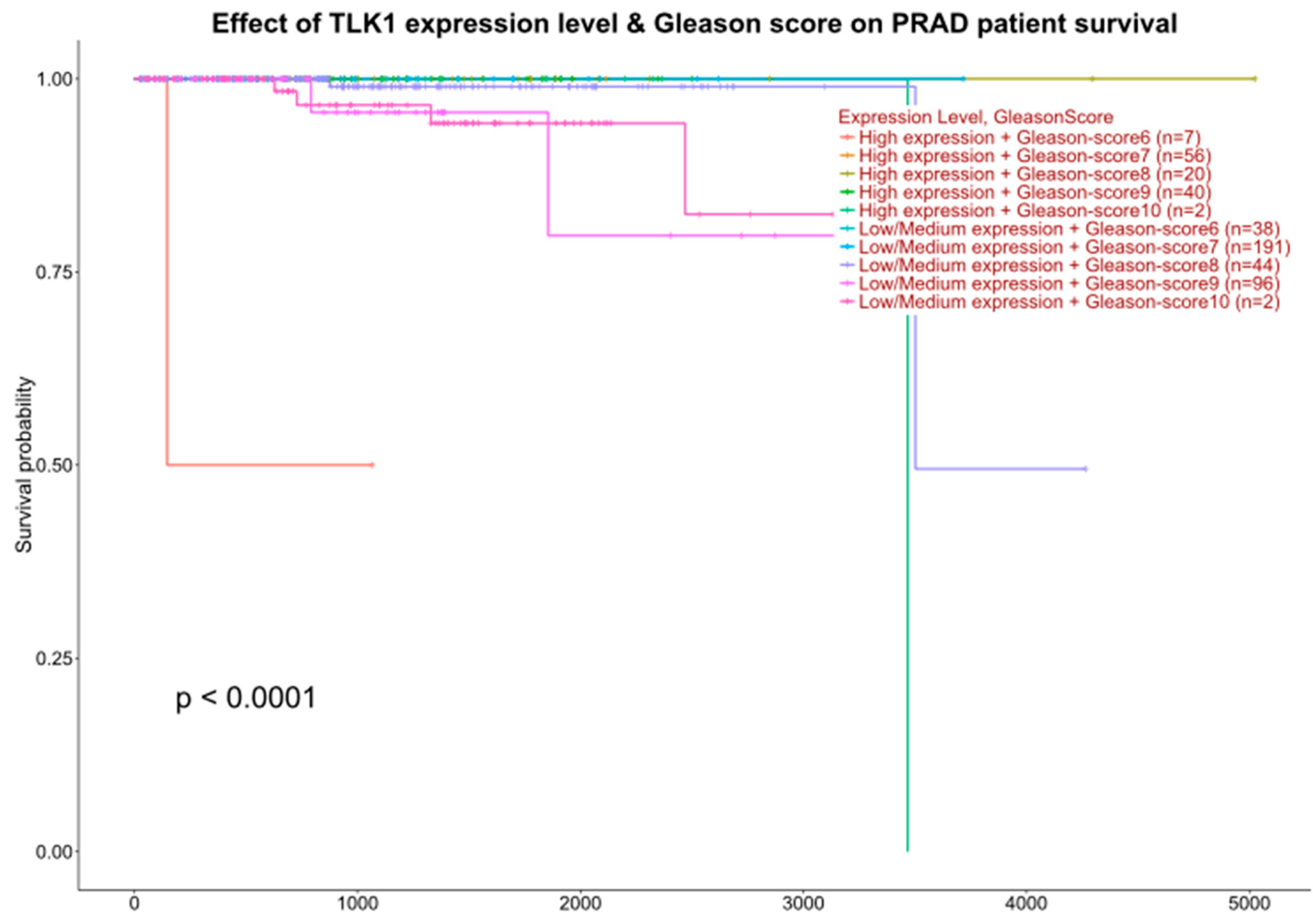
Figure 1. Expression analyses of TLK1 relation to outcome.
Preprints 151138 g001
Figure 2. Mapping of the 3 novel phosphorylation sites (shown as yellow circles with corresponding residue number) on the MK5 functional domains.
Preprints 151138 g002
Figure 3. Experimental metastasis via injection of PC-3 cells in the lateral tail-vein. The metastases in the lungs were imaged by IVIS after 1 week (note reduced ‘take’ in treated groups) or scored 5 weeks after inoculation (right). A, not inoculated control lungs. B. inoculated, vehicle control. C and D, GLPG at 2 or 5 mg/kg. E and F, J54 at 2 or 10 mg/kg (treatment twice/w). Lung nodules are quantified on its left – P<0.001 compared to untreated group).
Preprints 151138 g003
Figure 4. TLK1Bi, TLK1/MK5KO reduced distal organ metastasis in TRAMP mouse model. Mice were randomly distributed into groups of 8 and were bred till 13 weeks. Thereafter, oral treatment with Enzalutamide (ENZ) and/or J54 was given twice per week for 13 weeks (control and TRAMP-MK5 KOs were given PBS orally). Subsequently, mice were euthanized and the respective organs (lungs, liver and prostate) removed. A) Table showing the qualitative scores of tumor burden per mouse. 0- No burden, 1-very low burden, 2-low burden, 3-moderate burden, 4-high burden B) Representative images of liver, lungs and prostate image of vehicle control, TRAMP treated with J54 (10mg/kg) and/or enzalutamide (10mg/kg) twice a week, and TRAMP-MK5 KO at age 26 weeks. We did not observe differences between homozygous MK5-KO vs heterozygous.
Preprints 151138 g004
Figure 5. IHC staining revealed elevated pMK5 Ser354 level in PCa progression of TRAMP mice. Representative images of TRAMP prostates thin sections from mice sacrificed at different ages and stained by IHC for pMK5 are shown.
Preprints 151138 g005
Figure 6. TMA/IHC staining revealed elevated pMK5-S354 (cytoplasmic) staining in patients with high metastatic penetrance. TMA samples of similar GS differ in intensity of pMK5 staining and nuclear/cytoplasmic ratio that correlates with nodal metastasis. MK5 is generally localized to the nuclei, but shuttles to the cytoplasm upon activation where it is believed to promote reorganization of the cytoskeletal network. We selected a few, most representative images from our institutional TMA stained with pMK5 (Thermofisher A5-105676). One can see that cytoplasmic staining matches more closely with presence of lymph metastasis involvement (N+); an example of PCa+ lymph node shows largely cytoplasmic staining in the nest. Stain intensity on 0-4 scale. Note the absence of stain the MK5-KO PCa tissue. Scale Bar 50 µm.
Preprints 151138 g006
Figure 7. Tibia engraftment of PC3-Luc cells. PC3_Luc cells were pretreated with GLPG or J54 (10 µM) for 12h. After resuspension at 50,000 cells/µl in condition medium, they were inoculated with a Hamilton syringe in each tibia under isoflurane anesthesia. Four days after recovery, the mice were imaged with the IVIS and the signal from the tumors in each leg were quantitated (ROI).
Preprints 151138 g007
Disclaimer/Publisher’s Note: The statements, opinions and data contained in all publications are solely those of the individual author(s) and contributor(s) and not of MDPI and/or the editor(s). MDPI and/or the editor(s) disclaim responsibility for any injury to people or property resulting from any ideas, methods, instructions or products referred to in the content.
Copyright: This open access article is published under a Creative Commons CC BY 4.0 license, which permit the free download, distribution, and reuse, provided that the author and preprint are cited in any reuse.
Prerpints.org logo

Preprints.org is a free preprint server supported by MDPI in Basel, Switzerland.

Subscribe

Disclaimer

Terms of Use

Privacy Policy

Privacy Settings

© 2025 MDPI (Basel, Switzerland) unless otherwise stated