Preprint
Brief Report

This version is not peer-reviewed.

Multimodal Telerehabilitation in Post COVID-19 Condition Recovery: A Series of 12 Cases

A peer-reviewed article of this preprint also exists.

Submitted:

28 February 2025

Posted:

04 March 2025

You are already at the latest version

Abstract

Background and Clinical Significance: Post COVID-19 Condition is a recently recognized syndrome characterized by the persistence of various symptoms, including dyspnea, physical and mental fatigue, and post-exertional malaise. Currently, there is no established treatment or clear consensus on the effectiveness of rehabilitation. In addition, asynchronous telerehabilitation may be an option to reach more of the population with persistent COVID symptoms. Therefore, it is necessary to show the efficacy of this telematic approach and the benefits of a multimodal rehabilitation strategy in these patients. Case Presentation: This study presents a case series of 12 patients (9 women and 3 men) diagnosed with Post COVID-19 Condition and chronic fatigue who underwent rehabilitation through an asynchronous telerehabilitation approach. The 12-week intervention included therapeutic education, physical and respiratory rehabilitation. The most prevalent symptoms were severe fatigue, arthralgias and myalgias, cough and dyspnea and brain fog. The following variables were analyzed: Fatigue, quality of life, dyspnea, respiratory strength, aerobic capacity and upper and lower limb strength. Conclusions: After 12 weeks significant improvements were found in fatigue, aerobic capacity and limb and respiratory strength. However, no improvement was found in dyspnea scores, which did not correlate with respiratory strength. Interestingly, a post-intervention correlation emerged between the distance covered in the aerobic capacity and perceived fatigue, suggesting that asynchronous telerehabilitation could be a viable treatment strategy for these patients.

Keywords: 
;  ;  ;  ;  ;  

1. Introduction and Clinical Significance

The World Health Organization (WHO) defines Post COVID-19 Condition (PCC) as a condition characterized by “a history of probable or confirmed SARS-CoV-2 infection, usually 3 months from the onset of COVID-19, with symptoms that persist for at least 2 months and cannot be explained by an alternative diagnosis” [1,2]. PCC can be found in literature as Long COVID, Long-haul COVID or Post Acute COVID syndrome. However, the term PCC is the one recommended in a Delphi consensus published in 2022 [1]. PCC persists beyond the acute phase, with symptoms recurring cyclically for months [1,3]. At least 10% of SARS-CoV-2 cases develop PCC [2]. Unlike patients who have developed sequelae, PCC usually affects individuals who present with mild to moderate acute symptoms, but whose clinical condition progressively worsens [4]. Among the most impairment effects of PCC for patients are muscular fatigue and cognitive dysfunction [5,6]. In addition, it is associated with a wide range of symptoms, including dyspnea, “brain fog”, anxiety, depression, gastrointestinal disturbances, and overall reduced in quality of life [7,8]. Other key characteristic symptoms are exertion intolerance [9,10] and post-exertional malaise (PEM) [11]. These patients experience a deterioration in their daily activities and a socioeconomic impact, which in some cases leads to an inability to work.
There is currently no curative treatment. The WHO highlights the critical importance of rehabilitation for individuals with PCC, with physiotherapy playing a central role in patient recovery. The latest guidelines propose the need for a multimodal physiotherapeutic approach [12], combining dyspnea control, cardiorespiratory and strength rehabilitation based on prior individual assessment with incremental exercise even in cases of moderate PEM [13]. In addition, it is essential to implement therapeutic education strategies and adopt a comprehensive approach focused on improving lifestyle, nutrition, and self-management of the disease [14]. The current evidence recommends these multimodal approaches and even in telematic format [15]. Telerehabilitation makes it possible to reach people in different places and with different limitations to access rehabilitation centers and allows the patient to adapt their program to their available time [16]. Telerehabilitation system has already proven to be effective for patients with various disabilities and even in patients with PCC [17]. Specifically, the asynchronous modality has also shown its effectiveness in post-COVID-19 patients, suggesting that it could also be a valid approach for individuals with PCC [17,18,19,20]. Although the existing literature on the multimodal approach in PCC patients treated with asynchronous telerehabilitation is limited, and the available studies report variable outcomes and low adherence rates, which makes it difficult to determine the real effect of these interventions, this modality remains a promising strategy worth further exploration. Therefore, the primary aim of this study is to determine the preliminary efficacy of a multimodal approach using an asynchronous telerehabilitation system in improving fatigue, quality of life, and functional status variables, including aerobic capacity, strength, and maximal inspiratory and expiratory pressures in patients with PCC. The secondary aim is to explore potential correlations between functional variables (aerobic capacity and maximal pulmonary pressures) and self-reported outcomes (fatigue and dyspnea).

2. Case Presentation

This study is a prospective case series of 12 patients enrolled between February 2023 and April 2024 after each patient had signed the informed consent form on the first day of inclusion. Patients were recruited from three health centers of Aragón (Spain) and the intervention was approved by the Ethics Committee of Aragón (reference number: PI22/335).

2.1. Elegibility Criteria

The inclusion criteria were: 1) Aged 18 to 70 years; 2) Diagnostic criteria for having had COVID-19; 3) PCC symptoms for more than 12 weeks, from the end of the acute phase; 4) Fatigue >4 points on the Fatigue Severity Scale and 5) Independent locomotion. The exclusion criteria were: 1) Neurological disease preventing them from following the program; 2) Respiratory failure: SaO2 < 90% or respiratory rate ≧30; 3) Rheumatic diseases or acute musculoskeletal injuries that contraindicates exercise; 4) Not daily access to the Internet; 5) Unable to follow oral and written instructions in Spanish; 6) Patients who had participated in another study for the treatment of symptoms derived from COVID-19 in the last 4 weeks. Participants with an adherence rate of less than 90% to the intervention were considered a drop-out criterion.

2.2. Cases Characteristics

Of the 12 cases included in this study, 9 were female and 3 were male, with an average age of 51 years. All of them had a medium-high educational level, overweight according to Body Mass Index (BMI) and half of them had pathologies related to metabolic syndrome in their medical history. Two of them had emotional disorders, two with diagnosed depression and other with anxiety. All of them have had symptoms of PCC for more than a year. (Table 1 and Table 2). Within the symptomatology of PCC, all patients presented fatigue and all but 2 participants had musculoskeletal pain, with arthralgia and myalgia. After the musculoskeletal symptoms, neurological symptoms derived from neuroinflammation, mainly brain fog and memory loss, stand out in these patients. The third group of symptoms are respiratory symptoms, mainly dyspnoea. All symptoms can be seen in Table 3.

2.3. Procedure

After recruiting participants, the assessment team and the physiotherapist responsible for the intervention visited each health center to conduct both the initial and final evaluations. In the first phase, participants completed the written scales, followed by the physical examination.
Patients received biweekly calls to monitor their telerehabilitation treatment. Once the intensity of the proposed exercise decreased from 4 on the Borg scale, the program continued. If any discomfort or incidence occurred, the program was modified and individualized via the application. During the calls participants were reminded to register their adherence to the program on the platform. In addition to these calls, an instant messaging channel was available to participants via the same application, allowing them to be in constant contact with the physiotherapist responsible for the intervention.

2.4. Intervention

The intervention consisted of a programme implemented through asynchronous telerehabilitation using a free platform for patients (HEFORA). The multimodal program lasted 12 weeks and comprised three blocks of content based on the main current recommendations for rehabilitation treatment in Post COVID-19 Condition patients [13,14,15,20,21,22].

2.4.1. Therapeutic Education

This part consisted of three groups of videos. The first one was composed of several videos with general recommendations for PCC. Another group included explanatory videos for the proper organization and execution of the home programme. The last group of videos featured exercises for self-management of symptoms. In the first group, patients had videos on day-to-day fatigue management, nutritional recommendations and rest and sleep recommendations, as well as relaxation techniques through breathing. In the second group they had videos on self-management of the programme with detailed explanations on the Borg scale, how to increase sets and repetitions, what to do in case of symptoms, or how to progress with the breathing exercises. Finally, for those cases with dyspnea, there were videos with explanatory exercises on how to manage it. Those with cough had a video on secretion clearance and cough management, and those with pain had videos on pain control and self-efficacy. The educational videos were available for viewing over the 12-week period.

2.4.2. Pulmonary Rehabilitation

The program included exercises designed to enhance lung capacity and respiratory strength. Each patient was prescribed three exercises to be performed once daily, with two sets of 10 repetitions per exercise, aiming for a perceived exertion of 2–3 on the modified Borg scale.

2.4.3. Physical Rehabilitation

Based on the initial assessment and follow-up calls, each patient was individually prescribed specific materials from the available resources. The physical rehabilitation program consisted of aerobic and strength training, divided into three intensity levels. Each level was divided into two phases: an initial adaptation phase followed by an improvement phase. Aerobic rehabilitation was performed 5 days per week. Patients were assigned to intensity levels based on their 6-minute walk test (6MWT) results. Those scoring ≤60% of their individual reference started at Level 1, those scoring between 61-70% started at Level 2, and those scoring >70% started at Level 3. Progression through levels was determined by improvements in fatigue perception. The strengthening section focused on the major muscle groups: calves; hamstrings and glutes; quadriceps; abdominal and lumbar; shoulders; biceps and triceps; pectorals; through 5 functional exercises. This block was performed three days per week with at least one rest day in between. Similar to the aerobic section, strength training was divided into three difficulty levels. All participants started at Level 1, performing 3 sets of 8 repetitions of each exercise and gradually progressed to 3 sets of 15 repetitions maintaining a fatigue level between 5-7 on the Borg scale.

2.5. Outcomes

2.5.1. Primary Outcome

Fatigue was measured using the Fatigue Severity Scale (FSS) [23], a self-reported scale that assesses the severity of fatigue as a sense of physical tiredness, muscle weakness, and lack of energy. It has been validated in post-COVID-19 patients [24,25]. The scale is composed of 9 items with scores ranging from 1= strongly disagree to 7= strongly agree. The higher the number, the greater the severity of fatigue. The most common cut-off point is a mean score of 4 points, considering equal or more than 4 as severe fatigue [25].

2.5.2. Secondary Outcomes

  • Quality of life: EQ-5D-5L
The EuroQol 5-Dimension 5-Level Questionnaire (EQ-5D-5L) is a generic instrument for measuring health-related quality of life that has been validated in Spanish [26] and in PCC patients. It consists of two components: the levels of severity by dimensions and a visual analogue scale (VAS) on general health. The descriptive system contains five dimensions of health (mobility, self-care, activities of daily living, pain/discomfort, and anxiety/depression) and each of them has five levels of severity (From 1=No problem to 5=Unable to perform). Participants indicate their perceived overall health on a VAS from 0 (“worst health I can imagine”) to 100 (“best health I can imagine”).
  • Dyspnea
The Modified Medical Research Council (mMRC) [27] is a scale that has already been used in other studies to assess the degree of dyspnea in post-COVID-19 patients. This scale determines the magnitude of the dyspnea that the patient experiences with scores ranging from 0=absence of dyspnea to 4=unable to leave the house due to dyspnea.
  • Respiratory strength
Maximum Inspiratory Pressure (MIP) and Maximum Expiratory Pressure (MEP) can help evaluate respiratory muscle weakness in PCC patients [28] and provide the cut-off points to detect muscle weakness for the Spanish population [29,30]. MIP/MEP were measured based on the ATS/ERS 2002 guidelines using the MicroRPM CareFusion pressure meter with individual antibacterial filters [31,32,33].
  • Functional status
  • The Six Minutes Walking Test (6MWT) is a sub-maximal exercise test used and recommended to assess the maximum distance possible for six minutes, in a 30-meter corridor, allowing the patient to rest as needed. It has been shown to be reliable [34,35,36]. The distance covered by each participant is compared with the estimated distance for their gender, weight, and age according to the Troosters equation [37].
  • The 30” Sit to Stant Test (STST) is part of the Senior Fitness Test (SFT) designed by Rikli and Jones. It has been used as a stand-alone test, especially to assess weakness in respiratory patients who have passed COVID-19 [38,39,40]. For the 30”STST, participants were seated in a chair with their feet flat on the floor and arms crossed over their shoulders, performing as many squats as possible within 30 seconds [41].
  • The 30”Arm Curl Test (ACT) is part of the SFT and is also used as a stand-alone test to assess strength. It has been shown to be reliable [38,39] in deconditioned patients and in post-COVID-19 patients [42]. The higher the number of repetitions, the better the strength. During the 30”ACT, participants were seated in a chair and performed as many elbow flexions as possible within 30 seconds using their dominant arm, with women lifting a 2kg weight and men a 4kg weight.

2.6. Stastistical Analysis

Statistical analysis has been performed with IBM-SPSS Statistics software version 29. A significant level of 95% was assumed (p <0.05). The variables have been described as mean and standard deviation (SD) or median and interquartile range. The Shapiro-Wilk test was used to determine the normality of the data. Intra-group categorical data (FSS, EQ-5D-5L, MIP/MEP, 6MWT, 30” STST and 30” ACT) were measured with the T-Student test for related samples. Qualitative outcome (mMRC) was measured with McNemar’s Test. Effect size was calculated using Cohen’s d to determine clinical significance: negligible, small, medium and large differences will be reflected in effect sizes of < 0.2, 0.2-0.5, 0.6- 0.8 and > 0.8, respectively. A correlation analysis was conducted between dyspnea severity (measured by the mMRC scale) and MIP-MEP, as well as between total distance covered in the 6MWT and fatigue severity (assessed by the FSS). Pearson’s correlation test was used to evaluate these relationships.

2.7. Results

After 12 weeks of a multimodal intervention program with asynchronous telerehabilitation, the group showed a significant reduction in fatigue (FSS) score decreasing from 6.41 to 4.85, indicating a very large effect size (d>1). Regarding secondary variables, while no significant changes were observed in the self-perception test, clinical improvements were noted in both quality-of-life measures (EQ-5D-5L: coefficient and VAS) and in the degree of perceived dyspnea (mMRC). Functional capacity variables demonstrated statistically significant improvements across all measures after the intervention (p<0.001; d>1, 6MWT, 30 “STST, 30” ACT). Significant improvements were also found in the pulmonary pressure test (MIP: p=0.003; d>1) (MEP: p=0.031; d>1). All measured variables exhibited very large clinical changes. (Table 4)
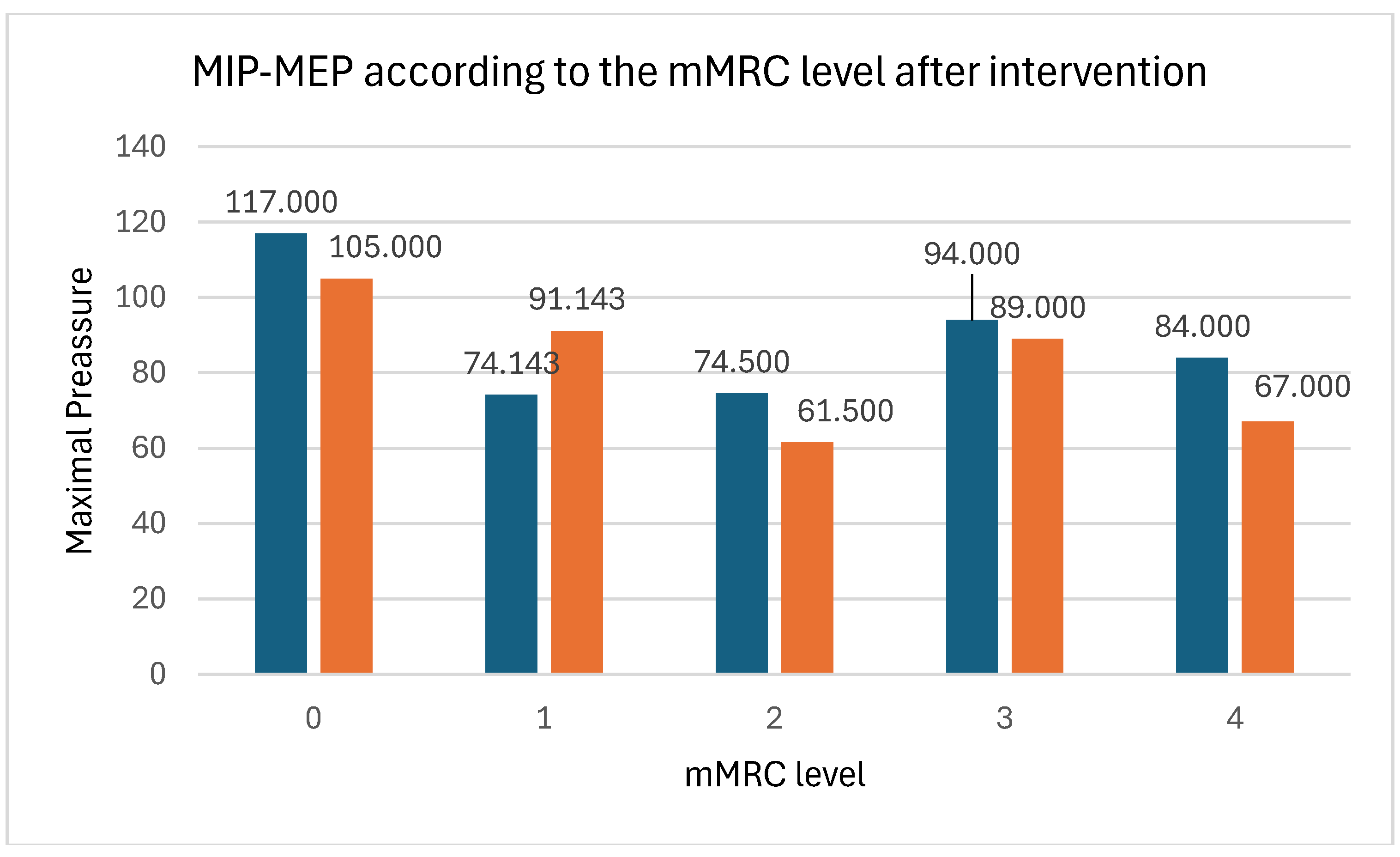
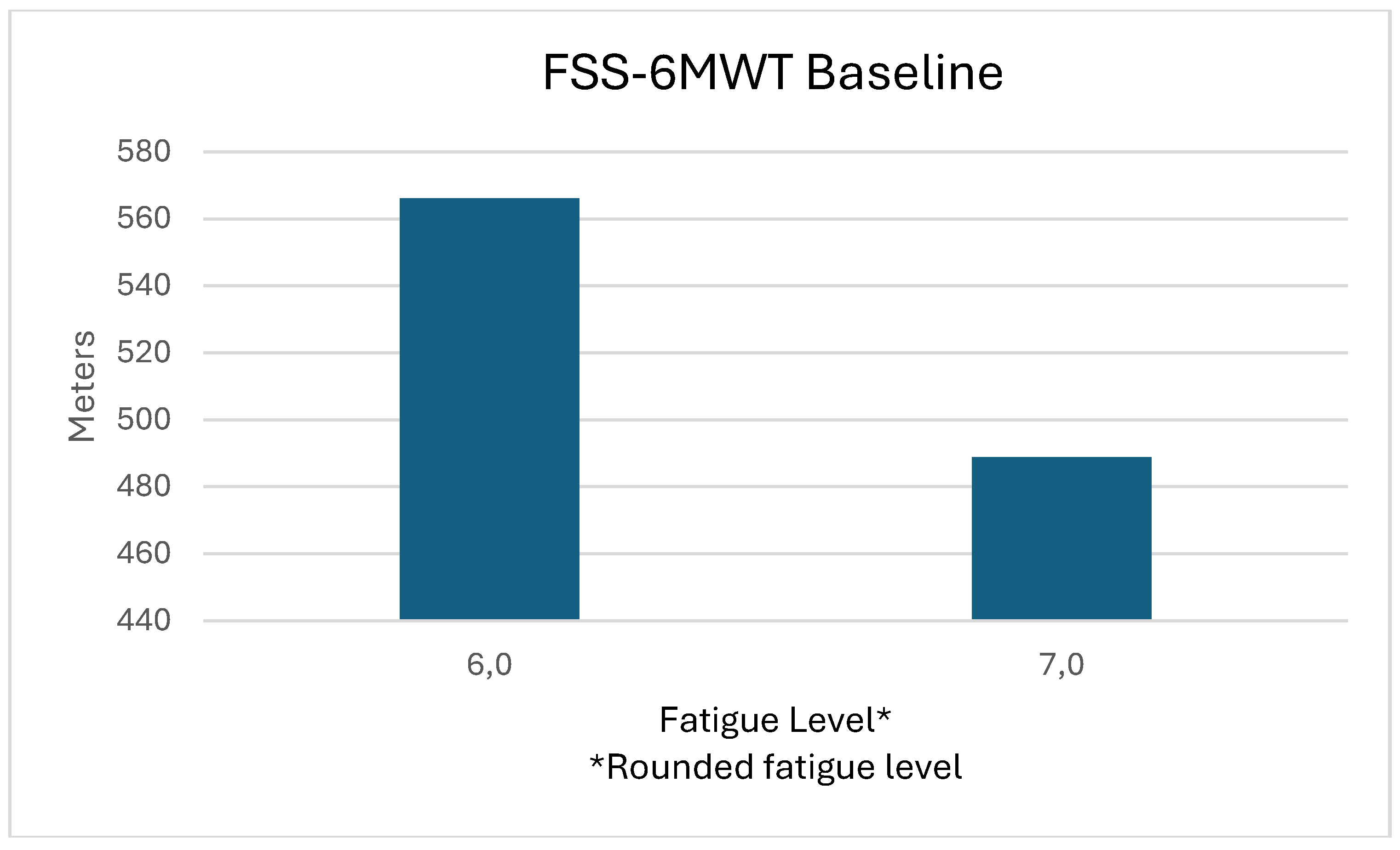
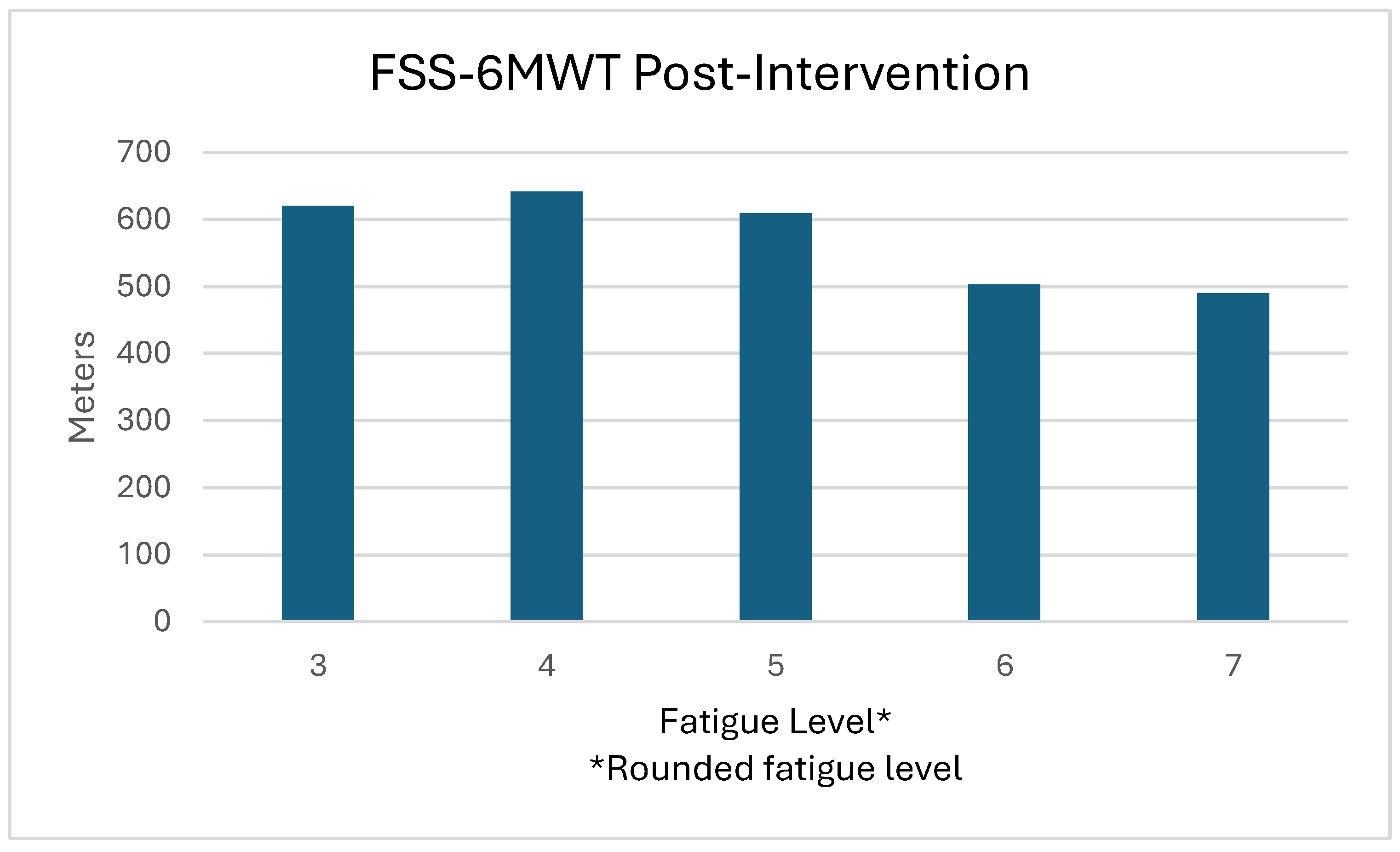
Before the intervention, lower MIP values were observed without correlation between MIP and mMRC. (Figure 1). After the intervention, despite improvements in MIP and MEP values, the results by dyspnea groups did not show a correlation between the level of dyspnea and the respiratory strength values (MIP, p=0.887; MEP, p=0.131). (Figure 1 and Figure 2). Before the intervention, a shorter distance was covered by those with a FSS of 7 compared to those with a perceived fatigue level of 6. However, no correlation was found between these values (p=0.207). (Figure 3). After the intervention, a correlation was found between the distance walked in the 6MWT and perceived fatigue (p=0.012). (Figure 4).

3. Discussion

This study provides preliminary evidence on the effectiveness of a multimodal asynchronous telerehabilitation approach in patients with PCC. After 12 weeks, there was a statistically significant improvement in the main variable, fatigue, and in the other physical status variables, although there were no improvements in quality of life and perception of dyspnea. Furthermore, although there was no correlation between the change in respiratory pressure and perceived dyspnea, at the end of the intervention, a correlation was found between the distance covered in the walking test and fatigue severity. The latter suggests that, although multimodal physiotherapy may be effective in improving the functional capacity of these patients and decreasing their limitations, there may be disease-specific immunologic and inflammatory factors that perpetuate the symptoms and perceptions of the disease beyond functionality [43]. In fact, there are several studies that speak of the existence of a disproportionate and persistent inflammatory cascade that also occurs at the cerebral level. This neuroinflammation can contribute to symptoms such as the perception of fatigue, dyspnea or malaise [44,45].
In terms of fatigue, there was a change in FSS, with a significant improvement in symptoms. The study by Groendvelg et al. [46] which analyzed a single cohort group undergoing a 6-week virtual reality rehabilitation program, also found an improvement in fatigue. However, the Borg scale was used in this study. The difference between the two scales means that the result analyzed is not the same, as the Borg scale gives information on the fatigue perceived at a specific moment, while the FSS tells us how this fatigue affects the life of the patients. This makes our results more clinically relevant in terms of fatigue.
The most recent systematic review of telerehabilitation treatment for PCC patients [19], identified the use of online rehabilitation as an effective approach for improving physical symptoms and quality of life. Of the 6 clinical trials analyzed in the review, but with different methods and a diverse population, so the population is not comparable. Despite these findings, no significant changes in quality of life were found in our study, similar to the study by León-Herrera [47], which employed a mixed telerehabilitation approach (synchronous and asynchronous) aimed at improving quality of life, and only reported improvements in the mental health category of the SF-36 scale after three months, compared to conventional treatment. The systematic review of Huang et al. [17] concluded that telerehabilitation showed no change in patients’ quality of life compared to other treatments. These mixed results suggest that the impact of telerehabilitation on quality of life may depend on factors such as intervention design, population characteristics, and measurement tools.
In terms of functional capacity, a significant improvement was found in the 6MWT. This represents not only a statistically significant change but also a clinically relevant improvement, surpassing the increase of the 30-meter threshold for respiratory patients and even the increase of the 50-meter benchmark established for non-respiratory conditions [48]. In the study of Groenveld et al. [46] in which they also analyzed a single group with telerehabilitation (but in virtual reality format) after 6 weeks they also found significant changes in this variable. Their sample of 47 participants strengthens our findings. In addition, their program also included incremental physical exercise at three levels of difficulty. The big difference, in addition to the virtual reality format, was that their patients, although diagnosed with PCC, were recruited from the year 2020 at the onset of the disease and had an average duration of 7.2 months of evolution. In contrast, the participants in our study had been showing symptoms for more than a year, in very chronic stages of the disease, which could affect the outcome.
Significant improvements were also noted in the 30” STST and 30” ACT. In the study of León-Herrera et al. [47], in which compared conventional treatment with the same intervention plus a multimodal telerehabilitation program, no significant changes were found in the squat test. This could be explained because their intervention was not specifically focused on improving physical fitness, but the content was more oriented towards self-management recommendations and synchronous group sessions. In contrast, in the study of Groendveld et al. [46] in which they performed specific exercises, significant improvements were found in the squat test, similar to our results. This suggests that asynchronous telerehabilitation can be an effective approach, provided that specific rehabilitation exercises are prescribed for each goal and for each patient on an individual basis.
In terms of pulmonary rehabilitation variables, our study showed improvements in both inspiratory and expiratory strength with clinically meaningful changes Wen et al. [49] studied discharged post-COVID-19 patients and initially found a relationship between MIP/MEP values and dyspnea levels measured with the mMRC scale. After an intervention using synchronous telerehabilitation via video-chat, they found statistically significant changes in both the MIP/MEP variable and the mMRC. Similarly, the systematic review of Oliveira et al. [20] concluded that telerehabilitation improves variables such as fatigue, but has limited impact on dyspnea, although this study only shows the changes compared to the face-to-face intervention and not the intra-group changes as in our case. In the study of Vallier et al. [50] in which two groups were also compared, one for physical rehabilitation in person versus the other via videoconference, no changes were found between groups, but statistically significant changes were found in the telerehabilitation group for dyspnea measured with the same scale. The difference, like other studies, is that it focuses on post-acute COVID patients, in whom better changes can be expected than in patients with chronic PCC. This difference in dyspnea results could be due to population differences, as patients in an acute or subacute stage respond better than chronic patients, such as those with chronic PCC. Additionally, it may also be influenced by the use of the mMRC scale, which as a subjective measure, may not fully capture subtle intra-group changes over time, particularly in a chronic population.
The main limitation is the impossibility to extrapolate the results outside our geographical area or in the general population with PPC, as it is a cases series. Therefore, future cohort studies are required to evaluate the efficacy of both the multimodal program and the telematic approach. Another limitation of this study is the lack of follow-up data to assess the long-term effects observed. To address this, studies with medium- and long-term follow-up periods are recommended. Our study paves the way for further research into the effectiveness of multimodal physiotherapy approaches delivered through asynchronous telerehabilitation in patients with chronic PCC. This approach shows promise in improving fatigue and functional capacity while offering the advantage of scalability, as it eliminates the need for live interventions, making it accessible to a larger and more diverse patient population.

4. Conclusions

A multimodal rehabilitation approach consisting of therapeutic education, physical and pulmonary rehabilitation, applied through asynchronous telerehabilitation, could be effective in reducing fatigue and improving functional and respiratory capacity in patients with PCC.

Author Contributions

Conceptualization, B.C., C.J. and S.C.; resources, E.D.; writing—original draft preparation, B.C., N.B. and P.C.; writing—review and editing, S.C.; visualization, B.C. and S.C..; supervision, E.D., S.C. and C.J. All authors have read and agreed to the published version of the manuscript.

Funding

This research received no external funding.

Institutional Review Board Statement

The study was conducted in accordance with the Declaration of Helsinki. the intervention has been approved by the Ethics Committee of Aragón (reference number: PI22/335; date 27 July 2022).

Informed Consent Statement

Informed consent was obtained from all subjects involved in the study. Written informed consent has been obtained from the patient to publish this paper.

Data Availability Statement

The data supporting the findings of this study have been provided for review. Due to privacy and protection concerns, the data cannot be made publicly accessible. This measure ensures the confidentiality and security of sensitive information. For this reason, the raw data will be available upon request from the corresponding author.

Conflicts of Interest

The authors declare no conflicts of interest.

References

  1. Soriano, J.B.; Murthy, S.; Marshall, J.C.; Relan, P.; Diaz, J.V. A clinical case definition of post-COVID-19 condition by a Delphi consensus. Lancet Infect. Dis. 2022, 22, e102–e107. [Google Scholar] [CrossRef] [PubMed]
  2. World Health Organization, W. Coronavirus desease (COVID-19): Post COVID-19 condition. World Health Organ. 2023.
  3. Soriano, J.B.; Ancochea, J. On the new post COVID-19 condition. Arch. Bronconeumol. Engl. Ed. 2021, 57, 735–736. [Google Scholar] [CrossRef]
  4. Aiyegbusi, O.L.; Hughes, S.E.; Turner, G.; Rivera, S.C.; McMullan, C.; Chandan, J.S.; Haroon, S.; Price, G.; Davies, E.H.; Nirantharakumar, K.; et al. Symptoms, complications and management of long COVID: A review. J. R. Soc. Med. 2021, 114, 428–442. [Google Scholar] [CrossRef] [PubMed]
  5. Lopez-Leon, S.; Wegman-Ostrosky, T.; Perelman, C.; Sepulveda, R.; Rebolledo, P.A.; Cuapio, A.; Villapol, S. More than 50 Long-term effects of COVID-19: A systematic review and meta-analysis 2021. [CrossRef]
  6. Greenhalgh, T.; Sivan, M.; Perlowski, A.; Nikolich, J.Ž. Long COVID: A clinical update. The Lancet 2024, 404, 707–724. [Google Scholar] [CrossRef]
  7. Lucas-Hernández, A.; González-Rodríguez, V.D.R.; López-Flores, A.; Kammar-García, A.; Mancilla-Galindo, J.; Vera-Lastra, O.; Jiménez-López, J.L.; Peralta Amaro, A.L. [Stress, anxiety, and depression in health workers during the COVID-19 pandemic]. Rev. Medica Inst. Mex. Seguro Soc. 2022, 60, 556–562. [Google Scholar]
  8. Erraoui, M.; Lahlou, L.; Fares, S.; Abdelnaby, A.; Nainia, K.; Ajdi, F.; Khabbal, Y. The impact of COVID-19 on the quality of life of southern Moroccan doctors : A gender-based approach. Rev. DÉpidémiologie Santé Publique 2022, 70, 157–162. [Google Scholar] [CrossRef]
  9. Aparisi, Á.; Ladrón, R.; Ybarra-Falcón, C.; Tobar, J.; San Román, J.A. Exercise Intolerance in Post-Acute Sequelae of COVID-19 and the Value of Cardiopulmonary Exercise Testing- a Mini-Review. Front. Med. 2022, 9, 924819. [Google Scholar] [CrossRef]
  10. Vontetsianos, A.; Chynkiamis, N.; Gounaridi, M.; Anagnostopoulou, C.; Lekka, C.; Zaneli, S.; Anagnostopoulos, N.; Oikonomou, E.; Vavuranakis, M.; Rovina, N.; et al. Exercise Intolerance Is Associated with Cardiovascular Dysfunction in Long COVID-19 Syndrome. J. Clin. Med. 2024, 13, 4144. [Google Scholar] [CrossRef]
  11. Haunhorst, S.; Dudziak, D.; Scheibenbogen, C.; Seifert, M.; Sotzny, F.; Finke, C.; Behrends, U.; Aden, K.; Schreiber, S.; Brockmann, D.; et al. Towards an understanding of physical activity-induced post-exertional malaise: Insights into microvascular alterations and immunometabolic interactions in post-COVID condition and myalgic encephalomyelitis/chronic fatigue syndrome. Infection 2024. [Google Scholar] [CrossRef]
  12. Chuang, H.-J.; Lin, C.-W.; Hsiao, M.-Y.; Wang, T.-G.; Liang, H.-W. Long COVID and rehabilitation. J. Formos. Med. Assoc. 2024, 123, S61–S69. [Google Scholar] [CrossRef] [PubMed]
  13. Gloeckl, R.; Zwick, R.H.; Fürlinger, U.; Schneeberger, T.; Leitl, D.; Jarosch, I.; Behrends, U.; Scheibenbogen, C.; Koczulla, A.R. Practical Recommendations for Exercise Training in Patients with Long COVID with or without Post-exertional Malaise: A Best Practice Proposal. Sports Med. - Open 2024, 10, 47. [Google Scholar] [CrossRef] [PubMed]
  14. Sari, D.M.; Wijaya, L.C.G. General rehabilitation for the Post-COVID-19 condition: A narrative review. Ann. Thorac. Med. 2023, 18, 10–14. [Google Scholar] [CrossRef]
  15. Bernal-Utrera, C.; Montero-Almagro, G.; Anarte-Lazo, E.; Gonzalez-Gerez, J.J.; Rodriguez-Blanco, C.; Saavedra-Hernandez, M. Therapeutic Exercise Interventions through Telerehabilitation in Patients with Post COVID-19 Symptoms: A Systematic Review. J. Clin. Med. 2022, 11, 7521. [Google Scholar] [CrossRef] [PubMed]
  16. Matamala-Gomez, M.; Maisto, M.; Montana, J.I.; Mavrodiev, P.A.; Baglio, F.; Rossetto, F.; Mantovani, F.; Riva, G.; Realdon, O. The Role of Engagement in Teleneurorehabilitation: A Systematic Review. Front. Neurol. 2020, 11, 354. [Google Scholar] [CrossRef]
  17. Huang, J.; Fan, Y.; Zhao, K.; Yang, C.; Zhao, Z.; Chen, Y.; Yang, J.; Wang, T.; Qu, Y. Do patients with and survivors of COVID-19 benefit from telerehabilitation? A meta-analysis of randomized controlled trials. Front. Public Health 2022, 10, 954754. [Google Scholar] [CrossRef]
  18. Martínez-Pozas, O.; Corbellini, C.; Cuenca-Zaldívar, J.N.; Meléndez-Oliva, É.; Sinatti, P.; Sánchez Romero, E.A. Effectiveness of telerehabilitation versus face-to-face pulmonary rehabilitation on physical function and quality of life in people with post COVID-19 condition: A systematic review and network meta-analysis. Eur. J. Phys. Rehabil. Med. 2024, 60. [Google Scholar] [CrossRef]
  19. Valverde-Martínez, M.Á.; López-Liria, R.; Martínez-Cal, J.; Benzo-Iglesias, M.J.; Torres-Álamo, L.; Rocamora-Pérez, P. Telerehabilitation, A Viable Option in Patients with Persistent Post-COVID Syndrome: A Systematic Review. Healthcare 2023, 11, 187. [Google Scholar] [CrossRef]
  20. Oliveira, M.R.; Hoffman, M.; Jones, A.W.; Holland, A.E.; Borghi-Silva, A. Effect of Pulmonary Rehabilitation on Exercise Capacity, Dyspnea, Fatigue, and Peripheral Muscle Strength in Patients With Post-COVID-19 Syndrome: A Systematic Review and Meta-analysis. Arch. Phys. Med. Rehabil. 2024, 105, 1559–1570. [Google Scholar] [CrossRef]
  21. Abbasi, A.; Gattoni, C.; Iacovino, M.; Ferguson, C.; Tosolini, J.; Singh, A.; Soe, K.K.; Porszasz, J.; Lanks, C.; Rossiter, H.B.; et al. A Pilot Study on the Effects of Exercise Training on Cardiorespiratory Performance, Quality of Life, and Immunologic Variables in Long COVID. J. Clin. Med. 2024, 13, 5590. [Google Scholar] [CrossRef]
  22. Carpallo-Porcar, B.; Calvo, S.; Alamillo-Salas, J.; Herrero, P.; Gómez-Barrera, M.; Jiménez-Sánchez, C. An Opportunity for Management of Fatigue, Physical Condition, and Quality of Life Through Asynchronous Telerehabilitation in Patients After Acute Coronavirus Disease 2019: A Randomized Controlled Pilot Study. Arch. Phys. Med. Rehabil. 2024, 105, 1439–1448. [Google Scholar] [CrossRef] [PubMed]
  23. Krupp, L.B. The Fatigue Severity Scale: Application to Patients With Multiple Sclerosis and Systemic Lupus Erythematosus. Arch. Neurol. 1989, 46, 1121. [Google Scholar] [CrossRef] [PubMed]
  24. Naik, H.; Shao, S.; Tran, K.C.; Wong, A.W.; Russell, J.A.; Khor, E.; Nacul, L.; McKay, R.J.; Carlsten, C.; Ryerson, C.J.; et al. Evaluating fatigue in patients recovering from COVID-19: Validation of the fatigue severity scale and single item screening questions. Health Qual. Life Outcomes 2022, 20, 170. [Google Scholar] [CrossRef]
  25. Learmonth, Y.C.; Dlugonski, D.; Pilutti, L.A.; Sandroff, B.M.; Klaren, R.; Motl, R.W. Psychometric properties of the Fatigue Severity Scale and the Modified Fatigue Impact Scale. J. Neurol. Sci. 2013, 331, 102–107. [Google Scholar] [CrossRef]
  26. Fernández-de-las-Peñas, C.; Rodríguez-Jiménez, J.; Moro-López-Menchero, P.; Cancela-Cilleruelo, I.; Pardo-Hernández, A.; Hernández-Barrera, V.; Gil-de-Miguel, Á. Psychometric properties of the Spanish version of the EuroQol-5D-5L in previously hospitalized COVID-19 survivors with long COVID. Sci. Rep. 2022, 12, 12605. [Google Scholar] [CrossRef]
  27. Bestall, J.C.; Paul, E.A.; Garrod, R.; Garnham, R.; Jones, P.W.; Wedzicha, J.A. Usefulness of the Medical Research Council (MRC) dyspnoea scale as a measure of disability in patients with chronic obstructive pulmonary disease. Thorax 1999, 54, 581–586. [Google Scholar] [CrossRef]
  28. Formiga, M.F.; Dosbaba, F.; Hartman, M.; Batalik, L.; Senkyr, V.; Radkovcova, I.; Richter, S.; Brat, K.; Cahalin, L.P. Role of the Inspiratory Muscles on Functional Performance From Critical Care to Hospital Discharge and Beyond in Patients With COVID-19. Phys. Ther. 2023, 103, pzad051. [Google Scholar] [CrossRef]
  29. Aymerich, C.; Rodríguez-Lázaro, M.; Solana, G.; Farré, R.; Otero, J. Low-Cost Open-Source Device to Measure Maximal Inspiratory and Expiratory Pressures. Front. Physiol. 2021, 12, 719372. [Google Scholar] [CrossRef]
  30. Lista-Paz, A.; Langer, D.; Barral-Fernández, M.; Quintela-del-Río, A.; Gimeno-Santos, E.; Arbillaga-Etxarri, A.; Torres-Castro, R.; Vilaró Casamitjana, J.; Varas De La Fuente, A.B.; Serrano Veguillas, C.; et al. Maximal Respiratory Pressure Reference Equations in Healthy Adults and Cut-off Points for Defining Respiratory Muscle Weakness. Arch. Bronconeumol. 2023, 59, 813–820. [Google Scholar] [CrossRef]
  31. Puente Maestú, L.; García De Pedro, J. Las pruebas funcionales respiratorias en las decisiones clínicas. Arch. Bronconeumol. 2012, 48, 161–169. [Google Scholar] [CrossRef]
  32. Puente Maestú, L. Manual SEPAR de procedimientos; Luzán 5: Madrid, 2002; ISBN 978-84-7989-152-7. [Google Scholar]
  33. Spruit, M.A.; Singh, S.J.; Garvey, C.; ZuWallack, R.; Nici, L.; Rochester, C.; Hill, K.; Holland, A.E.; Lareau, S.C.; Man, W.D.-C.; et al. An Official American Thoracic Society/European Respiratory Society Statement: Key Concepts and Advances in Pulmonary Rehabilitation. Am. J. Respir. Crit. Care Med. 2013, 188, e13–e64. [Google Scholar] [CrossRef] [PubMed]
  34. Uszko-Lencer, N.H.M.K.; Mesquita, R.; Janssen, E.; Werter, C.; Brunner-La Rocca, H.-P.; Pitta, F.; Wouters, E.F.M.; Spruit, M.A. Reliability, construct validity and determinants of 6-minute walk test performance in patients with chronic heart failure. Int. J. Cardiol. 2017, 240, 285–290. [Google Scholar] [CrossRef] [PubMed]
  35. Arcuri, J.F.; Borghi-Silva, A.; Labadessa, I.G.; Sentanin, A.C.; Candolo, C.; Pires Di Lorenzo, V.A. Validity and Reliability of the 6-Minute Step Test in Healthy Individuals: A Cross-sectional Study. Clin. J. Sport Med. 2016, 26, 69–75. [Google Scholar] [CrossRef]
  36. Klein, S.R.; Gulart, A.A.; Venâncio, R.S.; Munari, A.B.; Gavenda, S.G.; Martins, A.C.B.; Mayer, A.F. Performance difference on the six-minute walk test on tracks of 20 and 30 meters for patients with chronic obstructive pulmonary disease: Validity and reliability. Braz. J. Phys. Ther. 2021, 25, 40–47. [Google Scholar] [CrossRef]
  37. Troosters, T.; Gosselink, R.; Decramer, M. Six minute walking distance in healthy elderly subjects. Eur. Respir. J. 1999, 14, 270–274. [Google Scholar] [CrossRef]
  38. Rikli, R.E.; Jones, C.J. Development and Validation of Criterion-Referenced Clinically Relevant Fitness Standards for Maintaining Physical Independence in Later Years. The Gerontologist 2013, 53, 255–267. [Google Scholar] [CrossRef]
  39. Langhammer, B.; Stanghelle, J.K. The Senior Fitness Test. J. Physiother. 2015, 61, 163. [Google Scholar] [CrossRef]
  40. Cobo-Mejía, E.A.; González, M.E.O.; Castillo, L.Y.R.; Niño, D.M.V.; Pacheco, A.M.S.; Sandoval-Cuellar, C. Reliability of Senior Fitness Test version in Spanish for older people in Tunja-Colombia.
  41. McAllister, L.S.; Palombaro, K.M. Modified 30-Second Sit-to-Stand Test: Reliability and Validity in Older Adults Unable to Complete Traditional Sit-to-Stand Testing. J. Geriatr. Phys. Ther. 2020, 43, 153–158. [Google Scholar] [CrossRef]
  42. Oliveira, J.M.D.; Spositon, T.; Cerci Neto, A.; Soares, F.M.C.; Pitta, F.; Furlanetto, K.C. Functional tests for adults with asthma: Validity, reliability, minimal detectable change, and feasibility. J. Asthma 2022, 59, 169–177. [Google Scholar] [CrossRef]
  43. Kundura, L.; Cezar, R.; André, S.; Campos-Mora, M.; Lozano, C.; Vincent, T.; Muller, L.; Lefrant, J.-Y.; Roger, C.; Claret, P.-G.; et al. Low perforin expression in CD8+ T lymphocytes during the acute phase of severe SARS-CoV-2 infection predicts long COVID. Front. Immunol. 2022, 13, 1029006. [Google Scholar] [CrossRef]
  44. Gottschalk, C.G.; Peterson, D.; Armstrong, J.; Knox, K.; Roy, A. Potential molecular mechanisms of chronic fatigue in long haul COVID and other viral diseases. Infect. Agent. Cancer 2023, 18, 7. [Google Scholar] [CrossRef]
  45. Verveen, A.; Verfaillie, S.C.J.; Visser, D.; Csorba, I.; Coomans, E.M.; Koch, D.W.; Appelman, B.; Barkhof, F.; Boellaard, R.; De Bree, G.; et al. Neurobiological basis and risk factors of persistent fatigue and concentration problems after COVID-19: Study protocol for a prospective case–control study (VeCosCO). BMJ Open 2023, 13, e072611. [Google Scholar] [CrossRef] [PubMed]
  46. Groenveld, T.; Achttien, R.; Smits, M.; De Vries, M.; Van Heerde, R.; Staal, B.; Van Goor, H. ; COVID Rehab Group Feasibility of Virtual Reality Exercises at Home for Post–COVID-19 Condition: Cohort Study. JMIR Rehabil. Assist. Technol. 2022, 9, e36836. [Google Scholar] [CrossRef] [PubMed]
  47. León-Herrera, S.; Oliván-Blázquez, B.; Sánchez-Recio, R.; Méndez-López, F.; Magallón-Botaya, R.; Sánchez-Arizcuren, R. Effectiveness of an online multimodal rehabilitation program in long COVID patients: A randomized clinical trial. Arch. Public Health 2024, 82, 159. [Google Scholar] [CrossRef]
  48. Bohannon, R.W.; Crouch, R. Minimal clinically important difference for change in 6-minute walk test distance of adults with pathology: A systematic review. J. Eval. Clin. Pract. 2017, 23, 377–381. [Google Scholar] [CrossRef]
  49. Wen, G.; Yang, L.; Qumu, S.; Situ, X.; Lei, J.; Yu, B.; Liu, B.; Liang, Y.; He, J.; Wang, R.; et al. Tele-rehabilitation in COVID-19 survivors (TERCOV): An investigator-initiated, prospective, multi-center, real-world study. Physiother. Res. Int. 2024, 29, e2137. [Google Scholar] [CrossRef]
  50. Vallier, J.-M.; Simon, C.; Bronstein, A.; Dumont, M.; Jobic, A.; Paleiron, N.; Mely, L. Randomized controlled trial of home-based vs. hospital-based pulmonary rehabilitation in post COVID-19 patients. Eur. J. Phys. Rehabil. Med. 2023, 59. [Google Scholar] [CrossRef]
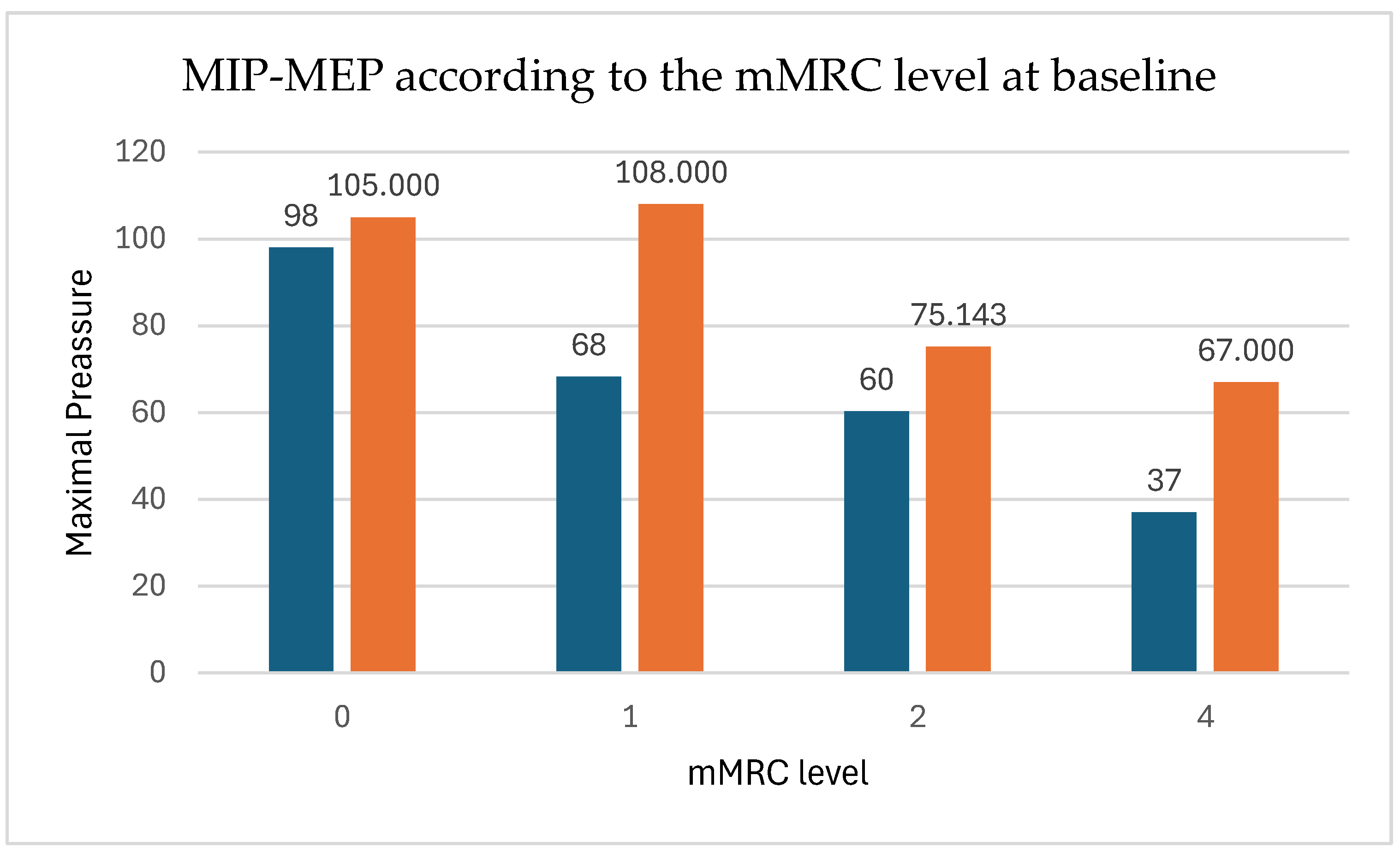
Figure 1. mMRC and MIP-MEP baseline.
Preprints 150908 g001
Figure 2. mMRC and MIP-MEP post-intervention.
Preprints 150908 g002
Figure 3. Relation between FSS and 6MWT.
Preprints 150908 g003
Figure 4. Relation between FSS and 6MWT test post-intervention.
Preprints 150908 g004
Table 1. Baseline sociodemographic and health data (pooled data).
n=12
Sociodemographic
Sex n (%)
Male 3 (25.00)
Female 9 (75.00)
Age m (SD) 51 (8.00)
BMI (kg/cm) m (SD) 27.69 (4.86)
Level of education n (%)
Primary 0 (0.00)
Secondary 6 (50.00)
University 6 (50.00)
Health Data
Time with symptoms (days) n (%) >365 (100.00)
Emotional disorder n (%) 2 (16.70)
Other pathologies
Diabetes 2 (16.70)
Obesity 1 (8.30)
Dyslipidaemia 1 (8.30)
Hypertension 2 (16.70)
No pathology 6 (50.00)
BMI=Body Mass Index.
Table 2. Baseline socio-demographic and health data of each case.
Nº Case Age Gender BMI Level of Education Metabolic Syndrome Emotional Disorder
Case 1 35 Female 30.86 University Obesity Anxiety, Depression
Case 2 54 Female 30.03 Secondary Obesity None
Case 3 52 Female 32.88 Secondary Obesity, Hypercolesterolemia None
Case 4 52 Female 29.86 University Hypertension None
Case 5 39 Female 21.91 Secondary None None
Case 6 63 Male 31.12 Secondary Hypertension, Obesity Depression
Case 7 47 Female 20.7 University None None
Case 8 58 Female 23.53 University Diabetes T2 None
Case 9 57 Male 35.27 Secondary Obesity, Diabetes T2 None
Case 10 51 Female 23.73 University None None
Case 11 56 Female 29.62 University Hypercolesterolemia None
Case 12 47 Male 22.78 Secondary None None
BMI= Body Mass Index.
Table 3. Symptomatology.
Nº Case General Respiratory Cardiovascular Neurological Gastrointestinal Musculoskeletal Oto-laryngology
Case 1 Fatigue None None None None Arthralgia, Myalgia None
Case 2 Fatigue, Profuse sweating Cough, Dyspnoea POTS, palpitations Headaches, paraesthesias, brain fog, lack of concentration Nausea, Diarrhoea, Pyrosis Arthralgia, Myalgia Dizziness
Case 3 Fatigue Cough, Dyspnoea None Headaches, paraesthesias None Arthralgia, Myalgia Dysphonia, Dizziness
Case 4 Fatigue, Fever Cough, Dyspnoea POTS, palpitations Headaches, paraesthesias, brain fog, lack of concentration None Arthralgia, Myalgia None
Case 5 Fatigue None Palpitations Headaches, paraesthesias, brain fog, lack of concentration Abdominal Pain, Diarrhoea Arthralgia, Myalgia None
Case 6 Fatigue Dyspnoea POTS Paresthesias, Anosmia, Brain fog, Lack of concentration None Arthralgia, Myalgia None
Case 7 Fatigue Dyspnoea None Headache, Paresthesias, Brain fog Diarrhoea Arthralgia, Myalgia Dizziness
Case 8 Fatigue Dyspnoea None Paresthesia, Brain fog None Arthralgia, Myalgia None
Case 9 Fatigue Cough, Dyspnoea Palpitations Brain fog, Lack of concentration None Arthralgia, Myalgia Dizziness
Case 10 Fatigue Cough, Dyspnoea None Headaches, paraesthesias, Anosmia, Brain fog, Lack of concentration Nausea, Diarrhoea Arthralgia, Myalgia None
Case 11 Fatigue Dyspnoea None Anosmia, Brain fog, Lack of concentration None Arthralgia, Myalgia None
Case 12 Fatigue None None None None None None
POTS= Postural orthostatic tachycardia.
Table 4. Changes after the intervention.
Pre-intervention n= 12 Post-intervention n=12 Difference p Value Effect Size Cohen’s d
Primary variable
FSS m (SD) 6.41 (0.51) 4.85 (1.39) -1.57 (1.44) 0.003T 1.088
Secondary variables
EQ-5D
Coefficient m (SD) 0.57 (0.30) 0.74 (0,16) 0.17 0.246W
VAS m (SD) 56.08 (13.33) 60.00 (14.45) -3.91 (12.33) 0.295T 0.317
mMRC m (RIQ) 2 (1) 1 (1) 1.00 0.125M
6MWT m (SD) 527.45 (87.08) 583.04 (75.99) 55.58 (37.34) <0.001T 1.488
30” STST m (SD) 14.00 (4.00) 18.00 (4.00) 4.00 (4.00) <0.001T 1.127
30” ACT m (SD) 16.00 (4.00) 21.00 (4.00) 5.00 (4.00) 0.001T 1.422
MIP m (SD) 63.50 (21.16) 80.25 (17.29) 16.75 (15.20) 0.003T 1.103
MEP m (SD) 85.17 (27.50) 99.33 (19.77) 14.17 (19.89) 0.031T 1.337
EQ-5D-5L= quality of life scale; mMRC= Medical Research Council dyspnea scale; 6MWT= 6-minute walk test; STST= sit to stand test; ACT= elbow flexion test; MIP= maximal inspiratory pressure; MEP= maximal expiratory pressure. W= Willcoxon test; T= Student’s tee; M=McNemar test.
Disclaimer/Publisher’s Note: The statements, opinions and data contained in all publications are solely those of the individual author(s) and contributor(s) and not of MDPI and/or the editor(s). MDPI and/or the editor(s) disclaim responsibility for any injury to people or property resulting from any ideas, methods, instructions or products referred to in the content.
Copyright: This open access article is published under a Creative Commons CC BY 4.0 license, which permit the free download, distribution, and reuse, provided that the author and preprint are cited in any reuse.
Prerpints.org logo

Preprints.org is a free preprint server supported by MDPI in Basel, Switzerland.

Subscribe

Disclaimer

Terms of Use

Privacy Policy

Privacy Settings

© 2025 MDPI (Basel, Switzerland) unless otherwise stated