

Submitted:
28 February 2025
Posted:
03 March 2025
You are already at the latest version
Abstract
According to EU Directives, it is necessary to improve the energy consumption of buildings. Therefore, the aim of this article is to improve the physical properties of foamed concrete produced on the basis of light plaster mortar. For this purpose, polystyrene granulate with a bulk density of 13 kg/m3 in the amount of 4, 7 and 10 g of 1 kg of light plaster mortar and a foaming agent in the amount of 2, 4 and 6% of the cement mass were used. Density, thermal conductivity coefficient and mechanical properties (compressive strength and tensile strength in bending) were determined. It can be observed that with the increase in the content of addition of polystyrene granulate, density, thermal conductivity coefficient and sorptivity were decreased, what is a positive phenomenon. However, at the same time, a reduction in mechanical properties was demonstrated. With the increase in the content of addition of foaming agent, density, thermal (except 2% of the foaming agent content) and mechanical properties were decreased. While sorptivity of all samples is lower than the basic sample, but sorptivity increases with the addition of a foaming agent for samples of samples with the addition of polystyrene granulate.
Keywords:
foamed concrete
; lightweight cellular concrete
; pore material
; synthetic foaming agent
; pre-pared foam
; air-void structure
; compressive strength
; thermal conductivity
; multiple regression
1. Introduction
In accordance with EU Directives, there is a need to improve the energy efficiency of buildings. In the process of improving energy efficiency in construction, appropriate technologies and materials are used [1,2]. One way is to reduce heat transfer through horizontal and vertical partitions. Porous materials have lower heat transfer coefficients than materials with a continuous structure. This is due to the closure of small portions of gas (air, carbon dioxide) in their volume. However, if the spaces containing gas are too large, convection will begin to occur in them, which will increase the heat transfer coefficient of a given building material. This is the basis for the use of foamed mortar in construction. However, the term foamed mortar is not widely used. The term foamed concrete is more often used, despite the fact that foamed concrete does not contain coarse aggregate, and often fine aggregate (sand). Foamed concrete (FC) is classified as lightweight concrete with density ranging from 280 to 1800 kg/m3 [3,4,5] and with a minimum of 20% of air-pores volume in the cementitious mix [6,7]. Due to the air pore structure of the cement matrix, foamed concrete is characterized by good properties thermal [8,9,10,11,12,13]. The thermal conductivity coefficient ranges from about 0.1 W/(m∙K) to 0.7 W/(m∙K) for foamed concrete with density ranging from 600 kg/m3 to 1600 kg/m3 [14,15,16,17,18,19]. For the appropriate composition of foamed concrete, a thermal conductivity coefficient of up to 0.048 W/(m∙K) can be achieved at a density below 500 kg/m3 [20,21]. For example, Proshin et al. [22] used polystyrene granulate additives as composite of foamed concrete mix and they obtained a thermal conductivity coefficient in the range from 0.06 W/(m∙K) to 0.16 W/(m∙K) for foamed concrete with a density of 200 kg/m3 to 650 kg/m3.
However, these were single research results for given compositions of foamed concrete mixes. The physical properties of foamed concrete are closely related to the composition of the foamed concrete mix. The basic components of a foamed concrete mix are cement and a foaming agent of protein or synthetic origin. The remaining components are the same as in the case of other cement composites, i.e. water and possibly aggregate, whereby there is no coarse aggregate, and often also fine aggregate. In addition, various additions, including those from recycling, may be used. Therefore, this study aims to assess the physical properties of hardened foamed mortar with polystyrene granulate addition. Compared to previous studies [23,24], foamed concrete was produced on the basis of light plaster mortar. In addition, since tests of such foamed mortar have not been conducted so far, the its mechanical properties and sorptivity were also assessed as part of this study. Moreover, the sorptivity of foamed concrete/foamed mortar are very rarely found in the literature. The authors found only a few literature items presenting the results of such studies, e.g. [25,26,27]. However, this is particularly important due to the potential application of foamed concrete/foamed mortar.
2. Materials and Methods
2.1. Specimen Preparation
The materials used in this study were light plaster mortar in the loose state, tap water and foaming agent. A ready-made mortar, commercially available (SEMPRE Farby Sp. z o.o., Bielsko-Biała), was used. The composition of the light plaster mortar was presented in the Table 1.
In this study, a commercial liquid polymer admixture with specific gravity of 1.02 g/cm3 was used as synthetic foaming agent. The synthetic foaming agent (MEEX, Chrzanów, Poland) contents were 2.0, 4.0 and 6.0% of cement mass.
Moreover, an addition of polystyrene granulate with a bulk density of 13 kg/m3 was used (Figure 1).
2.2. Mix Composition
Specimens of foamed mortar with three different polystyrene granulate addition content were produced (see Table 2). The addition of polystyrene granules was 10, 7 and 4 g/1 kg of light plaster mortar, respectively. Polystyrene granulate (PG) content was selected so that bulk density of light plaster mortar and granulate were at the same (volume proportions 1:1), and the next amount of PG addition was decreased and increased.
2.3. Mix Production
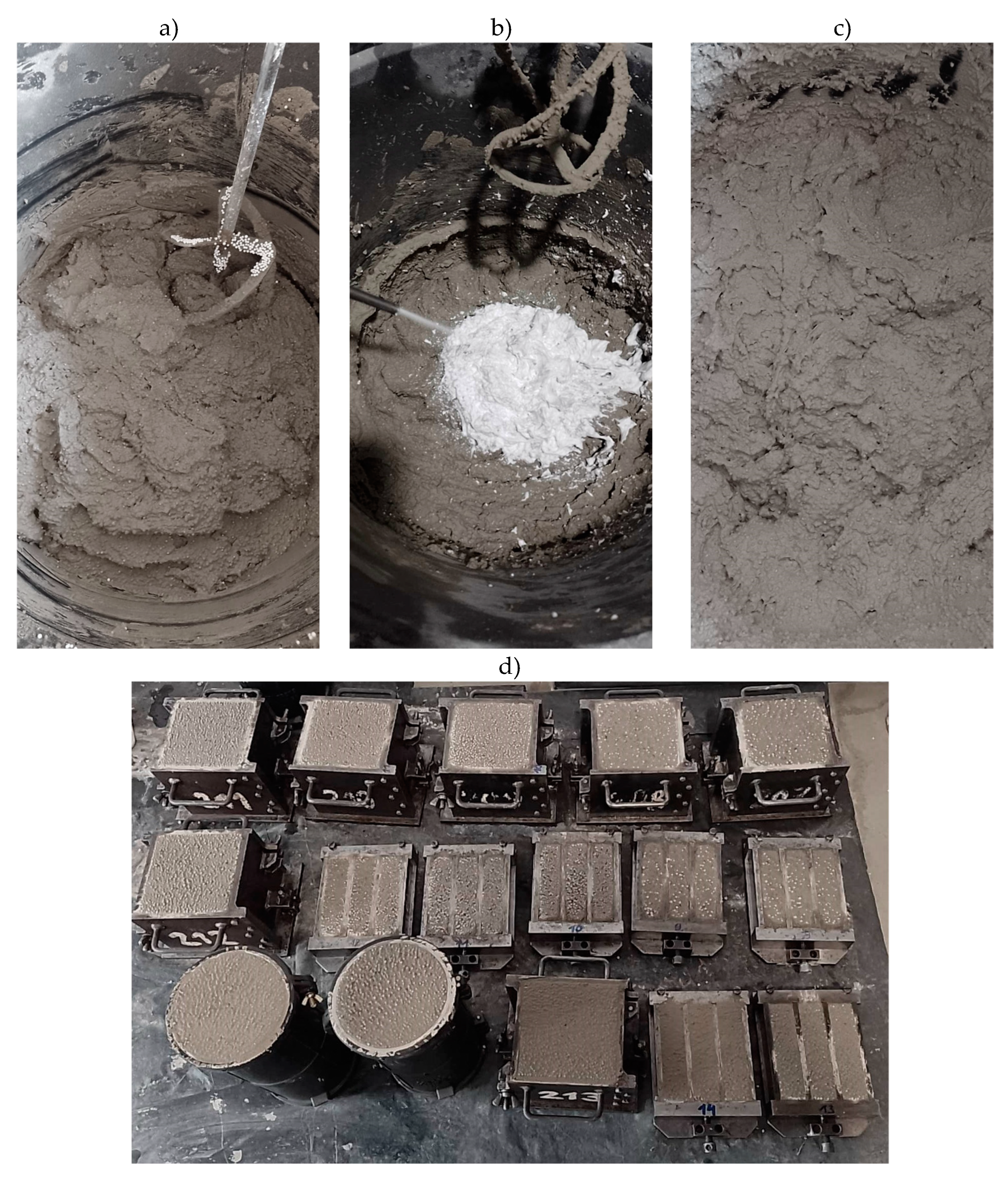
The foamed concrete mix were produced according to the pre-forming method. Firstly, water and light plaster mortar were mixed. After six minutes, the polystyrene granulate was added and all components were mixed by two one minute. Next, the stable foam was added and all components were mixed (Figure 2a). The foam is created using a foam generator. The key factors in producing stable foamed concrete included the pressurising of the foaming agent at stable pressure and mixing the components in constant rotational speed [24].
All specimens were cast in steel moulds (Figure 2b,c) and were covered with cellophane to protect against water evaporation and to ensure the best bonding conditions [29] in a curing room at 20±1°C for 24 hours. Subsequently, the samples were removed from the moulds and stored in a curing room at 20±1°C and 95% humidity for 14 days. After this time, foamed concrete samples were stored in ambient conditions (at 20±1°C and 60±10% humidity). After 28 days of curing, hardened mortar were tested. Two cases were considered, in the first a mortar with the addition of polystyrene granulate, and in the second a foamed mortar with the addition of polystyrene granulate. The results were compared with the base sample (mortar without the addition of polystyrene granulate and foaming agent).
Figure 2.
Samples production process a) mix of light plaster mortar with polystyrene granulate addition, b) adding foam to light plaster mortar with polystyrene granulate addition, c) foamed mortar mix, d) samples with foamed mortar in steel moulds (own photos).
Figure 2.
Samples production process a) mix of light plaster mortar with polystyrene granulate addition, b) adding foam to light plaster mortar with polystyrene granulate addition, c) foamed mortar mix, d) samples with foamed mortar in steel moulds (own photos).
2.4. Methodology
2.4.1. Density
The density of specimen of foamed mortar was measured with 150×150×150 mm standard cubes as per PN-EN 1015-10 [30]. Three naturally dried samples for each mix were examined.
2.4.2. Thermal Conductivity
Thermal conductivity was measured on samples 150×150×50 mm (Figure 3). This device operates based on the relative method of measuring the λ coefficient, which consists in measuring the ratio of the thermal resistance of the tested samples to the resistance of the reference samples. The measurement is performed at a constant average sample temperature and a constant temperature difference on the upper and lower surfaces of the sample and at a constant and uniform heat flux crossing the sample measurement area. Three samples per each mix were tested. The samples were dried to a constant mass before testing.
2.4.3. Flexural Strength
2.4.4. Compressive Strength
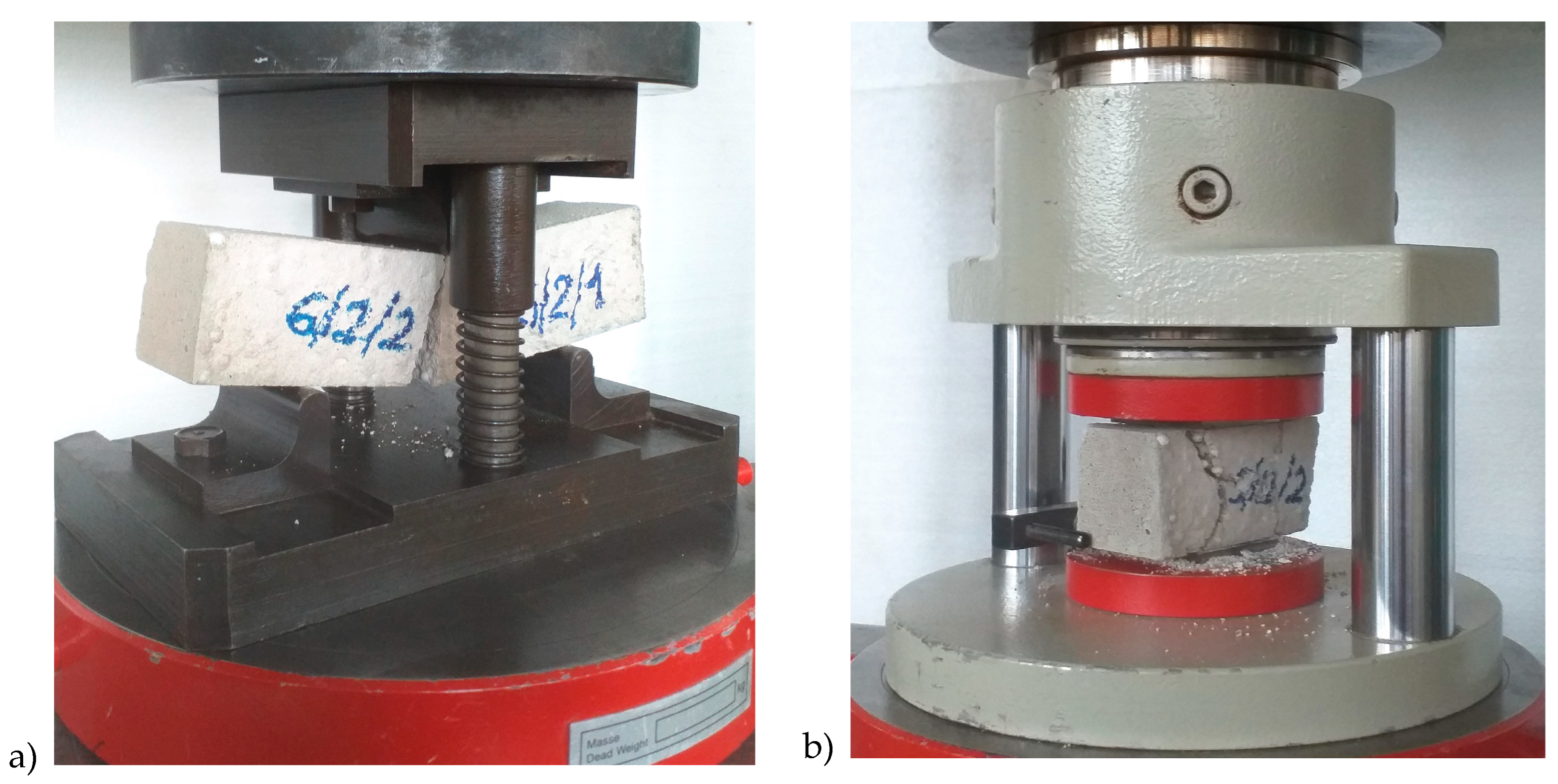
The compressive strength was determined on the beam halves obtained after the flexural strength test (Figure 4b) in accordance with the PN-EN 1015-11 [31].
Figure 4.
Test of mechanical properties of foamed mortar: a) flexural strength, b) compressive strength (own photos).
Figure 4.
Test of mechanical properties of foamed mortar: a) flexural strength, b) compressive strength (own photos).
2.4.5. Sorptivity
3. Results and Discussion
In the first case, the effect of the addition of polystyrene granulate on the mortar properties (without the addition of a foaming agent) was analyzed. It can be seen that with the increase in the content of addition of polystyrene granulate, density (Figure 6a), thermal conductivity coefficient (Figure 6b) and sorptivity (Figure 6e) were decreased, what is a positive phenomenon. However, at the same time, a reduction in mechanical properties was demonstrated (Figure 6c,d). The largest decrease in values compared to base sample was obtained for sorptivity and mechanical properties (flexural and compressive strength), see Table 3.
In the second case, the impact of the foaming agent content on the properties of the plaster mortar with different content of polystyrene granulate was analyzed. It can be seen that the effect of the foaming agent content on the analyzed physical properties of the foamed mortar with the addition of polystyrene granulate is not unambiguous, see Figure 7.
Figure 7a presents the results of average densities of the hardened foamed mortar with addition of polystyrene granulate for foaming agent content of 2.0, 4.0 and 6.0% of cement mass. It can be observed that the density of foamed mortar decreased with increasing foaming agent content and this correlation is linear. The volume of foam commonly created air voids and resulted in lower density [25]. These results are consistent with the observations for foamed concrete of the basic composition [6,7,23,24]. The situation is different in the case of other properties of foamed concrete. Usually, a decrease in the mechanical properties and in the thermal conductivity coefficient of foamed concrete is observed with a decrease in density, which is proportional to the increase in the foaming agent content [3,25]. In the analyzed case, the lowest thermal conductivity coefficient of foamed mortar was obtained for the highest foaming agent content, regardless of the content of polystyrene granulate. However, with a foaming agent content of 2% of the cement mass, this value was higher compared to the base sample of plaster mortar and base samples of plaster mortar with addition of polystyrene granulate, see Figure 7b and compare to Figure 6b.
Mechanical properties are directly related with density and at the same foaming agent content [14,23,24,25], while with decrease in foaming agent content (increase in density), flexural and compressive strength also increased [3,25]. It is related with the fact, that the addition of foaming agent decreased strength because the volume of foam created pores resulting in lower density [24]. The obtained results showed that the flexural (Figure 7c) and compressive strength (Figure 7d) of foamed mortar was halved with a foaming agent content of 6% of cement mass compared to the base mortar. Figure 7e presents the correlation between density and compressive strength for foamed mortar with different foaming agent content and polystyrene granulate addition. It can be seen that this correlation is exponential, which is consistent with the results of own [24,33] and other researchers [25,29,34,35,36,37] for other foamed concrete mixture compositions. It should be noted the high agreement of the correlation equation obtained in this study and in previous research results for foamed concrete with the basic composition [22,24,33].
Moreover, an interesting observation is that sorption is lower with a higher content of foaming agent, regardless of the content of polystyrene granulate, see Figure 7f. The lowest values were obtained for polystyrene granulate with the highest content analyzed. There are no results for comparison in the literature, therefore research in this area will be conducted for other compositions of foamed concrete mixes.
In order to determine the quantitative relationship between the change in the amount of the addition of polystyrene granulate (X1) and foaming agent (X2), and the compressive strength and bending strength, thermal conductivity coefficient, density and sorptivity of hardened foamed concrete, multiple regression was used. A linear model was used according to (1).
where:
Y = b0+ b1∙x1+b2∙x2+…+bk∙xk+ε,
- bi – model parameter (regression coefficient) describing the impact of the i-th variable,
- ε – random component (standard error of the estimation Se).
The verification of the models was carried out by assessing the significance of the regression function, regression coefficients and based on the analysis of residuals. The significance of the models was tested with the F test at the probability level of p=0.05. The multiple correlation coefficient R and the R2 index, which determines how much of the variability of the dependent variable is explained by the remaining variables, were adopted as a measure of interdependence between one of the variables and the other variables treated together. Table 4 presents the results of multiple regression.
In each case, the F-values are greater than the critical values of the F – Snedecor distribution at a significance level of 0.05 (F(2,6)cr = 4.26). The significance of the models is also confirmed by the determined p-values, which are less than the generally accepted value of 0.05. The correlation coefficients R≈1 mean that there is a strong linear relationship between the variables. In the next step, the significance of the regression coefficients was assessed, see Table 5.
It can be observed that in the case of testing the variation of density, compressive and flexural strength and sorptivity, the p-values for partial regression coefficients are significant (p < 0.05).
In the case of testing the variation of the thermal conductivity coefficient λ, the independent variable - the content of the addition of polystyrene granulate X1 [%] - is insignificant. The independent variable X2 - the content of the foaming agent - is highly significant. However, it was observed that the variation of the dependent variable was explained by 58% (Rcorrected = 0.58724843). Such a model may be acceptable in complex systems, in which other factors may have an influence. For the λ coefficient, a well-fitting model was obtained in the form of formula (2).
λ = 0.282919-0,008423·X2 ± 0.01544,
In the next step, the redundancy (lack of collinearity) between independent variables was determined. For each variable, the R2 coefficient, tolerance, partial and semi-partial correlations were calculated. The semi-partial correlation (also called partial correlation) describes the relationship between two variables, while controlling for the impact of one or more additional variables. In order to illustrate trends and graphically represent the structure of the data, surface plots were made, see Figure 8, Figure 9, Figure 10 and Figure 11. Figure 8 present the variation of the thermal conductivity coefficient λ and the results of the redundancy test. Analyzing the results, it was found that the semi-molecular correlation for the variable X1 (content of the addition of polystyrene granulate) was very small and amounted to -0.02. This indicates a weak correlation of this variable with the dependent variable λ. On the other hand, the variable X2 (content of the foaming agent) is highly correlated and explains 82% of the variation of the coefficient λ.
A high semi-molecular correlation of both independent variables (X1 and X2) was observed for the density, compressive and flexural strength as well as sorption of foamed concrete.
The trends in the changes in the density of foamed concrete are presented in Figure 9. The semi-partial correlations between the independent variables and the density are comparable and amount to -0.943 for the foaming agent content (X2) and -0.919 for the content of polystyrene granulate addition (X1). This means that the changes in the content of these components affect the change in the density of foamed concrete to a comparable extent (the strength of the interaction of both variables is comparable, but the variables are inversely correlated).
Figure 9.
The effect of the simultaneous addition of polystyrene granulate X1 [%] and foaming agent X2 [%] on the density of foamed concrete γ [kg/m3] described by a linear model.
Figure 9.
The effect of the simultaneous addition of polystyrene granulate X1 [%] and foaming agent X2 [%] on the density of foamed concrete γ [kg/m3] described by a linear model.
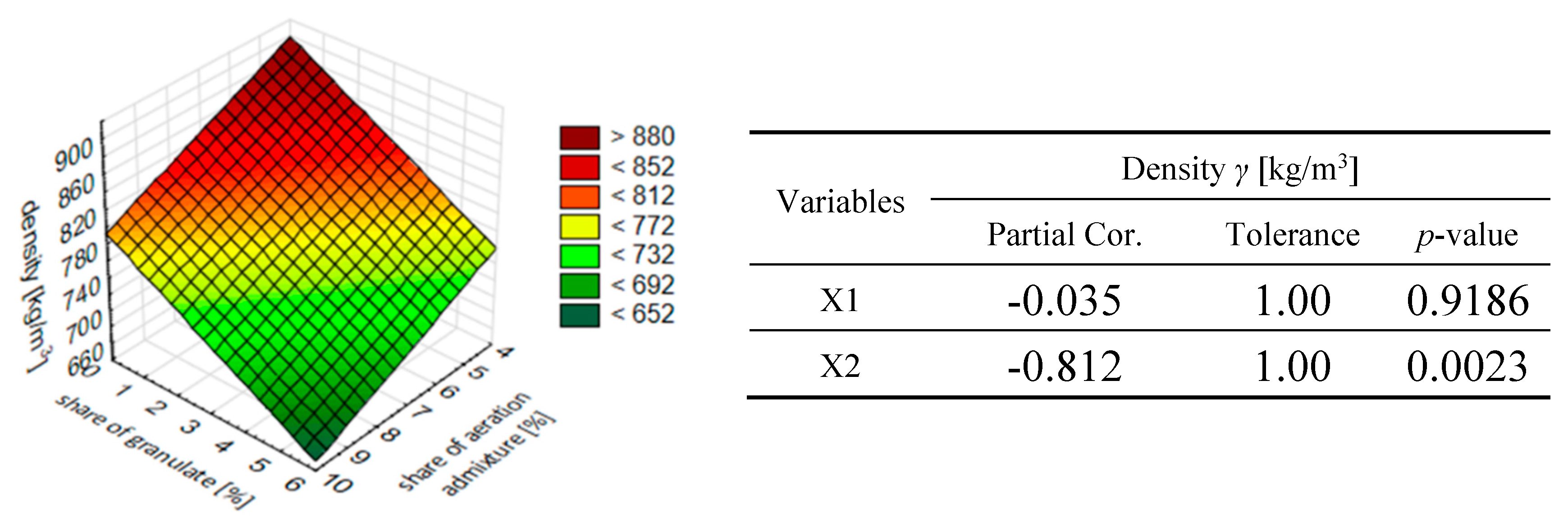
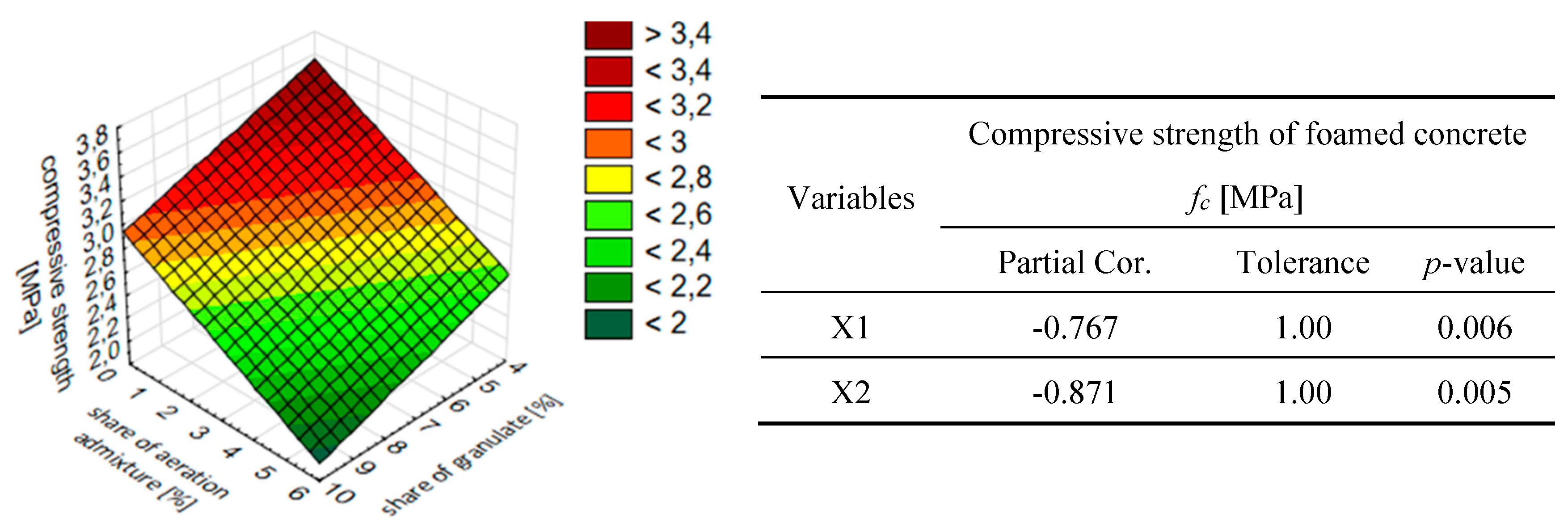
Figure 10 presents a surface graph of the variation of compressive strength of hardened foamed concrete. During the redundancy test, it was found that the semi-partial correlations between the independent variables and density are diverse and amount to -0.871 for the foaming agent content (X2), and -0.767 for the polystyrene granulate addition content (X1). This means that the effect of the change in the amount of the foaming agent on the change in the compressive strength of foamed concrete is greater (the strength of the effect of this variable is greater than the change in the content of the polystyrene granulate additive). However, the variables are inversely correlated.
Figure 10.
The effect of the simultaneous addition of polystyrene granulate X1 [%] and foaming agent X2 [%] on the compressive strength of foamed concrete fc [MPa] described by a linear model.
Figure 10.
The effect of the simultaneous addition of polystyrene granulate X1 [%] and foaming agent X2 [%] on the compressive strength of foamed concrete fc [MPa] described by a linear model.
For the study of the flexural strength variation, a strong correlation was shown with the change in the foaming agent content (X2) - level 95%. The impact of the polystyrene granulate addition content is insignificant, see Figure 11. The trends of the simultaneous influence of the change in the amount of the foaming agent X2 and the addition of polystyrene granulate X1 on sorptivity are presented in Figure 12.
Figure 11.
The effect of the simultaneous addition of polystyrene granulate X1 [%] and foaming agent X2 [%] on the flexural strength of foamed concrete ftk [MPa] described by a linear model.
Figure 11.
The effect of the simultaneous addition of polystyrene granulate X1 [%] and foaming agent X2 [%] on the flexural strength of foamed concrete ftk [MPa] described by a linear model.
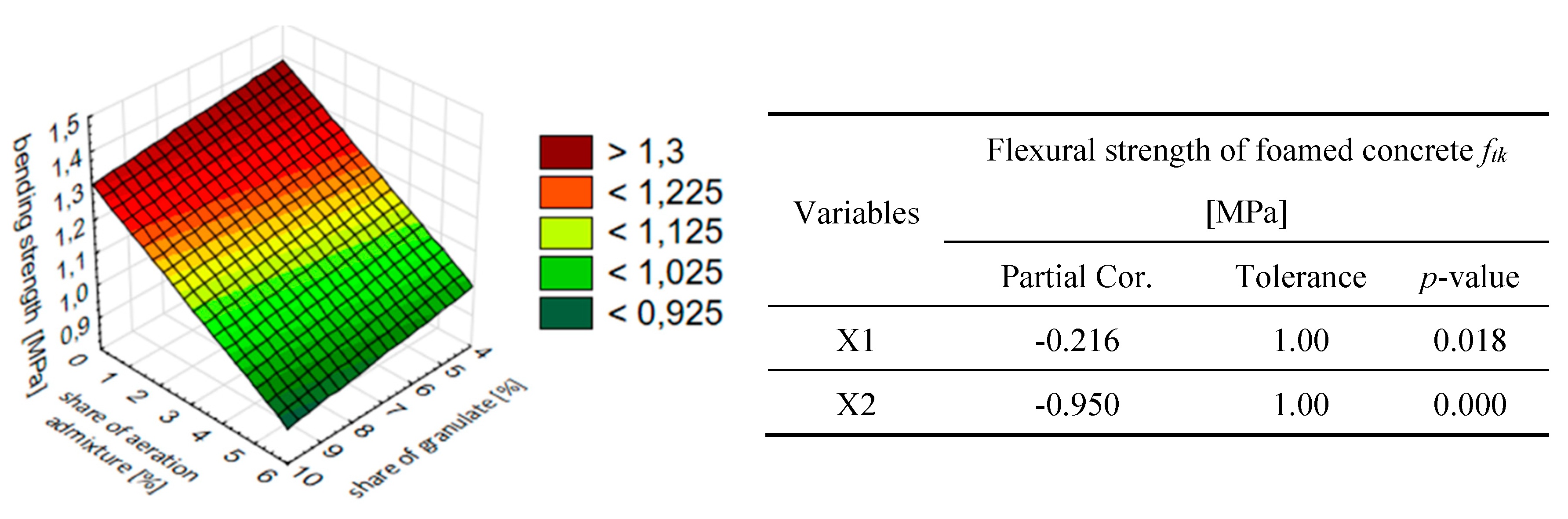
Figure 12.
The effect of the simultaneous addition of polystyrene granulate X1 [%] and foaming agent X2 [%] on the sorptivity nk [MPa] described by a linear model.
Figure 12.
The effect of the simultaneous addition of polystyrene granulate X1 [%] and foaming agent X2 [%] on the sorptivity nk [MPa] described by a linear model.
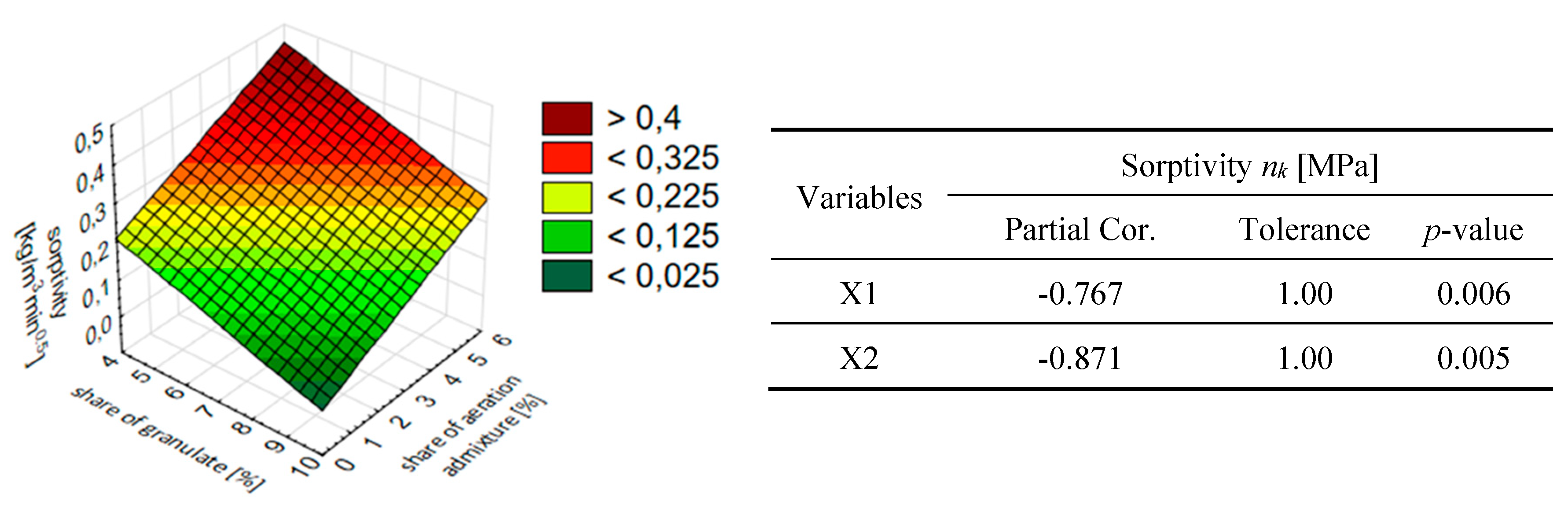
Analyzing the partial correlations, it can be stated that both variables are similarly correlated. This means a strong relationship between both independent variables X1 and X2 with sorptivity. Wherein the variable content of the foaming agent is inversely correlated.
5. Conclusions
The aim of the study was to assess the physical properties of hardened foamed mortar with polystyrene granulate addition. In this study foamed concrete was produced on the basis of light plaster mortar. The polystyrene granulate with a bulk density of 13 kg/m3 in the amount of 4, 7 and 10 g of 1 kg of light plaster mortar and a foaming agent in the amount of 2, 4 and 6% of the cement mass were used. Based on the results of this experimental investigation, the following key conclusions can be drawn:
- With the increase in the content of addition of polystyrene granulate, density, thermal conductivity coefficient and sorptivity were decreased, what is a positive phenomenon. However, at the same time, a reduction in mechanical properties was demonstrated.
- Sorptivity of all samples is lower than the base sample of light plaster mortar, but sorptivity increases with the addition of a foaming agent for samples with the addition of polystyrene granulate.
- The addition of polystyrene granulate affects the density of foamed mortar in a similar way to a foaming agent. Both components can be used to regulate the density of this product.
- The addition of polystyrene granulate reduces the flexural strength to a lesser extent than the foaming agent. Also in the case of compressive strength, a greater decrease was noted for samples with an increased amount of foaming agent.
- The addition of polystyrene granulate reduces the sorption of foamed mortar, while the addition of a foaming agent increases it.
- The effect of polystyrene granulate on the thermal conductivity coefficient is insignificant. Hence, the addition of granulate is not an equivalent of a foaming agent, but can be an interesting addition to the composition of foamed concrete mix, foamed slurry or foamed mortar.
Based on the conducted research, it can be concluded that in the analyzed foamed concrete formulation, polystyrene granulate combined with a foaming admixture provides new possibilities in modeling the physical properties of foamed building materials. However, in order to determine the exact impact on individual values, further research is planned in this area.
Author Contributions
Conceptualization, M.K, M.G-L., and W.B.; methodology, W.B., M.K. and A.K.; software, M.K. and W.B..; validation, M.K.; formal analysis, M.G-L., W.B. and M.K.; investigation, M.G-L., W.B., M.K. and A.K.; resources, W.B. and M.K.; data curation, W.B., M.K. and A.K.; writing—original draft preparation, W.B. and M.K.; writing—review and editing, M.G-L. and M.K.; visualization, W.B. and M.K.; supervision, M.K.; project administration, M.K.; funding acquisition, M.G-L. and W.B. All authors have read and agreed to the published version of the manuscript.
Funding
Not applicable.
Institutional Review Board Statement
Not applicable.
Informed Consent Statement
Not applicable.
Data Availability Statement
Acknowledgments
The research analyzed in this article was carried out at the Building Research Institute (ITB) during the scientific internship of M.G-L. and W.B. from the Faculty of Materials, Civil and Environmental Engineering, University of Bielsko-Biala, in the period July - September 2024 under the internship supervision of M.K.
Conflicts of Interest
The authors declare no conflicts of interest.
| 1 | according to PN-EN 197-1:2011 |
References
- Heim, D. Isothermal storage of solar energy in building construction. Renew. En. 2010, 35(4), 788–796. [Google Scholar] [CrossRef]
- Jędrzejuk, H., Wojciech, M. Optimization of shape and functional structure of buildings as well as heat source utilization. Ex., Build. Environm.2002, 37(12), 1249-1253. [CrossRef]
- Nambiar, E.K.; Ramamurthy, K. Air-void characterization of foam concrete. Cem. Concr. Res. 2007, 37, 221–230. [Google Scholar] [CrossRef]
- Raj, A.; Sathyan, D.; Mini, K.M. Physical and functional characteristics of foam concrete: A review. Constr. Build. Mater. 2019, 221, 787–799. [Google Scholar] [CrossRef]
- Fu, Y.; Wang, X.; Wang, L.; Li, Y. Foam concrete: A state-of-the-art and state-of-the-practice review. Adv. Mater. Sci. Eng. 2020, 2020, 6153602. [Google Scholar] [CrossRef]
- Ramamurthy, K.; Nambiar, E.K.; Ranjani, G.I.S. A classification of studies on properties of foam concrete. Cem. Concr. Compos. 2009, 31, 388–396. [Google Scholar] [CrossRef]
- Dhir R.K., Newlands M.D., McCarthy A. (eds.): Use of foamed concrete in construction. Proceedings of International Conference on the Use of Foamed Concrete in Construction. University of Dundee, Scotland, 5 July 2005, London: Thomas Telford Ltd., 2005.
- Park, S.B. , Yoon, E.S., Lee, B.I. Effects of processing and materials variations on mechanical properties of lightweight cement composites. Cem. Concr. Res. 1999, 29(2), 193–200. [Google Scholar] [CrossRef]
- Giannakou, A., Jones M.R. Potential of foamed concrete to enhance the thermal performance of low-rise dwellings [in:] Innovations and Developments in Concrete Materials and Construction: Proceedings of the International Conference Held at the University of Dundee, Scotland, UK on 9–11 September 2002. London: Thomas Telford Publishing, 2002.
- Bindiganavile V., Hoseini M. Foamed concrete, [in:] Mindess S. (ed.): Developments in the formulation and reinforcement of concrete. 1st ed., Sawston: Woodhead Publishing Limited, 2008, pp. 231-255.
- Chen, B. , Liu, N. A novel lightweight concrete-fabrication and its thermal and mechanical properties. Constr. Build. Mater. 2013, 44, 691–698. [Google Scholar] [CrossRef]
- Amran, M.Y.H, et al. Design Efficiency, Characteristics, and Utilization of Reinforced Foamed Concrete: A Review. Crystals2020, vol. 10, 948. [CrossRef]
- Priyatham, B.P.R.V.S., Lakshmayya, M.T.S., Chaitanya, D.V.S.R.K. Review on performance and sustainability of foam concrete, Mater. Tod.: Proc.2023. [CrossRef]
- Jones, M.R., McCarthy, A. (2005), Behaviour and assessment of foamed concrete for construction applications, [in:] Dhir R.K., Newlands M.D., McCarthy A. (eds.): Use of foamed concrete in construction. Proceedings of International Conference on the Use of Foamed Concrete in Construction. University of Dundee, Scotland, 5 July 2005, London: Thomas Telford Ltd., 2005, pp. 61–88.
- Jones, M.R., McCarthy, A. (2006), Heat of hydration in foamed concrete: Effect of mix constituents and plastic density, Cem. Concr. Res.2006, 36(6), 1032-1041. [CrossRef]
- Mohd Zahari, N., et al. Foamed concrete: potential application in thermal insulation, [in:] Proceedings of Malaysian Technical Universities Conference on Engineering and Technology (MUCEET), MS Garden, Kuantan, Pahang, Malaysia, 2009.
- She, W. , Zhang, Y., Jones, M.R. Three-dimensional numerical modeling and simulation of the thermal properties of foamed concrete. Constr. Build. Mater. 2014, 50, 421–431. [Google Scholar] [CrossRef]
- Vinith Kumar, N., Arunkumar, C., Srinivasa Senthil, S. Experimental Study on Mechanical and Thermal Behavior of Foamed. Mater. Tod.: Proc.2018, 5(2), Part 3, 8753-8760. [CrossRef]
- Shang, X. , Qu, N., Li, J. Development and Functional Characteristics of Novel Foam Concrete. Constr. Build. Mater. 2022, 324, 126666. [Google Scholar] [CrossRef]
- Silva N., et al. Foam concrete-aerogel composite for thermal insulation in lightweight sandwich facade elements, [in:] Concrete 2015: Proceedings of the 27th Biennial National Conference of the Concrete Institute of Australia in conjunction with the 69th RILEM Week "Construction Innovations, Research into Practice", Institute of Australia, 30.08–02.09.2015, Melbourne, Australia, p. 1355-1362.
- Gołaszewski, J. i in. (2022a). Effect of Foaming Agent, Binder and Density on the Compressive Strength and Thermal Conductivity of Ultra-Light Foam Concrete. Buildings 2022, 12, 1176. [Google Scholar] [CrossRef]
- Proshin A.P., et al. (2005b), Unautoclaved foam concrete and its construction adapted to regional conditions, [in:] Use of foamed concrete in construction. Proceedings of International Conference on the Use of Foamed Concrete in Construction. Dundee: University of Dundee, Scotland, 5 July 2005, London: Thomas Telford, 2005, pp. 113–120.
- Kozłowski, M.; Kadela, M.; Kukiełka, A. Fracture energy of foamed concrete based on three-point bending test on notched beams. Proc. Eng. 2015, 108, 349–354. [Google Scholar] [CrossRef]
- Kadela M., Kukiełka A., Małek M. (2020), Characteristics of lightweight concrete based on a synthetic polymer foaming agent, Materials, vol. 13, no. 21, 4979. [CrossRef]
- Amran, Y.H.M. , Farzadnia, N., Ali, A.A.A. Properties and applications of foamed concrete: a review. Constr. Build. Mater. 2015, 101, 990–1005. [Google Scholar] [CrossRef]
- Kearsley, E.P. Just foamed concrete – an overview. Specialist techniques and materials for construction [in:] Proceedings of the International Conference “Creating with Concrete”, Dundee: University of Dundee, 1999, pp. 8–10.
- Nambiar, E.K.K. , Ramamurthy, K. Sorption characteristics of foam concrete. Cem. Concr. Res. 2007, 37(9), 1341–1347. [Google Scholar] [CrossRef]
- https://semprefarby.pl/component/djcatalog2/?format=raw&task=download&fid=426 (accessed on 8 January 2025).
- Falliano, D.; De Domenico, D.; Ricciardi, G.; Gugliandolo, E. Experimental investigation on the compressive strength of foamed concrete: Effect of curing conditions, cement type, foaming agent and dry density. Constr. Build. Mater. 2018, 165, 735–749. [Google Scholar] [CrossRef]
- PN-EN 1015-10:2001+A1:2007 Methods of test for mortar for masonry - Part 10: Determination of dry bulk density of hardened mortar. PKN: Warsaw, Poland, 2007.
- PN-EN 1015-11:2020-04 Methods of test for mortar for masonry - Part 11: Determination of flexural and compressive strength of hardened mortar. PKN: Warsaw, Poland, 2020.
- PN-EN 1015-18:2003 Methods of test for mortar for masonry - Part 18: Determination of water absorption coefficient due to capillary action of hardened mortar. PKN: Warsaw, Poland, 2003.
- Kozłowski, M.; Kadela, M. Mechanical Characterization of Lightweight Foamed Concrete. Adv. Mater. Sci. Eng. 2018, 2018, 6801258. [Google Scholar] [CrossRef]
- Castillo-Lara, J.F. , et al. Mechanical Properties of Natural Fiber Reinforced Foamed Concrete. Materials 2020, 13, 3060. [Google Scholar] [CrossRef]
- Sun, Ch., et al. Effects of foaming agent type on the workability, drying shrinkage, frost resistance and pore distribution of foamed concrete, Constr. Build. Mater.2018, 186, 833-839. [CrossRef]
- Zhu, H. , et al. Experimental study on performance improvement of anionic surfactant foaming agent by xanthan gum. Constr. Build. Mater. 2020, 230, 116993. [Google Scholar] [CrossRef]
- She, W., et al. Application of organic- and nanoparticle-modified foams in foamed concrete: Reinforcement and stabilization mechanisms. Cem. Concr. Res.2018, 106, 12-22. [CrossRef]
Figure 1.
Used polystyrene granulate addition (own photo).
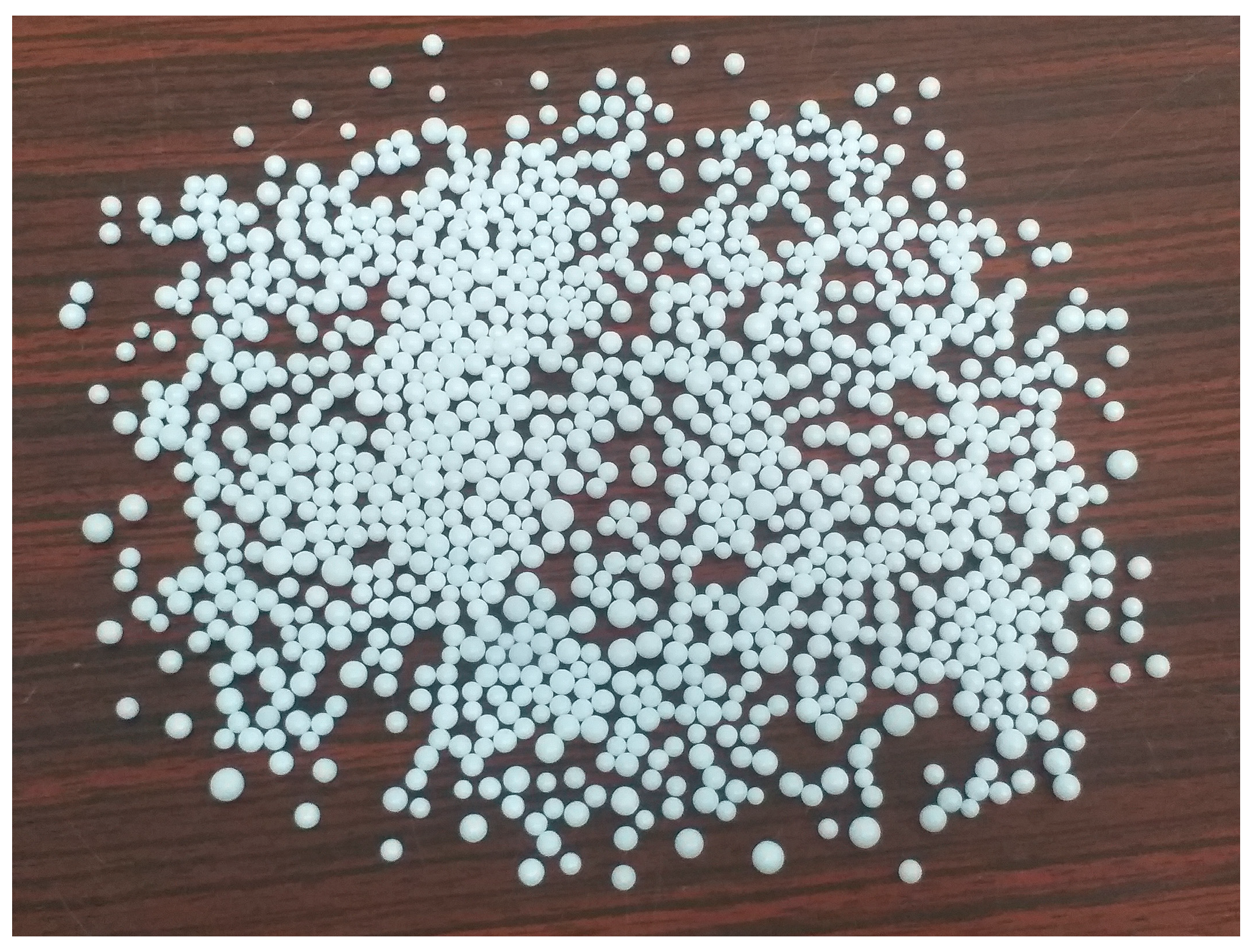
Figure 3.
Foamed concrete samples prepared for testing the thermal conductivity coefficient (own photos).
Figure 3.
Foamed concrete samples prepared for testing the thermal conductivity coefficient (own photos).
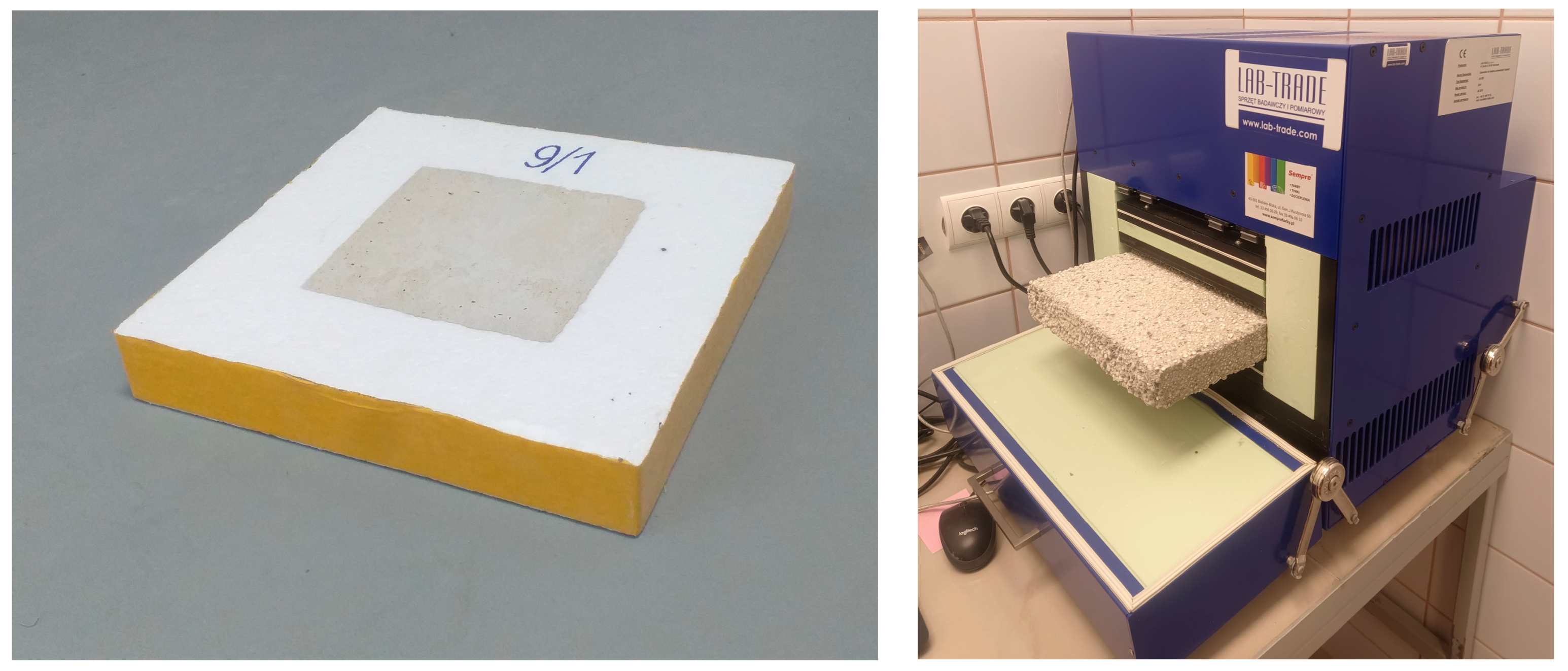
Figure 5.
Sorptivity test of foamed mortar (own photo).
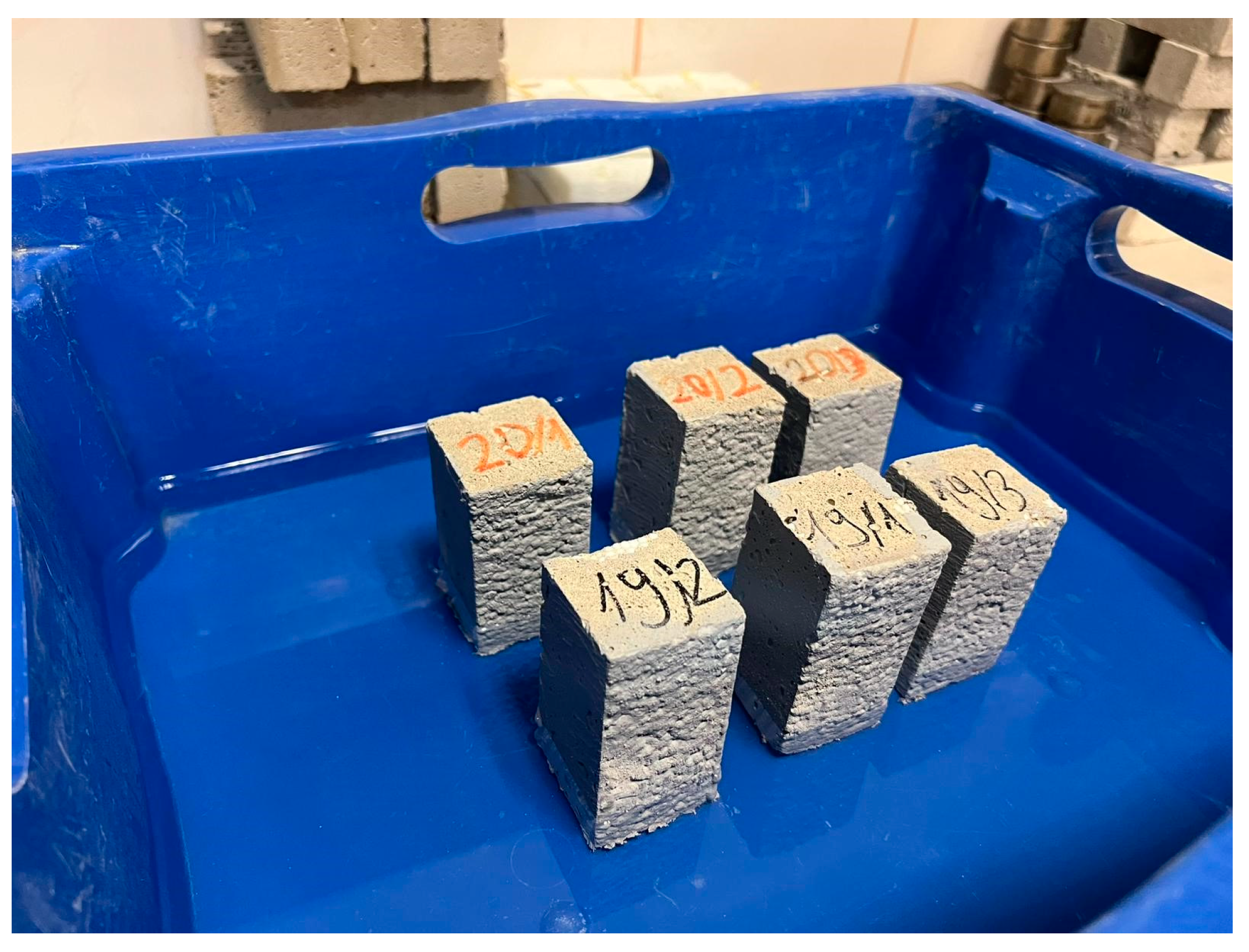
Figure 6.
The effect of polystyrene granulate addition on the physical properties of base mortar.
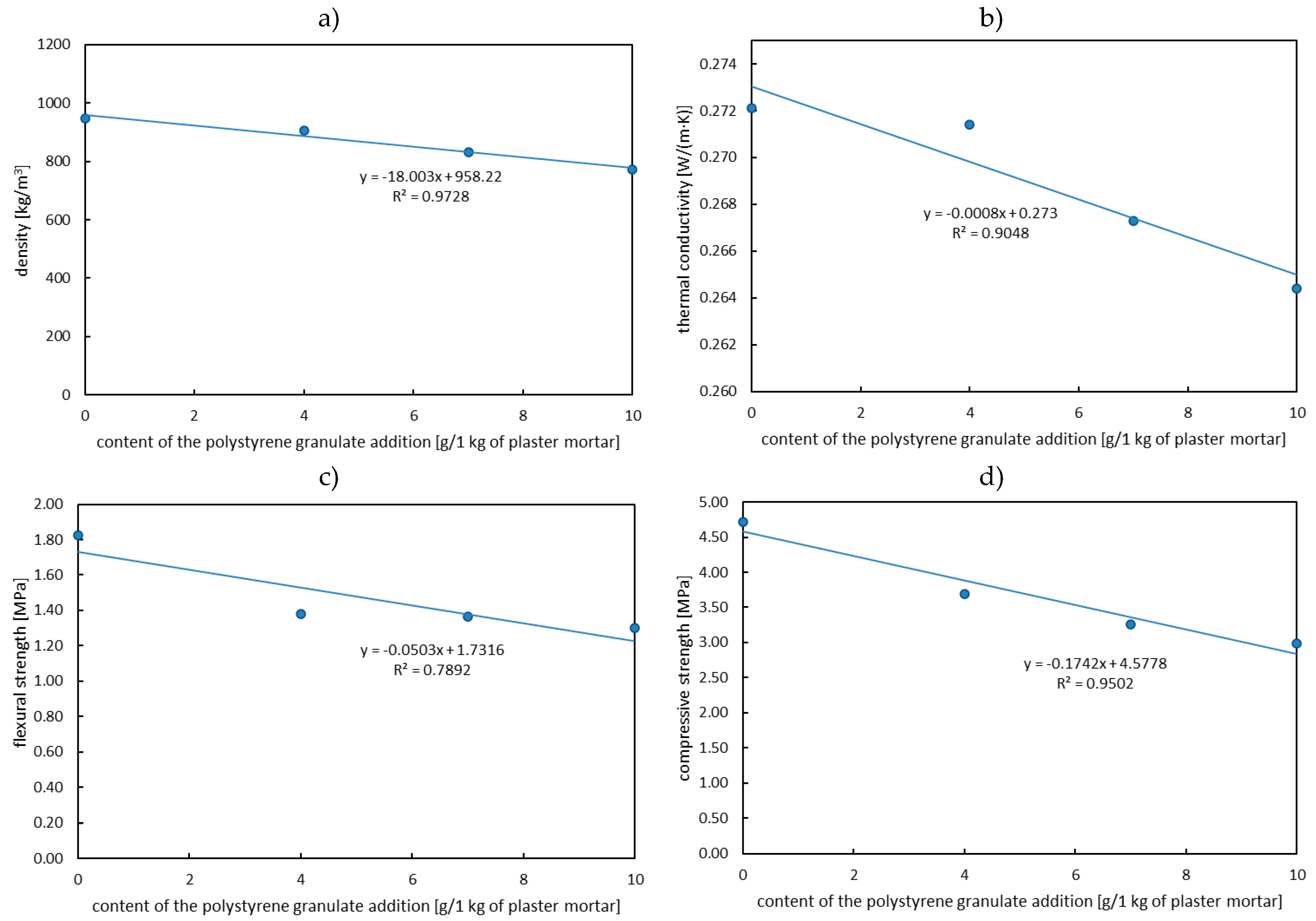
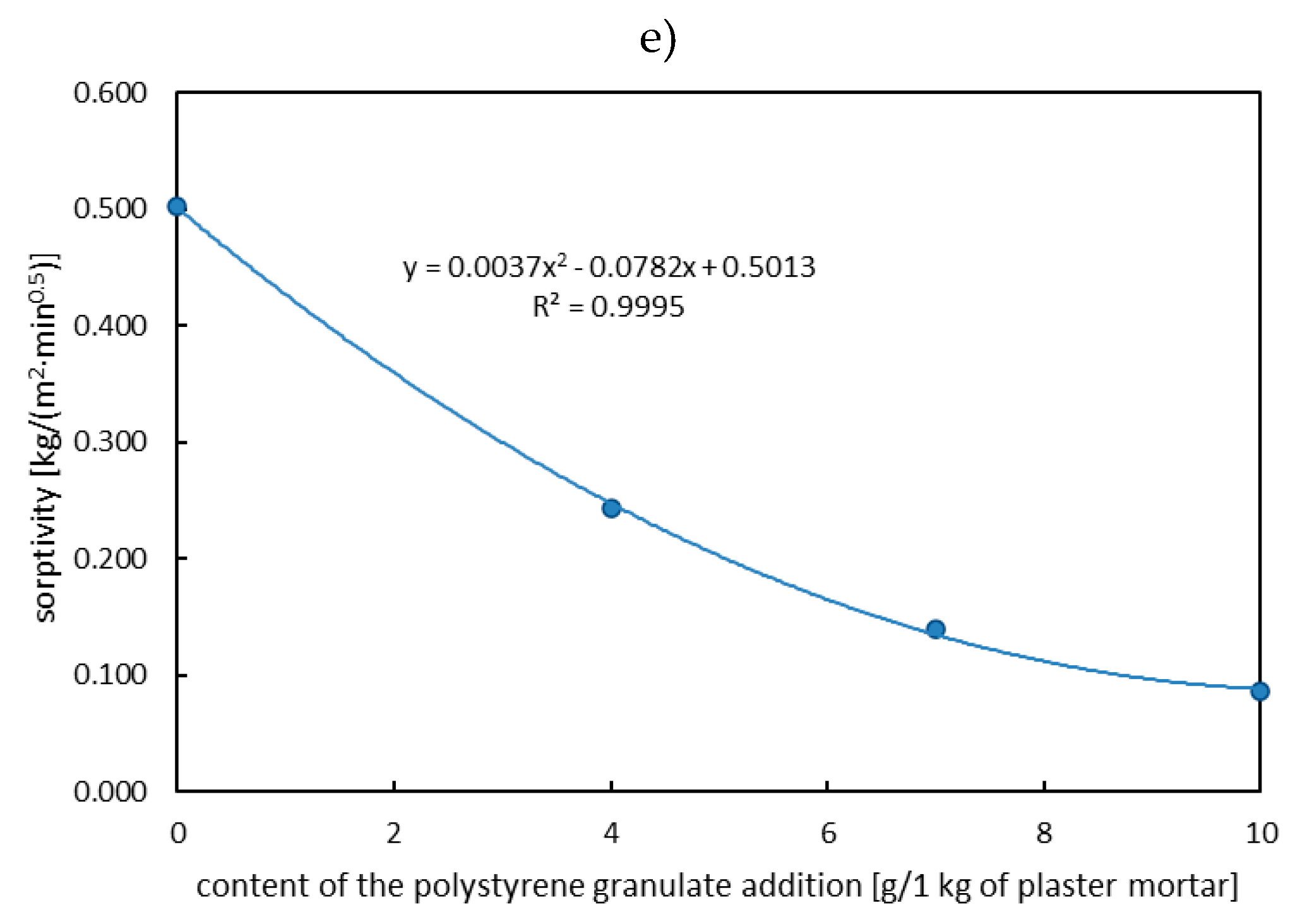
Figure 7.
The effect of polystyrene granulate addition on the physical properties of foamed mortar
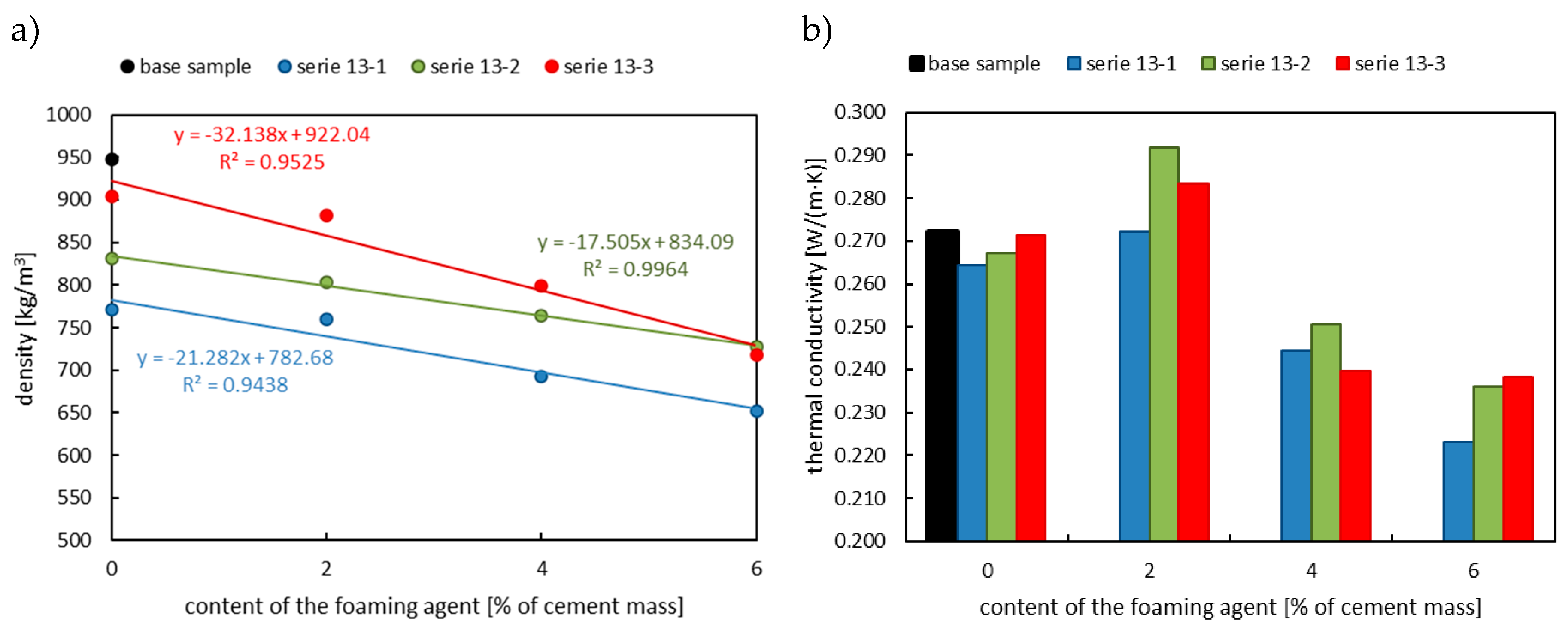
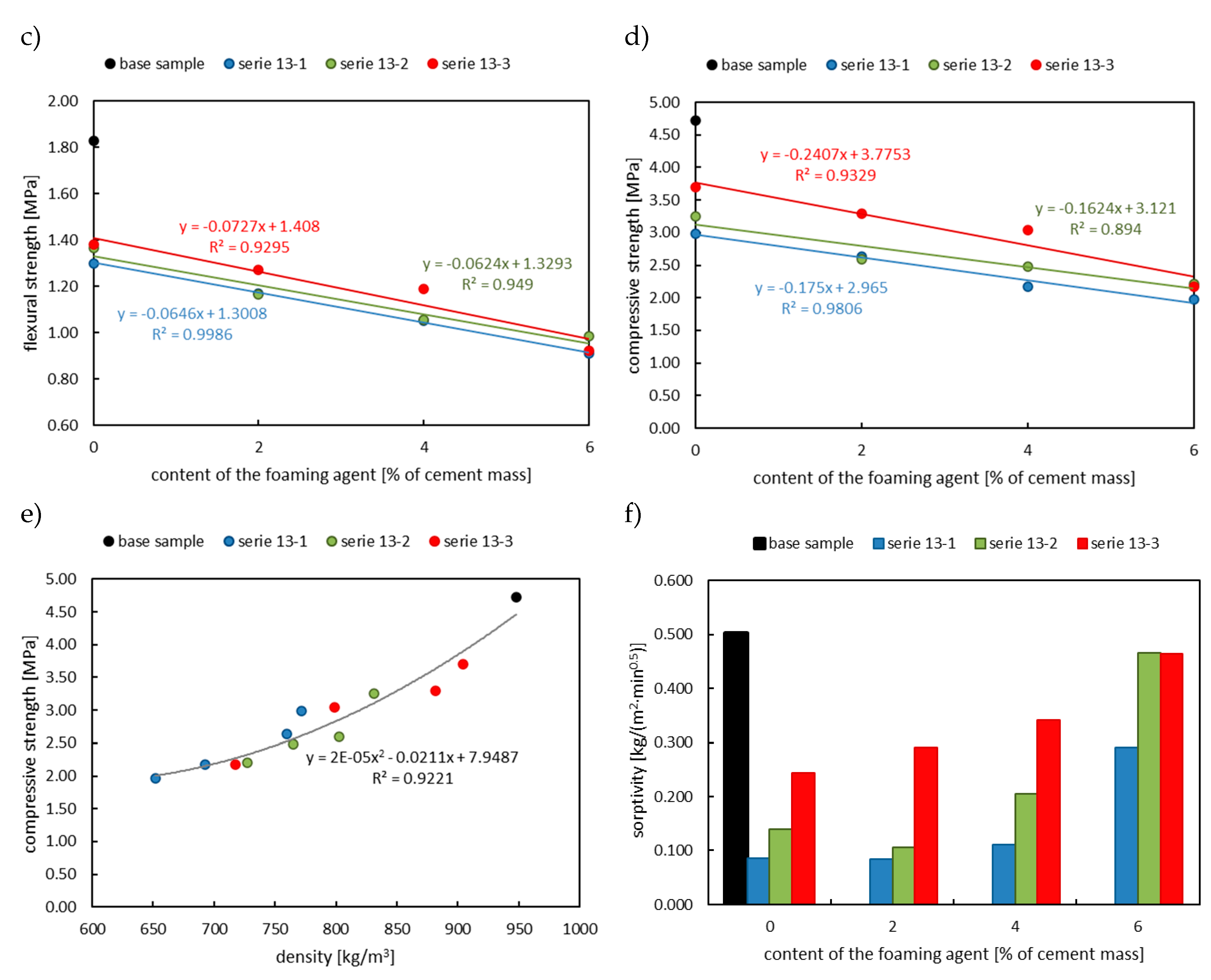
Figure 8.
The effect of the simultaneous addition of polystyrene granulate X1 [%] and foaming agent X2 [%] on the thermal conductivity coefficient of foamed concrete λ [W/(m∙K)] described by a linear model.
Figure 8.
The effect of the simultaneous addition of polystyrene granulate X1 [%] and foaming agent X2 [%] on the thermal conductivity coefficient of foamed concrete λ [W/(m∙K)] described by a linear model.
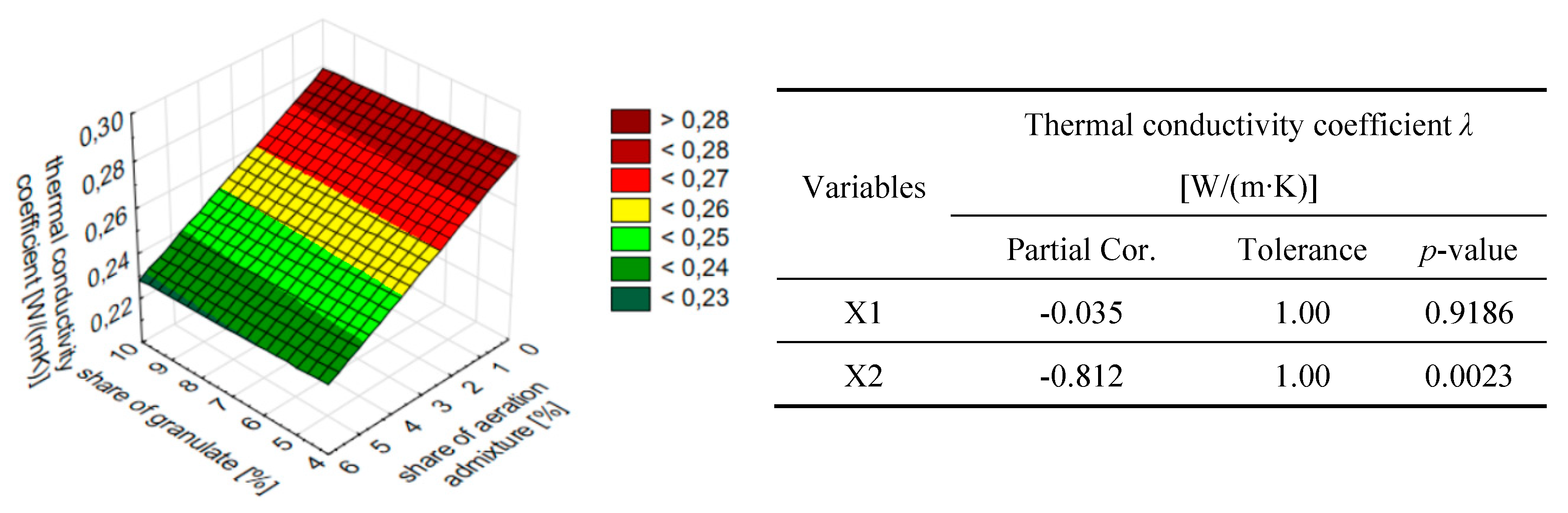

Table 1.
The composition of the light plaster mortar [28].
Table 1.
The composition of the light plaster mortar [28].
| Composite | Quartz sand 0.0-0.5 mm | Cement CEM I 42.5 R1 | Filling aggregate (limestone flour) | Lime | Expanded perlite | Redispersible polymer powder (polyvinyl acetate modified with ethylene) | Thickener (hydroxyethyl methyl cellulose with a viscosity of approx. 15,000 mPa∙s) | Foaming agent based on alpha-olefin sulphate and sodium salt |
|
Unit (vol. %) |
63.02 | 20.00 | 10.00 | 5.00 | 1.20 | 0.50 | 0.25 | 0.03 |
Table 2.
Mix proportions on 1 batch.
| Mix symbol |
Light plaster mortar [kg] |
Polystyrene granulate addition [g] |
Water [kg] |
Foaming agent [% of cement mass] |
| Serie 13-1 | 12 | 120 | 3.120 | 0.0 |
| 12 | 120 | 3.072 | 2.0 | |
| 12 | 120 | 3.024 | 4.0 | |
| 12 | 120 | 2.976 | 6.0 | |
| Serie 13-2 | 12 | 84 | 3.120 | 0.0 |
| 12 | 84 | 3.072 | 2.0 | |
| 12 | 84 | 3.024 | 4.0 | |
| 12 | 84 | 2.976 | 6.0 | |
| Serie 13-3 | 12 | 48 | 3.120 | 0.0 |
| 12 | 48 | 3.072 | 2.0 | |
| 12 | 48 | 3.024 | 4.0 | |
| 12 | 48 | 2.976 | 6.0 |
Table 3.
Percental decrease in physical properties of light plaster mortar with polystyrene granulate addition compare to base light plaster mortar.
Table 3.
Percental decrease in physical properties of light plaster mortar with polystyrene granulate addition compare to base light plaster mortar.
| No. | Decrease in [%] | ||||
| density | λ | ftk | fc | sorptivity | |
| [kg/m3] | [W/(m∙K)] | [MPa] | [MPa] | [kg/(m2·min0,5)] | |
| Serie 13-1 | 18.6 | 2.8 | 28.8 | 36.8 | 82.8 |
| Serie 13-2 | 12.2 | 1.8 | 25.4 | 31.1 | 72.2 |
| Serie 13-3 | 4.5 | 0.3 | 24.5 | 21.7 | 51.6 |
Table 4.
Multiple regression results.
| Depemdent variable | F (2,9) | p | Se | R | R2 |
| Thermal conductivity coefficient [W/(m∙K)] | 8.8252 | <0.0076 | 0.01544 | 0.81381 | 0.58248 |
| Density [kg/m3] | 60.383 | <0.0001 | 21.565 | 0,96469 | 0.91523 |
| Flexural strength [MPa] | 85.29 | <0.0000 | 0.04034 | 0.97461 | 0.93874 |
| Compressive strength [MPa] | 20.601 | <0.0004 | 0.24348 | 0.90593 | 0.78088 |
| Sorptivity [kg/(m2∙min0.5)] | 0.9052 | <0.0004 | 0.06505 | 0.90521 | 0.77924 |
Table 5.
Regression results.
| Depemdent variable | b0 | p-value | b1 | p-value | b2 | p-value |
| Thermal conductivity coefficient [W/(m∙K)] | 0.2829 | 0.000 | -0,00041 | 0,818 | -0.0084 | 0,002 |
| Density [kg/m3] | 970.875 | 0.000 | -17.7917 | 0.005 | -23.583 | 0.000 |
| Flexural strength [MPa] | 1.44192 | 0.000 | -0.01375 | 0.017 | -0.0663 | 0.000 |
| Compressive strength [MPa] | 3.97241 | 0.000 | -0.10291 | 0.005 | -0.1673 | 0.000 |
| Sorptivity [kg/(m2∙min0.5)] | 0.33815 | 0.000 | -0.03204 | 0.002 | 0.0406 | 0.000 |
Disclaimer/Publisher’s Note: The statements, opinions and data contained in all publications are solely those of the individual author(s) and contributor(s) and not of MDPI and/or the editor(s). MDPI and/or the editor(s) disclaim responsibility for any injury to people or property resulting from any ideas, methods, instructions or products referred to in the content. |
© 2025 by the authors. Licensee MDPI, Basel, Switzerland. This article is an open access article distributed under the terms and conditions of the Creative Commons Attribution (CC BY) license (https://creativecommons.org/licenses/by/4.0/).
Copyright: This open access article is published under a Creative Commons CC BY 4.0 license, which permit the free download, distribution, and reuse, provided that the author and preprint are cited in any reuse.


