Preprint
Article

This version is not peer-reviewed.

Guinea Pig Manure and Mineral Fertilizers Enhance the Yield and Nutritional Quality of the INIA 619 Maize Variety on the Peruvian Coast

A peer-reviewed article of this preprint also exists.

Submitted:

27 February 2025

Posted:

28 February 2025

You are already at the latest version

Abstract

Sustainable fertilization using local resources like manure is crucial for soil health. This study evaluated the potential of guinea pig manure to replace mineral fertilizers in hard yellow maize (hybrid INIA 619) under Peruvian coastal conditions. A split-plot design tested four doses of guinea pig manure (0, 2, 5, 10 tha⁻¹) and four levels of mineral fertilization (0%, 50%, 75%, 100%). The study assessed plant height, ear characteristics, yield, and nutritional quality parameters. The results indicated that 100% mineral fertilization led to the highest plant height (229.67 cm) and grain weight (141.8 g). Yields of 9.19 and 9.08 tha⁻¹ were achieved with 5 and 10 tha⁻¹ of manure, while 50% mineral fertilization gave 8.8 tha⁻¹, similar to the full dose (8.7 tha⁻¹). Protein content was highest with 10 tha⁻¹ of manure combined with mineral fertilization. However, no significant differences were found between the 50%, 75%, and 100% mineral fertilizer doses. In conclusion, applying guinea pig manure improved nutrient use efficiency, yield, and grain protein quality in maize, reducing the need for mineral fertilizers by up to 50%. This provides a sustainable fertilization strategy for agricultural systems.

Keywords: 
;  ;  ;  ;  

1. Introduction

Hard yellow maize (Zea mays L.) is one of the most important annual crops globally and is notable for its high productivity per unit area compared to other cereals [1]. In Peru, 201,038 farmers are involved in its cultivation [2], covering an area of 272,709 hectares, which accounts for 14% of the country’s agricultural land and yields a production of 1,330,989 t∙ha-1 [3]. Maize plays a critical role in Peru’s agrarian economy, serving as a key input for human consumption and animal feed [4].
Due to its high energy content and rich nutritional composition, this cereal is extensively used to produce balanced feed for pigs, poultry, and other animals [5]. Consequently, the grain’s nutritional quality is critical in determining its value as feed [6]. This quality is influenced by its protein, fat, fiber content, and other essential nutrients [7]. Genetic variability among cultivars and environmental growing conditions can significantly impact these nutritional parameters [8].
In recent decades, spurred by increased poultry and meat production, the rising demand for hard yellow maize has driven an expansion of cultivated areas managed with mineral fertilization [9]. However, this intensive agronomic practice can physically, chemically, and biologically degrade soils. It can reduce water infiltration due to increased bulk density, lower the soil’s cation exchange capacity, deplete soil nutrients, and negatively affect microbial populations [10,11]. Despite these drawbacks, many farmers rely on chemical fertilizers for crop management [12].
Implementing efficient and sustainable fertilization techniques is essential to maintain soil health and enhance hard yellow maize productivity [13]. One promising approach is the application of organic amendments, which serve as a strategy to restore soil fertility [14]. Organic amendments improve key soil quality characteristics, enhancing the availability of macro- and micronutrients [15]. Additionally, they promote biological diversity and stimulate plant hormonal activity, which supports crop development [11].
Among the organic amendments, guinea pig manure has garnered recognition for its beneficial properties, with various studies supporting its integration into agricultural systems [16,17,18]. It positively affects soil water retention capacity and aggregate formation, facilitating root development and promoting healthy crop growth, thereby improving yields [19,20]. Moreover, guinea pig manure provides essential nutrients such as phosphorus, potassium, and nitrogen, enhancing soil fertility [2]. Its contribution of nitrogen and micronutrients also positively impacts crop nutritional quality crops [22,23].
Despite their benefits, organic amendments alone may not fully meet the nutrient demands of a crop like hard yellow maize [24,25]. However, combining organic matter with mineral fertilizers can enhance plant nutrient availability while improving soil properties [26,27]. This integrated approach presents an alternative for farmers, enabling higher yields and improved crop nutritional quality. Thus, this study aims to evaluate the influence of varying doses of guinea pig manure in combination with different mineral fertilization levels on the grain yield and nutritional quality of the hard yellow maize variety INIA 619.

2. Materials and Methods

2.1. Trial Location

The research was conducted at the Universidad Nacional Agraria La Molina, in the district of La Molina, Lima Province, Department of Lima, Peru. The experimental plot is located at 76° 56′ 21″ W and 12° 04′ 55″ S, with an altitude of 247 m.a.s.l. The average temperature during the study period was 19.89°C, with a relative humidity of 79.43%, and no recorded rainfall (0.8 mm∙ hour⁻¹). The Alexander Von Humboldt Meteorological Station provided the meteorological data (Figure 1).

2.2. Soil Characteristics

A soil characterization analysis was performed at the Soil, Water, and Foliar Laboratory (LABSAF) of the National Institute for Agrarian Innovation. The results indicated a sandy loam texture with 56% sand, 19.3% silt, and 24.7% clay [28]. The soil had a pH of 8.3 [29], electrical conductivity (EC) of 37.4 mS·m⁻¹, and a cation exchange capacity (CEC) of 12.8 meq·100g⁻¹. The exchangeable cations were as follows: calcium (Ca) 6.1 meq·100g⁻¹, potassium (K) 3.9 meq·100g⁻¹, magnesium (Mg) 2.6 meq·100g⁻¹, and sodium (Na) 0.2 meq·100g⁻¹ [28]. Phosphorus (P) content was 22.8 mg·kg⁻¹ [28], potassium (K) 110.3 mg·kg⁻¹ [28], organic matter (OM) 1.4%, total carbonate 1.5%, organic carbon (OC) 0.81%, and total nitrogen (N) 0.02% [30].

2.3. Experimental Design

The experiment used a randomized complete block design with a split-plot arrangement and three replications. Four doses of guinea pig manure were allocated to the main plots, while four percentages of the recommended mineral fertilization were assigned to the subplots (Table 1). In total, 16 treatments were evaluated by combining these two factors. Each replication covered an individual experimental area of 30 m².

2.4. Description of the Organic Matter

The guinea pig manure was sourced from the National Guinea Pig Programme sheds at the Institute for Agrarian Innovation. Its physical and chemical characteristics were as follows: pH of 7.1, EC of 832.0 mS∙m⁻¹, organic matter content of 52.56%, nitrogen (N) concentration of 2.84%, potassium oxide (K₂O) at 2.51%, phosphorus pentoxide (P₂O₅) at 1.01%, and a carbon-to-nitrogen (C/N) ratio of 11.06.

2.5. Crop Fertilization

Manure fertilization was applied before sowing in the furrow rib according to the designated doses for each plot and allowed to stabilize for 15 days. Mineral fertilization was carried out manually 30 days after sowing (DAS) during the V4 vegetative stage of maize. Nitrogen fertilization was implemented in two stages: the first application coincided with other fertilizer applications, while the second occurred the following month during the V10 stage. Diammonium phosphate, urea, and potassium chloride were used as P2O5, N, and K2O sources, respectively.

2.6. Agronomic Management

The experimental field was previously utilized for intensive agriculture, having been planted with hard yellow maize for the past three years. Soil preparation involved initial irrigation, plowing, harrowing, and furrowing. The hard yellow maize hybrid employed in the trial was Megahíbrido Simple INIA 619, derived from two tropical lines (line 451 x line 287) exhibiting a high inbreeding degree. This hybrid was developed at the Vista Florida Agricultural Experiment Station in Chiclayo by the National Institute for Agrarian Innovation (INIA) between 2006 and 2009, with contributions from the Centro Internacional de Mejoramiento de Maíz y Trigo (CIMMYT) in Mexico.
Planting was carried out during the first week of June 2023 at a distance of 0.30 m between hills and 0.8 m between furrows in a 1440 m² area, distributed in 48 plots of 30 m² (5 m x 6 m) with 7 furrows each.
For phytosanitary management throughout the crop growth period, a pre-emergent broadleaf herbicide, atrazine (50% concentrate suspension), was applied alongside a fungicide combination of azoxystrobin (250 g∙kg-1) and tebuconazole (500 g∙kg-1). An insecticide treatment included spinosad (12% soluble concentrate) and emamectin benzoate (19 g∙L-1 concentrate).

2.7. Evaluated Parameters

It should be noted that the cob term refers to just the central axis of the maize structure, without the husk and grains, while the ear term refers to the complete structure, including the cob, grains, and husks.
Upon reaching full physiological maturity, which occurred at 210 DAS at the R6 phenological stage, plant height measurements were conducted at harvest. Following the ear harvest, several characteristics were assessed, including ear length and diameter, number of rows per ear, number of grains per row, ear, grain, and cob weight. All weights were standardized to a moisture content of 14%, allowing corn grain yield per hectare calculation.
The yield was calculated as follows [31]:
Y i e l d   k g h a = T o t a l   c o r n   g r a i n   w e i g h t   M o i s t u r e   c o n t e n t A r e a × 10
The Physicochemical Laboratory of the Institute for Nutritional Research carried out a proximate analysis to analyze the nutritional quality of the maize. The following tests were conducted: protein [32], ash [33], fat [34], fiber [35], and carbohydrate content [36]. Additionally, total energy was assessed by calculating kilocalories (Kcal) from fat, carbohydrates, and protein.

2.8. Statistical Analysis

The factors of different treatments were analyzed using block complete randomized design in Split-Plot array ANOVA (alpha = 0.05) and multiple comparisons of means with the Least Significant Difference Test (alpha = 0.05), using the LSD.test function from the Agricolae library for R [37] corrected with the Benjamini–Hochberg procedure.

3. Results

3.1. Vegetative Characteristics

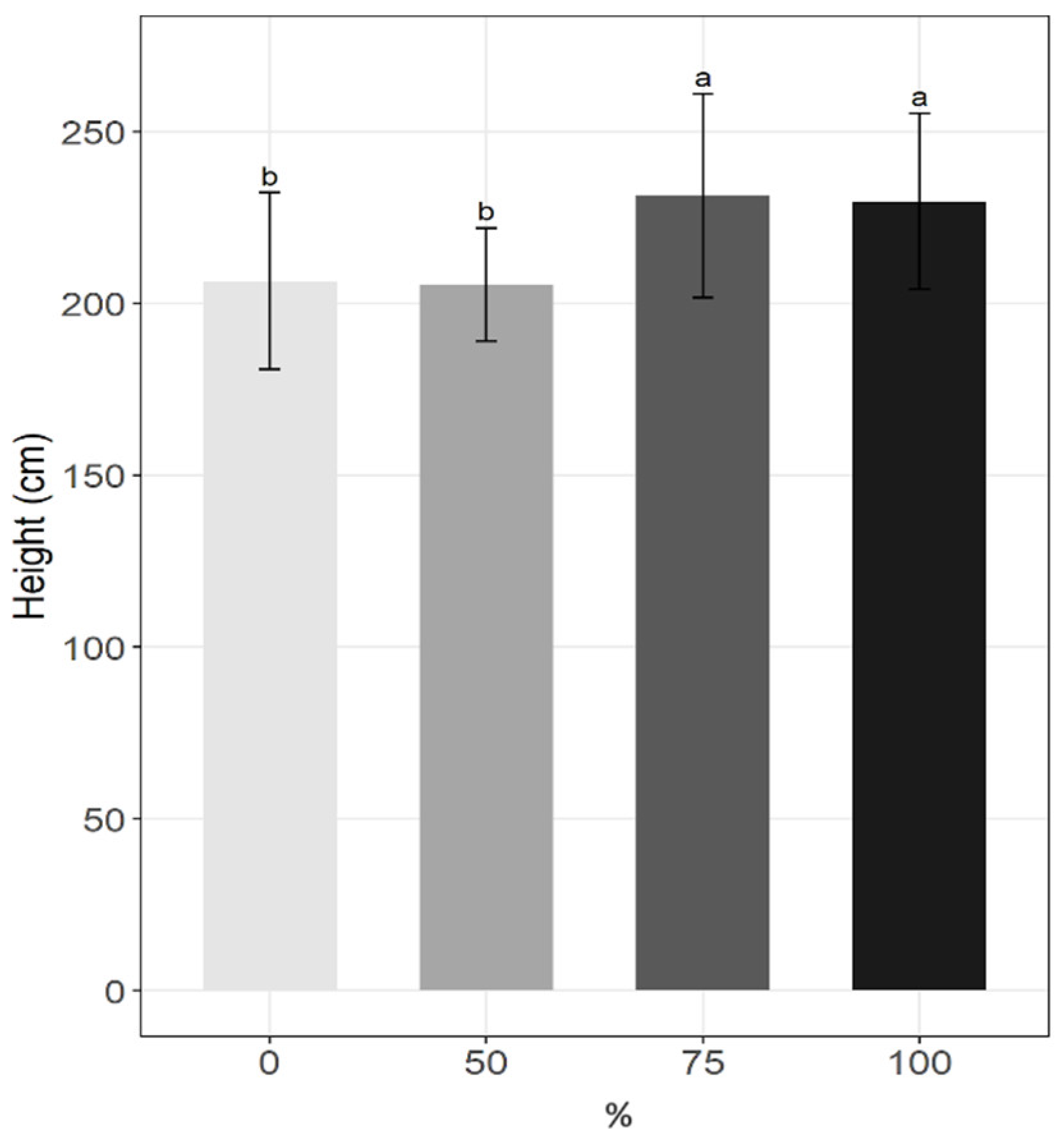
The variance analysis revealed no significant interaction effects; however, significant differences were observed in the main effect between mineral fertilization doses over plant height (p-value = 0.0025). The plants receiving 75% and 100% mineral fertilization showed the greatest heights, reaching 229.67 cm and 231.25 cm, respectively (Figure 2).

3.2. Ear Characteristics

The amendment doses affected only ear diameter (ED), with the largest diameters observed at 5 and 10 t∙ha-1 doses, measuring 4.19 cm and 4.11 cm, respectively. In contrast, the mineral fertilizer doses significantly influenced ear length (EL), the number of grains per row (GR), ear weight (EW), and grain weight (GW). The maximum ear length (13.87 cm) was recorded under the treatment with 100% of the recommended mineral fertilization. The highest number of grains per row and ear weight was achieved with 50% and 100% of the fertilizer dose. Grain weight was also highest at the 100% fertilization dose, reaching 141.8 g, as shown in Table 2.
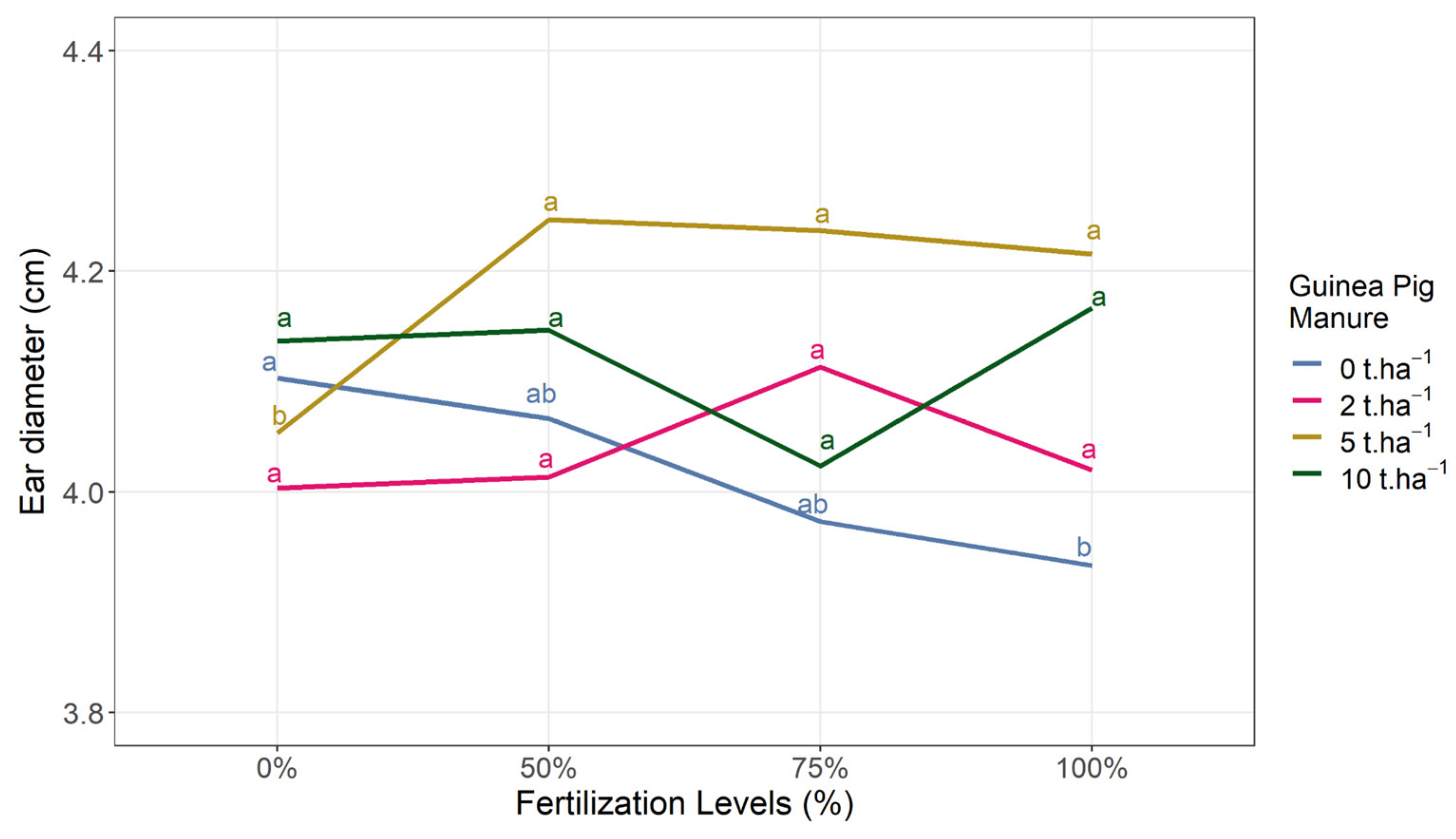
The simple effects analysis of the interaction between the two study factors revealed highly significant differences in ear diameter across fertilizer doses when 0 and 5 t∙ha-1 of guinea pig manure were applied. In treatments with 0 t∙ha-1 manure, the largest ear diameter was observed without mineral fertilization, whereas increasing manure doses reduced ear diameter. For treatments with 5 t∙ha-1 of guinea pig manure, the 50%, 75%, and 100% fertilization doses produced statistically significant results, with ear diameters averaging 4.25 cm, 4.23 cm, and 4.22 cm, respectively (Figure 3).

3.3. Yield

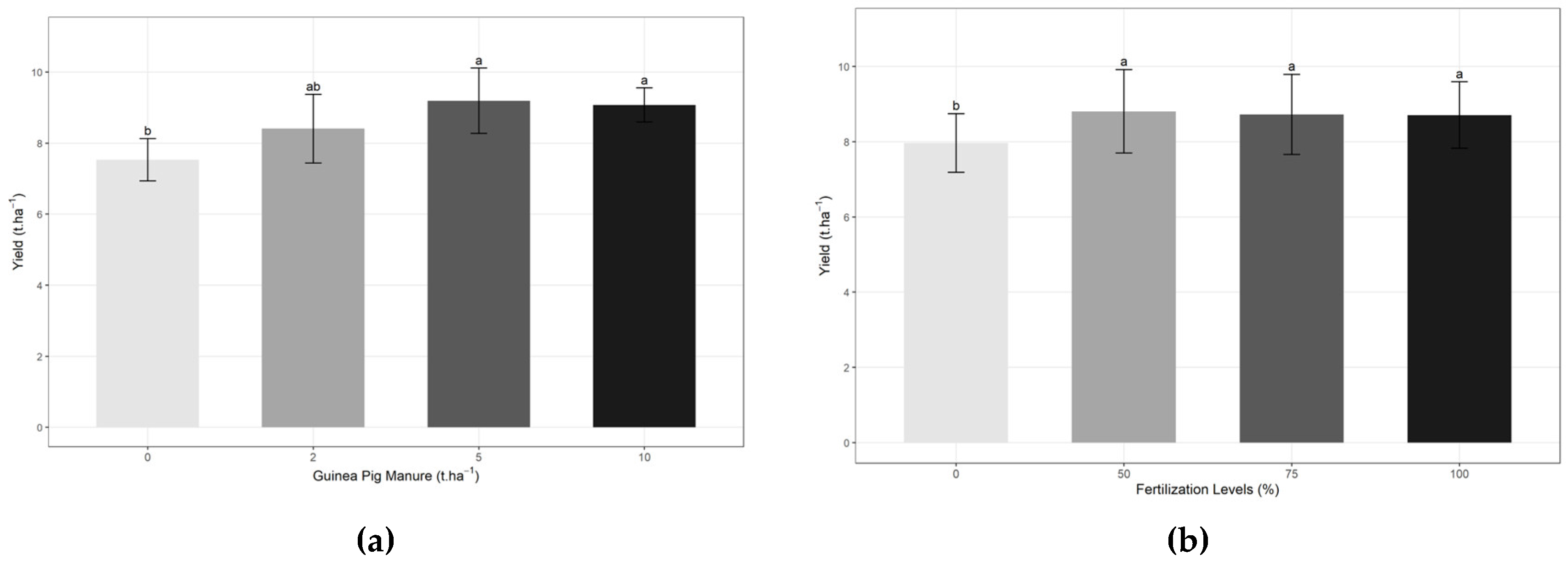
No significant differences were found in the interaction between factors. However, a significant effect was observed for the guinea pig manure factor (p-value 0.03). The treatments with 5 and 10 t∙ha-1 of manure achieved the highest yields, with 9.19 and 9.08 t∙ha-1, respectively, while the lowest yield, 7.53 t∙ha-1, was recorded in the treatment without manure (Figure 4a). For the fertilization factor, the highest yields were observed at 50%, 75%, and 100% of the recommended dose, with values of 8.8, 8.72, and 8.7 t∙ha-1, respectively (Figure 4b).

3.4. Nutritional Quality

Adding guinea pig manure did not affect the nutritional quality of the maize. However, highly significant differences were observed in protein content, carbohydrates, and total energy in kilocalories from protein and kilocalories from carbohydrates, which were attributed to the dose of mineral fertilization applied.
The highest average protein contents were 9.57 and 9.86 g∙100g∙N-1, observed at 75% and 100% of the mineral fertilization dose, respectively. In contrast, the highest carbohydrate content (74.22 g∙100g-1) was found without mineral fertilization. The absence of mineral fertilization resulted in statistically lower total energy and protein kilocalories values than the other levels. Conversely, the energy derived from carbohydrates (Kcal) was statistically higher in the absence of mineral fertilization than when fertilization was applied (Table 3).
Finally, at the interaction level, only the protein content and kilocalories of protein variables were statistically significant.
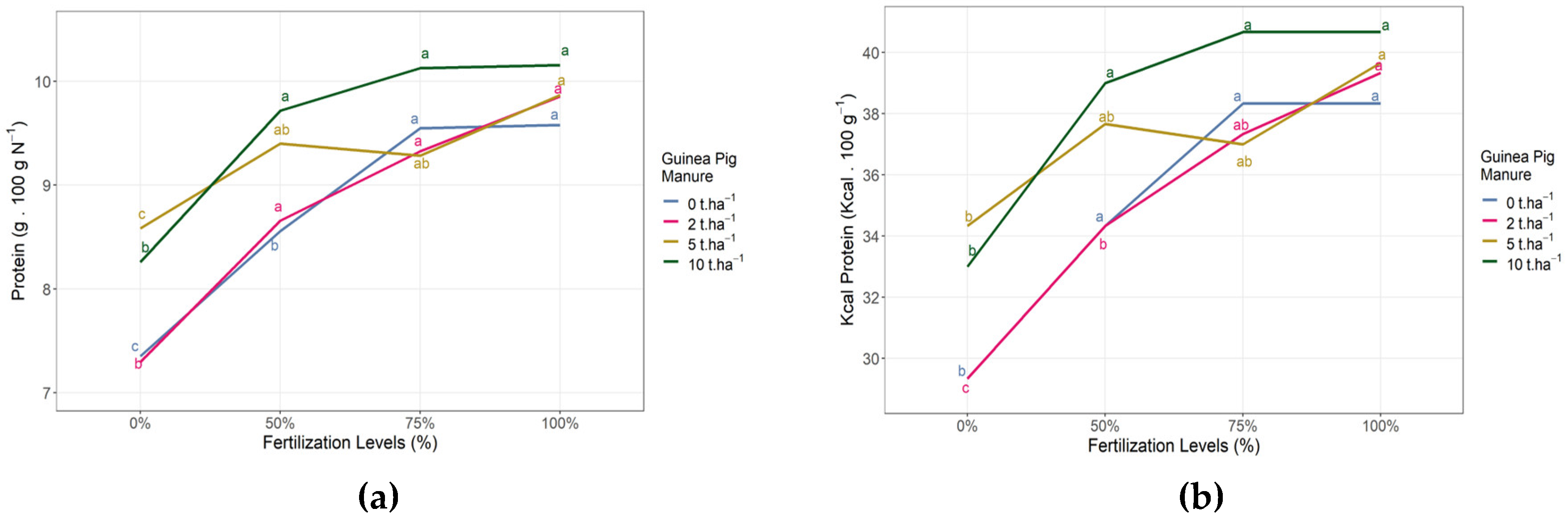
The highest protein contents—10.12, 9.71, and 10.15 g∙100g∙N-1—were obtained with the fertilization doses of 50%, 75%, and 100%, respectively, in the treatment involving 10 t∙ha-1 of guinea pig manure alongside fertilization. However, it is important to note that no significant differences were found between these fertilization doses.
Regarding the protein content and the Kcal of protein, the highest values were obtained by applying 10 t∙ha-1 of guinea pig manure, with 40.7 kcal observed at 100% and 75% fertilization levels and 39 kcal at 50%. However, no significant differences were found between these fertilization levels (Figure 5).

4. Discussion

Hard yellow maize’s critical role in the livestock sector underscores the importance of directing research efforts toward increasing average yields and enhancing grain quality [38].
The study demonstrates that mineral fertilization significantly influences the vegetative growth of hard yellow maize. At the harvest stage (R6), the tallest plants were observed in treatments with 75% and 100% mineral fertilization, reaching 231.25 cm and 229.67 cm, respectively, aligning with the 2.3 ± 0.1 m height reported in the hybrid’s datasheet. The enhanced nutrient availability in the soil supports crop growth and yield [12], attributed to increased photosynthate production [39]. While inorganic fertilizers are crucial in conventional maize production models [26], excessive application without organic matter can harm chemical and microbial soil richness [10].
At its release, INIA [40] reported the ear characteristics of hybrid INIA 619 as having a length of 22 cm, a diameter of 7 cm, 16 rows, 40 grains per row, an ear weight of 310 g, and a grain weight of 230 g. However, the trial results presented average ear values of 16 cm in length, 4.1 cm in diameter, 14 rows, 29 grains per row, ear weight of 151 g, and a grain weight of 125 g. These characteristics more closely resemble those of its parent lines, CML-451 and CML-287, which exhibit ear lengths of 14.2 cm, diameters of 4.29 cm, 13 rows, and 23 grains per row [41]. Interestingly, while ear diameters in this trial ranged from 3.93 to 4.25 cm, the results suggest that organic fertilization contributed to wider ear formation. The relationship between row number, grain size, and ear width is an ongoing focus in maize breeding to optimize total grain weight per ear and, thus, increase yield [42].
Maize grain yield was significantly influenced by applying different doses of guinea pig manure, with the highest yields achieved at the highest amendment rates (5 and 10 t∙ha-1). This result underscores the value of guinea pig manure as a favorable organic fertilizer for maize production. Additionally, the yields obtained with 50% fertilization were similar to those with 100%, likely due to the soil’s positive influence of organic matter. According to Janampa et al. [43], incorporating guinea pig manure into maize crops can enhance yields by improving soil characteristics through an increase of over 90% in organic matter content. Moreover, guinea pig manure contains a higher nitrogen concentration (3.42%) compared to other commonly used manures, such as cow manure (2.59% N) [45], pig manure (2.04% N) [46], or chicken manure (1.43% N) [47], making it one of the richest nutrient sources for soil. Incorporating carbon and nitrogen through guinea pig manure supports microbial activity, increasing soil microfauna and providing biological and chemical stability [48].
Currently, guinea pig breeding is concentrated in Colombia, Ecuador, Bolivia, and Peru [19], with Peru leading in population size, housing 25.82 million guinea pigs [49]. This activity sustains the livelihoods of approximately 800,000 families, predominantly in the Peruvian highlands [50]. Guinea pigs are mainly bred for meat, and their manure is a valuable by-product commonly used by farmers as fertilizer [51]. A typical specimen of the landrace breed weighs about 0.7 kg [52] and produces between 25 to 30 kg of manure per kilogram of live weight annually (Chauca, L. 2024, Personal communication). Since guinea pigs are typically bred in sheds, manure collection is straightforward. On average, a rural Peruvian family can collect approximately 564,000 kilograms of manure annually. Given the results of this research, which demonstrated higher maize yields with an application of 10 t∙ha-1 of guinea pig manure per hectare, it can be said that guinea pig manure is an accessible and effective organic amendment for improving agricultural production.
According to Sosa-Rodrigues et al. [53], mineral fertilization can lead to higher grain yields due to its high solubility, which ensures greater nutrient availability for plant absorption. However, these benefits are further amplified when the soil is in favorable condition, with proper moisture, texture, and organic matter from manure [39]. The combined application of mineral fertilizer and manure improves soil water retention, enhances the formation of aggregates (>0.25 mm), and increases the content of nitrogen (N), phosphorus (P), potassium (K), and organic matter, thereby improving nutrient availability [54]. Additionally, it leads to greater biomass production throughout the growing season, boosting the plant’s photosynthetic activity [56,57]. Relying solely on mineral fertilizers may be insufficient for sustaining high yields due to the potential depletion of soil’s physical and chemical properties, which can affect water retention, stability, and soil’s biological richness [57]. Therefore, farmers should be trained on incorporating manure into their fertilization practices to maintain soil ecosystem sustainability [55].
Regarding nutritional quality, maize is notable for its high energy content, primarily due to its richness in starch and fat [7]. The average total energy observed in the INIA 619 variety is 397 Kcal∙100g-1, a higher value than what Maguiña-Maza et al. [58] reported for the same variety. Carbohydrates and ash content are abundantly available within the grain [7]. However, the crude fiber content is low and constitutes less than 5 % of the grain’s dry weight [59].
Concerning protein quality, the protein content is approximately 60% at grain maturity, and lysine content is notably high, promoting good consumer digestibility [7]. The highest protein content in this study was observed in treatments with 50%, 75%, and 100% of the recommended mineral fertilizer dose, consistent with the findings of Budakli et al. [60] and Noor et al. [56], who reported that increased nitrogen availability enhances protein synthesis. However, nitrogen levels must remain within a certain range, as excessive and insufficient doses can reduce nitrogen transport to grains before anthesis, affecting their protein content [61]. The tropical lines 451 and 287, progenitors of the INIA 619 variety, are known for their high grain protein quality and increased yield potential [41,63]. Comparatively, nitrogen fertilizer doses of 240 kg∙ha⁻¹ in a different hybrid under varied environmental conditions produced yields of 8.5 t∙ha⁻¹ with protein content ranging from 8.3-10.0%, values below those obtained in the present study with the incorporation of guinea pig manure [63].
The protein content recorded for the INIA 619 variety in this study is considered high [64], making it a valuable genetic material for animal feed production. This high protein content reduces animal husbandry costs by providing a nutritionally rich feed option [38].
These results contribute to the cultivation of hard yellow maize by presenting an agronomic management strategy that enhances grain yield and nutritional quality by combining synthetic fertilizers and guinea pig manure. While such practices are commonly employed in small—and medium-scale agriculture, their combined effects have not been thoroughly studied in Peruvian agriculture, particularly for the hybrid maize INIA 619.

5. Conclusions

The novelty of this study lies in demonstrating that mineral fertilization and guinea pig manure—a relatively under-researched organic source—significantly influence grain yield. Notably, the absence of synthetic fertilizers caused a marked reduction in yields, highlighting the critical role of inorganic nutrients. However, for the hard yellow maize variety INIA 619, reducing the synthetic fertilizer dose by 50% did not negatively affect yield. Furthermore, applying 5 or 10 t∙ha-1 of guinea pig manure notably improved yields. From a nutritional perspective, protein content and its energy contribution were highest in treatments with 75% and 100% of the fertilizer dose. Interestingly, a 50% reduction in synthetic fertilizer combined with 10 t∙ha-1 of guinea pig manure yielded results comparable to a total dose of synthetic fertilizer. This study provides essential evidence on the interaction between mineral and organic fertilization, suggesting that an optimal fertilization strategy for hard yellow maize could involve an application of 120-60-70 (N-P-K) from synthetic fertilizers, supplemented with 10 t∙ha-1 of guinea pig manure. This approach would achieve yields similar to those from a total fertilizer dose while enhancing the grain’s nutritional content. Future applications of this strategy could lead to more sustainable crop management and improved grain quality.

Author Contributions

E.C., methodology, validation, writing—original draft, visualization, investigation; M.B., writing—review and editing; SL., formal analysis, writing—review and editing; R.S., conceptualization, supervision, writing—review and editing. All authors have read and agreed to the published version of the manuscript.

Funding

This research was funded by the INIA project “Mejoramiento de los servicios de investi-gación y transferencia tecnológica en el manejo y recuperación de suelos agrícolas degradados y aguas para riego en la pequeña y mediana agricultura en los departamentos de Lima, Áncash, San Martín, Cajamarca, Lambayeque, Junín, Ayacucho, Arequipa, Puno y Ucayali” CUI 2487112.

Data Availability Statement

The data presented in this study are available on request from the corresponding author.

Acknowledgments

We sincerely thank Dr. Lilia Chauca Francia, National Coordinator of the Guinea Pig Programme, for her invaluable collaboration in providing the manure used in this research. Her contributions and dedication to advancing the knowledge of this key species in various Andean countries have inspired this work. We are also grateful to Raihil Rengifo and Ruth Lopez Montañez for their support in the crop’s installation, data collection, and agronomic management. Lastly, we thank Juan Carlos Jaulis for generously providing the land for this study development.

Conflicts of Interest

The authors declare no conflicts of interest.

References

  1. Shah, T.R., T.; Prasad, K.; Kumar, P. Maize- A Potential Source of Human Nutrition and Health: A Review. Cogent Food Agric. 2016, 2, 1166995. [CrossRef]
  2. Instituto Nacional de Estadística e Informática Encuesta Nacional Agropecuaria; 2022.
  3. Acosta, L.; Barreda, C.; Becerra, J.; Galarreta, L.; Huaman, O.; Moreyra, J.; Romero, C.; Rospigliosi, J. Marco Orientador de Cultivos, Campaña 2024/2025 2024.
  4. Barandiarán, M. Manual Técnico Del Cultivo de Maíz Amarillo Duro; 1; First.; Instituto Nacional de Innovación Agraria: Perú, 2020; ISBN 978-9972-44-051-9.
  5. Erenstein, O.; Jaleta, M.; Sonder, K.; Mottaleb, K.; Prasanna, B.M. Global Maize Production, Consumption and Trade: Trends and R&D Implications. Food Secur. 2022, 14, 1295–1319. [CrossRef]
  6. Grote, U.; Fasse, A.; Nguyen, T.T.; Erenstein, O. Food Security and the Dynamics of Wheat and Maize Value Chains in Africa and Asia. Front. Sustain. Food Syst. 2021, 4, 617009. [CrossRef]
  7. Prasanna, B.M.; Vasal, S.K.; Kassahun, B.; Singh, N.N. Quality Protein Maize. Curr. Sci. 2001, 81, 1308–1319.
  8. Prasanna, B.M.; Cairns, J.E.; Zaidi, P.H.; Beyene, Y.; Makumbi, D.; Gowda, M.; Magorokosho, C.; Zaman-Allah, M.; Olsen, M.; Das, A.; et al. Beat the Stress: Breeding for Climate Resilience in Maize for the Tropical Rainfed Environments. Theor. Appl. Genet. 2021, 134, 1729–1752. [CrossRef]
  9. Ngoma, H.; Pelletier, J.; Mulenga, B.P.; Subakanya, M. Climate-Smart Agriculture, Cropland Expansion and Deforestation in Zambia: Linkages, Processes and Drivers. Land Use Policy 2021, 107, 105482. [CrossRef]
  10. Mulyati; Baharuddin, A.B.; Tejowulan, R.S. Improving Maize (Zea Mays L.) Growth and Yield by the Application of Inorganic and Organic Fertilizers Plus. IOP Conf. Ser. Earth Environ. Sci. 2021, 712, 012027. [CrossRef]
  11. Setyowati, N.; Chozin, M.; Nadeak, Y.A.; Hindarto, S.; Muktamar, Z. Sweet Corn (Zea Mays Saccharata Sturt L.) Growth and Yield Response to Tomato Extract Liquid Organic Fertilizer. Am. J. Multidiscip. Res. Dev. AJMRD 2022, 4, 25–32.
  12. Samaniego, T.; Pérez, W.E.; Lastra-Paúcar, S.; Verme-Mustiga, E.; Solórzano-Acosta, R. The Fermented Liquid Biofertilizer Use Derived from Slaughterhouse Waste Improves Maize Crop Yield. Trop. Subtrop. Agroecosystems 2024, 27. [CrossRef]
  13. Pelletier, J.; Ngoma, H.; Mason, N.M.; Barrett, C.B. Does Smallholder Maize Intensification Reduce Deforestation? Evidence from Zambia. Glob. Environ. Change 2020, 63, 102127. [CrossRef]
  14. Murillo Montoya, S.A.; Mendoza Mora, A.; Fadul Vásquez, C.J. La importancia de las enmiendas orgánicas en la conservación del suelo y la producción agrícola. Rev. Colomb. Investig. Agroindustrial 2019, 7, 58–68. [CrossRef]
  15. Murphy, B.W. Impact of Soil Organic Matter on Soil Properties—a Review with Emphasis on Australian Soils. Soil Res. 2015, 53, 605–635. [CrossRef]
  16. Avilés, D.F.; Martínez, A.M.; Landi, V.; Delgado, J.V. El cuy (Cavia porcellus): un recurso andino de interés agroalimentario The guinea pig (Cavia porcellus): An Andean resource of interest as an agricultural food source. Anim. Genet. Resour. Génétiques Anim. Genéticos Anim. 2014, 55, 87–91. [CrossRef]
  17. Huerta, S.S.E.; Crisanto, J.M.S.; Olivera, C.C.; Alfaro, E.G.B. Biofertilizer of Guinea Pig Manure for the Recovery of a Degraded Loam Soil. Chem. Eng. Trans. 2021, 86, 745–750. [CrossRef]
  18. Meneses Quelal, W.O.; Velázquez-Martí, B.; Gaibor Chávez, J.; Niño Ruiz, Z.; Ferrer Gisbert, A. Evaluation of Methane Production from the Anaerobic Co-Digestion of Manure of Guinea Pig with Lignocellulosic Andean Residues. Environ. Sci. Pollut. Res. 2022, 29, 2227–2243. [CrossRef]
  19. Aliaga Rodríguez, Luis; Moncayo Galliano, Roberto; Rico, Elizabeth; Caycedo, Alberto Producción de Cuyes; 1era ed.; Universidad Católica Sedes Sapientiae: Lima, Perú, 2009; ISBN 978-612-4030-00-0.
  20. Wood, S.A.; Tirfessa, D.; Baudron, F. Soil Organic Matter Underlies Crop Nutritional Quality and Productivity in Smallholder Agriculture. Agric. Ecosyst. Environ. 2018, 266, 100–108. [CrossRef]
  21. Moreira, R.S.; Lense, G.H.E.; Fávero, L.F.; Oliveira Junior, B.M. de; Mincato, R.L. Nutritional Status and Physiological Parameters of Maize Cultivated with Sewage Sludge. Ciênc. E Agrotecnologia 2020, 44, e029919. [CrossRef]
  22. M.R. Davari; S.N. Sharma Effect of Different Combinations of Organic Materials and Biofertilizers on Productivity, Grain Quality and Economics in Organic Farming of Basmati Rice (Oryza Sativa). Indian J. Agron. 2001, 55, 290–294. [CrossRef]
  23. Nguyen, V.T.; Wang, C.-H. Effects of Organic Materials on Growth, Yield, and Fruit Quality of Honeydew Melon. Commun. Soil Sci. Plant Anal. 2016, 47, 495–504. [CrossRef]
  24. Herencia, J.F.; Ruiz-Porras, J.C.; Melero, S.; Garcia-Galavis, P.A.; Morillo, E.; Maqueda, C. Comparison between Organic and Mineral Fertilization for Soil Fertility Levels, Crop Macronutrient Concentrations, and Yield. Agron. J. 2007, 99, 973–983. [CrossRef]
  25. Menšík, L.; Hlisnikovský, L.; Pospíšilová, L.; Kunzová, E. The Effect of Application of Organic Manures and Mineral Fertilizers on the State of Soil Organic Matter and Nutrients in the Long-Term Field Experiment. J. Soils Sediments 2018, 18, 2813–2822. [CrossRef]
  26. Efthimiadou, A.; Bilalis, D.; Karkanis, A.; Froud-Williams, B. Combined Organic/Inorganic Fertilization Enhance Soil Quality and Increased Yield, Photosynthesis and Sustainability of Sweet Maize Crop. AJCS 2010, 4, 722–729.
  27. Wei, Z.; Ying, H.; Guo, X.; Zhuang, M.; Cui, Z.; Zhang, F. Substitution of Mineral Fertilizer with Organic Fertilizer in Maize Systems: A Meta-Analysis of Reduced Nitrogen and Carbon Emissions. Agronomy 2020, 10, 1149. [CrossRef]
  28. Norma Oficial Mexicana NOM-021-RECNAT-2000 Diario Oficial de La Federación. Norma Oficial Mexicana Que Establece Las Especificaciones de Fertilidad, Salinidad y Clasificación de Suelos. Estudios, Muestreo y Análisis; México, 2022.
  29. USEPA USEPA. METHOD 9045D. SOIL AND WASTE pH 2004; Washington, DC, USA, 2004.
  30. ISO (International Organization for Standardization) ISO (International Organization for Standardization). ISO 10694:1995 Soil Quality — Determination of Organic and Total Carbon after Dry Combustion (Elementary Analysis); Geneva, Switzerland, 1995.
  31. Verhulst, Nele; Sayre, Ken; Govaerts, Bram Manual de determinación de rendimiento; 1er ed.; Centro Internacional de Mejoramiento de Maíz y Trigo (CIMMYT): México, 2012; ISBN 978-607-95844-7-4.
  32. AACC-Method 46-11 American Association of Cereal Chemists. Crude Protein – Improved Kjeldahl Method, Copper Catalyst Modification; St. Paul, USA, 2009.
  33. INACAL (Instituto Nacional de Calidad) Norma Técnica Peruana. NTP 205.004:2022. CEREALES Y LEGUMINOSAS. Determinación de Cenizas; NTP 205.004:2022; Perú, 2022.
  34. INACAL (Instituto Nacional de Calidad) Norma Técnica Peruana. NTP 209.019:1976 (Revisada El 2014). ALIMENTOS BALANCEADOS PARA ANIMALES. Métodos de Ensayo; NTP 209.019:1976 (Revisada El 2014); Perú, 2014.
  35. AOCS - Ba 6 - 84 American Oil Chemists’ Society. Crude Fiber in Oilseed By- Products; USA, 2017.
  36. Collazos, C; Phlip, W.; Viñas, E; Alvistur, J; Urquieta, A; Vásquez, J Ministerio de Salud, Instituto Nacional de Nutrición. Metodología Para Carbohidratos, Por Diferencia de Materia Seca (MS-INN); Lima, Perú, 1993.
  37. de Mendiburu, F. Agricolae: Statistical Procedures for Agricultural Research 2023.
  38. Széles, A.; Horváth, É.; Vad, A.; Harsányi, E. The Impact of Environmental Factors on the Protein Content and Yield of Maize Grain at Different Nutrient Supply Levels. Emir. J. Food Agric. 2018, 764. [CrossRef]
  39. Yang, Q.; Zheng, F.; Jia, X.; Liu, P.; Dong, S.; Zhang, J.; Zhao, B. The Combined Application of Organic and Inorganic Fertilizers Increases Soil Organic Matter and Improves Soil Microenvironment in Wheat-Maize Field. J. Soils Sediments 2020, 20, 2395–2404. [CrossRef]
  40. Instituto Nacional de Innovación Agraria Híbrido Simple de Maíz Amarillo Duro INIA 619 - Megahíbrido 2012.
  41. Silva Díaz, W.; Alfaro Jiménez, Y.; Jiménez Aponte,Ricardo J Evaluación de las características morfológicas y agronómicas de cinco líneas de maíz amarillo en diferentes fechas de siembra. UDO Agríc. 2009, 9, 743–755.
  42. Wang, J.; Zhao, S.; Zhang, Y.; Lu, X.; Du, J.; Wang, C.; Wen, W.; Guo, X.; Zhao, C. Investigating the Genetic Basis of Maize Ear Characteristics: A Comprehensive Genome-Wide Study Utilizing High-Throughput Phenotypic Measurement Method and System. Front. Plant Sci. 2023, 14. [CrossRef]
  43. Janampa, N.; Quiñones, A.; Salas, L.S.; Chalco, Y. Variación de sustancias húmicas de abonos orgánicos en cultivos de papa y maíz. Cienc. Suelo Argent. 2014, 32, 139–147.
  44. Murray-Núñez, R.; Orozco-Benítez, G.; Martínez-Orozco, S.; Avila-Ramos, F.; Bautista-Trujillo, G.; Carmona-Gasca, C.; Martínez-González, S. Composición Química Del Excremento Entero, Composta y Lixiviado de La Cama de Cuyes. Abanico Agrofor. 2023, 5. [CrossRef]
  45. Reyes-Pérez, J.J.; Pérez-Santo, M.; Sariol-Sánchez, D.M.; Enríquez-Acosta, E.A.; Bermeo Toledo, C.R.; Llerena Ramos, L.T.; Reyes-Pérez, J.J.; Pérez-Santo, M.; Sariol-Sánchez, D.M.; Enríquez-Acosta, E.A.; et al. Respuesta Agroproductiva Del Arroz Var. INCA LP-7 a La Aplicación de Estiércol Vacuno. Cent. Agríc. 2019, 46, 39–48.
  46. Moreno Ayala, L.; Cadillo Castro, J. Uso Del Estiércol Porcino Sólido Como Abono Orgánico En El Cultivo Del Maíz Chala. An. Científicos 2018, 79, 415. [CrossRef]
  47. Montoya Gómez, B.; Constanza Daza, M.; Urrutia Cobo, N. Evaluación de la mineralización de nitrógeno en dos abonos orgánicos (lombricompost y gallinaza). Suelos Ecuat. 2017, 47, 47–52.
  48. Mangalassery, S.; Kalaivanan, D.; Philip, P.S. Effect of Inorganic Fertilisers and Organic Amendments on Soil Aggregation and Biochemical Characteristics in a Weathered Tropical Soil. Soil Tillage Res. 2019, 187, 144–151. [CrossRef]
  49. Galindo, O. Cadena Productiva de Cuy; 1st ed.; Ministerio de Desarrollo Agrario y Riego: Perú, 2023;
  50. Instituto Nacional de Estadística e Informática Microdatos Available online: https://proyectos.inei.gob.pe/microdatos/ (accessed on 23 August 2024).
  51. FONCODES (Fondo de Cooperación para el Desarrollo Social) Crianza de Cuyes. Manual Técnico. Proyecto “Mi Chacra Emprendedora Haku Wiñay”; Ministerio de Desarrollo e Inclusión Social.: Perú, 2014;
  52. Chauca de Zaldivar, L. Producción de cuyes (Cavia porcellus) en los países andinos. World Anim. Rev. 1995, 83.
  53. Sosa-Rodrigues, B.A.; García-Vivas, Y.S. Eficiencia de uso del nitrógeno en maíz fertilizado de forma orgánica y mineral. Agron. Mesoam. 2018, 29, 207. [CrossRef]
  54. Widowati; Sutoyo; Karamina, H.; Fikrinda, W. Soil Amendment Impact to Soil Organic Matter and Physical Properties on the Three Soil Types after Second Corn Cultivation. AIMS Agric. Food 2020, 5, 150–169.
  55. Chang-An, L.; Feng-Rui, L.; Li-Min, Z.; Rong-He, Z.; Yu-Jia; Shi-Ling, L.; Li-Jun, W.; Siddique, K.H.M.; Feng-Min, L. Effect of Organic Manure and Fertilizer on Soil Water and Crop Yields in Newly-Built Terraces with Loess Soils in a Semi-Arid Environment. Agric. Water Manag. 2013, 117, 123–132. [CrossRef]
  56. Noor, H.; Yan, Z.; Sun, P.; Zhang, L.; Ding, P.; Li, L.; Ren, A.; Sun, M.; Gao, Z. Effects of Nitrogen on Photosynthetic Productivity and Yield Quality of Wheat (Triticum Aestivum L.). Agronomy 2023, 13, 1448. [CrossRef]
  57. Aytenew, M.; Bore, G. Effects of Organic Amendments on Soil Fertility and Environmental Quality: A Review. J. Plant Sci.
  58. Maguiña-Maza, R.M.; Francisco Perez, S.C.; Pando Cárdenas, G.L.; Sessarego Dávila, E.; Chagray Ameri, N.H.; Pujada Abad, H.N.; Airahuacho Bautista, F.E. Potencial agronómico, productivo, nutricional y económico de cuatro genotipos de maíz forrajero en el valle de Chancay, Perú. Cienc. Tecnol. Agropecu. 2021, 22. [CrossRef]
  59. Szulc, P.; Bocianowski, J.; Kruczek, A.; Szymańska, G.; Roszkiewicz, R. Response of Two Cultivar Types of Maize (Zea Mays L.) Expressed in Protein Content and Its Yield to Varied Soil Resources of N and Mg and a Form of Nitrogen Fertilizer.
  60. Çarpıcı, E.B.; Celık, N.; Bayram, G. Yield and Quality of Forage Maize as Influenced by Plant Density and Nitrogen Rate. Turk. J. Field Crops 2010, 15, 128–132.
  61. Gregersen, P.L.; Culetic, A.; Boschian, L.; Krupinska, K. Plant Senescence and Crop Productivity. Plant Mol. Biol. 2013, 82, 603–622. [CrossRef]
  62. Sierra Macías, M.; Andrés Meza, P.; Rodríguez Montalvo, F.; Palafox Caballero, A.; Gómez Montiel, N. Líneas tropicales de maíz (Zea mays L.) convertidas al carácter de calidad de proteína. Rev. Biológico Agropecu. Tuxpan 2014, 2, 315–319. [CrossRef]
  63. Izsáki, Z. Relationship between the Nmin Content of the Soil and the Quality of Maize (Zea Mays L.) Kernels. Res. J. Agric. Sci. 2011, 43, 77–86.
  64. Keeney, D.R. Protein and Amino Acid Composition of Maize Grain as Influenced by Variety and Fertility. J. Sci. Food Agric. 1970, 21, 182–184. [CrossRef]
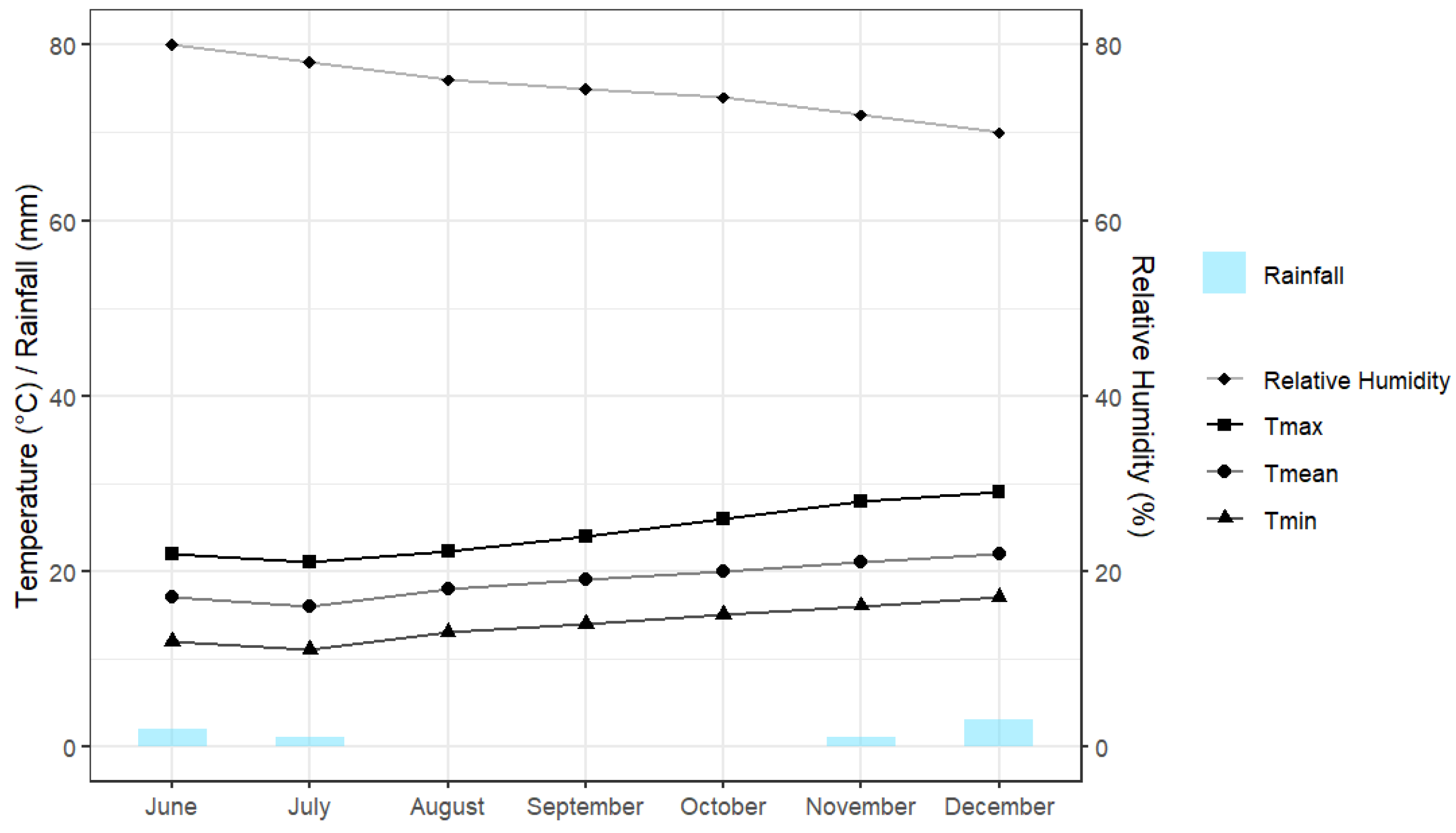
Figure 1. Climatological data of the project site monthly, including precipitation (rainfall), maximum temperature, minimum temperature, and relative humidity.
Preprints 150787 g001
Figure 2. Mineral fertilization effect on INIA 619 plant height (R6). Means with the same lowercase letter are statistically equal according to Tukey’s test 0.05.
Preprints 150787 g002
Figure 3. Interaction between mineral fertilization doses (%) and guinea pig manure (t∙ha-1) on ear diameter of INIA 619 maize, which was statistically significant (P = 0.003).
Preprints 150787 g003
Figure 4. Effect of guinea pig manure (a) and mineral fertilization (b) on INIA 619 maize yield. Means with the same lowercase letter are statistically equal according to Tukey’s test 0.05.
Preprints 150787 g004
Figure 5. Interaction between mineral fertilization and guinea pig manure dosage on (a) protein content and (b) Kcal protein. Means with the same lowercase letter are statistically equal according to Tukey’s test 0.05.
Preprints 150787 g005
Table 1. Manure and fertilizer doses for the different treatments.
Treatment Main Plot Subplot
Guinea pig manure (t∙ha-1) Fertilization (%)
1 0 0 (0-0-0) *
2 50 (120-60-70) *
3 75 (180-90-105) *
4 100 (240-120-140) *
5 2 0
6 50
7 75
8 100
9 5 0
10 50
11 75
12 100
13 10 0
14 50
15 75
16 100
* The values in parenthesis represented the percentage of the mineral fertilizer dose of N, P₂O₅, and KCl.
Table 2. Ear characteristics of INIA 619.
Factor EL (cm) ED (cm) RE GR EW (g) GW (g) CW (g)
t∙ha-1 Guinea pig manure (G)
0 15.51 ± 2.27 4.01 ± 0.26 c 13.45 ± 1.07 28.84 ± 4.77 141.04 ± 35.77 116.56 ± 30.06 24.49 ± 6.79
2 15.54 ± 2.47 4.04 ± 0.24 c 13.87 ± 1.12 28.52 ± 5.35 146.75 ± 38.35 121.69 ± 32.33 25.58 ± 8.06
5 16.31 ± 2.12 4.19 ± 0.22 a 13.73 ± 1 29.85 ± 4.93 160.63 ± 34.75 132.69 ± 28.37 28.18 ± 7.24
10 16.08 ± 2.47 4.11 ± 0.21 b 13.62 ± 1.17 29.71 ± 5.85 154.06 ± 35.4 127.29 ± 29.96 26.77 ± 5.99
(%) Fertilization (F)
0 15.69 ± 2.15 4.07 ± 0.22 13.58 ± 0.33 b 28.16 ± 2.36 b 142.89 ± 11.49 b 122.59 ± 10.05 c 24.98 ± 5.99
50 16.15 ± 2.43 4.11 ± 0.24 13.53 ± 0.31 b 30.51 ± 2.34 a 155.21 ± 13.16 a 125.2 ± 10.94 bc 28.01 ± 8.24
75 15.98 ± 2.44 4.08 ± 0.28 13.53 ± 0.30 b 28.3 ± 1.75 b 149.97 ± 19.05 ab 132.88 ± 15.42 b 25.68 ± 7
100 15.62 ± 2.37 4.08 ± 0.24 13.87 ± 0.23 a 30.59 ± 2,99 a 155.51 ± 12.29 a 141,8 ± 11.93 a 26.33 ± 7.01
G 0.53 ** 0.16 0.65 0.10 0.94 0.18
F 0.19 0.47 ** * * *** 0.08
G*F 0.35 ** 0.43 0.66 0.18 0.10 0.18
Note: Ear length= EL, Ear diameter = ED, number of rows per ear = RE, number of grains per row = GR, ear weight = EW, grain weight = GW, and cob weight = CW. Husk weight was not considered in the ear weight (only cob + grains weight). Means with the same lowercase letter are statistically equal according to Tukey’s test 0.05. ± Standard deviation. Significance levels: * p < 0.05, ** p < 0.01, *** p < 0.001.
Table 3. Nutritional quality of the INIA 619 maize variety.
Level Prot Ash Fat Fiber CHO TE Kcal Prot Kcal Fat Kcal CHO
g∙100g∙N-1 g∙100g-1 g∙100g-1 g∙100g-1 g∙100g-1 Kcal∙100 g-1 Kcal∙100 g-1 Kcal∙100 g-1 Kcal∙100 g-1
(%) Fertilization (F)
0 7.87 ± 0.7 c 1.13 ± 0.14 3.21 ± 0.32 2.56 ± 0.2 74.22 ± 0.98 a 357.17 ± 1.99 b 31.5 ± 2.75 c 28.92 ± 2.91 296.75 ± 3.84 a
50 9.08 ± 0.74 b 1.1 ± 0.13 3.42 ± 0.33 2.51 ± 0.16 73.01 ± 0.9 b 359.92 ± 3.42 a 36.33 ± 2.96 b 30.83 ± 2.98 291.92 ± 3.45 b
75 9.57 ± 0.57 a 1.14 ± 0.17 3.56 ± 0.56 2.5 ± 0.14 72.64 ± 0.74 b 360.83 ± 3.16 a 38.33 ± 2.39 a 32 ± 4.94 290.5 ± 2.88 b
100 9.86 ± 0.73 a 1.03 ± 0.13 3.43 ± 0.28 2.53 ± 0.18 72.6 ± 0.88 b 360.75 ± 2.05 a 39.5 ± 3 a 30.92 ± 2.54 290.33 ± 3.5 b
F *** 0.21 0.31 0.82 *** ** *** 0,32 ***
G*F * 0.83 0.91 0.59 0.52 0.70 * 0.86 0.54
Note: Protein=Prot, Carbohydrates = CHO, total energy = TE, Kcal protein = Kcal Prot, Kcal Carbohydrate = Kcal CHO. Means with the same lowercase letter are statistically equal according to Tukey’s test 0.05. ± Standard deviation. Significance levels: * p < 0.05, ** p < 0.01, *** p < 0.001.
Disclaimer/Publisher’s Note: The statements, opinions and data contained in all publications are solely those of the individual author(s) and contributor(s) and not of MDPI and/or the editor(s). MDPI and/or the editor(s) disclaim responsibility for any injury to people or property resulting from any ideas, methods, instructions or products referred to in the content.
Copyright: This open access article is published under a Creative Commons CC BY 4.0 license, which permit the free download, distribution, and reuse, provided that the author and preprint are cited in any reuse.
Prerpints.org logo

Preprints.org is a free preprint server supported by MDPI in Basel, Switzerland.

Subscribe

Disclaimer

Terms of Use

Privacy Policy

Privacy Settings

© 2025 MDPI (Basel, Switzerland) unless otherwise stated