

Submitted:
27 February 2025
Posted:
28 February 2025
You are already at the latest version
Abstract
To investigate the contribution rates of oxygen and ultraviolet radiation to the Ultraviolet (UV) aging process of warm mix asphalt(WMA). WMA with different aging methods(RTFOT, PAV and UV)and UV aging time(50h,100h,150h and 200h)was prepared. Cohesive work and adhesive work of WMA tests were performed using surface free energy theory. In addition, The UV aging functional groups of WMA was analyzed using fourier transform infrared (FTIR). The influence laws of oxygen barrier and lightoxygen coupling conditions on the adhesion index and functional group index of WMA were explored, based on which the contribution of oxygen and ultraviolet light to the UV aging of WMA was analyzed by using the random forest model. The test results showed that UV aging had the greatest effect on the adhesion performance index and functional group index of WMA, followed by PAV aging, and RTFOT aging had the least effect. With the prolongation of UV aging time, the adhesion and cohesion functions of WMA showed a decreasing trend, while the carbonyl index and sulfoxide index showed an increasing trend. When the UV aging time exceeded 150h, the adhesion function and functional group index of WMA were gradually stabilized. The effect of UV aging on the adhesive properties of WMA was mainly due to adhesive damage. There were significant differences in the effects of oxygen isolation and light-oxygen coupled UV aging on the adhesive properties and functional group index of WMA. In the light-oxygen coupled UV aging of warm mix asphalt, the contribution of UV radiation was 79.9% and the contribution of oxygen was 20.1%.
Keywords:
Warm mixed asphalt
; Ultraviolet aging
; Adhesive performance
; Functional groups
; Contribution rate
1. Introduction
Asphalt pavements have been widely used in the construction of highways of different grades due to their good properties [1,2]. Asphalt pavement consists of asphalt, aggregate, filler and voids. The asphalt binding material plays an important role in bonding the aggregates and fillers to give the pavement better bearing capacity and driving comfort [3]. However, asphalt is susceptible to aging under the influence of temperature, light, oxygen, water and other factors during long-term use [4,5,6]. A series of complex physicochemical reactions continuously occur in the aging process of asphalt. The high temperature, low temperature and adhesion properties of asphalt will be significantly affected. Therefore, accurately simulating the real environmental conditions of indoor aging acceleration and aging evaluation methods are current research hotspots.
Asphalt aging mainly consists of thermo-oxidative aging and UV aging [7,8]. In the past decades, the thermo-oxidative aging process of asphalt has been evaluated mainly by means of the thin film oven test (TFOT), rolling film oven test (RTFOT), and pressurized aging vessel (PAV).TFOT and RTFOT aging simulate the aging process of asphalt from the mixing of asphalt mixtures to the on-site paving of asphalt pavements. PAV aging simulates the aging of asphalt from the on-site paving of asphalt mixtures to the end of the service life of the pavements [9,11]. The results of Diouri et al. showed that cracks in asphalt pavements increase with the degree of aging and this change is more significant with increasing temperature [12]. Li et al. showed that as asphalt binders age, colloidal particles aggregate, which affects changes in their basic physicochemical properties. These changes translate into changes in the engineering properties of asphalt binders [13]. Liu et al. concluded that volatilization of asphalt binding material components, oxidation reactions and migration of components are key factors in determining the degree of aging [14]. Wang et al. found that the high temperature performance increased with the degree of aging. After aging, the irrecoverable creep compliance decreased and the creep recovery percentage increased significantly [15]. Previous studies have found that the current research on thermo-oxidative aging of asphalt is basically mature. The factors affecting thermo-oxidative aging have been basically elucidated and the mechanism of thermo-oxidative aging is basically clear. However, there is a lack of indoor simulation devices and characterization methods for UV aging, one of the key factors affecting asphalt aging.
To solve the indoor simulation device problem of asphalt UV aging, researchers simulated the effects of UV, oxygen, and temperature on the performance of asphalt pavement, and developed corresponding UV aging test devices [16,17,18]. Initially, Montepara et al. independently developed a UV aging test chamber. UV aging was conducted using a mercury lamp at a temperature of 140 ° C, with an asphalt sample film thickness of 1.5 mm. Different degrees of aging were simulated for actual asphalt pavement at 1 year, 2 years, 6 years, and 10 years [19,20]. However, due to the high experimental temperature, the results were significantly different from the actual situation. Subsequently, Bocci and Cemi designed a simulation method for asphalt UV accelerated aging and found that UV aging is completely different from thermal oxidation aging [21]. Ye et al. established a simulation system for asphalt UV aging, further proving that light oxidative aging is completely different from thermal oxidative aging [22]. On this basis, Pang et al. improved the UV aging test method from the perspective of selecting UV aging light sources and temperature control [23]. Zeng et al. proposed suggestions for selecting the thickness of UV aged asphalt coatings [24]. Li et al. provided relevant references for wavelength selection of ultraviolet aging [25].
Meanwhile, scholars have conducted a lot of research on the performance change and aging mechanism of asphalt after UV aging through indoor simulation devices. Xiao et al. used Materials Studio software to simulate the dynamic behavior of asphalt microstructure during UV aging, showing that with the progress of UV aging, the light components of asphalt molecules gradually transformed into heavy components [26]. Zhang et al. found that the carbonyl index increases with the increase of the UV aging degree of the asphalt binder, and when the asphalt binder tends to the aging limit, the carbonyl index also tends to be stable [27]. Zeng explored that the asphalt aging index and the deterioration performance of SBS modifier increased significantly at a temperature of 70 °C, and the mass loss of asphalt after UV aging was four times that of thermal aging conditions [28]. Jamal et al. compared thermal aging and UV aging, and found that thermal aging makes the light components volatilize and the aliphatic index decreases. However, UV aging mainly contains aliphatic hydrocarbon chain components whose volatile bond energy is lower than 413 kJ/mol, such as C-C, C-O and C-H [29]. Rajib’s research shows that UV aging is more likely to deteriorate the asphalt performance than thermal oxygen aging, and the asphalt binder containing biochar can delay the UV aging process [30]. Liu et al. found that two processes may exist during the UV aging process of asphalt, namely molecular excitation process and chemical bond breaking process [31].To sum up, Ithe UV aging process of asphalt is relatively complex, and scholars have focused on considering the evolution law of asphalt road performance under the joint action of UV and oxygen, and initially analyzed the UV aging mechanism of asphalt. However, none of the current studies have considered the single contribution of oxygen and UV radiation in the UV aging process.
In addition, warm mix asphalt (WMA) is used as a green road construction material. Scholars have conducted extensive research on its various road performance warm mix mechanisms and its aging performance evolution during long-term service [34,35,36,37,38]. The adhesion performance of WMA asphalt after UV aging, as a key indicator affecting its service life, has not yet been studied for the evolution law of adhesion performance during the UV aging process of WMA. Meanwhile, the contribution rate of oxygen and ultraviolet radiation on the adhesion performance of WMA during UV aging is not yet clear, which restricts its promotion and application in engineering.
In this paper, two UV aging methods, oxygen isolation and light oxygen coupling, were designed to carry out the UV aging of WMA. WMA samples with different aging methods (RTFOT, PAV and UV) and UV aging time (50h, 100h, 150h and 200h) were prepared. Then, the surface free energy theory was used to calculate the cohesive work and adhesive work of different samples. Based on the carbonyl and sulfoxide functional group index obtained by infrared spectroscopy, the relationship between adhesive performance index and functional group index was established. Then, significant difference analysis was used to compare and analyze the differences between oxygen barrier WMA and light-oxygen coupled UV aging. Finally, a random forest model was used to analyze the contribution rates of oxygen and ultraviolet radiation in the light-oxidative coupling aging process of warm mix asphalt. The research results can provide some reference and reference for the establishment of asphalt ultraviolet aging evaluation methods and standards.
2. Materials and Methods
2.1. Experimental Design
Figure 1 depicts the experiment design flowchart for this investigation, together with the test procedures and raw materials used.
2.2. Materials
WMA is prepared from the neat #90 asphalt binder (graded based on the penetration value) and Evotherm M1. Its performance parameters are shown in Table 1. Base asphalt is provided by Gansu Province Transportation Planning, Survey & Designing Institute CO., LTD. Evotherm M1 is provided by the American Medvevik company.
2.3. Experiment Design of UV Aging
2.3.1. UV Aging Device Design
(1) UV aging environment device design
The independently developed ultraviolet aging chamber includes a high-pressure mercury lamp, blower, ventilation fan, sample box, and temperature monitoring system. (seen Figure 2). WMA was aged after RTFOT, it was UV-aged by a self-developed UV aging box, which the temperature controlled within the range of 60℃~130℃, and the UV intensity controlled between 50w/m2~600w/m2.
(2) Design of oxygen insulation aging box
The aging of asphalt is usually divided into single aging caused by factors such as light, heat, water, oxygen, and multi factor coupled aging. In order to study the aging of asphalt under single UV aging conditions, it is necessary to control the effects of factors such as heat, water, and oxygen on the UV aging process of asphalt. For this purpose, a separate oxygen isolation aging chamber was designed to control the effect of oxygen on asphalt aging. In order to avoid the influence of oxygen on the experiment, a cubic aging chamber without a top cover was made of 1 centimeter thick steel plate. The upper edge of the aging box is grooved and glued, and silicone rolls and UV transparent glass are placed. A thin wooden strip is placed above the glass and sealed with an iron cover (as shown in Figure 3). The specific steps are as follows:
a. Inject nitrogen into the oxygen-barrier aging box through the air inlet of the external nitrogen bottle, so that the air in the aging box is completely discharged.
b. Use ignition test at the air outlet to verify the oxygen concentration in the box.
c. After the gas exchange is over, close the air inlet and air outlet in time to avoid the entry of outside air.
2.3.2. UV Aging Parameter Selection
Solar radiation is a very important factor causing road damage. The solar spectrum can be divided into ultraviolet (100-380nm), visible (380-780nm), near-infrared (780-2500nm), and far-infrared (2500-60000nm) by wavelength. Among them, the wavelength of 100-280nm is ultraviolet (UVC), the wavelength of 280-320nm is ultraviolet (UVB), and the wavelength of 320-380nm is ultraviolet (UVA) (see Figure 4). The ultraviolet radiation with a wavelength of 100-280 nanometers is the shortest and belongs to strong waves. Due to the strong absorption of ozone, ultraviolet radiation cannot reach the ground and will not cause damage to asphalt pavement. Ultraviolet rays with wavelengths ranging from 280 to 320 nanometers belong to the medium wave category and have strong effects. Most of them are absorbed by ozone, and the amount of ultraviolet rays reaching the ground is relatively small. In the solar spectrum, ultraviolet energy with wavelengths of 320-380 nanometers is the highest and cannot be fully absorbed by ozone. Ultraviolet radiation ranging from 280 nanometers to 380 nanometers can damage the molecular structure of asphalt materials, leading to a decrease in the performance of asphalt pavement [24,25]. Therefore, it is necessary to choose a UV light source with a wavelength of 280nm~380nm to simulate UV aging under natural conditions.
On the other hand, it is also necessary to consider the irradiation intensity of the light source. Usually, the UV aging of asphalt takes several months to find its aging pattern. If the light source intensity is too low, the simulation time will be too long, making it difficult to complete the simulation experiment [26]. Based on the conclusions drawn by current researchers [24,25,26] , this article uses GYL230 high-pressure mercury lamp as a light source to simulate asphalt UV aging. The spectral range is 320nm-450nm, the main peak is 365nm, the power is 250W-22KW, and the irradiation intensity is controlled at 200w/m2.
2.3.3. Determination of Laboratory Simulated UV Aging Parameters
The ultraviolet radiation intensity of asphalt usually consists of three aspects: the total annual radiation under natural conditions, the radiation intensity of high-pressure mercury lamps, the distance of asphalt samples, and the distance of high-pressure mercury lamps. The total annual ultraviolet radiation under natural conditions varies with altitude and latitude. Generally speaking, the western region is larger than the eastern region, and the ultraviolet radiation in high-altitude areas is stronger than that in low altitude areas. Referring to the annual solar radiation in the western region of China, the maximum radiation of 7000MJ/m2 is selected as the simulated total solar radiation. The proportion of ultraviolet radiation to the total radiation is about 6% per year, which means the simulated annual total ultraviolet radiation is 420MJ/m2.
When the asphalt sample is 23cm away from the high-pressure mercury lamp, the surface temperature of the sample remains stable at 68±3 ℃, and the irradiation intensity remains stable at 200 ± 2w/m2. Laboratory UV simulation time=total natural UV radiation/laboratory UV intensity. After conversion, the simulated one-year UV exposure time is 583 hours. According to formula (1), the indoor simulated UV aging time is set to 50h, 100h, 150h, and 200h using time as a parameter for conversion. The corresponding relationship with natural conditions is shown in Table 2.
2.4. Sample Preparation
2.4.1. Short-Term Aging Samples
Weighing 35±0.5g WMA and using an RTFOT to simulate its short-term aging process at 163℃, turntable speed of 15±0.2 r/min and air flow of 400±200 ml/min for 85 min.
2.4.2. Long-Term Aging Samples
After short-term aging of WMA, 50±0.5g g of short-term aging samples were weighed for long-term aging. The aging temperature of PAV is 100±0.5℃, the pressure is 2.1±0.1MPa, and the aging time is 20h.
2.4.3. UV Aging Samples
The UV aging sample preparation process was as follows: ①15.4 g of RTFOT aged asphalt was placed in a 14 cm diameter asphalt aging tray (asphalt film thickness of 1 mm) and placed in an oven at 163°C for 10 minutes to prepare UV aging samples. ②The obtained samples were put into a homemade UV aging simulation system and UV aging was performed at different times to simulate the light-oxidative aging of the asphalt pavement during its use. The main parameters of this test: temperature range 65°C~70°C, average irradiation intensity 200w/m2.
2.5. Test Methods
2.5.1. Contact Angle Tests
The asphalt binder samples were prepared by heating at 163°C and pouring on small plates which were placed on a heater ahead of time to reach a constant temperature of 60°C. The plates containing the asphalt binder were then heated with another heater at 163°C for about 5 min to form a uniform film coating on the surface of the plates. Finally, the samples were cooled to room temperature and kept in a desiccator at room temperature for 12 hours and tested. A German OCA25 video optical contact angle meter was selected to measure the contact angle by titrating the contact angle samples with three known liquids by the prone drop method.

Table 3.
Surface free energy parameters of three test liquids(25℃) mJ/m2.
| Probe liquids | |||||
| Distilled water | 72.8 | 21.8 | 51.0 | 25.50 | 25.5 |
| Glycerol | 64.0 | 34.0 | 30.0 | 3.92 | 57.4 |
| Formamide | 58.0 | 38.0 | 19.0 | 2.28 | 39.6 |
2.5.2. FTIR Tests
Conduct infrared spectroscopy experiments using ATR crystal plates. The main experimental parameters include: scanning range of 400~4000cm-1, scanning frequency of 32 times, and minimum resolution of 0.019cm-1. When performing the specific operation, simply apply the asphalt onto the potassium bromide sheet of the infrared spectrum, as shown in Figure 7. Infrared spectral scanning can be performed according to the set testing parameters. It should be noted that the thickness of asphalt application has no effect on the test results, but when applying asphalt. To prevent asphalt aging, it is necessary to completely cover the asphalt with potassium bromide chips.
2.6. Surface Free Energy Theory
The SFE of a substance is the amount of energy required to produce a surface unit in that substance [32]. The SFE is made up of Lewis polar component () and Lifshitz nonpolar component (), based on the Good-van Oss-Chaudhury hypothesis. The Keesom orientation component, Debye induced component and London dispersion component make up the Lifshitz nonpolar component, also known as the van der Waals component. Lewis acid component () and Lewis base component () make up the Lewis polar component, which is also known as the Lewis acid-base component [33,44]. In this sense, the SFE components provided in Eq. (2) can be used to express the total SFE:
2.6.1. Cohesive Work
The energy needed to cause a material to crack and form two interfaces from one is known as the Cohesive work [34]. This definition states that the asphalt binder’s Cohesive work is represented by the Eq. (3) as follows:
where is the Cohesive work, is the total SFE of asphalt binder.
2.6.2. Adhesive Work
Adhesion work refers to the bonding performance between asphalt and stone under anhydrous conditions, which is another major aspect of water damage in warm mix asphalt pavement. Limestone is a commonly used aggregate for asphalt pavement, therefore, this study selected limestone as the aggregate. The surface free energy of limestone used in this article is 219.9mJ/m2, with a dispersed component of 51.9mJ/m2 and a polar component of 168mJ/m2. The adhesion work is calculated according to equation (4). Under anhydrous conditions, the greater the bonding power, the better the bonding performance between warm mix asphalt and limestone aggregates.
Among them, is Asphalt-aggregate adhesive work,is Asphalt surface
energy,is
Aggregate surface energy,is contact angle between the asphalt and the aggregate,and are the dispersion
components of asphalt and aggregate, and are the polar
components of asphalt and aggregate, respectively.
2.7. Contribution Rate Calculation Model
The double cumulative curve method was used to study the effects of ultraviolet radiation and oxygen on the adhesive performance indicators and functional group index of WMA. The input factors of the model include carbonyl group, sulfoxide group, adhesive work, and adhesive work. Taking the influence on the change of adhesive work as an example, the calculation method of contribution rate is shown in equations (5) to (10).
In the equation, is the cumulative calculated value of the adhesive work of oxygen resistant ultraviolet aging, is the cumulative calculated value of lightoxygen coupled UV aging adhesive work, is the cumulant amount of adhesive work of oxygen free ultraviolet aging, is the cumulant of the adhesive work of light oxygen coupled UV aging, k and b are the linear regression equation parameters of the UV adhesive work curve in the process of oxygen free UV aging.
In the formula, is the average adhesive work under light oxygen coupling conditions,
is the calculated average adhesive work under the influence of oxygen, and n is the aging time.
In the equation, is the contribution rate of oxygen to the change in adhesive work, is the contribution rate of ultraviolet radiation to changes in adhesive work.
2.8. Random Forest Model
Random forest has obvious advantages in processing multidimensional data, and is one of the best classification algorithms at present. It uses the bootstrap method to extract k samples from the original training sample set N. Secondly, the corresponding decision Tree model is established for k samples. Finally, vote on the k sample results obtained and select the final classification result based on the principle of minority obeying majority. The classification decision function is shown in equation (11).
In the formula, is the combined classification model; is the decision classification model; Y is the output variable adhesive work, Cohesive work, carbonyl index and sulfoxide index. Take them as the corresponding characteristics, find the importance of the characteristics so as to achieve the purpose of classification. According to this analysis, random forest classification model is used. Random forest is established according to the data, and the importance of characteristics is calculated.
3. Results and Discussion
3.1. Adhesive Performance Analysis Based on SFE
3.1.1. Contact Angle
From Table 4, it can be seen that as the degree of aging increases, the contact angle between WMA and water gradually increases, indicating that aging improves the hydrophobicity of asphalt. Comparing the coupling of light and oxygen and the isolation of oxygen, it was found that the addition of oxygen increases the contact angle. In addition, the larger the contact angle, the more cos θ, the smaller the value, the weaker the wettability and the better the floatability. The smaller the contact angle, the cos θ, the larger the value, the stronger the wettability and the worse the floatability. It can be seen that the floatability of WMA will increase after UV aging.
3.1.2. Adhesive Work
The adhesive work reflects the bonding quality between aggregates and asphalt. A large adhesive strength indicates good adhesive performance and strong resistance to water damage. Studied the adhesion between WMA and limestone aggregate system before and after UV aging. The experimental results are shown in Figure 5.
The results in Figure 5 shown that the cohesive work of warm mix asphalt without aging is 365.03 mJ/m2. After RTFOT aging, it was 323.73mJ/m2, decreased by 11.3%. After aging, PAV was 218.51 mJ/m2, decreased by 40.1%. After aging, it was 167.69mJ/m2, 97.90mJ/m2, 83.89mJ/m2 and78.86mJ/m2, which decreased by 54.1%, 73.2%, 77.0% and 78.4% respectively. After light oxygen coupling aging, it was 130.96mJ/m2, 95.25mJ/m2, 77.86mJ/m2 and 70.36mJ/m2, which decreased by 64.1%, 73.9%, 78.1% and 80.7%. Compared with light oxygen coupling aging and oxygen isolation aging, it decreased by21.9%, 2.7%, 7.2% and 10.8%.
It can be seen from Figure 5 that in RTFOT aging, PAV aging and UV aging, The work of adhesive of WMA showed a decreasing trend. Compared with RTFOT and PAV aging, UV aging makes the WMA decline more obvious. It shows that UV aging and thermo-oxidative aging have different effects on WMA, and UV aging has a greater impact on WMA adhesive work. UV aging reduces the WMA adhesive work, and when the UV aging time exceeds 150h, the decreasing trend gradually becomes stable. Under the light-oxygen coupling condition, the WMA adhesive work is smaller. It shows that the presence of oxygen aggravates the reduction of WMA adhesive work, which reduces the water damage resistance of WMA. It may be due to the presence of oxygen that the light components in WMA are more likely to react with oxygen. As a result, the hard components in WMA increase, and WMA becomes hard, which further reduces the bonding performance of WMA.
3.1.3. Cohesive Work
Cohesive work refers to the energy consumed to overcome the interaction between asphalt molecules. The greater the cohesive work is, the better the cohesive property of asphalt is, and the stronger the cracking resistance is. The cohesive work of WMA before and after aging in different ways and times is shown in Figure 6.
The results in Figure 6 shown that the cohesive work of warm mix asphalt without aging is 216.52 mJ/m2. After RTFOT aging, it was 189.07 mJ/m2, decreased by 12.6%. After aging, PAV was 110.79 mJ/m2, decreased by 48.8%. After aging, it was 78.98 mJ/m2, 53.8 mJ/m2, 42 mJ/m2 and 30.2 mJ/m2, which decreased by 63.5%, 75.2%, 80.6% and 86.1%. After light oxygen coupling aging, it was 69.1 mJ/m2, 52.5 mJ/m2, 38.56 mJ/m2 and 28.98 mJ/m2, which decreased by 68.1%, 75.8%, 82.2% and 86.7%. Compared with light oxygen coupling aging and oxygen isolation aging, it decreased by 12.5%, 2.4%, 8.2% and 4.0%.
It can be seen that the cohesive work of warm mix asphalt shows a downward trend after aging. Compared with RTFOT, PAV and UV aging, the reduction of cohesive work of warm mix asphalt after UV aging is the largest, and the reduction of RTFOT is the smallest. With the extension of UV aging time, the cohesive work decreased gradually. When UV aging for 50 h, oxygen has the greatest influence on the cohesive work of warm mix asphalt, and then gradually becomes stable. In general, when there is oxygen, the ability of anti adhesive damage of warm mix asphalt after UV aging is the weakest. When the lightoxidation coupled ultraviolet aging exceeds 150h, the possibility of cohesive failure of warm mix asphalt is the largest, indicating that the water damage resistance is the worst at this time.
3.2. Functional Groups Analysis Based on FTIR
The carbonyl (C=O) absorption peak at 1700 cm-1 and the sulfoxide (S=O) stretching vibration peak at 1030 cm-1 of WMA increased significantly during oxygen barrier aging and light-oxygen coupled UV aging. Comparing the oxygen barrier aging and light-oxygen-coupled UV aging, it is found that the light-oxygen-coupled UV aging condition has a greater effect on these two absorption peaks than the oxygen barrier aging condition. The peak and area of the sulfoxide (S=O) functional group located at 1030 cm-1 increased slightly after short-term aging. However, after PAV aging and light-oxygen-coupled UV aging, the sulfoxide functional group changed significantly, indicating that a severe oxidation reaction occurred in the warm mix asphalt. The analysis of the causes showed that the sulfoxide group is a characteristic peak that characterizes the oxygen absorption aging of asphalt, and the increase of this peak indicates that the asphalt has undergone oxygen absorption aging. As a result, its properties will change significantly with the participation of oxygen. In addition, the change of functional groups after aging of PAV is comparable to the result of 50 h UV aging, while the carbonyl peak of WMA stabilizes after 150 h UV aging.
Figure 7.
FTIR spectrum of WMA: (a)oxygen barrier; (b) light oxygen coupling.
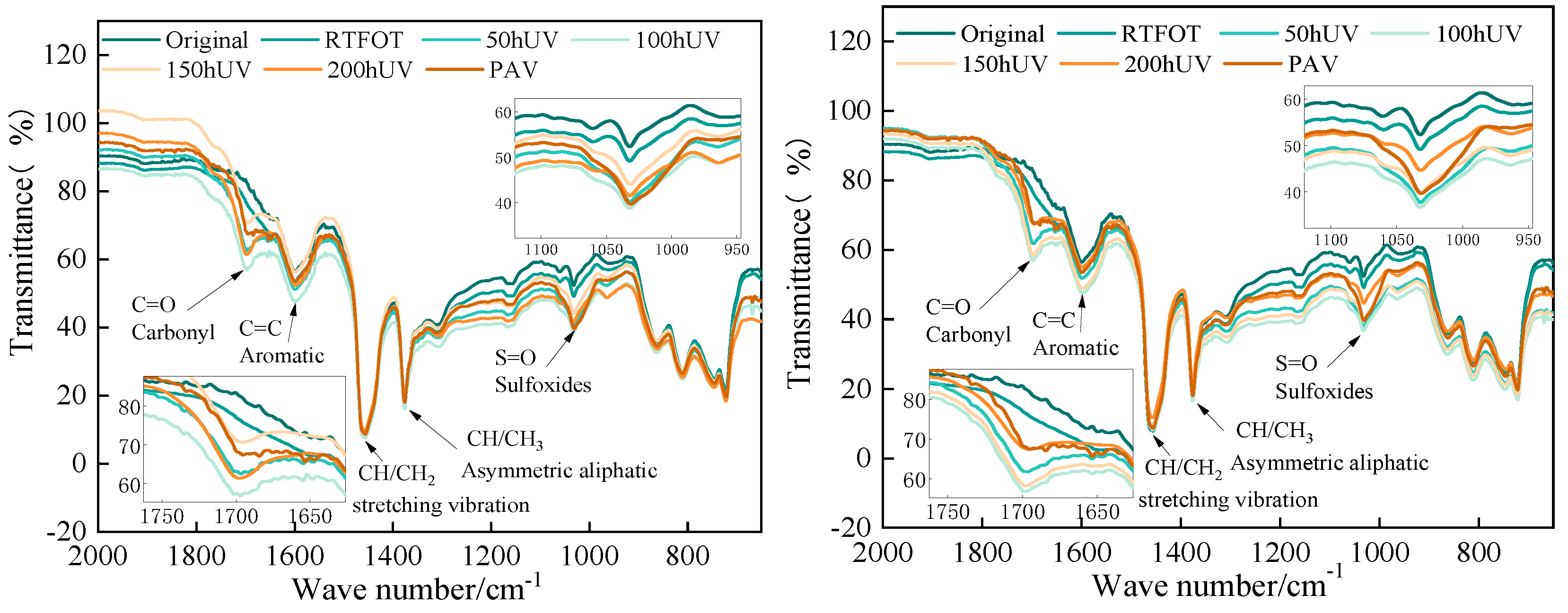
According to the changing law of each functional group index during the aging process of asphalt, it can reflect the changes in the chemical structure of asphalt before and after aging [31]. Usually, the carbonyl index and the sulfoxide index are chosen as the indicators to quantitatively characterize the changes in the chemical structure of warm mix asphalt during UV-oxygen coupling and oxygen barrier aging. The carbonyl index and sulfoxide index are calculated from the area ratio of the characteristic peaks in the infrared spectra to the peak region between 600 cm-1 and 2000 cm-1, which is calculated as follows.
As can be seen in Figure 8, the carbonyl index gradually increases with aging time under oxygen barrier and light-oxygen conditions, indicating that warm mix asphalt undergoes a significant oxidation reaction under UV irradiation, and the degree of aging increases with UV aging time. Gradual deepening. The trend of carbonyl index of warm mix asphalt under light-oxygen coupled UV aging is consistent with that under oxygen-isolating conditions, but the carbonyl index of warm mix asphalt under light-oxygen coupled UV aging is significantly higher than that of warm mix asphalt under oxygen-isolating UV aging, indicating that there is the participation of oxygen, and the degree of aging of warm mix asphalt is more serious.
In addition, under oxygen-isolating UV aging conditions, the sulfenyl index of WMA increased rapidly with the extension of UV aging time, indicating that warm mix asphalt under UV irradiation undergoes a significant oxidation reaction, and the degree of aging increases with the increase in UV aging time. The aging time is gradually prolonged and deepened; the change trend of the sulfenyl group index of warm mix asphalt under light-oxygen coupled UV aging is consistent with that under oxygen isolating conditions, but the sulfenyl group index of warm mix asphalt under light-oxygen coupled UV aging is significantly higher than that under oxygen-isolating conditions. Sulfoxide group index of warm mix asphalt under oxygen UV aging conditions. The results show that oxygen exacerbates the UV aging of warm mix asphalt. In addition, under different UV aging conditions, the carbonyl and sulfoxide group contents of warm mix asphalt increased gradually with the extension of UV aging time, but the growth rate of the carbonyl index was significantly higher than that of the sulfoxide group, suggesting that UV aging makes C=C oxidation more serious.
3.3. Correlation Analysis
The correlation regression analysis of surface roughness and adhesive work of WMA under UV aging condition was carried out by using Origin software, and the results are shown in Figure 9.
The figure shows the linear fitting relationship between the adhesive work and the roughness in the two environments. The correlation coefficients between surface roughness and adhesive work under light-oxygen coupling and single UV aging conditions are 0.9114 and 0.9067, respectively. All points fall within the 95% confidence band, indicating that the WMA roughness and adhesive work have an excellent fitting effect. In addition, under the action of light oxygen, the fitting points of adhesive work and roughness are relatively uniformly dispersed and closer to the fitting line. While the fitting points are relatively aggregated under the action of oxygen barrier and deviate from the fitting line. The pearson index of the fitting curve under the action of light oxygen is larger, indicating a better fit.
3.4. Significant Difference Analysis
A significant difference is an evaluation of the difference in data. SPSS software was used to compare the difference between oxygen barrier and light-oxygen coupled UV aging. The results are shown in Table 5. If “F > F crit”, there is a significant difference, if “F < F crit”, there is no significant difference. Combined with P-value, if “0.01<P-value<0.05”, it means that the difference is significant, and if “P-value<0.01”, it means that the difference is extremely significant.
Comparing the different sources of difference, F was significantly greater than F specific volume under the four sources of difference. This indicates that there are significant differences in the performance parameters of WMA due to the coupling of oxygen barrier and light-oxidative aging. The P-value results show that the P-values of adhesion and cohesion functions are 0.0191 and 0.006786, respectively, which are significantly different from each other. However, the P-values for carbonyl and sulfoxide indices were 0.000763 and 0.000613, respectively. both results were significantly less than 0.01, indicating that the differences between oxygen barrier and light-oxygen coupling UV were highly significant. In addition, the P-values for the adhesion and cohesion functions of WMA after oxygen barrier and light-oxygen-coupled UV aging were 0.0191 and 0.006786, respectively. Combined with the P-value results for the carbonyl group and the sulfoxide group, it is concluded that the significant differences between the oxygen barrier and light-oxygen-coupled adhesives may be due to the changes in the cohesion of WMA. The main reason for the change in the cohesion of WMA after UV aging is the presence of oxygen. It can be seen that there is a significant difference between the effects of oxygen barrier and light-oxygen coupled UV aging on WMA, and it is necessary to conduct an in-depth study on the mechanism of oxygen barrier UV aging of WMA at a later stage.
3.5. Contribution Rate of Ultraviolet and Oxygen
To investigate the contribution of oxygen and ultraviolet radiation to the adhesive index of WMA under light oxygen coupled aging conditions. According to equations (5) to (10), calculate the contribution rates of ultraviolet and oxygen to the adhesive index of WMA, as shown in Table 6.
The results in Table 6 show that the contribution rates of ultraviolet radiation to the carbonyl index, sulfoxide index, adhesive work, and adhesive work of WMA are 78.6%, 79.0%, 79.2%, and 82.8%, respectively. The contribution rates of oxygen to the carbonyl index, sulfoxide index, adhesive work, and adhesive work of WMA are 21.4%, 21.0%, 20.8%, and 18.2%, respectively. From this, it can be seen that the contribution rate of ultraviolet radiation in the UV aging process of WMA is about 80%, and the contribution rate of oxygen is about 20%.
3.6. Importance of Independent Variables
To further analyze the accurate contribution rate of UV and oxygen in the UV aging process of WMA. The adhesive performance evaluation parameters of WMA were optimized using the WMA adhesive performance index as the output layer of the RBF neural network model. Firstly, an RBF neural network model was established using SPSS software. Then set the WMA adhesive performance index as the dependent variable in the output layer. Use the Softmax Activation function to put the normalized data into the hidden layer, as shown in Figure 10. The importance analysis of independent variables is shown in Figure 11.
The adhesive performance evaluation parameters of WMA were optimized through RBF neural network model analysis. The results in Figure 11 indicate that the importance of adhesive work, Cohesive work, sulfoxide index, and carbonyl index are 0.165, 0.255, 0.275, and 0.305, respectively. The carbonyl index has the greatest impact on the adhesive performance of WMA during UV aging, followed by the sulfoxide index and adhesive work, with the lowest importance of adhesive work. In addition, based on the contribution rate in Table 6 and the importance index in Figure 11, this article calculates the contribution rate of ultraviolet and oxygen to the aging degree of WMA during the UV aging process according to formulas (14) and (15), as shown in Figure 12.
In the equation, is the contribution rate of UV to ultraviolet radiation, is the contribution rate of ultraviolet radiation to the carbonyl index, is the importance coefficient of ultraviolet radiation on the carbonyl index, is the contribution rate of ultraviolet radiation to the sulfoxide index, is the importance coefficient of ultraviolet radiation on the sulfoxide index, is the contribution rate of ultraviolet radiation to adhesive work, is the importance coefficient of ultraviolet radiation on adhesive work, is the contribution rate of ultraviolet radiation to the cohesive work, is the importance coefficient of ultraviolet radiation on adhesive work.
4. Conclusions
In the research, a monolithic UV aging and light-oxygen coupling device was developed and a UV aging test method was established. The adhesive properties and functional group changes of WMA under oxygen barrier and photo-oxygen coupling conditions were analyzed using surface free energy and infrared spectroscopy. The relationship between different indexes was established and the differences between oxygen barrier and light-oxygen coupling UV aging were comparatively analyzed. Based on the results discussed above, the following conclusions can be summarized:
(1) RTFOT, PAV and UV aging all reduce the bonding performance and functional group index of warm mix asphalt. UV aging had the greatest effect, followed by PAV aging, and RTFOT aging had the least effect.
(2) The bonding and cohesion functions of WMA decreased with increasing UV aging time. The carbonyl and sulfoxide indices increased with increasing UV aging time. After 150 hours of UV aging, the bonding performance index and functional group index gradually stabilized.
(3) Compared with oxygen isolation and light-oxygen coupled UV aging, light-oxygen coupled UV aging resulted in a wider range of changes in the adhesive property index and functional group index of WMA. The presence of oxygen caused the UV aging properties of WMA to decay more rapidly.
(4) The correlation coefficients for photo-oxidative coupled UV aging were higher than those for oxygen-blocked UV aging. Photo-oxidative coupling and oxygen-free UV aging have significant effects on the adhesive and cohesive work of WMA. The carbonyl index and sulfoxide index have extremely significant effects.
(5) There is a significant difference between the cohesive work of WMA after UV aging. The main reason for this significant difference may be the change in cohesion caused by the internal molecular reaction of WMA due to the presence of oxygen.
(6) The random forest random model shows that during the light-oxygen coupling UV aging process of warm mix asphalt, the contribution rate of UV is 79.9%, and the contribution rate of oxygen is 20.1%.
Acknowledgments
The authors gratefully acknowledge the financial supports by the Innovation Group in Fundamental Research (25JRRA145), Ningxia Hui Autonomous Region Key R&D Program(2023BEG02044), National Natural Science Foundation of China (51868042), Industry Support and Guidance Project by University and College in Gansu Province (2020C-13), and Gansu Science and Technology Major Project (22ZD6GA010).
References
- Pakenari M M, Hamedi G H. Investigating the Effective Laboratory Parameters on the Stiffness Modulus and Fatigue Cracking of Warm Mix Asphalt [J]. International Journal of Civil Engineering, 2021(3):1-14. [CrossRef]
- Liu, Q, Cao, D, et al. Research on material composition and performance of porous asphalt pavement. Journal of Materials in Civil Engineering,2009,21 (4), 135-140. [CrossRef]
- Bekheet W, Hassan Y, El Halim A. Modelling in situ shear strength testing of asphalt concrete pavements using the finite element method. Canadian Journal of Civil Engineering, 2001,28 (3), 541-544.
- Kargari A, Arabani M, Mirabdolazimi S M. Effect of palm oil capsules on the self-healing properties of aged and unaged asphalt mixtures gained by resting period and microwave heating [J]. Construction and Building Materials, 2022, 316:125901. [CrossRef]
- Bell C A, Abwahab Y, Cristi M E. Laboratory Aging of Asphalt-Aggregate Mixtures [C]// Serviceability and Durability of Construction Materials. ASCE, 1994.
- Che T, Pan B, Li Y, et al. The effect of styrene-butadiene rubber modification on the properties of asphalt binders: Aging and restoring [J]. Construction and Building Materials, 2022, 316:126034. [CrossRef]
- Xiao F, Amirkhanian S, Wang H, et al. Rheological property investigations for polymer and polyphosphoric acid modified asphalt binders at high temperatures.Construction and Building Materials, 2014,64:316-323. [CrossRef]
- Farrokhzade F, Sabouri M, Tabatabaee N. Aging characteristics of neat and modified asphalt binders based on rheological evaluations at intermediate temperatures [J]. Construction and Building Materials, 2022, 322:126387. [CrossRef]
- Crucho J, Picado-Santos L, Neves J, et al. Accelerated laboratory ageing of bituminous mixtures using the TEAGE method [C]// TRA2020 Helsinki. 2020.
- Duan B A, Er A. Research into effect of asphalt mixture aging on stiffness [J]. Transportation Research Procedia, 2021, 55:1251-1257.
- Li D, Leng Z, Wang H, et al. Structural and mechanical evolution of the multiphase asphalt rubber during aging based on micromechanical back-calculation and experimental methods [J]. Materials & Design, 2022, 215:110421. [CrossRef]
- Diouri K, De A, Dave E V, et al. Effect of aging and temperature on milling-induced stresses and cracks in Hot Mix Asphalt (HMA) pavements [J]. Construction and Building Materials, 2021, 313:125493. [CrossRef]
- Li F, Wang Y, Miljkovi M, et al. Changes in the Nanoscale Asphaltene Particles and Relaxation Spectra of Asphalt Binders During Aging and Rejuvenation [J]. Social Science Electronic Publishing. Volume 219, July 2022, 110808. [CrossRef]
- Liu Q, Yu B, Falchetto A C, et al. Characterization and molecular mechanism of the thermal-oxidative gradient aging behavior in asphalt films [J]. Measurement. Volume 199, August 2022, 111567. [CrossRef]
- Wang Z, Ye F. Experimental investigation on aging characteristics of asphalt based on rheological properties [J]. Construction and Building Materials, 2020, 231(12):117158. [CrossRef]
- Petersen J, Harnsberger P. Asphalt Aging: Dual Oxidation Mechanism and Its Interrelationships with Asphalt Composition and Oxidative Age Hardening [J]. Transportation Research Record Journal of the Transportation Research Board, 1998, 1638:47-55. [CrossRef]
- Mikhailenko P, Kou C, Baaj H, et al. Comparison of ESEM and physical properties of virgin and laboratory aged asphalt binders [J]. Fuel, 2019, 235(JAN.1):627-638. [CrossRef]
- Franciele R A, Luís E.C, Rsc A, et al. Influence of thermal aging and long term-aging on Ni and V content in asphalt fractions and their determination in air particulate matter from asphalt mixing plants [J]. Fuel, 2022,324:124289.
- Montepara A, Santagata E, Tosi G. Lightchemical degradation of pure bitumen by UVradiation. Proc. Ist Eurasphalt and Eurobitume Congress (Strasbourg), E&E, 1996, 5: 133.
- Montepara A, Giuliani F. Performance testing and specification teses of road bitumen. Proc 2nd Eurasphalt and Eurobitume Congress, Session. Performance Testing and Specifications for Binder and Mixtures (Barcelona). 2000: 518-523.
- Bocci M, Cemi G. The ultraviolet radiation in short-term and long-term aging of bitumen. Proc.2nd Eurasphalt & Eurobitume Congress, Session. Performance Testing and Specifications for Binder and Mixtures (Barcelona). 2000: 49-58.
- Ye F, Huang P. Establishment of asphalt aging emulation system under ultraviolet radiation [J]. Journal of Building Materials, 2005, 15(1):133-140.
- Pang L, Long L, Wu S P, et al. Effects of UV Aging on the High-Temperature and Fatigue Performances of Asphalt Mortar [J]. Advanced Materials Research, 2011, 306-307:1698-1701. [CrossRef]
- Zeng W B, Wu S P, Pang L et al. Research on ultraviolet (UV) aging depth of asphalts. Construction and Building Materials. 2018, 160: 620-627.
- Li Y Y, Wu S P, Liu Q T. Aging effects of ultraviolet lights with same dominant wavelength and different wavelength ranges on a hydrocarbon-based polymer (asphalt). Polymer Testing, 2019, 75: 64-75.
- Xiao M M, Fan L. Ultraviolet aging mechanism of asphalt molecular based on microscopic simulation [J]. Construction and Building Materials,2022,319:126157.
- Zhang L, Liu Q T, Wu S P, et al. Investigation of the flow and self-healing properties of UV aged asphalt binders [J]. Construction and Building Materials, 2018, 174:401-409.
- Zeng W B, Wu S P, Wen J, et al. The temperature effects in aging index of asphalt during UV aging process [J]. Construction and Building Materials, 2015, 93(09):1125-1131.
- Jamal M, Martinez-Arguelles G, Giustozzi F. Effect of waste tyre rubber size on physical, rheological and UV resistance of high-content rubber-modified bitumen [J]. Construction and Building Materials, 2021, 304:124638.
- Rajib A, Saadeh S, Katawal P, et al. Enhancing Biomass Value Chain by Utilizing Biochar as A Free Radical Scavenger to Delay Ultraviolet Aging of Bituminous Composites Used in Outdoor Construction [J]. Resources Conservation and Recycling, 2021,168(05):105302. [CrossRef]
- Liu H B; Zhang Z Q; Tian Z N, et al. Exploration for UV Aging Characteristics of Asphalt Binders based on Response Surface Methodology: Insights from the UV Aging Influencing Factors and Their Interactions [J]. Construction and Building Materials.2022,347 (09):128460.
- Wang X, Ren J, Gu X, et al. Investigation of the adhesive and cohesive properties of asphalt, mastic, and mortar in porous asphalt mixtures [J]. Construction and Building Materials, 2021, 276(sup2):122255. [CrossRef]
- Wang C, Chen Y, Gong G. Cohesive and adhesive healing evaluation of asphalt binders by means of the LASH and BBSH tests [J].Construction and Building Materials,2021, 282(11):122684. [CrossRef]
- Manolis S, Lum P. Cold Weather Paving Using Warm Mix Asphalt Technology [J]. 2022.
- Awanti S S, Anilkumar L. Studies on Characterisation of SBS Polymer Modified and Neat Bituminous Mixes Using Warm Mix Asphalt for Paving Applications [J]. Science Publishing Group, 2021(3). [CrossRef]
- Liu S, Zhou S, Peng A. Analysis of moisture susceptibility of foamed warm mix asphalt based on cohesion, adhesion, bond strength, and morphology [J]. Journal of Cleaner Production, 2020:123334. [CrossRef]
- Xiong F, Zarei M, Tabasi E, et al. Effect of nano-reduced graphene oxide (NRGO) on long-term fracture behavior of Warm Mix Asphalt (WMA) [J]. Construction and Building Materials, 2023(Aug.15):392. [CrossRef]
- Xia Z, Gang H, Zhao L, et al. Influence of Coupled Aging Condition of Heat, Light and Water on Performance of Warm Mix Asphalt [J]. Journal of Highway and Transportation Research and Development, 2019.
- Wu S P, Pang L, Mo L T, et al. Influence of aging on the evolution of structure, morphology and rheology of base and SBS modified bitumen. Construction and Building Materials, 2009, 23(2): 1005-1010.
Figure 1.
Flowchart of experimental design.
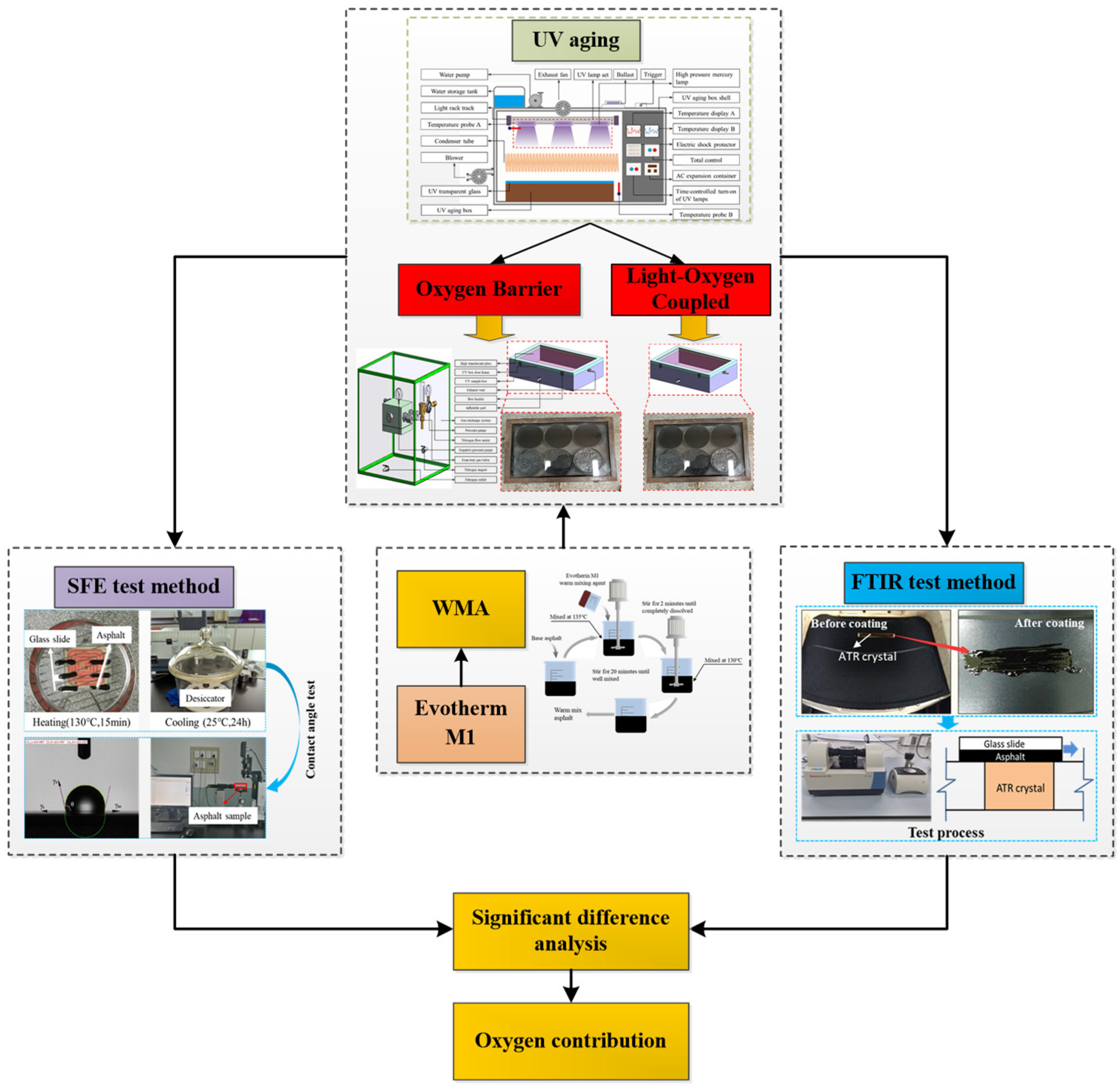
Figure 2.
Rendering of UV aging device.
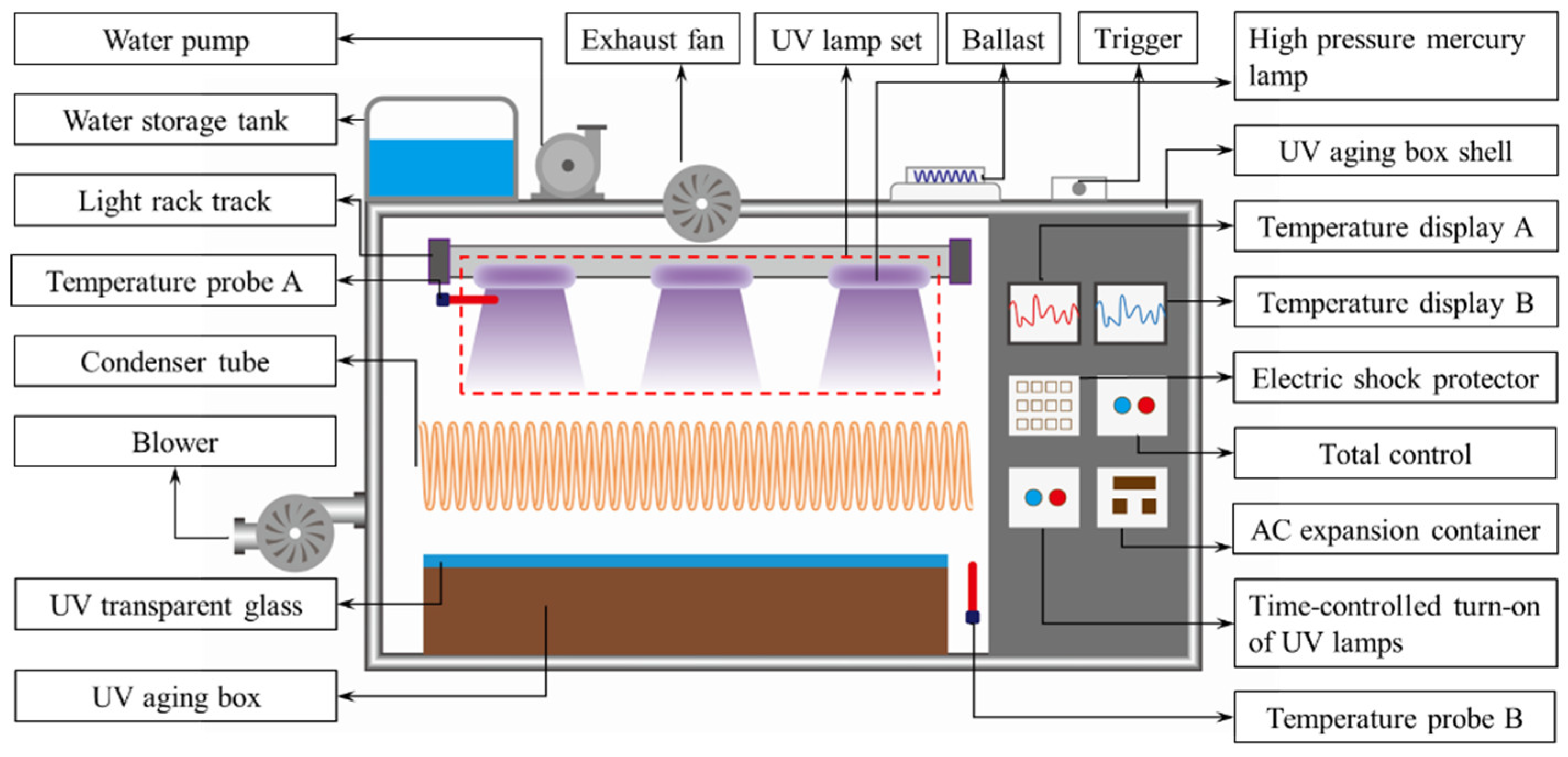
Figure 3.
Oxygen insulation UV aging device.
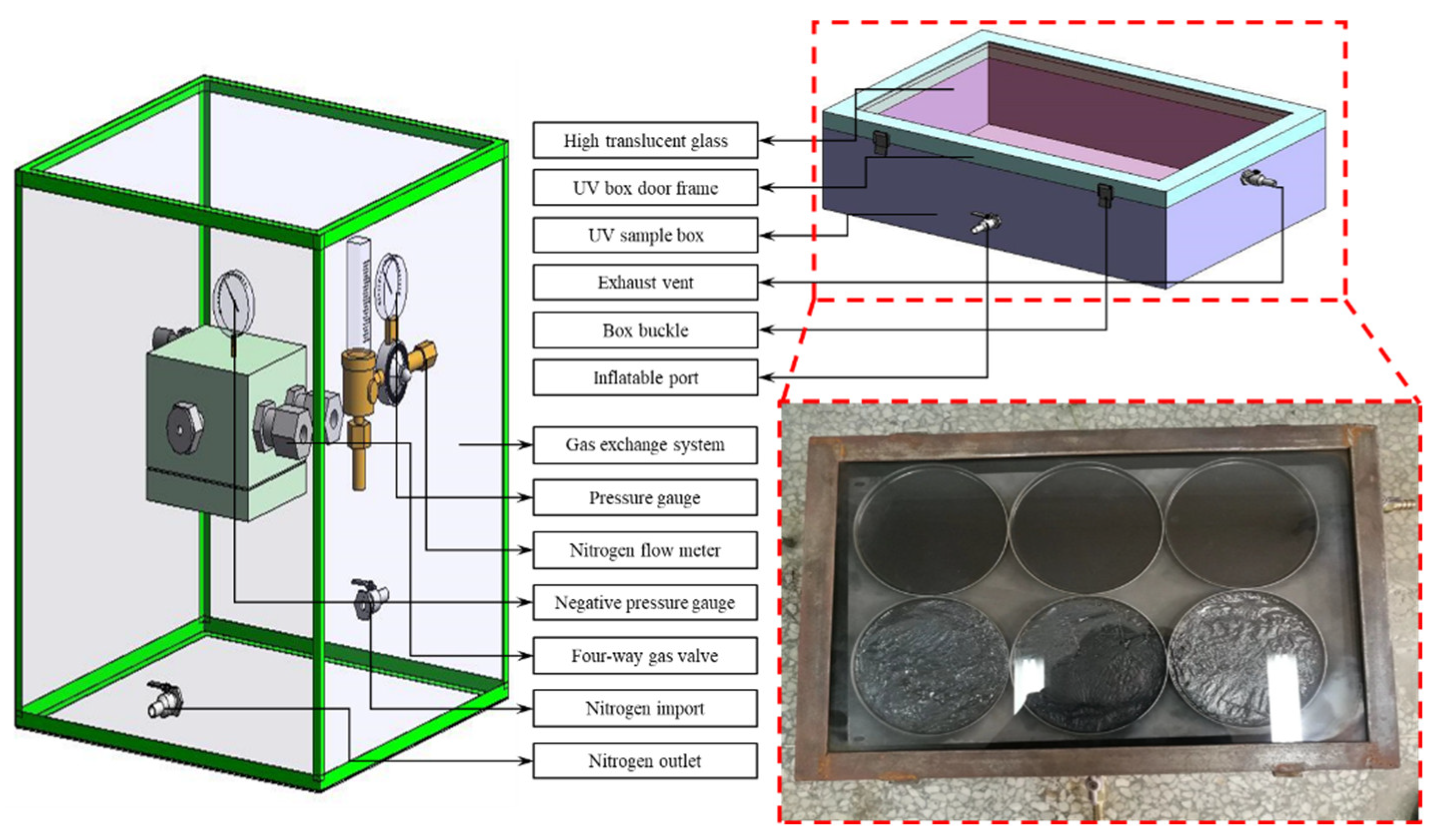
Figure 4.
The distribution of solar spectrum.
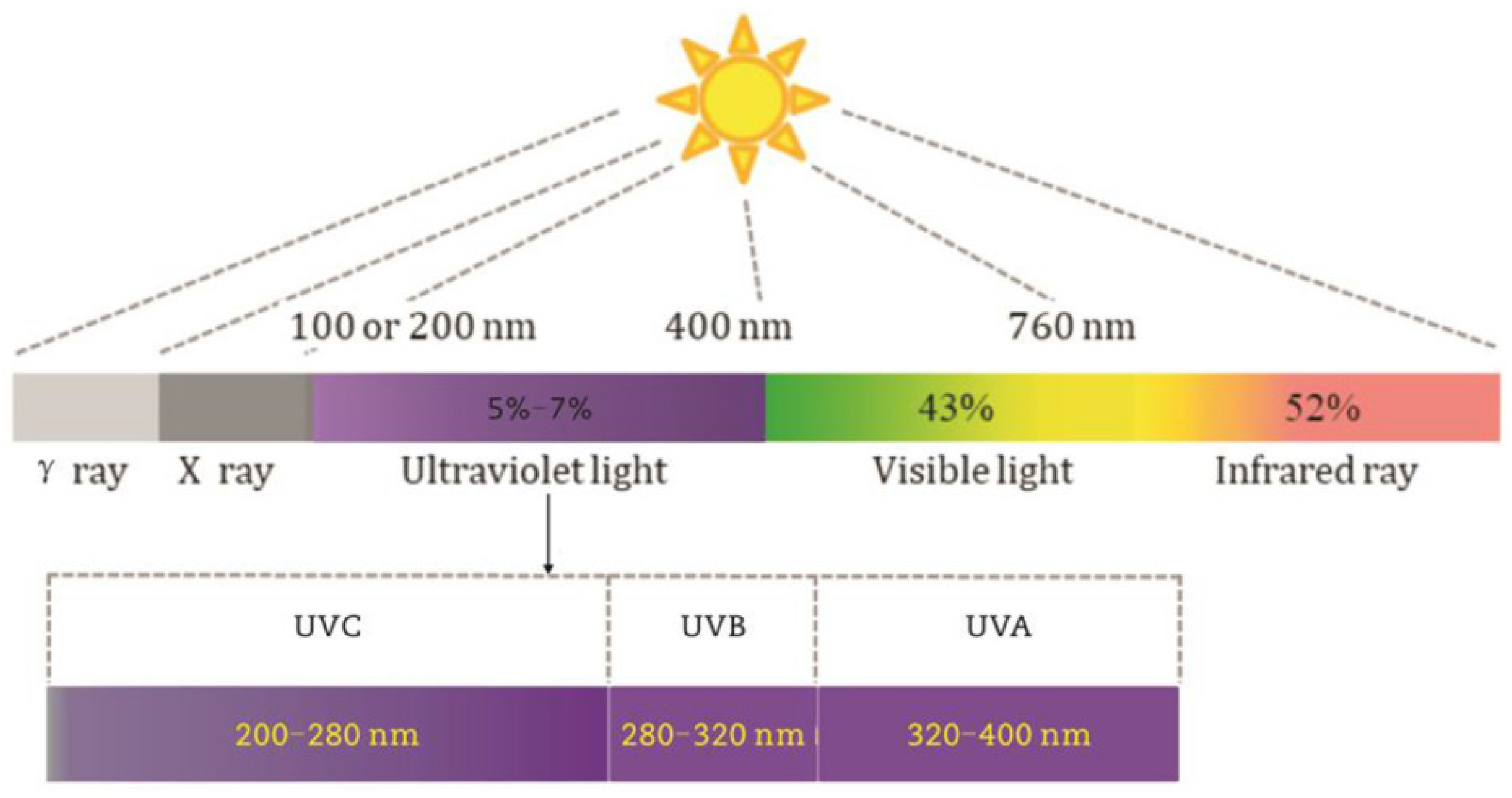
Figure 5.
Adhesive properties of WMA under different aging conditions.
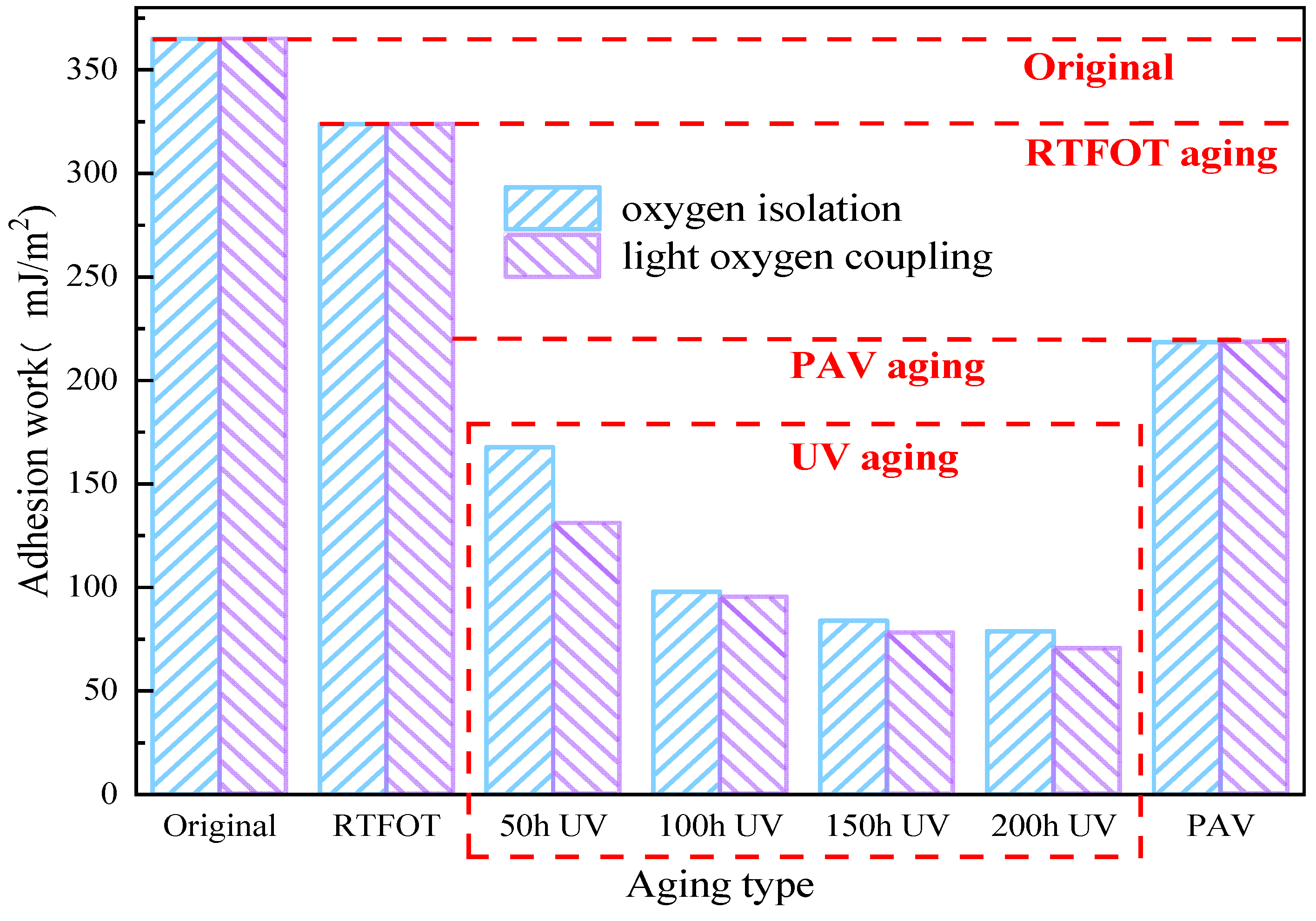
Figure 6.
Adhesive properties of WMA under different aging conditions.
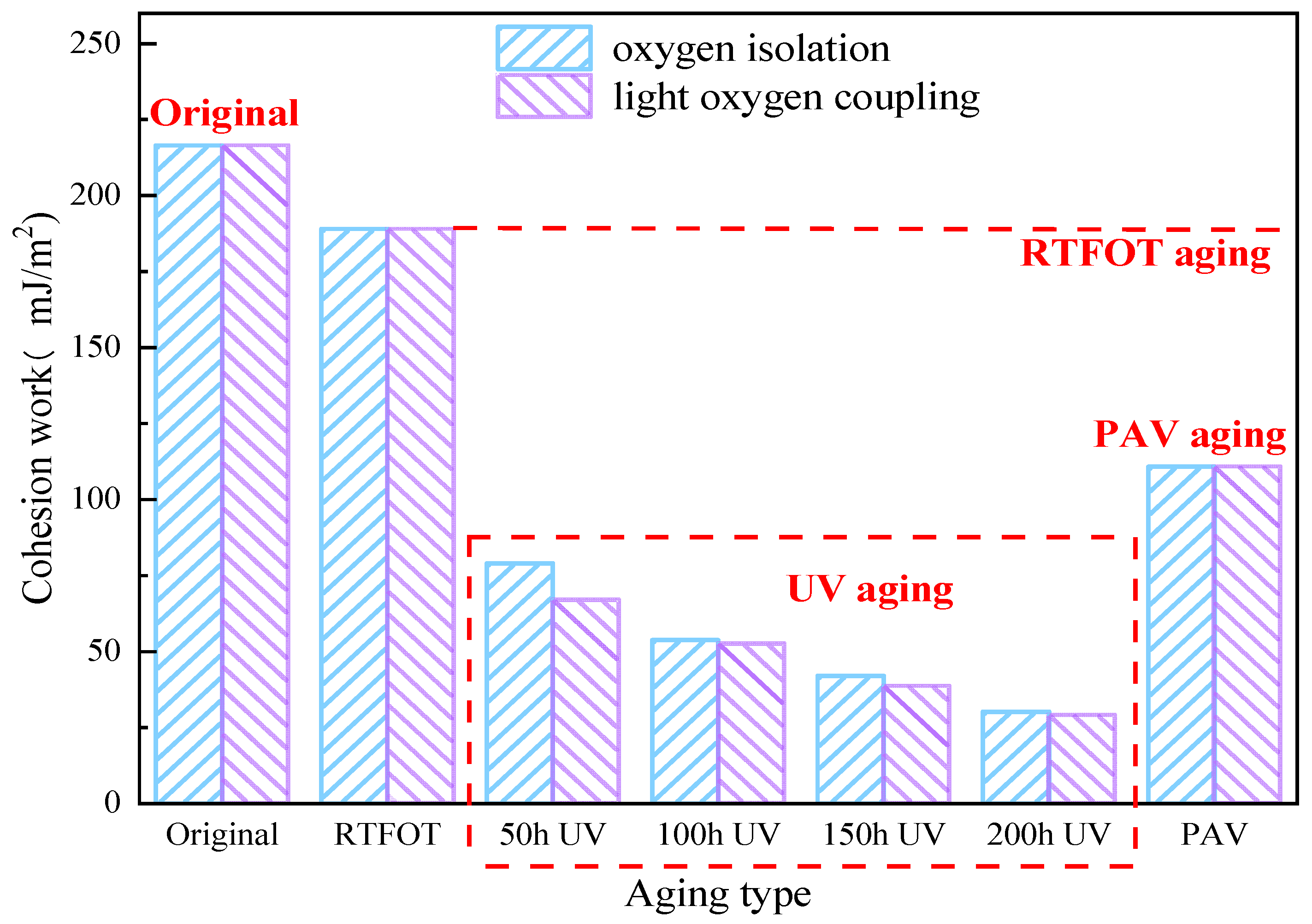
Figure 8.
Functional group index of WMA: (a) carbonyl index; (b) sulfoxide index.
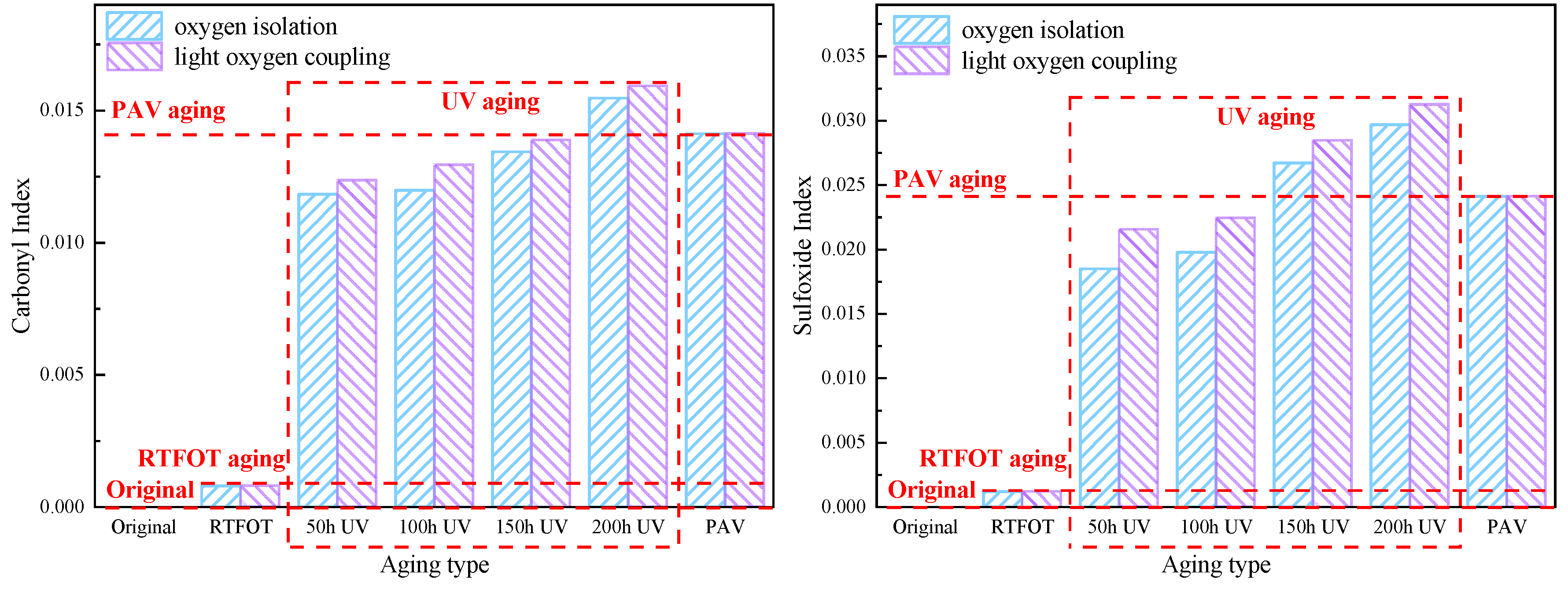
Figure 9.
Confidence interval: (a) oxygen barrier; (b) light oxygen coupling.
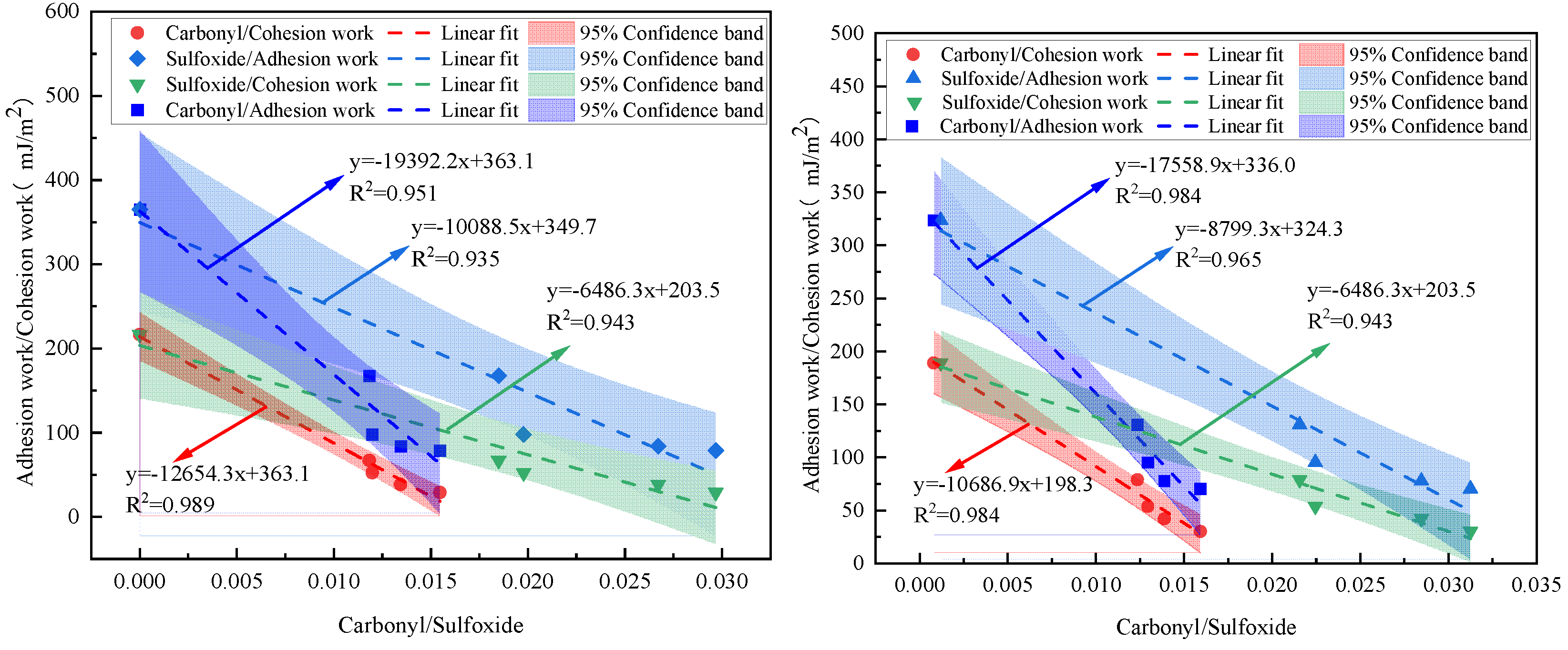
Figure 10.
RBF neural network model.
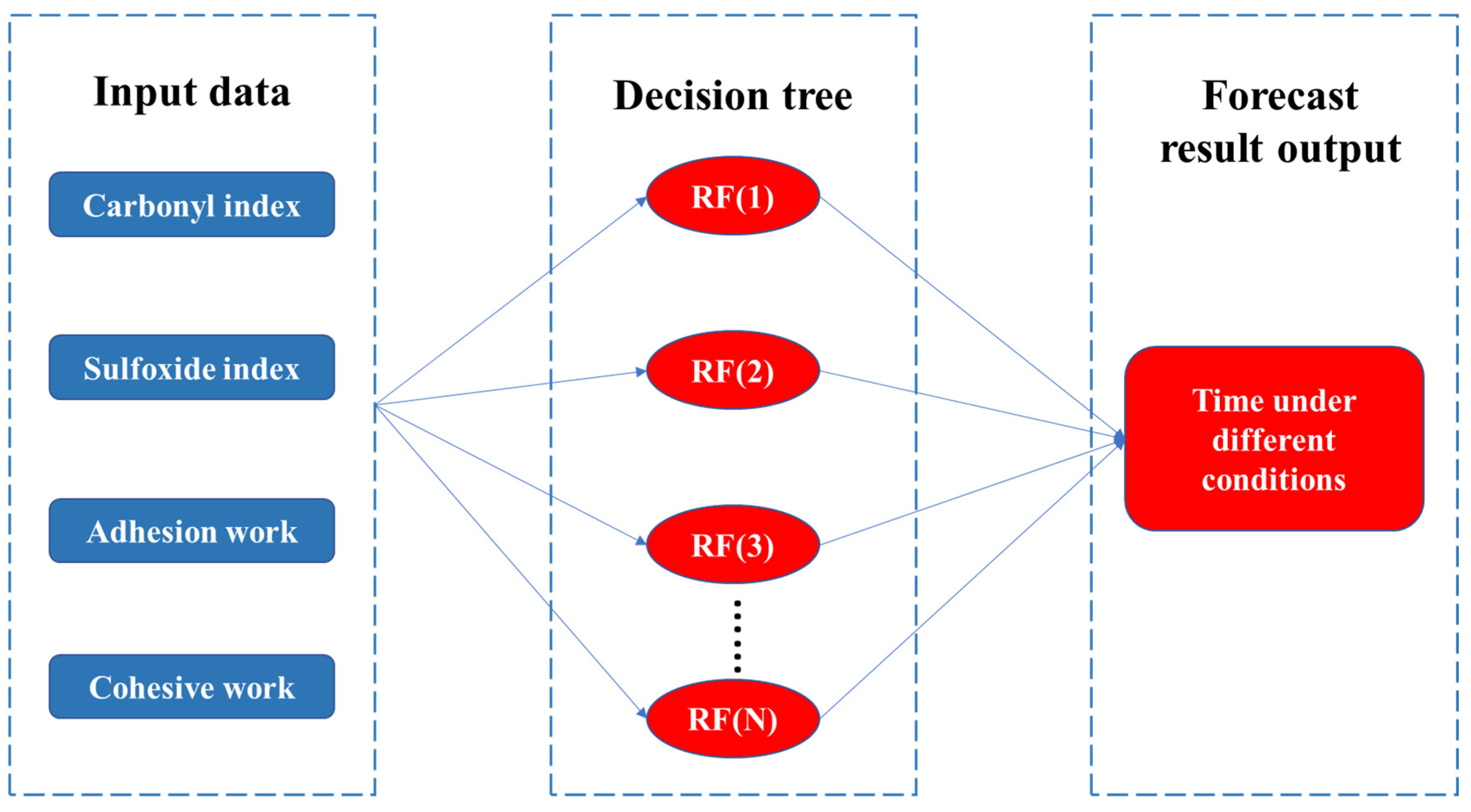
Figure 11.
Importance of independent variables.
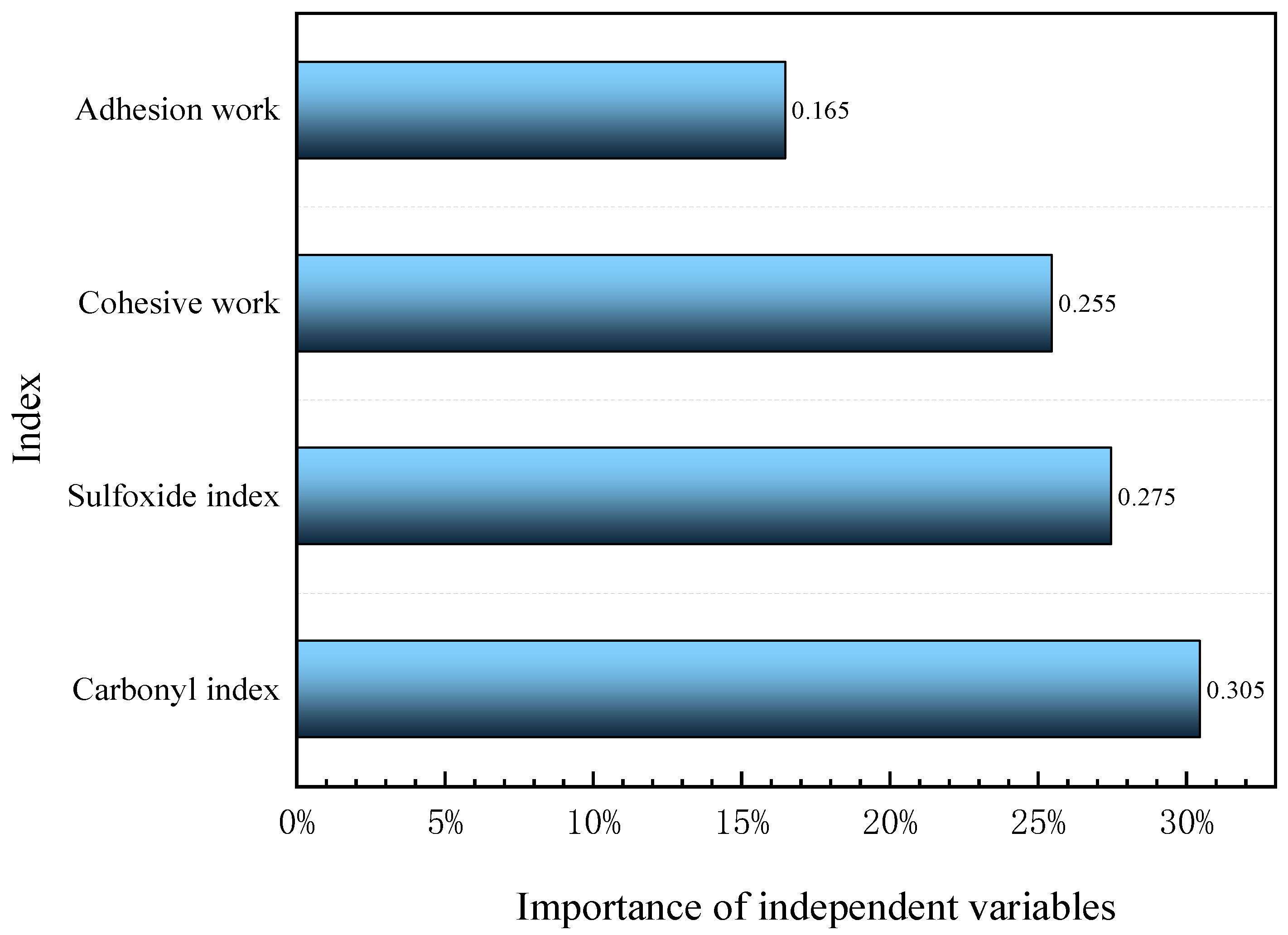
Figure 12.
Contribution rate of ultraviolet and oxygen.
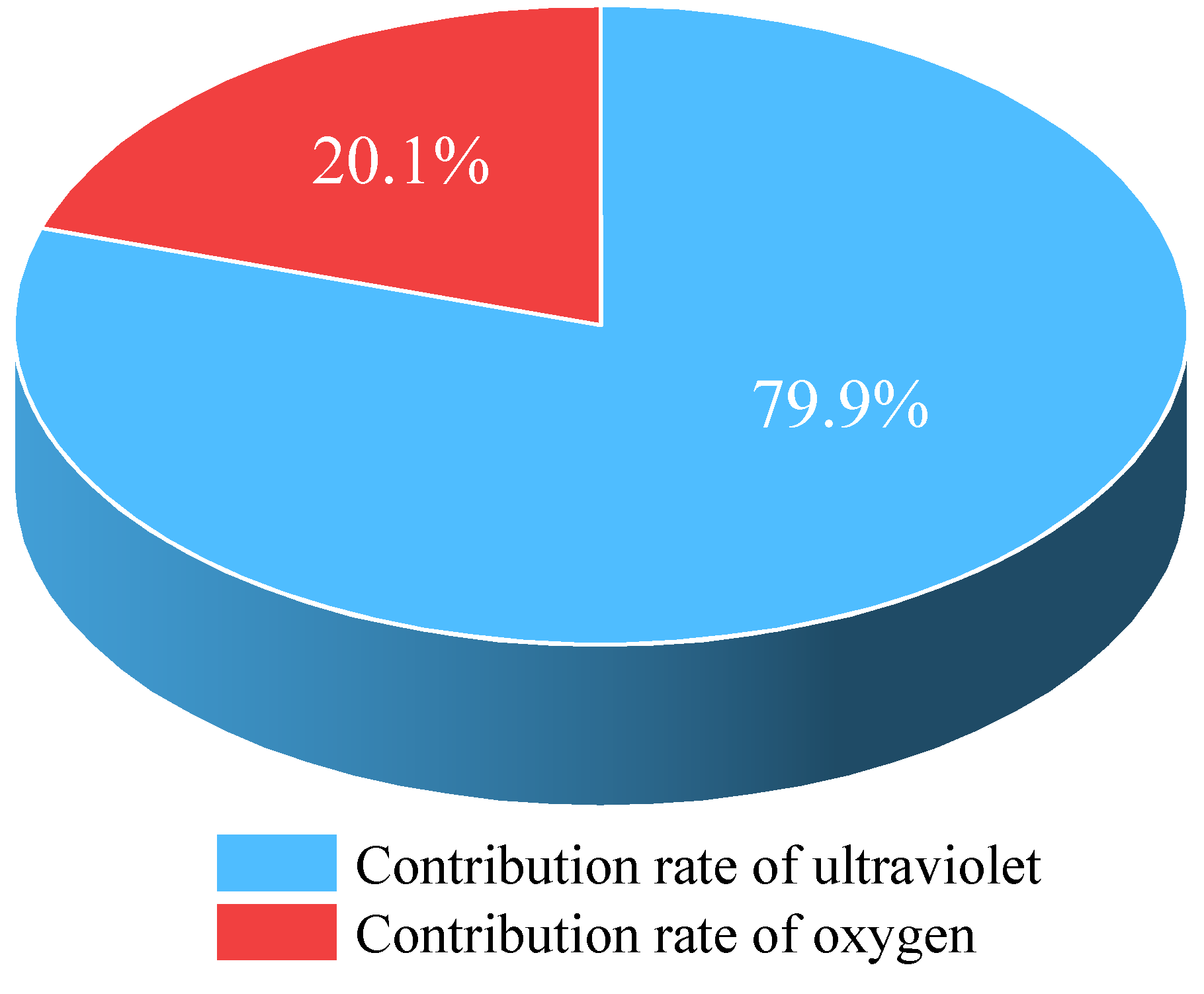
Table 1.
Properties index of WMA.
| Items | Units | Requirement | Result | |
| 25℃ penetration/(100g, 5s) | 0.1mm | 80~100 | 86.2 | |
| Softening point/(R&B) | ℃ | ≥42 | 47.3 | |
| 10℃ ductility | cm | ≥20 | 25.2 | |
| RTFOT(163℃,85min) | Mass loss | % | ≤±0.8 | 0.04 |
| Penetration ratio | % | ≥57 | 67.2 | |
| Ductility/10℃ | cm | ≥8 | 11.4 | |
Table 2.
Indoor and outdoor ultraviolet radiation time conversion table.
| Indoor UV aging time /h | 50 | 100 | 150 | 200 |
| Outdoor UV aging time/month | 1 | 2 | 3 | 4 |
Table 4.
Contact angle of WMA before and after UV aging.
| Test liquids | Contact angle(°) | |||||||
| Original | RTFOT | Oxygen(Yes or No) | 50h$$$UV | 100h$$$UV | 150h$$$UV | 200h$$$UV | PAV | |
| Distilled water$$$ | 99.42 | 97.72 | No | 101.96 | 103.97 | 103.15 | 99.26 | 104.96 |
| Yes | 99.97 | 98.11 | 99.68 | 101.18 | ||||
| Glycerol$$$ | 103.46 | 100.29 | No | 95.89 | 94.82 | 94.04 | 92.42 | 101.04 |
| Yes | 97.03 | 97.32 | 94.53 | 95.11 | ||||
| Formamide | 80.87 | 79.85 | No | 85.13 | 85.48 | 86.89 | 88.71 | 85.53 |
| Yes | 81.50 | 85.68 | 84.75 | 85.31 | ||||
Table 5.
Significant difference analysis under light-oxygen coupling and oxygen barrier conditions.
| Source of difference | SS | df | MS | F-value | P-value | F crit |
| Adhesive work | 6909.03 | 3 | 2303.01 | 18.71219 | 0.0191 | 9.276628 |
| Cohesive work | 3.22895 | 3 | 1.076317 | 11.65896 | 0.006786 | 9.276628 |
| Carbonyl index | 1.58E-05 | 3 | 5.27E-06 | 169.1818 | 0.000763 | 9.276628 |
| Sulfoxide index | 0.000152 | 3 | 5.08E-05 | 196.085 | 0.000613 | 9.276628 |
Table 6.
Contribution rates of ultraviolet and oxygen.
| Index | Contribution rate | |
| Ultraviolet | Oxygen | |
| Carbonyl index | 78.6% | 21.4% |
| Sulfoxide index | 79.0% | 21.0% |
| Adhesive work | 79.2% | 20.8% |
| Cohesive work | 82.8% | 18.2% |
Disclaimer/Publisher’s Note: The statements, opinions and data contained in all publications are solely those of the individual author(s) and contributor(s) and not of MDPI and/or the editor(s). MDPI and/or the editor(s) disclaim responsibility for any injury to people or property resulting from any ideas, methods, instructions or products referred to in the content. |
© 2025 by the authors. Licensee MDPI, Basel, Switzerland. This article is an open access article distributed under the terms and conditions of the Creative Commons Attribution (CC BY) license (http://creativecommons.org/licenses/by/4.0/).
Copyright: This open access article is published under a Creative Commons CC BY 4.0 license, which permit the free download, distribution, and reuse, provided that the author and preprint are cited in any reuse.


