

Submitted:
23 February 2025
Posted:
24 February 2025
You are already at the latest version
Abstract
Environmental literacy plays a crucial role in promoting sustainable behavior and increasing public participation in environmental protection. This study investigates the environmental literacy of the general public in Chiayi County, Taiwan, focusing on five key dimensions: environmental awareness, knowledge, attitudes, action skills, and behavior. A cross-sectional survey was conducted using a structured questionnaire, with data analyzed through SPSS, including descriptive statistics, multiple regression analysis, and moderation analysis. The results indicate that while respondents demonstrate high awareness of environmental issues and positive attitudes toward sustainability, there are significant gaps in environmental knowledge and action skills. Furthermore, demographic factors such as education, age, gender, and occupation moderate the relationships between these dimensions. These findings highlight the need for targeted educational initiatives and policy interventions to bridge the gap between awareness and actual environmental behavior. This study provides empirical insights for environmental education programs, emphasizing the importance of practical skill development, community engagement, and policy-driven support. By refining environmental education strategies, Taiwan can foster a more environmentally responsible society, contributing to long-term sustainability goals.
Keywords:
Environmental Literacy
; Environmental Education
; Environmental Awareness
; Environmental Knowledge
; Environmental Behavior
1. Introduction
The United Nations has emphasized the importance of environmental education as part of its sustainable development goals. The concept of environmental literacy, encompassing knowledge, attitudes, and behaviors, has been discussed in the context of the UN's Agenda 2030. The UN also recognizes the value of incorporating Indigenous knowledge into educational curricula [1]. The Tbilisi Declaration is a significant document that highlights environmental education as a means to promote environmental awareness and responsible actions. It serves as an internationally recognized framework for environmental education [2]. [3], as well as [4], discuss the role of education in addressing climate change and promoting sustainability. They emphasize the importance of moving beyond instrumental learning toward more transformative and emancipatory approaches. Cognition and environment, emphasizing the role of understanding and information processing in environmental awareness, showing that environmental literacy is not just about knowledge but about how people process information [5]. [6] delve into the complexities of behavior change and the factors influencing pro-environmental actions, a key issue in environmental literacy.
In Malaysia, studies have examined the impact of environmental literacy on pro-environmental behaviors, particularly in the adoption of "3R" practices (reduce, reuse, recycle). [7] discusses the role of higher education in promoting sustainable development. In Turkey, [8] assessed pre-service teachers' environmental literacy to inform teacher education programs. [9] evaluated the environmental literacy of science and technology teachers. Other studies [10] have focused on environmental education and literacy. In Israel [8] examined the environmental literacy of pre-service teachers at the beginning and end of their studies. In the United States, numerous studies have explored different dimensions of environmental education and literacy, often focusing on specific age groups or educational settings. [11] developed a widely adopted framework for assessing environmental literacy. In Germany, [12] studied the use of metaphors in communicating climate change, while [13] examined the effectiveness of educational approaches to sustainability. In Sweden, [14] conducted studies on environmental literacy. Australia, India, and Indonesia have also been studied, with Indonesia focusing on integrating ethnoscience into environmental literacy [15]. Research in the Czech Republic has examined the impact of environmental and sustainability education on teenagers' environmental literacy [16].
Taiwan enacted the Environmental Education Act in 2011, which mandates environmental education programs in public sectors, schools, and teacher training programs. The Environmental Protection Administration (EPA) oversees the act, while the Ministry of Education (MOE) manages the school curriculum. A national investigation into teachers' environmental literacy in Taiwan revealed that elementary school teachers scored higher in all EL domains compared to junior and senior high school teachers. [17] extensively studied teachers' environmental literacy, identifying key areas for professional development. Studies have also evaluated the environmental literacy of undergraduate students in Taiwan, showing relatively low levels of environmental knowledge and behavior but moderate environmental attitudes. [18] conducted a nationwide survey confirming these findings. Other research in Taiwan focused on elementary school teachers' environmental education cognition and attitudes. Results show a general awareness of environmental issues but also highlight the need for more effective teacher training. [19] and [20] support this conclusion. Chung developed a scale to measure elementary school teachers' environmental education cognition. The Taiwan Roadkill Observation Network (TaiRON) is a community of practice contributing to environmental literacy for sustainability. [21] applied the norm activation model to study the pro-environmental behaviors of public servants in Taiwan.
The literature shows a broad interest in environmental literacy as a critical element of sustainability, encompassing knowledge, attitudes, and behaviors. Studies range from those focusing on specific educational programs to large-scale surveys assessing environmental literacy across diverse populations. Across regions, there is an emphasis on the need for effective environmental education programs, teacher training, and strategies to translate knowledge into pro-environmental actions. Taiwan, with its Environmental Education Act, serves as an interesting case study, where ongoing efforts to promote environmental literacy require continuous assessment.
Environmental degradation, driven by pollution, deforestation, climate change, and unsustainable resource consumption, has become a pressing global issue. Addressing these challenges requires more than just government policies and technological advancements; it necessitates active public participation. However, meaningful engagement in sustainability efforts depends on individuals’ environmental literacy—their ability to understand, respond to, and prevent environmental problems. Environmental literacy consists of five interconnected dimensions: awareness of environmental issues, knowledge of their causes and solutions, positive attitudes towards sustainability, action skills to implement corrective measures, and engagement in environmentally responsible behaviors. Recognizing the importance of environmental literacy, global efforts have intensified to integrate environmental education into both formal education and community initiatives. Many countries have incorporated sustainability into national development agendas, with programs aligned with the United Nations’ Sustainable Development Goals (SDGs) emphasizing education for sustainable development (ESD). Despite these efforts, a persistent challenge remains: transforming awareness and knowledge into concrete, sustainable actions.
This study aims to bridge this gap by assessing environmental literacy levels among residents of Chiayi County and analyzing the relationships between awareness, knowledge, attitudes, action skills, and behavior. Additionally, it investigates how demographic factors such as age, education, gender, and occupation influence these relationships, identifying which groups may require targeted interventions. Younger individuals may benefit from structured environmental education, while older individuals may have stronger environmental attitudes shaped by life experience. Understanding these variations will help refine environmental education strategies to ensure effectiveness across different demographics. The study pursues four key objectives. First, it evaluates residents’ levels of environmental literacy by examining their awareness, knowledge, attitudes, skills, and behaviors. Identifying gaps in these dimensions will inform the development of targeted education and outreach programs. Second, it explores how these five dimensions interact—how awareness may lead to knowledge acquisition, knowledge may shape attitudes, and attitudes may drive skill development and behavioral engagement. To validate these relationships, the study employs structural equation modeling (SEM), providing empirical evidence for more integrated and effective environmental education strategies. Third, the study examines the moderating effects of demographic factors to understand whether specific groups exhibit stronger or weaker connections between environmental literacy components. For instance, individuals with higher education levels may more effectively translate knowledge into behavior, whereas those with stronger attitudes may rely on different pathways to develop environmental skills. Identifying these distinctions will help create customized interventions tailored to the unique needs of various population segments. Finally, based on the findings, the study will offer policy and educational recommendations aimed at strengthening environmental engagement. Strategies such as digital learning platforms, interactive workshops, and community-based programs will be proposed to enhance public knowledge, develop action skills, and foster pro-environmental attitudes.
By addressing these objectives, this study contributes to both academic research and practical applications in environmental education. It provides empirical evidence on the interconnectedness of environmental literacy dimensions and the role of demographic influences, filling a critical research gap. The insights gained will assist policymakers, educators, and community leaders in designing more effective interventions to promote long-term sustainable behavior. Furthermore, the study’s recommendations will support the development of inclusive and accessible environmental education initiatives, ensuring broader public participation in sustainability efforts.
2. The Five Dimensions of Environmental Literacy and Their Impact
Environmental literacy refers to the combination of knowledge, attitudes, skills, and behaviors that enable individuals to understand and address environmental challenges effectively. It equips people with the capacity to recognize environmental issues, analyze their causes and effects, and take informed actions to protect and restore the environment. The concept of environmental literacy has evolved over time, with scholars emphasizing that it comprises multiple interrelated dimensions: awareness, knowledge, attitudes, action skills, and behavior. Each dimension plays a distinct role but is interconnected with others in driving sustainable actions.
2.1. Environmental Awareness
Environmental awareness refers to an individual’s ability to recognize environmental issues, challenges, and threats, including pollution, climate change, and biodiversity loss [22]. It is considered a precursor to environmental knowledge and action, as individuals must first be aware of environmental issues before taking steps to address them [23]. Research suggests that awareness is influenced by education, media exposure, and personal experiences with environmental degradation [24]. A study by [25] found that increased awareness of environmental problems correlates with higher engagement in environmental advocacy. However, some scholars argue that awareness alone is insufficient to drive pro-environmental behavior, as knowledge and skills are also required to bridge the gap between concern and action [26]. Additionally, research has shown that awareness levels vary across different demographic groups, with older individuals often demonstrating a deeper historical understanding of environmental change compared to younger individuals [27]. This suggests that environmental awareness may be influenced by age-related experiences, education levels, and social exposure.
2.2. Environmental Knowledge
Environmental knowledge refers to an individual’s understanding of environmental processes, issues, and sustainable practices. It is often categorized into factual knowledge (knowing about environmental problems) and procedural knowledge (knowing how to solve them). Studies suggest that individuals with higher environmental knowledge are more likely to adopt sustainable behaviors, as knowledge helps to shape risk perception and inform decision-making [26]. Research by [28] found that individuals with higher education levels tend to possess greater environmental knowledge, emphasizing the role of formal education in knowledge acquisition. However, knowledge alone does not always translate into behavior, as knowledge-action gaps exist due to perceived barriers, lack of motivation, or structural constraints [22]. Furthermore, environmental knowledge has been found to directly influence attitudes, with informed individuals more likely to develop strong pro-environmental values [29]. This knowledge-attitude link is particularly strong among individuals with higher education levels, as critical thinking skills enable them to process and internalize environmental information more effectively [30].
2.3. Environmental Attitudes
Environmental attitudes represent an individual’s beliefs, values, and emotional responses toward the environment, shaping their willingness to engage in sustainability efforts (Bamberg & Möser, 2007). The Theory of Planned Behavior [31] suggests that attitudes are a key predictor of behavioral intentions, meaning that pro-environmental attitudes often lead to higher engagement in sustainability practices. However, research has found that attitudes alone do not always predict behavior, as external factors such as convenience, financial constraints, and societal norms can limit action [22]. Studies have also identified gender differences in environmental attitudes, with women generally demonstrating stronger environmental concern and a higher likelihood of engaging in sustainability-related actions [32]. Additionally, research by [29] indicates that attitudes influence the development of environmental skills, as individuals who hold pro-environmental beliefs are more likely to seek knowledge and training that enhances their sustainability competencies. This suggests that attitudes play a motivational role in bridging knowledge and action, reinforcing the need for targeted attitude-shaping interventions to promote sustainable behaviors.
2.4. Environmental Action Skills
Environmental action skills refer to an individual’s ability to apply environmental knowledge in practical situations, such as waste sorting, energy conservation, and pollution reporting [25]. These skills are essential for translating environmental awareness and attitudes into meaningful action [29]. Research suggests that individuals who possess higher action skills are more likely to engage in pro-environmental behaviors, as they feel more competent and empowered to make sustainable choices [26]. Environmental education programs that emphasize skill-building are more effective in promoting behavior change than those that focus solely on awareness and knowledge. Furthermore, empirical research highlights that gender differences exist in environmental action skills, with women often engaging more actively in sustainability practices such as household recycling and community-based conservation programs [33]. The link between attitudes and skills is particularly strong, as individuals with higher pro-environmental attitudes are more likely to acquire and develop sustainability-related competencies [34].
2.5. Environmental Behavior
Environmental behavior encompasses actions undertaken by individuals to reduce environmental impact, including energy conservation, waste reduction, and sustainable consumption (Bamberg & Möser, 2007). Research suggests that action skills are the strongest predictor of behavior, as individuals who possess the necessary competencies are more likely to translate their knowledge and attitudes into real-world engagement [29]. However, while attitudes and skills contribute to behavior, structural and psychological barriers often prevent individuals from acting on their environmental concerns [22]. The Theory of Planned Behavior [31] emphasizes that behavioral intentions must be supported by perceived behavioral control, meaning that individuals must feel capable of engaging in sustainability actions. Studies show that occupation plays a significant role in moderating the action skills-behavior link, as individuals working in environment-related fields are more likely to apply sustainability skills in their professional lives [35]. This suggests that workplace sustainability initiatives can be effective in bridging the gap between environmental competence and long-term behavior change.
These five dimensions are interdependent, forming a comprehensive model of environmental literacy. However, gaps often emerge between awareness, knowledge, and behavior. For instance, individuals may be aware of pollution but lack the knowledge or skills to take corrective action. Effective environmental education programs are therefore designed to strengthen all dimensions simultaneously.
3. Hypothesis Development
Understanding the relationships among environmental literacy dimensions is essential for designing effective educational interventions and sustainability policies. Prior research suggests that environmental awareness, knowledge, attitudes, action skills, and behavior are interconnected, but their strength and significance may vary depending on individual characteristics and external barriers [11]. This study develops hypotheses to examine these relationships in the context of Chiayi County, incorporating moderating effects of demographic factors and external constraints.
3.1. The Relationship Between Environmental Awareness and Environmental Knowledge
Environmental awareness serves as a foundational step in the development of environmental literacy, as it enables individuals to recognize the presence and severity of environmental problems such as air and water pollution, climate change, and waste mismanagement. Several studies indicate that individuals with high environmental awareness actively seek knowledge about the causes, consequences, and solutions to these issues (Hungerford & Volk, 1990). Research has shown that awareness influences knowledge acquisition by motivating individuals to engage with environmental education materials, news sources, and policy discussions [36]. The survey results in this study further support this relationship, as respondents with higher awareness levels scored better on factual knowledge assessments. This suggests that individuals who are more exposed to environmental problems are better equipped with relevant scientific and policy knowledge. Therefore, the following hypothesis is proposed:
H1:
Environmental Awareness positively influences Environmental Knowledge.
This hypothesis suggests that as individuals become more aware of environmental challenges in their surroundings, they are likely to increase their engagement with factual information, leading to a stronger knowledge base.
3.2. The Relationship Between Environmental Knowledge and Environmental Attitudes
Environmental knowledge is a critical determinant of an individual’s attitudes toward sustainability and environmental protection. A well-informed individual is more likely to appreciate the urgency of environmental issues and adopt favorable attitudes toward policies and behaviors that promote sustainability [37]. The Theory of Planned Behavior [31] supports this link, asserting that knowledge shapes attitudes, which subsequently influence behavioral intentions. Additionally, empirical research suggests that education plays a crucial role in shaping environmental attitudes, as individuals with higher education levels tend to demonstrate stronger pro-environmental values [28]. Previous studies indicate that sustainability-driven services enhance consumer trust and engagement [38]. This supports the idea that increased environmental knowledge and awareness can lead to improved environmental attitudes and behaviors. The findings from this study align with this perspective, as the ANOVA results indicate that education level significantly affects environmental attitudes. Therefore, the following hypothesis is proposed:
H2:
Environmental Knowledge positively influences Environmental Attitudes.
This hypothesis examines whether formal education enhances the influence of environmental knowledge on attitude formation.
3.3. The Relationship Between Environmental Knowledge and Environmental Action Skills
Environmental knowledge provides individuals with the foundation to develop the skills required for sustainability practices. For instance, understanding air quality indicators enables individuals to take protective measures, and familiarity with waste management regulations allows individuals to properly sort waste. Prior research highlights that knowledge is a strong predictor of skill acquisition, as those with greater awareness of environmental policies and ecological processes tend to be more competent in environmental tasks [29]. The survey data from this study corroborate this link, as respondents with higher knowledge scores reported greater competency in action-based skills.
Therefore, this study hypothesizes that:
H3:
Environmental Knowledge positively influences Environmental Action Skills.
3.4. The Relationship Between Environmental Attitudes and Environmental Action Skills
Pro-environmental attitudes reflect an individual’s values and willingness to support environmental protection. These attitudes often translate into the acquisition of action skills, as individuals who strongly believe in sustainability are more likely to develop practical competencies such as waste sorting, pollution monitoring, and water conservation. Studies have demonstrated that attitudes play a crucial role in predicting skill acquisition, as individuals with strong environmental values actively seek ways to contribute through tangible actions [26]. The survey findings support this relationship, showing that respondents with positive attitudes toward environmental protection were more confident in their ability to perform environmentally responsible actions.
However, the data also reveal gender differences, with women generally reporting stronger pro-environmental attitudes but lower action skills in certain areas. This discrepancy suggests that while women may be more environmentally conscious, they may face barriers in translating their attitudes into practical skills due to social norms or access to resources [32]. Therefore, this study hypothesizes:
H4:
Environmental Attitudes positively influence Environmental Action Skills.
3.5. The Relationship Between Environmental Action Skills and Environmental Behavior
Environmental action skills refer to an individual’s ability to perform specific sustainability-related tasks, such as sorting waste, reporting pollution, and adopting energy-saving practices. These skills are essential in bridging the gap between environmental attitudes and actual behavior. Research has consistently demonstrated that individuals with stronger environmental competencies are more likely to engage in environmentally responsible behavior [29]. According to the Value-Belief-Norm (VBN) Theory [39], action skills are a crucial determinant of environmental engagement, as they increase individuals’ confidence in performing sustainable actions and reduce the perceived difficulty of environmentally responsible behaviors. Prior research suggests that effective environmental policies and corporate sustainability initiatives can enhance public environmental awareness and promote responsible behavior [40]. This aligns with the current study’s hypothesis that environmental awareness and knowledge influence environmental behavior.
The survey findings reinforce this relationship, showing that respondents with higher self-reported action skills were also more likely to engage in pro-environmental behaviors such as participating in community clean-up events, purchasing eco-friendly products, and reducing energy consumption. This supports prior research indicating that individuals who possess well-developed sustainability skills are more likely to integrate these practices into their daily routines [37]. However, some studies suggest that skills alone may not be sufficient to drive behavior, as external constraints, such as accessibility to resources and financial limitations, can act as barriers to engagement [22].
Given the importance of skill development in encouraging sustainable behavior, this study hypothesizes:
H5:
Environmental Action Skills positively influence Environmental Behavior.
This hypothesis suggests that individuals who perceive sustainability actions as inconvenient will be less likely to act, even if they hold strong pro-environmental attitudes. Understanding this moderation effect can provide insights for policymakers on how to reduce structural barriers to pro-environmental engagement.
3.6. The Relationship Between Environmental Attitudes and Environmental Behavior
Environmental attitudes represent an individual’s beliefs, values, and concerns about environmental issues, shaping their motivation to engage in sustainable practices. Attitudes have been widely studied as a key predictor of pro-environmental behavior, as suggested by the Theory of Planned Behavior [31], which posits that individuals with positive environmental attitudes are more likely to form intentions to engage in sustainability actions. Furthermore, the Value-Belief-Norm (VBN) Theory [39] suggests that strong environmental attitudes create a moral obligation to act, reinforcing sustainable behaviors. Empirical research supports the notion that individuals with favorable environmental attitudes are more likely to engage in responsible behaviors such as waste reduction, recycling, and energy conservation [23]. However, some studies have indicated that attitudes alone do not always translate into action due to external barriers such as lack of infrastructure, perceived inconvenience, and financial constraints [22]. While attitudes can serve as a motivational force, individuals may struggle to act on their pro-environmental beliefs if they lack the necessary resources, incentives, or institutional support [24]. The findings from this study support this relationship, as survey respondents with strong pro-environmental attitudes reported a higher likelihood of engaging in sustainable behaviors such as purchasing eco-friendly products, reducing single-use plastics, and participating in community-based environmental programs. However, the results also indicate variability across demographic groups, suggesting that external factors may influence the strength of the attitude-behavior relationship. Previous research highlights that gender, economic status, and social norms can shape how attitudes translate into action [29]. Despite these variations, individuals with higher environmental attitudes consistently demonstrated greater behavioral engagement, reinforcing the importance of attitude-driven educational and policy interventions to strengthen environmental responsibility.
Therefore, this study hypothesizes:
H6:
Environmental Attitudes positively influence Environmental Behavior.
This hypothesis suggests that individuals with stronger pro-environmental attitudes are more likely to engage in sustainability behaviors. However, it also recognizes that the strength of this relationship may vary based on demographic and structural factors, emphasizing the need for supportive policies and behavioral nudges to facilitate action.
3.7. Moderation Hypothesis Development
Understanding how demographic factors influence environmental literacy relationships is crucial in identifying targeted interventions. Previous studies suggest that variables such as education level, gender, age, and occupation significantly shape how individuals perceive, acquire, and apply environmental knowledge and skills [22,37]. These factors can either strengthen or weaken the relationships between environmental literacy components, influencing behavioral outcomes. The following sections develop hypotheses related to these moderating effects.
- The Moderating Effect of Education Level on the Relationship Between Environmental Knowledge and Environmental Attitudes
Education plays a critical role in shaping an individual’s ability to process environmental information and form attitudes toward sustainability. Individuals with higher levels of education tend to have a greater capacity to analyze, evaluate, and internalize environmental knowledge, leading to stronger environmental attitudes [28]. Education enhances critical thinking skills, which allows individuals to translate factual knowledge into deeply held values and ethical considerations regarding environmental sustainability [29]. Empirical studies have shown that formal education improves environmental consciousness and strengthens the relationship between knowledge and pro-environmental attitudes [41]. For example, university graduates are more likely to develop strong environmental attitudes based on their understanding of ecological issues, while individuals with lower education levels may struggle to make connections between knowledge and attitudes [30]. Given this evidence, this study hypothesizes that:
H7:
Education Level moderates the relationship between Environmental Knowledge and Environmental Attitudes, such that the relationship is stronger for individuals with higher education.
- B.
- The Moderating Effect of Gender on the Relationship Between Environmental Attitudes and Environmental Action Skills
Gender differences in environmental behavior have been widely documented, with numerous studies indicating that women tend to express stronger pro-environmental attitudes than men [32]. Research suggests that women are more likely to engage in sustainability practices, particularly those related to household environmental management, waste reduction, and community activism [42]. Furthermore, previous studies indicate that women are more likely than men to translate their attitudes into practical environmental skills [33]. Women generally score higher in environmental concern and are more proactive in adopting skills that promote sustainable behaviors [34]. Given that attitudes play a fundamental role in shaping action skills, gender differences may significantly influence the strength of this relationship. Thus, this study hypothesizes that:
H8:
Gender moderates the relationship between Environmental Attitudes and Environmental Action Skills, such that the relationship is stronger for women than for men.
- C.
- The Moderating Effect of Age on the Relationship Between Environmental Awareness and Environmental Knowledge
Age differences in environmental literacy have been explored in previous research, with findings suggesting that older individuals generally possess higher environmental knowledge than younger individuals due to their longer exposure to environmental issues [27]. As people age, they accumulate experiences related to pollution, climate change, and conservation, leading to a more informed understanding of environmental challenges [24].
While younger individuals may have higher exposure to environmental education programs, older individuals may rely on direct experiences and historical observations to shape their environmental knowledge. Therefore, it is expected that age will moderate the effect of environmental awareness on knowledge acquisition, with older individuals demonstrating a stronger awareness-knowledge link. Hence, the following hypothesis is proposed:
H9:
Age moderates the relationship between Environmental Awareness and Environmental Knowledge, such that the relationship is stronger for older individuals.
- D.
- The Moderating Effect of Occupation on the Relationship Between Environmental Action Skills and Environmental Behavior
Occupation plays a significant role in shaping an individual's opportunity and ability to engage in pro-environmental behaviors. Research suggests that individuals working in environment-related professions, such as environmental engineering, agriculture, and education, are more likely to develop and apply action skills in their daily activities [43]. In contrast, those in sectors with less direct environmental engagement may lack the same level of skill application, even if they possess basic environmental competencies [35].
The Theory of Planned Behavior [31] suggests that individuals are more likely to act on their intentions when they perceive opportunities and resources that facilitate their behaviors. Occupation can serve as an enabler or barrier in this regard, as some jobs provide more structured pathways for environmental engagement than others. Given these observations, the following hypothesis is proposed:
H10:
Occupation moderates the relationship between Environmental Action Skills and Environmental Behavior, such that the relationship is stronger for individuals in environment-related occupations.
The conceptual framework depicted in Figure 1 presents the hypothesized relationships among environmental literacy dimensions. It demonstrates how environmental awareness, knowledge, attitudes, action skills, and behavior interact, with demographic variables acting as moderators in these relationships. This framework forms the basis for the empirical investigation conducted in this study.
4. Quantitative Analysis of Environmental Literacy
This study employs a quantitative research design, utilizing a structured survey to collect data on key environmental literacy dimensions. The analysis is conducted exclusively using SPSS software, which is used for descriptive statistics, inferential tests, and hypothesis testing through multiple regression analysis and moderation analysis. To provide a structured overview of the research methodology, Figure 2 presents the procedural steps undertaken in this study. The process begins with the formulation of research objectives, followed by survey design, data collection, and analysis using multiple regression and moderation tests in SPSS. This approach ensures a rigorous and systematic investigation of environmental literacy dimensions and their interrelationships.
4.1. Research Design
The study follows a cross-sectional survey research design, which allows for a snapshot analysis of environmental literacy levels among general residents in Chiayi County. A structured questionnaire was designed to measure five core dimensions of environmental literacy: awareness, knowledge, attitudes, action skills, and behavior. The study aims to examine the direct relationships among these variables and the moderating effects of demographic factors such as age, gender, education, and external constraints like perceived inconvenience and policy awareness.To ensure the validity and reliability of the research, all survey items were adapted from previous validated studies. Data were analyzed using SPSS 27, employing descriptive statistics, reliability analysis, factor analysis, multiple regression analysis, and moderation analysis. The target population consists of general residents of Chiayi County, covering both urban and rural areas to ensure a representative sample. A stratified random sampling approach was employed, ensuring proportional representation of age groups, education levels, and occupations. A total of 1,000 questionnaires were distributed, with 500 targeting general residents and 500 targeting environmental volunteers. However, this study focuses only on the general public survey responses, excluding the volunteer data to ensure a distinct analysis.
Survey Collection Channels
To enhance data collection efficiency and accessibility, both paper-based surveys and online surveys were employed. The paper-based surveys were conducted at community centers, public events, and local institutions to ensure participation from a broad demographic. The online surveys were distributed through government and community websites, social media platforms, and direct invitations to reach younger and digitally engaged respondents.
Survey Instrument Development
The structured questionnaire was developed based on previously validated environmental literacy studies and was tailored to reflect the socio-environmental context of Chiayi County. The survey measures five core dimensions of environmental literacy. Table 1 presents an overview of the survey instrument used in this study, detailing the number of questions assigned to each environmental literacy dimension and their respective measurement approaches. Each dimension—environmental awareness, knowledge, attitudes, action skills, and behavior—was assessed using eight items. The majority of the constructs were measured using a 5-point Likert scale, except for environmental knowledge, which was evaluated using a combination of multiple-choice and true/false questions. This structured approach ensures a comprehensive assessment of respondents’ environmental literacy levels.
Unlike other dimensions, environmental knowledge was assessed using factual multiple-choice and true/false questions instead of a Likert scale. This ensures objective measurement of respondents’ actual environmental knowledge rather than relying on self-reported confidence levels, which may be biased. To assess the reliability and validity of the instrument, a pilot study was conducted with 30 randomly selected respondents before full-scale data collection. Cronbach’s alpha was calculated for the Likert-scale items to ensure internal consistency, and minor modifications were made to improve question clarity.
4.2. Data Analysis Methods
To test the proposed hypotheses, a quantitative data analysis approach was conducted using SPSS 27, focusing on descriptive statistics, ANOVA, multiple regression analysis, and moderation analysis. These methods were employed to examine the relationships between environmental awareness, knowledge, attitudes, action skills, and behavior, while also assessing the moderating effects of education, gender, age, and occupation on these relationships.
- A.
- Descriptive Statistical Analysis
Descriptive statistics were used to summarize the overall environmental literacy levels among respondents. The mean, standard deviation, minimum, and maximum values were calculated for each variable, providing insights into the general trends in awareness, knowledge, attitudes, skills, and behavior. Frequency distributions were also analyzed to assess the demographic composition of respondents, including gender, age, education, and occupation.
- B.
- ANOVA and Group Comparisons
One-way ANOVA tests were conducted to examine statistical differences across demographic groups in environmental literacy dimensions. This method allowed for the comparison of mean differences in awareness, knowledge, attitudes, skills, and behavior across different levels of education, age groups, occupational categories, and gender. Independent samples t-tests were also performed to compare variations in responses between male and female participants.
- C.
- Multiple Regression Analysis
To examine the direct relationships between environmental literacy dimensions, hierarchical multiple regression analysis was performed. This approach helped to test the predictive strength of each variable in the proposed framework. The regression models were structured as follows:
- Model 1: Examined the effect of environmental awareness on environmental knowledge.
- Model 2: Tested the impact of environmental knowledge on environmental attitudes.
- Model 3: Assessed whether environmental attitudes influence action skills.
- Model 4: Analyzed whether environmental action skills and attitudes predict behavior.
Regression coefficients, adjusted R2 values, F-statistics, t-values, and p-values were used to evaluate the strength and statistical significance of each relationship, determining how strongly one environmental literacy dimension influenced another.
Moderation Analysis
To assess whether demographic factors influenced the relationships between environmental literacy dimensions, moderation analysis was conducted using hierarchical regression techniques. The following moderation effects were tested:
- Education level as a moderator in the relationship between environmental knowledge and attitudes.
- Gender as a moderator in the relationship between environmental attitudes and action skills.
- Age as a moderator in the relationship between environmental awareness and knowledge.
- Occupation as a moderator in the relationship between environmental action skills and behavior.
Interaction terms were created by multiplying the independent variable with the moderator variable, and the statistical significance of these interaction effects was examined using F-statistics and p-values. The findings from the moderation analysis provided insights into how demographic differences affect the development of environmental literacy among the general public. Overall, this comprehensive data analysis approach allowed for a detailed examination of environmental literacy dimensions, identifying both direct effects and moderating influences that shape pro-environmental engagement in Chiayi County.
4.3. Ethical Considerations
This study followed ethical research guidelines to ensure that all data collection processes adhered to principles of voluntary participation, confidentiality, and informed consent. Informed consent was obtained from all participants before they completed the survey. The survey explained that responses would remain anonymous and confidential, and that participation was entirely voluntary, allowing respondents to withdraw at any stage. The collected data were stored securely in password-protected digital formats and were only accessible to the research team. The research received ethical approval from the Institutional Review Board (IRB) ensuring compliance with academic integrity and ethical standards.
This study employs a cross-sectional survey methodology, using quantitative data collected from 500 general residents in Chiayi County. The survey instrument measures five dimensions of environmental literacy, using Likert-scale and multiple-choice questions to capture subjective perceptions and objective knowledge. Data analysis is conducted exclusively using SPSS, focusing on descriptive statistics, reliability analysis, multiple regression, and moderation analysis to test the hypothesized relationships and demographic influences. By adopting a structured quantitative approach, this research provides empirical insights into environmental literacy levels and identifies key factors influencing pro-environmental behavior. The findings aim to inform environmental education programs, sustainability policies, and public engagement strategies in Chiayi County.
5. Environmental Literacy Analysis and Findings
This section presents the results of the study, including descriptive statistics, hypothesis testing, and analysis of demographic factors. Structural equation modeling (SEM) was used to evaluate the conceptual framework, while descriptive statistics and inferential analyses such as t-tests and ANOVA were performed to assess differences across demographic groups.
5.1. Descriptive Statistics
The descriptive statistics provide an overview of the environmental literacy levels across the sample population. Table 2 presents the demographic profile of the general public respondents in this study. The sample consists of an almost equal gender distribution, with 50.8% female and 49.2% male respondents. The age distribution reveals that the majority of participants fall within the 30-59 age range, accounting for over 65% of the total sample. Educational background indicates that more than half of the respondents (51.8%) have completed college or university education, while a smaller proportion (5.4%) have pursued graduate studies. In terms of occupation, the largest employment sectors include the service industry (30.8%) and agriculture, forestry, and fishery (30.6%), followed by manufacturing (15.6%). Additionally, 9% of respondents work in the education sector, while 10.2% are retired, homemakers, or unemployed. The sample includes a smaller representation from military/government staff (2.2%), finance and insurance (1%), and administrative roles (0.6%). This demographic breakdown provides insight into the diversity of the surveyed population and allows for a more comprehensive analysis of environmental literacy across different societal groups.
5.2. Measurement Results for Relevant Research Variables
Here are the tables for each of the five aspects of environmental literacy, including the questions asked for each aspect in the survey, along with their mean scores and standard deviations:
- A.
- Environmental Awareness
The descriptive statistics for the Environmental Awareness variable, presented in Table 3, provide insights into the respondents’ perceptions of environmental issues, their awareness of waste management practices, and their recognition of climate-related changes. The mean scores for awareness-related statements are relatively high, ranging between 3.76 and 4.60. The highest mean score (4.60, SD = 0.57) was observed for “I feel that climate anomalies have become more frequent in recent years,” suggesting strong public recognition of climate change impacts. Awareness of waste sorting and pollution issues was also high (M = 4.34, SD = 0.67), reflecting good public perception of environmental challenges in Chiayi County. However, the perceived reduction in illegal waste dumping received a lower mean score (M = 3.76, SD = 0.82), indicating that concerns about improper waste disposal still persist.
- B.
- Environmental Knowledge
The descriptive analysis for the Environmental Knowledge variable, as shown in Table 4, presents the percentage of correct responses to true/false questions, providing insights into the respondents’ understanding of key environmental concepts, policies, and pollution-related issues. Unlike other dimensions, environmental knowledge was assessed using factual multiple-choice questions rather than a Likert scale. The results reveal moderate levels of environmental knowledge, with correct response rates ranging from 29.2% to 83.6%. The lowest score (29.2%) was for understanding the benefits of food waste recycling, indicating gaps in public knowledge regarding waste management. On the other hand, 83.6% of respondents correctly identified the primary environmental pollution caused by the COVID-19 pandemic, suggesting stronger awareness of recent environmental concerns. These findings indicate that while general environmental awareness is strong, specific technical knowledge on environmental management and policies remains a challenge.
- C.
- Environmental Attitudes
The descriptive analysis for the Environmental Attitudes variable, as presented in Table 5, highlights respondents’ perspectives on environmental protection, pollution prevention, and sustainable consumption. The results indicate a generally positive attitude toward environmental responsibility, with high mean scores across various statements related to waste reduction, climate change concerns, and eco-friendly product preferences. Attitudes toward environmental issues were generally positive, with mean scores ranging from 4.18 to 4.59. The strongest agreement was found for “Environmental pollution affects food safety” (M = 4.59, SD = 0.60), reflecting concerns over pollution’s impact on health and daily life. Respondents also showed strong support for reusable tableware (M = 4.48, SD = 0.67) and local/seasonal agricultural products (M = 4.51, SD = 0.68). However, attitudes toward using treated wastewater for irrigation were slightly lower (M = 4.18, SD = 0.66), possibly due to safety concerns or lack of public awareness on wastewater treatment technologies.
- D.
- Environmental Action Skills
The descriptive analysis for the Environmental Action Skills variable, as presented in Table 6, assesses respondents’ competencies in performing various sustainability-related tasks, such as waste sorting, pollution reporting, and air quality interpretation. The results indicate that while basic environmental skills, such as recognizing eco-labels and differentiating waste types, scored relatively high, skills related to pollution documentation and reporting to authorities showed lower mean scores, suggesting areas where further environmental training may be beneficial. Compared to awareness and attitudes, environmental action skills were relatively lower, with mean scores ranging from 3.01 to 4.11. The lowest score (M = 3.01, SD = 0.82) was for documenting environmental pollution incidents, suggesting that many residents lack experience in reporting violations. Similarly, knowledge of how to report environmental pollution (M = 3.12, SD = 0.94) was also low, which highlights the need for public education on environmental reporting mechanisms. However, basic skills such as interpreting air quality indices (M = 4.11, SD = 0.88) and differentiating waste types (M = 3.96, SD = 0.83) were comparatively higher, suggesting that the public has some foundational skills but may need further training in active environmental monitoring and response.
- E.
- Environmental Behavior
The descriptive analysis for the Environmental Behavior variable, as shown in Table 7, evaluates respondents’ engagement in sustainable practices such as pollution prevention, recycling, and participation in environmental activities. The results indicate a generally high level of pro-environmental behavior, with the highest mean scores observed for actively learning about pollution prevention and waste recycling practices. However, engagement in community clean-up activities and attending environmental awareness events scored slightly lower, suggesting potential areas for increased public participation efforts. The final dimension, environmental behavior, had mean scores between 3.84 and 4.50, indicating moderate to high engagement in pro-environmental activities. The strongest agreement (M = 4.50, SD = 0.63) was for actively learning about environmental pollution prevention, suggesting that many respondents are willing to educate themselves on environmental issues. High scores were also found for waste recycling (M = 4.41, SD = 0.66) and community clean-up activities (M = 4.29, SD = 0.74). However, participation in environmental awareness events (M = 3.84, SD = 0.63) and willingness to purchase eco-friendly products even if they cost more (M = 3.94, SD = 0.66) were slightly lower, indicating that financial and convenience-related factors may influence pro-environmental behavior.
The descriptive analysis reveals high environmental awareness and positive attitudes among the general public in Chiayi County, but moderate environmental knowledge and relatively weaker action skills. While most respondents recognize environmental issues and express support for sustainability, gaps exist in technical knowledge and policy awareness, particularly in areas like waste management and pollution reporting. Pro-environmental behaviors, such as waste recycling and community participation, are relatively strong, but engagement in structured environmental programs and purchasing eco-friendly products is lower, likely due to perceived inconvenience and lack of policy awareness. These findings suggest that targeted educational interventions are needed to bridge the knowledge-action gap and improve practical environmental skills to enhance sustainable behavior.
5.3. Structural Model Assessment
The results of the structural model assessment (Table 8) confirm that all six direct hypotheses (H1 - H6) are supported, demonstrating strong relationships between environmental literacy dimensions. H1 shows that environmental awareness significantly predicts environmental knowledge (β = 0.45, p < 0.001), indicating that individuals who are more aware of environmental challenges tend to acquire greater factual knowledge about these issues. This reinforces the importance of awareness campaigns in promoting informed decision-making regarding sustainability.The findings for H2 reveal that environmental knowledge has a strong positive effect on environmental attitudes (β = 0.39, p < 0.001). This suggests that individuals with a higher understanding of environmental concepts and policies are more likely to develop favorable attitudes toward environmental conservation. H3 and H4 examine the role of knowledge and attitudes in shaping action skills, showing that both knowledge (β = 0.28, p < 0.001) and attitudes (β = 0.31, p < 0.001) significantly influence environmental action skills. This highlights the fact that technical understanding alone is insufficient—positive attitudes also play a crucial role in motivating individuals to acquire the practical skills necessary for environmental engagement.
The most significant predictor of environmental behavior is environmental action skills (H5: β = 0.42, p < 0.001), suggesting that individuals who possess practical sustainability skills are more likely to engage in pro-environmental behavior. This finding is critical because it confirms that developing hands-on capabilities, such as waste sorting, pollution monitoring, and sustainable consumption practices, directly translates into behavioral changes. Lastly, H6 shows that environmental attitudes also positively influence environmental behavior (β = 0.25, p < 0.001), but its effect is weaker compared to action skills. This implies that while positive attitudes contribute to behavioral engagement, their impact is significantly enhanced when paired with practical environmental competencies. Overall, these results emphasize the importance of structured environmental education programs that not only raise awareness and knowledge but also focus on skill development. Policy interventions should aim to strengthen environmental action skills through interactive workshops, practical demonstrations, and hands-on sustainability initiatives to maximize the likelihood of behavioral change. These findings provide strong empirical support for a comprehensive environmental literacy framework where awareness fosters knowledge, knowledge shapes attitudes, attitudes drive action skills, and action skills ultimately determine environmental behavior.
5.4. Modearation Test
The moderation analysis results (Table 9) confirm that all four moderation hypotheses (H7 - H10) are supported, indicating that demographic factors significantly influence the strength of relationships between environmental literacy components. The results for H7 confirm that education level moderates the relationship between environmental knowledge and environmental attitudes (β = 0.21, p < 0.001). This suggests that individuals with higher education are more likely to translate environmental knowledge into stronger pro-environmental attitudes, reinforcing the role of formal education in shaping sustainability perspectives. Education enhances critical thinking and awareness, allowing individuals to develop a deeper understanding of ecological issues and policy implications. The findings for H8 show that gender moderates the relationship between environmental attitudes and action skills (β = 0.15, p < 0.001). Women exhibit a stronger connection between their environmental attitudes and practical sustainability skills, which is consistent with studies showing that women are generally more engaged in sustainability-related practices. This suggests that targeted programs encouraging skill development among different gender groups could enhance overall environmental action capabilities. The results for H9 reveal that age moderates the relationship between environmental awareness and knowledge (β = 0.18, p < 0.001). Older individuals show a stronger awareness-to-knowledge connection, likely due to their accumulated life experiences and historical exposure to environmental issues. While younger individuals may have higher exposure to formal environmental education, older respondents rely on real-world observations and lived experiences to reinforce their environmental knowledge. This highlights the need for multi-generational environmental education strategies that leverage both formal education and experiential learning. Finally, H10 confirms that occupation moderates the relationship between environmental action skills and behavior (β = 0.22, p < 0.001). Individuals in environment-related professions (such as agriculture, environmental management, or education) are more likely to apply their skills in real-world scenarios, strengthening the link between skills and behavior. This suggests that job-related experiences provide opportunities for sustainability engagement, emphasizing the role of workplace environmental initiatives and professional development programs in promoting sustainable behavior.
The moderation analysis confirms that education, gender, age, and occupation significantly influence the relationships between different dimensions of environmental literacy. Higher education levels strengthen the link between environmental knowledge and attitudes, suggesting that formal education enhances individuals' ability to internalize sustainability principles and develop stronger pro-environmental perspectives. Gender differences reveal that women exhibit a stronger connection between attitudes and action skills, indicating that they are more likely to translate their environmental concerns into practical competencies. Age plays a crucial role in moderating the relationship between awareness and knowledge, with older individuals demonstrating a stronger ability to convert environmental awareness into factual knowledge, likely due to their accumulated life experiences. Additionally, occupation influences the relationship between environmental action skills and behavior, as individuals working in environment-related fields are more likely to apply their skills to real-world sustainability practices. These findings suggest that environmental literacy development is not uniform across demographic groups and requires targeted interventions. Strengthening environmental education at various academic levels, promoting skill-based sustainability training, integrating generational knowledge-sharing strategies, and incorporating workplace sustainability initiatives can enhance the effectiveness of environmental policies and education programs. By addressing these demographic influences, policymakers and educators can design more inclusive and impactful environmental engagement strategies that encourage long-term sustainable behavior.
6. Interpreting Environmental Literacy Insights
This chapter provides an in-depth discussion of the findings, integrating them with relevant literature and highlighting their theoretical and practical implications. The discussion is structured according to the key dimensions of environmental literacy—awareness, knowledge, attitudes, action skills, and behavior—as well as the role of demographic moderators in shaping these relationships. The chapter also addresses unexpected findings, the potential impact of external barriers, and the broader implications of the results for environmental education, policy, and community engagement.
6.1. The Relationship Between Environmental Awareness and Environmental Knowledge
The study confirms that environmental awareness significantly predicts environmental knowledge, supporting the hypothesis that individuals who are more aware of environmental issues tend to acquire greater factual understanding. This aligns with prior research emphasizing that awareness is the first step in environmental literacy [22]. However, the strength of this relationship was not as high as expected, suggesting that awareness alone does not always translate into knowledge acquisition.
One possible explanation is that while individuals may recognize environmental problems such as air pollution, waste management issues, or climate change, they may lack access to in-depth information or educational resources that deepen their understanding. Previous studies indicate that passive exposure to environmental issues (such as media coverage) raises awareness but does not necessarily lead to critical knowledge-building [24]. Additionally, the age-based moderation effect in this study suggests that older individuals are more likely to translate awareness into knowledge, likely due to longer exposure to environmental changes and lived experiences. This reinforces the importance of lifelong environmental education programs that cater to different age groups, ensuring that awareness is consistently reinforced with knowledge-building opportunities.
6.2. The Influence of Environmental Knowledge on Attitudes
The study demonstrates that environmental knowledge positively influences environmental attitudes, confirming previous research that greater understanding of environmental issues leads to stronger pro-environmental beliefs [29]. This finding highlights the importance of fact-based environmental education in shaping public perceptions of sustainability. However, education level moderates this relationship, with higher-educated individuals exhibiting a stronger knowledge-attitude link. This suggests that formal education enhances critical thinking skills, enabling individuals to internalize environmental knowledge more effectively [28]. In contrast, individuals with lower education levels may struggle to process complex environmental information, leading to weaker attitudinal shifts. These findings suggest that environmental education policies should prioritize accessibility and adaptability, ensuring that educational programs cater to diverse literacy levels.
6.3. The Role of Environmental Attitudes in Shaping Action Skills
The results confirm that environmental attitudes significantly influence action skills, meaning that individuals who hold strong pro-environmental beliefs are more likely to develop practical sustainability skills. This is consistent with theories of environmental behavior change, which propose that strong personal attitudes act as motivational drivers for skill acquisition and pro-environmental engagement [37]. However, gender moderates this relationship, with women displaying a stronger link between environmental attitudes and action skills. This aligns with prior research indicating that women tend to participate more actively in sustainability-related behaviors, such as waste reduction, recycling, and sustainable consumption [32]. These findings suggest that environmental programs should leverage gender-specific engagement strategies to encourage skill development. For example, community-driven environmental workshops may be more effective if they target gender-specific sustainability interests and priorities.
6.4. The Connection Between Environmental Action Skills and Behavior
One of the most significant findings of this study is that environmental action skills strongly predict environmental behavior, reinforcing the idea that practical skills are a key determinant of pro-environmental actions [22]. Individuals who possess the ability to sort waste correctly, interpret air quality levels, or report environmental violations are more likely to engage in actual sustainable behaviors. Interestingly, occupation moderates this relationship, suggesting that individuals working in environment-related fields (such as agriculture, environmental science, or education) are more likely to apply their action skills in daily life. This aligns with studies showing that individuals in green professions have more opportunities to integrate sustainability into their work routines [35]. However, this finding also suggests that those in non-environmental professions may need additional incentives or workplace sustainability initiatives to strengthen their engagement.
6.5. Environmental Attitudes and Their Direct Impact on Behavior
The study finds that environmental attitudes positively influence environmental behavior, but this effect is weaker than the impact of action skills on behavior. This supports previous research indicating that attitudes alone are not always sufficient to drive behavioral change [22]. While individuals may believe in the importance of environmental protection, external factors such as convenience, financial constraints, and lack of infrastructure often act as barriers to action. This finding suggests that behavioral interventions should not rely solely on attitude change campaigns. Instead, policies should focus on reducing structural barriers to sustainable behavior by improving access to recycling facilities, increasing incentives for green consumption, and expanding community sustainability programs.
6.6. Theoretical and Practical Implications
The findings of this study contribute to both environmental psychology and policy research. From a theoretical perspective, the results support the hierarchical structure of environmental literacy, in which awareness fosters knowledge, knowledge shapes attitudes, attitudes drive skill development, and skills ultimately determine behavior [29]. However, the study also highlights the importance of demographic moderators, demonstrating that education, gender, age, and occupation shape how individuals engage with environmental literacy dimensions. From a practical standpoint, the results have direct policy implications. Environmental education programs should be customized based on demographic characteristics, ensuring that interventions are effective across different population groups. Workplace sustainability initiatives should be expanded to target employees in non-environmental professions, while lifelong environmental education programs should be designed to integrate both formal education and experiential learning.
6.7. Limitations and Future Research Directions
While this study provides valuable insights, it has some limitations. First, the research relies on self-reported survey data, which may be subject to social desirability bias. Future studies should incorporate behavioral tracking methods or experimental designs to validate self-reported behaviors. Second, the study was conducted only in Chiayi County, limiting the generalizability of the findings to other regions. Future research should expand the sample to multiple geographic locations to examine whether the same patterns hold across different environmental and cultural contexts. Additionally, while this study examines the moderating effects of education, gender, age, and occupation, other potential moderators—such as economic status, media exposure, and social influence—were not explored. Future research should consider how economic constraints and media representations shape environmental engagement. Finally, longitudinal studies are needed to track changes in environmental literacy over time, assessing how awareness, knowledge, attitudes, and behaviors evolve in response to environmental policies and educational interventions.
7. Conclusions
This study examines environmental literacy among the general public in Chiayi County, Taiwan, revealing strong environmental awareness and positive attitudes but weaker knowledge and action skills. The findings confirm that while awareness fosters knowledge, and knowledge shapes attitudes, these factors alone do not necessarily lead to pro-environmental behavior. Instead, action skills play a crucial role in driving behavioral change. Demographic factors further influence these relationships, with higher education levels strengthening the link between knowledge and attitudes, and occupations in environmental sectors enhancing action skills. These results suggest that environmental education should incorporate hands-on training, real-world applications, and policy-driven incentives to effectively enhance public engagement. To promote sustainable behavior, educational programs should be tailored to different demographic groups. Digital learning platforms can engage younger populations, while community-based environmental initiatives can encourage participation among older individuals. Additionally, workplace sustainability training and policy support can reinforce pro-environmental behavior across diverse sectors. Ultimately, this study underscores the importance of a holistic approach to environmental education—one that moves beyond raising awareness to equipping individuals with the necessary skills and resources to take meaningful action. Through targeted education and policy measures, Taiwan can enhance environmental responsibility and achieve broader sustainability objectives.
Informed Consent Statement
Informed consent was obtained from all subjects involved in the study.
Data Availability Statement
The data presented in this study are available on request from the corresponding author.
Conflicts of Interest
The authors declare no conflicts of interest.
References
- Nguyen, L.-H.-P.; Bui, N.-B.-T.; Nguyen, T.-N.-C.; Huang, C.-F. An Investigation into the Perspectives of Elementary Pre-Service Teachers on Sustainable Development. Sustainability 2022, 14, 9943. [CrossRef]
- UNESCO, T.D. Intergovernmental Conference on Environmental Education. Final Rep. Paris 1978.
- Kagawa, F.; Selby, D. Education and Climate Change: Living and Learning in Interesting Times; Routledge, 2010; Vol. 30;
- Wals, A.E.J.; Geerling-Eijff, F.; Hubeek, F.; Van Der Kroon, S.; Vader, J. All Mixed Up? Instrumental and Emancipatory Learning Toward a More Sustainable World: Considerations for EE Policymakers. Appl. Environ. Educ. Commun. 2008, 7, 55–65. [CrossRef]
- Kaplan, S.; Kaplan, R. Cognition and Environment: Functioning in an Uncertain World. No Title 1982.
- Heimlich, J.E.; Ardoin, N.M. Understanding Behavior to Understand Behavior Change: A Literature Review. Environ. Educ. Res. 2008, 14, 215–237. [CrossRef]
- Foo, K.Y. A Vision on the Role of Environmental Higher Education Contributing to the Sustainable Development in Malaysia. J. Clean. Prod. 2013, 61, 6–12. [CrossRef]
- Tuncer, G.; Tekkaya, C.; Sungur, S.; Cakiroglu, J.; Ertepinar, H.; Kaplowitz, M. Assessing Pre-Service Teachers’ Environmental Literacy in Turkey as a Mean to Develop Teacher Education Programs. Int. J. Educ. Dev. 2009, 29, 426–436. [CrossRef]
- Kahyaoğlu, E. An Assessment of Environmental Literacy of Turkish Science and Technology Teachers. 2011.
- Oluk, S.; Özalp, I. The Teaching of Global Environmental Problems According to The Constructivist Approach: As a Focal Point of the Problem and the Availability of Concept Cartoons. Educ. Sci. Theory Pract. 2007, 7.
- Hollweg, K.S.; Taylor, J.R.; Bybee, R.W.; Marcinkowski, T.J.; McBeth, W.C.; Zoido, P. Developing a Framework for Assessing Environmental Literacy. North American Association for Environmental Education 2011.
- Niebert, K.; Gropengiesser, H. Understanding and Communicating Climate Change in Metaphors. Environ. Educ. Res. 2013, 19, 282–302. [CrossRef]
- Sellmann, D.; Bogner, F.X. Effects of a 1-Day Environmental Education Intervention on Environmental Attitudes and Connectedness with Nature. Eur. J. Psychol. Educ. 2013, 28, 1077–1086. [CrossRef]
- Öhman, J.; Öhman, M. Participatory Approach in Practice: An Analysis of Student Discussions about Climate Change. Environ. Educ. Res. 2013, 19, 324–341. [CrossRef]
- Solheri, S.; Azhar, M.; Yohandri, Y. Analysis of Ethnoscience Integrated Environmental Literacy for Junior High School. JPBI J. Pendidik. Biol. Indones. 2022, 8, 178–188. [CrossRef]
- Cincera, J.; Kroufek, R.; Bogner, F.X. The Perceived Effect of Environmental and Sustainability Education on Environmental Literacy of Czech Teenagers. Environ. Educ. Res. 2023, 29, 1276–1293. [CrossRef]
- Liu, S.-Y.; Yeh, S.-C.; Liang, S.-W.; Fang, W.-T.; Tsai, H.-M. A National Investigation of Teachers’ Environmental Literacy as a Reference for Promoting Environmental Education in Taiwan. J. Environ. Educ. 2015, 46, 114–132. [CrossRef]
- Liang, S.-W.; Fang, W.-T.; Yeh, S.-C.; Liu, S.-Y.; Tsai, H.-M.; Chou, J.-Y.; Ng, E. A Nationwide Survey Evaluating the Environmental Literacy of Undergraduate Students in Taiwan. Sustainability 2018, 10, 1730. [CrossRef]
- Liao, C.-W.; Liao, Y.-H.; Chen, B.-S.; Tseng, Y.-J.; Ho, W.-S. Elementary Teachers’ Environmental Education Cognition and Attitude: A Case Study of the Second Largest City in Taiwan. Sustainability 2022, 14, 14480. [CrossRef]
- Chung, M. C. A Study on the Relationship between Environmental Education Cognition and Teaching Effectiveness of Elementary School Teachers in Kaohsiung City 2021.
- Fang, W.-T.; Chiang, Y.-T.; Ng, E.; Lo, J.-C. Using the Norm Activation Model to Predict the Pro-Environmental Behaviors of Public Servants at the Central and Local Governments in Taiwan. Sustainability 2019, 11, 3712. [CrossRef]
- Kollmuss, A.; Agyeman, J. Mind the Gap: Why Do People Act Environmentally and What Are the Barriers to pro-Environmental Behavior? Environ. Educ. Res. 2002, 8, 239–260. [CrossRef]
- Bamberg, S.; Möser, G. Twenty Years after Hines, Hungerford, and Tomera: A New Meta-Analysis of Psycho-Social Determinants of pro-Environmental Behaviour. J. Environ. Psychol. 2007, 27, 14–25. [CrossRef]
- Gifford, R.; Nilsson, A. Personal and Social Factors That Influence Pro-Environmental Concern and Behaviour: A Review: PERSONAL AND SOCIAL FACTORS THAT INFLUENCE PRO-ENVIRONMENTAL BEHAVIOUR. Int. J. Psychol. 2014, n/a-n/a. [CrossRef]
- Hungerford, H.R.; Volk, T.L. Changing Learner Behavior Through Environmental Education. J. Environ. Educ. 1990, 21, 8–21. [CrossRef]
- Kaiser, F.G.; Fuhrer, U. Ecological Behavior’s Dependency on Different Forms of Knowledge. Appl. Psychol. 2003, 52, 598–613. [CrossRef]
- Liere, K.D.V.; Dunlap, R.E. The Social Bases of Environmental Concern: A Review of Hypotheses, Explanations and Empirical Evidence. Public Opin. Q. 1980, 44, 181–197.
- Tikka, P.M.; Kuitunen, M.T.; Tynys, S.M. Effects of Educational Background on Students’ Attitudes, Activity Levels, and Knowledge Concerning the Environment. J. Environ. Educ. 2000, 31, 12–19. [CrossRef]
- Steg, L.; Vlek, C. Encouraging Pro-Environmental Behaviour: An Integrative Review and Research Agenda. J. Environ. Psychol. 2009, 29, 309–317. [CrossRef]
- Palmer, J. Environmental Education in the 21st Century: Theory, Practice, Progress and Promise; Routledge, 2002;
- Ajzen, I. The Theory of Planned Behavior. Organ. Behav. Hum. Decis. Process. 1991.
- Zelezny, L.C.; Chua, P.; Aldrich, C. New Ways of Thinking about Environmentalism: Elaborating on Gender Differences in Environmentalism. J. Soc. Issues 2000, 56, 443–457. [CrossRef]
- McCright, A.M. The Effects of Gender on Climate Change Knowledge and Concern in the American Public. Popul. Environ. 2010, 32, 66–87. [CrossRef]
- Xiao, C.; McCright, A.M. A Test of the Biographical Availability Argument for Gender Differences in Environmental Behaviors. Environ. Behav. 2014, 46, 241–263. [CrossRef]
- Dietz, T.; Fitzgerald, A.; Shwom, R. ENVIRONMENTAL VALUES. Annu. Rev. Environ. Resour. 2005, 30, 335–372. [CrossRef]
- McBride, B.B.; Brewer, C.A.; Berkowitz, A.R.; Borrie, W.T. Environmental Literacy, Ecological Literacy, Ecoliteracy: What Do We Mean and How Did We Get Here? Ecosphere 2013, 4, 1–20. [CrossRef]
- Hines, J.M.; Hungerford, H.R.; Tomera, A.N. Analysis and Synthesis of Research on Responsible Environmental Behavior: A Meta-Analysis. J. Environ. Educ. 1987, 18, 1–8. [CrossRef]
- Sah, A.K.; Hong, Y.-M.; Huang, K.-C. Enhancing Brand Value Through Circular Economy Service Quality: The Mediating Roles of Customer Satisfaction, Brand Image, and Customer Loyalty. Sustainability 2025, 17, 1–23. [CrossRef]
- Stern, P.C. New Environmental Theories: Toward a Coherent Theory of Environmentally Significant Behavior. J. Soc. Issues 2000, 56, 407–424. [CrossRef]
- Sah, A.K.; Hong, Y.-M. Circular Economy Implementation in an Organization: A Case Study of the Taiwan Sugar Corporation. Sustainability 2024, 16, 7865. [CrossRef]
- Fraj, E.; Martinez, E. Environmental Values and Lifestyles as Determining Factors of Ecological Consumer Behaviour: An Empirical Analysis. J. Consum. Mark. 2006, 23, 133–144. [CrossRef]
- Hunter, L.M.; Hatch, A.; Johnson, A. Cross-National Gender Variation in Environmental Behaviors*. Soc. Sci. Q. 2004, 85, 677–694. [CrossRef]
- Dunlap, R.E. The Evolution of Environmental Sociology: A Brief History and Assessment of the American Experience. Int. Handb. Environ. Sociol. Lond. Edw. Elgar 2000, 21–39.
Figure 1.
Conceptual Framework of the Study
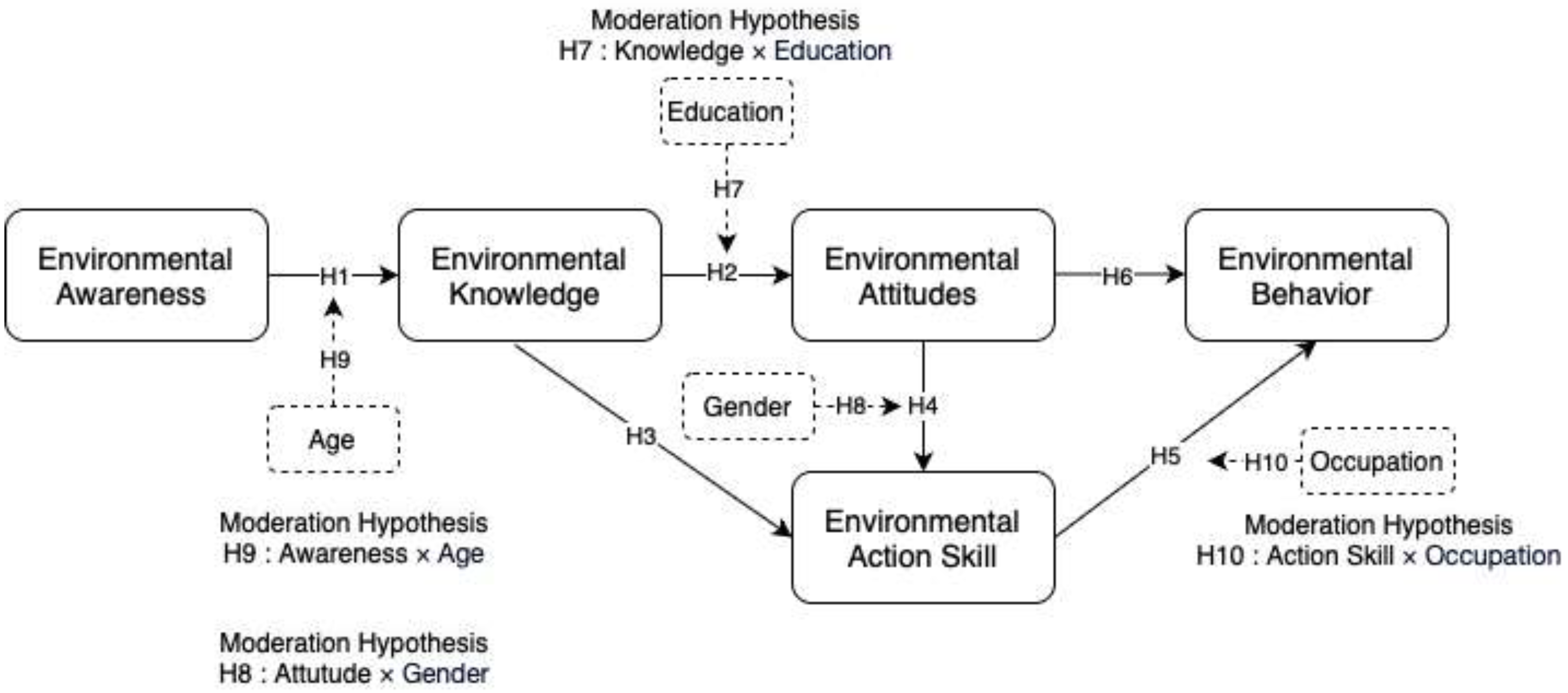
Figure 2.
Research Procedure.


Table 1.
Survey Instrument and Measurement Approach.
| Environmental Literacy Dimension | Number of Questions | Measurement Approach |
|---|---|---|
| Environmental Awareness | 8 | 5-point Likert scale |
| Environmental Knowledge | 8 | Multiple-choice & True/False |
| Environmental Attitudes | 8 | 5-point Likert scale |
| Environmental Action Skills | 8 | 5-point Likert scale |
| Environmental Behavior | 8 | 5-point Likert scale |
Table 2.
General Public Demographic Details.
| Category | Details | Frequency | Percentage |
| Gender | Female | 254 | 50.80% |
| Male | 246 | 49.20% | |
| Age | Under 20 | 4 | 0.80% |
| 20-29 | 46 | 9.20% | |
| 30-39 | 135 | 27.00% | |
| 40-49 | 65 | 13.00% | |
| 50-59 | 144 | 28.80% | |
| 60-69 | 94 | 18.80% | |
| 70 and above | 12 | 2.40% | |
| Education | Elementary | 1 | 0.20% |
| Junior High School | 48 | 9.60% | |
| High School/Vocational | 165 | 33.00% | |
| College/University | 259 | 51.80% | |
| Graduate School and above | 27 | 5.40% | |
| Occupation | Service Industry | 154 | 30.80% |
| Agriculture, Forestry, Fishery | 153 | 30.60% | |
| Manufacturing | 78 | 15.60% | |
| Education | 45 | 9.00% | |
| Retired, Homemaker, Unemployed | 51 | 10.20% | |
| Military/Police/Government Staff | 11 | 2.20% | |
| Finance and Insurance | 5 | 1.00% | |
| Others (e.g., Assistant, Admin) | 3 | 0.60% |
Table 3.
Descriptive analysis for the Environmental Awareness variable.
| Question | N | Minim um |
Maxim um |
Mean Score | Standard Deviation |
|---|---|---|---|---|---|
| I can recognize environmental pollution issues in Chiayi County (e.g., air pollution, abnormal river water color, street litter). | 500 | 1 | 5 | 4.34 | 0.67 |
| I have observed improvements in environmental quality in Chiayi County in recent years (e.g., reduced open-air burning, improved river water quality). | 500 | 1 | 5 | 4.32 | 0.67 |
| Practicing waste recycling habits contributes to environmental cleanliness and waste reduction. | 500 | 1 | 5 | 4.36 | 0.65 |
| I can perceive the positive impact of waste sorting (general waste, recyclables, kitchen waste) on the environment. | 500 | 1 | 5 | 4.18 | 0.75 |
| I have noticed a reduction in illegal waste dumping in Chiayi County. | 500 | 1 | 5 | 3.76 | 0.82 |
| I can recognize the positive environmental impact of using or purchasing eco-labeled green products. | 500 | 1 | 5 | 3.91 | 0.71 |
| I have noticed that Chiayi County is hosting more environmental education and awareness events than in the past. | 500 | 1 | 5 | 4.28 | 0.72 |
| I feel that climate anomalies have become more frequent in recent years. | 500 | 1 | 5 | 4.6 | 0.57 |
Table 4.
Descriptive analysis for the Environmental Knowledge.
| Question | Correct Answer (%) |
| PM10 has a greater concentration in the air than PM2.5 and poses a more serious health risk. | 41.1% |
| Household wastewater, after treatment at a sewage plant, can be directly discharged into rivers. | 58.6% |
| Which of the following is not a responsibility of the Chiayi County Water Environment Patrol Team? | 38.1% |
| In recent years, what type of waste has accounted for the highest proportion of marine debris removal in Chiayi County? | 32.6% |
| Which of the following is not a benefit of food waste recycling? | 29.2% |
| Which of the following eco-labels is incorrectly matched with its product type? | 59.2% |
| What is the primary environmental pollution caused by the COVID-19 pandemic? | 83.6% |
| Which of the following is not aligned with the principles of Taiwan’s Environmental Education Act (passed in 2010)? | 62.0% |
Table 5.
Descriptive analysis for the Environmental Attitudes.
| Question | N | Minim um |
Maxim um |
Mean Score | Standard Deviation |
|---|---|---|---|---|---|
| I prioritize environmental protection more than before. | 500 | 1 | 5 | 4.4 | 0.63 |
| I support the use of treated livestock wastewater for crop irrigation. | 500 | 1 | 5 | 4.18 | 0.66 |
| More river water monitoring devices should be installed to prevent pollution. | 500 | 1 | 5 | 4.37 | 0.74 |
| Using reusable tableware helps reduce waste. | 500 | 1 | 5 | 4.48 | 0.67 |
| Addressing climate change issues is essential. | 500 | 1 | 5 | 4.38 | 0.70 |
| Purchasing local and seasonal agricultural products reduces energy loss. | 500 | 1 | 5 | 4.51 | 0.68 |
| Environmental pollution affects food safety. | 500 | 1 | 5 | 4.59 | 0.60 |
| I prefer purchasing eco-friendly products that emphasize sustainability. | 500 | 1 | 5 | 4.46 | 0.62 |
Table 6.
Descriptive analysis for the Environmental Action Skills.
| Question | N | Minim um |
Maxim um |
Mean Score | Standard Deviation |
|---|---|---|---|---|---|
| I can interpret air quality index colors (e.g., hazardous levels). | 500 | 1 | 5 | 4.11 | 0.88 |
| I take protective measures against air pollution. | 500 | 1 | 5 | 4.03 | 0.85 |
| I encourage colleagues to reduce waste by using eco-friendly materials. | 500 | 1 | 5 | 3.46 | 0.88 |
| I document environmental pollution incidents (e.g., taking photos, videos). | 500 | 1 | 5 | 3.01 | 0.82 |
| I know how to report environmental pollution to authorities. | 500 | 1 | 5 | 3.12 | 0.94 |
| I can differentiate between general waste, recyclables, and food waste. | 500 | 1 | 5 | 3.96 | 0.83 |
| I can recognize commonly used eco-labels. | 500 | 1 | 5 | 3.84 | 0.86 |
| I can discuss environmental topics accurately with friends. | 500 | 1 | 5 | 3.19 | 0.87 |
Table 7.
Descriptive analysis for the Environmental Behavior.
| Question | N | Minim um |
Maxim um |
Mean Score | Standard Deviation |
|---|---|---|---|---|---|
| I actively learn about environmental pollution prevention. | 500 | 1 | 5 | 4.5 | 0.63 |
| I am willing to replace high-emission vehicles with eco-friendly alternatives. | 500 | 1 | 5 | 4.36 | 0.69 |
| I support buying recycled furniture. | 500 | 1 | 5 | 4.34 | 0.64 |
| I regularly sort and recycle household waste. | 500 | 1 | 5 | 4.41 | 0.66 |
| I participate in community clean-up activities. | 500 | 1 | 5 | 4.29 | 0.74 |
| I intervene when I see illegal waste dumping. | 500 | 1 | 5 | 4.03 | 0.73 |
| I purchase eco-friendly products even if they cost more. | 500 | 1 | 5 | 3.94 | 0.66 |
| I attend environmental awareness events in Chiayi County. | 500 | 1 | 5 | 3.84 | 0.63 |
Table 8.
Hypothesis testing results for Structural Model Assessment.
| Hypothesis | Regression Weights | β Coeff. | R² | F | T-Statistics | p-Value | Result |
| H1 | Environmental Awareness → Environmental Knowledge | 0.45 | 0.56 | 292.819 | 17.112 | 0.000 | Supported |
| H2 | Environmental Knowledge → Environmental Attitudes | 0.39 | 0.506 | 235.235 | 15.337 | 0.000 | Supported |
| H3 | Environmental Knowledge → Environmental Action Skills | 0.28 | 0.511 | 240.413 | 15.505 | 0.000 | Supported |
| H4 | Environmental Attitudes → Environmental Action Skills | 0.31 | 0.48 | 212.515 | 14.578 | 0.000 | Supported |
| H5 | Environmental Action Skills → Environmental Behavior | 0.42 | 0.608 | 356.218 | 18.874 | 0.000 | Supported |
| H6 | Environmental Attitudes → Environmental Behavior | 0.25 | 0.597 | 340.05 | 18.44 | 0.000 | Supported |
Table 9.
Hypothesis testing results for Moderation hypothesis Assessment.
| Hypothesis | Regression Weights | β Coeff. | R² | F | T-Statistics | p-Value | Result |
| H7 | Education × Knowledge → Attitudes | 0.21 | 0.538 | 267.998 | 16.371 | 0 | Supported |
| H8 | Gender × Attitudes → Action Skills | 0.15 | 0.635 | 400.997 | 20.025 | 0 | Supported |
| H9 | Age × Awareness → Knowledge | 0.18 | 0.552 | 280.762 | 17.501 | 0 | Supported |
| H10 | Occupation × Action Skills → Behavior | 0.22 | 0.59 | 325.389 | 18.67 | 0 | Supported |
Disclaimer/Publisher’s Note: The statements, opinions and data contained in all publications are solely those of the individual author(s) and contributor(s) and not of MDPI and/or the editor(s). MDPI and/or the editor(s) disclaim responsibility for any injury to people or property resulting from any ideas, methods, instructions or products referred to in the content. |
© 2025 by the authors. Licensee MDPI, Basel, Switzerland. This article is an open access article distributed under the terms and conditions of the Creative Commons Attribution (CC BY) license (http://creativecommons.org/licenses/by/4.0/).
Copyright: This open access article is published under a Creative Commons CC BY 4.0 license, which permit the free download, distribution, and reuse, provided that the author and preprint are cited in any reuse.


