
Preprint
Article

This version is not peer-reviewed.

The Effect of Eight Weeks of Passive Heat Therapy on Mental Health, Sleep, and Chronic Pain in Persons with Spinal Cord Injury: A Pilot Study

A peer-reviewed article of this preprint also exists.

Submitted:

21 February 2025

Posted:

24 February 2025

You are already at the latest version

Abstract

Background/Objectives: Rates of depression, anxiety, sleep disturbances, and chronic pain are higher in people with spinal cord injury (SCI) compared with able-bodied (AB) individuals. Passive heat therapy (PHT) that raises core body temperature may be an accessible alternative to exercise in SCI. The effects of PHT on mental health, sleep, and pain in persons with SCI are unknown. Methods: We performed a pre-post intervention pilot study in which ten veterans with chronic SCI underwent an 8-week supervised passive heat therapy intervention to raise oral temperature by 1℃. Outcome measures were the 5-item Mental Health Inventory, Epworth Sleepiness Scale, and International Spinal Cord Injury Pain Extended Data Sets version 1.0. Results: There were no adverse events related to the intervention and nine out of ten participants completed all their intervention sessions. There was a reduction in pain intensity (p=0.039) upon completing the intervention. However, there were no improvements in self-reported mental health nor sleep outcomes (p=0.339). Conclusions: This pilot study suggests that supervised repeated passive heat therapy may confer benefits for chronic pain in veterans with chronic SCI. Follow-up study with a larger sample size and a more extensive set of chronic pain outcomes is needed to confirm these findings.

Keywords: 
;  ;  ;  ;  ;  

1. Introduction

Rates of depression, anxiety, sleep disturbances, and chronic pain are higher in people with spinal cord injury (SCI) compared with able-bodied (AB) individuals [1,2,3,4,5]. For example, the prevalence of depression in the SCI population is estimated to be as high as 60%, while a meta-analysis of multi-national studies found that the estimated prevalence of anxiety in people with SCI ranges from 15–32% [2,6]. Furthermore, sleep disturbances are highly prevalent in persons with SCI [7]. These may include poor sleep quality, circadian rhythm sleep-wake disorders, insomnia, sleep disordered breathing, restless leg syndrome, and periodic limb movement disorder [1,8]. Finally, the prevalence of chronic pain in persons living with SCI is estimated at 68%, compared with 17% in the general population [3,9].
In the general population, physical activity appears to have a beneficial effect on mental health-related outcomes, sleep, and chronic pain [10,11,12,13,14]. Although the evidence-base is smaller, this effect appears to extend to the SCI population. A meta-analysis on the effect of exercise on mental health in adults with SCI found that exercise interventions can improve overall well-being and psychological well-being. Moreover, a recent cross-sectional study showed a negative association between symptoms of anxiety and engagement in moderate-intensity leisure-time physical activity [15]. Little research to date has evaluated the effect of physical activity on sleep in patients with SCI. Nonetheless, in a small sample of persons with SCI, those with greater physical activity experienced higher sleep efficacy, shorter sleep latency, and lower sleep disturbance and awakening episodes [16]. While there are several pre-clinical studies showing beneficial effects of physical activity on neuropathic pain in SCI animal models, research investigating pain outcomes in humans with SCI is extremely limited [17,18,19]. Despite the various proposed benefits of physical activity, people with SCI experience numerous barriers to being physically active, with only 12% meeting the SCI physical activity guidelines [20,21]. Thus, alternative and more accessible interventions with potentially higher efficacy in improving mental health, sleep, and chronic pain are urgently needed for members of this population.
Passive heat therapy (PHT) may be such an accessible alternative to physical activity. PHT is characterized by brief periods of exposure to an elevated environmental temperature through modalities such as infrared sauna, steam bath, hot water immersion, or heating blankets [22]. Pain is known to be associated with sleep disturbances and depression [23,24], and there is preliminary evidence that PHT reduces pain in AB individuals such as those with chronic musculoskeletal, rheumatoid, and neuropathic pain [25,26,27]. This may explain why PHT also results in various sleep improvements including decreased sleep onset latency, increased amount of deep sleep, improved sleep quality, and improved sleep efficiency [28,29,30,31]. In AB individuals, repeated PHT further leads to improved mental health, relaxation scores, stress, and fatigue [32,33].
While the above studies underscore the potential efficacy of PHT to improve sleep, pain, and mental health-related outcomes, there is a paucity of studies investigating this intervention in persons with SCI. The research conducted to date on PHT in SCI is mostly related to the investigation of acute responses to a single heat exposure and outcomes related to cardiometabolic health and autonomic function [34,35,36,37]. Therefore, this pilot study investigates the effect of repeated PHT on mental health, sleep, and chronic pain in individuals with SCI. It is hypothesized that eight weeks of repeated PHT improves self-reported outcomes of mental health, sleep and chronic pain when compared to a control time period.

2. Materials and Methods

2.1. Participants

Participants were adults with chronic SCI (> 1 year). Exclusion criteria included currently smoking, daily administration of anti-inflammatory or vasoactive medications, current pressure ulcer or skin breakdown, a history of heat-related illness, any active acute illness, and a baseline hemoglobin concentration of less than 11g/dl documented within six months of study initiation. After having been provided information about the study procedures, approved by the University of Texas Health Science Center at San Antonio Institutional Review Board, all participants provided written informed consent.

2.2. Study Design and Procedures

In this pre-post intervention pilot study, participants served as their own control with questionnaires administered on study visit 1 (Baseline), after eight weeks without intervention (Control) and following an eight-week PHT protocol (Intervention). Participants filled out the questionnaires in a quiet space, whilst resting on a hospital bed or in their personal wheelchair. During the PHT intervention period, participants visited the laboratory thrice weekly. Prior to each session, baseline oral temperature was obtained by sublingual placement of a temperature probe for 5 min. Thereafter, a water-perfused suit with the infused water set at 48℃ was placed over the torso, while three heated fleece-lined electrical blanket set at 43℃ and an aluminum foil blanket were placed over the entire body. Each session was completed when oral temperature was elevated by 1℃ from baseline, or when the participant requested to terminate due to thermal discomfort. Study enrollment and intervention occurred between January 2023 through July 2024.

2.3. Outcomes

The following validated surveys were utilized: 5-item Mental Health Inventory (MHI-5), Epworth Sleepiness Scale (ESS), and the International Spinal Cord Injury Pain Extended Data Sets version 1.0 (ISCIPEDS).
The MHI-5 has shown good reliability and validity in screening for general mental health issues in individuals with functional impairments [38,39]. This 5-item instrument assesses frequency of various emotional states with a 0-6 score per item. Responses were scored and transformed to a 0-100 scale as performed elsewhere [40]. Scores were dichotomized based on ≤ 56 being indicative of general mental health problems and > 56 suggesting no general mental health problems [40].
The ESS is a 7-item questionnaire that measures daytime sleepiness in various situations using a 0-3 score per item [41]. A score of greater than 10 is indicative of excessive daytime sleepiness. Scores were dichotomized into normal (scores 0-10) or excessively sleepy (>10) for further analysis.
The ISCIPEDS is comprised of seven questions assessing pain frequency, highest pain intensity, average unpleasantness of pain, frequency of tolerable pain, current pain intensity, pain duration, and timing of pain intensity [42]. Higher scores indicate more severe and/or frequent pain.

2.4. Statistical Analysis

Participant characteristics are shown as mean ± SD. Counts and percentages were calculated for categorial data. The questionnaire data for each of the three assessment timepoints (i.e., Baseline, Control, Intervention) were compared using Friedman tests. Post-hoc pairwise comparisons were performed using Wilcoxon Signed Rank tests. Chi-square test was used to assess differences in observed frequencies. A probability of <0.05 was used as the threshold to accept statistical significance. All statistical tests were conducted using the 28th version of SPSS.

3. Results

Two female and eight male veterans with chronic SCI were enrolled (Table 1). Nine participants completed all prescribed passive heating sessions, while one withdrew after 18 sessions due to an adverse event unrelated to the intervention; post-intervention questionnaires are unavailable for this participant. The intervention was well-tolerated and there were no related adverse events thus clearly demonstrating the safety and tolerability of PHT in the SCI population.

3.1. Mental Health (Figure 1)

At baseline, two participants screened positive for general mental health problems based on the MHI-5, which remained consistent at Control and Intervention. The scaled MHI-5 score at baseline was 60.8 (6.2), which did not change following the control nor intervention period (p = 0.867).

3.2. Sleepiness

One participant screened positive for excessive daytime sleepiness at baseline. This progressed to three and two participants after Control and Intervention, respectively. At a group level, ESS was 7.9 (5.9) at baseline, and did not change after Control (7.3 (4.6)), nor Intervention (8.7 (5.0)) (p = 0.339).

3.3. Pain (Table 2)

At baseline, five participants reported to experience pain every day of the week. This was also true at Control, but was reduced to four participants at Intervention. The median number of days during which participants experienced pain did not change between the three time points (p = 0.156). The median reported pain intensity was three out of ten at baseline, which reduced to 1 out of 10 following the intervention (p = 0.039). The distribution of the reported pain duration differed between assessment periods (p = 0.008), with a reduction in the number of participants reporting pain lasting more than 24 hrs.

4. Discussion

In this pre-post PHT intervention pilot study with a time-control phase, we found improvements in self-reported pain measures but no changes in self-reported mental health or sleep. Together with the excellent intervention adherence with no intervention related drop-out, this may provide impetus to further explore the use of PHT in SCI chronic pain management. To our knowledge, there are no other published studies investigating the effect of PHT on mental health, sleep, or chronic pain in persons with SCI. As such, the effects PHT interventions in other populations are discussed to contextualize our findings.
Following the eight-week intervention phase, we observed improvements in some aspects of the ISCIPEDS, the international chronic pain questionnaire developed for persons with SCI [42]. Specifically, there was a significant reduction in median pain intensity. While there was also a statistically significant reduction in the number of participants reporting pain duration greater than 24 hours, this is attributable to one participant’s experience in our relatively small sample. These findings indicate that PHT may have merit as an alternative or adjunctive non-pharmaceutical treatment for chronic pain in SCI. This has clinical implications as PHT did not have the sedating side effects that pharmacologic pain treatments often have, as indicated by the lack of change in sleepiness scores.
Although there is a lack of published literature exploring the effect of PHT on chronic pain in SCI, our findings align with those seen in the AB population. In AB individuals with chronic musculoskeletal, neuropathic, or rheumatologic pain, there is evidence that PHT may reduce pain [25,26,27]. For example, in a study with 17 patients with rheumatoid arthritis and 17 with ankylosing spondylitis, who participated in a series of eight infrared sauna treatments over a four-week period, pain and stiffness were reduced in both participant groups [25]. Similarly, dry sauna therapy performed twice daily for five consecutive days had beneficial effects on pain scores in participants with chronic low back pain [26]. Furthermore, a meta-analysis investigating balneotherapy interventions showed moderate evidence for a large reduction in pain in participants with fibromyalgia [43]. Similar findings are reported for hot water immersion interventions [44]. While these passive heating techniques are different than the heating mode investigated in the current study, collectively it suggests that repeated elevation of core and skin temperature may have a positive impact on chronic pain outcomes. There are several potential reasons for the analgesic effect of PHT. First, pain and heat share a sensory receptor, the transient receptor potential vanilloid 1 (TRPV1). By repeatedly heating the core and skin through PHT, TRPV1 receptors may be desensitized, leading to a lower sensitivity to painful stimuli [45]. In addition, there is increasing evidence for the role of inflammation in chronic SCI pain, particularly below the lesion [46]. PHT can lead to a reduction in plasma pro-inflammatory cytokine concentration, providing an additional mechanistic possibility for the observed effect [47,48].
We found no improvements in mental health following the PHT intervention. Studies on PHT in AB individuals show mixed effectiveness on mental health [32,33,49]. Studies of PHT have varied in design including study duration, session duration, frequency of intervention, target temperature, and method of heating [49]. A randomized, double-blind study comparing a single session of whole-body hyperthermia to a sham intervention in depressed adults resulted in a significant anti-depressant effect that persisted for six weeks [50]. It should be noted that there was large variability in the MHI-5 outcomes, suggesting insufficient power in this pilot study and underscoring the need for larger-scale follow-up studies.
Similarly, there was no intervention effect on sleep variables measured by ESS. Although research is limited on the effect of PHT on sleep in SCI, PHT in AB individuals has been associated with reduced sleep onset latency, increased deep sleep, enhanced sleep efficiency, and improved overall sleep quality [28,29,30,31]. Sleep benefits in AB elderly individuals have been noted when a warm bath was taken in the evening time, though PHT in the current study was performed during the early daytime hours [31]. It is important to note that the ESS is limited by its perception of daytime sleepiness rather than a direct measurement of sleep quality itself. Future studies investigating PHT in SCI should therefore consider assessing sleep quality by wrist-worn actigraphy or polysomnography [51]. Taken together, PHT had little effect on mental health and sleep in our cohort. While the large variability in the measurements may be a factor, the modest intensity of the heating protocol may also partly explain this finding. One of the proposed mechanisms for the benefits of PHT for sleep and mental health are through an increased synthesis and release of neurotrophins and neurotransmitters as well as the induction of neurogenesis [52]. Using a similar heating mode, we previously showed that modest heating does not lead to an acute increase in brain-derived neurotropic factor as compared to traditional whole-body heating, suggesting that more intense heating may be needed to modulate neuronal processes [53].
Strengths of this study include the novelty of investigating the effect of PHT on mental health, sleep, and pain outcomes in persons with chronic SCI. There was a low attrition rate with the only drop-out occurring due to a matter unrelated to the study. The intervention was well-tolerated in the supervised setting. Aside from the small sample size, the generalizability of the results is limited by the inclusion of veterans only. Veterans likely have different experiences with mental health, sleep, and pain compared to non-veterans [54]. Lastly, we did not account for medications during the study period, such as those that may impact mental health, sleep, or pain, which may introduce confounders or effect modifiers.
In conclusion, supervised PHT may have potential to serve as a safe, tolerable, and feasible adjunct to pain management in persons with chronic SCI. However, its effects on sleep and mental health may be limited. Further investigation with a larger sample size and a more extensive set of chronic pain outcomes is currently being planned to take next steps towards the clinical implementation of this intervention.

Author Contributions

Conceptualization, S.H., D.K., C.A.L., and M.T.; Methodology, S.H., Y.W.; Validation, H.U., S.H.; Formal Analysis, H.U., S.H.; Investigation, H.U., S.H., Y.W.; Resources, M.T.; Data Curation, S.H., Y.W., H.U; Writing – Original Draft Preparation, H.U, S.H.; Writing – Review & Editing, H.U., S.H., M.T., C.A.L., D.K.; Visualization, H.U., S.H.; Supervision, M.T..; Project Administration, T.R., Y.W., S.H., D.K., M.T.; Funding Acquisition, M.T.

Funding

This research was funded by VA Rehabilitation R&D (I21RX003724-01A1).

Institutional Review Board Statement

The study was conducted according to the guidelines of the Declaration of Helsinki, and approved by the Institutional Review of the University of Texas Health Science Center at San Antonio (Study 20220185H, Approved 4/18/2022).

Informed Consent Statement

Informed consent was obtained from all subjects involved in the study.

Data Availability Statement

Data is available upon request from the corresponding author.

Acknowledgments

This study was supported with the facilities and resources at the South Texas Veteran’s Health Care System, San Antonio, TX.

Conflicts of Interest

The authors declare no conflict of interest.

References

  1. Sankari, A.; Badr, M.S.; Martin, J.L.; Ayas, N.T.; Berlowitz, D.J. Impact Of Spinal Cord Injury On Sleep: Current Perspectives. Nat Sci Sleep 2019, 11, 219–229. [Google Scholar] [CrossRef]
  2. Post, M.; van Leeuwen, C. Psychosocial issues in spinal cord injury: a review. Spinal Cord 2012, 50, 382–389. [Google Scholar] [CrossRef] [PubMed]
  3. Hunt C, Moman R, Peterson A, et al. Prevalence of chronic pain after spinal cord injury: a systematic review and meta-analysis. Reg Anesth Pain Med 2021, 46, 328–336. [CrossRef]
  4. Bresnahan JJ, Scoblionko BR, Zorn D, et al. The demographics of pain after spinal cord injury: a survey of our model system. Spinal Cord Ser Cases 2022, 8, 14. [CrossRef]
  5. Yong, R.J.; Mullins, P.M.; Bhattacharyya, N. Prevalence of chronic pain among adults in the United States. Pain 2022, 163, e328–e332. [Google Scholar] [CrossRef]
  6. Le, J.; Dorstyn, D. Anxiety prevalence following spinal cord injury: a meta-analysis [published correction appears in Spinal Cord. Spinal Cord 2016, 54, 626. [Google Scholar] [CrossRef]
  7. Biering-Sørensen, F.; Biering-Sørensen, M. Sleep disturbances in the spinal cord injured: an epidemiological questionnaire investigation, including a normal population. Spinal cord. 2001, 39, 505–513. [Google Scholar]
  8. Shafazand S, Anderson KD, Nash MS. Sleep Complaints and Sleep Quality in Spinal Cord Injury: A Web-Based Survey. J Clin Sleep Med. 2019;15(5):719-724. [CrossRef]
  9. Rikard SM, Strahan AE, Schmit KM, et al. Chronic Pain Among Adults — United States, 2019–2021. MMWR Morb Mortal Wkly Rep 2023;72:379- 385.
  10. . [CrossRef]
  11. Alnawwar MA, Alraddadi MI, Algethmi RA, et al. The Effect of Physical Activity on Sleep Quality and Sleep Disorder: A Systematic Review. Cureus 2023, 15, e43595. [CrossRef]
  12. Geneen L, Moore RA, Clarke C, et al. Physical activity and exercise for chronic pain in adults: an overview of Cochrane Reviews. The Cochrane database of systematic reviews 2017, 4, CD011279. [CrossRef]
  13. Maynou L, Hernández-Pizarro HM, Errea Rodríguez M. The Association of Physical (in)Activity with Mental Health. Differences between Elder and Younger Populations: A Systematic Literature Review. Int J Environ Res Public Health 2021, 18, 4771. [CrossRef]
  14. Chekroud SR, Gueorguieva R, Zheutlin AB, et al. Association between physical exercise and mental health in 1·2 million individuals in the USA between 2011 and 2015: a cross-sectional study. Lancet Psychiatry. 2018;5(9):739-746. [CrossRef]
  15. Tamminen N, Reinikainen J, Appelqvist-Schmidlechner K, et al. Associations of physical activity with positive mental health: A population-based study. Mental Health and Physical Activity. 2020, 18, 100319. [CrossRef]
  16. Connell EM, Olthuis JV. Mental health and physical activity in SCI: Is anxiety sensitivity important? Rehabil Psychol. 2023;68(2):174-183. [CrossRef]
  17. Albu S, Umemura G, Forner-Cordero A. Actigraphy-based evaluation of sleep quality and physical activity in individuals with spinal cord injury. Spinal Cord Ser Cases 2019, 5, 7. [CrossRef] [PubMed]
  18. Palandi J, Bobinski F, de Oliveira GM, et al. Neuropathic pain after spinal cord injury and physical exercise in animal models: A systematic review and meta-analysis. Neuroscience and biobehavioral reviews. 2020;108, 781–795. [CrossRef]
  19. Todd K, Van Der Scheer JW, Walsh JJ, et al. The Impact of Sub-maximal Exercise on Neuropathic Pain, Inflammation, and Affect Among Adults With Spinal Cord Injury: A Pilot Study. Front. Rehabil. Sci. 2021;2:700780. doi.org/10.3389/fresc.2021.
  20. Toloui A, Ramawad HA, Gharin P, et al. The Role of Exercise in the Alleviation of Neuropathic Pain Following Traumatic Spinal Cord Injuries: A Systematic Review and Meta-analysis. Neurospine. 2023;20(3), 1073–1087. [CrossRef]
  21. Williams TL, Smith B, & Papathomas A. The barriers, benefits and facilitators of leisure time physical activity among people with spinal cord injury: a meta-synthesis of qualitative findings. Health psychology review 2014, 8, 404–425.
  22. Rocchi M, Routhier F, Latimer-Cheung A, et al. Are adults with spinal cord injury meeting the spinal cord injury-specific physical activity guidelines? A look at a sample from a Canadian province. Spinal Cord 2017, 55, 454–459. [CrossRef]
  23. Laukkanen JA, Kunutsor SK. The multifaceted benefits of passive heat therapies for extending the healthspan: A comprehensive review with a focus on Finnish sauna. Temperature (Austin) 2024, 11, 27–51. [CrossRef]
  24. Haack M, Simpson N, Sethna N, et al. Sleep deficiency and chronic pain: potential underlying mechanisms and clinical implications. Neuropsychopharmacology. 2020;45(1):205-216. [CrossRef]
  25. Vadivelu N, Kai AM, Kodumudi G, et al. Pain and Psychology-A Reciprocal Relationship. Ochsner J. 2017;17(2):173-180.
  26. Oosterveld FG, Rasker JJ, Floors M, et al. Infrared sauna in patients with rheumatoid arthritis and ankylosing spondylitis. A pilot study showing good tolerance, short-term improvement of pain and stiffness, and a trend towards long-term beneficial effects. Clin Rheumatol 2009;28:29-34.
  27. Cho EH, Kim NH, Kim HC, et al. Dry sauna therapy is beneficial for patients with low back pain. Anesth Pain Med (Seoul) 2019, 14, 474–479. [CrossRef]
  28. Nurmikko T, Hietaharju A. Effect of exposure to sauna heat on neuropathic and rheumatoid pain [published correction appears in Pain 1992 Jun;49(3):419]. Pain 1992, 49, 43–51. [CrossRef]
  29. Putkonen PTS and Eloma, E. Sauna and physiological sleep: Increased slow-wave sleep after heat exposure. Sauna Studies. 1976, 270–279. [Google Scholar]
  30. Mishima Y, Hozumi S, Shimizu T, et al. Passive body heating ameliorates sleep disturbances in patients with vascular dementia without circadian phase-shifting. Am J Geriatr Psychiatry 2005, 13, 369–376. [CrossRef]
  31. Liao, WC. Effects of passive body heating on body temperature and sleep regulation in the elderly: a systematic review. Int J Nurs Stud. 2002;39 (8):803–810. [CrossRef]
  32. Haghayegh S, Khoshnevis S, Smolensky MH, et al. Before-bedtime passive body heating by warm shower or bath to improve sleep: A systematic review and meta-analysis. Sleep Med Rev 2019, 46, 124–135. [CrossRef]
  33. Masuda A, Nakazato M, Kihara T, et al. Repeated Thermal Therapy Diminishes Appetite Loss and Subjective Complaints in Mildly Depressed Patients. Psychosomatic Medicine. 2005; 67, 634–647. [CrossRef]
  34. Beever, R. The effects of repeated thermal therapy on quality of life in patients with type II diabetes mellitus. J Altern Complement Med 2010, 16, 677–681. [Google Scholar] [CrossRef] [PubMed]
  35. Coombs GB, Barak OF, Phillips AA, et al. Acute heat stress reduces biomarkers of endothelial activation but not macro-or microvascular dysfunction in cervical spinal cord injury. American Journal of Physiology-Heart and Circulatory Physiology 2019, 316, H722–H733. [CrossRef]
  36. Leicht CA, Kouda K, Umemoto Y, et al. Hot water immersion induces an acute cytokine response in cervical spinal cord injury. European journal of applied physiology 2015, 115, 2243–2252. [CrossRef]
  37. Trbovich M, Wu Y, Koek W, et al. Elucidating mechanisms of attenuated skin vasodilation during passive heat stress in persons with spinal cord injury. The Journal of Spinal Cord Medicine 2024, 47, 765–774. [CrossRef] [PubMed]
  38. Trbovich M, Wu Y, Koek W, et al. Impact of tetraplegia vs. paraplegia on venoarteriolar, myogenic and maximal cutaneous vasodilation responses of the microvasculature: Implications for cardiovascular disease. The Journal of Spinal Cord Medicine 2022, 45, 49–57. [CrossRef]
  39. van Leeuwen CM, van der Woude LH, Post MW. Validity of the mental health subscale of the SF-36 in persons with spinal cord injury. Spinal Cord 2012, 50, 707–710. [CrossRef] [PubMed]
  40. Friedman B, Heisel M, Delavan R. Validity of the SF-36 five-item Mental Health Index for major depression in functionally impaired, community-dwelling elderly patients. J Am Geriatr Soc 2005, 53, 1978–1985. [CrossRef] [PubMed]
  41. Zürcher C, Tough H, Fekete C, for the SwiSCI Study Group. Mental health in individuals with spinal cord injury: The role of socioeconomic conditions and social relationships. PLOS ONE. 2019, 14, e0206069. [CrossRef]
  42. Johns, MW. A new method for measuring daytime sleepiness: the Epworth sleepiness scale. Sleep. 1991;14(6):540-545. [CrossRef]
  43. Widerström-Noga E, Biering-Sørensen F, Bryce TN, et al. The International Spinal Cord Injury Pain Extended Data Set (Version 1.0). Spinal Cord 2016, 54, 1036–1046. [CrossRef]
  44. Naumann J, Sadaghiani C. Therapeutic benefit of balneotherapy and hydrotherapy in the management of fibromyalgia syndrome: a qualitative systematic review and meta-analysis of randomized controlled trials. Arthritis Res Ther 2014, 16, R141. [CrossRef]
  45. Bai R, Li C, Xiao Y, et al. Effectiveness of spa therapy for patients with chronic low back pain: An updated systematic review and meta-analysis. Medicine. 2019;98(37), e17092. [CrossRef]
  46. Rahman MM, Jo YY, Kim YH, et al. Current insights and therapeutic strategies for targeting TRPV1 in neuropathic pain management. Life Sci 2024, 355, 122954. [CrossRef]
  47. Hulsebosch CE, Hains BC, Crown ED, Carlton SM. Mechanisms of chronic central neuropathic pain after spinal cord injury. Brain Res Rev 2009, 60, 202–213. [CrossRef]
  48. Ely BR, Clayton ZS, McCurdy CE, et al. Heat therapy improves glucose tolerance and adipose tissue insulin signaling in polycystic ovary syndrome. Am J Physiol Endocrinol Metab 2019, 317, E172–E182. [CrossRef]
  49. Tanaka K, Kuzumaki N, Hamada Y, et al. Elucidation of the mechanisms of exercise-induced hypoalgesia and pain prolongation due to physical stress and the restriction of movement. Neurobiology of pain (Cambridge, Mass.). 2023;14, 100133. [CrossRef]
  50. Hanusch KU, & Janssen CW. The impact of whole-body hyperthermia interventions on mood and depression – are we ready for recommendations for clinical application? International Journal of Hyperthermia 2019, 36, 572–580. [CrossRef]
  51. Janssen CW, Lowry CA, Mehl MR, et al. Whole-Body Hyperthermia for the Treatment of Major Depressive Disorder: A Randomized Clinical Trial. JAMA Psychiatry. 2016, 73, 789–795. [CrossRef]
  52. Spong J, Graco M, Brown DJ, et a. Subjective sleep disturbances and quality of life in chronic tetraplegia. Spinal cord, 2015;53(8), 636–640. [CrossRef]
  53. Matta Mello Portugal E, Cevada T, Sobral Monteiro-Junior R, et al. Neuroscience of exercise: from neurobiology mechanisms to mental health. Neuropsychobiology. 2013;68(1):1-14. [CrossRef]
  54. Ogawa T, Hoekstra SP, Kamijo YI, et al. Serum and plasma brain-derived neurotrophic factor concentration are elevated by systemic but not local passive heating. PLoS One 2021, 16, e0260775. [CrossRef]
  55. LaVela SL, Etingen B, Miskevics S, et al. Use of PROMIS-29® in US Veterans: Diagnostic Concordance and Domain Comparisons with the General Population. J Gen Intern Med. 2019, 34, 1452–1458. [CrossRef]
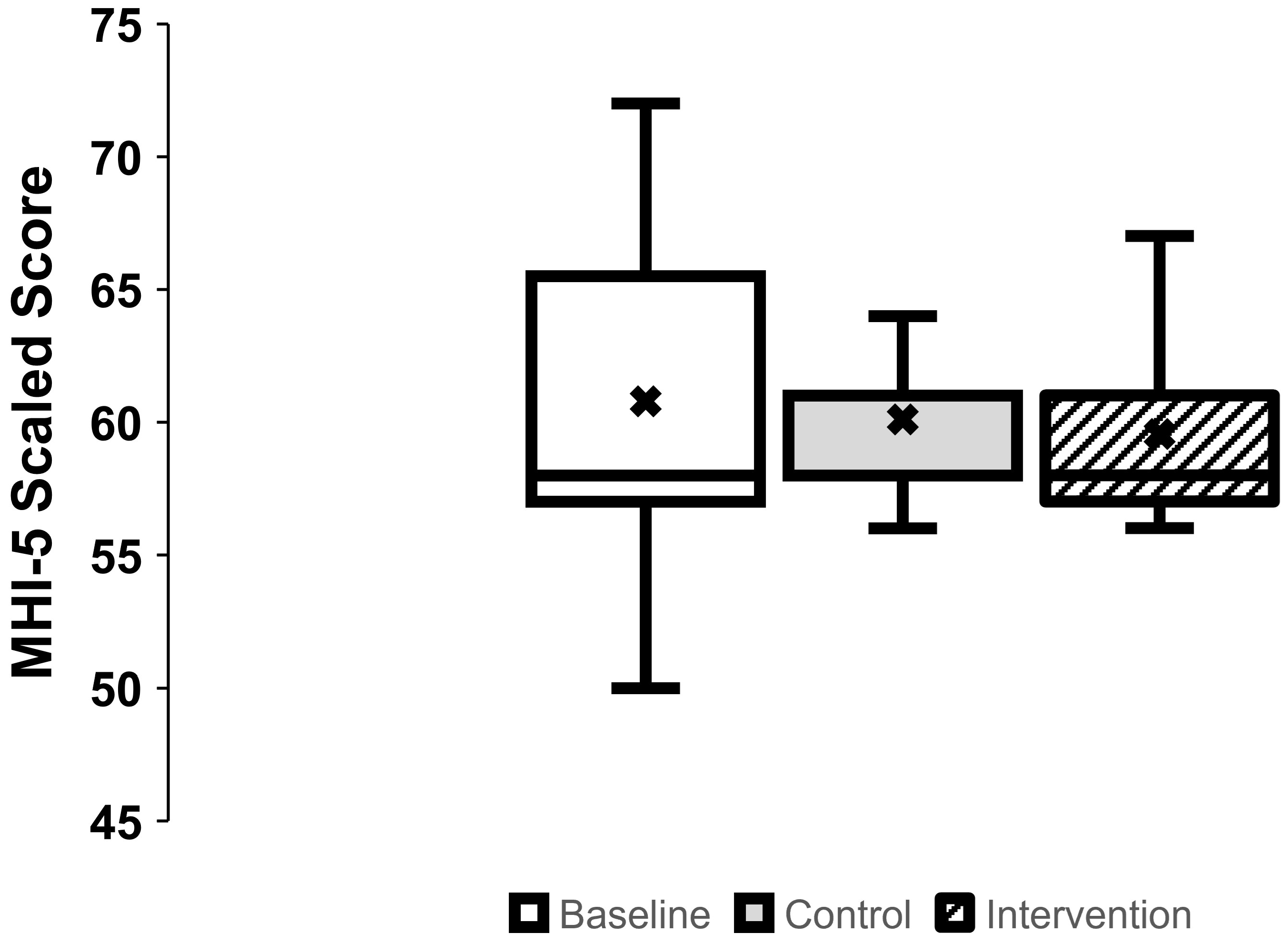
Figure 1. The scaled Mental Health Inventory-5 scores at Baseline, after the control period (Control) and the passive heat therapy intervention (Intervention). Box plots represent median, quartiles, minimum and maximum, while crosses represent means.
Preprints 150206 g001
Table 1. Participant characteristics.
Age in years, mean (SD) 45 (14)
Years since injury, mean (SD) 9.2 (10.5)
Lesion level, n (%)
Cervical, C4-C7 4 (40)
Thoracic, T5-T12 6 (60)
AIS Completeness, n (%)
A 4 (40)
B 1 (10)
C 4 (40)
D 1 (10)
BMI in kg/m2, mean (SD) 28.0 (3.0)
Note: AIS = American Spinal Injury Association Impairment Scale; SD = standard deviation; n = count
Table 2. Pain assessment for the last 7 days based on the International Spinal Cord Injury Pain Extended Data Set (version 1.0).
Question Baseline Control Intervention p-value
Number of days with pain, median (IQR) 7.0 (0.0, 7.0) 6.5 (2.0, 7.0) 4.0 (0.0, 7.0) 0.156
Worst pain intensity in last week, median (IQR) 3.0 (0.50, 7.50) 3.0 (0.0, 5.3) 3.0 (0.0, 6.0) 0.076
Pain unpleasantness, median (IQR) 2.0 (0.5, 6.0) 3.0 (0.0, 4.3) 2.0 (0.0, 3.0) 0.504
Number of days with manageable/tolerable pain, median (IQR) 5.5 (1.0, 7.0) 5.0 (0.0, 7.0) 3.0 (0.0, 6.0) 0.494
Pain intensity presently, median (IQR) 3.0 (0.0, 5.5) 2.0 (0.0, 3.5) 1.0 (0.0, 4.5) 0.039
Length of time pain lasts, n (% of respondents) 0.008
≤ 1 min 1 (10) 2 (20) 2 (20)
> 1 min, but < 1 h 0 (0) 0 (0) 0 (0)
≥ 1 h but <24 h 2 (20) 1 (10) 1 (10)
≥ 24 h 1 (10) 1 (10) 0 (0)
Constant/continuous 4 (40) 5 (50) 5 (50)
Unknown 1 (10) 1 (10 1 (10)
Unanswered 1 (10) 0 (0) 1 (10)
When during the day is the pain most intense, n (% of respondents) 0.174
Morning (06:01-12:00) 1 (10) 1 (10) 1 (10)
Afternoon (12:01-18:00) 1 (10) 0 (0) 0 (0)
Evening (18:01-24:00) 2 (20) 1 (10) 3 (30)
Night (0:01-06:00) 1 (10) 4 (40) 3 (30)
Unpredictable (pain is not consistently more intense at any one time of day) 3 (30) 4 (40) 2 (20)
Unanswered 2 (20) 0 (0) 1 (10)
Disclaimer/Publisher’s Note: The statements, opinions and data contained in all publications are solely those of the individual author(s) and contributor(s) and not of MDPI and/or the editor(s). MDPI and/or the editor(s) disclaim responsibility for any injury to people or property resulting from any ideas, methods, instructions or products referred to in the content.
Copyright: This open access article is published under a Creative Commons CC BY 4.0 license, which permit the free download, distribution, and reuse, provided that the author and preprint are cited in any reuse.
Prerpints.org logo

Preprints.org is a free preprint server supported by MDPI in Basel, Switzerland.

Subscribe

Disclaimer

Terms of Use

Privacy Policy

Privacy Settings

© 2025 MDPI (Basel, Switzerland) unless otherwise stated
