Preprint
Review

This version is not peer-reviewed.

Combined Effects of Early Mobilization and Nutrition on ICU Acquired Weakness

A peer-reviewed article of this preprint also exists.

Submitted:

21 February 2025

Posted:

24 February 2025

You are already at the latest version

Abstract

Sarcopenia and muscle mass loss are critical factors influencing the recovery of patients in intensive care units (ICU). Intensive care unit-acquired weakness (ICUAW) is a prevalent condition that exacerbates the challenges faced by critically ill patients, leading to prolonged immobility and disability. These complications are often part of the post-intensive care syndrome, which affects patients' long-term quality of life. Although nutritional support plays a significant role in the recovery process, early mobilization and rehabilitation are essential components in preventing and mitigating muscle loss. This review aims to evaluate the effectiveness of combined early mobilization and nutritional interventions in improving outcomes related to muscle weakness in ICU patients, focusing on clinical evidence and practical strategies for optimizing recovery.

Keywords: 
;  ;  ;  

1. Introduction

ICU-Acquired Weakness (ICUAW) is a syndrome characterized by severe muscle weakness that develops during ICU patient’s stay and is not attributable to pre-existing conditions [1]. ICUAW is primarily associated with prolonged immobilization, systemic inflammation, and critical illness-related disruptions in metabolic and neuromuscular function [2]. This condition significantly impacts functional recovery, prolongs ICU and hospital stays, and contributes to long-term disability in survivors [3,4]. Reduced muscle mass is a defining feature of malnutrition, sarcopenia, and cachexia, as highlighted in current consensus definitions [5,6]. However, recent guidelines prioritize muscle strength as a more reliable predictor of adverse outcomes compared to muscle mass [7]. Sarcopenia is also characterized by impaired muscle quality, reflecting alterations in both the micro- and macroscopic features of muscle structure and composition [8]. A complex interplay exists between malnutrition, sarcopenia, physical frailty, and cachexia. Malnutrition contributes to the loss of muscle mass and function, which can progress to physical frailty, resulting in adverse outcomes such as impaired mobility and disability [9]. Frequently, malnutrition precedes sarcopenia, driving reduced physical function and harmful changes in body composition. Sarcopenia, in turn, can both precede and overlap with frailty, with frailty acting as a precursor to negative health outcomes [10]. This overlap underscores the bidirectional relationship between these conditions, particularly in the context of malnutrition [11]. In individuals with chronic illnesses such as cancer, malnutrition and reduced muscle mass may further progress to cachexia [12]. Additionally, excess adiposity can mask underlying malnutrition or low muscle mass, complicating diagnosis and emphasizing the importance of comprehensive assessments to identify at-risk patients early and implement targeted interventions [13].
The rate and severity of muscle loss differ markedly between non-clinical and clinical contexts. In non-clinical scenarios, muscle loss occurs gradually over years due to aging. Conversely, in clinical settings - particularly among hospitalized patients - muscle loss can be rapid and severe, occurring within days. This acute decline is often linked to immobilization, suboptimal caloric-protein intake, and disease-related factors [14]. Malnutrition, critical illness, and injury act synergistically as catalysts for muscle loss, leading to accelerated deterioration. This rapid muscle loss is driven by disruptions in metabolic pathways, including dysregulated proteostasis, impaired muscle protein synthesis and breakdown during fasting and feeding, and disturbances in glucose and insulin homeostasis, inflammation, neuromuscular function, and microvascular function [15]. Moreover, critically ill patients face an additional burden, as prolonged hospital stays and pharmacological treatments exacerbate long-term complications, including persistent muscle weakness, mood disturbances, and reduced quality of life [16].
Importantly, ICUAW is often a component of the broader Post-Intensive Care Syndrome (PICS), which incorporates physical, cognitive, and psychological impairments persisting after ICU discharge [17]. PICS can severely affect patients' quality of life, making comprehensive post-ICU care a priority. Addressing ICUAW requires a multifaceted approach, as nutritional support alone is insufficient to counteract the rapid and severe muscle loss observed in critically ill patients. Early and personalized rehabilitation strategies are increasingly recognized as essential components in the general management of ICU patients, supporting a smoother transition from acute care to recovery and reintegration into daily life [18].
This review aims to explore the synergistic impact of early mobilization and nutritional support in mitigating acquired weakness in ICU settings.

2. Assessment of Nutritional and Physical Status in ICU

Despite significant advancements, technological limitations persist in accurately assessing muscle quantity and quality, contributing to complicate the precise definition and diagnosis of sarcopenia [5]. Evaluating the nutritional requirements of ICU patients poses additional challenges, as traditional anthropometric measures, such as BMI, are often inadequate. These measures fail to accurately reflect cellular mass or account for the substantial fluid shifts commonly seen in critically ill patients, leading to potential misinterpretations of nutritional status[19]. Furthermore, serum biomarkers like albumin and transferrin, while frequently used to evaluate nutritional status, have significant limitations in critical care settings [20]. Their levels can be heavily influenced by acute infections, inflammatory states, or underlying liver dysfunction, making them unreliable indicators in these contexts [21]. These limitations underscore the need for advanced and more accurate nutritional assessment tools that are specifically designed to address the complex physiological changes observed in critically ill patients [22]. Nutrition screening serves as the first step in this process and should be integrated into the nutrition care process. For malnutrition risk assessment in ICU, validated instruments such as the Malnutrition Universal Screening Tool (MUST) [23], the Nutrition Risk Screening 2002 (NRS-2002) [24], and NUTRIC score [25,26,27] are commonly employed. Recently, muscle ultrasound has been integrated into clinical practice as an innovative technique for assessing muscle mass and quality. This non-invasive method provides detailed imaging of the muscle tissue, offering both quantitative and qualitative data. Ultrasound is particularly valuable for tracking changes in muscle over time, providing a dynamic assessment that overcomes the limitations of static tools like body mass index or serum biomarkers [28]. When used in conjunction with screening tools, ultrasound can significantly enhance the accuracy of sarcopenia and malnutrition diagnoses [29]. The ability to directly observe parameters such as muscle thickness, echogenicity (indicative of changes in tissue composition), and the internal structure of the muscle allows for not only more precise assessments but also a better understanding of the progression of clinical conditions [30]. Several methods are available to assess muscle strength, each with peculiar applications and limitations. Reduced grip strength is a valuable indicator of adverse patient outcomes, including prolonged hospital stays, greater functional impairments, diminished health-related quality of life, and increased mortality [31]. Grip strength demonstrates a moderate correlation with strength in other body regions, making it a reliable proxy for more comprehensive assessments of upper and lower limb strength. Its simplicity makes it highly recommended for routine use in hospital settings. However, in ICU patients, its utility is often restricted during acute phases due to the limited ability of critically ill individuals to cooperate with the procedure. Another widely used approach is application of validate tool such as the Medical Research Council (MRC) scale, which evaluates motor performance on a scale from grade 5 (normal strength) to grade 0 (no observable contraction) [32]. A prospective cohort study demonstrated perfect agreement between handgrip dynamometry and the MRC score for ICUAW diagnosis [33]. Although these methods may have limited applicability in the early stages of critical illness, they remain valuable tools for diagnosing muscle weakness and tracking its progression over time. Once patients stabilize and become more cooperative, these assessments can provide useful insights into functional recovery and guide tailored rehabilitation programs, particularly in ICU settings where the risk of acquired weakness is high.

3. Benefits of Early Mobilization in ICU

Early mobilization in ICU refers to initiating physical activity - including passive movements, active exercises, sitting, or standing - as soon as it is clinically safe for the patient [34]. This practice has gained recognition as a cornerstone of modern critical care due to its substantial impact on the recovery trajectory of critically ill patients. It is a multifaceted approach that addresses the profound physical, functional, and psychological consequences of critical illness, while also mitigating complications associated with prolonged immobility [35].

3.1. Preservation of Muscle Mass and Function

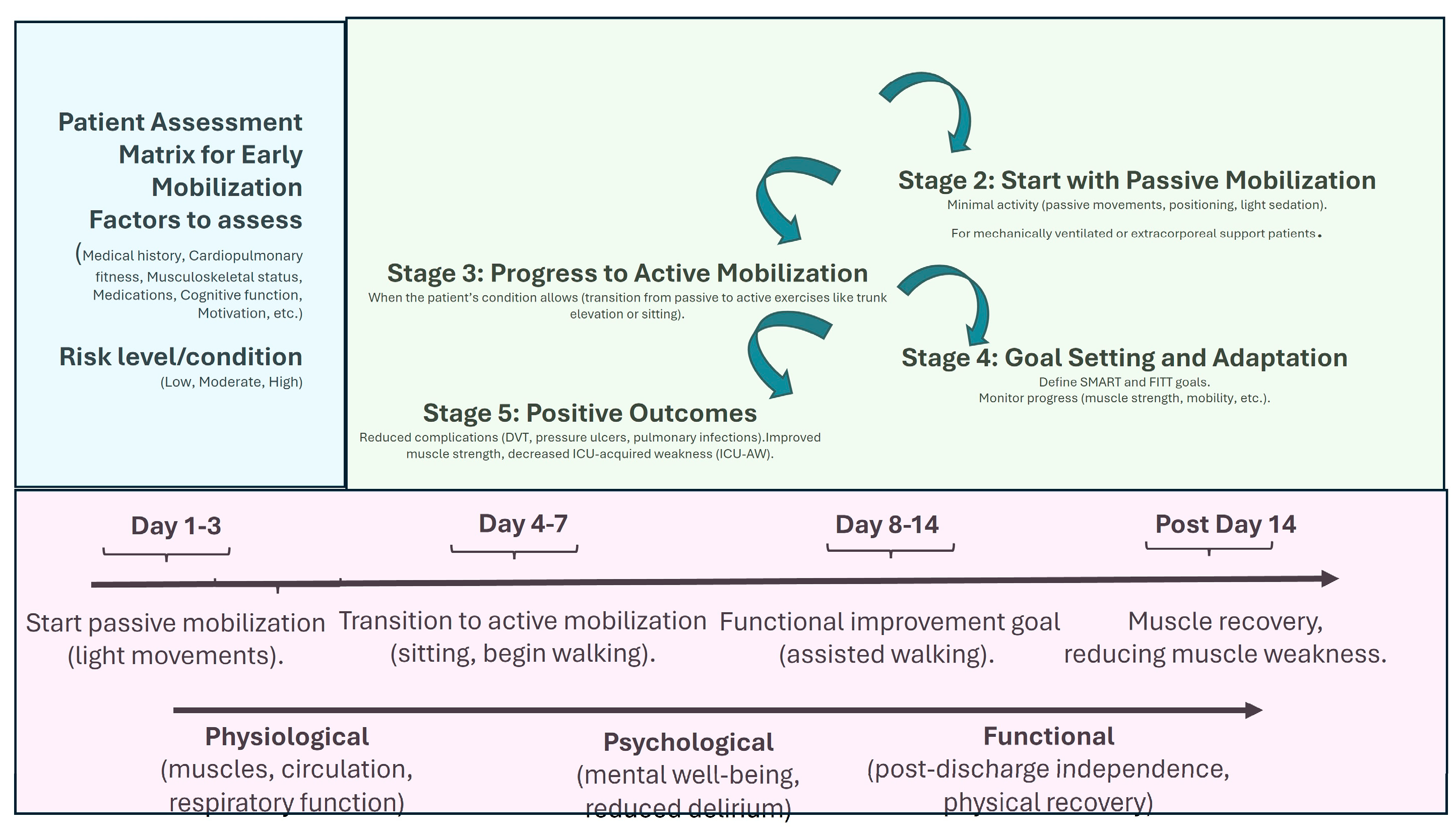
One of the most significant benefits of early mobilization lies in preserving muscle mass and function [36]. Critically ill patients, particularly those subjected to prolonged mechanical ventilation, deep sedation, or extended bed rest, experience rapid muscle atrophy. Research indicates that patients can lose up to 20% of their muscle mass within the first week of immobility, leading to ICUAW [37]. This weakness impacts both peripheral muscles and respiratory function, leading to prolonged mechanical ventilation weaning and extended ICU stays. Early mobilization helps mitigate the negative effects of immobility. Even simple activities, such as passive range-of-motion exercises or assisted movements, play a key role in preserving neuromuscular health. Figure 1 shows the main strategies and implications of mobilization programs. New research is shedding light on the molecular processes behind the positive effects of exercise [38]. These processes include molecules like Bassoon, neuregulin-1, and Insulin-like growth factor-1[39,40]. Over time, progression to active exercises and standing further strengthens muscle endurance and enhances overall physical resilience. In terms of rehabilitation, a systematic review by Wang et al [41], including 60 randomized controlled trials involving 5,352 participants, showed that physical rehabilitation initiated in the ICU significantly enhanced physical function at hospital discharge and reduced both ICU and hospital length of stay, although it did not impact other clinical outcomes. Furthermore, Biolo et al [42] highlighted that exercise enhances the stimulatory effect of exogenous amino acids on muscle protein synthesis, indicating that physical activity can significantly influence muscle protein kinetics.

3.2. Improved Functional Outcomes

Patients who engage in early mobilization during their ICU consistently demonstrate superior functional outcomes compared to those who remain sedentary. These benefits are particularly evident in post-discharge mobility and self-sufficiency. Studies reveal that early mobilization reduces the duration of rehabilitation required after ICU discharge, accelerates reintegration into normal life activities, and lowers dependency on caregivers [43,44]. Moreover, engaging in mobilization during ICU care supports better long-term functional recovery. Patients often perceive better overall physical recovery in regaining pre-illness physical capabilities, resulting in improved quality of life. Prolonged immobility in critically ill patients is associated with several complications, including deep vein thrombosis, pulmonary infections, pressure ulcers, and joint stiffness [45]. Early mobilization significantly reduces the risk of these conditions by improving systemic circulation, enhancing pulmonary function, and maintaining peripheral and skin perfusion. For instance, sitting or standing encourages better lung expansion and secretion clearance, reducing the risk of ventilator-associated pneumonia [46].
Similarly, improved venous return from lower extremities minimizes the likelihood of thromboembolic events. A post hoc analysis of the PREVENT trial categorized patients based on early mobility levels in the first three ICU days and found that higher mobility was associated with reduced 90-day mortality, but did not significantly affect the incidence of deep vein thrombosis [47]. Mobilization also prevents pressure ulcers by reducing the duration of sustained pressure on bony prominences [48].
The ICU environment, often characterized by sensory deprivation, sleep disruption, and frequent sedation, predisposes patients to psychological distress, delirium, and post-intensive care syndrome (PICS) [49]. Early mobilization mitigates these risks by fostering patient engagement and restoring a sense of autonomy. Participating in their care can provide patients with a sense of control, reducing feelings of helplessness [35]. Mobilization has also been shown to decrease the incidence and duration of delirium, promote better sleep patterns, and improve overall cognitive outcomes [50]. A randomized controlled trial involving 104 sedated ICU patients on mechanical ventilation for less than 72 hours found that early exercise and mobilization during daily sedation interruptions led to a higher return to independent functional status at discharge [51].

3.3. Challenges in Implementation

Despite its benefits, early mobilization is not without challenges. The most significant limitation is the clinical stability of patients [52]. Mobilization can only proceed when vital signs, hemodynamic parameters, and respiratory function are within safe limits. In the acute phase of critical illness, where mechanical ventilation and sedation are often necessary, active mobilization may not be feasible.
Passive mobilization strategies, such as manual limb movements or passive cycling, can bridge this gap, allowing for early intervention while maintaining patient safety [53]. Genc et al [54] highlighted the positive impact of passive movements in critically ill patients, using a regimen of 10 repetitions for each joint movement. For patients with impaired bowel function, Morisawa et al [55] showed that passive lower limb and trunk movements, including 10 repetitions of joint movements and an additional 10 minutes of trunk rotation, were effective. However, other studies have reported mixed outcomes [56].
Stiller et al [57] in a randomized controlled trial (RCT) including 48 ICU patients showed that passive mobilizations, as applied to a cohort of medium to long-term ICU patients, did not mitigate or diminish joint stiffness. Therefore, although the evidence does not provide unequivocal results on this matter, it is advisable to assess the appropriateness and timing of potential initiation of passive mobilization on a case-by-case basis in patients with hemodynamic and respiratory instability.
Another barrier is the need for sufficient staffing and training. Effective mobilization programs require close collaboration among intensivists, nurses, physiotherapists, and occupational therapists. Care teams must be trained to assess readiness for mobilization, monitor adverse events, and tailor interventions to individual patient needs. Resource limitations, including equipment shortages and high patient-to-staff ratios, can further complicate implementation. Occupational therapists contribute by focusing on restoring functional skills and activities of daily living [58].
Individualized care plans are essential, as each patient’s recovery journey is unique. Goals could be creating personalized rehabilitation programs for each patient, based on principles like SMART (Specific, Measurable, Achievable, Realistic, and Time-bound) [59] or FITT (Frequency, Intensity, Time, and Type) [60], ensuring that interventions are both structured and adaptable to individual needs.

4. Figures, Tables and Schemes

Figure 1. Early mobilization benefits and temporal managing. This figure outlines the step-by-step process for implementing early mobilization in ICU patients. It begins with patient stabilization, including assessments of physiological, neurological, and cognitive factors. The process then progresses from passive mobilization (minimal activity such as positioning) to active mobilization as the patient's condition improves. Goal setting is key at this stage, with a focus on SMART and FITT criteria, followed by continued monitoring of muscle strength and mobility. Finally, early mobilization leads to positive outcomes, such as reduced complications and improved muscle strength, ultimately decreasing ICU-acquired weakness.
Preprints 150169 g001
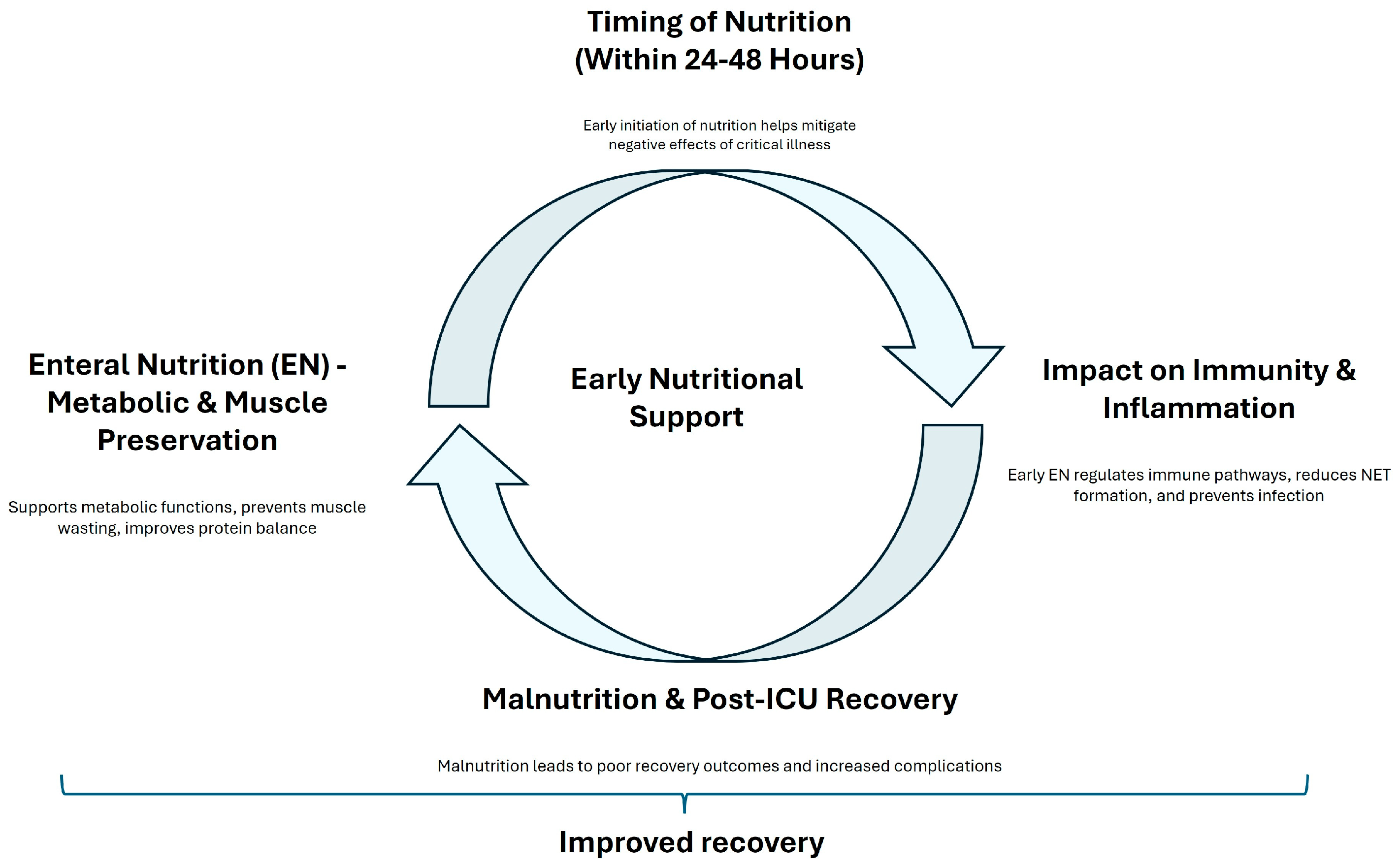
Figure 2. Concept map of early nutritional support. This figure illustrates the central concept of 'Early Nutritional Support' and its vital impact on patient recovery. The diagram starts with the core idea of early nutrition, branching out into key areas: The first branch, labeled 'Enteral Nutrition (EN) - Metabolic & Muscle Preservation,' emphasizes how EN supports metabolic functions, prevents muscle wasting, and improves protein balance, leading to enhanced recovery. The second branch highlights the 'Timing of Nutrition (Within 24-48 Hours),' stressing the importance of early nutritional intervention in mitigating the negative effects of critical illness. A contrasting branch shows the potential benefits of 'Delayed Parenteral Nutrition,' suggesting that postponing parenteral nutrition might reduce complications and accelerate recovery. The third branch focuses on 'Immunity & Inflammation,' showing how early EN regulates immune pathways, reduces infection risk, and promotes faster recovery by modulating key signaling pathways. The final branch, 'Malnutrition & Post-ICU Recovery,' points out the adverse effects of malnutrition on recovery and the need for ongoing nutritional support after ICU discharge to prevent complications and ensure long-term recovery.
Preprints 150169 g002
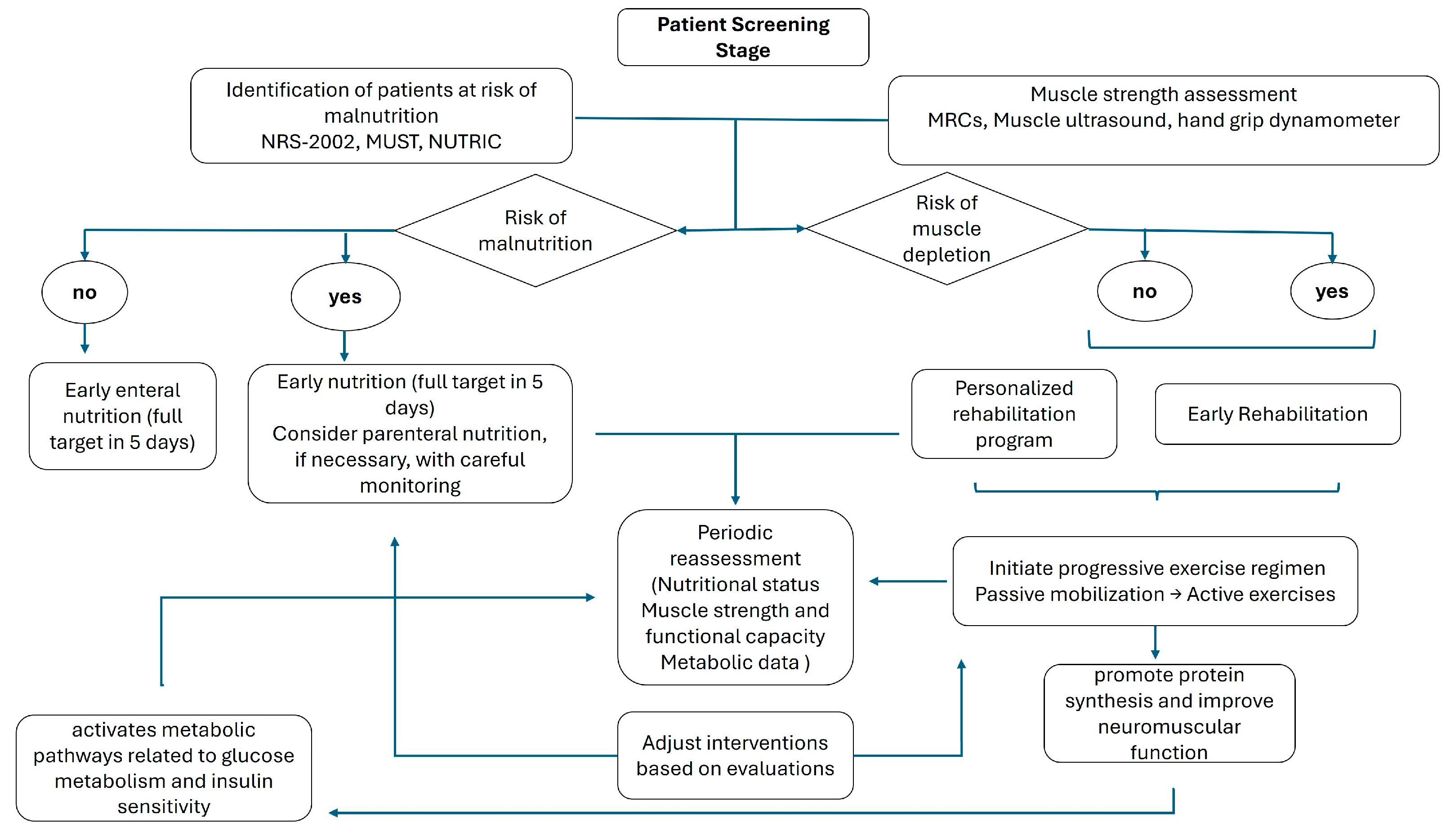
Figure 3. Flow diagram of practical implications.
Preprints 150169 g003
Table 1. Principal investigation on combined effects of nutrition and rehabilitation.
Study Patients Design Main findings
Hermans et al.[3] 415 ICU patients cohort study and propensity-matched analysis ICUAW Exacerbates acute health complications, elevates healthcare costs, and is associated with increased mortality rates within one year. The duration and intensity of weakness at the time of ICU discharge are linked to a further rise in one-year mortality rates.
Bragança et al. [33] 45 ICU patients prospective single center cohort study Handgrip strength demonstrated a strong correlation with the MRC criteria for diagnosing ICUAW. ICUAW was linked to an increased duration of mechanical ventilation, extended ICU stays, and longer hospital admissions over a six-month period. No significant differences in mortality rates were observed
Fazzini et al. [37] 3251 patients systematic review and meta-analysis During the initial week of critical illness, patients typically lose about 2% of their muscle mass each day, with continued reductions in muscle mass throughout their time in the ICU. Additionally, approximately 50% of critically ill patients develop ICU-acquired weakness.
Zhou et al. [61] 150 ICU patients prospective, dual center, randomized controlled trial Both early mobilization and early mobilization with nutrition demonstrated beneficial effects. Both interventions may result in a reduced incidence of ICUAW and enhanced functional independence compared to standard care.
Zang et al. [44] 1941 patients Meta-analysis Early mobilization proved effective in preventing the development of ICUAW, reducing both ICU and hospital lengths of stay, and enhancing functional mobility.
Schweickert et al. [51] 104 ICU patients Randomized controlled trial A comprehensive rehabilitation strategy led to improved functional outcomes at the time of hospital discharge, a reduced duration of delirium, and an increased number of ventilator-free days in comparison to standard care.
Casaer et al. [62] 4640 ICU patients Randomized multicenter trial ( early-initiation VS late-initiation) Patients in the late-initiation group experienced a relative increase in the likelihood of being discharged alive. This group also showed a relative decrease of about 10% in the proportion of patients requiring more than two days of mechanical ventilation; the late initiation of parenteral nutrition was associated with a quicker recovery and fewer complications compared to early initiation.
Heyland et al. [63] 1301 ICU patients multicenter, randomized trial Administering higher protein doses to mechanically ventilated critically ill patients did not enhance the time to alive discharge from the hospital. A subgroup analysis indicated that increased protein intake was especially detrimental for patients with acute kidney injury and higher baseline organ failure scores.
Nakamura et al. [64] 117 ICU patients Randomized controlled trial The loss of femoral muscle was significantly lower in the high-protein group compared to the medium-protein group only with active early mobilization.
De Azevedo et al. [65] 181 ICU patients prospective, randomized controlled trial The physical component summary was significantly higher in the high-protein and exercise group at both 3 months and 6 months. The control group exhibited markedly higher mortality rates.
Jones et al. [66] 93 ICU patients Randomized controlled trial Patients who received enhanced physiotherapy and structured exercise and glutamine and essential amino acid mixture demonstrated the greatest improvements in the 6-minute walking test.
Patel et al. [67] 104 patients secondary analysis of a randomized controlled trial Logistic regression analyses indicated that early mobilization and higher insulin doses were effective in preventing the occurrence of ICU-acquired weakness, independent of established risk factors for weakness.

5. Benefits of Early Nutrition in ICU

Early nutritional support, particularly enteral nutrition, is crucial for critically ill patients, offering essential nutrients that support metabolic functions and muscle preservation [19]. Early initiation of nutrition - ideally within 24-48 hours of ICU admission - is recommended to mitigate these effects. Critically ill patients are at heightened risk of infections due to compromised immune system, prolonged hospital stays, and invasive devices. Figure 2 summarized the principal effects of early nutritional support. It is key in maintaining immune function, reducing the risk of infection, and speeding up recovery [68]. Moreover, early enteral nutrition was described to be associated with improved mucosal trophism, leading to a reduction in the formation of neutrophil extracellular traps (NETs) and the expression of NET-associated proteins [69]. This effect is linked to the regulation of immune pathways, as early EN attenuated the activation of TLR4, NFκB, and MAPK signaling [70].
The benefits of enteral nutrition have been further demonstrated in studies like that of Rehal et al [71] who showed that full dosing of enteral nutrition significantly improved whole-body protein balance, which is crucial for improving protein metabolism in ICU patients. However, the optimal timing and approach to nutritional support remain the subject of ongoing debate. For instance, a randomized multi-center trial by Caesar et al [62] found that delaying parenteral nutrition led to faster recovery and fewer complications, suggesting that the benefits of early full nutritional support may not always be universally applicable and might even cause harm in some cases, as pointed out by Gunst et al [72]. A dual-center randomized controlled trial by Zhou et al [61] demonstrated that early mobilization combined with guideline-based nutrition significantly reduced the incidence of ICU-acquired weakness and improved muscle strength compared to standard care.
Despite these mixed findings, there is a consensus that nutritional interventions should be personalized based on the individual needs of each patient. Chapple et al [73] noted that although protein intake often meets international guidelines, the actual delivery of protein to ICU patients frequently falls short, impairing muscle protein synthesis despite adequate digestion and amino acid absorption. Additionally, Heyland et al [63] reported that high-dose protein supplementation did not significantly improve hospital discharge times and might even have adverse effects on patients with acute kidney injury.
The prevalence of malnutrition among ICU survivors, as highlighted by Moisey et al [74] further reinforces the importance of ongoing nutritional rehabilitation after discharge. Malnutrition is linked to poor recovery outcomes, yet it often remains underemphasized in critical care settings. Villet’s research also demonstrated that negative energy balance is associated with increased complications, which underscores the importance of addressing nutritional needs early to prevent these negative effects [75].

6. The Combined Effect of Early Mobilization and Nutrition on ICUAW

The combination of early mobilization and early nutritional support represents a crucial and integrated therapeutic strategy in the management of critically ill patients in the ICU, addressing two key factors that significantly impact recovery: muscle preservation and metabolic optimization. These interventions, when applied together, not only complement each other but also create a synergistic effect that improves overall clinical outcomes, reducing the incidence of complications such as ICU-acquired weakness, muscle atrophy, and functional decline. Given the high rates of muscle loss, prolonged immobilization, and metabolic disturbances commonly seen in ICU patients, the timely implementation of both mobilization and nutritional support becomes a fundamental component of comprehensive patient care. Table 1 summarized the main published observations.

6.1. Synergistic Muscle Preservation

Early mobilization and nutritional support work together to preserve muscle mass and function, which are crucial for recovery in ICU patients. Mobilization stimulates muscle activity, triggering a series of responses that promote protein synthesis and improve neuromuscular function [76]. Even low-intensity physical activity provides the mechanical stimulus necessary to maintain muscle integrity, counteracting the muscle wasting caused by prolonged immobility [77]. Nakamura et al [64] found that high-protein delivery, when paired with active rehabilitation, led to better preservation of muscle volume. Similarly, de Azevedo [65] showed that high-protein intake alongside resistance exercise improved physical quality of life and survival rates in critically ill patients. Recent studies have highlighted the distinct metabolic effects of exercise and amino acids in regulating anabolic intracellular signaling, muscle protein synthesis, and muscle mass [78]. Mechano-sensors, such as intracellular calcium concentrations and the accumulation of specific molecules triggered by phospholipase D, activate a key protein complex involved in muscle synthesis in response to mechanical stress [79].
Nutrient sensing mechanisms, including certain proteins involved in cell signaling, modulate the localization and activation of this protein complex when amino acid concentrations increase. Additionally, intracellular amino acid transport proteins play a critical role in enhancing the availability of leucine and regulating anabolic responses to amino acid supplementation [80]. Exercise also influences intracellular amino acid concentrations, triggering similar nutrient-sensitive mechanisms to stimulate protein complex signaling. Similarly, Jones et al [66] demonstrated the combined effects of a 6-week physiotherapy program and an essential amino acid supplement on critically ill patients. Their study found that the combination led to improved walking distance, as well as reduced anxiety and depression, highlighting the positive impact of integrating rehabilitation and nutritional support on both physical and psychological recovery [78].
Additionally, mobilization activates metabolic pathways related to glucose metabolism and insulin sensitivity. Patel et al [67] conducted a secondary analysis of 104 mechanically ventilated patients from a randomized controlled trial comparing early occupational and physical therapy with conventional therapy, focusing on functional independence. The study evaluated the impact of insulin dose and early mobilization on the incidence ICUAW. Their logistic regression analysis revealed that both early mobilization and higher insulin doses significantly reduced the incidence of ICUAW.
Finally, early mobilization led to a significant reduction in insulin requirements to achieve similar glycemic goals compared to the control group. Despite the promising observations, several gaps remain in our understanding of the optimal timing, dosing, and mechanisms of nutritional interventions in critically ill patients. Ongoing research is needed to refine nutritional strategies and explore ways to promote anabolic environments that support recovery.
There is a growing consensus on the importance of a multifaceted approach that combines rehabilitation with tailored nutritional strategies to mitigate muscle loss and improve overall outcomes. Future studies should focus on adequately powered randomized controlled trials to validate these approaches and further explore the long-term effects of prolonged nutritional interventions on critical patient-centered outcomes such as quality of life and functional recovery [79].

6.2. Practical Implications

A detailed flow diagram accompanies a summary of previous observations, delineating the sequential steps - from initial screening and assessment to the implementation and ongoing evaluation of integrated nutrition and rehabilitation protocols (Figure 3). Initially, rigorous screening procedures must be employed to identify individuals at heightened risk for malnutrition and physical deconditioning. This screening should utilize validated instruments to establish a baseline nutritional profile and determine the need for early intervention. This assessment is particularly important in patients anticipated to have an ICU stay exceeding 72 hours, especially in medical patients and those admitted with critical conditions. Conversely, this assessment holds relatively less significance in postoperative patients and those with conditions that are likely to result in a shorter ICU stay.
Following the identification of at-risk patients, a detailed evaluation of muscle strength and function is important. Quantitative assessments, including muscle ultrasound, and validated force scale are recommended to ascertain the degree of deconditioning and to guide the intensity of subsequent rehabilitative measures. Concurrently, it is critical to monitor nutritional intake and energy expenditure accurately. Indirect calorimetry provides measure of metabolic requirements, while serial ultrasound evaluations can yield precise data regarding muscle mass and adipose tissue distribution, thus supplying a comprehensive assessment of the patient’s nutritional and functional status.
After these assessments, a patient-specific nutritional plan should be formulated, addressing individualized energy, protein, and micronutrient requirements. Early initiation of enteral nutrition mitigate the risk of further nutritional deficits and to support anabolic processes. In scenarios where enteral feeding is contraindicated or not feasible, parenteral nutrition should be administered with vigilant monitoring of caloric delivery and metabolic parameters.
Simultaneously, early mobilization and physical rehabilitation must be instituted to counteract the deleterious effects of immobility. A progressive exercise regimen - ranging from passive mobilization to active resistance training - should be tailored to the patient’s current functional capacity. This rehabilitation strategy aims to preserve skeletal muscle integrity, enhance neuromuscular function, and expedite functional recovery.
Periodic re-evaluation of muscle strength and structure through objective measures, such as ultrasound imaging, is essential to refine and adapt the rehabilitation protocol in response to the patient’s evolving clinical status. Throughout the course of treatment, continuous monitoring and reassessment are crucial. Outcome measures should comprehend serial evaluations of nutritional status, muscle strength, functional capacity, and metabolic indices. These metrics not only inform clinical decision-making but also facilitate timely adjustments to both nutritional and rehabilitative interventions.

7. Conclusion

In conclusion, the coordinated use of early mobilization and early nutritional support is a fundamental aspect of the ICU care that goes beyond addressing muscle weakness or malnutrition. By targeting both the physical and metabolic systems, this combined approach promotes an optimal environment for recovery, helping critically ill patients regain strength, independence, and overall quality of life after their ICU stay. This synergy between mobilization and nutrition is essential not only for short-term recovery but also for long-term health outcomes, highlighting the importance of integrating these interventions into routine ICU care protocols.

Author Contributions

Conceptualization, P.F, A.M, M.U; methodology, P.F, M.U; software, A.M..; validation, A.G, M.G and G.S.; formal analysis, P.F, A.M..; data curation, P.F, A.M.; writing—original draft preparation, P.F, A.M.; writing—review and editing, M.U.; supervision, A.P. All authors have read and agreed to the published version of the manuscript.

Funding

This research received no external funding

Conflicts of Interest

The authors declare no conflicts of interest.

Abbreviations

The following abbreviations are used in this manuscript:
ICU Intensive Care Unit
ICUAW Intensive care Unit acquired weakness
PICS post-intensive care syndrome
NETs neutrophil extracellular traps

References

  1. Lad, H.; Saumur, T.M.; Herridge, M.S.; Dos Santos, C.C.; Mathur, S.; Batt, J.; Gilbert, P.M. Intensive Care Unit-Acquired Weakness: Not Just Another Muscle Atrophying Condition. Int J Mol Sci 2020, 21, 7840. [Google Scholar] [CrossRef]
  2. Yang, T.; Li, Z.; Jiang, L.; Wang, Y.; Xi, X. Risk Factors for Intensive Care Unit-Acquired Weakness: A Systematic Review and Meta-Analysis. Acta Neurol Scand 2018, 138, 104–114. [Google Scholar] [CrossRef]
  3. Hermans, G.; Van Mechelen, H.; Clerckx, B.; Vanhullebusch, T.; Mesotten, D.; Wilmer, A.; Casaer, M.P.; Meersseman, P.; Debaveye, Y.; Van Cromphaut, S.; et al. Acute Outcomes and 1-Year Mortality of Intensive Care Unit-Acquired Weakness. A Cohort Study and Propensity-Matched Analysis. Am J Respir Crit Care Med 2014, 190, 410–420. [Google Scholar] [CrossRef]
  4. Thille, A.W.; Boissier, F.; Muller, M.; Levrat, A.; Bourdin, G.; Rosselli, S.; Frat, J.-P.; Coudroy, R.; Vivier, E. Role of ICU-Acquired Weakness on Extubation Outcome among Patients at High Risk of Reintubation. Crit Care 2020, 24, 86. [Google Scholar] [CrossRef] [PubMed]
  5. Cruz-Jentoft, A.J.; Bahat, G.; Bauer, J.; Boirie, Y.; Bruyère, O.; Cederholm, T.; Cooper, C.; Landi, F.; Rolland, Y.; Sayer, A.A.; et al. Sarcopenia: Revised European Consensus on Definition and Diagnosis. Age Ageing 2019, 48, 16–31. [Google Scholar] [CrossRef] [PubMed]
  6. Chen, L.-K.; Woo, J.; Assantachai, P.; Auyeung, T.-W.; Chou, M.-Y.; Iijima, K.; Jang, H.C.; Kang, L.; Kim, M.; Kim, S.; et al. Asian Working Group for Sarcopenia: 2019 Consensus Update on Sarcopenia Diagnosis and Treatment. J Am Med Dir Assoc 2020, 21, 300–307.e2. [Google Scholar] [CrossRef] [PubMed]
  7. Cederholm, T.; Jensen, G.L.; Correia, M.I.T.D.; Gonzalez, M.C.; Fukushima, R.; Higashiguchi, T.; Baptista, G.; Barazzoni, R.; Blaauw, R.; Coats, A.J.S.; et al. GLIM Criteria for the Diagnosis of Malnutrition - A Consensus Report from the Global Clinical Nutrition Community. J Cachexia Sarcopenia Muscle 2019, 10, 207–217. [Google Scholar] [CrossRef]
  8. Larsson, L.; Degens, H.; Li, M.; Salviati, L.; Lee, Y. il; Thompson, W.; Kirkland, J.L.; Sandri, M. Sarcopenia: Aging-Related Loss of Muscle Mass and Function. Physiol Rev 2019, 99, 427–511. [Google Scholar] [CrossRef]
  9. Ligthart-Melis, G.C.; Luiking, Y.C.; Kakourou, A.; Cederholm, T.; Maier, A.B.; de van der Schueren, M.A.E. Frailty, Sarcopenia, and Malnutrition Frequently (Co-)Occur in Hospitalized Older Adults: A Systematic Review and Meta-Analysis. J Am Med Dir Assoc 2020, 21, 1216–1228. [Google Scholar] [CrossRef]
  10. Vandewoude, M.F.J.; Alish, C.J.; Sauer, A.C.; Hegazi, R.A. Malnutrition-Sarcopenia Syndrome: Is This the Future of Nutrition Screening and Assessment for Older Adults? J Aging Res 2012, 2012, 651570. [Google Scholar] [CrossRef]
  11. Landi, F.; Cherubini, A.; Cesari, M.; Calvani, R.; Tosato, M.; Sisto, A.; Martone, A.M.; Bernabei, R.; Marzetti, E. Sarcopenia and Frailty: From Theoretical Approach into Clinical Practice. European Geriatric Medicine 2016, 7, 197–200. [Google Scholar] [CrossRef]
  12. Gaafer, O.U.; Zimmers, T.A. The Nutritional Challenges of Cancer Cachexia. JPEN J Parenter Enteral Nutr 2021, 45, 16–25. [Google Scholar] [CrossRef]
  13. Ní Bhuachalla, É.B.; Daly, L.E.; Power, D.G.; Cushen, S.J.; MacEneaney, P.; Ryan, A.M. Computed Tomography Diagnosed Cachexia and Sarcopenia in 725 Oncology Patients: Is Nutritional Screening Capturing Hidden Malnutrition? J Cachexia Sarcopenia Muscle 2018, 9, 295–305. [Google Scholar] [CrossRef] [PubMed]
  14. Puthucheary, Z.A.; Rawal, J.; McPhail, M.; Connolly, B.; Ratnayake, G.; Chan, P.; Hopkinson, N.S.; Phadke, R.; Dew, T.; Sidhu, P.S.; et al. Acute Skeletal Muscle Wasting in Critical Illness. JAMA 2013, 310, 1591–1600. [Google Scholar] [CrossRef]
  15. Prado, C.M.; Landi, F.; Chew, S.T.H.; Atherton, P.J.; Molinger, J.; Ruck, T.; Gonzalez, M.C. Advances in Muscle Health and Nutrition: A Toolkit for Healthcare Professionals. Clin Nutr 2022, 41, 2244–2263. [Google Scholar] [CrossRef]
  16. Ambrosino, N.; Venturelli, E.; Vagheggini, G.; Clini, E. Rehabilitation, Weaning and Physical Therapy Strategies in Chronic Critically Ill Patients. Eur Respir J 2012, 39, 487–492. [Google Scholar] [CrossRef] [PubMed]
  17. Rawal, G.; Yadav, S.; Kumar, R. Post-Intensive Care Syndrome: An Overview. J Transl Int Med 2017, 5, 90–92. [Google Scholar] [CrossRef]
  18. Sosnowski, K.; Lin, F.; Mitchell, M.L.; White, H. Early Rehabilitation in the Intensive Care Unit: An Integrative Literature Review. Aust Crit Care 2015, 28, 216–225. [Google Scholar] [CrossRef]
  19. Singer, P.; Blaser, A.R.; Berger, M.M.; Calder, P.C.; Casaer, M.; Hiesmayr, M.; Mayer, K.; Montejo-Gonzalez, J.C.; Pichard, C.; Preiser, J.-C.; et al. ESPEN Practical and Partially Revised Guideline: Clinical Nutrition in the Intensive Care Unit. Clin Nutr 2023, 42, 1671–1689. [Google Scholar] [CrossRef]
  20. Keller, U. Nutritional Laboratory Markers in Malnutrition. J Clin Med 2019, 8, 775. [Google Scholar] [CrossRef]
  21. Zhang, Z.; Pereira, S.L.; Luo, M.; Matheson, E.M. Evaluation of Blood Biomarkers Associated with Risk of Malnutrition in Older Adults: A Systematic Review and Meta-Analysis. Nutrients 2017, 9, 829. [Google Scholar] [CrossRef]
  22. Singer, P.; Blaser, A.R.; Berger, M.M.; Alhazzani, W.; Calder, P.C.; Casaer, M.P.; Hiesmayr, M.; Mayer, K.; Montejo, J.C.; Pichard, C.; et al. ESPEN Guideline on Clinical Nutrition in the Intensive Care Unit. Clin Nutr 2019, 38, 48–79. [Google Scholar] [CrossRef]
  23. Díaz Chavarro, B.C.; Molina-Recio, G.; Assis Reveiz, J.K.; Romero-Saldaña, M. Factors Associated with Nutritional Risk Assessment in Critically Ill Patients Using the Malnutrition Universal Screening Tool (MUST). J Clin Med 2024, 13, 1236. [Google Scholar] [CrossRef] [PubMed]
  24. Coruja, M.K.; Cobalchini, Y.; Wentzel, C.; Fink, J. da S. Nutrition Risk Screening in Intensive Care Units: Agreement Between NUTRIC and NRS 2002 Tools. Nutr Clin Pract 2020, 35, 567–571. [Google Scholar] [CrossRef] [PubMed]
  25. Yildirim, M.; Yildirim, Z.S.; Deniz, M. Effect of the Modified NUTRIC Score in Predicting the Prognosis of Patients Admitted to Intensive Care Units. BMC Anesthesiol 2024, 24, 473. [Google Scholar] [CrossRef]
  26. Wełna, M.; Adamik, B.; Kübler, A.; Goździk, W. The NUTRIC Score as a Tool to Predict Mortality and Increased Resource Utilization in Intensive Care Patients with Sepsis. Nutrients 2023, 15, 1648. [Google Scholar] [CrossRef] [PubMed]
  27. Mahmoodpoor, A.; Sanaie, S.; Sarfaraz, T.; Shadvar, K.; Fattahi, V.; Hamishekar, H.; Vahedian-Azimi, A.; Samim, A.; Rahimi-Bashar, F. Prognostic Values of Modified NUTRIC Score to Assess Outcomes in Critically Ill Patients Admitted to the Intensive Care Units: Prospective Observational Study. BMC Anesthesiology 2023, 23, 131. [Google Scholar] [CrossRef]
  28. Casey, P.; Alasmar, M.; McLaughlin, J.; Ang, Y.; McPhee, J.; Heire, P.; Sultan, J. The Current Use of Ultrasound to Measure Skeletal Muscle and Its Ability to Predict Clinical Outcomes: A Systematic Review. J Cachexia Sarcopenia Muscle 2022, 13, 2298–2309. [Google Scholar] [CrossRef]
  29. Umbrello, M.; Brogi, E.; Formenti, P.; Corradi, F.; Forfori, F. Ultrasonographic Features of Muscular Weakness and Muscle Wasting in Critically Ill Patients. Journal of Clinical Medicine 2024, 13, 26. [Google Scholar] [CrossRef]
  30. Formenti, P.; Umbrello, M.; Coppola, S.; Froio, S.; Chiumello, D. Clinical Review: Peripheral Muscular Ultrasound in the ICU. Ann Intensive Care 2019, 9, 57. [Google Scholar] [CrossRef]
  31. Leong, D.P.; Teo, K.K.; Rangarajan, S.; Lopez-Jaramillo, P.; Avezum, A.; Orlandini, A.; Seron, P.; Ahmed, S.H.; Rosengren, A.; Kelishadi, R.; et al. Prognostic Value of Grip Strength: Findings from the Prospective Urban Rural Epidemiology (PURE) Study. Lancet 2015, 386, 266–273. [Google Scholar] [CrossRef]
  32. Connolly, B.A.; Jones, G.D.; Curtis, A.A.; Murphy, P.B.; Douiri, A.; Hopkinson, N.S.; Polkey, M.I.; Moxham, J.; Hart, N. Clinical Predictive Value of Manual Muscle Strength Testing during Critical Illness: An Observational Cohort Study. Crit Care 2013, 17, R229. [Google Scholar] [CrossRef] [PubMed]
  33. Bragança, R.D.; Ravetti, C.G.; Barreto, L.; Ataíde, T.B.L.S.; Carneiro, R.M.; Teixeira, A.L.; Nobre, V. Use of Handgrip Dynamometry for Diagnosis and Prognosis Assessment of Intensive Care Unit Acquired Weakness: A Prospective Study. Heart Lung 2019, 48, 532–537. [Google Scholar] [CrossRef]
  34. Singam, A. Mobilizing Progress: A Comprehensive Review of the Efficacy of Early Mobilization Therapy in the Intensive Care Unit. Cureus 16. [CrossRef]
  35. Liu, K.; Tronstad, O.; Flaws, D.; Churchill, L.; Jones, A.Y.M.; Nakamura, K.; Fraser, J.F. From Bedside to Recovery: Exercise Therapy for Prevention of Post-Intensive Care Syndrome. J Intensive Care 2024, 12, 11. [Google Scholar] [CrossRef]
  36. Hodgson, C.L.; Berney, S.; Harrold, M.; Saxena, M.; Bellomo, R. Clinical Review: Early Patient Mobilization in the ICU. Critical Care 2013, 17, 207. [Google Scholar] [CrossRef] [PubMed]
  37. Fazzini, B.; Märkl, T.; Costas, C.; Blobner, M.; Schaller, S.J.; Prowle, J.; Puthucheary, Z.; Wackerhage, H. The Rate and Assessment of Muscle Wasting during Critical Illness: A Systematic Review and Meta-Analysis. Crit Care 2023, 27, 2. [Google Scholar] [CrossRef] [PubMed]
  38. Nishimune, H.; Stanford, J.A.; Mori, Y. Role of Exercise in Maintaining the Integrity of the Neuromuscular Junction. Muscle Nerve 2014, 49, 315–324. [Google Scholar] [CrossRef]
  39. Nishimune, H.; Numata, T.; Chen, J.; Aoki, Y.; Wang, Y.; Starr, M.P.; Mori, Y.; Stanford, J.A. Active Zone Protein Bassoon Co-Localizes with Presynaptic Calcium Channel, Modifies Channel Function, and Recovers from Aging Related Loss by Exercise. PLoS One 2012, 7, e38029. [Google Scholar] [CrossRef]
  40. Lebrasseur, N.K.; Coté, G.M.; Miller, T.A.; Fielding, R.A.; Sawyer, D.B. Regulation of Neuregulin/ErbB Signaling by Contractile Activity in Skeletal Muscle. Am J Physiol Cell Physiol 2003, 284, C1149–1155. [Google Scholar] [CrossRef]
  41. Wang, Y.T.; Lang, J.K.; Haines, K.J.; Skinner, E.H.; Haines, T.P. Physical Rehabilitation in the ICU: A Systematic Review and Meta-Analysis. Crit Care Med 2022, 50, 375–388. [Google Scholar] [CrossRef]
  42. Biolo, G.; Tipton, K.D.; Klein, S.; Wolfe, R.R. An Abundant Supply of Amino Acids Enhances the Metabolic Effect of Exercise on Muscle Protein. Am J Physiol 1997, 273, E122–129. [Google Scholar] [CrossRef] [PubMed]
  43. Zang, K.; Chen, B.; Wang, M.; Chen, D.; Hui, L.; Guo, S.; Ji, T.; Shang, F. The Effect of Early Mobilization in Critically Ill Patients: A Meta-Analysis. Nurs Crit Care 2020, 25, 360–367. [Google Scholar] [CrossRef] [PubMed]
  44. Zhang, C.; Wang, X.; Mi, J.; Zhang, Z.; Luo, X.; Gan, R.; Mu, S. Effects of the High-Intensity Early Mobilization on Long-Term Functional Status of Patients with Mechanical Ventilation in the Intensive Care Unit. Crit Care Res Pract 2024, 2024, 4118896. [Google Scholar] [CrossRef] [PubMed]
  45. Wu, X.; Li, Z.; Cao, J.; Jiao, J.; Wang, Y.; Liu, G.; Liu, Y.; Li, F.; Song, B.; Jin, J.; et al. The Association between Major Complications of Immobility during Hospitalization and Quality of Life among Bedridden Patients: A 3 Month Prospective Multi-Center Study. PLoS One 2018, 13, e0205729. [Google Scholar] [CrossRef]
  46. Mezidi, M.; Guérin, C. Effects of Patient Positioning on Respiratory Mechanics in Mechanically Ventilated ICU Patients. Ann Transl Med 2018, 6, 384. [Google Scholar] [CrossRef]
  47. Al-Dorzi, H.M.; AlQahtani, S.; Al-Dawood, A.; Al-Hameed, F.M.; Burns, K.E.A.; Mehta, S.; Jose, J.; Alsolamy, S.J.; Abdukahil, S.A.I.; Afesh, L.Y.; et al. Association of Early Mobility with the Incidence of Deep-Vein Thrombosis and Mortality among Critically Ill Patients: A Post Hoc Analysis of PREVENT Trial. Critical Care 2023, 27, 83. [Google Scholar] [CrossRef]
  48. Regan, M.A.; Teasell, R.W.; Wolfe, D.L.; Keast, D.; Mortenson, W.B.; Aubut, J.-A. A Systematic Review of Therapeutic Interventions for Pressure Ulcers Following Spinal Cord Injury. Arch Phys Med Rehabil 2009, 90, 213–231. [Google Scholar] [CrossRef]
  49. Inoue, S.; Hatakeyama, J.; Kondo, Y.; Hifumi, T.; Sakuramoto, H.; Kawasaki, T.; Taito, S.; Nakamura, K.; Unoki, T.; Kawai, Y.; et al. Post-Intensive Care Syndrome: Its Pathophysiology, Prevention, and Future Directions. Acute Med Surg 2019, 6, 233–246. [Google Scholar] [CrossRef]
  50. Mart, M.F.; Williams Roberson, S.; Salas, B.; Pandharipande, P.P.; Ely, E.W. Prevention and Management of Delirium in the Intensive Care Unit. Semin Respir Crit Care Med 2021, 42, 112–126. [Google Scholar] [CrossRef]
  51. Schweickert, W.D.; Pohlman, M.C.; Pohlman, A.S.; Nigos, C.; Pawlik, A.J.; Esbrook, C.L.; Spears, L.; Miller, M.; Franczyk, M.; Deprizio, D.; et al. Early Physical and Occupational Therapy in Mechanically Ventilated, Critically Ill Patients: A Randomised Controlled Trial. Lancet 2009, 373, 1874–1882. [Google Scholar] [CrossRef]
  52. Alaparthi, G.K.; Gatty, A.; Samuel, S.R.; Amaravadi, S.K. Effectiveness, Safety, and Barriers to Early Mobilization in the Intensive Care Unit. Crit Care Res Pract 2020, 2020, 7840743. [Google Scholar] [CrossRef]
  53. Yang, X.; Zhang, T.; Cao, L.; Ye, L.; Song, W. Early Mobilization for Critically Ill Patients. Respir Care 2023, 68, 781–795. [Google Scholar] [CrossRef] [PubMed]
  54. Genc, A.; Koca, U.; Gunerli, A. What Are the Hemodynamic and Respiratory Effects of Passive Limb Exercise for Mechanically Ventilated Patients Receiving Low-Dose Vasopressor/Inotropic Support? Crit Care Nurs Q 2014, 37, 152–158. [Google Scholar] [CrossRef] [PubMed]
  55. Morisawa, T.; Takahashi, T.; Sasanuma, N.; Mabuchi, S.; Takeda, K.; Hori, N.; Ohashi, N.; Ide, T.; Domen, K.; Nishi, S. Passive Exercise of the Lower Limbs and Trunk Alleviates Decreased Intestinal Motility in Patients in the Intensive Care Unit after Cardiovascular Surgery. J Phys Ther Sci 2017, 29, 312–316. [Google Scholar] [CrossRef] [PubMed]
  56. Medrinal, C.; Combret, Y.; Prieur, G.; Robledo Quesada, A.; Bonnevie, T.; Gravier, F.E.; Dupuis Lozeron, E.; Frenoy, E.; Contal, O.; Lamia, B. Comparison of Exercise Intensity during Four Early Rehabilitation Techniques in Sedated and Ventilated Patients in ICU: A Randomised Cross-over Trial. Crit Care 2018, 22, 110. [Google Scholar] [CrossRef]
  57. Stiller, K.R.; Dafoe, S.; Jesudason, C.S.; McDonald, T.M.; Callisto, R.J. Passive Movements Do Not Appear to Prevent or Reduce Joint Stiffness in Medium to Long-Stay ICU Patients: A Randomized, Controlled, Within-Participant Trial. Crit Care Explor 2023, 5, e1006. [Google Scholar] [CrossRef]
  58. Legg, L.A.; Lewis, S.R.; Schofield-Robinson, O.J.; Drummond, A.; Langhorne, P. Occupational Therapy for Adults with Problems in Activities of Daily Living after Stroke. Cochrane Database Syst Rev 2017, 2017, CD003585. [Google Scholar] [CrossRef]
  59. Bovend’Eerdt, T.J.H.; Botell, R.E.; Wade, D.T. Writing SMART Rehabilitation Goals and Achieving Goal Attainment Scaling: A Practical Guide. Clin Rehabil 2009, 23, 352–361. [Google Scholar] [CrossRef]
  60. Burnet, K.; Kelsch, E.; Zieff, G.; Moore, J.B.; Stoner, L. How Fitting Is F.I.T.T.?: A Perspective on a Transition from the Sole Use of Frequency, Intensity, Time, and Type in Exercise Prescription. Physiol Behav 2019, 199, 33–34. [Google Scholar] [CrossRef]
  61. Zhou, W.; Yu, L.; Fan, Y.; Shi, B.; Wang, X.; Chen, T.; Yu, H.; Liu, J.; Wang, X.; Liu, C.; et al. Effect of Early Mobilization Combined with Early Nutrition on Acquired Weakness in Critically Ill Patients (EMAS): A Dual-Center, Randomized Controlled Trial. PLoS One 2022, 17, e0268599. [Google Scholar] [CrossRef]
  62. Casaer, M.P.; Mesotten, D.; Hermans, G.; Wouters, P.J.; Schetz, M.; Meyfroidt, G.; Van Cromphaut, S.; Ingels, C.; Meersseman, P.; Muller, J.; et al. Early versus Late Parenteral Nutrition in Critically Ill Adults. N Engl J Med 2011, 365, 506–517. [Google Scholar] [CrossRef] [PubMed]
  63. Heyland, D.K.; Patel, J.; Compher, C.; Rice, T.W.; Bear, D.E.; Lee, Z.-Y.; González, V.C.; O’Reilly, K.; Regala, R.; Wedemire, C.; et al. The Effect of Higher Protein Dosing in Critically Ill Patients with High Nutritional Risk (EFFORT Protein): An International, Multicentre, Pragmatic, Registry-Based Randomised Trial. Lancet 2023, 401, 568–576. [Google Scholar] [CrossRef] [PubMed]
  64. Nakamura, K.; Nakano, H.; Naraba, H.; Mochizuki, M.; Takahashi, Y.; Sonoo, T.; Hashimoto, H.; Morimura, N. High Protein versus Medium Protein Delivery under Equal Total Energy Delivery in Critical Care: A Randomized Controlled Trial. Clin Nutr 2021, 40, 796–803. [Google Scholar] [CrossRef]
  65. de Azevedo, J.R.A.; Lima, H.C.M.; Frota, P.H.D.B.; Nogueira, I.R.O.M.; de Souza, S.C.; Fernandes, E.A.A.; Cruz, A.M. High-Protein Intake and Early Exercise in Adult Intensive Care Patients: A Prospective, Randomized Controlled Trial to Evaluate the Impact on Functional Outcomes. BMC Anesthesiol 2021, 21, 283. [Google Scholar] [CrossRef]
  66. Jones, C.; Eddleston, J.; McCairn, A.; Dowling, S.; McWilliams, D.; Coughlan, E.; Griffiths, R.D. Improving Rehabilitation after Critical Illness through Outpatient Physiotherapy Classes and Essential Amino Acid Supplement: A Randomized Controlled Trial. J Crit Care 2015, 30, 901–907. [Google Scholar] [CrossRef]
  67. Patel, B.K.; Pohlman, A.S.; Hall, J.B.; Kress, J.P. Impact of Early Mobilization on Glycemic Control and ICU-Acquired Weakness in Critically Ill Patients Who Are Mechanically Ventilated. Chest 2014, 146, 583–589. [Google Scholar] [CrossRef] [PubMed]
  68. Reignier, J.; Rice, T.W.; Arabi, Y.M.; Casaer, M. Nutritional Support in the ICU. BMJ 2025, 388, e077979. [Google Scholar] [CrossRef]
  69. Winter, T.A.; O’Keefe, S.J.; Callanan, M.; Marks, T. Effect of Severe Undernutrition and Subsequent Refeeding on Gut Mucosal Protein Fractional Synthesis in Human Subjects. Nutrition 2007, 23, 29–35. [Google Scholar] [CrossRef]
  70. Hu, Q.; Ren, H.; Hong, Z.; Wang, C.; Zheng, T.; Ren, Y.; Chen, K.; Liu, S.; Wang, G.; Gu, G.; et al. Early Enteral Nutrition Preserves Intestinal Barrier Function through Reducing the Formation of Neutrophil Extracellular Traps (NETs) in Critically Ill Surgical Patients. Oxid Med Cell Longev 2020, 2020, 8815655. [Google Scholar] [CrossRef]
  71. Rea, J.; Walters, K.; Avgerinou, C. How Effective Is Nutrition Education Aiming to Prevent or Treat Malnutrition in Community-Dwelling Older Adults? A Systematic Review. Eur Geriatr Med 2019, 10, 339–358. [Google Scholar] [CrossRef]
  72. Gunst, J.; Casaer, M.P.; Preiser, J.-C.; Reignier, J.; Van den Berghe, G. Toward Nutrition Improving Outcome of Critically Ill Patients: How to Interpret Recent Feeding RCTs? Crit Care 2023, 27, 43. [Google Scholar] [CrossRef]
  73. Chapple, L.-A.S.; Kouw, I.W.K.; Summers, M.J.; Weinel, L.M.; Gluck, S.; Raith, E.; Slobodian, P.; Soenen, S.; Deane, A.M.; van Loon, L.J.C.; et al. Muscle Protein Synthesis after Protein Administration in Critical Illness. Am J Respir Crit Care Med 2022, 206, 740–749. [Google Scholar] [CrossRef]
  74. Moisey, L.L.; Merriweather, J.L.; Drover, J.W. The Role of Nutrition Rehabilitation in the Recovery of Survivors of Critical Illness: Underrecognized and Underappreciated. Crit Care 2022, 26, 270. [Google Scholar] [CrossRef]
  75. Villet, S.; Chiolero, R.; Bollmann, M.; Revelly, J.-P.; N, M.-C.; Delarue, J.; Berger, M. Negative Impact of Hypocaloric Feeding and Energy Balance on Clinical Outcome in ICU Patients. Clinical nutrition (Edinburgh, Scotland) 2005, 24, 502–509. [Google Scholar] [CrossRef]
  76. Atherton, P.J.; Smith, K. Muscle Protein Synthesis in Response to Nutrition and Exercise. J Physiol 2012, 590, 1049–1057. [Google Scholar] [CrossRef]
  77. Wackerhage, H.; Rennie, M.J. How Nutrition and Exercise Maintain the Human Musculoskeletal Mass. J Anat 2006, 208, 451–458. [Google Scholar] [CrossRef]
  78. Pasiakos, S.M. Exercise and Amino Acid Anabolic Cell Signaling and the Regulation of Skeletal Muscle Mass. Nutrients 2012, 4, 740–758. [Google Scholar] [CrossRef]
  79. Fang, Y.; Wu, D.; Birukov, K.G. Mechanosensing and Mechanoregulation of Endothelial Cell Functions. Compr Physiol 2019, 9, 873–904. [Google Scholar] [CrossRef] [PubMed]
  80. Lv, X.; Zhou, C.; Yan, Q.; Tan, Z.; Kang, J.; Tang, S. Elucidating the Underlying Mechanism of Amino Acids to Regulate Muscle Protein Synthesis: Effect on Human Health. Nutrition 2022, 103–104, 111797. [Google Scholar] [CrossRef] [PubMed]
Disclaimer/Publisher’s Note: The statements, opinions and data contained in all publications are solely those of the individual author(s) and contributor(s) and not of MDPI and/or the editor(s). MDPI and/or the editor(s) disclaim responsibility for any injury to people or property resulting from any ideas, methods, instructions or products referred to in the content.
Copyright: This open access article is published under a Creative Commons CC BY 4.0 license, which permit the free download, distribution, and reuse, provided that the author and preprint are cited in any reuse.
Prerpints.org logo

Preprints.org is a free preprint server supported by MDPI in Basel, Switzerland.

Subscribe

Disclaimer

Terms of Use

Privacy Policy

Privacy Settings

© 2026 MDPI (Basel, Switzerland) unless otherwise stated