Preprint
Article

This version is not peer-reviewed.

Sustainable SMEs Performance: Knowledge Management, Human Resources Digital Transformation, and Innovation Capabilities – A Practical Approach to Business in the Digital Age

Submitted:

21 February 2025

Posted:

21 February 2025

You are already at the latest version

Abstract

The purpose of this study is to examine the influence of knowledge management (KM), and human resources digital transformation (HRDT) on sustainable performance through innovation capabilities (IC) mediators among small and medium-sized enterprises (SMEs). The explanatory survey method was developed with a questionnaire as an instrument to collect data from 353 respondents selected as employees and SMEs in Indonesia. Theoretical confirmation to test hypotheses in causality predictive models by applying structural equation modeling, covariance-based (CB-SEM) with AMOS v.24 application. The findings of the study show that KM, HDRT and IC are proven to have a positive and significant direct effect on the performance of sustainable SMEs. KM and HDRT also had a positive and significant effect on the improvement of ICs. The confir-mation provides sufficient evidence that verified ICs have a positive mediating effect on the relationship between KM and HRDT with sustainable SME performance. IC is stra-tegically a critical solution in strengthening the implementation of KM and HRDT as an effective and adaptive SME managerial tool for sustainable performance improvement. These findings provide enough valuable evidence that can fill the existing gaps related to sustainable SME performance models.
Keywords: 
;  ;  ;  

1. Introduction

The rapid advancement of digital technology after the industrial revolution 4.0 which occurred more than a decade ago [1], the issue of disruption in the face of digital transformation and the behavior of digitally talented human resources continues to be a hot topic and attracts attention throughout the journey of small and medium enterprises (SMEs) in achieving stable performance by having their competitive advantages in a sustainable manner [2]. Globally, there are three competitive challenges that must be faced by business people in the digital economy era [3,4]. According to [3] mentioned the three challenges, namely sustainable challenges, global challenges, and technological challenges [4]. The three are interrelated which emphasizes the commitment to the importance of knowledge management, digital transformation capabilities that require a set of digital competencies [5], leadership based on accuracy, precision, transparency, precision, agility, collaboration and responsibility among actors involved in the business flow [1,6].
Sustainable challenges in the era of globalization and digitalization are inseparable from technological developments as inevitably influencing change [4], where knowledge management and the ability to adopt and implement new technologies in business processes with all the resources that business entities have among SMEs is a must to improve performance with sustainable business advantages [7,8,9]. Because the effectiveness of knowledge management in business transformation and digitalization practices has a positive contribution to the achievement of organizational innovation and competitive advantage [10,11]. This is a key priority in the global economy to face competitive challenges so that businesses are balanced and have strategic advantages, where the innovation ability and digital competence of human resources will decorate the process of achieving sustainable competitiveness that has high performance [12,9,13].
This study highlights the growing interest in the field of sustainability living that has superior performance with good competitive stability for SMEs in the digital economy era. Although the growth of SMEs has a large contribution to gross domestic product (GDP) and is a type of employment provider business that is able to absorb more dominant labor than large-scale businesses [14], it is even common in various countries globally [15], but it has fragile business resilience [16], with a high failure rate [17], which competitively is still a major challenge full of mysteries that continue to be studied in business scenarios in today's disruptive era of technology [18]. The issue of sustainable competitiveness that usually arises among SMEs is inseparable from the special characteristics of SMEs [19], for example related to the desire and need to identify various crucial factors that have a positive contribution to the ability to innovate and improve sustainable superior performance [17], relevance to business practices that may be carried out on the basis of motivation, ability and limited knowledge economically.
On the other hand, the performance of SMEs is closely related to sustainable business competitiveness in the era of transformation and digitalization more than just motivation in business practices, but requires a new model that emphasizes the effectiveness of knowledge management in its utilization and development as a key element of competitive business success [20,21,22], adaptive and innovative behaviors supported by digitally talented human resources [23,24,11]. The success of SMEs in adopting technology and the adequacy of a technologically skilled workforce, as well as being able to identify and take advantage of new technological opportunities in competition have a great contribution in strengthening the economic readiness of SMEs towards sustainable business success [4]. Therefore, research continues to develop to identify factors that affect sustainable competitiveness in the SME sector amid the challenges of digitizing business processes it faces [24]. Especially in developing countries such as Indonesia, where this business sector will account for 99 percent of all business units in 2023, and has a large contribution to the national economy [25], with different levels of competitiveness and economic performance in the midst of fierce competition with other countries in the Southeast Asian region, even with other Asian countries. For example, the country of Malaysia, which is located close to the same Asian region as Indonesia, is represented by 97 percent of the total companies represented by the number of SMEs and one-third of Malaysia's total GDP is contributed by SME income [26], by controlling 98.5 percent of the market share in this country [27]. Although if we look at several indicators of the national economy and global competitiveness, as well as the antifragibility and sustainable performance of SMEs based on innovation and technology adoption, it seems that Malaysia's economic performance is superior [28].
Interestingly, the difficulty in improving innovation capabilities is still a competitive challenge for SMEs in Indonesia [2], a knowledge-based view (KBV) for critical success expanded in a resource-based view (RBV) has an impact on the paradigm shift of competitiveness having good performance may be achievable, if the knowledge base occurs evenly among individual employees who are integrated collectively in SME entities [7]. In fact, the low knowledge and knowledge management in the era of technological disruption in terms of sharing and its utilization has an impact on the low digital competence of human resources among SMEs, which is an endless challenge for Indonesian SMEs and relevant authorities have identified this as a problem that has an impact on the vulnerability and low resilience of SMEs in entering the digital ecosystem. In fact, human resources who are literate in digital technology, the ability to practice transformation, and innovation capabilities are a set of relevant competencies needed as a form of adaptive business behavior to achieve sustainable competitiveness in this era [24]. Despite being lean and flexible, in reality many SMEs in the Indonesian context operate as business entities that easily give up due to the shocks and challenges of the rapid flow of changes in the increasingly dynamic business environment.
Given its important role and significant contribution to the economy, in order for SMEs to have sustainable resilience and competitiveness stability in this era can be achieved, the business model emphasizes the importance of knowledge management [29,10], role of digital transformation of human resources [2,16,30], and innovation capabilities [5,29,10]. Knowledge and knowledge management economically for SMEs can be used as a basis that contributes to sharing, transmitting, and utilizing valuable insights [31], paving the way for dynamic business practices so as to enable the availability of human resources with digital competencies [2,4], able to adopt technology to take advantage of opportunities for the transformation and digitization of relevant business practices [1]. It also supports the growth of innovation thinking and capabilities with various strategies [29,32], which are needed to maintain and improve business competitiveness [20], of course, for sustainable business continuity over time beyond the various competitive challenges that continue to loom over it.
However, so far there is still a lack of adequate and comprehensive literature on efforts to achieve sustainable SME performance (SPm) by considering innovation capabilities (IC) based on knowledge management (KM) and digital transformation of human resources (HR), in the context of SMEs in Indonesia. Based on critical literature and empirical facts developed in methodological operationalization, this study is designed to fill the existing gaps related to sustainable SME competitiveness, by considering the problems of knowledge management, digital transformation of human resources, and innovation capabilities that still require attention to be addressed. The research objectives are expanded by testing the mediating effect of innovation capabilities on each predictive causality built in the modeling. This study enriches the literature on sustainable SME performance in the perspective of the digital economy era, especially the context of SMEs in Indonesia.
This study seeks to broaden the scientific horizon on the validity of predictive causality between knowledge management and human resources digital transformation with innovation capabilities that facilitate the achievement of high performance that has sustainable competitiveness in the SME sector. Given that this study was conducted with a practical business approach in the era of digital technology, this study can also help SME actors, stakeholders, and related authorities in mapping, designing, and implementing policies through various programs that are clearly directed at accelerating the growth mechanism of SMEs that have superior performance that has sustainable competitiveness in the era of the digital economy based on KM, HRD, and IC as important aspects to be developed at a more adequate level to support the strength and sustainability of SMEs today and in the future.

2. Literature Review and Hypothesis Development

2.1. Knowledge Management and Sustainable SMEs Performance

Knowledge management (KM) is defined as a process of selecting and creating, sharing and utilizing valuable knowledge, and through the management process applied in the organization to support basic work mechanisms in collecting, identifying, selecting and analyzing, finding alternative solutions, making mature plans supported by the right decision-making process [33,34,35]. The diversity of knowledge obtained, produced and transmitted in various fields requires motivation, support and strength in managing and storing knowledge [36], if ignored unknowingly the business may be under constant threat due to negligence in obtaining knowledge [37]. Innovative behavior and ensuring creativity, maximizing sustainable competitive benefits to strengthen organizational performance by managing and storing knowledge properly need to be done by the company, as suggested [38].
Knowledge and knowledge management are closely related to the limits of performance or achievement (good or bad) for individuals, teamwork, or at the organizational level [14], which are often found in various literatures. Performance seems to be conceptualized, operationalized, and measured in several ways. Strategically, company performance is often referred to as the success or failure of the company [39]. Knowledge management is a source of business success that has a fundamental role in developing businesses to create innovative products and expand markets in relatively new areas and direct business performance in a sustainable direction [31]. KM can be seen as a fundamental aspect of business management, where proper implementation and empowerment of KM can lead to business performance [13]. [40] the findings state that knowledge sharing significantly affects sustainable business performance.
Hypothesis 1 (H1).
Knowledge management have a positive effect on sustainable performance.

2.2. Human Resources Digital Tranformation and Sustainable SMEs Performance

Human resources reflect the intangible aspect as social capital that is inherent as the main driver of business operations so that it is the key to success in improving the performance of SMEs [41]. The role of effective human resources with all their competencies can be a trigger for change that leads to organizational development so that it can create profitable organizational performance [22]. Human resource competence has a positive effect on competitive sustainability with stable SME performance [42]. Human resources with all their capabilities in technology are an important aspect that affects the performance and survival of SMEs in the era of the 21st century digital economy [4], which continues to be flooded with massive changes and digitalization practices of business and various other aspects of life. Human resources who always align behavior and competition strategically have the potential to strengthen companies in successful digital transformation practices so as to support business continuity with superior performance [43].
The development of digital technology actually offers flexibility in the work of workers, managers, and SMEs to increase the effectiveness of business operations on condition that they are able to maximize the opportunities and benefits of digital transformation [44] which of course is a challenge for actors involved in business practices to master digital and multi-management talents along with the development of digital technology in the modern era business landscape [24]. Because work behavior, completion of task demands, management, relationships between employees, with superiors in business operations and control, to the resilience, stability of economic performance, and competitiveness of SMEs today can be directly influenced by the presence of digital technology [45,14,46].
Hypothesis 2 (H2).
The human resources digital transformation has a positive effect on sustainable performance.

2.3. Innovation Capabilities and Sustainable SMEs Performance

In the concept of competitiveness that refers to performance and competitive advantage, innovation capability is the ability to create a series of activities that are able to create added value that shows different results from usual so that competitive advantage can be increased. [47] stated that increasing innovation capability can drive economic growth and performance [2]. Adopted from [2], indicators of innovation capability consist of readiness to test ideas, having creativity in operational mechanisms, agility in tracking new behaviors and opportunities, innovation capability in processes, products, and services, organizational innovation capability, and marketing innovation capability. Innovation has an important role in helping SMEs maintain their competitive advantage [48].
Technological advances and digitalization practices encourage sustainable business practices, which have an impact on competitiveness [49], so there needs to be an orientation towards sustainable business practices to improve performance among SMEs with strong competitive advantages [50]. This is because innovation that is carried out sustainably contributes to strengthening efforts to improve company performance, through increasing competitive advantages, thus allowing the company's sustainable performance to be driven in a directed manner on the expected path [51]. The research findings of [52] revealed that innovation capabilities at the organizational level have a positive effect on company performance.
Hypothesis 3 (H3).
Innovation capabilities has a positive effect on sustainable performance.

2.4. Knowledge Management and Innovation Capabilities

KM has an important role in fostering innovative thinking that encourages increased innovation capabilities [10]. The proof is, a successful innovation strategy as part of the development of innovative thinking and capabilities, cannot be separated from the aspect of knowledge management as an intangible asset of individual employees integrated into the organization [32]. Where, with the existence of a culture of various knowledge with a good management system, explicitly or implicitly, it has a positive contribution to the innovation capabilities carried out, even technology-based innovation [53,31], because the availability of knowledge greatly supports innovation capabilities through successful innovation processes in business organizations, although it is inseparable from the importance of organizational learning. There is a strong correlation between knowledge management and innovation performance [54], knowledge management supports capabilities in the sustainable innovation process, even for the orientation of green knowledge management for the green innovation process [55], including in the manufacturing-based SME sector which is strict with the use of high-tech machines in supporting the developed innovation capabilities. [29,56] the results of their research found a positive correlation between knowledge management and innovation capabilities.
Hypothesis 4 (H4).
Knowledge management has a positive effect on innovation capabilities.

2.5. Human Resources Digital Transformation and Innovation Capabilities

Renewable technology has forced many organizations at various levels to go through business by implementing digital transformation practices. Regular holistic evaluation of organizational processes and achievements is of course usually carried out by managers at the strategic level. However, its interventions lead to the ability to leverage digital infrastructure and architecture, transformation and digitalization opportunities that are immediately exploited by prioritizing the creativity and individual abilities of human resources to develop business models with innovative solutions [57]. Where, creative human resources as critical employees, adequate digital literacy, and multitalent in the era of globalization encourage increased innovation capabilities in adaptive business practices [16,43,58].
On the other hand, the limitations of digital skills in the era of business transformation and digitalization can result in a lack of business innovation capabilities, limited thinking and new ways in business that are more flexible and agile in capturing and utilizing opportunities, effective employee empowerment transformation, for example in the procurement process and standard management, production process, product standardization, product marketing and sales process, transaction and administration systems, and business management overall. Therefore, the existence of adequate digital competence and technology adoption capabilities can encourage digital transformation practices so as to provide new insights that contribute to innovation capabilities [59]. Because business operations in the digital era not only emphasize the importance of switching traditional business processes to go digital, but require a set of digital competencies mastered by human resources and adequate internet network infrastructure to be able to manage their business as a whole and sustainably, and even support the implementation of innovative management processes with more effective practices.
Hypothesis 5 (H5).
Thehuman resources digital transformation has a positive effect on innovation capabilities.

2.6. The Mediating Role of Innovation Capabilities

Competitive advantage that has high performance in the latest economic development is triggered by the growth of innovative thinking and the ability to manage various types of knowledge that continue to be acquired over time [60]. Companies that implement knowledge management and align HR digital competencies in the right ways can influence innovation capabilities so that they become a source of competitive advantage that strengthens company performance in the era of technological disruption. The performance of SMEs can be seen from quick response in timely services, lead time, capacity utilization, quality level and cost calculation [61], capacity utilization, annual employment growth, annual fixed asset increase percentage, labor productivity growth, and real annual sales growth [62]. The performance indicators of MSMEs in the context of industry 4.0 are products and services, manufacturing and operations, strategy and organization, supply chain, business model, and legal considerations [63].
Many aspects can be used as a measure of SME performance, abundant literature provides a relatively different view according to the criteria for measuring relative performance which has an industry to strengthen competitive advantages among SMEs. Therefore, to create superior value in many aspects that deliver the business at a reliable level of performance based on knowledge, the presence of KM is very important in the company. [64] his research findings reveal that knowledge management is a fundamental aspect that is crucial for realizing sustainable innovation that contributes to providing competitive outcomes with sustainable business performance [31]. Where the presence of digital technology also contributes to enriching the acquisition and management of complex and broader knowledge, supporting the operational effectiveness of MSMEs, thus having a positive impact on MSME performance [65].
Hypothesis 6 (H6).
Innovation capabilities have a positive mediating effect on the relationship between knowledge management and sustainable performance.
[66] said that achieving a level of efficiency and efficiency in the use of resources and innovation capabilities allows companies to gain competitiveness with various competitive advantages. Innovation capabilities have a strong role in shaping the relationship between human capital and competitive advantage [67]. The importance of strategic human resources in developing innovation capabilities and superior competitive SME performance [68]. The performance of SMEs is not directly by human resources but the role of innovation capabilities as a facilitator that strengthens this relationship model in organizational practice, e.g., [12,29,9], thus the digital transformation of human resources strongly supports the innovation capabilities and sustainable performance of competitive SMEs in business journeys in the era of technological disruption. Knowledge management strategies and human resource intellectual capital contribute significantly to innovation capabilities and business growth [69], KM processes have strong causal predictive on the relationship between human resource social capital and innovation capabilities and competitive advantages, and social capital and knowledge management processes have a positive effect on innovation capabilities and related performance improvement with competitive advantages [70].
Hypothesis 7 (H7).
Innovation capabilities have a positive mediating effect on the relationship between human resources digital transformation and sustainable performance.
Figure 1 illustrates the conceptual model and research hypotheses constructed

3. Materials and Methods

3.1. Research Design and Sample Size

This research is a quantitative research with a survey type. The predictive causality is constructed from each latent variable, and tested based on a strong theory that will be tested using sample data, statistical analysis is carried out by applying structural equation modeling (SEM) [71]. Where covariance-based SEM (CB-SEM) with the application of AMOS was selected with the aim of confirming and developing the theory tested in the causality model of constructed construction. The size for the ideal sample size in estimation using AMOS CB-SEM and other general criteria, is still considered in this study according to the recommended criteria [72]. The research design uses the explanatory survey method [73,74].
The survey was conducted by distributing a questionnaire (see appendix) using a 7-point likert scale (1-7) to 415 respondents, namely employees and SME owners spread across several regions in Indonesia by choosing a purposive sampling technique, by applying several sampling criteria. Starting in January 2024, the data collection period will be carried out until it ends in July 2024. The research instrument in the form of a questionnaire is managed by the research team and distributed through Google Form, where the WhatsApp application is more relied on than email addresses or other social media. However, 85.06% of the responses received in full showed a good response from respondents, finally as many as 353 respondents were selected as sample data which is primary data that is tested and analyzed.

3.2. Research Object and Latent Variable Parameters

The research object consists of four constructs, namely: knowledge management (KM); human resources digital transformation (HRDT); innovation capabilities (IC); and sustainable performance (SPm). The latent variable of knowledge management (KM) is measured by nine indicators that form it (KM1-KM9). The human resources digital transformation (HRDT) is operationalized by six indicators as its constituent parameters (HRDT1-HRDT6). Innovation capabilities (ICs) are operationalized with seven indicators (IC1-IC7). The sustainable performance (SPm) is operationalized with twelve indicators (SPm1-SPm12). Each of the latent variable’s parameters can be seen in table 1.

3.3. Data Analysis Method

The structural model built in this study uses a reflective model. Data analysis was carried out in two stages in AMOS CB-SEM, namely the Measurement Model stage with Confirmatory Factor Analysis (CFA) using the first order approach (1st), and the hypothesis testing stage [75]. The data normality criteria in the range of -2.58 to ±2.58 were applied, and at the CFA test stage, the assessment was carried out on standardized loading factors (λ) for each indicator of each latent variable applied a criterion greater than 0.7 (λ>0.7) [76,77,78], Variances Extracted (VE) on the VE>0.5 criterion [79,80,81], and the Composite Reliability (CR) criterion is greater than 0,7 (CR>0,7) as suggested by [82,83], for example in the research of [78,16].
The evaluation of the overall model fit was carried out according to the Goodness of Fit (GoF) criteria, by assessing the expected Chi-square to have a low value, probability (p) greater than or equal to 0.05 (p≥0.05), CMIN/DF less than 2.00 (CMIN/DF<2.00) [84,85], Root Mean Square Error of Approximation (RMSEA) less than 0.8 [86], Root Mean Square Residuals (RMSR) less than 0.5 (RMSR<0,05) [87], Goodness-of-Fit Index (GFI), applying a general criterion of more than 0.90 (GFI>0.90) [88], Adjusted goodness-of-fit index (AGFI) at a criterion greater than 0.90 (AGFI>0,90) [87], but the GFI and AGFI are equal to 0.90 (GFI; AGFI ≥0,90), the fit model is still achieved, while the Tucker Lewis Index (TLI) is applied to a threshold criterion of 0.90 or greater [89,90,91], and Comparative fit index (CFI) applied a threshold criterion of more than 0.90 (CFI>0.90) [92,86]. Hypothesis testing is carried out after ensuring that the overall model fit criteria can be met. The hypothesis test was carried out at a significance level of p = 0.05, or equal to the critical ratio criterion greater than 1.96.

4. Results

4.1. Confirmatory Factor Analysis of Measurement Model

The first stage of confirmatory factor analysis (CFA) estimation on the measurement model, the results show that each construction in the model has a standardized loading factor (λ) value greater than 0.7 (λ>0.7), each construction reaches the variances extracted (VE) criterion greater than 0.5 (VE>0.5, and C.R>0.7.
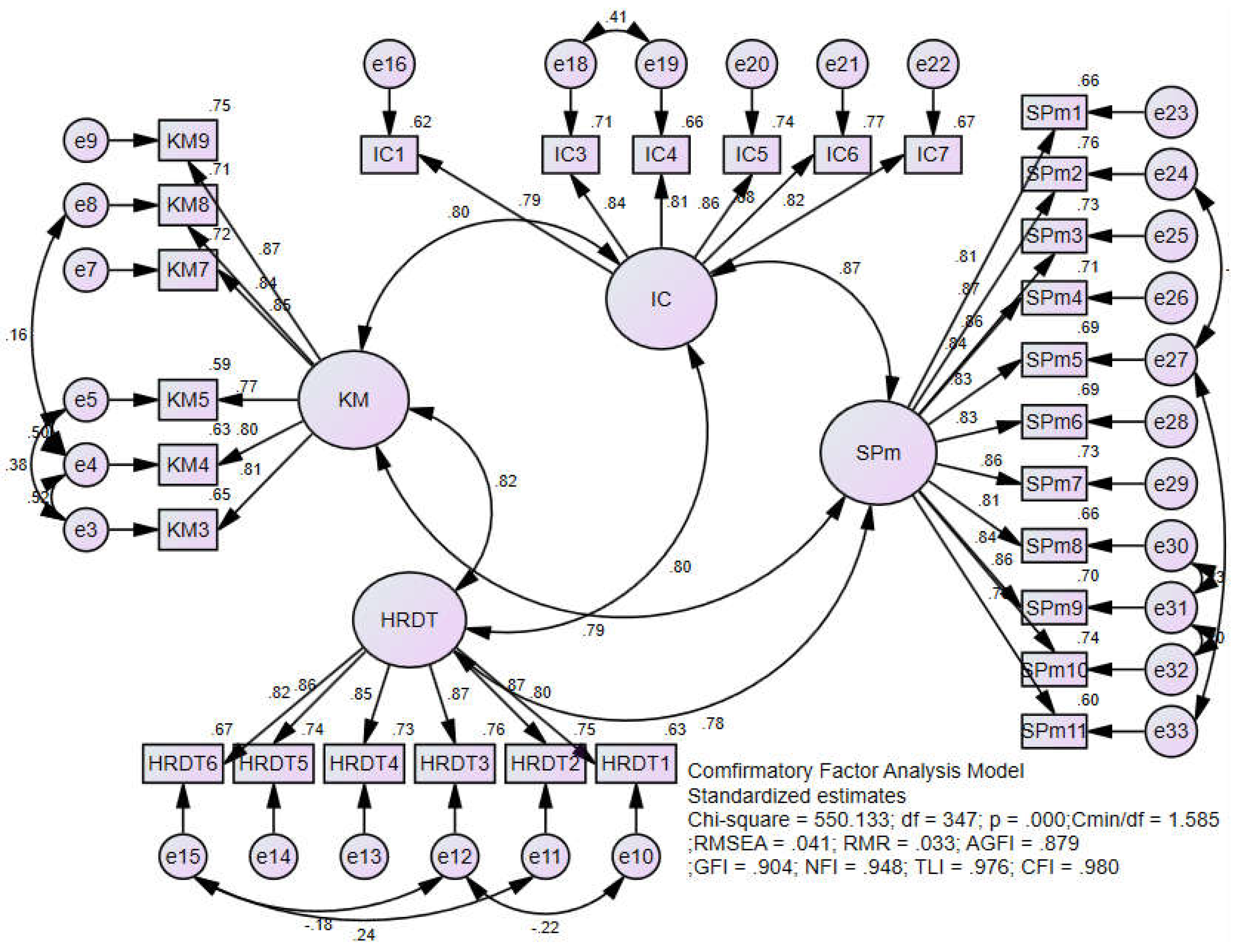
However, from the nine Goodness of Fit (GoF) criteria, it was found that several criteria were not achieved, where Chi-square was indicated to be still large, p>0.05, CMIN/DF was still outside the ≤2, GFI and AGFI were still far away and or equal to 0.90 (GFI; AGFI ≥0.90), while RMSEA, RMR, TLI and CFI have met the recommended criteria, which are greater than 0,90 [87,89,90,91,92,86]. To pursue the overall fit model, the measurement model with modifications was carried out on the second stage of CFA estimation. Modifications are made by evaluating the error value of each indicator in each construction, referring to the recommended output modification indices (see figure 2).
In the second phase of CFA estimation after the modification was made (figure 2), it was forced to delete KM1, KM2 and KM6 in the latent knowledge management (KM) variable, and the other six indicators were maintained. In the latent variable innovation capability (IC), IC2 may have to be removed so that there are six indicators retained. Elimination was also carried out by removing SPm12 on the latent continuous performance variable (SPm), leaving eleven indicators to be retained.
Meanwhile, the indicators that form human resources digital transformation (HRDT) are maintained as in the construction of the model in the early stages. The findings from the results of the post-improvement CFA estimate show that each indicator of each construction has λ>0.7, each construction meets the criteria of VE>0.5, and CR>0.7 (see table 1).
All the indicators maintained from each latent variable have good validity at according to their criteria λ>0.7, and each construct has a value of VE>0.5, at the construction level also has a good level of reliability and consistency, where CR = 0.947>0.7 for KM, CR = 0.936>0.7 for HRDT, CR = 0.945>0.7 for IC, and CR = 0.962>0.7 for SPm, all of which are within the criterion of CR>0,7 [83,78]. Of the nine GoF criteria, eight criteria can be met, although the p>0.05 criterion is not achieved, as shown in the CFA caption in figure 2 (bottom right). However, dominantly, the fit model can be achieved, and statistically the hypothesis test stage in the model deserves a generally accepted recommendation on AMOS CB-SEM.

4.2. Structural Equation Model Hypothesis Testing

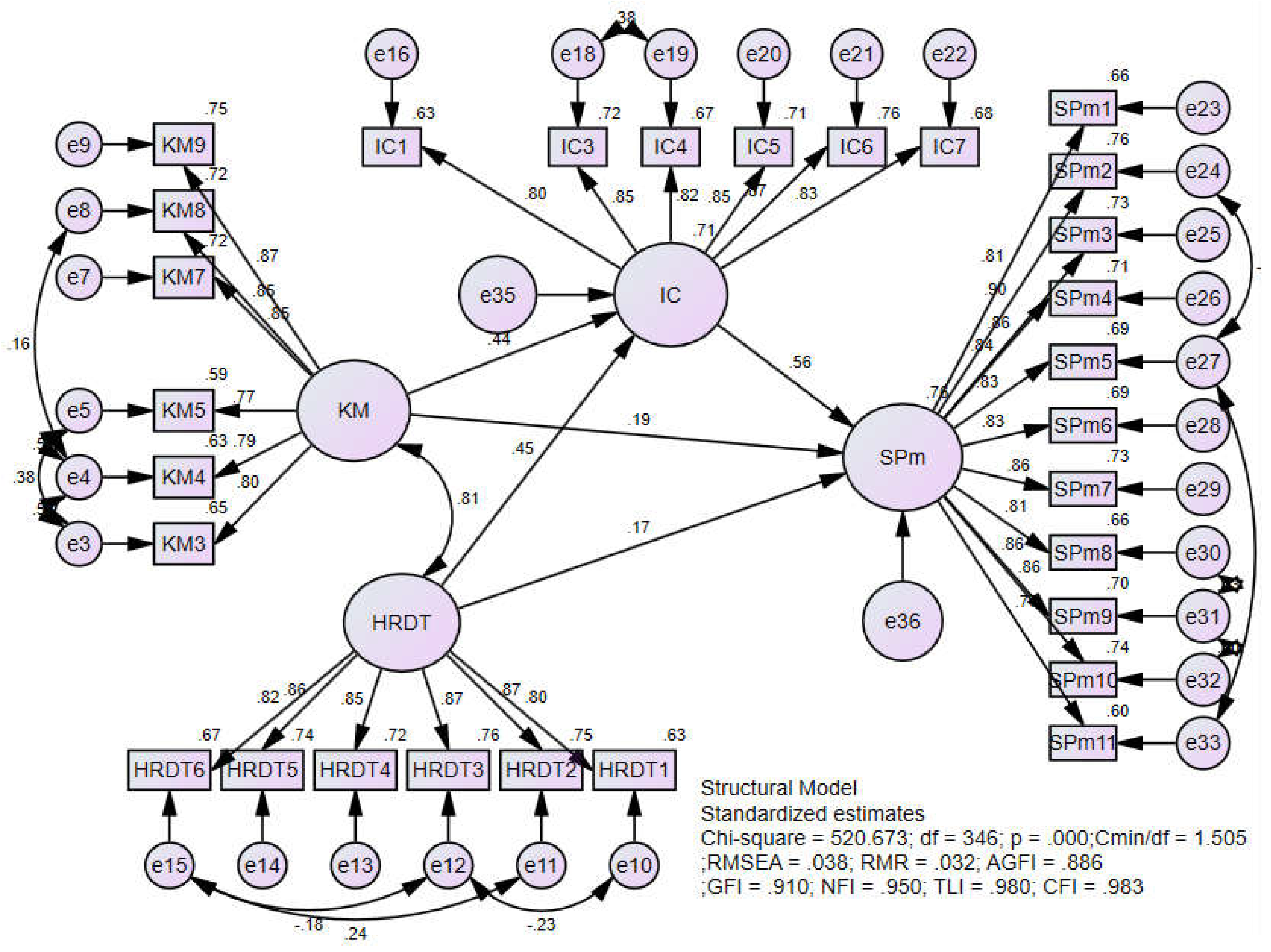
The hypothesis testing stage on the structural model is carried out by applying a bootstrap procedure, this stage of the structural model (figure 3) is converted from the modified CFA model. The significance of direct effect and indirect effect explaining the significance of the mediation effect are applied at p<0.05 each inter-construction relationship. Figure 3 is the result of the estimation and testing of the model for each relationship.

4.2.1. Direct Effect

There are five direct effect hypotheses proposed in this research model (H1, H2, H3, H4, and H5). The findings show that each hypothesis is acceptable and significant at p<0.05, as presented in table 2.
Statistically, the research findings support all the proposed hypotheses (tabel 2). Knowledge management (KM) has a positive direct effect on sustainable performance (SPm) and is significant at p<0.05 (H1 is accepted), the structural model of the relationship between the two has a coefficient value (β) of 0.187 (β = 0.187; p-value = 0.044).
Human resource digital transformation (HRDT) has a positive effect on sustainable performance (SPm) and is significant at p<0.05 (H2 is accepted), the structural model of the relationship between HRDT and SPm has a β of 0.174 (β = 0.174; p-value = 0.043).
Innovation capability (IC) has a positive effect on sustainable performance (SPm) and is significant at p<0.05 (H3 is accepted), Thus, for the structural model on the relationship between KM and IC, it has a β of 0.564 (β = 0.564; p-value = 0.014).
Thus, for the structural model on the relationship between KM and IC, it has a β of 0.436, the findings positively indicate that KM has an effect on IC and is significant at p<0.05 (β = 0.436; p-value = 0.015), so H4 is accepted.
HRDT also has a positive effect on IC and is significant at p<0.05 (H5 is accepted), where the structural model on the relationship between HRDT and IC has a β of 0.447 (β = 0.447; p-value = 0.006).
Research findings have confirmed that KM, HRDT, and IC are important aspects in efforts to achieve sustainable SME performance throughout the business journey, indicating the importance of adaptive and innovative behavior in the digital age.

4.2.2. Mediation Effect in the Structural Model of Indirect Effects

The indirect effect evaluates the mediating effect of innovation capability (IC) on the model of the relationship between knowledge management (KM) and sustainable performance (SPm), for hypothesis 6 (H6), and on the model of the relationship between human resources digital transformation (HRDT) and SPm, to prove hypothesis 7 (H7).
Table 3 shows the results of the mediation effect test of the IC. The findings show that IC has a positive mediating effect on the relationship between KM and SPm, with a coefficient of 0.246 and statistically significant at p<0.05 (β = 0.447; p-value = 0.006), so H6 is accepted. The magnitude of the effect of IC mediation in strengthening the effect of KM on SPm at a confidence level of 95% (0.95) is in the range between 0.139 to 0.382.
IC also had a positive mediating effect on the relationship between HRDT and SPm, with a coefficient of 0.252 and statistically significant at p<0.05 (β = 0.252; p-value = 0.005), so H7 was accepted. At a confidence level of 95%, the magnitude of the effect of IC mediation that can positively strengthen the effect of HRDT on SPm is between 0.134 to 0.405.
Finally, these findings can prove that IC has a positive and significant mediating effect on the relationship between KM and HRDT with SPm, so that this research model can cover the existing gap.

5. Discussion

Knowledge management (KM) as an important means that fundamentally has a unique added value as a valuable intangible asset and has become a potion of life throughout the development of healthy business entities in competition and the flow of changes in the increasingly dynamic business environment. The urgency of KM is not only relevant for large-scale companies but is suitable for supporting business growth at the SME level which generally relies on creativity, high motivation by offering uniqueness or local wisdom of a region and other forms of idea development. Even through this, its application supports the strength and progress of business in the age of digital technology. Because, the existence of knowledge and knowledge management allows the development of critical thinking, HR competencies and adaptive business behaviors that are able to integrate internal goals with external needs in the current perspective on the basis of acquisition, identification and selection of knowledge, management, utilization and distribution of knowledge into business operational strategies and practices in accordance with the processes and business models that are carried out from time to time, so that good managerial to effective operations can be carried out with empowerment and knowledge transmission that is able to improve sustainable business performance [25,14,13].
Considering the importance of knowledge management to support the achievement of sustainable SME performance, empirically the research findings are enough to provide good evidence. Despite the facts, knowledge allocation, utilization, transmission, implementation and sharing have a dominant contribution in strengthening the influence of knowledge management on the performance of sustainable SMEs, compared to the acquisition, selection and storage of knowledge. These findings support the results of previous research, which found that knowledge sharing has a positive effect in influencing sustainable business performance, e.g.,[40]. No matter how well knowledge is obtained and stored, without proper utilization, sharing and distribution according to business allocations and needs that must be immediately exploited and developed among individual employees collectively and at the organizational level of business institutions, it has an impact on the lack of trust and ability to pursue sustainable business performance. However, these findings are predominantly from various components that are considered as the shaping of knowledge management contributing to the occurrence of changes, adjustments and the ability of SMEs to improve sustainable performance in the digital age. This finding is also in line with [13], that good and sustainable business performance has the potential to be achieved with the proper implementation and differentiation of KM. Strengthening this finding, the results of the research by [31], the findings conclude that creating innovative products and expanding the market in relatively new areas and delivering business performance in a sustainable direction requires knowledge management as a basis to support the success of the development process. Therefore, great attention is needed from business executives on the use of KM to improve business agility institutionally so that it has the potential to strengthen business performance [53], overall in various functions. The better knowledge management is mastered by SMEs, the better the achievement of improved business performance [93]. An effective and efficient adopted knowledge management system can be used as a managerial tool for appropriate changes in business practices that pay attention to the knowledge management process in operational mechanisms can lead to economically stable performance [94].
At the same time, new trends and new technologies have occurred, where digitization and digital transformation have dratically affected the competitiveness and business performance have forced to change the way organizations operate, the adequacy of digital literacy and the availability of human resources who have digital talents allow the human resources digital transformation (HRDT) to occur which is ready to support the way organizations operate to pursue better business performance at a level of excellence mature competitiveness accompanies the phase of change that continues to occur [16,95]. The findings of this study have revealed evidence that is in line with the trend of business needs in this era, that HRDT can positively affect efforts to improve the sustainable performance of SMEs. This research intervention, HRDT on a business perspective that continues to be renewable due to technological advances and digitalization practices, considers the fulfillment of human resource digital competencies to support SMEs' practices that are in contact with technology and digitalization in various business processes and functions to keep pace with changes in market behavior and how to meet their needs, as well as a form of being proactive and responsive to changes in the business environment so that SMEs have resilience and strength, resilience, and are used to the digital ecosystem so that they have a competitive advantage and have stable performance. These findings are in line with [42], the findings show that human resource competence has a positive effect on competitive sustainability with stable SME performance. As one of the company's assets that can mobilize other company resources, [4] said that human resources who have adequate qualifications and competencies related to technology are valuable capital that can encourage performance improvement and strengthen the sustainable competitiveness of SMEs in the digital economy era. Even in the face of challenges in the amids massive changes and business digitalization practices that correlate with various other aspects of life will continue to occur but cannot be imagined for sure, such conditions have hinted at the importance of digital literacy, competencies and digital talents of human resources to remain ready and survive in the era of transformation and digitalization.
The findings of this study operationally describe HRDT as a set of competencies that are relatively more relevant to the latest business needs, namely with the ability to use and utilize digital technology, being able to align competencies and work behaviors with digital technology, creating changes in business functions and processes, seizing opportunities and exploiting them as an innovative and adaptive way to create new value. make strategic shifts through human resource development and be able to make strategic changes to support organizational capacity development. Therefore, digital transformation of human resources is a digital HR competency that is ready to face challenges in digitalization practices, which includes the ability and skills in using and harmonizing digital technology, making organizational changes, enabling more flexible activities, creating and utilizing existing and different opportunities [2,96]. Human resources who always align their behavior and competencies strategically have the potential to strengthen companies in successful digital transformation practices so as to support business continuity with superior performance [43].
Business success is also inseparable from business operations that can always strategically adjust to the demands of change. Where innovation capabilities are closely related to adaptation efforts so that the business stays on the path expected by stakeholders, grows with good performance and has a competitive advantage over competitors. The low innovation capability has been recognized as a problem faced by business actors among SMEs in Indonesia, so that it has an impact on the fragility or vulnerability of their business sustainability. This is one of the reasons why SMEs continue to emerge but many of them are unable to operate in the ideal capacity, are unable to survive and eventually withdraw from the market. Given the importance of innovation capabilities, SME human resources and SMEs strategically need to have the ability and implement innovative business practices so that adjustments to various aspects can be made in the order of the required priority scale, so that the business remains economically balanced and has ideal performance, survives in maintaining and developing business sustainability, and is resilient in competition as the business environment continues to change. Interpreting the urgency of innovation capabilities in line with the trend of an increasingly dynamic business environment, the findings of this study provide sufficient evidence, where innovation capabilities have a positive impact on efforts to improve the sustainable performance of SMEs. Readiness to test ideas, have high creativity, technology adoption, managerial process innovation, innovation capabilities in terms of processes, products, and services, and have organizational innovation capabilities are important components that are well validated that can strengthen innovation capabilities in influencing the achievement of sustainable performance among SMEs. These findings are in line with previous research, [52,51] his findings prove that innovation capabilities applied in sustainable innovation have a positive effect on improving performance through the creation of competitive advantages.
It is undeniable that to maintain survival, business processes need to manage innovation capabilities as inherently intangible assets that come from the development of valuable and difficult to replicate knowledge. Innovation capability is a dynamic aspect that triggers the growth of strategic roles, allowing competitive markets to be entered with reliable competitiveness [7]. Therefore, business development is inseparable from the ability to innovate to improve performance leading to competitive business sustainability. Even the ability to innovate that can be managed properly with all its supporting factors is closely related to business assets and measurement of SME performance [97]. For example, [98] the innovation capabilities carried out on the aspects of products, processes, marketing and management have a positive effect that reveals evidence that it is able to provide a profitable level of business return and can strengthen the performance of SMEs at a more stable level. Convincing this, [99,100] findings show that innovation capabilities have a positive effect on business performance among SMEs.
On the other hand, the ability to innovate in sustainable business life can be influenced by the existence of knowledge and knowledge management. Supporting this, knowledge management has a positive contribution in triggering the growth of innovation capabilities among SMEs, as found in this study. This is in line with the findings of [29,56] that knowledge management has a strong correlation with innovation capabilities, so that the application of knowledge management contributes to encouraging the growth of innovation capabilities. The learning culture allows the acquisition of various knowledge among employees and business owners to then be managed, distributed and implemented for the development of business practices through cooperation that synergizes well between existing business functions, various effective knowledge can ultimately create equitable knowledge management in the allocation and transmission of knowledge that can strengthen adequate innovation capabilities in an effort to carry out Adapting to the pressure of change in the age of digital technology. Strategically for business progress in the digital era, the role of knowledge management systems is an important element in improving organizational agility, technology utilization, and innovation capabilities [101]. Knowledge management strategies strongly support stakeholders in a business chain in gathering knowledge to improve sustainable innovation capabilities [102]. Therefore, company leaders who promote learning, have openness and shared trust in collaboration, and are more likely to be participatory can lead to the efficiency of knowledge management practices thereby driving increased corporate innovation capabilities to strengthen the disruptive business success of 21st century technology.
Strengthening innovation capabilities, other interventions lead to the ability to leverage digital infrastructure and architectures, transformation and digitalization opportunities that are immediately exploited by prioritizing the creativity and individual abilities of human resources to develop business models with innovative solutions [57,43]. Human resources in the digital era are in the embrace of the industrial revolution 4.0, they are one of the important assets in the business journey that is recognized through the practice of digital transformation, where in the process strategic alignment continues to be carried out to support the success of this process. The findings of the study reinforce the evidence that human resources digital transformation (HRDT) has a positive impact on innovation capabilities among SMEs. This finding is in line with previous research that investigated the relationship between HRDT and digital talent (DT) with IC in the context of SMEs, for example [2] which found that there is a positive relationship between HRDT and IC, even all three. If the use and alignment of technology in the digital transformation process to change the way SMEs operate more adaptively is supported by management talent and HR talent, innovation capabilities can be managed and improved through the creativity of human resources within SMEs by making gradual adjustments to existing business models. The digital transformation process within SMEs that is able to bring together the adopted technology with adequate digital readiness of individual employees can encourage expanding innovation capabilities in dynamic business operations [2,103,18,104,105,106]. These findings provide a practical picture of HR competencies for the latest business trends, where human resource practices in companies emphasize the importance of having digital competencies and talents to support consistency in meeting the needs of the company's progress relying on innovation capabilities throughout business processes that continue to be digitized in the perspective of meeting the demands of business needs.
Ultimately, companies that implement knowledge management and align HR digital competencies in the right ways can influence innovation capabilities so that they become a source of competitive advantage that strengthens company performance in the era of technological disruption. The findings of this study provide evidence that supports the improvement of sustainable SME performance based on innovation capabilities (IC), human resources digital transformation (HRDT), and knowledge management (KM) in the mechanism of business practices in the digital age. Innovation capabilities are an important mediator that can positively strengthen the relationship between knowledge management and sustainable performance among SMEs. These findings provide enough valuable evidence to cover the gaps in sustainable SME performance models in the perspective of business travel in the current era. Supporting these findings, for example [29] his findings reveal that a good understanding of knowledge management with adequate innovation support can help successful knowledge management implementations create valuable organizational performance. Also the findings of [9] are related to the relevant context, where innovation capabilities have an important role in shaping and strengthening the effect of knowledge management on the competitiveness of companies. The implication is that innovation support is needed to achieve sustainable competitiveness with high SME performance.
This study also finds innovation capabilities as a strong facilitator that has a positive effect between human resources digital transformation as part of the most potentially most needed relevant core competency tools, and sustainable SME performance in the era of technological disruption. This finding can fill the existing gap as an effort to increase business success in a sustainable SME performance model from the perspective of economic development and digitalization which is continuously updated with rapid technological advances. Innovation capability as a facilitator that can strengthen human resource practices in an effort to improve SME performance in sustainable business practices [12]. Likewise, the digital transformation of human resources strongly supports the innovation capabilities and sustainable performance of competitive SMEs in business journeys in the era of technological disruption. Adequate digital competence of SME human resources allows the opening of business development opportunities from the marketing aspect to expand customer reach through missed digital transformation practices, making it difficult to be competitive globally. The adequacy of digital literacy is a characteristic of digital skills that are individually inherent among SME employees in the category of digital transformation of human resources, both from the functional management, production, MSDM and personnel, finance, marketing and other management functions if there are according to the scale of the SME, which is well integrated between each functional who can work together to strengthen innovation capabilities in an effort to improve performance sustainability at the level of the organization as a whole. Business practices based on the adoption of digital technology are common for SMEs that apply HRDT, even collaboration and interaction of digital platforms can become a culture that is carried out professionally as a form of adaptation and innovation in different processes and business models conventionally and digitally based through marketplaces in various digital platforms. Some social media is most often used by SMEs as a form of innovation in terms of marketing and selling their products widely and quickly. Interestingly, many do not survive in the digital ecosystem for long, or even fail at all, but HRDT can minimize failures and HRDT reflects the readiness of business transformation and digitalization practices to maintain and improve sustainable performance even though work behavior must adapt and interact with technological advances and digitalization in every phase of activities in business processes.
SMEs need to gradually change their business mindset which can be started by getting used to being active to always acquire, create, identify and select knowledge, manage and use, share knowledge and transmit it in the right and effective allocation of knowledge. A simple example that is valuable, for example, the existence of learning and imitation in business actors or competitors who are able to carry out digital transformation is sometimes necessary, where HRDT and innovation capabilities play an important role so that modifications and innovations can be carried out as differences and advantages. In addition, the presence of advanced technology based on artificial intelligence (AI) or other search engines ensures the urgency of applying knowledge and indisputable HRDT in studying audience behavior, broad markets, interaction and communication, absorption of critical and wise information about business model trends related to processes, products, services, collaborations and other relevant demands needed today, enabling the creation of innovation capabilities as the counterbalance. This is useful for improving business effectiveness and maintaining business continuity that has stable performance on a sustainable basis.
Knowledge management strategies and human resource intellectual capital contribute significantly to innovation and business growth capabilities [69], KM processes have strong causal predictive properties on the relationship between human resource social capital and innovation capabilities and competitive advantage [70], and social capital and knowledge management processes on innovation capabilities [70]. Knowledge creation as a shaper of knowledge management has an important role in predicting the innovation capacity and sustainable excellence of SMEs, so that it can help policymakers to promote sustainability in SMEs, by improving their performance in a competitive and innovative economic environment [7]. This is the meaning of the importance of knowledge and knowledge management (KM) as a managerial tool that underlies the development of other competencies, KM and HRDT are two important aspects of management and competency aspects among employees that are integrated into an organizationally holistic unit that contributes to strengthening innovation capabilities to maintain and improve adaptive business capabilities and lead to sustainable performance in the digital age.

6. Conclusions

Companies that implement knowledge management and align HR digital competencies in the right ways can significantly affect innovation capabilities so that they become a source of competitive advantage that strengthens company performance in the era of technological disruption. Confirmation of the structure of the constructed research model provides evidence that KM, HDRT and IC are proven to have a positive and significant direct effect on the performance of sustainable SMEs, where KM and HRDT also have an indirect effect. KM and HDRT also had a positive and significant effect on the improvement of ICs. IC verified to have a positive mediating effect on the relationship between KM and HRDT with sustainable SME performance. KM and HRDT are important aspects in terms of management and competence among employees who are strategically integrated in SMEs that can trigger the growth of innovation capabilities to improve adaptive business capabilities and lead to sustainable performance in the digital age. These findings provide enough valuable evidence that has the potential to fill the gaps related to sustainable SME performance models in the perspective of business continuity in the current era.

7. Research Implications and Recommendations

Theoretically, this study contributes to expanding the scientific horizon about the predictive causality between knowledge management and digital transformation of human resources with innovation capabilities that facilitate the achievement of high performance that has sustainable competitiveness in the SME sector. This study also enriches contemporary literature related to sustainable SME performance modeling developed by applying SEM statistically from a methodological aspect, due to the absence of literature that develops performance models in the Indonesian SME sector based on KM, HRDT, and IC. In terms of managerial and practical implications, this study describes the contextualization of KM as an effective managerial tool underpinning the development of other strategic competencies in the context of digital technology-based SME HR, and describes HRDT operationally as a set of competencies that are relatively more relevant to the latest business needs that deserve to be adopted to be applied and improved effectively so that it can trigger the growth of innovation capabilities to improve adaptive business capabilities and lead to competitive business continuity. The study also offers an up-to-date business framework in the sustainable performance model, which also helps SMEs, stakeholders and relevant authorities in mapping, designing and implementing policies through various programs that are clearly targeted in accelerating the growth mechanism of SMEs that have superior performance that have sustainable competitiveness in the digital economy era.
This research is subject to limitations, both operational aspects and methodological aspects. The relevant literature in the latest publications that support operationalization, theoretical statements and findings of this study can very well be missed. Future research can be more attentive to general keywords and more specific kunai words to find the most relevant and up-to-date content. In addition, the responses of the 353 respondents analyzed were obtained by various employees and SMEs who have different core functions of the company from each other in the context of Indonesian SMEs, allowing for statistical bias for global generalization. Therefore, the application of stricter sampling criteria, and statistical accuracy still needs to be improved, by expanding the sample and conducting an empirical comparative study of SME performance in developing countries and SMEs in developed countries, even the SME performance model based on KM, HRDT and IC with a green approach to the SME industry that intensively uses high-capacity technology, is still limited in the latest literature. Hopefully all of this can be a consideration for the direction of future research development.

Author Contributions

Conceptualization, I.B. and D.F.; methodology, D.F.; software, I.B. and D.F.; validation, I.B. and D.F.; formal analysis, I.B. and D.F.; investigation, D.F.; resources, I.B.; data curation, I.B. and D.F.; writing—original draft preparation, D.F.; writing—review and editing, I.B. and D.F.; visualization, I.B. and D.F.; supervision, I.B.; project administration, I.B. and D.F.; funding acquisition, I.B. All authors have read and agreed to the published version of the manuscript.

Funding

This research received no external funding.

Conflicts of Interest

The authors declare no conflicts of interest.

References

  1. Cardoso, A.; Pereira, M.S.; Sá, J.C.; Powell, D.J.; Faria, S.; Magalhães, M. Digital Culture, Knowledge, and Commitment to Digital Transformation and Its Impact on the Competitiveness of Portuguese Organizations. Adm. Sci. 2023, 14, 8. [Google Scholar] [CrossRef]
  2. Budiarti, I.; Firmansyah, D. Innovation capability: Digital transformation of human resources and digital talent in SMEs. J. East. Eur. Cent. Asian Res. 2024, 11, 621–637. [Google Scholar]
  3. Noe, R.; Hollenbeck, J.; Gerhart, B.; Wright, P. Human Resources Management: Gaining a Competitive Advantage, Tenth Global Edition. New York: McGraw-Hill Education New York, NY, USA, 2017.
  4. Prasanna, R.; Jayasundara, J.; Naradda Gamage, S.K.; Ekanayake, E.M.S.; Rajapakshe, P.S.K.; Abeyrathne, G. Sustainability of SMEs in the competition: A systemic review on technological challenges and SME performance. J. Open Innov. Technol. Mark. Complex. 2019, 5, 100. [Google Scholar] [CrossRef]
  5. Firmansyah, D.; Ahman, E.; Disman, D.; Mulyadi, H.; Rifa’i, A.A.; Suryana, A. Model for Increasing the Economic Competitiveness of MSMEs in the Creative Industry Sector in Indonesia. J. Adv. Zool. 2023, 44, 1355–1365. [Google Scholar] [CrossRef]
  6. Das, M.; Rangarajan, K.; Dutta, G. Corporate sustainability in SMEs: an Asian perspective. J. Asia Bus. Stud. 2020, 14, 109–138. [Google Scholar] [CrossRef]
  7. Heenkenda, H.; Xu, F.; Kulathunga, K.; Senevirathne, W.A.R. The role of innovation capability in enhancing sustainability in SMEs: An emerging economy perspective. Sustainability 2022, 14, 10832. [Google Scholar] [CrossRef]
  8. Ngah, R.; Wong, K. Y. Linking knowledge management to competitive strategies of knowledge-based SMEs. Bottom Line 2020, 33, 42–59. [Google Scholar] [CrossRef]
  9. Mohamad, M. R.; Mat Zin, N. Knowledge management and the competitiveness of small construction firms. Compet. Rev. An Int. Bus. J. 2019, 29, 534–550. [Google Scholar] [CrossRef]
  10. Iqbal, S.; Rasheed, M.; Khan, H.; Siddiqi, A. Human resource practices and organizational innovation capability: role of knowledge management. VINE J. Inf. Knowl. Manag. Syst. 2021, 51, 732–748. [Google Scholar] [CrossRef]
  11. Soto-Acosta, P.; Popa, S.; Martinez-Conesa, I. Information technology, knowledge management and environmental dynamism as drivers of innovation ambidexterity: a study in SMEs. J. Knowl. Manag. 2018, 22, 824–849. [Google Scholar] [CrossRef]
  12. Wongsansukcharoen, J.; Thaweepaiboonwong, J. Effect of innovations in human resource practices, innovation capabilities, and competitive advantage on small and medium enterprises’ performance in Thailand. Eur. Res. Manag. Bus. Econ. 2023, 29, 100210. [Google Scholar] [CrossRef]
  13. Valdez-Juárez, L.E.; García-Pérez de Lema, D.; Maldonado-Guzmán, G. Management of knowledge, innovation and performance in SMEs. Interdiscip. J. Information, Knowledge, Manag. 2016, 11, 141–176. [Google Scholar]
  14. Firmansyah, D.; Wahdiniwaty, R.; Budiarti, I. Entrepreneurial Performance Model: A Business Perspective in the Digital Economy Era. J. Bisnis, Manajemen, dan Ekon. 2023, 4, 125–150. [Google Scholar] [CrossRef]
  15. Canton, H. Organisation for economic co-operation and development—OECD. in The Europa Directory of International Organizations 2021, Routledge 2021, 677–687.
  16. Firmansyah, D.; Wahdiniwaty, R. Prediction of Innovation Capability: the Role of Mediation in the Relationship between Digital Transformation and Competitiveness with the PLS-SEM Model. Int. J. Manag. Bus. Intell. 2023, 1, 125–142. [Google Scholar] [CrossRef]
  17. Cardoni, A.; Zanin, F.; Corazza, G.; Paradisi, A. Knowledge management and performance measurement systems for SMEs’ economic sustainability. Sustainability 2020, 12, 2594. [Google Scholar] [CrossRef]
  18. Wahdiniwaty, R.; Firmansyah, D.; Suryana, A.; Dede, D.; Rifa’i, A.A. Mystery in Marketing Management Products Post COVID-19 as a Model of Survival Strategy Towards the Awakening of Micro Small and Medium Enterprises (MSMEs) in the Digital Economy Era. Khazanah Sos. 2022, 4, 187–210. [Google Scholar] [CrossRef]
  19. Manzaneque-Lizano, M.; Alfaro-Cortes, E.; Priego de la Cruz, A. M. Stakeholders and long-term sustainability of SMEs. Who really matters in crisis contexts, and when. Sustainability 2019, 11, 6551. [Google Scholar] [CrossRef]
  20. Cheng, C.-H.; Li, M.-H.; Tang, B.-J.; Cheng, Y.-R. The Impact of Knowledge Management and Organizational Learning Promotion in Small and Medium Enterprises on the Implementation of Industry 4.0 and Competitiveness. Adm. Sci. 2024, 14, 161. [Google Scholar] [CrossRef]
  21. Vătămănescu, E.-M.; Cegarra-Navarro, J.-G.; Andrei, A.G.; Dincă, V.-M.; Alexandru, V.-A. SMEs strategic networks and innovative performance: a relational design and methodology for knowledge sharing. J. Knowl. Manag. 2020, 24, 1369–1392. [Google Scholar] [CrossRef]
  22. Kasemsap, K. Developing a framework of human resource management, organizational learning, knowledge management capability, and organizational performance. in Knowledge management for competitive advantage during economic crisis, IGI Global 2015, 164–193.
  23. Ghag, N.S.; Acharya, P.; Khanapuri, V. Sustainable competitiveness practices of SMEs: a strategic framework using integrated DEMATEL-NK model. J. Glob. Oper. Strateg. Sourc. 2024, 17, 626–660. [Google Scholar] [CrossRef]
  24. Firmansyah, D.; Ahman, E.; Wahdiniwaty, R. Economic Competitiveness of SMEs: Digital Literacy, The Mediating Role of Digital Transformation and Innovation Capability. Mix J. Ilm. Manaj. 2024, 14, 294–318. [Google Scholar] [CrossRef]
  25. Budiarti, I.; Firmansyah, D.; Susetyo, D. P. Effective Operational Improvement for MSMEs: Knowledge Management (KM) Practices – Implementation at Umy Lemon Sukabumi. J. Community Serv. Soc. Empower. 2025, 3, 37–50. [Google Scholar] [CrossRef]
  26. Cahyono, B.; Nurcholis, L.; Nugroho, M. Information Technology Implementation in SMEs: A Comparison of Indonesia and Malaysia. J. Manaj. Teor. dan Terap. 2022, 15, 25–37. [Google Scholar] [CrossRef]
  27. Yuen, Y.; Ng, X. Enhancing innovation performance of small and medium enterprises in Malaysia. Manag. Sci. Lett. 2021, 11, 887–894. [Google Scholar] [CrossRef]
  28. IMD World Competitiveness, 5 Year Overall and Factor Rankings, 2022. [Online]. Available: https://cedakenticomedia.blob.core.windows.net/cedamediacontainer/kentico/media/attachments/5years-overall-and-factors-rankingss.pdf. [Accessed: 01-Aug-2022].
  29. Migdadi, M.M. Knowledge management processes, innovation capability and organizational performance. Int. J. Product. Perform. Manag. 2022, 71, 182–210. [Google Scholar] [CrossRef]
  30. Krumsvik, A.H. Newspaper Ownership And The Prioritization Of Digital Competences. Digit. Journal 2015, 3, 777–790. [Google Scholar] [CrossRef]
  31. Abbas, J.; Zhang, Q.; Hussain, I.; Akram, S.; Afaq, A.; Shad, M.A. Sustainable innovation in small medium enterprises: the impact of knowledge management on organizational innovation through a mediation analysis by using SEM approach. Sustainability 2020, 12, 2407. [Google Scholar] [CrossRef]
  32. Taghizadeh, S.K.; Karini, A.; Nadarajah, G.; Nikbin, D. Knowledge management capability, environmental dynamism and innovation strategy in Malaysian firms. Manag. Decis. 2021, 59, 1386–1405. [Google Scholar] [CrossRef]
  33. Choi, B.; Lee, H. Knowledge management strategy and its link to knowledge creation process. Expert Syst. Appl. 2002, 23, 173–187. [Google Scholar] [CrossRef]
  34. Zack, M.H. A strategic pretext for knowledge management. in Proceedings of the Third European Conference on Organizational Knowledge, Learning and Capabilities, 2002.
  35. Budiarti, I. Knowledge management and intellectual capital-a theoretical perspective of human resource strategies and practices. Eur. J. Econ. Bus. Stud. 2017, 3. [Google Scholar] [CrossRef]
  36. Budiarti, I.; Burhanuddin, R. Knowledge Management, Intrinsic Motivation, and Competence Impact on Employee Performance Analysis (Study of Employees in the Technician Section at a Material Handling Company in Jakarta). 6th Int. Conf. Business, Econ. Soc. Sci. Humanit. (ICOBEST). Univ. Komput. Indones. 2023.
  37. Shujahat, M.; Sousa, M.J.; Hussain, S.; Nawaz, F.; Wang, M.; Umer, M. Translating the impact of knowledge management processes into knowledge-based innovation: The neglected and mediating role of knowledge-worker productivity. J. Bus. Res. 2019, 94, 442–450. [Google Scholar] [CrossRef]
  38. Andreeva, T.; Kianto, A. Knowledge processes, knowledge-intensity and innovation: a moderated mediation analysis. J. Knowl. Manag. 2011, 15, 1016–1034. [Google Scholar] [CrossRef]
  39. Birley, S.; Stockley, S. Entrepreneurial teams and venture growth. Blackwell Handb. Entrep. 2017, 287–307. [Google Scholar]
  40. Arsawan, I.W.E.; Koval, V.; Rajiani, I.; Rustiarini, N.W.; Supartha, W.G.; Suryantini, N.P.S. Leveraging knowledge sharing and innovation culture into SMEs sustainable competitive advantage. Int. J. Product. Perform. Manag. 2022, 71, 405–428. [Google Scholar] [CrossRef]
  41. Sulistyo, H.; Ayuni, S. Competitive advantages of SMEs: The roles of innovation capability, entrepreneurial orientation, and social capital. Contaduría y Adm. 2020, 65, 1–18. [Google Scholar] [CrossRef]
  42. Amoah, J.; Bankuoru Egala, S.; Keelson, S.; Bruce, E.; Dziwornu, R.; Agyemang Duah, F. Driving factors to competitive sustainability of SMEs in the tourism sector: An introspective analysis. Cogent Bus. Manag. 2023, 10, 2163796. [Google Scholar] [CrossRef]
  43. Nicolás-Agustín, Á.; Jiménez-Jiménez, D.; Maeso-Fernandez, F. The role of human resource practices in the implementation of digital transformation. Int. J. Manpow. 2022, 43, 395–410. [Google Scholar] [CrossRef]
  44. Kraft, C.; Lindeque, J.P.; Peter, M.K. The digital transformation of Swiss small and medium-sized enterprises: insights from digital tool adoption, J. Strateg. Manag. 2022, 15, 468–494. [Google Scholar] [CrossRef]
  45. Corvello, V.; Verteramo, S.; Nocella, I.; Ammirato, S. Thrive during a crisis: the role of digital technologies in fostering antifragility in small and medium-sized enterprises. J. Ambient Intell. Humaniz. Comput. 2023, 14, 14681–14693. [Google Scholar] [CrossRef]
  46. Depaoli, P.; Za, S.; Scornavacca, E. A model for digital development of SMEs: an interaction-based approach. J. Small Bus. Enterp. Dev. 2020, 27, 1049–1068. [Google Scholar] [CrossRef]
  47. Porter, M.E.; Stern, S. New challenge to America’s prosperity. Council on competitiveness, 1999.
  48. Mady, K.; Battour, M.; Aboelmaged, M.; Abdelkareem, R.S. Linking internal environmental capabilities to sustainable competitive advantage in manufacturing SMEs: The mediating role of eco-innovation. J. Clean. Prod. 2023, 417, 137928. [Google Scholar] [CrossRef]
  49. Aboelmaged, M. The drivers of sustainable manufacturing practices in Egyptian SMEs and their impact on competitive capabilities: A PLS-SEM model. J. Clean. Prod. 2018, 175, 207–221. [Google Scholar] [CrossRef]
  50. Okeke, A. Evaluating sustainable practices and supply chain management effectiveness in African small and medium-sized enterprises (SMEs). J. Sustain. Res. 2024, 6, e240033. [Google Scholar]
  51. Le, T.T.; Ikram, M. Do sustainability innovation and firm competitiveness help improve firm performance? Evidence from the SME sector in vietnam. Sustain. Prod. Consum. 2022, 29, 588–599. [Google Scholar] [CrossRef]
  52. Çağlıyan, V.; Attar, M.; Abdul-Kareem, A. Assessing the mediating effect of sustainable competitive advantage on the relationship between organisational innovativeness and firm performance. Compet. Rev. An Int. Bus. J. 2022, 32, 618–639. [Google Scholar] [CrossRef]
  53. Yao, J.; Crupi, A.; Di Minin, A.; Zhang, X. Knowledge sharing and technological innovation capabilities of Chinese software SMEs. J. Knowl. Manag. 2020, 24, 607–634. [Google Scholar] [CrossRef]
  54. Hanifah, H.; Abd Halim, N.; Vafaei-Zadeh, A.; Nawaser, K. Effect of intellectual capital and entrepreneurial orientation on innovation performance of manufacturing SMEs: mediating role of knowledge sharing. J. Intellect. Cap. 2022, 23, 1175–1198. [Google Scholar] [CrossRef]
  55. Cheng, J.-H.; Jheng, Z.-H. The influence of green innovation on sustainable transition in supply chains—Green knowledge management as a moderator. in ICEB 2024 Proceedings (Zhuhai, China), 2024, 24–28.
  56. Lam, L.; Nguyen, P.; Le, N.; Tran, K. The Relation among Organizational Culture, Knowledge Management, and Innovation Capability: Its Implication for Open Innovation. J. Open Innov. Technol. Mark. Complex. 2021, 7, 66. [Google Scholar] [CrossRef]
  57. Sharma, A.; Meet, M.K. Human Resource Digital Transformation (HRDT): A Study of Innovation and Capability Through Digitalization and Individual Factors. Educ. Adm. Theory Pract. 2023, 29, 394–412. [Google Scholar]
  58. Parwita, G.B.S.; Arsawan, I.; Koval, V.; Hrinchenko, R.; Bogdanova, N.; Tamošiūnienė, R. Organizational innovation capability: Integrating human resource management practice, knowledge management and individual creativity. 2021.
  59. Zhu, K.; Dong, S.; Xu, S.X.; Kraemer, K.L. Innovation diffusion in global contexts: determinants of post-adoption digital transformation of European companies. Eur. J. Inf. Syst. 2006, 15, 601–616. [Google Scholar] [CrossRef]
  60. Gloet, M.; Samson, D. Knowledge management and systematic innovation capability. in Disruptive technology: Concepts, methodologies, tools, and applications, IGI Global 2020, 1198–1218.
  61. Hvolby, H.-H.; Thorstenson, A. Indicators for performance measurement in small and medium-sized enterprises. Proc. Inst. Mech. Eng. Part B J. Eng. Manuf. 2001, 215, 1143–1146. [Google Scholar] [CrossRef]
  62. Ndiaye, N.; Abdul Razak, L.; Nagayev, R.; Ng, A. Demystifying small and medium enterprises’ (SMEs) performance in emerging and developing economies. Borsa Istanbul Rev. 2018, 18, 269–281. [Google Scholar] [CrossRef]
  63. Chonsawat, N.; Sopadang, A. Defining SMEs’ 4.0 Readiness Indicators. Applied Sciences 2020, 10, 8998. [Google Scholar] [CrossRef]
  64. Adams, G.L.; Lamont, B.T. Knowledge management systems and developing sustainable competitive advantage. J. Knowl. Manag. 2003, 7, 142–154. [Google Scholar] [CrossRef]
  65. Audretsch, D.B.; Belitski, M. Knowledge complexity and firm performance: evidence from the European SMEs. J. Knowl. Manag. 2021, 25, 693–713. [Google Scholar] [CrossRef]
  66. Bastos, X.S.; Ferreira, F.A.F.; Kannan, D.; Ferreira, N.C.M.Q.F.; Banaitienė, N. A CM-DEMATEL assessment of SME competitiveness factors. CIRP J. Manuf. Sci. Technol. 2023, 46, 74–88. [Google Scholar] [CrossRef]
  67. Liu, C.-H.; Chang, A.Y.-P.; Fang, Y.-P. Network activities as critical sources of creating capability and competitive advantage. Manag. Decis. 2020, 58, 544–568. [Google Scholar] [CrossRef]
  68. Fidel, P.; Schlesinger, W.; Emilo, E. Effects of customer knowledge management and customer orientation on innovation capacity and marketing results in SMEs: The mediating role of innovation orientation. Int. J. Innov. Manag. 2018, 22, 1850055. [Google Scholar] [CrossRef]
  69. Hayaeian, S.; Hesarzadeh, R. Knowledge Management Strategies, Intellectual Capital, and Ambidextrous Innovation Capability in SMEs: Are They Relevant? J. Knowl. Econ. 2024, 15, 6832–6859. [Google Scholar] [CrossRef]
  70. Trivedi, K.; Srivastava, K.B.L. The impact of intellectual capital-enhancing HR practices and culture on innovativeness—mediating role of knowledge management processes. J. Organ. Eff. People Perform. 2024, 11, 573–593. [Google Scholar] [CrossRef]
  71. Hair, J.F.; Babin, B.J.; Krey, N. Covariance-Based Structural Equation Modeling in the Journal of Advertising: Review and Recommendations. J. Advert. 2017, 46, 163–177. [Google Scholar] [CrossRef]
  72. Hair, J.F.; Black, W.C.; Babin, B.J.; Anderson, R.E.; Tatham, R. L. Pearson New International Edition : Multivariate Data Analysis, 7th ed. Pearson Education Limited, 2014.
  73. Strydom, H. An evaluation of the purposes of research in social work. Soc. Work. W. 2013, 49. [Google Scholar] [CrossRef]
  74. Ginsberg, L.H. Social work evaluation: principles and methods. Boston: Boston: Allyn and Bacon, 2001.
  75. Hair, J.F.; Gabriel, M.; Patel, V. AMOS covariance-based structural equation modeling (CB-SEM): Guidelines on its application as a marketing research tool. Brazilian J. Mark. 2014, 13. [Google Scholar]
  76. Leguina, A. A primer on partial least squares structural equation modeling (PLS-SEM). Taylor & Francis, 2015, 220–221.
  77. Hair, J.F.; Hult, G.T.M.; Ringle, C.M.; Sarstedt, M.; Danks, N.P.; Ray, S. An Introduction to Structural Equation Modeling BT - Partial Least Squares Structural Equation Modeling (PLS-SEM) Using R: A Workbook. Hair, J.F.; Hult, G.T.M., Ringle, C.M., Sarstedt, M., Danks, N.P., Eds.; Ray, S. Eds. Cham: Springer International Publishing, 2021. [Google Scholar]
  78. Mâță, L.; Clipa, O.; Tzafilkou, K. The development and validation of a scale to measure university teachers’ attitude towards ethical use of information technology for a sustainable education. Sustainability 2020, 12. [Google Scholar] [CrossRef]
  79. Hair, J.F.; Hult, G.T.M.; Ringle, C.M.; Sarstedt, M. A primer on partial least squares structural equation modeling (PLS-SEM). Sage publications, 2022.
  80. Franke, G.; Sarstedt, M. Heuristics versus statistics in discriminant validity testing: a comparison of four procedures. Internet Res. 2019, 29, 430–447. [Google Scholar] [CrossRef]
  81. Black, W.; Babin, B.J. Multivariate Data Analysis: Its Approach, Evolution, and Impact BT - The Great Facilitator: Reflections on the Contributions of Hair, Joseph F. to Marketing and Business Research. Babin, B.J.; and Sarstedt, M. Eds. Cham: Springer International Publishing, 2019. [Google Scholar]
  82. Hair, J.F.; Anderson, R.E.; Tatham, R.L. ; Black.; W.C. Multivariate Data Analysis, 5th ed. New Jersey: Prentice-Hall International, Inc, 2010. [Google Scholar]
  83. Dijkstra, T.K.; Henseler, J. Consistent partial least squares path modeling. MIS Q. 2015, 39, 297–316. [Google Scholar] [CrossRef]
  84. Kline, R.B. Principles and practice of structural equation modeling. Guilford publications, 2023.
  85. Hooper, D.; Coughlan, J.; Mullen, M. Structural equation modelling: guidelines for determining model fit. Electron J Bus Res Methods 2008, 6, 53–60. [Google Scholar]
  86. Dash, G.; Paul, J. CB-SEM vs PLS-SEM methods for research in social sciences and technology forecasting,” Technol. Forecast. Soc. Change 2021, 173, 121092. [Google Scholar] [CrossRef]
  87. Shi, D.; Maydeu-Olivares, A. The effect of estimation methods on SEM fit indices. Educ. Psychol. Meas. 2020, 80, 421–445. [Google Scholar] [CrossRef]
  88. Hair, J.F.; Matthews, L.M.; Matthews, R.L.; Sarstedt, M. PLS-SEM or CB-SEM: updated guidelines on which method to use,” Int. J. Multivar. Data Anal. 2017, 1, 107–123. [Google Scholar] [CrossRef]
  89. Tucker, L.R.; Lewis, C. A reliability coefficient for maximum likelihood factor analysis. Psychometrika 1973, 38, 1–10. [Google Scholar] [CrossRef]
  90. Hair, J.F.; Howard, M.C.; Nitzl, C. Assessing measurement model quality in PLS-SEM using confirmatory composite analysis. J. Bus. Res. 2020, 109, 101–110. [Google Scholar] [CrossRef]
  91. Bentler, P.M. Comparative fit indexes in structural models. Psychol. Bull. 1990, 107, 238. [Google Scholar] [CrossRef]
  92. Hu, L.; Bentler, P.M. Cutoff criteria for fit indexes in covariance structure analysis: conventional criteria versus new alternatives. Struct. Equ. Model. A Multidiscip. J. 1999, 6, 1. [Google Scholar] [CrossRef]
  93. Wahyono, W. The mediating effects of product innovation in relation between knowledge management and competitive advantage. J. Manag. Dev. 2020, 39, 18–30. [Google Scholar] [CrossRef]
  94. Centobelli, P.; Cerchione, R.; Esposito, E. Efficiency and effectiveness of knowledge management systems in SMEs. Prod. Plan. Control 2019, 30, 779–791. [Google Scholar] [CrossRef]
  95. Martincevic, I. The Correlation Between Digital Technology And Digital Competitiveness. Int. J. Qual. Res. 2021, 16, 541–558. [Google Scholar] [CrossRef]
  96. Jeansson, J.; Bredmar, K. Digital transformation of SMEs: Capturing complexity. in 32nd Bled eConference: Humanizing Technology for a Sustainable Society, Bled, Slovenia, June 16-19, 2019, 523–541.
  97. Saunila, M. Performance measurement approach for innovation capability in SMEs. Int. J. Product. Perform. Manag. 2016, 65, 162–176. [Google Scholar] [CrossRef]
  98. Maldonado-Guzmán, G.; Garza-Reyes, J.A.; Pinzón-Castro, S.Y.; Kumar, V. Innovation capabilities and performance: are they truly linked in SMEs? Int. J. Innov. Sci. 2020, 11, 48–62. [Google Scholar] [CrossRef]
  99. Bahta, D.; Yun, J.; Islam, M.R.; and Ashfaq, M. Corporate social responsibility, innovation capability and firm performance: evidence from SME. Soc. Responsib. J. 2021, 17, 840–860. [Google Scholar] [CrossRef]
  100. Ribau, C.P.; Moreira, A.C.; Raposo, M. SMEs innovation capabilities and export performance: an entrepreneurial orientation view. J. Bus. Econ. Manag. 2017, 18, 920–934. [Google Scholar] [CrossRef]
  101. Acosta-Prado, J.C.; Romero Severiche, A.K.; Tafur-Mendoza, A.A. Conditions of knowledge management, innovation capability and firm performance in Colombian NTBFs. VINE J. Inf. Knowl. Manag. Syst. 2021, 51, 218–235. [Google Scholar] [CrossRef]
  102. González-Ramos, M.I.; Guadamillas, F.; Donate, M.J. The relationship between knowledge management strategies and corporate social responsibility: Effects on innovation capabilities. Technol. Forecast. Soc. Change 2023, 188, 122287. [Google Scholar] [CrossRef]
  103. Guerra, J.M.M.; Danvila-del-Valle, I.; Méndez-Suárez, M. The impact of digital transformation on talent management. Technol. Forecast. Soc. Change 2023, 188, 122291. [Google Scholar] [CrossRef]
  104. Firmansyah, D.; Suryana, A.; Rifa’i, A.A.; Susetyo, D. P. DMT-CE (Digital Media Training-Capability Enhancement) Culinary Business Sector Sop Asep Amih Sukabumi to Improve Online-Based Adaptive Marketing Capabilities. Asian J. Community Serv. 2022, 1, 217–230. [Google Scholar] [CrossRef]
  105. Bansal, A.; Panchal, T.; Jabeen, F. Mangla, S.K.; Singh, G. A study of human resource digital transformation (HRDT): A phenomenon of innovation capability led by digital and individual factors. J. Bus. Res. 2023, 157, 113611. [Google Scholar] [CrossRef]
  106. Demirkan, H.; Spohrer, J.C.; Welser, J.J. Digital innovation and strategic transformation. It Prof. 2016, 18, 14–18. [Google Scholar] [CrossRef]
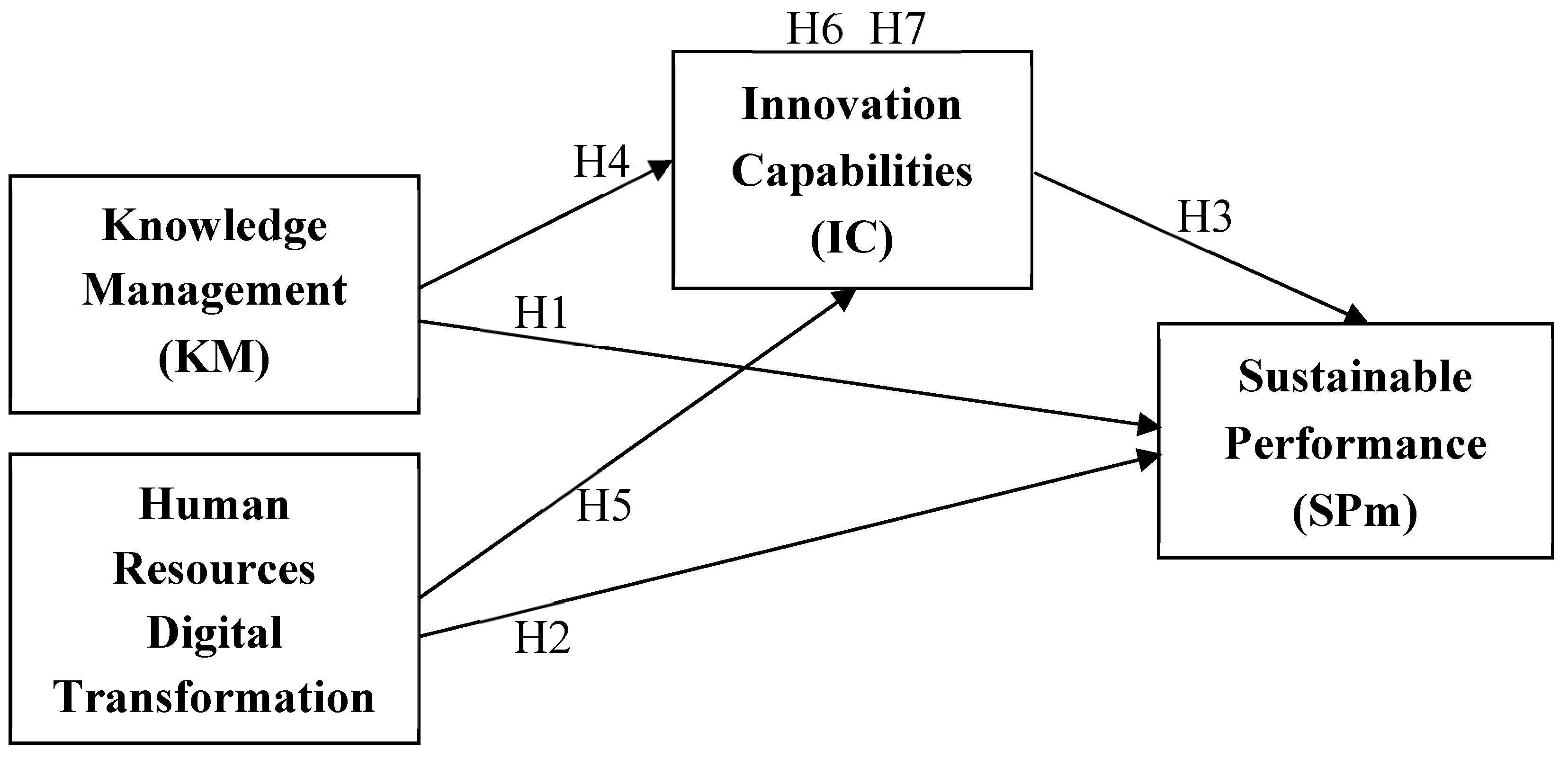
Figure 1. Conceptual Framework of the Proposed Model.
Preprints 150132 g001
Figure 2. Estimation Results of Confirmatory Factor Analysis Model after Modification.
Preprints 150132 g002
Figure 3. Structural Equation Model Estimation Results.
Preprints 150132 g003
Table 1. Confirmatory Factor Analysis of Measurement Model Results .
Latent Variables Indicators λ λ2 e VE CR
Knowledge Management (KM) KM3 0.806 0.650 0.350 0.676 0.926
KM4 0.795 0.632 0.368
KM5 0.771 0.594 0.406
KM7 0.846 0.716 0.284
KM8 0.844 0.712 0.288
KM9 0.866 0.750 0.250
Human Resources Digital Transformation (HRDT) HRDT1 0.797 0.635 0.365 0.713 0.937
HRDT2 0.868 0.753 0.247
HRDT3 0.872 0.760 0.240
HRDT4 0.852 0.726 0.274
HRDT5 0.860 0.740 0.260
HRDT6 0.816 0.666 0.334
Innovation Capabilities (IC) IC1 0.790 0.624 0.376 0.695 0.932
IC3 0.844 0.712 0.288
IC4 0.811 0.658 0.342
IC5 0.860 0.740 0.260
IC6 0.877 0.769 0.231
IC7 0.818 0.669 0.331
Sustainable Performance (SPm) SPm1 0.812 0.659 0.341 0.699 0.962
SPm2 0.871 0.759 0.241
SPm3 0.856 0.733 0.267
SPm4 0.844 0.712 0.288
SPm5 0.833 0.694 0.306
SPm6 0.831 0.691 0.309
SPm7 0.856 0.733 0.267
SPm8 0.813 0.661 0.339
SPm9 0.838 0.702 0.298
SPm10 0.862 0.743 0.257
SPm11 0.776 0.602 0.398
Note: λ, Standardized Loading Factors; e, error; VE, Variances extracted; CR, Composite reliability.
Table 2. Direct Effects Test Results.
Hypothesis Relationship Model β P-value Results
H1 KM → SPm 0.187* 0.044 Accepted
H2 HRDT → SPm 0.174* 0.043 Accepted
H3 IC → SPm 0.564* 0.014 Accepted
H4 KM → IC 0.436* 0.015 Accepted
H5 HRDT → IC 0.447** 0.006 Accepted
H6 and H7, Indirect effect (see table 3)
Note: *. Significant at p<0.05; **. Significant at p<0.01.
Table 3. Indirect Effects Test Results.
Hypothesis Relationship Model β P-value Lower Upper Results
H6 KM → IC → SPm 0.246** 0.006 0.139 0.382 Accepted
H7 HRDT→ IC → SPm 0.252** 0.005 0.134 0.405 Accepted
Note: **.Significant at p<0.01.
Disclaimer/Publisher’s Note: The statements, opinions and data contained in all publications are solely those of the individual author(s) and contributor(s) and not of MDPI and/or the editor(s). MDPI and/or the editor(s) disclaim responsibility for any injury to people or property resulting from any ideas, methods, instructions or products referred to in the content.
Copyright: This open access article is published under a Creative Commons CC BY 4.0 license, which permit the free download, distribution, and reuse, provided that the author and preprint are cited in any reuse.
Prerpints.org logo

Preprints.org is a free preprint server supported by MDPI in Basel, Switzerland.

Subscribe

Disclaimer

Terms of Use

Privacy Policy

Privacy Settings

© 2025 MDPI (Basel, Switzerland) unless otherwise stated