
Submitted:
20 February 2025
Posted:
21 February 2025
You are already at the latest version
Abstract
Daylight plays a crucial role in enhancing the physical and mental well-being of occupants, particularly students, who spend approximately fourteen years of their early lives in school classrooms. The built environment significantly influences students’ performance, health, and psychological well-being. Although the National Building Code 2016 mandates a minimum illuminance level of 300 lux, this requirement is not mentioned in the compliance report for school affiliations. Hence, lighting is not evaluated scientifically. This study assesses the existing illuminance levels in classrooms through field measurements and computational daylight simulation using Rhinoceros software with the Climate Studio plugin. The research aims to establish quantifiable relationships between key parameters such as window-to-wall ratio, annual sun exposure, spatial daylight autonomy, shading device configuration, and tree location and propose window optimization strategies for different site conditions. Results from field data and simulations establish that trees and window-to-wall ratios significantly impact daylight availability in classrooms. Optimized window-to-wall ratios should be determined for each façade and floor based on specific site conditions. These findings are useful for the architects to make informed decisions in the pre-design stage to provide sustainable design solutions.
Keywords:
1. Introduction
1.1. School Education in Tamilnadu
2. Materials and Methods
2.1. Type of Research
2.2. Objectives
- To evaluate the window-to-wall ratio of the existing classrooms
- To evaluate the daylight performance for daylight metrics like illuminance, spatial daylight autonomy, and annual sun exposure
- To study the influence of trees on daylight availability inside the classrooms
- To find the relationship between orientation, location of the classrooms for different window-to-wall ratios, and the shading device configuration concerning daylight
2.3. Methodology
2.4. Literature Review
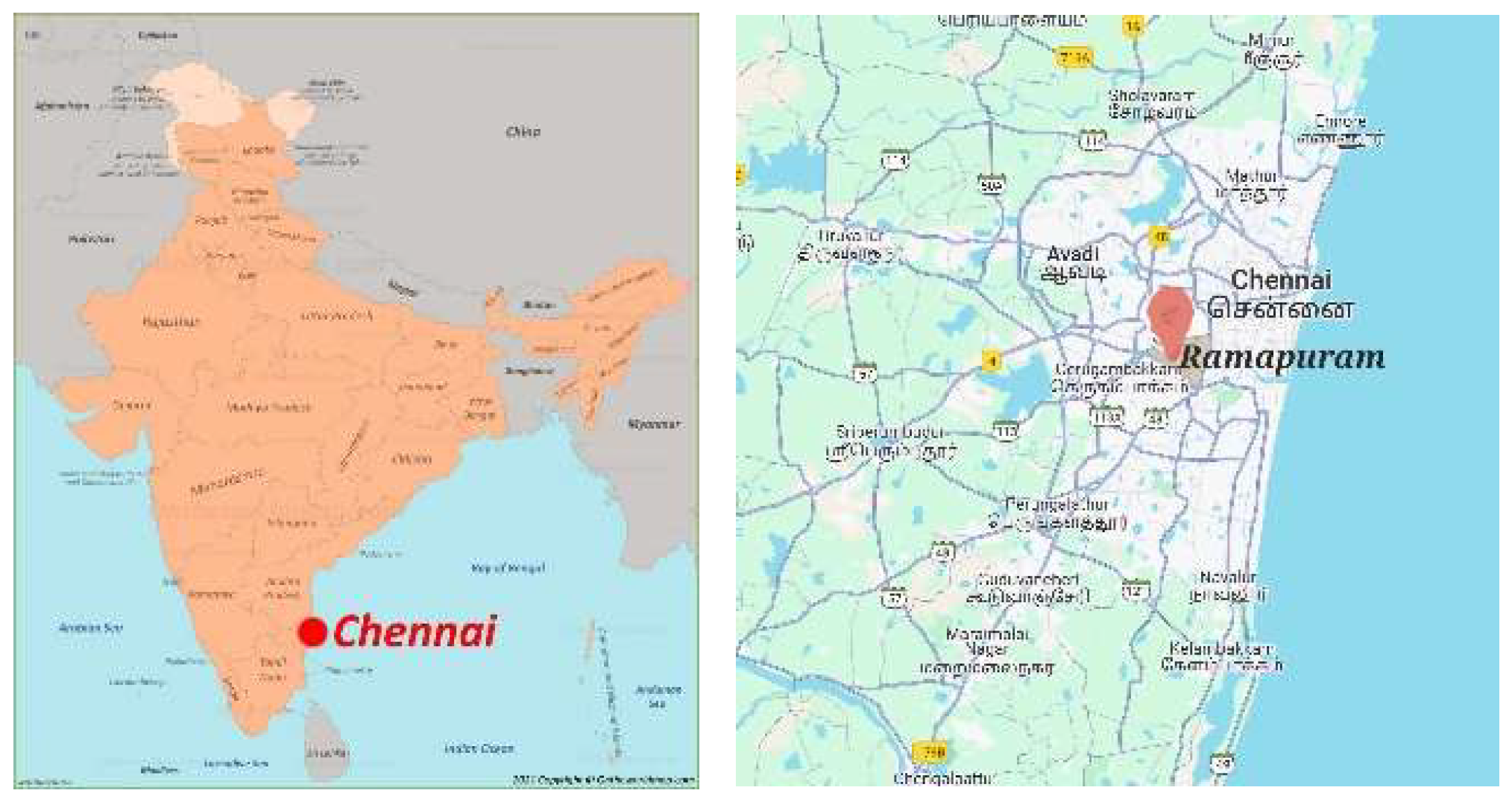
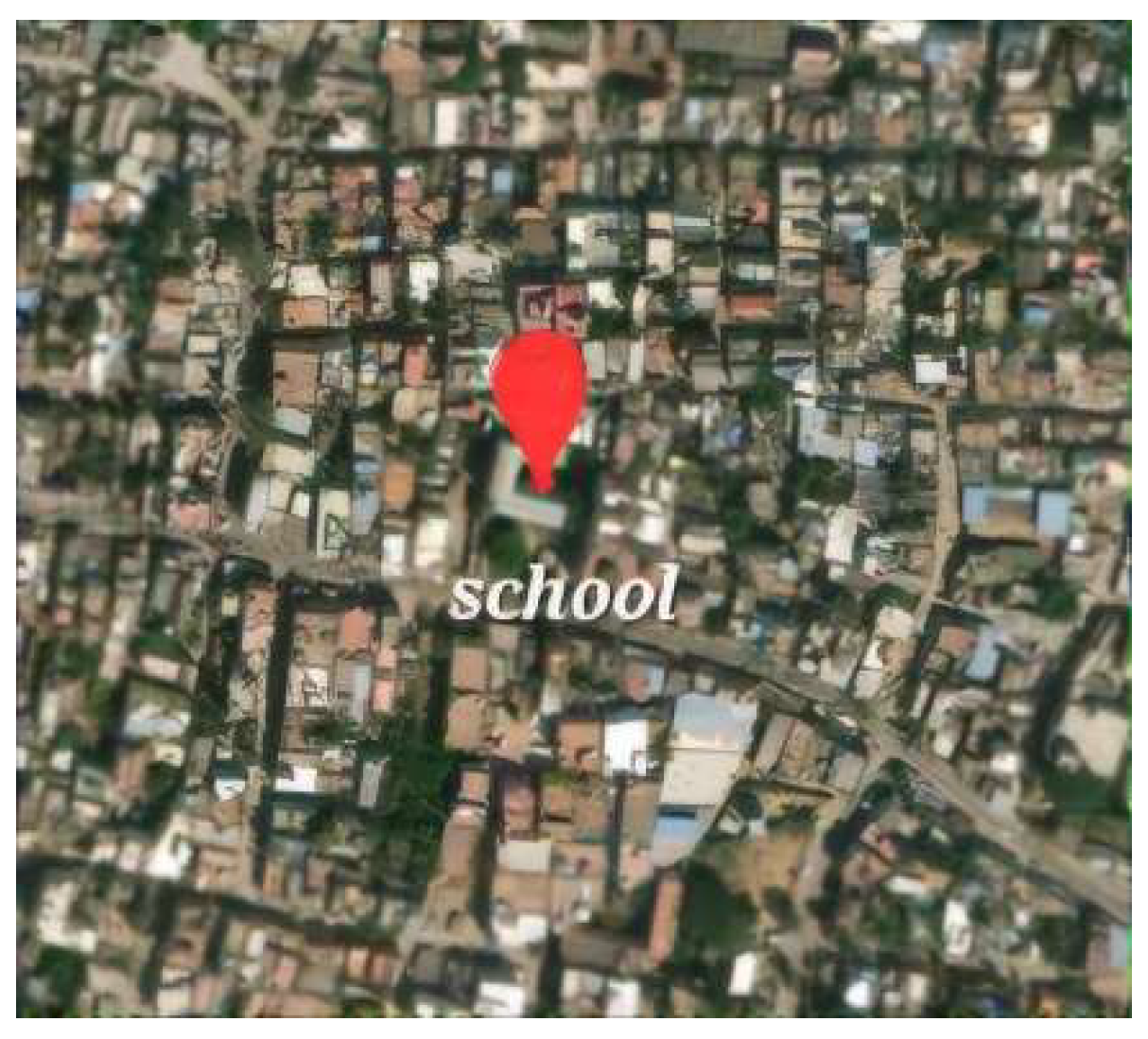
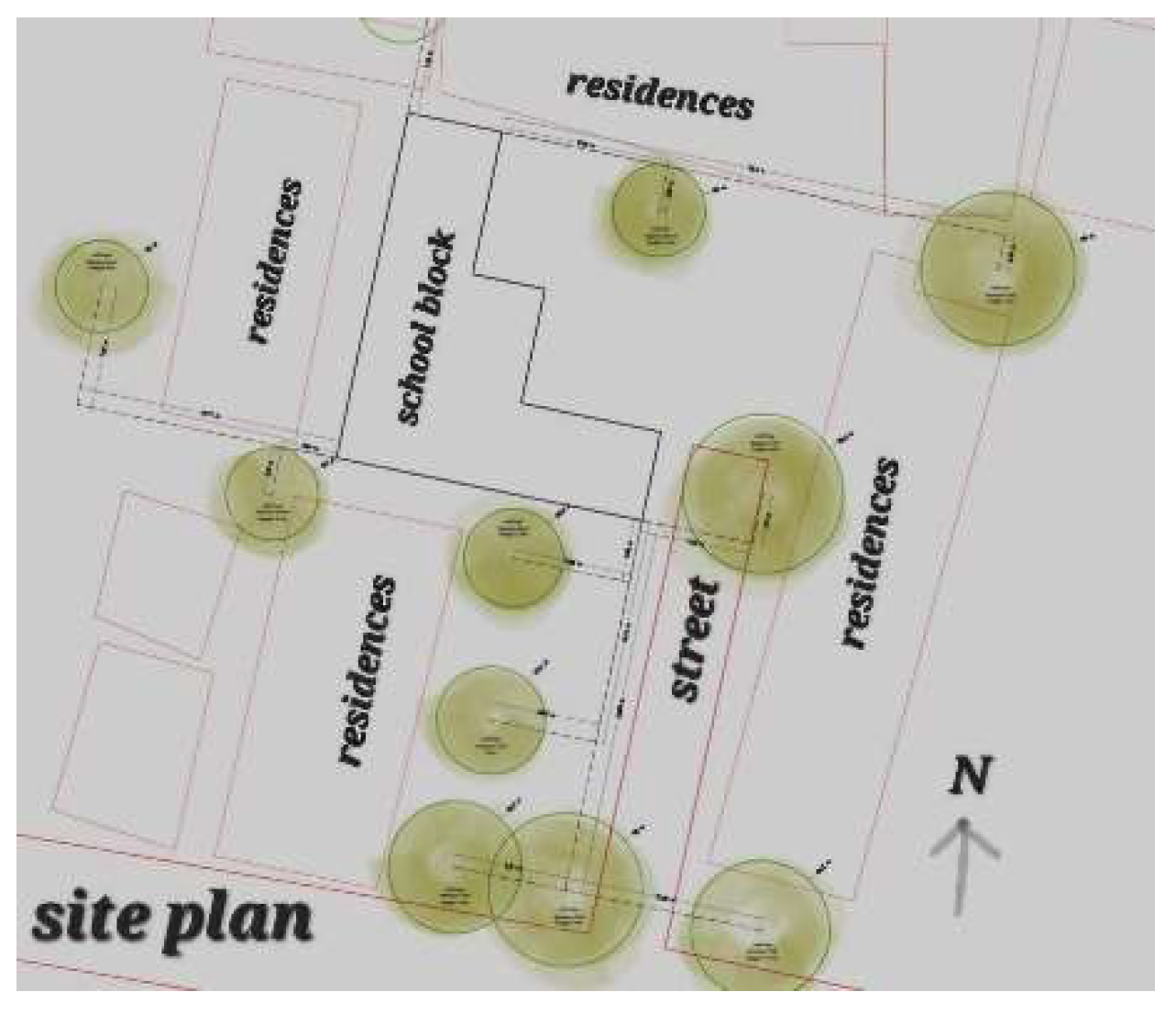
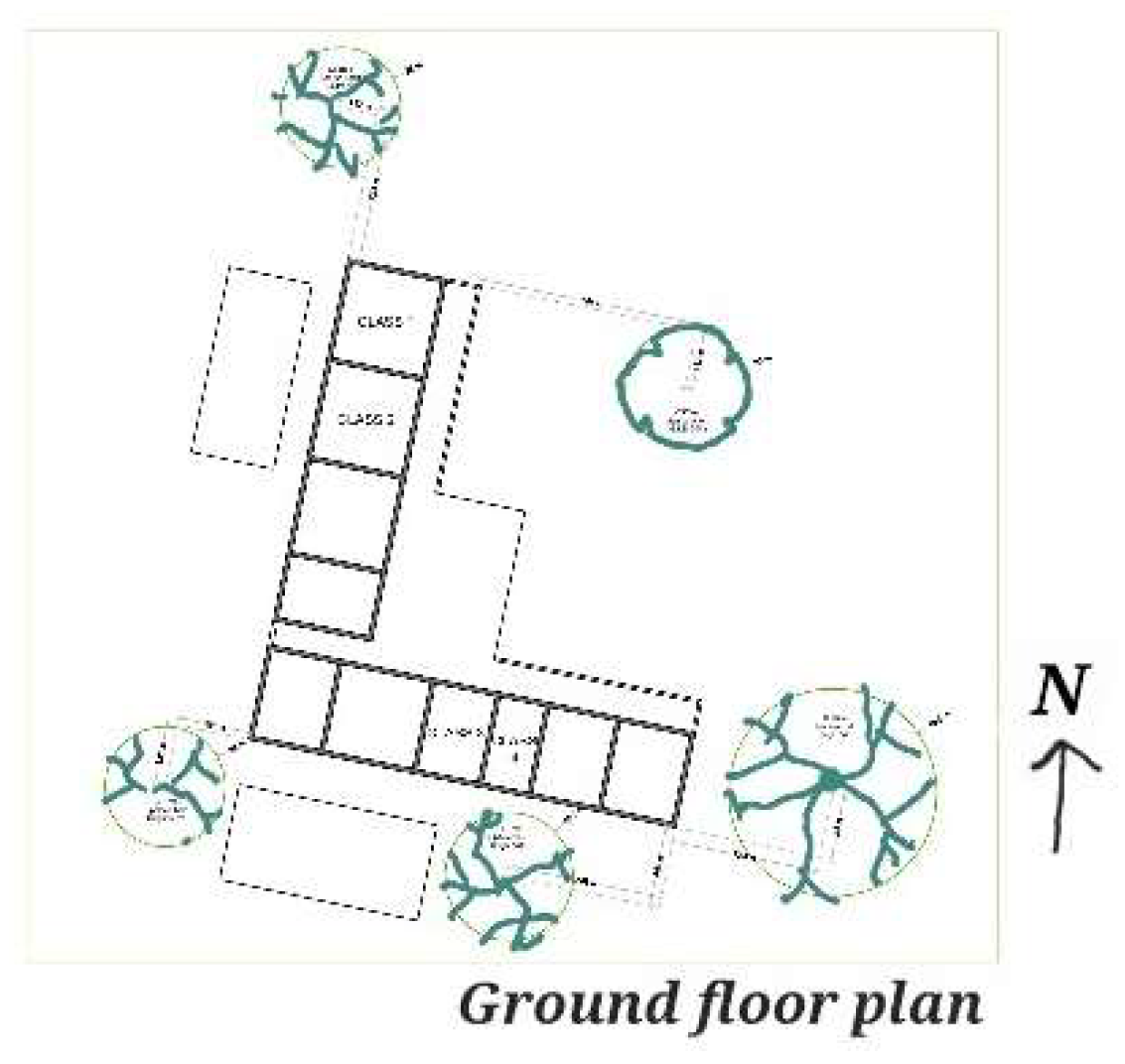
2.5. Study Area and Site Selection
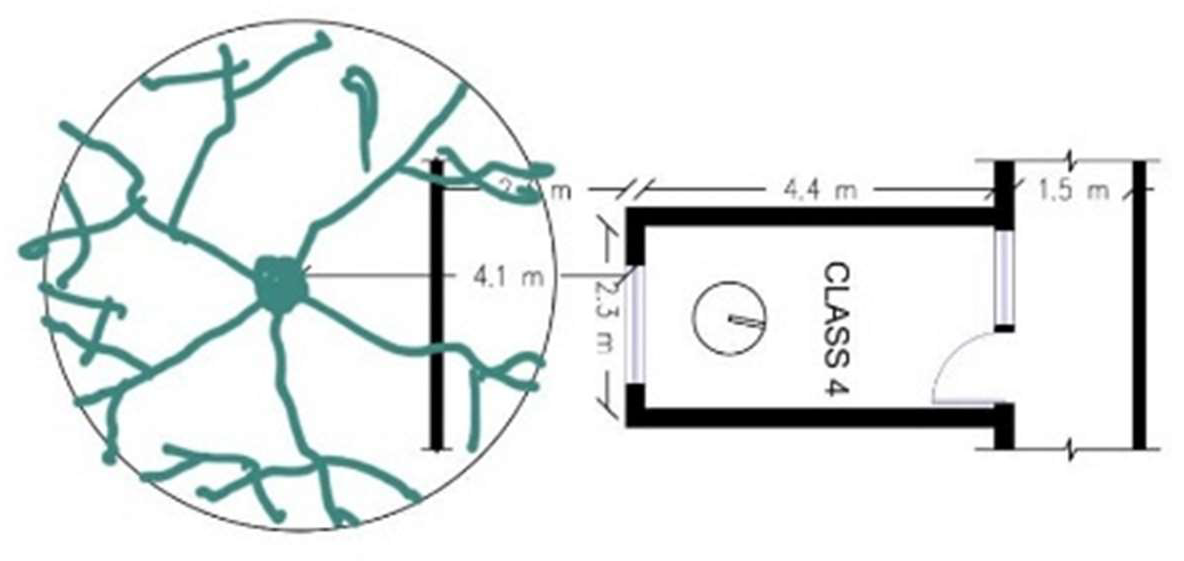
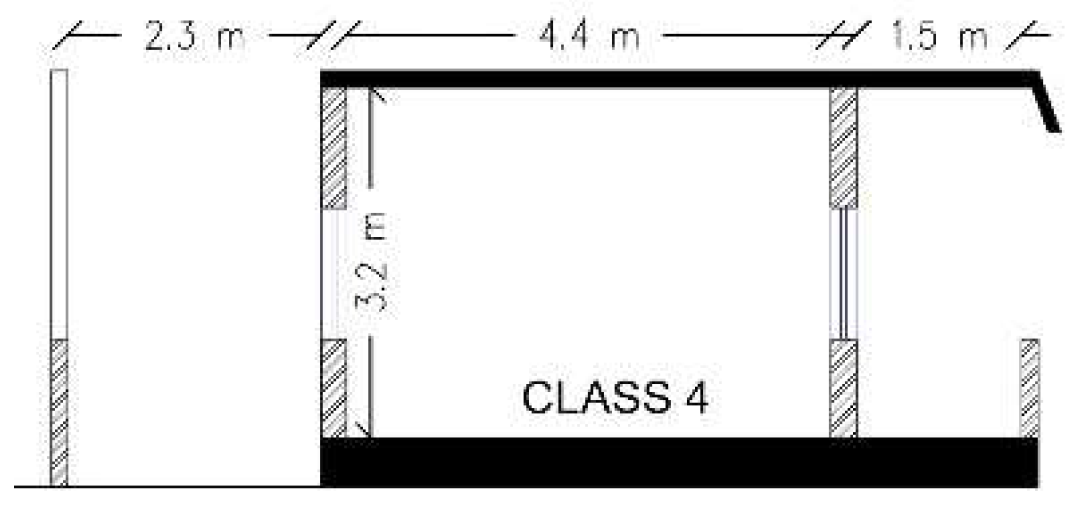
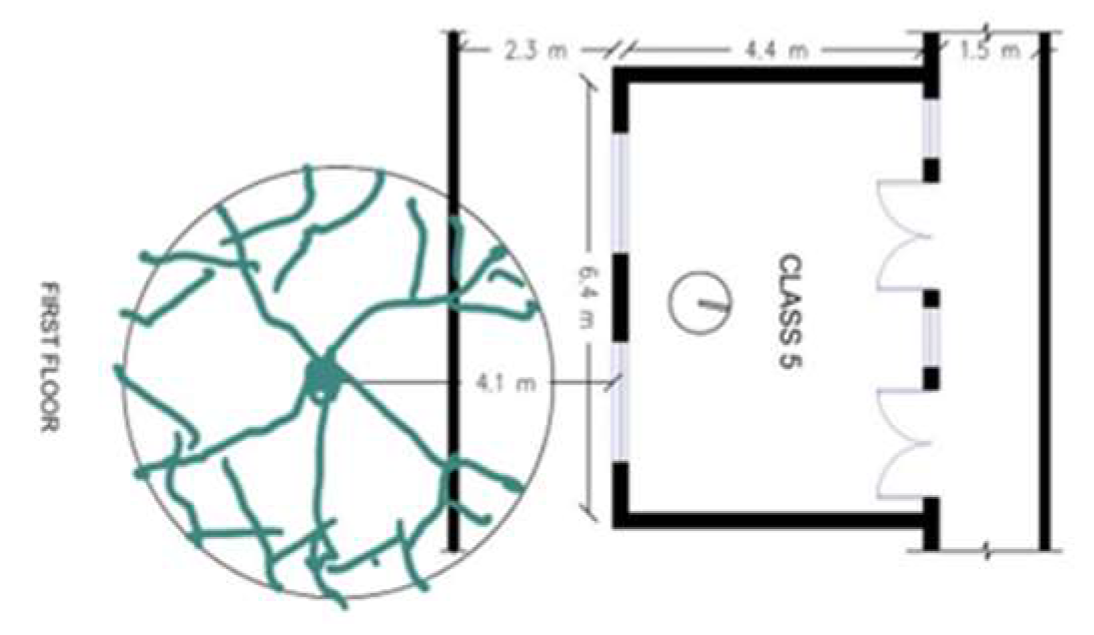
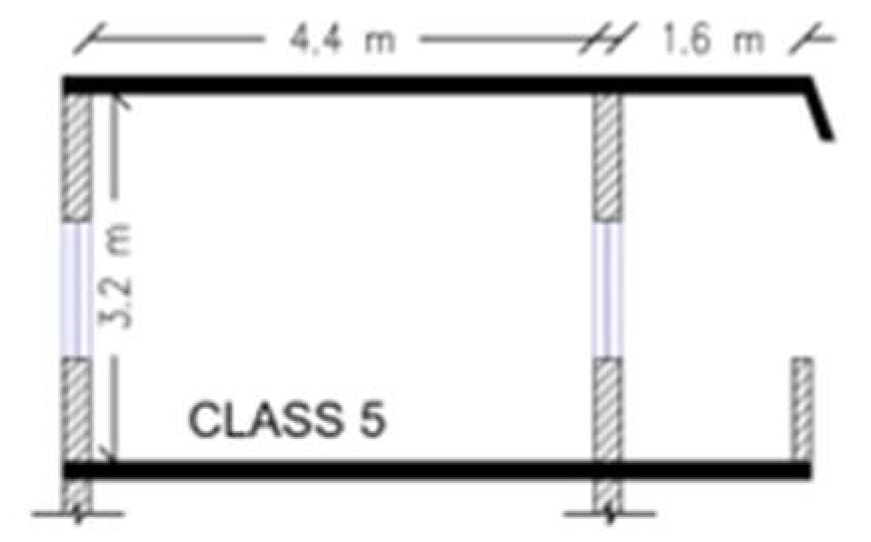
2.6. Field Measurements
2.6.1. Discussions from Field Study
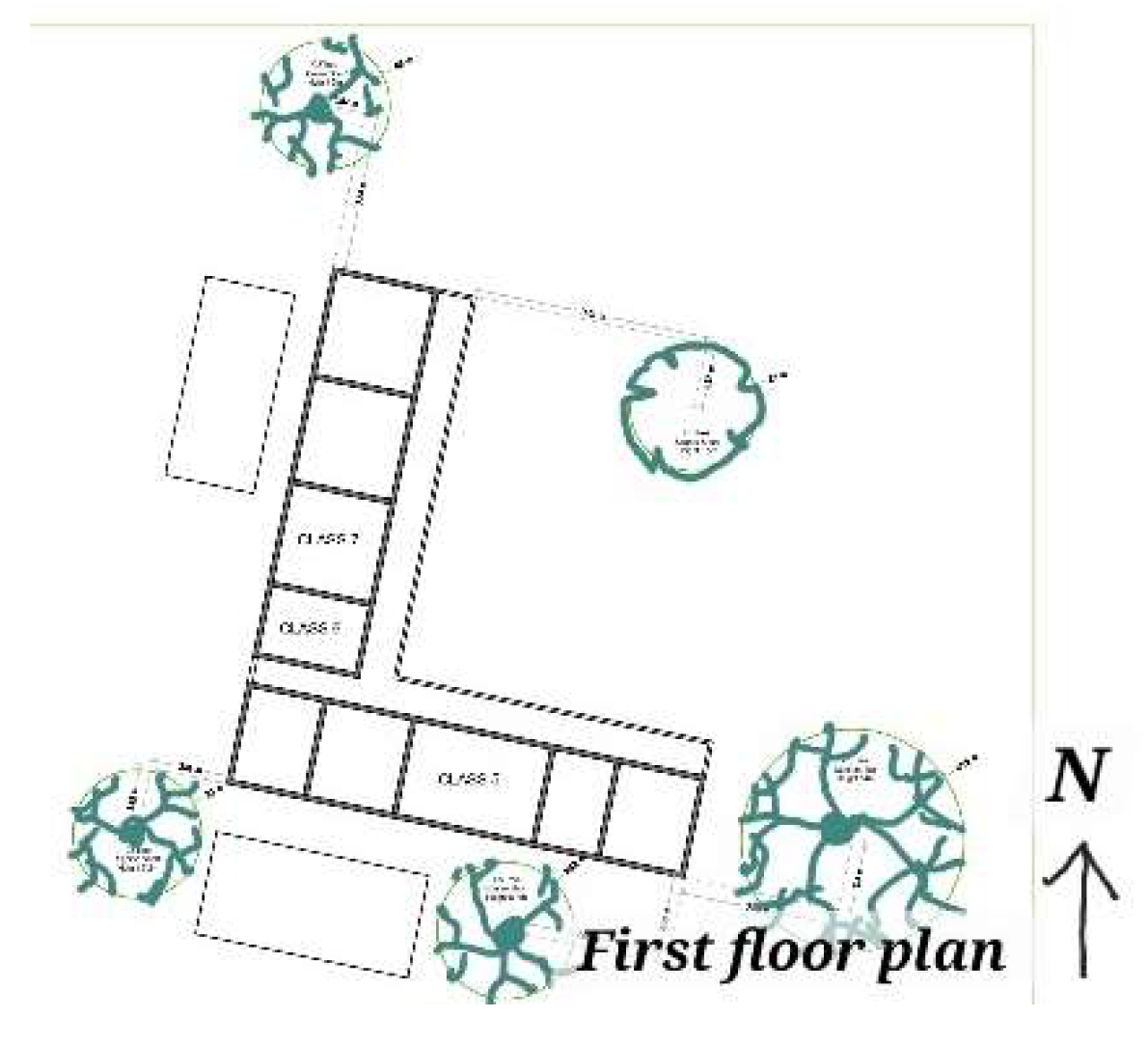
2.6.2. Influence of Adjacent Buildings on the West Side of the School and the Social Context
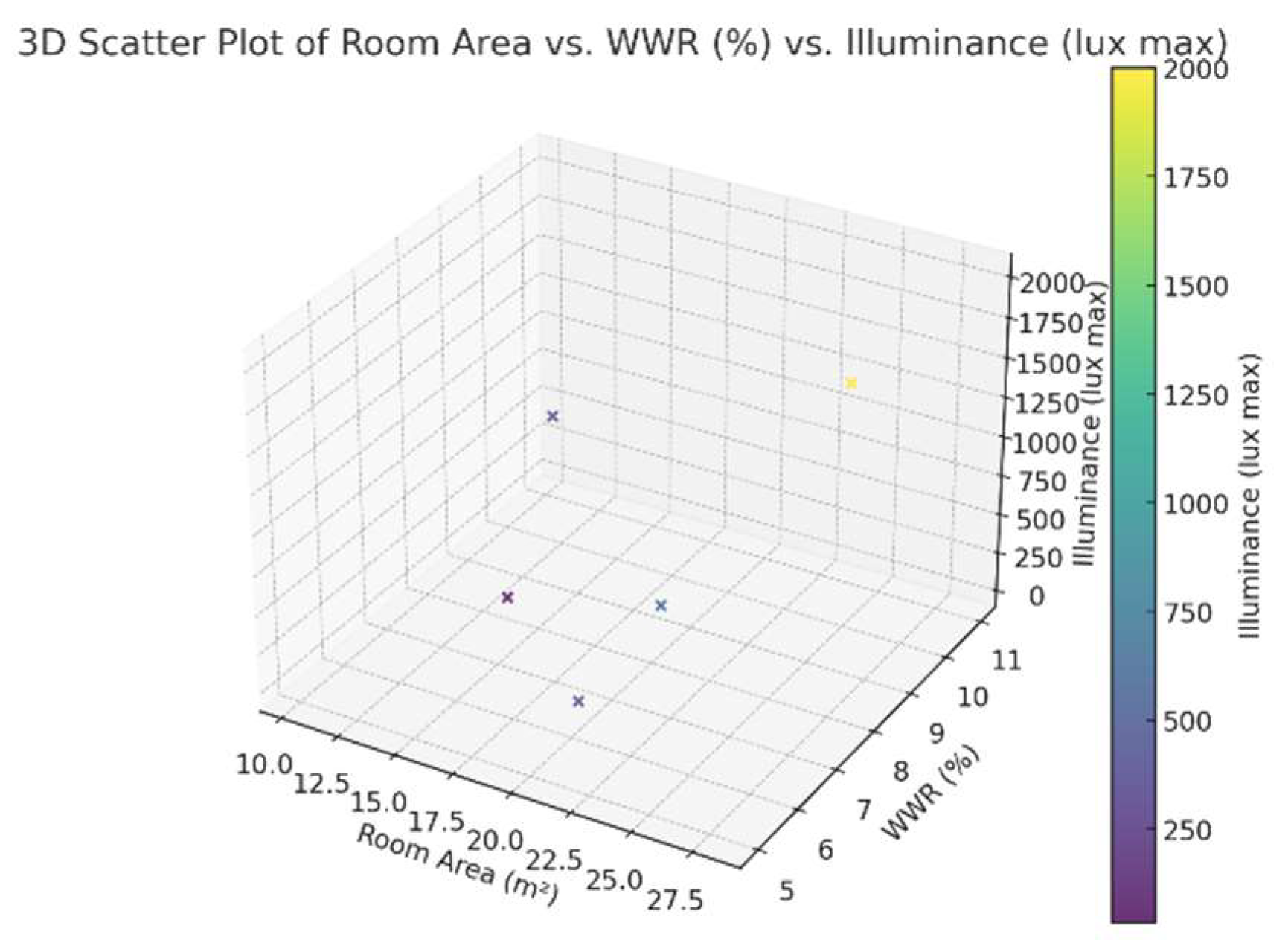
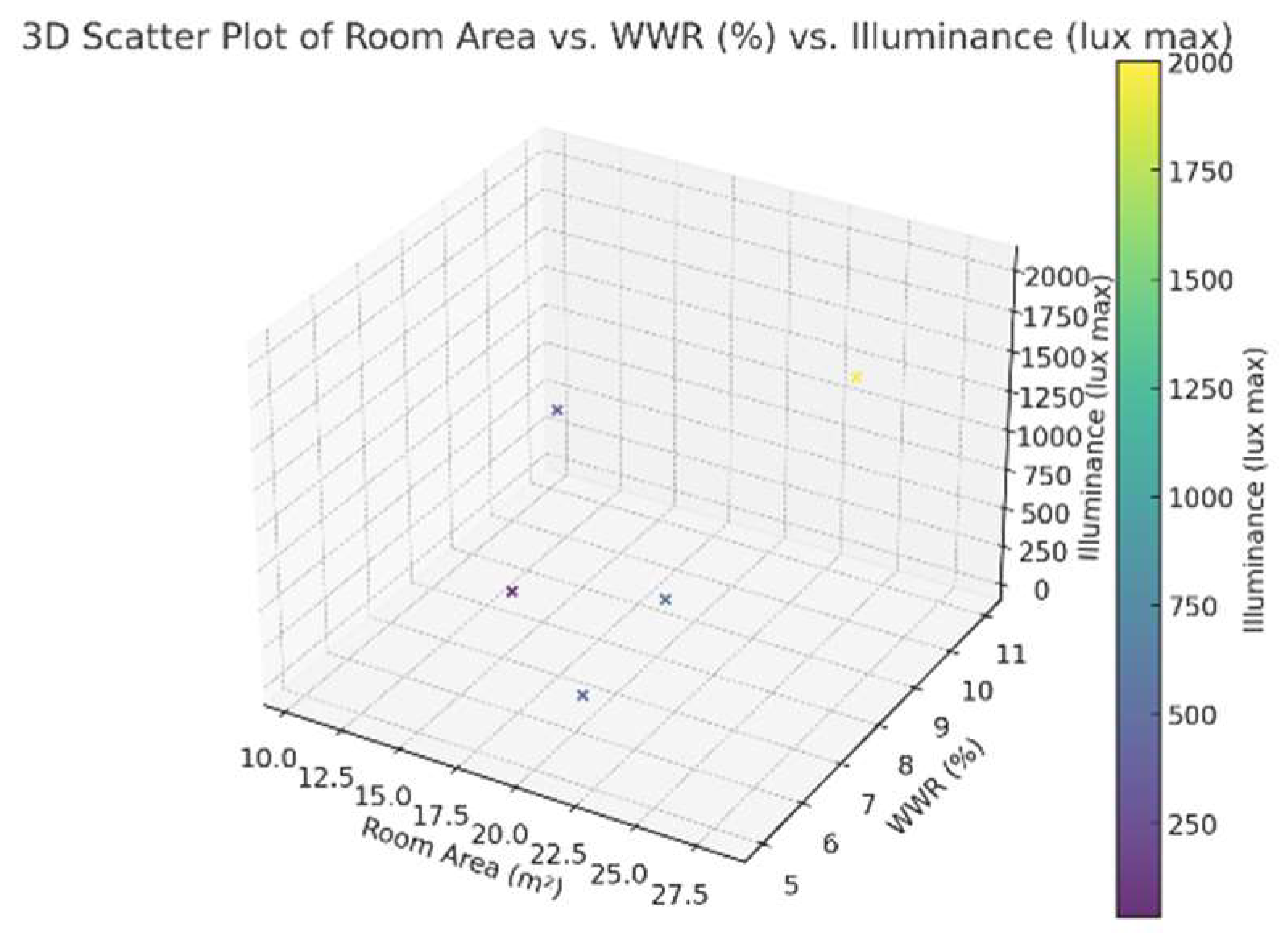
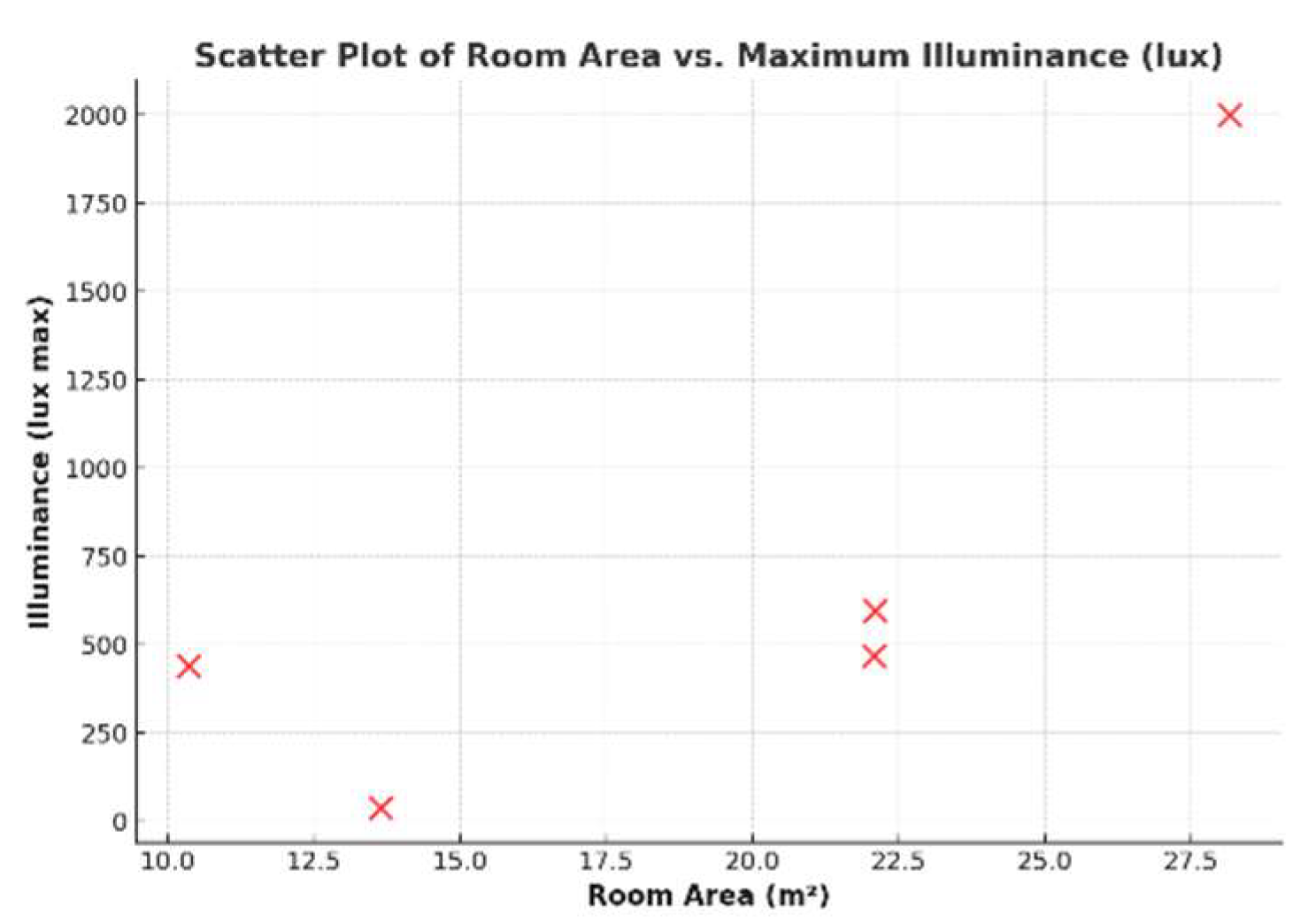
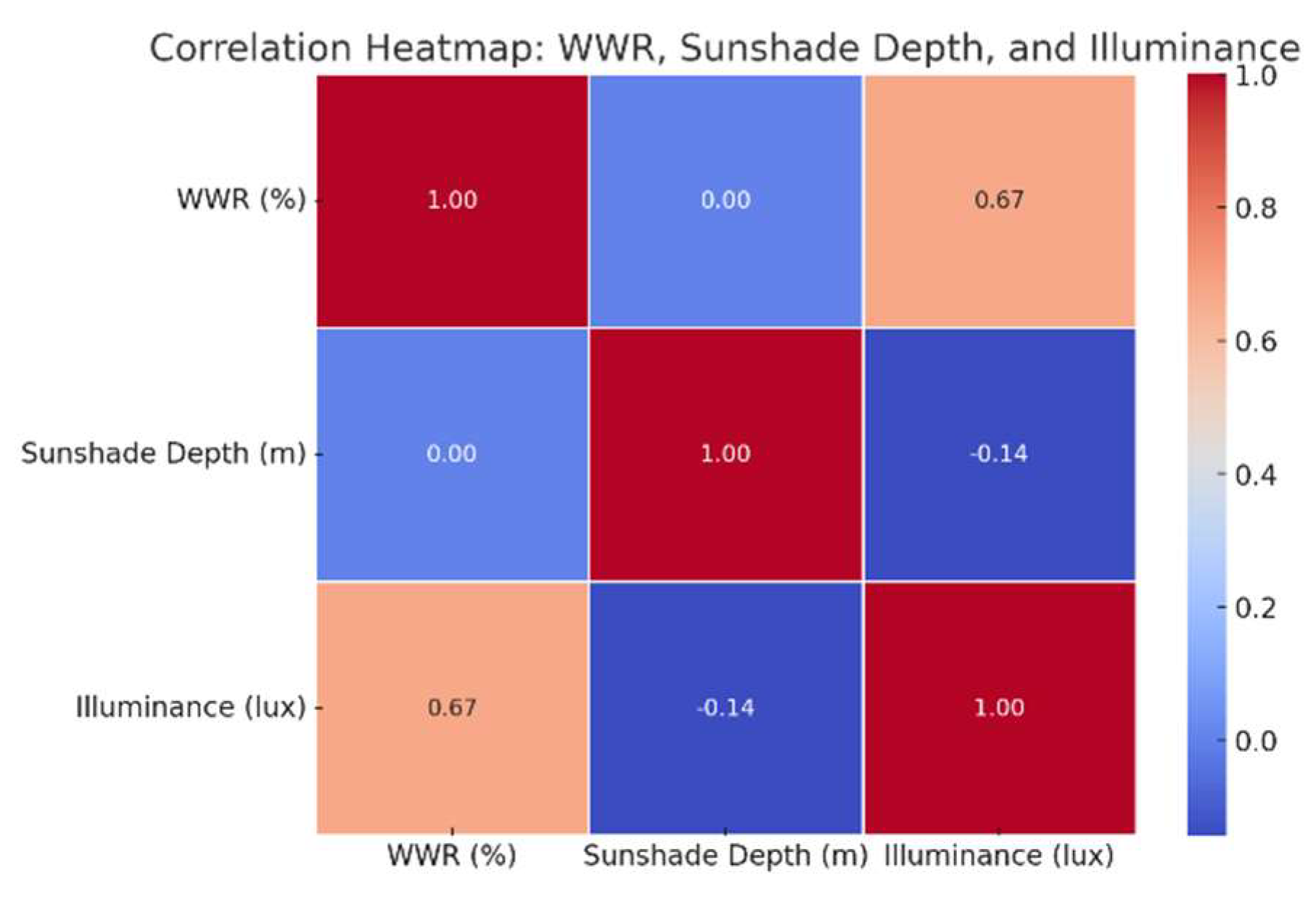
2.6.3. Room Area vs WWR vs Illuminance
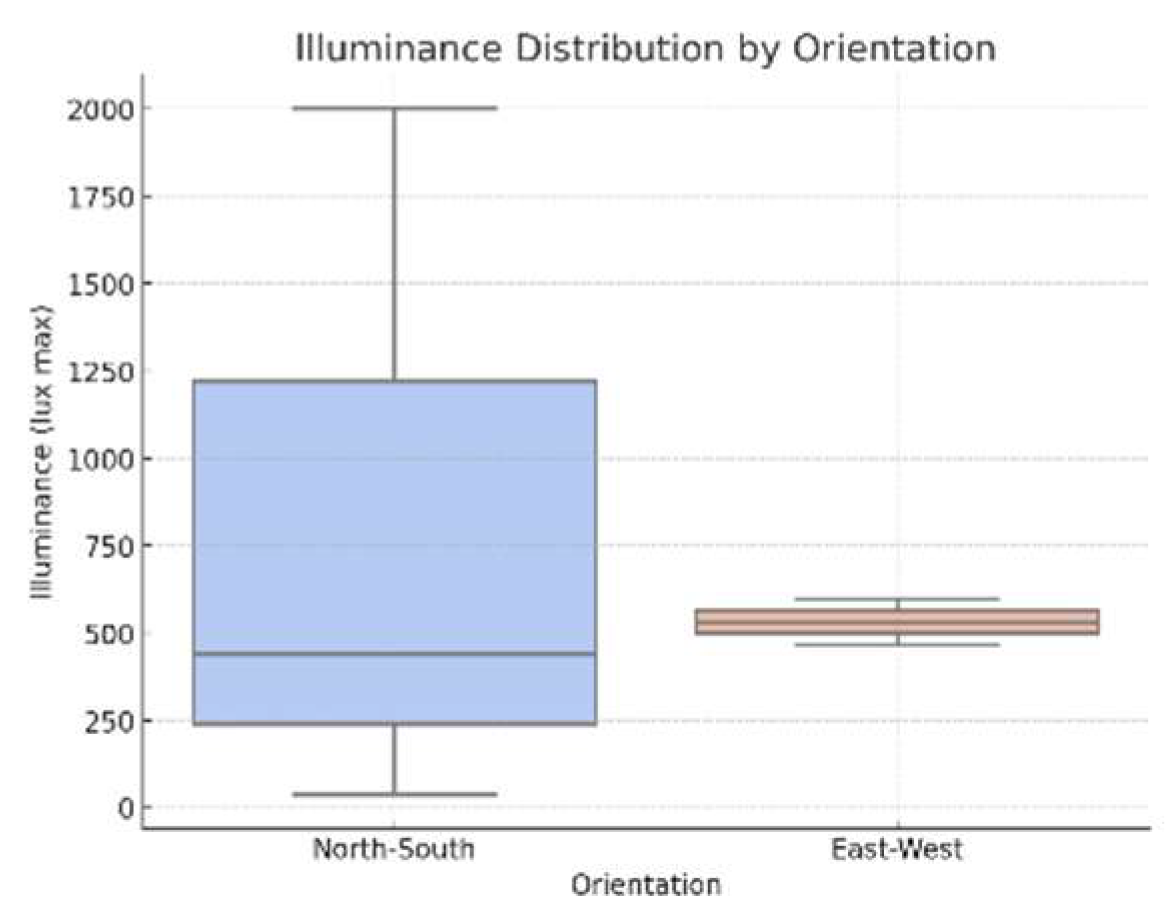
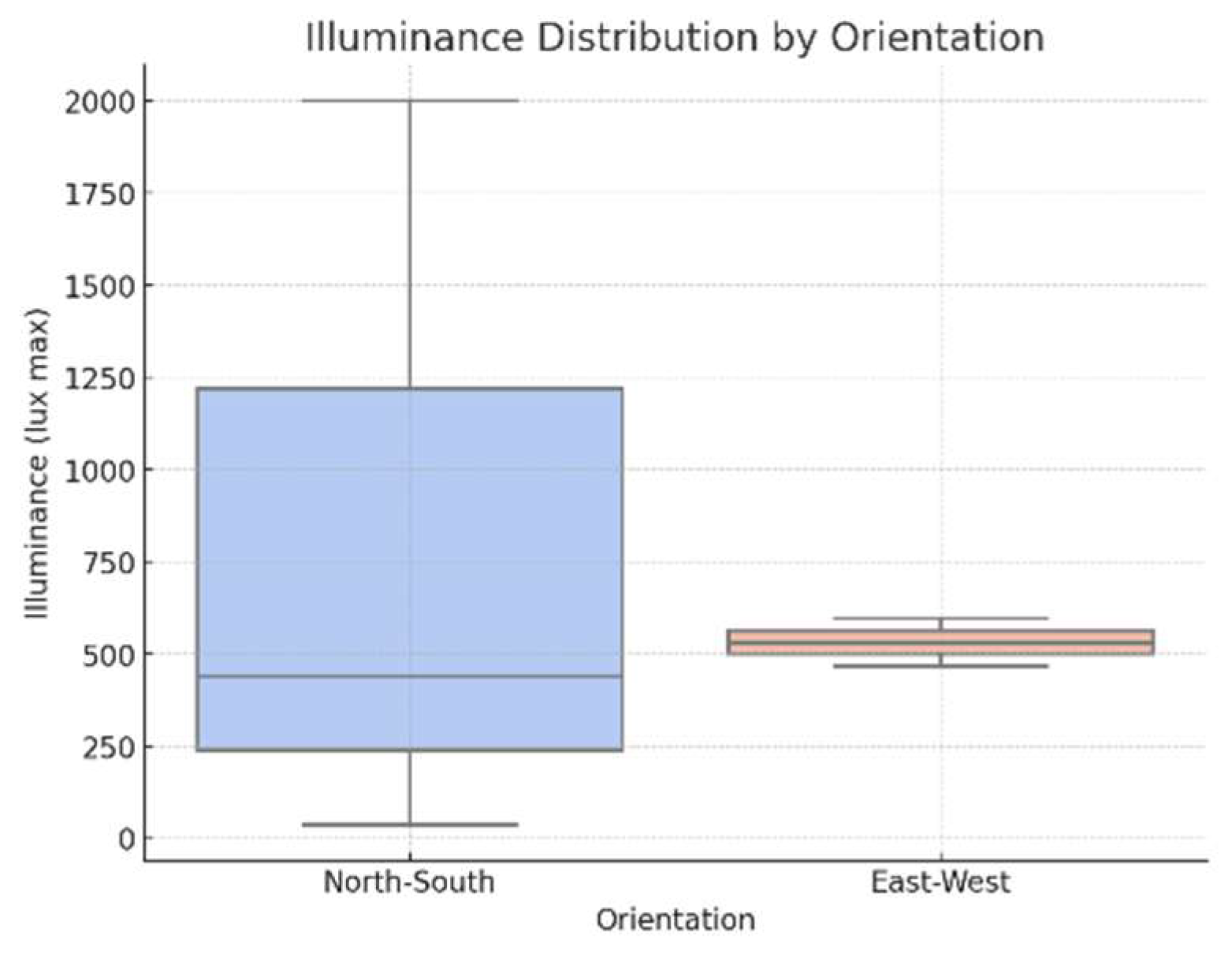
2.6.4. Illuminance Distribution by Orientation
2.6.5. Influence of Adjacent Buildings on the West Side of the School and the Social Context

| Classroom 2 Data from field measurements | ||||||||
| Block | Class | Floor | Length (m) | Breadth (m) | Area (m2) | WWR (%) | Illuminance lux (min) |
Illuminance lux (max) |
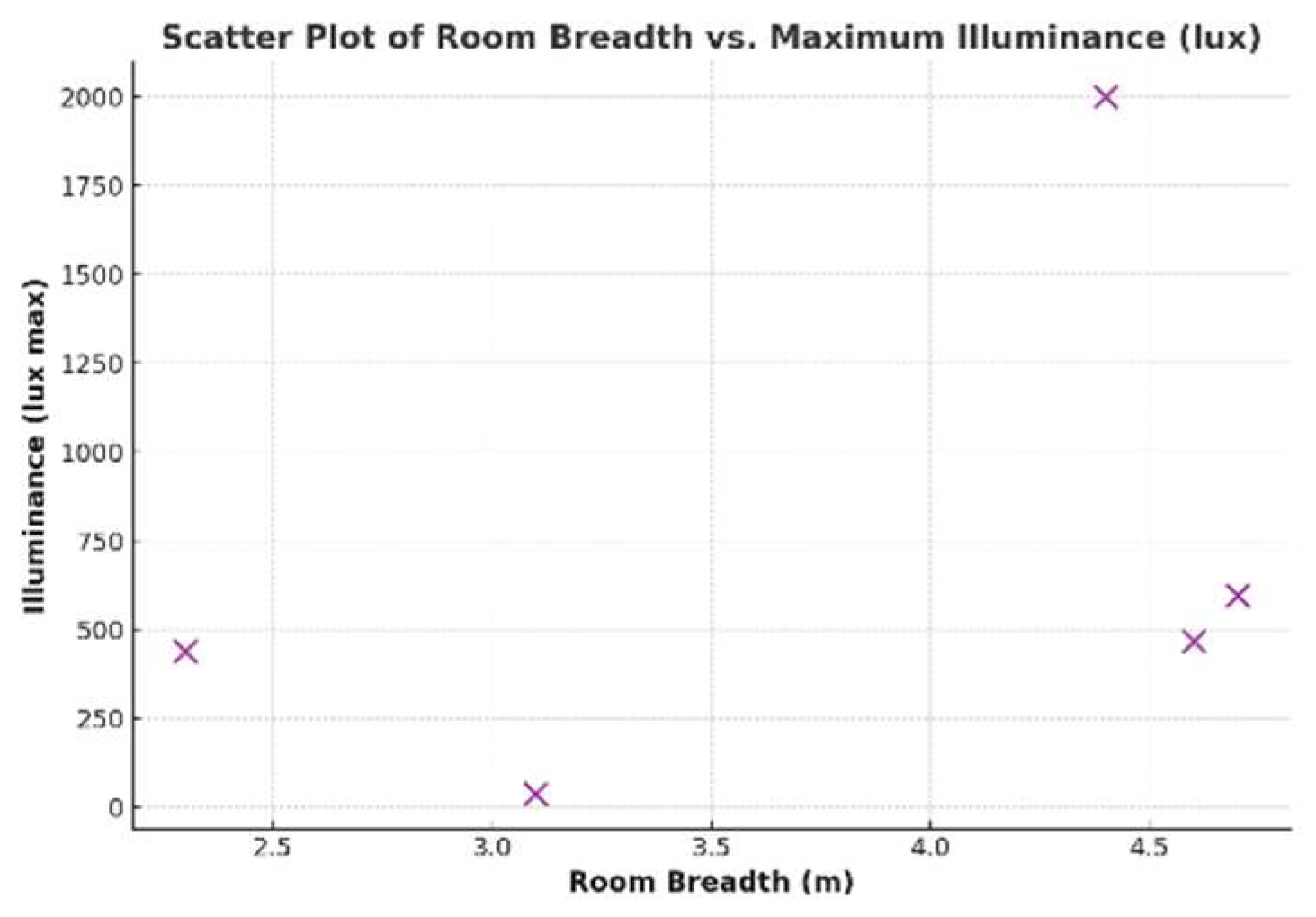
| North-south | 5 | First | 6.4 | 4.4 | 28.16 | 8% | 20 | 2000 |
| East-west | 7 | First | 4.8 | 4.6 | 22.08 | 5% | 30 | 467 |
| East-west | 2 | Ground | 4.7 | 4.7 | 22.09 | 7% | 20 | 596 |
| North-south | 3 | Ground | 4.4 | 3.1 | 13.64 | 8% | 15 | 37 |
| North-south | 4 | Ground | 4.5 | 2.3 | 10.35 | 11% | 60 | 440 |
2.6.6. Room Area vs WWR vs Illuminance
2.6.7. Illuminance Distribution by Orientation
2.6.8. Illuminance in the Classrooms Facing North-South
2.6.9. Illuminance in Classrooms Having Different Sizes
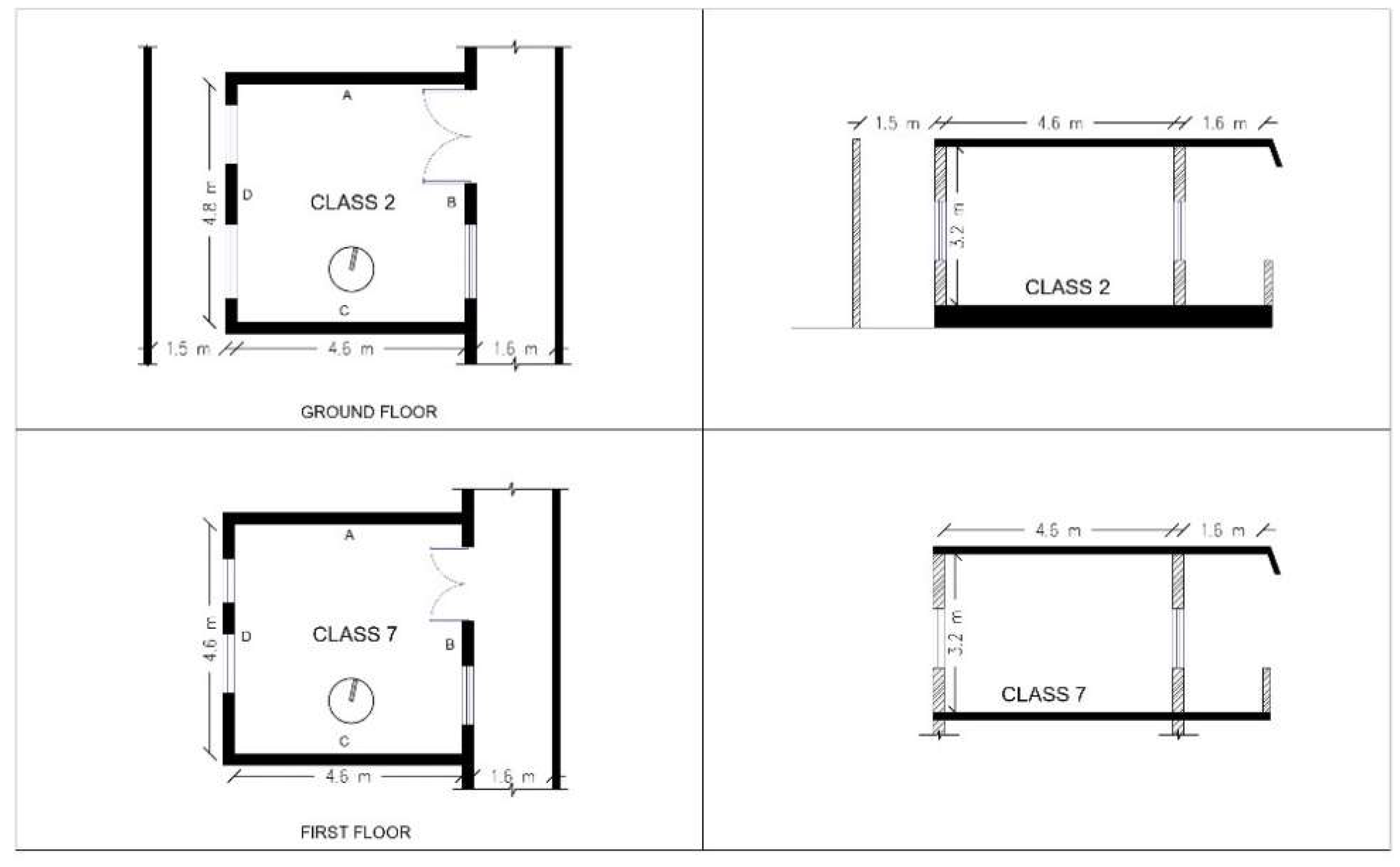
3. Digital Modeling and Simulation
3.1. Case 1: Same Orientation Versus Different Floor, Varying WWR, with and Without Trees
3.2. Case 2: Theoretical Projection vs. Simulated Results
3.3. Case 3: Classrooms on the Same Floor but Different Orientations
3.4. Case 4: Classrooms on the Same Floor, Same Orientation and Different Sunshade Depth
3.5. Case 5: Classrooms on the Same Floor, Different Orientations, and WWR
3.6. Case 6: Optimization for Expected 500 Lux Average Illuminance in East-West and North-South Facing Classrooms on the Ground Floor
3.7. Impact of Trees on Illuminance
4. Results and Conclusion
4.1. Classroom Orientation
4.2. Window-to-Wall Ratio (WWR)
4.3. For Classrooms Without Trees
4.4. Sunshade Depth
4.5. Vegetation and External Shading
4.6. Glazing and Diffused Light Control
5. Limitations and Scope for Further Research
Funding
Acknowledgments
Abbreviations
| ASE | Annual Sun Exposure |
| sDA | Spatial daylight autonomy |
| WWR | Window -to-wall ratio |
| DF | Daylight factor |
| IESNA | Illuminating Engineering Society of North America |
| Avg - | Average |
| IS | Indian Standards |
| BIS | Bureau of Indian standards |
Appendix A
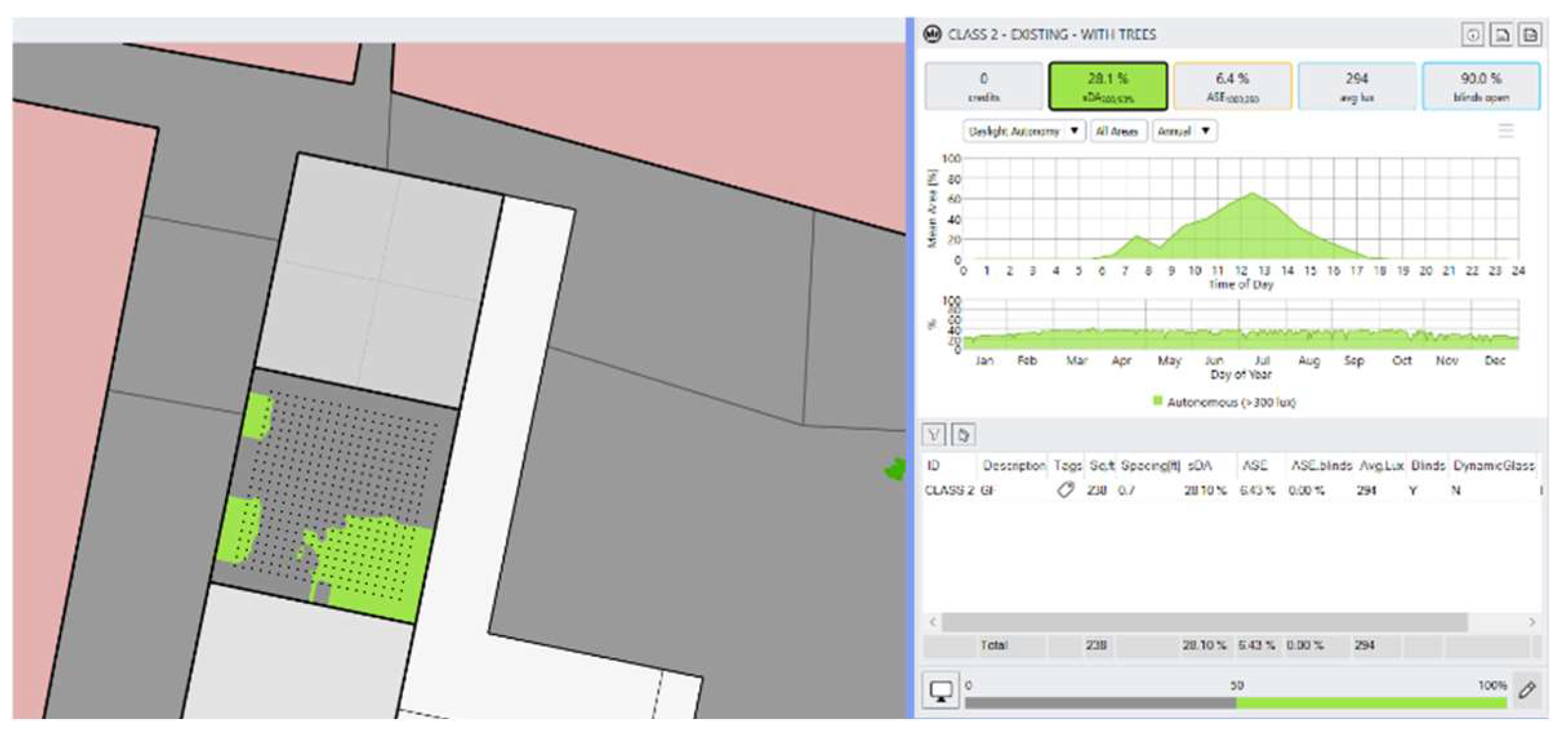
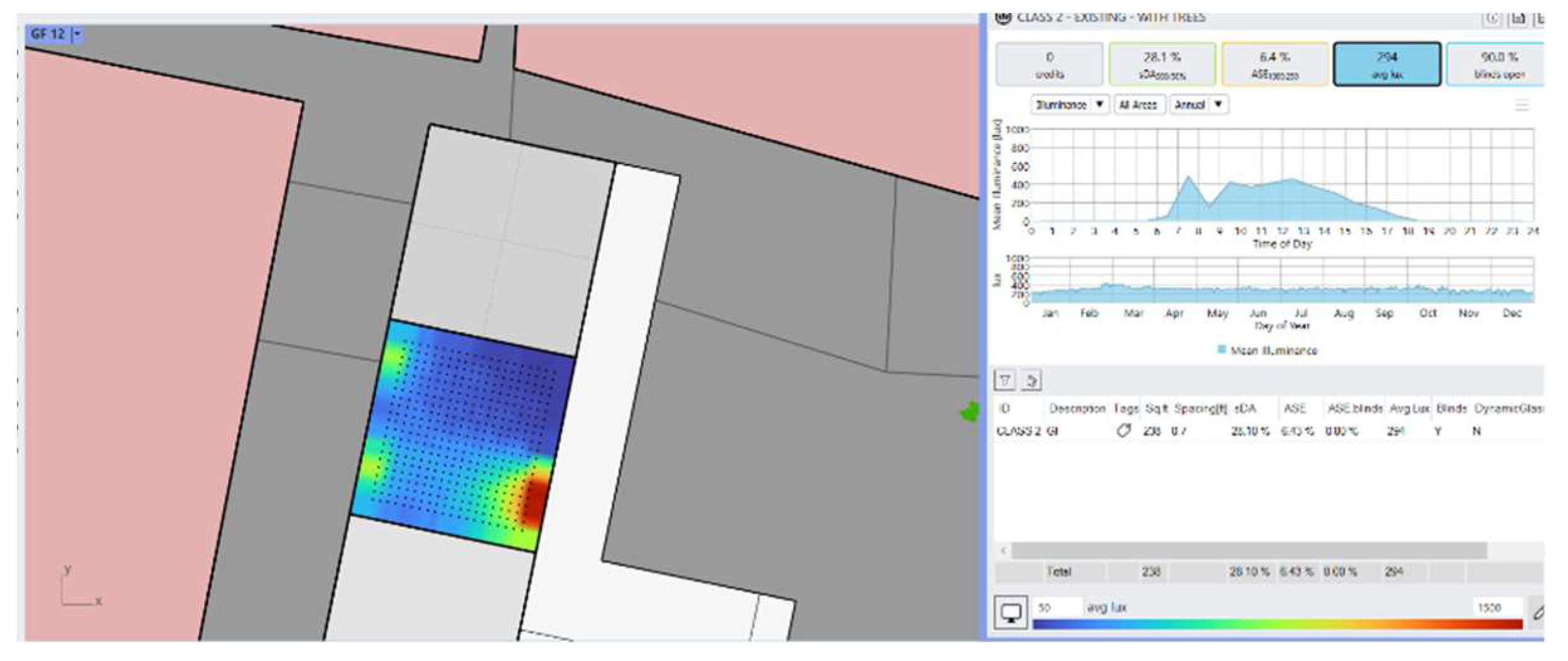
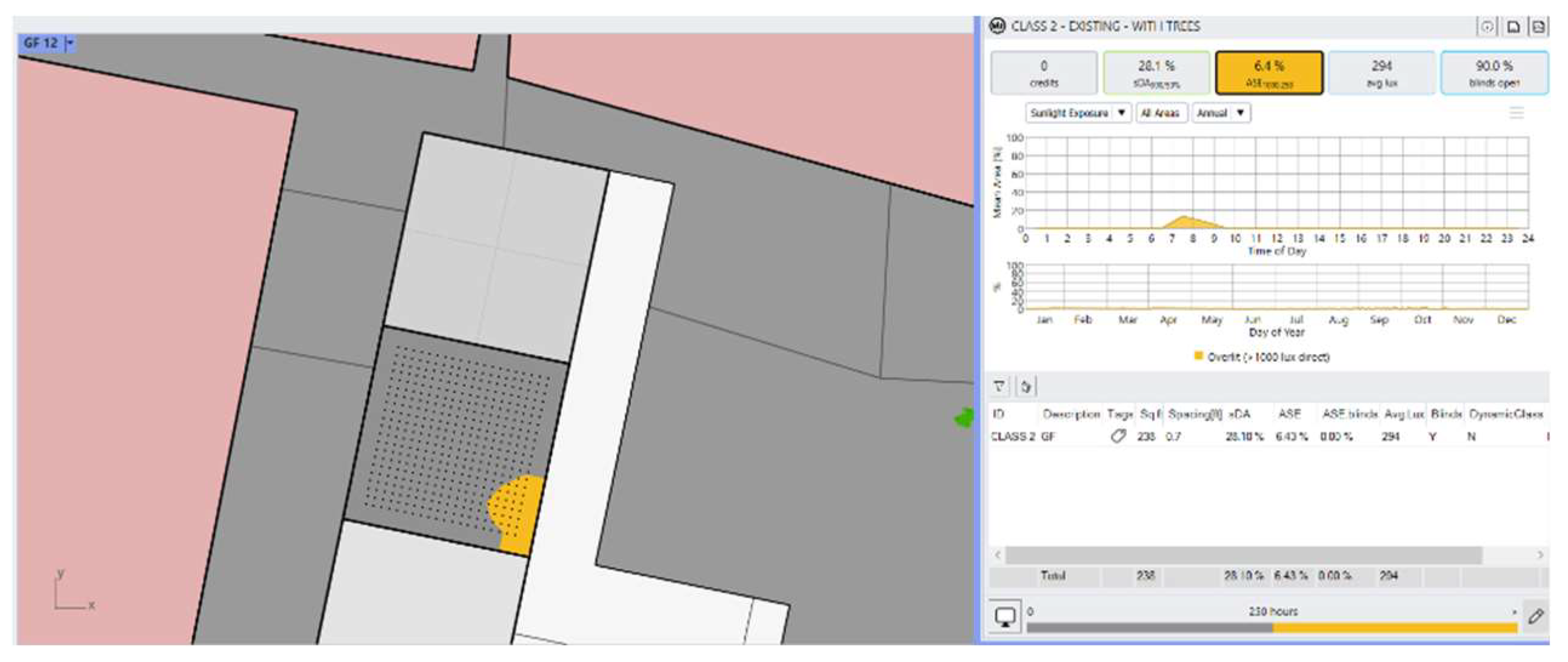
References
- Devadas, Monsingh D., and A. Lilly Rose. “Urban factors and the intensity of heat island in the city of Chennai.” In The seventh international conference on urban climate, vol. 29. 2009.
- SUSTAINABLE BUILDING DESIGN FOR TROPICAL CLIMATES Principles and Applications for Eastern Africa First published in Nairobi in August 2014 by UN-Habitat. Copyright © United Nations Human Settlements Programme 2014 HS/013/15E ISBN: 978-92-1-132644-4.
- A David C. Holzman T What’s in a Color? The Unique Human Health Effects of Blue Light-D 2010-J Environmental Health Perspectives-P A22-A27-V 118-N 1-R. [CrossRef]
- Gessler, Arthur & Bugmann, Harald & Bigler, Christof & Edwards, Peter & Guistina, Christina & Kueffer, Christoph & Roy, Jacques & Resco de Dios, Víctor. (2017). Light as a source of information in ecosystems.
- Veitch, J. A. (2001). Psychological processes influencing lighting quality. Journal of the Illuminating Engineering Society, 30(1), 124-140. [CrossRef]
- Dong L, Kang YK, Li Y, Wei WB, Jonas JB. PREVALENCE AND TIME TRENDS OF MYOPIA IN CHILDREN AND ADOLESCENTS IN CHINA: A Systemic Review and Meta-Analysis. Retina. 2020 Mar;40(3):399-411. PMID: 31259808. [CrossRef]
- Knoop M, Stefani O, Bueno B, et al. Daylight: What makes the difference? Lighting Research & Technology. 2020;52(3):423-442. [CrossRef]
- Qaiser Suleman; Ishtiaq Hussain “Effects of Classroom Physical Environment on the Academic Achievement Scores of Secondary School Students in Kohat Division, Pakistan” International Journal of Learning & Development ISSN 2164-4063 2014, Vol. 4, No. 1.
- Shouib Ma’bdeh;, Haneen Matar; Designing a dynamic fenestration to improve visual performance in educational spaces using daylight Periodicals of Engineering and Natural Sciences ISSN 2303-4521 Vol. 8, No. 3, September 2020, pp.1898-1910.
- Xin Liu, Yue Sun, Shuo Wei, Linlin Meng, Guanying Cao, Illumination distribution and daylight glare evaluation within different windows for comfortable lighting, Results in Optics, Volume 3,2021,100080,ISSN 2666-9501. [CrossRef]
- Dongying Li, William C. Sullivan, Impact of views to school landscapes on recovery from stress and mental fatigue, Landscape and Urban Planning, Volume 148, 2016, Pages 149-158, ISSN 0169-2046. [CrossRef]
- V.R.M. Lo Verso, F. Giuliani, F. Caffaro, F. Basile, F. Peron, T. Dalla Mora, L. Bellia, F. Fragliasso, M. Beccali, M. Bonomolo, F. Nocera, V. Costanzo, Questionnaires and simulations to assess daylighting in Italian university classrooms for IEQ and energy issues, Energy and Buildings, Volume 252, 2021,111433, ISSN0378-7788. [CrossRef]
- Alwetaishi, M.; Benjeddou, O. Impact of Window to Wall Ratio on Energy Loads in Hot Regions: A Study of Building Energy Performance. Energies 2021, 14, 1080. [CrossRef]
- Xin Zhang1, Jiangtao Du2, Steve Sharples3Ground Factors and Lighting Design in an Urban Area: Daylight Availability and Light Pollution Risk T2 - Proceedings of Building Simulation 2017: 15th Conference of IBPSA vol 15 ISSN - 978-1-7750520-0-5 C1 - San Francisco, USA J2 - Building Simulation SP - 793-801.
- Amrita Ghosh, Subhasis Neogi, Effect of fenestration geometrical factors on building energy consumption and performance evaluation of a new external solar shading device in warm and humid climatic condition, Solar Energy, Volume 169,2018,Pages 94-104,ISSN 0038-092X. [CrossRef]
- Amirhosein Ghaffarian hoseini, Umberto Berardi, Ali Ghaffarianhoseini, Thermal performance characteristics of unshaded courtyards in hot and humid climates, Building and Environment, Volume 87,2015,Pages 154-168,ISSN 0360-1323. [CrossRef]
- R N Syaheeza E M Husini F Arabi W N W Ismail M Z Kandar Secondary school classrooms daylighting evaluation in Negeri Sembilan, MalaysiaIOP Conference Series: Materials Science and Engineering vol. 401(2018) pp: 012024. [CrossRef]
- Rea, Mark S.. The IESNA lighting handbook: (2000}. https://api.semanticscholar.org/CorpusID:107139664.
- Gonidakis, D. N., Frangedaki, E. I., & Lagaros, N. D. (2024). Optimizing Daylight Performance of Digital Fabricated Adobe Walls. Architecture, 4(3), 515–540. [CrossRef]
- Ai, F. (2009). Reflected Daylighting in Schools An investigation into design principles of reflected daylighting in primary schools in the warm-dry climate of Iran. www.bl.uk.
- Reinhart, C. F., & Walkenhorst, O. (2001). Validation of dynamic RADIANCE-based daylight simulations for a test office with external blinds. Energy and Buildings, 33(7), 683–697. [CrossRef]
- Obralic, A., & Jeghel, S. (2021). The Case Study on Significance of Daylight in Classroom Setting at Sarajevo Campus. European Scientific Journal ESJ, 17(1). [CrossRef]
- Dalla Mora, T., Leorin, A., Nardo, G., Busatto, N., Peron, F., & Romagnoni, P. (n.d.). Daylight Performances in Typical Inner Spaces with Climate-Based Daylight Modelling Approach.
- Kweon, B. S., Ellis, C. D., Lee, J., & Jacobs, K. (2017). The link between school environments and student academic performance. Urban Forestry and Urban Greening, 23, 35–43. [CrossRef]
- Michael, A., & Heracleous, C. (2017). Assessment of natural lighting performance and visual comfort of educational architecture in Southern Europe: The case of typical educational school premises in Cyprus. Energy and Buildings, 140, 443–457. [CrossRef]
- Mohd Yazit, R. N. S. R., Husini, E. M., Khamis, M. K., Zolkefli, M. F., & Dodo, Y. A. (2020). Illuminance Level Measurement at Lower Working Plane Height in Islamic Religious School. Asian Journal of University Education, 16(3), 125–137. [CrossRef]
- Suleman, Q., Aslam, H. D., & Hussain, Dr. I. (2014). Effects of Classroom Physical Environment on the Academic Achievement Scores of Secondary School Students in Kohat Division, Pakistan. International Journal of Learning and Development, 4(1), 71. [CrossRef]
| Classroom size and respective illuminance in the site | ||||||||
| Block | Class | Floor | Length (m) | Breadth (m) | Area (m2) | WWR (%) | Illuminance lux (min) |
Illuminance lux (max) |
| North-south | 5 | First | 6.4 | 4.4 | 28.16 | 8% | 20 | 2000 |
| East-west | 7 | First | 4.8 | 4.6 | 22.08 | 5% | 30 | 467 |
| East-west | 2 | Ground | 4.7 | 4.7 | 22.09 | 7% | 20 | 596 |
| North-south | 3 | Ground | 4.4 | 3.1 | 13.64 | 8% | 15 | 37 |
| North-south | 4 | Ground | 4.5 | 2.3 | 10.35 | 11% | 60 | 440 |
| Existing vs. projected Illuminance (without considering shading, window placement, and reflection properties) | ||||||
| Block | Class | Floor | Area (m2) | WWR (%) | Illuminance lux (max) |
Projected Illuminance= Current Illuminance x(Current WWR 20) |
| North-south | 5 | First | 28.16 | 8 | 2000 | 5000 |
| East-west | 7 | First | 22.08 | 5 | 467 | 1868 |
| East-west | 2 | Ground | 22.09 | 7 | 596 | 1702 |
| North-south | 3 | Ground | 13.64 | 8 | 37 | 92 |
| North-south | 4 | Ground | 10.35 | 11 | 440 | 800 |
| Parameter for study | Threshold for educational purposes -classrooms | Guideline |
| Illuminance for classrooms/ lecture theatres | 200-300-500 lux | IS 3646 -1992 |
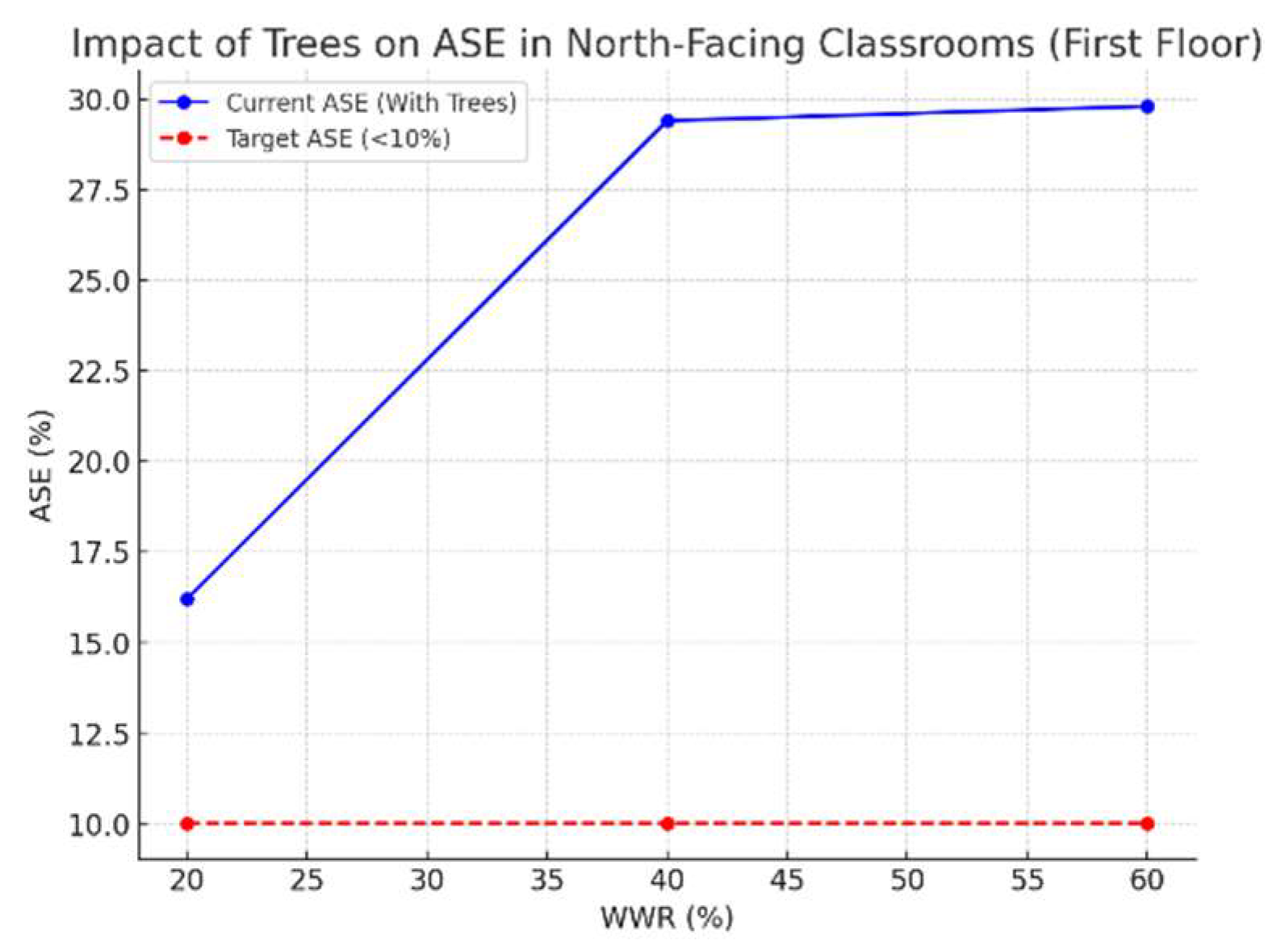
| ASE | below 10% | Climate-based daylight modeling |
| sDA | 50-100% | Climate-based daylight modeling |
| Internal wall finish reflectance factors | Ceiling –0.80-0.70, Walls -0.7 Floor--0.5 |
IS.7942.1976 |
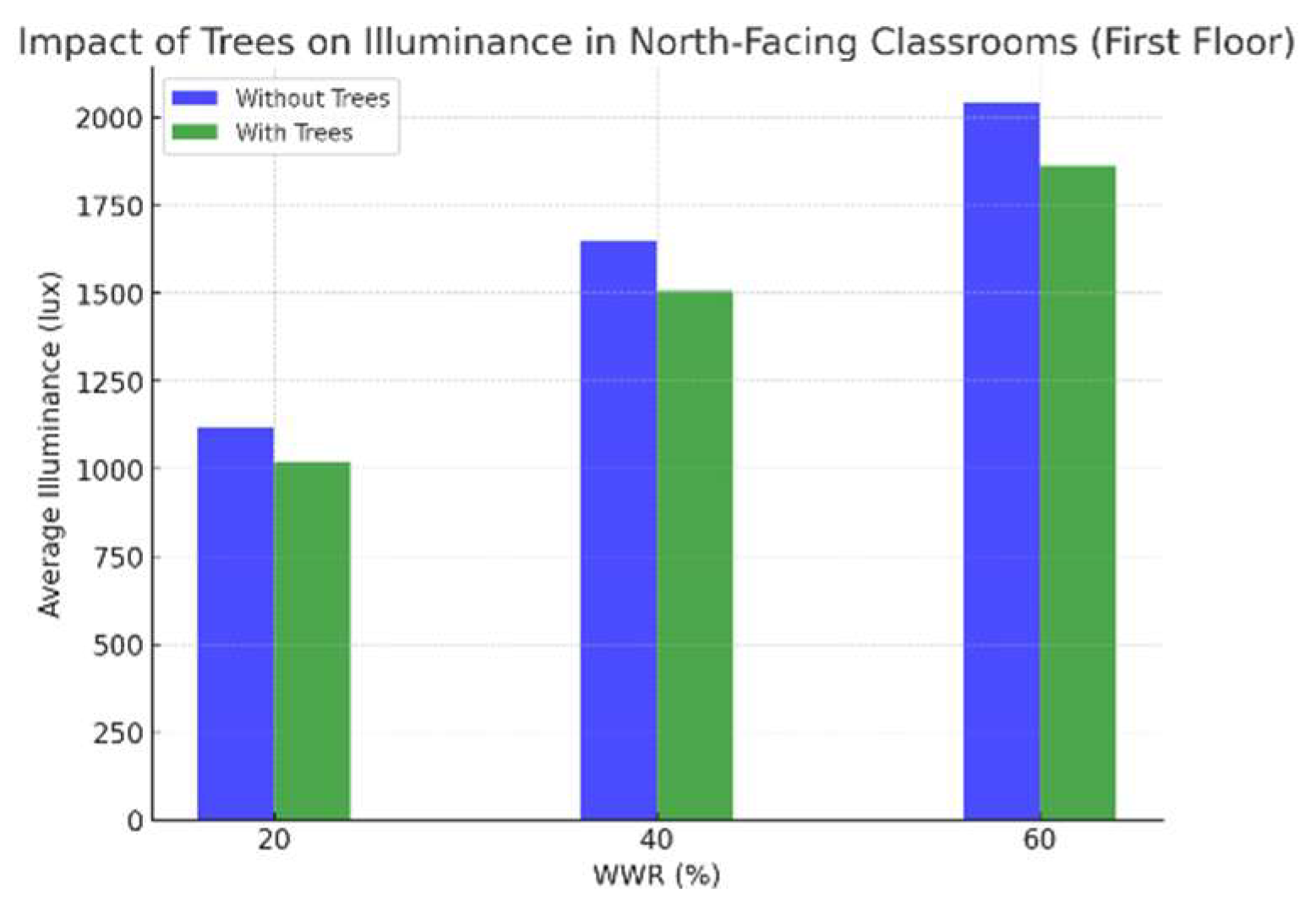
| Analysis of WWR and Average Illuminance Lux with and without trees | ||||
| Classrooms facing North | WWR (%) | Average Illuminance in Lux (without Trees) | Average Illuminance in Lux (with Trees) | Average Illuminance Reduction (%) |
| Classroom 4 (Ground Floor) | 20 | 1028 | 678 | 34 |
| Classroom 4 (Ground Floor) | 60 | 1756 | 1225 | 30 |
| Classroom 5 (First Floor) | 20 | 1119 | 1021 | 8.7 |
| Classroom 5 (First Floor) | 60 | 2041 | 1863 | 8.7 |
| Classroom size vs WWR vs Illuminance | ||||||
| Classroom | Block | Size m |
Floor | WWR % |
Average Illuminance lux (min) | Average Illuminance lux (max) |
| Classroom 2 | East-west | 4.9 x 4.7 | Ground | 40 | 20 | 596 |
| Classroom 3 | North-south | 4.4 x 3.1 | Ground | 34 | 60 | 440 |
| Comparison of 20% WWR with Trees for GF Class 2 (East Facing) & Class 3 | |||||
| Block | Shade (m) | sDA (%) | ASE (%) | Avg Lux | |
| Classroom 2 | East-west | 0m | 75.50% | 7.60% | 530 |
| Classroom 3 | North-south | 0m | 93.90% | 14.00% | 731 |
| Classroom 2 | East-west | 0.6m | 56.70% | 7.60% | 444 |
| Classroom 3 | North-south | 0.6m | 92.10% | 2.60% | 611 |
| Classroom 2 | East-west | 0.75m | 53.80% | 7.60% | 442 |
| Classroom 3 | North-south | 0.75m | 91.20% | 1.30% | 598 |
| Illuminance, sunshade depth, orientation and WWR | ||||||
| Ground floor | Classroom 2 -East Facing | Classroom 3 -North Facing | ||||
| WWR | 20% | 40% | 60% | 20% | 40% | 60% |
| Sunshade depth (m) | Avg Illuminance - lux | Avg Illuminance - lux | ||||
| 0m | 602 | 903 | 1058 | 954 | 1399 | 1688 |
| 0.6m | 520 | 802 | 969 | 892 | 1294 | 1543 |
| 0.75m | 518 | 792 | 955 | 873 | 1295 | 1514 |
| Optimum conditions for Avg Illuminance of 500 lux for different orientations on Ground Floor | ||||||
| Classroom | Optimized WWR (%) | Optimized Sunshade (m) | Expected Avg Lux (Without Trees) | Optimized WWR (%) | Optimized Sunshade (m) | Expected Avg Lux (With Trees) |
| East-west Facing (Classroom 2) | 25 | 0.75 | 500 | 30 | 0.6 | 500 |
| North Facing (Classroom 3) | 18 | 1 | 500 | 22 | 0.75 | 500 |
Disclaimer/Publisher’s Note: The statements, opinions and data contained in all publications are solely those of the individual author(s) and contributor(s) and not of MDPI and/or the editor(s). MDPI and/or the editor(s) disclaim responsibility for any injury to people or property resulting from any ideas, methods, instructions or products referred to in the content. |
© 2025 by the authors. Licensee MDPI, Basel, Switzerland. This article is an open access article distributed under the terms and conditions of the Creative Commons Attribution (CC BY) license (http://creativecommons.org/licenses/by/4.0/).