Preprint
Case Report

This version is not peer-reviewed.

Tuberculous Meningitis in a Child: A Rare Presentation of Cytotoxic Lesion of the Corpus Callosum

A peer-reviewed article of this preprint also exists.

Submitted:

15 February 2025

Posted:

17 February 2025

You are already at the latest version

Abstract

Tuberculous meningitis (TBM) is the most severe form of tuberculosis, disproportionately affecting vulnerable populations such as young children and people living with human immunodeficiency virus (HIV). Major challenges to accurate and early diagnosis of TBM are the non-specific clinical features which overlap with other infectious syndromes and the lack of adequately sensitive tests to detect Mycobacterium Tuberculosis in the cerebrospinal fluid (CSF). Diagnosis is therefore still dependent on clinical suspicion along with clinical features, cerebrospinal fluid (CSF) characteristics and where facilities are available, neuroimaging. Typical neuroimaging features of TBM include hydrocephalus, infarcts, tuberculomas and basal exudates, however less well described are very rare features such as cytotoxic lesion of the corpus callosum (CLOCC) otherwise known as transient splenic lesion. We describe the first case report of a child with confirmed TBM who had a very rare presentation of CLOCC, present a literature review on the pathophysiology and alternative aetiologies where CLOCC is more commonly seen.

Keywords: 
;  ;  ;  

1. Introduction

An estimated 10.8 million people fell ill with tuberculosis (TB) in 2023 of which 1.25 million were children (aged 0-14 years) [1]. Children under five years of age have the lowest treatment coverage and suffer the highest mortality [2] . It is estimated that 24 000 children suffer from the most severe form of TB, TB meningitis (TBM), but only half are diagnosed and treated [3]. TBM is associated with substantial mortality and neurological sequelae and there is little evidence to guide optimal management to improve these outcomes. Diagnosis is dependent on clinical, cerebrospinal fluid (CSF) characteristics and where facilities are available, neuroimaging, as there is no single diagnostic test with adequate sensitivity [4,5].
TBM is a subacute/chronic meningitis which has insidious onset followed by focal neurological manifestations and eventual coma if not treated. Neurological signs occur in over half of children with TBM; most commonly altered mental state, and nuchal rigidity however these are late findings [6]. Cranial nerves II, III and VI are most commonly affected as they traverse the cranial floor where the characteristic basal exudates in TBM occur [7]. Brainstem signs are also not uncommon, with many displaying one or more sign of brainstem dysfunction [8,9]. Classically, CSF will have white cells in the hundreds, lymphocytic predominance, high protein (>1g/l) and depressed CSF glucose (< 2.2 mmol/l) or low CSF/blood glucose ratio (< 0.5) [10,11,12] however only one third have all three CSF features on their first lumbar puncture [13]. A neutrophil predominance can occur in early disease and be mistaken for acute bacterial meningitis in about one third of those with TBM [11,13] and 10% have an absence of CSF pleocytosis [8]. Confirming a diagnosis of TBM requires detecting M. tuberculosis in CSF either by acid fast smear, rapid molecular tests such as PCR or mycobacterial culture although the former has very low sensitivities outside of specialized research settings and the latter takes too long to impact clinical decision making [14]. Xpert or Ultra is recommended by the World Health Organisation (WHO) as the initial test for extrapulmonary tuberculosis, including TBM, however diagnostic sensitivities remain inadequate and fail to detect all cases [15]. A reliance on careful and thorough history taking including TB contact history, searching for TB elsewhere and multiple investigative modalities, including neuroimaging, to diagnose TBM remain essential.
Mycobacterium tuberculosis which enter via haematogenous spread from the lungs, cause an inflammatory response in the meninges and brain. Inflammatory exudates at the basal cisterns and interperduncular region, in close proximity to cortical and meningeal blood vessels, proceed to cause a number of central nervous system (CNS) complications; including vasculitis of small- medium sized blood vessels which lead to infarcts and reduced reabsorption and obstruction of CSF flow which lead to hydrocephalus [16]. The neuroimaging findings of basal exudates, hydrocephalus and infarct are not infrequently seen together as a classical triad which increases the specificity for TBM [8,17,18]. Computed tomography (CT) brain is frequently accessible and although is the preferred modality in emergency settings can be normal in up to 30% of TBM and is inferior to MRI for detecting infarcts especially those involving the basal ganglia and brainstem, leptomeningeal nodules and small tuberculomas [19,20]. Our case report describes a presentation of irreversible splenic lesion which is a very rare neuroimaging feature seen in TBM and the first to be described in a child.

2. Case report

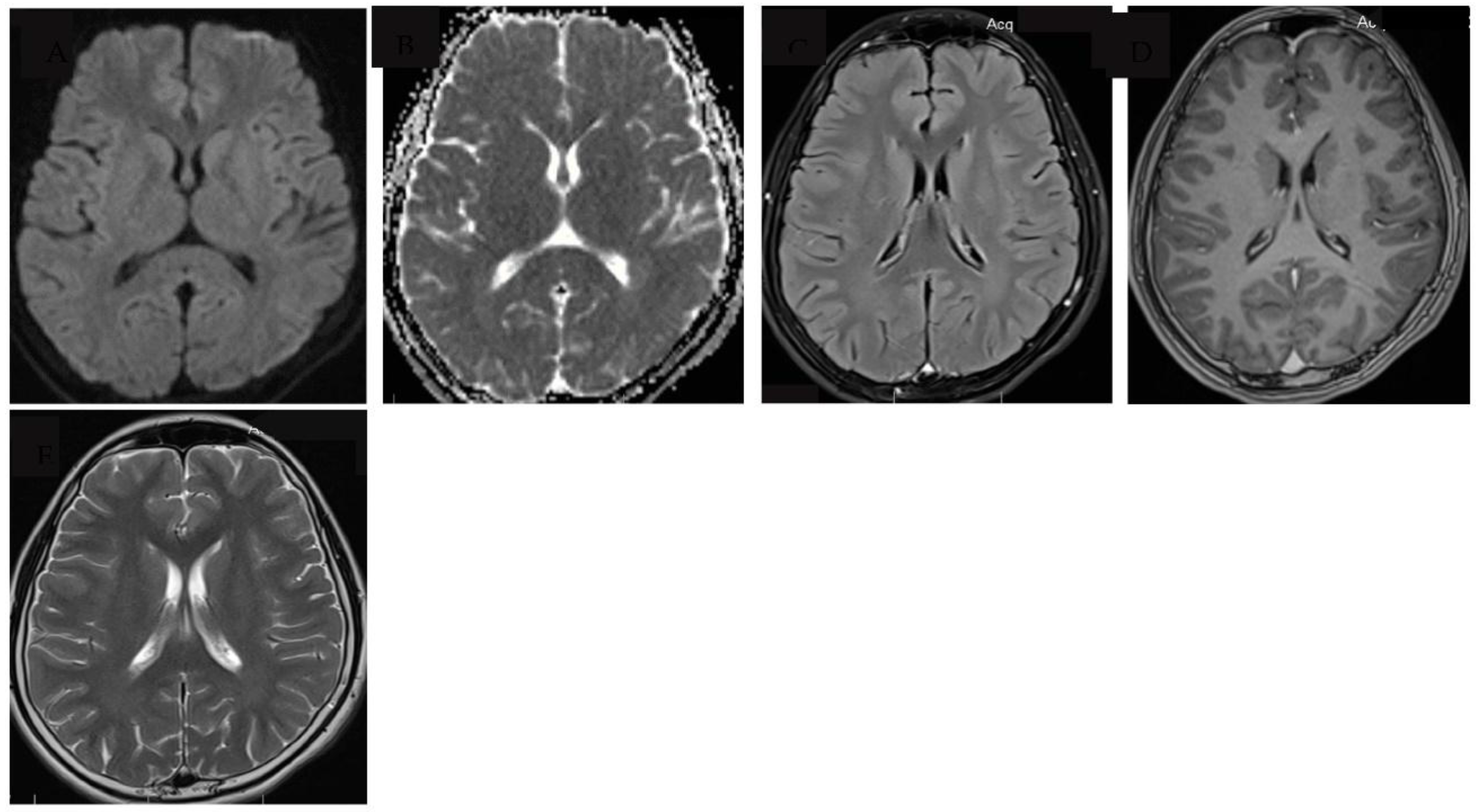
A previously healthy 13-year-old male from rural Viet Nam was transferred to a tertiary hospital with a one-month history of persistent fever, poor appetite, weight loss, worsening headache and vomiting despite antipyretics and multiple course of antibiotics in the community. There was no history of altered consciousness or seizures. He lived with his parents and younger sister who were all in good health and more recently was unable to attend school due to worsening headache. There was no known household exposure to tuberculosis (TB) nor contact with domestic or farm animals. Upon arrival, the child was of average weight (47kg) but was lethargic. He was febrile (38.3°C), had a heart rate of 104 bpm, respiratory rate of 20, and a blood pressure of 100/60. On presentation he was cooperative and had a Glasgow Coma Score (GCS) of 15, equal and normal pupillary reactions and no neurological deficits. Cardiovascular, abdominal and lymph node examination were unremarkable. CSF via lumbar puncture was clear and showed 295 white blood cells (41% Lymphocytes and 59% Neutrophils), increased protein (144mg/dl), low CSF glucose (1.19 mmol/l) and a low CSF/blood glucose ratio (0.23). Serum sodium was 129 mmol/L. Gram stain and bacterial cultures in blood and CSF were negative. Chest radiograph was normal. Baseline magnetic resonance imaging (MRI), taken on day one, revealed a well-defined hyperintense lesion in the splenium of corpus callosum (SCC), focal meningeal enhancement and multiple small tuberculomas without hydrocephalus, basal exudates or cerebral infarcts (Figure 1). HIV antibody, Toxoplasma IgM/IgG and Cysticercus cellulosae antibody were all negative. CSF showed scant acid-fast bacilli on Ziehl Neelsen stain; Xpert MTB/RIF Ultra detected M. tuberculosis in low levels and rifampicin resistance was not detected. CSF cultures isolated M. tuberculosis after 18 days of incubation which was fully susceptible to rifampicin, isoniazid, pyrazinamide, ethambutol and streptomycin on phenotypic drug-susceptibility testing. Smear, Xpert MTB/RIF Ultra and mycobacterial cultures were negative in expectorated sputum. He was commenced on a four drug anti-tuberculosis regimen, including corticosteroid therapy, and made a full recovery without complication. At the six month follow up he was well without any evidence of neurological deficit; a repeat MRI at six months of treatment showed complete resolution of previous changes (Figure 2).

3. Discussion

Despite treatment, tuberculous meningitis (TBM) leads to death in 20% of children and long-term disability in half of survivors; without treatment it is universally fatal [6]. The most important predictor of mortality and disability is early diagnosis; worse outcomes are associated with more advanced disease at presentation [6]. In the absence of an adequately sensitive test to detect M. tuberculosis in CSF, a combination of clinical features, CSF and neuroimaging findings, confirmation of TB elsewhere remain essential for the diagnosis of TBM. The array of neuroimaging features in TB meningitis highlights the heterogeneity of disease. Whilst there are no pathognomonic features of TBM on neuroimaging, it can provide useful supplementary information, especially where there is clinical suspicion of TBM. The neuroinflammation, which occurs when M. tuberculosis enters the CNS, is responsible for the typical macroscopic features of basal meningeal enhancement, tuberculomas, infarcts and hydrocephalus which can occur alone or in combination [21]. Tubercular abscesses are rare and limited to case reports only [22,23]. Tuberculous encephalopathy, also rare, occurs in young children who present with convulsion, reduced conscious state and coma without nuchal rigidity or focal neurological deficit. Neuroimaging findings in these children show severe cerebral oedema and myelin loss of the white matter without the typical neuroimaging features of TBM [21]. There is even a more striking scarcity of literature on cytotoxic lesion of the corpus callosum (CLOCC) in TBM and we describe here the first reported case in a child.
The term CLOCC has previously been known by variety of terms including mild encephalitis/encephalopathy with reversible splenial lesion [24], reversible splenial lesion syndrome [25] or as transient splenial lesions [26]. It has now been proposed as CLOCC to better reflect the underlying pathophysiology and the concept that these lesions are not always strictly splenial, not always reversible, and not always associated with encephalopathy [27] however nomenclature in the literature is inconsistent. Whilst most cases present with signs and symptoms of encephalopathy or encephalitis, there are cases where only a headache or fever without neurological signs or symptoms are present [28]. Our case did not have encephalopathy but did have a worsening headache with fever, had the classical pattern of high T2 signal, low T1 signal, restricted diffusion, and lack of contrast enhancement at the splenium of the corpus callosum [27] which was notably reversible as evidenced by a normal subsequent MRI. Whilst these neuroimaging findings are not typical of TBM, the concomitant meningeal enhancement, multiple small tuberculomas, and importantly the presence of M. Tuberculosis in the CSF, confirms the diagnosis.
The current consensus is that callosal lesions are caused by cytotoxic edema and result from a cascade of inflammatory cytokines and stimulated cells however the exact pathophysiology is not well understood [27]. It has been proposed that the initial insult causes macrophages to release cytokines (e.g. IL-1 and IL-6). This in turn leads to recruitment of T-cells, break-down of the blood-brain barrier, production of TNF-α, and activation of astrocytes [27]. The end result is a massive increase in excitatory neurotransmitter glutamate which causes a fluid shift into astrocytes and neurons; giving rise to cellular swelling and cytotoxic edema [27]. This can be due to trauma, inflammation, infection, or metabolic derangement [29]. A possible reason for the preference of the splenium of the corpus callosum is the presence of a high density of oligodendrocytes expressing glutamate receptors and cytokine receptors [29]. In addition, postmortem pathological findings have shown intramyelinic edema, loss of fibrous astrocytes, microglial reactions, with minimal lymphocytic infiltration [30]. Most imaging lesions disappear without sequelae within three weeks, further supporting the hypothesis of cytotoxic edema [29].
A recent systematic review summarising the aetiology and neuroimaging findings of CLOCC (324 references, 416 adult and 937 children) demonstrated that overarching pathological classes differed markedly between adults and children [31]. CLOCC in adults were commonly associated with drug/toxin-induced (26%), viral infections including SARS-CoV-2 and influenza (18%), cerebrovascular diseases (18%), bacterial infections (10%) including Mycoplasma pneumoniae and Staphylococcus aureus, and seizures (6%). Whilst in children callosal lesions were most frequently associated with viral infections especially influenza and rotavirus (73%), bacterial infections mostly mycoplasma (7%), seizures (3%), and metabolic entities (3%) were less common. In a small proportion (4%) of children, no associated disease could be identified [31].
A case of CLOCC has been previously described in an adult with TBM who presented with a short history of headache and fever without encephalopathy. Cranial MRI images on day one of admission showed a focal splenial lesion, typical of CLOCC, which involuted from the periphery inwards on a follow up MRI scan on day 20 [26]. To date CLOCC has not been reported in children with TBM. We describe here the first case report of TBM in a child with MRI features which were highly consistent with CLOCC. TBM is associated with dysregulated and heterogeneous host inflammation which in part contributes to clinical outcome [32,33]. It is therefore biologically plausible that CLOCC, as a result of cytokinopathy caused by M. tuberculosis, can occur in TBM as well. The incidence of CLOCC may be underestimated as cranial MRI is not readily accessible in low-middle income settings where TB burden is high, or is performed too late in unwell patients when CLOCC would be expected to disappear.

4. Conclusion

Classical neuroimaging features of TBM are well established and in cases of diagnostic uncertainty, can be a useful modality. Rare and atypical neuroimaging features, although not as well described, can occur, especially in settings where TB is common. CLOCC is a very rare manifestation of TBM which is more commonly seen in children with viral infections, and is an example of the wide heterogeneity of TBM disease.

Author Contributions

Conceptualisation by NTHT and JH. Original draft preparation was by NTHT and writing was reviewed for intellectual input by JH. Editing was by JH, NTHN and UPV. NTHT, NTHN and UPV provided medical care to the patient. All authors reviewed and approved the manuscript.

Funding

No external funding was received.

Institutional Review Board Statement

Not applicable.

Informed consent statement

Patient consent was waived as no identifying details were presented.

Data availability statement

All available data relevant to this case have been included in the manuscript.

Acknowledgments

We would like to thank the patient and his family and all nursing and medical staff who contributed to his care.

Conflicts of Interest

The authors declare no conflict of interest relevant to the content of this manuscript.

References

  1. Global tuberculosis report 2024. Geneva: World Health Organization, 2024. Licence:CC BY-NC-SA 3.0 IGO.
  2. Roadmap towards ending TB in children and adolescents, third edition. Geneva: World Health Organization; 2023. Licence: CC BY-NC-SA 3.0 IGO.
  3. du Preez K, Jenkins HE, Martinez L, Chiang SS, Dlamini SS, Dolynska M, et al. Global burden of tuberculous meningitis in children aged 0-14 years in 2019: a mathematical modelling study. Lancet Glob Health. 2025;13(1):e59-e68. [CrossRef]
  4. Donovan J, Cresswell FV, Thuong NTT, Boulware DR, Thwaites GE, Bahr NC, et al. Xpert MTB/RIF Ultra for the Diagnosis of Tuberculous Meningitis: A Small Step Forward. Clin Infect Dis. 2020;71(8):2002-5. [CrossRef]
  5. Donovan J, Walker TM. Diagnosing tuberculous meningitis: a testing process. Int J Tuberc Lung Dis. 2021;25(8):605-6. [CrossRef]
  6. Chiang S, Khan F, Milstein M, Tolman A, Benedetti A, Starke J, et al. Treatment outcomes of childhood tuberculous meningitis: a systematic review and meta-analysis. Lancet Infect Dis. 2014;14:947-57. [CrossRef]
  7. Wen A, Cao WF, Liu SM, Zhou YL, Xiang ZB, Hu F, et al. Incidence and Risk Factors of Cranial Nerve Palsy in Patients with Tuberculous Meningitis: A Retrospective Evaluation. Infect Drug Resist. 2023;16:829-41. [CrossRef]
  8. van Well GT, Paes BF, Terwee CB, Springer P, Roord JJ, Donald PR, et al. Twenty years of pediatric tuberculous meningitis: a retrospective cohort study in the western cape of South Africa. Pediatrics. 2009;123(1):e1-8.
  9. van der Merwe DJ, Andronikou S, Van Toorn R, Pienaar M. Brainstem ischemic lesions on MRI in children with tuberculous meningitis: with diffusion weighted confirmation. Childs Nerv Syst. 2009;25(8):949-54. [CrossRef]
  10. Thwaites GE, van Toorn R, Schoeman J. Tuberculous meningitis: more questions, still too few answers. Lancet Neurol. 2013;12(10):999-1010.
  11. Grobbelaar M, van Toorn R, Solomons R. Lumbar Cerebrospinal Fluid Evolution in Childhood Tuberculous Meningitis. J Child Neurol. 2018;33(11):700-7. [CrossRef]
  12. Huynh J, Abo YN, du Preez K, Solomons R, Dooley KE, Seddon JA. Tuberculous Meningitis in Children: Reducing the Burden of Death and Disability. Pathogens. 2021;11(1).
  13. Patel VB, Burger I, Connolly C. Temporal evolution of cerebrospinal fluid following initiation of treatment for tuberculous meningitis. S Afr Med J. 2008;98(8):610-3.
  14. Ssebambulidde K, Gakuru J, Ellis J, Cresswell FV, Bahr NC. Improving Technology to Diagnose Tuberculous Meningitis: Are We There Yet? Front Neurol. 2022;13:892224.
  15. World Health Organisation. WHO consolidated guidelines on tuberculosis. Module 3: diagnosis - rapid diagnostics for tuberculosis detection 2020 [Available from: https://www.who.int/publications/i/item/who-consolidated-guidelines-on-tuberculosis-module-3-diagnosis---rapid-diagnostics-for-tuberculosis-detection.
  16. Davis AG, Rohlwink UK, Proust A, Figaji AA, Wilkinson RJ. The pathogenesis of tuberculous meningitis. J Leukoc Biol. 2019;105(2):267-80. [CrossRef]
  17. Theron S, Andronikou S, Grobbelaar M, Steyn F, Mapukata A, du Plessis J. Localized basal meningeal enhancement in tuberculous meningitis. Pediatr Radiol. 2006;36(11):1182-5.
  18. Andronikou S, Wieselthaler N. Modern imaging of tuberculosis in children: thoracic, central nervous system and abdominal tuberculosis. Pediatr Radiol. 2004;34(11):861-75.
  19. Tai MS, Viswanathan S, Rahmat K, Nor HM, Kadir KAA, Goh KJ, et al. Cerebral infarction pattern in tuberculous meningitis. Sci Rep. 2016;6:38802. [CrossRef]
  20. Pienaar M, Andronikou S, van Toorn R. MRI to demonstrate diagnostic features and complications of TBM not seen with CT. Childs Nerv Syst. 2009;25(8):941-7.
  21. Sanei Taheri M, Karimi MA, Haghighatkhah H, Pourghorban R, Samadian M, Delavar Kasmaei H. Central nervous system tuberculosis: an imaging-focused review of a reemerging disease. Radiol Res Pract. 2015;2015:202806. [CrossRef]
  22. Desai N, Gable B, Ortman M. Tuberculous brain abscess in an adolescent with complex congenital cyanotic heart disease. Heart. 2013;99(16):1220-1.
  23. Kumar R, Pandey CK, Bose N, Sahay S. Tuberculous brain abscess: clinical presentation, pathophysiology and treatment (in children). Childs Nerv Syst. 2002;18(3-4):118-23. [CrossRef]
  24. Tada H, Takanashi J, Barkovich AJ, Oba H, Maeda M, Tsukahara H, et al. Clinically mild encephalitis/encephalopathy with a reversible splenial lesion. Neurology. 2004;63(10):1854-8.
  25. Garcia-Monco JC, Cortina IE, Ferreira E, Martínez A, Ruiz L, Cabrera A, et al. Reversible splenial lesion syndrome (RESLES): what's in a name? J Neuroimaging. 2011;21(2):e1-14.
  26. Oztoprak I, Engin A, Gumus C, Egilmez H, Oztoprak B. Transient splenial lesions of the corpus callosum in different stages of evolution. Clin Radiol. 2007;62(9):907-13.
  27. Starkey J, Kobayashi N, Numaguchi Y, Moritani T. Cytotoxic Lesions of the Corpus Callosum That Show Restricted Diffusion: Mechanisms, Causes, and Manifestations. Radiographics. 2017;37(2):562-76. [CrossRef]
  28. Doherty MJ, Jayadev S, Watson NF, Konchada RS, Hallam DK. Clinical implications of splenium magnetic resonance imaging signal changes. Arch Neurol. 2005;62(3):433-7.
  29. Yum KS, Shin DI. Transient splenial lesions of the corpus callosum and infectious diseases. Acute Crit Care. 2022;37(3):269-75. [CrossRef]
  30. Hayashi M, Ueda M, Hayashi K, Kawahara E, Azuma SI, Suzuki A, et al. Case report: Clinically mild encephalitis/encephalopathy with a reversible splenial lesion: an autopsy case. Front Neurol. 2023;14:1322302.
  31. Moors S, Nakhostin D, Ilchenko D, Kulcsar Z, Starkey J, Winklhofer S, et al. Cytotoxic lesions of the corpus callosum: a systematic review. Eur Radiol. 2024;34(7):4628-37.
  32. Colas RA, Nhat LTH, Thuong NTT, Gómez EA, Ly L, Thanh HH, et al. Proresolving mediator profiles in cerebrospinal fluid are linked with disease severity and outcome in adults with tuberculous meningitis. The FASEB Journal. 2019;33(11):13028-39. [CrossRef]
  33. Thuong NTT, Heemskerk D, Tram TTB, Thao LTP, Ramakrishnan L, Ha VTN, et al. Leukotriene A4 Hydrolase Genotype and HIV Infection Influence Intracerebral Inflammation and Survival From Tuberculous Meningitis. J Infect Dis. 2017;215(7):1020-8.
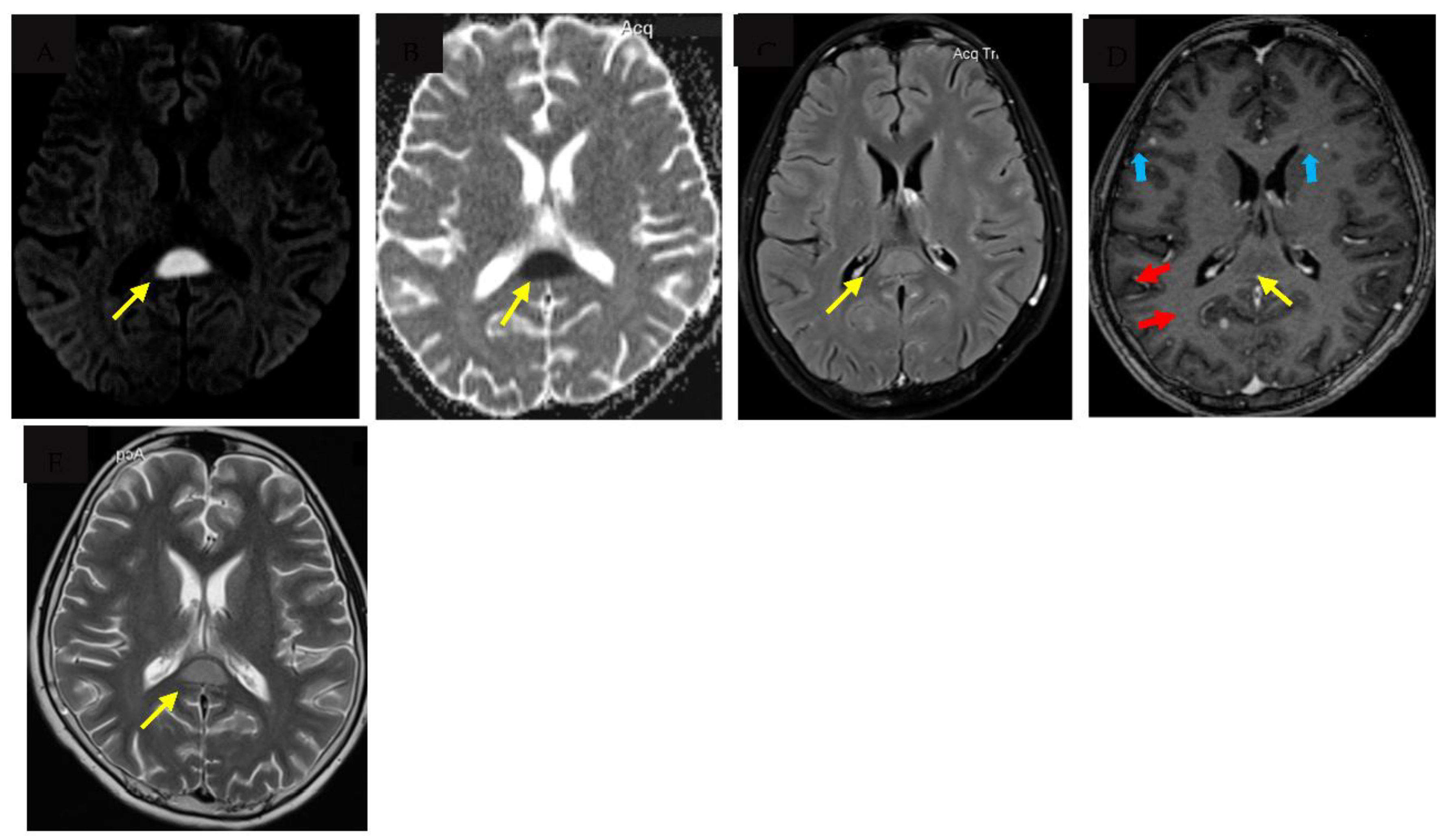
Figure 1. (A-E): Baseline MRI of child with TB meningitis. Diffusion weighted (A), axial FLAIR (C) and Axial T2W (E) images showed a hyperintense, well-defined lesion in the splenium of the corpus callosum (yellow arrows). The same lesion was slightly hypointense on Axial T1W image and did not enhance with gadolinium (D). Corresponding lesion was hypointense on the apparent diffusion coefficient (ADC) map (B). Tuberculomas (blue arrows) and focal meningeal enhancement (red arrows) were also present.
Preprints 149471 g001
Figure 2. (A-E): Repeat MRI at 6 months of treatment. Diffusion weighted (A), ADC (B), axial FLAIR (C), Axial T1W post Gad (D) and Axial T2W (E) images show a complete absence of lesions previously seen in Figure 1.
Preprints 149471 g002
Disclaimer/Publisher’s Note: The statements, opinions and data contained in all publications are solely those of the individual author(s) and contributor(s) and not of MDPI and/or the editor(s). MDPI and/or the editor(s) disclaim responsibility for any injury to people or property resulting from any ideas, methods, instructions or products referred to in the content.
Copyright: This open access article is published under a Creative Commons CC BY 4.0 license, which permit the free download, distribution, and reuse, provided that the author and preprint are cited in any reuse.
Prerpints.org logo

Preprints.org is a free preprint server supported by MDPI in Basel, Switzerland.

Subscribe

Disclaimer

Terms of Use

Privacy Policy

Privacy Settings

© 2025 MDPI (Basel, Switzerland) unless otherwise stated