

Submitted:
13 February 2025
Posted:
17 February 2025
You are already at the latest version
Abstract
Pruning waste (PW) and agricultural timber residue are barely treated, creating environmental pollution issues. A lack of regulations and environmental control criteria leads to poor ecosystems. Here we propose transforming PW from a nuisance into a valuable energy and environmental resource. Reuse and recycling options include turning the waste into a food source, or using it to generate energy, compost, soil fertilizer amendment and other products. A linear programming model with Boolean variables and a management model were defined and run for the reuse of PW. The management model defined the diverse options of PW reuse for resource recovery. These options depend to a considerable extent on the country’s production capacity and the preferred applied alternatives. The area of Israel was split into separate regions, which were classified according to preferred alternatives for PW treatment and reuse. These alternatives included factors such as annual amounts of trash generated, transportation expense, energy demand, and requirements based on annual and daily needs. An optimization model was defined and solved, subject to a series of constraints. The results showed that a net profit of approximately 3.5 million USD/year for a total community of close to 10x106 residents could be derived from the amounts of waste and improved environmental control, in addition to the additional energy source. This work raises the urgent need to regulate the recycling policies for PW in various environmental regions worldwide.
Keywords:
pruning biomass
; environmental control
; circular economy
; sustainable
; management modeling
; energy
1. Introduction
1.1. Types of Solid Waste
One of the main challenges in well-organized and environmentally friendly countries is the treatment and reuse of solid wastes [1,2,3,4,5]. These issues are mainly addressed in countries with higher living standards and increasing shortages of natural food resources [6]. The amounts of waste produced range from 1.5–2.0 kg per person per day, and include different components, but mainly organic material. The amounts of solid waste produced range from 1.5–1.9 kg per person per day. In Israel, around 5% of the total waste consists of pruning waste (PW), around 1 million metric tons per year, equivalent to 100 kg per person per year. However, this figure is deceiving because PW has two major sources: urban and agricultural. The urban waste includes mainly residual plant branches, bushes, and trees cut into small local yards which are located adjacent to an urban building or agricultural farm. The agricultural PW includes, in addition to the amount obtained from regular agricultural activities, the residual PW from urban buildings. Because farming communities are relatively small, the agricultural PW is much denser in these rural and agricultural regions. The agricultural community in the State of Israel includes around 2% of the total population (around 100,000 farmers), and therefore most of the PW comes from the agricultural sector.
Recycling of agricultural and urban residual PW refers to the practice of reusing and repurposing the leftover plant materials, such as tree stems, branches, and leaves generated during pruning activities, as well as the rest of the timber [7,8]. The sustainable approach presented in this paper considers the contamination nuisance as an extra contributing source, rather than a burden on society. In addition, this waste has several economic, environmental, and agricultural benefits. A series of scientific studies emphasize the need to adopt the concept of waste-recycling to protect the environment and improve the utilization of natural resources [9,10,11,12,13].
The scientific area of bioenergy has evolved into looking at the potential energy generation from biomass and more recently, from other living organic material. To minimize the dependence on fossil fuels, the energy from various organic wastes offers an opportunity to promote renewable energy production. The main source for the production of liquid biofuels is edible crops and additional constituents commonly used as feedstock. Algae and duckweed plants are a few examples of plant sources used to generate liquid energy [14,15]. However, the use of edible plants as feedstock for biofuels brings with it global food supply issues as well as ethical problems, such as those involving the utilization of animal wastes—fecal matter and urine—for biofuel production. Poorly managed animal feces can expose humans to pathogens, especially in communities where animals live in proximity to humans. Environmental regulations that strictly control odor, groundwater, and surface-water contamination, soil pollution, and nutrient management are the drivers for innovative waste-management and disposal methods, which could further stimulate the use of animal manure in biomass-based fuel production. Microbial fuel cells, which are bio-electro-chemical systems that generate current, also hold enormous potential for green and sustainable bioenergy-conversion technology that uses waste, such as urine, as a raw material [16,17]. In the following, we review the recent advances in biofuel production from animal wastes, urine-fed microbial fuel cells, and other prospects for waste reuse [Figure 1].
1.2. Pruning Waste
1.2.1. Reuse Options
There are several options for the reuse of organic matter, most commonly dry waste [18,19]. These alternatives depend on the type of residual substance, the location and circumstances of collection, and further treatment and processing. The organic matter in recycled residual plant material can be used as organic amendment for diverse purposes, to improve soil structural properties, and to protect the environment. Free recycling can enrich the deeper soil with nutrients which will improve subsequent agricultural yields. The options for PW reuse are multipurpose and include numerous life areas [20,21,22,23].
1.2.2. Mulching
Mulch is scattered on the soil surface for improved control of temperature and water infiltration. Categories of mulch include distinct types of straw (for example, wheat straw or stubble) (although the risks that the mulch contains residual weeds’ seeds), white polyethylene film (white mulch), and black plastic film (black mulch). Residual PW can be chopped or shredded into small particles and spread over the area to be mulched in a thin (several centimeters) layer. This mulch cover will hinder water loss due to evaporation, suppress weed growth, and control soil temperatures in both the winter and summer [24]. This cover also protects the soil from winds, thus preventing erosion and soil losses [25,26,27].
1.2.3. Composting
The green and dry parts of plants—flowers, fruit, vegetative segments, branches, leaves, and other residual plant parts—are brought, along with wet wastes (essentially kitchen refuse) to large composting sites to be transformed into compost and/or other alternatives. The composted residual food and additional organic waste provide a number of environmental benefits, including improved soil health, reduced greenhouse-gas emissions, recycled nutrients, and the mitigation of drought effects through soil covering. Composting is an oxygen-demanding process that converts organic materials into a nutrient-rich, biologically stable soil amendment or mulch via natural decomposition. The residual PW can be added to a dunghill for composting and the preparation of enriched organic matter soil amendments. Composting is a unique technique that eventually increases soil fertility and yields [28,29,30].
1.2.4. Improving Soil Properties by Adding Amendments
Mulching, or the addition of amendments to the soil, generally serve to use water efficiently, suppress weed development, and improve the soil properties around plants in commercial plantations, gardens, and forests. Mulching supports moisture-retention processes in soils during the warm seasons and improves rainwater penetration into the soils by preventing crust formation. Minimization of weed growth due to reduced water availability for they free development. The mulch cover suppresses evaporation from the soil surface. The decomposed organic mulch promotes healthier soils with high nutrient content. Mulch can also help minimize the seasonal and daily changes in soil temperature [24]. It can reduce tillage requirements due to the improved soil structure [28,31,32].
1.2.5. Biochar Generation
Biochar results from the dissociation of old branches and pruned timber residuals. Biochar is a black charcoal-like product that contains no petroleum. It is obtained by heating biomass by pyrolysis, such as PW residues, non-salvageable timber, and occasionally, animal manure. The degradation of PW, which is the main source of biochar, occurs in the soil [16]. It is a stable solid source, rich in fiery carbon, and can endure in the soil for extended periods. It is commonly used in industrial pyrolysis. Biochar amendment improves soil pH, root system growth and water absorption due to the roots’ improved distribution in the porous soil. Root nutrient- and water-absorption properties are enhanced in the presence of biochar [33,34,35,36,37,38]. However, the quality of the biochar depends on the properties and status of the PW from which it originates.
1.2.6. Disease and Pest Management
Proper disposal and recycling of PW supports better management of diseases and pest control. Removing and recycling infected plant material can prevent disease spread and reduce pest habitats [8,38]. Reuse of PW enhances scenic views, has valuable aesthetic effects, lowers the risks of disease development and provides high-quality ecosystem conditions.
1.2.7. Carbon Sequestration
Carbon dioxide (CO2) is the most commonly generated greenhouse gas. It originates from both natural and human activities. Natural sources of CO2 include most animals’ excreted waste. Human activities leading to CO2 emissions primarily involve energy production, including petrol, and burning coal, oil, and natural gas. Geological carbon sequestration is the process of capturing and storing CO2 in underground geological layers. It is one of the most accepted methods of reducing the amount of CO2 in the atmosphere, with the outcome of reducing global climate changes. CO2 is usually pressurized until it becomes a liquid and then injected into porous rock formations in deep geological layers. This stored carbon is also frequently used for enhanced oil recovery, otherwise known as tertiary recovery. Incorporating agricultural residues into the soil or using them for long-term purposes such as biochar production contribute to carbon-sequestration processes, where lightening enhances the mitigation of global processes of climate change [4,36,39].
1.2.8. Sustainable Farming Practice
Along with increases in population growth, and in the availability and production of high-quality food, advanced approaches have to be adopted to improve agricultural production methods. An innovative approach has to be based on reuse of wastes that, until recently, were simply considered a nuisance. It would be advantageous to consider these as valuable resources rather than taking the conventional approach of disposing of them. Adopting recycling practices aligns with sustainable farming principles, by promoting a circular economy in agriculture. Recycling minimizes waste, conserves resources, and supports long-term environmental health [36,40,41].
1.2.9. Food Sources
Depending on the type of plants being pruned, the residues can sometimes be used as supplementary food for livestock. This not only reduces waste, but it also provides an additional source of nutrition for animal feed [42]. Potential isolation of bioactive polysaccharides from bay tree PW was studied using sequential subcritical water extraction and different time–temperature combinations. The extracted polysaccharides were highly enriched in pectin, while preserving their high molecular mass (10–100 kDa)—ideal properties for application as an additive for packaged foods. Pectin-enriched chitosan films were prepared, improving the food’s properties. Chitosan-based films with antioxidant capacity greater than 95% and water vapor permeability less than or equal to 14 x 10-7 g/(Pa s m2) were compared with “neat” chitosan-based films, likely referring to chitosan films without additional antioxidant agents or modification.
1.3. Energy
1.3.1. Bioenergy Production
Selected agricultural residues, primarily those with a high content of dissociated cellulose, can be used for bioenergy production through processes such as biomass gasification or biofuel production [43]. Application of pyrolysis or combustion can supply energy at local or even national scales for diverse purposes. These processes have two foremost advantages: (i) they provide an alternative sustainable energy source and reduce dependence on nonrenewable resources, and; (ii) they improve environmental quality conditions [38,44].
1.3.2. Pyrolysis
Pyrolysis is the heating of organic materials, such as biomass, in the absence of oxygen. It is one of the technologies available to convert biomass to an intermediate liquid product that can be refined to drop-in hydrocarbon biofuels, oxygenated fuel additives, and replacements for petrochemical constituents [22,45]. Pyrolysis is commonly applied to organic materials, and is a main process in carbonizing wood material. In general, pyrolysis of organic substances produces volatile products and leaves char, a solid carbon-rich residue. High-intensity pyrolysis, which leaves mostly carbon as the residue, is called carbonization. Pyrolysis is considered the first step in the processes of gasification or combustion. The process is widely used in the chemical industry for producing ethylene, many forms of carbon, petroleum chemicals, coal, and the coke produced from coal. It is also used in the conversion of natural gas (primarily methane) into its hydrogen fraction and solid carbon-char. Attempts have been made to use pyrolysis to convert biomass into syngas and biochar, plastic waste back into usable oil, or wastes into safely disposable substances [38,46]. An advanced emerging option is to use the biomass to generate hydrogen as an alternative energy source for a cost of 1.2 to 2.2 USD per kg of hydrogen, applying the pyrolysis process [47].
1.3.3. Combustion
Combustion (burning) is a high-temperature exothermic redox chemical reaction which takes place between a fuel (the reducing agent) and an oxidant, commonly atmospheric oxygen. It is a chemical reaction in which a substance reacts rapidly with oxygen and generates heat [48,49]. The basic substance is the fuel, and the source of the oxygen is the oxidizer. The fuel can be in the form of solid, liquid, or gas, although for aircrafts the fuel is usually liquid [50]. During the manufacturing process, gaseous materials are commonly produced in a visible mixture termed smoke [50,51]. The oxidizer can also be a solid, liquid, or gas; however, the latter is most common for airplanes. For rockets, both solid fuel and oxidizer are used. Since combustion is extremely important for aircraft and rocket propulsion, it is considered a fundamental process.
New chemical substances are created from fuel and the oxidizer during combustion. These new substances, termed exhaust, originate from the chemical combinations of the fuel and oxygen. When a hydrogen–carbon-based fuel (like gasoline) burns, the exhaust includes water (hydrogen + oxygen) and CO2 (carbon + oxygen). However, the exhaust can also include chemical combinations from the oxidizer alone. If the gasoline is burned in air, which contains around 20% oxygen and approximately 80% nitrogen, the exhaust can also include nitrous oxides (nitrogen + oxygen). The temperature of the exhaust is relatively high because heat is transferred to the exhaust during combustion. Due to the elevated temperatures of the process, the exhaust is usually a gas, but it can also be converted into a liquid or a solid.
1.3.4. Incineration
Incineration is a treatment process for solid wastes in which hazardous waste substances are reused via a combustion procedure. During this process, the residual plant substances are turned into energy. Incineration of timber materials is a thermal process that converts the waste into ash, flue gas, and heat [52,53]. The ash consists mostly of inorganic waste constituents and may take the shape of solid lumps or particulates carried by the flue gas. The exhausted flue gases must be cleaned of gaseous elements and particulate pollutants before they are dispersed into the atmosphere. The heat that is generated by incineration can be used to generate electrical power [34].
Incineration that is based on energy recovery is one of several waste-to-energy technologies, such as gasification, pyrolysis and anaerobic digestion. While incineration and gasification technologies are similar in principle, the energy produced from incineration is high-temperature heat whereas combustible gas is often the main energy product from gasification. Incineration and gasification may also be implemented without recovering the energy or materials.
Experts in several countries are concerned about the environmental effects of incinerators [53]. In those countries, material-separation processes for removing hazardous, bulky, or recyclable materials prior to the combustion stage are often ignored. hazardous, bulky, or recyclable materials prior to the combustion stage are often ignored. These incineration facilities tend to risk the health of the plant workers and the local environment due to inadequate levels of gas cleaning and combustion-process control. Most of these facilities do not generate electricity. Incinerators, however, reduce the solid mass of the original waste by 80% to 85% and the volume (already compressed somewhat in garbage trucks) by 94% to 97%. This largely depends on the composition and degree of recovery of materials, such as metals, from the ash for recycling. This means that while the incineration process cannot completely replace landfill methods, it does significantly reduce the volume of the disposed matter. Garbage trucks often have the capacity to reduce the volume of wastes with a built-in compressor prior to delivery to the incinerator facility. Alternatively, at landfills, the volume of the uncompressed garbage can be reduced by approximately 70% using a stationary steel compressor, albeit with a significant energy cost. Simpler waste compaction is widespread practice in landfills.
Waste combustion is needed, for example, in multiproduct chemical plants with diverse toxic streams, which cannot be routed to a conventional wastewater-treatment facility. Waste combustion is particularly popular in countries such as Japan, Singapore, and the Netherlands, where land is a scarce resource. Denmark and Sweden have been leaders in using the energy generated from incineration for more than a century, in localized combined heat and power facilities supporting district heating schemes.. In 2005, waste incineration produced 4.8% of the electricity consumption and 13.7% of the total domestic heat consumption in Denmark. A number of European countries rely heavily on incineration for handling municipal waste, in particular Luxembourg, Germany, the Netherlands, and France. Recycling options and available technologies are listed in Table 1.
1.4. Economic Aspects
Controlled environmental agriculture in agro-industrial systems, where CO2 plays a key role, heat is generated, weeds and other ligneous wastes are recovered or recycled, has the potential to be an environmentally friendly approach combined with economic feasibility. However, such an approach needs careful exploration to ensure both environmental and economic benefits. Techno-economic and life-cycle assessments were applied to evaluate the constructive collaboration of food production (e.g., tomato and hemp crops) and recovery of industrial wastes (e.g., a heat source and CO2) in greenhouses under robust uncertainty and sensitivity analyses. For each crop, two scenarios were compared: (i) linear scenarios evaluating the use of raw materials with no waste recovery, and (ii) circular economy scenarios focusing on capturing industrial flows and their reuse in the greenhouse, exhausting raw material consumption [66]. Circular economic practices had net benefits in terms of global warming potential for agricultural plants, capturing up to 50,000 kg/year of CO2 of crop biomass and providing competitive product prices. The analysis showed that circular economy considerations for materials can reduce global expenses.
Collecting and recycling agricultural residues lead to a reduction in farmers’ operating expenses. However, reuse of the residual waste depends to a substantial extent on the quality of the applied material and the treatment method [67]. Instead of disposing of PW, farmers can turn it into a valuable resource for soil and environmental improvements, reducing the need for external inputs such as fertilizers, and alternative energy sources [53,68,69] .
2. The Purpose of the Work
In the framework of engineering environmental studies, a management model was developed to achieve optimal assignment of the residual PW for further processing and reuse. The purpose of the work was to find optimal site allocations and treatment methods to use residual timber for energy and other product generation. These depend mainly on the amounts of residue collected, but also on the demand for energy and the additional product in a particular region. A linear model with Boolean variables was defined and solved for optimal treatment of the residual PW. An estimate of PW production in Israel is outlined in Table 2.
3. Materials and Methods
3.1. The Variables
As stated, PW typically includes branches, twigs, leaves, and other vegetative residues. Systematic and economic collection of PW from agricultural fields, orchards, gardens, or urban areas was modeled. By defining a management model for these materials and methods, PW can be effectively and economically recycled for energy generation while minimizing environmental impact and contributing to a circular economy. The system variables were defined accordingly (Table 3).
On top of the conventional variables supplementary variables were inserted for solving the problem. These variables are given as follows:
3.2. The Objective Function
The purpose of the objective function Z (USD/year) is to maximize the return from energy and other products generation by recycling and reuse of the residual PW. Consequently, it refers to return energy from deducting all of the related expenses. It is given by the expression:
where Zik is the annual amount of PW in tons/year that is transported from region i to region k. The objective function Z is optimized subject to a series of constraints.
3.3. The Constraints
The constraints are given in a similar order to the defined variables:
Analyzing the reuse possibilities and their typical characteristics revealed that the problem consists of nonlinear programming elements. Several geographical regions were considered for PW recycling. The PW is transferred to an adjacent regional treatment facility only after the first facility is fully exhausted with all local regional trash [equation (6)]. This is expressed by the supplementary variable bi. When the regional reuse facility has enough capacity to treat all local trash then bi = 1, and bi = 0 when the amount of trash exceeds the capacity. The exhibited problem thus consists of seven geographical regions, four recycling treatment methods, 77 decision variables (28 of the type and 49 of the type) and a total of 113 constraints.
3.4. The Treatment Facilities
Four types of treatment facilities were considered (Table 4). Characteristics of each treatment were capacity, investment expenses, and final market value of the newly generated products. Input data for the treatment facilities were taken from diverse sources [67]. All of these values were incorporated into the management model, allowing us to obtain the optimal solution for the case study set.
4. Results
The distances between the treatment sites were inserted into the model (Table 5). These distances describe the expenses due to PW transport within and between regions to the recycling facilities. The final recycled products were included in the management analysis. The nonlinear model was run with LINGO software and took only a few minutes [71]. The main problem was how to characterize and define the nonlinear features of the problem rather than how to solve it. Consequently, final results for the given input data for newly generated products are presented in Table 6 and Table 7. The total return for the recycling PW was according to the detailed results 10,358,879 USD/year. The total amount of PW was subject to the input data of 1,339,913 tons, thus giving a net profit of around 7.73 USD/ton.
5. Conclusions
The results of the work indicate the advantage of defining (the most difficult step) and solving environmental problems by applying an operational research method, in this case, turning residual PW into valuable products with minimal damage to the environment. This example shows how a circular economy can be a useful tool for creating a better environment. According to the calculations, the net profit is around 7.73 USD per one metric ton of PW. This implies that, depending upon the local conditions in a particular country, the net profit can be in the range of 5.0 to 10.0 USD/ton of PW.
One of the most effective parameters influencing the recycling solution, aside from the treatment characteristics, is PW transport. The expenses involved in transporting the raw materials are important. In the circular economic analysis, distance also plays a key role, as do the treatment characteristics and options for reducing the total recycling expenses. This requires a deep look into the market for the new recycled product.
Despite excessive costs for maintenance and the initial investment, pyrolysis for bio-charcoal production was shown to be the preferred technology. Results also showed the great advantage of using shredded material for soil mulching. It is likely that changes in the four economic parameters of the treatment will change the outcome subject to local conditions.
Author Contributions
Gal Shwartz was responsible for the modeling and data collection and Gideon Oron for the conceptual model and preparing the manuscript.
Funding source: Funding was accepted from internal sources of Ben-Gurion University of the Negev.
Institutional Review Board Statement
Not applicable.
Informed Consent Statement
Not applicable.
Data Availability Statement
Data will be made available upon request.
Participants from other Institutes: No other persons took part in the publication.
Acknowledgments
The authors greatly acknowledge the anonymous referees of the manuscript.
Conflicts of Interest
The authors declare no conflicts of interest.
References
- Park, J.W.; Shin, H.C. Surface emission of landfill gas from solid waste landfill. Atmospheric Environment 2001, 35(20), 3445-3451.–3451. [Google Scholar] [CrossRef]
- Cong, H.; Meng, H.; Chen, M.; Song, W.; Xing, H. Co-processing paths of agricultural and rural solid wastes for a circular economy based on the construction concept of “zero-waste city” in China. Circular Economy 2023, 2, 1-10, 100065.
- Chen, C.; Zhai, M.; Wang, X.; Li, W.; Xu, Y.; Bao, Z. Analysis of the dynamics of common industrial solid waste based on input–output: A case study of Shanghai international metropolis in China. Waste Management 2024, 177, 1–12. [Google Scholar] [CrossRef]
- Mason, A.R.G.; Salomon, M.J.; Lowe, A.J.; Cavagnaro, T.R. Review microbial solutions to soil carbon sequestration. Journal of Cleaner Production 2023, 417, 1-10, 137993.
- Yu, H.; Zahidi, I.; Fai, C.M.; Liang, D.; Madsen, D.O. Mineral waste recycling, sustainable chemical engineering, and circular economy. Results in Engineering 2024, 21, 1-8, 101865.
- Ramírez-Márquez, C.; Posadas-Paredes, T.; Raya-Tapia, A.Y.; Ponce-Ortega, J.M. Natural resource optimization and sustainability in society 5.0: a comprehensive review. Resources MDPI 2024, 13, 1-20, 19, https://doi.org/10.3390/resources13020019, https://www.mdpi.com/journal/resources.
- Shah, P.; Yang, J.Z. When virtue is its own reward: How norms influence consumers’ willingness to recycle and reuse. Environmental Development 2023, 48, 1-11, 100928, www.elsevier.com/locate/envde.
- Muscas, D.; Orlandi, F.; Petrucci, R.; Proietti, C.; Ruga, L.; Fornaciari, M. Effects of urban tree pruning on ecosystem services performance. Trees, Forests and People 2024, 15, 1-9, 100503.
- Gertsakis, J.; Lewis, H. Sustainability and the waste management hierarchy: A discussion paper on the waste management hierarchy and its relationship to sustainability. Product Stewardship Centre of Excellence, Institute for Sustainable Futures, University of Technology PO Box 123, Broadway NSW 2007, 2003, p-25, www.stewardshipexcellence.com.au.
- Mpofu, A.B.; Kaira, W.M.; Oyekola, O.O.; Welz, P.J. Anaerobic co-digestion of tannery effluents: Process optimisation for resource recovery, recycling and reuse in a circular bioeconomy. Process Safety and Environmental Protection 2022, 158, 547–559. [Google Scholar] [CrossRef]
- Hu, H.; Zeng, X.; Zheng, K.; Zeng, Z.; Dai, C.; Huo, X. Risk assessment and partitioning behavior of PFASs in environmental matrices from an e-waste recycling area. Sci. of the Total Environment 2023, 905, 1-10, 16770.
- Gordon, A.M.; Matilla, A.L.; Barrio, M.I.P.; Escamilla, A.C. From waste to resource: Exploring the recyclability and performance of gypsum-graphene nanofiber composites. Resources, Conservation & Recycling Advances 2024, 23, 1-12, 200222.journal homepage: www.sciencedirect.com/journal/.
- Liu, X.; Asghari, V.; Lam, C-M.; Hsu, S-C.; Xuana, D.; Angulo, S.C.; John, V.M.; Basavaraj, A.S.; Gettu, R.; Xiao, J.; Poon, C-S.; Review discrepancies in life cycle assessment applied to concrete waste recycling: A structured review. Journal of Cleaner Production 2024, 434, 1-18, 140155.
- Guo, L.; Jina, Y.; Xiaoc, Y.; Tana, L.; Tiana, X.; Dinga, Y.; Hea, K.; Dua, A.; Lia, J.; Yia, Z.; Wange, S.; Fanga, Y.; Zhaoa, H. Energy-efficient and environmentally friendly production of starchrich duckweed biomass using nitrogen-limited cultivation. Journal of Cleaner Production 2019, 251, 1-10, 119726.
- Sang, J.; Li, Y.; Yang, J.; Wu, T.; Xiang, L.; Zhao, Y.; Guan, W.; Xu, J.; Maorong, C.M.; Singhal, S.C. Energy harvesting from algae using large-scale flat-tube solid oxide fuel cells. Cell Reports Physical Science 2023, 4, 1-19, 101454.
- Lavagi, V.; Kaplan, J.; Vidalakis, G.; Ortiz, M.; Rodriguez, M.V.; Amador, M.; Hopkins, F.; Ying, S.; Pagliaccia, D. Recycling agricultural waste to enhance sustainable greenhouse agriculture: Analyzing the cost-effectiveness and agronomic benefits of bokashi and biochar byproducts as soil amendments in citrus nursery production. Sustainability MDPI 2024, 16, 1-16, 6070.
- Vijaya, A.; Meisterknecht, J.P.S.; Angreani, L. S.; Wicaksono, H. Advancing sustainability in the automotive sector: A critical analysis of environmental, social, and governance (ESG) performance indicators. Cleaner Environmental Systems 2025, 16, 1-17, 100248, www.journals.elsevier.com/cleaner-environmental-systems.
- Verter, V.; Boyaci, T.; Galbreth, M. Design for reusability and product reuse under radical innovation. Sustainability Analytics and Modeling 2023, 3, (1-14, 100021, www.journals.elsevier.com/sustainability-analytics-and-modeling.
- Bubinek, R.; Knaack, U.; Cimpan, C. Reuse of consumer products: Climate account and rebound effects potential. Sustainable Production and Consumption 2025, 54, 190–201. [Google Scholar] [CrossRef]
- Dtie, U.N.E.P.; Converting waste agricultural biomass into a resource. Compendium of Technologies 2009, Osaka, United Nations Environment Program.
- Grohmann, D.; Petrucci, R.; Torre, L.; Micheli, M.; Menconi, M.E. Street trees’ management perspectives: Reuse of Tilia sp.’s running waste for insulation purposes. Urban Forestry & Urban Greening 2019, 38, 177-182.
- Lago, A.; Sanz, M.; Gordón, J.M.; Fermoso, J.; Pizarro, P.; Serrano, D.P.; Moreno, I. Enhanced production of aromatic hydrocarbons and phenols by catalytic co-pyrolysis of fruit and garden pruning wastes. Journal of Environmental Chemical Engineering 2022, 10, 1-9, 107738.
- Kougioumtzis, M.A.; Tsiantzi, S.; Athanassiadou, E.; Karampinis, E.; Grammelis, P.; Kakaras, E. Valorization of olive tree pruning for the production of particleboards. Evaluation of the particleboard properties at different substitution levels. Industrial Crops and Products 2023, 204-part B, 1-10, 117383.
- Zhang, Z.; Zhang, Y.; Sun, Z.; Zheng, J.; Liu, E.; Feng, L.; Feng, C.; Si, P.; Bai, W.; Cai, Q.; Yang, N.; van der-Werf, W.; Zhang, L. ; Plastic film cover during the fallow season preceding sowing increases yield and water use efficiency of rain-fed spring maize in a semi-arid climate. Agricultural Water Management 2019, 212, 203–210. [Google Scholar] [CrossRef]
- Iqbal, R.; Raza, M.A.S.; Valipour, M.; Saleem, M.F.; Zaheer, M.S.; Ahmad, S.; Toleikiene, M.; Haider, I.; Aslam, M.U.; Nazar, M.A. Potential agricultural and environmental benefits of mulches-a review. Bulletin of the National Research Centre 2020, 44(75), 1–16. [Google Scholar] [CrossRef]
- Fan, D.; Jia, G.; Wang, Y.; Yu, X. The effectiveness of mulching practices on water erosion control: A global meta-analysis. Geoderma 2023, 438, 1-20, 116643.
- Sapakhova, Z.; Islamb, K.R.; Toishimanov, M.; Zhapar, K.; Daurov, D.; Daurova, A.; Raissova, N.; Kanat, R.; Shamekova, M.; Zhambakin, K. Mulching to improve sweet potato production. Journal of Agriculture and Food Research 2024, 15, 1-10, 101011.
- Teutscherova, N.; Vazquez, F.; Santana, D.; Navas, M.; Masaguer, A.; Benito, M. Influence of pruning waste compost maturity and biocharon carbon dynamics in acid soil: Incubation study. European Journal of Soil Biology 2017, 78, 66–74. [Google Scholar] [CrossRef]
- Cestonaro, T.; de Vasconcelos-Barros, R.T.; de Matos, A.T.; Costa, M.A. Full scale composting of food waste and tree pruning: How large is the variation on the compost nutrients over time ?. Science of The Total Environment 2021, 754, 1-8, 142078.
- Li, M.; Li, F.; Zhou, J.; Yuan, Q.; Hu, N. Fallen leaves are superior to tree pruning as bulking agents in aerobic composting disposing kitchen waste. Bioresource Technology 2022, 346, 1-9, 126374.
- Garcia-Franco, N.; Wiesmeier, M.; Hurtarte, L.C.C.; Fella, F.; Martínez-Mena, M.; Almagro, M.; Martínez, E.G.; Kögel-Knabner, I. Pruning residues incorporation and reduced tillage improve soil organic matter stabilization and structure of salt-affected soils in a semi-arid Citrus tree orchard. Soil & Tillage Research 2021, 213, 1-11, 105129.
- Taguas, E.V.; Marín-Moreno, V.; Díez, C.M.; Mateos, L.; Barranco, D.; Mesas-Carrascosa, F-J.; García-Ferrera, R.P.A.; Quero, J.L. Opportunities of super high-density olive orchard to improve soil quality: Management guidelines for application of pruning residues. Journal of Environmental Management 2021, 293, 1-12, 112785. http://creativecommons.org/licenses/by-nc-nd/4.0/.
- Ahmed, M.B.; Zhou, J.L.; Ngo, H.H.; Guo, W. Insight into biochar properties and its cost analysis. Biomass and Bioenergy 2016, 84, 76–86. [Google Scholar] [CrossRef]
- Liu, Y.; Mendoza-Perilla, P.; Clavier, K.A.; Tolaymat, T.M.; Bowden, J.A.; Solo-Gabriele, H.M.; Townsend, T.G. Municipal solid waste incineration MSWI) ash co-disposal: Influence on per- and polyfluoroalkyl substances PFAS) concentration in landfill leachate. Waste Management 2022, 144, 49–56. [Google Scholar] [CrossRef]
- Cárdenas-Aguiar, E.; Gasco’, G.; Lado, M.; Méndez, A.; Paz-Ferreiro, J.; Paz-Gonzalez, A. New insights into the production, characterization and potential uses of vineyard pruning waste biochars. Waste Management 2023, 171, 452–462. [Google Scholar] [CrossRef]
- Noguès, I.; Miritana, V.M.; Passatore, L.; Zacchini, M.; Peruzzi, E.; Carloni, S.; Pietrini, F.; Marabottini, R.; Chiti, T.; Massaccesi, L.; Marinari, S. Biochar soil amendment as carbon farming practice in a Mediterranean environment. Geoderma Regiona 2023, l33, 1-14, e00634, http://creativecommons.org/licenses/by/4.0/.
- Ruan, R.; Wang, Y. Effects of biochar amendment on root growth and plant water status depend on maize genotypes. Agricultural Water Management 2024, 293, 1-11, 108688.
- Shahrun, M.S.; Abdul-Rahman, M.H.; Baharom, N.A.; Jumat, F.; Saad, M.J.; Mail, M.F.; Zawawi, N.N.; Suherman, F.H.S. Design of a pyrolysis system and the characterization data of biochar produced from coconut shells, carambola pruning, and mango pruning using a low-temperature slow pyrolysis process. Data in Brief 2024, 52, 1-11, 109997.
- Acosta, A.C.; C.A.; Biller, P.; Sørensen, P.; Marulanda, V.F.; Brix, H. Optimizing resource efficiency through hydrothermal carbonization and engineered wetland systems: A study on carbon sequestration and phosphorus recovery potential. Journal of Cleaner Production 2024, 1-11. [CrossRef]
- Aare, A.K.; Lund, S.; Hauggaard-Nielsen, H. Exploring transitions towards sustainable farming practices through participatory research-the case of Danish farmers’ use of species mixtures. Agricultural Systems 2021, 189, 103053. [Google Scholar]
- Rodríguez-Espinosa, T.; Papamichael, I.; Voukkali, I.; Gimeno, A.P.; Candel, M.B.A.; Navarro-Pedreño, J.; Zorpas, A.A.; Lucas, I.G. Nitrogen management in farming systems under the use of agricultural wastes and circular economy. Science of the Total Environment 2023, 876, 162666. [Google Scholar] [CrossRef]
- Velázquez-Martí, B.; Fernández-González, E.; López-Cortés, I.; Salazar-Hernández, D.M. Quantification of the residual biomass obtained from pruning of vineyards in Mediterranean area. Biomass and Bioenergy 2011, 35, 3453–3464. [Google Scholar]
- Dangulla, M.; Manaf, L.A.; Aliero, M.M. The contribution of small and medium diameter trees to biomass and carbon pools in Yabo, Sokoto State, Nigeria. Academia Environmental Science and Sustainability 2025, 2. [Google Scholar] [CrossRef]
- Lodato, C.; Hamelin, L.; Tonini, D.; Astrup, T.F. Towards sustainable methane supply from local bioresources: Anaerobic digestion, gasification, and gas upgrading. Applied Energy 2022, 323, 119568, http://creativecommons.org/licenses/by/4.0/.
- Zhang, P.; Zhang, X.; Li, Y.; Han, L. Influence of pyrolysis temperature on chemical speciation, leaching ability, and environmental risk of heavy metals in biochar derived from cow manure. Bioresource Technology 2020, 302, 122850. [Google Scholar] [CrossRef]
- Taboada-Ruiz, L.R.; Pardo, R.; Ruiz, B.; Díaz-Somoano, M.; Calvo, L.F.; Paniaguac, S.; Fuentea, E. Progress and challenges in valorization of biomass waste from ornamental trees pruning through pyrolysis processes. Prospects in the bioenergy sector. Environmental Research 2024, 249, 118388. [Google Scholar] [CrossRef] [PubMed]
- Nikolaidis, P.; Poullikkas, A. A comparative overview of hydrogen production processes. Renewable and Sustainable Energy Reviews 2017, 67, 597–611. [Google Scholar] [CrossRef]
- van-Pinxteren, D.; Engelhardt, V.; Mothes, F.; Poulain, L.; Fomba, K.W.; Spindler, G.; Cuesta-Mosquera, A.; Tuch, T.; Müller, T. Wiedensohler, A.; Loschau, G.; Bastian, S.; Herrmann, H. Residential wood combustion in Germany: A twin-site study of local village contributions to particulate pollutants and their potential health effects. ACS Environmental Au. 2024, 4, 1.
- Wang, Z., Li, P., Cai, W., Shi, Z., Liu, J., Cao, Y., Li, W., Wu, W., Li, L., Liu, J., Zheng, T. Identifying administrative villages with an urgent demand for rural domestic sewage treatment at the county level: decision making from China. Sustainability 2025, 17, 800. [CrossRef]
- Deng, J.; Liu, T-S. ; Yao, M.; Yi, X.; Bai, G-X.; Huanga, Q-R.; Li, Z. Comparative study of the combustion and kinetic characteristics of fresh and naturally aged pine wood. Fuel 2023, 343, 127962. [Google Scholar] [CrossRef]
- Kougioumtzis, M.A.; Kanaveli, I.P.; Karampinis, E.; Elis, P.G.; Kakaras, E. Combustion of olive tree pruning pellets versus sunflower husk pellets at industrial boiler. Monitoring of emissions and combustion efficiency. Renewable Energy 2021, 171, 516–525. [Google Scholar] [CrossRef]
- Robinson, J.S.; Leinweber, P. Effects of pyrolysis and incineration on the phosphorus fertilizer potential of bio-waste-and plant-based materials. Waste Management 2023, 172, 358–367. [Google Scholar] [CrossRef]
- Jadlovec, M.; Výtisk, J.; Honus, S.; Pospišilík, V.; Bassel, N. Pollutants production, energy recovery and environmental impact of sewage sludge co-incineration with biomass pellets. Environmental Technology & Innovation 2023, 32, 103400, http://creativecommons.org/licenses/by-nc-nd/4.0/.
- Zu, L.; Wu, D.; Lyu, S. How to move from conflict to opportunity in the not-in-my-backyard dilemma: A case study of the Asuwei waste incineration plant in Beijing. Environmental Impact Assessment Review 2024, 104, 107326. [Google Scholar] [CrossRef]
- Li, M.; Li, F.; Zhou, J.; Yuan, Q.; Hu, N. Fallen leaves are superior to tree pruning as bulking agents in aerobic composting disposing kitchen waste. Bioresource Technology 2022, 346, 126374. [Google Scholar] [CrossRef]
- Medic, D. Investigation of torrefaction process parameters and characterization of torrefied biomass. A dissertation submitted to the graduate faculty in partial fulfillment of the requirements for the degree of Doctor of Philosophy, Iowa State University, thesis 2012, p-128, Ames, Iowa.
- Feofilova, E.P.; Mysyakina, I.S. Lignin: chemical structure, biodegradation, and practical application a review. Appl. Biochemistry and Microbiology 2016, 52, 573–581. [Google Scholar] [CrossRef]
- Cassoni, A.C.; Costa, P.; Mota, I.; Vasconcelos, M.W.; Pintado, M. Recovery of lignins with antioxidant activity from Brewer’s spent grain and olive tree pruning using deep eutectic solvents. Chemical Engineering Research and Design 2023, 192, 34–43. [Google Scholar] [CrossRef]
- Cavinato, C.; Fatone, F.; Bolzonella, D.; Pavan, P. Thermophilic anaerobic co-digestion of cattle manure with agro-wastes and energy crops: comparison of pilot and full-scale experiences. Bioresource Technology 2015, 101, 545–550. [Google Scholar] [CrossRef]
- Rincón, E.; Espinosa, E.; García-Domínguez, M.T.; Balu, A.M.; Vilaplana, F.; Serrano, L.; Jimẻnez-Quero, A. Bioactive pectic polysaccharides from bay tree pruning waste: Sequential subcritical water extraction and application in active food packaging. Carbohydrate Polymers 2021, 272, 118477, http://creativecommons.org/licenses/by/4.0/.
- Vercruysse, W.; Derison, F.; Joos, B.; Hardy, A.; Hamed, H.; Schreurs, S. Biomass residue streams as potential feedstocks for the production of activated-carbon-based electrodes for supercapacitors. ACS Sustainable Resources Management 2024, 1, 124-132.
- Amchova, P.; Siska, F.; Ruda-Kucerova, J. Food safety and health concerns of synthetic food colors: an update. Toxics 2024, 12, 466–483. [Google Scholar] [CrossRef] [PubMed]
- Joseph, S.; Pow, D.; Dawson, K.; Mitchell, D.R.G.; Rawal, A.; Hook, J.; Taherymoosavi, S.; Van-Zwieten, L.; Rust, J.; Donne, S.; Munroe, P.; Pace, B.; Graber, E.; Thomas, T.; Nielsen, S.; Ye, J.; Lin, Y.; Pan, G.; Lin, L.; Solaiman, Z.M. Feeding biochar to cows: an innovative solution for improving soil fertility and farm productivity. Pedosphere 2015, 25, 666–679. [Google Scholar] [CrossRef]
- Mohan, D.; Sarswat, A.; Ok, Y.S.; Pittman Jr, C.U. Organic and inorganic contaminants removal from water with biochar, a renewable, low cost and sustainable adsorbent–a critical review. Bioresource Technology 2014, 160, 191–202. [Google Scholar] [CrossRef]
- Saygin, D.; Gielen, D.J.; Draeck, M.; Worrell, E.; Patel, M.K. Assessment of the technical and economic potentials of biomass use for the production of steam, chemicals and polymers. Renewable and Sustainable Energy Reviews 2014, 40, 1153–1167. [Google Scholar] [CrossRef]
- David, L.O.; Aigbavboa, C.; Adepoju, O.; Nnamdi, N. Applying circular economy strategies in mitigating the perfect storm: The built environment context. Sustainable Futures 2025, 9, 100444, www.sciencedirect.com/journal/sustainable-futures.
- Broitman, D.; Raviv, O.; Ayalon, O.; Kan, I. Designing an agricultural vegetative waste-management system under uncertain prices of treatment-technology output products. Waste Management 2018, 75, 37–43. [Google Scholar] [CrossRef]
- McDonald, L.J.; Pinto, A.S.S.; Arshad, M.N.; Rowe, R.L.; Donnison, I.; McManus, M. Techno-economic and life cycle assessments of waste recovery for crop growth in glasshouses. Journal of Cleaner Production 2023, 432, 139650, http://creativecommons.org/licenses/by/4.0/.
- Díaz, L.; Seoñrans, S.; González, L.A.; Escalante, D.J. Assessment of the energy potential of agricultural residues in the Canary Islands: Promoting circular economy through bioenergy production. Journal of Cleaner Production 2024, 437, 140735, http://creativecommons.org/licenses/bync-nd/4.0/.
- Kan, I.; Rapaport-Rom, M. Regional blending of fresh and saline irrigation water : Is it efficient? Water Resources Research 2012, 48, W07517. [Google Scholar] [CrossRef]
- LINGO, 2015. The modeling language and optimizer. Lingo Systems Inc., 1415 North Dayton Street, Chicago, Illinois 60642, Technical Support: 312, 988-9421, E-mail: tech@lindo.com WWW: http://www.lindo.com.
Figure 1.
Options for solid-waste reuse.
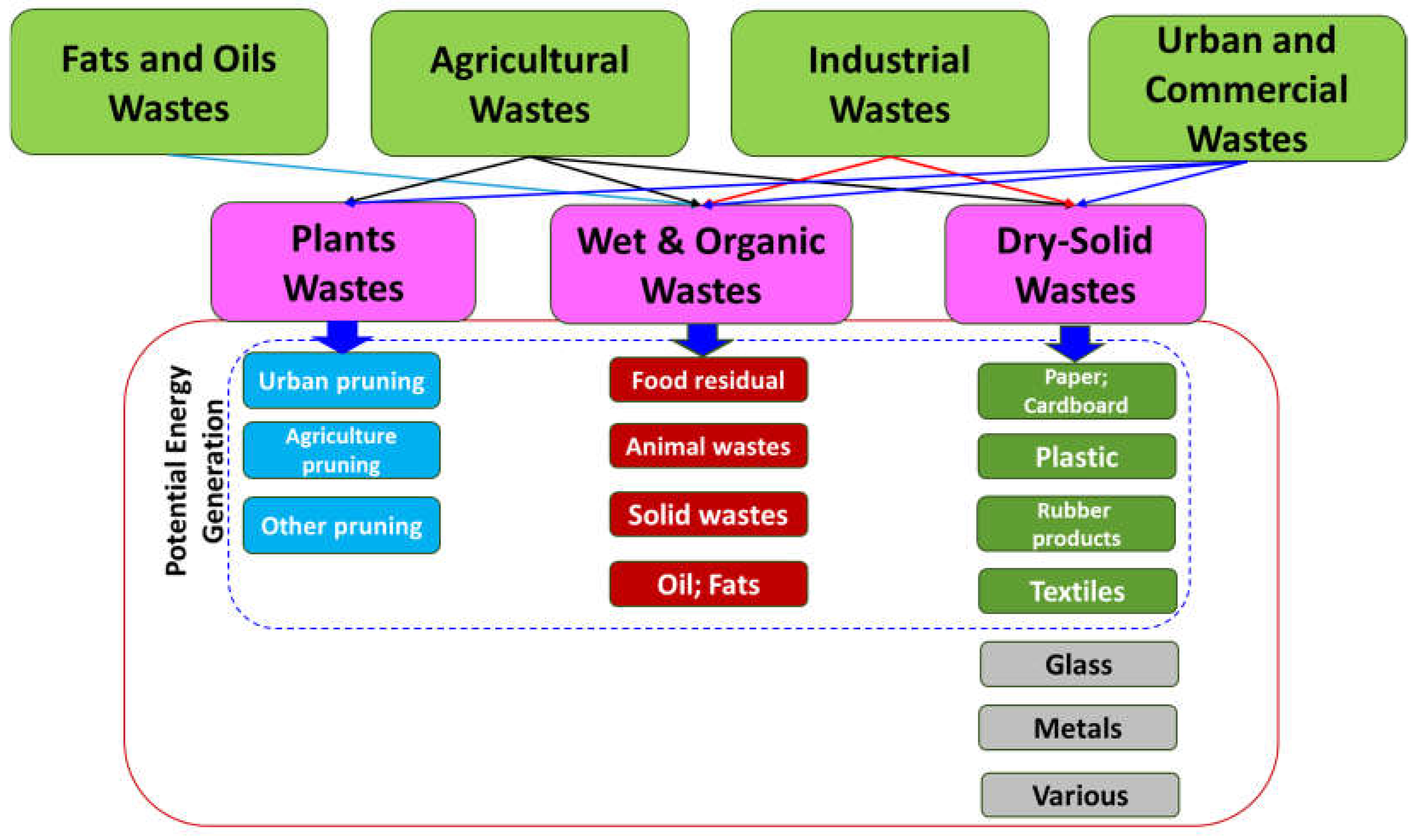

Table 1.
Summary of potential recycling processes for residual pruning waste.
| Treatment method | The process | Percentage of pruning waste | Product outcome and results |
References |
|---|---|---|---|---|
| Mulching | Shredding for soil cover using straw, polyethylene, and plastic | 100 | Maintaining soil moisture and temperature | [24,25,26,27] |
| Composting | Anaerobic wastes: sorting to desired calories; minimal contamination | 30–35 | Soil amendment: increased carbon addition & disease reduction | [28,29,30,55] |
| Bio charcoaling | Closed thermochemical: 200oC–300oC; similar to pyrolysis | 100 | Additive for electricity generation and heating | [33,35,36,37,38,56] |
| Food production | Extracted polysaccharides; lignin | 40–60 | Supplementary food for humans | [58,59,60,61,62] |
| Animal feed |
Mixing according to ratio and animal species |
10–50 | Wet food as a substitute for fodder | [63] |
| Pyrolysis | Anaerobic conversion of biomass: thermochemical: 300oC–900oC | 100 | Heat for local use; biochar | [33,38,46,64] |
| Combustion | High-temperature burning | 100 | Fuel; rocket propulsion | [23,50] |
| Incineration | Heating primarily hazardous solid wastes | 100 | Flue gas; heating source | [52,53] |
| Anaerobic digestion | Thermophilic: bacterial dismantling at 50oC–60oC | 20–50 |
Biogas for electricity; low-quality compost |
[59] |
| Steam generation | Biomass burning; fertilizers | 100 | Steam for industrial plants | [65] |
Table 2.
Data of residual pruning wastes in Israel by geographical region [70].
Table 2.
Data of residual pruning wastes in Israel by geographical region [70].
| Geographical region |
Geographical–agricultural subdistrict | Agricultural areas, ha |
Residual pruning wastes, ton/year | Residual regional pruning wastes, ton/year |
|---|---|---|---|---|
|
1 Northeast |
Golan | 8,249 | 54,857 | 155,219 |
| Zefat | 17,863 | 85,692 | ||
| The Jordan Valley | 3,206 | 14,670 | ||
|
2 Northwest |
Acre | 21,416 | 79,911 | 137,140 |
| Hadera–Haifa | 13,811 | 57,229 | ||
|
3 North |
Kinneret | 15,930 | 72,498 | 249,431 |
| Jezrael | 38,338 | 176,933 | ||
|
4 Center |
The Sharon | 10,896 | 54,088 | 85,887 |
| Petach-Tikva | 7,948 | 31,799 | ||
|
5 Southwest |
Ashkelon | 48,674 | 220,791 | 283,045 |
| Rehovot–Tel Aviv | 12,699 | 62,254 | ||
|
6 Southeast |
Jerusalem | 6,927 | 48,085 | 85,167 |
| Ramla | 8,537 | 37,082 | ||
|
7 South |
Beer-Sheva-Besor | 74,341 | 323,739 | 344,024 |
| Arava-Dead Sea | 4,386 | 20,285 |
Table 3.
Definitions of the system variables and parameters.
| Dimension and definitions of variables/comments | Meaning of designation | Parameter designation |
|---|---|---|
| i = 1,……,N 1 – North-East 2 – North-West 3 – North 4 – Center 5 – South-West 6 – South-East 7 – South |
Number of geographic regions. | N |
| j = 1,……..,F 1 – Composting 2 – Mulching 3 – Steam generation 4 – Biochar production |
Number of alternative treatment options. | F |
| Ton per year | Annual Amount of generated pruning in the i region. | wi |
| Ton per year | Maximal capacity of treatment facility of type j. | cj |
| Supplementary binary variable |
|
bi |
| US per ton |
Revenue from sale of the new product accepted at treatment site j (out of all raw material entered into the facility). | Pj |
| US per ton |
Mean investment in treating the pruning wastes in facility j. | vj |
| US per ton |
Operating and maintenance expenses in treating the pruning wastes in facility j. | oj |
| Distances kilometer (km) based on mean values between district i and district k. | Mean weight distance of pruning wastes transportation from region i to region k. | dik |
| US Dollars per ton per km | Cost of transporting the pruning wastes to the treatment facility. | tc |
Table 4.
Data related to the recycling facilities [67].
Table 4.
Data related to the recycling facilities [67].
| Treatment facility type j | Treatment type | Maximal capacity, ton/year, cj | Mean investment in treatment facility, USD/ton, vj | Operation and maintenance expenses, USD/ton, oj | Final value of product, USD/ton pj |
|---|---|---|---|---|---|
| 1 | Compost preparation | 54,000 | 19 | 37 | 78 |
| 2 | Crushing and soil mulching and/or crumbling into the soils | 902,000 | 6 | 7 | 15 |
| 3 | Steam generation by | 120,000 | 11 | 31 | 39 |
| raw material burning | |||||
| 4 | Pyrolysis for bio-charcoal production | 150,000 | 13 | 58 | 120 |
Table 5.
Mean distances between recycling sites, km.
| North-East | North-West | North | Center | South-West | South-East | South | ||||||||||
|---|---|---|---|---|---|---|---|---|---|---|---|---|---|---|---|---|
| Region of Recycling | Golan | Zefat | The Jordan | Accre | Hadera+ Haifa |
Kinneret | Jezrael | The Sharon | Petach Tikva | Ashkelon | Rehovot+ Tel-Aviv |
Jerusalem | Ramla | Beer-Sheva | The Arava |
|
| Golan | 37 | 94 | 87 | 118 | 84 | 99 | 147 | 204 | 218 | 204 | 190 | 189 | 247 | 322 | ||
| 1 | Zefat | 37 | 84 | 70 | 102 | 69 | 84 | 133 | 149 | 203 | 190 | 177 | 175 | 234 | 311 | |
| North-East | The Jordan | 94 | 84 | 76 | 73 | 43 | 47 | 79 | 99 | 148 | 133 | 117 | 116 | 174 | 249 | |
| 2 North-West | Accre | 87 | 70 | 76 | 58 | 54 | 56 | 100 | 112 | 166 | 157 | 153 | 148 | 205 | 287 | |
|
Hadera +Haifa |
118 | 102 | 73 | 58 | 60 | 47 | 66 | 74 | 129 | 120 | 120 | 114 | 169 | 253 | ||
|
3 North |
Kinneret | 84 | 69 | 43 | 54 | 60 | 36 | 84 | 101 | 154 | 141 | 130 | 127 | 186 | 265 | |
| Jezrael | 99 | 84 | 47 | 56 | 47 | 36 | 70 | 86 | 140 | 127 | 119 | 115 | 173 | 253 | ||
|
4 Center |
The Sharon | 147 | 133 | 79 | 100 | 66 | 84 | 70 | 41 | 91 | 78 | 75 | 69 | 125 | 208 | |
| Petach Tikva | 204 | 149 | 99 | 112 | 74 | 101 | 86 | 41 | 76 | 67 | 75 | 67 | 117 | 201 | ||
|
5 South-West |
Ashkelon | 218 | 203 | 148 | 166 | 129 | 154 | 140 | 91 | 76 | 40 | 72 | 65 | 72 | 155 | |
|
Rehovot+ Tel-Aviv |
204 | 190 | 133 | 157 | 120 | 141 | 127 | 78 | 67 | 40 | 53 | 45 | 71 | 156 | ||
|
6 South -East |
Jerusalem | 190 | 177 | 117 | 153 | 120 | 130 | 119 | 75 | 75 | 72 | 53 | 30 | 78 | 155 | |
| Ramla | 189 | 175 | 116 | 148 | 114 | 127 | 115 | 69 | 67 | 65 | 45 | 30 | 79 | 159 | ||
|
7 South |
Beer-Sheva | 247 | 234 | 174 | 205 | 169 | 186 | 173 | 125 | 117 | 72 | 71 | 78 | 79 | 105 | |
| The Arava | 322 | 311 | 249 | 287 | 253 | 265 | 253 | 208 | 201 | 155 | 156 | 155 | 159 | 105 | ||
Table 6.
Results for the treatement facilities and their final product from of PWs’ recycling.
| Location of Recyling Facility | Use of Recycled PWs (Objective function - 10,358,879 $/year) |
|---|---|
|
Facility to be contructed in region 1 – Northe-East |
Soil multhcing |
|
Facility to be contructed in region 2– Northe-West |
Pyrolysis for bio-charcoal production |
|
Facility to be contructed in region 3 – Northe |
Soil multcjing |
|
Facility to be contructed in region 4 – Center |
Pyrolysis for bio-charcoal production |
|
Facility to be contructed in region 5 – South-West |
Soil multching |
|
Facility to be contructed in region 6 – Souothe-East |
Pyrolysis for bio-charcoal production |
|
Facility to be contructed in region 7 – South |
Soil multching |
Table 7.
Results for the treatement facilities and related variables indicated by their integrety.
 |
Disclaimer/Publisher’s Note: The statements, opinions and data contained in all publications are solely those of the individual author(s) and contributor(s) and not of MDPI and/or the editor(s). MDPI and/or the editor(s) disclaim responsibility for any injury to people or property resulting from any ideas, methods, instructions or products referred to in the content. |
© 2025 by the authors. Licensee MDPI, Basel, Switzerland. This article is an open access article distributed under the terms and conditions of the Creative Commons Attribution (CC BY) license (http://creativecommons.org/licenses/by/4.0/).
Copyright: This open access article is published under a Creative Commons CC BY 4.0 license, which permit the free download, distribution, and reuse, provided that the author and preprint are cited in any reuse.


