
Submitted:
12 February 2025
Posted:
13 February 2025
Read the latest preprint version here
Abstract
Flipped Learning (FL) has gained widespread adoption in higher education due to its potential to foster active engagement and academic performance. However, challenges such as the lack of immediate feedback and the need for self-discipline remain significant barriers. To address these limitations, this study examined the impact of integrating Self-Regulated Learning (SRL) strategies within FL environments on medical students’ Argumentative Writing (AW) proficiency. Using a quasi-experimental pretest-posttest design, 240 senior medical students were divided into an experimental group, which received FL instruction with SRL support, and a control group, which followed a conventional FL approach without explicit SRL strategies. The study employed the Toulmin model of Argumentation to analyze the development of claims and qualifiers in students’ writing. At the same time, a Self-Regulated Learning Questionnaire (SRQ) measured students’ self-reported SRL skills. Results indicated that the experimental group demonstrated significantly greater improvements in AW proficiency and self-regulation behaviors than the control group, with large effect sizes confirming the practical significance of SRL-enhanced FL instruction. These findings suggest that explicit SRL training fosters meta-cognitive awareness and enhances writing development in FL environments. The study highlights the need for structured SRL integration in FL classrooms and calls for further research into its long-term effects and applicability across disciplines.
Keywords:
Flipped Learning
; Self-Regulated Learning
; Argumentative Writing
; Medical Students
1. Introduction
Flipped Learning (FL) has emerged as a transformative pedagogical approach that shifted direct instruction to pre-class activities, allowing for more interactive and collaborative engagement during class sessions [1]. This method has been widely adopted across various disciplines due to its potential to enhance student engagement, motivation, and academic performance [2]. However, despite its advantages, FL presented several challenges, including a lack of immediate feedback, insufficient course structure, self-discipline issues, and time constraints associated with preparing pre-class materials [3]. To address these challenges, researchers have advocated for integrating Self-Regulated Learning (SRL) strategies, which enable students to take ownership of their learning by setting goals, managing their study environment, and adapting their learning strategies [4].
SRL was crucial in student-centered learning environments, particularly in FL settings, where learners were expected to engage with instructional content independently before class[5]. Integrating SRL strategies within FL contexts has been linked to improved academic achievement and student engagement [6]. However, research on the explicit incorporation of SRL into FL remained limited, especially in English for Specific Purposes (ESP) and English as a Foreign Language (EFL) writing instruction [7]. Writing in a foreign language is inherently challenging. Argumentative Writing (AW) is one of the most demanding academic skills due to its cognitive complexity and the necessity for critical thinking and structured reasoning [8]. In FL-based writing instruction, students were required to engage in pre-class writing exercises, draft argumentative essays, and analyze argument structures independently, all of which necessitated a high level of self-regulation [9]. Zimmerman argued that writing was an inherently self-regulated process involving goal setting, self-monitoring, revision, and reflection [10]. Nevertheless, many EFL learners struggled with developing strong argumentative claims and supporting them with qualifiers, which were essential for persuasive writing [11].
Given these challenges, recent studies suggested that digital tools and social media platforms could effectively scaffold peer collaboration and self-regulated writing development [10]. Technology-enhanced learning environments supported FL-based writing instruction by providing automated evaluation, real-time feedback, and opportunities for collaborative writing [12,13]. For instance, platforms such as Grammarly, Turnitin, and Google Docs enabled students to improve self-directed writing. In contrast, social media platforms like Facebook, Twitter, Instagram, and WhatsApp fostered collaborative learning experiences [14]. In Malaysia, research has shown that integrating social media into ESL writing instruction significantly enhanced students’ engagement and English writing skills [15]. Despite extensive research confirming the effectiveness of FL in various educational contexts, a significant gap remained in investigating how FL could be systematically integrated with SRL strategies to optimize students’ AW skills [16]. Moreover, prior studies had identified several FL-related challenges, such as delayed feedback, inadequate course structure, and time constraints for pre-class preparation [17]. These issues highlighted the need for further research into instructional designs incorporating structured resources, timely feedback, and self-regulation support to maximize FL environments’ effectiveness in developing AW proficiency.
This study employed the Toulmin model of Argumentation, a widely recognized framework for structuring and analyzing persuasive discourse, to examine the effects of integrating SRL strategies within FL-based AW instruction [18]. Toulmin’s model provided a structured approach to argumentation by dividing arguments into key components such as claim, grounds, warrant, qualifier, rebuttal, and backing [19]. Given the critical role of claims and qualifiers in constructing persuasive academic arguments, this study focused specifically on these two elements, assessing how students developed their argumentative claims and applied qualifiers to enhance their persuasiveness[19]. This study investigated how integrating SRL strategies within FL environments impacts medical students’ AW proficiency. Specifically, it examined how SRL-enhanced FL instruction affected students’ ability to develop argumentative claims and apply qualifiers within the Toulmin model framework. Furthermore, the study assessed the impact of SRL strategies on students’ self-reported SRL skills, focusing on motivation, planning, learning assessment, and self-directedness. Given the growing interest in blended learning approaches and the increasing emphasis on fostering learner autonomy, this study provided valuable insights into optimizing FL with SRL for effective AW development in medical education.
Research Questions
- What was the statistically significant difference in AW improvement between medical students in FL classrooms with and without SRL strategies?
- How did FL classrooms with and without SRL strategies differentially impact the development of claims and qualifiers in the AW of medical students, as analyzed through the Toulmin Argumentation model?
- To what extent did the implementation of SRL strategies in writing instruction enhance the self-reported SRL skills of medical students?
By addressing these research questions, this study sought to fill the existing gap in FL-SRL integration and provide empirical evidence supporting the pedagogical benefits of combining SRL with FL instruction in medical students’ academic writing development.
2. Materials and Methods
This study employed a quasi-experimental pre-test and post-test design to evaluate the impact of FL and SRL strategies on medical students’ AW development. The methodology was structured to ensure replicability, and all materials, data, and protocols were made available for future research.
2.1. Theoretical Framework
The theoretical framework for this study is grounded in two interrelated educational theories: FL and SRL. Using the constructivist paradigm, FL emphasizes active learning and student-centered instruction [20]. FL reverses traditional instructional methods by delivering content outside the classroom, allowing in-class time to focus on active learning strategies such as discussions, peer interactions, and problem-solving activities [21]. This approach enhances student engagement, fosters autonomy, and promotes deeper cognitive processing, making it particularly suitable for developing AW skills [22]. As conceptualized by Zimmerman, SRL theory complements FL by emphasizing learners’ ability to control their learning process through goal setting, strategic planning, self-monitoring, and reflection. In an FL environment, SRL ensures students independently engage with pre-class materials, actively participate in class discussions, and continuously evaluate their learning progress [23]. Also, students with higher SRL abilities demonstrate better academic performance and engagement in FL settings than those without such strategies [16]. This study integrated Zimmerman’s SRL model within FL instruction to provide students with structured self-regulation strategies, enhancing their ability to develop effective AW skills.
Additionally, this study employed the Toulmin model of Argumentation as Figure 1 as a framework to analyze the development of AW of students. The Toulmin model provides a structured approach to constructing arguments by identifying key components, including claim, ground, warrant, qualification, rebuttal, and support [24]. Claims and qualifiers are particularly critical in developing coherent and persuasive arguments among these elements [25]. By incorporating the Toulmin model into FL and SRL-based instruction, this study examined how explicit argumentation training improves students’ ability to formulate and support claims while applying qualifiers effectively in their writing. Furthermore, integrating FL, SRL, and the Toulmin model aligns with socio-cognitive and meta-cognitive perspectives on learning, emphasizing that knowledge construction is an active and self-regulated process. The FL approach provides interactive and collaborative learning opportunities, while SRL ensures that students take responsibility for their learning. Meanwhile, the Toulmin model offered a systematic method for improving argumentation skills. This study contributes to the existing literature by demonstrating how the convergence of these theories can enhance AW proficiency, particularly in ESP contexts, where students require structured support to develop academic writing skills.
2.2. Participants and Ethical Considerations
The study included 240 senior medical students with an intermediate level of English proficiency, as determined by a placement test. Participants were enrolled in a university medical department in Iran and aged 18 to 22 years. The study was conducted in two intact classes, ensuring ecological validity. One class (N = 120) was designated as the experimental group, receiving instruction using the FL model integrated with SRL strategies. In contrast, the other class (N = 120) was the control group, receiving instruction using the FL model without SRL strategies. The classes were selected based on administrative scheduling, ensuring that both groups had comparable academic backgrounds and instructor quality. To maintain ethical integrity, the study followed all guidelines set by the University of Kashan, Iran, with approval code in Iran. Written informed consent was obtained from all participants before data collection, ensuring their voluntary participation. Students were informed about the purpose of the study, their right to withdraw at any time without academic consequences, and the confidentiality of their responses. Furthermore, since the intervention involved instructional modifications, steps were taken to minimize potential disadvantages to the control group by ensuring access to supplementary materials after the study concluded. The anonymity of participants was preserved through coded identifiers rather than personal information.
2.3. Instructional Design and Intervention
The instructional design of this study was structured to integrate FL with SRL strategies to enhance students’ AW skills. The course spanned one academic semester (Fall 2024) and was conducted by an experienced ESP instructor with expertise in English language teaching and medical sciences. A structured syllabus was developed to ensure content delivery uniformity while allowing SRL interventions flexibility. The experimental group’s instruction was designed to incorporate SRL strategies within the FL framework. Before each class session, students engaged with pre-recorded lectures, reading assignments, and digital resources via an online platform. These materials provided the foundational knowledge required for in-class activities. Students participated in active learning exercises during in-class sessions, including peer discussions, collaborative writing tasks, and argumentation workshops. The instructor facilitated the sessions by providing guidance, feedback, and opportunities for self-reflection on writing processes. (see Figure 2)
Explicit training in goal setting, self-monitoring, and reflection was provided to enhance students’ self-regulation skills. Students utilized Google Documents to set writing objectives and track their progress with teacher and peer feedback. Formative assessments, such as quizzes embedded in instructional videos via Ed Puzzle, encouraged self-testing and reinforced comprehension. Interactive digital tools, including Padlet, fostered brainstorming, discussion, and collaborative engagement with writing tasks. Additionally, students employed time management tools like Trello and Google Calendar to organize study schedules and prioritize writing activities. In contrast, the control group followed a conventional FL approach without structured SRL interventions. They engaged with the same pre-class materials and in-class activities but did not receive explicit instruction in self-regulation strategies. While peer interaction and collaborative exercises were incorporated, students lacked the structured support for goal setting, self-monitoring, and reflective practices that were provided to the experimental group. The instructional intervention was designed to align with the Toulmin model of Argumentation, ensuring that students developed structured and persuasive AW skills. Writing assignments and in-class exercises focused on constructing claims, providing supporting evidence, and effectively using qualifiers. By integrating SRL strategies within FL, the instructional approach aimed to enhance students’ autonomy in writing, enabling them to assess and refine their argumentative structures critically over time. The course structure, outlined in Table 1, details the progression of instructional topics, ensuring a systematic approach to developing students’ argumentative writing proficiency.
2.4. Data Collection and Assessment Tools
Data collection involved multiple assessment tools to evaluate the impact of FL and SRL strategies on students’ AW skills. A placement test was administered at the beginning of the semester to ensure that all participants had an intermediate level of English proficiency. This step was essential to control for language proficiency variability and ensure that differences in performance could be attributed to the instructional interventions rather than pre-existing language abilities. Pretests and post-tests were conducted to measure students’ progress in AW. At the beginning of the semester, students completed a pretest, which required them to write an argumentative essay under standardized conditions. The same test was administered as a post-test at the end of the semester to measure their writing development. These essays were scored using a rubric based on the Toulmin model of Argumentation, focusing on essential elements such as claims and qualifiers. Two independent raters evaluated the essays to ensure inter-rater reliability, minimizing subjectivity in scoring. (see Figure 3)
In addition to direct writing assessments, students’ self-regulation abilities were measured using the Self-Regulated Learning Questionnaire (SRQ). The SRQ, adapted from Turan and his followers’ work, consisted of 41 items rated on a five-point Likert scale, covering four dimensions: Motivation, Planning, Learning Assessment, and Self-Directedness [26]. The questionnaire was administered at the beginning and end of the semester to track changes in students’ SRL behaviors. This provided insight into the extent to which SRL strategies influenced students’ approach to learning and writing development. The study utilized statistical analyses to interpret the collected data. Independent Sample t-tests were used to compare the pretest scores of the experimental and control groups, ensuring homogeneity. Paired Sample t-tests assessed within-group improvements from the pretest to the post-test. Additionally, the Mann-Whitney U Test was used to analyze self-reported SRL skills, with effect sizes calculated using Cohen’s d and r values to determine the magnitude of observed differences. This study ensured a robust and comprehensive evaluation of the impact of FL and SRL strategies on students’ AW development by employing a combination of objective writing assessments, self-reported questionnaires, and statistical analysis. The use of multiple data collection tools strengthened the validity and reliability of the findings, offering meaningful insights into the effectiveness of integrating self-regulation strategies within FL instruction. The detailed breakdown of SRL skills assessed, along with item distributions and scoring ranges, is presented in Table 2, ensuring transparency in measurement and evaluation.
2.5. Data Analysis
The data collected from pretests, post-tests, and SRQs were analyzed using SPSS 22.0 to ensure accurate and reliable statistical interpretations. An Independent Samples t-test was conducted on the pretest scores to establish the groups’ initial comparability. This analysis confirmed whether the experimental and control groups had similar baseline levels of AW proficiency before the intervention. Paired Samples t-tests were performed to evaluate within-group improvements from the pretest to the post-test. These tests assessed whether students in both groups showed significant progress in their AW skills over the semester. Additionally, the specific components of AW, including claims and qualitative writing, were analyzed separately to identify which aspects of writing improved the most. An independent samples t-test was conducted to compare the post-test results between the experimental and control groups.
This analysis determined whether integrating SRL strategies in FL classrooms led to statistically significant differences in AW development between the two instructional approaches. The effect sizes for these differences were calculated using Cohen’s d, with benchmarks set at 0.2 for small, 0.5 for medium, and 0.8 for large effects. These effect size calculations provided insights into the practical significance of the observed differences. The SRQ results were analyzed using the Mann-Whitney U Test, a non-parametric statistical method suitable for comparing independent groups when the data distribution does not meet normality assumptions. The effect sizes for these analyses were determined using r values, with 0.1 indicating a small effect, 0.3 indicating a medium effect, and 0.5 or greater indicating a large effect. This study ensured a comprehensive and rigorous data analysis through a combination of parametric and non-parametric statistical methods, allowing for a robust evaluation of the impact of FL and SRL strategies on medical students’ AW skills. By employing effect size calculations, the study also provided meaningful interpretations of the results beyond statistical significance, facilitating a deeper understanding of the practical implications of integrating SRL strategies within FL instruction.
3. Results
This section presents the study’s findings, structured into multiple subsections to facilitate clarity and comprehensibility. The results are based on statistical analyses of pretest and post-test scores and SRQ responses. The following subsections outline group comparisons, within-group progress, and specific improvements in AW elements.
3.1. Homogeneity
To ensure that the experimental and control groups were initially comparable, an Independent Samples t-test was conducted on the pretest scores of both groups. This statistical analysis was performed to verify that any differences observed in post-test performance could be attributed to the instructional intervention rather than pre-existing disparities in AW proficiency. Table 3 presents the results, indicating no statistically significant difference in the pretest scores between the two groups (p > 0.05). This finding confirms that both groups had similar writing abilities at the outset of the study, providing a reliable baseline for evaluating the impact of the intervention. The absence of significant differences in pretest scores suggests that both groups began the study with comparable AW proficiency. This strengthens the study’s validity by eliminating concerns regarding prior writing abilities affecting the results. Since the two groups were equivalent before the intervention, any significant improvement observed in the post-test results can be attributed to the effect of integrating SRL strategies within the FL approach. This homogeneity ensures that the study’s findings accurately reflect the impact of instructional design rather than pre-existing skill disparities.
To ensure that both groups were initially comparable, an Independent Samples t-test was conducted on the pretest scores of the experimental and control groups. Table 3 presents the results of this test, which confirmed no statistically significant difference between the two groups, indicating that students started with a similar level of AW proficiency. These findings suggest that any subsequent differences observed in post-test results can be attributed to the instructional interventions rather than pre-existing proficiency differences.
3.2. Within-Group Comparisons
To evaluate each group’s progress independently, paired samples of t-tests were conducted to compare pretest and post-test scores within the experimental and control groups. The results in Table 4 indicate that both groups demonstrated statistically significant improvements in their AW skills from the pre-test to the post-test (p < 0.05). However, the magnitude of improvement was noticeably greater in the experimental group, which received FL instruction integrated with SRL strategies. The mean increase in writing scores for the experimental group was higher than that of the control group, suggesting that the additional SRL support contributed positively to students’ writing development. These findings highlight that both instructional approaches were beneficial, but including SRL strategies provided an additional advantage. A closer examination of the improvement within each group reveals that while the control group benefited from FL, its progress was comparatively moderate. This suggests that students may struggle to maximize the benefits of FL instruction independently without structured self-regulation techniques. In contrast, the experimental group, which actively engaged in goal setting, self-monitoring, and self-reflection as part of SRL strategies, showed more substantial growth in their writing proficiency. The larger effect size observed in the experimental group underscores the practical significance of integrating SRL strategies within FL instruction, reinforcing the importance of fostering SRL behaviors to enhance students’ writing development.
Paired Samples t-tests were performed to analyze improvements in AW performance within each group from the pretest to the post-test. Table 4 shows that both groups demonstrated significant progress in their writing abilities. However, the experimental group, which received FL with SRL strategies, exhibited a greater mean improvement than the control group. The increase in post-test scores within both groups indicates that both instructional approaches contributed to writing development. However, the larger improvement in the experimental group highlights the added value of integrating SRL strategies into FL instruction.
3.3. Between-Group Comparisons
To determine whether the experimental group outperformed the control group following the intervention, an Independent Samples t-test was conducted on the post-test scores of both groups. The results in Table 5 indicate a statistically significant difference in post-test scores (p < 0.05), with the experimental group achieving higher scores than the control group. This suggests that integrating SRL strategies within the FL model impacted students’ AW skills more than FL without SRL support. The mean difference between the groups was substantial, highlighting the effectiveness of incorporating structured self-regulation techniques in writing instruction. The observed improvement in the experimental group aligns with existing literature on the benefits of SRL in enhancing academic performance. Students who engaged in explicit SRL strategies, such as goal setting, self-monitoring, and reflection, demonstrated superior writing outcomes than those who relied solely on FL instruction. The effect size analysis further confirms the practical significance of these findings, reinforcing the argument that SRL strategies are a crucial component of effective FL implementation. These results underscore the necessity of integrating meta-cognitive and self-directed learning approaches to optimize students’ writing development in educational settings.
An independent samples t-test was conducted to examine whether the experimental group outperformed the control group in the post-test. Table 5 presents the results, indicating that the experimental group achieved significantly higher post-test scores than the control group. This suggests that integrating SRL strategies within the FL model led to superior development in AW skills. These results confirm that SRL-supported FL instruction was more effective than FL alone in enhancing students’ AW skills.
3.4. Effect Size Analysis
To determine the practical significance of the observed differences in AW performance, Cohen’s d was calculated for both within-group and between-group comparisons. The results, summarized in Table 6, indicate that the effect size for the experimental group’s improvement was large (), whereas the control group exhibited a moderate effect size (). This suggests that while both groups benefited from their respective instructional approaches, integrating SRL strategies in the experimental group resulted in a more substantial impact on students’ writing proficiency. The large effect size in the experimental group highlights the meaningful contribution of SRL strategies in facilitating improved learning outcomes within the FL framework. Furthermore, the effect size for the between-group comparison also revealed a strong practical significance, reinforcing the advantage of incorporating SRL strategies in FL instruction. The considerable effect size supports the argument that explicit self-regulation techniques enhance students’ ability to engage deeply with learning materials, monitor their progress, and refine their writing skills more effectively. These findings align with prior research suggesting that meta-cognitive and SRL strategies significantly enhance students’ academic performance. The results provide compelling evidence that structured self-regulation interventions within FL can lead to more meaningful and lasting improvements in AW skills, advocating for the inclusion of SRL-based instructional designs in educational curricula.
Cohen’s d was calculated to determine the practical significance of the observed differences. As shown in Table 6, the effect size for the improvement in the experimental group was large (d > 0.8), whereas the control group exhibited a medium effect size. These findings suggest that SRL strategies had a meaningful impact on students’ writing improvement. The large effect size in the experimental group underscores the practical significance of the intervention, reinforcing the effectiveness of SRL strategies in FL environments.
3.5. Argumentative Writing Elements: Claims and Qualifiers
A more detailed analysis of the AW components was conducted to assess improvements in claims and qualifiers, two essential elements of structured argumentation based on the Toulmin model. Paired Samples t-tests were performed separately for each element, with results summarized in Table 7. The findings indicate that both groups significantly improved their use of claims and qualifiers from pretest to post-test (p < 0.05). However, the experimental group, which received FL integrated with SRL strategies, exhibited a greater increase in both elements than the control group. The structured guidance in SRL, including goal setting, self-monitoring, and revision strategies, enabled students to construct more coherent and well-supported arguments in their writing. The substantial improvement in qualifiers among students in the experimental group suggests that SRL strategies played a crucial role in refining their ability to develop nuanced and well-reasoned arguments. Qualifiers, which enhance the persuasiveness and depth of arguments by expressing the strength of a claim, were significantly more prevalent in the writing of students who engaged in SRL activities. This indicates that explicit instruction in SRL techniques encouraged students to evaluate and adjust their arguments with greater precision critically. The findings reinforce the importance of incorporating structured meta-cognitive strategies in writing instruction to enhance students’ ability to construct well-developed argumentative texts, further supporting the integration of SRL strategies in FL environments.
A deeper analysis was conducted using the Toulmin model to evaluate the development of specific AW components—claims and qualitative components. Paired Samples t-tests were performed separately for each element, and the results are summarized in Table 7. The findings indicate that while both groups improved their use of claims and qualitative components, the experimental group showed significantly greater improvement. These results suggest that SRL-enhanced FL instruction improved overall writing proficiency and helped students refine critical argumentative components, leading to more structured and persuasive arguments.
3.6. Self-Regulated Learning
The impact of SRL strategies on students’ self-reported learning behaviors was assessed using the SRL Questionnaire, administered both before and after the intervention. The pretest results, displayed in Table 8, showed no significant difference between the experimental and control groups (p > 0.05), indicating that both groups had comparable levels of SRL skills at the study’s outset. This initial equivalence suggests that any subsequent differences in self-reported SRL behaviors can be attributed to the instructional intervention rather than pre-existing variations in students’ learning approaches. The pretest findings confirm that both groups started with a similar baseline in motivation, planning, learning assessment, and self-directedness, reinforcing the validity of the study’s design. The post-test results, presented in Table 9, revealed a statistically significant improvement in SRL skills among students in the experimental group compared to the control group (p < 0.05). The experimental group demonstrated notable gains in all four dimensions of self-regulation, with particularly strong improvements in goal setting, self-monitoring, and reflection. The effect size (r values) ranged from medium to large, further emphasizing the meaningful impact of integrating SRL strategies within the FL model. These results suggest that structured support in self-regulation helps students become more autonomous learners, capable of effectively managing their writing processes. The findings prove that incorporating SRL strategies enhances academic performance and fosters essential self-regulatory behaviors necessary for long-term learning success.
The Mann-Whitney U Test was applied to analyze students’ self-reported SRL skills before and after the intervention. Table 8 presents the pretest results, showing no significant difference between the two groups. However, post-test results in Table 9 indicate a statistically significant improvement in SRL skills in the experimental group compared to the control group. The effect size (r values) ranged from medium to large, reinforcing the effectiveness of integrating SRL strategies into FL instruction. The absence of significant differences in pretest SRL scores confirms that both groups started with comparable self-regulation abilities.
The significant increase in SRL scores for the experimental group suggests that integrating SRL strategies within FL instruction successfully fostered students’ ability to regulate their learning, which is a key factor in long-term academic success. The results confirm that incorporating SRL strategies within FL instruction significantly enhanced students’ AW skills. The experimental group outperformed the control group in overall writing proficiency and in the specific elements of claims and qualifiers. Additionally, self-reported SRL skills showed substantial improvement in the experimental group, highlighting the added value of structured self-regulation training in writing instruction. These findings support the hypothesis that SRL strategies improve learning outcomes in FL environments. The subsequent section discusses the implications of these results for instructional design and future research.
4. Discussion
The findings of this study provide empirical support for integrating SRL strategies within the FL model to enhance AW proficiency among medical students. The study demonstrated that students in the experimental group who received explicit SRL training exhibited significantly greater improvements in their AW skills than those in the control group. These results are consistent with previous research highlighting the benefits of FL in fostering active learning and engagement [2] while also addressing key limitations of the approach, such as lack of immediate feedback and the necessity for structured learning environments [3]. The study extends these findings by showing that explicitly integrating SRL strategies into FL environments enhances students’ ability to self-regulate their learning, leading to superior academic outcomes. The significant improvement observed in the experimental group aligns with previous studies suggesting that SRL strategies, including goal setting, self-monitoring, and self-reflection, are crucial for successful learning in student-centered environments [4,6]. In FL-based writing instruction, students must engage in independent learning before class and apply their knowledge during interactive sessions. This structure demands a high level of self-regulation, as highlighted by the Zimmerman model of SRL [10]. The present study’s findings support the assertion that explicit instruction in SRL strategies equips students with the skills necessary to manage their learning effectively, particularly in cognitively demanding tasks such as AW.
A key contribution of this study is the detailed examination of AW components, specifically claims and qualifiers, through the Toulmin model of Argumentation [18]. The experimental group demonstrated significantly greater improvement in developing well-structured claims and applying appropriate qualifiers, which are essential for constructing persuasive arguments. These findings align with research suggesting that EFL learners struggle with effectively supporting their claims in AW [11]. By integrating SRL strategies into FL instruction, this study highlights a pedagogical approach that enables students to construct more nuanced and persuasive arguments, reinforcing the role of meta-cognitive strategies in academic writing development. Furthermore, the self-reported improvements in SRL skills in the experimental group underscore the effectiveness of SRL-enhanced instruction beyond immediate academic performance. The significant gains observed in motivation, planning, learning assessment, and self-directedness are consistent with prior studies indicating that explicit SRL instruction fosters autonomous learning behaviors [23]. The effect size analysis further confirmed that the intervention had a substantial impact, emphasizing the practical significance of integrating SRL strategies in FL settings.
The findings of this study have several pedagogical implications. First, educators should incorporate explicit SRL training within FL environments to optimize student engagement and academic performance. Since FL requires students to engage with learning materials independently before class, structured SRL instruction can provide them with the necessary skills to navigate this process effectively. Future instructional designs should integrate digital tools that support self-regulation, such as Google Docs for goal setting and collaboration, Ed Puzzle for self-assessment, and Padlet for peer engagement. These tools can enhance students’ ability to self-monitor their writing progress, engage in reflection, and receive timely feedback. Additionally, this study underscores the need for further research on the long-term impact of SRL-enhanced FL instruction. While the present findings demonstrate short-term improvements in AW skills, future studies should investigate whether these gains are sustained over time and how they influence students’ overall academic performance. Longitudinal research could examine how students continue to apply SRL strategies in other academic and professional contexts.
Another avenue for future research is examining SRL integration in different learning environments and disciplines. While this study focused on AW instruction in an EFL context, SRL strategies may benefit students in other subjects, particularly those requiring complex problem-solving and critical thinking skills, such as STEM disciplines. Investigating the effectiveness of SRL strategies in different instructional settings could provide valuable insights into their broader applicability and adaptability. Finally, future research should explore the role of individual differences in students’ responsiveness to SRL interventions. While this study demonstrated overall effectiveness, variations in students’ prior knowledge, learning preferences, and levels of self-regulation could influence how they benefit from SRL-enhanced instruction. Personalized learning approaches that adapt SRL instruction to students’ individual needs could further optimize learning outcomes.
5. Conclusions
This study provides compelling evidence that integrating SRL strategies within FL environments significantly enhances students’ AW proficiency by fostering autonomy, meta-cognitive awareness, and structured learning behaviors. The findings revealed that students in the experimental group who received explicit SRL training demonstrated superior performance in formulating claims and applying qualifiers—key argumentative components outlined in the Toulmin model—compared to their counterparts in the control group. The statistically significant improvements observed in writing proficiency and self-reported SRL skills highlight the pedagogical effectiveness of structured self-regulation interventions, reinforcing prior research emphasizing the role of metacognitive strategies in student-centered learning environments. By addressing common FL challenges, such as a lack of immediate feedback and self-discipline issues, the integration of SRL strategies empowered students to take ownership of their learning, leading to more structured, coherent, and persuasive arguments. Moreover, the large effect sizes indicate that these interventions have meaningful practical implications for educational settings, particularly ESP and EFL contexts. The study underscores educators’ need to incorporate SRL-enhanced instruction in FL settings to optimize academic writing development, utilizing digital tools that facilitate goal setting, self-monitoring, and collaborative engagement. Future research should explore the long-term effects of SRL-enhanced FL instruction and its applicability across diverse academic disciplines, ensuring the scalability of these findings. As higher education increasingly embraces blended and student-centered approaches, this study contributes valuable insights into fostering deeper learning, self-directed academic growth, and improved writing outcomes in digital and interactive learning environments. This study contributes to the growing body of literature on SRL and flipped instruction by demonstrating that integrating SRL strategies within FL significantly enhances students’ AW skills. The results suggest that explicit SRL instruction fosters academic performance and essential self-regulatory behaviors that support lifelong learning. The study’s findings reinforce the importance of structured self-regulation support within FL environments, particularly for complex academic tasks such as AW. As educational institutions continue to adopt blended and student-centered learning approaches, incorporating SRL strategies within FL instruction represents a promising avenue for improving learning outcomes and fostering student autonomy.
Author Contributions
Conceptualization, L.N.Y., and M.N.; methodology, L.N.Y., and M.N.; software, L.N.Y., and M.N.; validation, L.N.Y., and M.N.; formal analysis, L.N.Y., and M.N.; investigation, L.N.Y.; resources, L.N.Y., and M.N.; data curation, L.N.Y., and M.N.; writing—original draft preparation, L.N.Y., and M.N.; writing—review and editing, L.N.Y., and M.N.; visualization, L.N.Y., and M.N.; supervision, M.N.; project administration, L.N.Y., and M.N.; funding acquisition, L.N.Y., and M.N. All authors have read and agreed to the published version of the manuscript.
Funding
This research received no external funding.
Data Availability Statement
The data supporting the findings of this study are available upon reasonable request from the corresponding author and comply with University of Tehran, Iran guidelines.
Conflicts of Interest
The authors declare no conflicts of interest.
Abbreviations
The following abbreviations are used in this manuscript:
| AW | Argumentative Writing |
| EFL | English as a Foreign Language |
| ESP | English for Specific Purposes |
| FL | Flipped Learning |
| SRL | Self-Regulated Learning |
| SPSS | Statistical Package for the Social Sciences |
| SRQ | Self-Regulated Learning Questionnaire |
References
- Aidoo, B.; Macdonald, M.A.; Vesterinen, V.M.; Pétursdóttir, S.; Gísladóttir, B. Transforming teaching with ICT using the flipped classroom approach: Dealing with COVID-19 pandemic. Education Sciences 2022, 12, 421. [Google Scholar] [CrossRef]
- Wong, Z.Y.; Liem, G.A.D. Student engagement: Current state of the construct, conceptual refinement, and future research directions. Educational Psychology Review 2022, 34, 107–138. [Google Scholar] [CrossRef]
- Cevikbas, M.; Kaiser, G. Can flipped classroom pedagogy offer promising perspectives for mathematics education on pandemic-related issues? A systematic literature review. ZDM–Mathematics Education 2023, 55, 177–191. [Google Scholar] [CrossRef]
- Paris, S.G.; Paris, A.H. Classroom applications of research on self-regulated learning. In Educational Psychology; Routledge, 2003; pp. 89–101.
- Loyens, S.M.; Van Meerten, J.E.; Schaap, L.; Wijnia, L. Situating higher-order, critical, and critical-analytic thinking in problem-and project-based learning environments: A systematic review. Educational Psychology Review 2023, 35, 39. [Google Scholar] [CrossRef]
- Estévez, I.; Rodríguez-Llorente, C.; Piñeiro, I.; González-Suárez, R.; Valle, A. School engagement, academic achievement, and self-regulated learning. Sustainability 2021, 13, 3011. [Google Scholar] [CrossRef]
- Nakamura, S. Mindsets in Language Education/Edited Adrian Leis, Asta Haukas. Psychological Science 2025, 14, 481–496. [Google Scholar]
- Malik, A.R.; Pratiwi, Y.; Andajani, K.; Numertayasa, I.W.; Suharti, S.; Darwis, A.; et al. Exploring artificial intelligence in academic essay: higher education student’s perspective. International Journal of Educational Research Open 2023, 5, 100296. [Google Scholar] [CrossRef]
- Sukerti, G.N.A.; Rudiastari, E.; Susana, K.Y. The effectiveness of flipped learning in teaching writing. Soshum: Jurnal Sosial dan Humaniora 2020, 10, 78–92. [Google Scholar] [CrossRef]
- Hwang, S. Unpacking the Impact of Writing Feedback Perception on Self-Regulated Writing Ability: The Role of Writing Self-Efficacy and Self-Regulated Learning Strategies. Behavioral Sciences 2025, 15, 100. [Google Scholar] [CrossRef]
- Darmawansah, D.; Rachman, D.; Febiyani, F.; Hwang, G.J. ChatGPT-supported collaborative argumentation: Integrating collaboration script and argument mapping to enhance EFL students’ argumentation skills. Education and Information Technologies 2024, 1–25. [Google Scholar] [CrossRef]
- Pandya, S.; Srivastava, G.; Jhaveri, R.; Babu, M.R.; Bhattacharya, S.; Maddikunta, P.K.R.; Mastorakis, S.; Piran, M.J.; Gadekallu, T.R. Federated learning for smart cities: A comprehensive survey. Sustainable Energy Technologies and Assessments 2023, 55, 102987. [Google Scholar] [CrossRef]
- Yeganeh, L.N.; Fenty, N.S.; Chen, Y.; Simpson, A.; Hatami, M. The Future of Education: A Multi-Layered Metaverse Classroom Model for Immersive and Inclusive Learning. Future Internet 2025, 17, 63. [Google Scholar] [CrossRef]
- Chen, X. Theory and Practice of E-AfL in L2 Writing at Primary Schools. In Implementing E-assessment for Learning in Primary EFL Writing: A Case Study in China; Springer, 2025; pp. 33–63.
- Jin, S. Tapping into social media: transforming EFL learners’ writing skills and alleviating anxiety through YouTube. Education and Information Technologies 2024, 29, 10707–10728. [Google Scholar] [CrossRef]
- Zare, J.; Delavar, K.A.; Derakhshan, A.; Pawlak, M. The relationship between self-regulated learning strategy use and task engagement. International Journal of Applied Linguistics 2024. [Google Scholar] [CrossRef]
- Li, R.; Lund, A.; Nordsteien, A. The link between flipped and active learning: a scoping review. Teaching in Higher Education 2023, 28, 1993–2027. [Google Scholar] [CrossRef]
- Wang, X.; Wang, B.; Wu, Y.; Ning, Z.; Guo, S.; Yu, F.R. A survey on trustworthy edge intelligence: From security and reliability to transparency and sustainability. IEEE Communications Surveys & Tutorials 2024. [Google Scholar]
- Rapanta, C.; Macagno, F.; Jenset, G. A close look at children’s and adolescents’ arguments: combining a developmental, educational, and philosophical perspective. European Journal of Psychology of Education 2025, 40, 3. [Google Scholar] [CrossRef]
- Sarwar, M.N.; Maqbool, M.A.; Ullah, S.; Rana, A.S.; Khan, S.U.; Ibrahim, A.A.; Alam, K.; Zafar, S.; Ullah, Z.; Nazar, M.F. Fostering Conceptual Understanding of Photocatalysis for Sustainable Development: A Social Constructivism Flipped-Classroom Model. Sustainability 2024, 16, 10324. [Google Scholar] [CrossRef]
- Sanz-Angulo, P.; Galindo-Melero, J.; De-Diego-Poncela, S.; Martín, Ó. Promoting soft skills in higher engineering education: Assessment of the impact of a teaching methodology based on flipped learning, cooperative work and gamification. Education and Information Technologies 2025, 1–44. [Google Scholar] [CrossRef]
- Morris, D.L. Rethinking Science Education Practices: Shifting from Investigation-Centric to Comprehensive Inquiry-Based Instruction. Education Sciences 2025, 15, 73. [Google Scholar] [CrossRef]
- Teng, M.F.; Wang, C. Assessing academic writing self-efficacy belief and writing performance in a foreign language context. Foreign Language Annals 2023, 56, 144–169. [Google Scholar] [CrossRef]
- Zarębski, T. Wittgenstein and Toulmin’s Model of Argument: The Riddle Explained Away. Argumentation 2024, 38, 435–455. [Google Scholar] [CrossRef]
- Yang, R. An empirical study of claims and qualifiers in ESL students’ argumentative writing based on Toulmin model. Asian-Pacific Journal of Second and Foreign Language Education 2022, 7, 6. [Google Scholar] [CrossRef]
- Turan, S.; Demirel, Ö.; Sayek, İ. Metacognitive awareness and self-regulated learning skills of medical students in different medical curricula. Medical teacher 2009, 31, e477–e483. [Google Scholar] [CrossRef] [PubMed]
Figure 1.
Argumentative Writing Model.
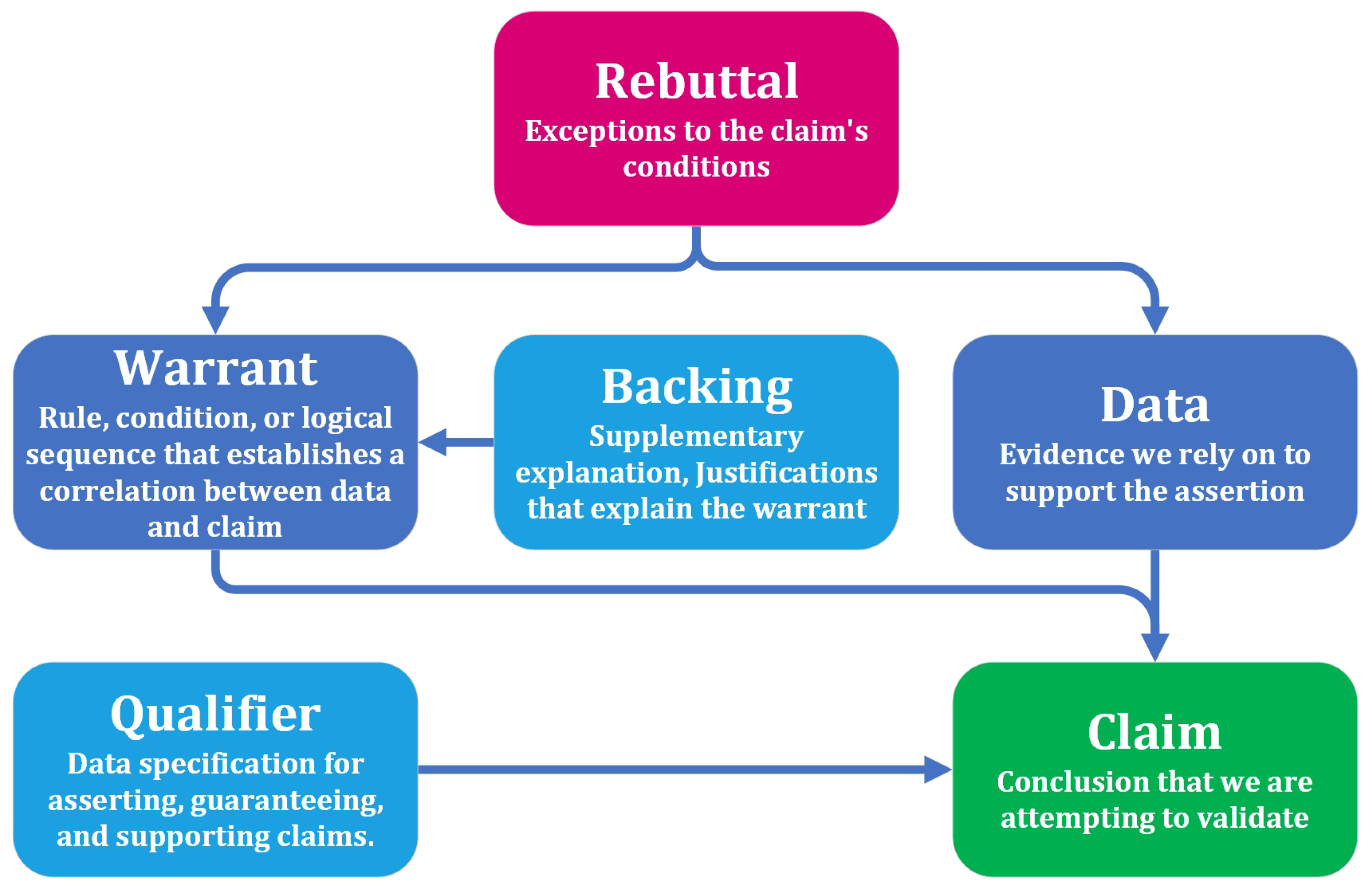
Figure 2.
The Design of FL Model Classrooms With and Without SRL Strategies.
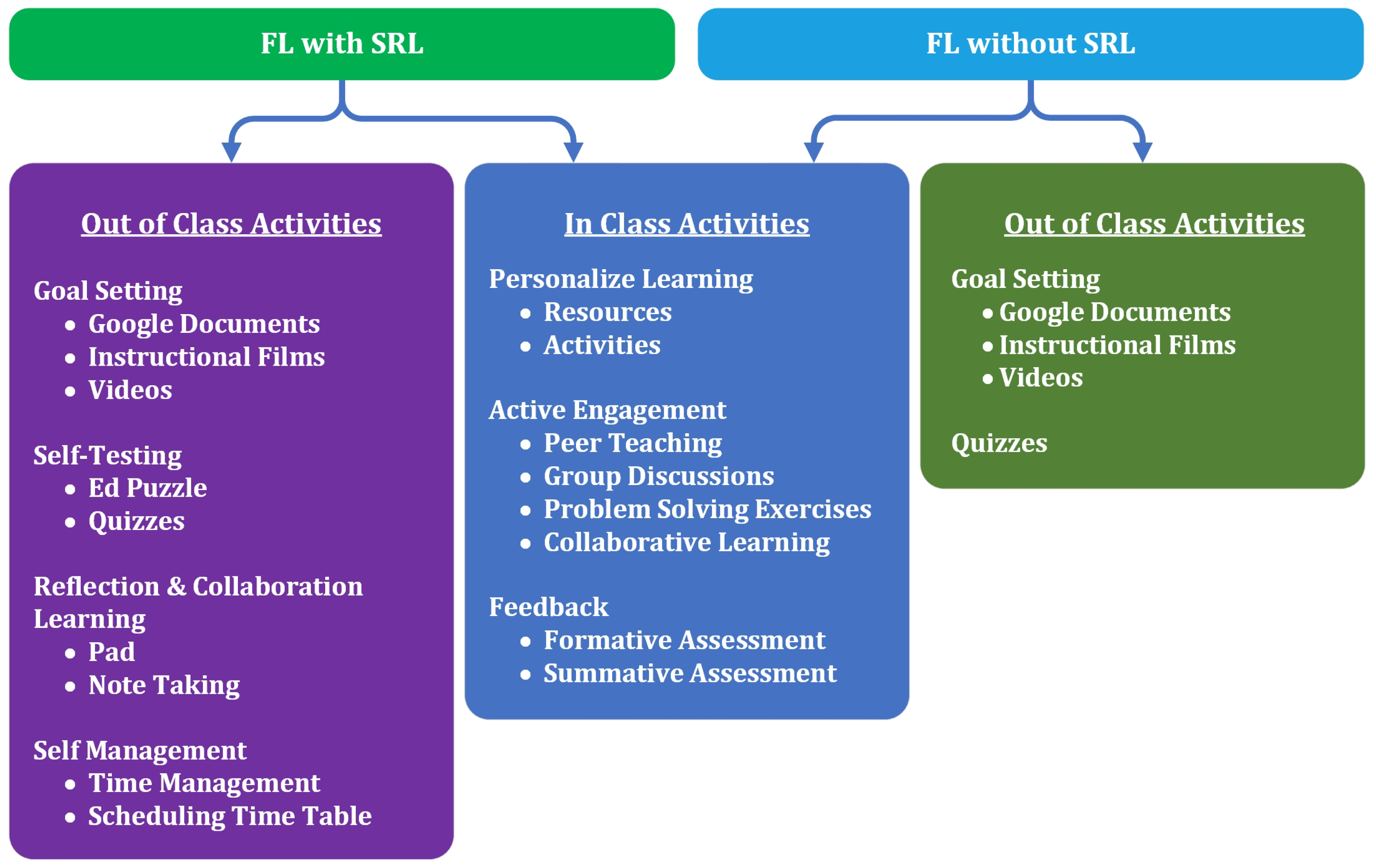
Figure 3.
The Procedure of Flipped Classrooms With and Without SRL Strategies.
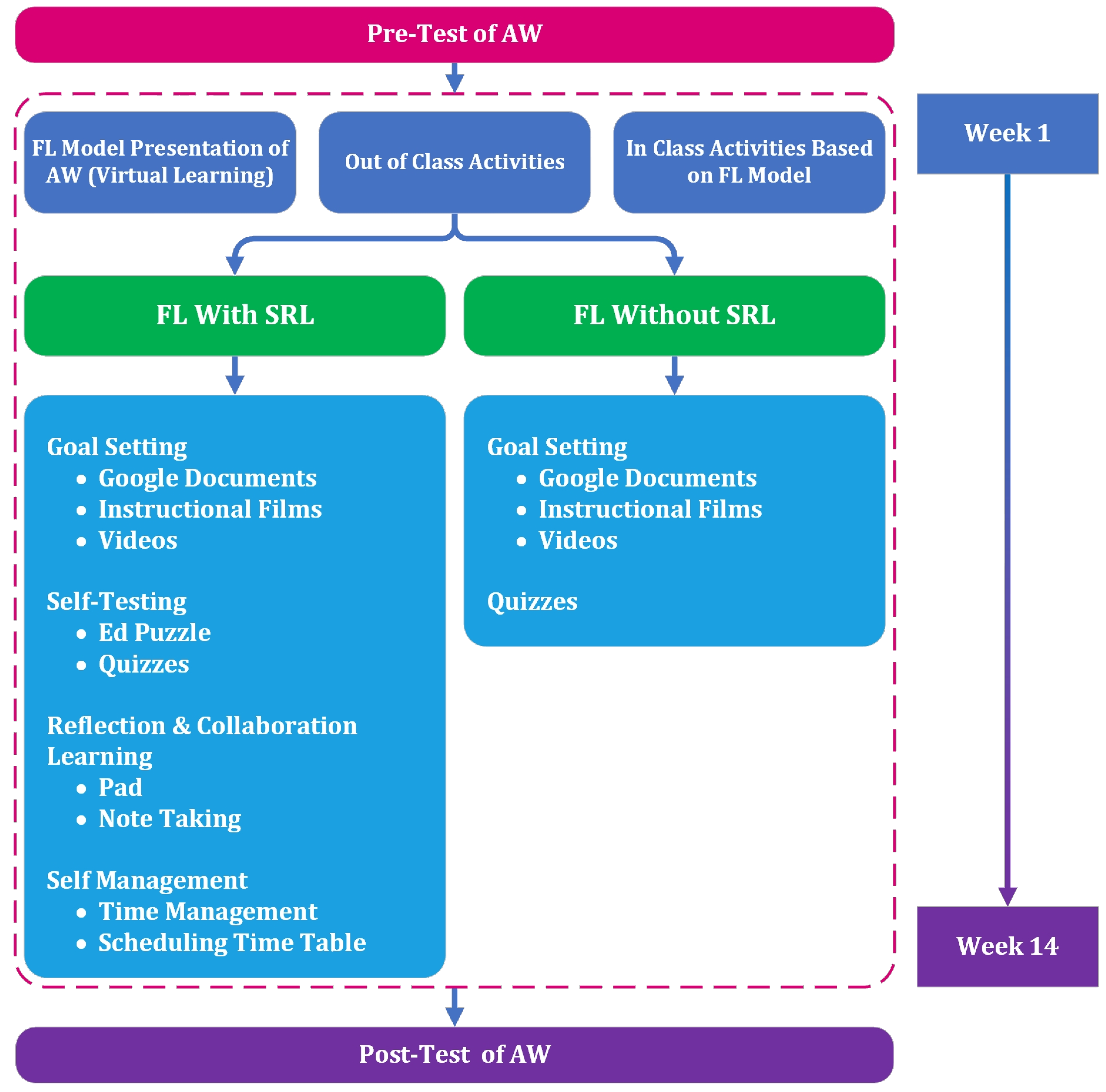

Table 1.
ESP AW Course Topics.
| Weeks | Topics |
| 0 | Pretest |
| 1 | Differences of Opinion |
| 2 | Argumentation and Discussion |
| 3-4 | Standpoints and Argumentation |
| 5 | Unexpressed Standpoints and Unexpressed Premises |
| 6 | The Structure of Argumentation |
| 7 | Fallacies (1) |
| 8 | Fallacies (2) |
| 9 | The Soundness of Argumentation |
| 10-12 | Written Argumentation |
| 13-14 | Oral Argumentation |
| 15 | Posttest |
Table 2.
Item Descriptions and Scores’ Values of SRQ.
| SRL Skills | Items | Scores | The Number of Items | |
| Min | Max | |||
| Motivation and Action | 7 | 7 | 35 | 1, 2, 4, 5, 6, 8, 9. |
| Planning and Goal Setting | 8 | 8 | 40 | 10, 11, 13, 14, 15, 16, 17, 18. |
| Learning and Assessment | 19 | 19 | 95 | 19, 21, 22, 24, 25, 26, 27, 28, 29, 30, 31, 33, 34, 35, 36, 37, 38, 40, 41. |
| Insufficient Self-Directedness | 7 | 7 | 35 | 3, 7, 12, 20, 23, 32, 39. |
Table 3.
Independent Samples t-test for Pre-test Scores
| F | Sig. | t | df | Sig. (2-tailed) | Mean Difference | Std. Error Difference | 95% Confidence Interval of the Difference | |||
| Lower | Upper | |||||||||
| Pre-tests | Equal variances assumed | 0.07 | 0.78 | 0.79 | 238 | 0.42 | 0.23 | 0.29 | -0.34 | 0.81 |
| Equal variances not assumed | 0.79 | 237.93 | 0.42 | 0.23 | 0.29 | -0.34 | 0.81 | |||
Table 4.
Independent Samples t-test for Post-test Scores
| F | Sig. | t | df | Sig. (2-tailed) | Mean Difference | Std. Error Difference | 95% Confidence Interval of the Difference | |||
| Lower | Upper | |||||||||
| Post-tests | Equal variances assumed | 0.01 | 0.90 | 6.22 | 238 | 0.00 | 2.01 | 0.32 | 1.37 | 2.65 |
| Equal variances not assumed | 6.22 | 237.93 | 0.00 | 2.01 | 0.32 | 1.37 | 2.65 | |||
Table 5.
Independent Samples t-test Comparing Posttest Scores Between Groups
| Mean | Std. Deviation | Std. Error Mean | 95% Confidence Interval of the Difference | t | df | Sig. (2-tailed) | |||
| Lower | Upper | ||||||||
| Pair 1 | Pretest Claim - Pretest Qualifier | -8.06 | 3.43 | 0.31 | -8.68 | -7.44 | -25.71 | 119 | 0.00 |
| Pair 2 | Posttest Claim - Posttest Qualifier | -6.28 | 4.42 | 0.40 | -7.08 | -5.48 | -15.55 | 119 | 0.00 |
Table 6.
Effect Sizes (Cohen’s d) for AW Improvement
| Group | Cohen’s d | Interpretation |
|---|---|---|
| Experimental | 0.85 | Large effect () |
| Control | 0.55 | Medium effect () |
Table 7.
Paired Samples t-test for Claims and Qualifiers
| Mean | Std. Deviation | Std. Error Mean | 95% Confidence Interval of the Difference | t | df | Sig. (2-tailed) | |||
| Lower | Upper | ||||||||
| Pair 1 | Pretest Claim - Pretest Qualifier | 0.05 | 0.23 | 0.02 | 0.01 | 0.10 | 2.71 | 119 | 0.08 |
| Pair 2 | Posttest Claim - Posttest Qualifier | -0.44 | 0.49 | 0.04 | -0.53 | -0.35 | -9.70 | 119 | 0.00 |
Table 8.
Mann-Whitney U Test for Pre-test of Students’ SRQ responses
| Pair | SRQ Question | Test Type | P-Value | Hypothesis Result |
| 1 | The distribution of Motivation Activity is consistent throughout control categories. | The Mann-Whitney U test for independent samples. | 0.14 | Remain the null hypothesis. |
| 2 | The distribution of Planning Goalsetting is consistent throughout control categories. | The Mann-Whitney U test for independent samples. | 0.13 | Remain the null hypothesis. |
| 3 | The distribution of Learning Assessment is consistent throughout control categories. | The Mann-Whitney U test for independent samples. | 0.15 | Remain the null hypothesis. |
| 4 | The distribution of Self-directness is consistent throughout control categories. | The Mann-Whitney U test for independent samples. | 0.12 | Remain the null hypothesis. |
| 5 | The distribution of Sums is consistent throughout control categories. | The Mann-Whitney U test for independent samples. | 0.14 | Remain the null hypothesis. |
Table 9.
Mann-Whitney U Test for Post-test of Students’ SRQ responses
| Pair | SRQ Question | Test Type | P-Value | Hypothesis Result |
| 1 | The distribution of Motivation Activity is consistent throughout control categories. | The Mann-Whitney U test for independent samples. | 0.00 | Refute the null hypothesis. |
| 2 | The distribution of Planning Goal-setting is consistent throughout control categories. | The Mann-Whitney U test for independent samples. | 0.00 | Refute the null hypothesis. |
| 3 | The distribution of Learning Assessment is consistent throughout control categories. | The Mann-Whitney U test for independent samples. | 0.00 | Refute the null hypothesis. |
| 4 | The distribution of Self-directness is consistent throughout control categories. | The Mann-Whitney U test for independent samples. | 0.00 | Refute the null hypothesis. |
| 5 | The distribution of Sums is consistent throughout control categories. | The Mann-Whitney U test for independent samples. | 0.00 | Refute the null hypothesis. |
Disclaimer/Publisher’s Note: The statements, opinions and data contained in all publications are solely those of the individual author(s) and contributor(s) and not of MDPI and/or the editor(s). MDPI and/or the editor(s) disclaim responsibility for any injury to people or property resulting from any ideas, methods, instructions or products referred to in the content. |
© 2025 by the authors. Licensee MDPI, Basel, Switzerland. This article is an open access article distributed under the terms and conditions of the Creative Commons Attribution (CC BY) license (http://creativecommons.org/licenses/by/4.0/).
Copyright: This open access article is published under a Creative Commons CC BY 4.0 license, which permit the free download, distribution, and reuse, provided that the author and preprint are cited in any reuse.


